Gallery

MOROCCO – February 2016

MOROCCO

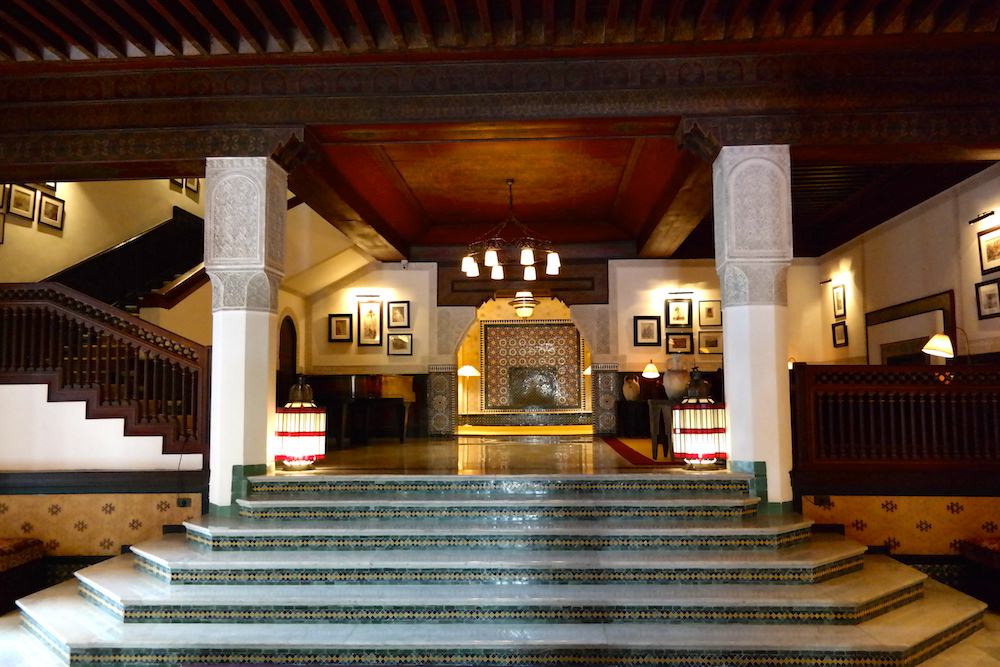
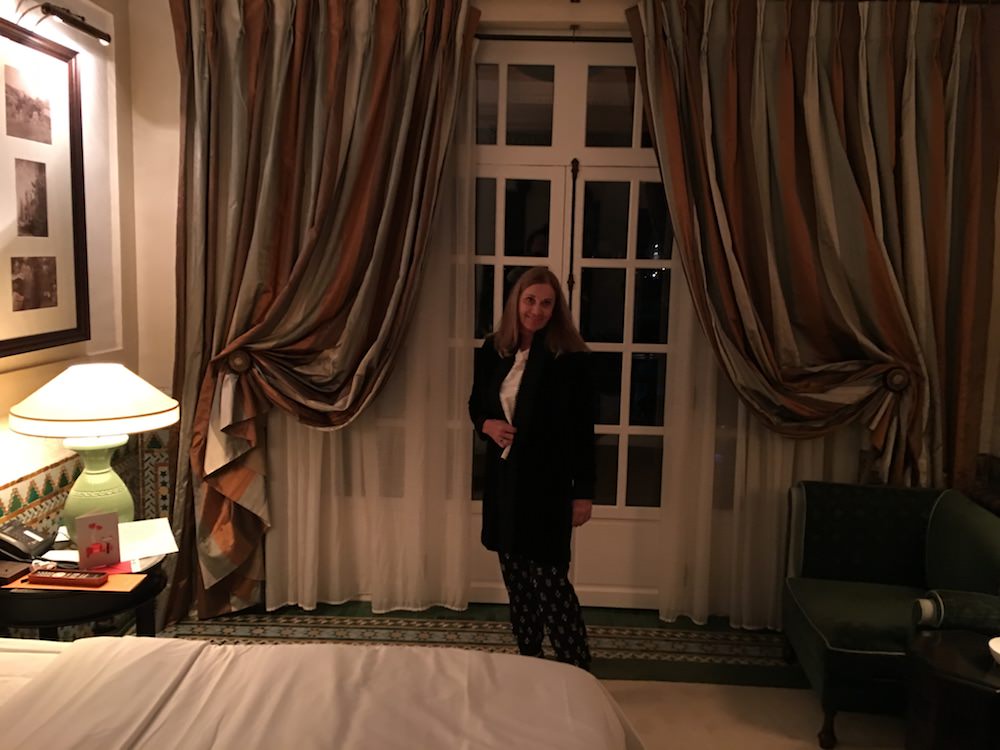
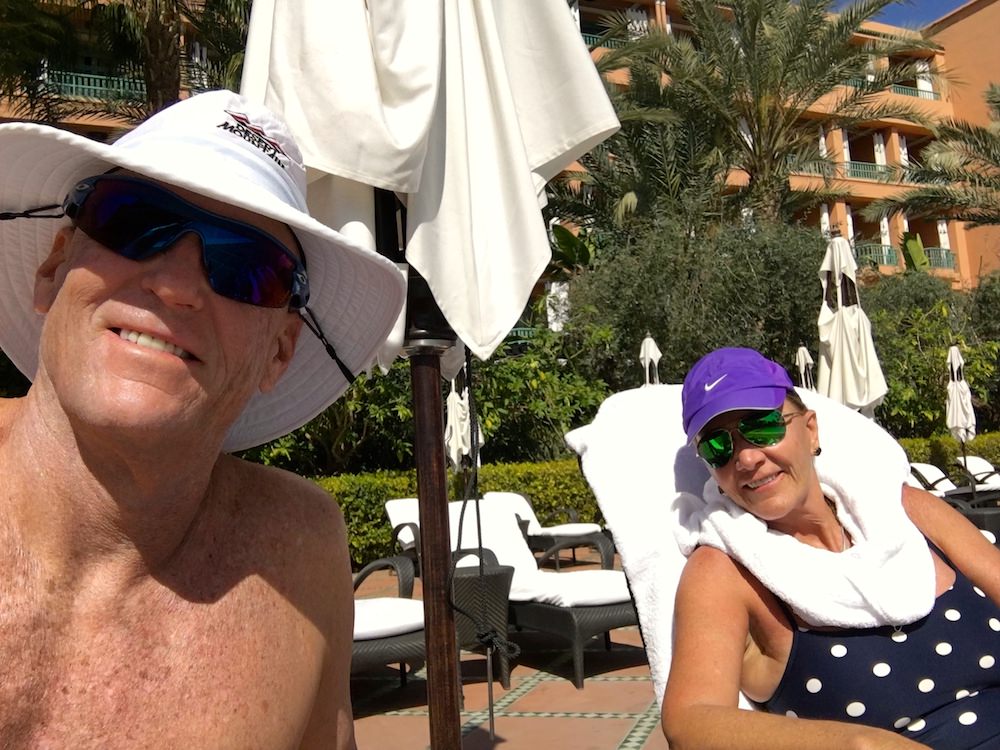
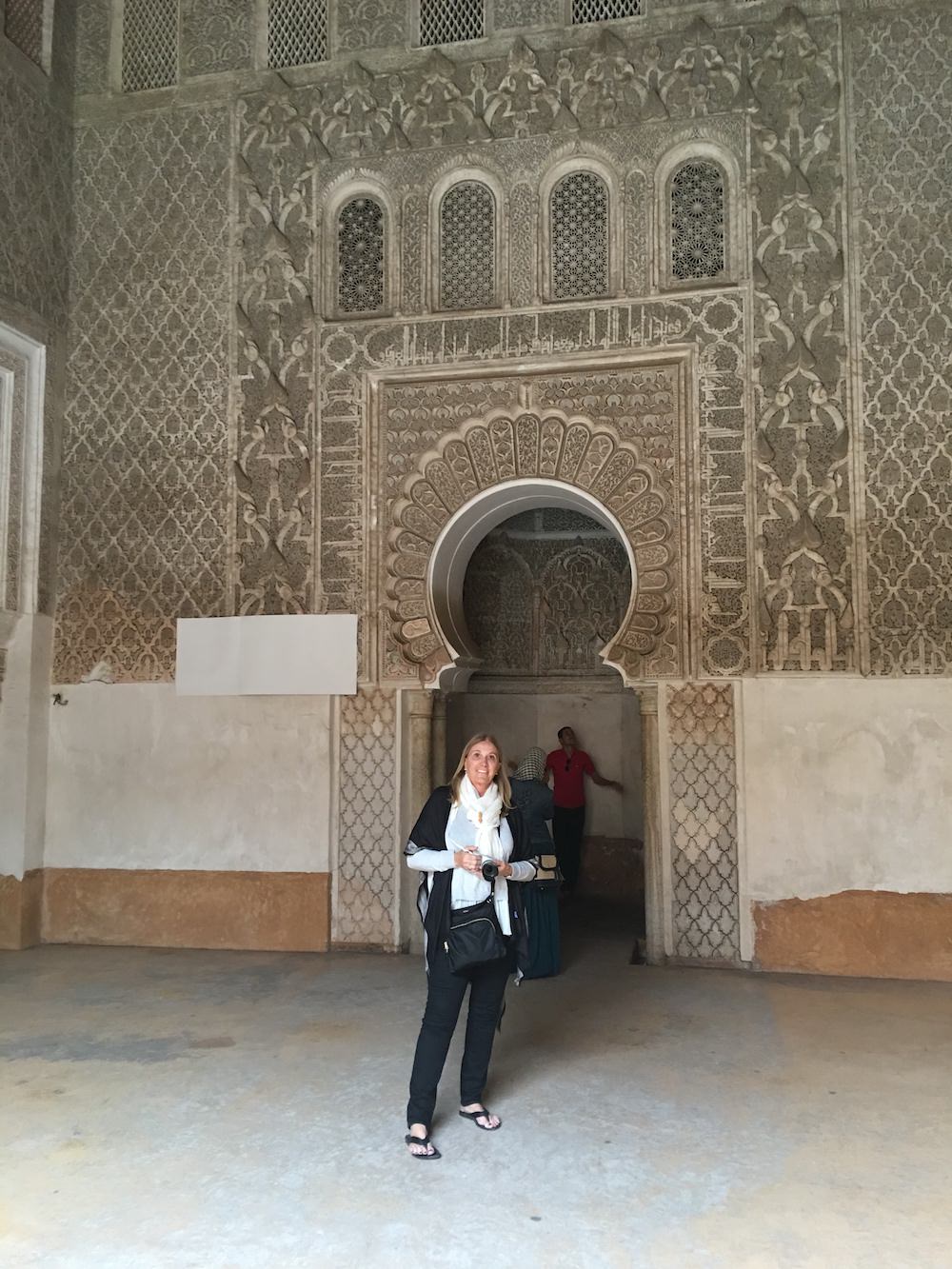
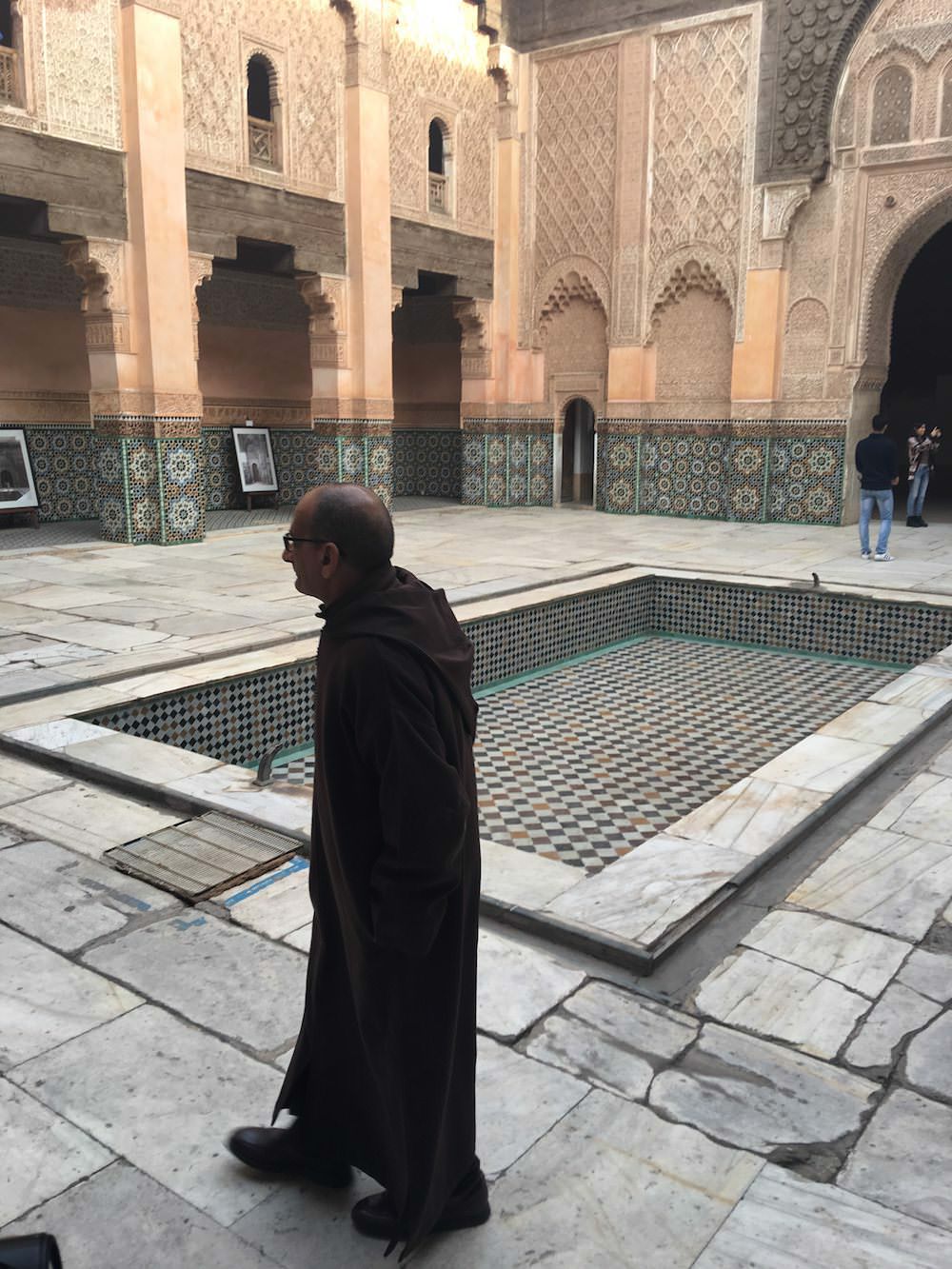
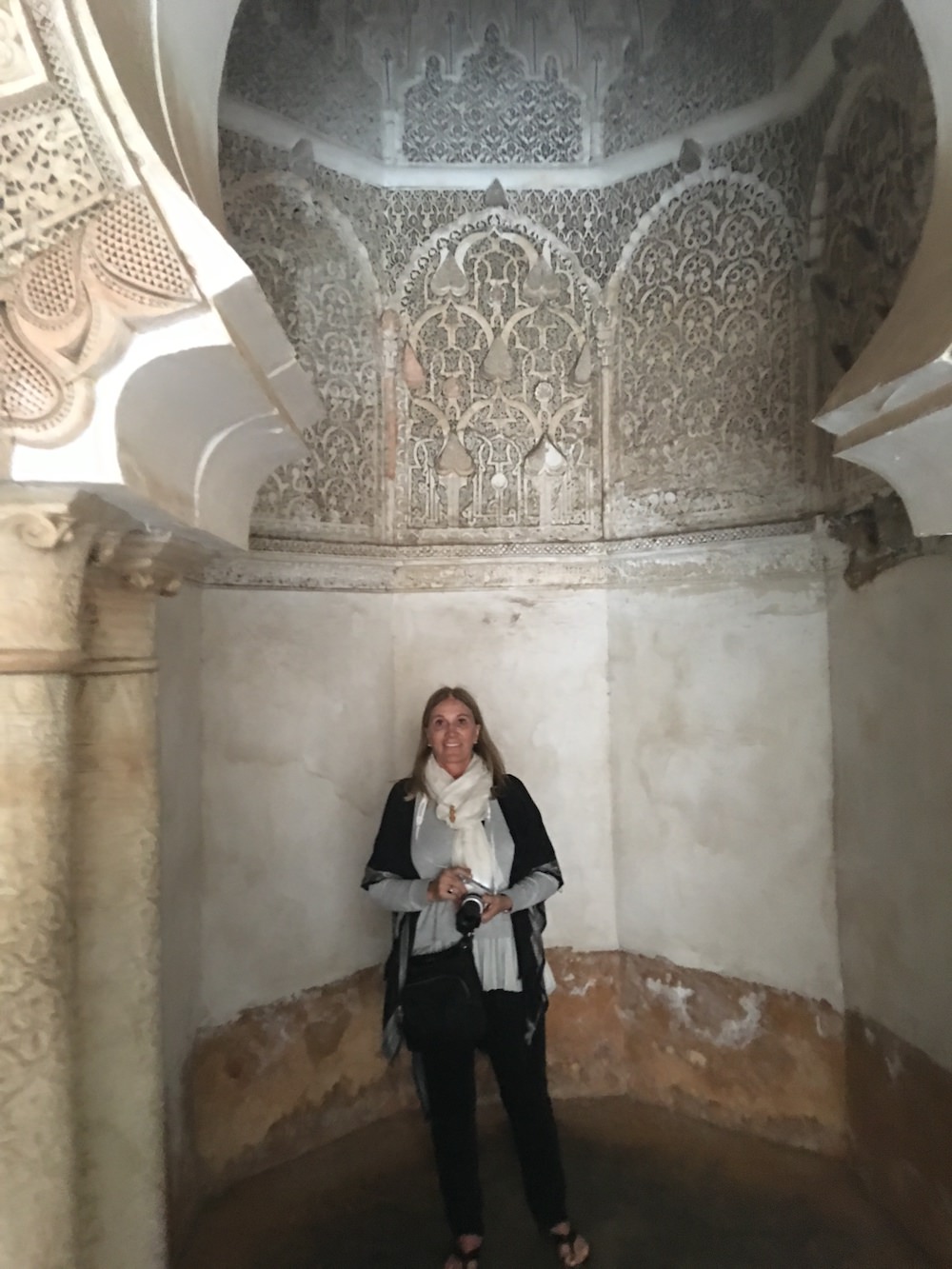
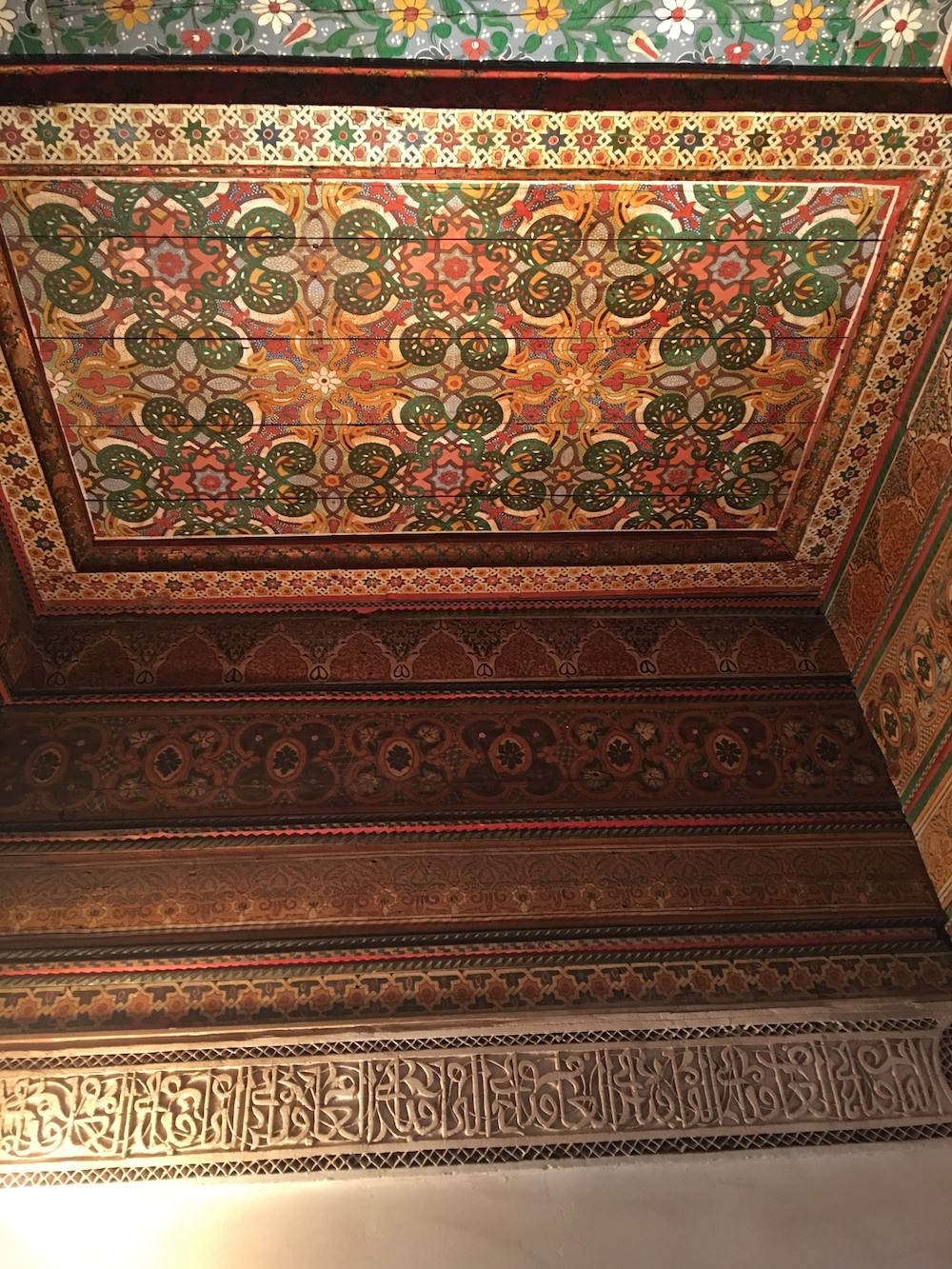
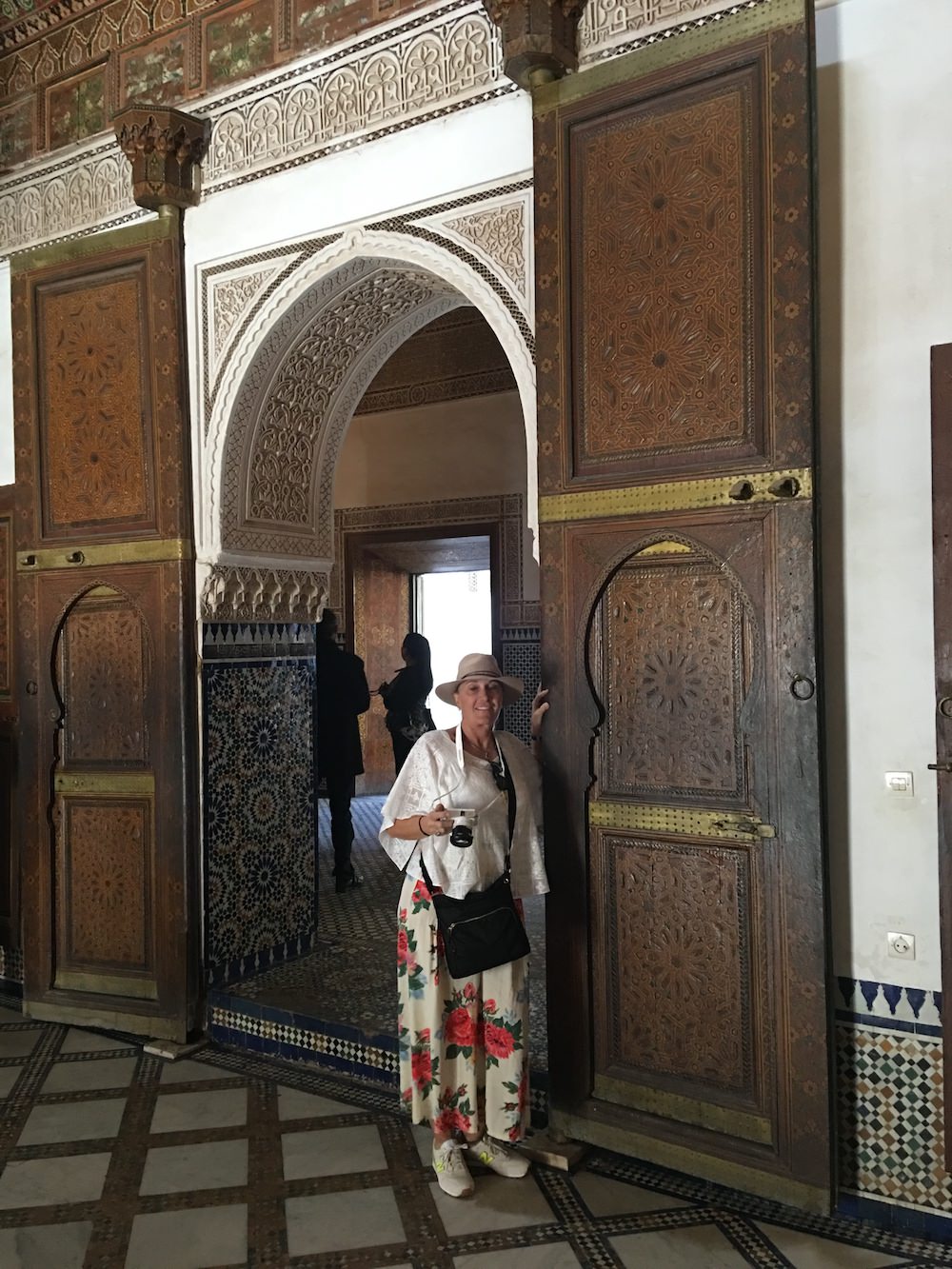
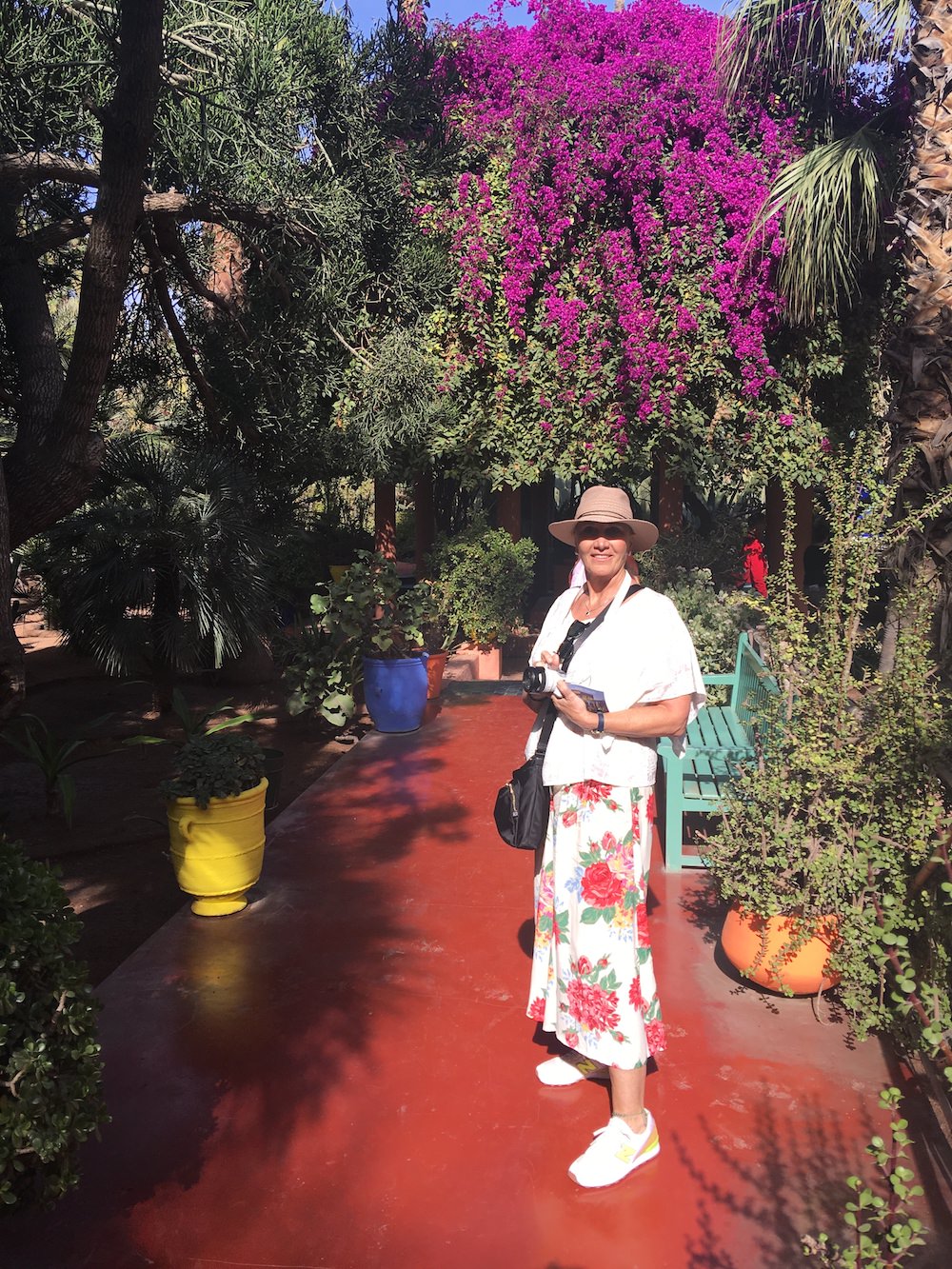
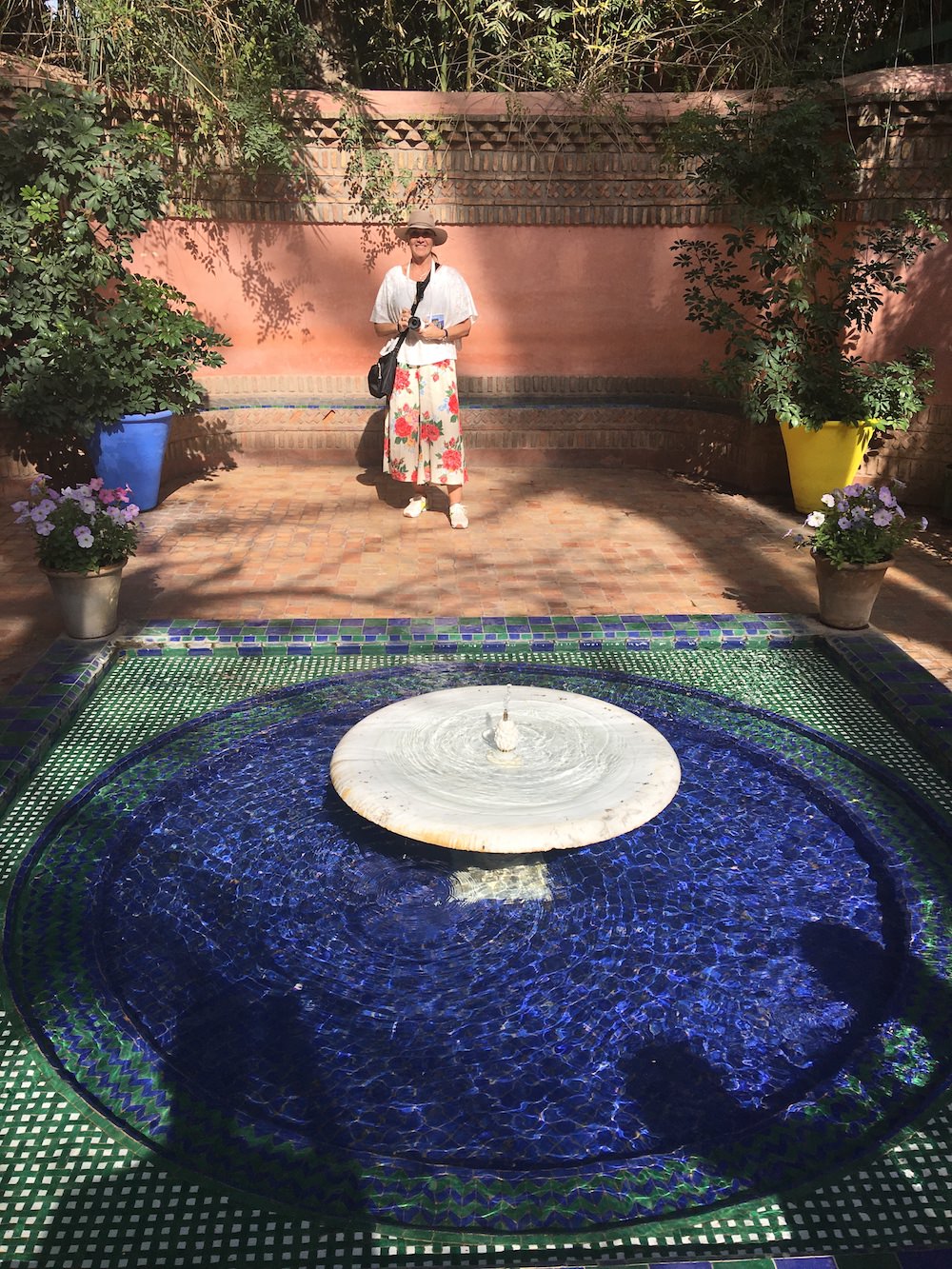
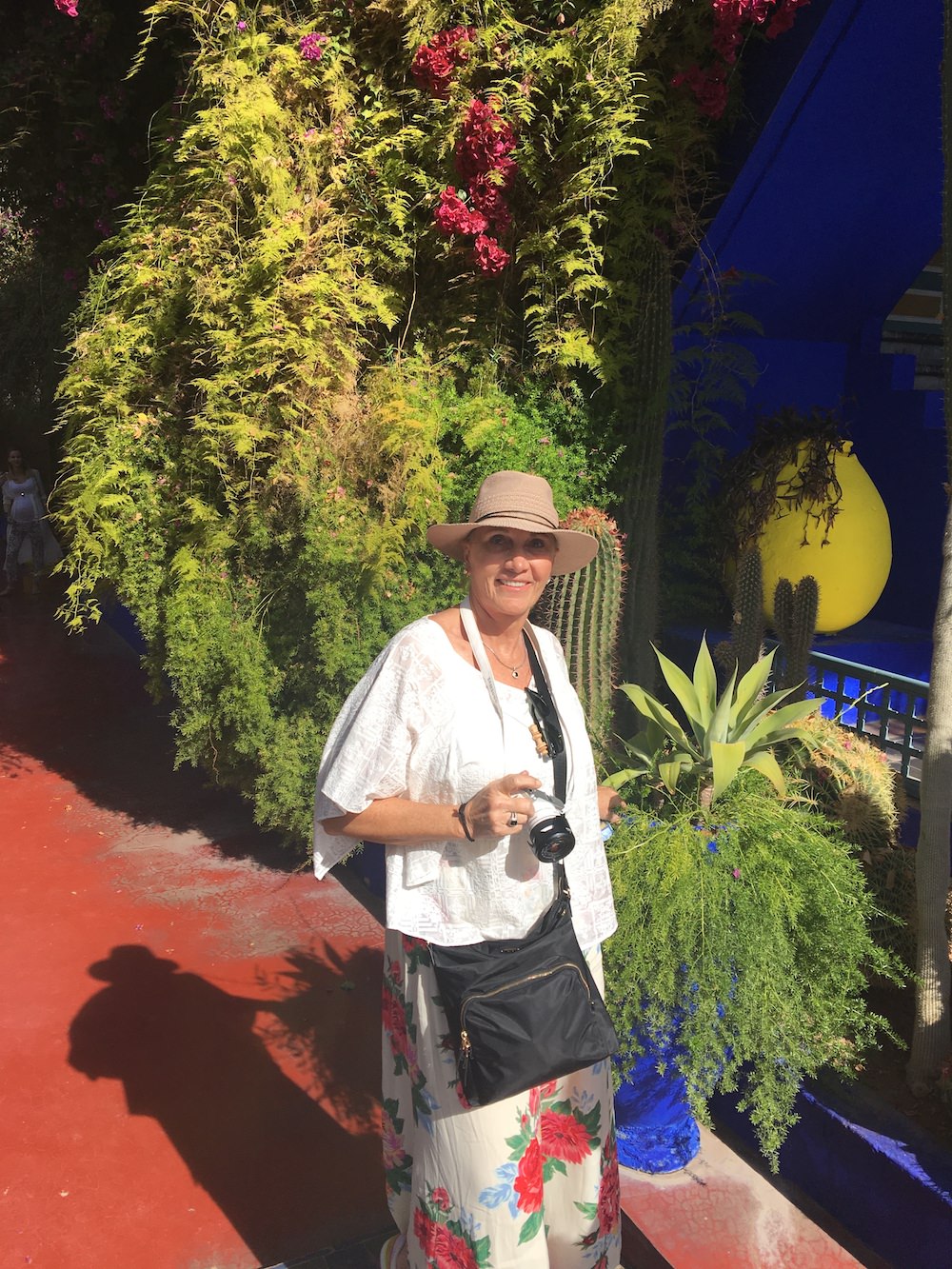
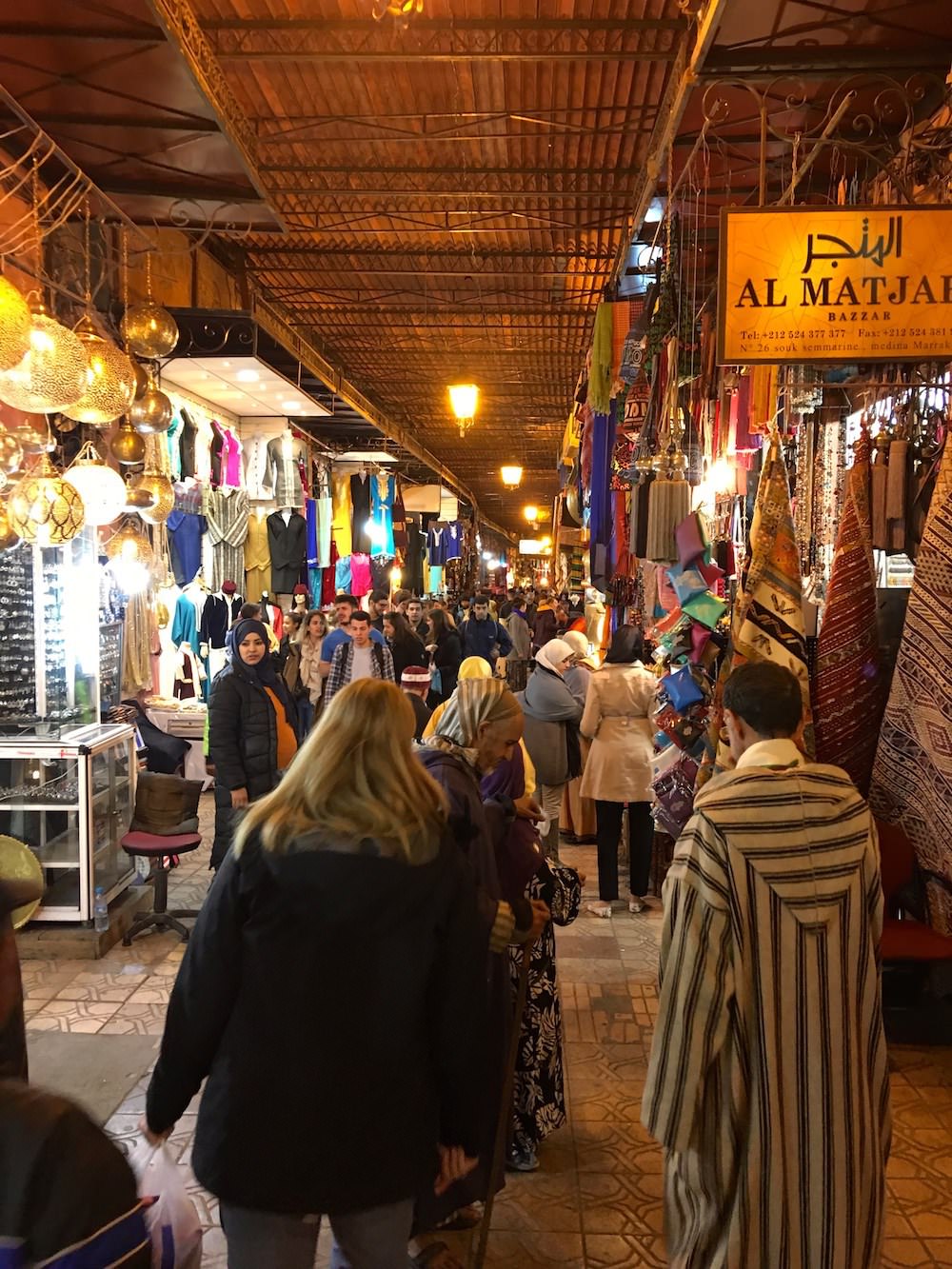
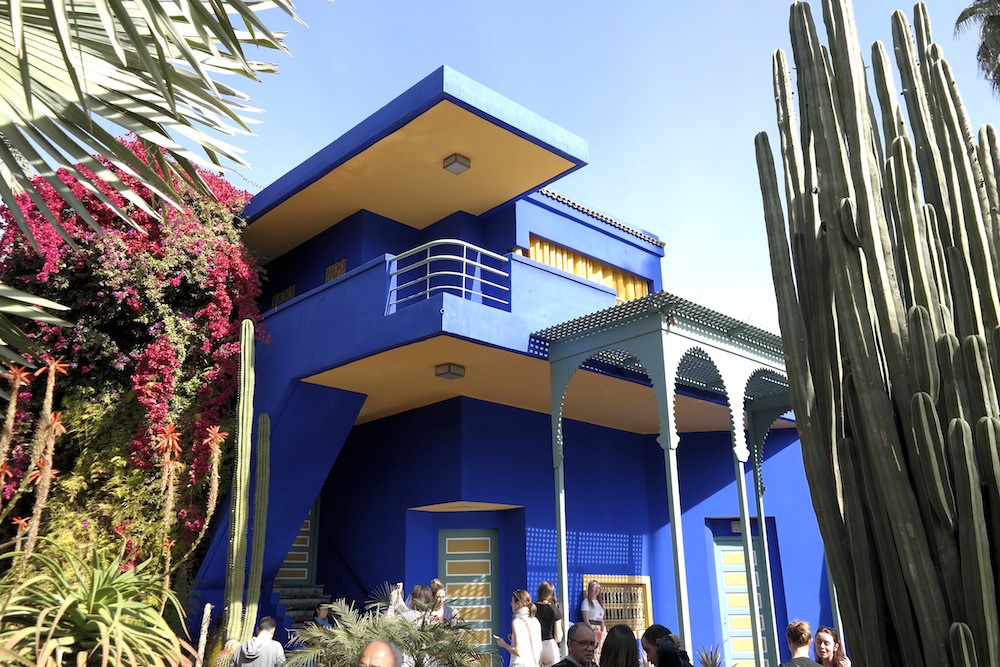
We flew from Geneva, Switzerland (after enjoying our ski trip), to Marrakesh and stayed at the La Mamounia Hotel.  We played tennis on clay courts, laid by the pool, walked in the beautiful gardens, had massages and a Hammam.  We hired a guide (Muhamed) to take us to the Medina (the old walled city with the markets).  We toured the Bahia Palace, (19th century home of the Sultan), the Islamic School of Learning, (a 1565 University), and the Majarelle Gardens.  (Built by Majarelle and bought by Yves St. Laurent and put into a trust.)

LA MAMOUNIA HOTEL


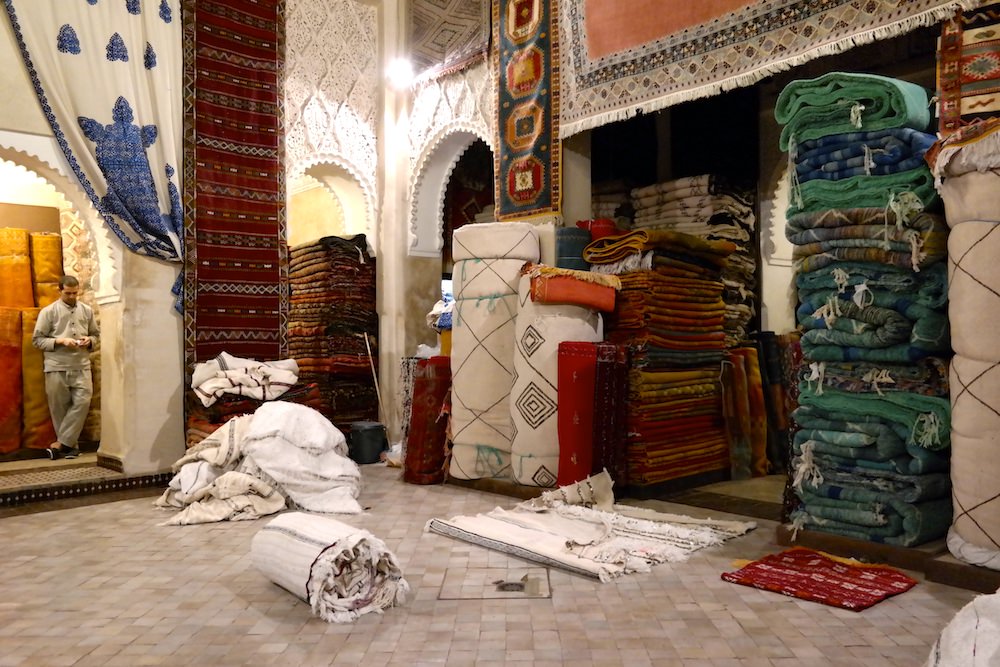
THE MEDINA (The old walled city with the markets)
Rugs
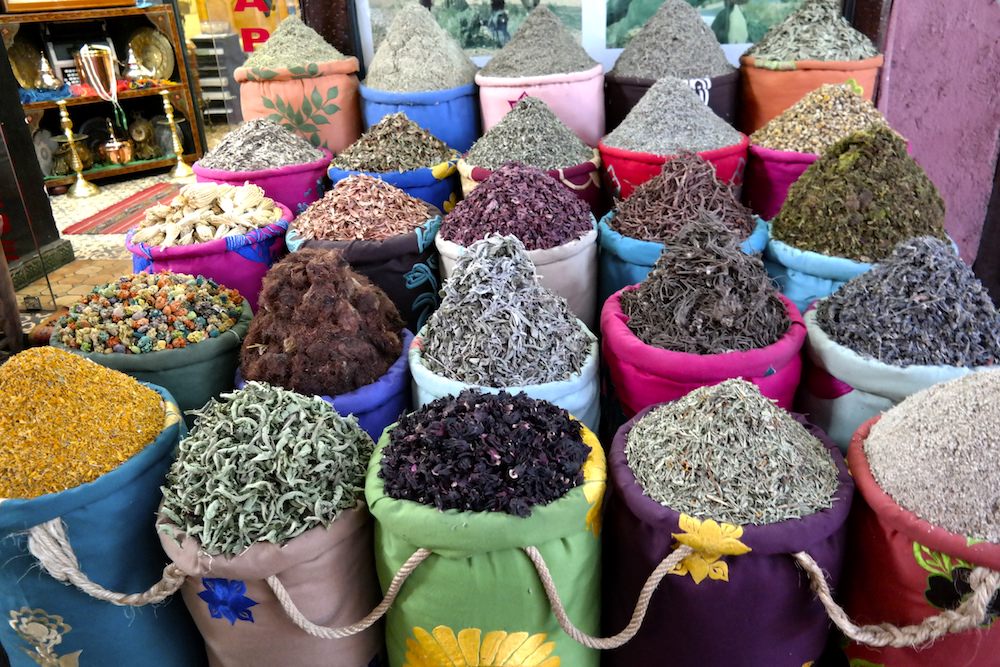
Spices
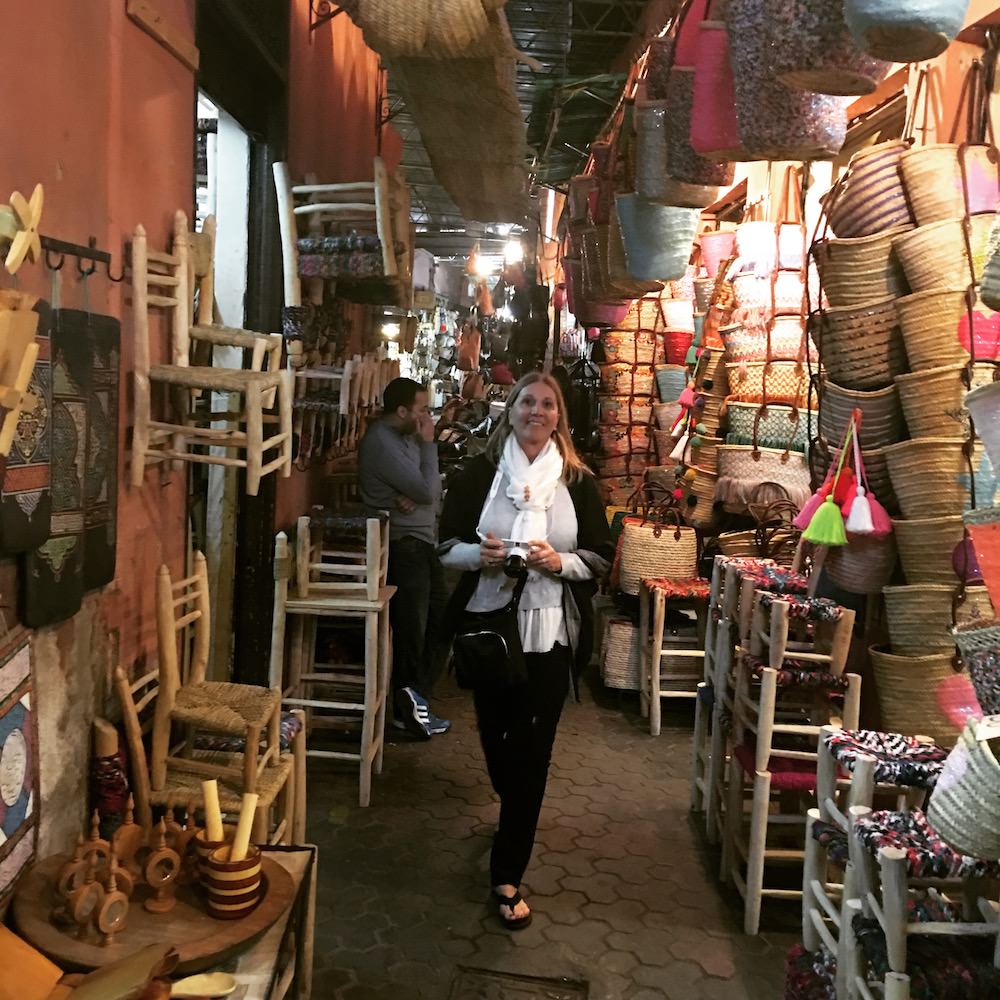
Baskets
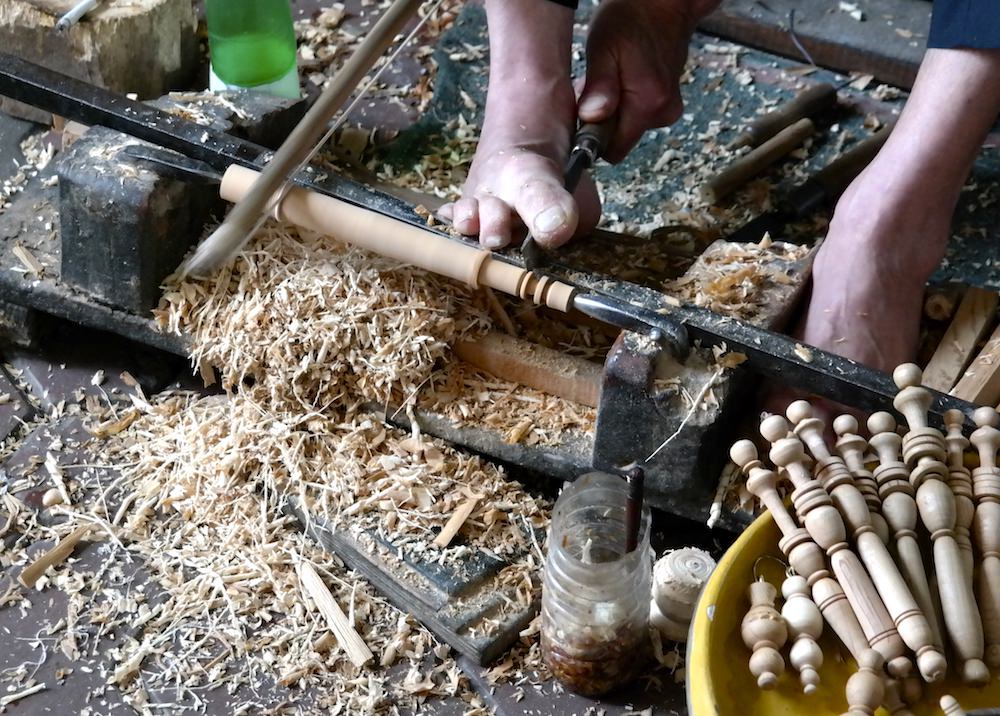
Making toys (with their feet!)
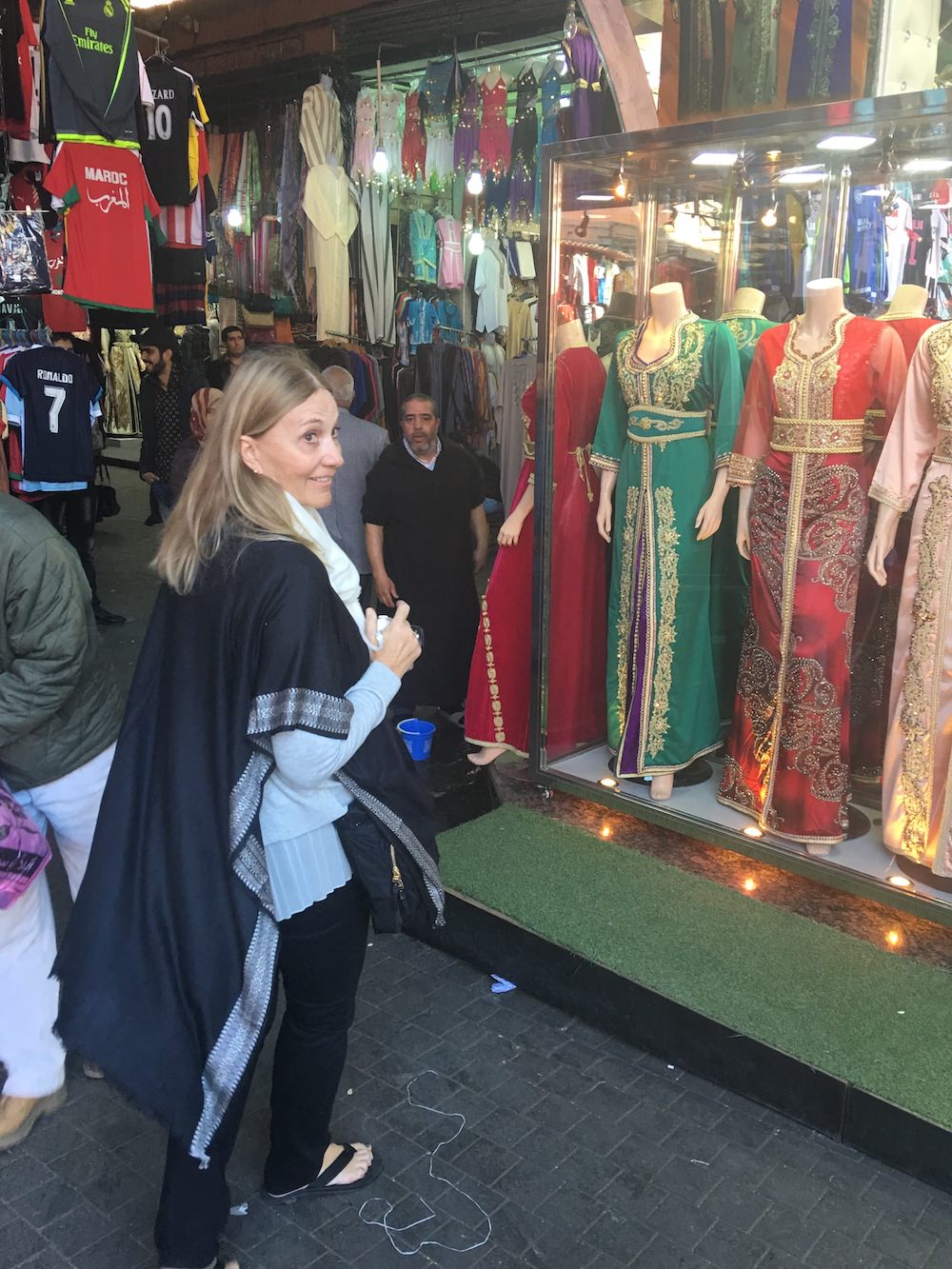
Dresses
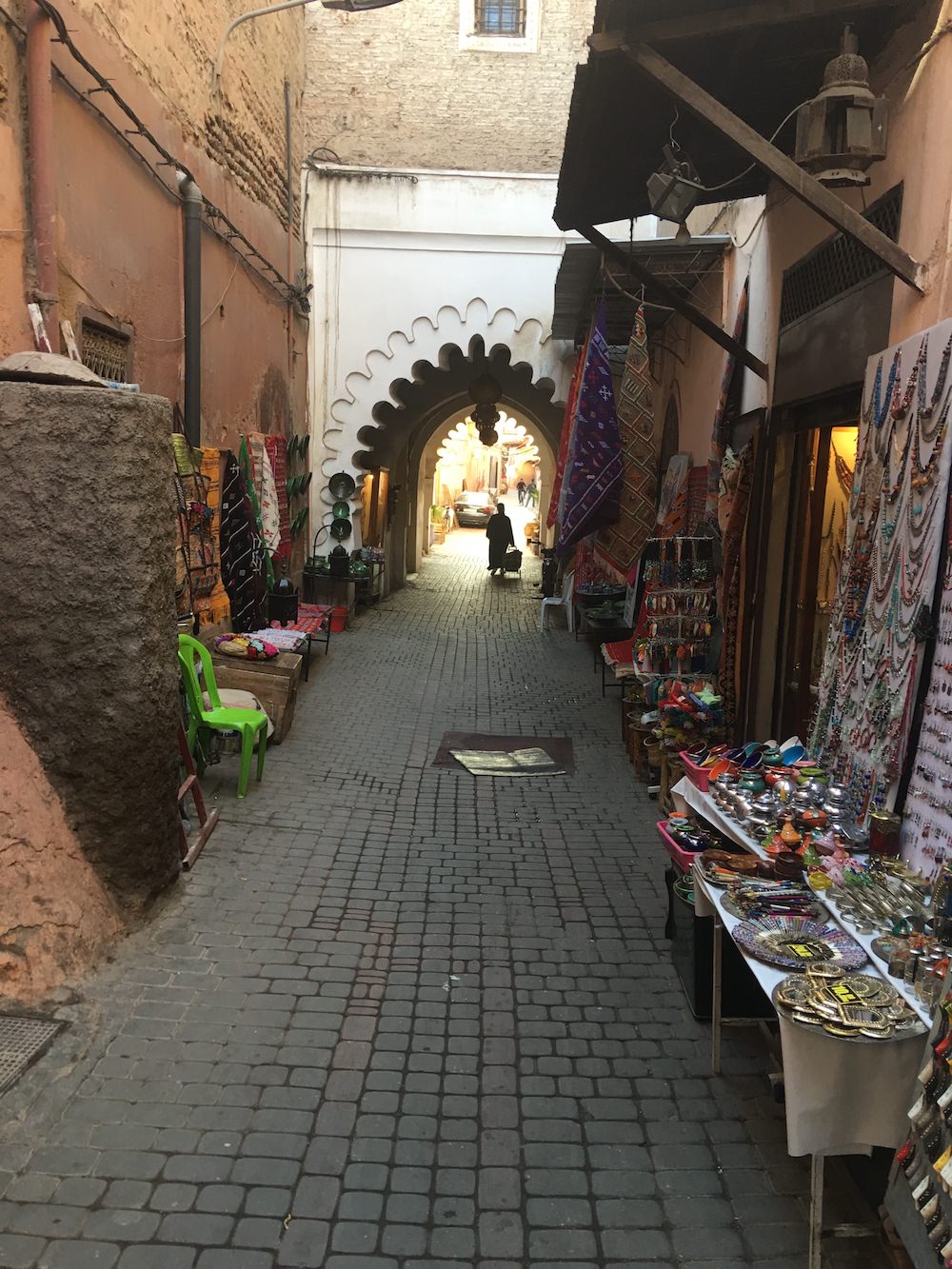
Jewelry


ISLAMIC SCHOOL OF LEARNING UNIVERSITY 1565
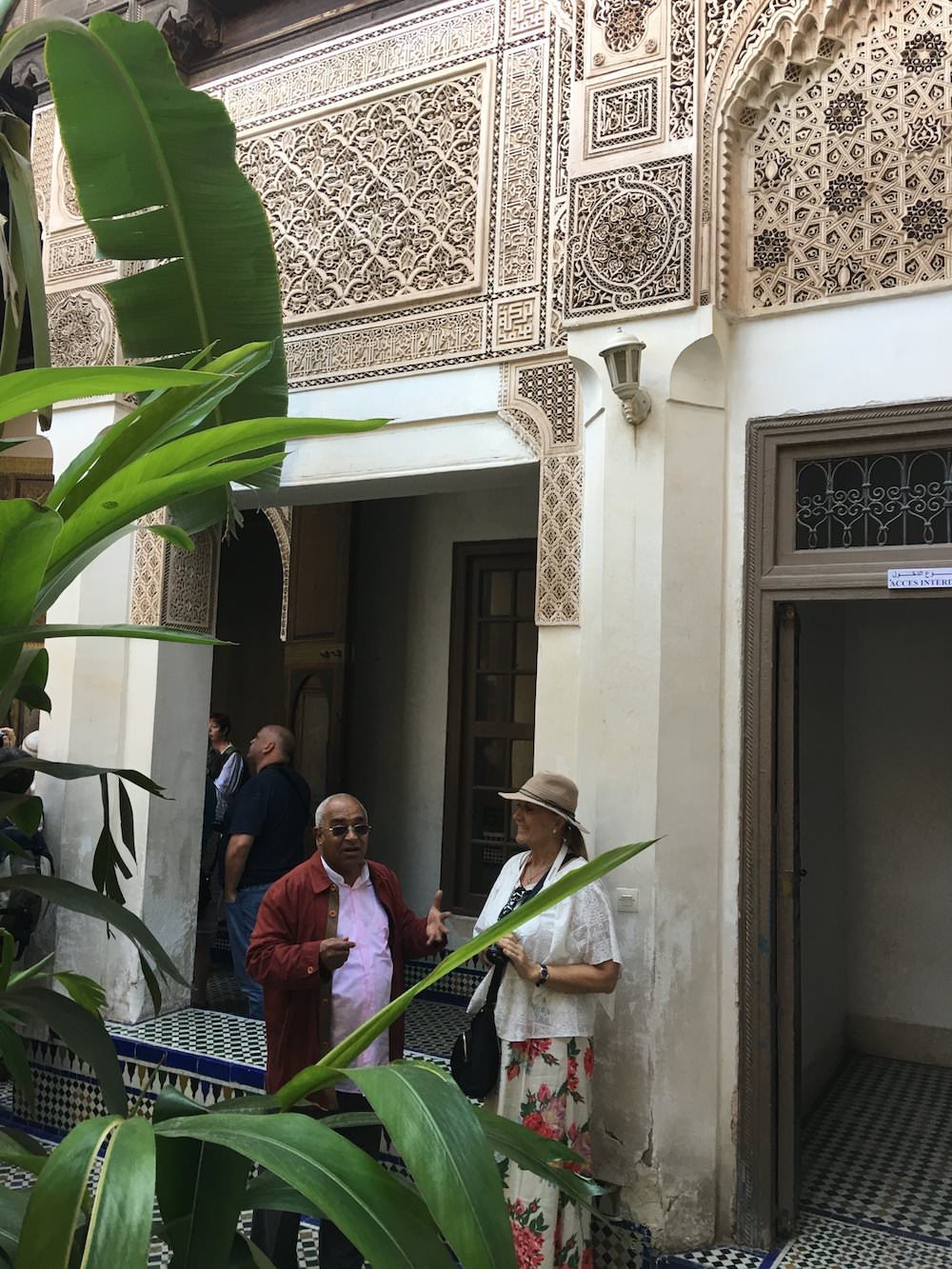
 

EL BAHIA PALACE – 19th CENTURY HOME OF THE SULTAN
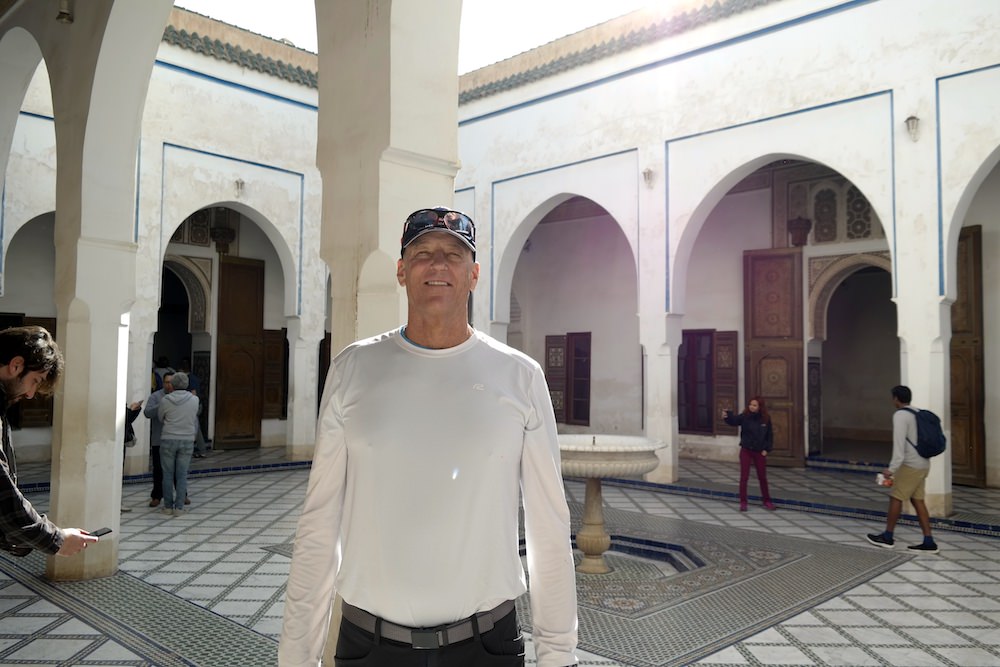
 

MAJARELLE GARDENS
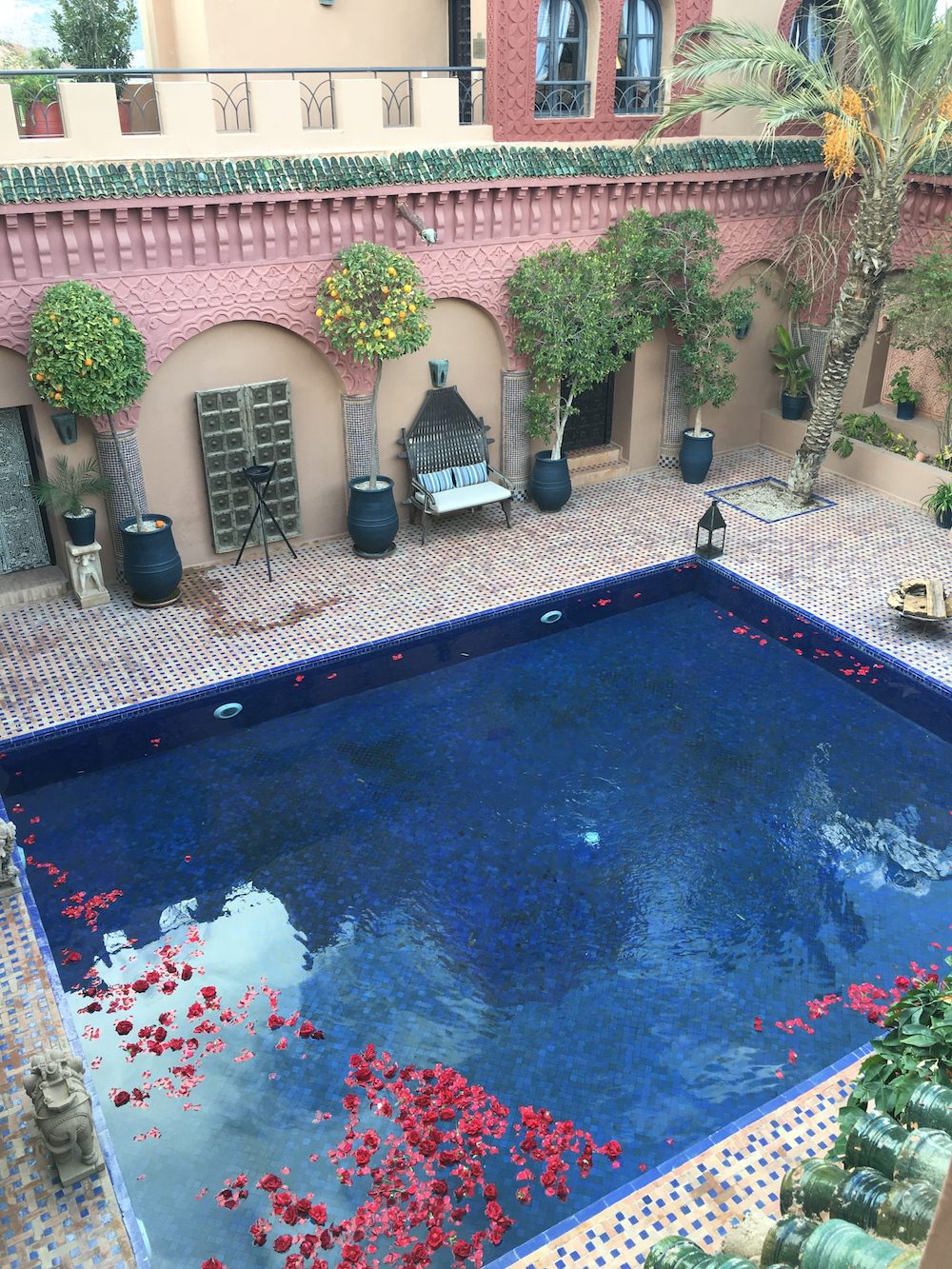
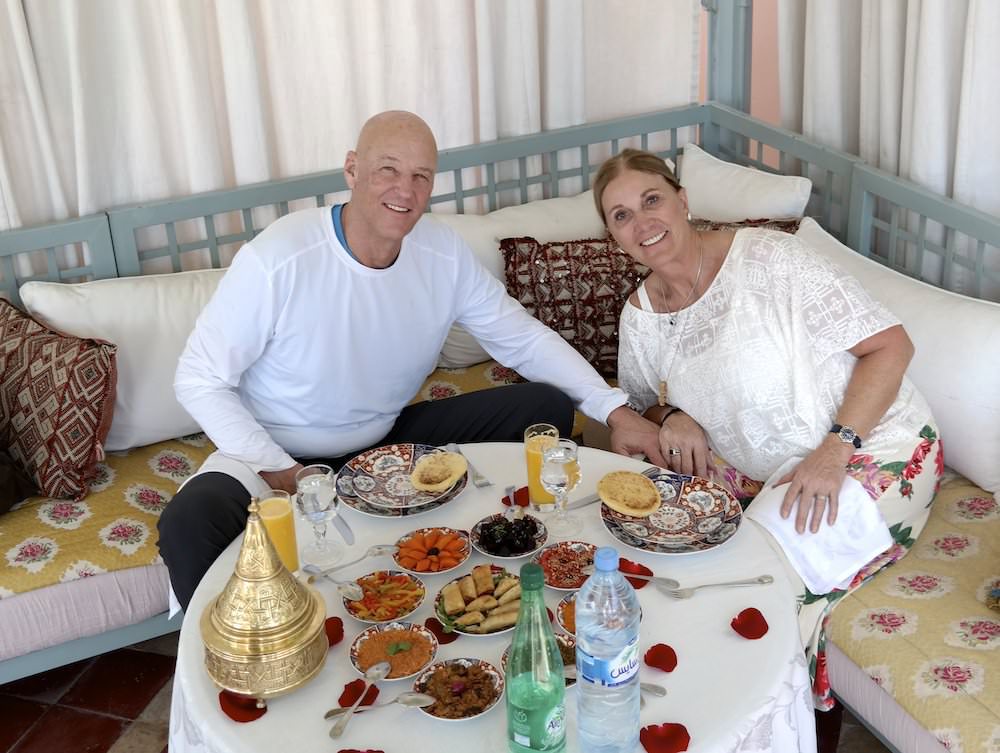
Our guide took us to lunch at his family owned Riad.  A Riad is a traditional Moroccan house or palace with and interior courtyard.  Most of these have been turned into guesthouses.
 

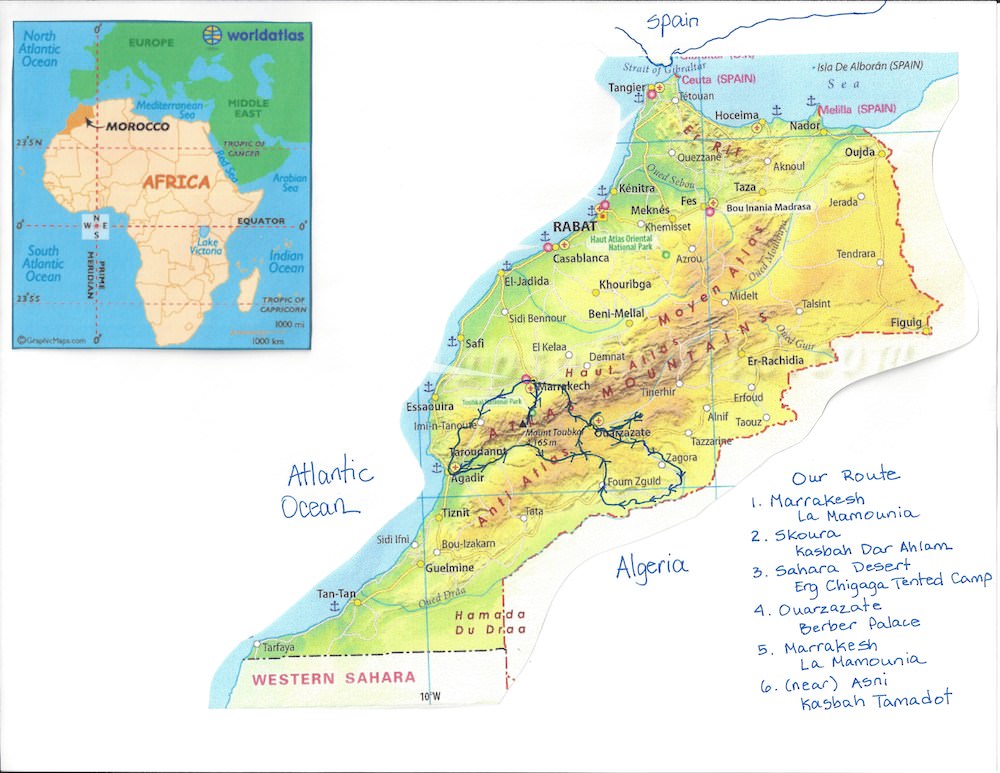
We rented a 4 x 4 Toyota Land Cruiser.  (By the way, no one rents a car in Morocco) We were supposed to drive over the Atlas Mountains to Skoura and on to Kasbah Dar Ahlam.  The Tischla Pass going over the mountains was closed for snow, so we drove an extra 5 hours around the mountains through Agadir to get to our Kasbah.
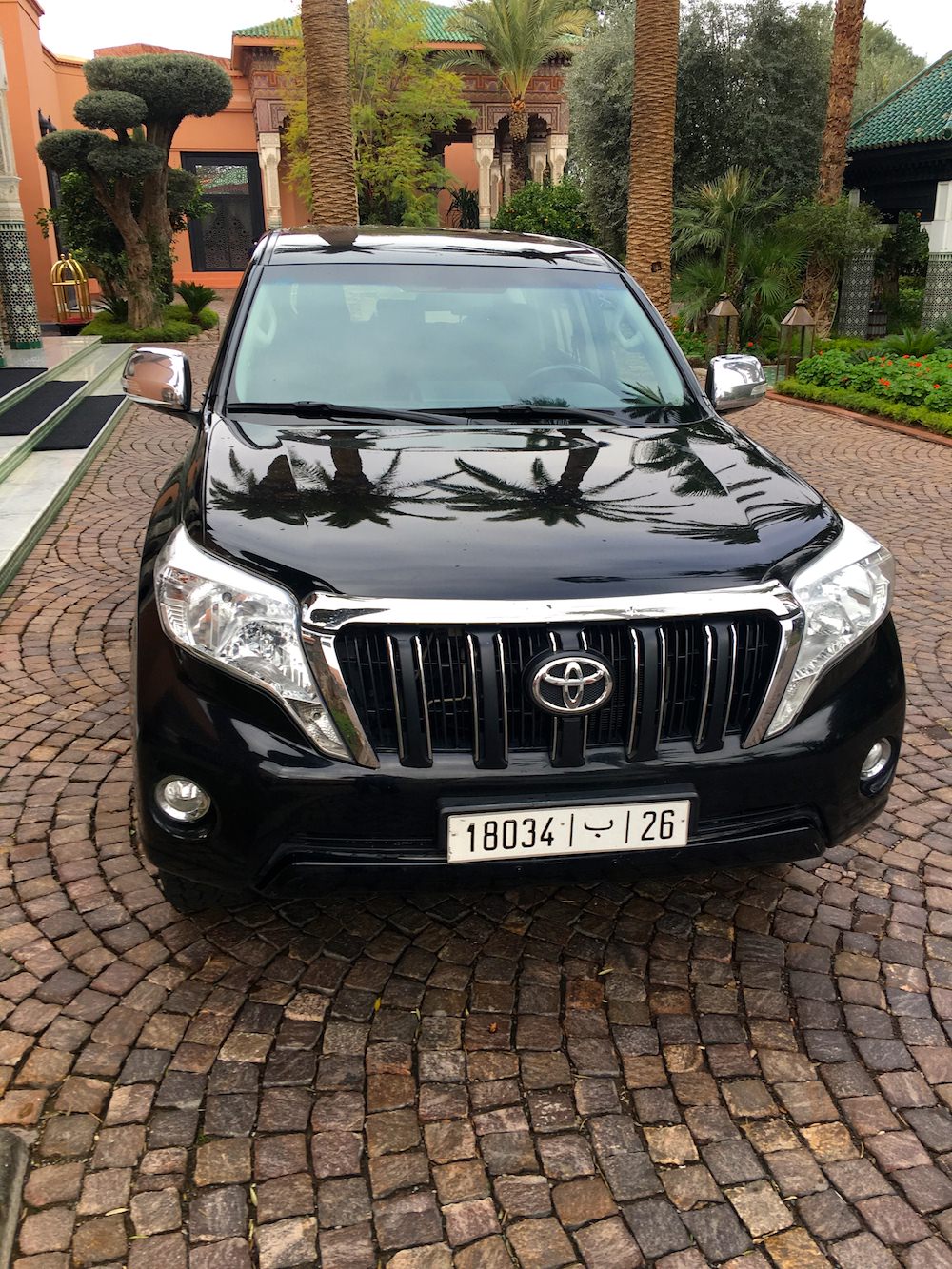
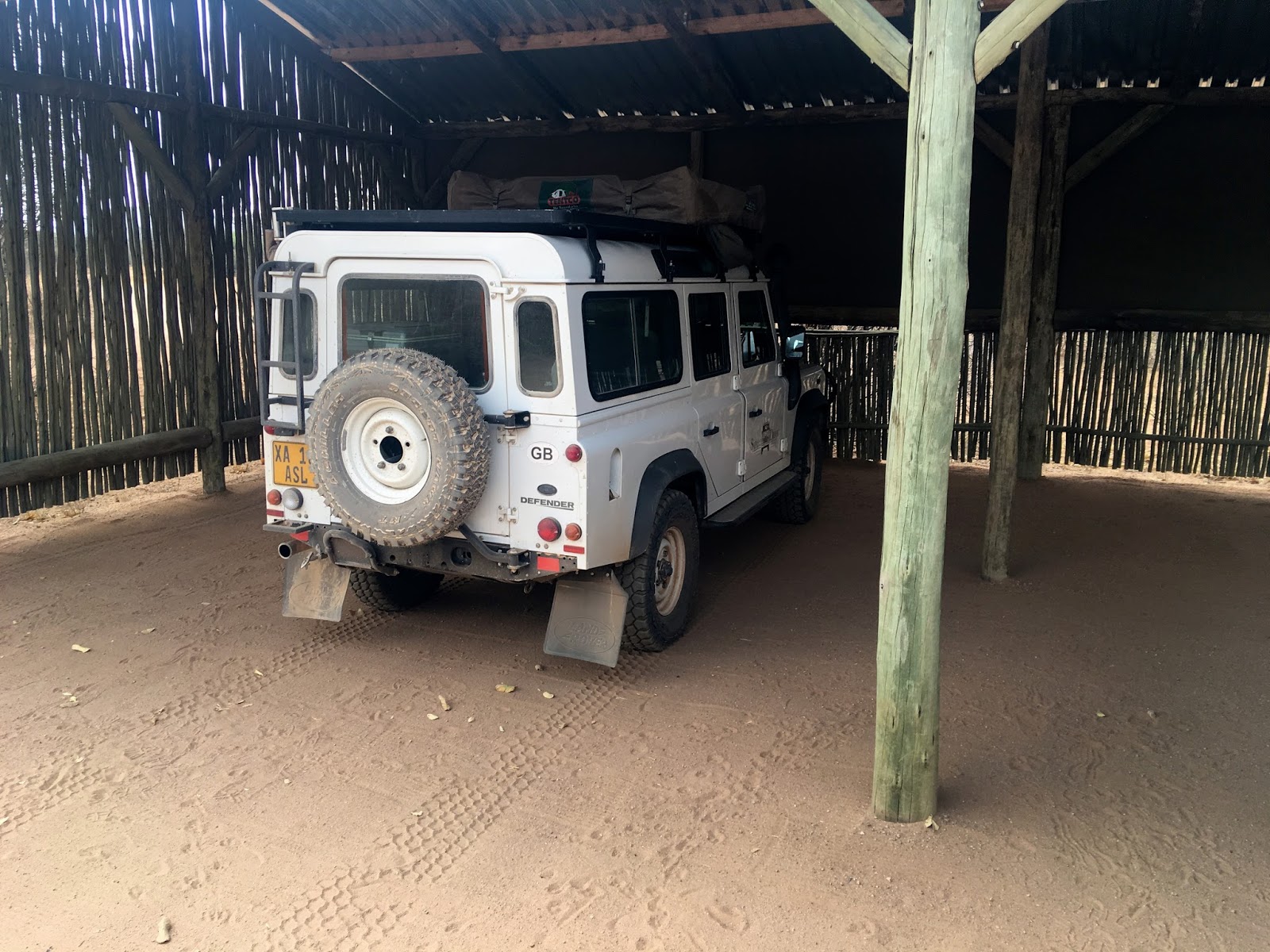
Our Land Cruiser.  We basically had to go to a house with a back gate to find it.  (Not from Hertz)
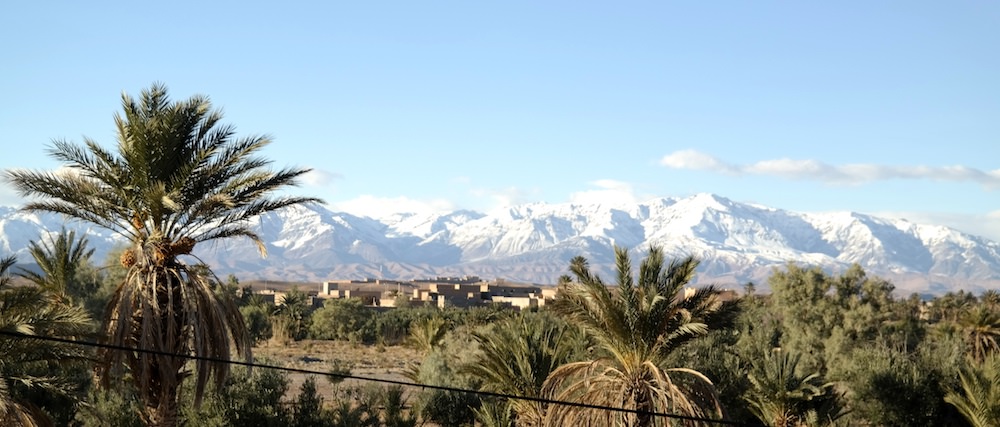
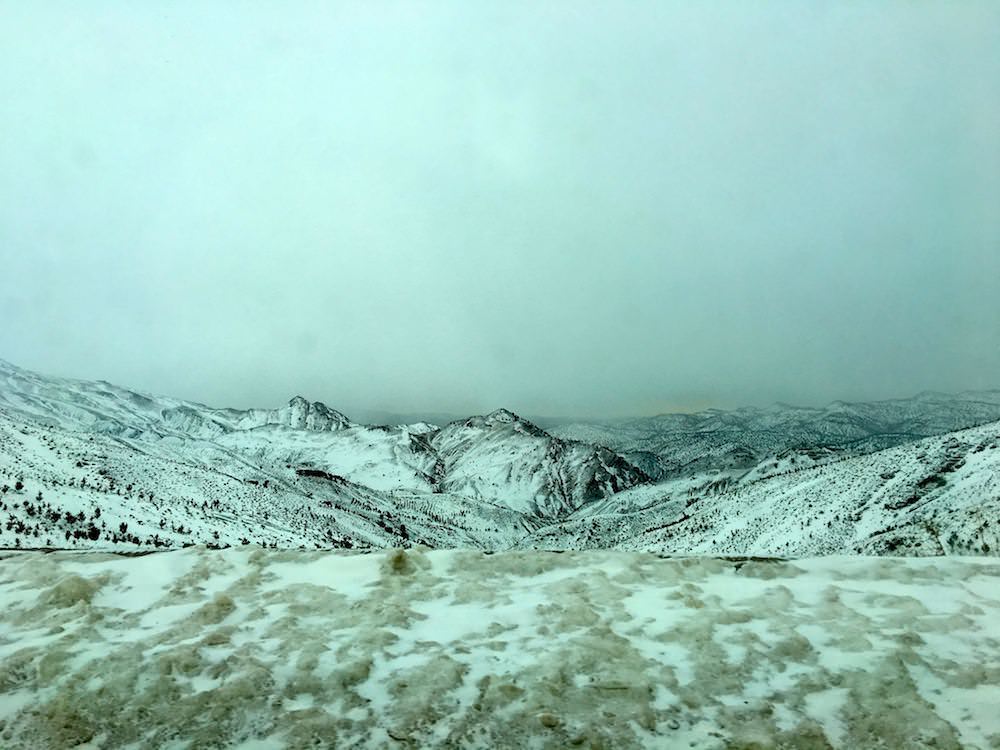
The Atlas Mountains covered in snow, so we had to make a detour.

Here is a map of the route we took around Morocco and into the desert.
KASBAH DAR AHLAM

A Kasbah is an oasis that is along the old camel route that went all the way to Timbuktu.  There is usually a large door that lets Camels through and then a people door inside of it.  Most of these Kasbahs have been turned into beautiful guest houses.  Kasbah Dar Ahlam was very authentic, each guest served in its own area, and authentic music played for dinner by local musicians.  They have a nice spa for massages and hammams.  It was a great place to stay.
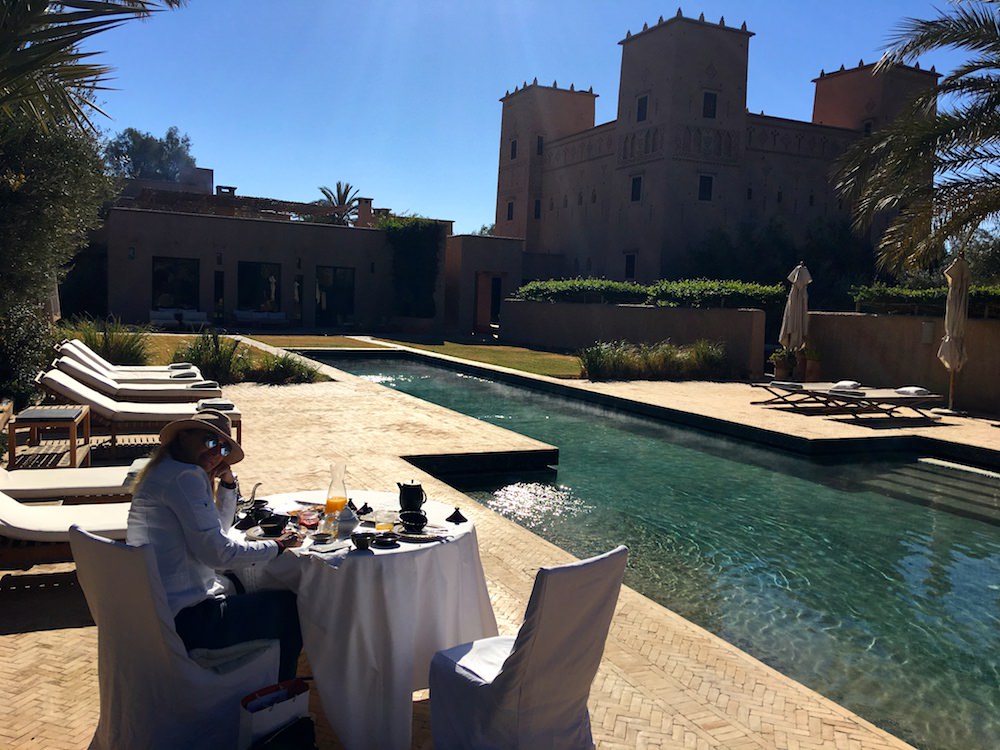
Breakfast wherever you like.
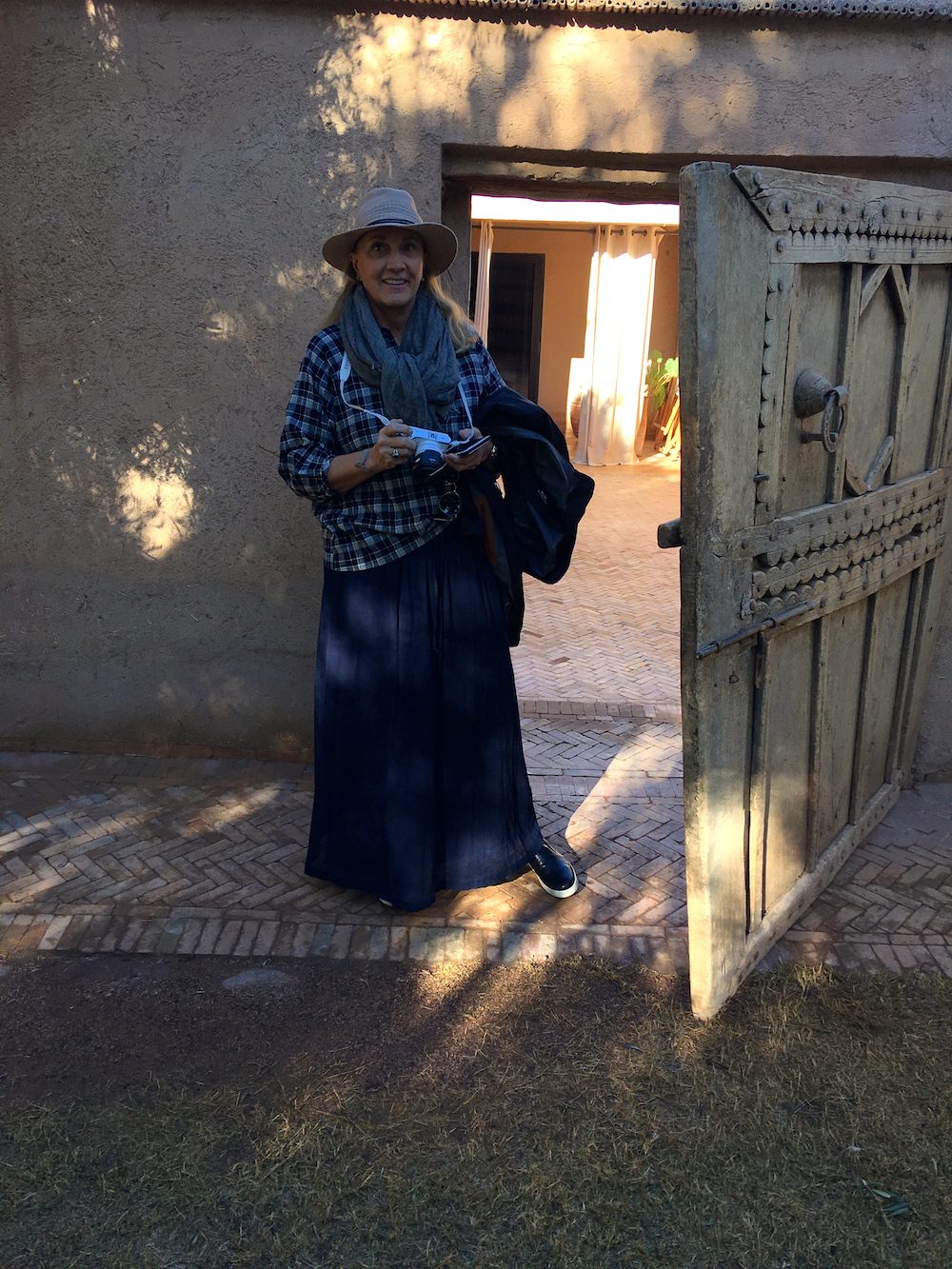
The outside gate into our room.
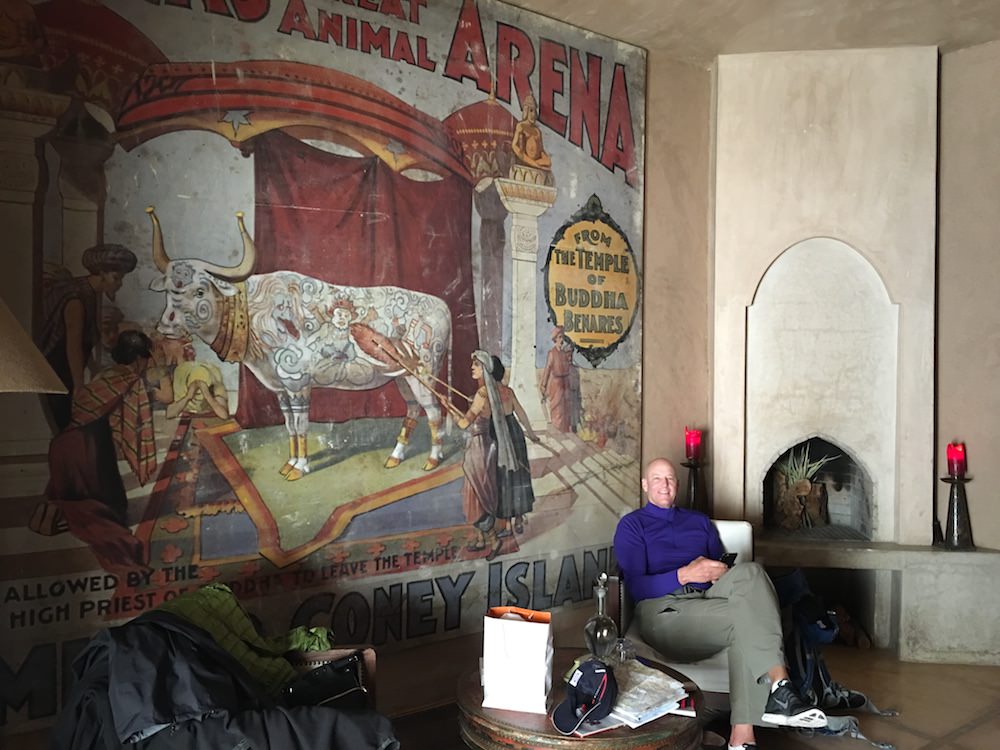
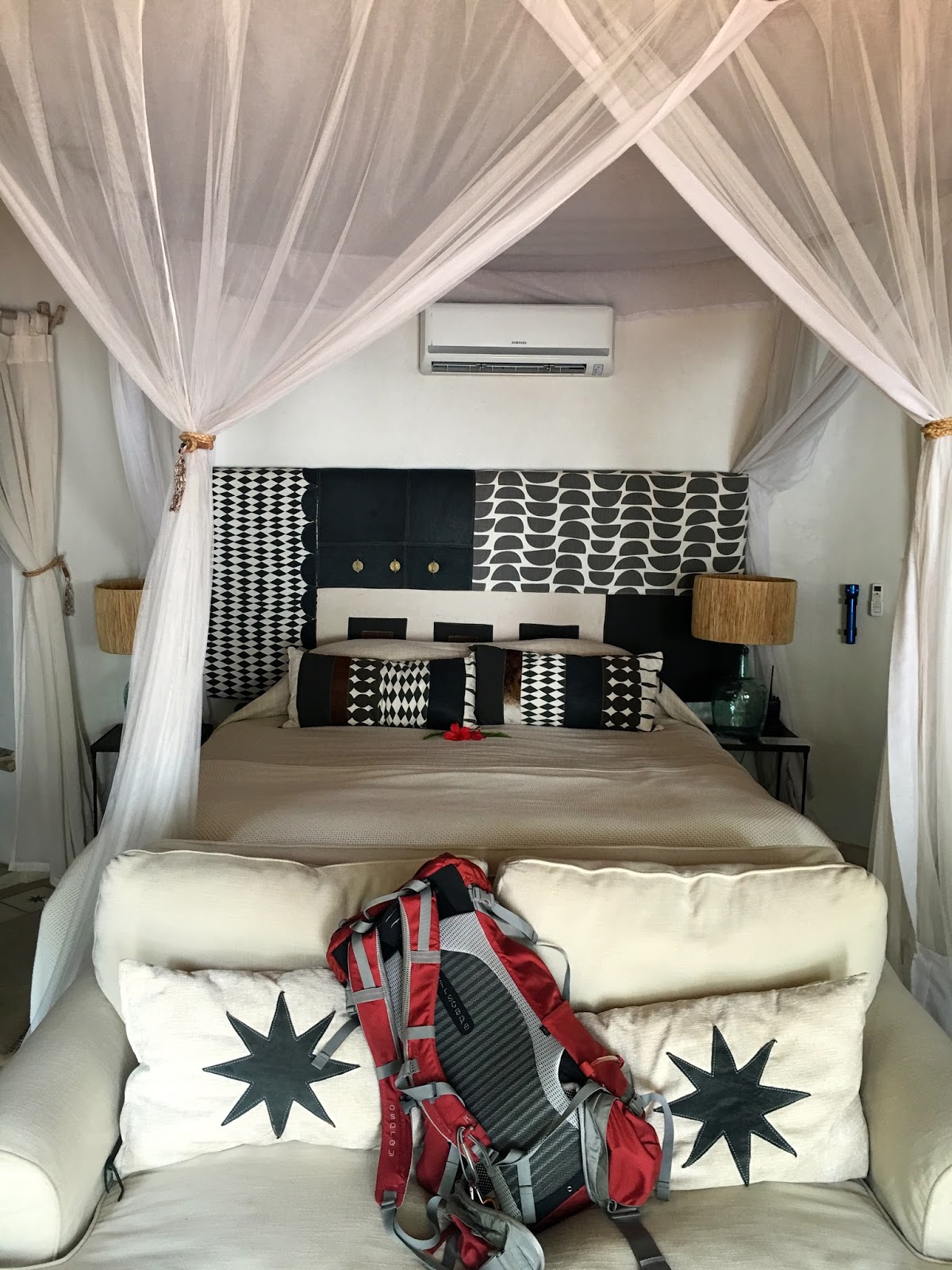
Inside our room
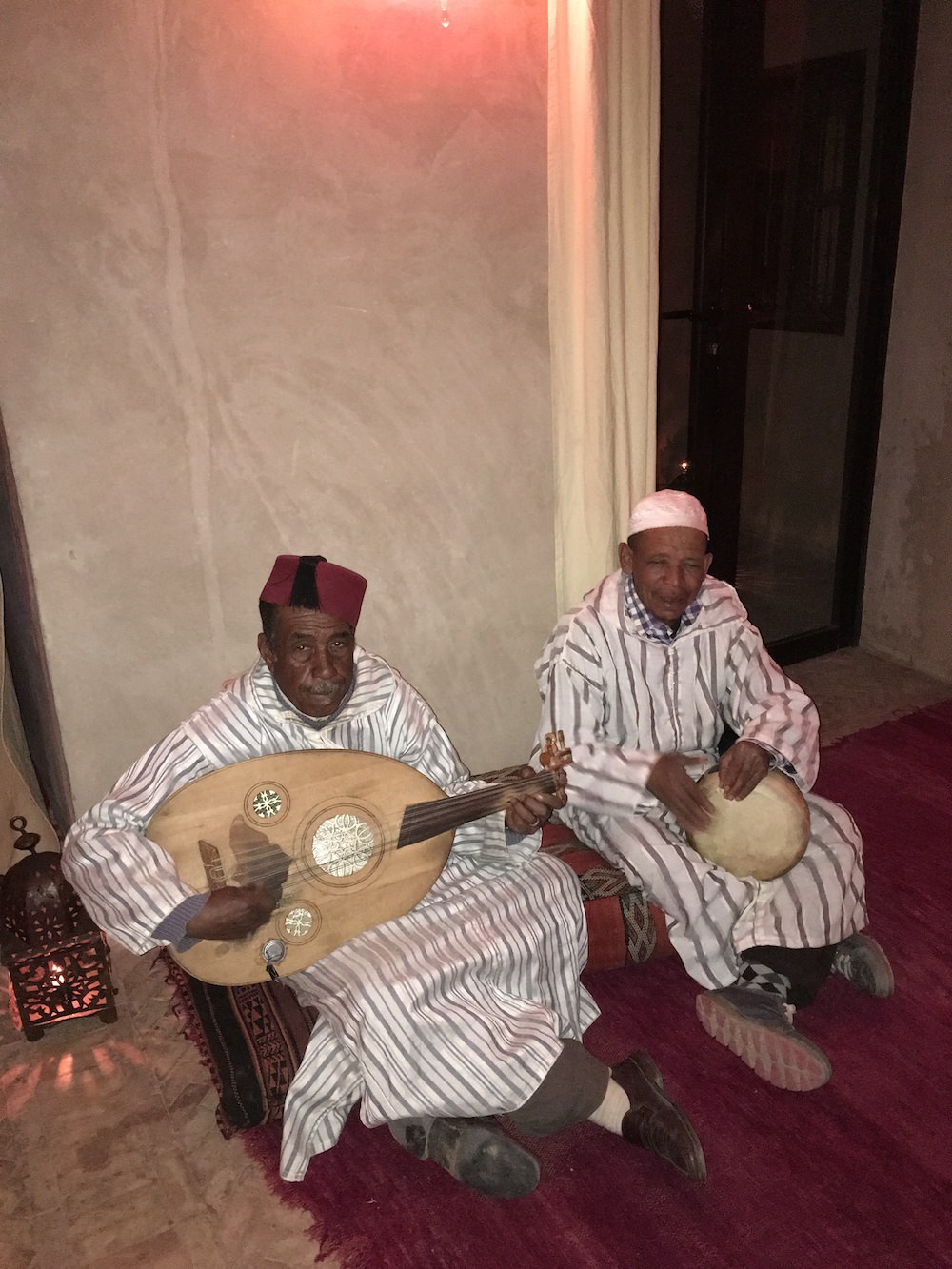
Local musicians play for you while you eat.
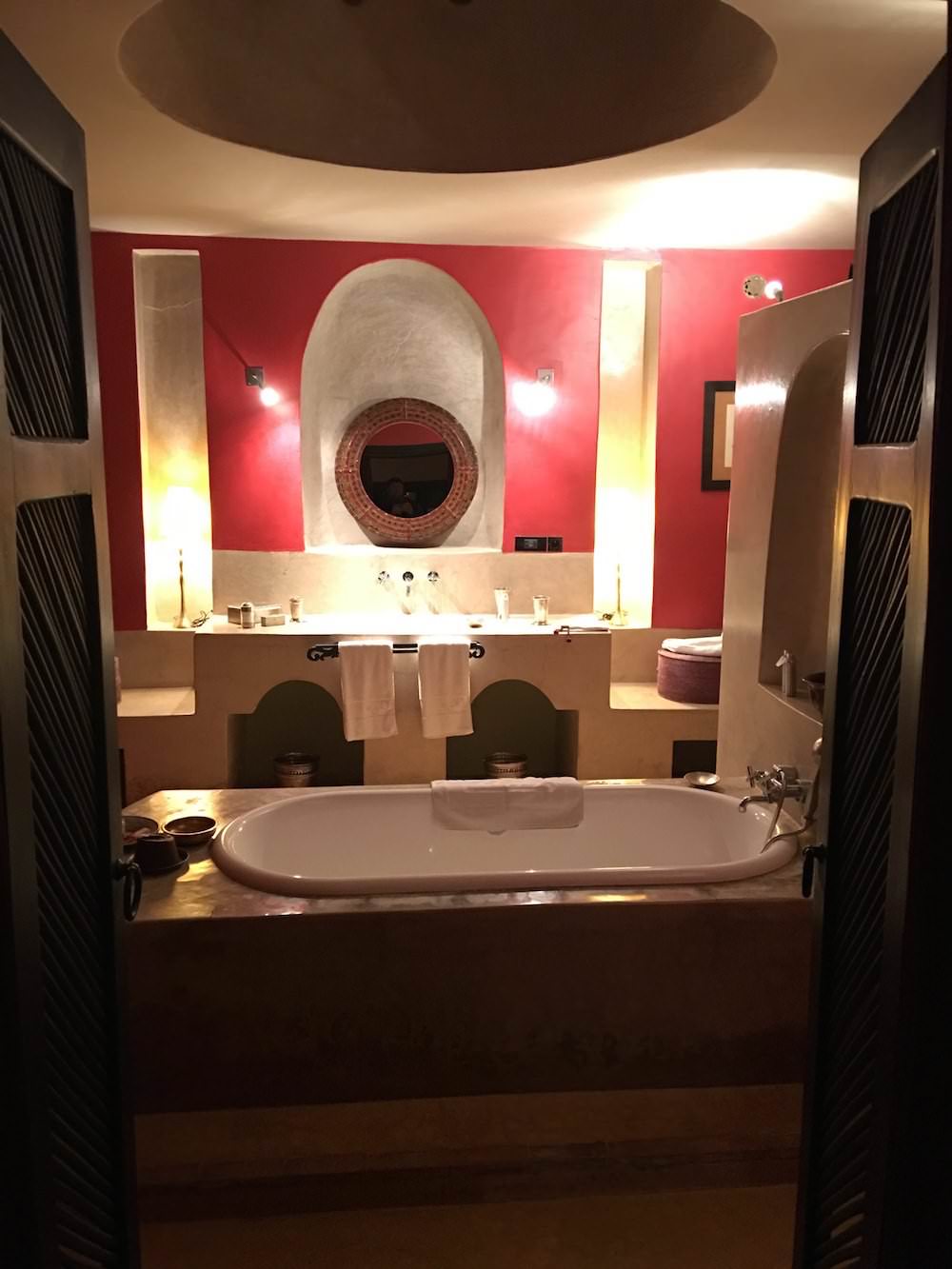
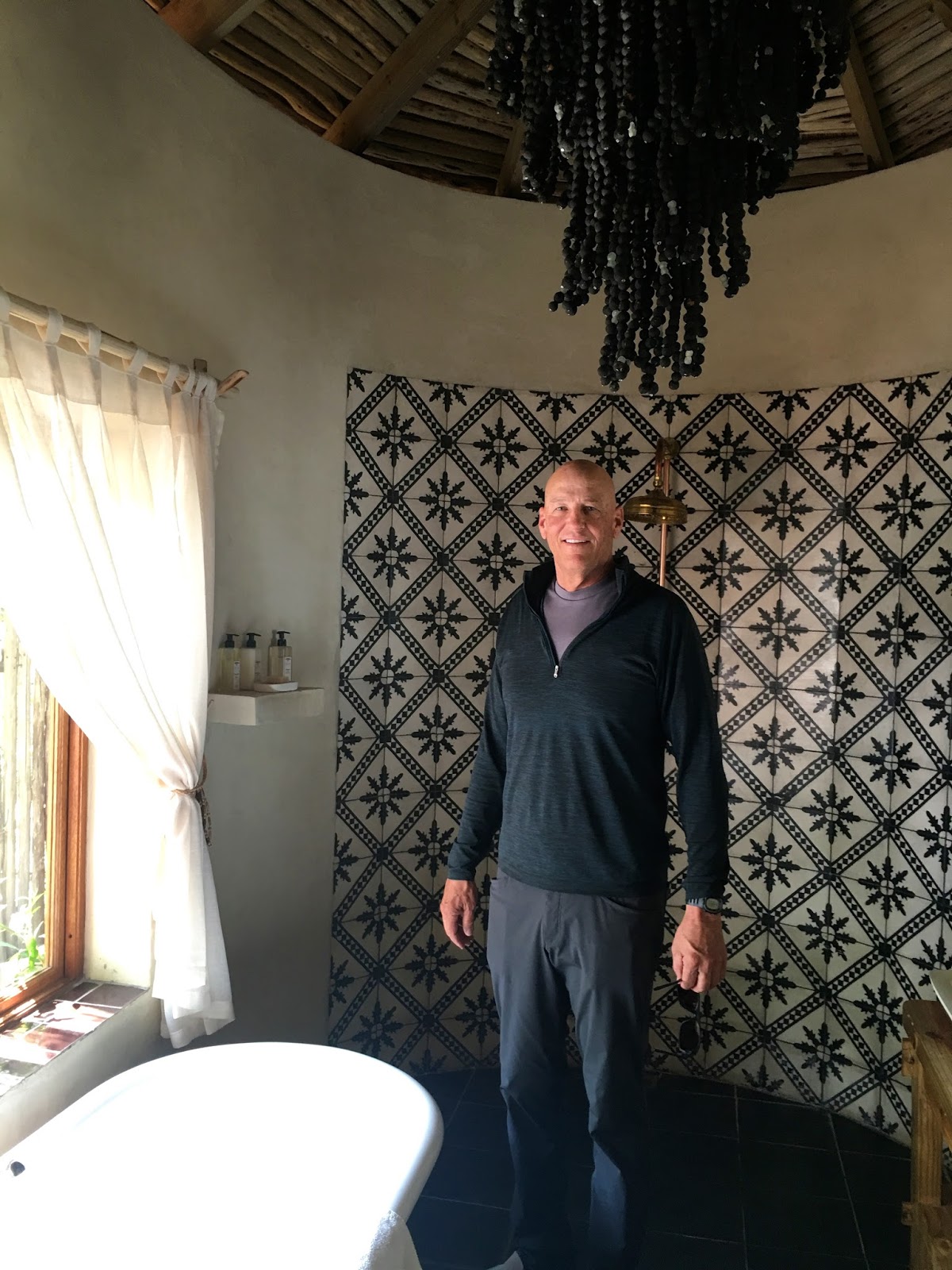
Our Bathroom.


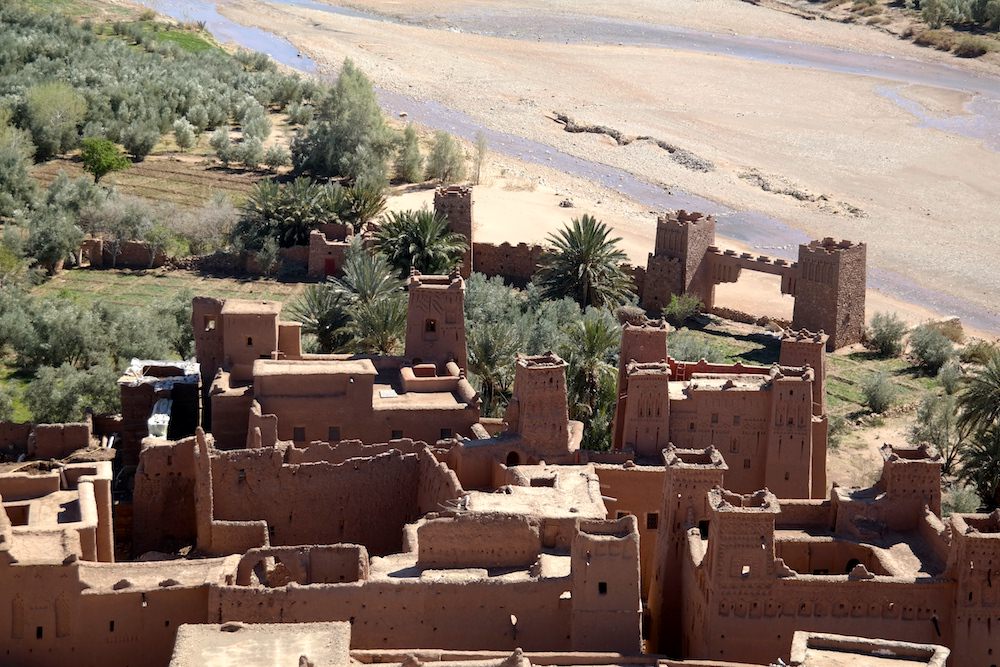
We took a side trip to see an amazing Unesco site.

AIT BEN HADDOU

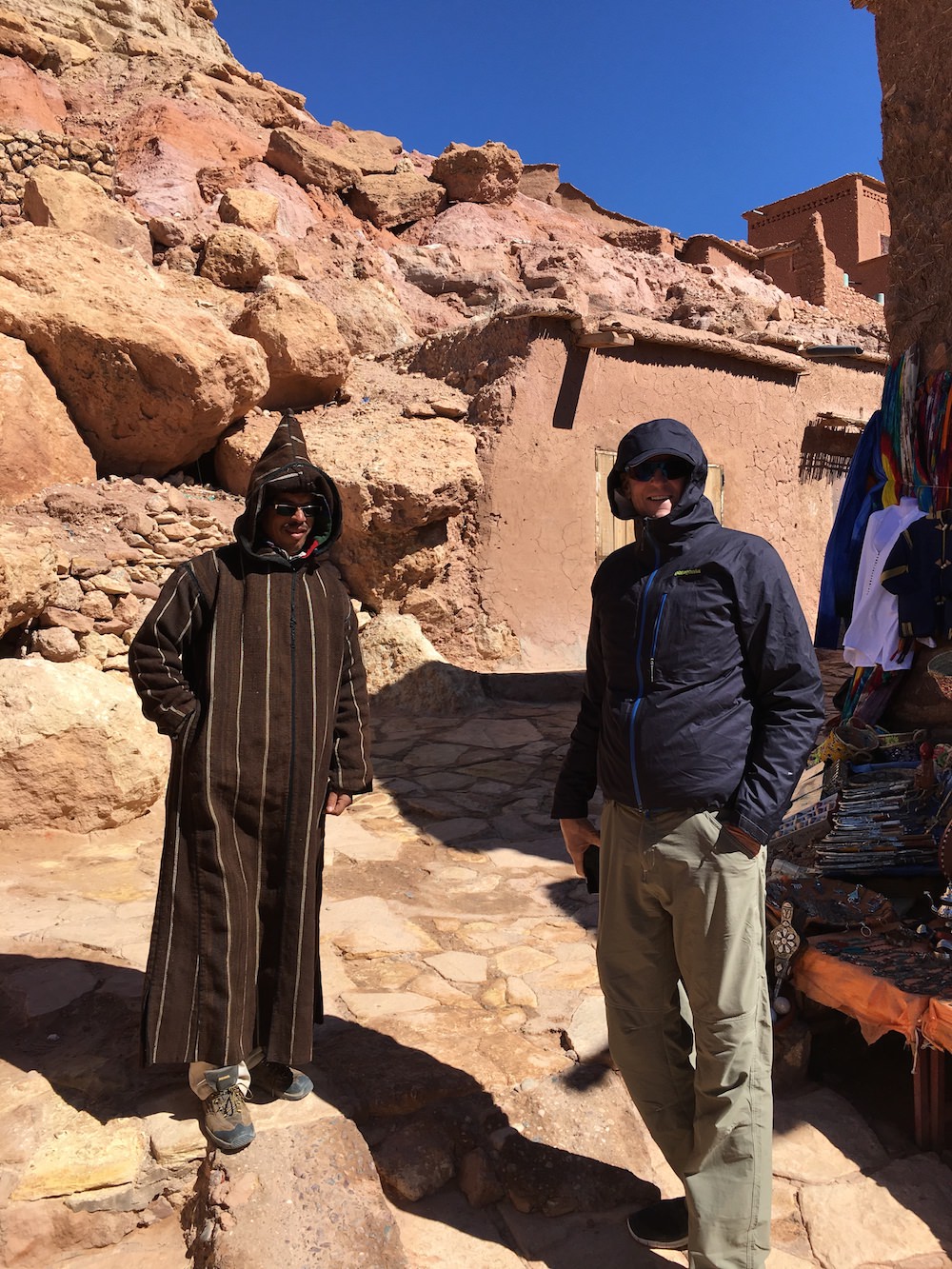
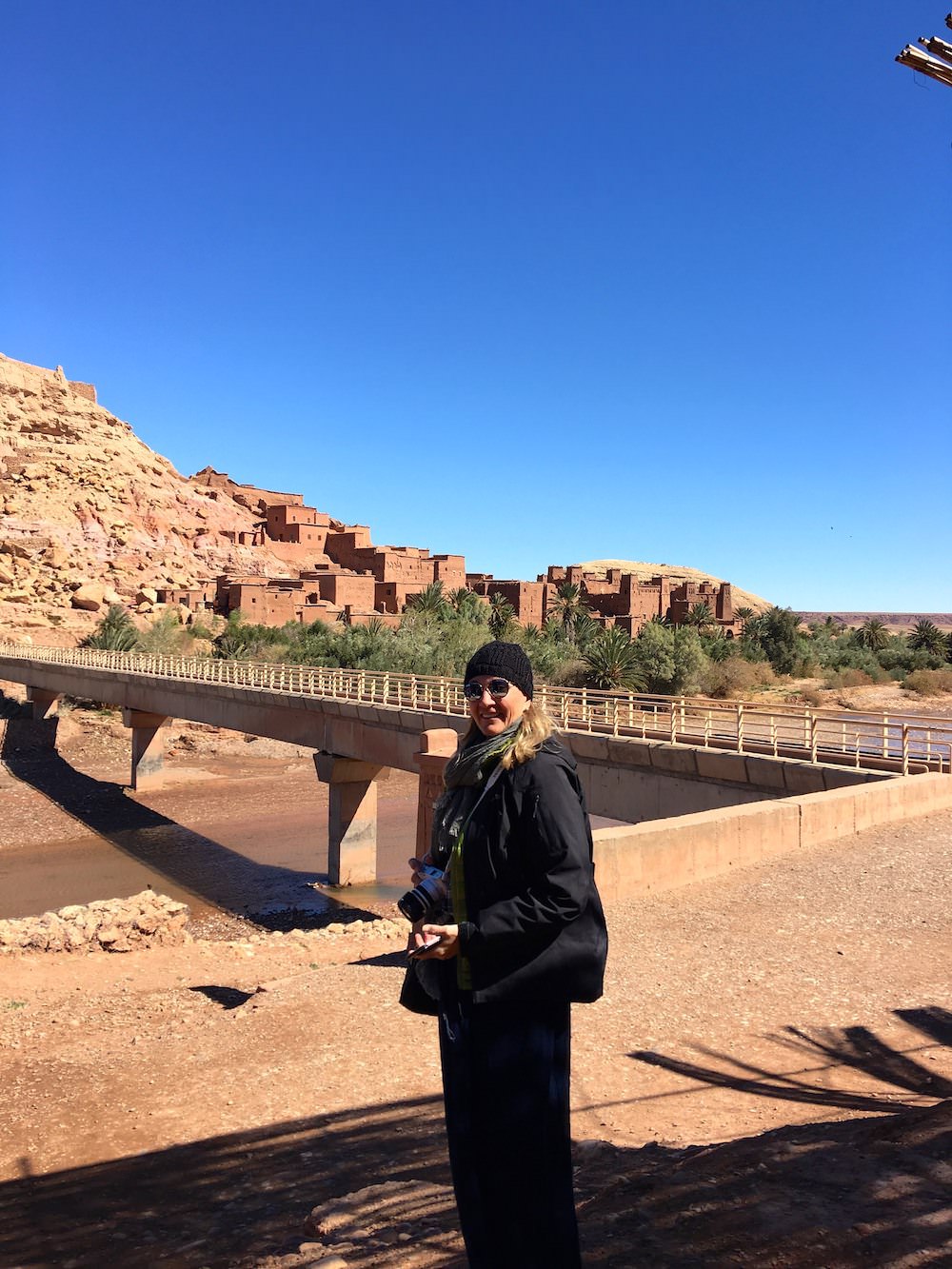
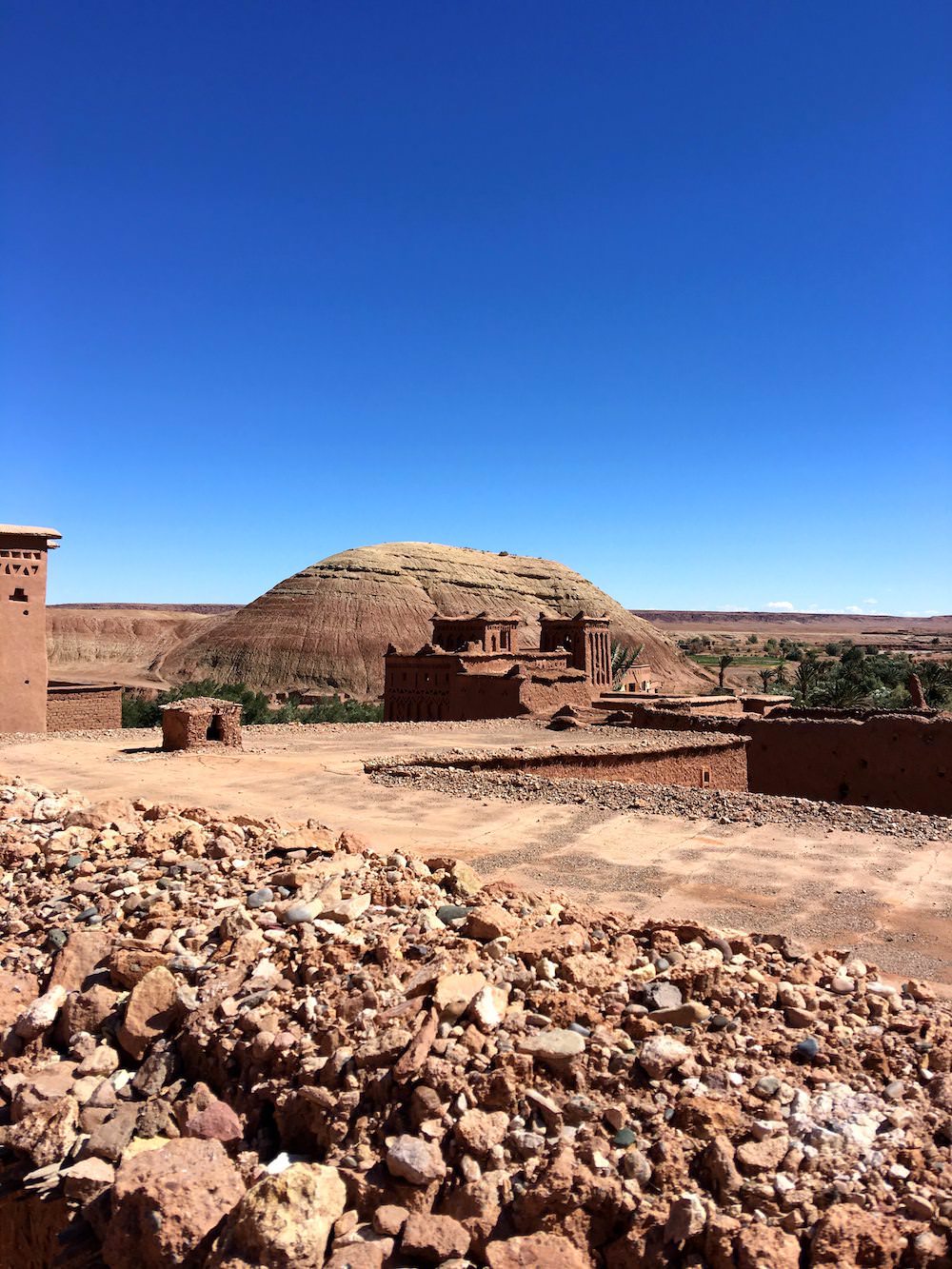
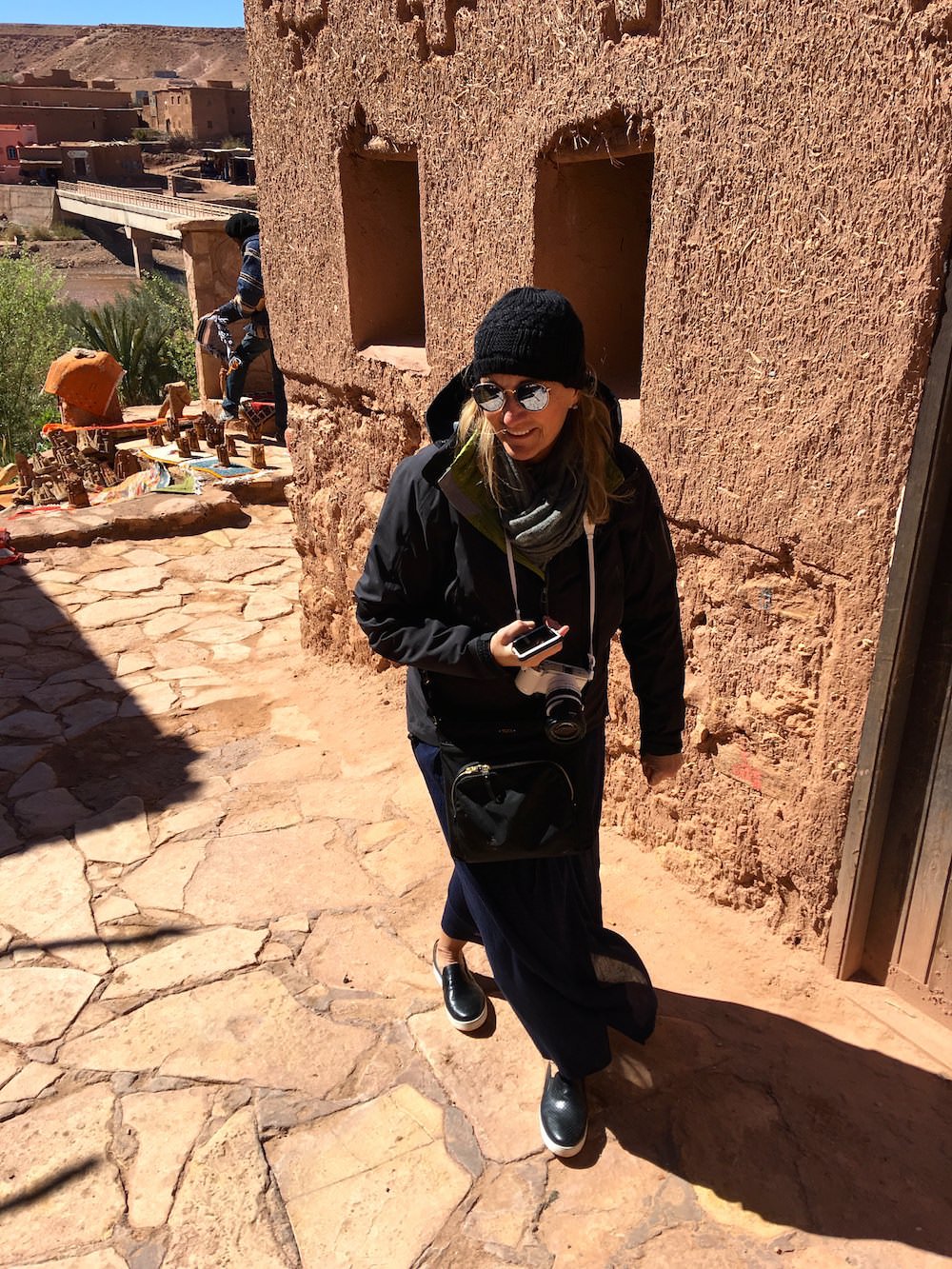
Ait Ben Haddou is a World Heritage Unesco site along the caravan route near the city of Ourzazate.  There are about 6 Kasbahs and some homes still left here and many movies have been filmed here.  (Gladiator, Prince of Persia, Game of Thrones, etc.).

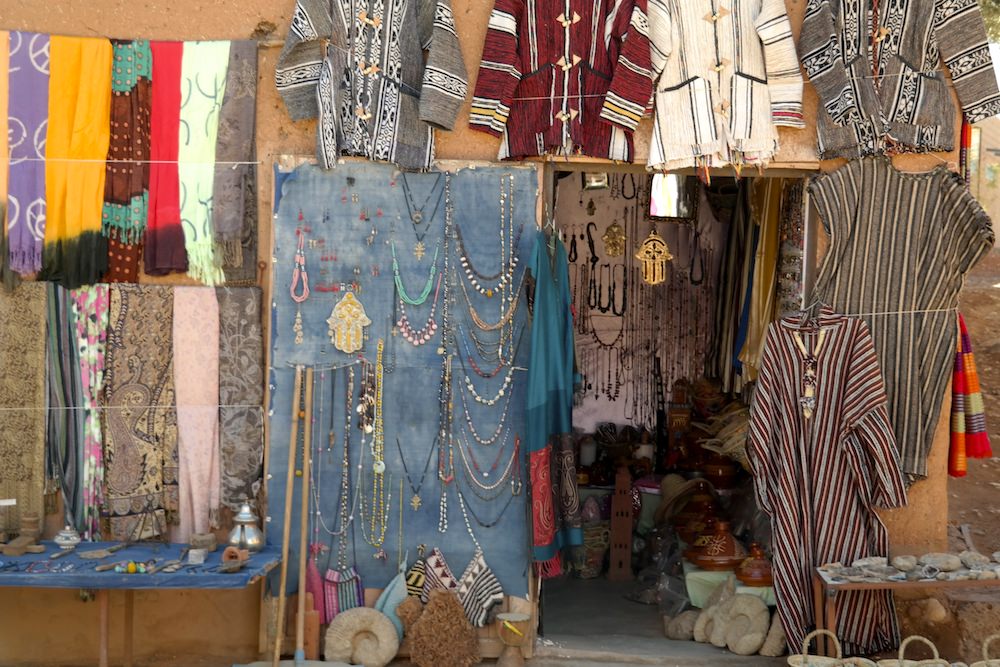
We bought some purses, paintings, a rug, and had tea with the rug dealer.
 

THE DRAA VALLEY

We drove our trusty Land Cruiser from Skoura down through the Draa Valley towards the Sahara Desert.

Villagers
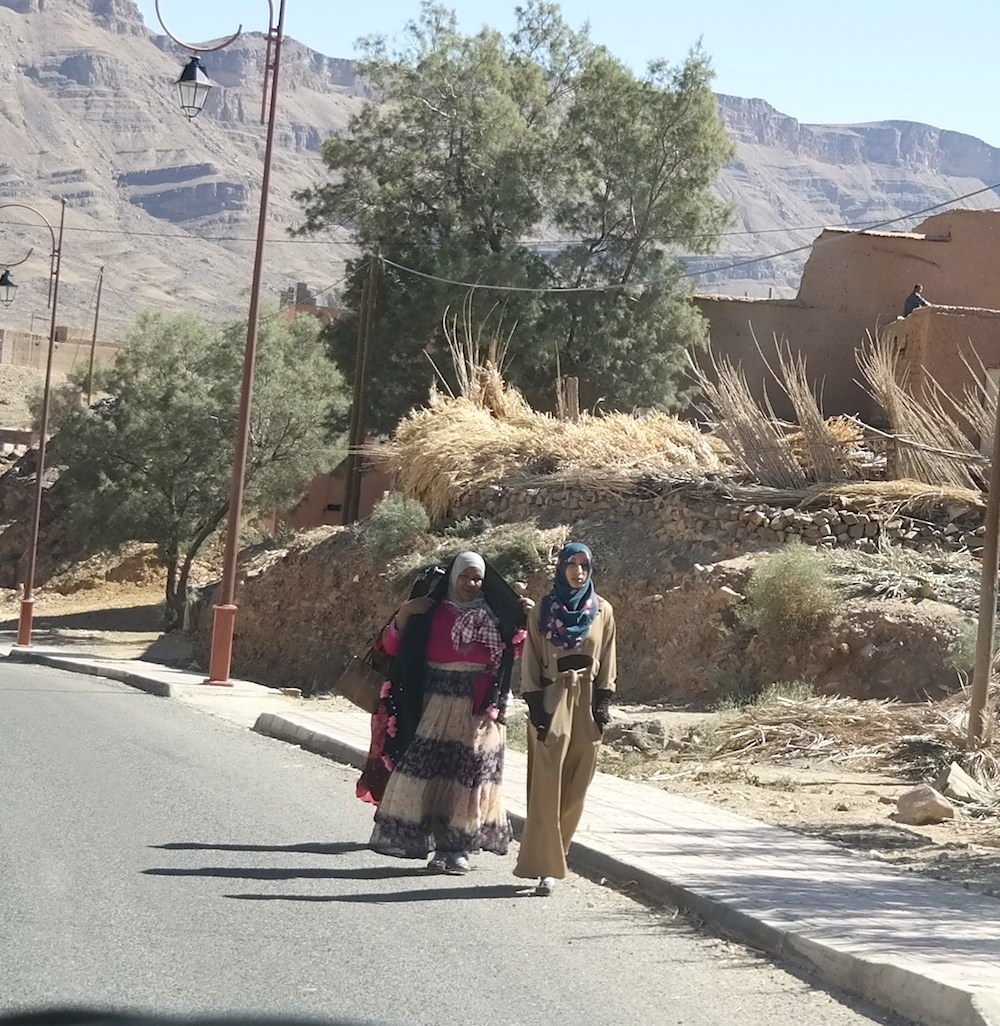
Local Women.

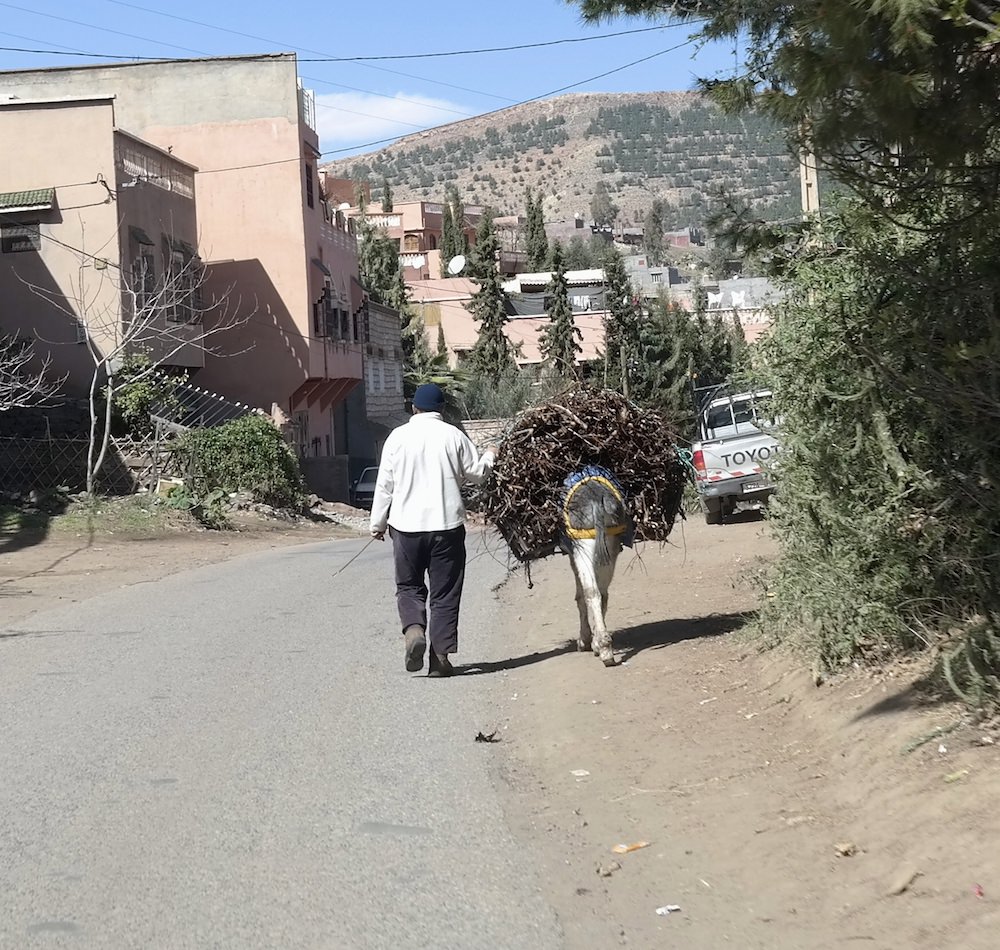
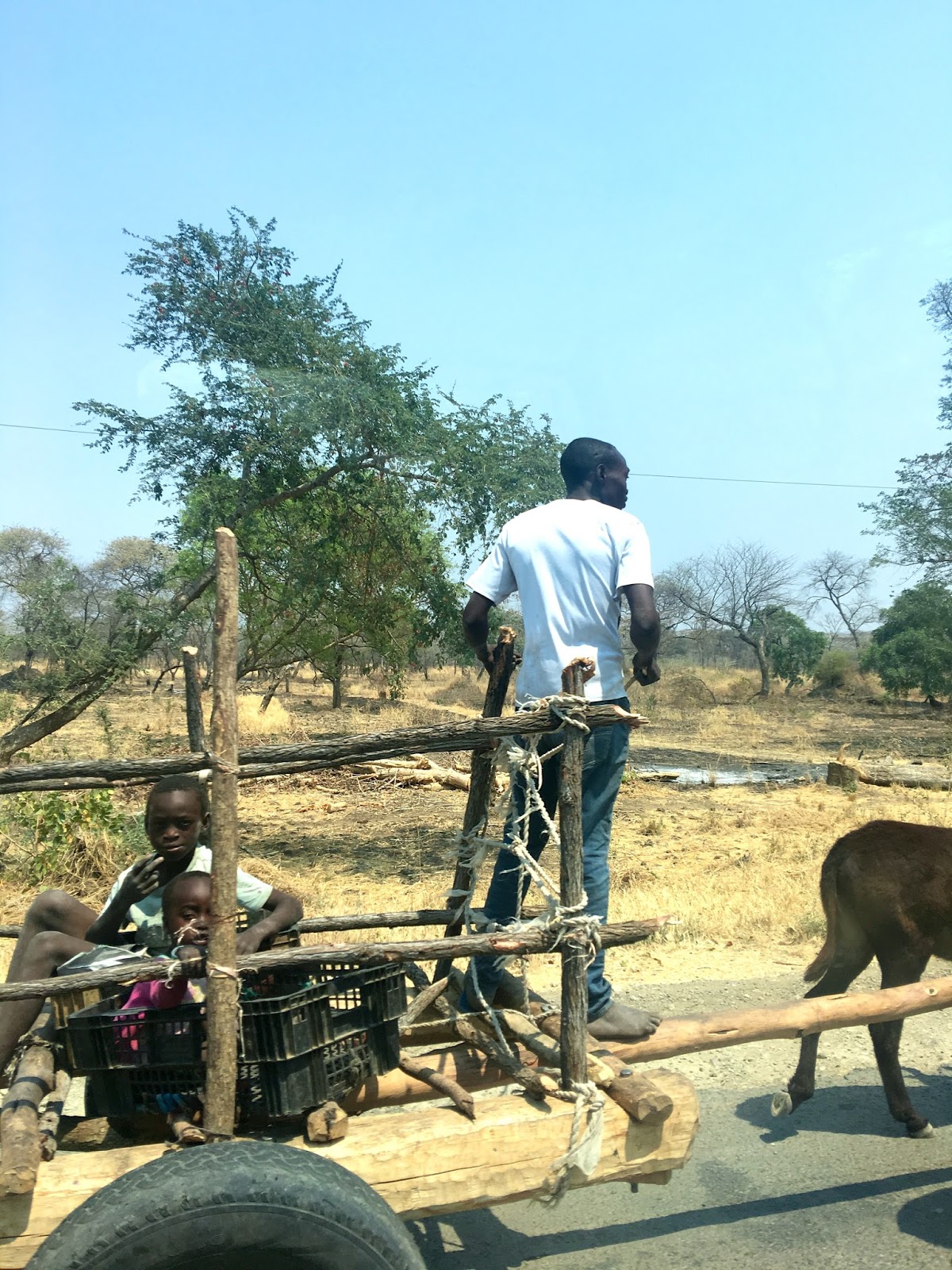
We passed through Berber Villages, palm groves, Kasbahs, and saw lots of donkey carts…

We plan to drive with a Berber guide (in our backseat, telling us where to drive across the sand).

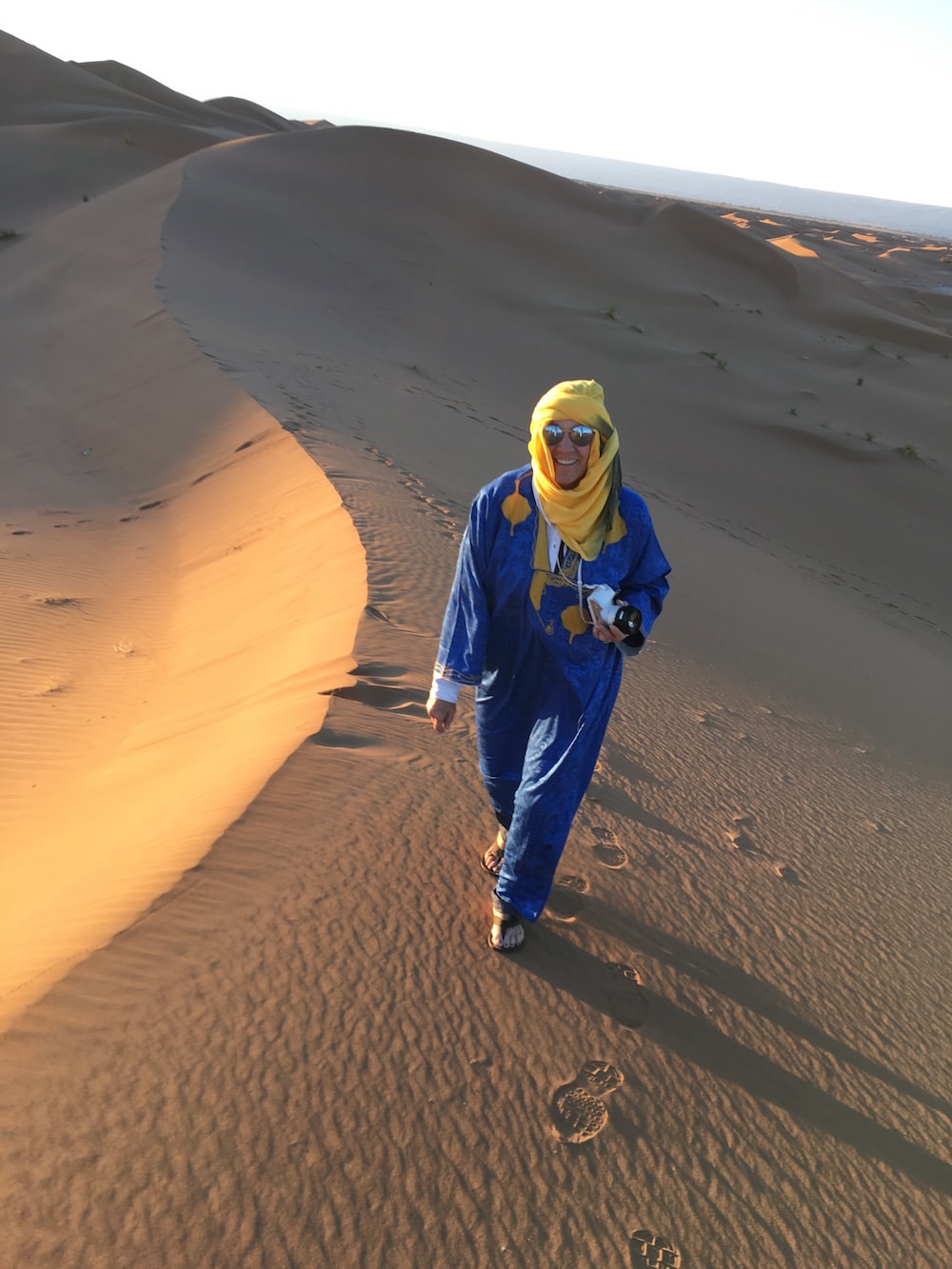
The Berbers are the nomads that were Morocco’s original inhabitants.  At Zagora, the last town before the desert, we picked up our guide, named Hassan, and purchased the traditional blue clothing and turbans for ourselves to wear in the desert.

Hassan and Barb
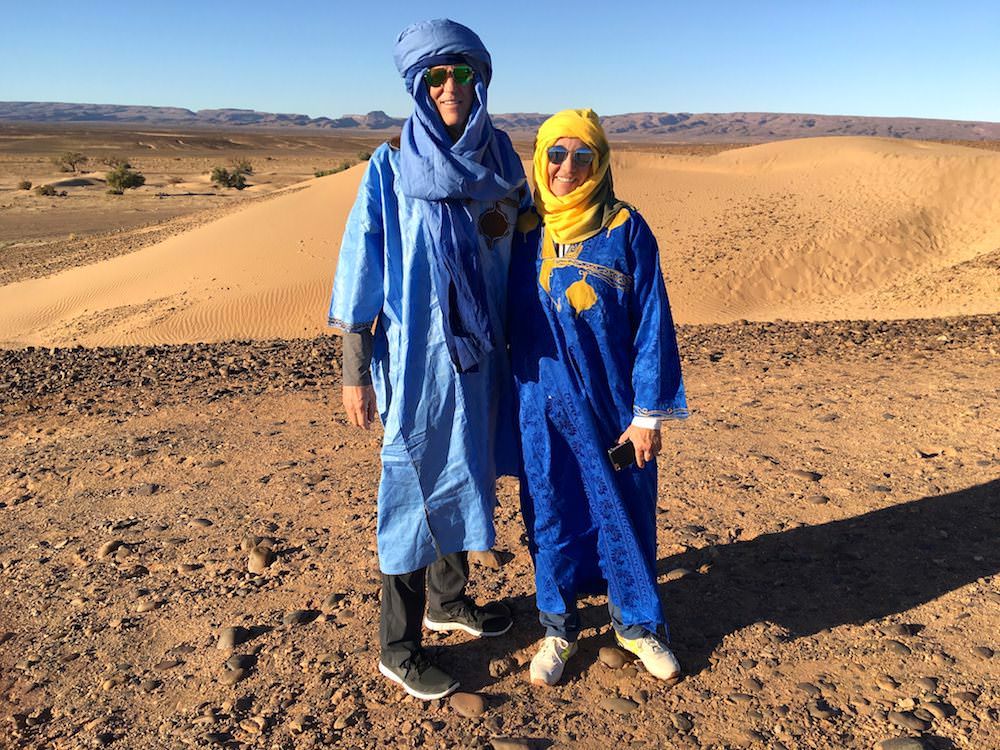
Barb noticed that she got more respect and friendliness from the Berber women when dressed in their clothing.

Scott had a blast driving across the miles of sand in the desert, with Hassan directing which way to go from the back seat.  (There are no roads.).  Hassan and his family grew up in the desert, so he knows where to find an Oasis, or places we wanted to see.

We are heading to the tented camp of Erg Chigaga.

ERG CHIGAGA
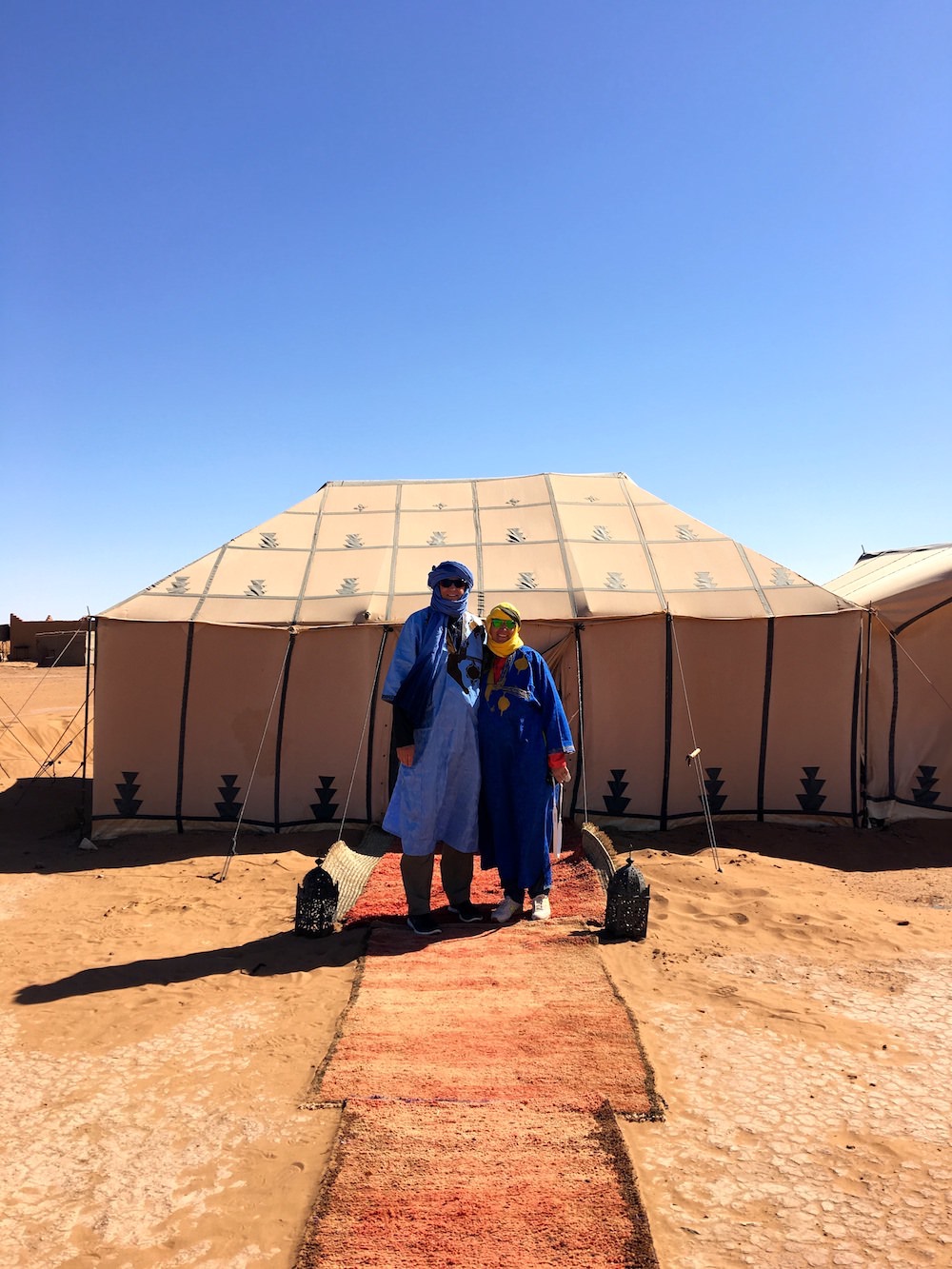
Our Tent for the night.
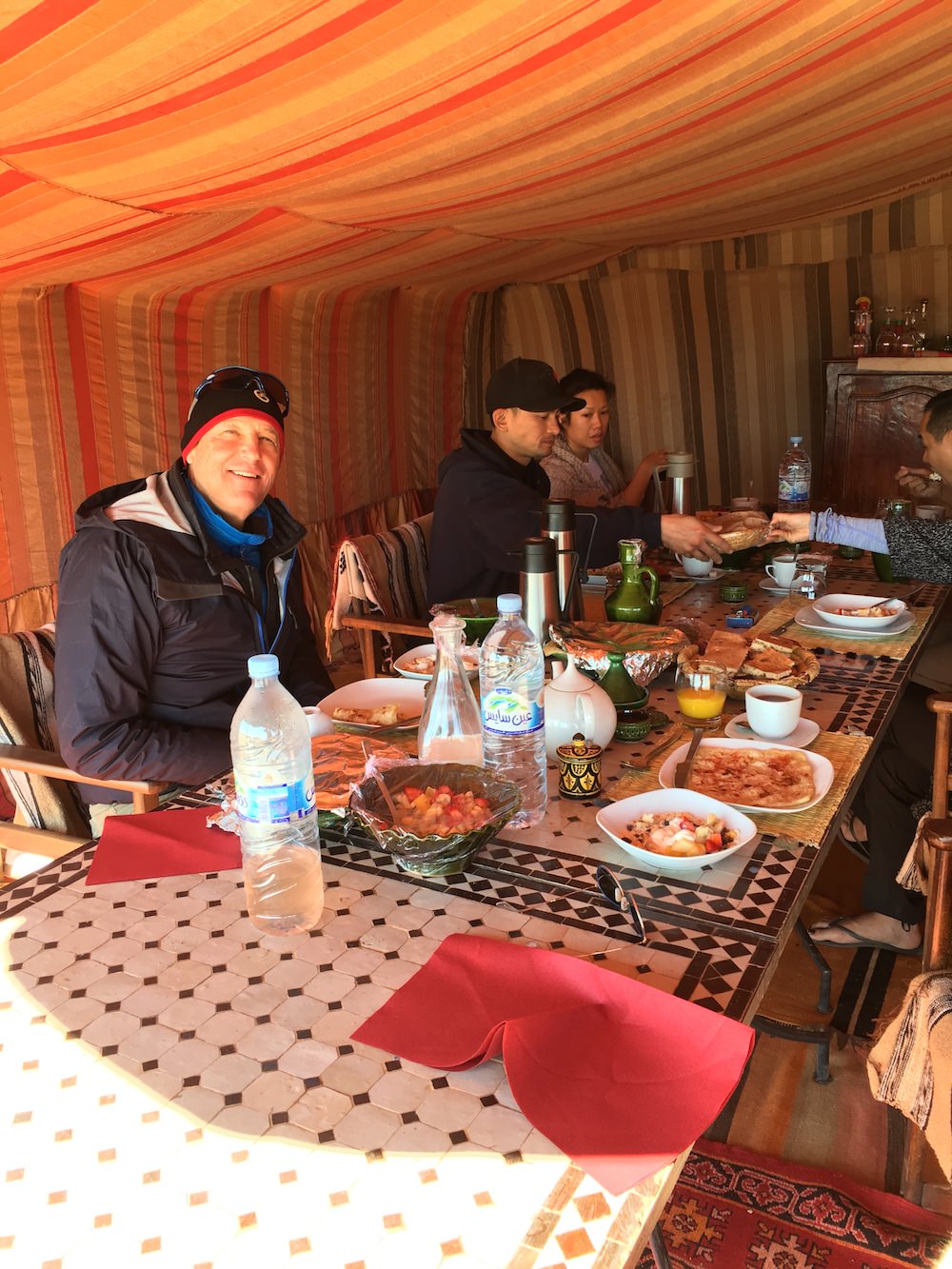
There are about 5 tents in camp.  This is where we ate.

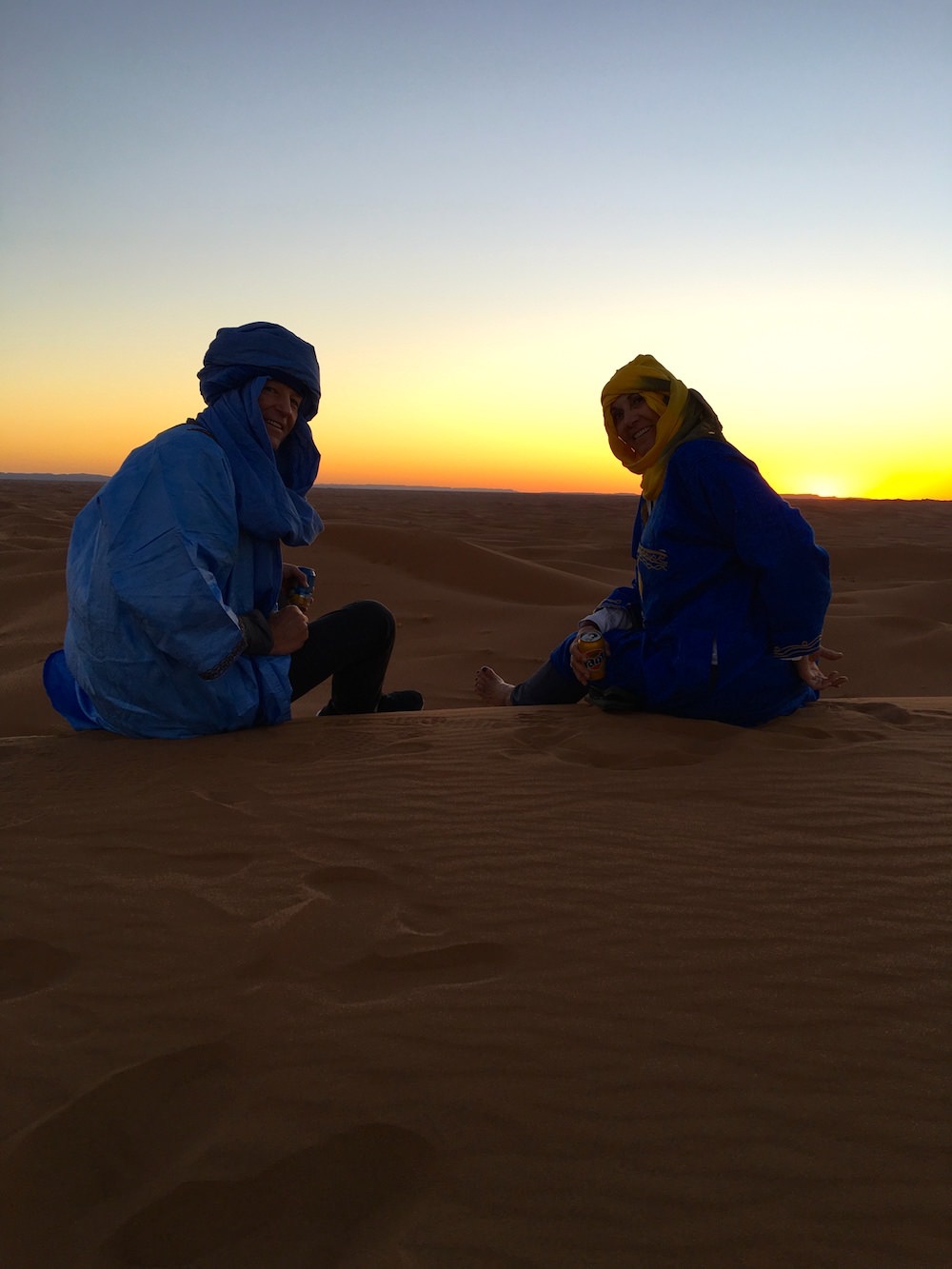
After arriving at the tented camp we headed up the dunes for our sundowner.
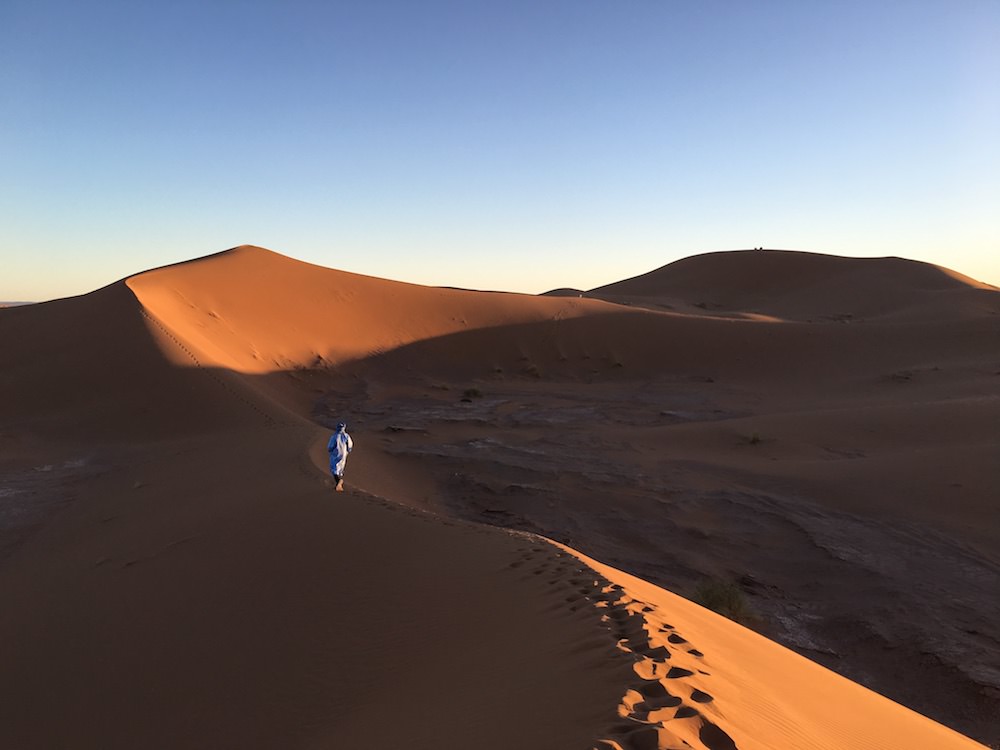
Our Sundownder

Barb turned into BERBER GENIE and decided to do a Berber Dance.  Our sundowner guide said, “You make me so happy”.
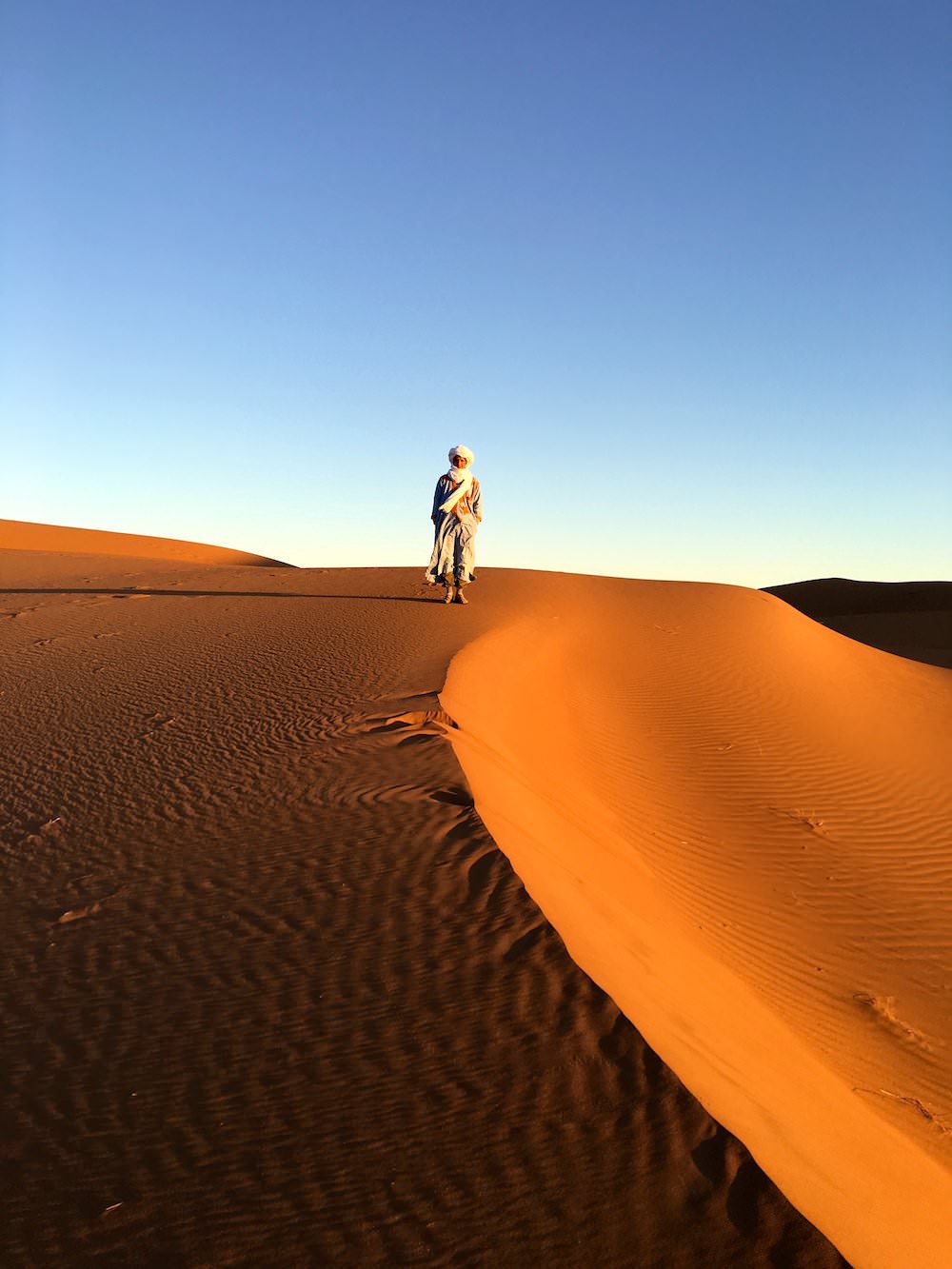
This was our “Happy” Sundowner guide.
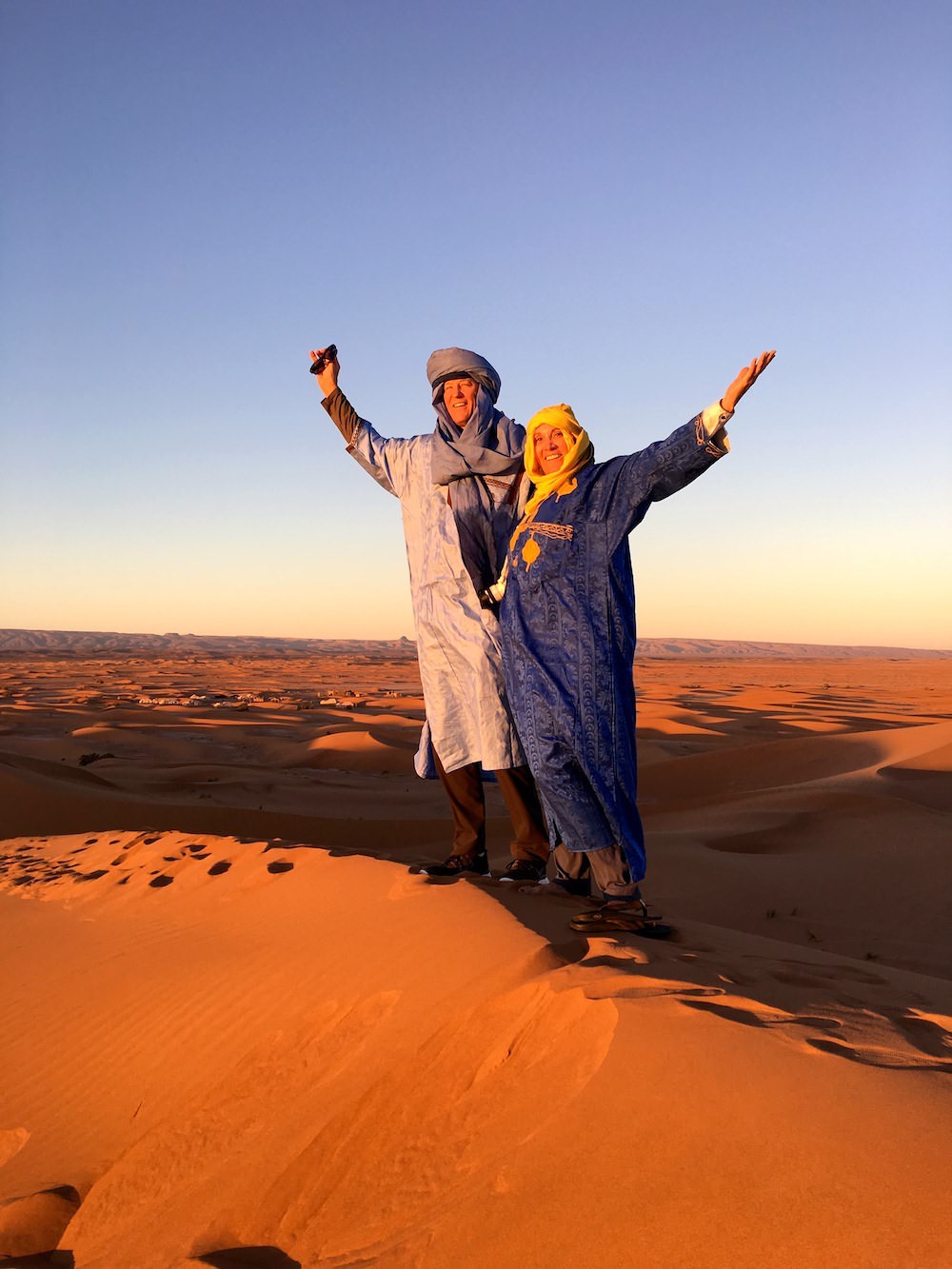
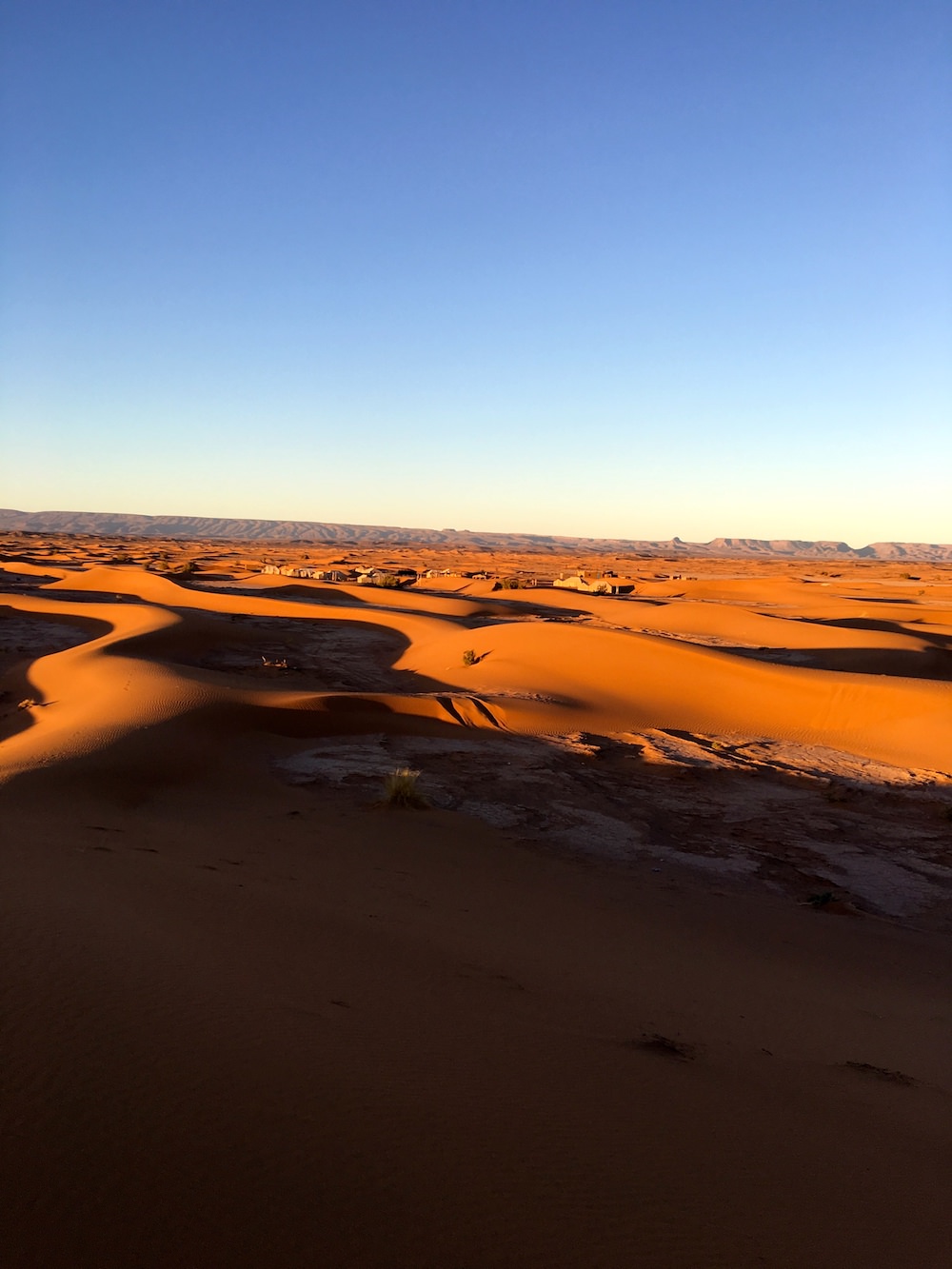
The camp of Erg Chigaga, out in the middle of the Sahara Desert.

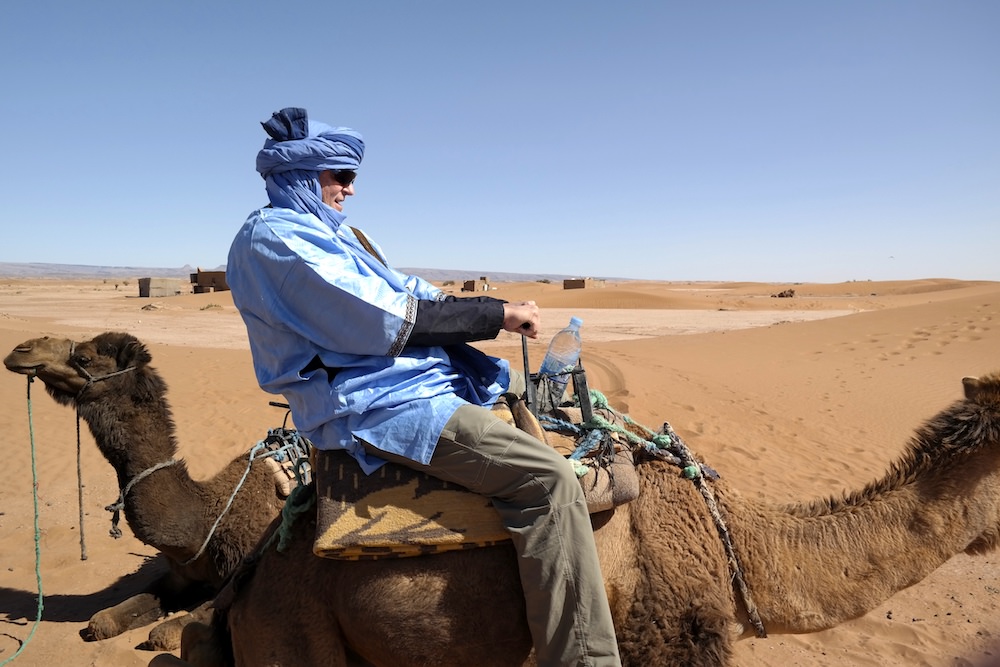
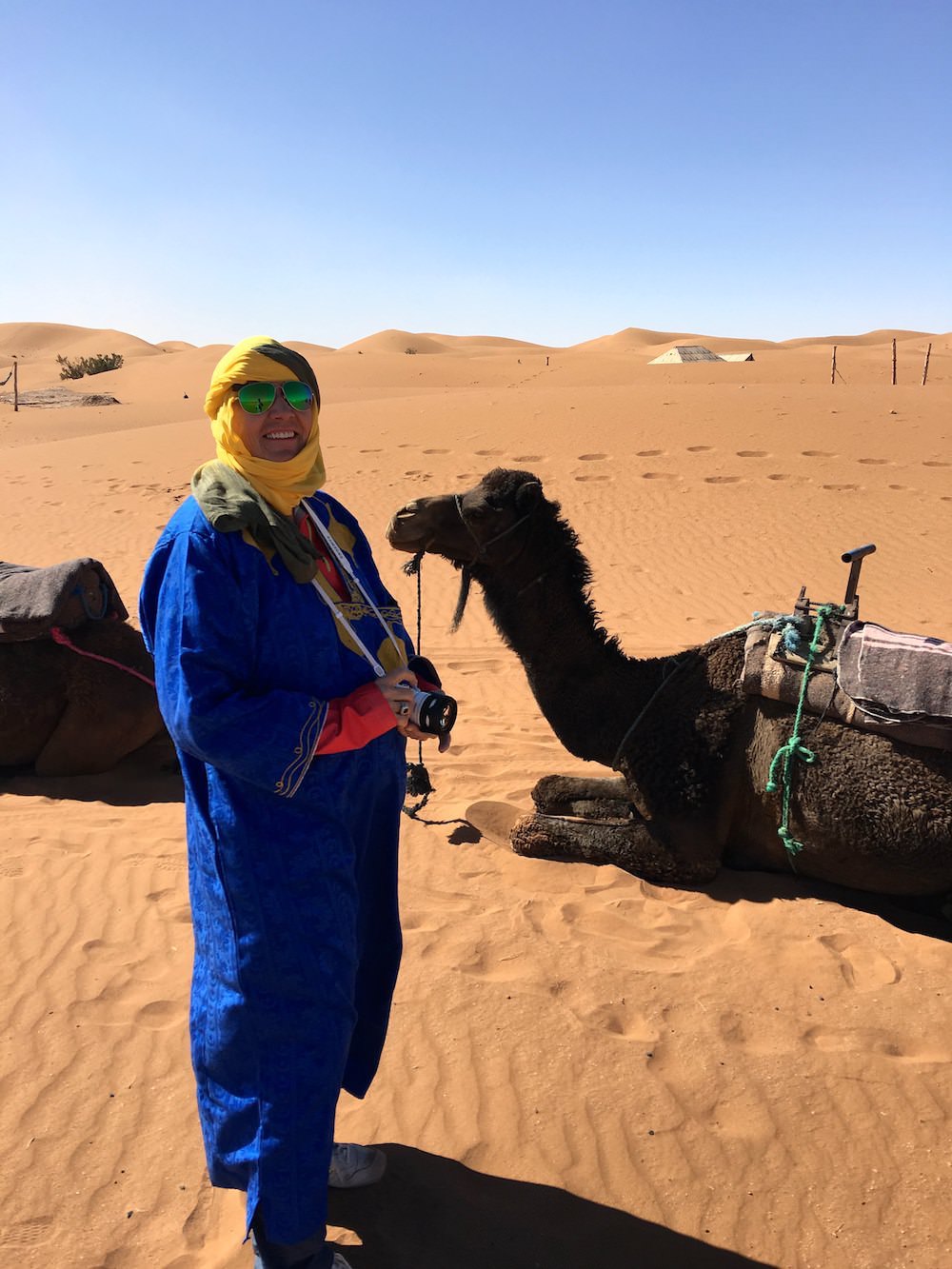
We spent a very cold night in our tent out in the desert, and the next day started out on a camel trek.
AN UNEXPECTED ADVENTURE

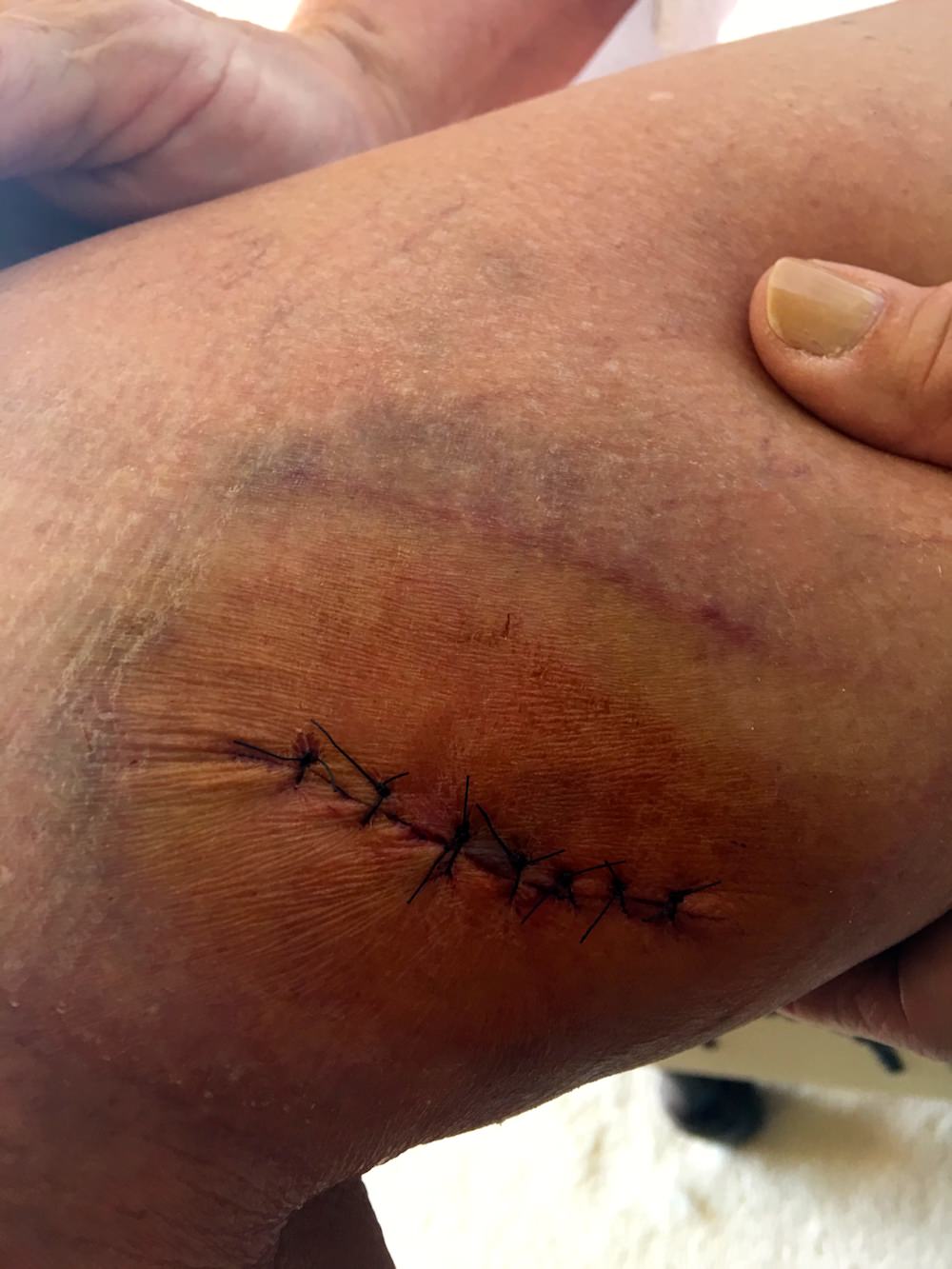
Barb cut her leg from a screw sticking out of the camel saddle which needed stitches.  We had to drive a fast 4 hours back out of the desert, near the Algerian border, to the town of Foum Zguid, and back up the road to the city of Ourzazate to find a doctor.  We found a private clinic that could stitch Barb up.
.
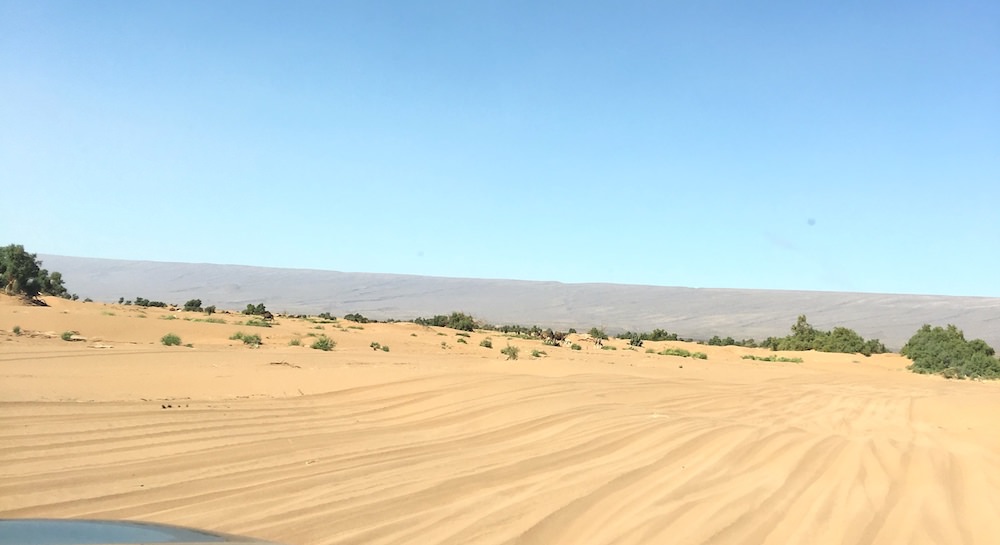
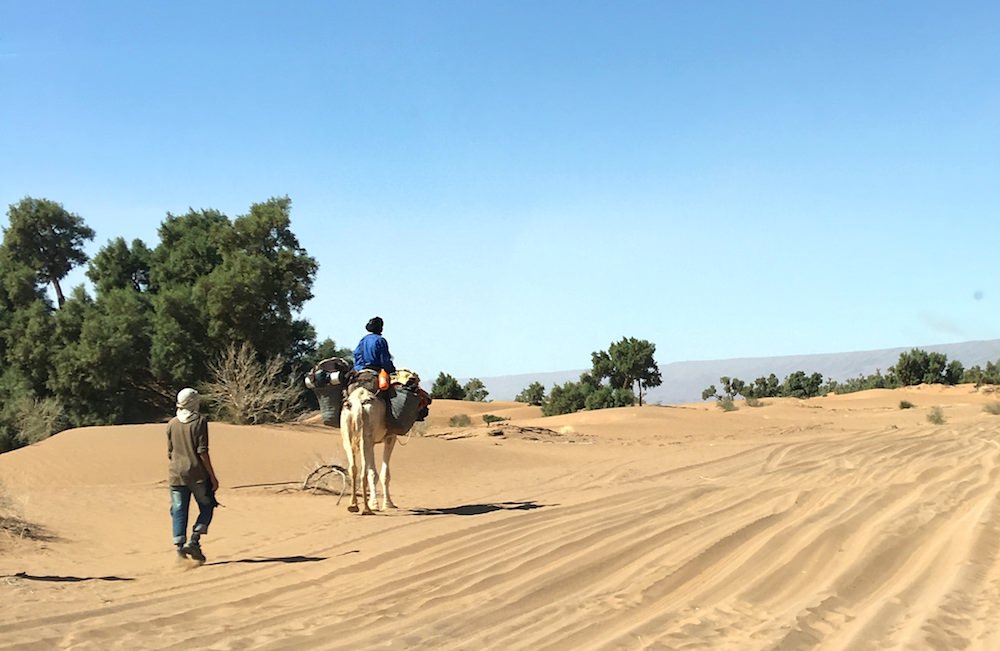
Driving across the sands.

The sights along the way.
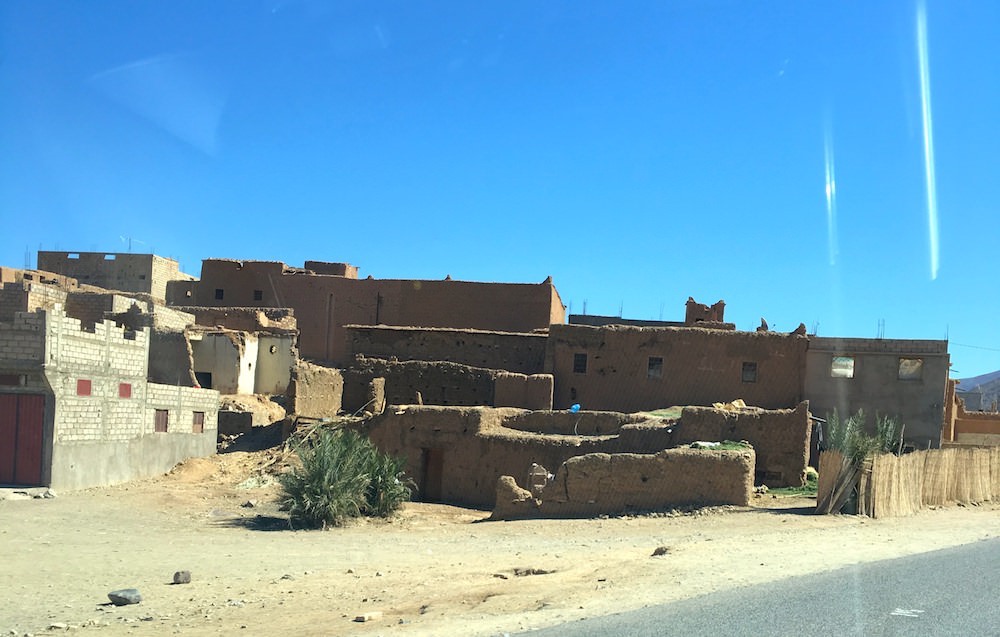
Towns along the main road.

We missed our second night in the desert, but stayed in Ourzazate at the Berber Palace Hotel.
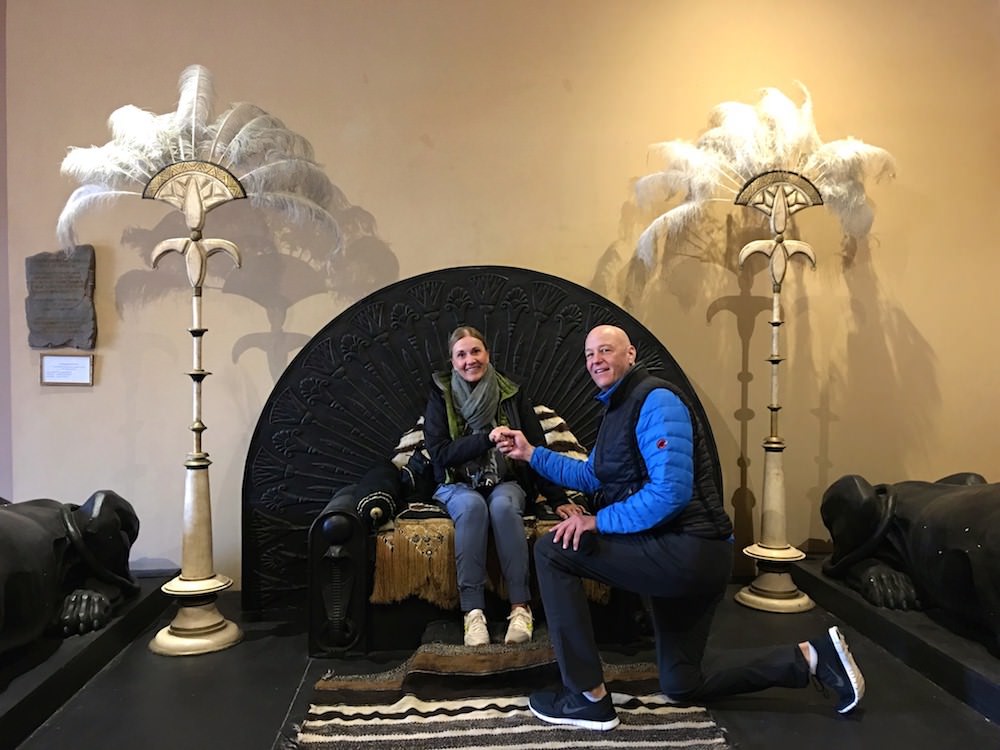
Berber Palace Hotel.

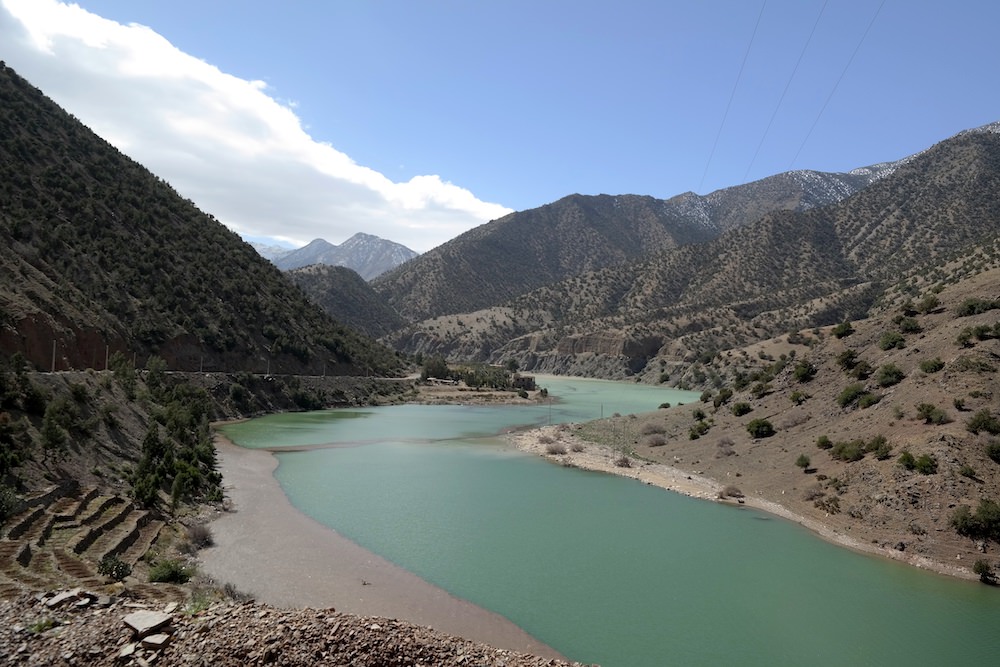
The next day we drove over the Atlas Mountains, through Tischla Pass (it was open again, but with lots of snow), and back to Marrakesh for a night.
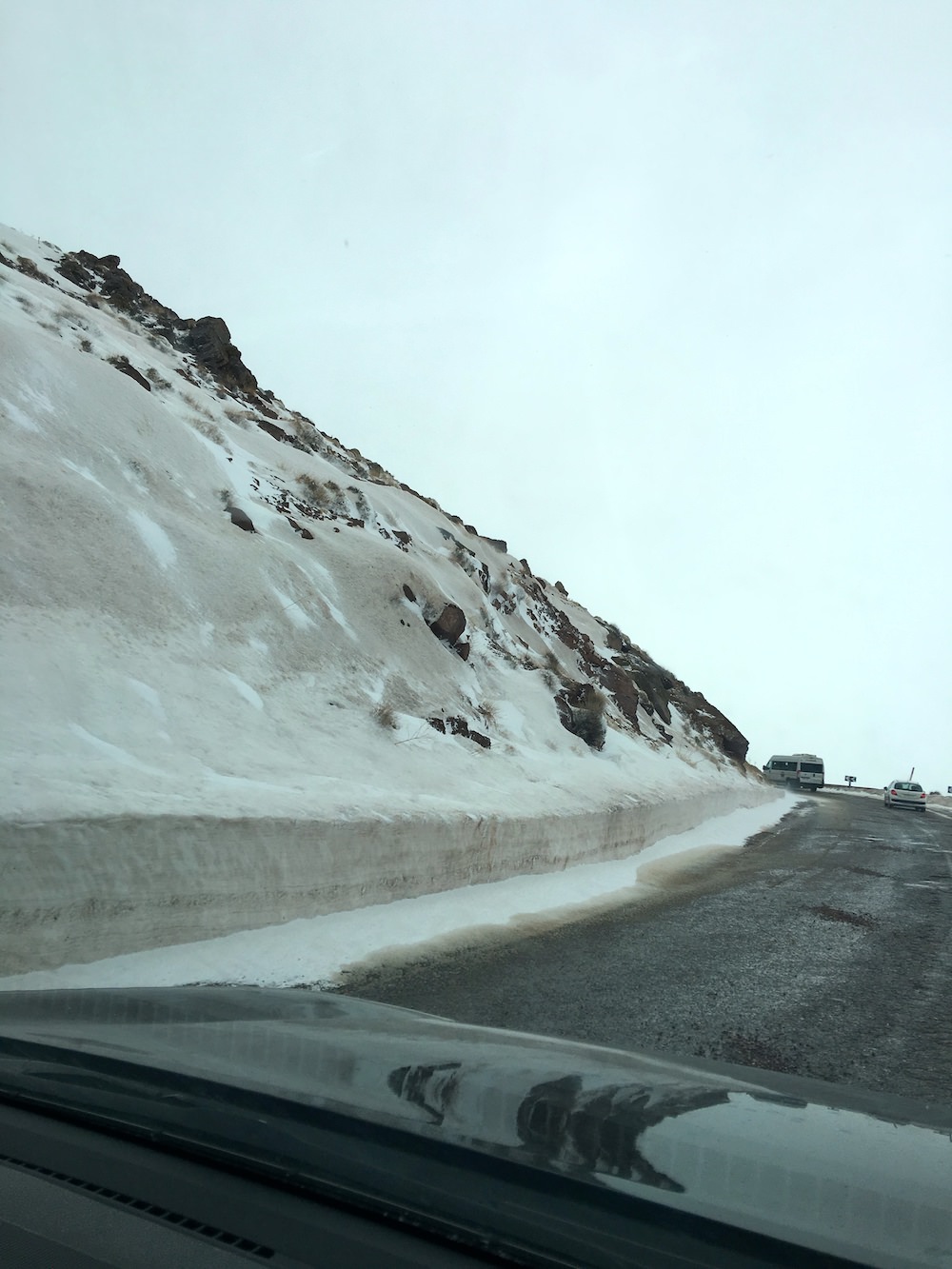
Tischler Pass.
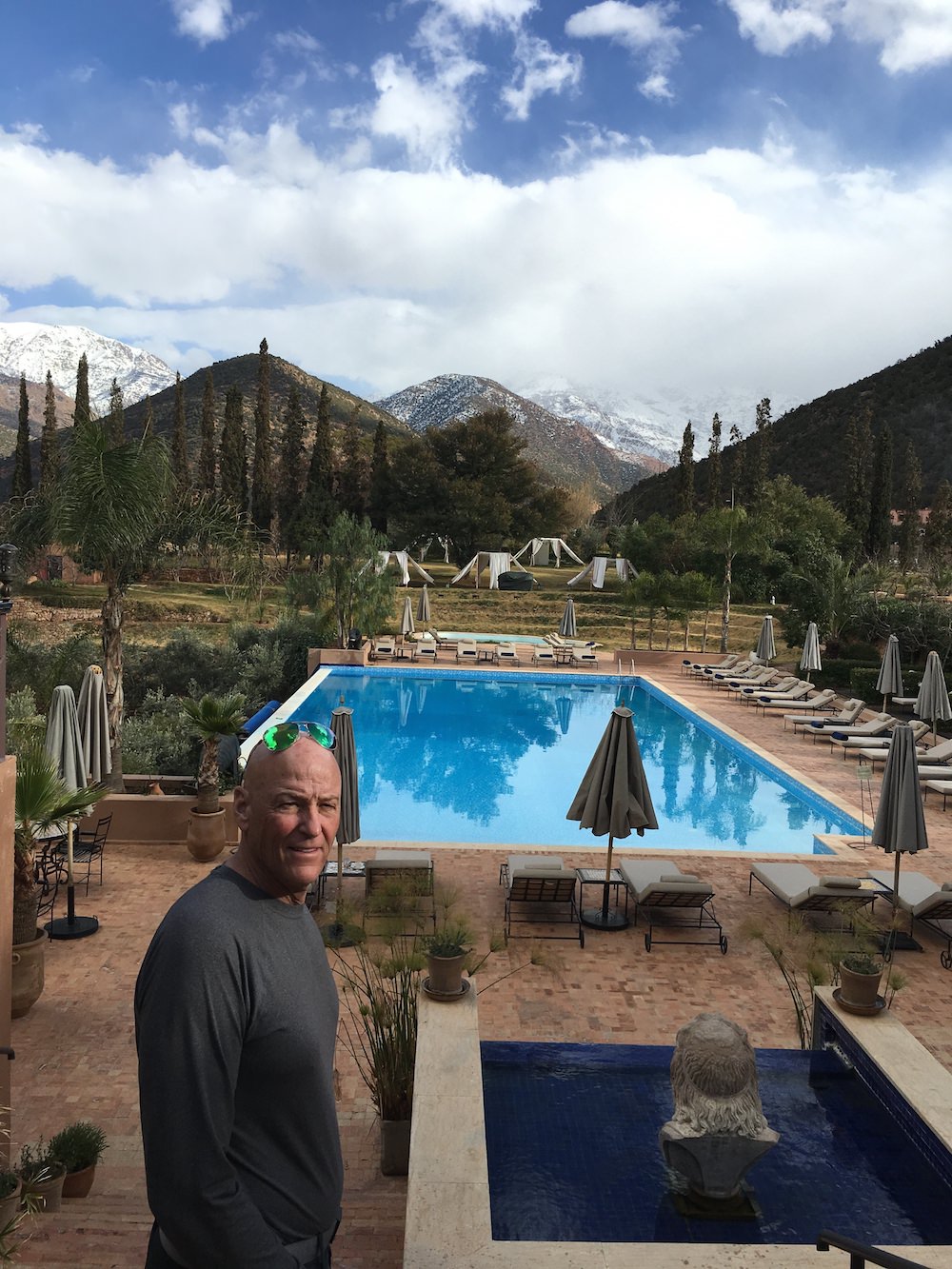
After a night in Marrakesh, we drove to Kasbah Tamadot, near Asni.  We enjoyed tennis, spa, food, and shopping.

KASBAH TAMADOT
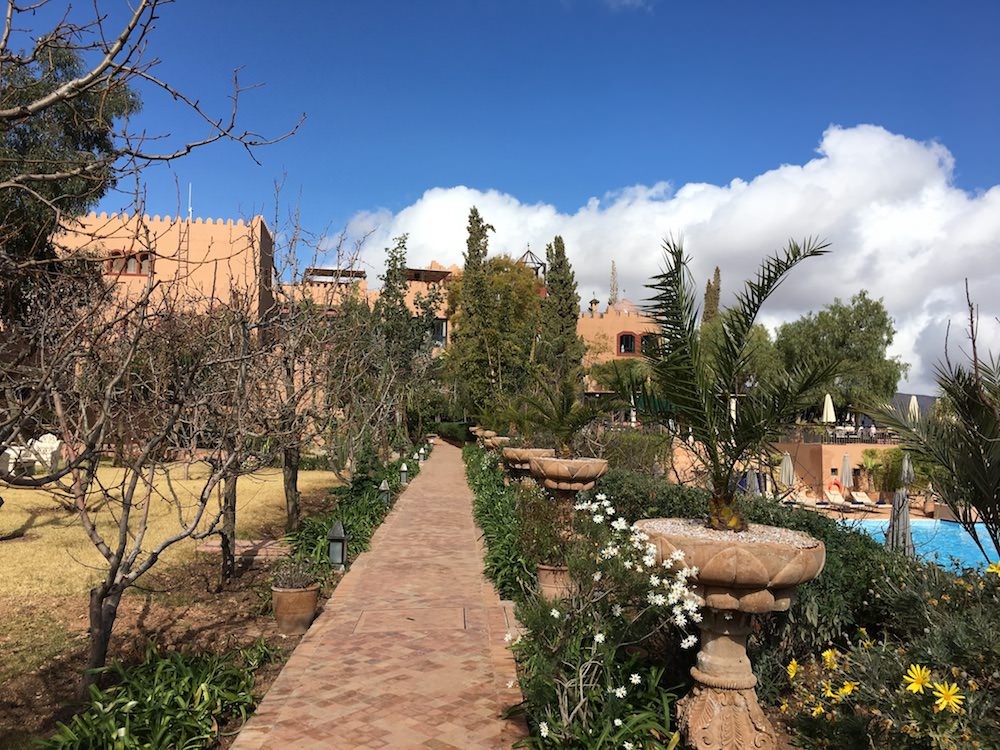
An Oasis in the middle of nowhere.
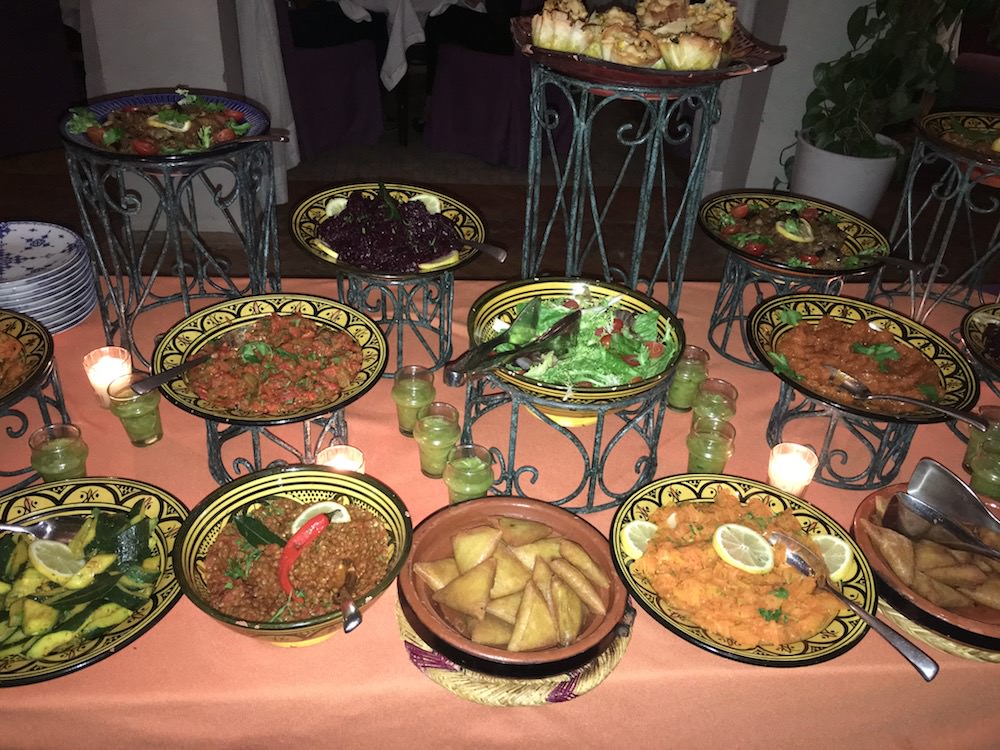
Typical Moroccan foods are Tangines.  They are a stew of spiced meats or vegetables prepared by slow cooking in a shallow earthenware dish with a tall, conical lid.
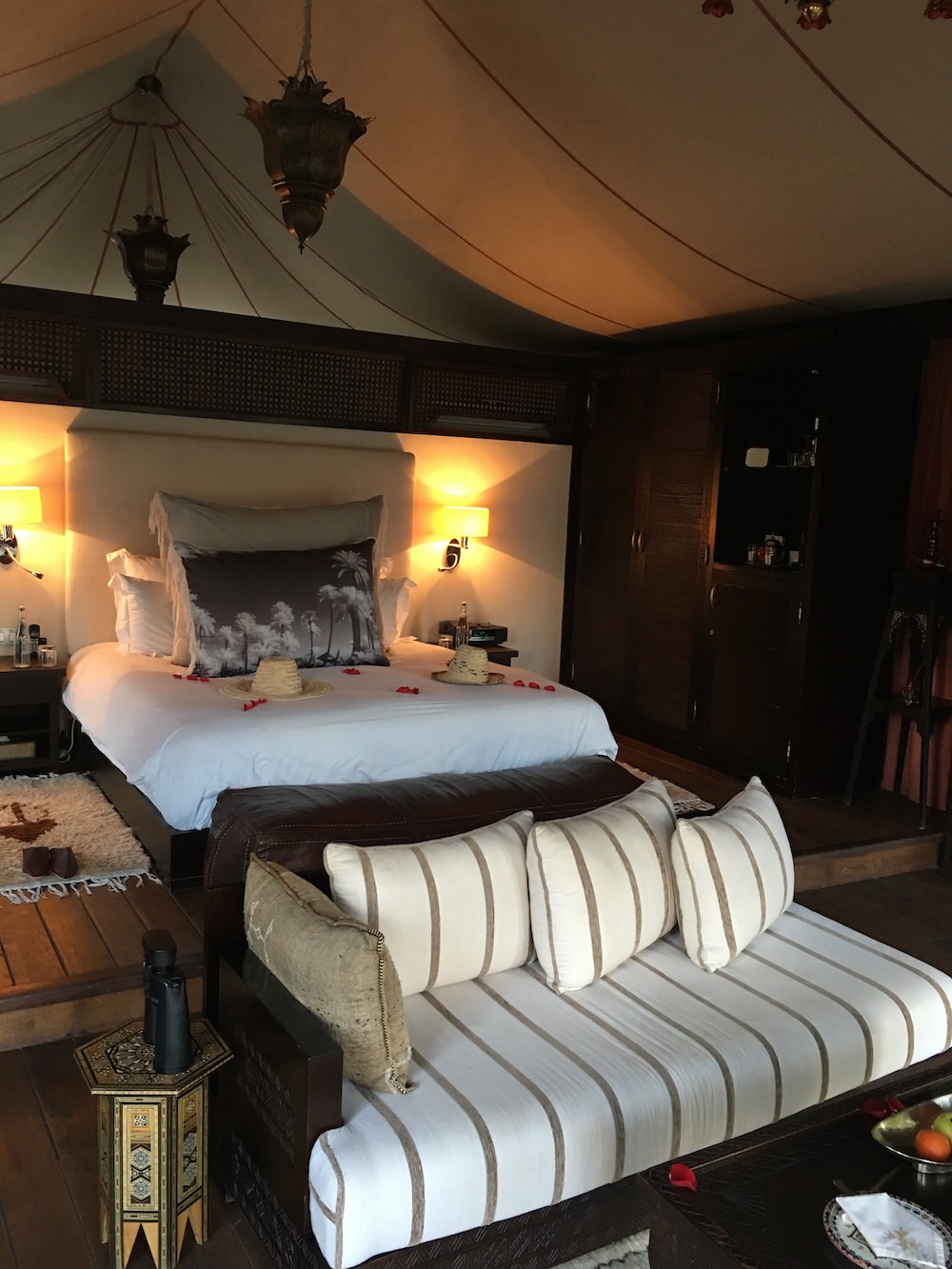
Our Tented Room.

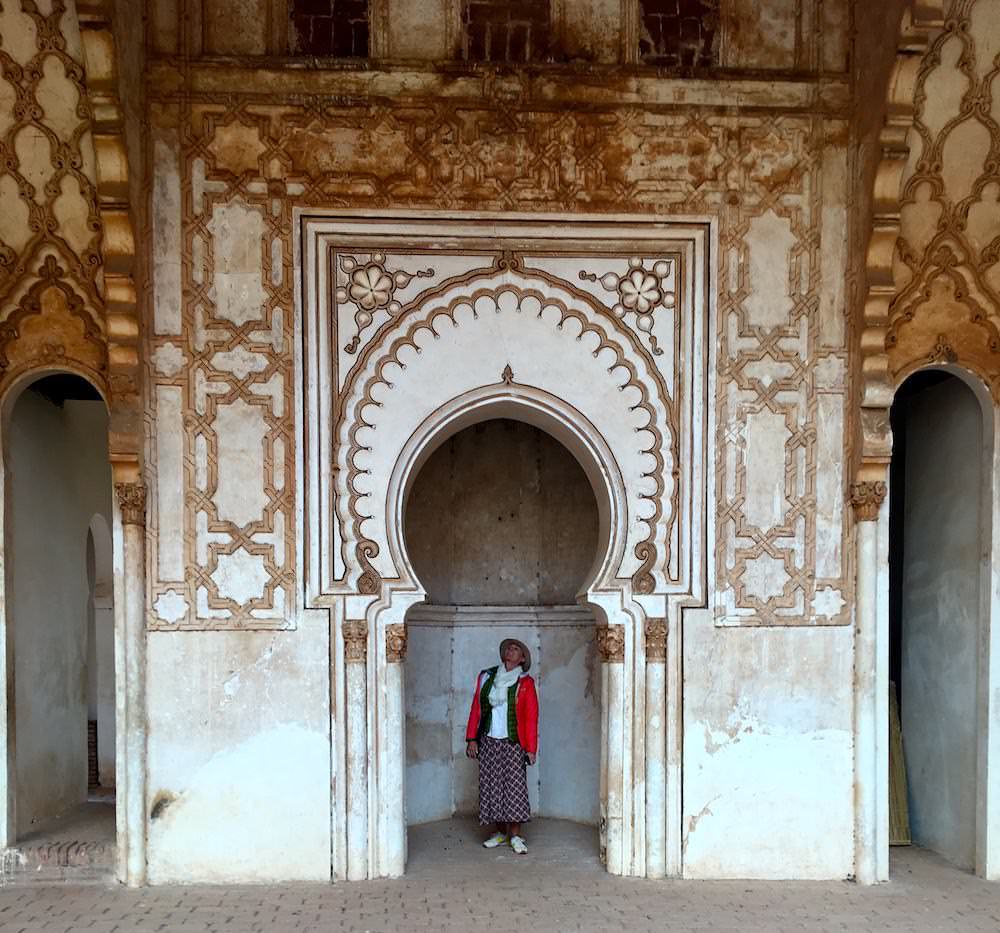
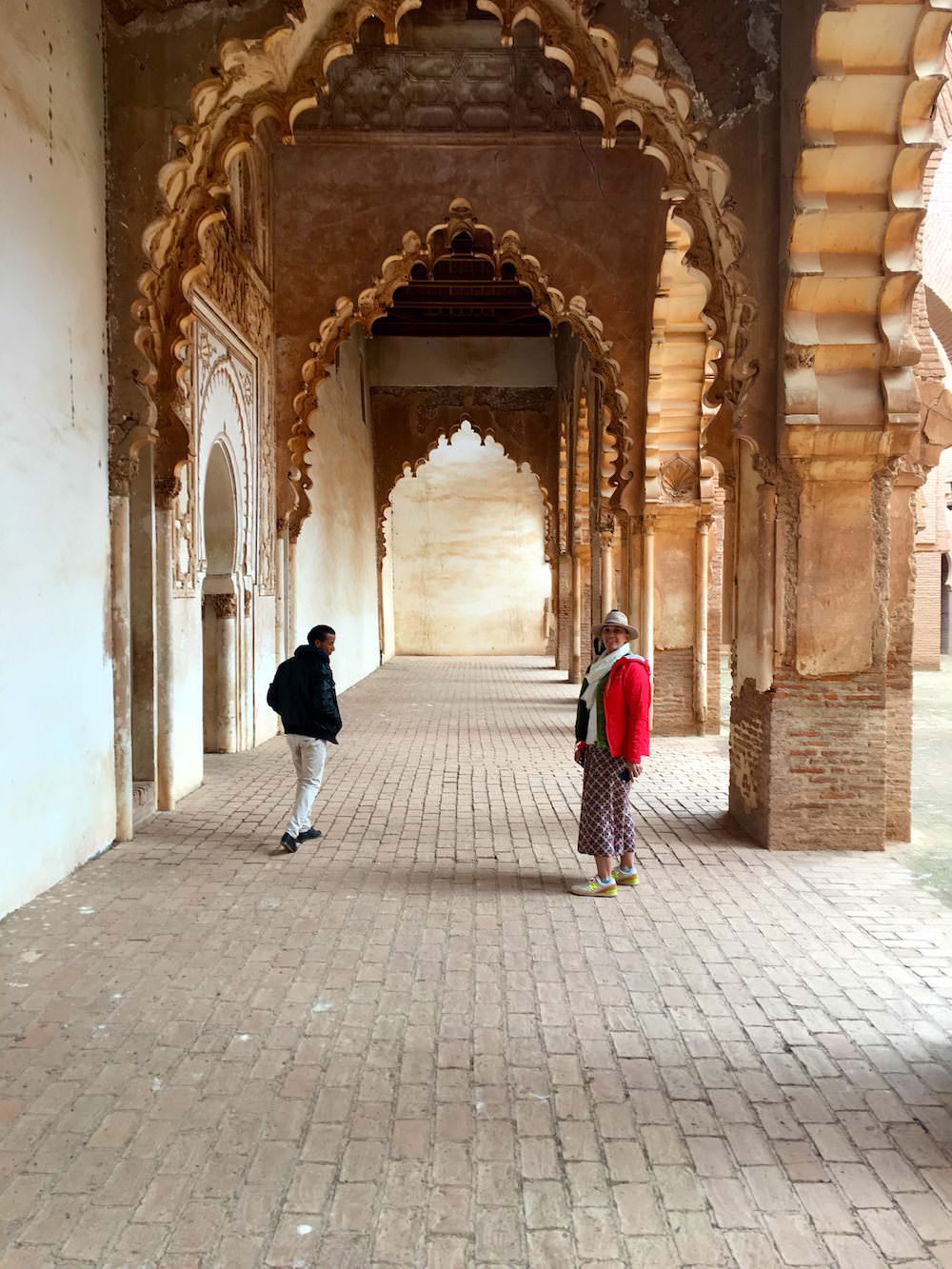
We took a day trip to an 11th Century Mosque at Tin Mai.

TIN MAI MOSQUE
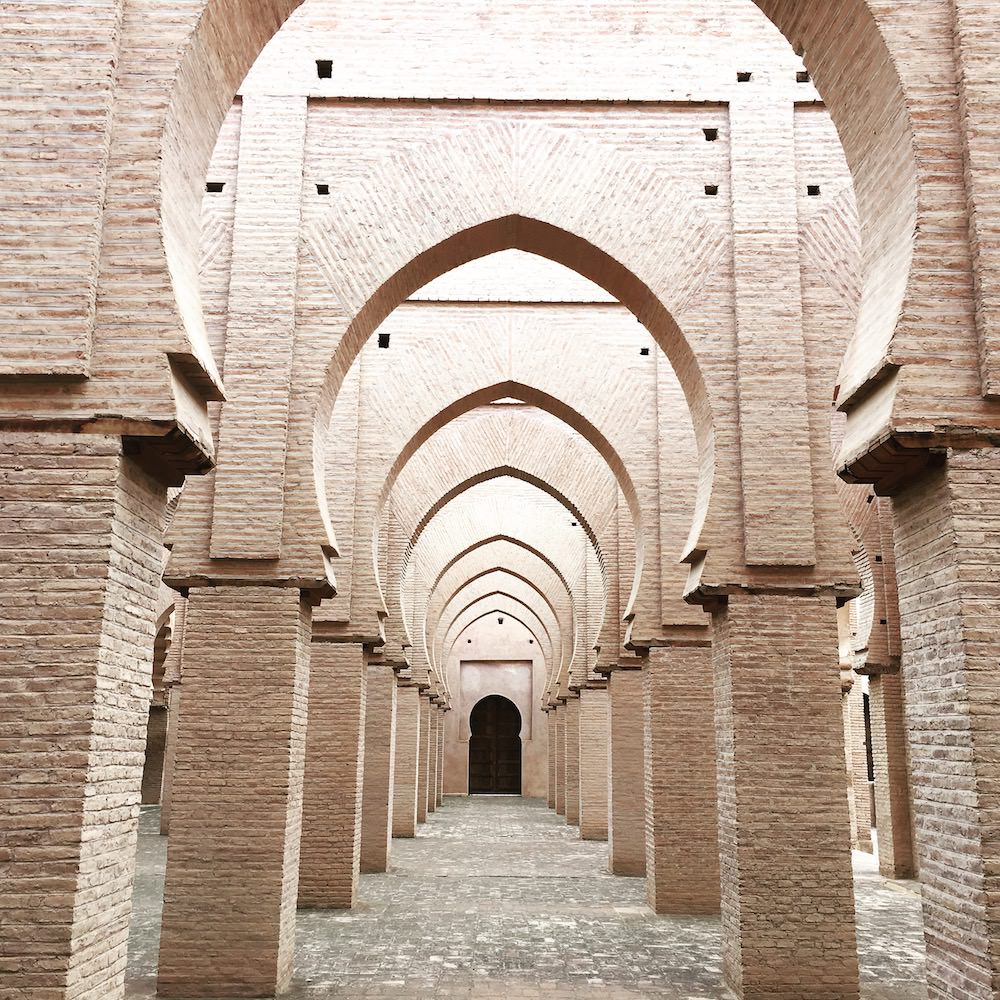
On the road to the mosque
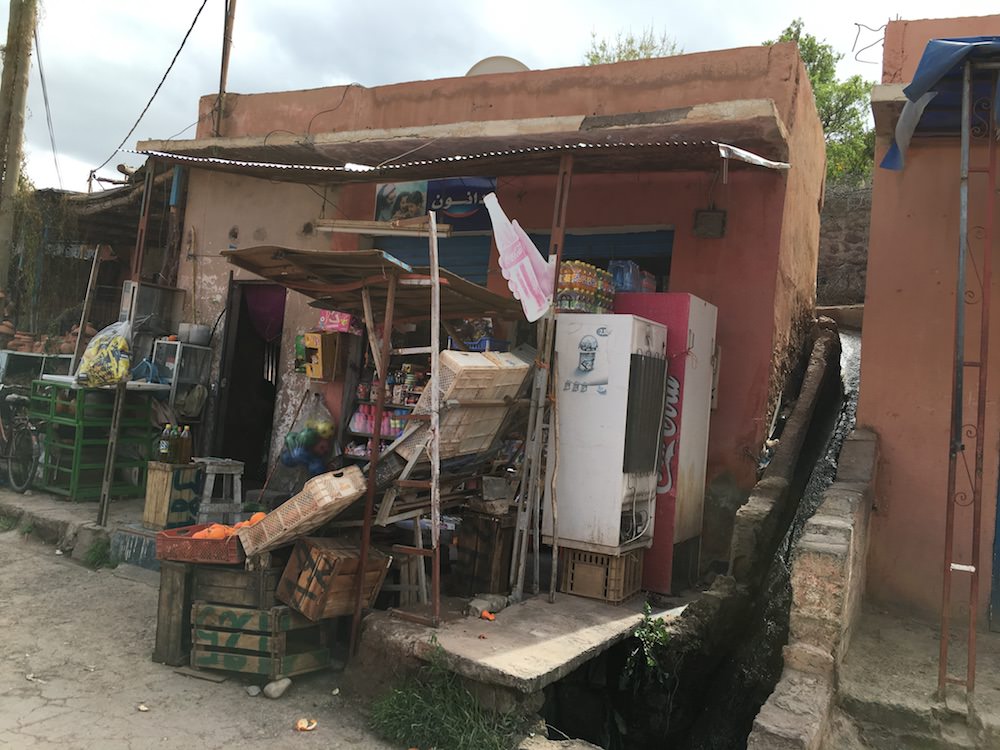
A typical 7-11.

After a few nights at Kasbah Tamadot, we drove to the Marrakesh Airport to catch our flight to Paris for a night, and then back home.


What a journey!


Namibia-Okonjima-Camp 9 October 14, 2016

Namibia
Okonjima
Camp 9

Okonjima is the home of AfriCat, which is dedicated to taking the orphan cubs of Cheetahs and Leopards whose parents have been killed by the farmers.  Farmers kill the big cats because the cats kill the livestock owned by farmers.  Killing cats is against the law unless the farmer finds the cats attacking the livestock. Africats raises them, put them in a safe area, and then release them into the wild on their huge game reserve.


We stayed here back in 2012 and enjoyed staying in the Bush Suite.  This is luxury in the bush.  This is an amazing place for our last night on safari.  The Suite comes with your own chef, manager, guide, tracker, and housekeeper.
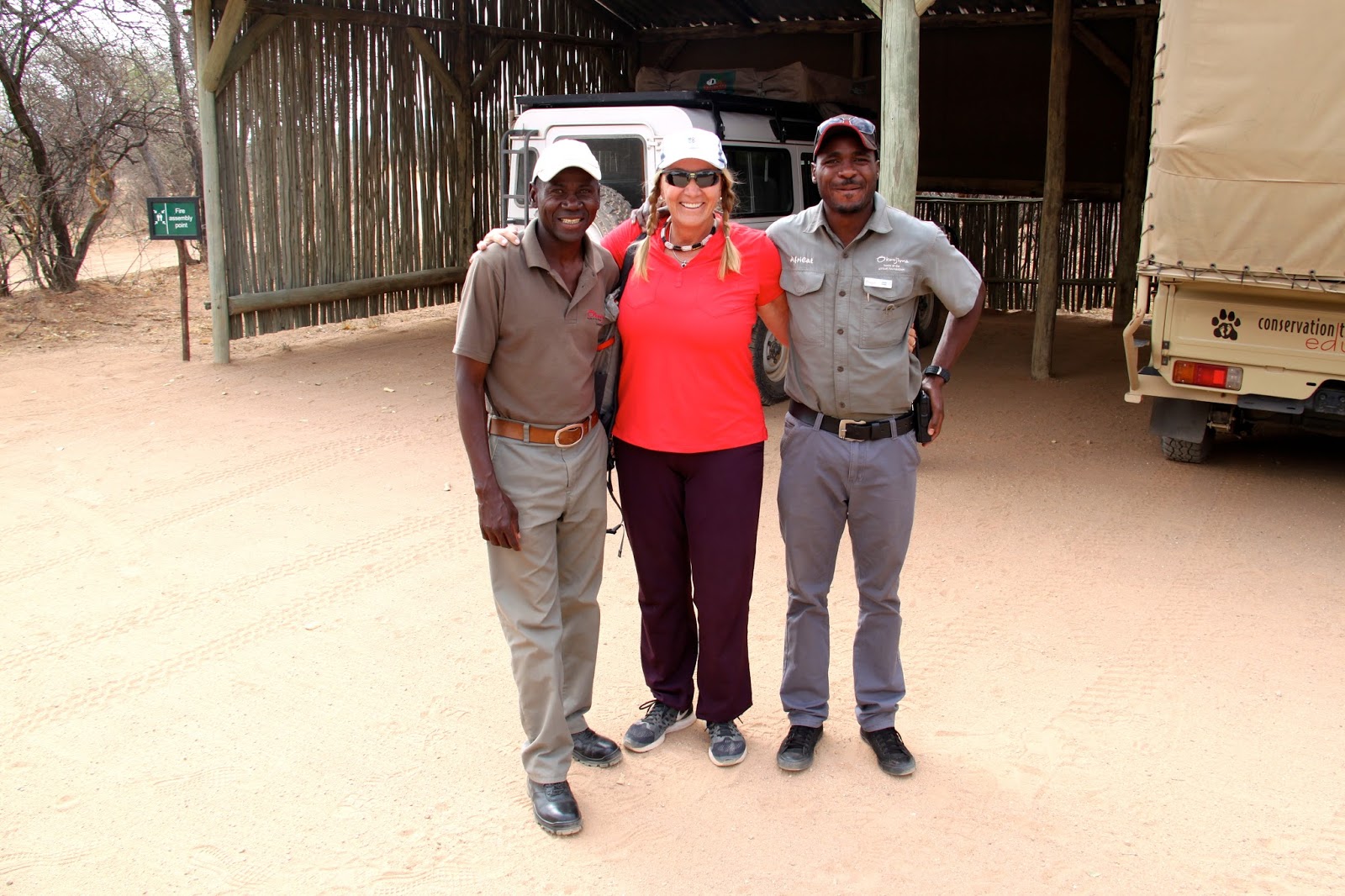
Martinez the tracker and Jonas the Guide with Barb
Safari drive
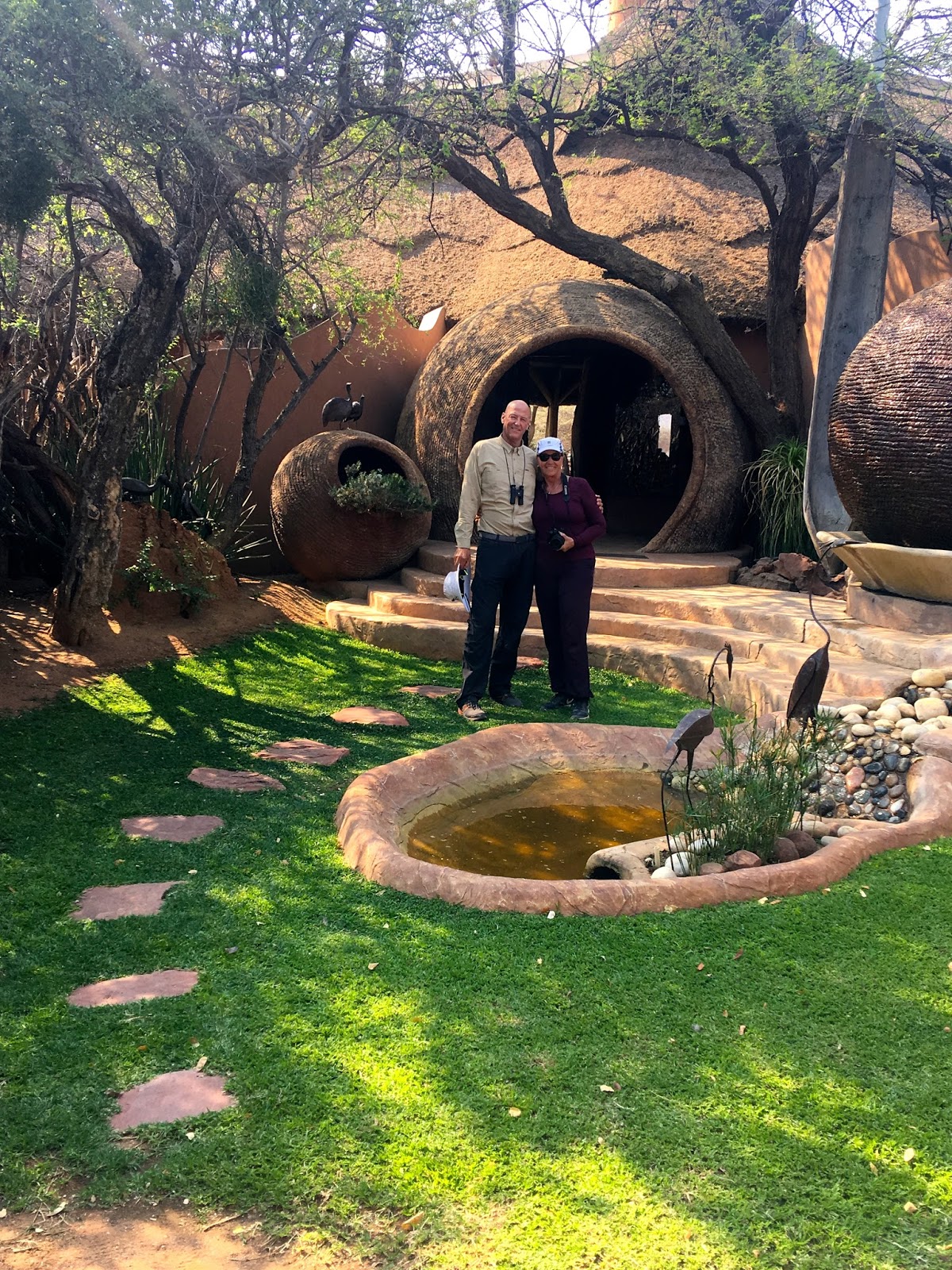
Entrance to our Bush Suite
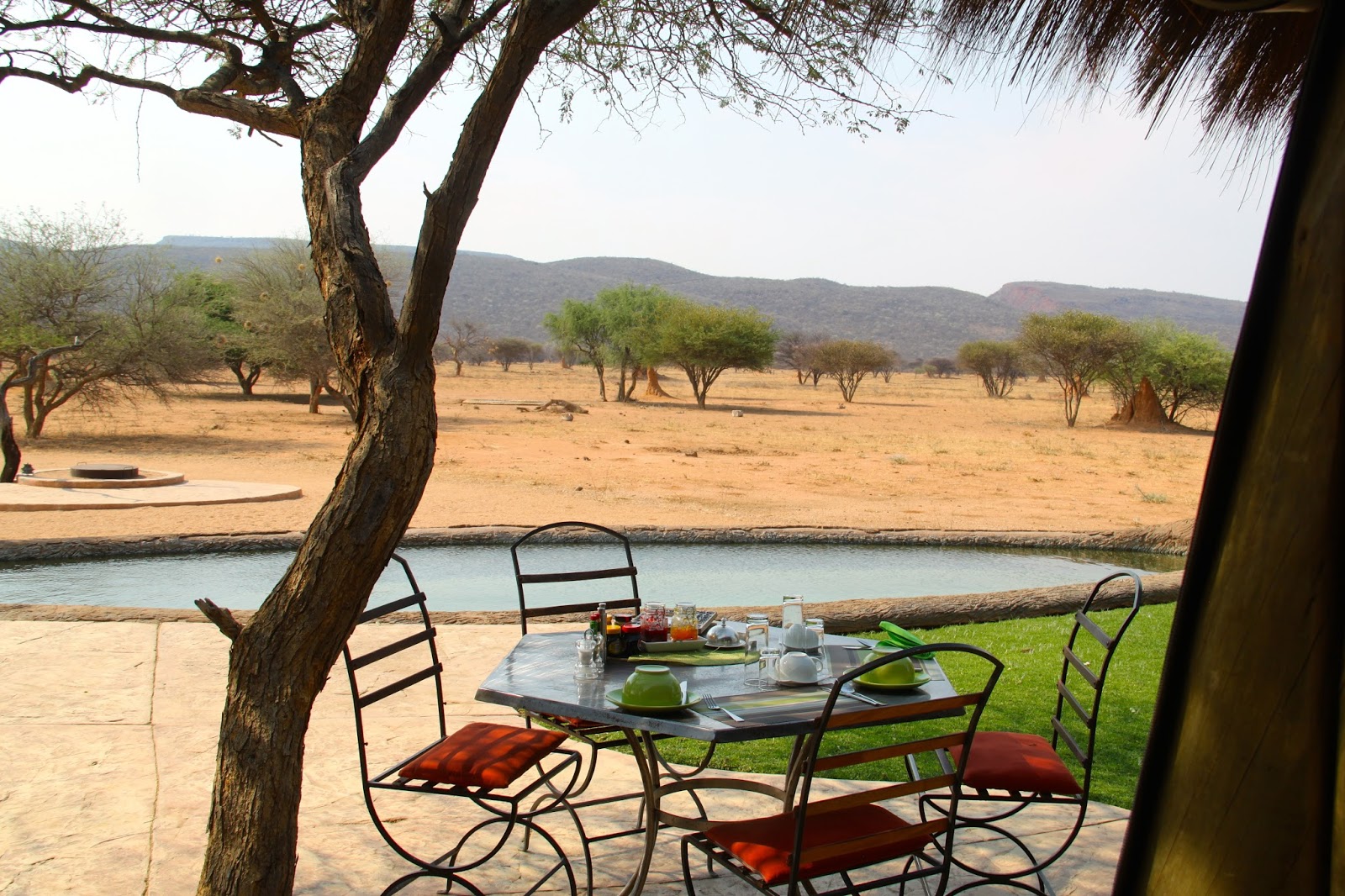
Back patio overlooking the swimming pool with a watering hole beyond
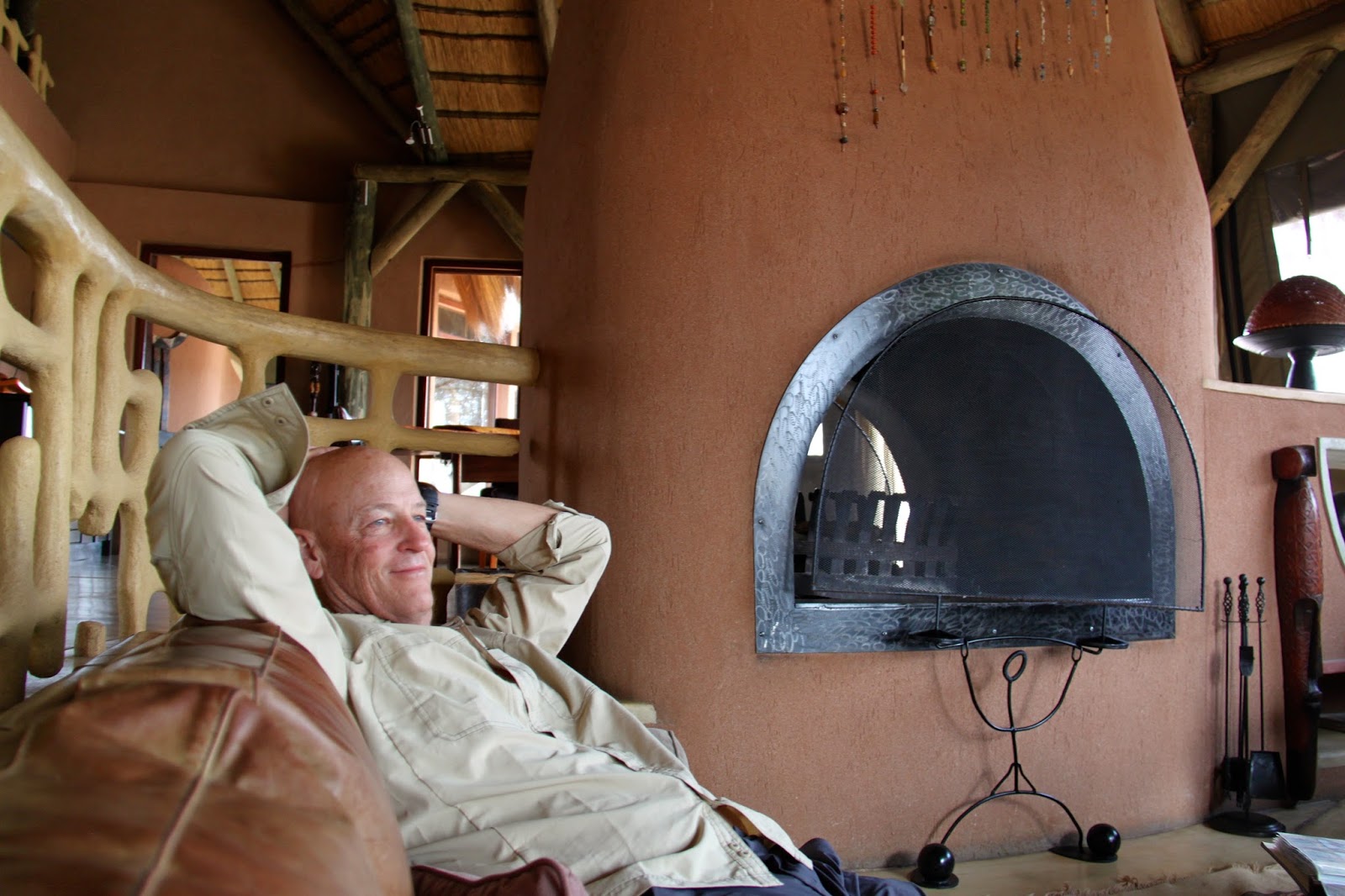
Scott relaxing in our Suite
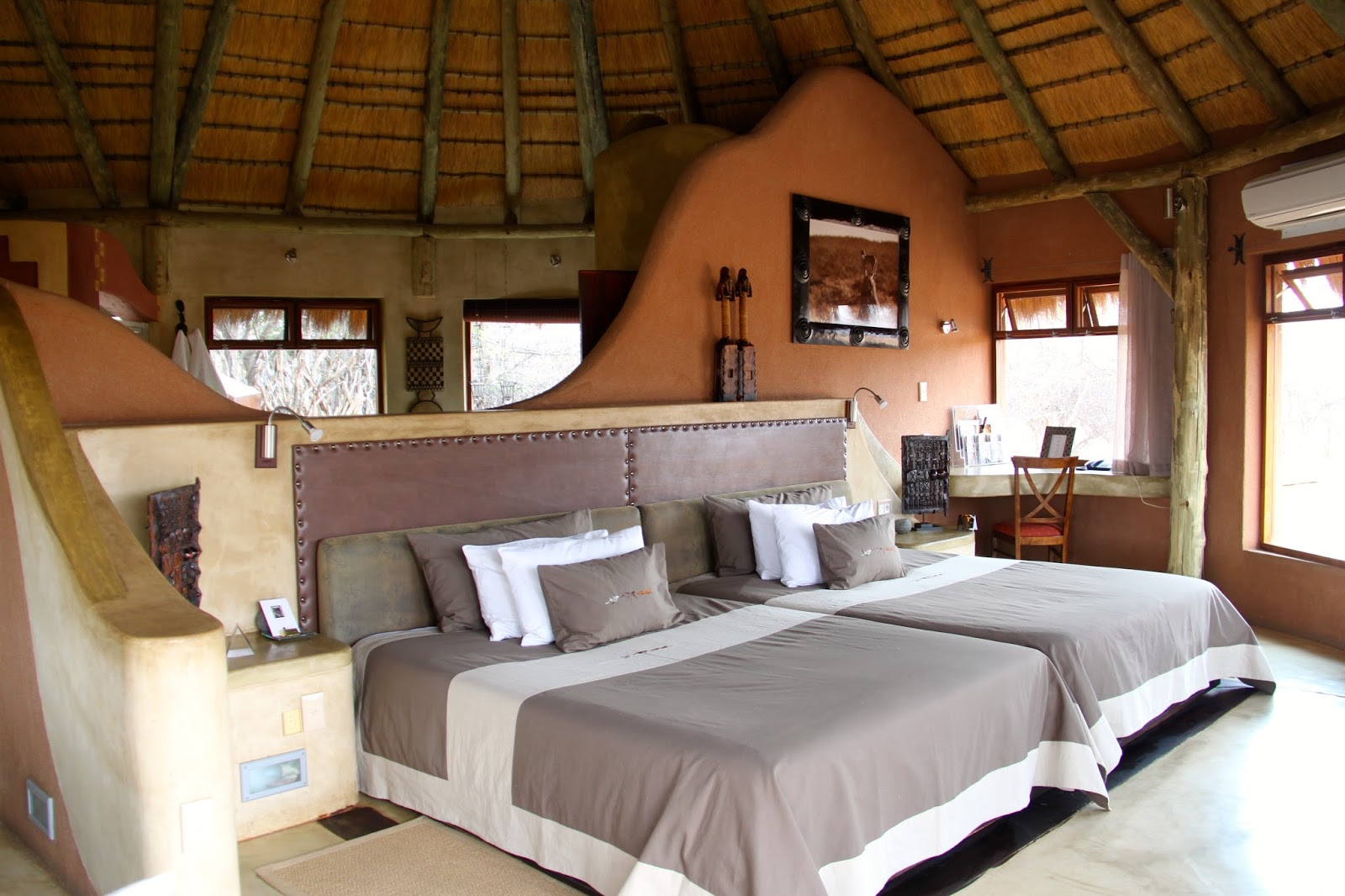
Our room
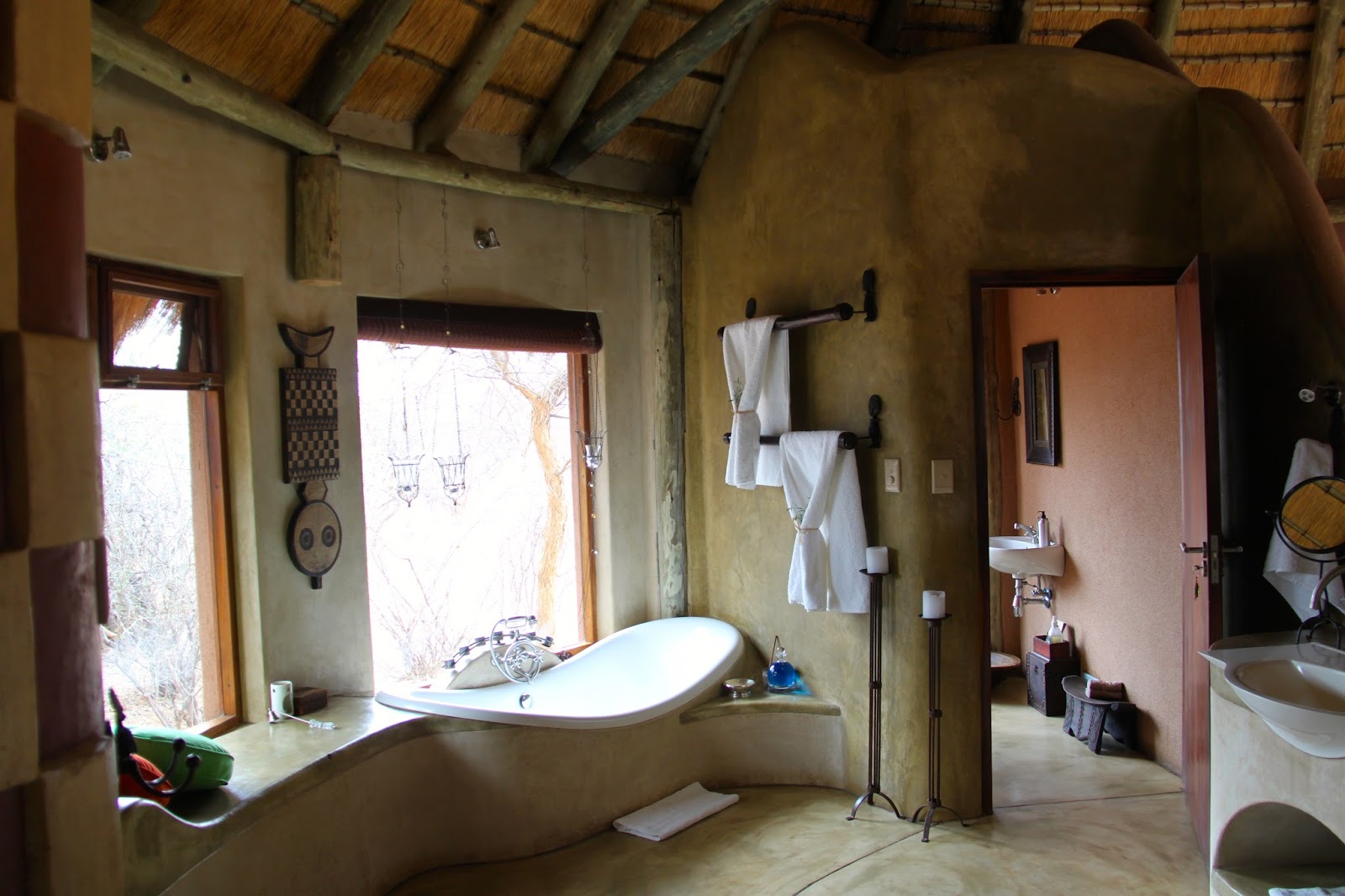
Bathroom
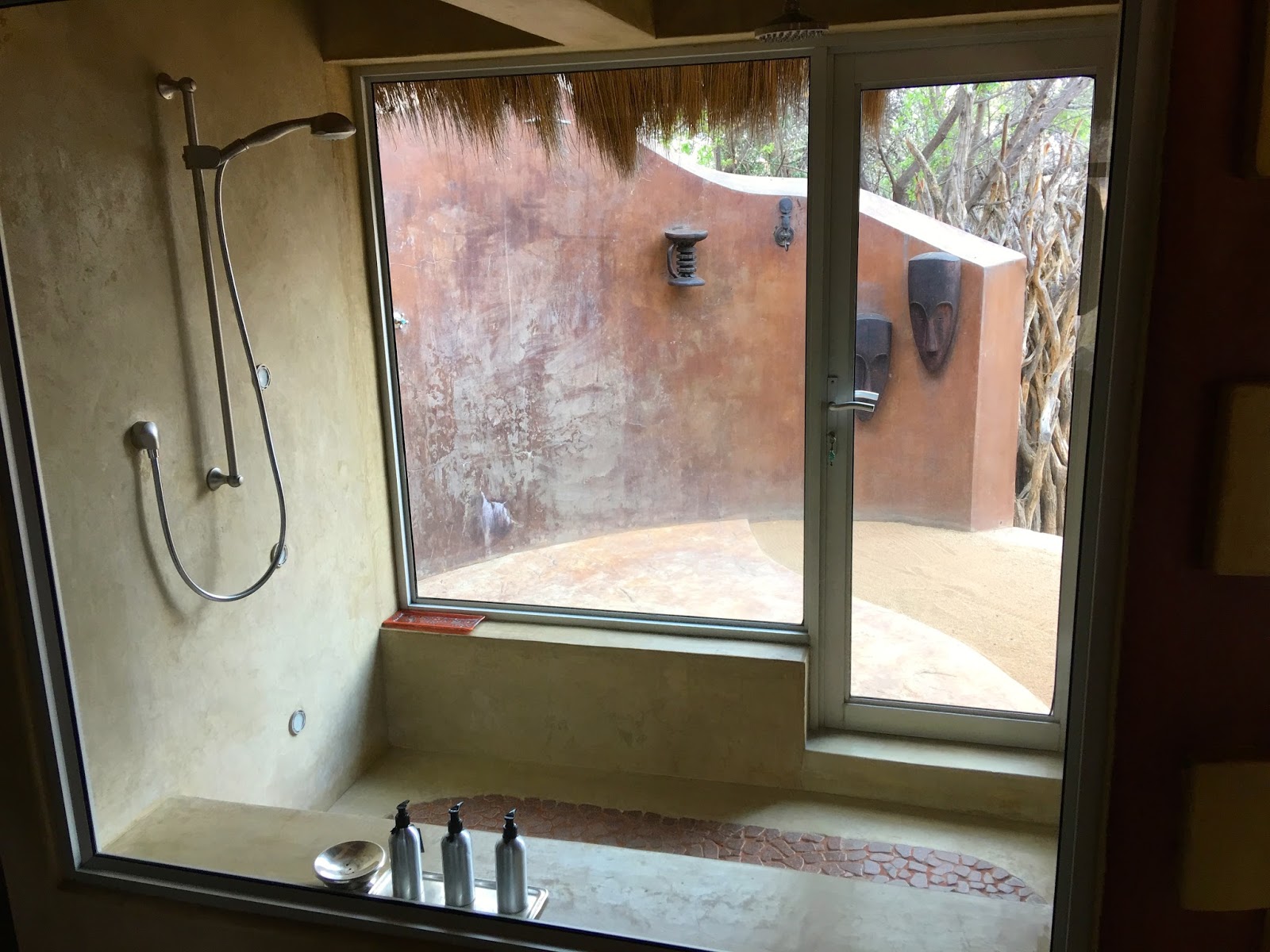
Indoor and Outdoor shower
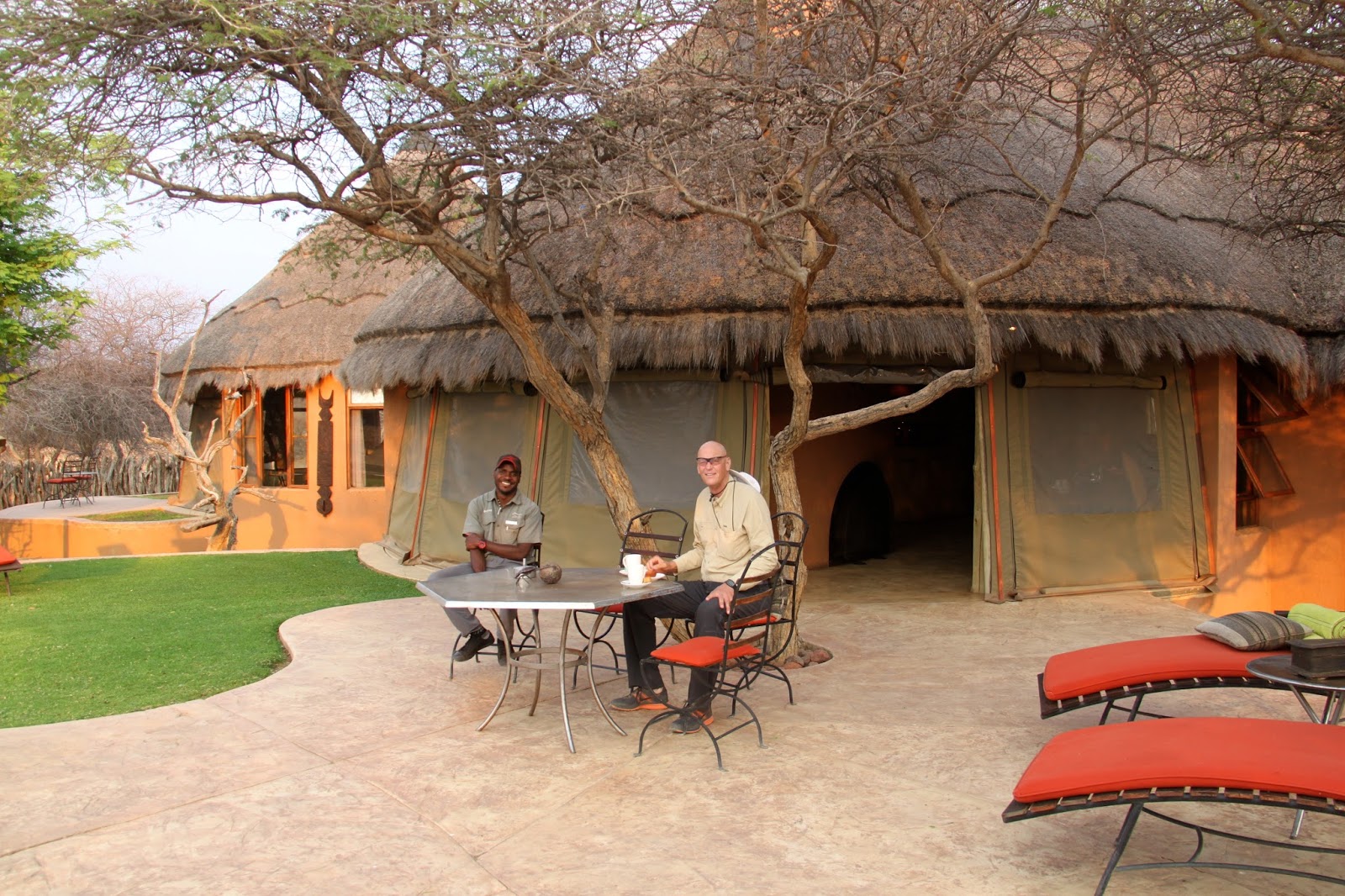
Enjoying tea with Jonas
Pool
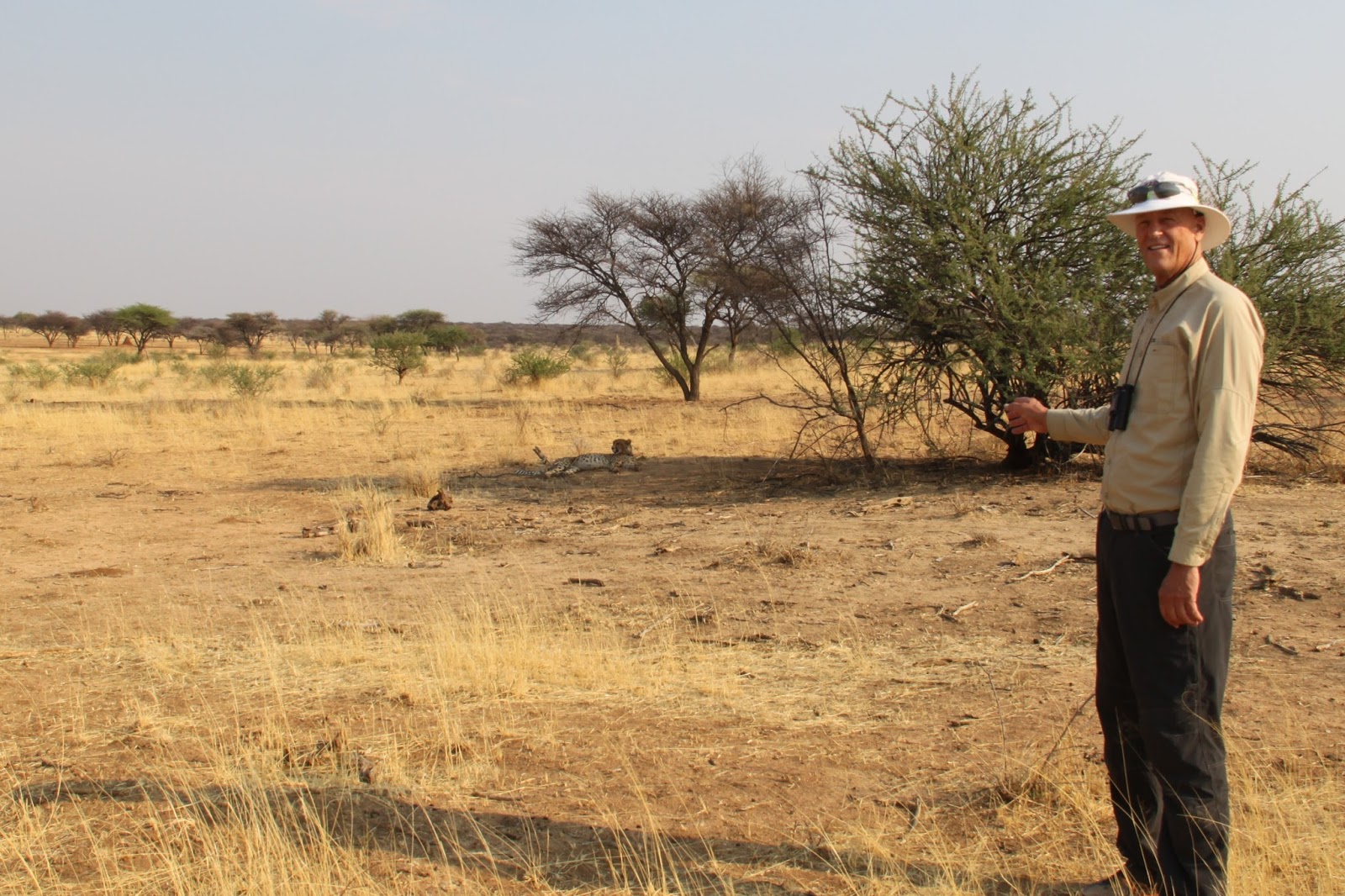
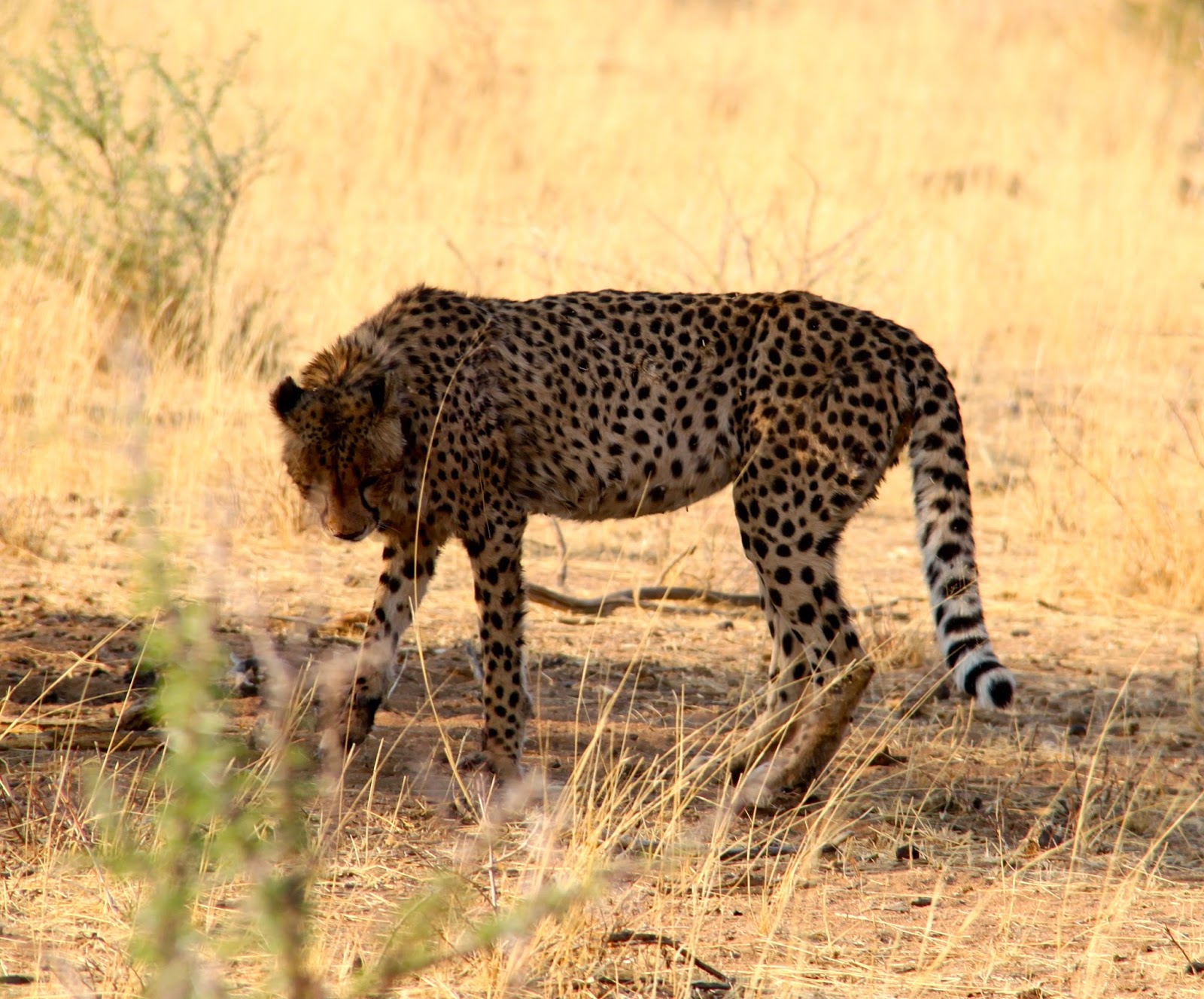
 We tracked  and photographed Cheetahs on foot.
Scott pointing to the Cheetah
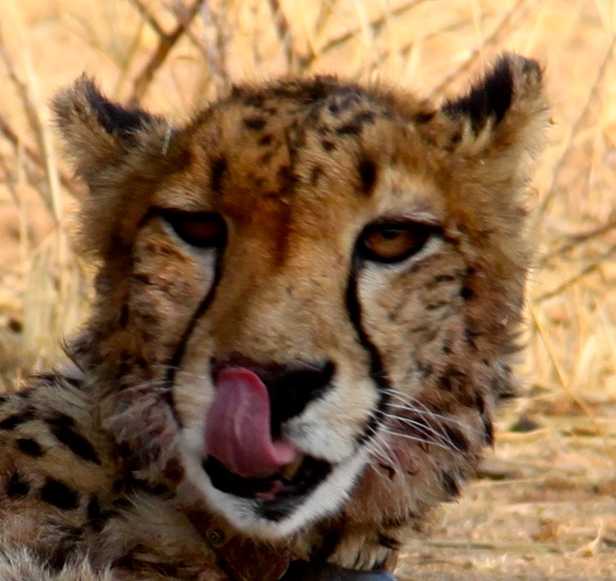
Cleaning herself after eating
 
A sundowner on foot with Cheetah’s
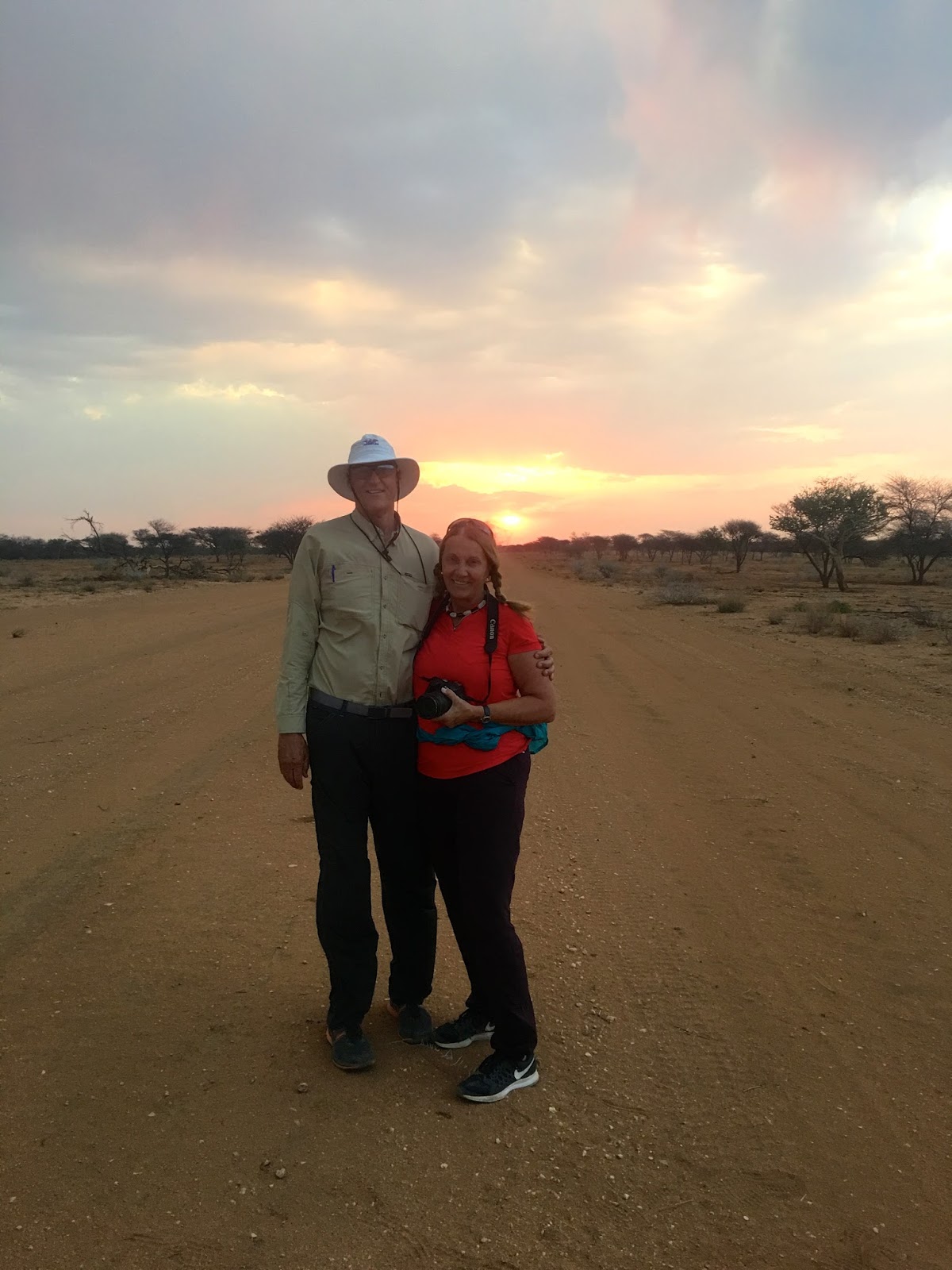
Another beautiful sunset
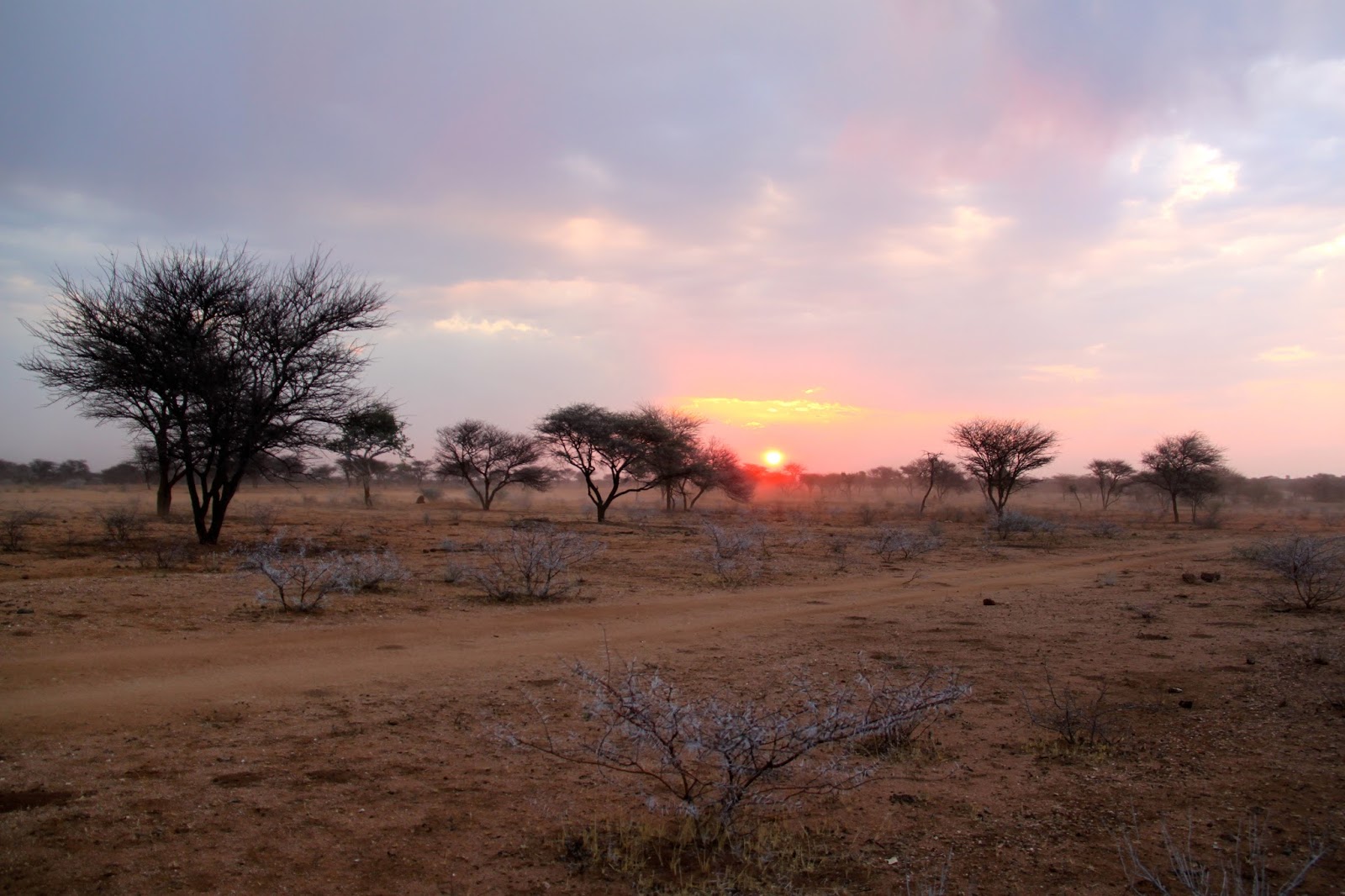
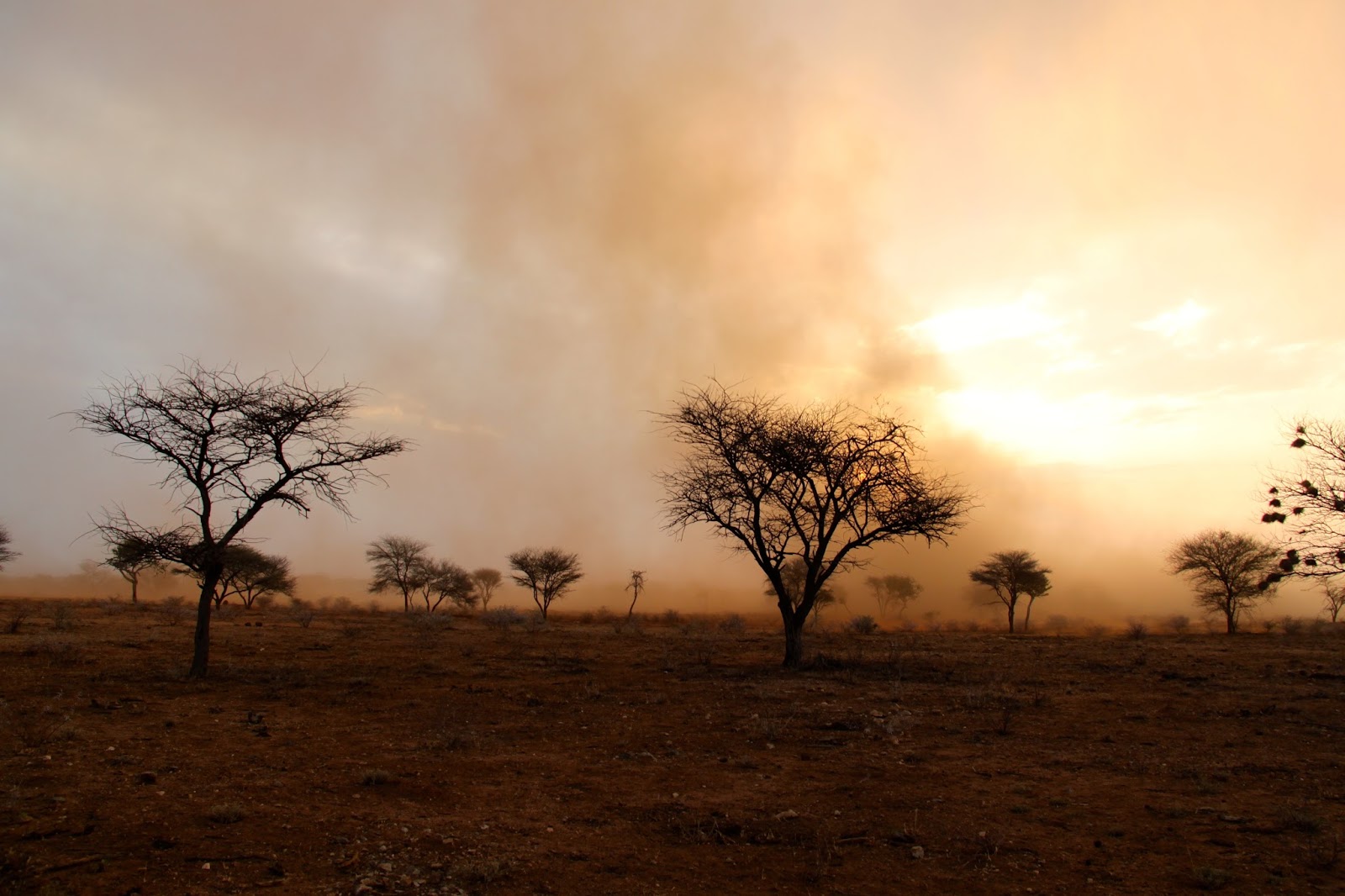
It got windy and there was a dust storm while looking at the Cheetah’s
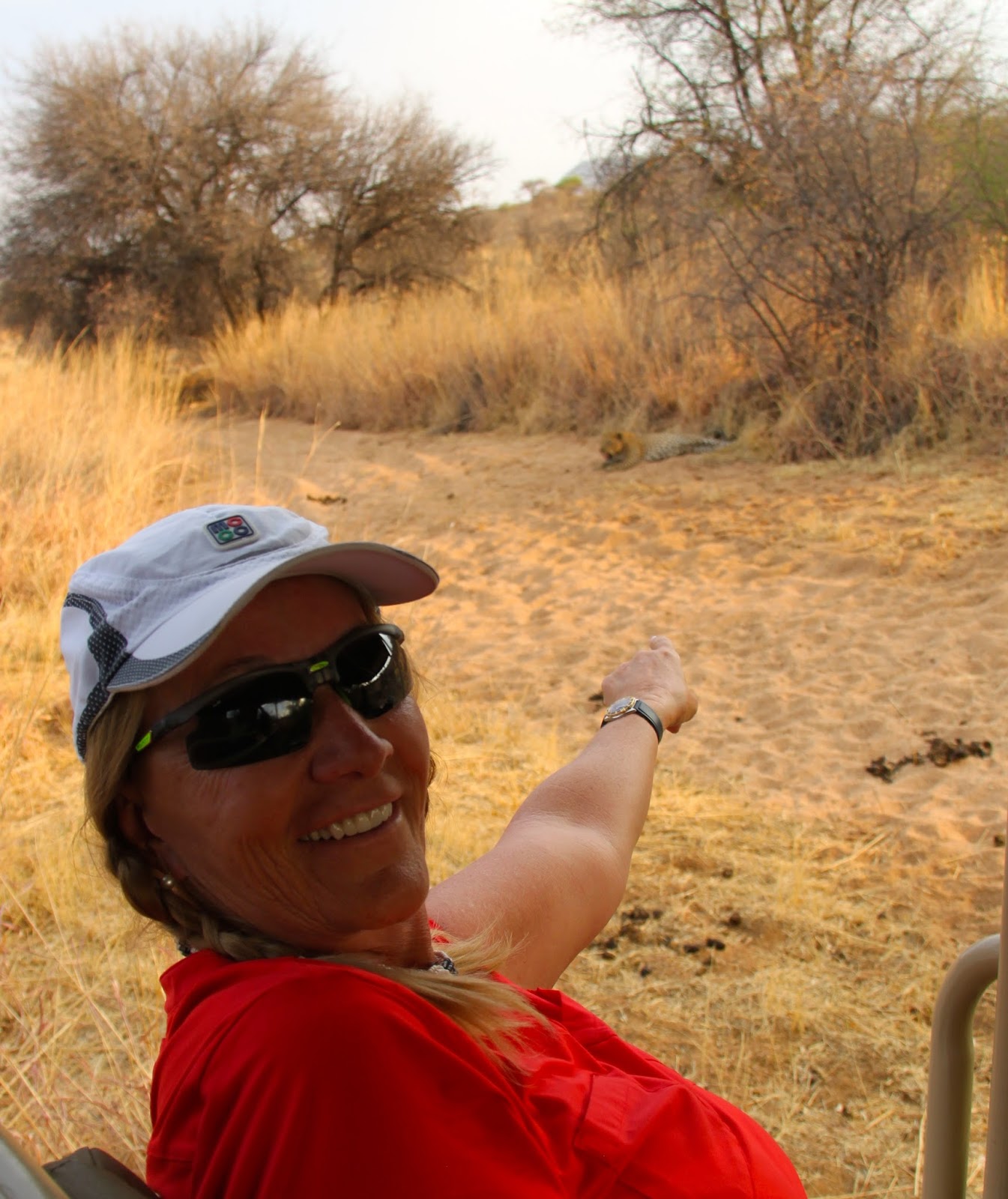
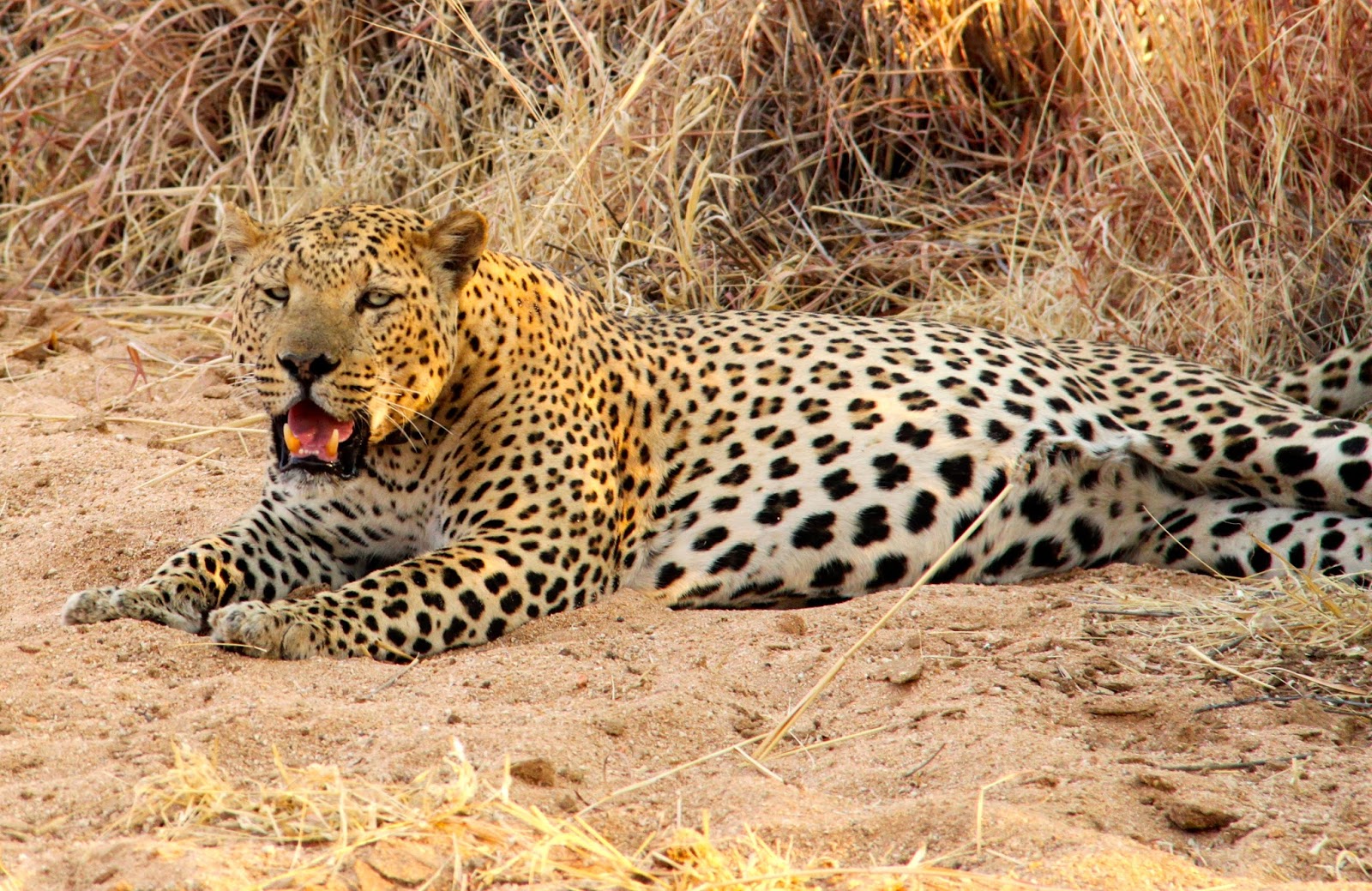
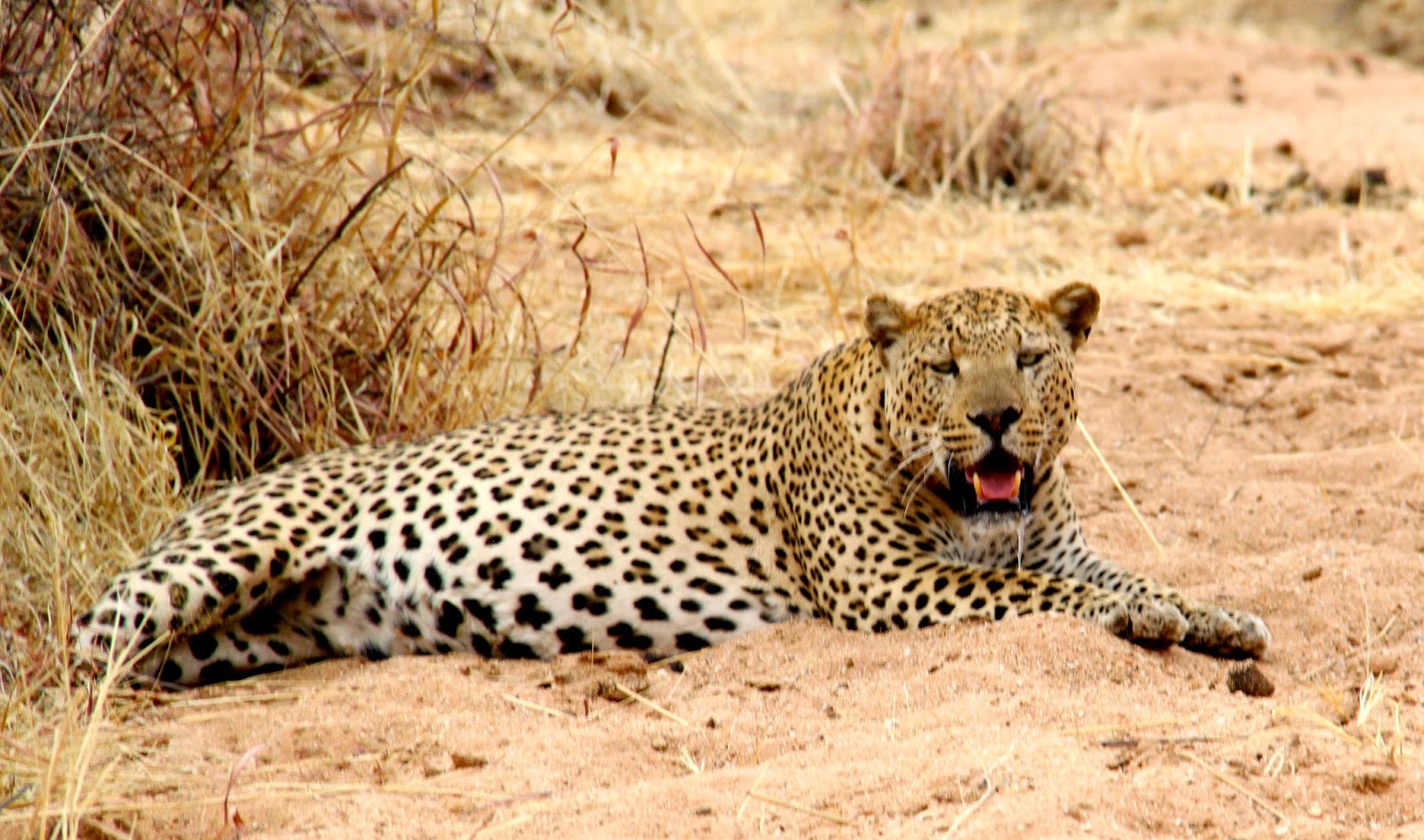
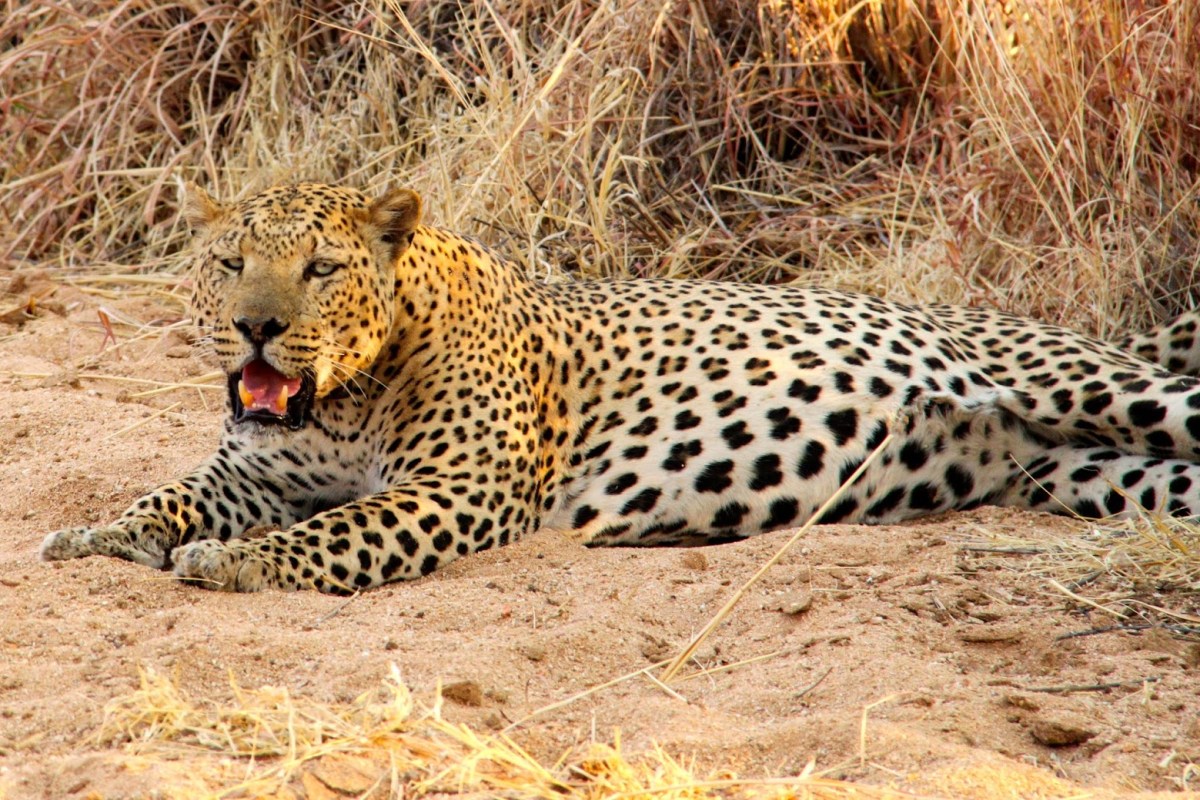
 We found a Leopard that had obviously just eaten something large.  Our guide named Jonas thought that the Leopard had eaten a Wart Hog.  He was panting hard and looked very uncomfortable.
Barb pointing to the leopard
Panting
Look at that full belly
 We saw other animals and birds on their reserve.
 
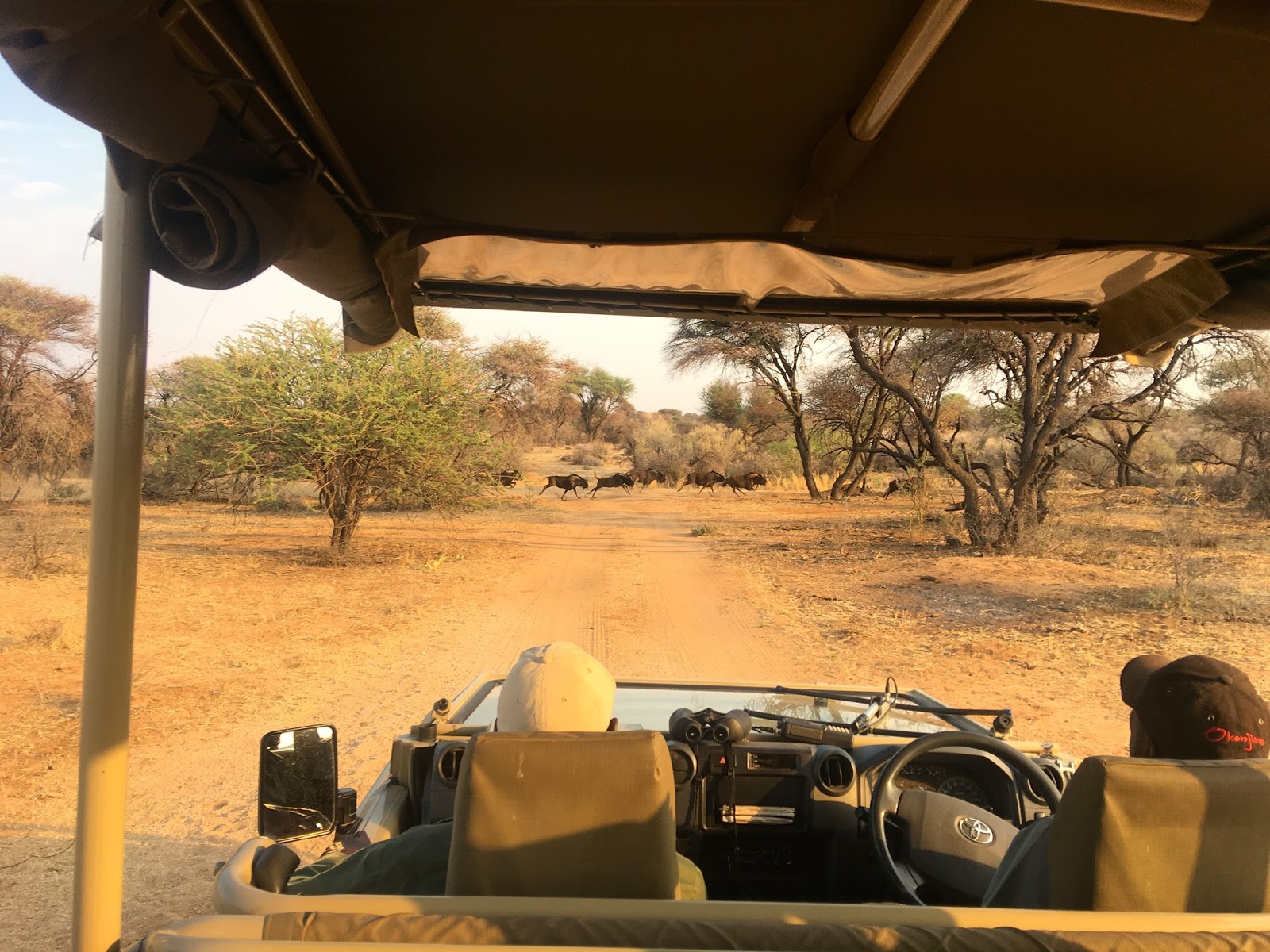
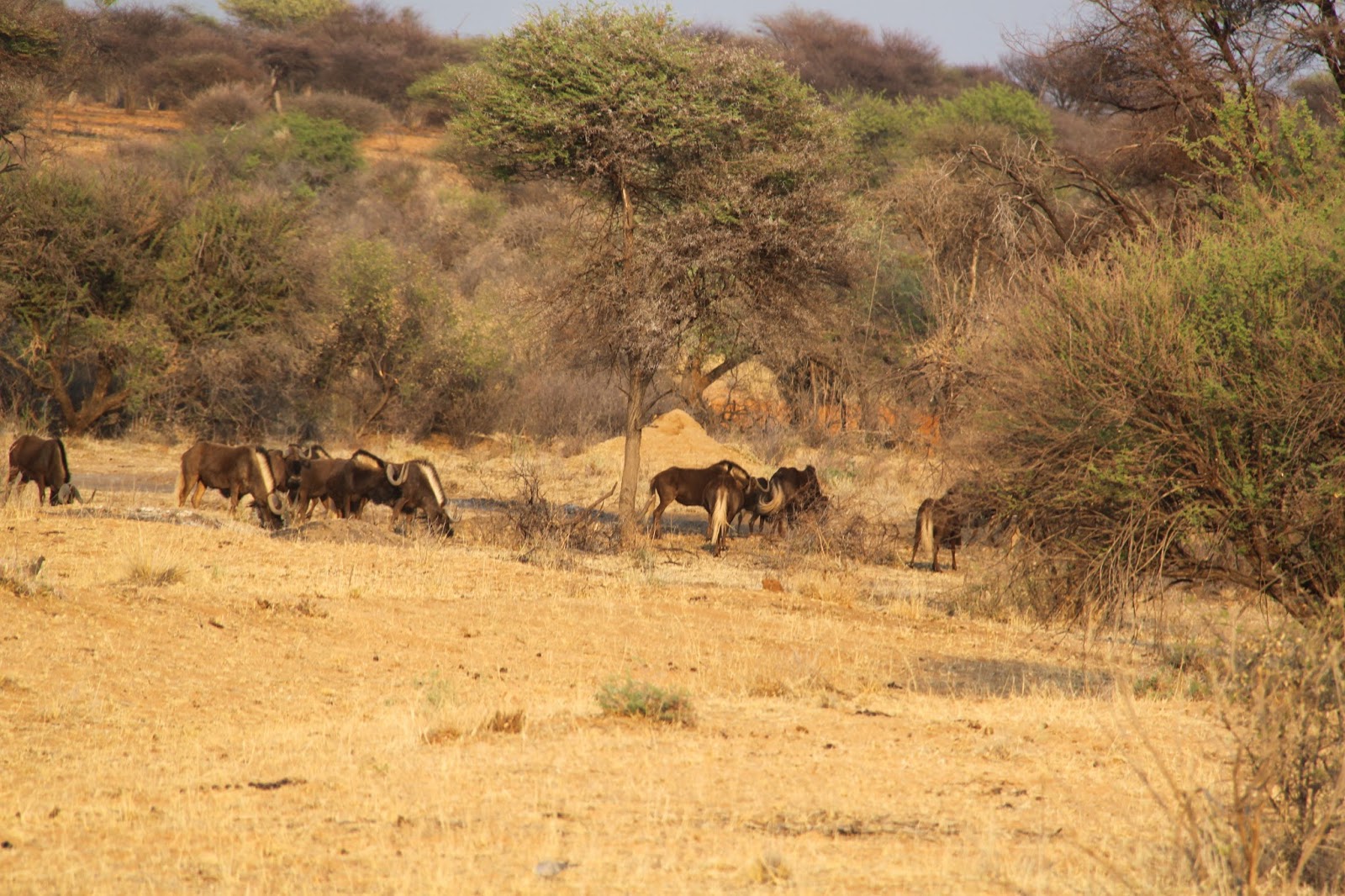
These are the black wildebeests.  They have a long white tail, unlike the blue wildebeest
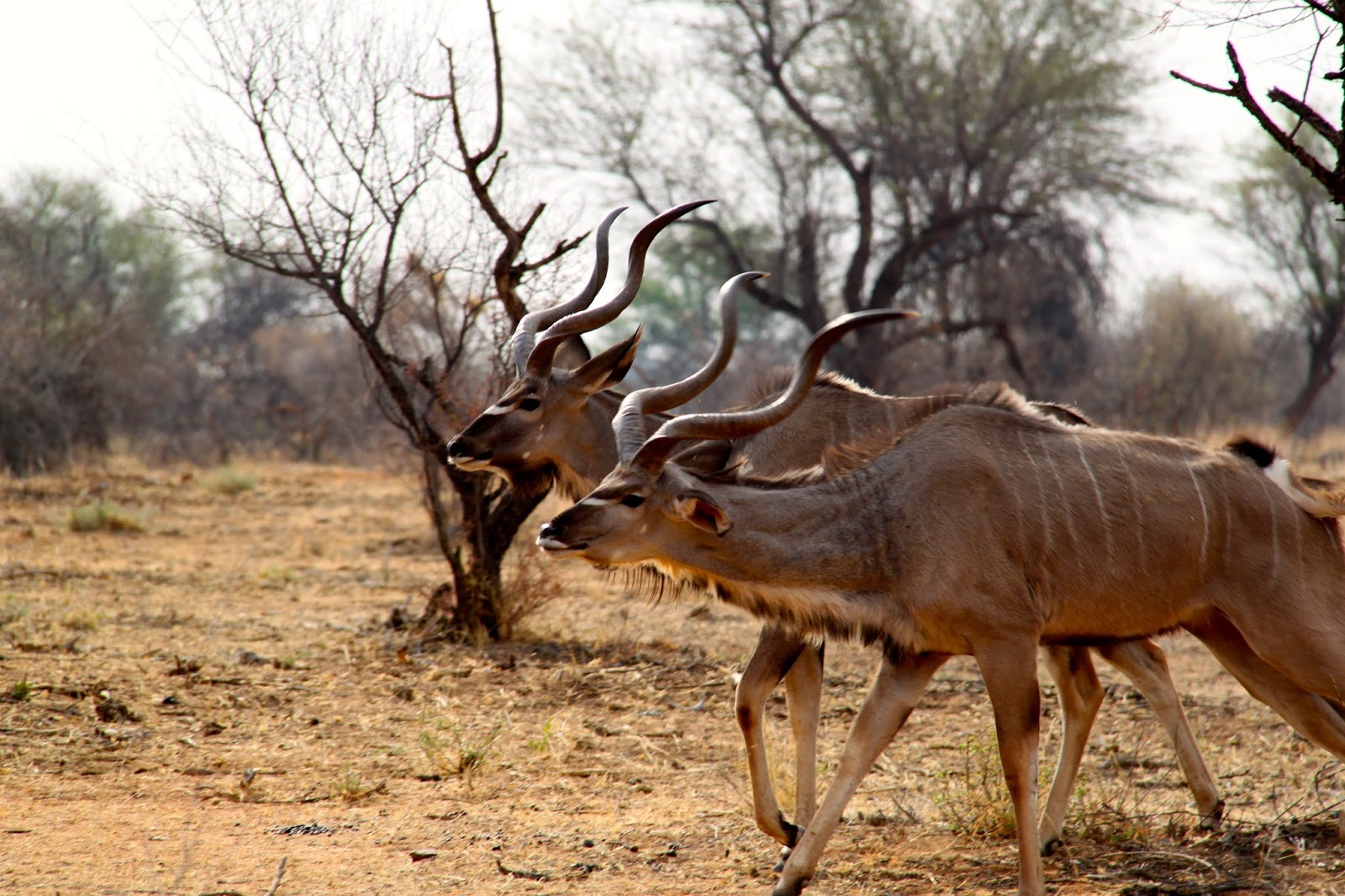
Running male Kudus
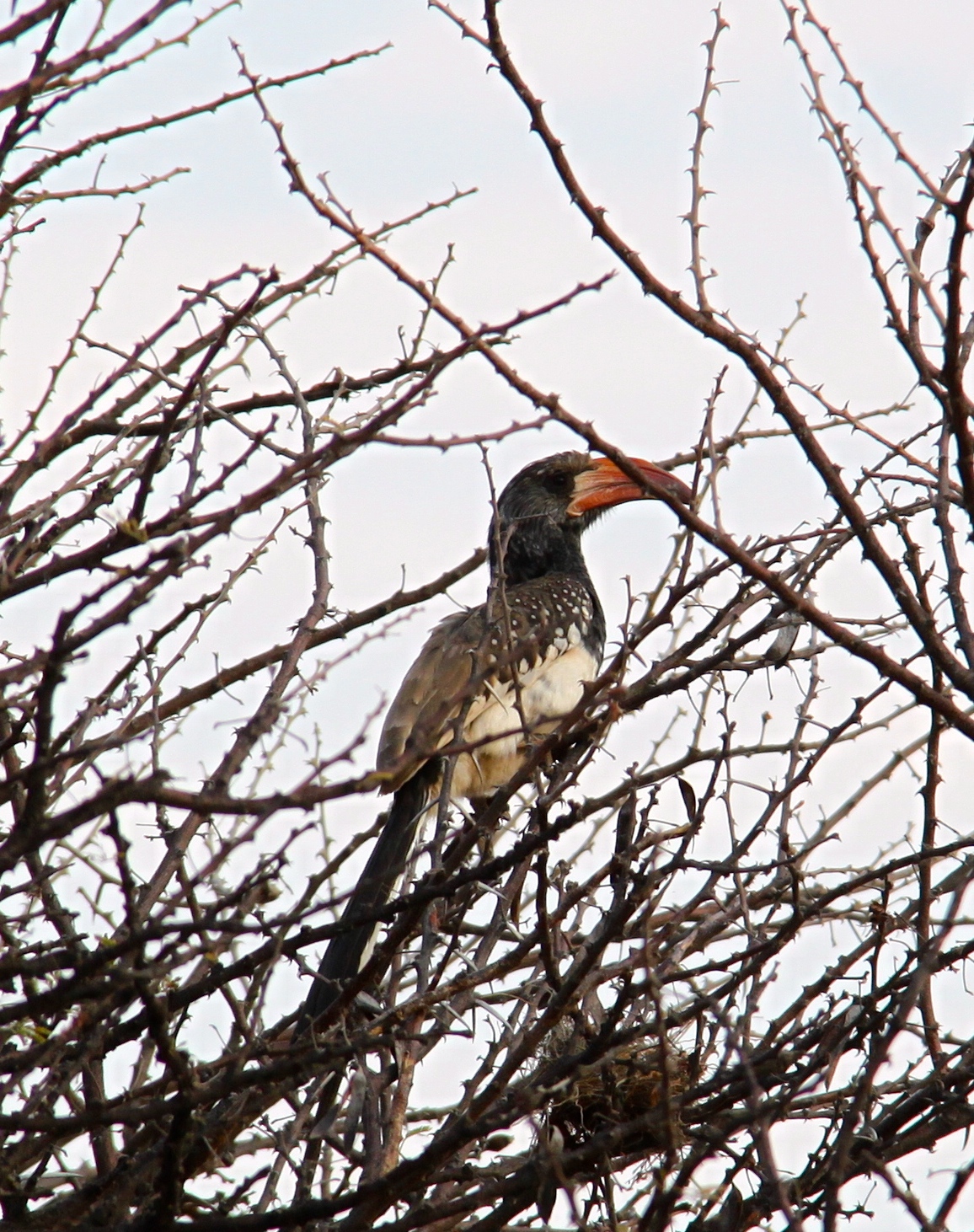
Red Hornbill
Red beaked Franklin
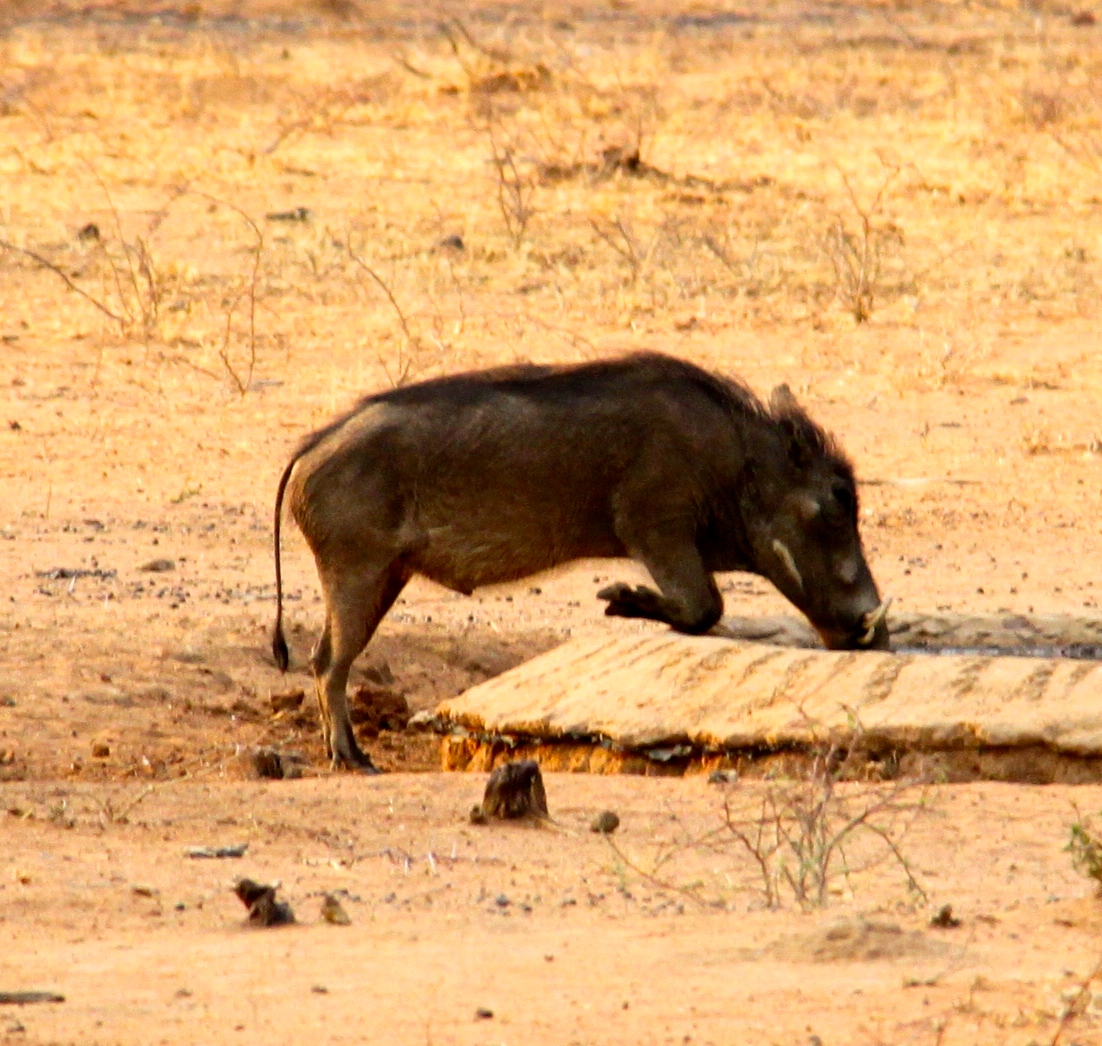
Warthogs have to go down on their knees to drink
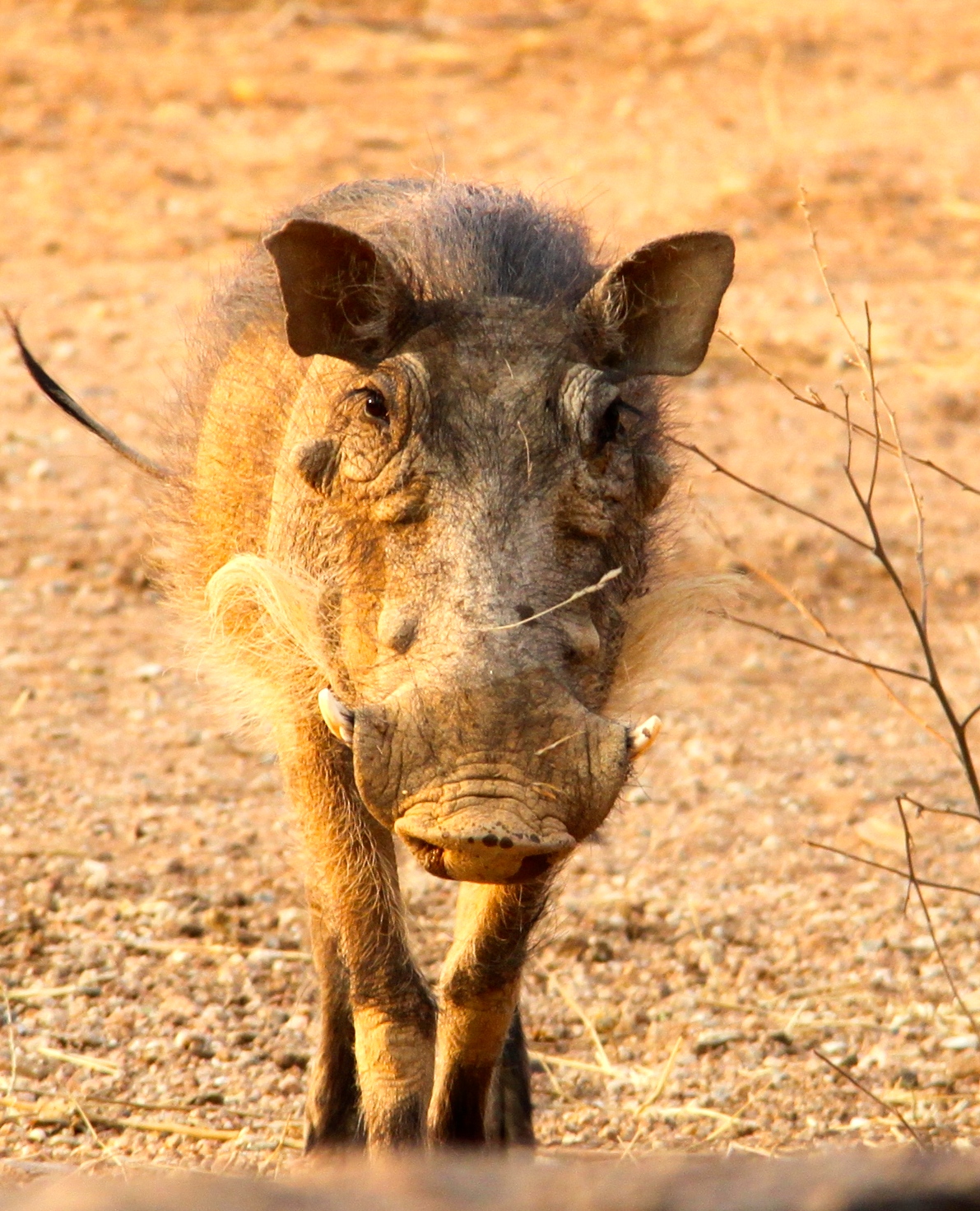
Male Warthogs have 4 warts on their face.  Females only have 2.
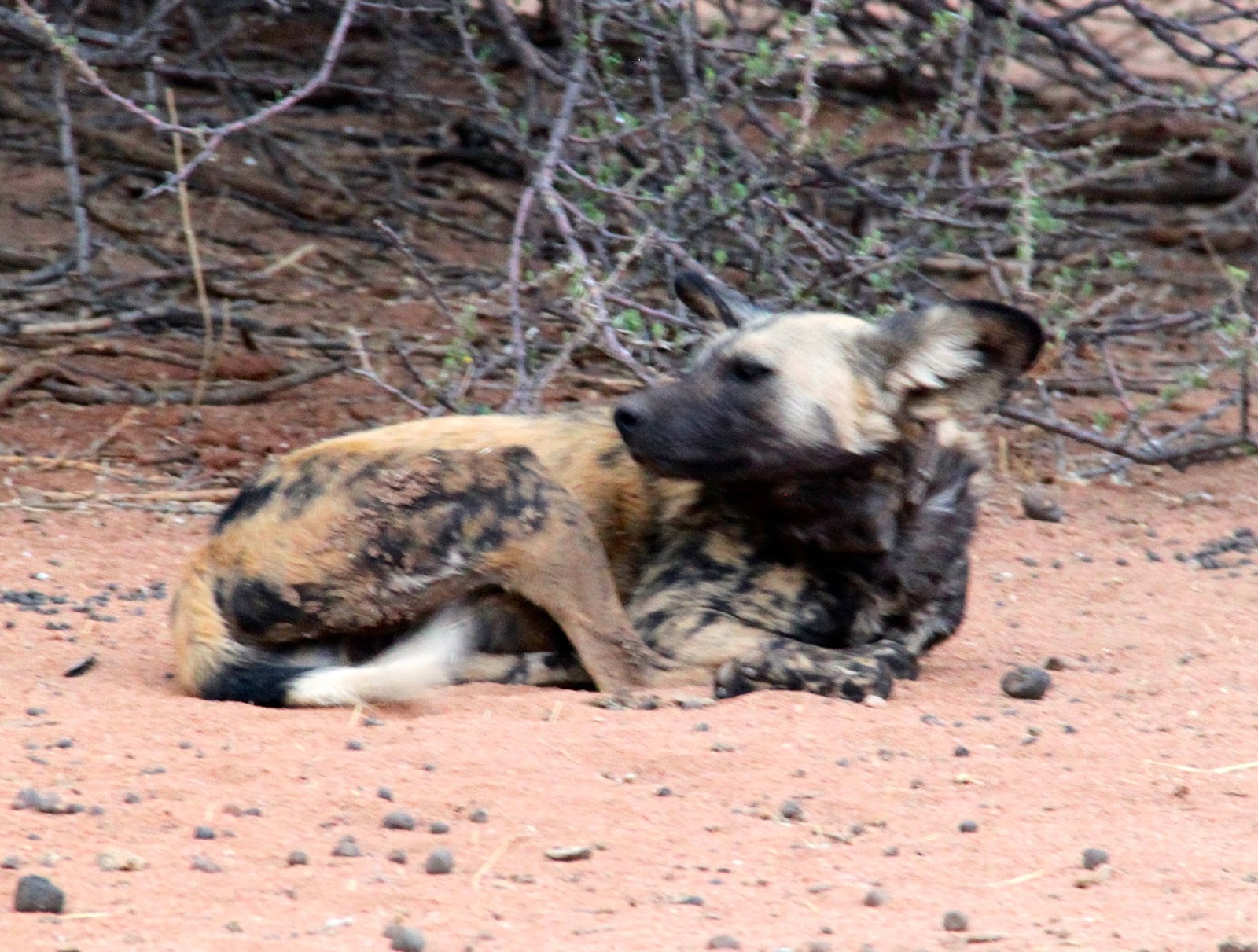
Wild Dog
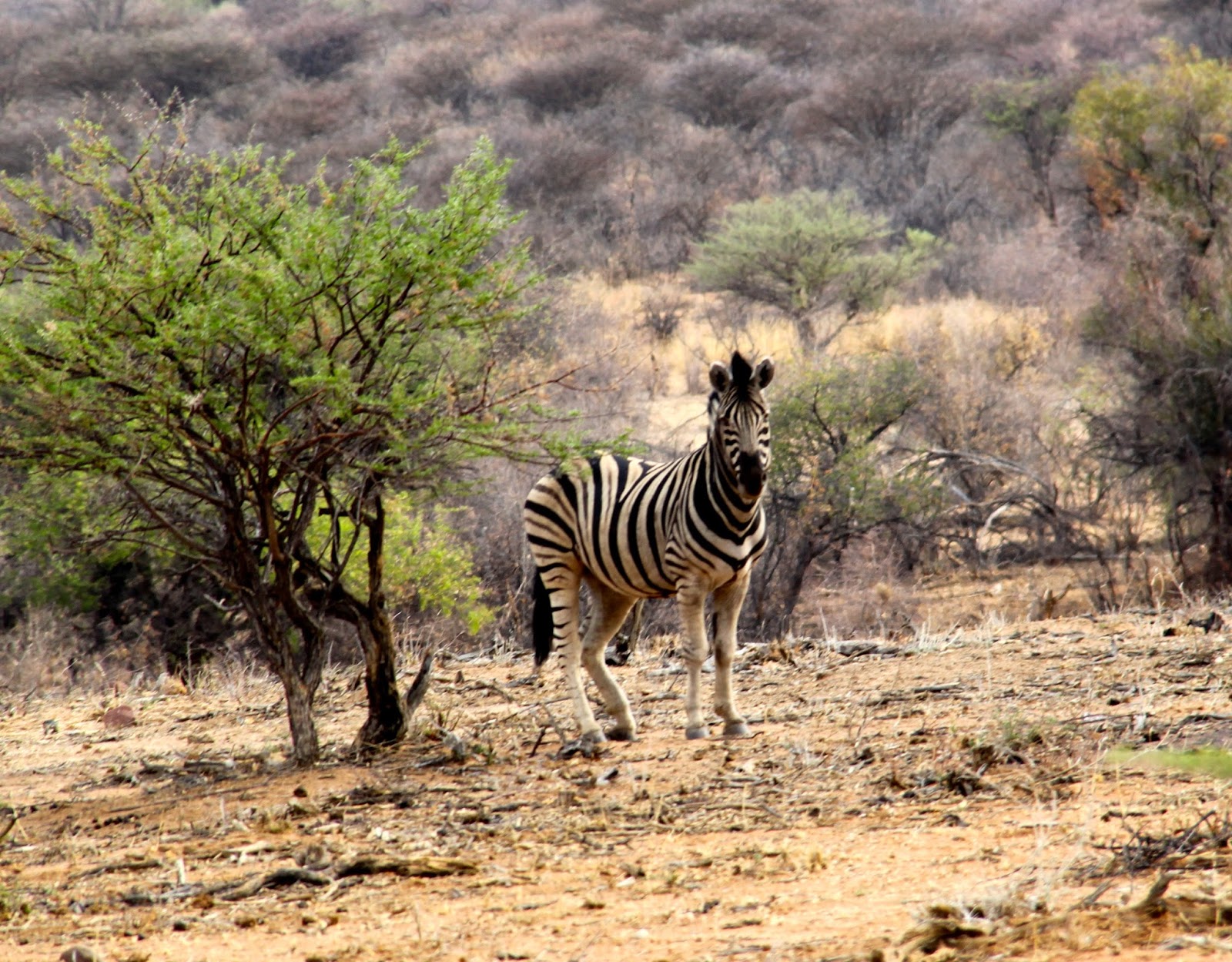
Zebra
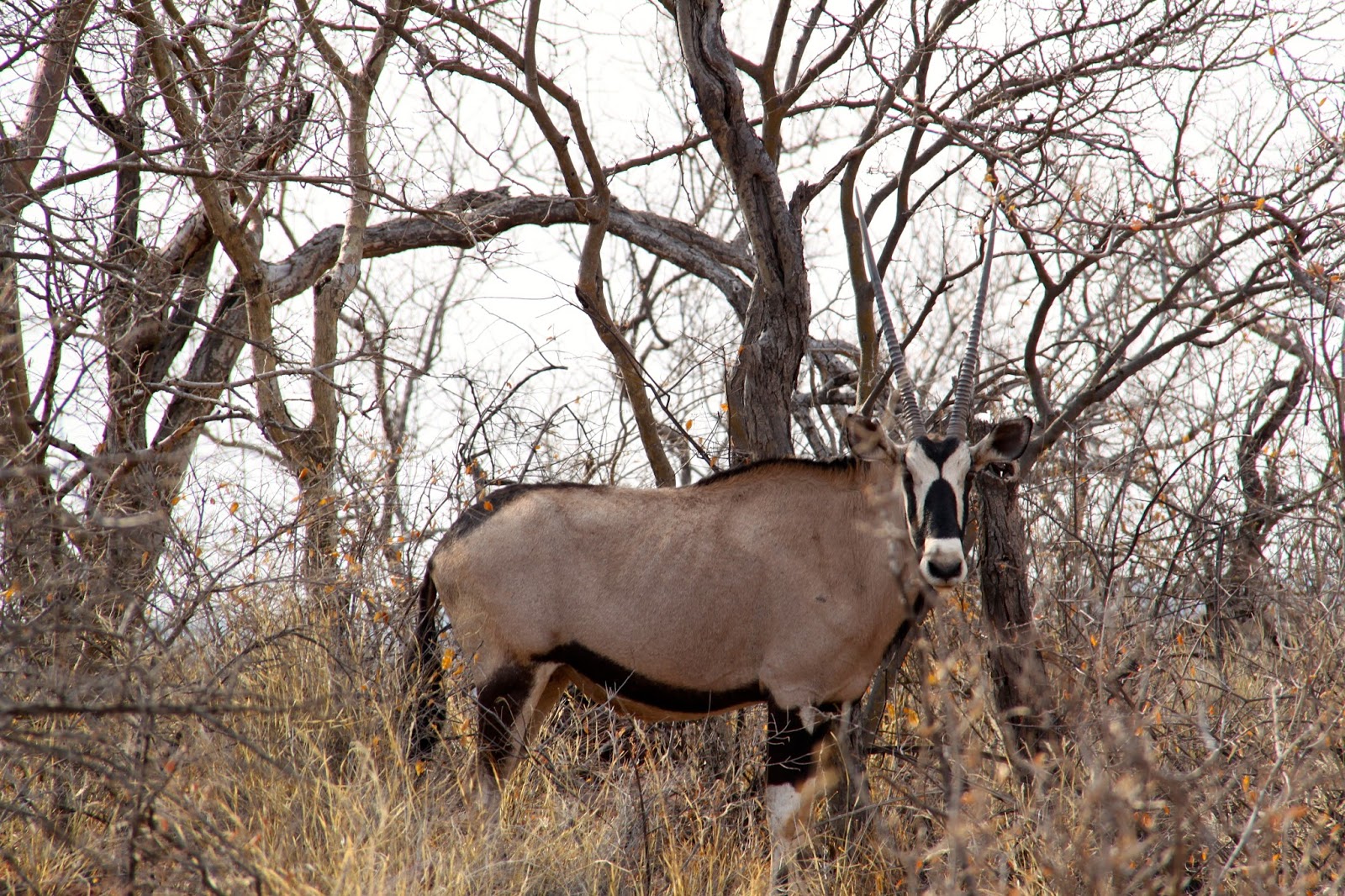
Oryx
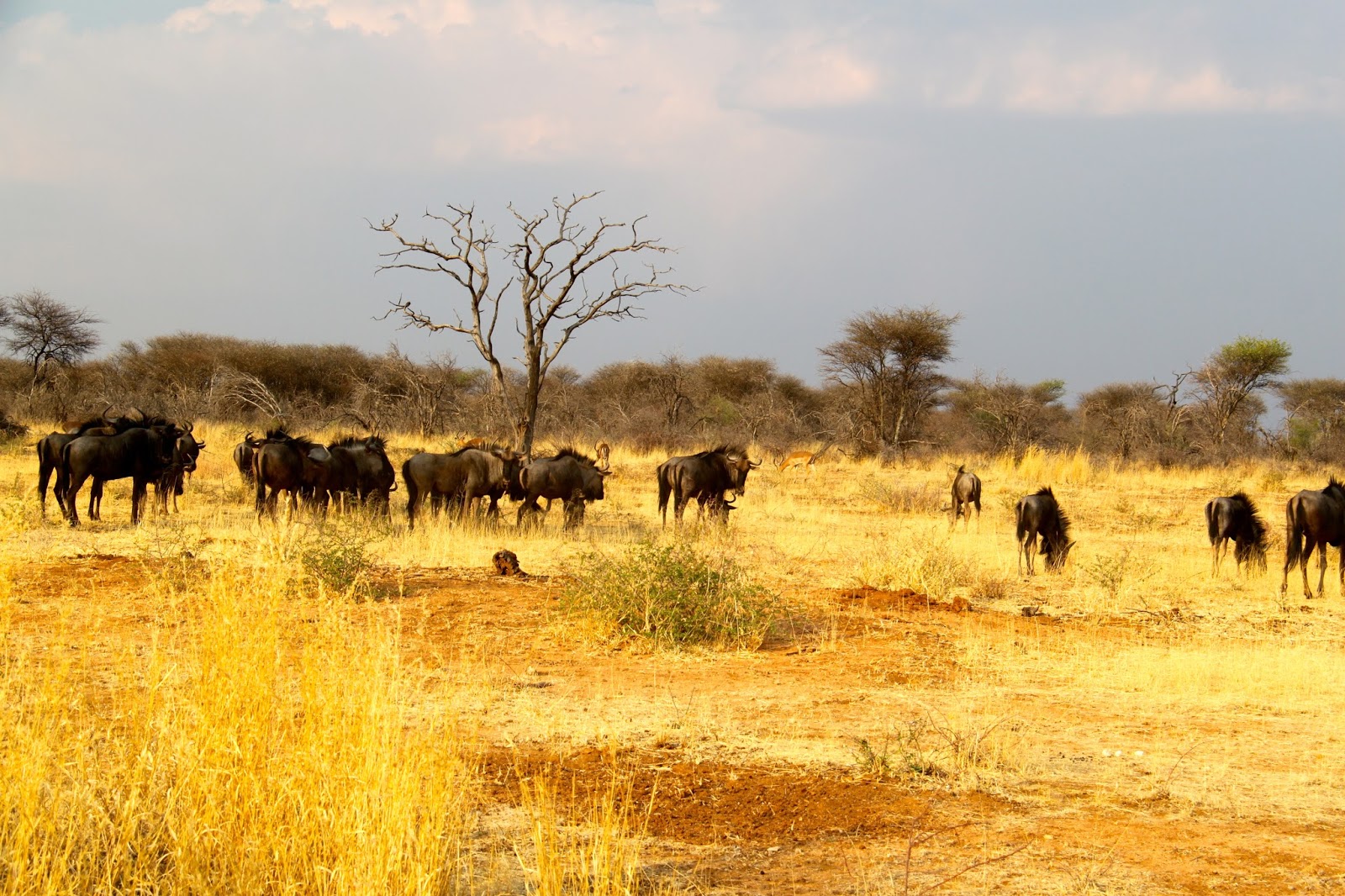
Blue Wildebeest
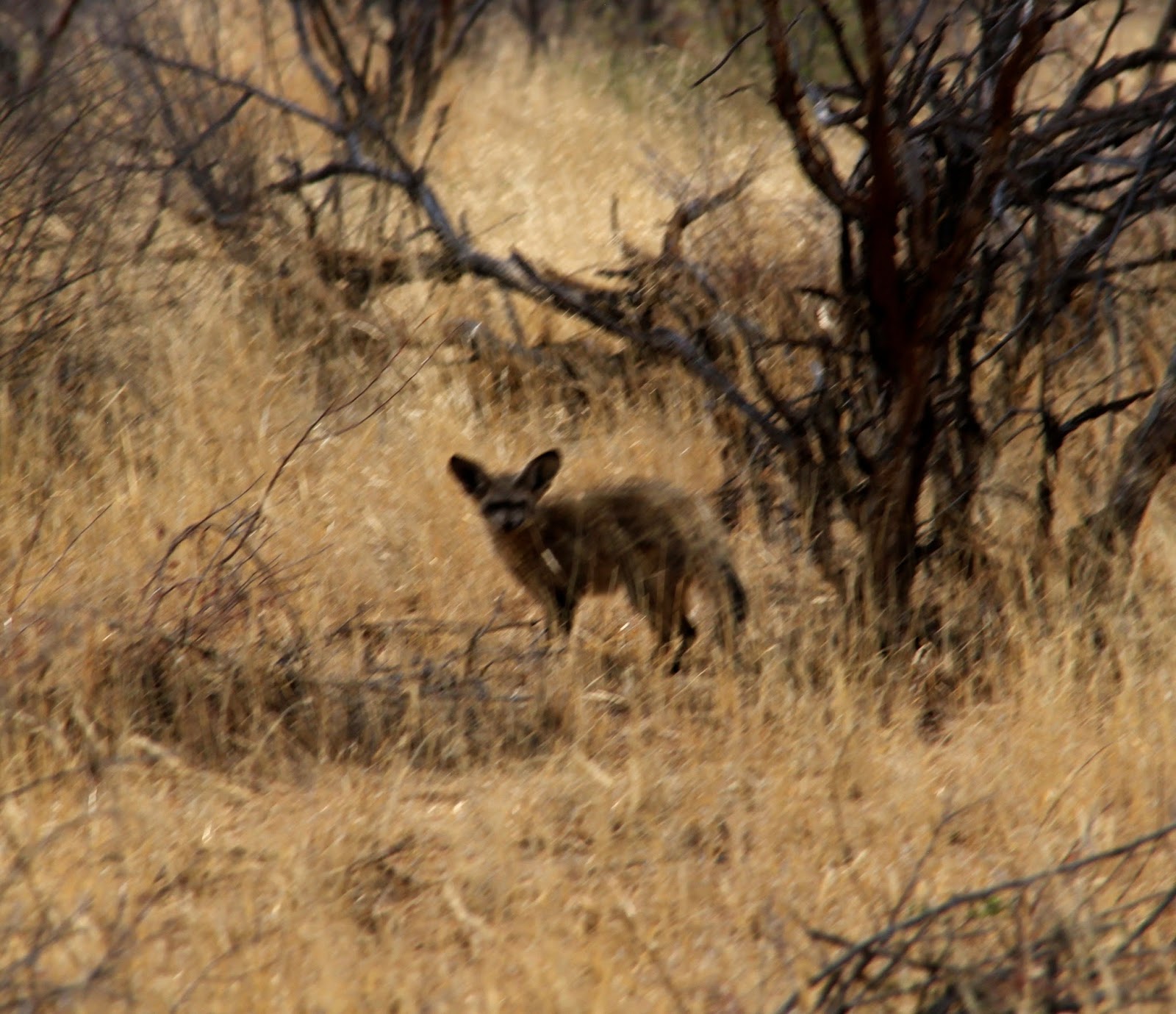
Bat Ear Fox
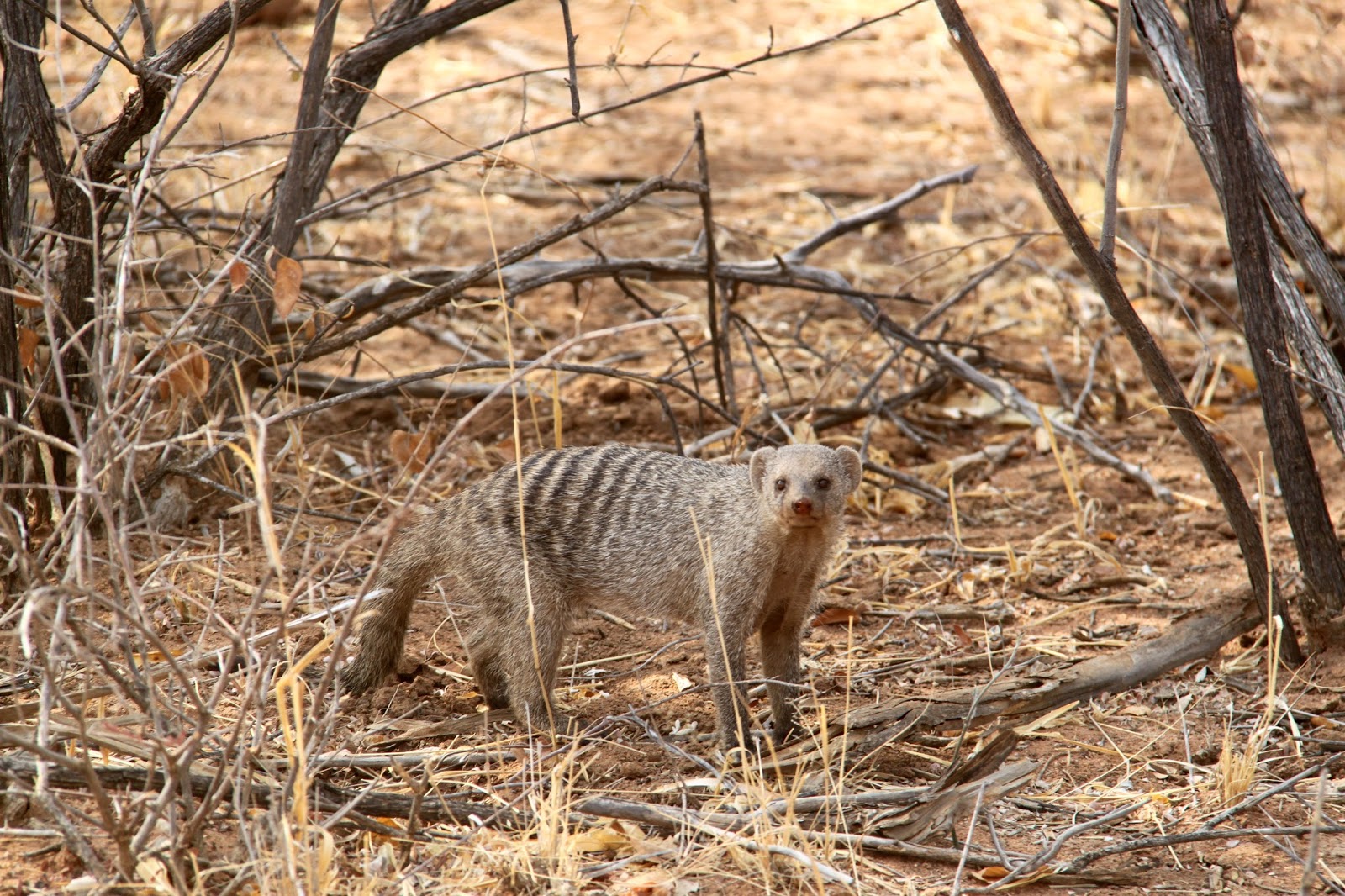
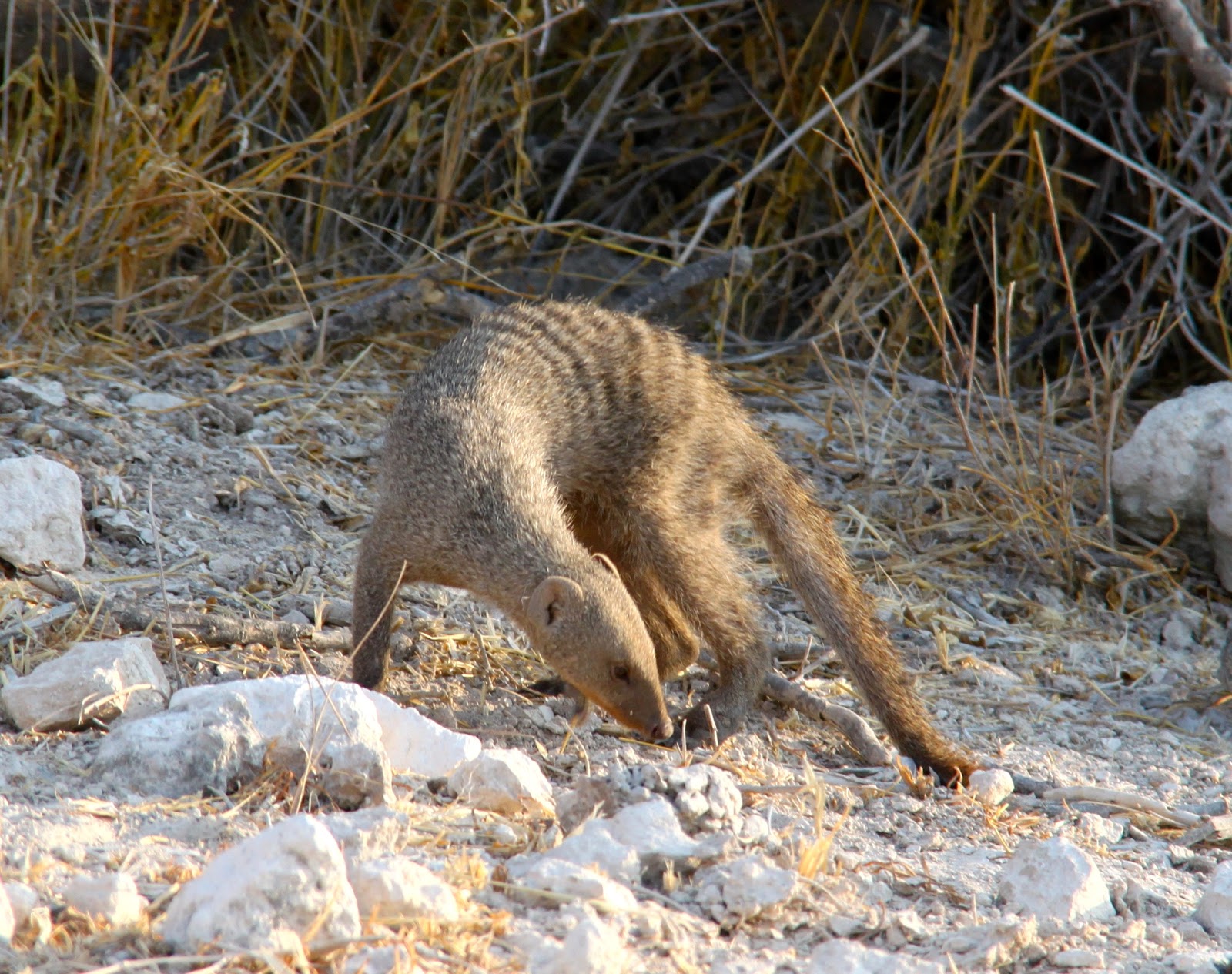
Banded Mongoose.  They eat a lot of snakes
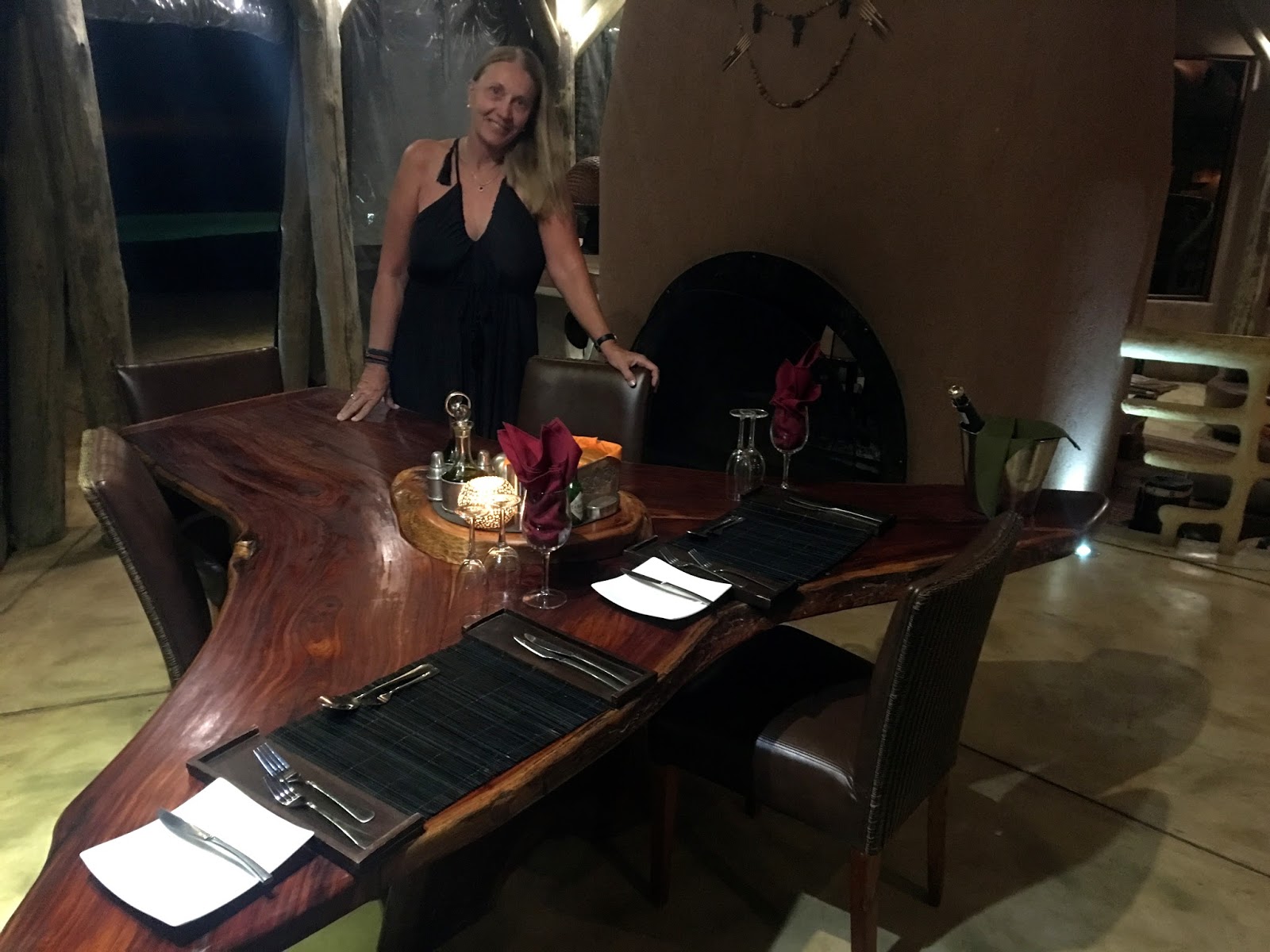
 We had an evening dinner party, and Barb had a dance party with the manager.
Dinner and Dancing
We will be driving from Okonjima to the Windhoek airport on tar roads, and saying goodbye to Chuma.  Scott will be sad.  He wants to buy Chuma and take it home with him as a souvenir.   
Chuma


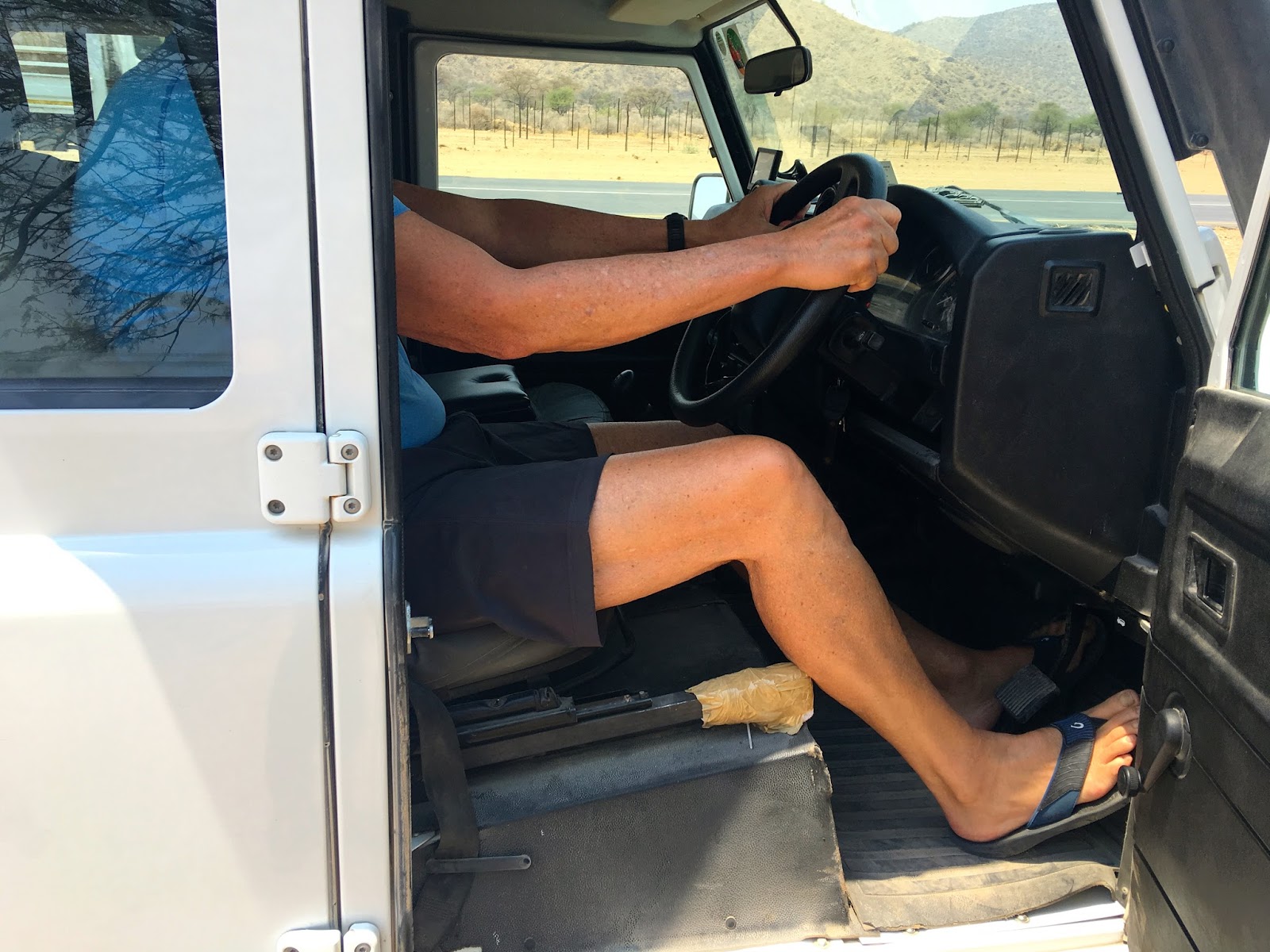
He now drives from the backseat.


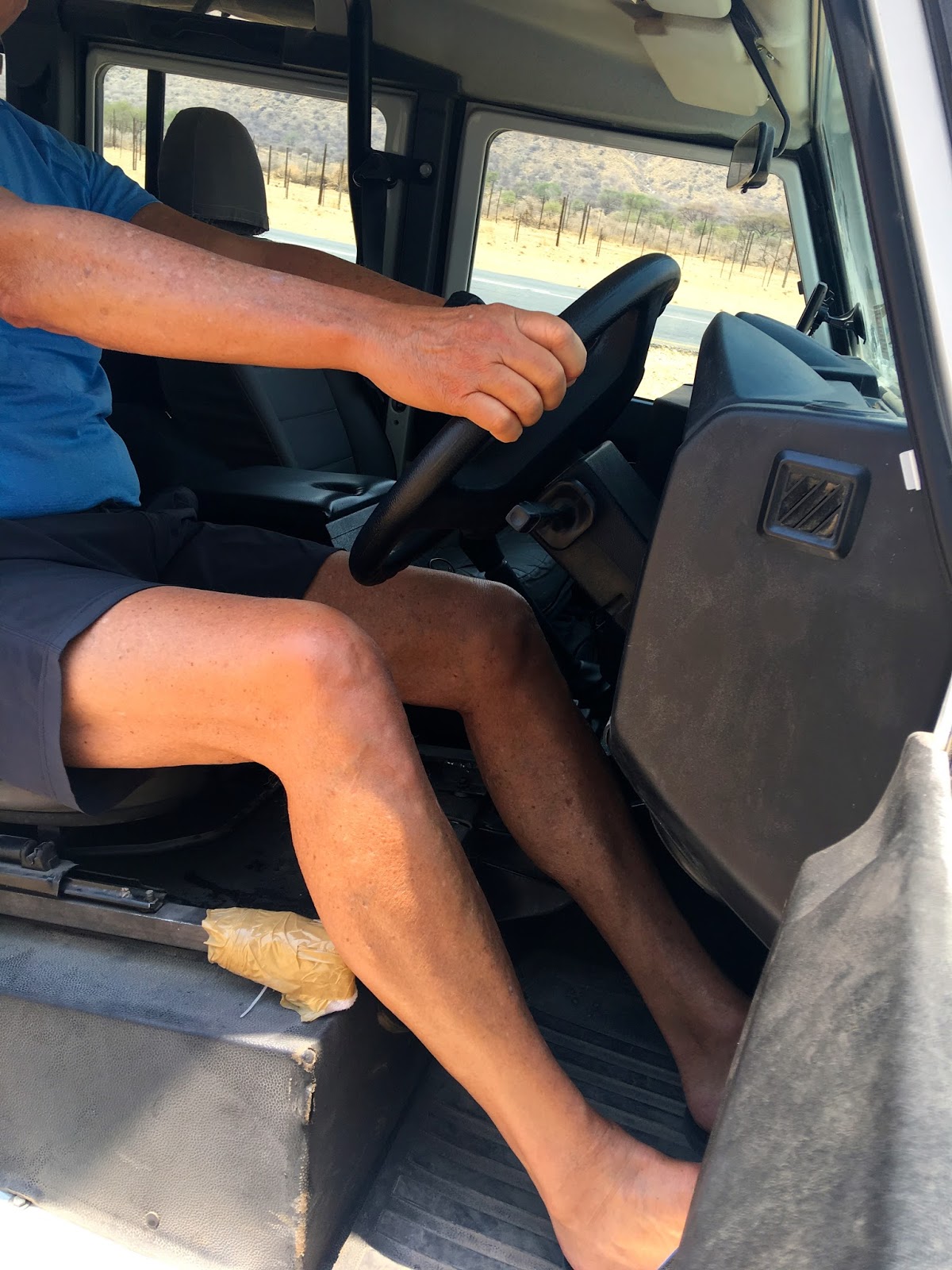
This is Deluxe!  Leg room and he can straighten his arms!  You can see the new rail they manufactured for him in 2 hours!
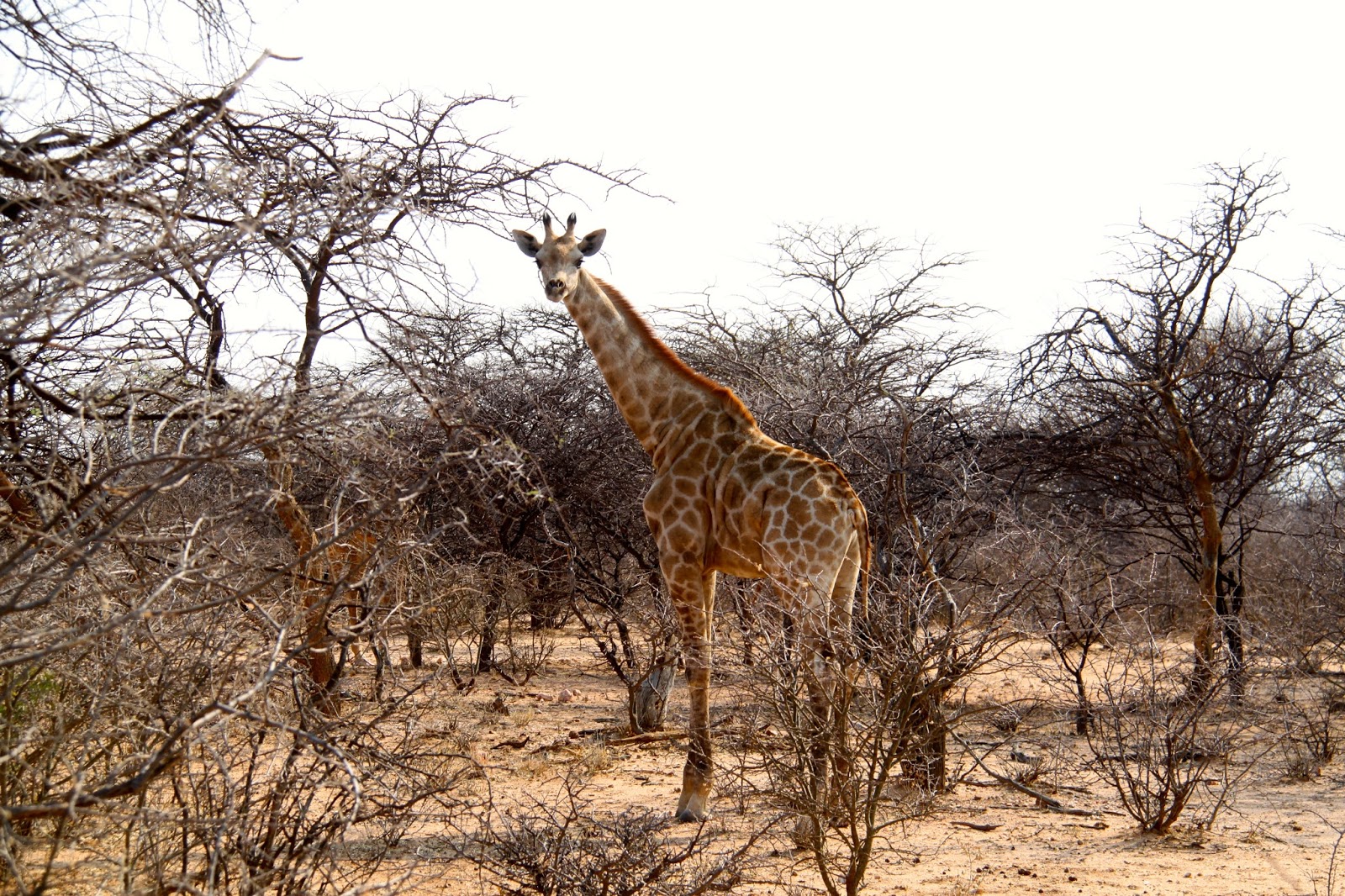
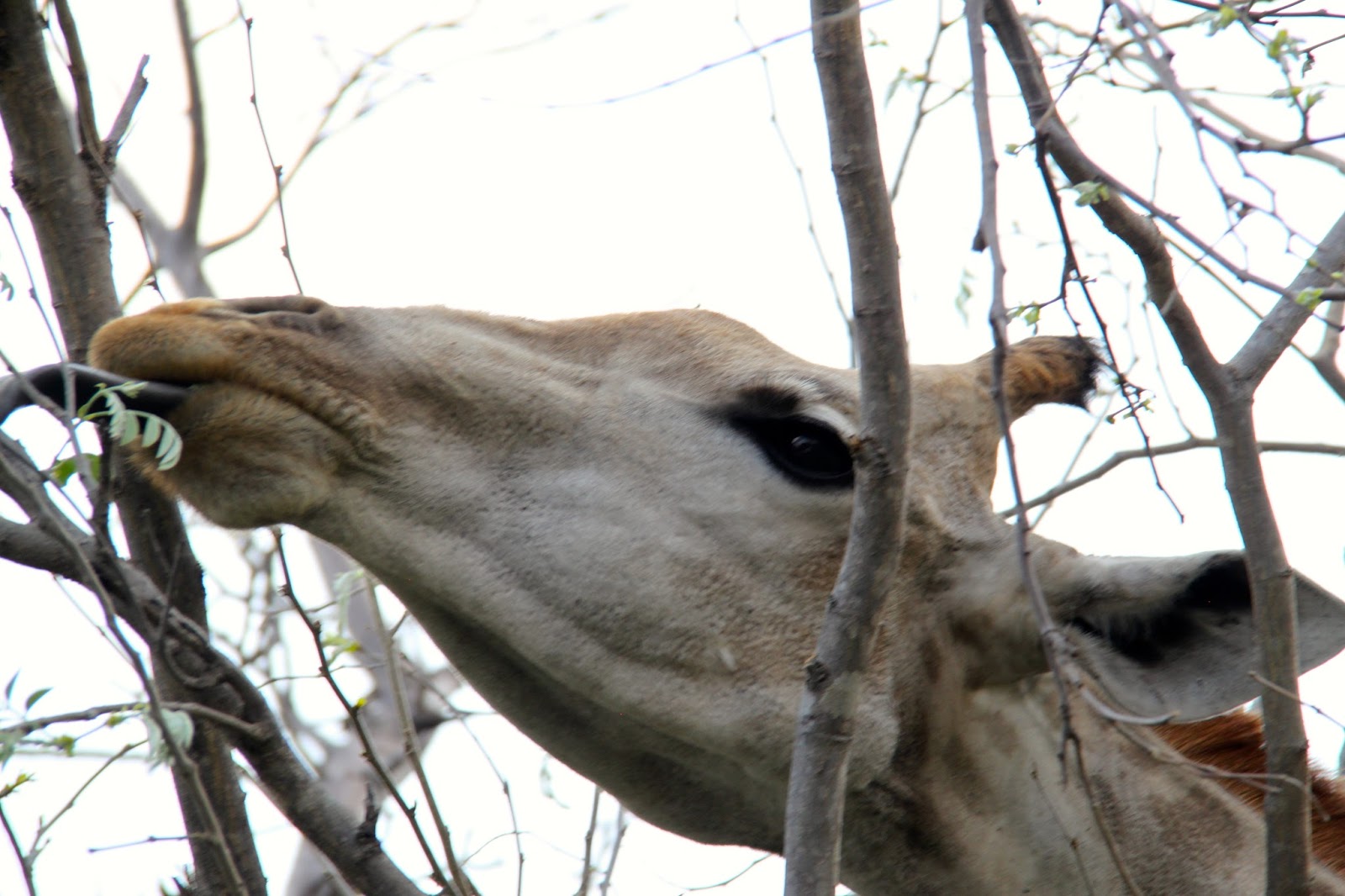
Barb says goodbye to her favorite animal, Mr. Giraffe.
 

 Goodbye Safari.  We are off the the Seychelles next.


Namibia-Sorris Sorris-South Damaraland-Camp 8 October 12-13, 2016

Sorris Sorris
South Damaraland
Camp 8 


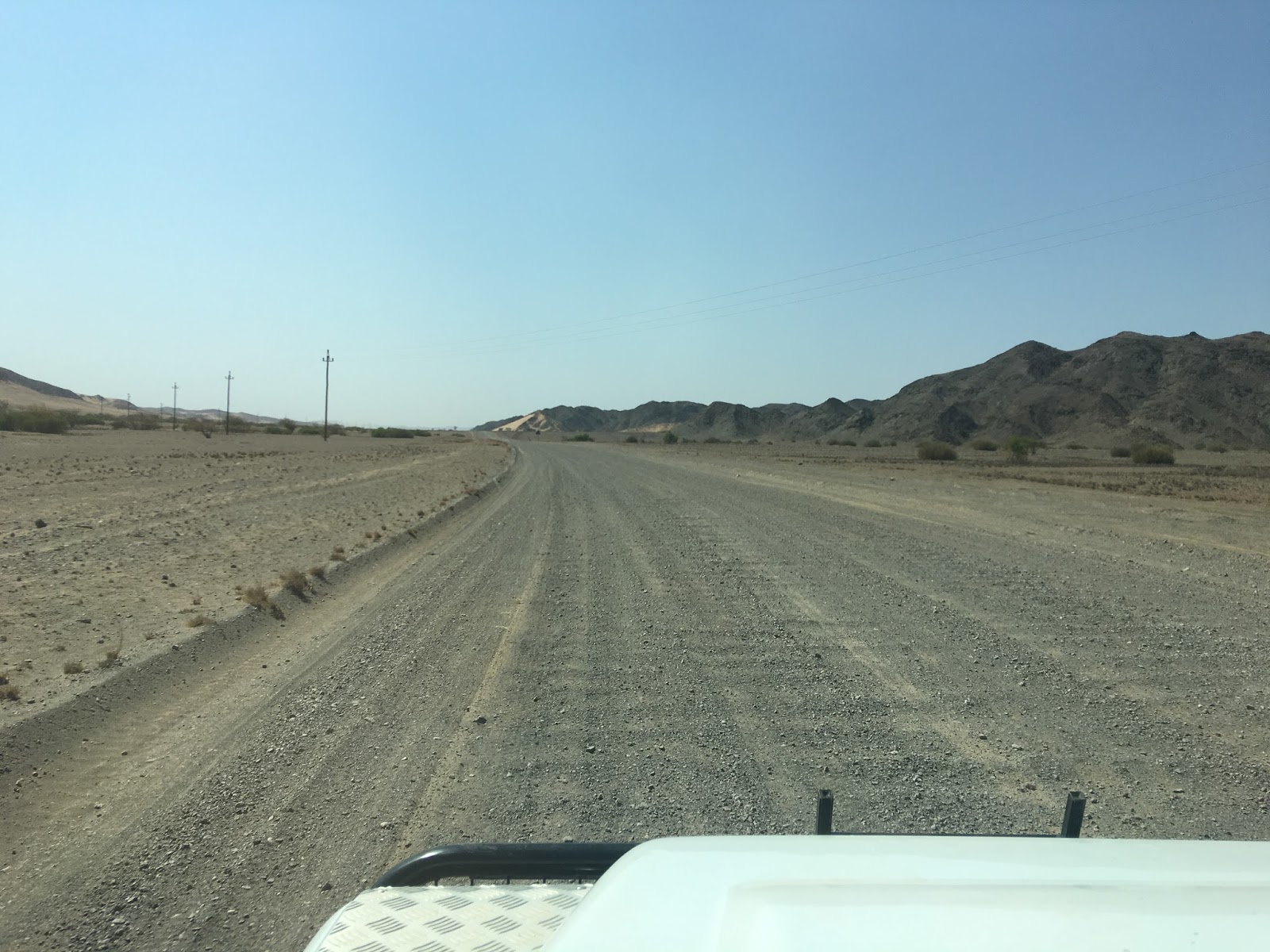
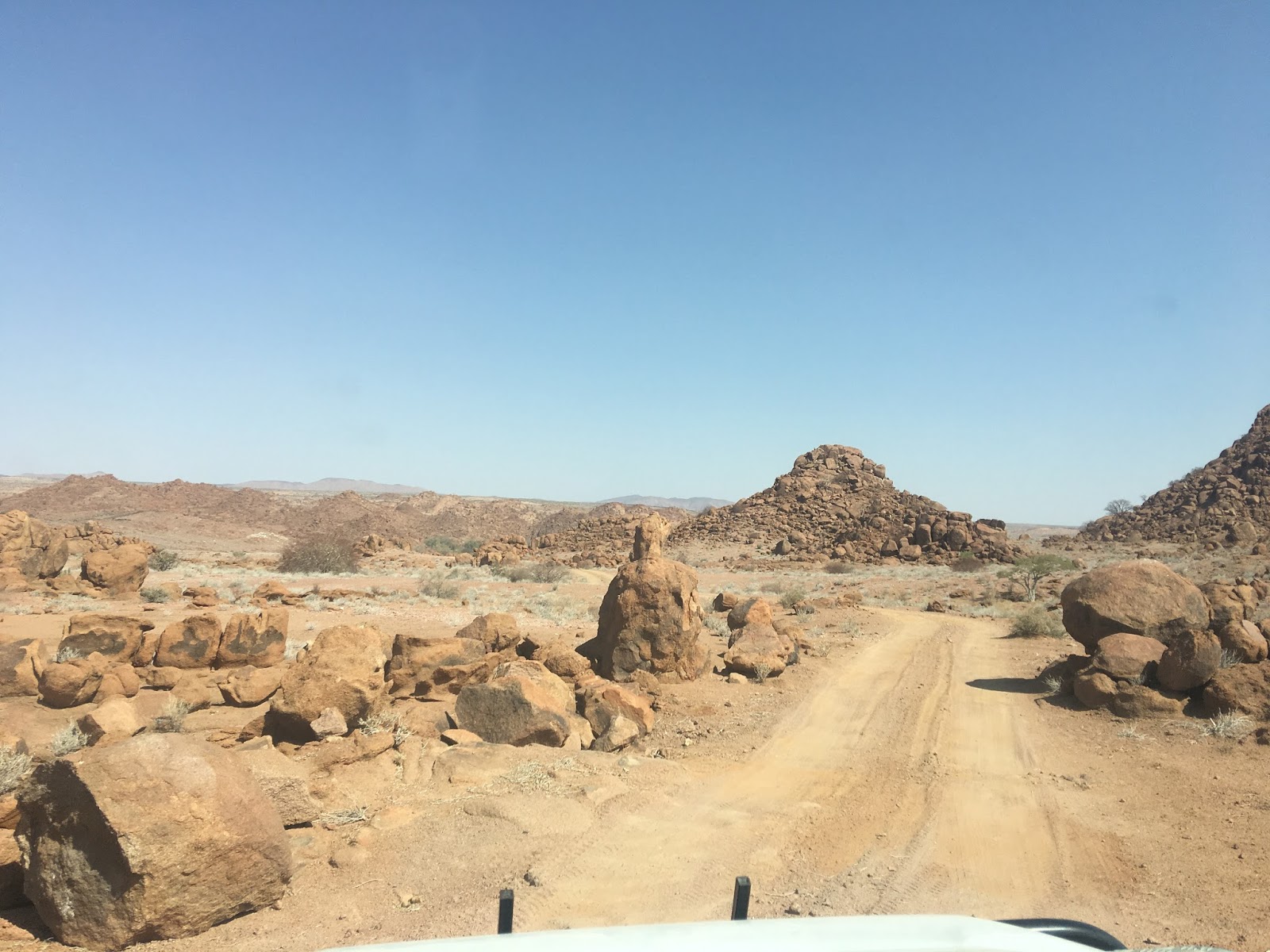
We drove from Desert Rhino Camp to Sorris Sorris Camp through Damaraland on rough dirt roads.  
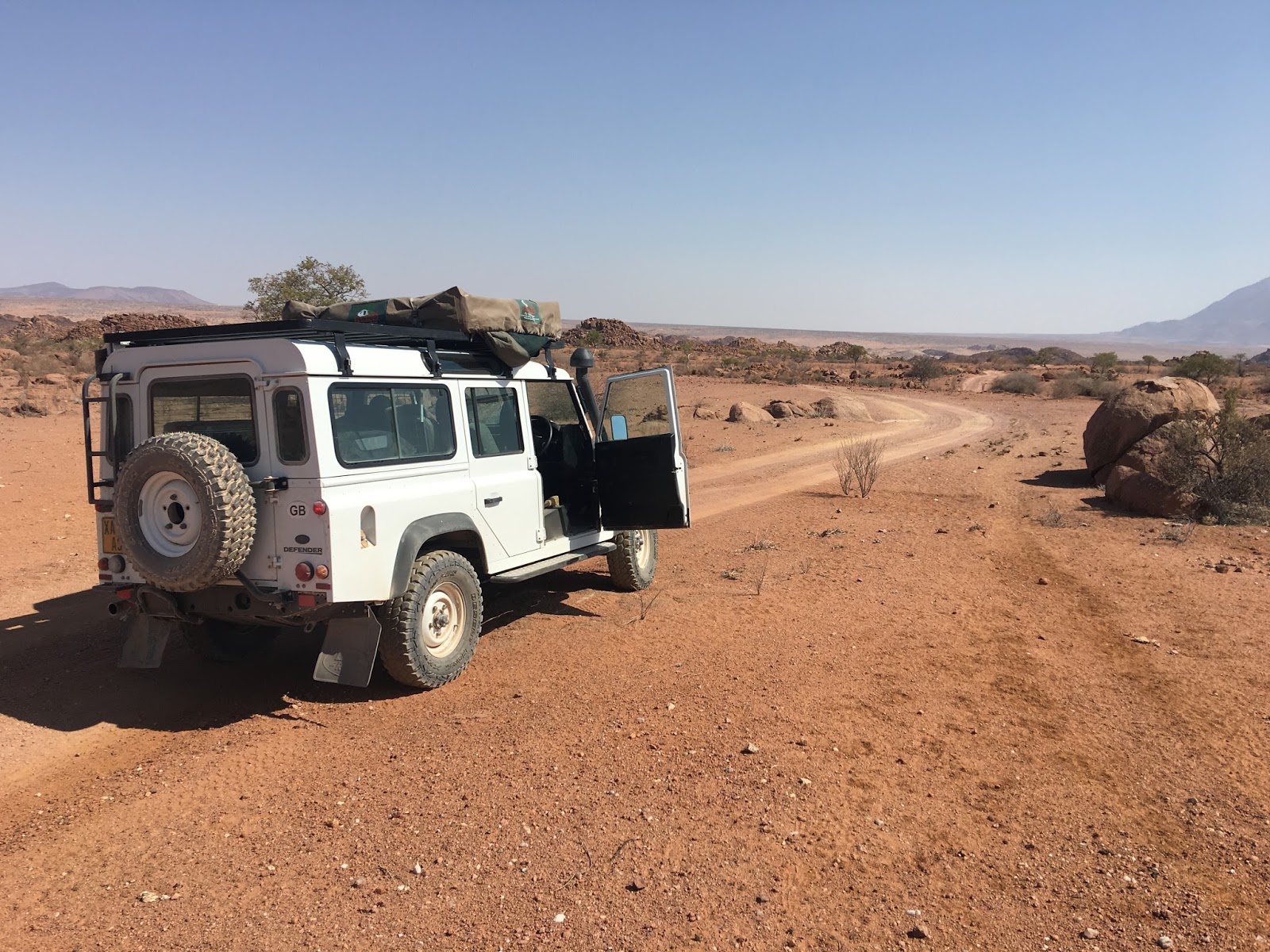
Chuma has been reliable.
 
 
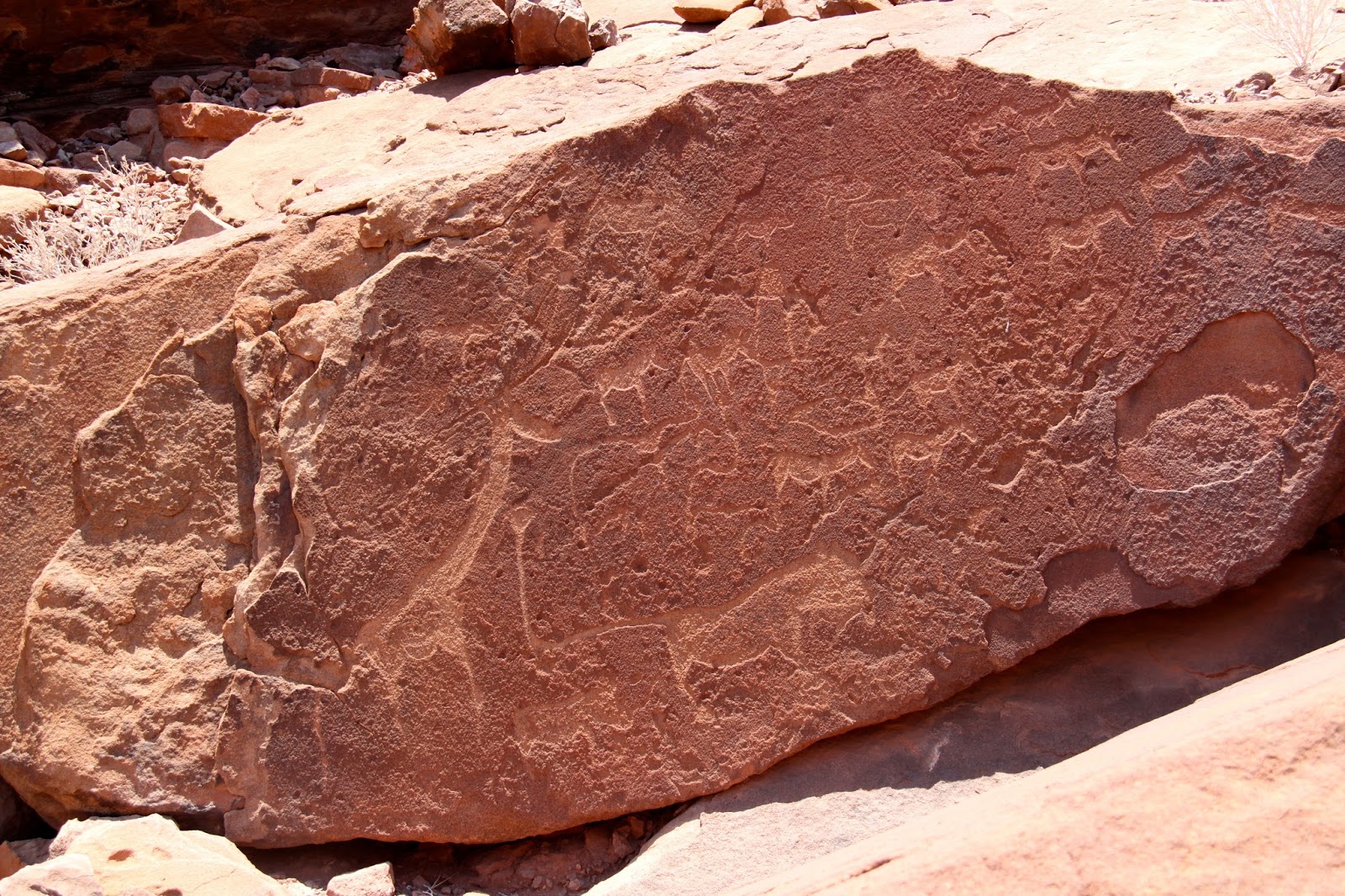
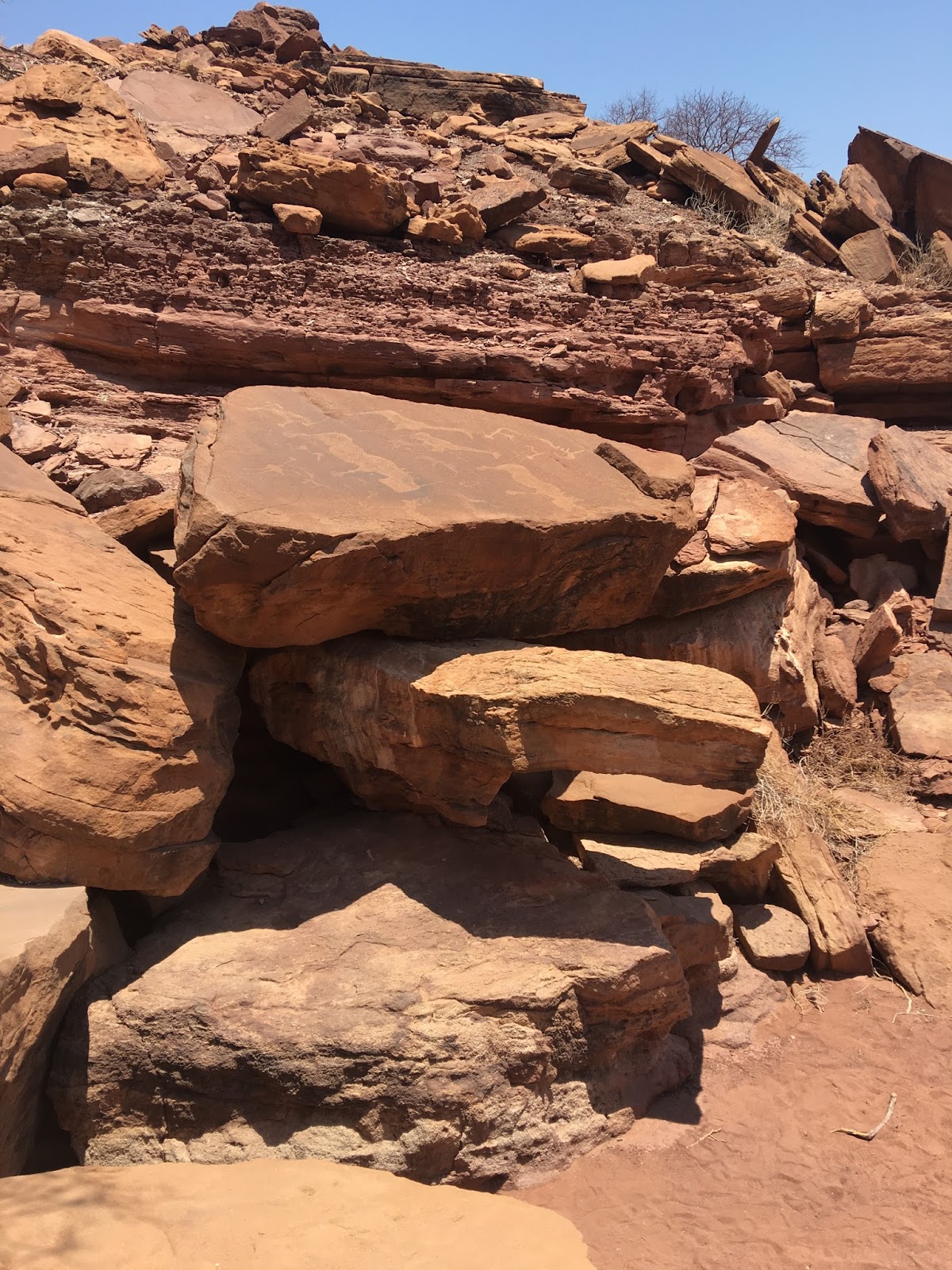
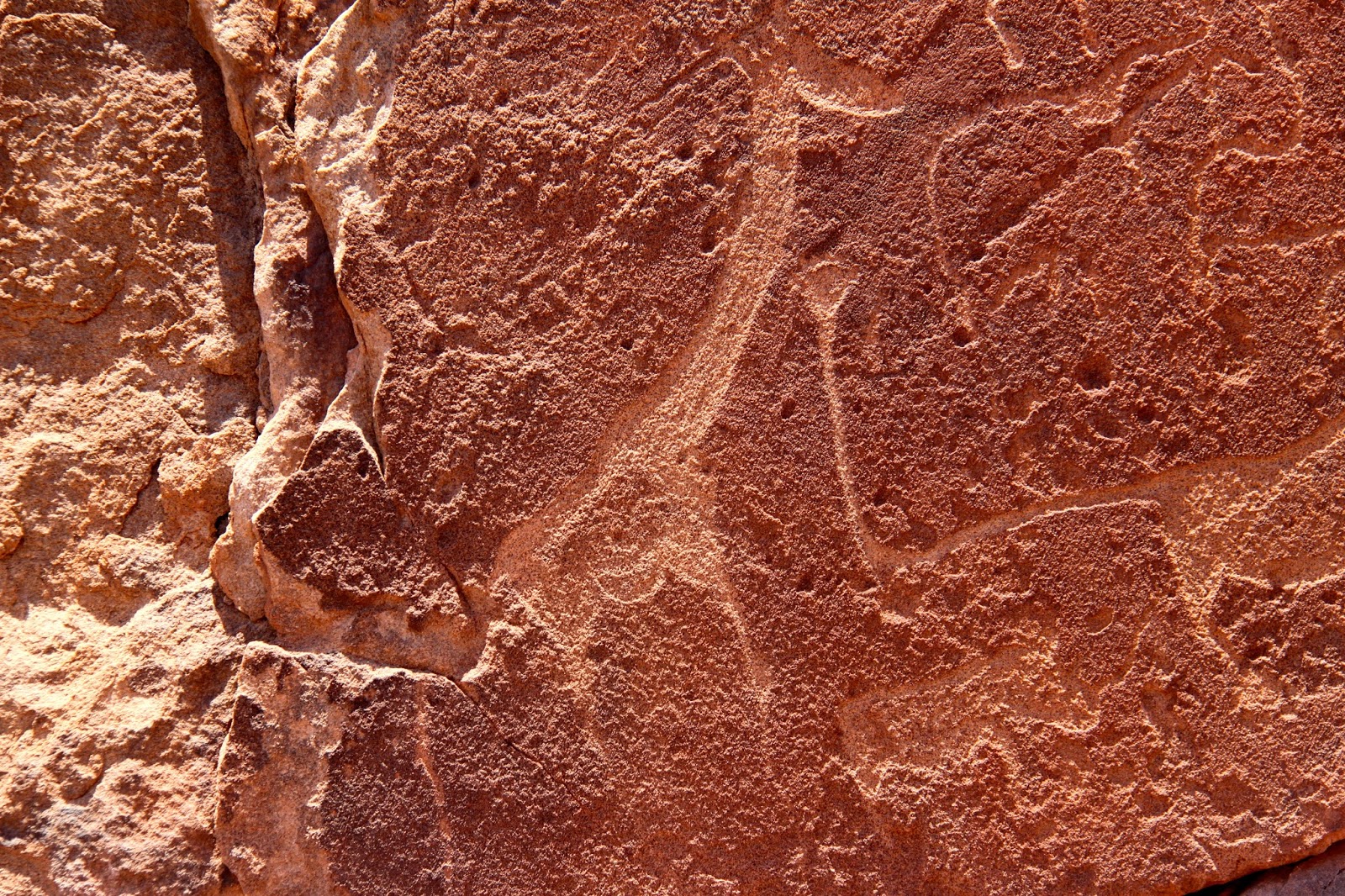
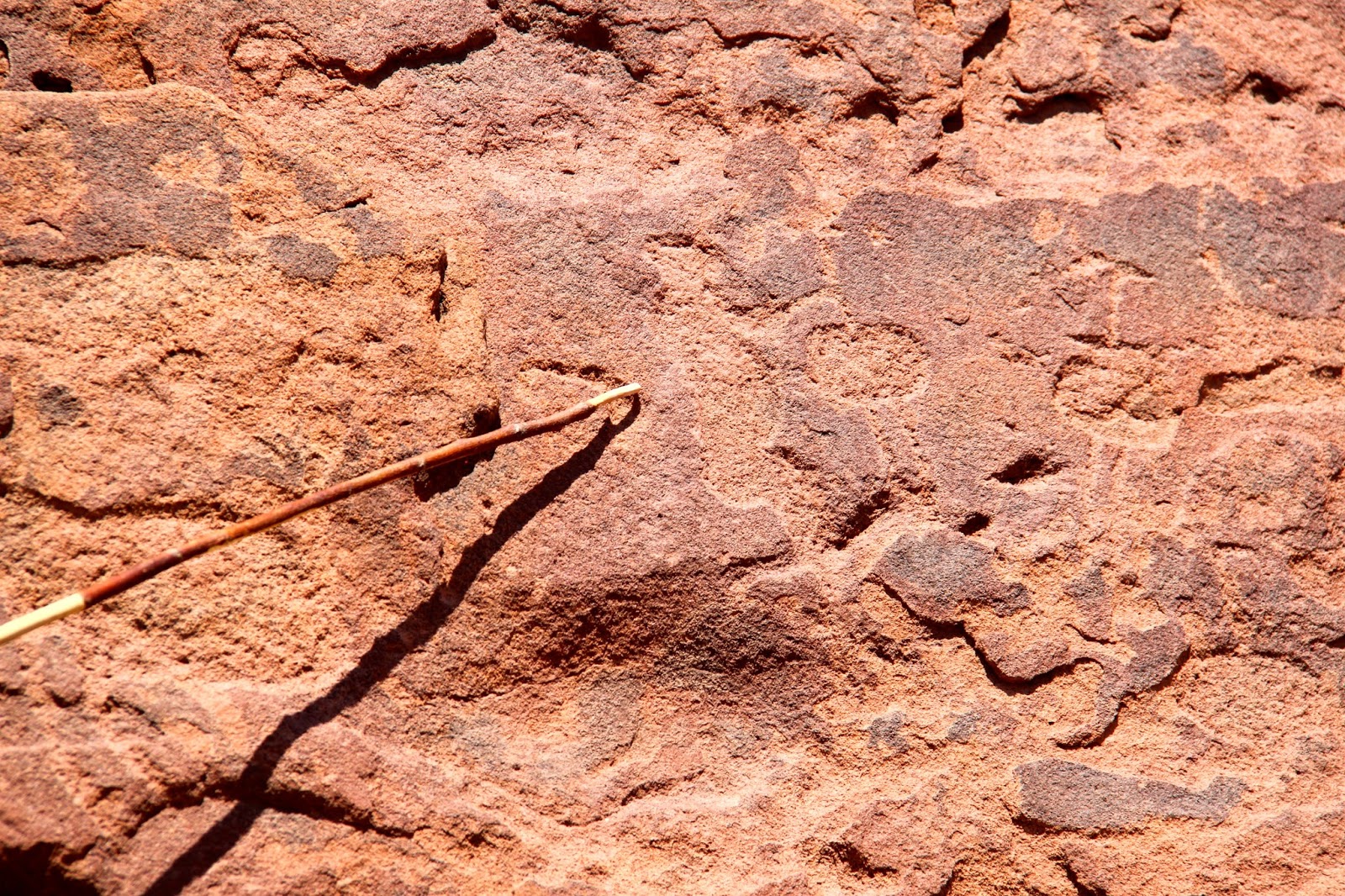
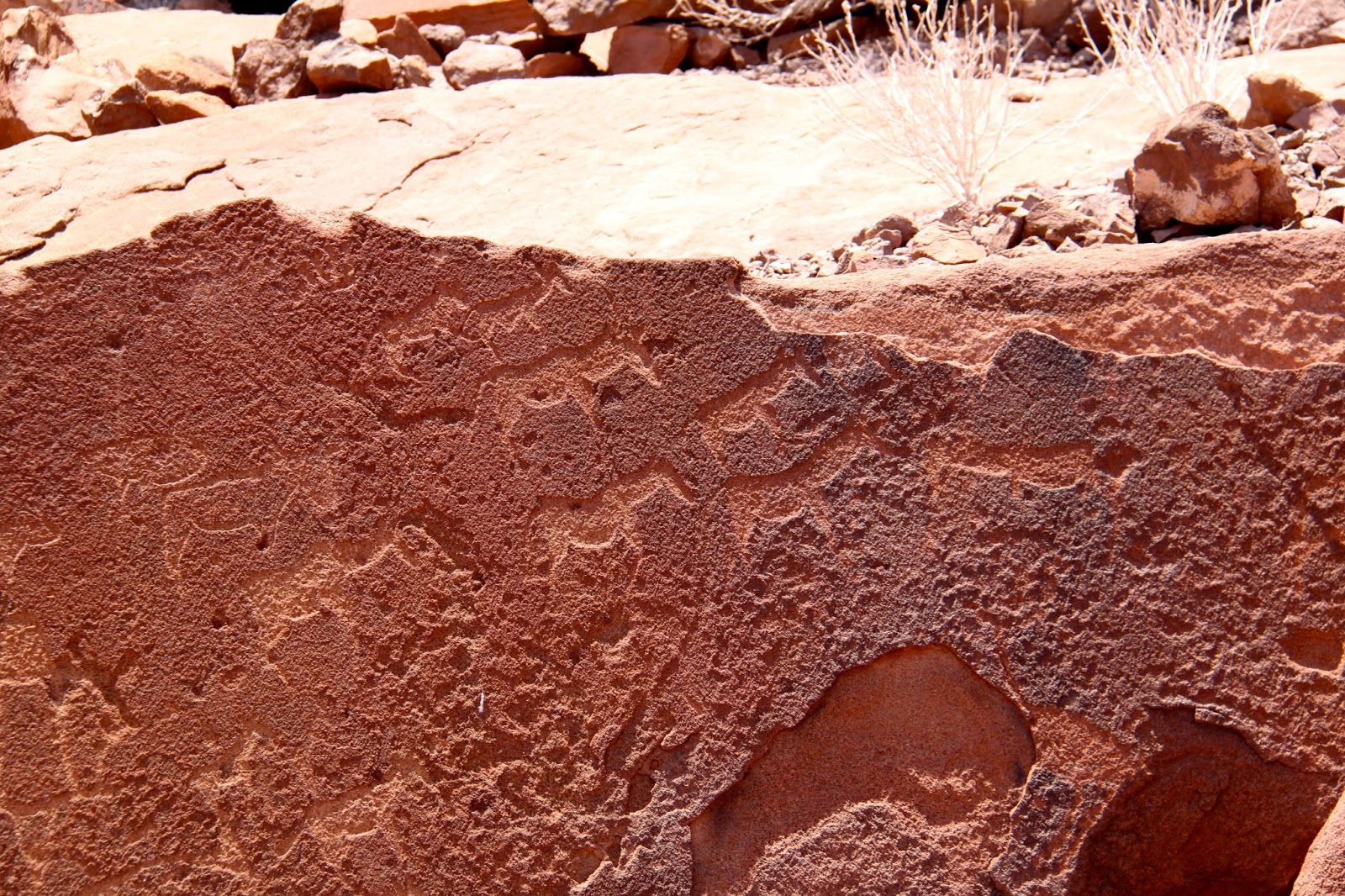
On the way we stopped at the 4000 year old rock art at Twyfelfontein.  Ancient artists used pictographs to depict the animals that they saw.  There was only one depiction of a human. 
 
 
The stick is pointing to the human body
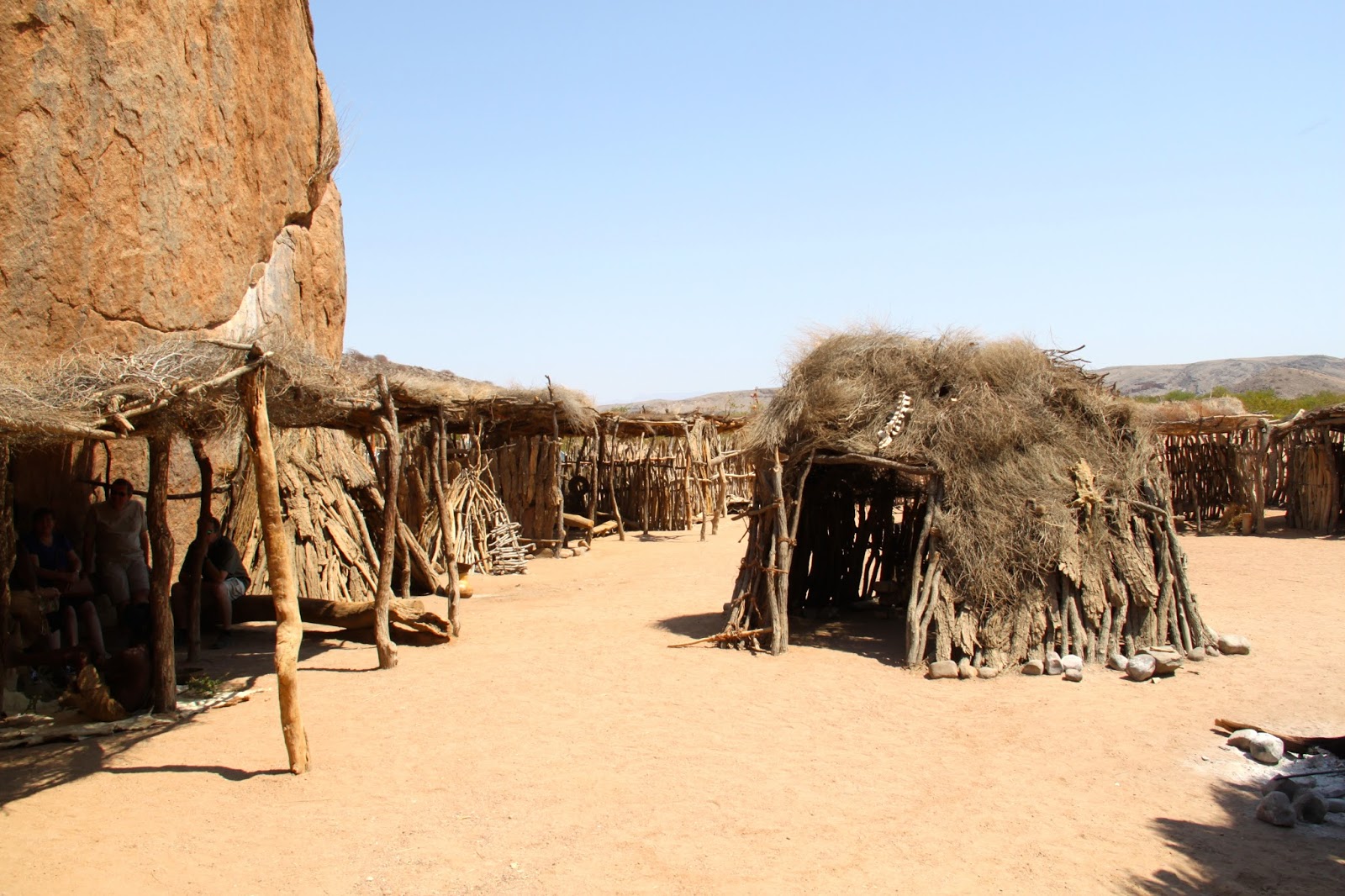
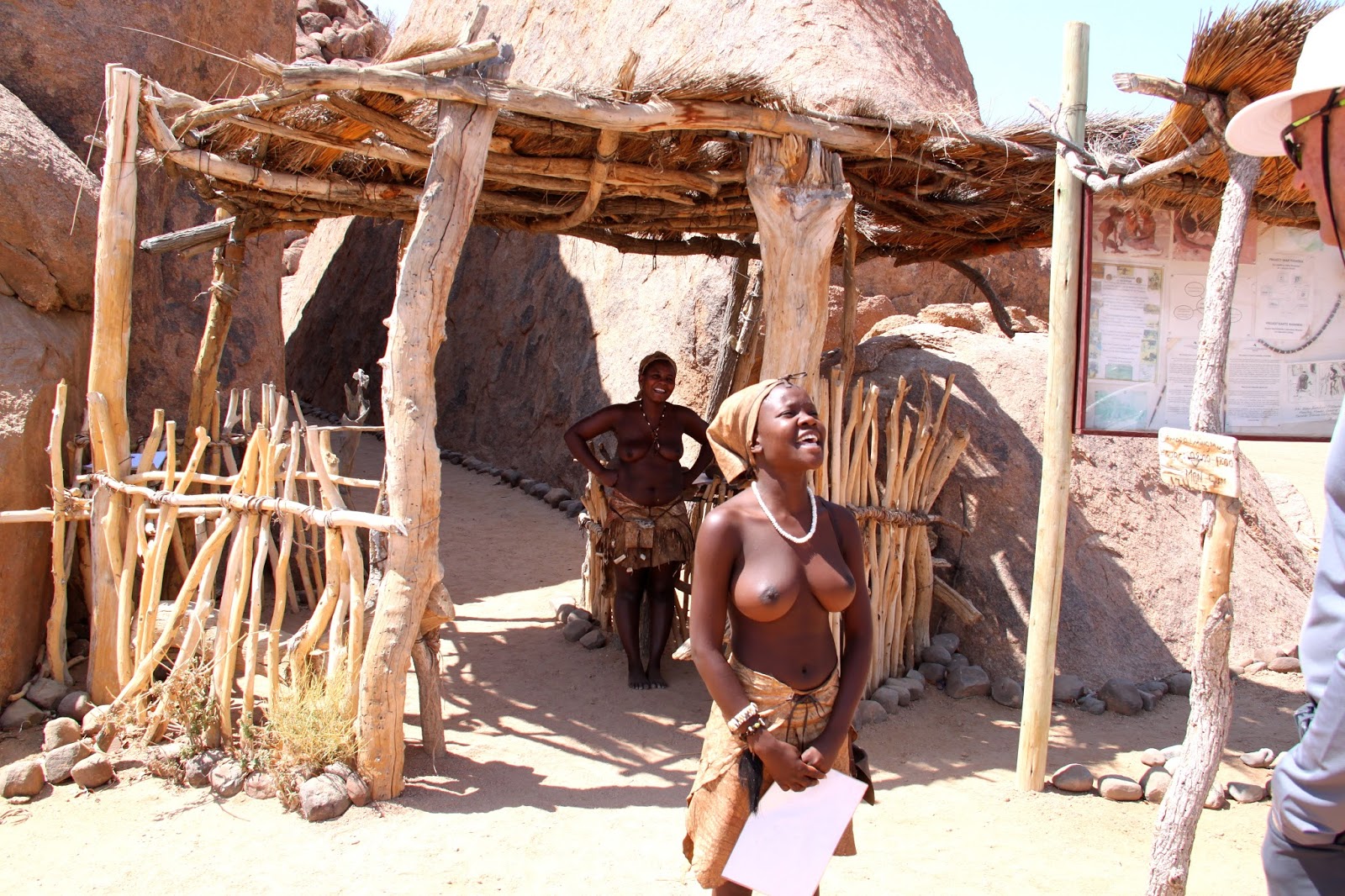
We also stopped at a Damaraland “Living Museum”  where Damara Tribes people keep their traditions alive.
Girls greet us
They painted Barb’s face with red ochre
They make jewelry
They sing and dance
They put red ochre powder on Barb’s face.  Now she looks like a clown, until she rubs it in.
Selfie
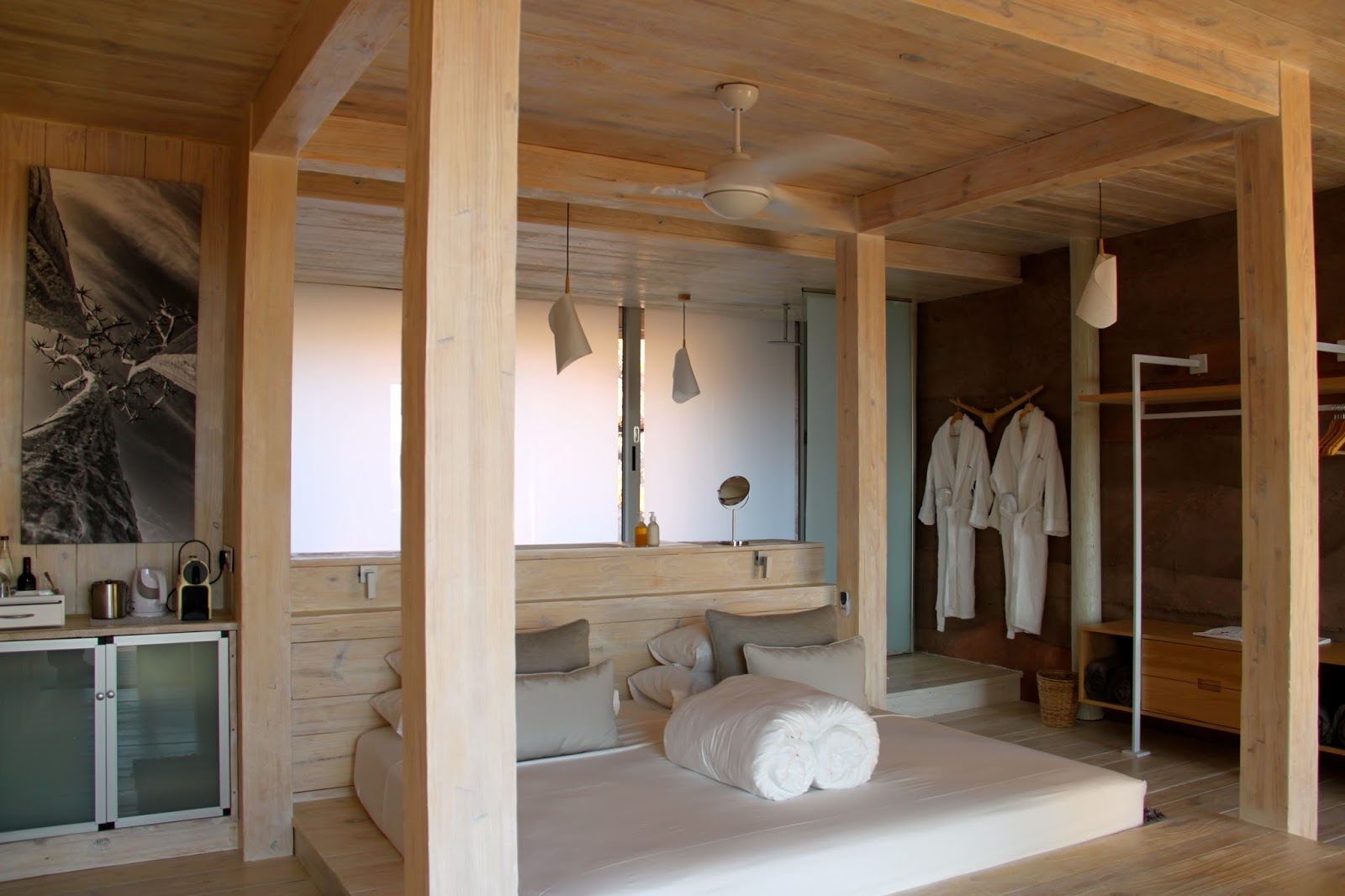
Sorris Sorris is a new lodge and we were very happy to see that it had hard wall surfaces.  We have been in tents for the past 15 nights and we are ready for a more clean and comfortable sleep.  
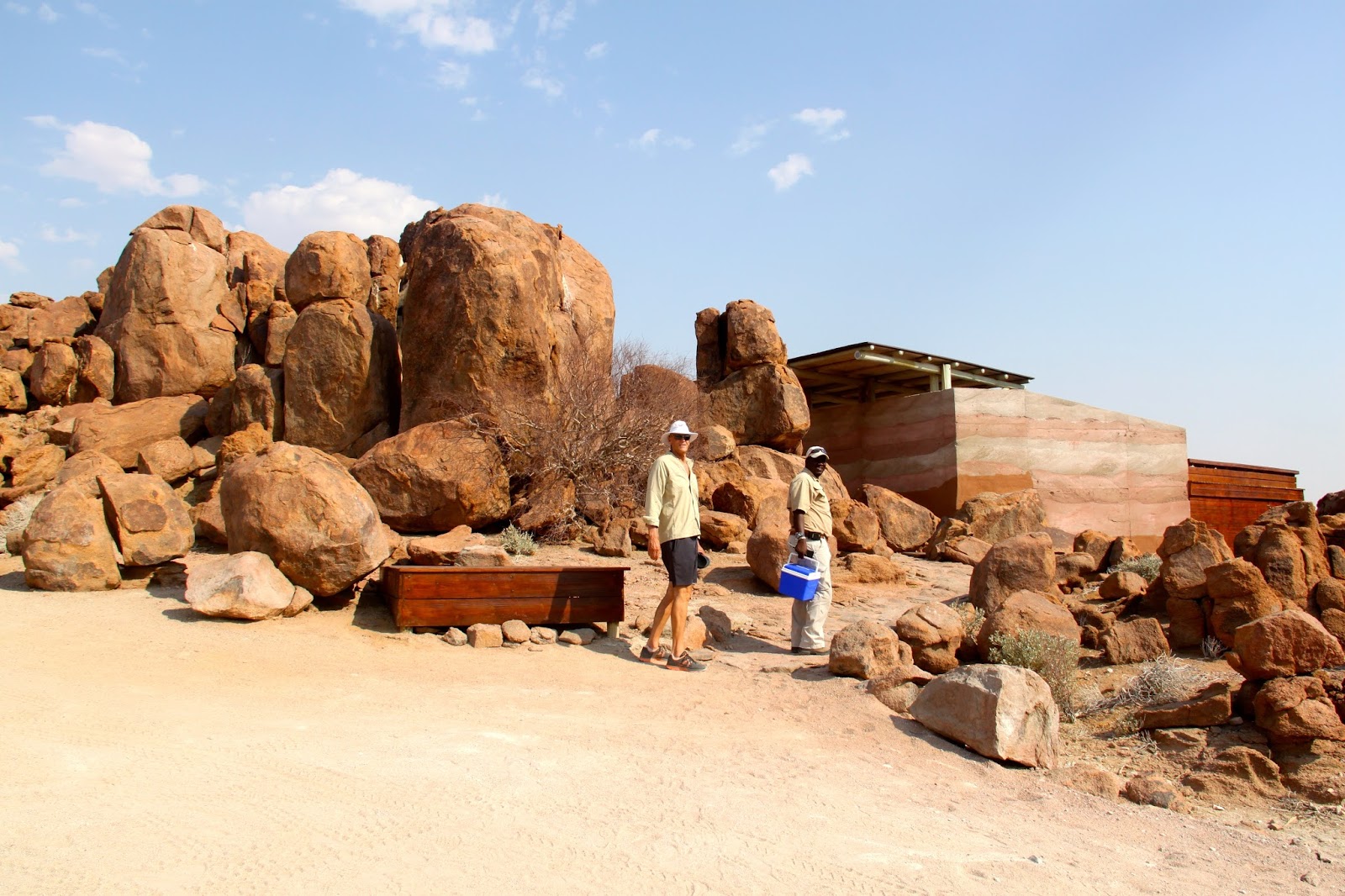
Looking up at the lodge and the individual villas
The main area
Our room
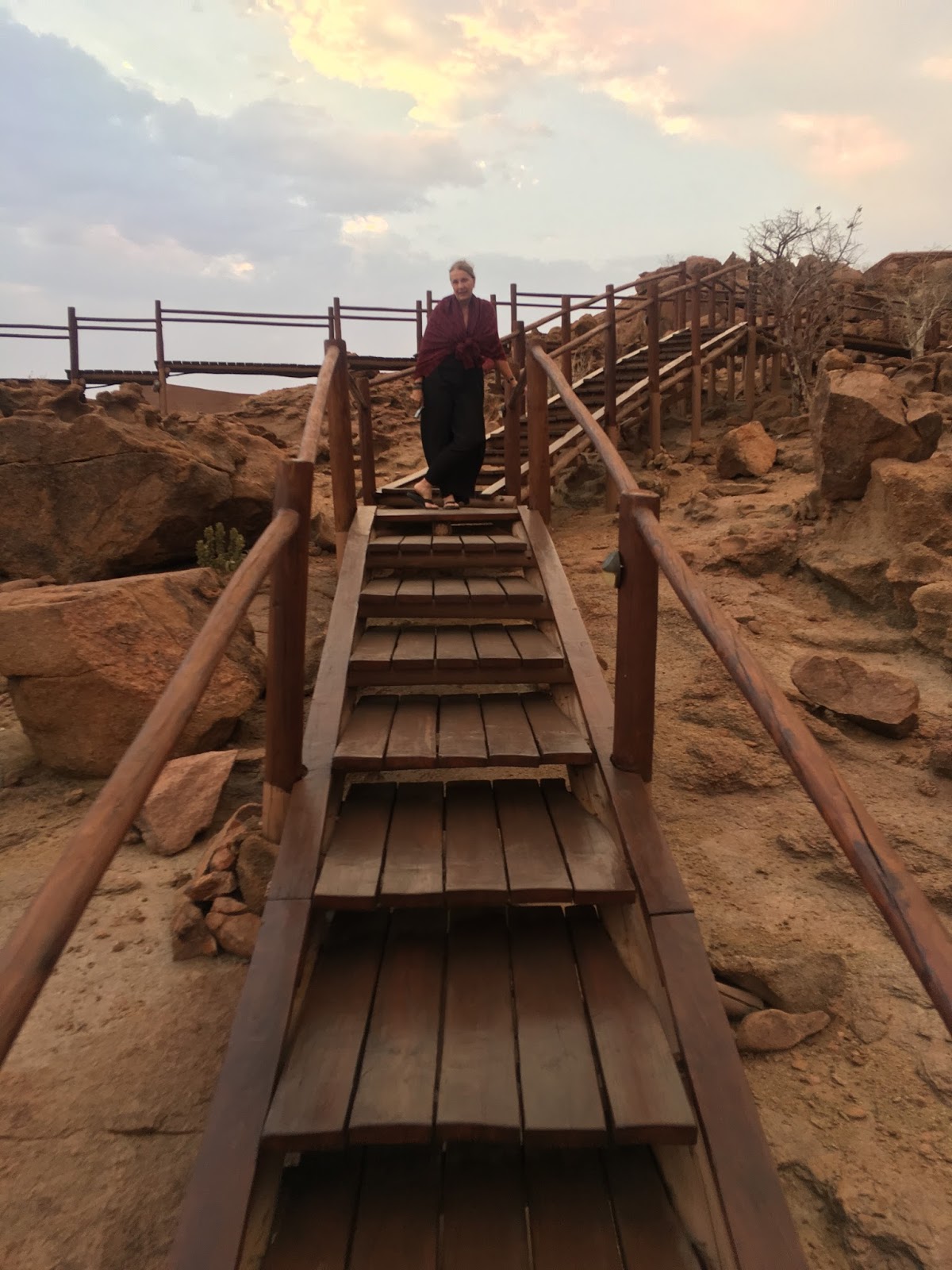
There are 97 steps down to our villa
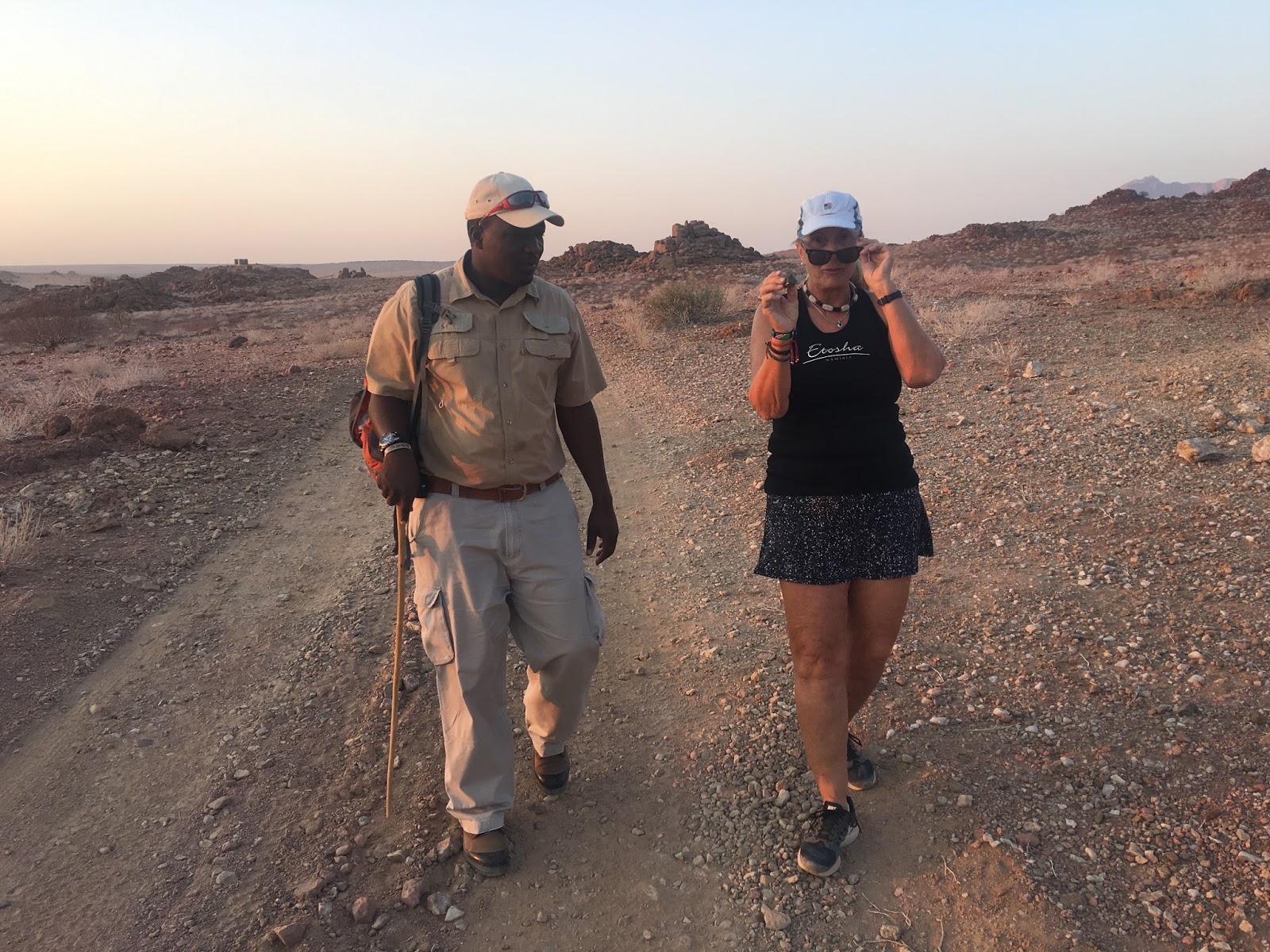
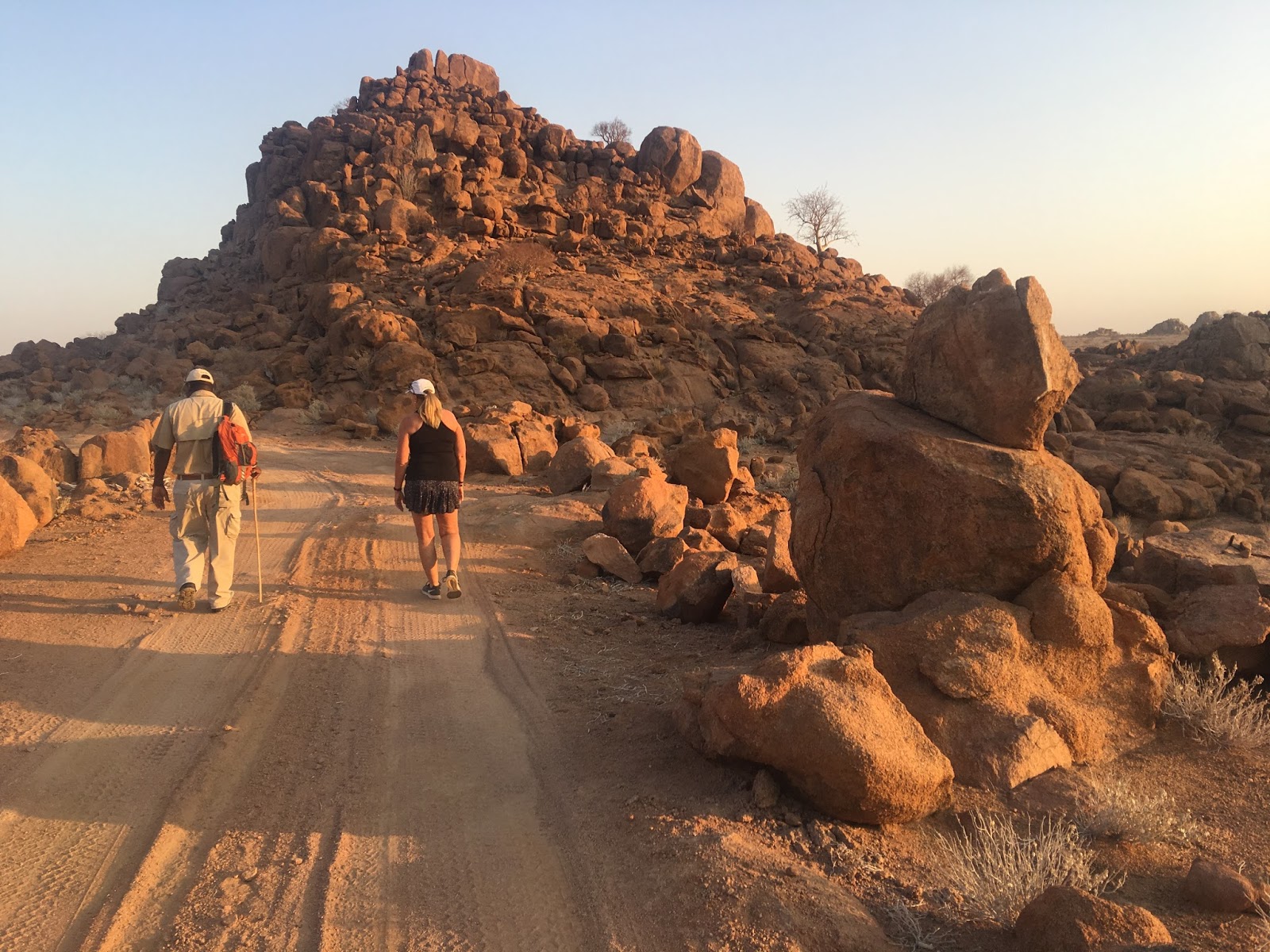
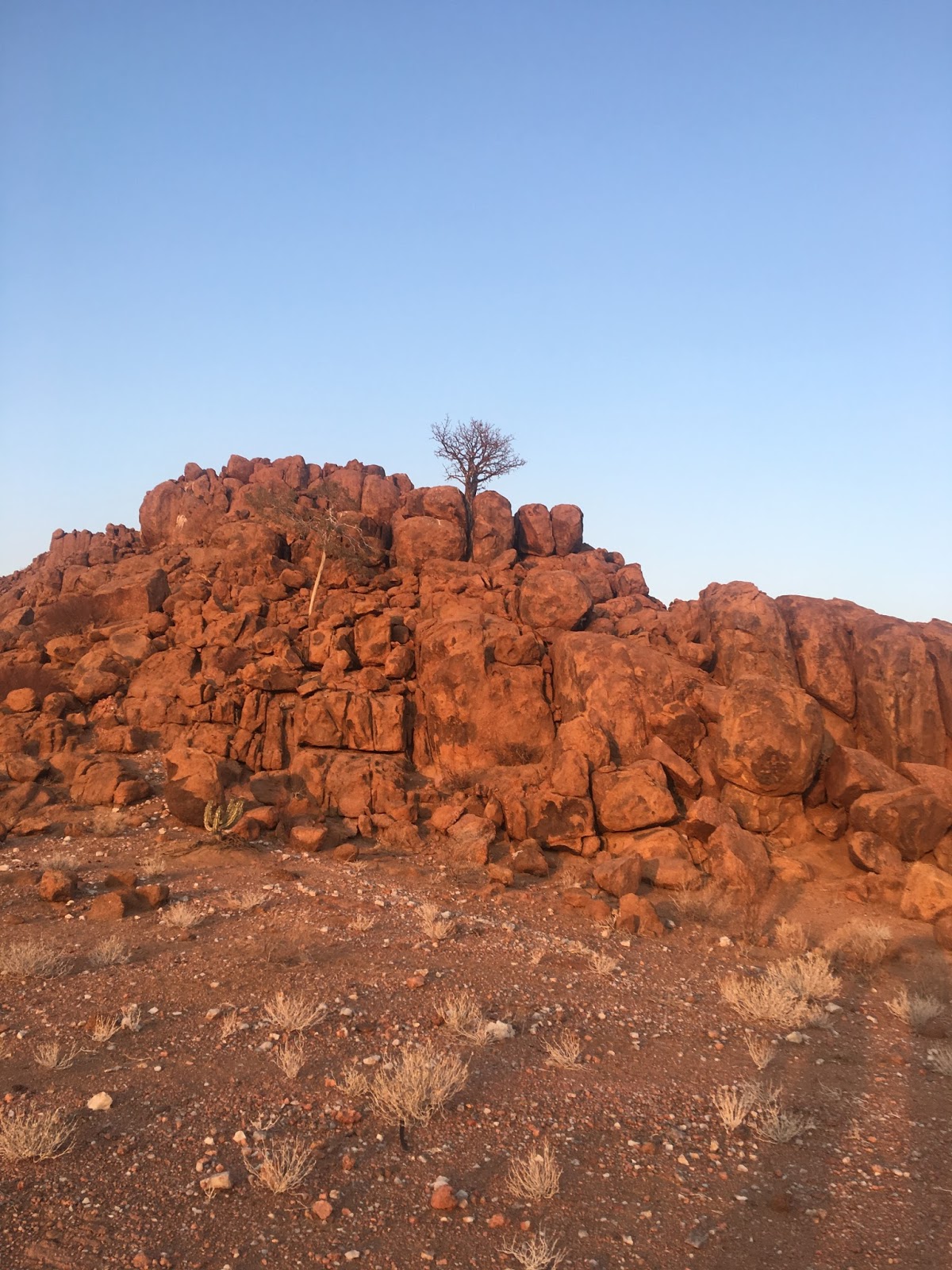
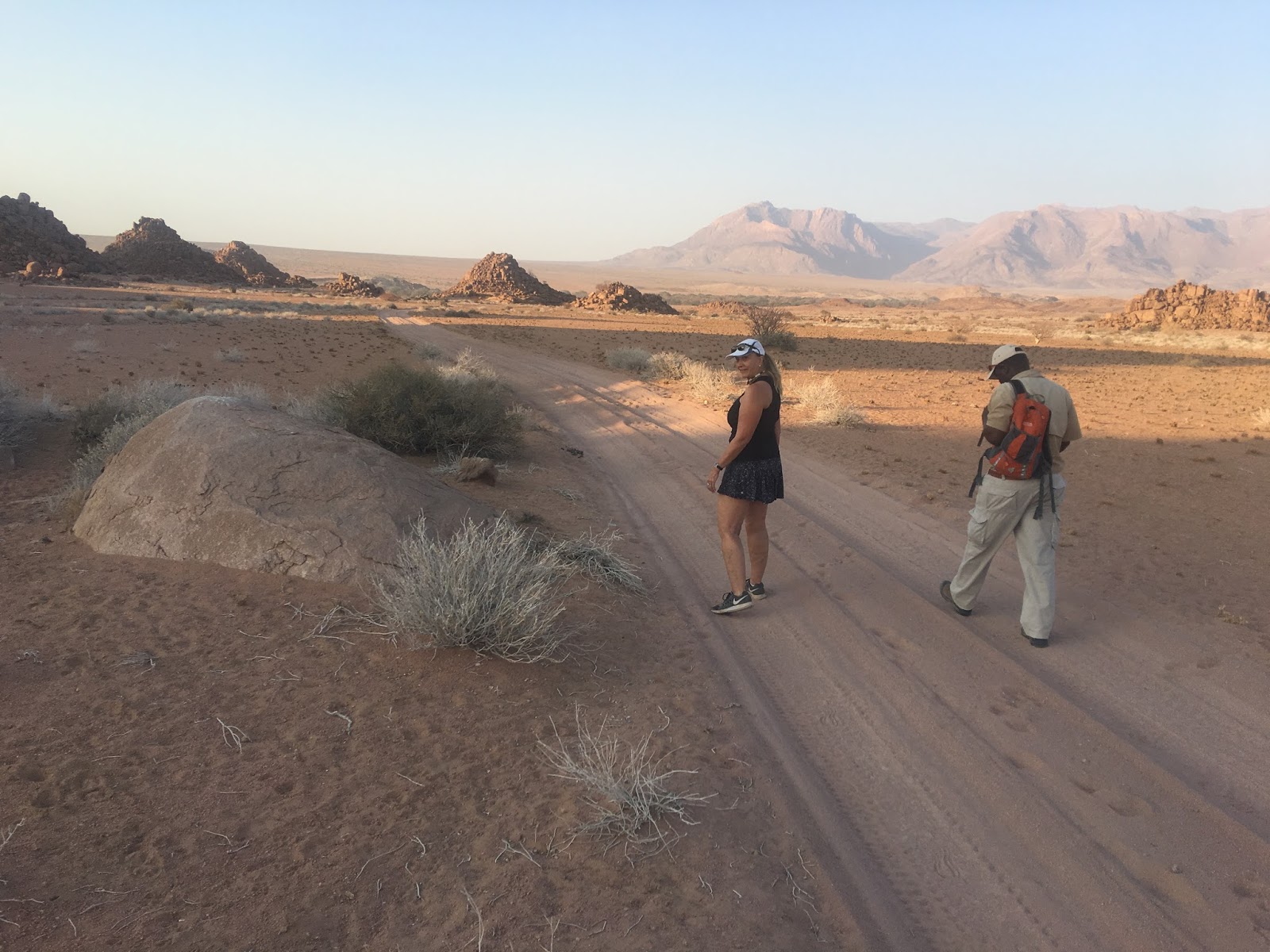
 In the morning we went on a walk with our guide Rambo who is from the Himba Tribe.  The scenery is beautiful.  We have a view through granite boulder landscape toward the Brandberg Massif.  This is the tallest mountain in Namibia at about 2700 meters high.
Brandberg Mountain
Ready for a hike
Beautiful red rocks
 
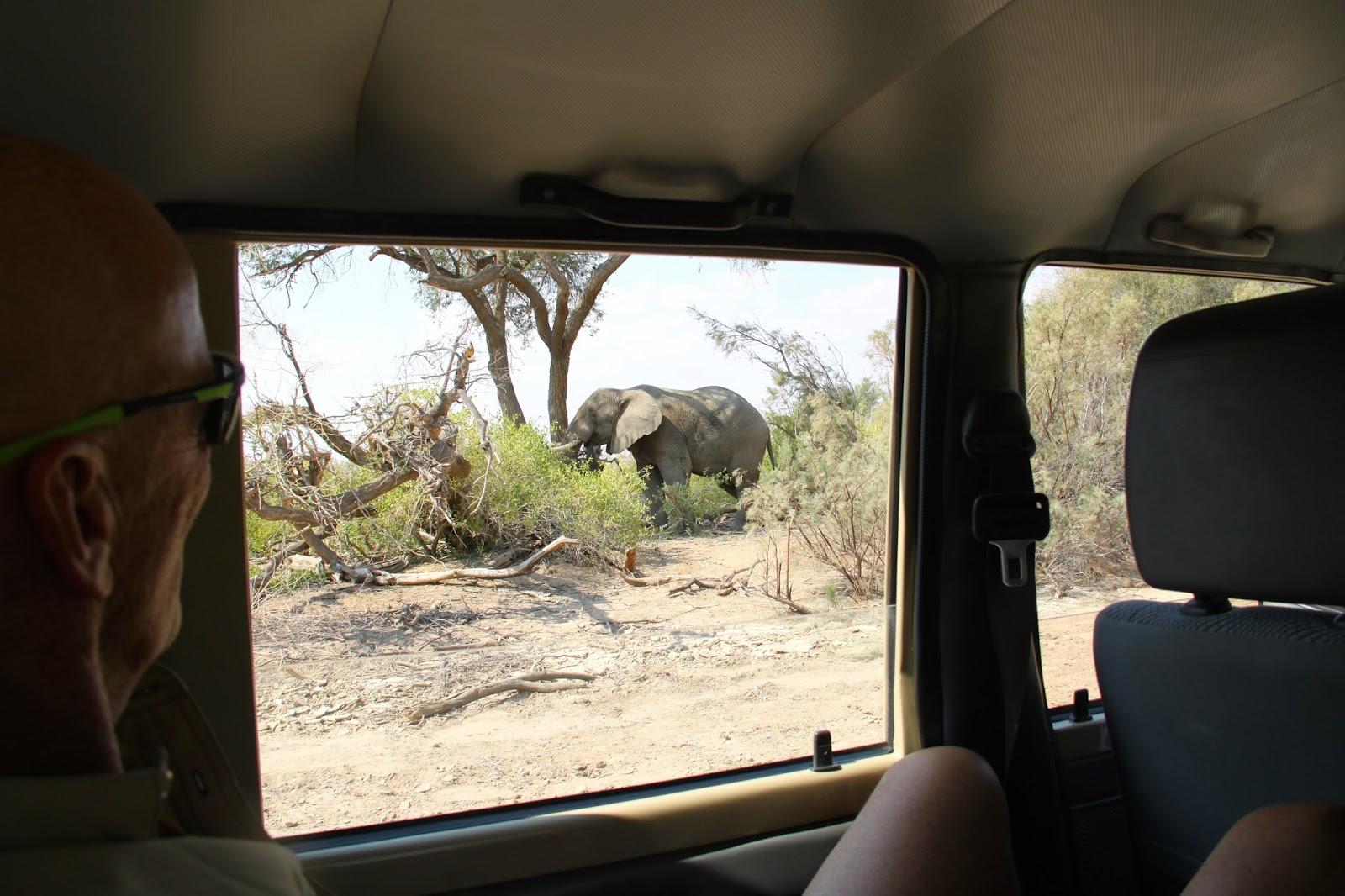
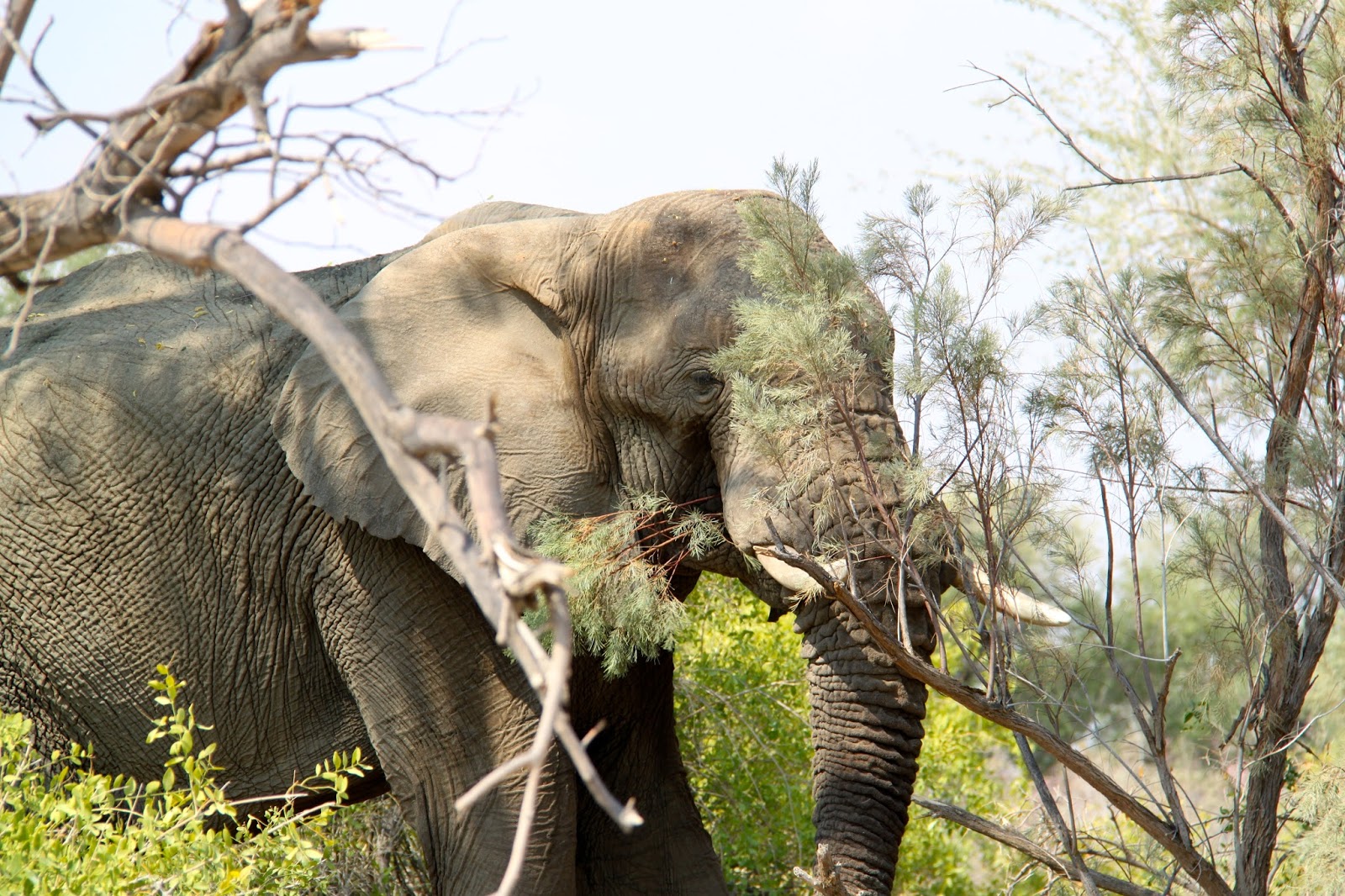
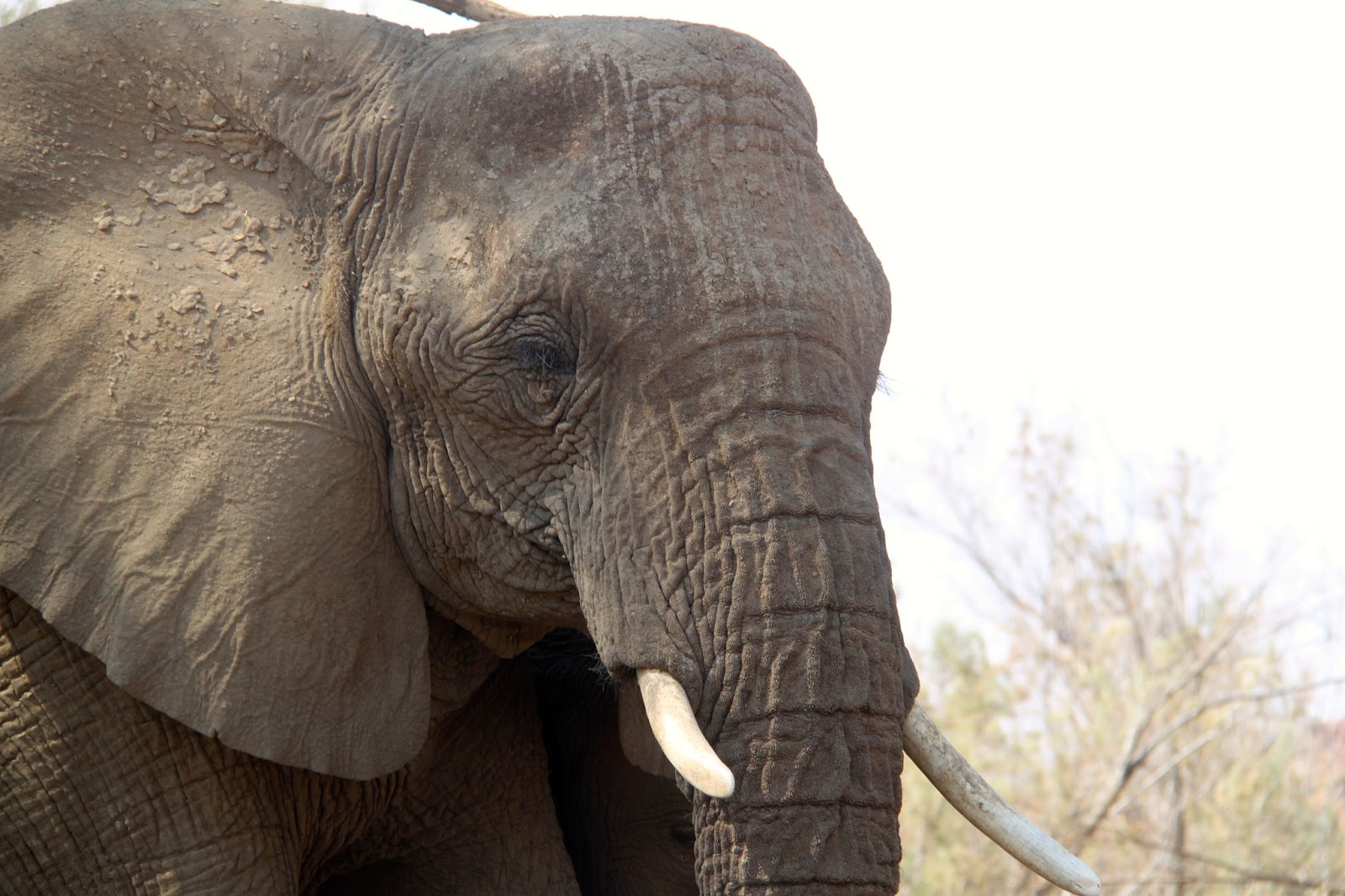
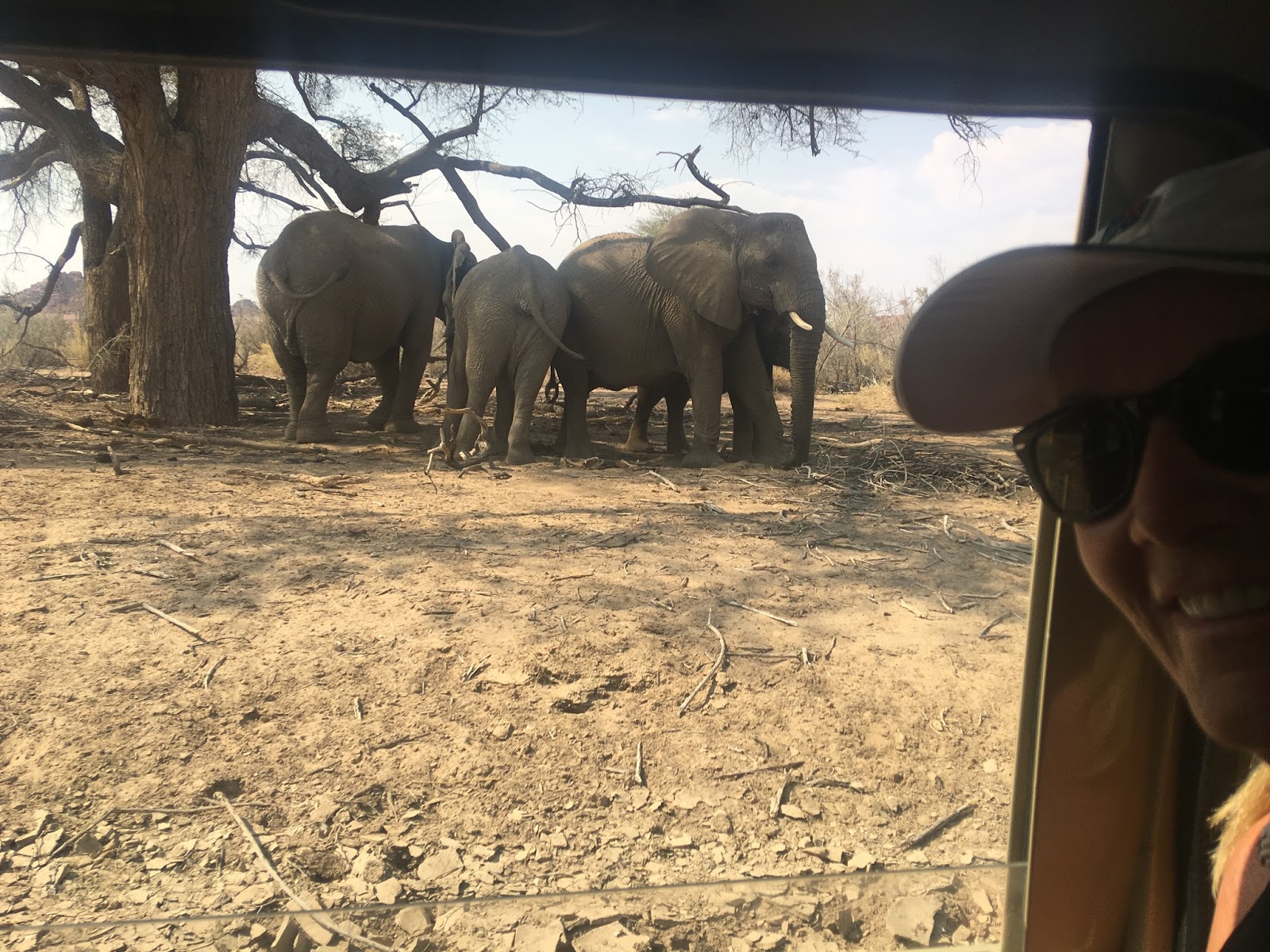
We drove down to the Ugab River drainage to look at the Desert Elephants.
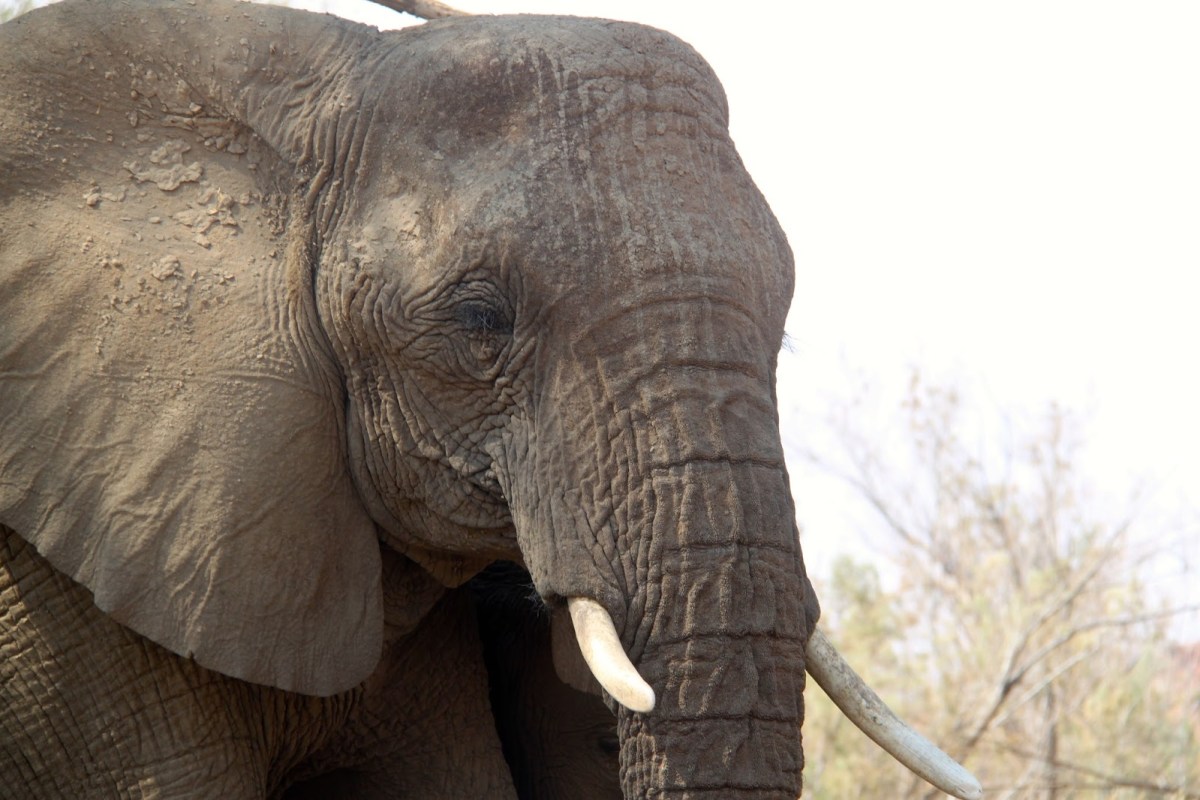
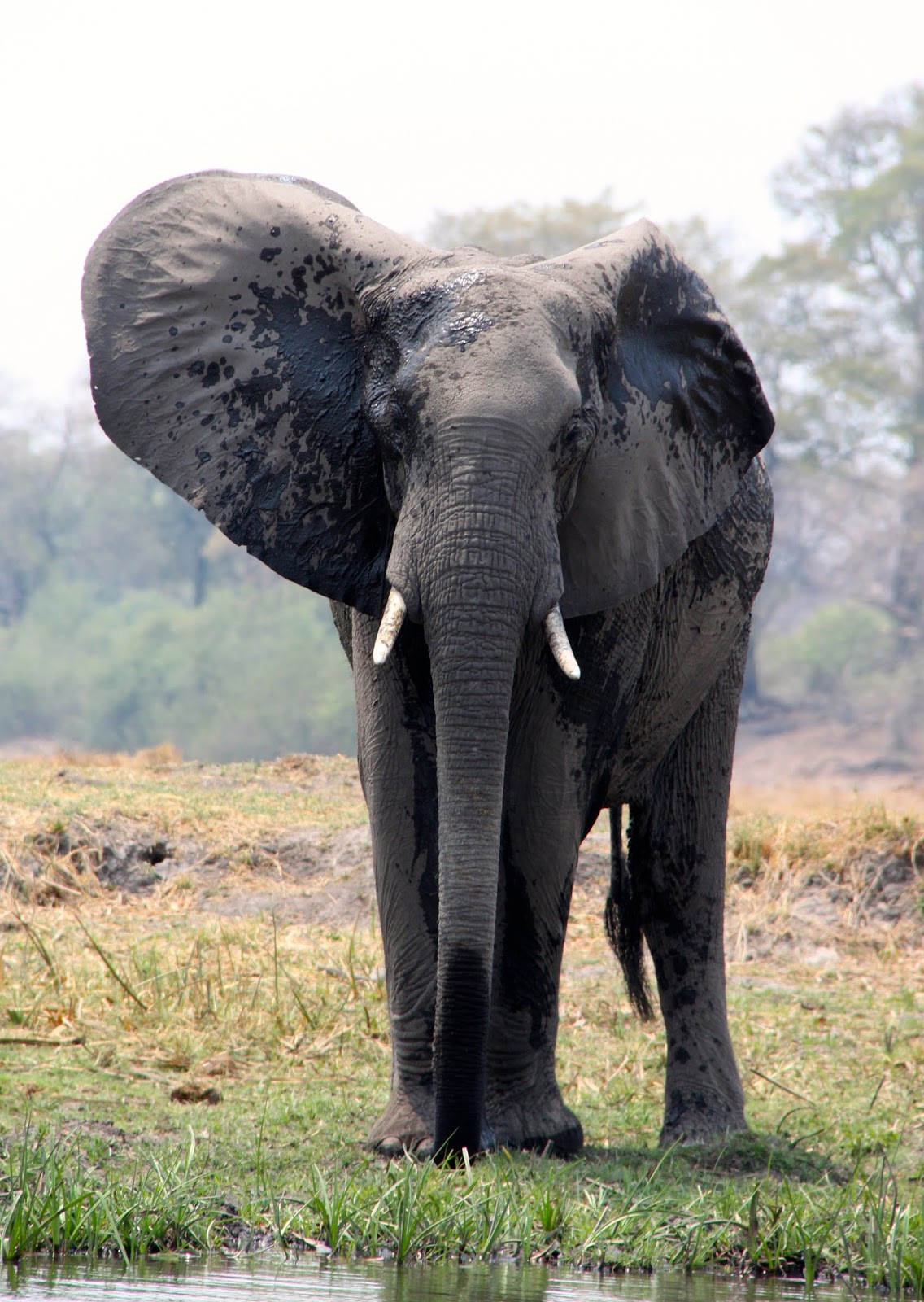
You can get very close to the animals.  This bull is huge
 
 
Up close and personal
This female was standing with 3 others.  She was very relaxed.
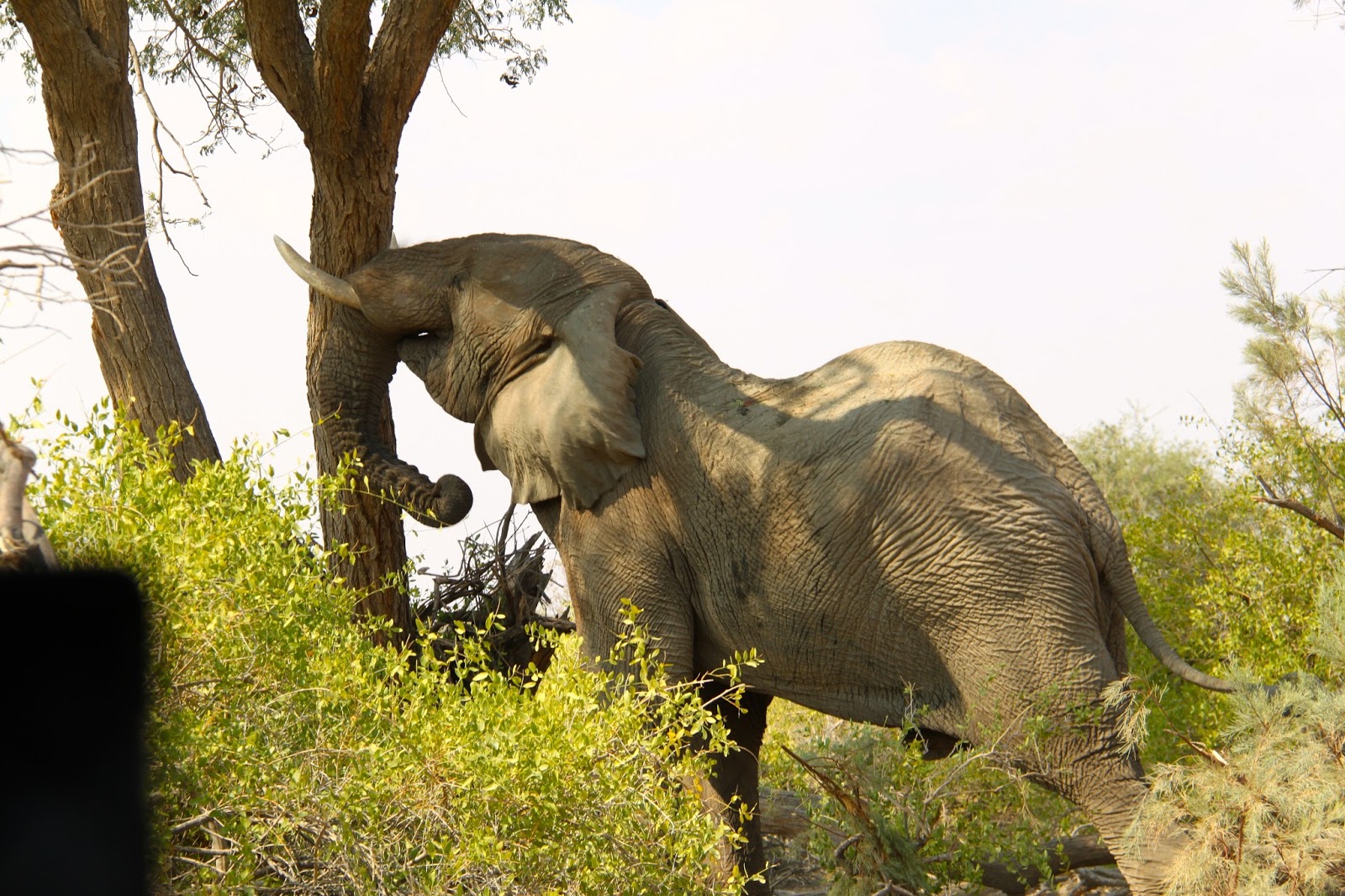
This bull is trying to knock the seed pods out of the tree.  He is so strong, it’s easy for him to move that tree around.
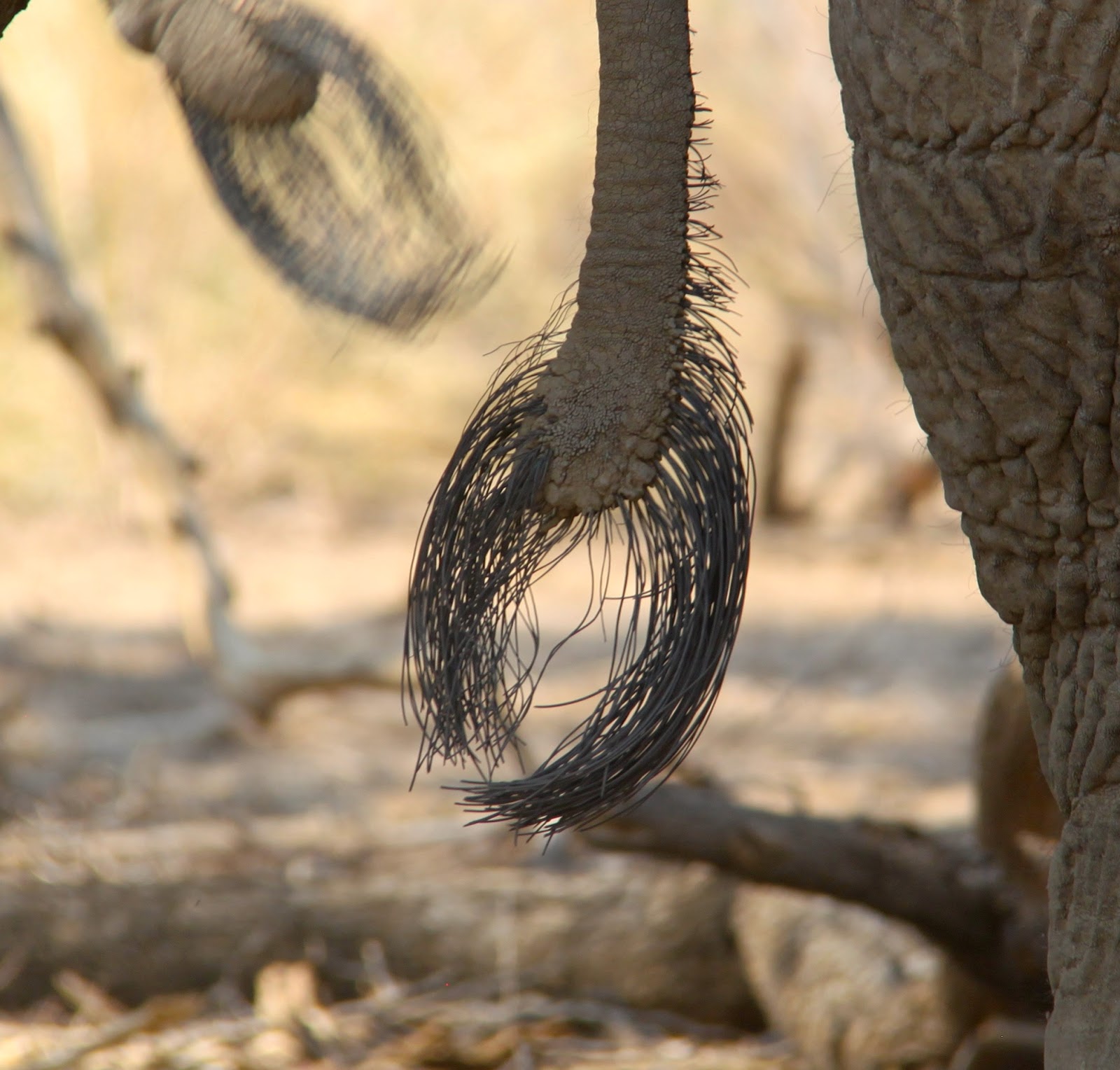
Elephant hair
But mostly we just hung out by the swimming pool.  It is very hot at about 46 degrees Celsius, which I think is about 115 degrees.  It’s hot!
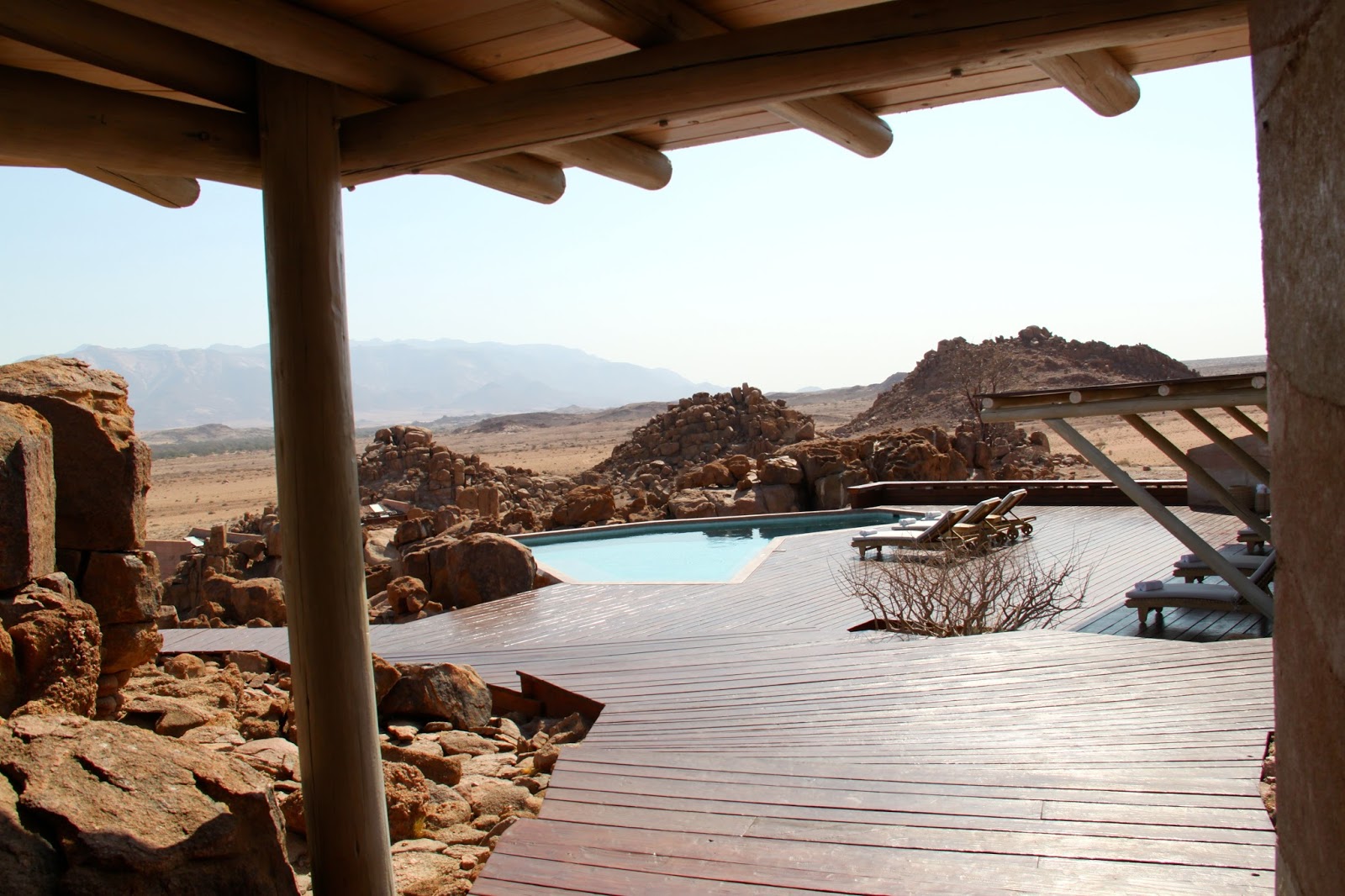
The pool area
 
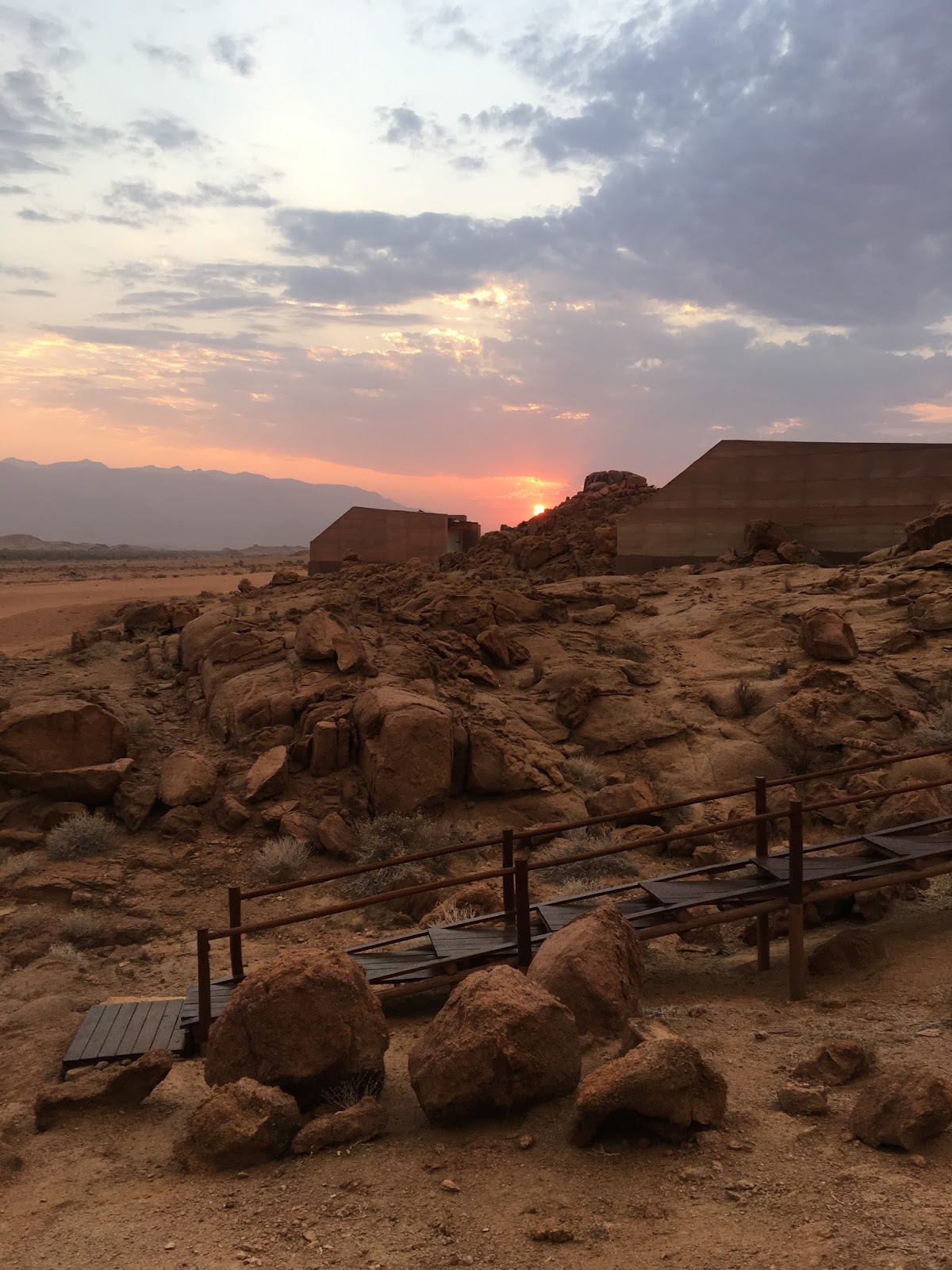
We had a nice dinner, and another gorgeous sunset.

Sundowner


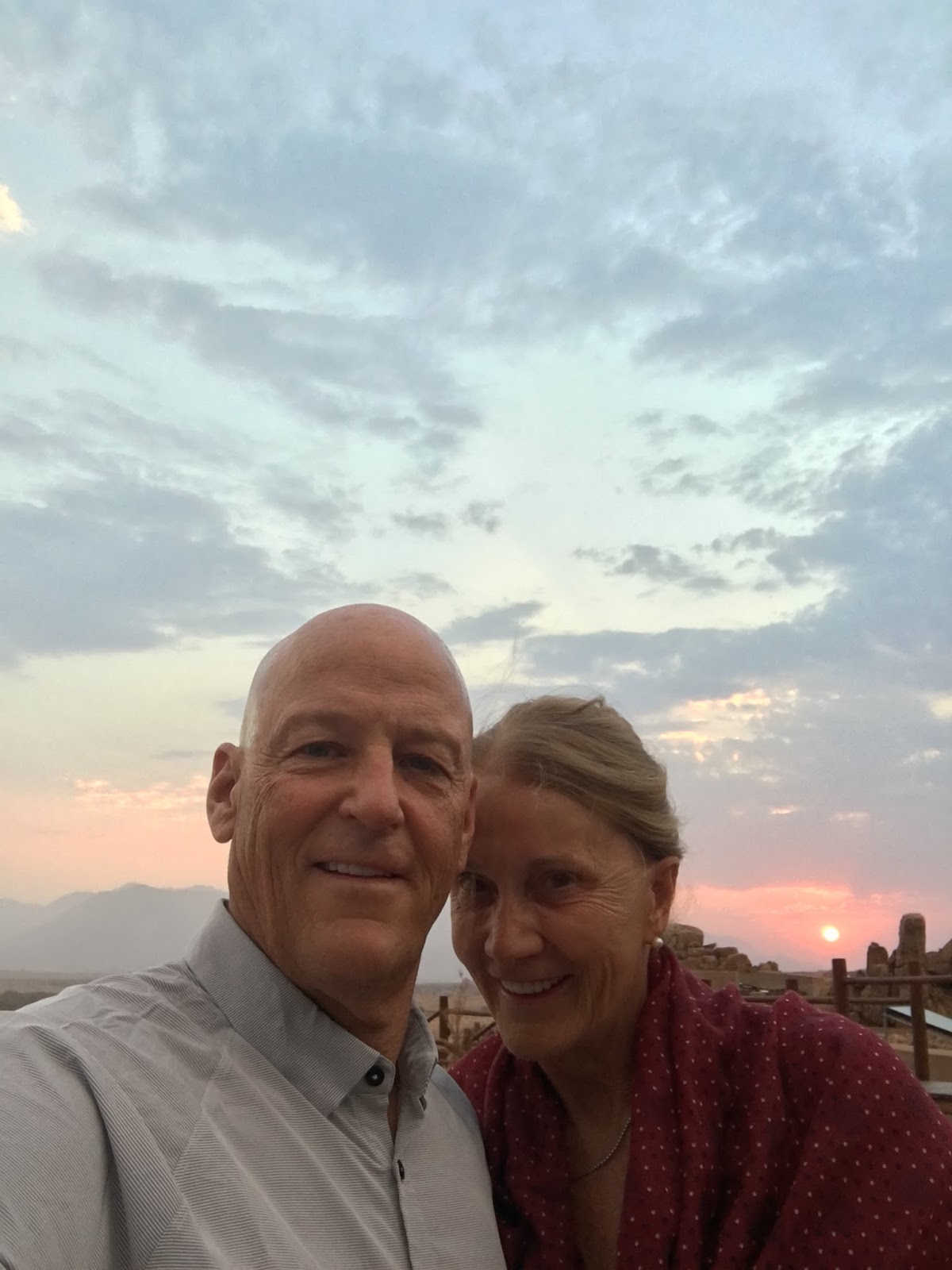
Selfie

We have one more camp to go to.  Africa is amazing.


Namibia-Caprivi Strip (Zambezi Region) Tarranga-Camp 4 October 5, 2016

Taranga  Caprivi Strip 
Camp 4

For the first hour after leaving Nambwa we were driving in deep sand next to the Linyanti River viewing game.  Elephants crossed the road in front of us. 

After reaching the main highway B8 we turned east toward the Etosha Game Park.  We stopped after 5 hours of driving where the Okavango River flows from Angola through Namibia and down into Botswana where it disappears in the delta floodplains.
 
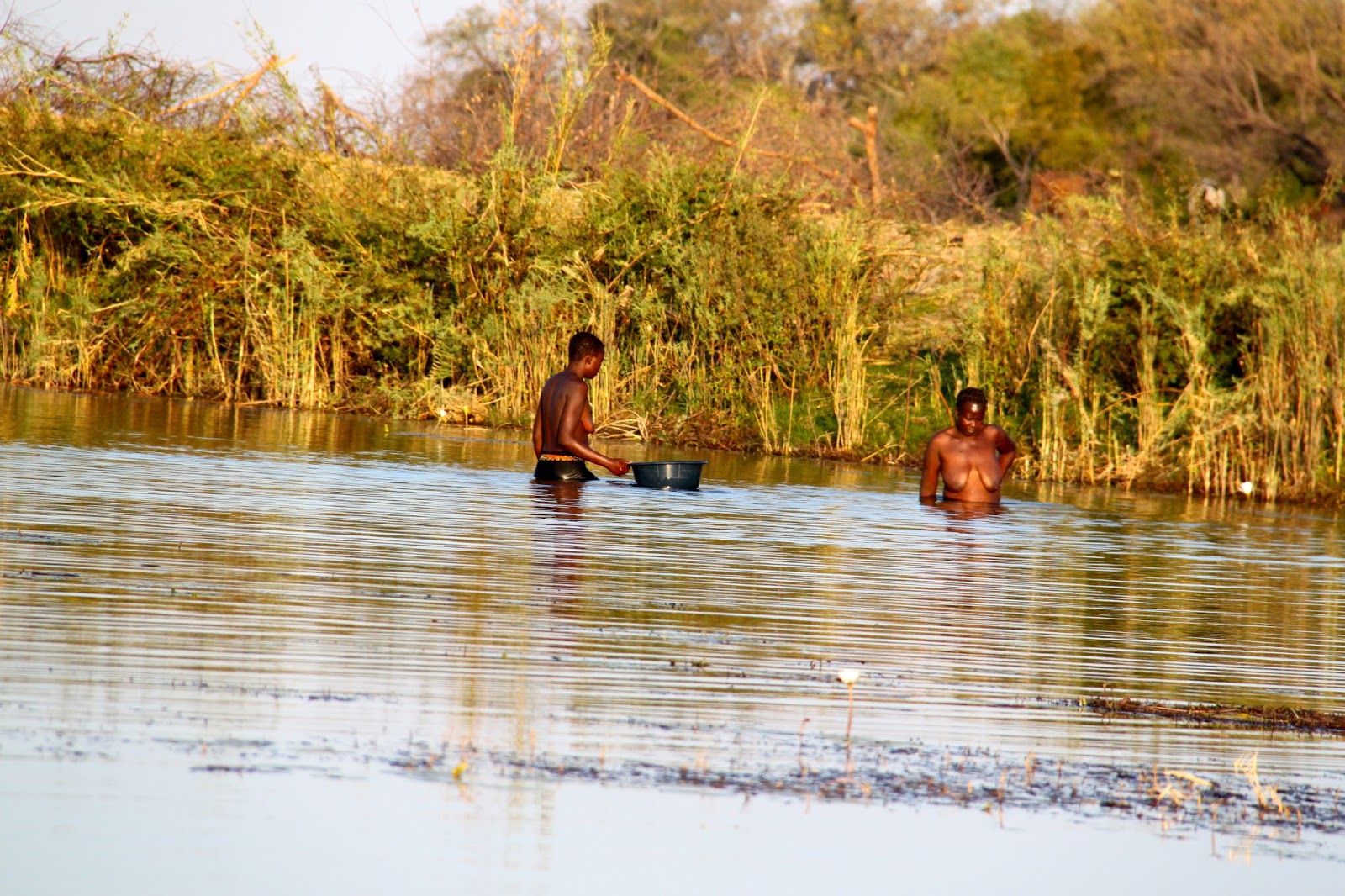
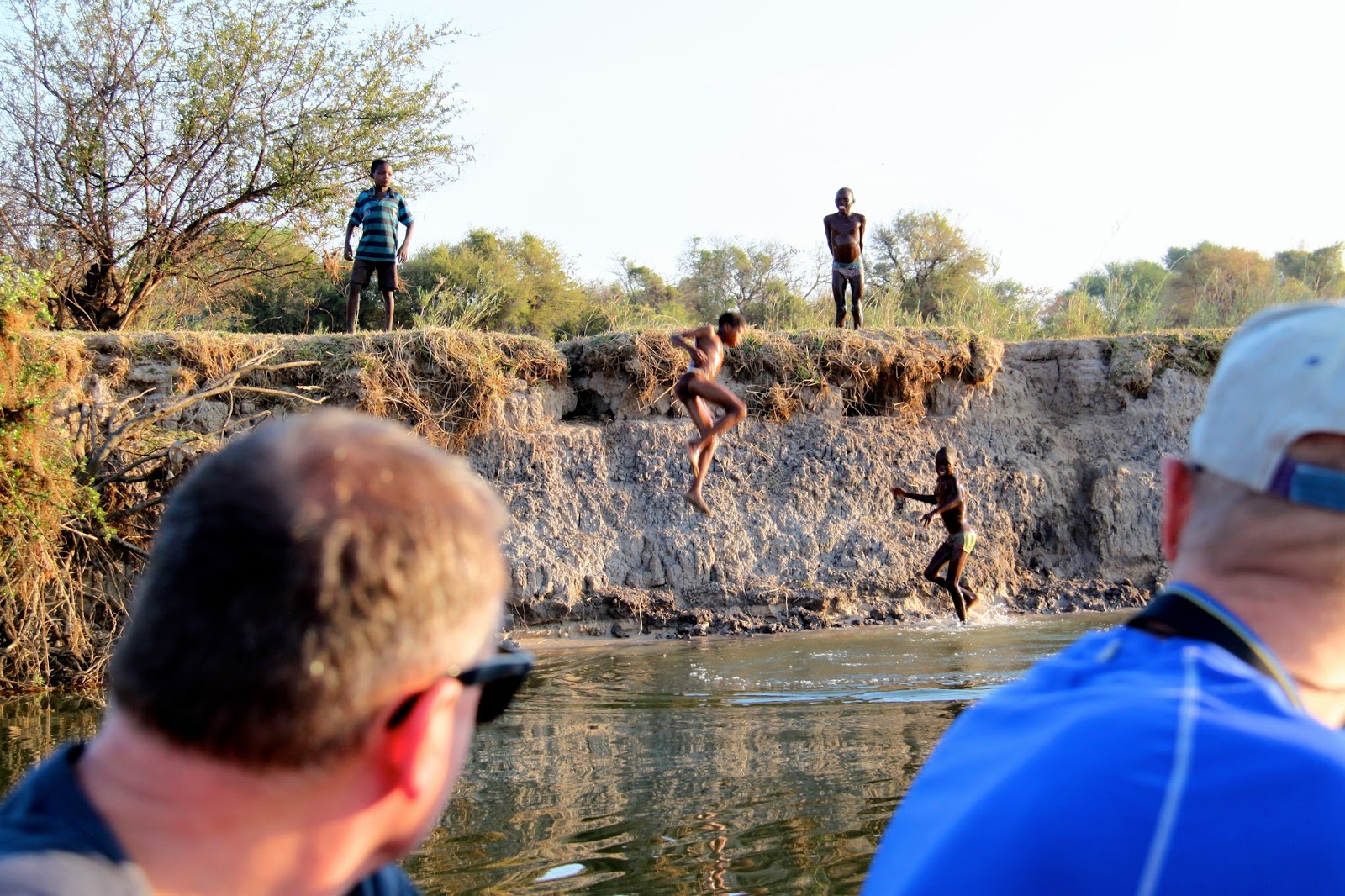
The local people here congregate around the river in the evening to take baths, do their laundry, laugh and play.
Washing clothes

Boys playing on the riverbank

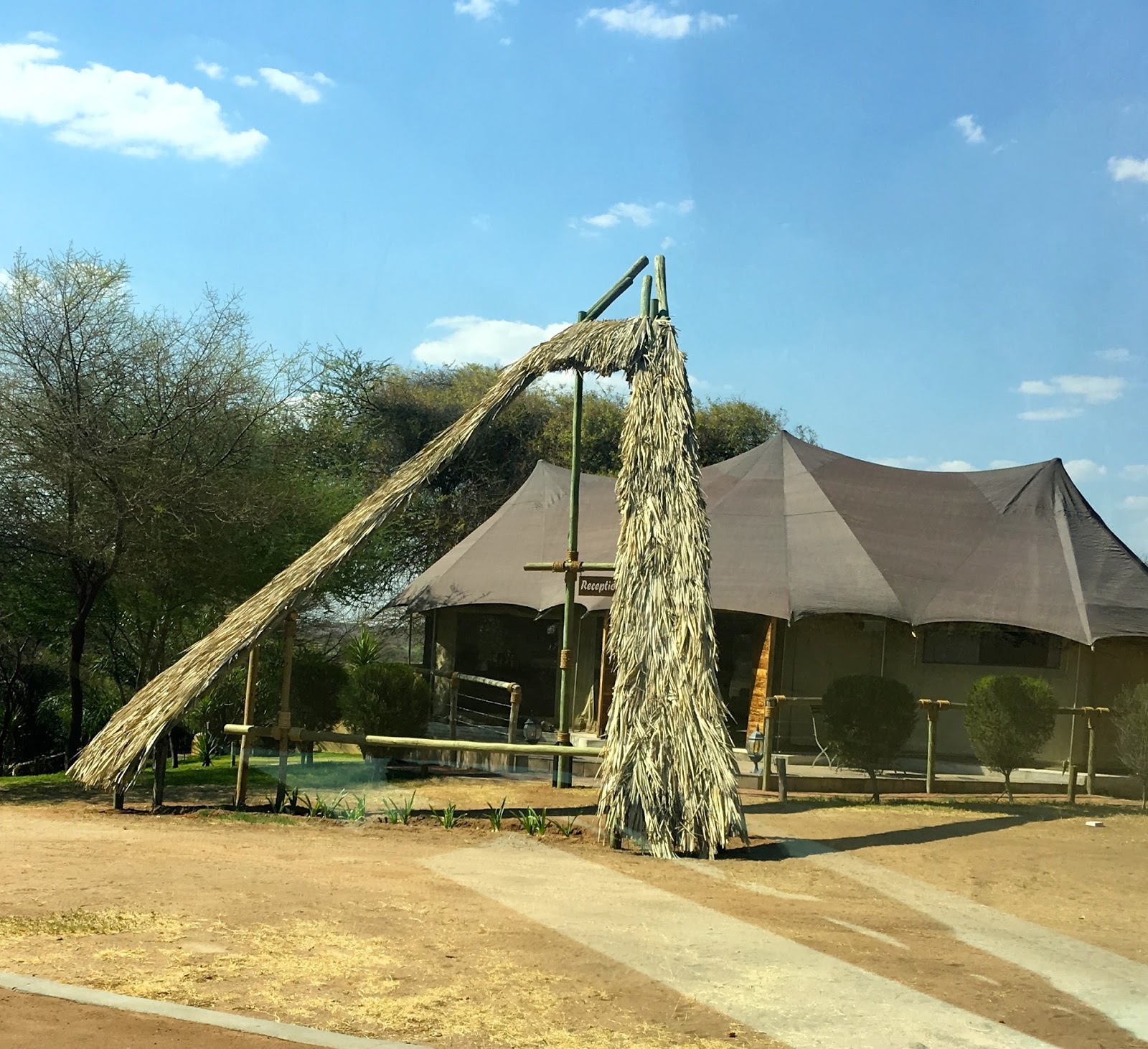
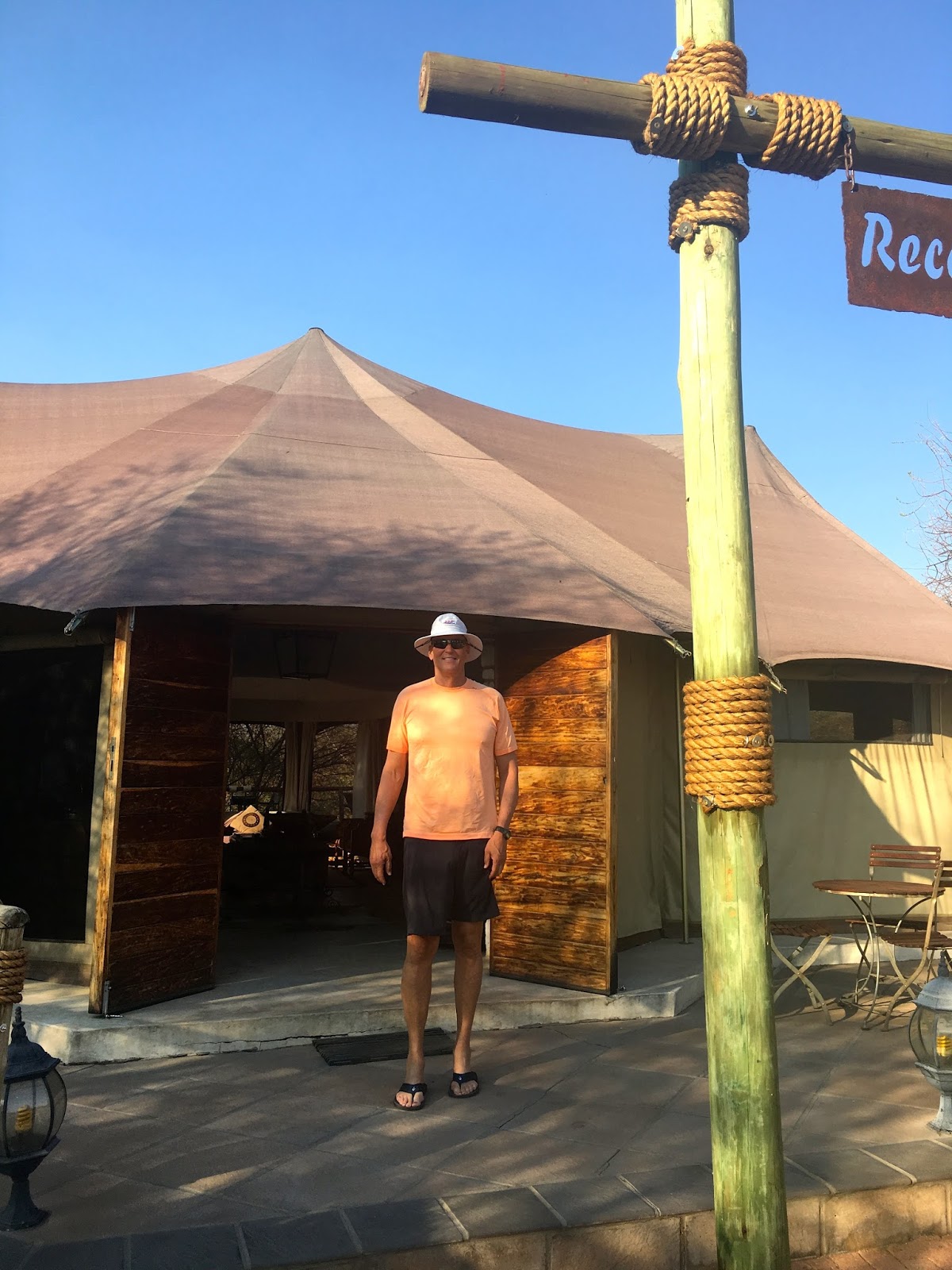
We are driving to a lodge named Tarranga.  It is near Rhundu.  It was the best stopping point on our way to Ethosha.  In the evening we went on a sundown boat ride on the Okavango River.


Tarranga Lodge

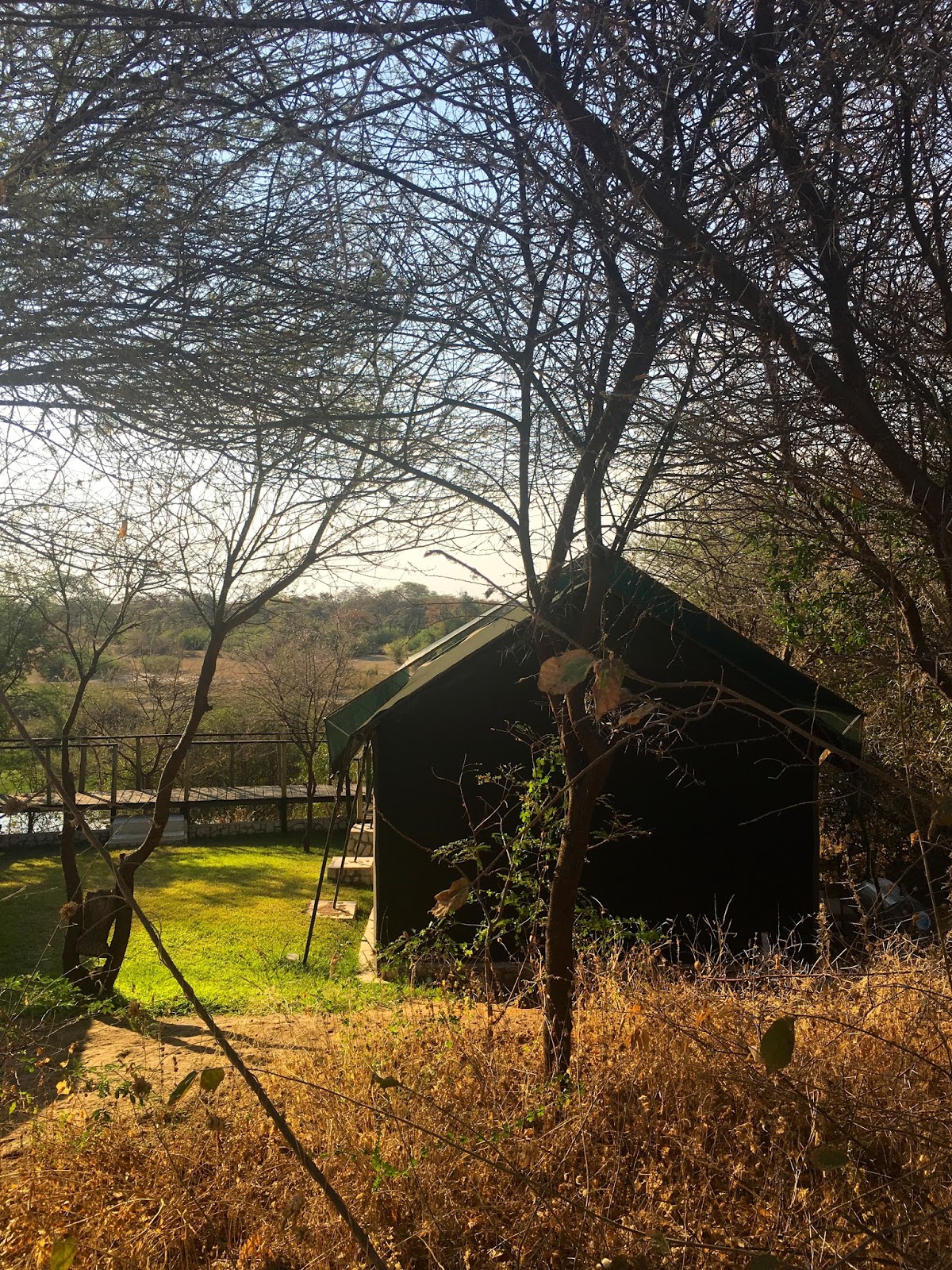
Our hut
Along the river we watched kids playing, people washing clothes, fishing and enjoying life.  The sunset was beautiful.  We saw a small crocodile and some colorful birds.


Sunsets are the best


People enjoying the river


Colorful birds


Small crocodile on the riverbank.  Those boys jumping in the water better be careful!


Weavers nests


No caption needed


Dinner on the deck
Barb at breakfast


Breakfast

Namibia-Desert Rhino Camp in Damaraland-Camp 7 October 9-11, 2016

Desert Rhino Camp 
 Damaraland 
 Camp 7
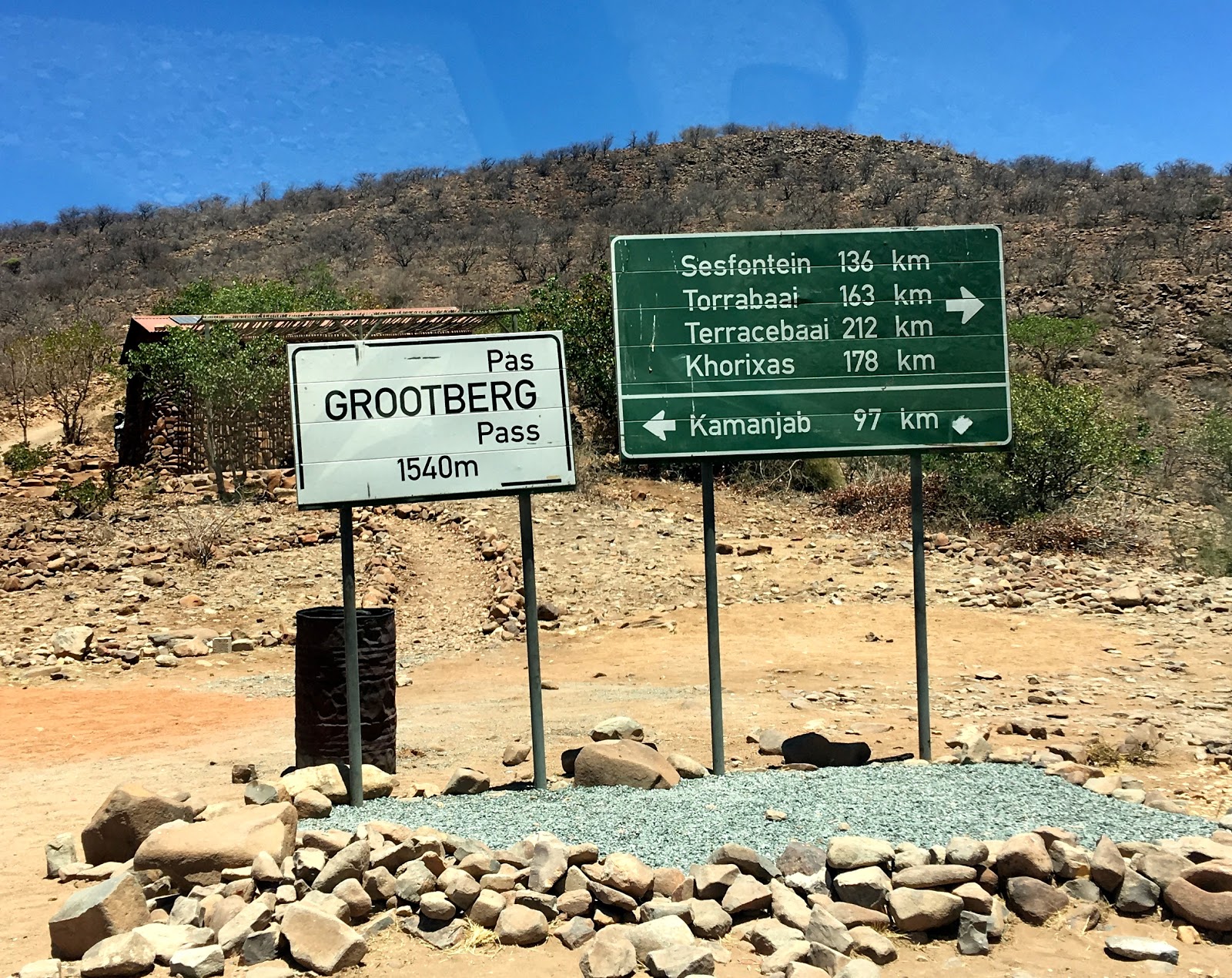
It was about a 5 hour drive from Andersson Camp to Desert Rhino Camp.  We traveled over mostly gravel roads and up and down Grootberg Pass.  
There sure is a lot of dust
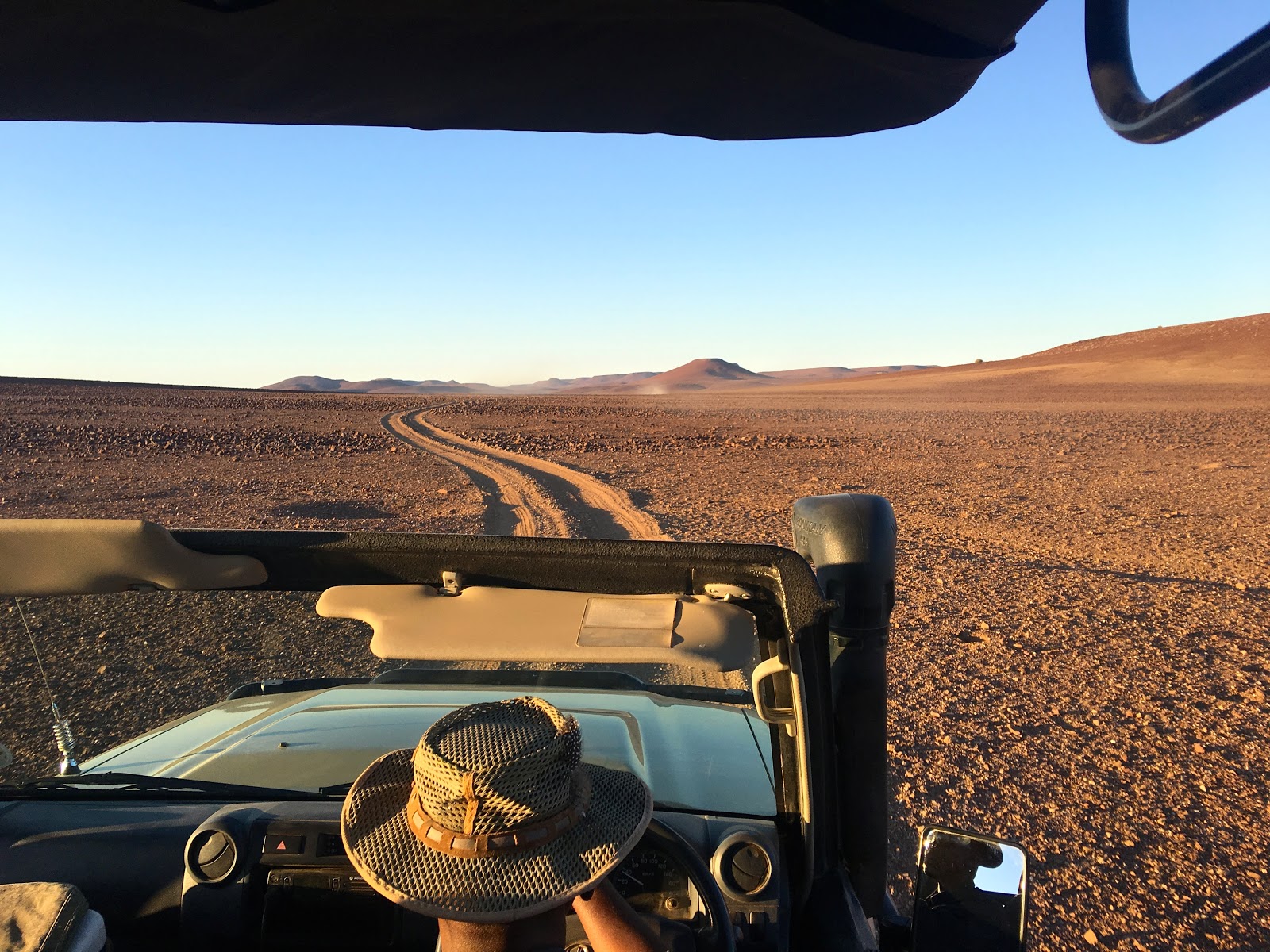
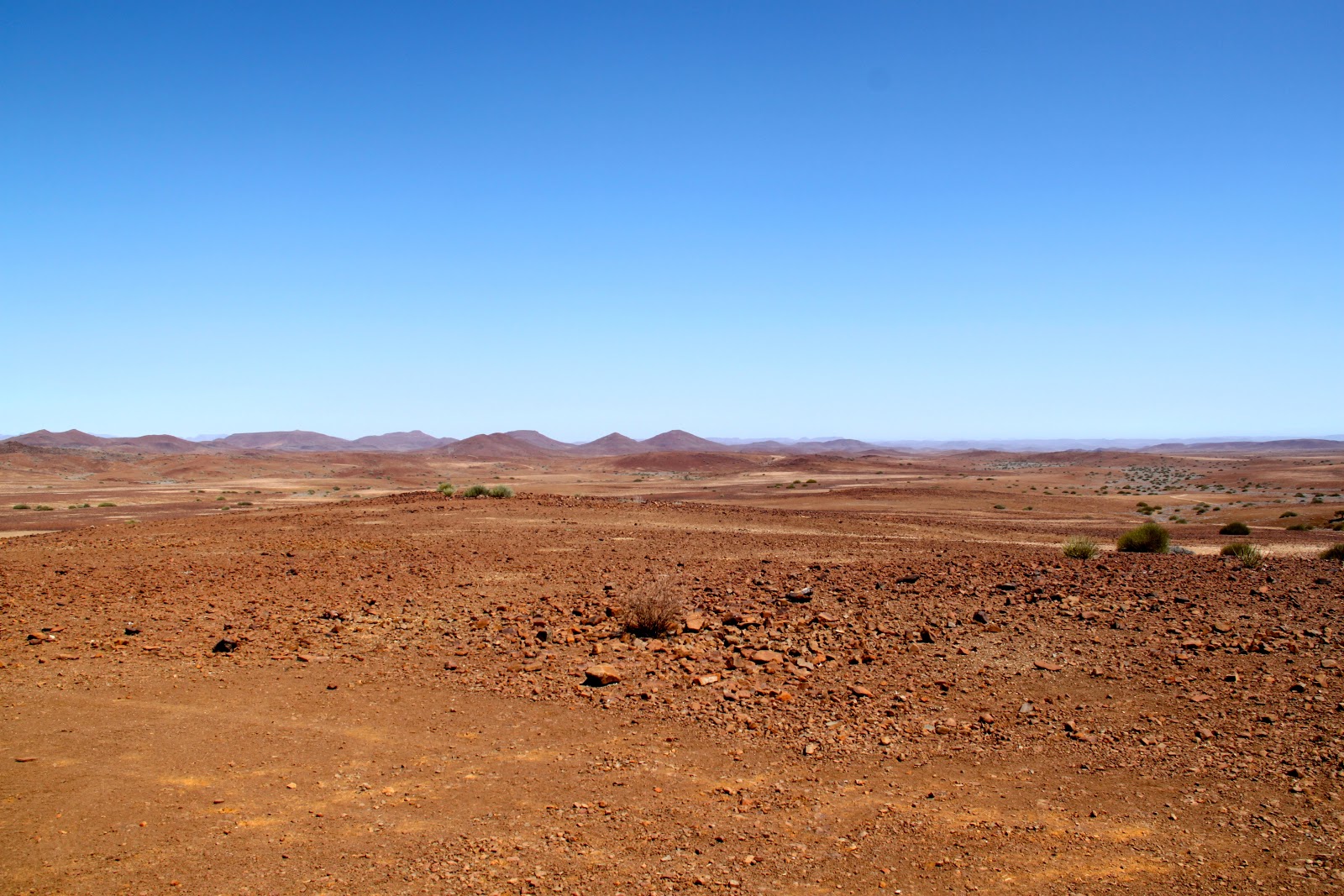
The scenery has changed.  It is greener and has red rocks and red sand.  It’s quite pretty.
Looks a little bit like Southern Utah.
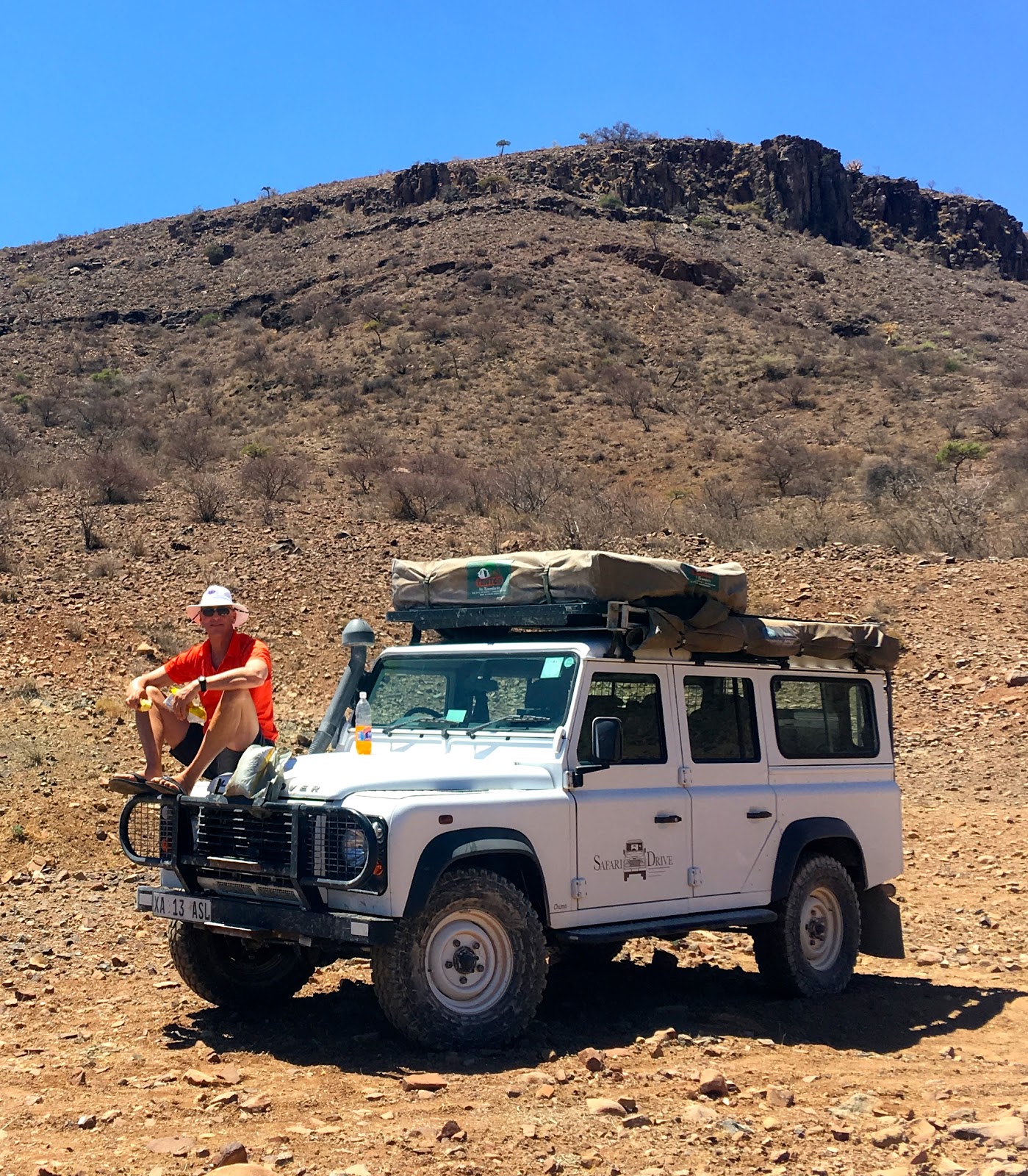
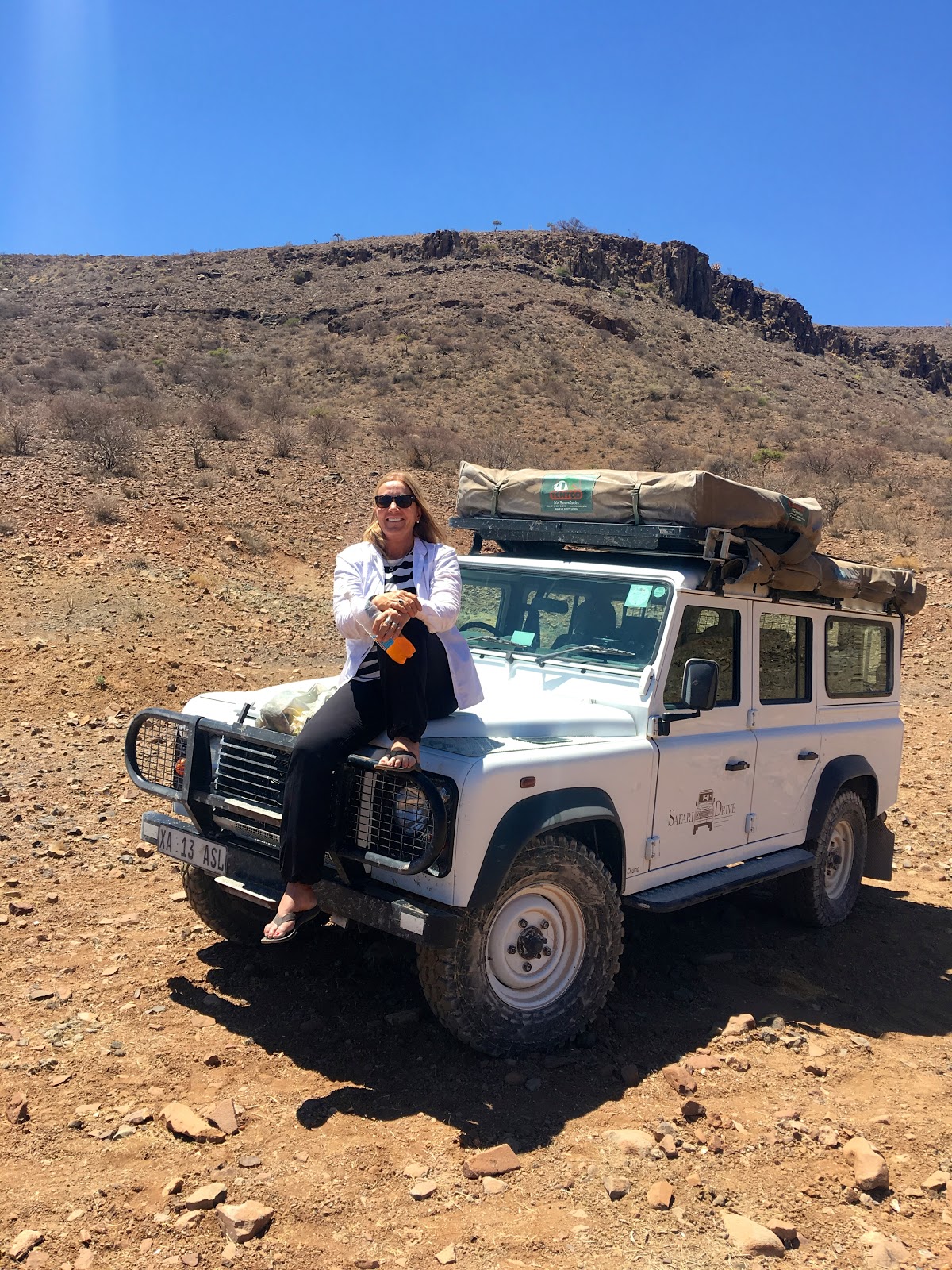
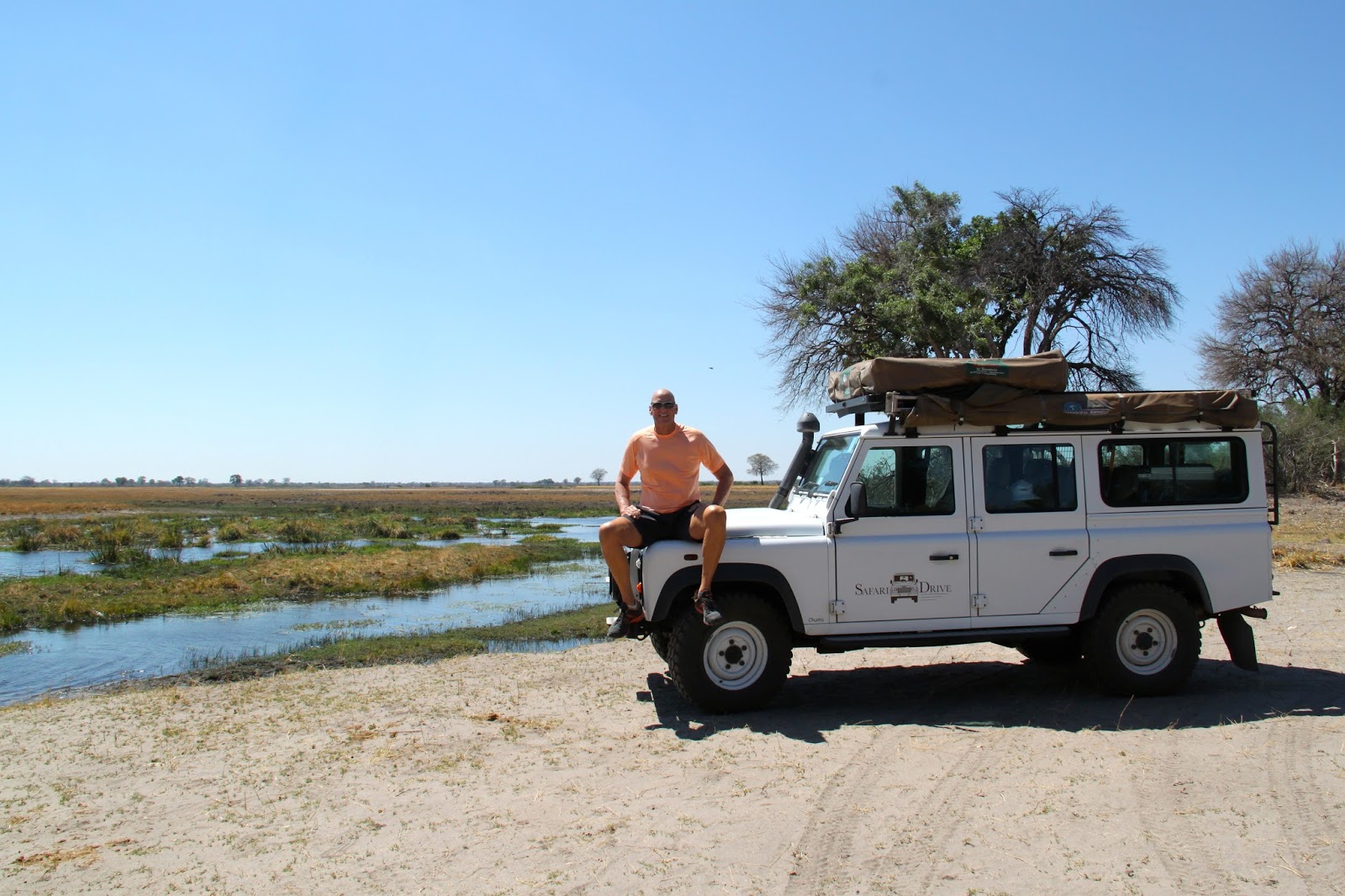
 At Grootberg we parked Chuma at the top of the pass  and sat on the hood and had our picnic lunch.  It’s always an adventure. 
     
 
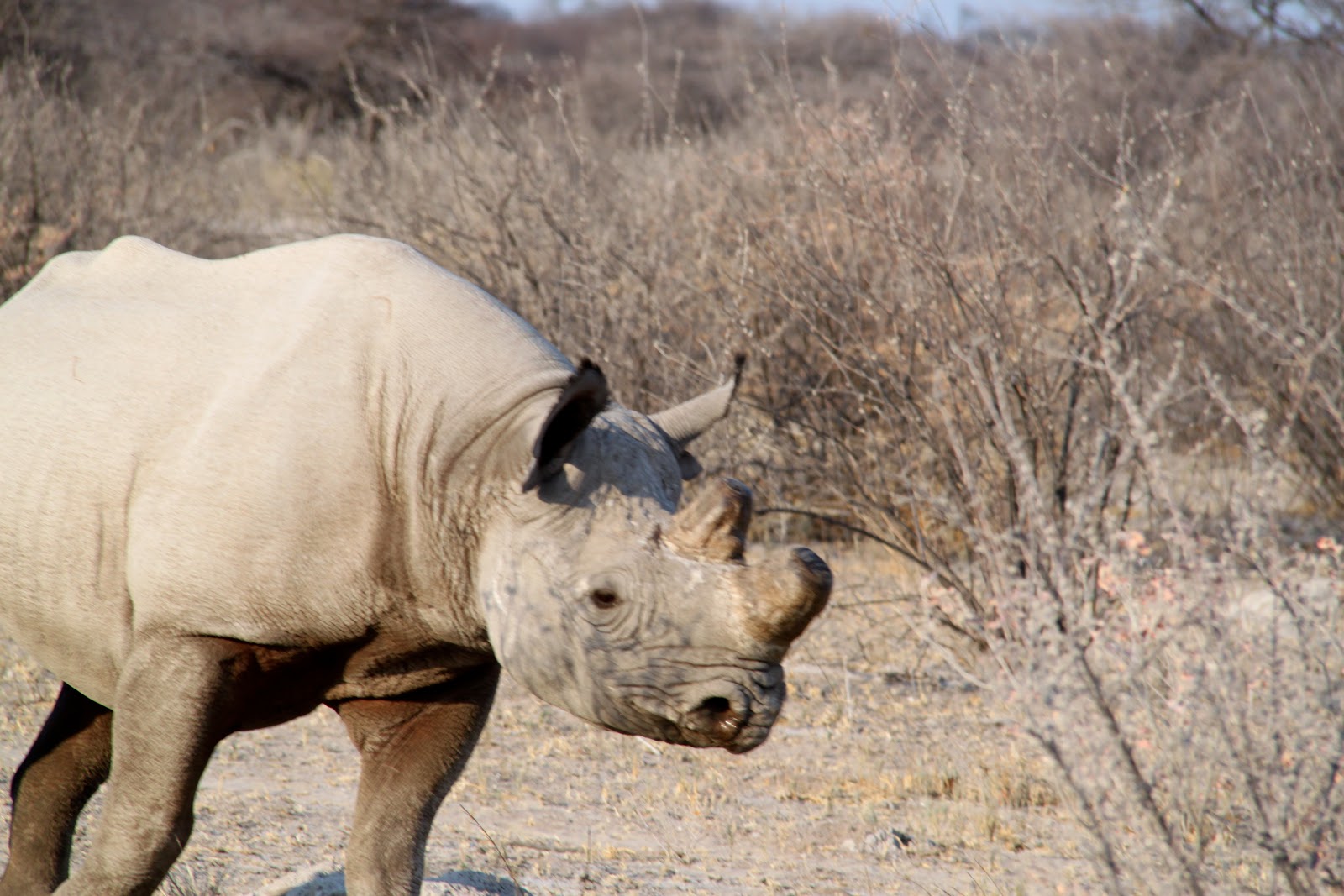
On our first morning at Desert Rhino Camp we woke up at 5:30 am in order to track Black Rhinos.  We are in North Damaraland about 80 kilometers east of the Skeleton Coast.  This is the highest concentration of Black Rhinos in Namibia.  They estimate that there are only about 5000 Black Rhinos living in the world.  They also estimate that there are about 20,000 White Rhinos.  We were lucky in Etosha and saw a Black Rhino cross within 25 feet of our Land Rover.  That was a lucky sighting.
Going out on the Rhino tracking drive.  It was too long of a day.  10 1/2 hours riding in the Toyota with our guide.
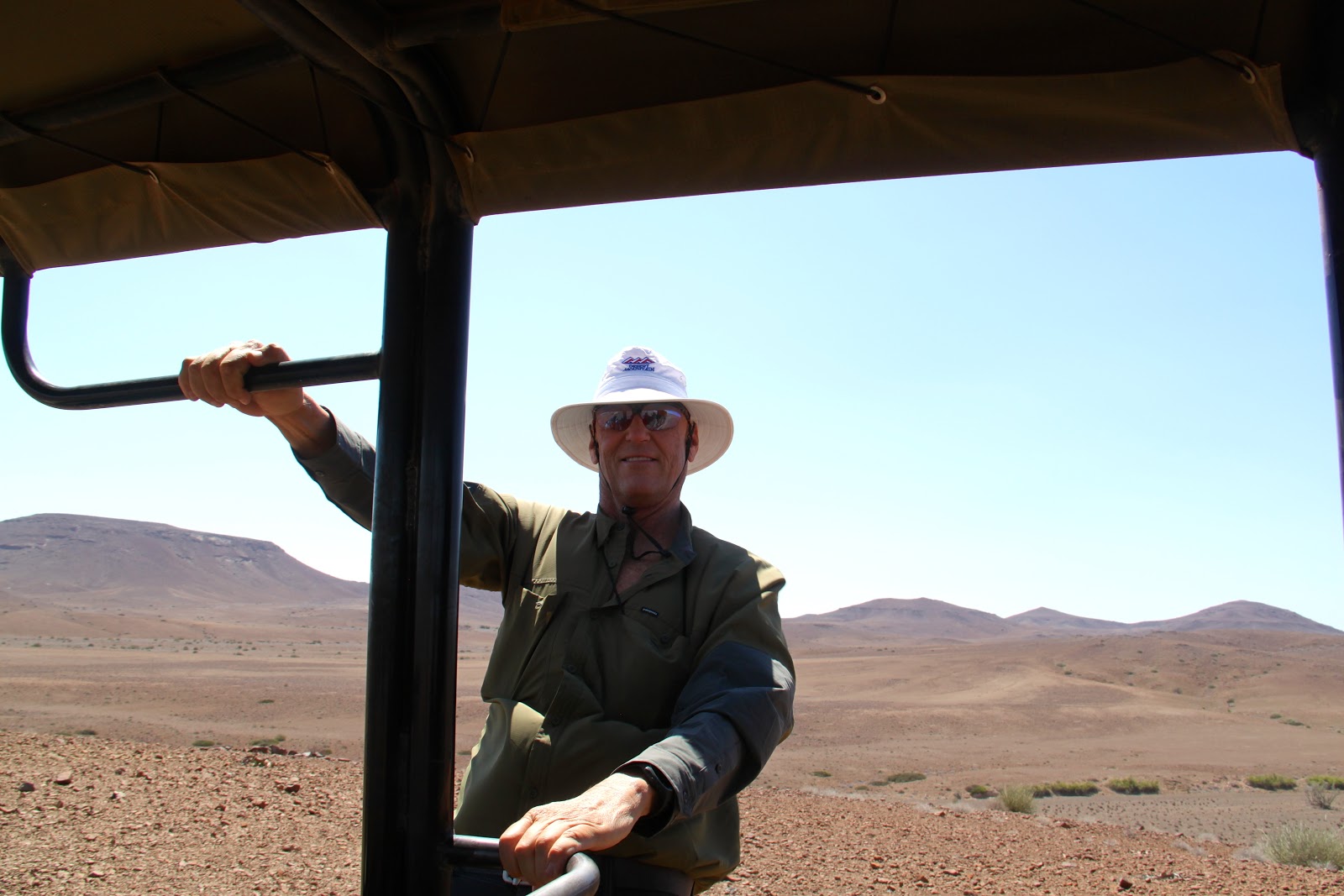
Scott stretching his legs
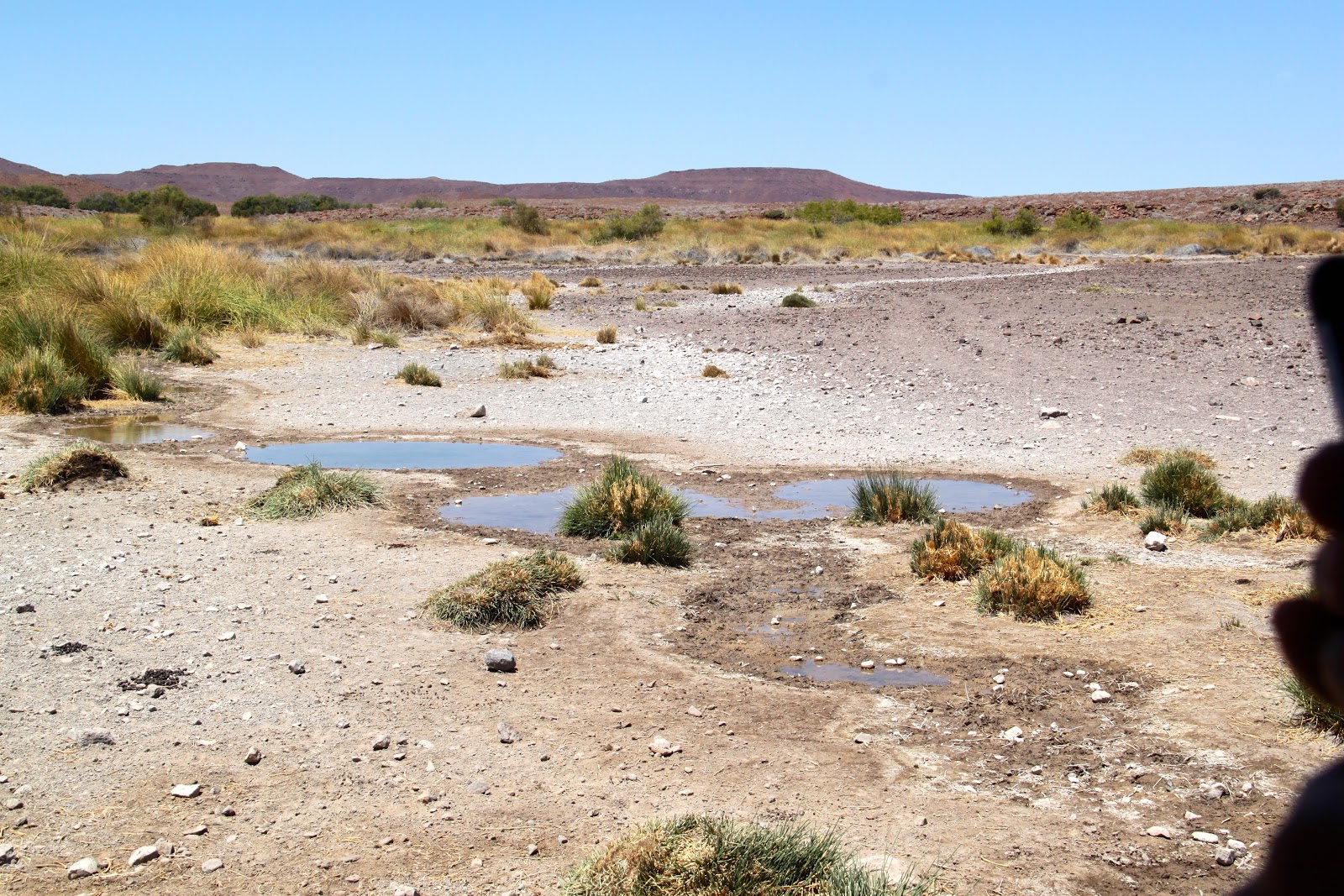
There were some natural springs
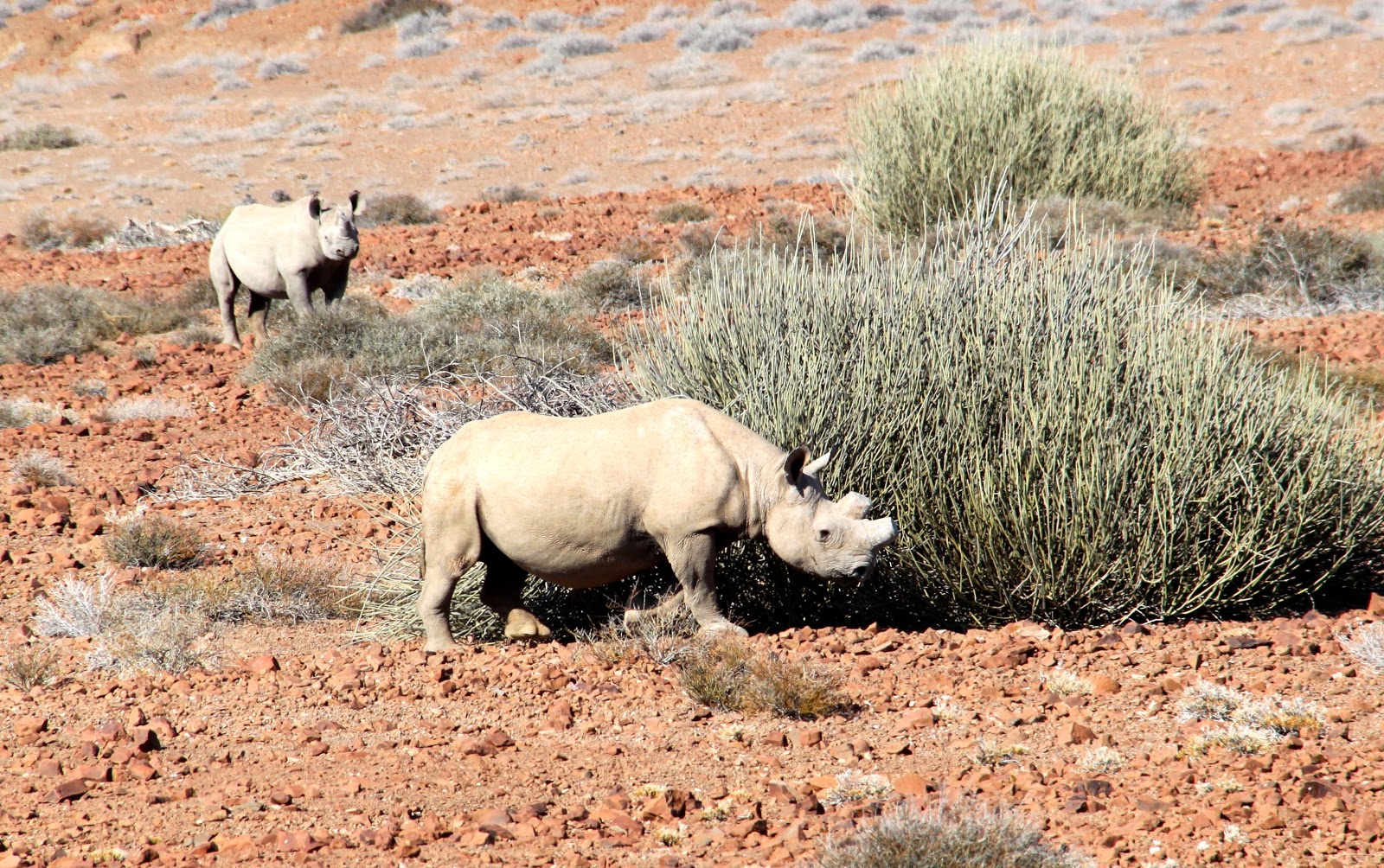
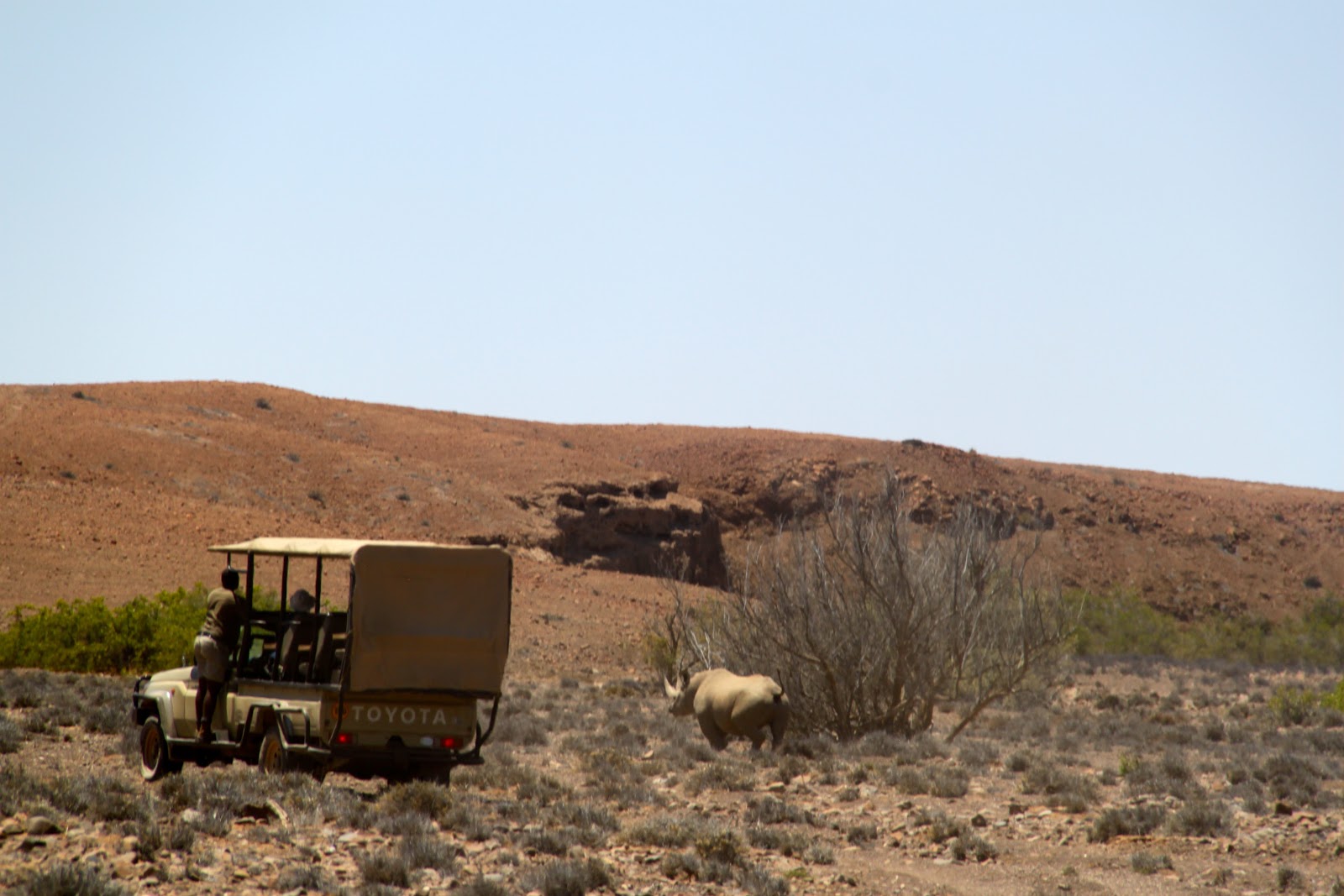
Three local Rhino Trackers left 30 minutes before we did to try and find Rhinos.  We followed in a safari car with Peiter our guide.  We first spot three elephants, a couple of giraffe and Gemsbock.  After driving for three hours the trackers radioed that they had spotted a Rhino.  We drove on to their location and spotted the Rhino in a valley from about a kilometer away.  We drove around a hill and stopped.  Two of the trackers ran to the top of the hill and spotted the Rhino and determined his direction.  We drove to the head of the valley in the direction the Rhino was traveling and jumped out of the safari vehicle and started walking toward the Rhino expecting to find him coming toward us. We spot him and then discover that there are two Rhinos.
The horns have been cut by the government to deter poaching of the horn and killing of the Rhino
Both Rhinos have their horns cut.  The Namibian Government started cutting their horns in 2009 to deter poachers from killing the Rhinos in order to get the horns.
We watched the Rhinos for about 30 minutes from a distance of about 200 yards.
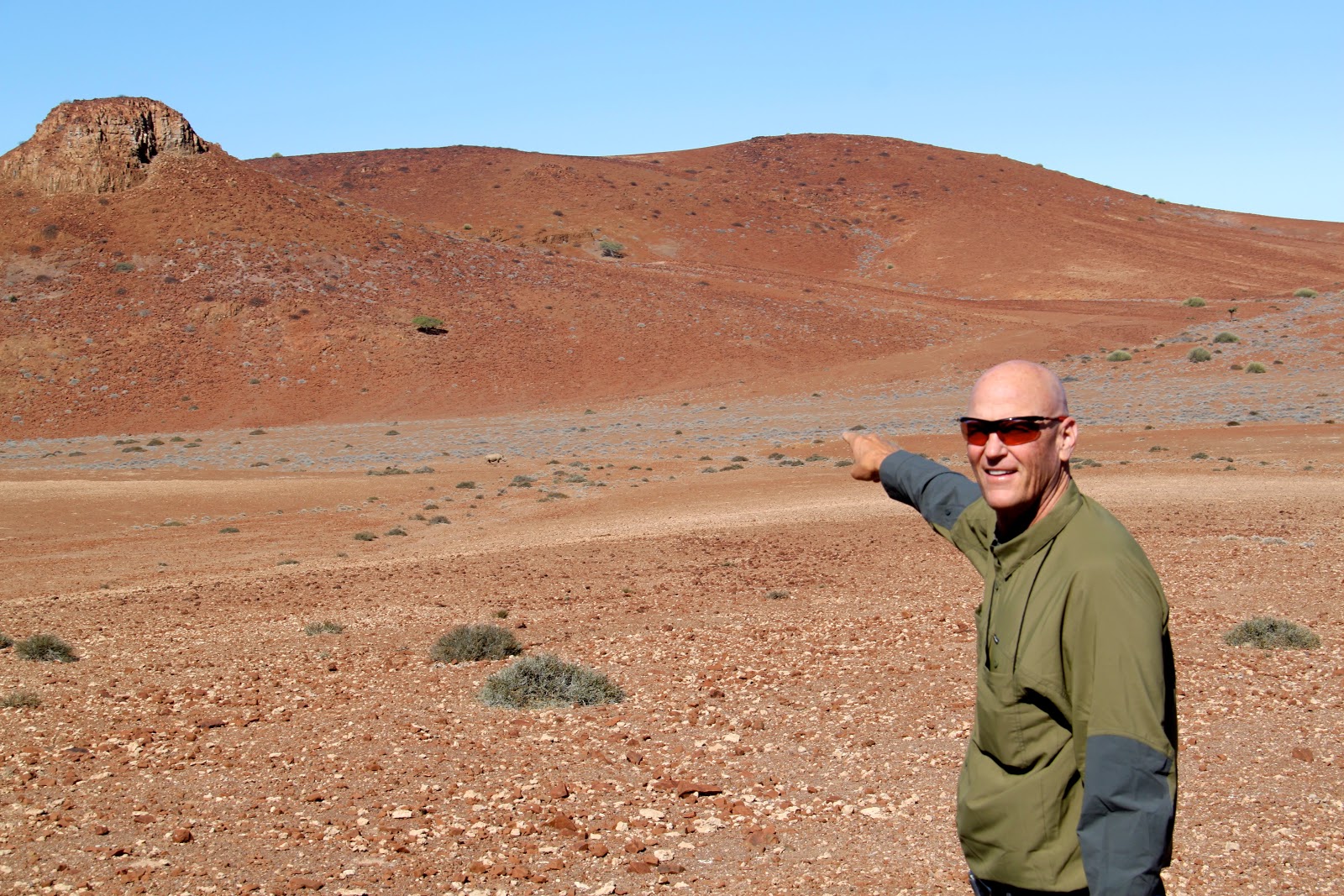
Scott is pointing to the Rhino.  We all got out of the vehicles and walked to see them


The Rhino soon trotted off over the next hill. 
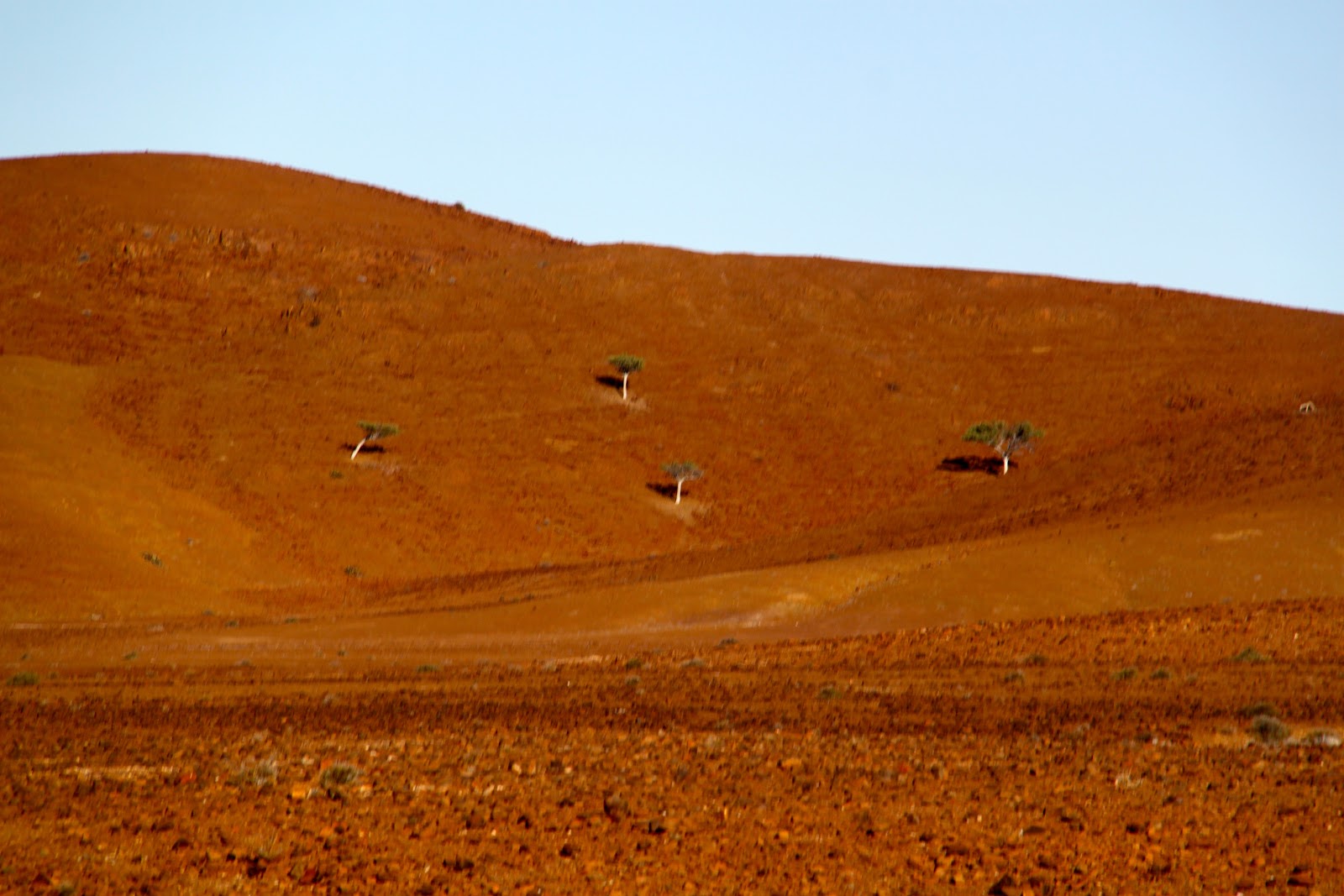
Four solitary trees
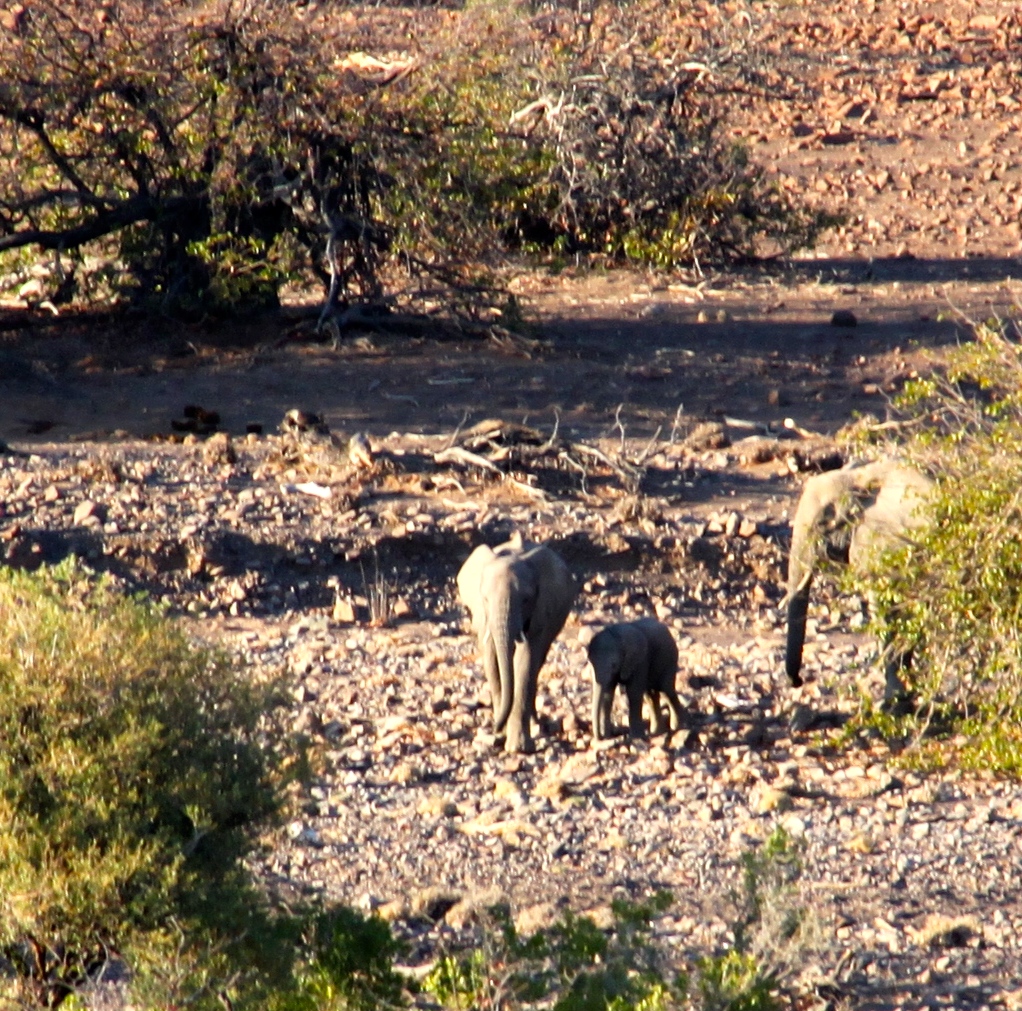
We found a family of desert elephants on the way
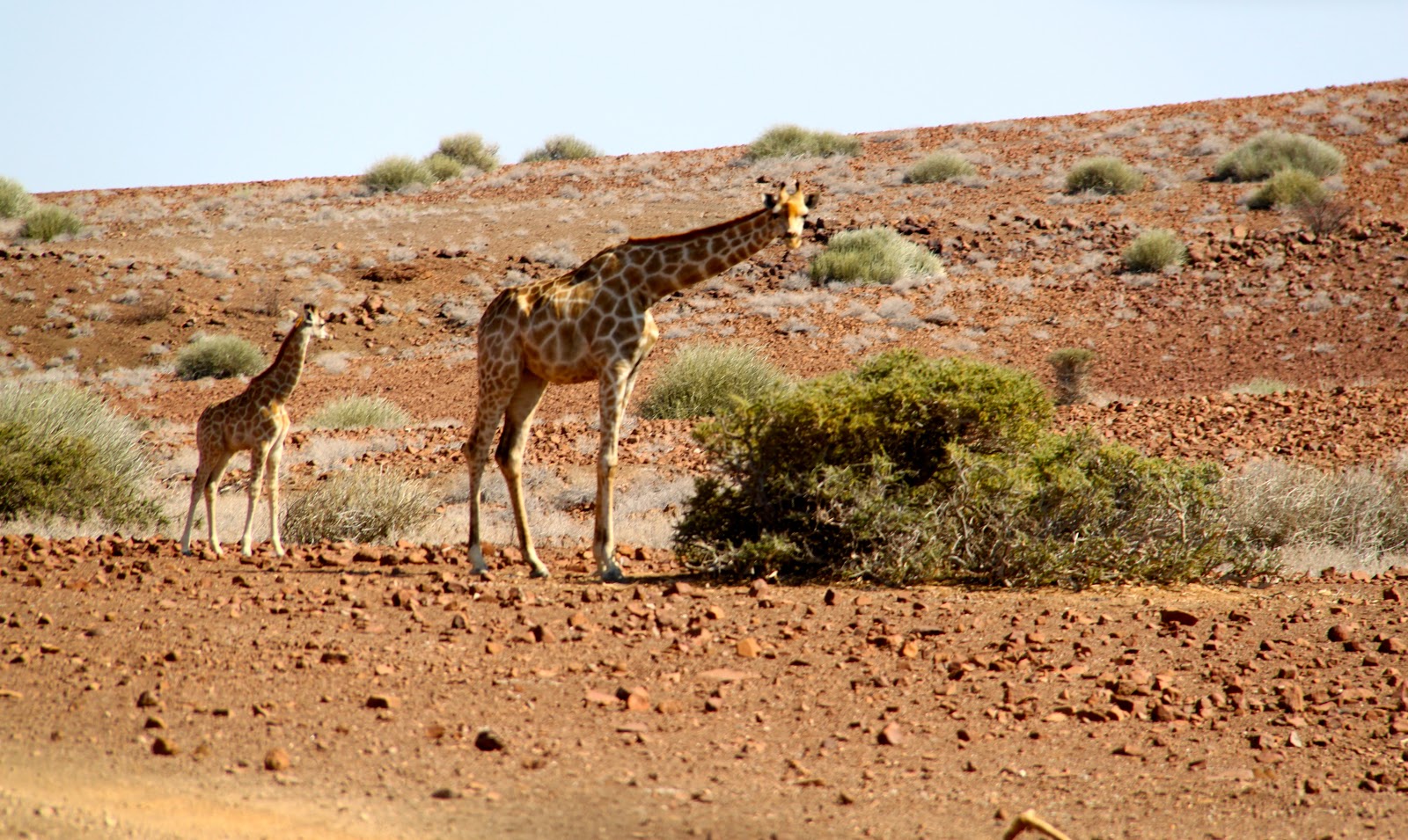
A baby Giraffe!  Probably a few weeks old
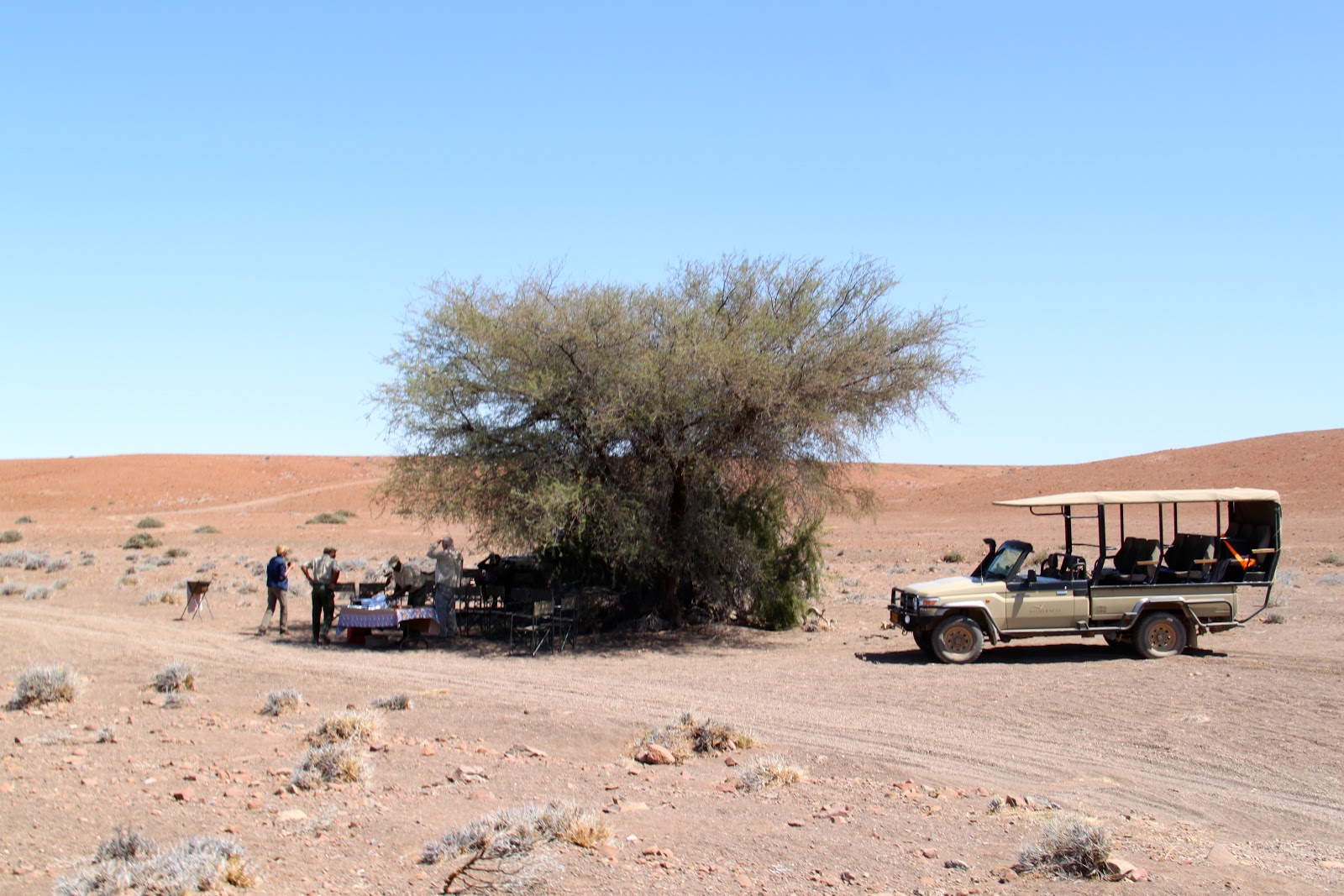
We had lunch at noon under a tree out in the desert.  We then drove on through the desert where we spotted three more Black Rhinos.  The horns on these Rhinos were not cut.  Driving out of the desert back to our camp took another 5 hours.  It was a long day of  10-1/2 hours of driving 110 kilometers on very rough 4×4 desert roads.  It felt good to shower and lie down in our tent.
Setting up lunch for us
On the way out we found 3 more Black Rhino’s.  These had their horns attached.
The scenery close to the Skeleton Coast
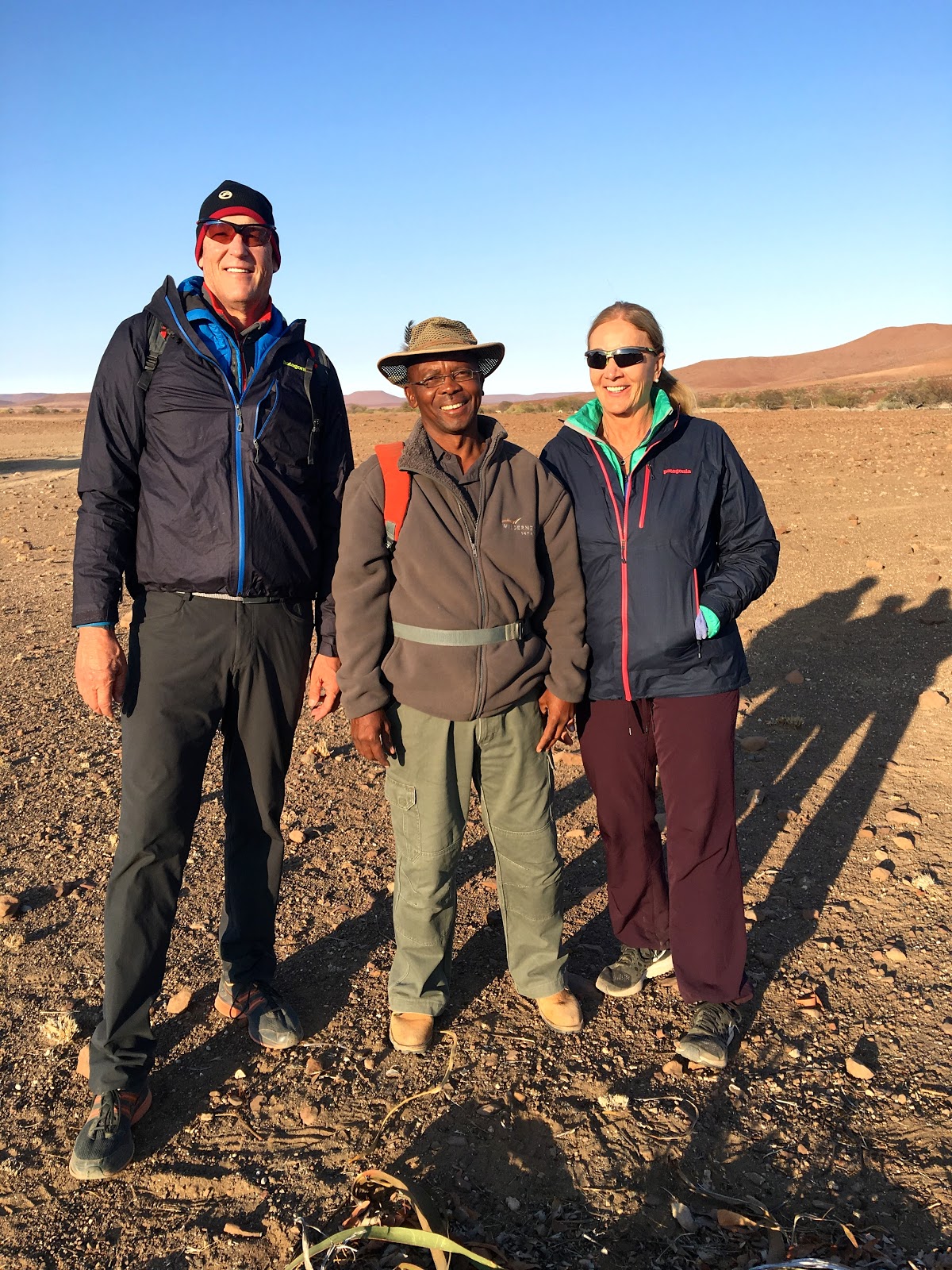
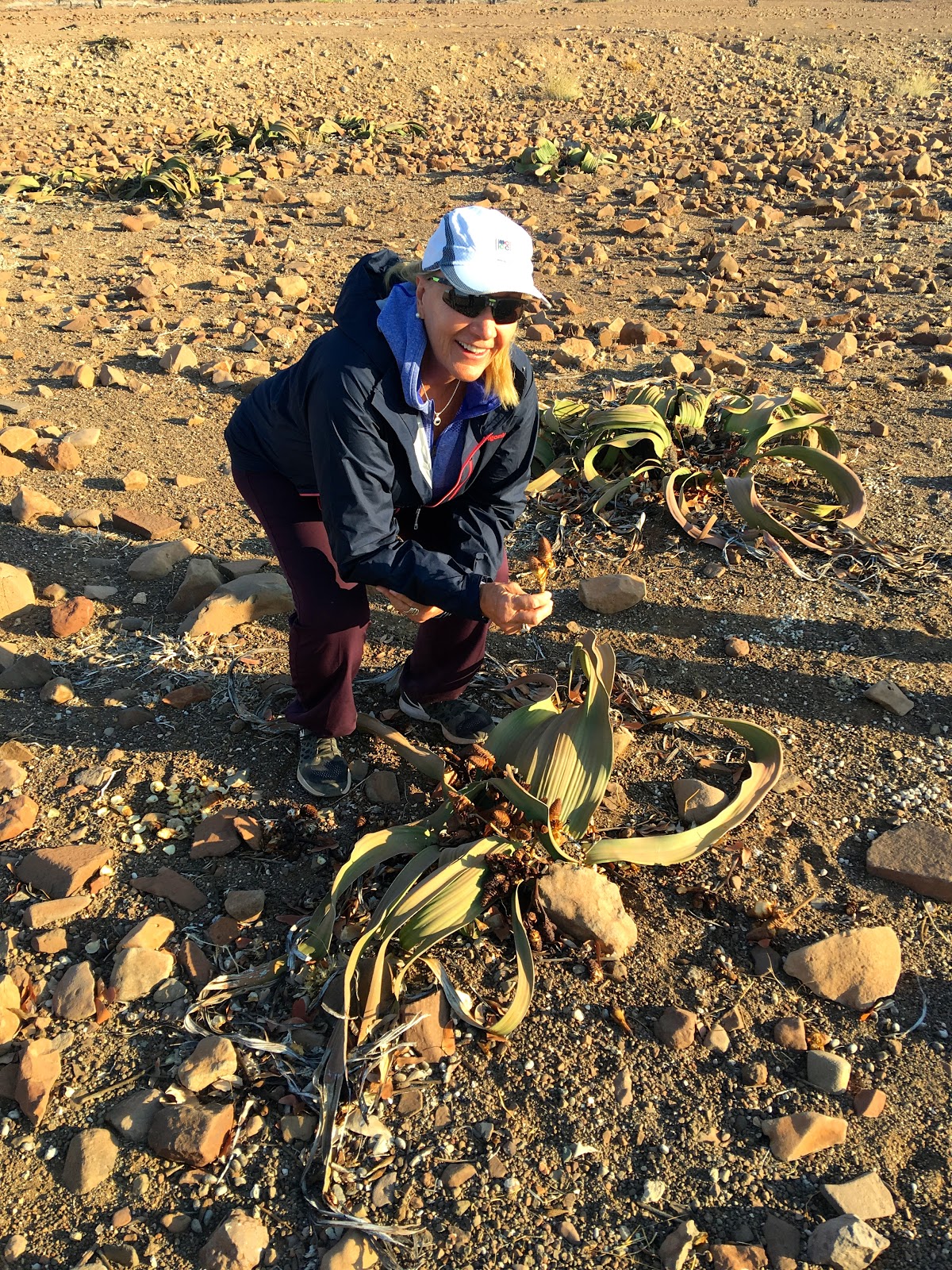
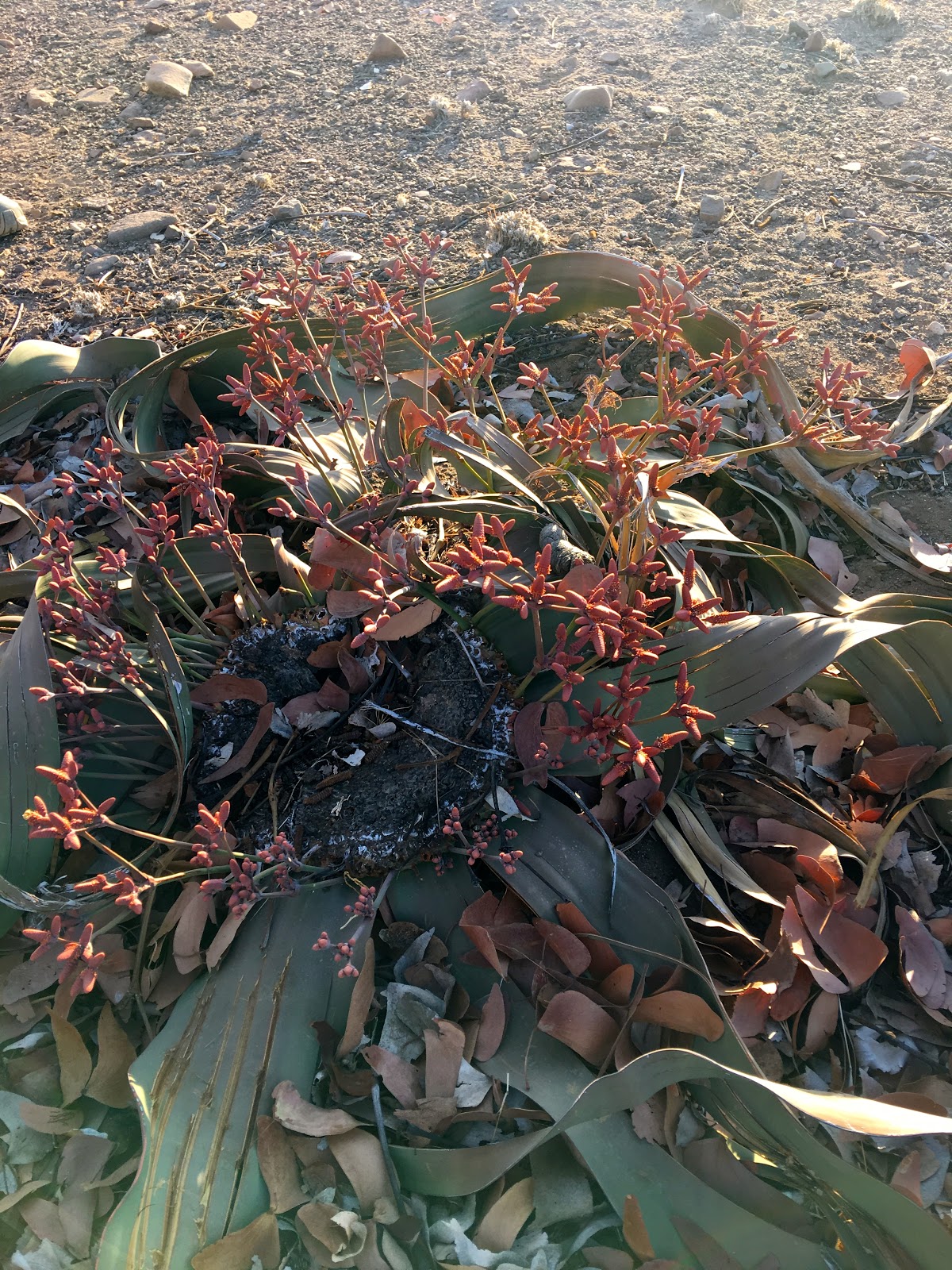
The next morning we went on a walking safari.  We learned about the plant that is shown on the Namibian Crest, which grows in the desert.  There is a male and female variety of the plant and it grows to be over 1000 years old.  It symbolizes the ability to survive in the desert harsh conditions.  We also saw a coral snake that scared Peiter our guide.
Out on our walking safari
This plant is the oldest recorded.  It can be 2000 years old.  It is against the law to destroy them.  There is a male and a female version. This is the female.
This is the male
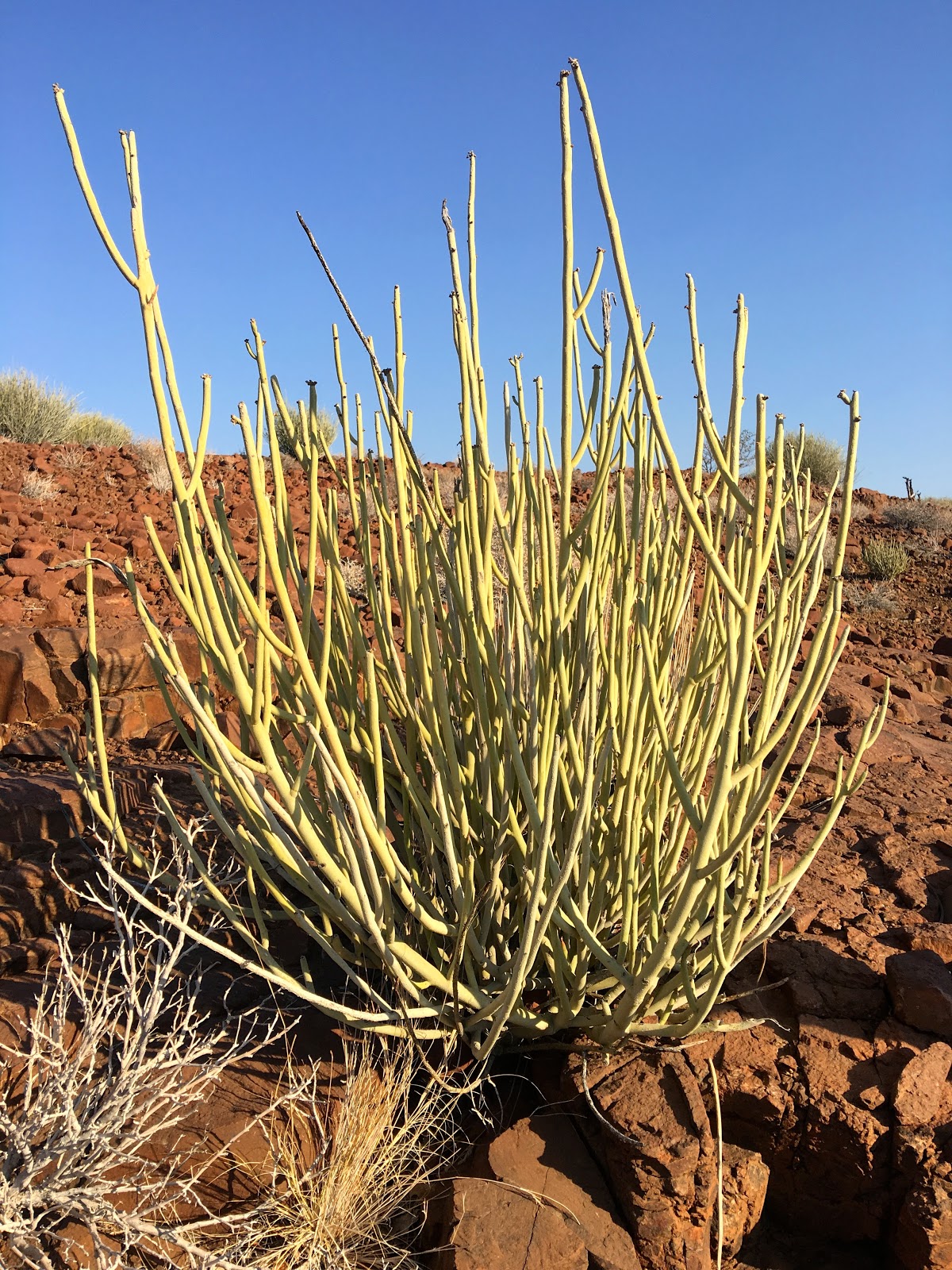
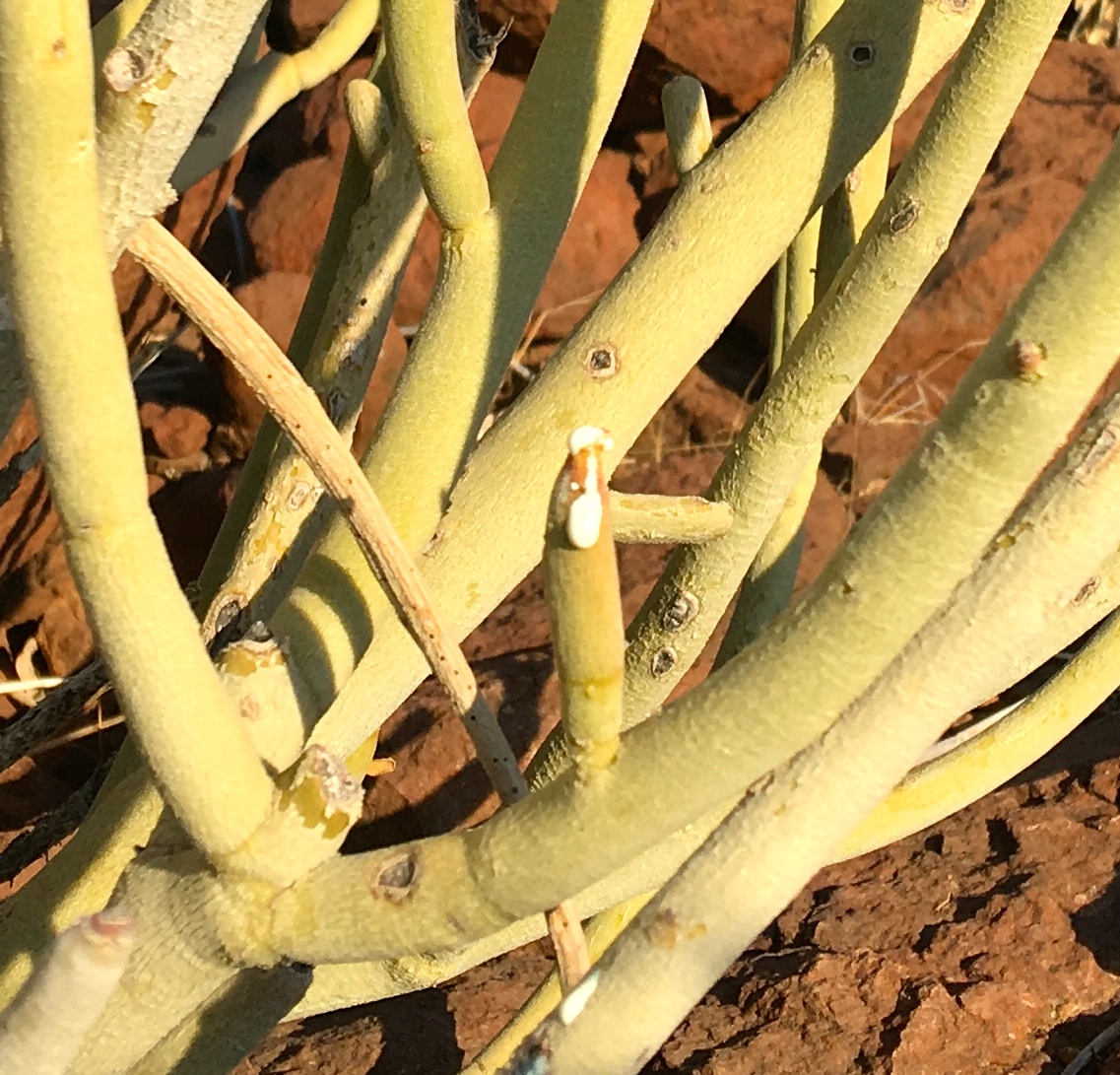
This cactus plant grows here but is very poisonous.
If you touch it, a milky substance comes out that can kill you.
We had asked the camp managers if we could visit a Himba encampment.  They told us that they have never had any guests ask to go visit the native tribes.  It seemed to cause quite a concern among them.  They wanted to help us but did not want to get into trouble with the camp owners so they called and asked for permission to help us. 


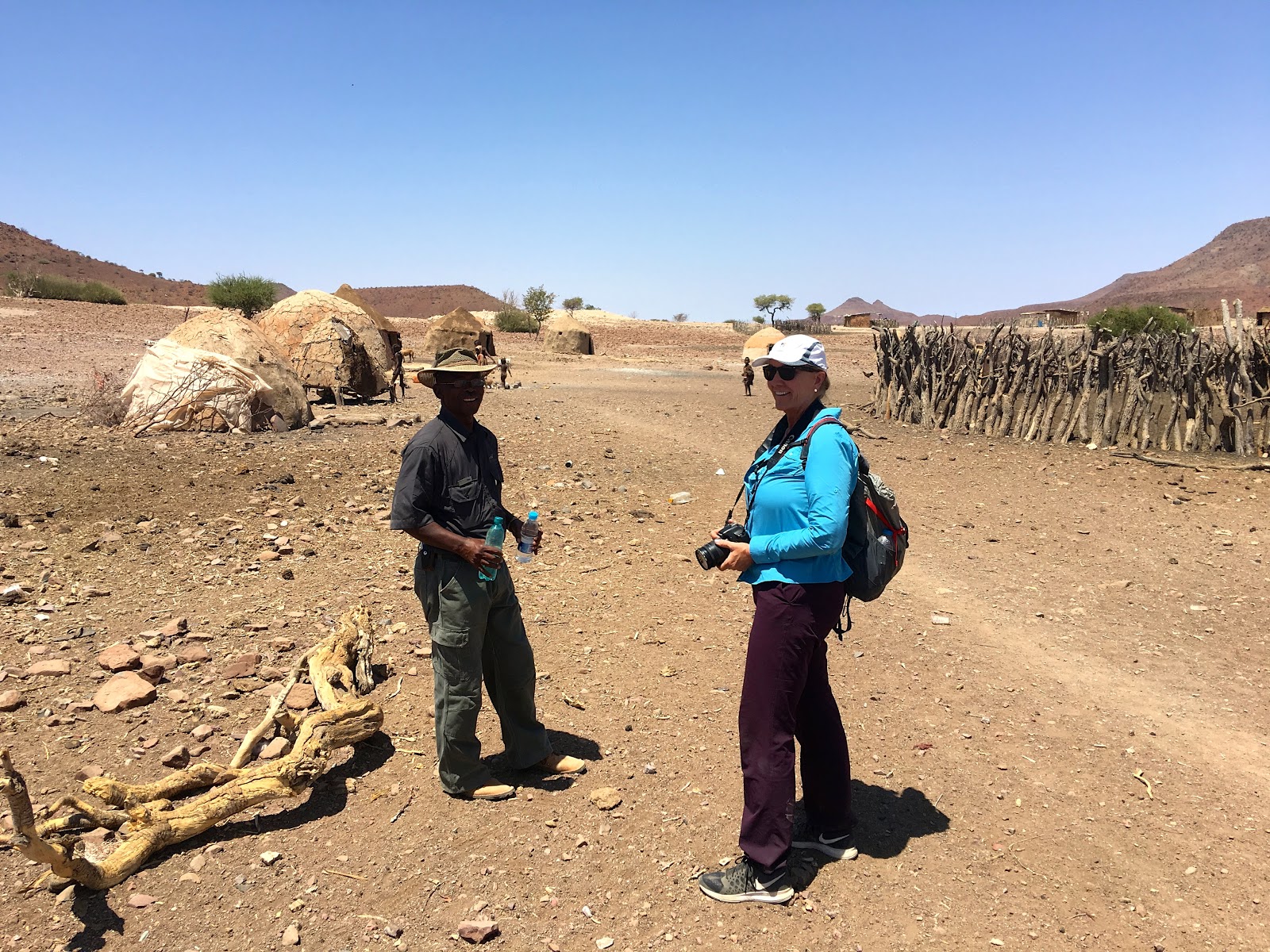
They told us that there was a Himba family that lived about 30 kilometers further north from the gate of this Rhino concession area. They did not want their safari vehicles to go outside of the Rhino Concession Area so at the Palmwag Gate we agreed to transfer to our Land Rover and I would drive us the 30 kilometers further north to the site of the Himba Encampment.  Our guide from the camp accompanied us to the Himba Village.


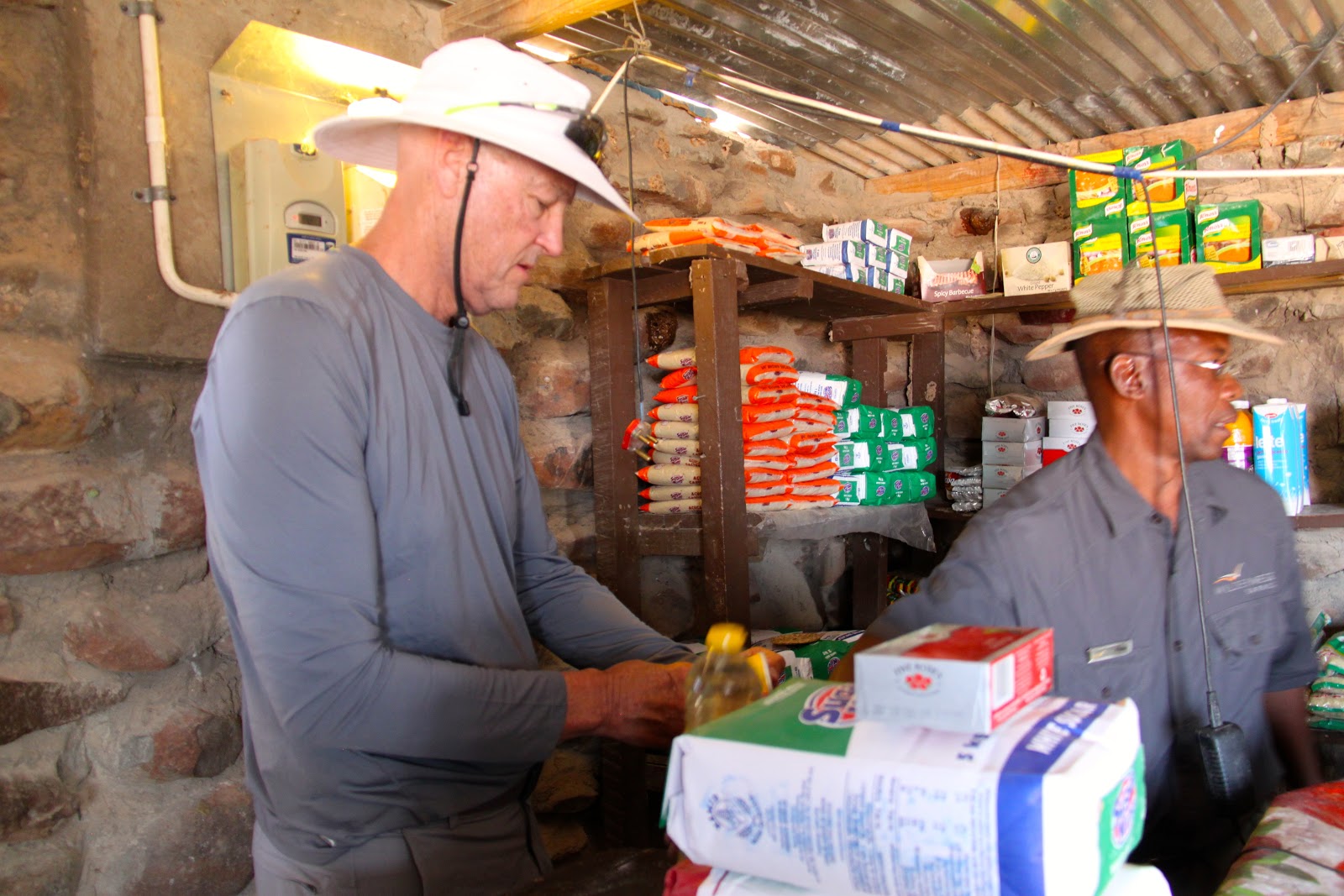
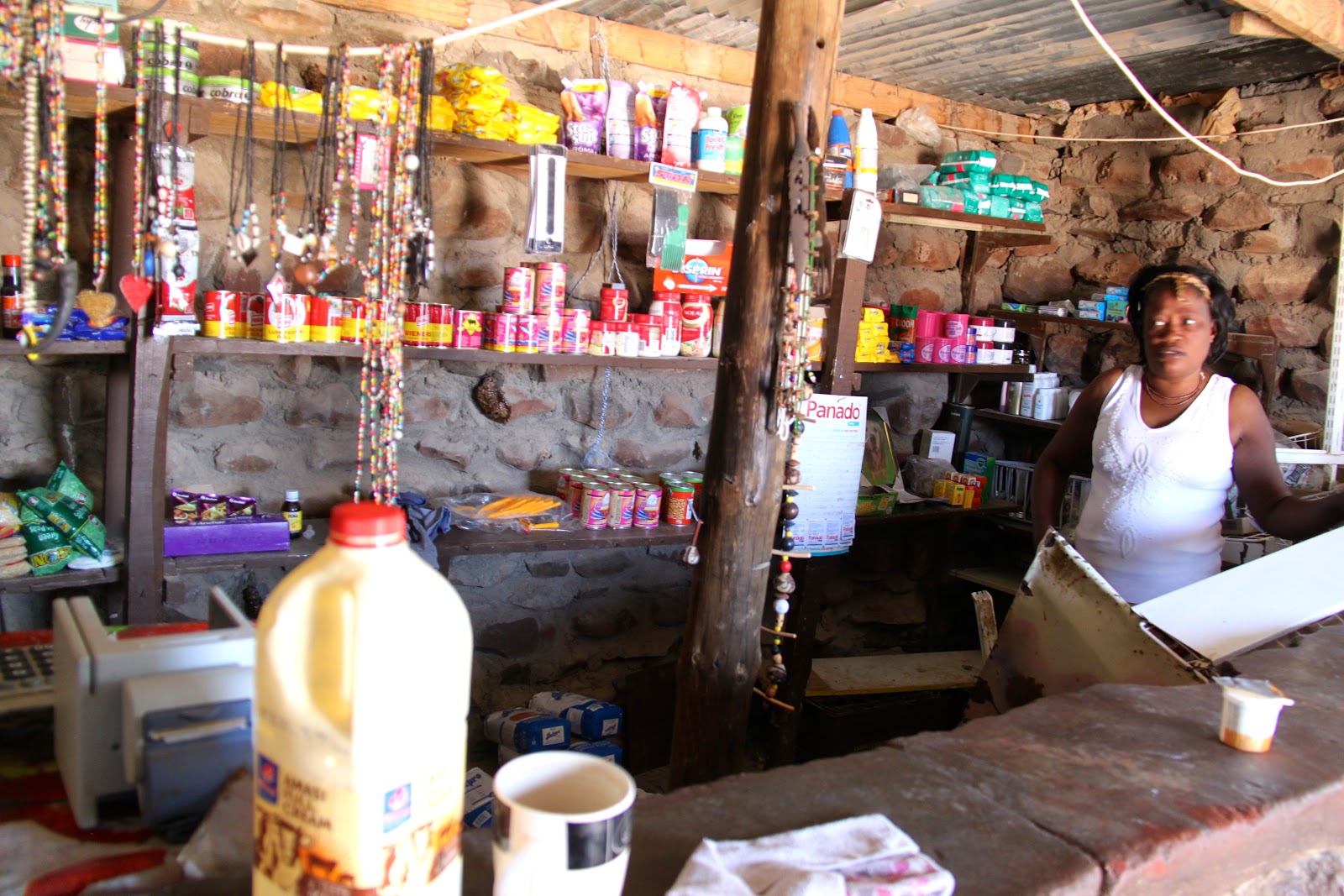
Before we left Palmwag we stopped at the small store and bought 5 kg of sugar, 5 kg of cornmeal, a package of split peas, 4 packages of soups, a box of Roiboss Tea, and 2 jars of Vaseline.  We asked the shop owner what the Himba needed and she helped us pick out the supplies.  She said that the Himba use the Vaseline to mix with the red ochre to rub onto their skin to soften and protect themselves.  Normally they would use cow fat for that purpose but the recent 4 years of drought means that the cows produce less.

This is the grocery store
Finding what the Himba might need
 
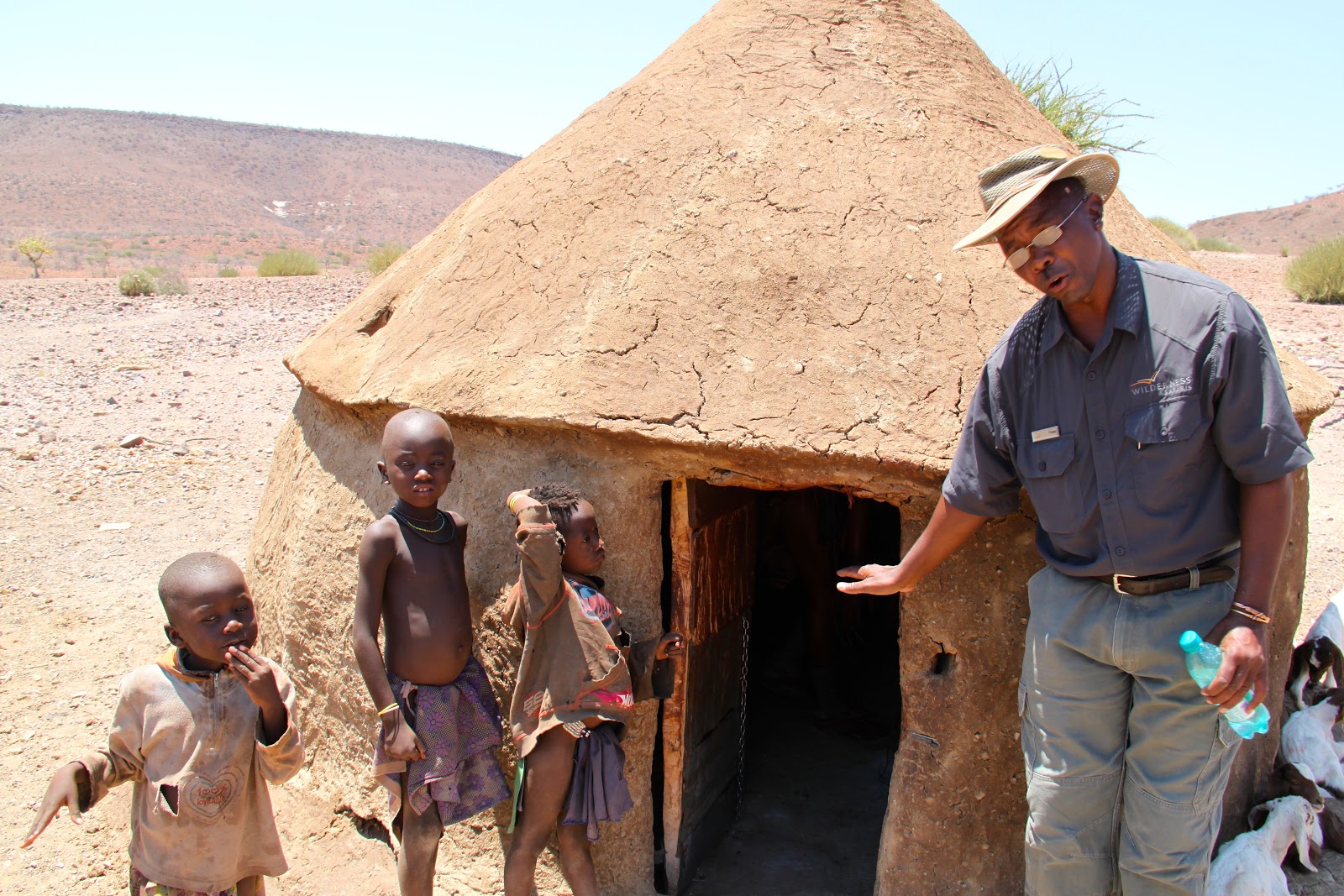
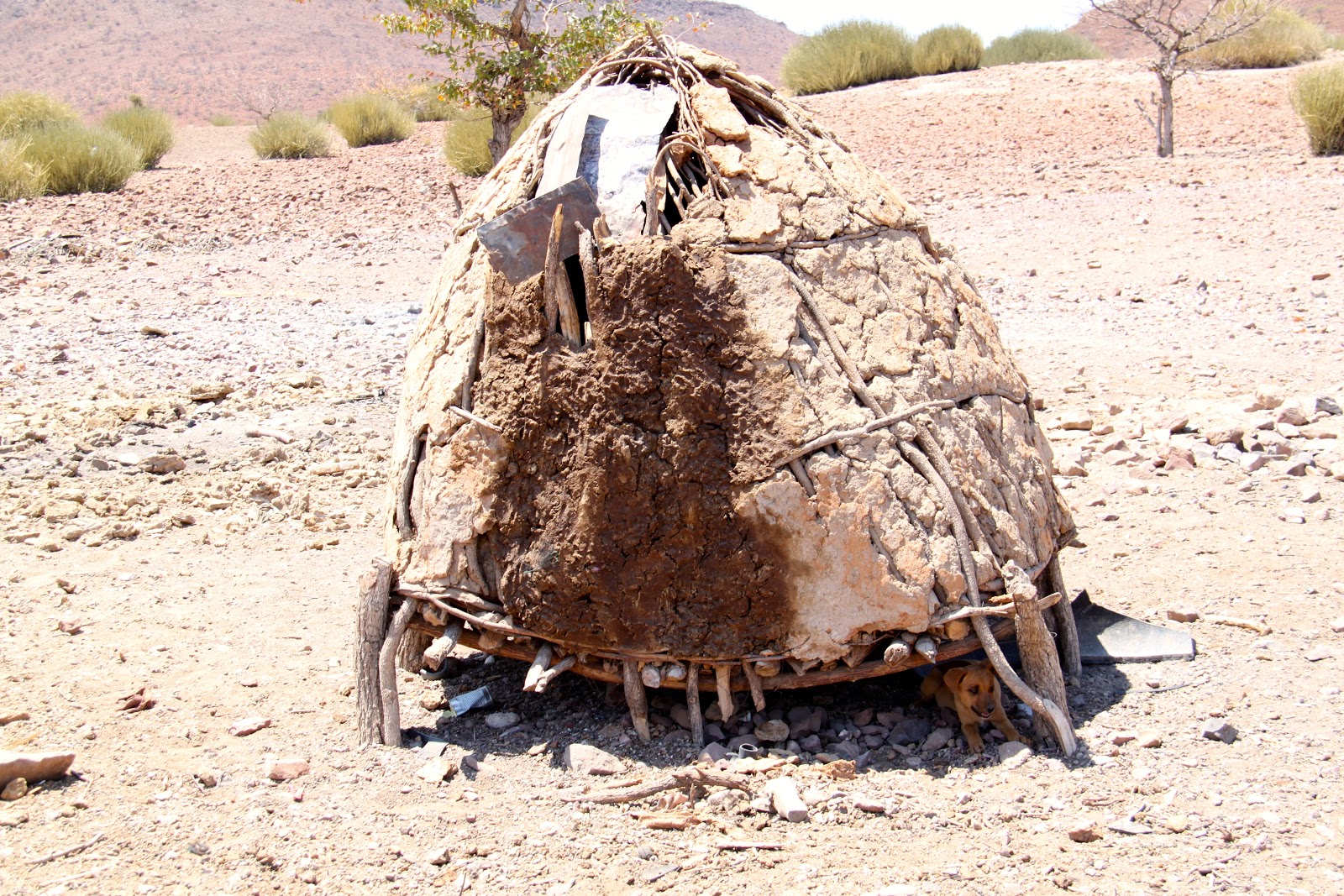
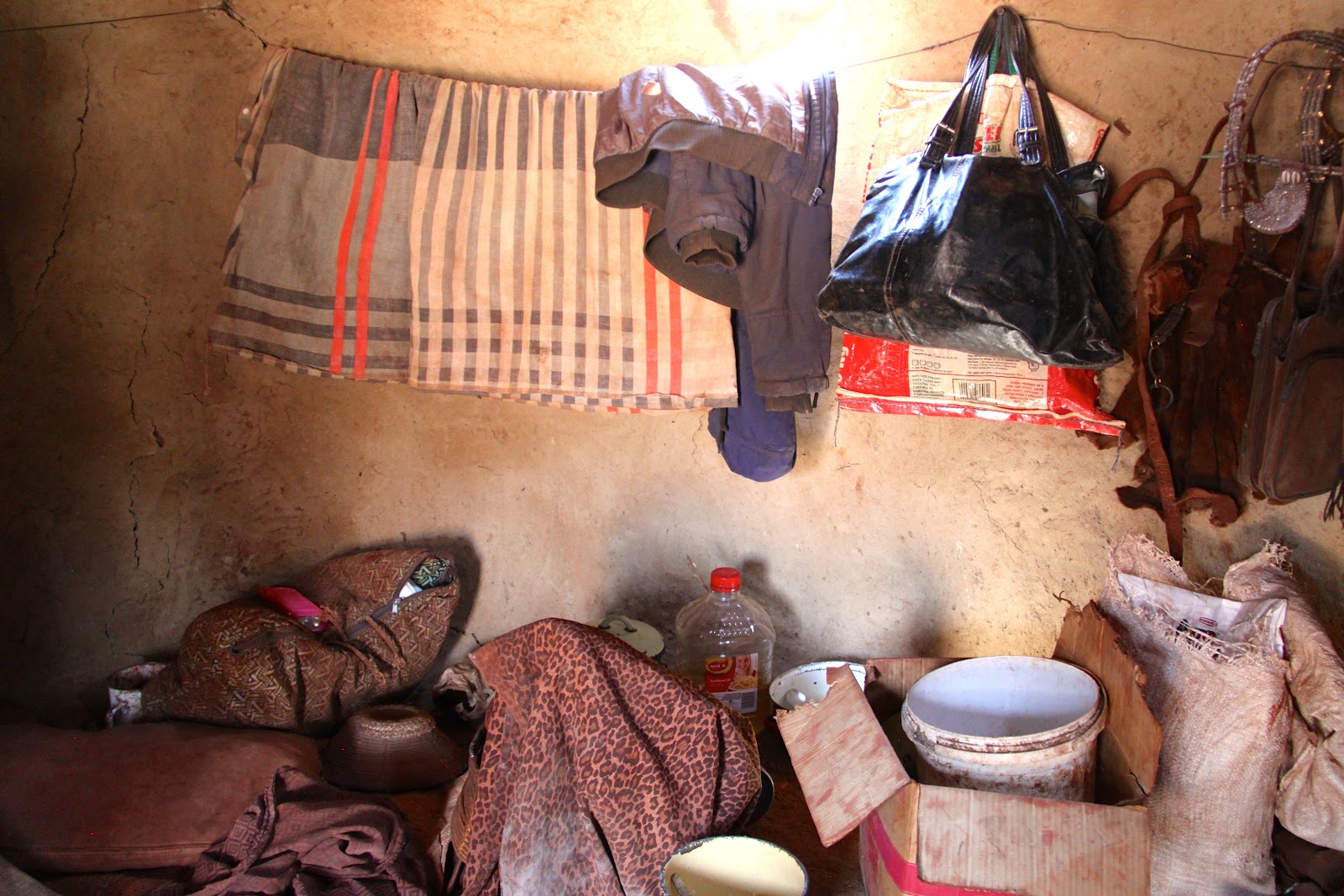
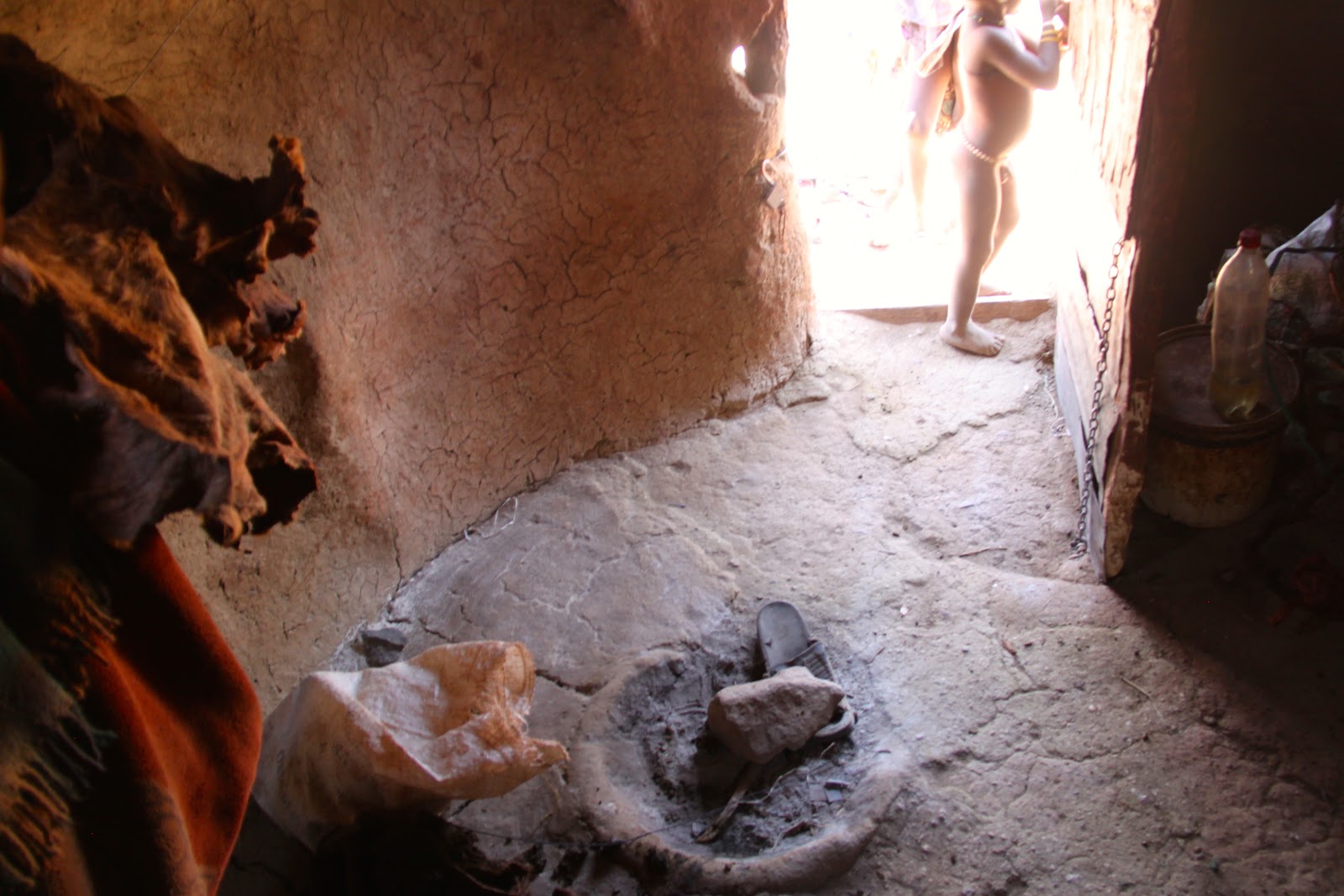
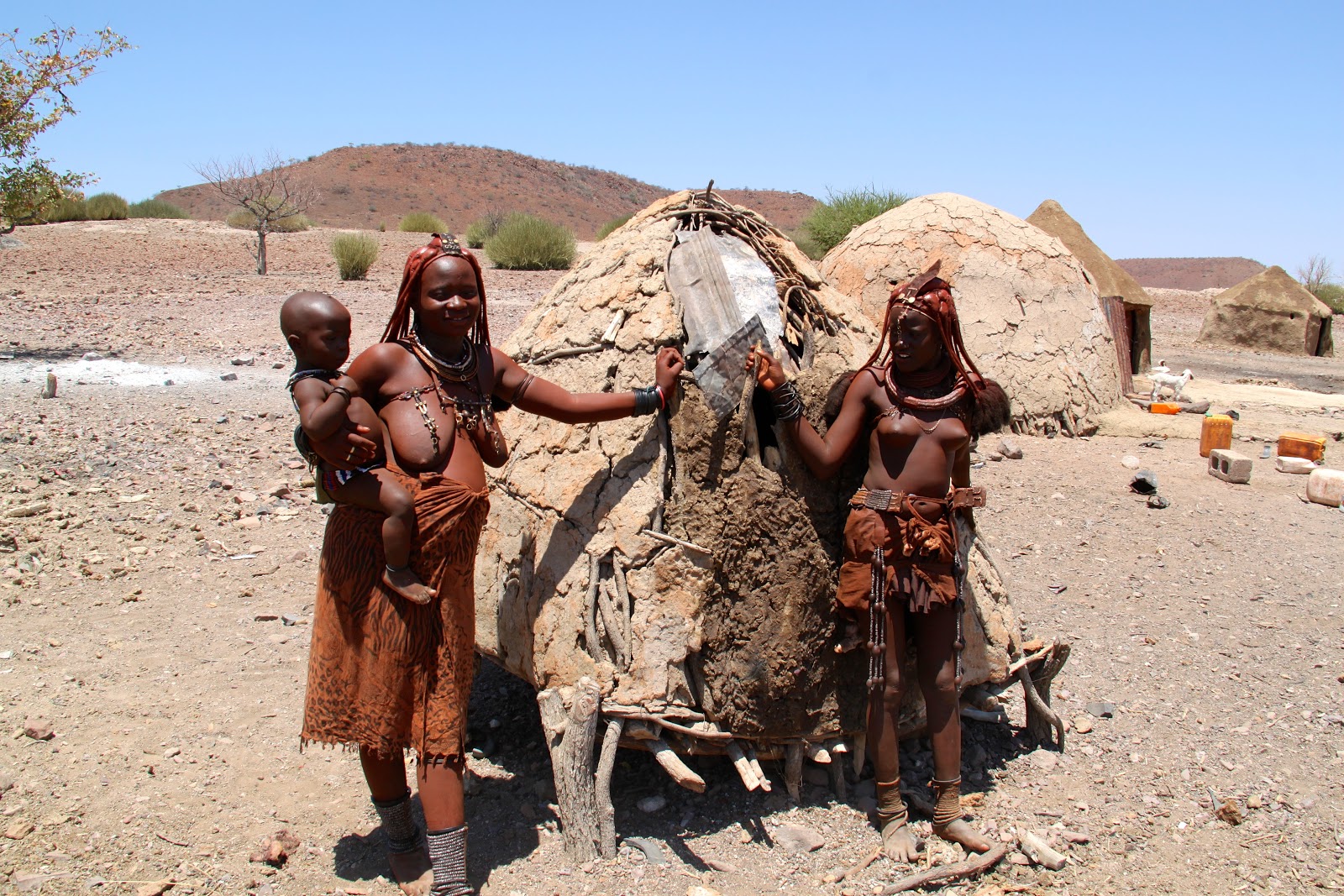
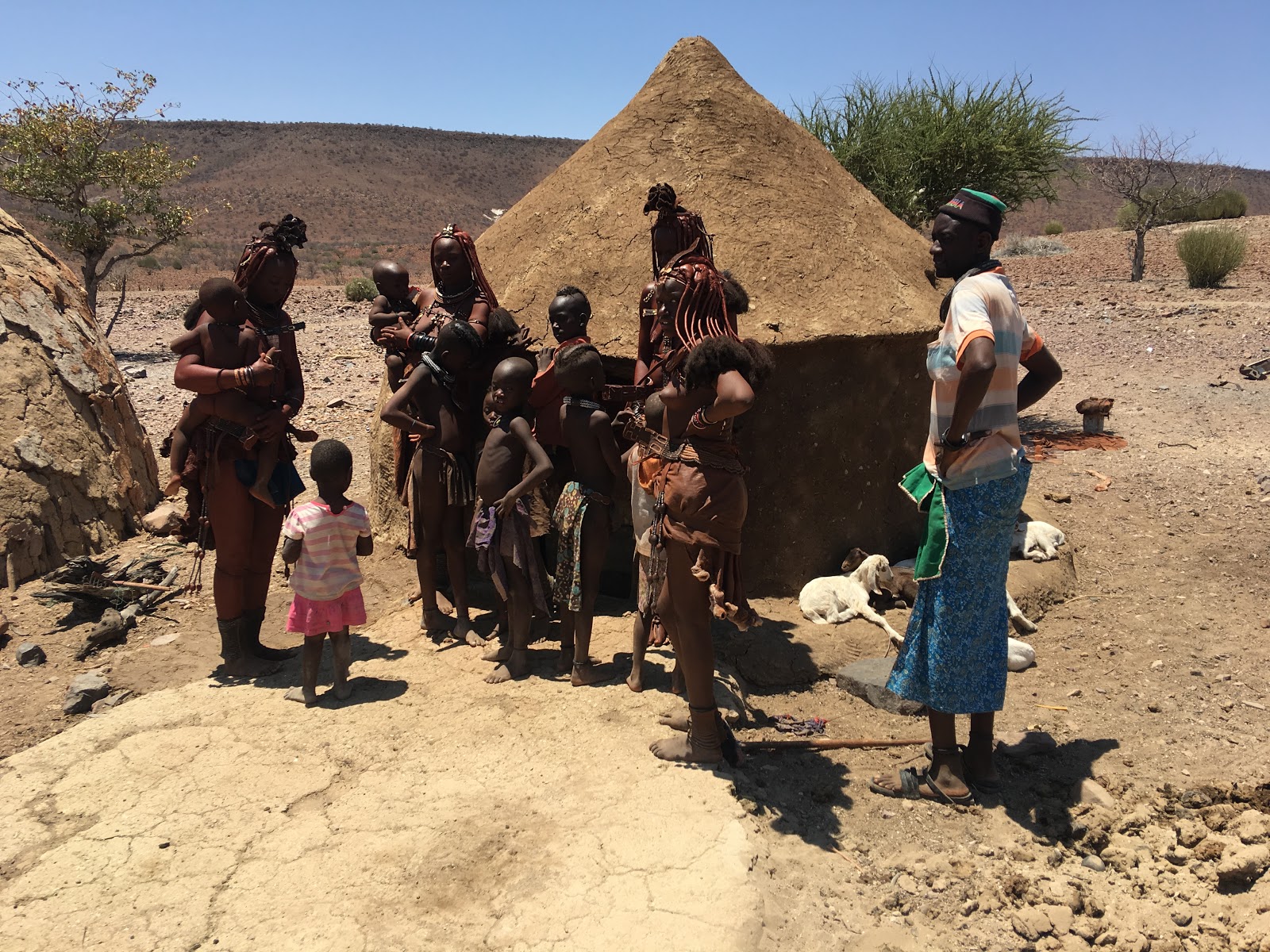
The village consisted of huts made from cow manure mixed with dirt.  The main living huts had a door and holes in roof to let out the smoke.
Entering the village
The entrance is very small.  I had to crawl in.
This hut is for their food storage
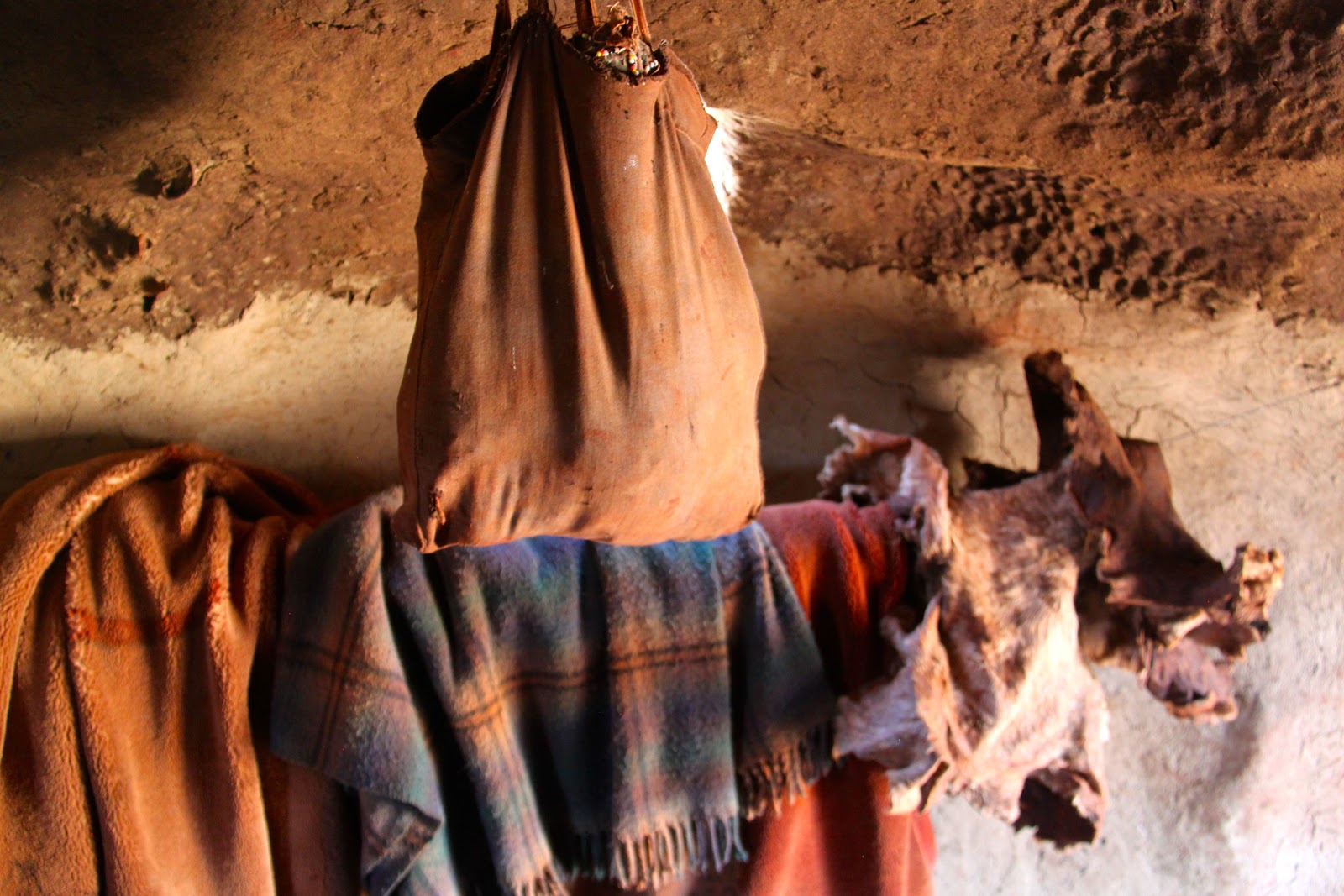
Inside the hut.  The hanging bag has the red ochre powder that they mix with cow fat or vaseline and rub all over their bodies
 
There is a small fire on the inside
This was the village for one family.  The man had two wives and there were huts in two different areas about 150 yards apart. 


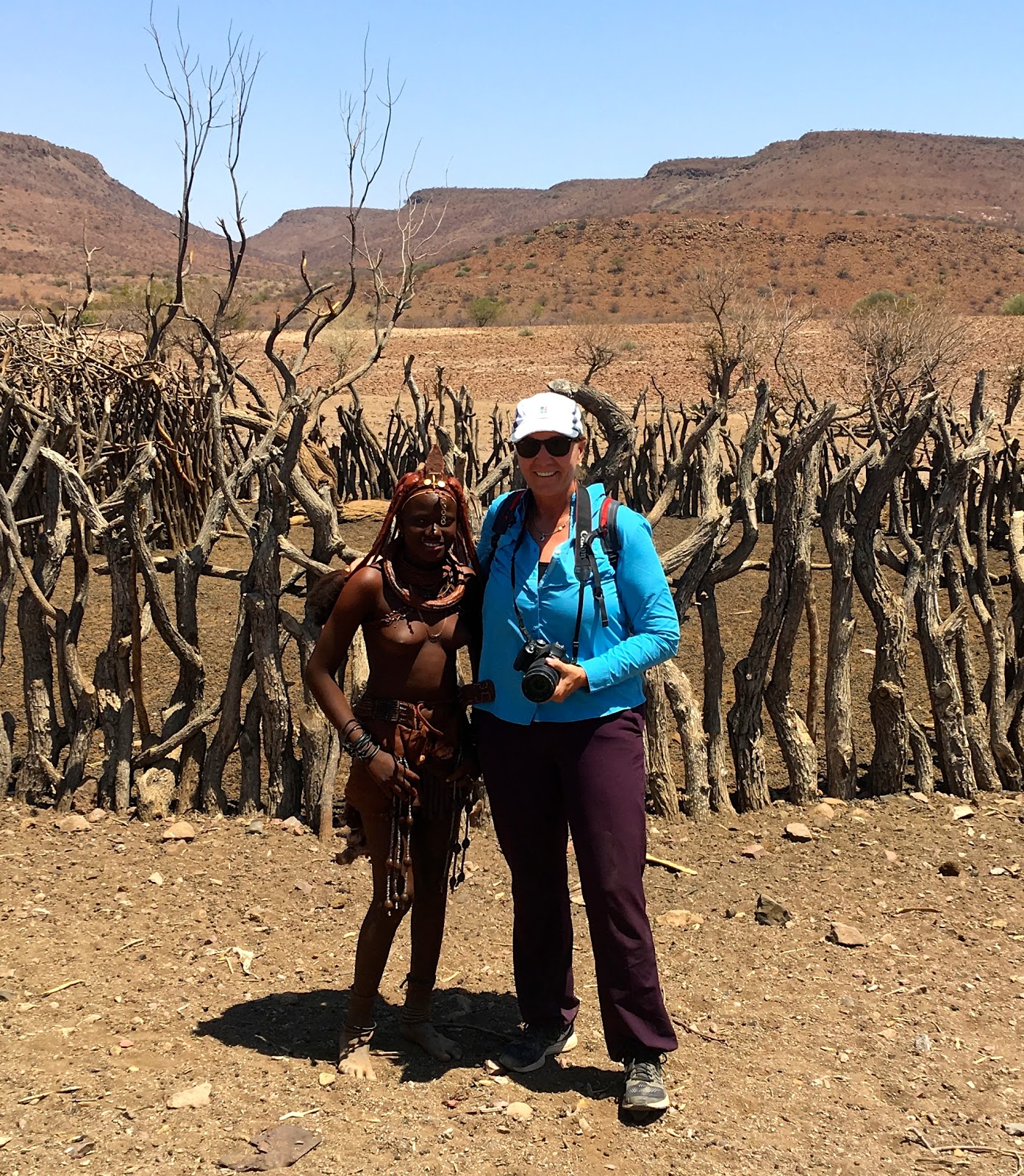
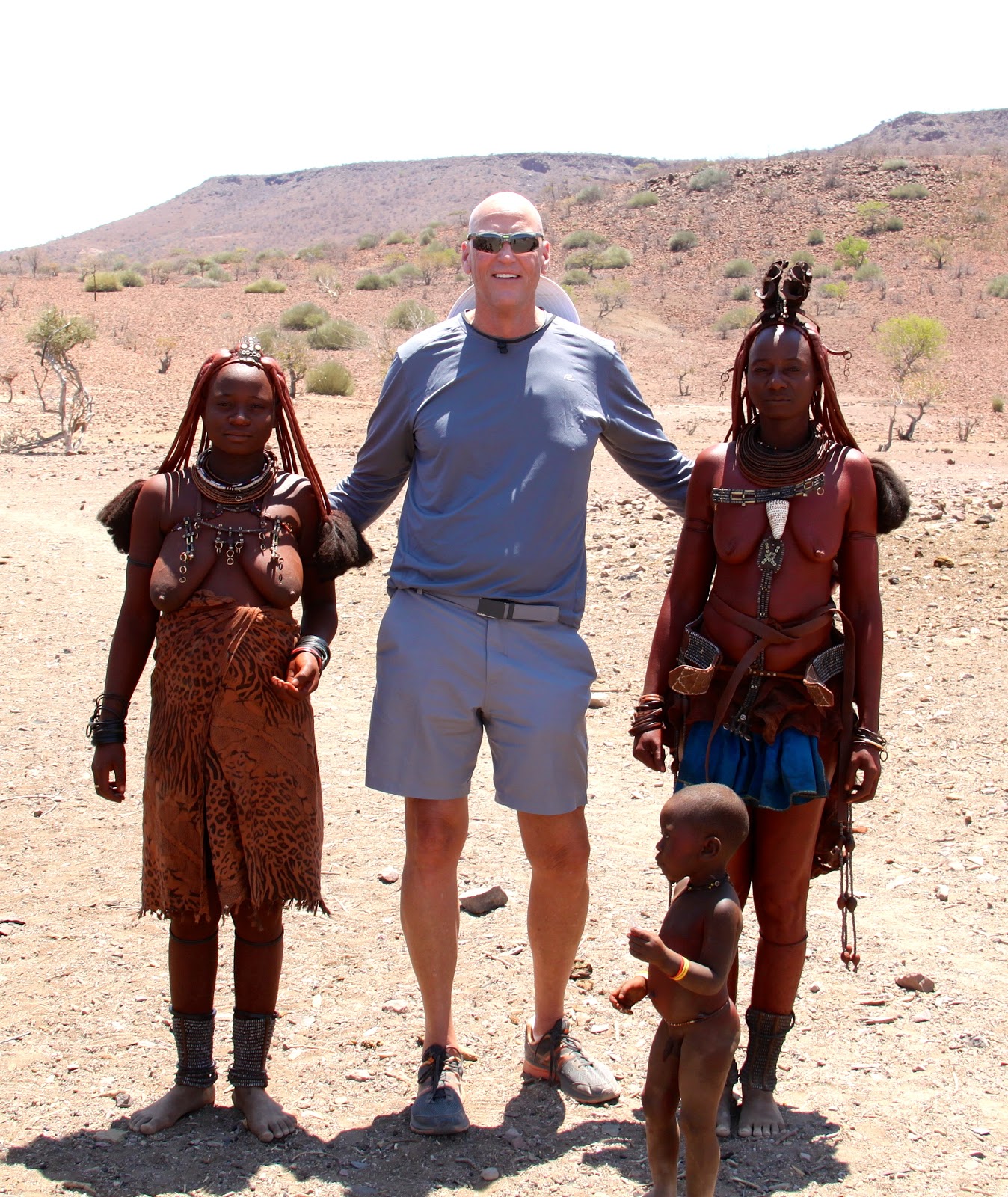
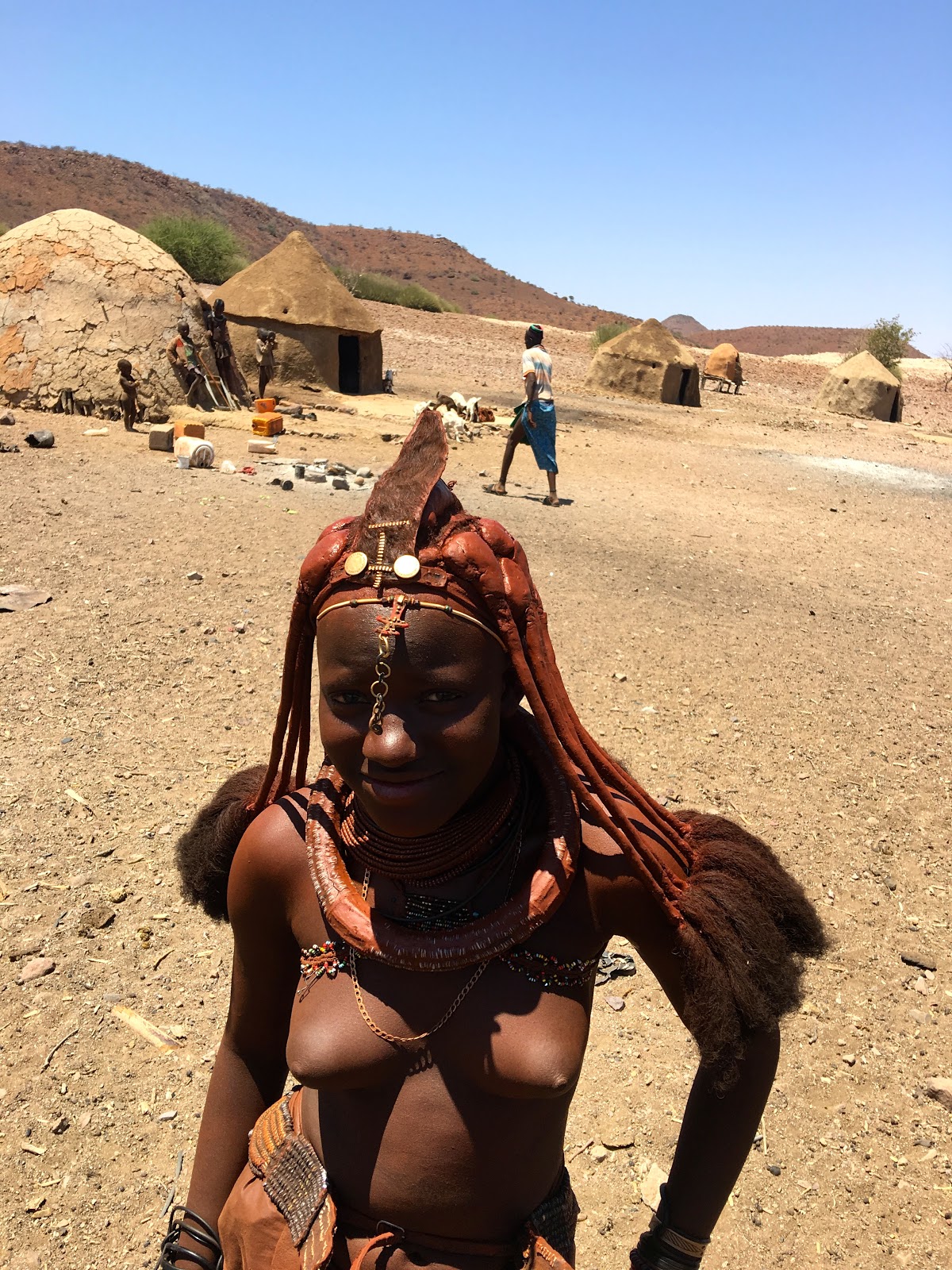
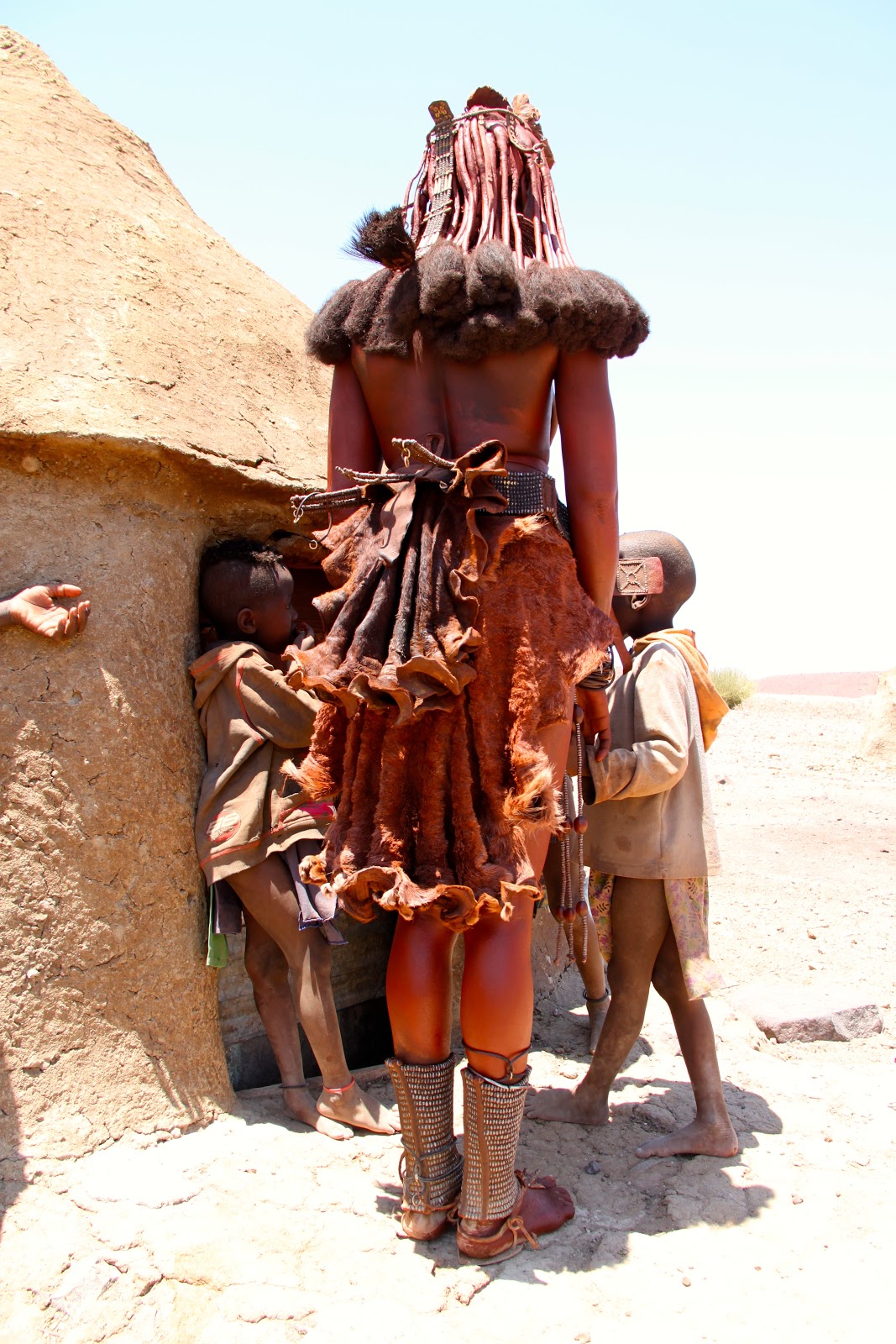
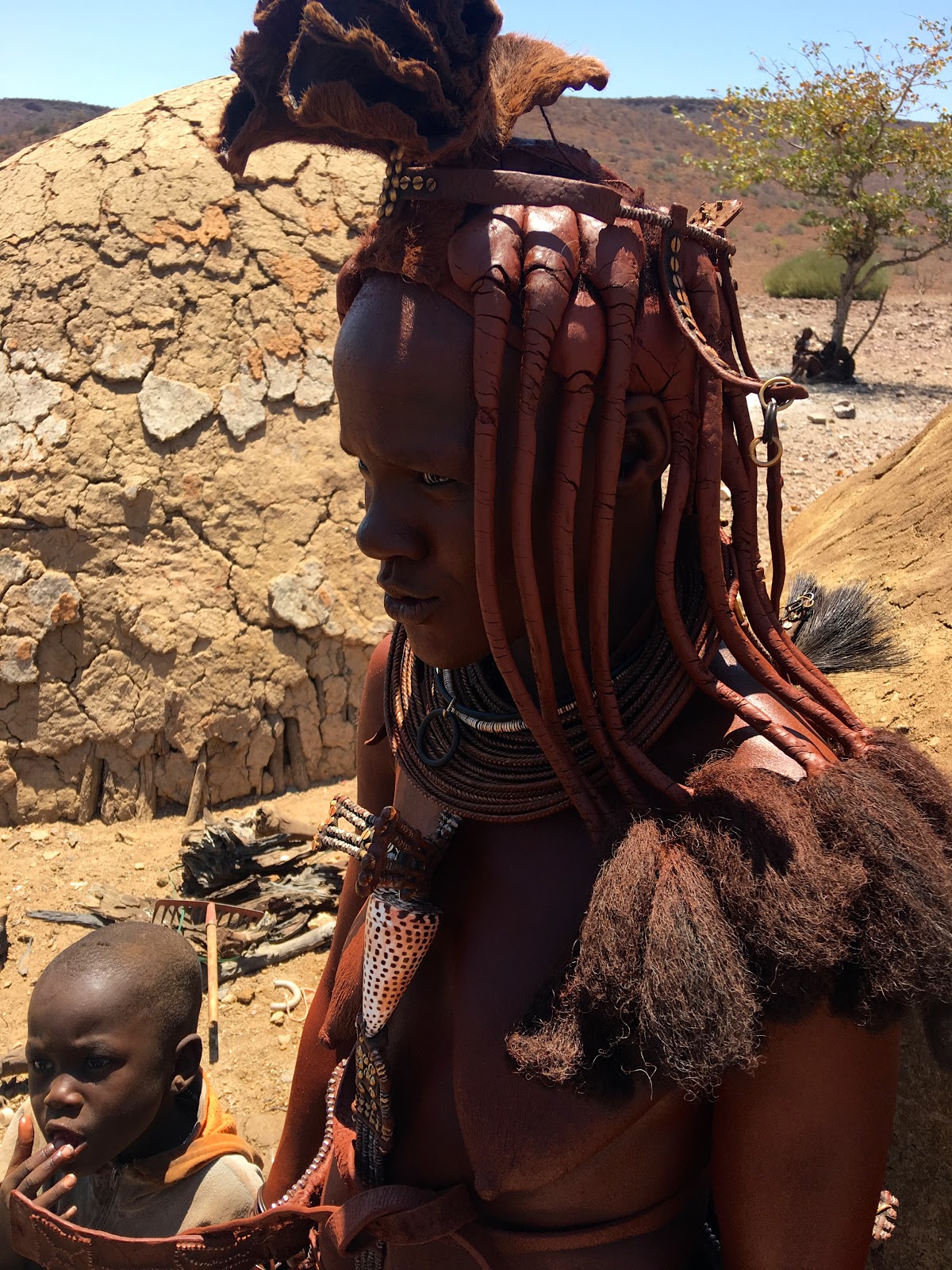
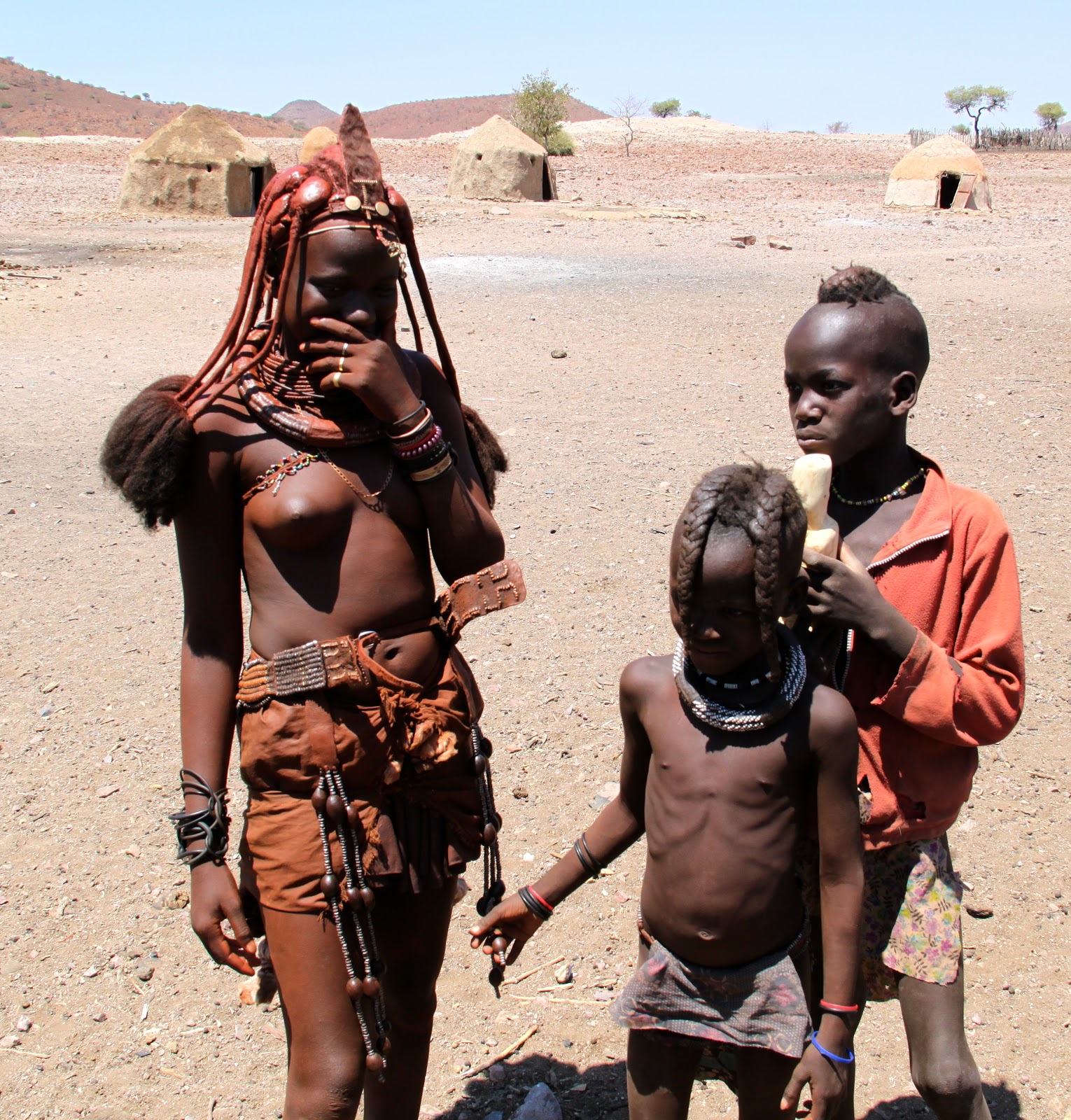
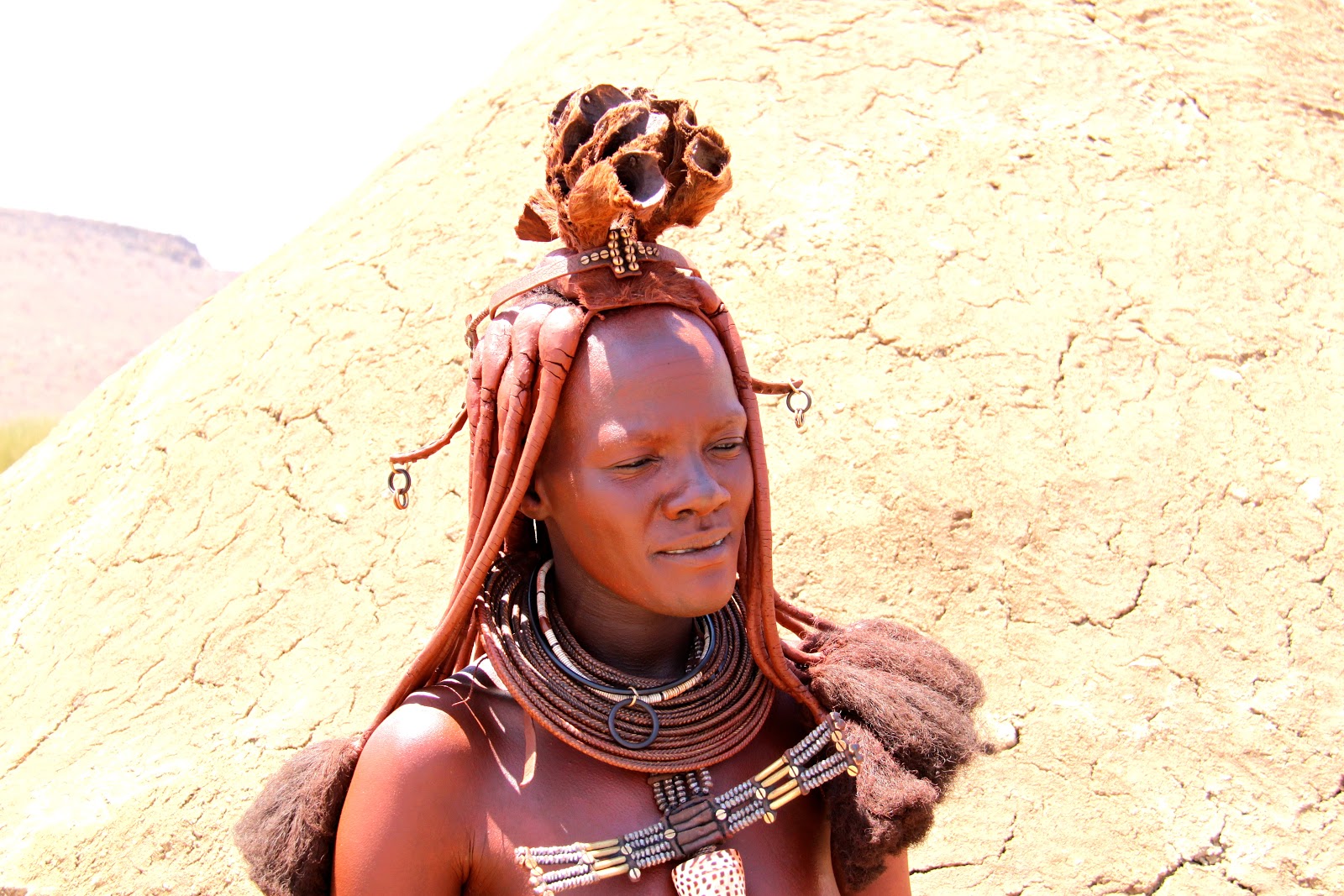
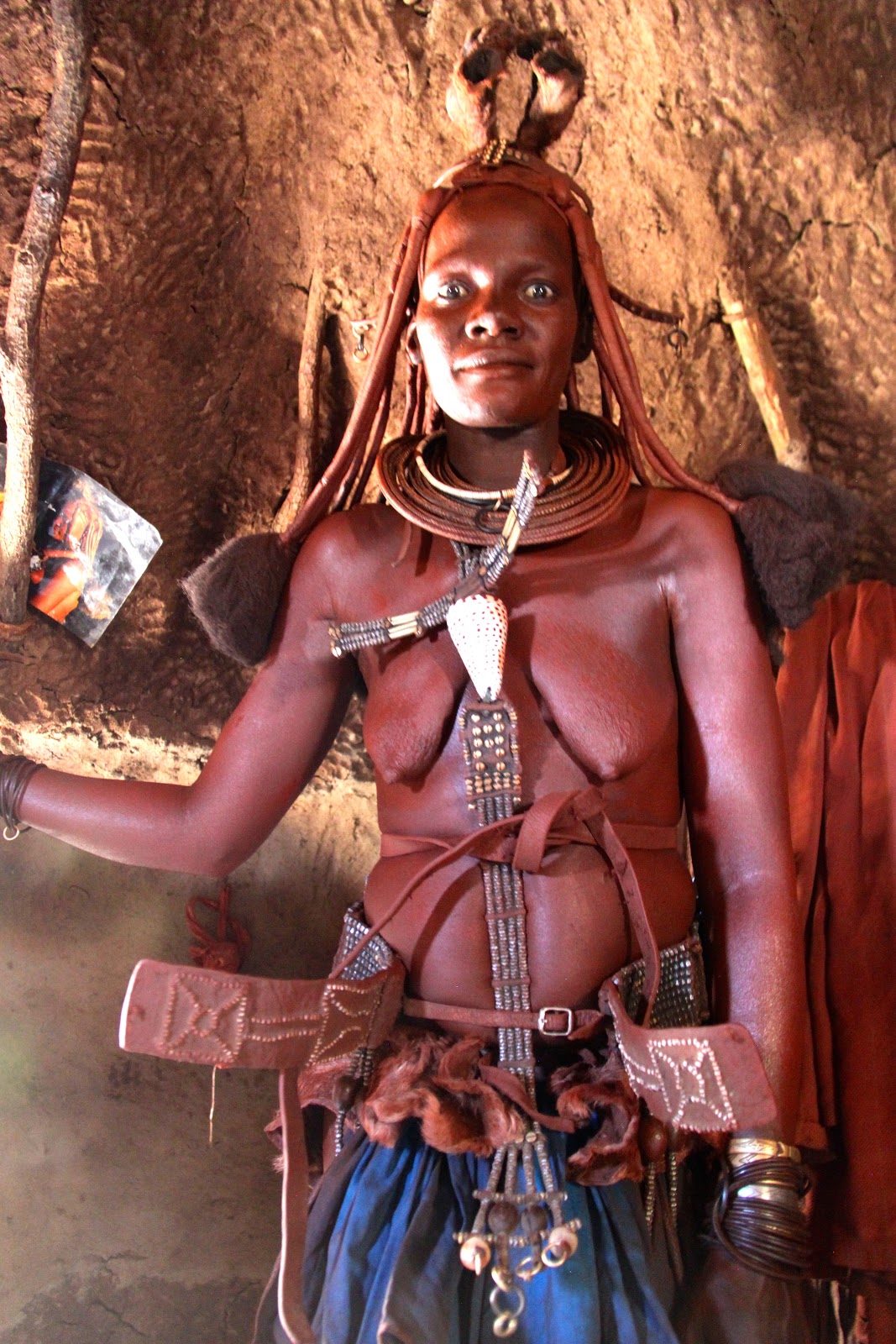
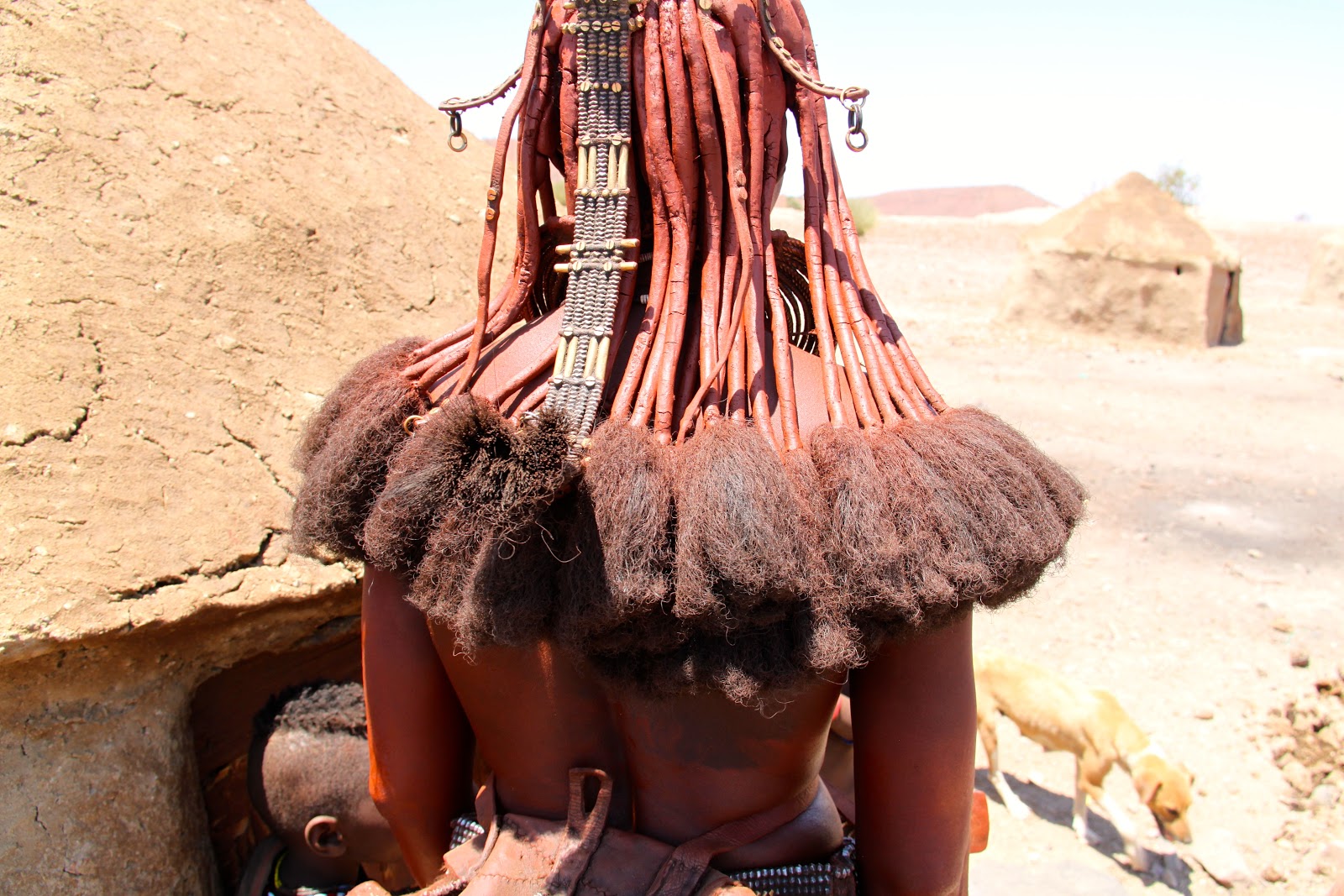
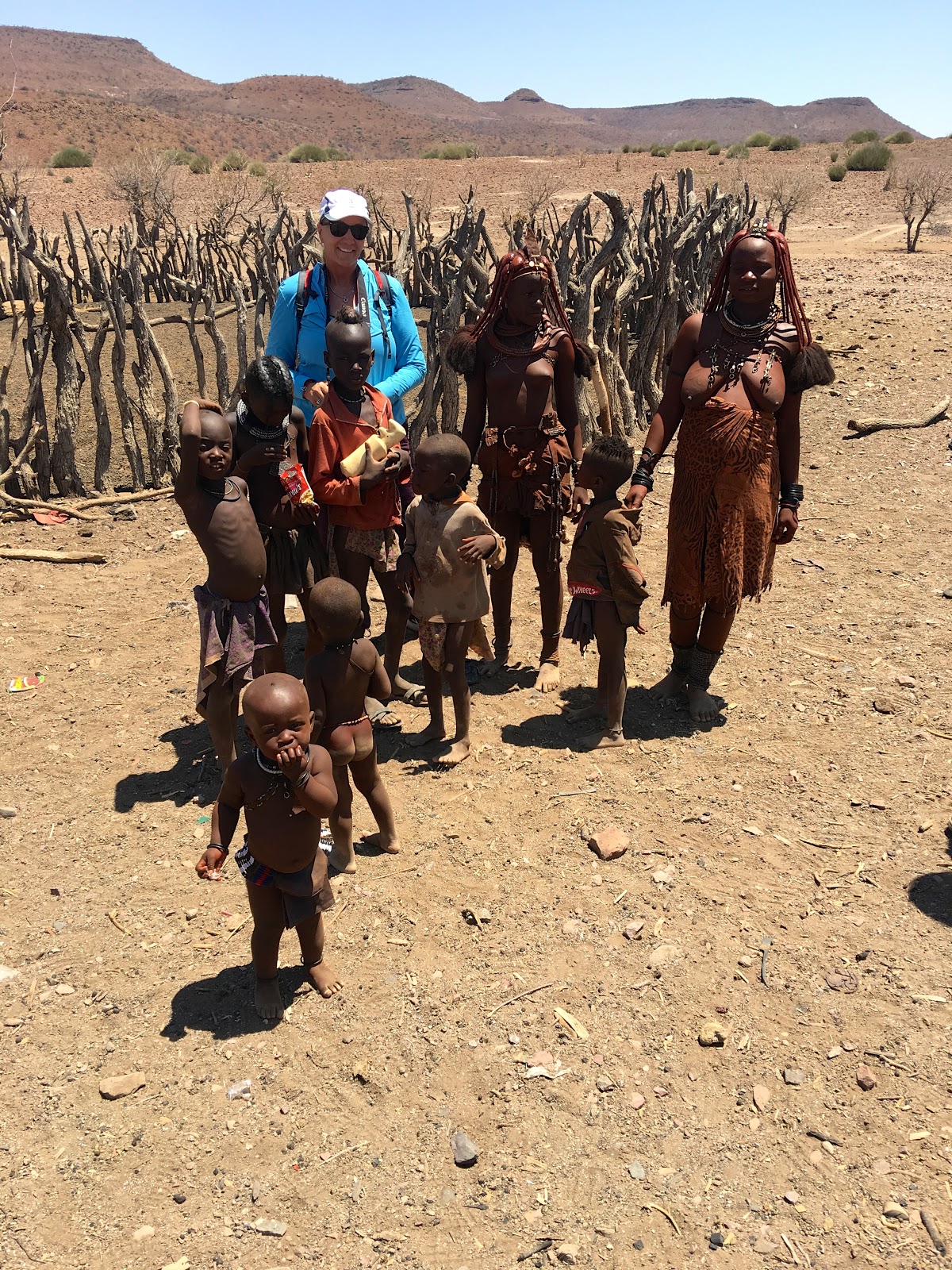
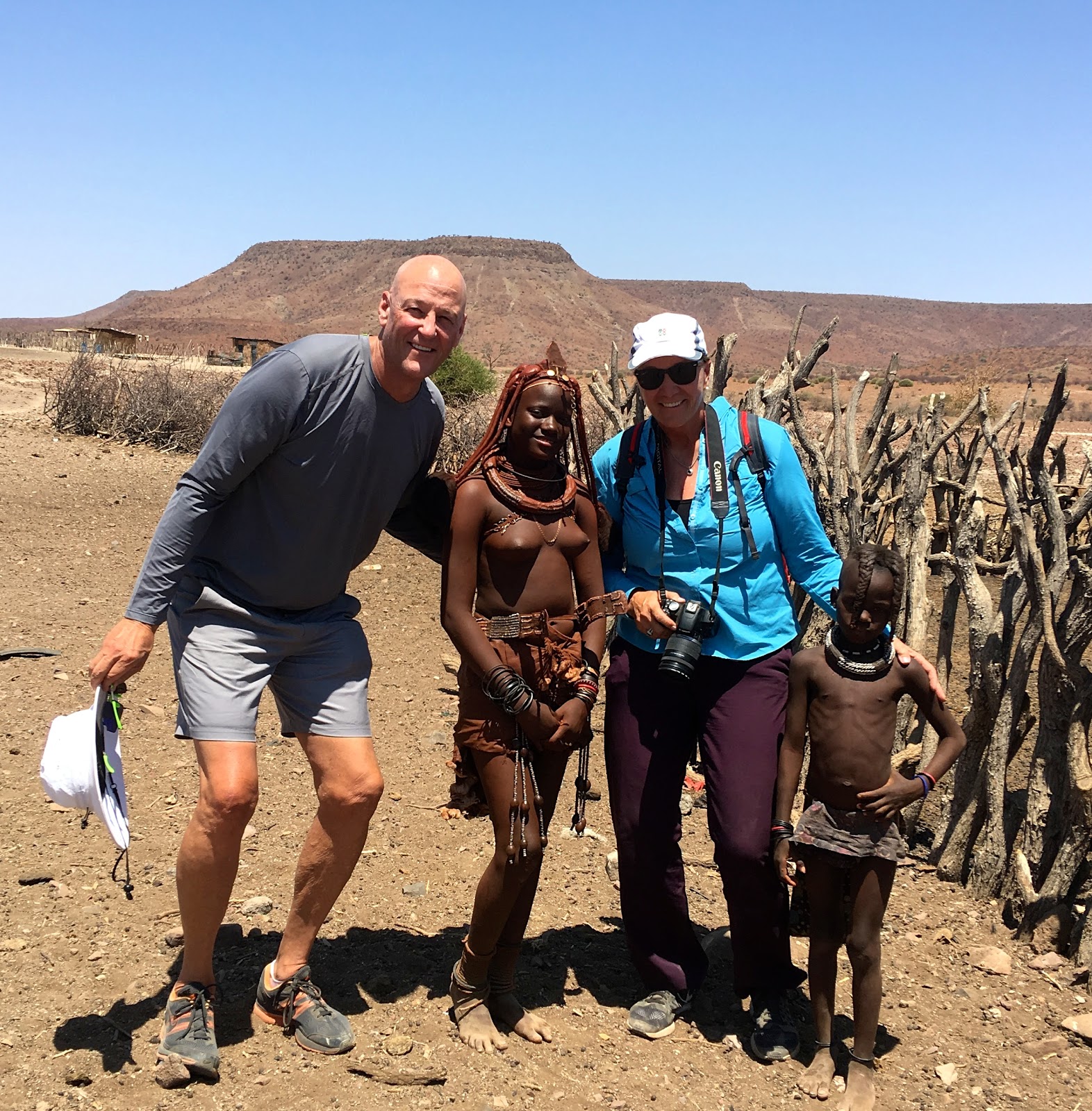
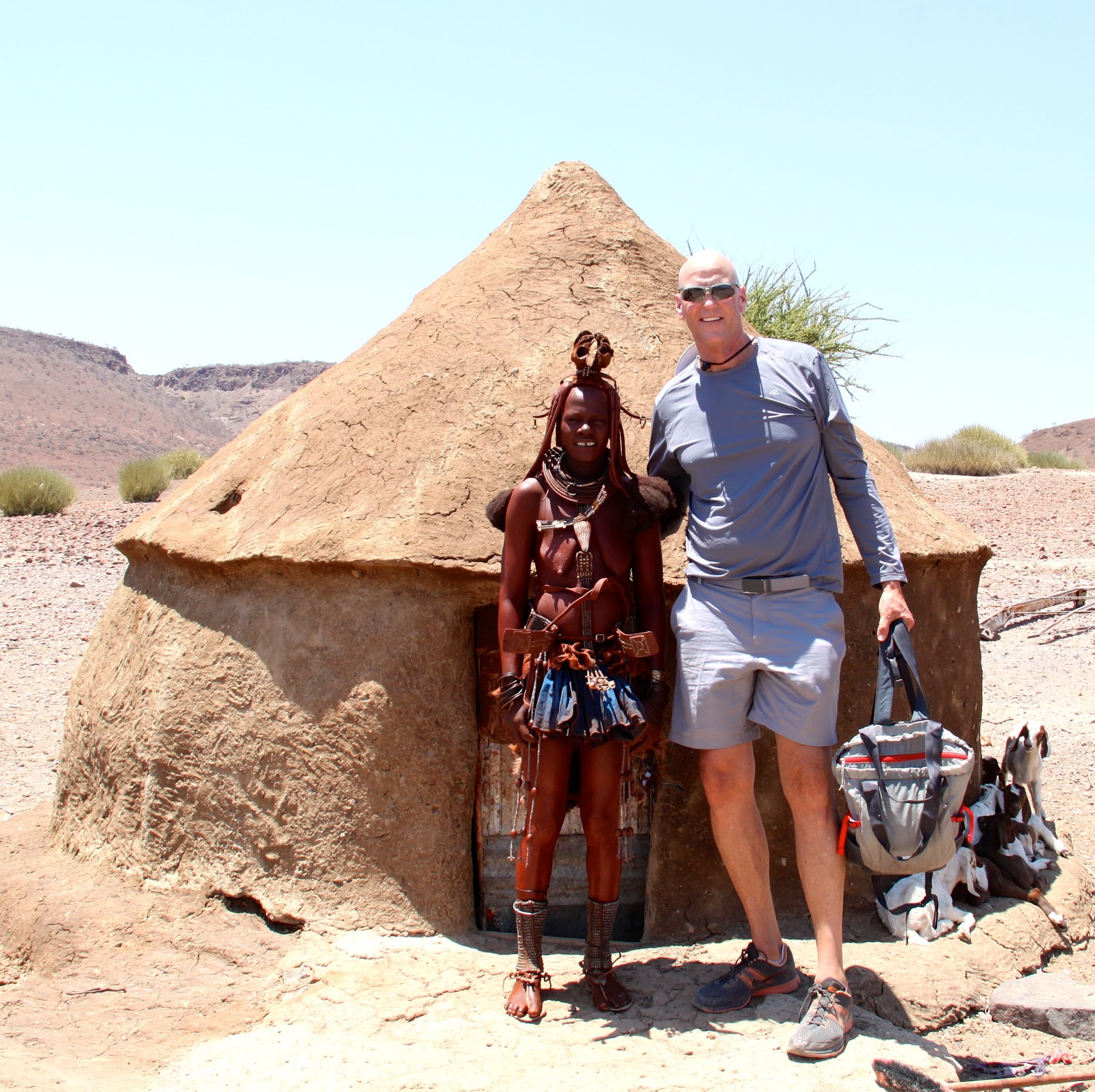
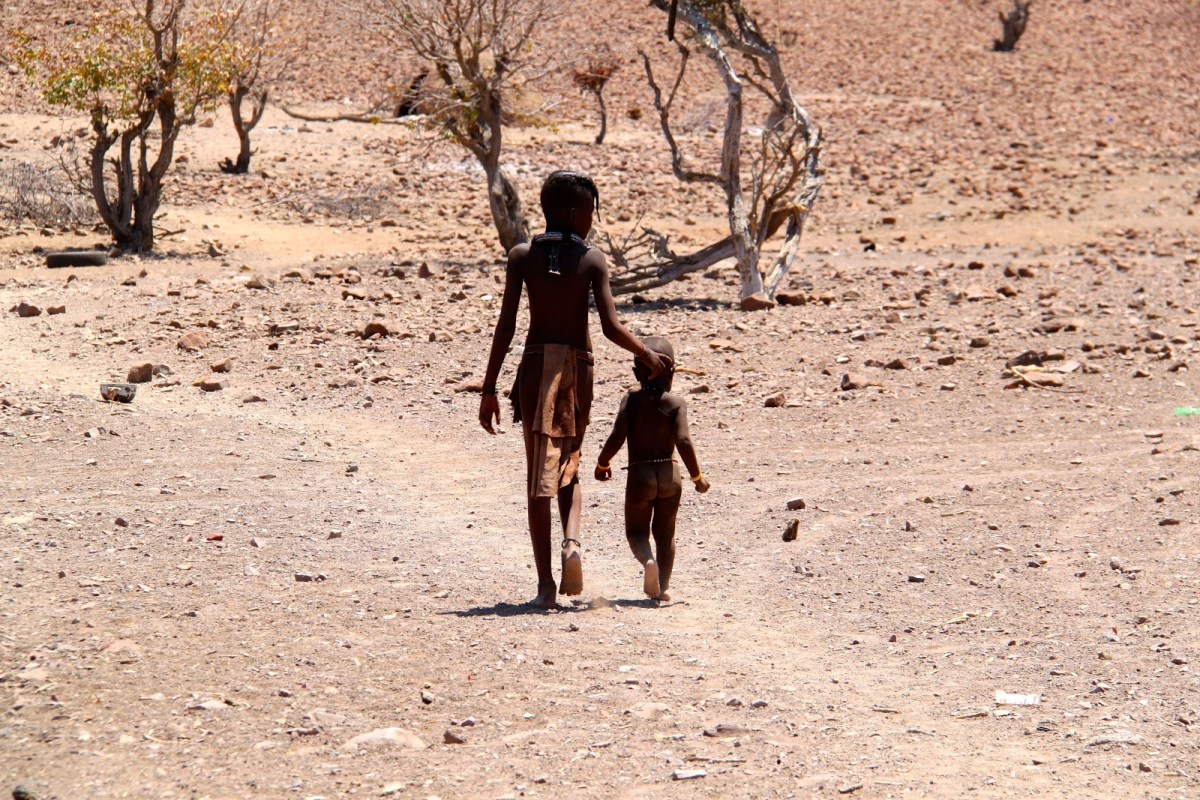
All of the women and children were dressed in the traditional Himba dress with the girls wearing sheep skin skirts and headdresses and metal jewelry on their ankles and lots of bracelets.  Their hair was wrapped in braids and covered with the red ochre paste for beauty.  Their skin is covered with the red ochre paste, which makes their skin soft and protects them from the sun.  This is their daily dress that they wear every day.  They did not know that we were coming and there were no other tourists that we saw.
This girl is 15.  She was very happy and smiling.  She has never been to school but is learning English by listening to people.  English is the official language of Namibia.  She understood a lot of what were saying.
 
They get dressed like this every day.  They are very proud of their heritage.
She does her hair like this for about 2 months, then has to re-do it because of hair growth.  They wear lots of jewelry and headress.  I had her show me her outfit from behind because it was so beautiful.


This is one of the wives on the inside of the family hut.

The women take a lot of care and pride in their dress.  They are beautiful Himba women.
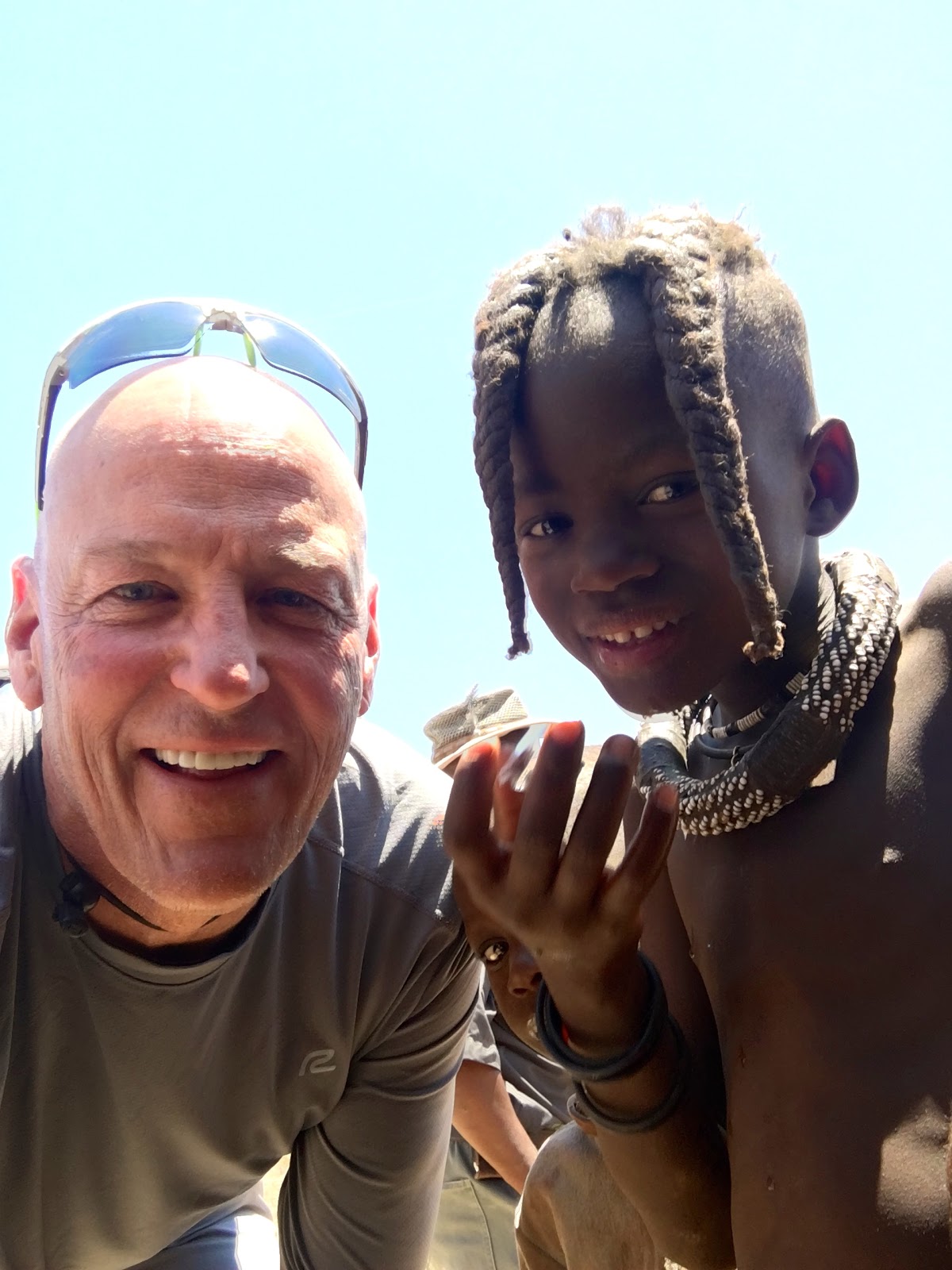
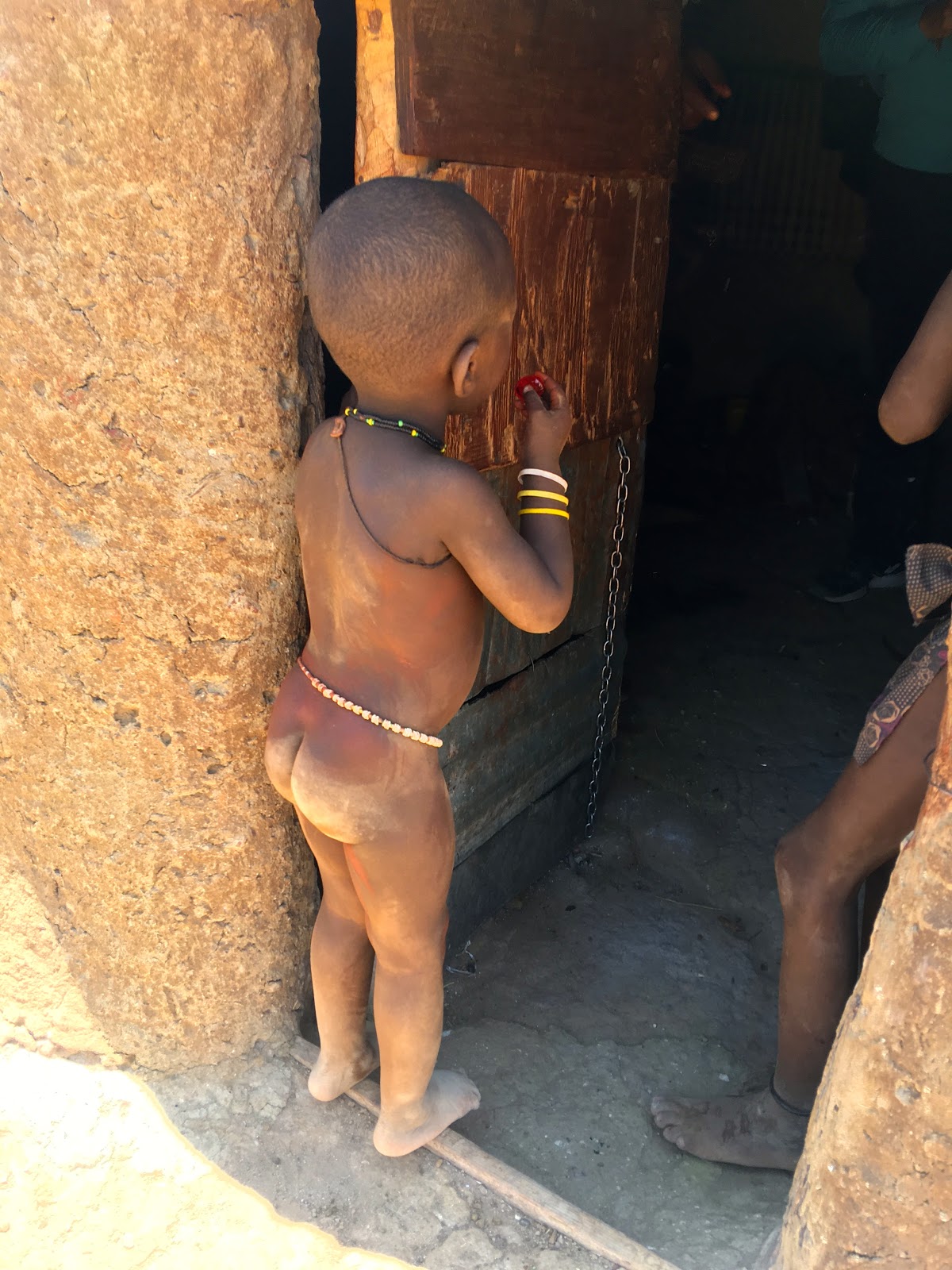
The young boys have two braids that flop over their foreheads.
Scott taking a selfie with one of the boys
The older boys that have reached maturity have one braid in the middle of their head that faces backwards.


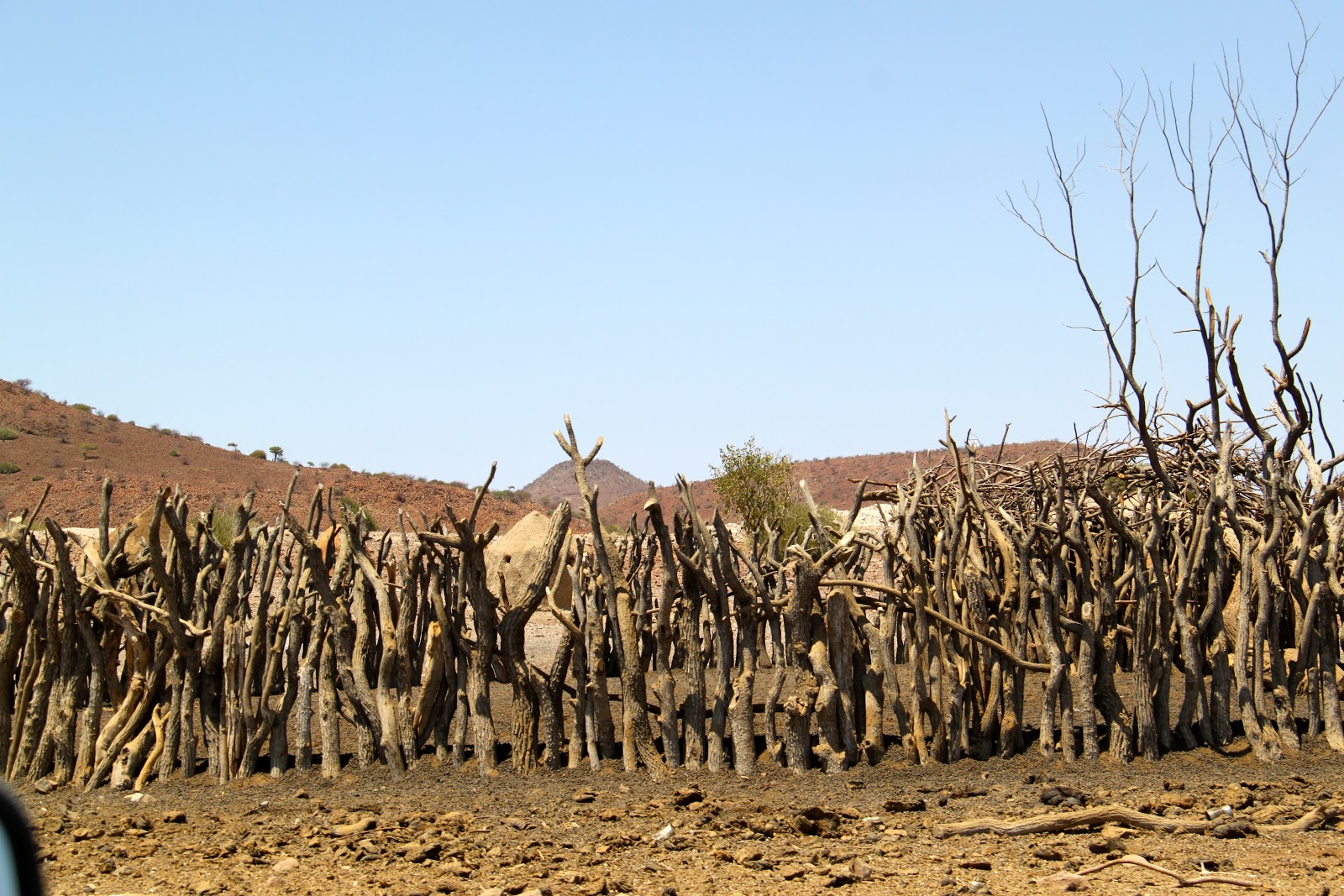
They had two enclosures for their animals.  The larger area was for the cattle to protect them from wild animals at night.  
This enclosure is for the cattle.  They have another one that is smaller for the smaller animals.  This is to keep them safe from predators.
The other enclosure was for the smaller animals such as goats and chickens and the fencing made of sticks was made of a tighter weave.


There seemed to be about 15 children.  The two oldest were 17 and 15 and were girls.  The 17 year old had a baby and was pregnant but was not married.  Our guide told us that the 15-year-old girl was now eligible for marriage or to get pregnant.  He said that they often meet and marry their cousins when they go to the main villages for celebrations.  There is no birth control and the girls often get pregnant but do not marry and just continue to live in their own villages.  If they marry then the girl moves to the village of the boy.
Two sisters
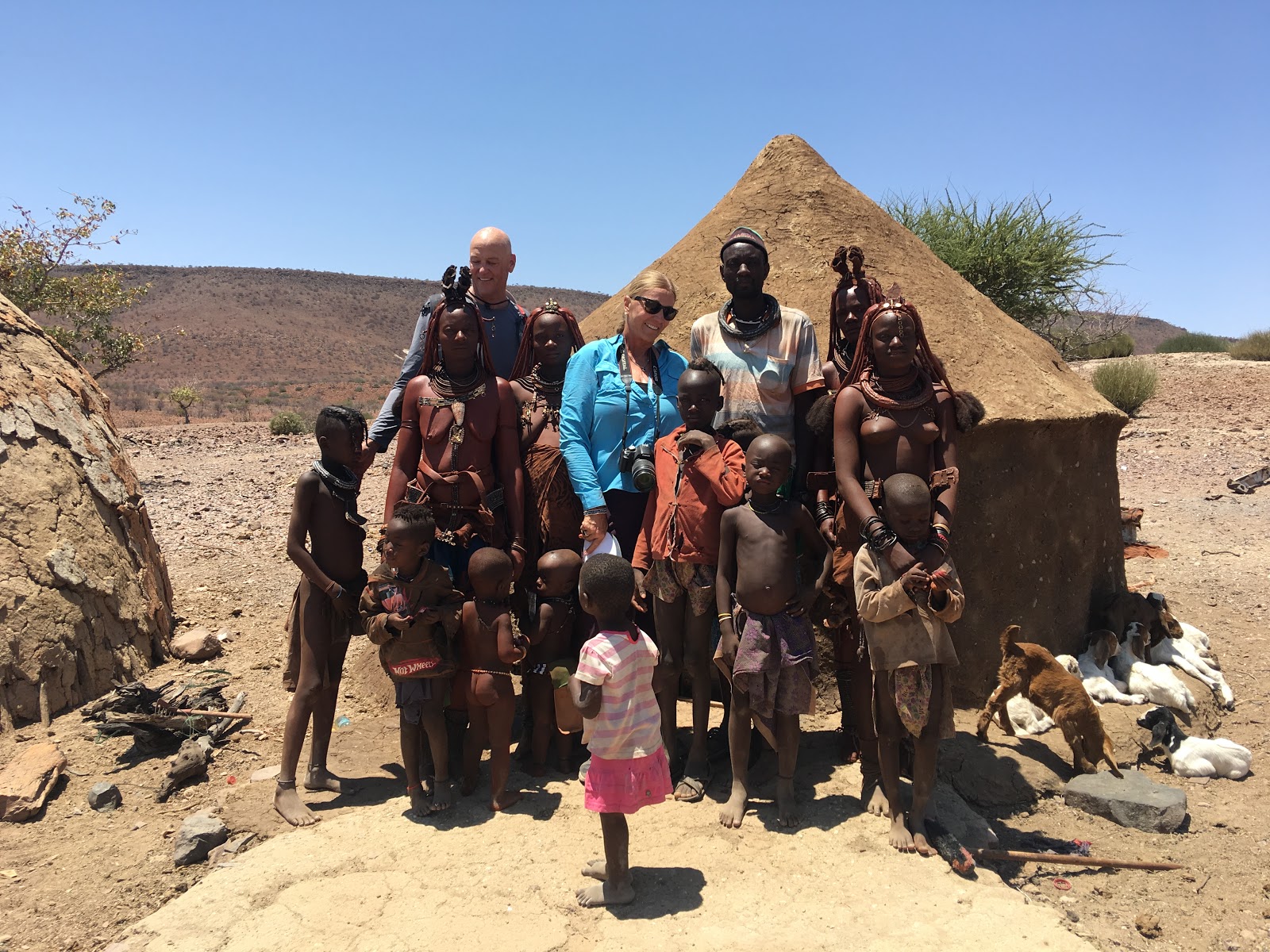
Barb with her new friends
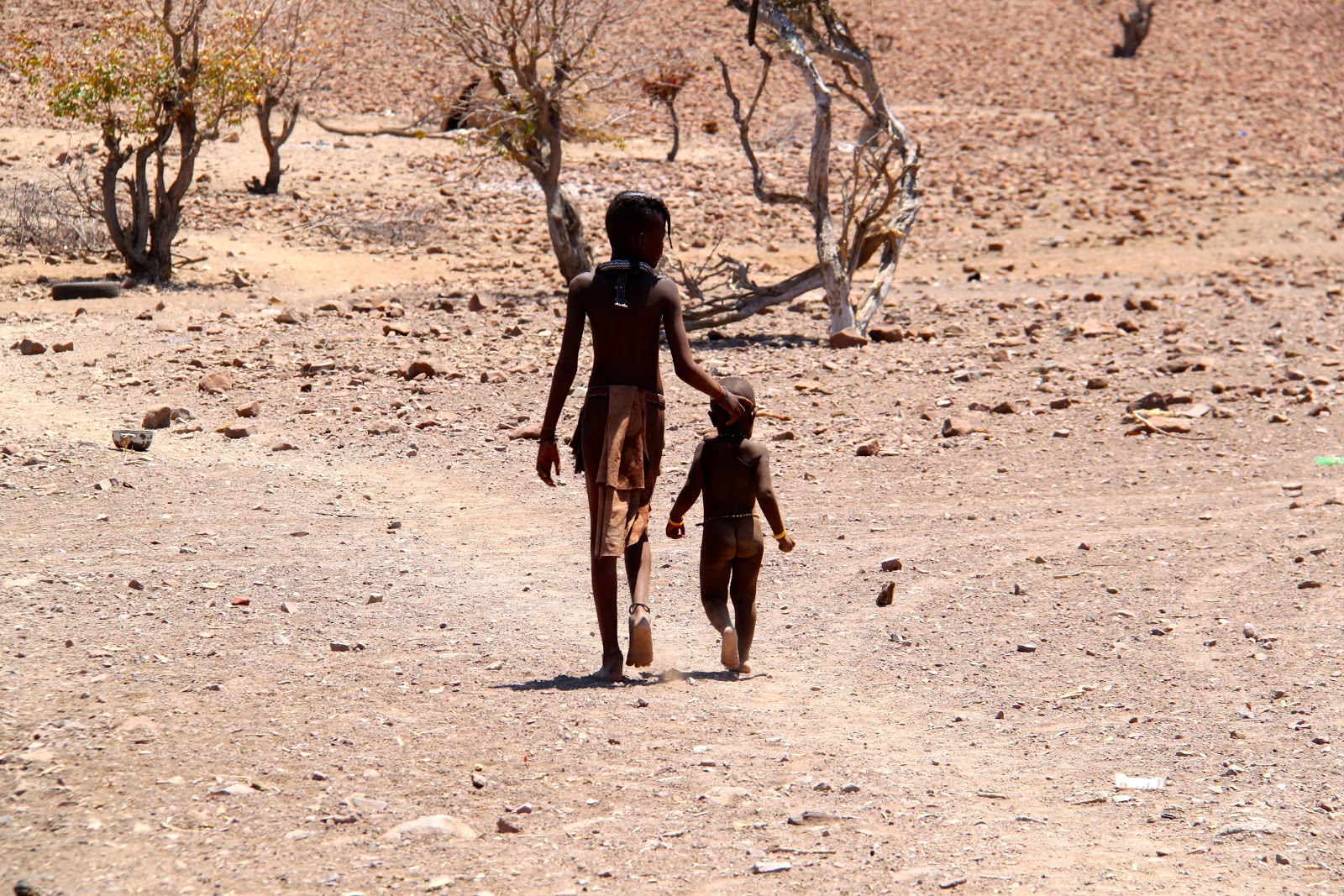
They seem to take care of each other
 
We gave the Himba family the grocery supplies and they were very grateful.  Barb said that she wanted a sheepskin skirt and the Himba husband owner of the village said that if we would stay one night in their hut that he would slaughter a sheep and soften the sheepskin and make a skirt for Barb.  We declined the invitation but wonder what an experience that would have been if we would have had the courage to sleep in the hut for one night.


This is the skirt Barb wants
They were happy to take photos with us


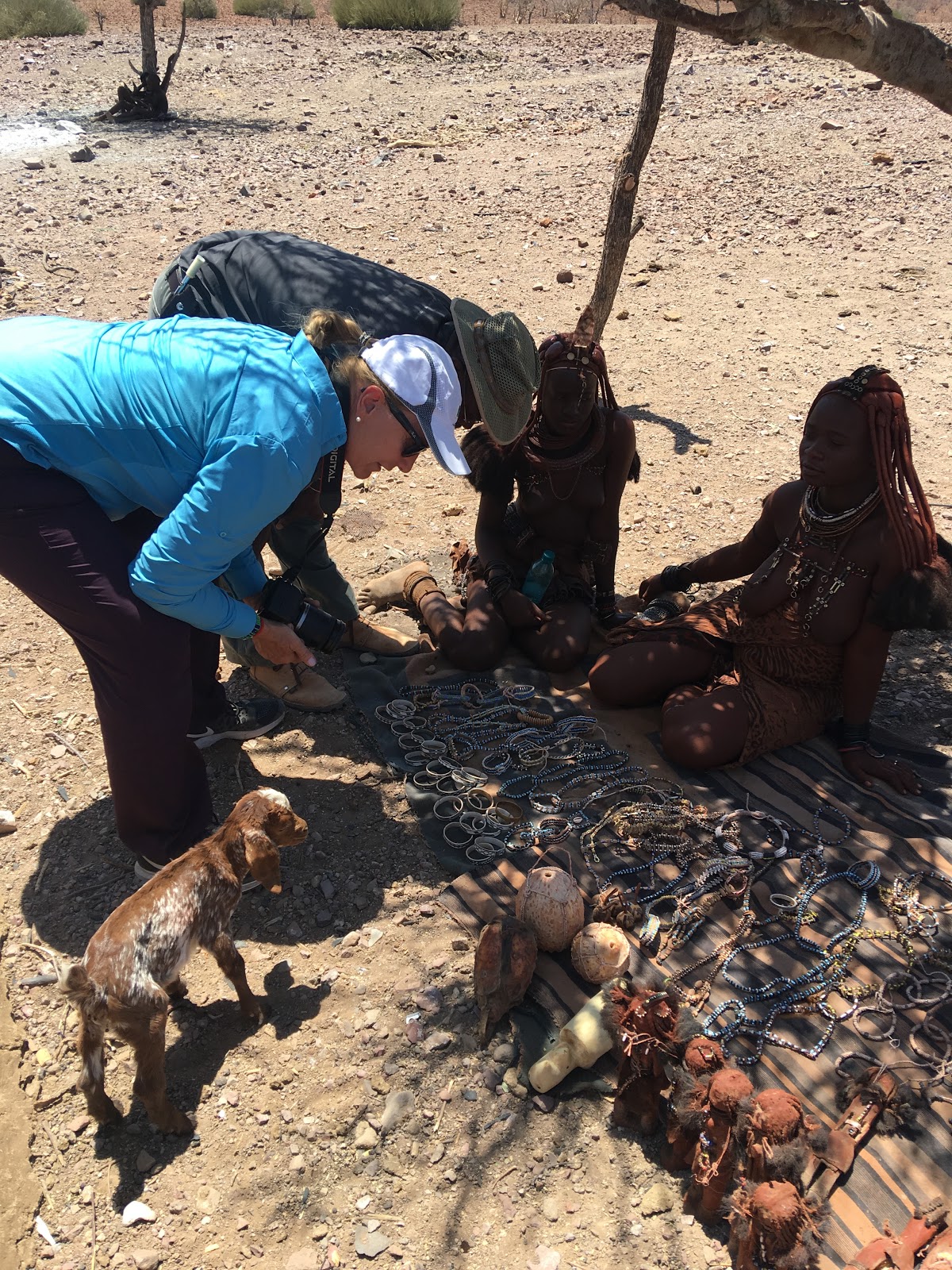
 After we gave them their gifts of groceries and supplies, we looked at their crafts to buy.  Barb bought some bracelets and a necklace.  They were very grateful.

The husband wanted to know if we could send him a photo of his family.  We will email it to our guide and he will print one for them.


Time to go
After we got back we had lunch by the pool.


Namibia-Etosha – Onguma and Andersson’s camps 5-6 October 6-8,2016

 Etosha
Onguma Tented Camp and Anderssons Camp                      

After a 4-½ hour drive from Rundu area we arrived at the East Gate of Etosha Game Park and put our luggage in our tent and went for a game drive.  Within the first 15 minutes we had seen Elephant, Giraffe, Zebra, Black Faced Impala, Gemsbok, and two male Lion sleeping under a tree.  This area of Namibia is amazing.  There are so many animals.  We are like little kids discovering animals everywhere we look.

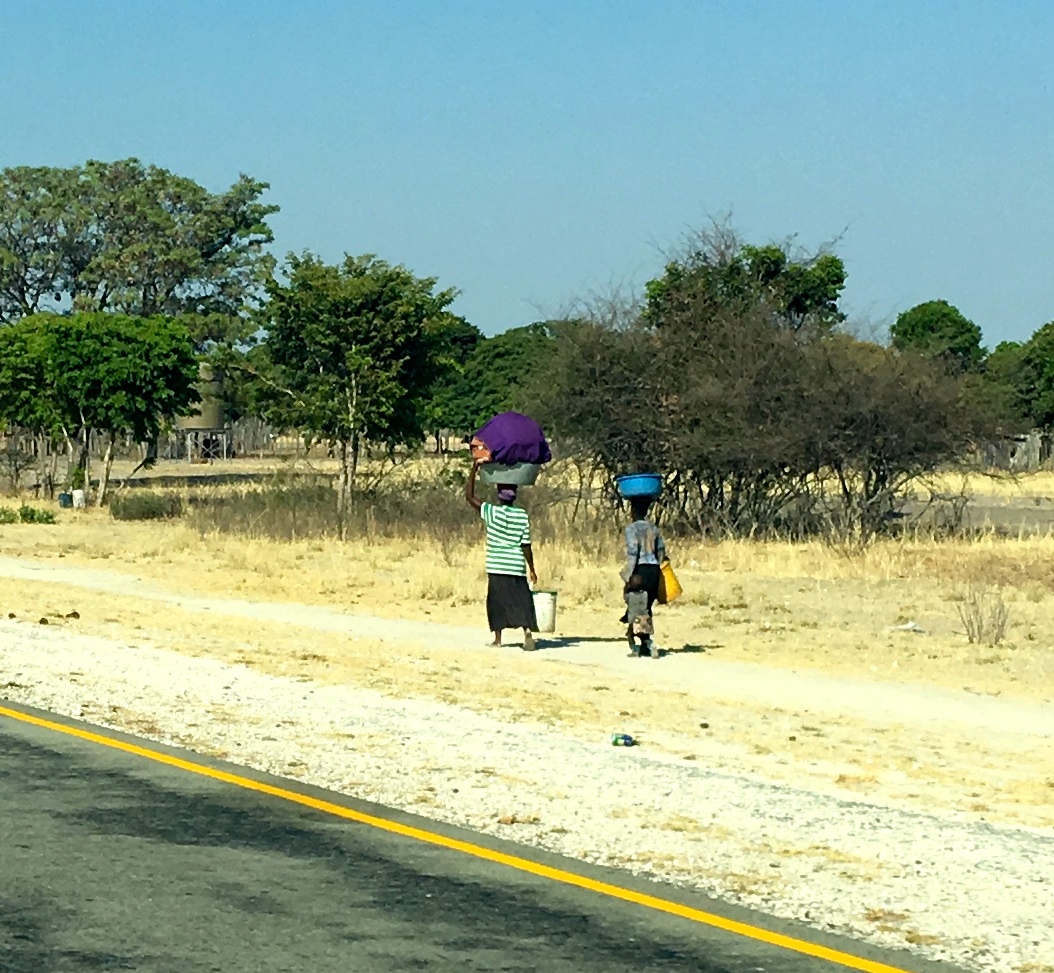
People along the way


I love how they carry things


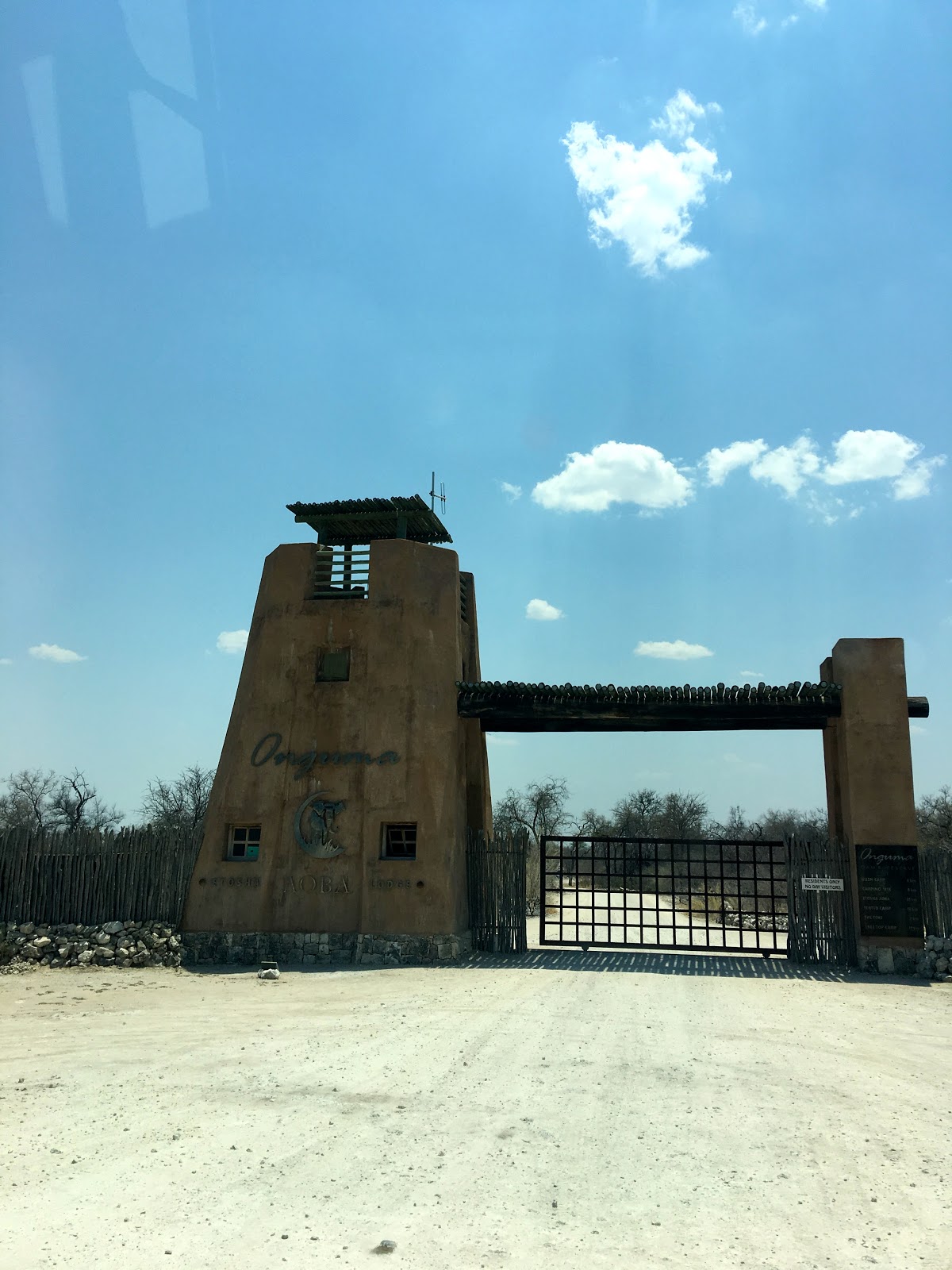
The entrance to Onguma, just outside of Etosha Park
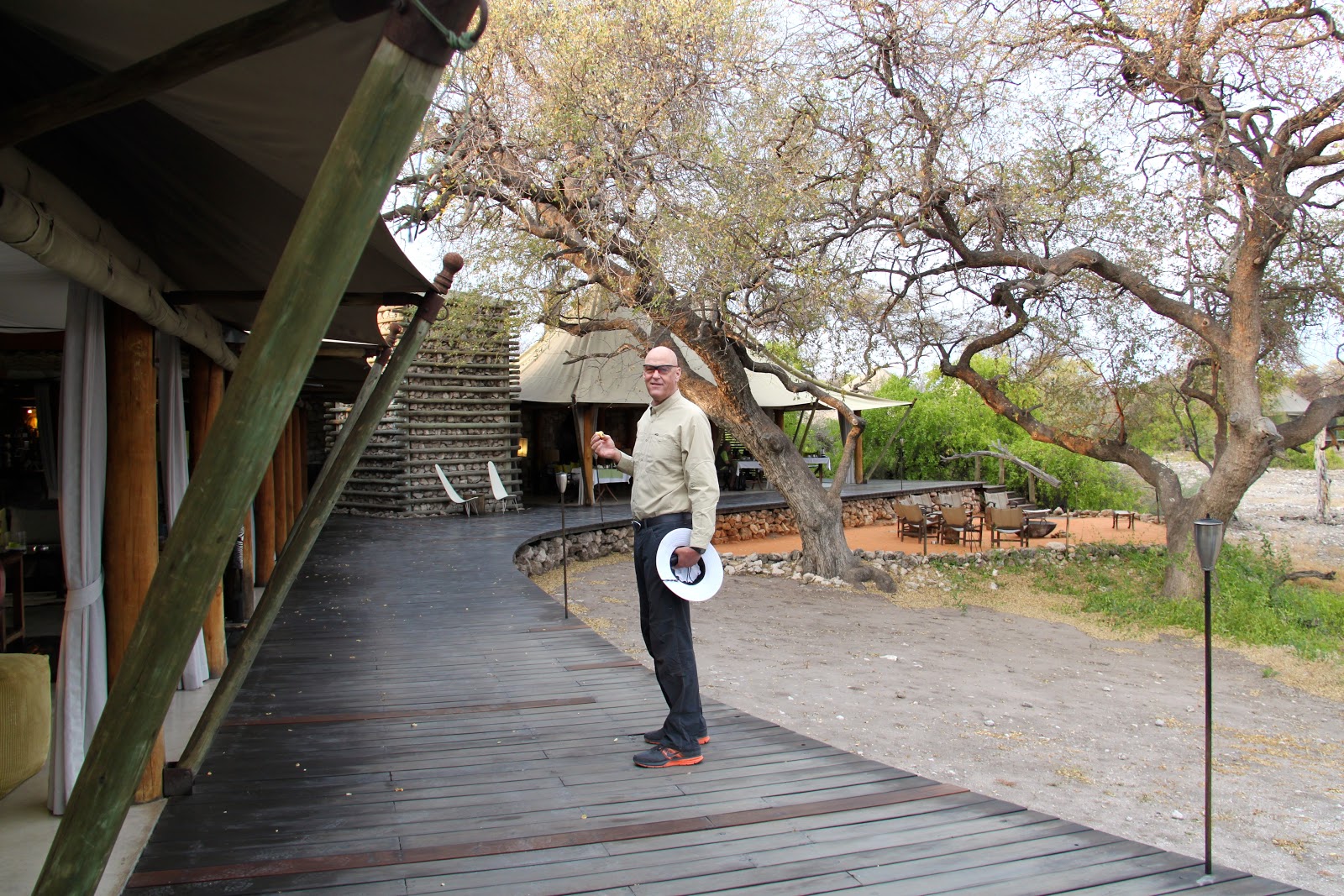
Scott at Reception
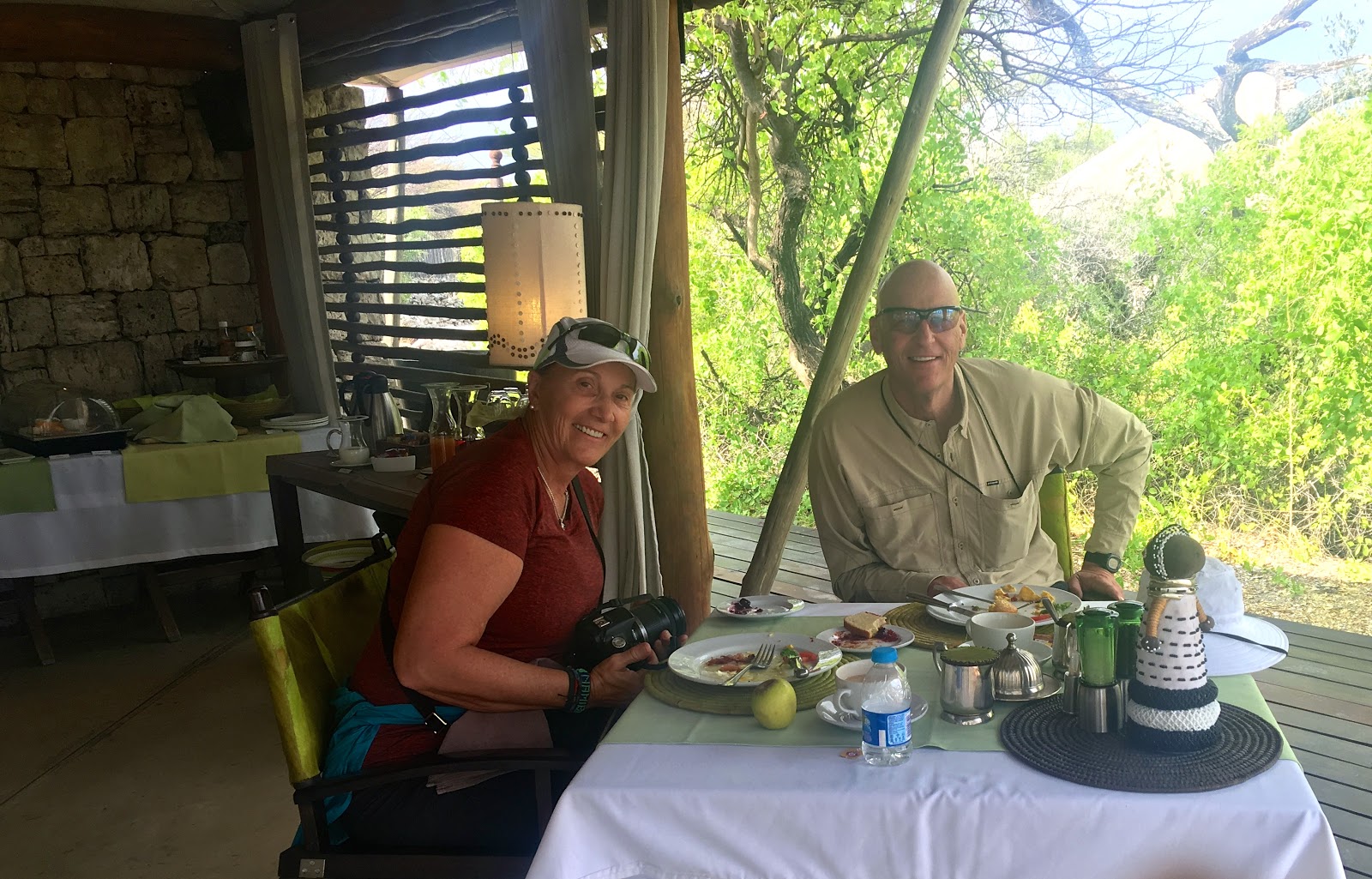
Breakfast


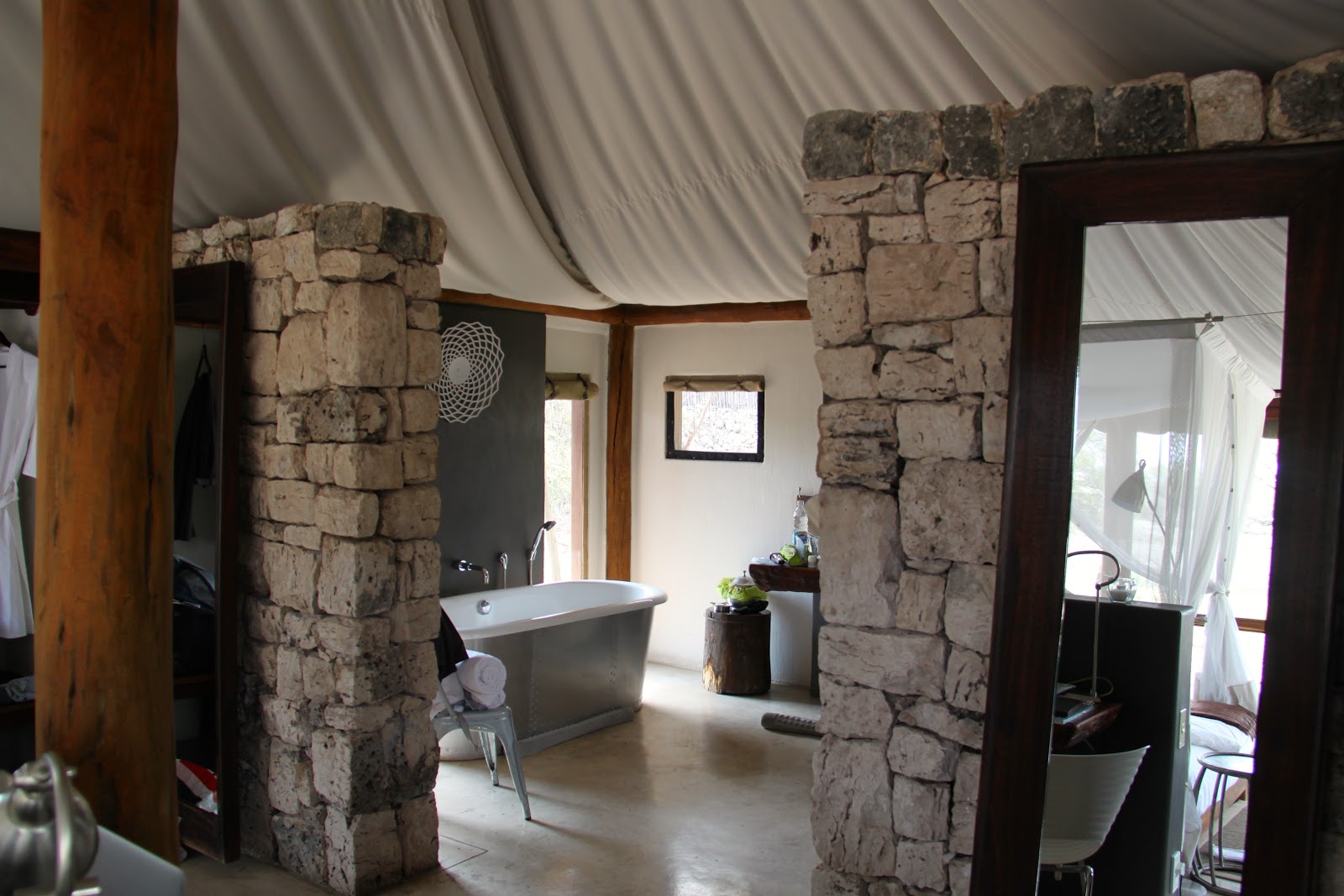
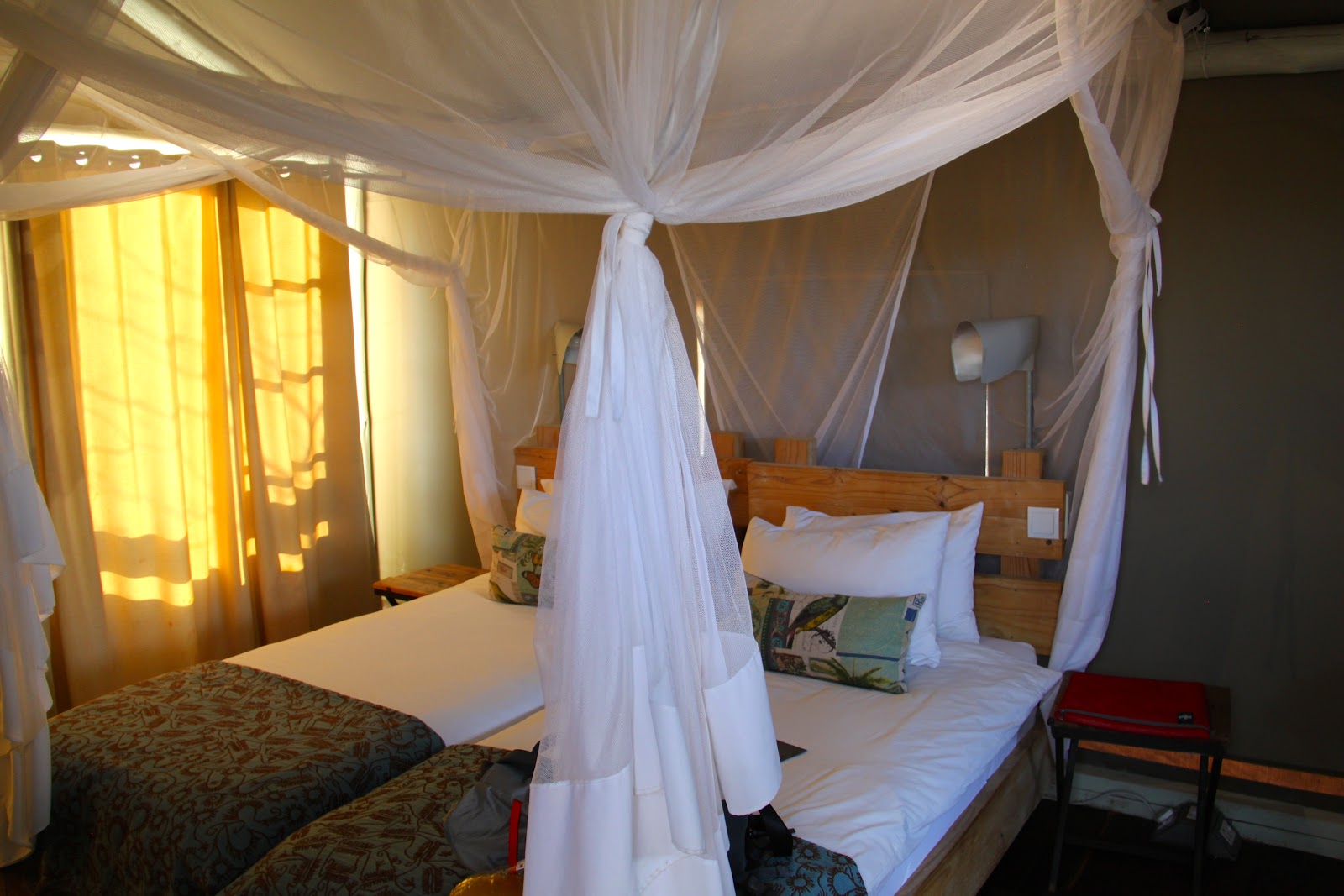
Inside our tented room


Our room


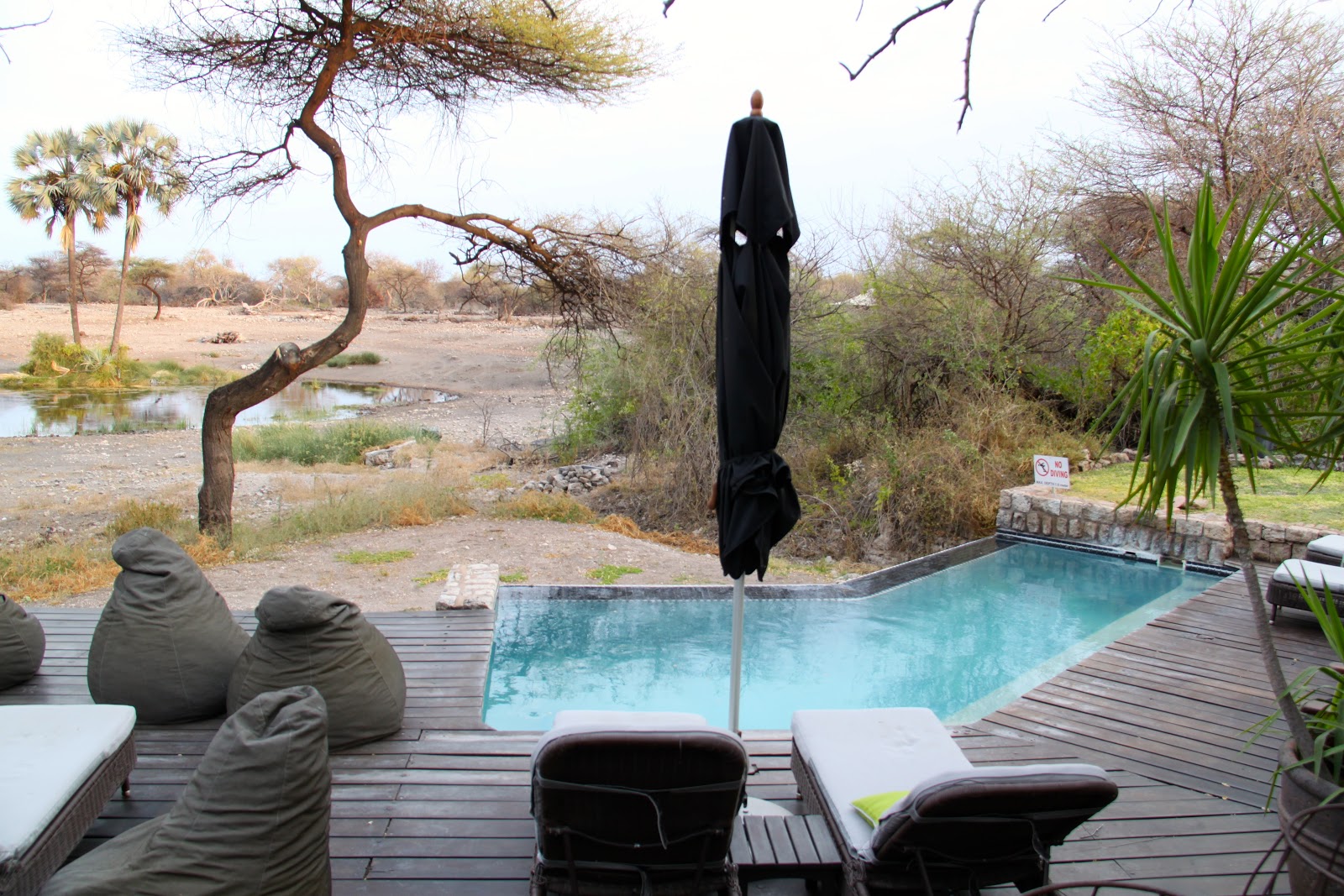
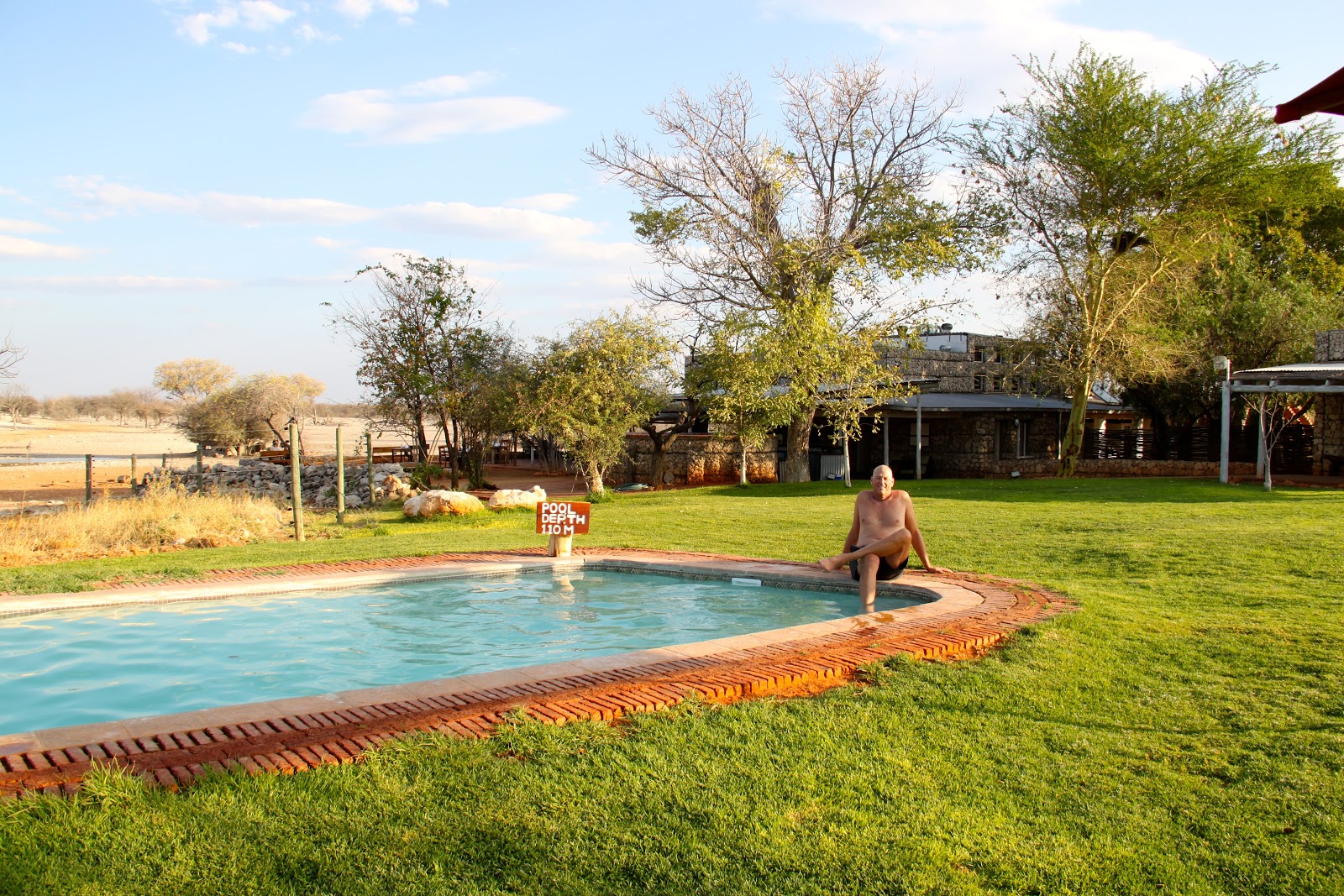
A small pool to cool off
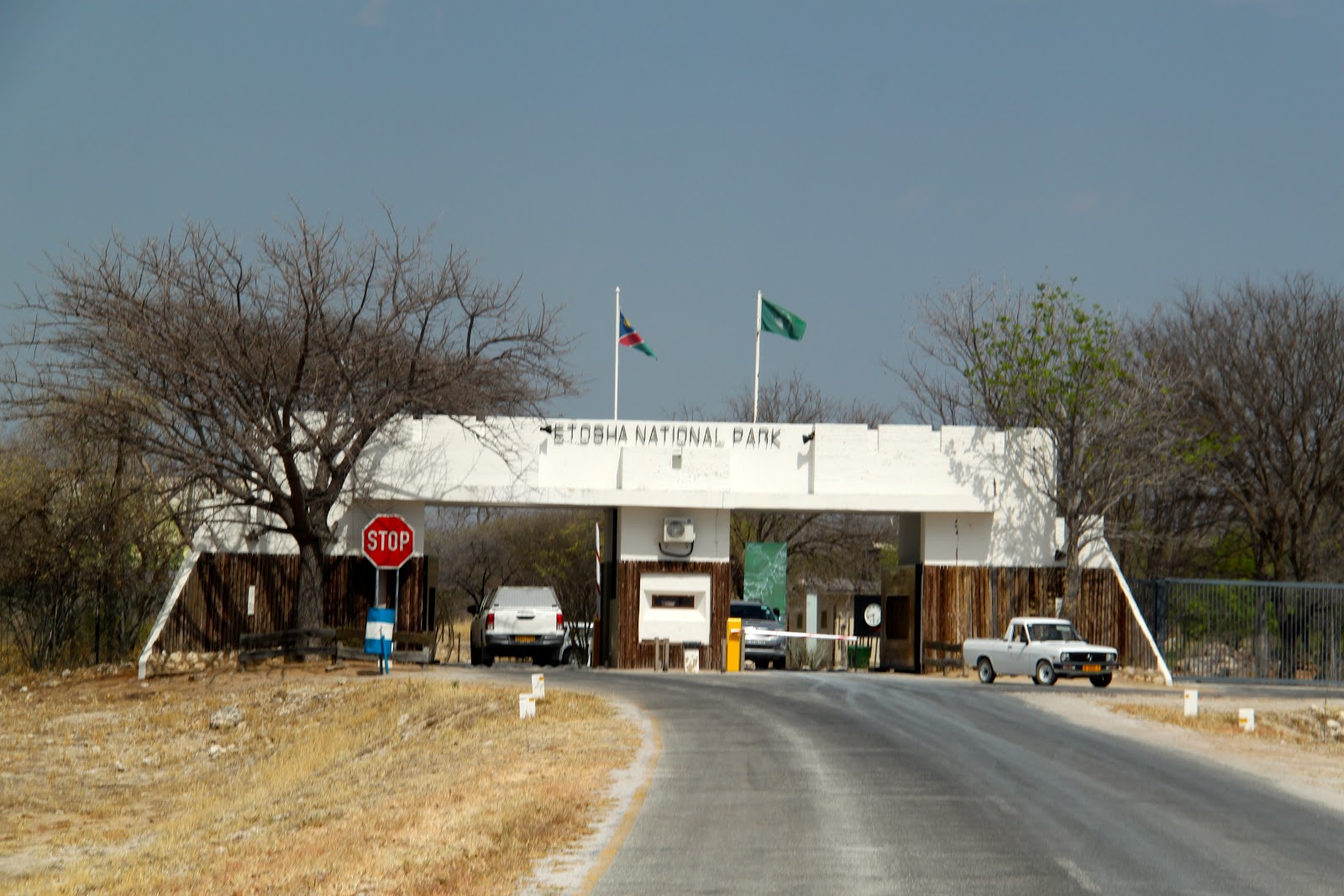
The entrance to Etosha


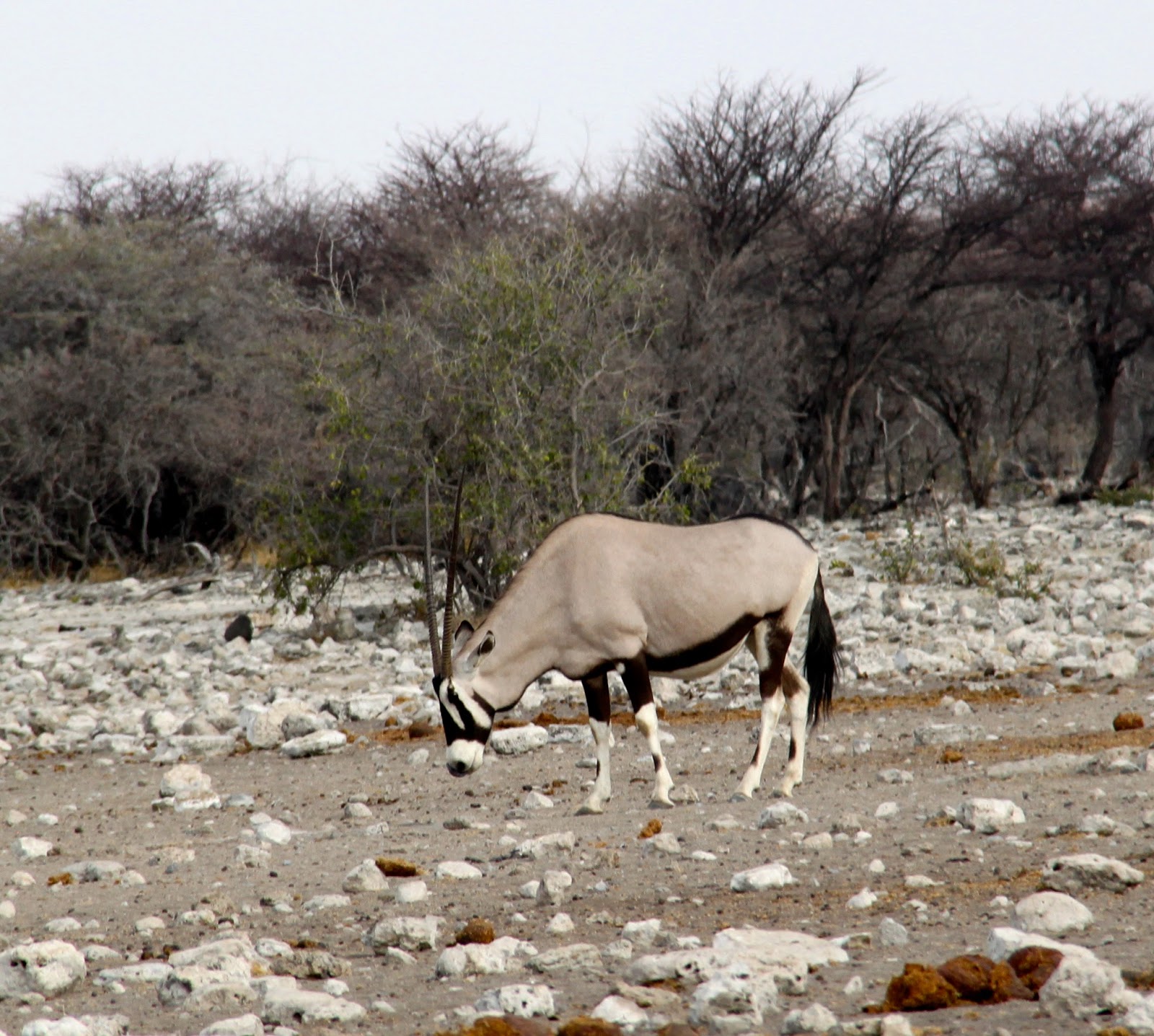
Barb’s favorite animal
Gemsbok or Oryx


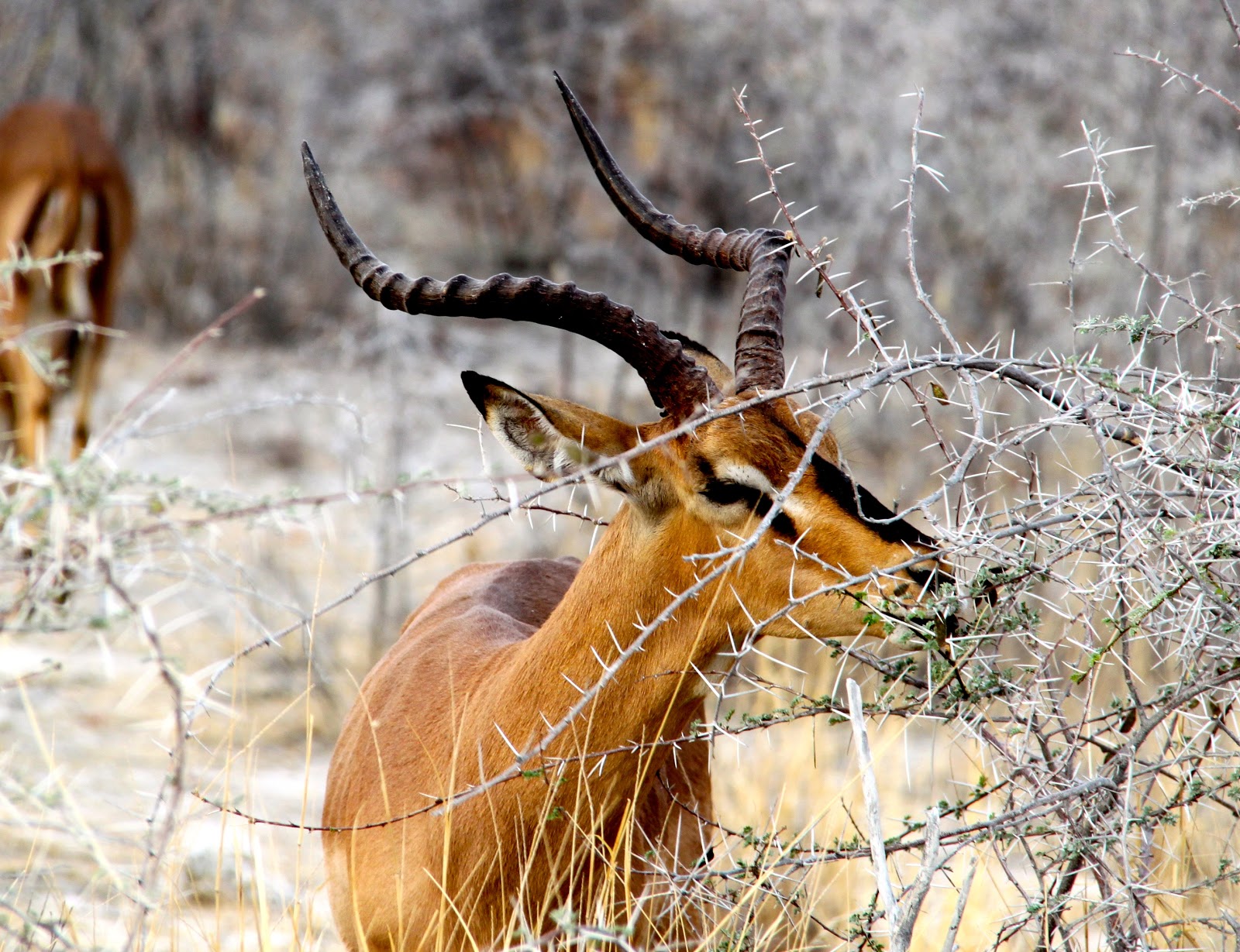
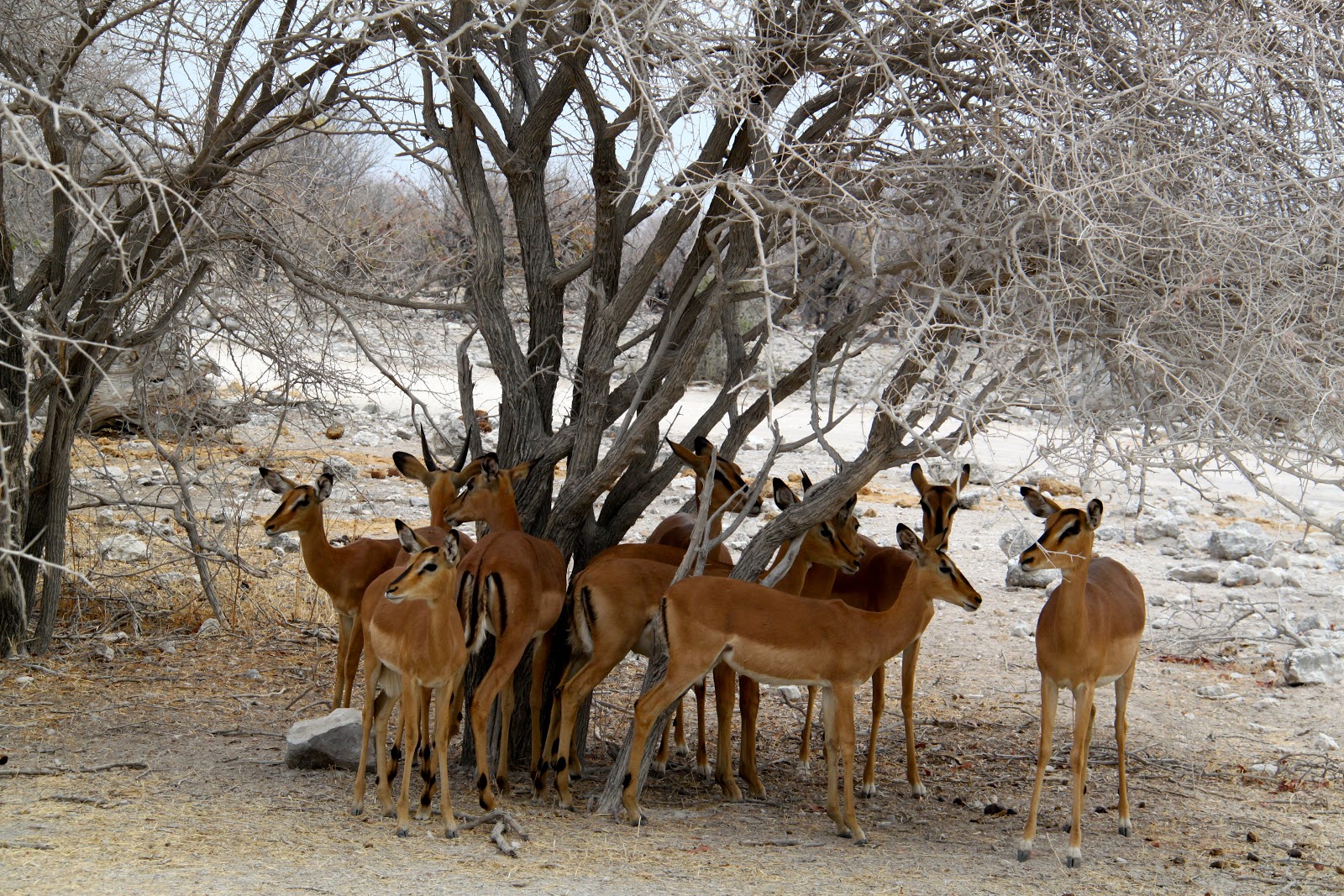
Impala


Hanging out in the shade


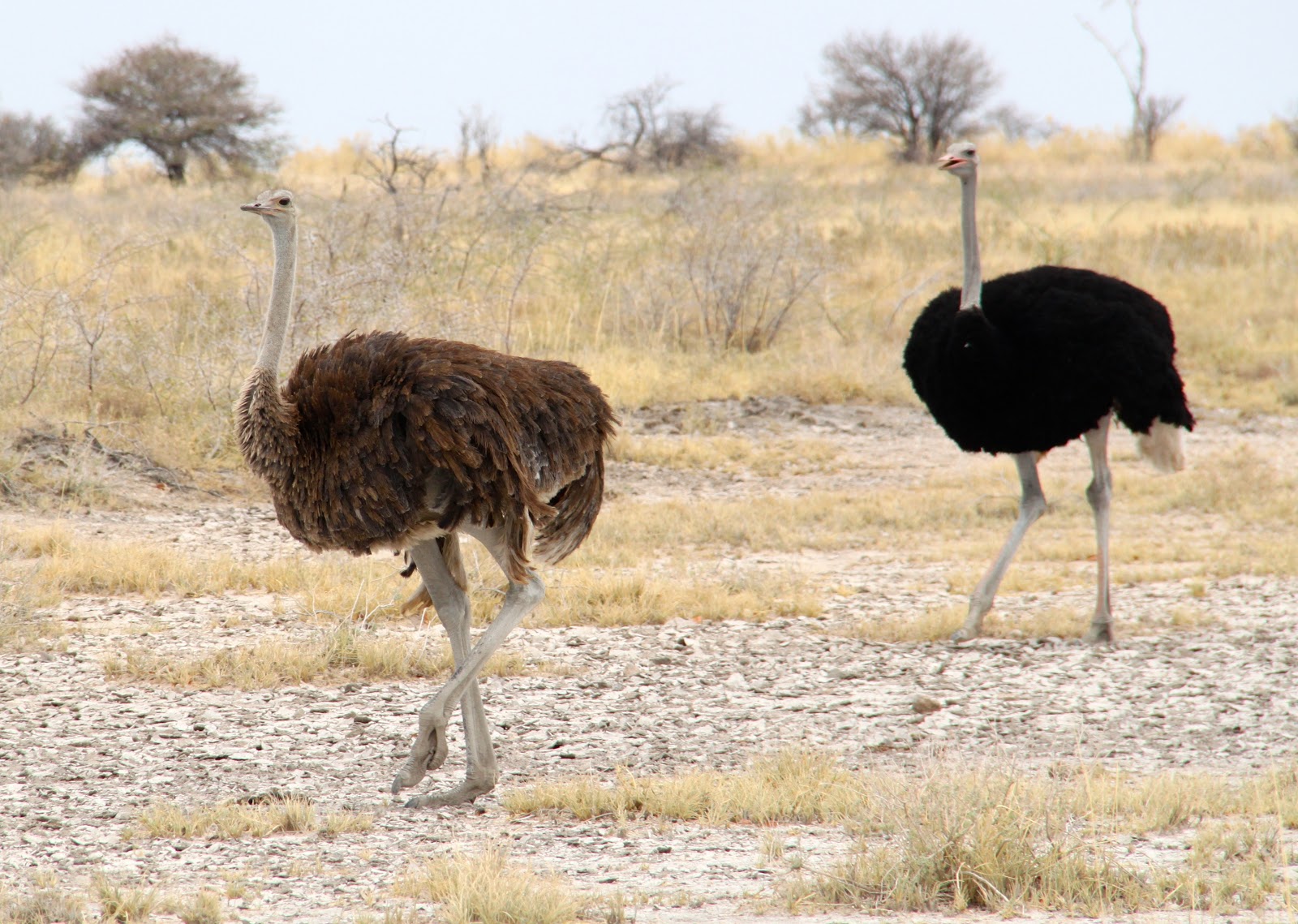
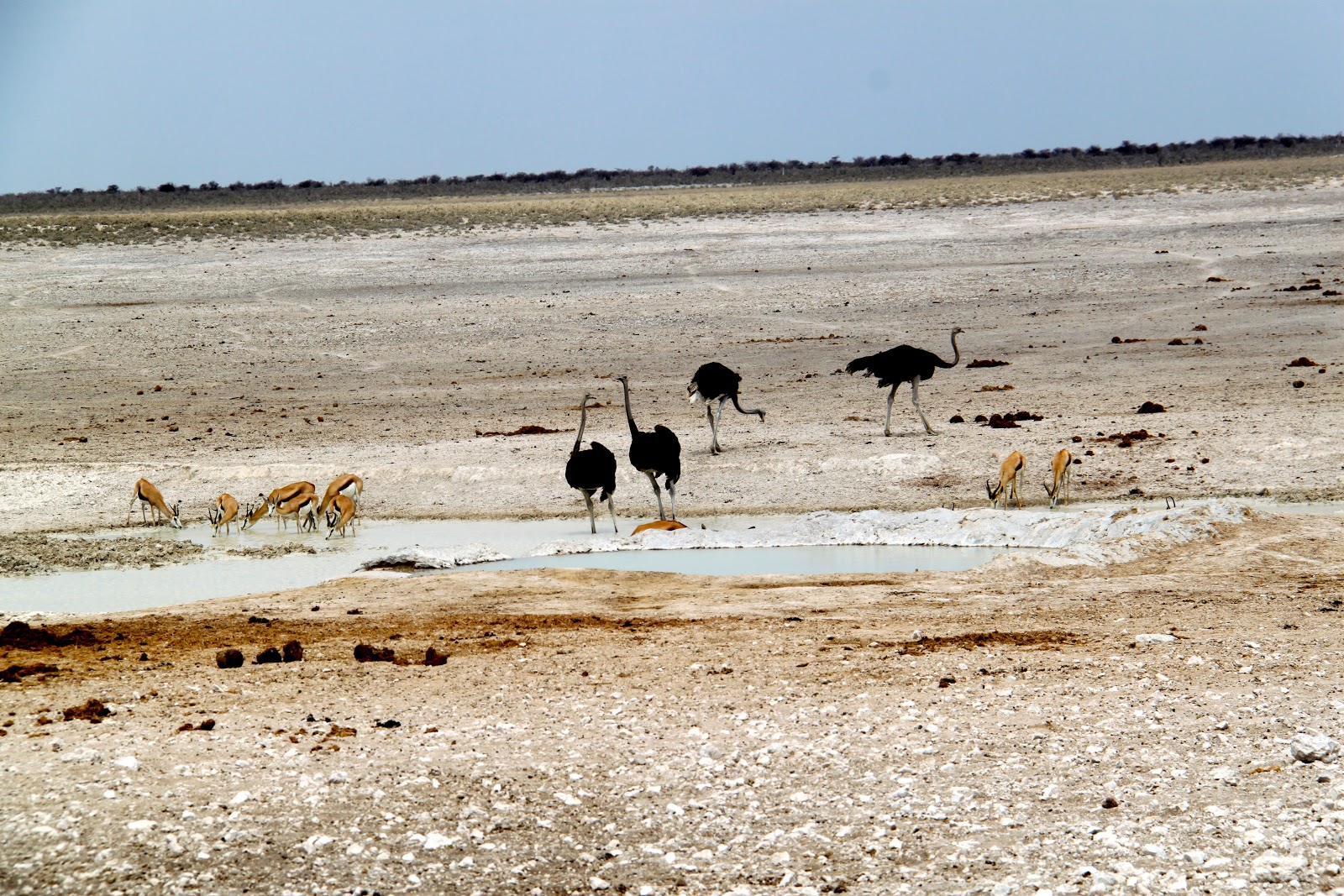
Female and Male ostrich


This is a trick photo.  Is this a zebra with 2 bodies?

 
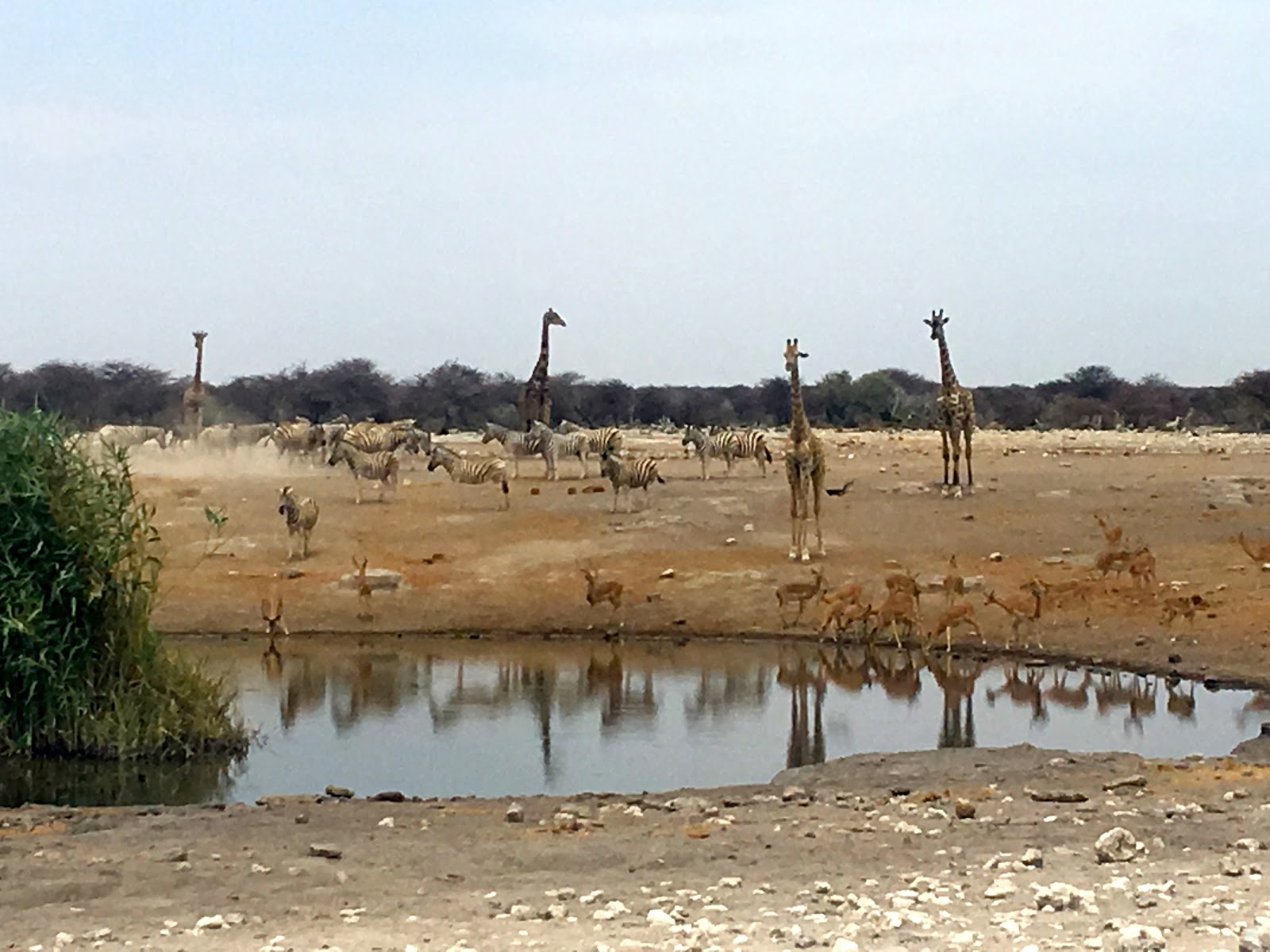
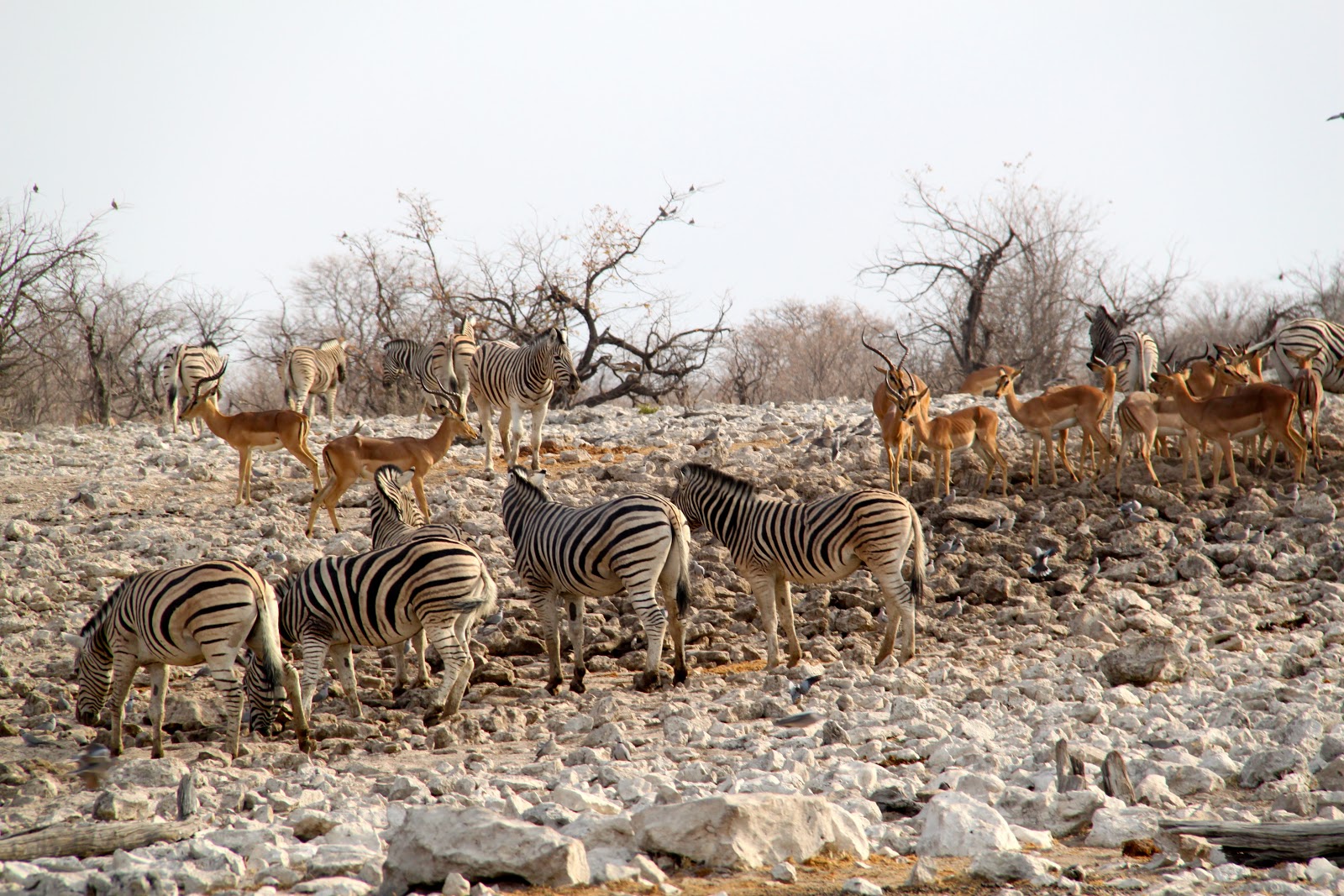
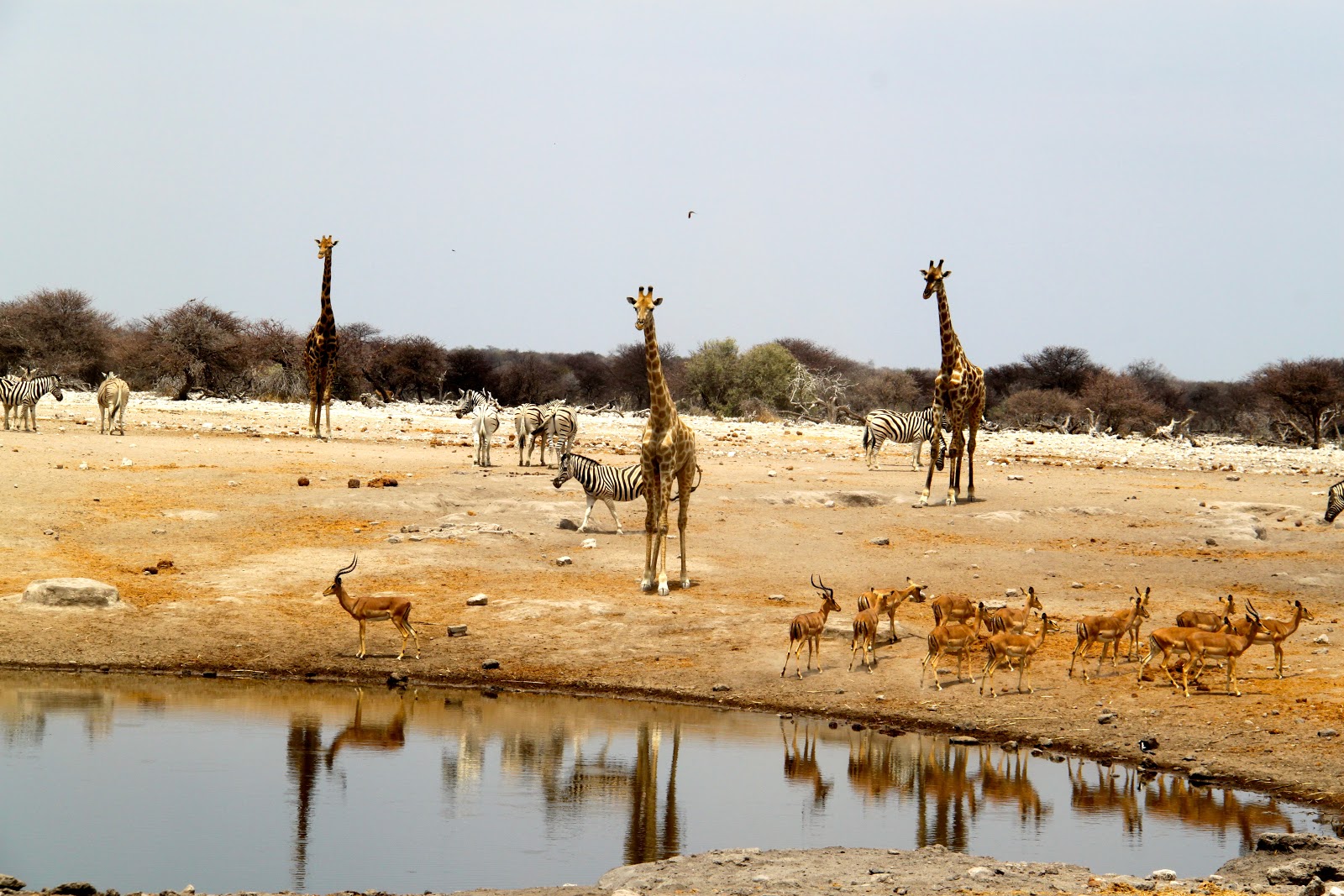
We visit the areas where there are water holes.  The animals come to the water holes to drink.


AHHH, water!


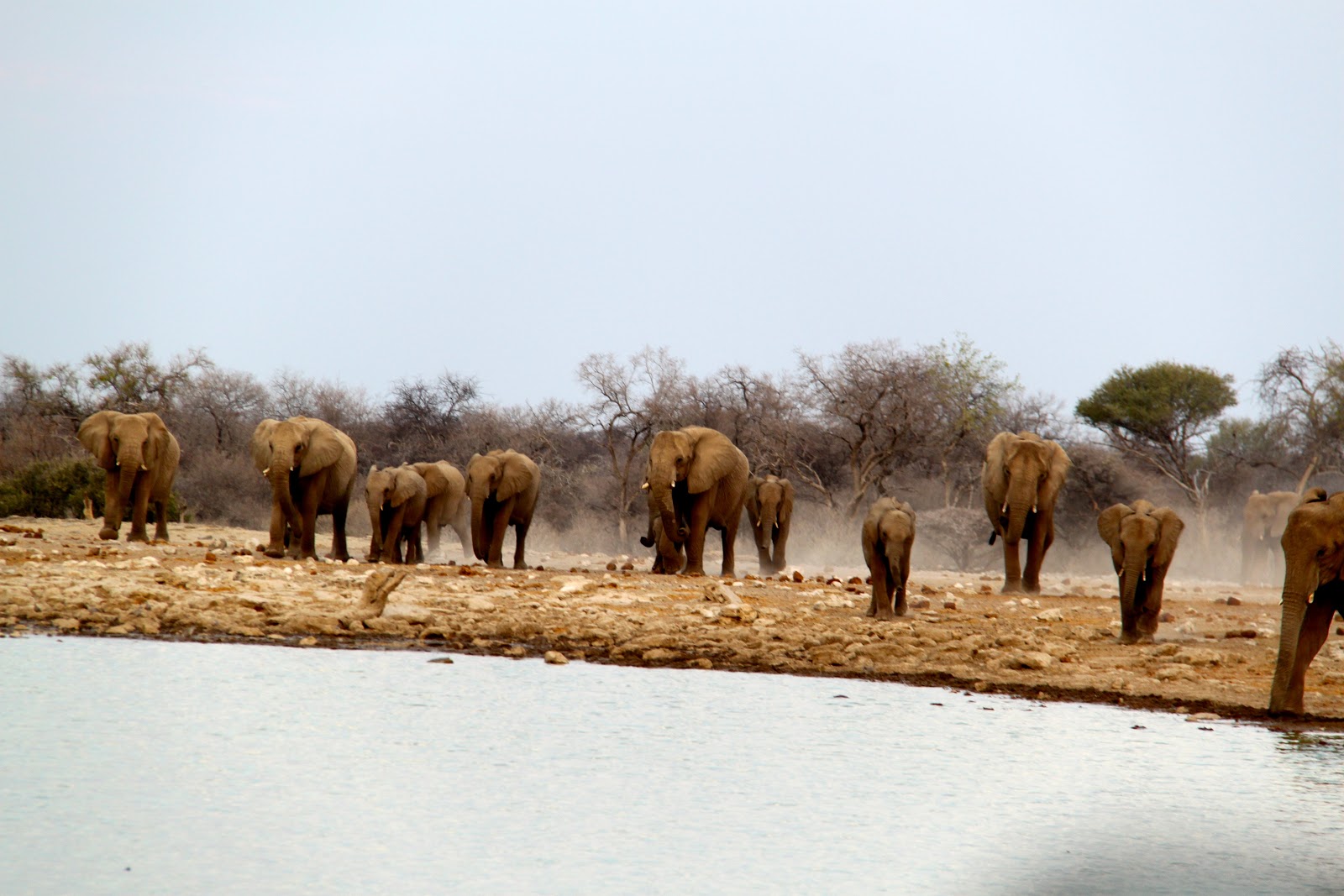
Elephants storming the water hole


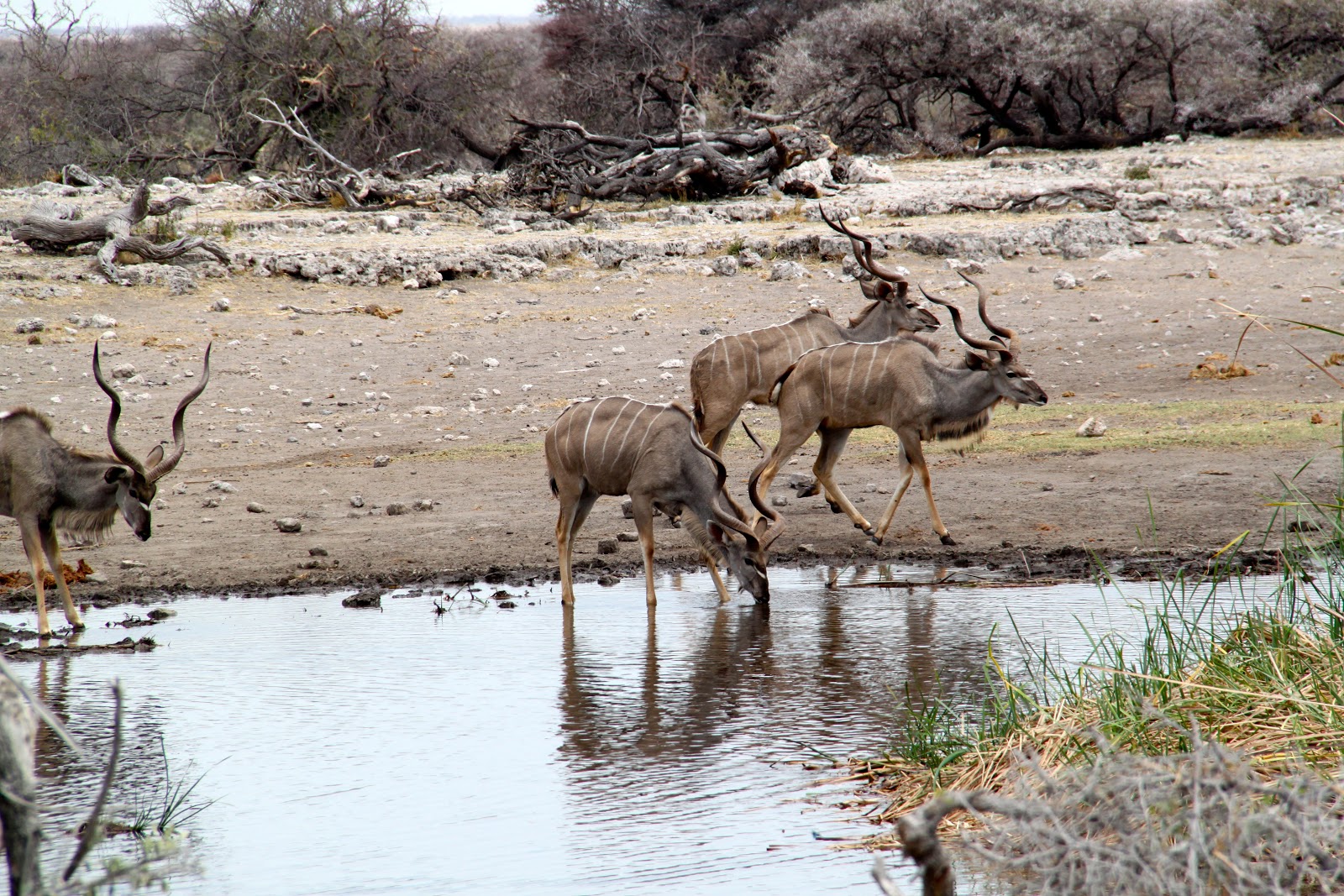
Kudu


More ostrich
It’s like national geographic


We watched as zebra, impala and giraffe come around the water hole.


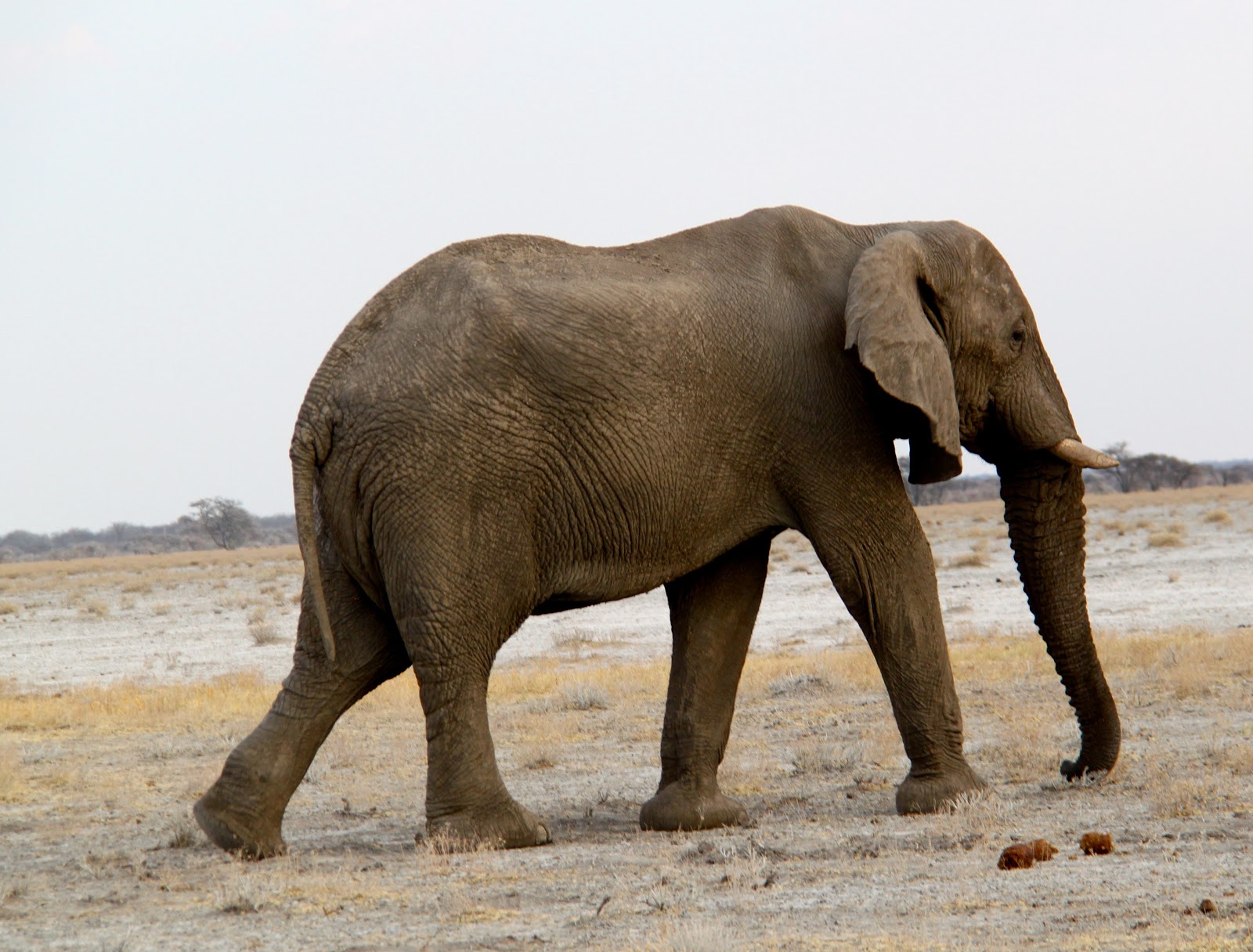
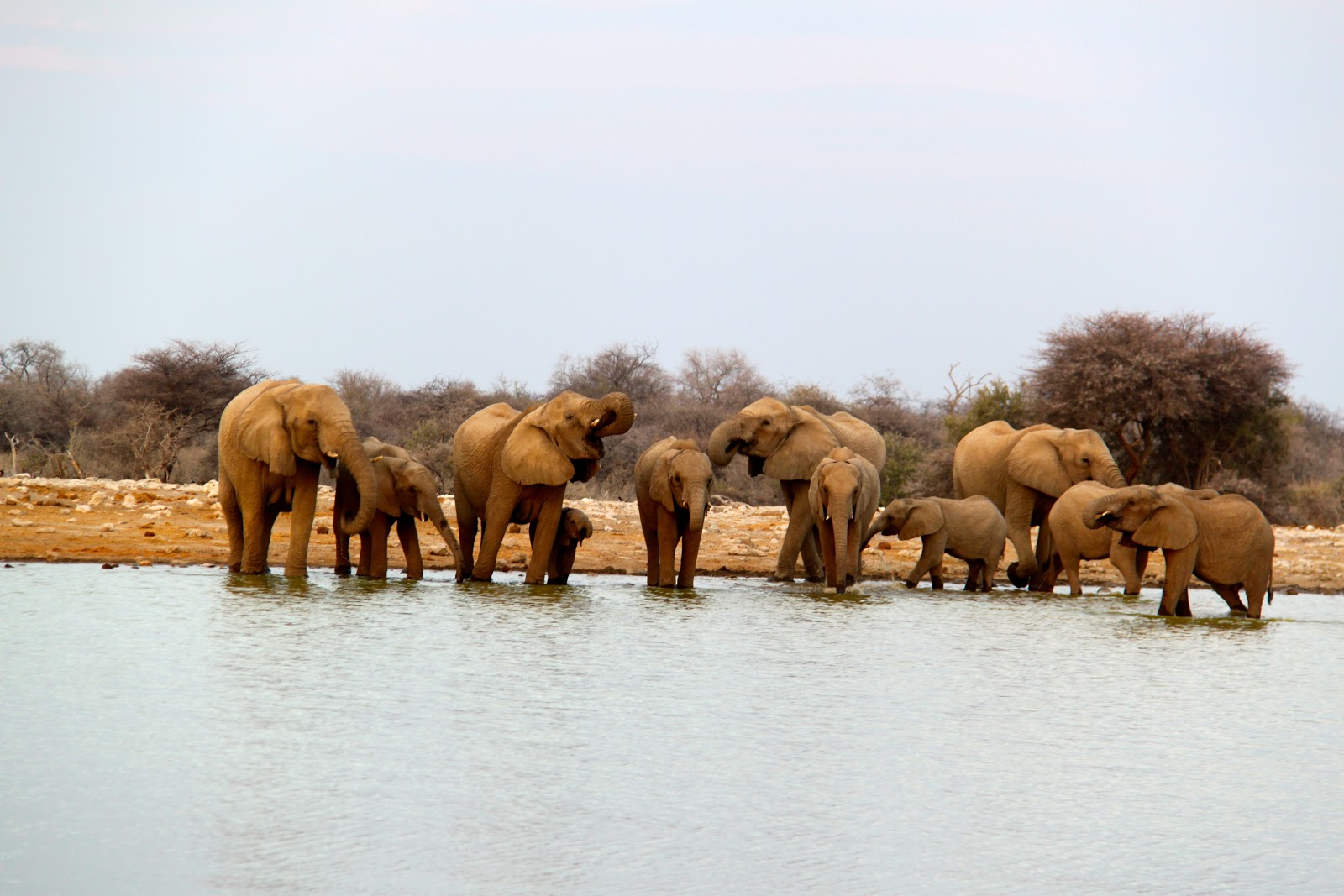
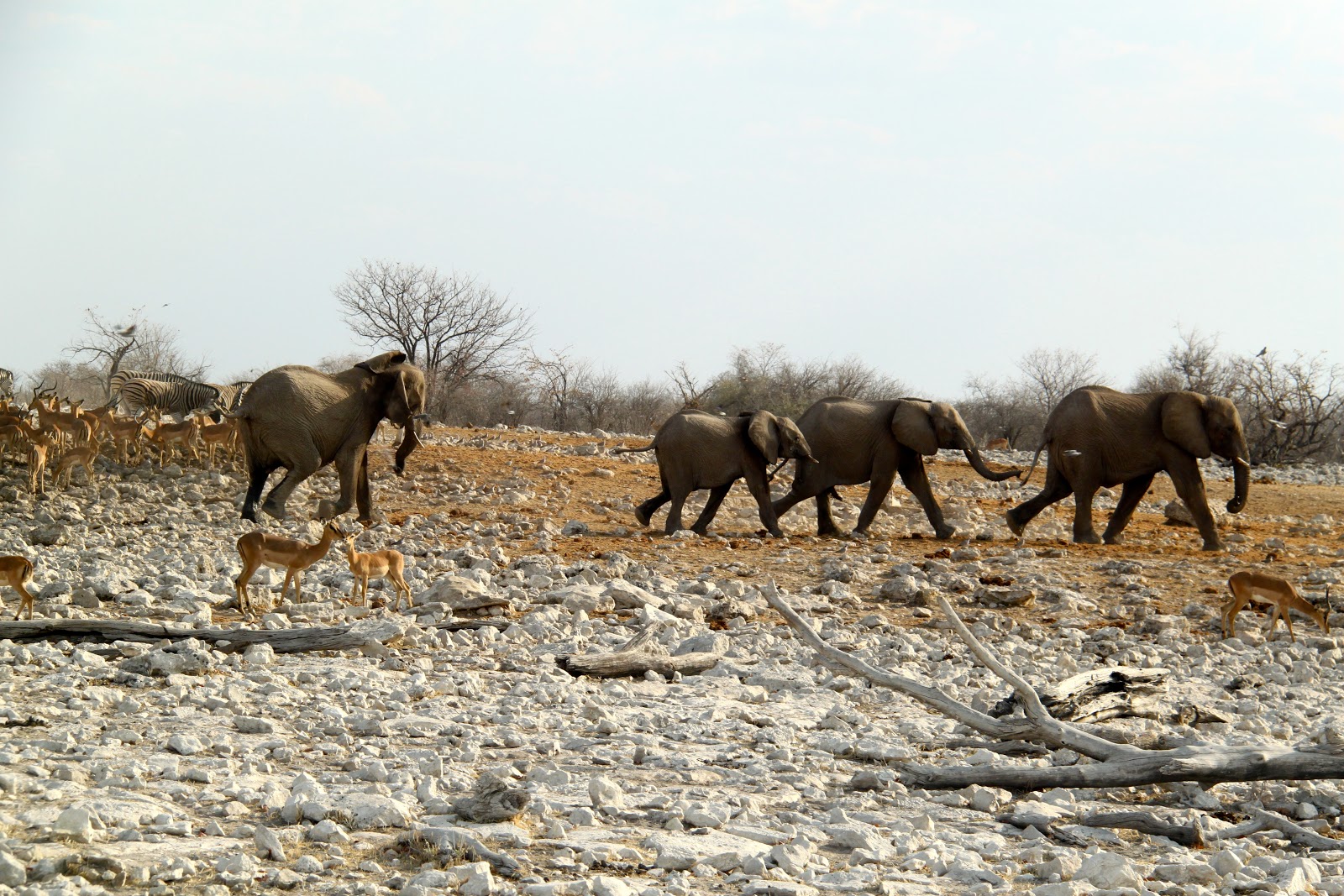
Here come more Elephants.  As they get closer to the water hole their pace quickens and they thunder into the water hole area and scare the other animals away.

Male Bull


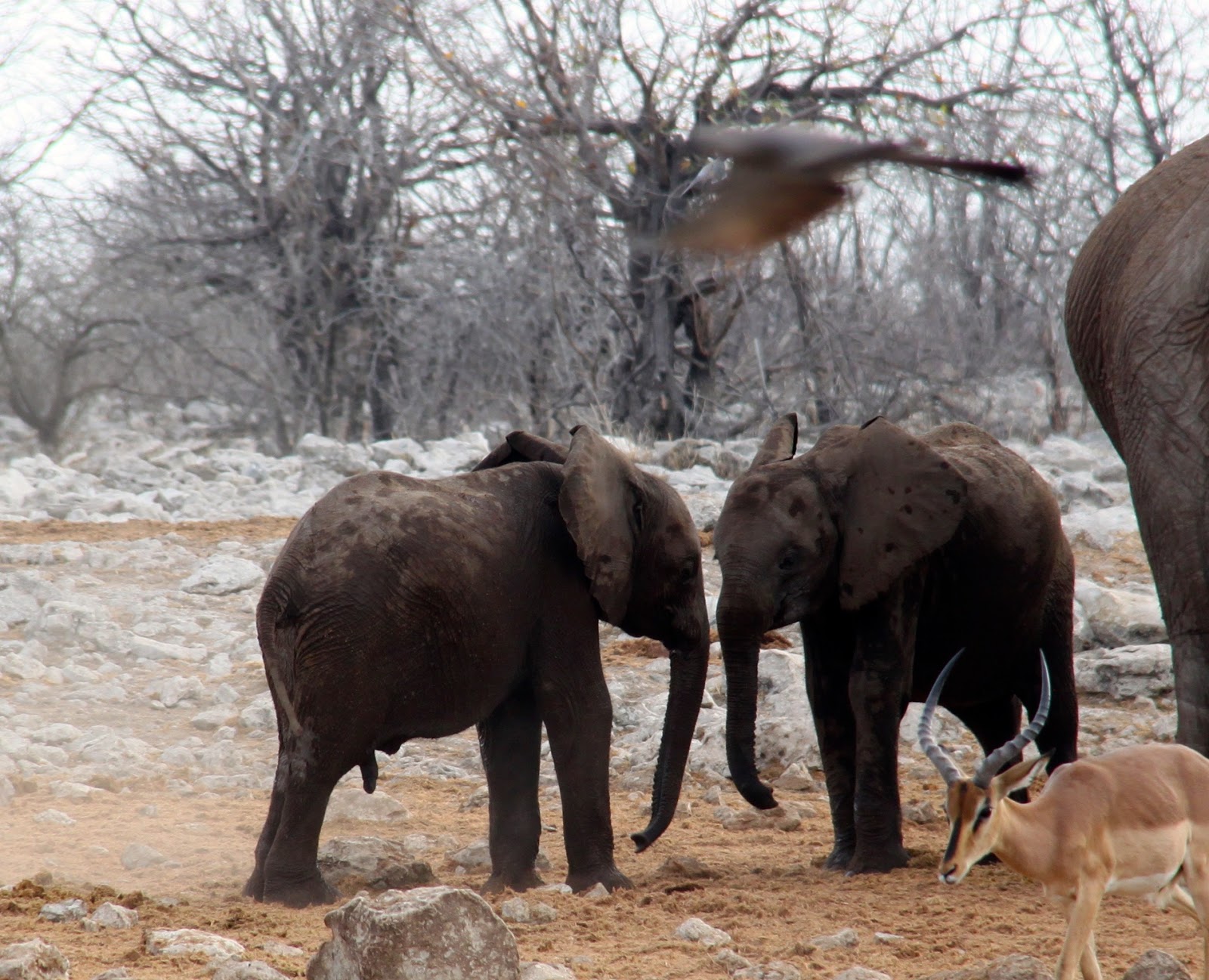
Two young ones playing.  The elephants are very social and the herd takes care of the young ones and protects them.


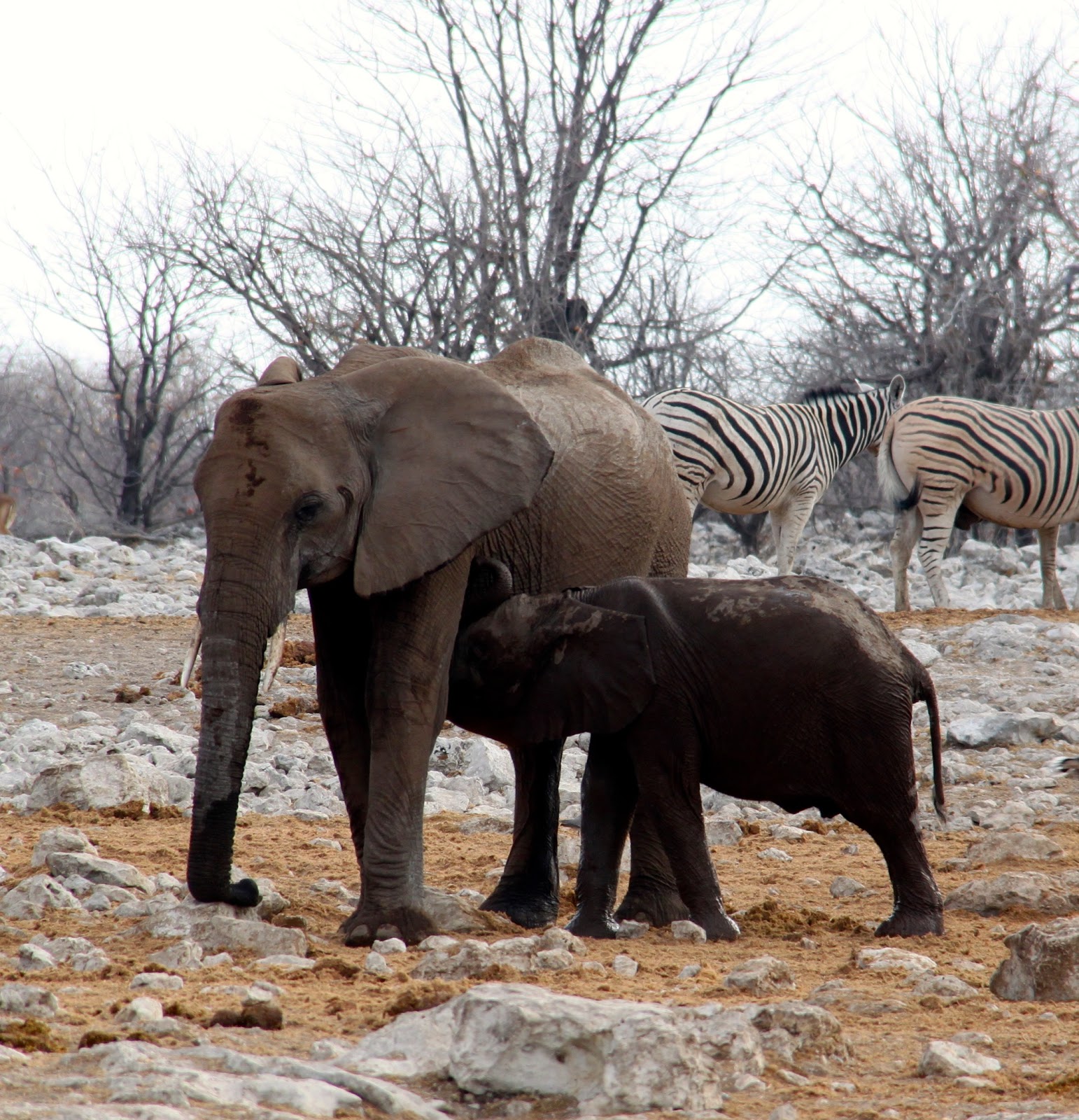
Baby nursing


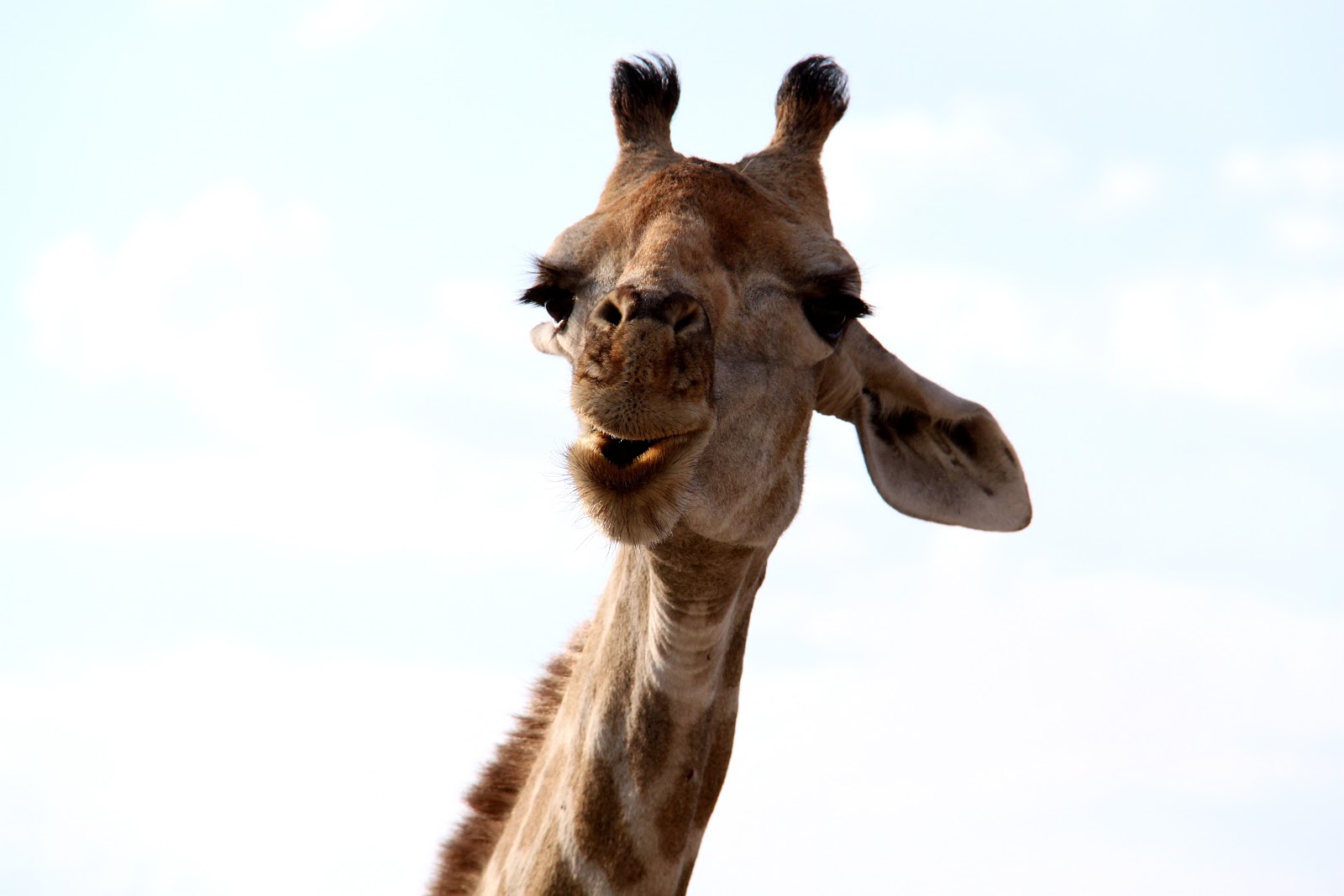
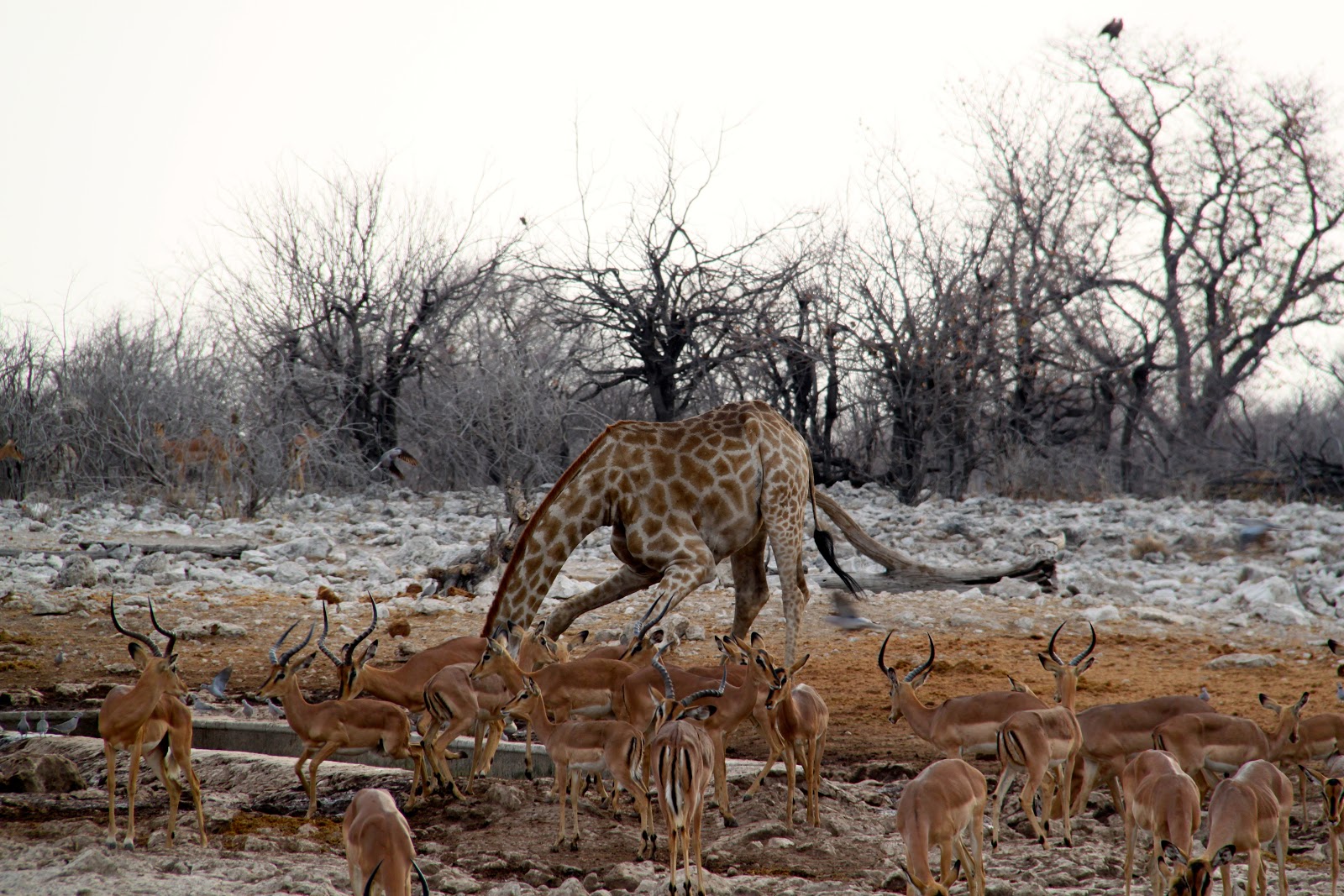
The Giraffe stands back and waits patiently for the Elephants to quit playing in the water and leave so he can go get a drink.


The Giraffe is skittish.  He waits at a distance for the Elephants to leave.  He also waits for the Zebras to leave.  He doesn’t even trust the Impalas to be around when he has to bend down with his neck and squat with his legs to get a drink.  He is very vulnerable to attack when he is in the position and he wants to be sure that nothing will hurt him while he is getting a drink.


He is very vulnerable when he bends down on his front knees to drink

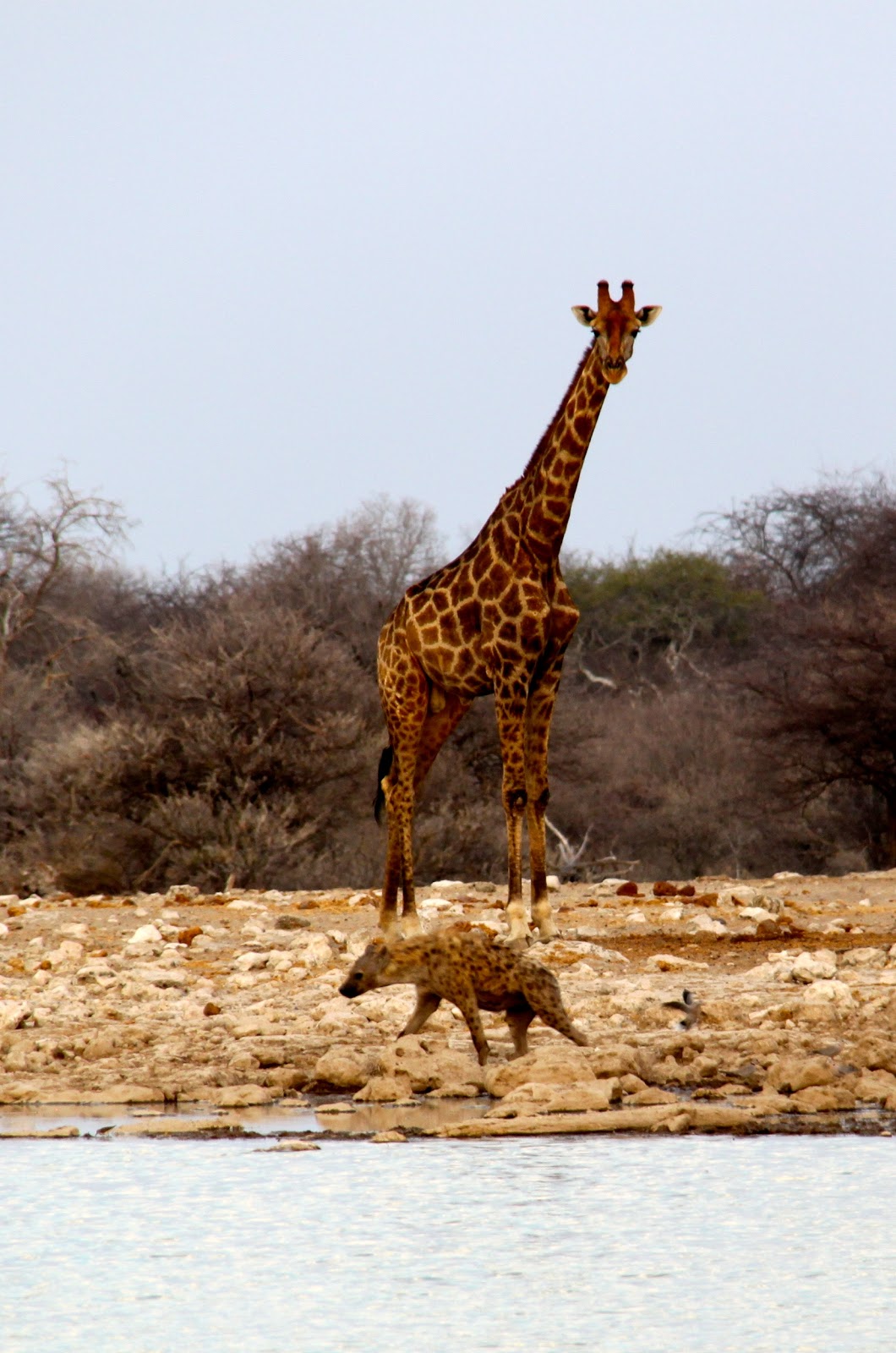
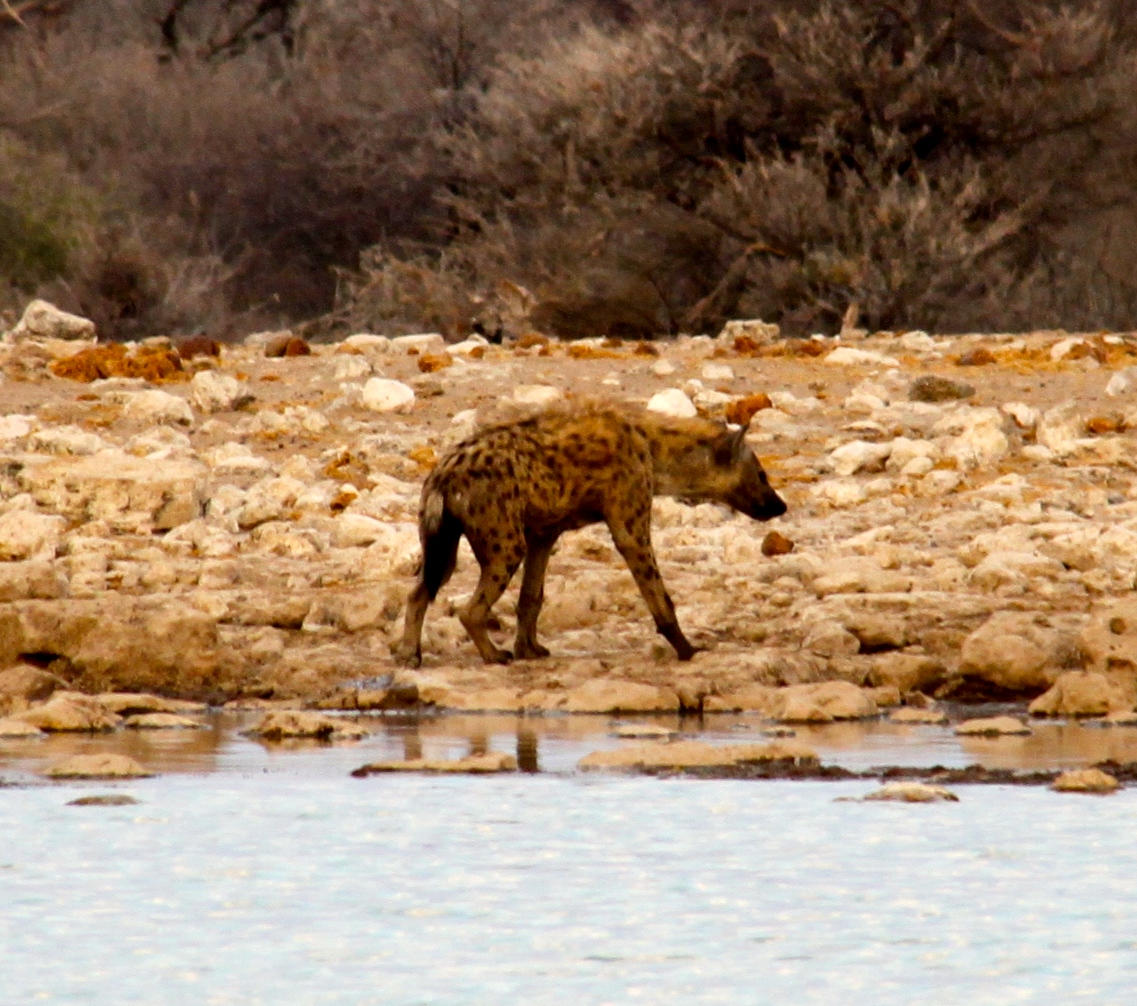
On the way back from our afternoon drive we stop at another water hole that has an Elephant, Giraffe and a spotted Hyena drinking water.  While we were watching another 20 Elephants came walking straight into the water.  The Spotted Hyena and the Giraffe made a quick exit when the new Elephants arrived.

Everyone gets a turn


Spotted Hyena


 This place is amazing!  We want to figure out how to get our grandkids over here to see this amazing sight.

The next morning we went on another walking safari in the area of the Onguma Tented Camp.  It was good exercise but we did not see many animals.

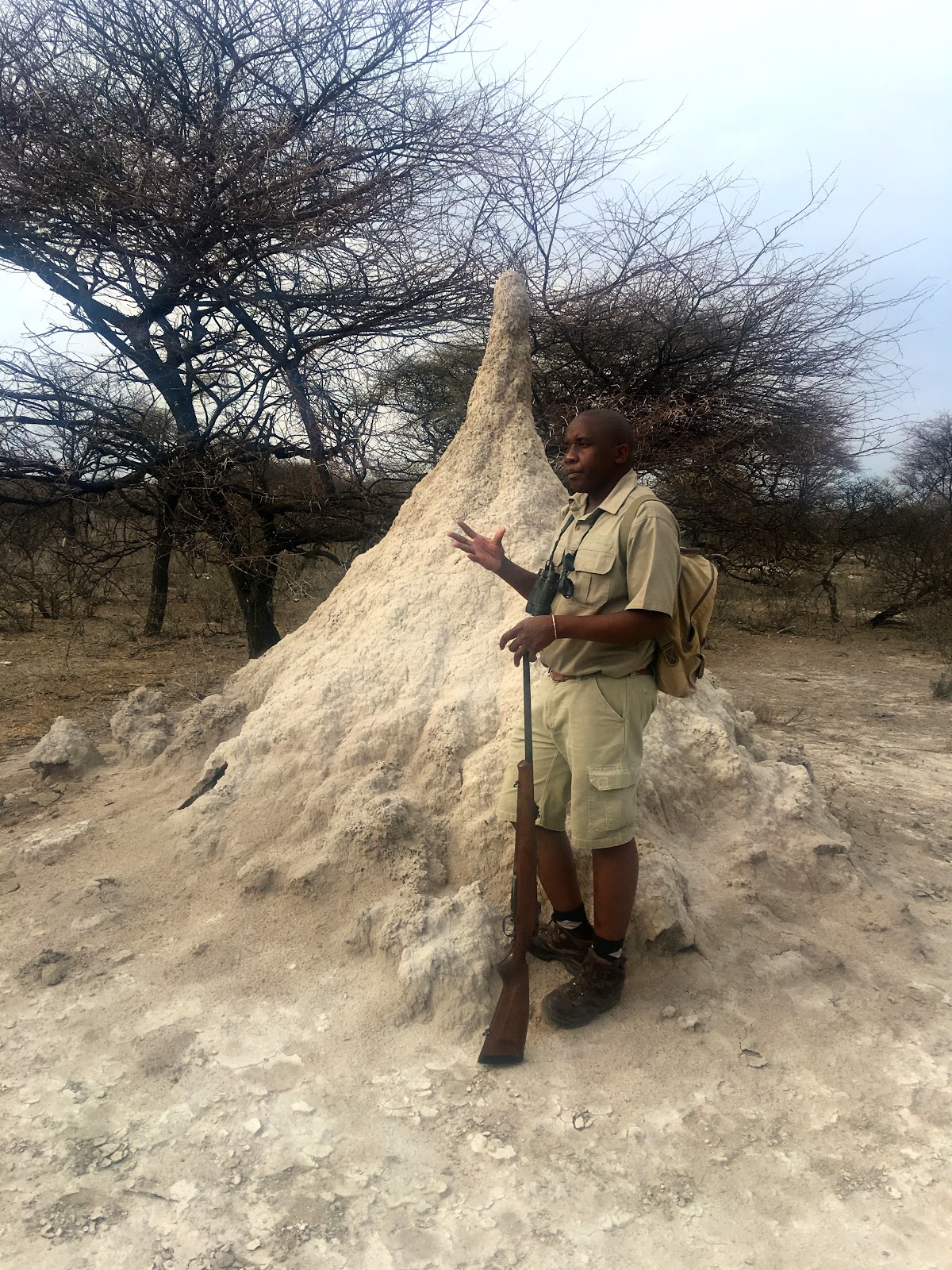
Telling us about the termite mounds

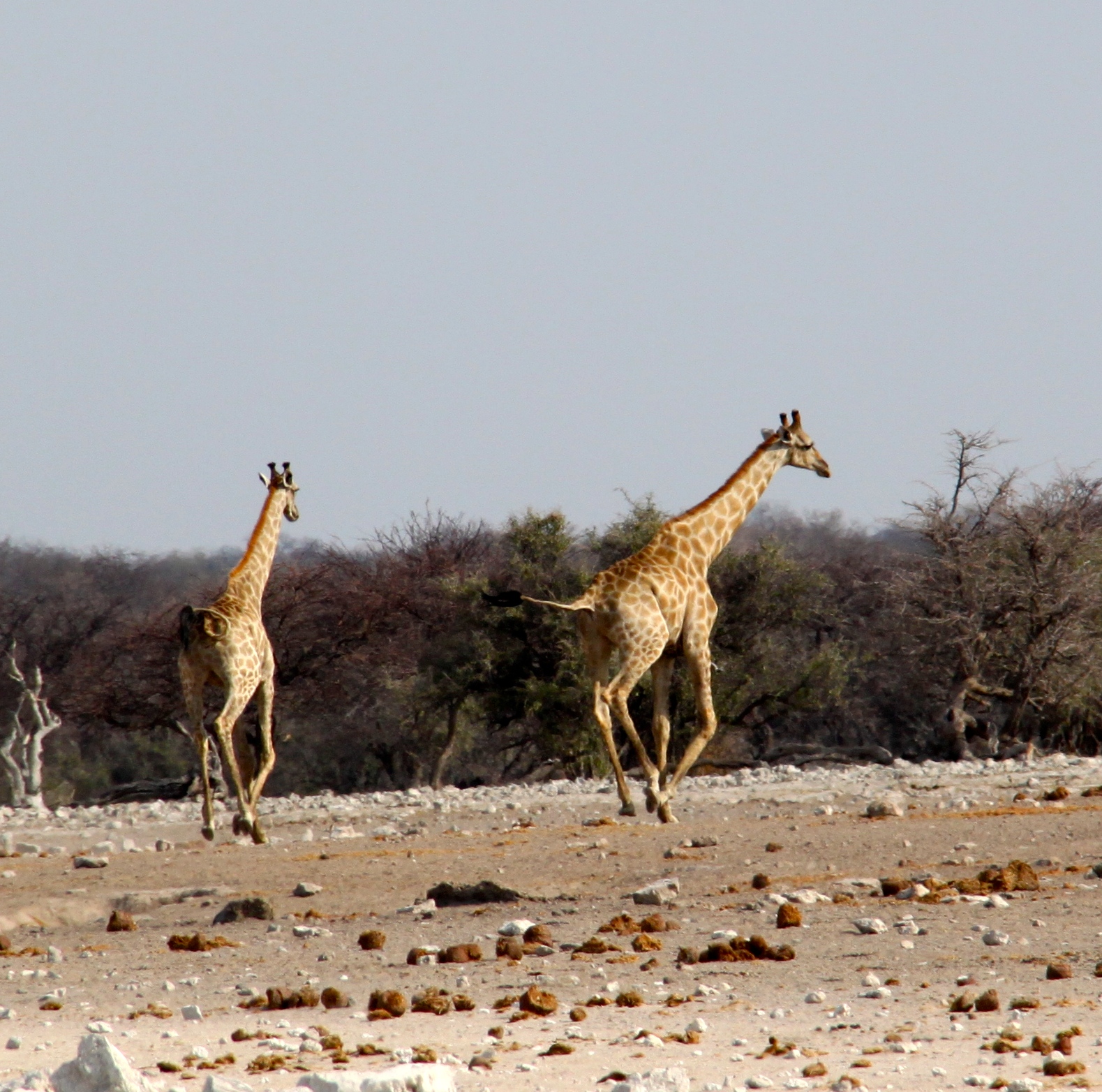
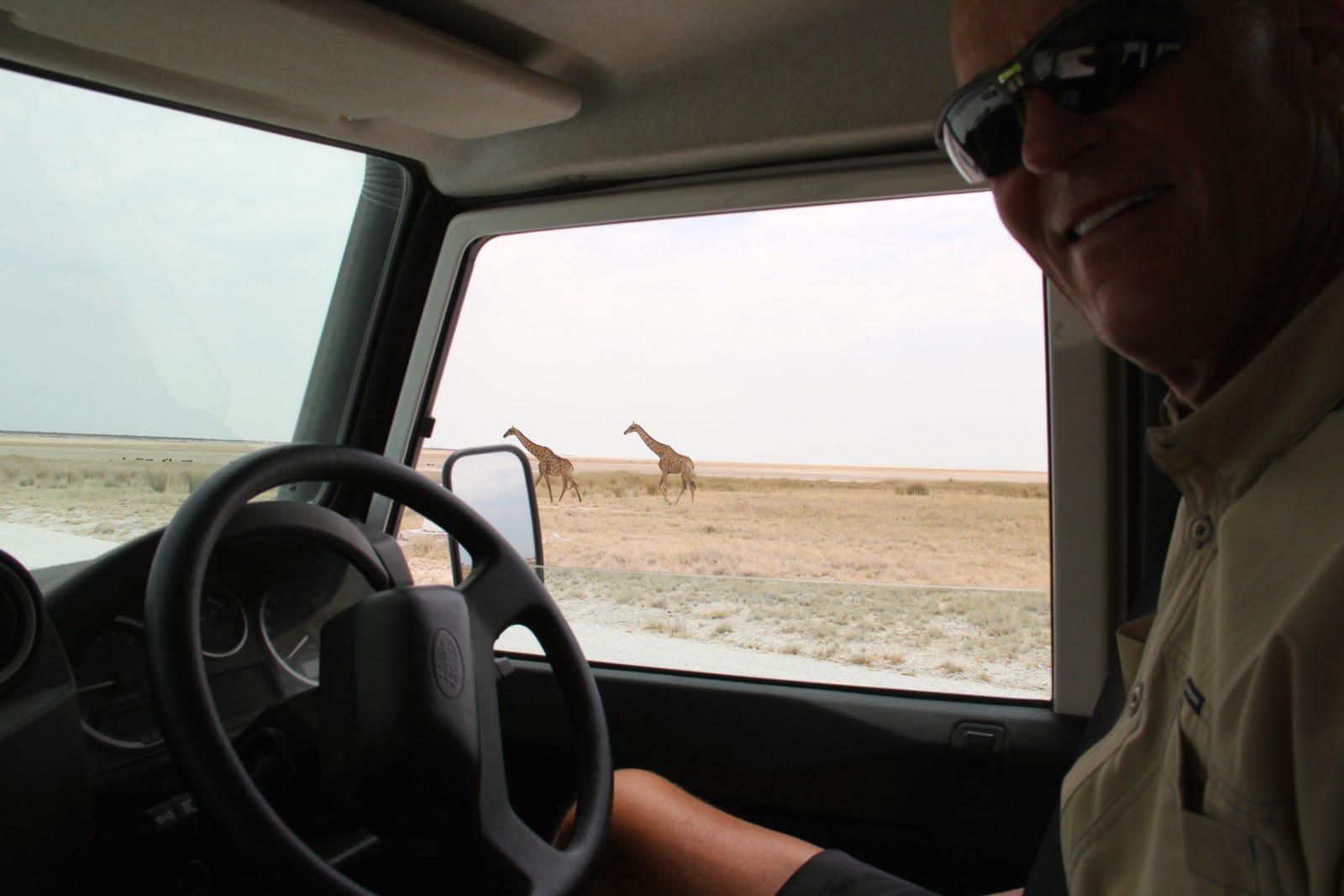
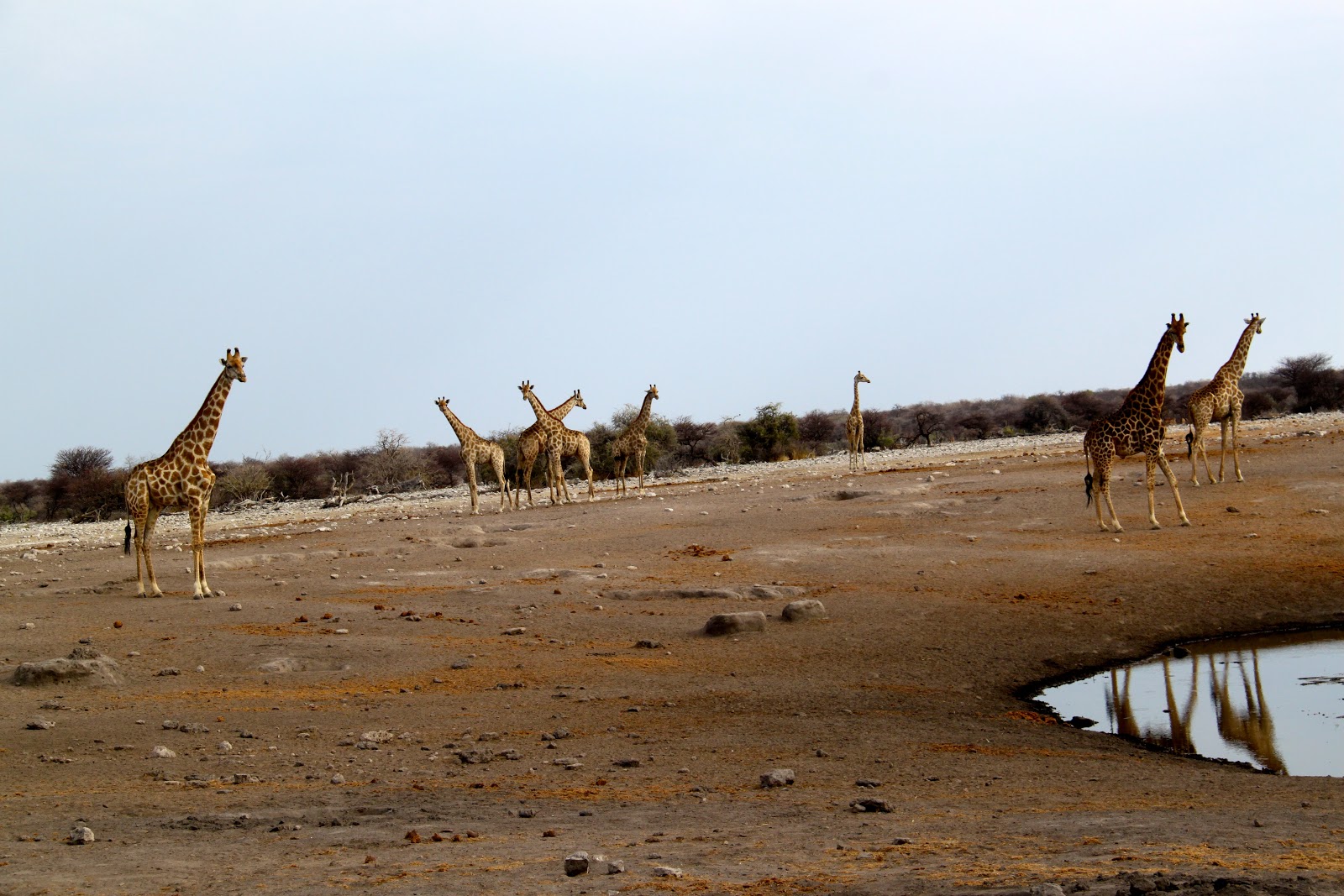
After breakfast we drove our Land Rover back into the Etosha Game Park.  We saw animals everywhere we looked.  We saw lots of Giraffe (Barb’s favorite African animal).


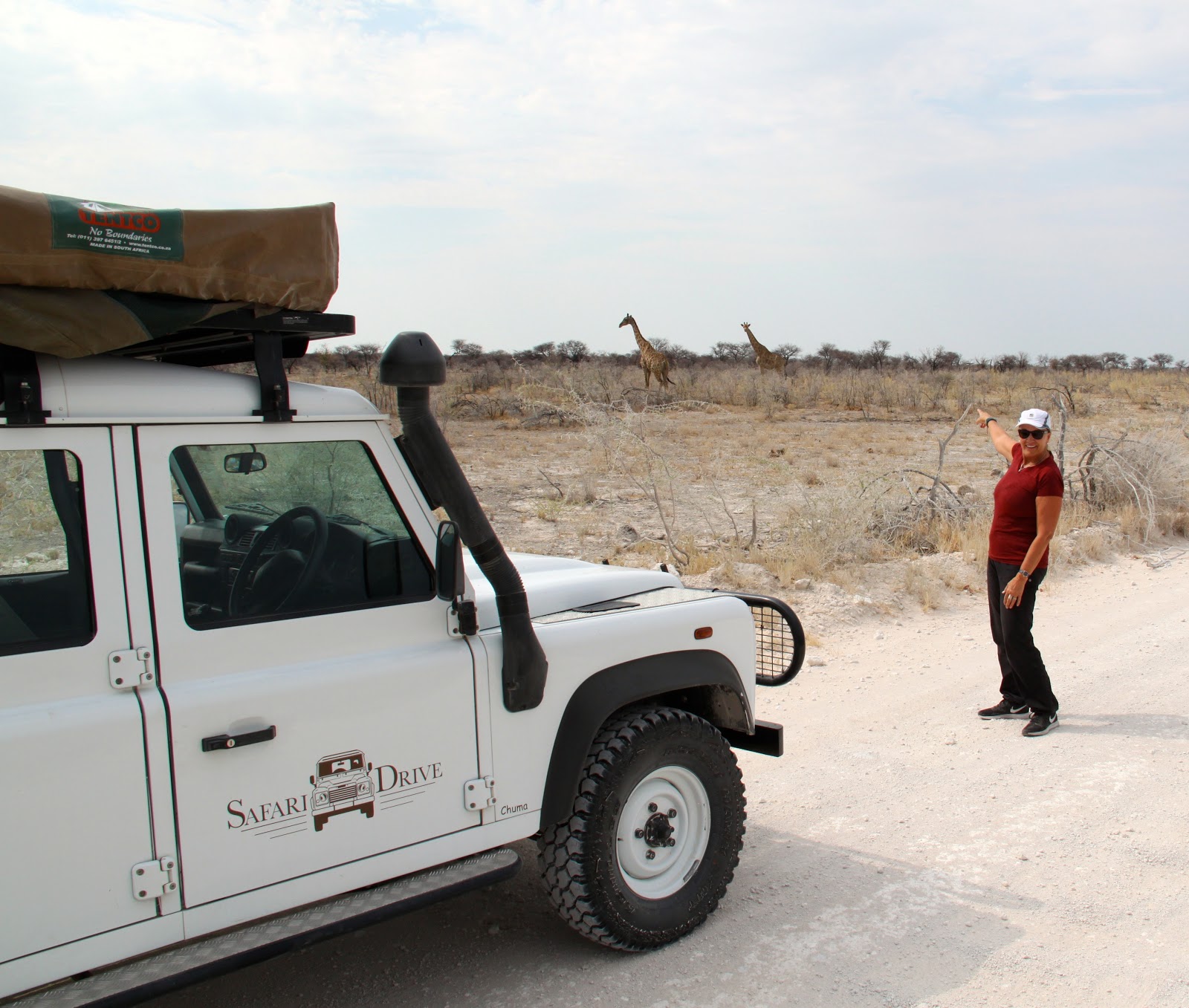
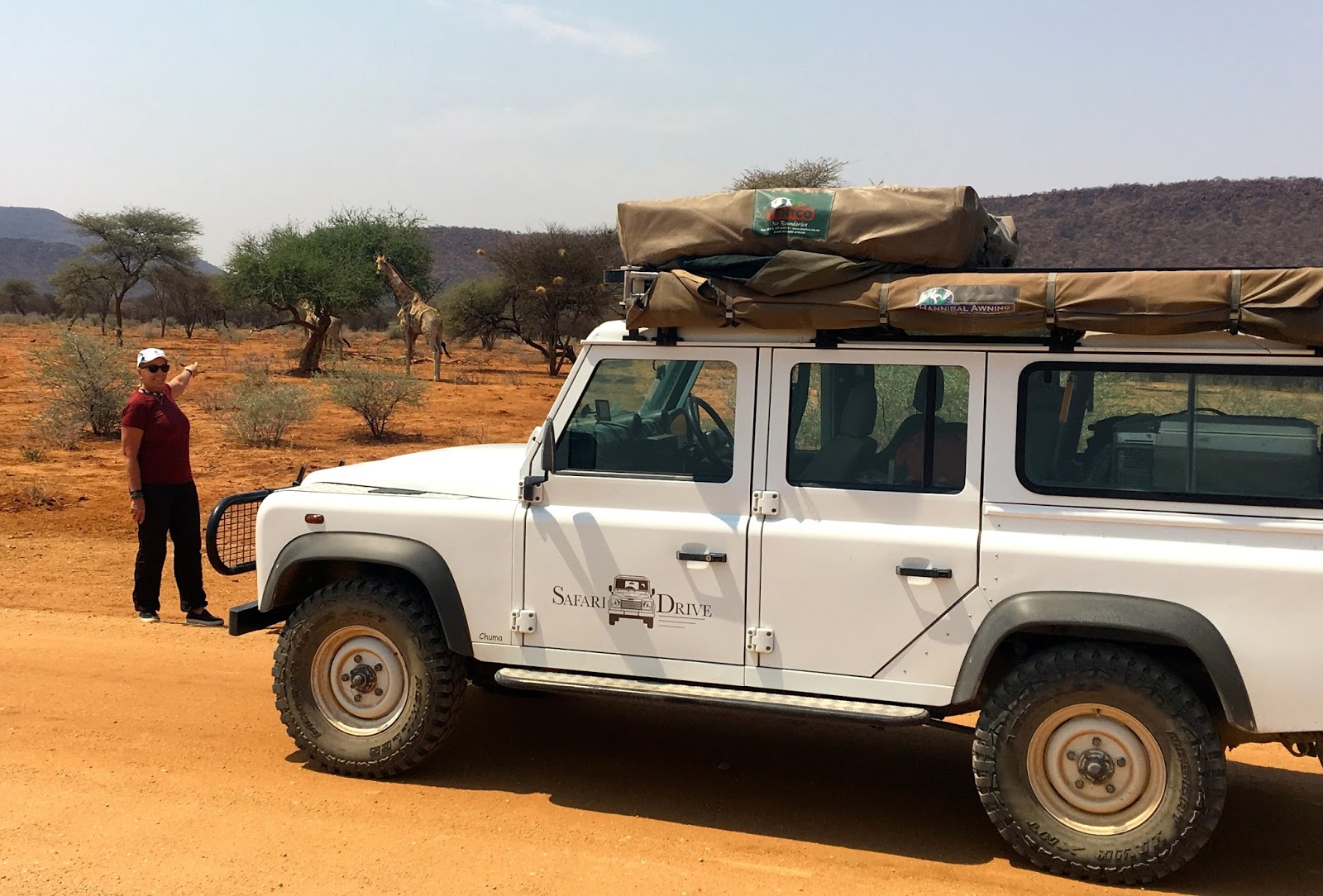
Barb is pointing to the giraffes.  You are not supposed to get out of your car!


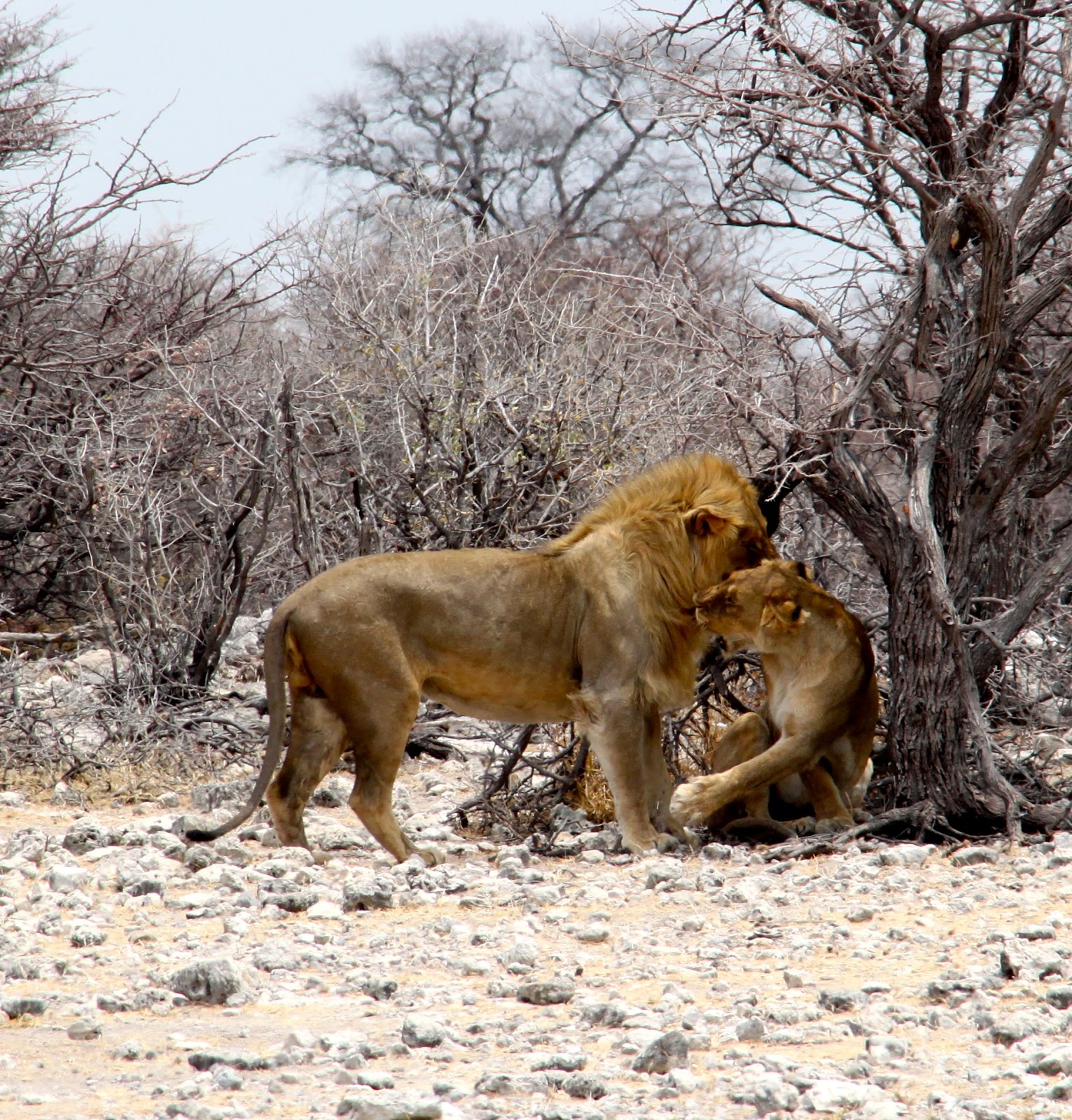
Our favorite highlights of the day were watching two lions mating.  They would mate for a few minutes and then rest for 30 minutes and then mate again.

They mate for 4 days.  During that time they don’t hunt or eat.  They mate about every 15-30 minutes.


We also saw Black Rhino late in the day.  Cool!


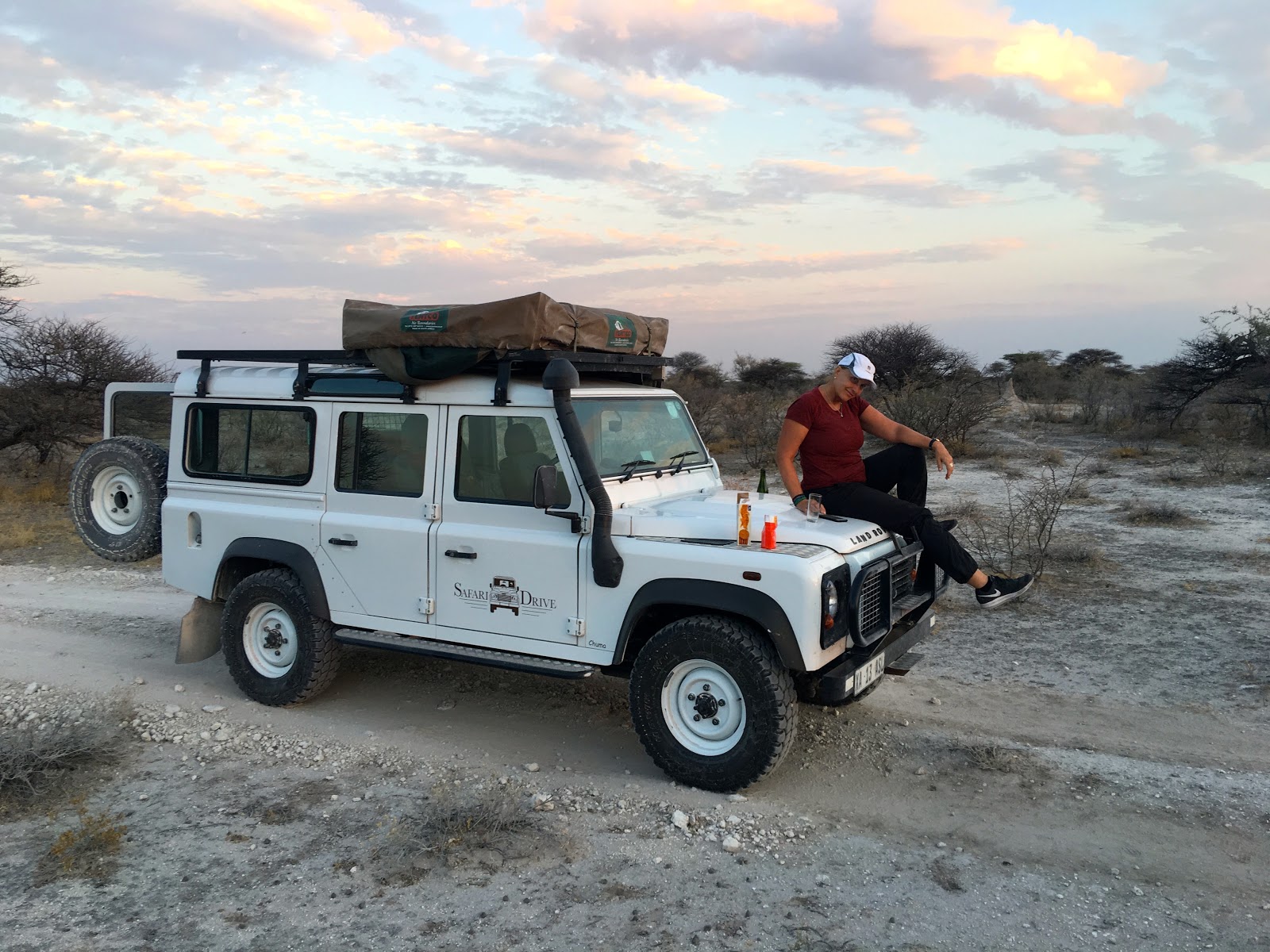
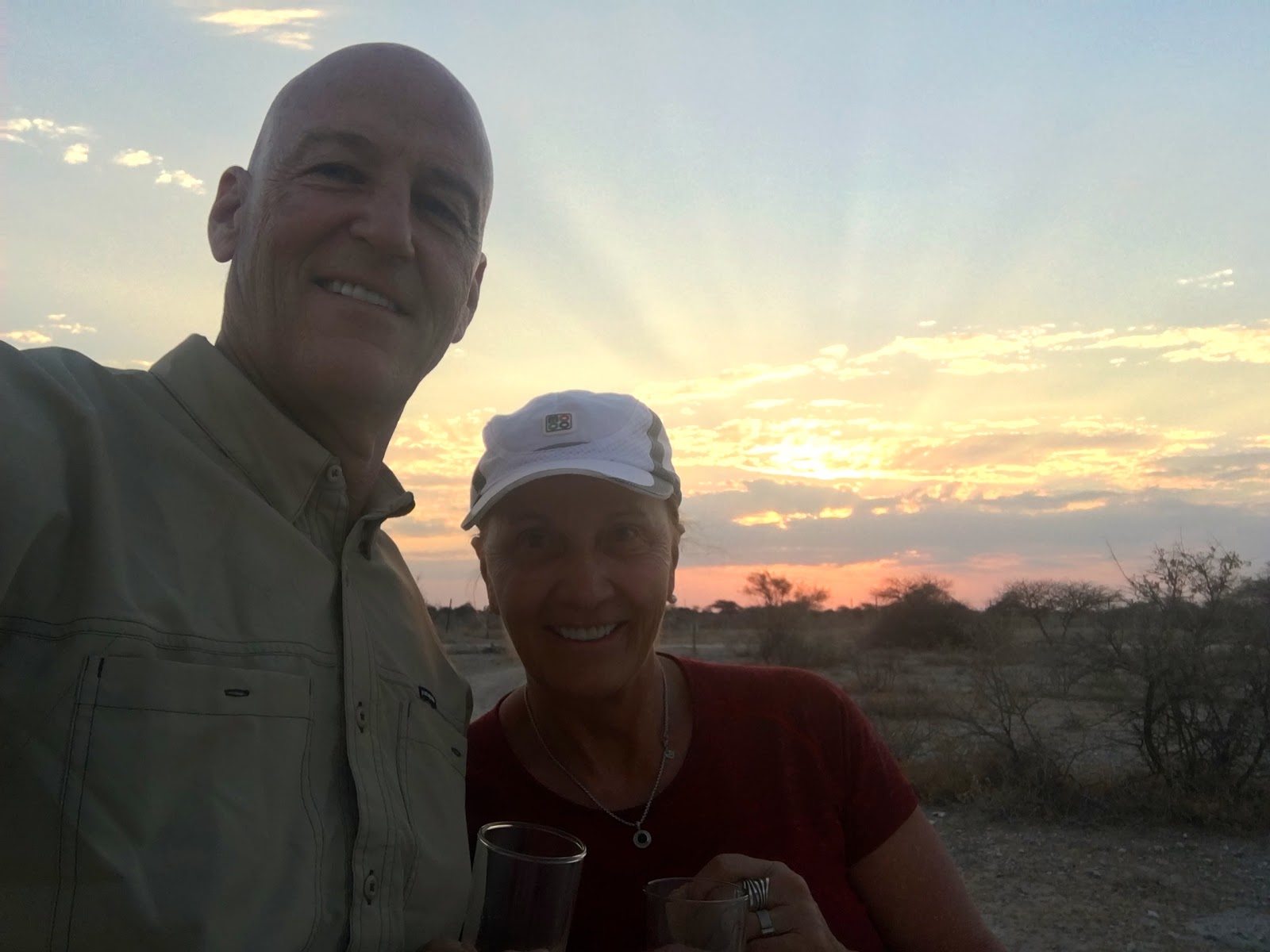
On the way back to our camp we stopped outside the park for a sundowner toast.  We pulled our Land Rover off the road and got into our cooler and found drinks and snacks.  We sat on the hood and watched the sun go down.


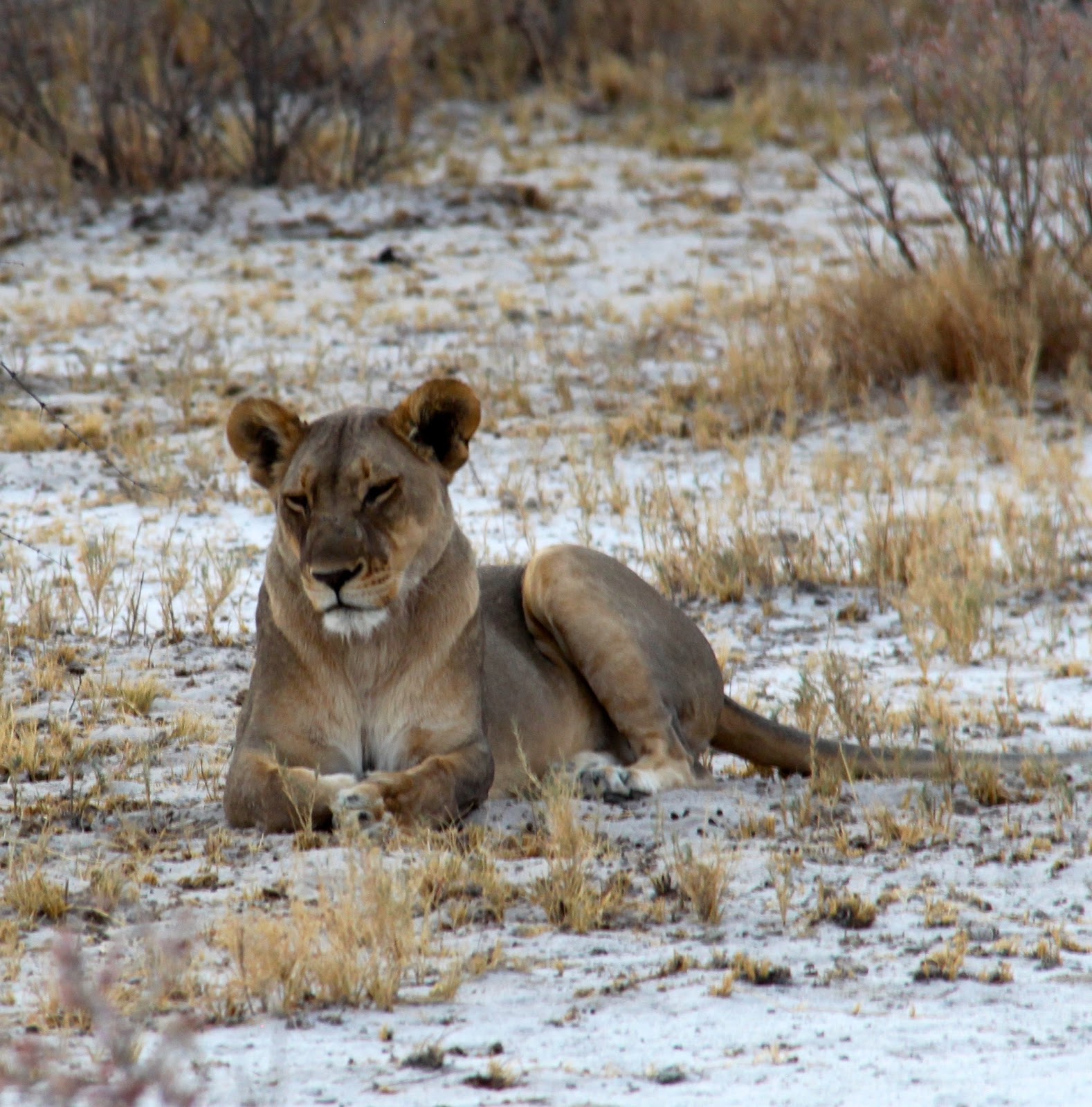
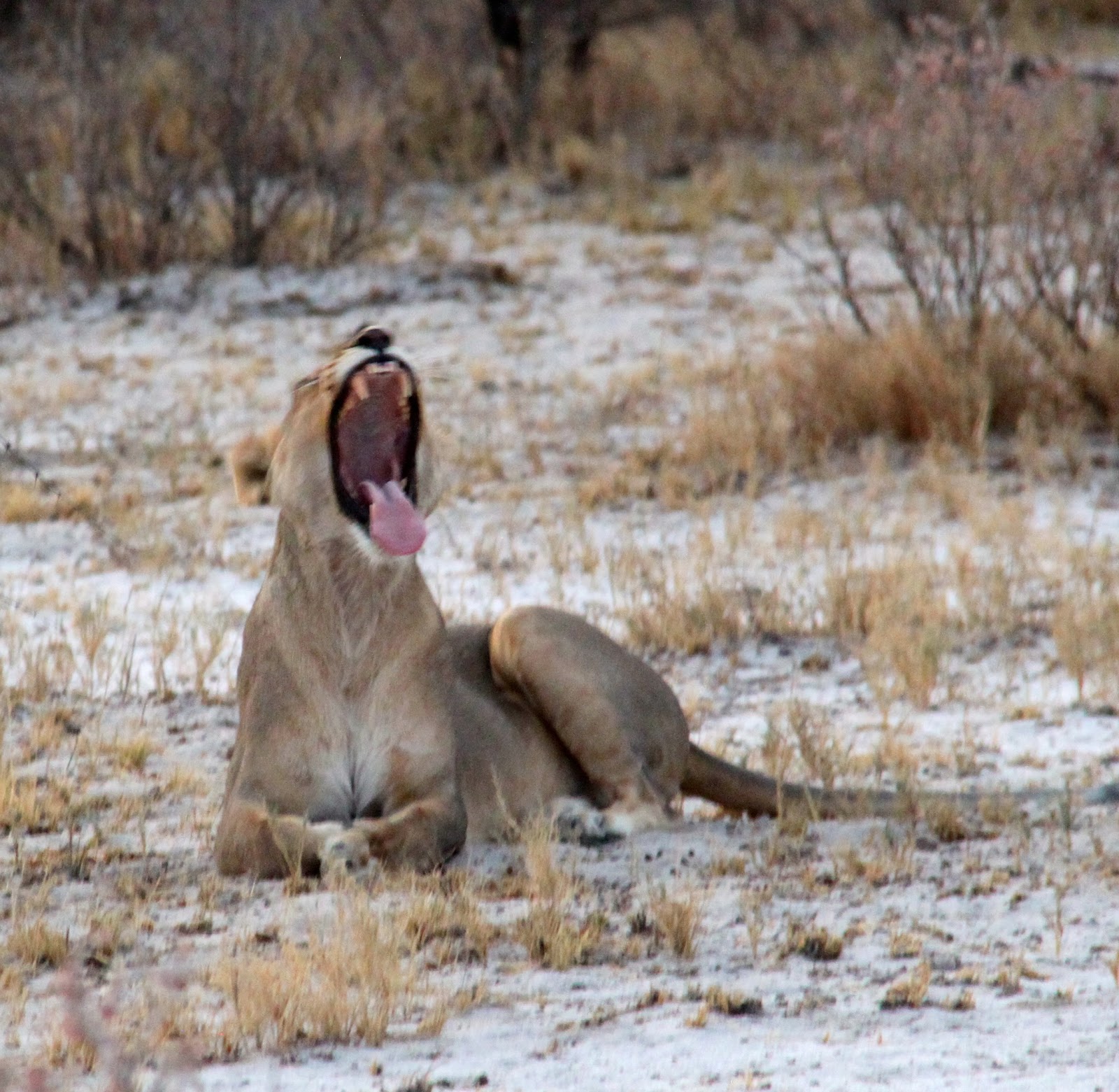
 After our sundowner we got into our Land Rover and started driving to our camp.  Less than 1 kilometer away we were surprised to see a Lioness cross the road and lay down 20 yards from our vehicle.  We sat and watched as she looked at us and yawned.  We were a little nervous since we were just out of our vehicle having a sundowner and there were apparently lions around us!


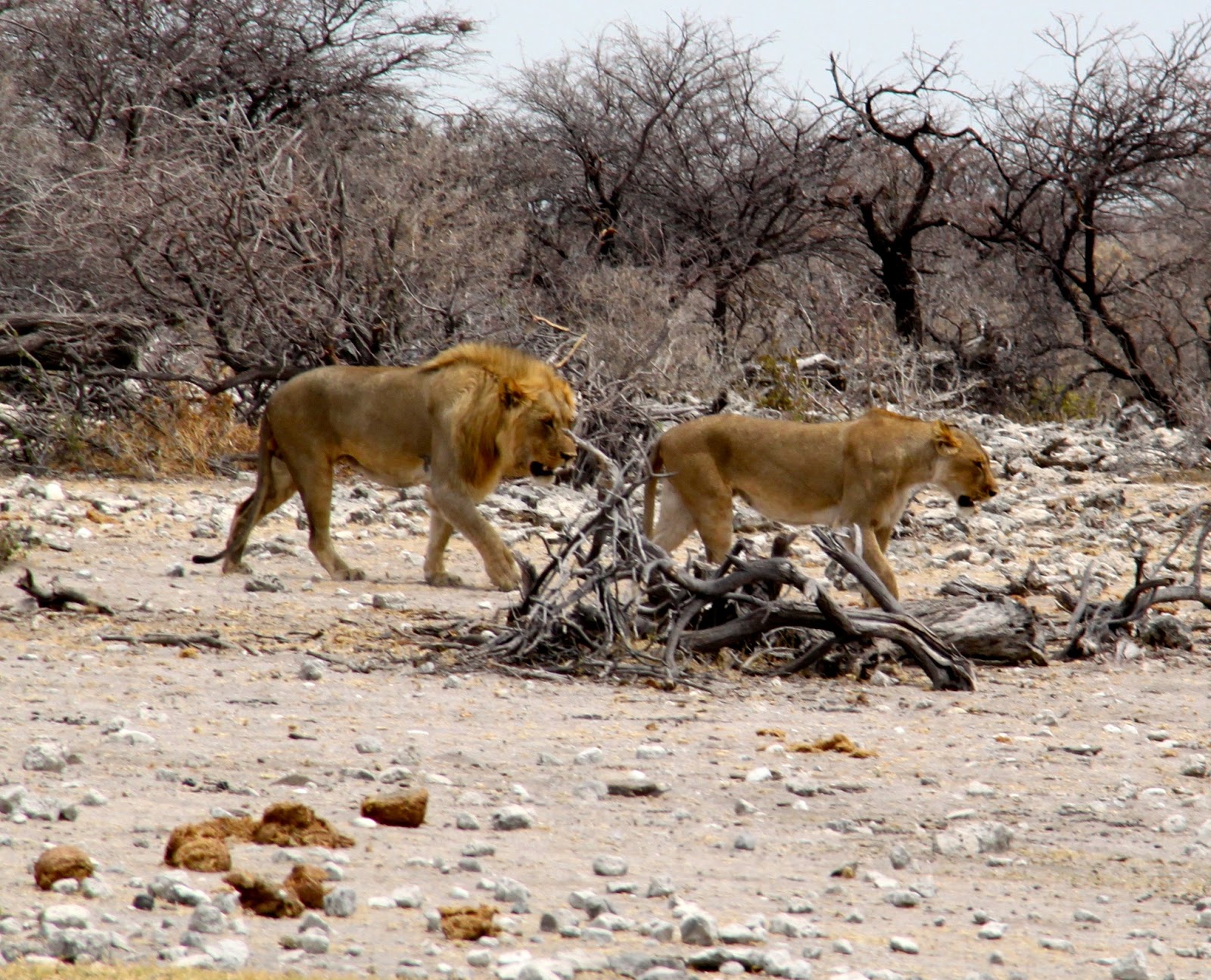
 After 10 minutes of watching the Lion we were surprised to see another female Lion walk up from behind our vehicle.  Female Lions do the hunting.  Hunting Lions surrounds us!  Thank goodness we are safe in the vehicle.  If you stay in your vehicle the animals just see the vehicle as one big object.  If you get out of your vehicle the Lions would see you as a possible dinner.


Some of the animals we saw today were:

Lions mating
Lionesses hunting
Black Rhino
Elephant
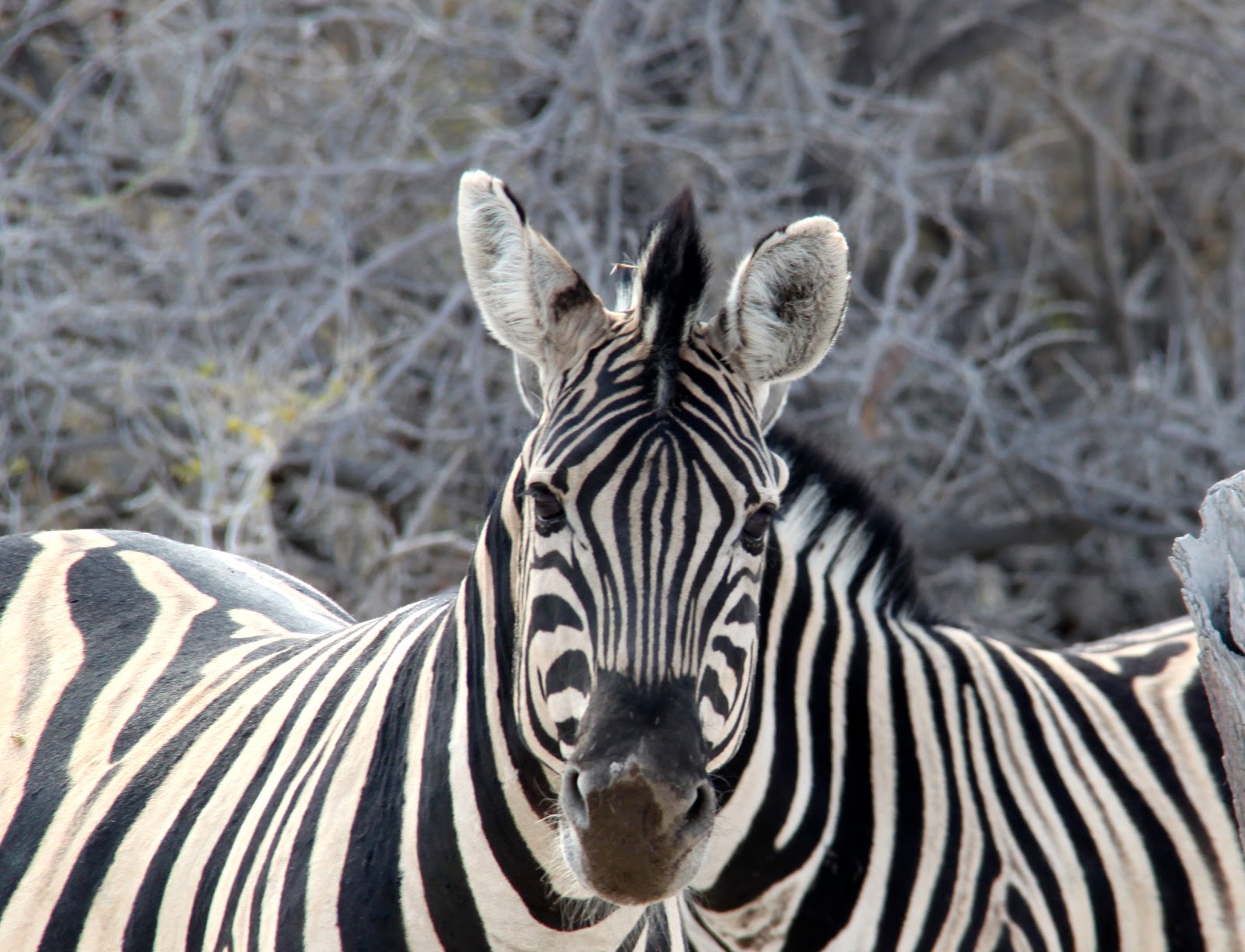
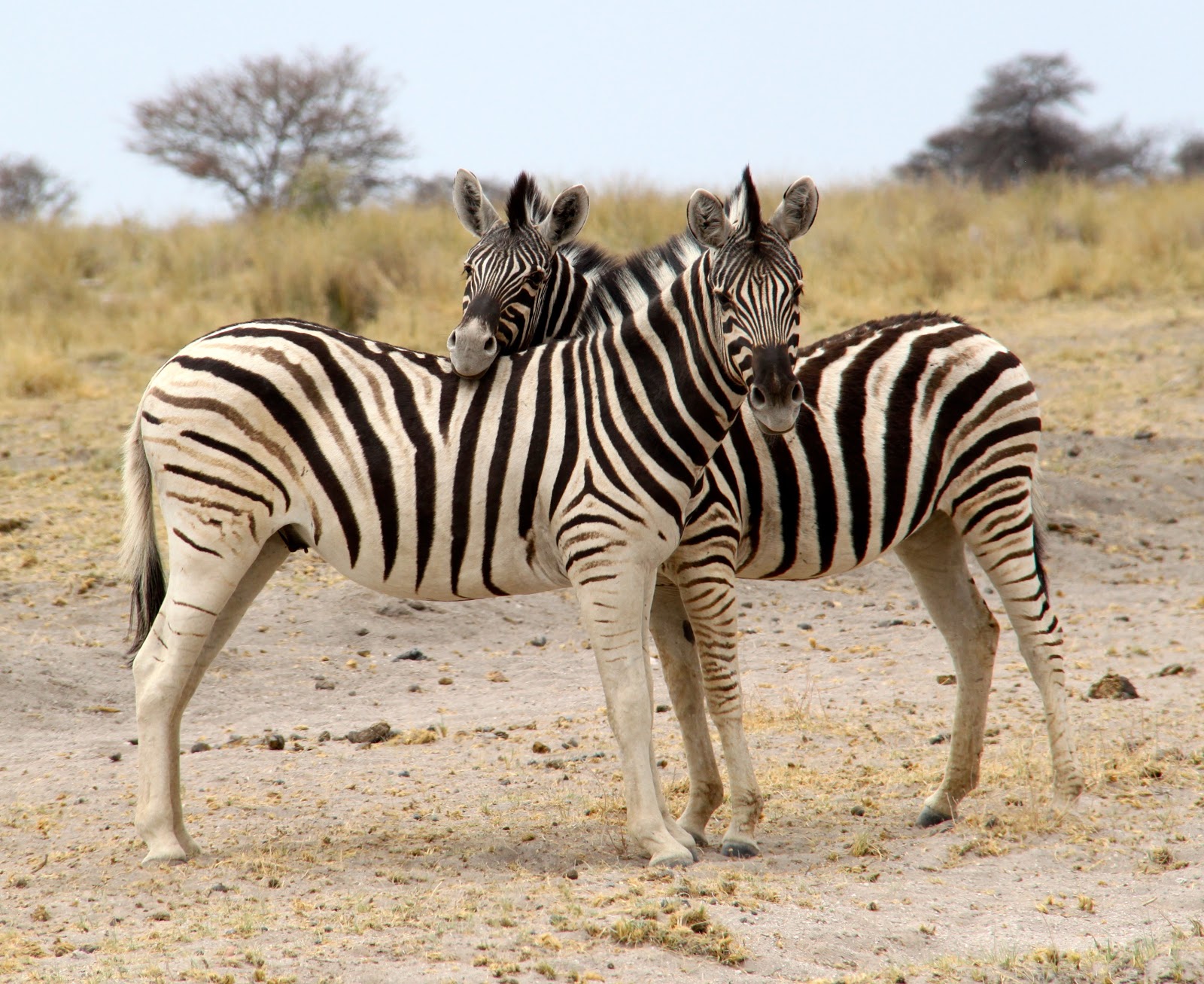
Zebra
Black Faced Impala (indigenous to Etosha)
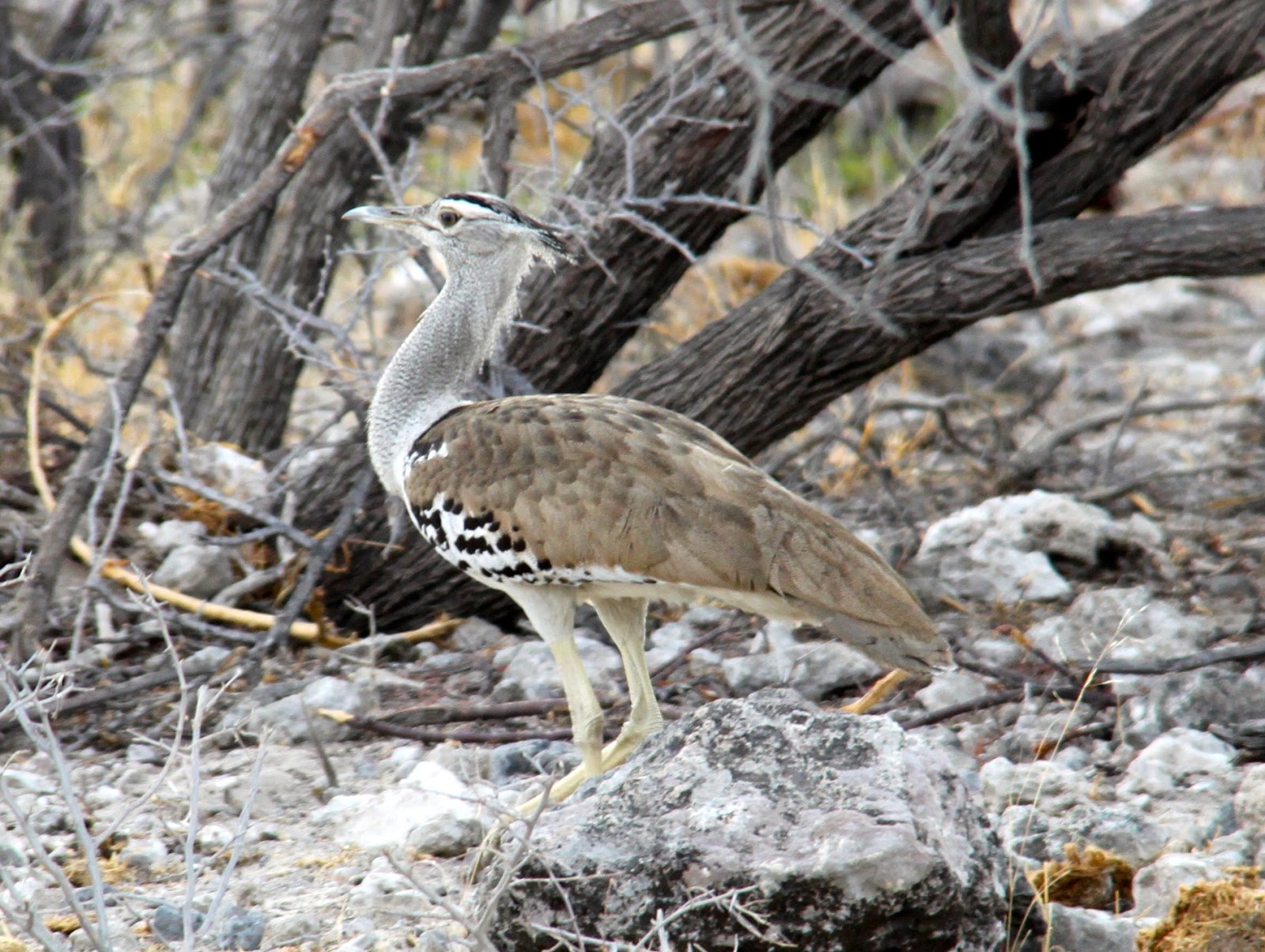
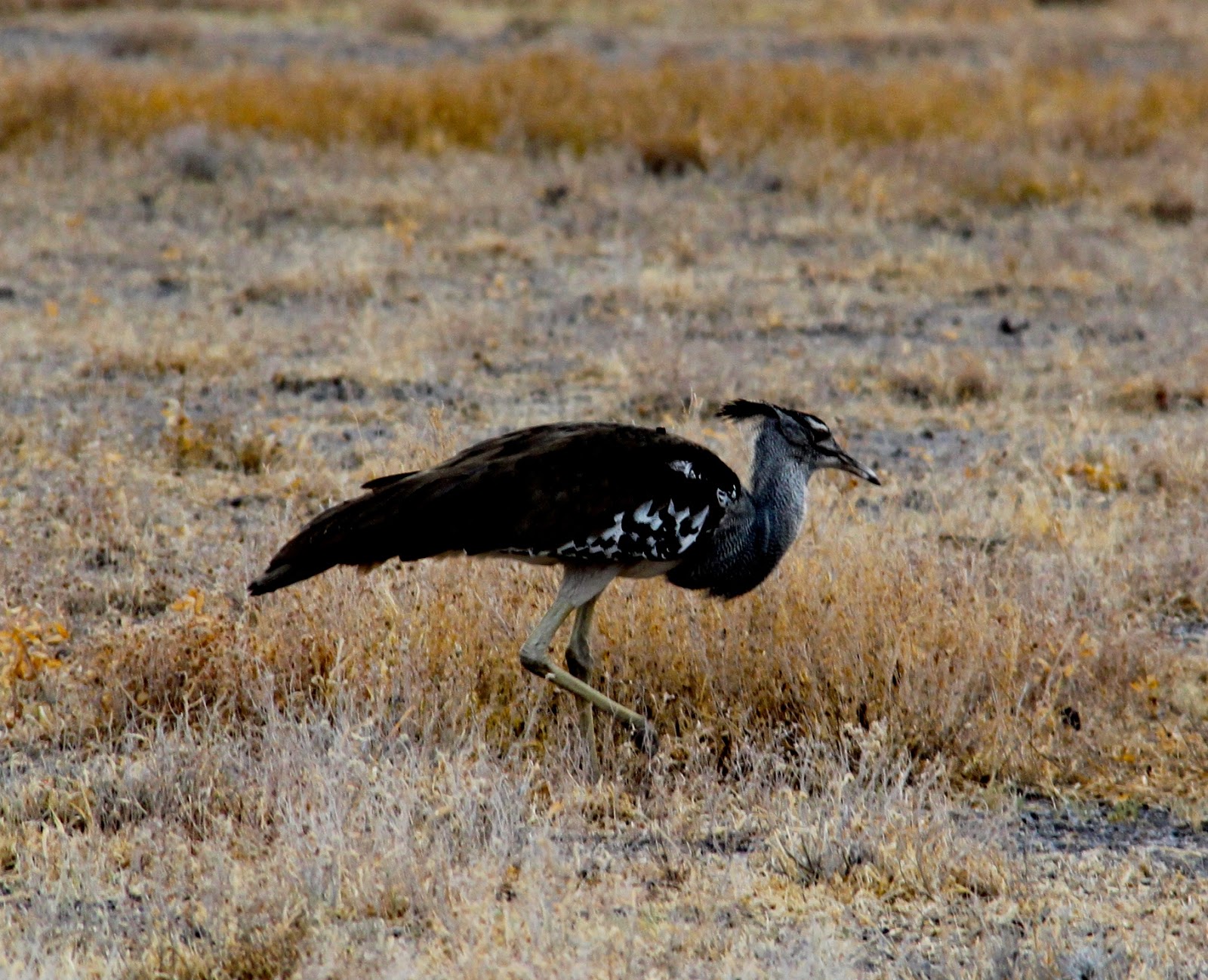
Kory Bustard Bird that can weigh 30 pounds
Giraffe
Spotted Hyena
Cape Fox
Korhan Bird
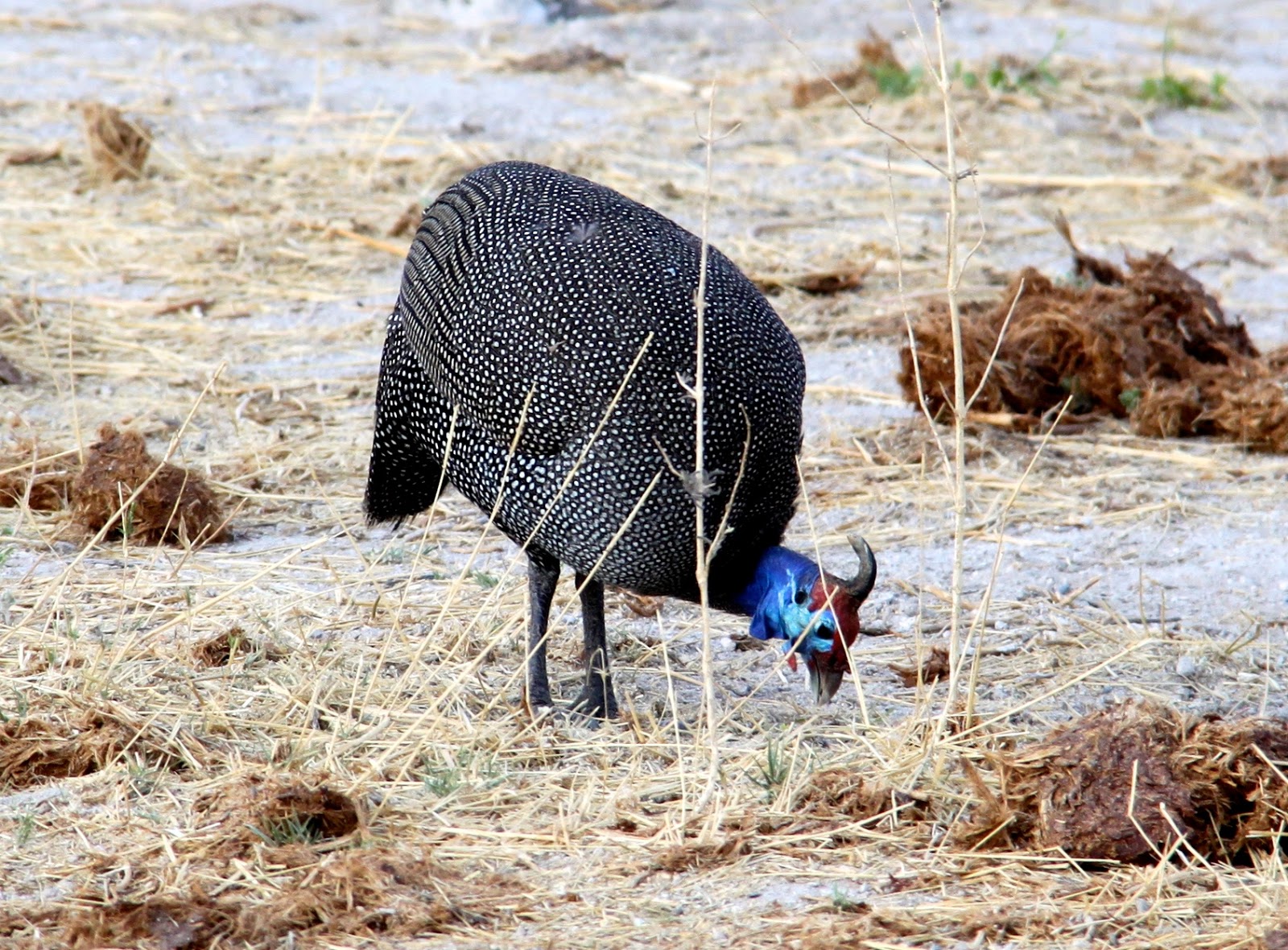
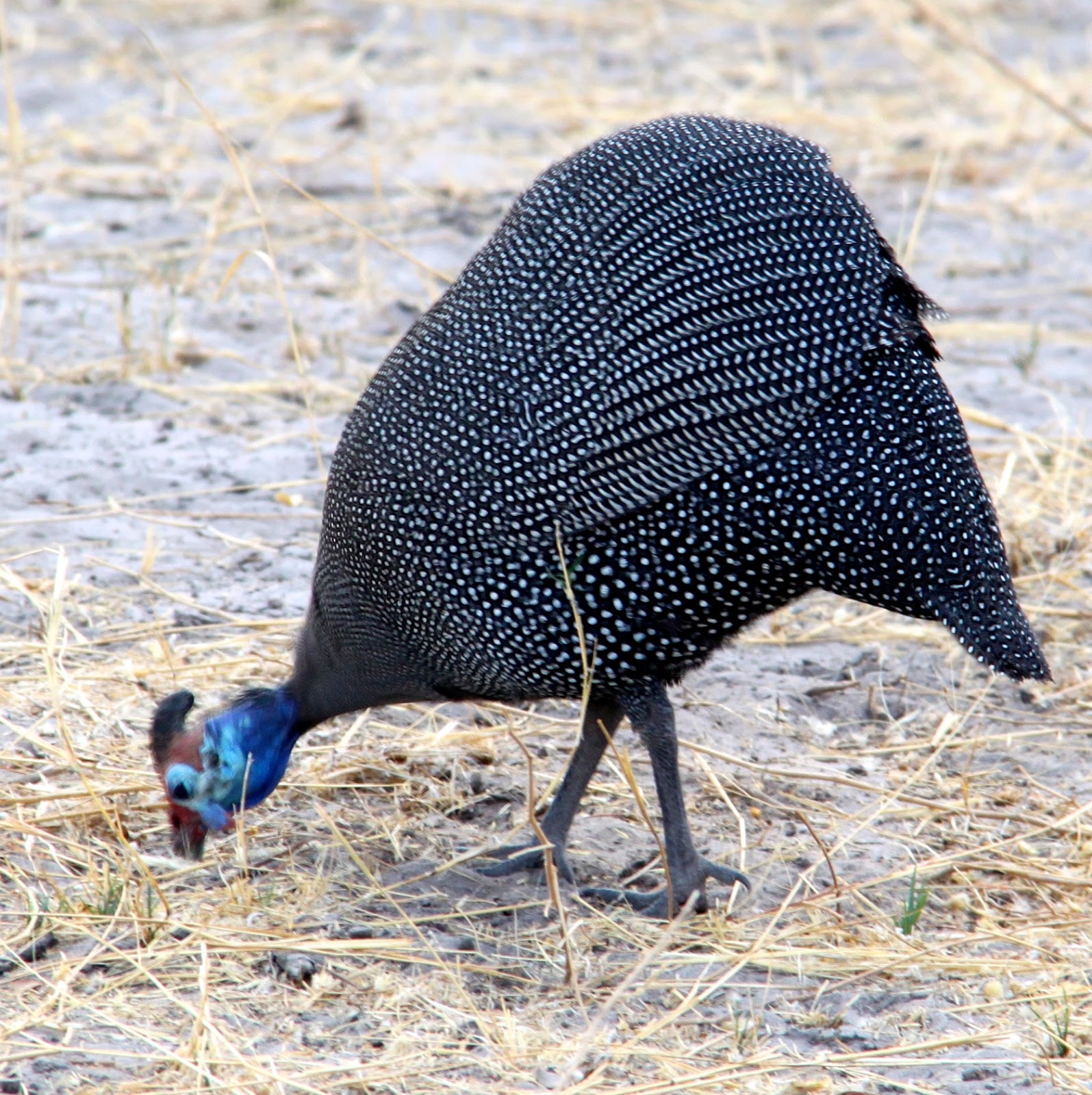
Helmeted Guinea Fowl
Kudu
Gemsbok
Fox
Scrub Hare
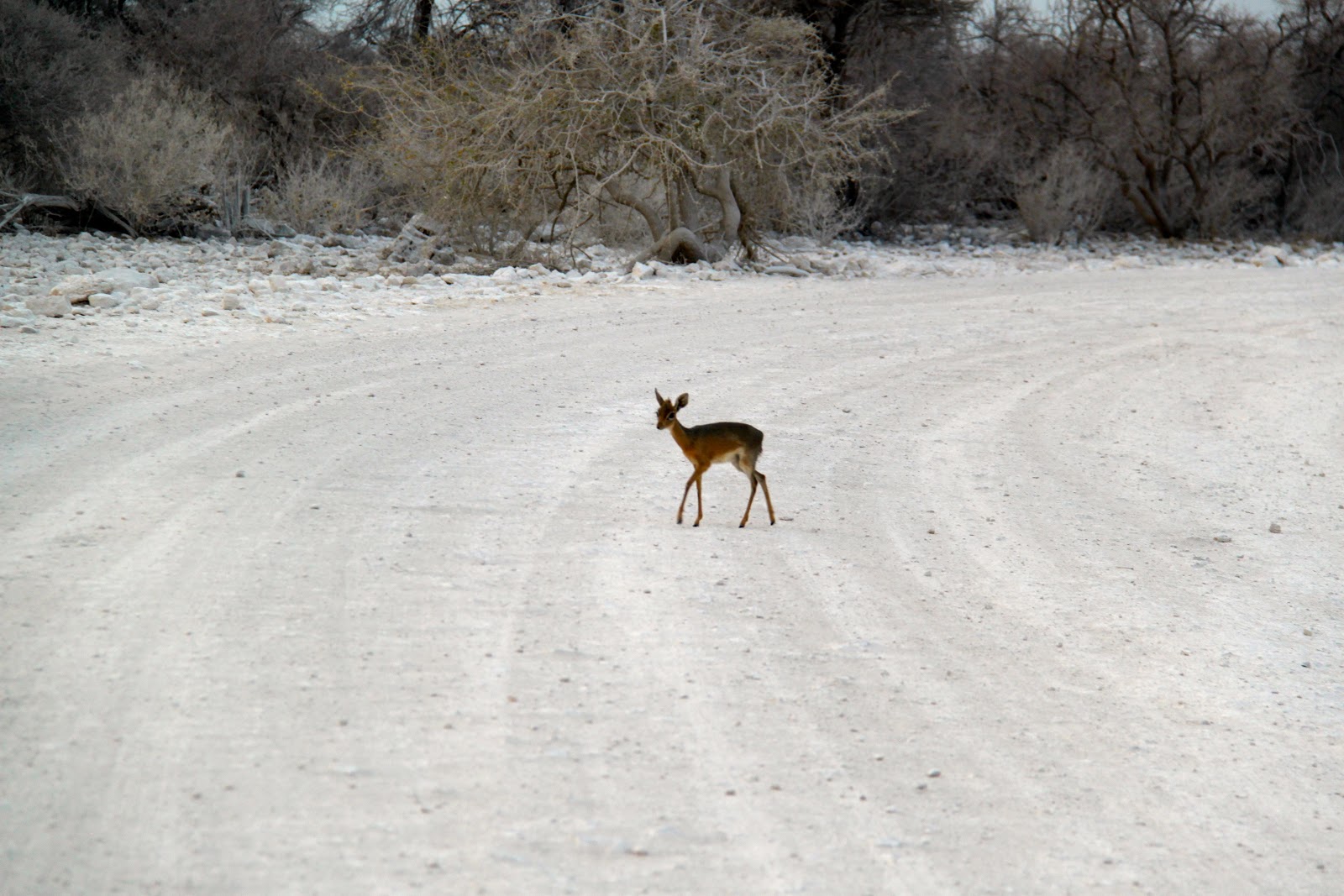
Dik Dik
Banded Mongoose

Dik dik
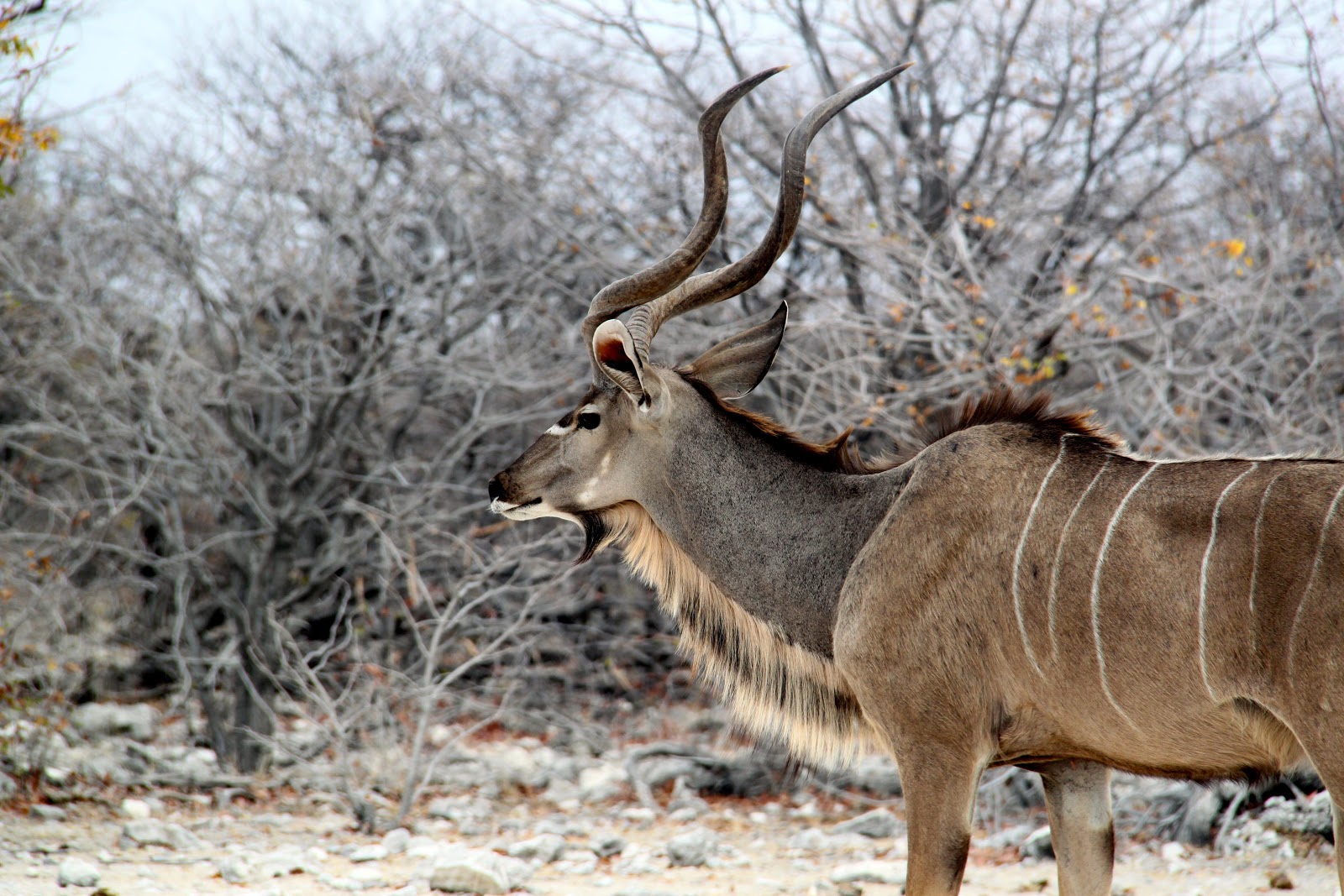
Kudu


Make Kudu


Zebra


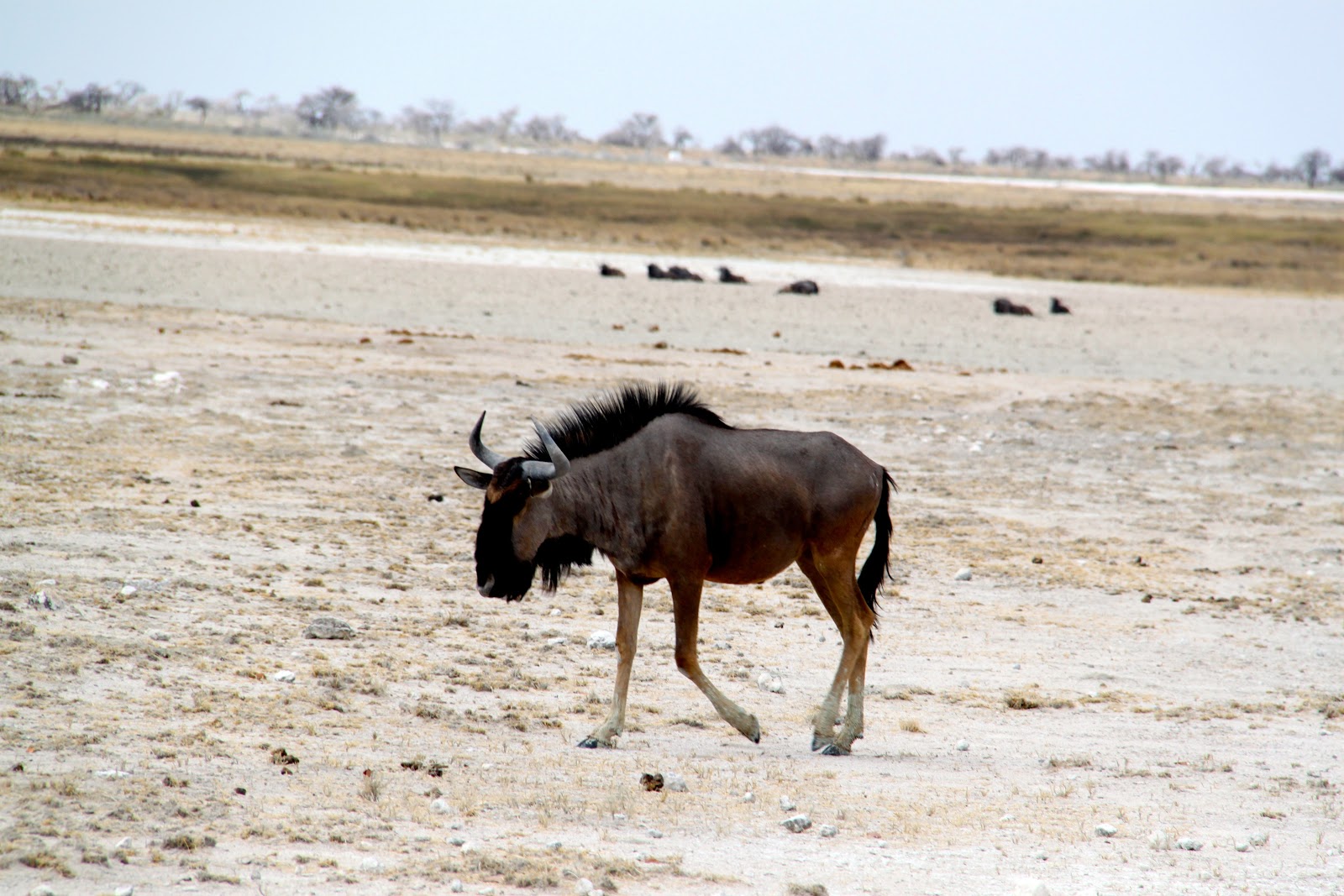
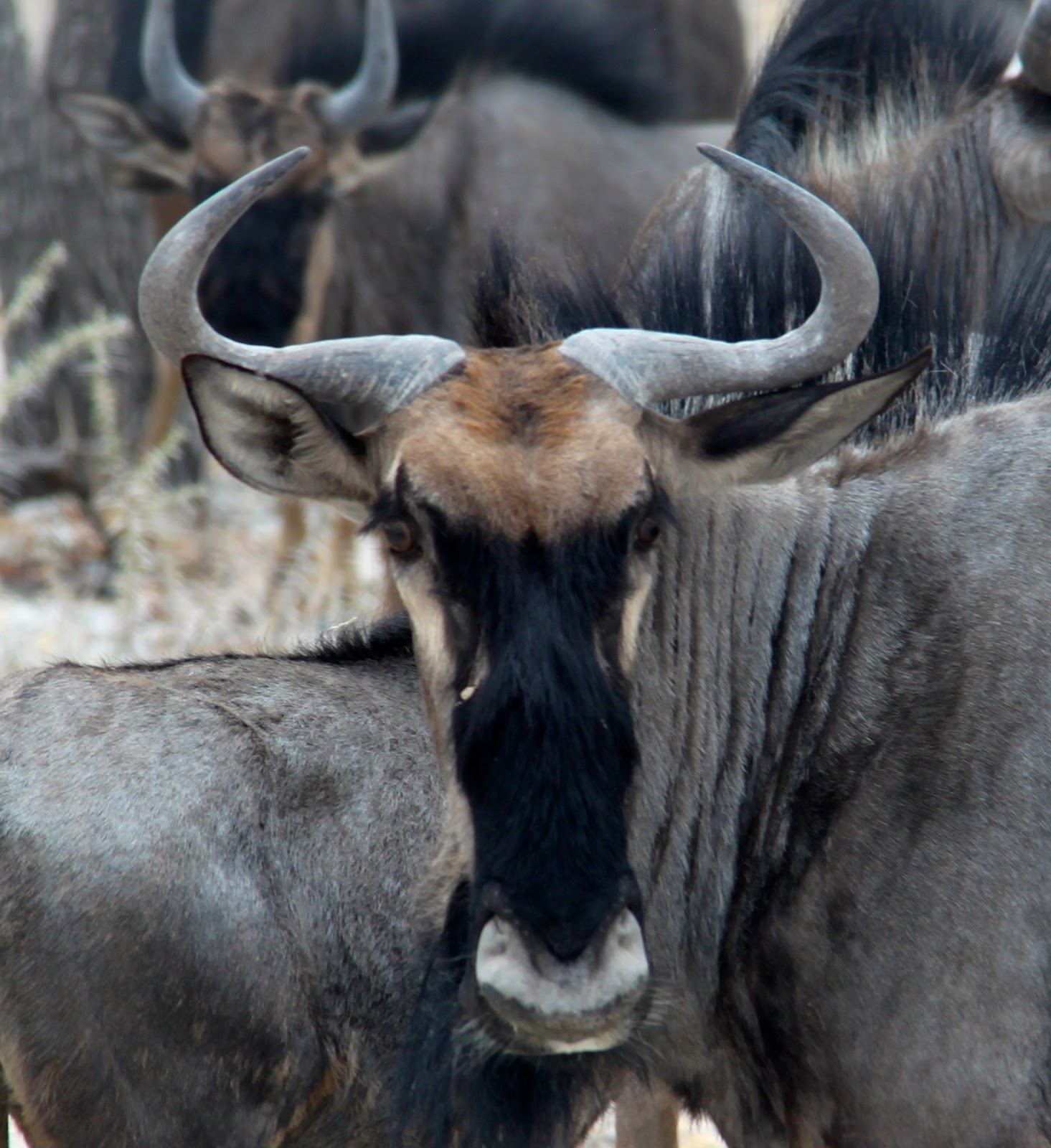
Blue Wildebeest


Korhan


Kory Bustard
Helmeted Guild Fowl


Banded Mongoose


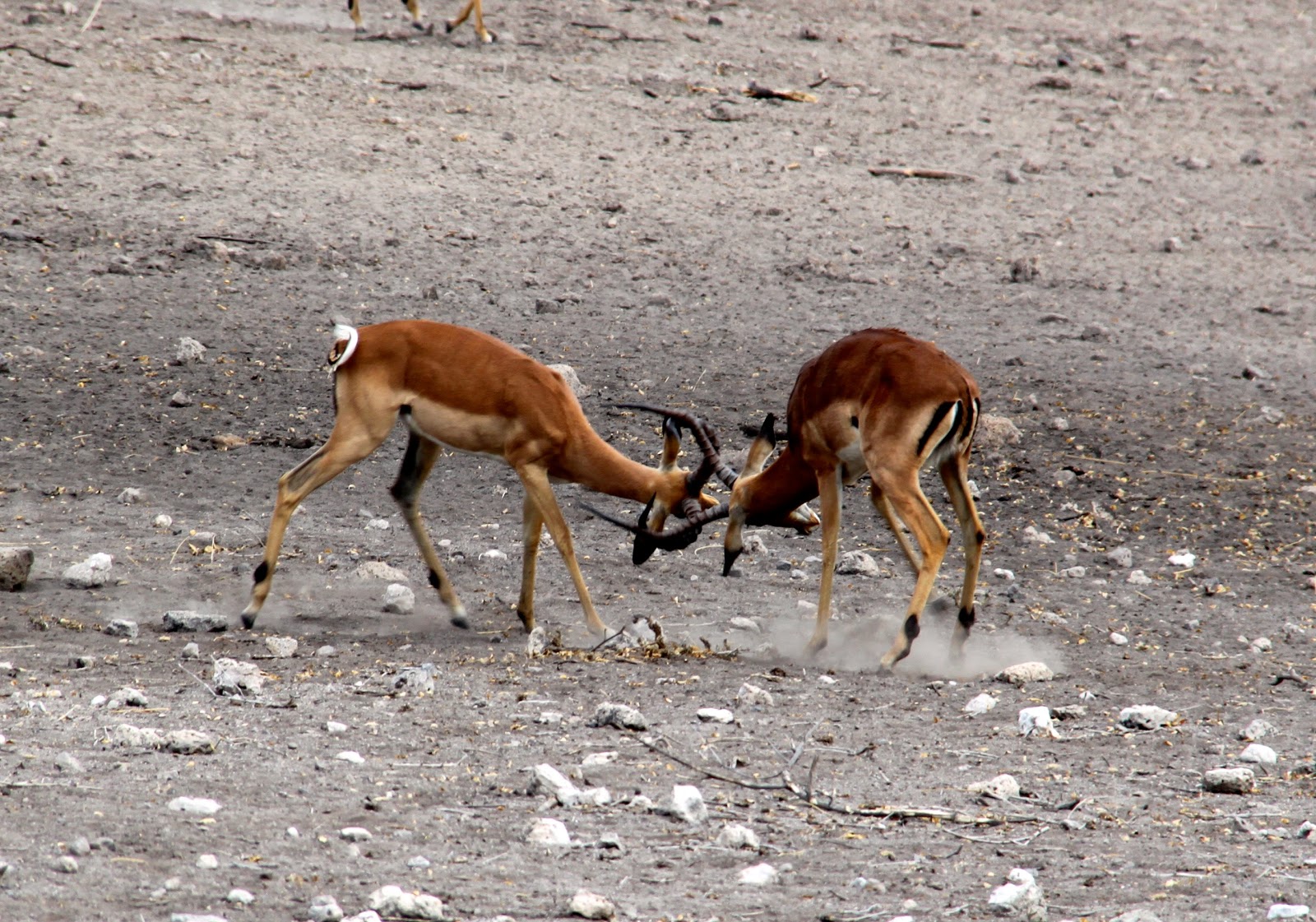
Impala fighting


Wildebeest


Etosha is a large salt pan.  A lot of it is very desolate. It’s amazing the animals survive here.


That night we heard lions roaring and some animal squealing.  We think the lions had a successful hunt.

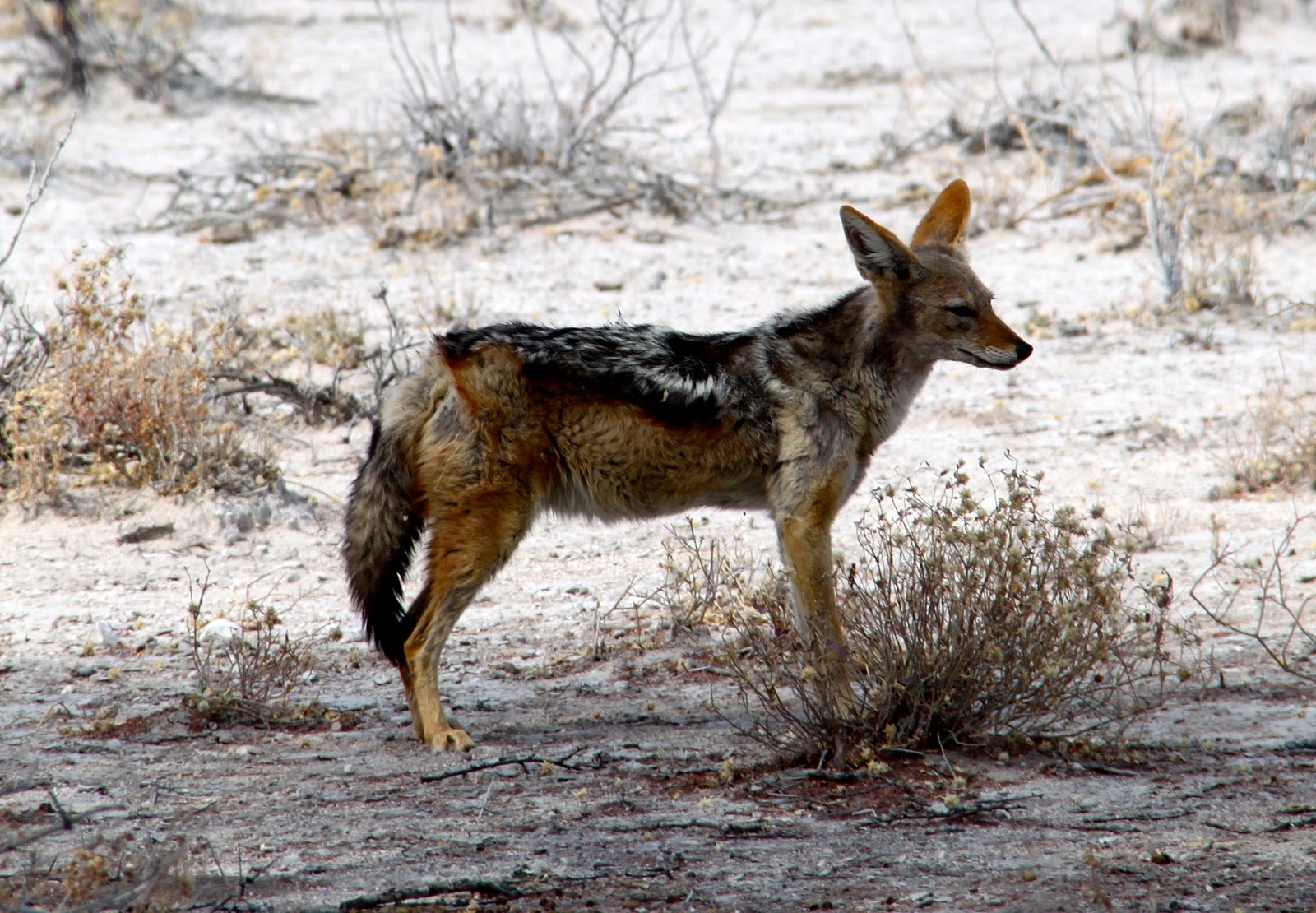
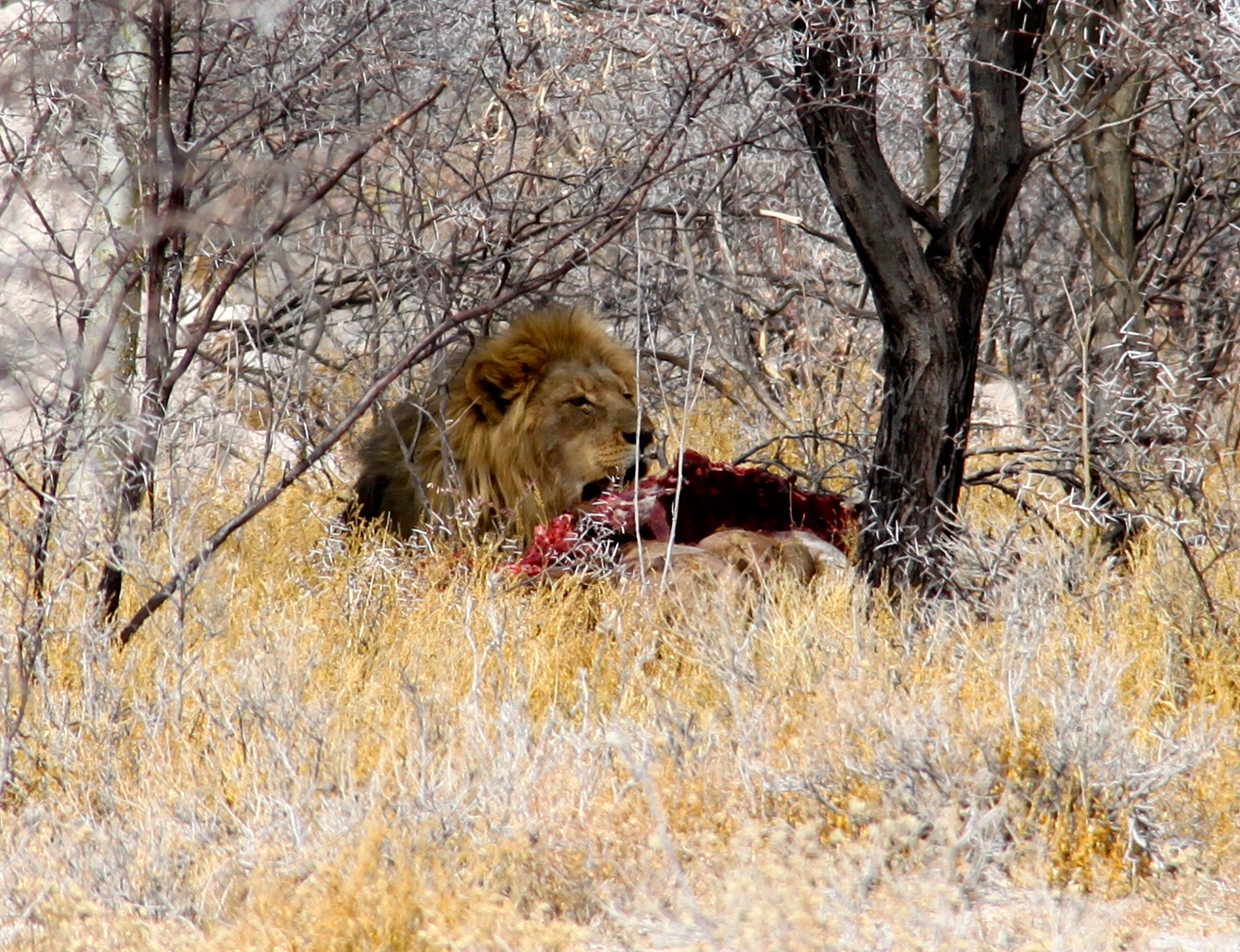
In the morning as we drove out we saw about five Black Backed Jackals.  Then we spotted a big male Lion under a tree eating an Eland.  No doubt the female Lions killed the Eland and the big male Lion in his role as the King of the Jungle gets to eat first.

Lion eating an Eland

Driving from the East Gate (Namutoni) to the South Gate (Andersson’s Gate) of Etosha National Park:

When you drive in Etosha National Park you must enter after sunrise and get out of the gate by sunset each day.  The only exceptions are for those that stay in the few government camps inside the Park.  On our drive across Etosha we visited our favorite water holes near the east gate including Klein Namutoni, Koinagas, Chudop and Kalkheuwel.  Then we drove west into the center of the park and visited Salvadora, Sueda, Homob, Nebrown, Gemshokvlakte and Olifantsbad.  We then drove further west to Wofsnes and onto Okondeka before turning around to make sure we could get out of the park by sunset.


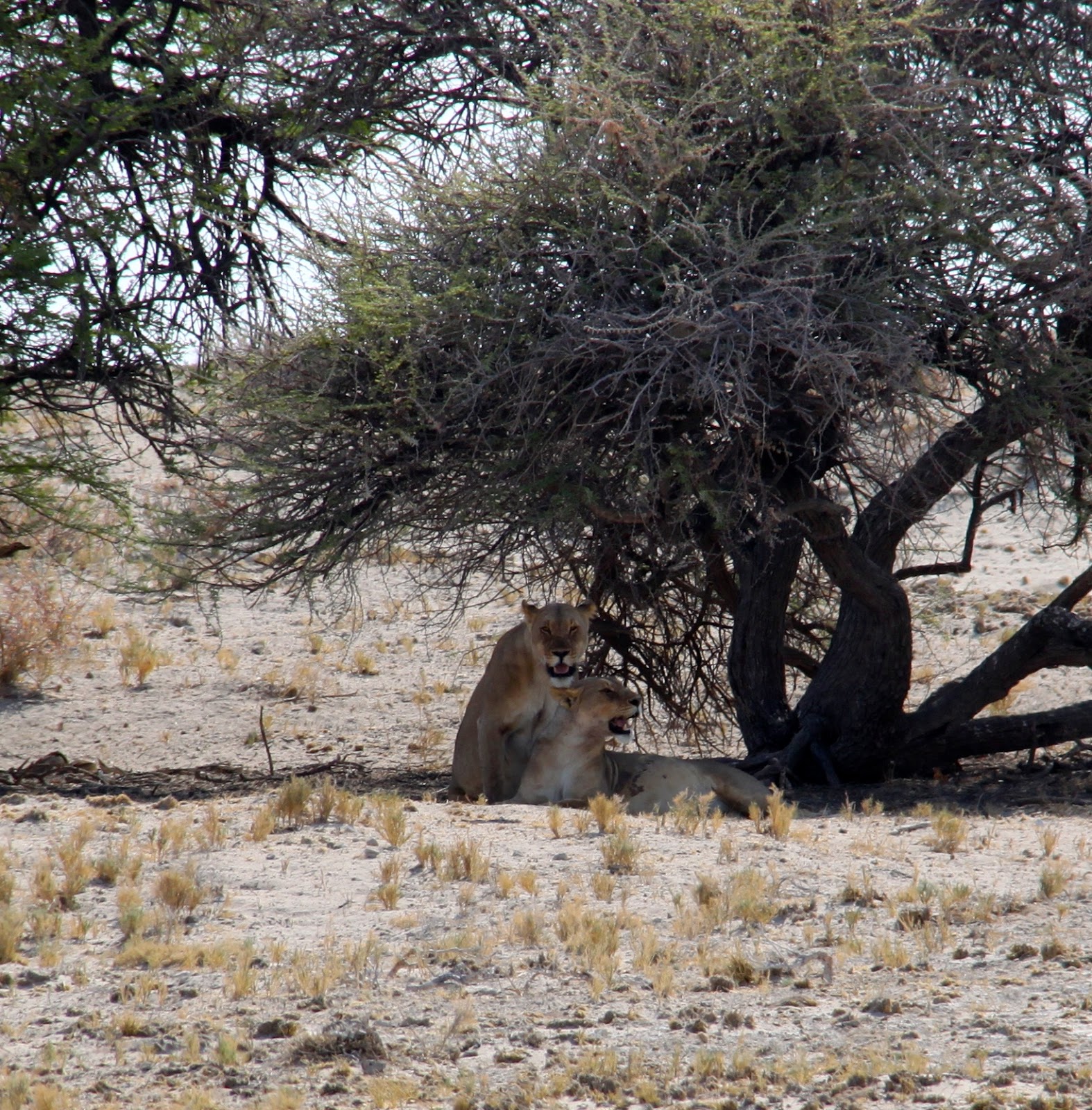
There were animals throughout the park but there were more animals and there was more action near the water holes closer to the East Gate.  However, where we turned around at our most westerly location in the park we also saw two female lions lounging under one of the few shade trees in that area.


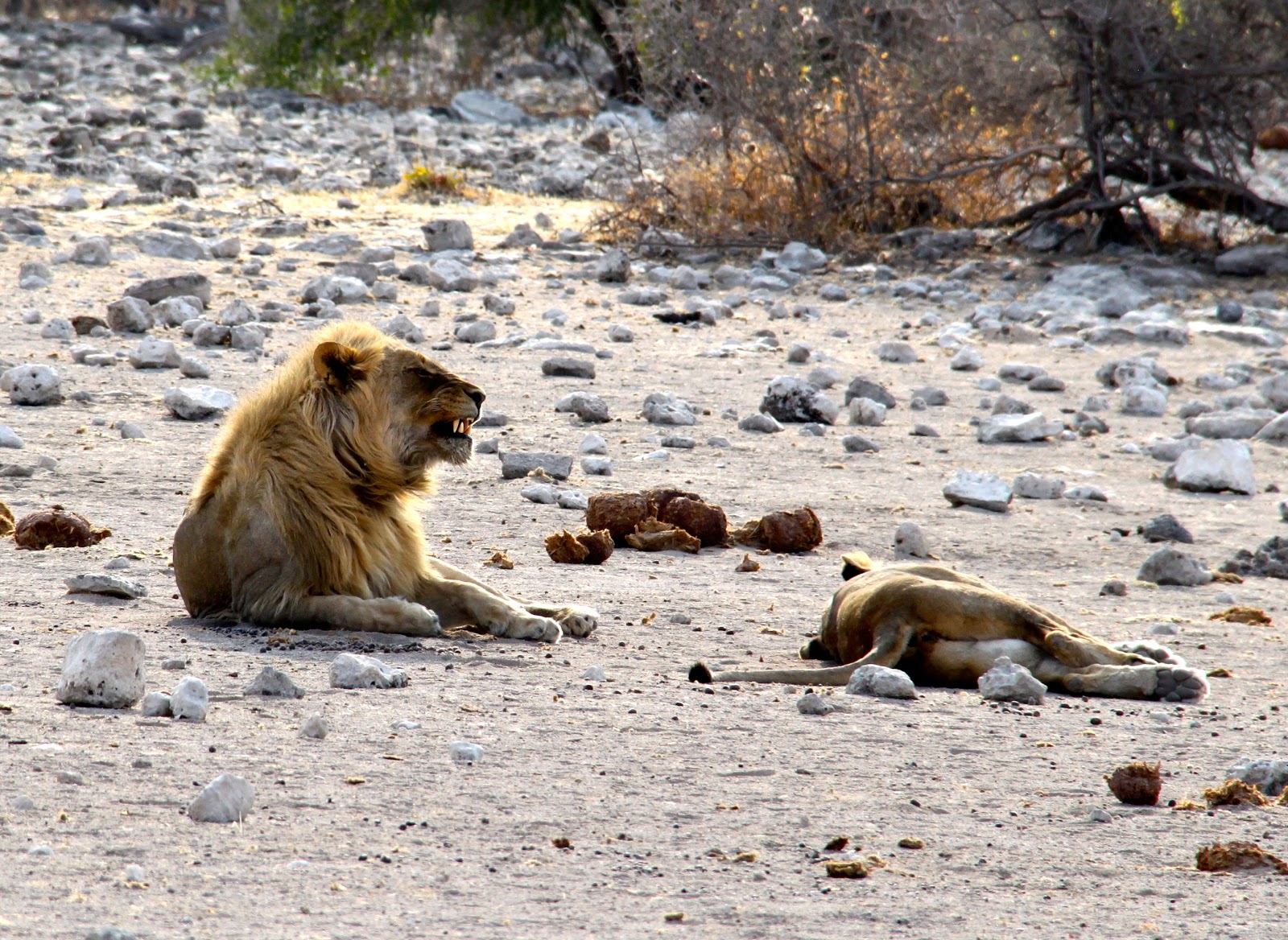
That night we stayed in Andersson’s Camp.  Charles Andersson “discovered” this area in 1851 and this camp is on that homestead.  The camp has a “blind” or “hide” where you can walk in an underground tunnel up to a concrete bunker with one foot wide windows with metal bars so you can look at the animals up close.  When Barb and I entered the blind there were three people in it looking at a young male Lion from a distance of about 5 feet.  The Lion was crouched looking straight into our faces.  All of sudden the Lion roared and charged forward stopping just short of the bars.  Everyone in the blind jumped back from the bars.  This was gut wrenching scary!  The Lion charged again and stopped, this time throwing dirt into the blind through the bars.  One lady was shaken and left the tunnel.  The Lion charged 3 or 4 more times before he got up to leave following a family of three other female Lions as they left the area.  Wow!  They tell you if you are charged by a Lion to stand your ground and yell back at the Lion.  I’m not sure I could stand my ground in the face of that power and noise of the Lion’s roar.
Andersson’s Camp


Our room


Scott cooling off

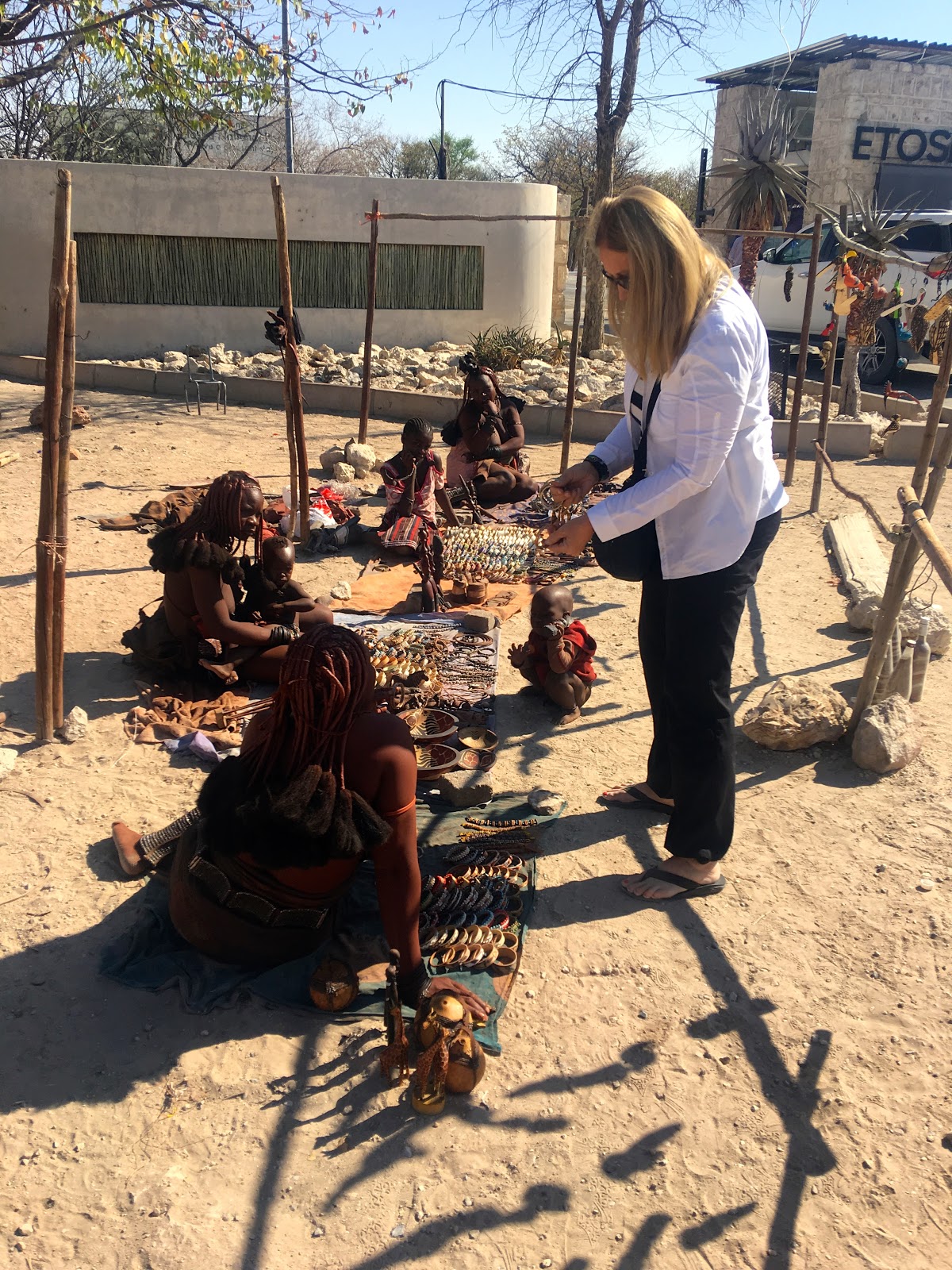
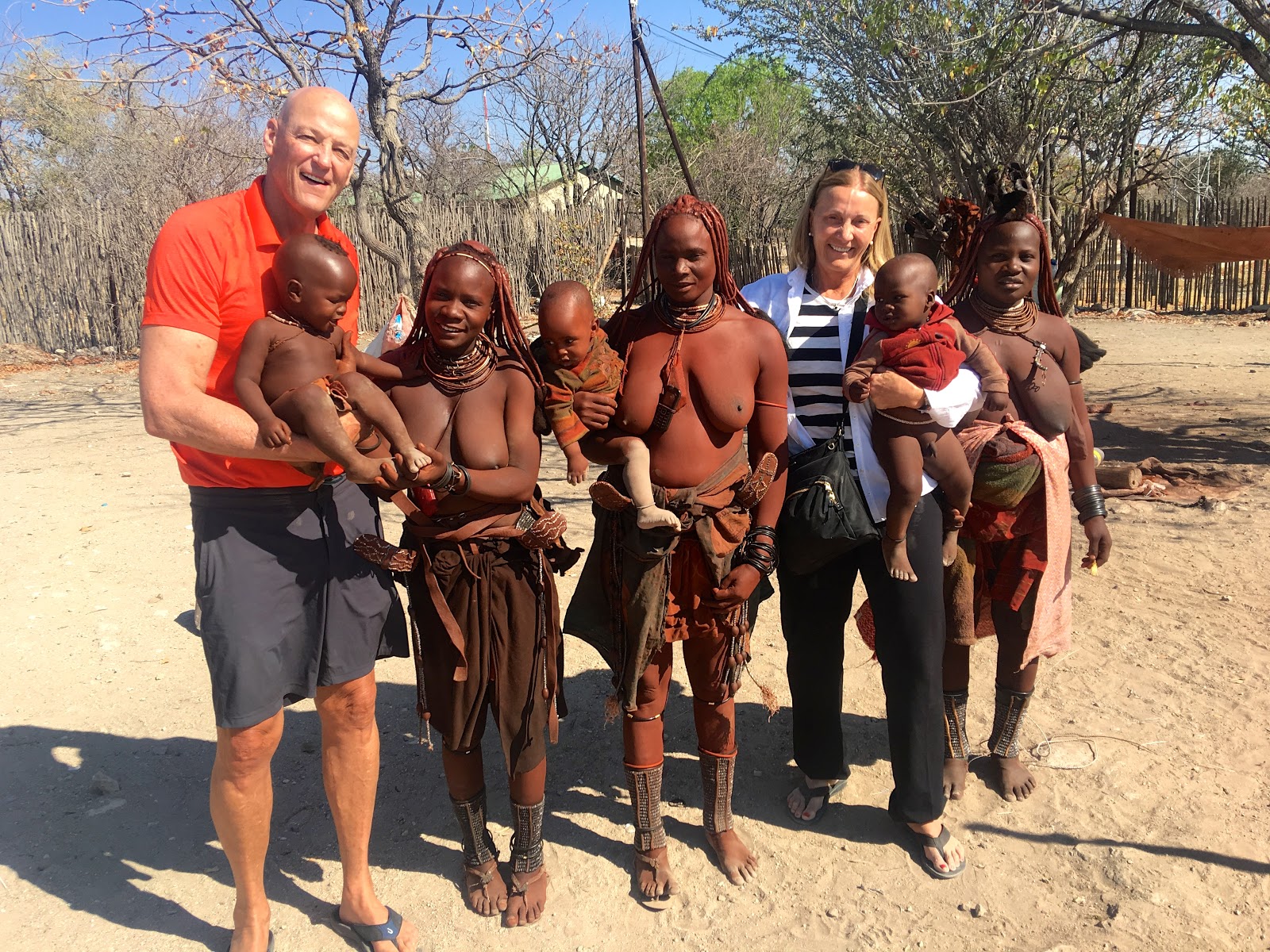
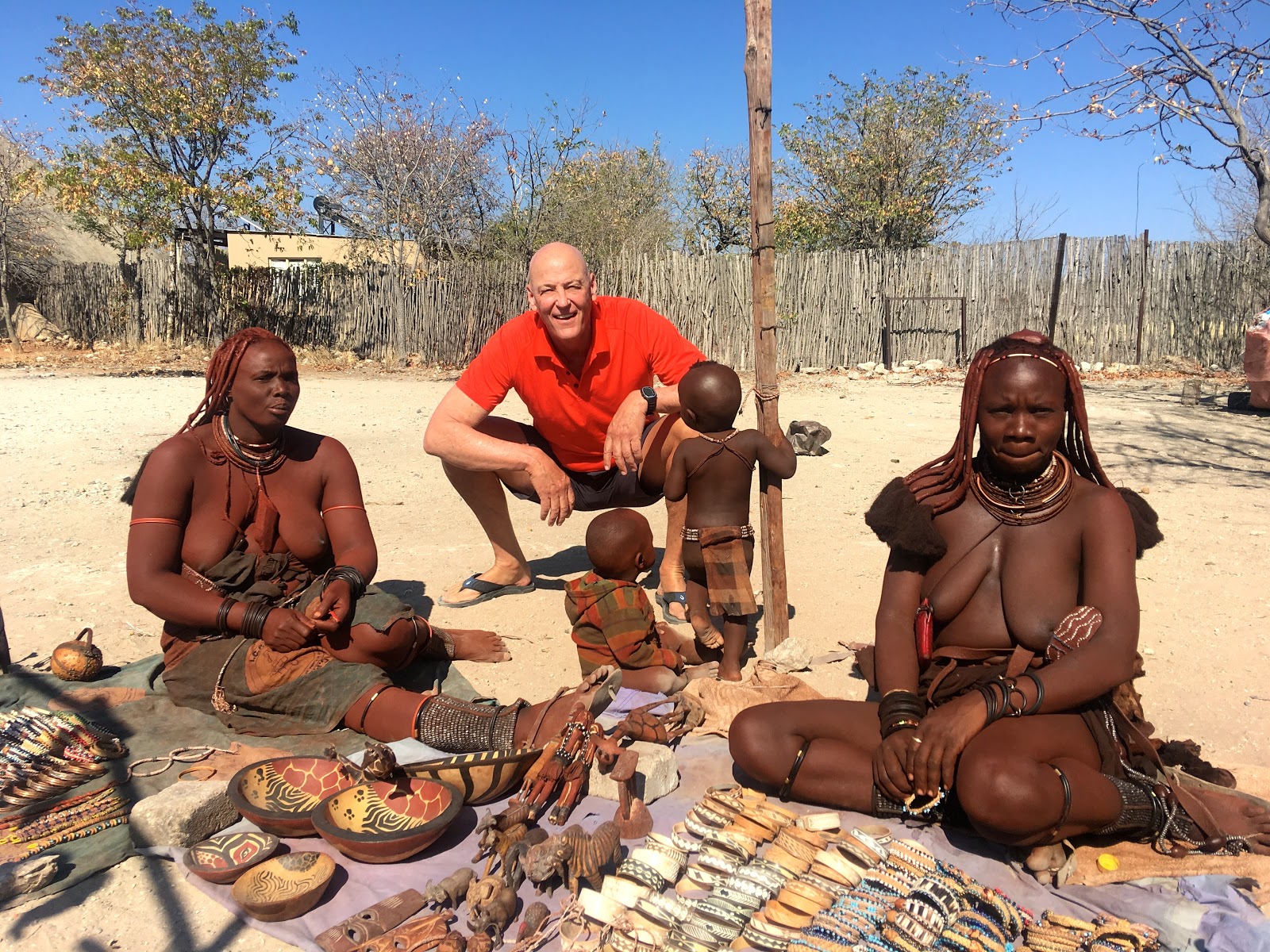
The next morning we began our five-hour drive to the Desert Rhino Camp in Damaraland.  On the way we stopped to see some Himba women with their babies.  We bought some bracelets, played with their babies and took some pictures.  The Himba are a beautiful people.

Barb shopping
The Himba women use red ochre to rub all over their bodies.  They use it for a sunscreen and beauty

Namibia-Caprivi Strip-Zambezi Region-Nambwa Lodge-Camp 3 October 3-4, 2016

Nambwa Lodge
Camp 3

The Zambezi Region (Caprivi Strip)

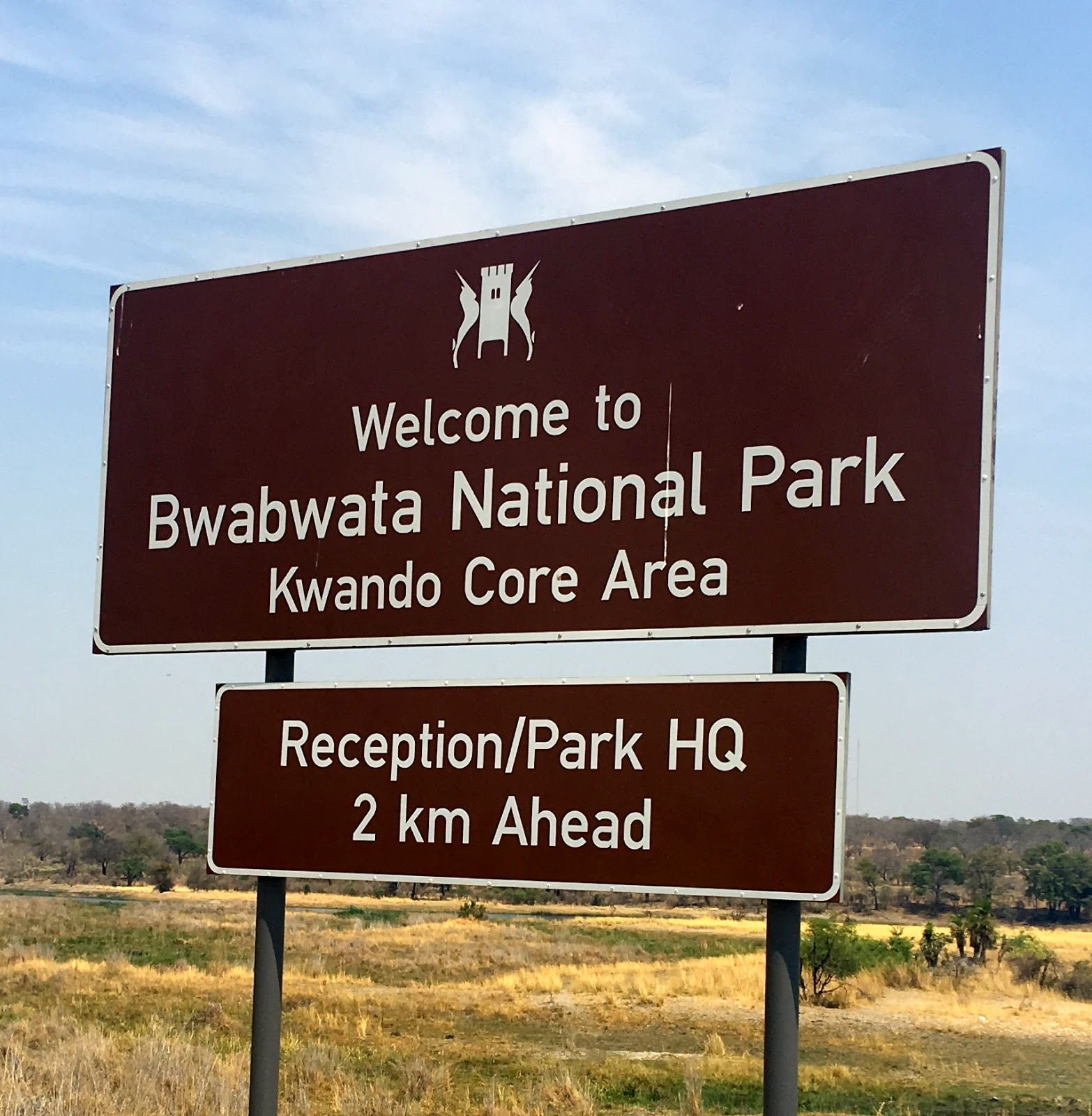
In the morning we drove three hours to our next lodge.  The first two hours we were on a newly paved road and could travel 120 kilometers per hour.  Then we entered the Bwabwata National Park in the Kwando Core Area on deep and rutted sandy roads where we were afraid we might get bogged down in the sand.  The road is deep sand all of the way.  We got stuck in the sand one time but we put the Land Rover Defender in low range 4 wheel drive and locked the differential and we were able to drive out.  We drove for another hour while spotting Kudu, Impala, and other animals along the way for the 15 kilometers to the Nambwa Lodge.  This is a luxury lodge built on stilts above the savannah.

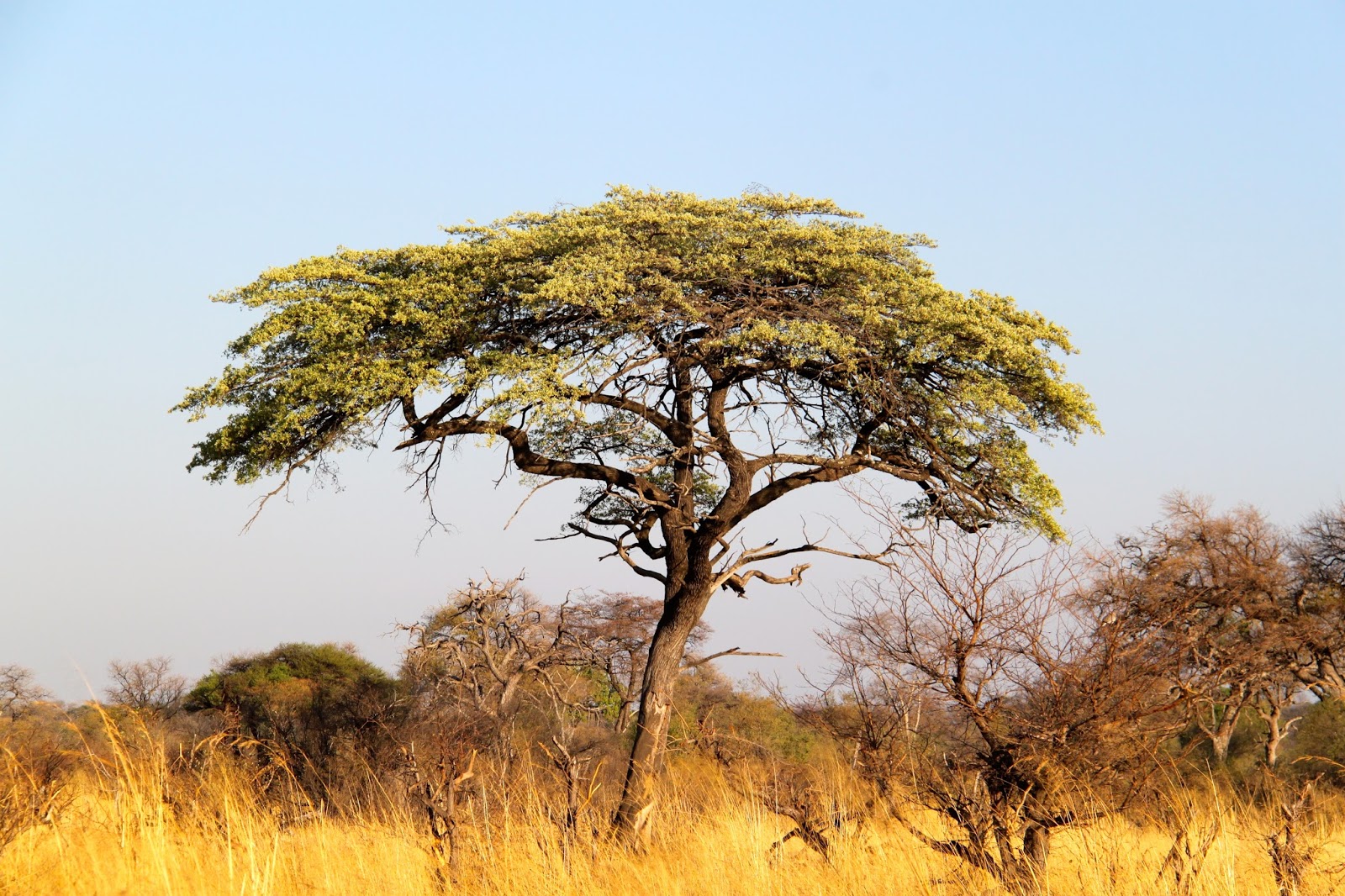
Acacia tree


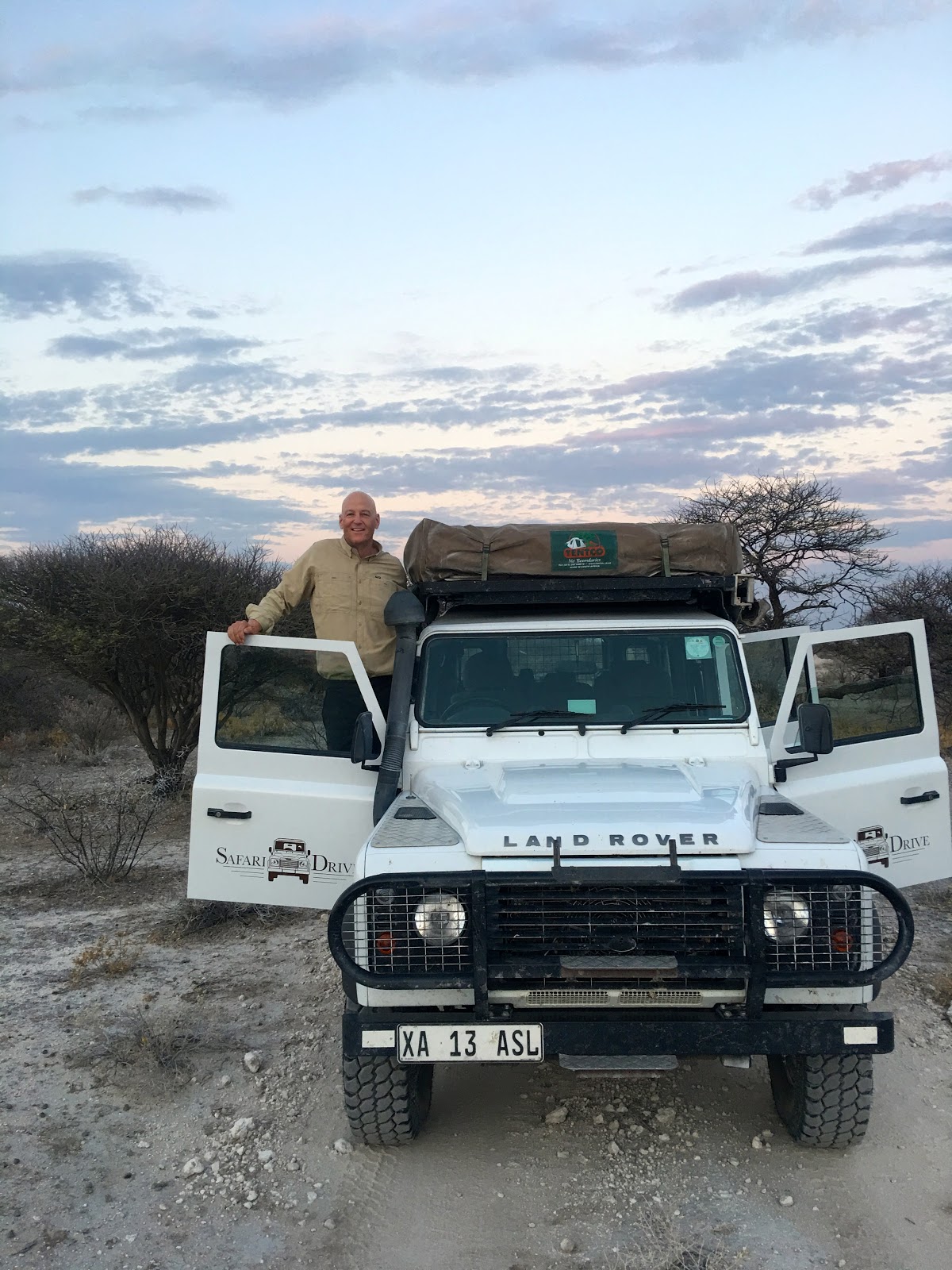
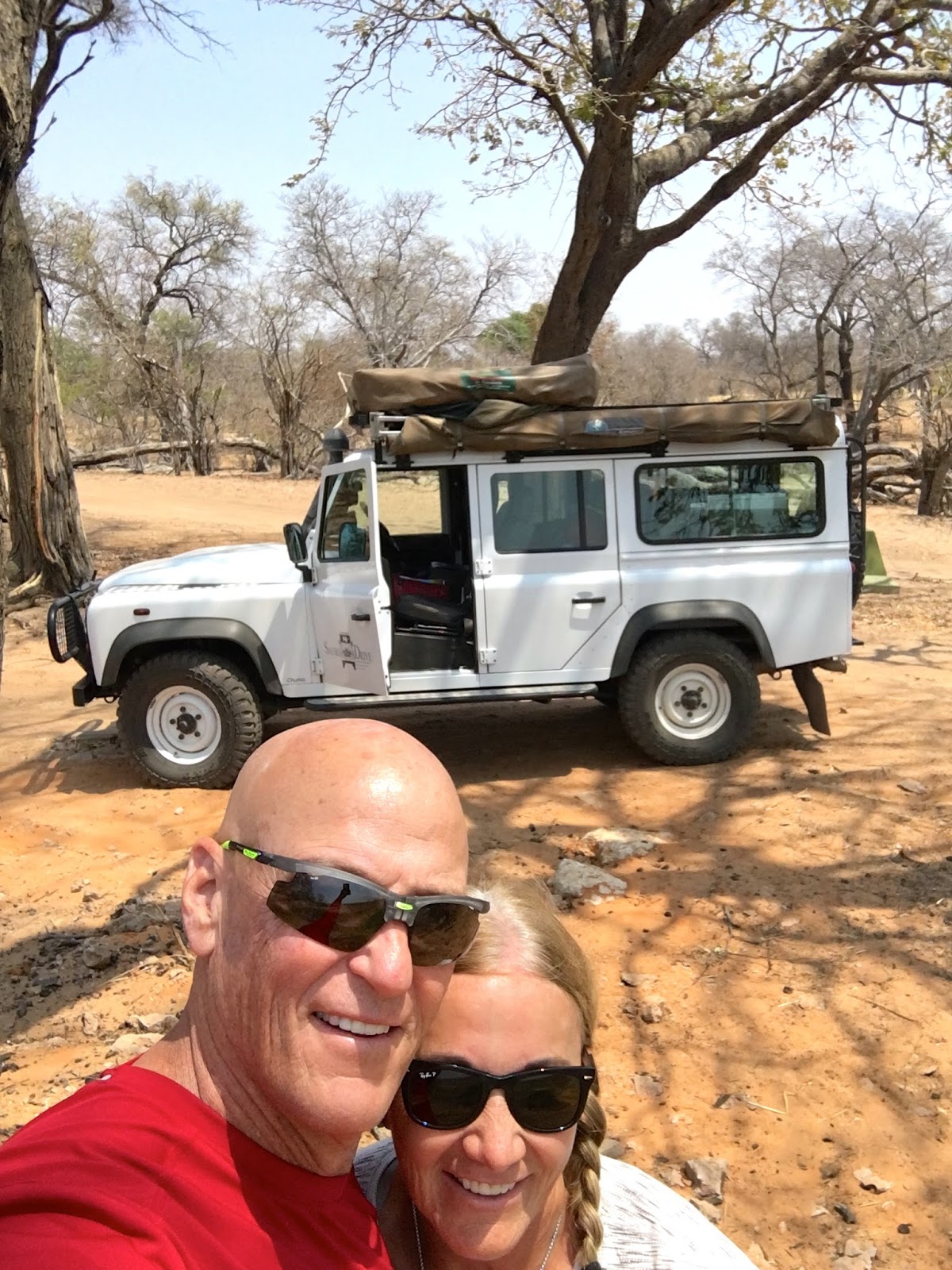
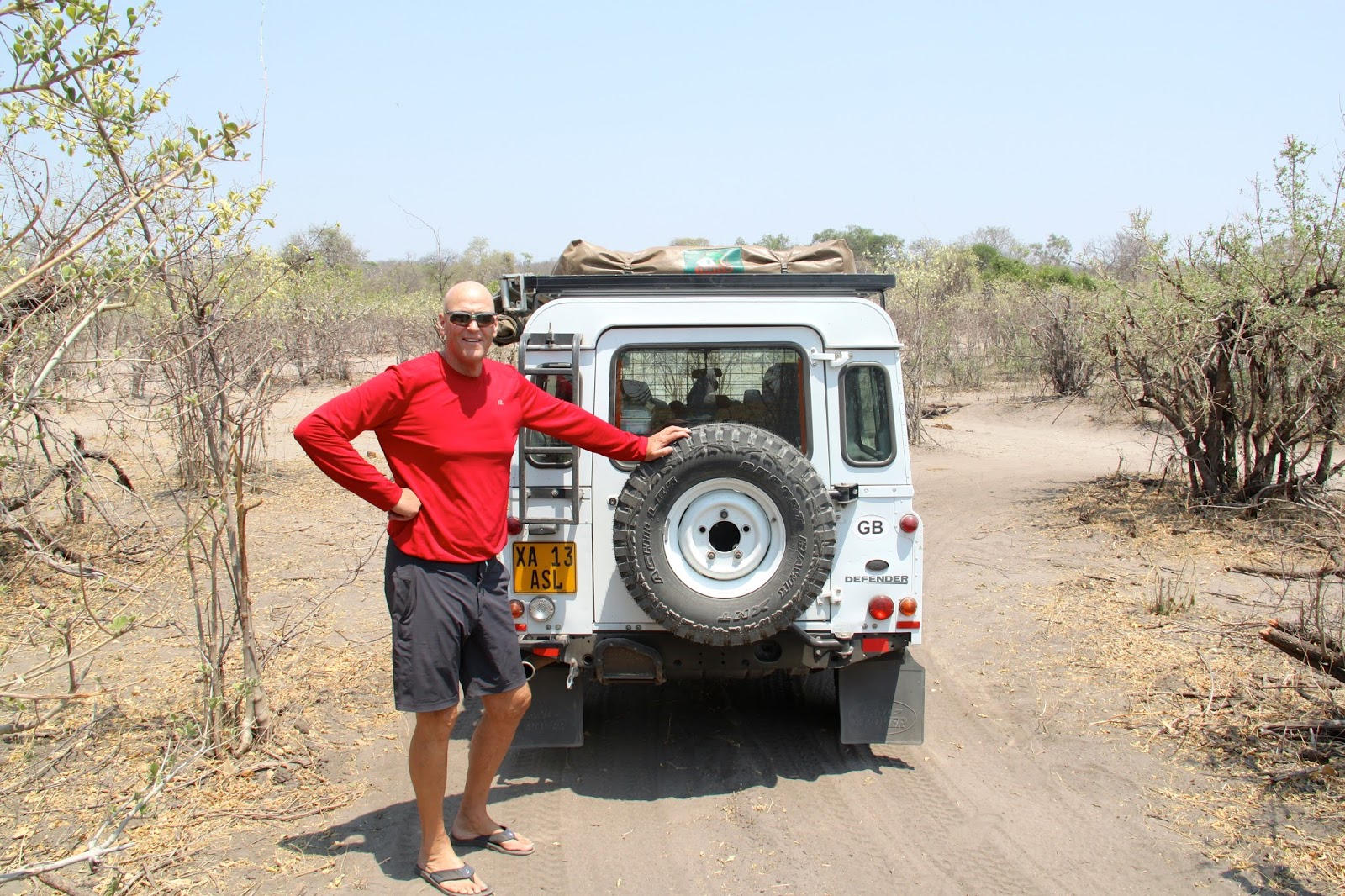
Selfie with our trusty defender named Chuma


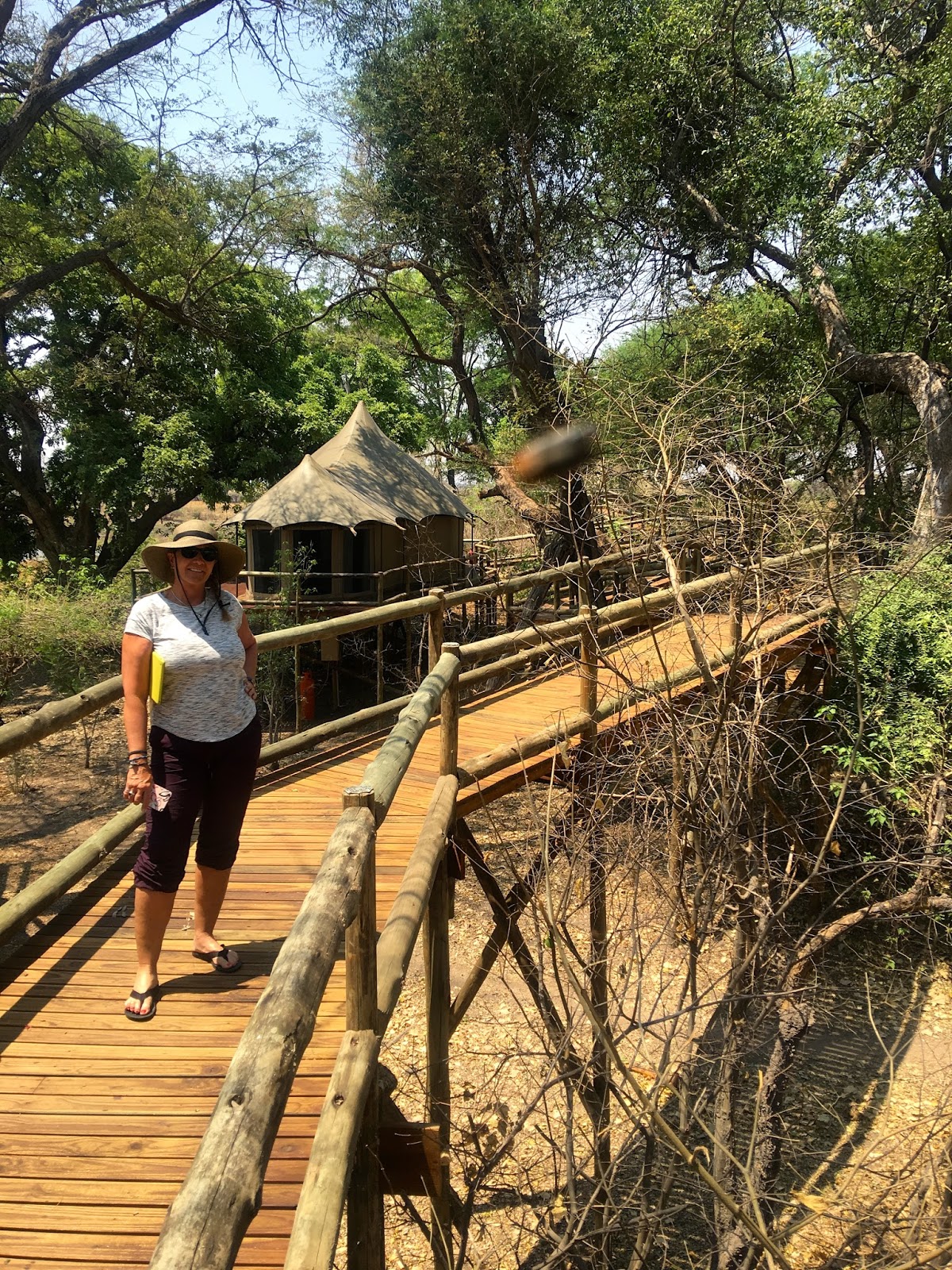
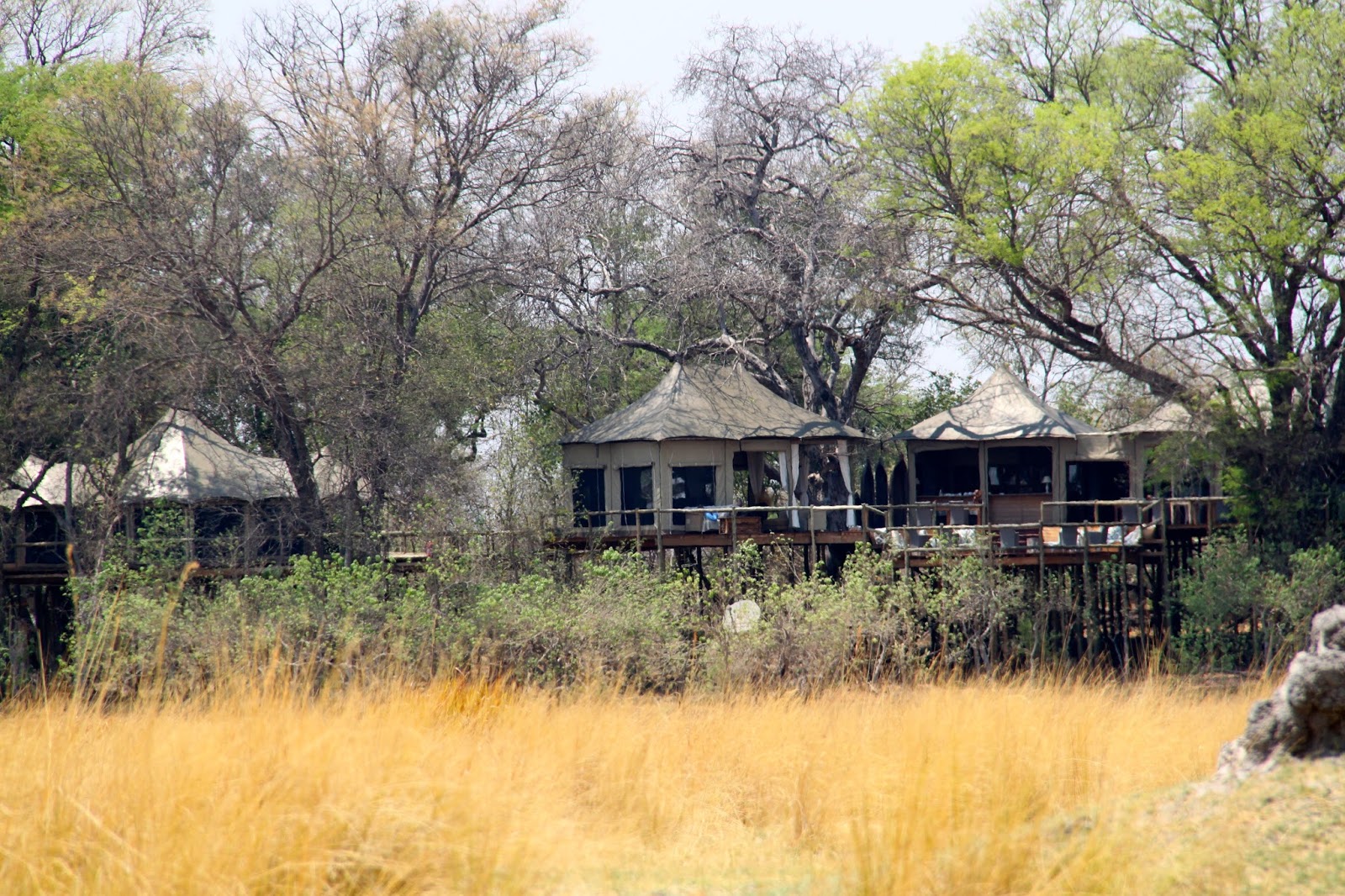
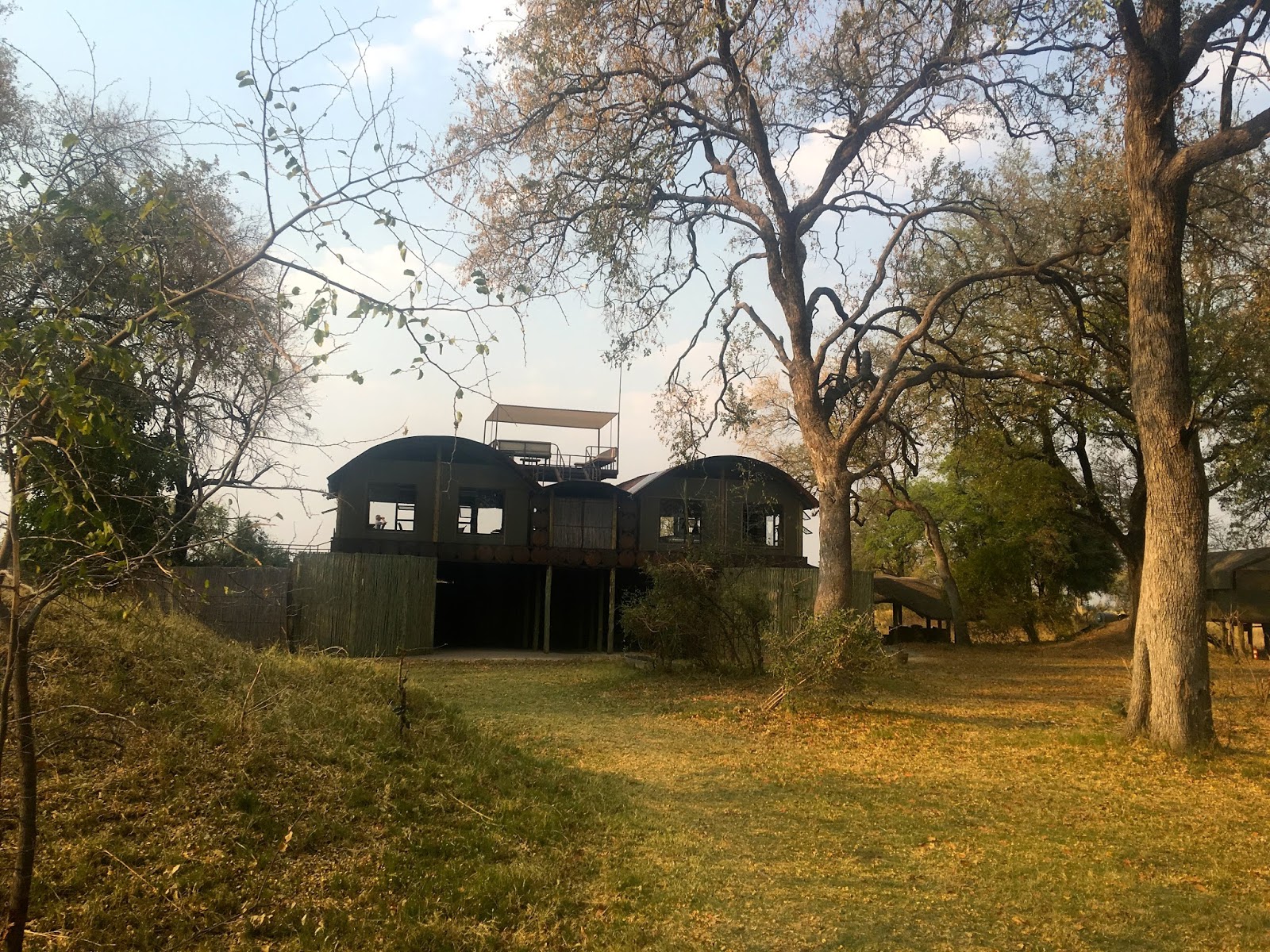
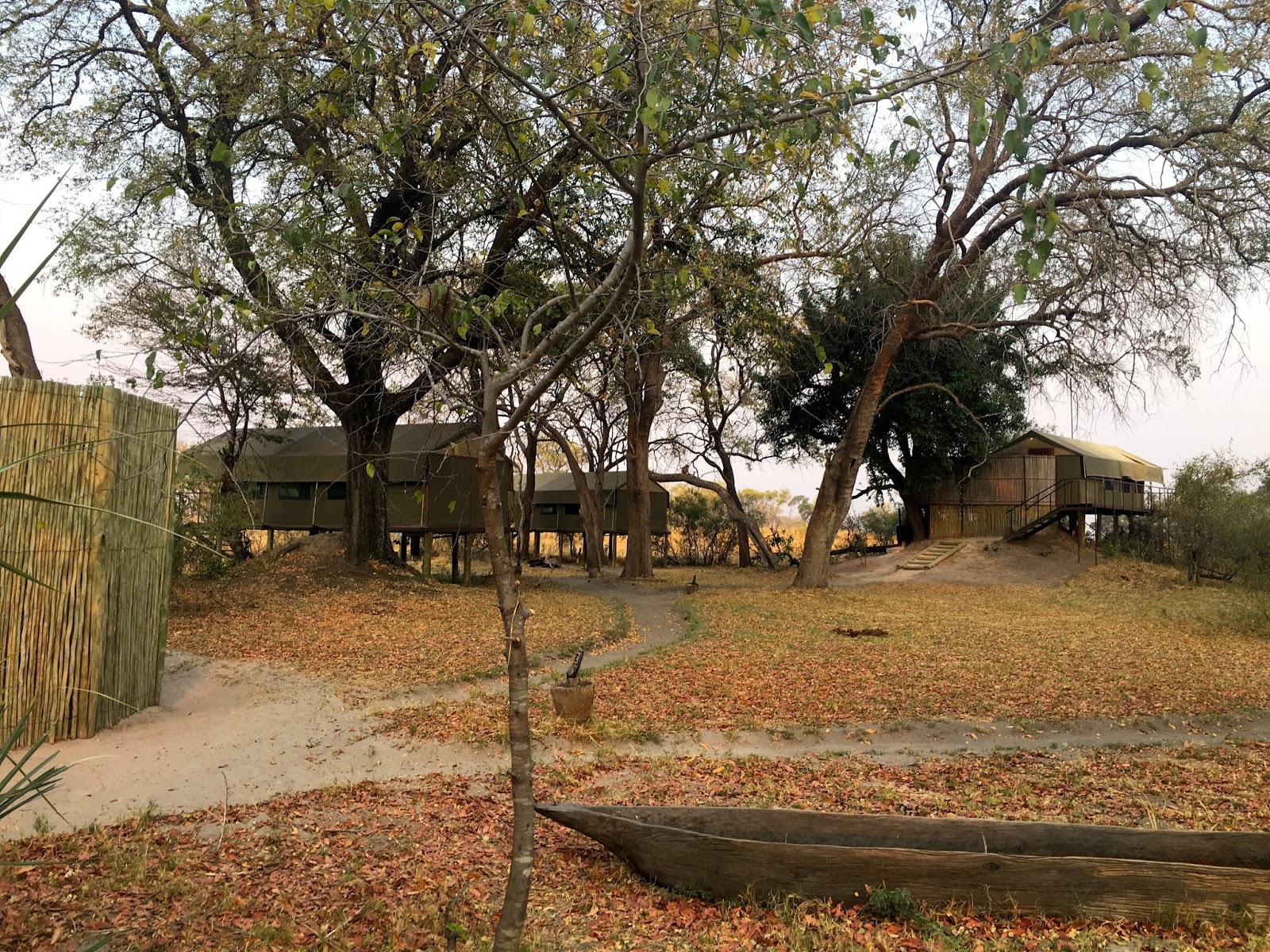
Lodge at Nambwa.  All huts are built on stilts, and the animals can walk under the walkways.


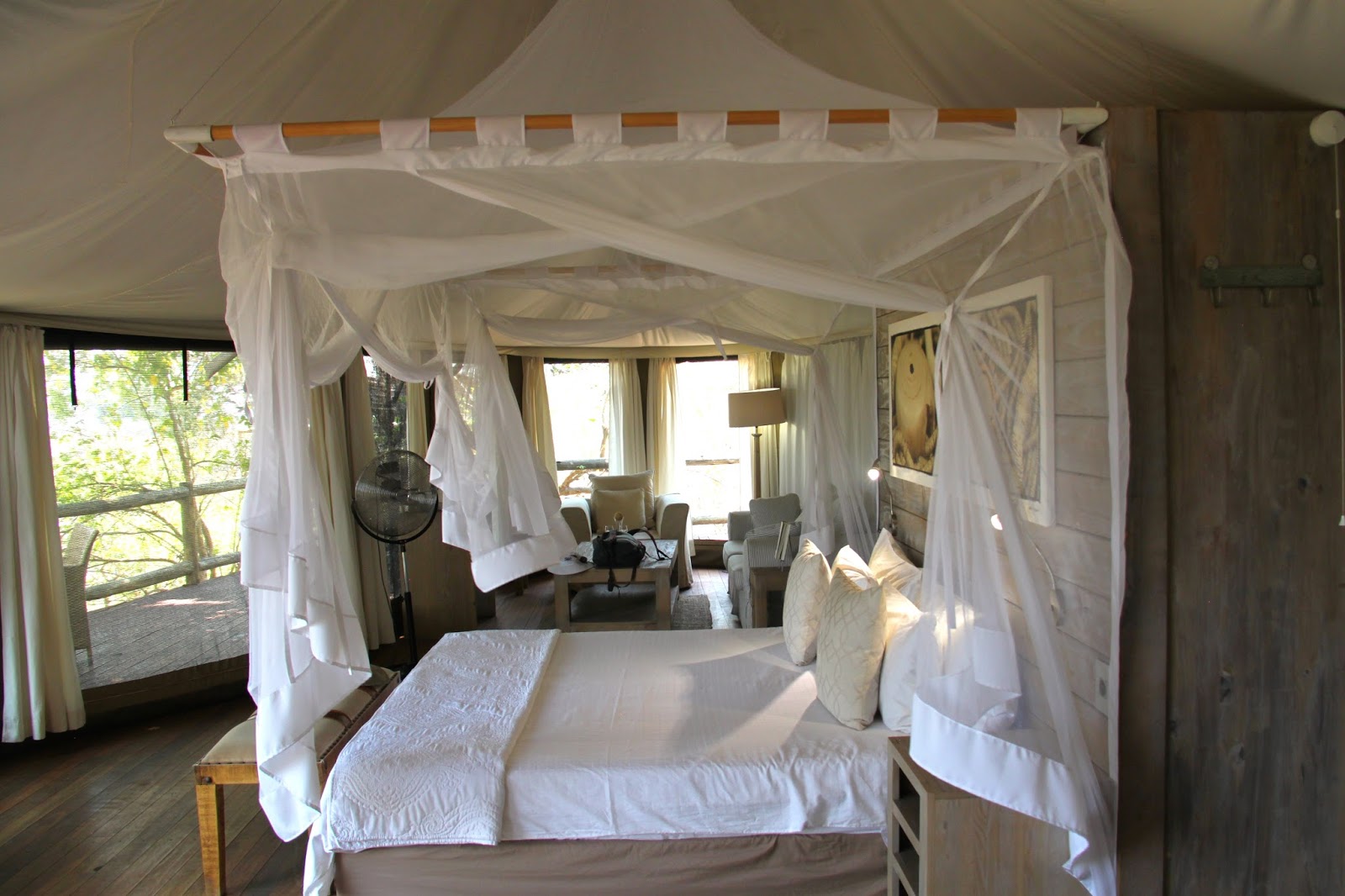
Our tented room with mosquito netting around the bed
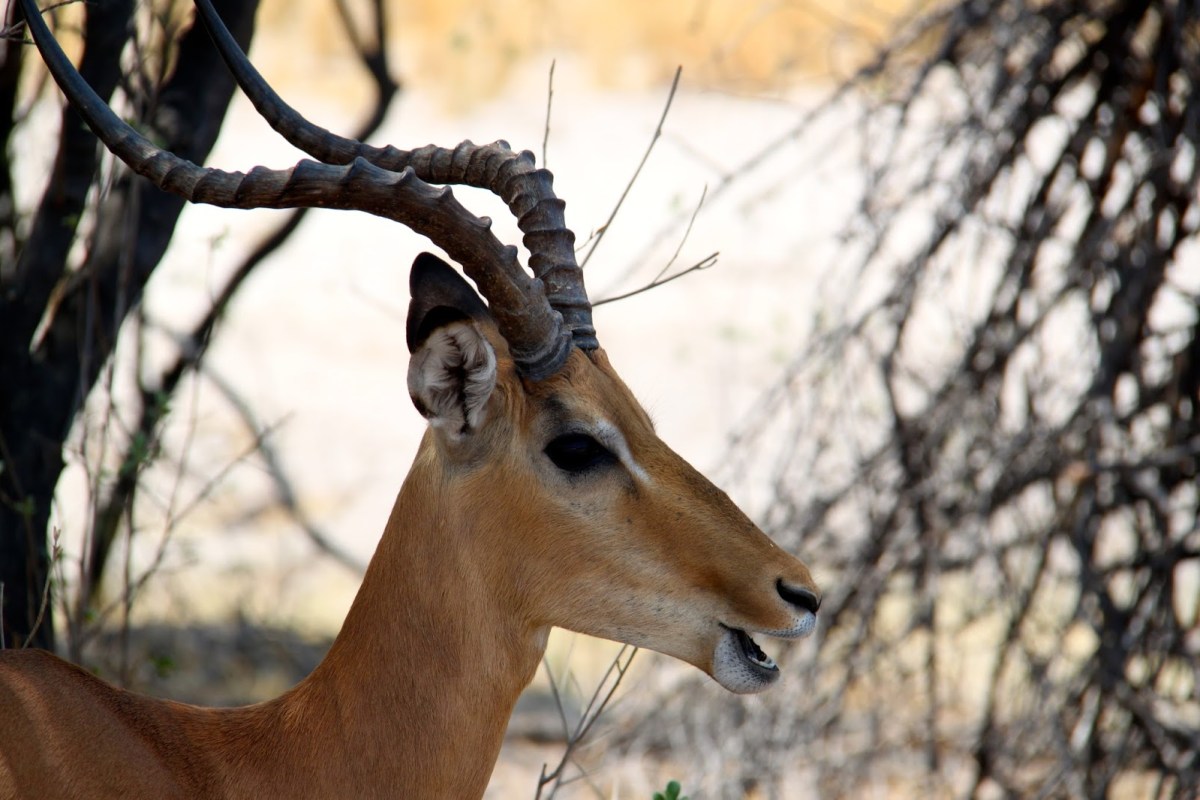
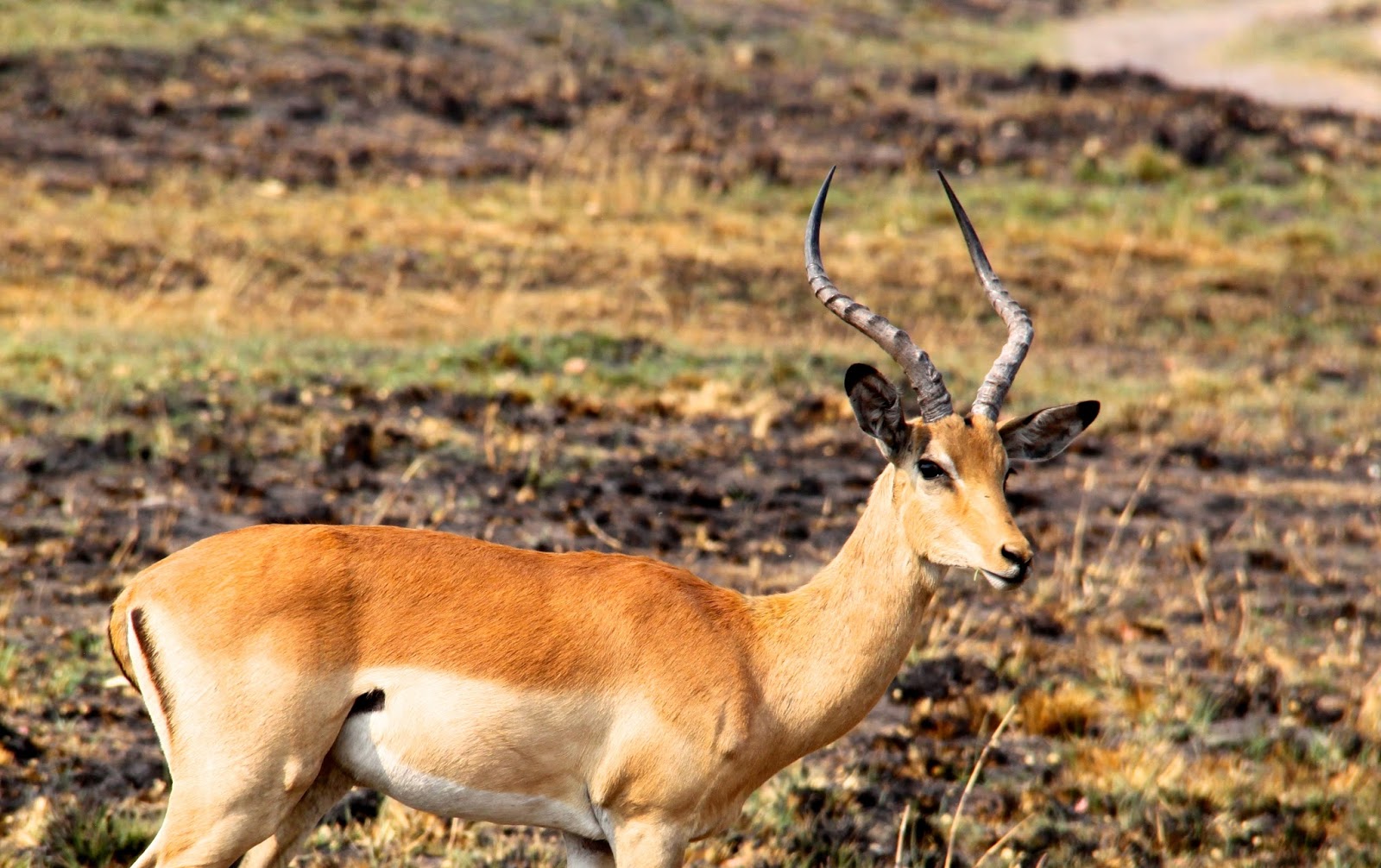
Impala
Always greeted with a wet wash cloth to refresh yourself


Tented lodge
Scott

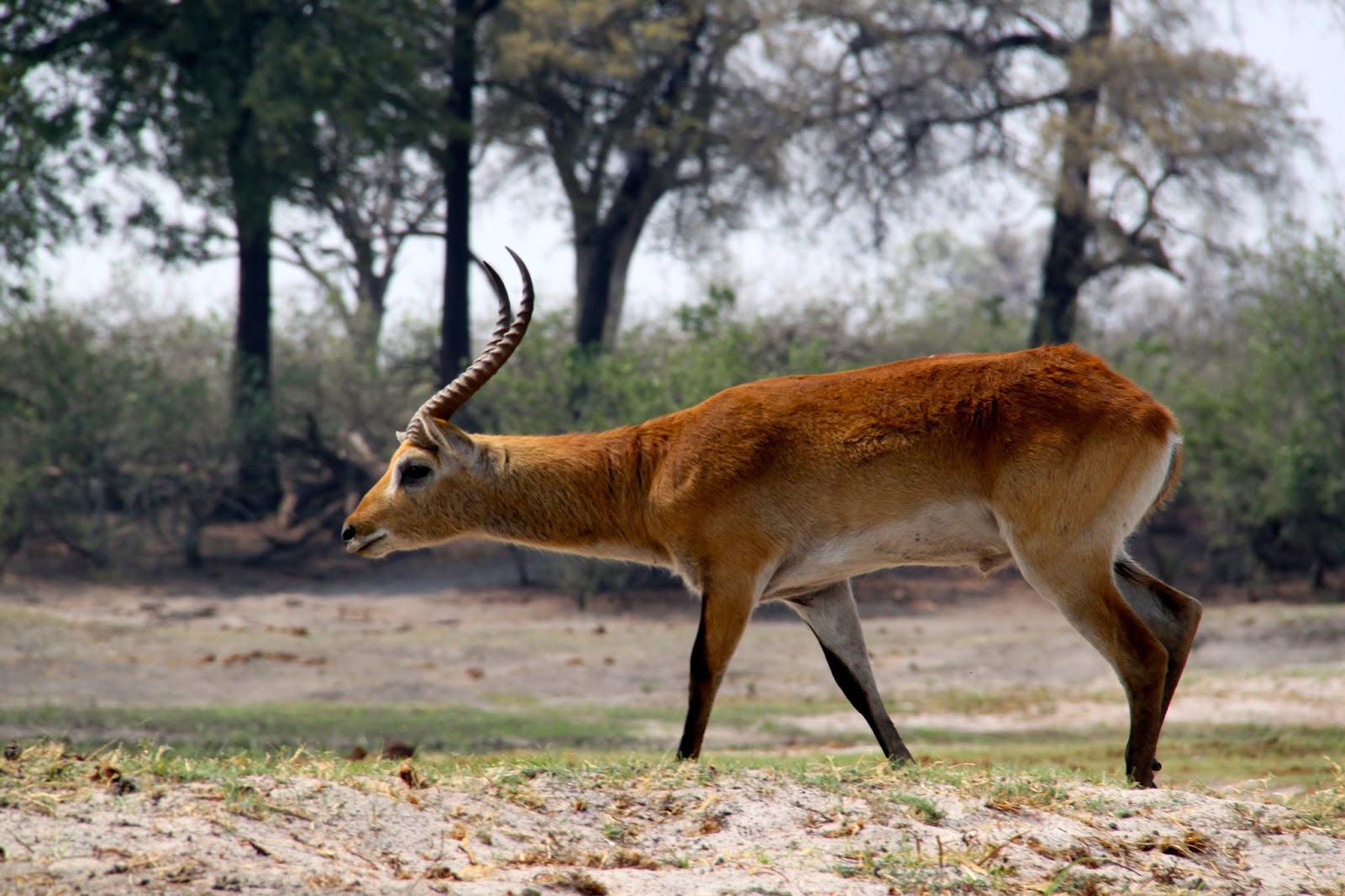
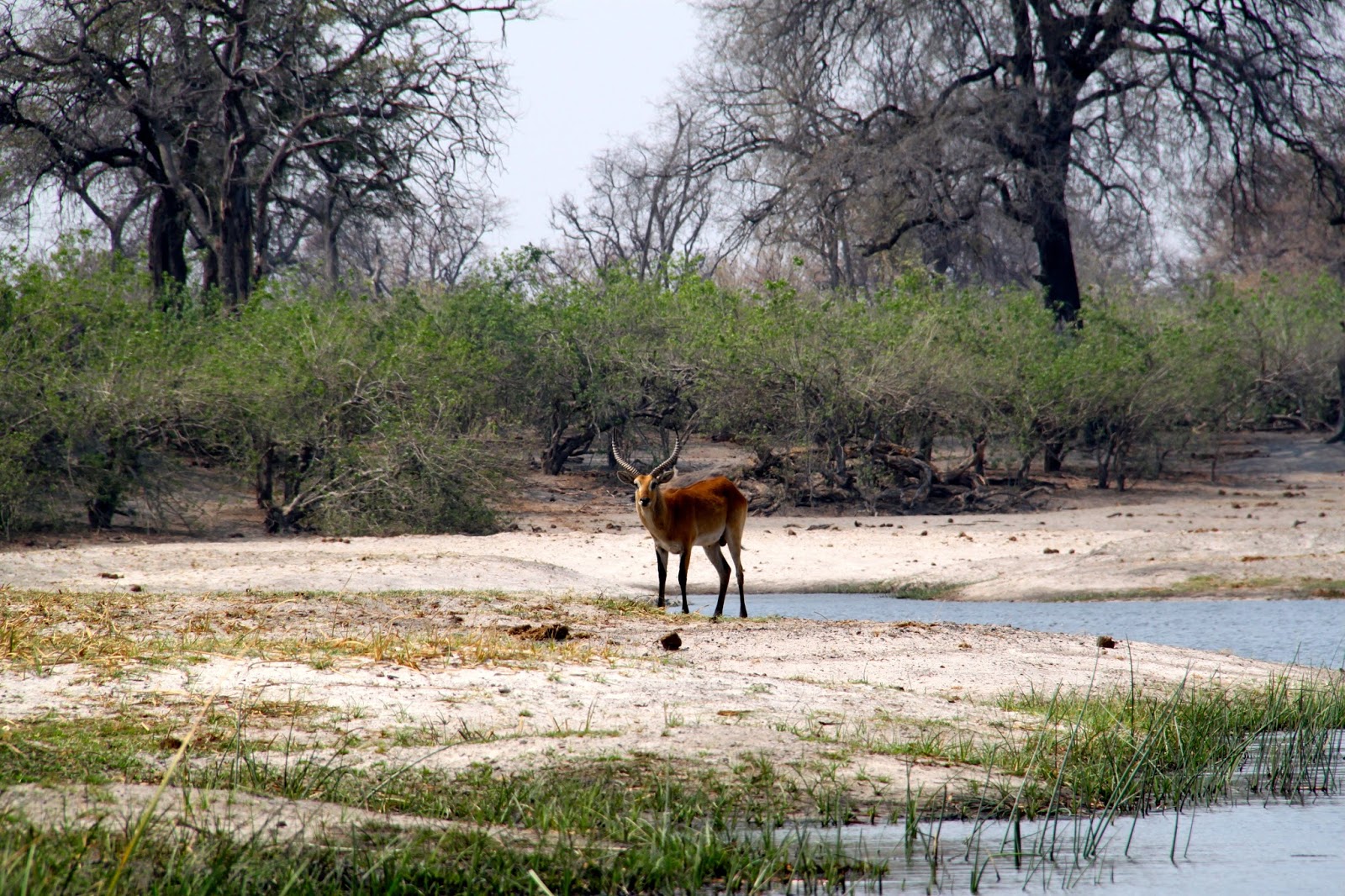
That evening we went on a fun evening safari with Mareesa, a 19-year-old South African girl who is an intern guide at this lodge.  We spotted Lechwa, Tsebee, and Sable, all beautiful big antelope.  We also saw the African Fish Eagle and Hippos near the horseshoe bend in the Kwando River.  We saw Giraffe, Impala and Zebra grazing together.  We also saw a fully-grown trophy Kudu crossing the road in front of our safari vehicle.

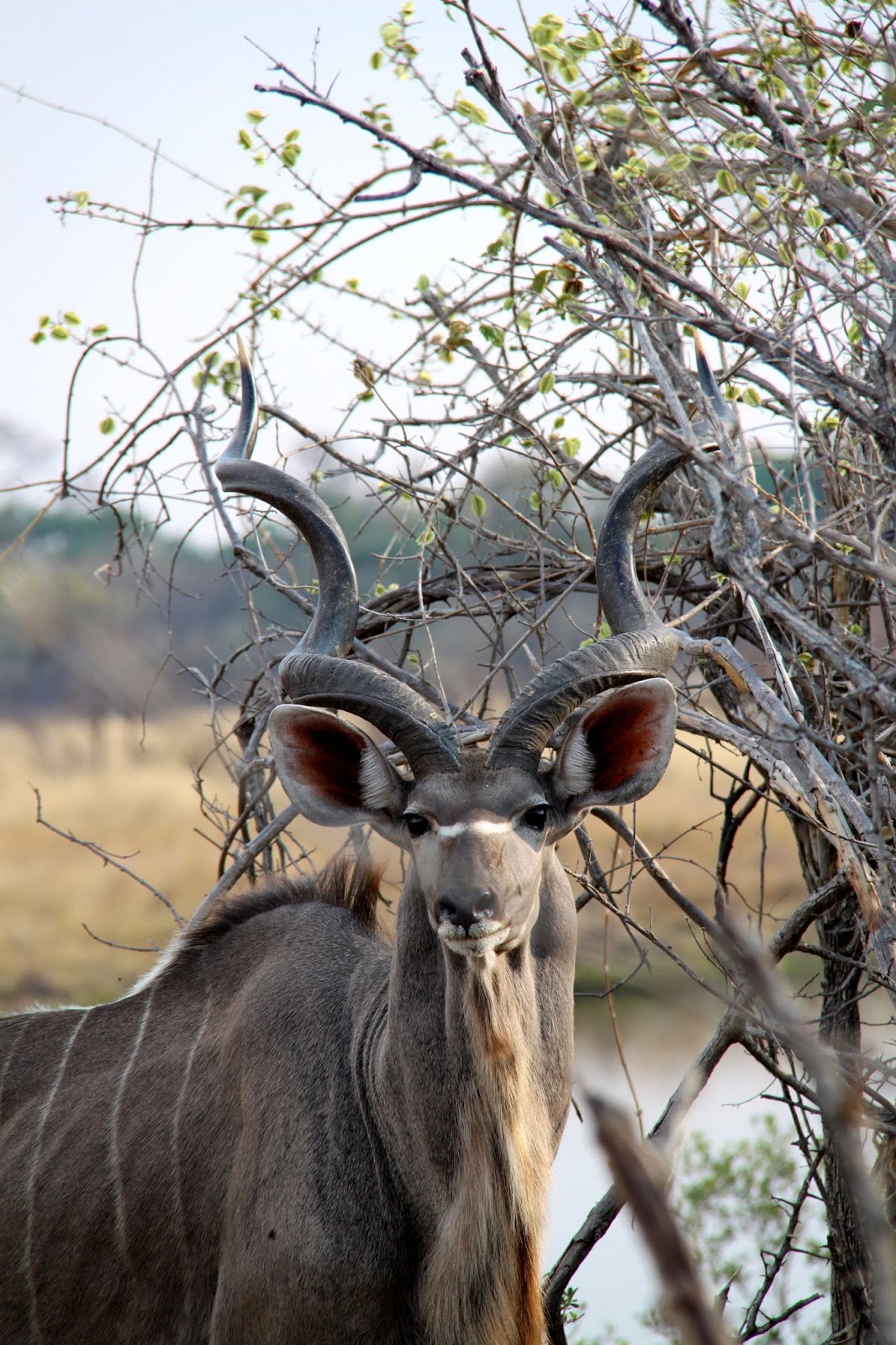
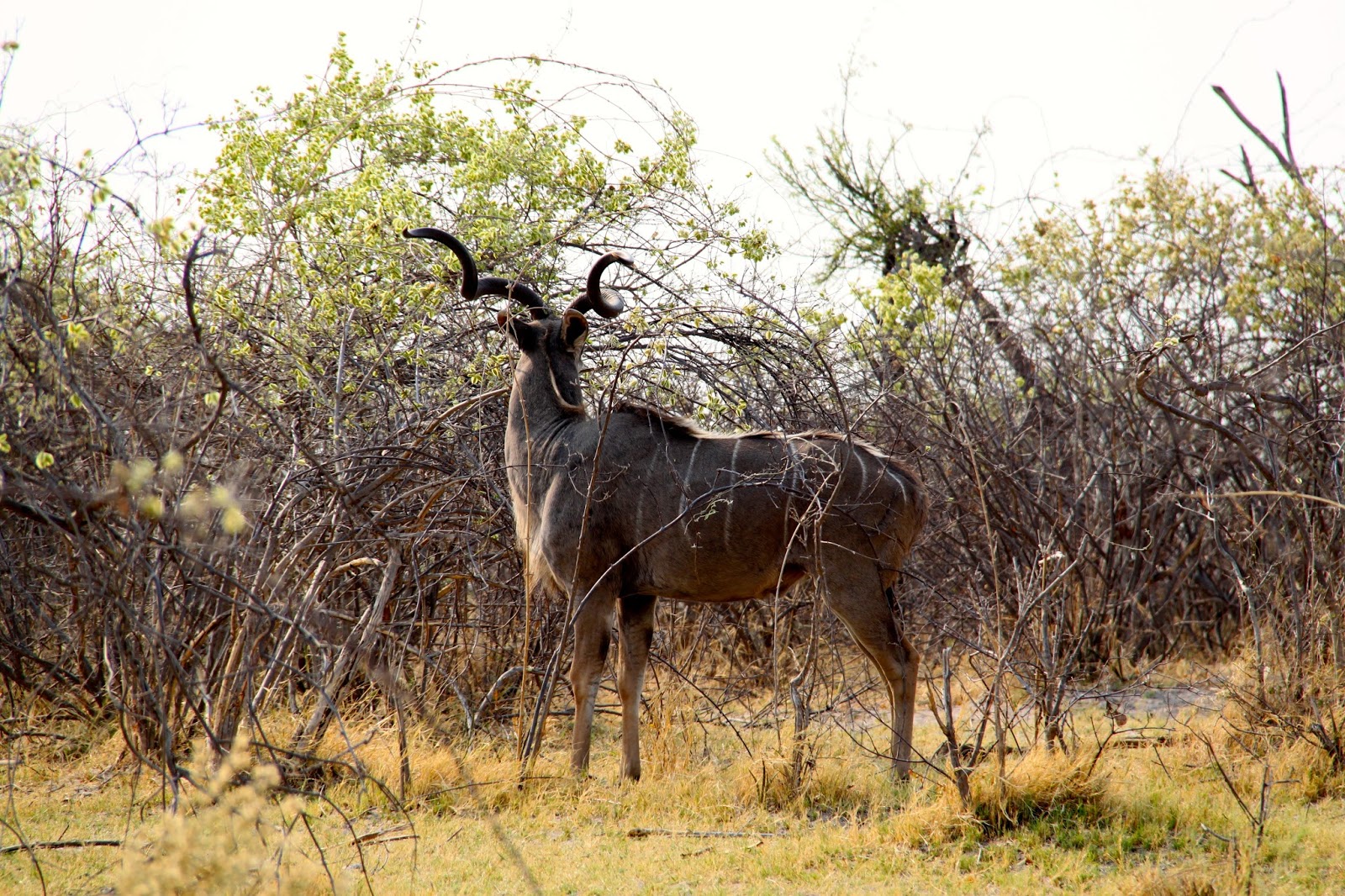
Greater Male Kudu


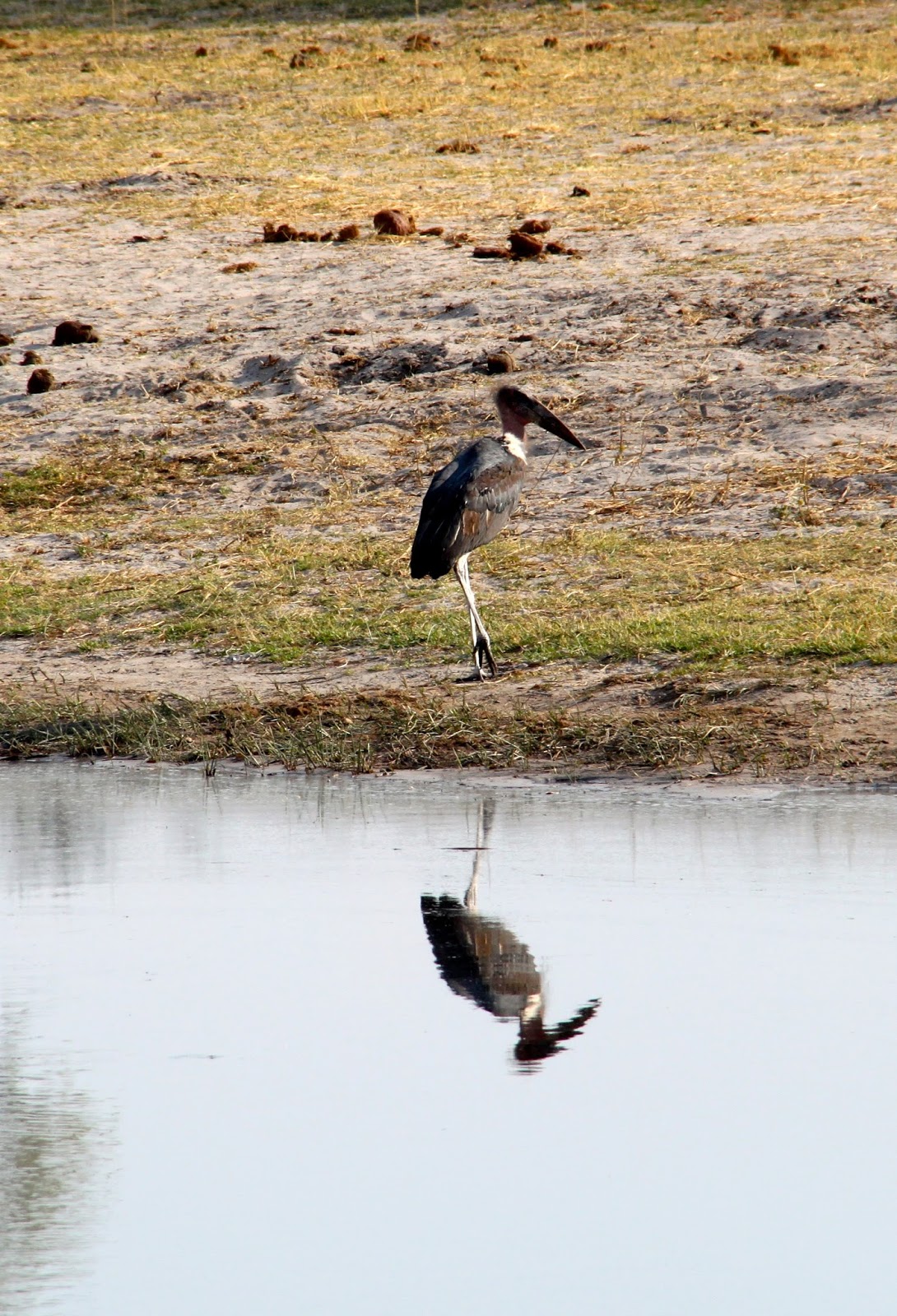
Stork


Steenbok
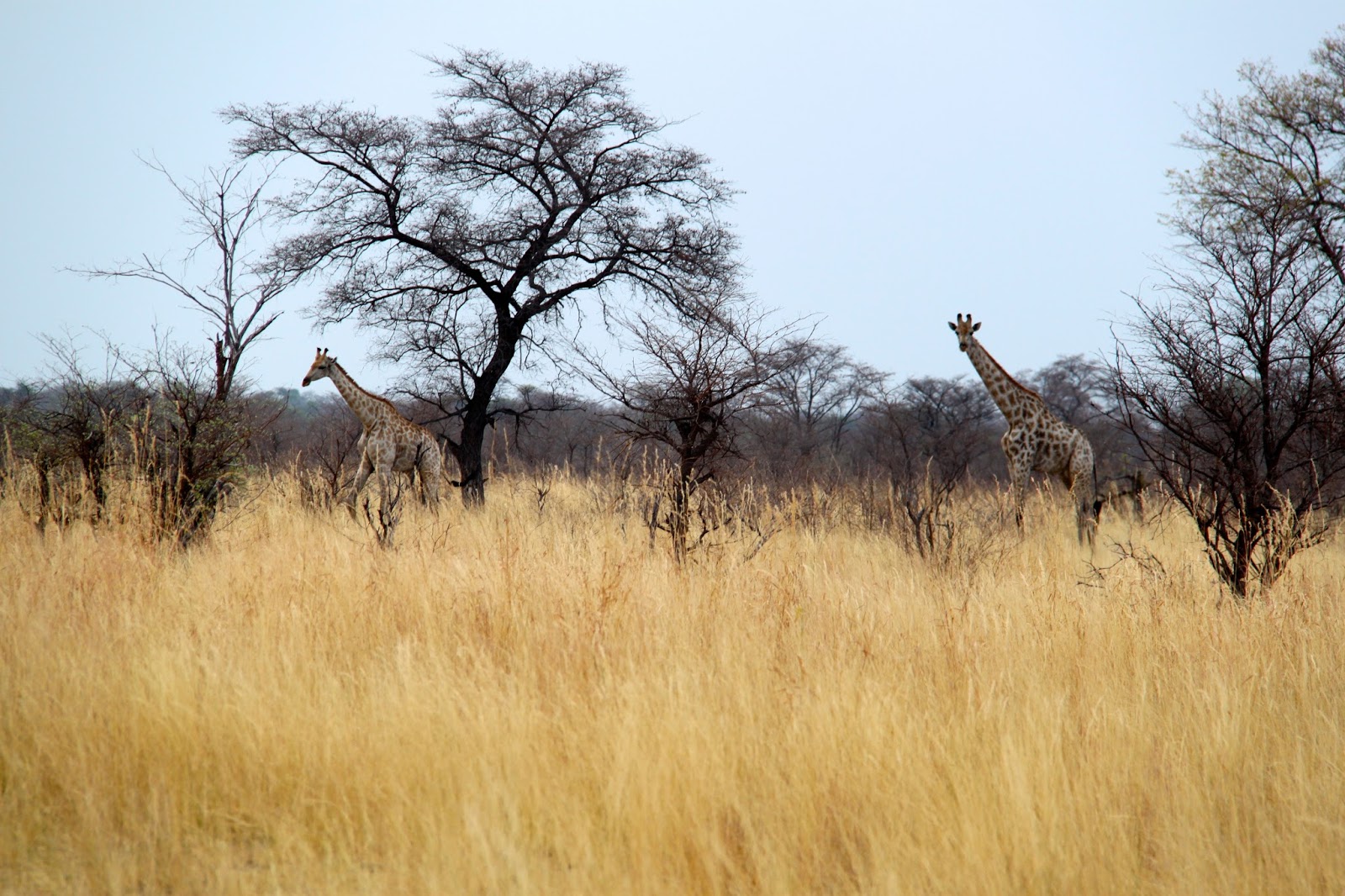
Lots of Giraffe


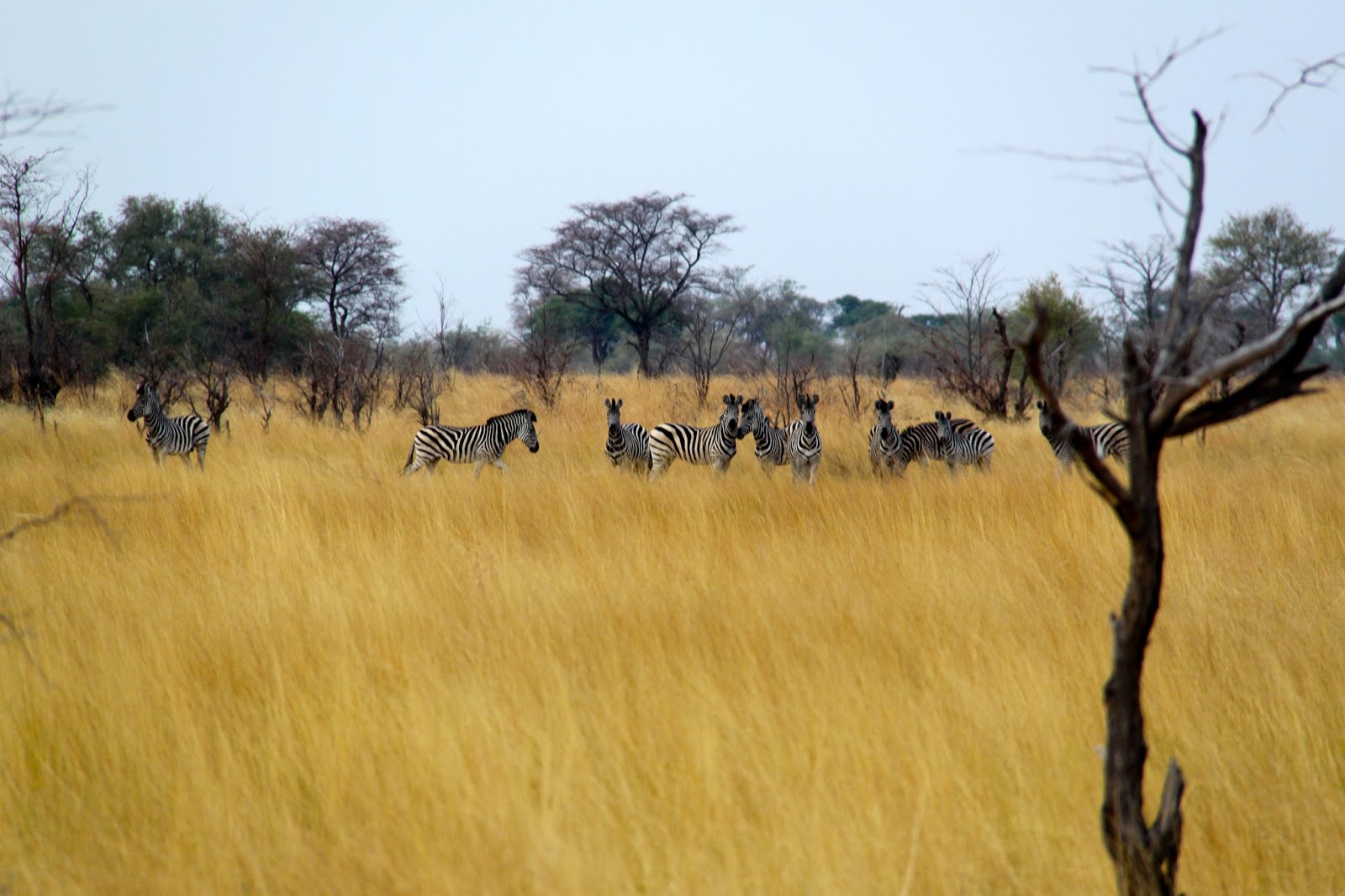
Beautiful Zebras


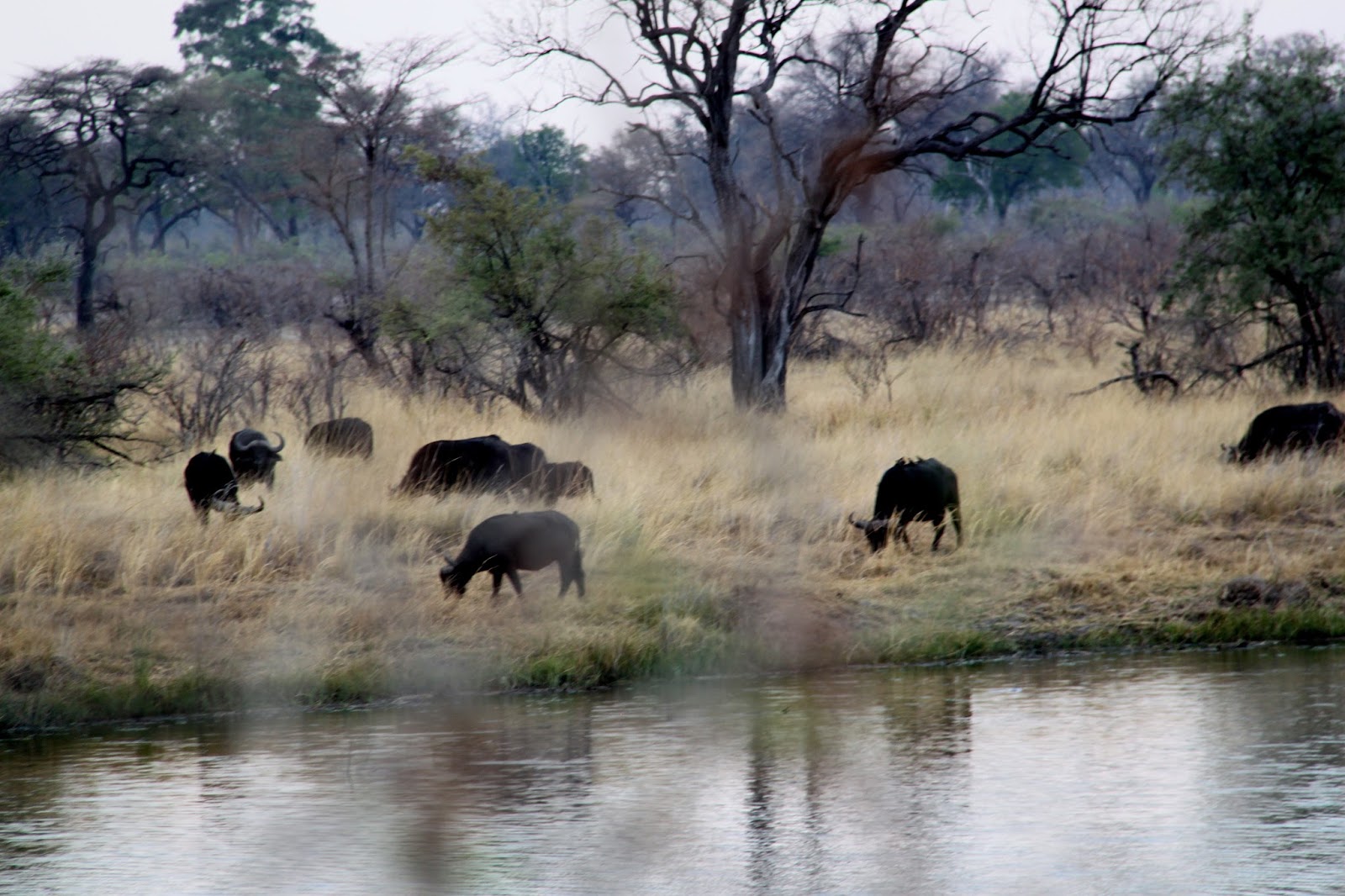
Buffalo


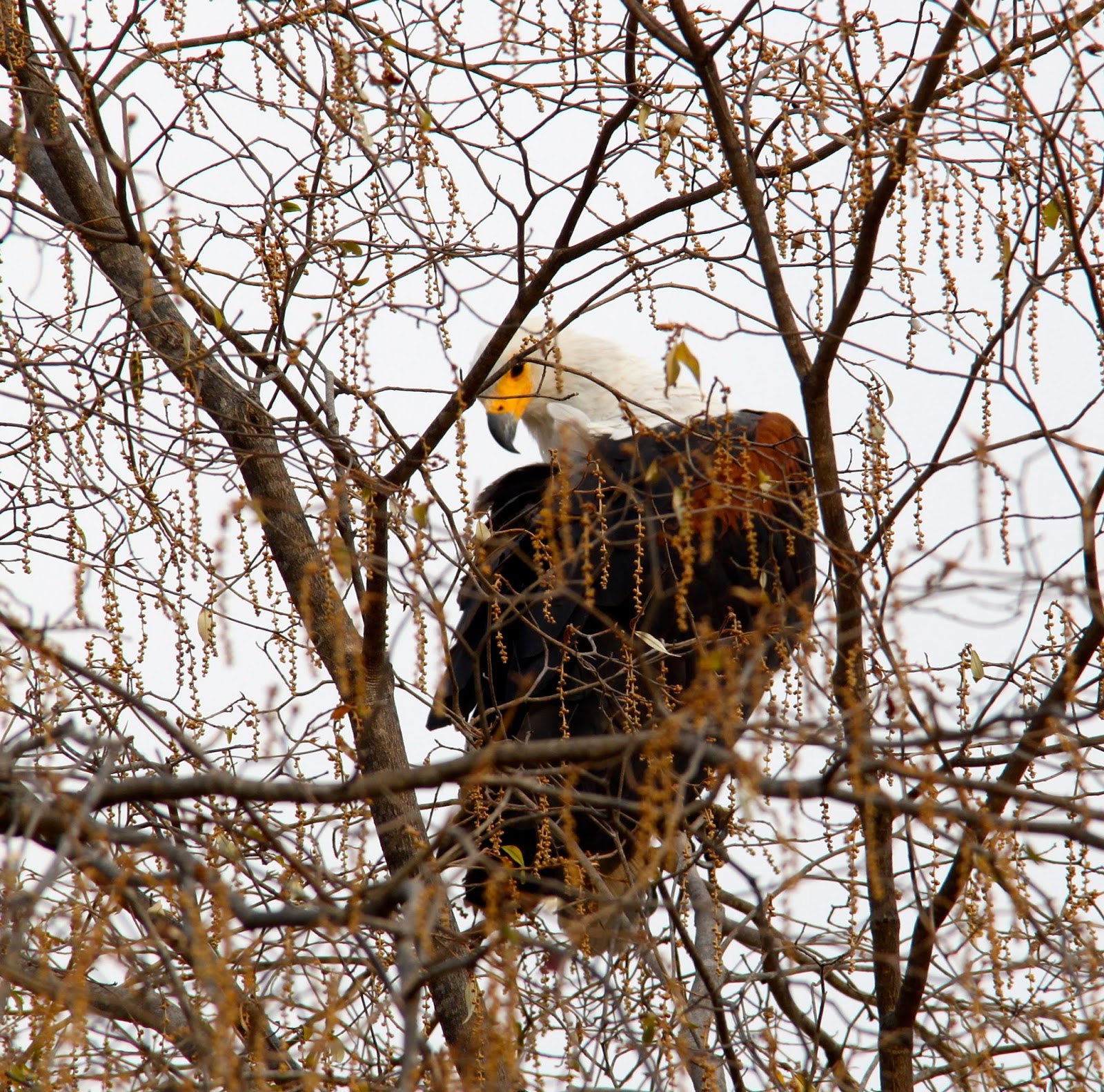
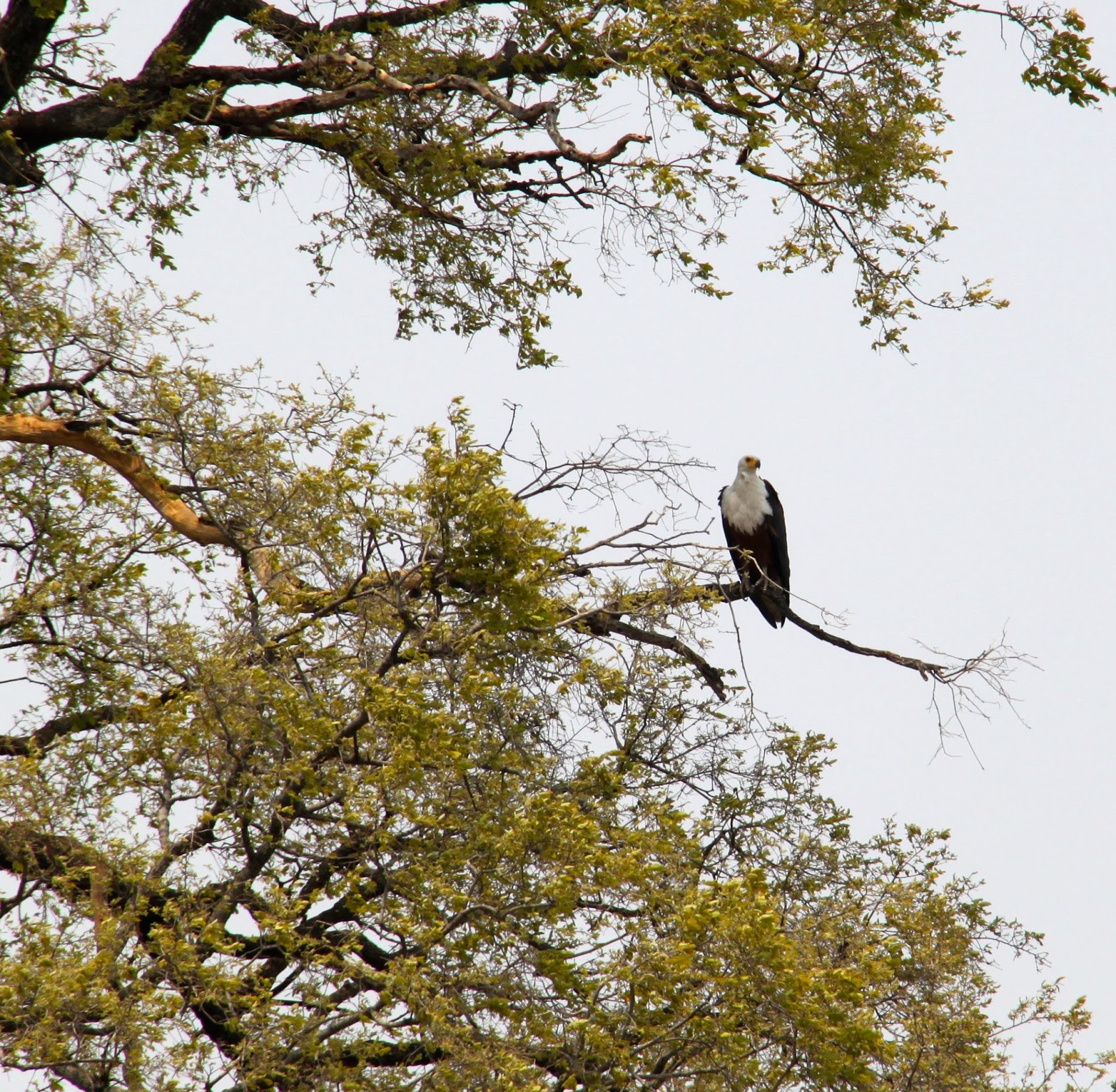
Fish Eagle


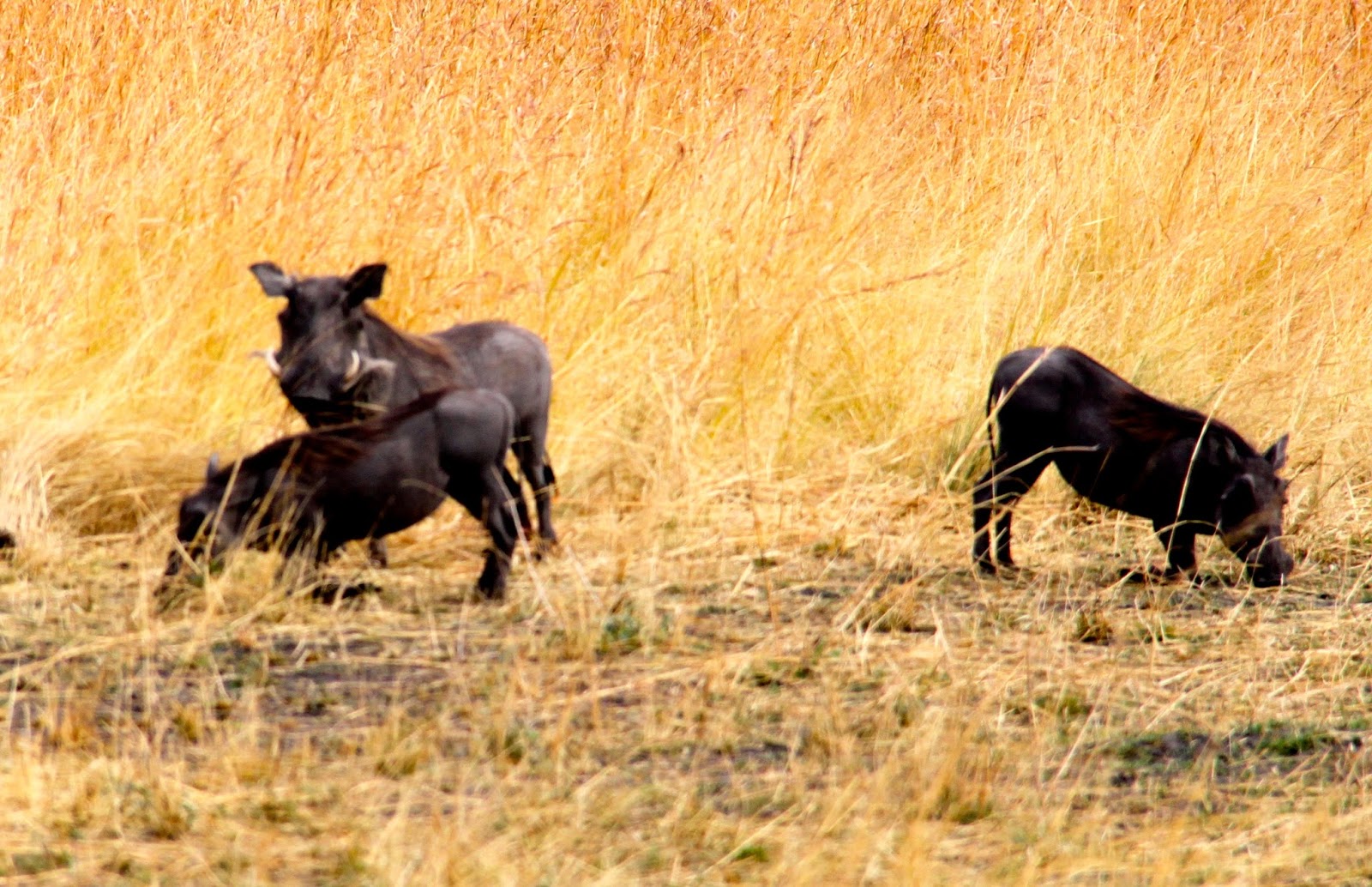
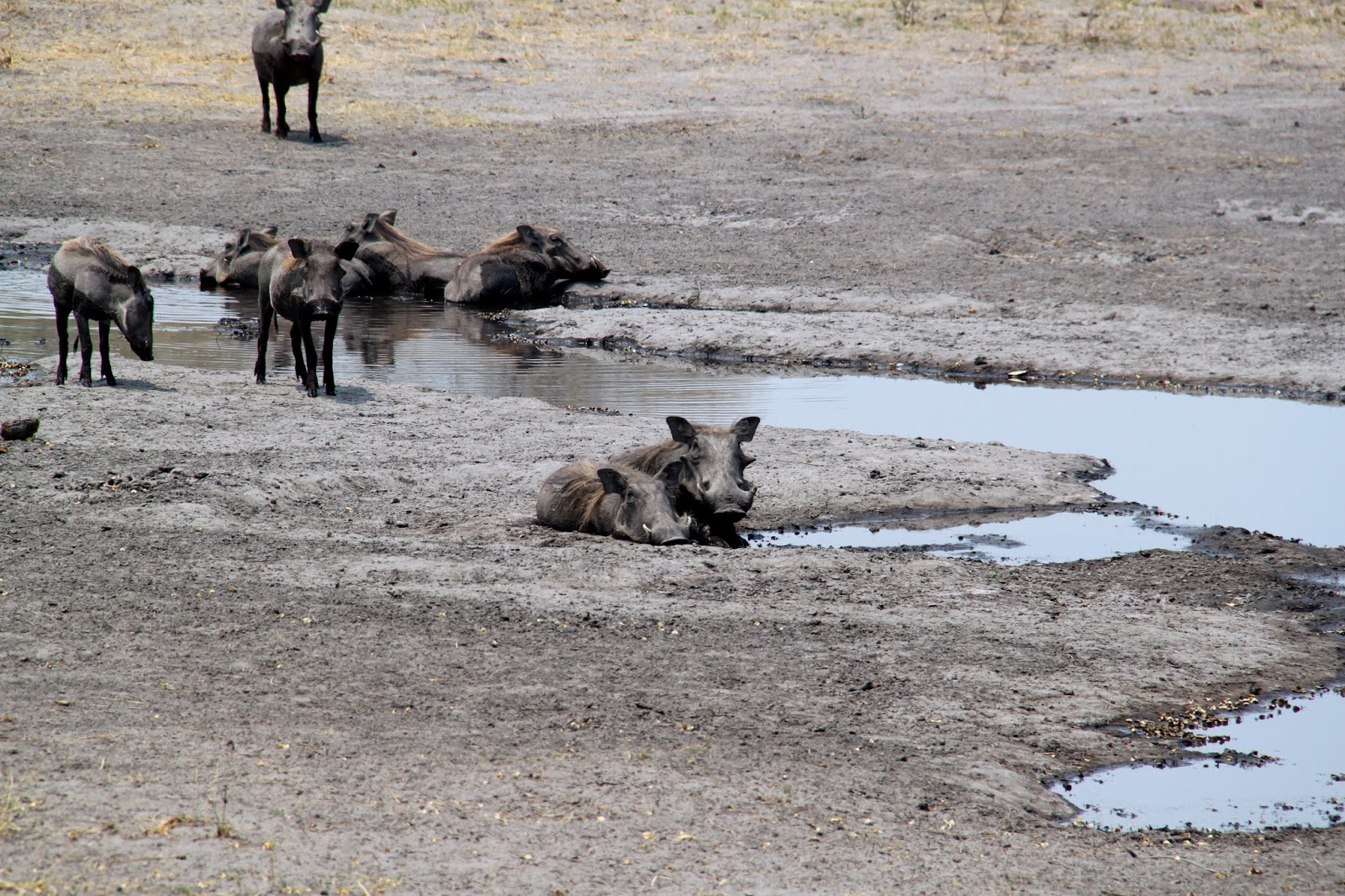
Wart hogs
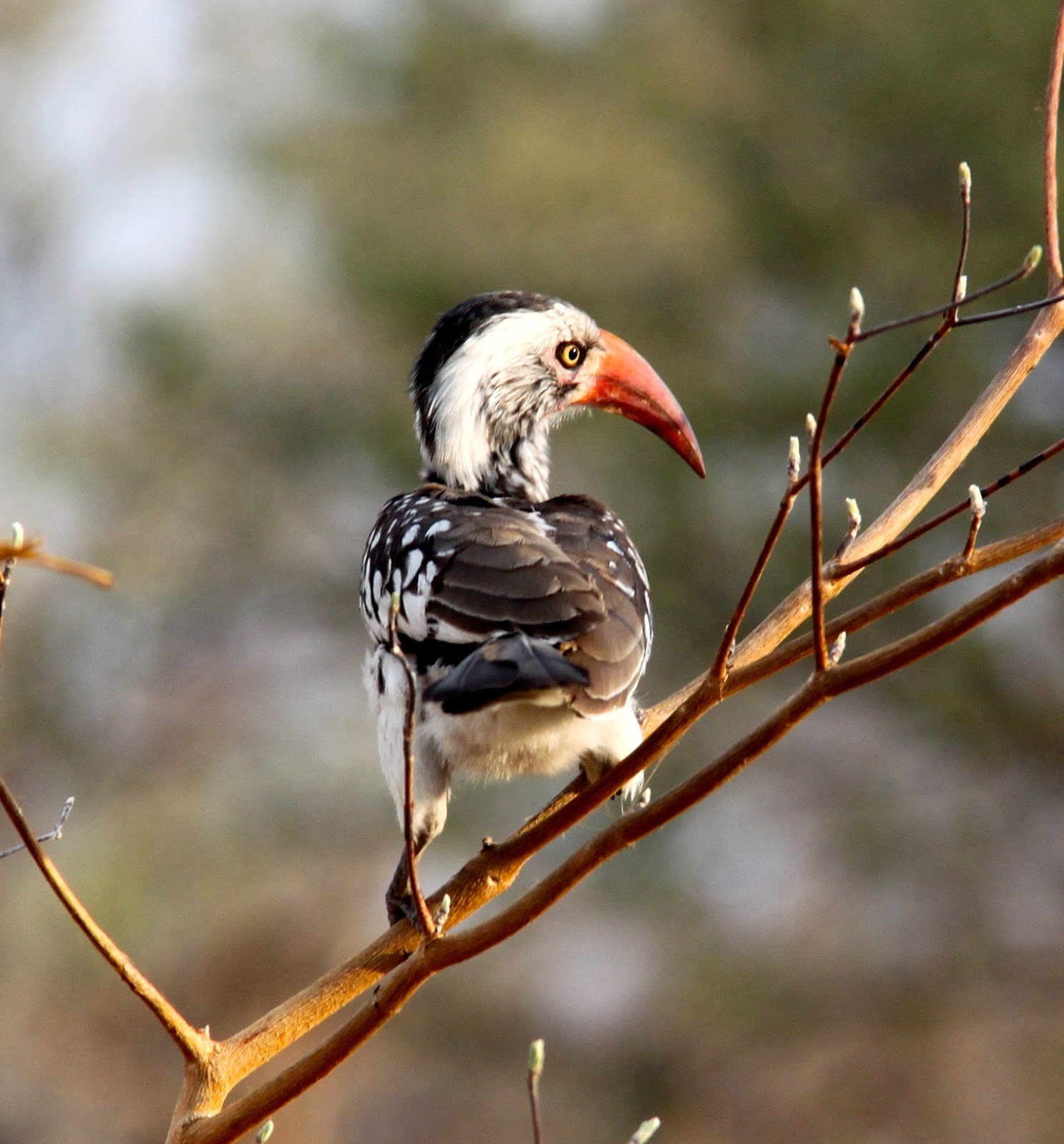
Hornbill


Helmeted Guinea Fowl


Everywhere you look, there are animals


Sable


We had sundowners at the Horseshoe Bend in the Kwando River and drove back to the lodge in the dark spotting Hippo out of the water and grazing on grass.


Sundowner time
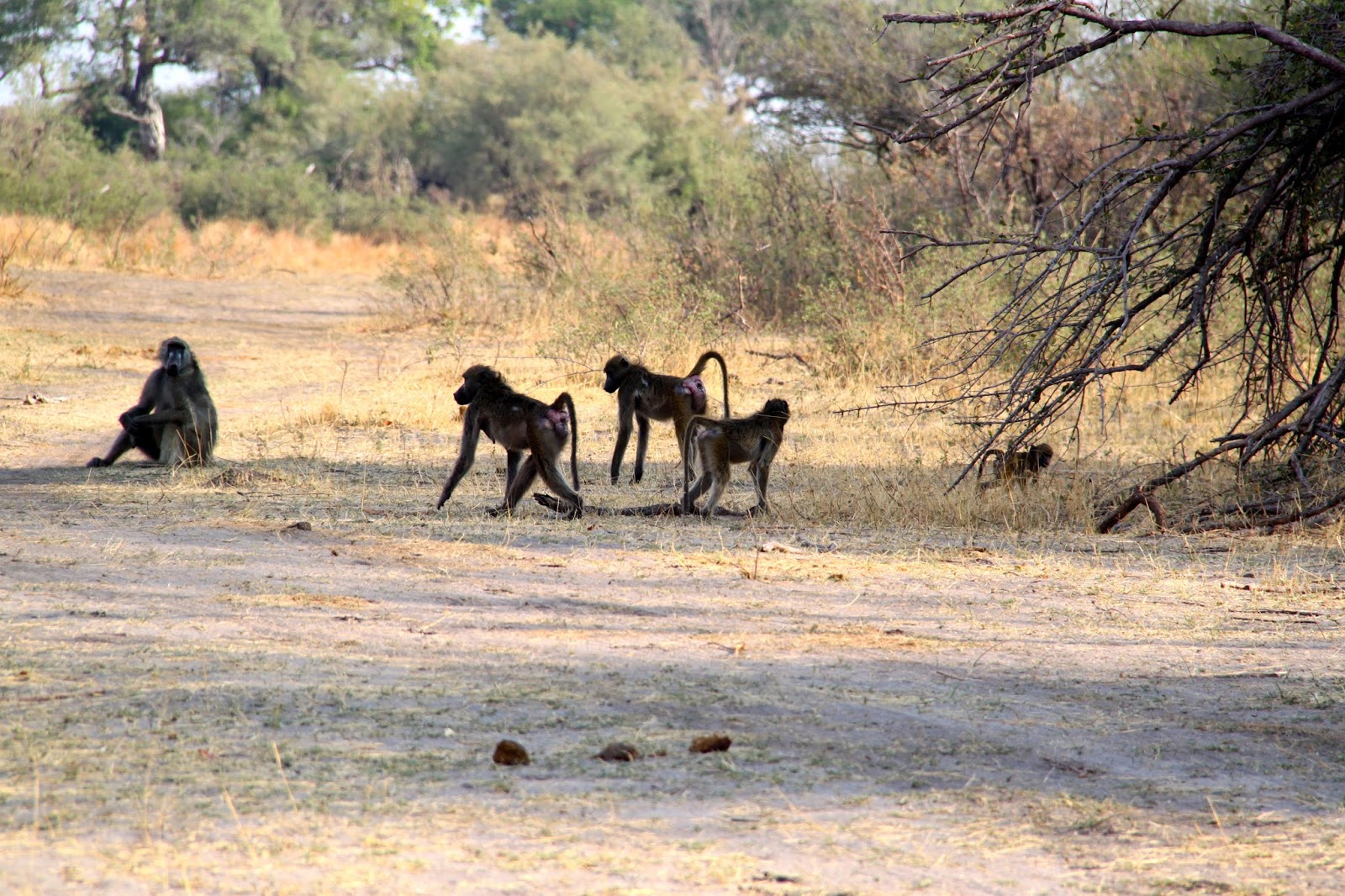
Baboons


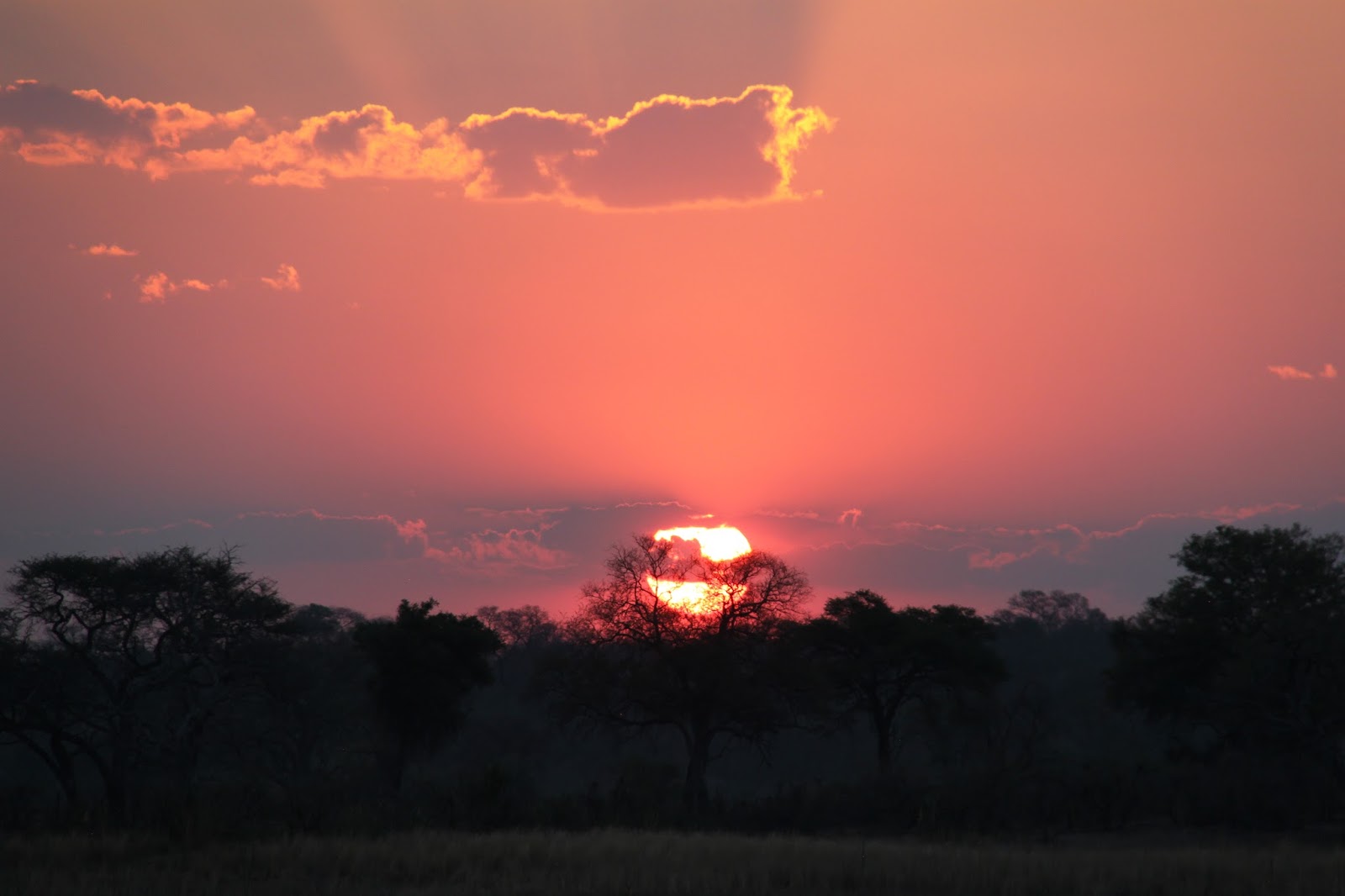
Sunsets are amazing

The next morning we went on a 2-hour walking safari with Donovan starting at 6:30 in the morning.  We saw fresh tracks from Hyena, Wild Dog, Hippo and Elephant.

Walking Safari


Barb with Donovan, our guide
Walking safari.  The rifle is for our protection in case we encounter dangerous animals.
Wart hog den.  They go into their home backwards.
We found a newly shed cobra snake skin

That night we went on a boat safari down the Kwando River spotting lots of Hippo and Elephant, Fish Eagle and antelope.

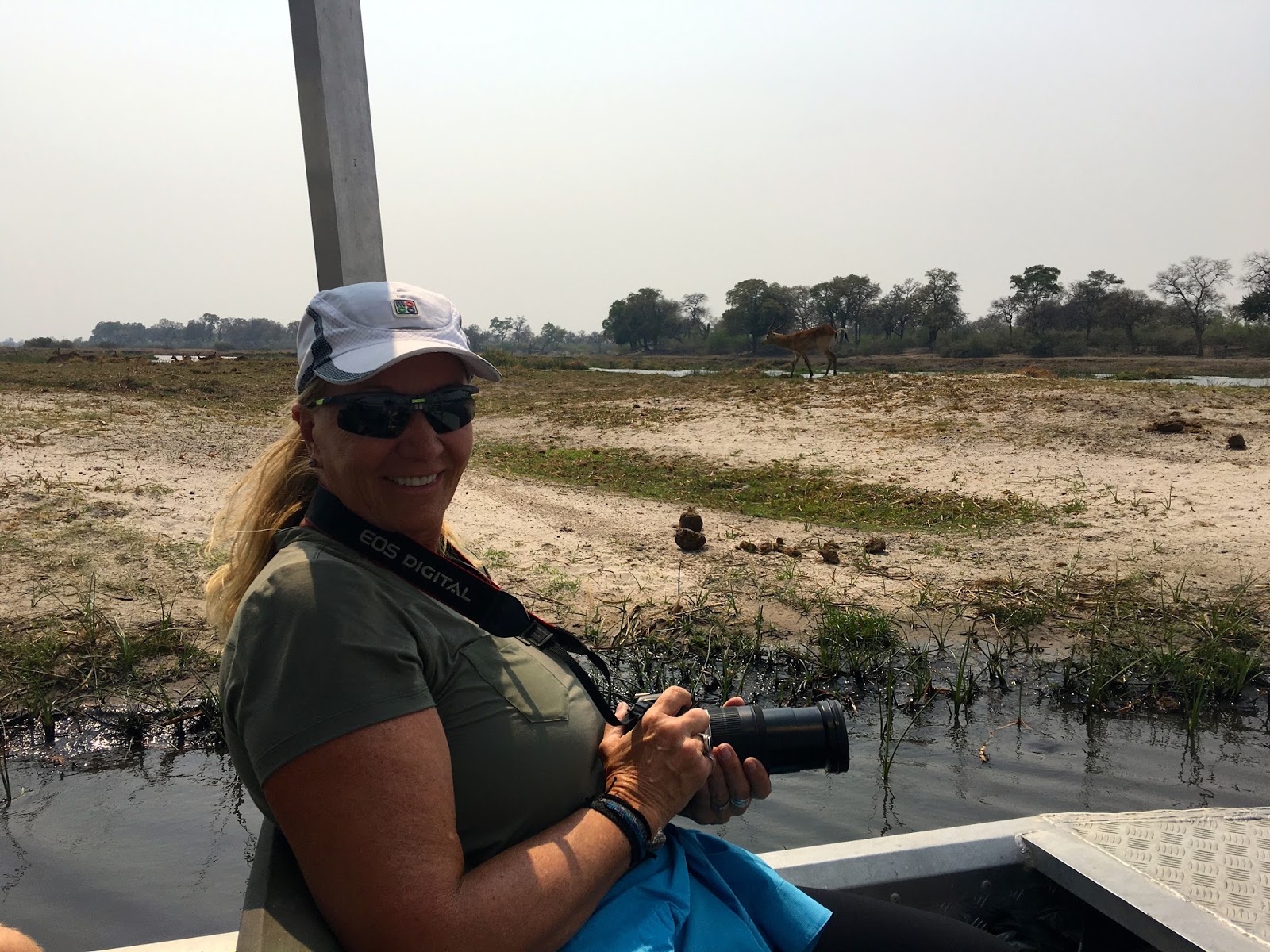
Barb on the evening boat ride.  We saw hippo, antelope, crocodile and birds.


Herron


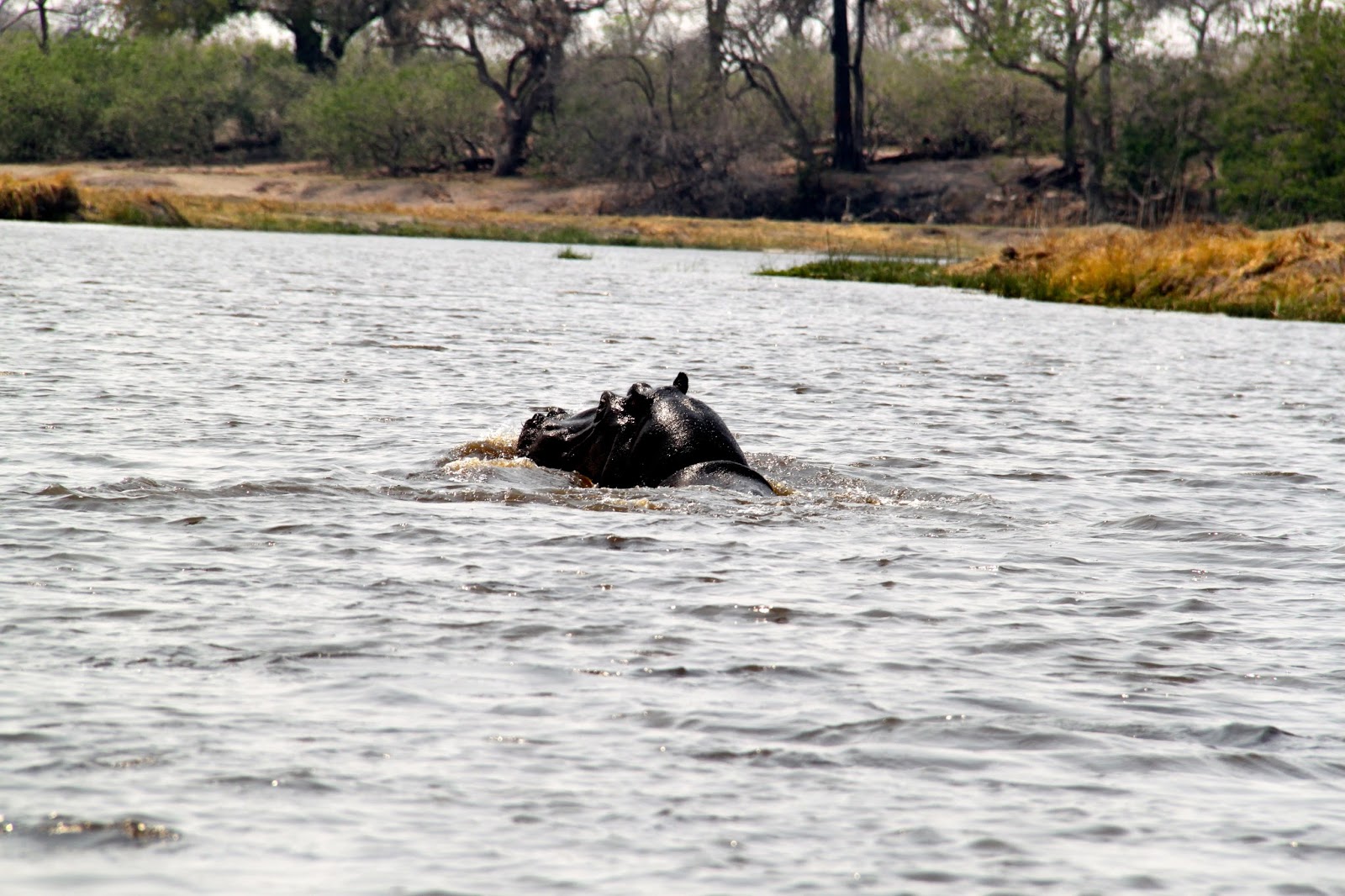
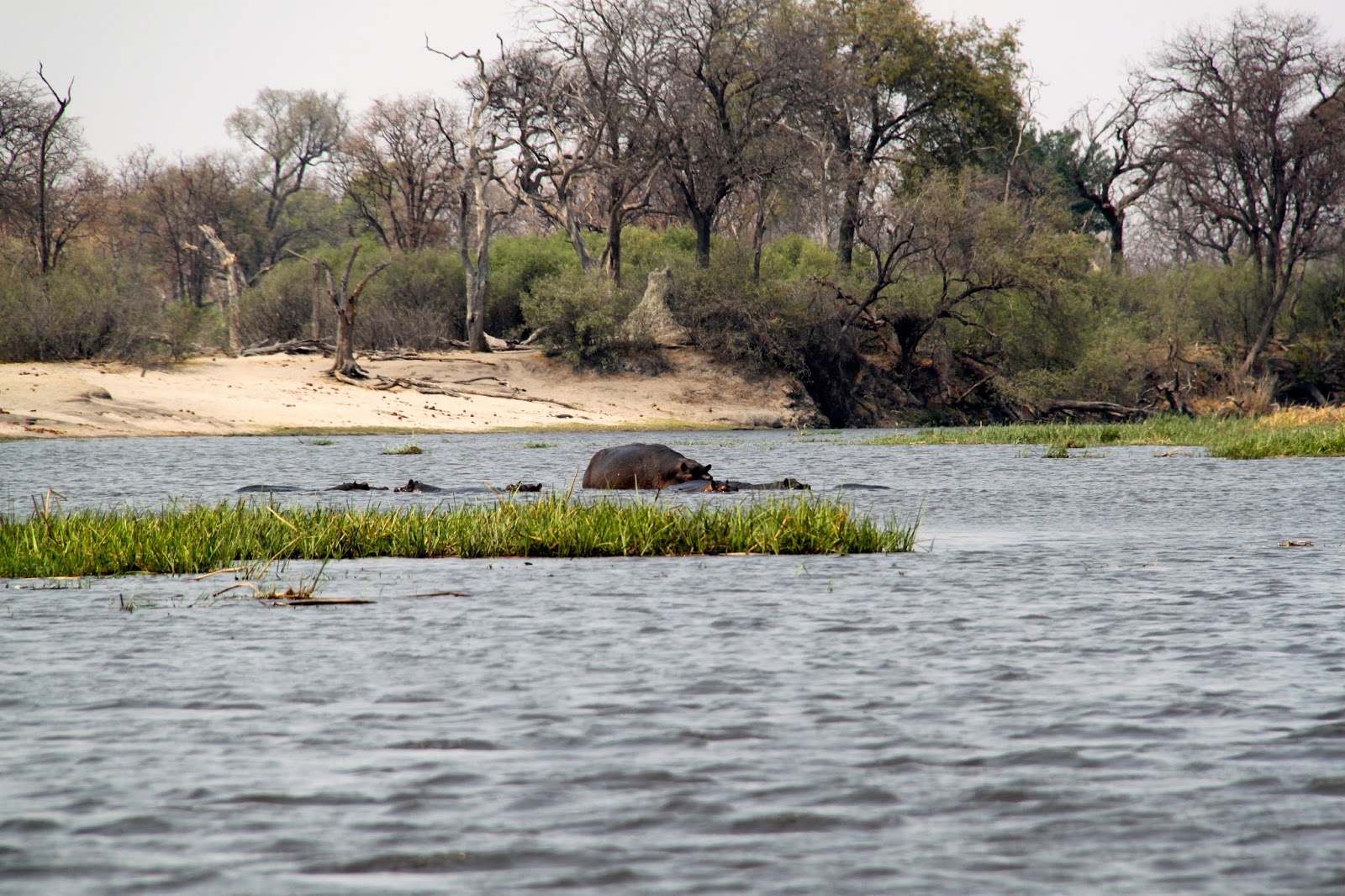
Pod of Hippos


Scott


We found this antelope, but we are unsure of what it is.
Baby Crocodile


Herron


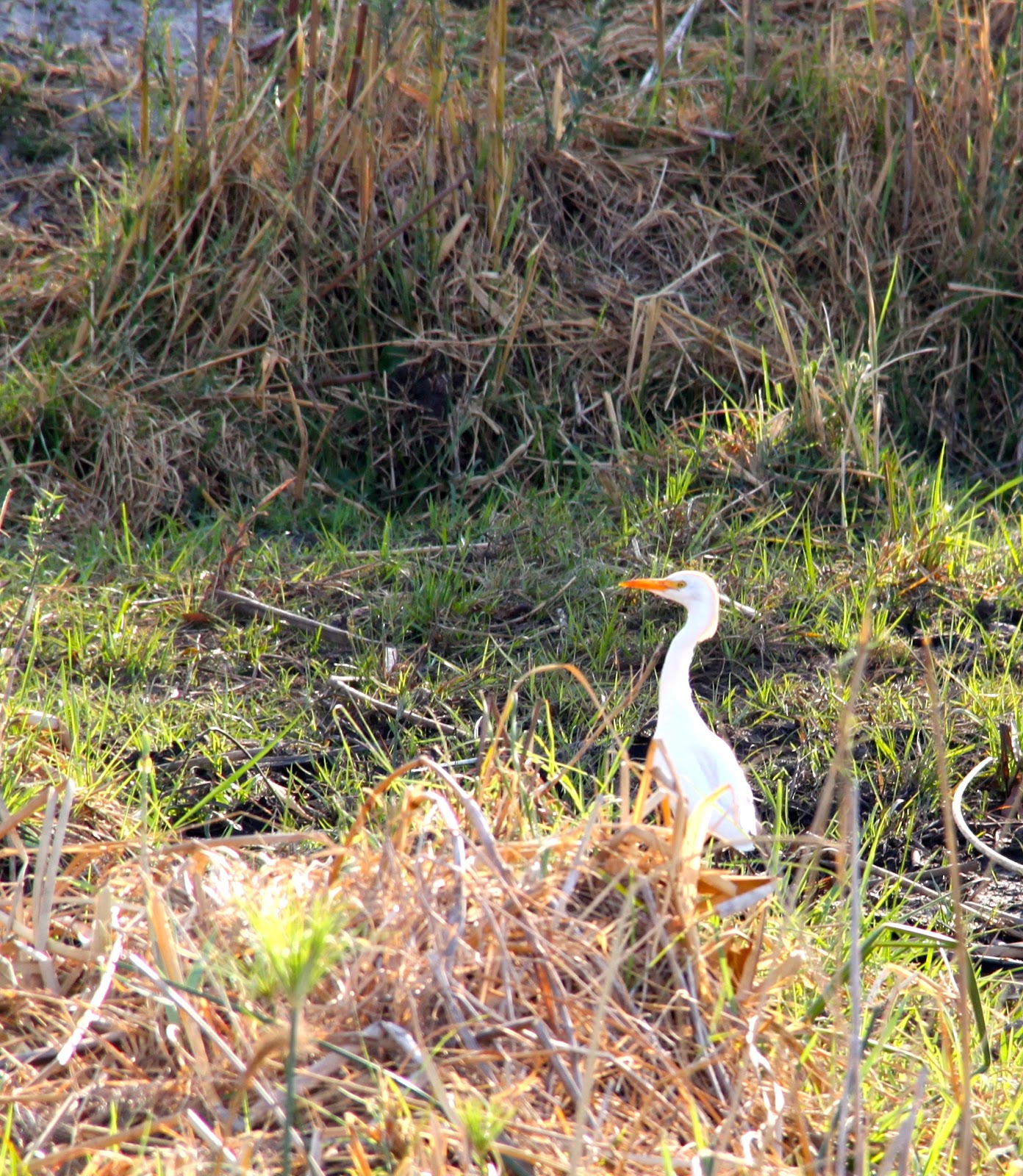
Egret
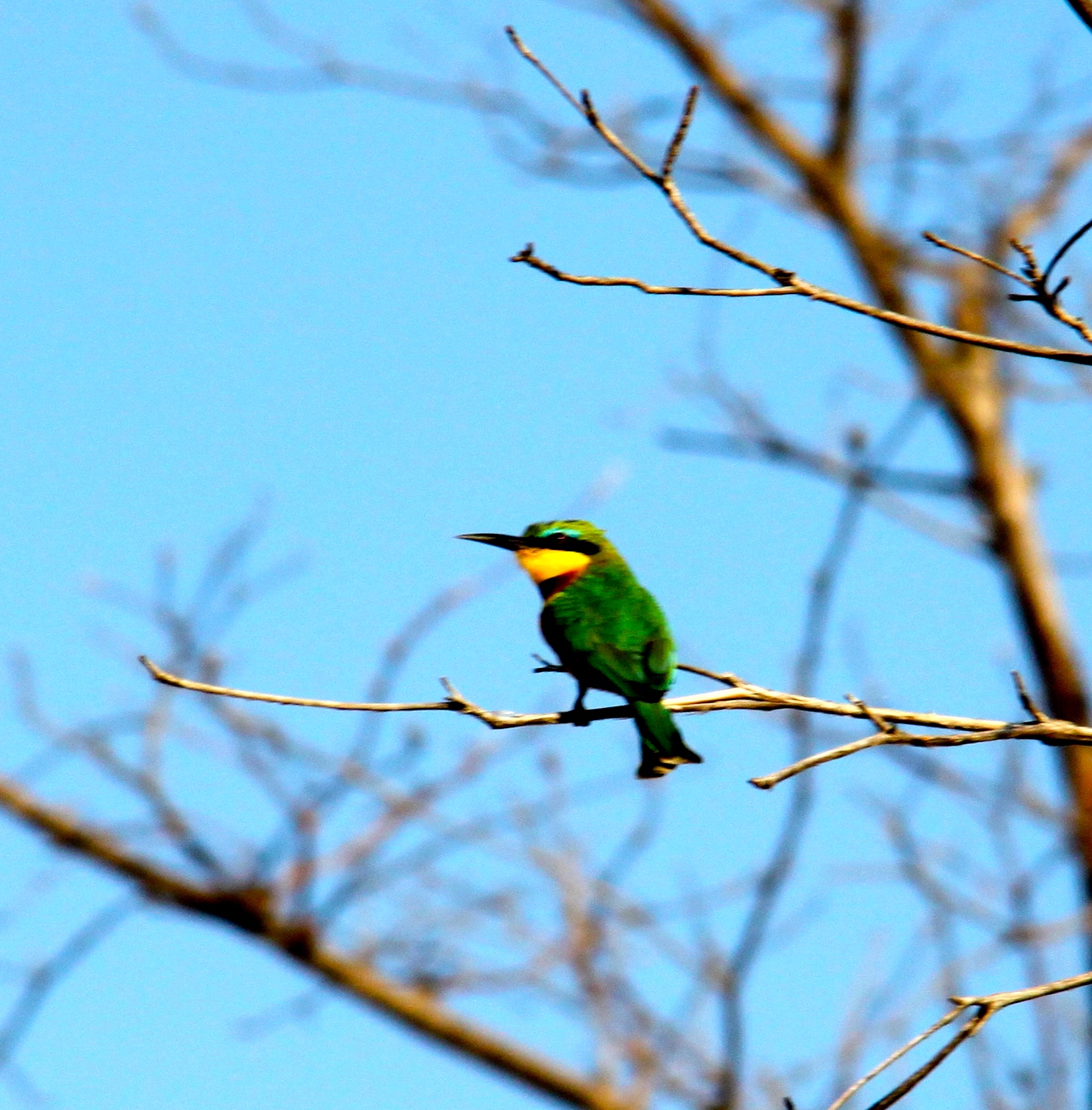
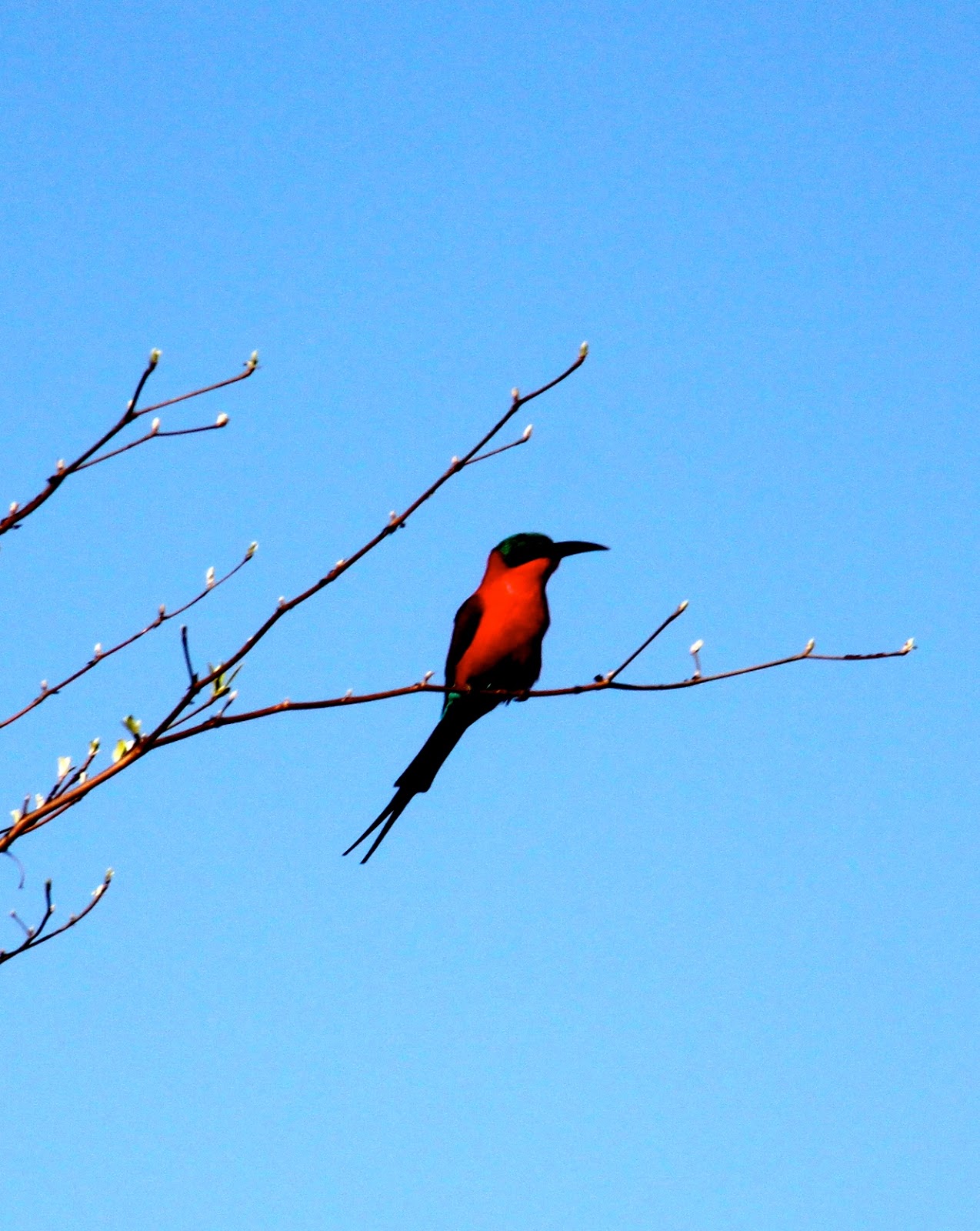
Bee Eater


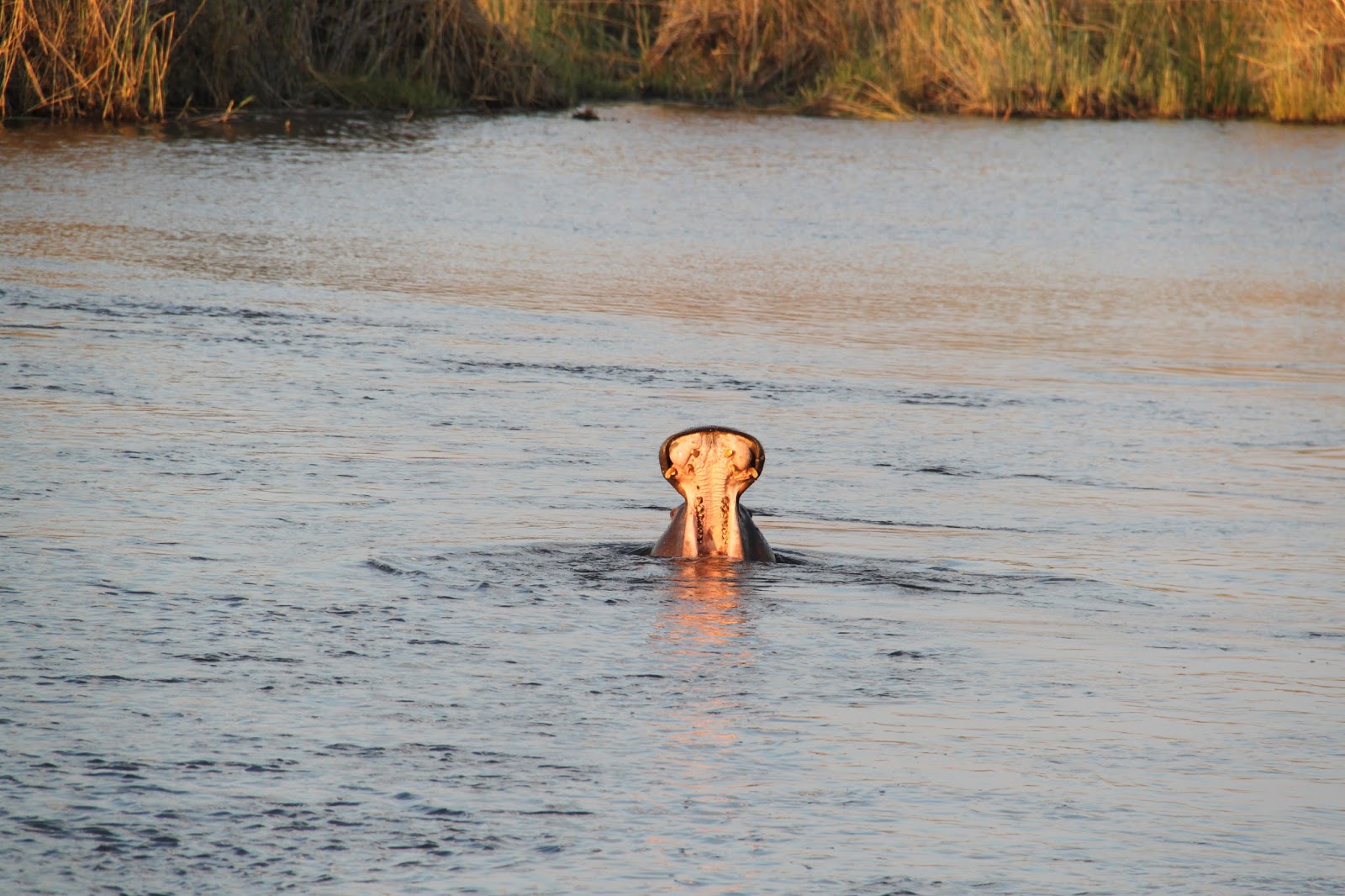
Hippo yawning


Strike
Beautiful sunset from the river

Driving through all the sand and seeing elephants and kudu and birds all on your own is awesome!


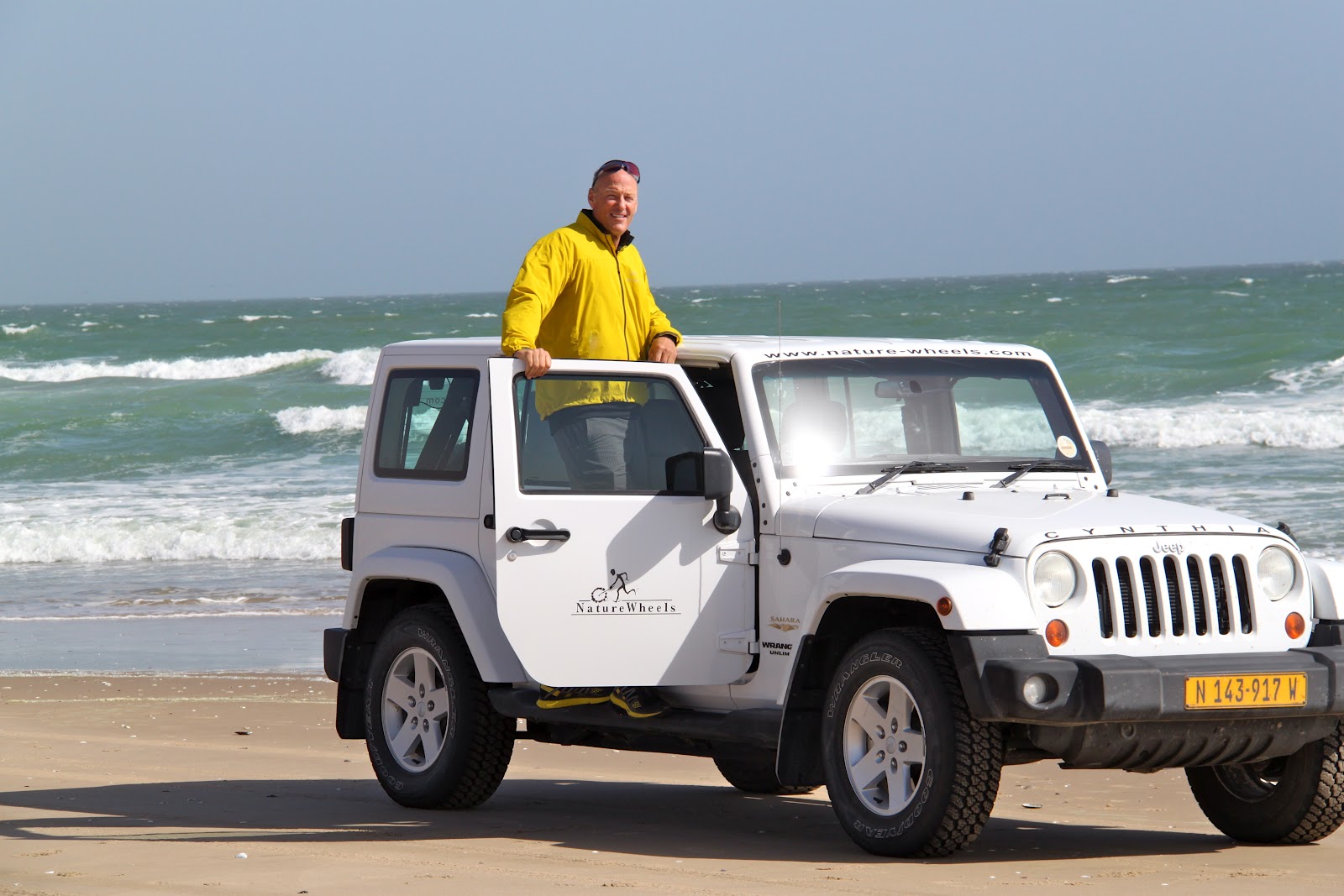
Scott is having a blast driving Chuma


Namibia-The Zambezi Region of Namibia Camp 2-Nkasa Lupala october 1-2, 2016

The Zambezi Region of Namibia

Camp 2
Nkasa Lupala

The lodge is in the Nkasa Lupala National Park.

Nkasa Lupala Lodge


Our home on stilts


Camp area


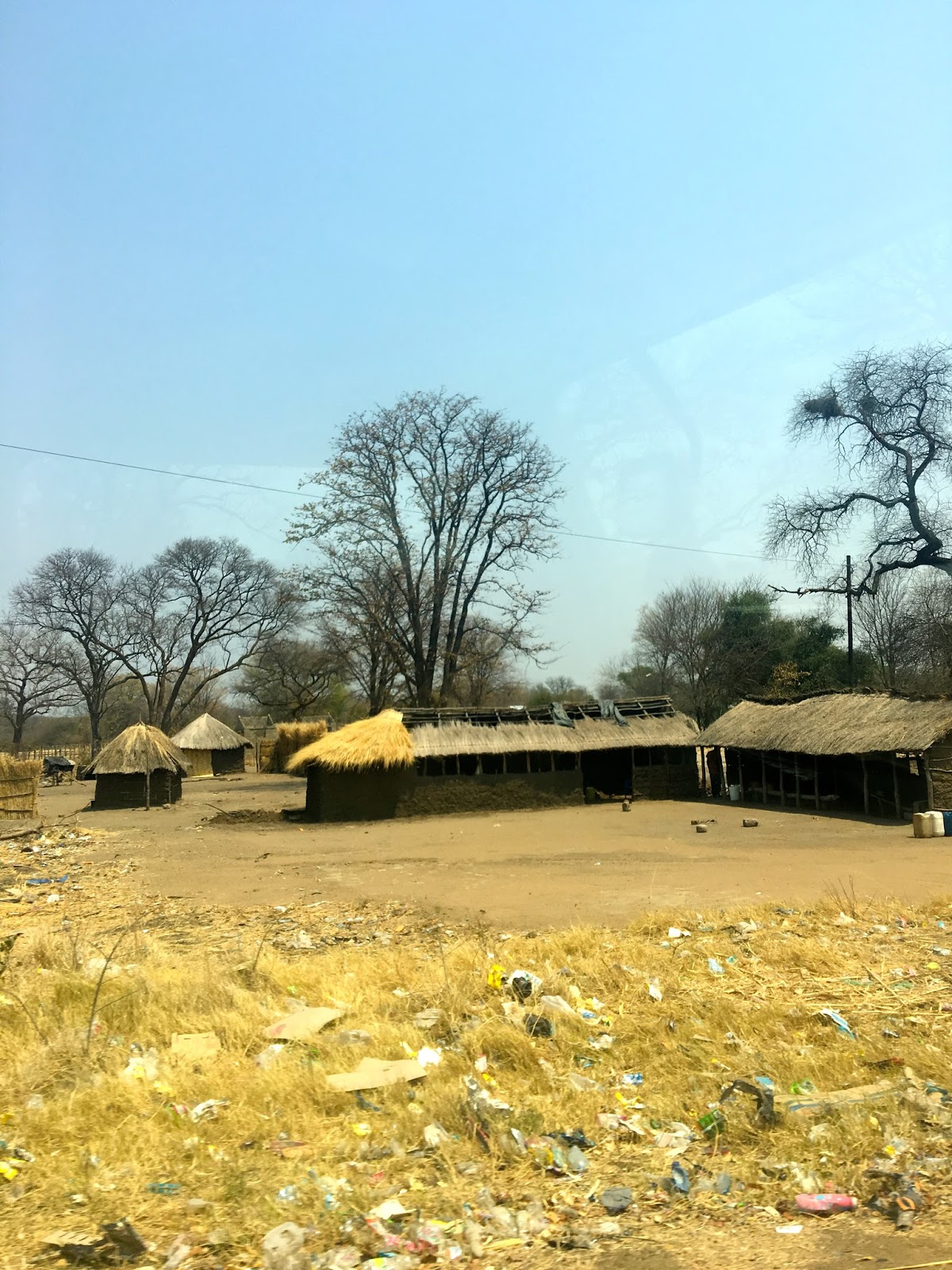
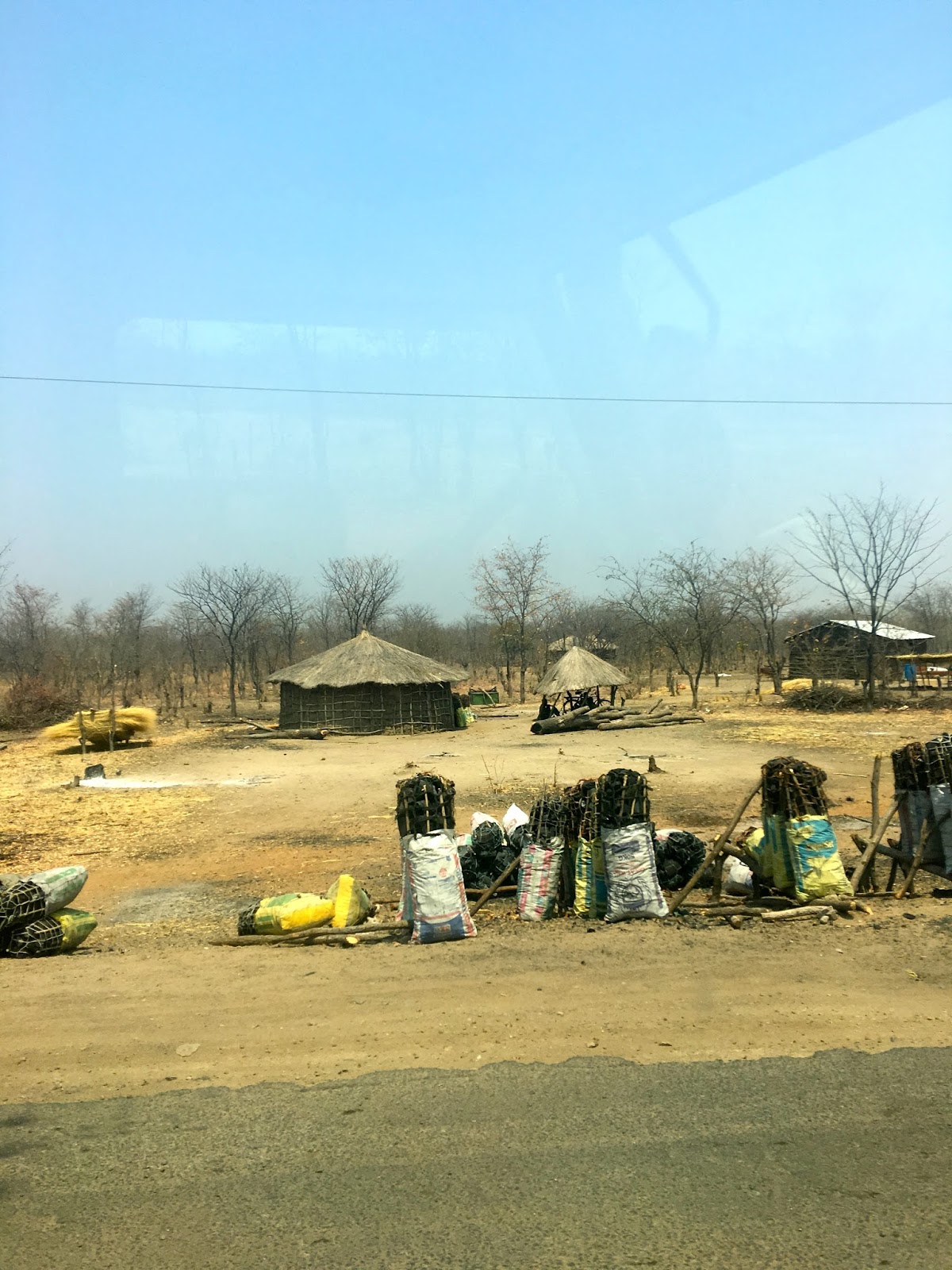
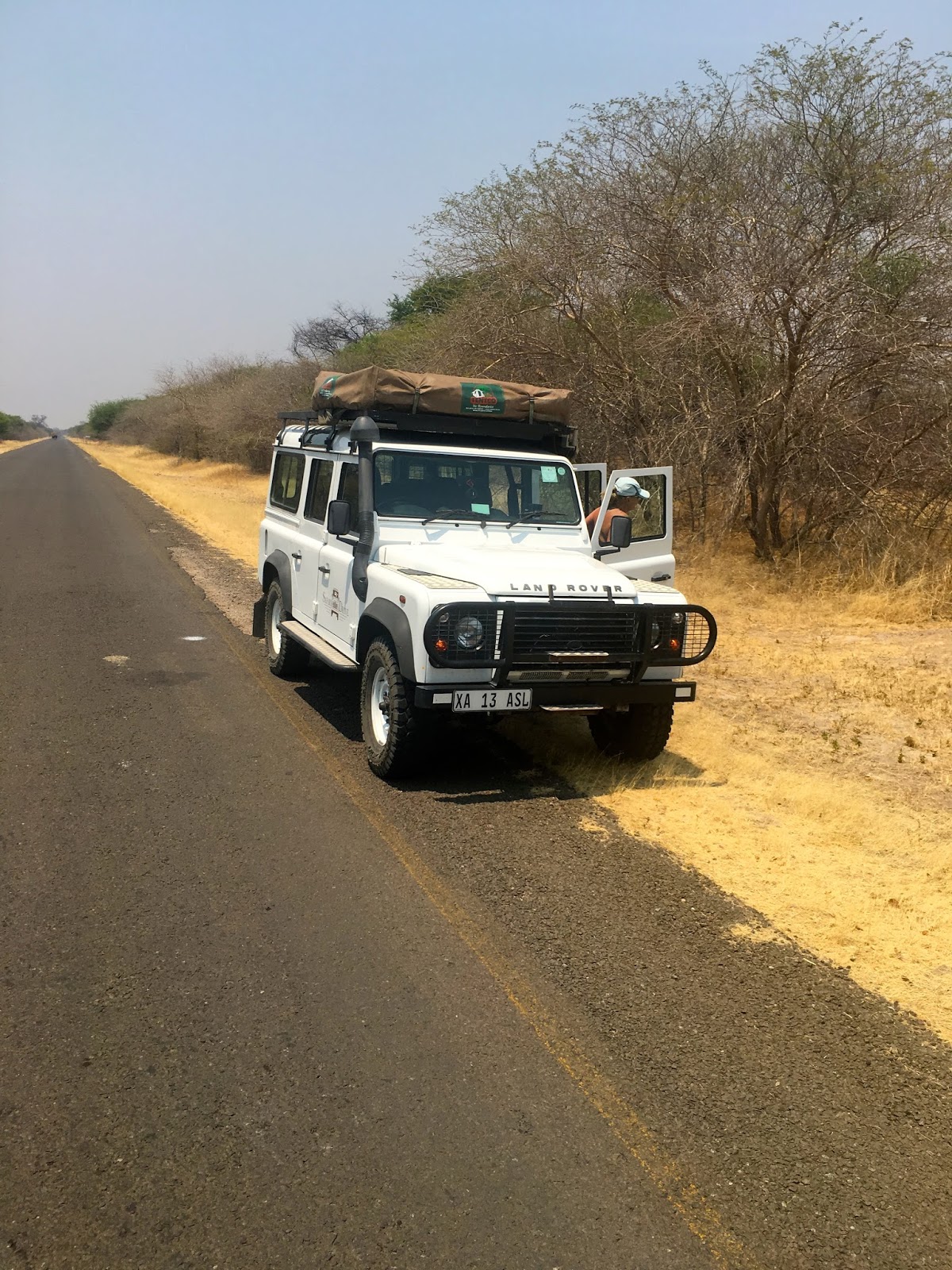
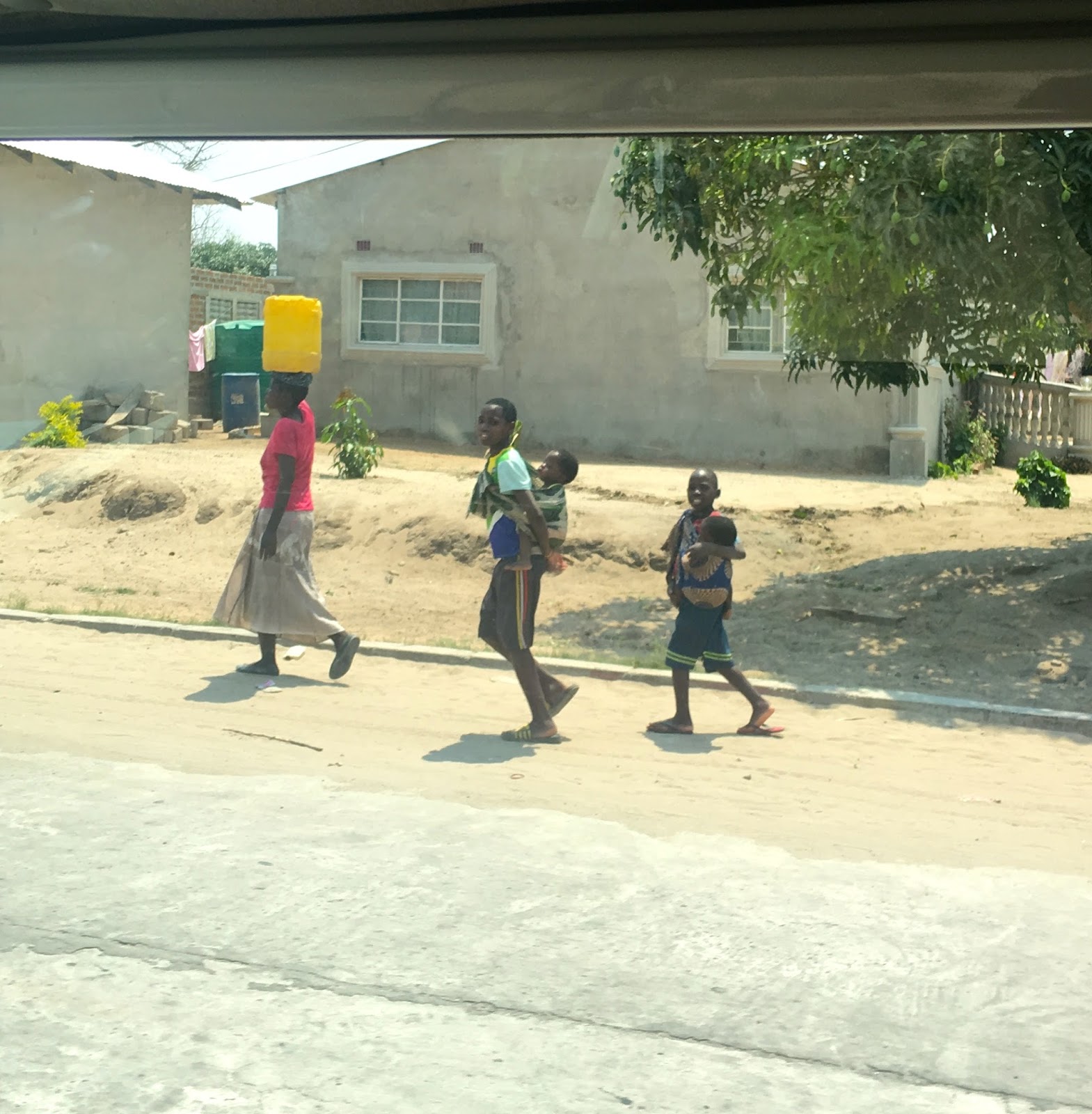
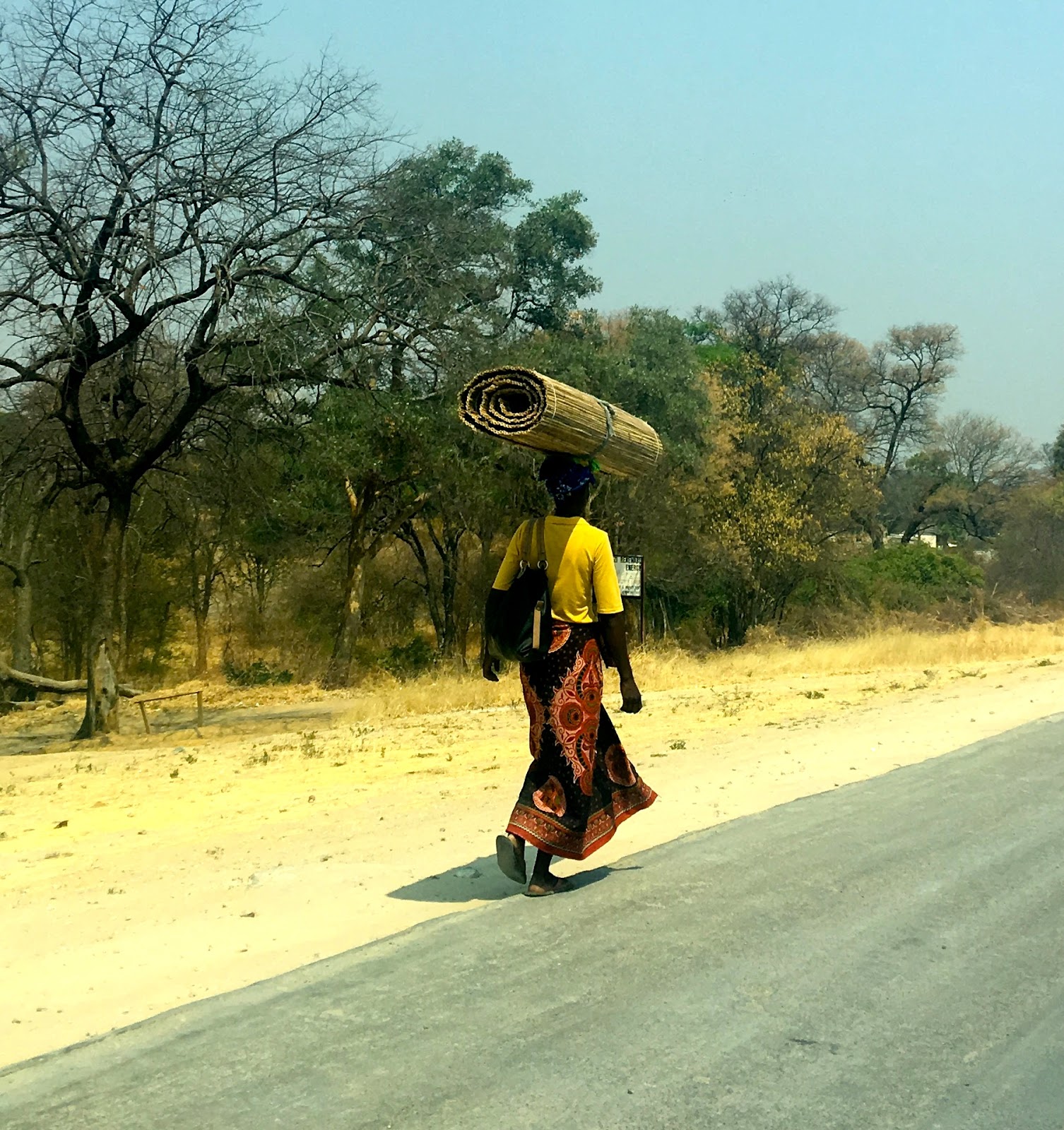
We drove in our trusty Land Rover named Chuma, with it’s amazing altered seat to fit Scott.  We passed many villages and interesting sites along the way.  The women all balance things on their head when they walk, instead of carrying them.  There were burnt pieces of wood for sale that they use for coal to burn their fires.  

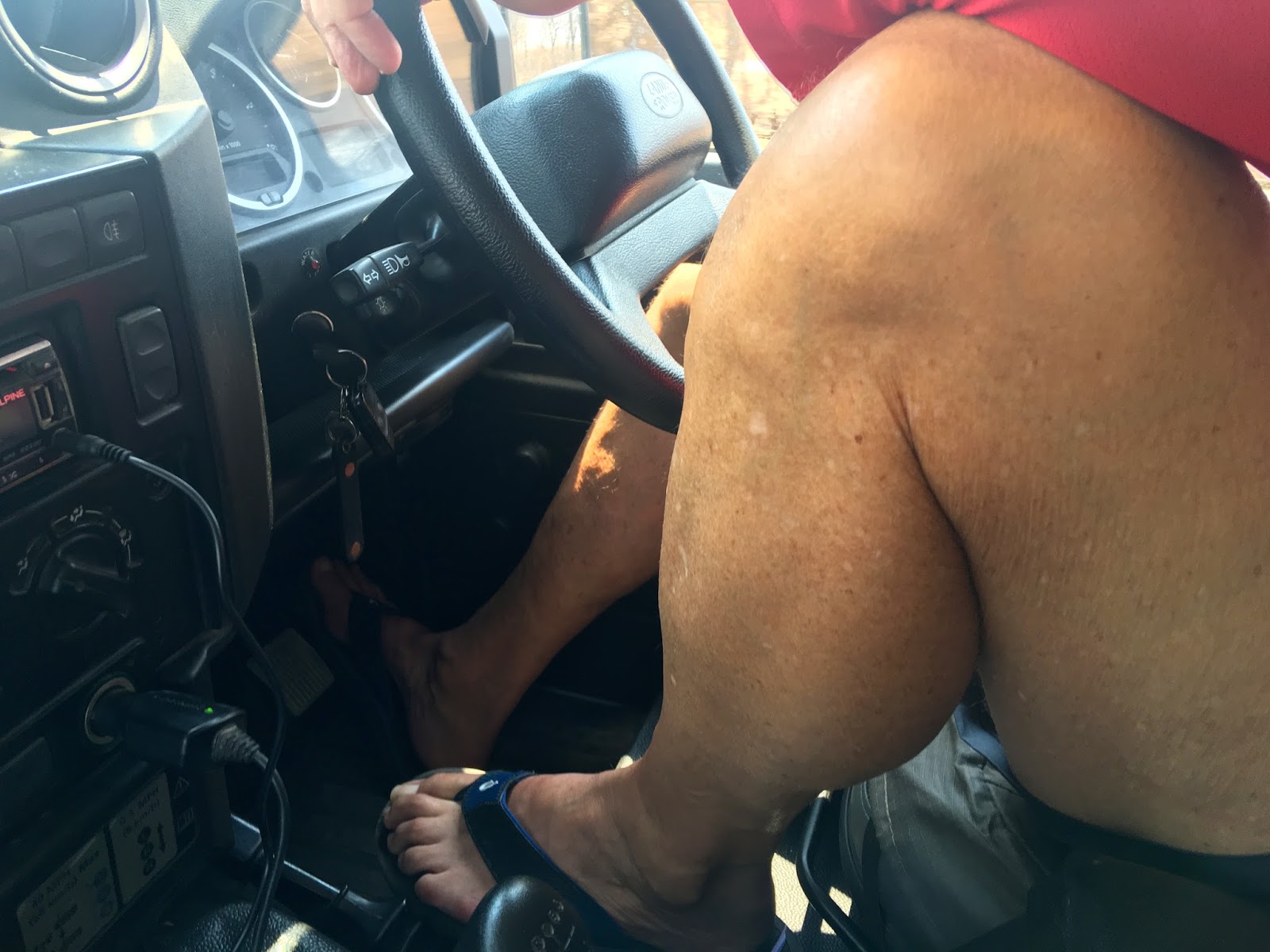
Scott now has so much leg room, he can put his knee up


A village along the way


Coal for sale along the road


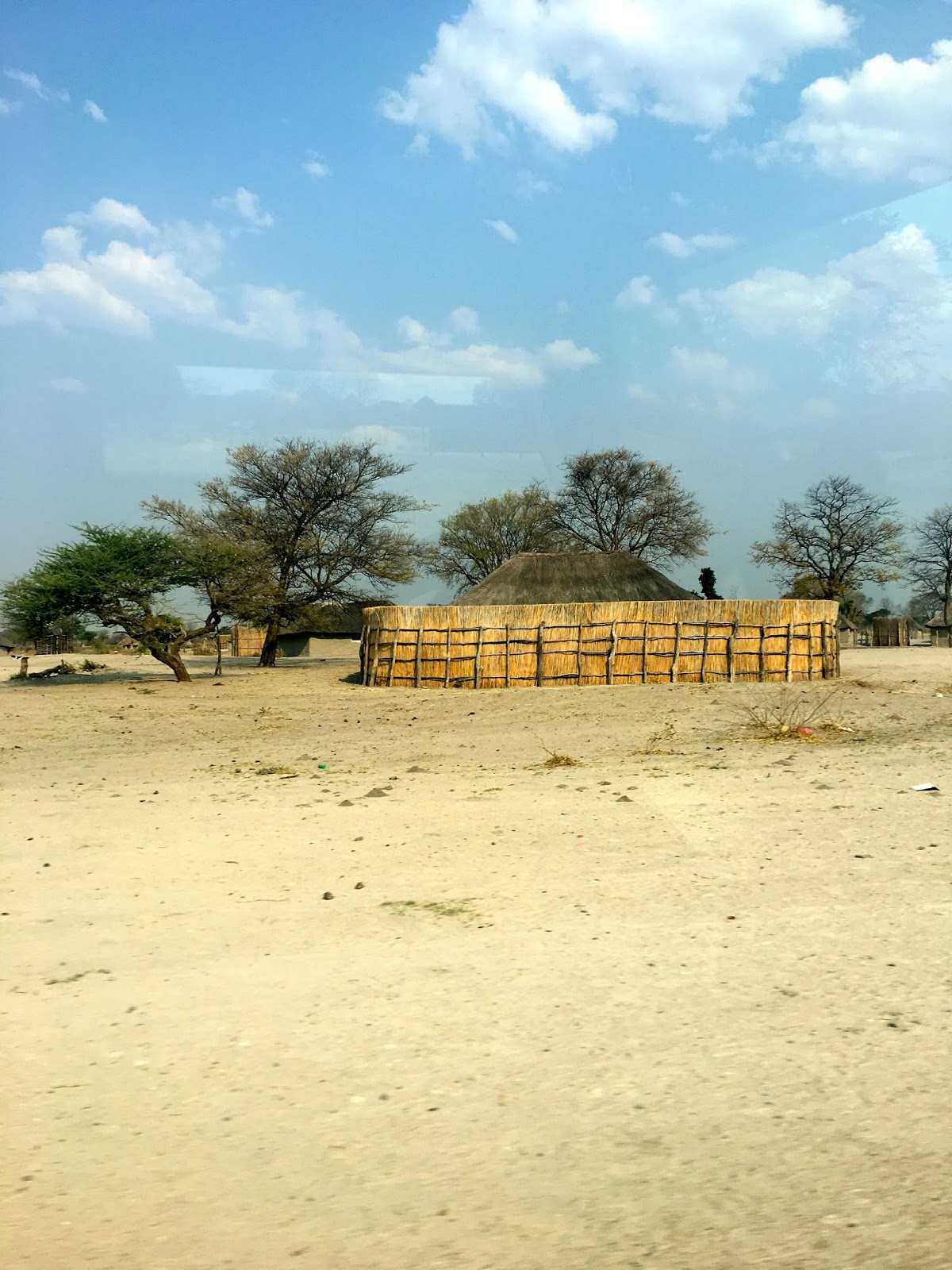
Home with a fenced area for animals


Pit stop for Chuma
Donkey carts


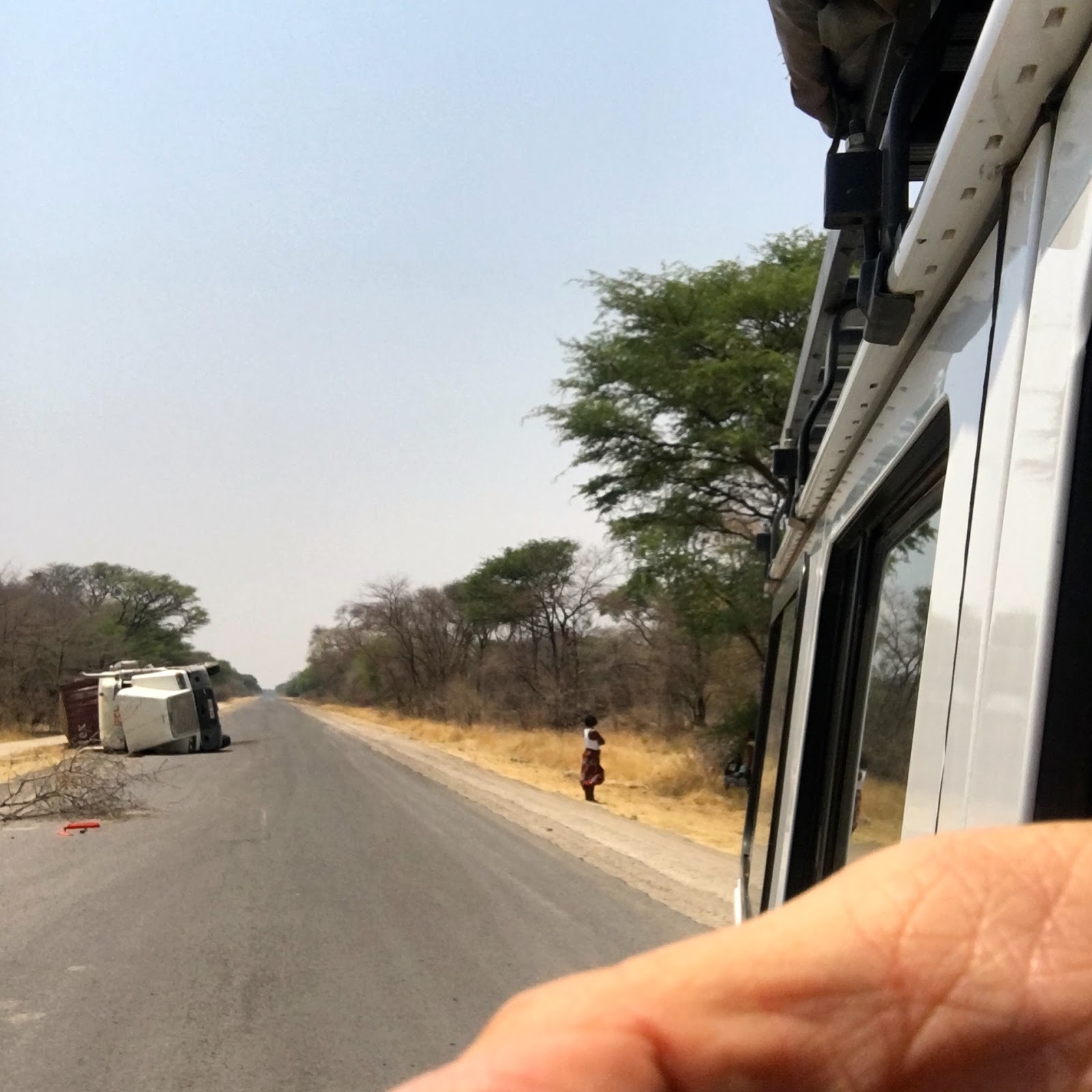
The roads are so dangerous with bad potholes.  The is a large truck on it’s side after hitting a pothole.


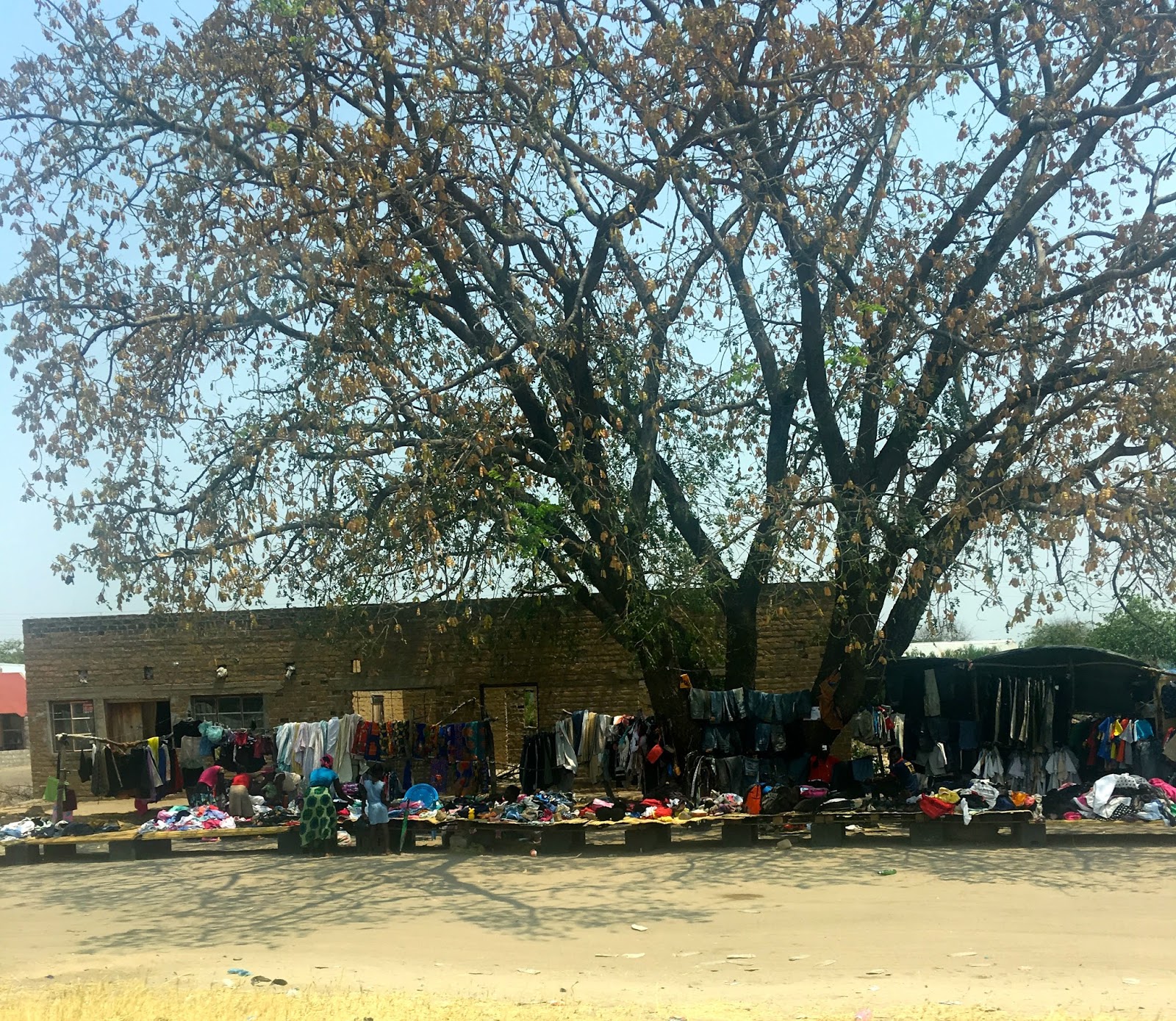
Local Nordstrom


Carrying kids, brothers, and dinner?


I’ll just carry this rug home


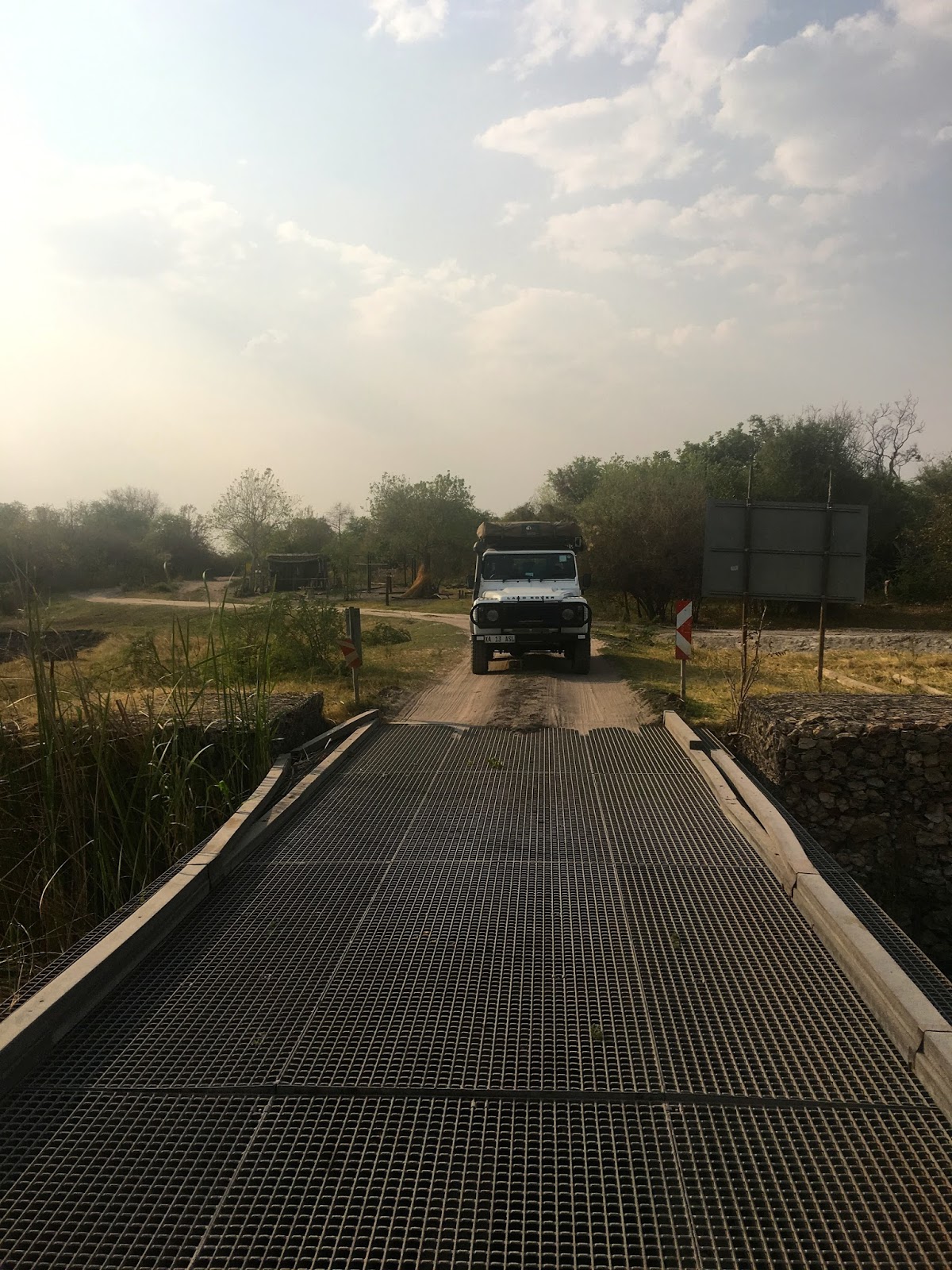
Crossing one of three bridges to the camp


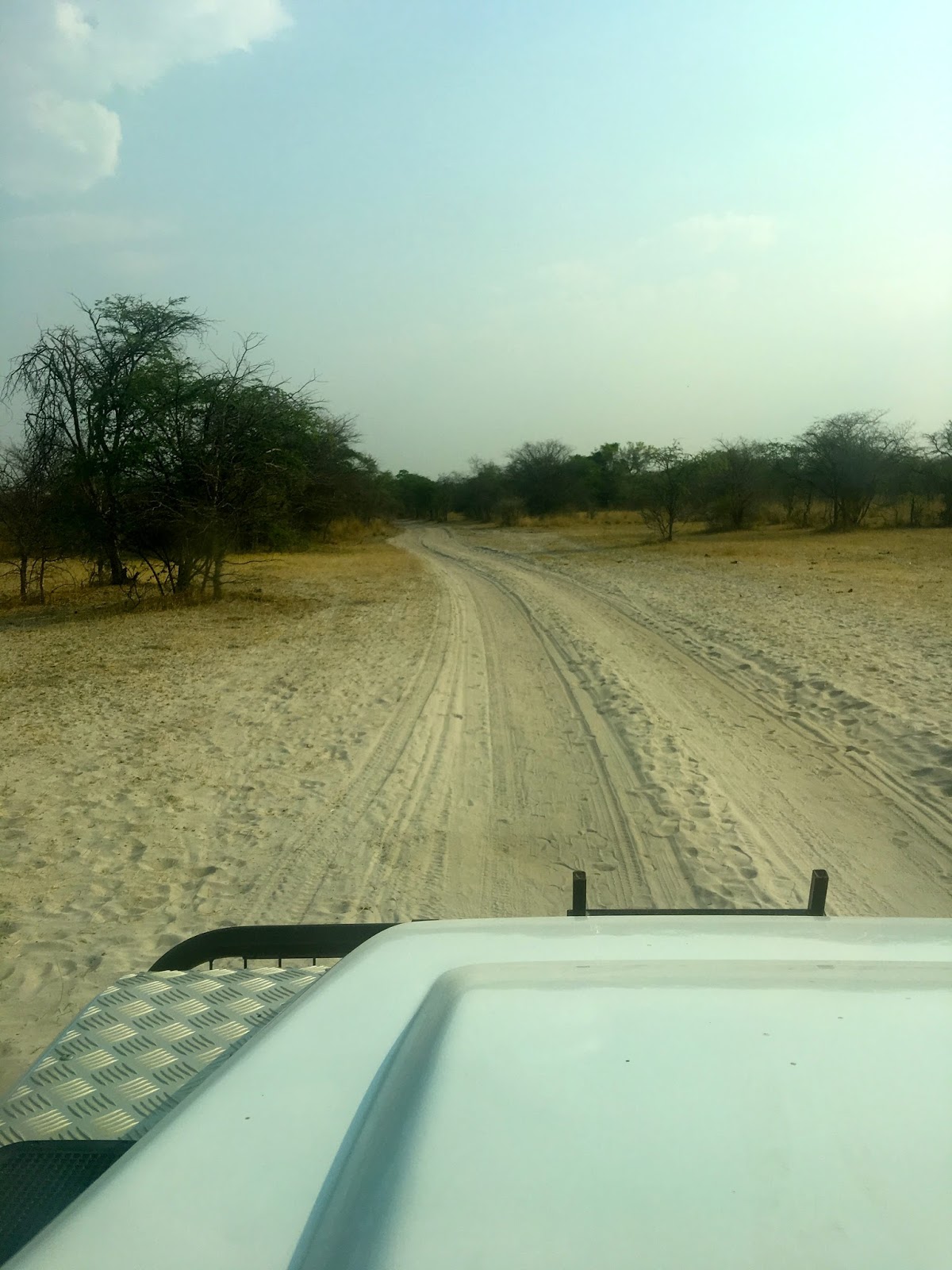
The better part of the sandy roads


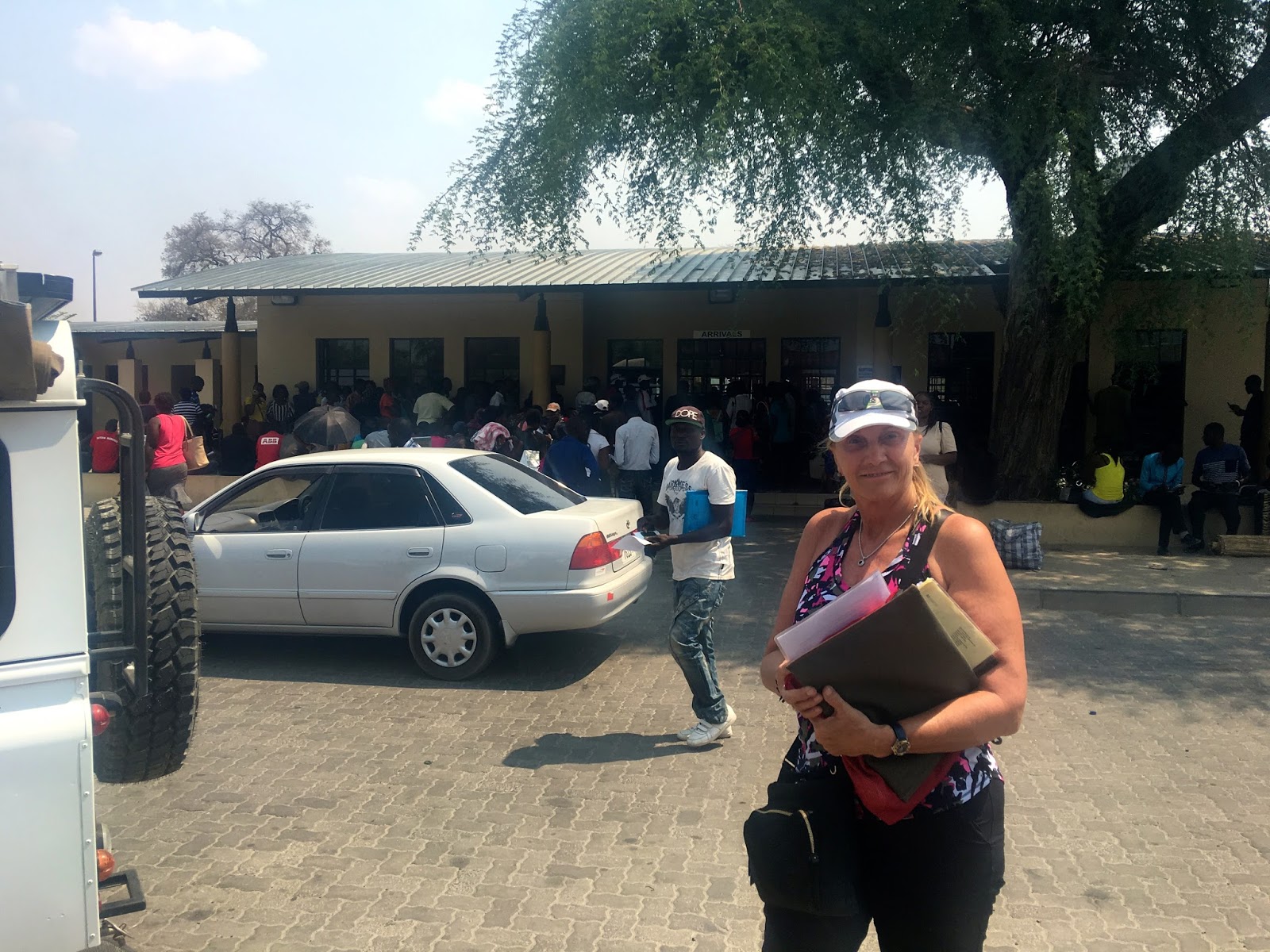
We had to cross the border from Zambia into Namibia.  Going out of Zambia was easy, but getting into Namibia was a huge line of locals trying to get across the border to do their shopping.  After wandering around, trying to figure out what to do, Scott asked a guard where we go to register our car, and he let us in the front of the long line.  Thank goodness!


Barb at the border


The Caprivi Strip has been renamed the Zambezi Region.  This area is in the northeast region of Namibia and borders Botswana.  The border is defined by the Linyanti, Chobe, and Kwando River.  It is the same river with three different names, which denote the area of the river.  We visited two tented safari camps in this area.

The first camp is the Nkasa Lupala tented camp.  We drove 11 kilometers through very deep sand to get to it.  This will probably be the most primitive camp that we will visit.  Everything is run on solar power.  Our tent was very hot during the day, and no fan.

Our humble abode


Scott at the main camp


Walking home after a dip in the 3 foot pool


 The night we arrived we went on a night safari using a big spotlight to look for the shining eyes of the animals.  For the first hour of the drive we joked that we were finding the smallest five animals in Africa. To my delight we first found the elusive Duiker.  This is a very small antelope that is active at night.  We have had fun with the Duiker ever since we spotted one in South Africa with the kids.  We have fun calling our kids a “Durker”.

Diuker (Durker)

The next animals we saw were a White Tailed Mongoose, a Serval Cat, and quite a few Spring Hares.  All these animals are very small.

We then saw lots of Hippos out of the water and grazing.  They walk and eat grass all night and then get back into the water during the day. They follow the same paths night after night (Hippo highways).  They can run 40 kilometers per hour and would be very difficult to out run.  If they are running straight for you our guide said that you can simply step five feet to the side and they will run straight past you. They will not chase you like a rodeo bull would chase a cowboy.


Hippo’s come out of the water at night to feed.  They can walk 5 or 6 kilometers at night.  They also run very fast.

Hippo in the water
Hippo’s are very territorial and very dangerous


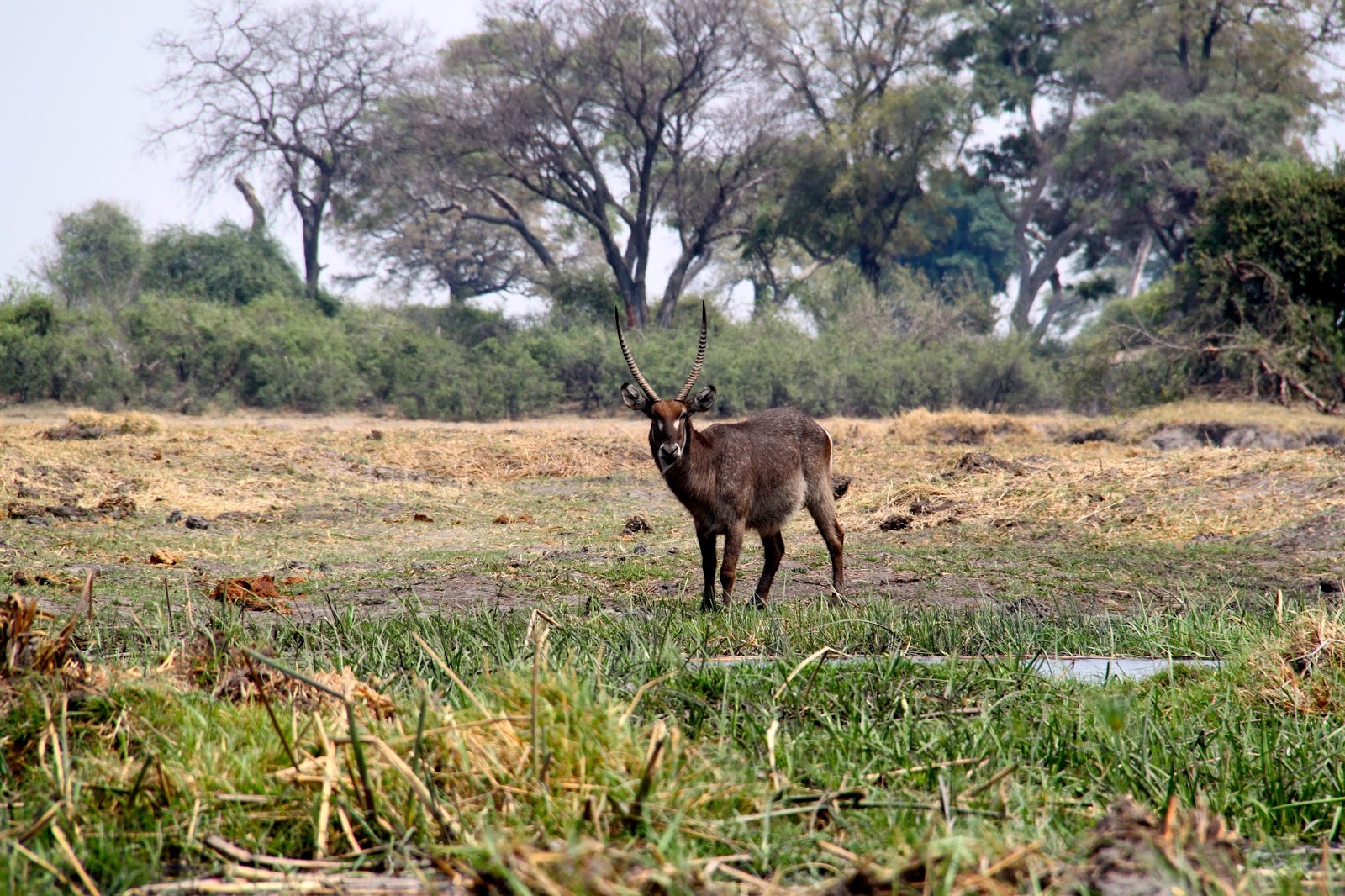
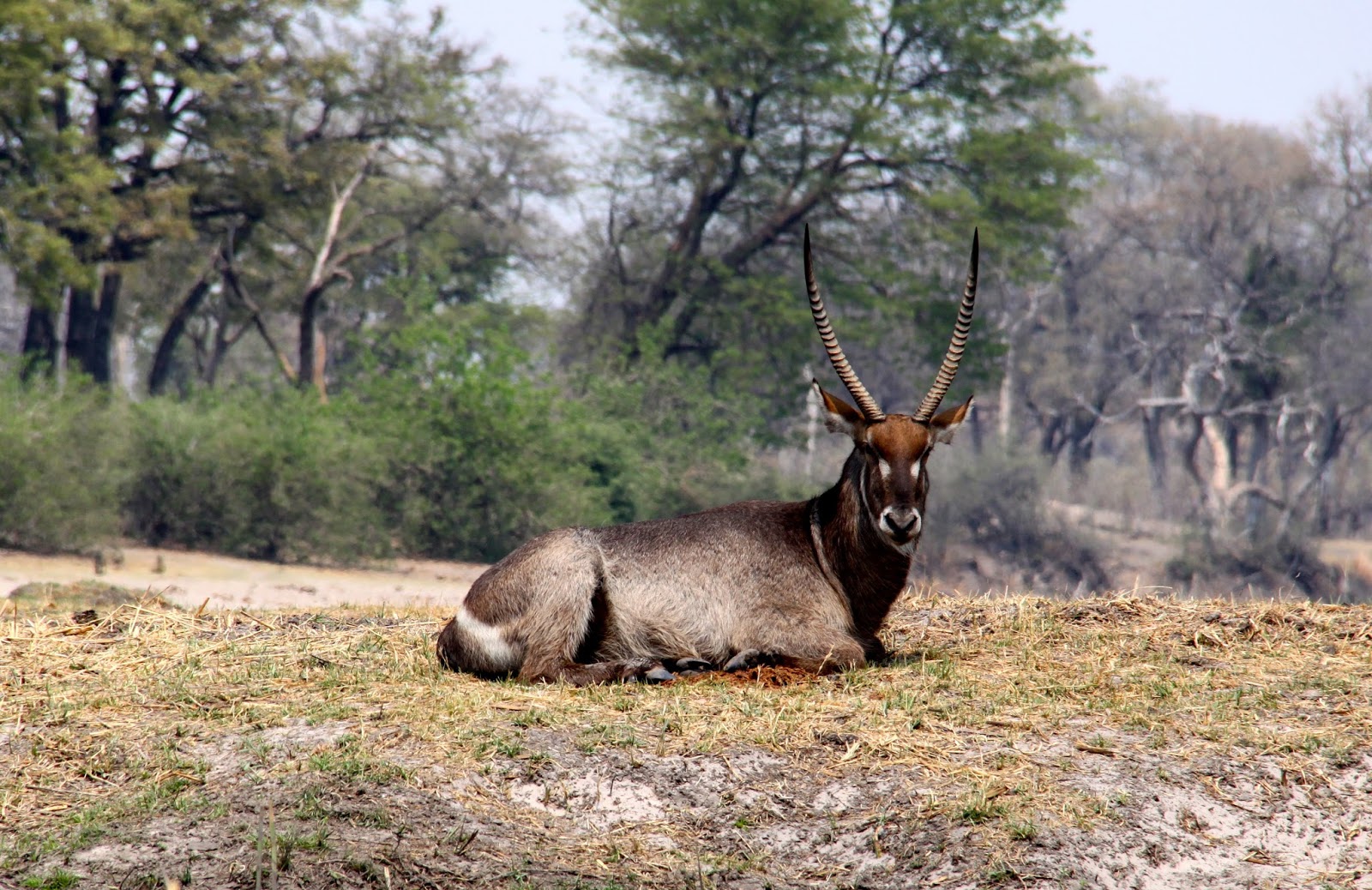
The next morning we drove to the Linyanti River spotting Elephants, the Greater Kudu, Water buck, Reed Buck, and Impala along the way.

Wart hogs

Greater Kudu
Impala


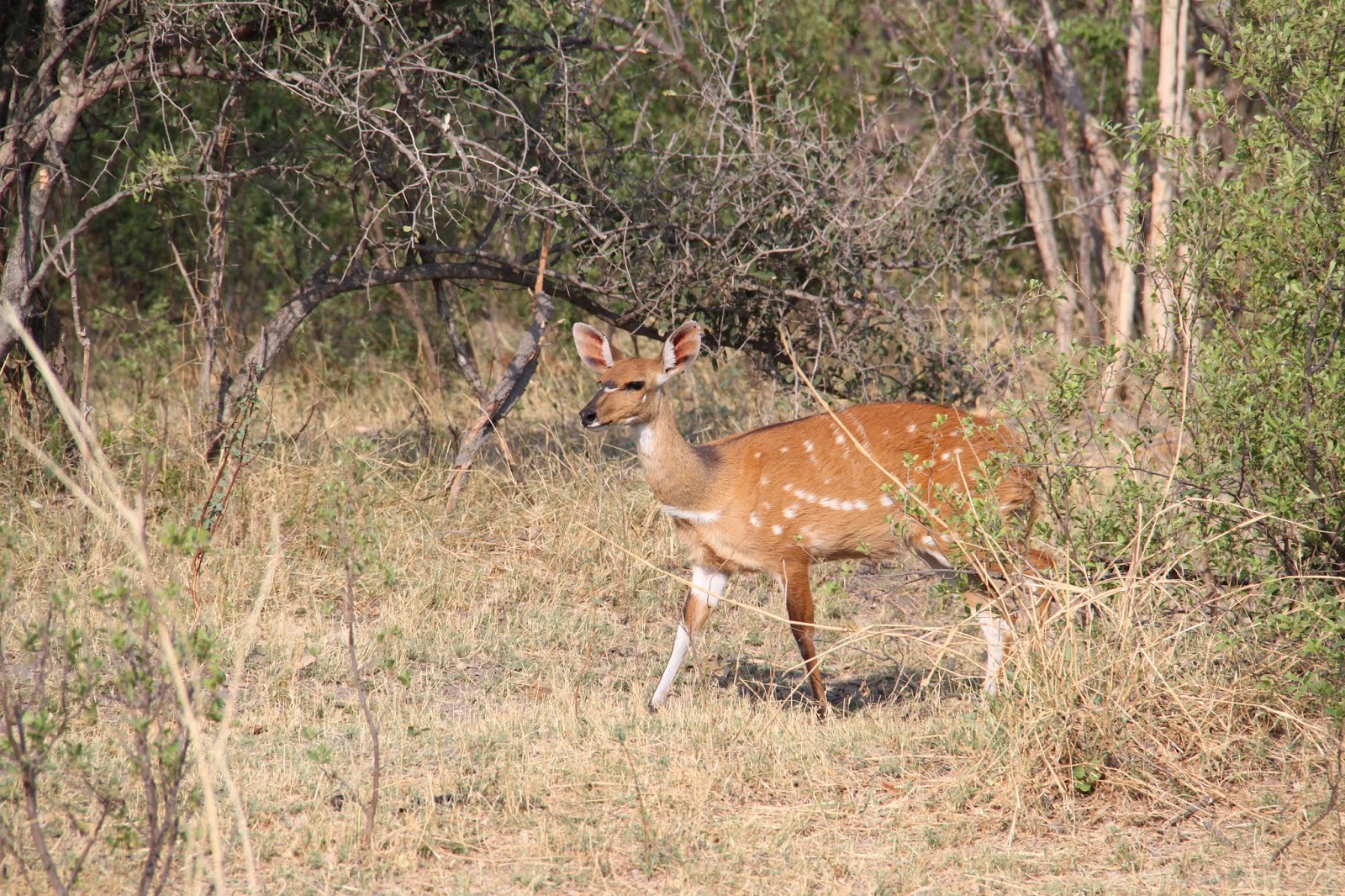
Bushbuck


Oryx


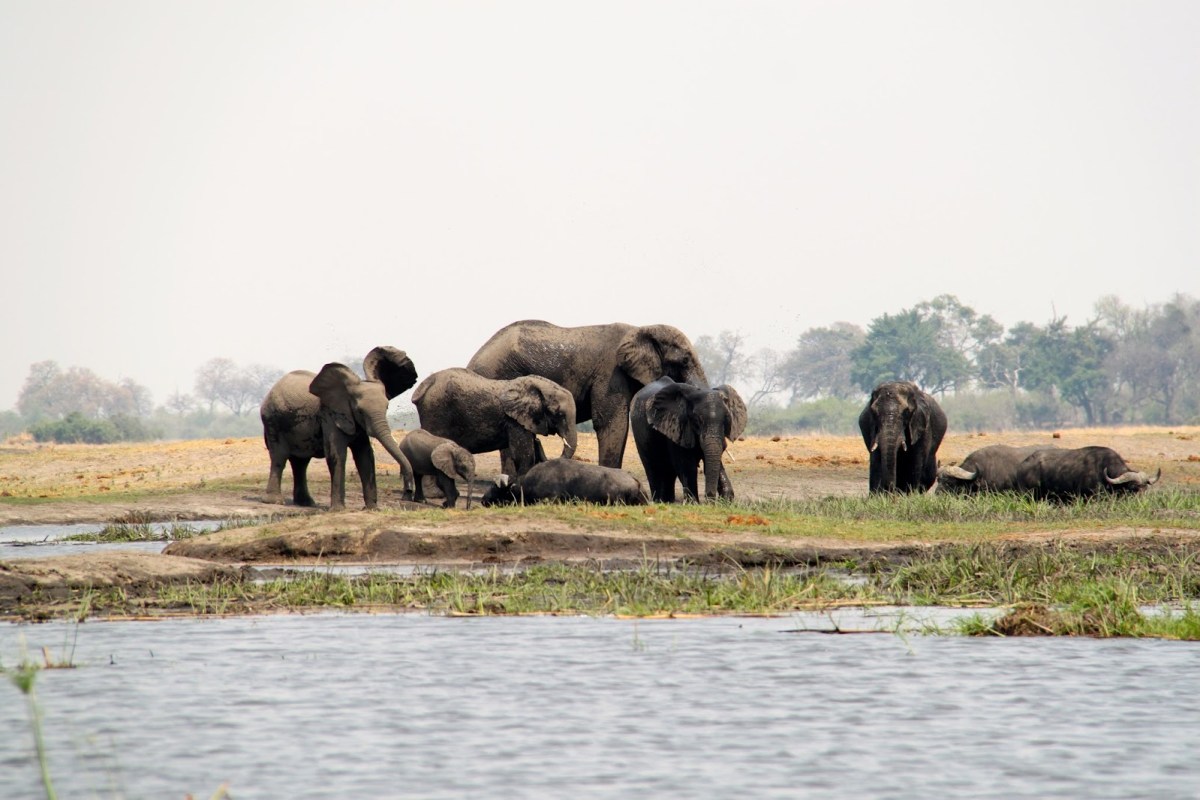
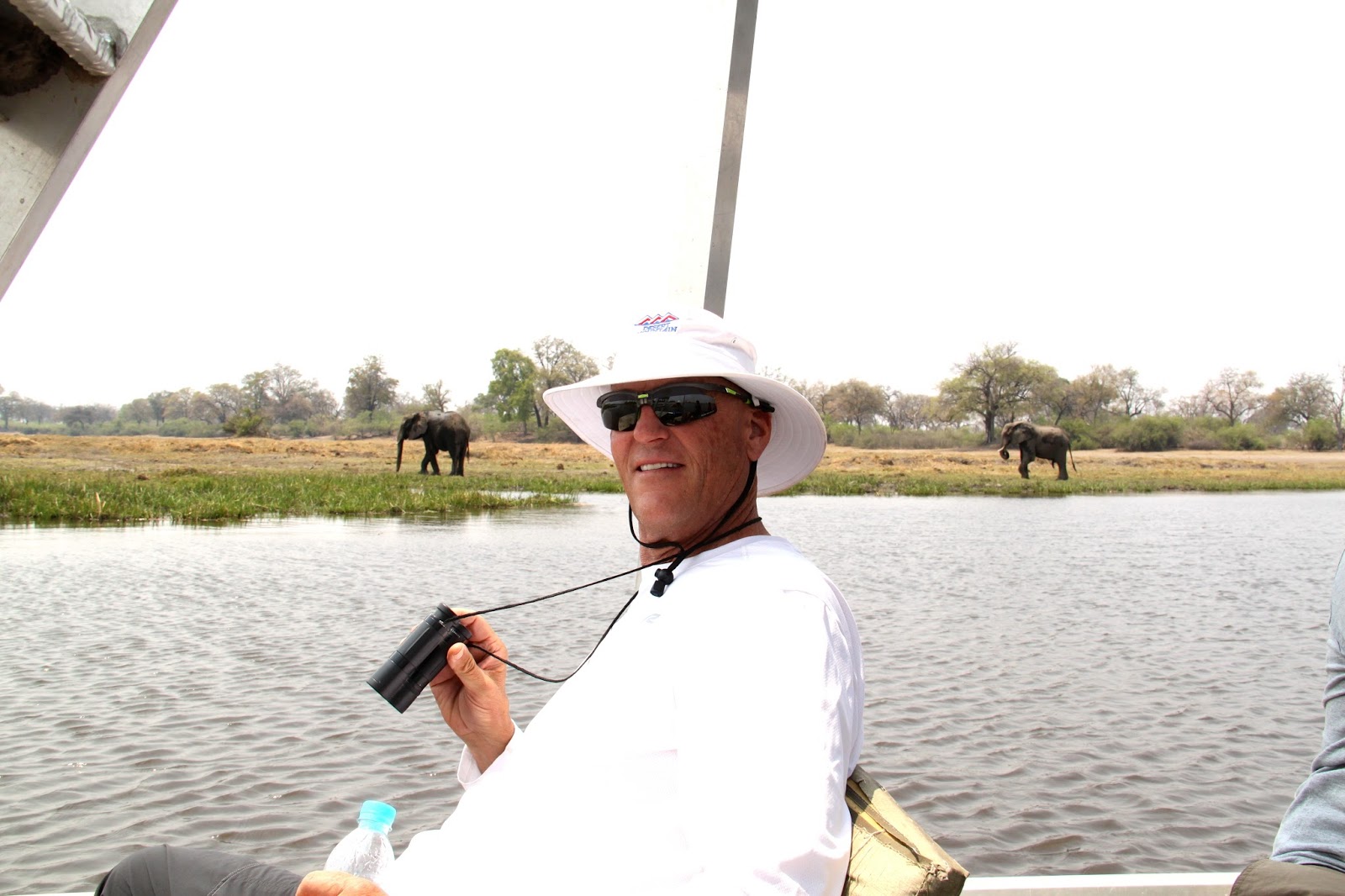
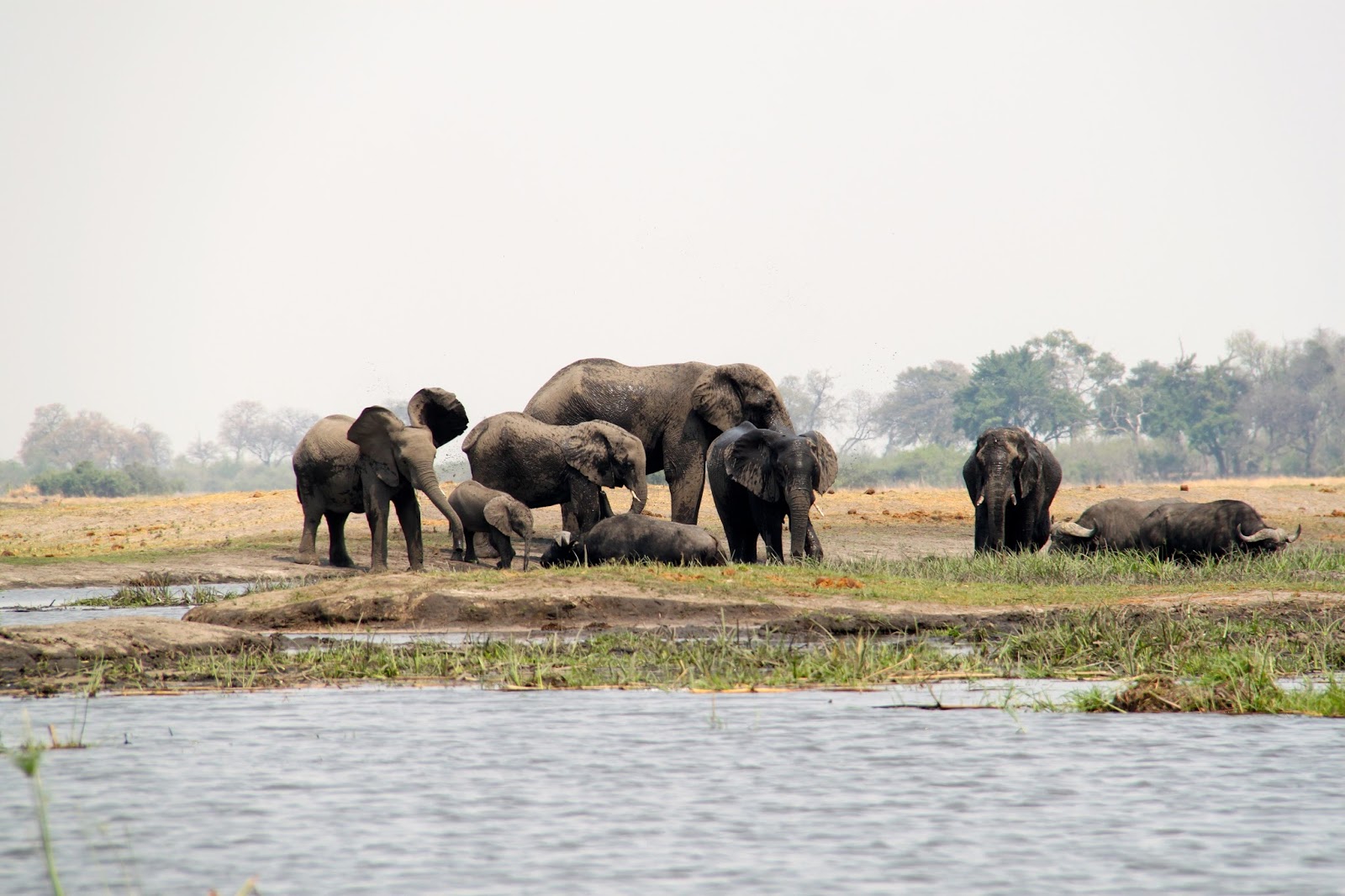
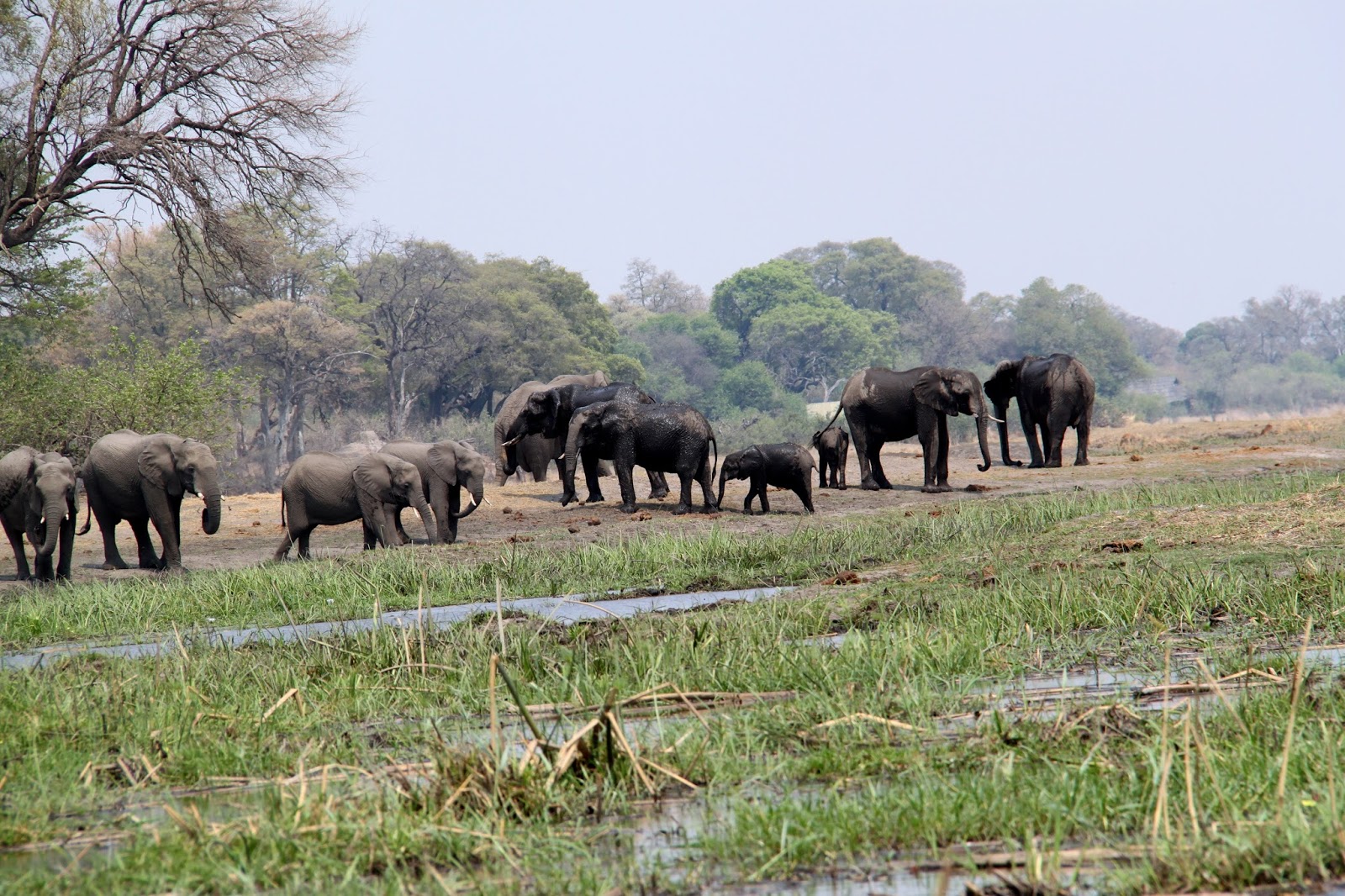
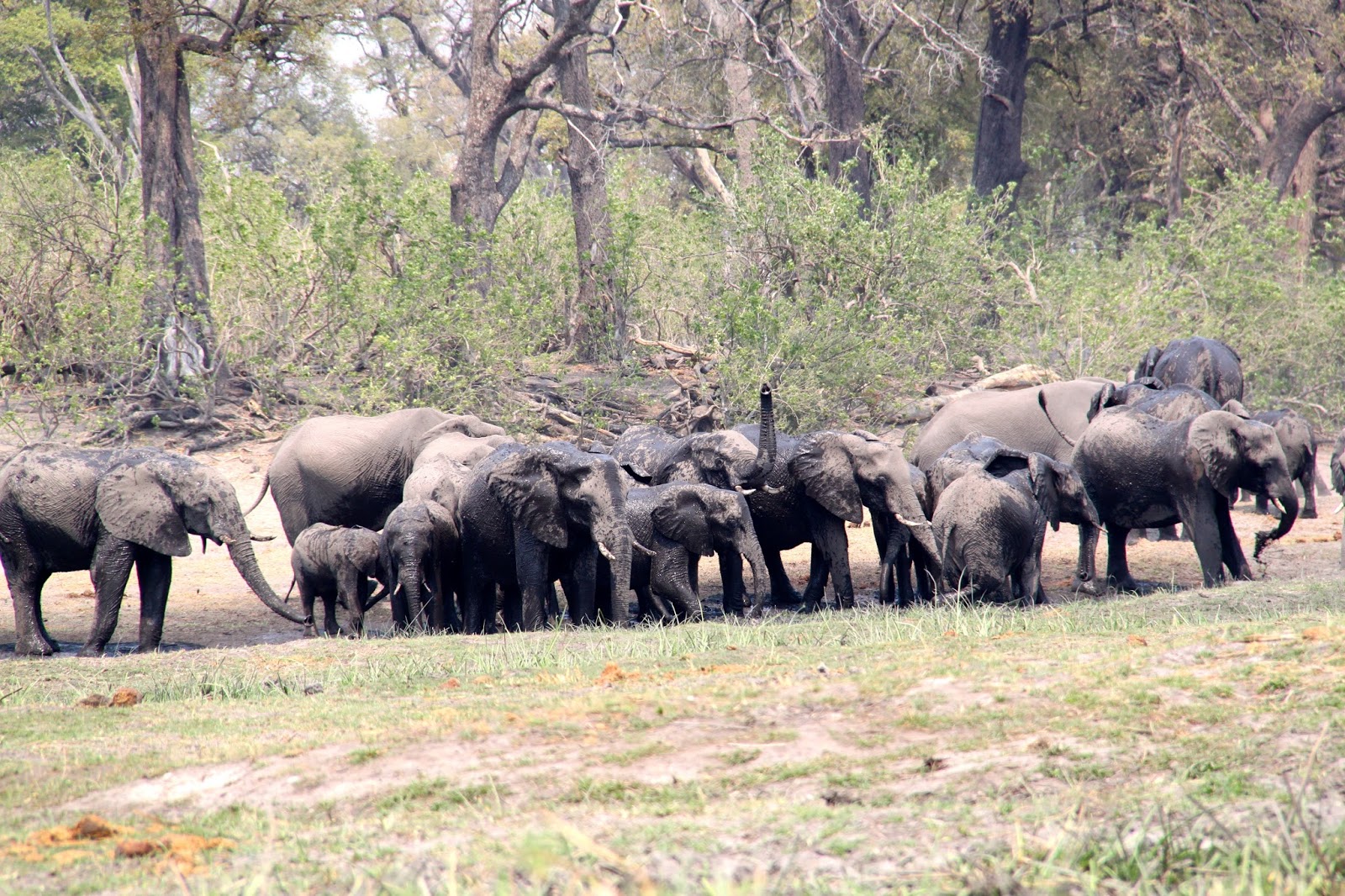
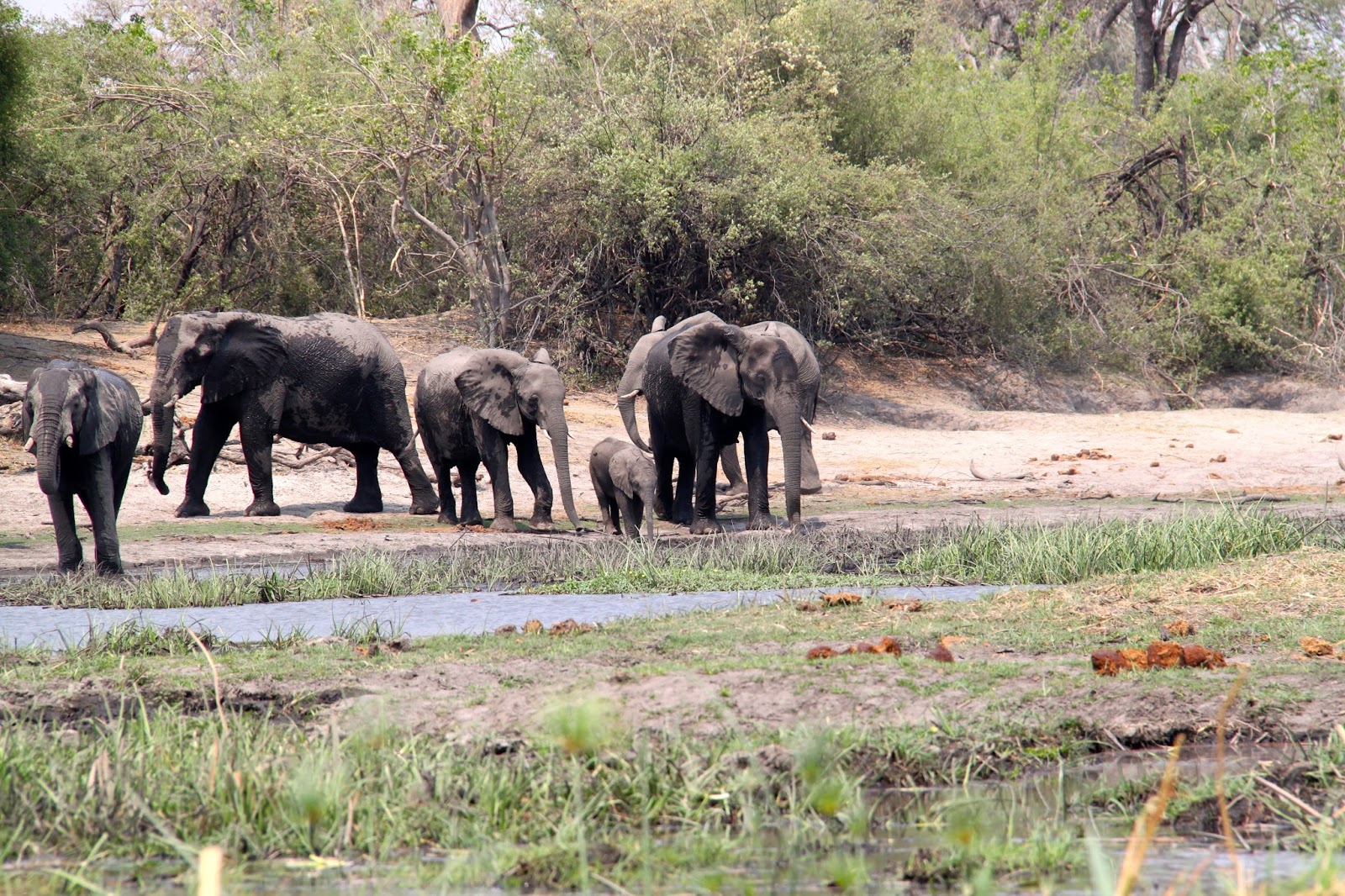
We got into a small boat at the Linyanti and motored slowly past many pods of Hippos since they are very dangerous if they are provoked.  We saw maybe 100 Elephants coming down to the river to drink and roll in the mud.

Barb on the river boat


Scott with 2 elephants


Lots of elephants
The herd is very protective of all the babies


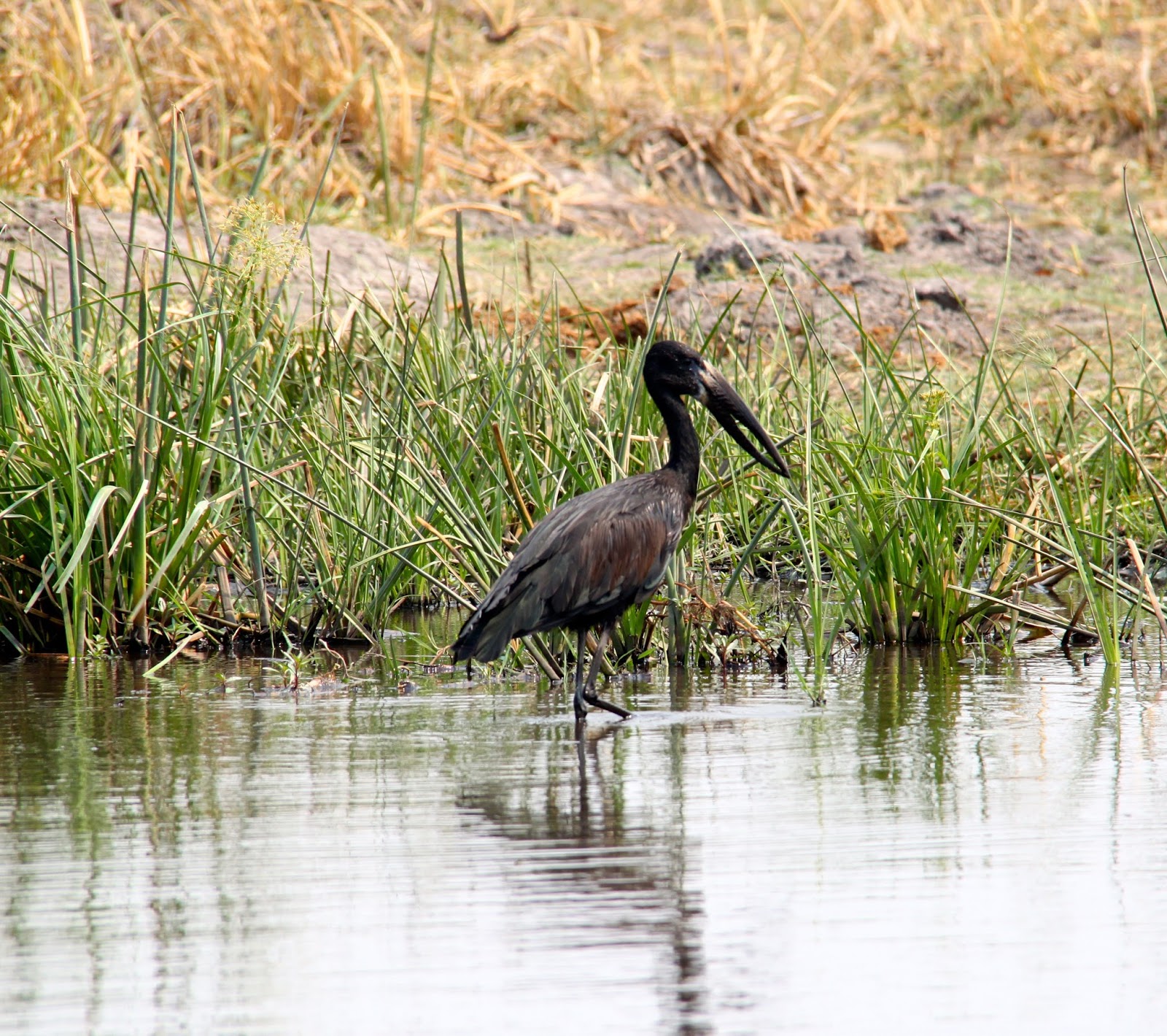
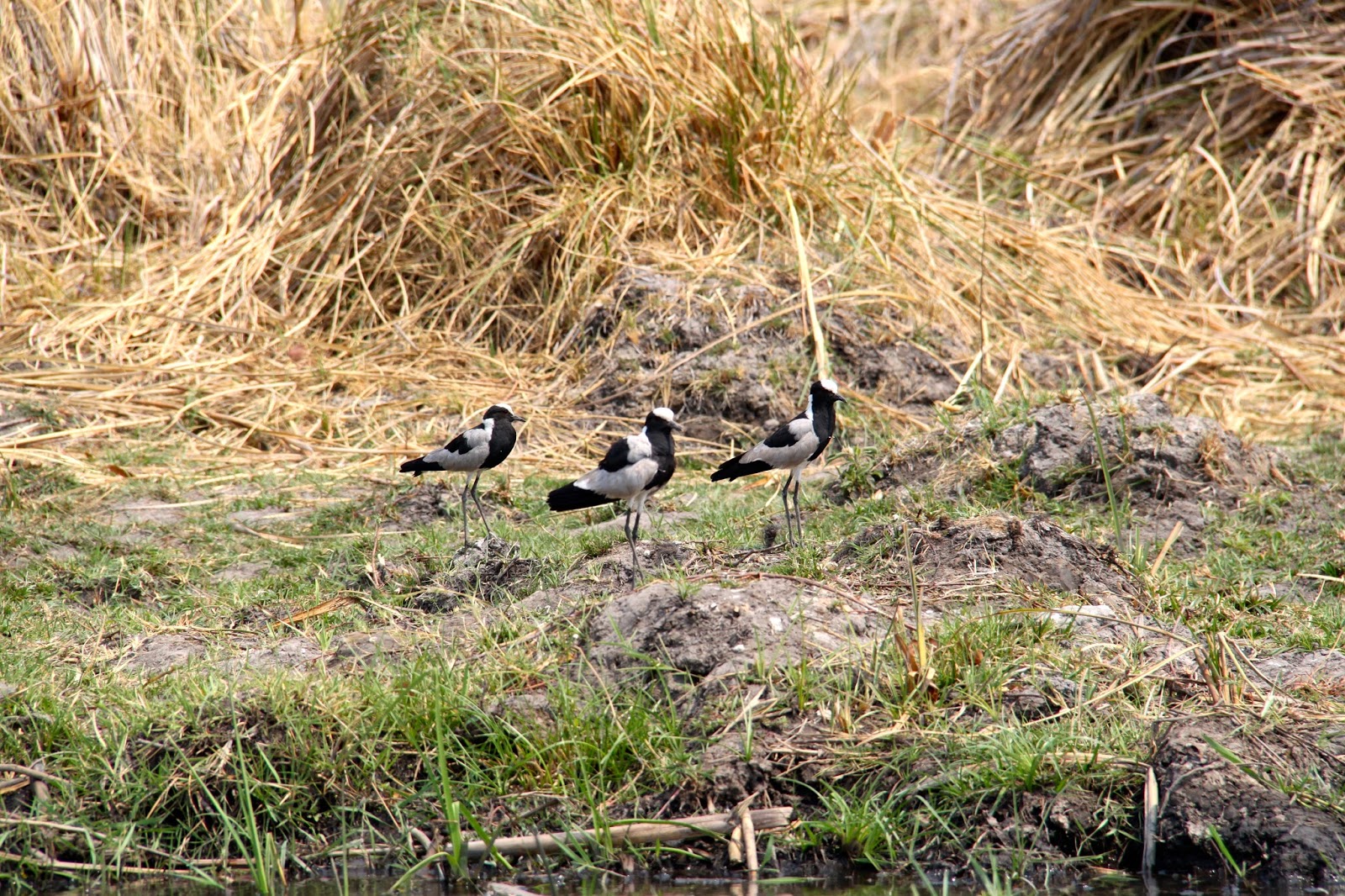
We saw many different birds.

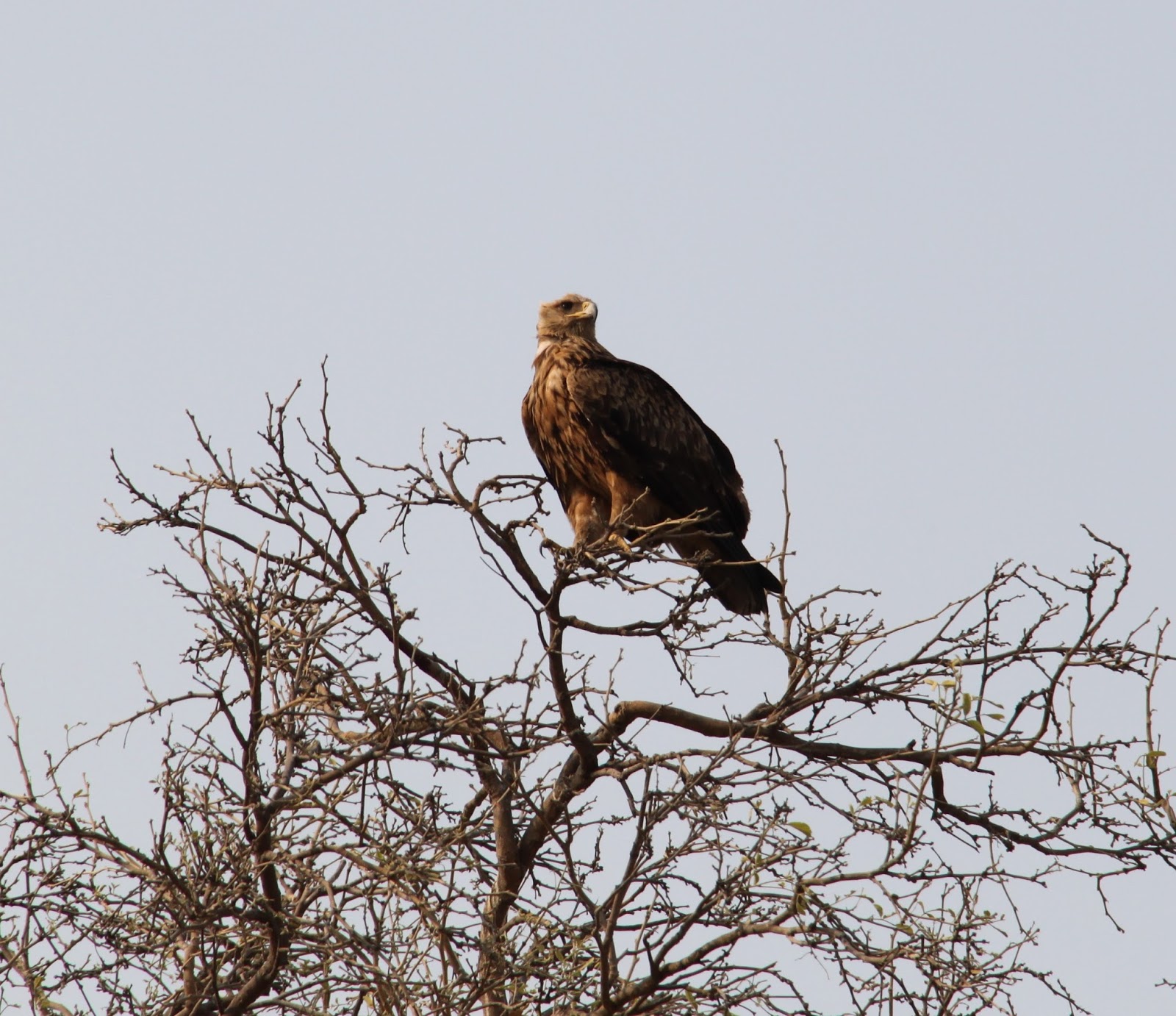
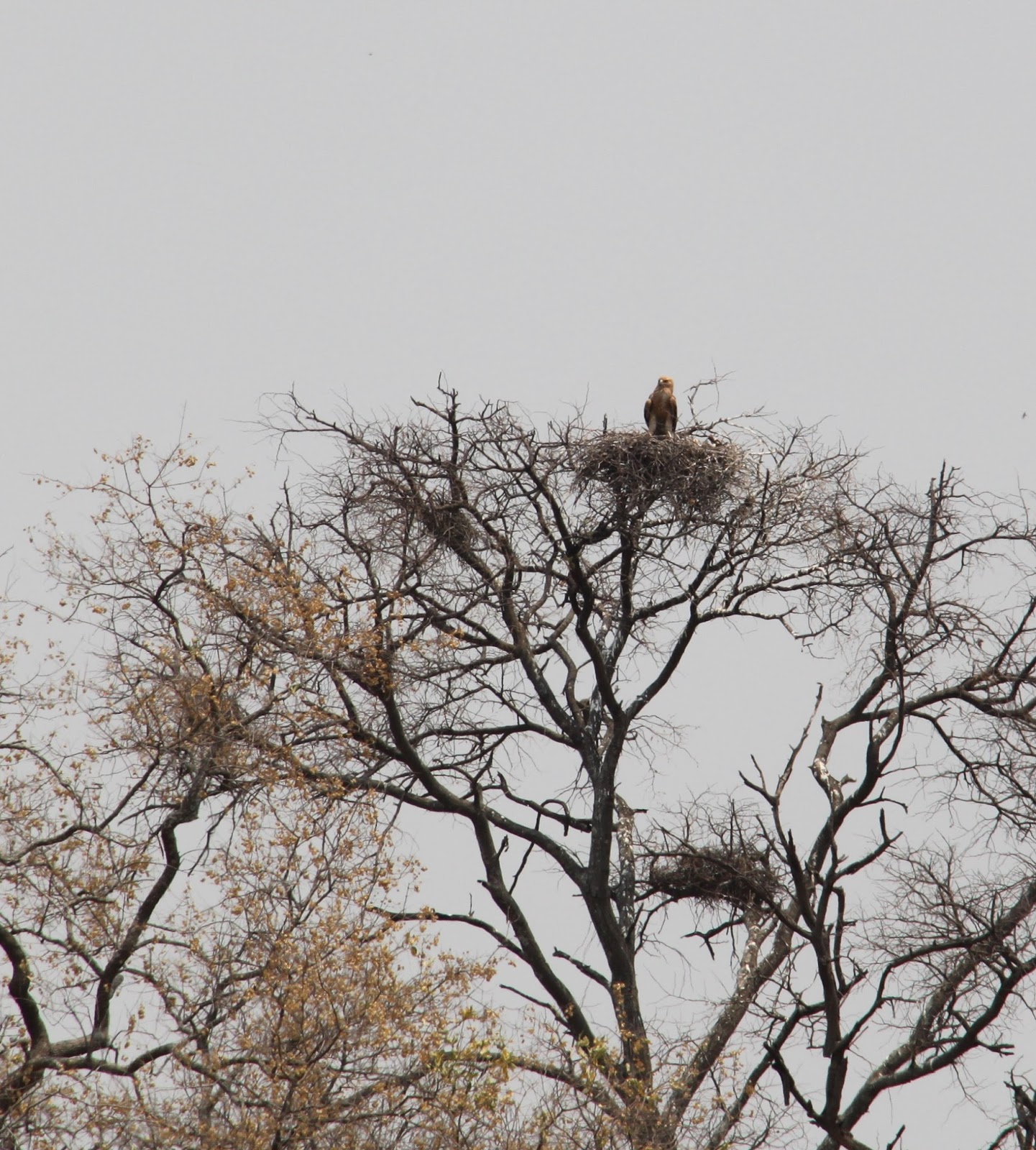
Tawny Eagle


e
Fish Eagle


Having a great time!
Off to our next camp.

Zambia-Victoria Falls from Livingstone- Camp 1-Tonga Bezi September 29-30 2016

Victoria Falls
Livingstone, Zambia
Tonga Bezi Lodge

Victoria Falls
 
After an 11-hour flight from London to Johannesburg we had two hours to make our connection to Livingstone, Zambia (Victoria Falls).  We ran like gazelles through the airport and would not have made it without the help of an airport worker who was able to take us to the front of all the immigration and check-in lines.
 
After a 90 minute flight we checked into our lodge called the Tonga Bezi, which is directly on the shores of the Zambezi River.  The native people in this area are called the Tonga Tribe.  We have a personal valet from the Tonga Tribe named Dadu who arranges everything we need.

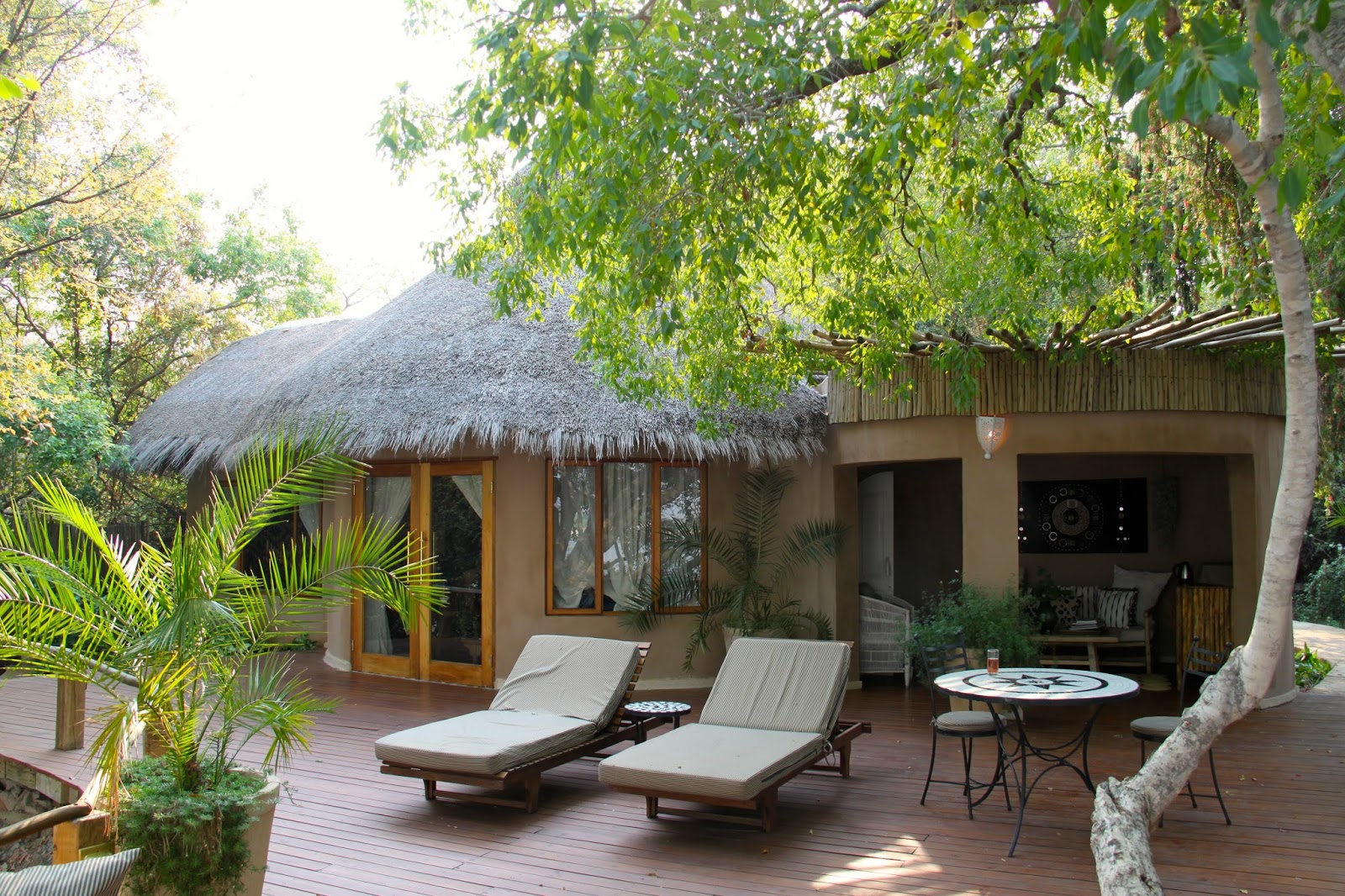
Our tented camp
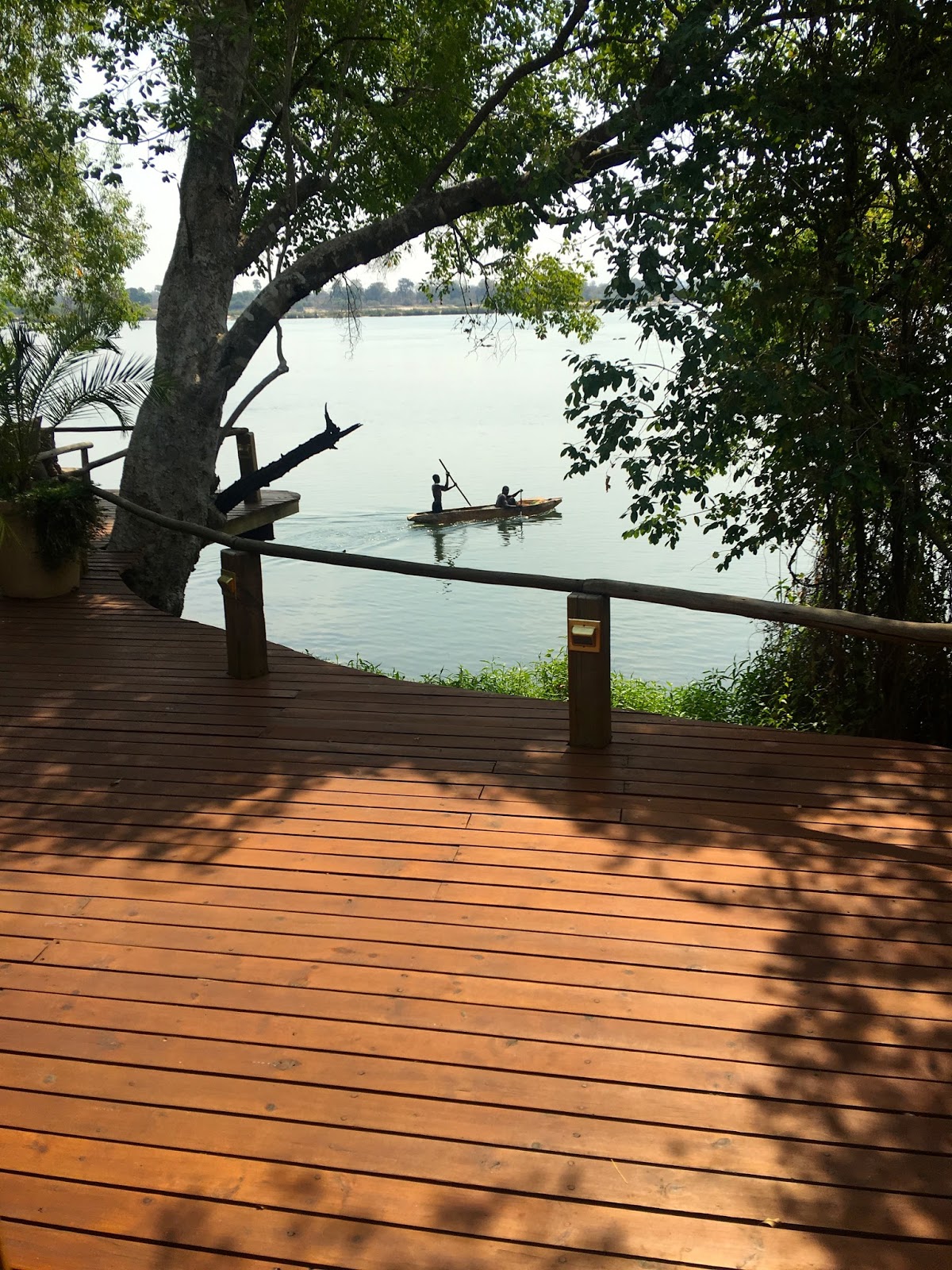
Sitting on our deck we see locals in a dug out canoe


Scott standing in the shower


Our Bedroom


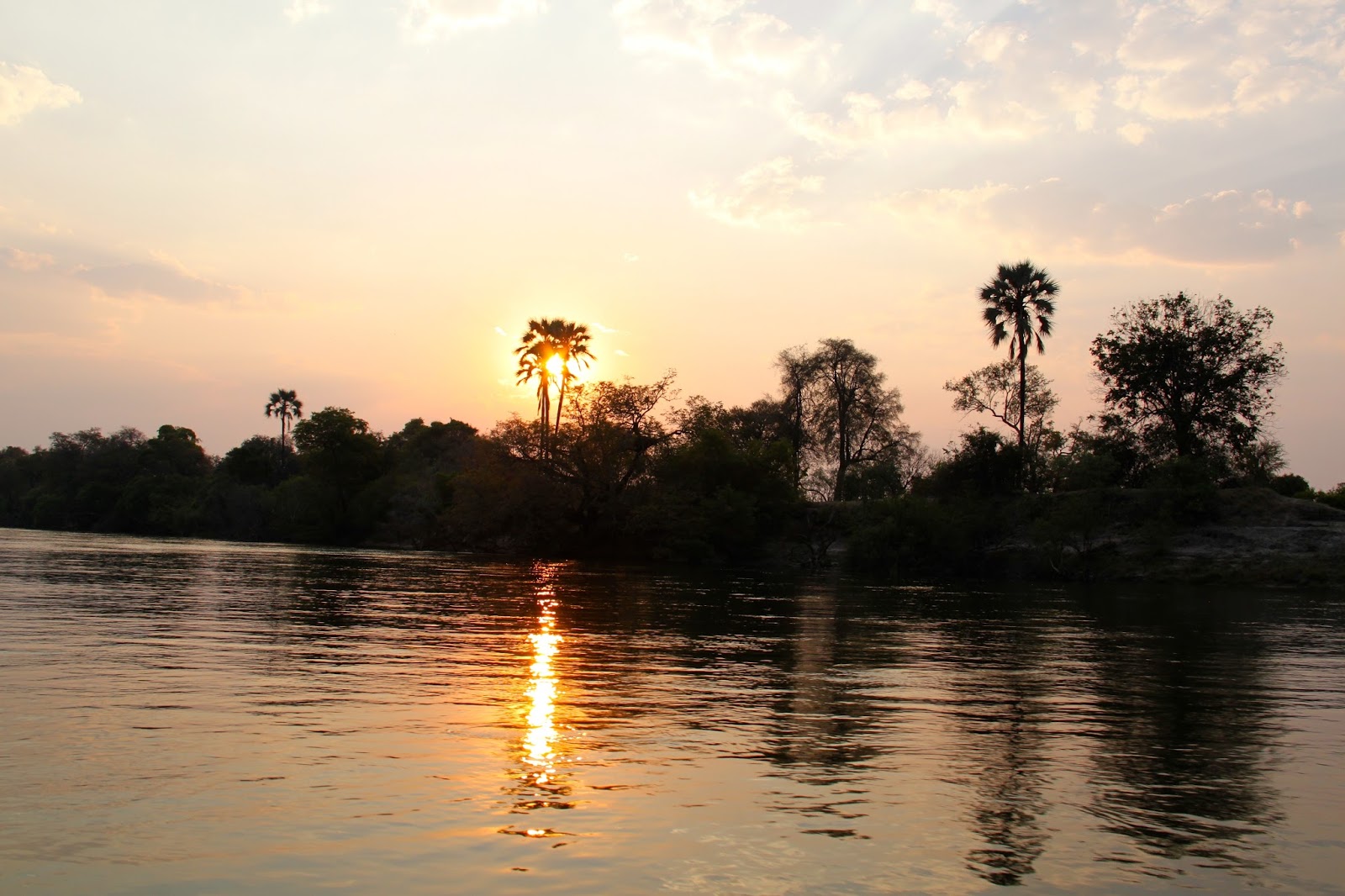
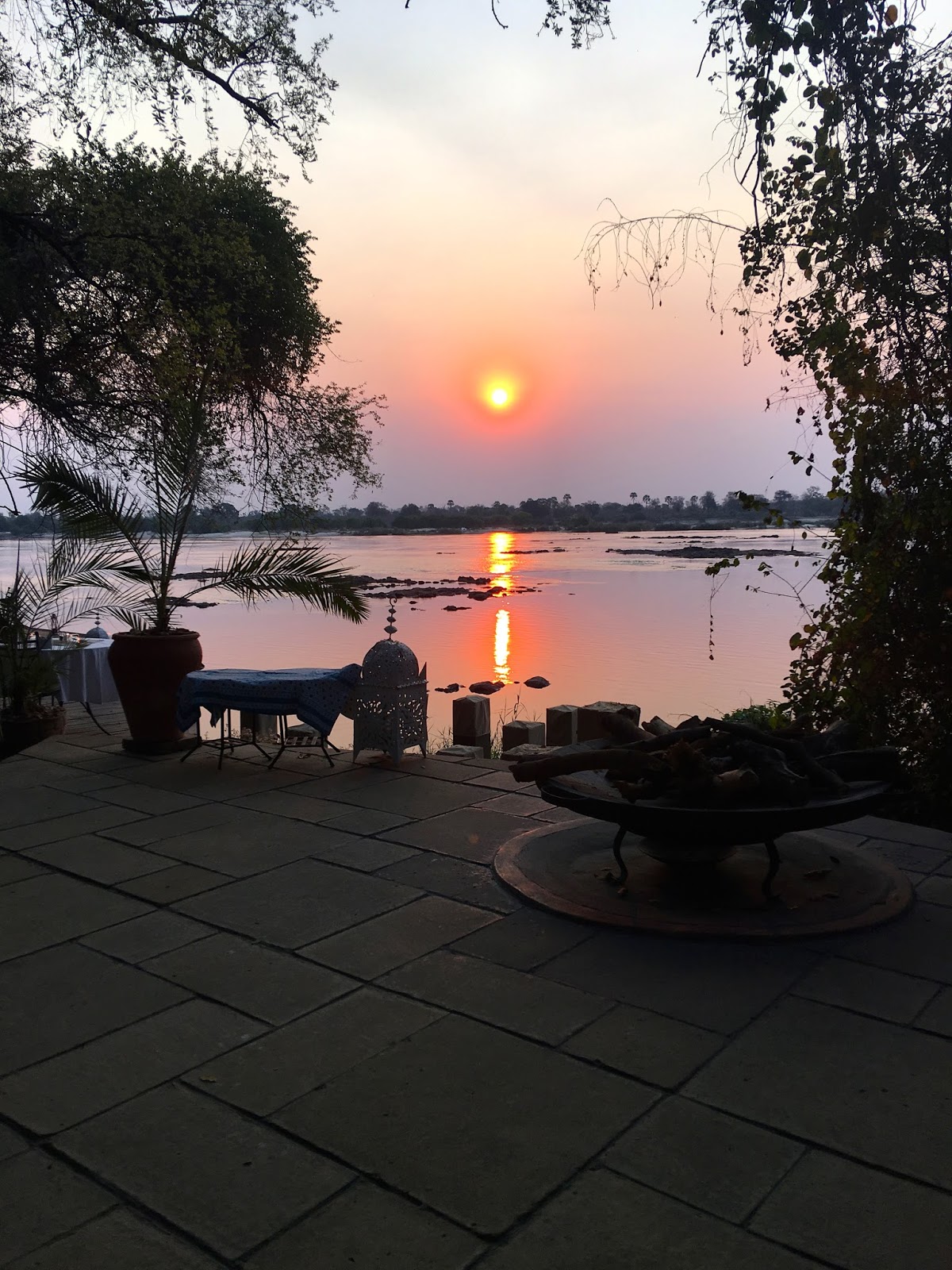
Sunset on the Zambezi River


What a beautiful lodge!
 
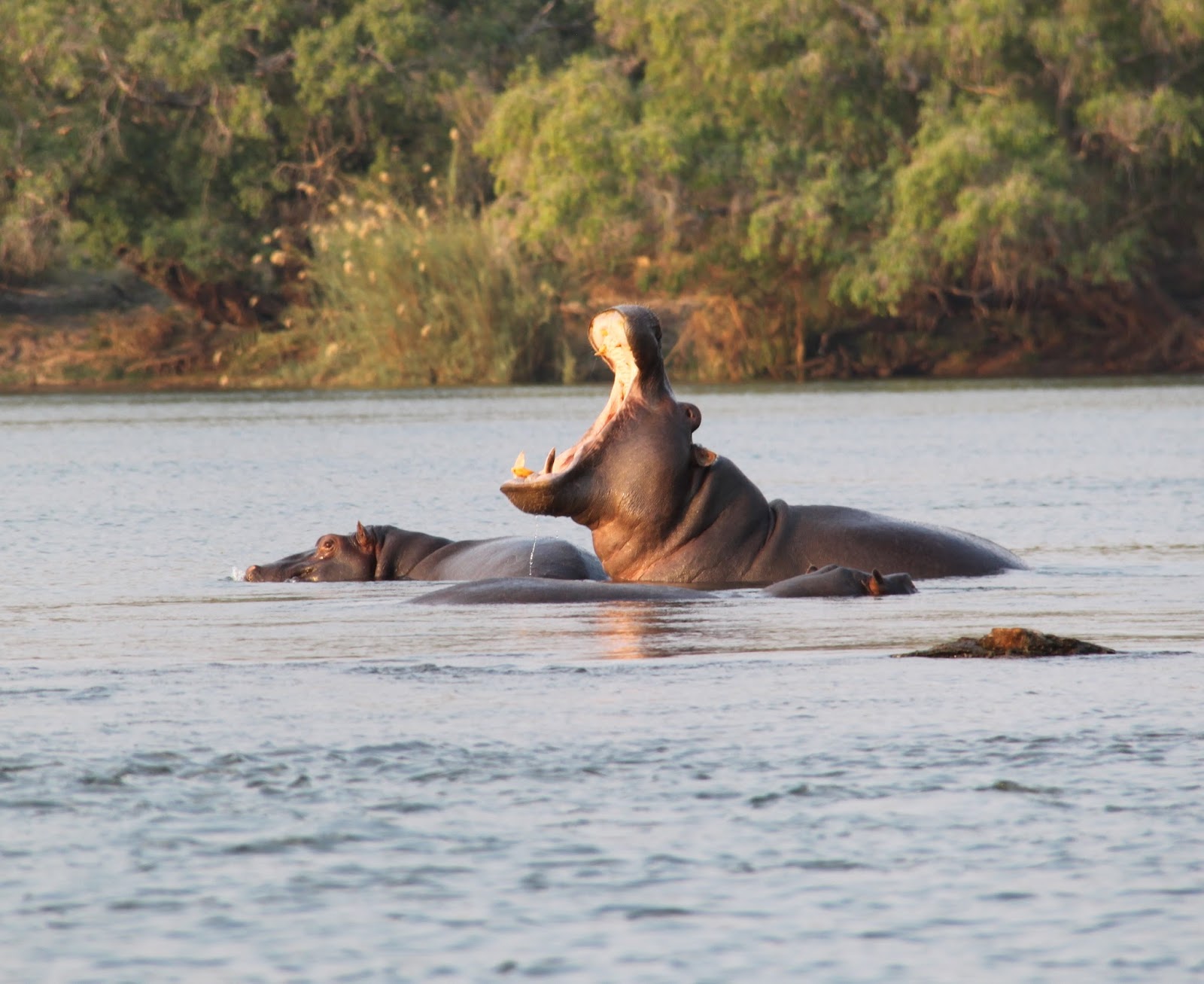
A boat ride on the river at sunset is very peaceful except for the possibility of attacks by hippopotamus that lurk below the surface of the water.  They are very territorial and grunt loudly when they are annoyed by their rival companions or by our small boat when we motor slowly past.
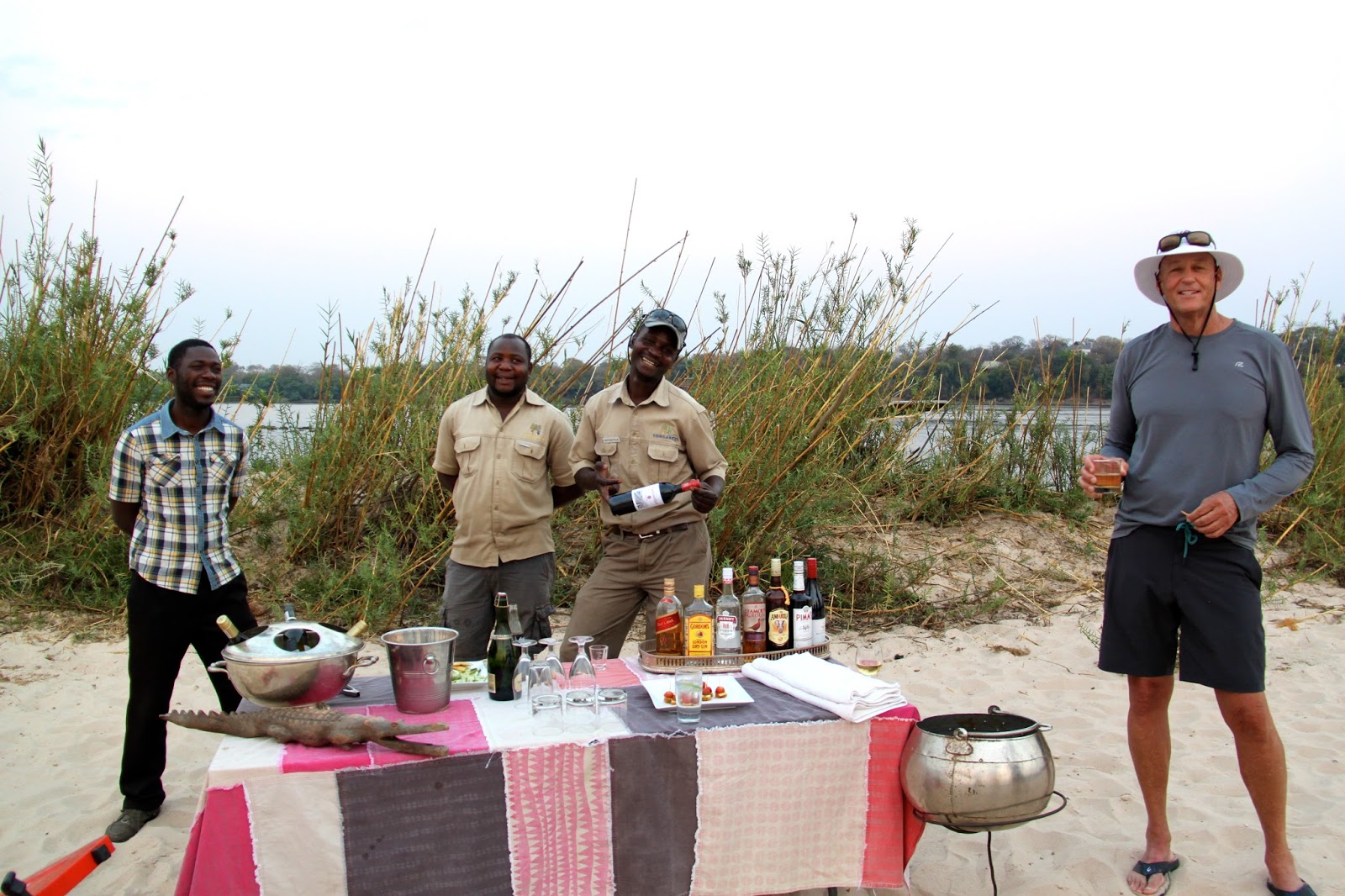
For our sun-downer, they set up a bar with drinks and snacks


Sun-downer
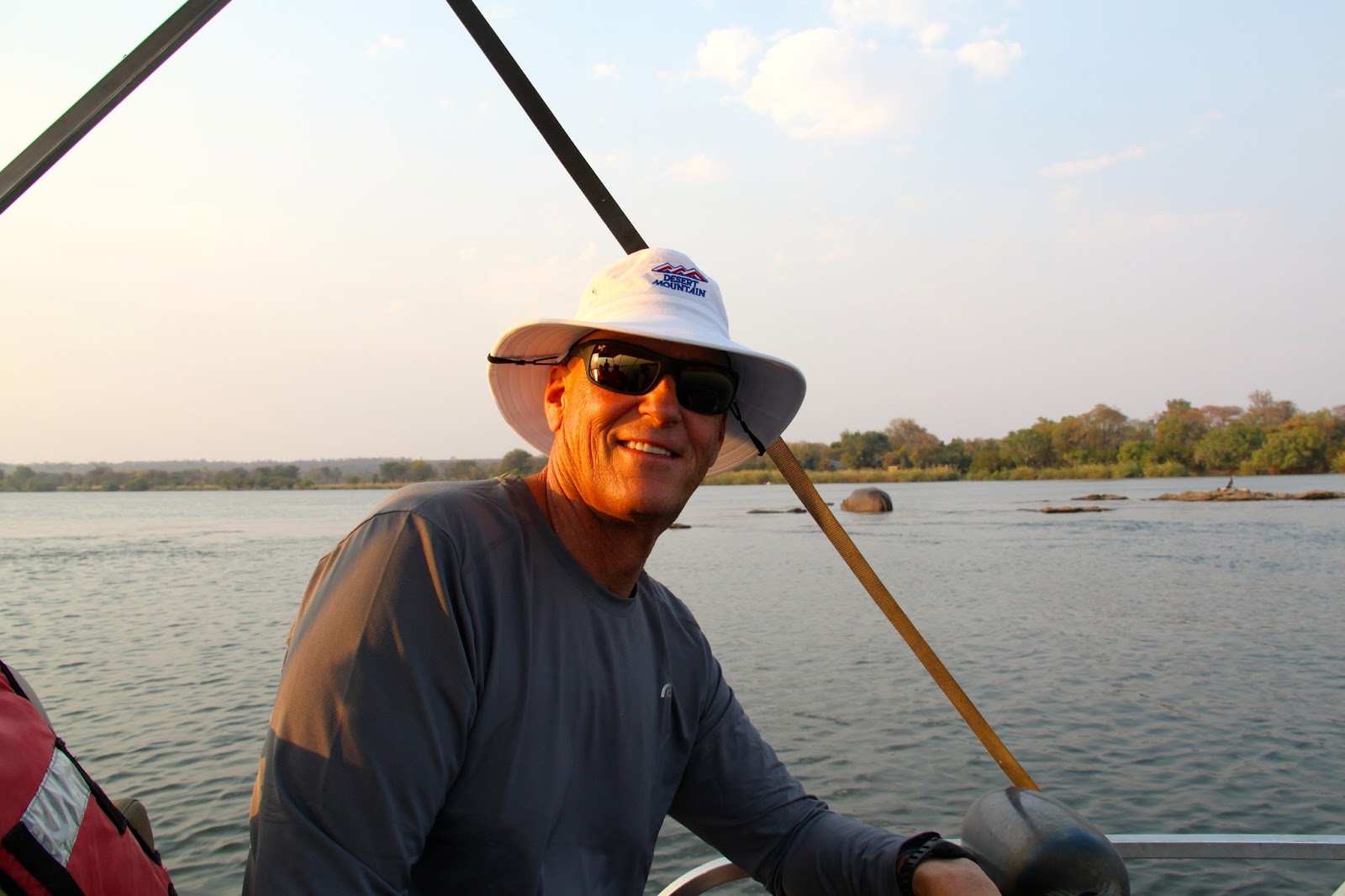
Scott on the Zambesi
Hippo yawning


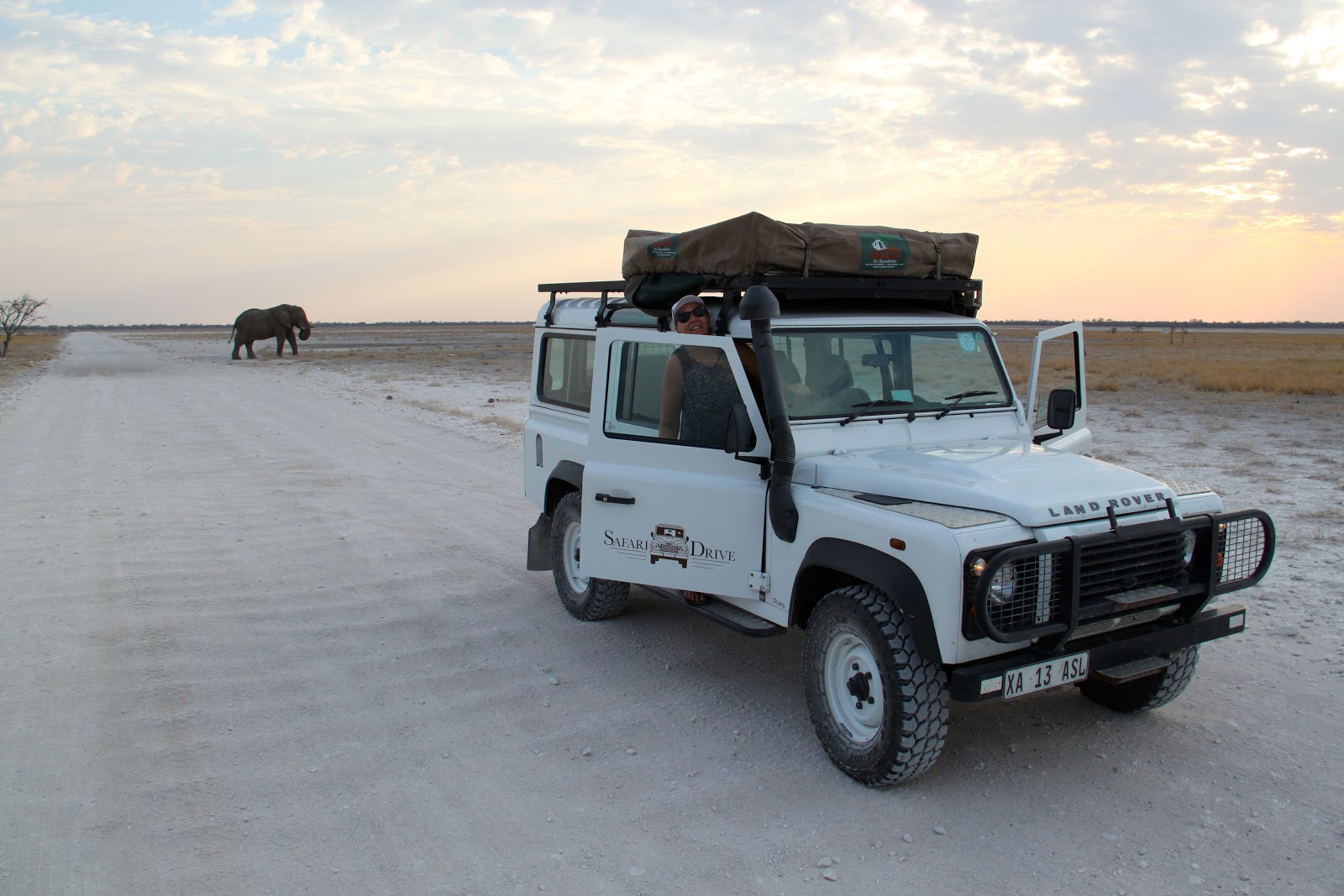
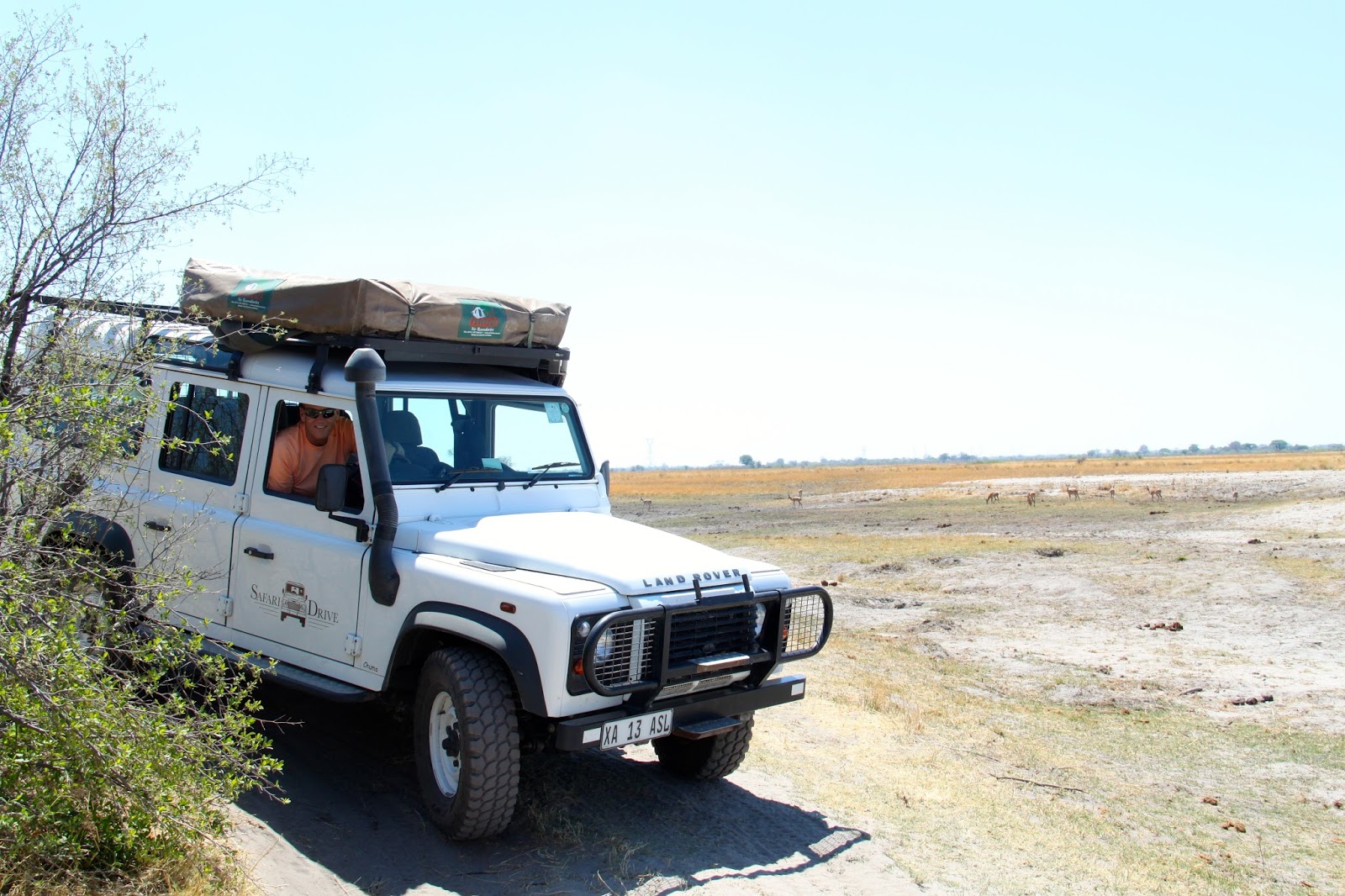
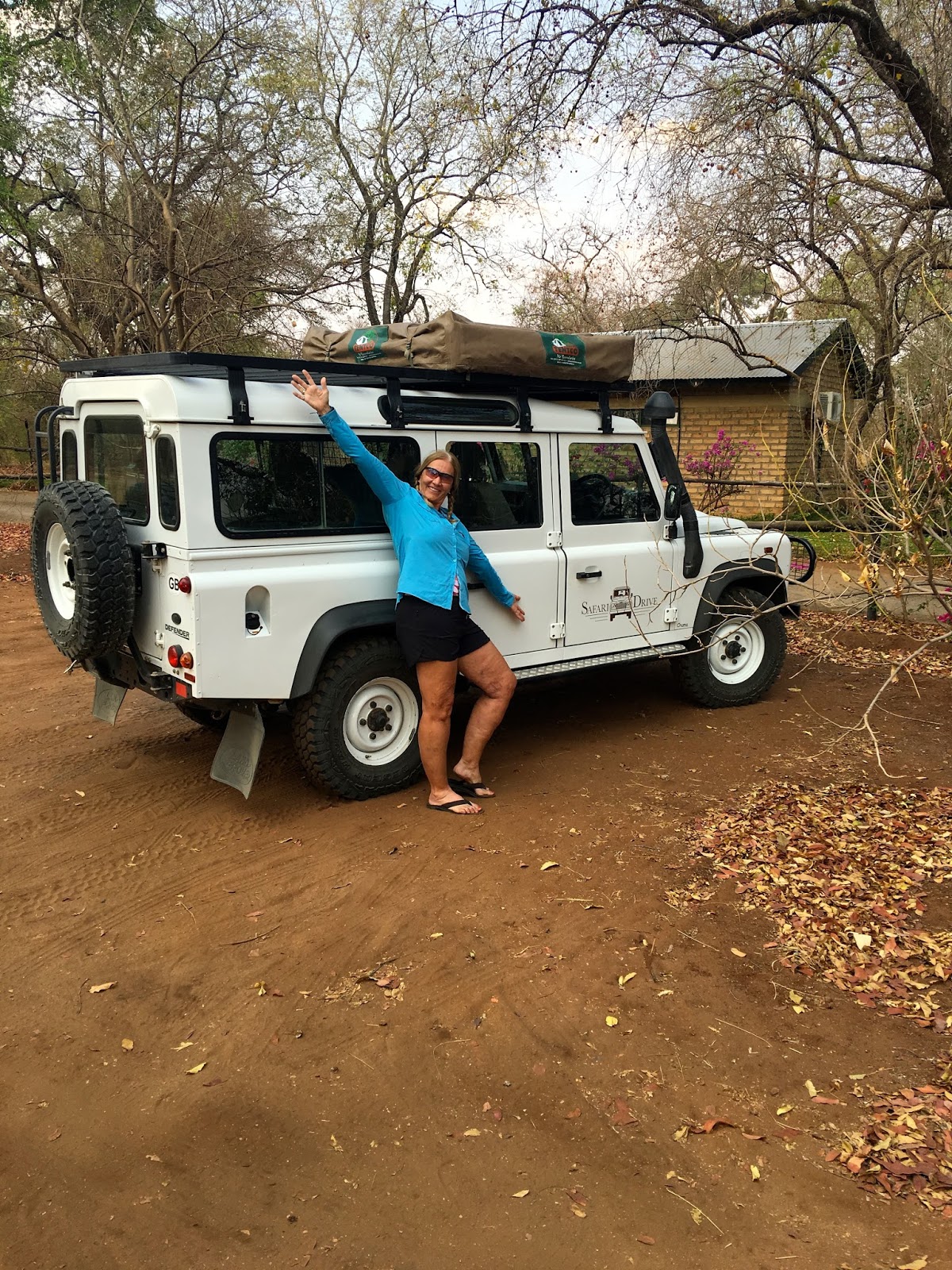
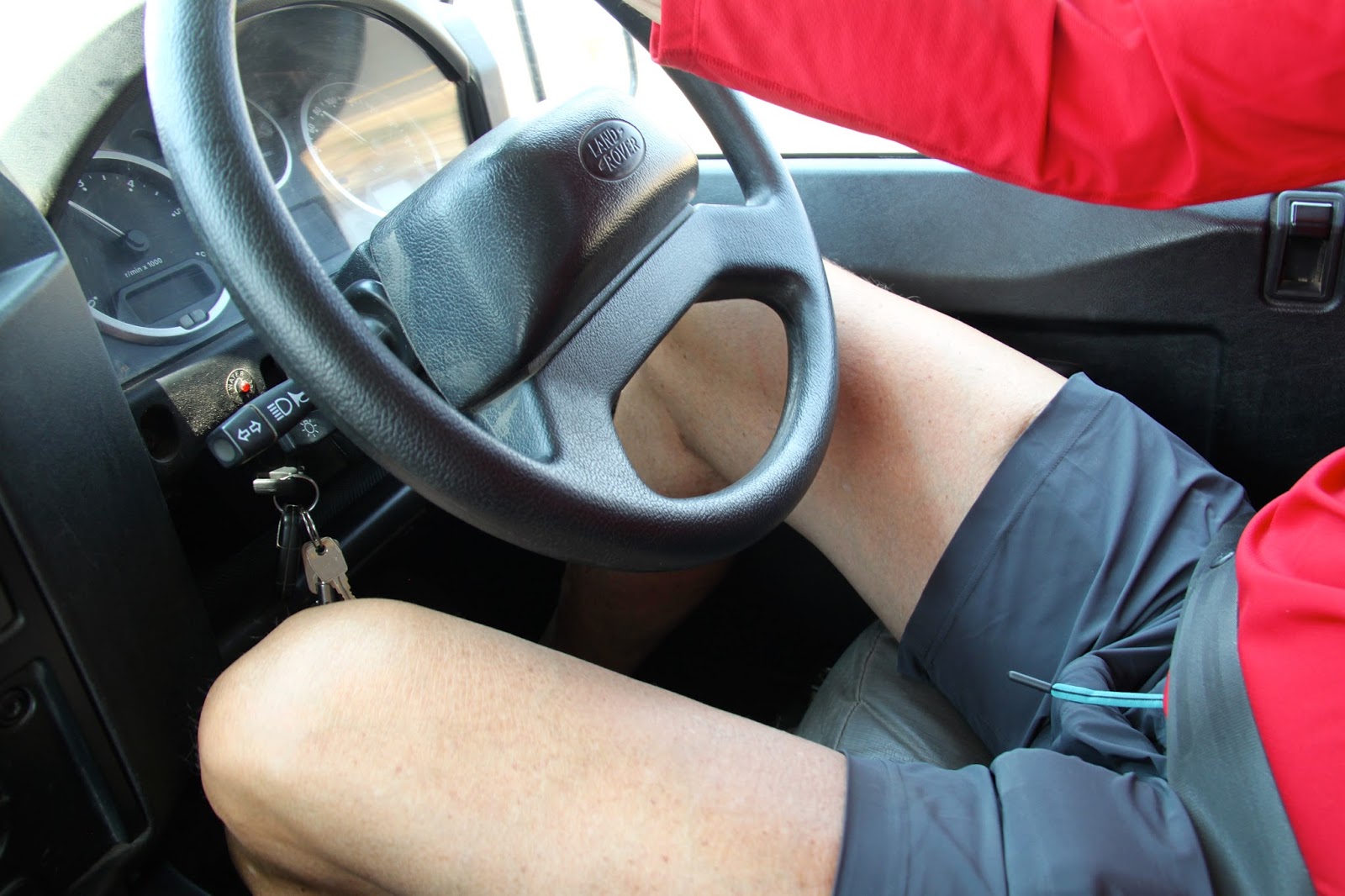
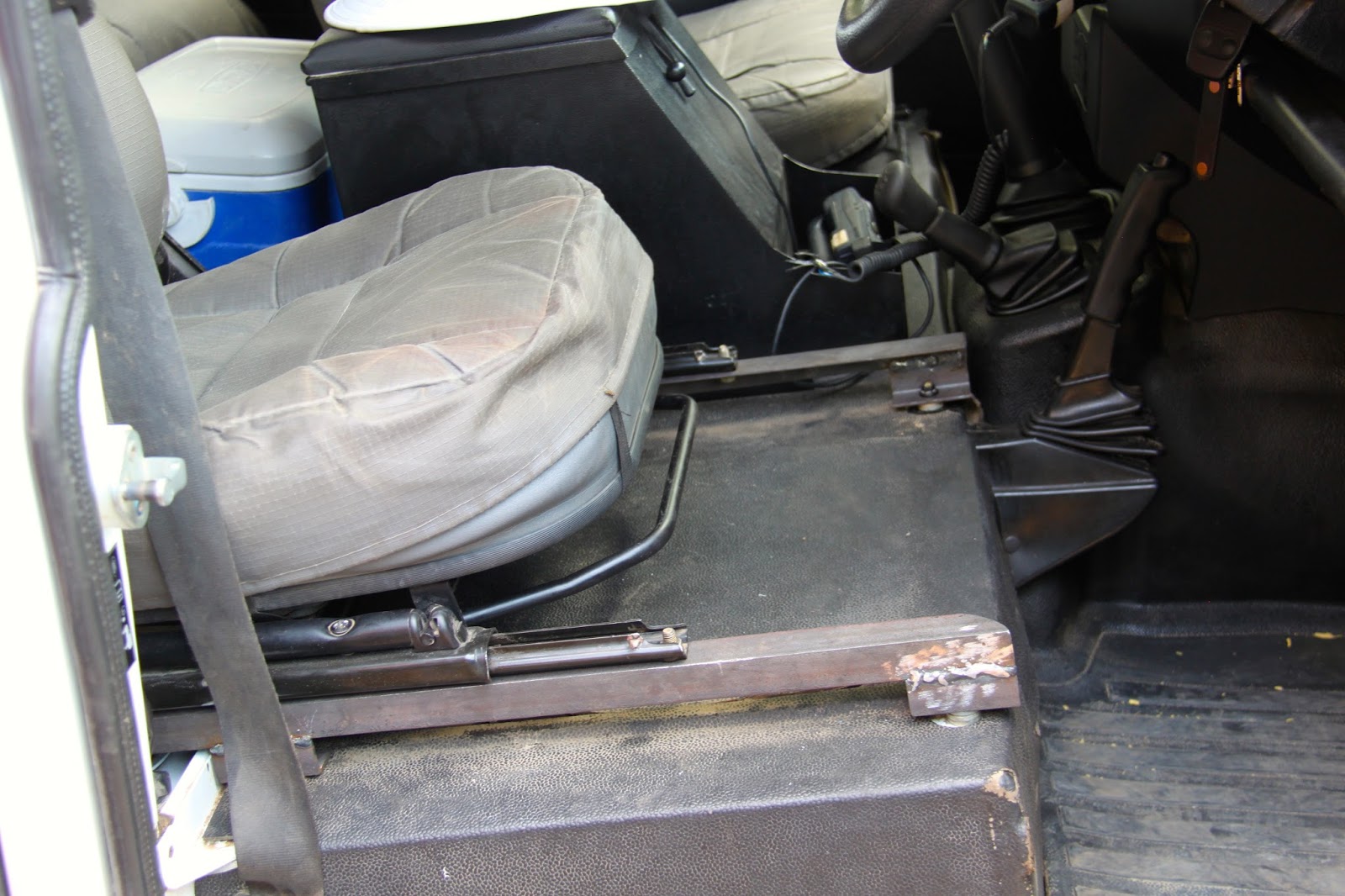
How do you like the safari vehicle we will be driving for the next 18 days from Victoria Falls to Windhoek?  It is built for people that are 5’- 5” or shorter.  But we had a big stoke of good luck.  The husband (Ferdi) of the Safari Drive employee (Kate) in Victoria Falls is an engineer and has a machine shop.  He was able to fabricate rails that extended the driver seat back another 6 inches.  He did this all in one afternoon.  Now the Land Rover Defender is comfortable!  It’s a miracle!  Ferdi is a genius!
Our Vehicle’s name is Chuma


Scott without the extension.  He couldn’t move his foot from the gas to the brake!  Yikes!


Ferdi added a metal extension that gave him 6 more inches!  Way to go Ferdi!


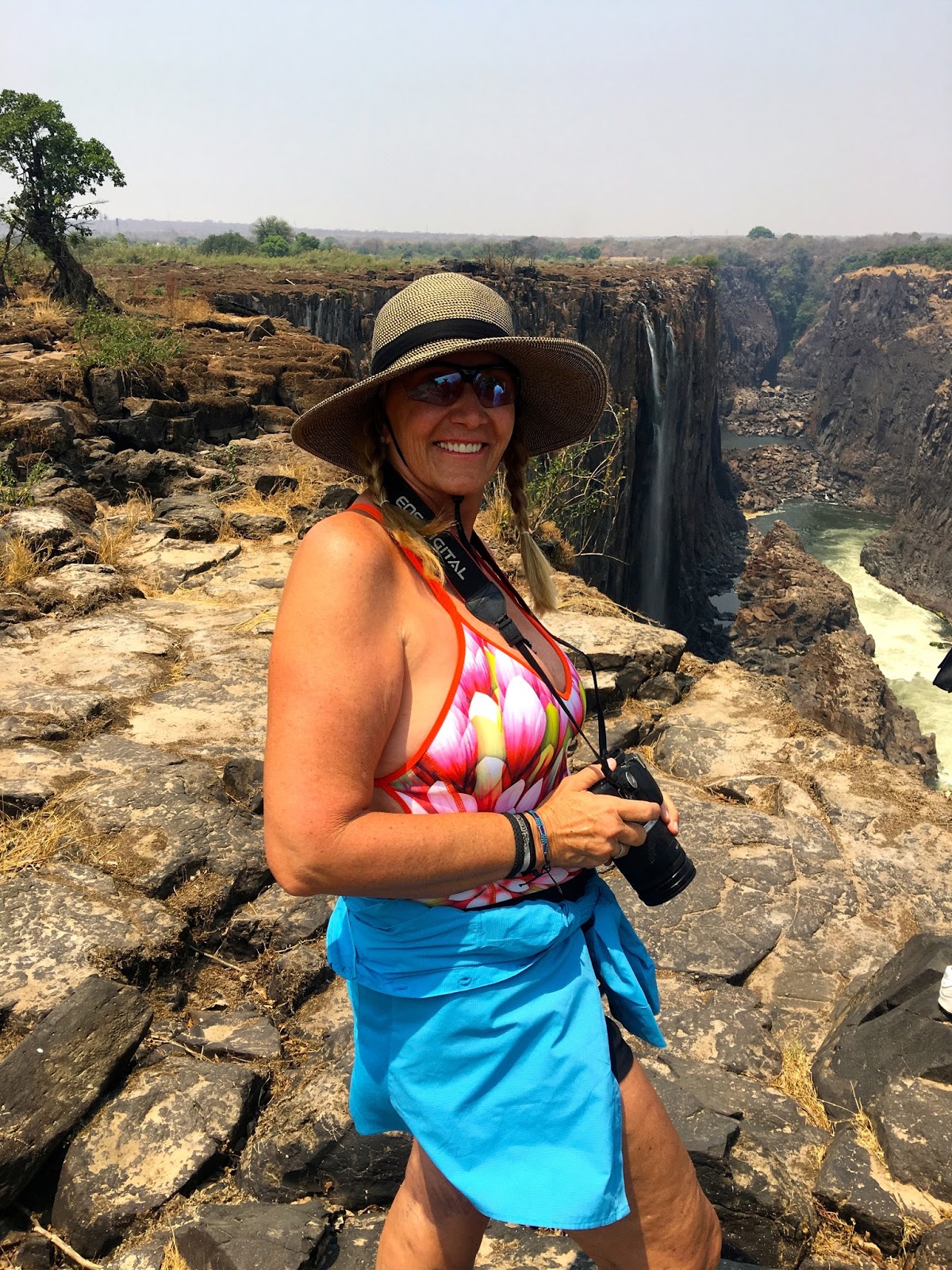
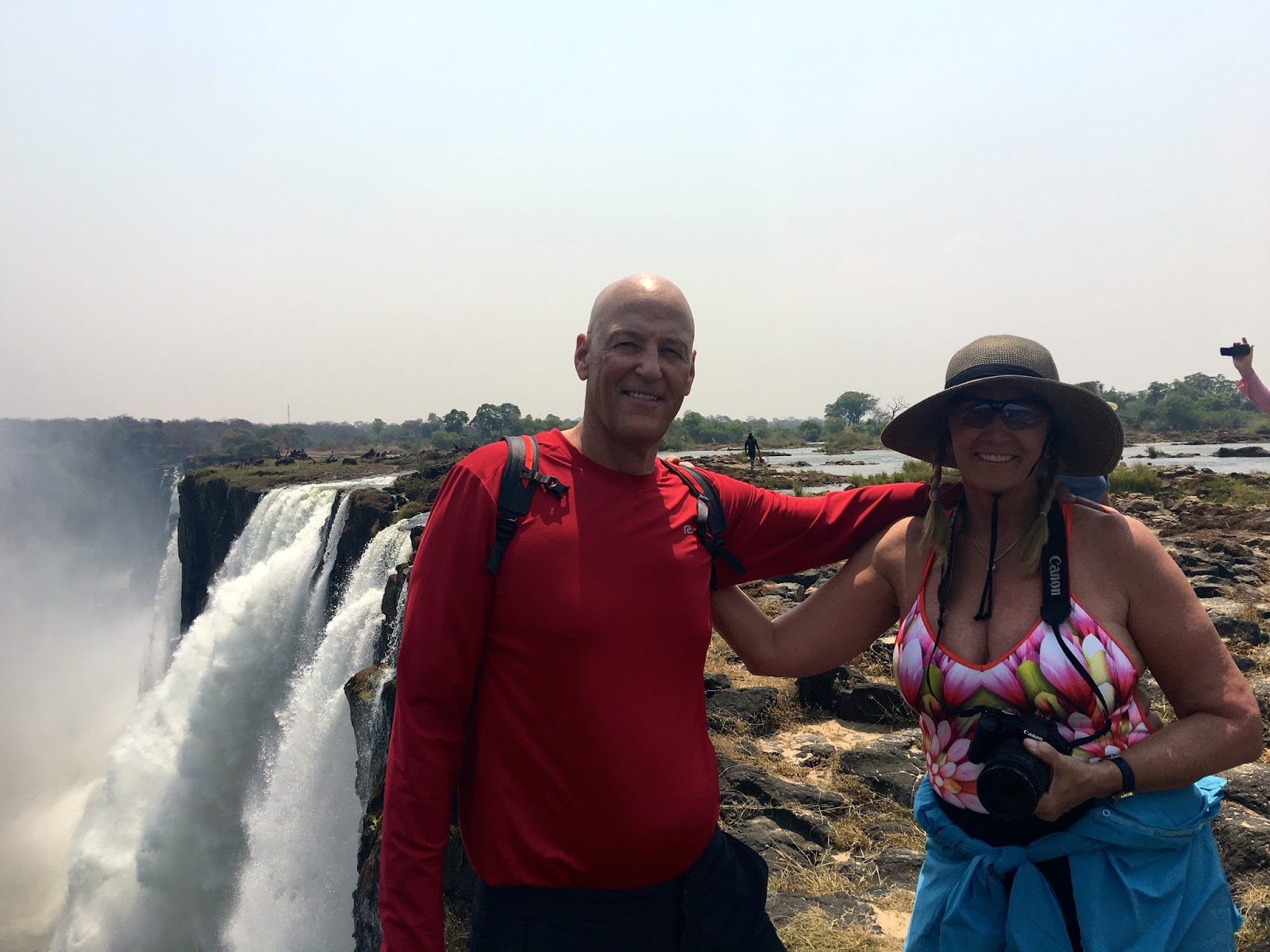
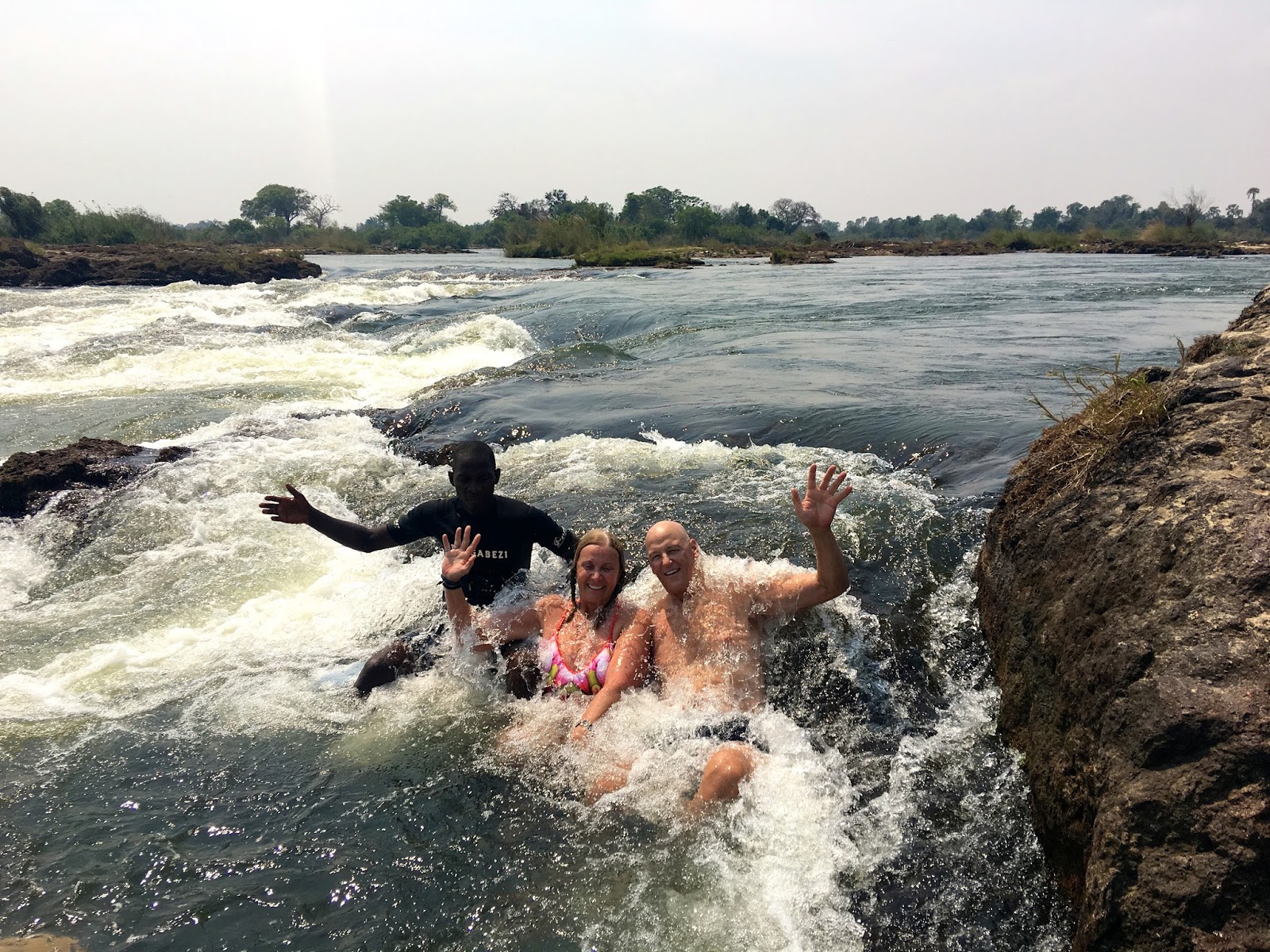
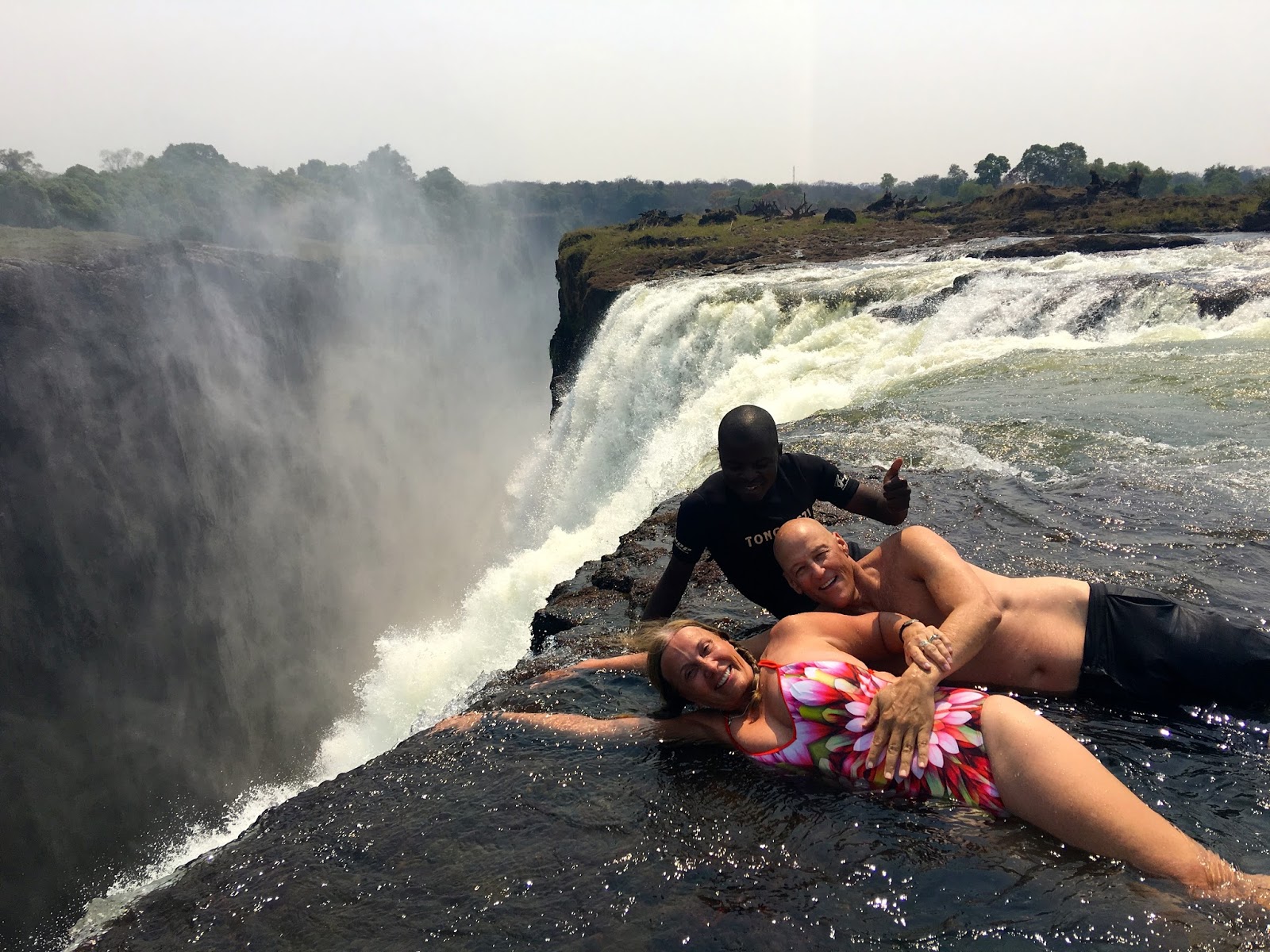
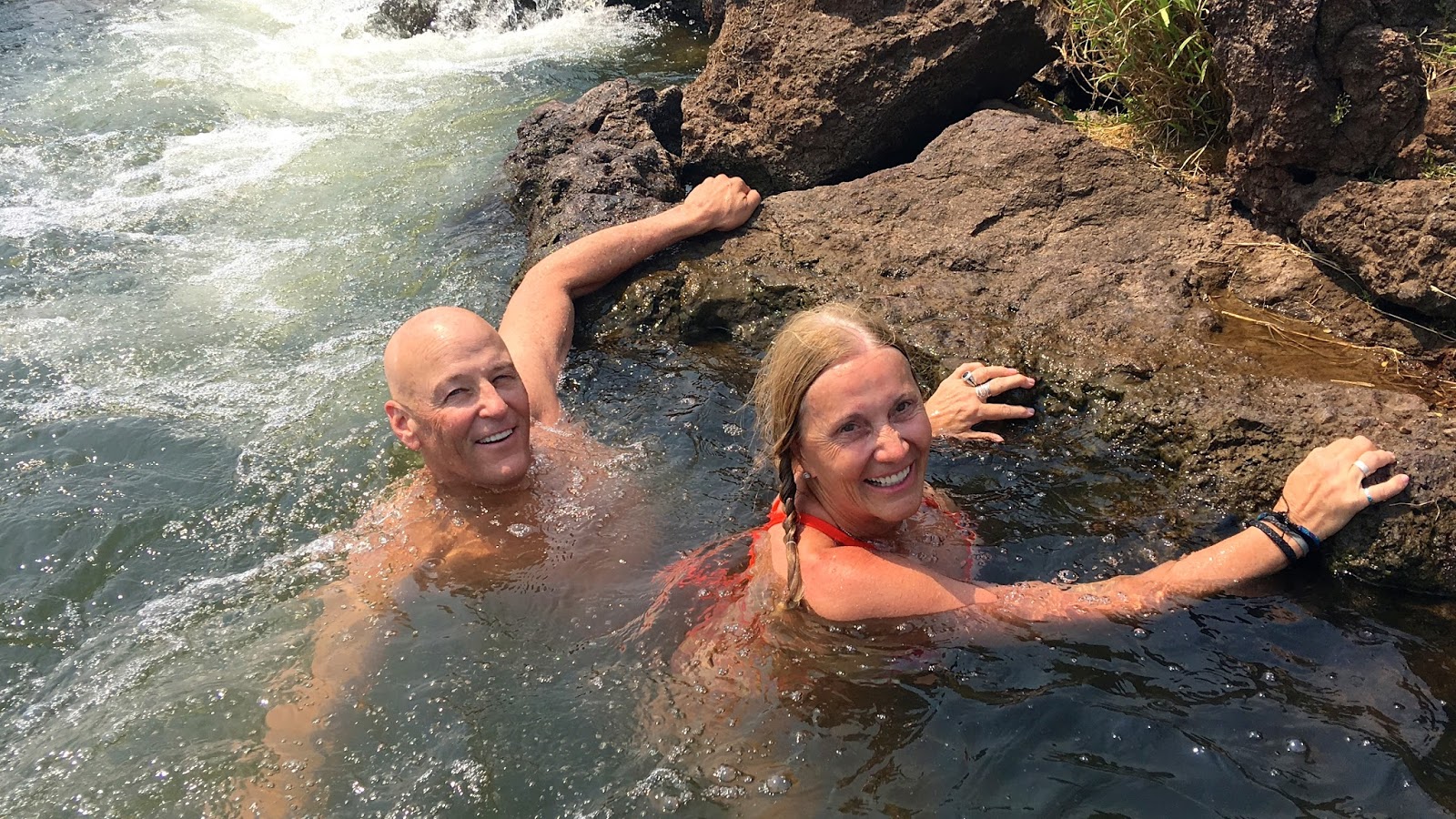
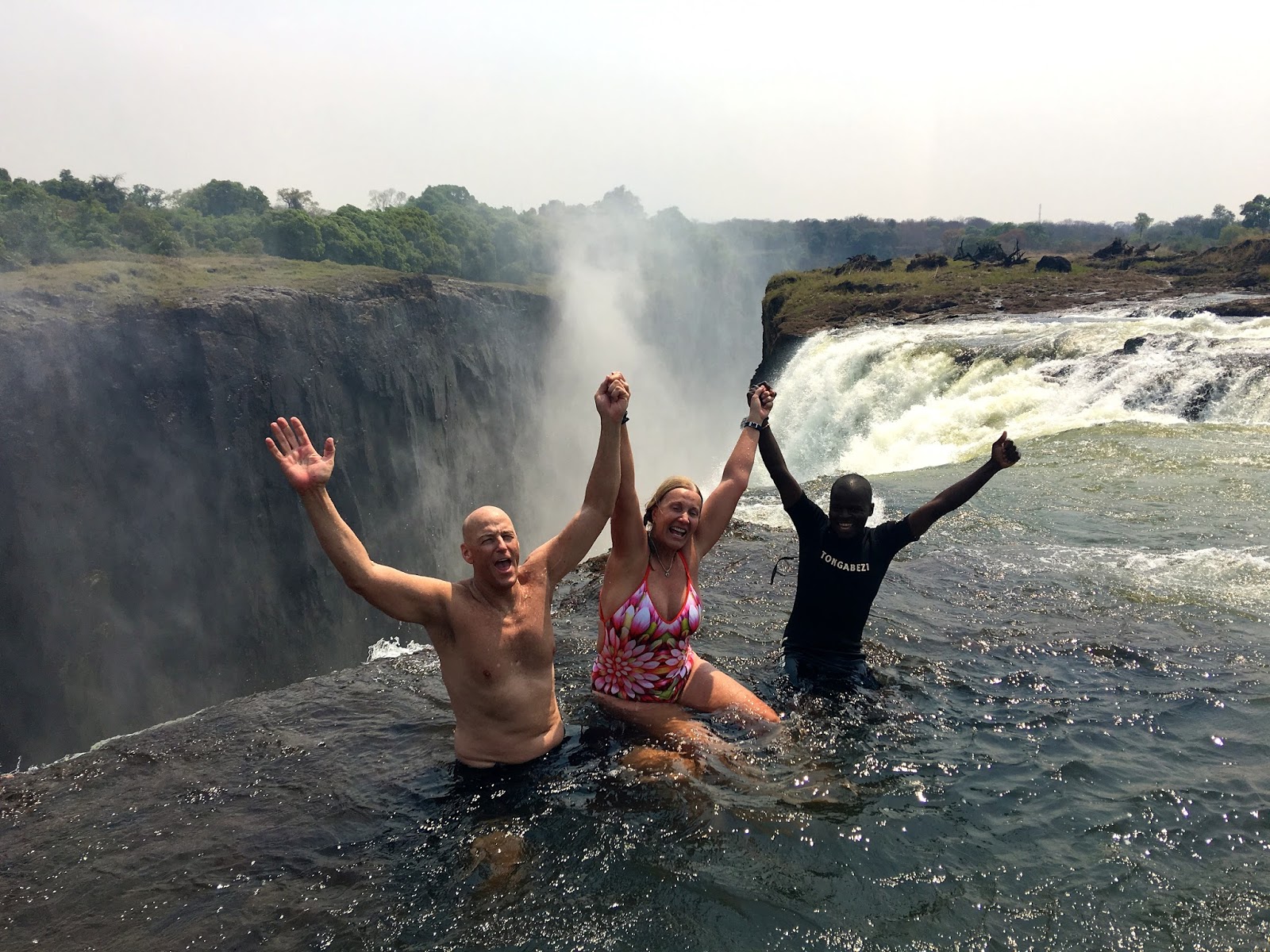
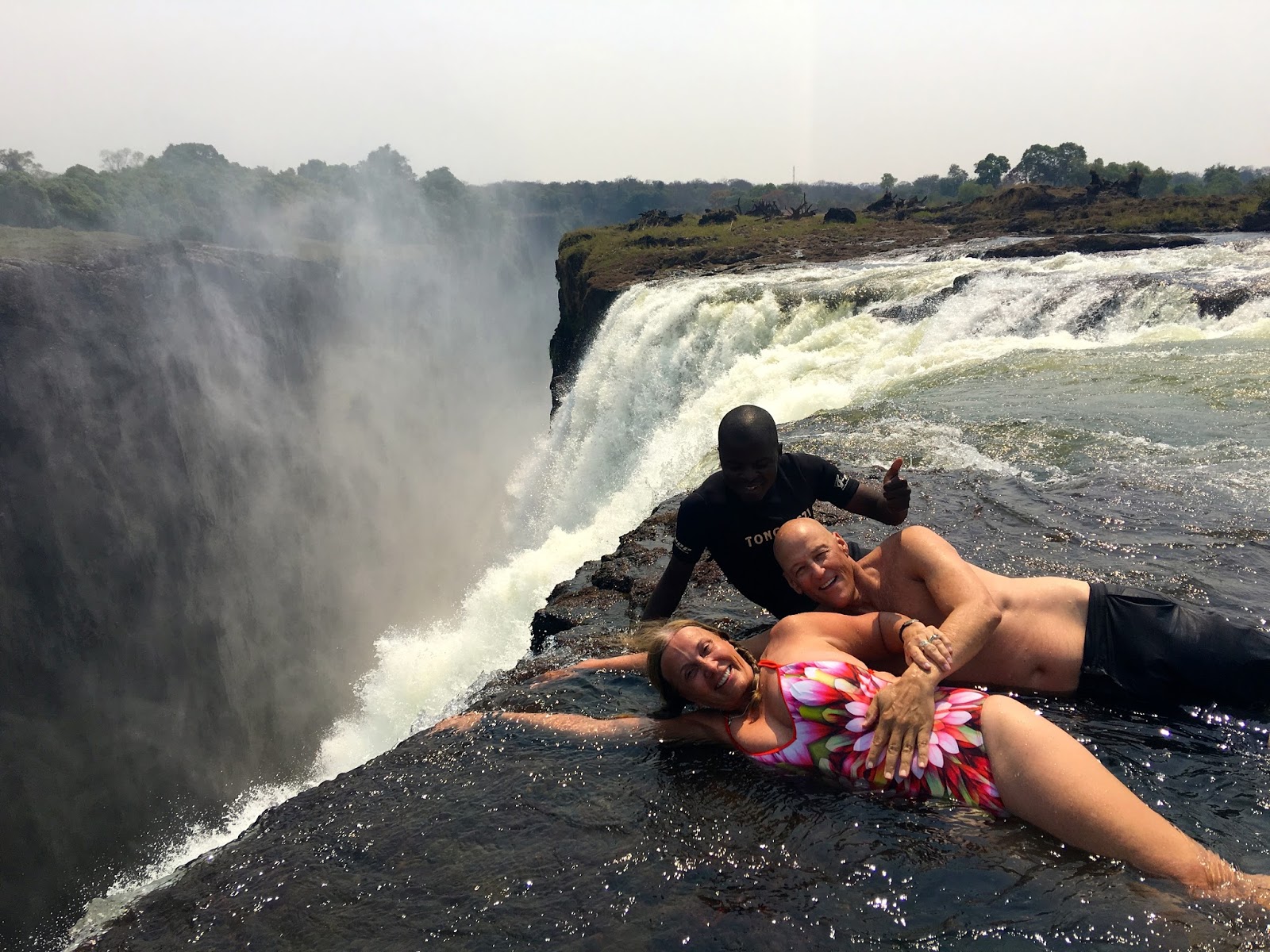
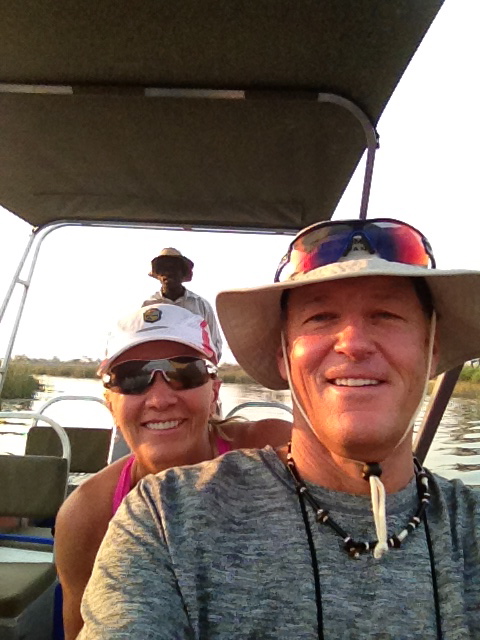
The kids are going to be angry when they find out we swam up to the edge of Victoria Falls and looked over the edge.  Our guides were even crazier because they took pictures of us while standing very close to the edge of the falls.  We checked it out.  It was safe.  This is a new activity that is controlled and owned by the owners of the Tonga Bezi Lodge where we are staying.  It was a great way to see the falls.
Walking to the falls from Livingston Island.  (Zambia side of the falls)


Lookout


Getting into the river before it topples over the edge


In Devils pool, holding onto the edge of the falls.  This can only be done in the dry season when there is less flow of water.


Having a blast.


Yahoo!!!!!!
In 1998 we were here with the kids.  Jason, Brittany and I ran the class five rapids on the Zambezi River.  Our raft flipped in the 2ndrapid.  Jason got stuck under the raft but we had reviewed the procedure before hand and Jason took a big breath and swam out from under the boat sideways.  It scared the #!@t out of us but all was well.  We saw crocodiles in the slow water on the edge of the river not far from the 2nd rapid and we were glad to be high and dry in our raft.  Rapid 9 was so big and scary that we pulled our raft out of the water and carried it around that rapid.  While we were on our river trip BarBar and KT were on a multi-day canoe trip on the upper Zambezi River.  KT was too young and they would not allow her to run the rapids with us.  As it turned out I think their canoe trip was a lot more dangerous.  Hippos are the most dangerous animals in Africa and there were plenty of hippos.  At night when BarBar and KT pitched their tent their guides pointed to the crocodiles lined upon the banks of the river and told Barb and KT not to go out of the tent to go to the bathroom!!
 
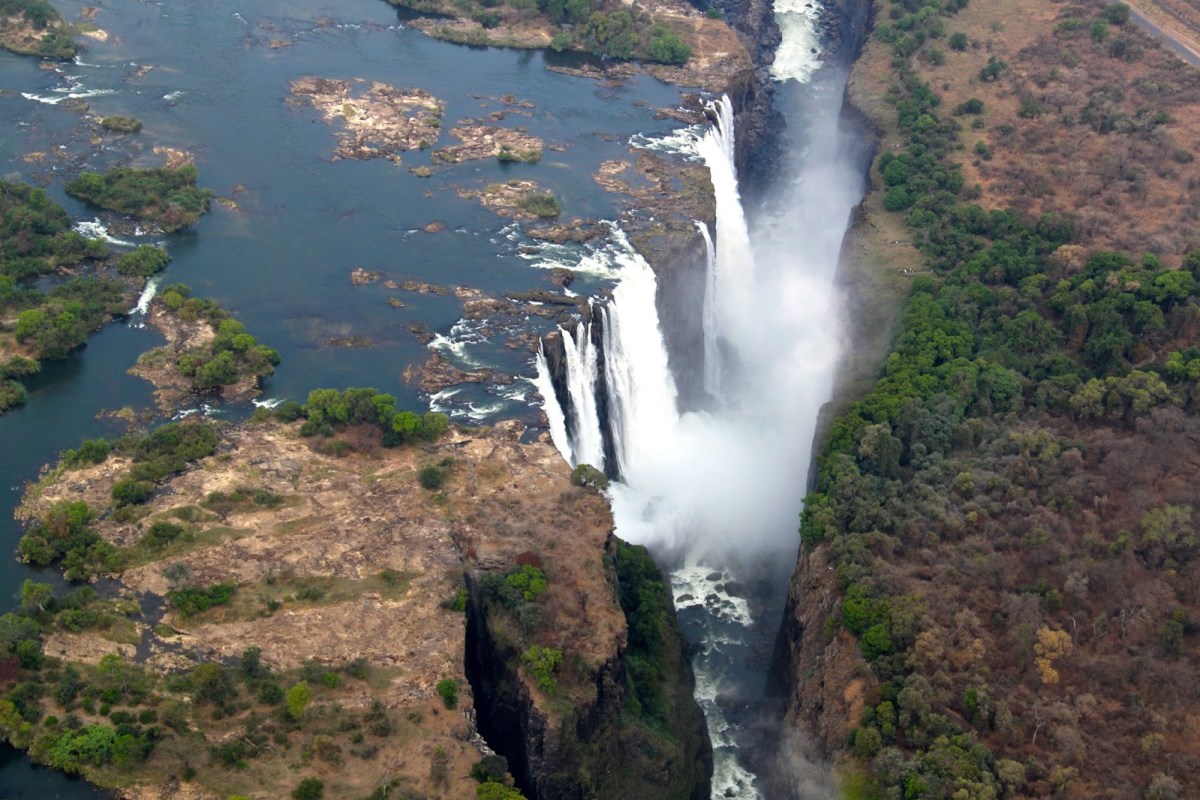
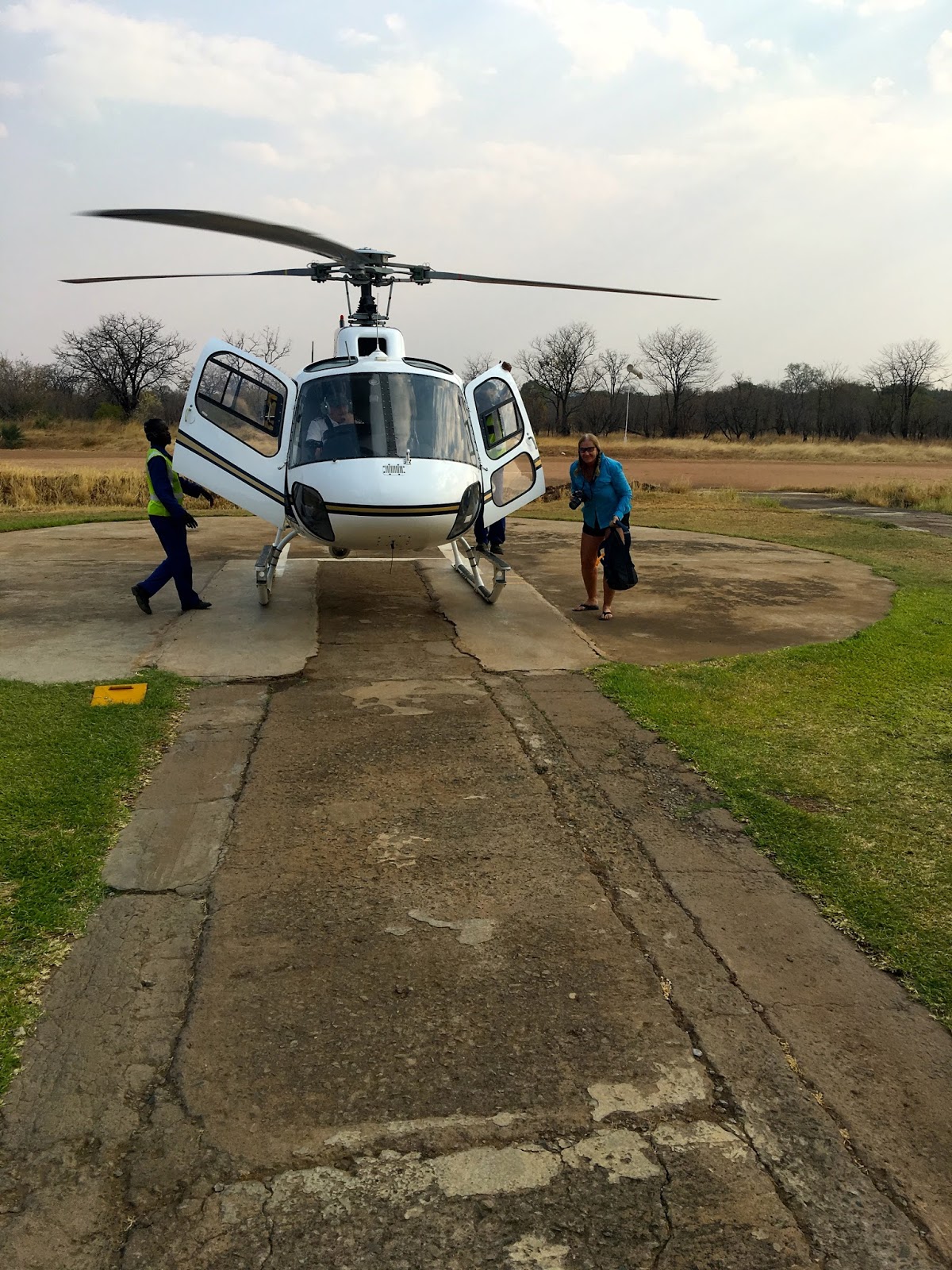
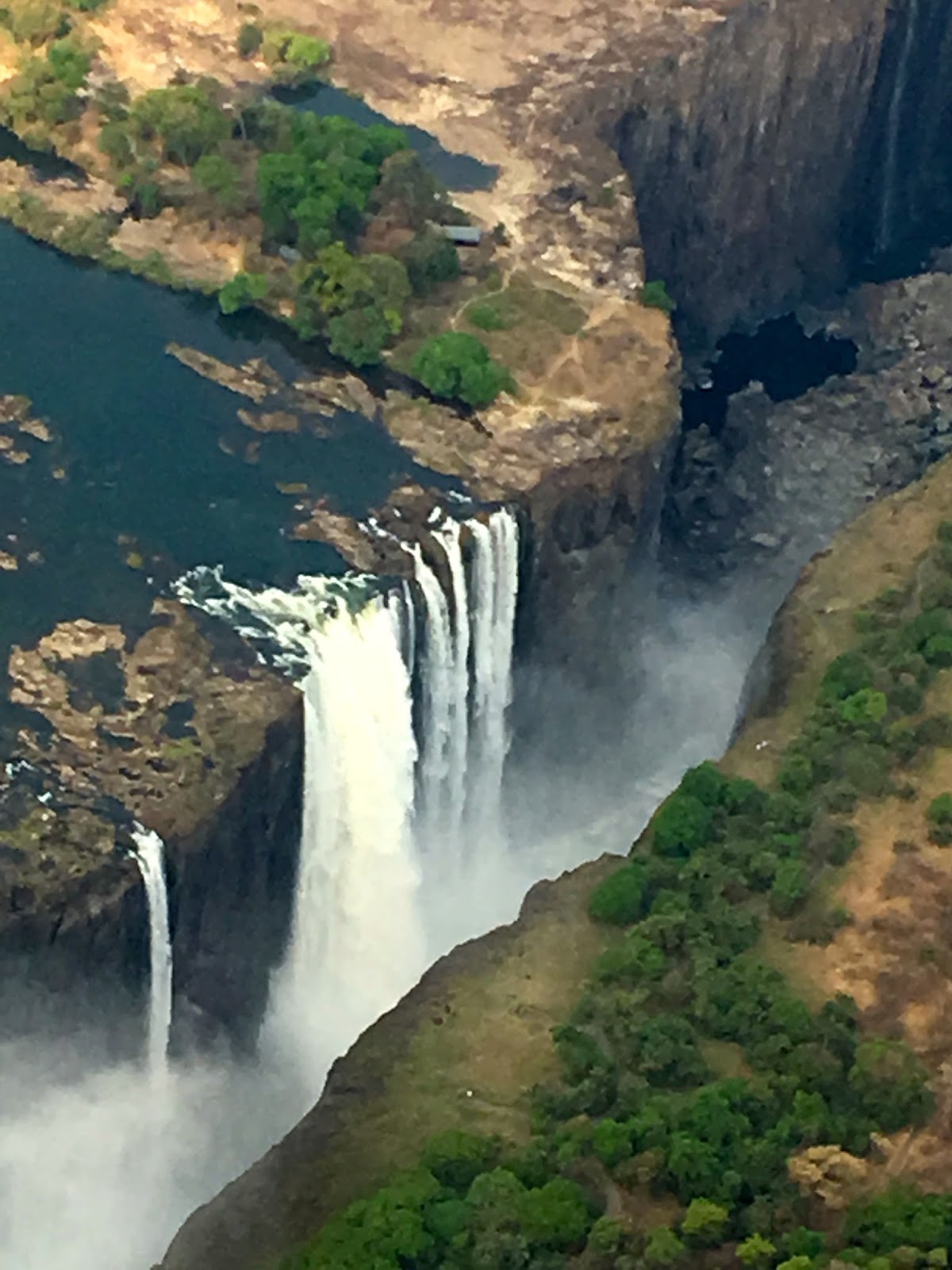
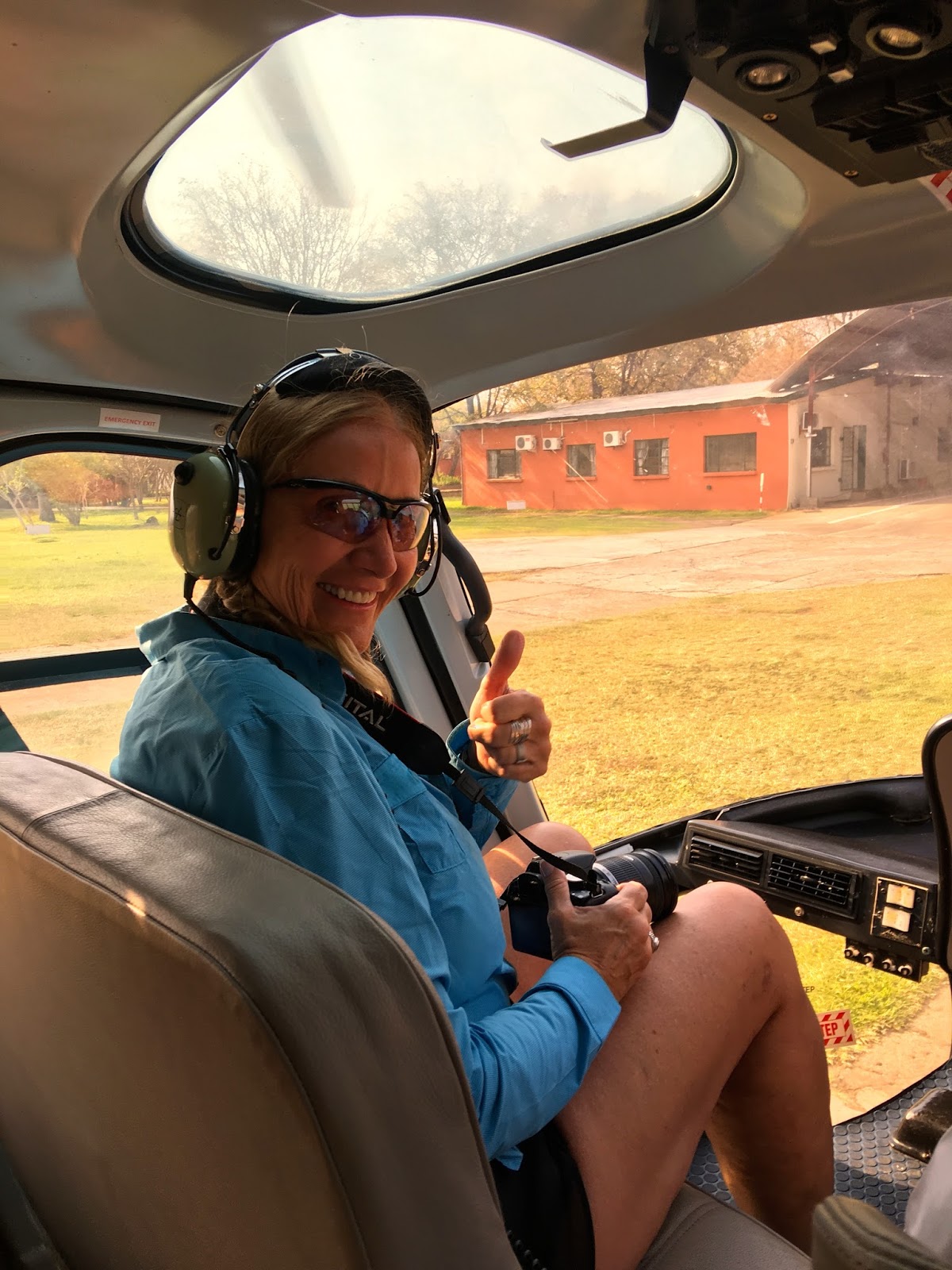
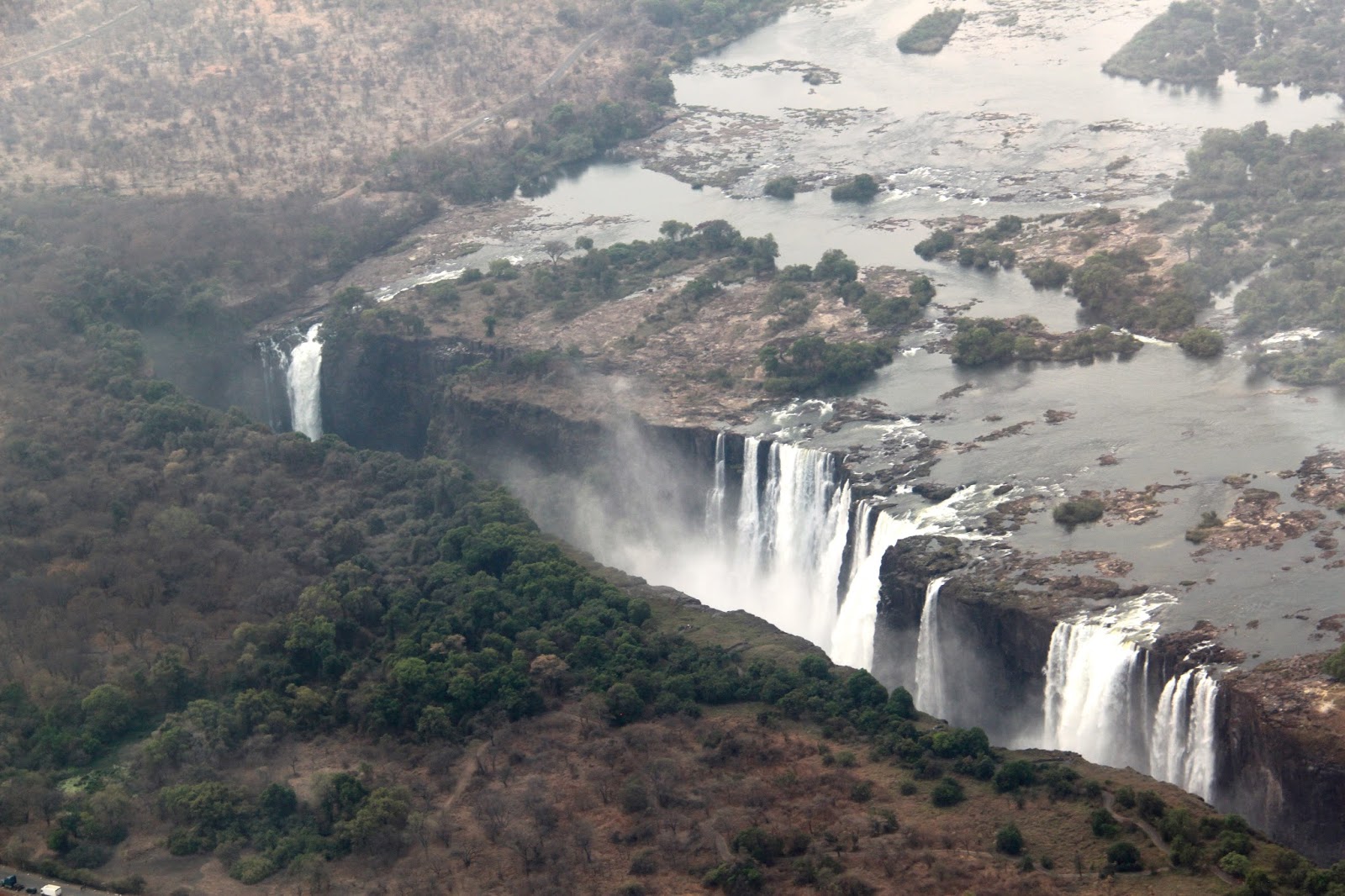
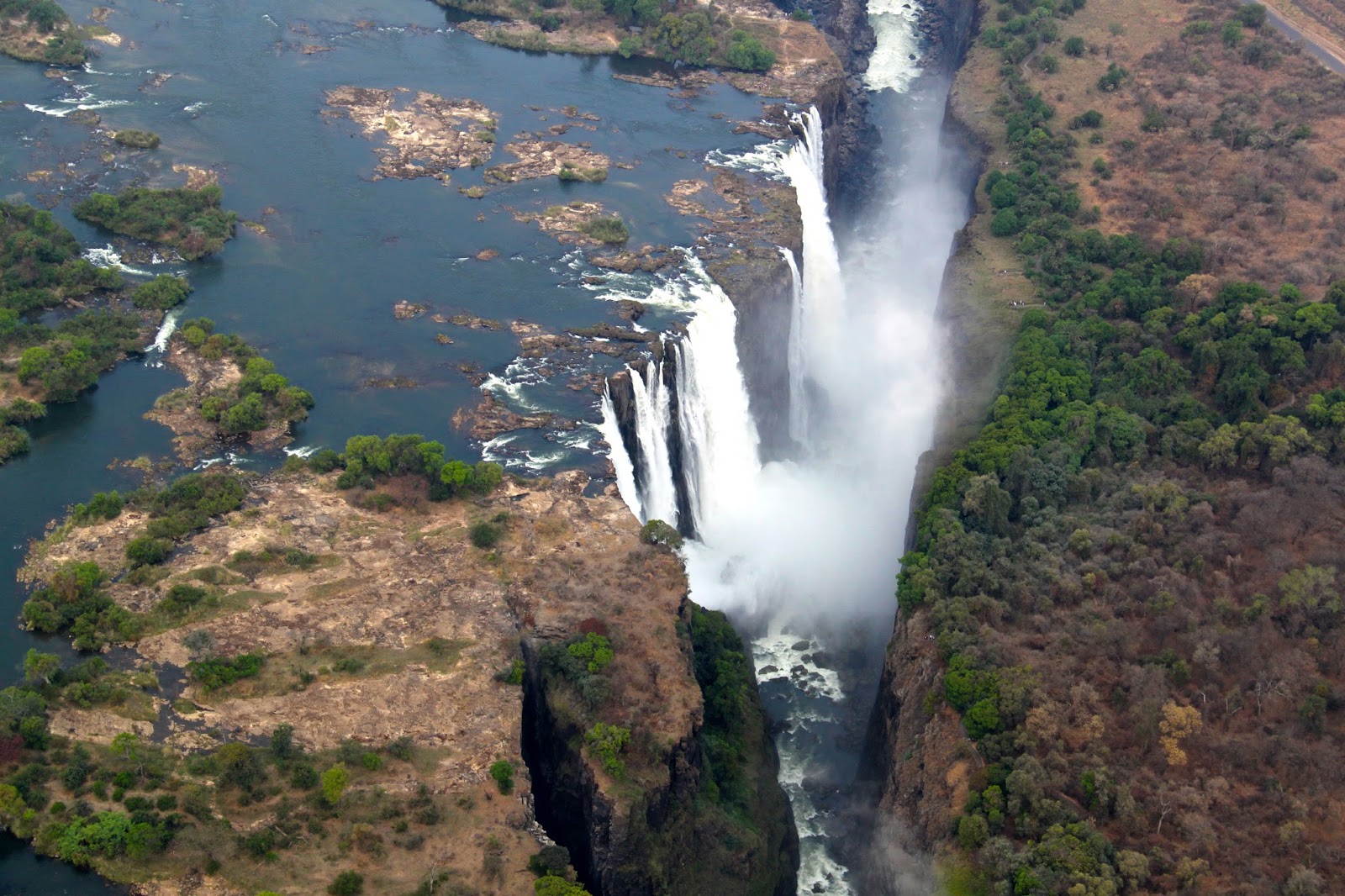
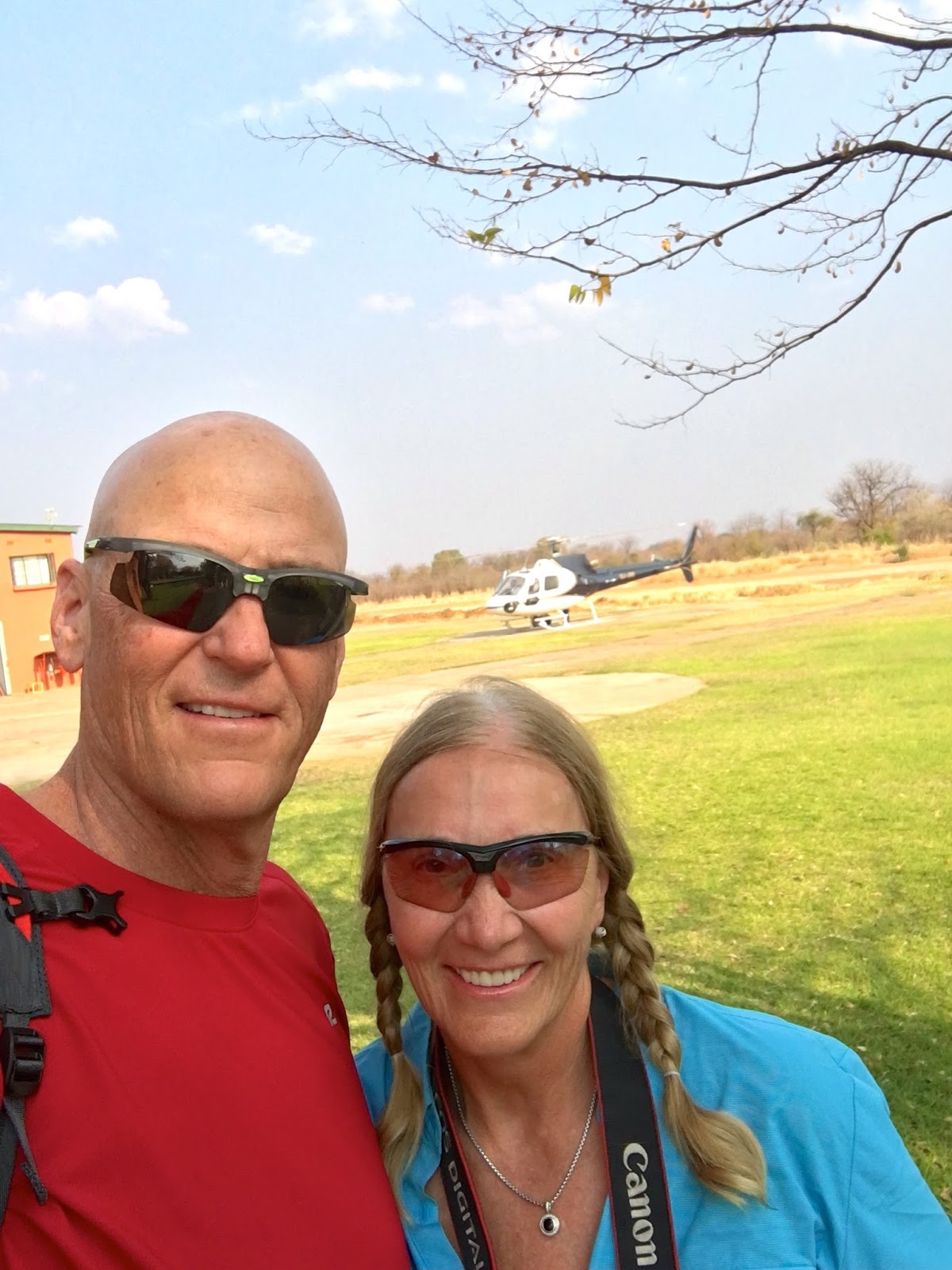
We took a 15-minute helicopter ride over the falls.  BarBar got to sit in the front seat.  A beautiful sunset, massages, and a gourmet meal end the day.
A beautiful ride


Devils pool from the air


Barb in the front seat


Sunset on our deck


Victoria Falls


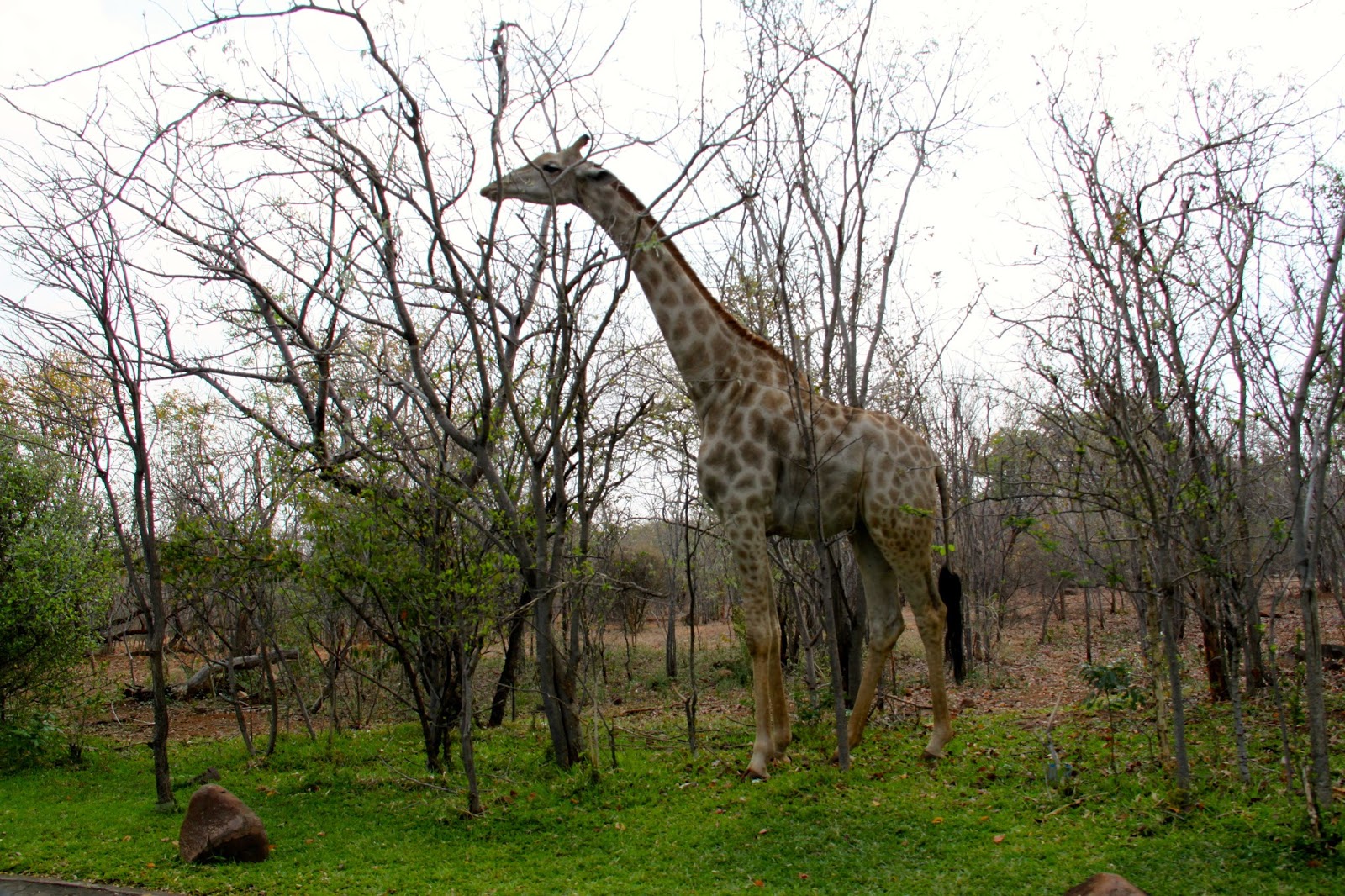
Today we saw hippos, gazelle, zebra, monkeys, baboons and giraffes.
Scenery while driving down the road


At sunset


Tomorrow morning we set off on our Self Drive Safari expected to be 2500 kilometers in total, plus or minus.  We are excited.
Selfie time


Scott at the falls
Barb won’t let go of my arm.  She was a little nervous.

Remembering Africa September 2012

Remembering AFRICA
Namibia:
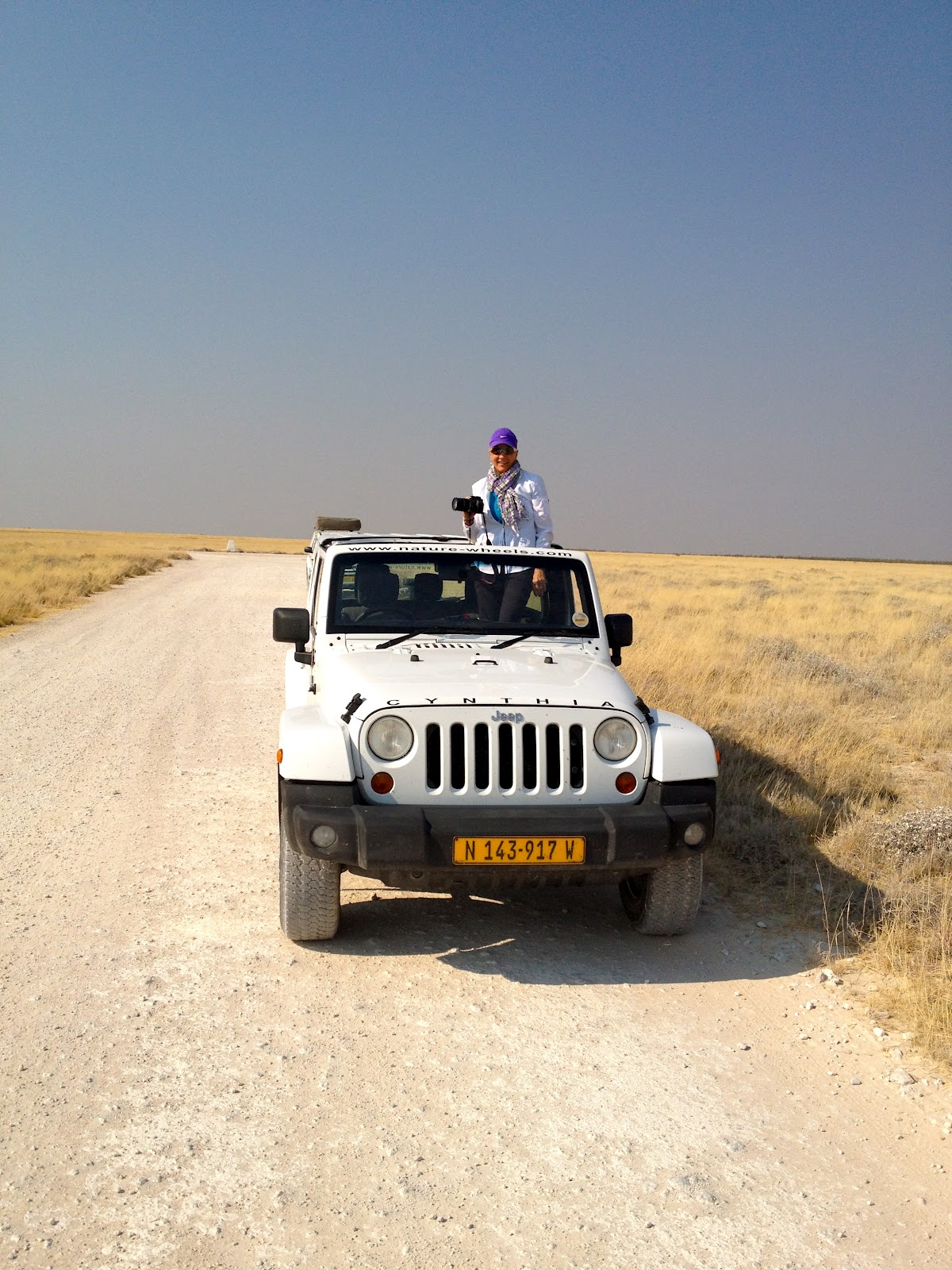
We arrived like thirsty elephants at a waterhole far from our usual water holes and not knowing exactly whether we would find water to quench our thirst.  Namibia was an unknown water hole for us.  We had never heard of Windhoek, Damaraland, Swakopmund, or Sossusvlei.  We had heard of Etosha and The Skeleton Coast but could not have told you anything meaningful about them.  Now, after driving 2770 kilometers almost all of them on dirt roads, we have images of the expansive landscape, animals and people etched in our minds.  The image of coming upon donkey carts in remote areas with farmers and families rolling along at the speed of a tired donkey sharpens the contrast with our shiny Jeep Sahara 4X4.  The farmers look at you with curiosity but when you wave to them they break out in big smiles and shoot their arms up in greeting.  Self-driving made us feel like we were on a journey of discovery.  We were doing the acting and interpreting.  We were free to get lost and enjoy the adrenaline of an uncertain outcome.  Self-determination heightens your senses.  Although we traveled from lodge to lodge you could decide to camp throughout Namibia as a low cost alternative for as little as $100 per night.  Camping gear can be provided by certain companies in Windhoek which includes tents, sleeping bags, cooking utensils and other necessities.
What a blast

So fun

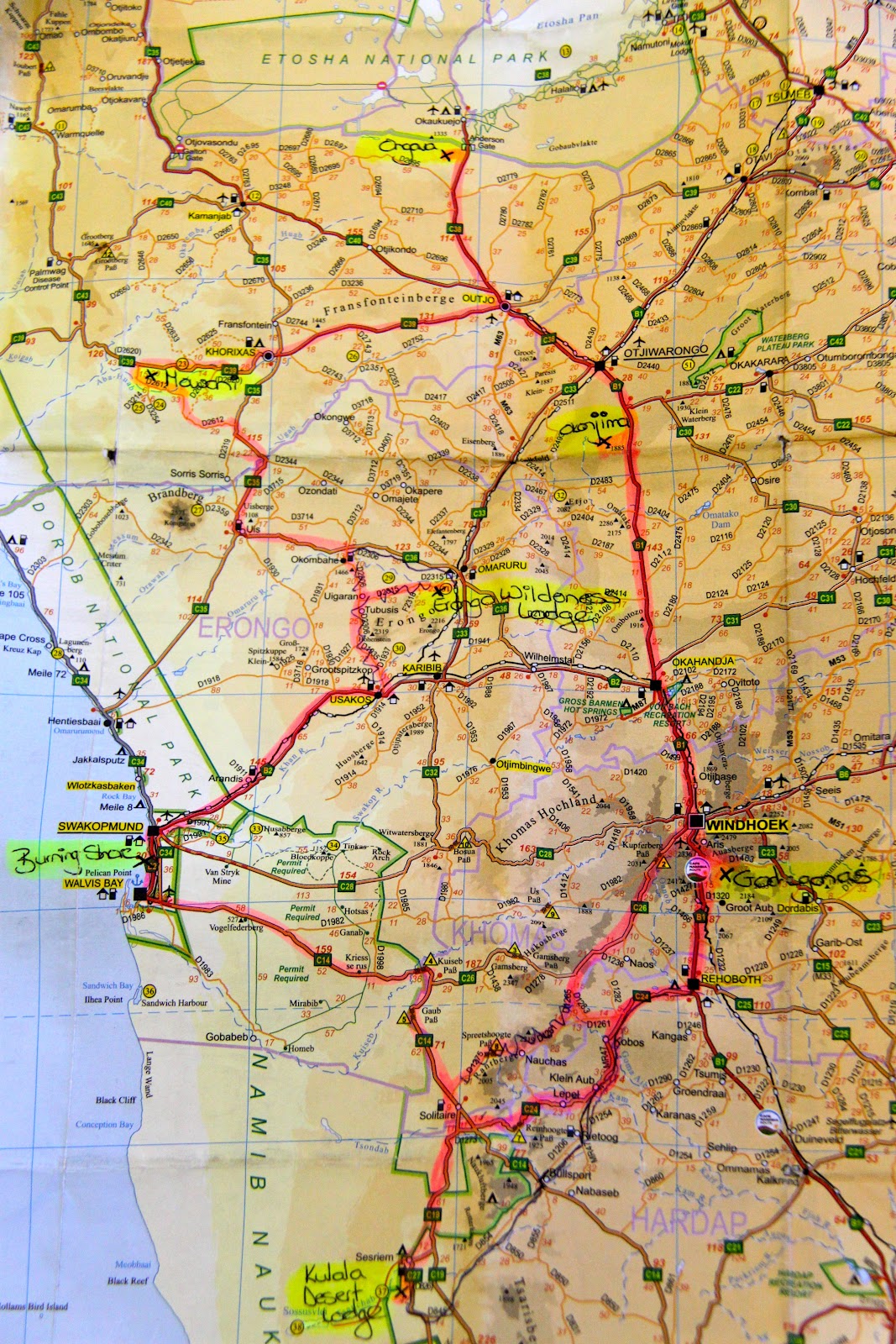
Map of Namibia and where we drove.  About 2800 kilometers and only 400 of them were paved roads.

Botswana:
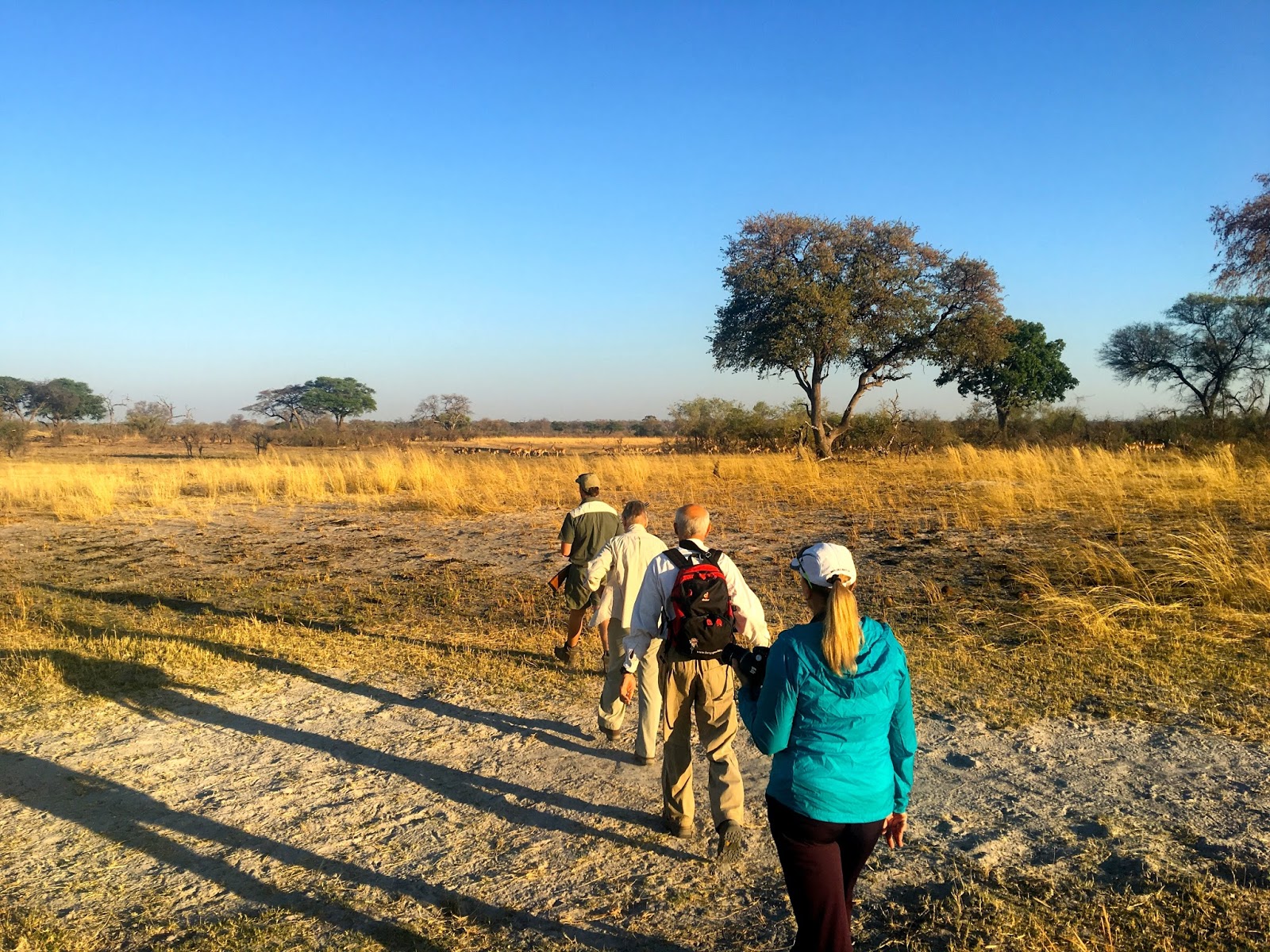
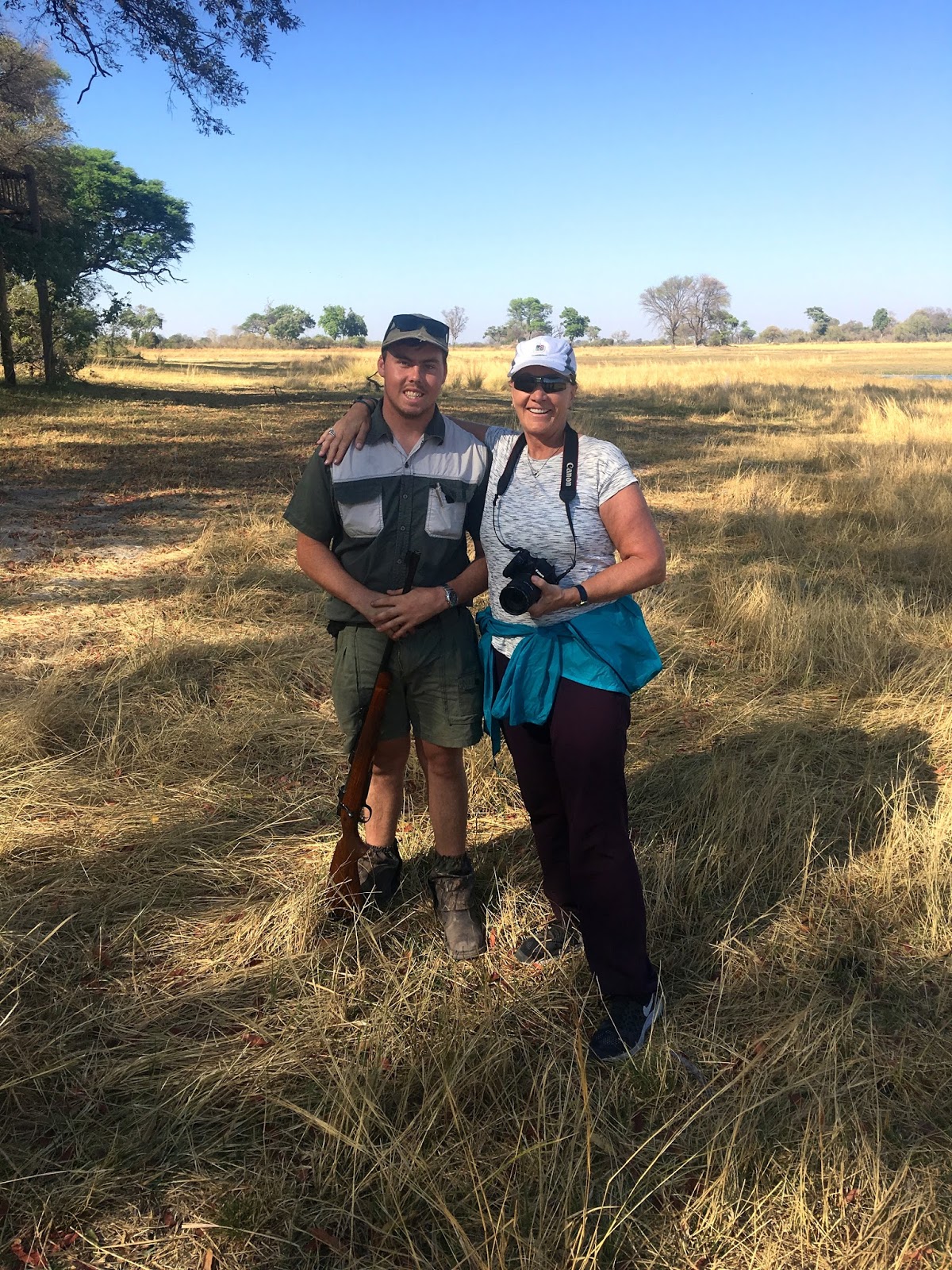
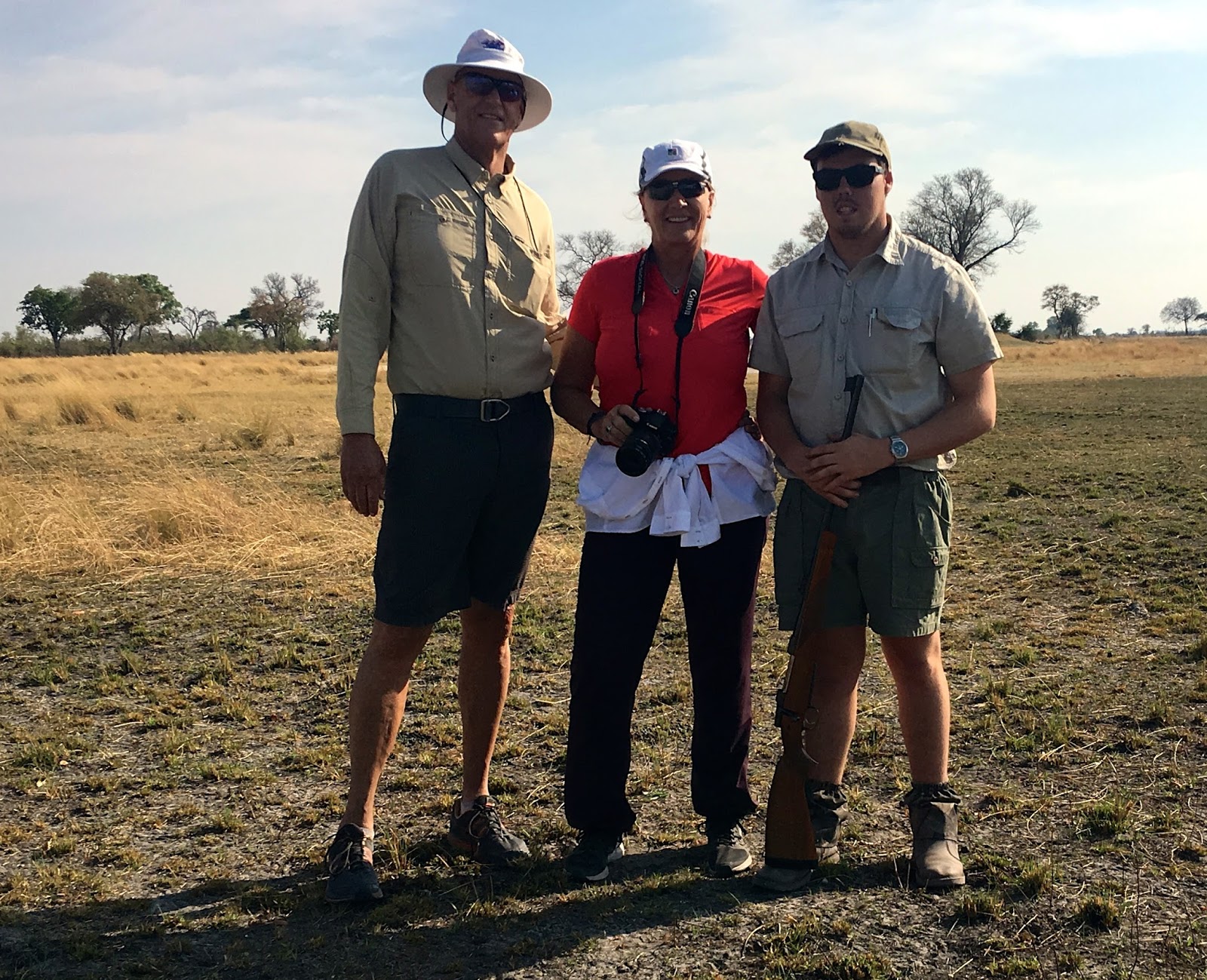
The camps inside the Okavango Delta are reachable only by small aircraft.  There are two very good safari operators who can plan and book the logistics of the small aircraft (Cessna Caravan) and the premier tented camps.  We chose Wilderness Safaris and we were happy with our choices but we missed the freedom and independence of the self-drive safari though Namibia.  We marveled at the animals in the Delta.  We watched wild dogs hunt and we watched a herd of elephants chase away 9 adult lions.  Then we watched as that same herd of elephants nervously crossed a river with the baby elephants swimming as those same lions watched from the bank anxiously waiting for a show of weakness from a baby elephant and an opportunity to attack.  None of the baby elephants lagged behind.  The walking safari added an element of self-reliance and we learned about the dangers and probabilities of attacks and the importance of recognizing danger, sometime signaled by nearby animals.  A guide carrying a 458-caliber rifle accompanied us.  He was trained to load and take three shots within 11 seconds.  This is the firepower required to take down a charging lion.
Map of the Okavango Delta and where we went

So much fun!