Savuti Lodge-Okavango Delta, Botswana

Our last stop in Botswana is the Savuti Lodge. After the bumpy ride to the gravel airstrip, the bumpy ride in the 12 seater plane again, and another bumpy ride from the airstrip to the lodge (which is all part of the experience)
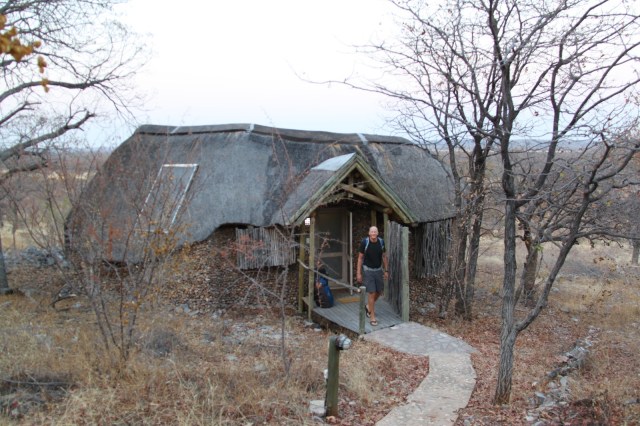
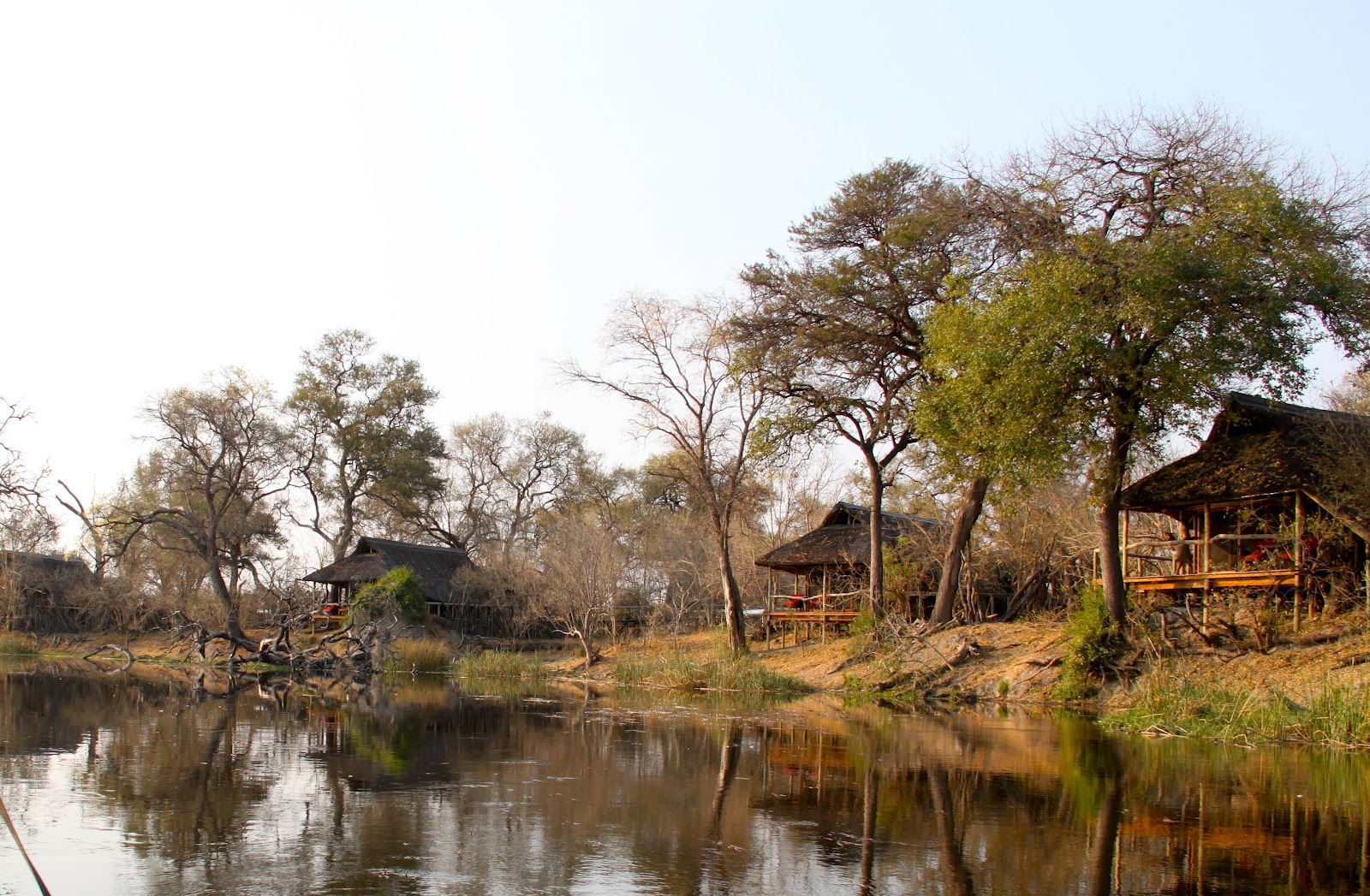
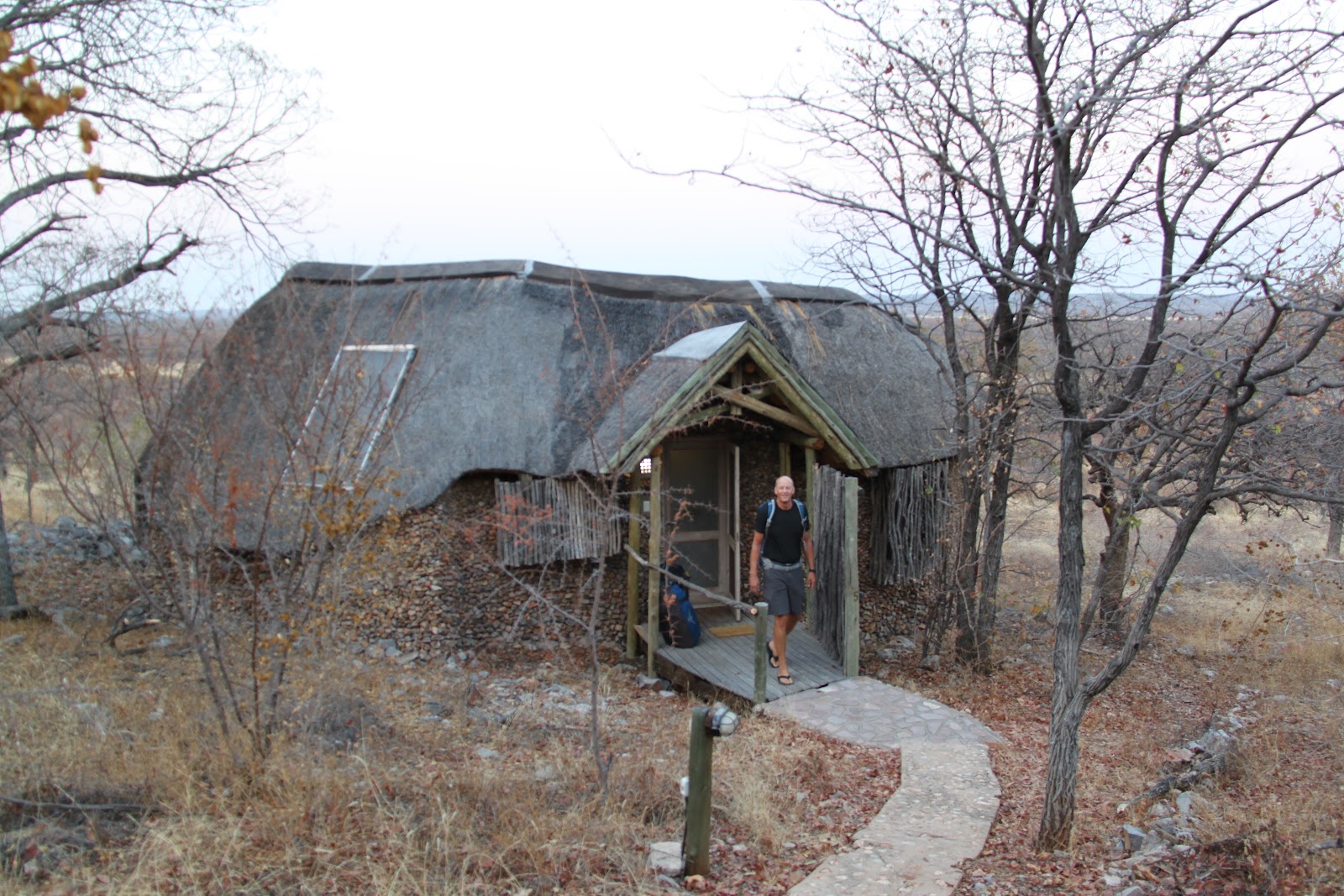
we arrived at thatched roof huts (7 of them) that are located on the river at the north end of the Linyanti Region.

The Okavango Delta

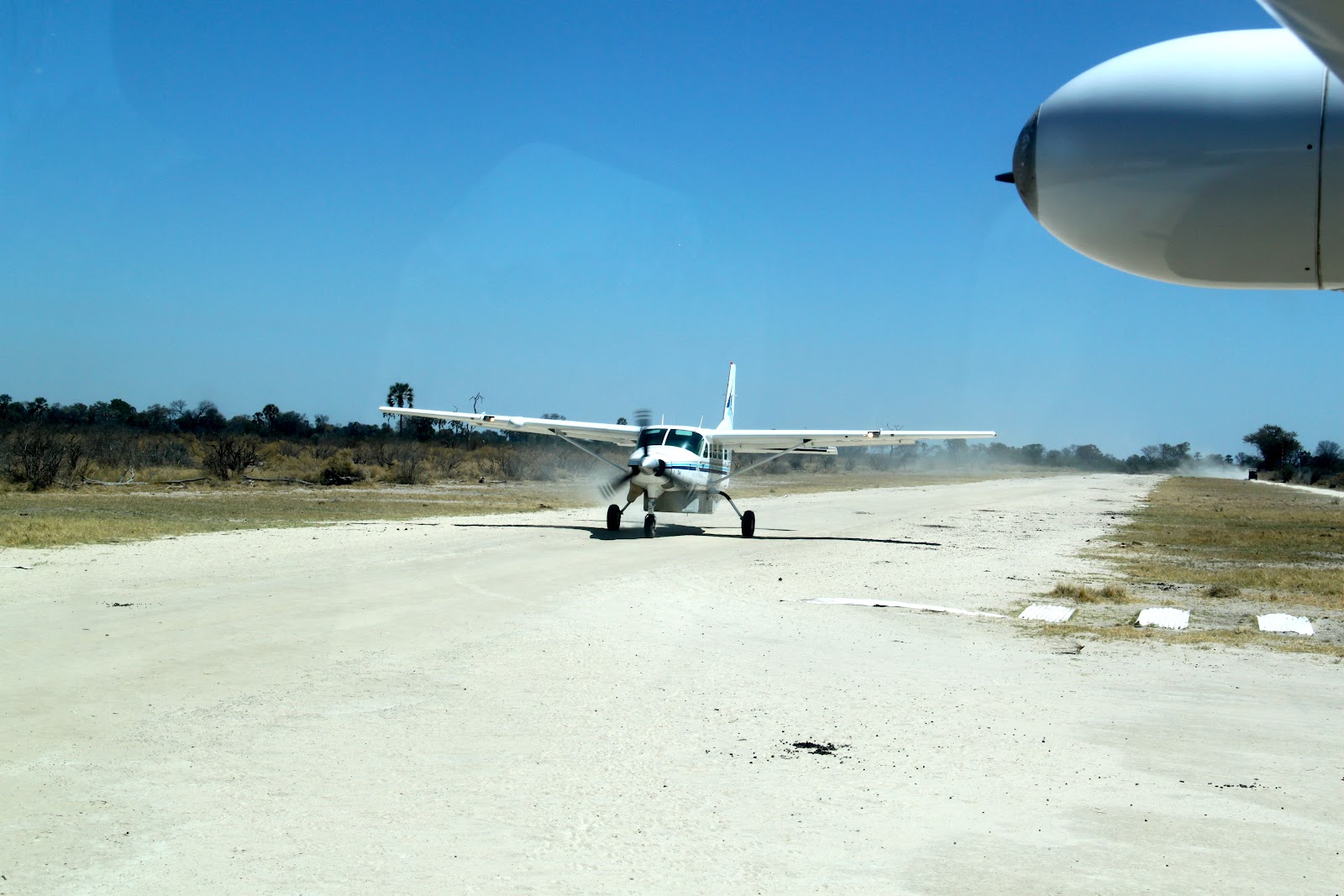
Landing on the dirt runways–The guides in the land rovers have to stand by to make sure they run off any animals that get in the way

Landing at Savuti

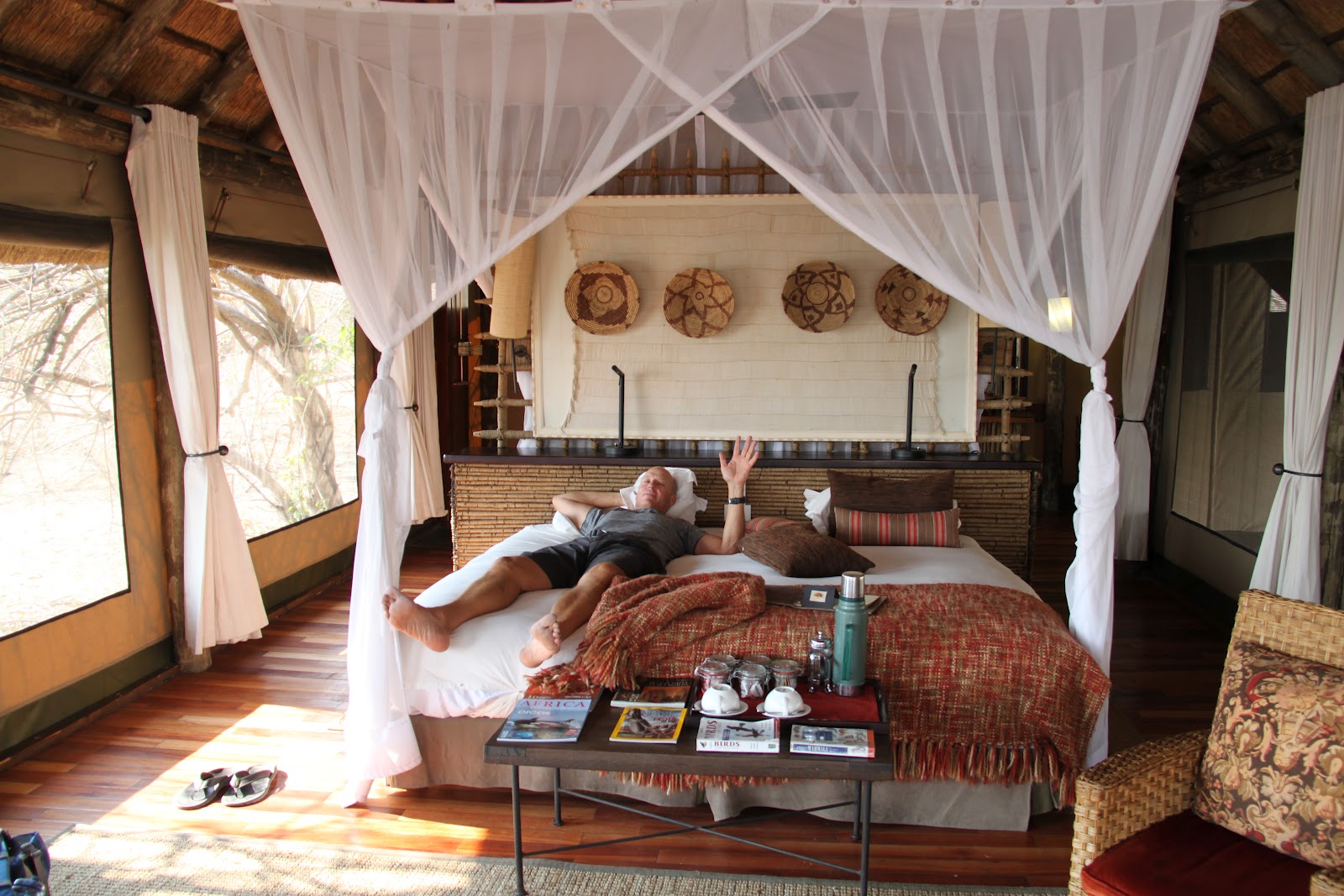
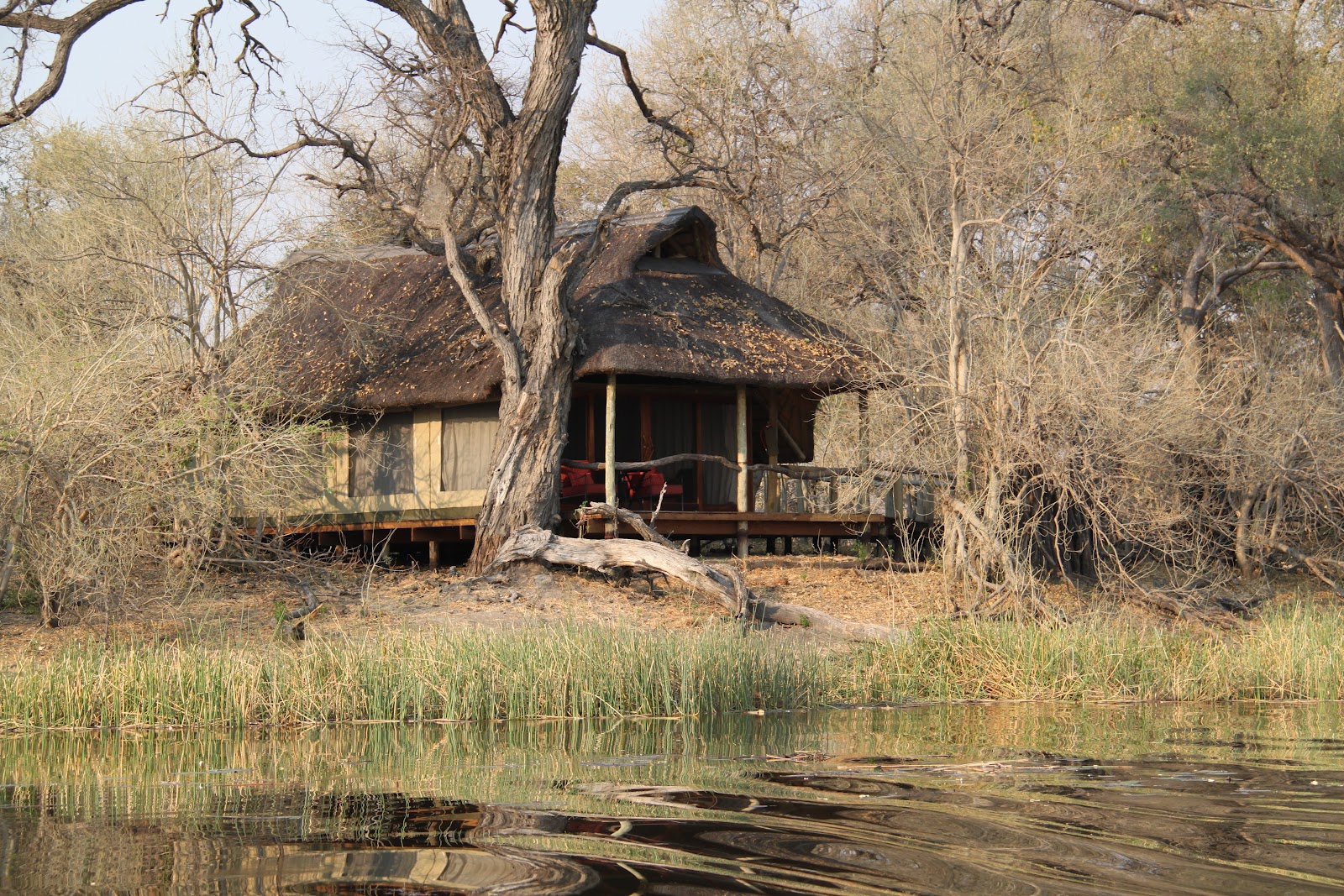
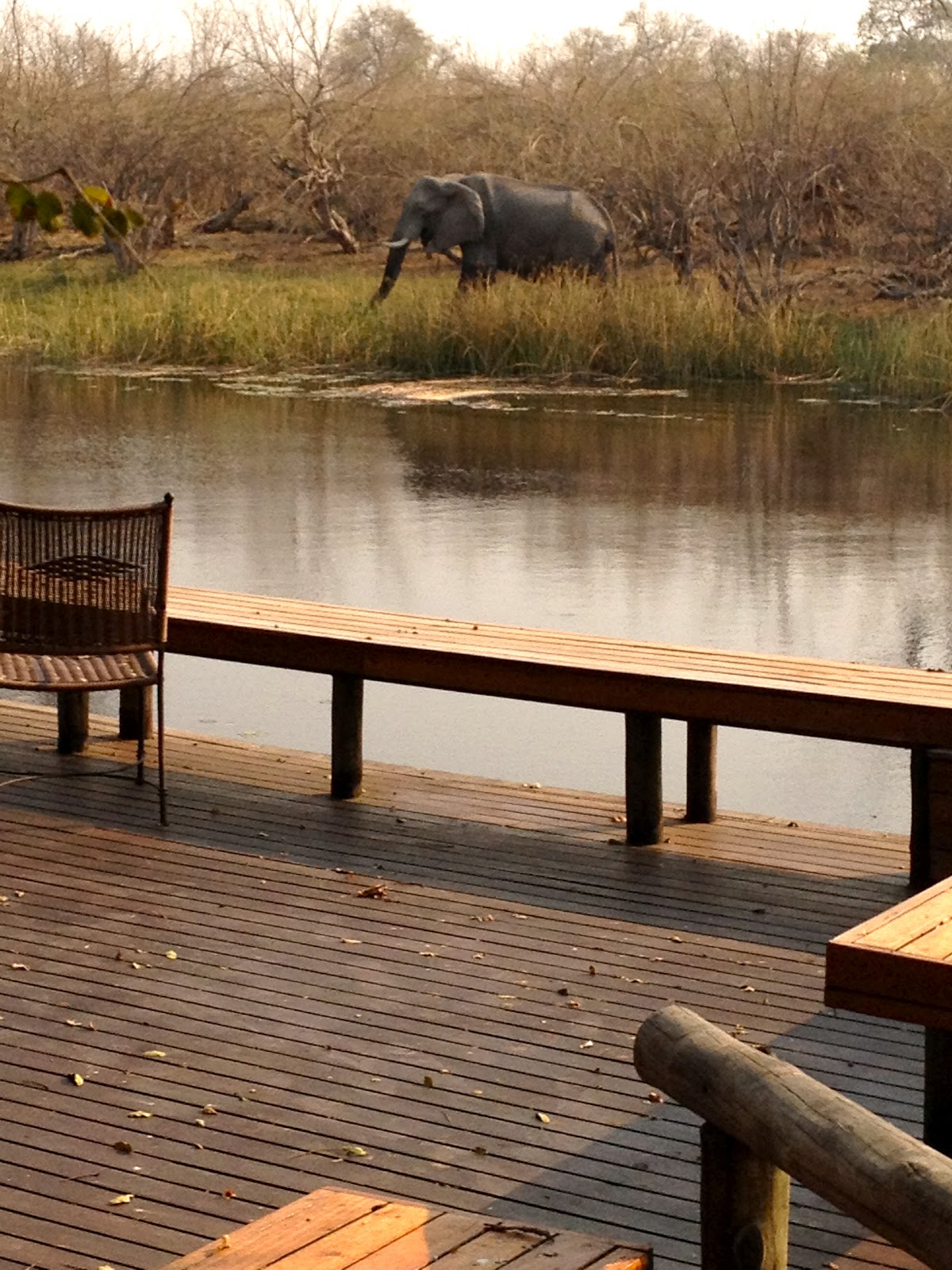
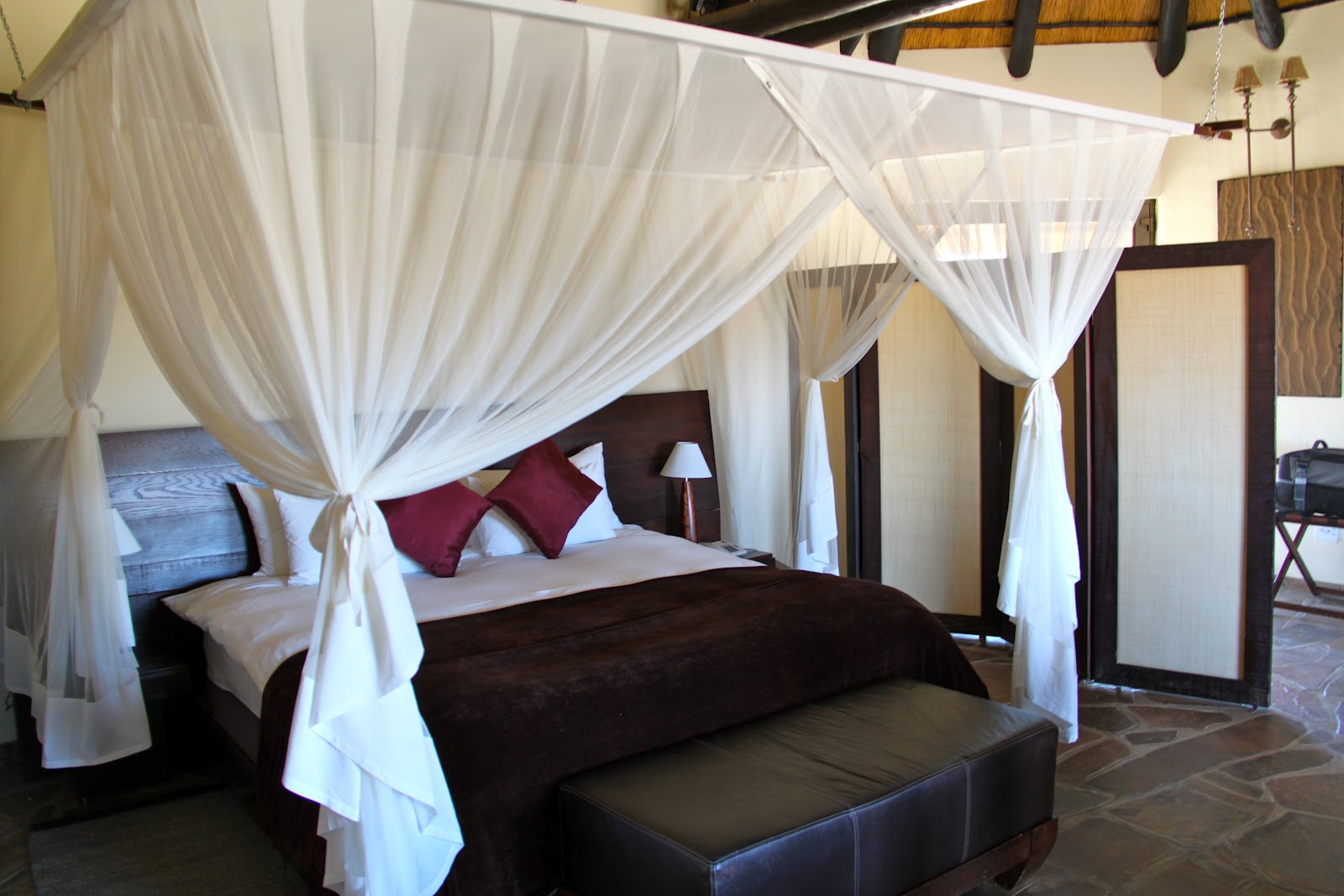
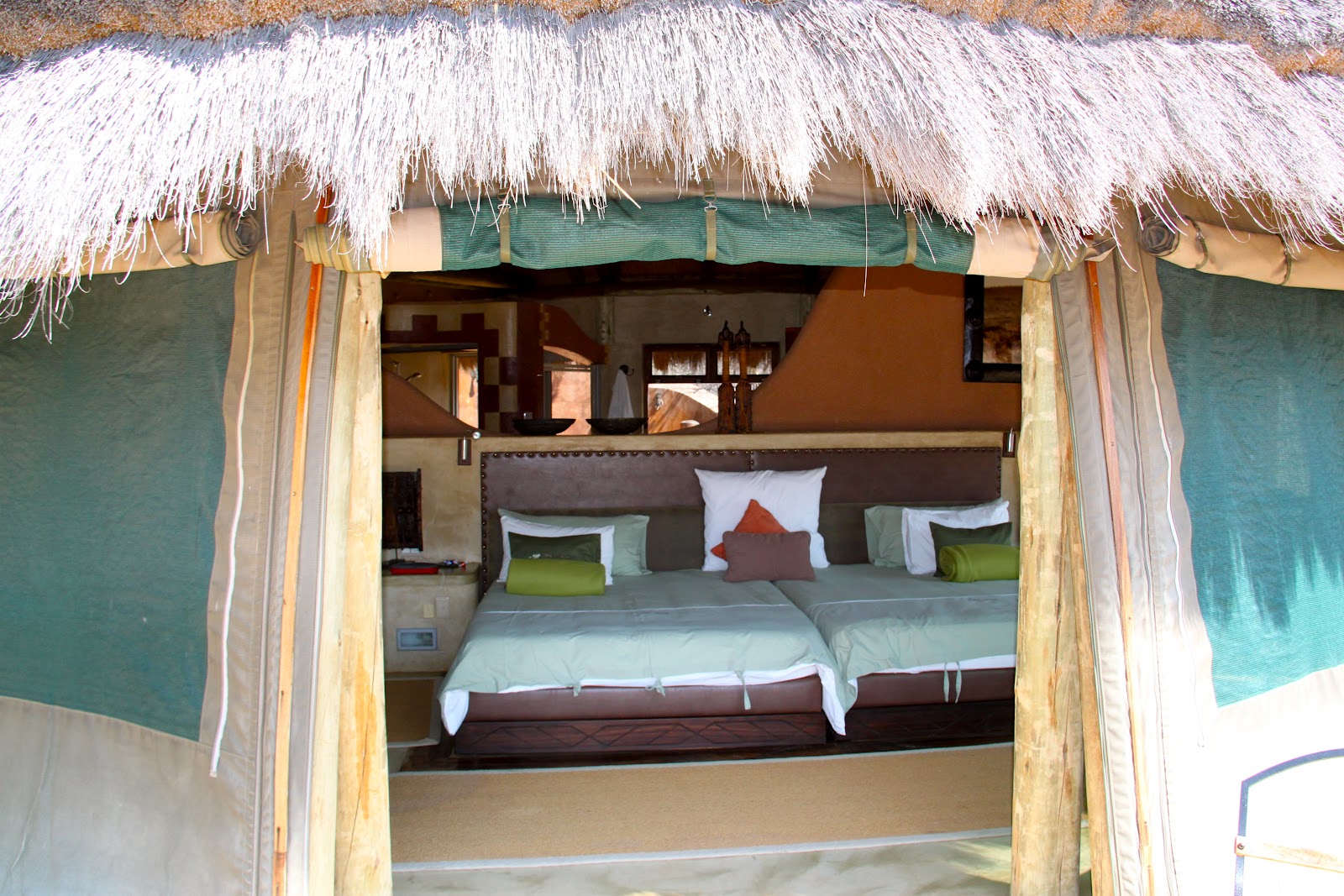
Everything is very dry this time of year, except right around the river. Our hut, once again, is like something out of a Hemingway novel. Mosquito netting around the bed, a wood floor set above the water on stilts, with running water in copper sinks and a shower in the open on teak wood. We have a lovely deck overlooking the river where elephants and other animals come to drink and cool themselves off.

Luxury bed with mosquito netting

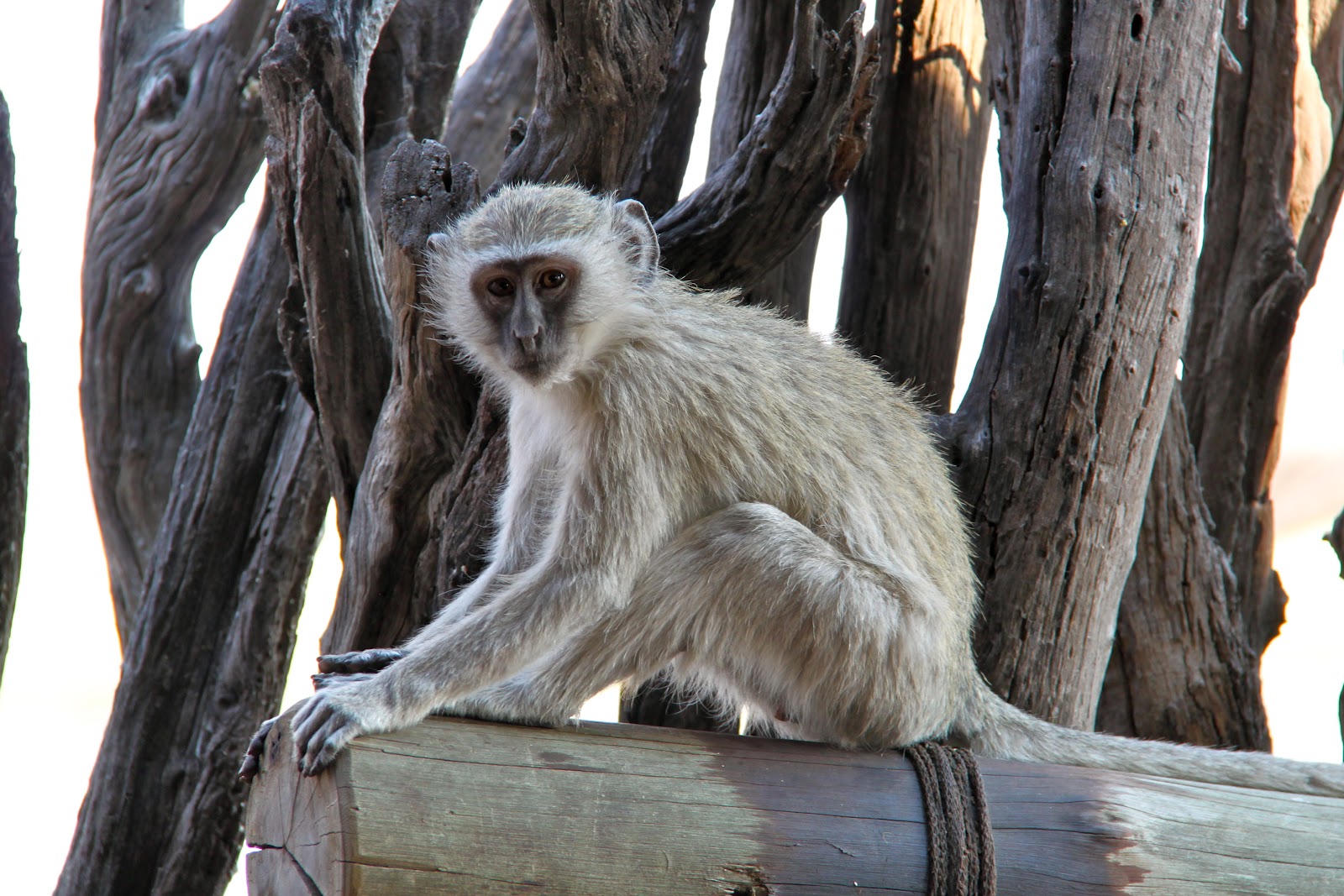
This monkey greeted us by stealing our welcome plate of cookies

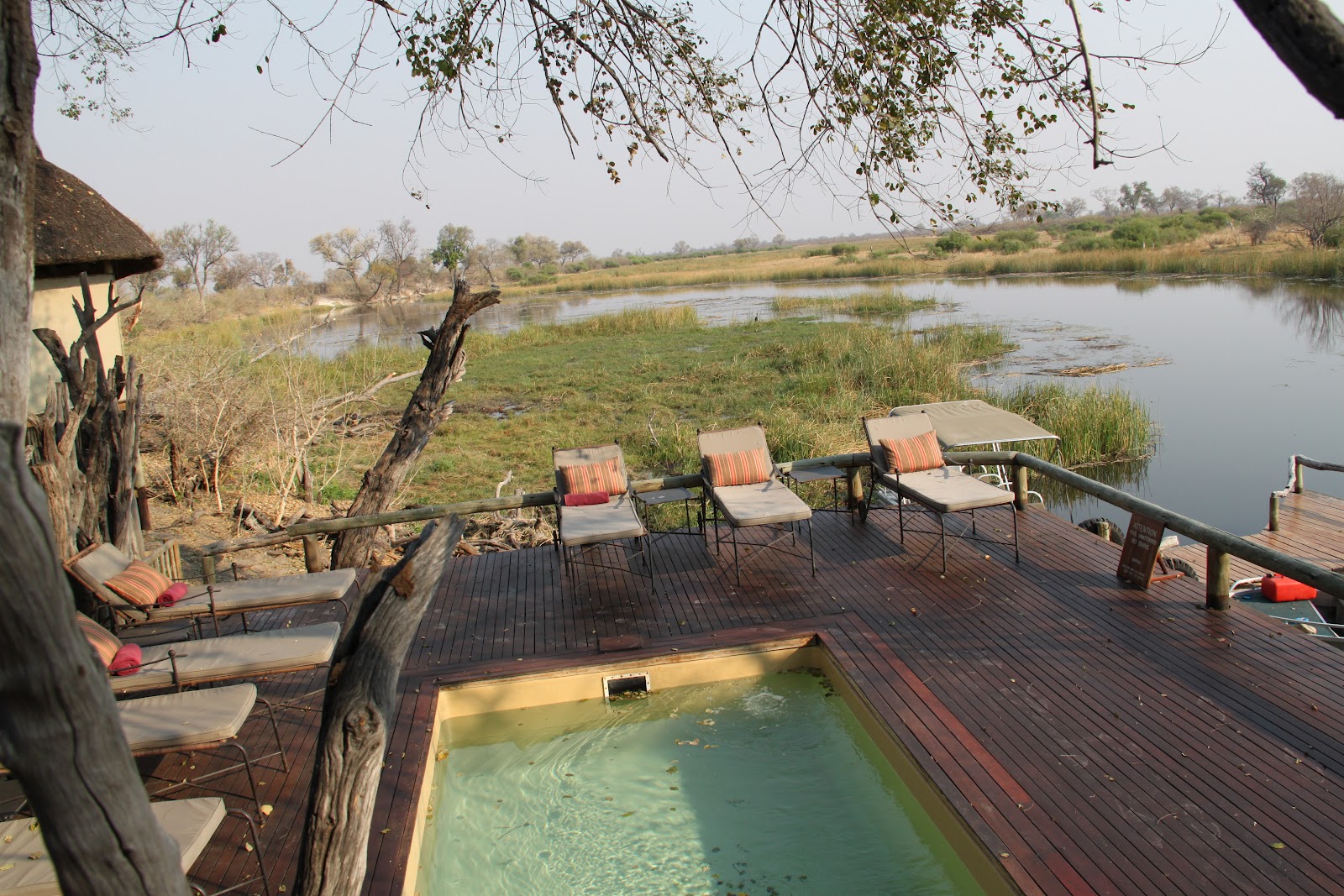
Main lodge area with a small pool

A total of 7 huts.  Ours is on the end.

Home

The Lodge

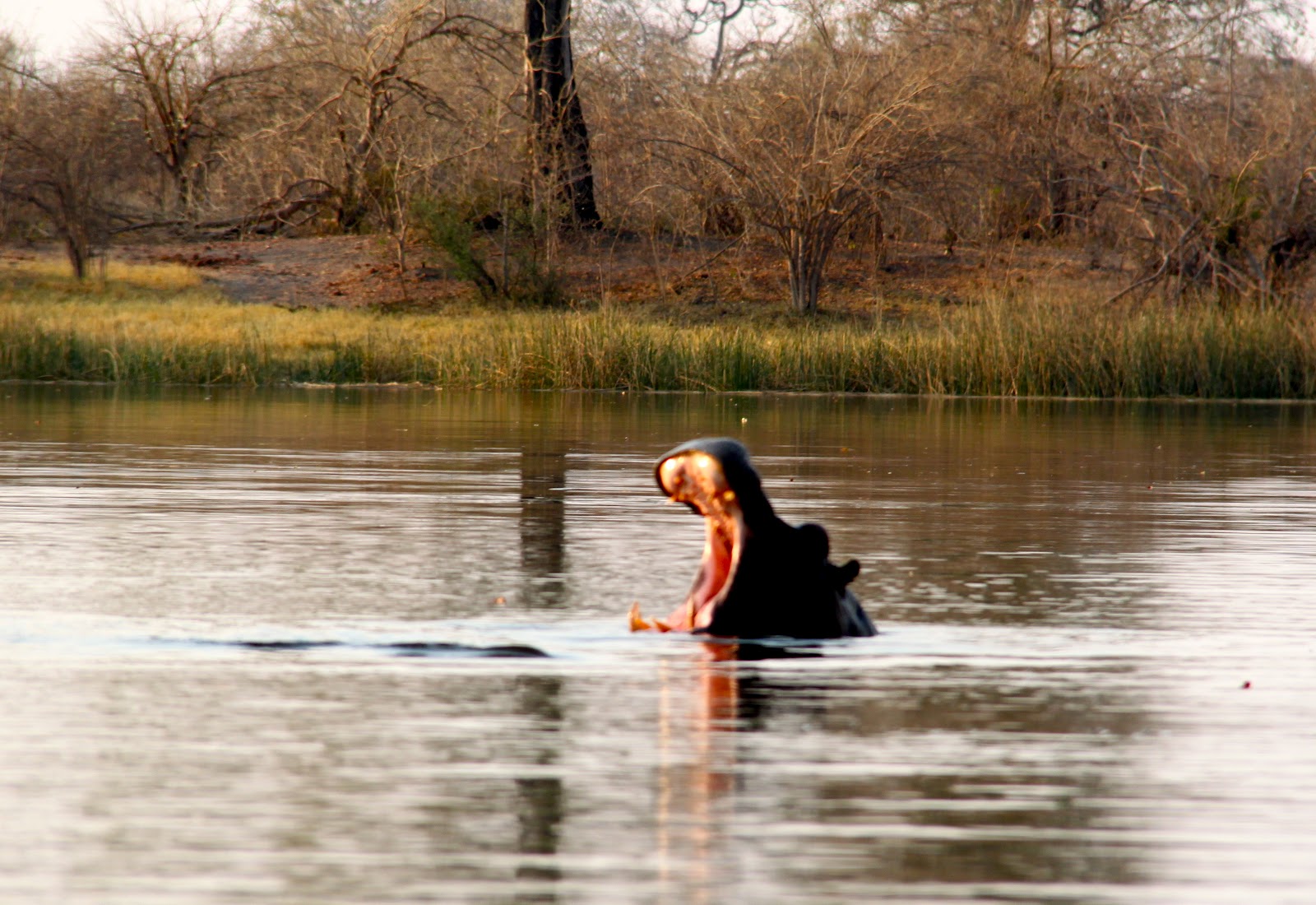
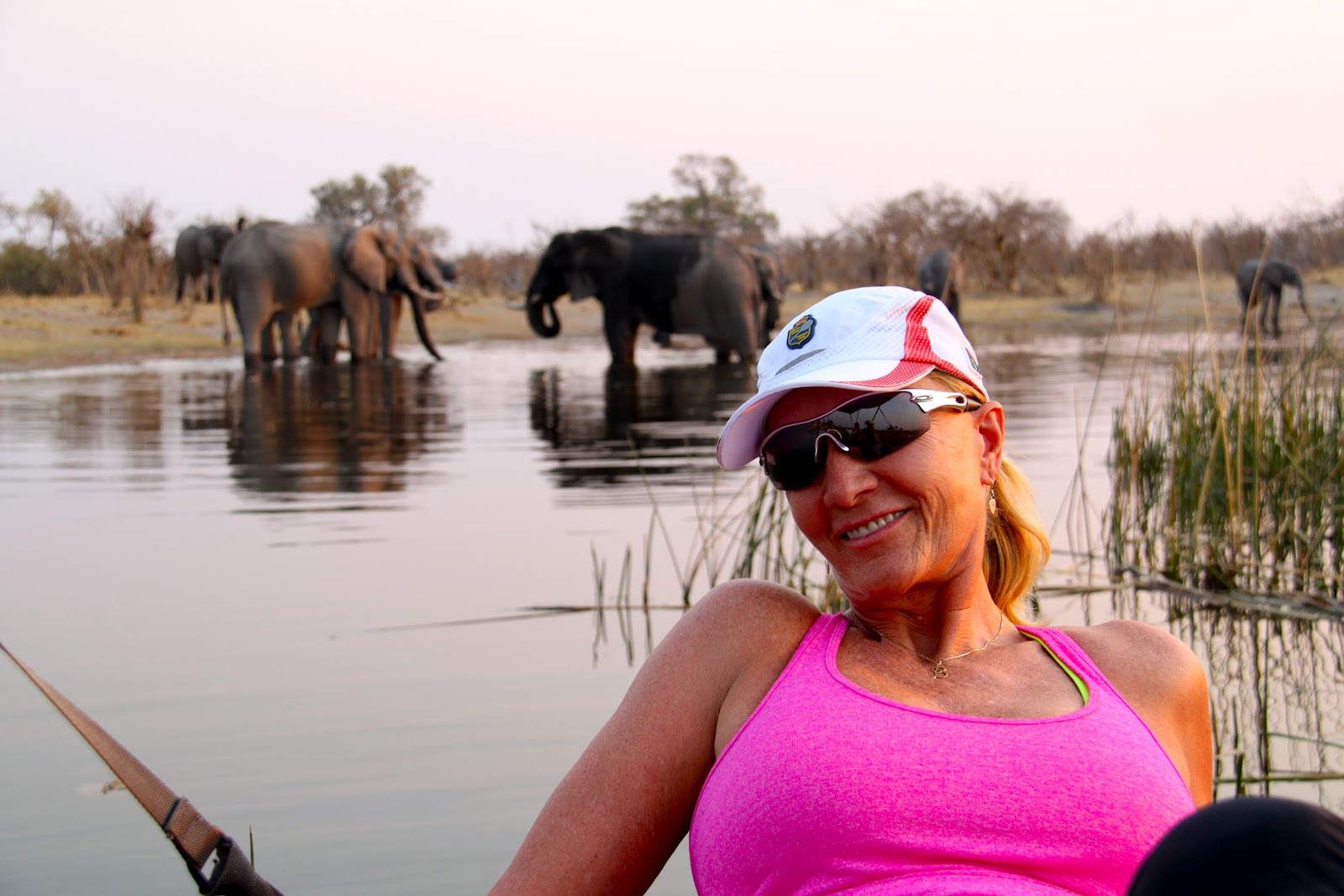
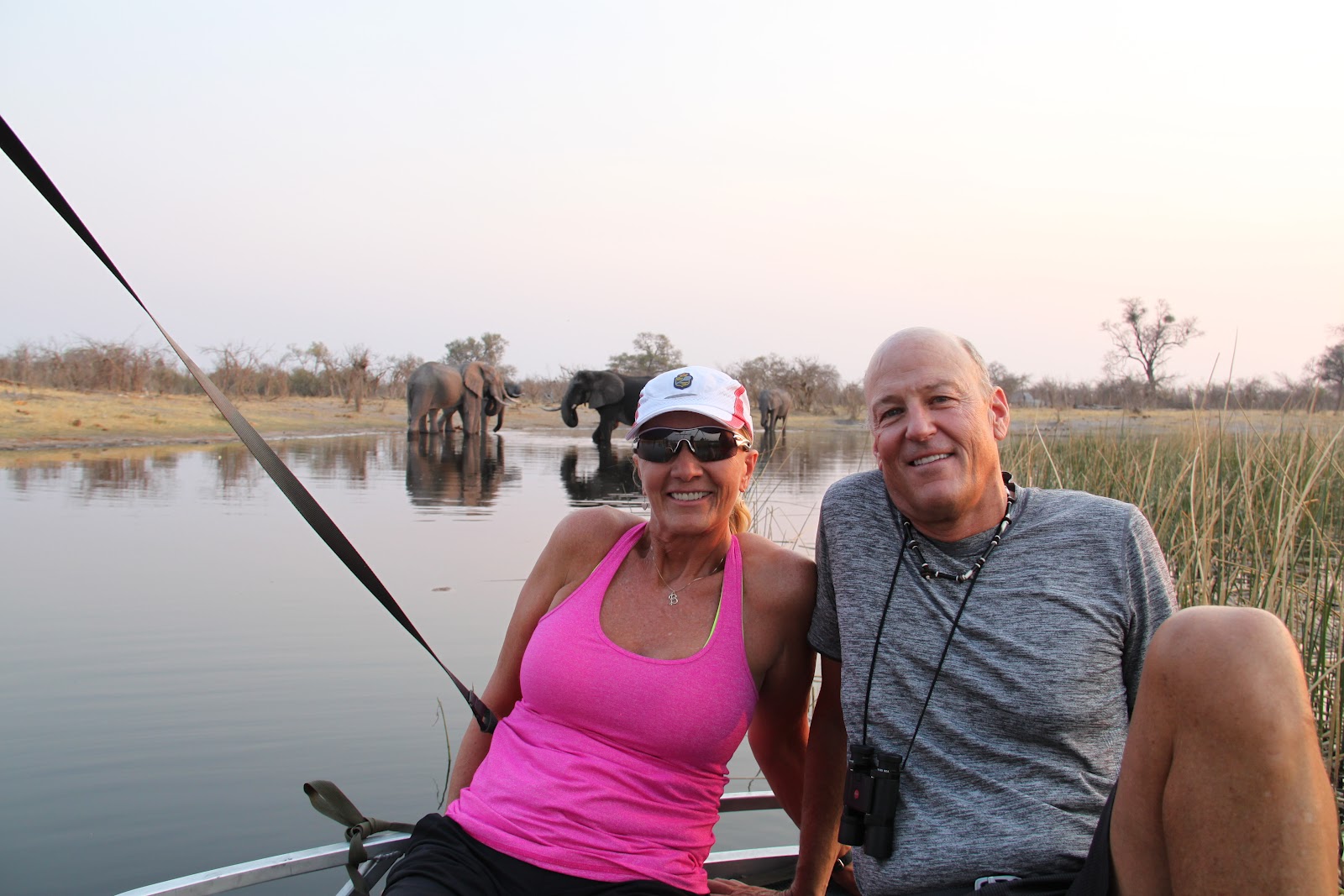
To cool ourselves off, we decided on a boat ride down the river instead of a game drive. With very calming flat water, reeds on both sides, we meandered (with a motor) to view open billed storks, cape buffalo, zebra, hippopotami (that didn’t want our boat to come too close) and lots of elephants. Turning off the motor and floating in the reeds we had our sundowner toast and watched the elephants drink and play. There were small bell frogs that sang to us as soon as it got dark. (they sing pretty much all night long).

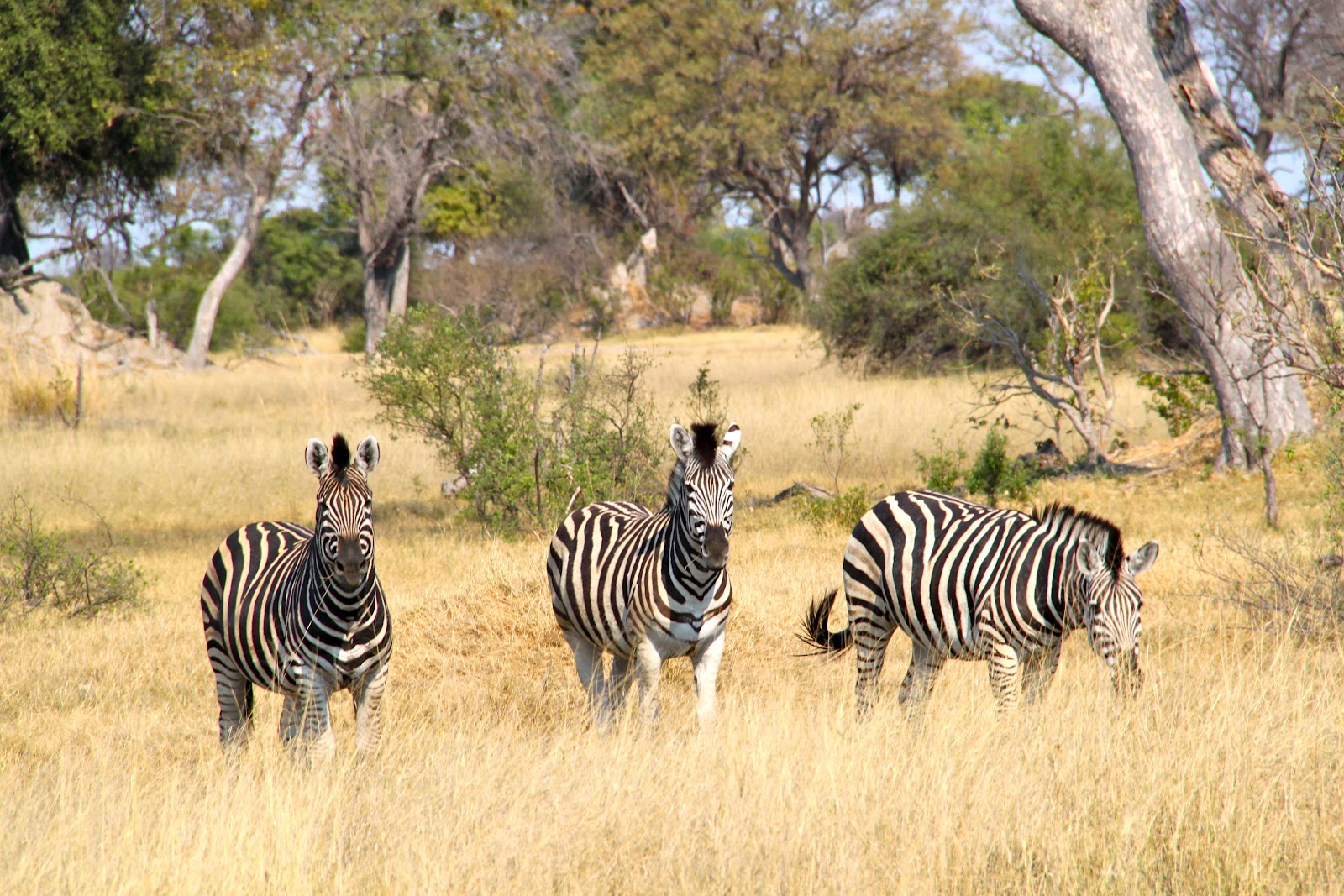
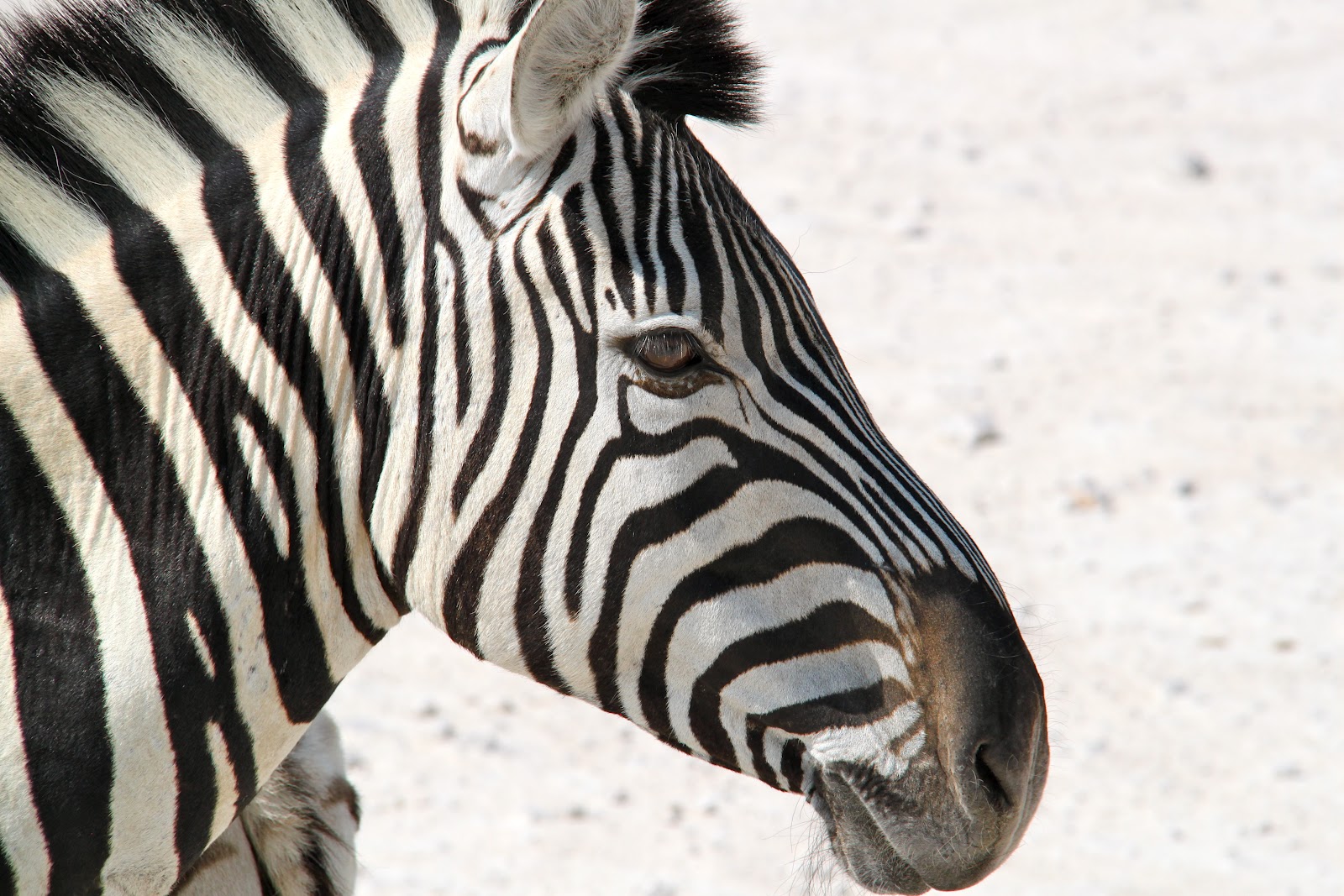
Zebra

Warthog

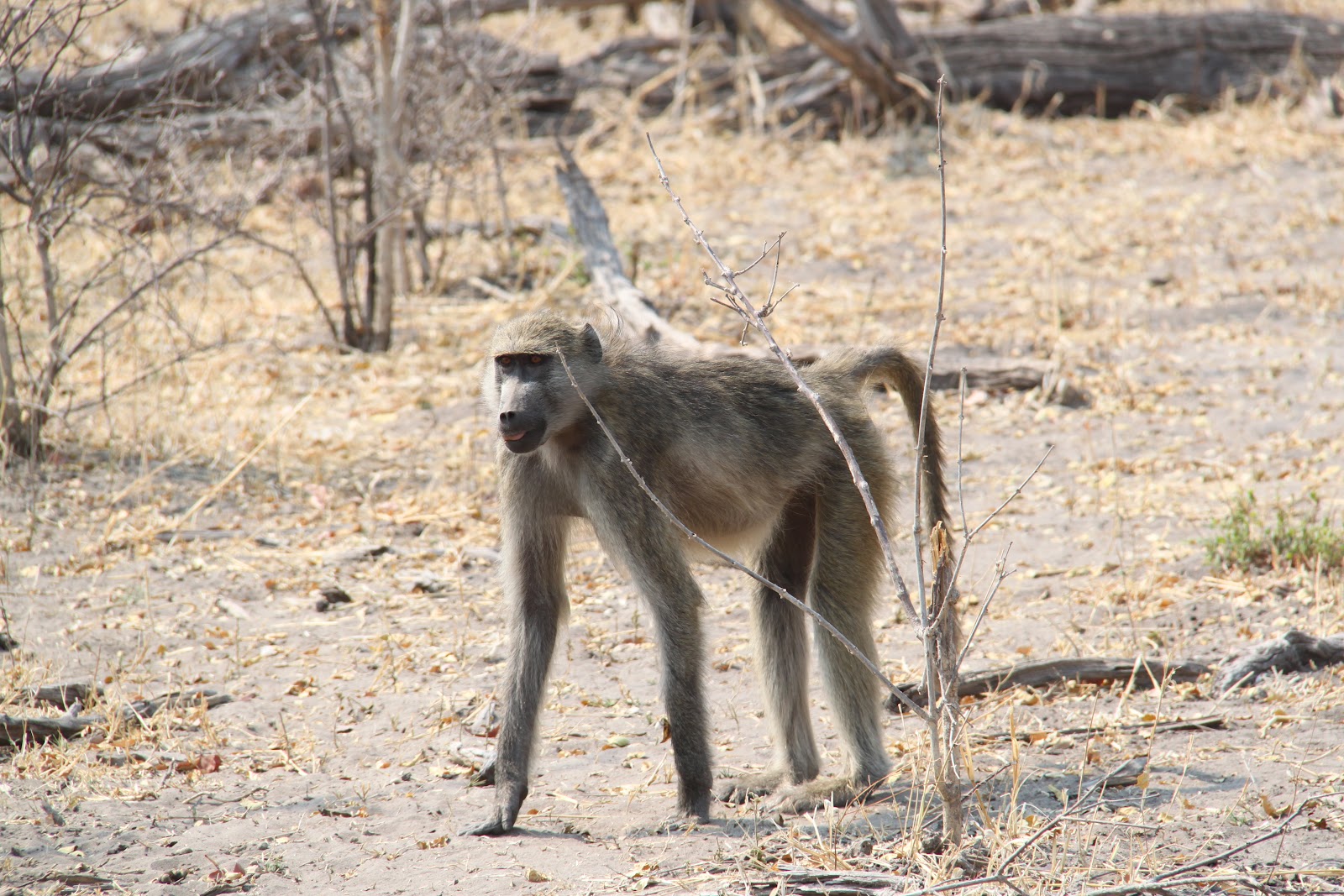
Baboon

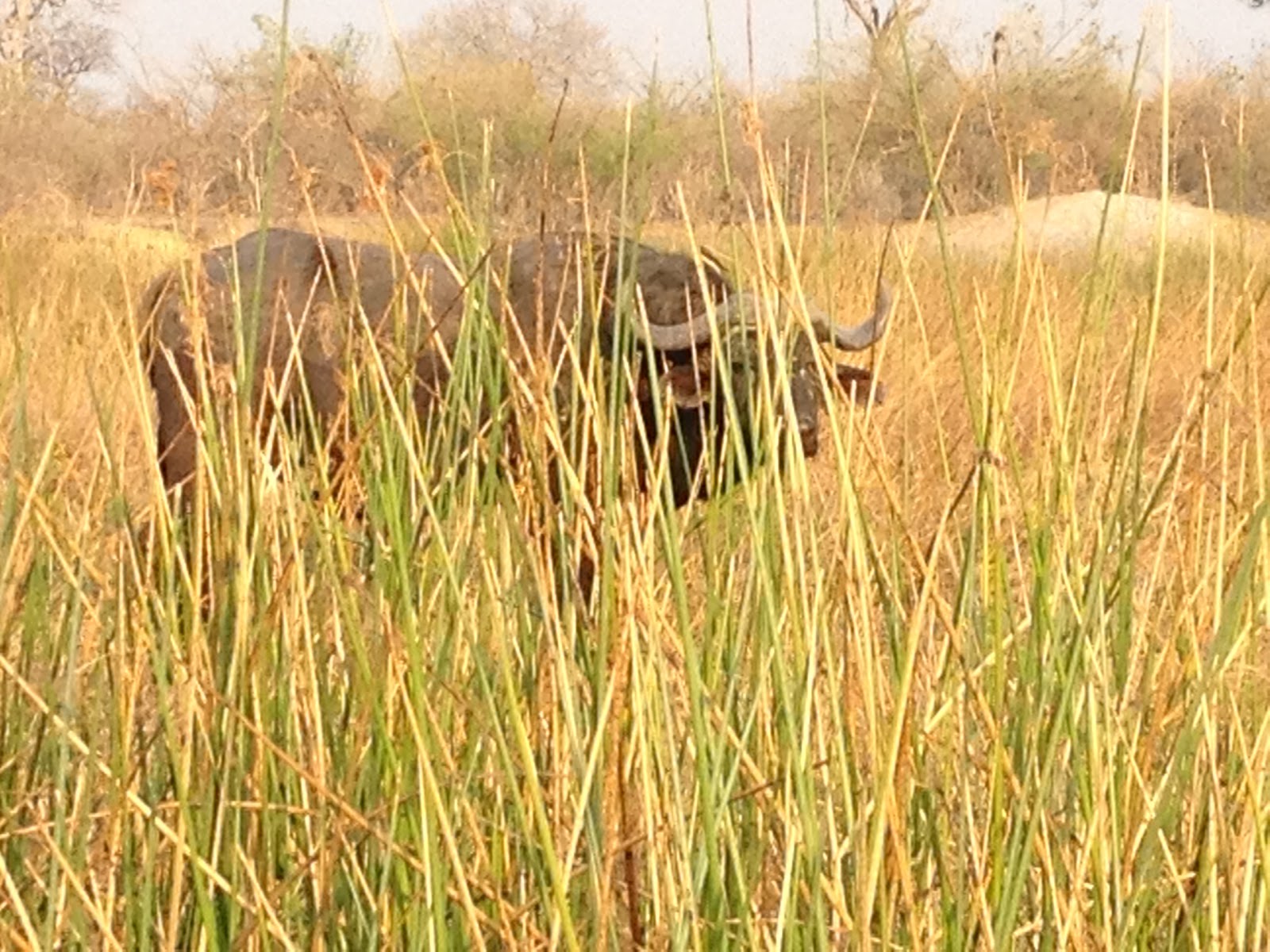
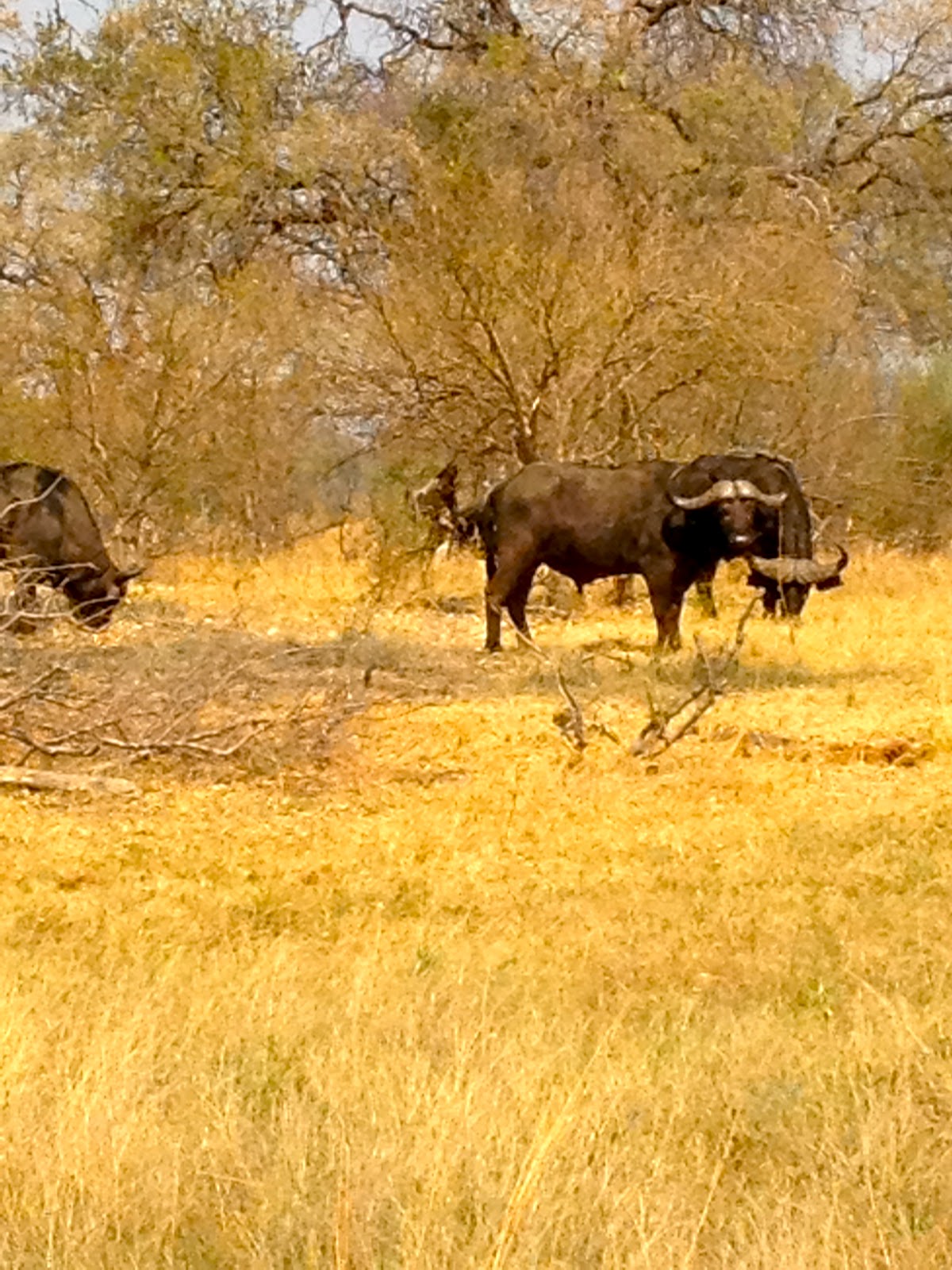
Buffalo

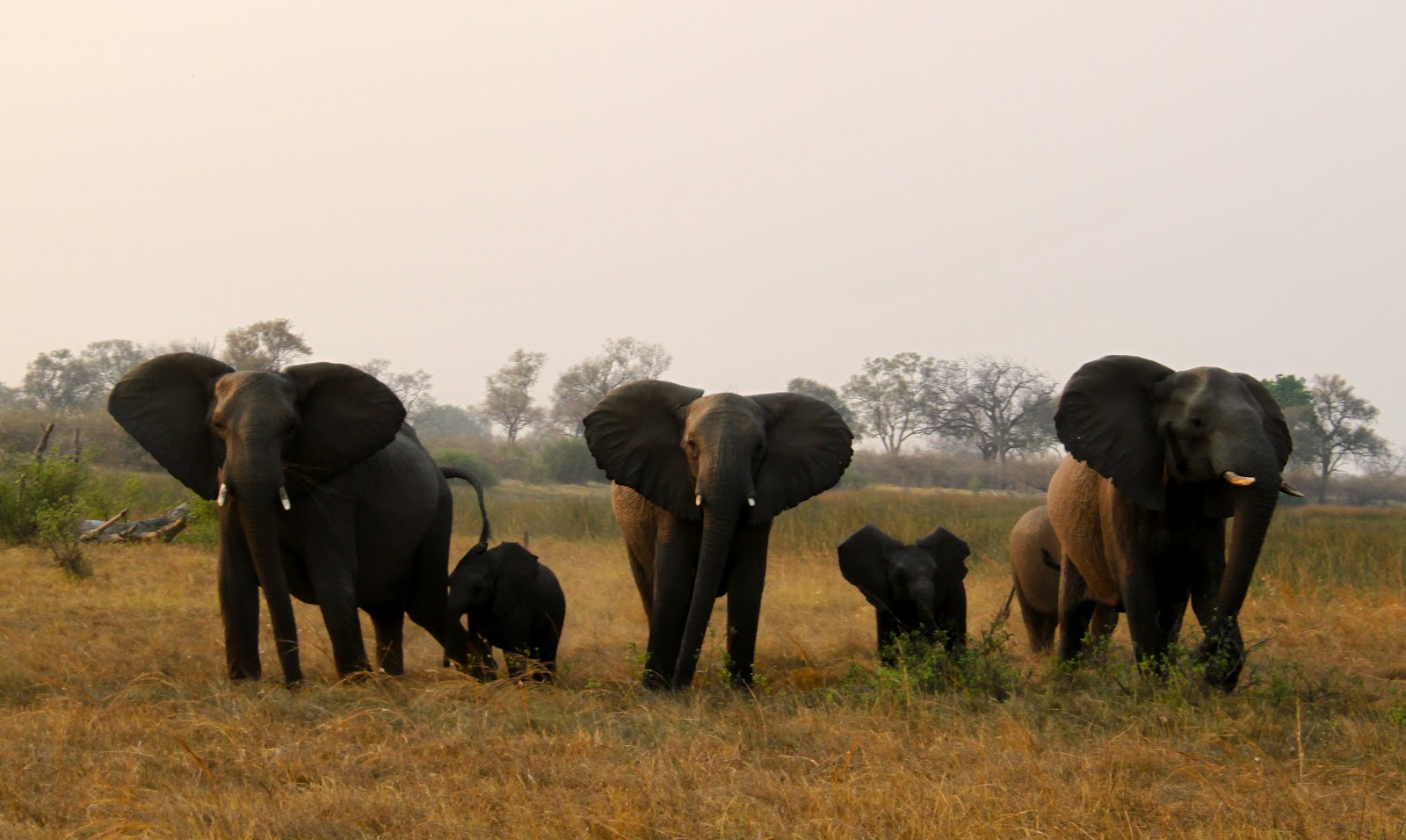
Mamas and Babies

This is my territory!

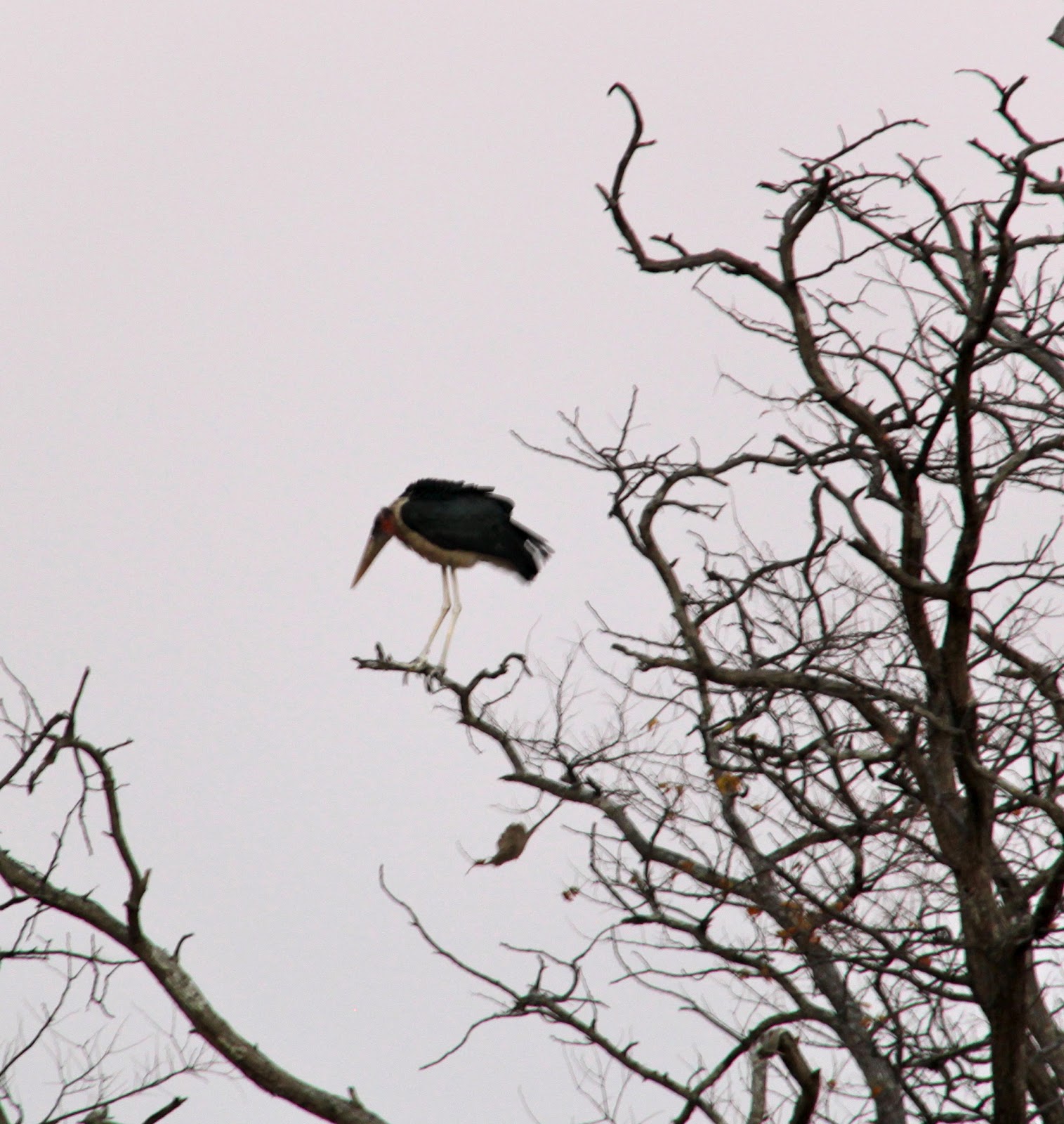
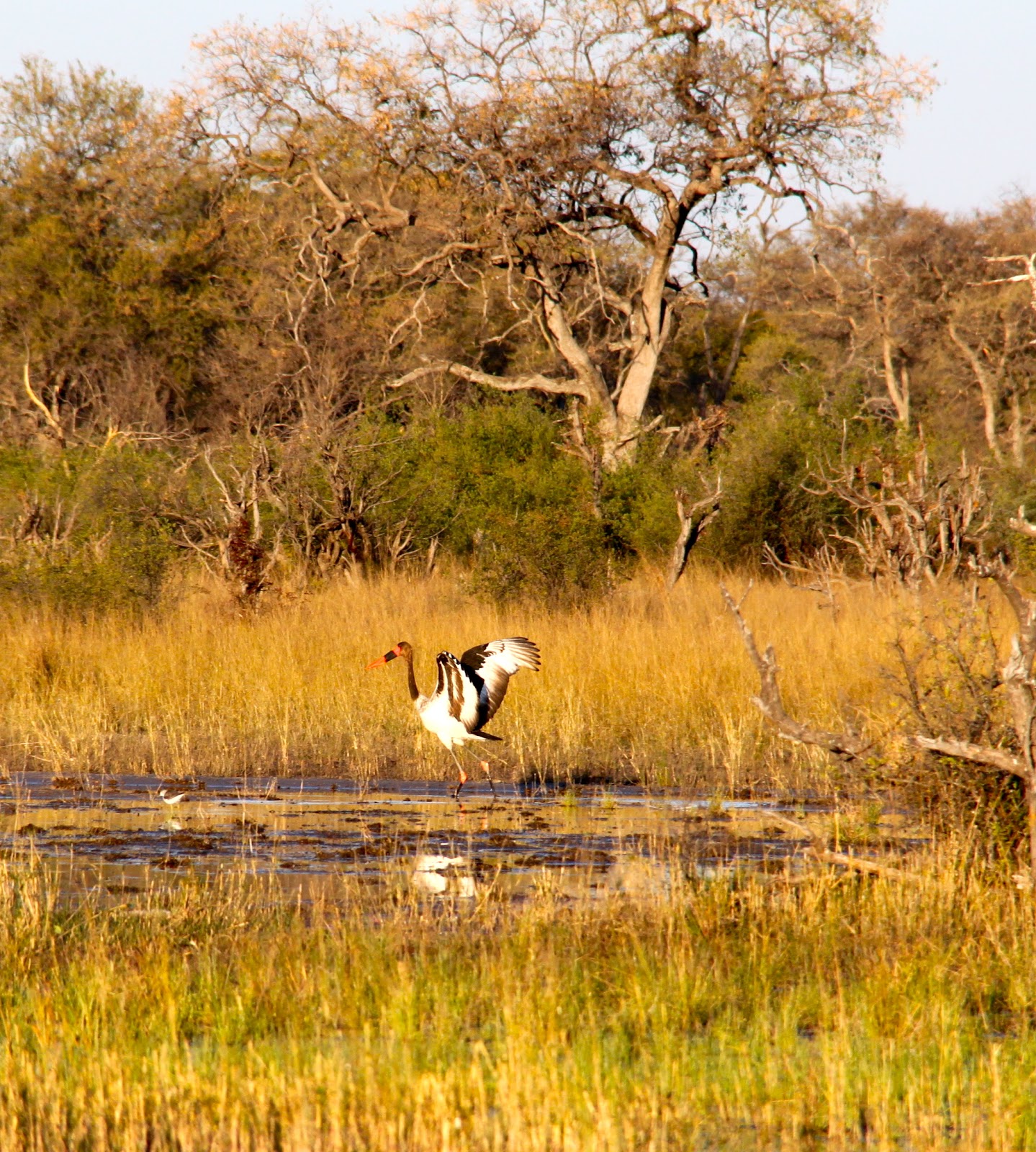
Open billed Stork

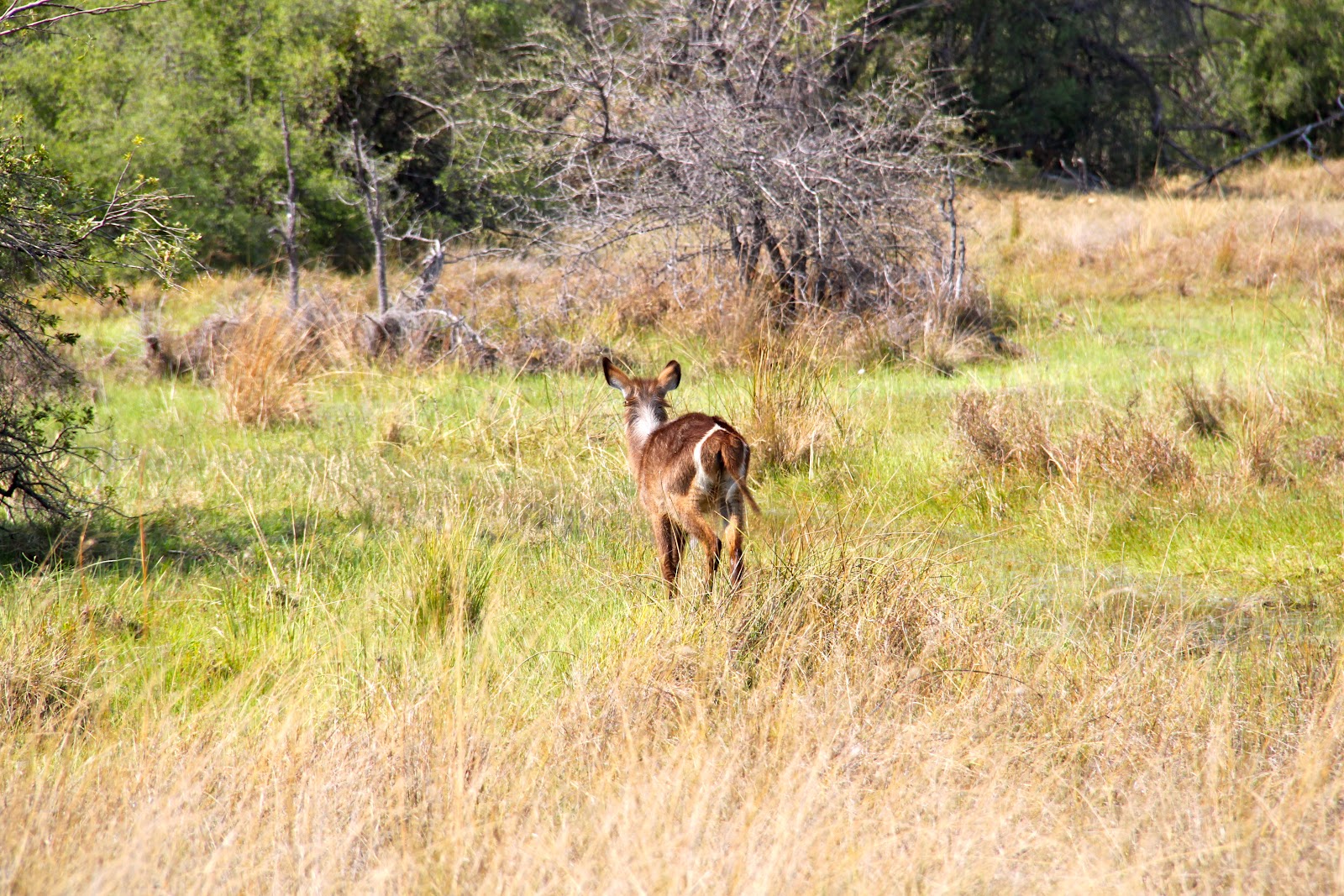
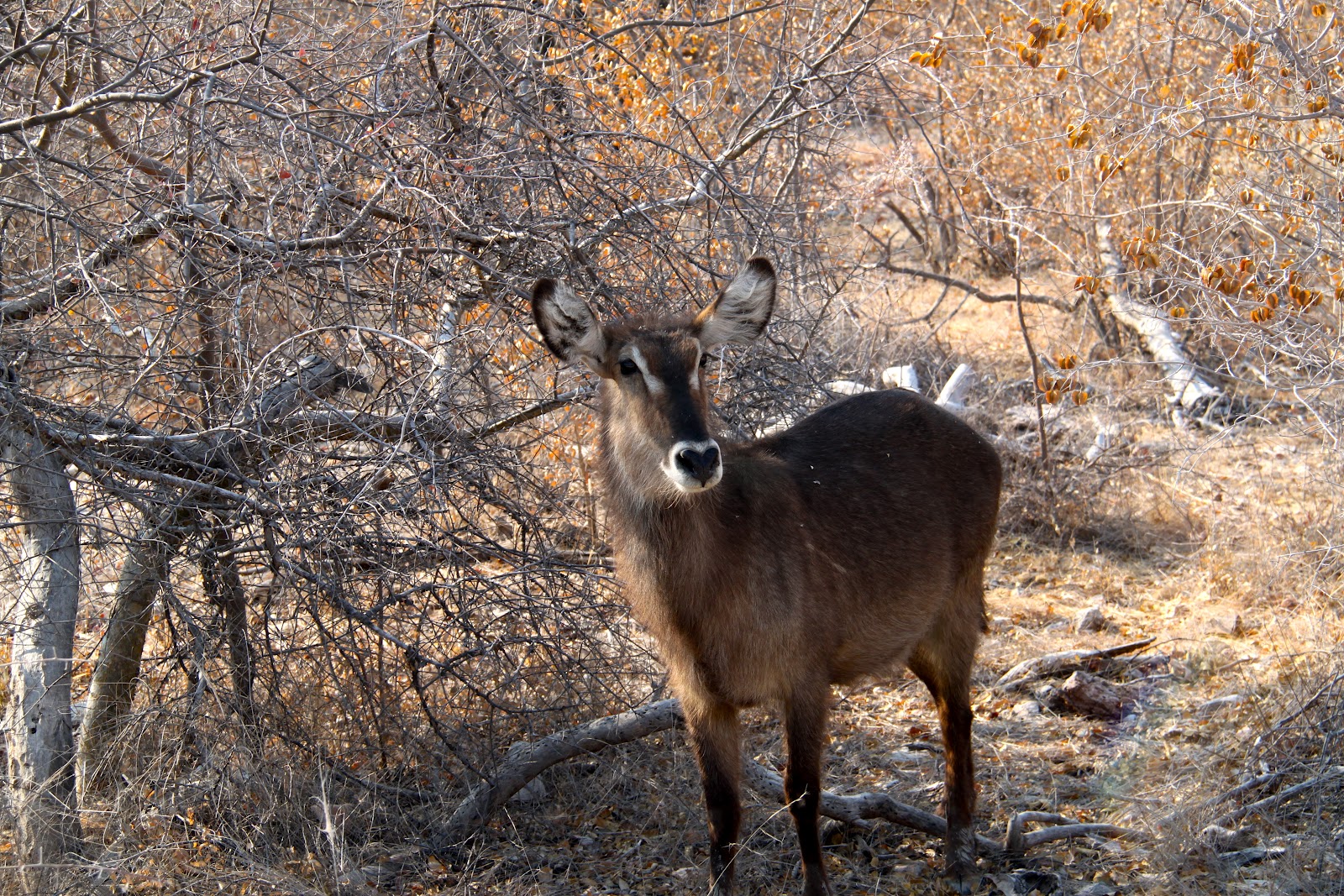
Waterbuck

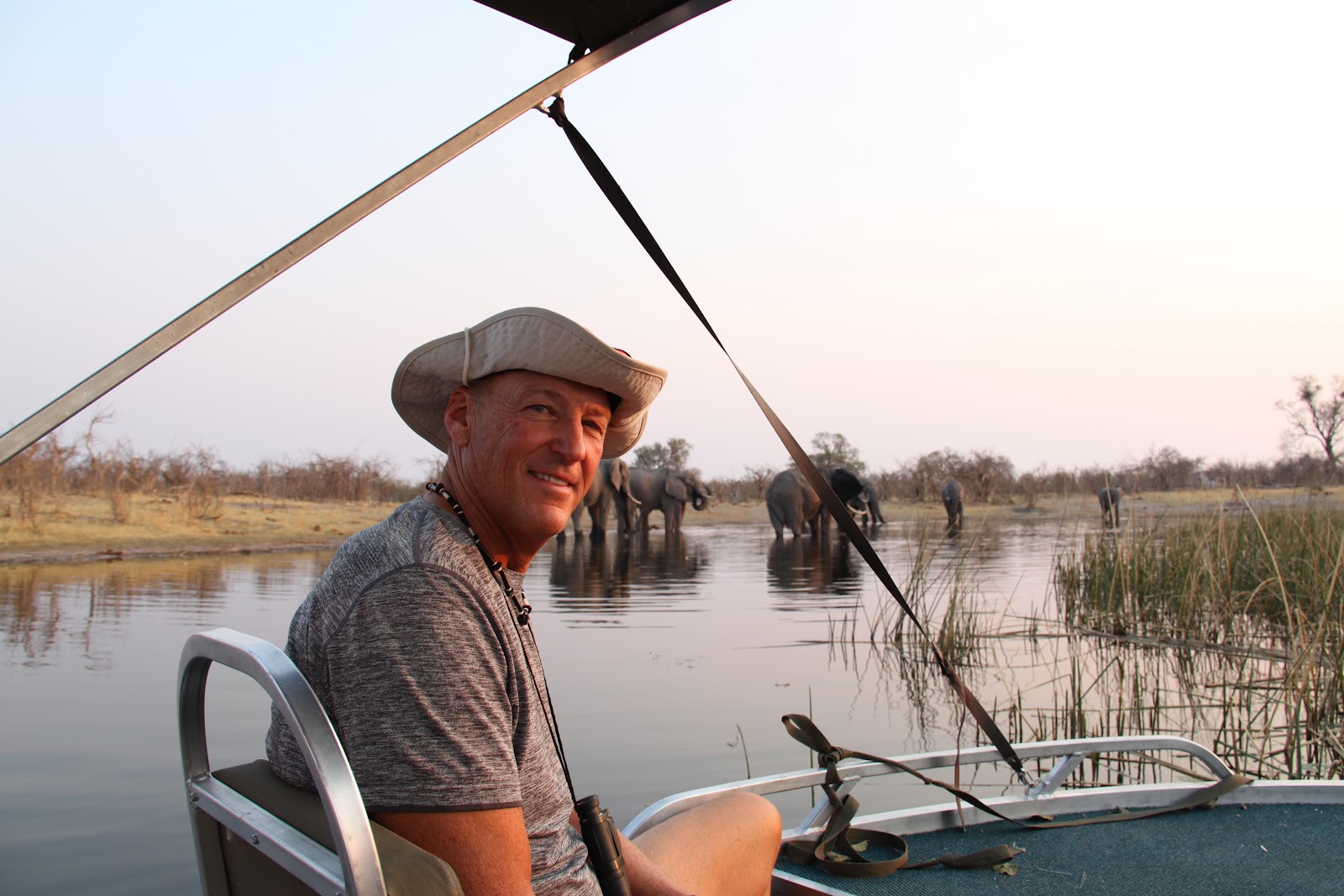
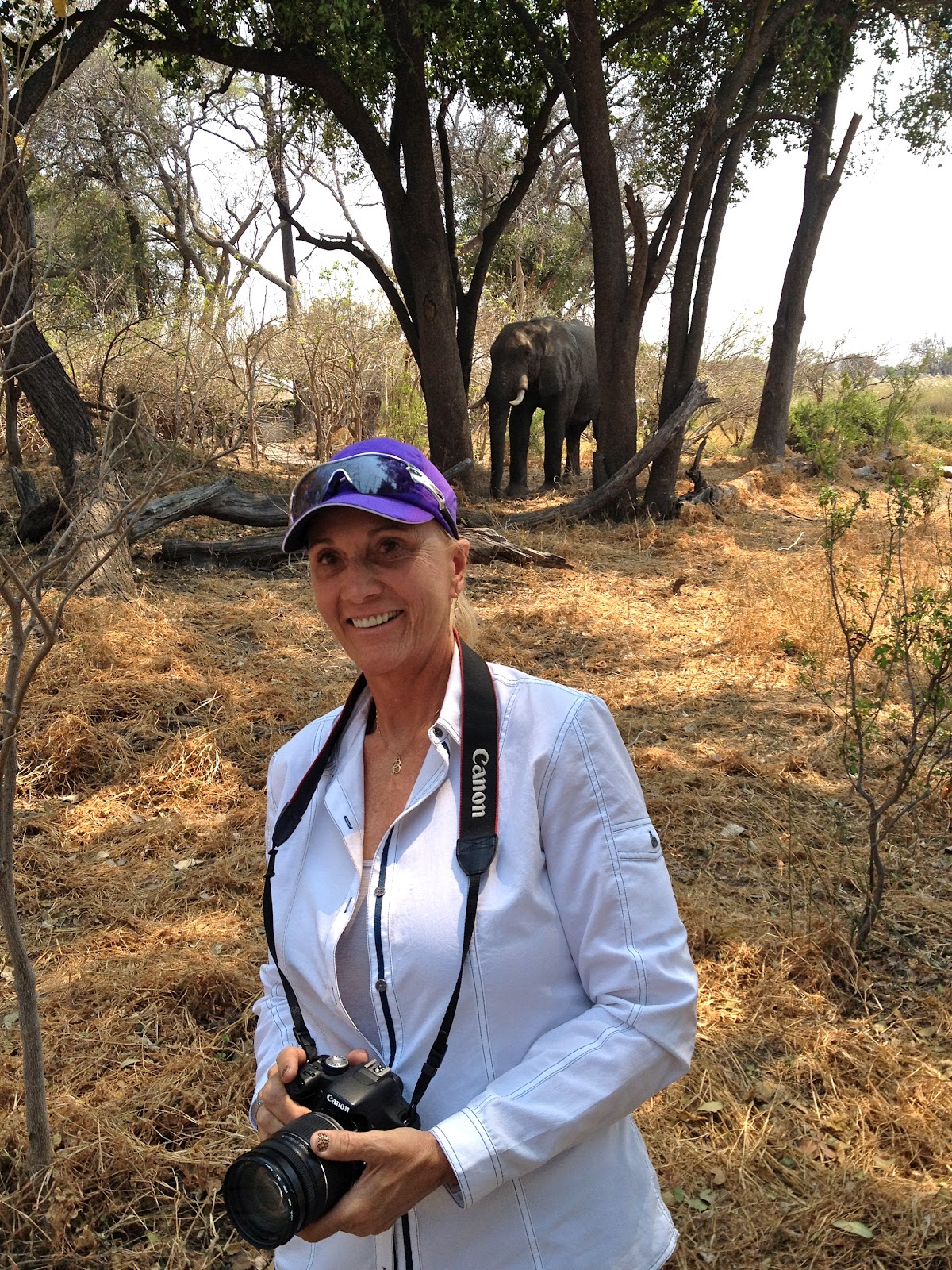
Enjoying the elephant show

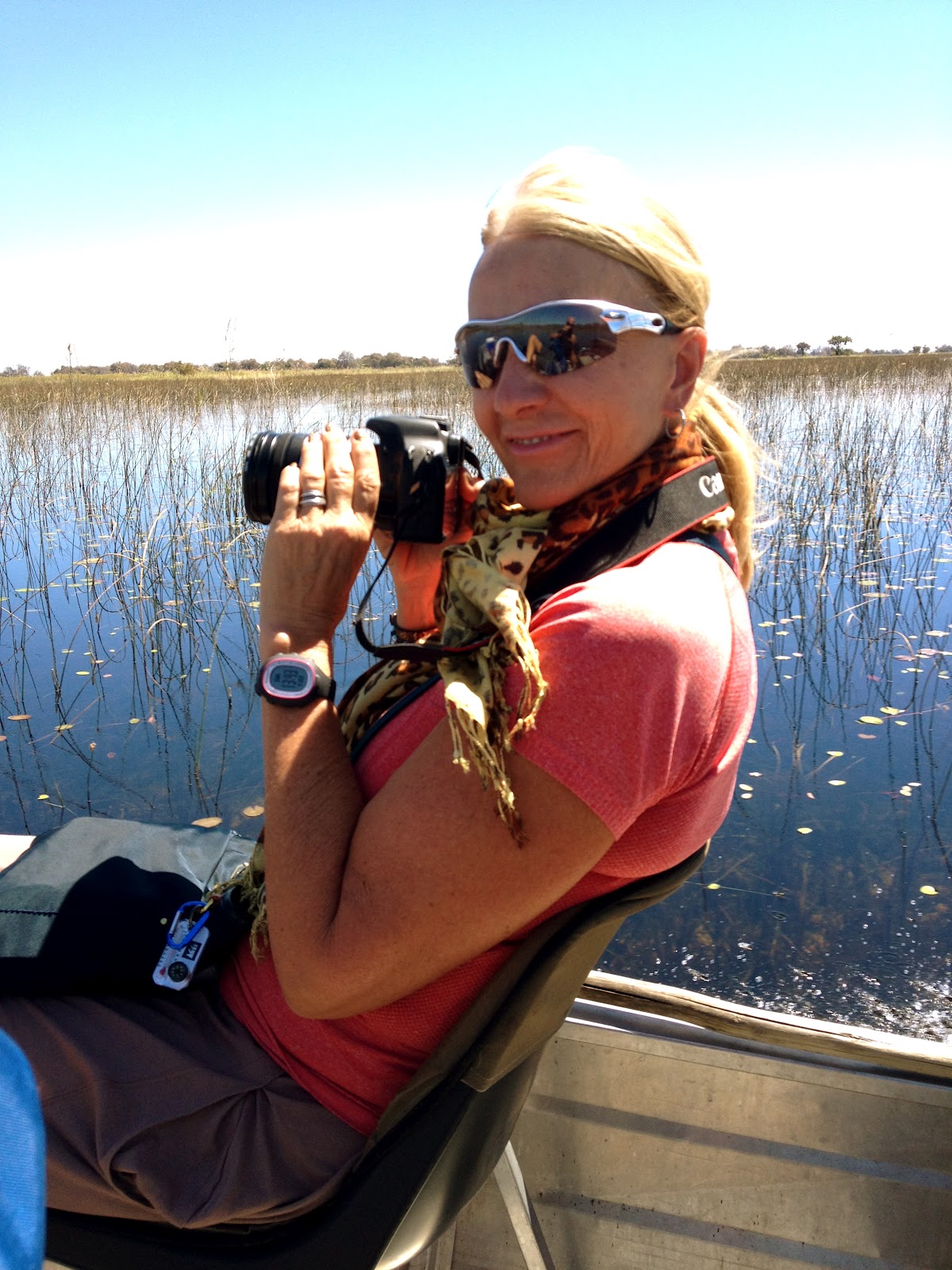
Barb on the boat

What a romantic date!
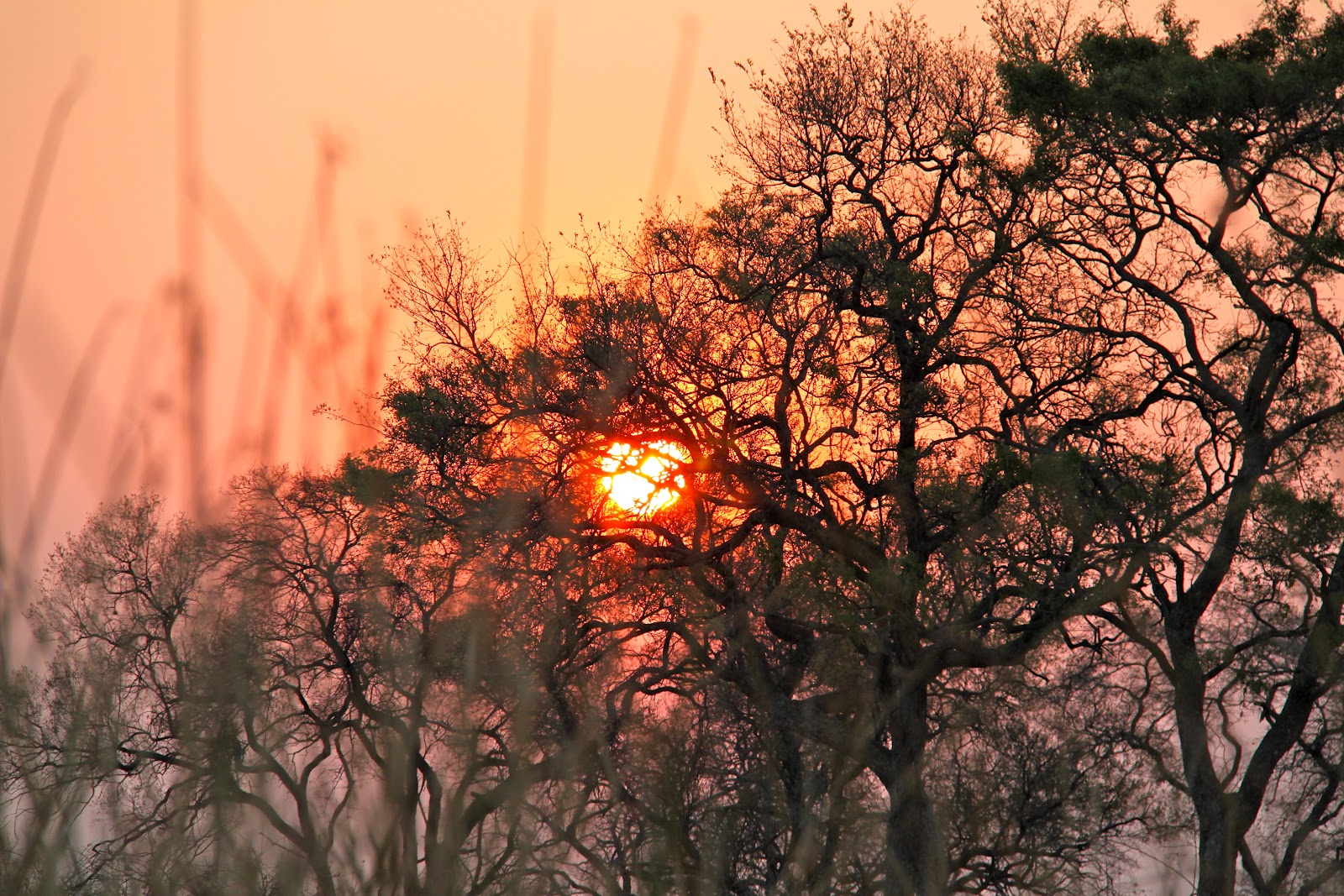
Sunset

Back at camp

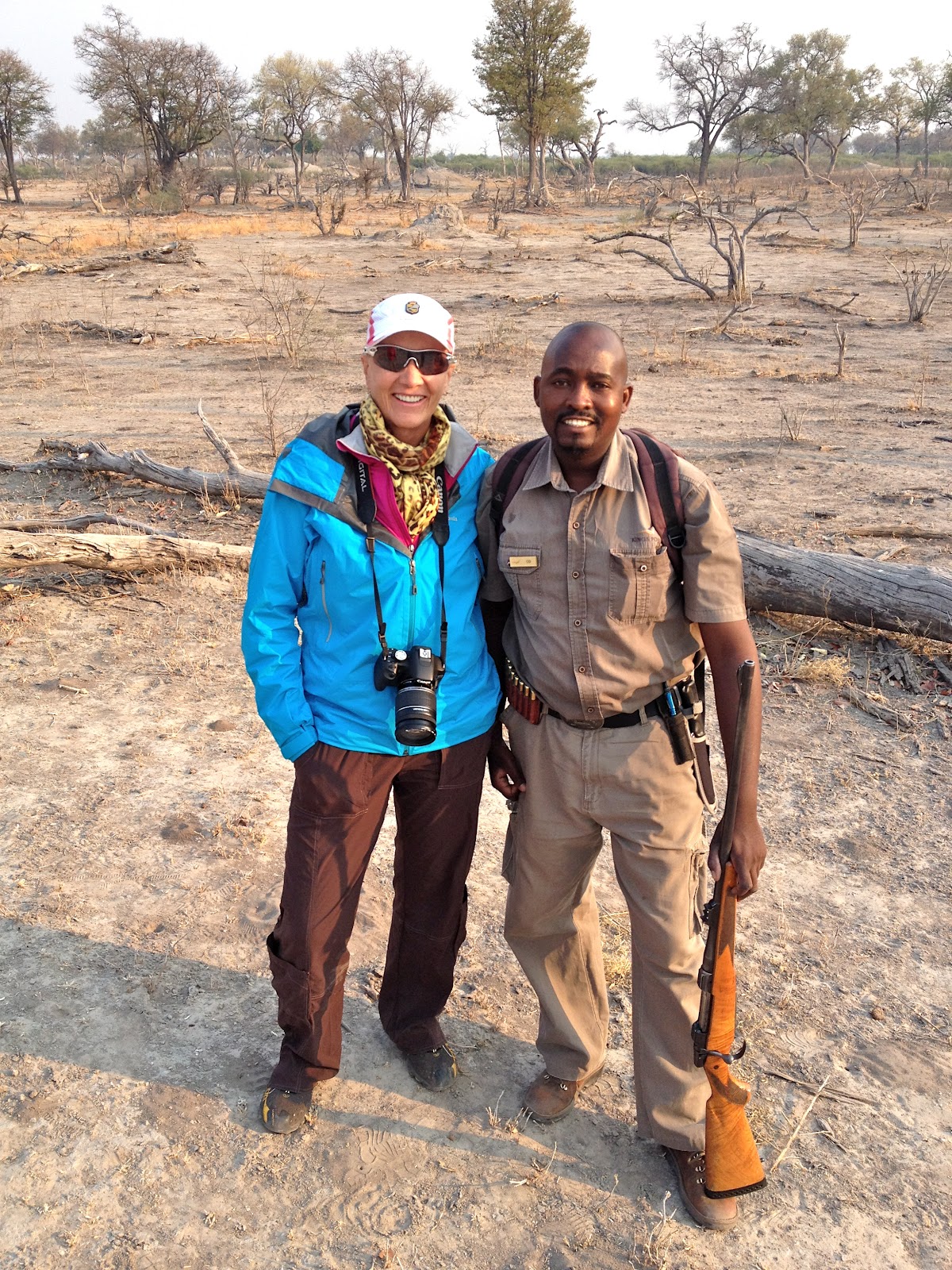
Not wanting to be predictable and go out in the land rover on another game drive, we asked for a guide that could take us on a walking safari. Our guide was O.D. and had been trained to use a 458 caliber rifle that he could load and get off 3 shots within 11 seconds. A charging lion or elephant would be taken down with shots to the head. (of course only if needed).

O.D. with his 458

Barb and O.D. out on a walking safari
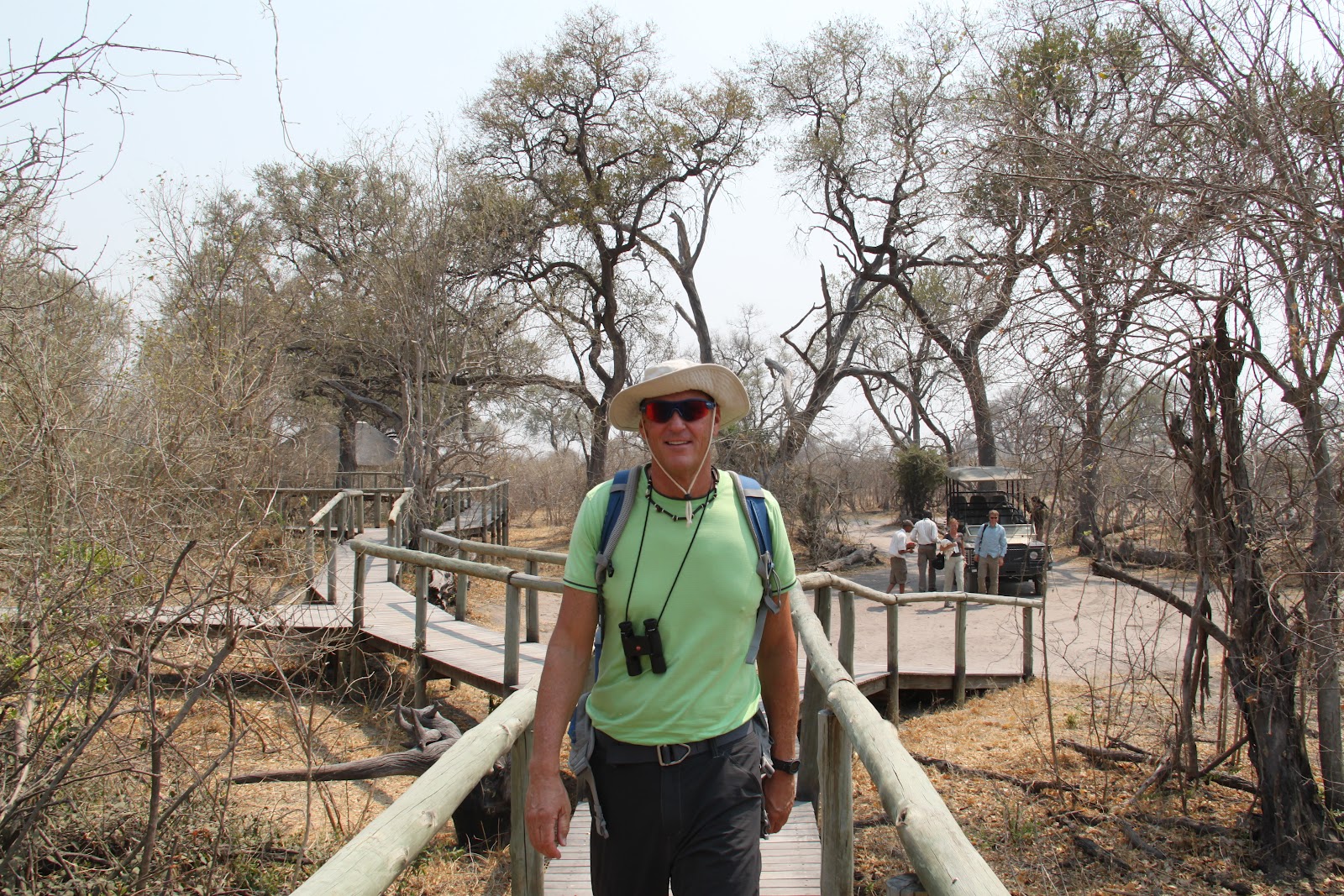
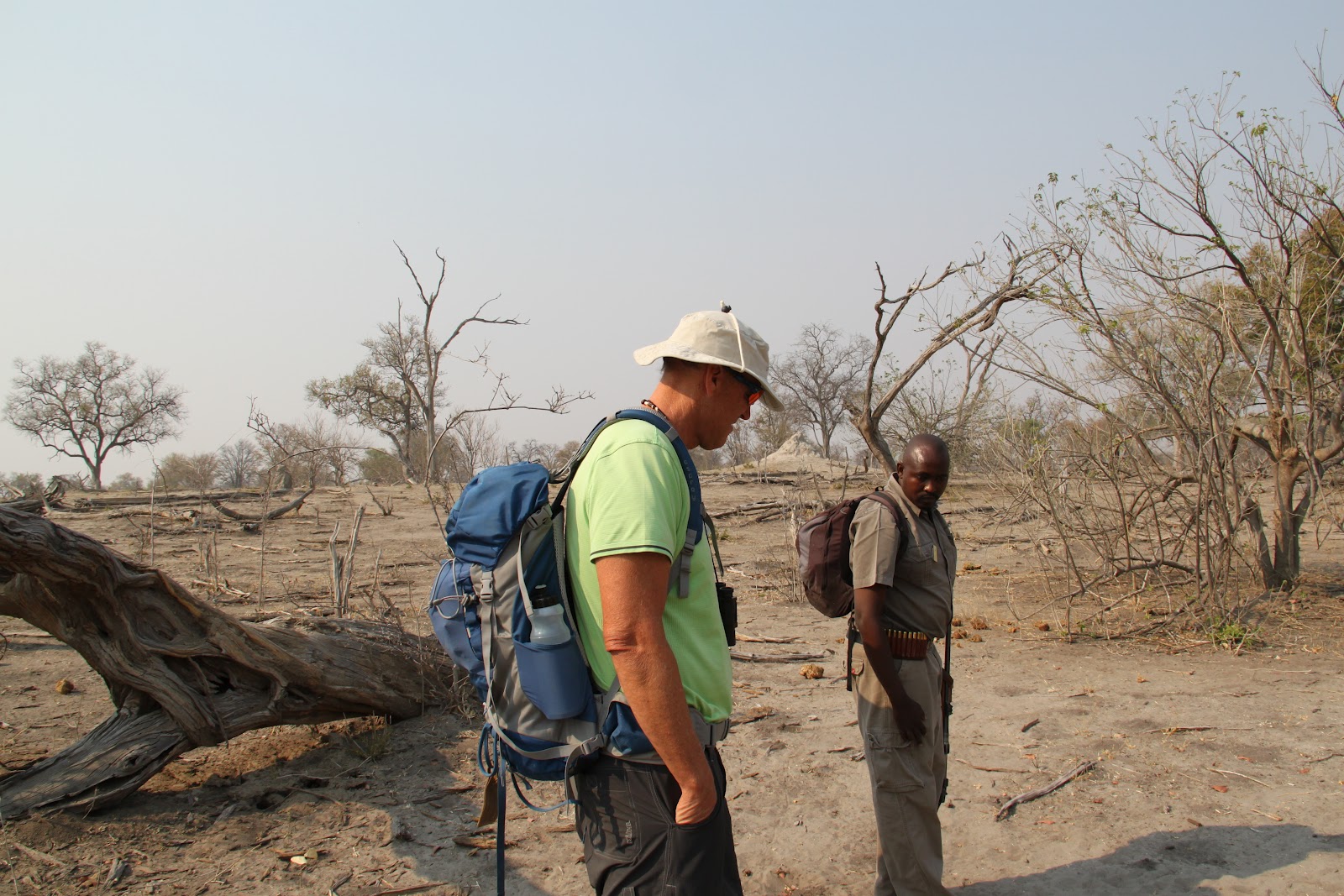
Scott on our Walking Safari

Out walking, we learned some animal behaviors, identified tracks, and enjoyed walking.  You cannot do much exercise in Africa because you have to stay in your vehicle or in your camp.

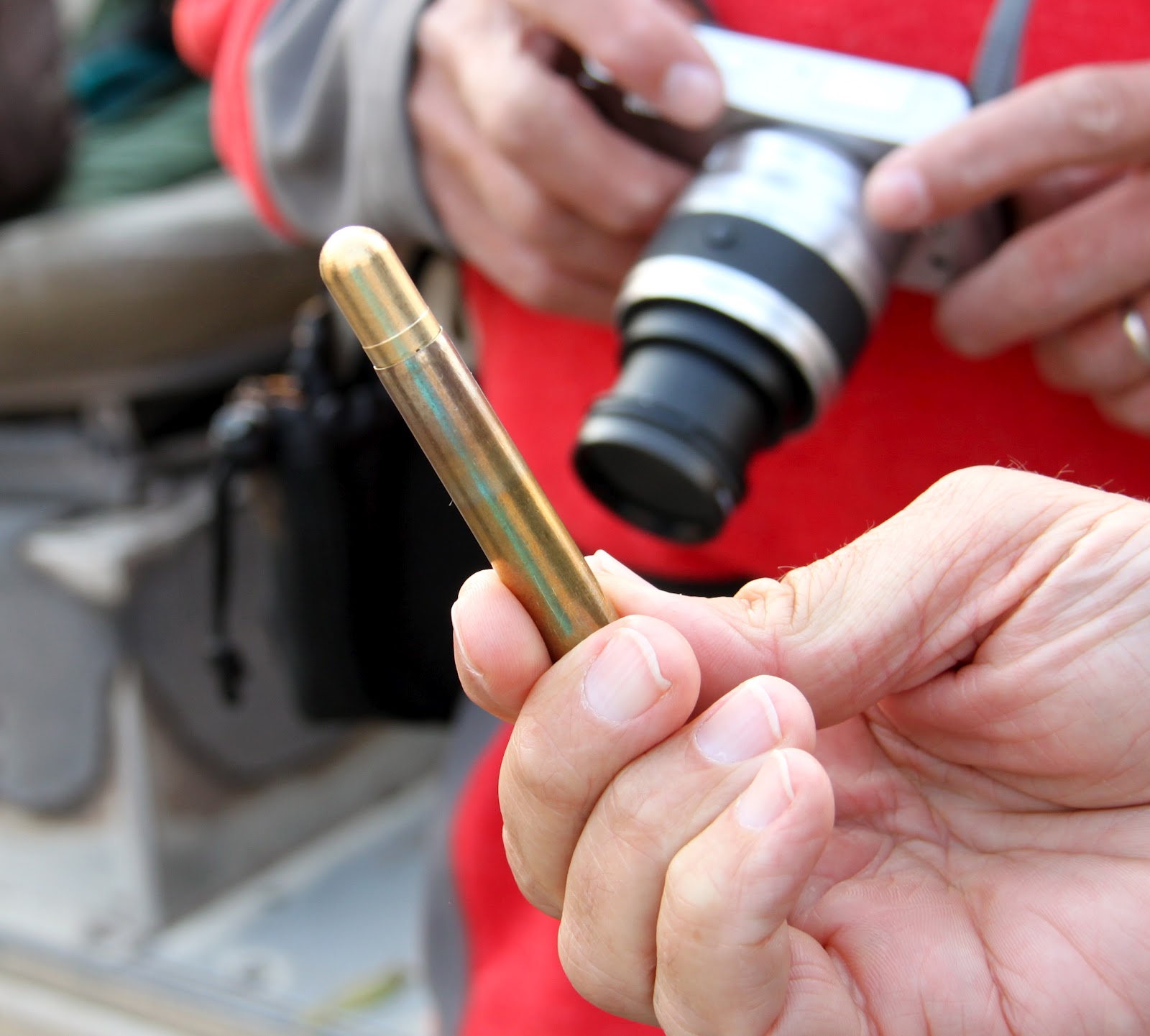
Bullet for 458

Scott checking out some tracks

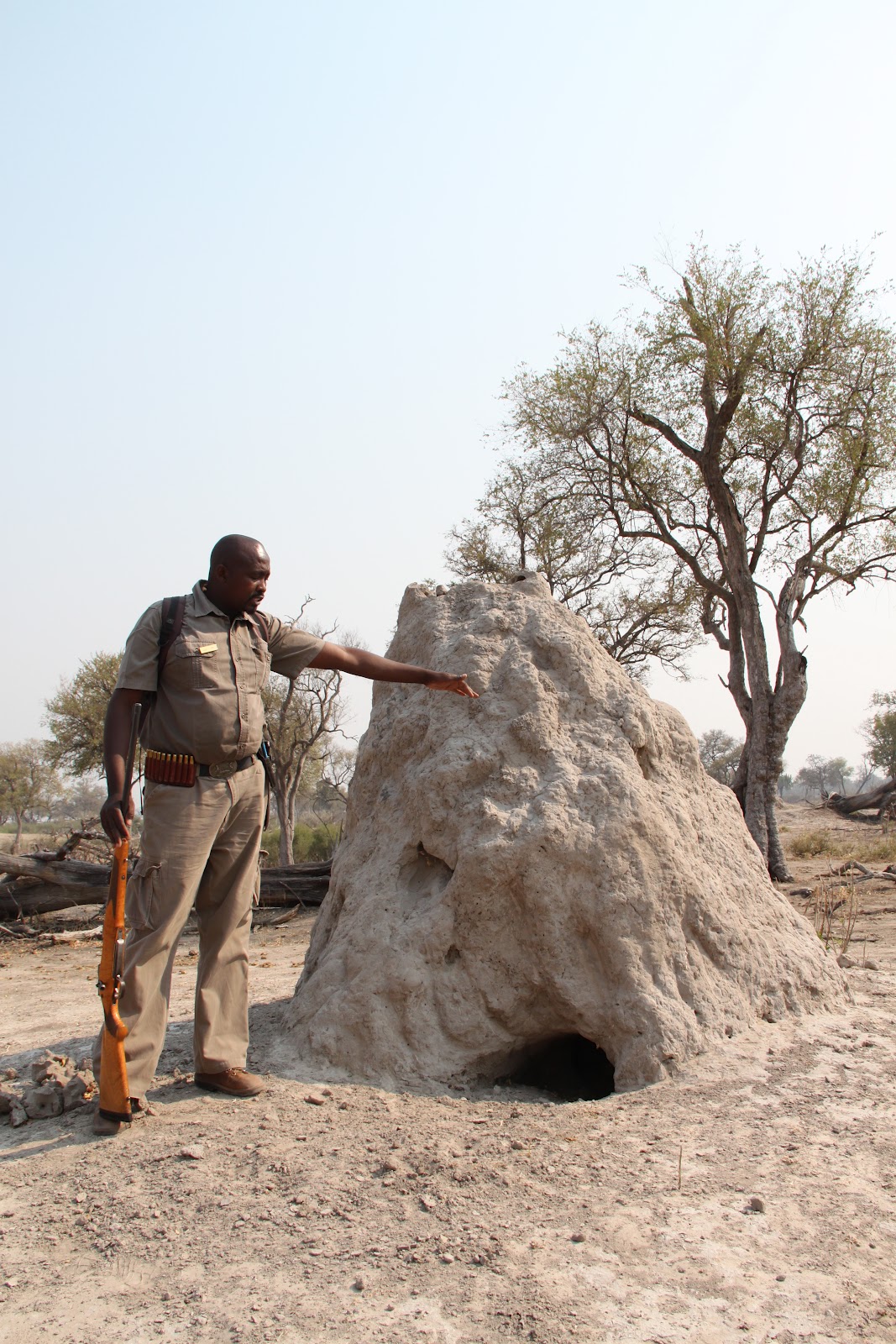
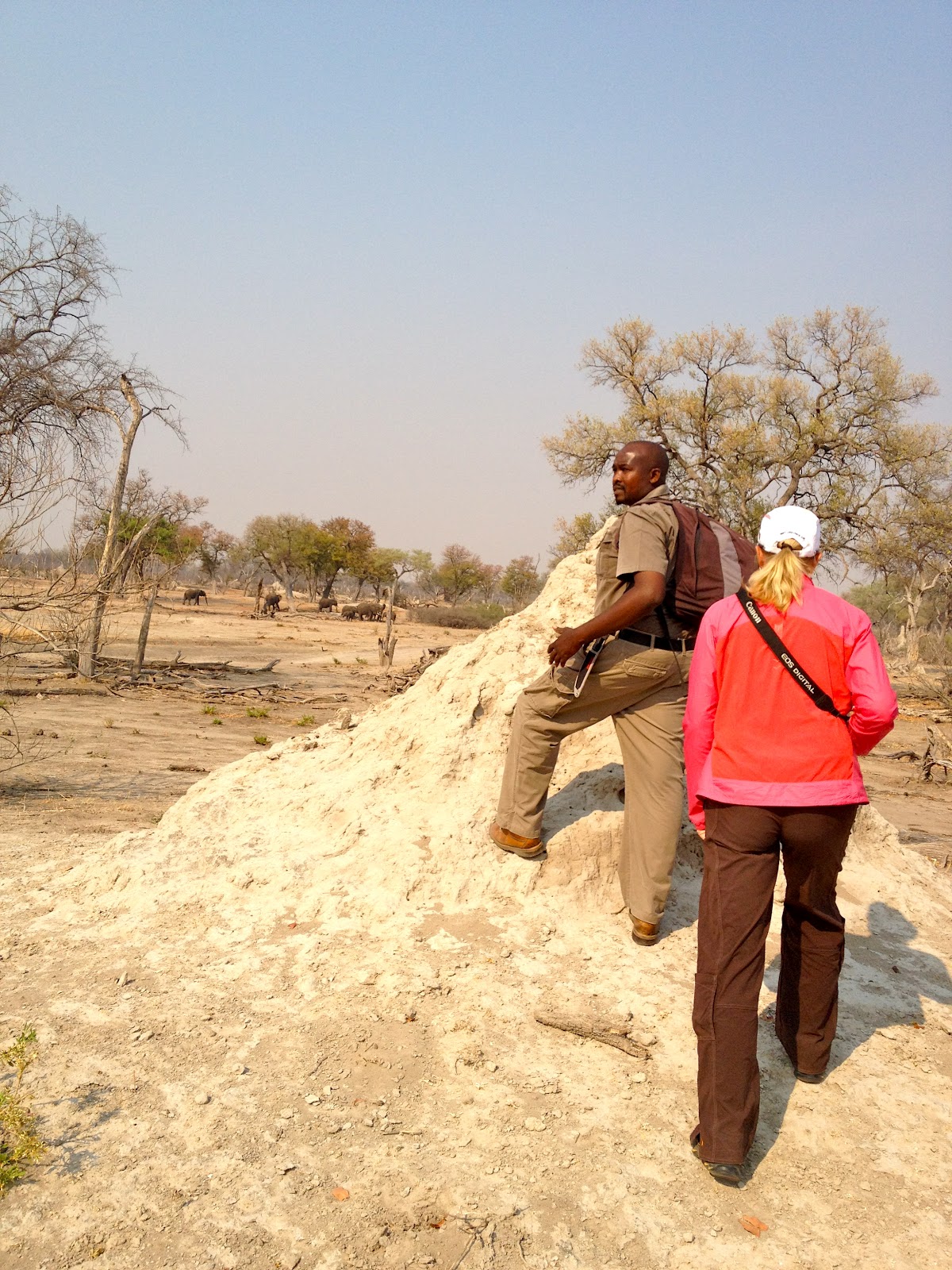
Termite mound.  The large cats like to sit on top of these to get a better view of what may be their prey.  The hole is made by an Aardvark and when he abandons it, warthogs and other animals take it over as their home.

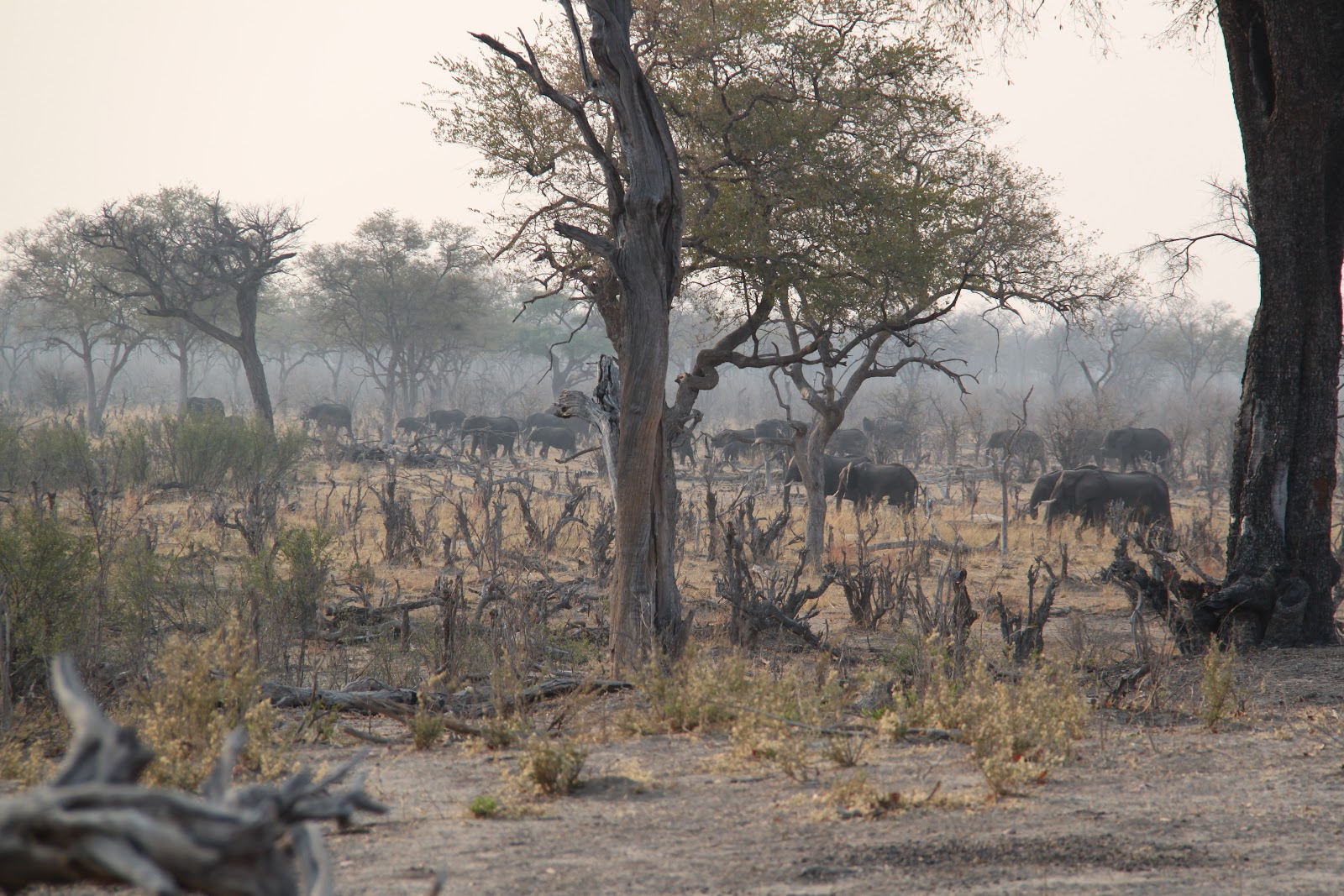
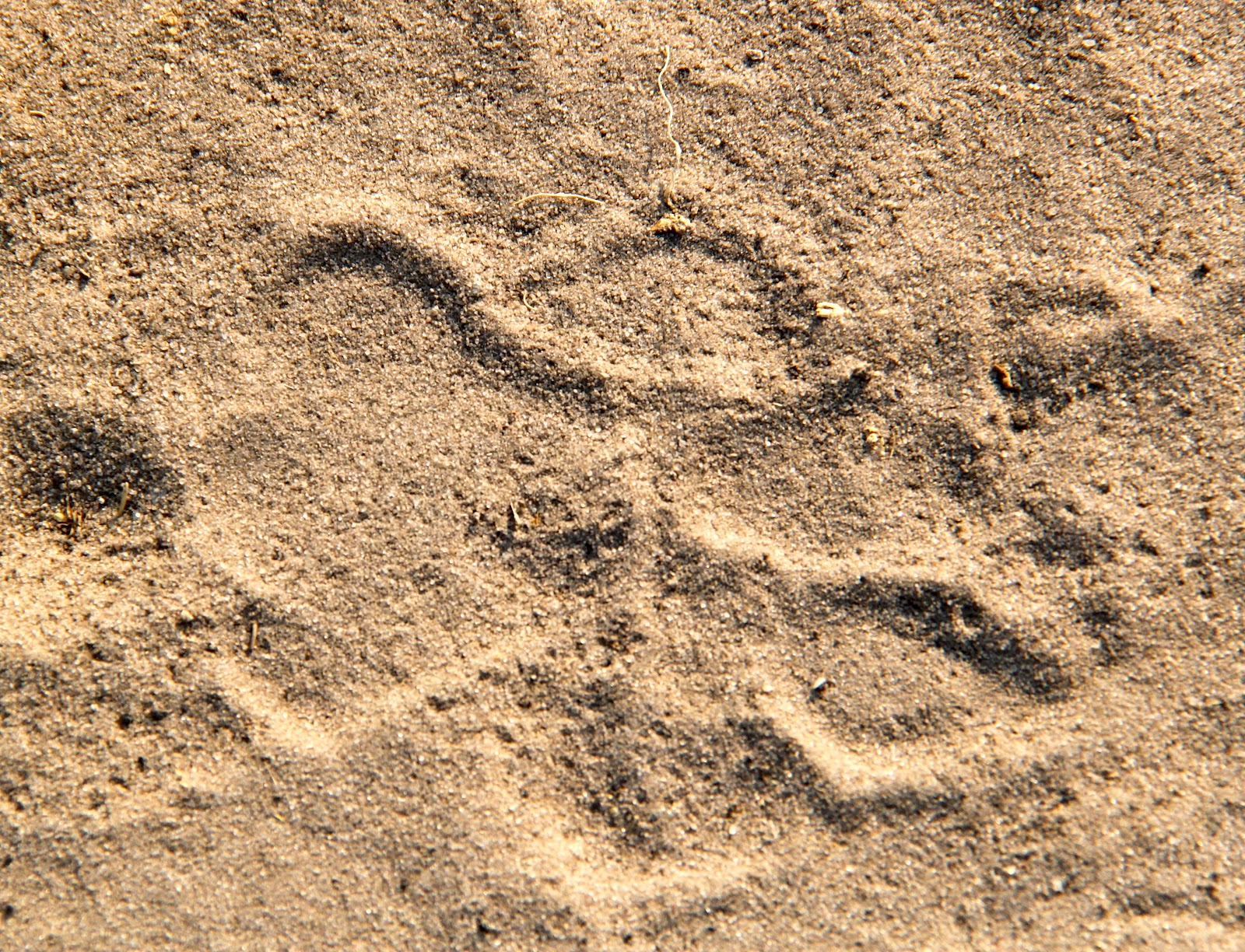
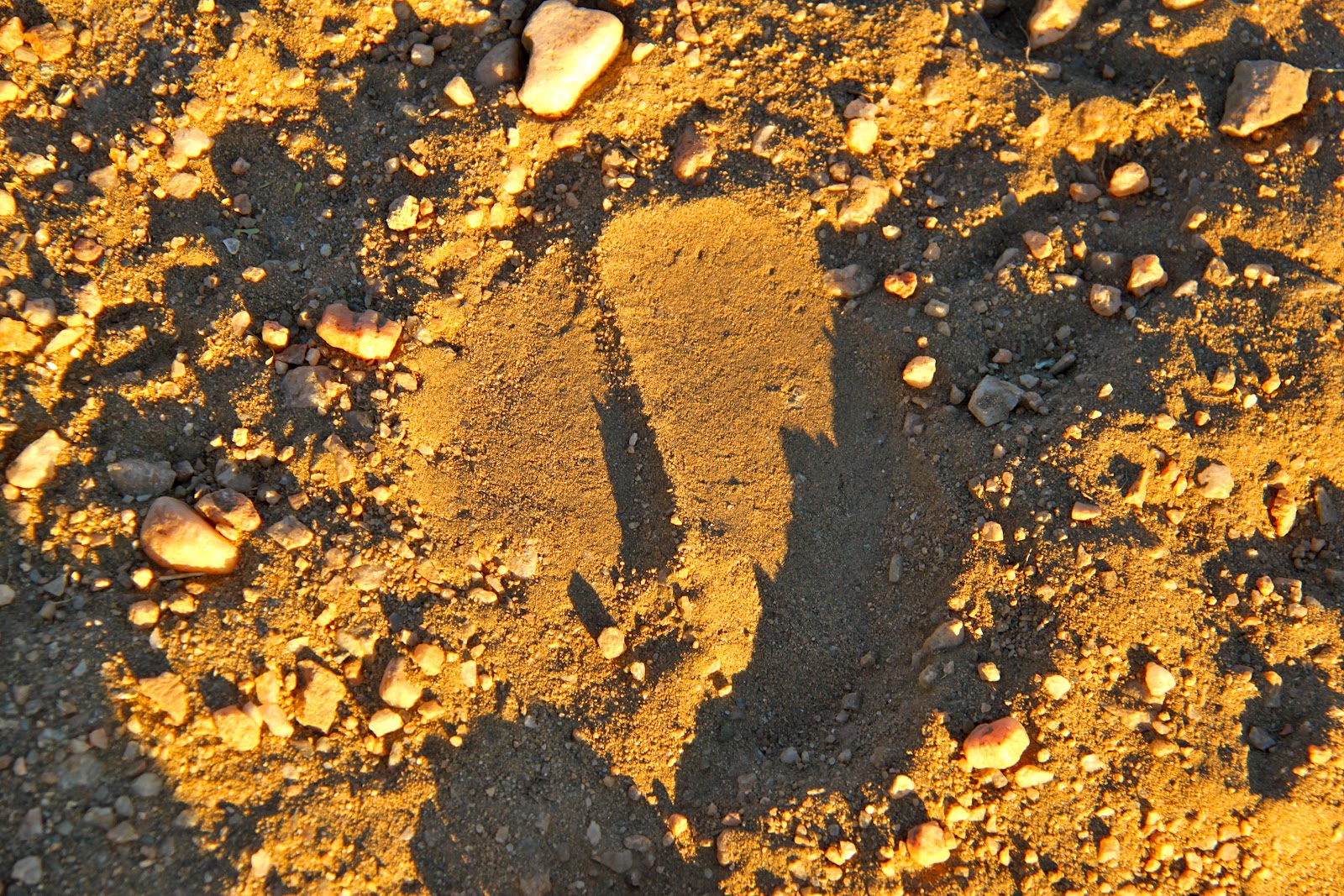
A parade of elephants were in our view, and wart hogs as well as various birds. O. D. pointed out the many prints of different animals that almost forms a cast in the soft sand.

Watching the elephant herd, making sure we are down wind so they won’t smell us

Large herd you probably don’t want to mix with

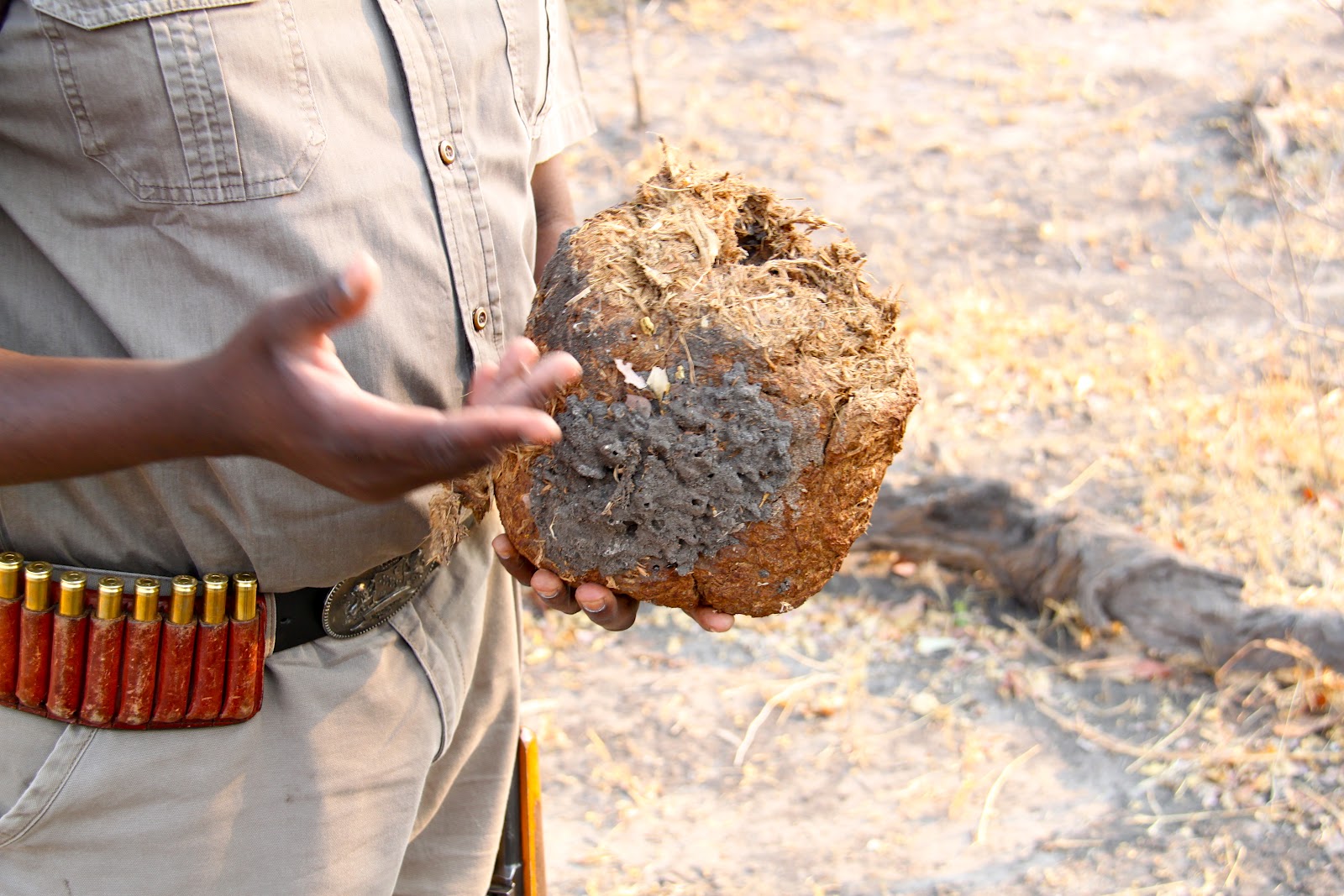
Elephant dung.  A lot can be learned from examining what he has eaten.

Leopard print

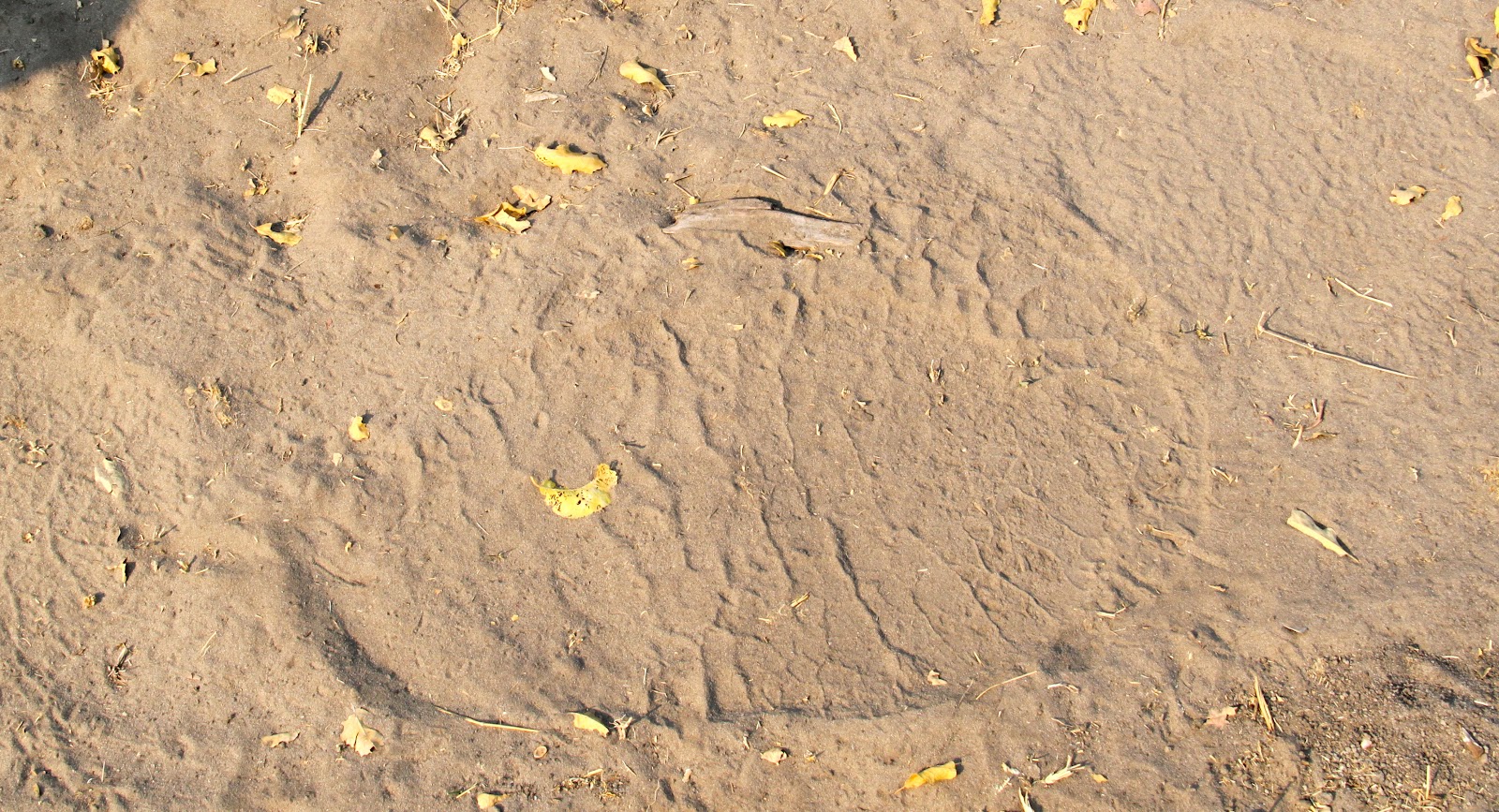
Elephant footprint

……

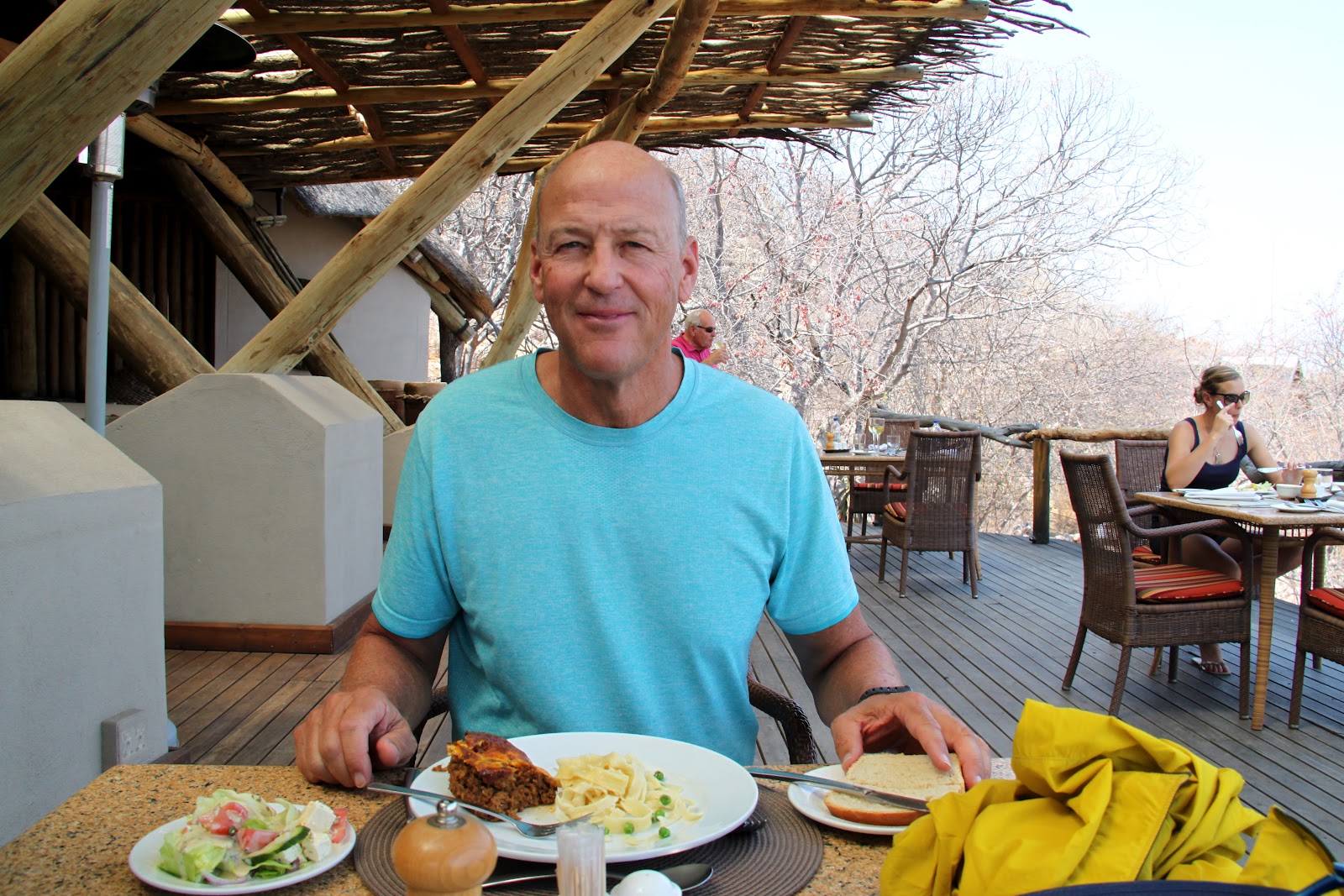
Lunch on the veranda while watching elephants walk next to your hut and into the river is pleasing….

From our own deck

What to watch while having lunch

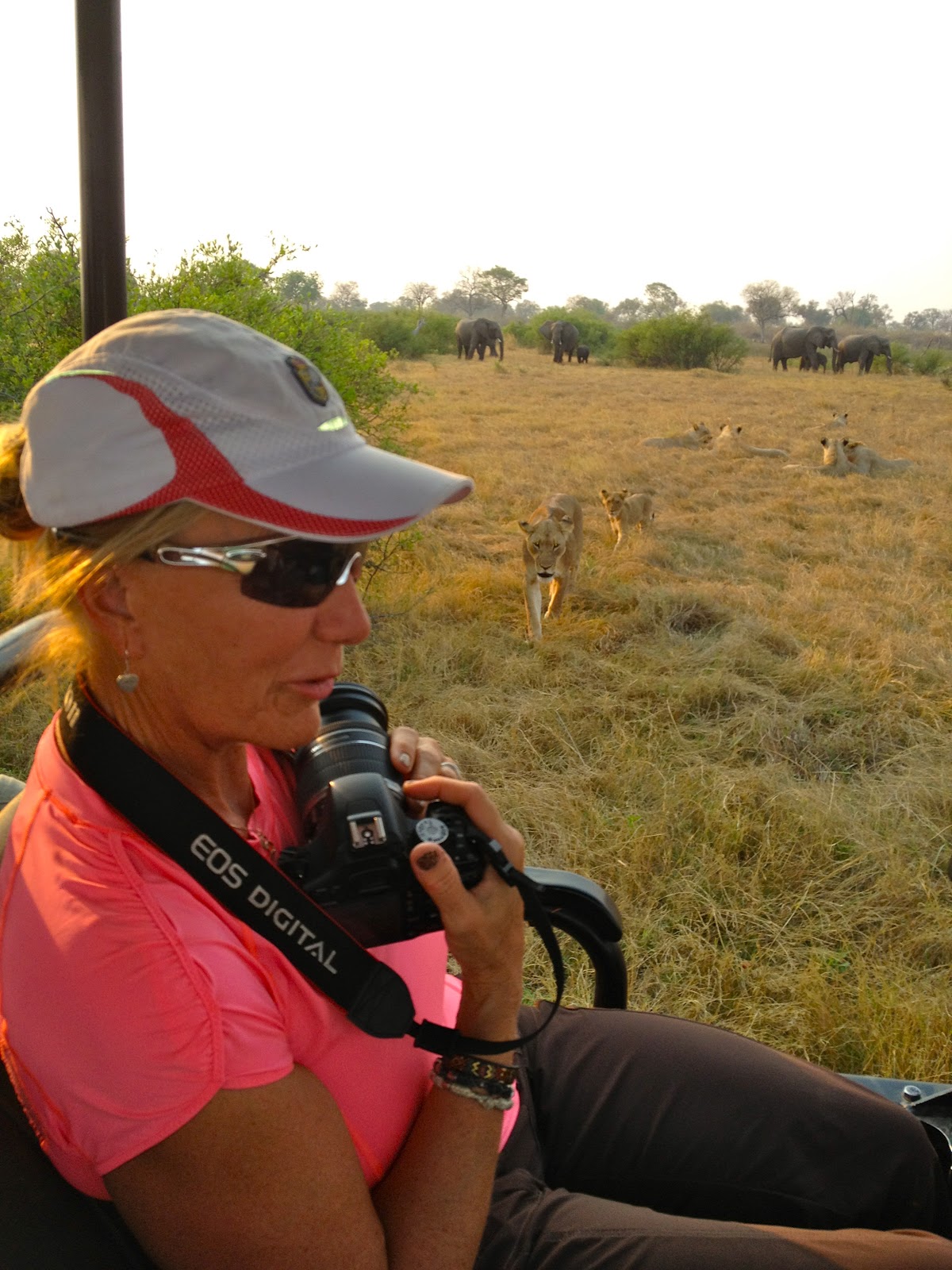
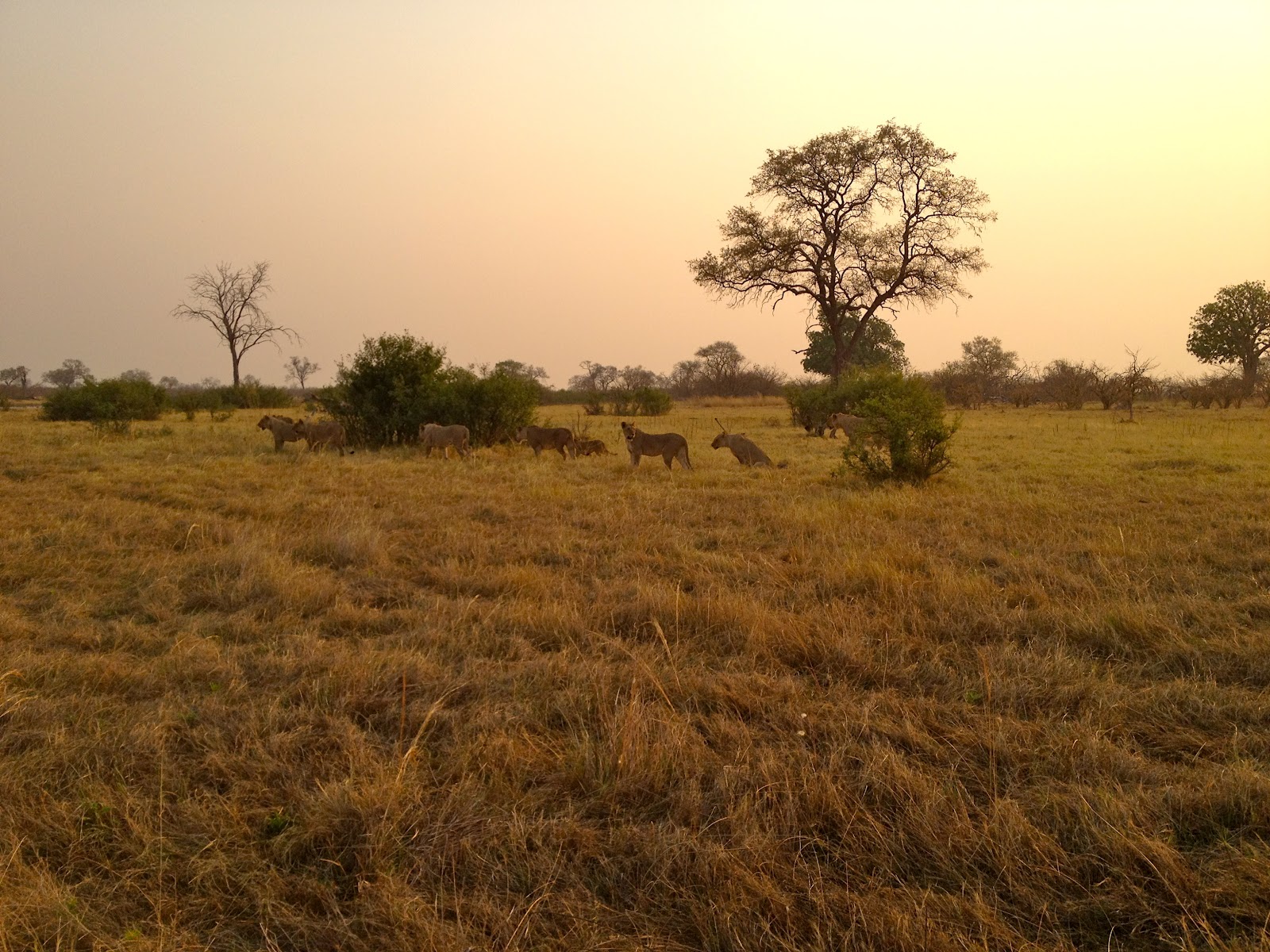
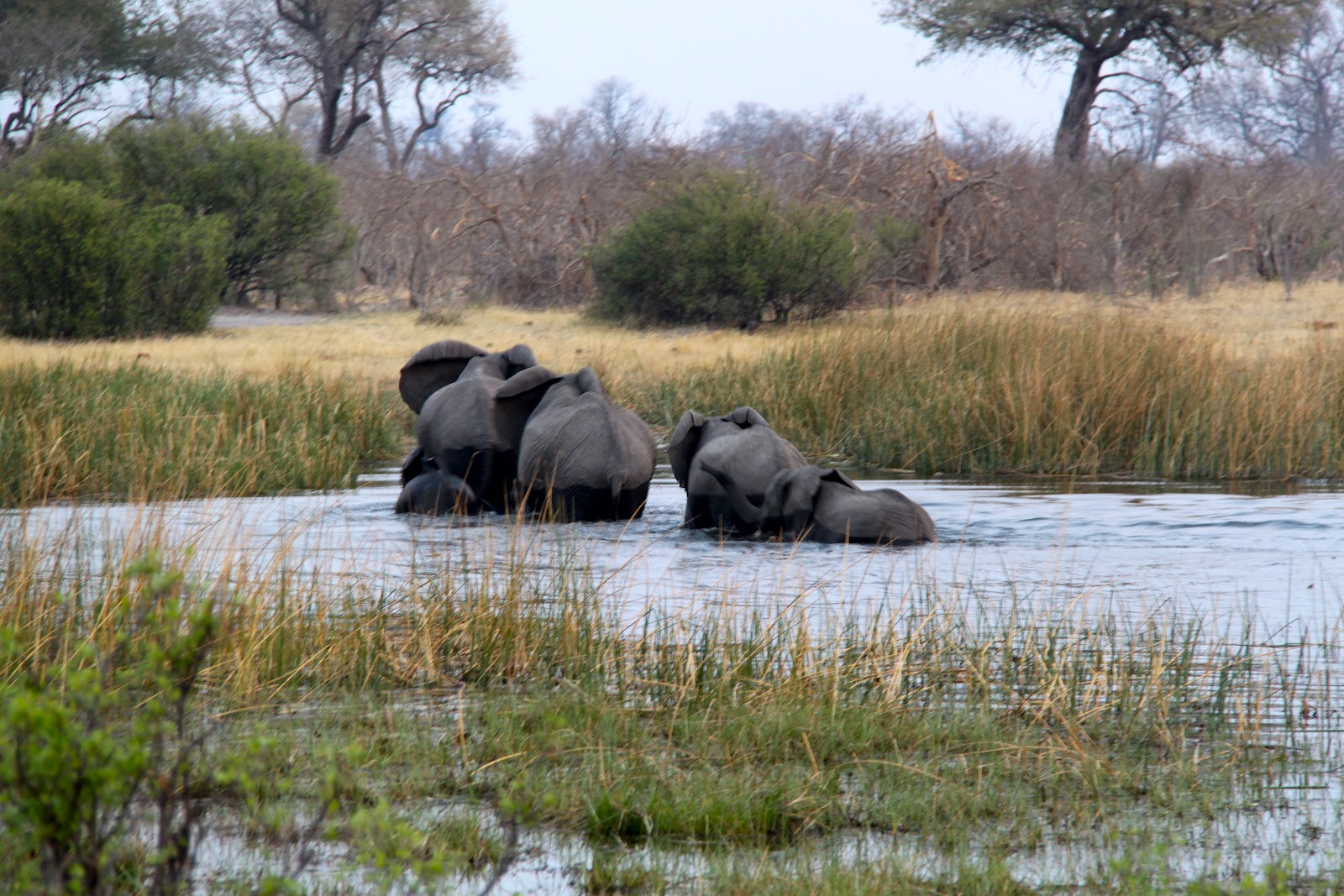
Large herds of elephants are abundant in this area. While watching the behavior of a herd of elephants, nine lions with one young cub appeared in the tall grass and tried to get a little too close to the baby elephants. Mama elephants that were already beginning to cross the river came barreling back into the herd, surrounding the small elephants, and had a stand off with the lions. Ears flapping, trumpeting their warnings, and charging, caused the lions to retreat.  A safe distance away the lions sat back down and waited for an opportunity to attack. The elephants delayed their crossing and seemed to be nervous about the lions.  Eventually they moved into the water and swam with the babies closely tucked inside the herd.  (yes, elephants swim well), and they all made it safely to the other bank.
The lions waited a little while and then at dusk, the lions swam across the river. (yes, lions swim also).  We don’t know what happened on the other side of the river, but we hope the babies are safe.

The herd always protects the young babies

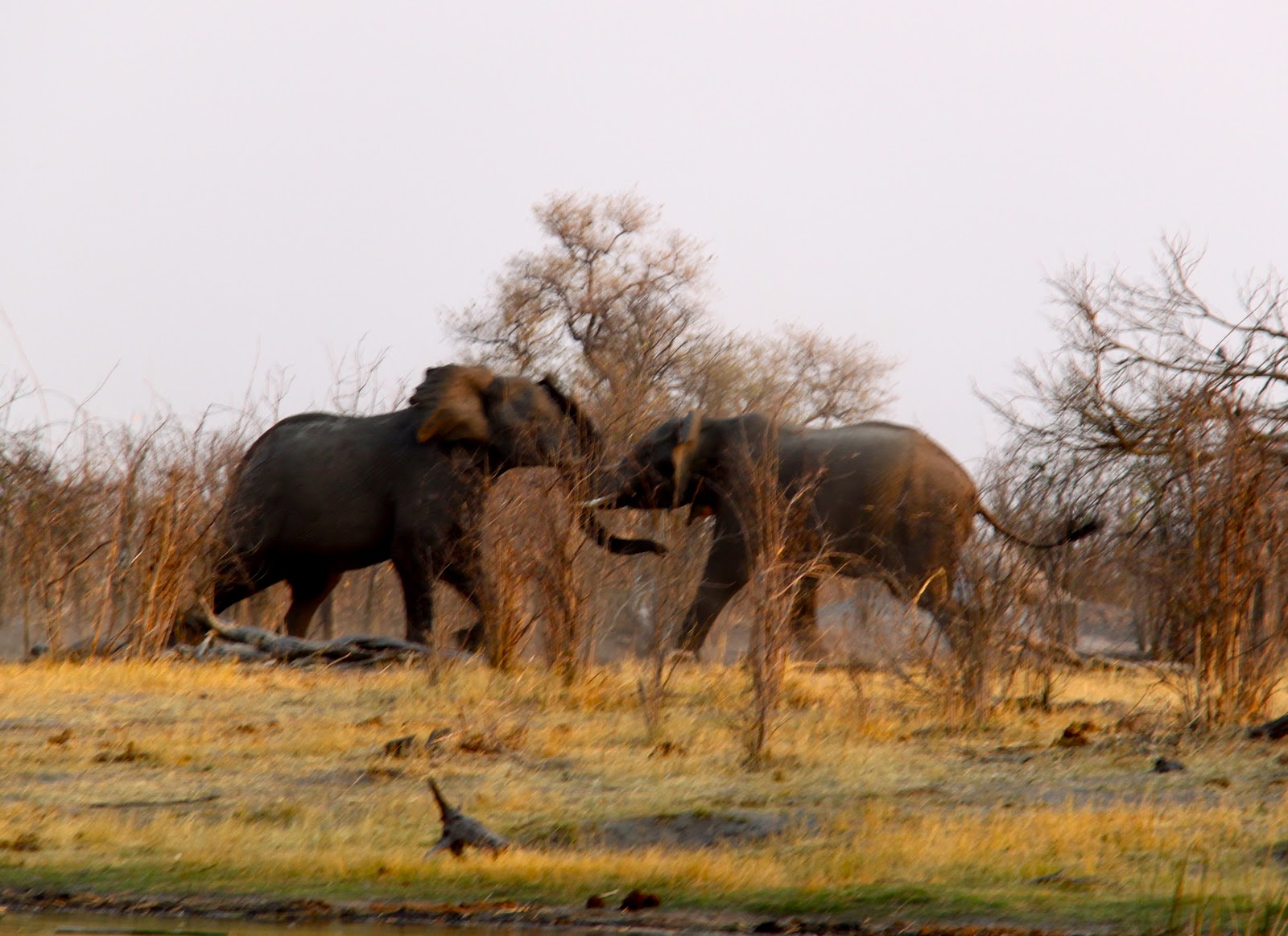
Having a little tussle

This elephant made a mock charge at our land rover.  He didn’t want us too close.

Barb is getting a little nervous as this lion is looking at her and walking directly toward her.

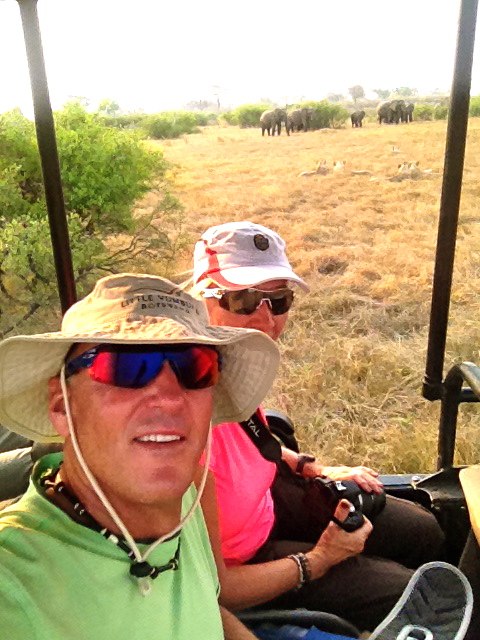
In the rover- the lions are lying in the grass with the elephants not too far away

These lions are thinking about trying to get a baby elephant while the mom’s aren’t looking.

Watching from the land rover
Swimming to the other side of the river

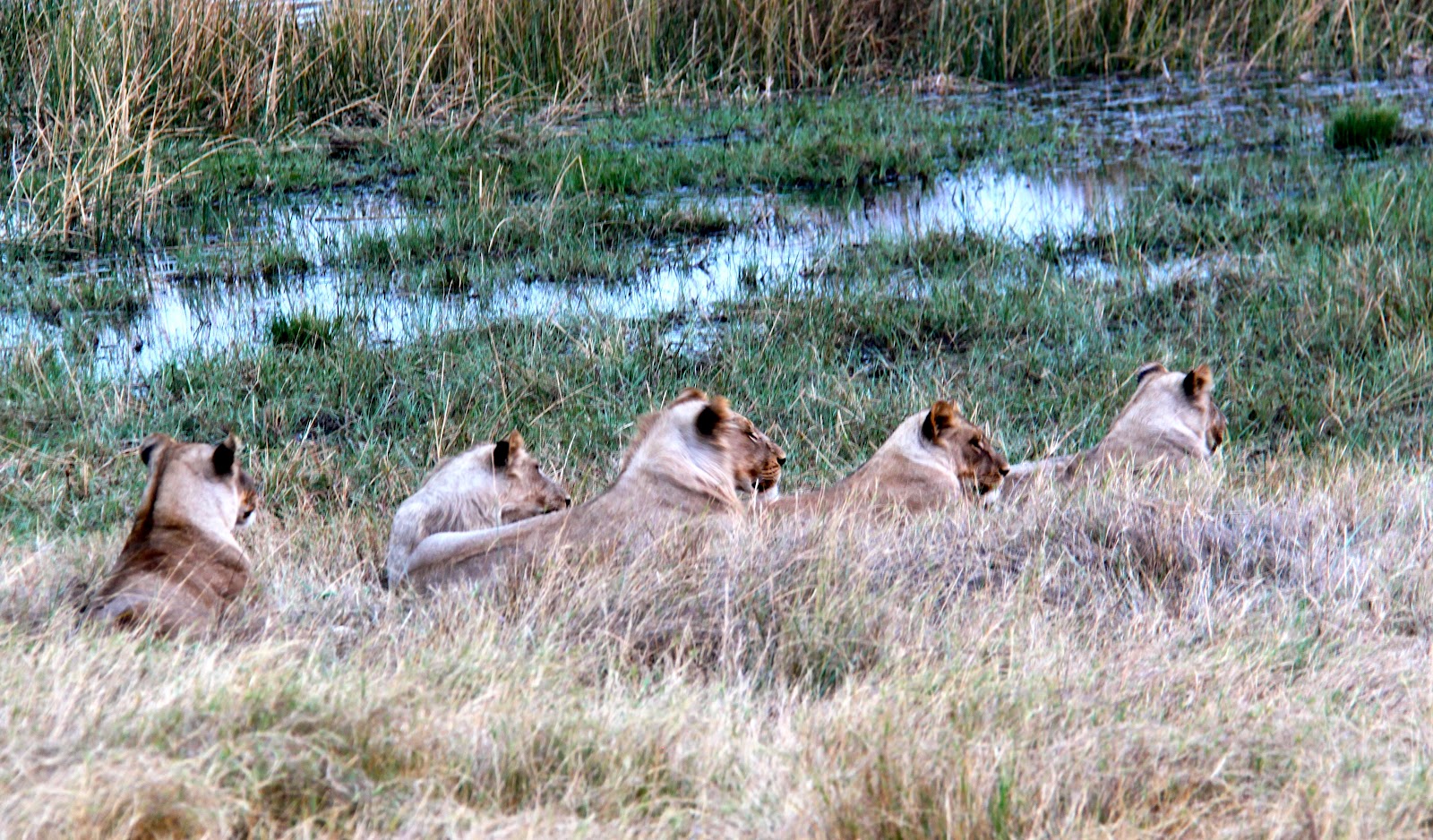
The lions are keeping a close watch
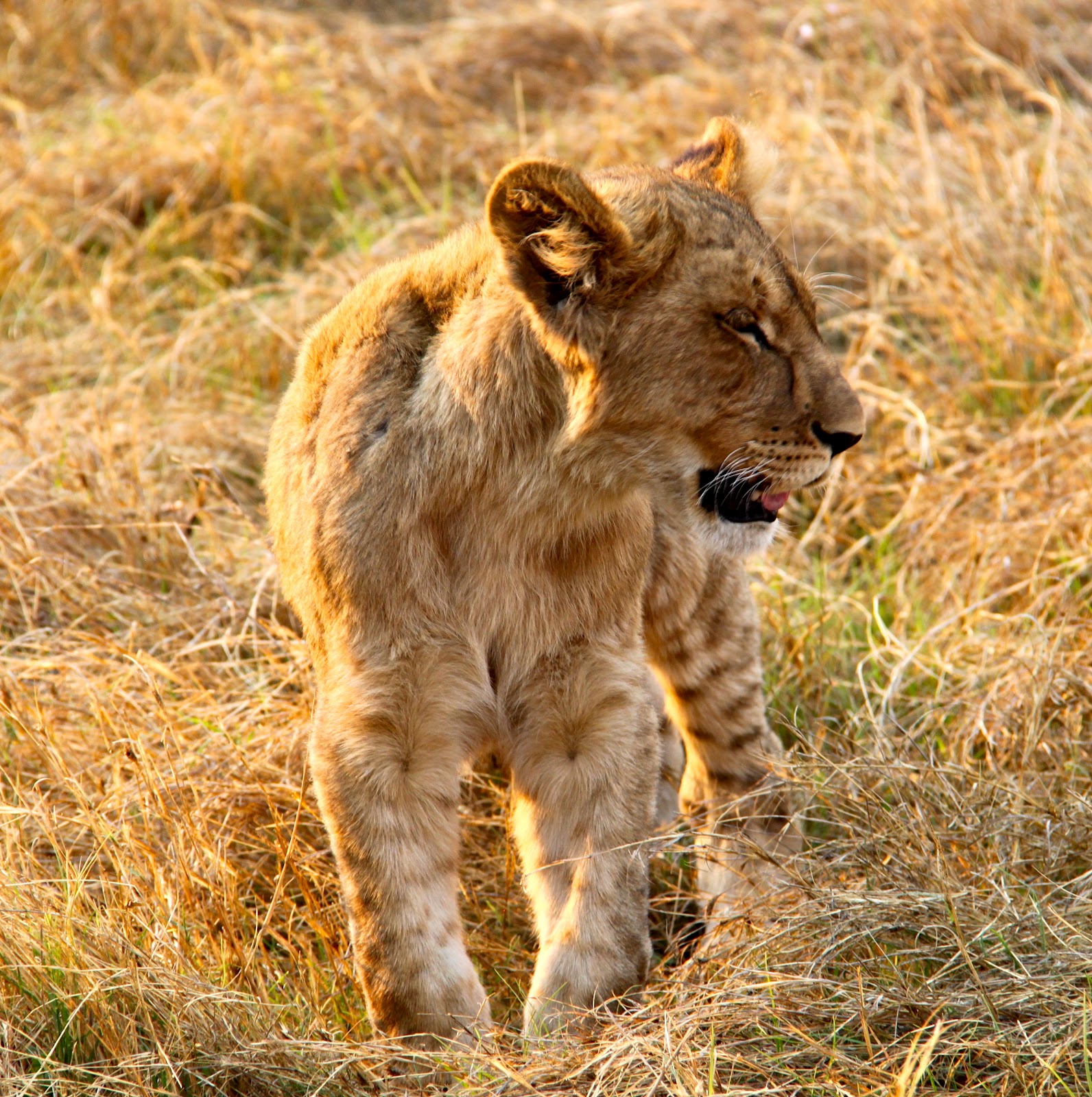
A baby lion cub

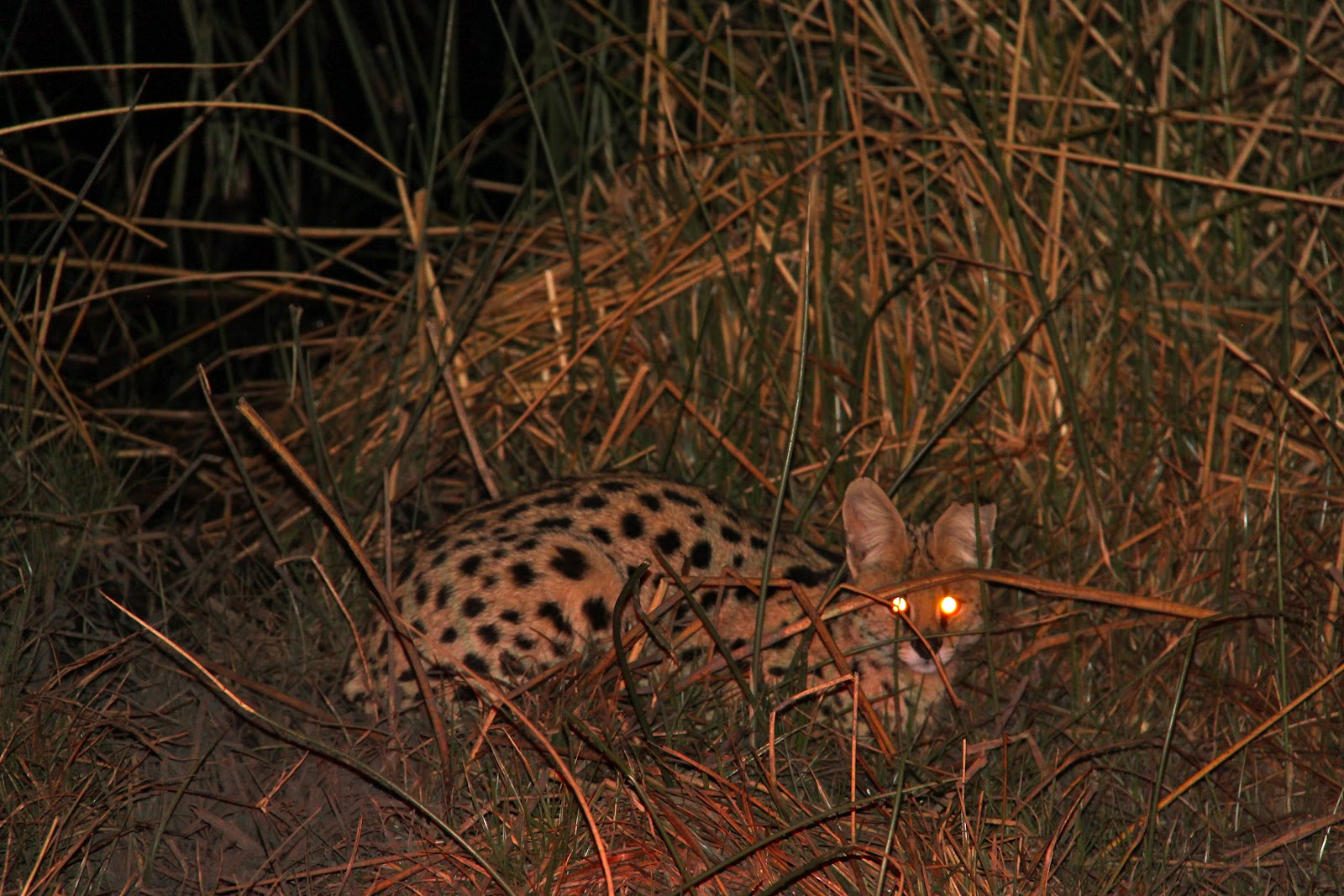
Deciding to go on a night drive found us looking at bush babies, a spotted Genet, a Civet, and a couple of hippo youngsters sparring in the water and later coming out and walking and grazing.  It was too dark to get good photos, but we enjoyed watching.

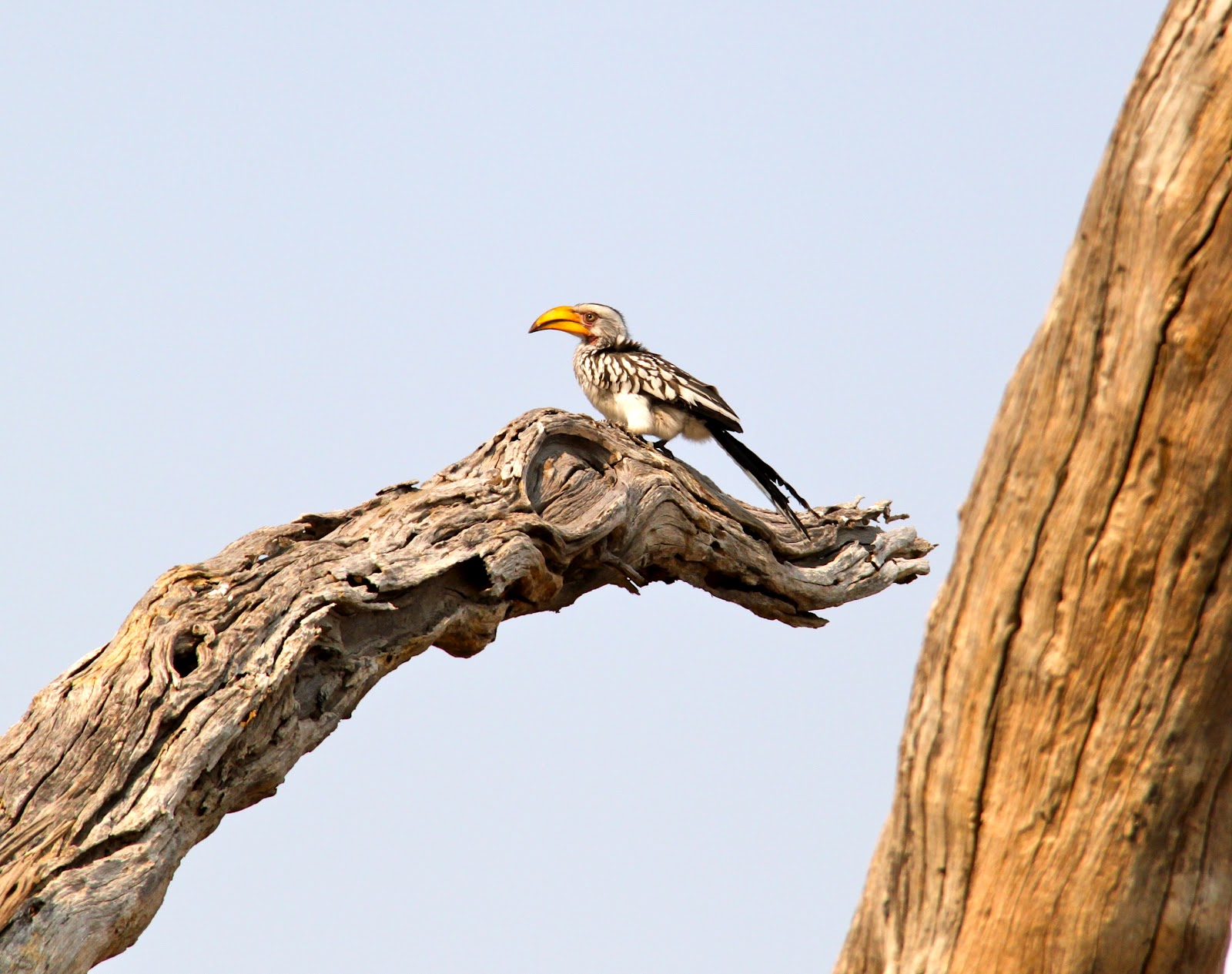
Hornbill

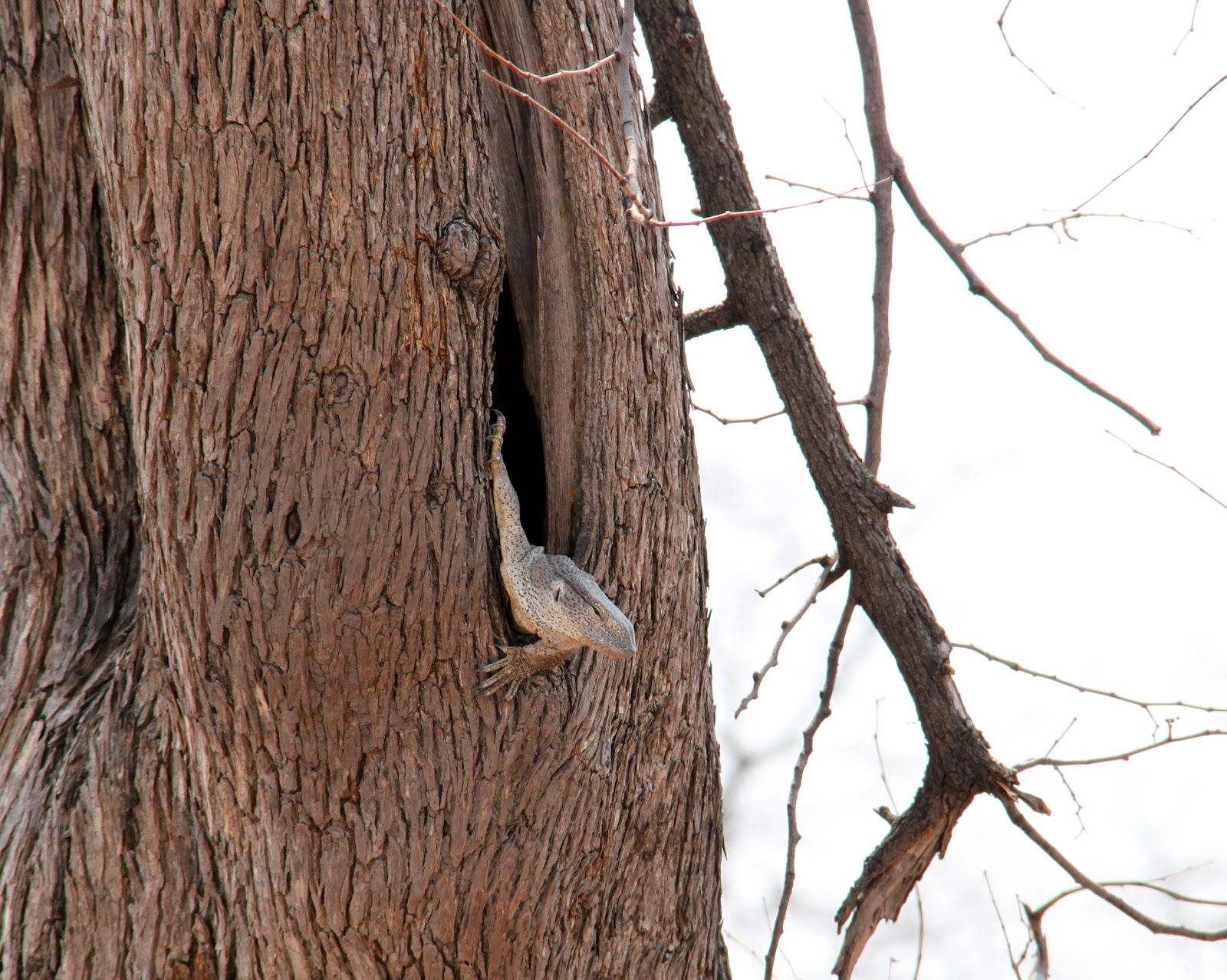
Tree lizard

Spotted Genet seen with infrared light

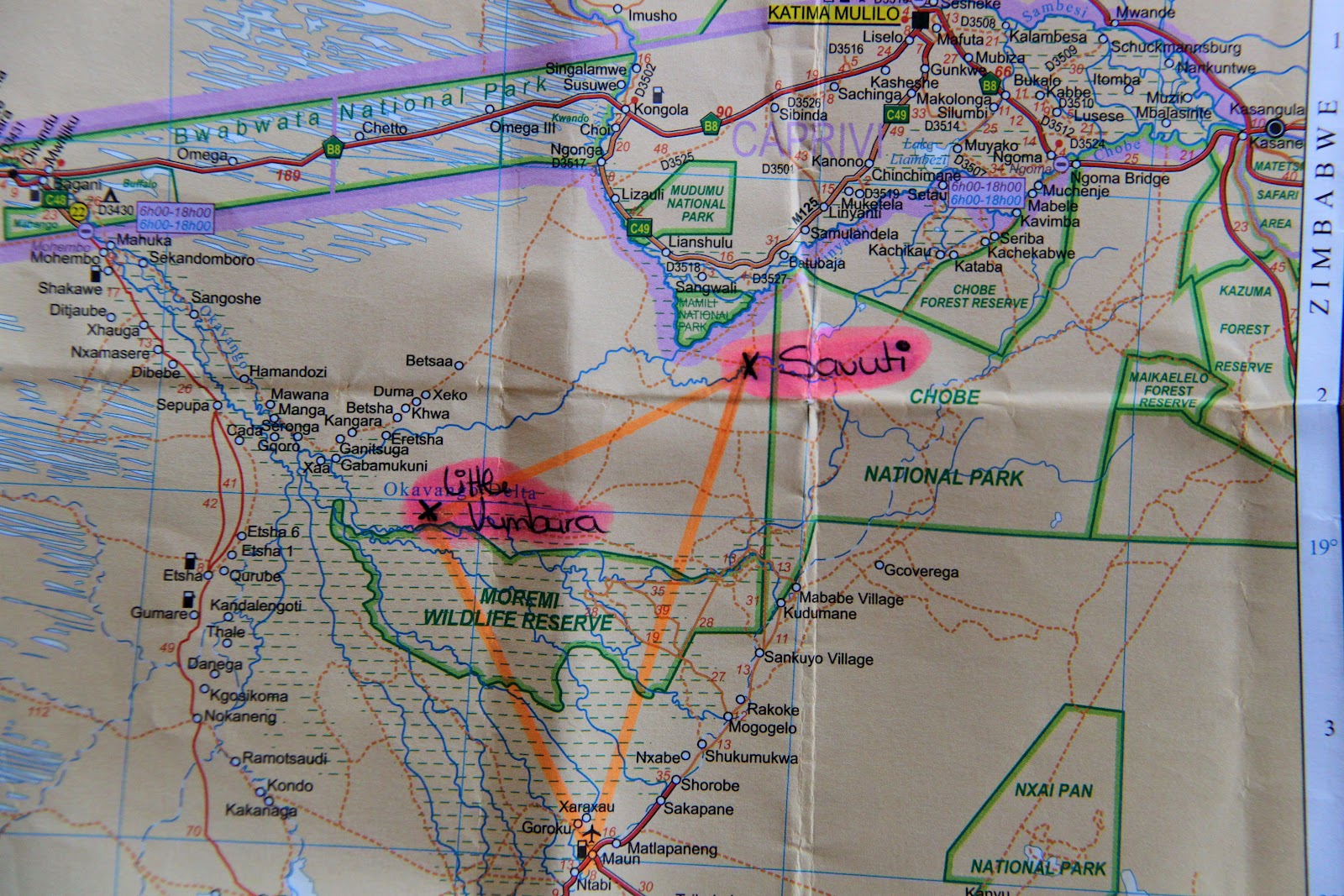
This is a map of the Okavango Delta and the areas that we stayed.

Little Vumbura and Savuti Camps

Africa is an amazing place.  We have had a great time.  On our flight to Nairobi (which was our stop-over on the way to India) we snapped a photo of Kilimanjaro……We climbed it with Brittany, Jason, and Caitlin, and reminisced what a great time we had.
We are off the India!

Kilimanjaro seen from the plane

Little Vumbura Lodge, Botswana September 9-10, 2012

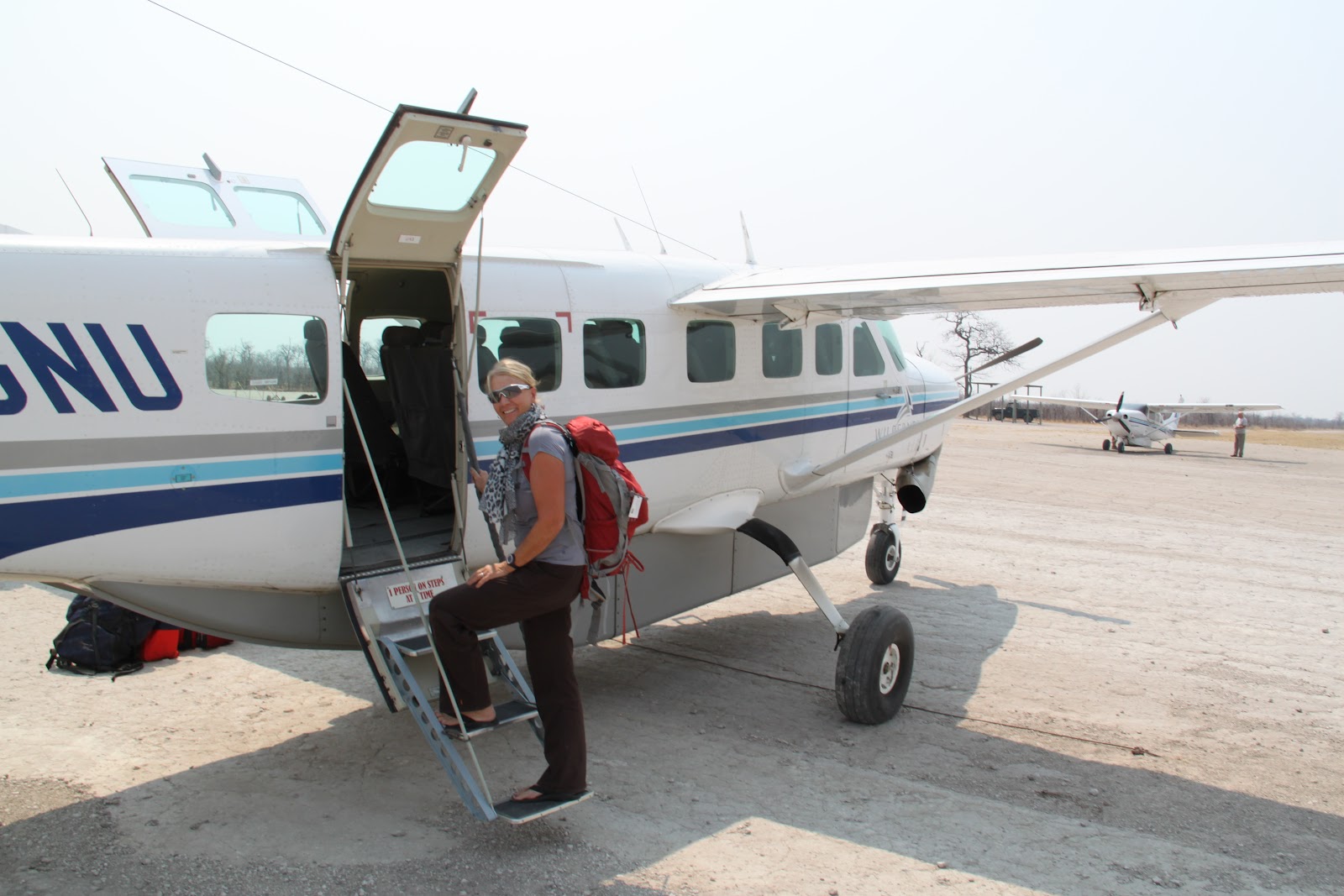
We flew from Windhoek, Namibia to Maun, Botswana where we were met and transferred to a single engine Cessna Caravan for our flight into the Okavango Delta to the Little Vumbura tented camp.  After landing we jumped into a safari Land Rover and driven to a small boat for transfer to the camp.  On the way we saw a crocodile.
Cessna Caravan 12 Seater
Short boat ride to camp
Crocodile
After lunch we went out on a safari.  Our guide is named Kay but is also known as “Mandala” which means “old wise one”. 
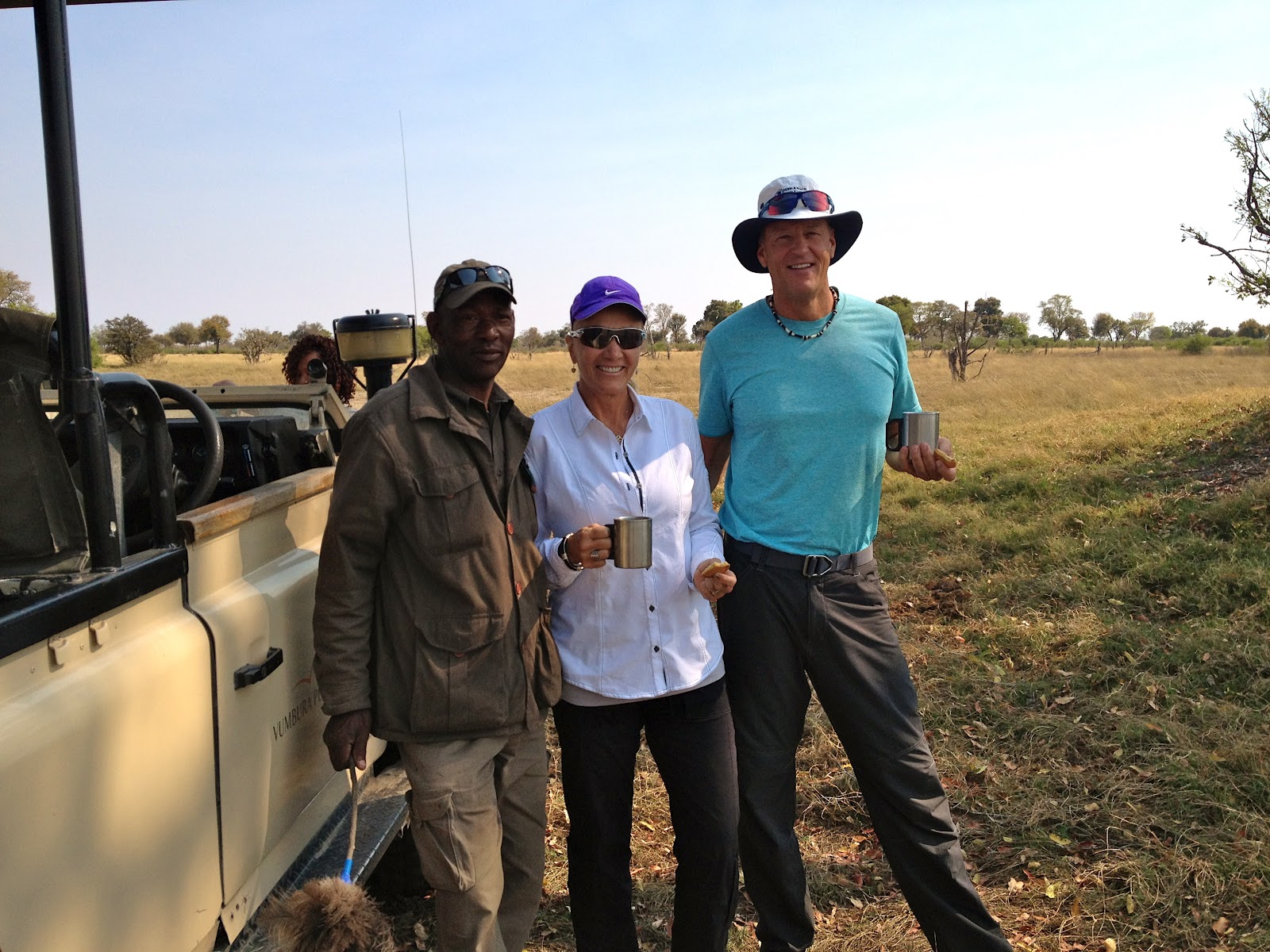
Madala Kay AND Madala Scott with Barb (means old wise one)
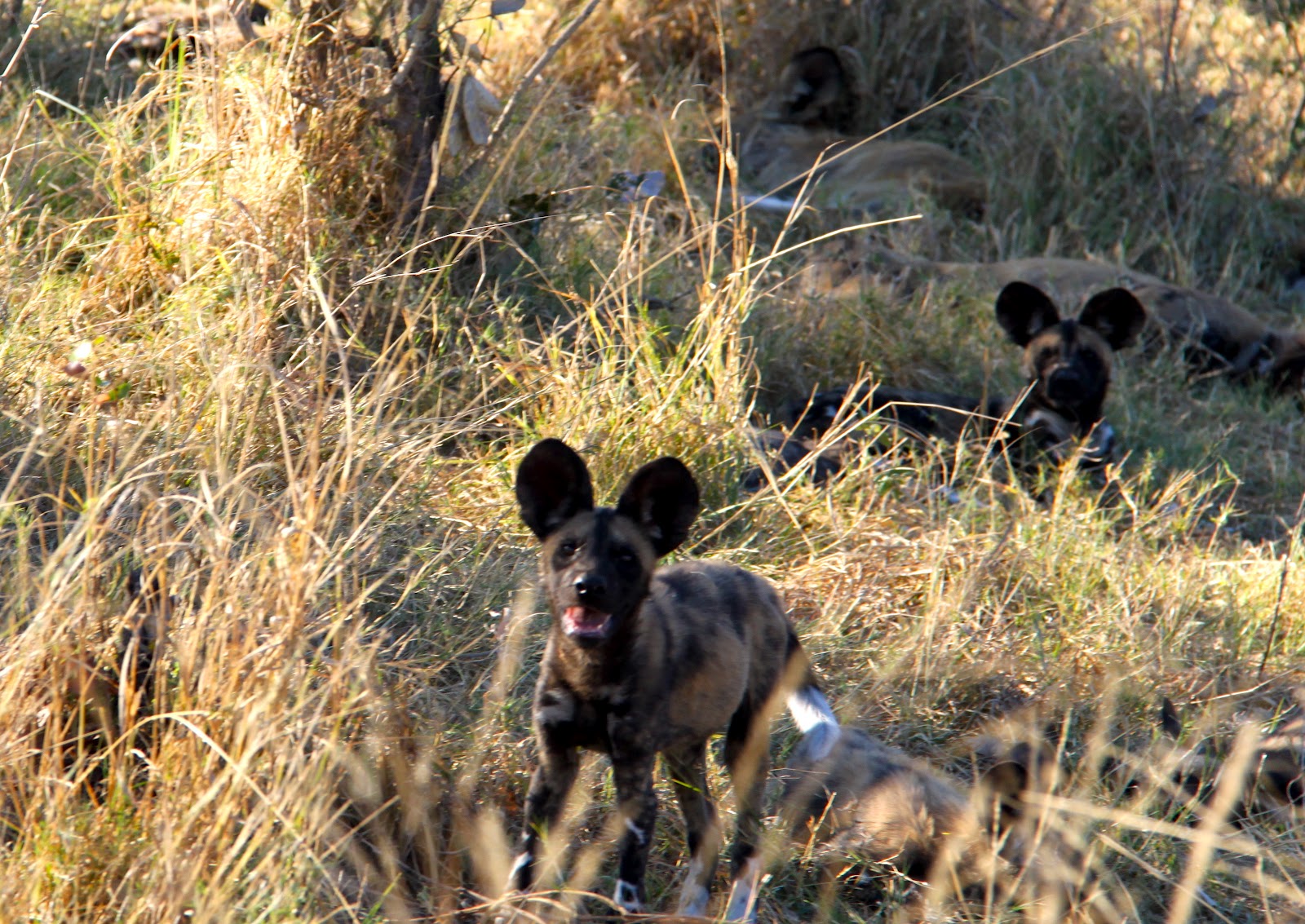
Mandala was aware of a pack of wild dogs in the area and he wanted to find them.  After searching for some time he spotted some pups jumping up in the grass.  As we inched forward toward the pups we could see that the pups were very active and that the adults were quietly resting nearby.  We watched the pups play for some time.  They were jumping on each other and biting each other and playing tug of war with sticks.  The adults were ignoring the pups and the Land Rover.

Wild Dog Puppy (not related to the domestic dog)
Playful puppies
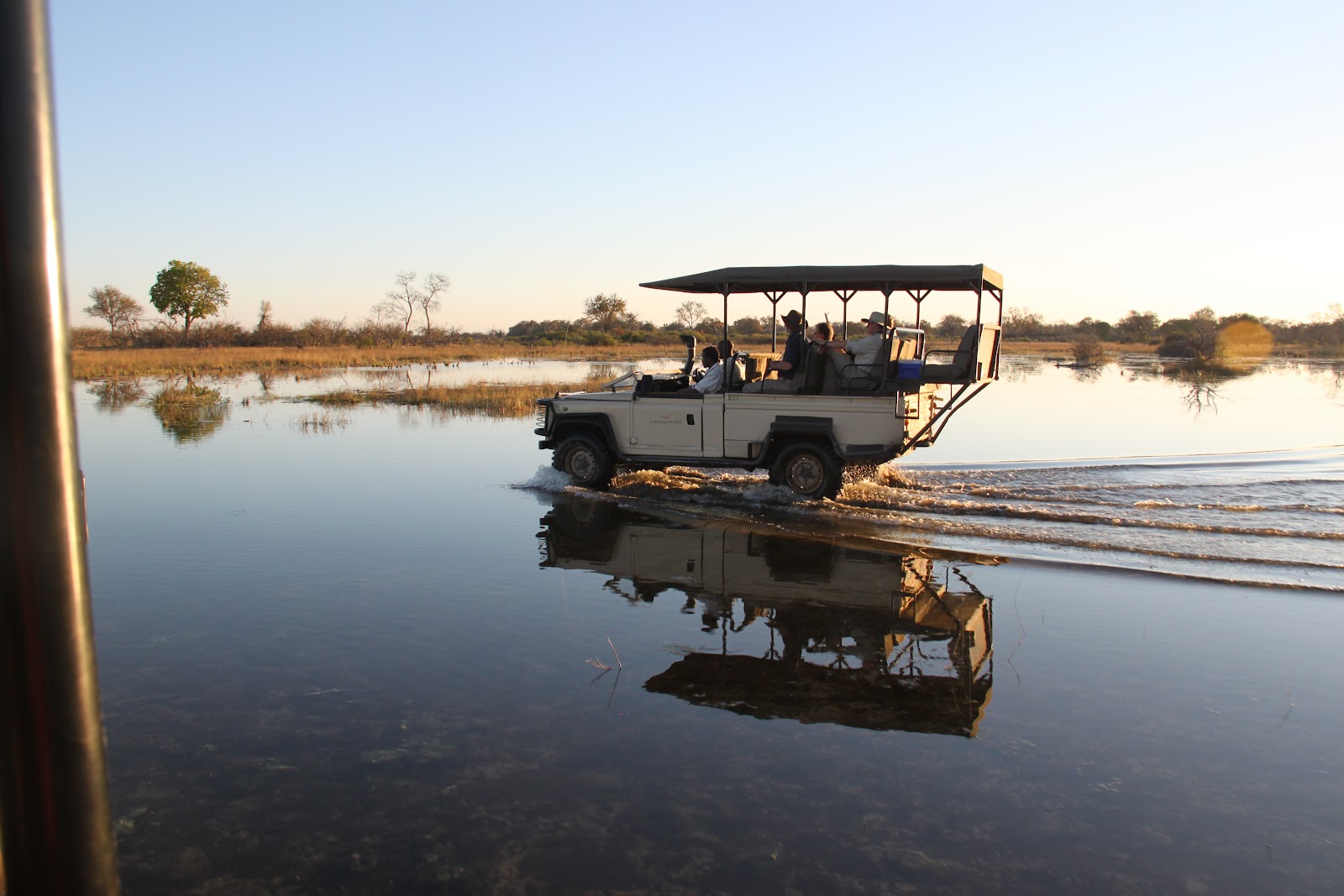
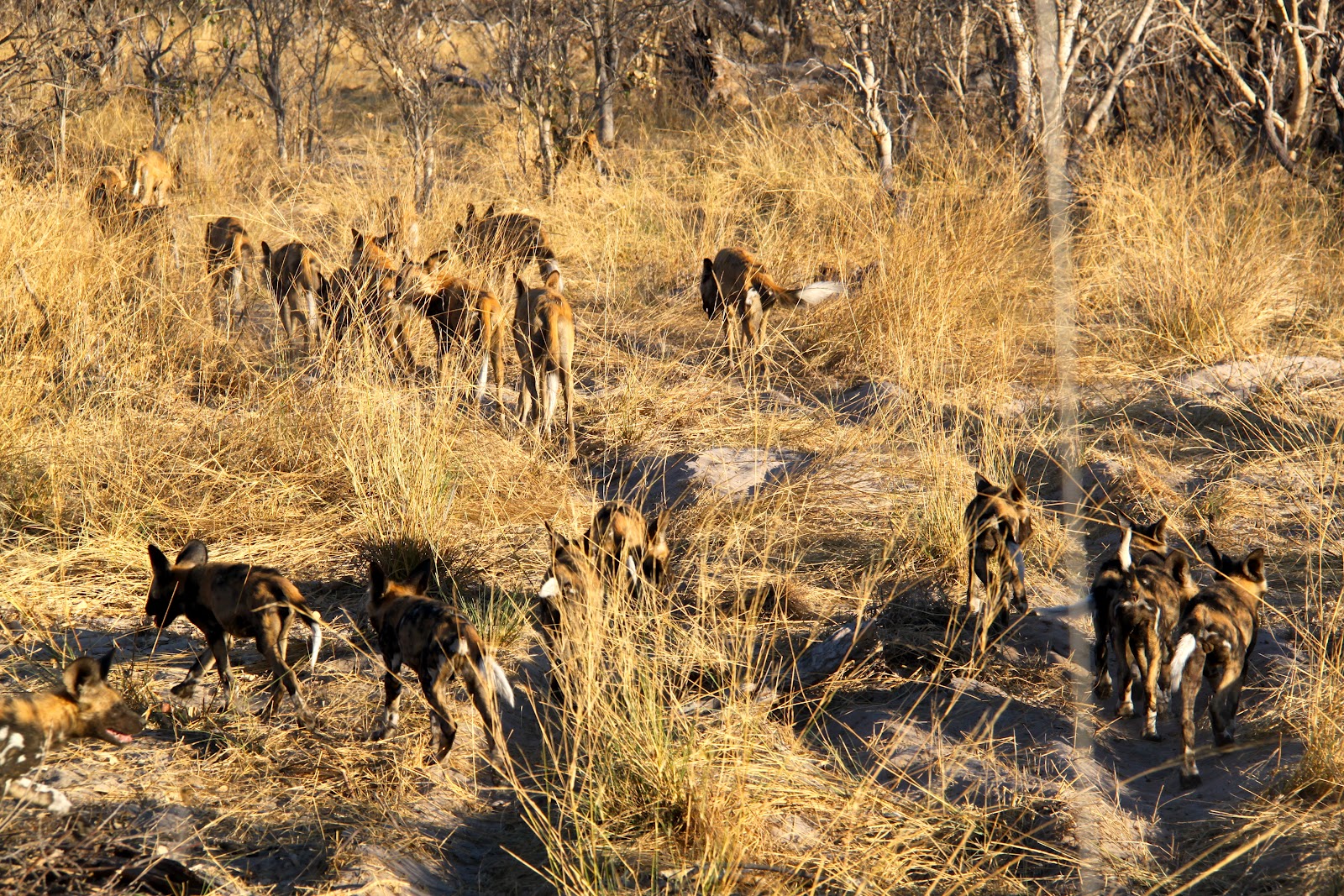
Suddenly the adults became active.  We counted 17 adults and 12 pups.  The adults began moving single file in one direction.  It is late afternoon and is getting cooler.  Mandala believes that the dogs are needing to hunt.  This large pack of wild dogs would need to kill multiple times during a day to make sure all dogs in the pack were fed.  The dogs came upon a flooded area and seemed reluctant to cross.  The pups stopped.  Some of the adults reluctantly took a step or two into the water and other dogs would follow behind.  It was clear that the dogs were afraid of being taken by a crocodile.  The ripples created by one dog would scare the dog walking close by.  The pups remained huddled and hidden in the bush near the edge of the water and the pack of adults moved cautiously across the water.  We drove the Land Rover through the water and followed the dogs.  The Land Rover has a snorkel and you can drive it through water as long as the snorkel end is out of the water.
You can drive in water that would go up to the waist of the driver and cover the feet of the people in the second row.  The snorkel is the air intake on the right side hood.  As long as it is above water, you can be amphibious.
The adults start to get restless-maybe hungry

The ripples in the water make them tentative-maybe there could be a crocodile
The dogs are hunting.  They spot an impala and immediately spread out as if executing a military maneuver.  The impala senses danger and bolts and evades the dogs. 
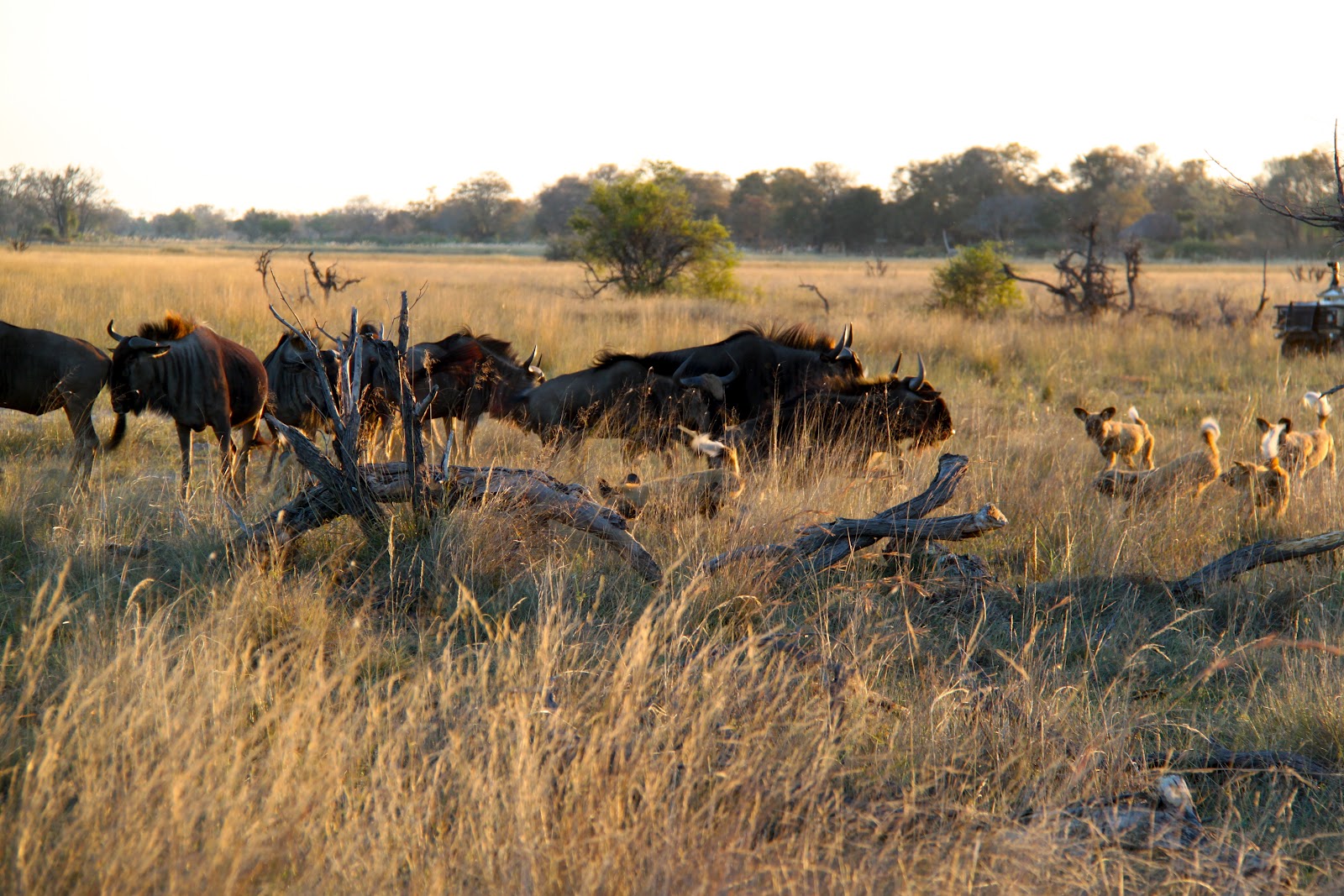
We next come upon a group of about 8 male wildebeest.  There are no babies.  Mandala does not believe the dogs will attack a group of male wildebeest but he was wrong.  The wildebeest begin to huddle together after the stragglers race to the huddle.  The dogs begin to try to create confusion and an advantage by attacking around the edges of the huddle.  One dog runs through the huddle and is head-butted by one of the wildebeest.  The wildebeest back into the circle so they are facing out in a circle.  They have “circled the wagons” for their mutual protection.  Wildebeest are smarter than they look.  The dogs lunge and try to create some chaos but the wildebeest stay in place and the dogs give up and continue to hunt.
Wildebeest circling with heads out to fend off the dogs
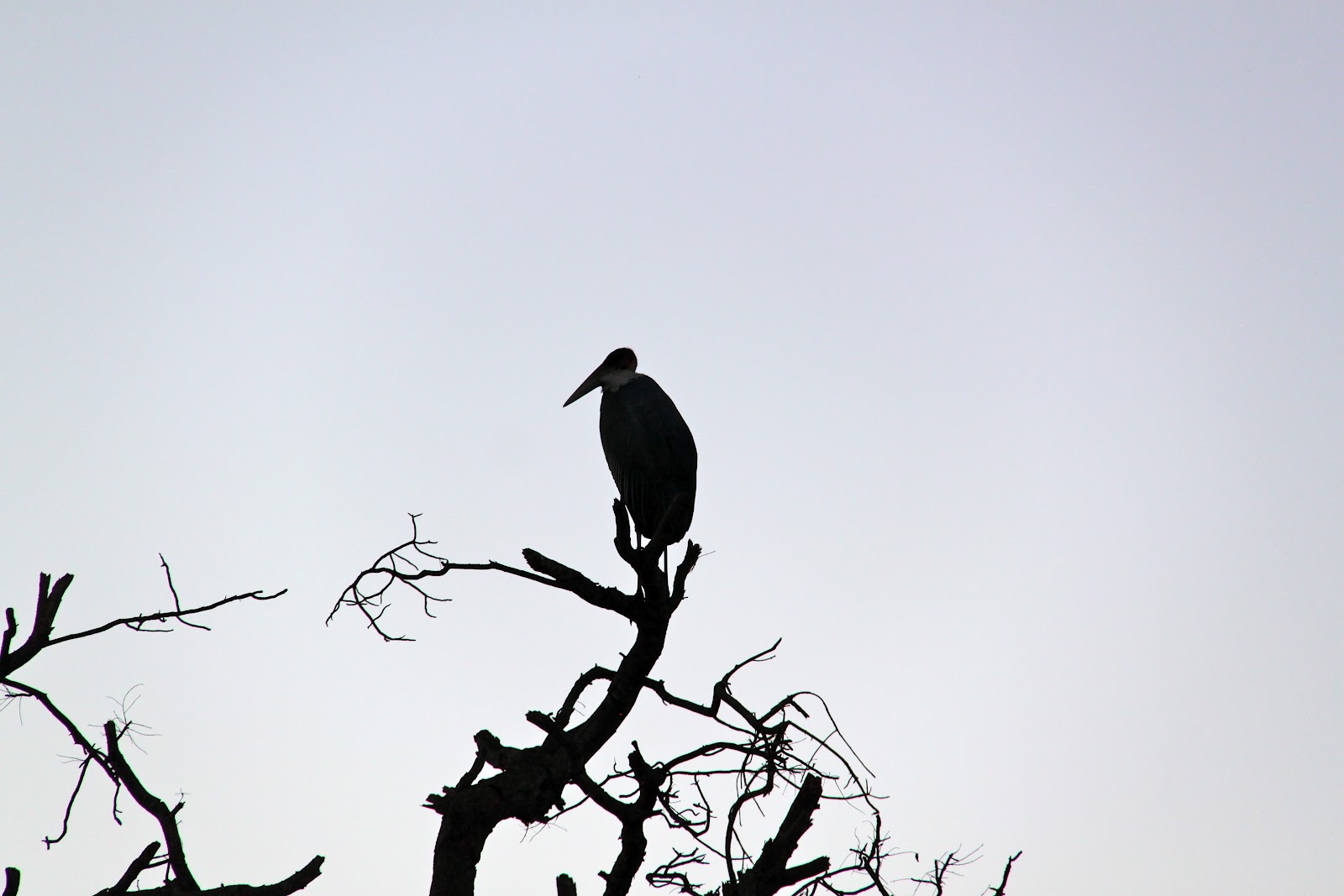
We were hoping to see the dogs continue their hunt but the sun has set and we need to return to camp.  On the way we see a beautiful big stork sitting in the top of a tree.

Open billed stork
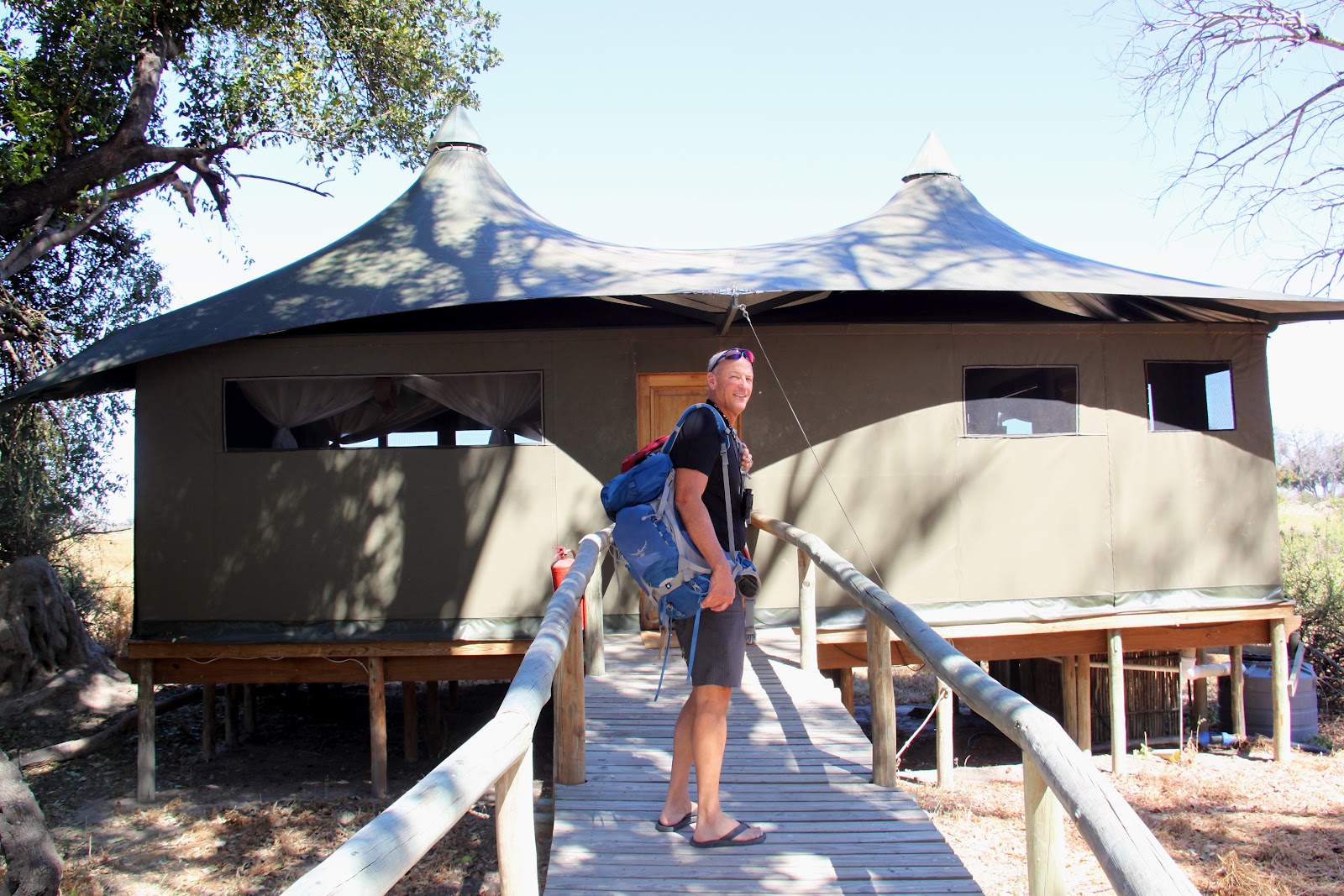
There are 6 tents at Little Vumbura and we are in number 5.  Barb is always a little leery of being the furthest tent from the center of the camp since she remembers the sudden fear she experienced for Jason when we stayed at Hamilton’s tented camp in South Africa and Jason was in the furthest tent from the center of the camp and suddenly a lion began to roar loudly in the direction of Jason’s tent.  Barb was afraid Jason had been eaten and there are no phones in tented camps.

Walkway to tents-  Baboons,  elephants, or any animals can walk through

Tent 5- Our Home

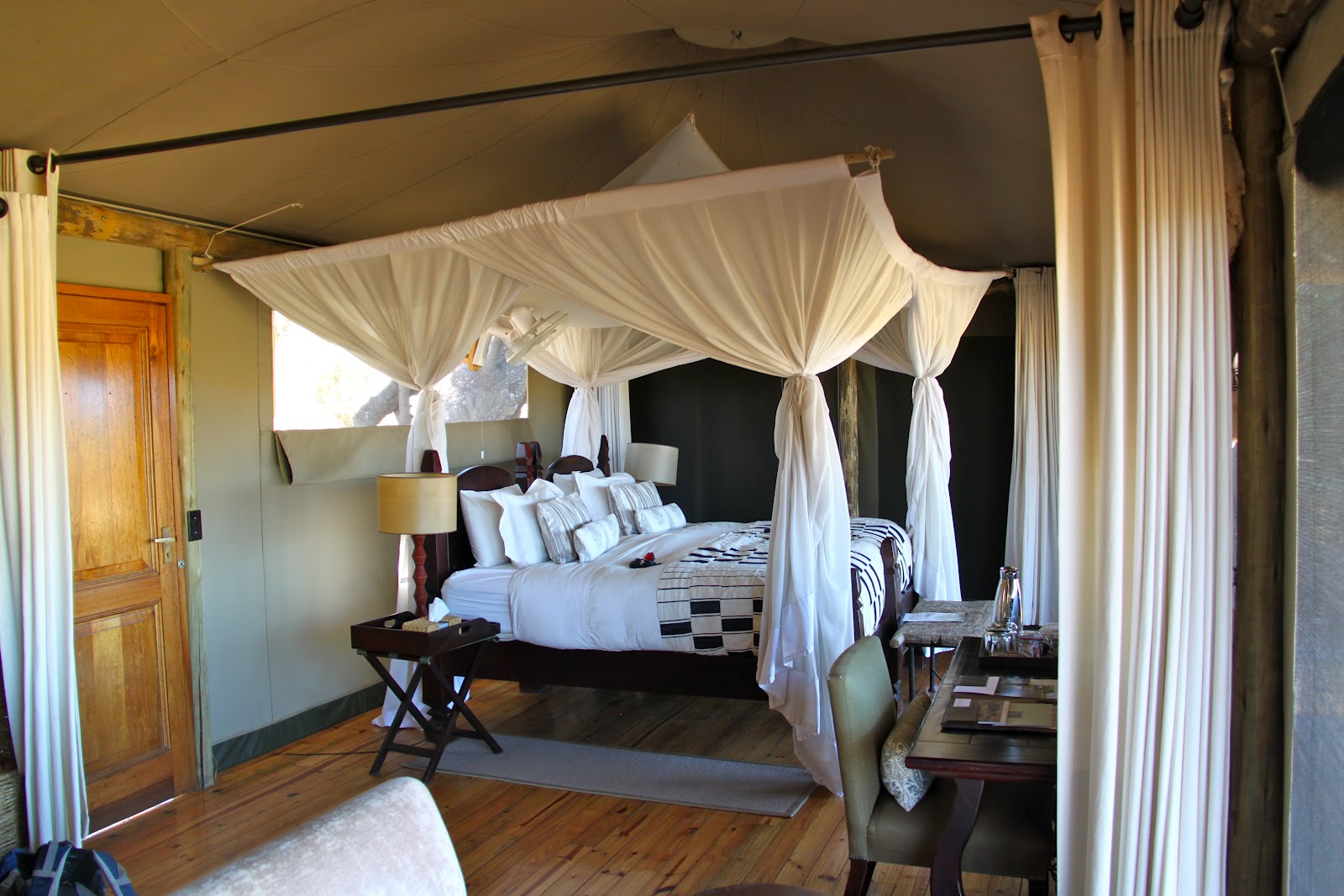
Pretty nice tent inside
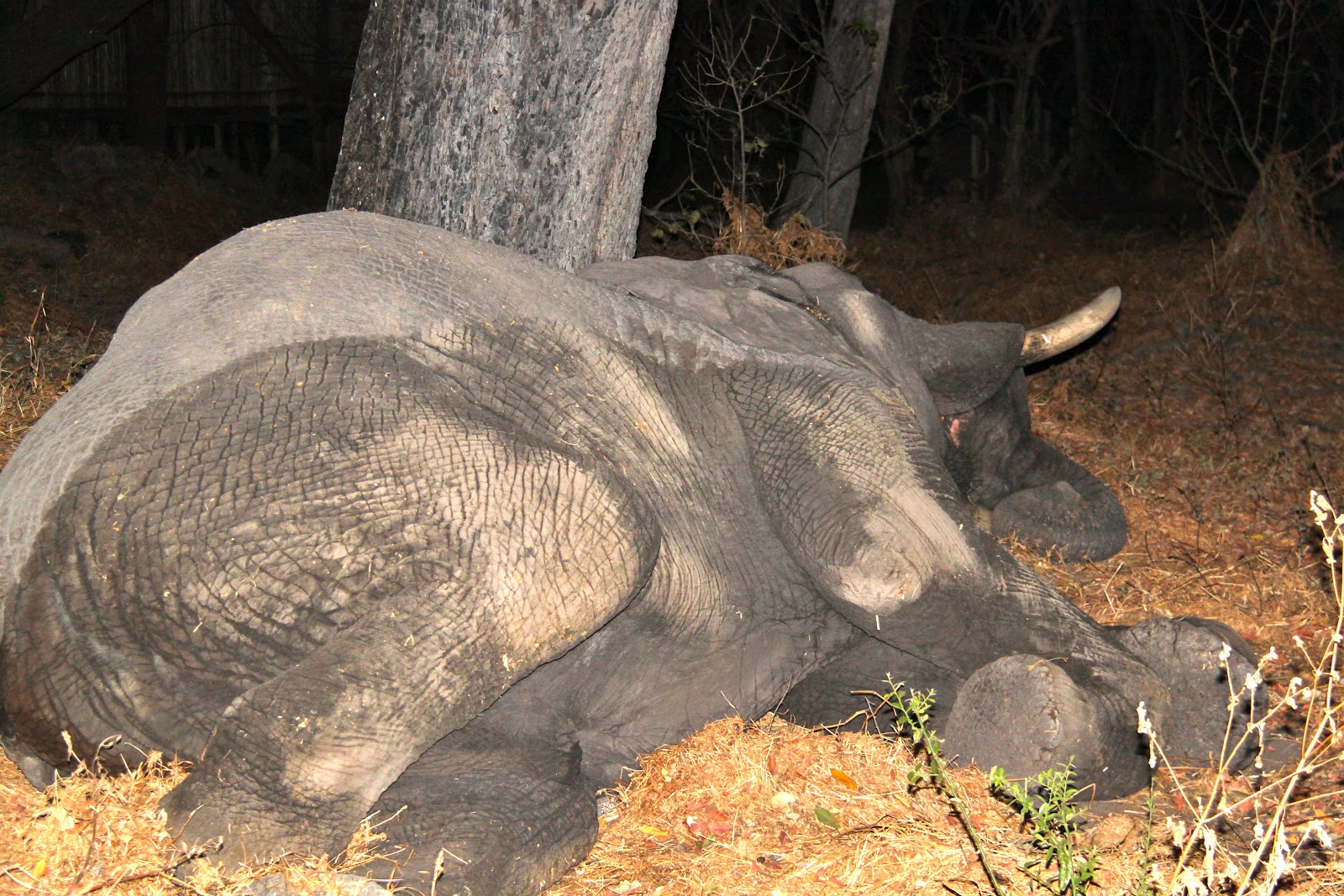
I think tent number 5 was a lucky tent.  We could hear animals all night long.  Baboons would sometime jump on the tents.  Elephants would walk through the camp.  At 5:30 am the first morning our safari guide came to wake us.  He said:  “Wake up for safari and you have an elephant sleeping by your door.”  We jumped up and quietly peeked out of our door.  There was a huge elephant lying on his side.  We could hear his stomach rumble.  We counted 6 breaths per minute.  We were being quiet.  It was still almost completely dark.  We did not want to startle the elephant for fear he would knock down our tent.  We were using our headlamps to look at the elephant.
We knew we had heard a hippo or elephant outside when we went to sleep, but we didn’t expect him to spend the night
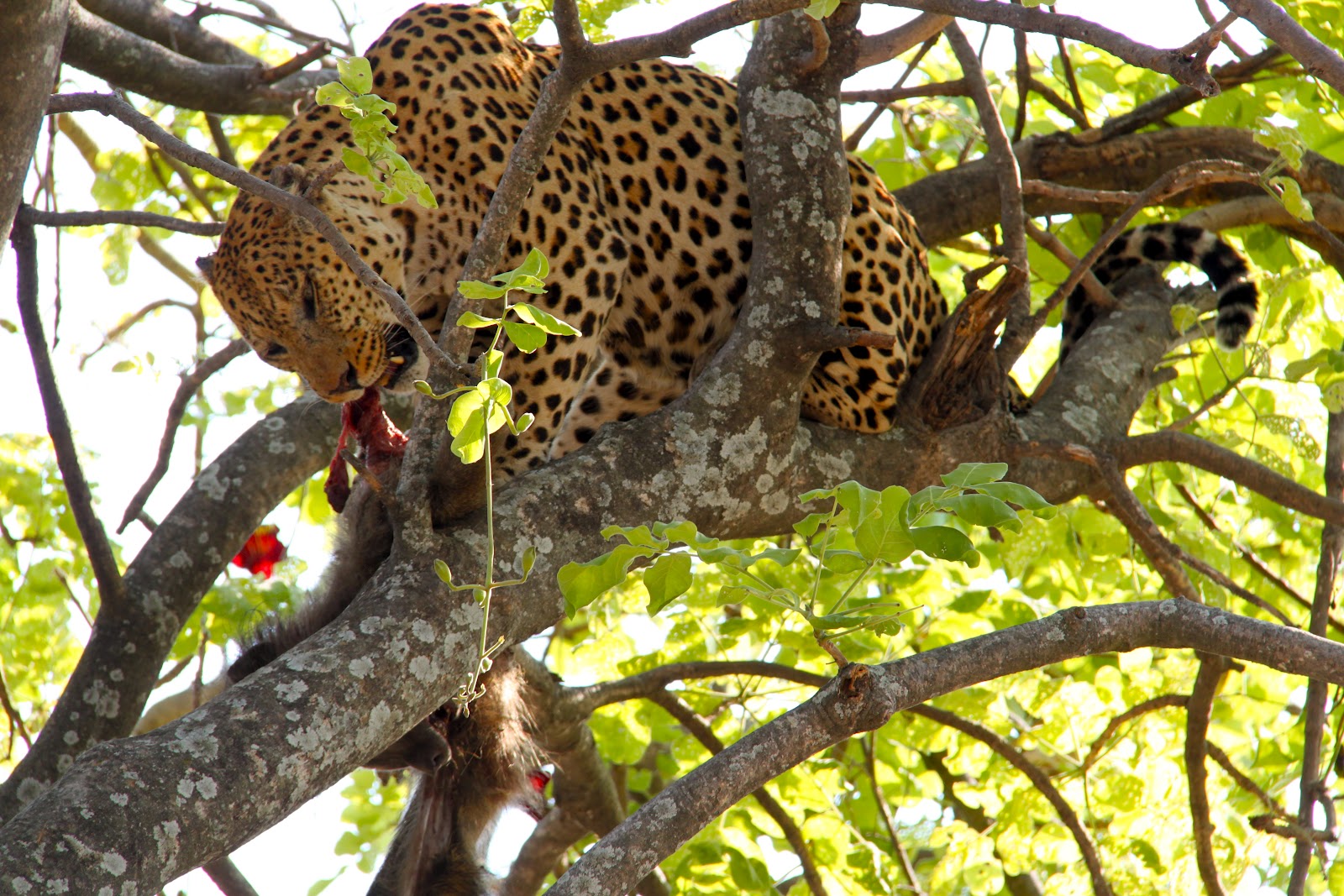
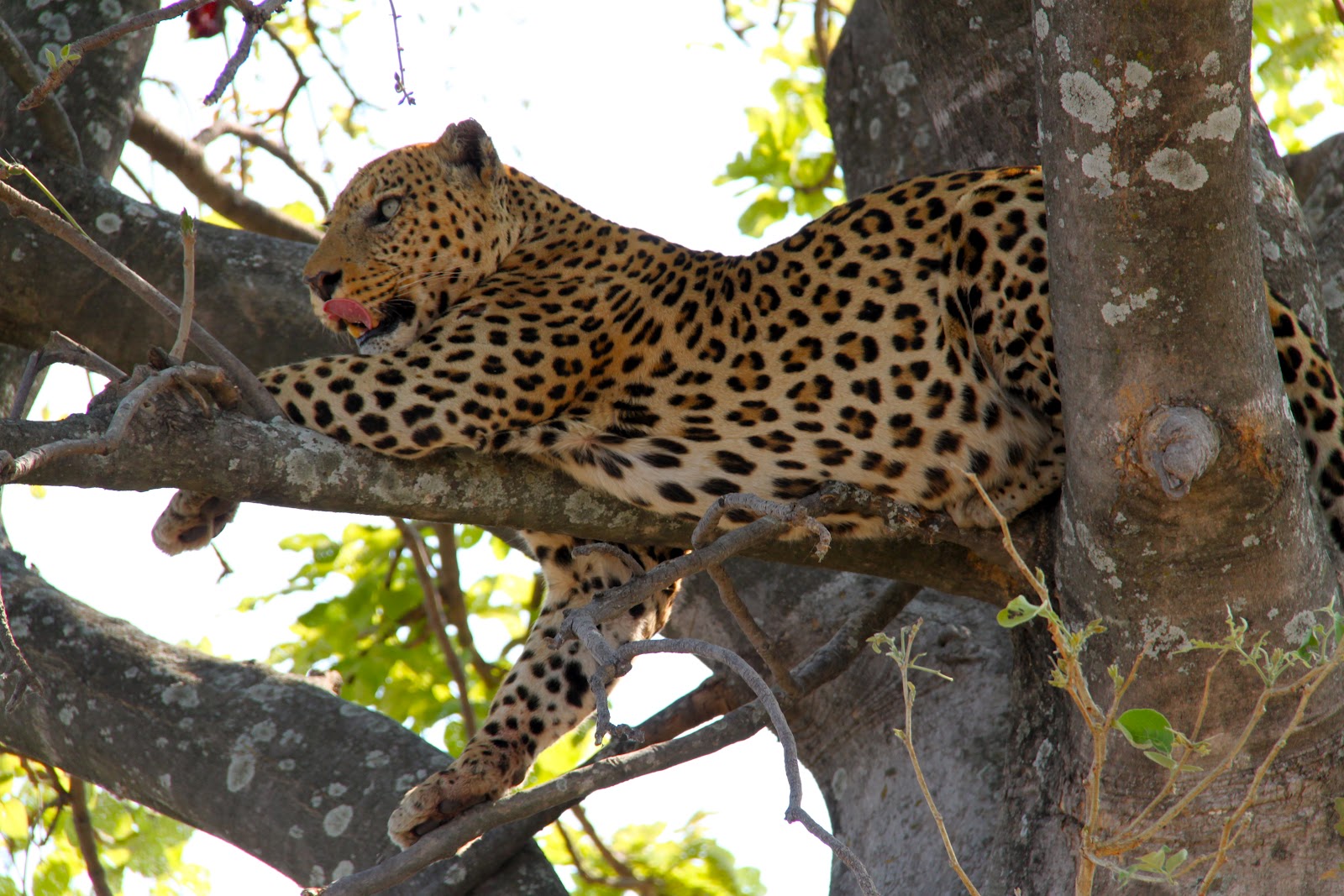
On our safari drive the next morning we came upon two leopards.  We followed them and they led us to a tree where they had killed and hung a large baboon.  The leopards had come back to eat some more of the baboon.
Yummy

Look how full his belly is
Watching the leopard eat made us hungry too.  Back to camp for lunch.

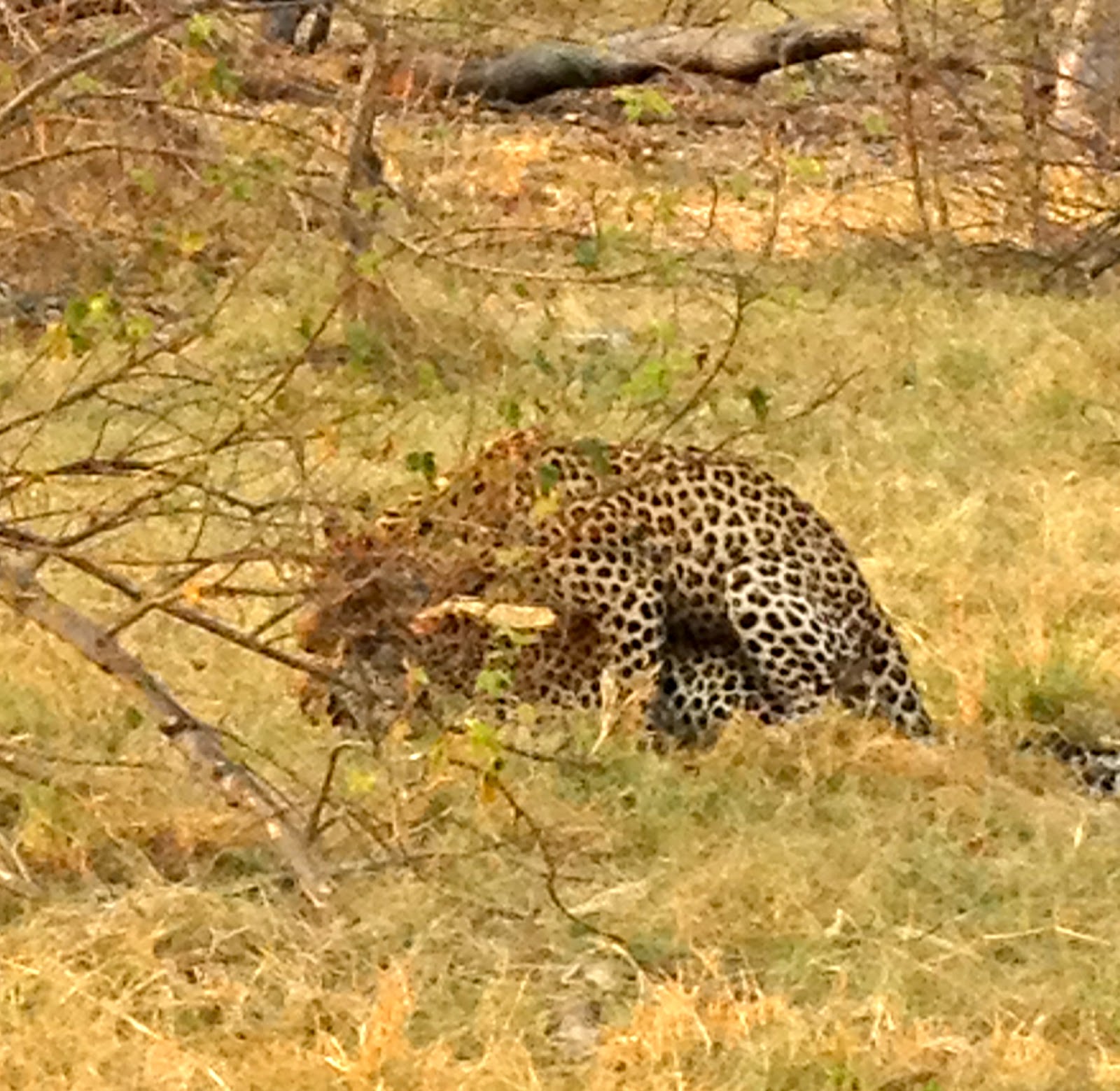
That afternoon we came across two honeymooning Leopards.  For more than two hours we watched these Leopards mate about every 5 to 10 minutes.  It always started the same way.  The female always initiated by walking over to the male and flaunting herself.  The male reacted and it always ended with some playful biting and growling and a swap of the paw by the female.

Honeymooners
                                                  Movie of Leopards having a good time!
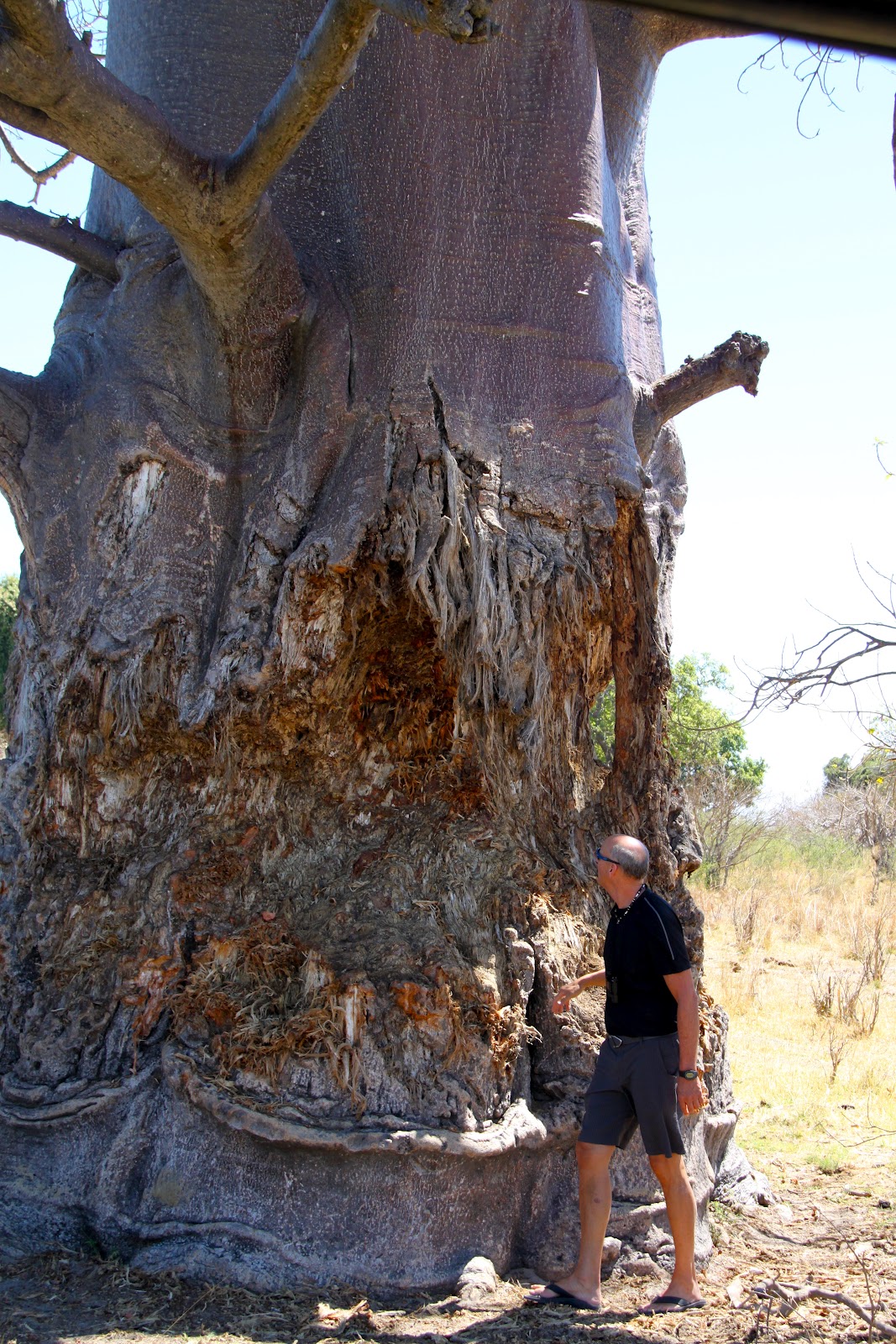
There is a tree in Africa called the Baobab.  It can be 1000-2000 years old.

Baobab tree

The elephants have been eating the bark.  You can see how small Scott looks next to it.
Morning safari took us past giraffe, spotted hyenas, cape buffalo, elephants, kudu, impala, Tsessebe,  Sable, hippo, warthogs, and birds of all colors and sizes.  On our way back to the airport, there was a lion sitting atop a termite mound asking for her picture to be taken.
Giraffe

Spotted Hyena

Cape Buffalo

Beautiful birds

Up close and personal with the elephant

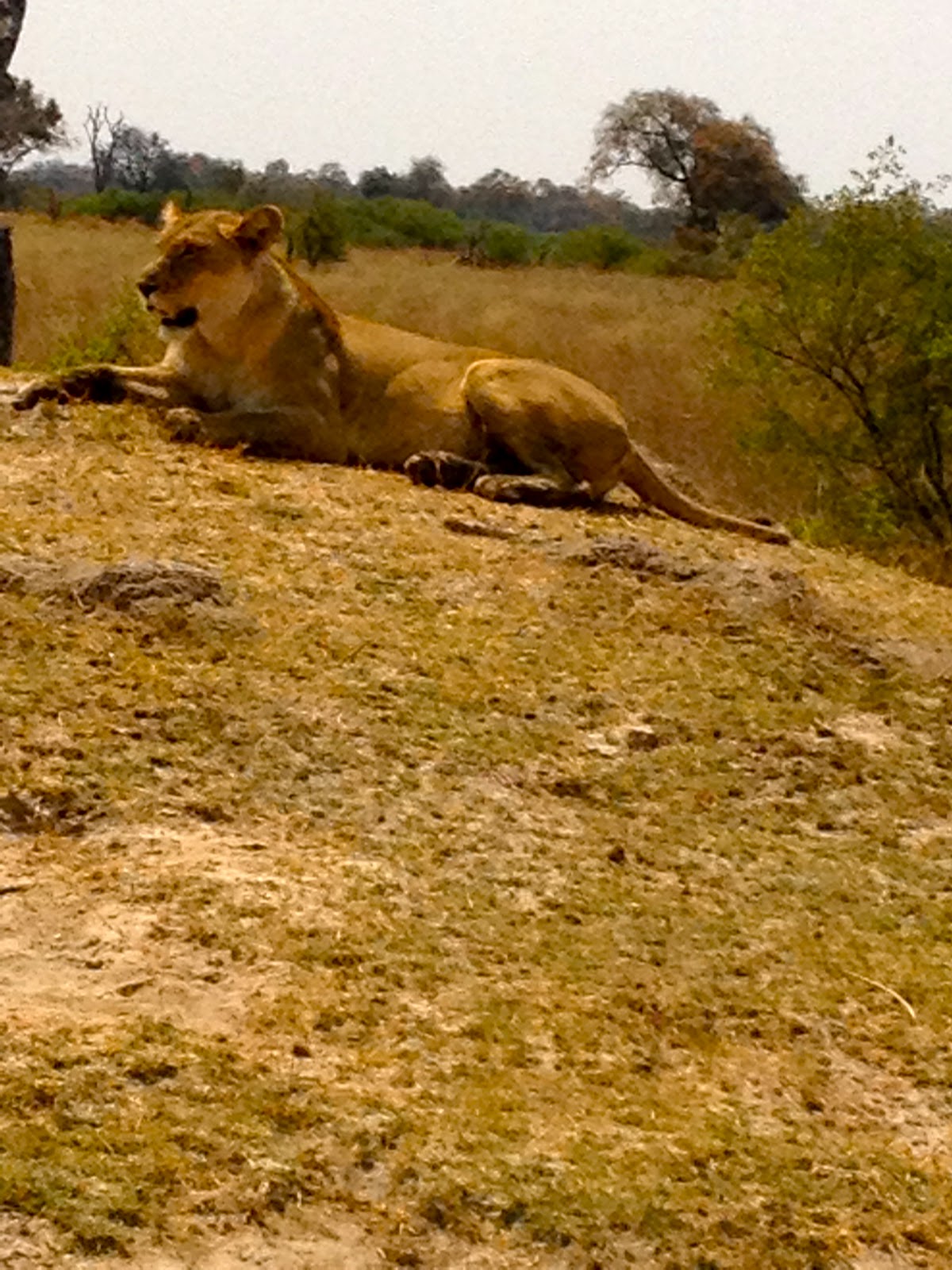
Please take my photo

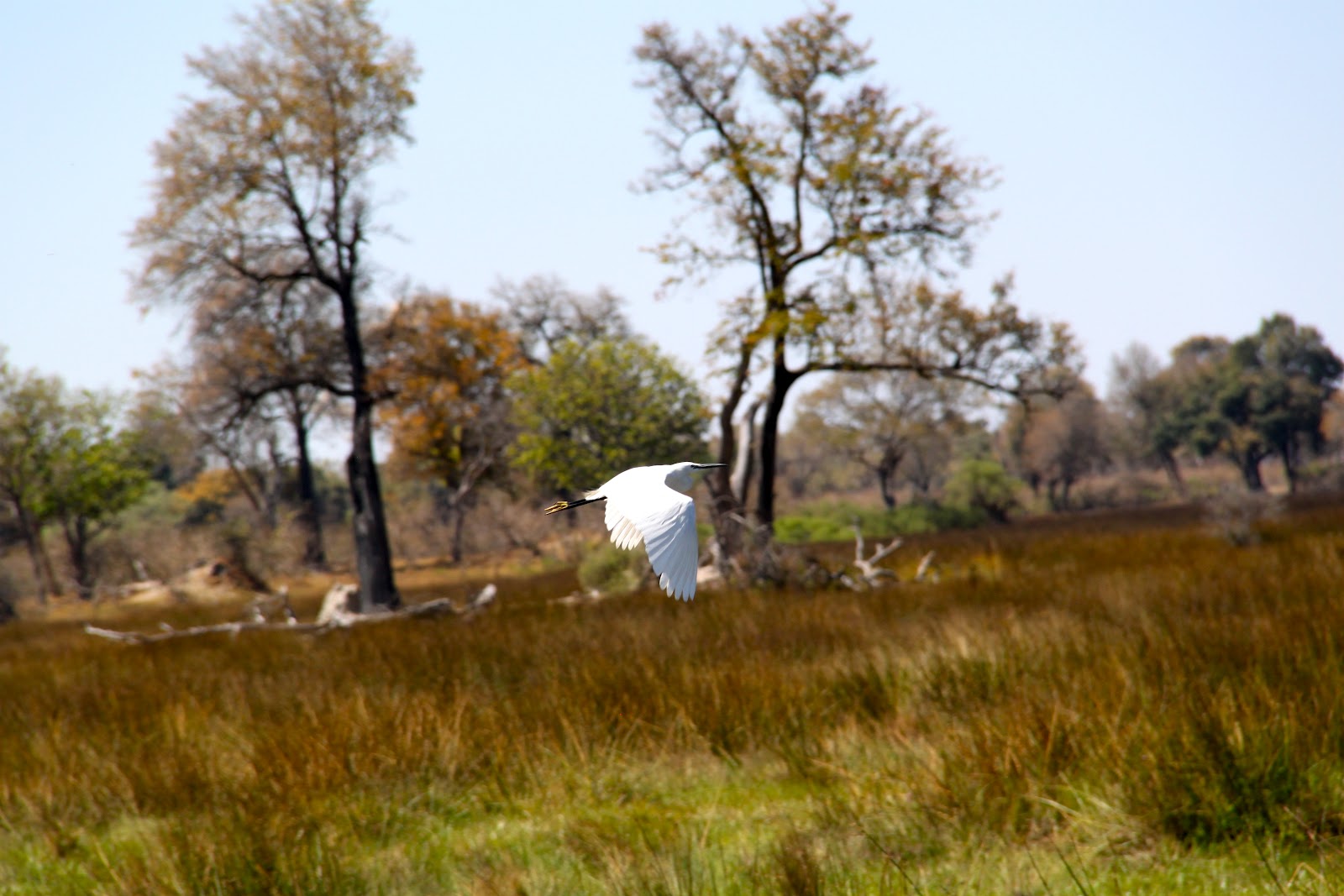
White egret

Impala (McDonalds of the bush-notice the M for McDonalds, and they are on every corner and get eaten a lot. 

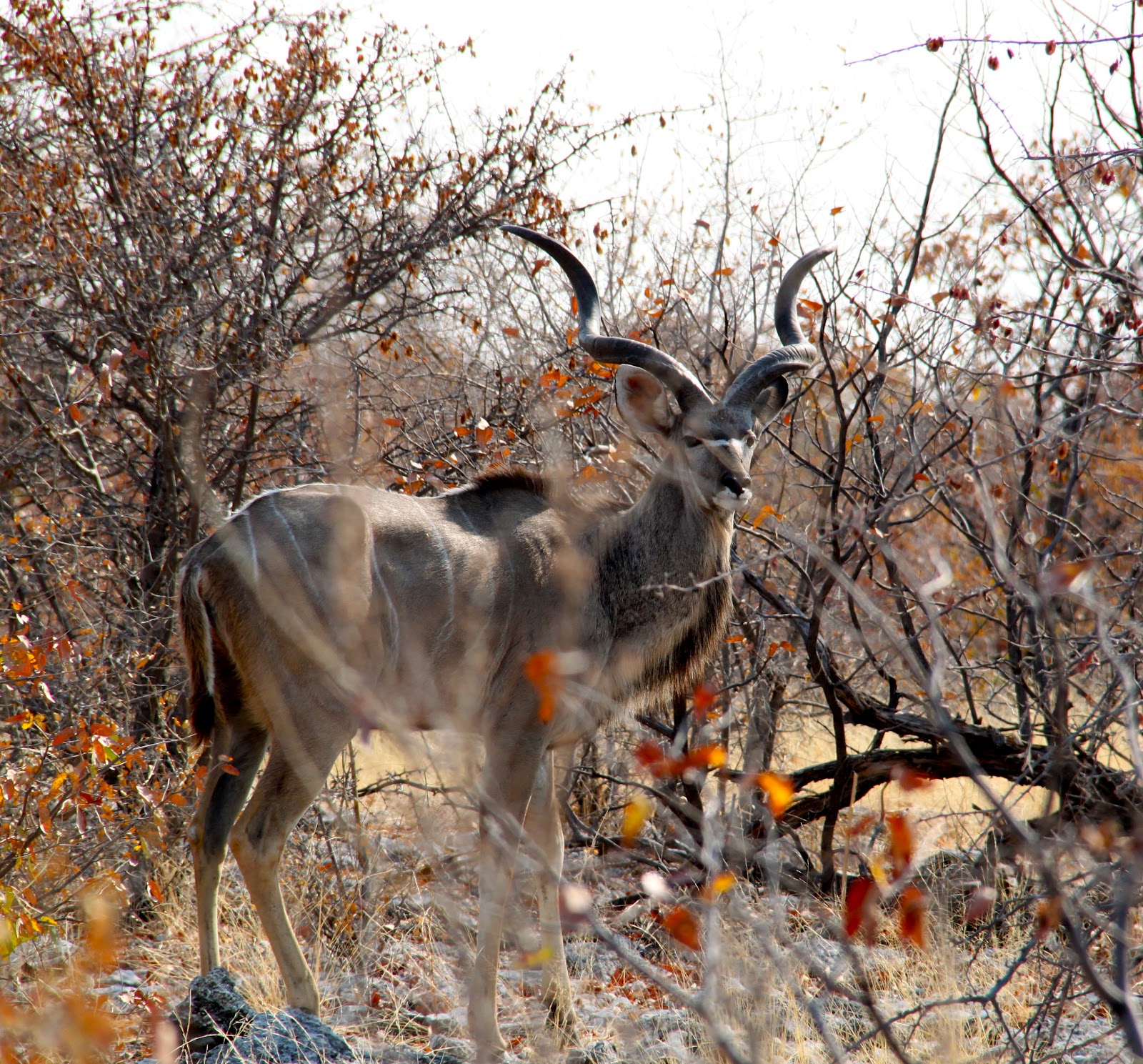
Kudu

Elephant footprint

Tsessebe

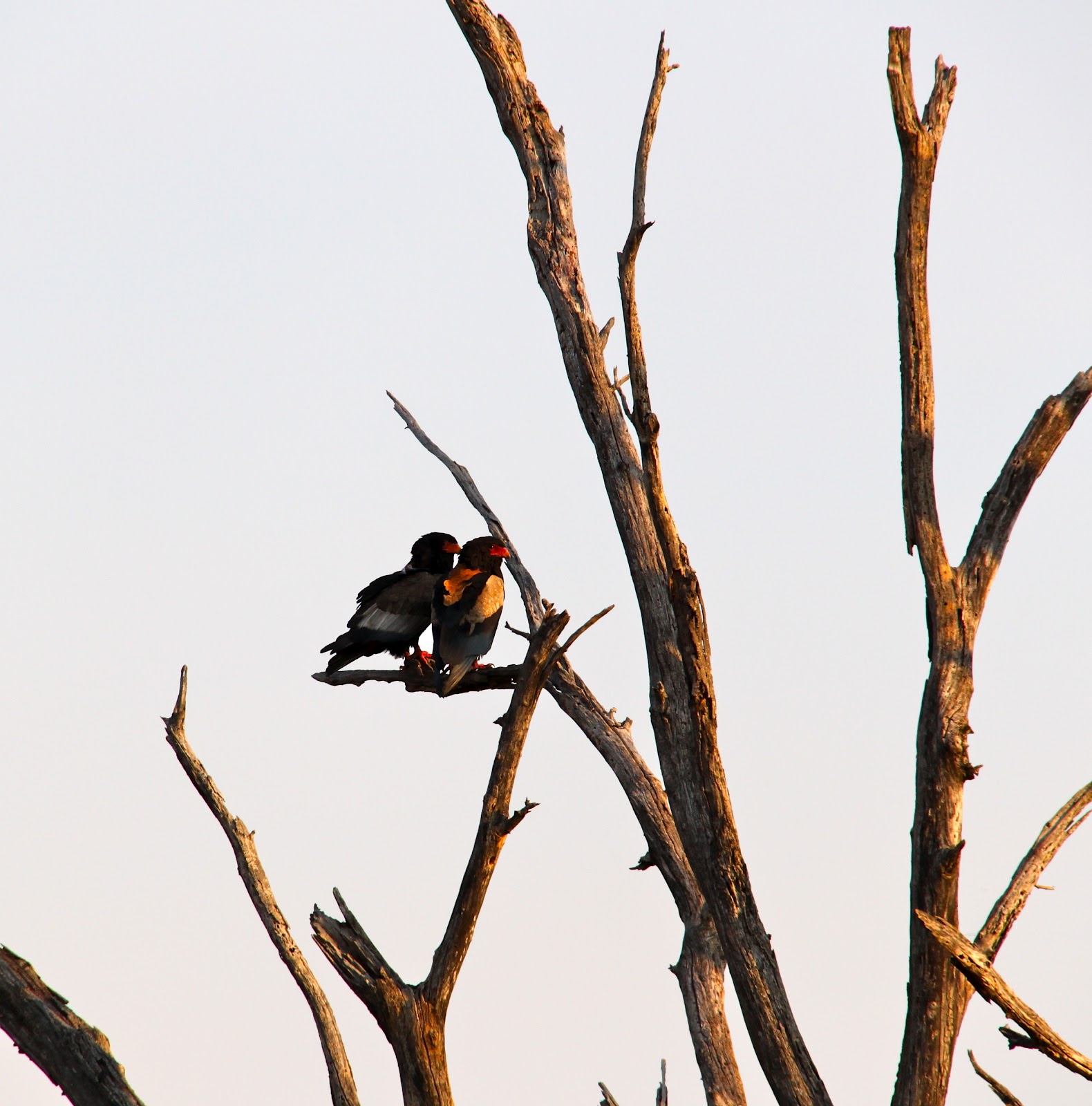
Love birds

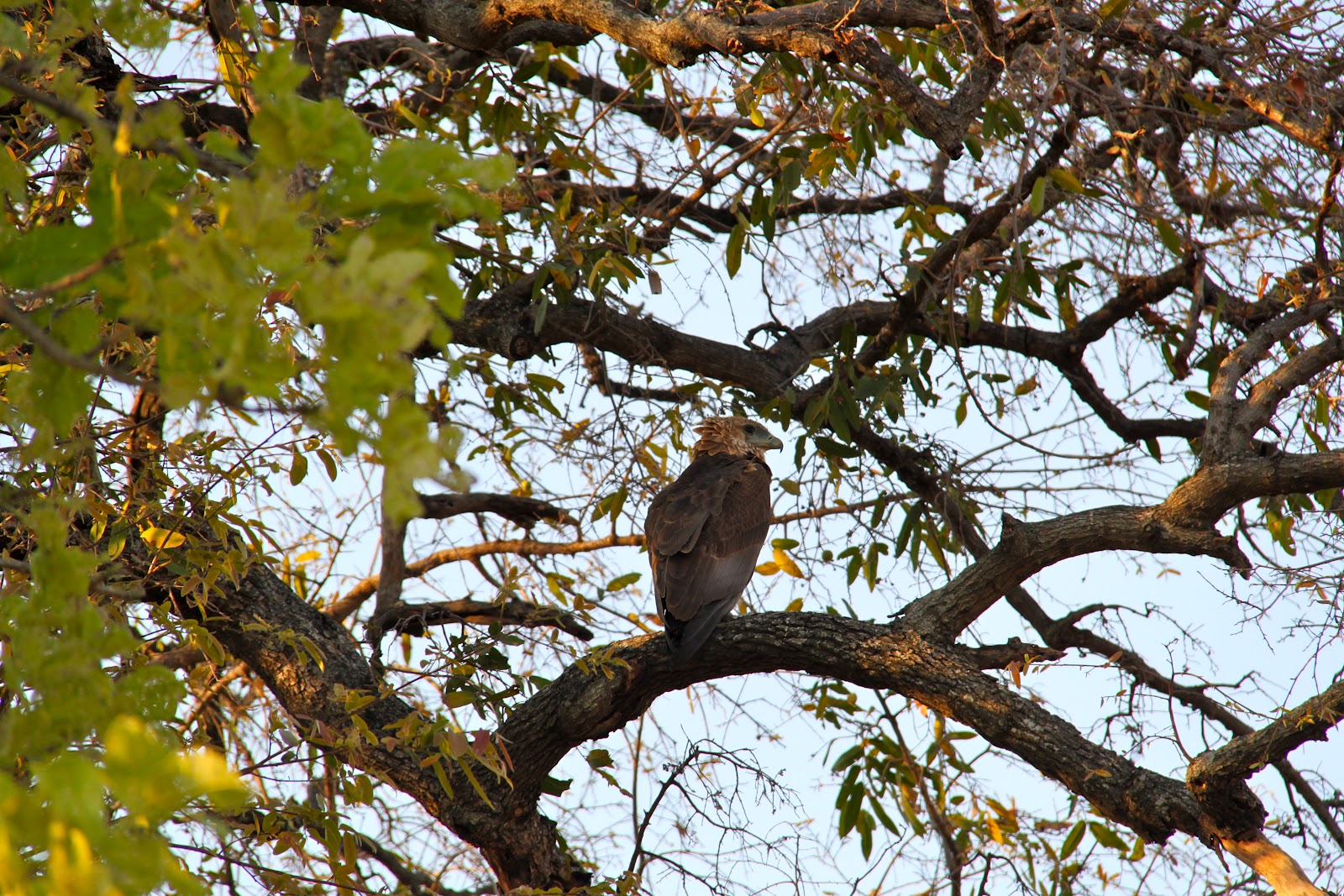
similar to an Eagle

Hammerhead

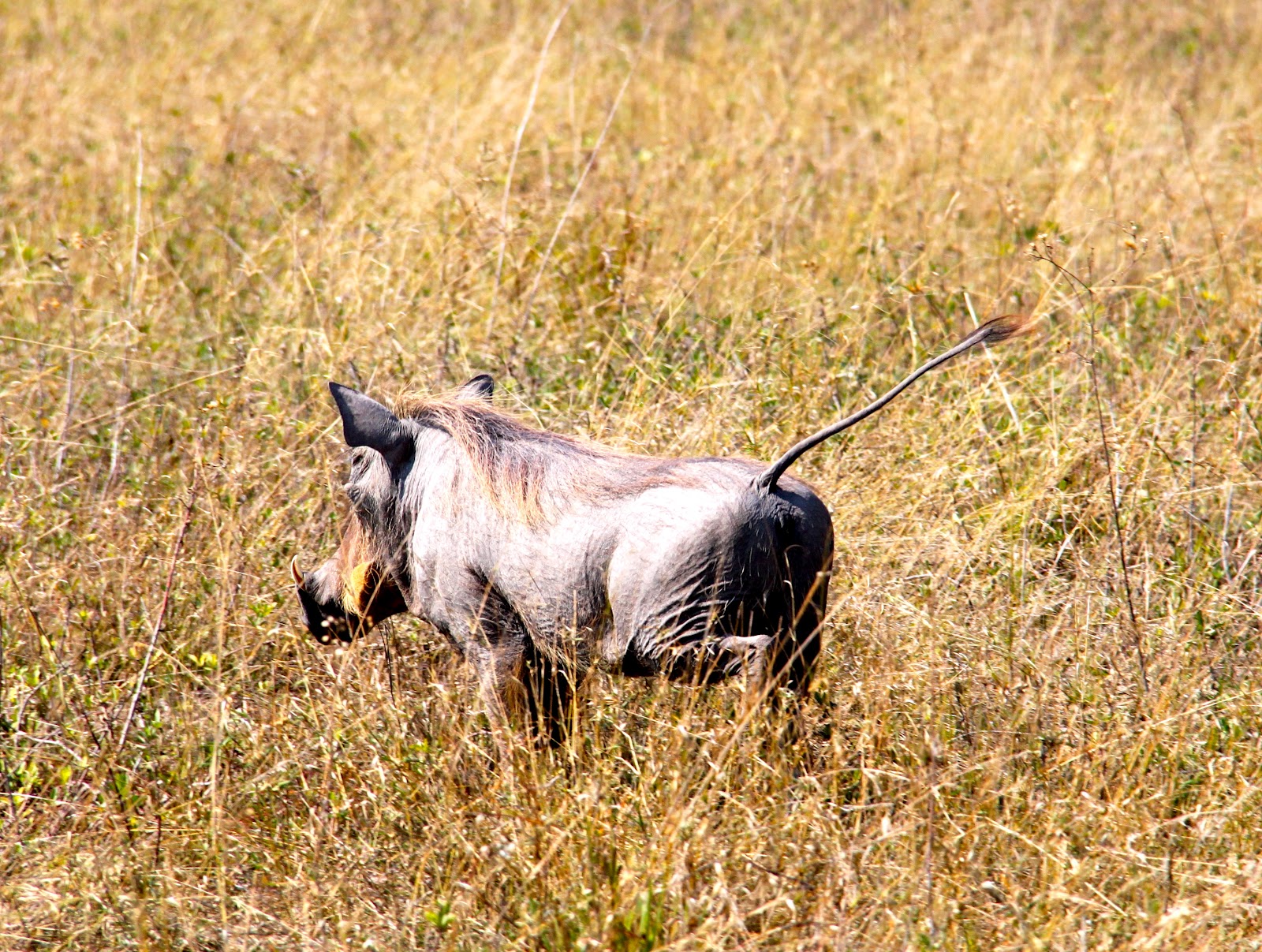
Of course, Warthog with his antenna tail
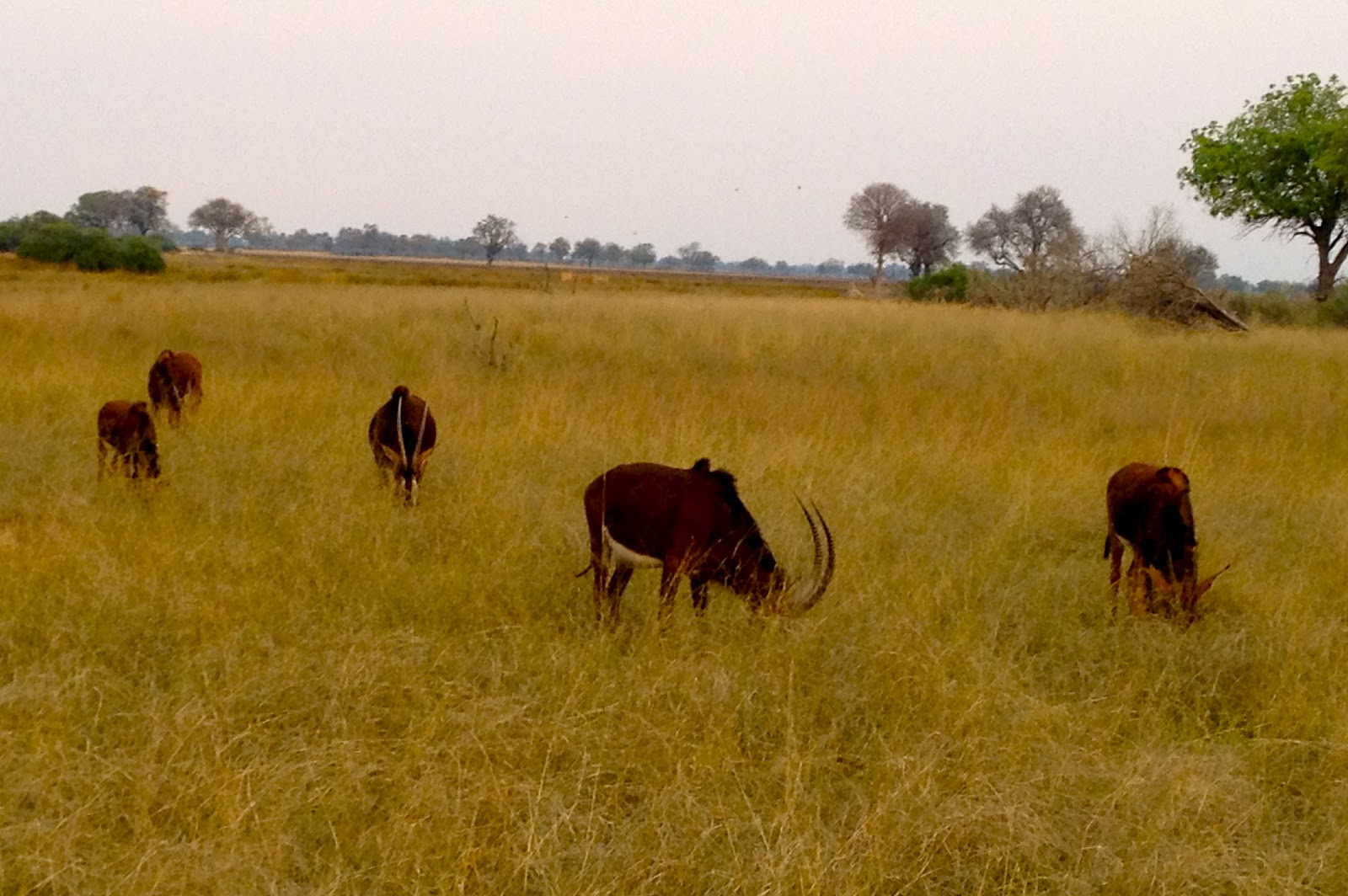
Sable

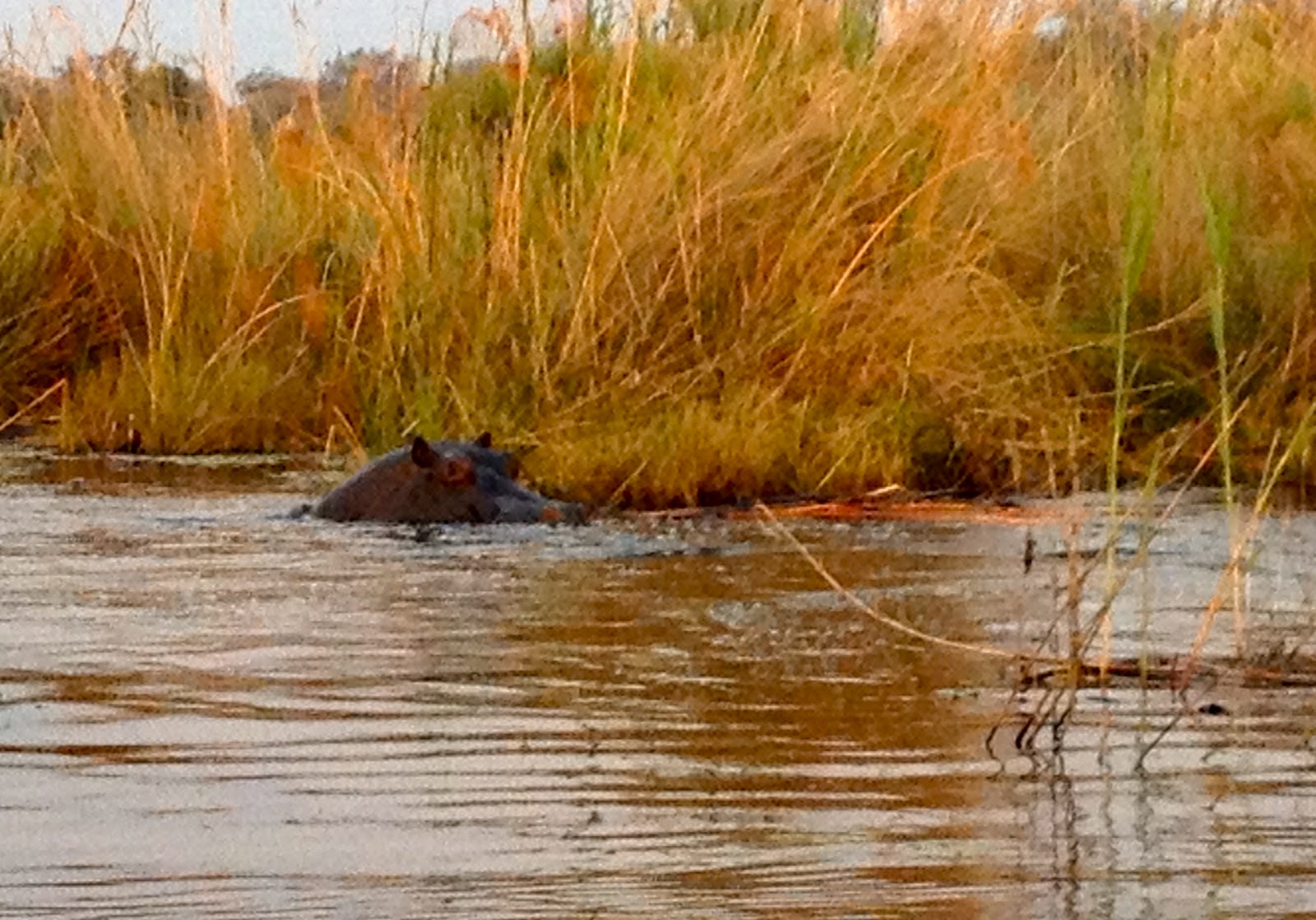
Hippo close to our dock

Black egret

Waterbuck (distinguishable by the toilet seat left on his butt0
Zebra
Africa is an amazing place!

Namibia (Kulala Desert Lodge in Sossusvelii, and GocheGanas)

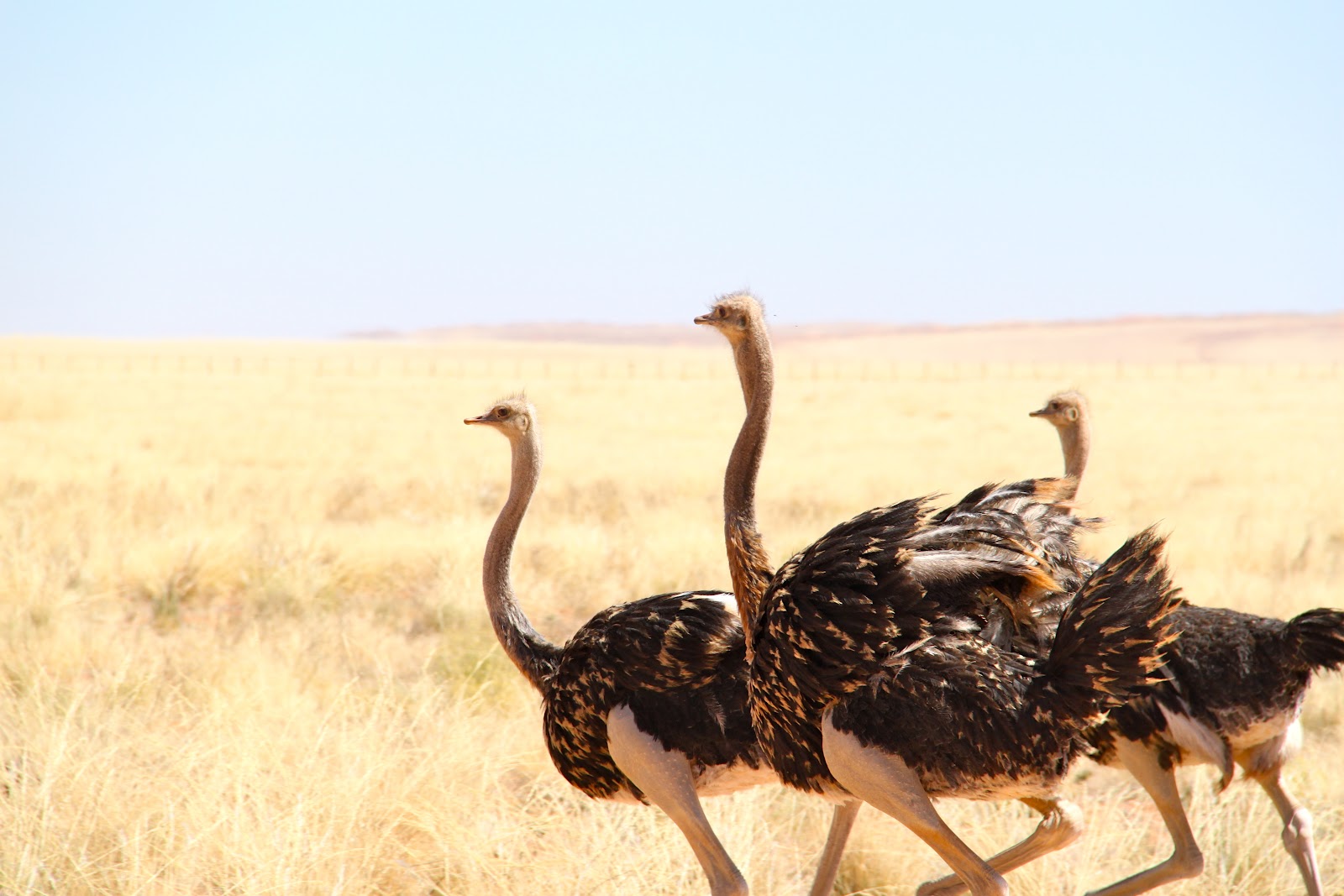
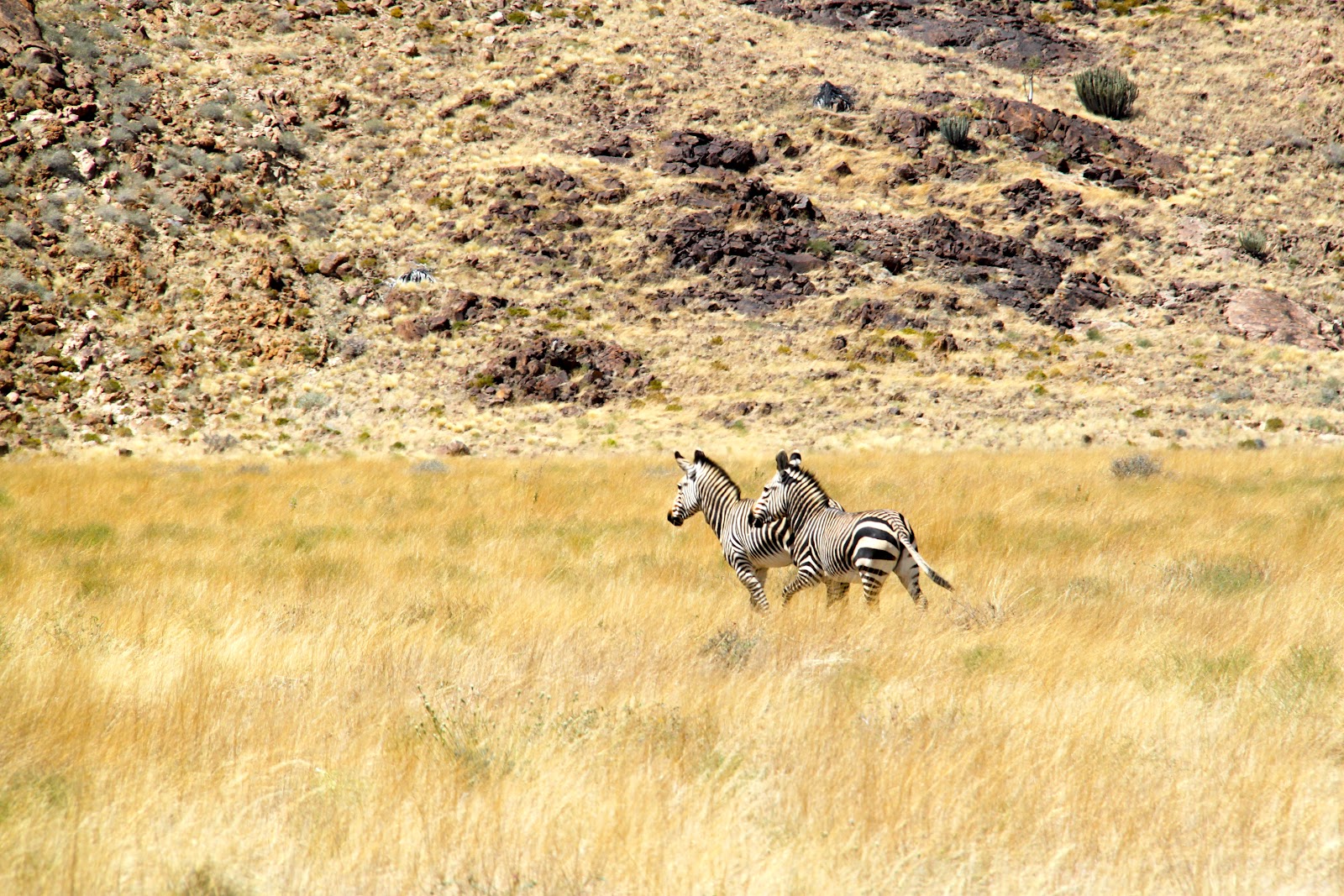
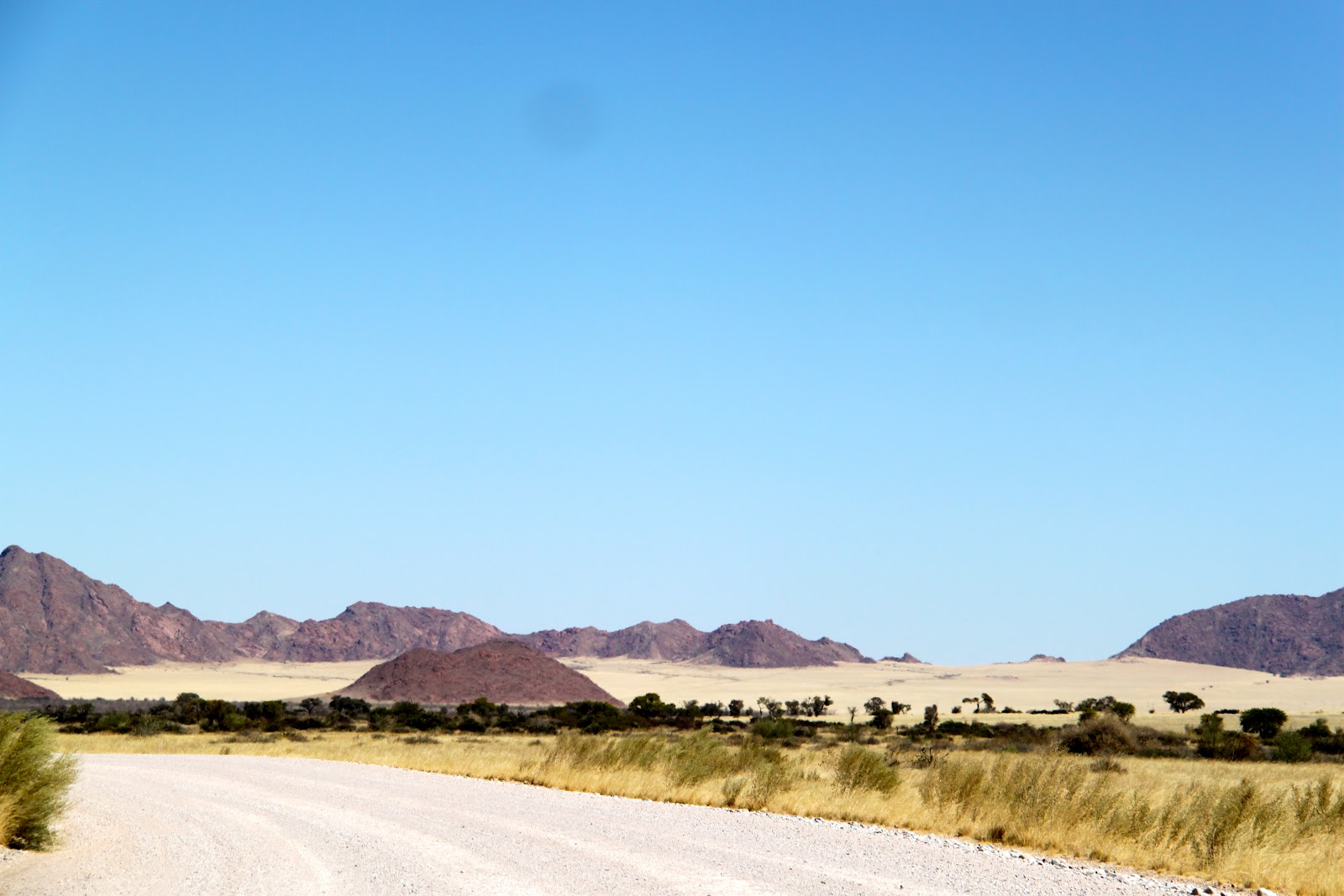
The road to Sossusvleii starts desolate with sand dunes everywhere you look, with absolutely no kind of life. Further down the road grasses appear and you start to encounter birds. Trees are then added to the grass, and ostriches (which have a brain smaller than their eyeball) appear, soon to be followed by Zebra, Oryx, Springbok, and Baboons.

Dunes everywhere you look

Soon there are no dunes, but nothing grows, and there are no animals

Soon grasses appear
You start to see life-Ostriches (bird brains)

Zebras run around
Rest stop

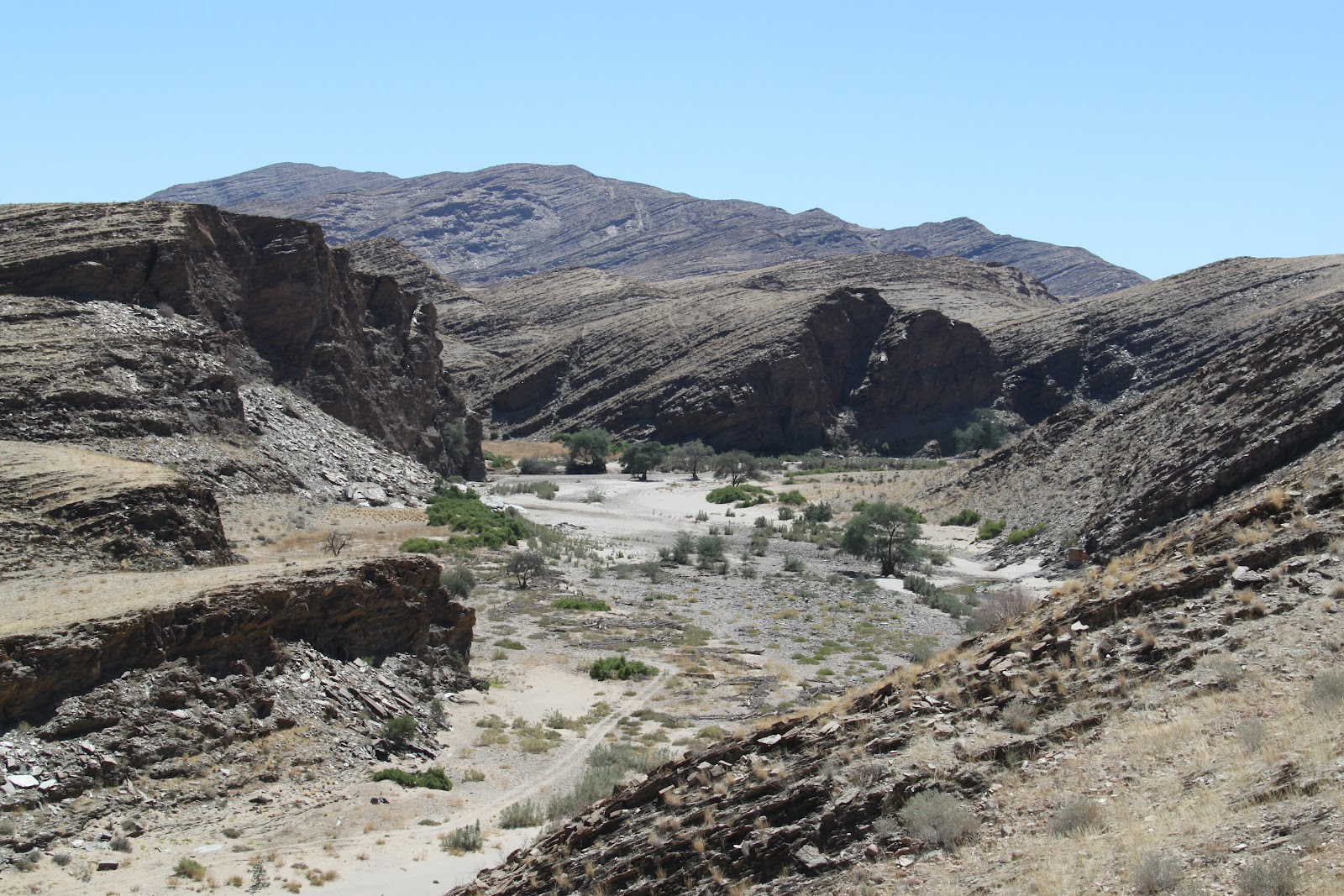
We did drive through a pretty canyon area

Soon there are pretty colors of hillsides

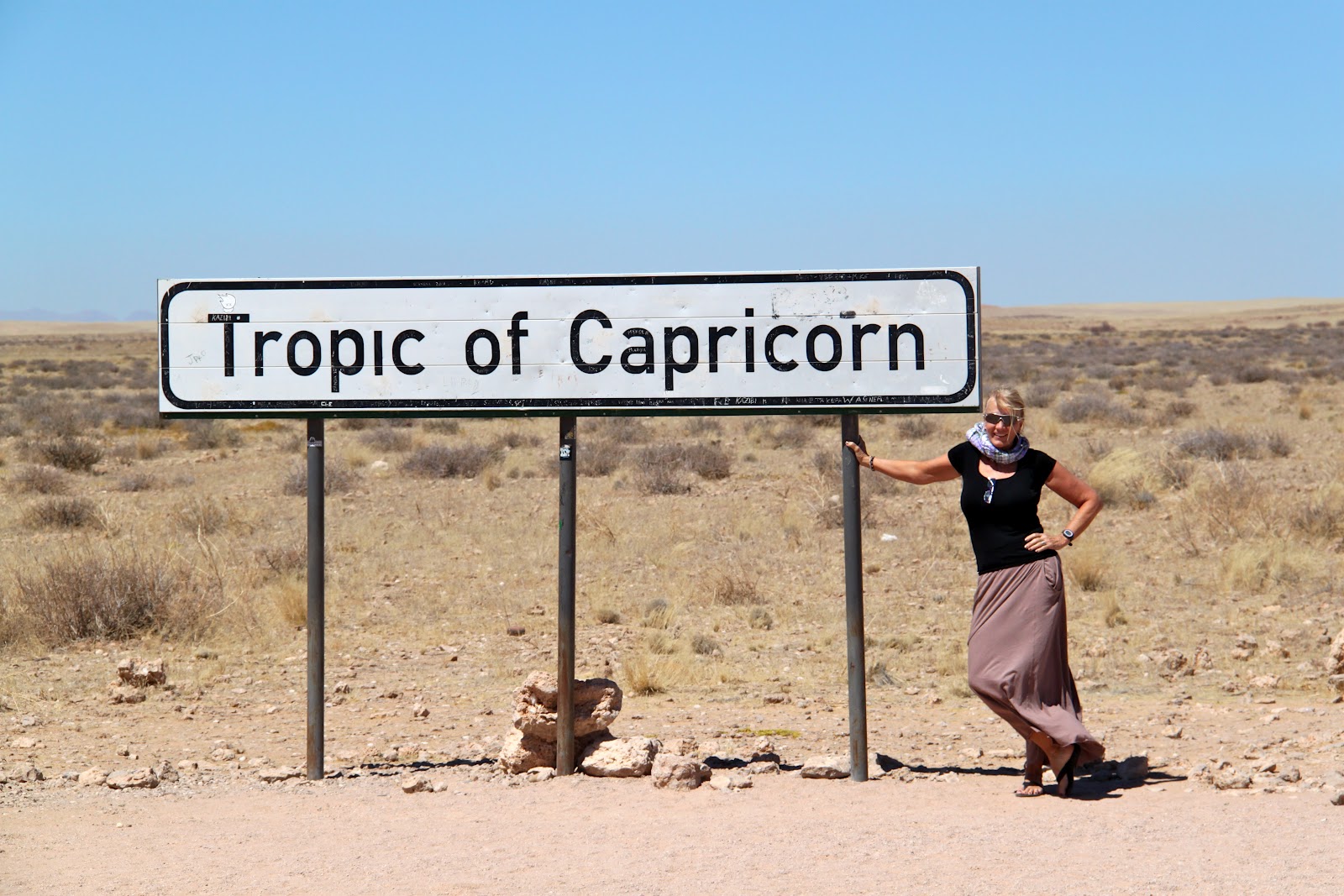
We passed the Tropic of Capricorn

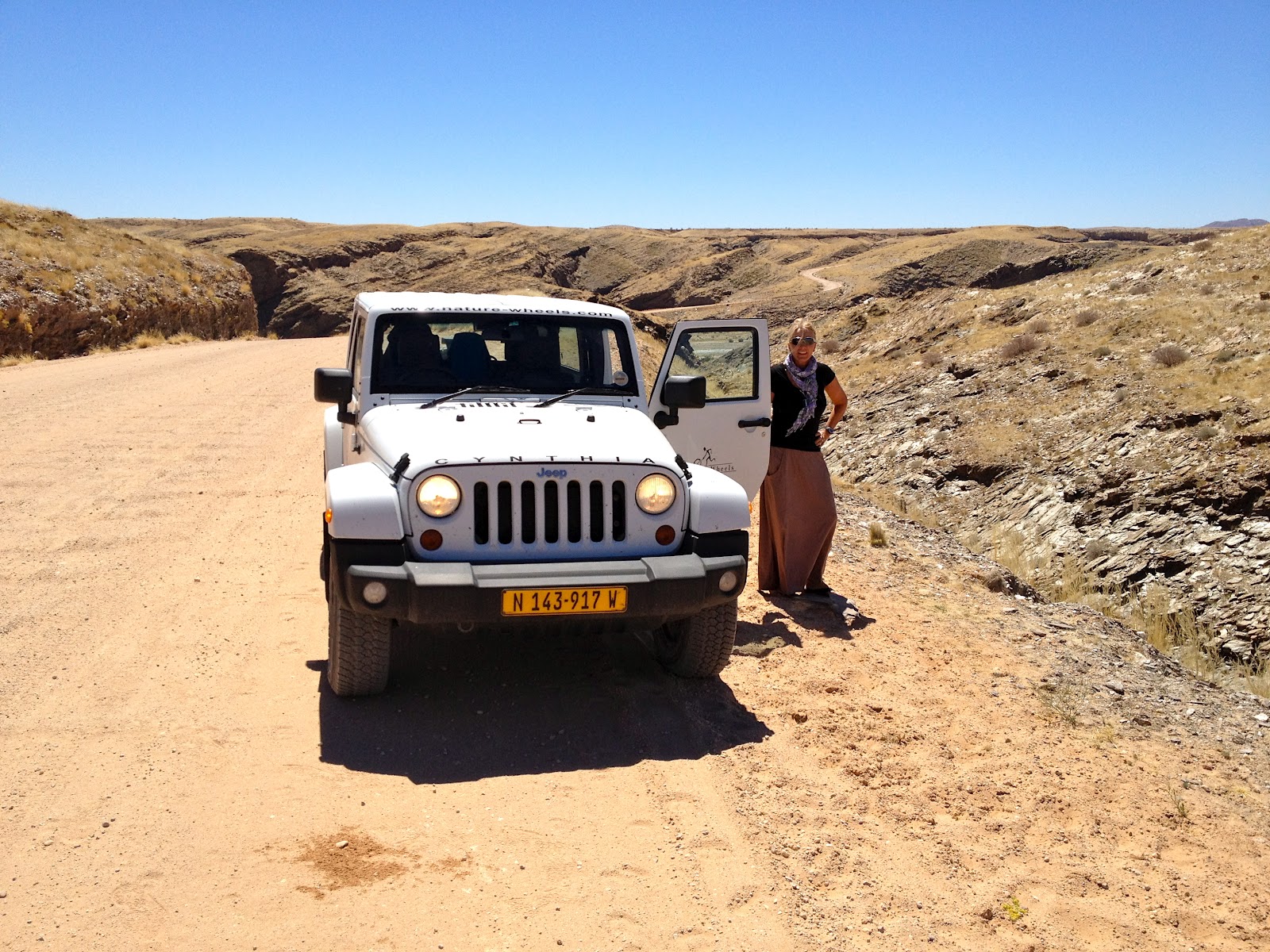
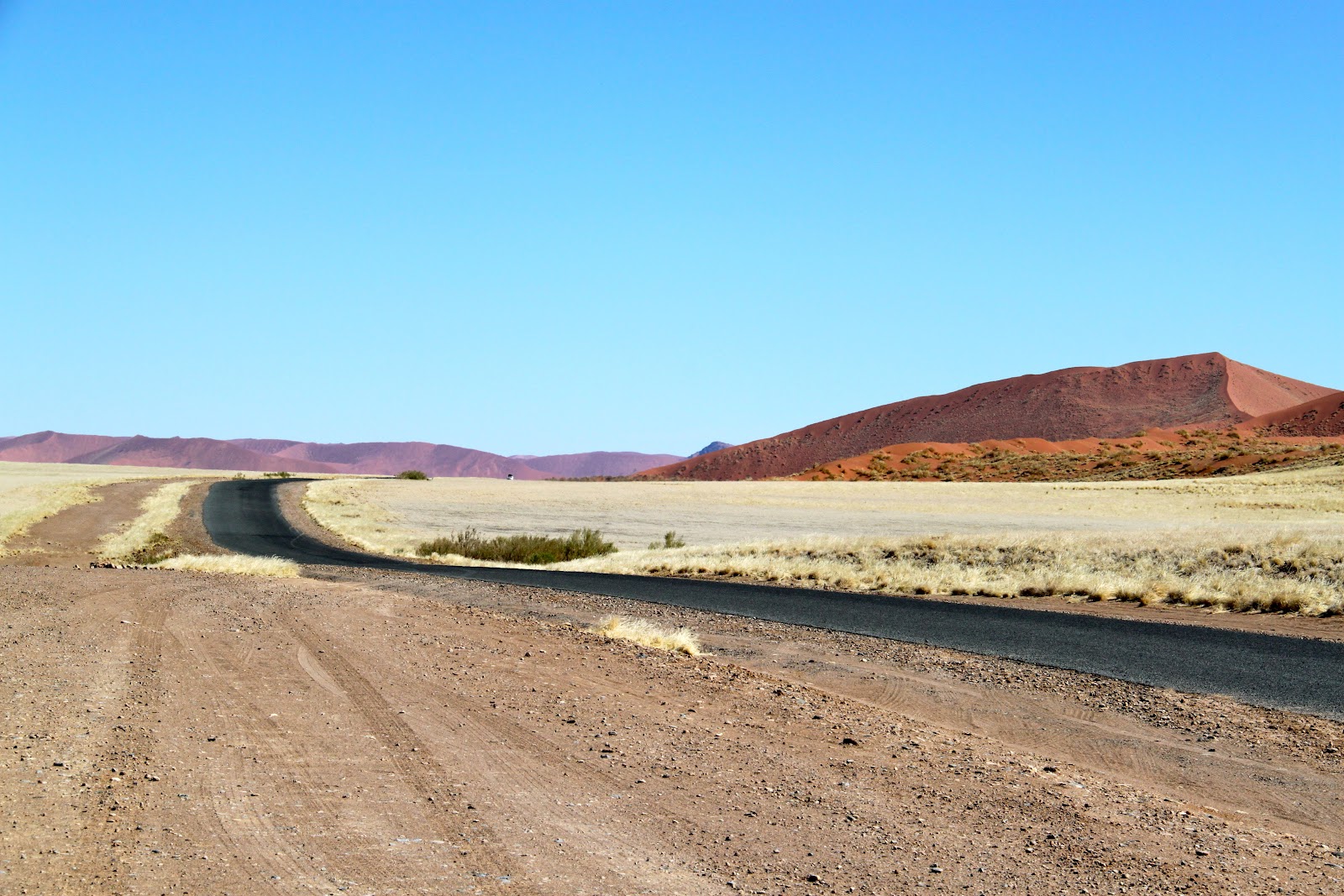
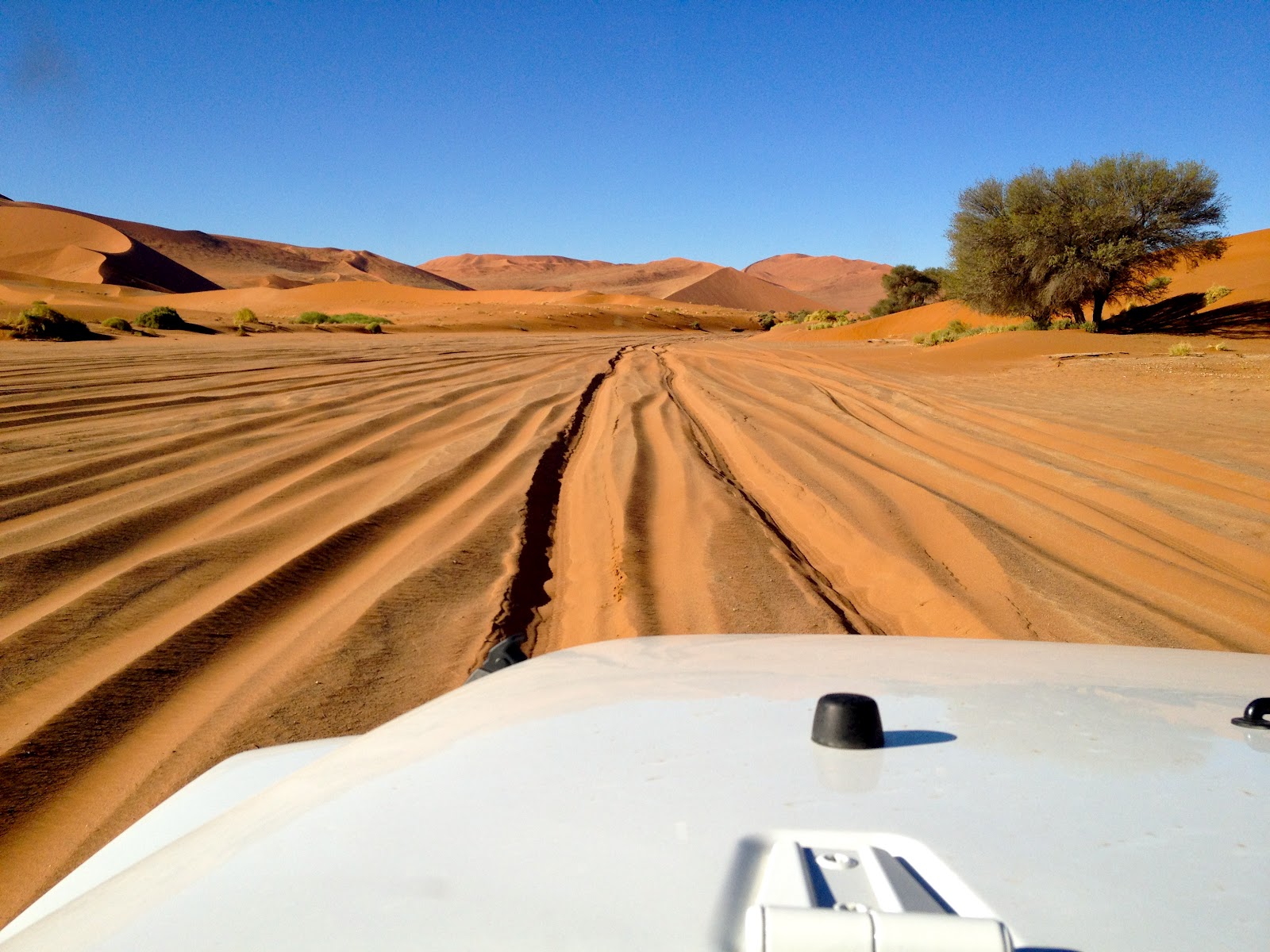
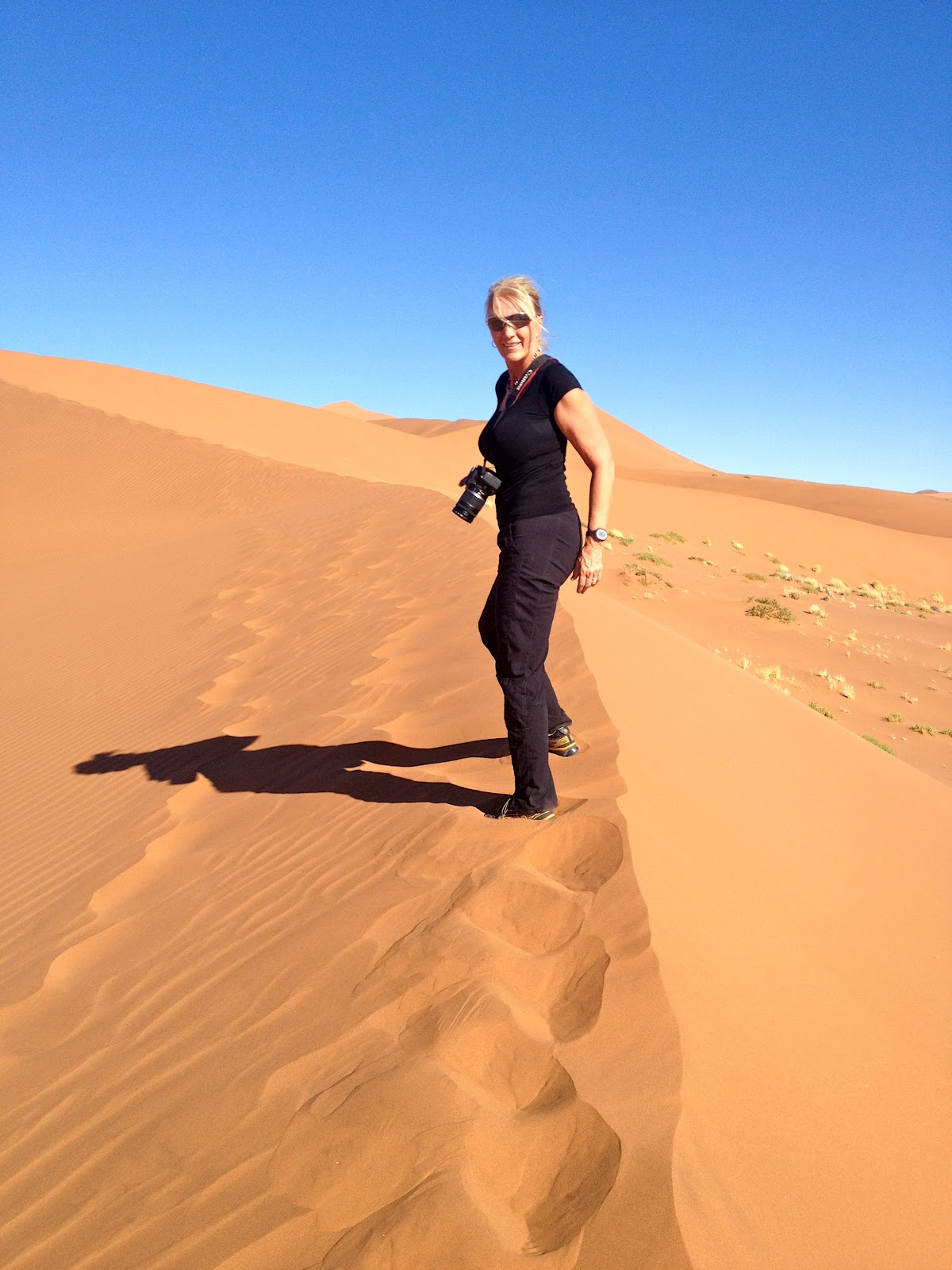
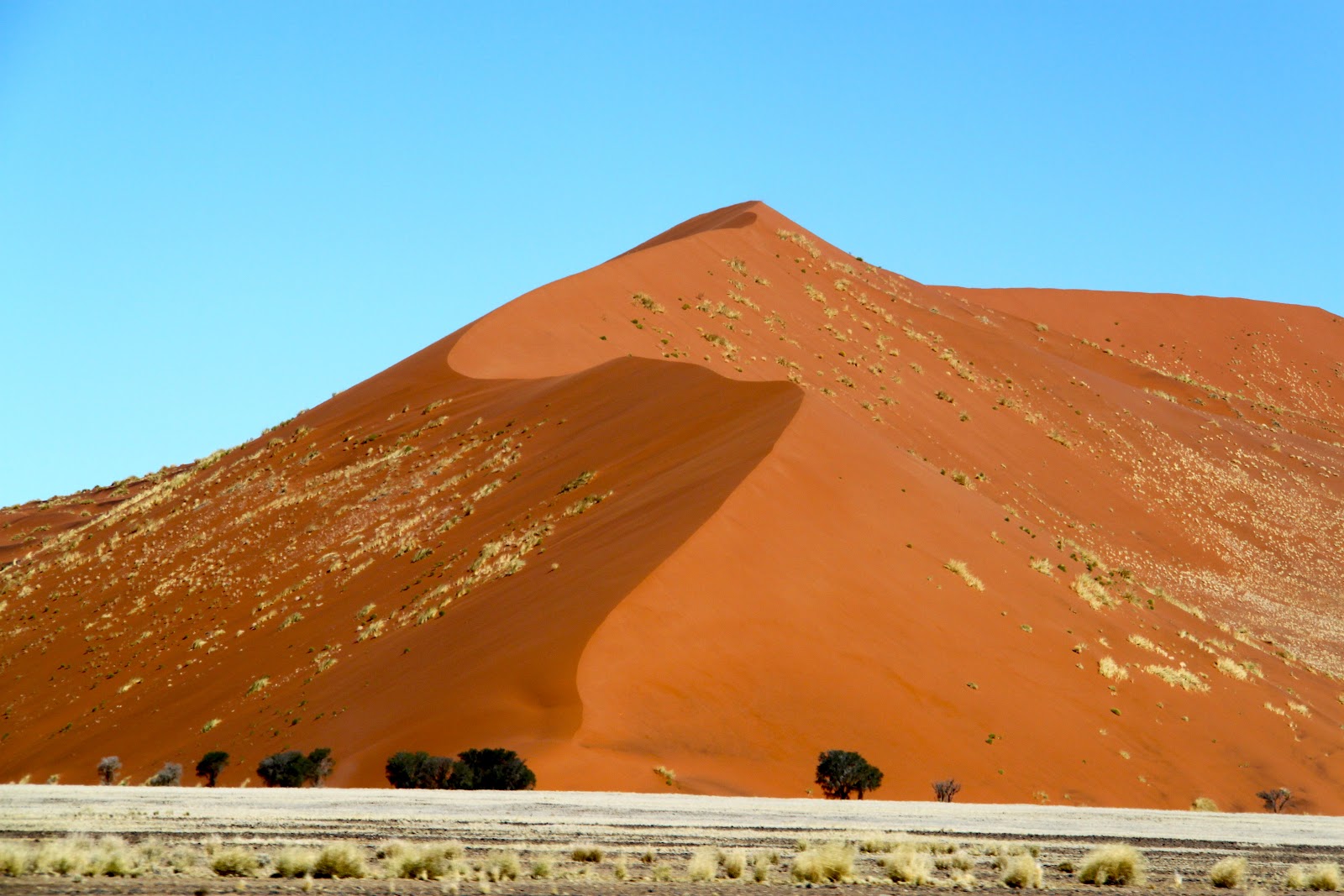
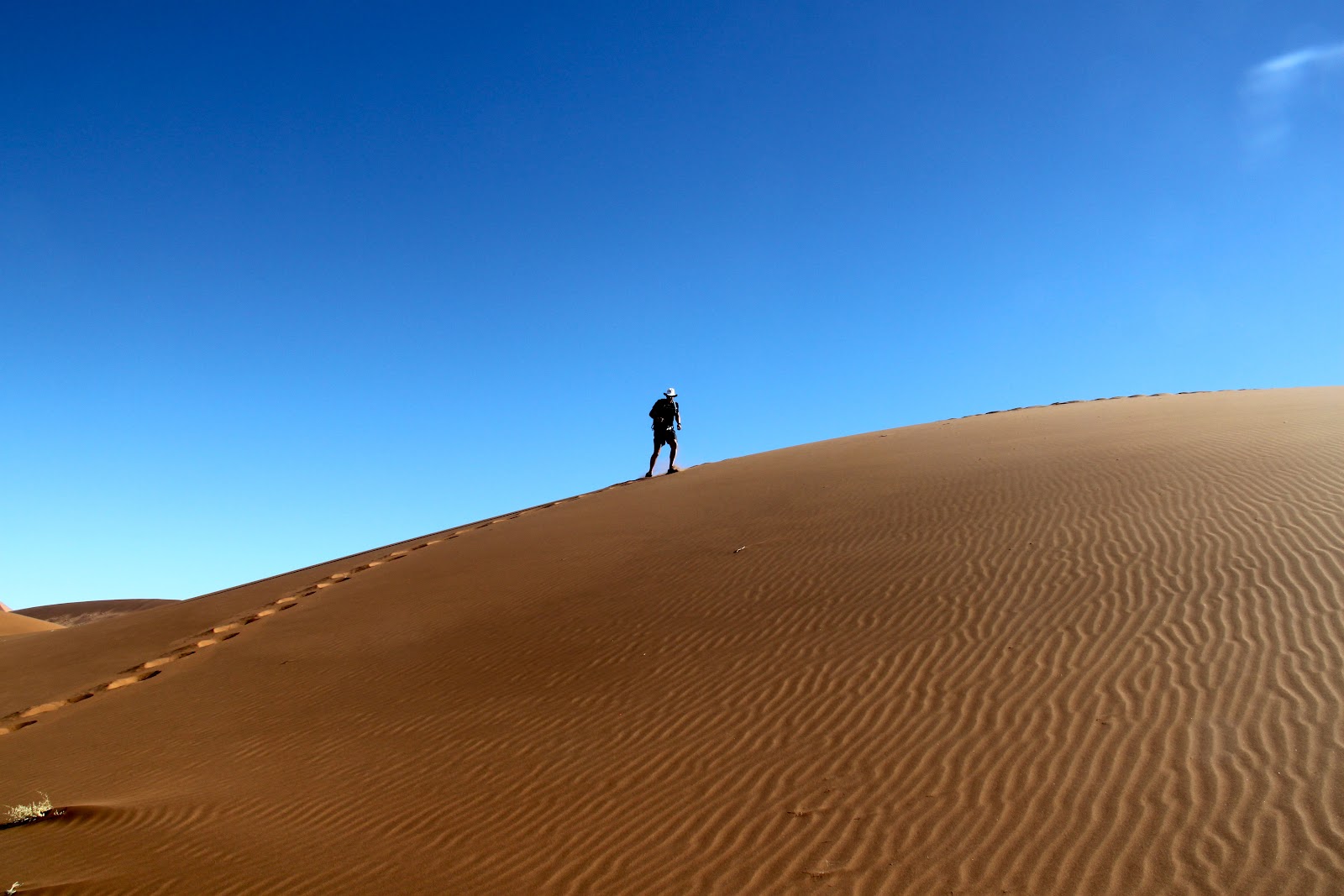
The drive took 4 1/2 hours to reach the Sossusvleii area. We decided to drive into the park in our Jeep. It was 60 Kilometers along beautiful red sand dunes to reach the end of the road, where we then four-wheeled in deep sand for 5 Kilometers. Scott was like a kid in a candy store with a smile on his face. We hiked up one of the dunes and jumped around.
Dunes start to appear in the distance
Driving down the deep sandy  road.  Don’t stop or you will get stuck.  Scott thought this part was fun!
Barb climbs a sand dune

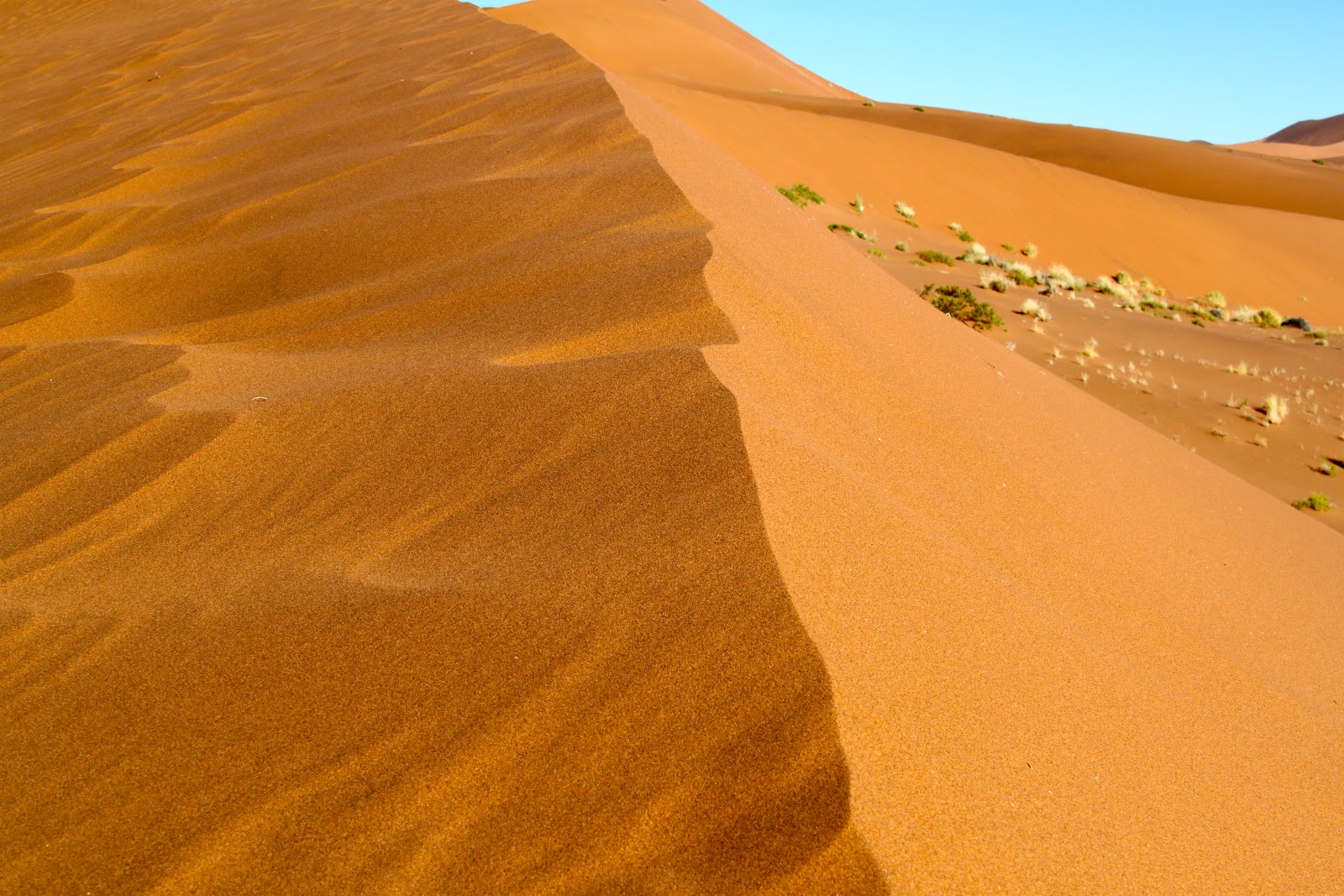
Beautiful colors and love the knife edges

You could get very lost out here

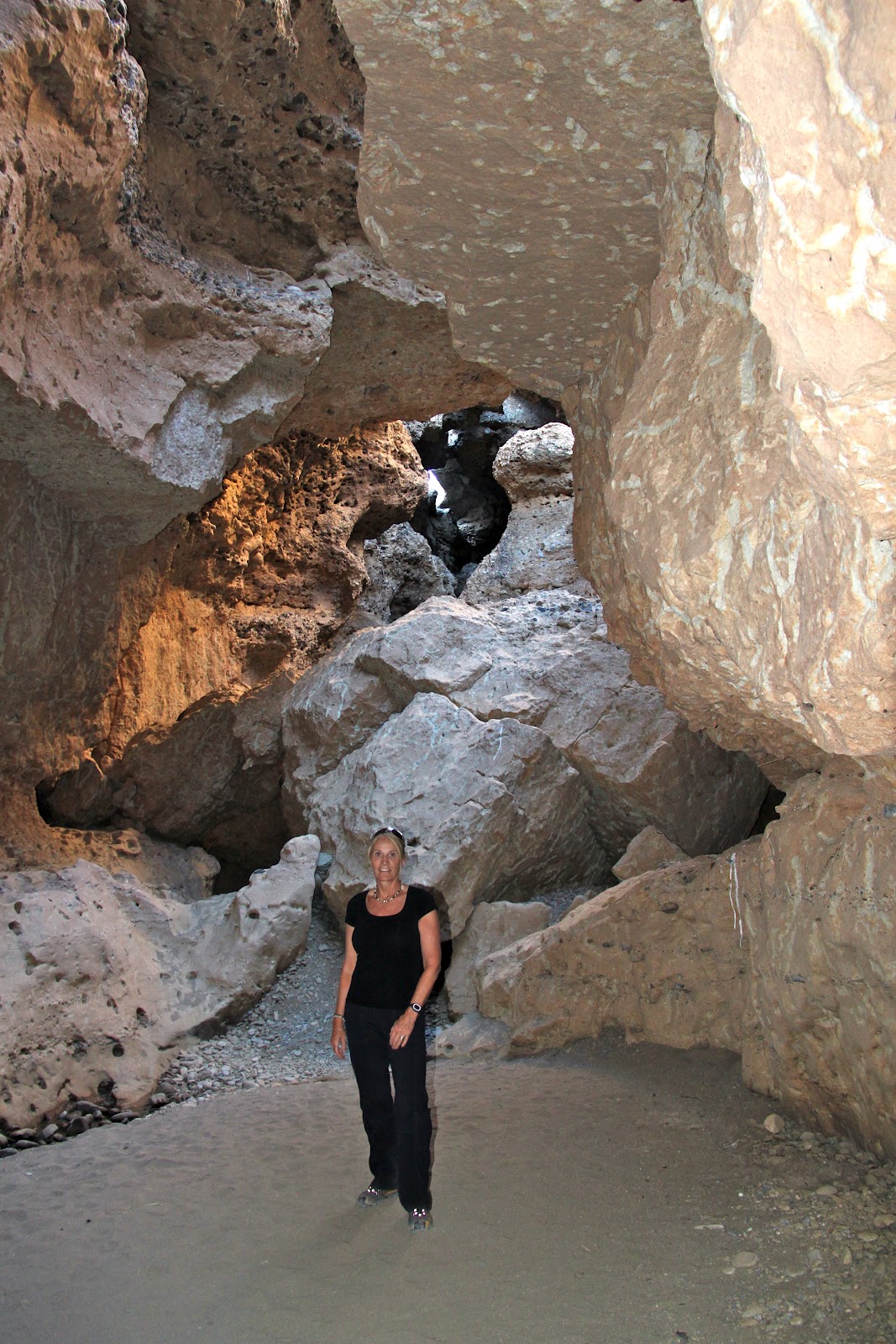
Sesriem Canyon is also in the area. It is a slot canyon that we hiked down. It isn’t very long, similar to Antelope Canyon at Lake Powell, but not nearly as pretty of rock.
Scott

Barb

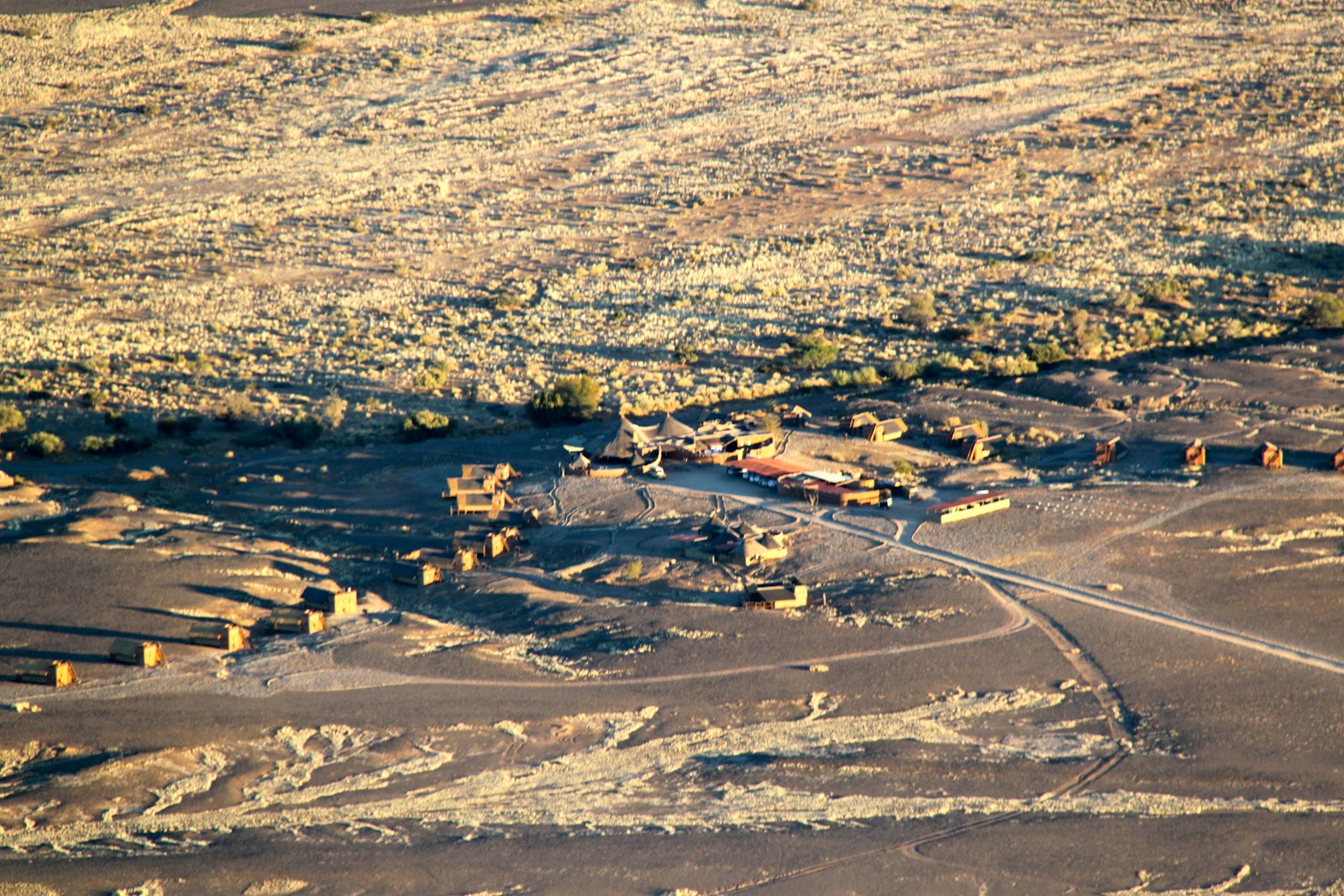
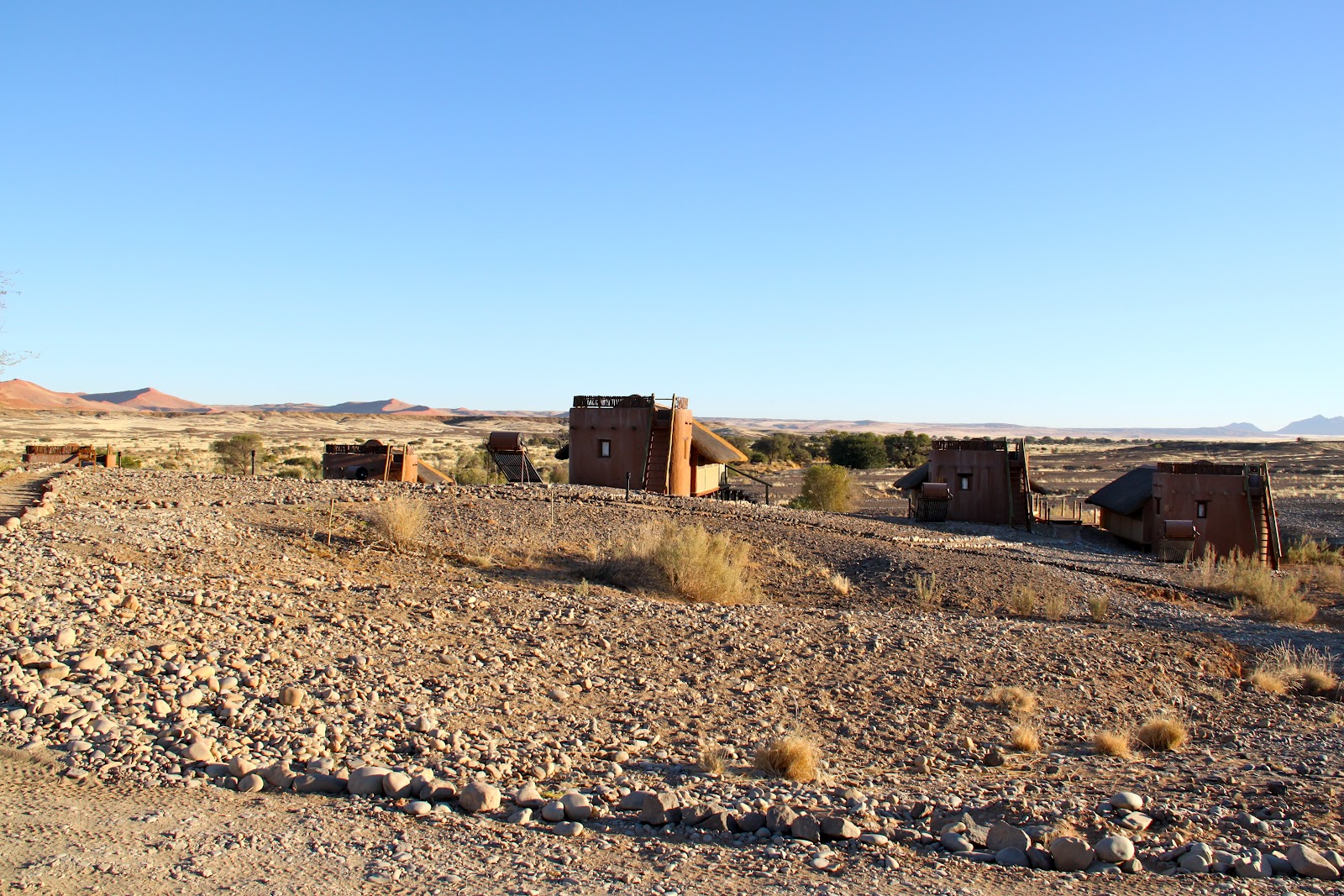
We drove in to our camp which is our home for the next 2 nights. It is called Little Kulala Desert Camp and they have adobe type huts.

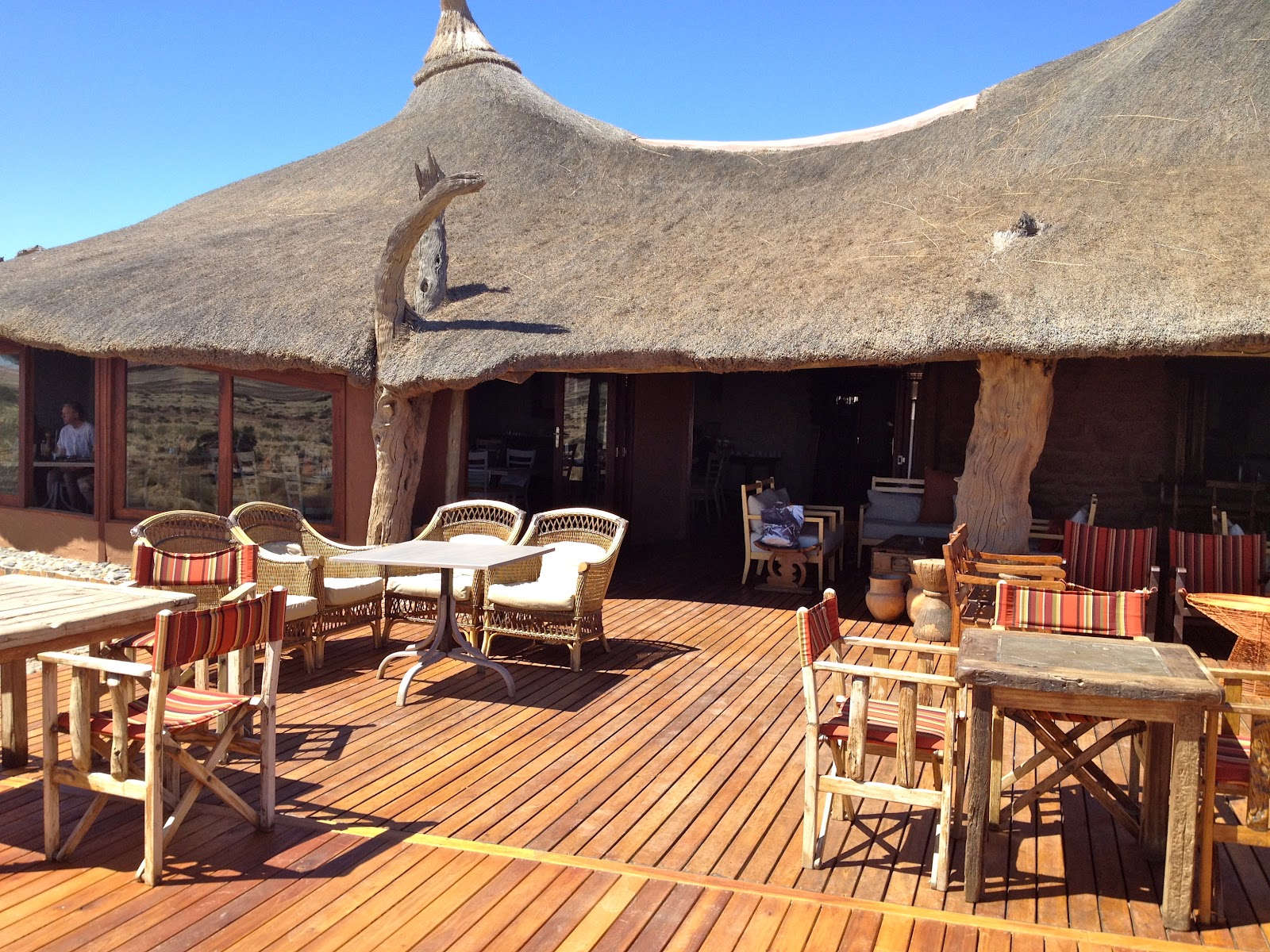
Back deck of main lodge area

View of our desert camp from the hot air balloon

Adobe type huts

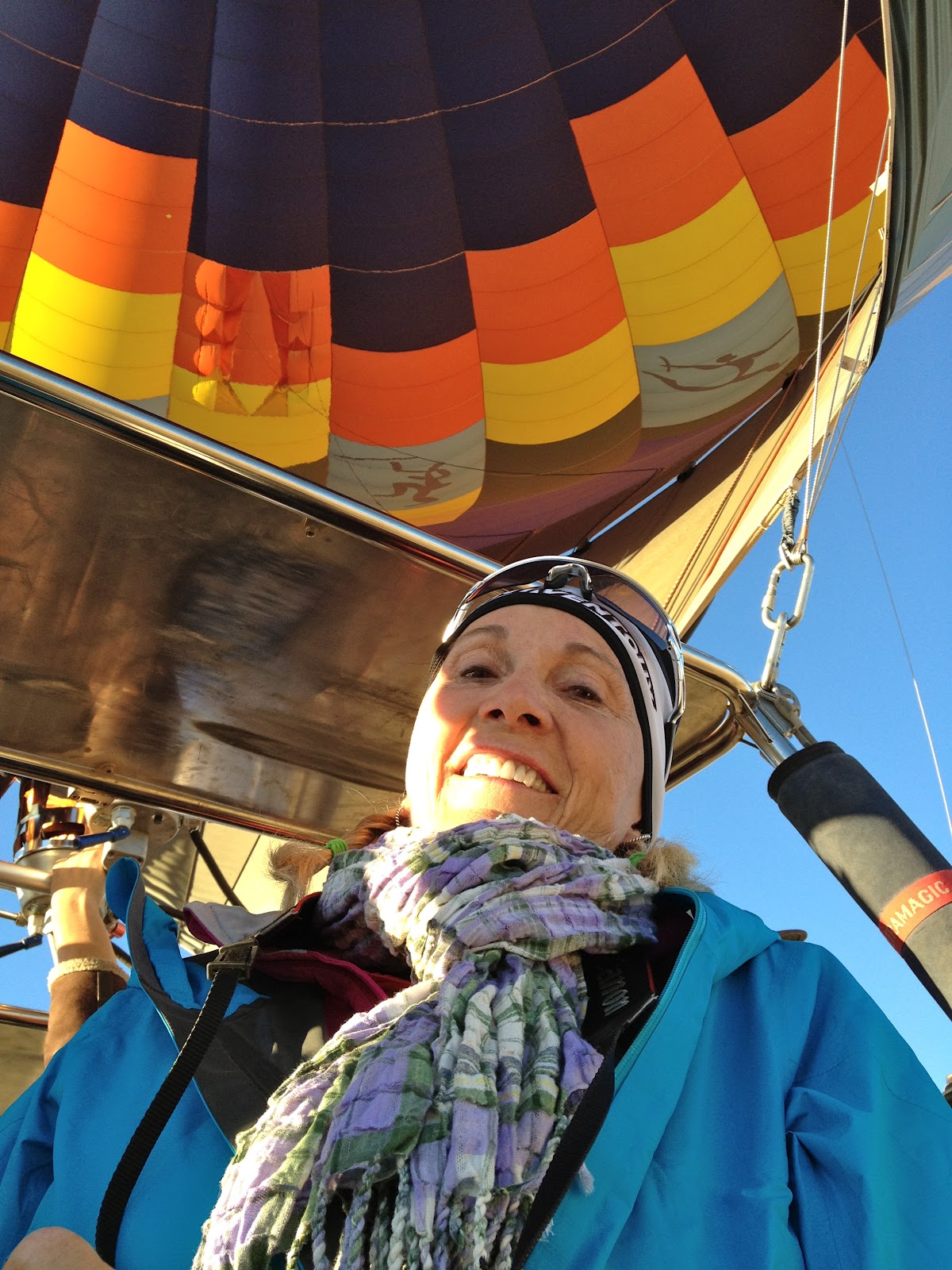
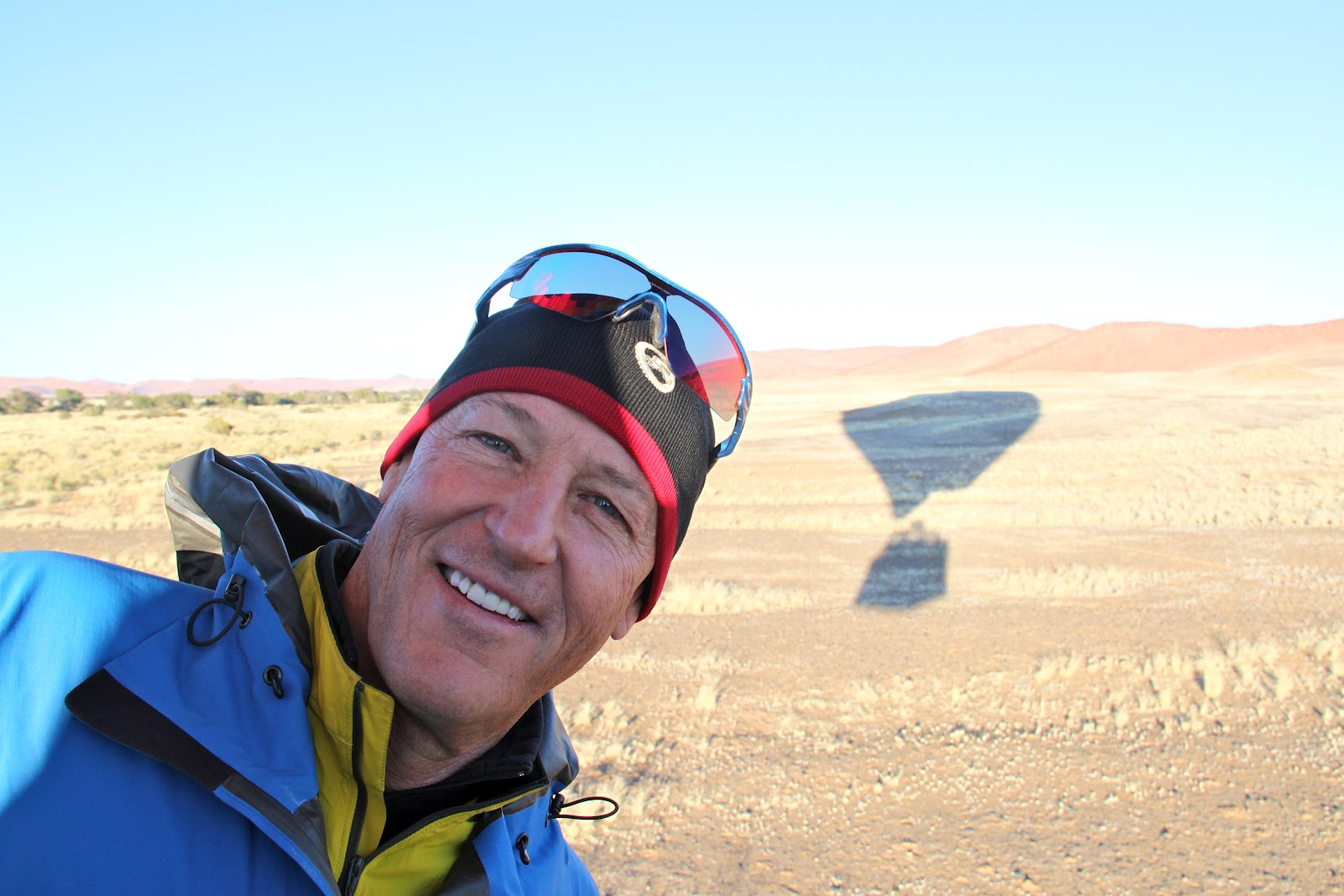
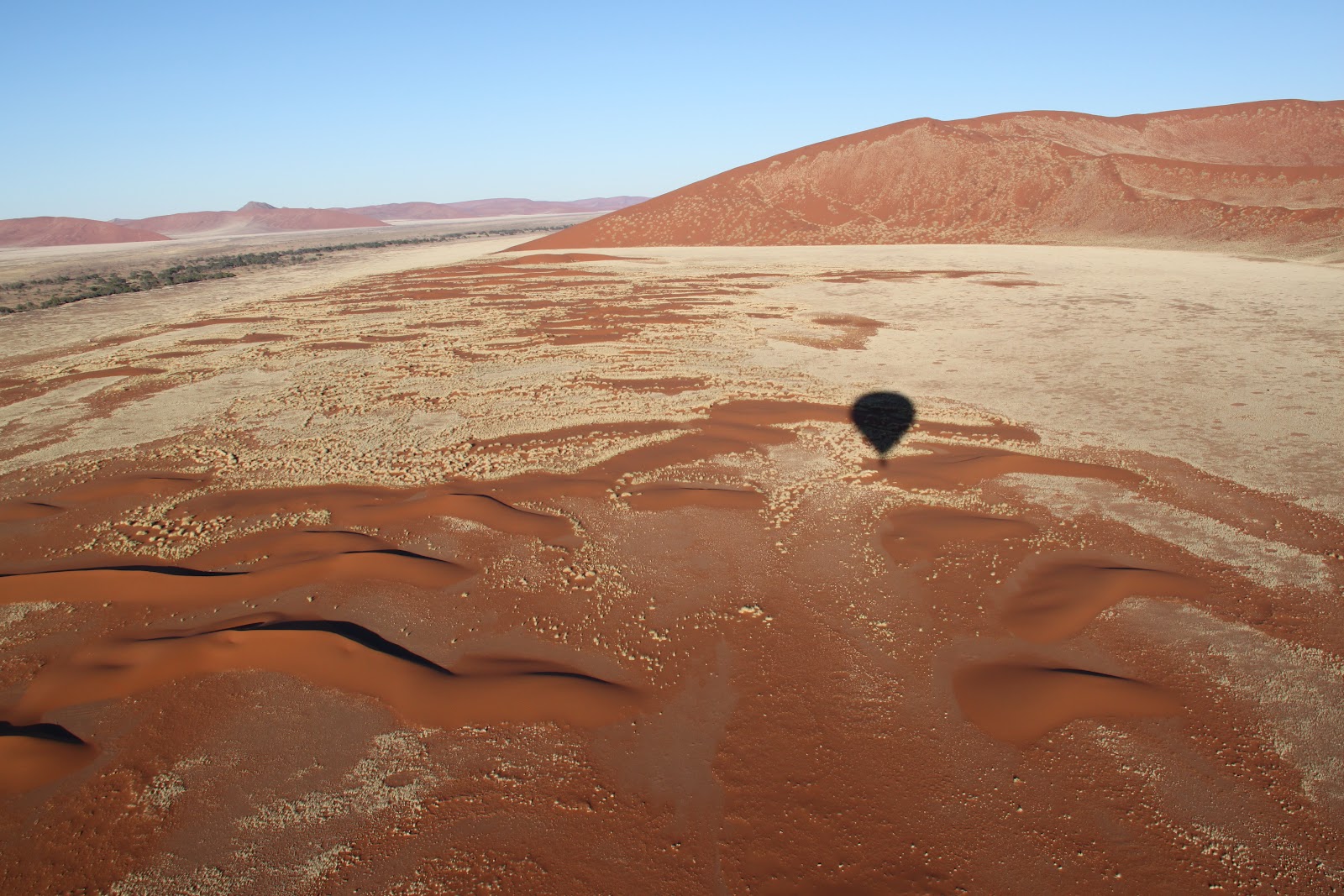
We opted for a hot air balloon ride the following morning. We had to climb into the basket sideways on the ground, which eventually turned itself upright as air was blown into the balloon. We sailed over grassland along the dunes. There are circles on the ground where nothing will grow, and no one can figure out why. They call them fairy circles. A champagne breakfast was served at landing. The amazing part of the landing was that the pilot, with the help of guys hanging on the basket, landed directly on the trailer. How’s that for precise?

Flying next to the dunes

The shadow of our balloon

Sun and Shade

A beautiful ride

Fairy Circles

Ready to ride

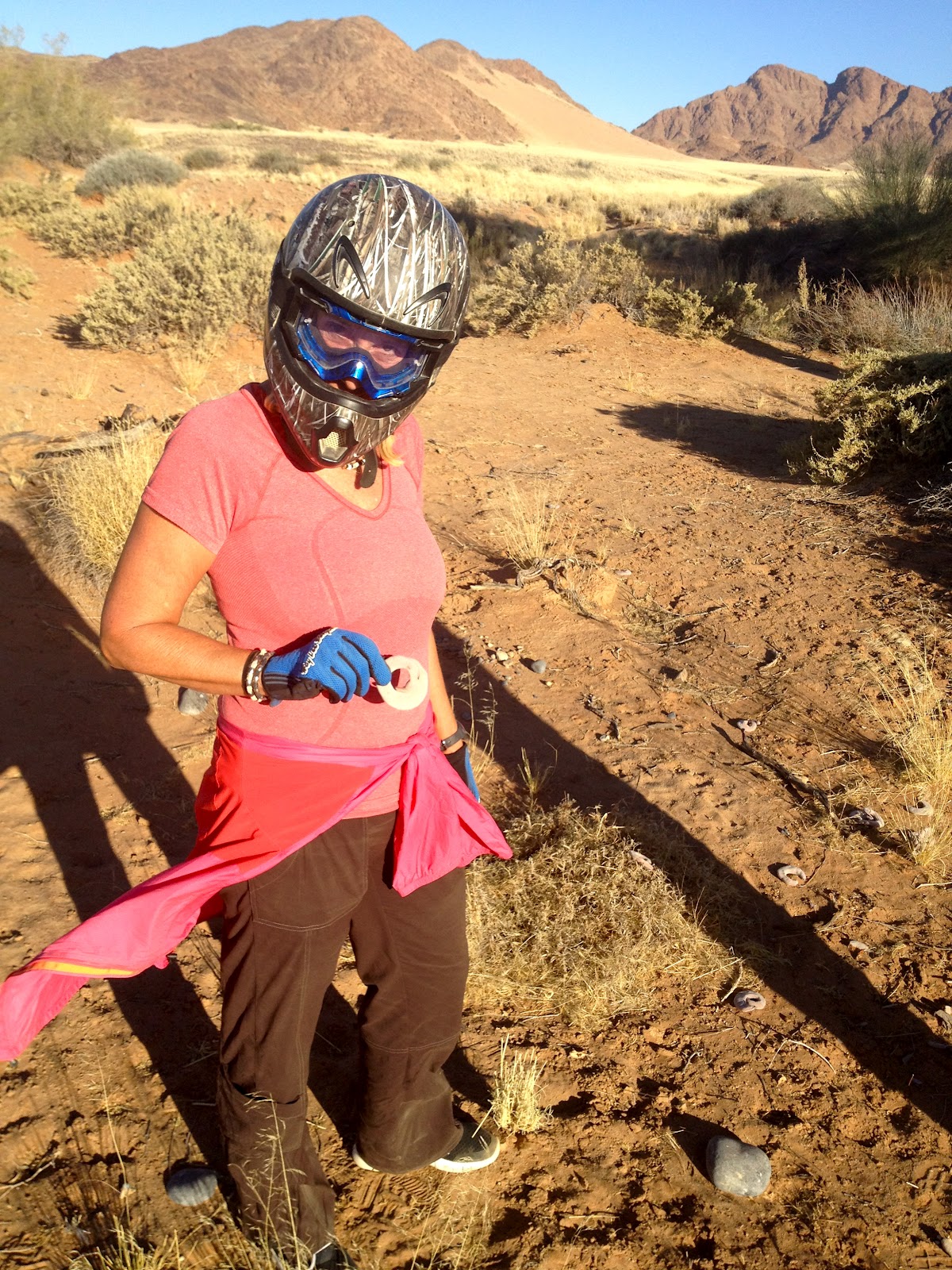
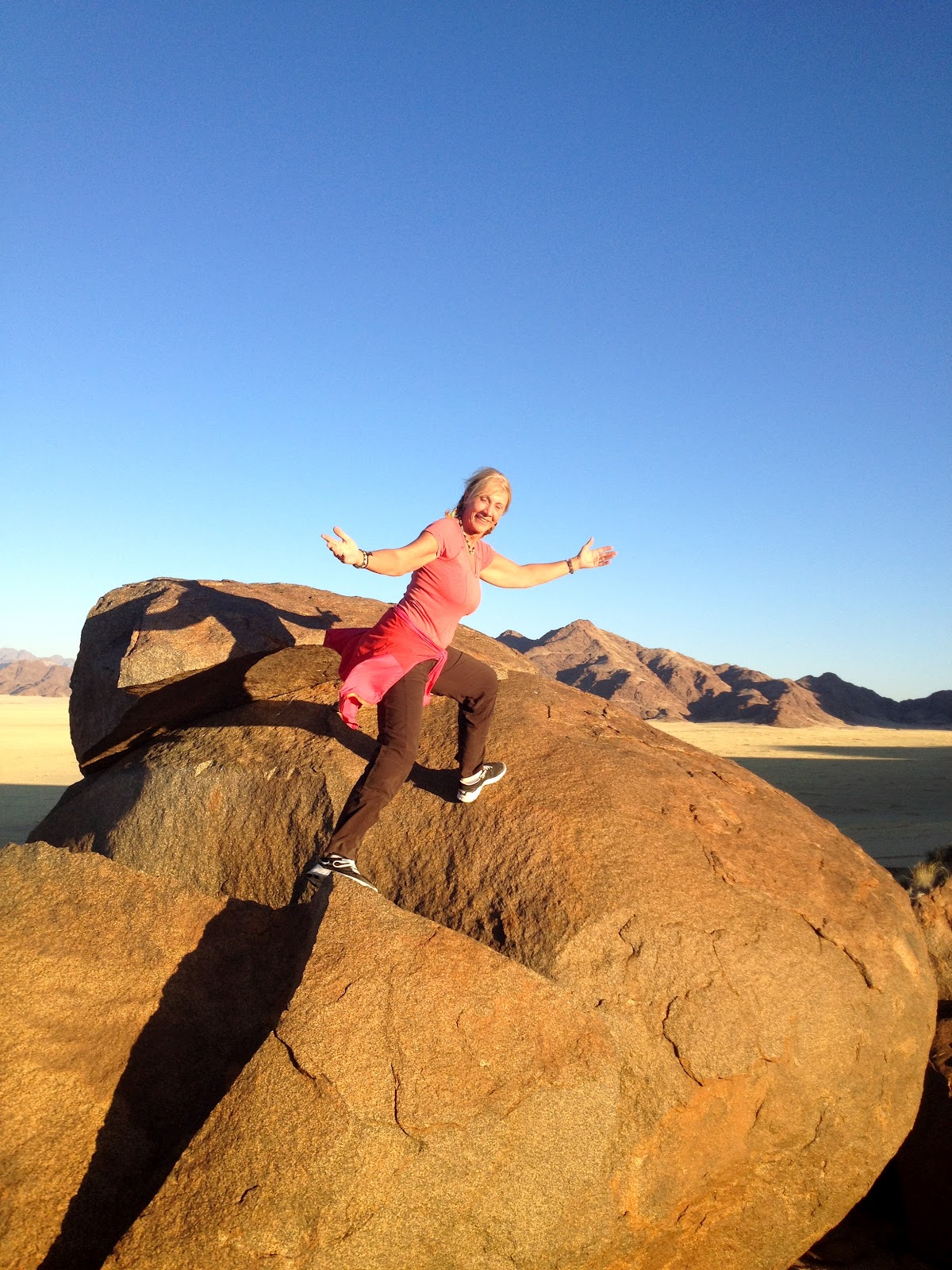
The afternoon was a quad ride through the riverbed and then up on the mountain. Call it Pride Rock. Beautiful warm smooth granite boulders that you want to feel with your hands and climb up and hold Simba above your head, and claim to the world that you are happy to be alive. We had a toast on top and played around on the rocks. The view over wheat colored grass with purple mountains in the distance on one side, and red sand dunes on the other side was a sight. We had a great time.

Barb with guide

Nice Helmet
Scott

A Sundowner Toast

Happy to be Alive!

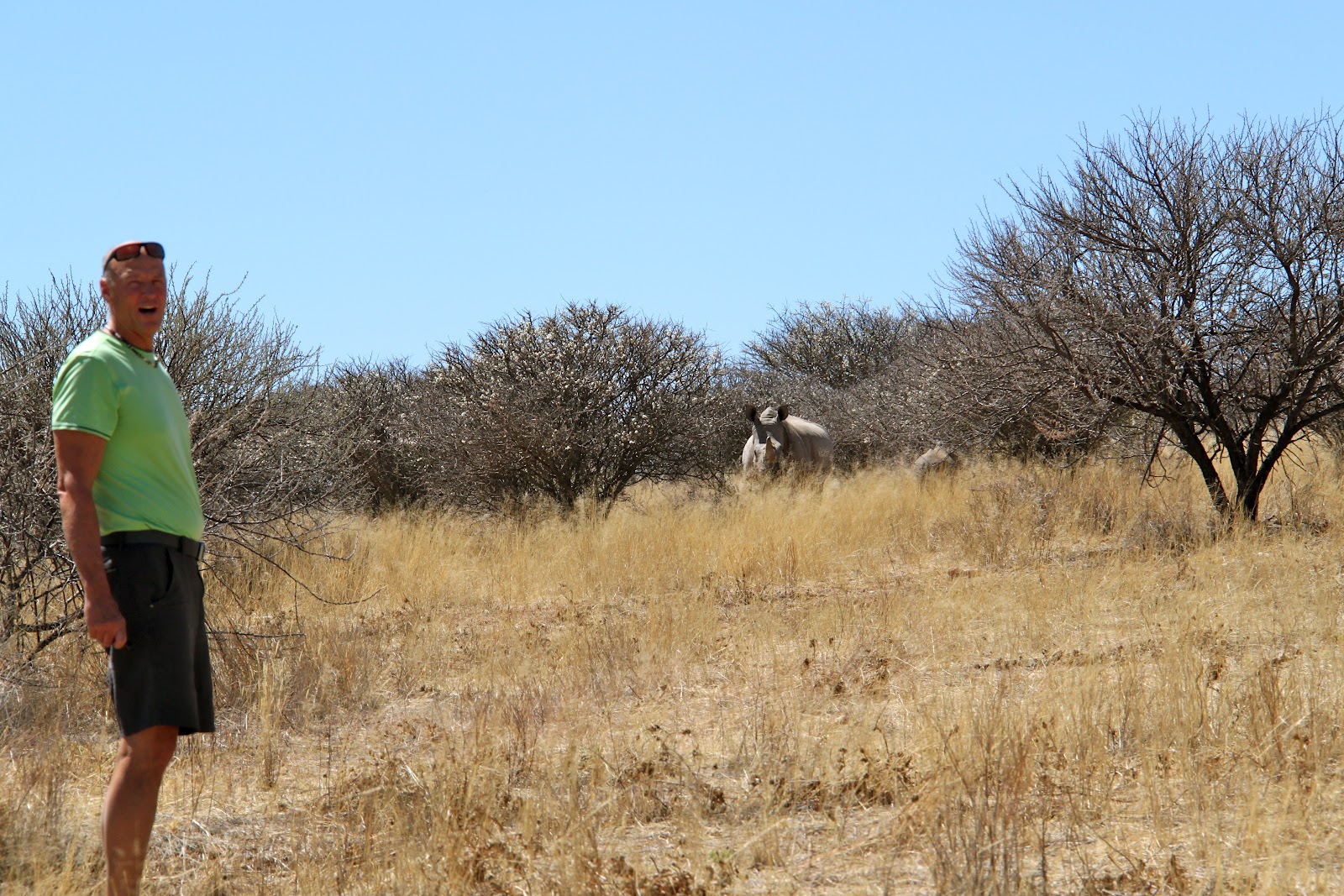
The drive to GocheGanas, which is our last stop in Namibia, is 5 hours away on dirt roads. It was a pretty drive, and reminded us again of Utah down by Huntington. After finding the turnoff to our lodge and spa, we passed a Rhino with a baby.

That is a Rhino with her baby.  Don’t get too close Scott!
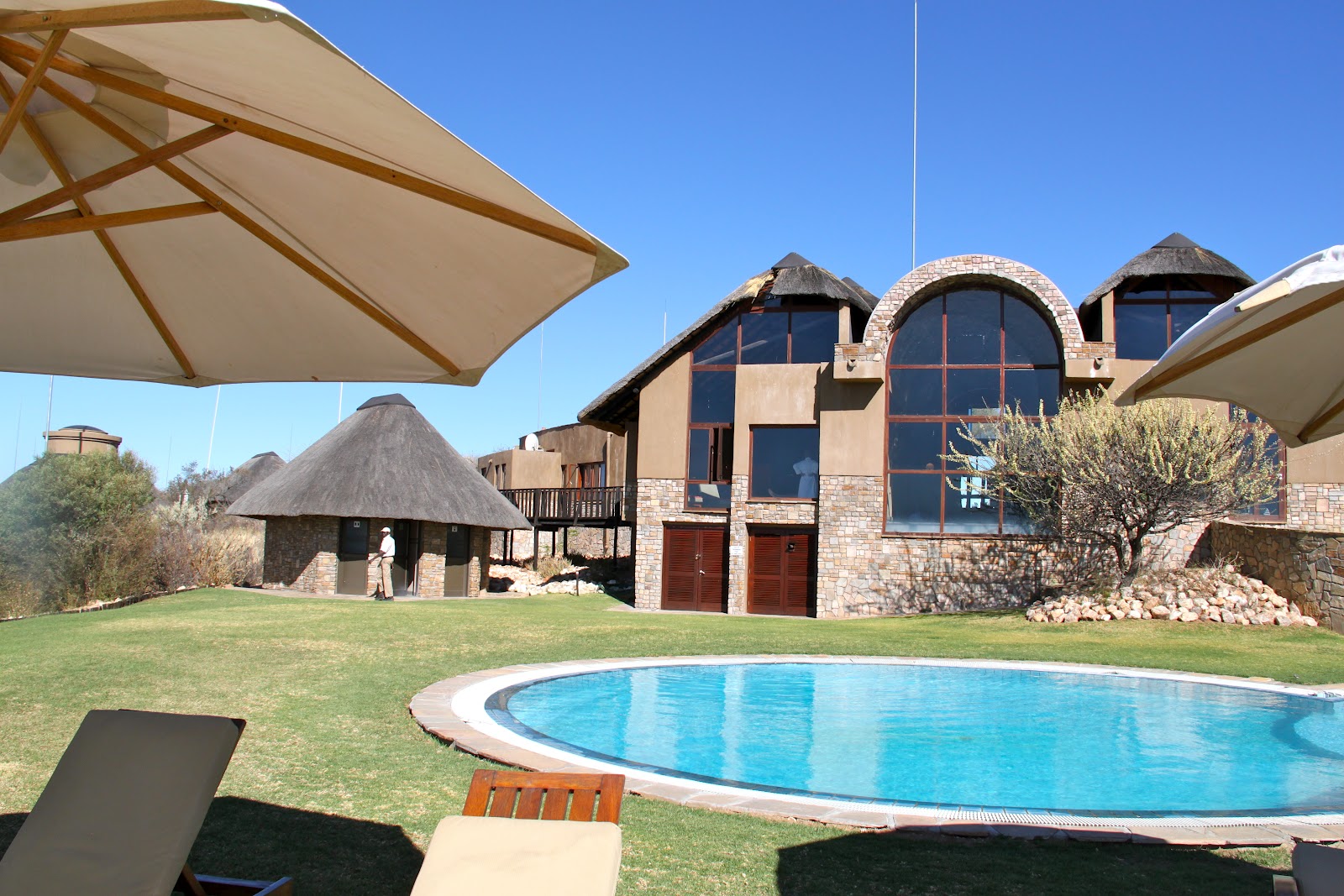
Room at Gocheganas

GocheGanas dining area

Pool and Spa area

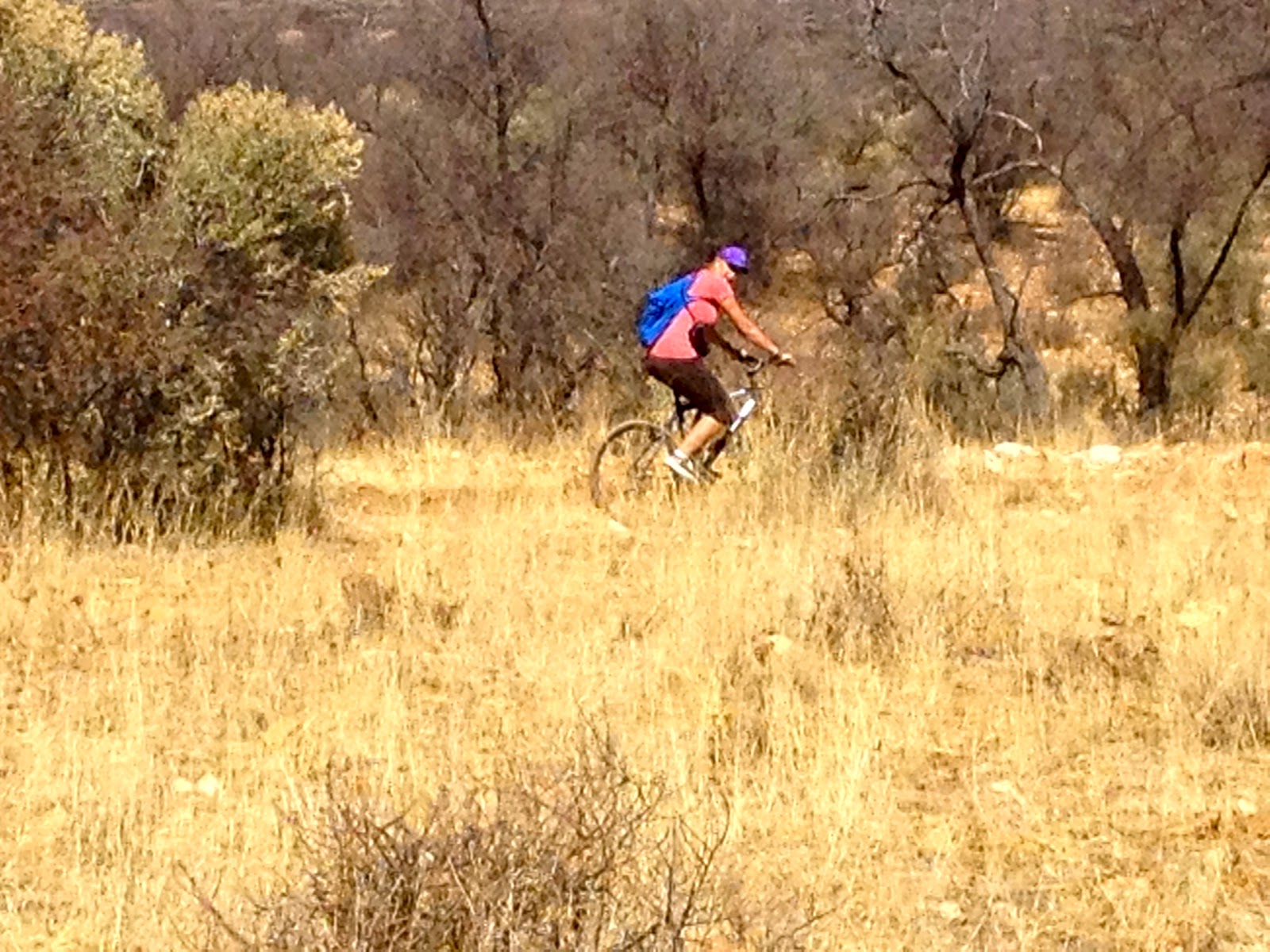
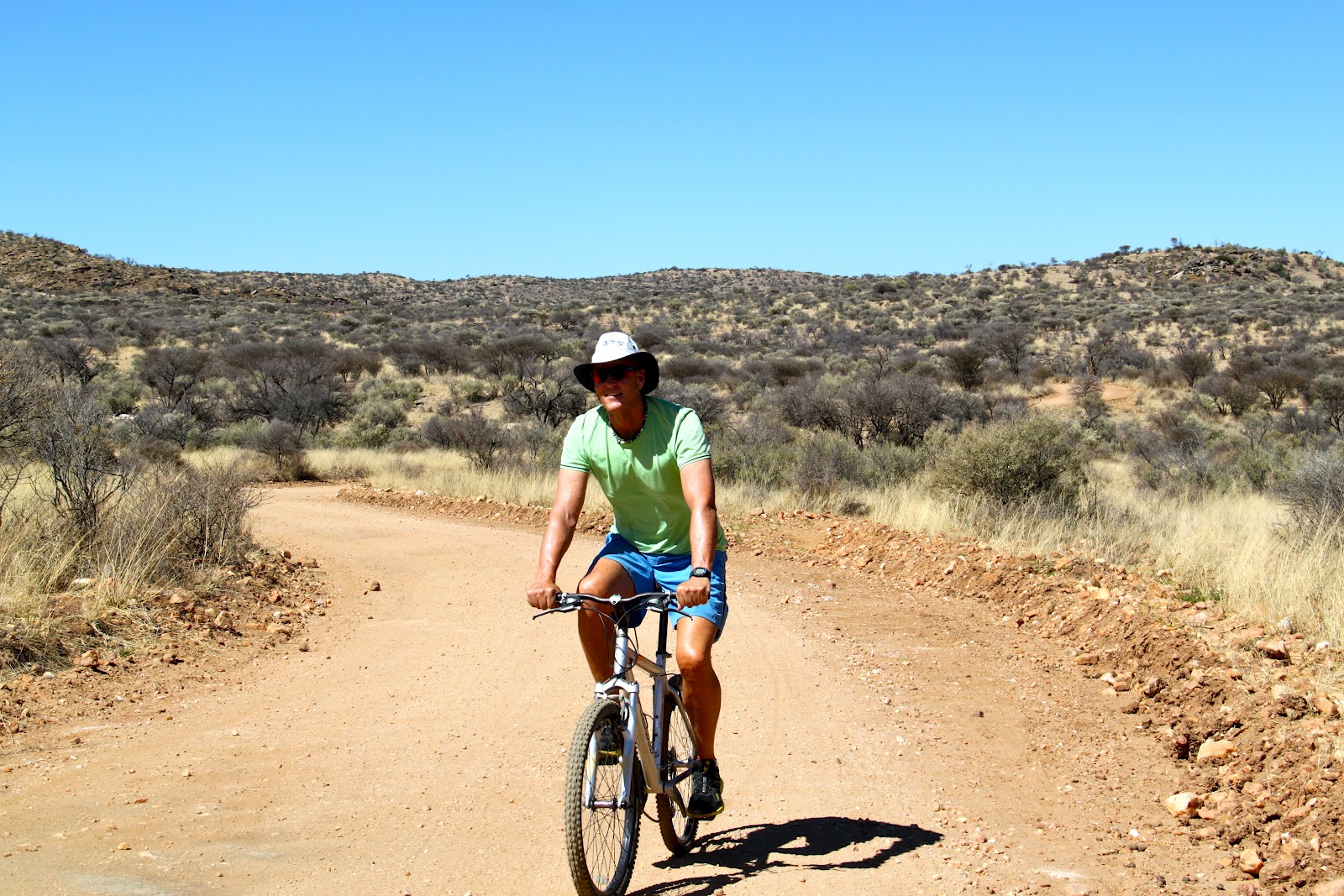
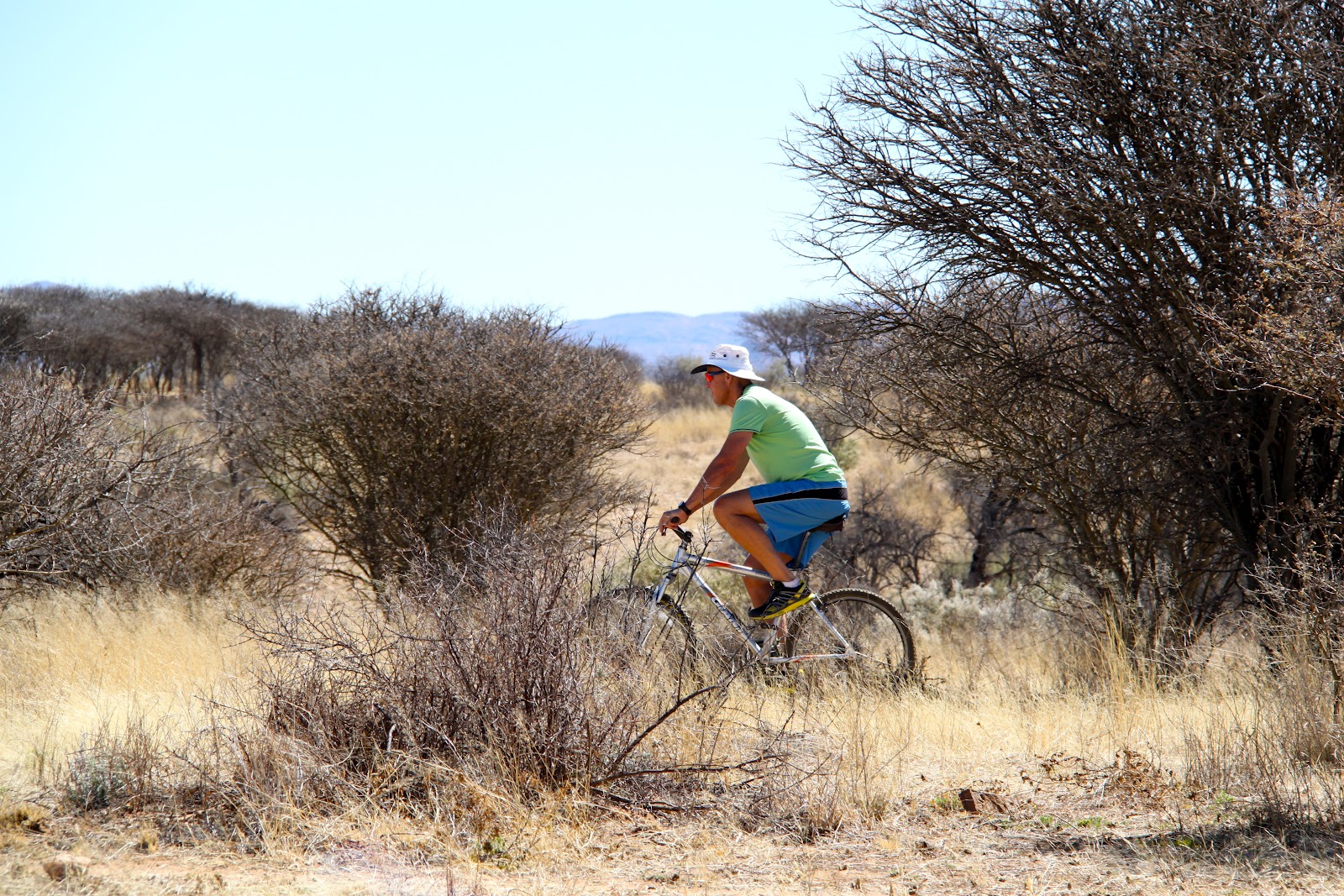
We don’t like to rest long, so upon arrival, so we took a 45 minute mountain bike ride (on really heavy bikes) and saw some baboons. We had to hurry back for our 30 minute back and neck massage. We sat by the pool for another 1/2 hour and then rather than going out on another game drive we opted to get back on the bikes and do our own bicycle safari. We saw more baboons, zebra, oryx, heartebeast , warthog, and we were tracking giraffe.

Barb out getting a little one on one time with the animals

We saw baboons, Kudu, Zebra, Oryx, etc.

Watch out for animals!
Giraffe footprint we were tracking

 We did have a map, but it was pretty worthless, and of course we took a wrong turn. As the sun was about to set, we thought it best to retrace our route back to camp. Luckily we had our headlamps, as who knows what you could encounter on your own self guided bike safari in the dark. We did make it back in one piece.

The Windhoek airport is 1 1/2 hours away and we have an 8:15 flight, so we will leave our lodge at 5:00am.

By the time we turn in our car, we will have driven 2800 Kilometers, mostly gravel and dirt roads. (1868 miles!!!)
It has been an adventure, and something that we would definitely do again. We are off to Botswana.

Namibia, Africa (Erongo Wilderness Lodge and Swakopmund) Sept. 4-5, 2012

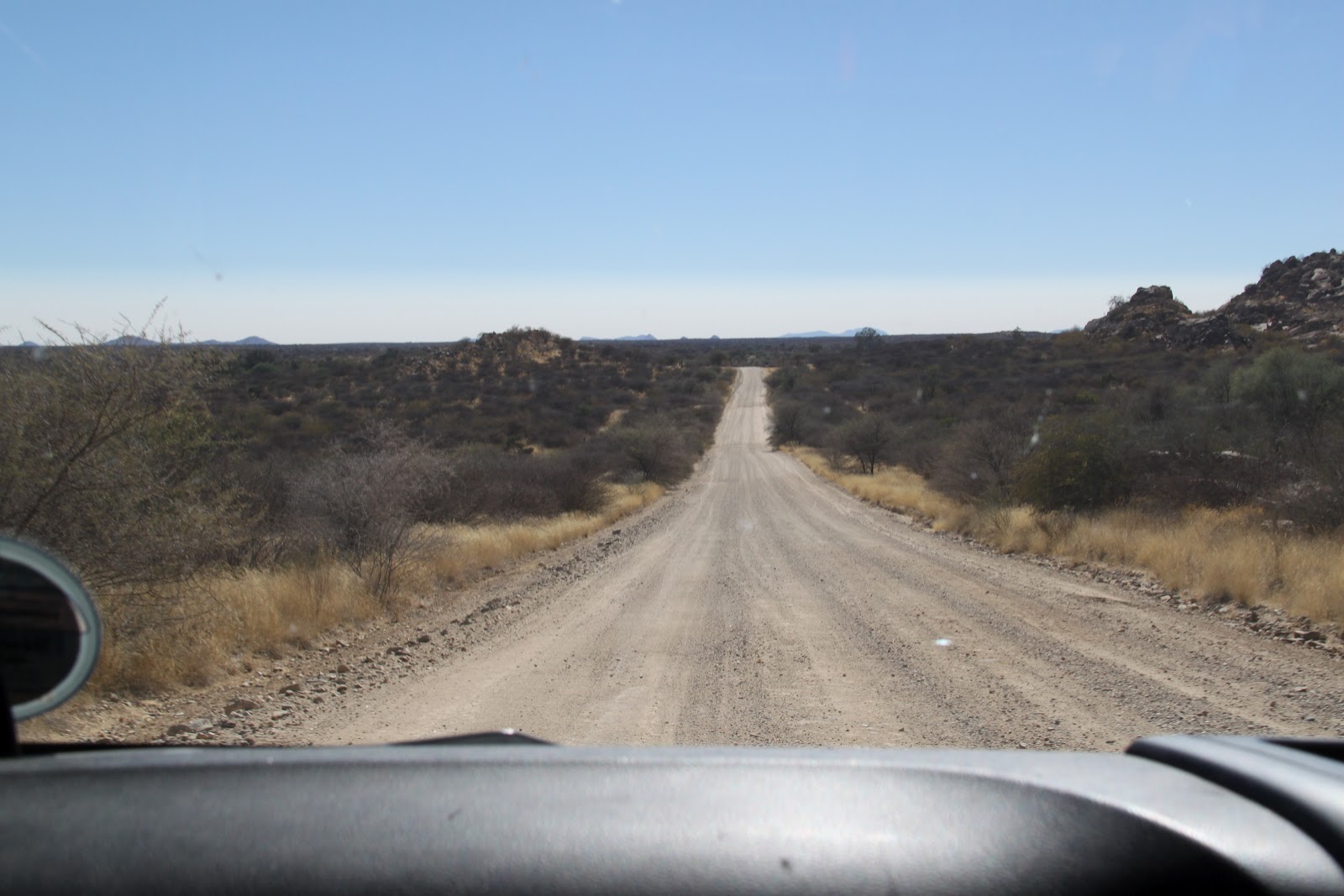
Driving our own car has been great, but you should know that the roads leave something to be desired for most. (I would definitely recommend a 4 x 4). Most are gravel or dirt roads.

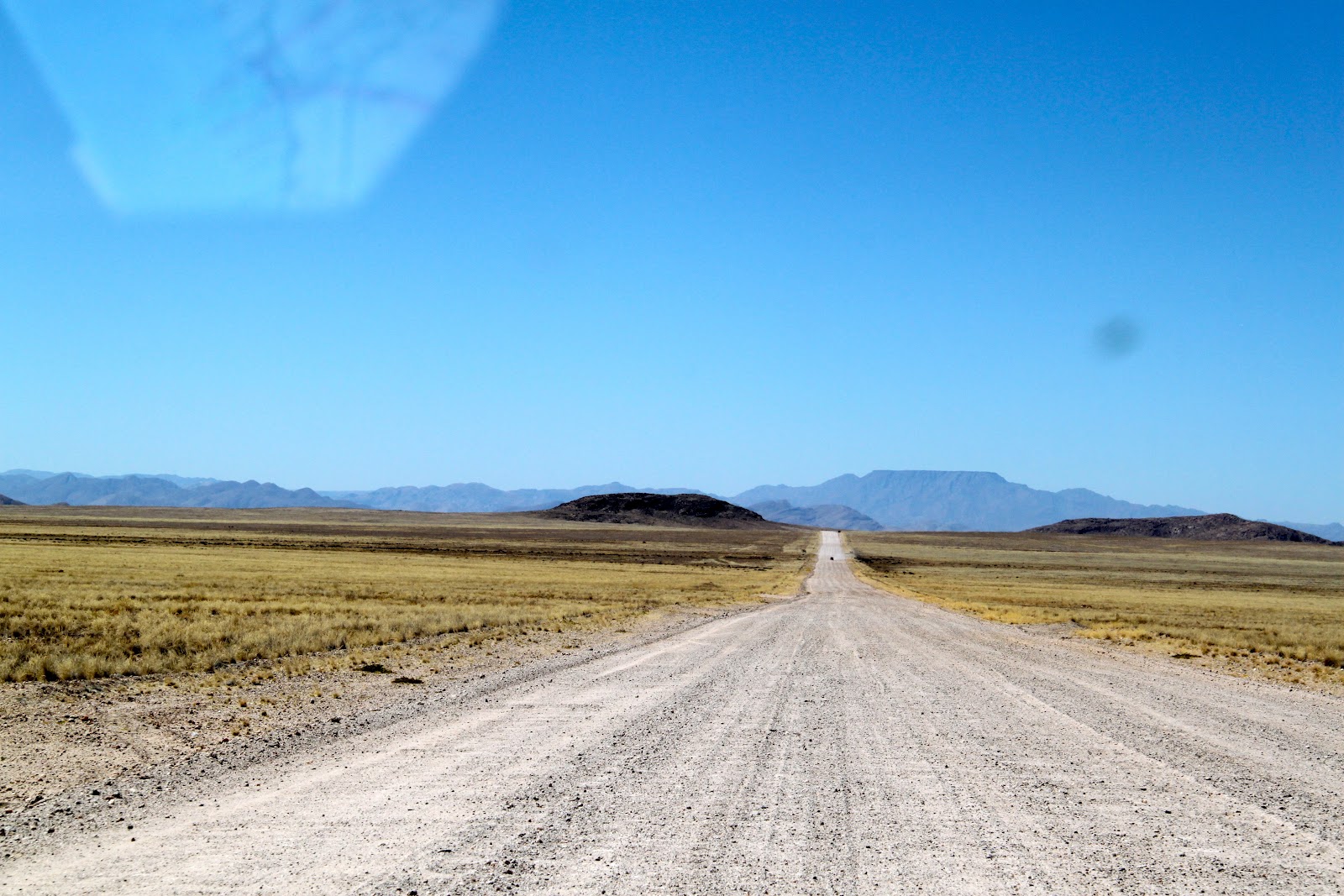
These are the desolate roads all over Namibia

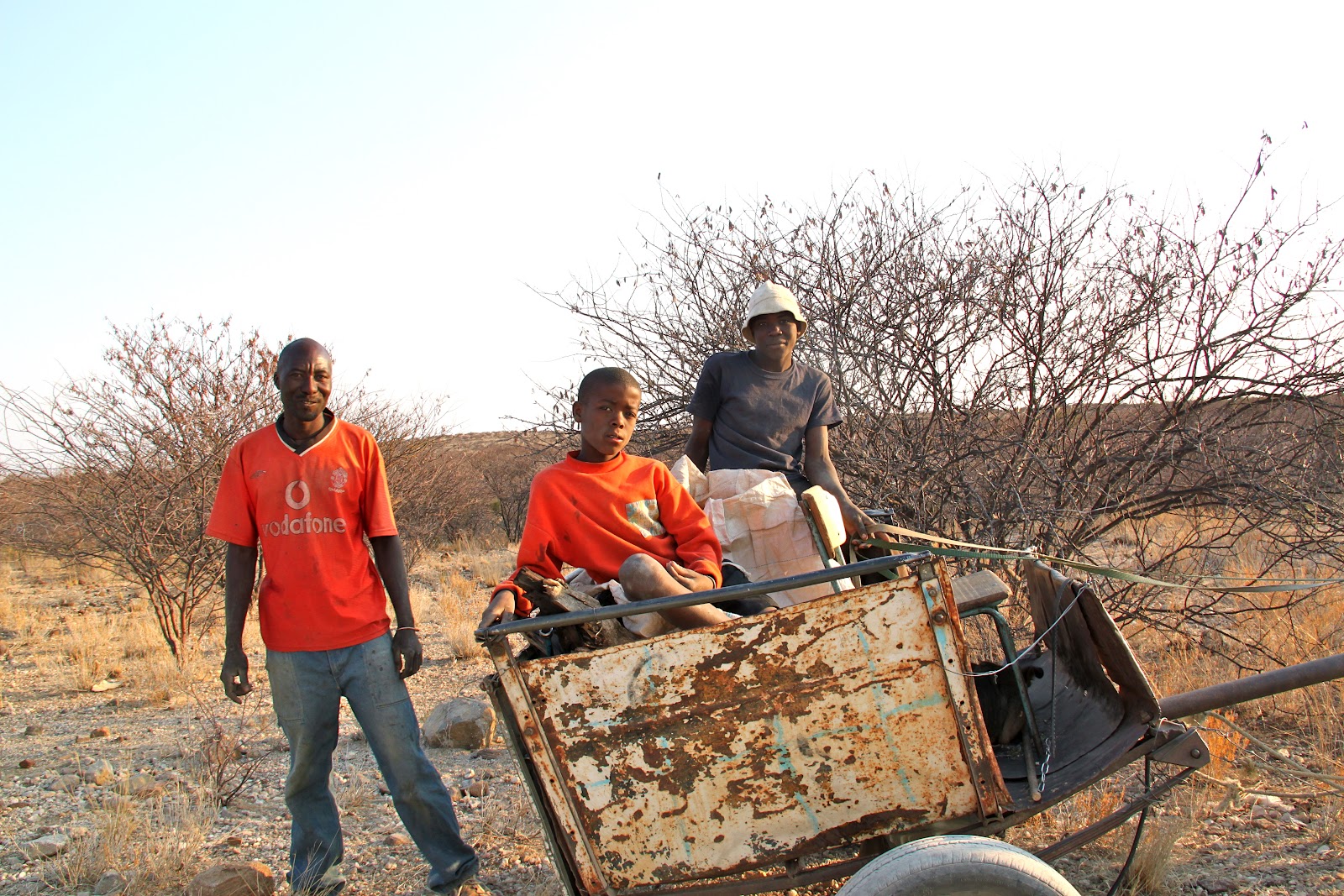
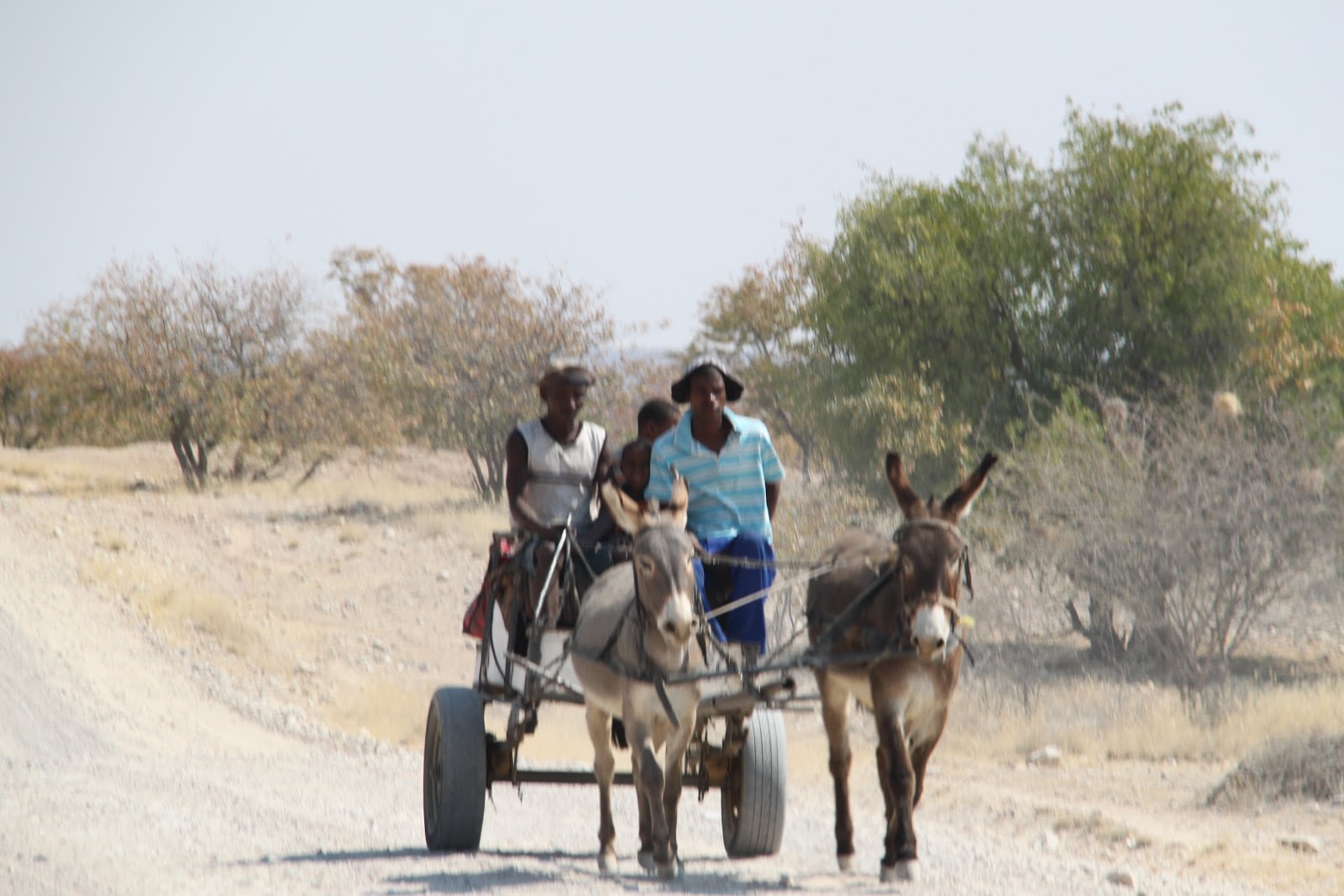
We encountered more donkey carts along our way along with free roaming animals to the Erongo Region. We are heading to the Erongo Wilderness Lodge. Four hours later we arrived after going 40 minutes down a farm road that we mistook for our route and nearly ran a donkey cart off the road.

We met this nice man and his sons on our wrong turn.  We almost ran the donkeys pulling the car off the road.  He informed us that there were only farms on this road.

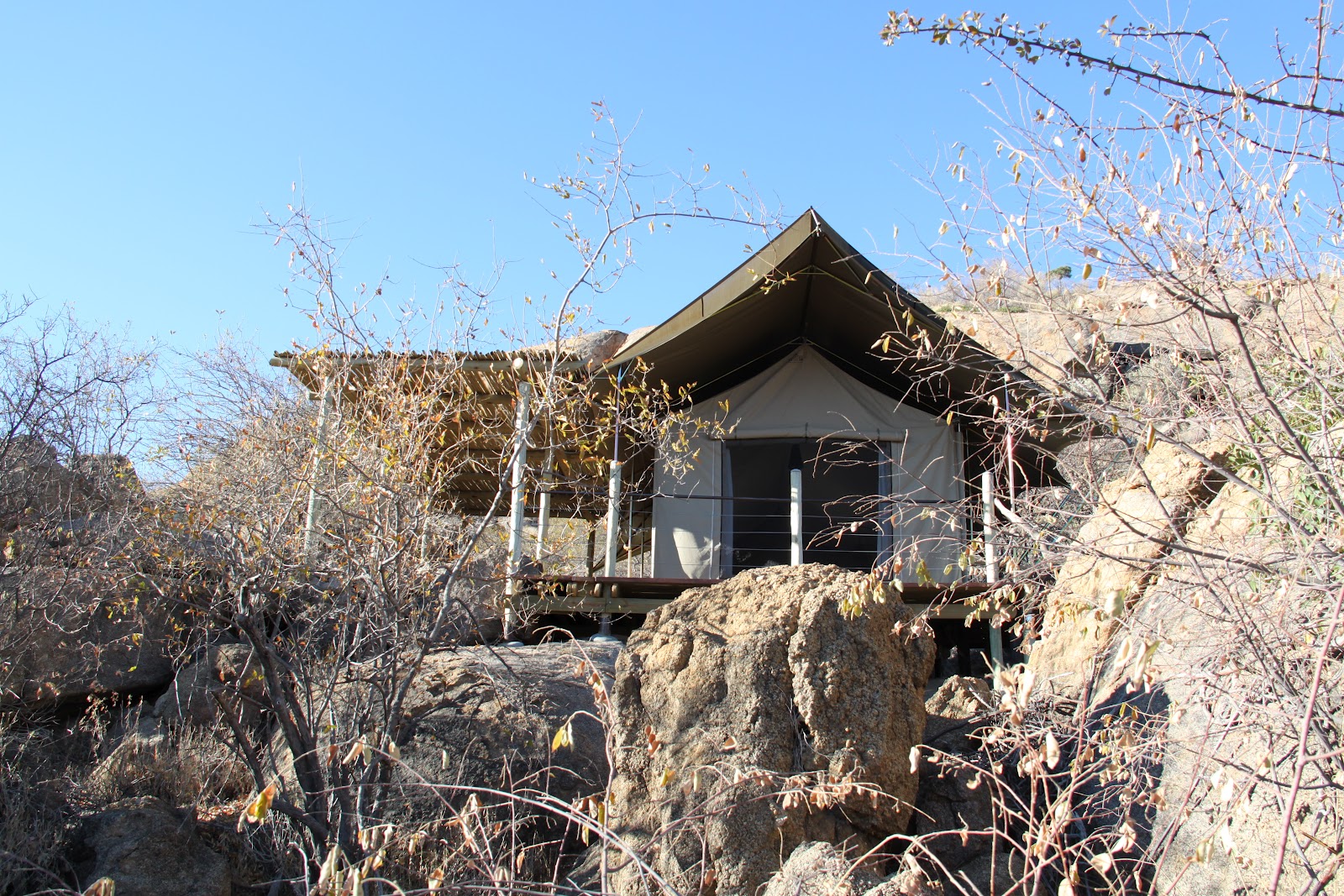
It is a different landscape than Damaraland, and less scenic. Our Lodge is a series of tented camps set in the hillside, but not as nice or as well constructed as our last stop.

More primitive tents than what we have had along the way

Tents set into the rocks.  The dining tent is on the other side of the hill.

The road into the tented camp.  (reminds us of Southern Utah)

We only spent the night, went on a short hike and headed to the Skeleton Coast along the Trans-Kalahari Highway to the city of Swakopmund. We are staying right on the Coast in a condominium type suite called Burning Shores.

A lot drier at Erongo


Our short hike
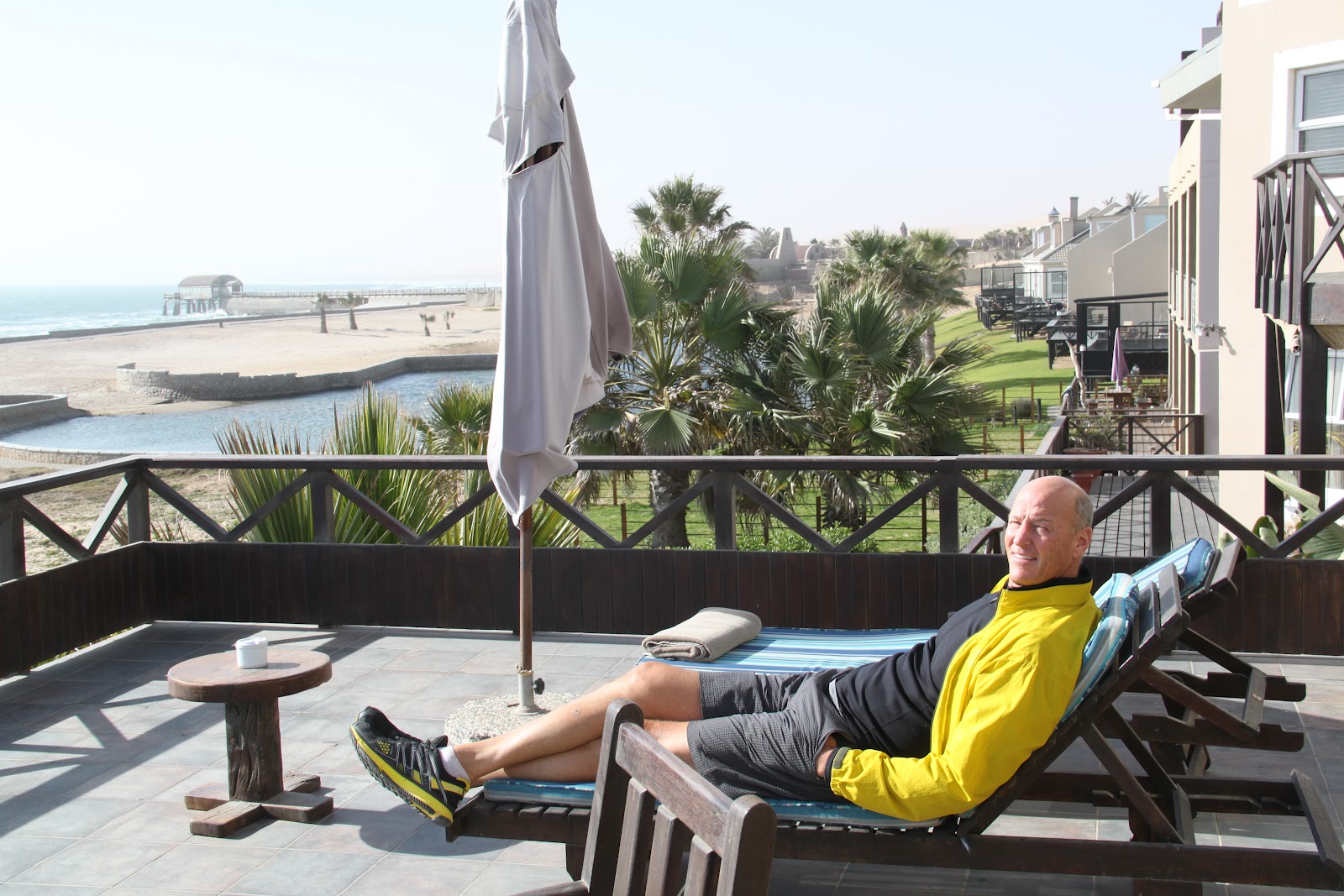
Our condo on the beach  “Burning Shores


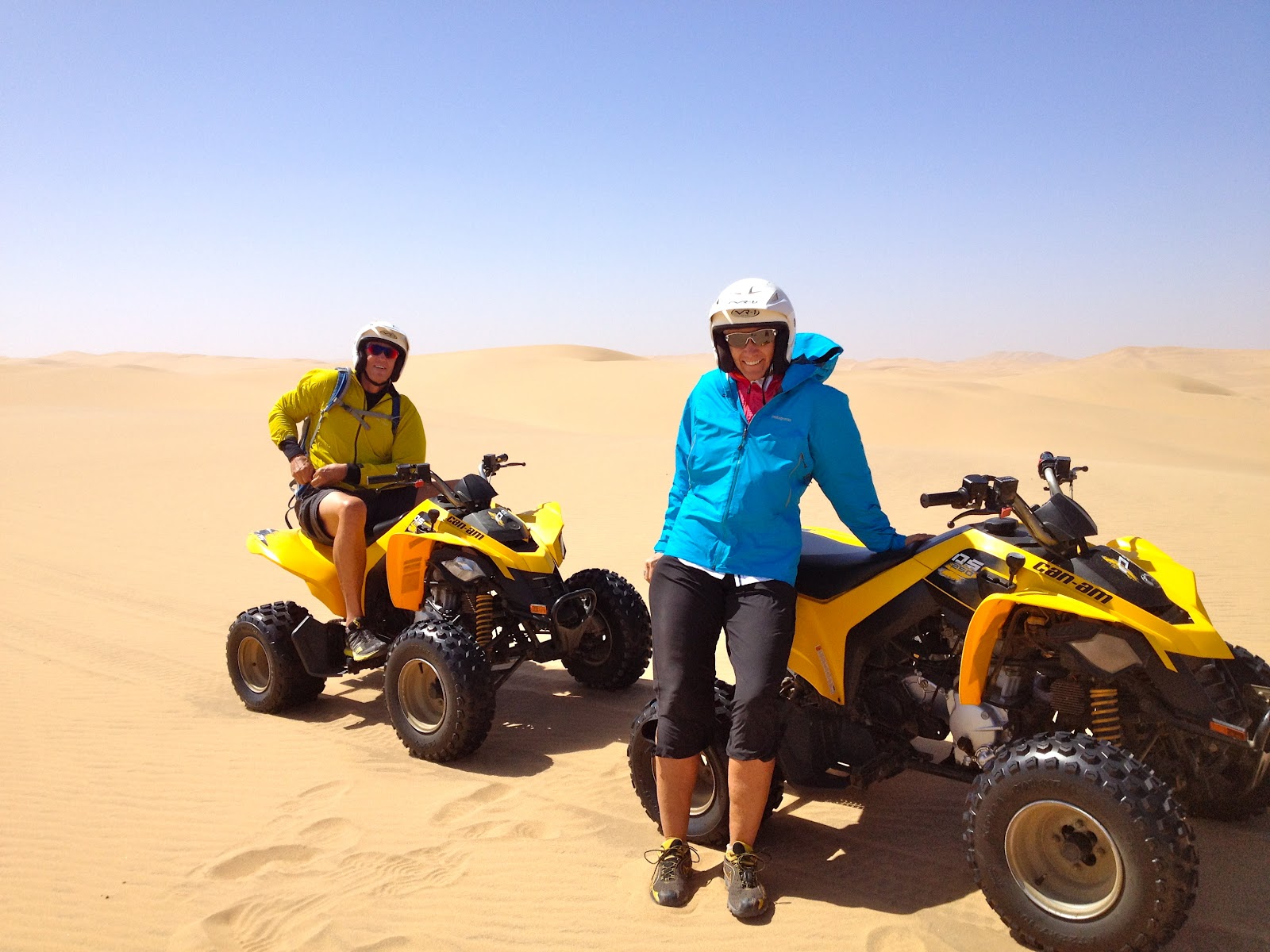
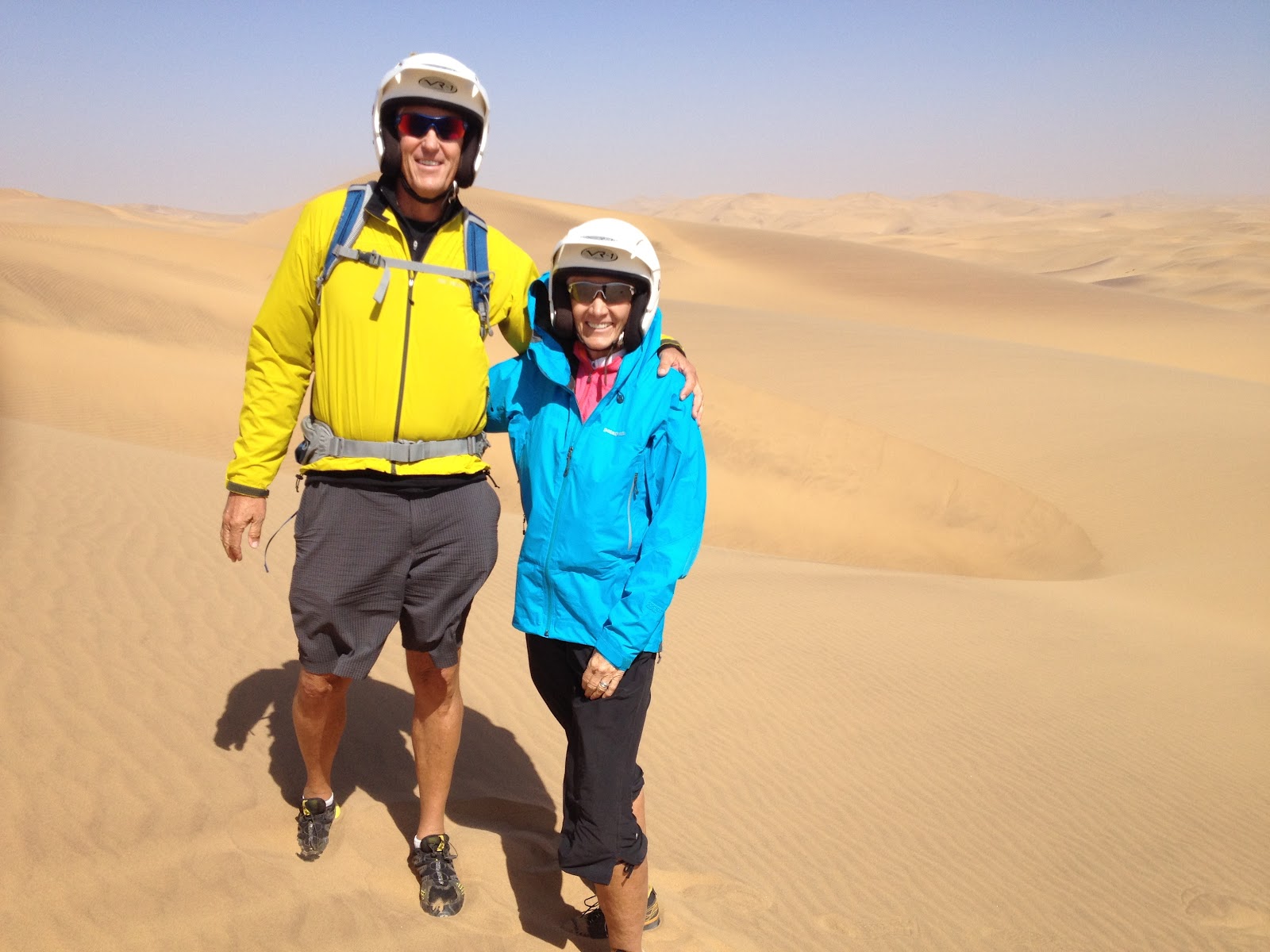
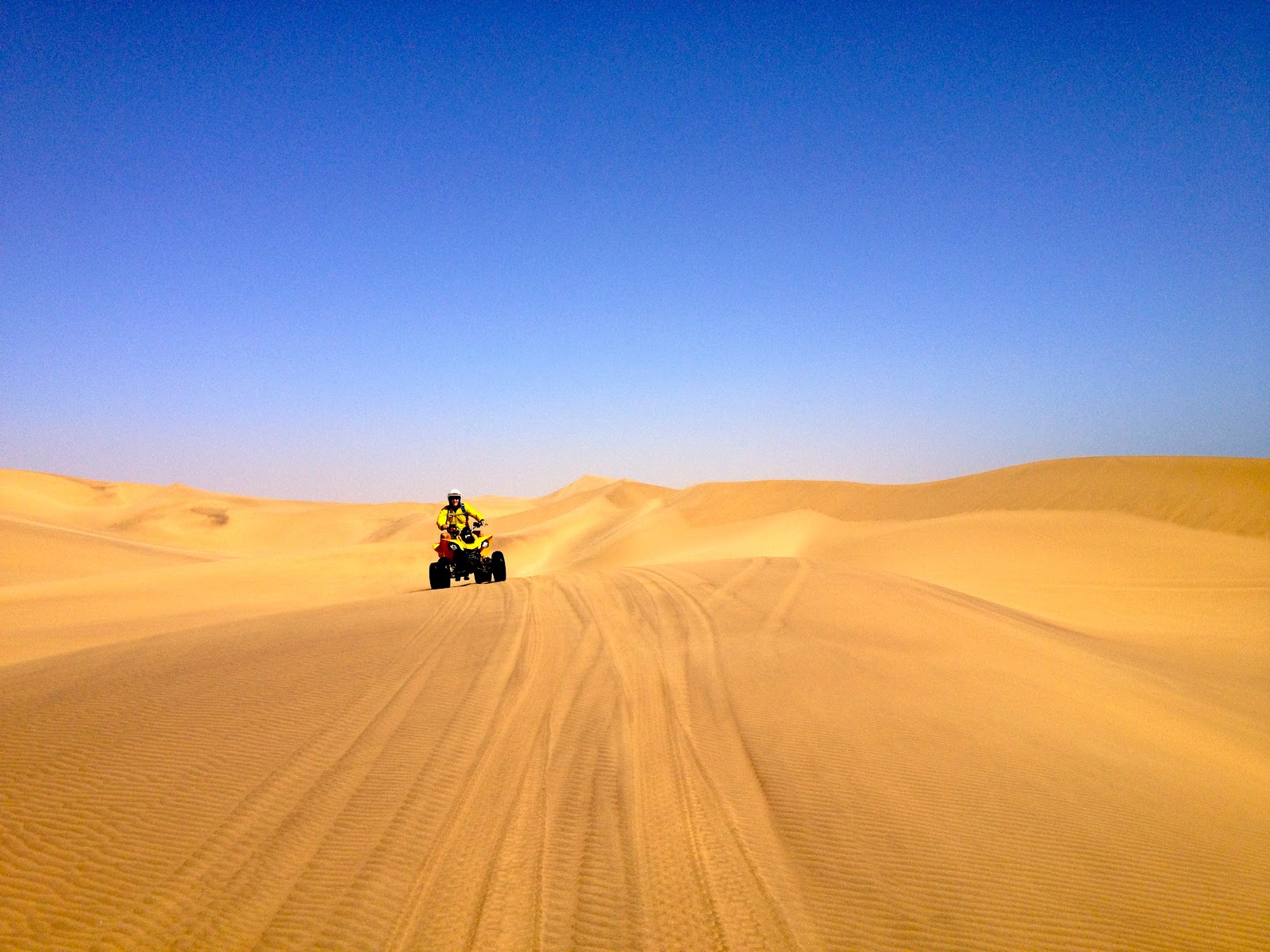
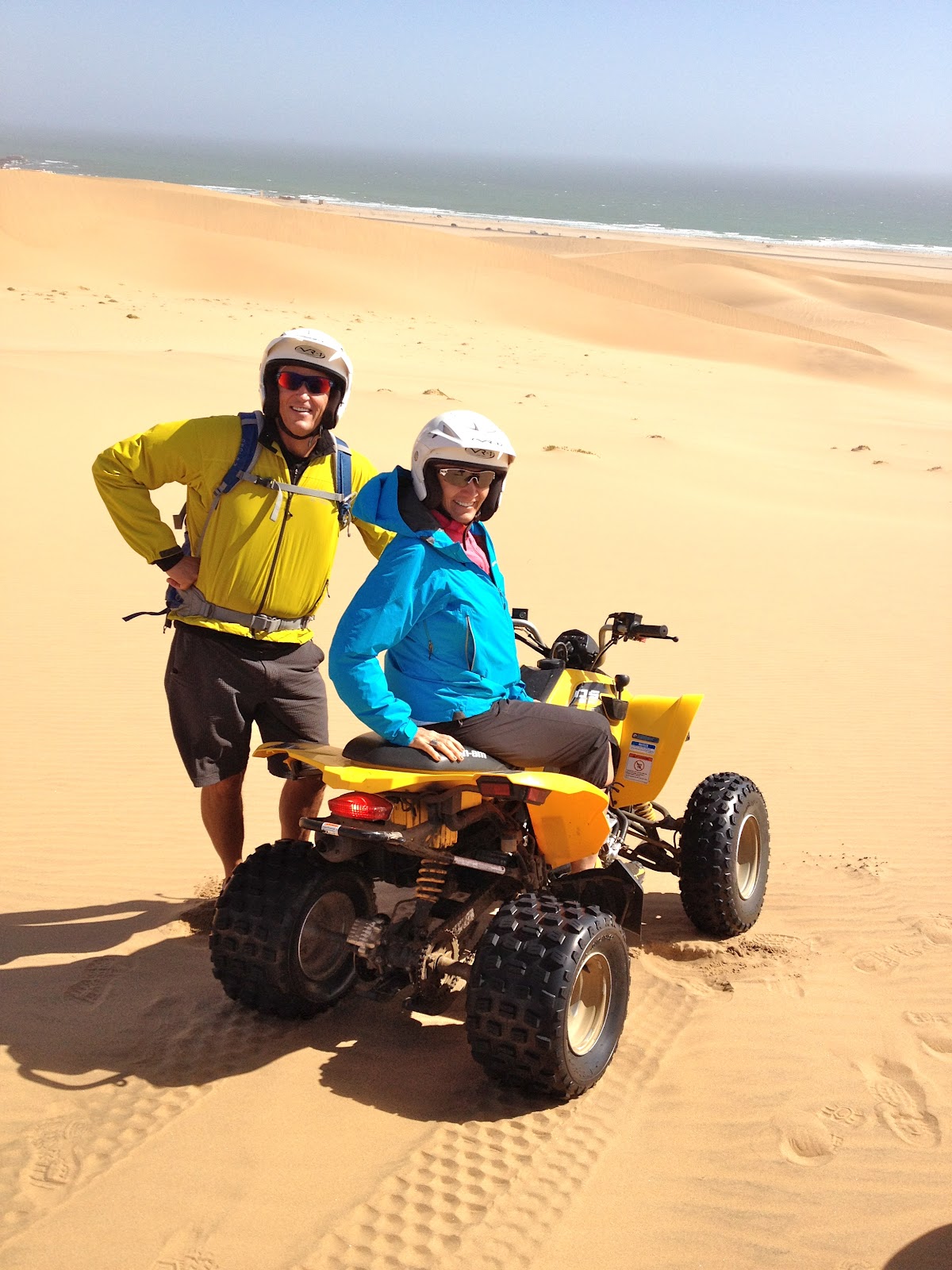
We stopped along the coast to rent Quad Bikes and rode them across the Namib Desert. It was great to see the tranquil and always changing dunes. Here you will find the highest sand dune in the world called Dune Number Seven.

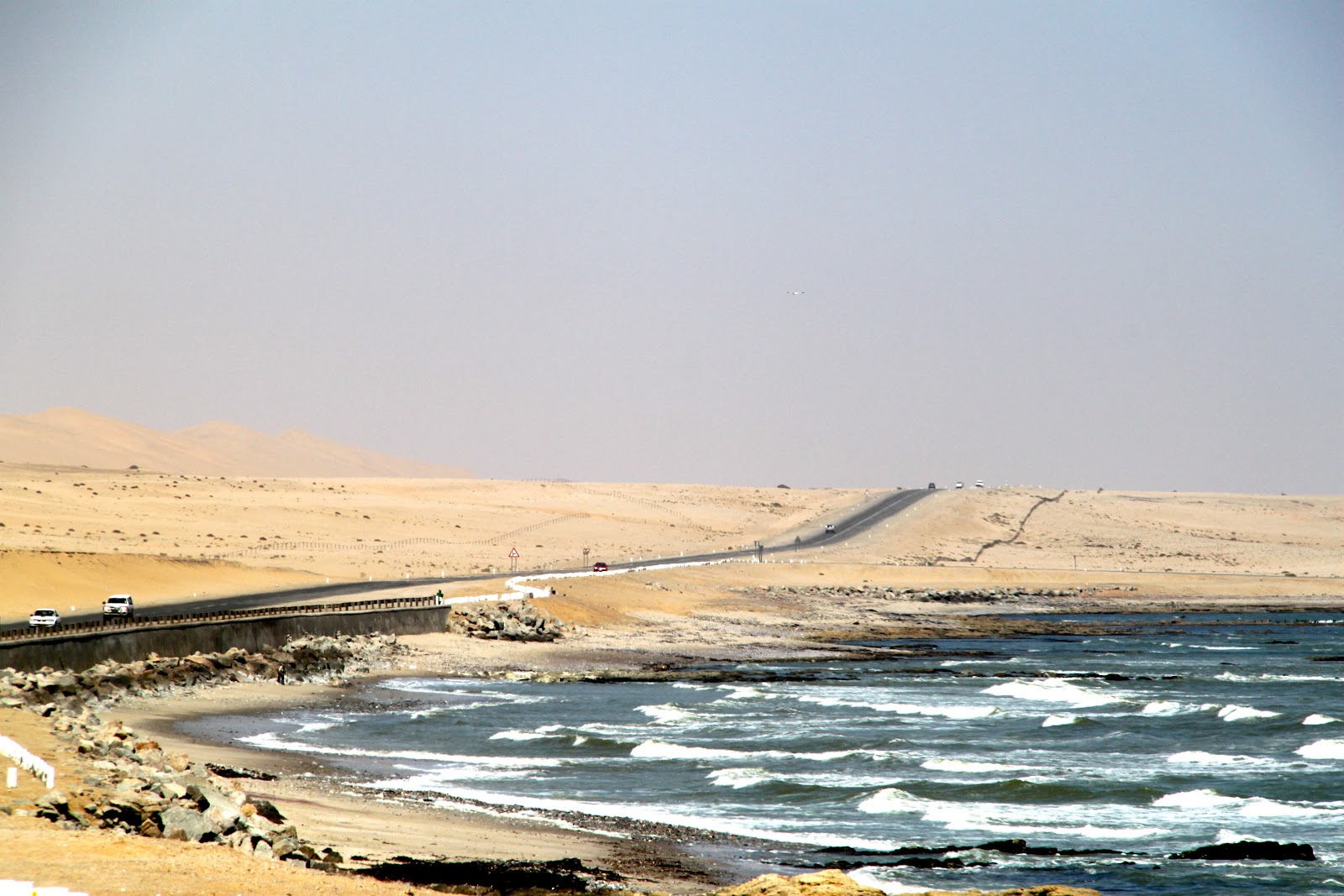
Beautiful sand dunes right next to the ocean, separated by a lonely road.

We rented quad bikes and drove all over the dunes

Having Fun
Sand Ripples that change daily, if not hourly

The Ocean right next to the dunes

Riding the quads

Barb and Scott

The Skeleton Coast.  It is so desolate, and when sailors made it to shore and thought they could walk away from the ocean, they died from lack of water, vegetation, and life, thus…The Skeleton Coast

The road to Swakopmund

You can see the dunes that stretch for miles

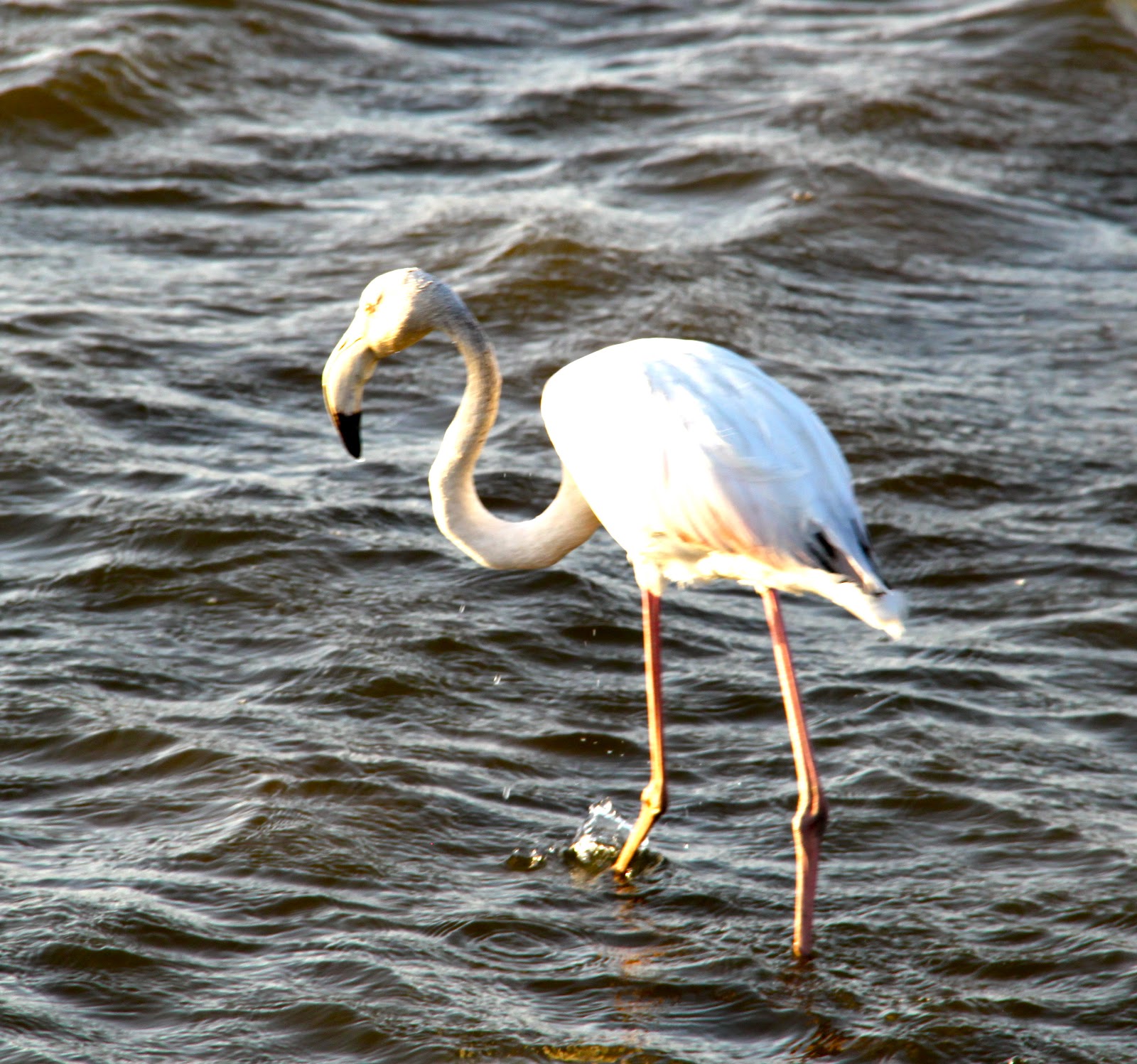
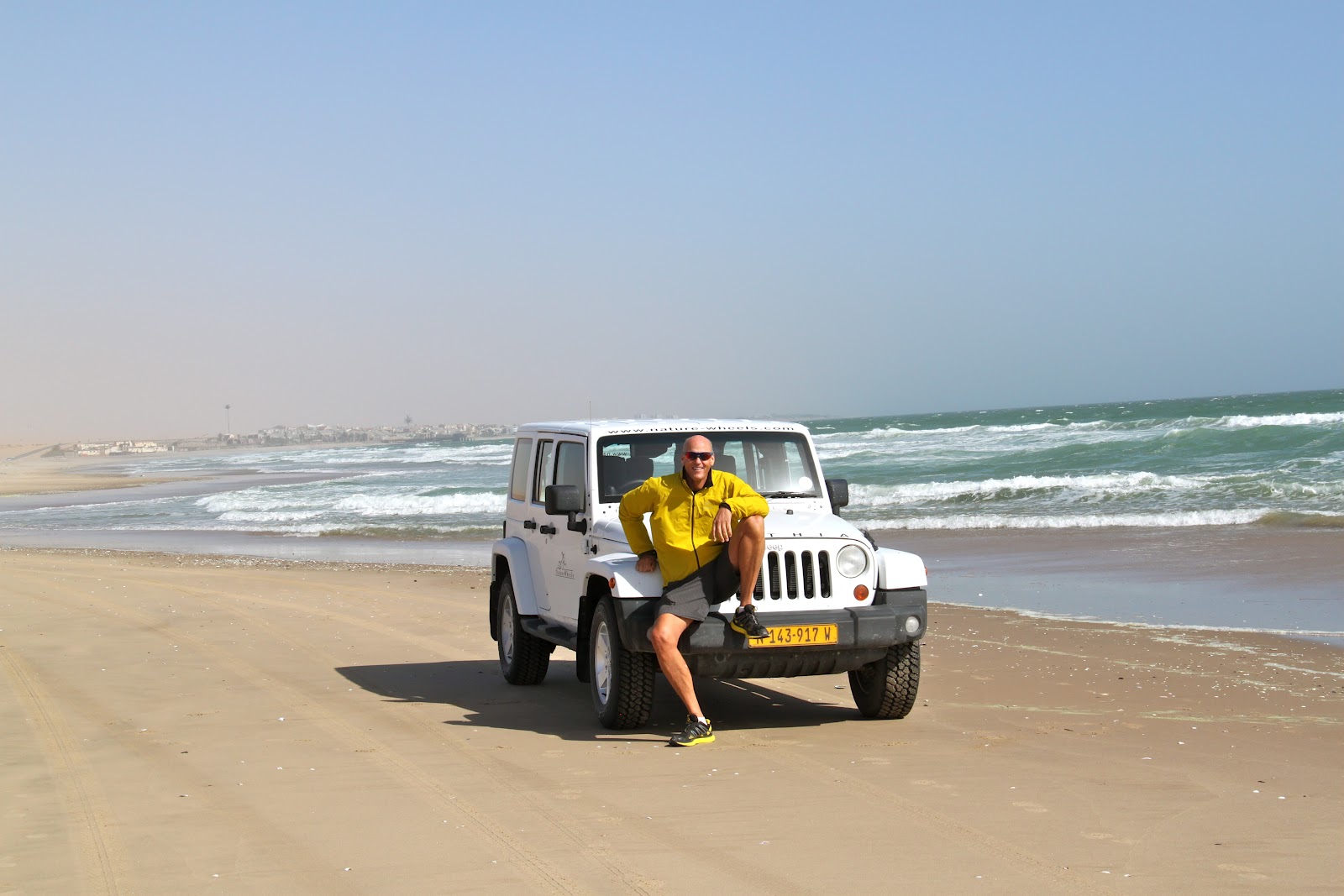
We encountered flamingos farther down the coast and Scott got his thrills driving our Jeep along the beach.

Pink Flamingos

Flamingos on the sand bar

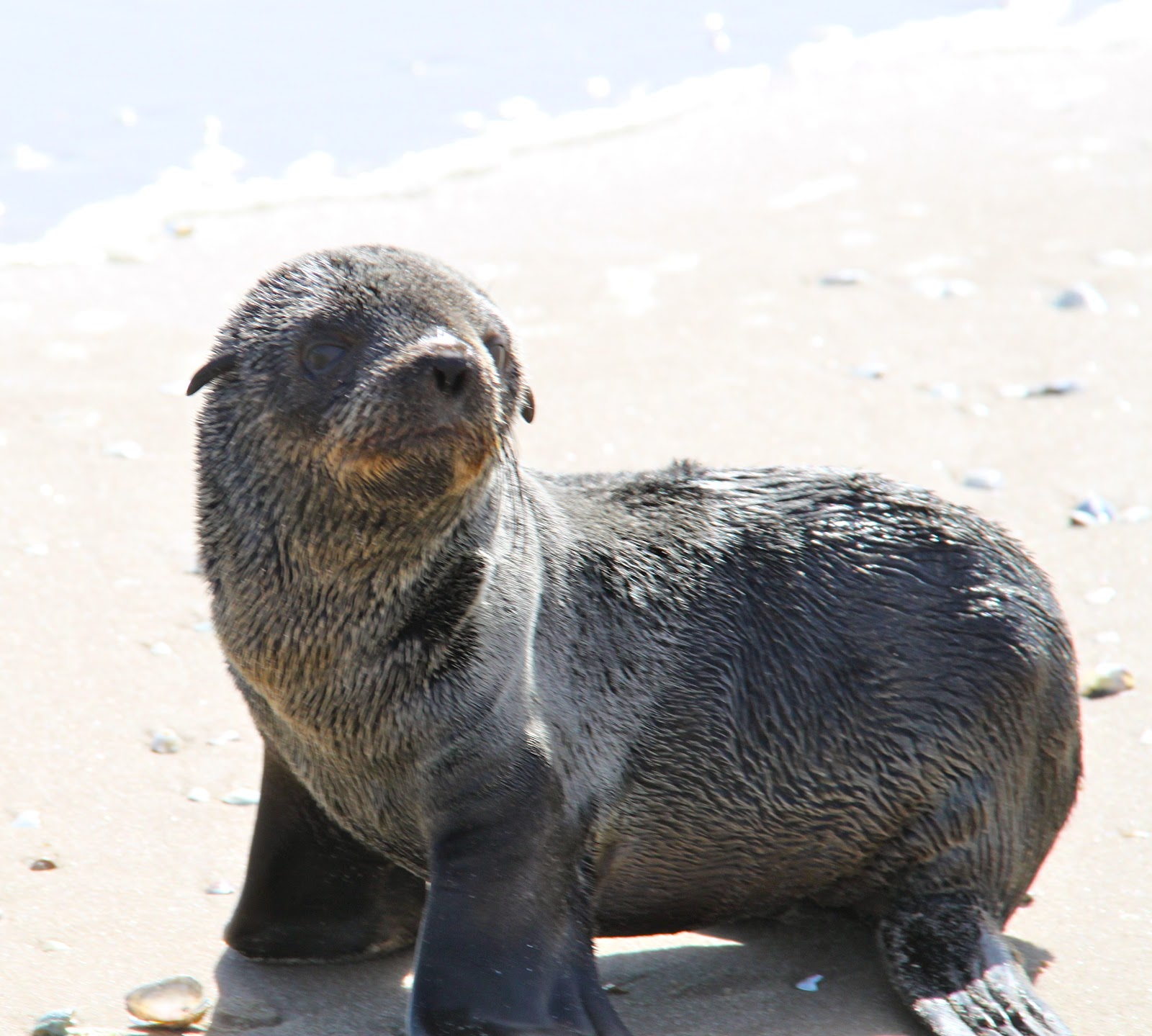
We encountered a baby sea lion by himself on the beach

Scott had a blast driving on the beach

We had the beach to ourselves

The King

Be aware of police roadblocks! We were warned of this but somehow spaced it. When stopped and asked for to show his drivers license, Scott said, Oh, it’s in my pack in the back seat. Turning around to retrieve his pack, he realized he had left it at our condo. They charge $1000.00 Namibian Dollars on the spot! ($250.00 US). Luck was with us. The girl officer was nice and I showed her my license, so she let me take over the driving and didn’t make us pay.

We are driving tomorrow down to Sossusvlei and have been told that the road is very bad and will take us 6 or 7 hours.

Damaraland, Namibia (Mowani Mountain Lodge), Sept. 3

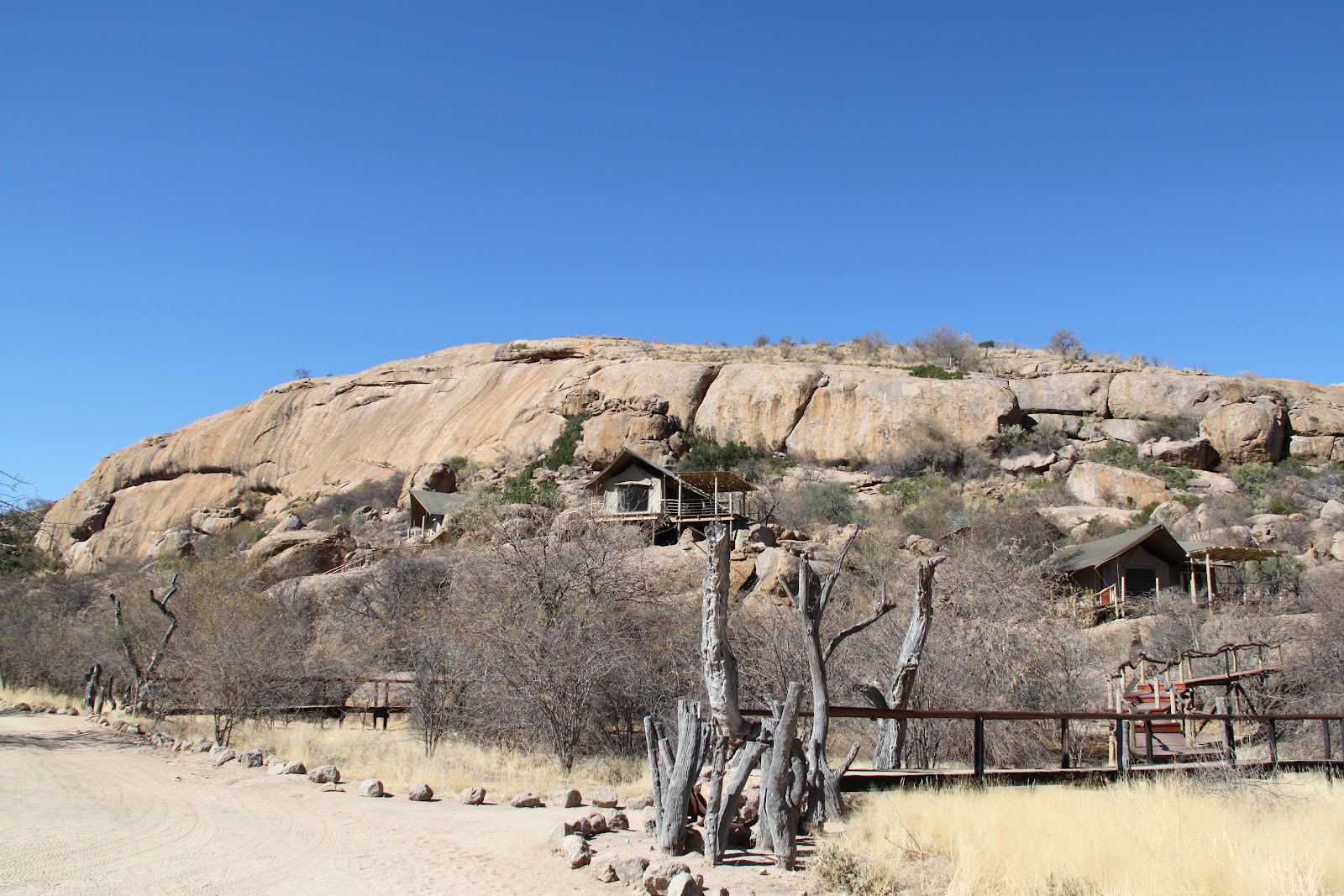
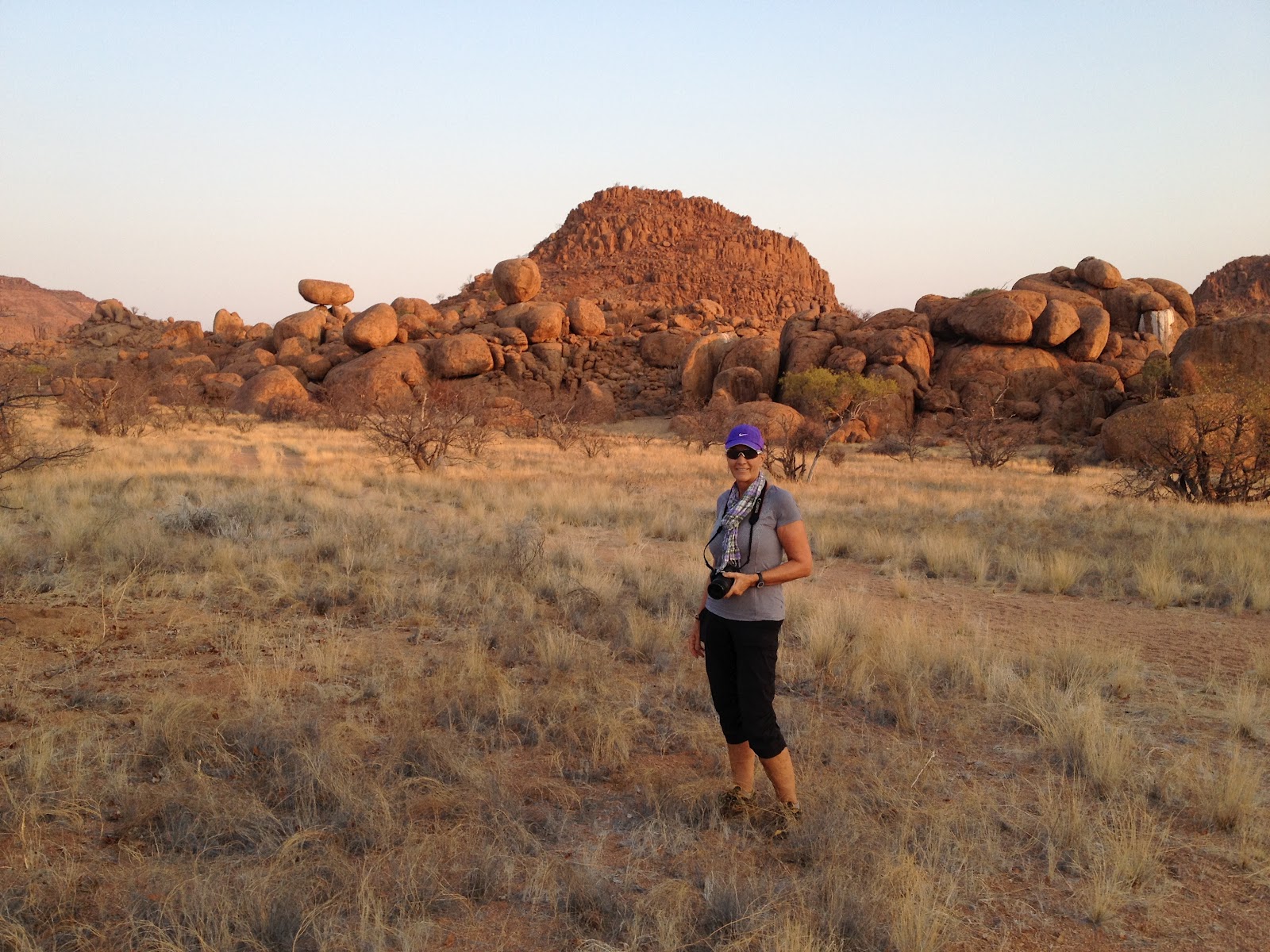
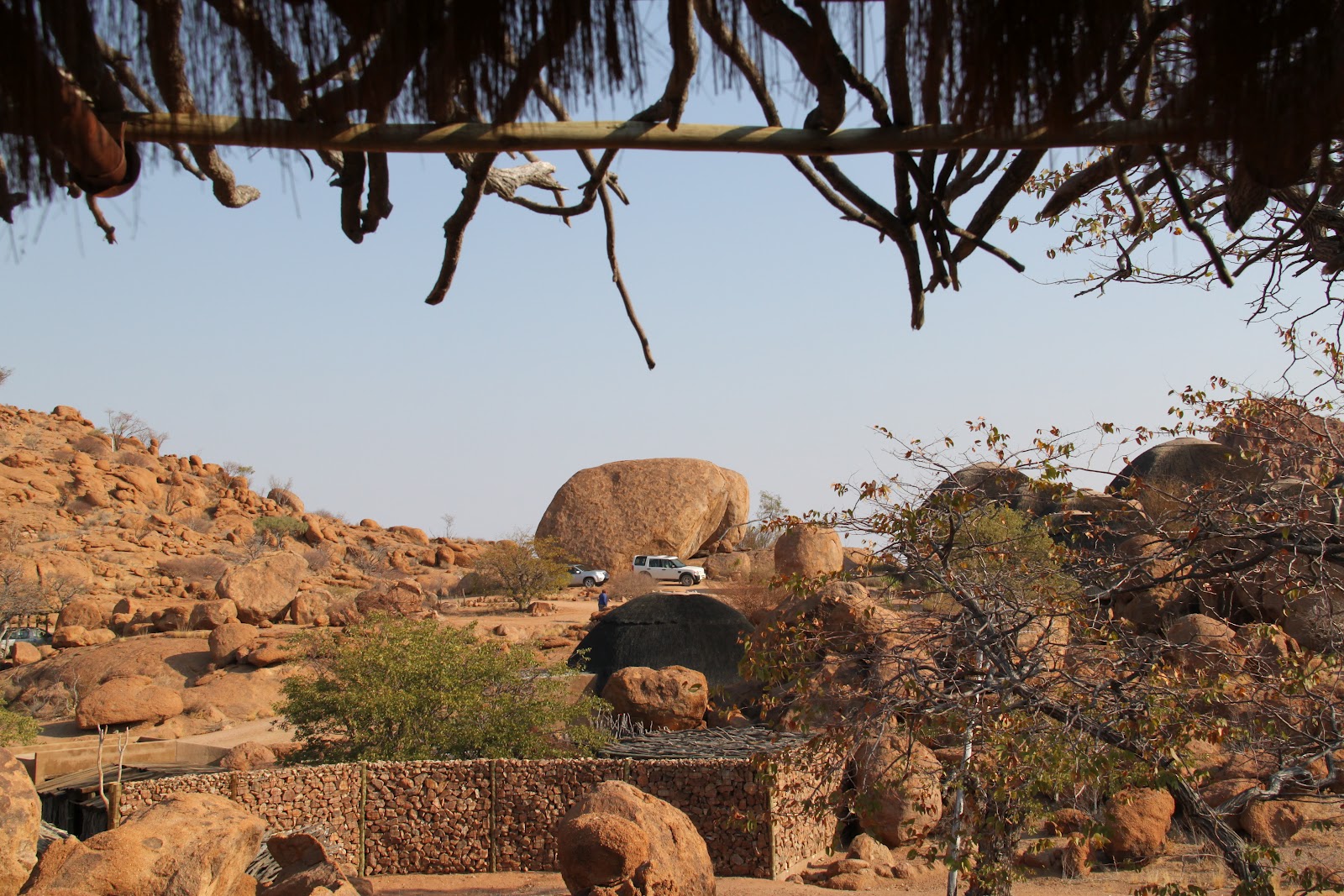
Mowani Mountain Lodge is beautifully set in red rock boulders. It is in the Kaokoveld Region, in an area called Damaraland. It took us about 2 1/2 hours on gravel roads to reach. The scenery reminds us of Southern Utah Canyonlands area.  We passed quite a few donkey carts on our route.

Donkey Carts were common
Looks like Canyonlands

Another balance rock

Beautiful boulders

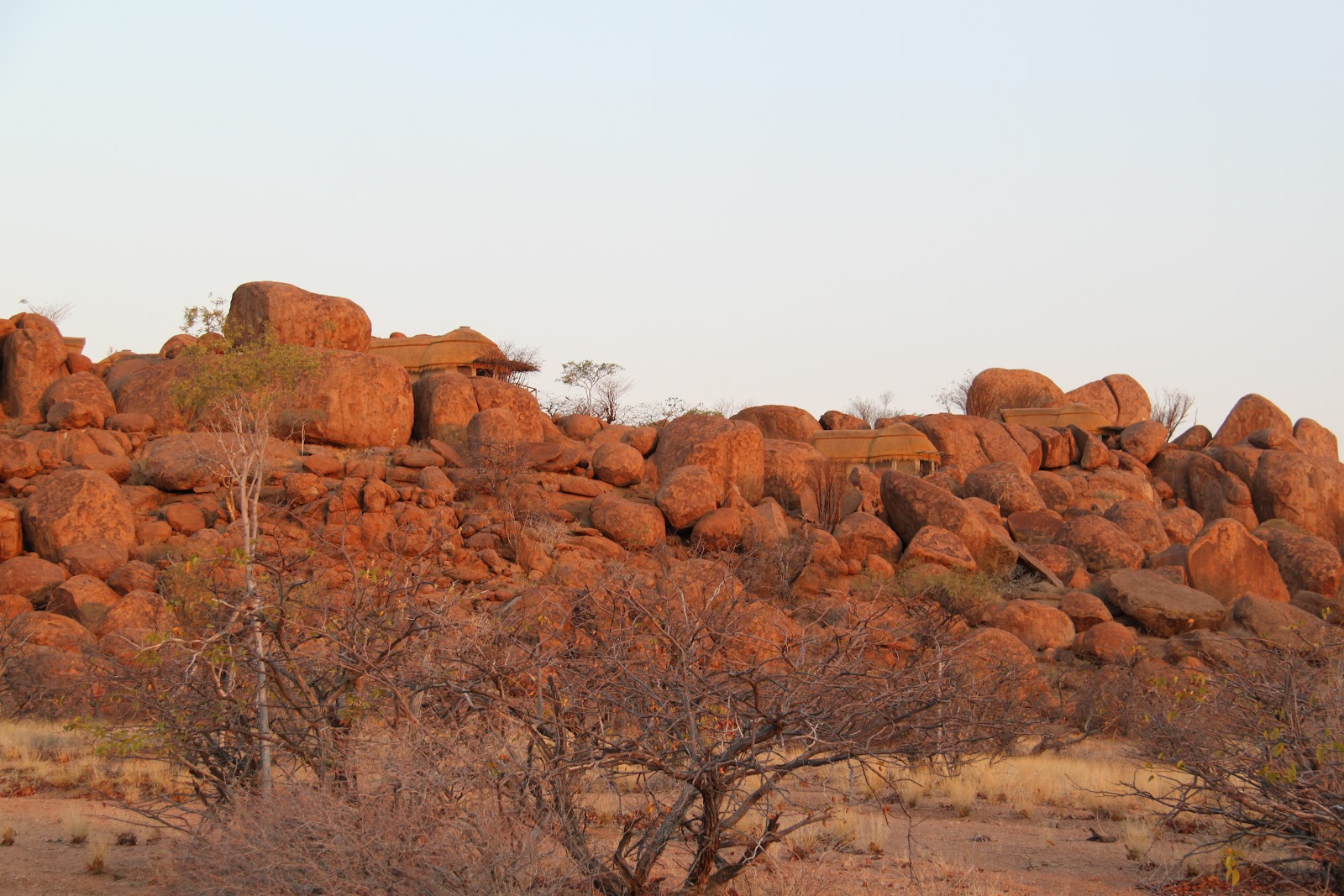
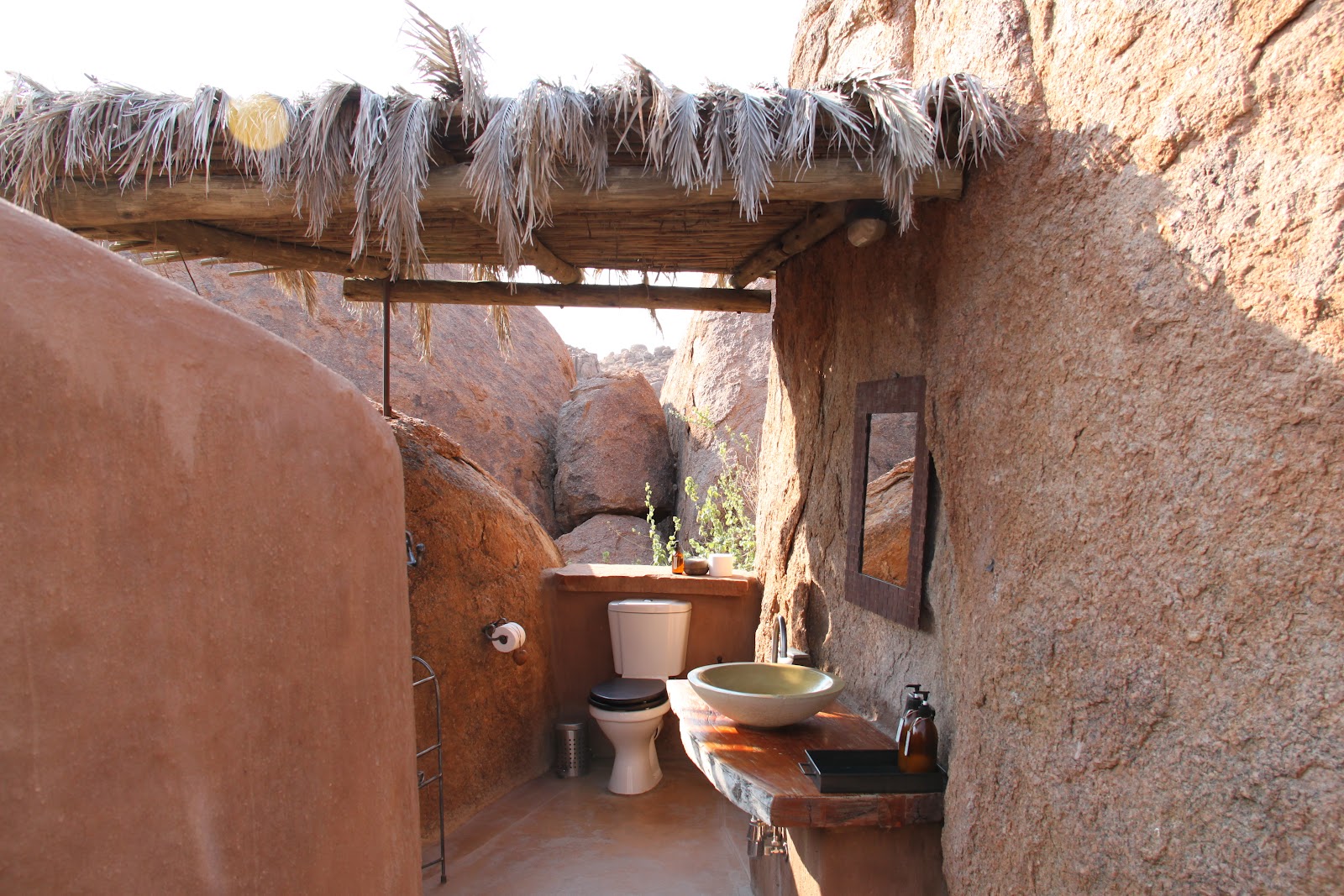
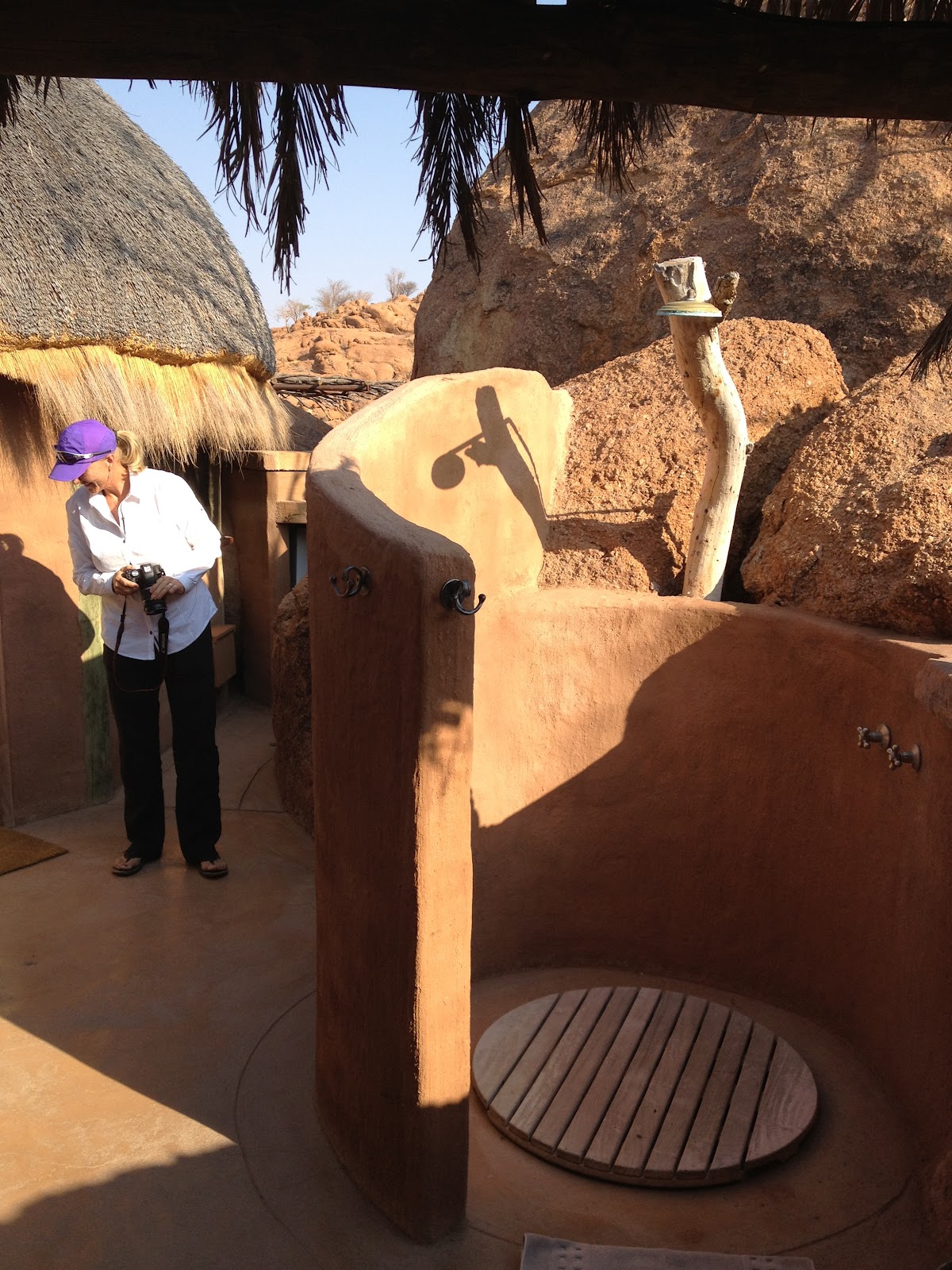
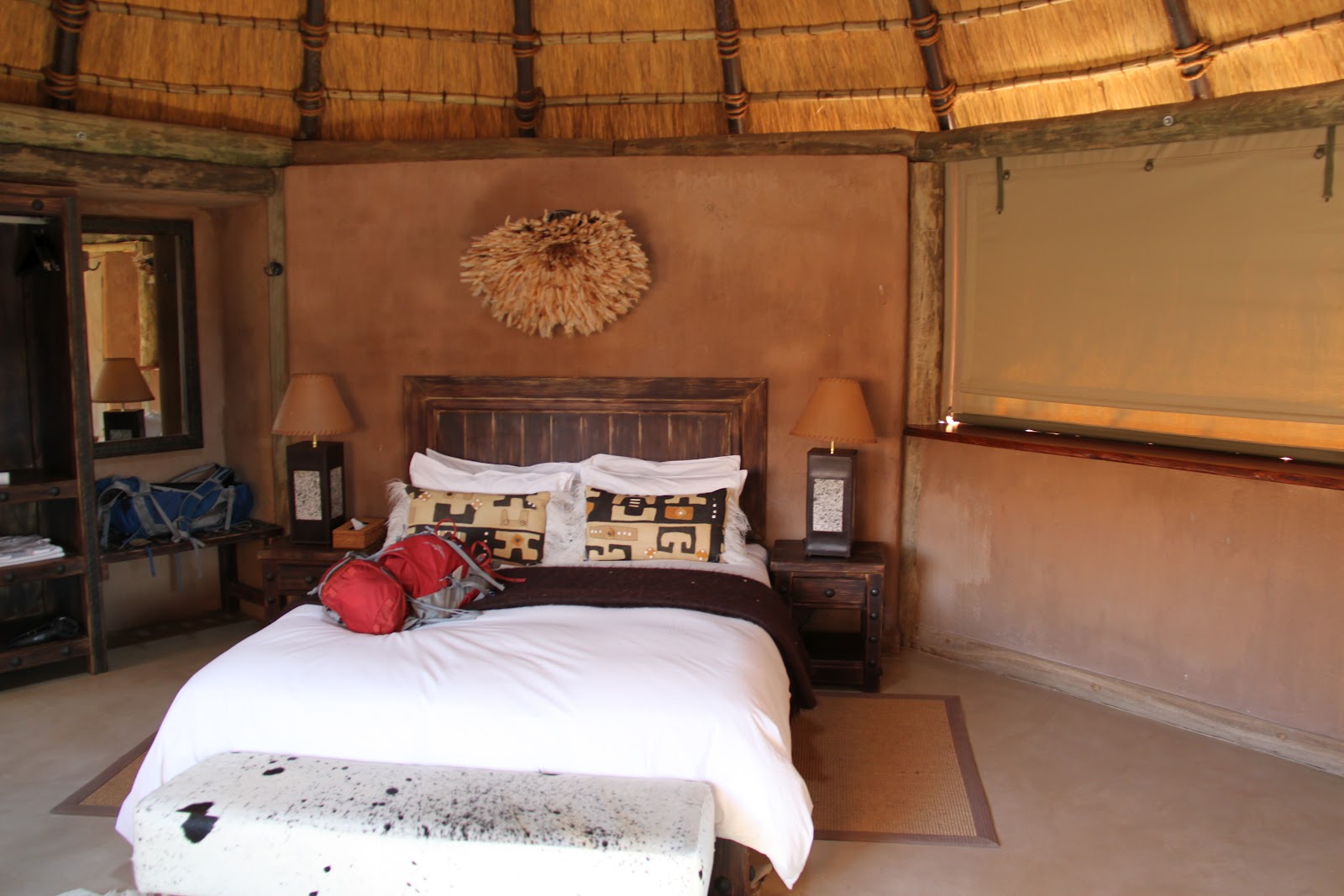
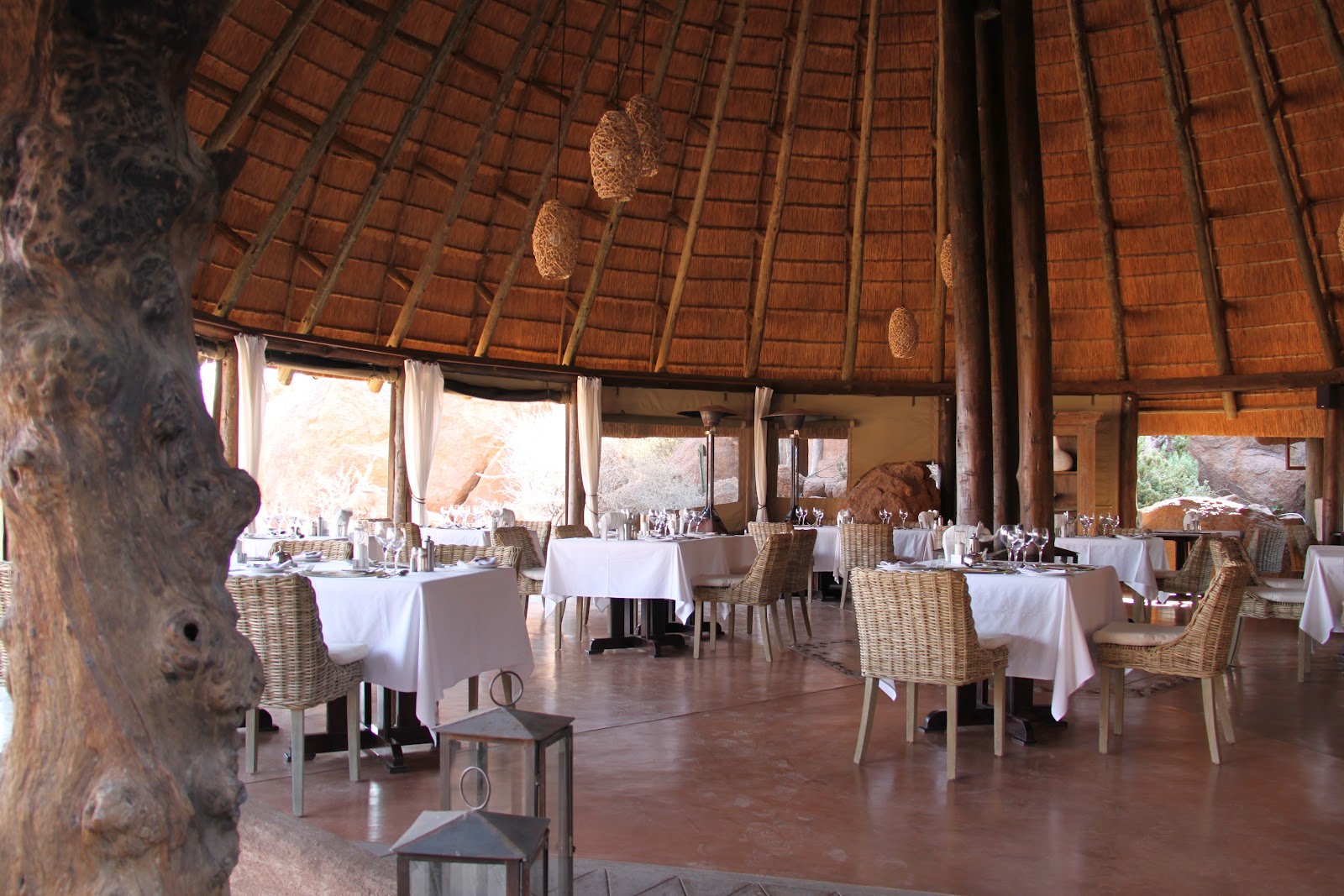
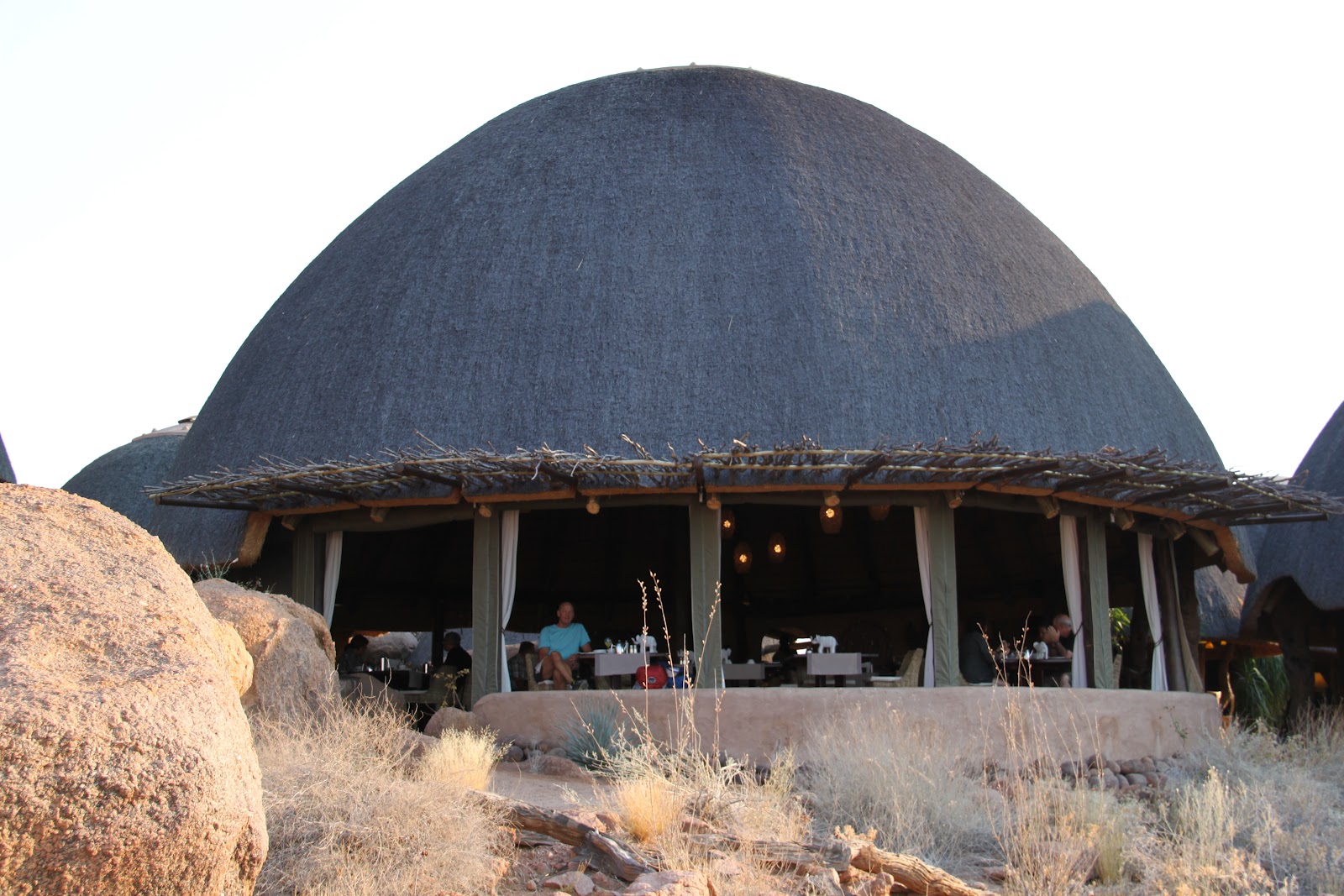
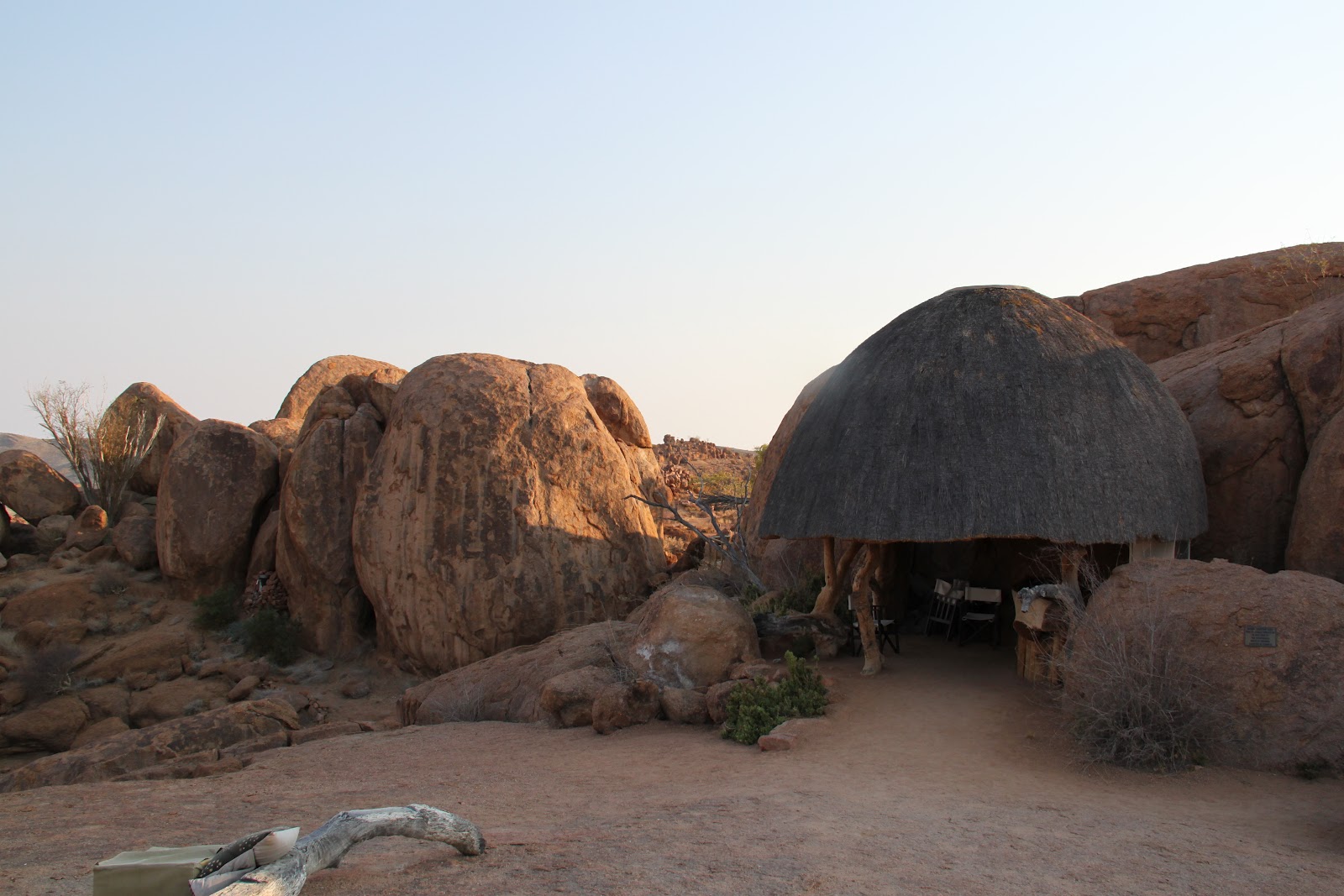
 There are 12 luxury thatched roof huts at Mowani that look similar to the boulders that they are surrounded. It is beautiful, and architecturally amazing the way they have incorporated the huts into the rock. There is a complete bathroom, including toilet, sink and shower outside, but private to your own hut.

Huts in the shape of the boulders that they are surrounded

Hidden int the hillsides
Our outdoor but private bathroom
Shower
Bedroom
Dining area
At Breakfast

Dining area from below

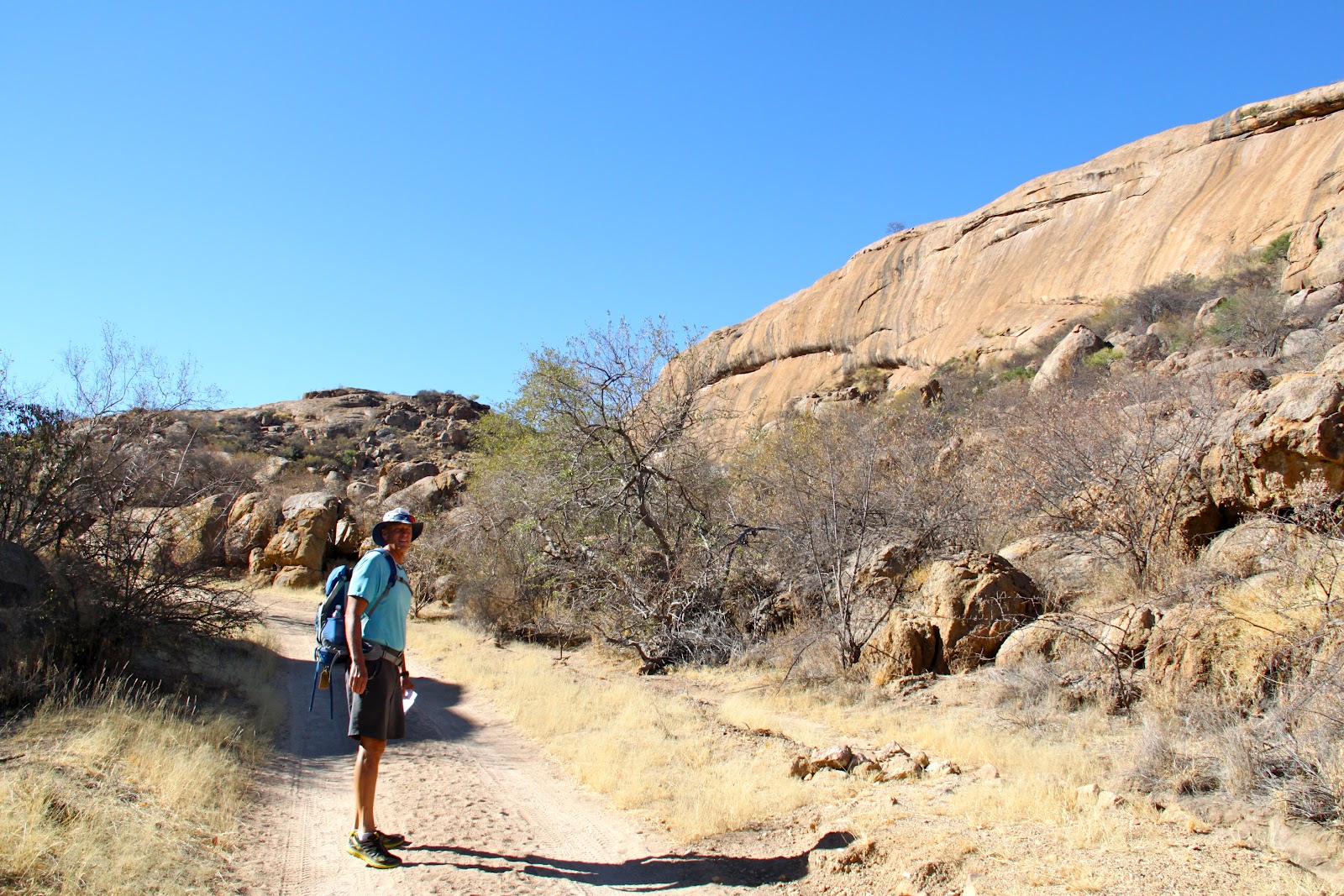
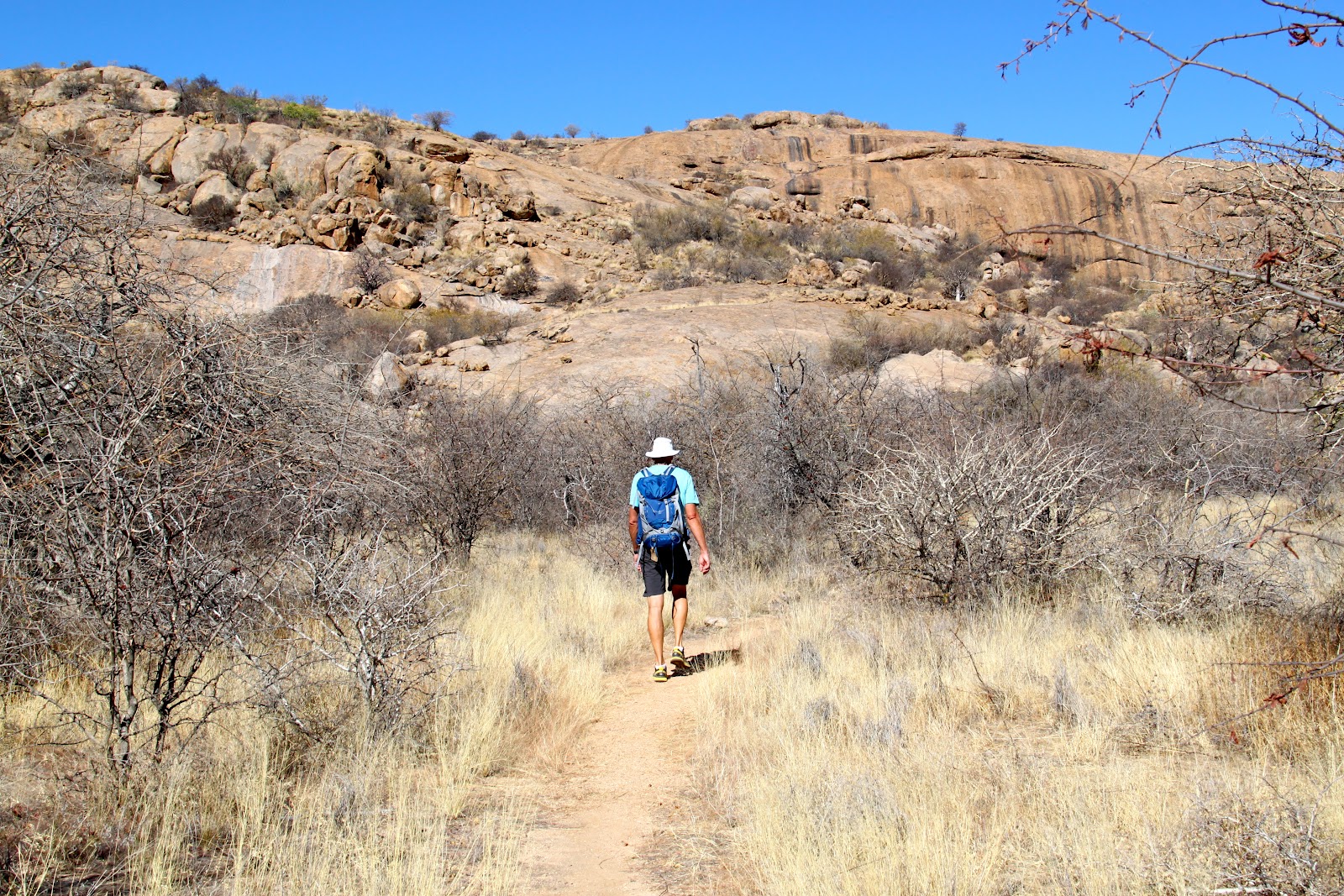
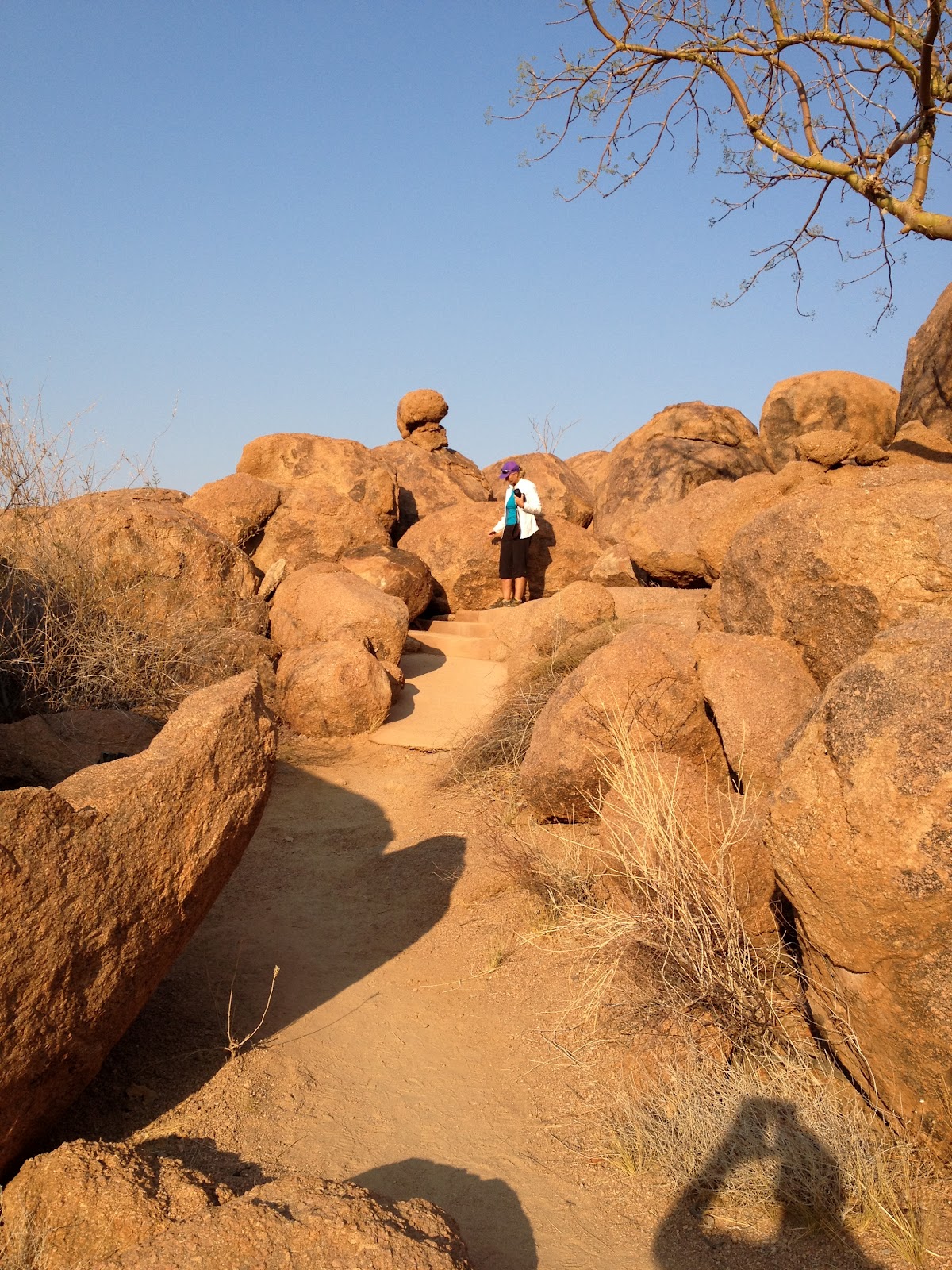
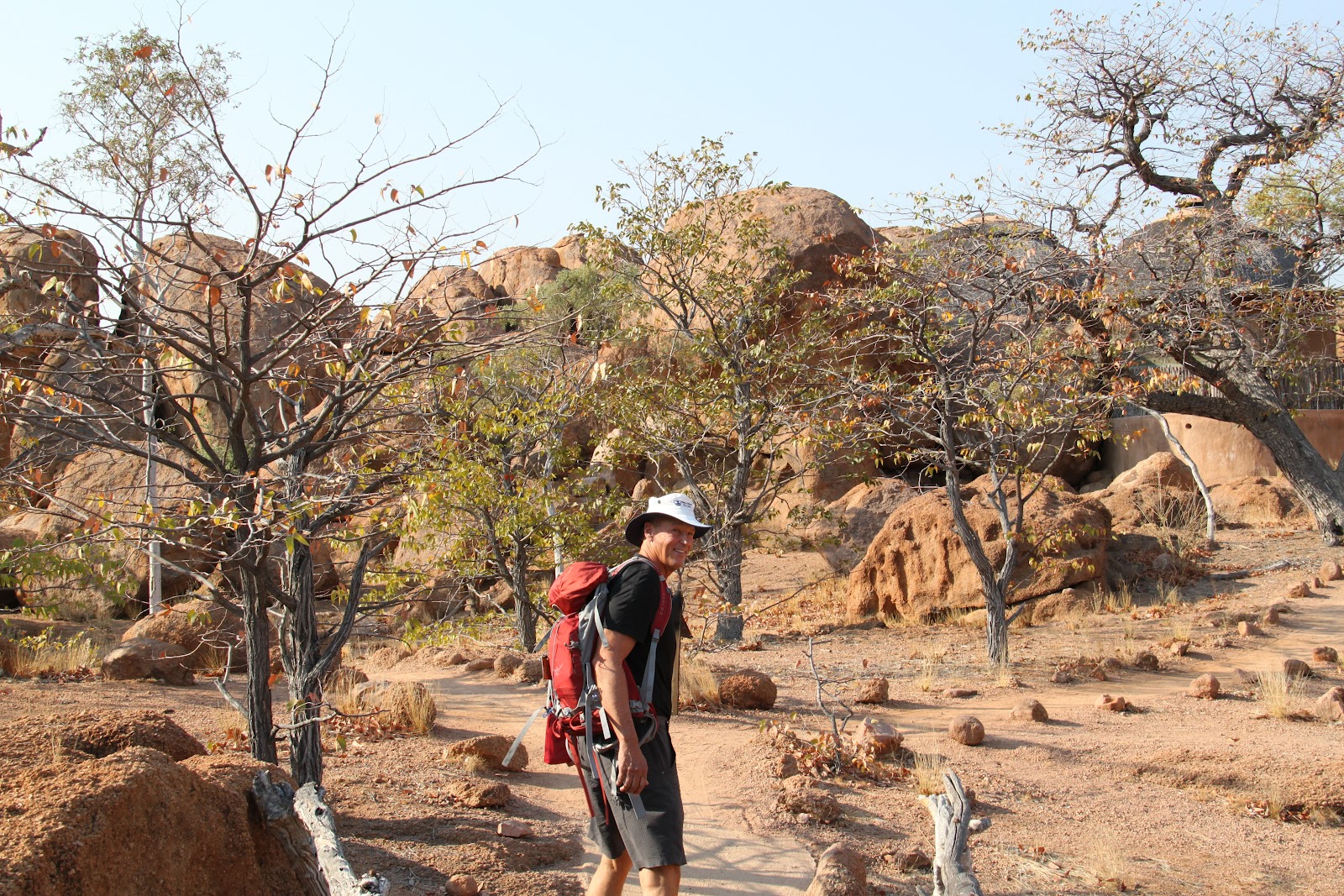
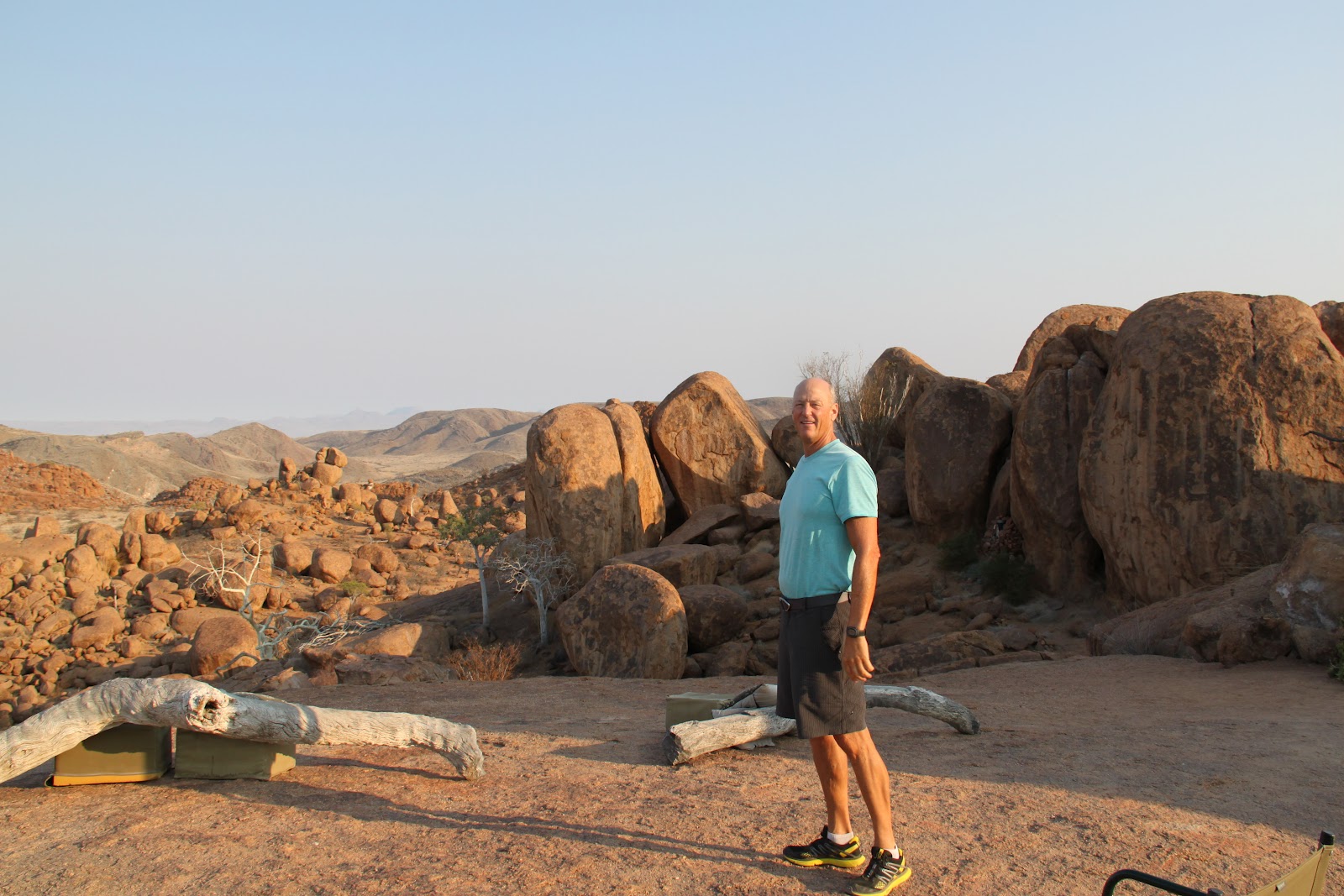
To stretch our legs and get our hearts pumping a little by hiking among the beautiful rock formations at sunset.  As usual, we get back just as it is getting dark and we are a little worried about animals that might be looking for dinner.

Close to camp

Beautiful

A place to sit and watch the sunset

A Guide took us out in the morning to see what Damaraland has to offer.  His name was “X”Knopi (the X is a clicking sound). He is 20 years old, has 2 children, ages 5 and 3 and works for about $120.00 US dollars a month, has 30 days of work, and then 6 days off.  His wife comes to see him from the village about 1 hour away every 10 days or so.

Xknopi and Barb

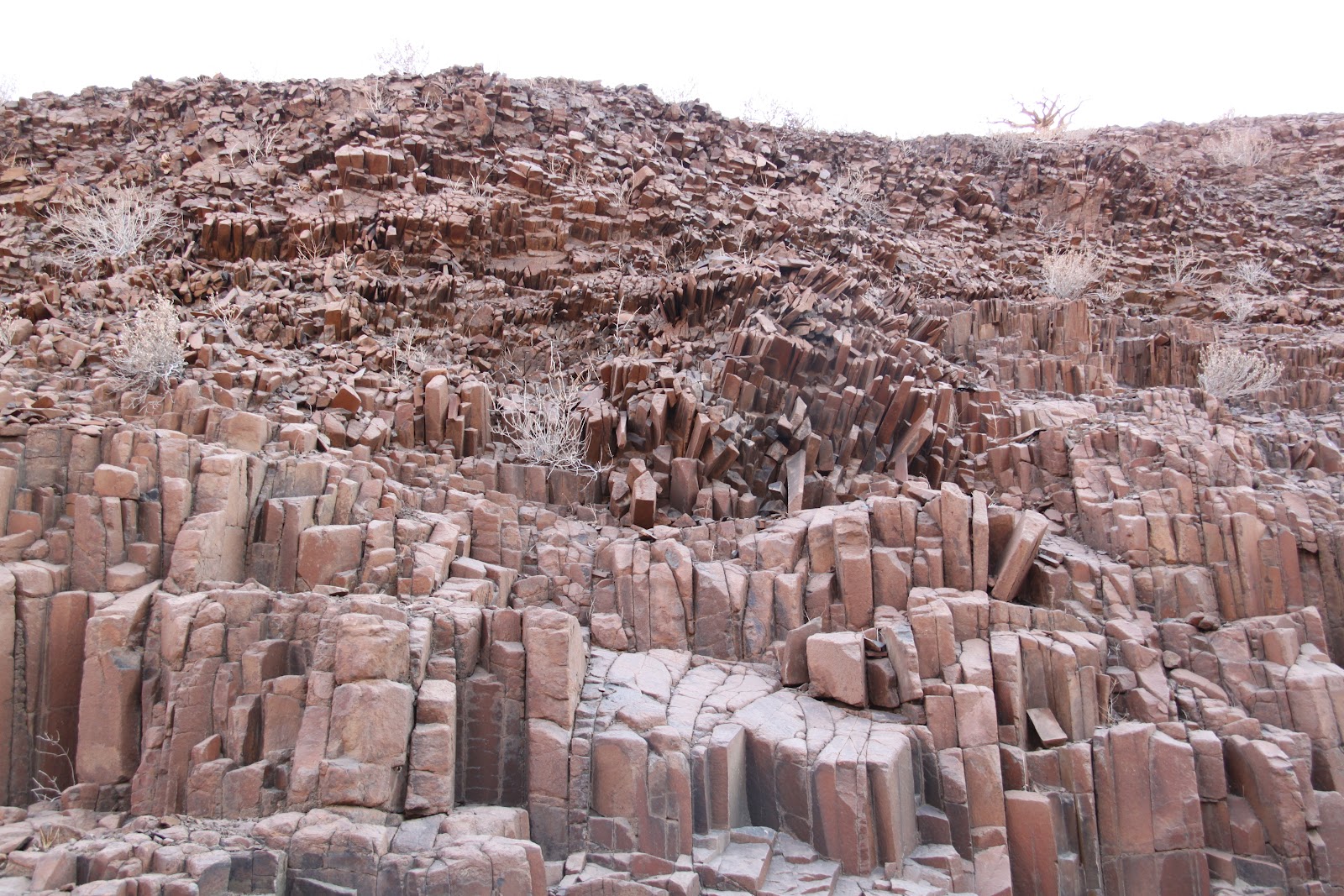
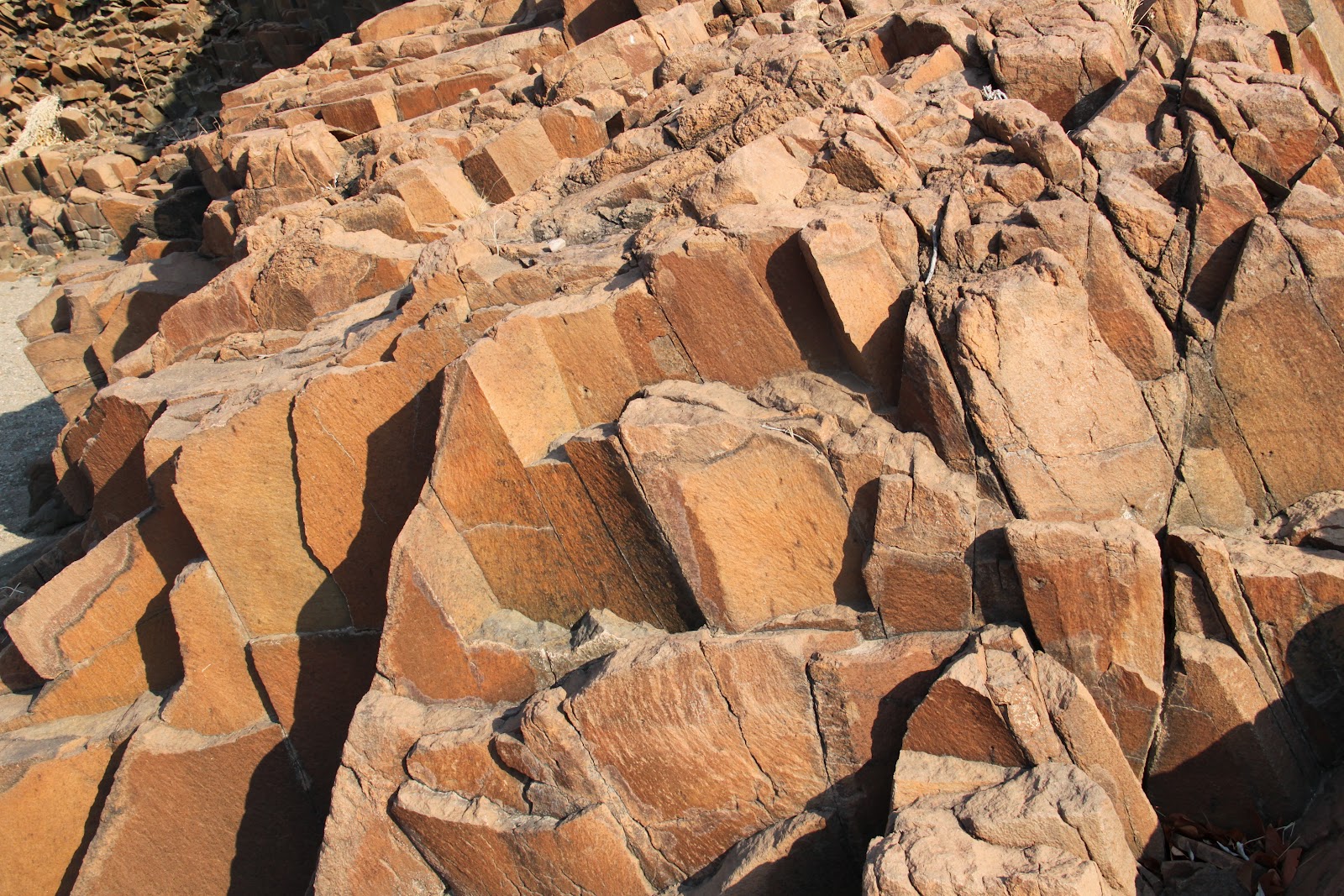
We visited a rock formation of angular columns made of Dolerite called “Organ Pipes”. They were formed by ancient volcanoes.  There are a lot of crystal rocks all over.

Looks like organ pipes

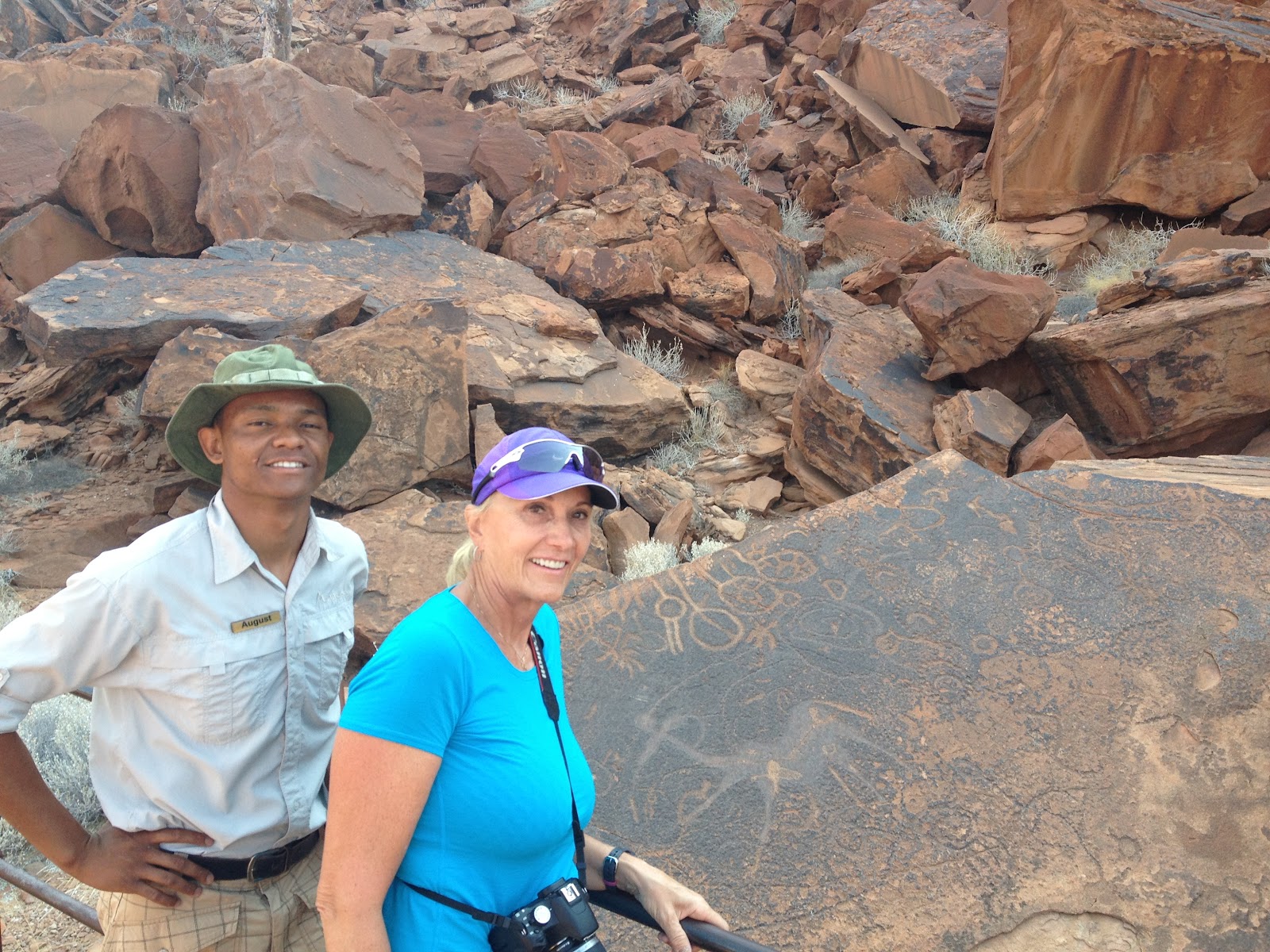
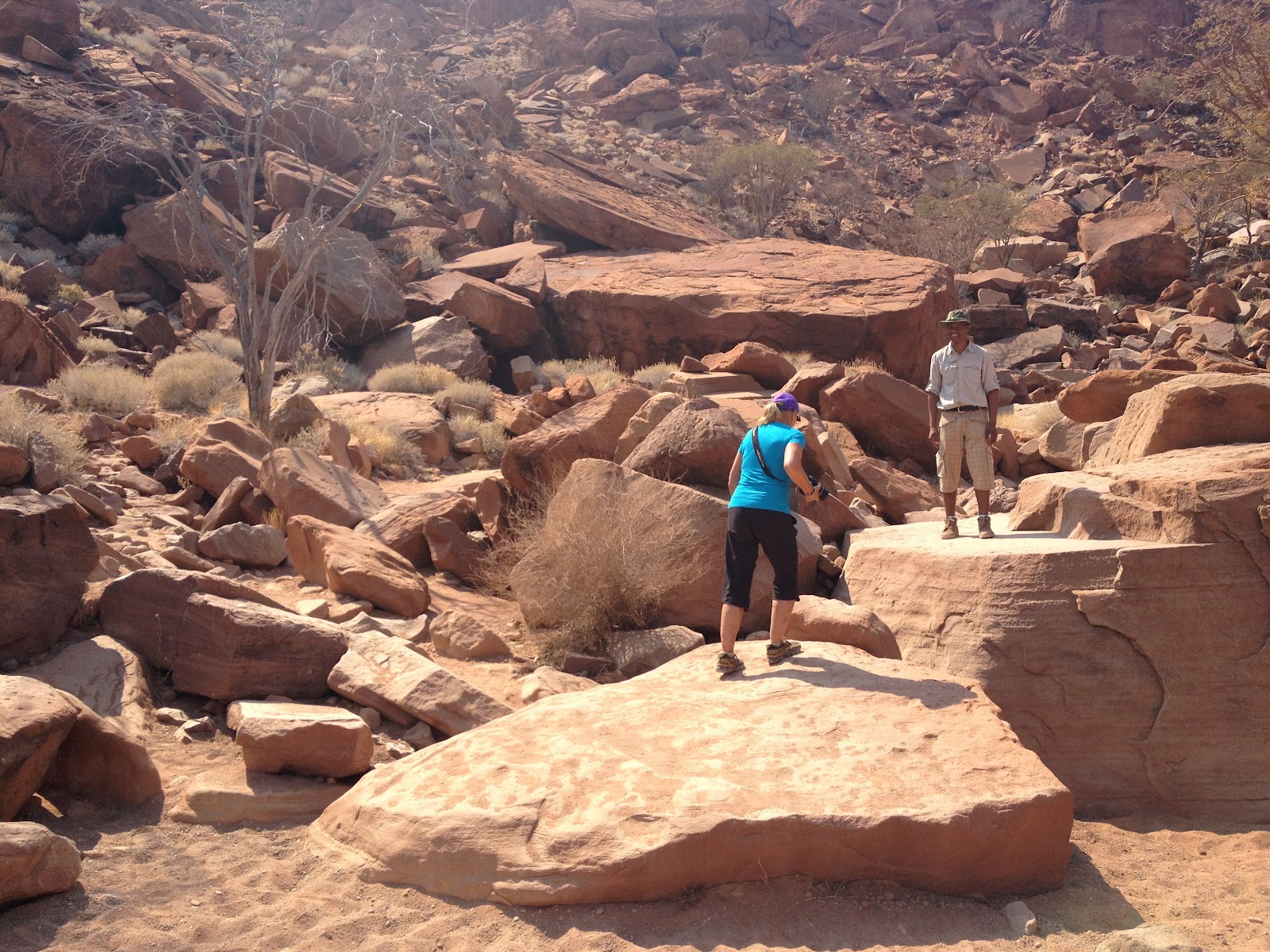
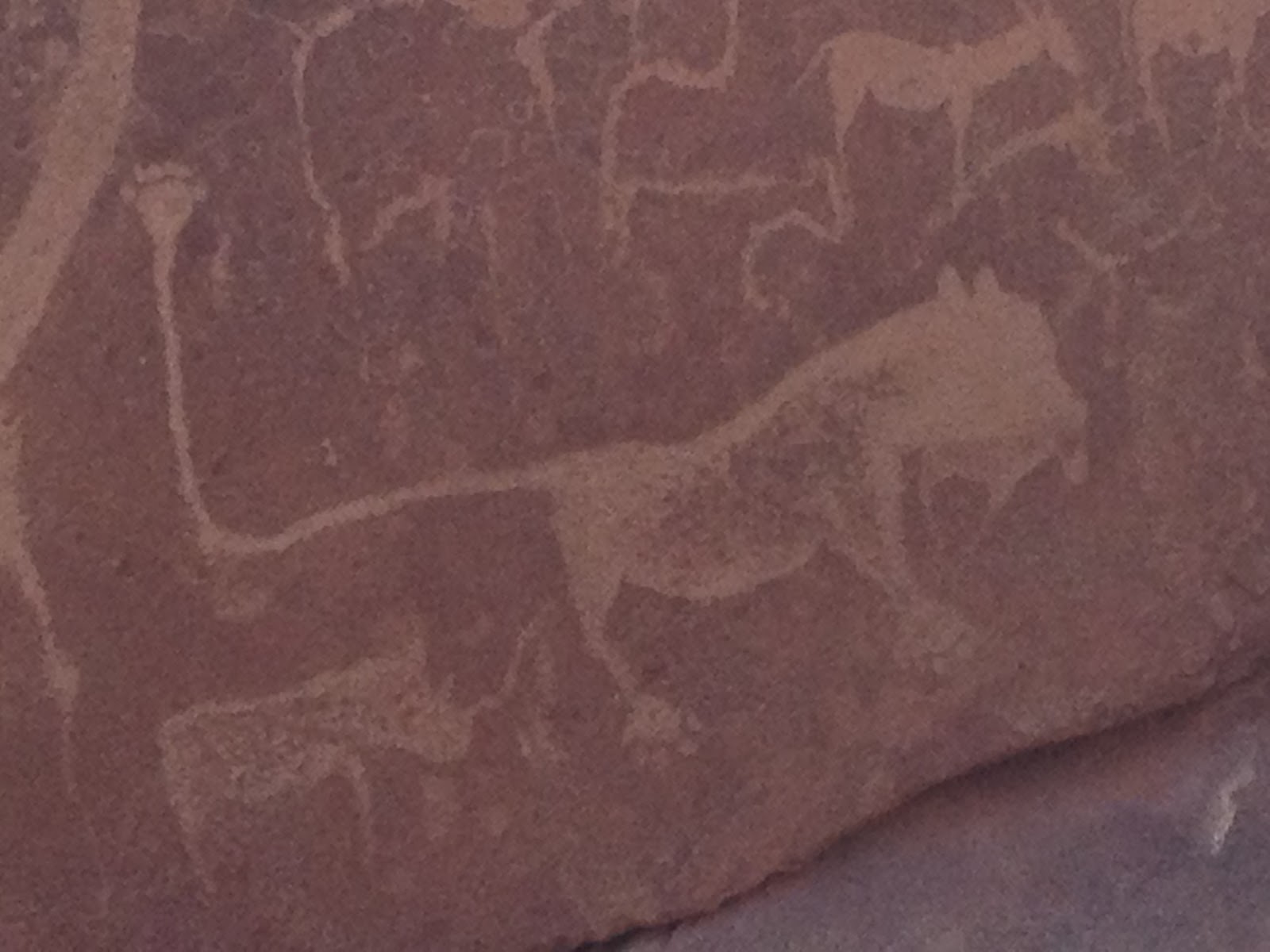
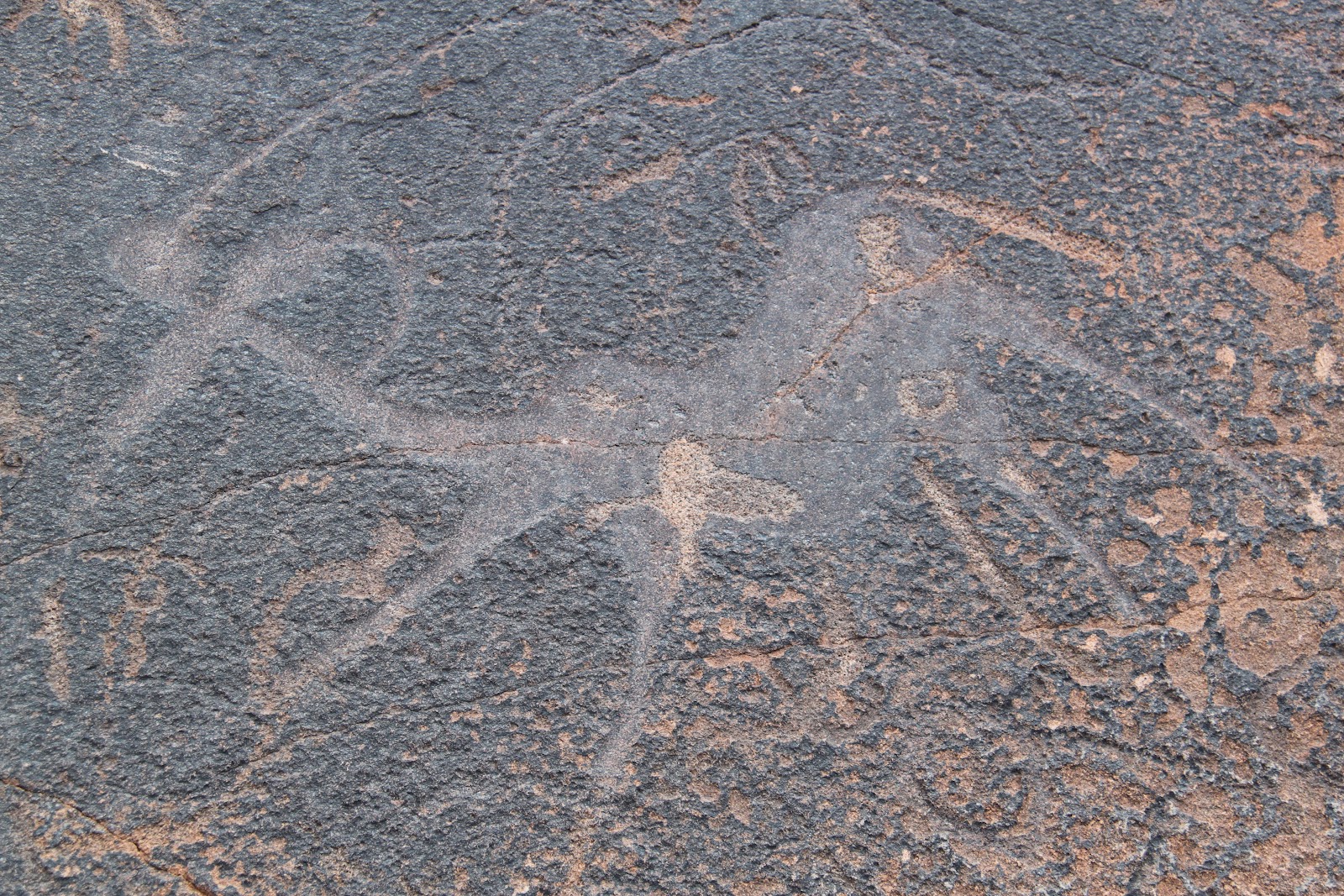
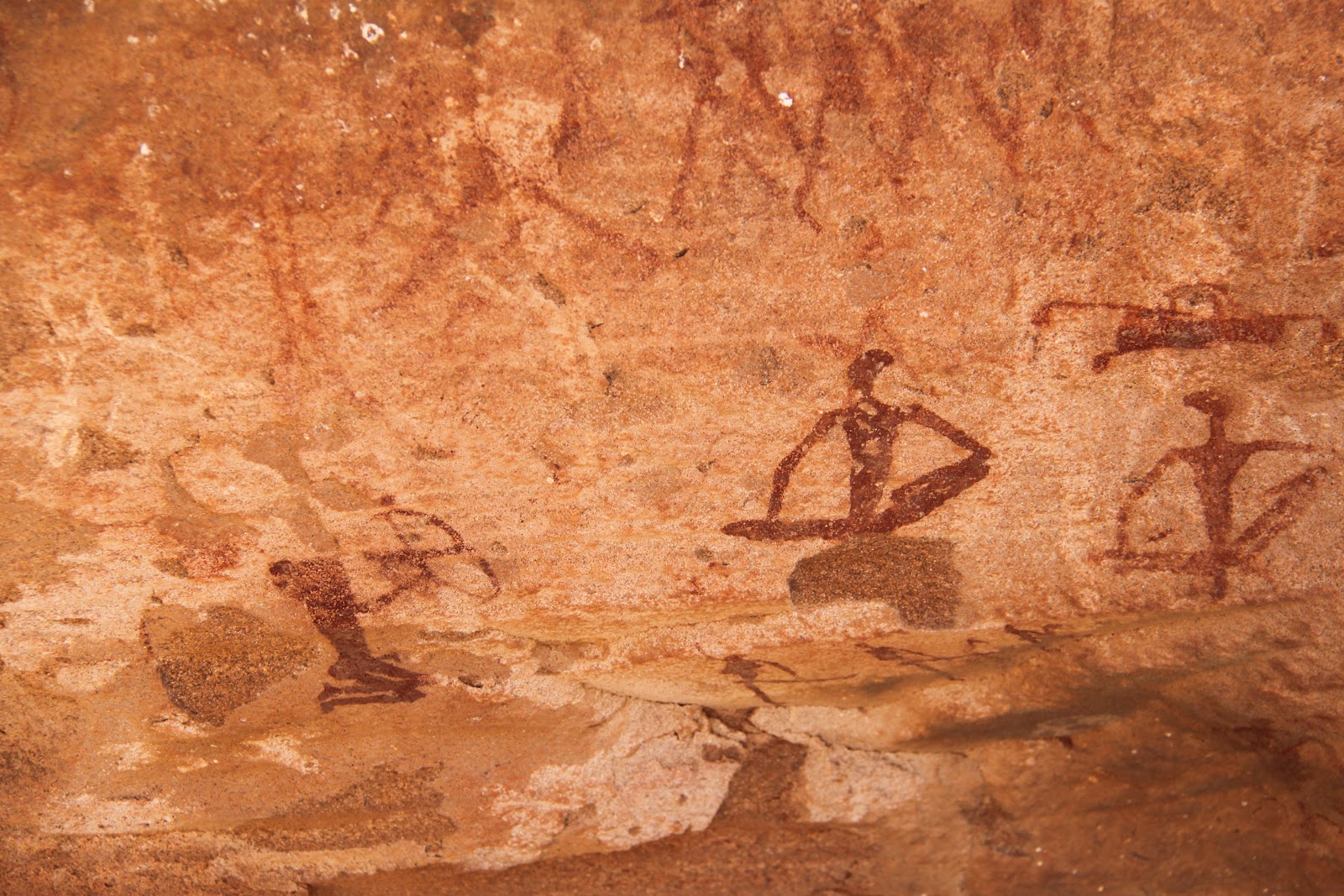
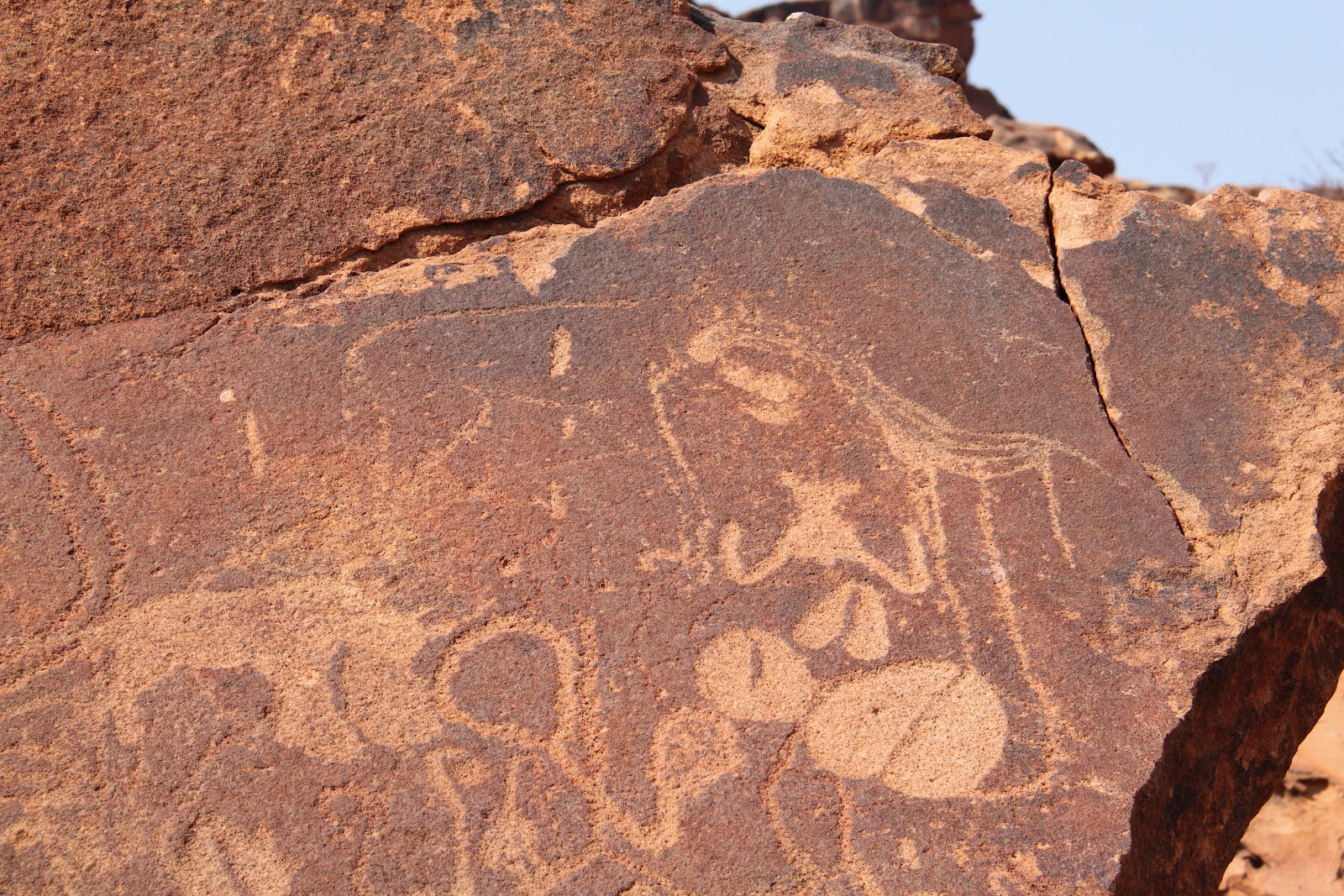
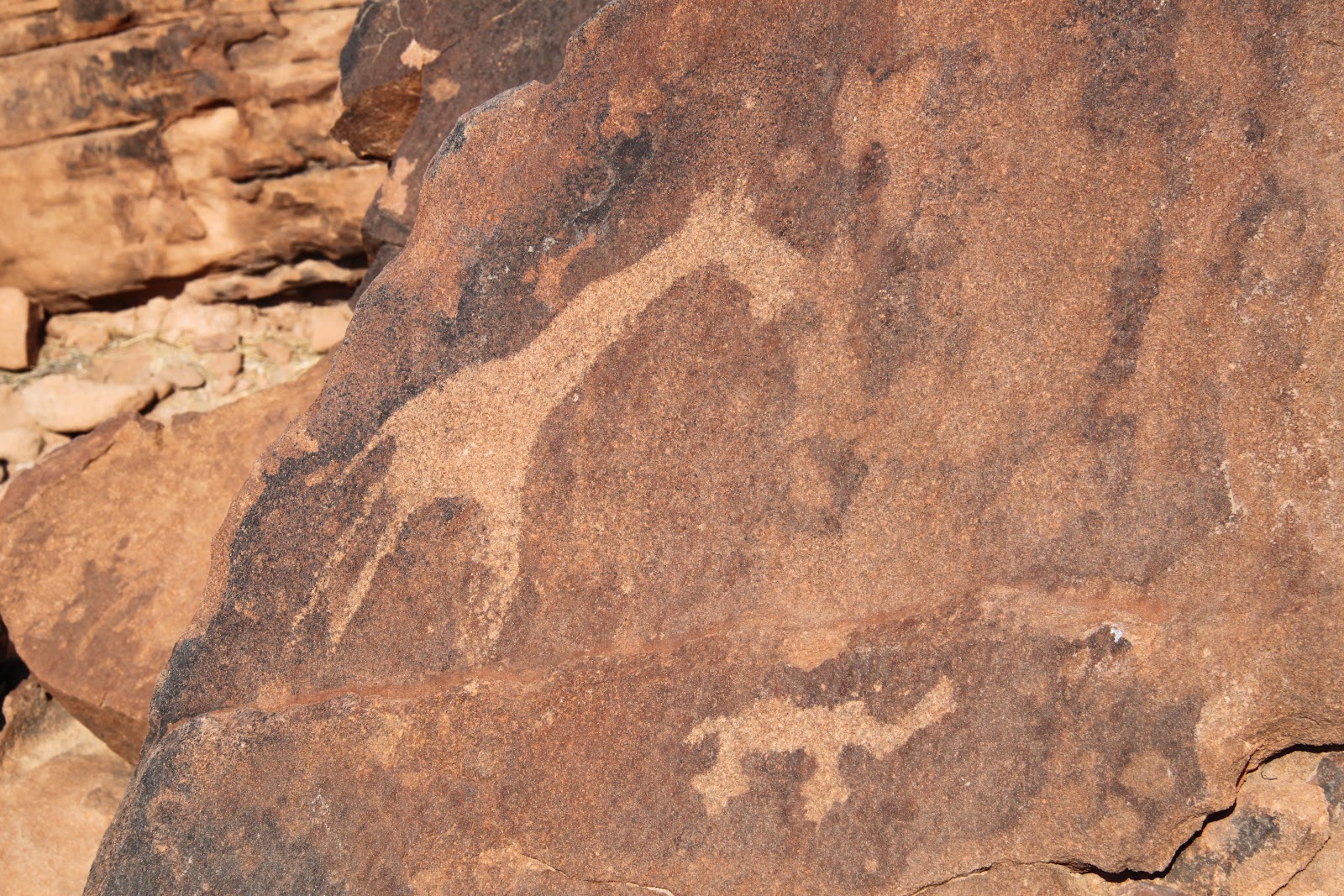
An area called Twyfelfontein has over 2400 ancient engravings that date back to prehistoric times.  There were Petroglyphs in one area and Pictographs in another.

Hiking into the Twyfelontein area

Pictograph

Giraffe

Area of Petroglyphs

Paintings on wall of ancient peoples home

Depict many different animals in the area

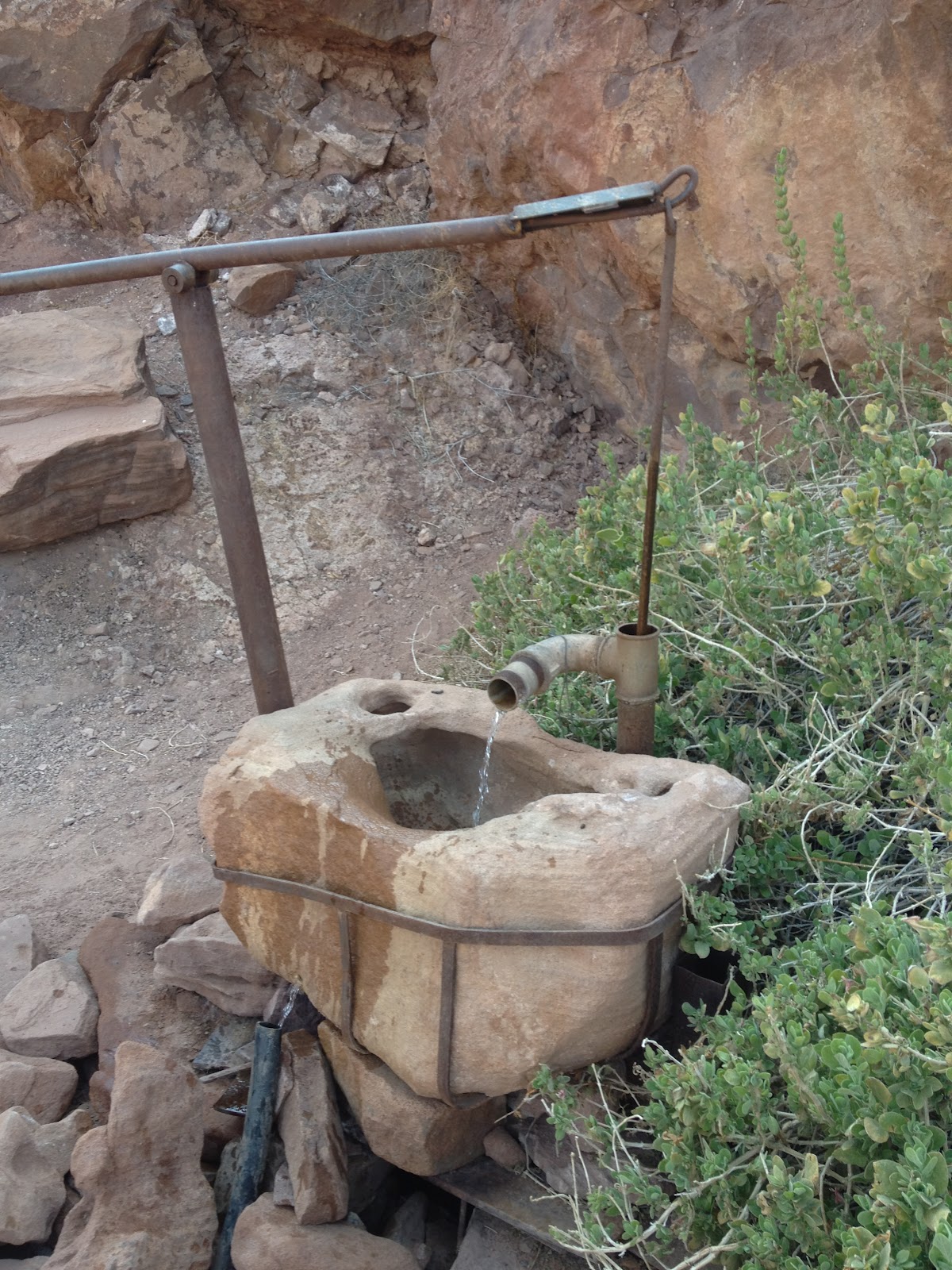
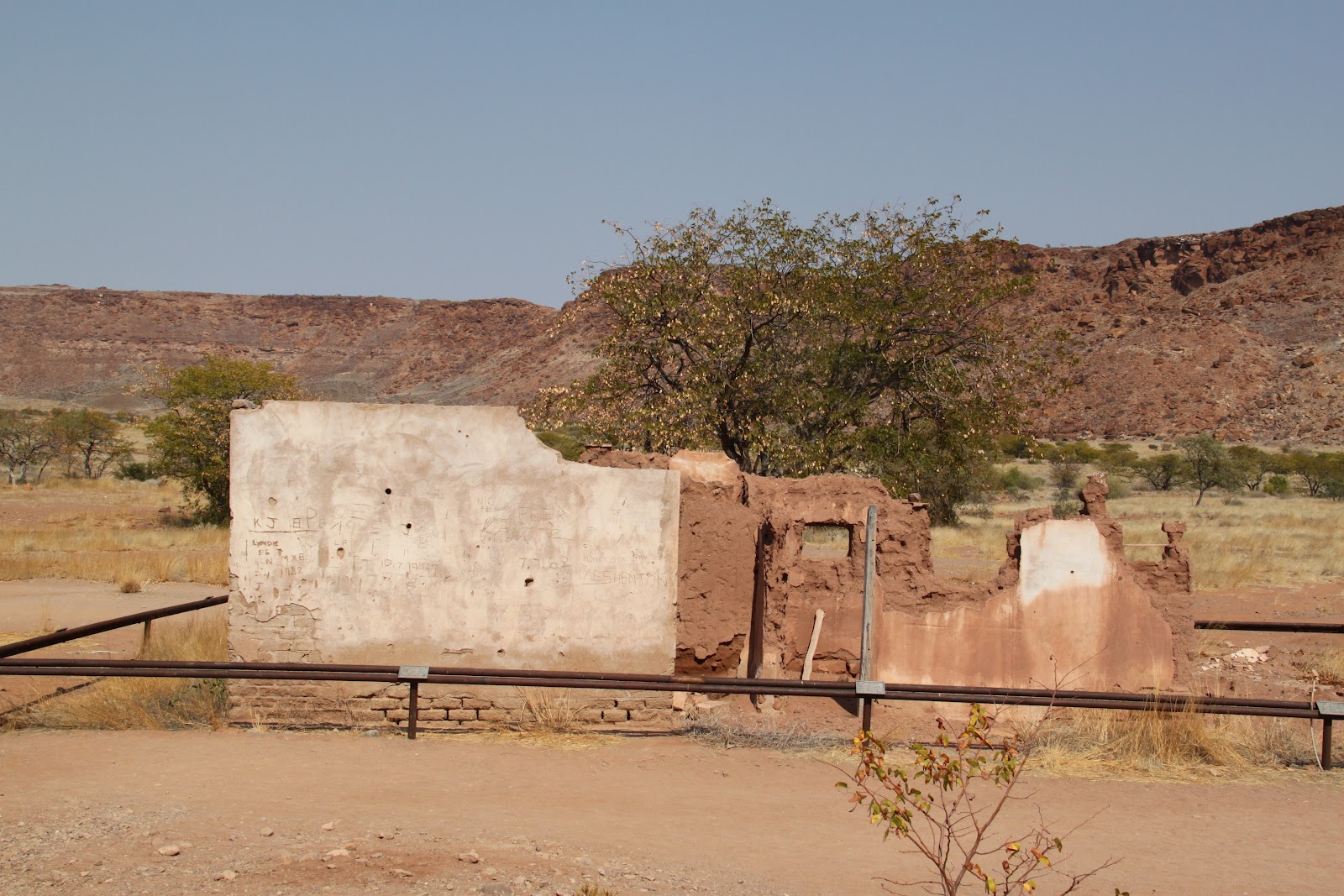
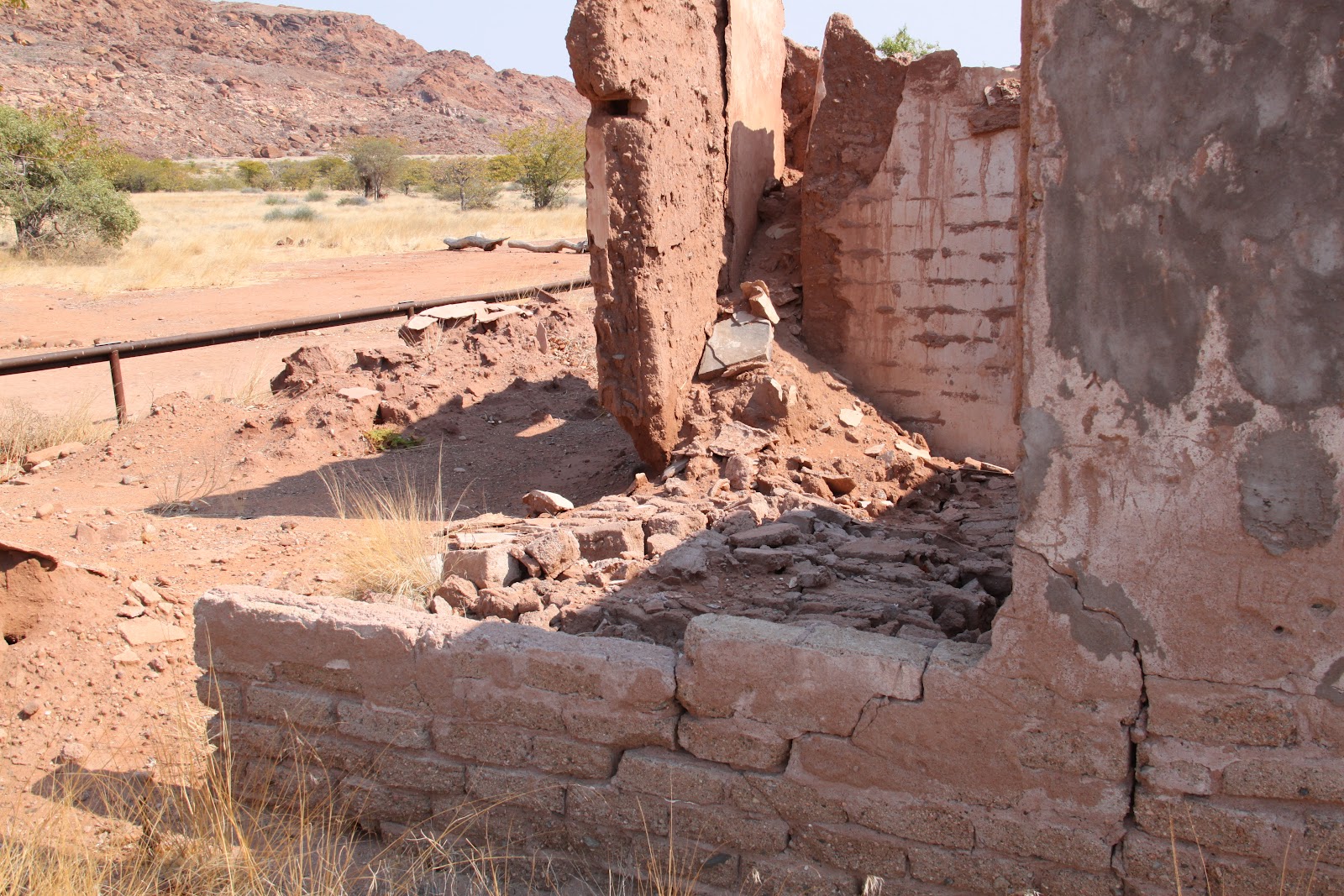
An early European settler and his family chose to settle in this area by following the elephants to a water hole that was fed by a spring.  He built a small adobe home and he and his wife and 5 children lived in the area with the Himba natives for over a decade before leaving.

Cistern he built when he found water by following the elephants 

His home for 7 people

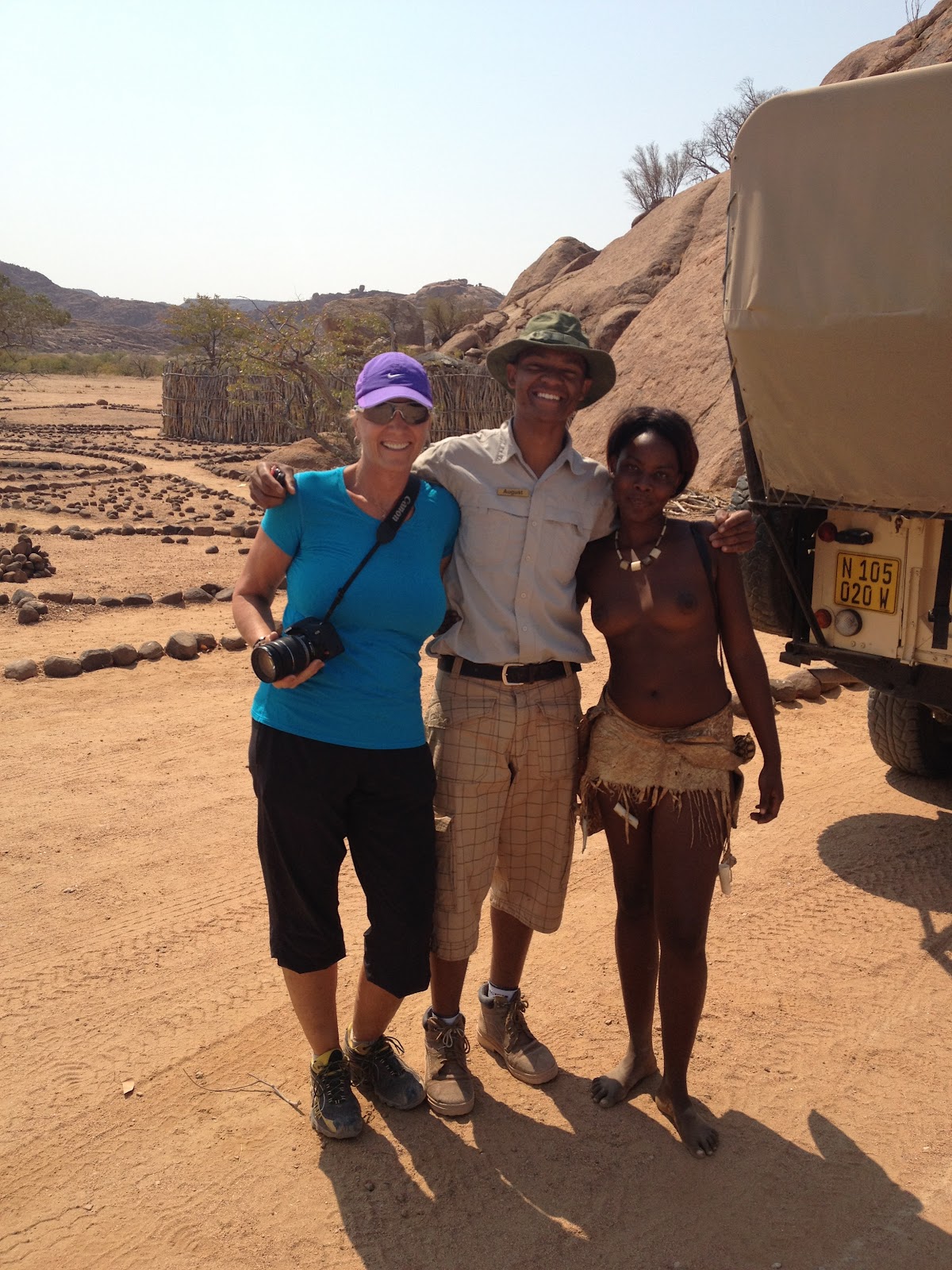
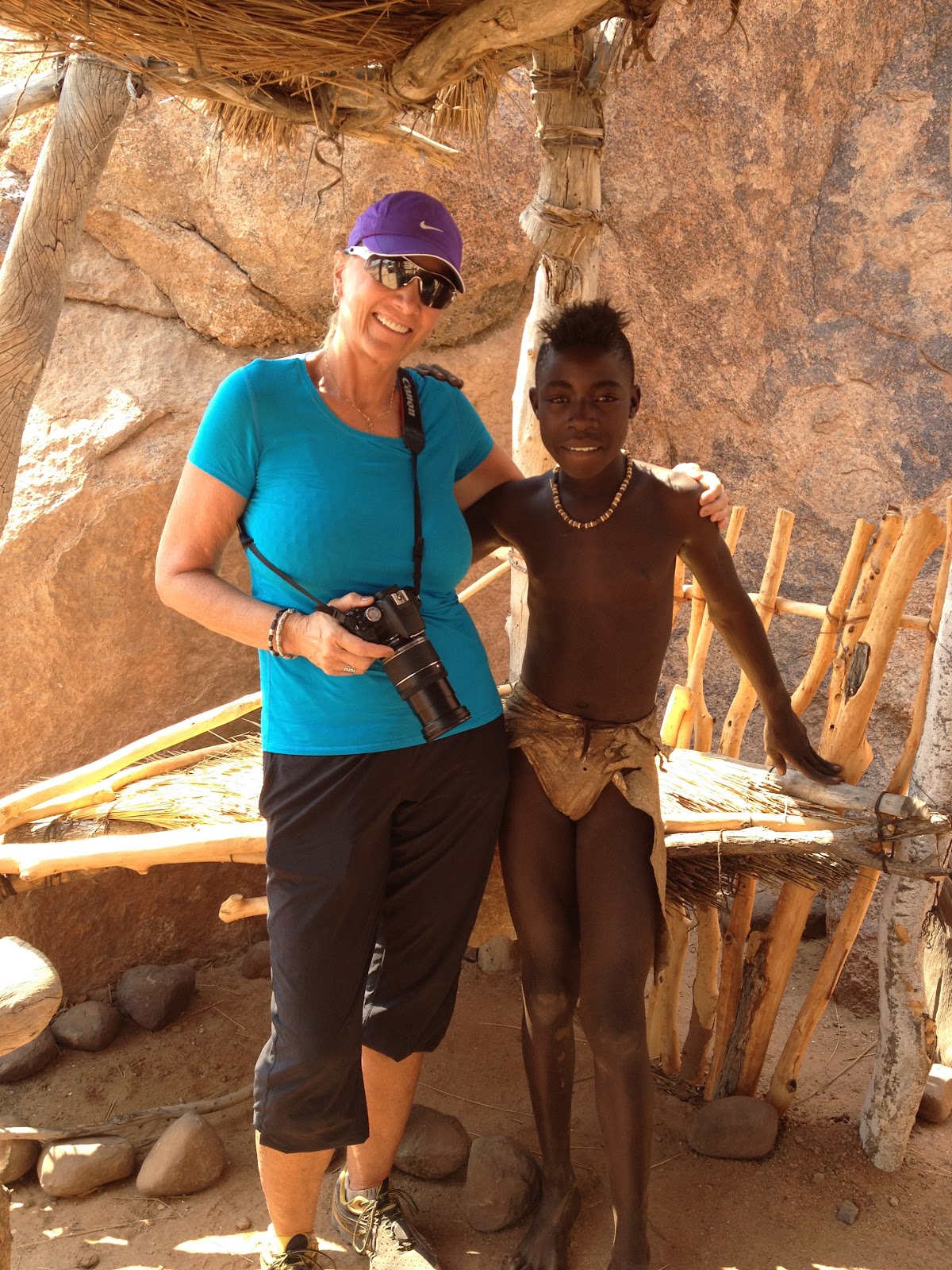
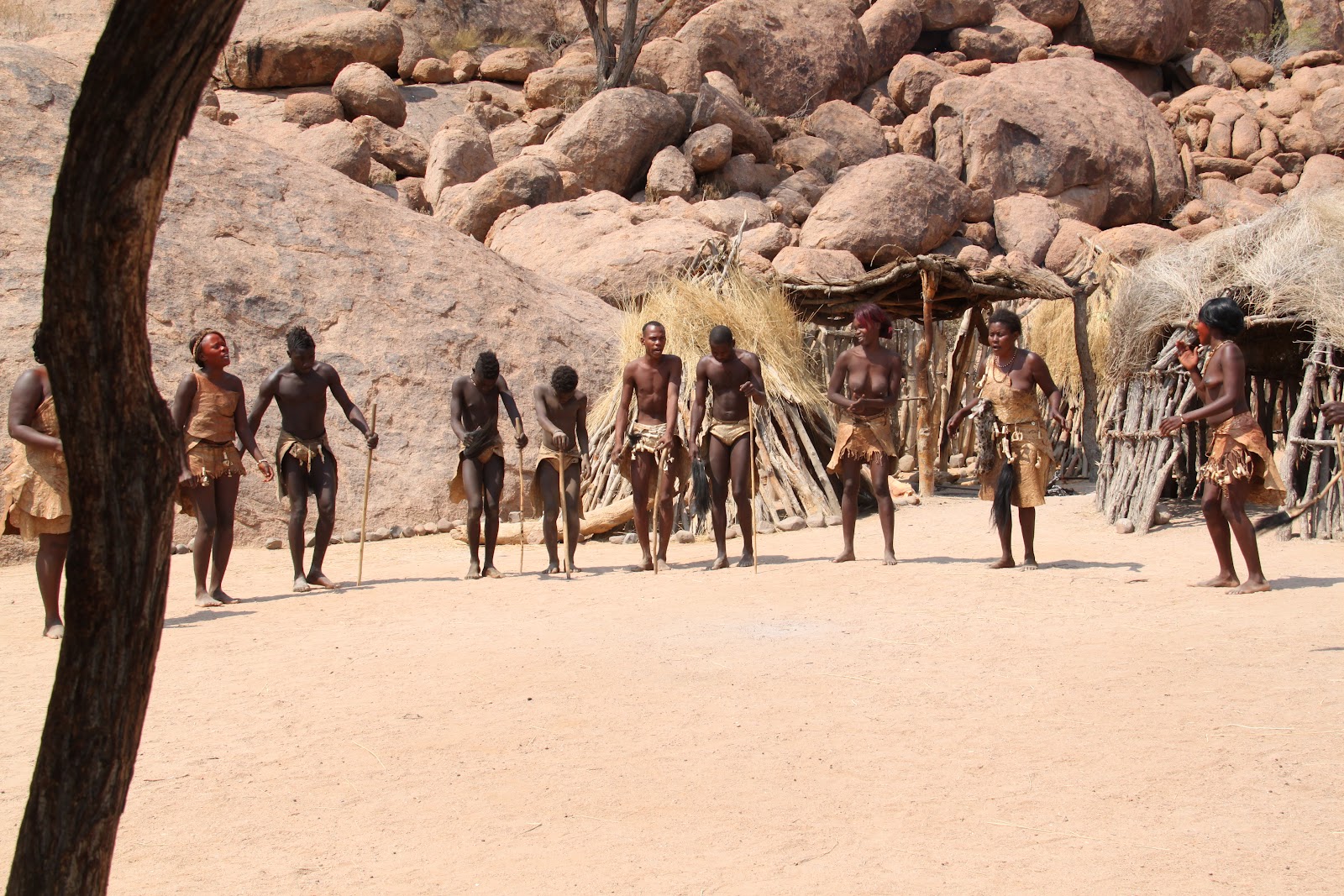
This area is also the ancestral home to the Himba. We visited a living museum where we witnessed their ancient way of life. They also performed a song and dance complete with topless women, in their native dress.  Can you say “National Geographic”?

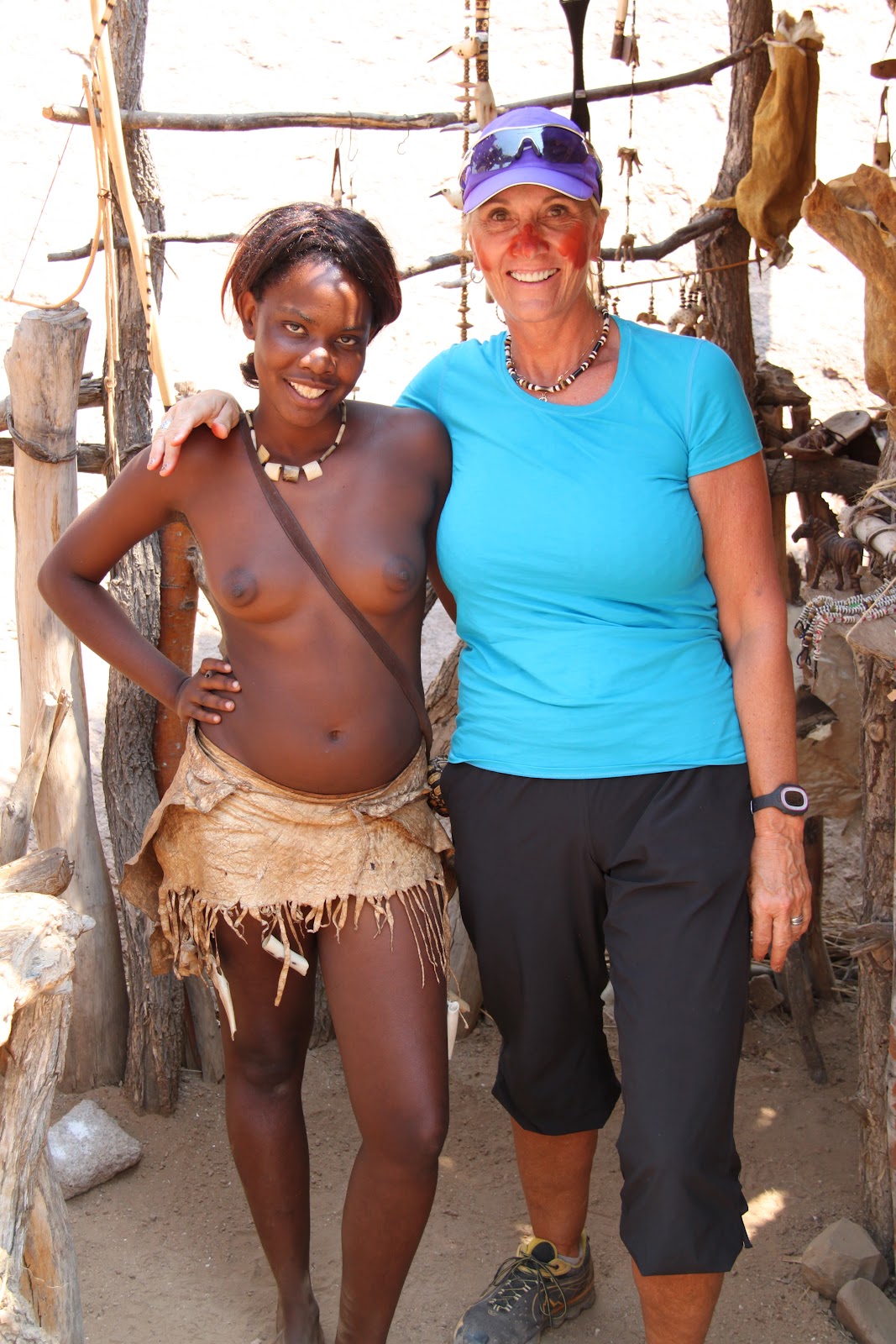
Barb, Xknopi, and a National Geographic beauty

Barb and our 16 year old guide

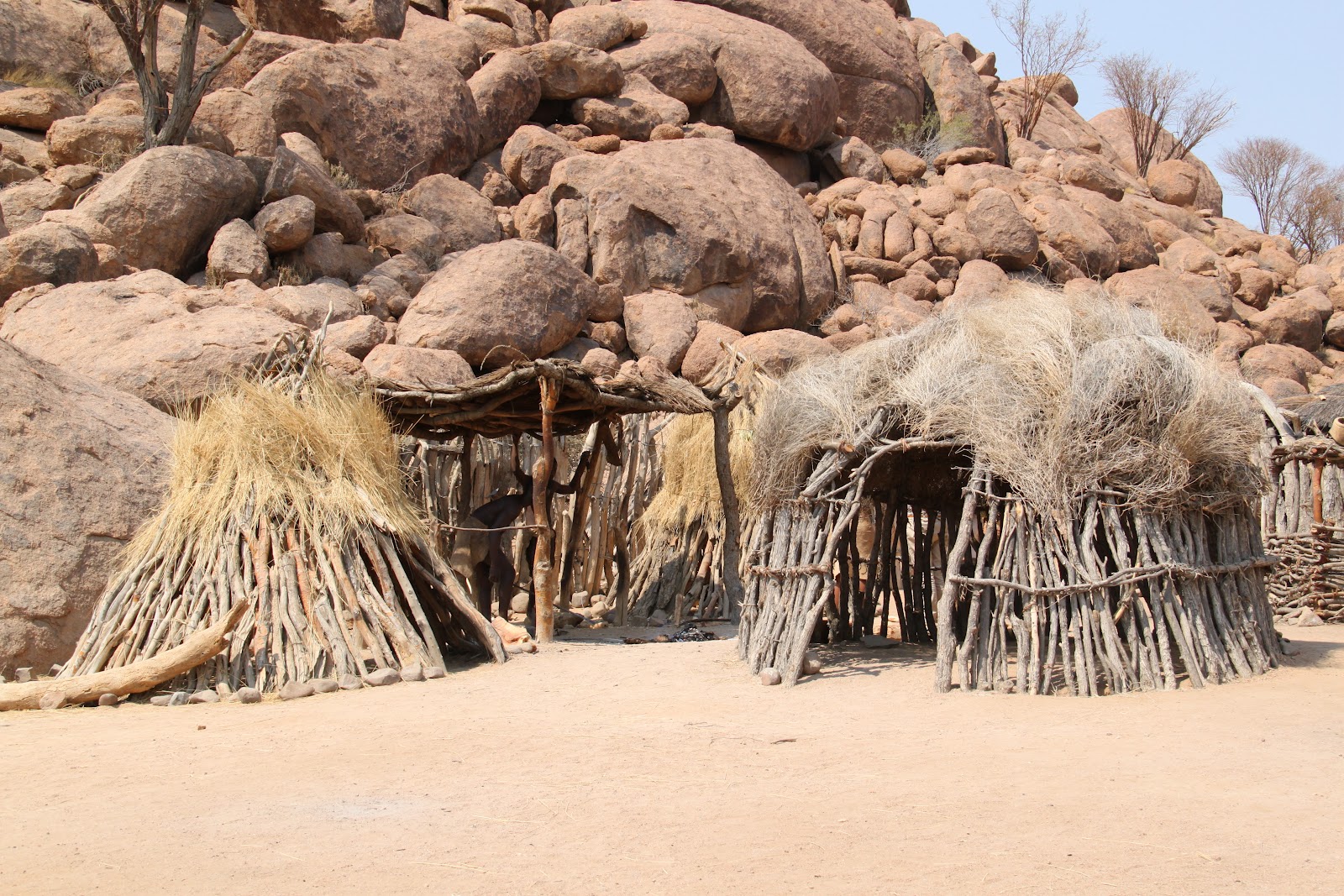
The village huts the Himba people lived in

They performed for us

2 Himba beauties

She painted my face with the natural red dye that they painted their faces with to use as a sunscreen and it made my face very soft.

Namibia, Africa – Okonjima Bush suite, August 31, 2012

Driving from Cortina to Venice (2 hours); Flying from Venice to Paris (2 hours); Quick train into Paris for dinner; Overnight flight from Paris to Johannesburg (10.5 hours); Flying on old 727 from Johannesburg to Windhoek, (2 hours) Namibia; Pick up Jeep Sahara 4X4 (fun vehicle to have on desolate desert roads and game drives) and drive 2 1/2 hours to Okonjima Bush Camp. Whew! This makes for a long journey plus we got lost in the Namibian desert.

We are doing a self drive safari through Namibia. We are staying at different camps and lodges through the savannah and the desert. We will see the Namib and Kalahari deserts and the Skeleton coast and visit Etosha National Game Park as well as a couple of private game parks.

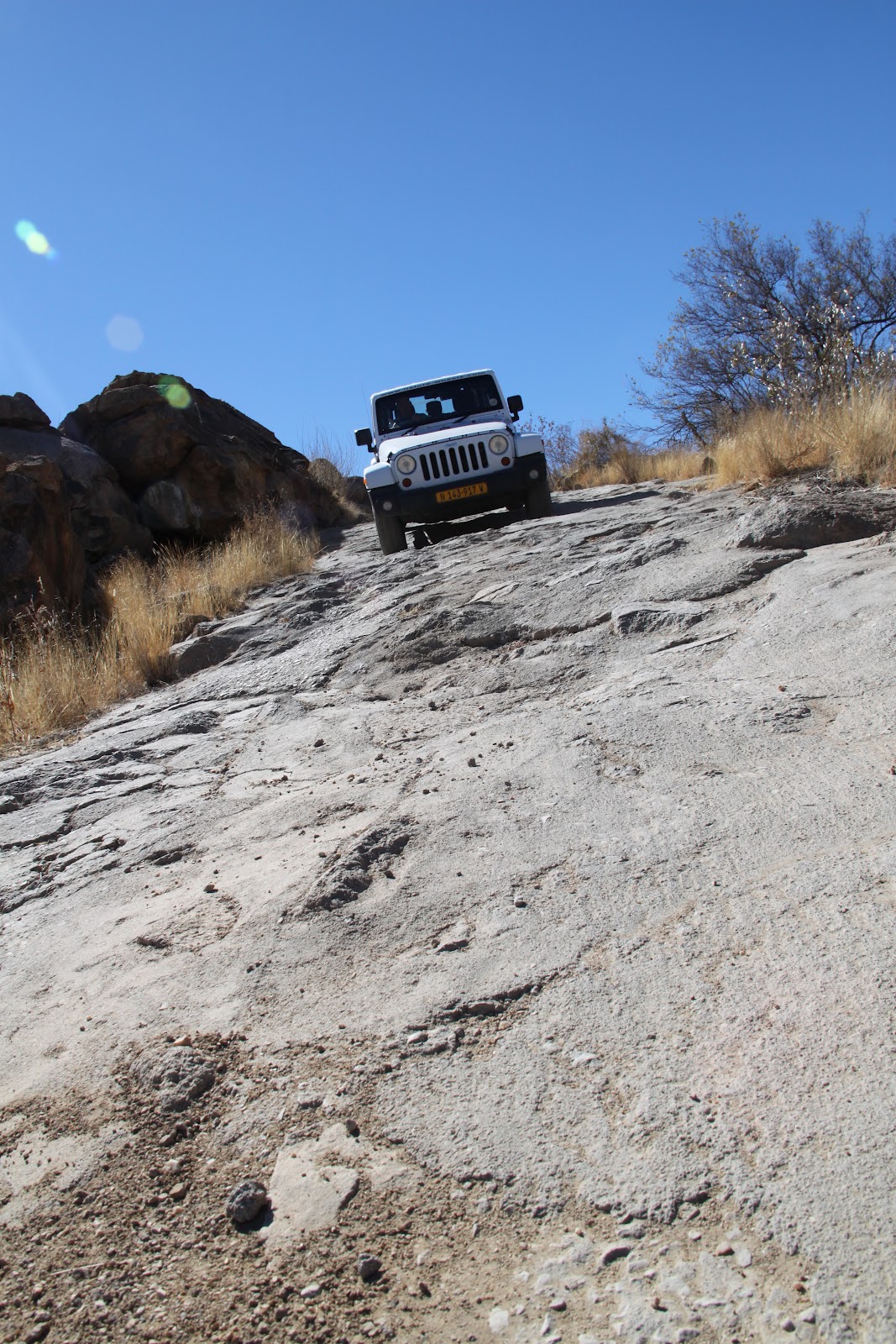
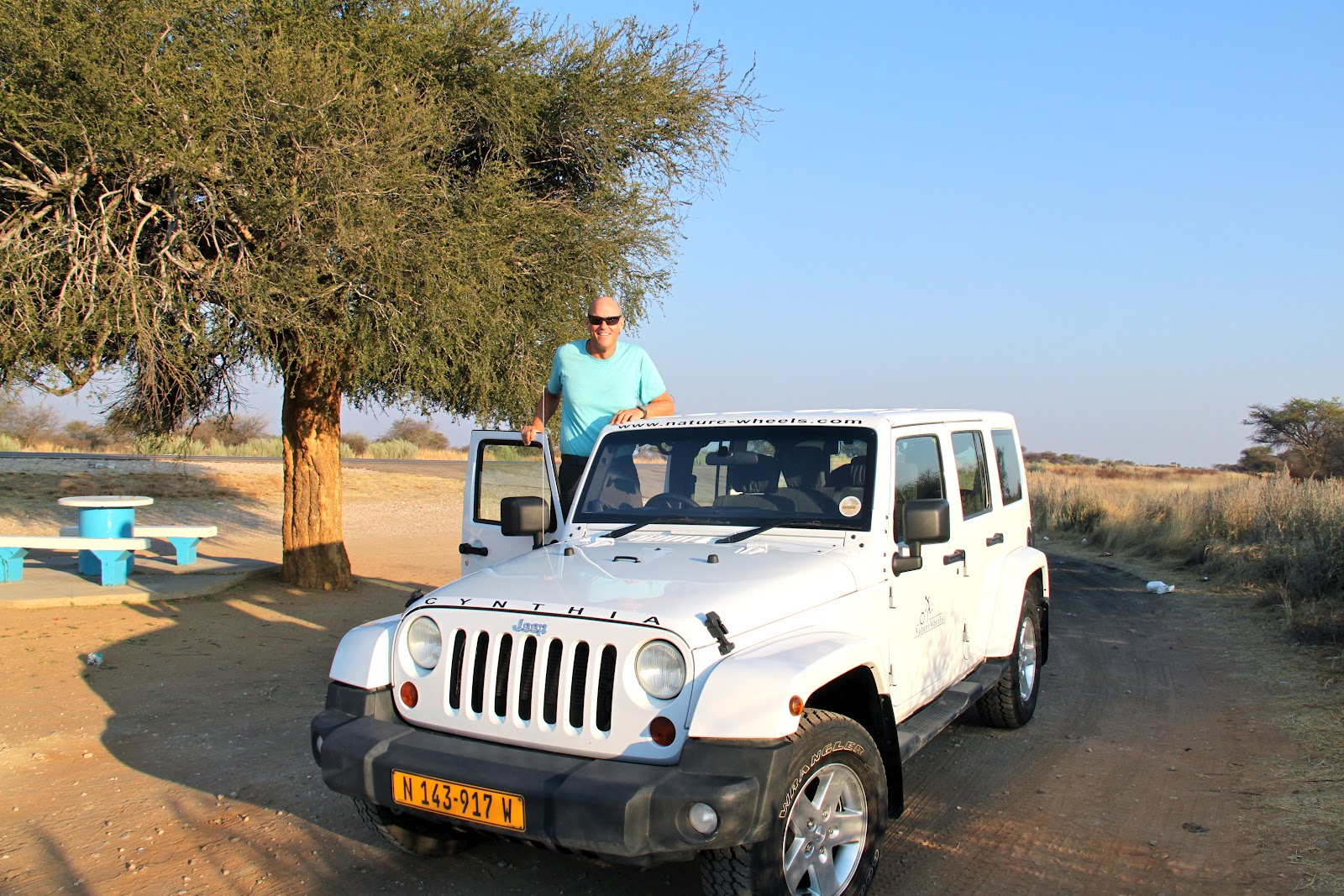
A 4 X 4 is a must in Namibia.  The Jeep was awesome for us, as we could pop off the top over the front seats quickly.   Driving was a blast.

The Okonjima Bush Suite is like having your own luxury home in the savannah complete with your own guide, chef, housekeeper and gardener. They were waiting for us when we arrived with drinks, fires burning in the inside fireplace and outside fire pit and dinner to start and serve on our command. They told us that Brad Pitt and Angelina Jolie also stayed here. We were not impressed but the animals around our floodlit water hole were impressive.

Our own chef made our own private dinner

Our room

The bathroom

Inside our Suite

The Okonjima Bush Suite Entrance

Our Room
The room opens to a patio overlooking a firepit and the watering hole.

Okonjima means “Place of the Baboons”. It is a conservation camp where they rescue animals. They also put collars on some animals to track and observe them.

After taking a shower built in the great outdoors, having a nice dinner, and relaxing for a bit, we went out on a night game drive, only to be followed up by an early morning game drive.

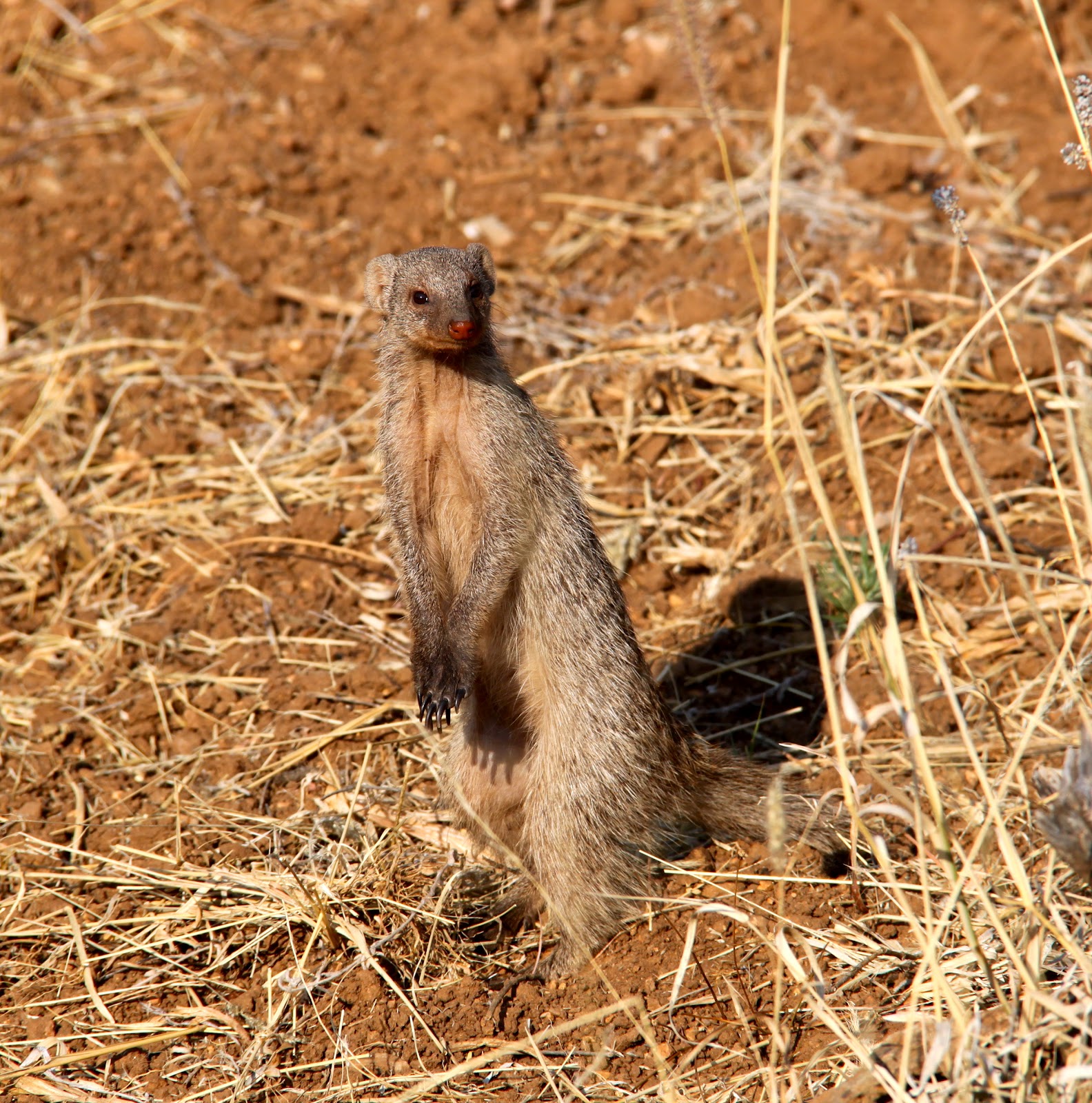
Albert was our driver, and we tracked a leopard. We found an Aardvark which is a rare find. They are an animal that has DNA that hasn’t changed from dinosaur times. Along the way we spotted giraffe, oryx, kudu, heartebeast, and mongoose. We also found the elusive wild dogs.

Our game drive

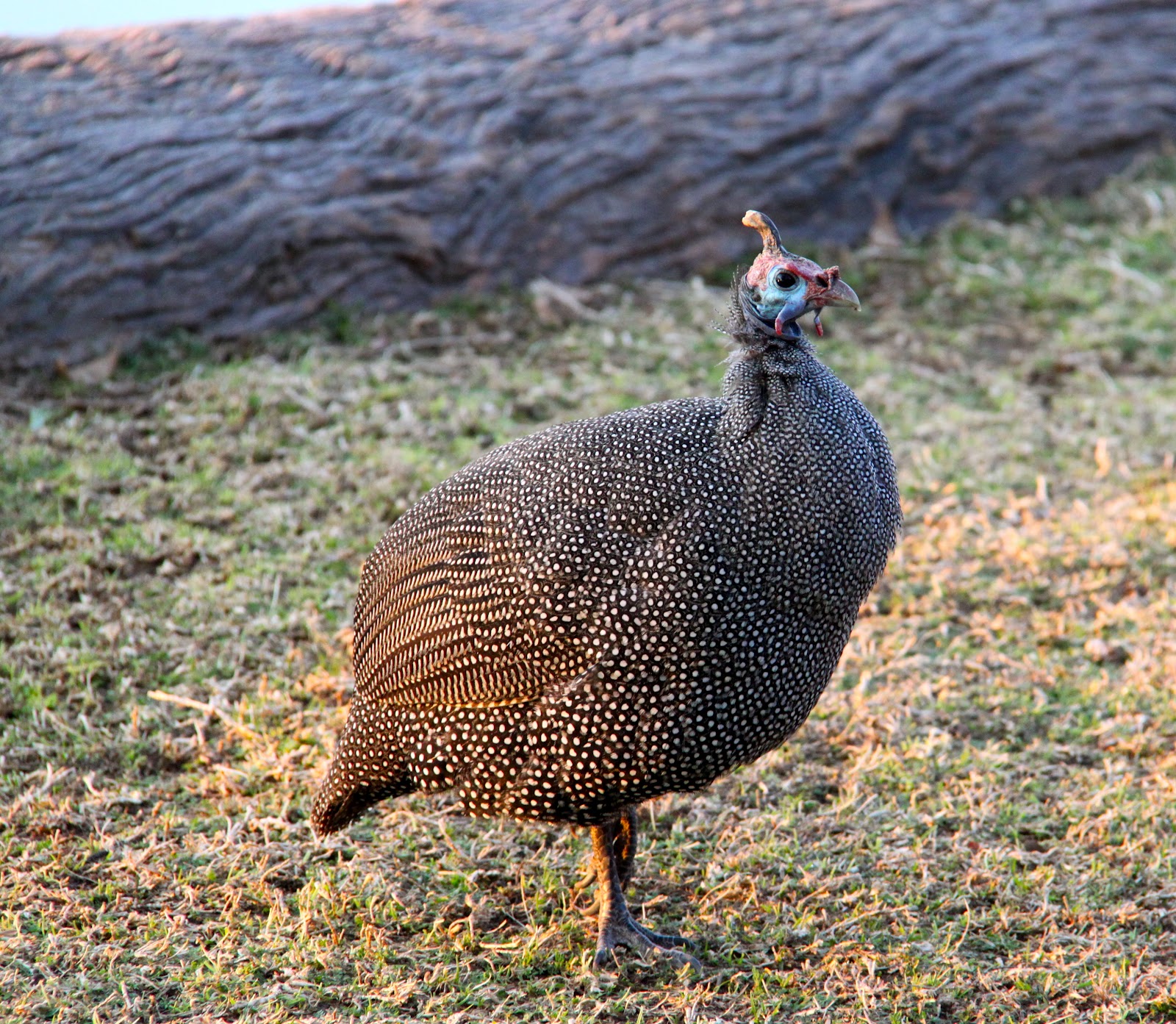
Helmeted Guinea Fowl

Red hornbills and Guinea Fowl

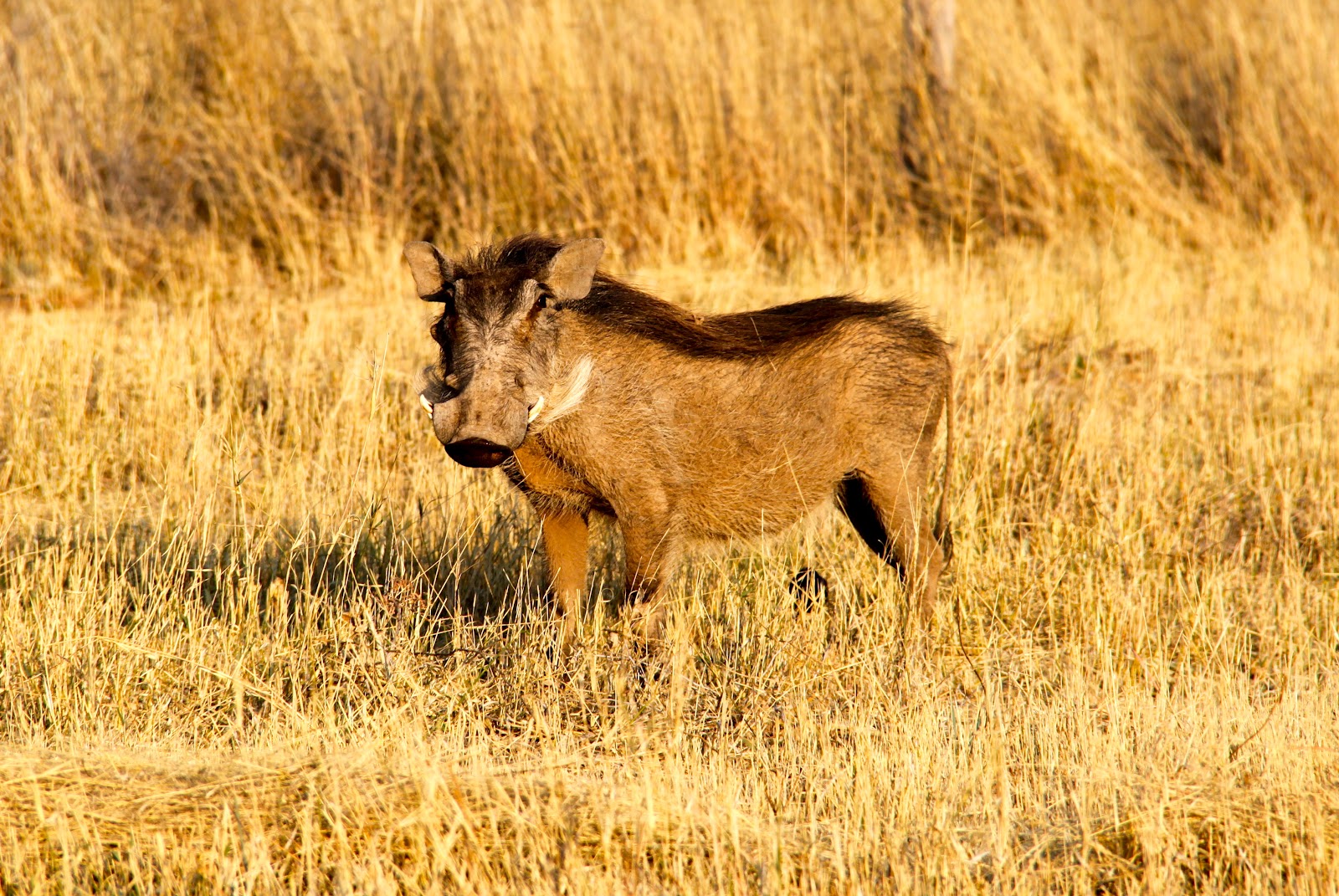
Wart Hog (males have 4 warts on their faces and females have 2)

Crimson Breast Strike bird

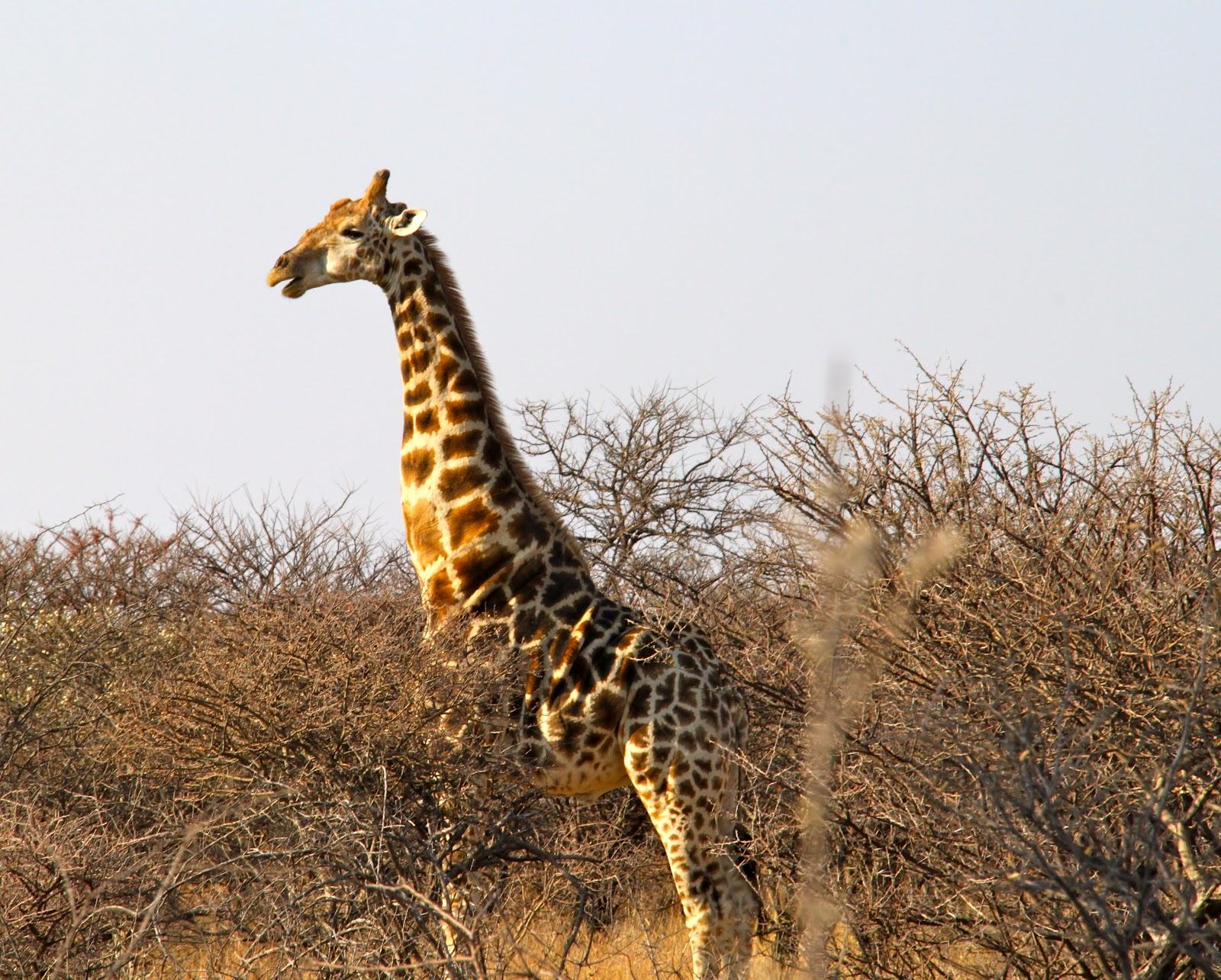
My favorite animal—the southern Giraffe

Meercat (Timon)
Leopard has a collar because it was a rescue leopard and they are reintroducing it to the wild on their reserve

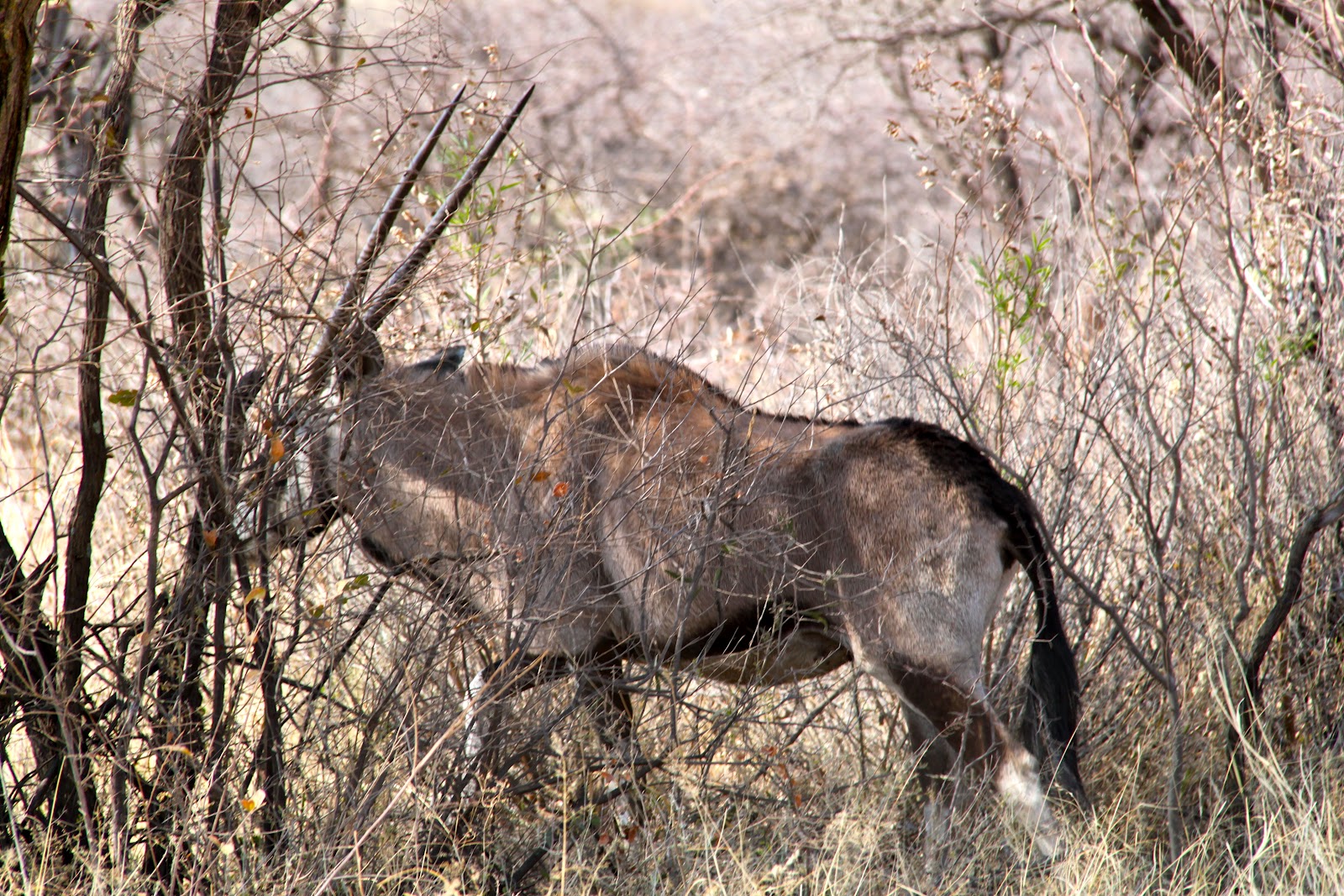
Oryx

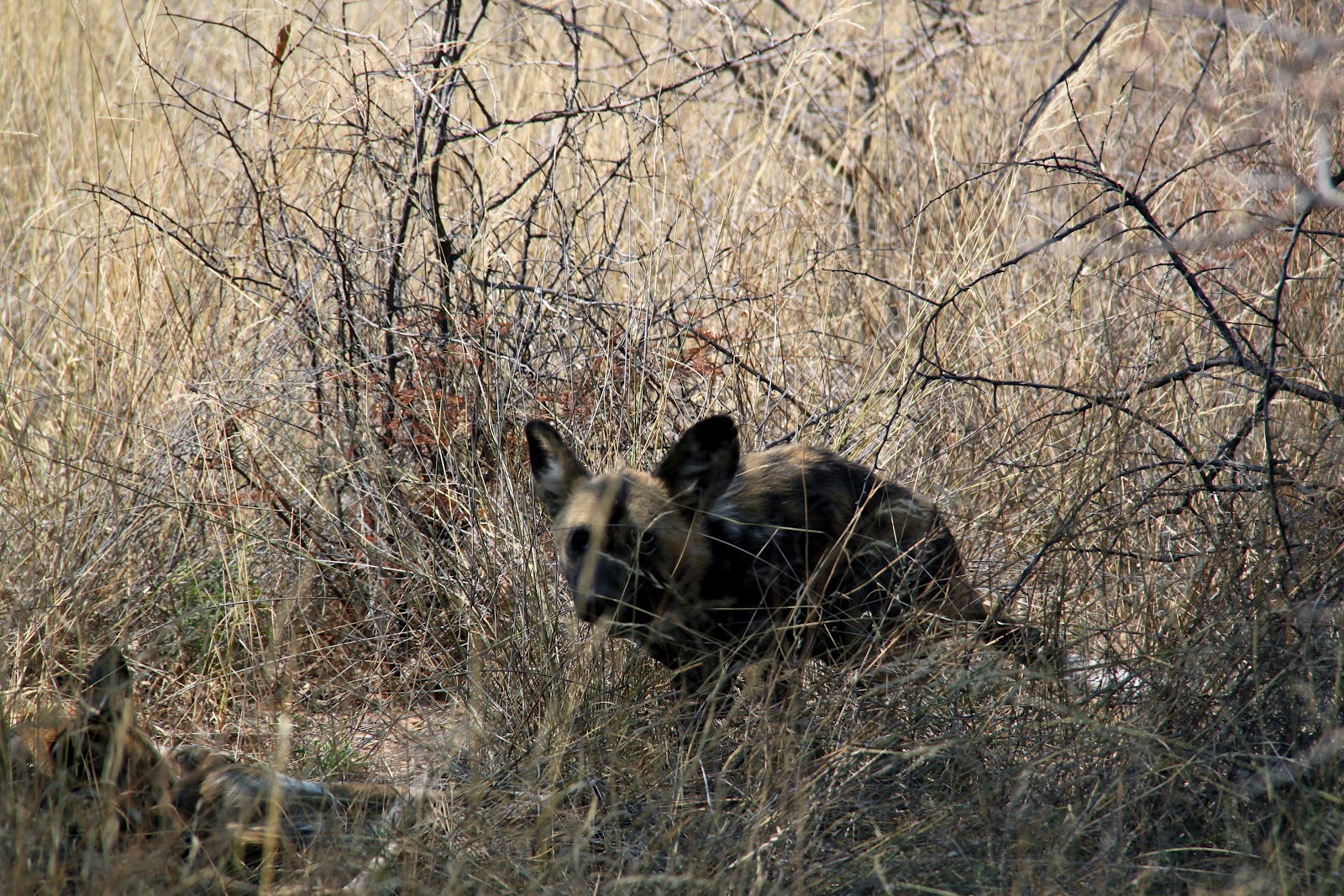
Wild Dog (not related to the domesticated dog)

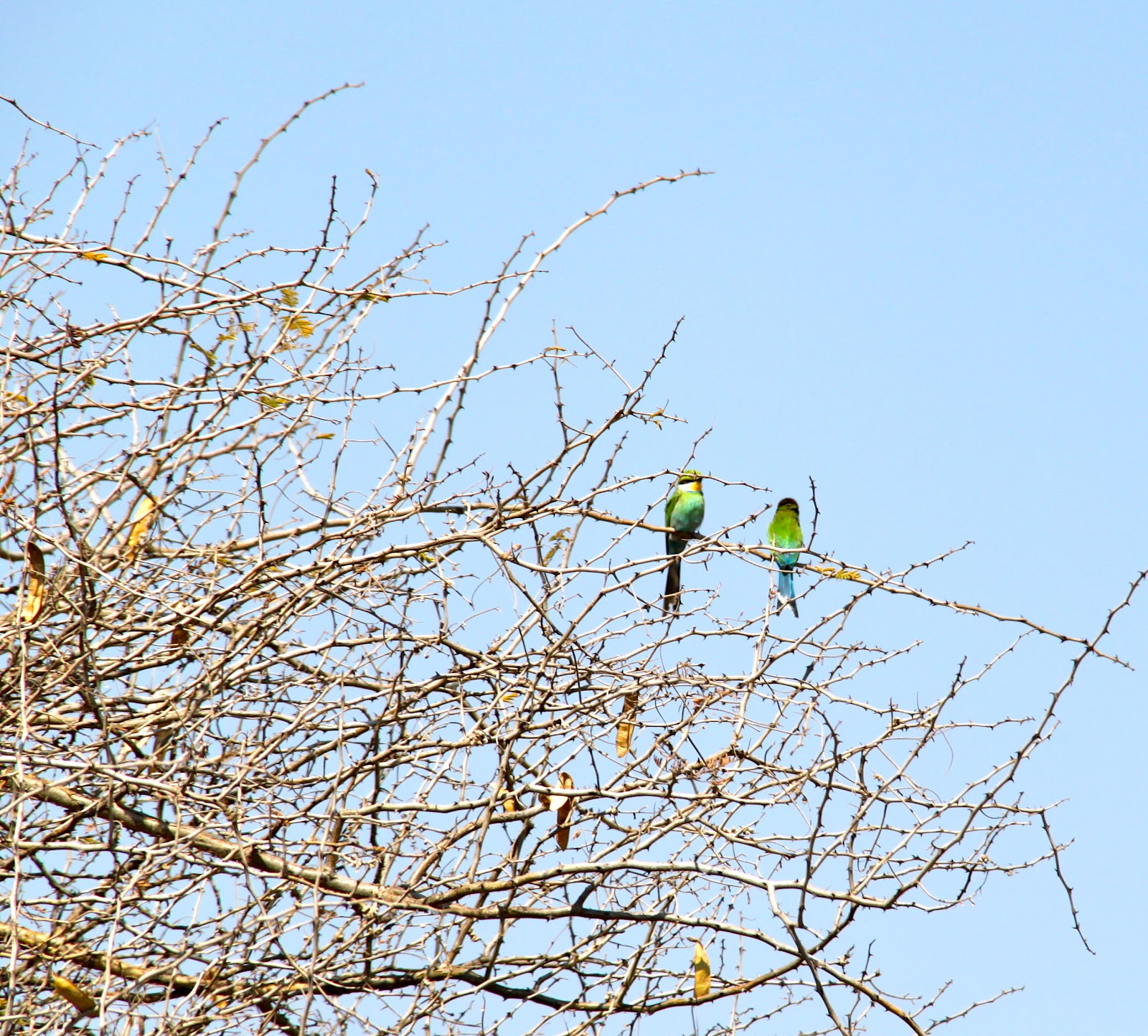
Green bee Eater

Zebra

Scott going on a game drive

Here is a list of animals we saw today.

Aardvark (quite a find)
Montiero Hornbill
Helmeted Guinea Fowl
Red Billed Spur Fowl
Steenbok
Warthogs
Crimson Breast Strike Bird
Oryx
Greater Kudu
Meercat
Southern Giraffe
Tortoise
Baboons
Heartebeast
Scrub Hare
Spring Hare (moves like a Joey)
Leopard
Swallow tail bee eater (green bird)
Masked Weaver Birds (yellow with black face)
Wild Dogs
Korhaan birds

Namibia, Africa (Ongava Lodge and Game Reserve-Etosha Game Park), September 1-2, 2012

Ongava Lodge is 2 1/2 hours north of our last stop. It is just outside of Etosha Game Park, which comprises 22,000 square kilometers filled with lots of animals. It is a salt pan. Ongava Lodge has 14 huts that are up high for viewing the watering hole where many of the animals come to drink.
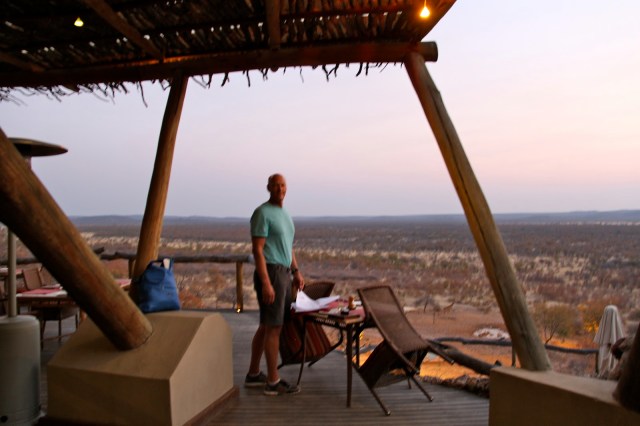
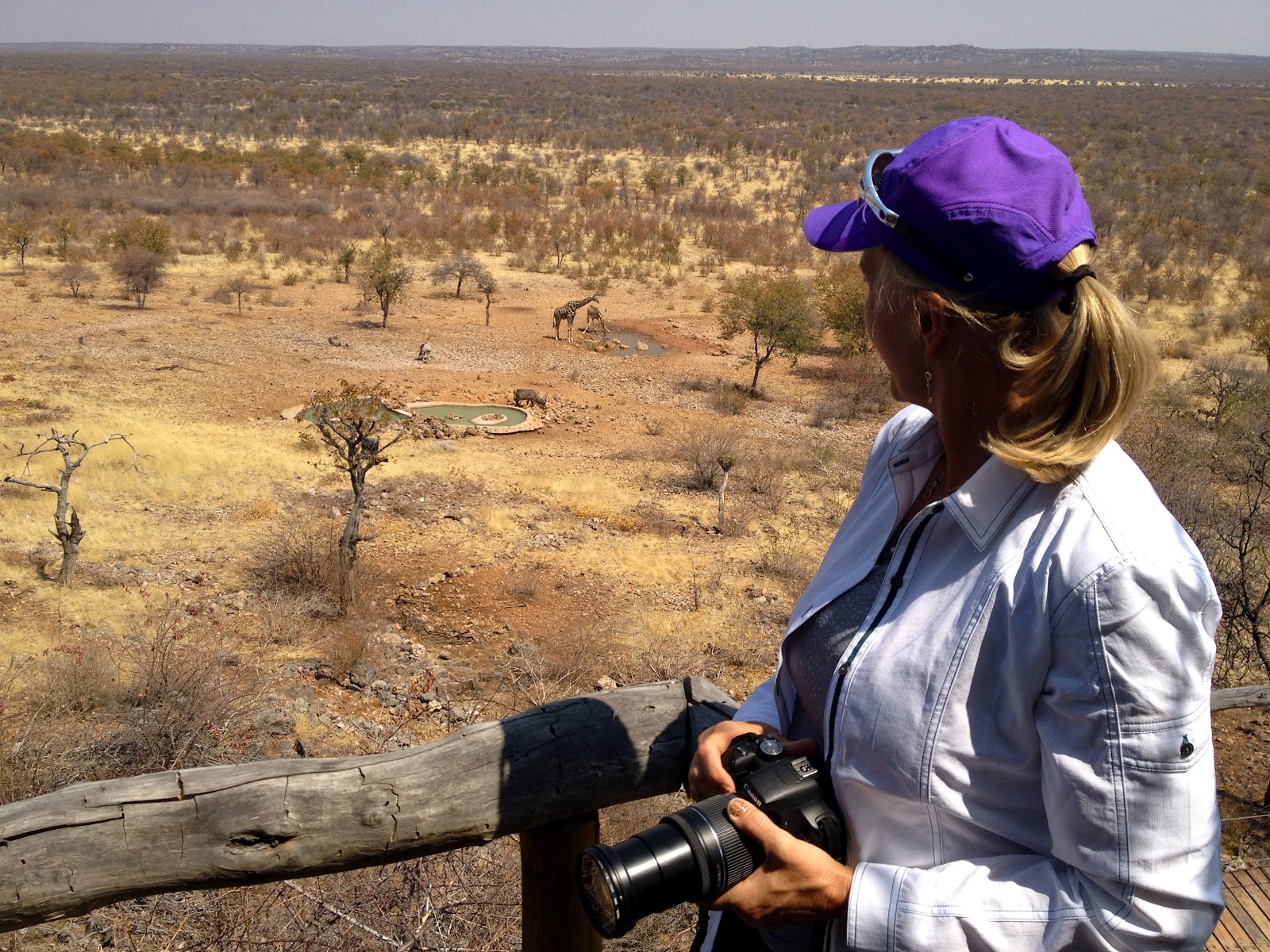
From the deck overlooking the waterhole

Our individual home at Ongava

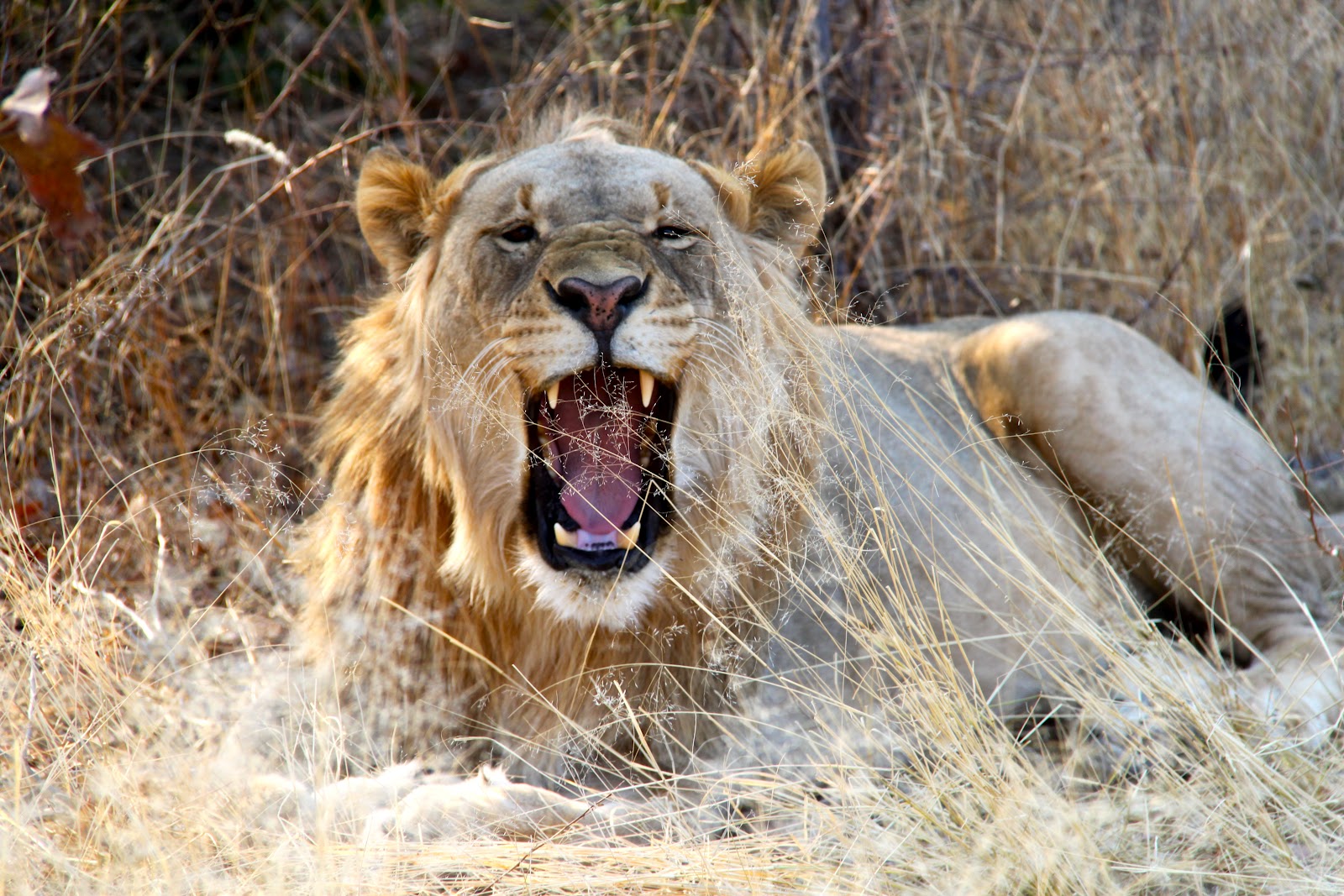
Ongava means Rhino. Going out on a game drive on the Ongava private park as soon as we arrived turned out great. We immediately saw 3 male lions. Our guide scraped the paint off his Land Rover driving through the thick bush and thorny Acacia trees in order to get close to the lions. There are three male lions lounging in the long white grass with legs and paws flopping onto each other. It looks like a pile of lions.
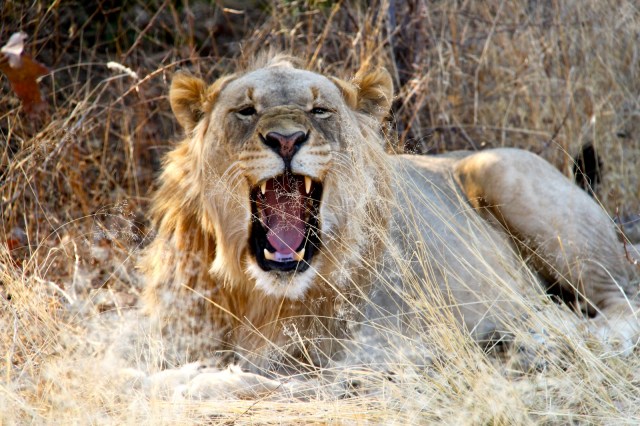
One from the pile of Lions

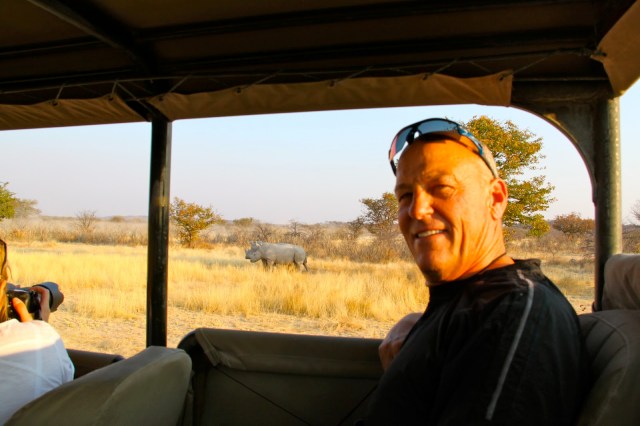
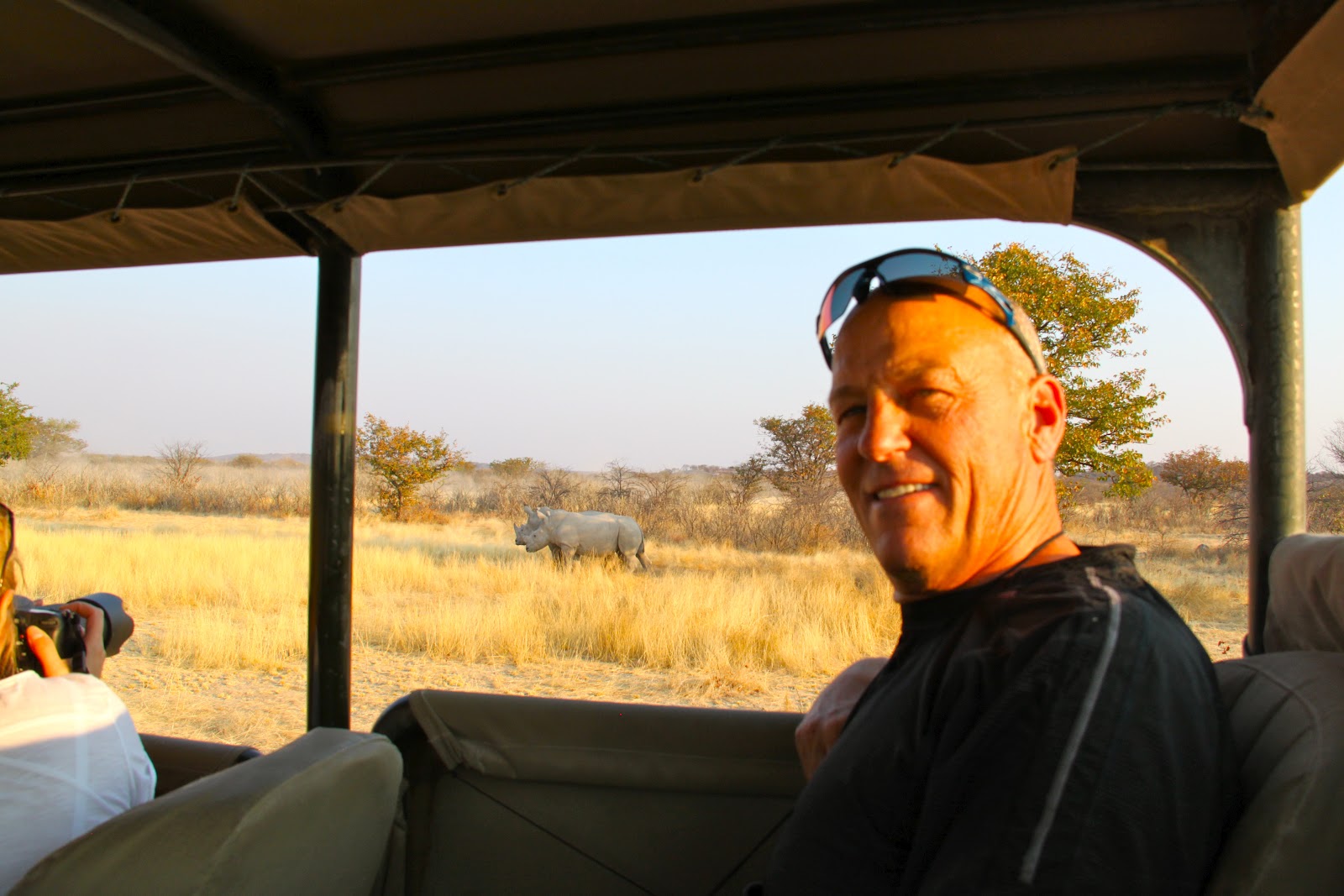
Scott, with the Rhino 50 feet away

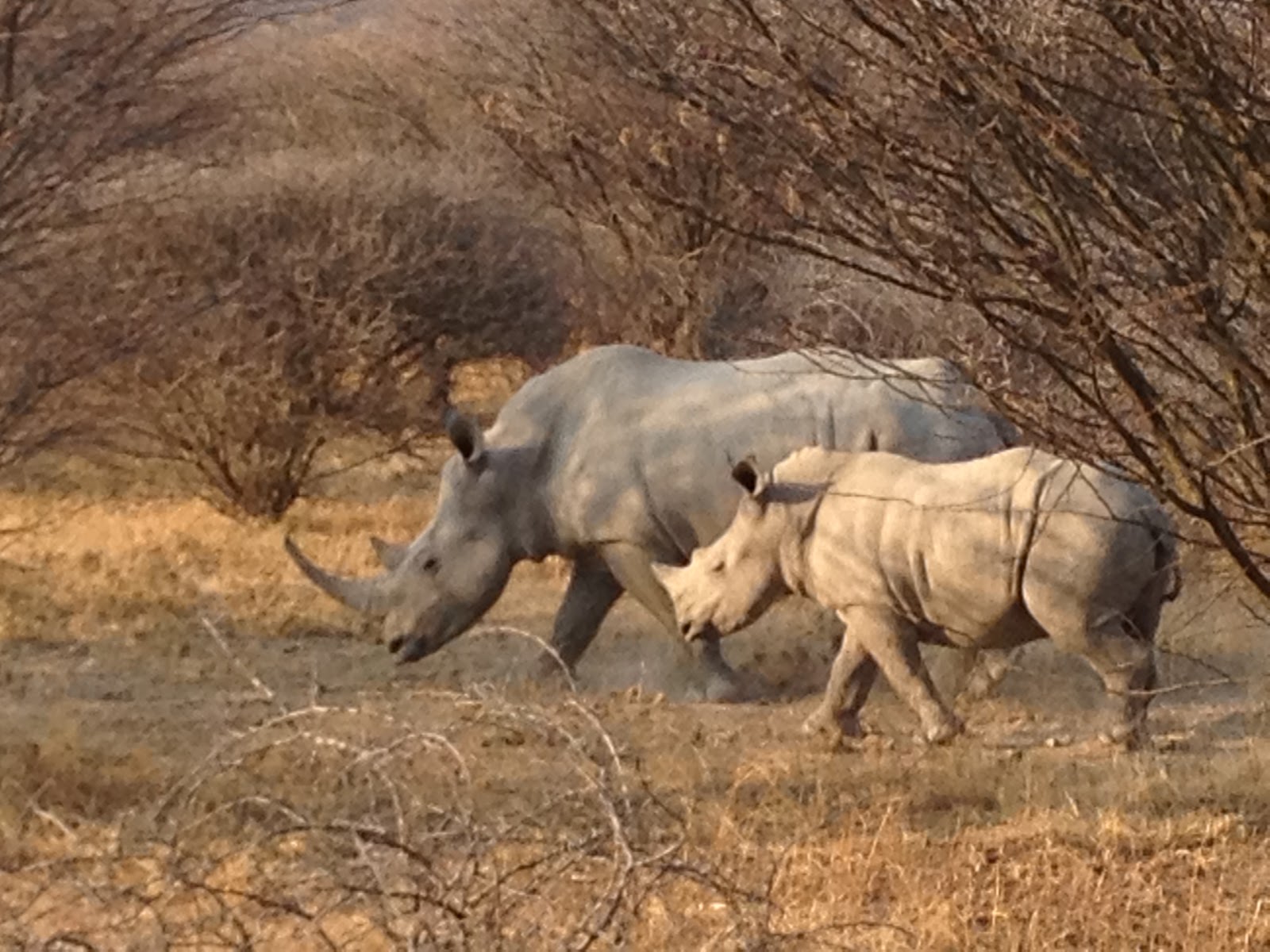
Ten minutes after leaving the lions we see white rhinos. It’s the same drill. The guide plows right through the bush scraping paint off the Land Rover in order to get as close as possible to the rhinos without endangering the rhinos or us. It is a big mama rhino and her baby. The baby is very intent on keeping very close to his mama. When mama starts to turn or walk the baby moves also and trots right below and close to mama. When mama stops the baby stops. These are beautiful animals and we wonder how their skin looks so good since they crash through the bush with reckless abandon smashing thorn bushes and small trees as they go.
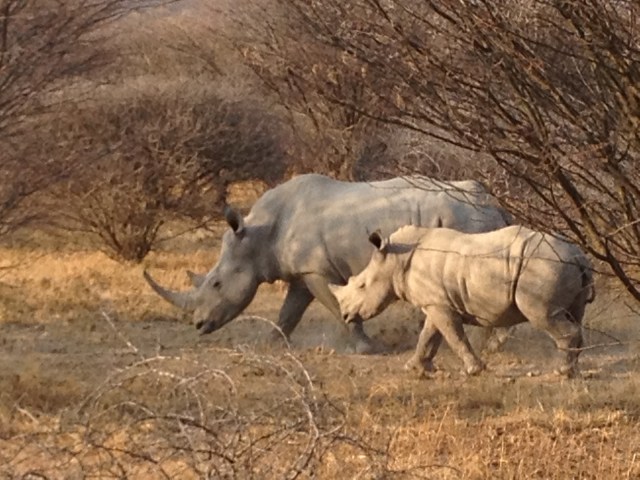
Mama and Baby (White Rhinos)

In the private Ongava reserve we also see a female waterbuck, a black faced impala (only found in Namibia), a goshawk, two black rhinos (endangered), oryx, zebra, wildebeest, and springbok. Our guide told us that It is rare to have black and white rhinos in the same area. White rhinos have a wide mouth. Black rhinos are smaller and a little darker and have rounded mouth.

Waterbuck

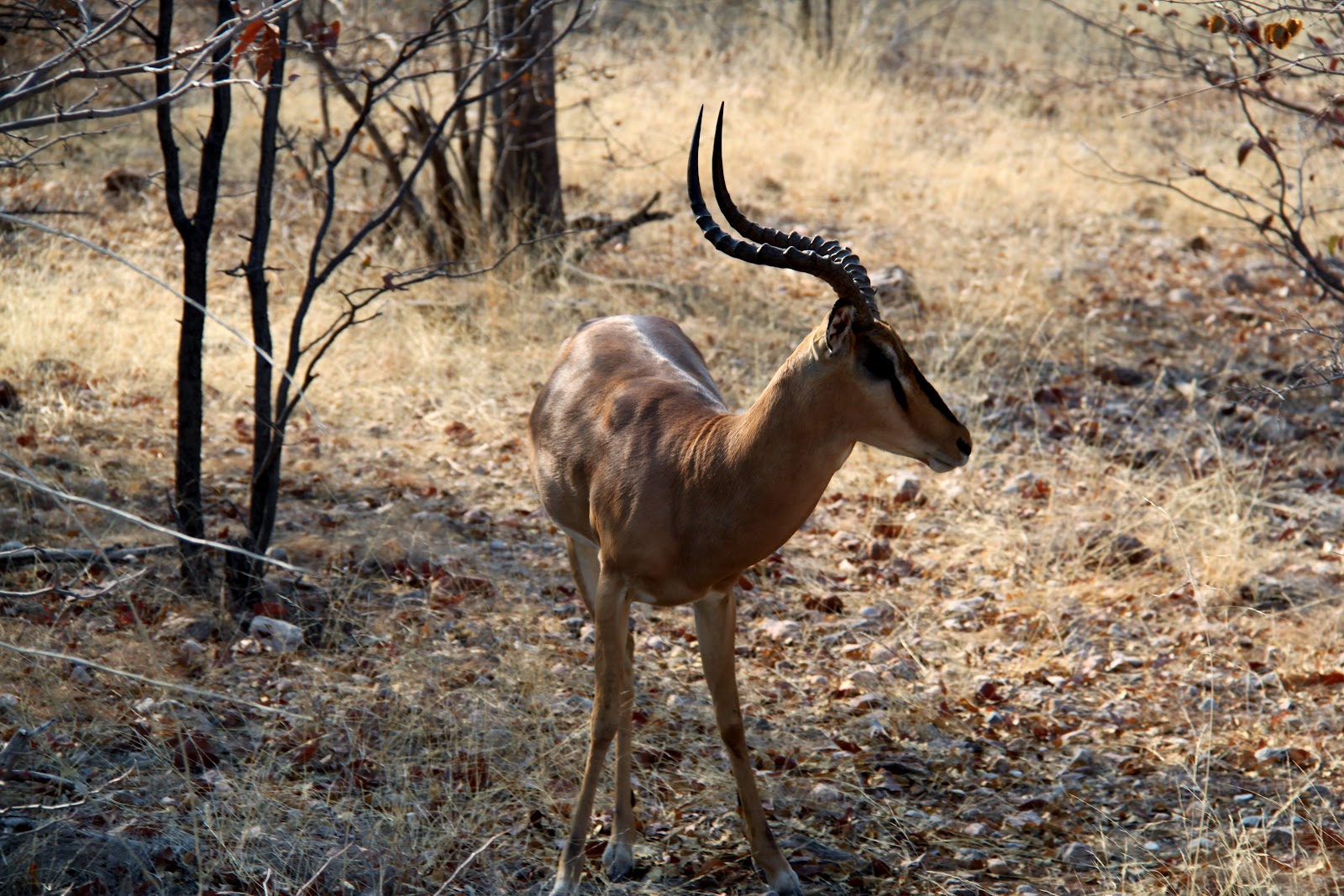
Black faced Impala

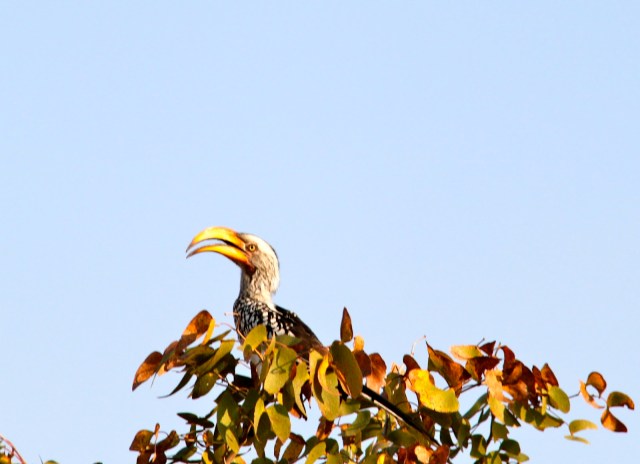
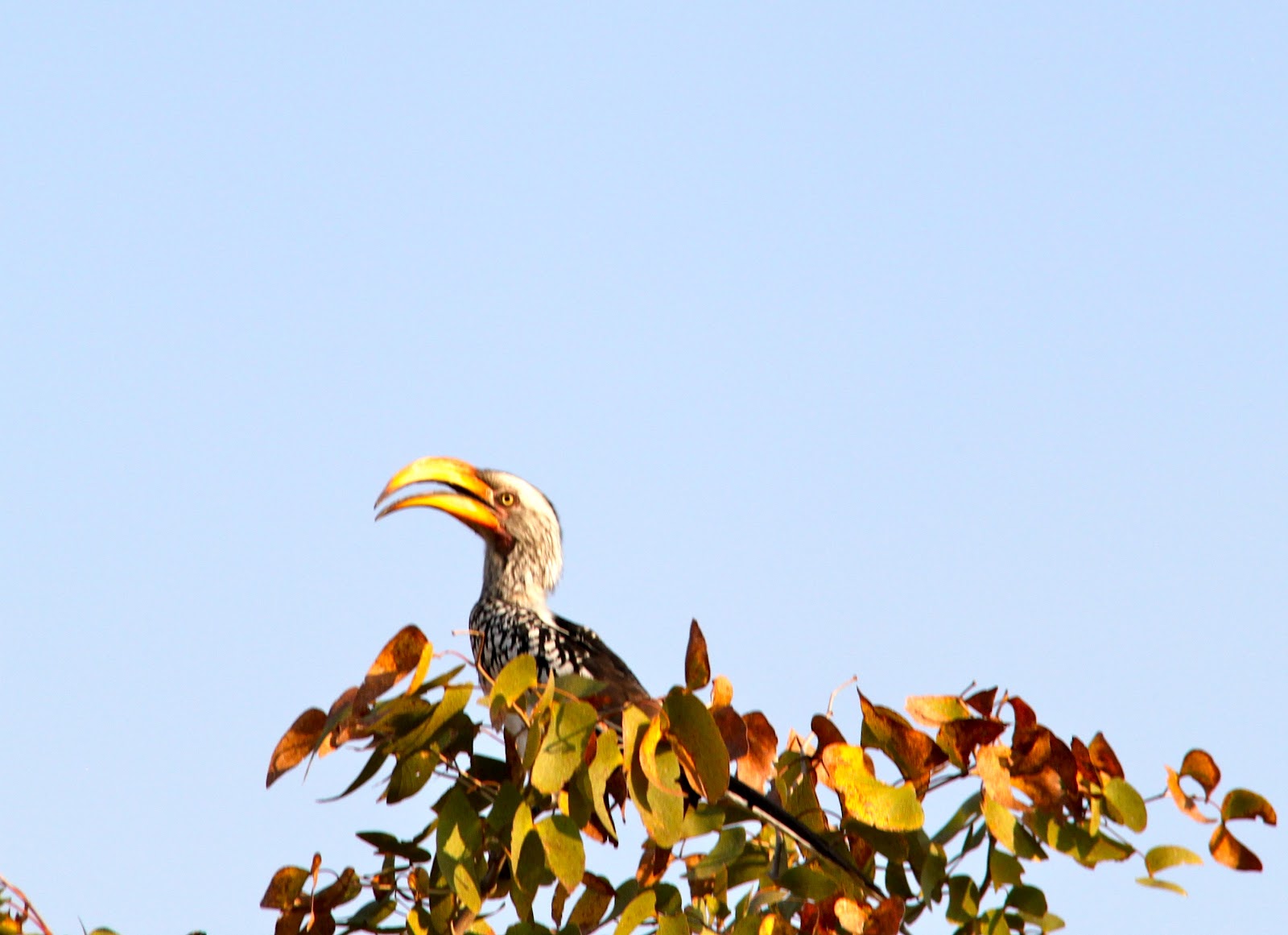
Yellow Hornbill or Flying Banana

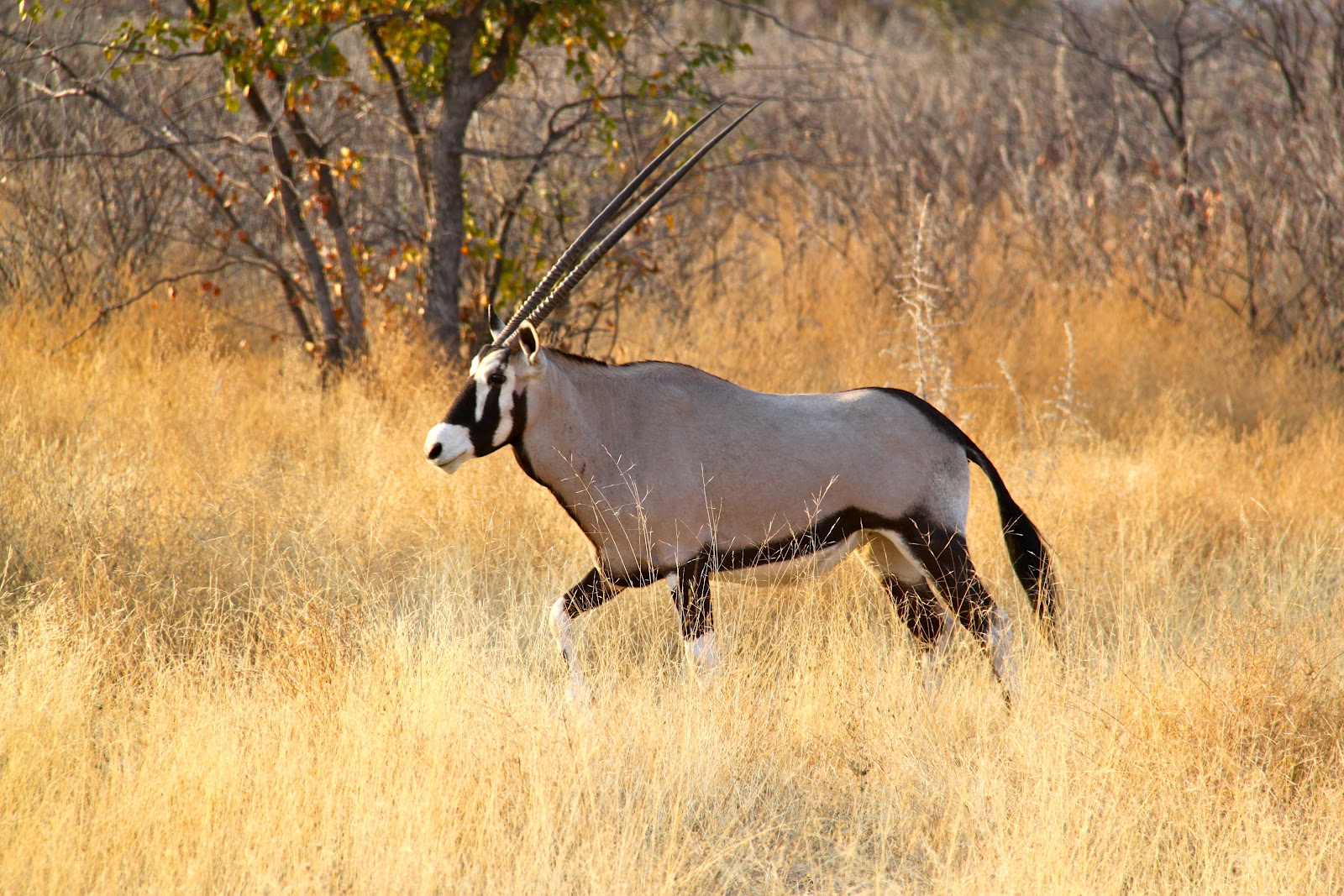
Oryx

Kudu

Tsessebe

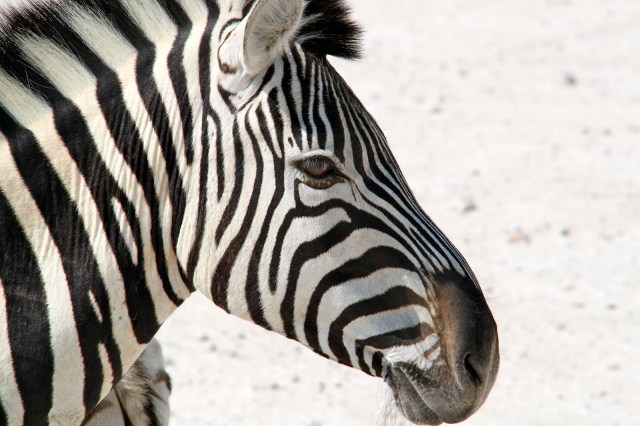
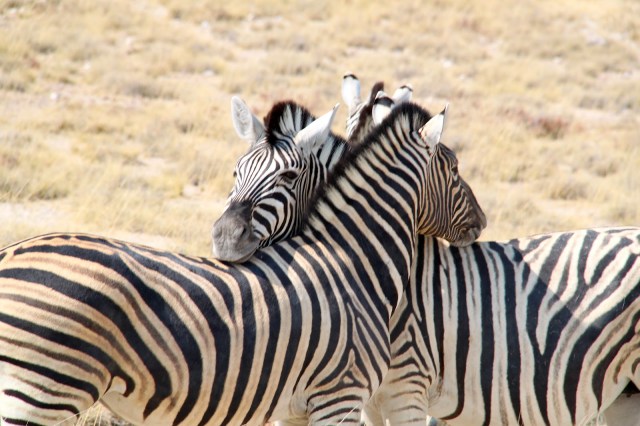
Zebra

Dinner and breakfast was overlooking the waterhole where all the animals come to drink.

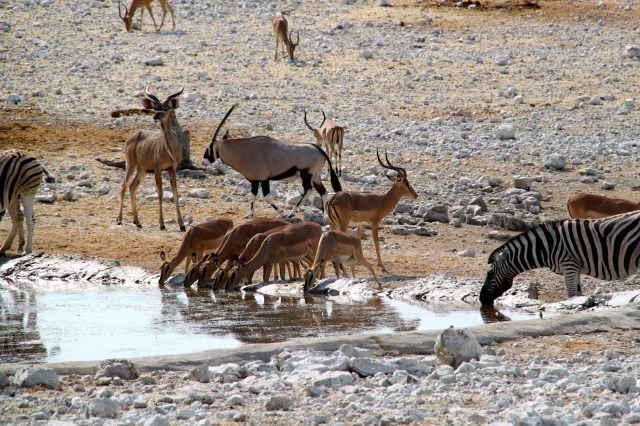
Looking down at the Waterhole

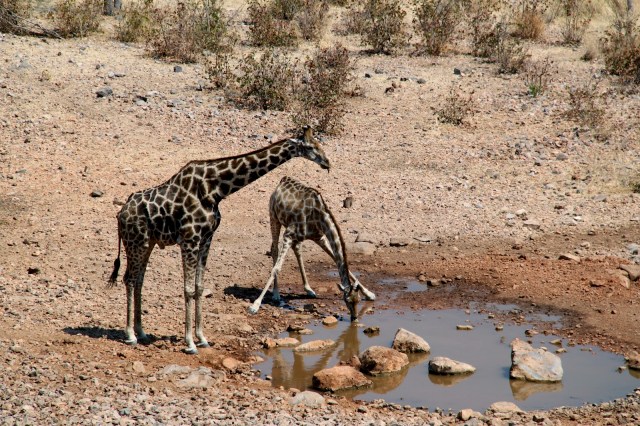
Momma and baby getting a drink at the waterhole  (Giraffes sleep on the ground with their necks up)

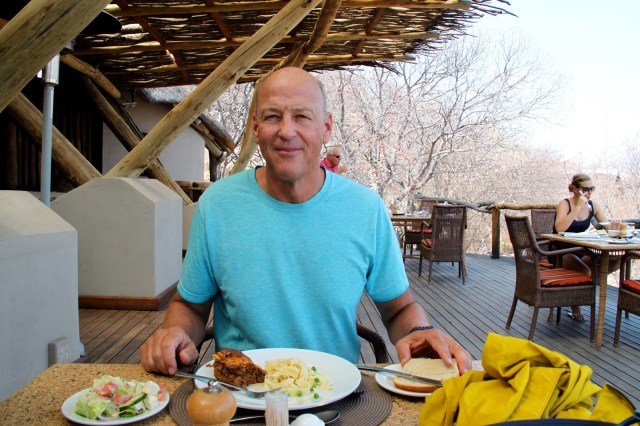
Good food everywhere we went

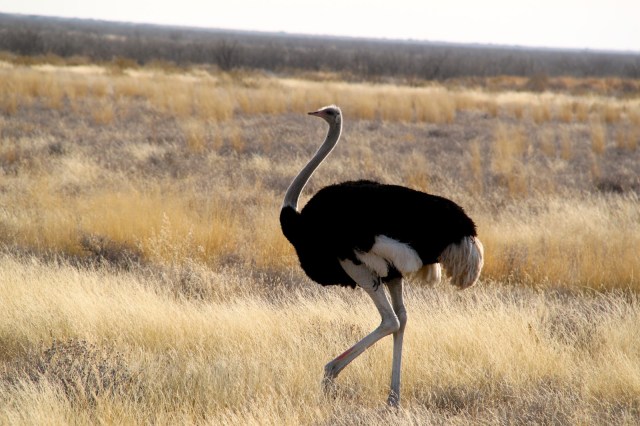
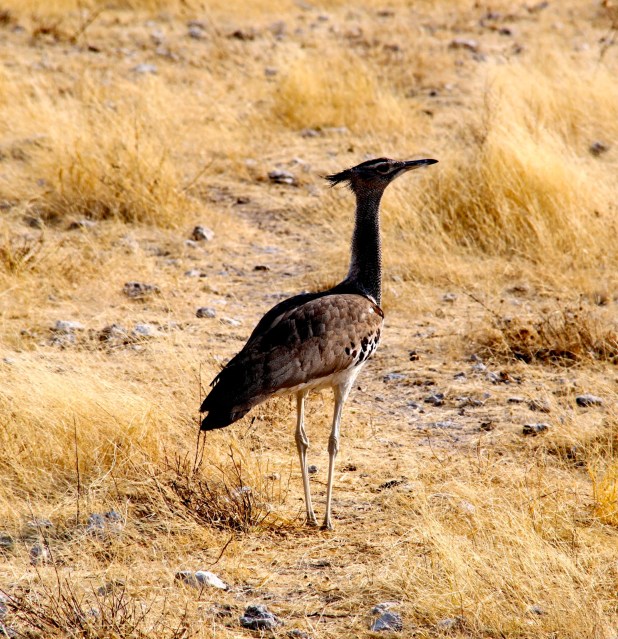
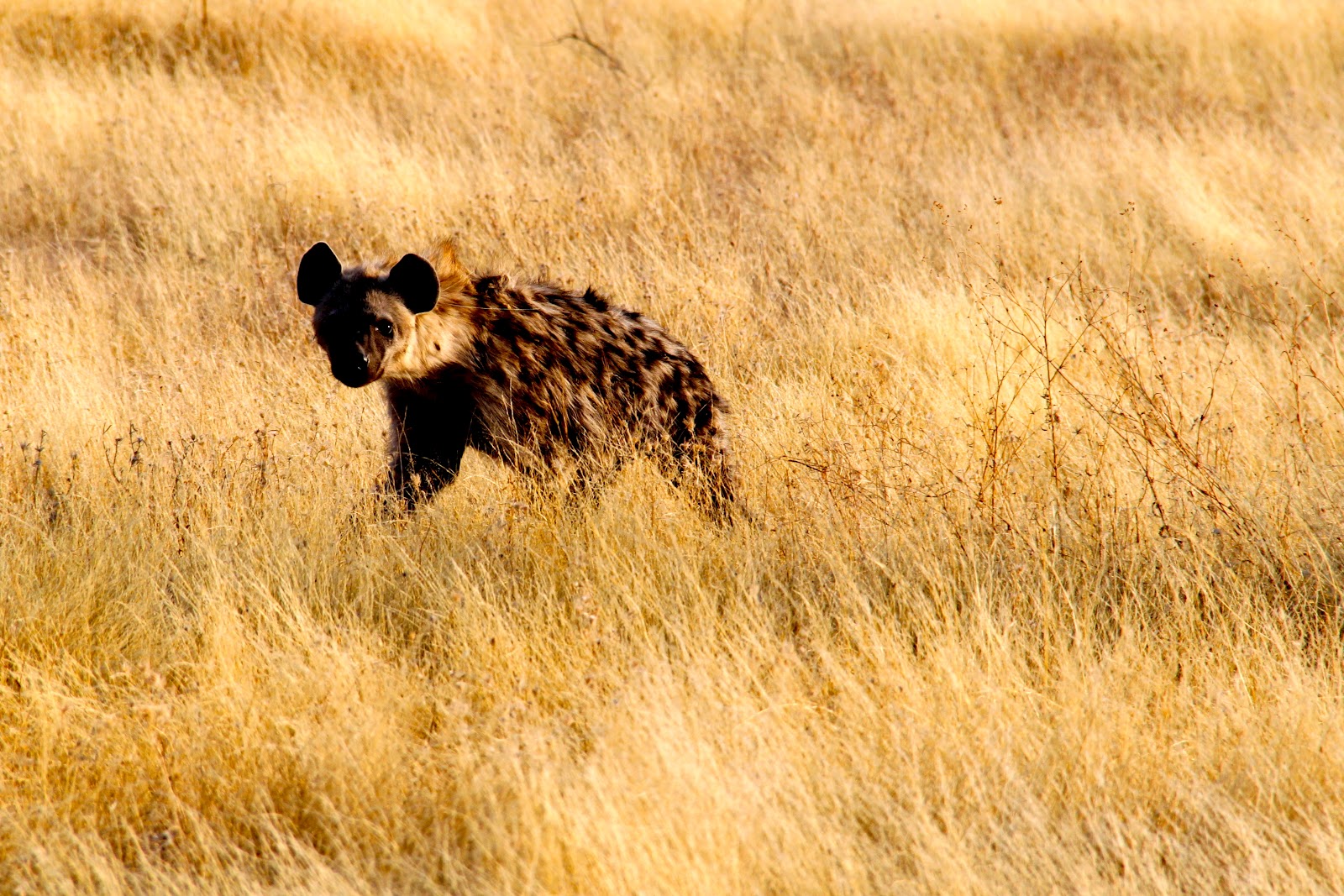
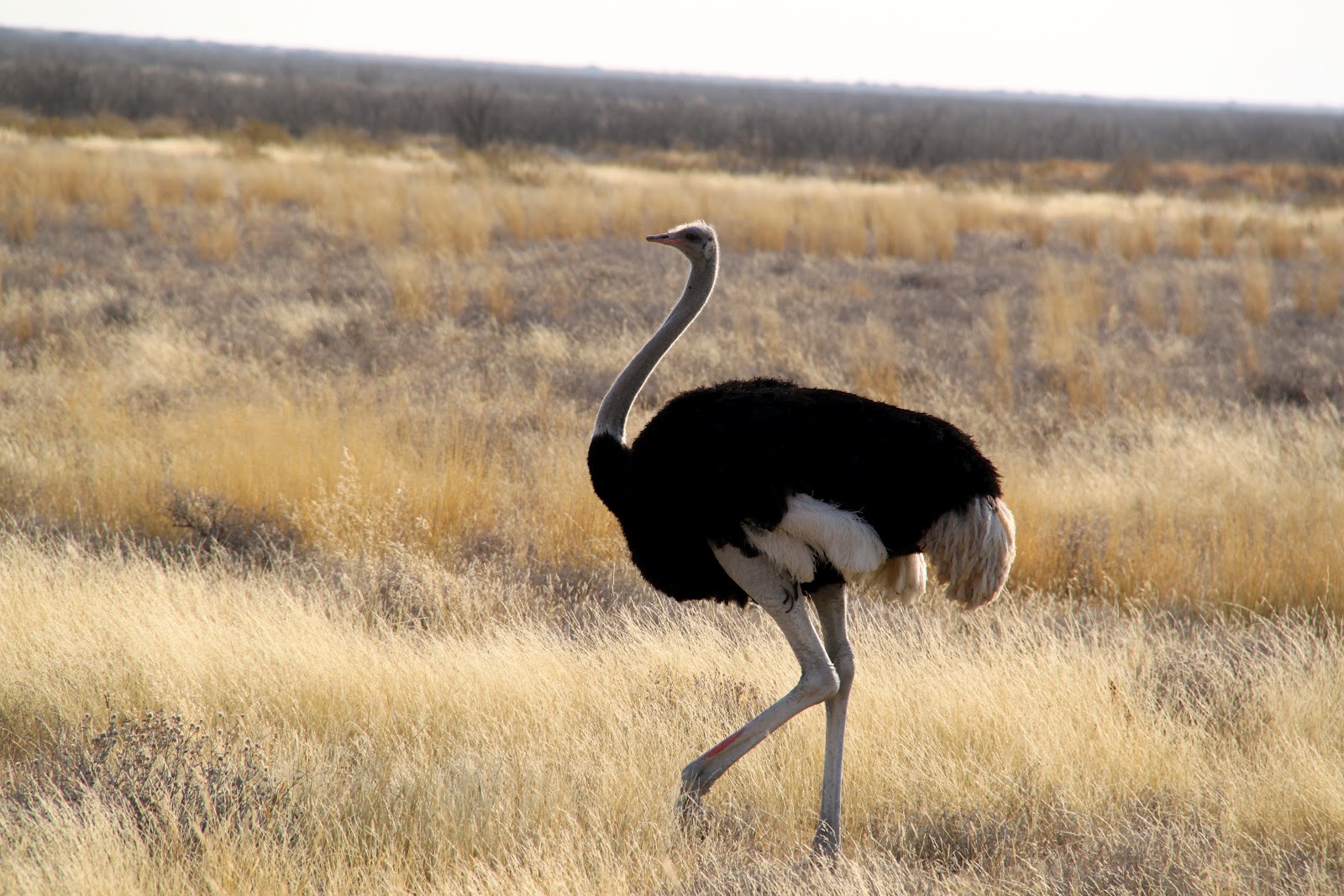
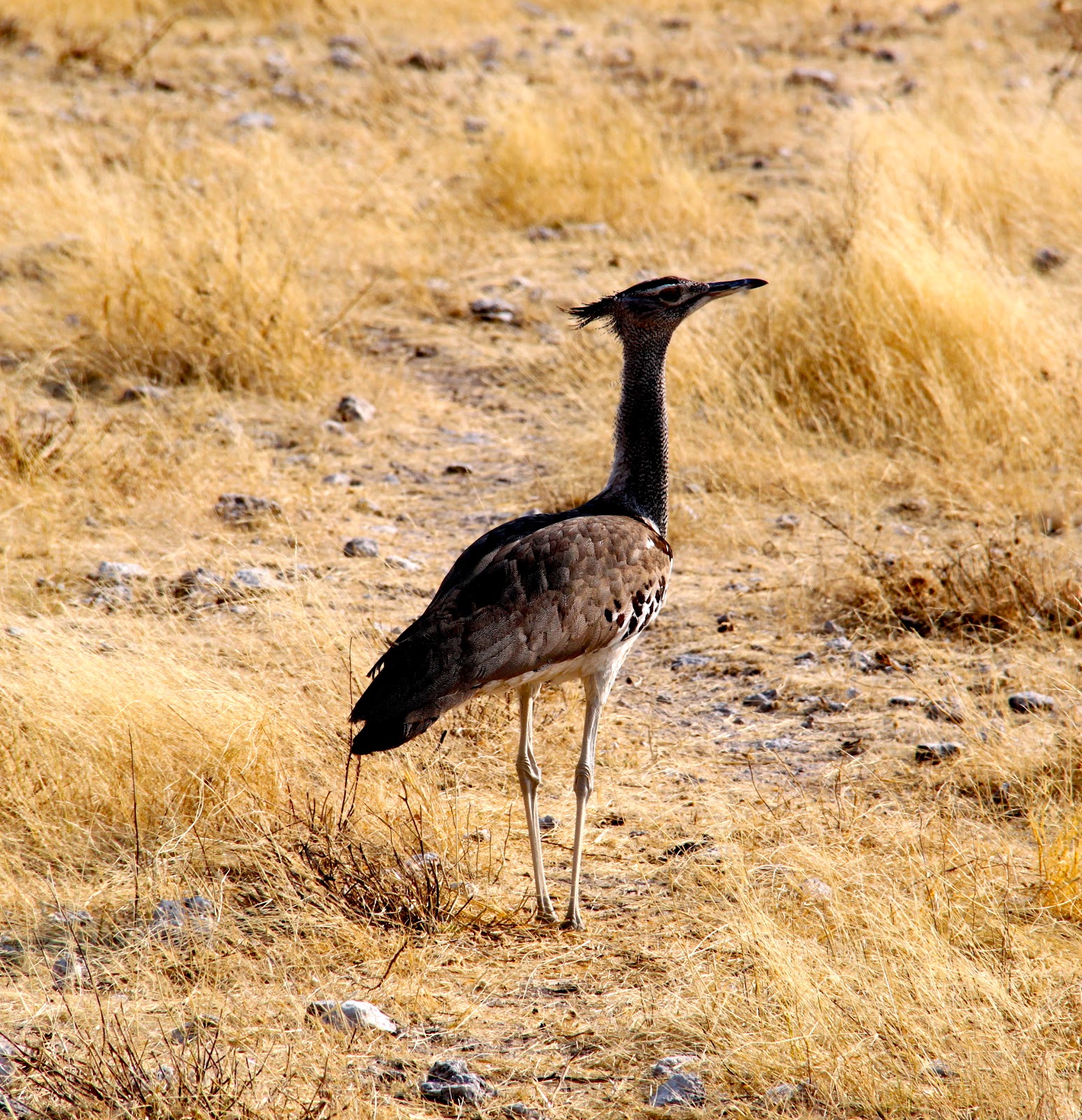
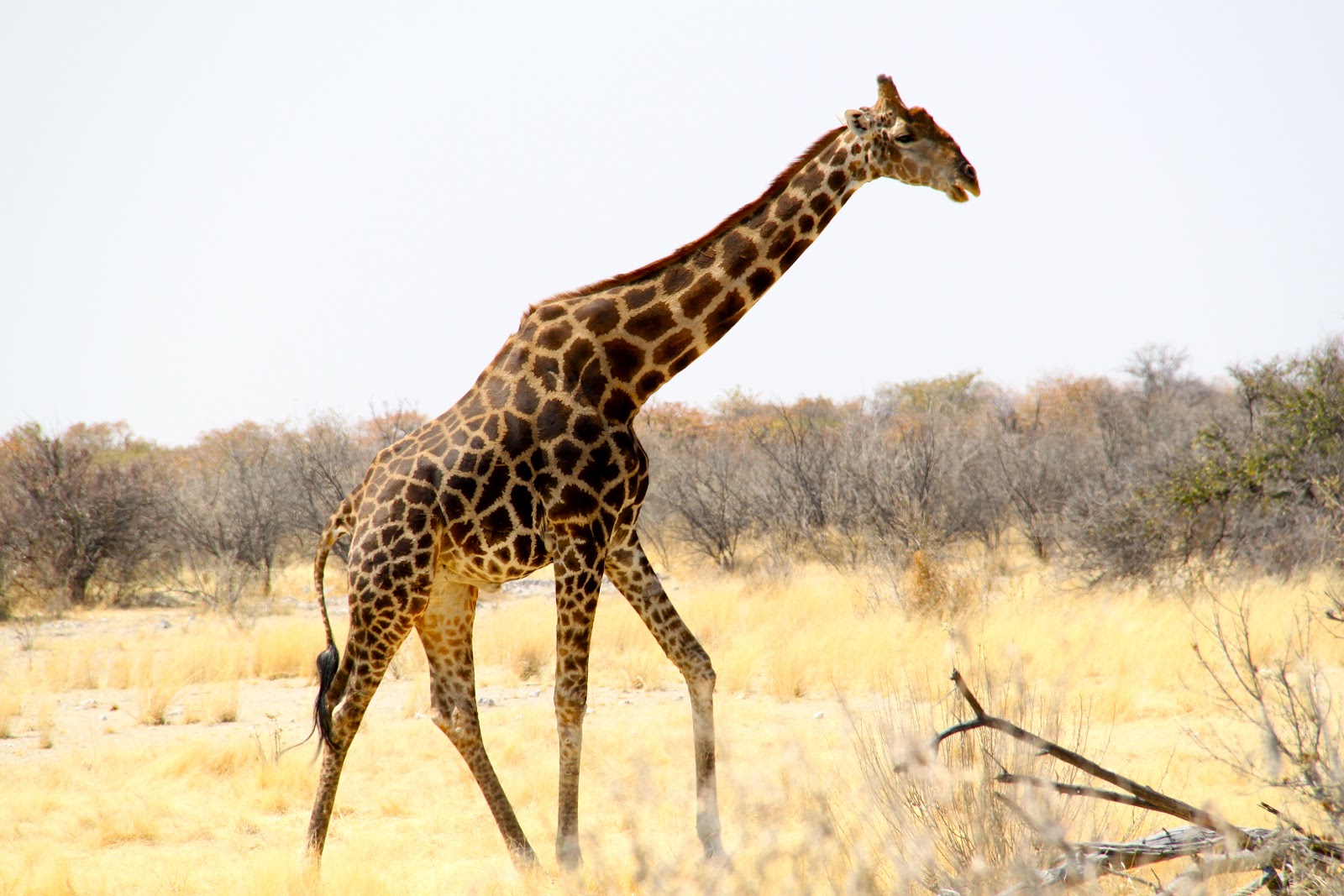
With a 6 am wake-up (a knock on your rock and thatched roof hut, as there are no phones or Internet), we are out to Etosha National Park. This morning we are going with a guide. Our guide drove 20 minutes to the park entrance and through the gate and immediately turned off the main road onto dirt roads. We noticed most vehicles were going a different direction. For the first hour there seems to be fewer animals than were outside our Ongava hut. But soon we saw 4 lazy lionesses. Then we saw springbok, oryx, and a solitary spotted hyena. It is very unusual to see a solitary hyena. They travel and hunt in packs. Then we saw springbok, male ostrich (their brains are smaller than one of their eyes) and herds of zebra, giraffe, wildebeest (a.k.a. gnu), kory bustard (a very large bird), a black faced impala (endemic to Namibia), kudu, hartebeest, warthog, and elephant. There are thousands of animals in Etosha. There are water holes in Etosha and animals migrate to the water.
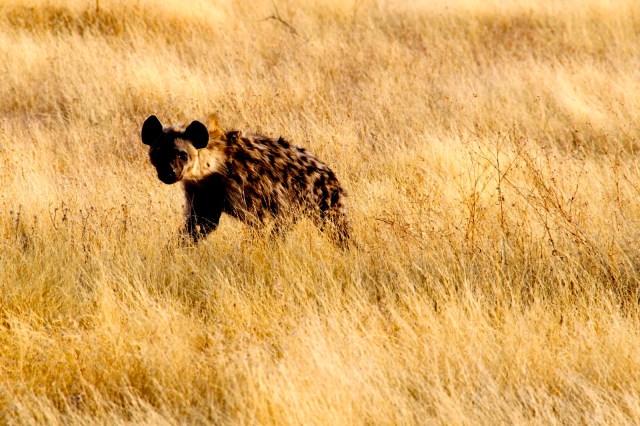
Spotted Hyena

Male Ostrich (males are black, females brownish gray)

Kory Bustard

Wildebeest (Gnu)

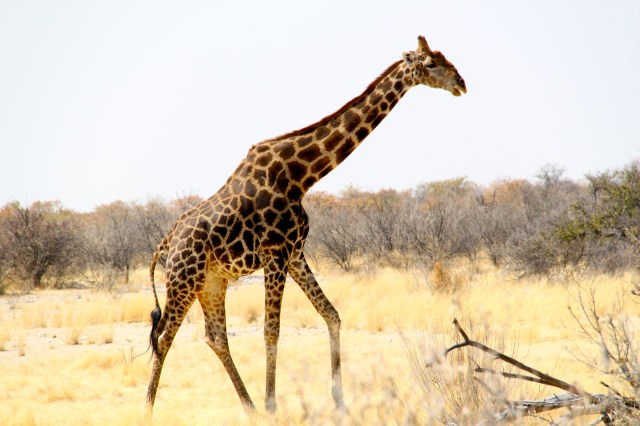
Giraffe
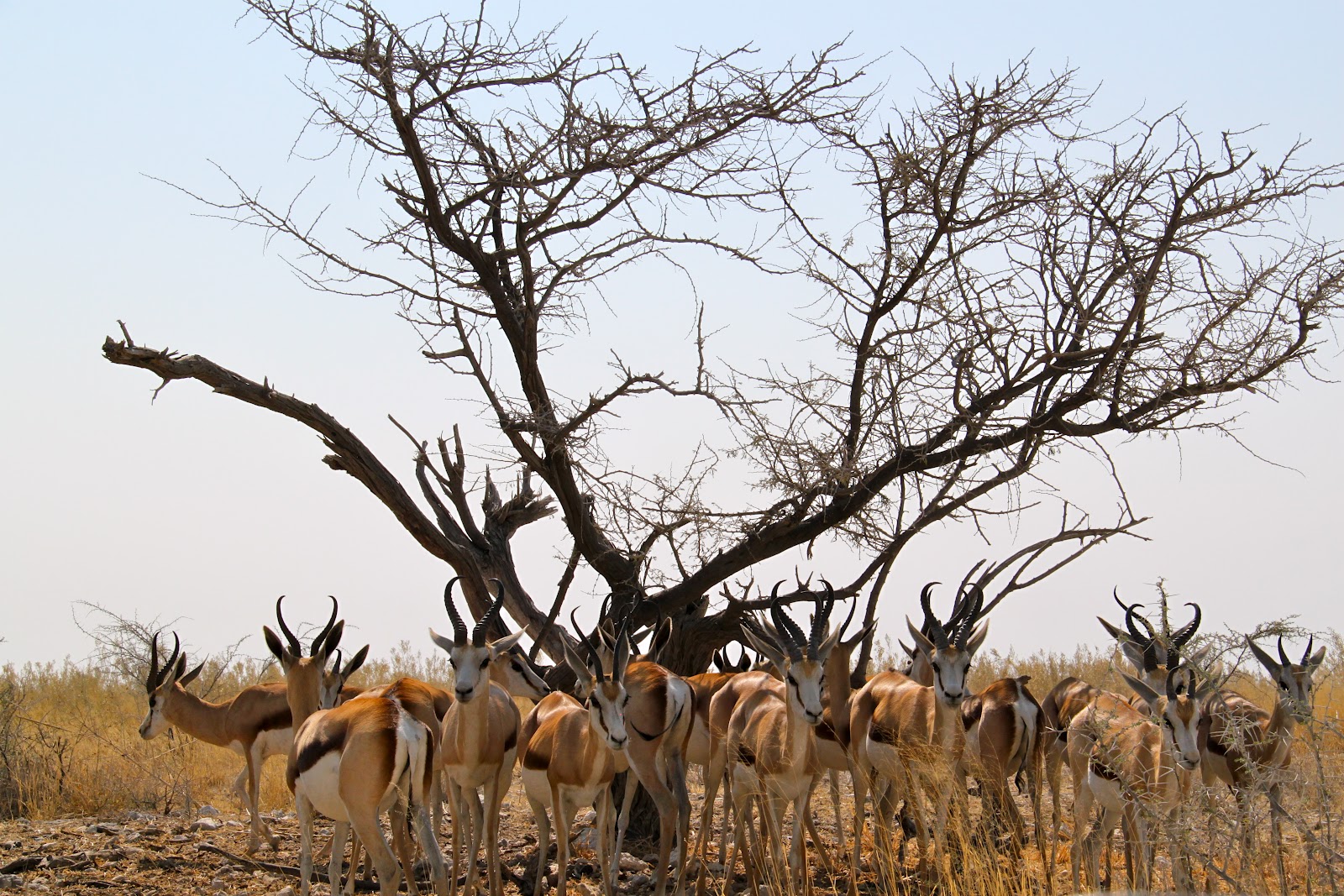
Springbok

Waterhole
You have to love it.

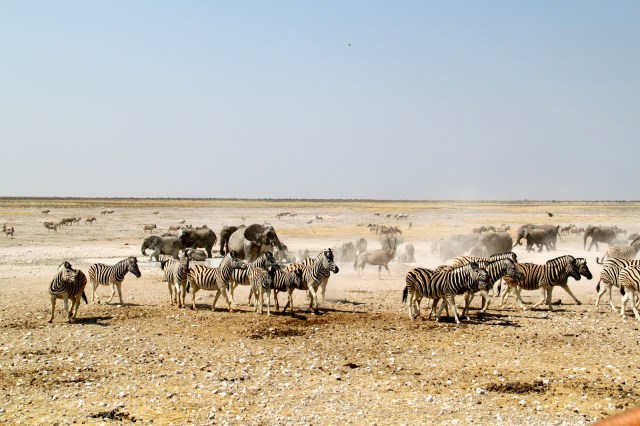
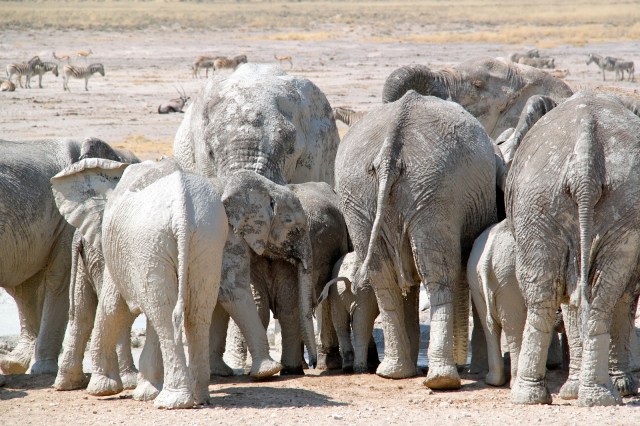
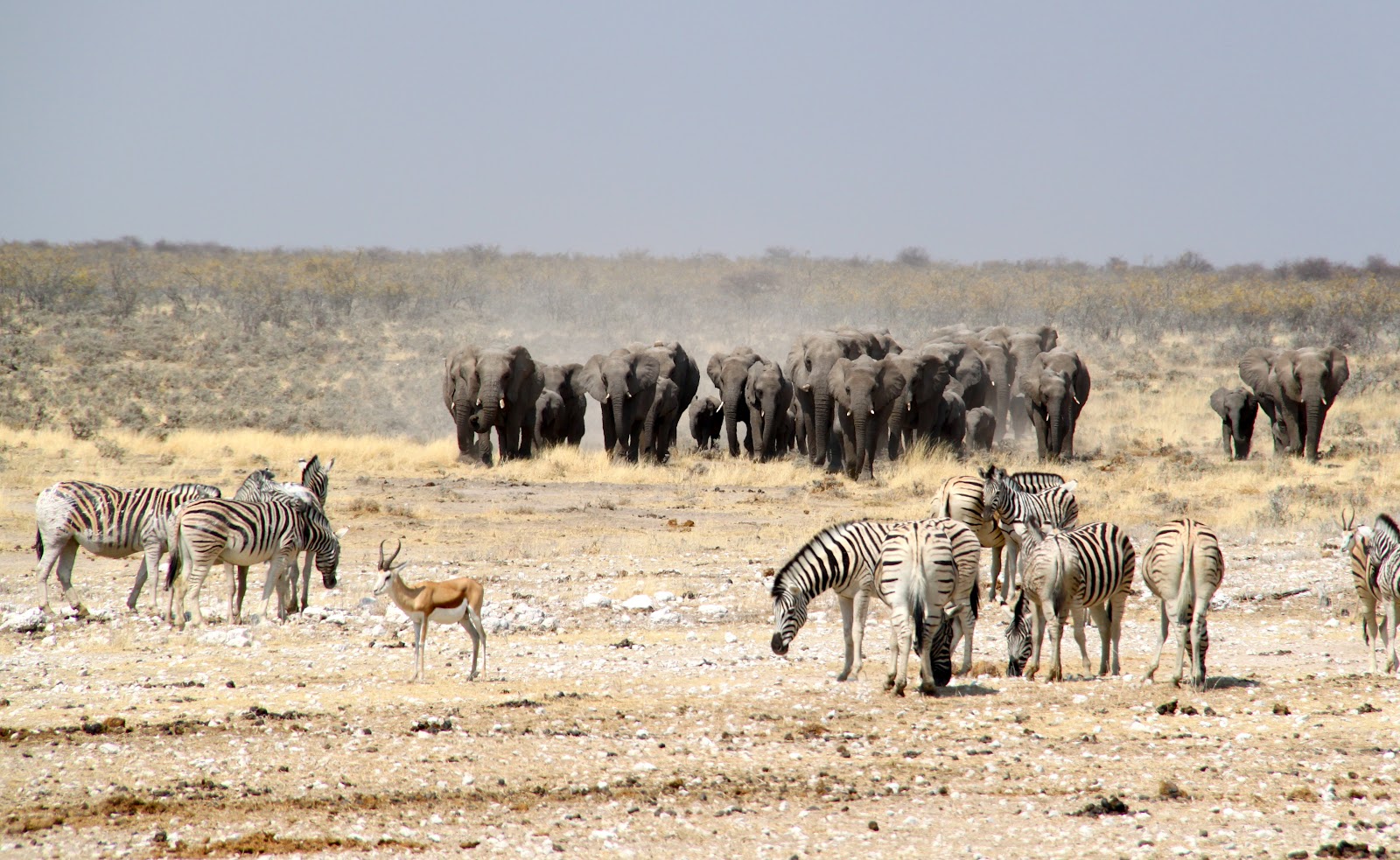
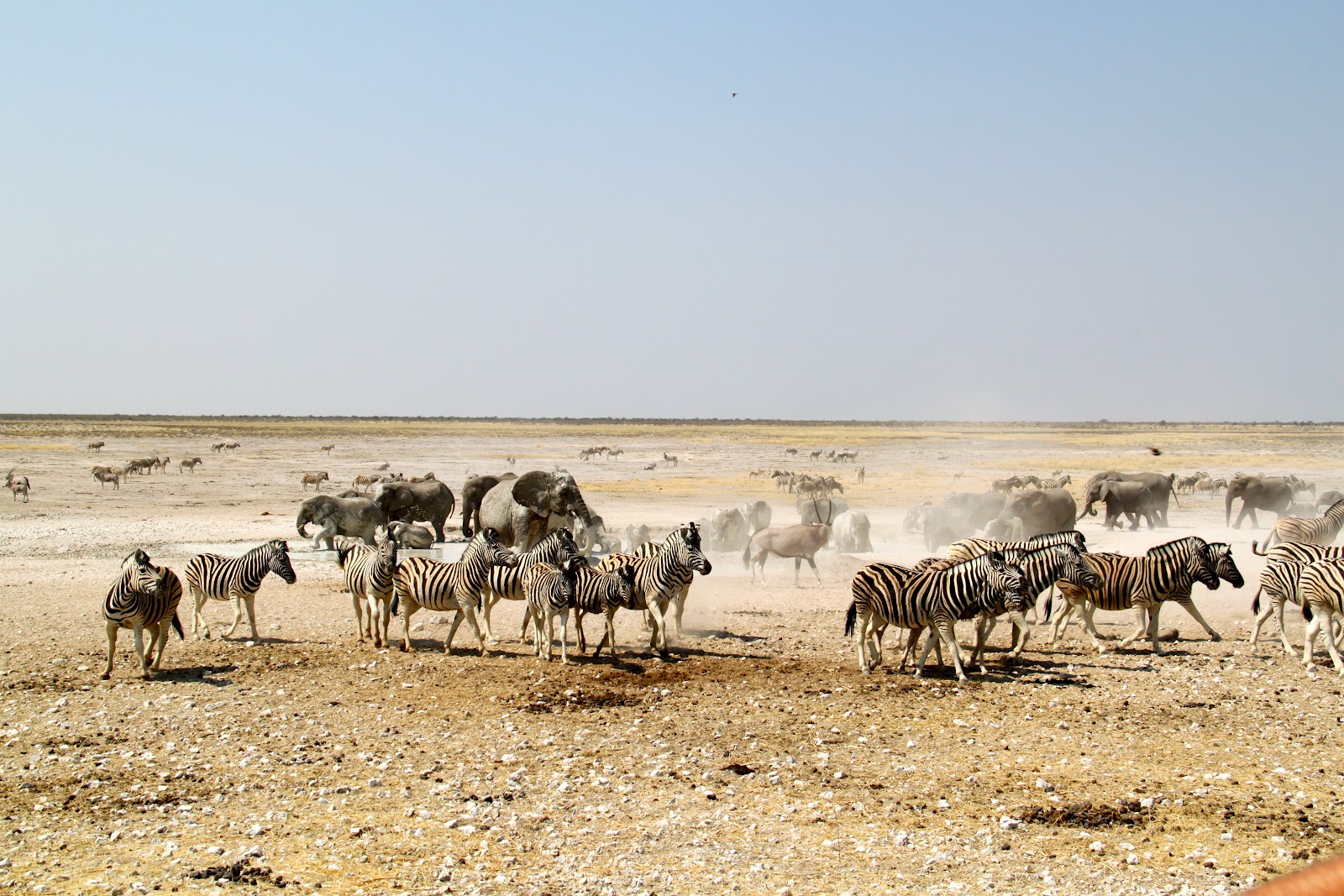
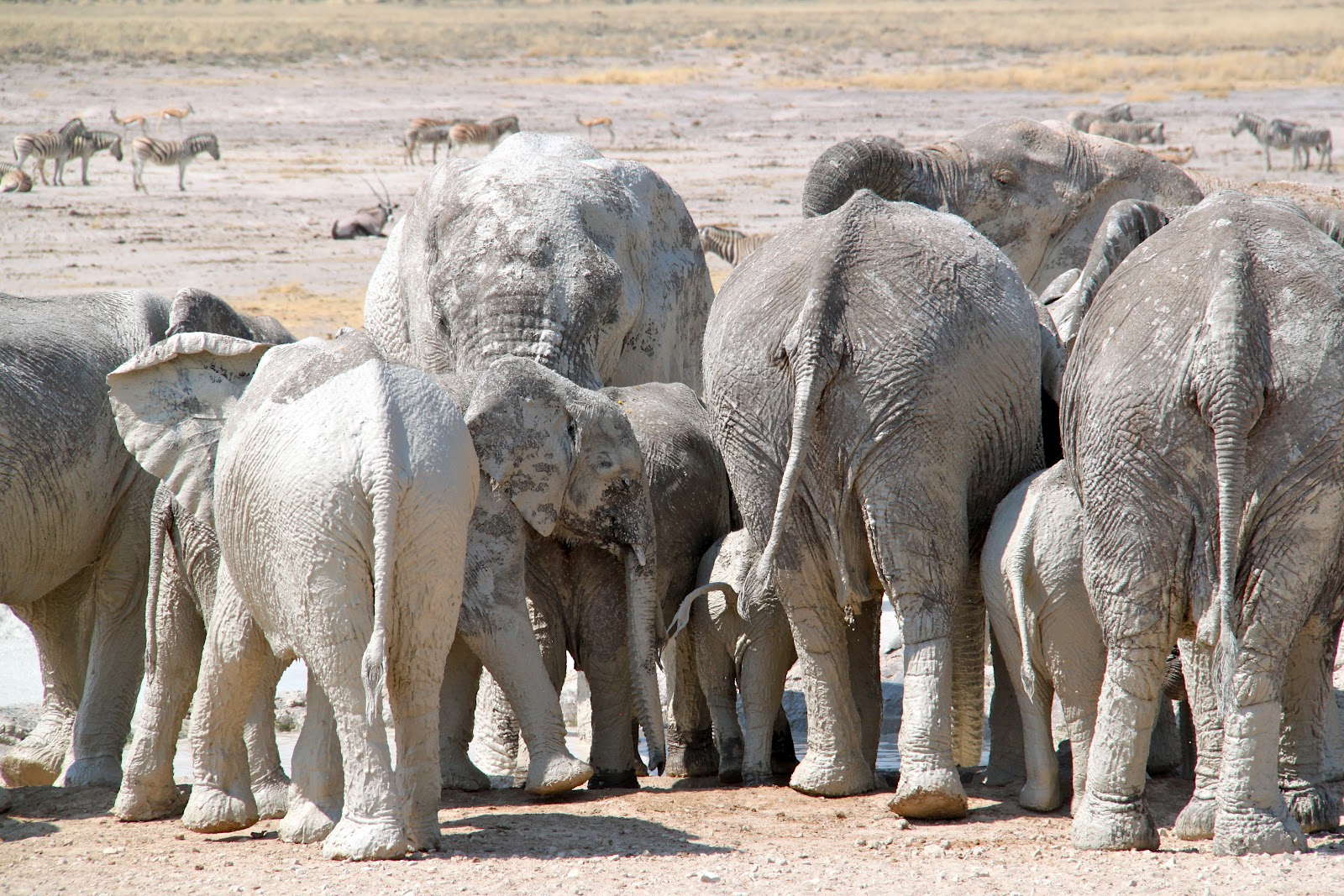
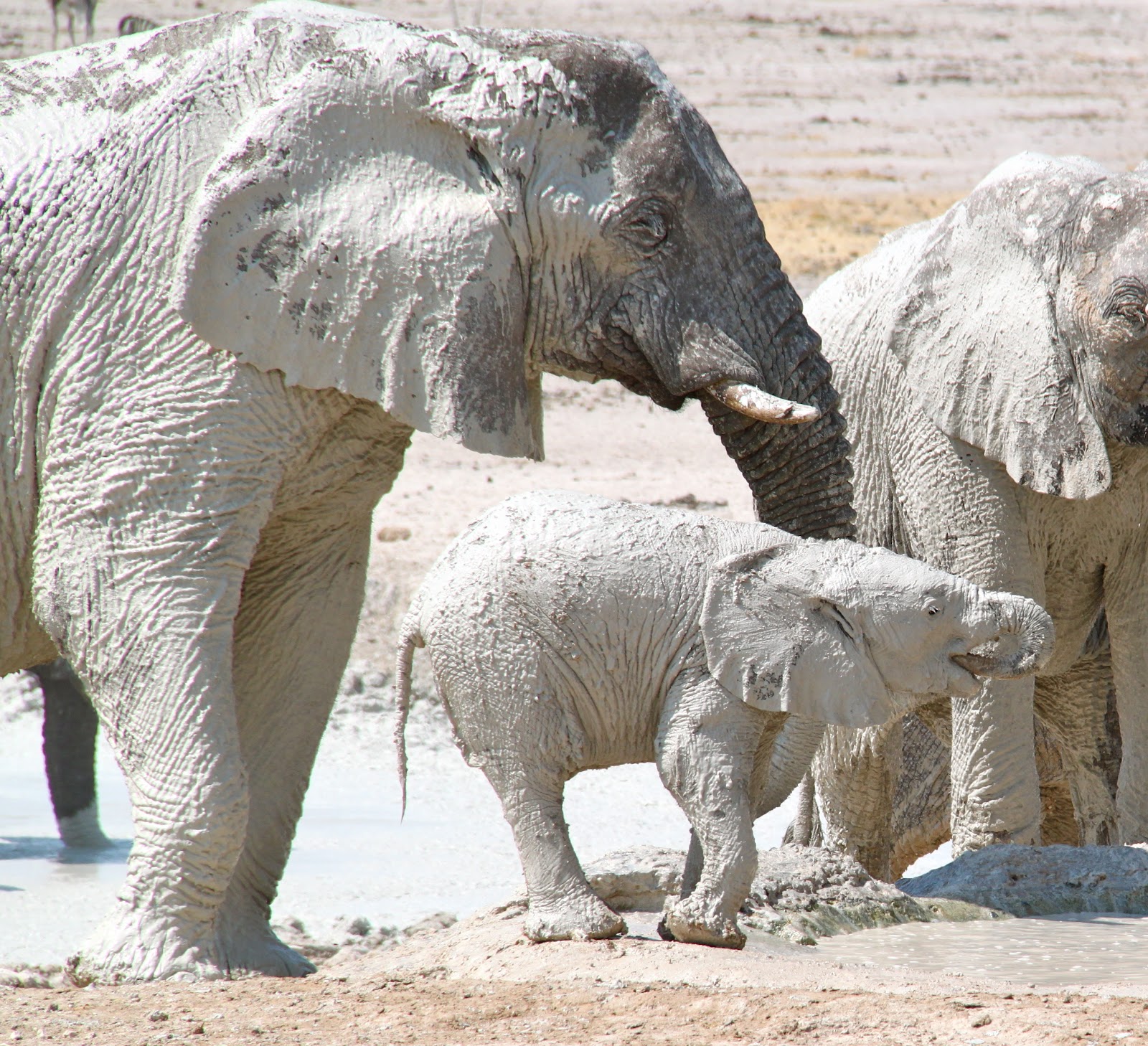
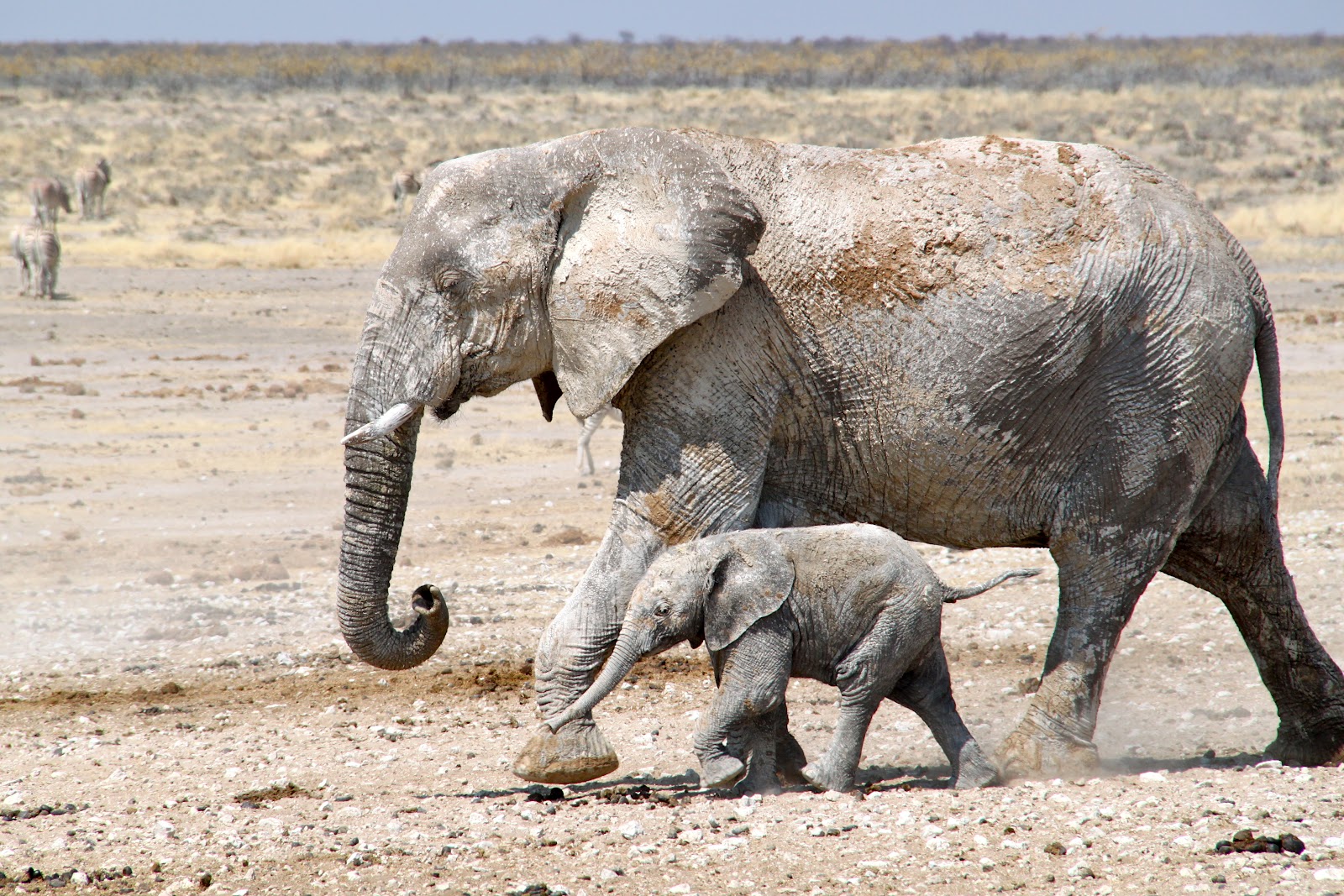
As we are approaching a water hole a huge bull elephant is walking away. The water hole is now crowded with animals. As we watched the animals some movement on the horizon caught our attention. In our binoculars we are just able to make out a few elephants. We then realize it is a big herd of elephants getting bigger and bigger in our view. Even the guide is getting excited. The elephants are kicking up dust and moving like a freight train to the water hole. The big bull had come first and moved on. Now the herd with mothers and babies of various sizes are about to arrive. As they are about to arrive their pace quickens and the tension at the water hole mounts. Babies were mixed in with and surrounded by the herd. The other animals begin jumping out of the water hole and moving out of the path of the advancing elephant herd. The herd moved directly into the water hole. Elephants would shake their heads and smaller animals would scatter. The elephants were now frolicking, drinking, and throwing mud on themselves. Elephants would charge any kudu or oryx who ventured too close to them. This was an elephant water hole now and the other animals circled or stood a safe distance away. After the elephants got out of the water they threw dirt and dust on themselves so they came in looking like dark elephants but left looking like white elephants.
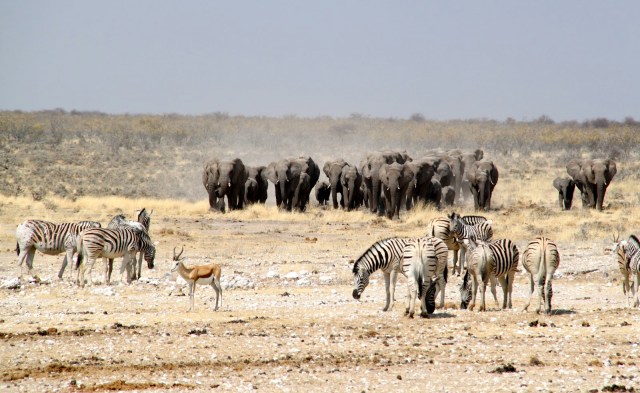
A freight train of elephants heading to the waterhole

All the other animals scattering as the elephants pushed them out for their own private baths

From dirty gray to muddy white

They throw mud on themselves as soon as they get out of the water because their skin is so sensitive

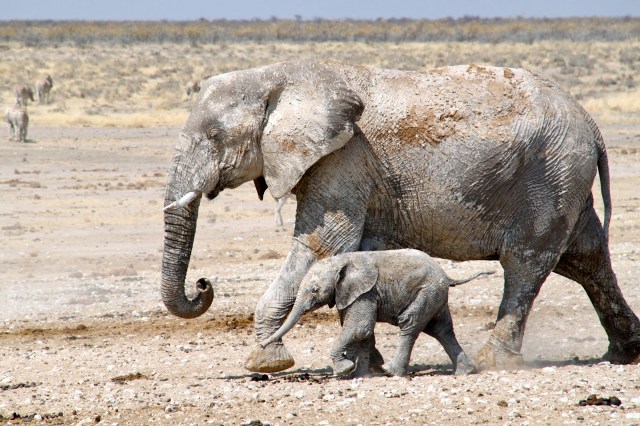
Mama and baby (the whole brood herd protects all of the babies)

                                                      Video of Elephant Freight Train

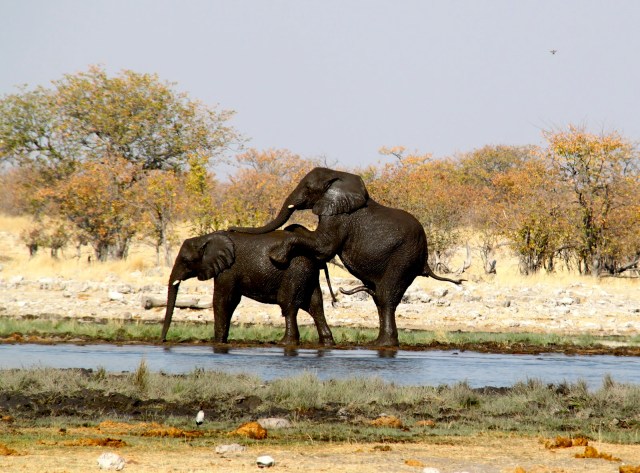
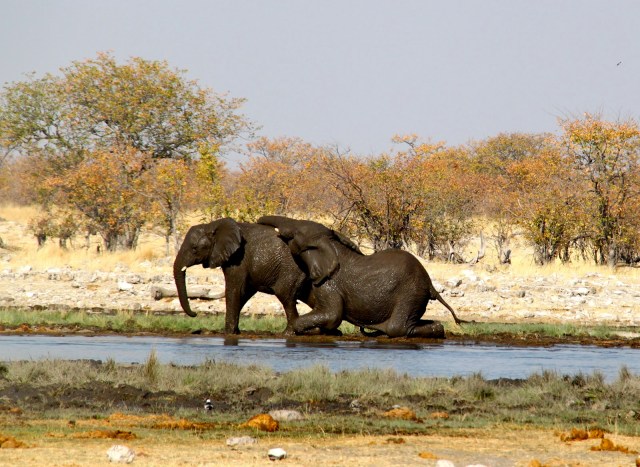
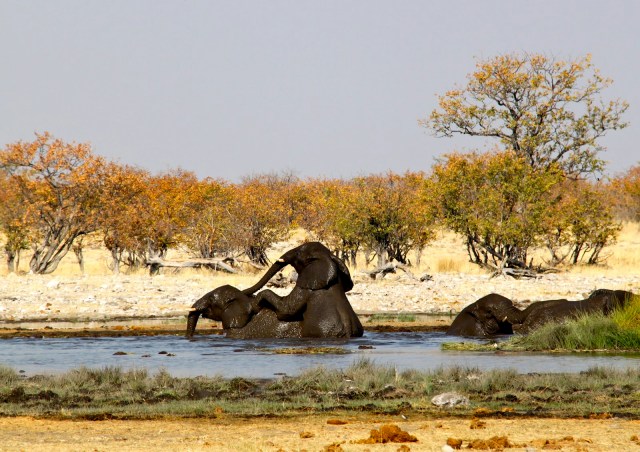
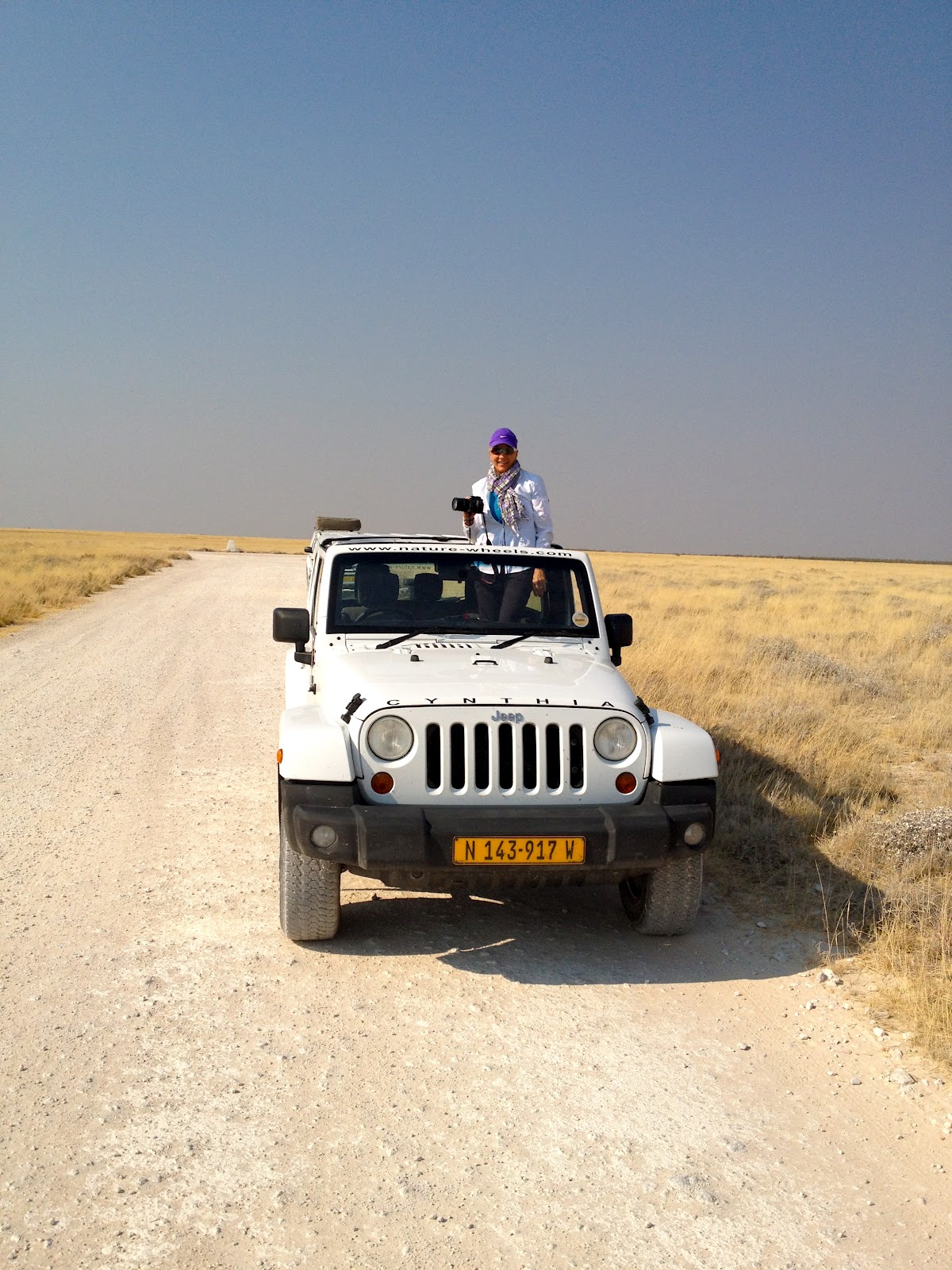
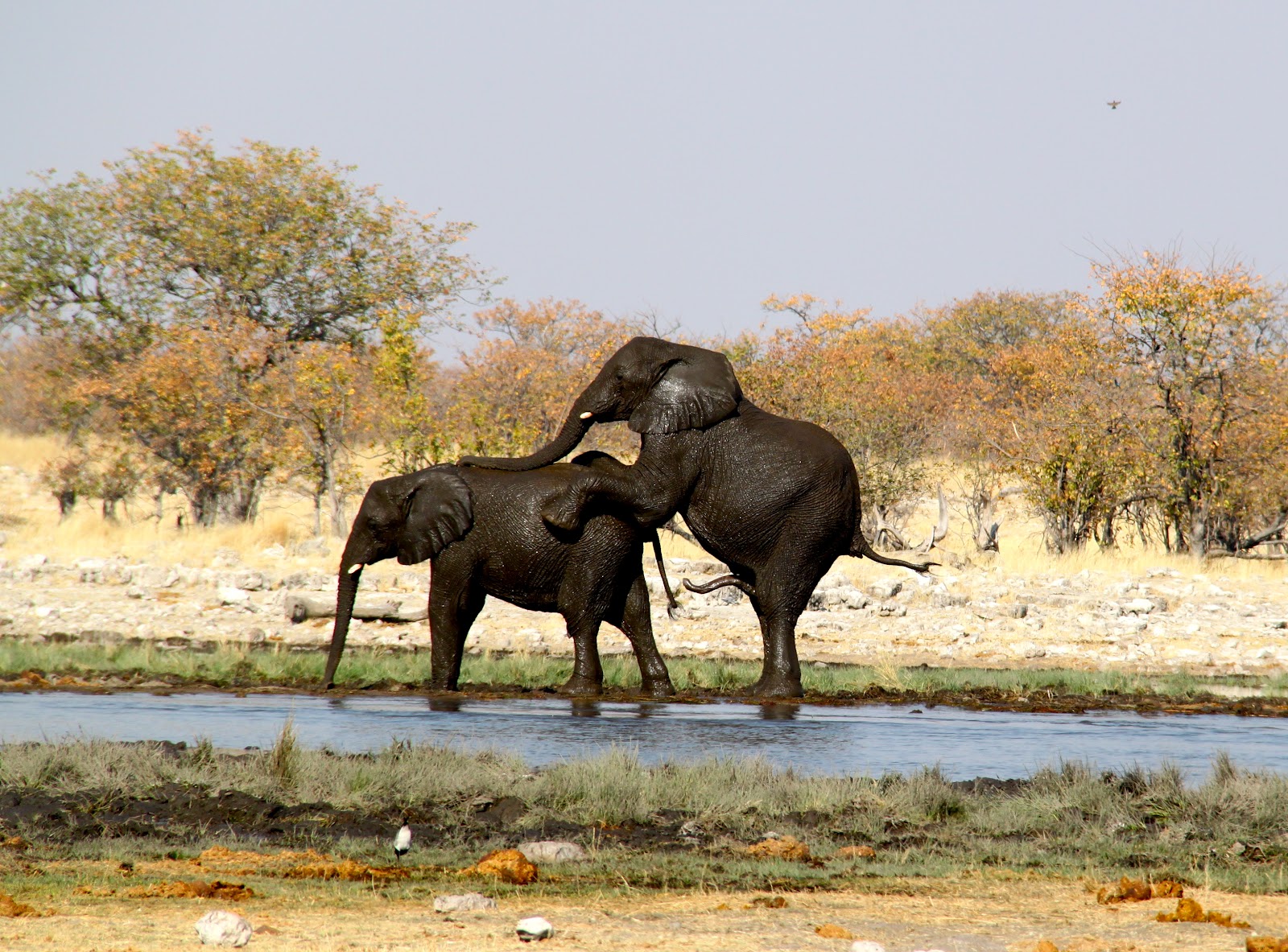
In the afternoon we drove back into Etosha in our Jeep without a guide. It is fun to go where we want and discover on our own. The top roof panels of our Jeep come off and we are able to stand on our seats and view animals and take photos. What fun! All roads are dirt, rock and rough. We found two more large herds of elephants in different areas of the park with 20 to 30 members each. We saw elephant mating behavior that was hysterical. The female seemed to be in charge and the male fell off her back and into the mud.

What fun!

Head out the roof
This was hysterical

Either he lost his balance, or she didn’t want to have anything to do with him.  What a crushing blow!

We think there was some sort of elephant orgy going on at this waterhole

We saw herds of animals trekking across bleached savannah grasslands. It was a beautiful and calm sight.

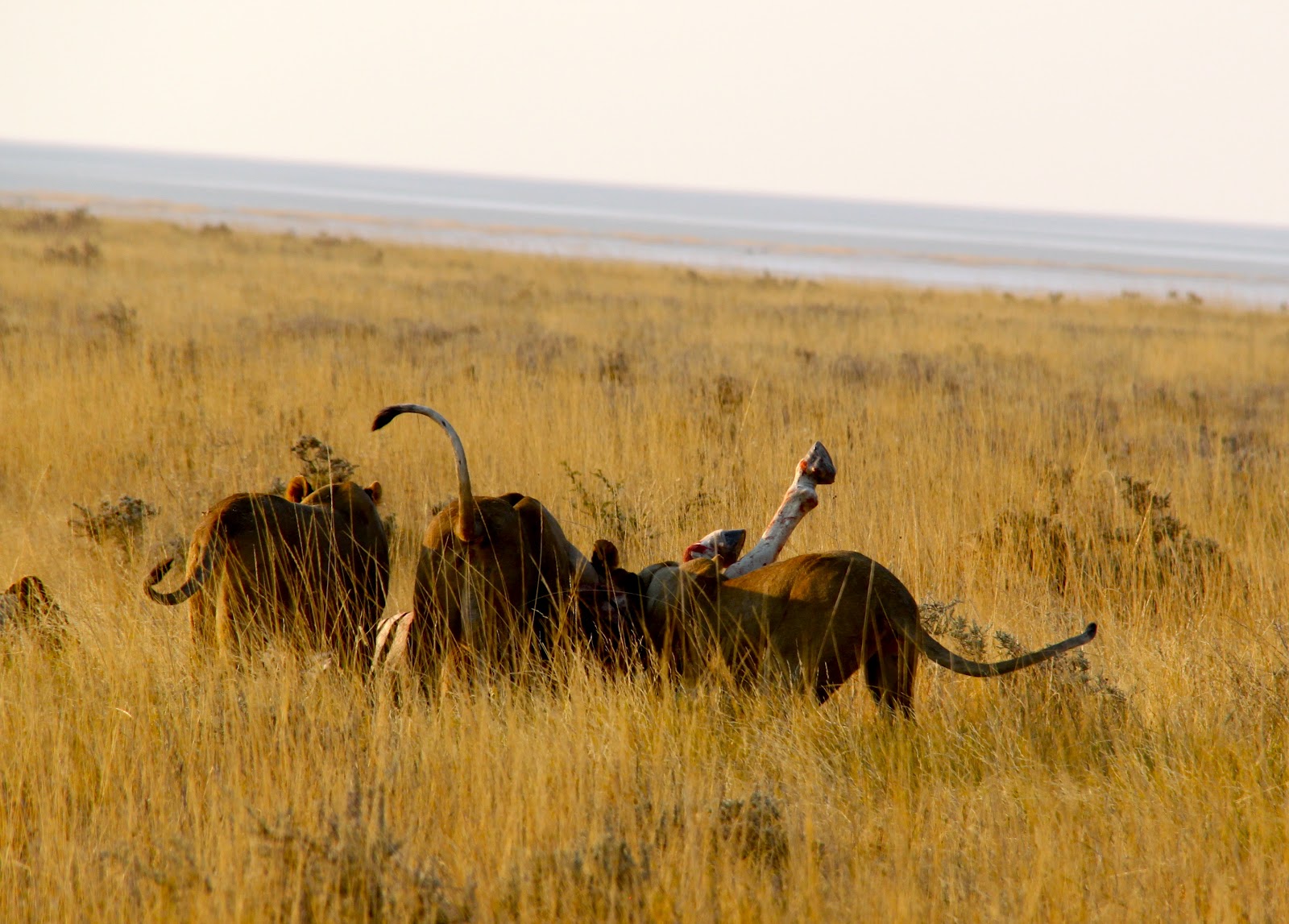
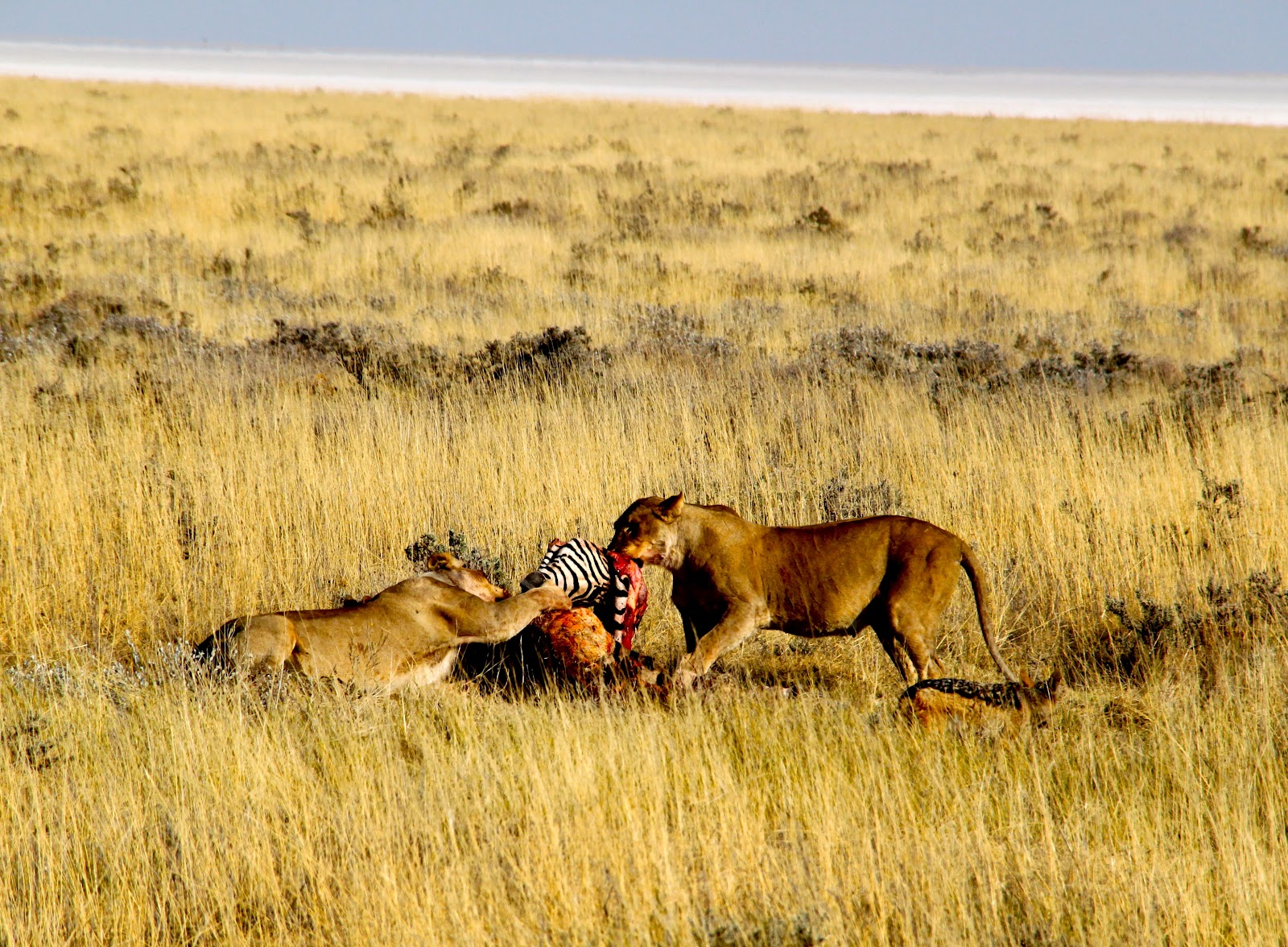
On the way out of the park we came upon four female lions eating a zebra. We did not see the kill but it must have just happened because the zebra was still kicking out at the lions so we know we just missed the take down. The lions faces were now becoming smeared red as they were exulting in their prey. After we watched the lions eat for a while we had to race to get back to the park gate by sundown to avoid being locked in the park. As we entered we were warned that we had to be out by sundown – no later than 6:48 pm. We just made it. Outside the park and on the way back to Ongava Lodge we parked our Jeep, got out on a dusty dirt road and watched the sun disappear behind the horizon while toasting “to warthogs!” with our water bottles. We are exhausted and happy.
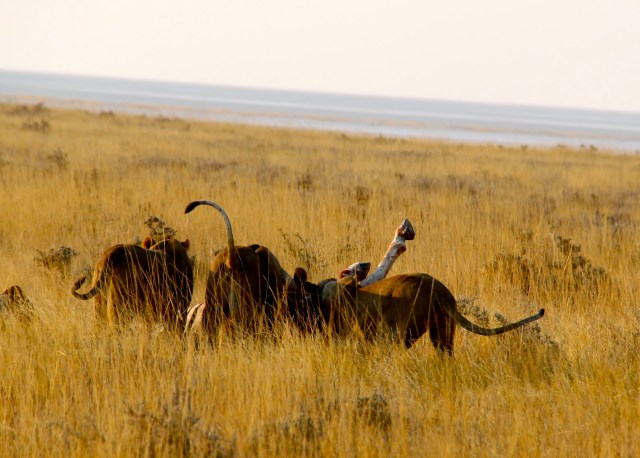
The Zebra was still kicking when we got there

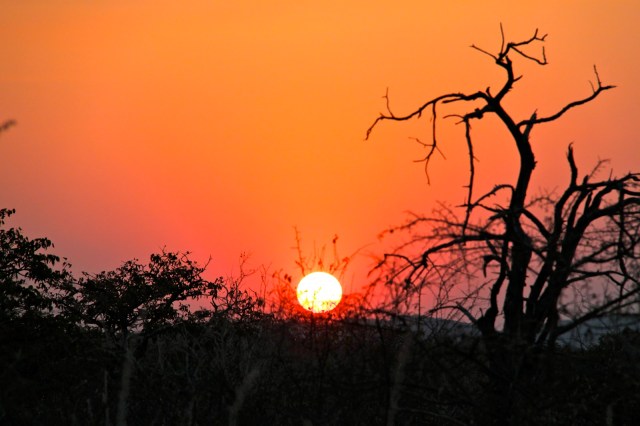
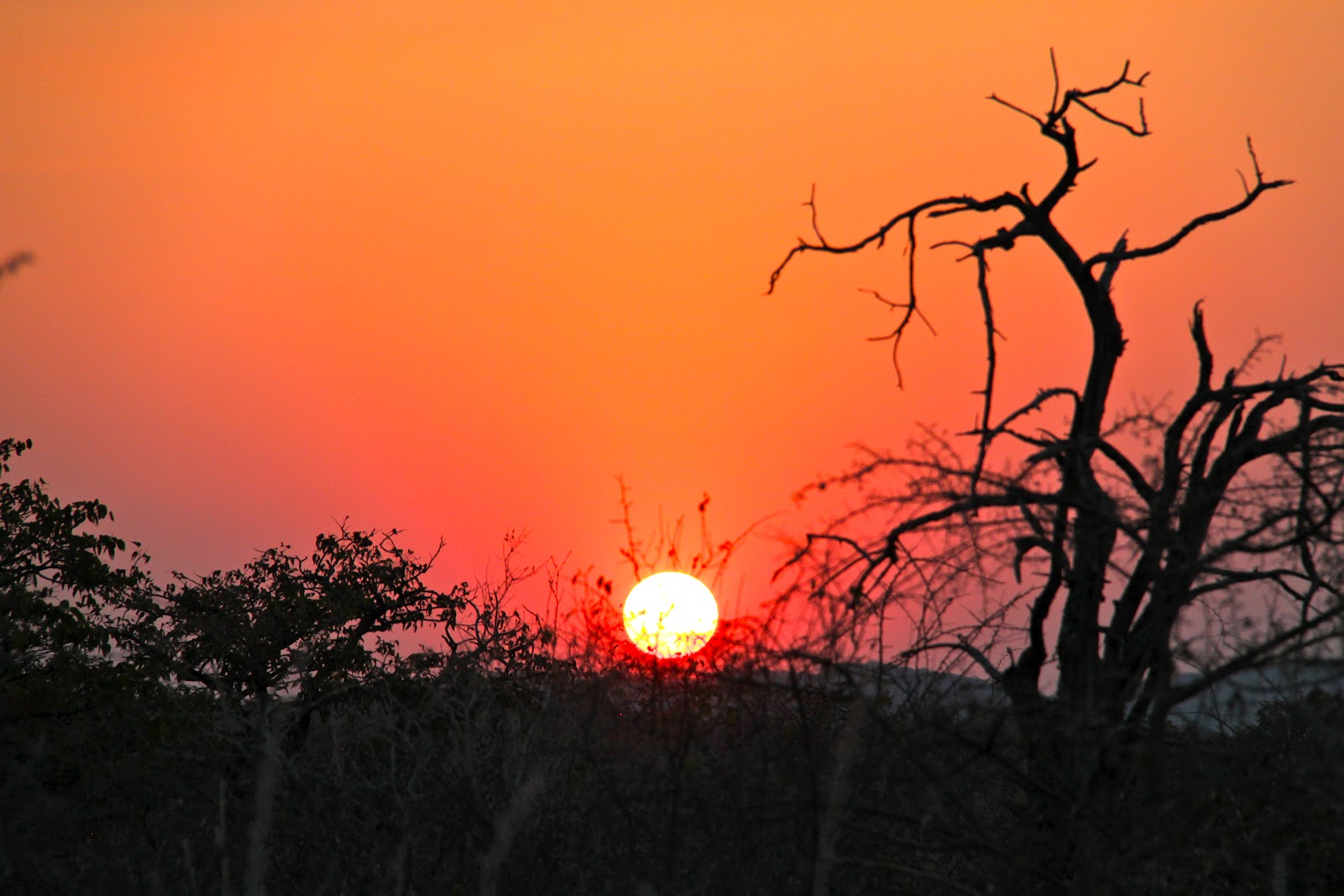
A toast at a beautiful sunset “To Warthogs!”

If Scott was paying each of our Grand-kids $5.00 for every species of large animals they saw, and $100.00 for Lions, (like he does in Jackson, only Bears are $100.00) they could make a lot of money!

Okay, how is this for a good Omen? The next morning we are driving back in to Etosha Park in our Jeep, top off across the front seats, “The Circle of Life” from the Lion King playing through the speakers from my IPod, and I said to Scott, “All we need are some Giraffe’s walking to our music”. We look to the right in the golden savannah grass, and there are 2 Giraffes walking with necks bobbing in time as they walk with the music!! It was awesome!
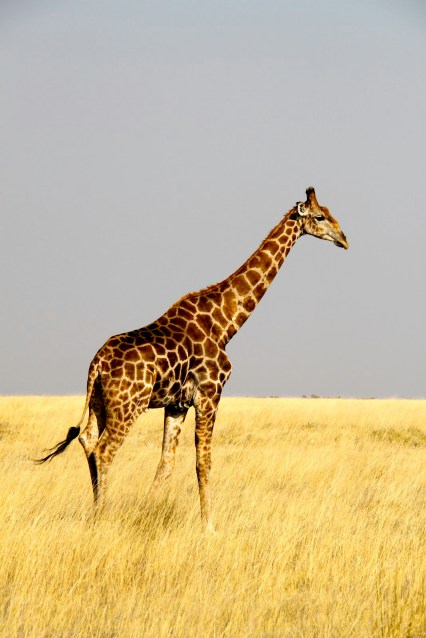
What a great sight to watch while listening to “The Circle of Life”

Giraffes love the blossoms on the acacia trees

Our idea was to return to the Lion kill we saw at dusk the night before. Sure enough, 2 Lions were still ripping it apart, although it was down to the vertebrae with a little black and white Zebra skin to chew on. The Lions’ bellies looked very full. (It was cool to stand on the car seat, head through the roof and take pictures-but I’m glad their bellies were full).
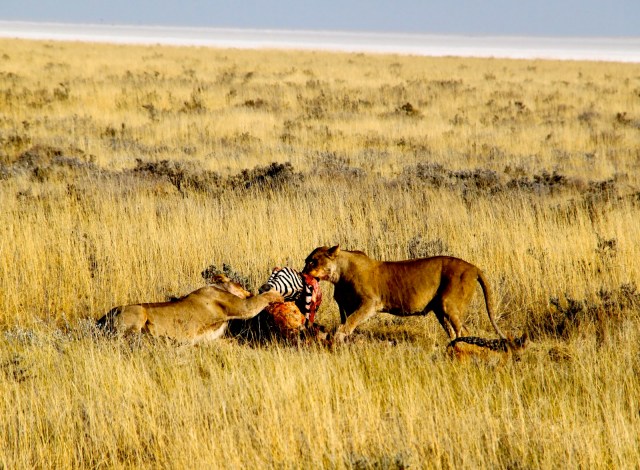
2 of the 4 lions were still eating 15 hours later, but not much is left of the zebra.  A jackal is in the foreground trying to get some scraps.

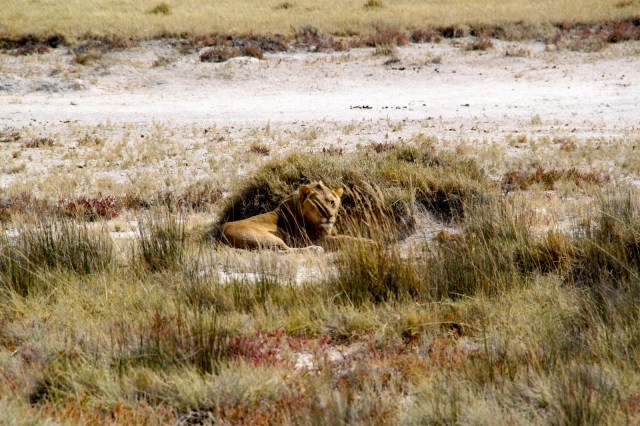
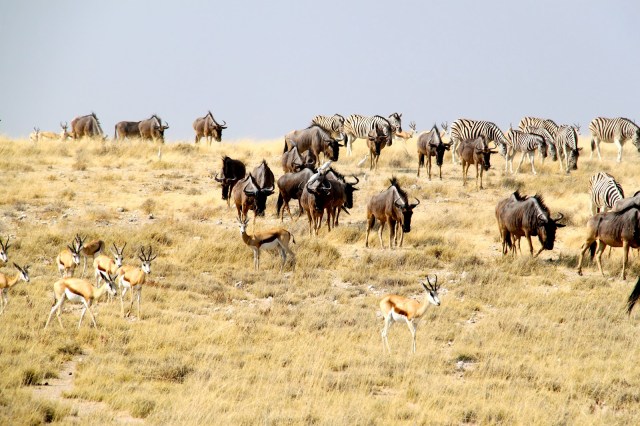
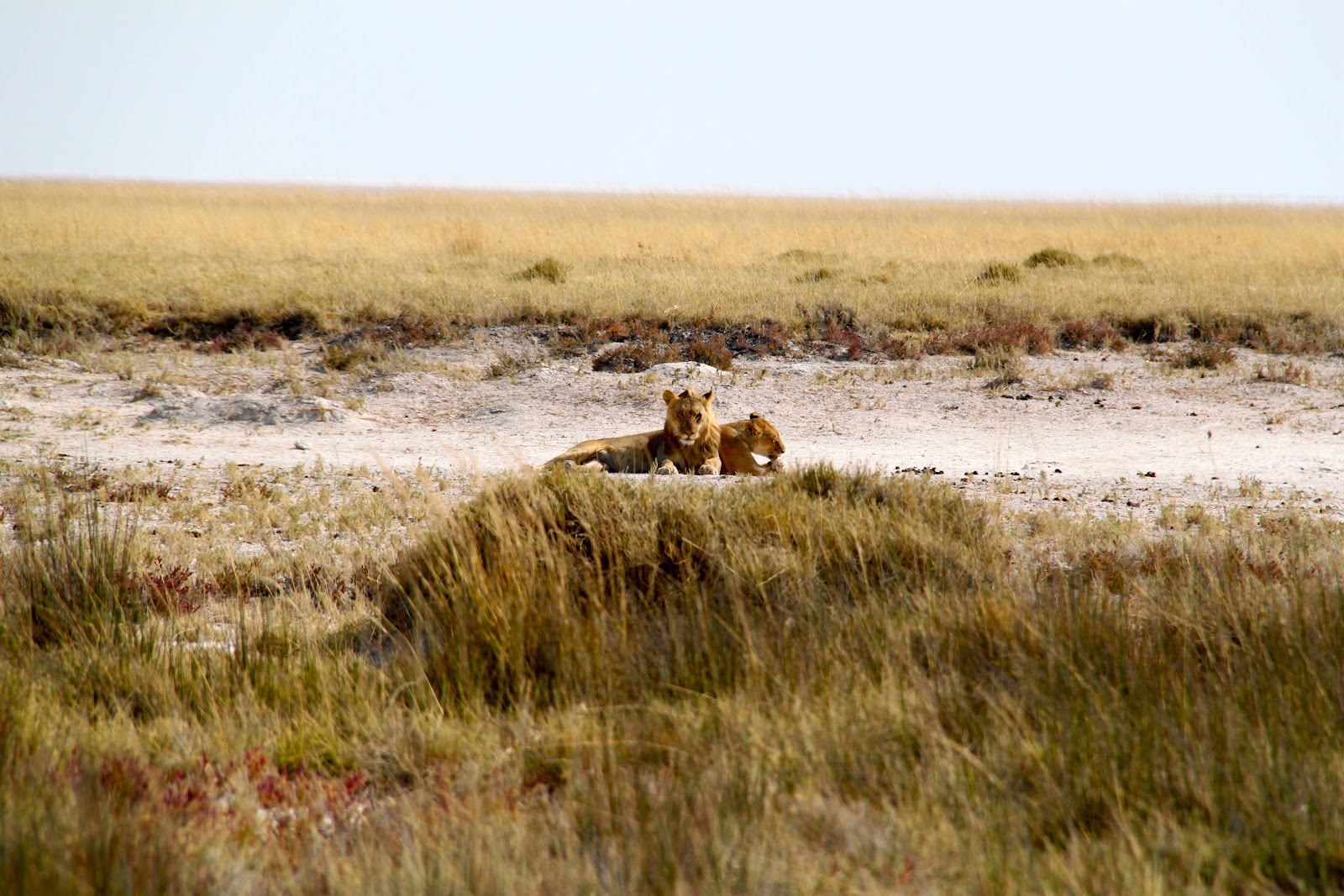
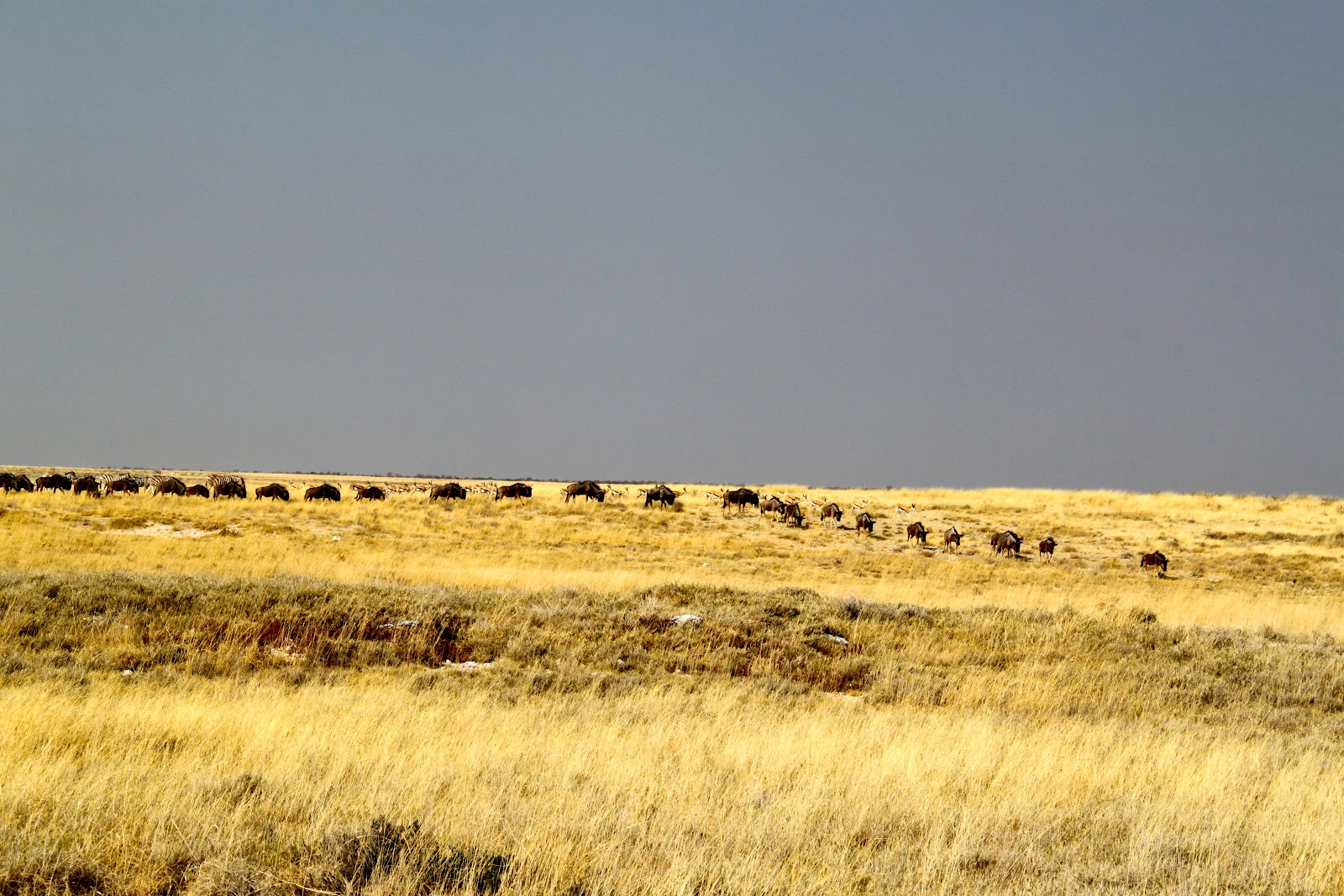
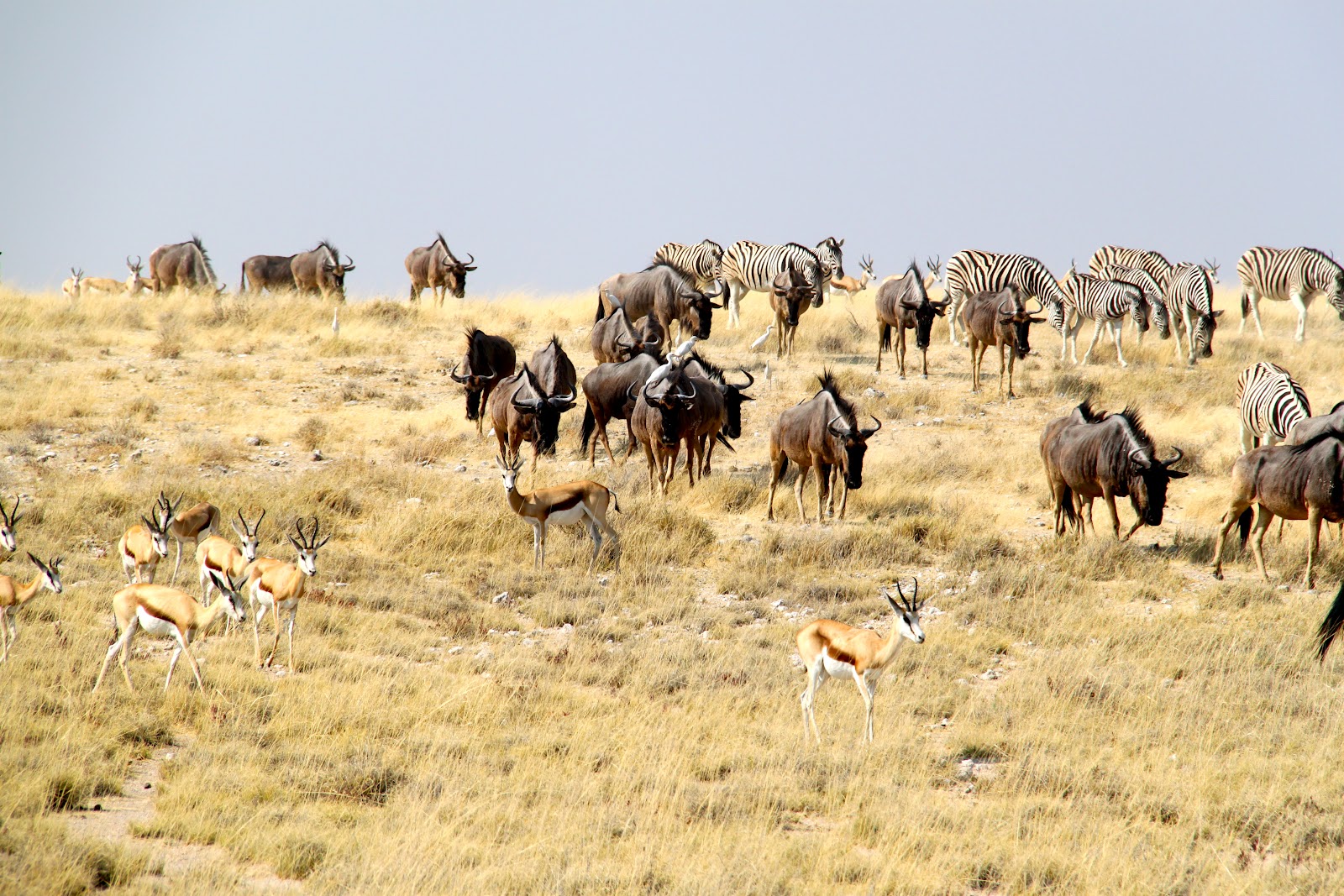
Another watering hole closer to the pan was our next “National Geographic” moment. We found 5 Lions-2 young males and 3 females. We went down the road for 5 minutes, and as we came back, we witnessed an amazing procession of animals, maybe a mile long, close to 1000 in number, coming over the rise. Wildebeest, Zebra, Antelope, and Oryx. They were all marching straight toward the Lions. We were sure we were going to see another Lion kill. The Lions hid in the grasses and behind mounds, waiting for prey, and soon the Wildebeest stopped in their tracks, and communicated with each other by snorting. The whole processional came to a stop. We waited for a while for the action, but the Lions are more patient than we are. We have to drive to our next Lodge 4 hours away. No doubt that the Lions did not go hungry.

Lions just waiting

Hiding behind  mound

The animal processional

Wildebeests, sprinbok, zebras, Kudus, ets.
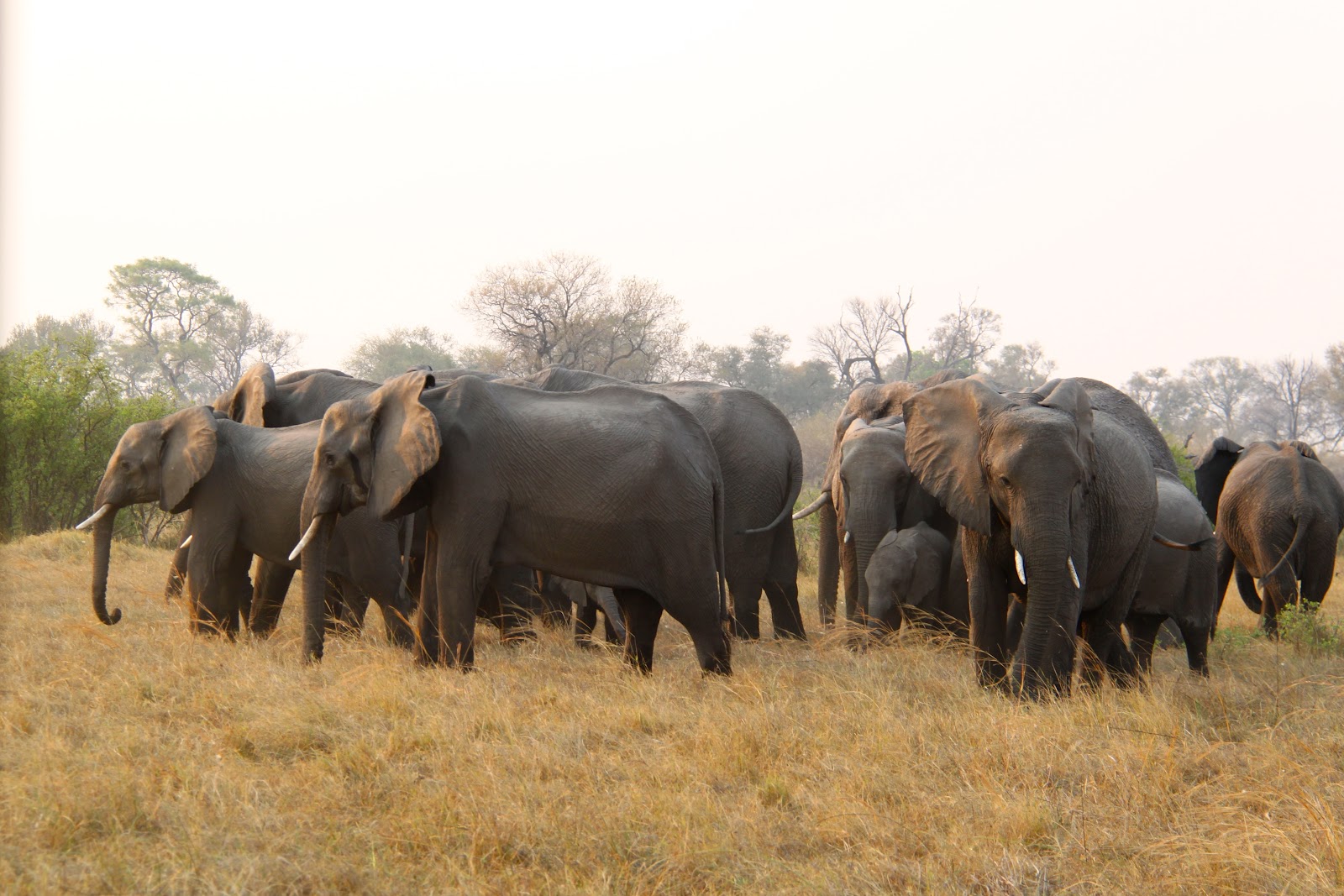
                                  Video of the procession of the animals into the lions lying in wait.
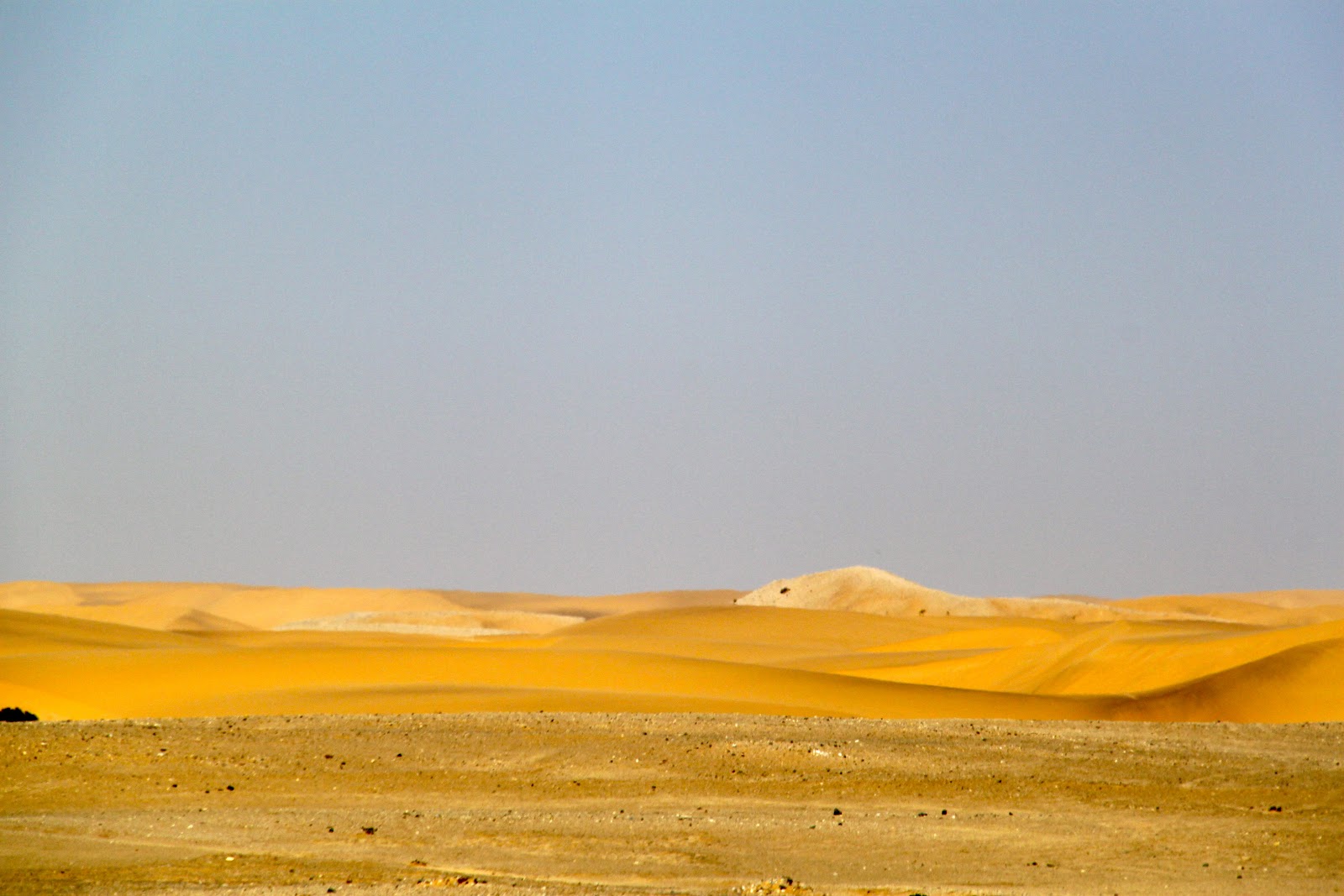
What an amazing place!  We loved the Etosha Game Park.