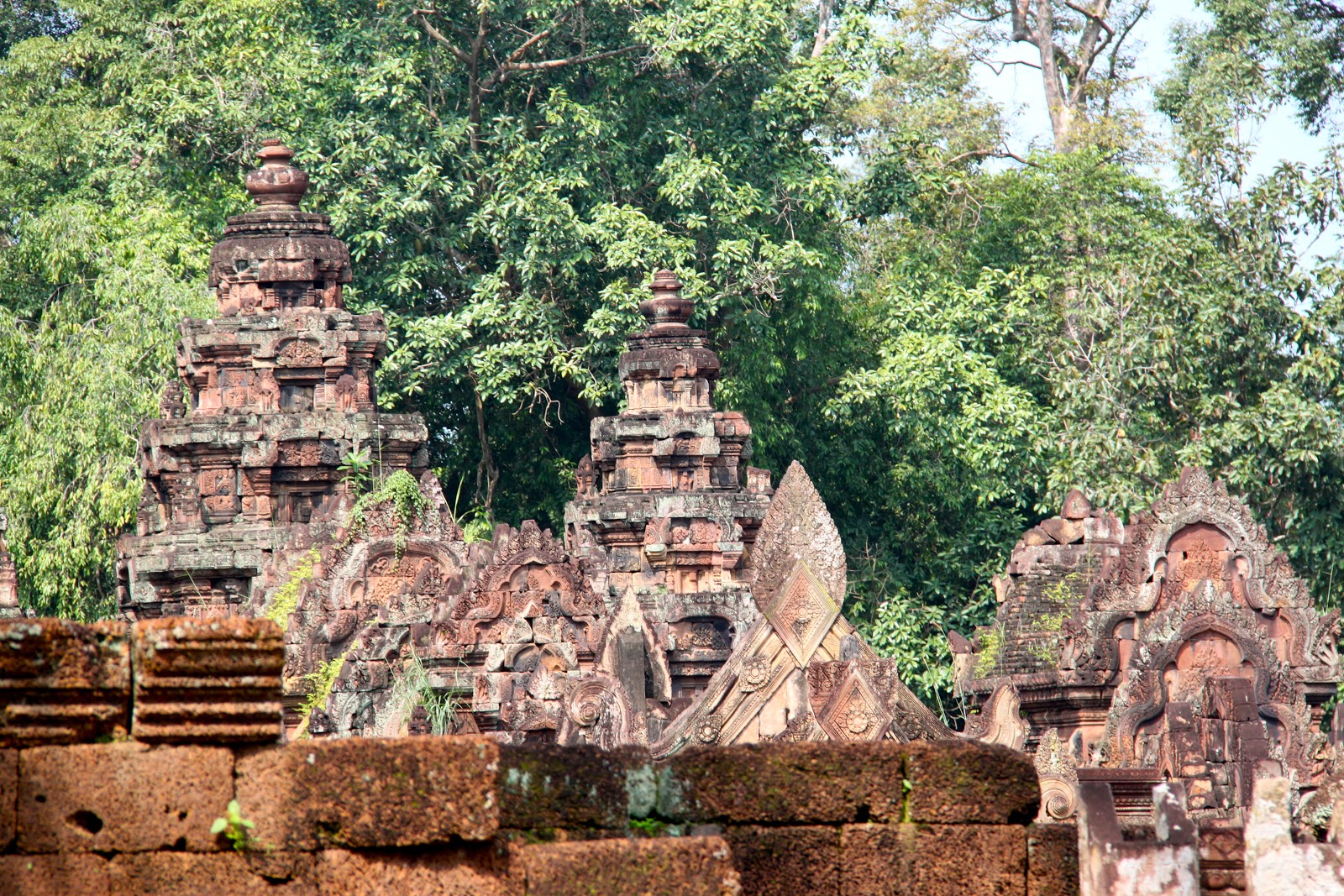
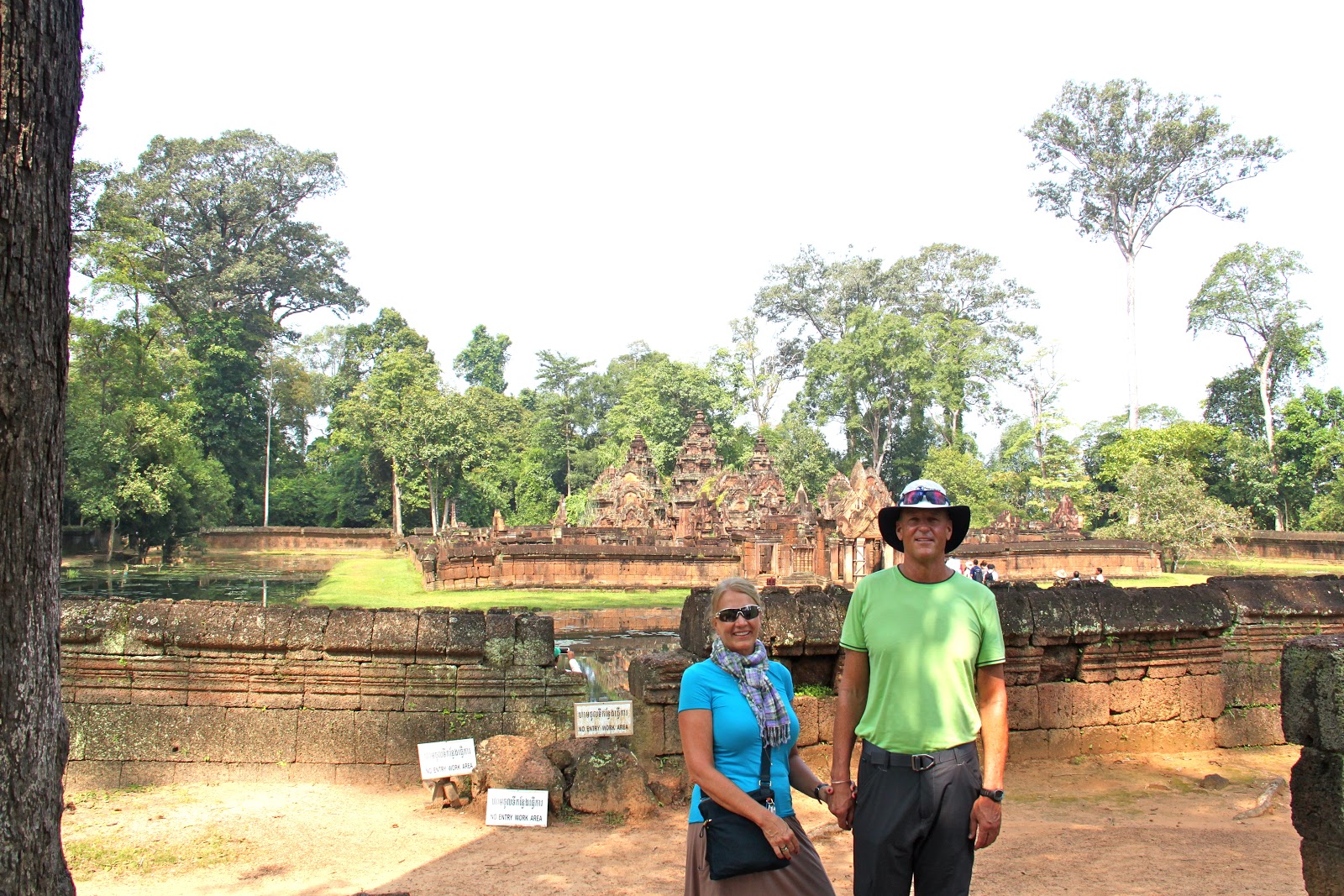
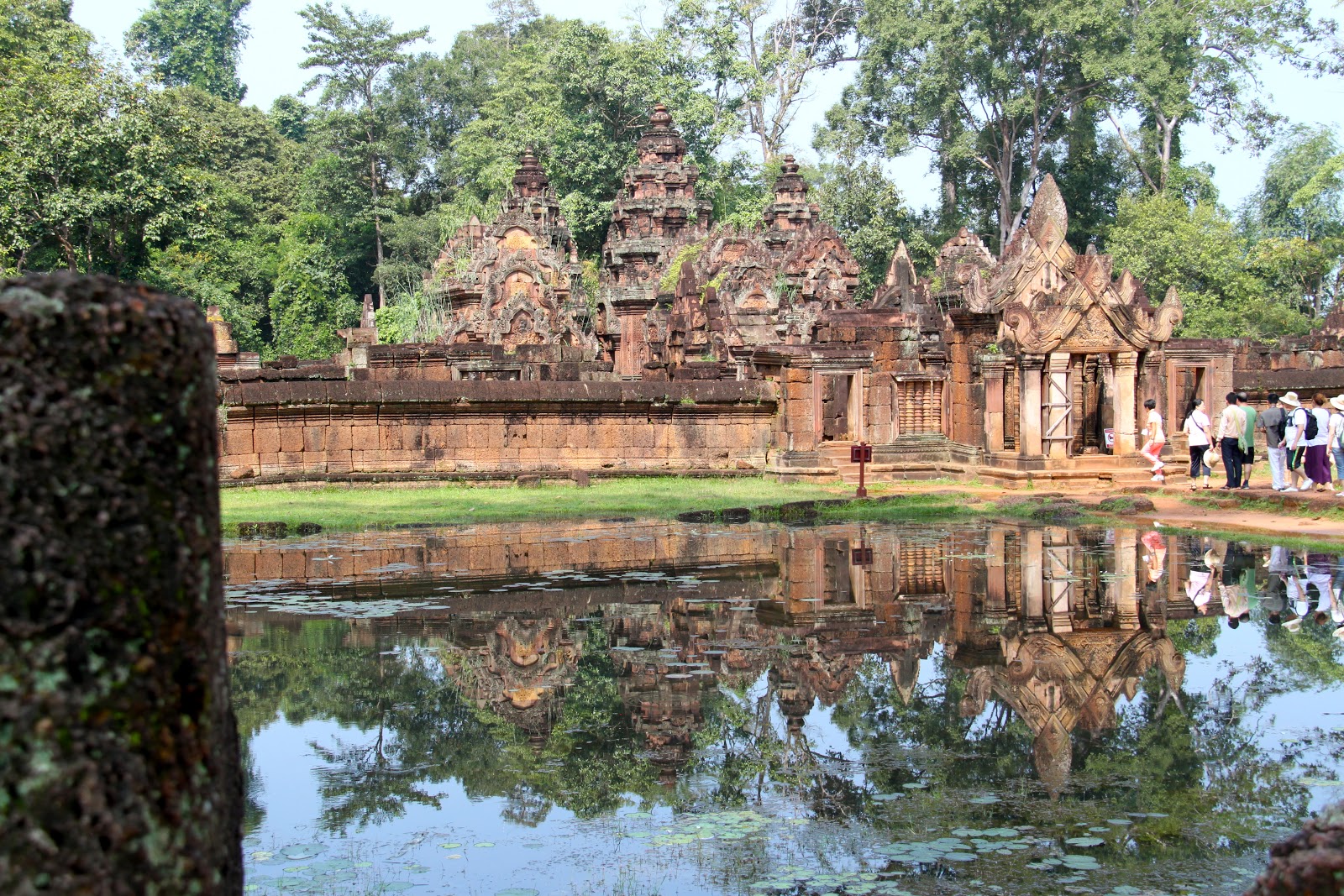
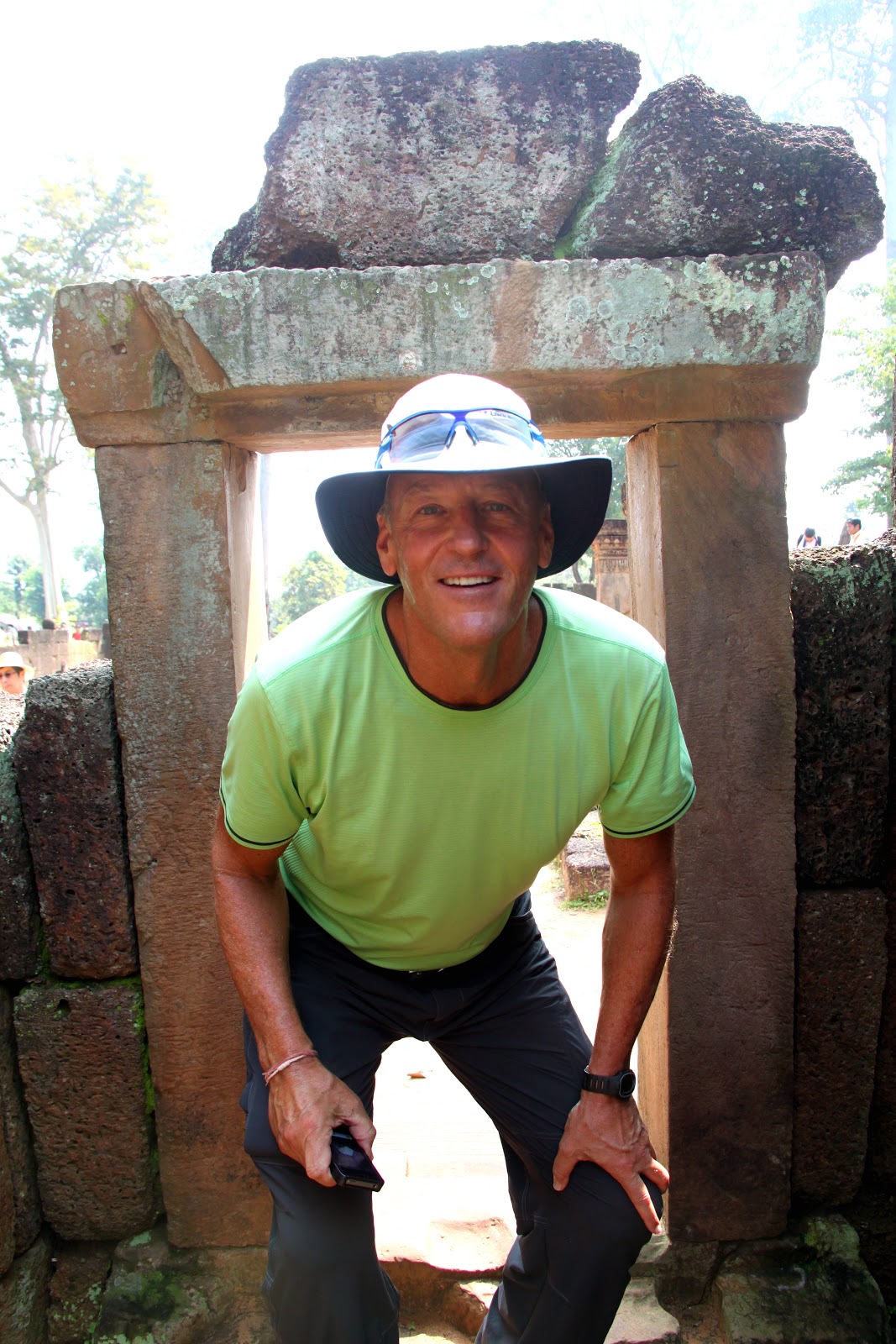
XIAMEN, CHINA – January 2018

XIAMEN, CHINA

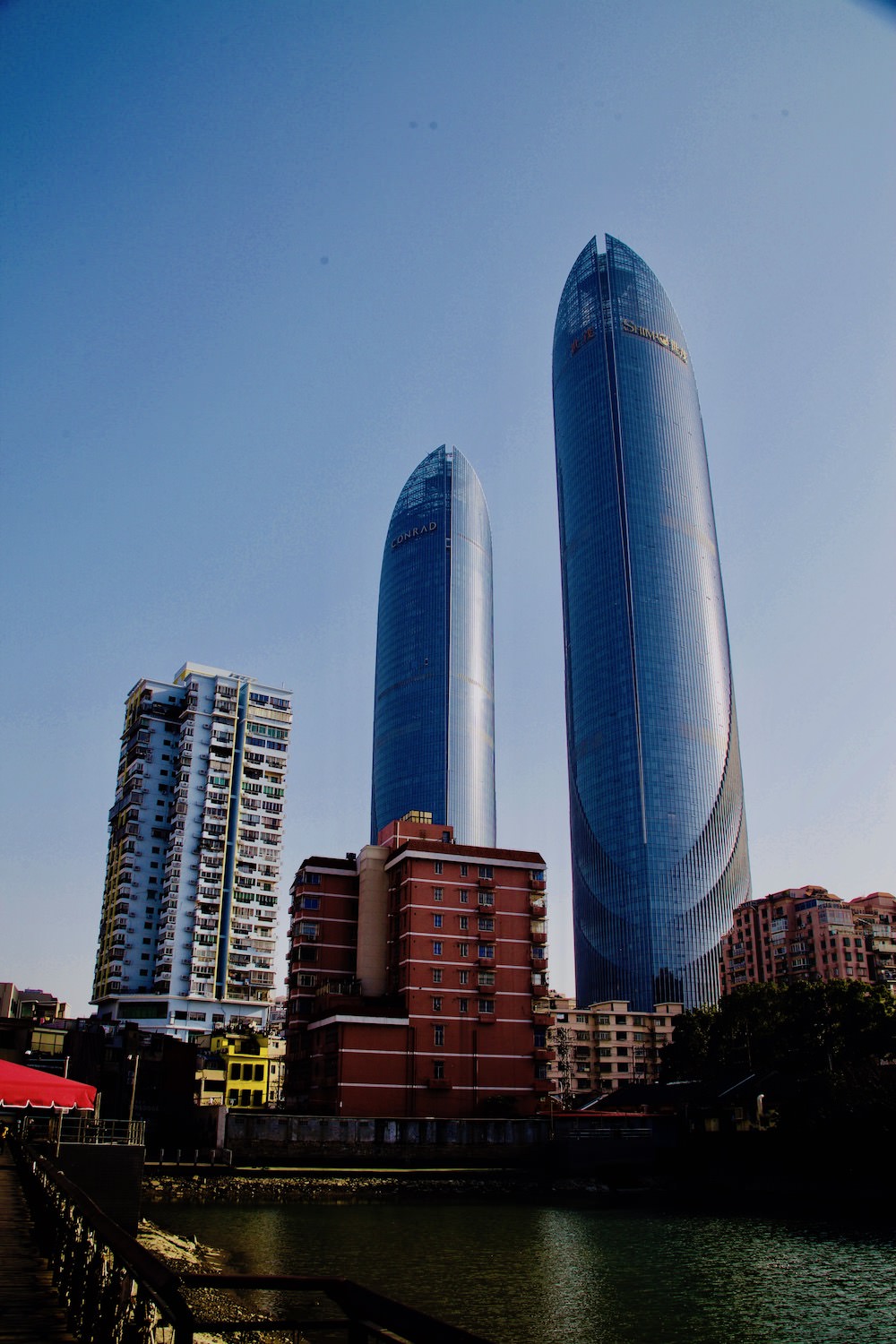
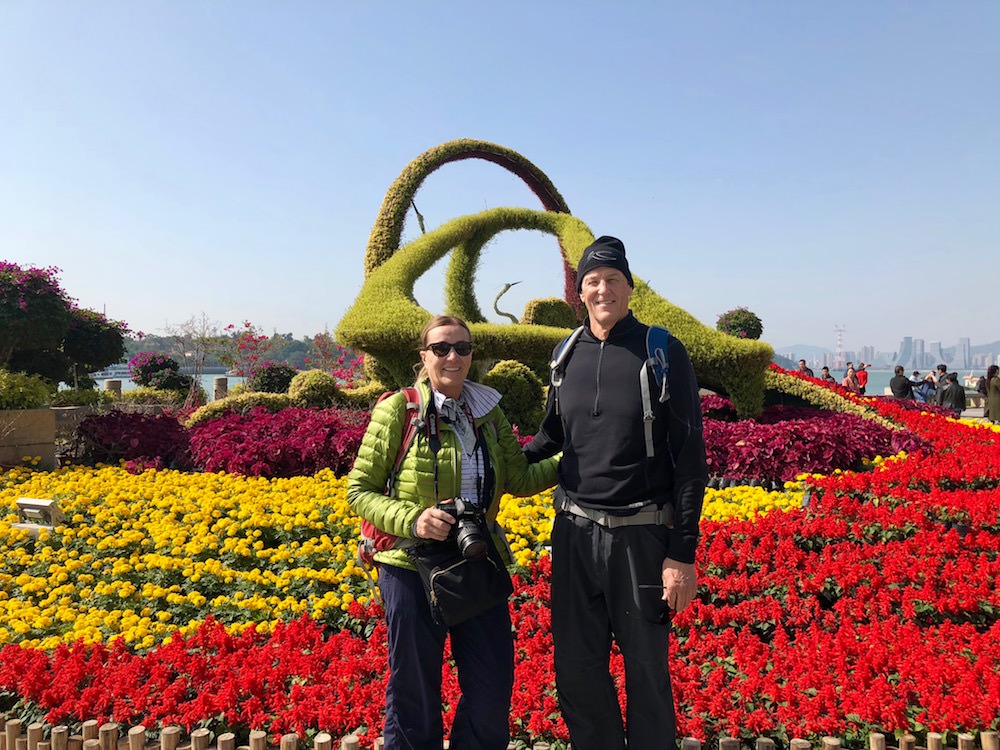
We are on our way to Australia, but found great airfare that was routed through Xiamen, China.  Xiamen is a port city on China’s southeast coast, across a strait from Taiwan.  It encompasses 2 main islands and a region on the mainland.  The island of Gulangyu is a vehicle free island with old colonial villas.  We had planned to go there first, but our plane was delayed and we missed our ferry, so we toured the bigger island.

Our bags were checked all the way through.  We flew all night and arrived at 9:00 am, then had a 12 hour layover.  Rather than sit in the airport, we hired a guide and took a tour of the the beautiful city of Xiamen.

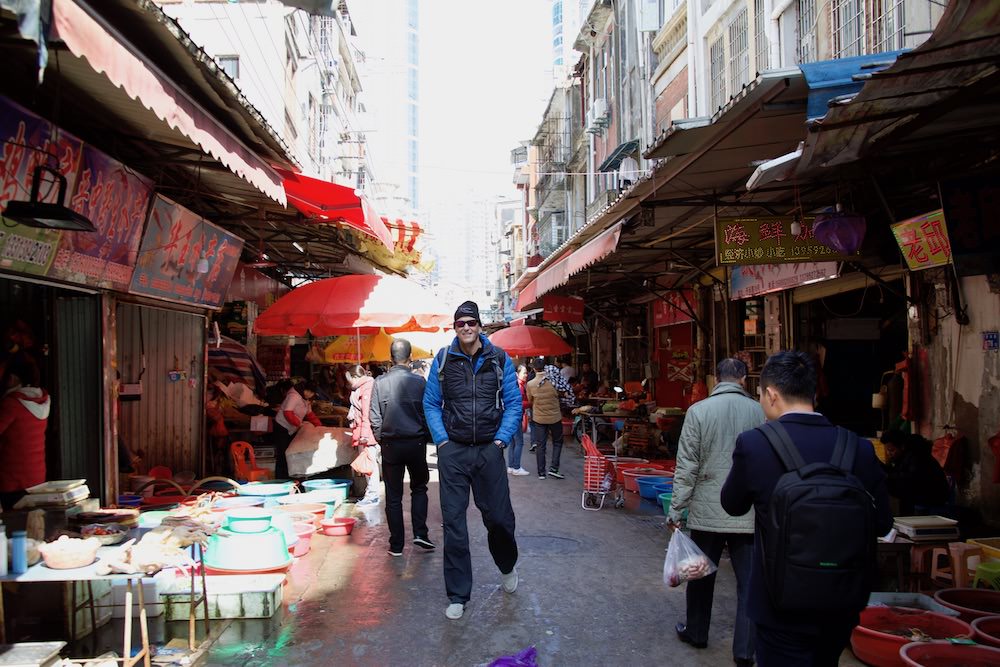
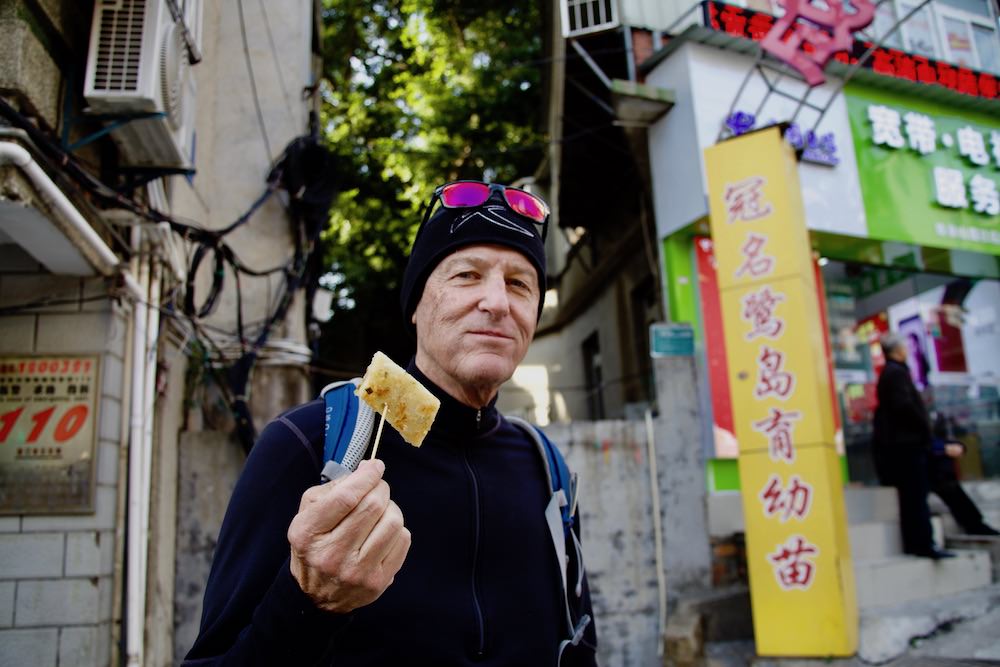
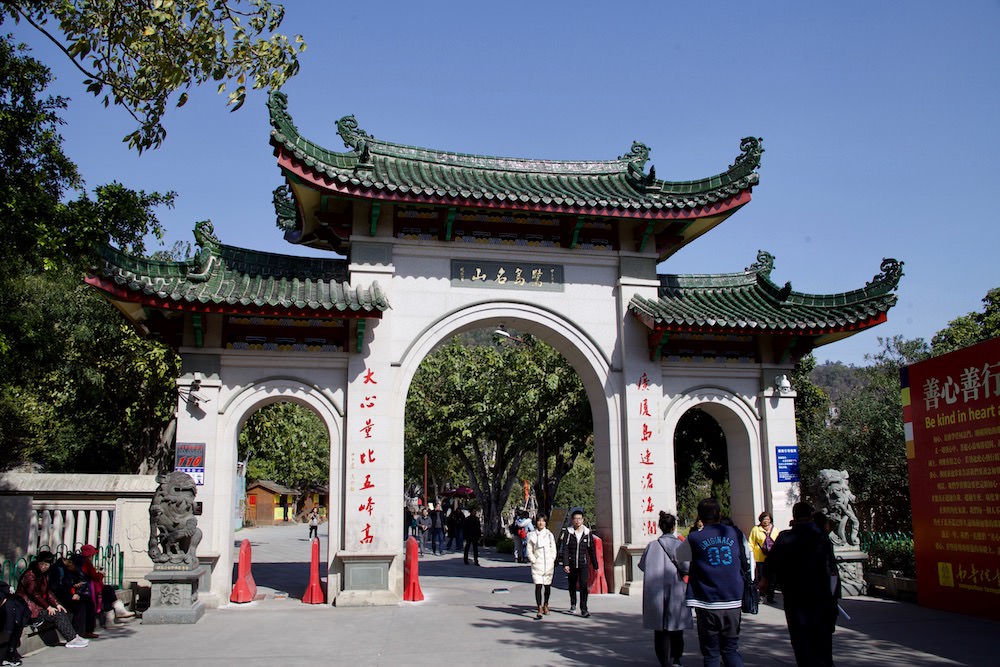
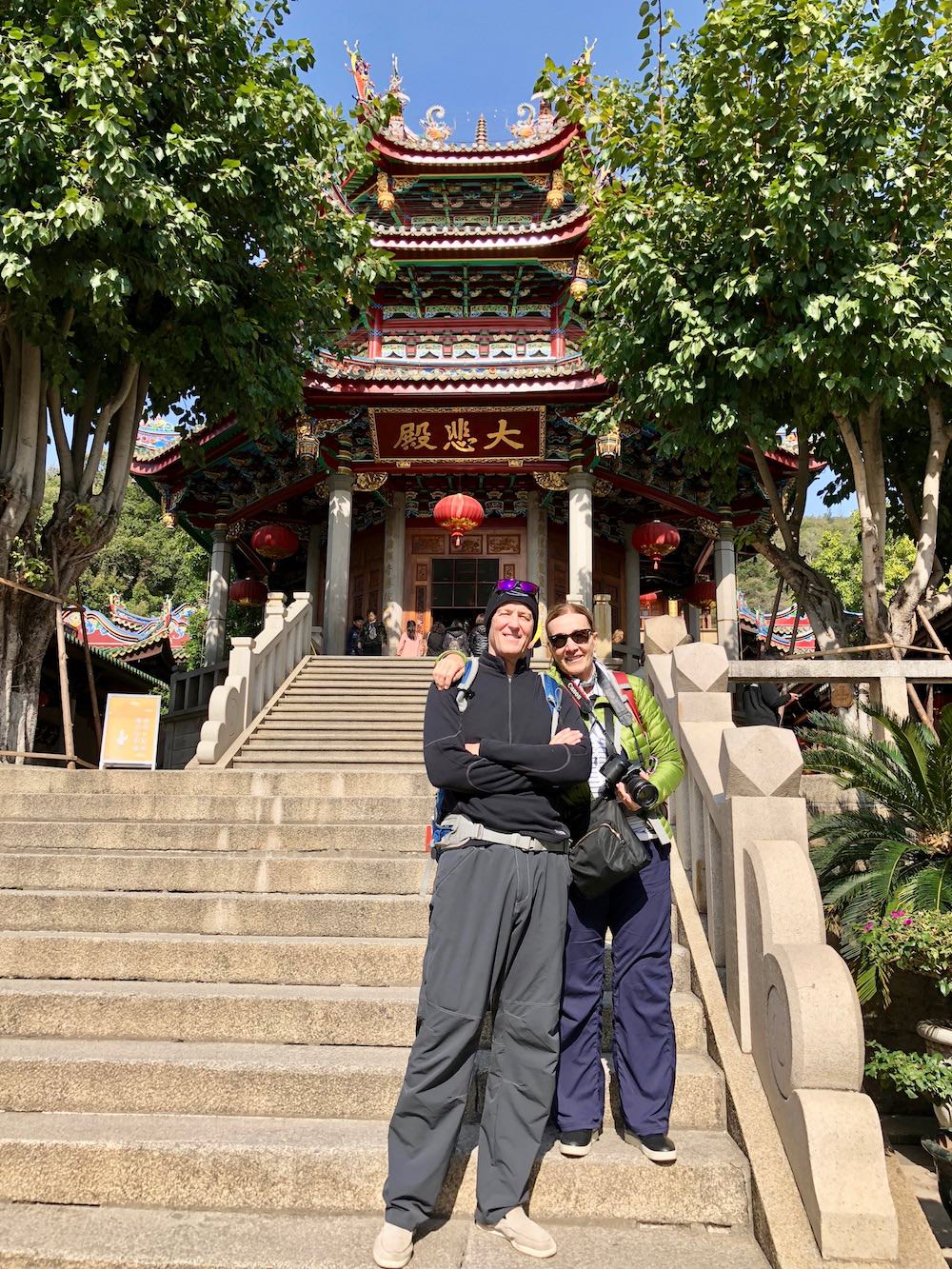
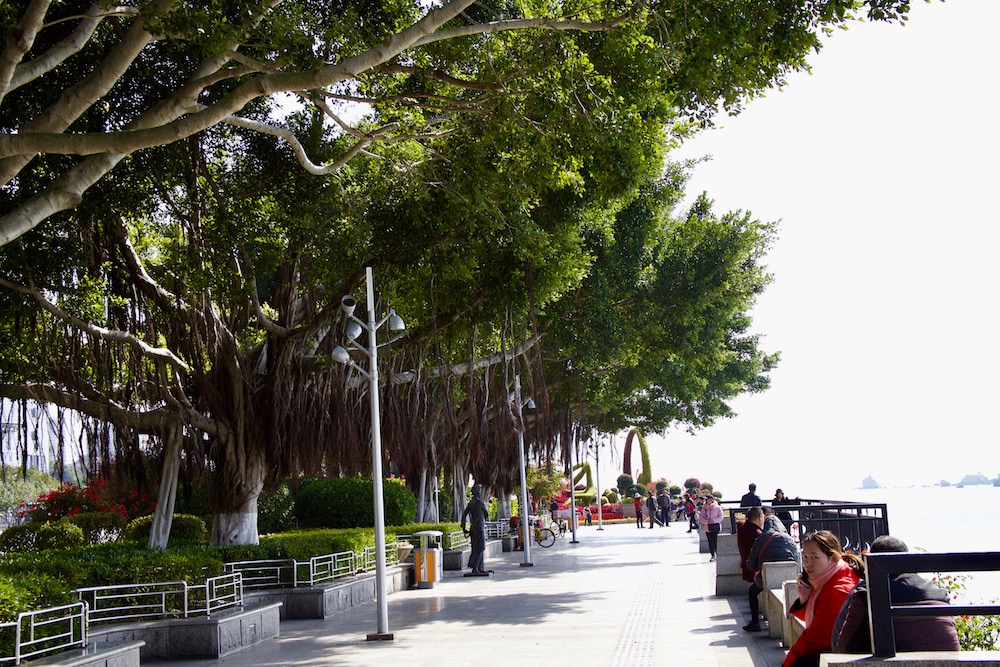
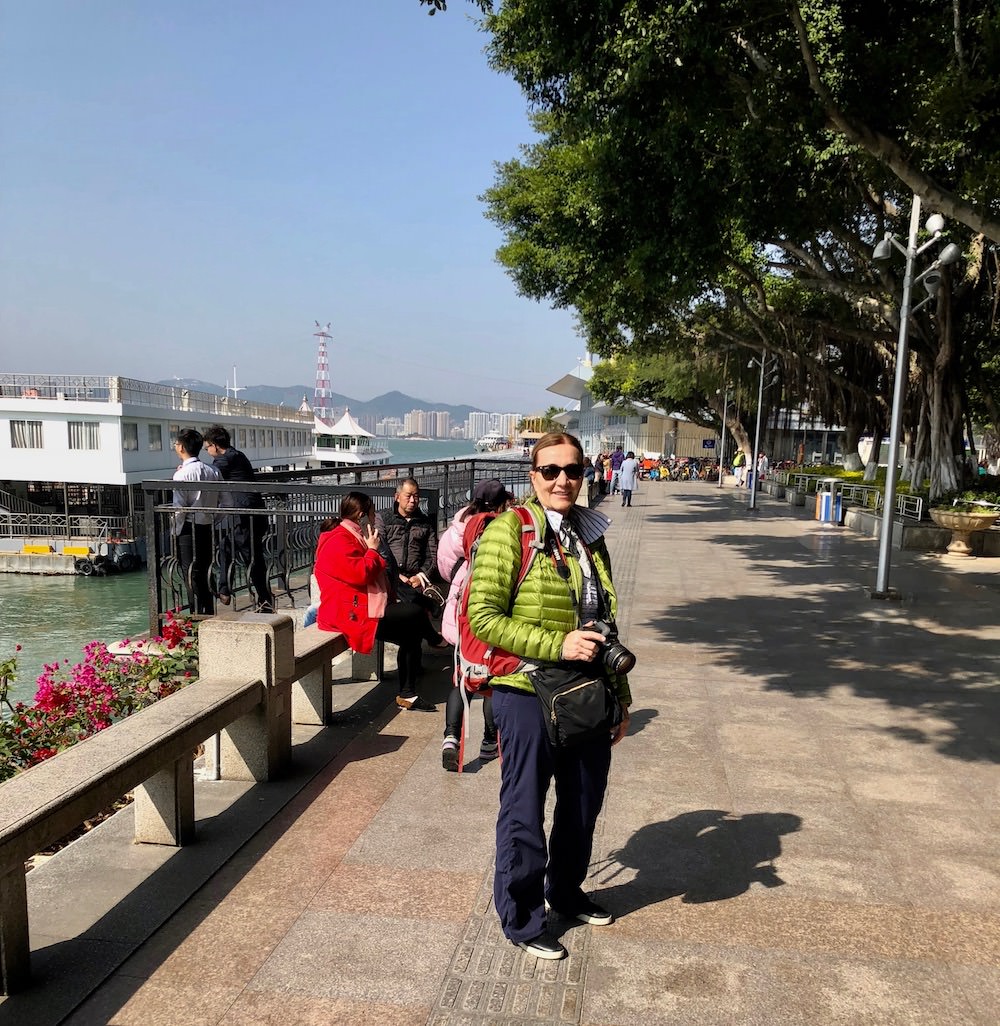
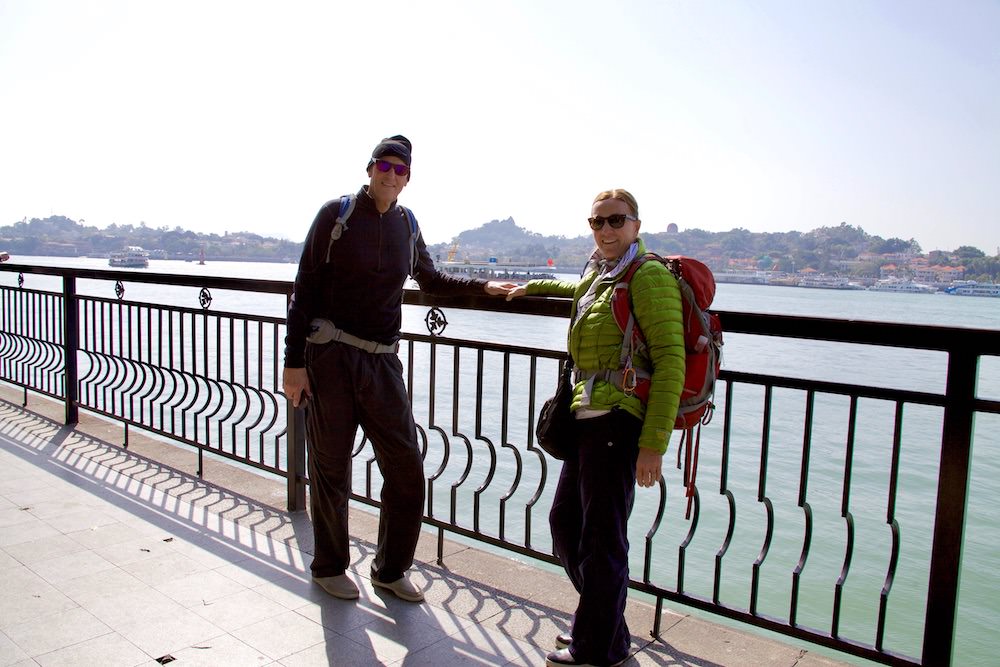
We toured the street market, went to a Buddhist Temple, walked along a coastline park, and sat down for refreshment.

Our guide, named Karen, met us at the airport.

The city is very clean, they have restricted industry in this area.  It felt a little bit like the town of San Diego.

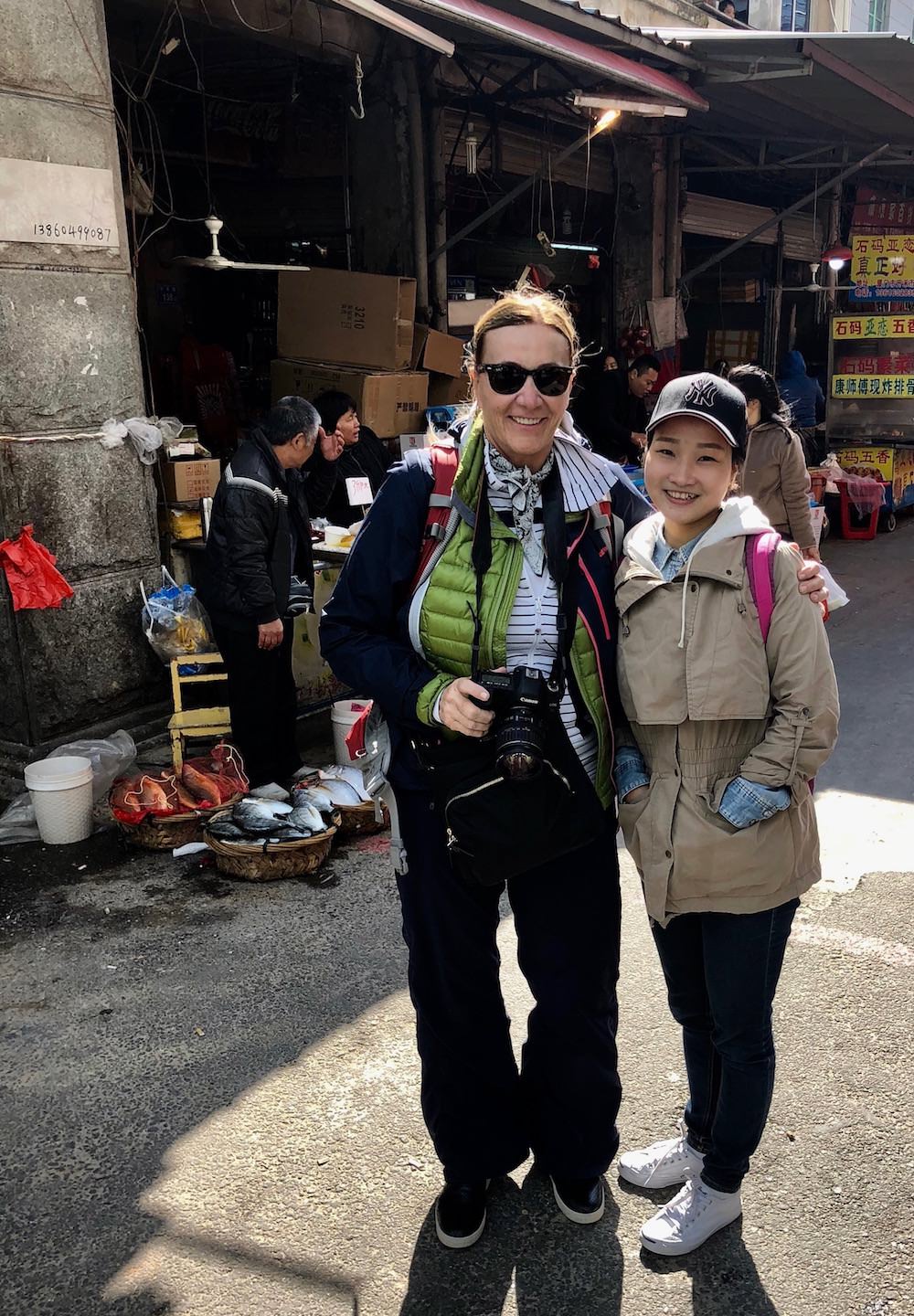
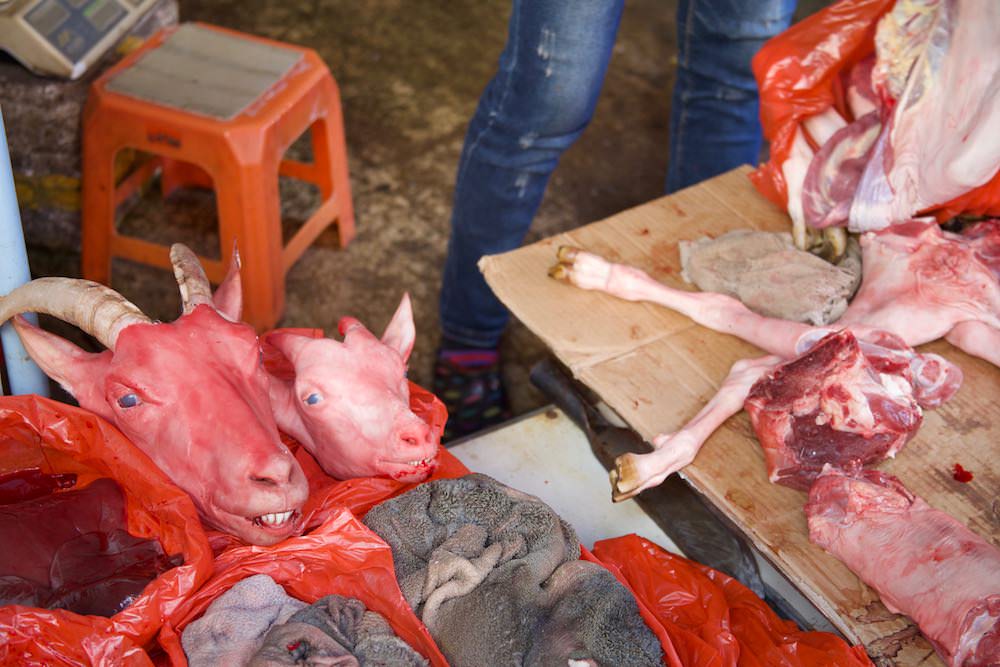
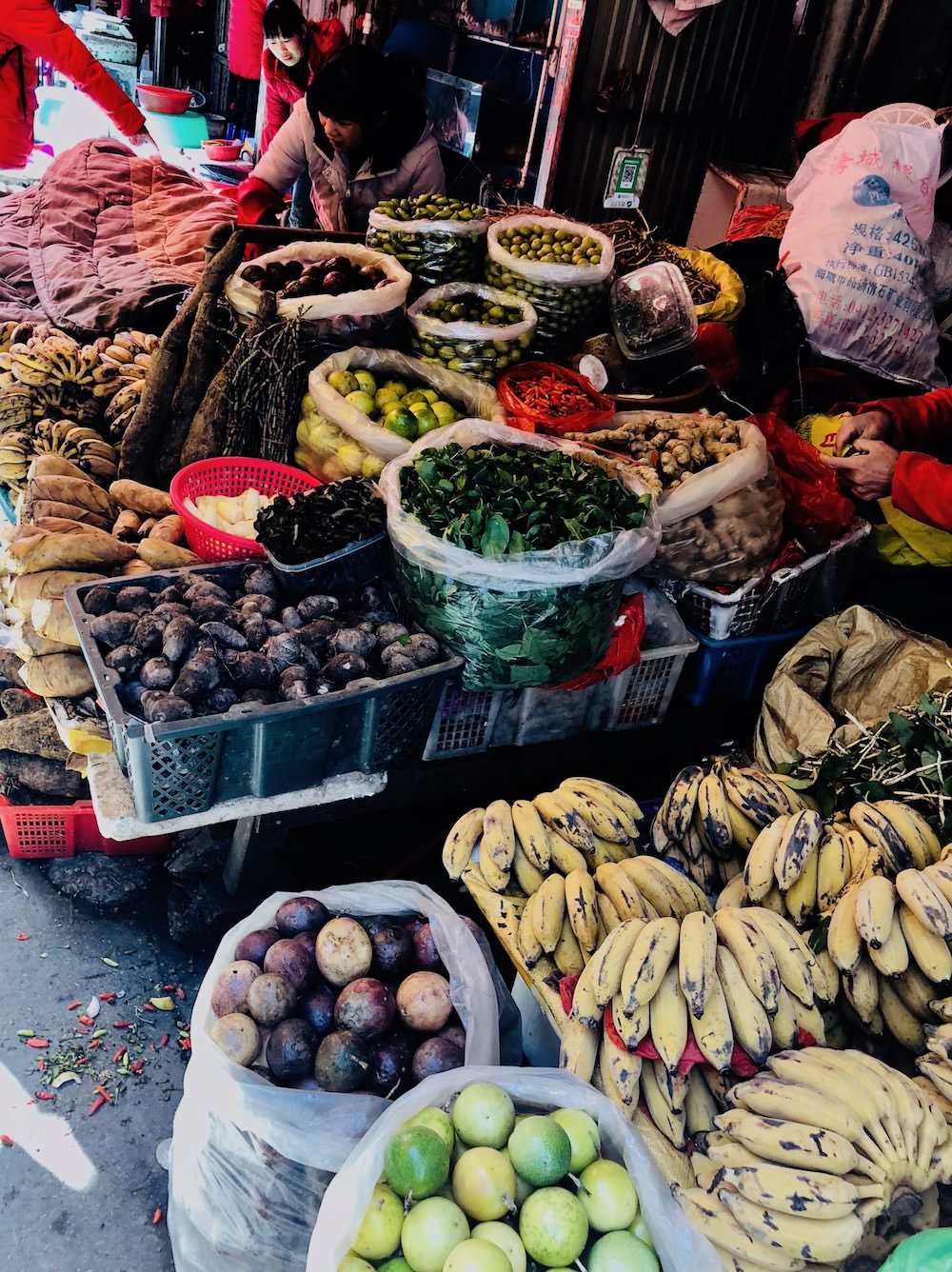
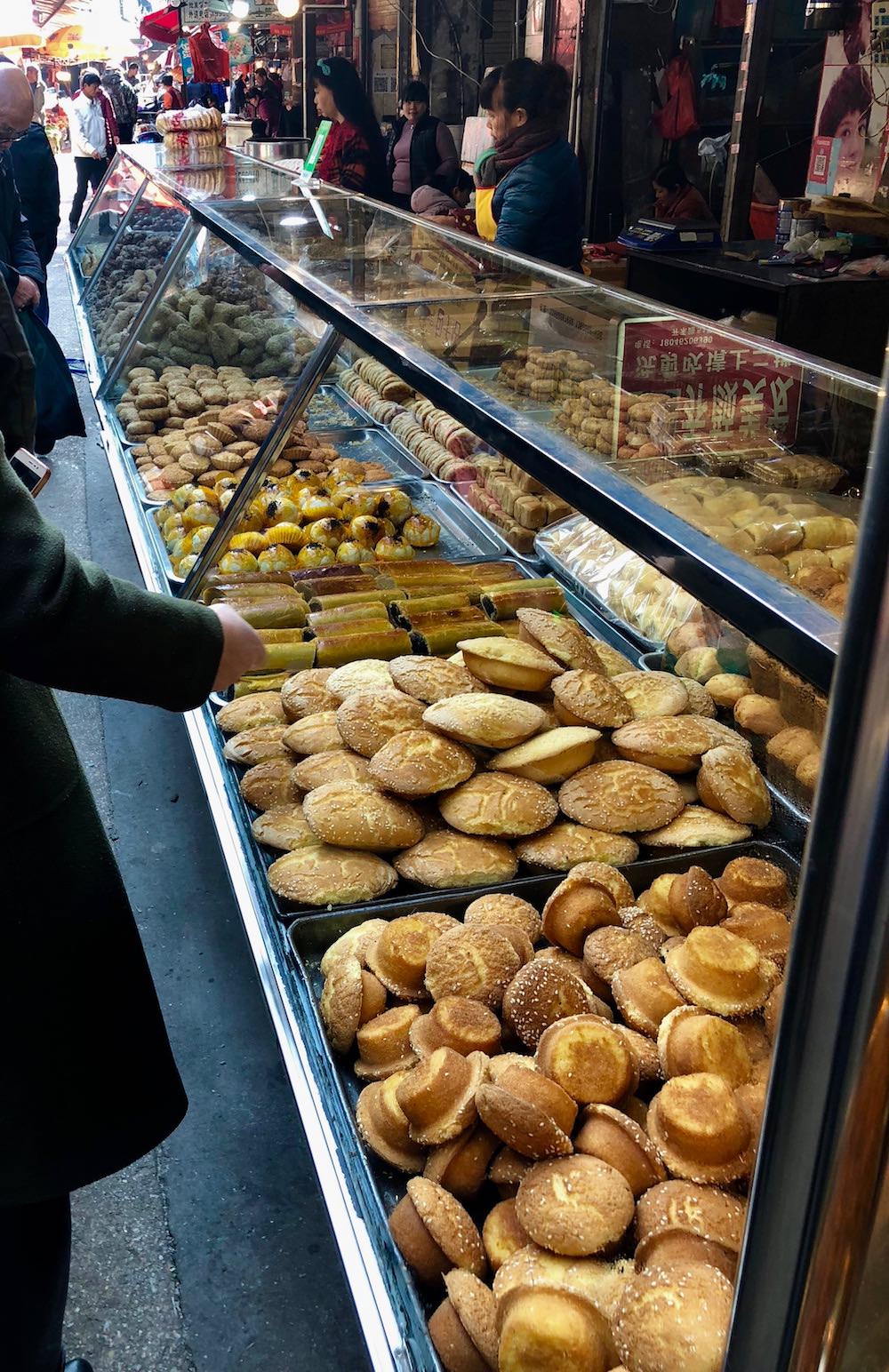
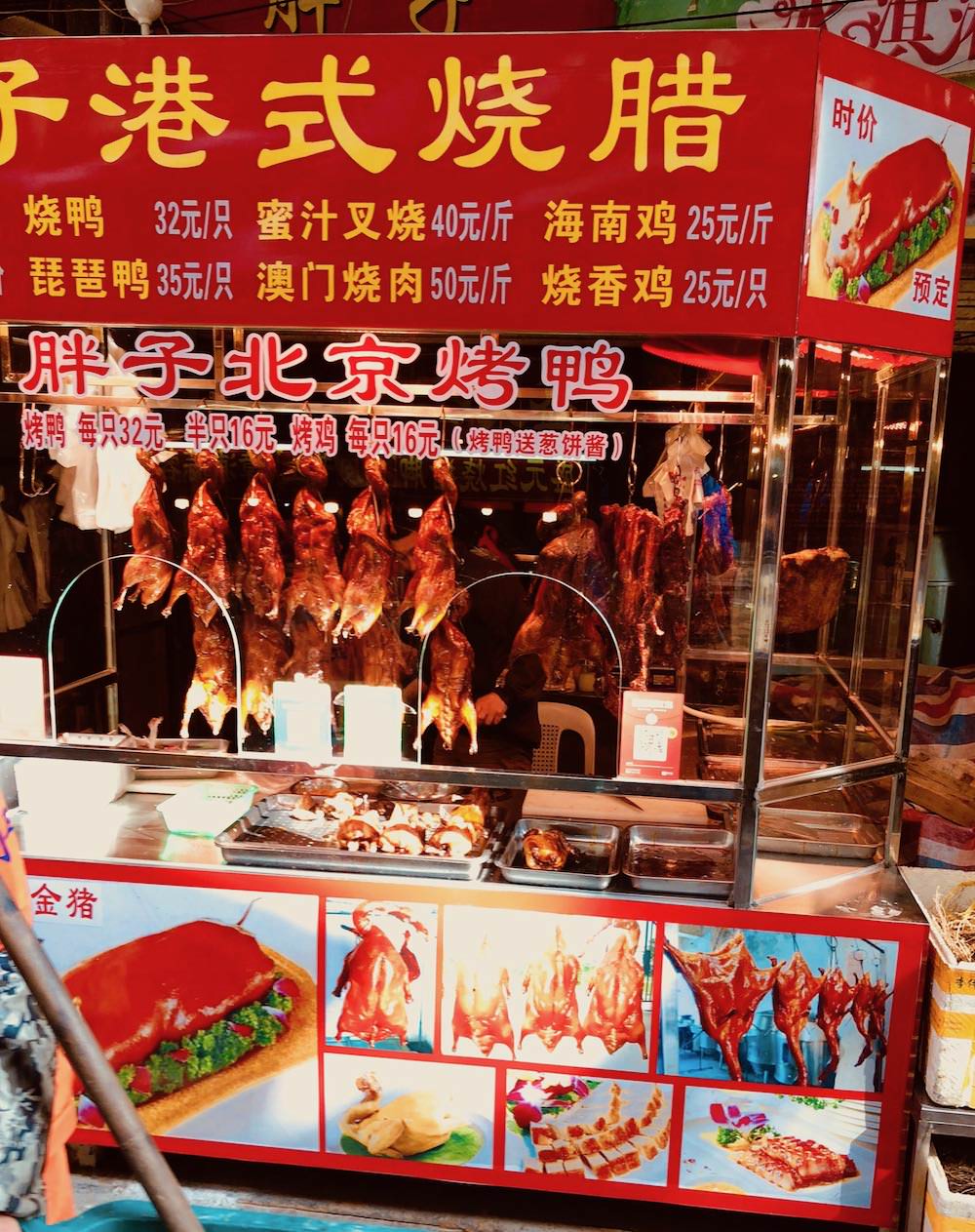
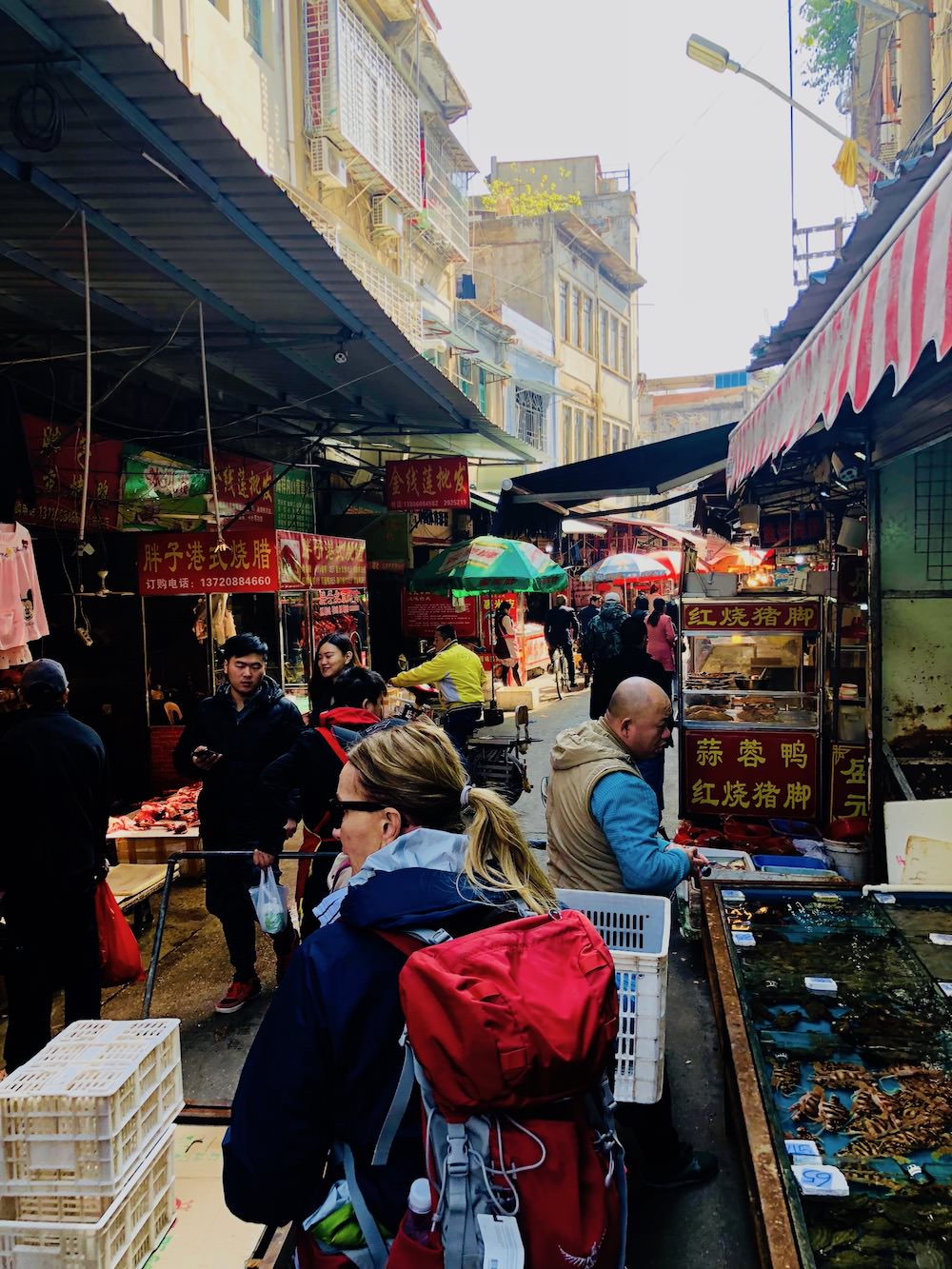
We headed to the street market.  Fish, meats, vegetables, breads, etc. can all be purchased with a scan on your phone.  No money is exchanged.

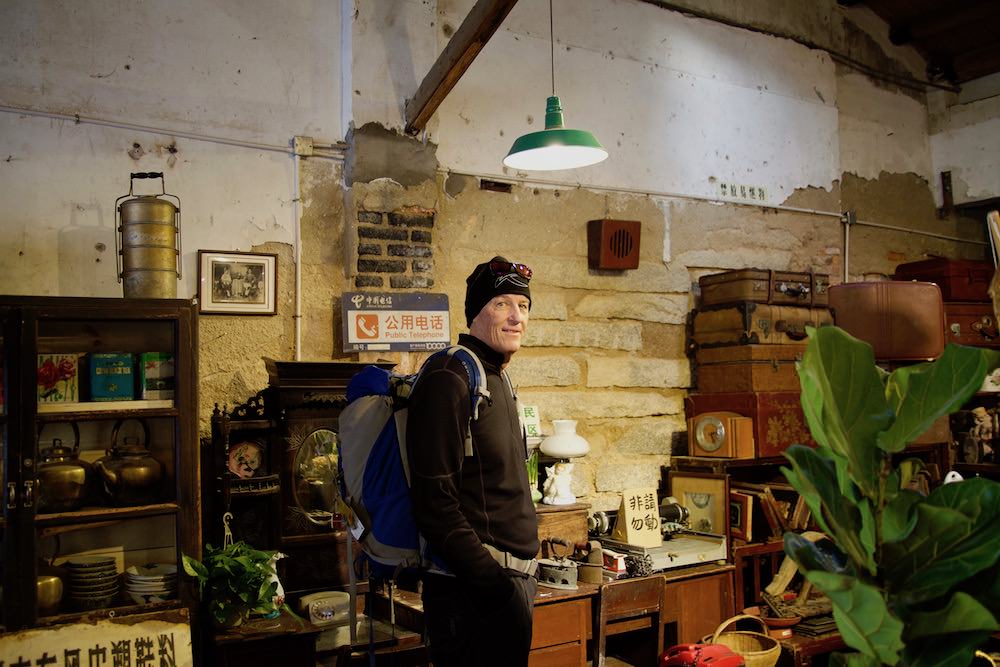
We stopped at an antique store.

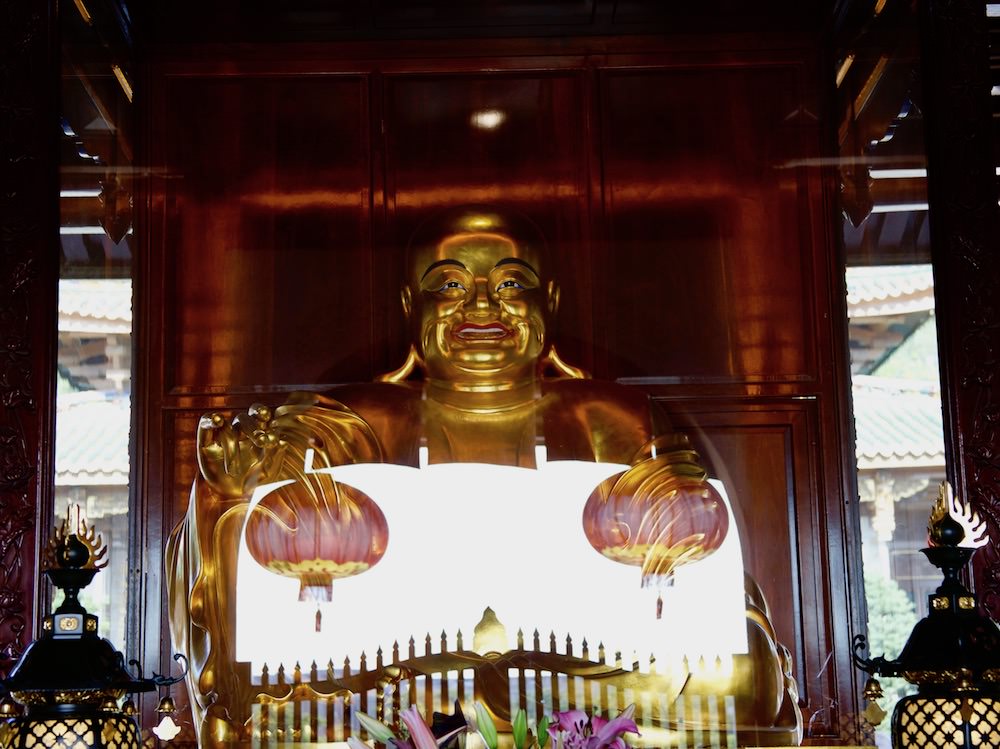
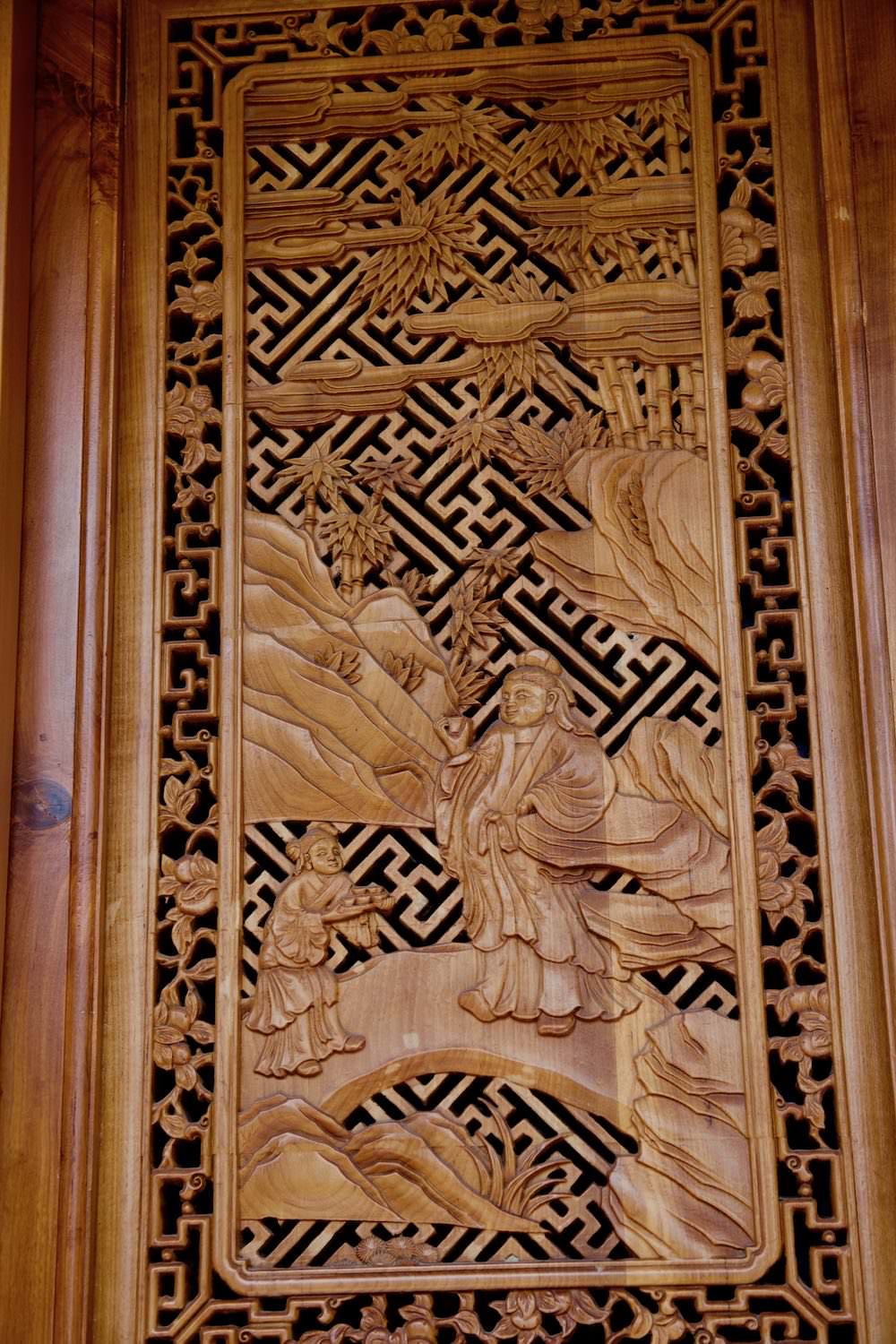
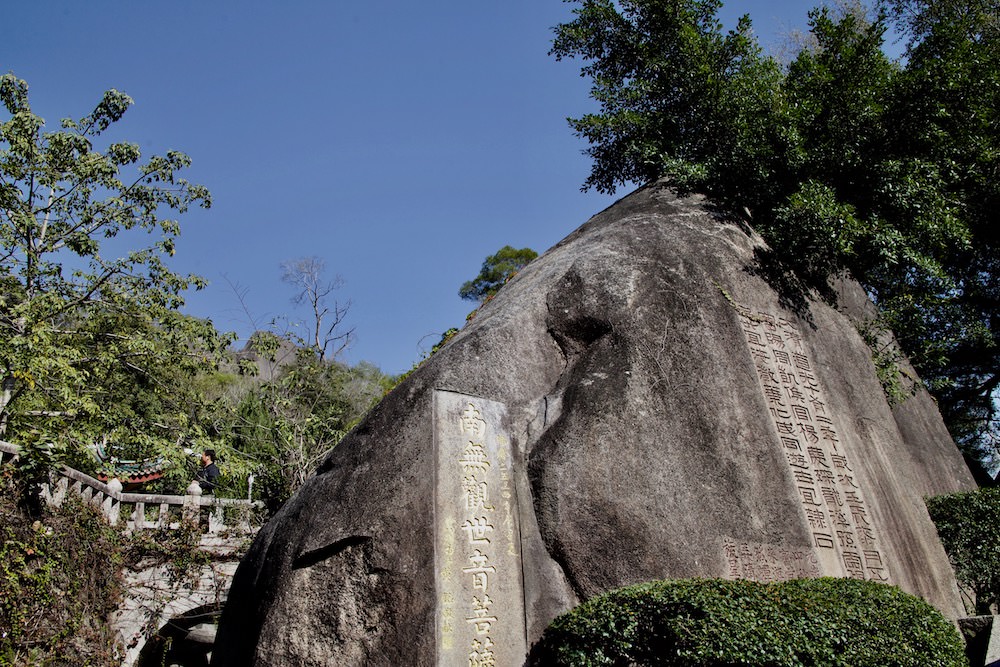
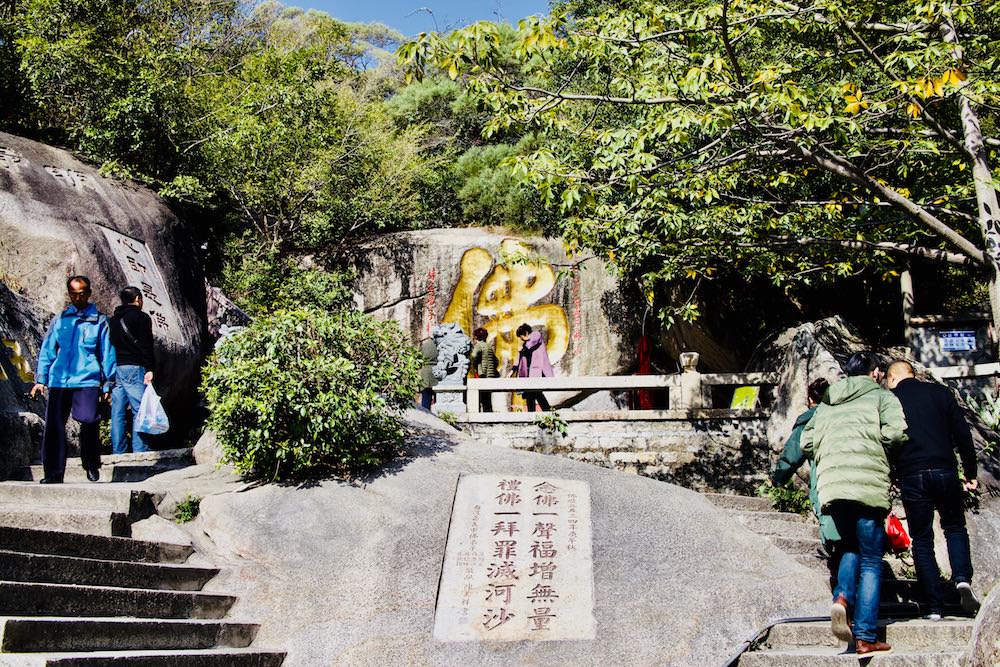
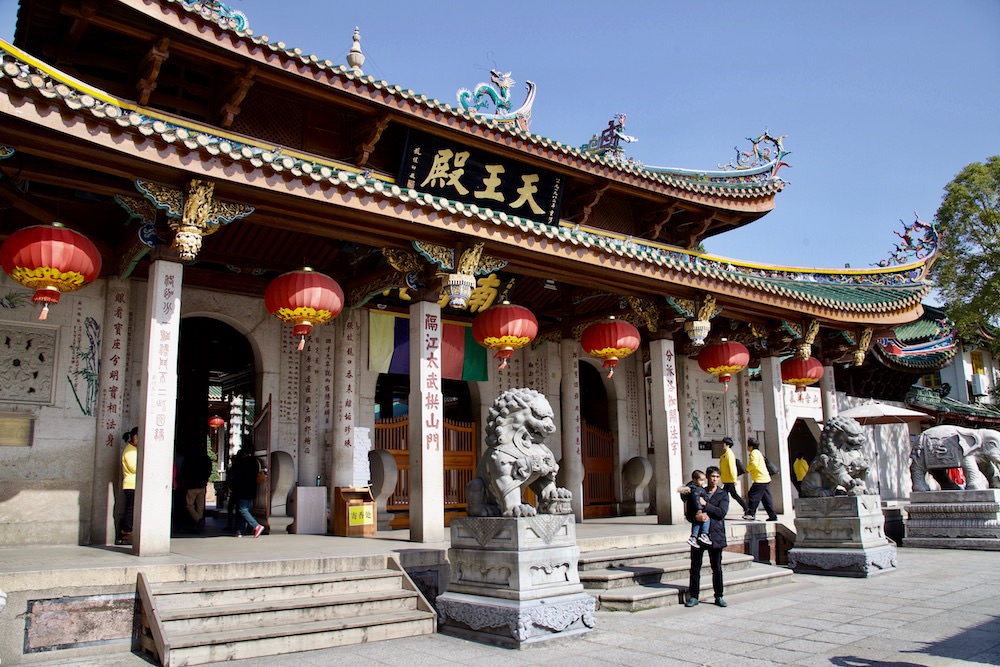
The Nanputuo Temple is situated on a rock hillside.  There are Buddha statues, wood carved doors and pretty gardens to walk through.

  Statues of Buddha.

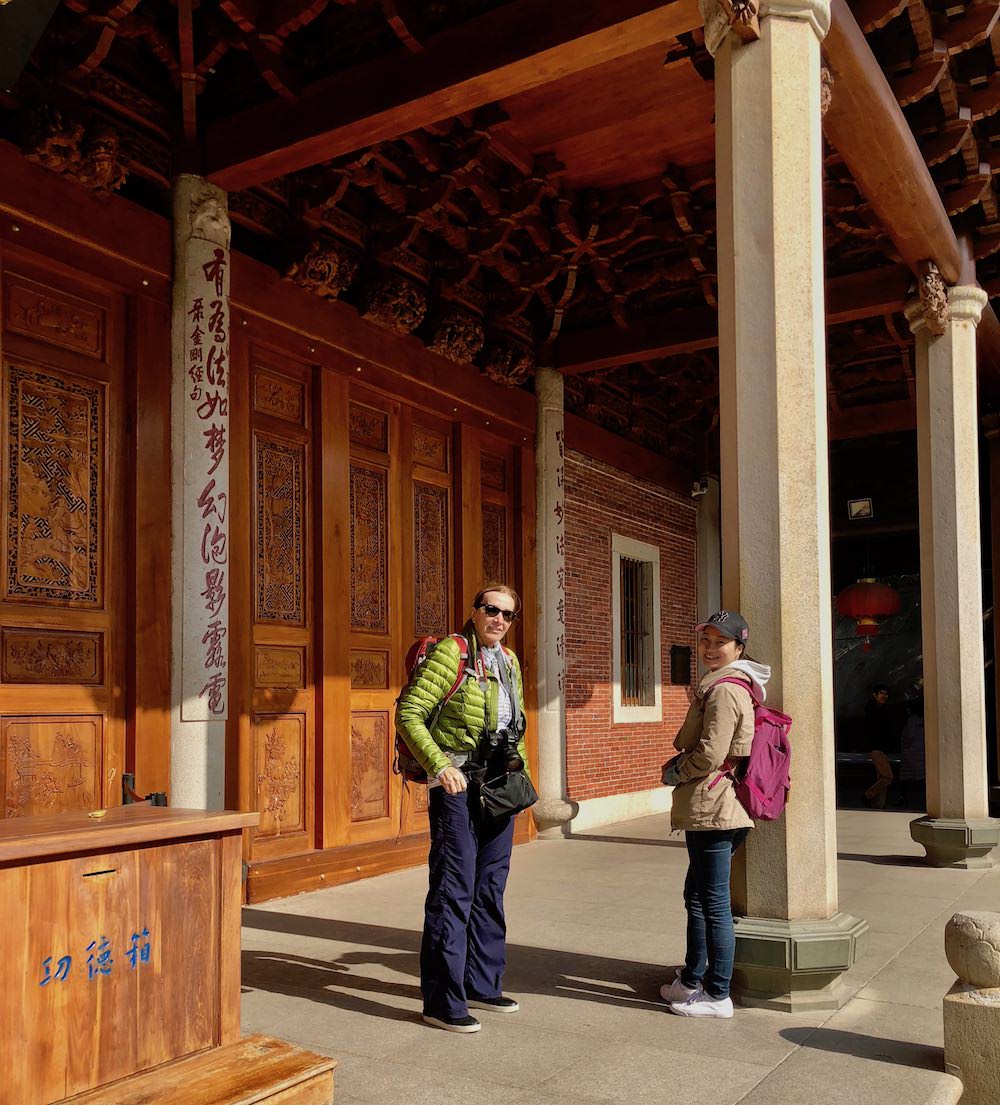
Wood carved doors.

Karen told us that if you have a small statue of the Buddha, you are not supposed to throw them away.  Instead, you bring them to this temple and they are placed here.

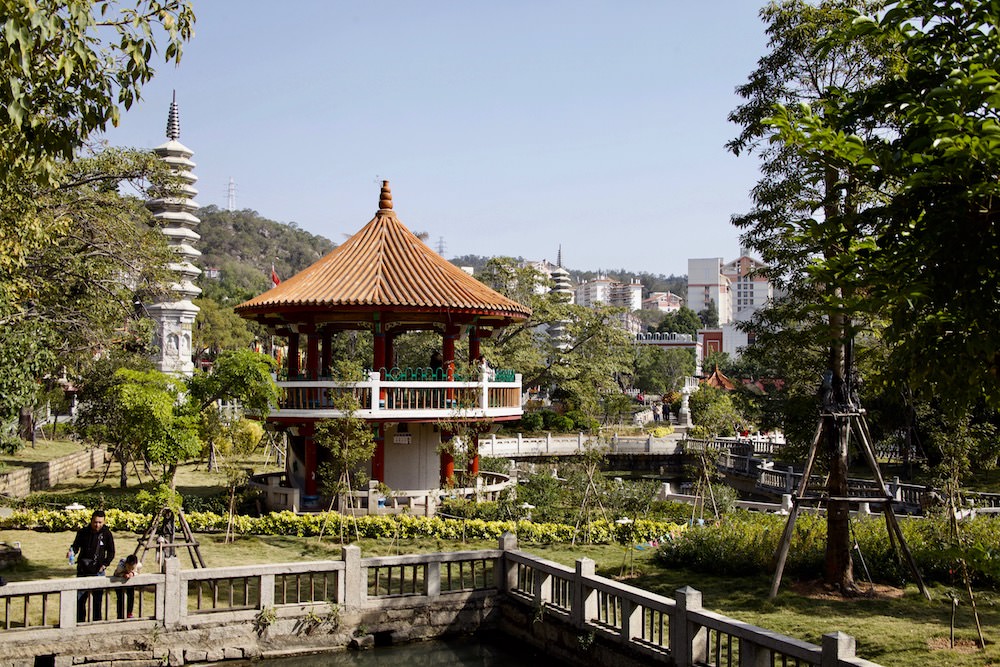
A beautiful temple garden to walk through in the middle of the city.

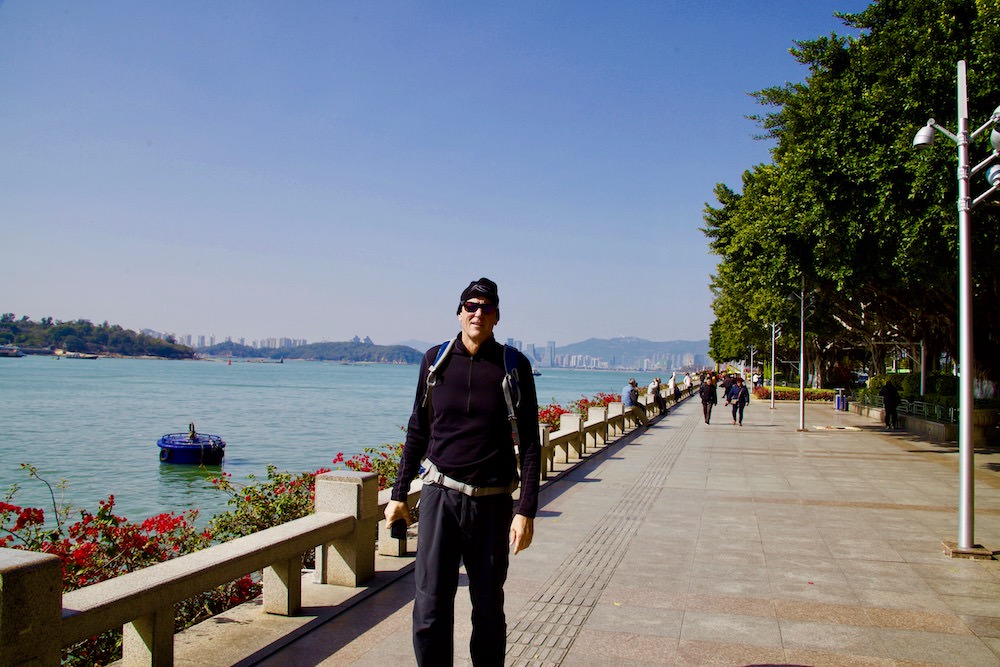
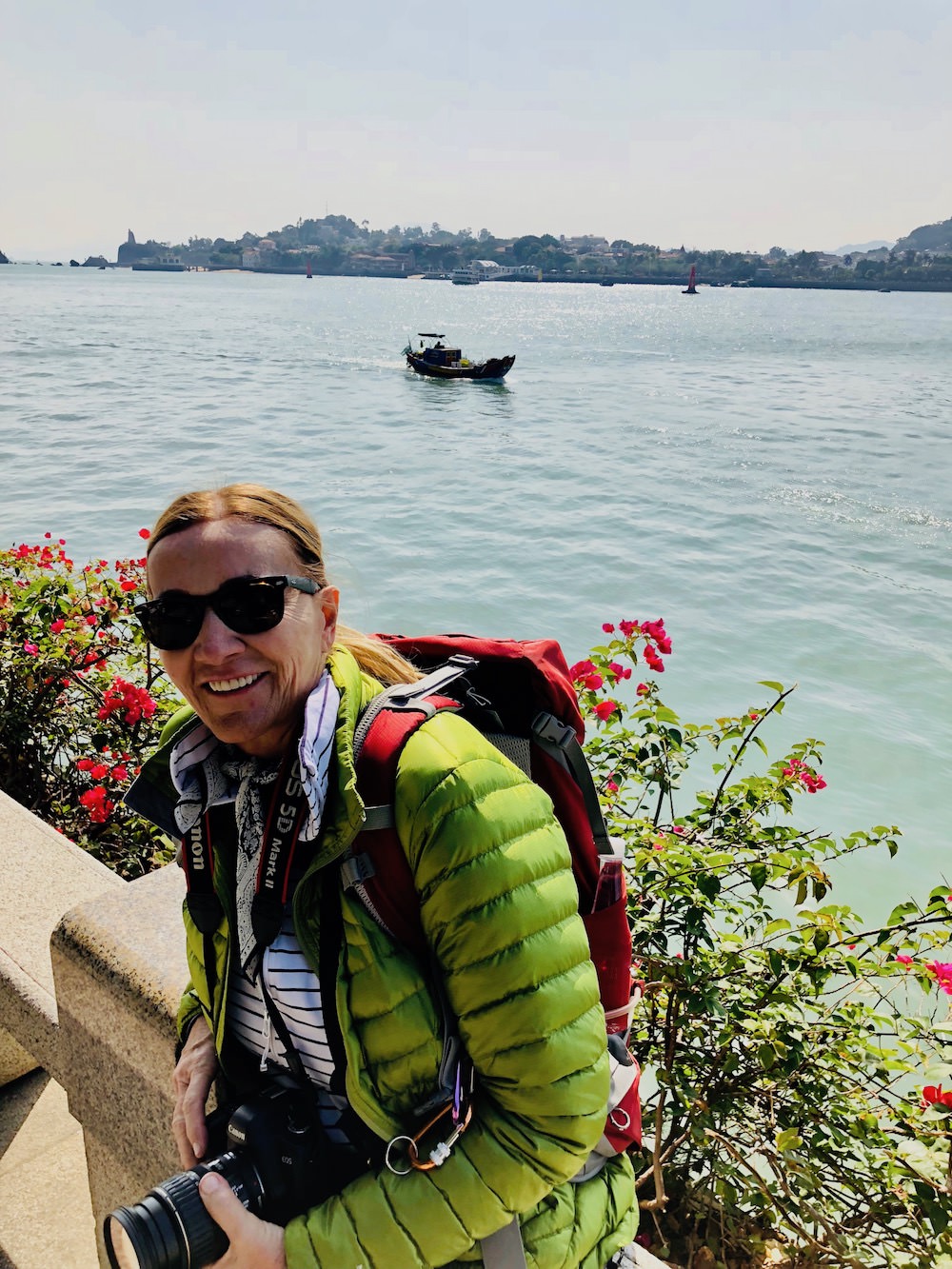
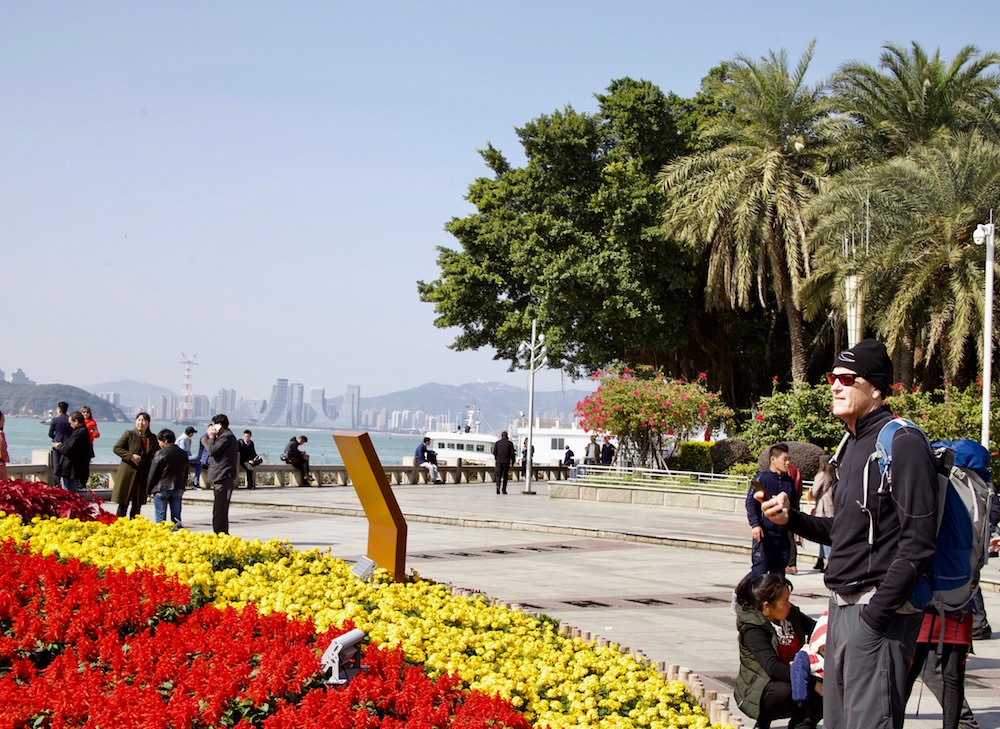
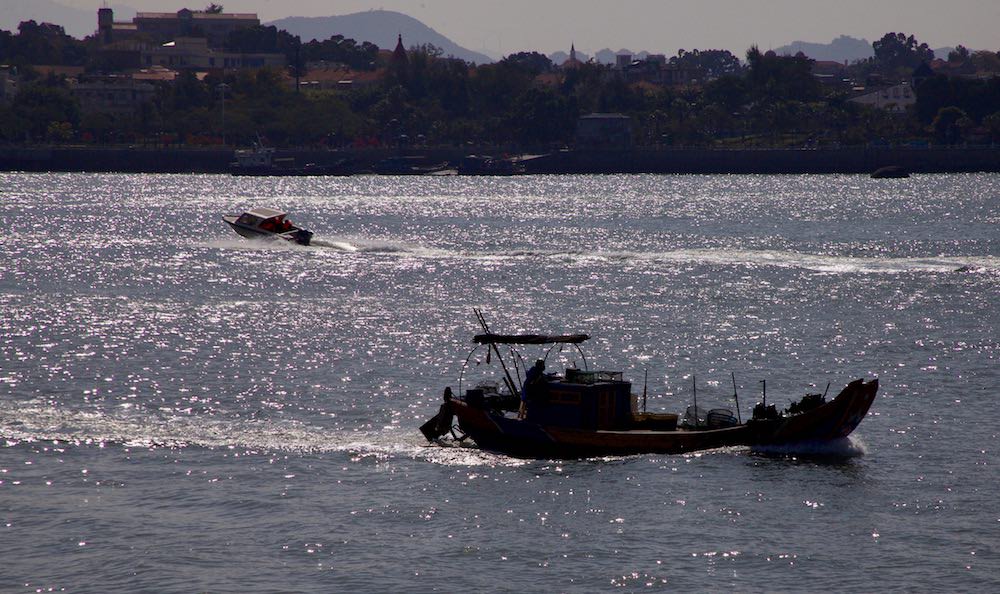
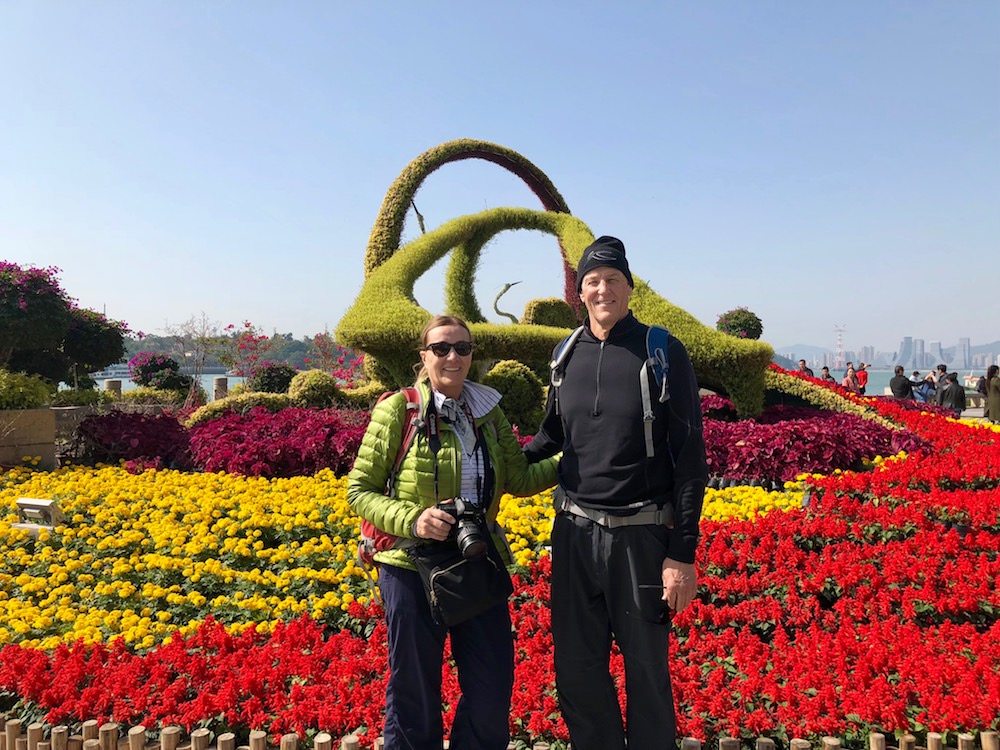
   There is a coastline park that is beautiful to walk along.  The island offshore actually belongs to Tiawan.  (It is quite far away), but the people of Xiamen often go there to shop.


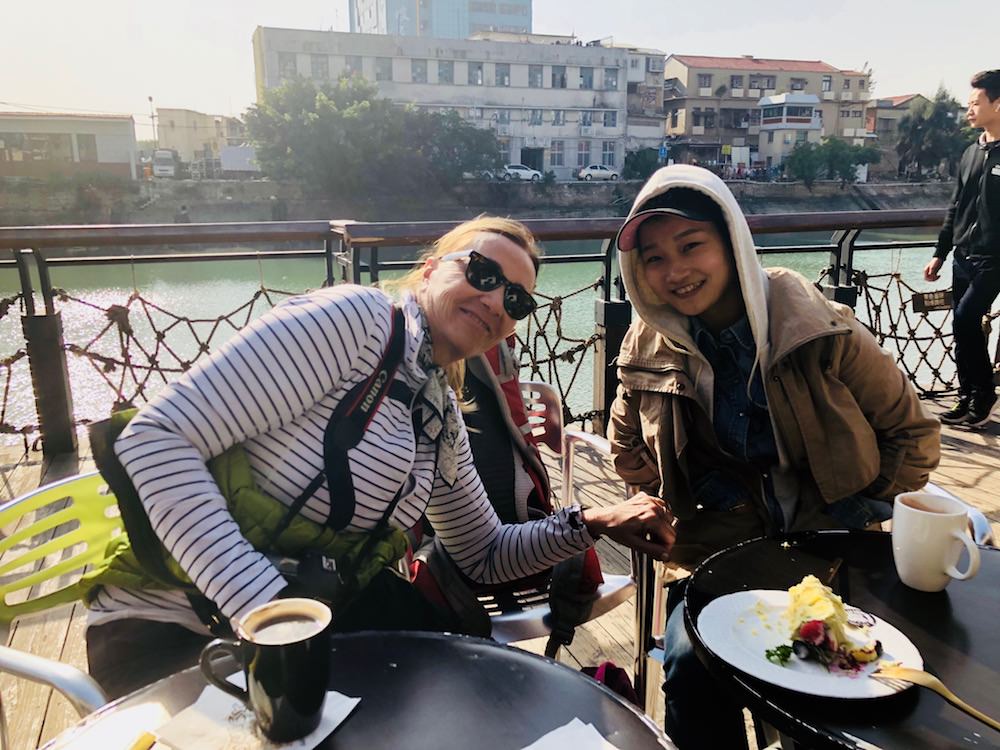
After a full day of walking around the city, we stopped for some refreshment.  Karen told us more about her family, country and city.  The younger generation are much different than her parents or grandparents.  They are more independent, want to choose their own mates, their jobs, and where they live.  There is a limit of 2 children allowed and the grandparents are taking care of these children when they retire, so that the parents can work.

We enjoyed our visit, and it broke up our flight journey across the world.


Bali, Indonesia – November 6-10, 2016

Bali

Bali has been inhabited from ancient times. The Dutch landed here in about 1600 and returned again in the mid 1800s and claimed Bali as part of the Dutch East Indies. The Japanese took control of the island in a naval battle with Dutch and American warships shortly after the Pearl Harbor attack on 1941. After World War II the Dutch wanted to retain ownership of Bali but the Balinese won independence in 1949.

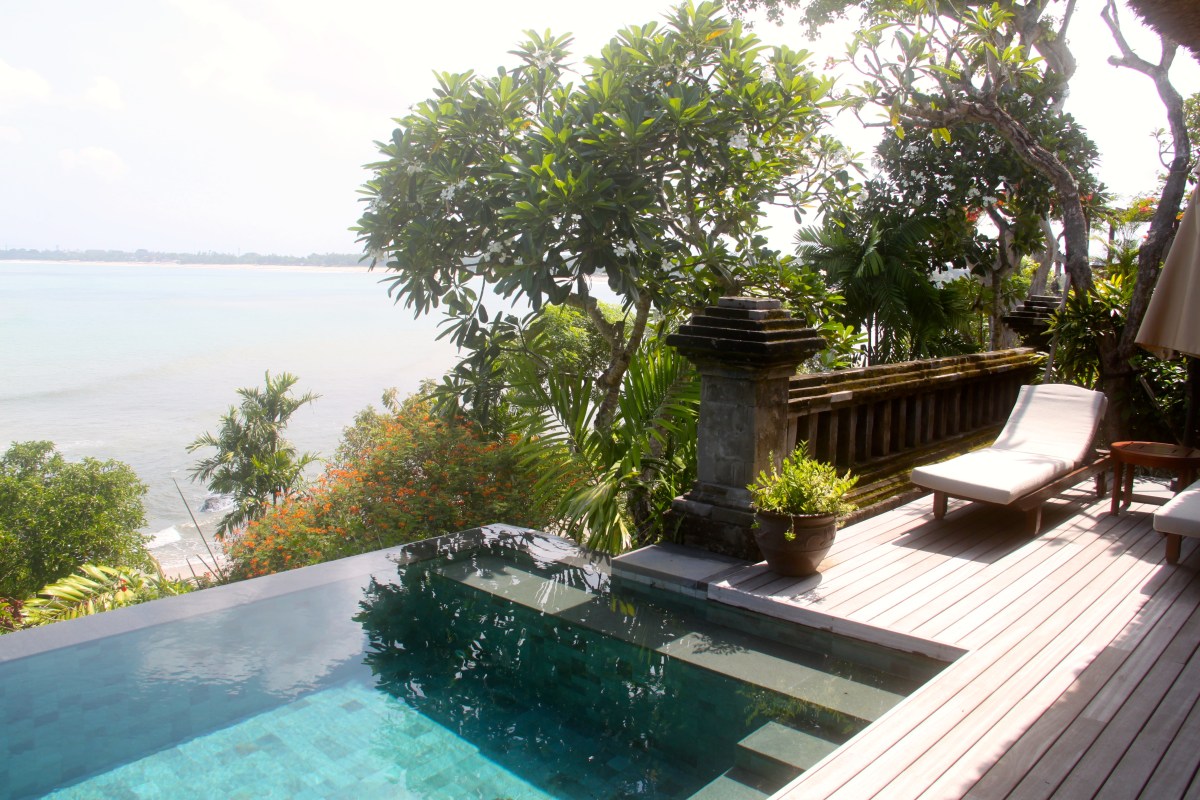
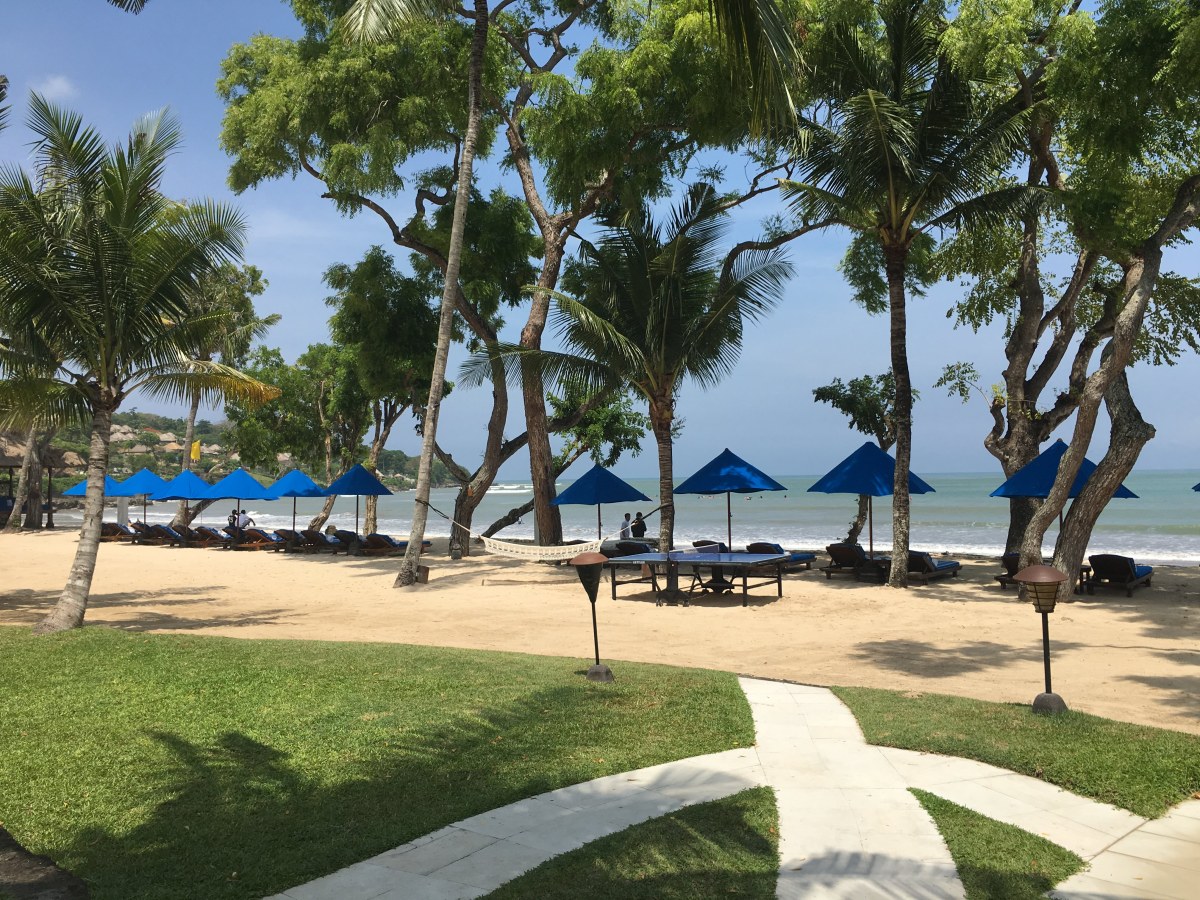
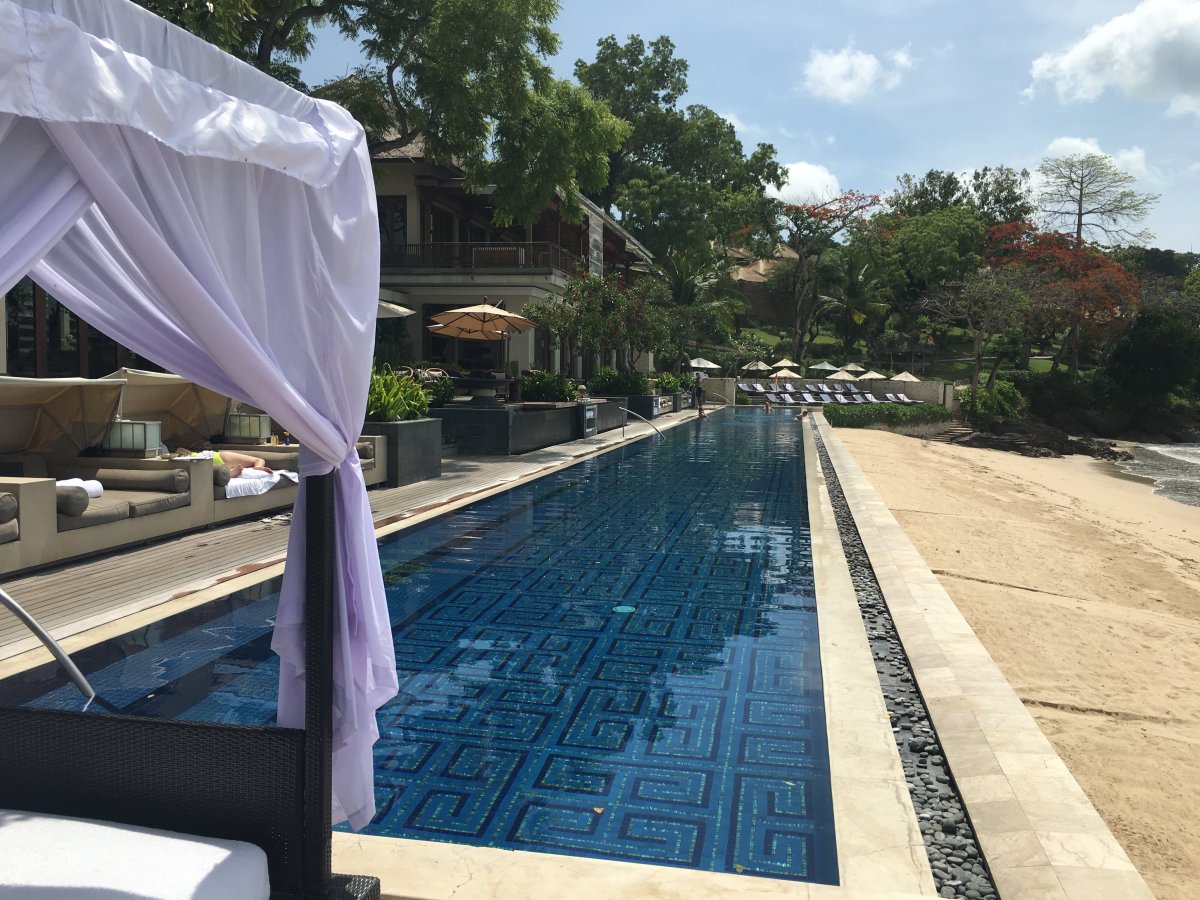
The flight from Yangon, Myanmar to Denpasar, Bali was 9 hours with a short layover in Singapore. We were picked up and driven 30 minutes to the Four Seasons Bali at Jimbaran Bay. This is a beautiful property on a beautiful beach.


img_9687
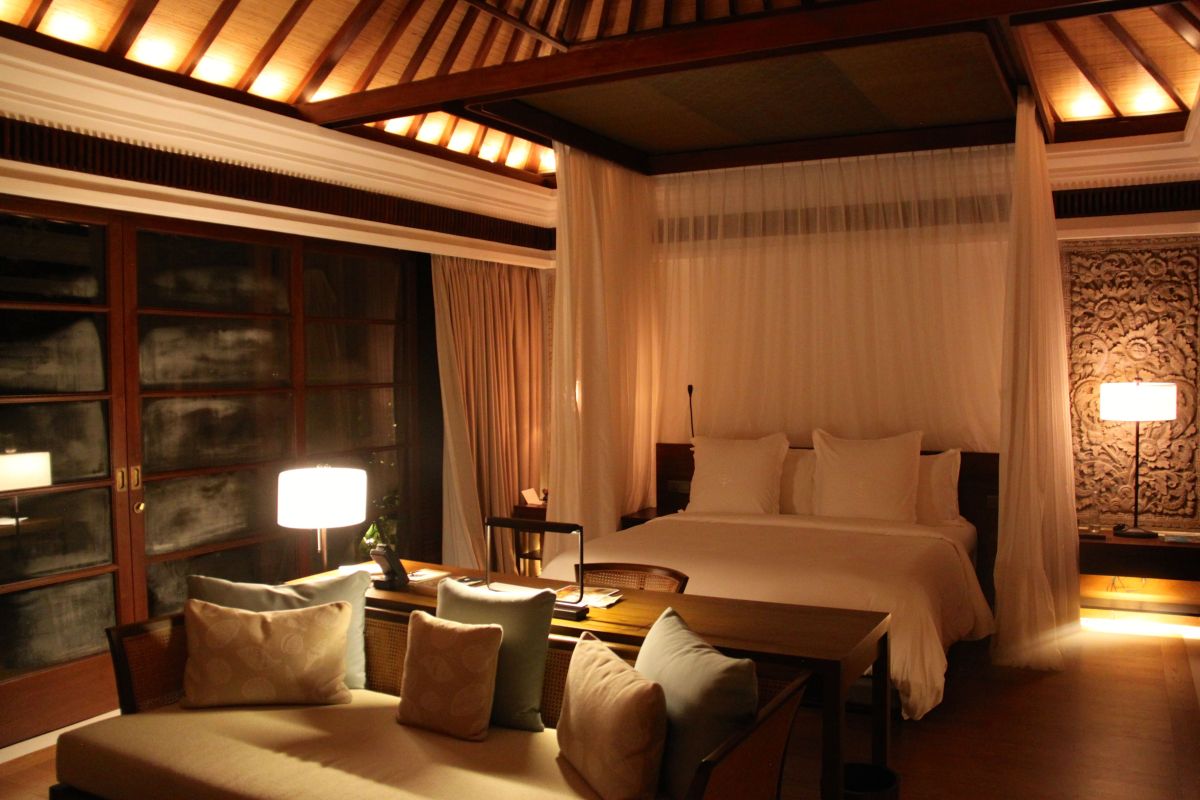
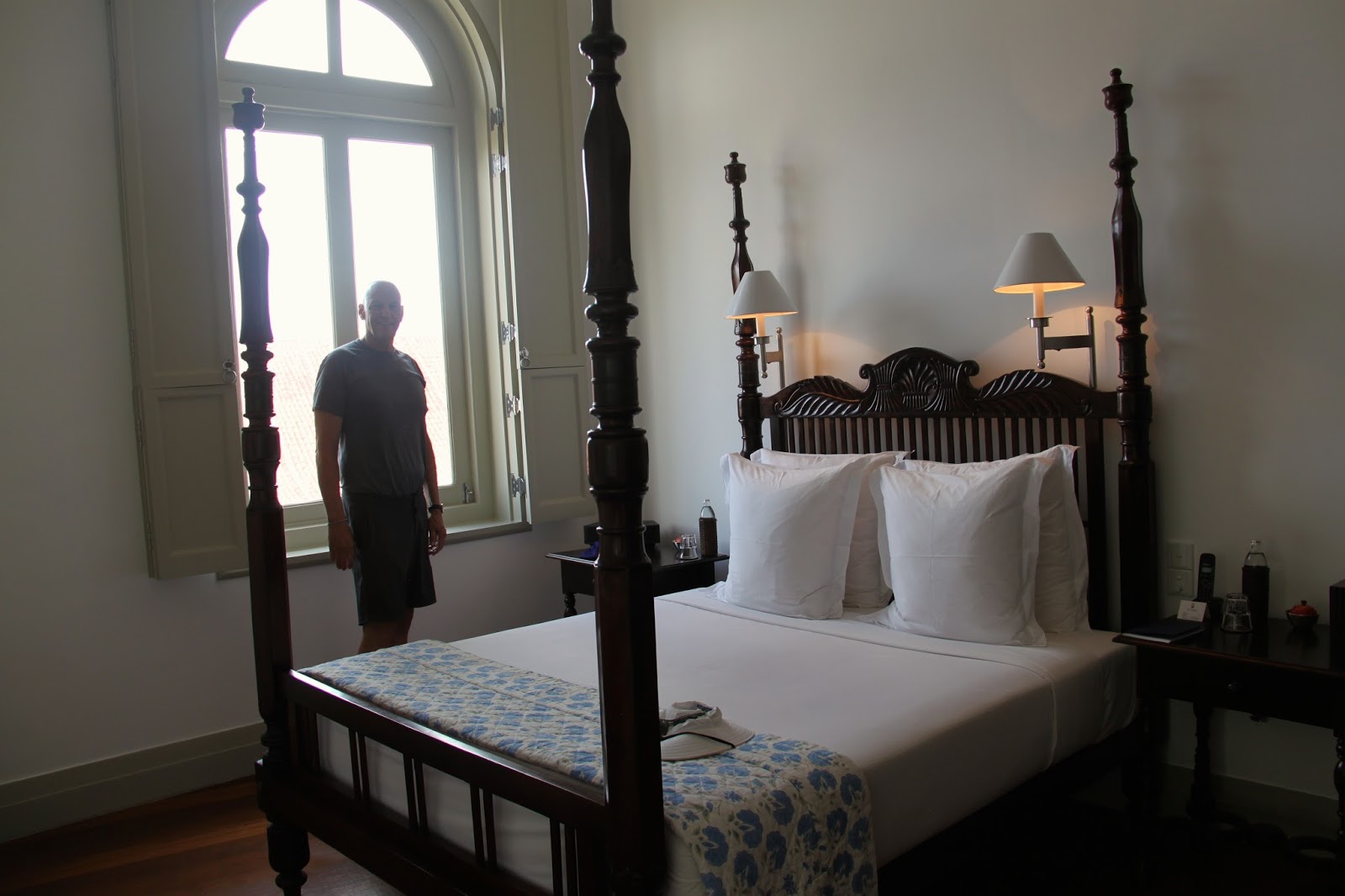
Our room
img_9694
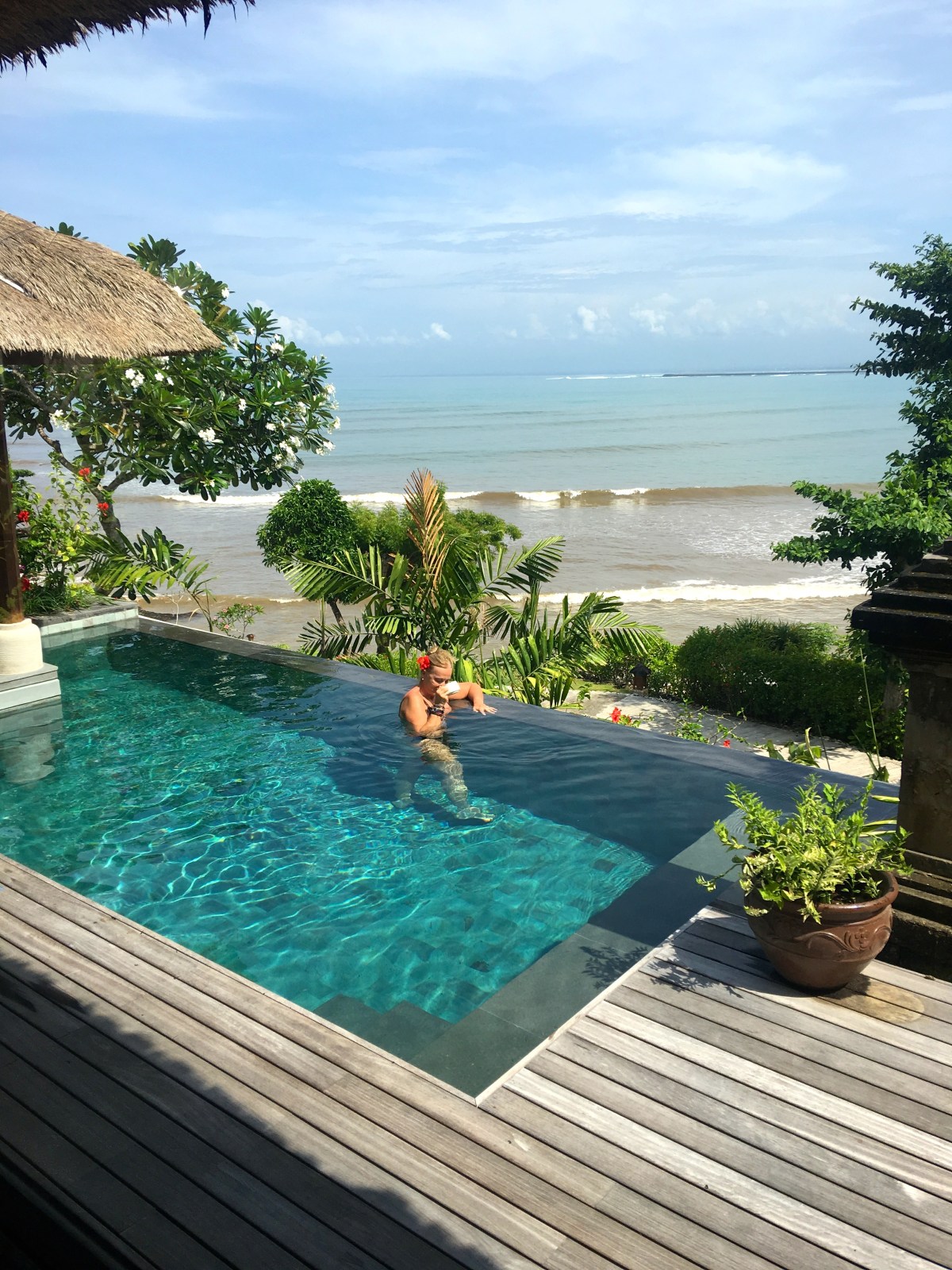
Our own pool
img_4214
Barb in our private pool
img_9806
Pool by the beach
img_9762
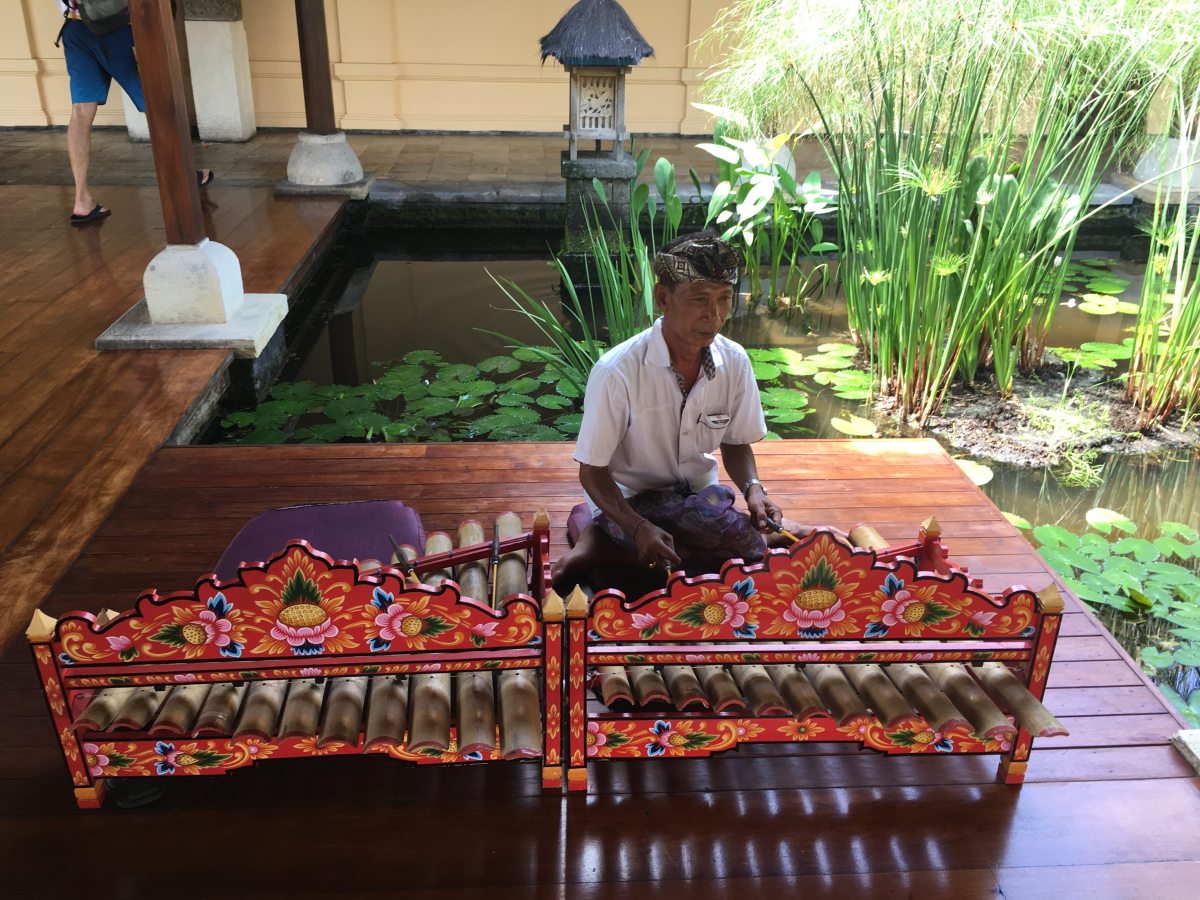
Playing Indonesian music by the breakfast buffet

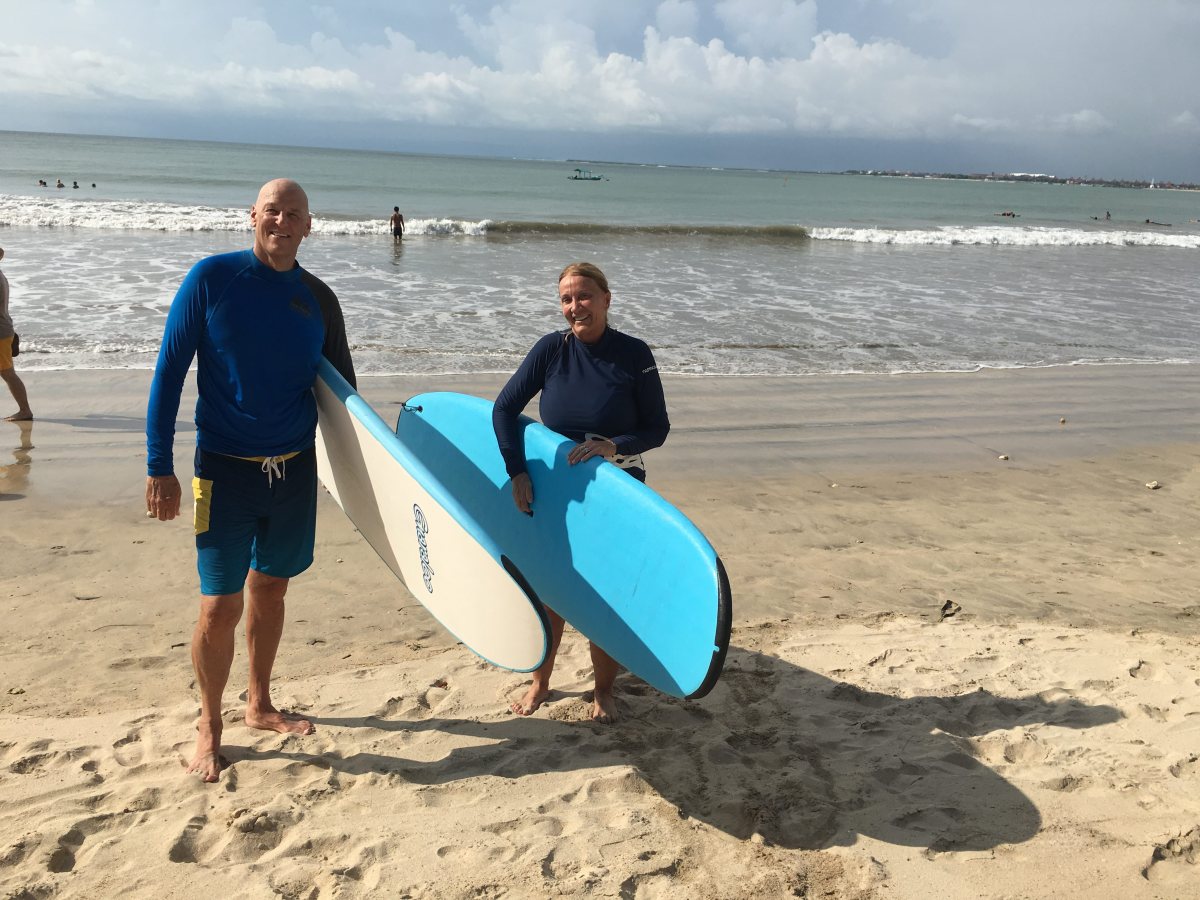
This area of Bali is known for excellent surfing. They have gentle waves for beginners and larger waves that break offshore for expert surfers. We summoned up our courage and took a surfing lesson in the gentle waves and were surprised that we were each able to get up and surf a few waves all the way to the beach. We crashed and burned a lot trying to pop up and balance on the waves but it was fun to try and learn a new sport at age 63. Our instructor was from Australia and a former professional surfer and he said he had never taught 63 year olds to surf before.

img_9815
We learned how to surf at age 63. We both got up about 3 times and rode the wave to shore!
img_9788
Scott waving from the waves
img_9767
At the Four Seasons Beach
img_9768
Scott

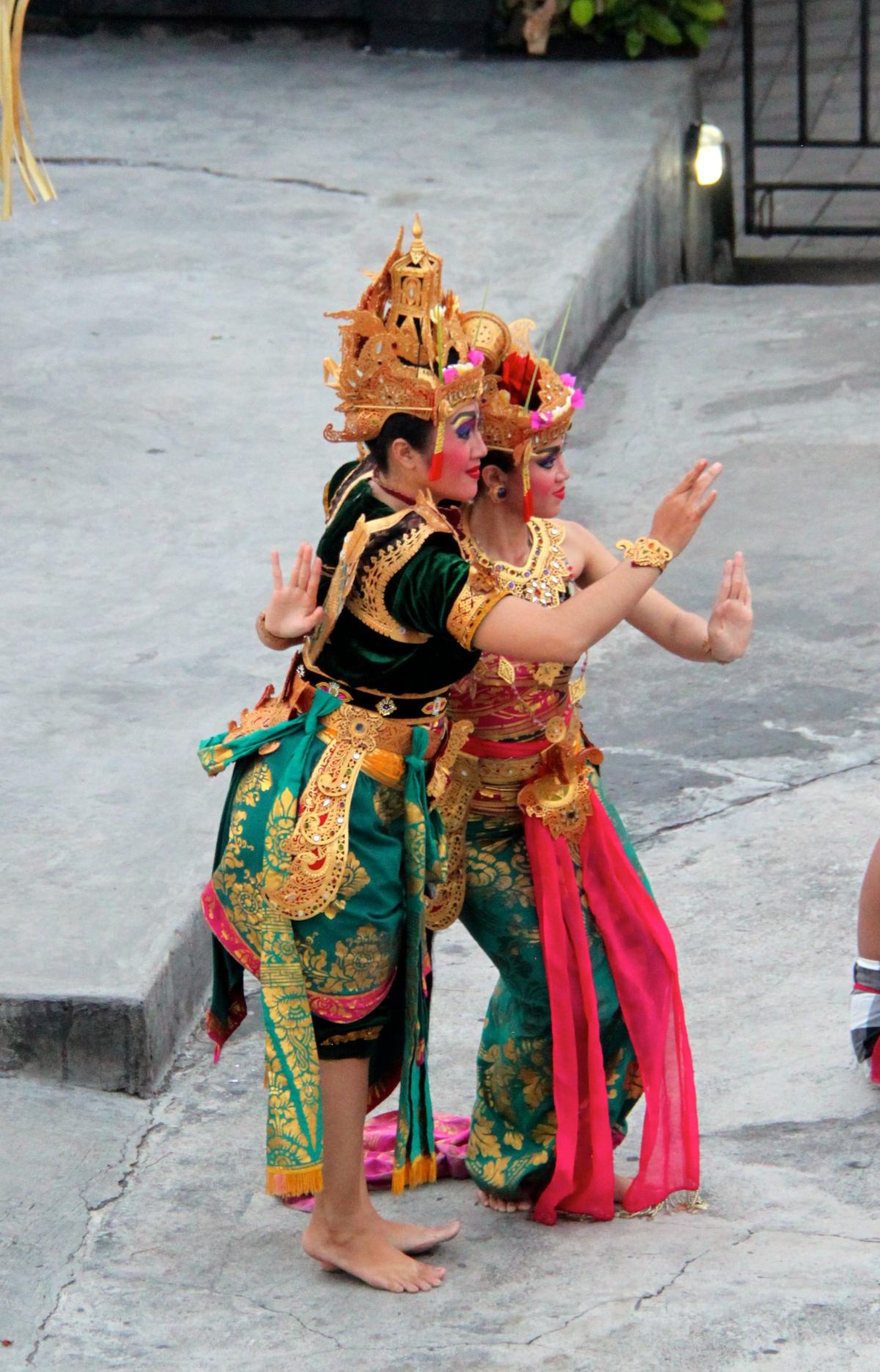
Bali is 90% Hindu but they practice a different version than is found in India. The Balinese layered the Hindu religion onto their own ancient customs with its art and dancing and temple celebrations.

img_9730
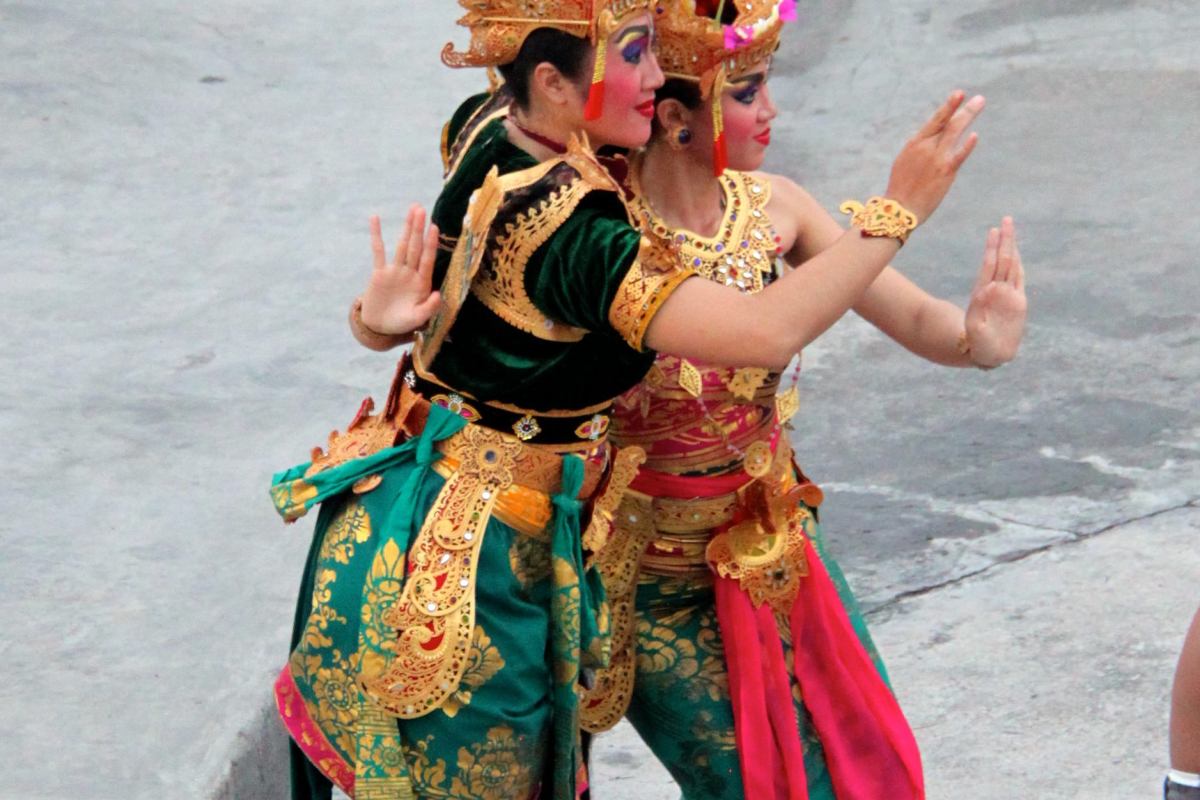
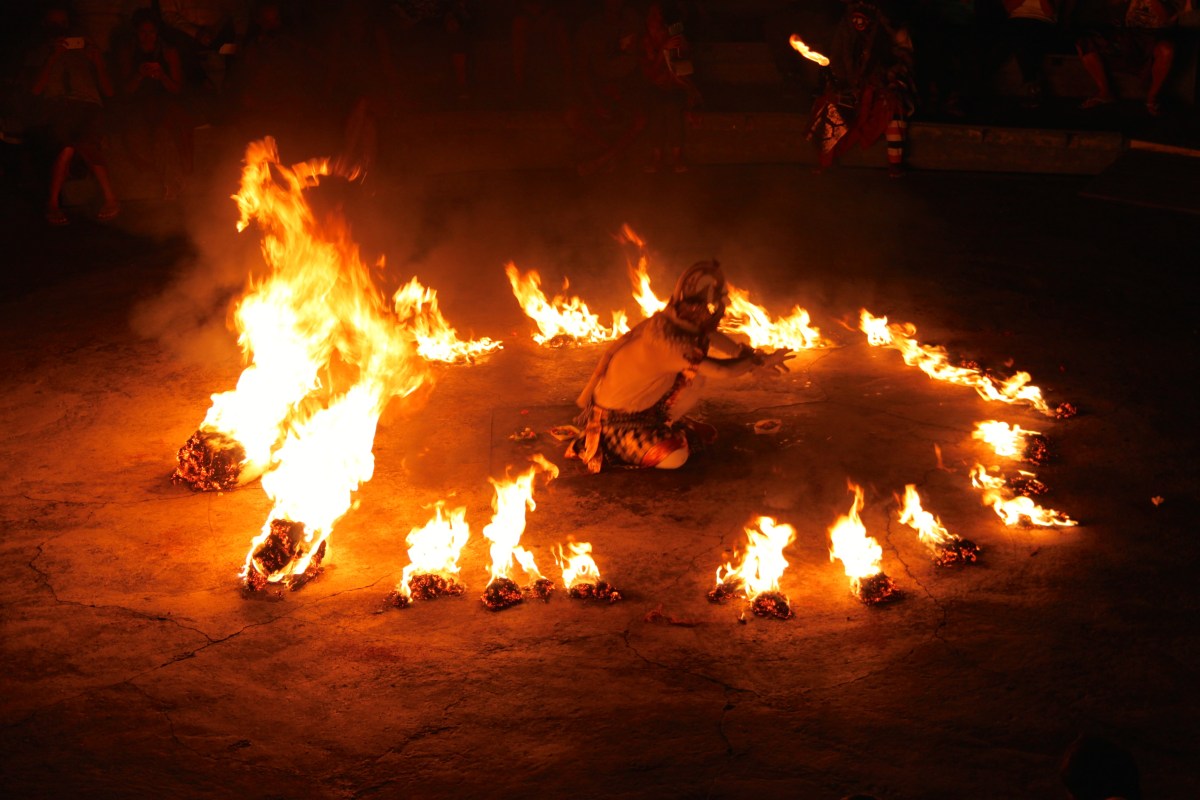
Part of the dance. The girl is finally saved by the monkey god
img_9719
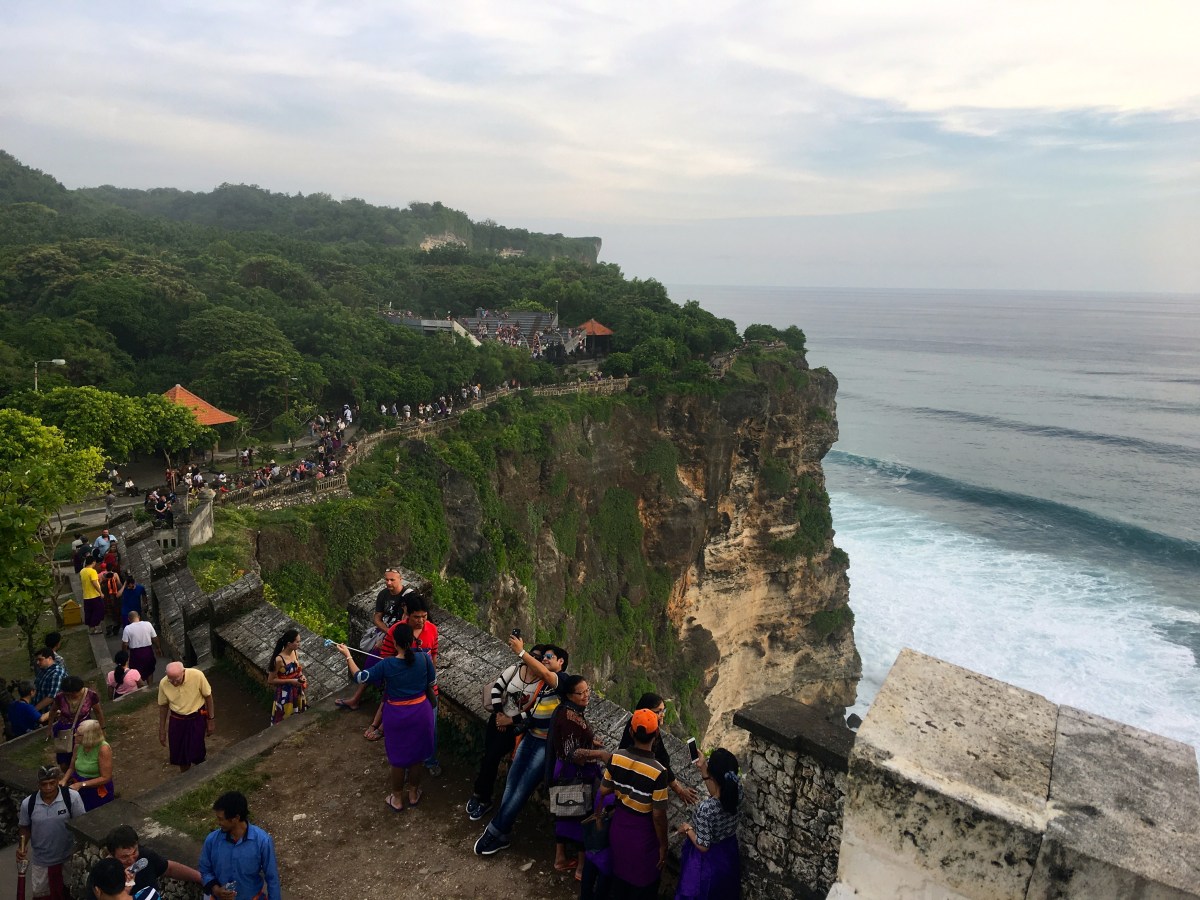
Monkey Temple located on a cliff with a beautiful ocean below

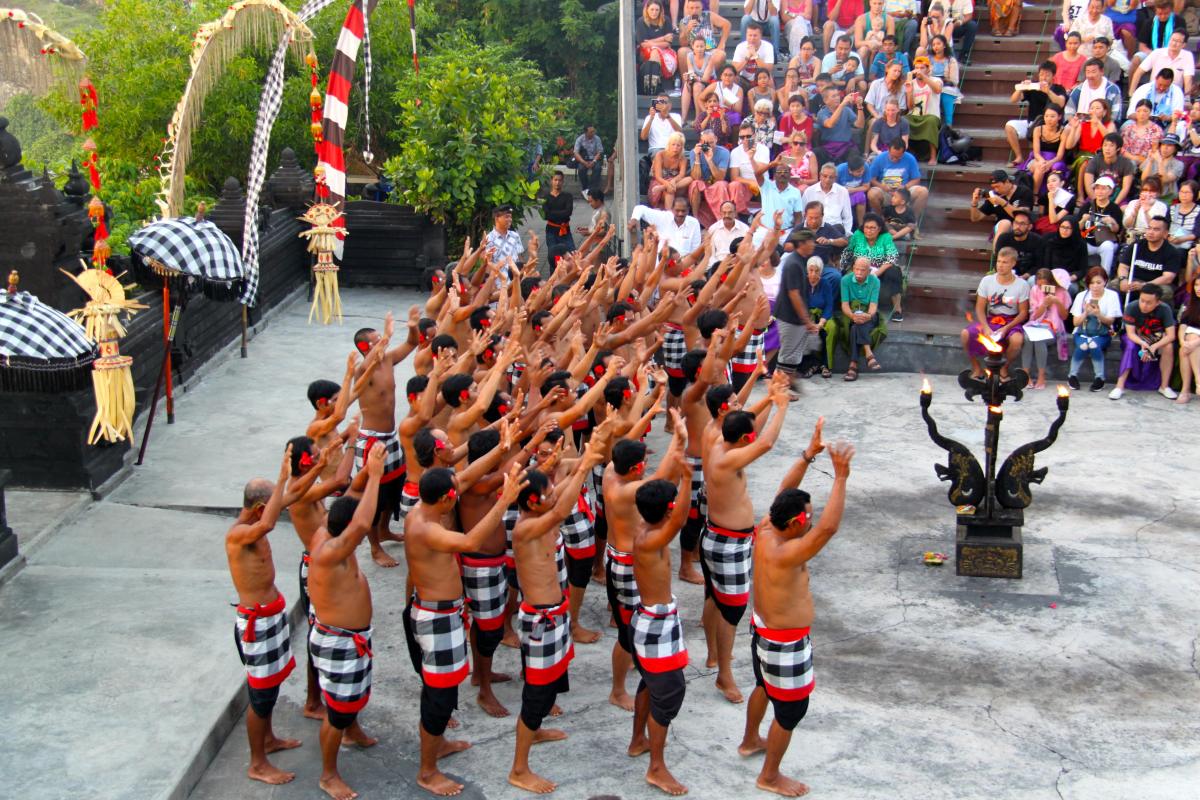
We visited a Temple known for its monkeys and saw a traditional play enacted by dancers and musicians and accompanied by a chorus of 70 men. The dancing was precise and jerky and the music was a mix between chanting and crashing noise.

img_9726
Balanise type of dance with lots of chanting
img_9742
The end of the dance
img_9711
Monkey Temple
img_4174
Barb at the Monkey Temple
img_4195
Locals coming to the temple

We visited a factory where rattan is harvested and weaved into purses and other fun things. Barb bought so many purses that we had to buy another suitcase to get them back home.

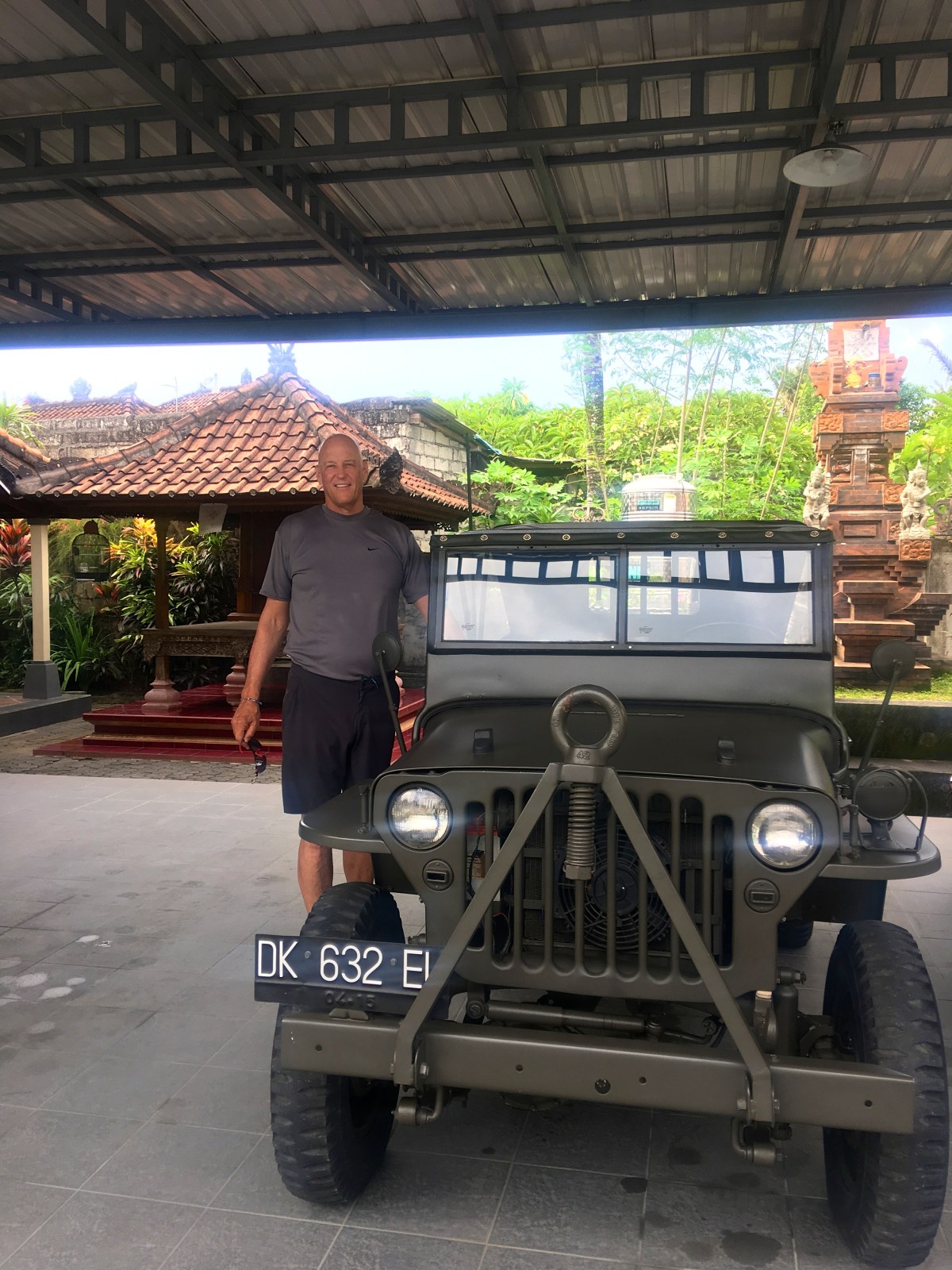
There was an American made World War II jeep at the rattan factory that must have been abandoned by the US Military after World War II.

img_4231
Scott with a jeep from WW2

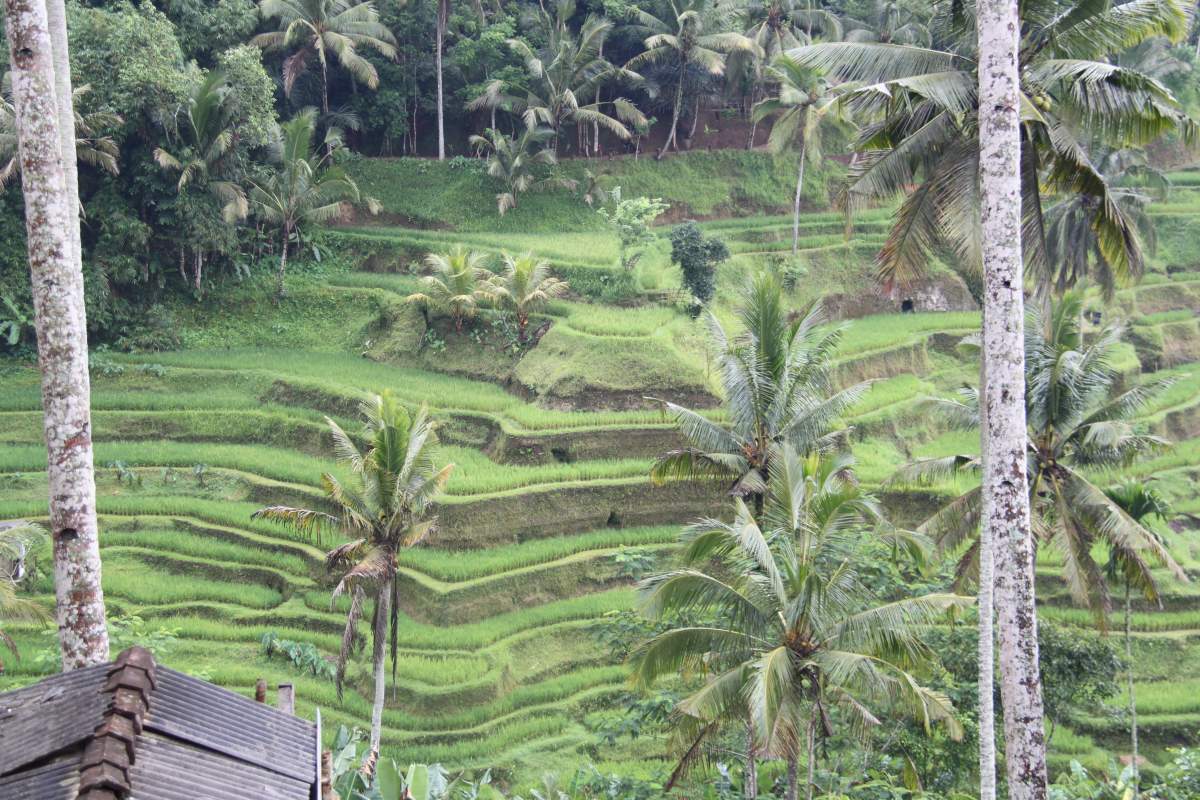
We traveled a couple of hours north in a hotel car to the town of Ubud. Ubud is surrounded by beautiful rice fields, jungles and ravines terraced with rice. This is a very beautiful area and has become a destination for yoga enthusiasts.

img_9769
Terraced rice farming
img_9763
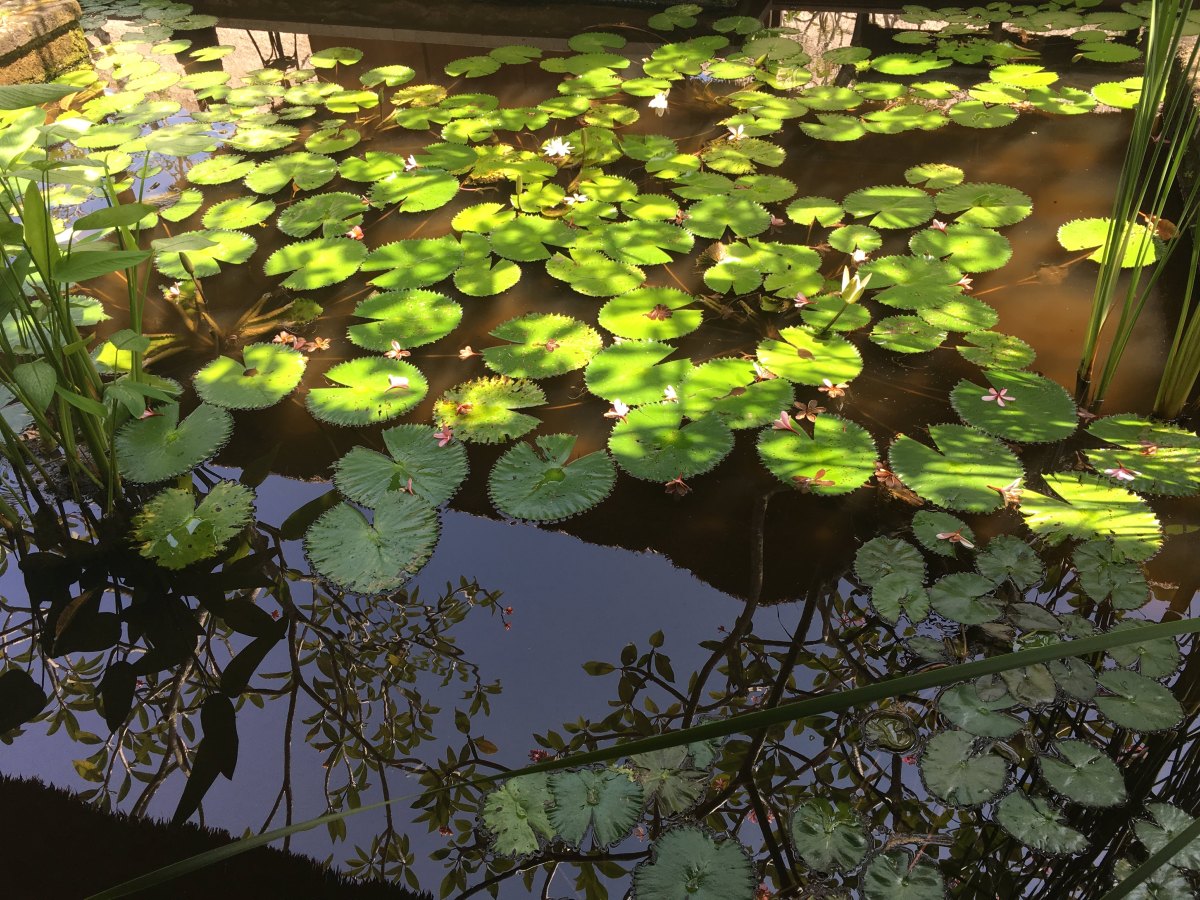
Lily pads
img_4260
Step rice farming

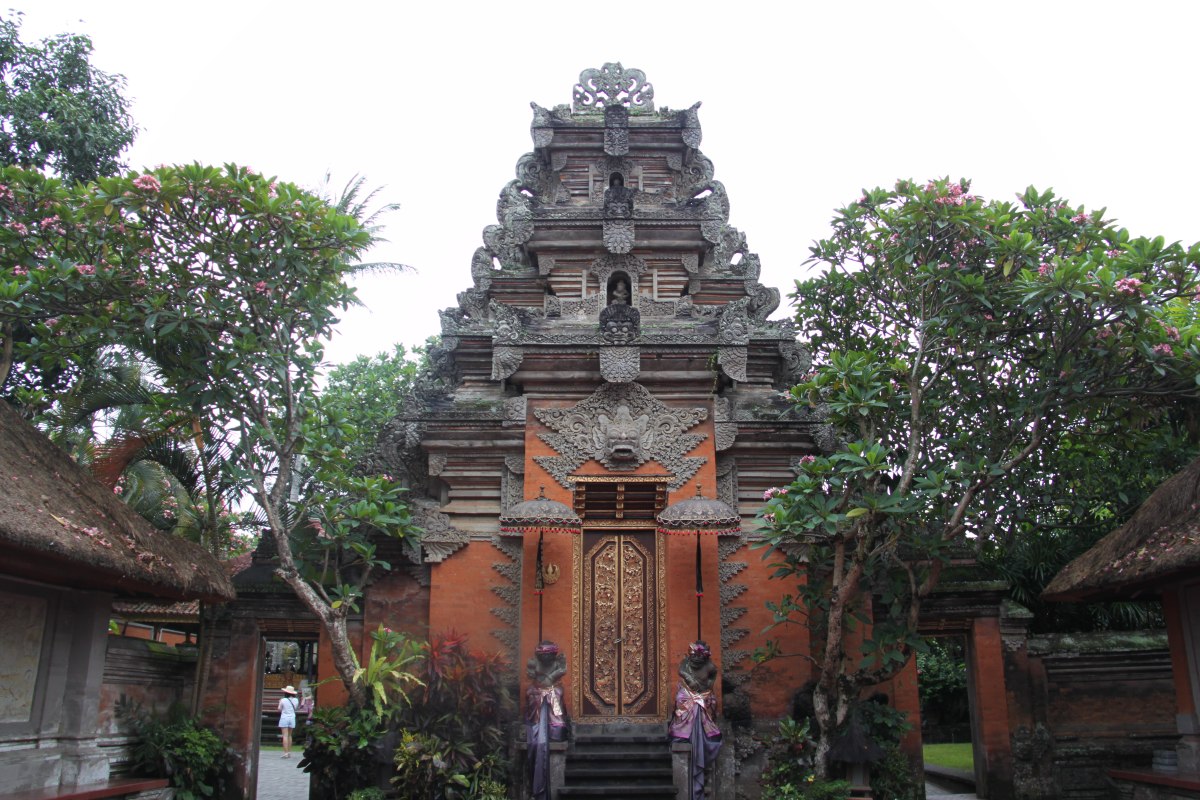
The Ubud Palace is fun to wander in and around and is located in the center of Ubud.

img_9798

img_9759
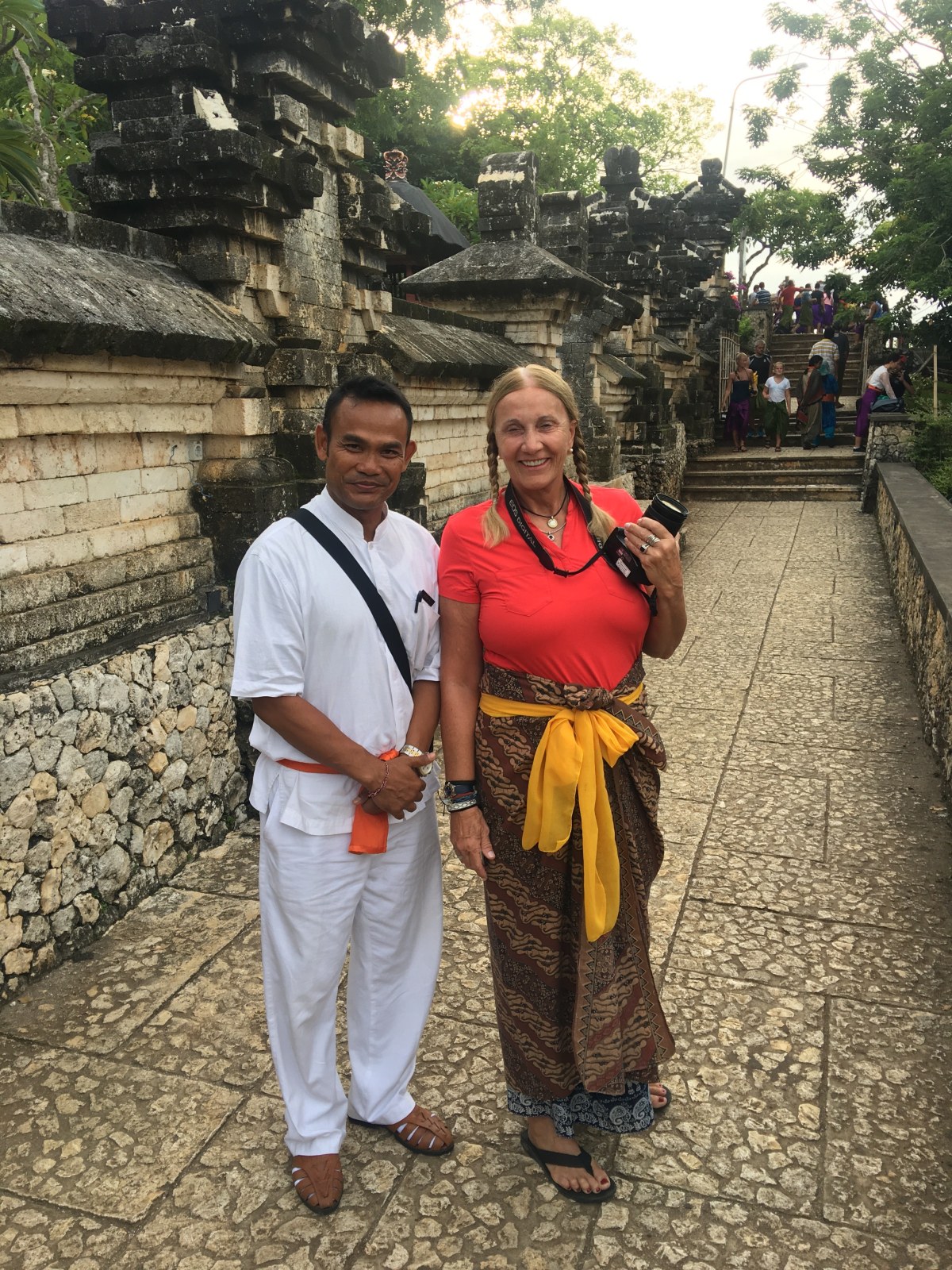
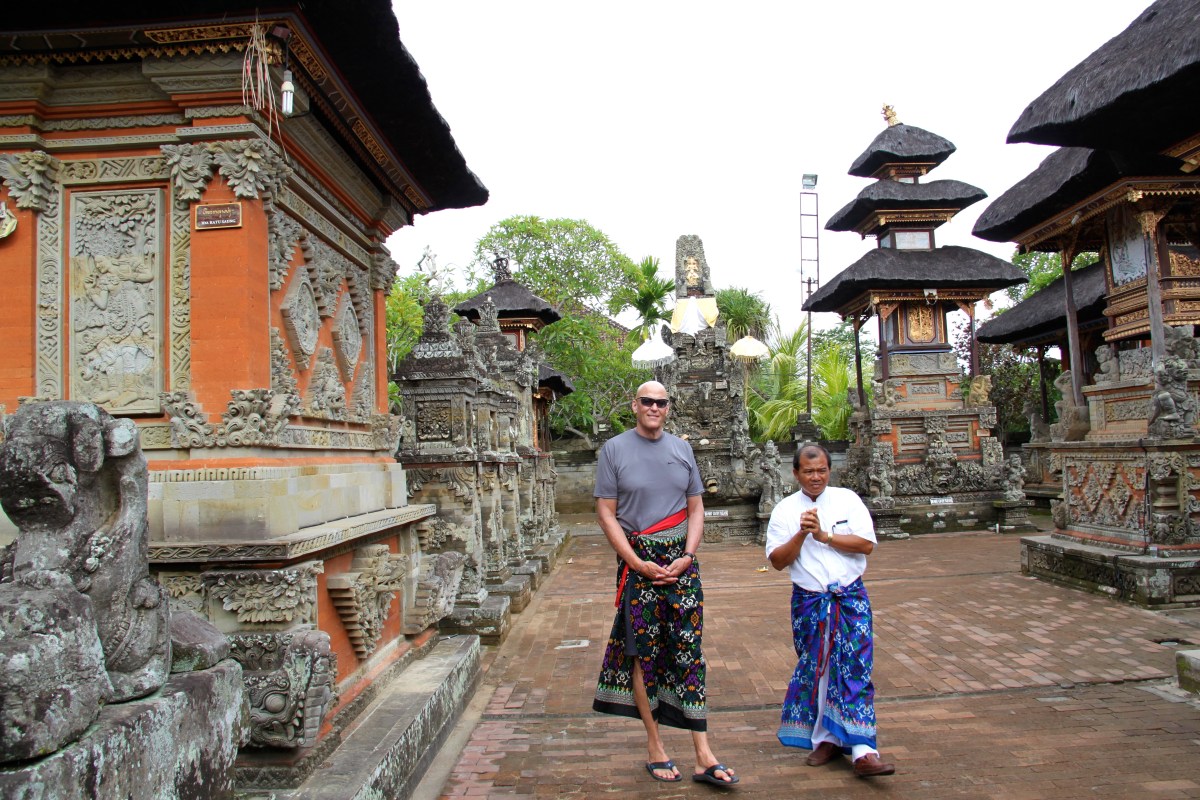
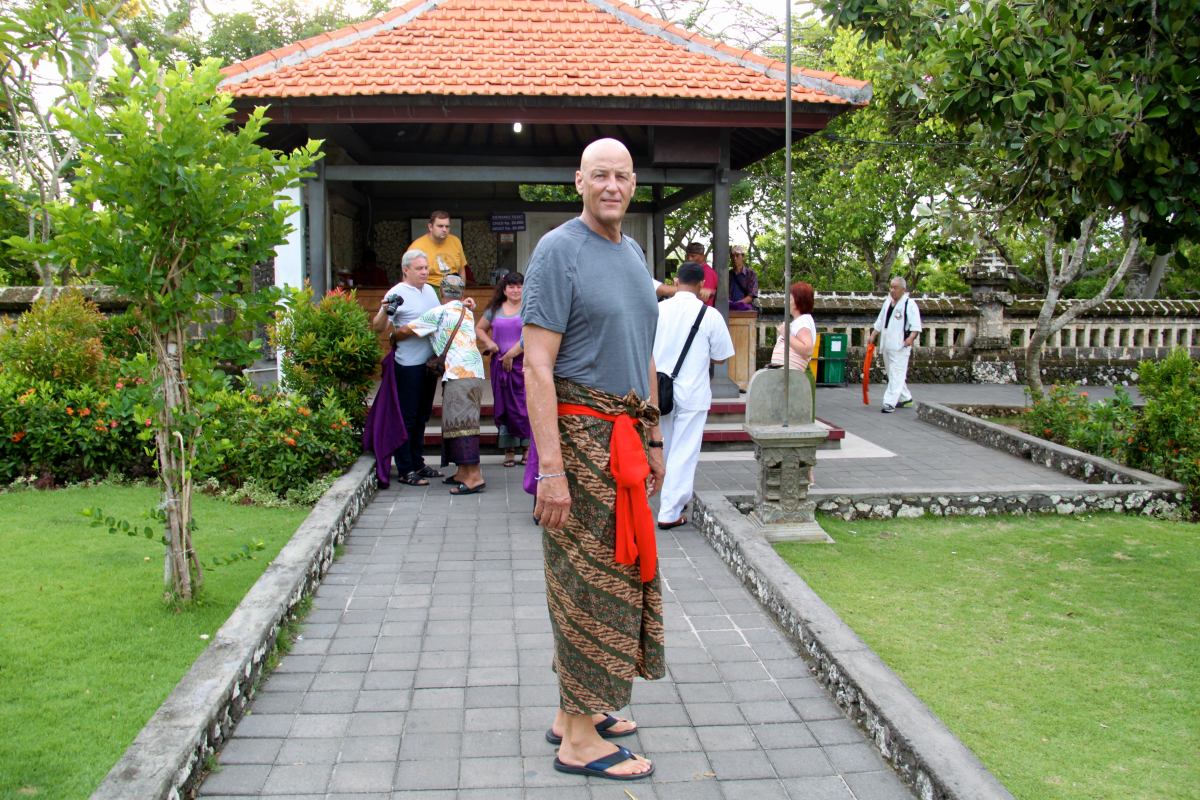
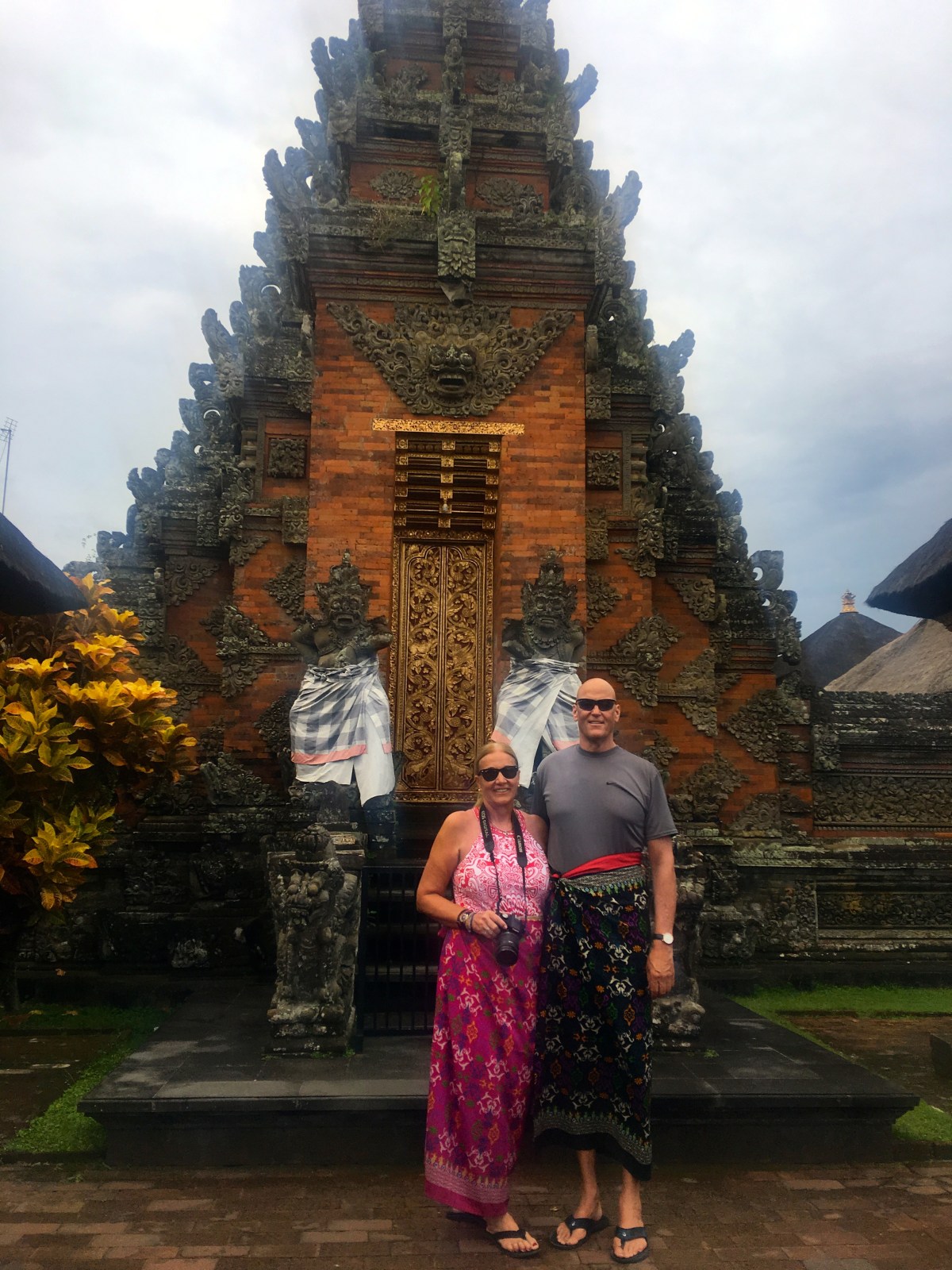
You must wear a sarong when you go to the temples

img_9761img_9744

img_9695
Going to the Monkey temple
img_4255
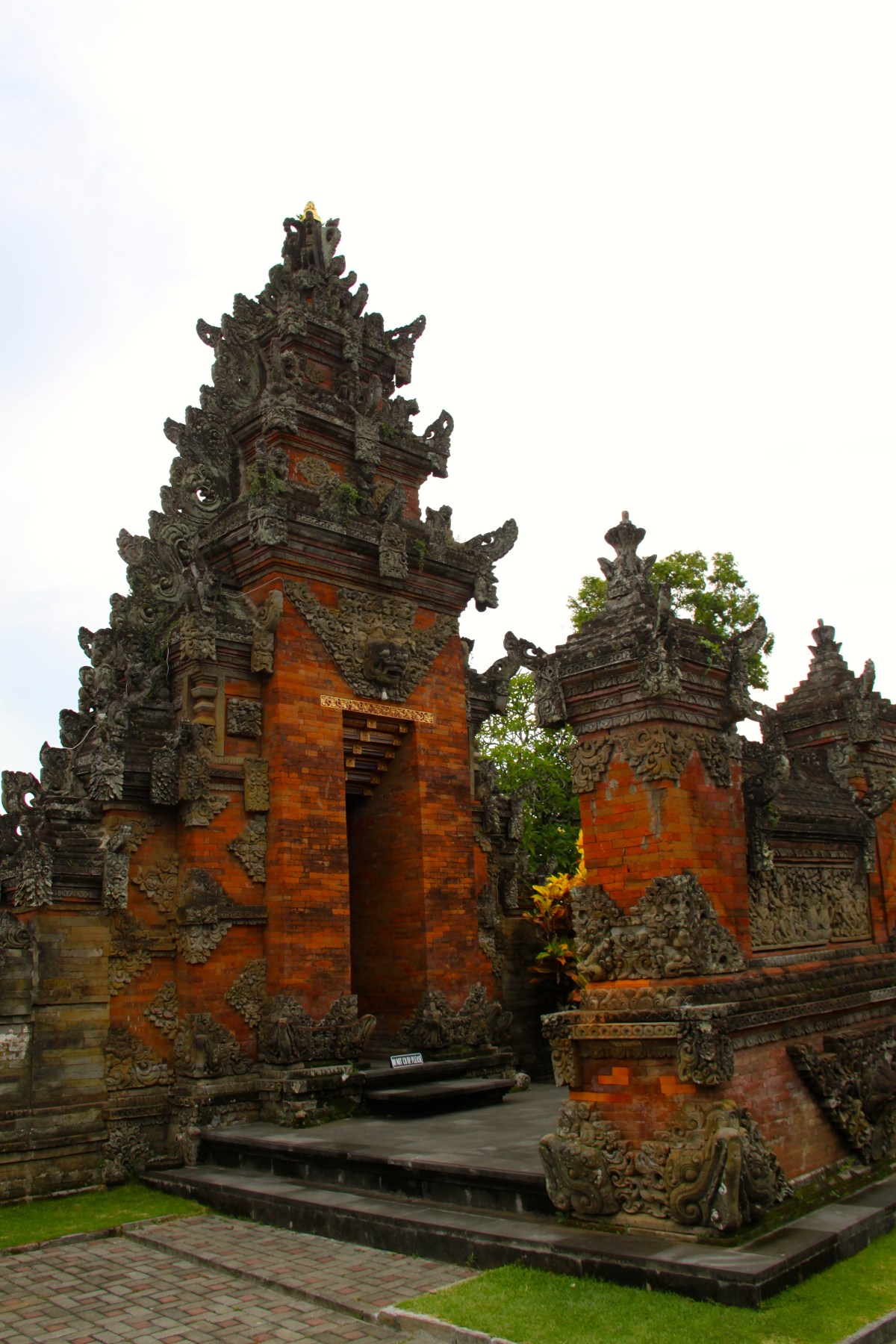
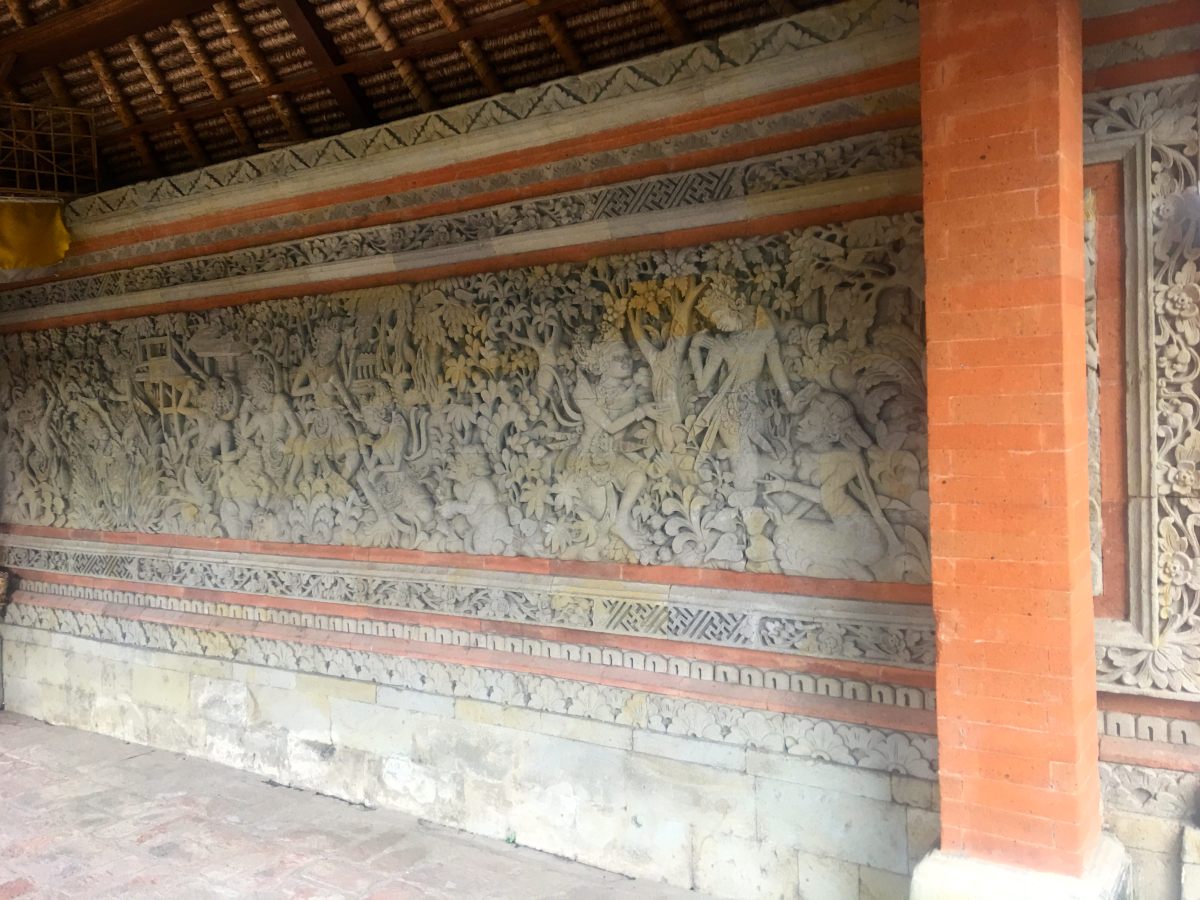
Beautiful Carvings

img_4243

After a night in Hong Kong, it is time to fly home. We flew through too many time zones to count. I think we flew through 15 time zones. We departed Hong Kong on November 11 at 1 in the afternoon and arrived the same day at LAX at 9:30 in the morning of the same day! The jet lag is going to be brutal.

Sri Lanka – October 20-27, 2016


Amanwella

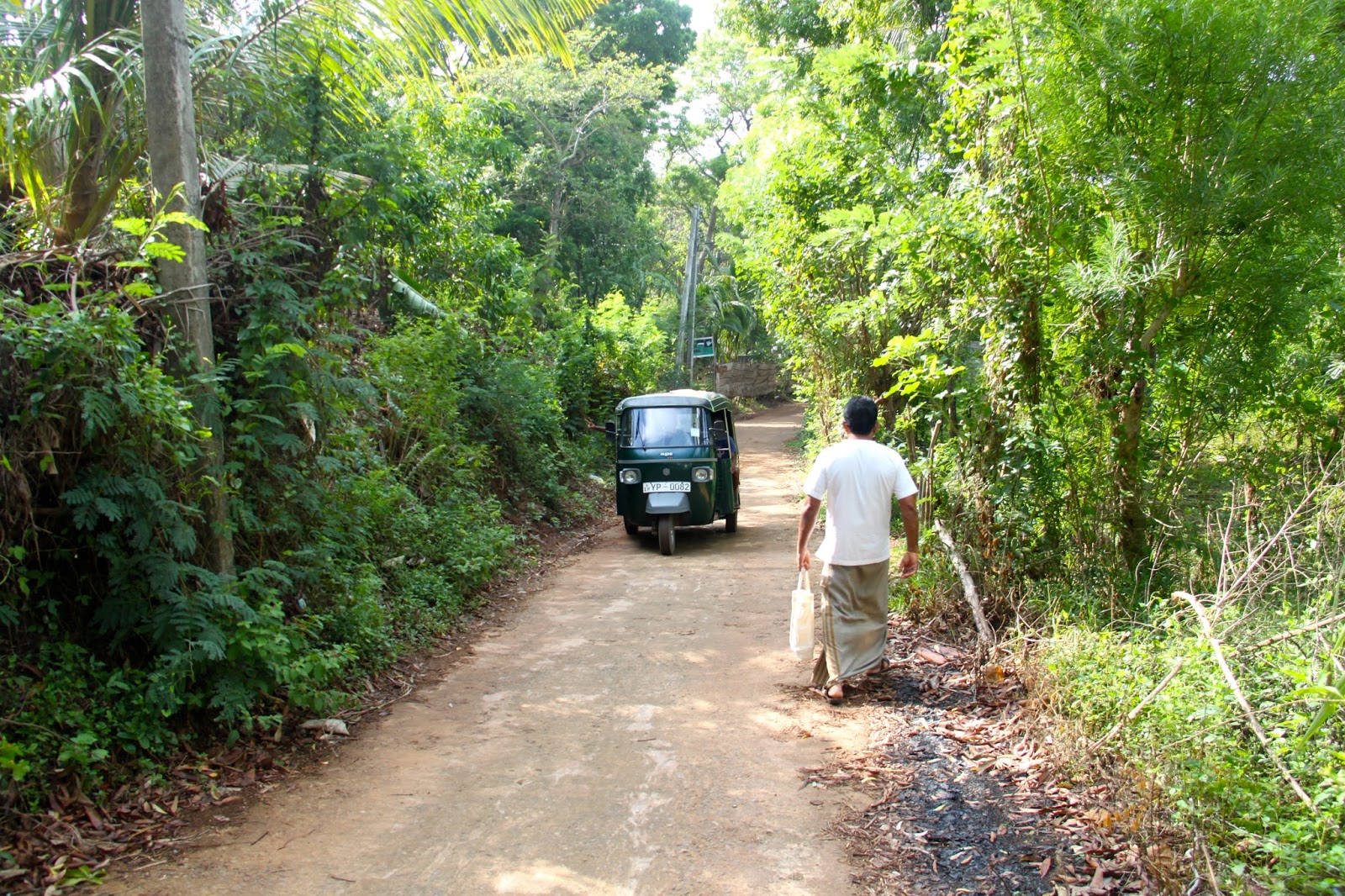
From the Seychelles Inlands it is a 4-hour direct flight to Sri Lanka.  We were picked up by Aman Hotels and driven to Amanwella on the South Coast of the Island.  It was a 3-hour drive.  It took us an hour to drive the first 15 kilometers through narrow streets filled with bikes, Tuk Tuks, pedestrians, cars and dogs.  After we reached the Southern Express Toll Road our driver was able to drive over 100 kilometers per hour.


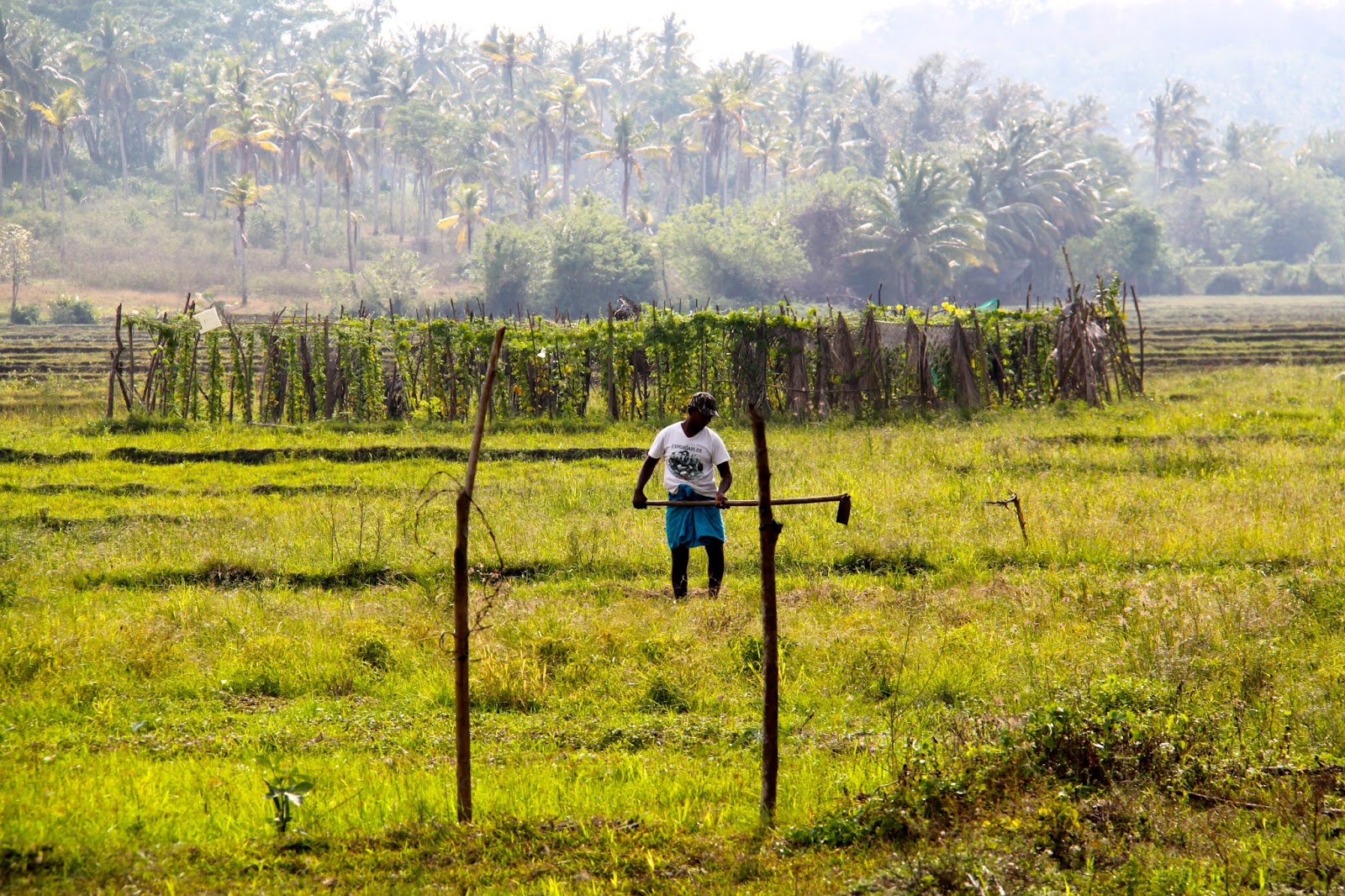
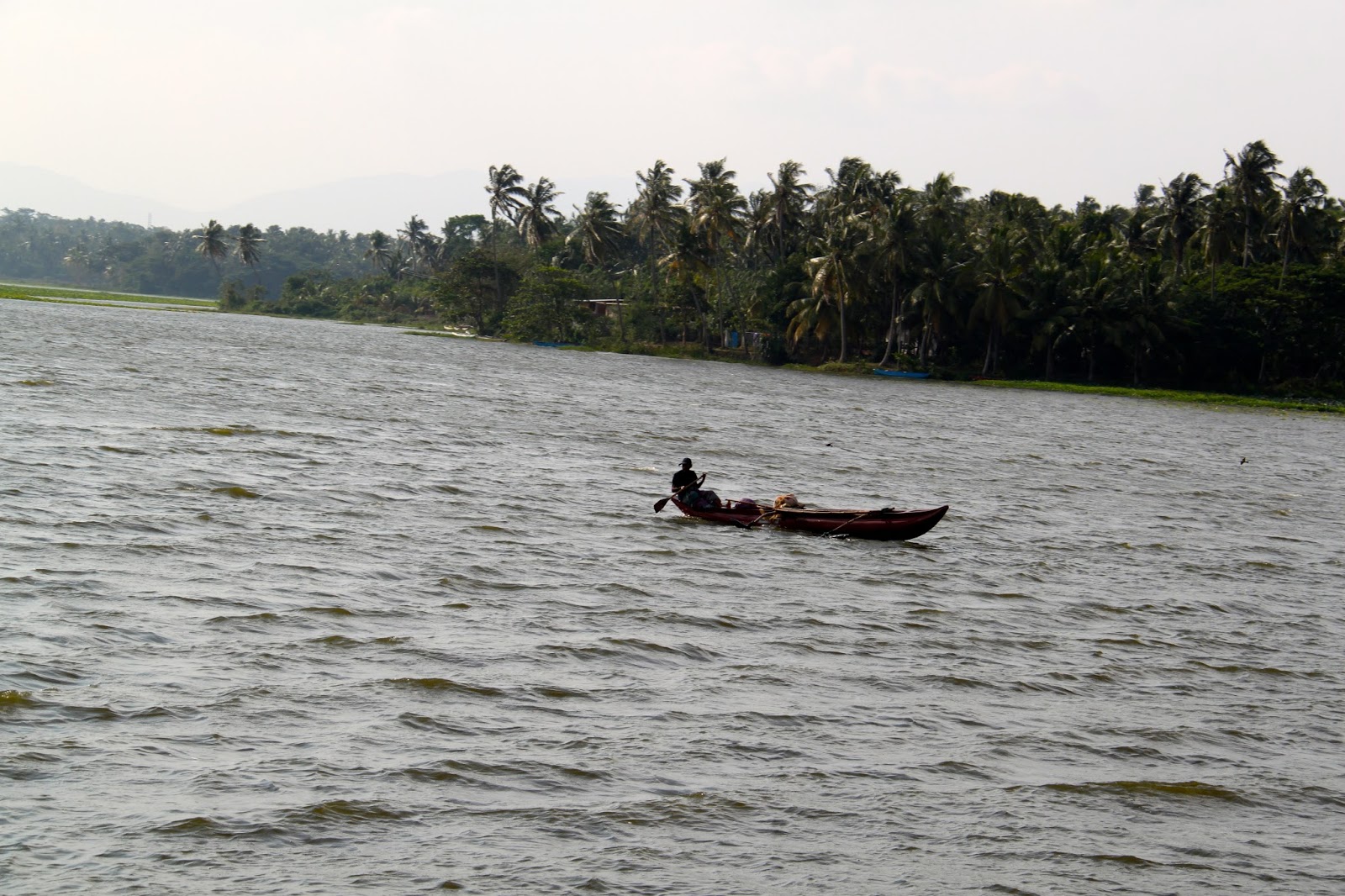
Typical pastoral scene


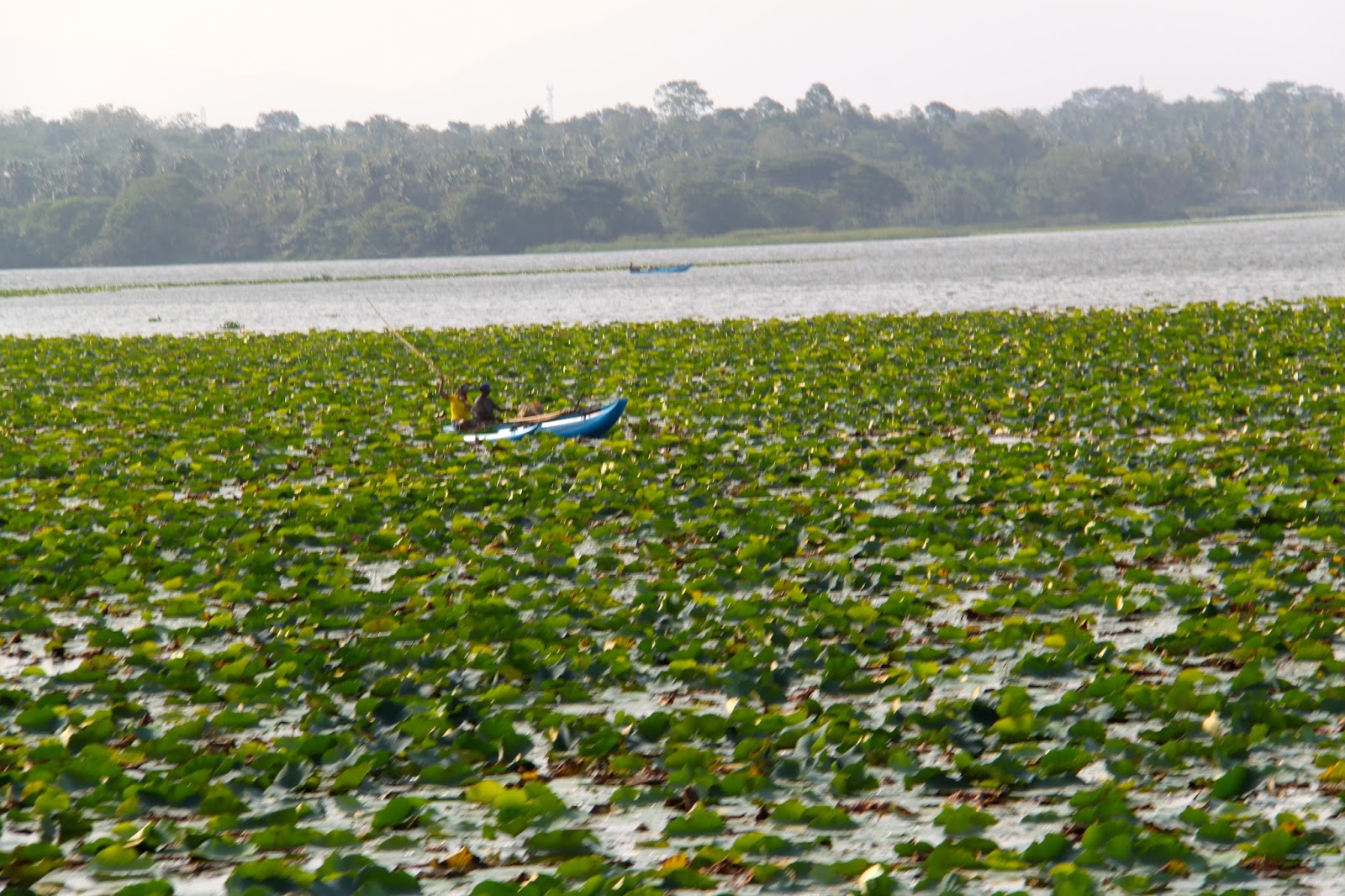
Fishing in the rice paddies


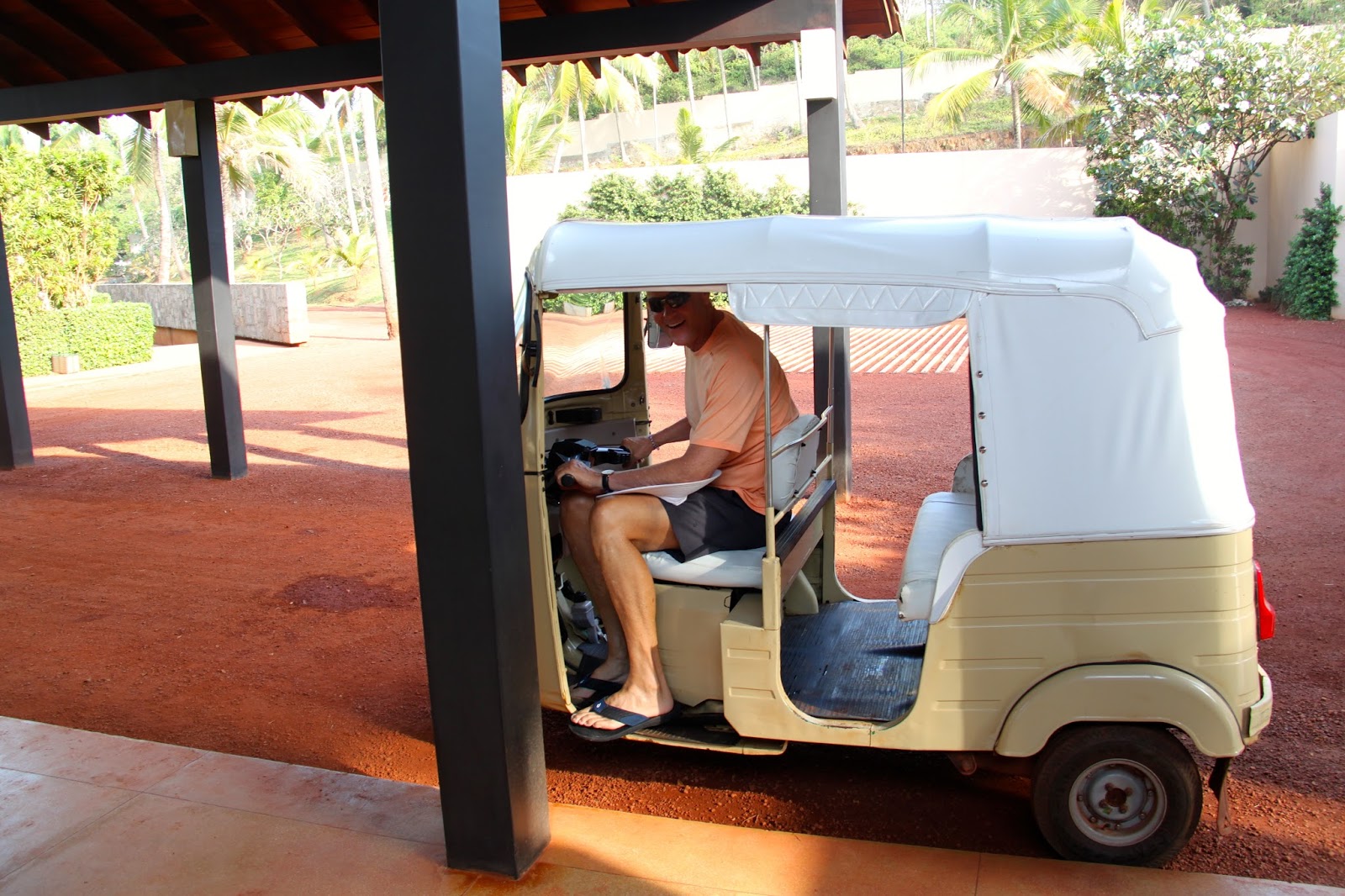
Scott doesn’t quite fit in a tuk tuk


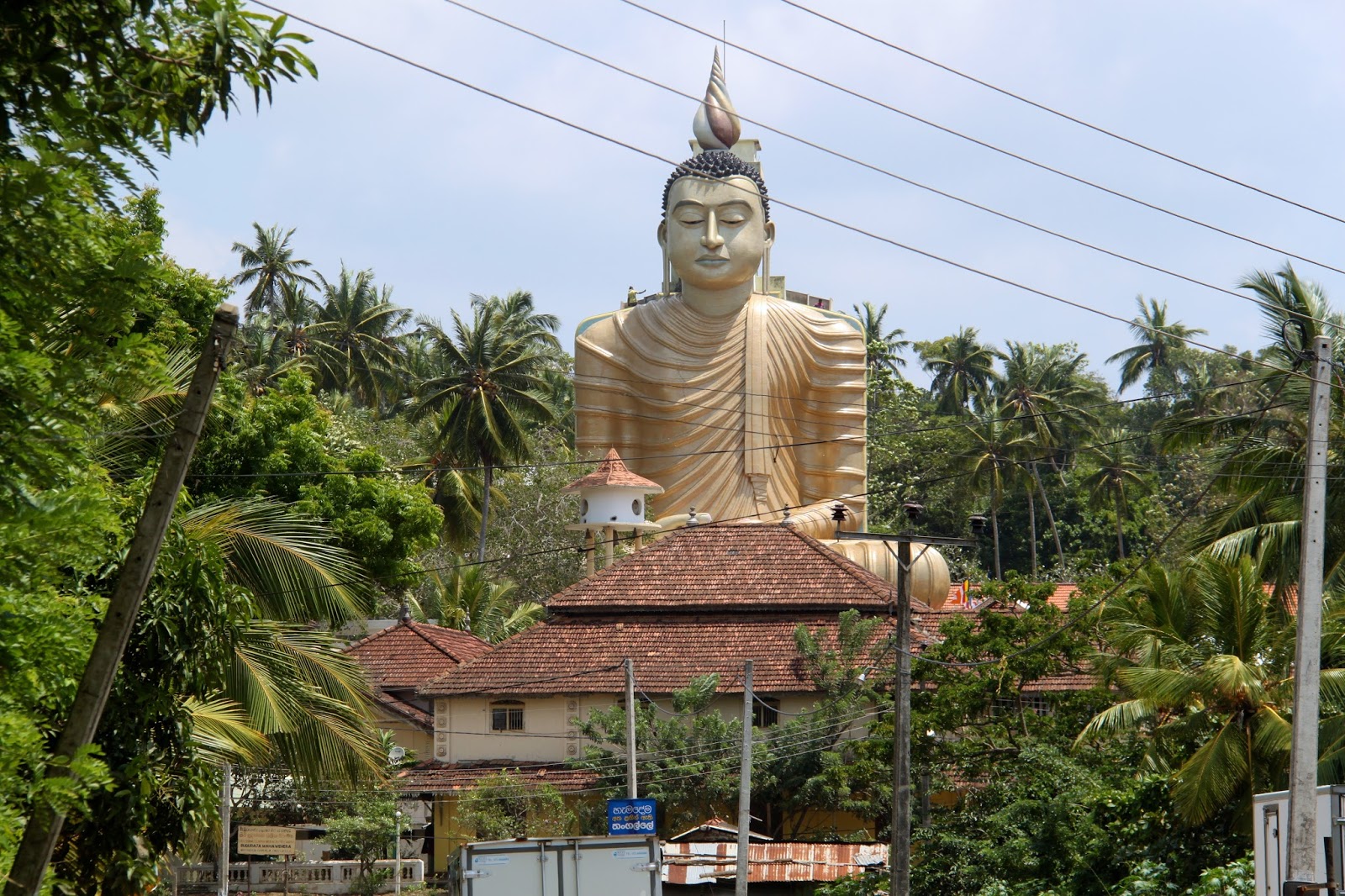
Lots of Buddhist temples along the way.  Sri Lanka is 70% Buddhist


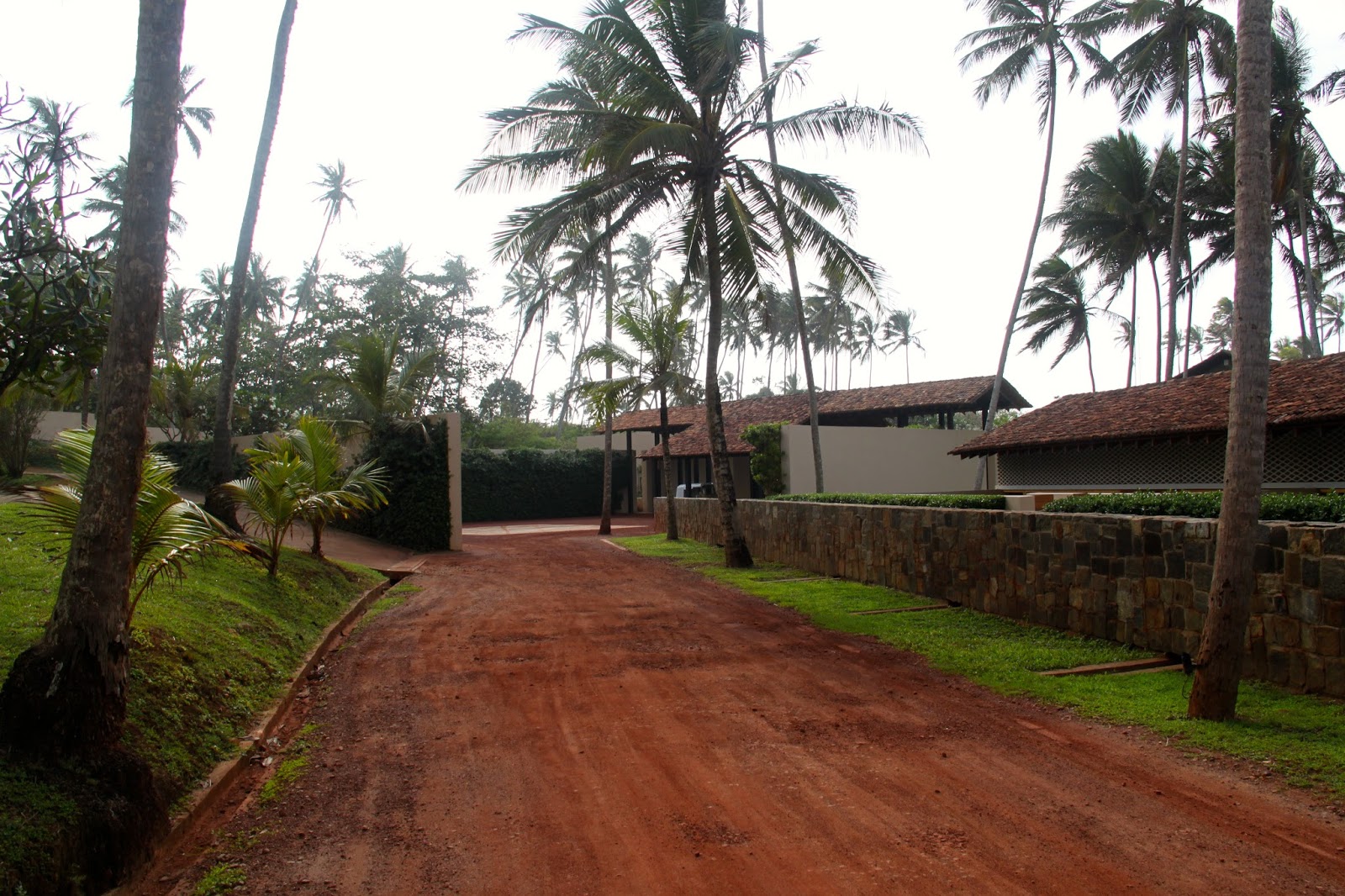
AmanWella is on deserted beach at the end of a narrow village road near the larger village of Tangalle.


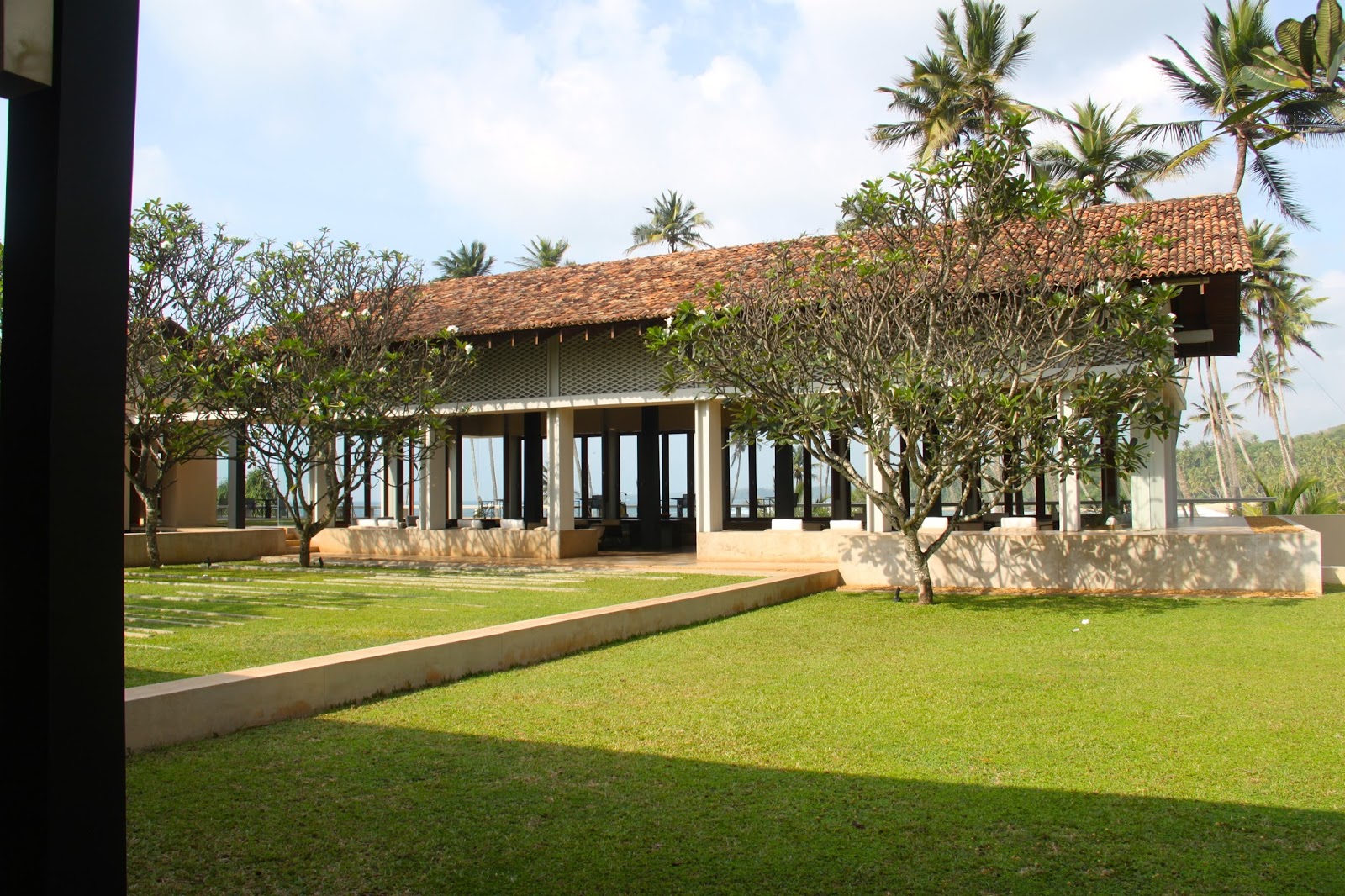
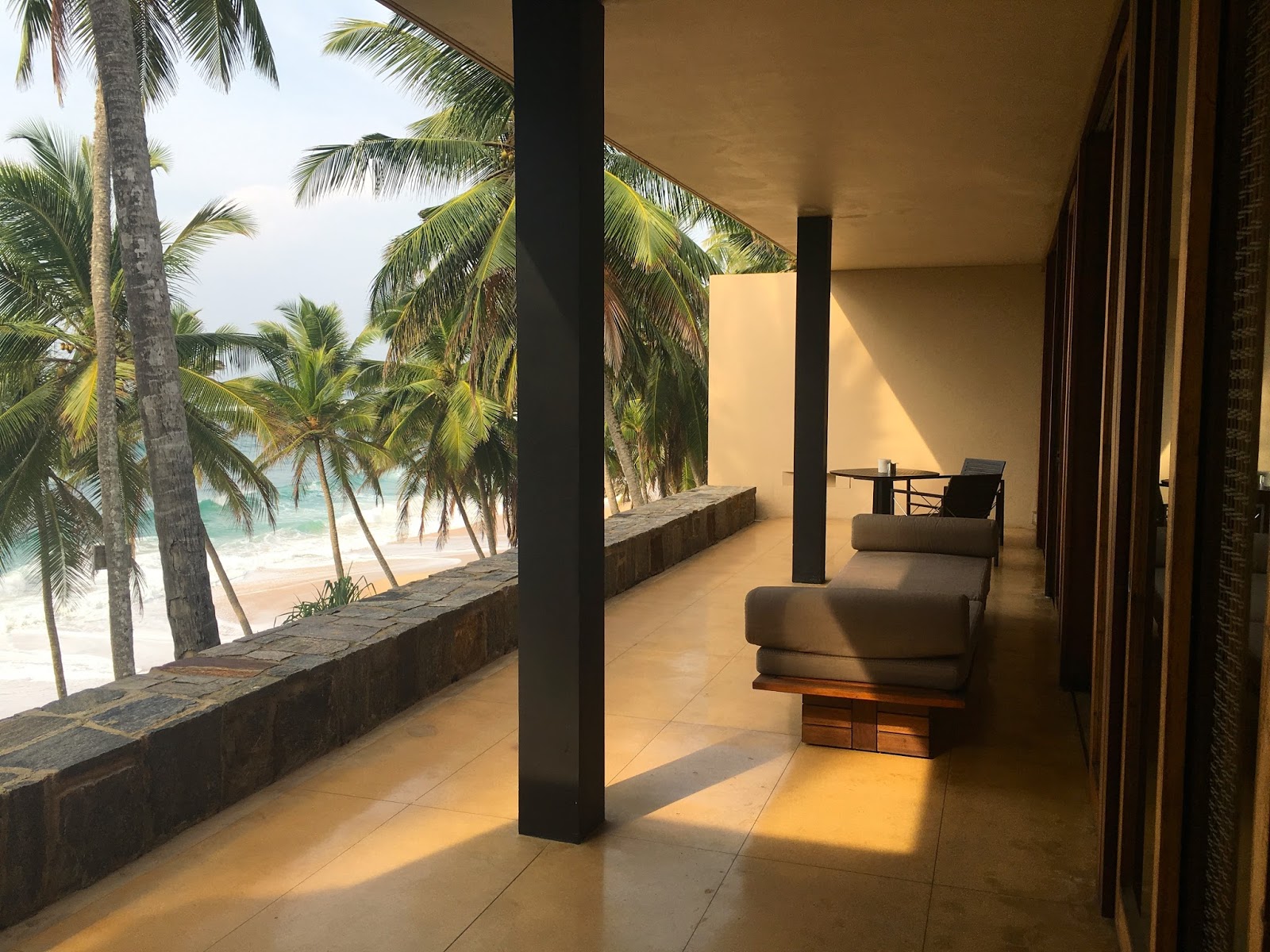
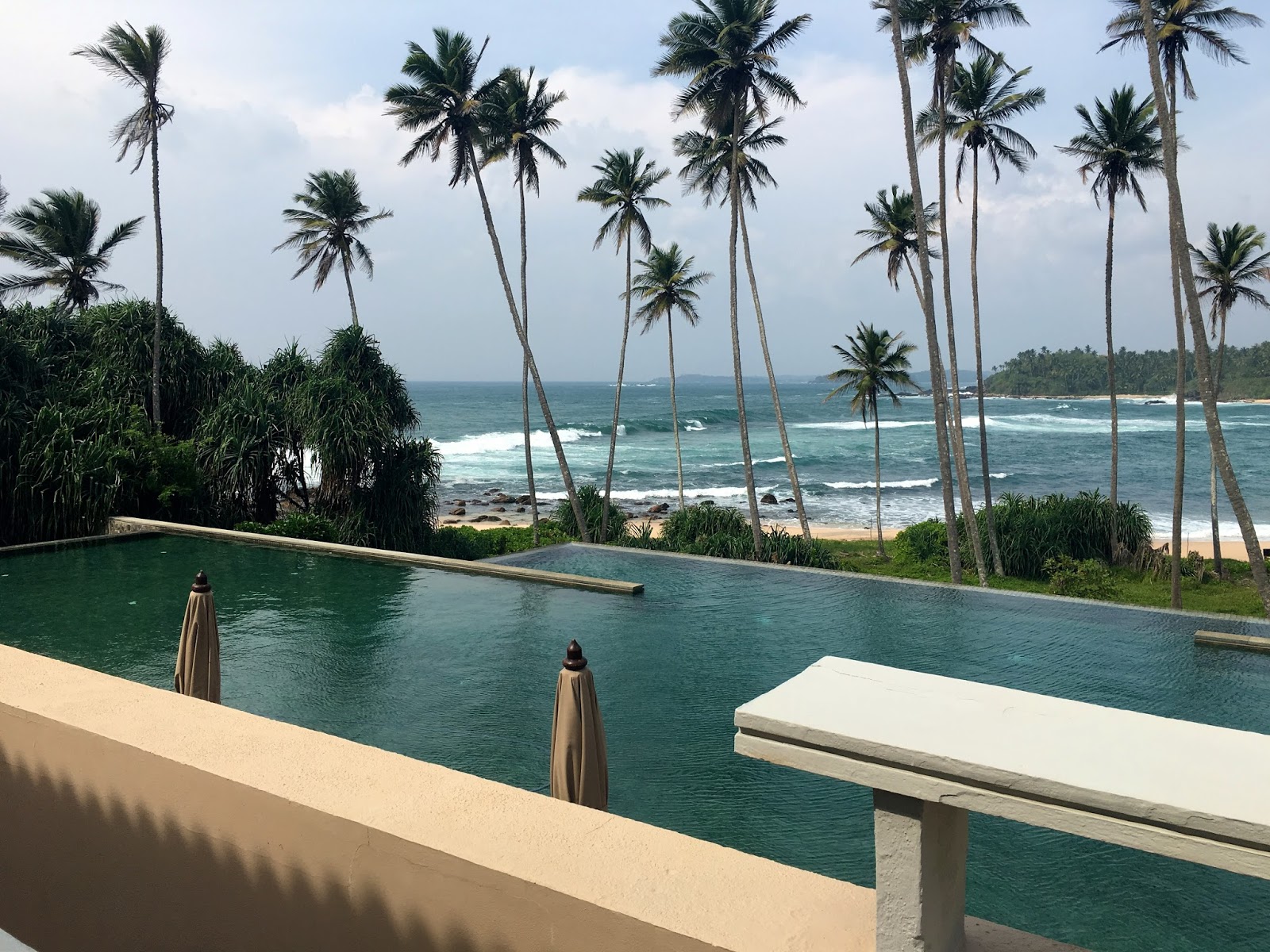
Our room is typical Aman modern minimalist.  The views from our large balcony are stunning.  The 2004 Tsunami hit the south side of Sri Lanka causing terrible loss.  AmanWella was newly built but not occupied in 2004.  It also has a bay with a reef that protects the shoreline so the Tsunami caused no loss of life in this limited area.

Entrance


Our patio


Beautiful beach but the water looks a little mean


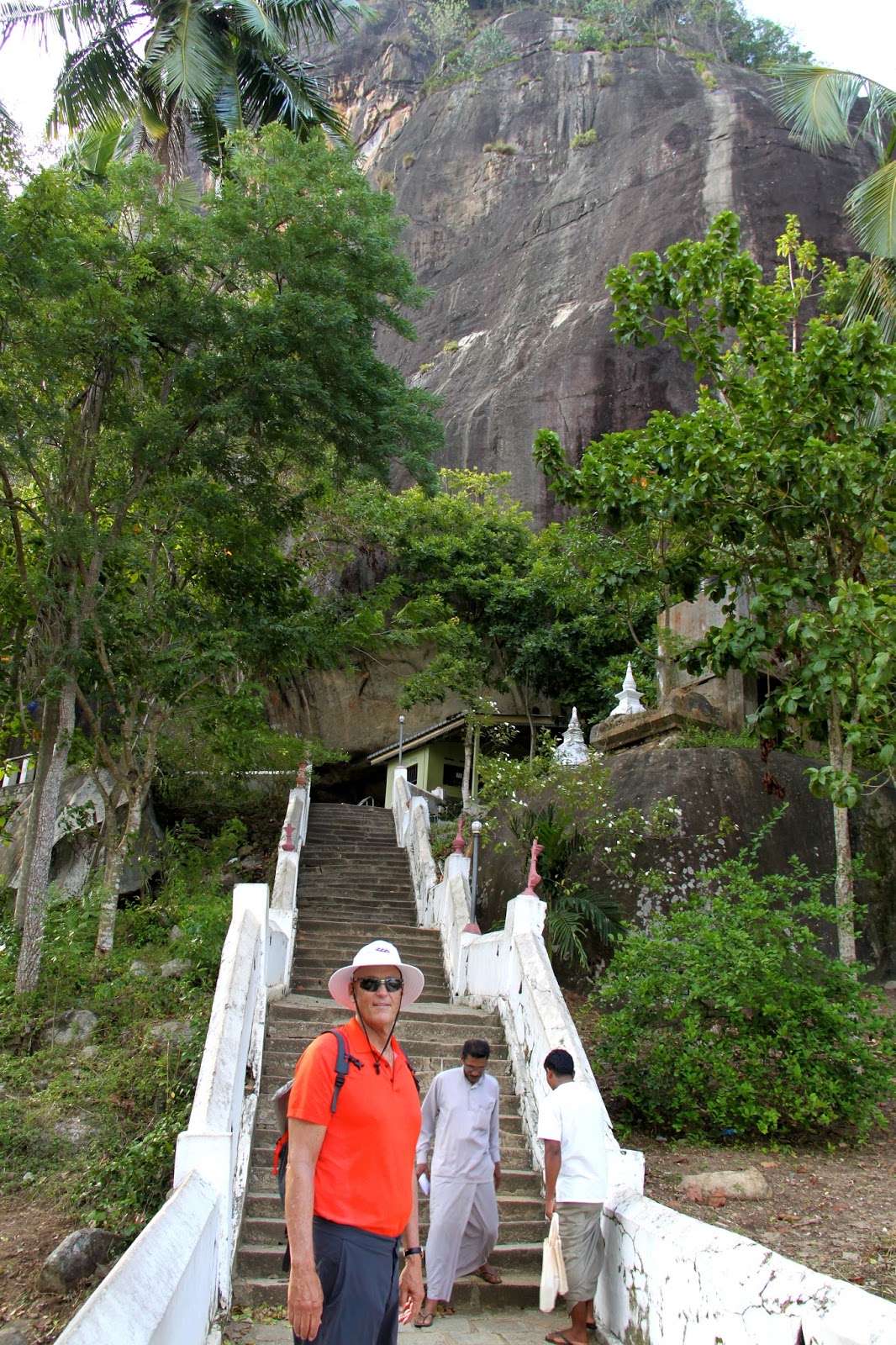
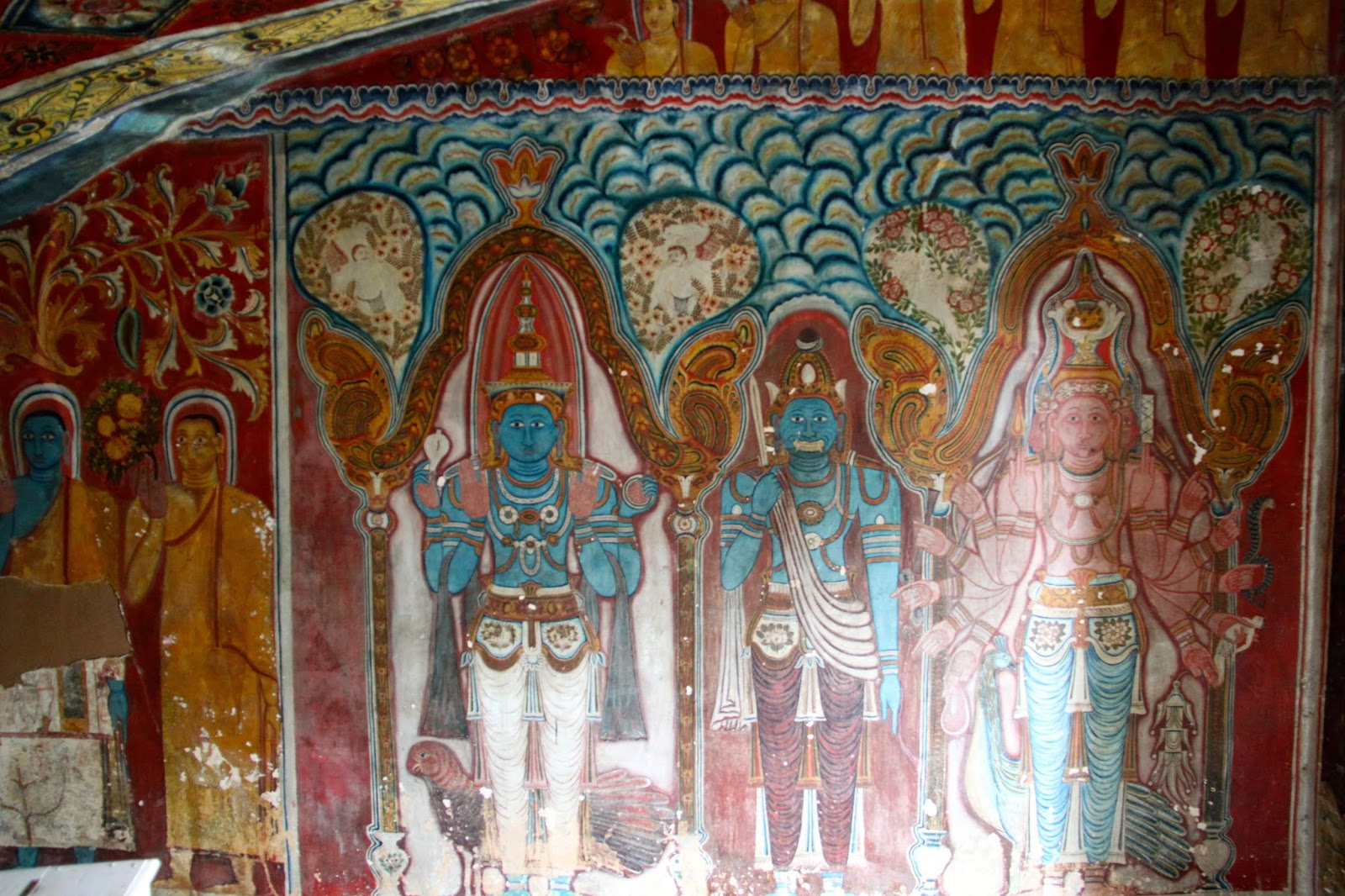
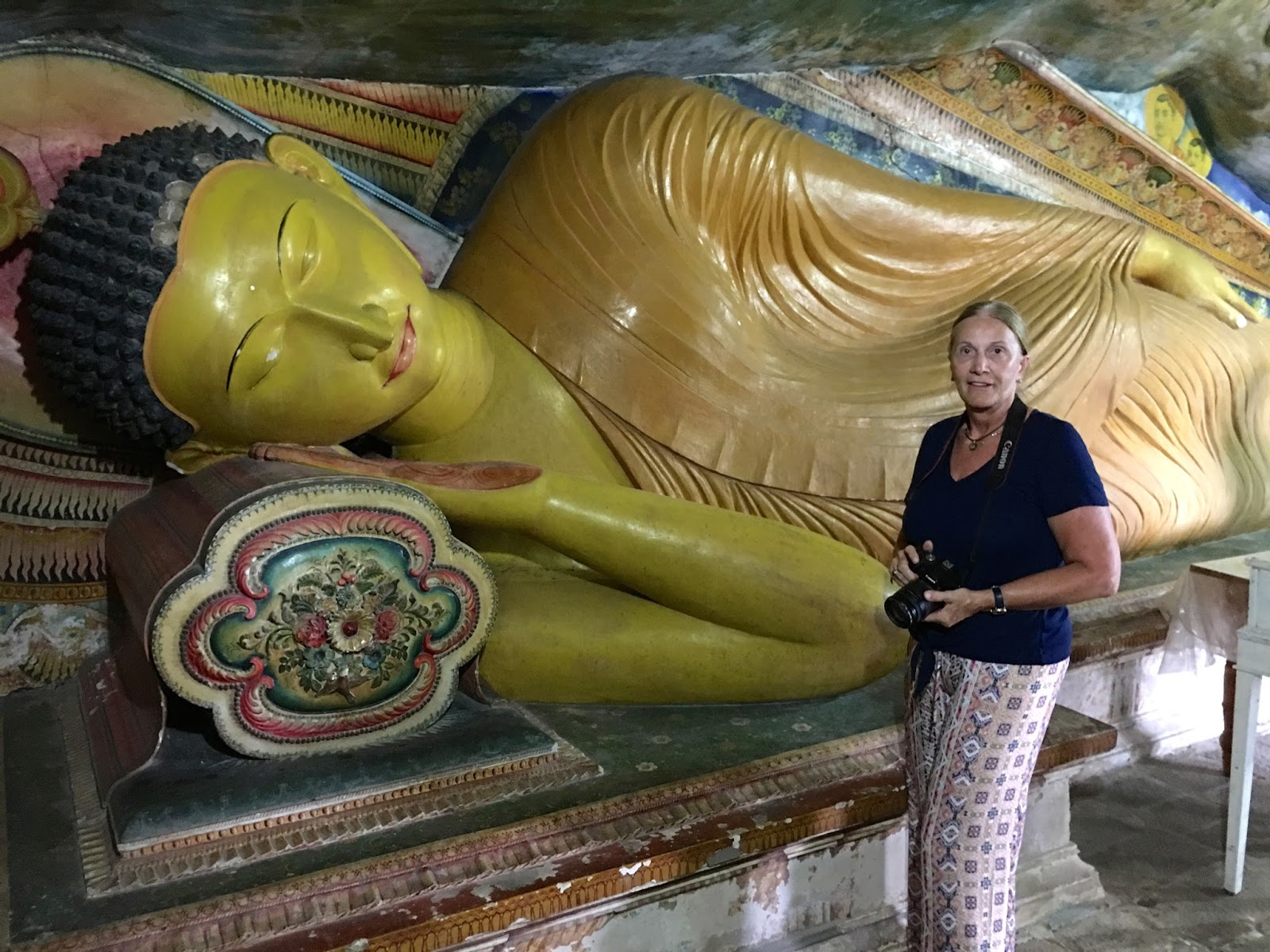
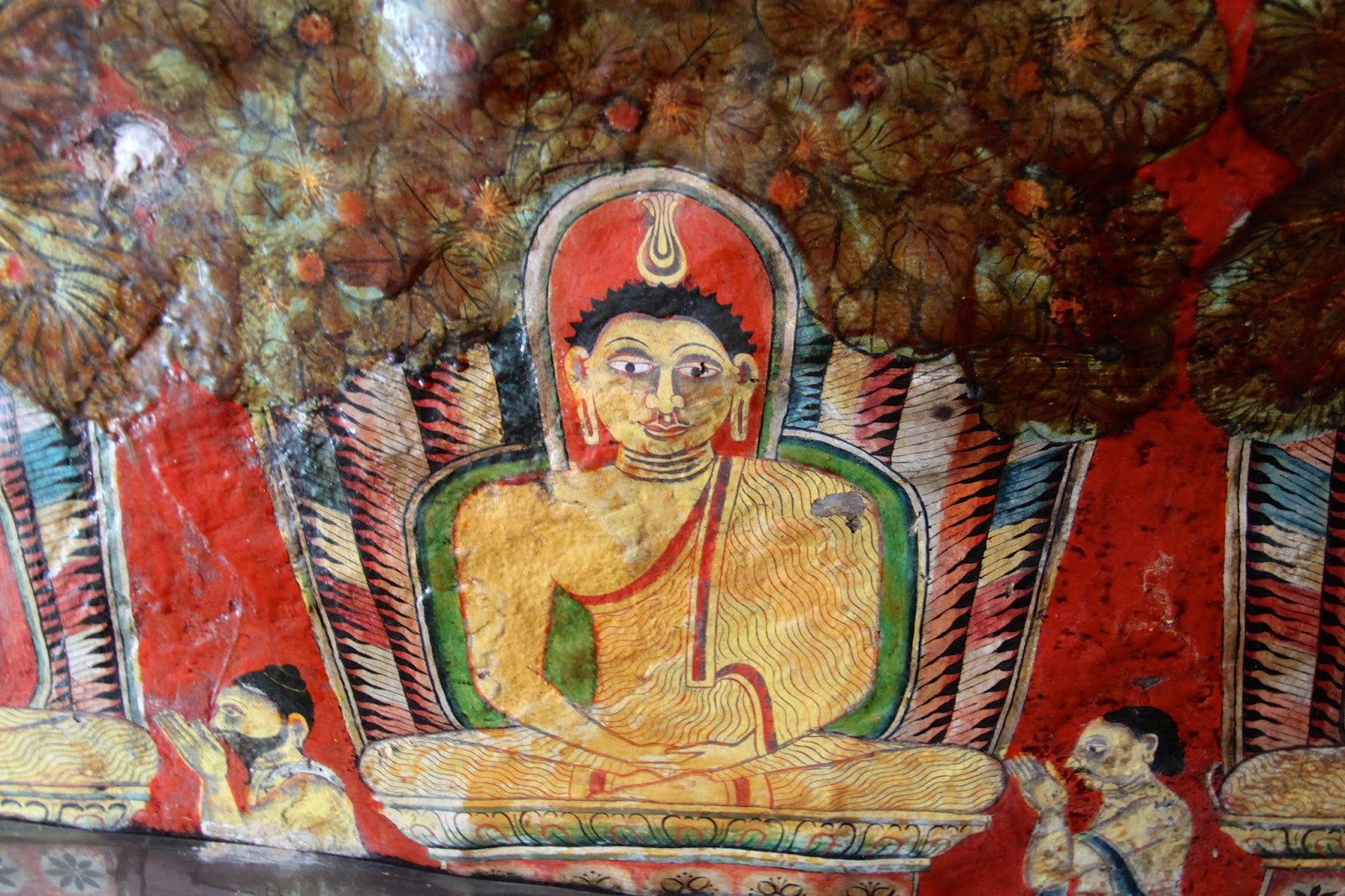
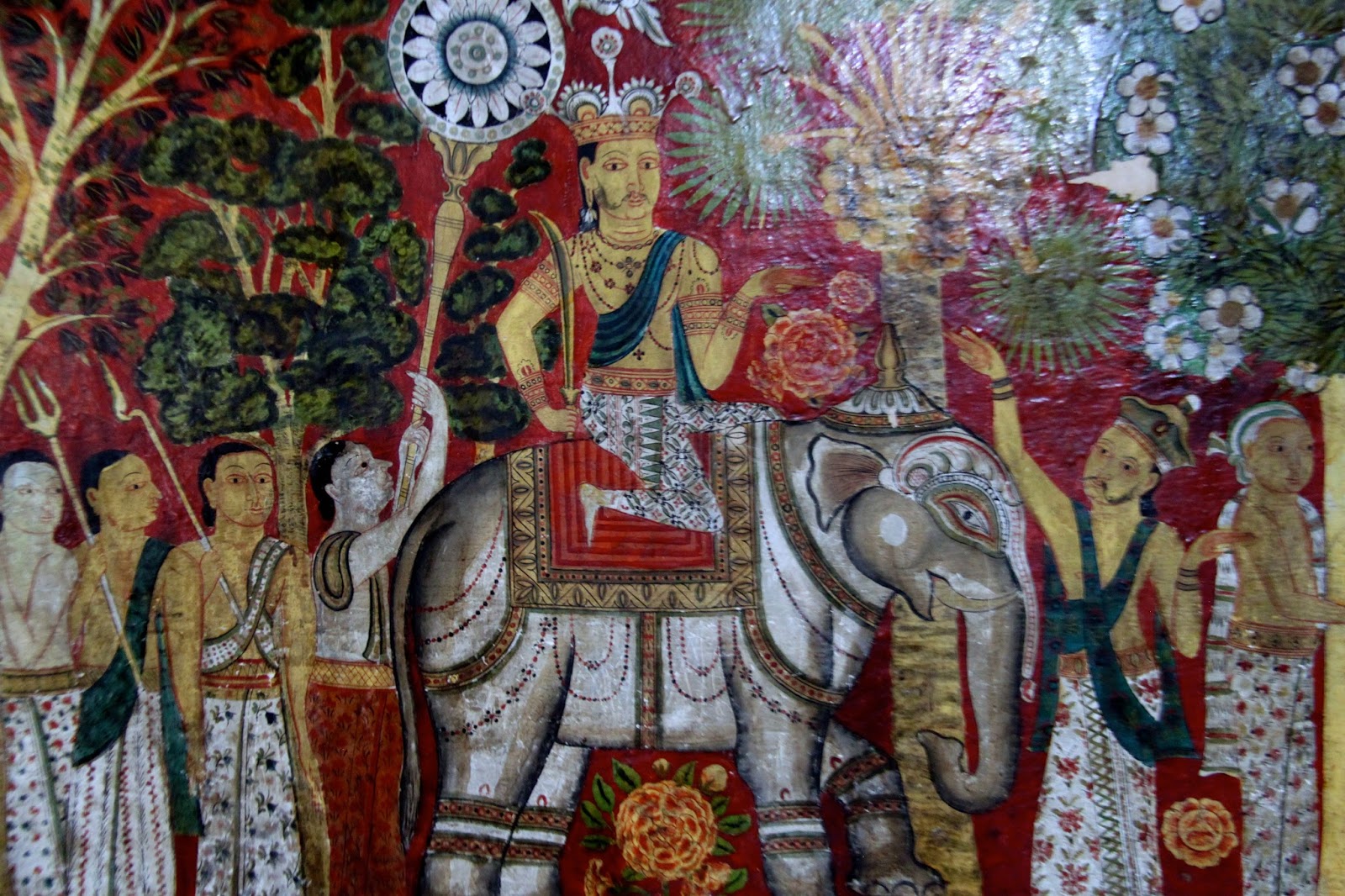
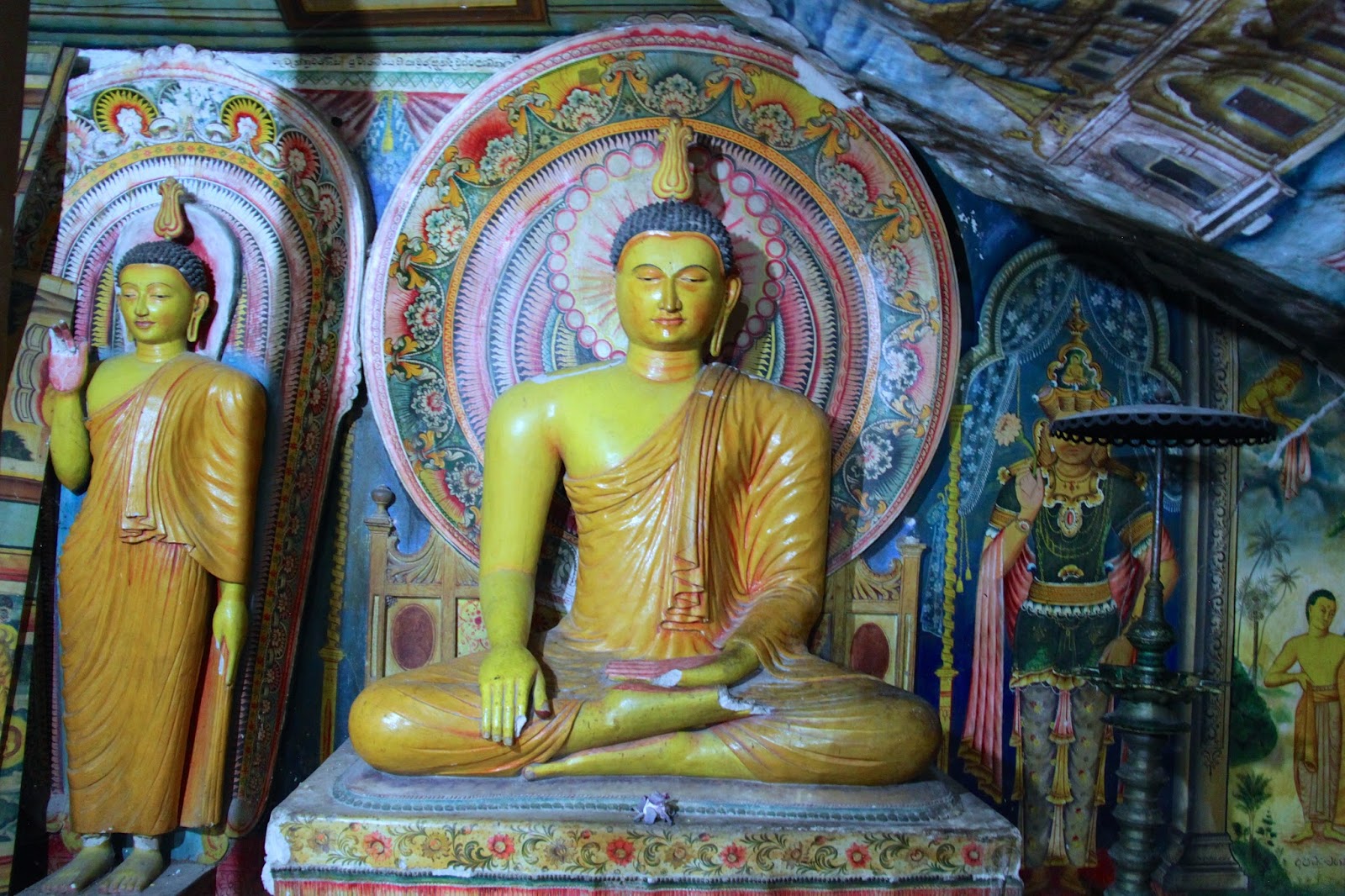
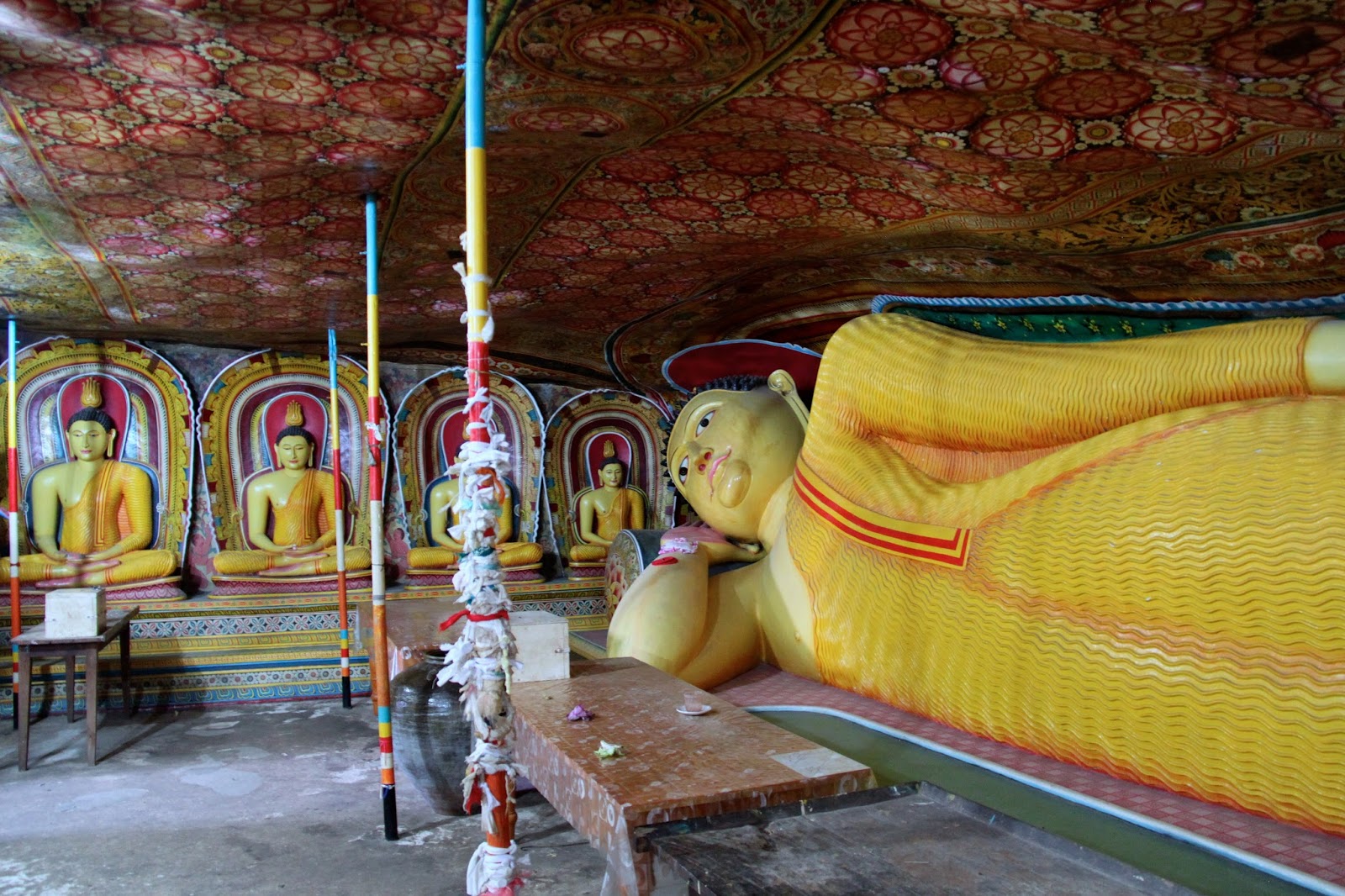
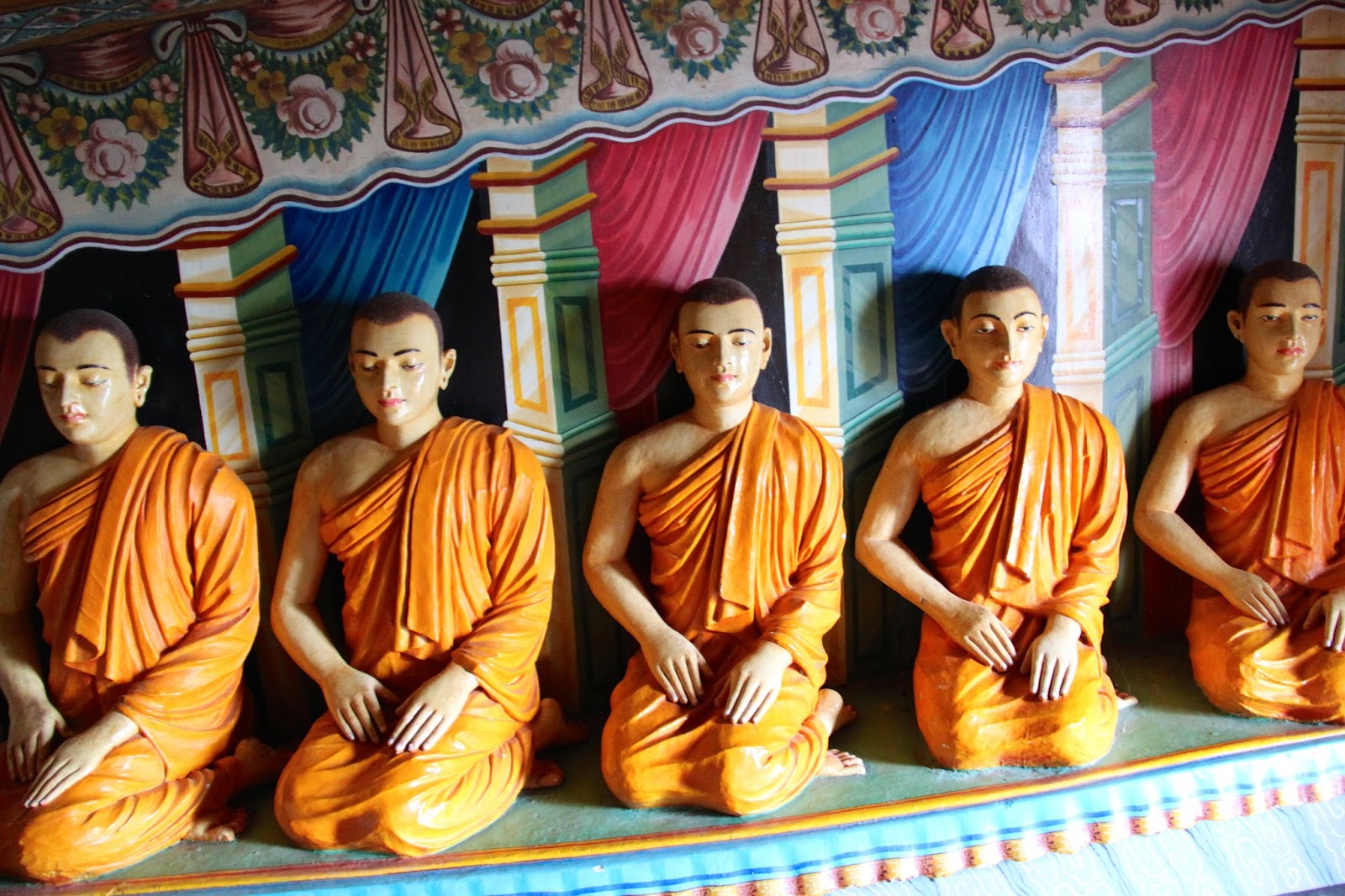
We took a car and hotel guide to visit the Mulgirigala Rock Temple.  This is a Buddhist Monastery built in caves that are located in this 700-foot high rock that rises almost vertically and towers over the forests.  The cave interiors have reclining Buddha and images of Buddha that were painted in the 3rdCentury AD.


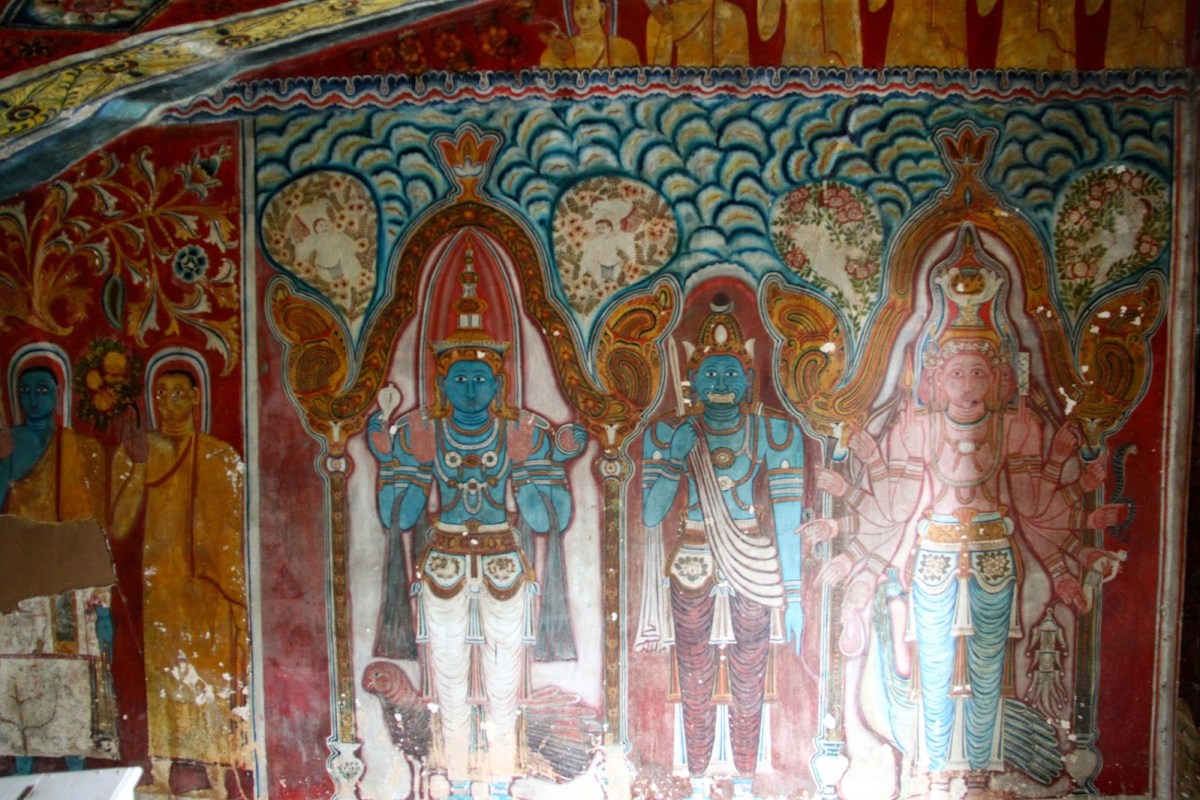
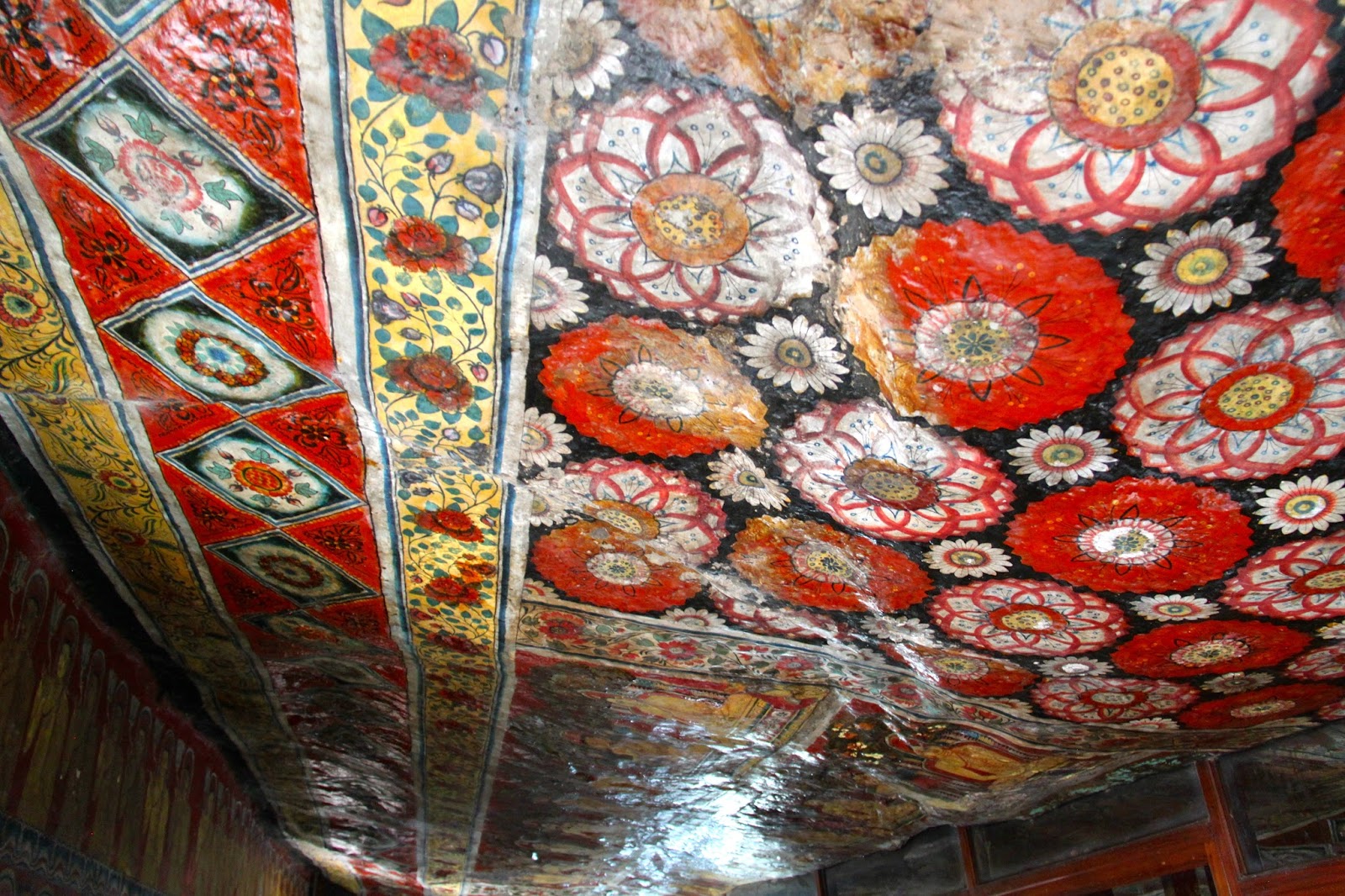
The paintings are all done on rock and the colors are vibrant
There are three levels, each with a small temple.  They all have reclining Buddha’s


Ceiling


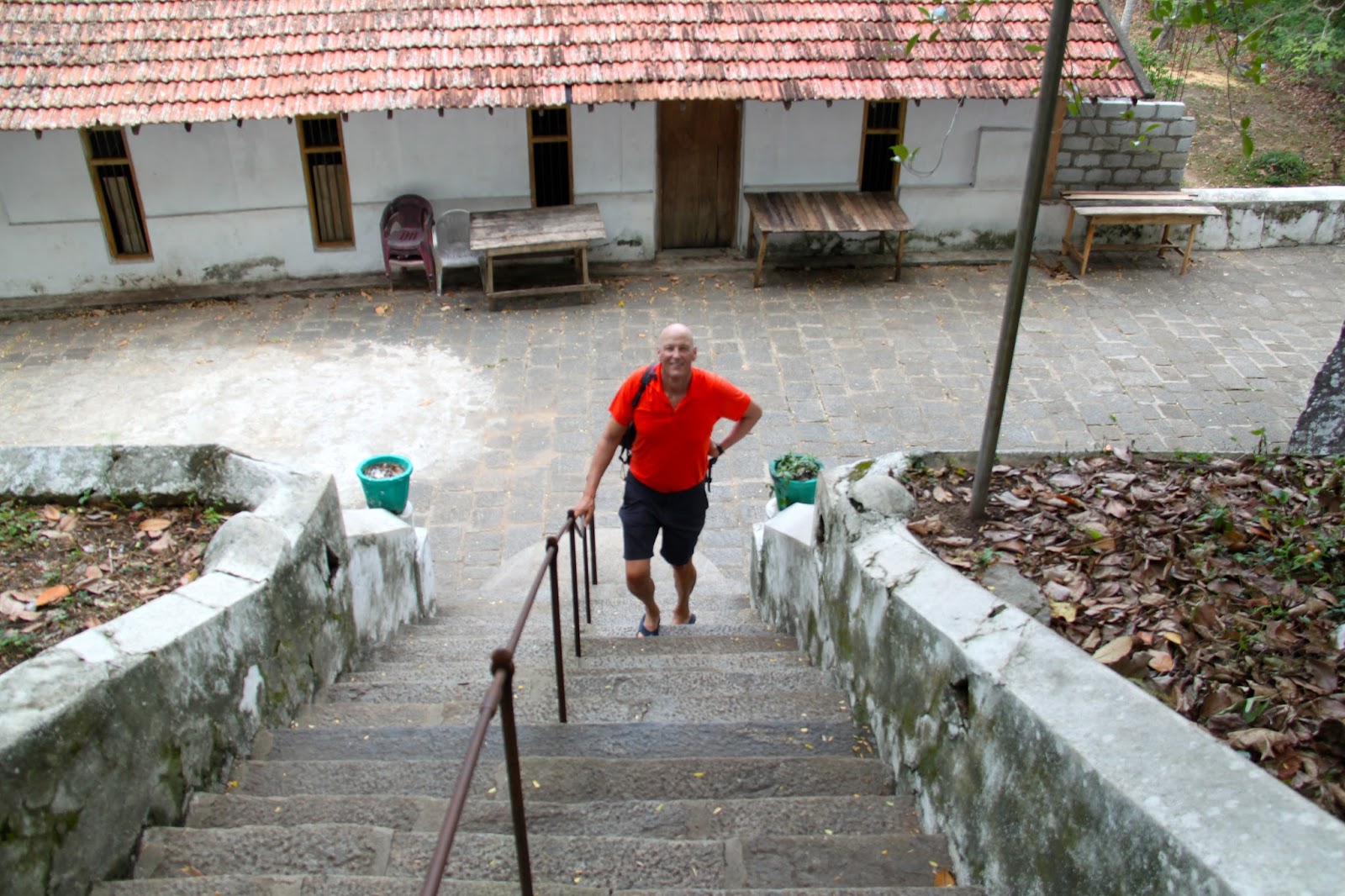
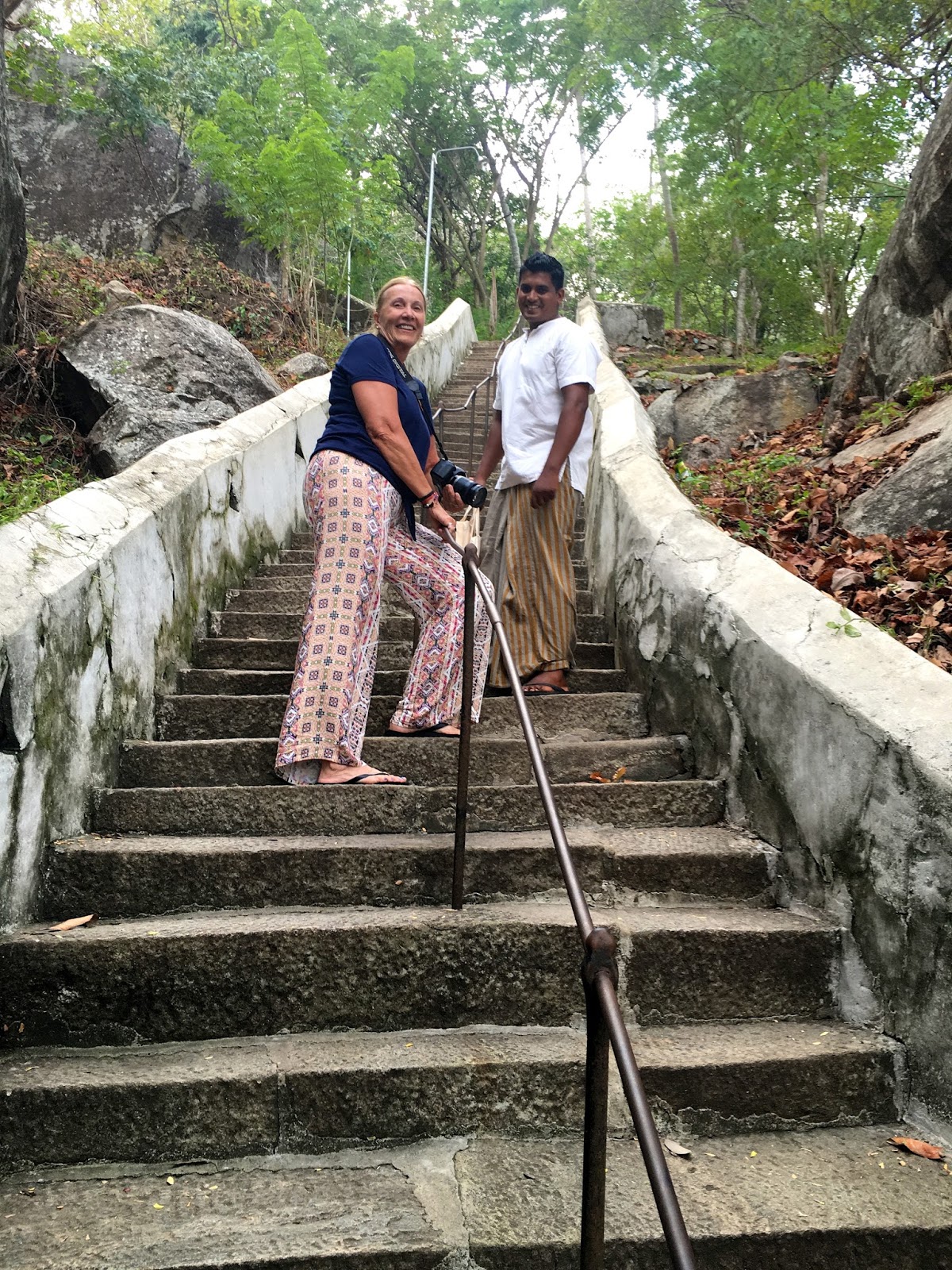
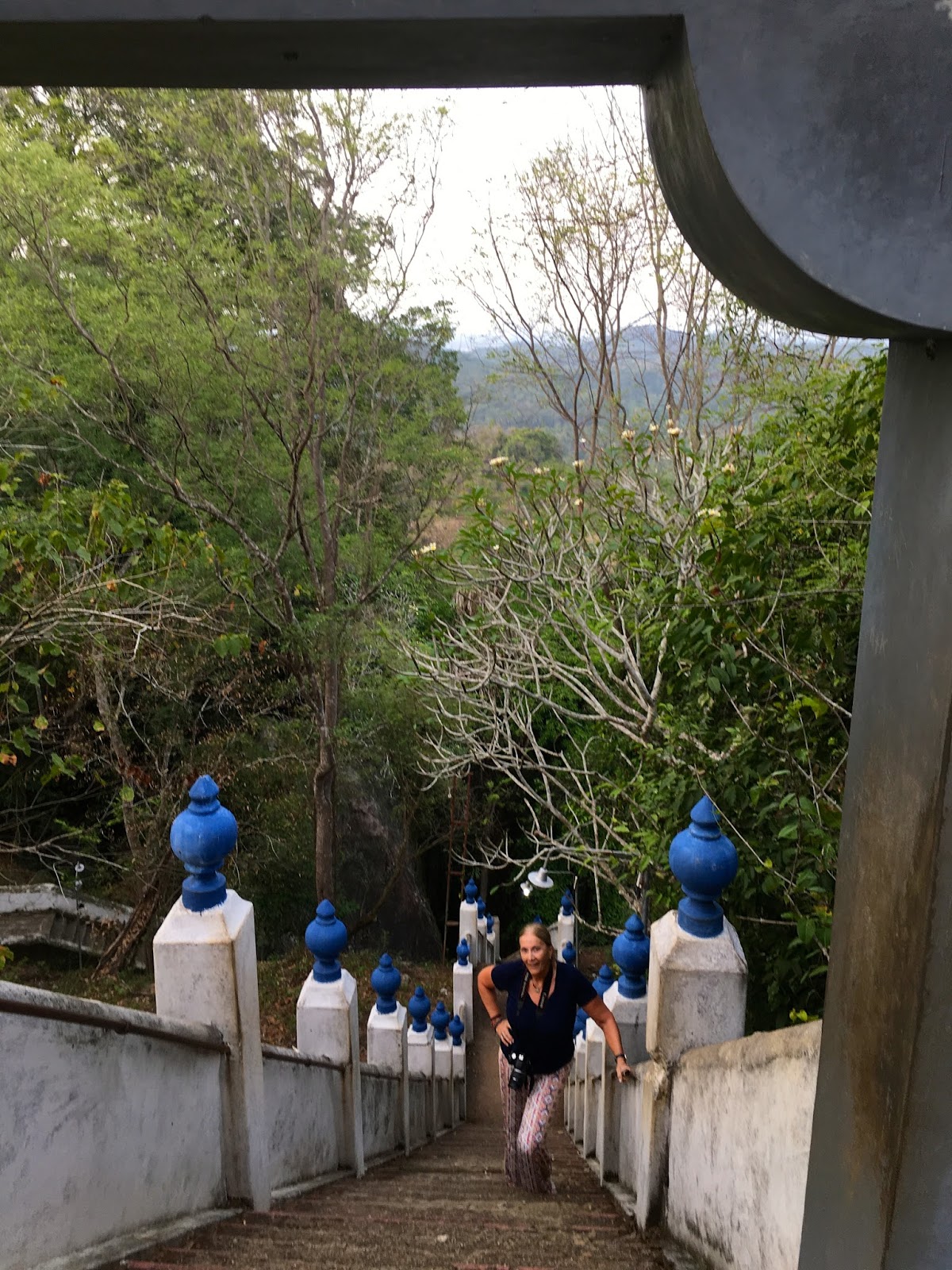
There were almost 600 steps to the top


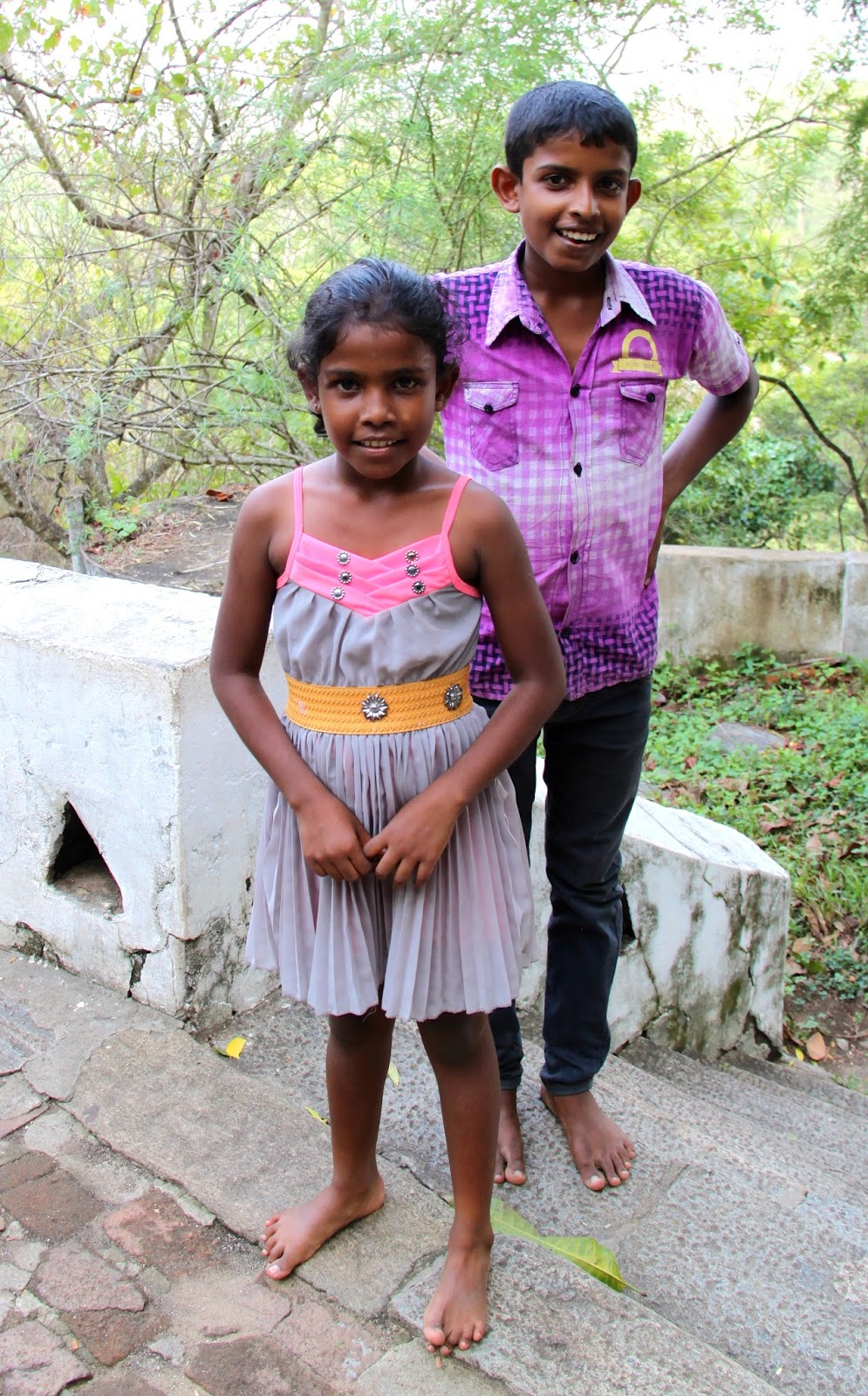
These children were with their mother preparing offerings for the temples


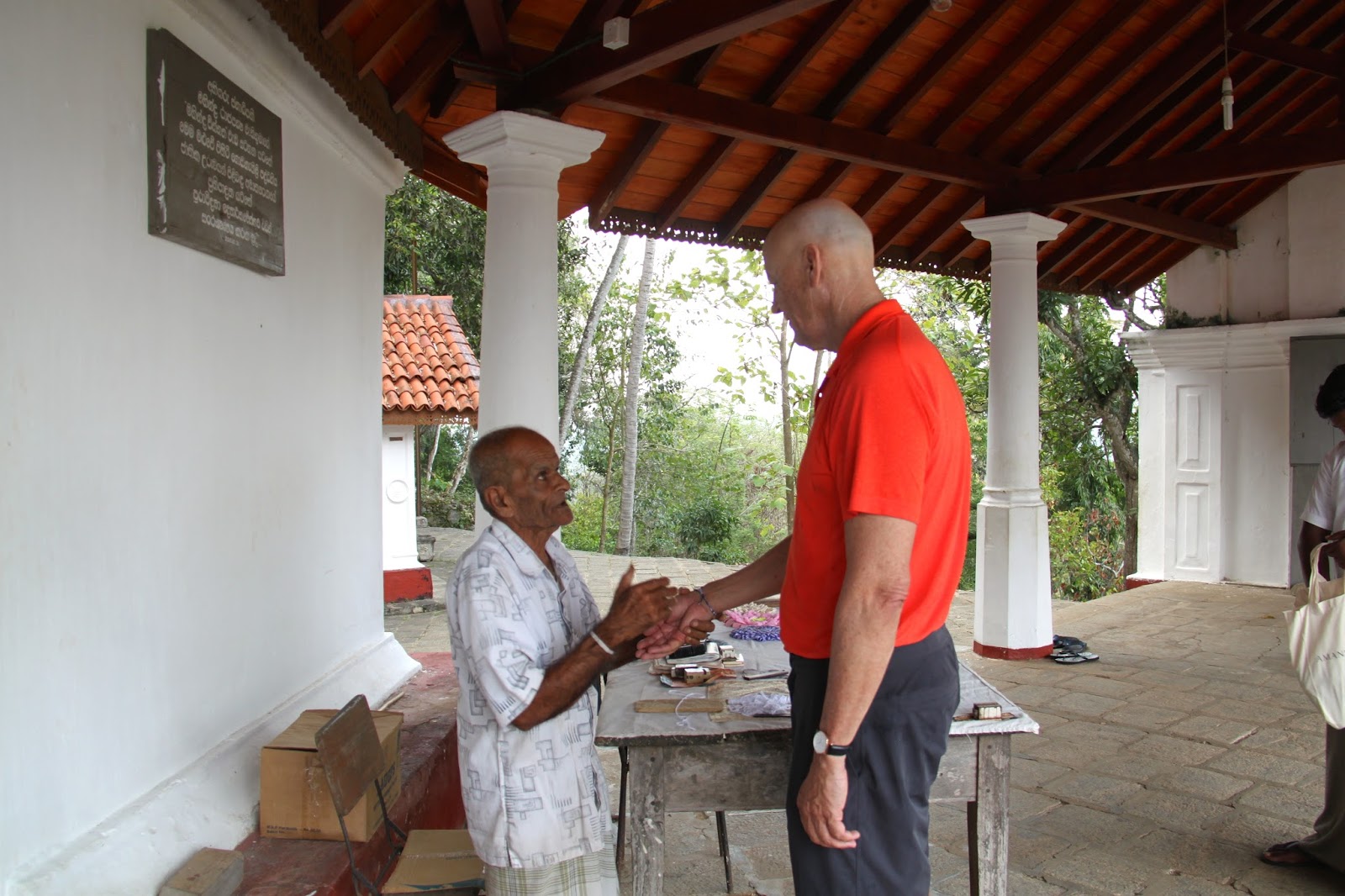
Scott getting a blessing.  It was for a long healthy life.
The view from the top of the rock was over the forest canopy below.


We were then taken to rice paddies to have a sundown picnic. 


The next morning we took a walk with our guide through the village that was close to our lodge.  The people we met along the way were quick to smile and wave.


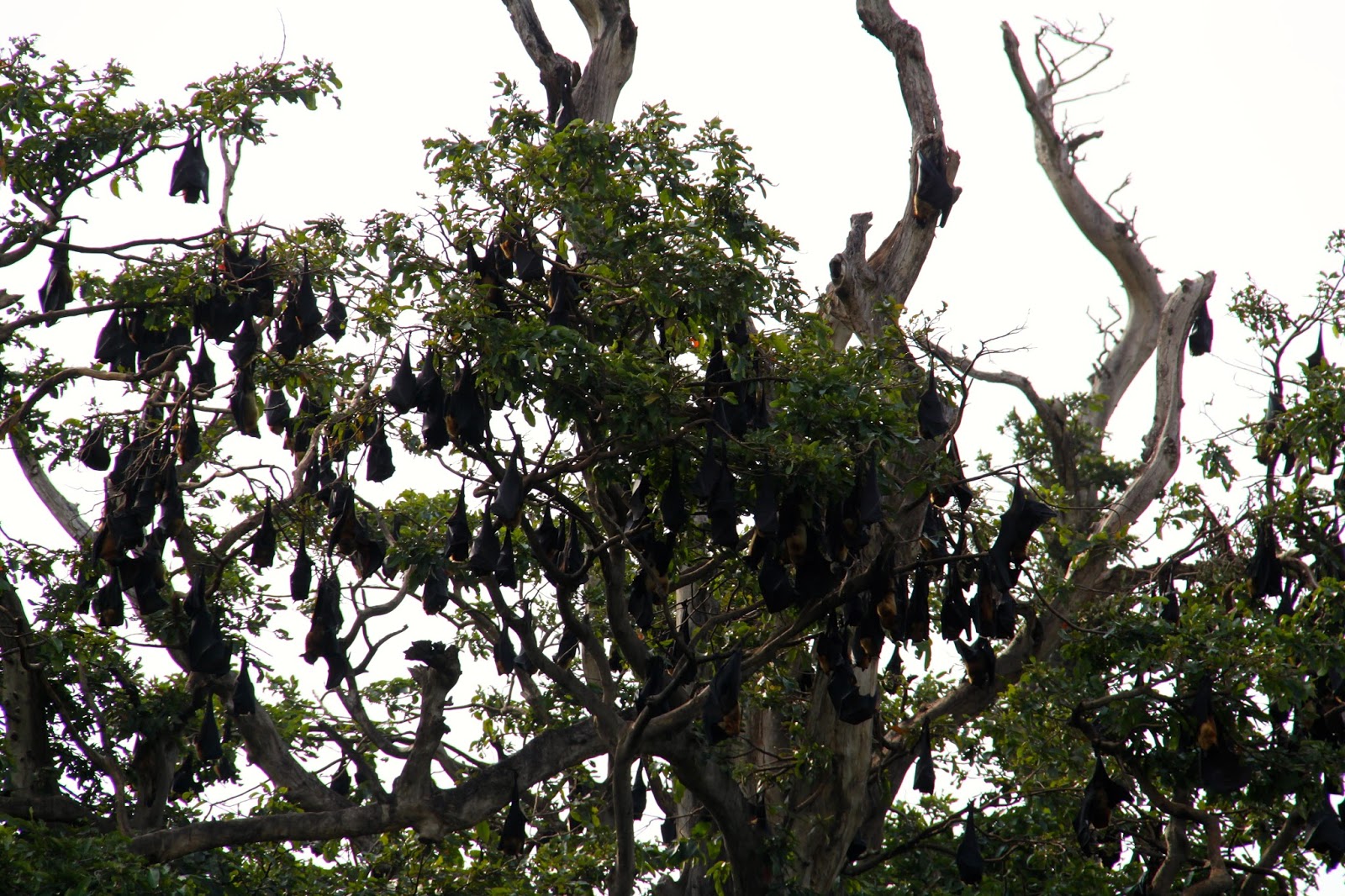
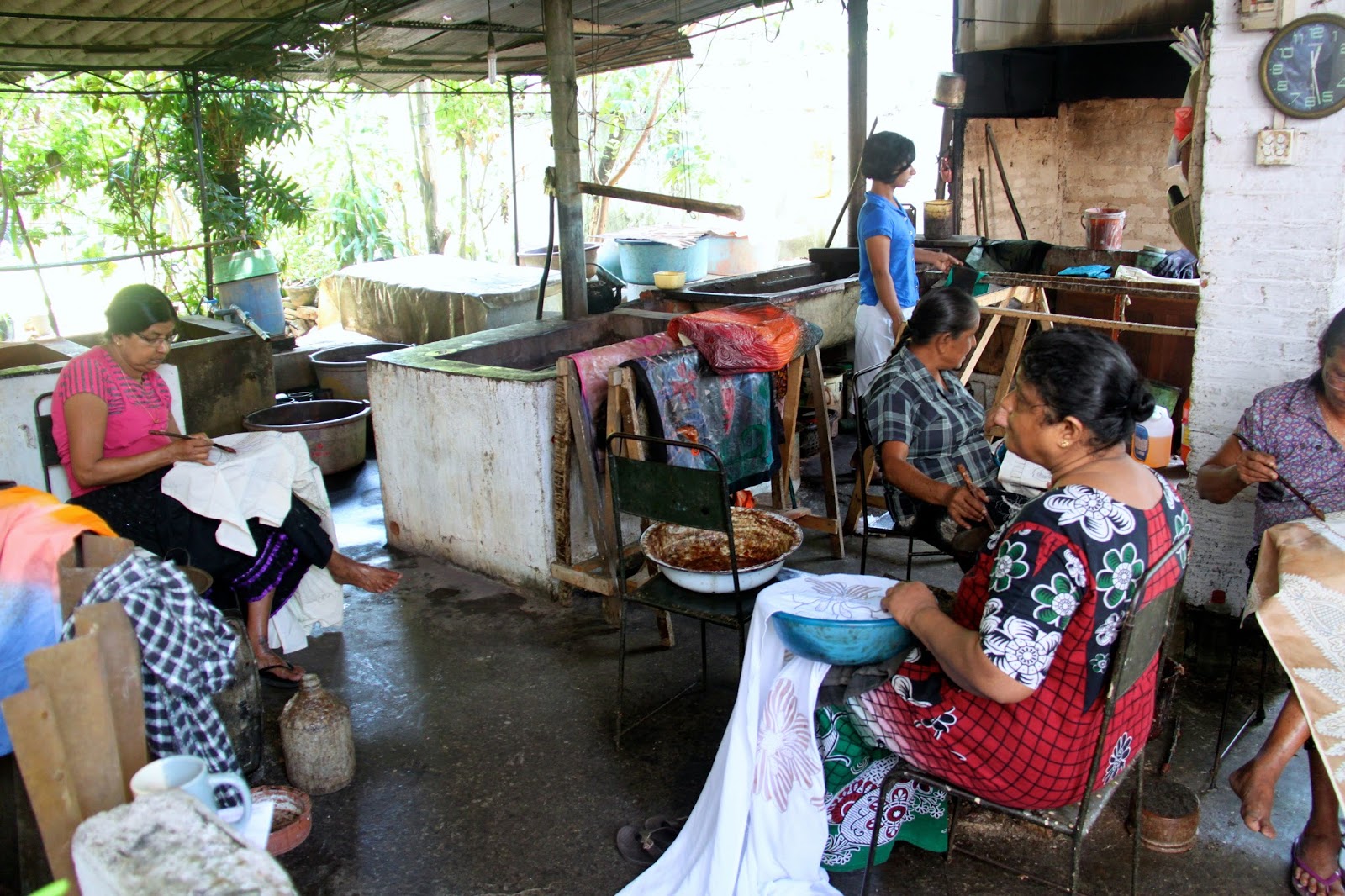
We stayed two nights at Amanwella and are now being taken by car to Amangalla.  Along the way we saw an area where the huge bats like to hang out and stopped at a small batik factory.

Bats!


Women painting with hot wax with copper wire wound around a stick.  This keeps the color from that area.  Then the cloth is boiled and the wax is removed.

Amangalla


Galle was visited by the Moors from Tangiers, Morocco in the 14th Century.  In 1505 the Portuguese set sail for the Maldives and were blown off course and sailed into Galle.  In 1640 the Dutch captured Galle in a battle the claimed 3000 lives and built Fort Ramparts, churches and homes over the next 150 years.  In 1798 the Dutch handed over Galle to the English without a fight.  In 1867 the first tea plants were introduced into Ceylon.  Ceylon changed its name to Sri Lanka in 1972.
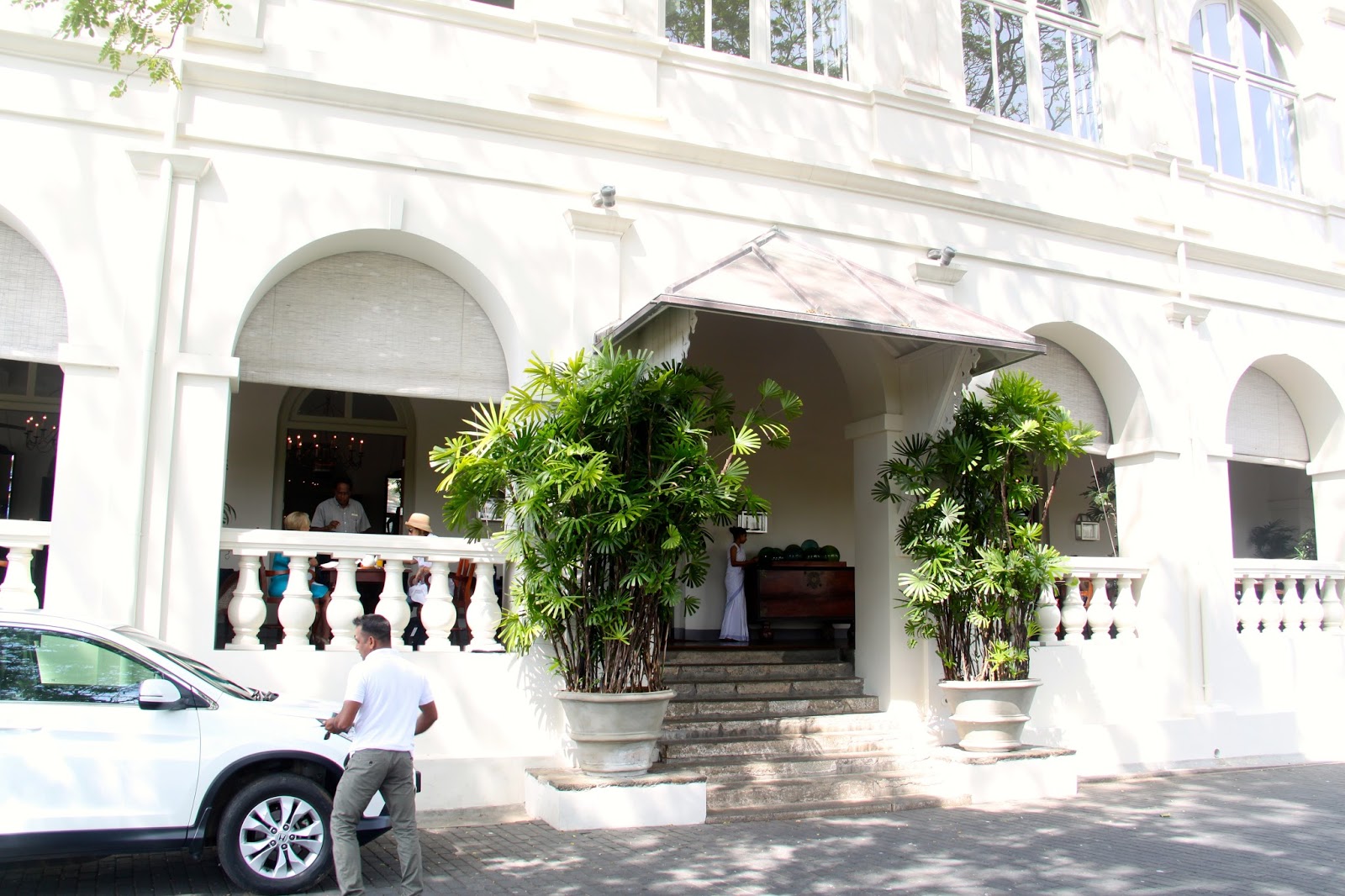
We are staying inside the walled fort of Galle at Amangalla.  The hotel was a Dutch military building and has since been made into a hotel.  
Entrance


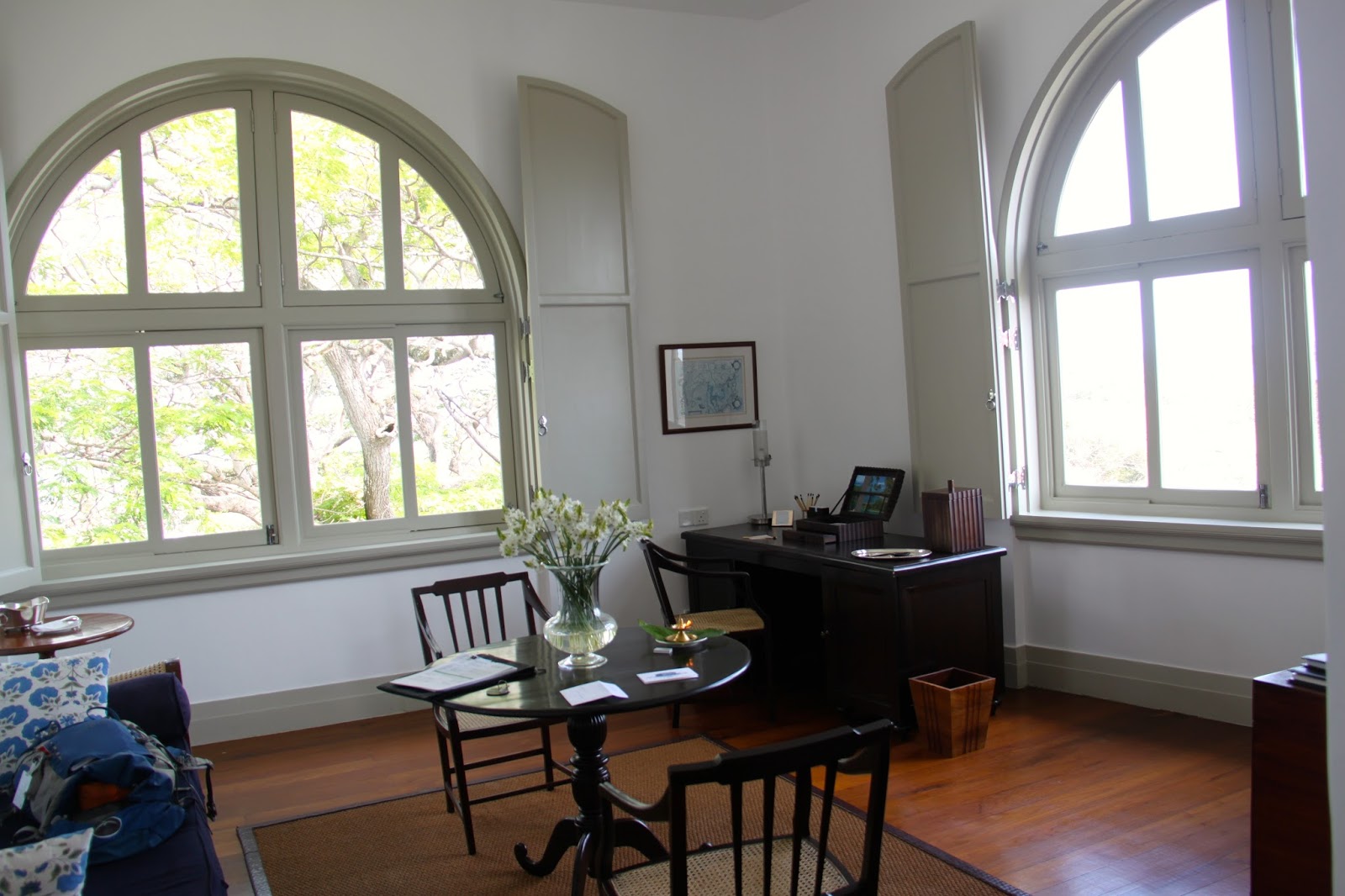
They gave us a beautiful corner room


Out of our window
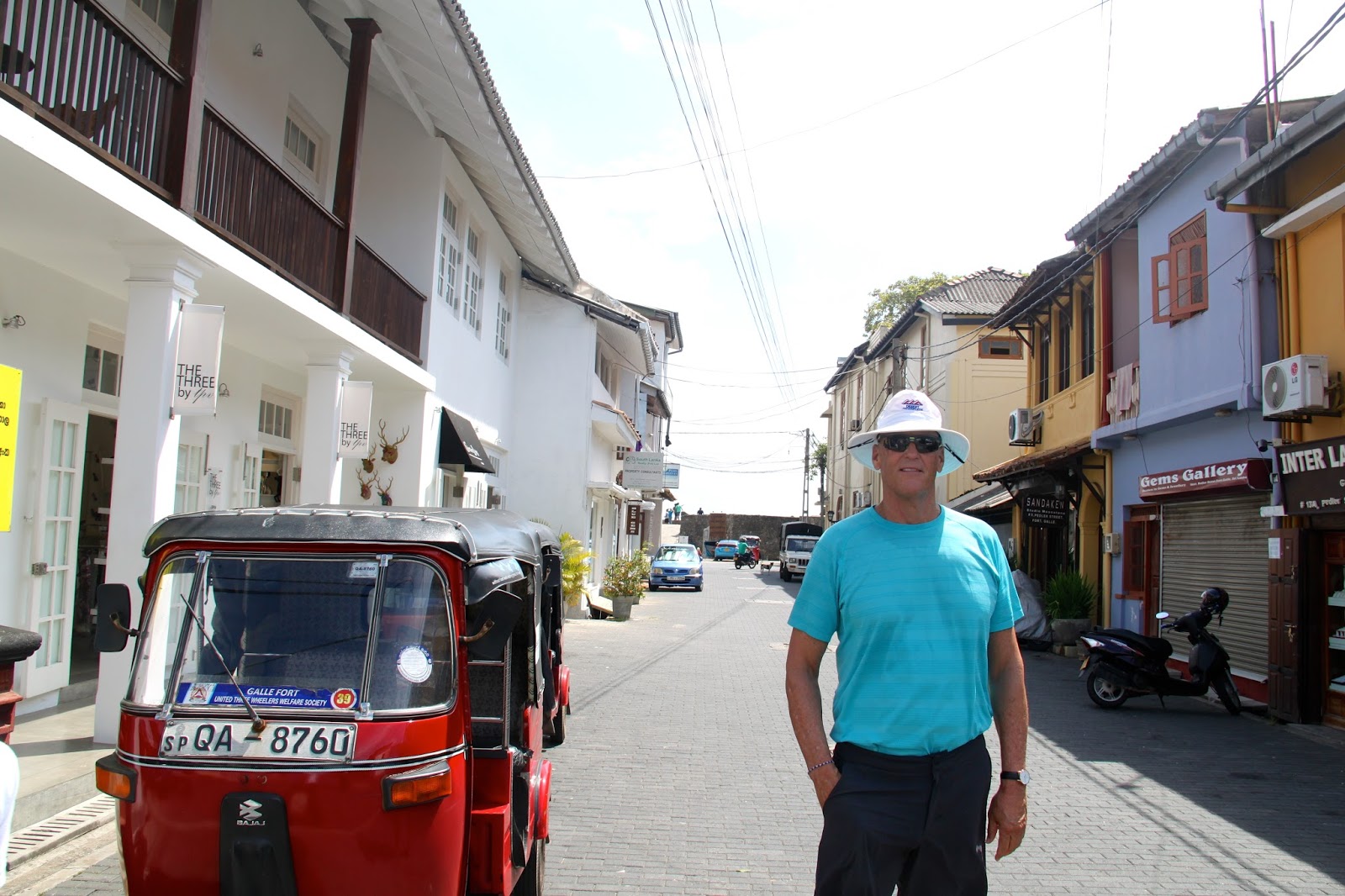
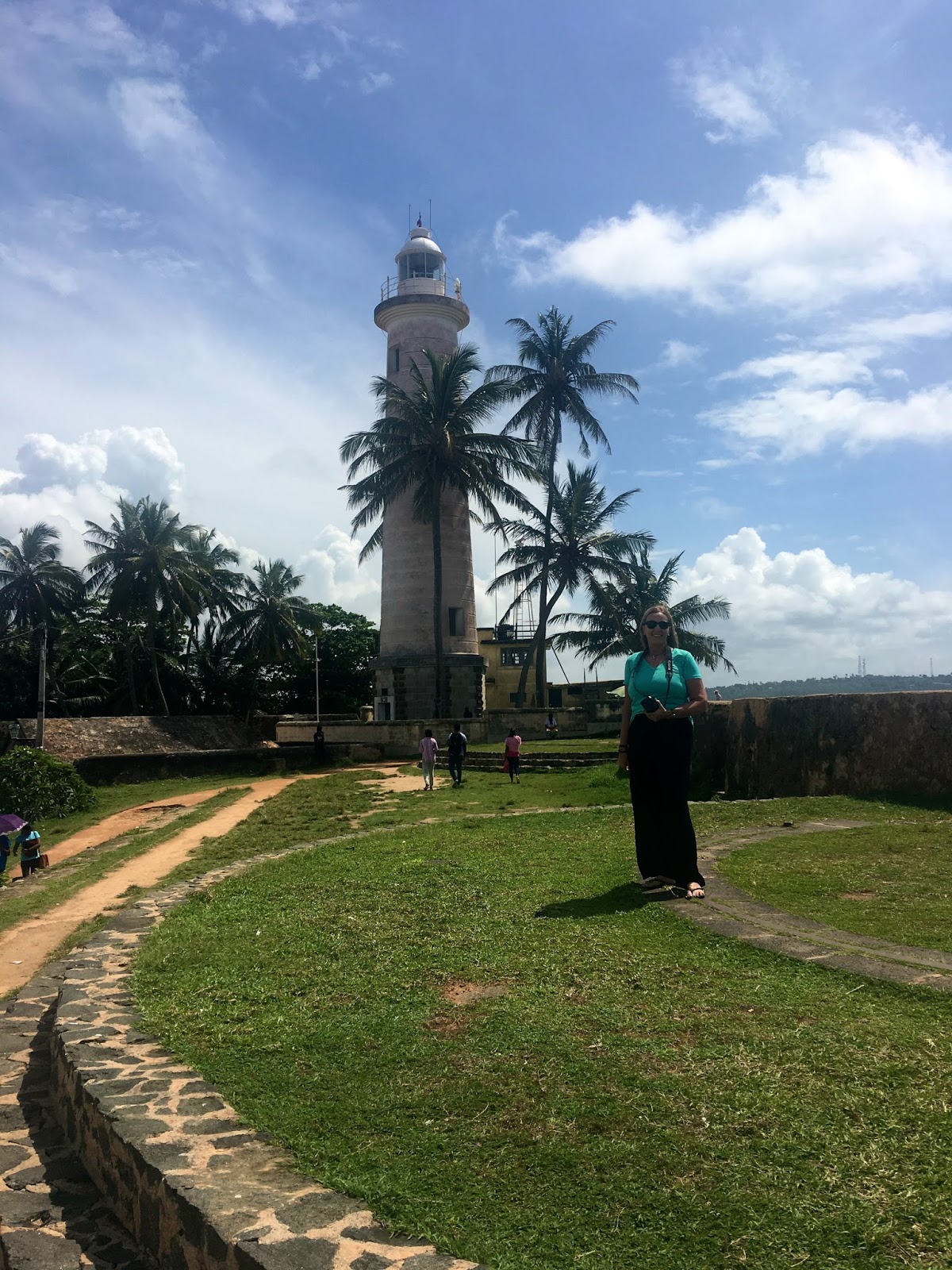
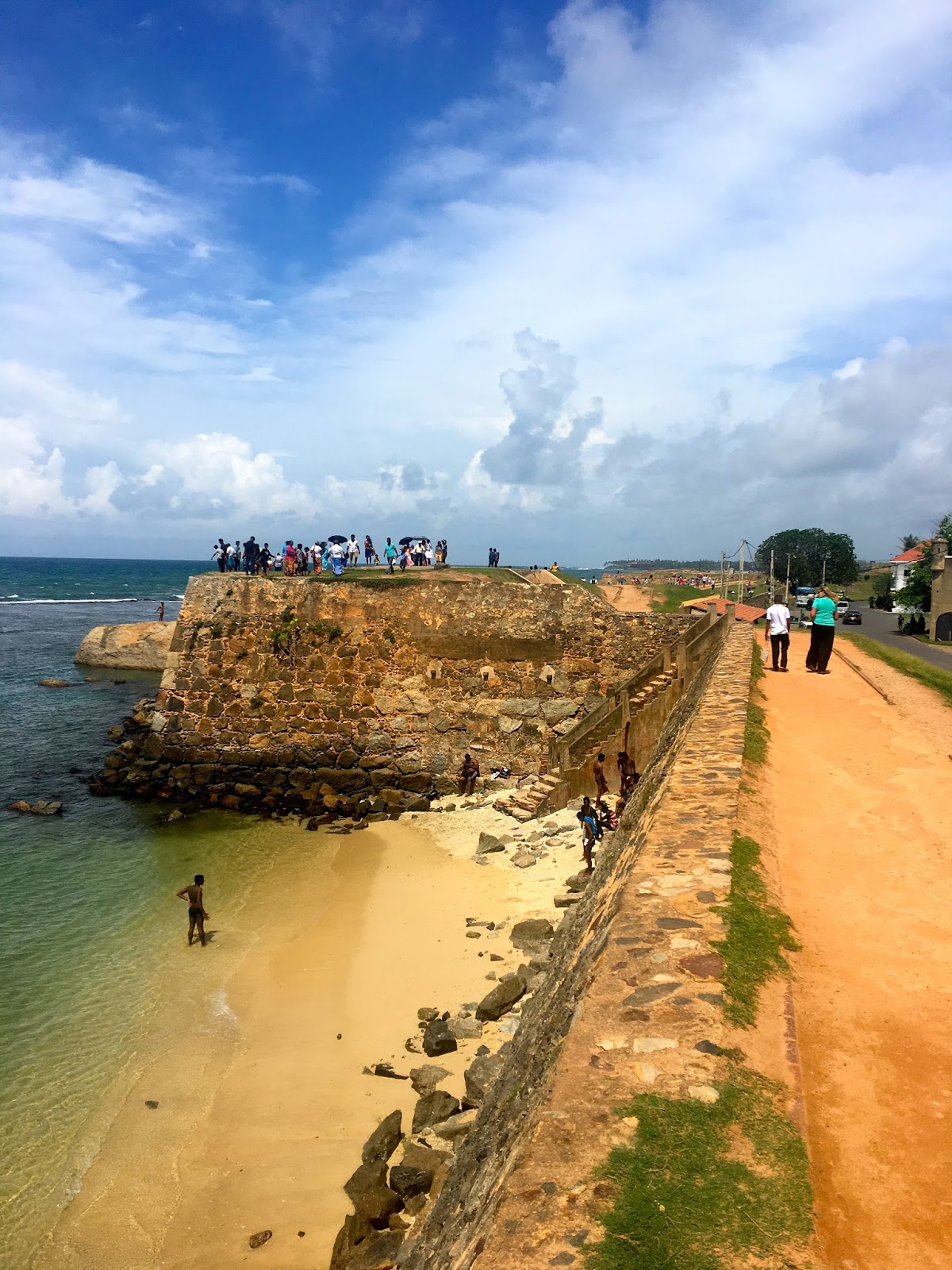
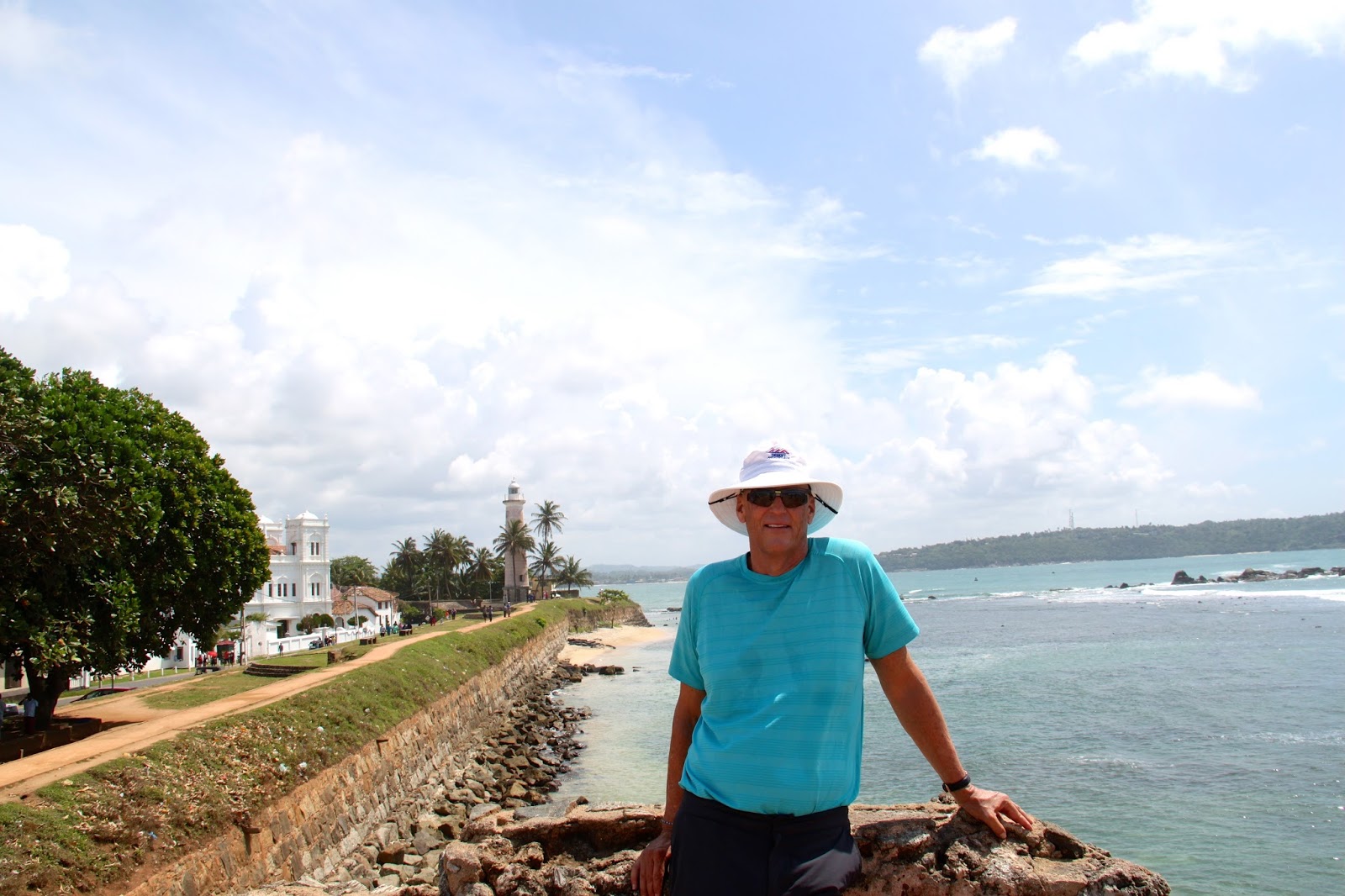
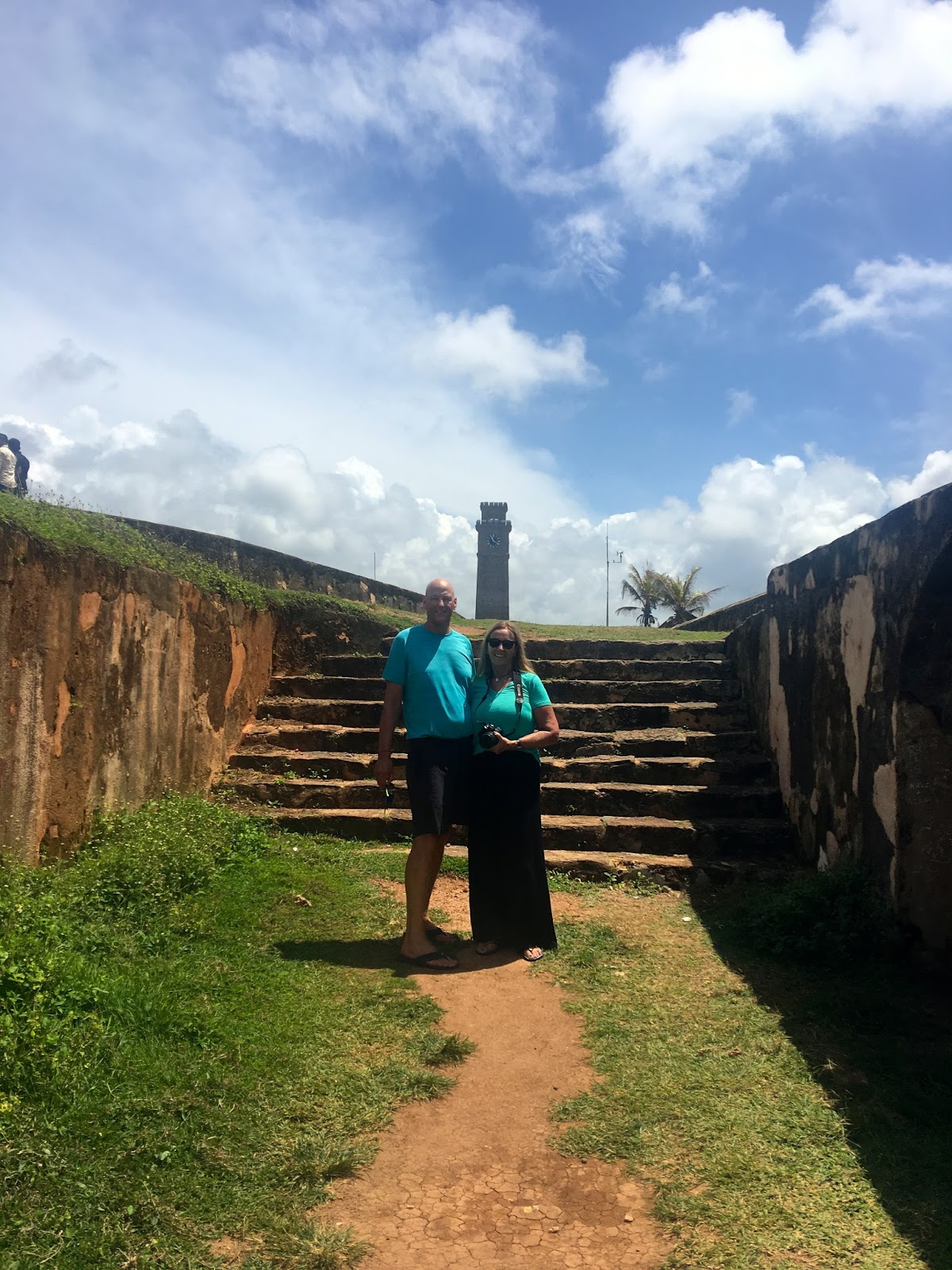
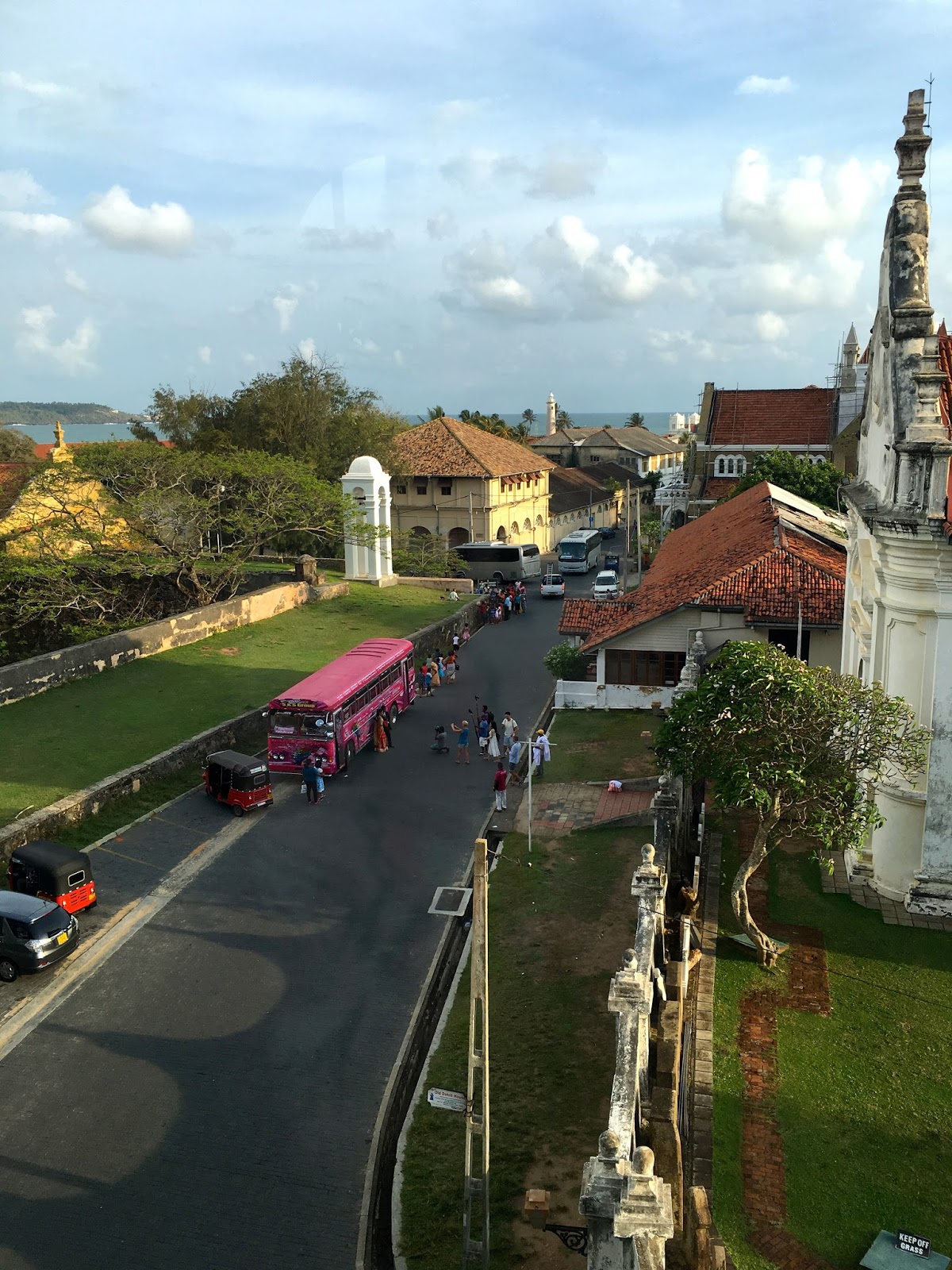
We went on a two-hour walking tour of the Galle Fort area. There are only 4 main streets, with little alleyways here and there.  There is a lighthouse and along the ramparts and there are cannon remnants.
Main street inside the fort


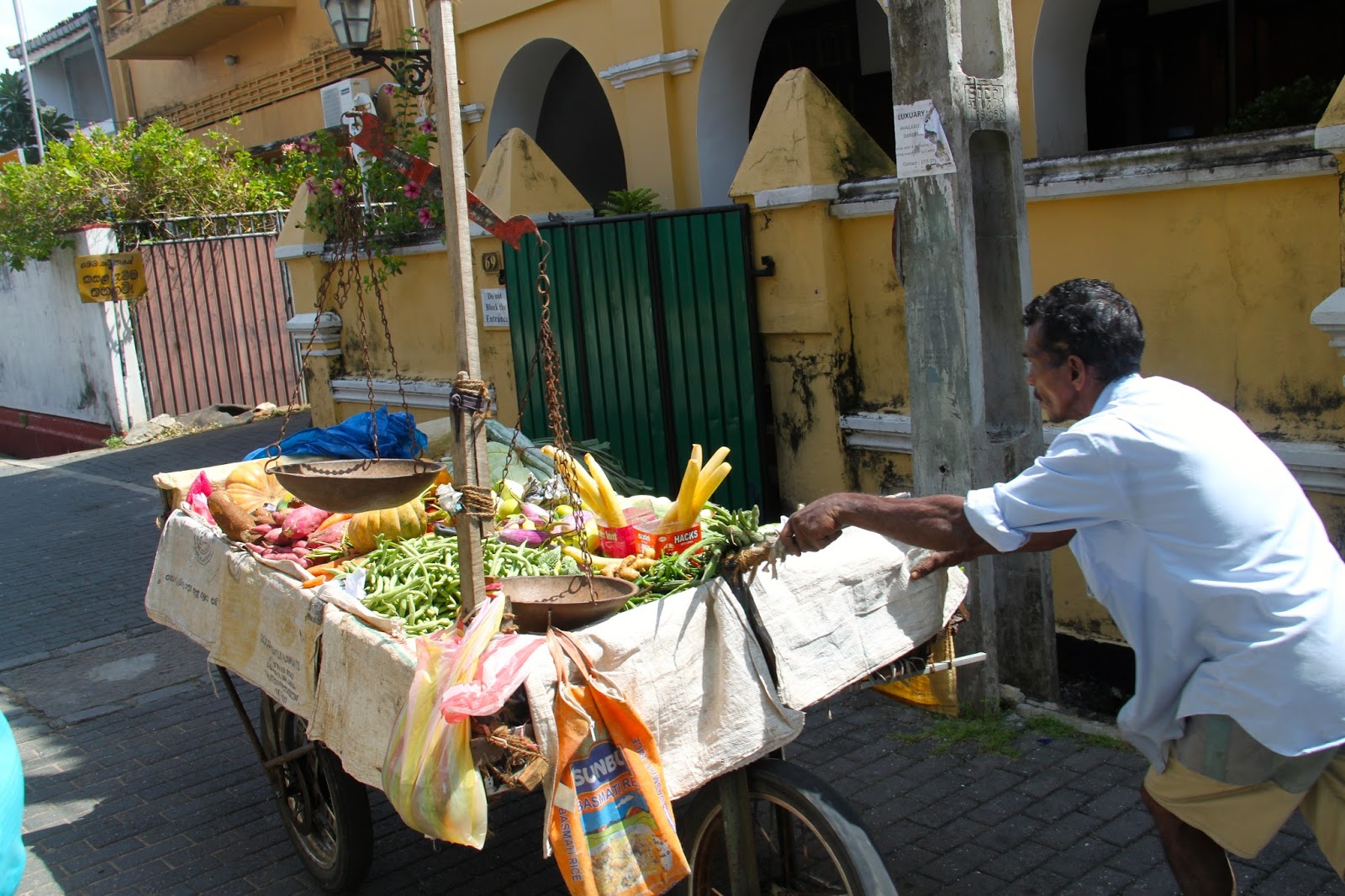
A smaller alley


Everything looks fresh
The lighthouse


Along the ramparts


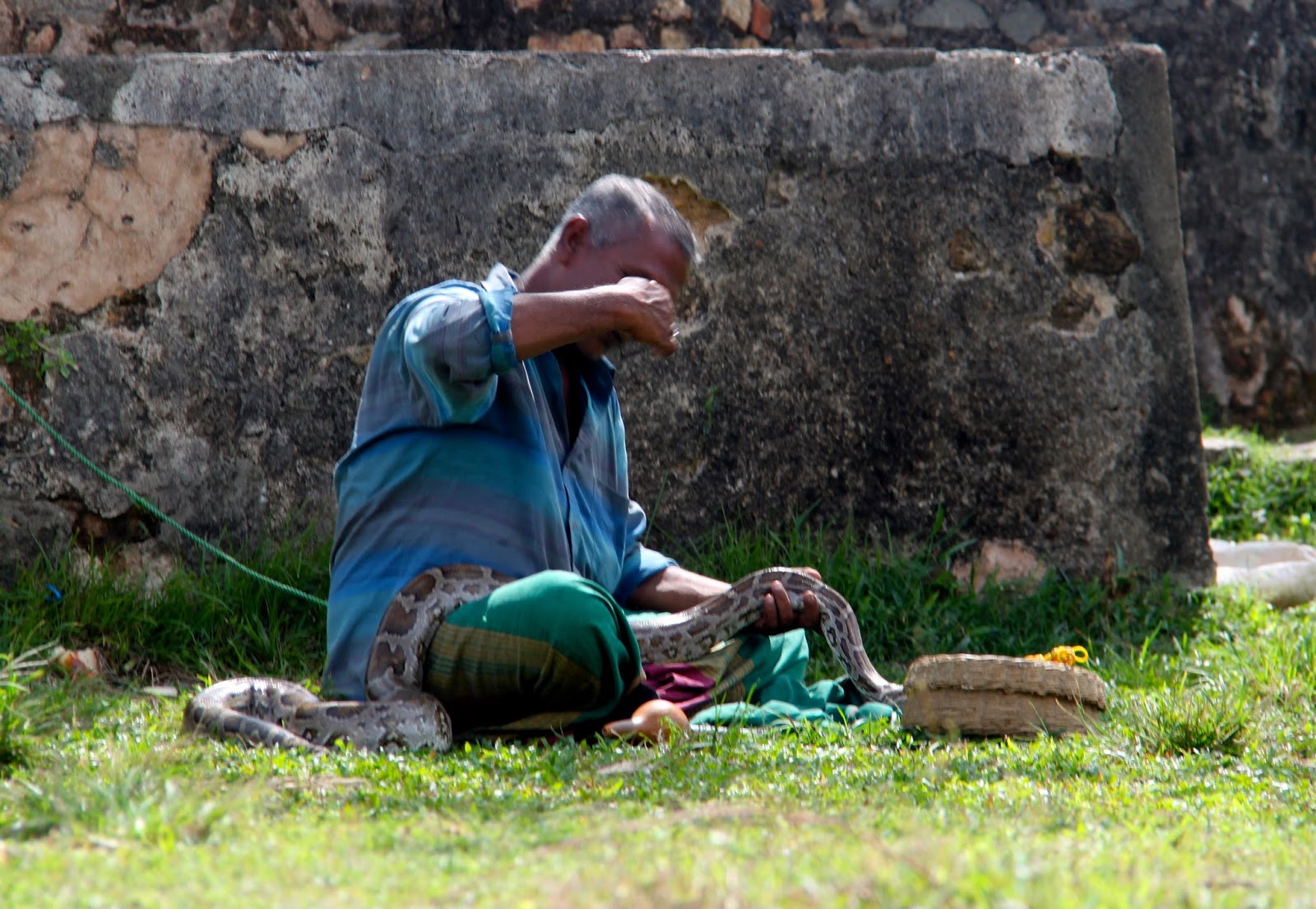
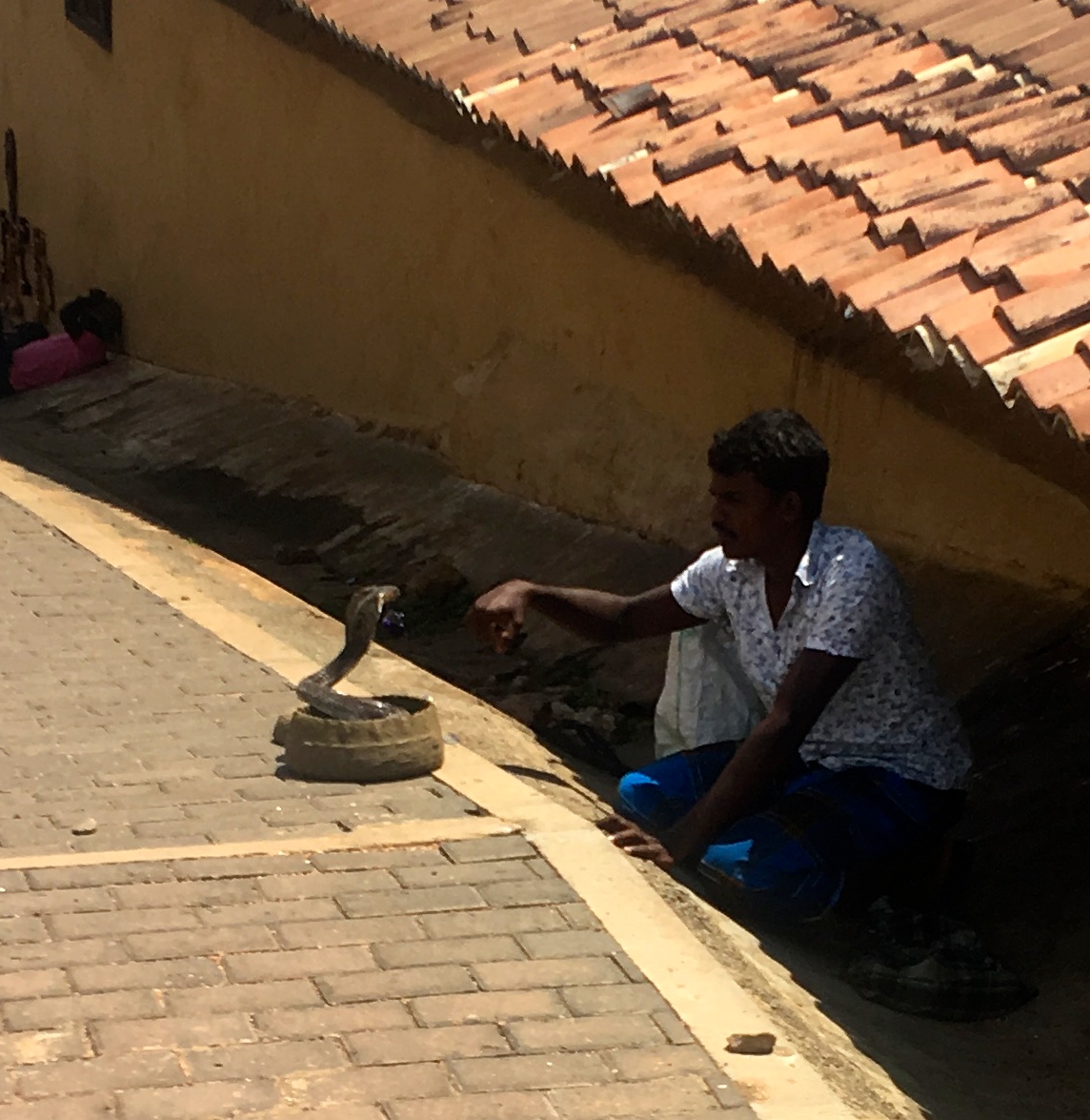
Of course there are snake charmers


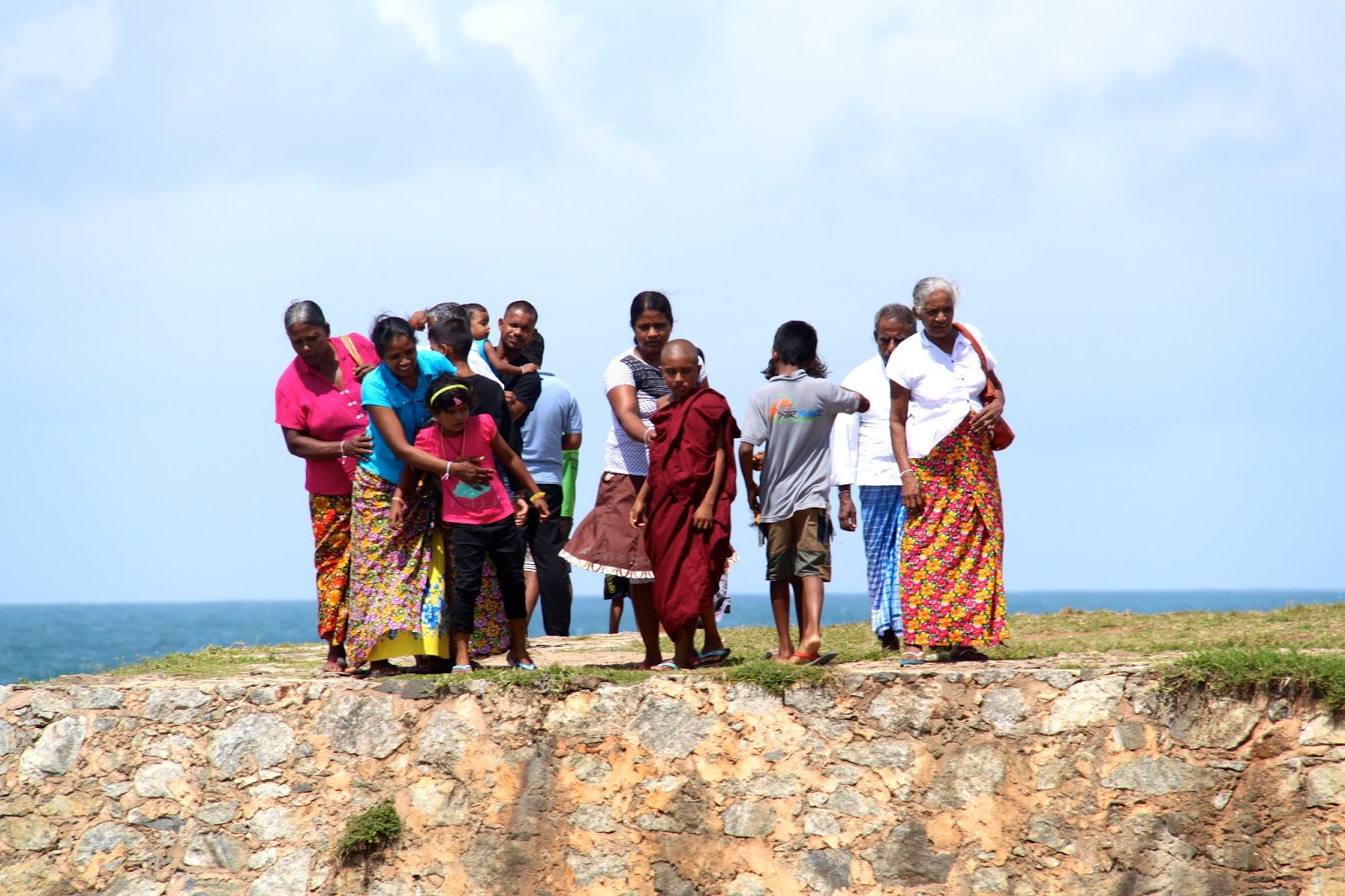
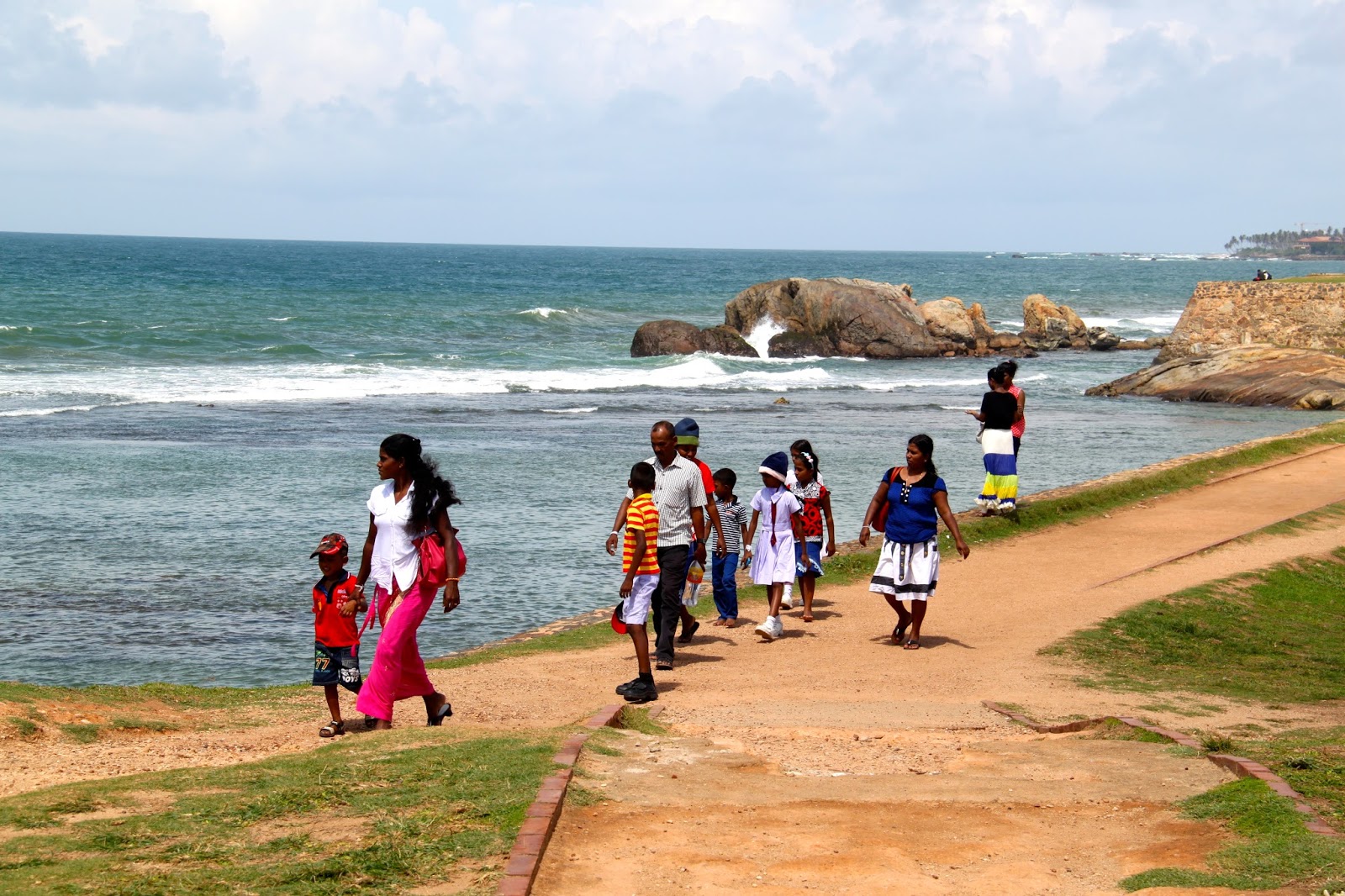
It was nice to see families out walking the ramparts for a Sunday morning activity.


The 2004 Tsunami did not reach over the ramparts of the Galle Fort but destroyed big parts of the nearby city.  All of the UNESCO Heritage buildings in the Fort were saved from the Tsunami by the Ramparts completely surrounding the Fort.  The Tsunami wave was only 17 feet high in this area.  In other areas of the Indian Ocean the wave was close to 100 feet tall caused by the 9.0 Richter scale earthquake on December 26, 2004.


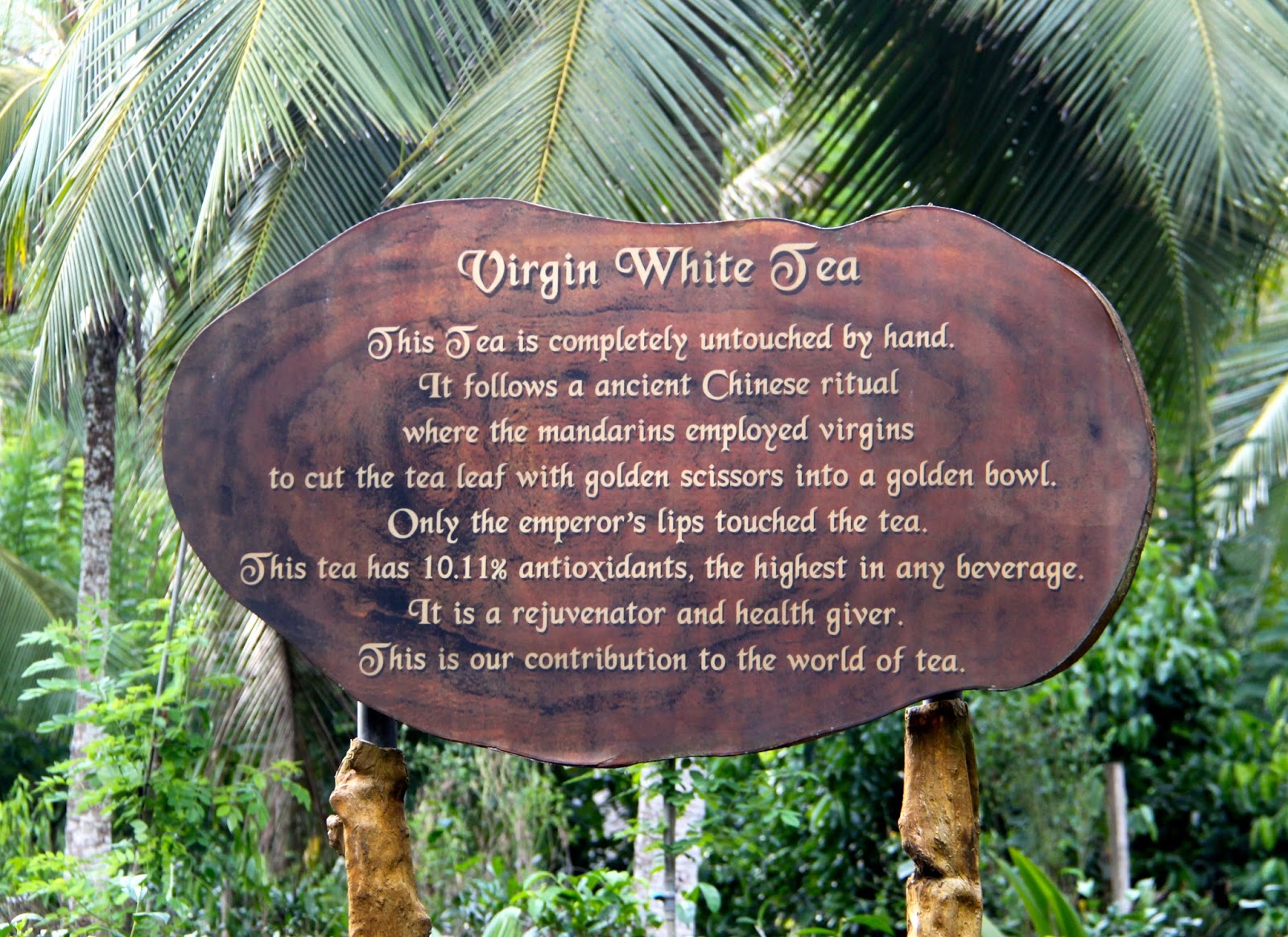
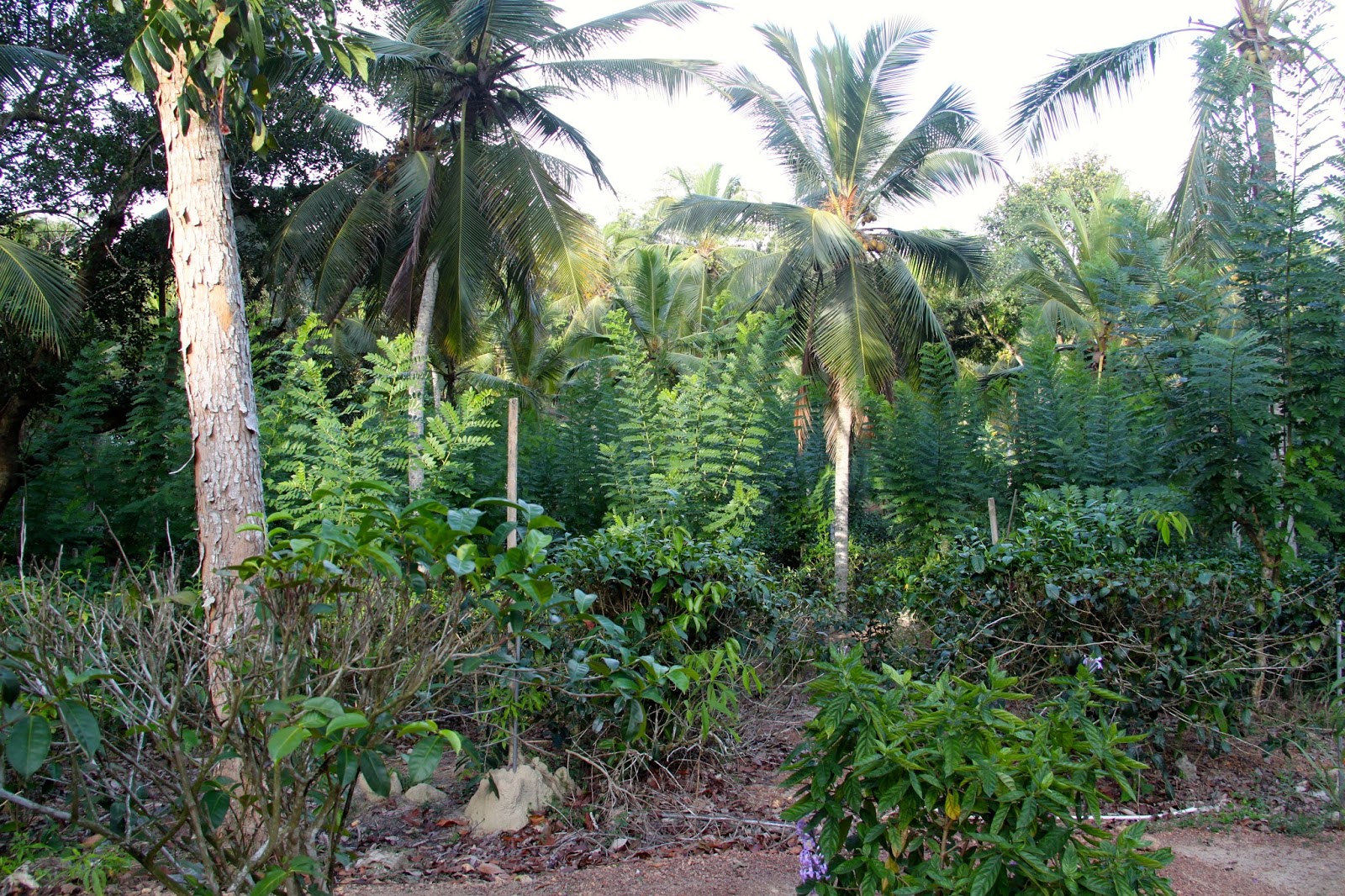
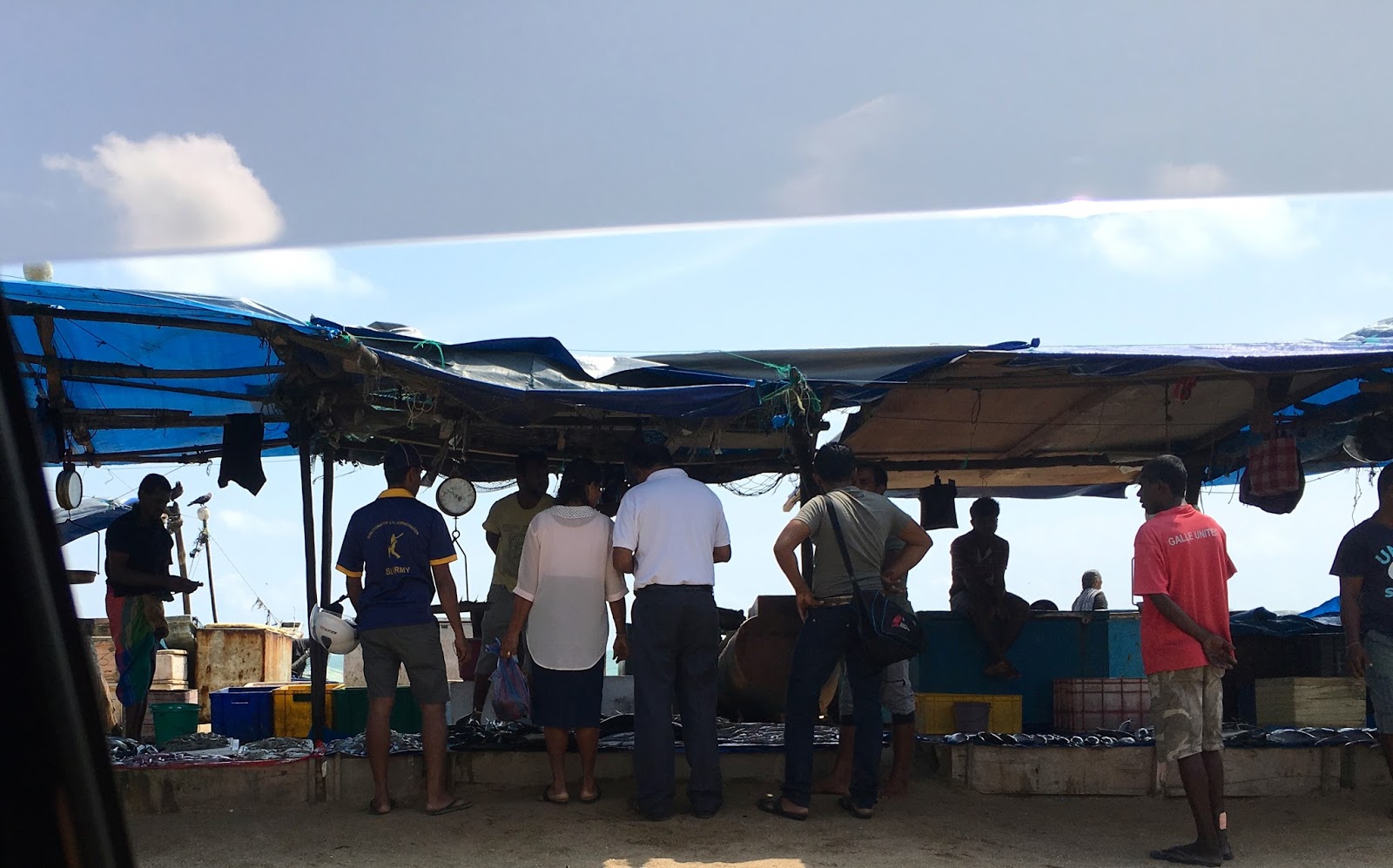
We also visited a small Tea Plantation and a Rock Buddhist Temple near Galle.  They sell fresh fish every day along the highway.


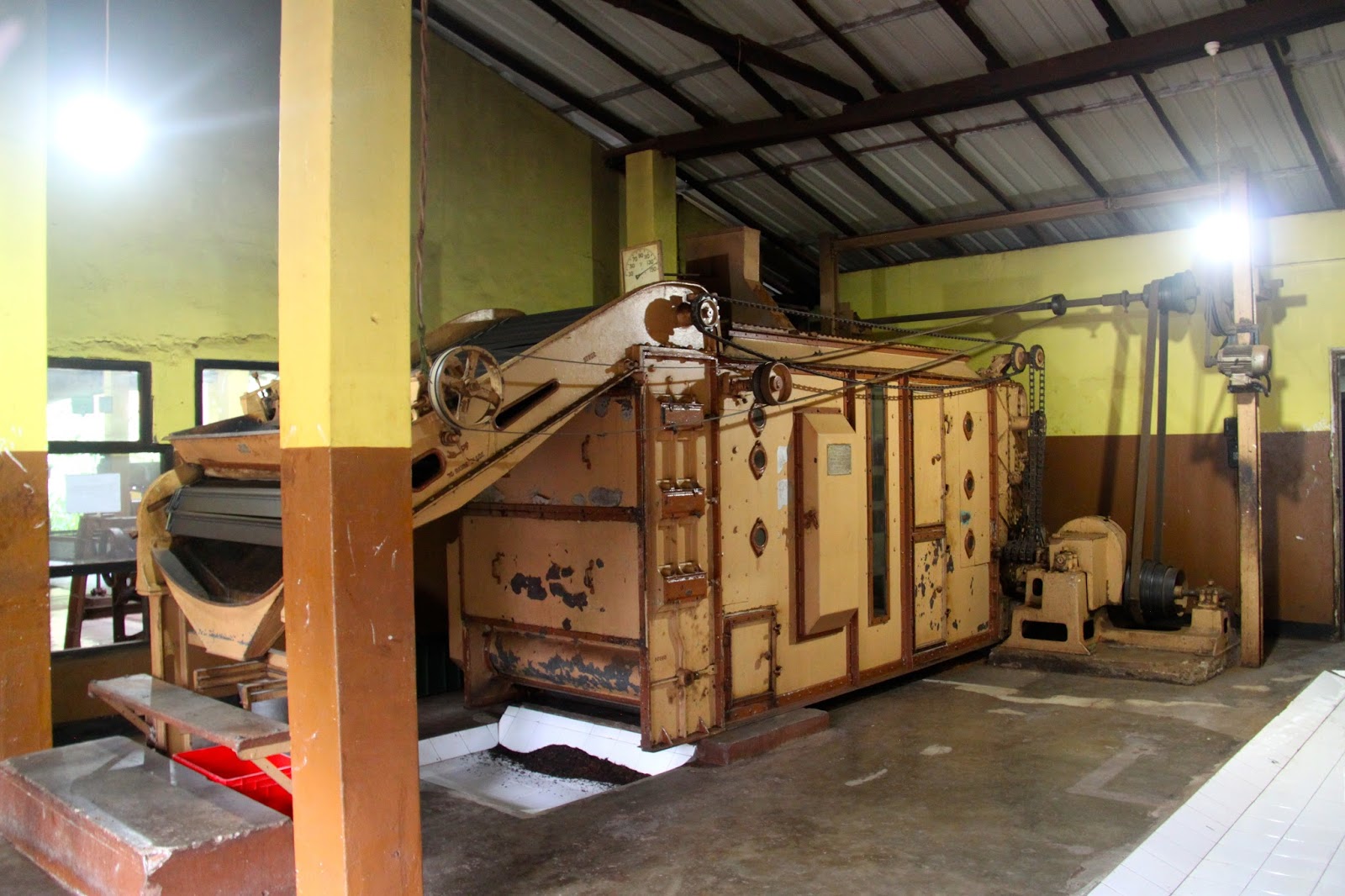
In the tea factory, this machine was made by the Davidson Company who built the Titanic.  (It’s pretty old.)


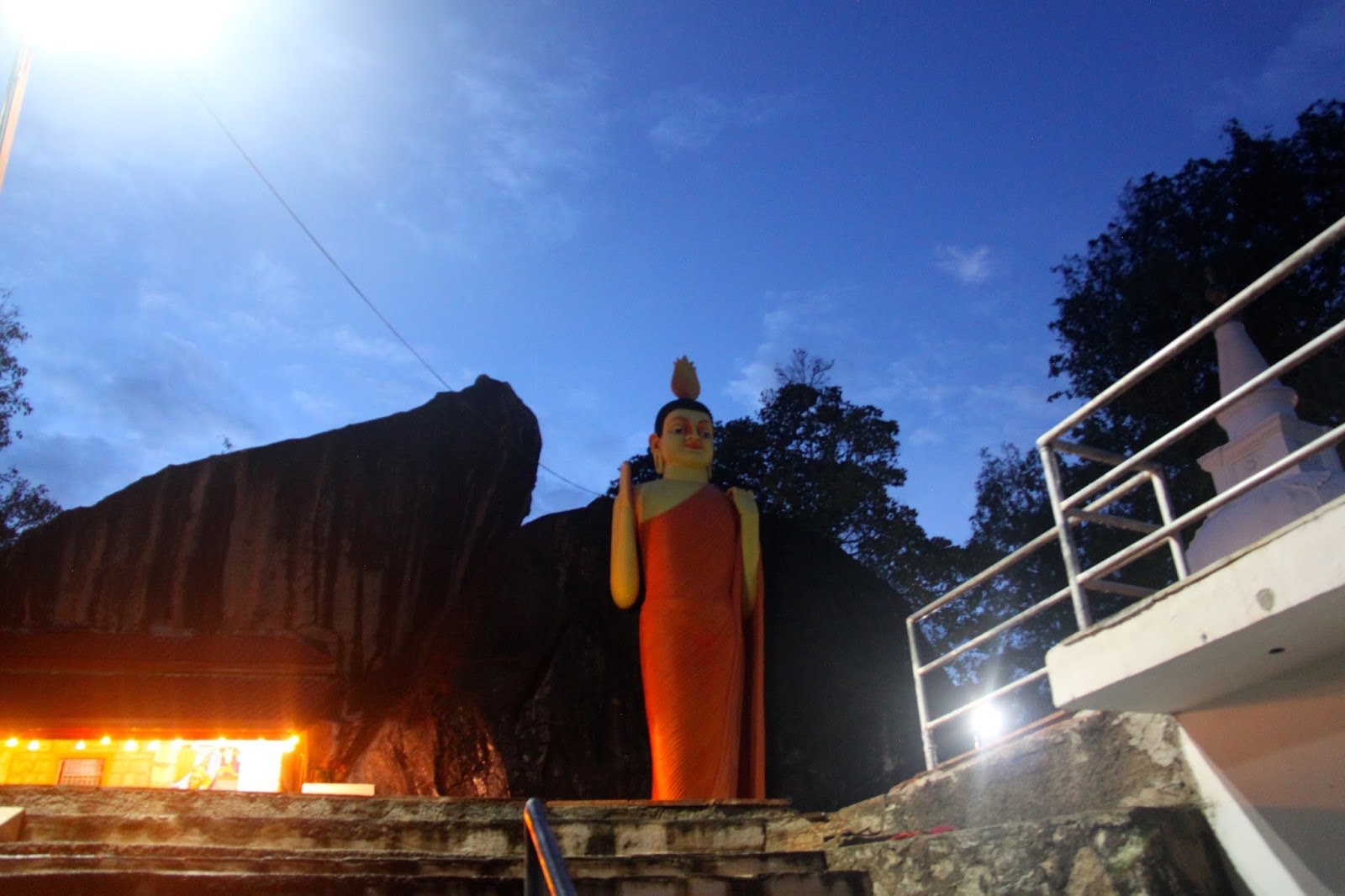
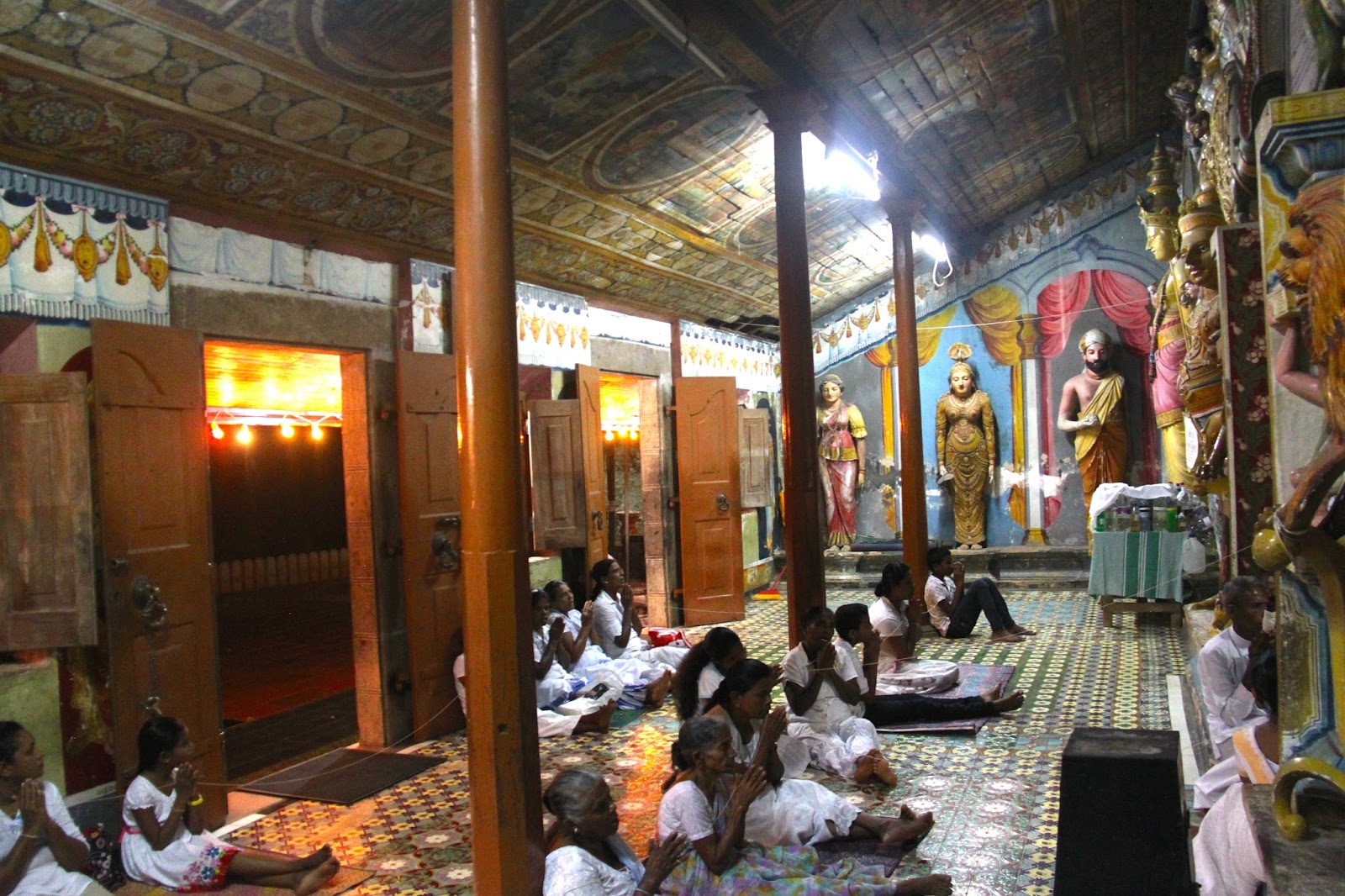
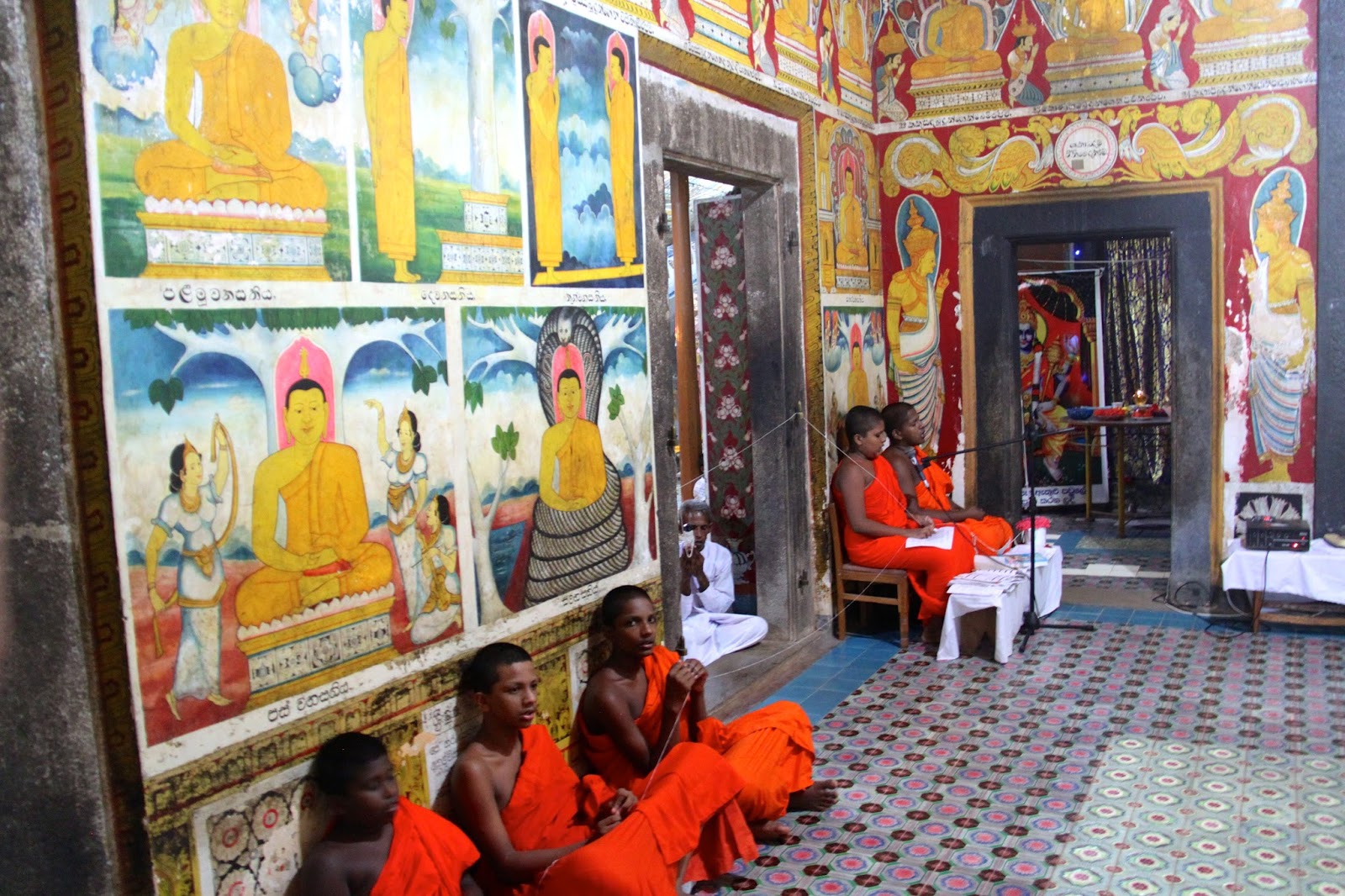
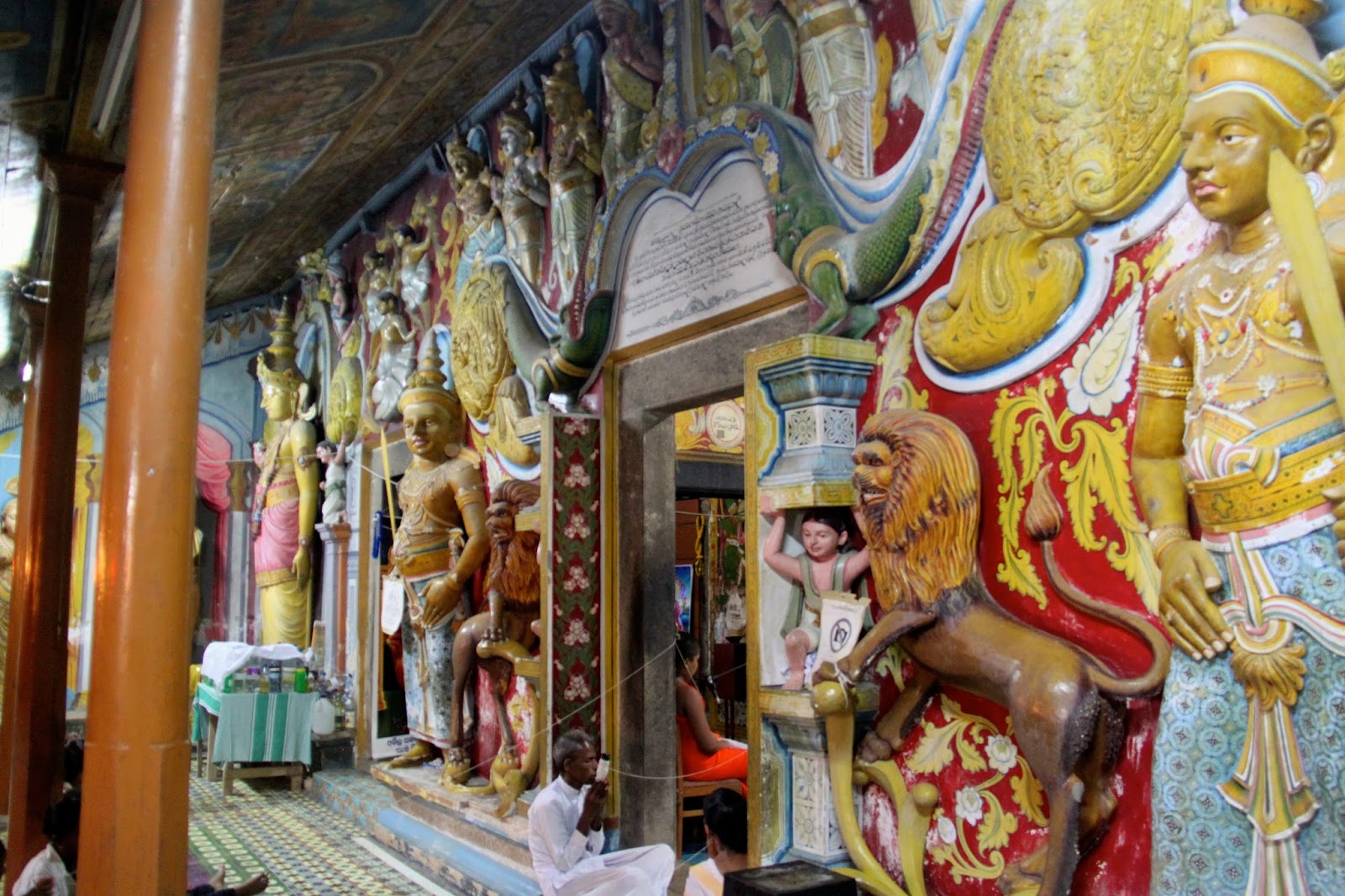
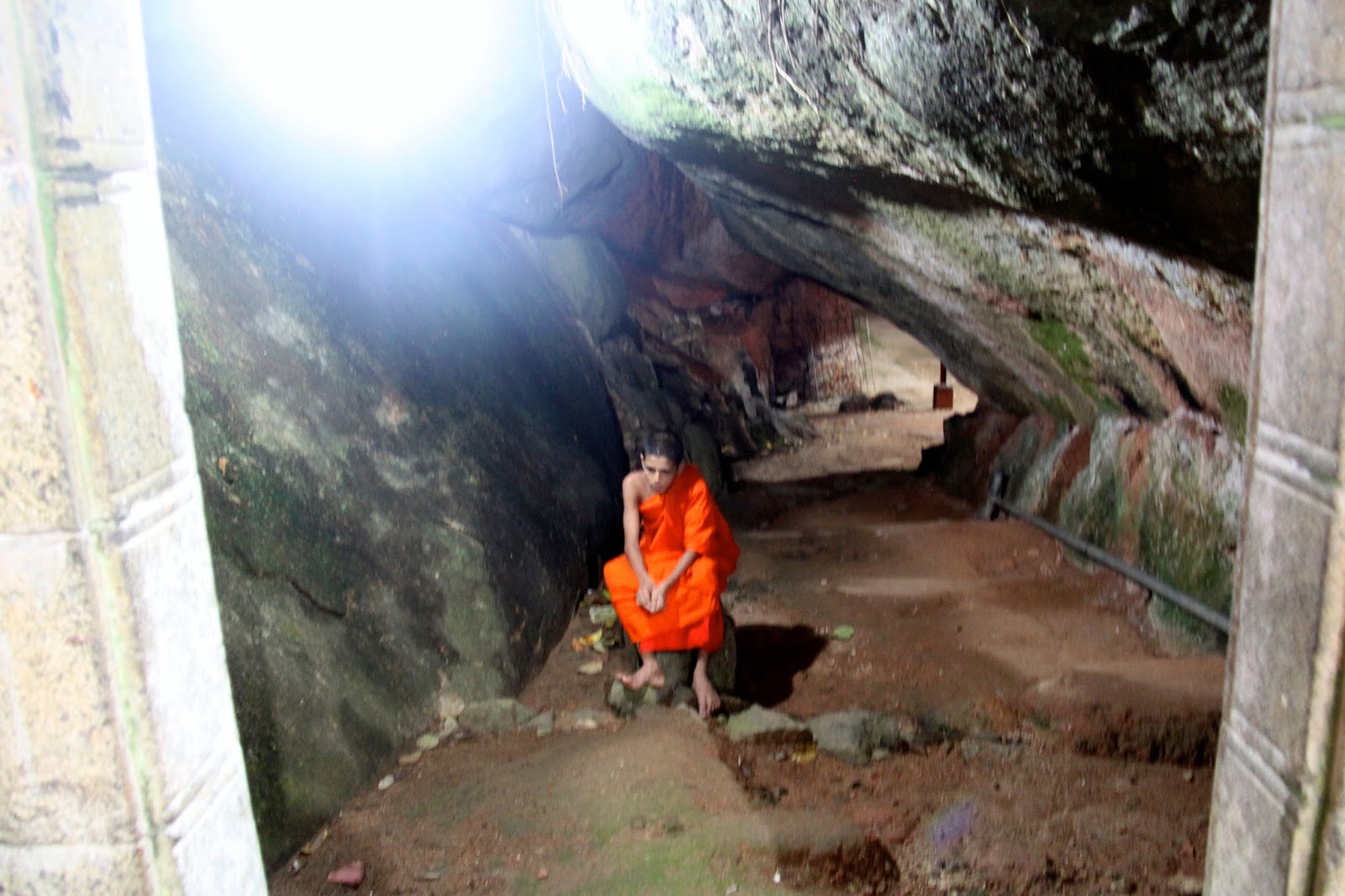
Another Buddhist Temple inside rock caves
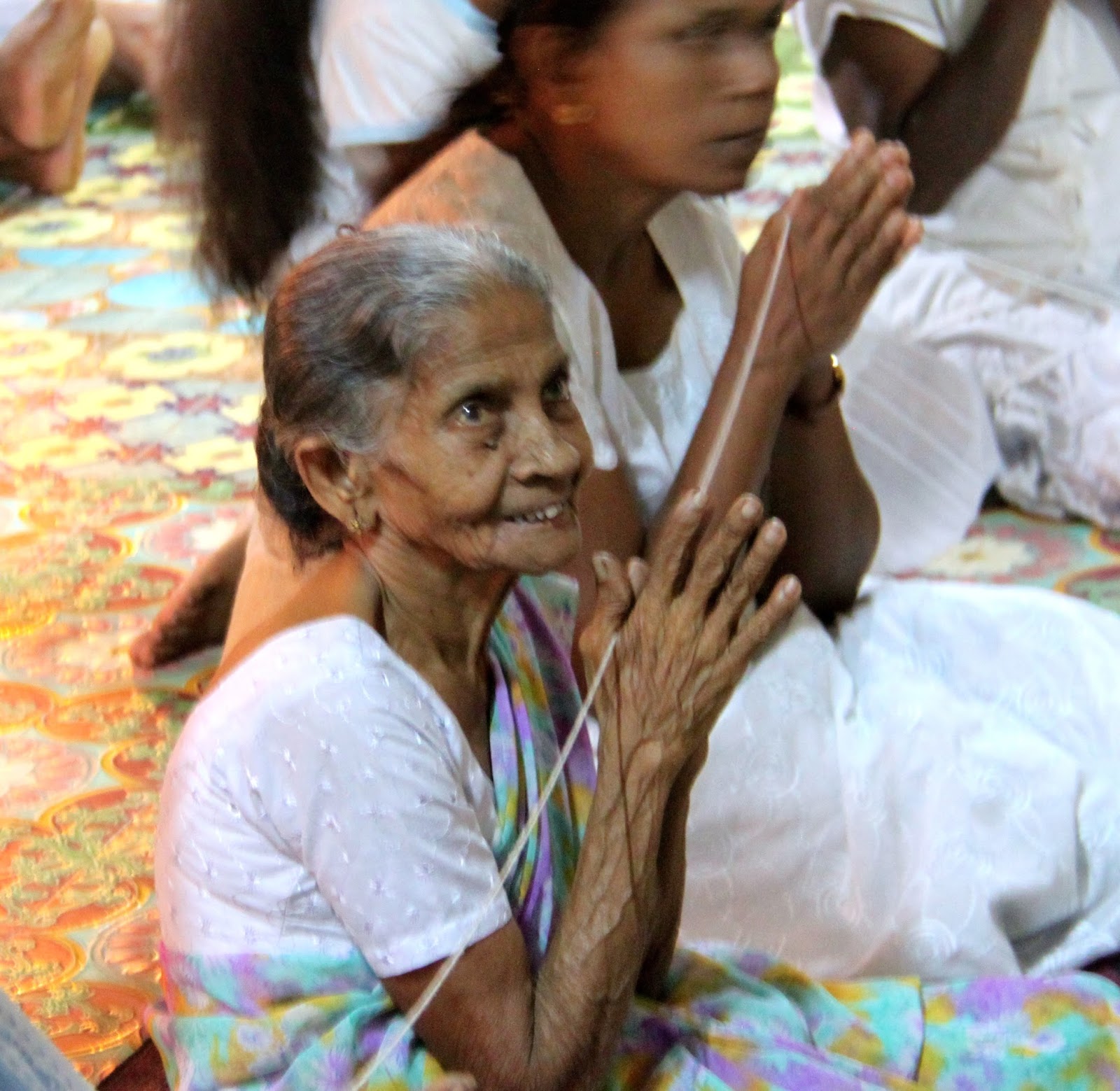
It was 6:00 pm and the monks were chanting and the people praying


The young novice monks are chanting in the microphone


The people seem very happy


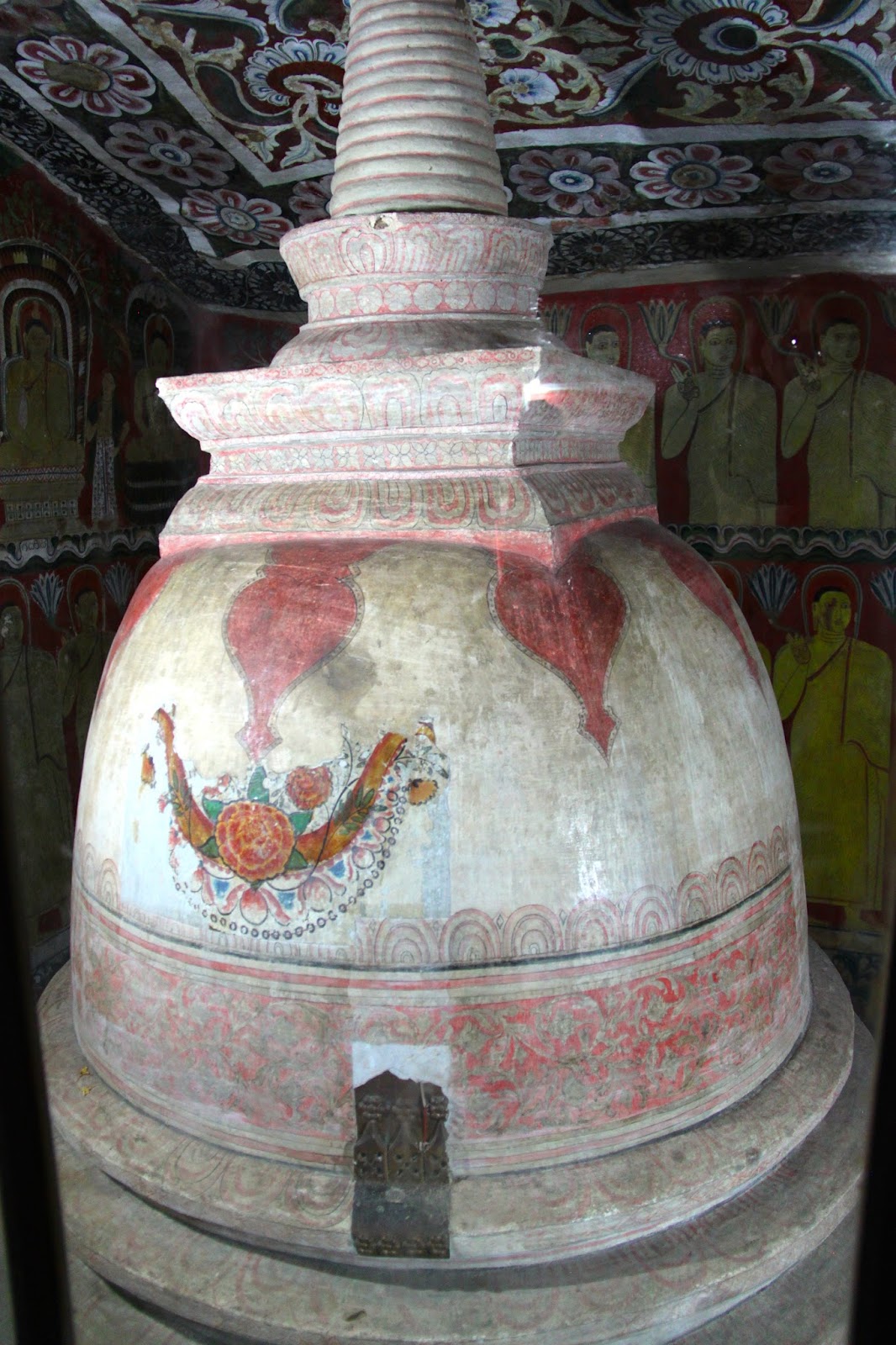
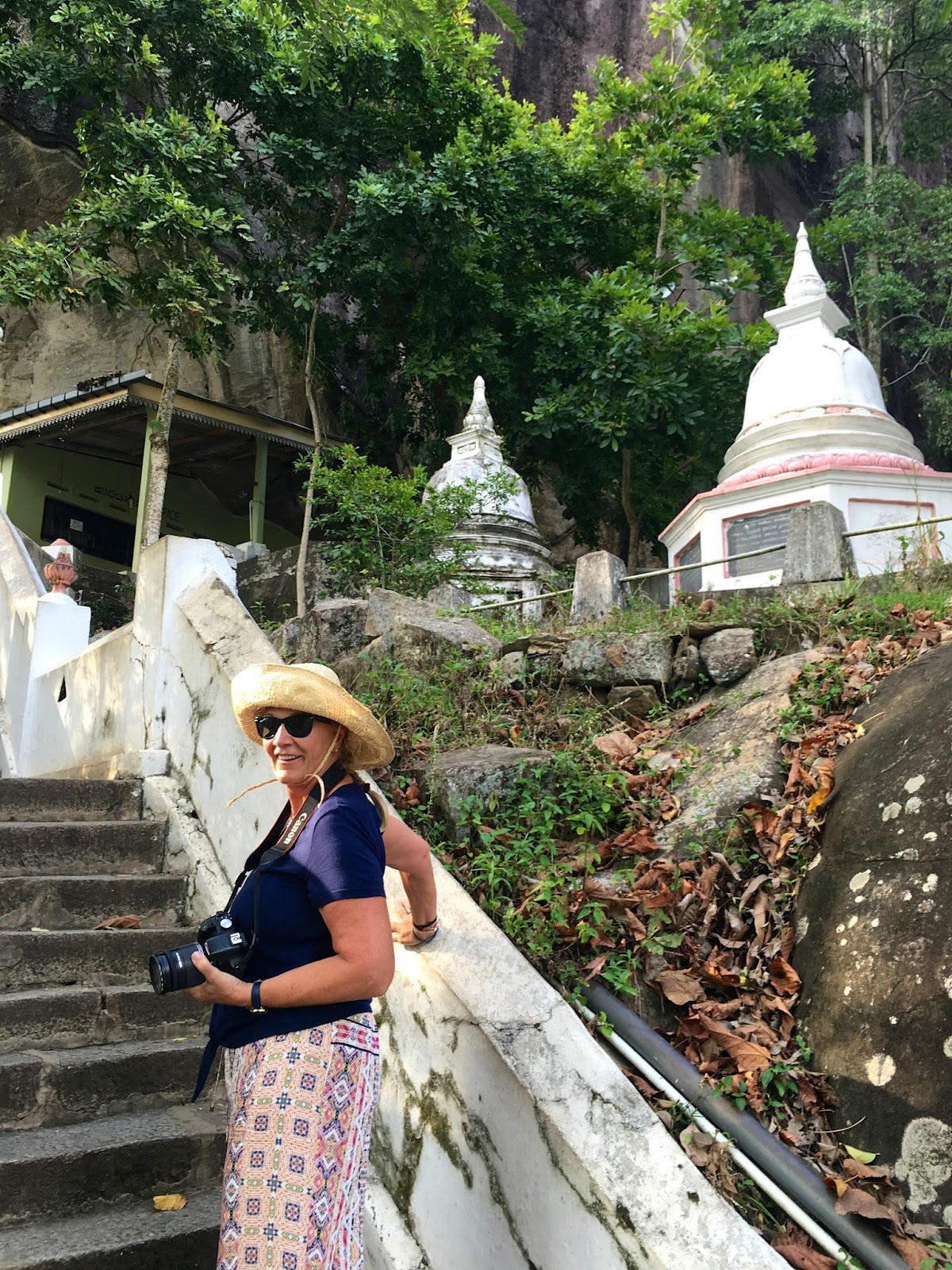
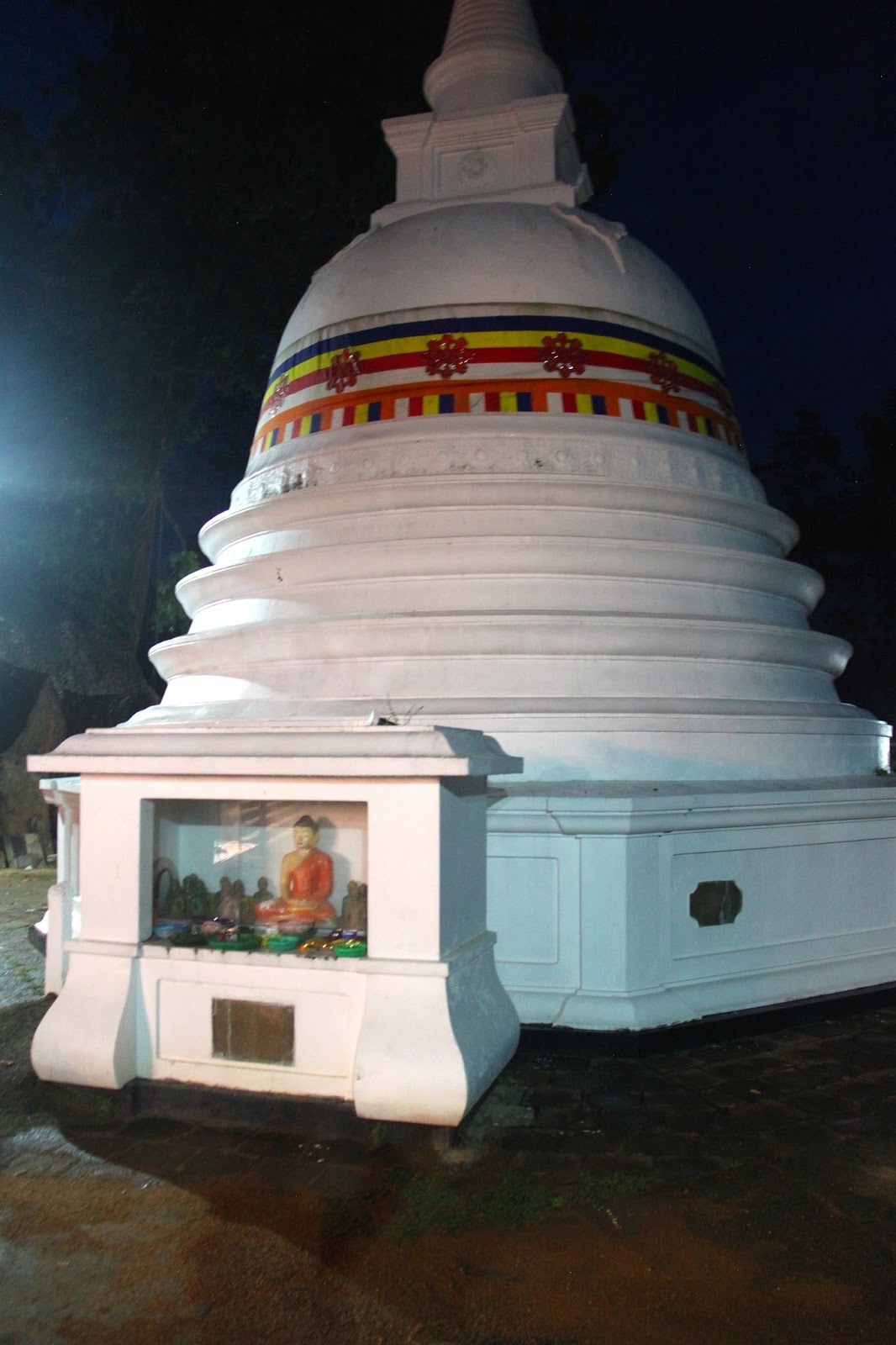
A stupa at the temple


Monk inside the cave
Selling fish


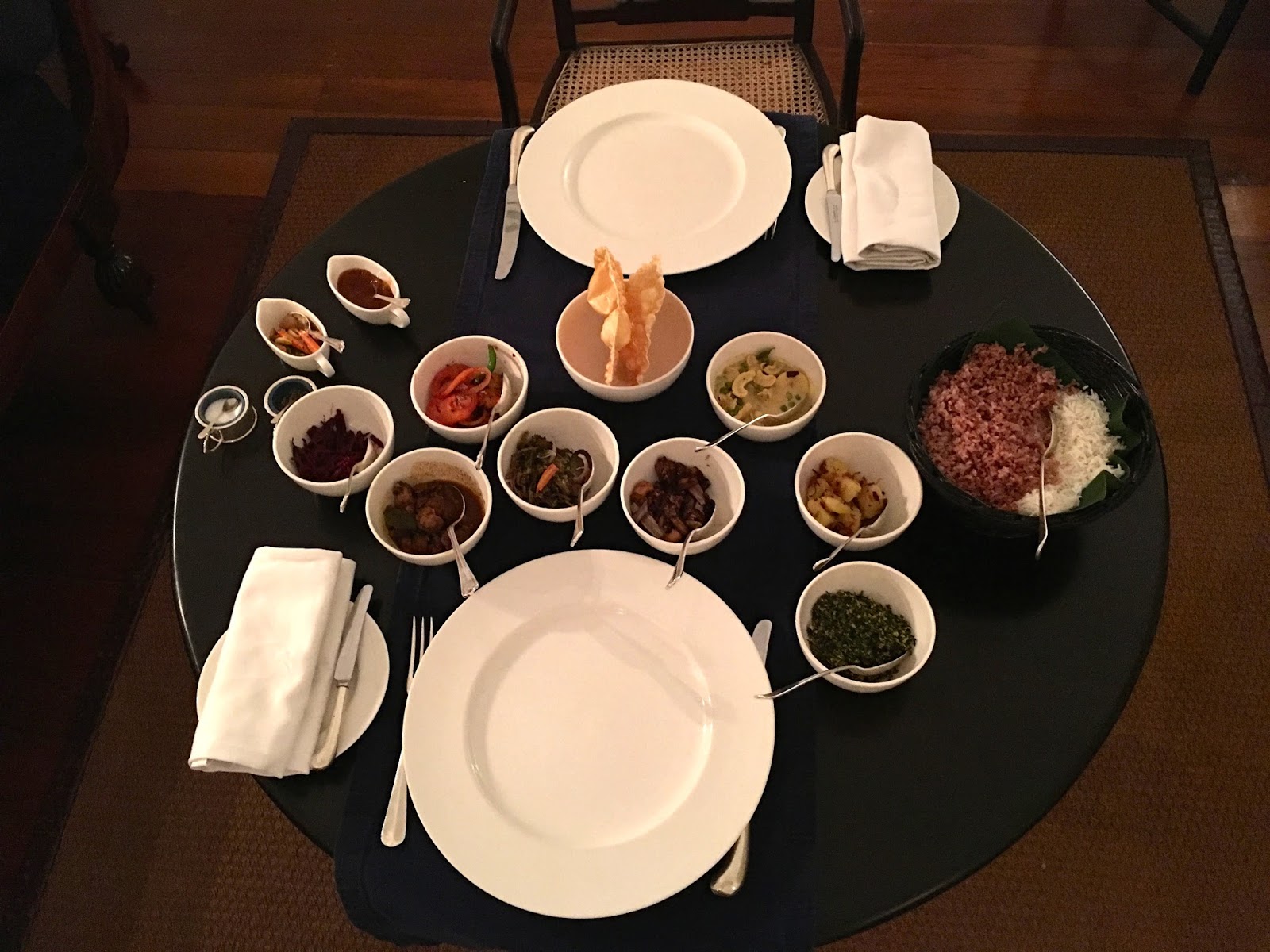
 We had a curry and rice dinner brought to our room  for dinner.  It is a typical Sri Lankan meal.  It was WAY too spicy for us!

Clingendael

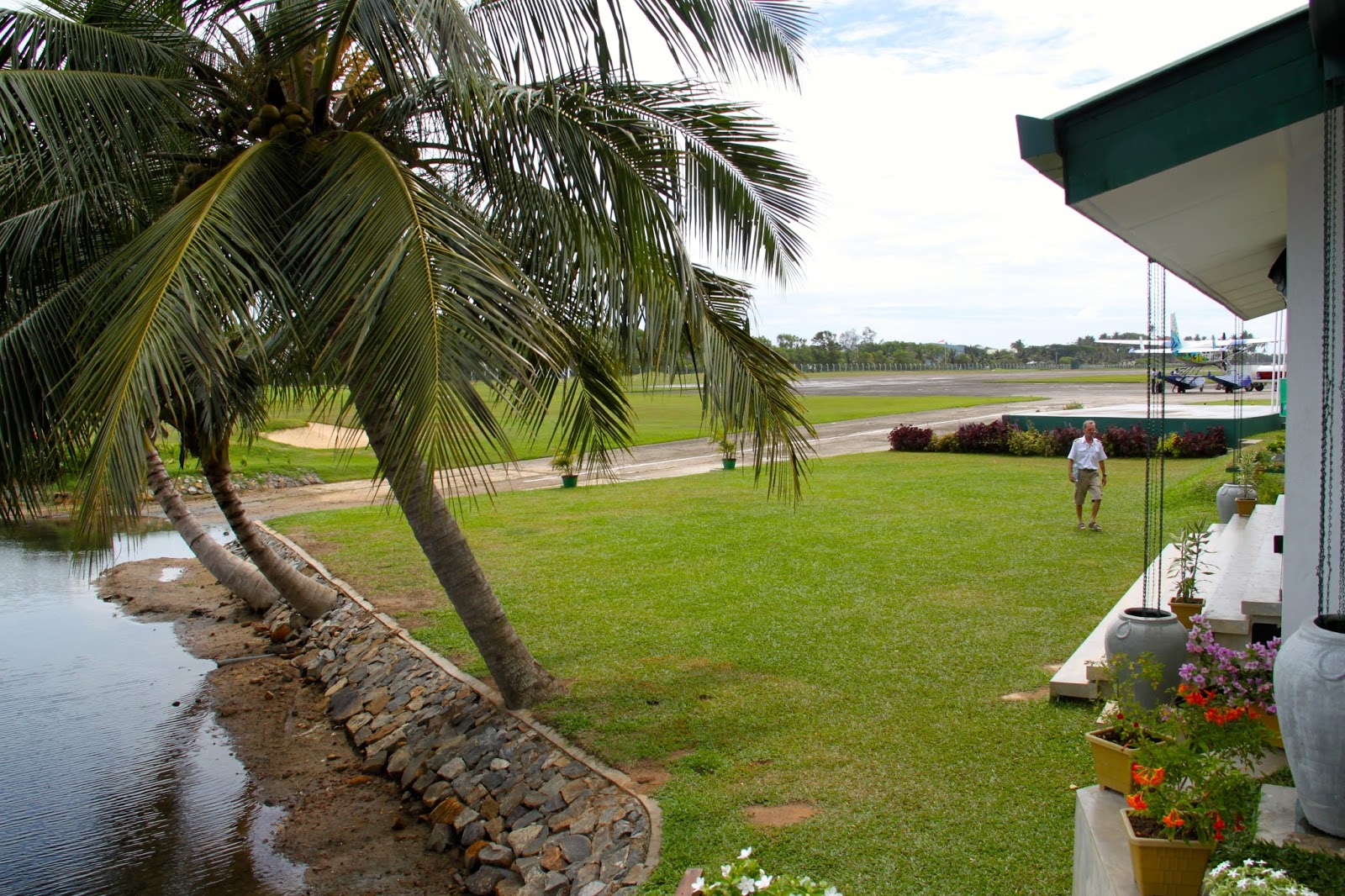
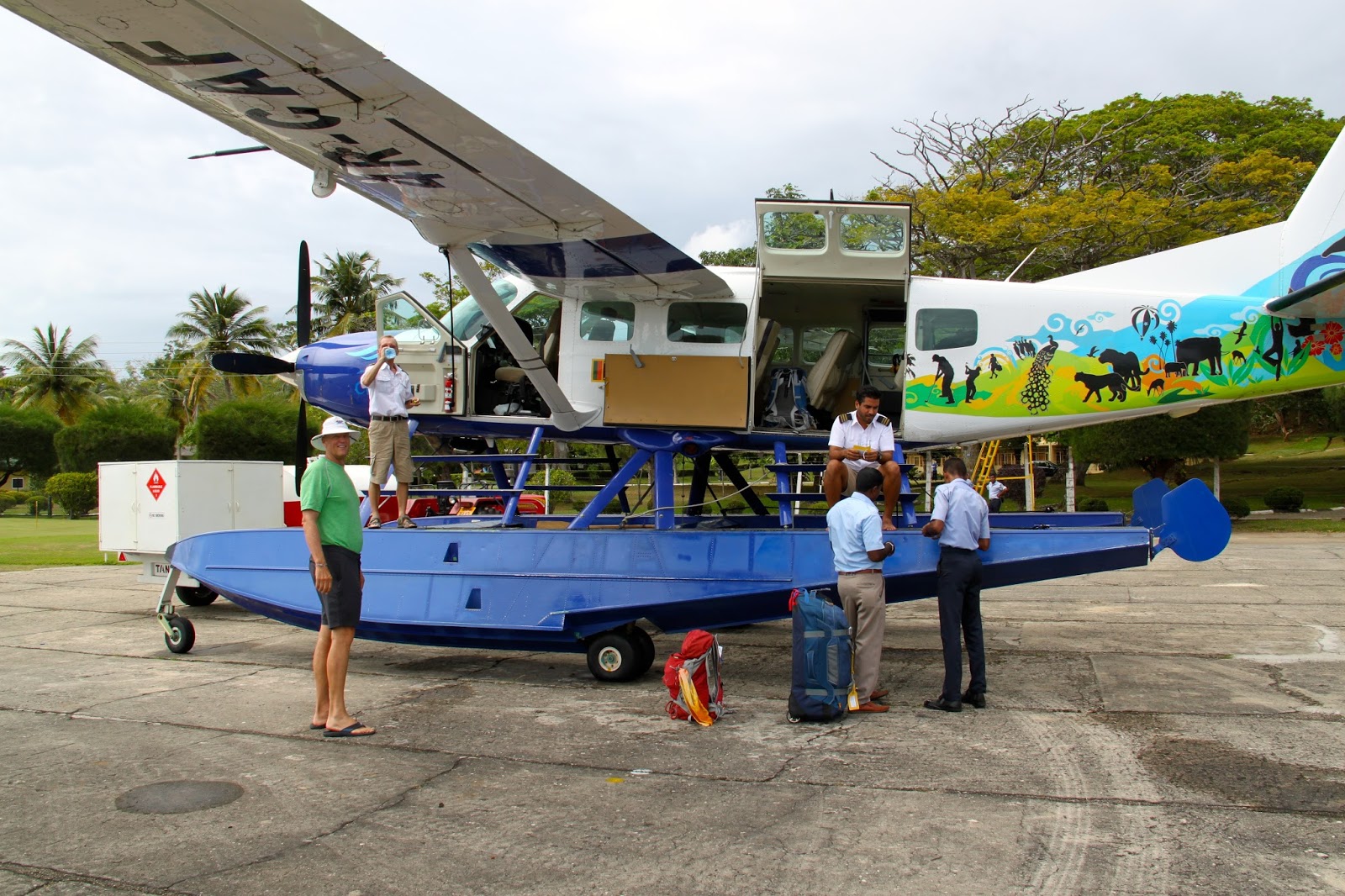
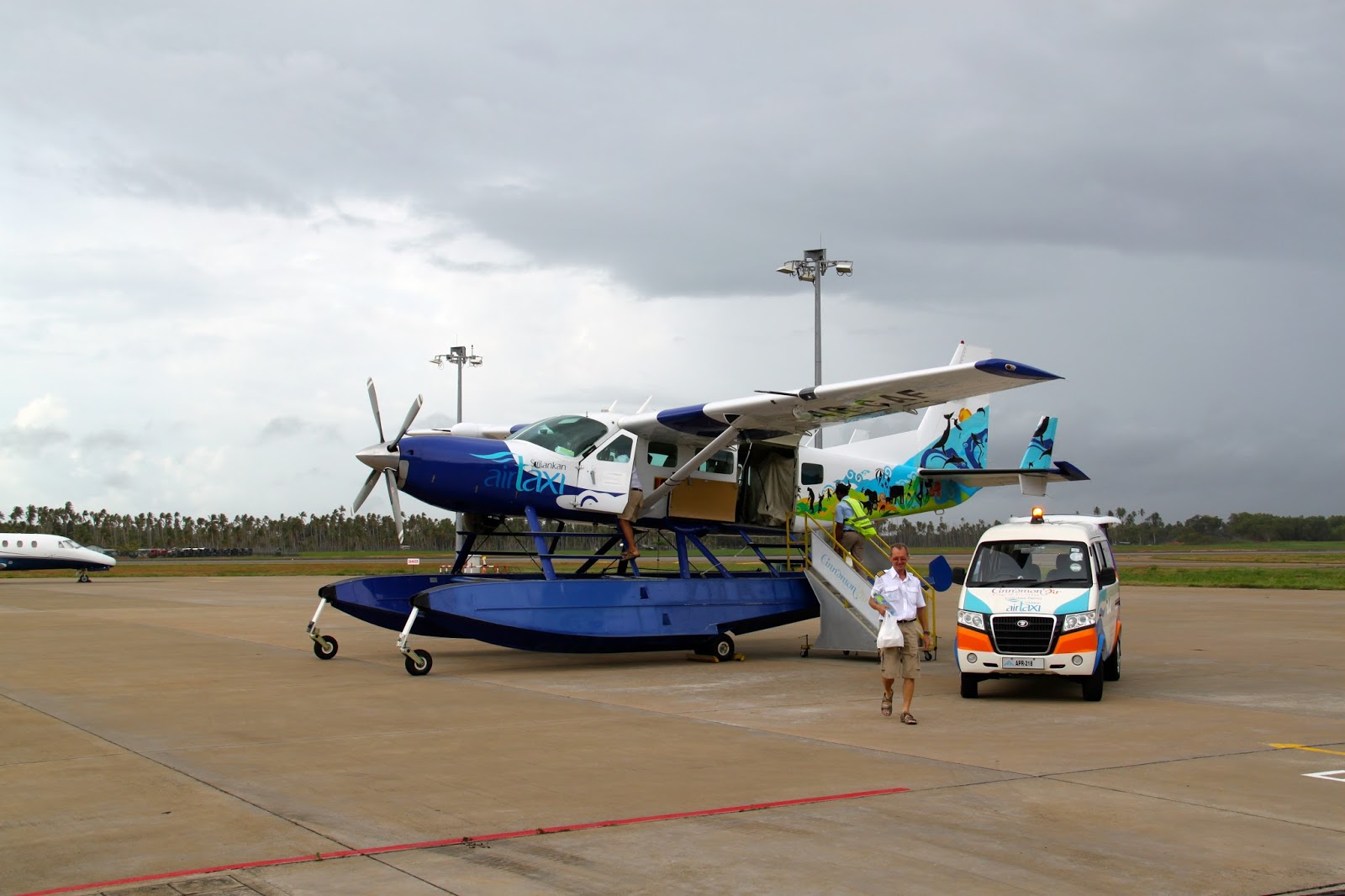
The airport was at an air force base.  The plane landed on water, then came up on land to fuel.  We took off on land.

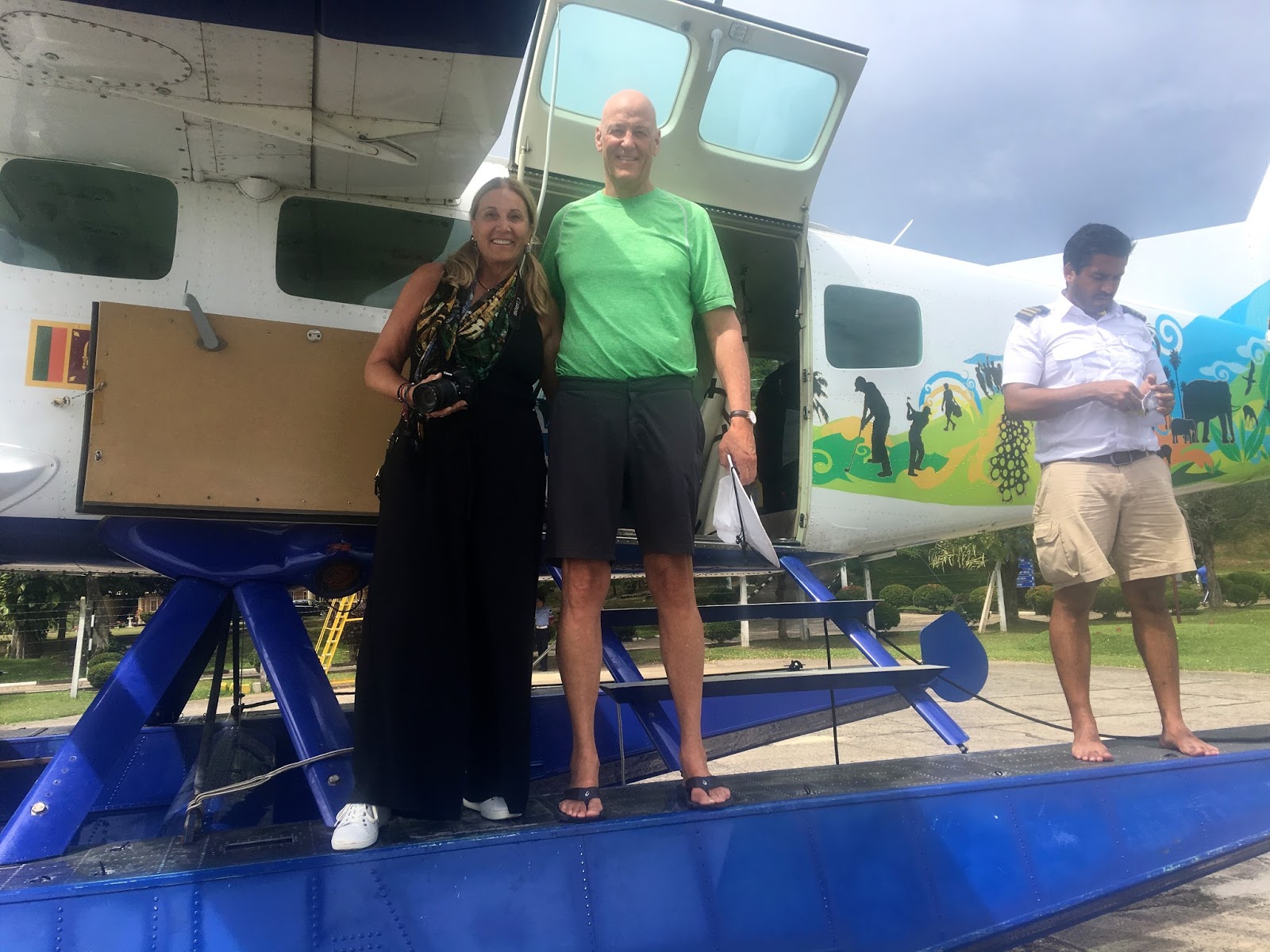
Caravan Cessna


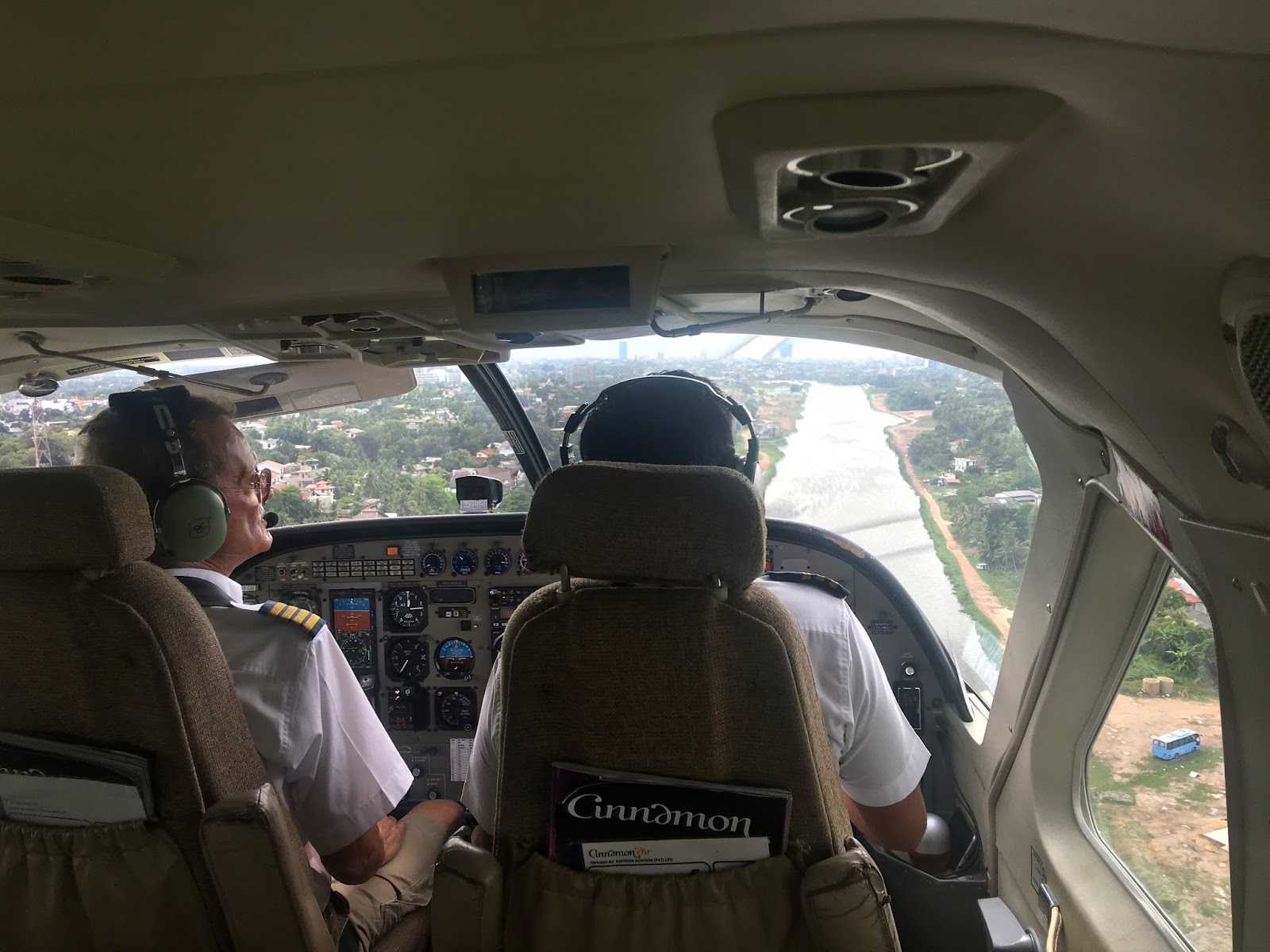
We are landing on that river ahead to pick up 2 passengers in Colombo.


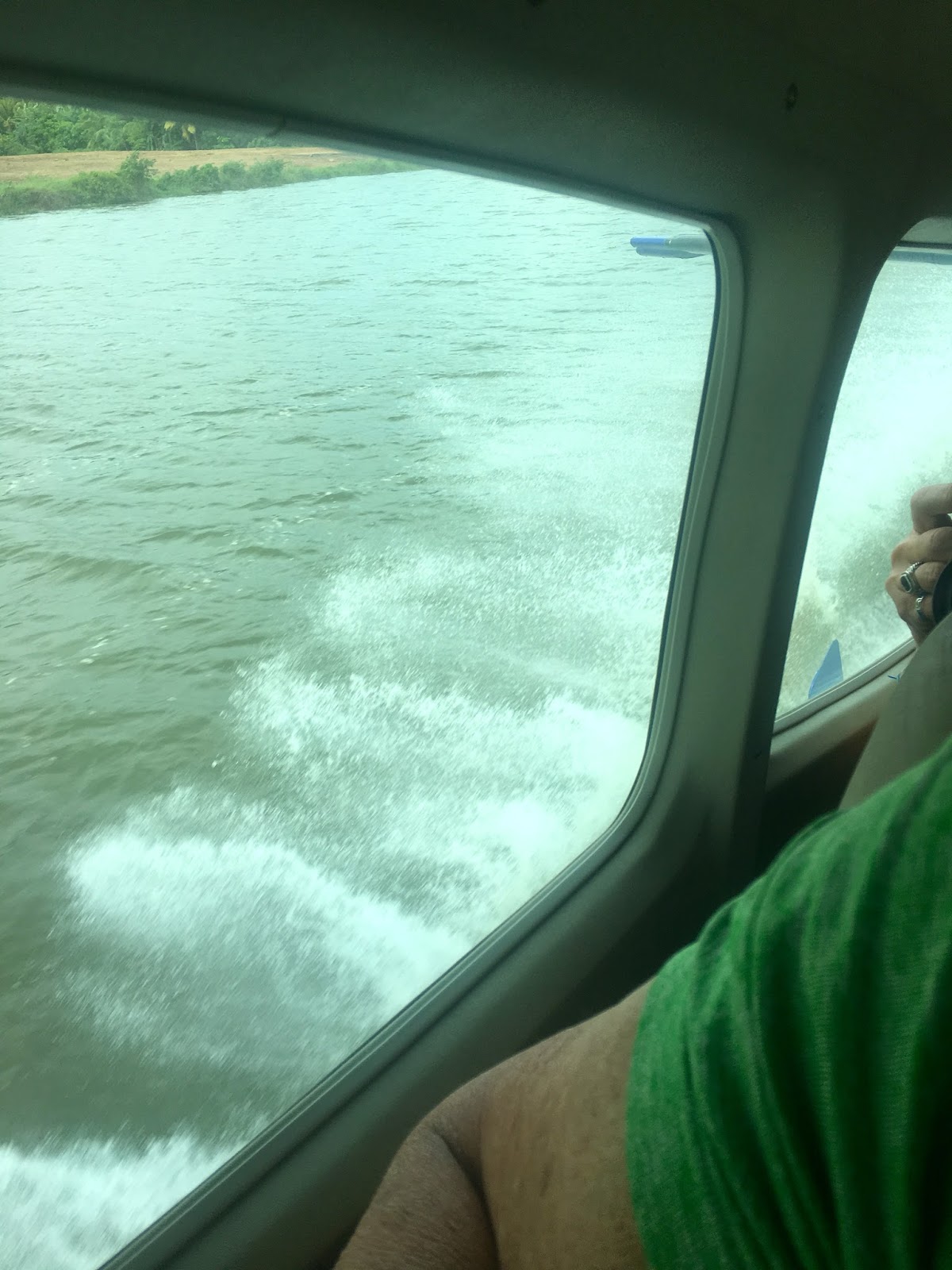
Taking off on the river


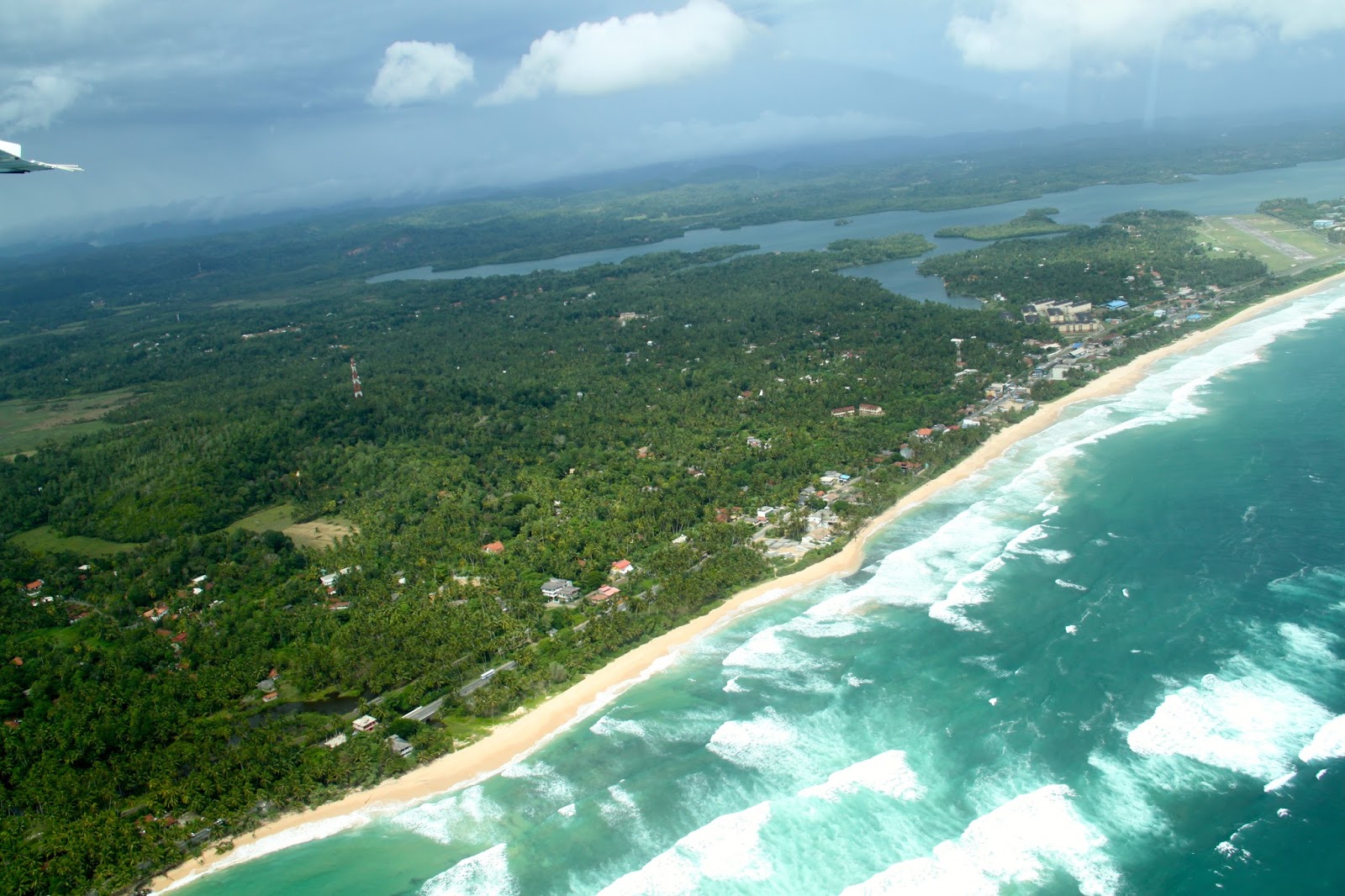
Flying over Colombo


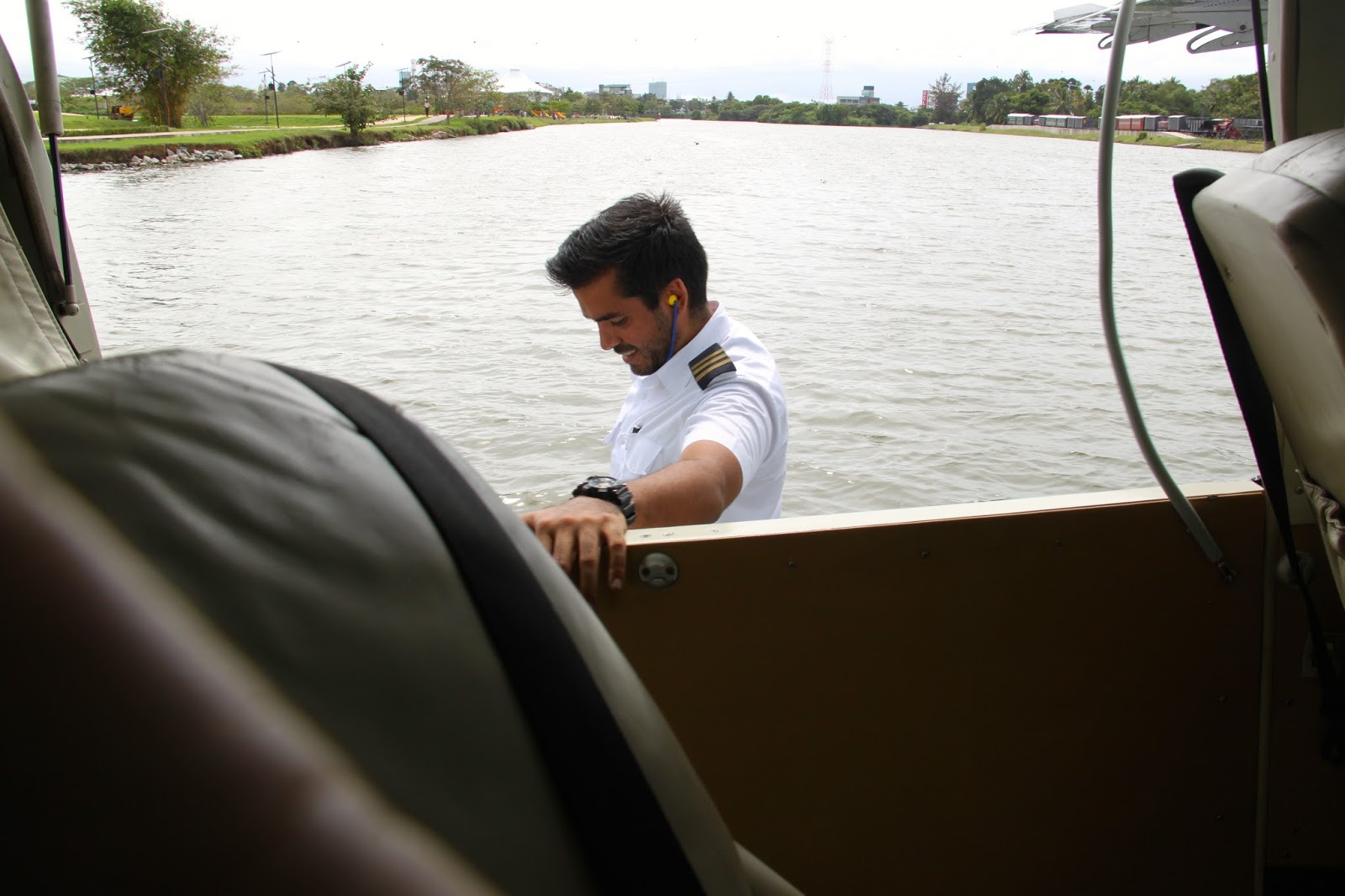
Co-pilot letting other passengers on
We flew up to Kandy (our destination) but couldn’t land in the clouds, had to turn around and go back to Colombo.  We had to circle there too trying to dodge a storm.  A little bit iffy of a flight.  Now we have to drive 4 1/2 hours on windy roads instead of a 30 minute flight.  It is only about 80 Kilometers, but it takes that long!!!!!


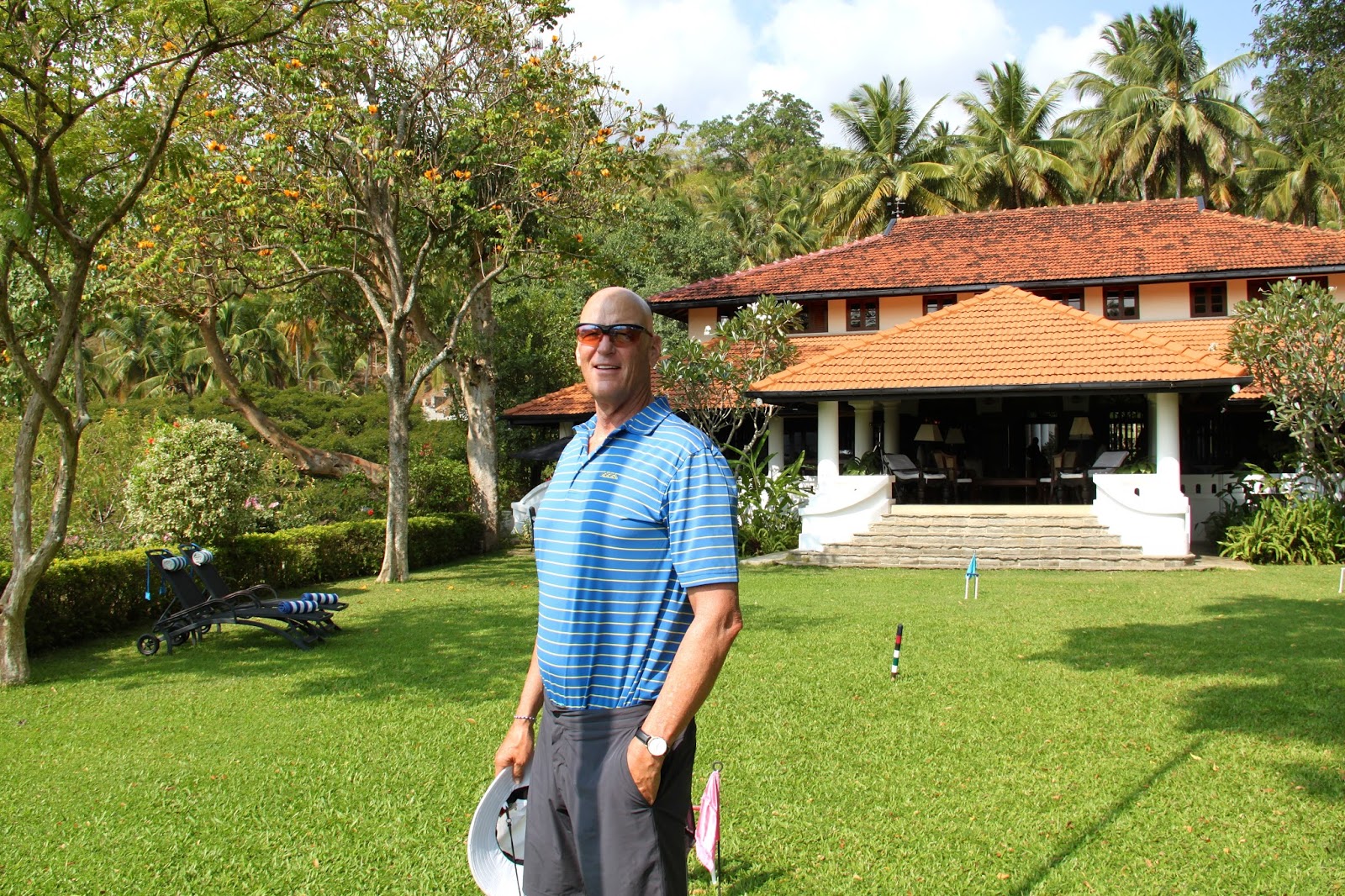
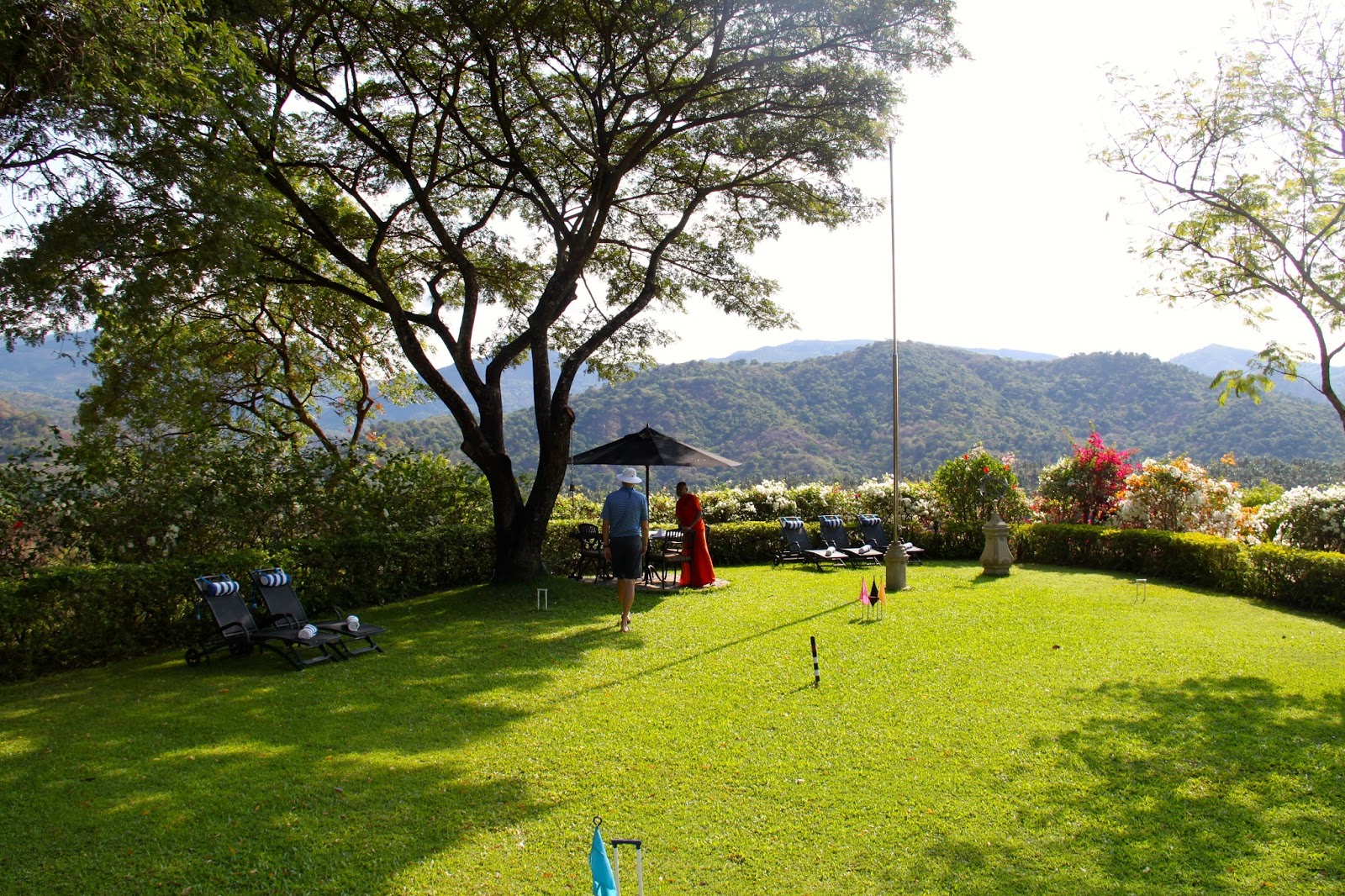
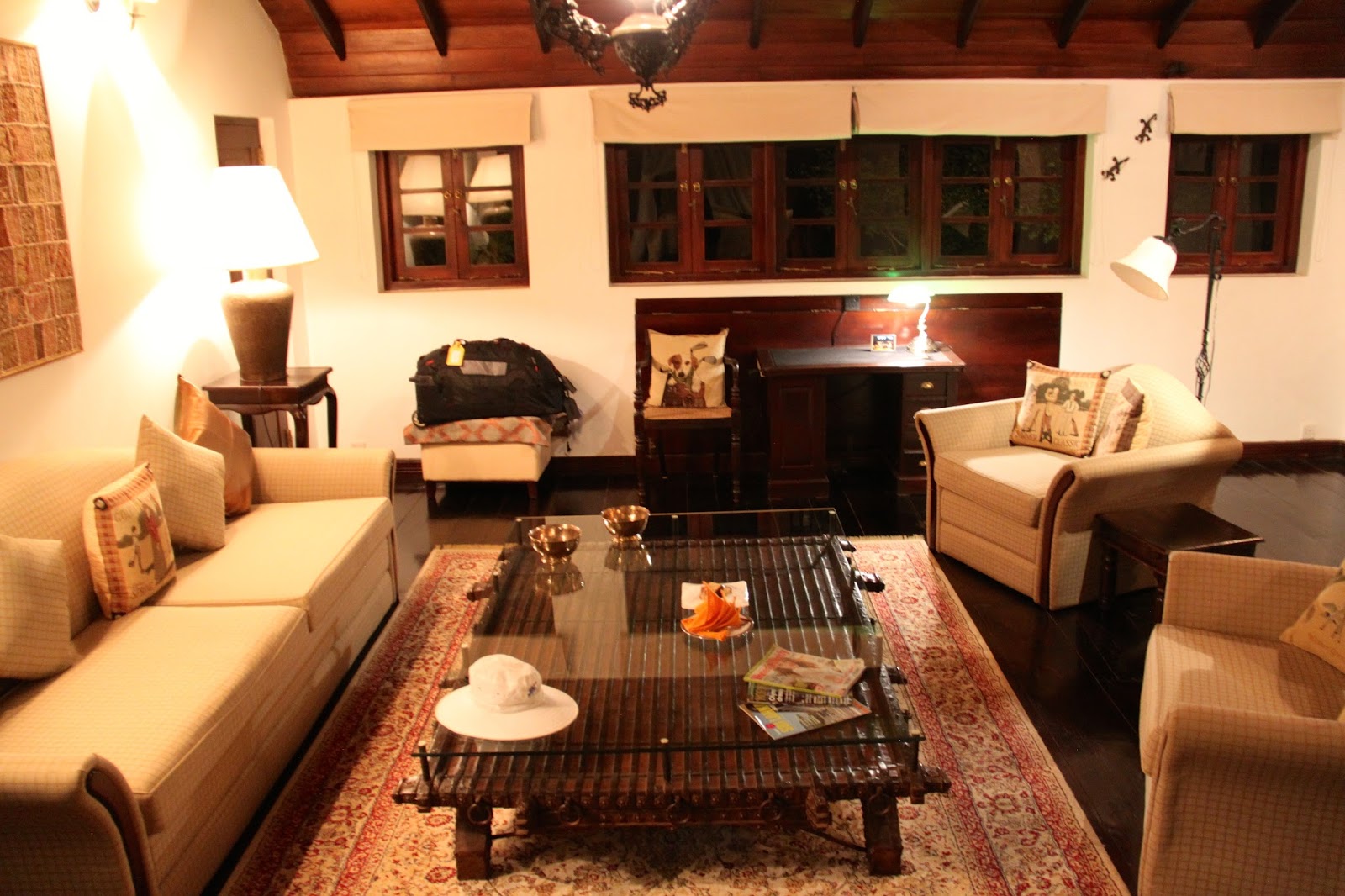
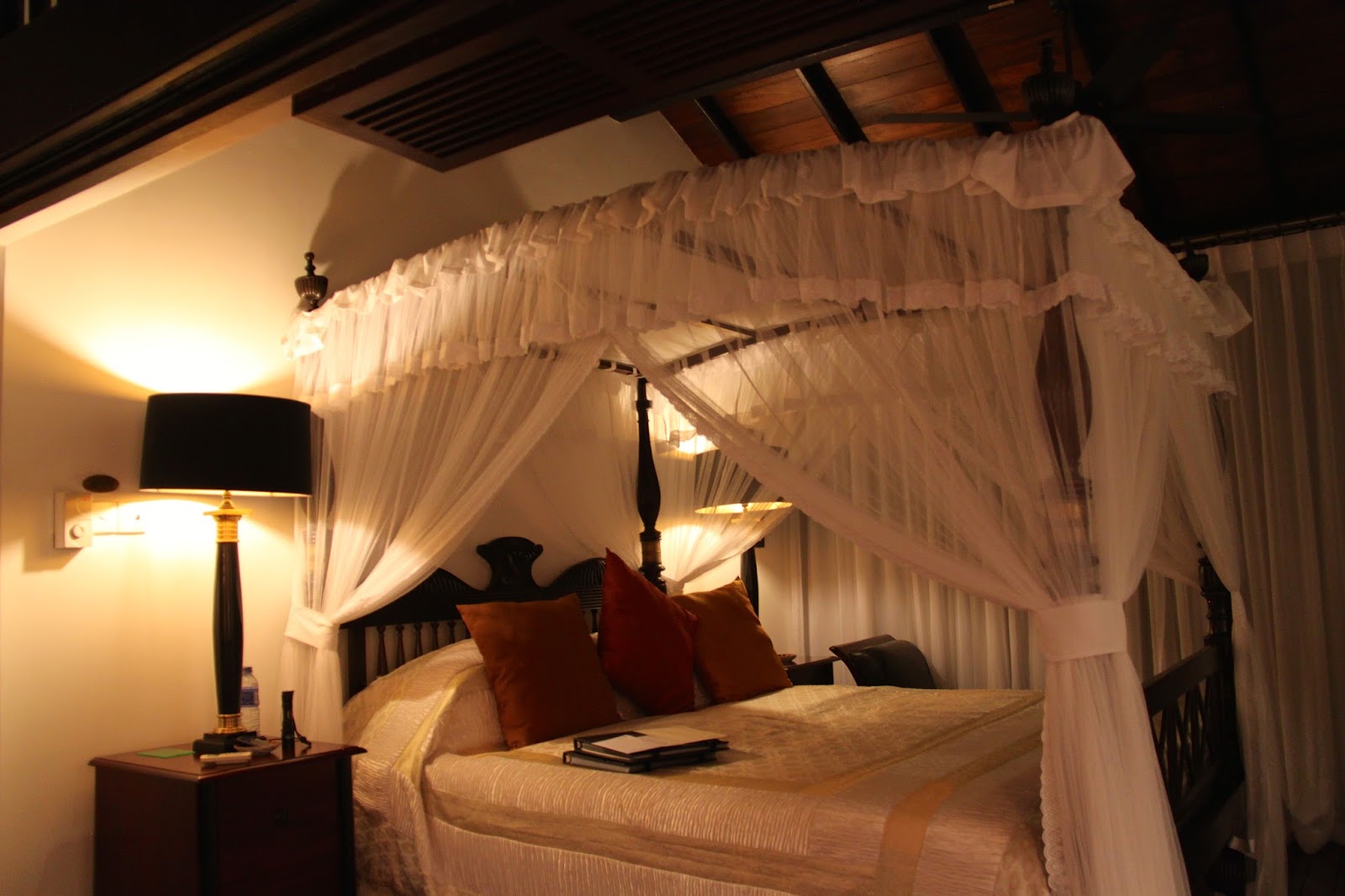
Clingendael Boutique Hotel.  Up in the mountains near a lake.  You would never know that a beautiful place was here by the way you had to get to it.


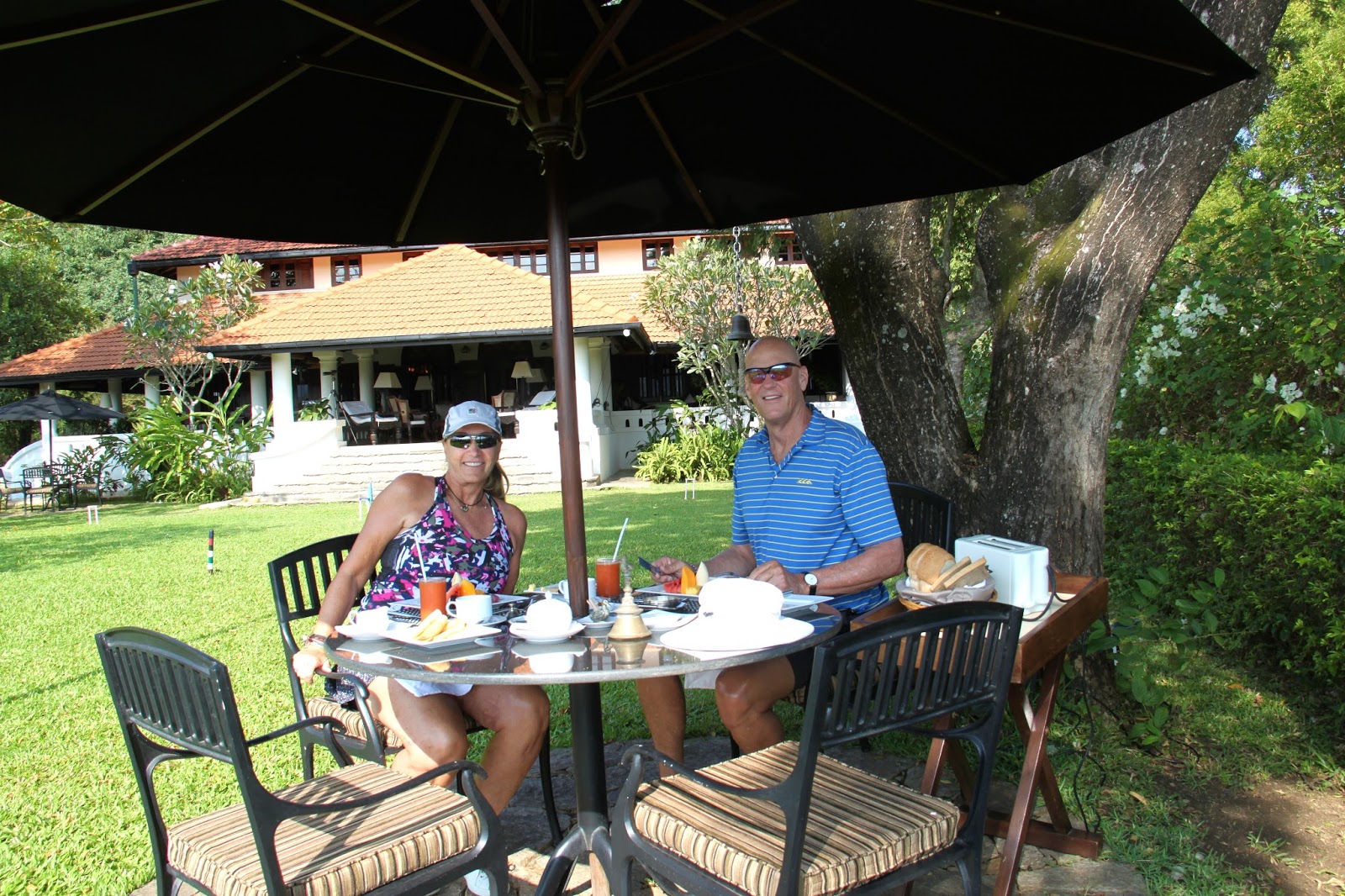
Our breakfast table


Dining and reception


Our suite


Bedroom


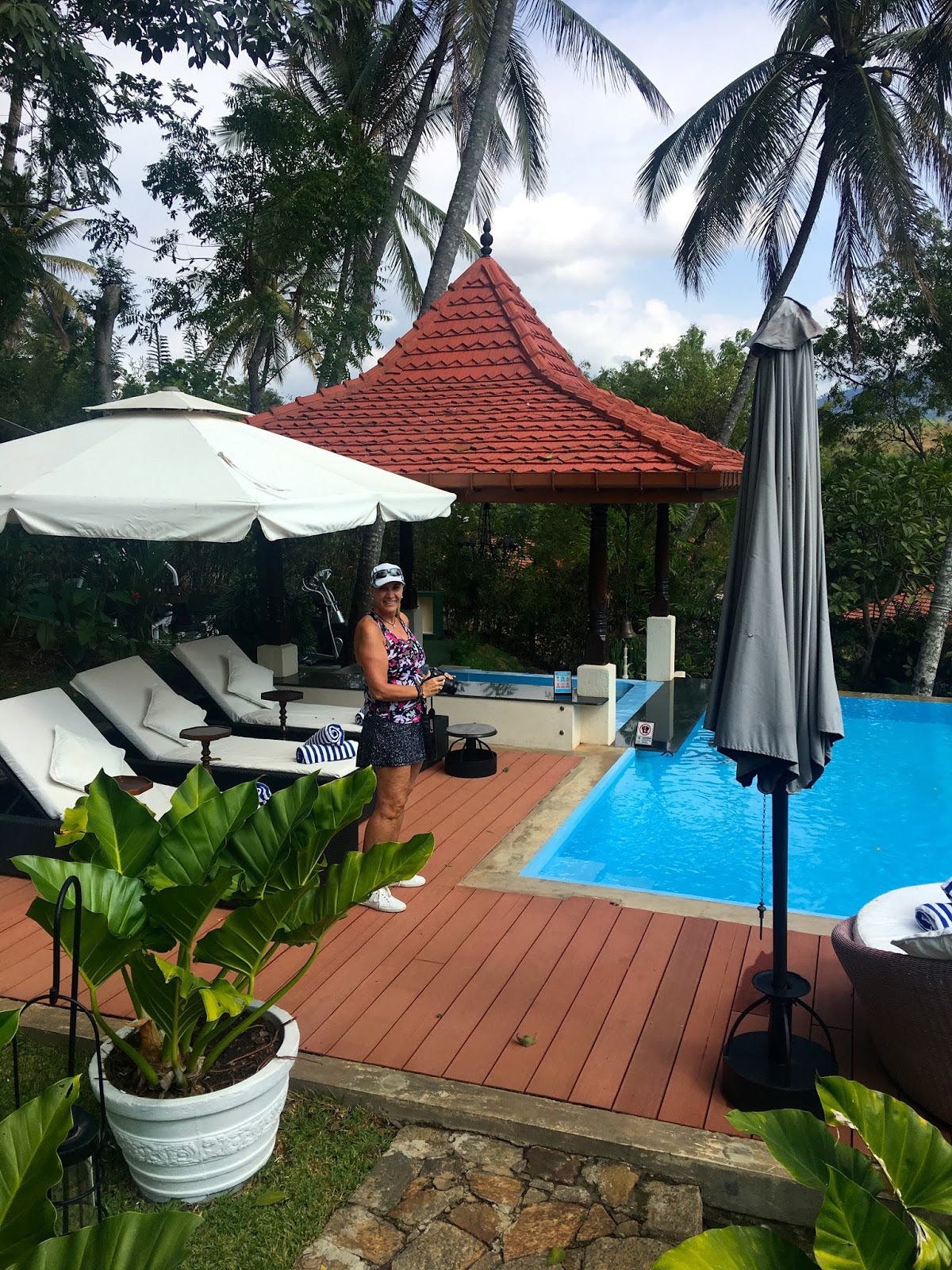
Pool area


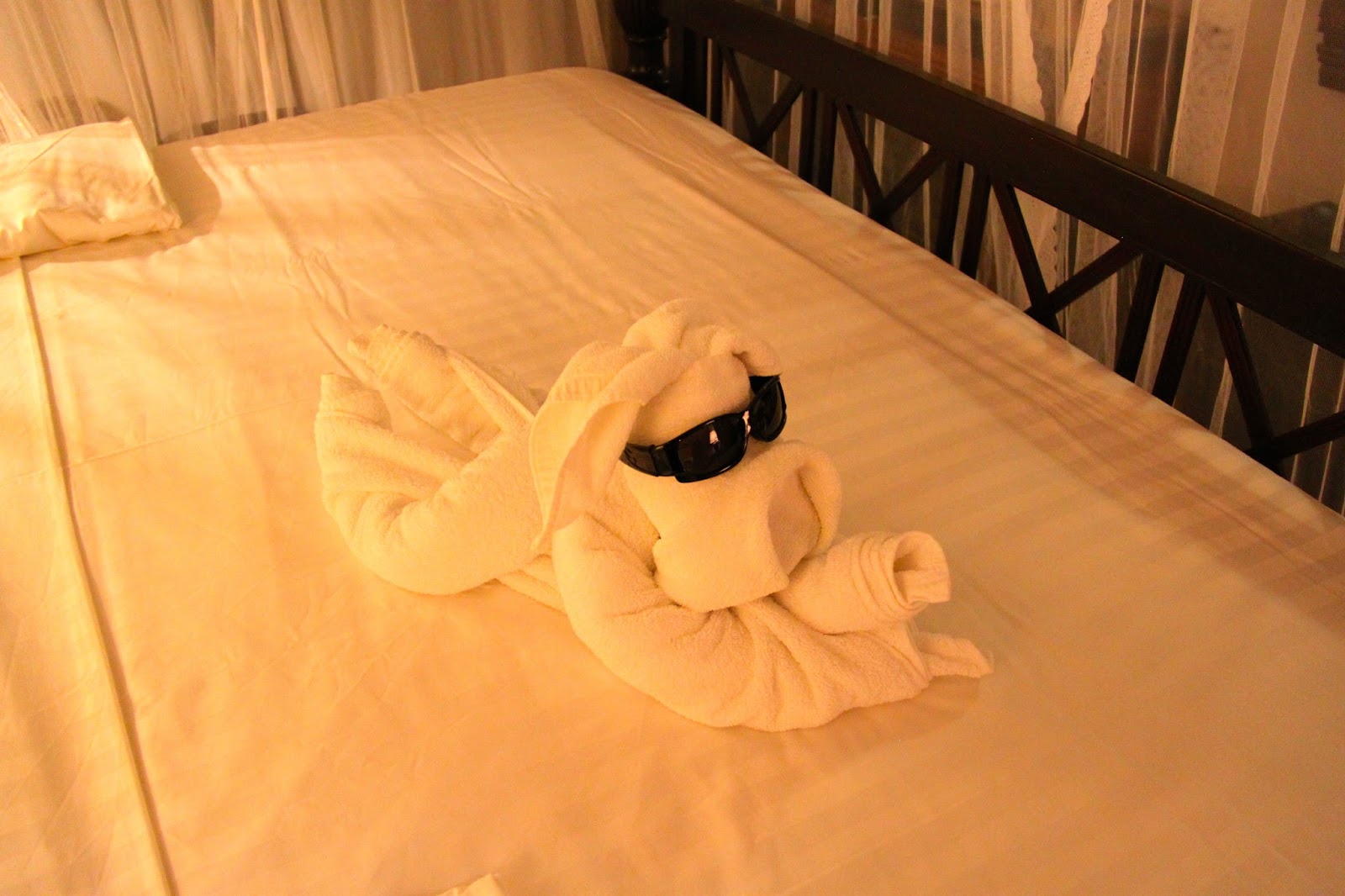
They made an awesome dog with sunglasses out of towels
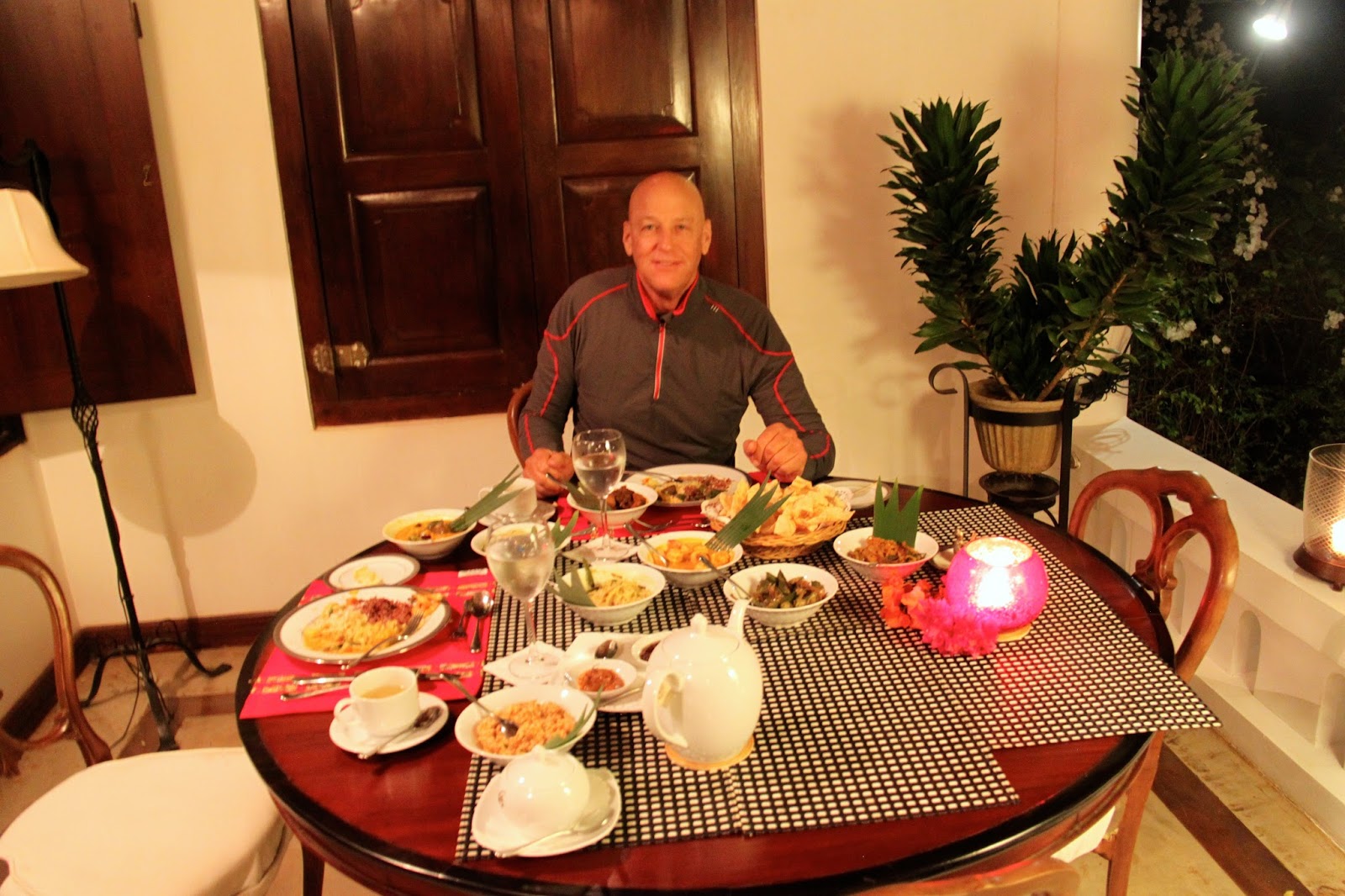
They made us a curry and rice dinner


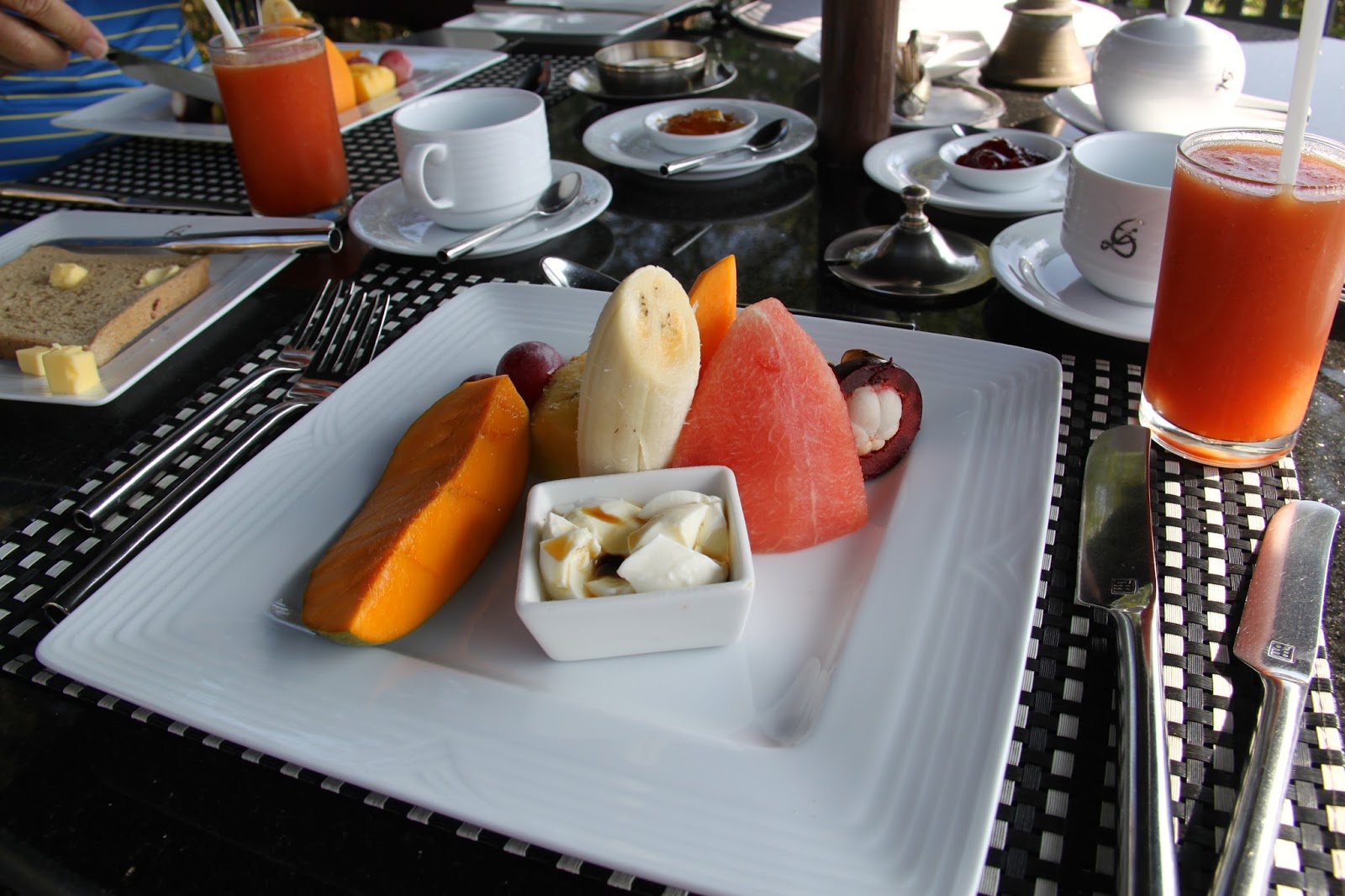
Breakfast


Selfie


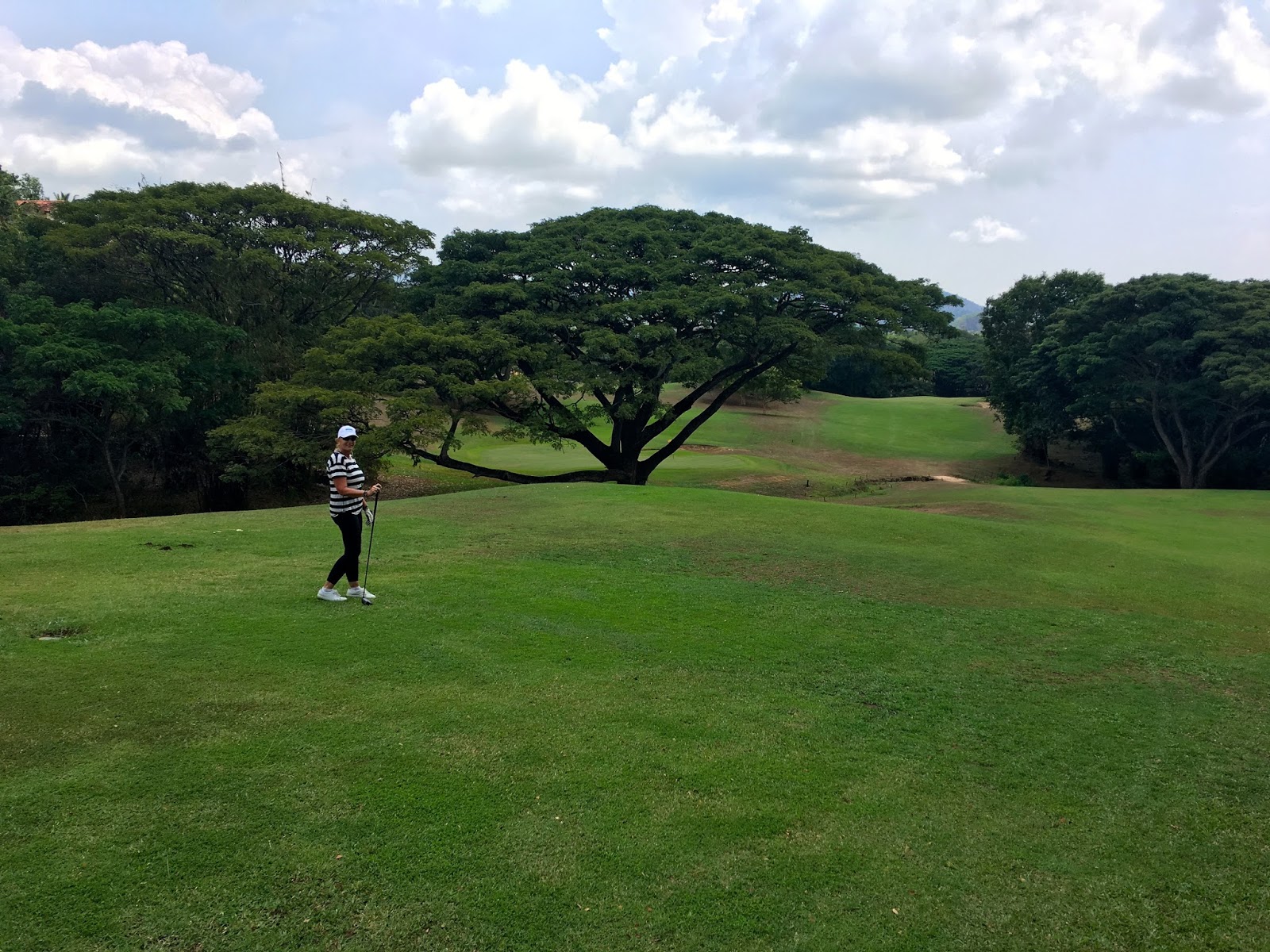
Selfie going to play golf at Victoria Golf Club


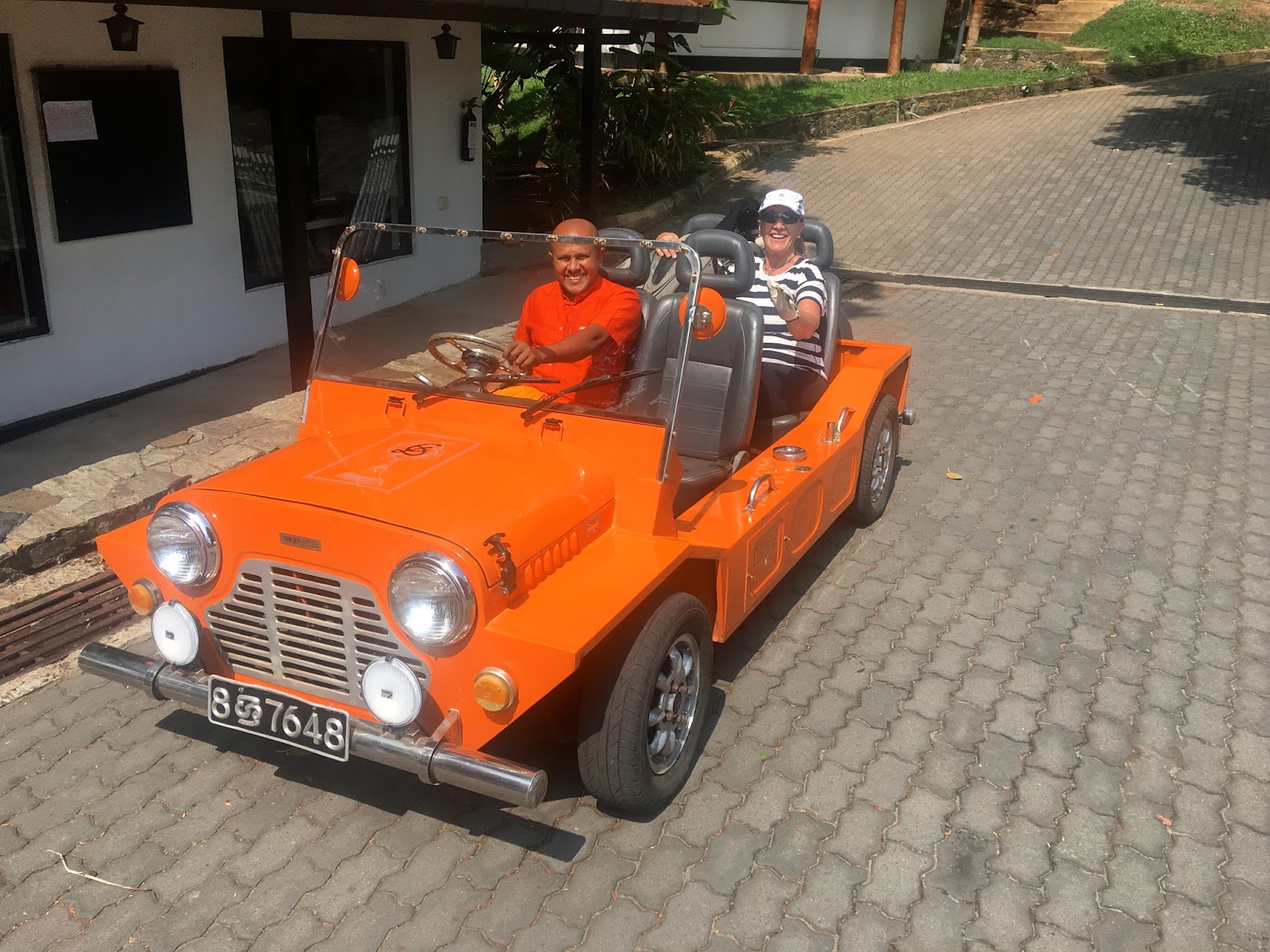
Can you say Go Cart?


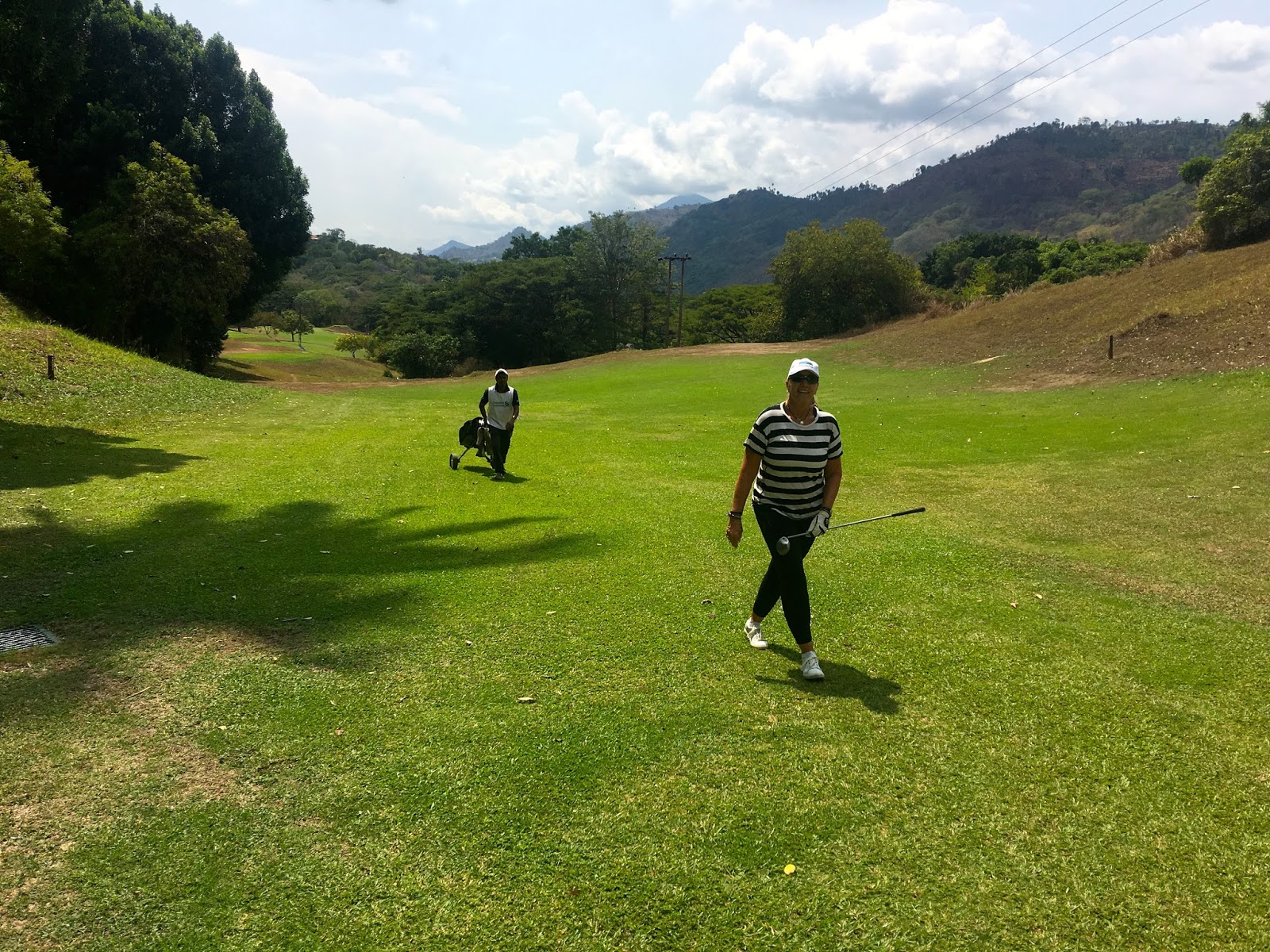
Barb golfing


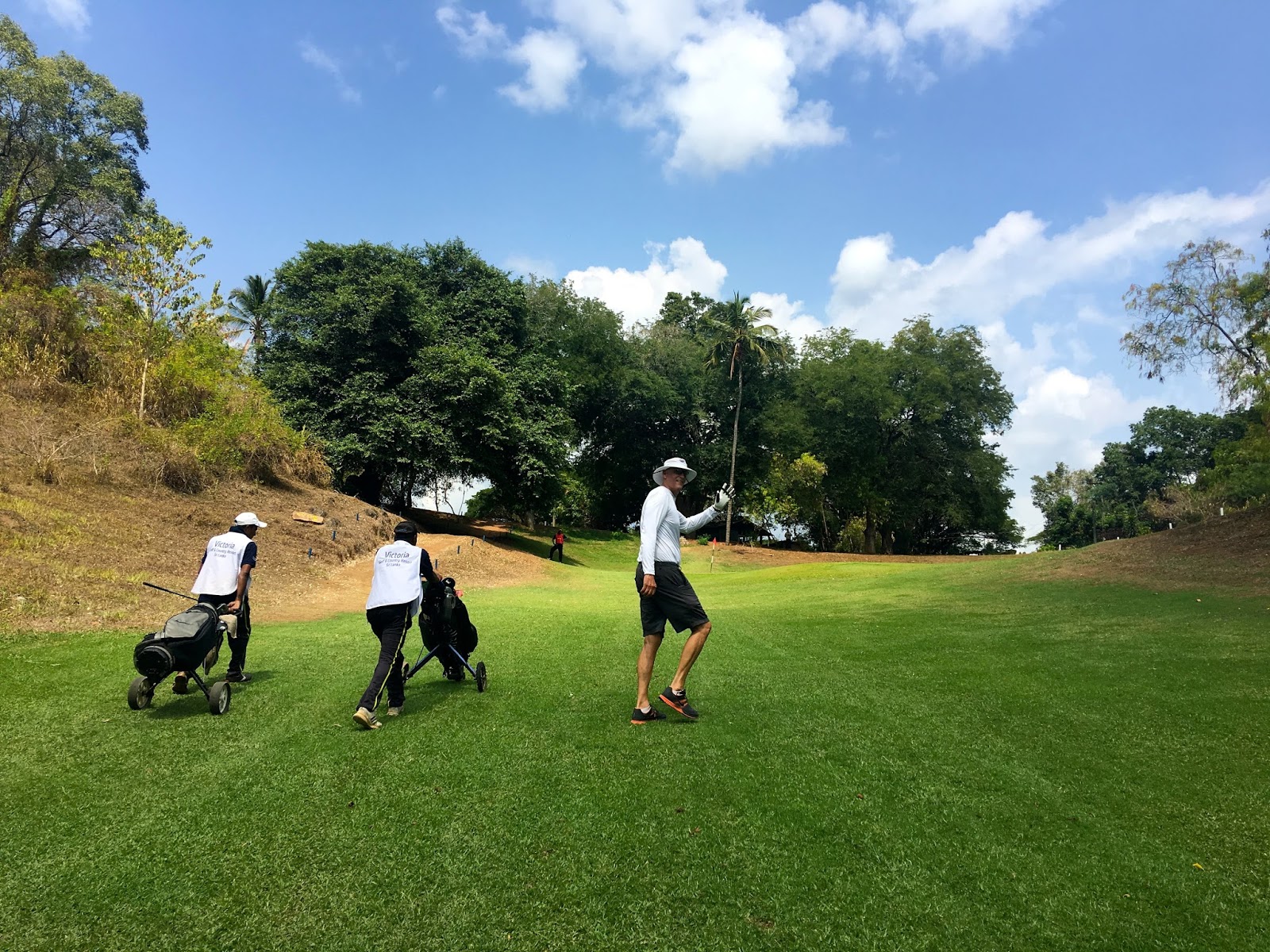
Caddies carried our bags and the ball boy watched our balls
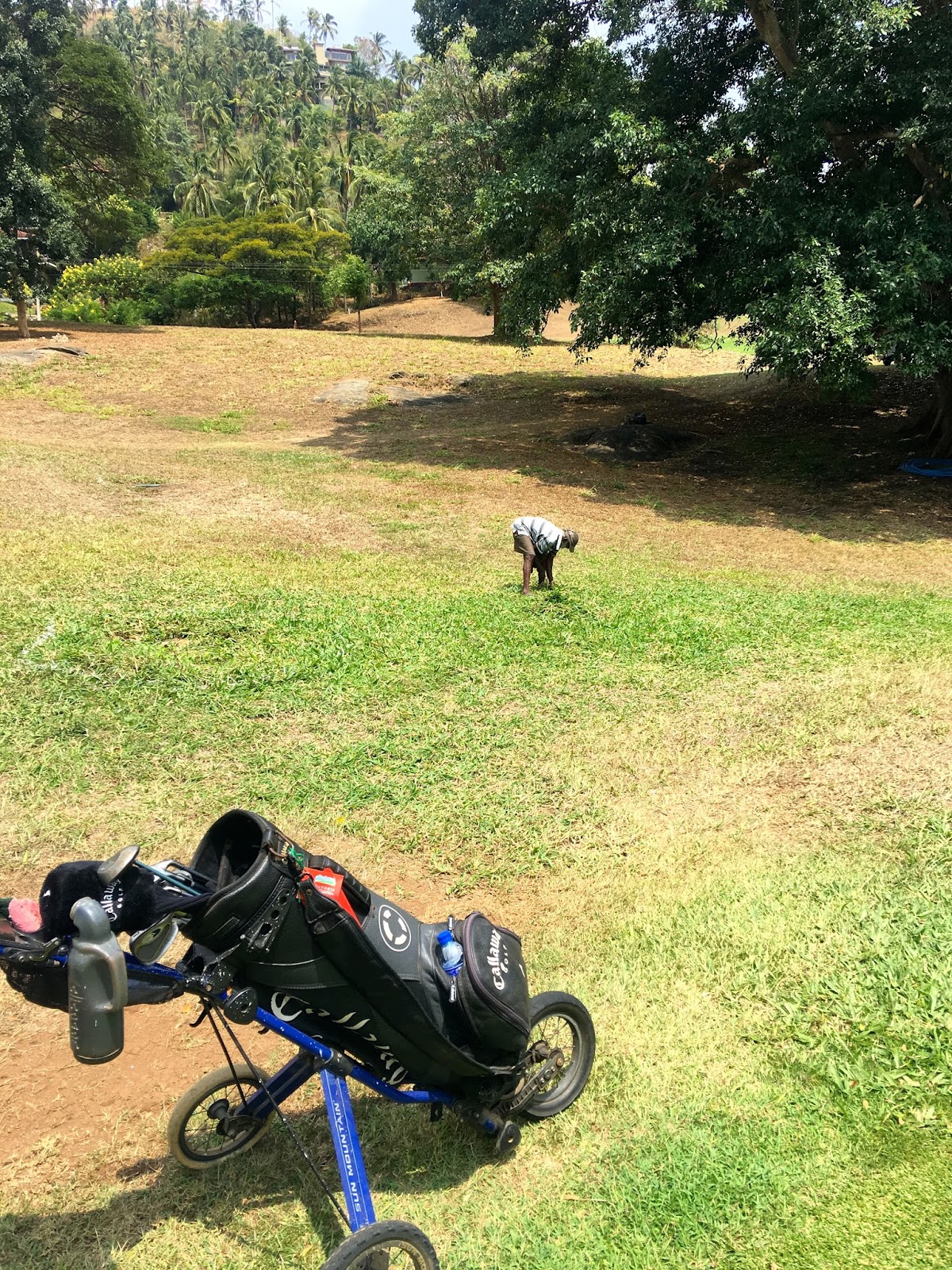
Man with a sickle cutting grass and putting it in a bag to feed his cows


Ho Chi Minh City, Vietnam October 13-14, 2012

<!– /* Font Definitions */ @font-face {font-family:"Times New Roman"; panose-1:0 2 2 6 3 5 4 5 2 3; mso-font-charset:0; mso-generic-font-family:auto; mso-font-pitch:variable; mso-font-signature:50331648 0 0 0 1 0;} @font-face {font-family:Cambria; panose-1:0 2 4 5 3 5 4 6 3 2; mso-font-charset:0; mso-generic-font-family:auto; mso-font-pitch:variable; mso-font-signature:50331648 0 0 0 1 0;} /* Style Definitions */ p.MsoNormal, li.MsoNormal, div.MsoNormal {mso-style-parent:""; margin:0in; margin-bottom:.0001pt; mso-pagination:widow-orphan; font-size:12.0pt; font-family:Cambria;} table.MsoNormalTable {mso-style-parent:""; font-size:10.0pt; font-family:"Times New Roman";} @page Section1 {size:8.5in 11.0in; margin:1.0in 1.25in 1.0in 1.25in; mso-header-margin:.5in; mso-footer-margin:.5in; mso-paper-source:0;} div.Section1 {page:Section1;} VIETNAM

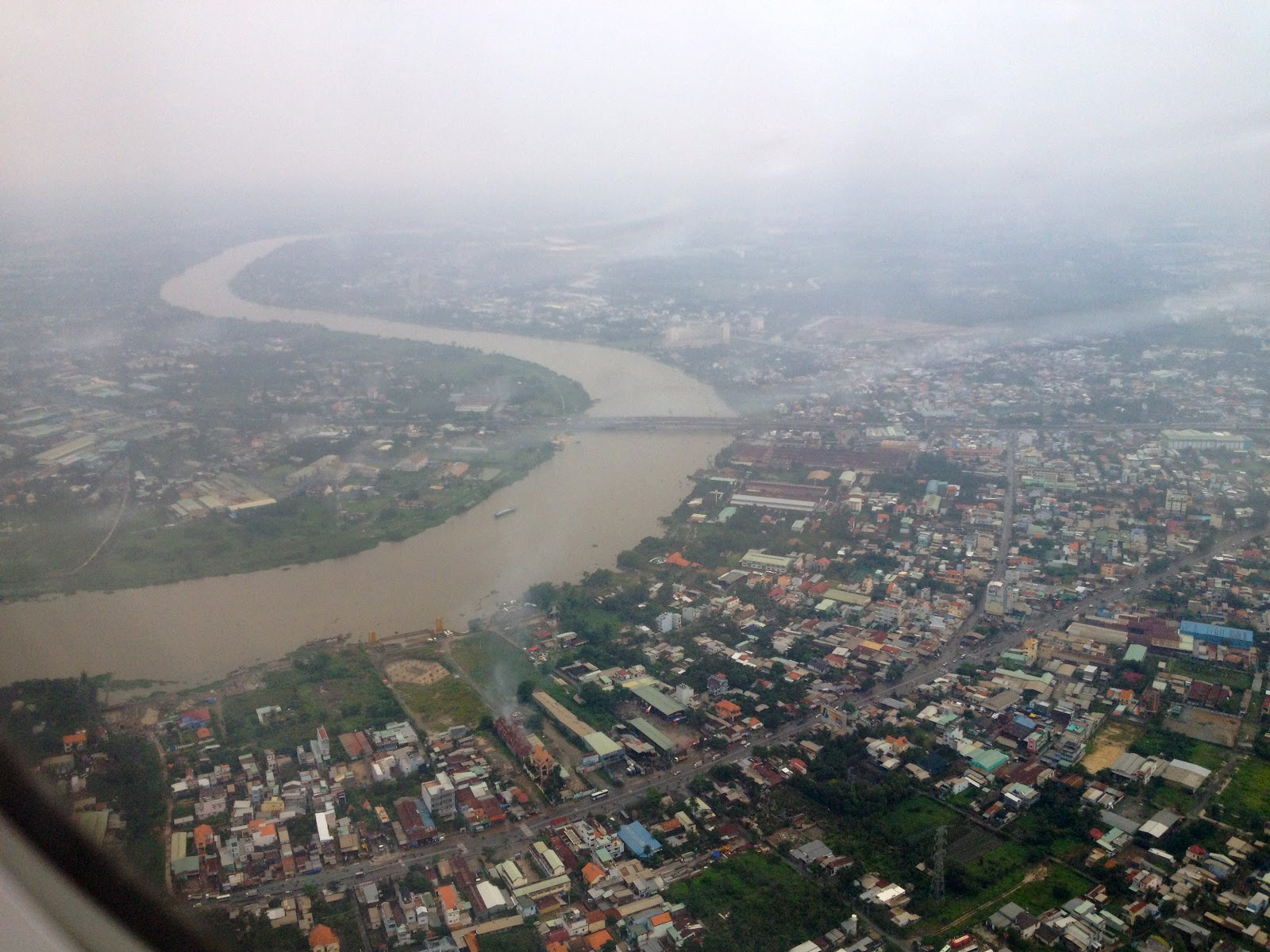
Flying into Vietnam. 

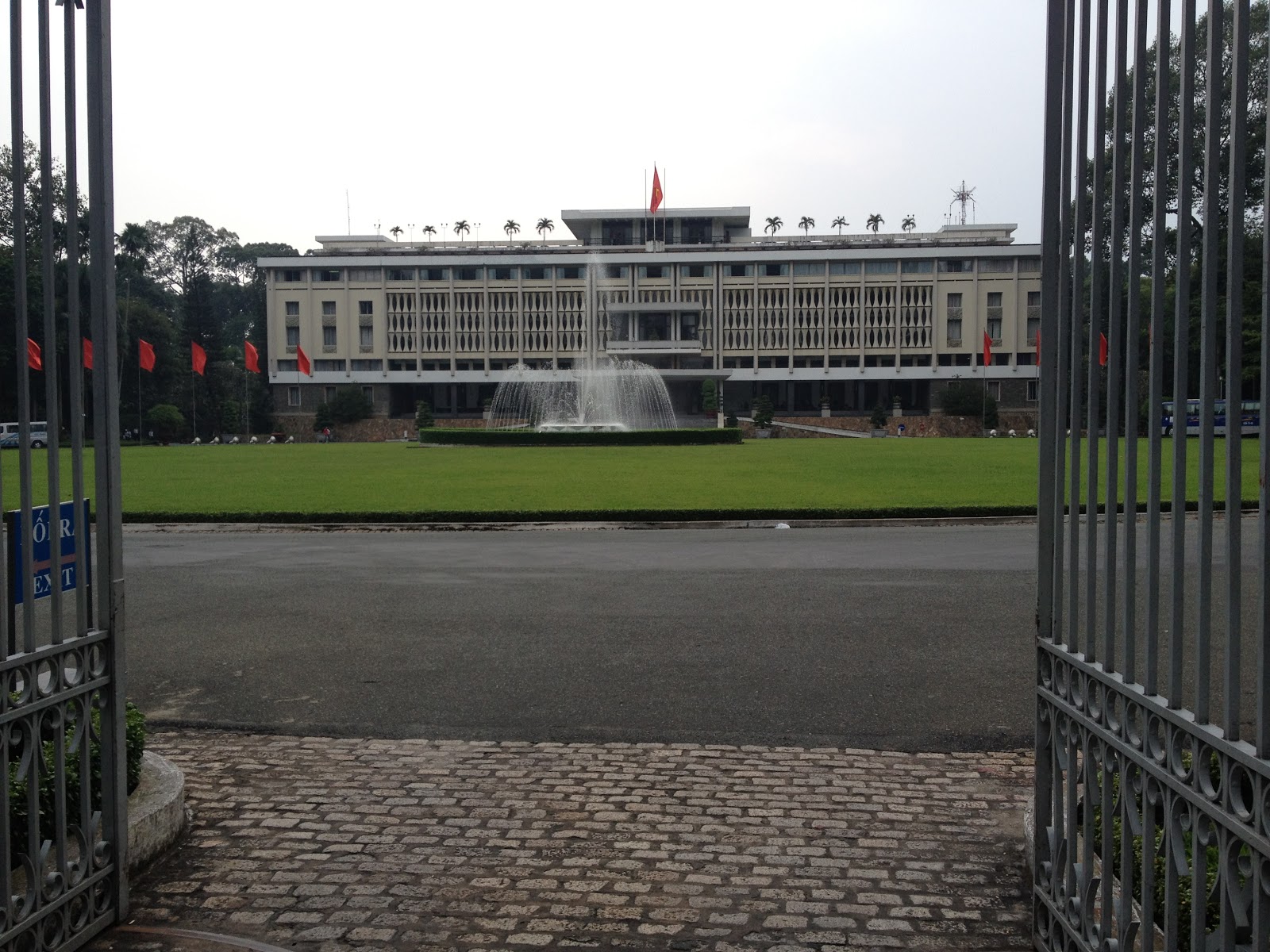
Ho Chi Minh City was called Saigon before the American Armed Forces pulled out in 1974.  Those of us that were around during the seventies remember the journalist photos of the North Vietnamese tanks knocking down the gates of what is now called the reunification palace in Saigon.  

Reunification Palace

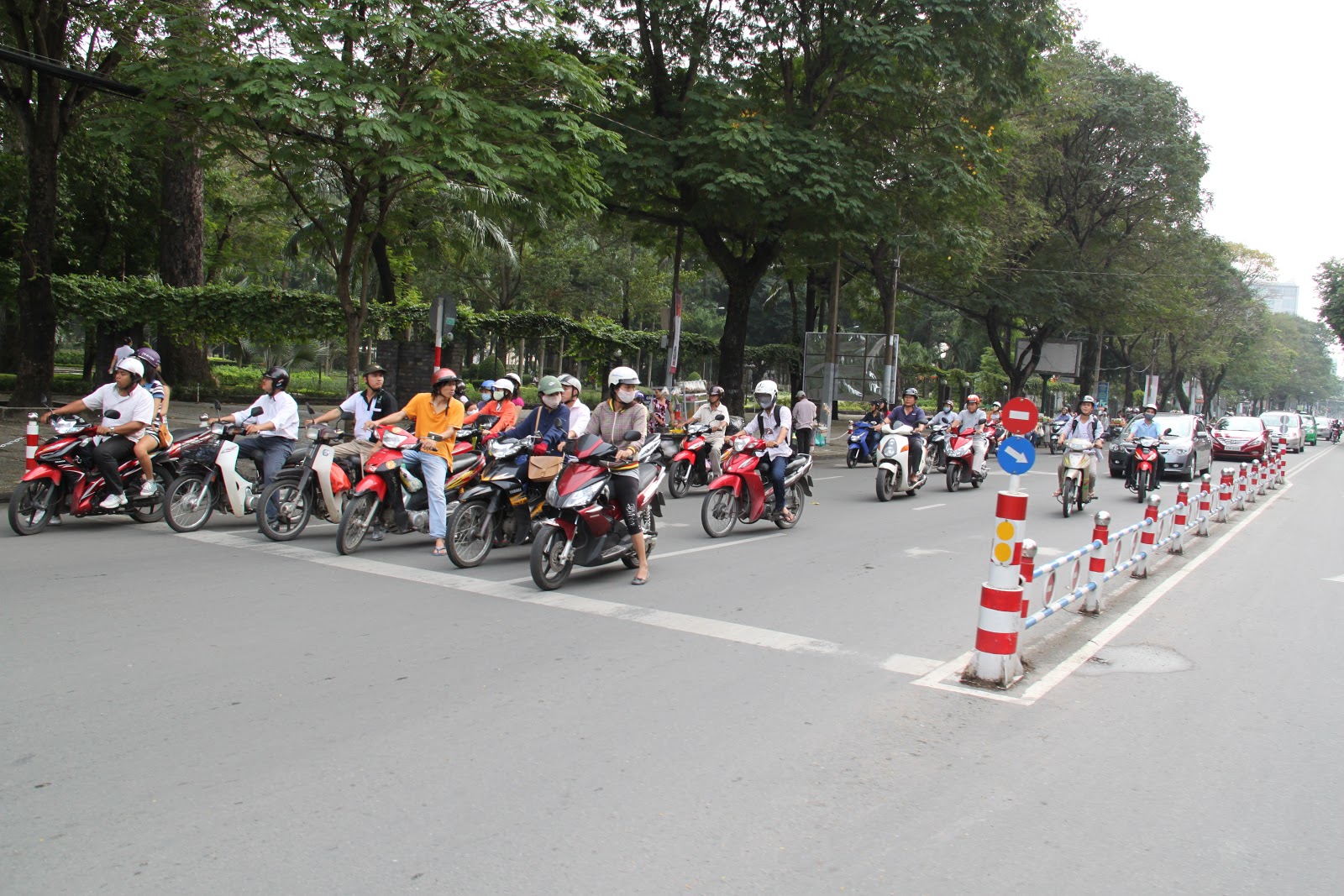
 There are 7,000,000 residents in Ho Chi Minh City and we think they are all riding motorcycles today.  These motorcycles flow like a river on the streets.  They fill up around the cars and block the cars from moving.

Motorbikes are EVERYWHERE.
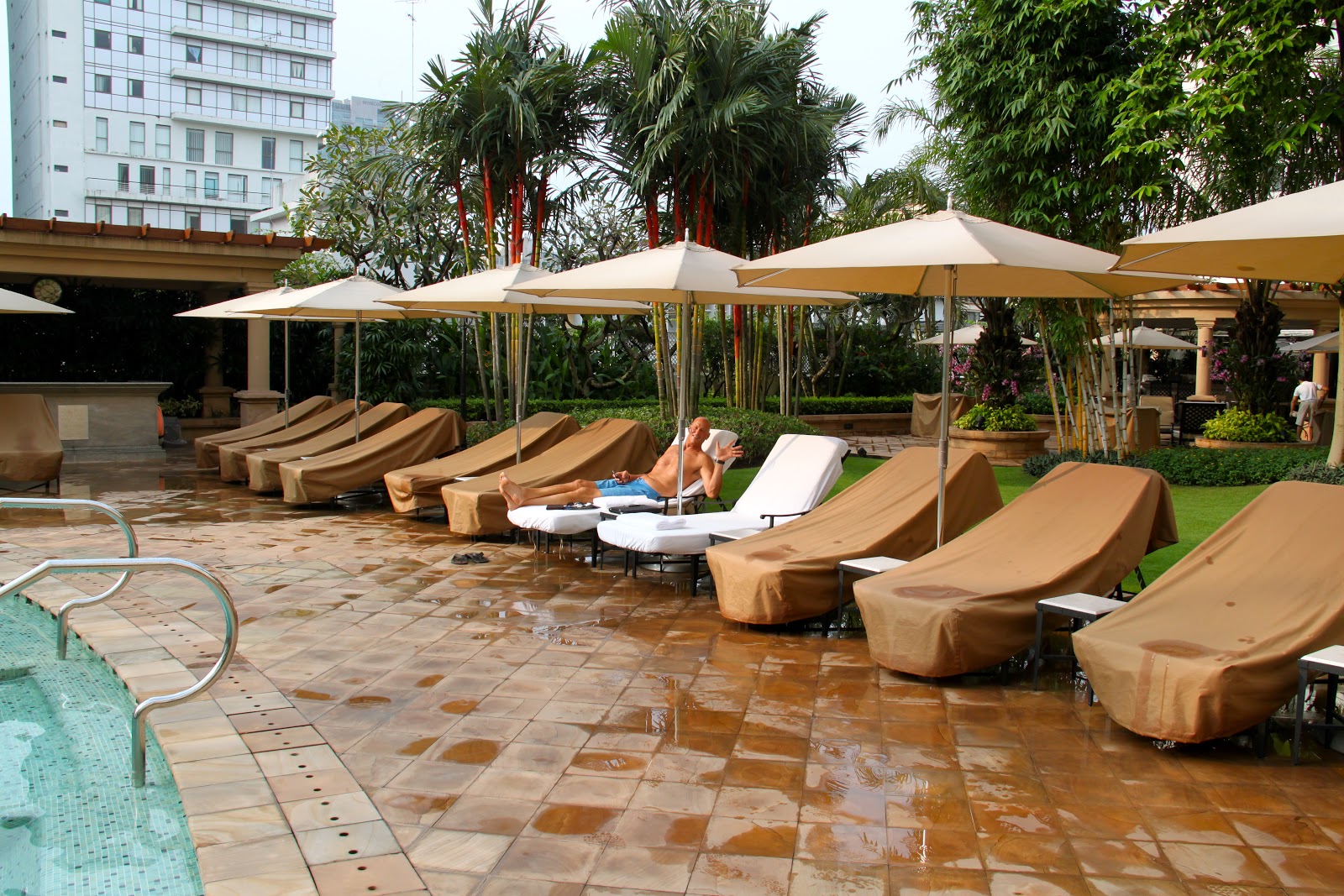
We are staying one night at the Park Hyatt Hotel.  We lounged by the pool on the afternoon of our arrival.
Rain periodically
Our Room walked out to the pool
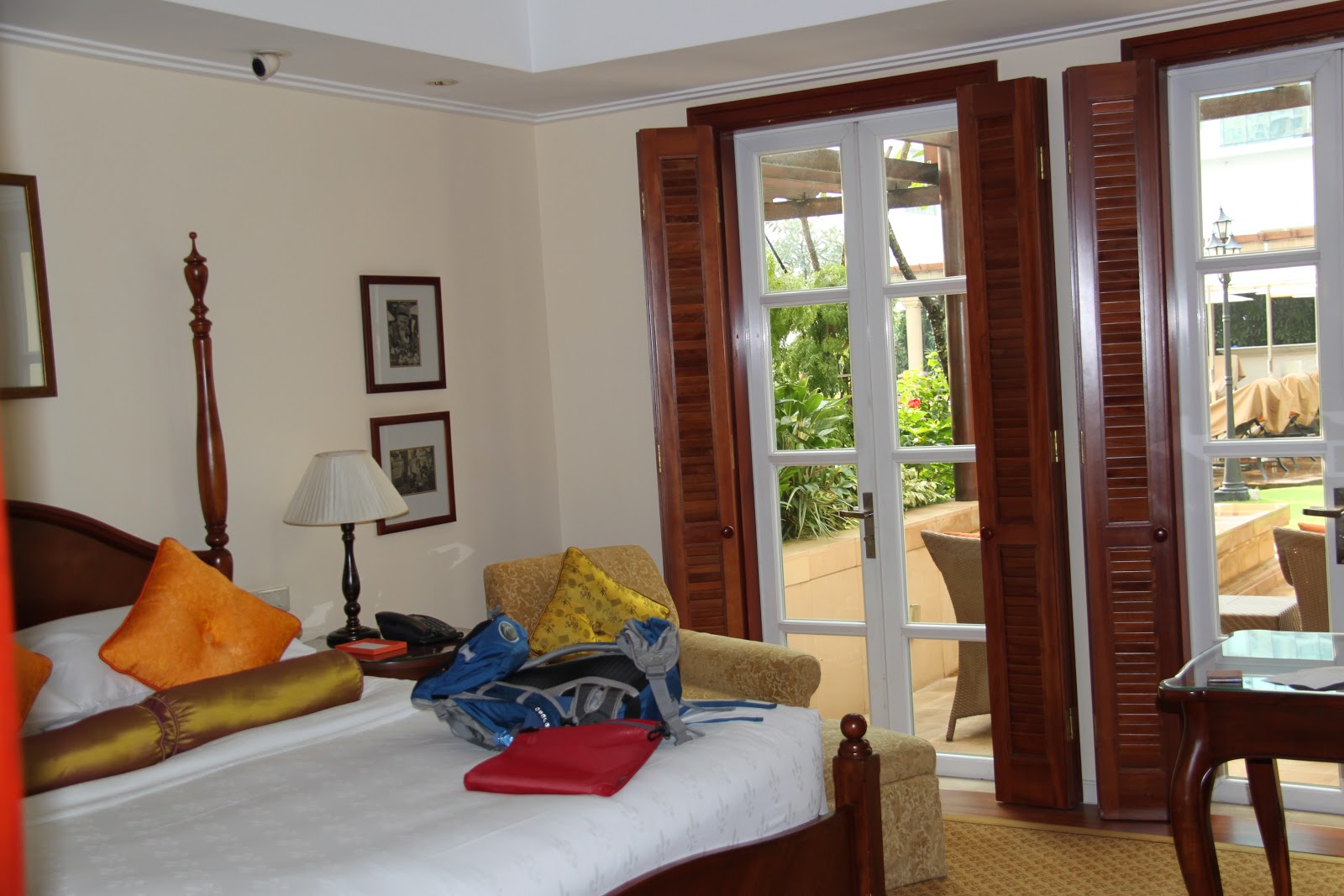
Inside our room.
Notice Scott’s new do.  Yes, we shaved his head when after doing one stripe using clippers for a haircut, the clippers blew up and he had a reverse mohawk.  Needless to say, it was time for a change.
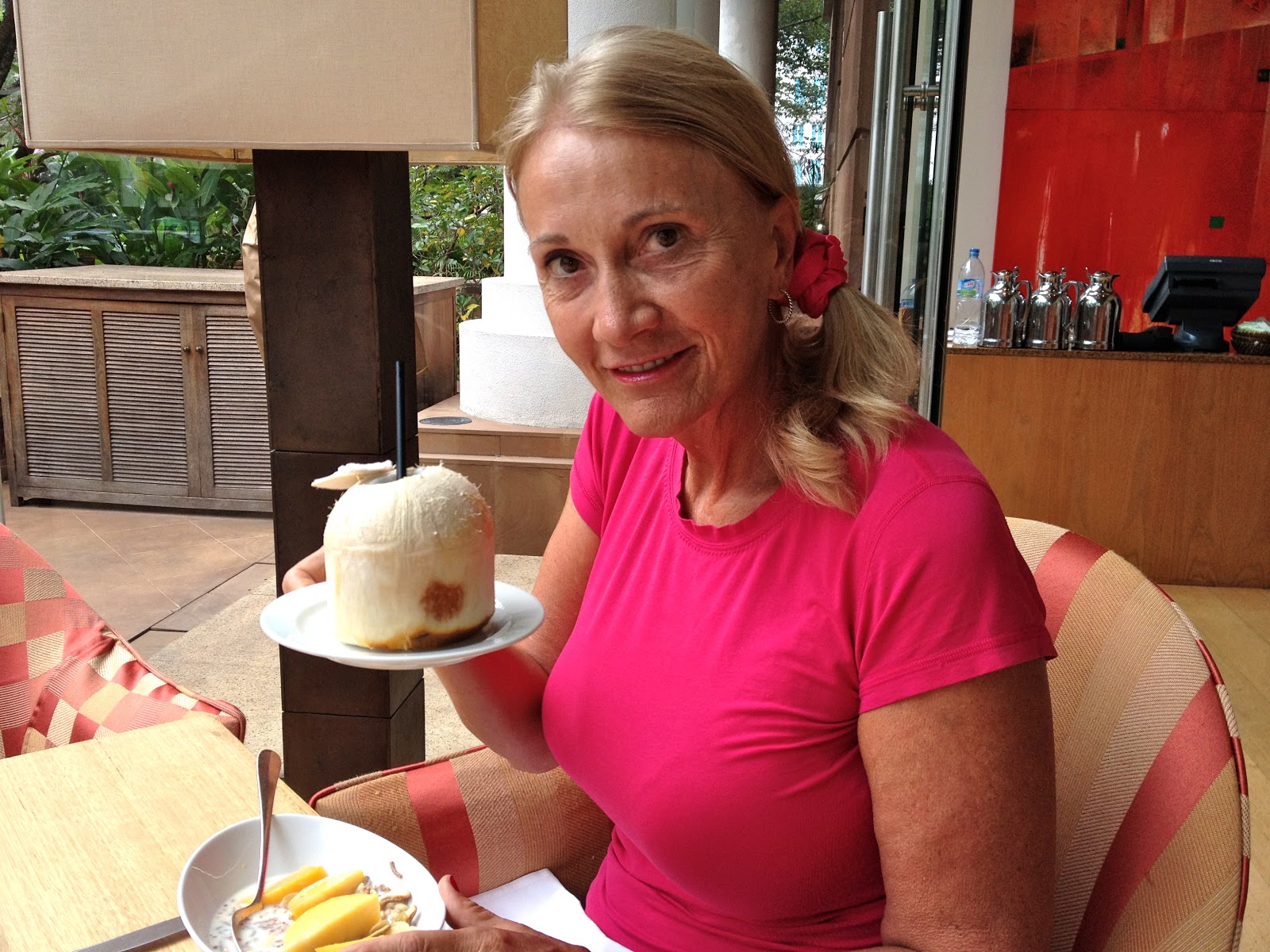
Barb has a shaved coconut filled with Coconut Juice.
We had mixed emotions about visiting Vietnam.  The Vietnam War and all the domestic protest and trauma that accompanied that war was displayed on the network nightly news reports as we were growing up.  We did not want anything to do with Vietnam when we were in junior high and high school.  Just as we graduated from high school all college deferments were revoked and a lottery was put in place to determine who would be required to join the military and most likely be sent to Vietnam to fight in a very unpopular war.  All 365 days of the year were put in a hat.  Each date was pulled out one at a time.  If you were born on the 1stdate that was pulled out then you were drafted into the armed forces immediately.  Scott’s birthday was the 333rd birth date pulled out of the hat.  That year they only drafted up to 94 birth dates so he did not have to serve in the military and avoided Vietnam.  The number 333 has been our lucky number ever since. 
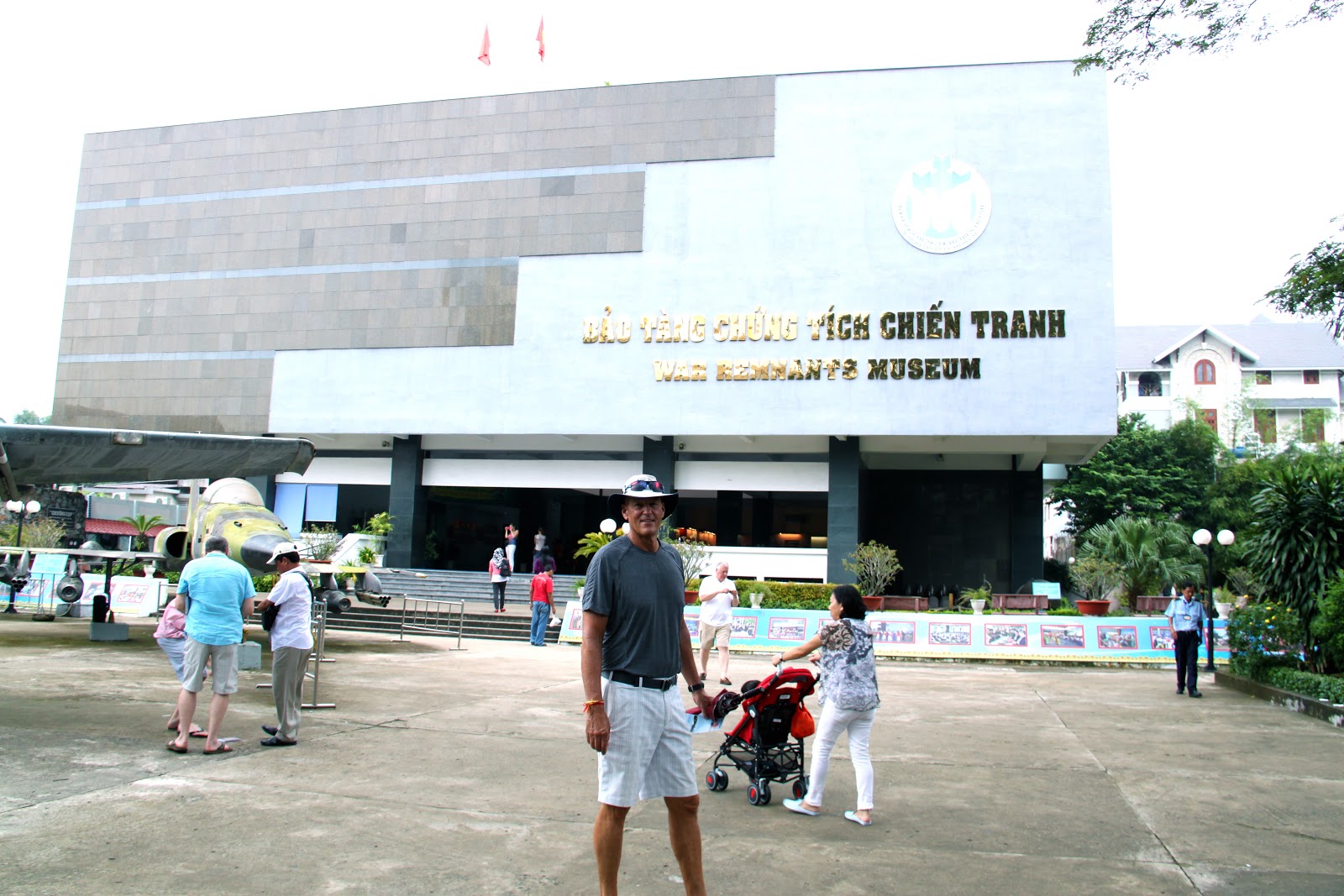
We went to the War Museum.  They recently changed the name.  It was called the Chinese and American War Crimes Museum before the name change.

The War Museum.

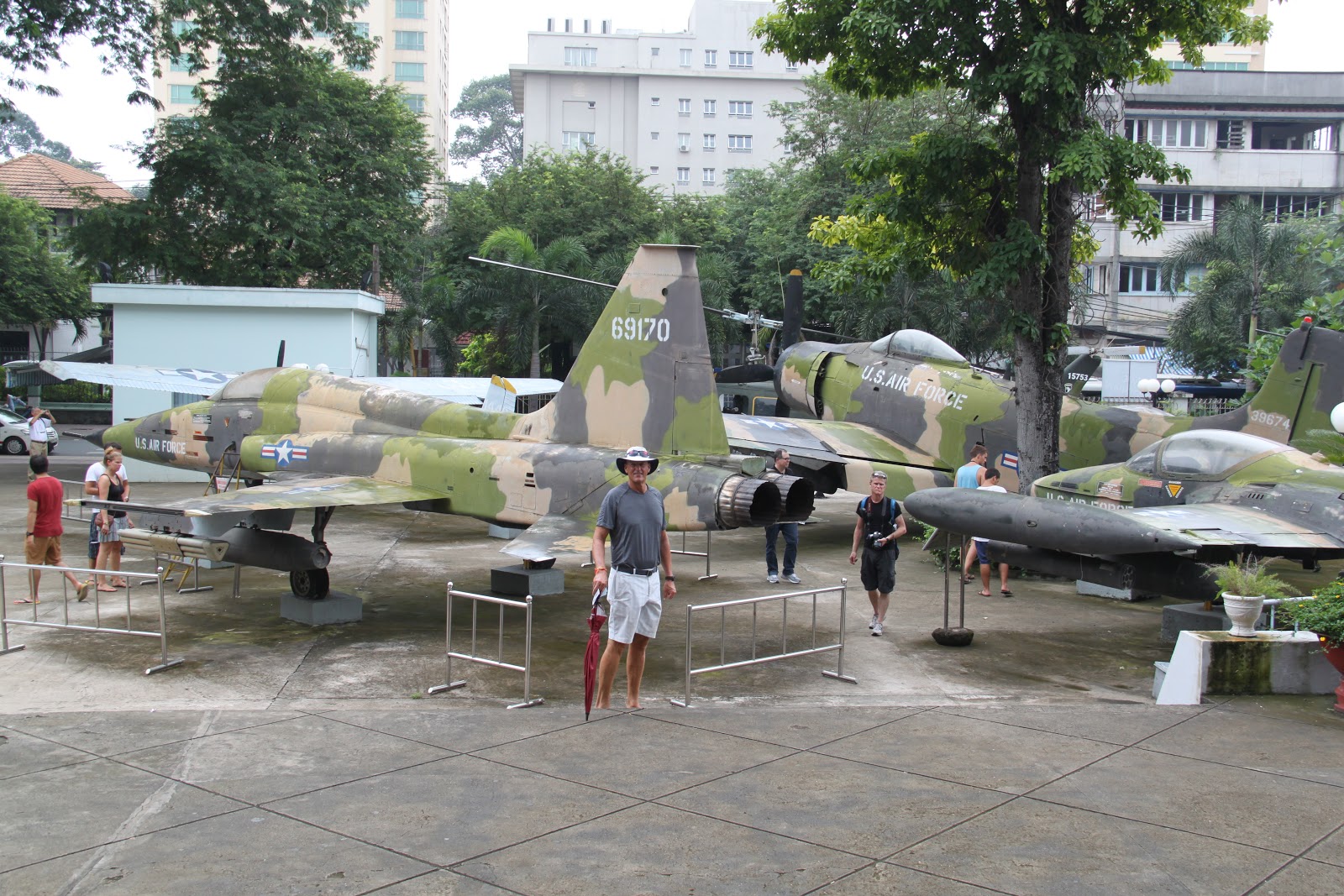
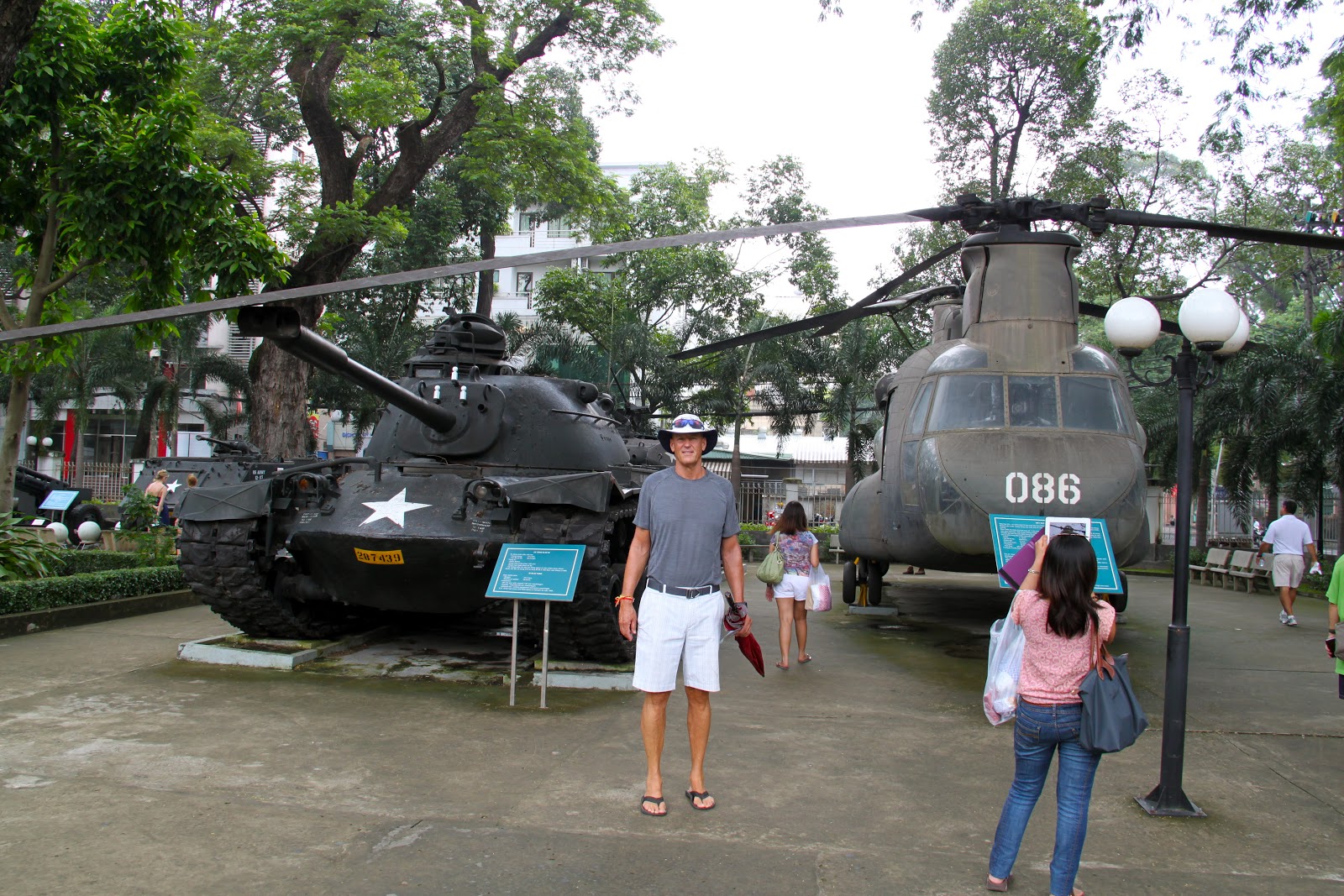
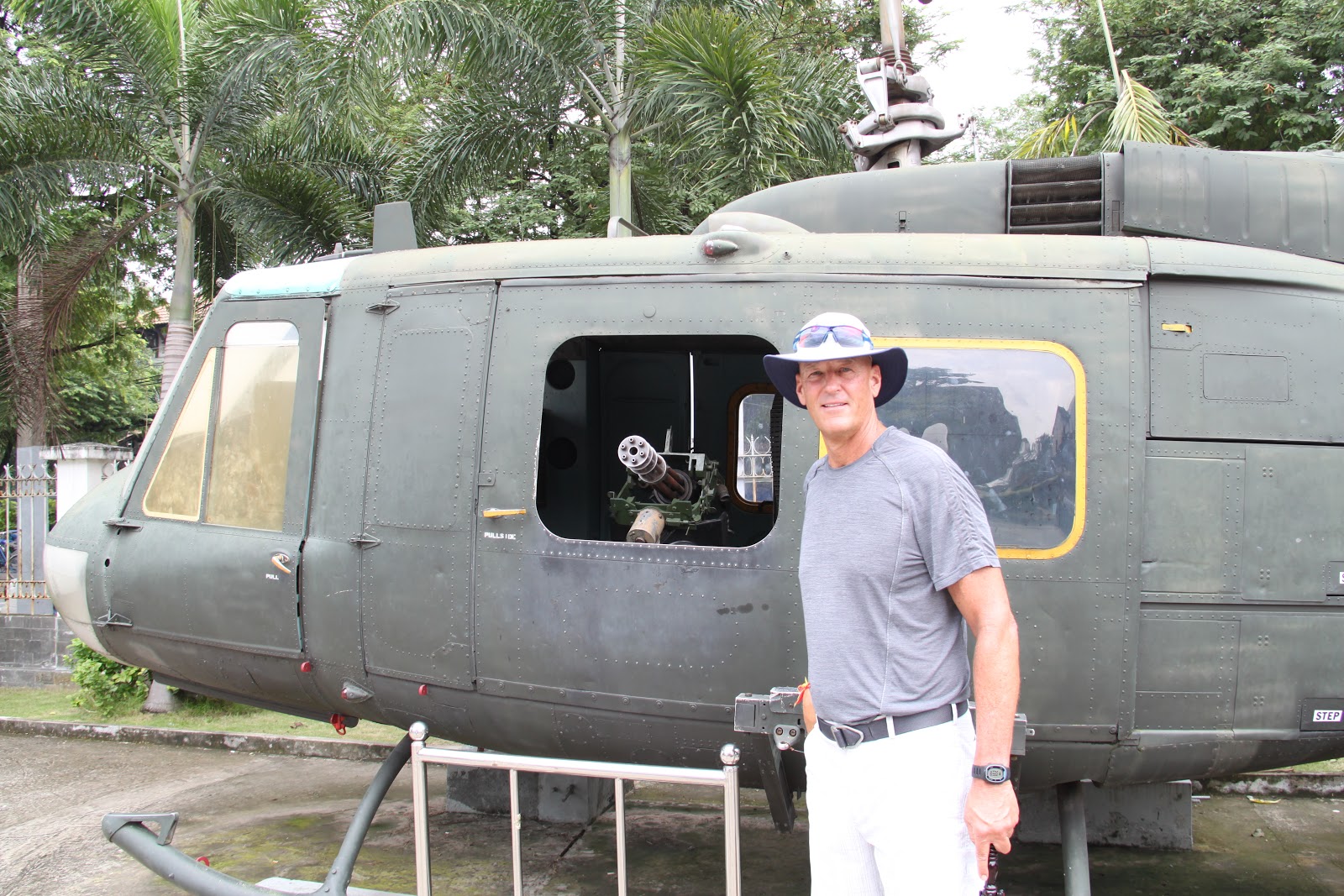
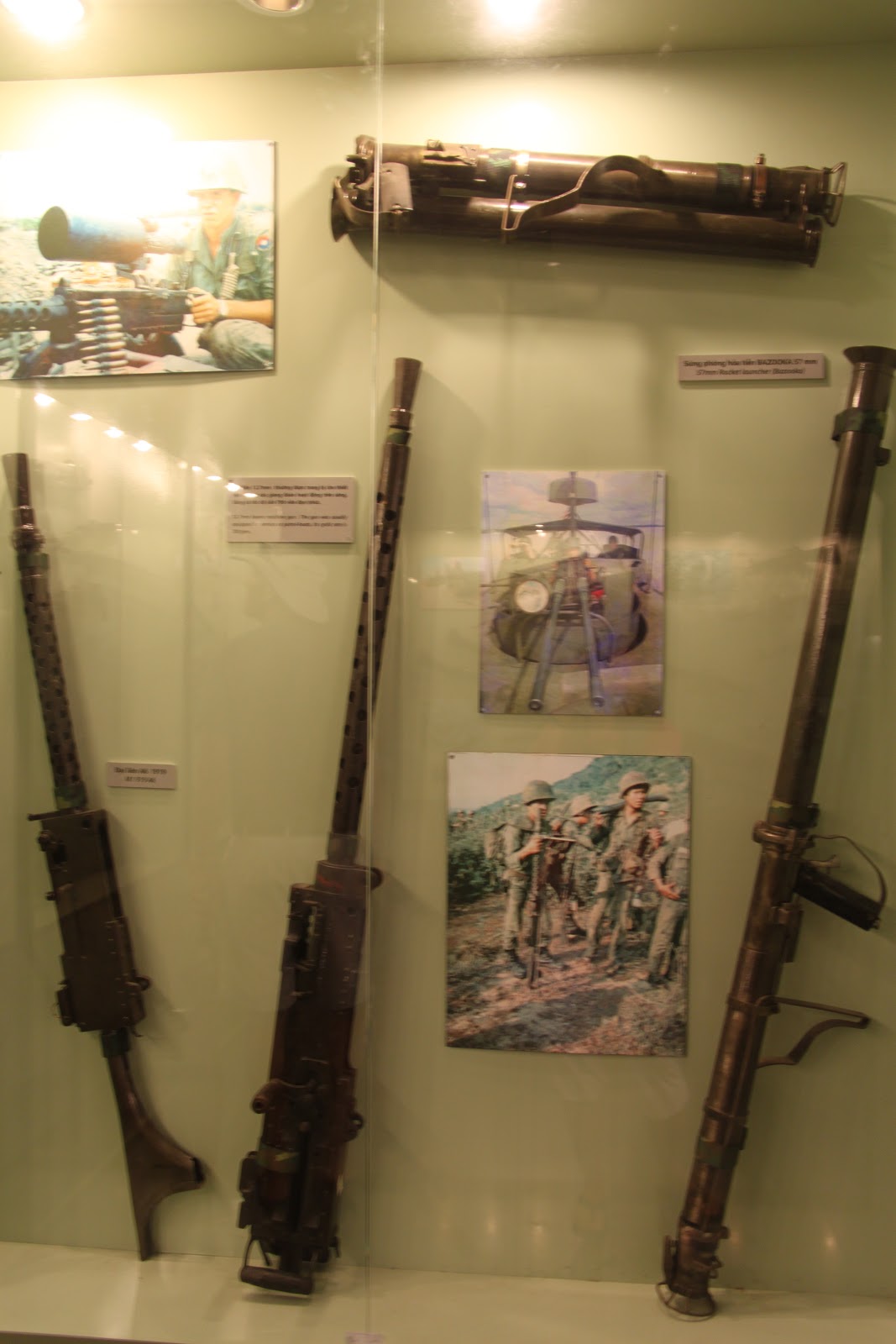
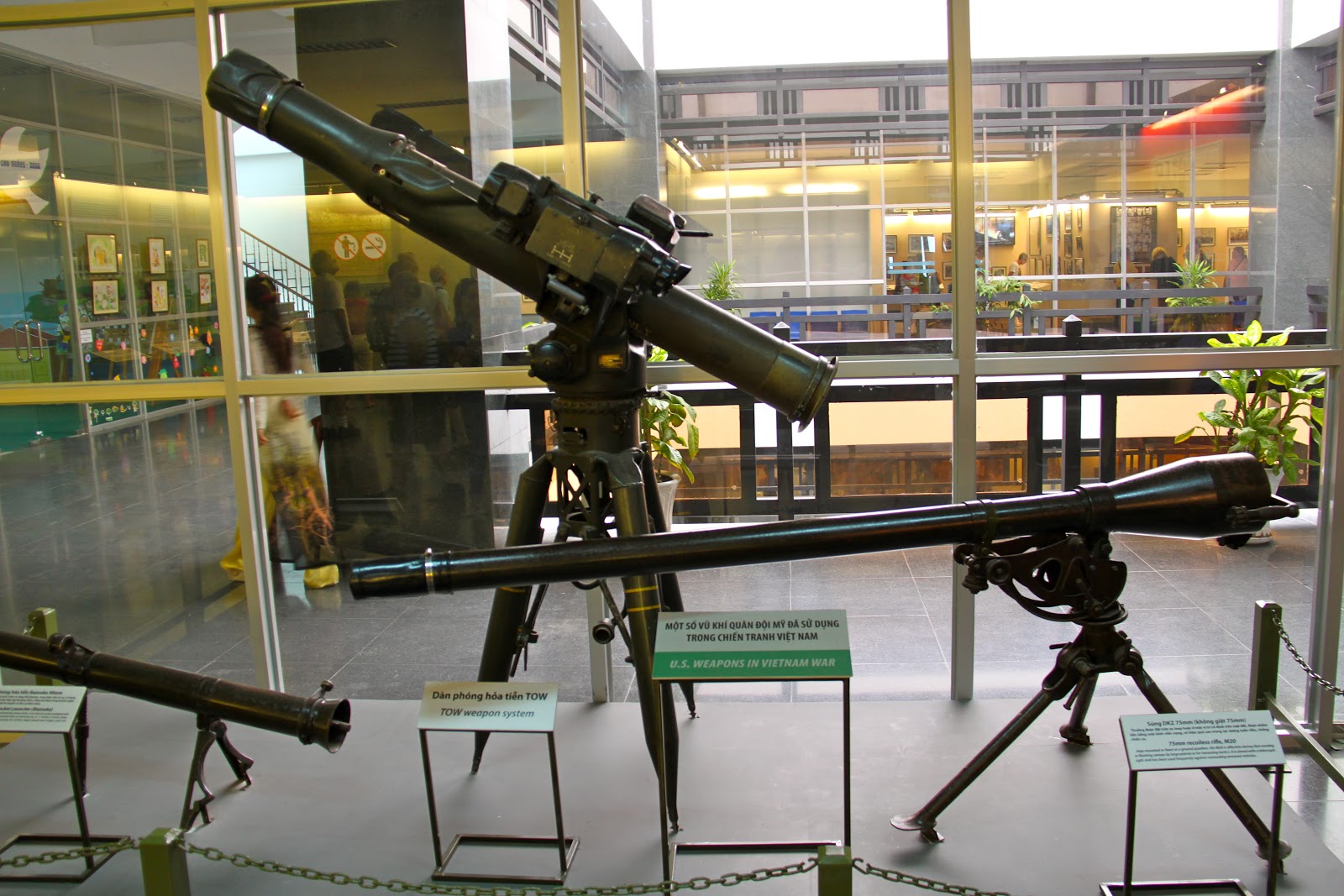
 On display outside the museum are U.S. helicopters, tanks, guns, and aircraft captured or recovered from the U.S. military after the war ended.  Inside there are newspaper clippings and photos documenting the war and conflict that engulfed Vietnam especially during the U.S. involvement.  There are very graphic photos depicting atrocities committed by the U.S. military.  This is a one sided account of the war from the point of view of victorious North Vietnamese.  

Aircraft
Helicopters

Machine gun in window.
It made us reflect upon all of the loss of life and suffering caused by actions and wrongdoing by all powers involved.  

Some of the weapons
More Weapons

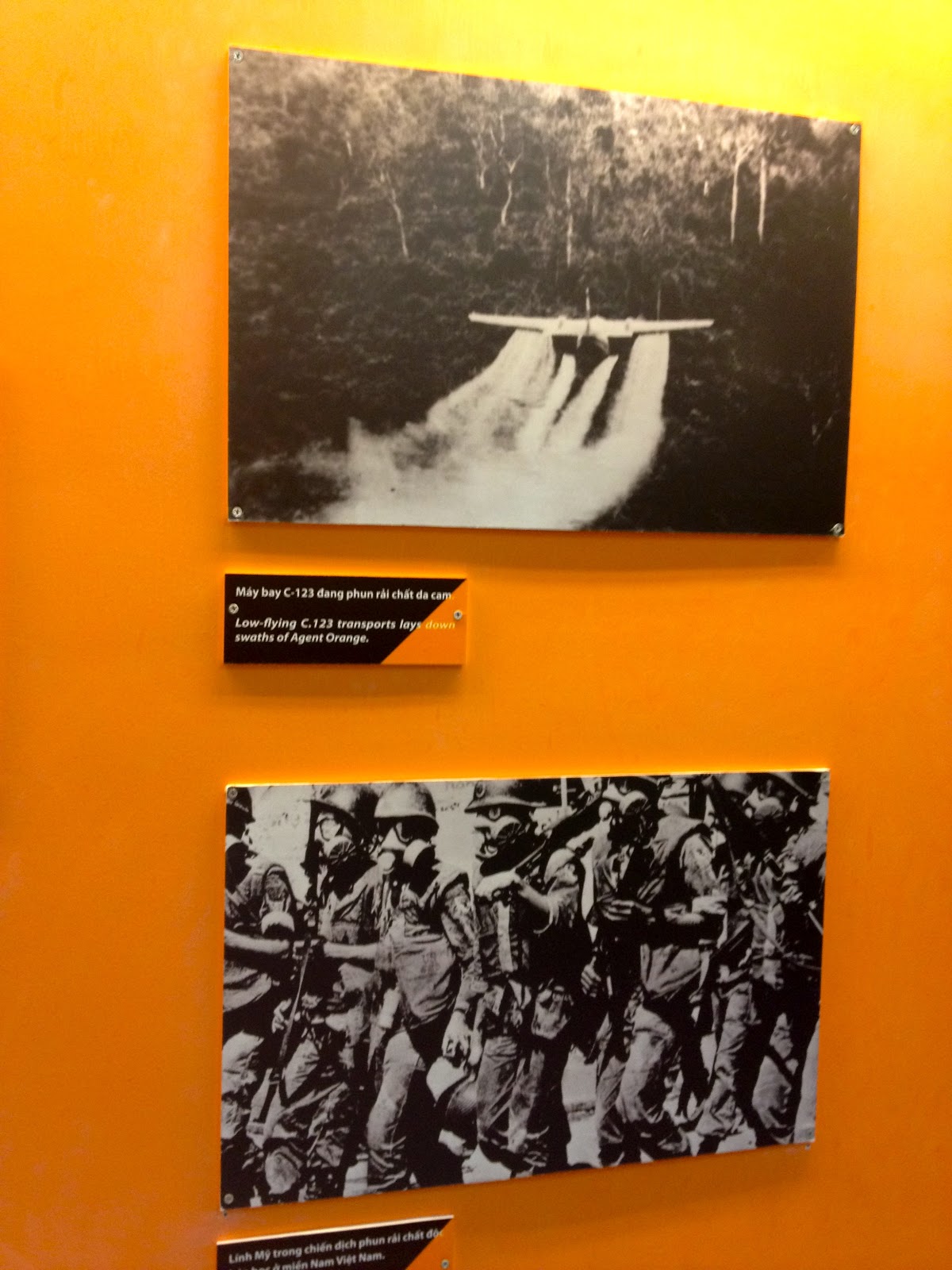
The use of herbicides and defoliants by the U.S. was prominently shown in the Museum with photos and documentation of the lasting effects on the environment and the humans who were sprayed.
The spraying of defoliants

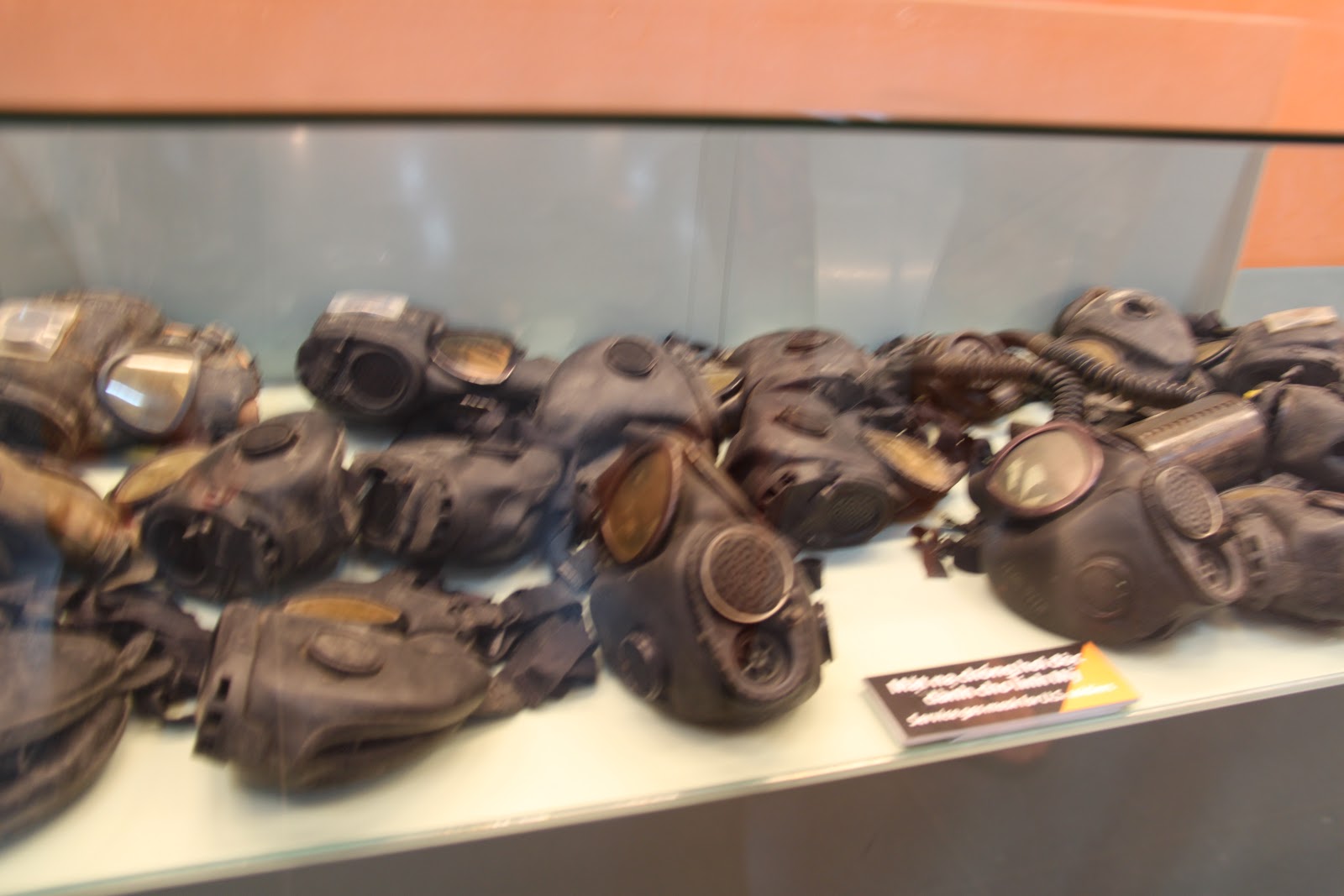
Gas masks worn by the US

 The battle conditions must have been nearly unbearable for all those involved.  The monsoons, heat and humidity must have been very difficult.  We have great respect for those who answered the call to serve in our military in Vietnam.  They are heroes.  They deserve all the honor and respect that we can give to them.  They did what they were asked to do and served with honor.  We believe that our political leaders betrayed us.  Our secret service agencies began interfering in Vietnam just as the French government began withdrawing from Vietnam during the 1950s after 70 years of unhappy French occupation. 

The Museum had many photos and articles about the war.
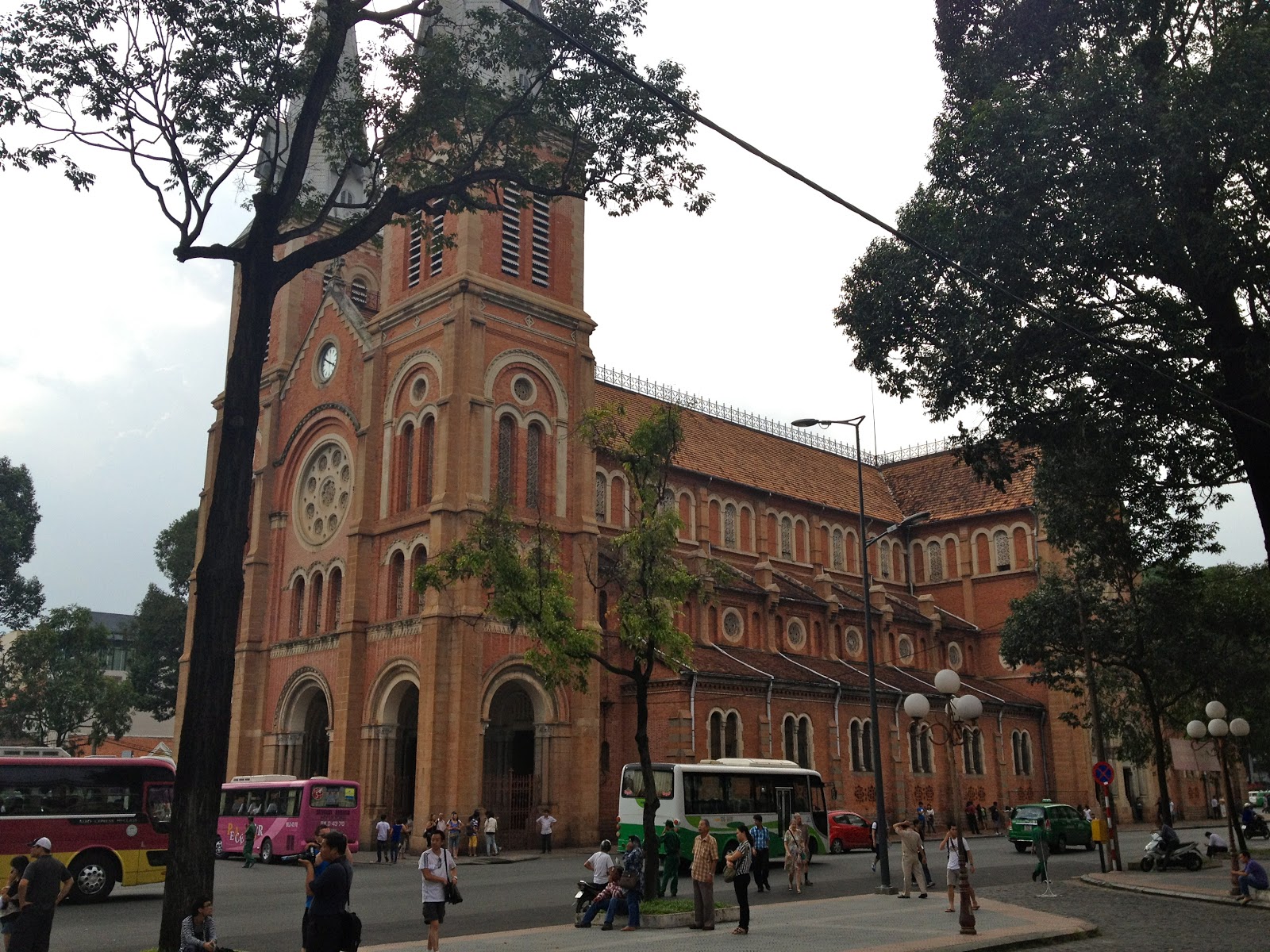
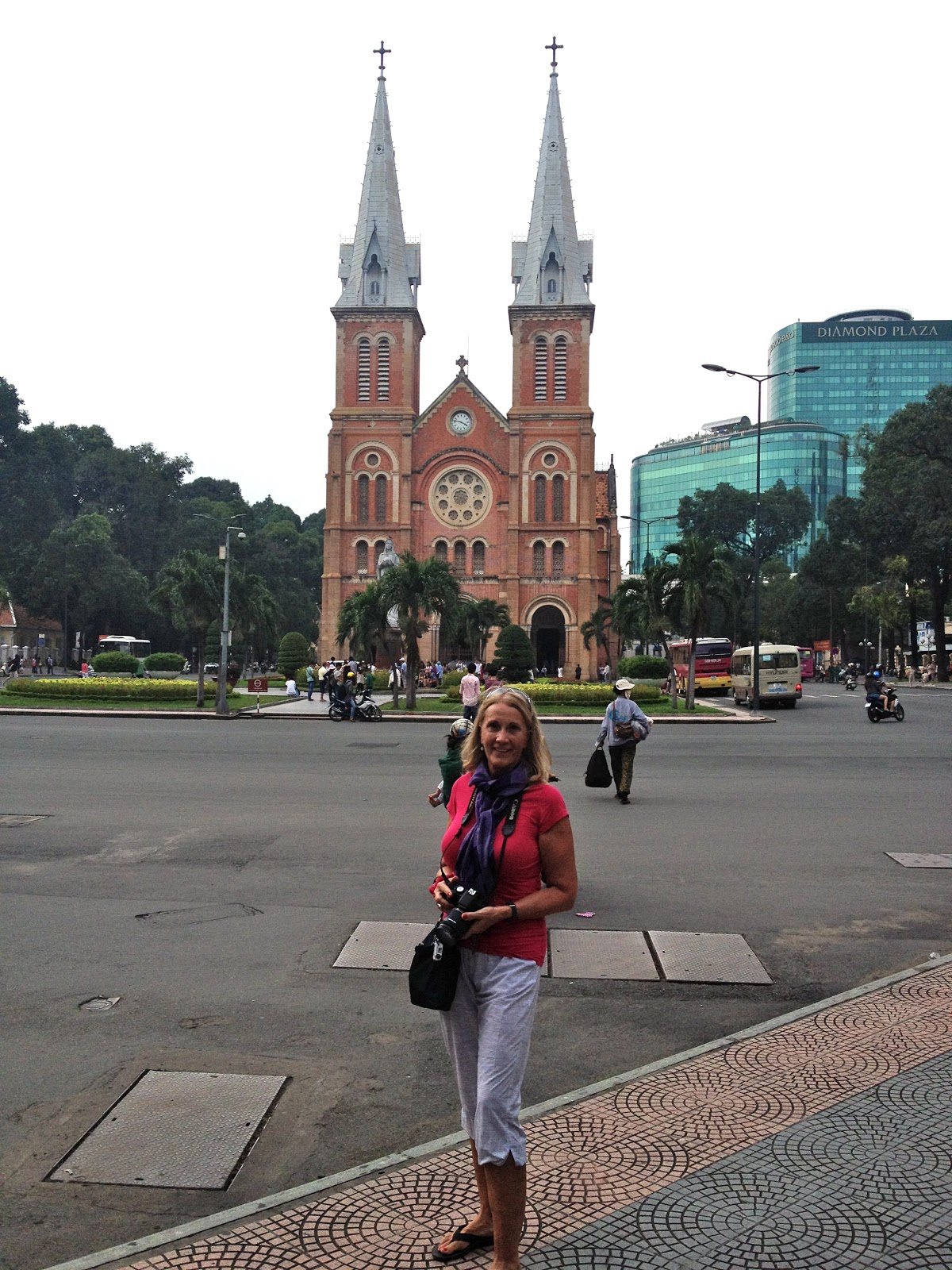
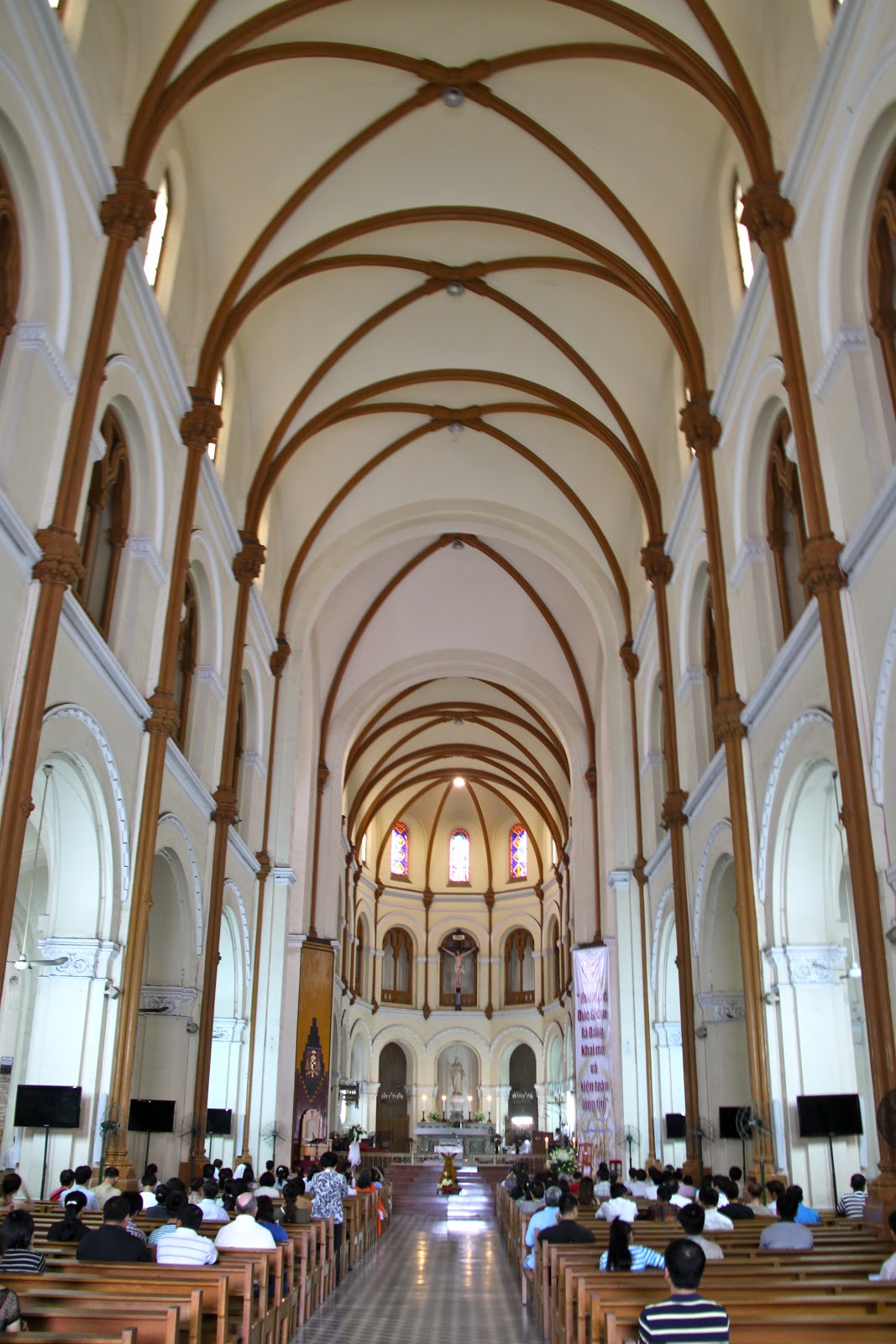
The French built this small replica of the Notre Dame.

Replica of Notre Dam
Barb in front of the Replica of Notre Dam
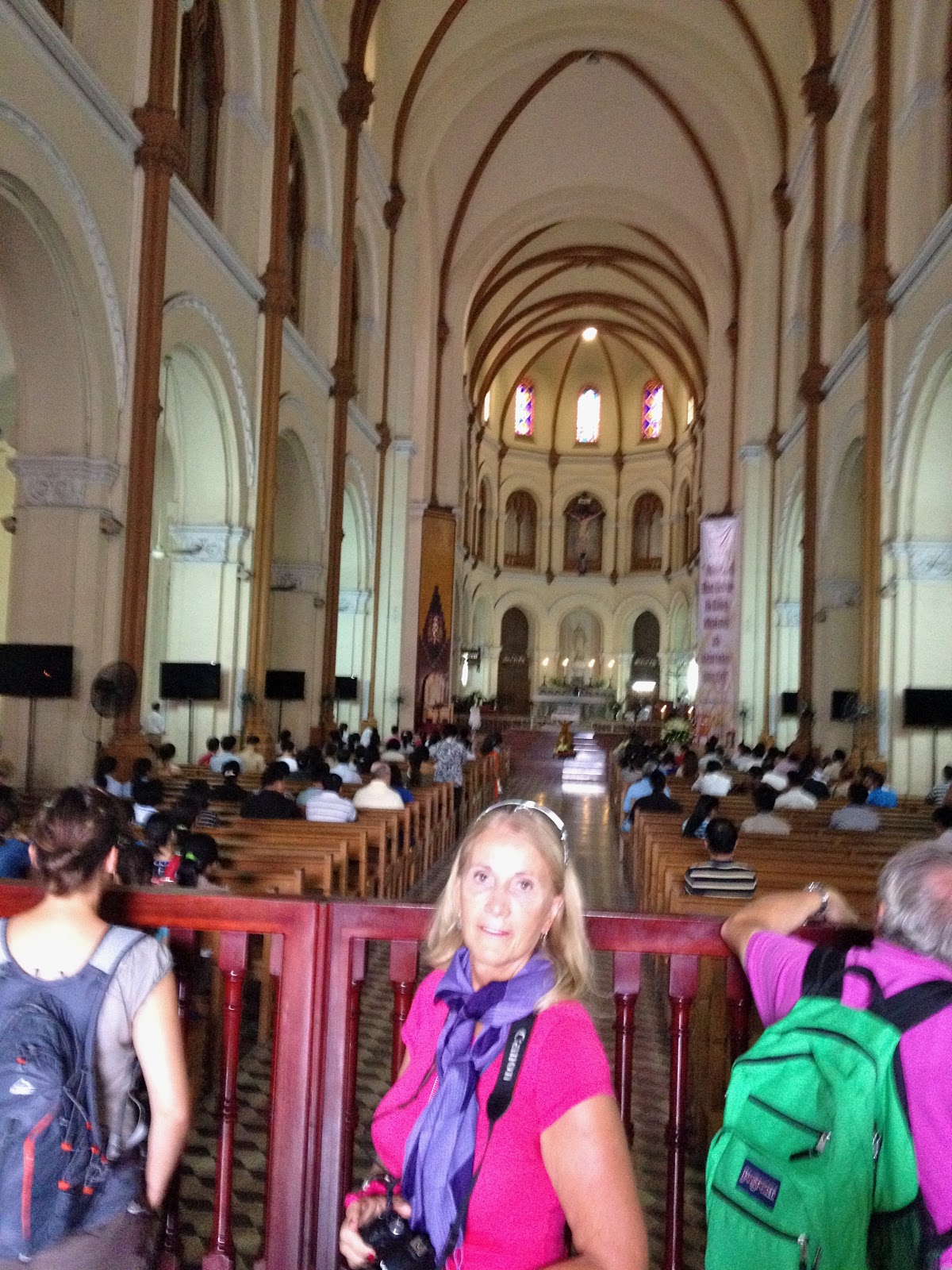
Inside the Church
Barb at church.
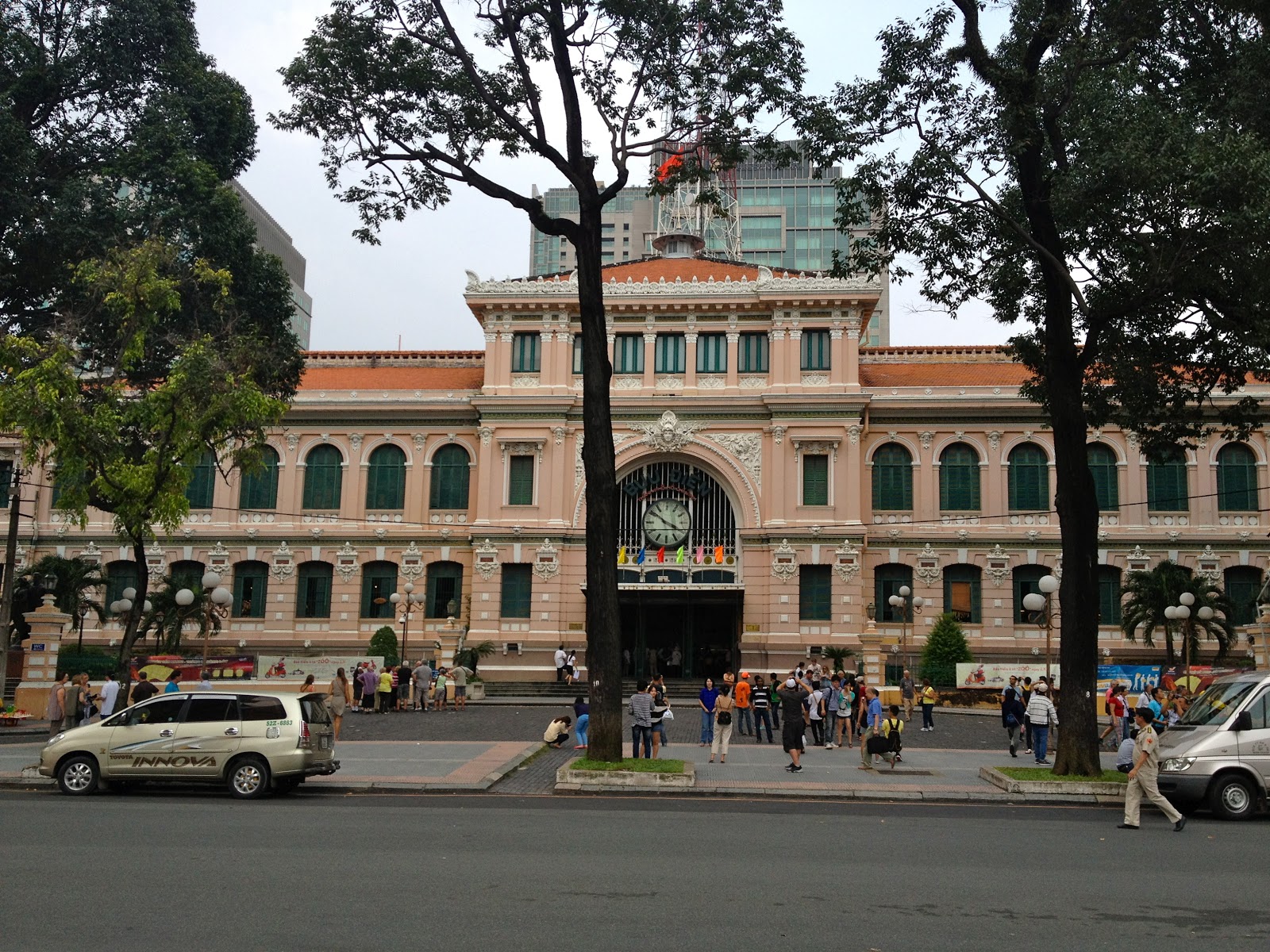
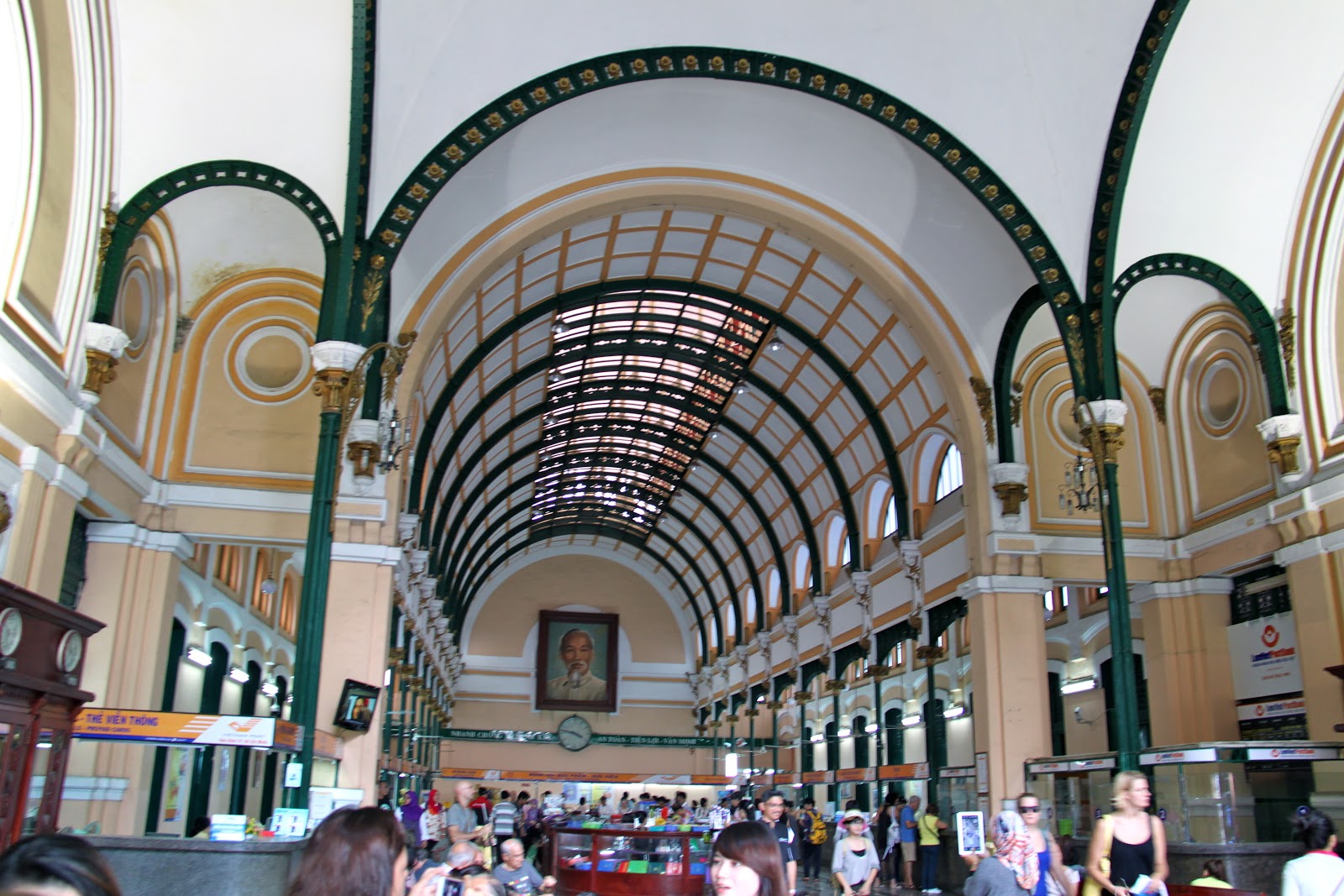
The French also built this train station that has now been converted to a post office.
Train station built by the French.  Now it is a Post Office.
Inside the Train Station/Post Office

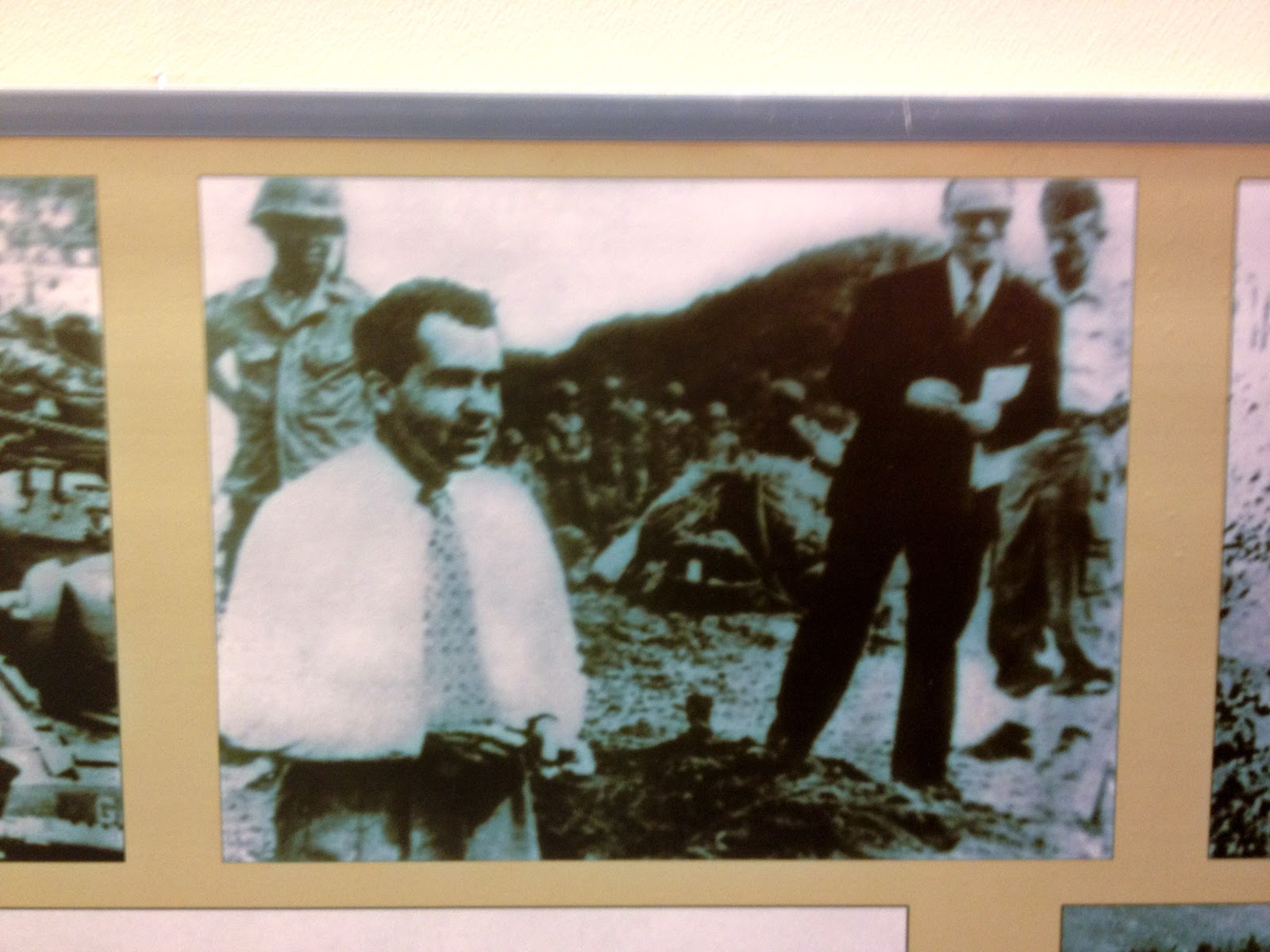
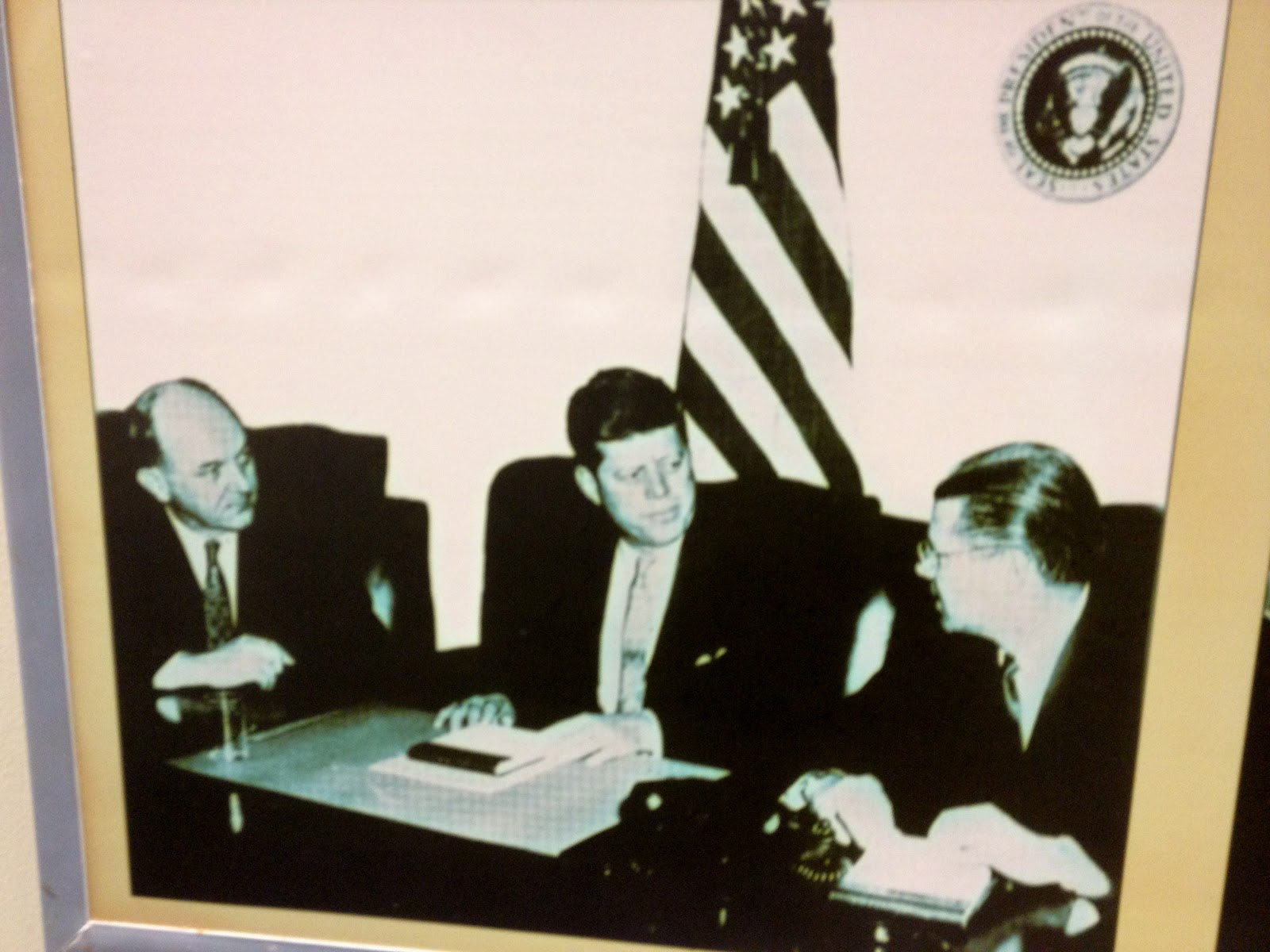
 Kennedy, Johnson and Nixon all made bad decisions.  Cambodians and Laotians all remember that the U.S. bombed across the borders in order to stop supply lines from reaching the North Vietnamese fighters.  These cross border bombings were initially not divulged to the American people.  As we became friendly with Cambodians and Laotians they will talk about this history.  They hold no malice.  They are warm and friendly people who are happy to be conflict free and they are eager to participate in the world economy. 

Outer Mongolia, Oct. 15-19, 2012

MONGOLIA:  Land of Genghis Khan.
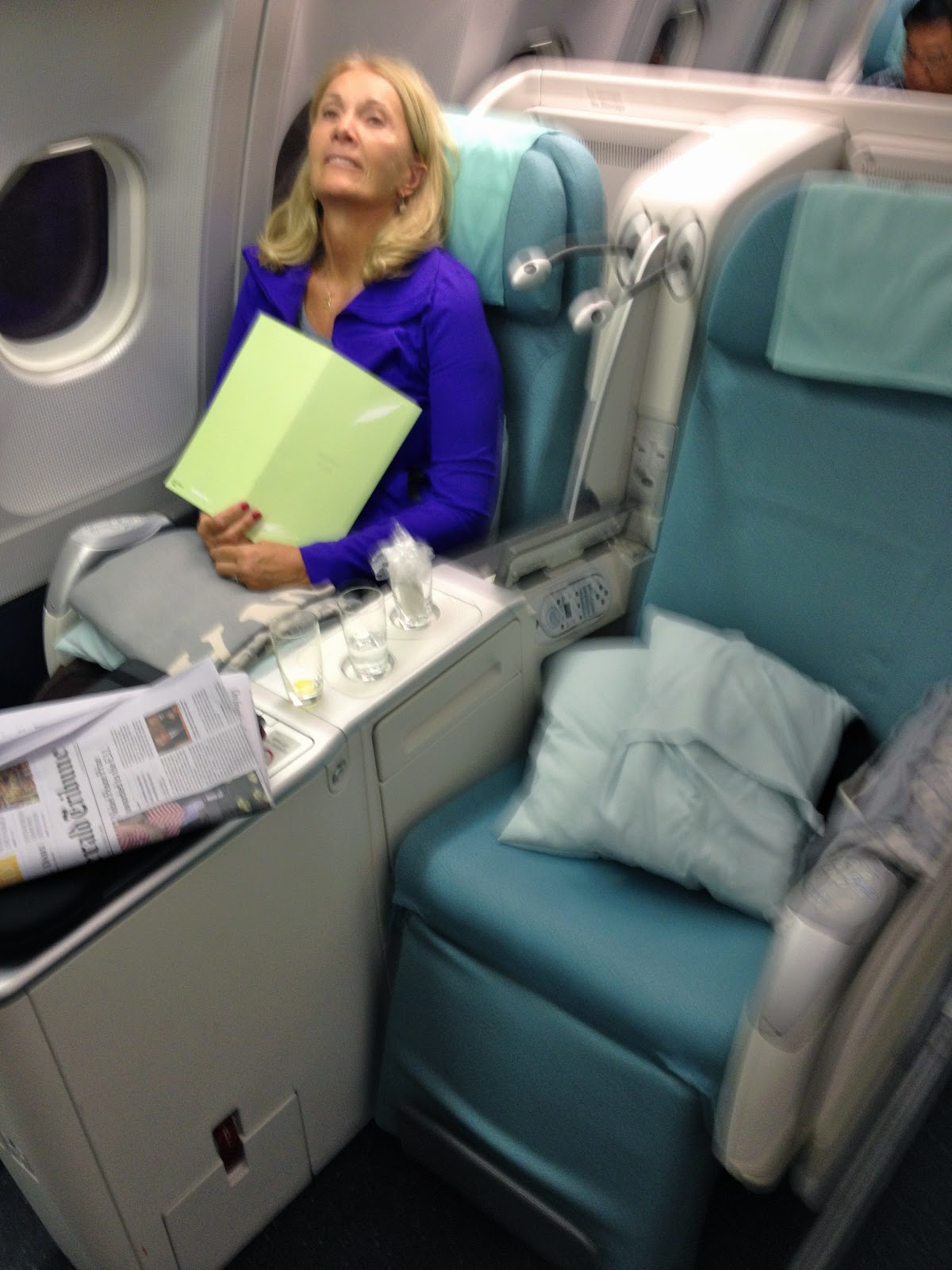
We flew 1 hour from Ho Chi Minh City to Bangkok and 5 hours to Seoul and then connected with a MITA Mongolian airlines 3.5 hour flight to Ulaanbaatar “UB”.  With all layovers this adventure took us 16 hours.  We did get some sleep on the overnight flight on the completely flat airline seats.

Barb looks like she could pass out without a flat seat!

When we landed in UB our guide who is nicknamed “Baggy” met us.  We were supposed to drive 1 hour to our hotel.  BUT, there was a major unannounced road closure and we were stuck in traffic for 4 hours. 

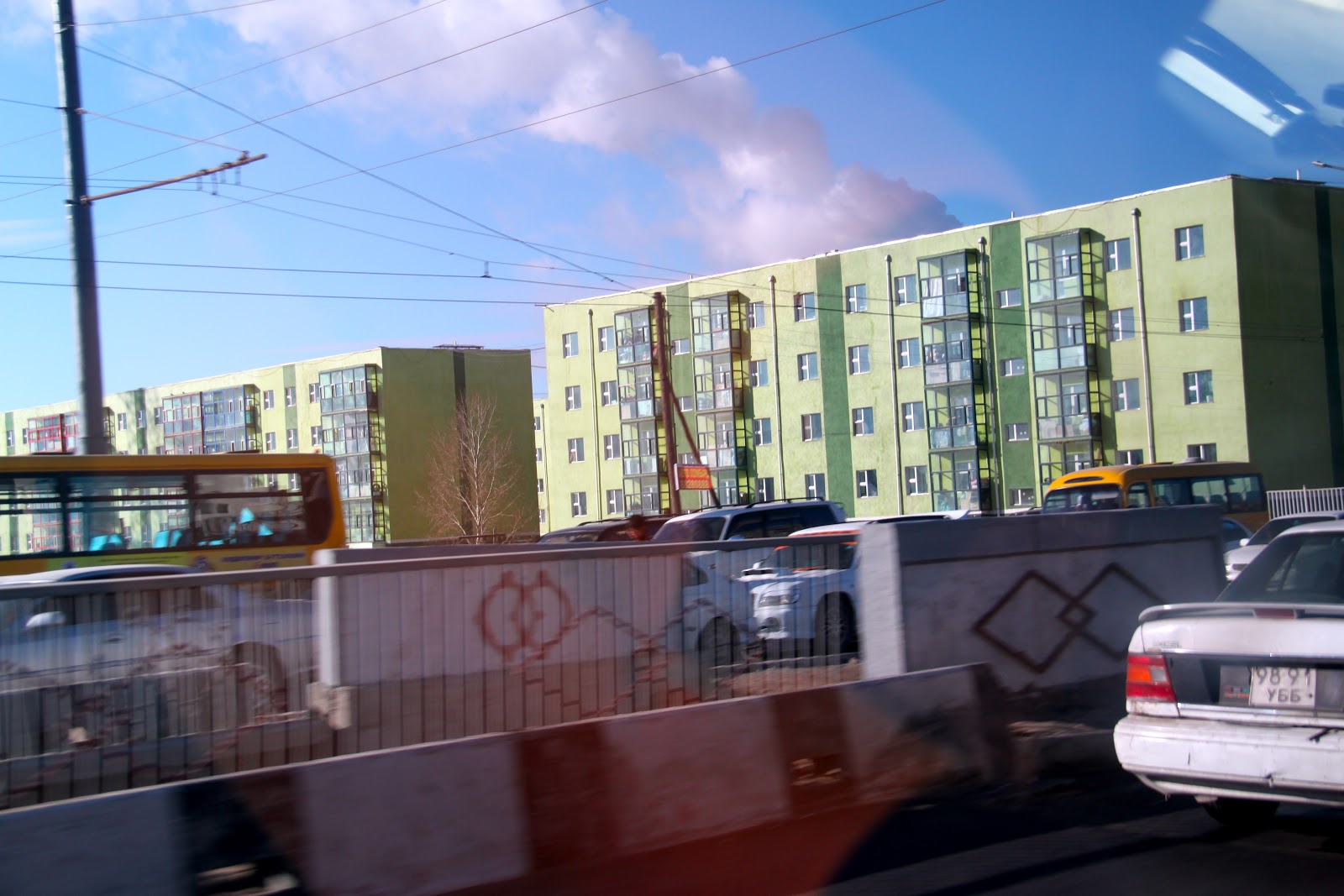
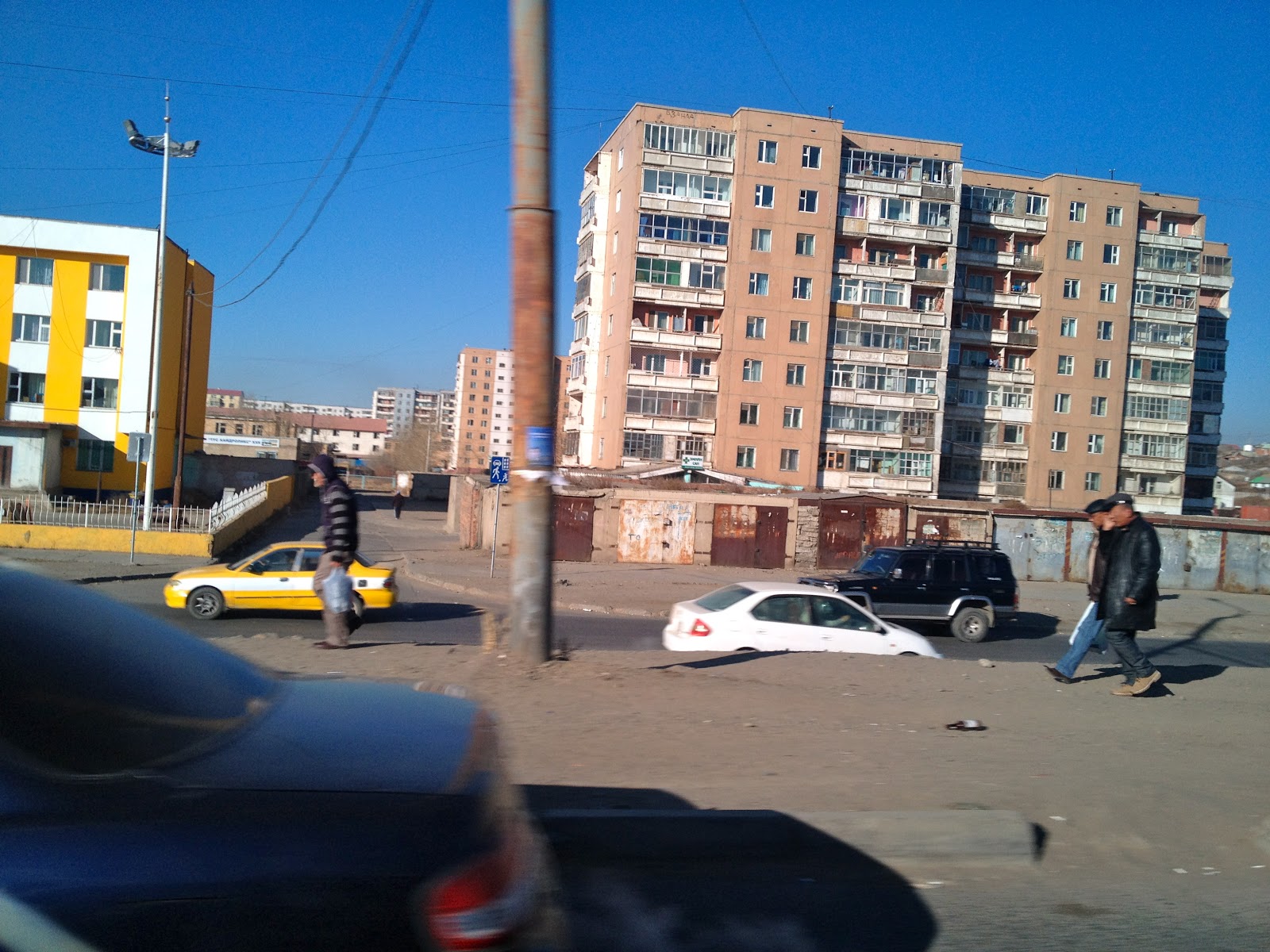
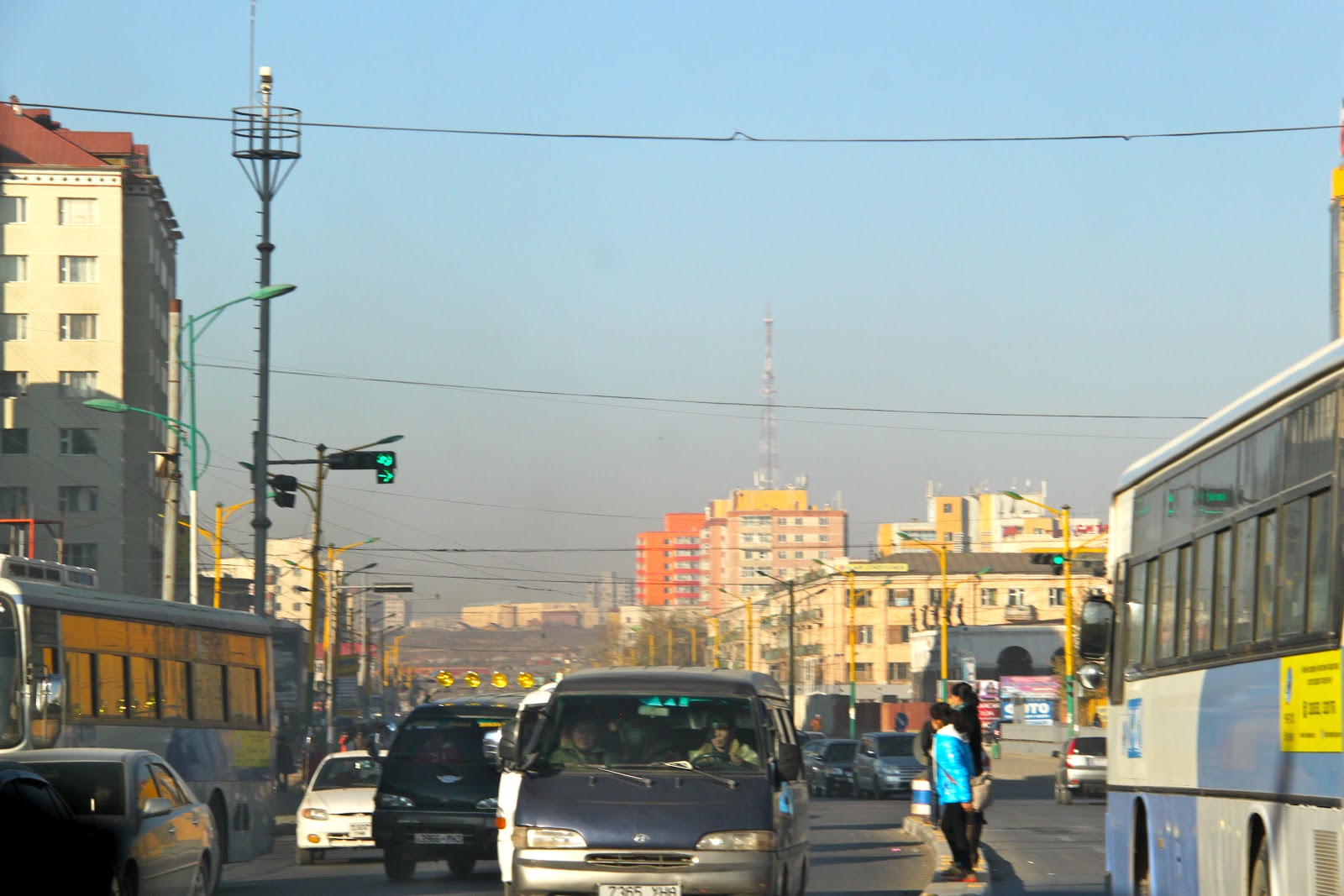
Some of these stark and plain buildings remind us of the architecture in Moscow.  It looks cold and uninviting.  Oh, it is cold… -1 C or about 29 degrees F.  UB is the coldest capital in the world.
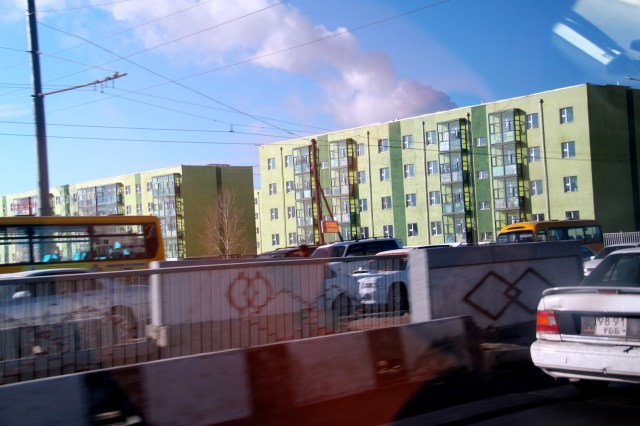
Architecture similar to Moscow
Typical apartments

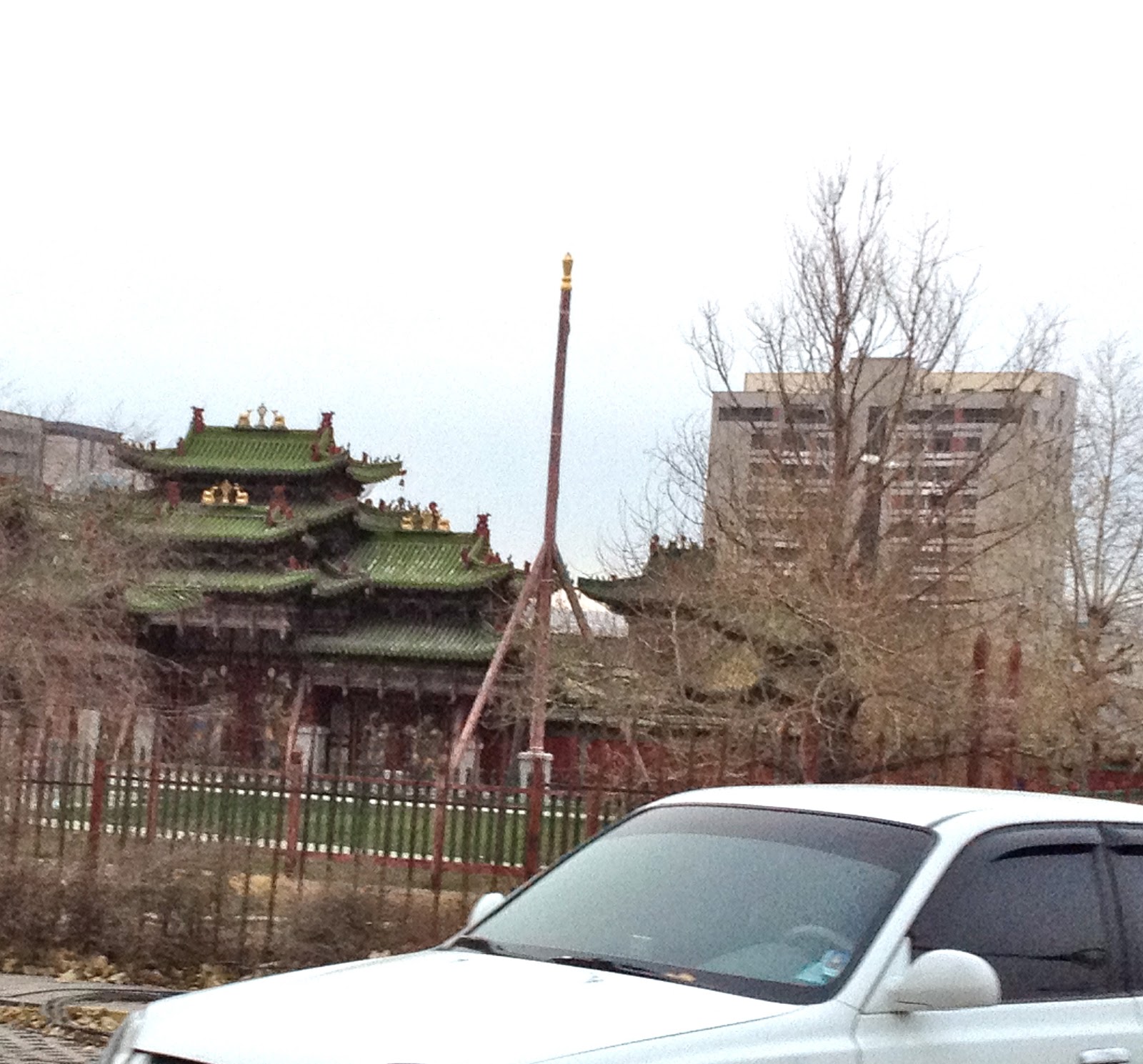
This was the only building with a little character.  We think it was a Buddhist temple.
People walk between cars.  Forget crosswalks.
The Soviet Union has had a presence in Mongolia for many years.  After World War II there were as many as one million Russians in Mongolia.  The Russians quickly disappeared after 1990 when the Soviet economic system collapsed.  Baggy told us that the Russians treated the Mongolians very poorly.  During the Stalin era as many as 15,000 Mongolian Monks were killed along with thousands and thousands of other Mongolians who were believed to be a danger to the communist way of doing things.  Today Mongolia has free elections and the communist party takes only about 5% of the vote.
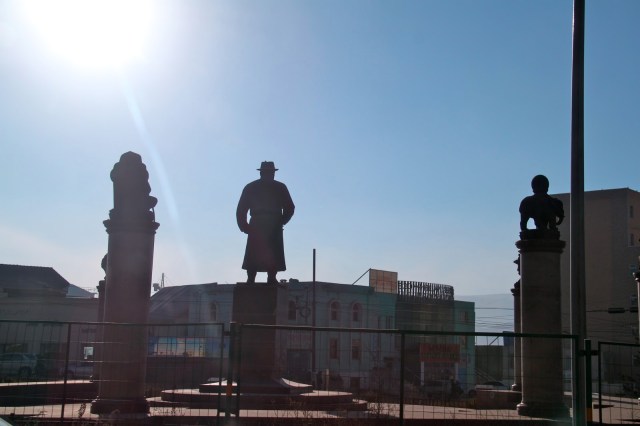
Russian Influence.
After 2 hours of inching forward in a terrible traffic jamb Barb and the guide spotted a store that specializes in cashmere so we spent 2 hours there while Barb went crazy buying things.  There are cashmere socks, mittens, scarves, pajamas, sweaters, hats, dresses, and tracksuits.  I bought 2 sweaters (US $120 each), a pair of socks ($16), and a pajama bottom ($60).  I think that the socks, sweaters and pajama bottom will keep me warm while riding horses.  Barb bought one of everything else.  I paid for everything once and Barb sneaked away and started trying more clothes on and so I had to pay again.  I haven’t seen Barb so excited to shop since the last Lululemon store she visited.  The total cashmere bill was about US $1100 but Barb said similar quality in the US would have been 3 times the price.  Where else can you get cashmere pajamas???
We drove 2 more hours in a traffic jam (probably 5 miles), ate a Mongolian dinner at a restaurant that doubled as a museum of Mongolian artifacts (it was cool) and finally got to our Kempinski Hotel at 9:30 pm.  We were exhausted so the fact that this 4 star hotel felt more like a 2 star hotel did not matter to us.
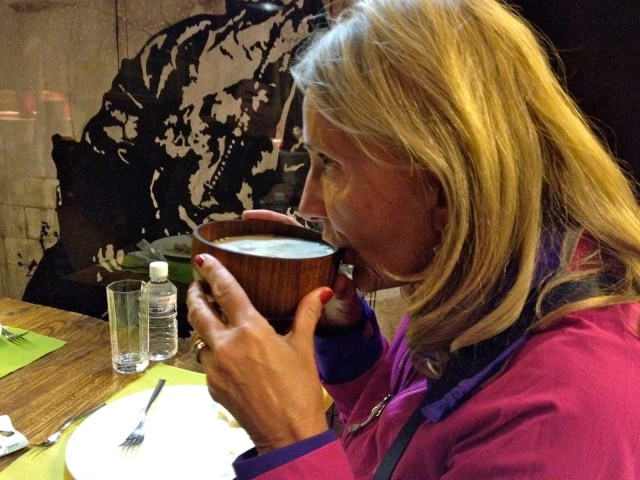
Barb’s first taste of Mongolian Tea.  Salty, with bits of meat in it.  Shall we say interesting?

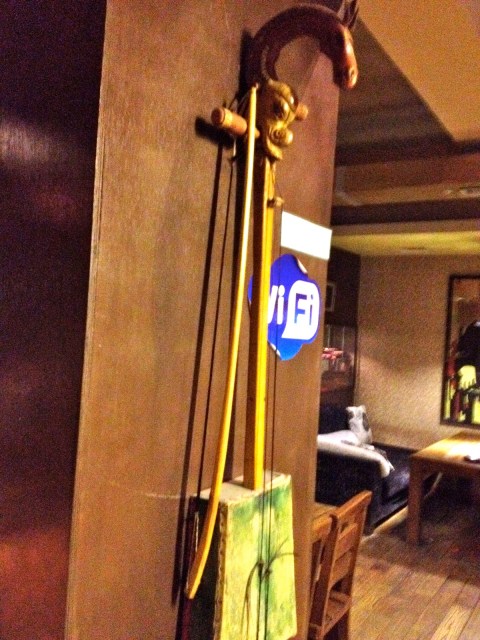
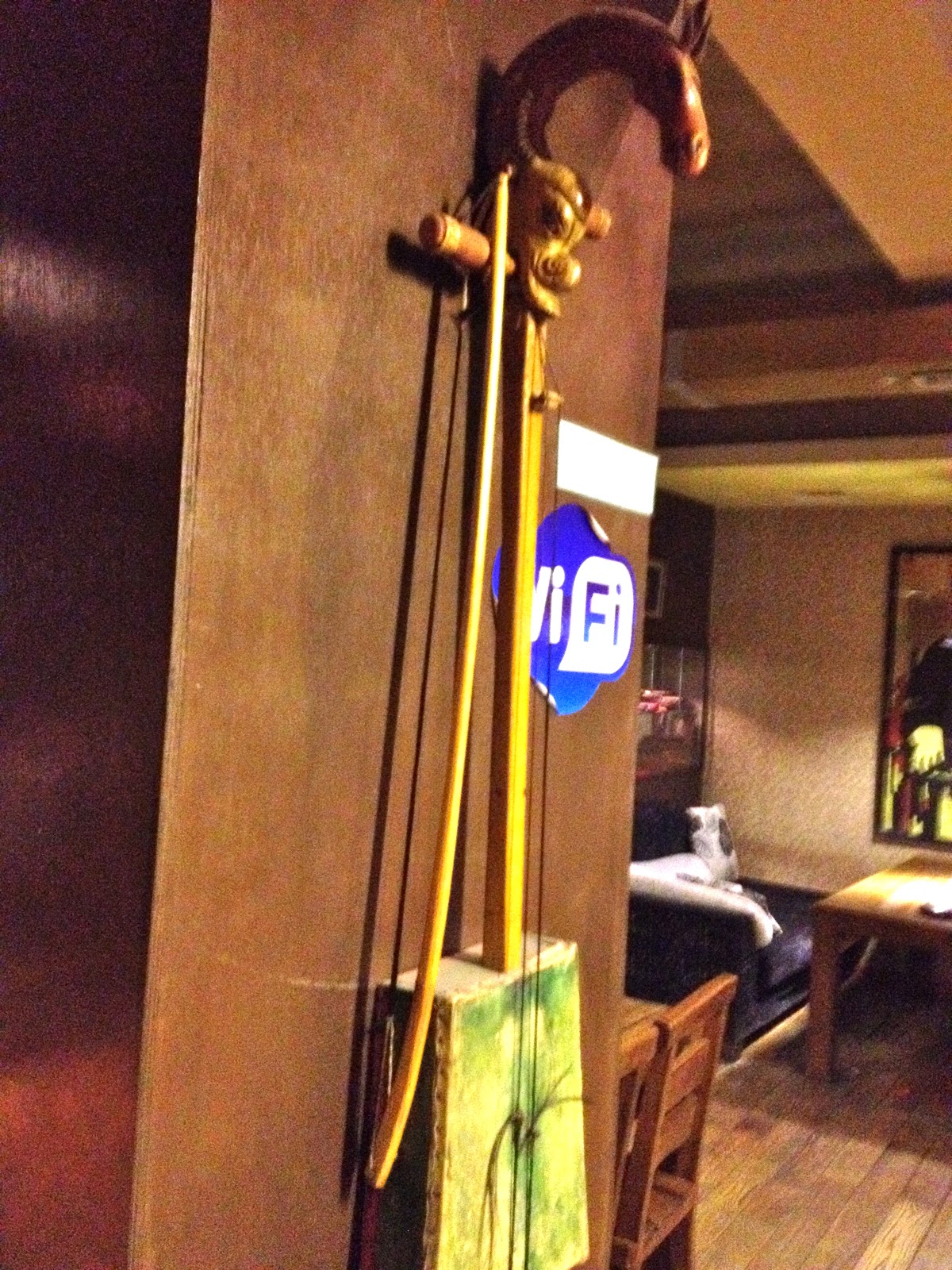
A musical instrument at the restaurant.  We saw many like this.  It has a horse head at the top.
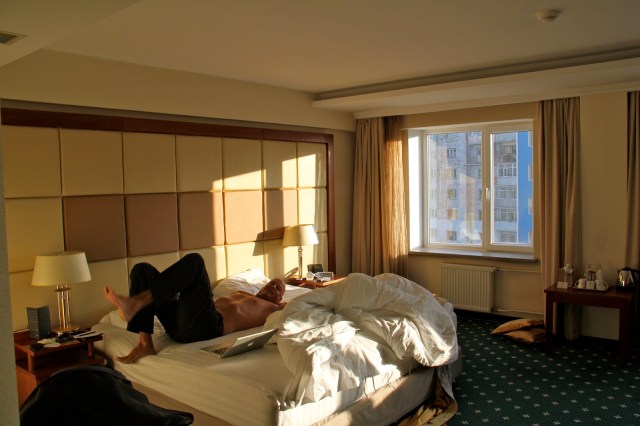
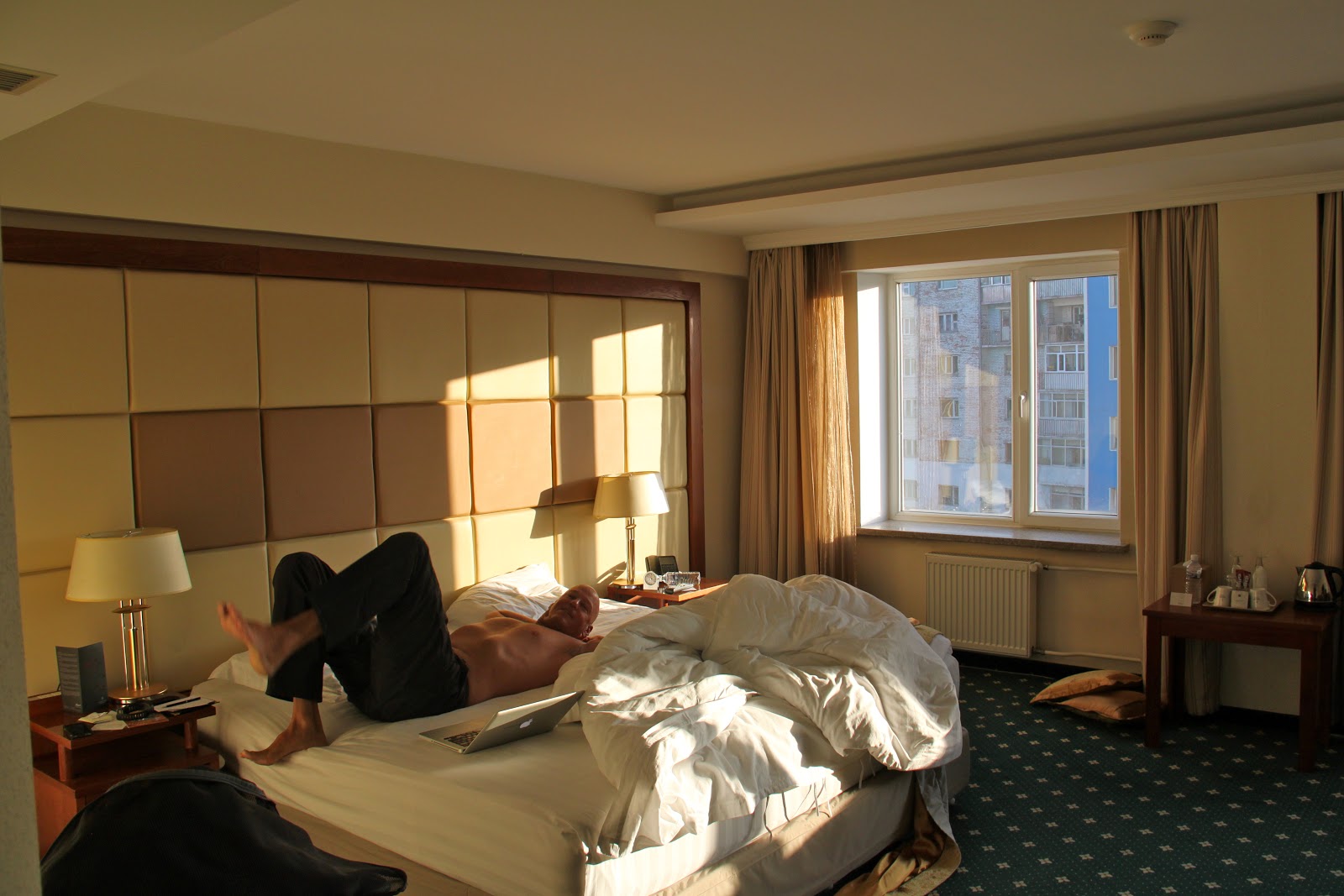
Our hotel room at the Kempinski Hotel.

We left the hotel at 9 am, stopped to pick up some fruit and snacks at a nice grocery store and were in the wilderness outside of town and riding on our horses at 10:30 am.
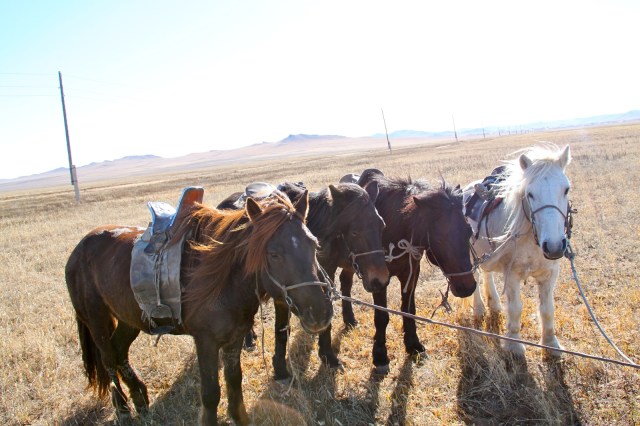
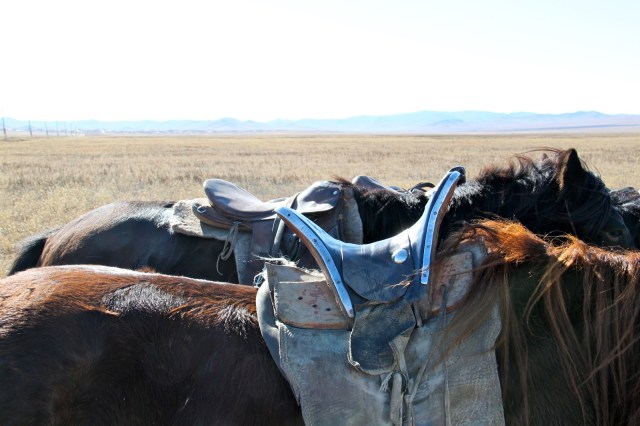
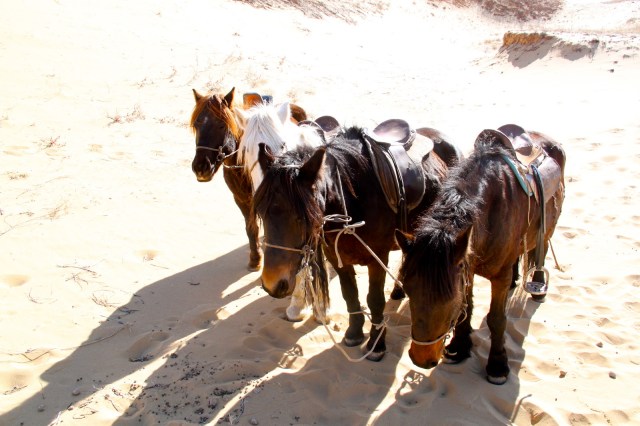
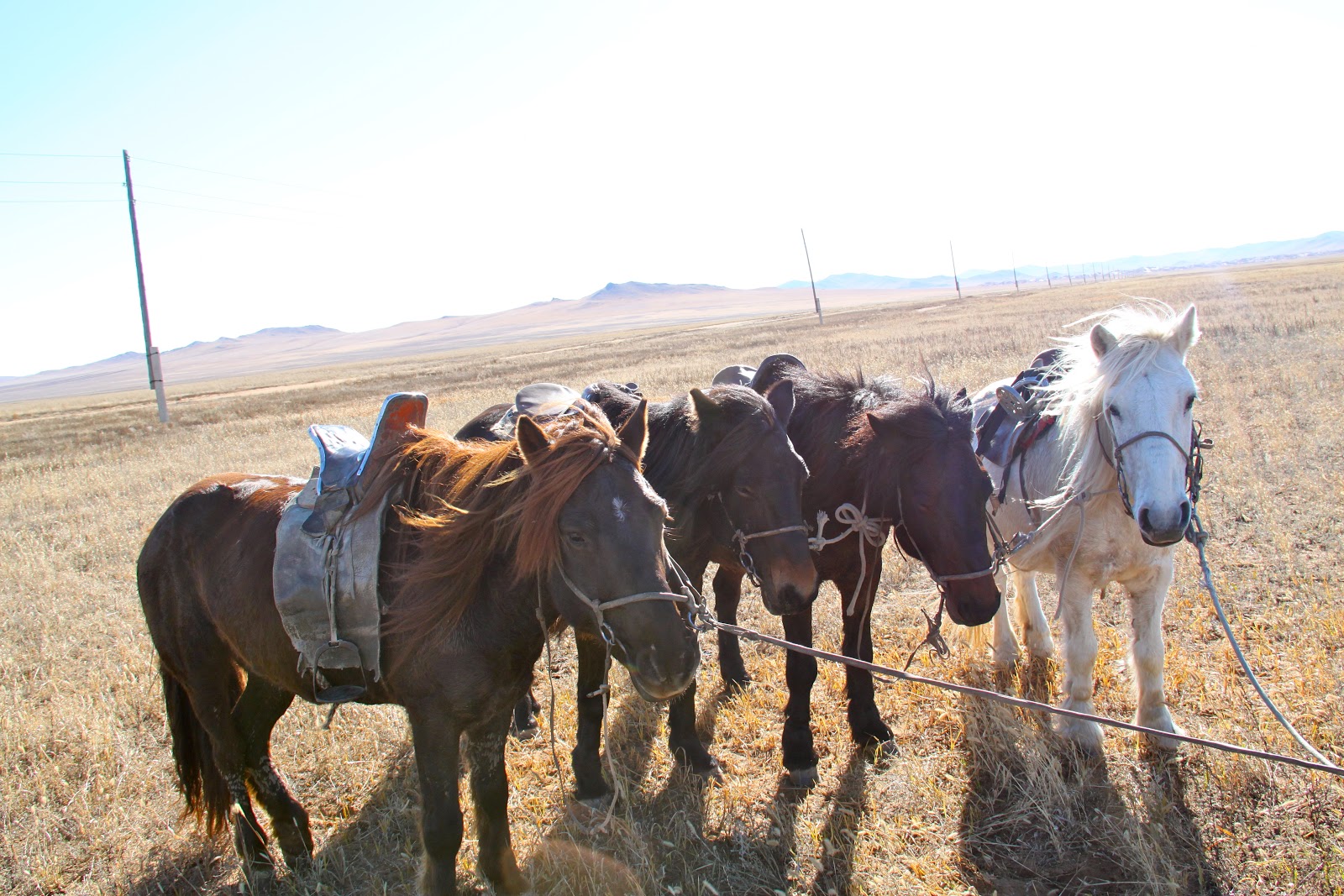
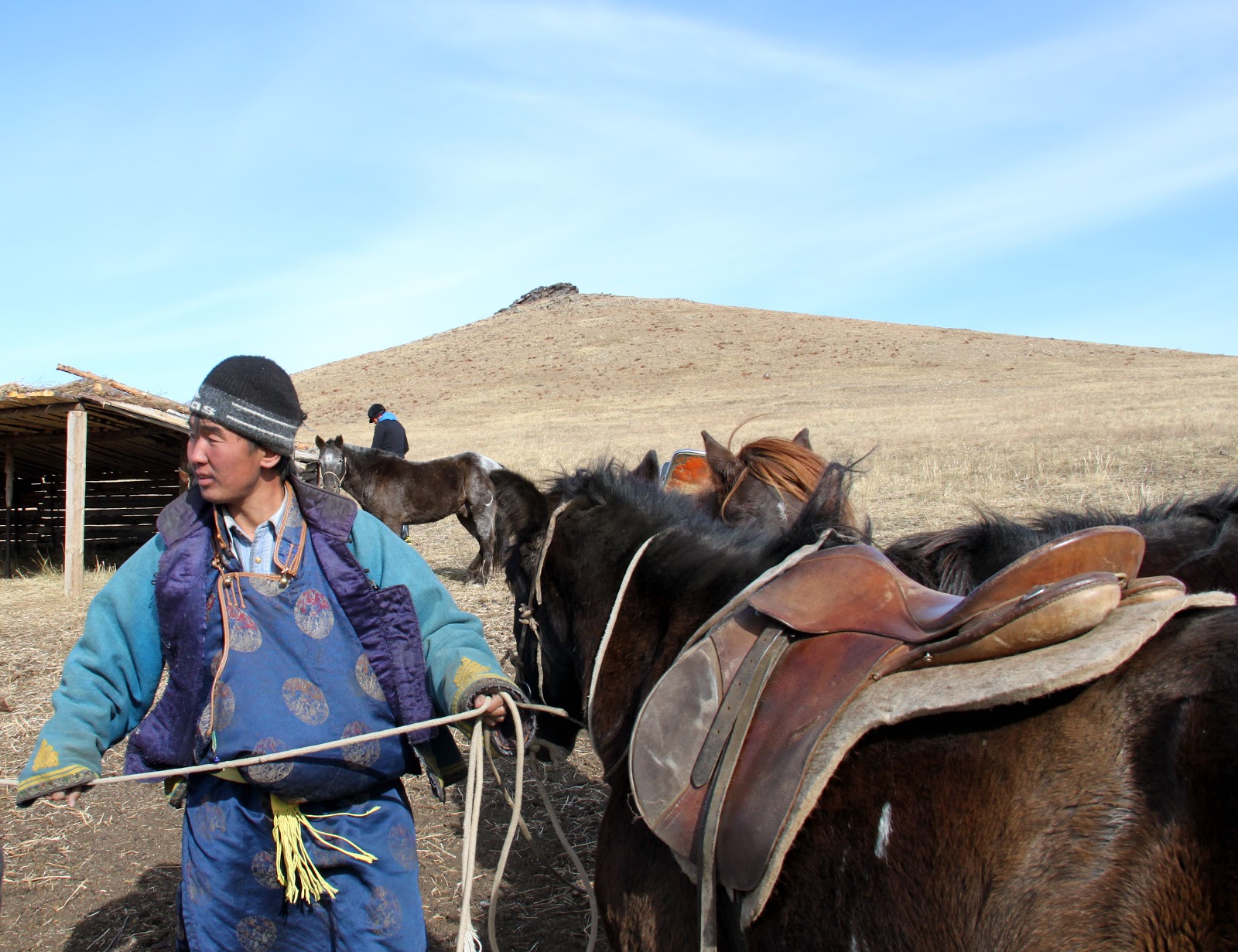
These were the horses that were brought to meet us.  Notice the saddle?
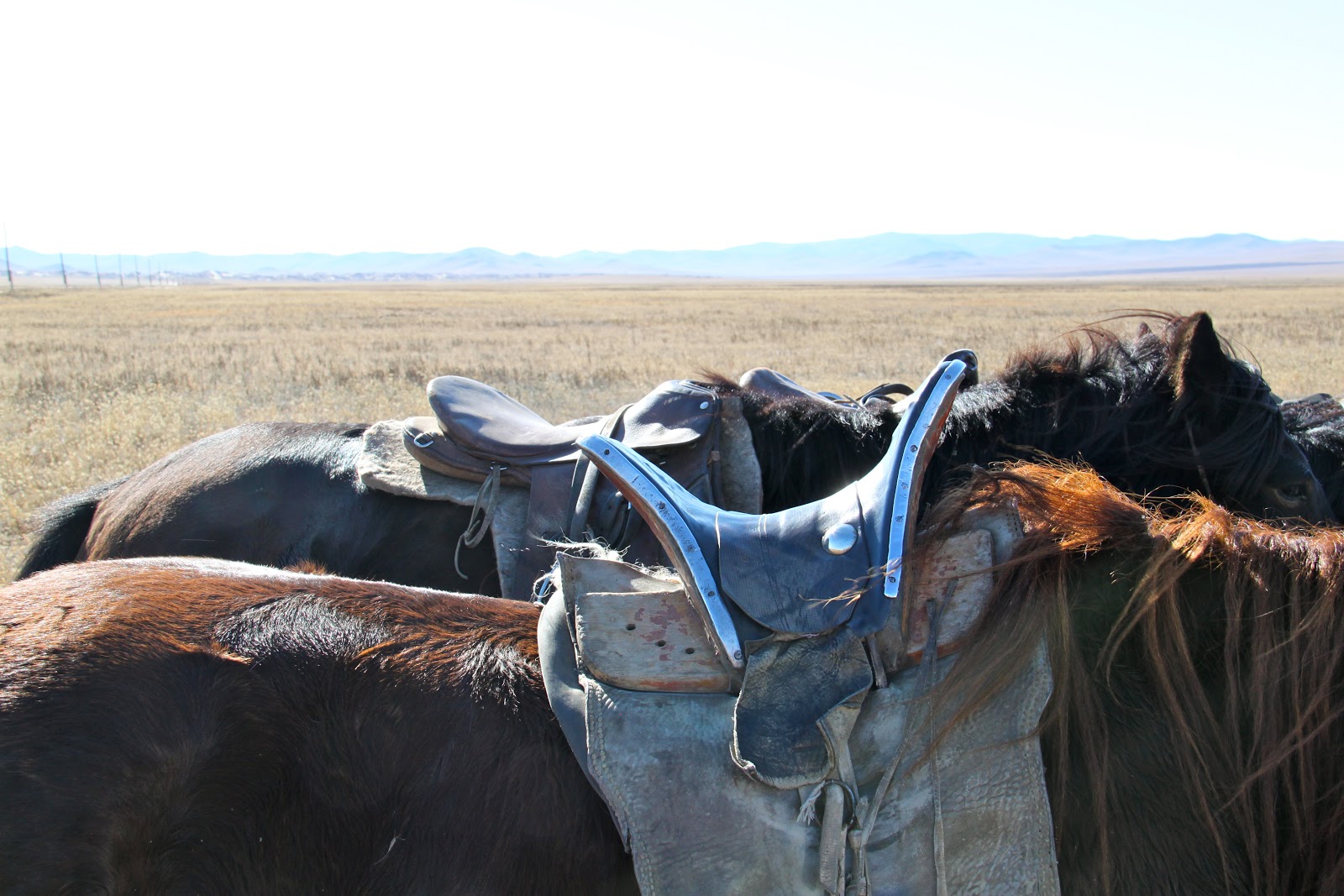
A typical Mongolian Saddle.  They also ride with pretty short stirrups.
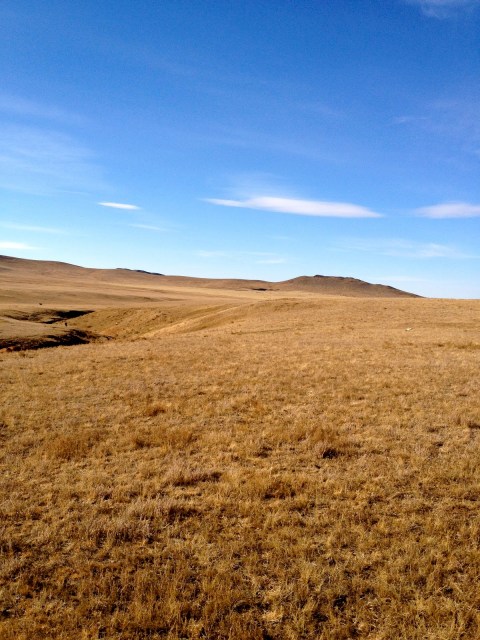
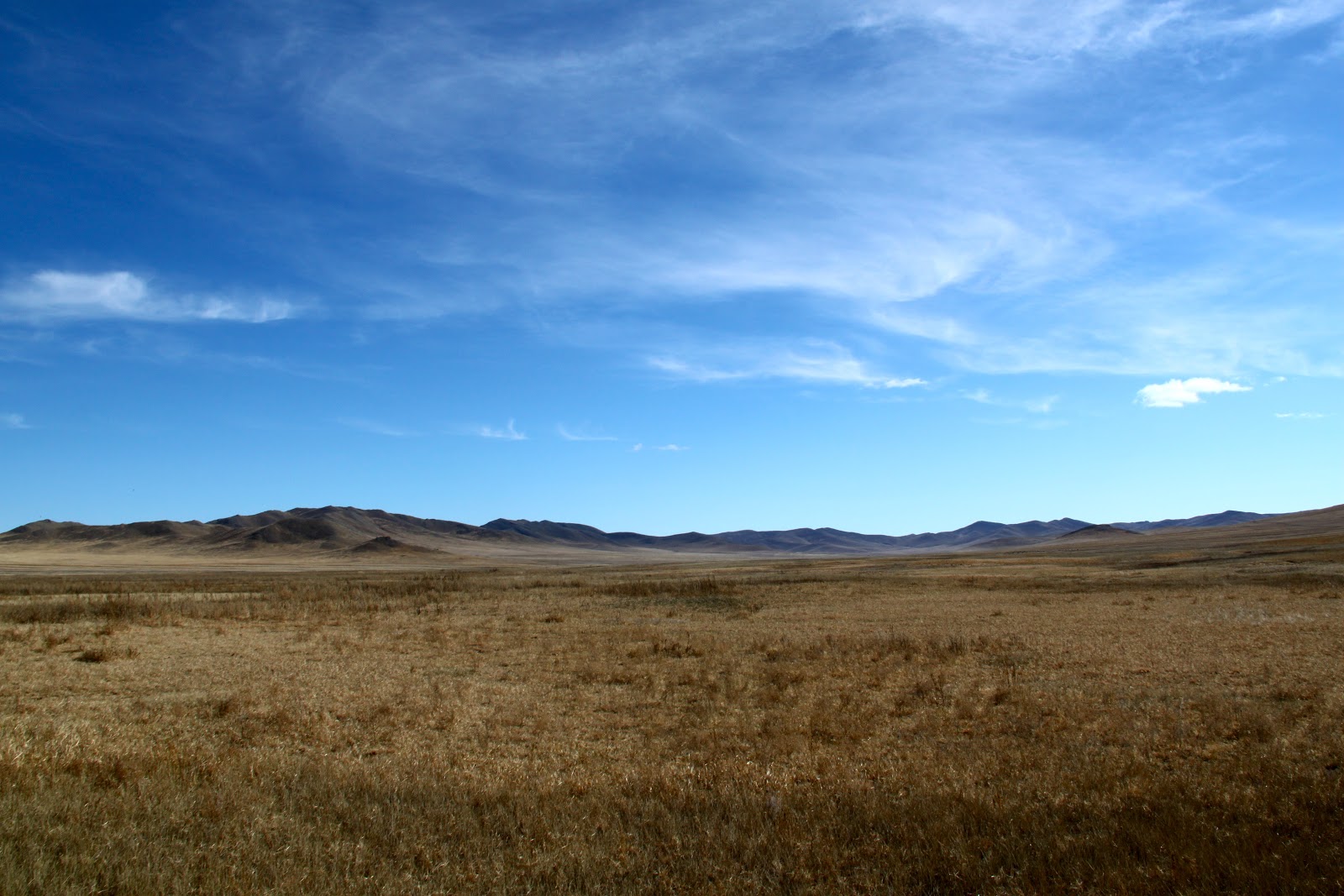
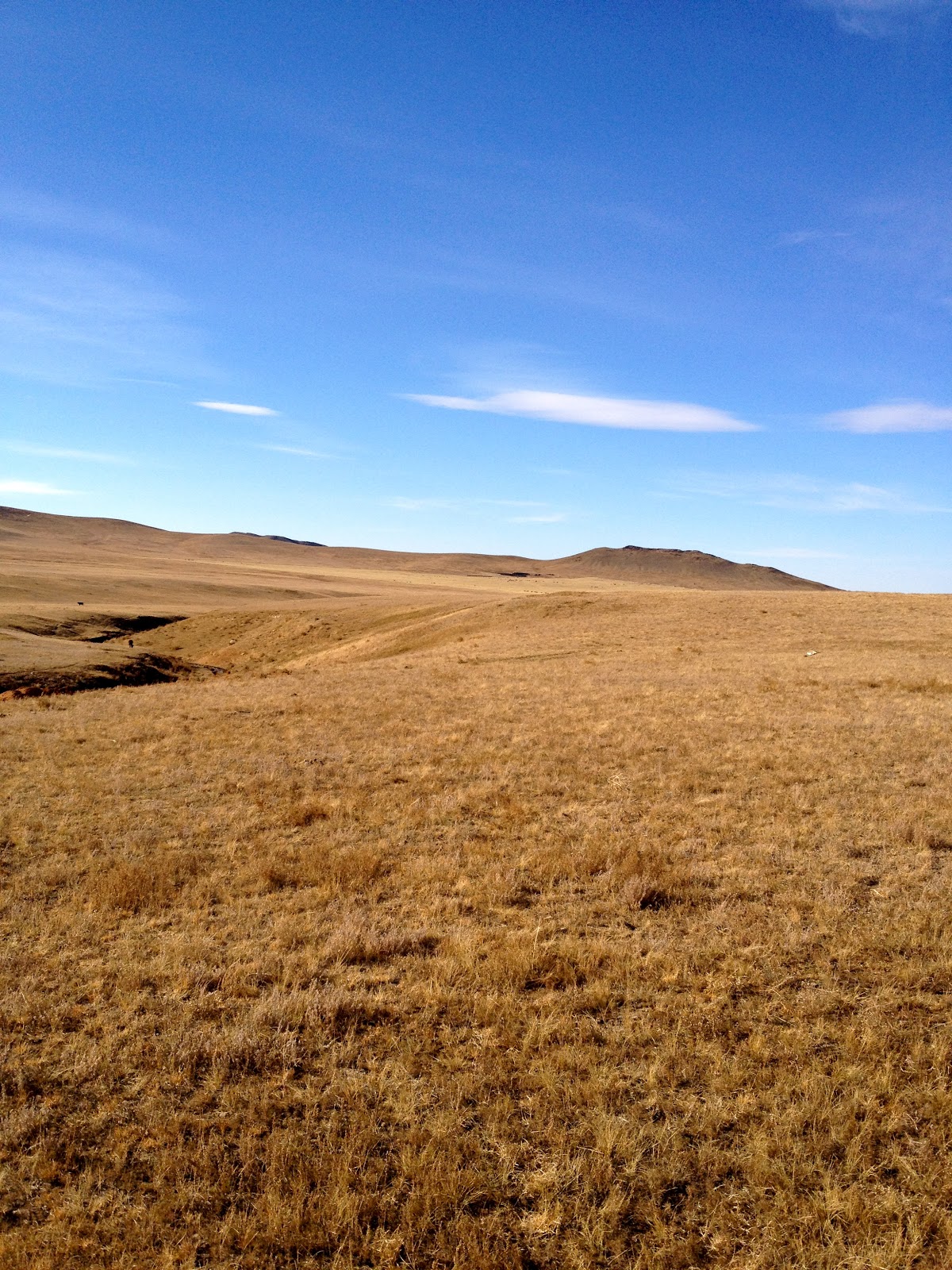
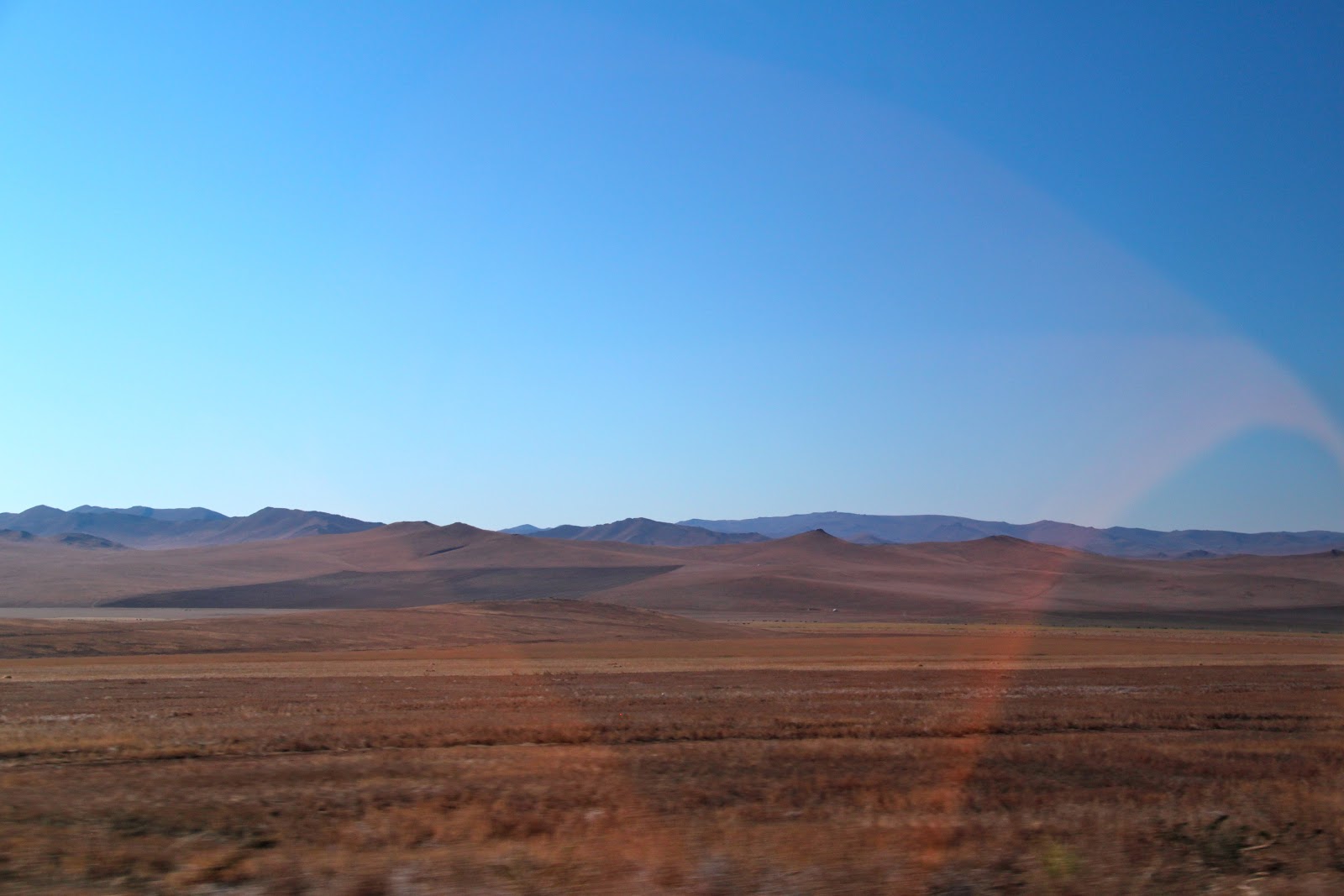
The Mongolian landscape is a lot more scenic than the UB cityscape.
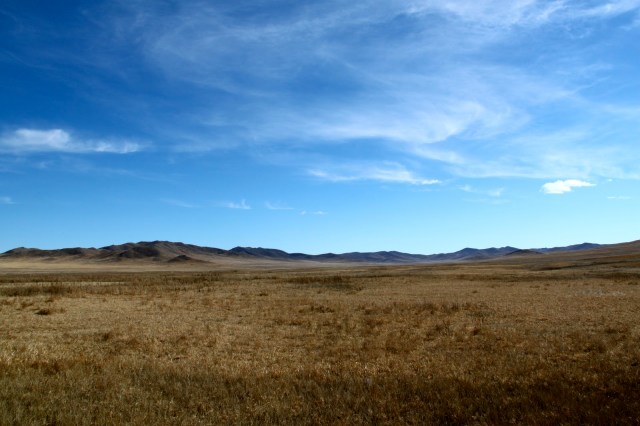
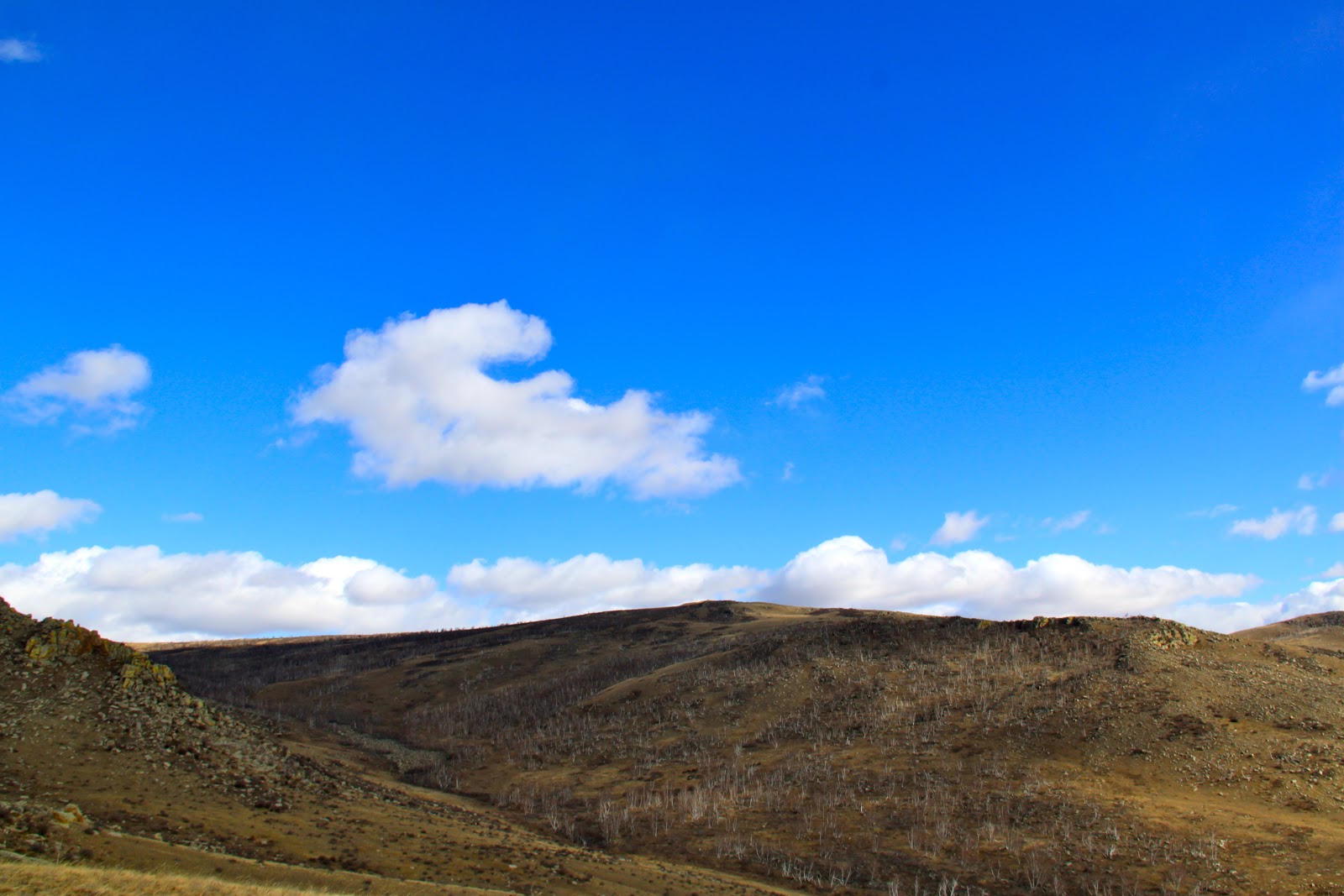
Lots of blue sky when you get out of the city.
Pretty colors.
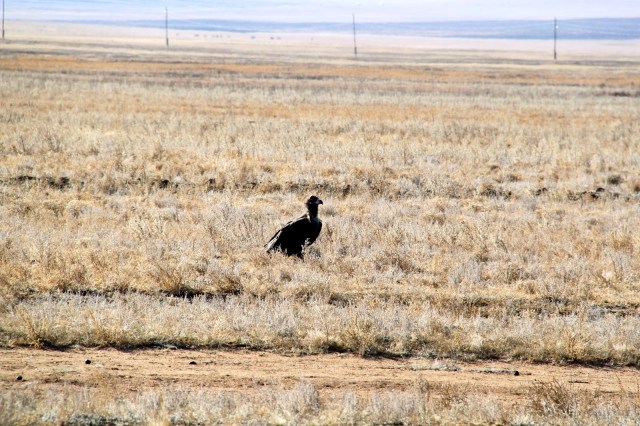
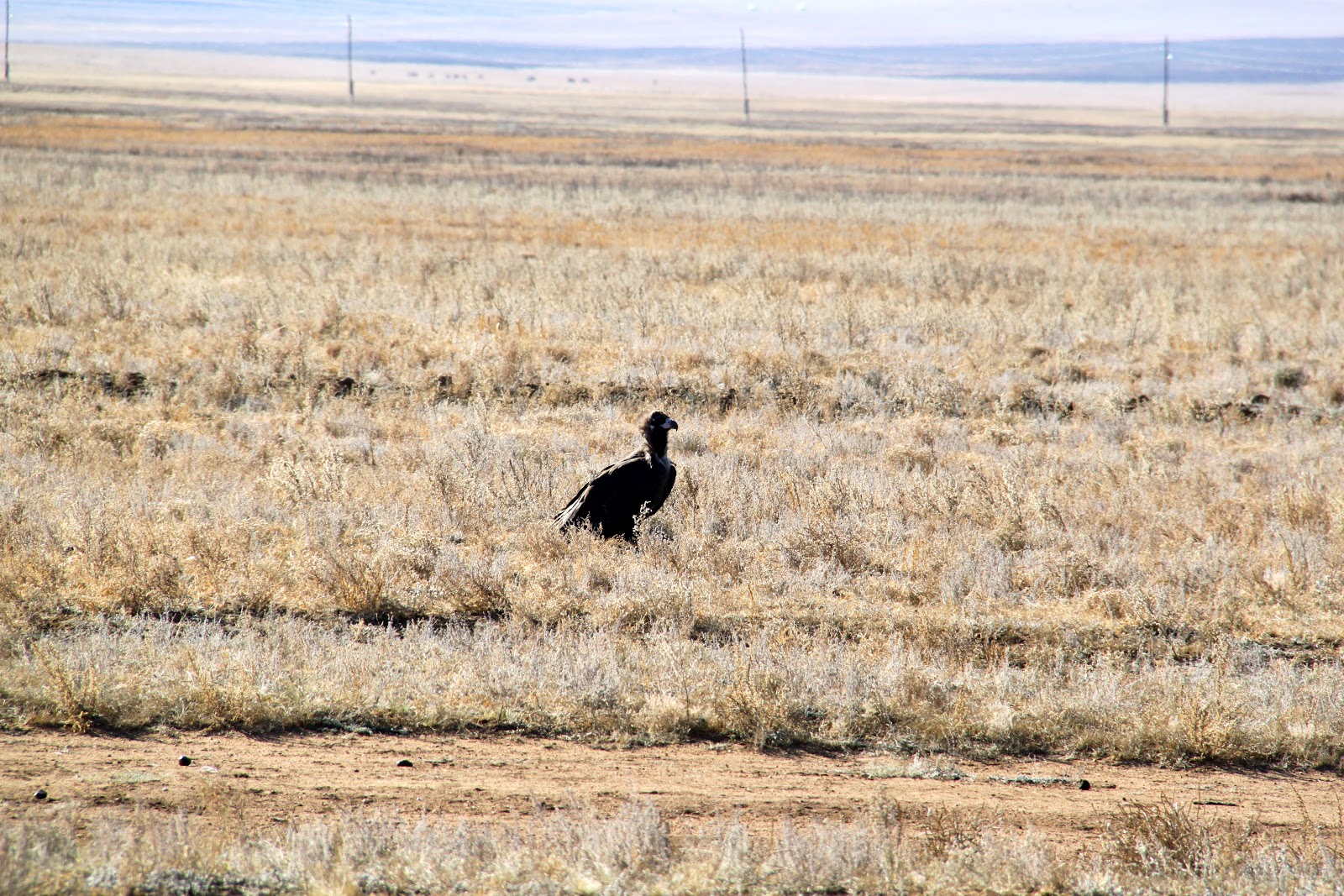
We did see some vultures along the way.
Blue sky, white clouds.

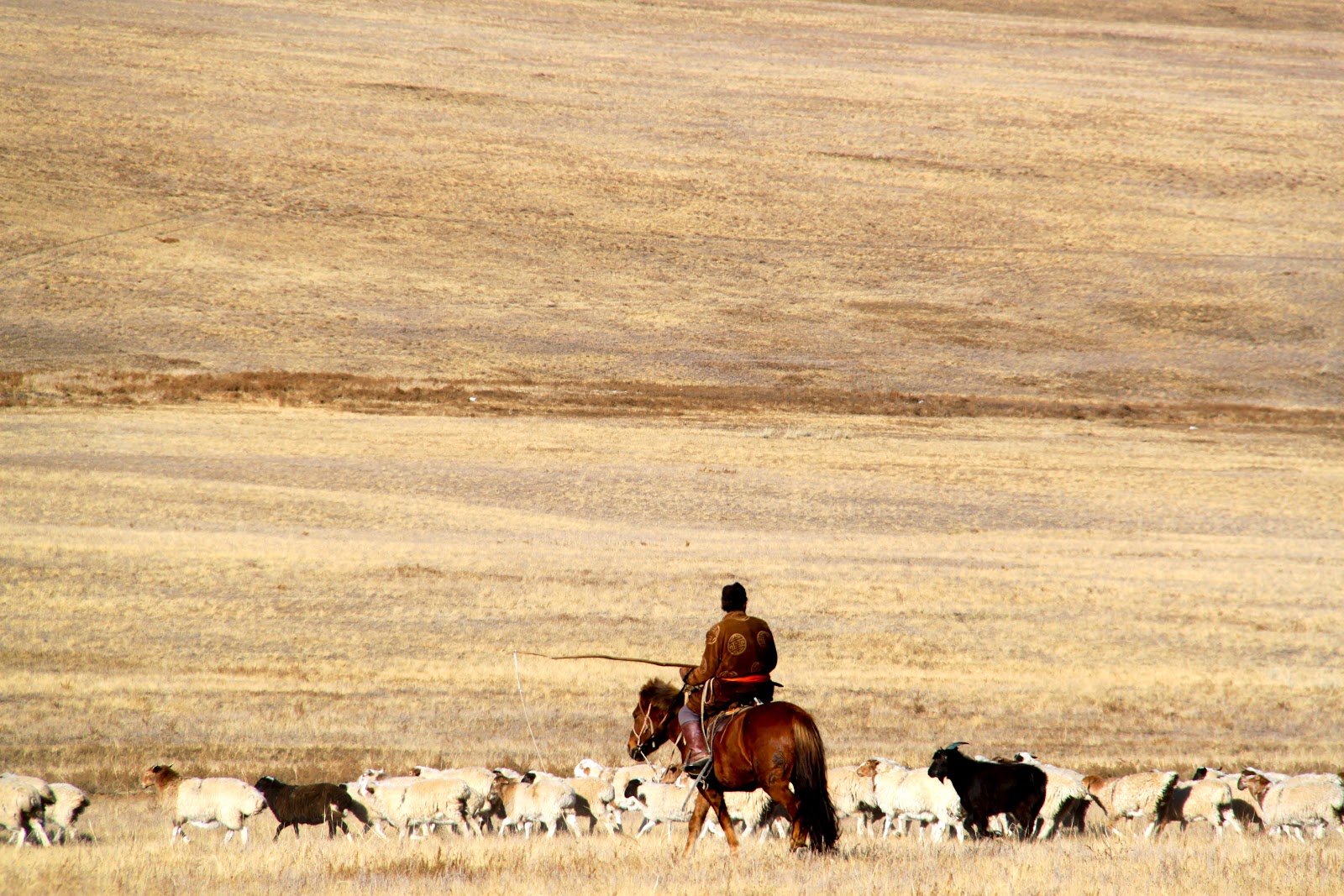
Cowboys use a stick with a loop on the end to lasso cattle goats and sheep.

Mongolian horses are short and stout.  Genghis Khan conquered parts of Europe, Middle East, Asia, and China on these horses in about 1200 AD.  The Mongolian Empire was the second largest in history and second only to the British Empire in size.
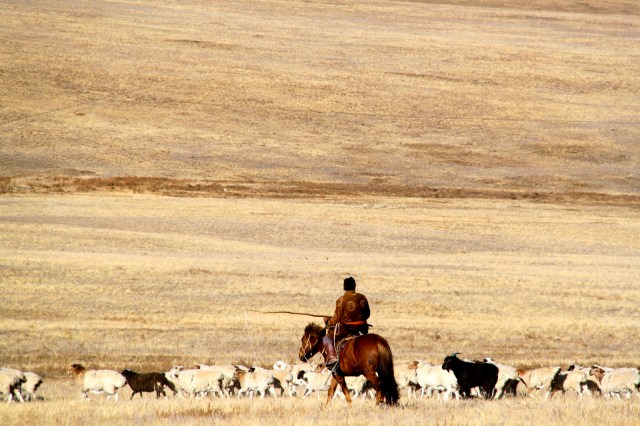
This cowboy has the stick with a lasso on the end to catch goats, sheep or horses.
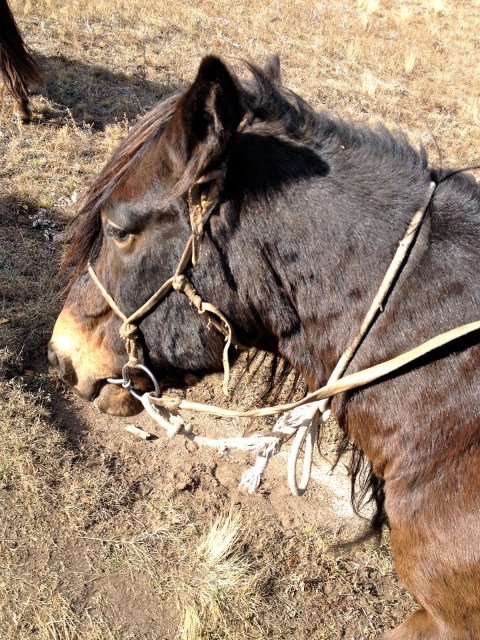
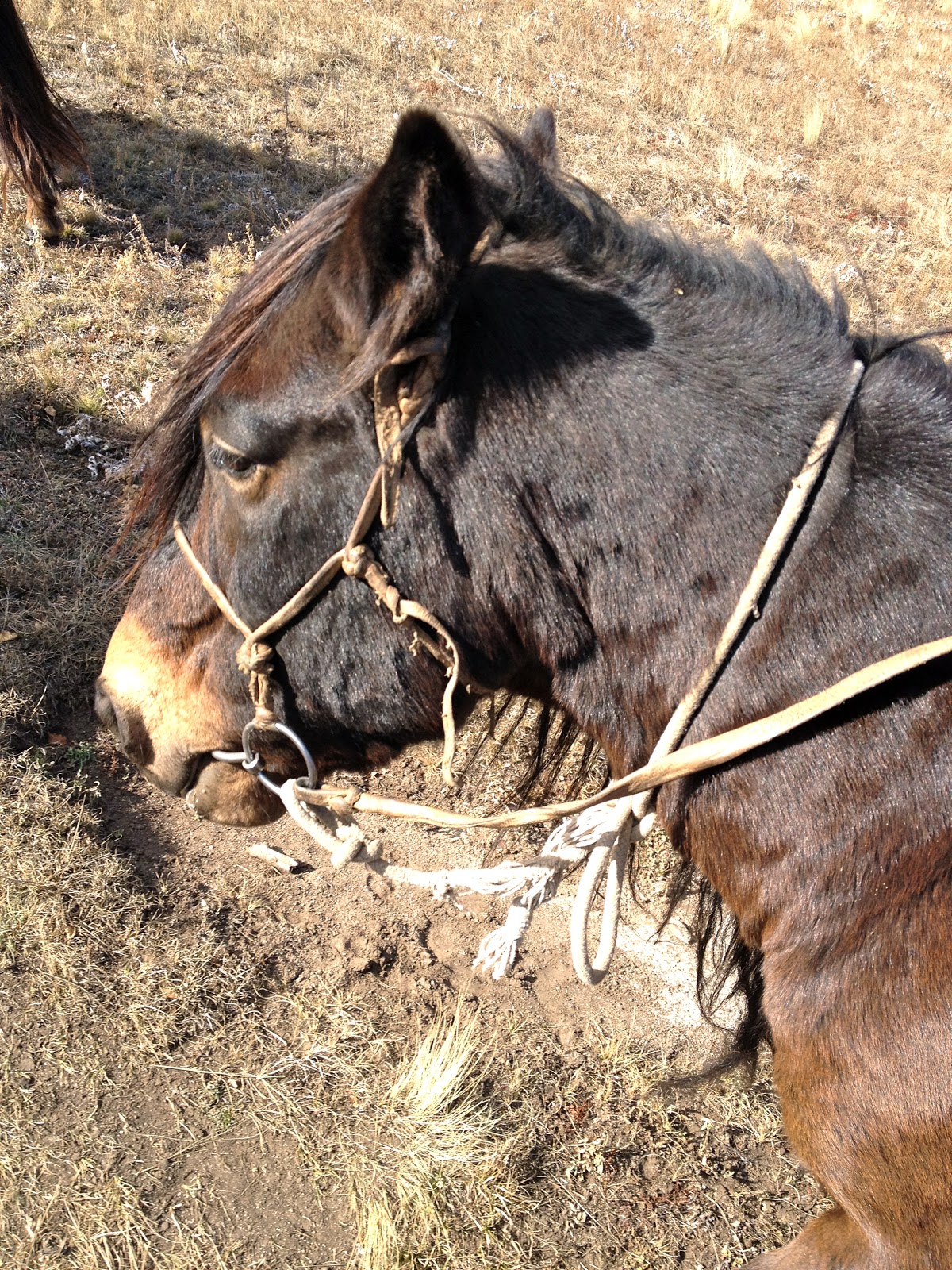
One of our horses.  Very strong and stout, even though they are short.
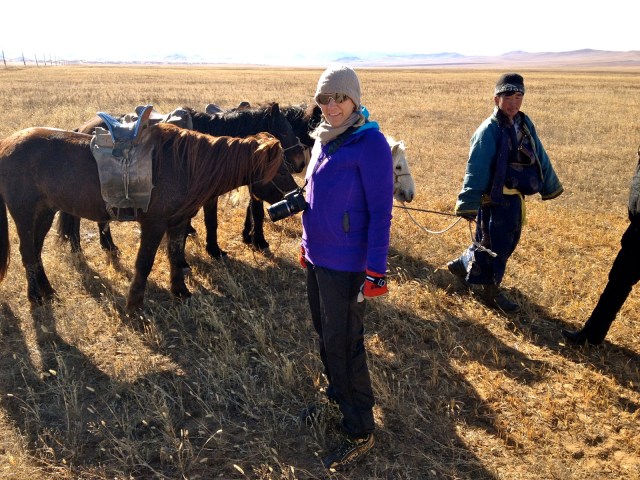
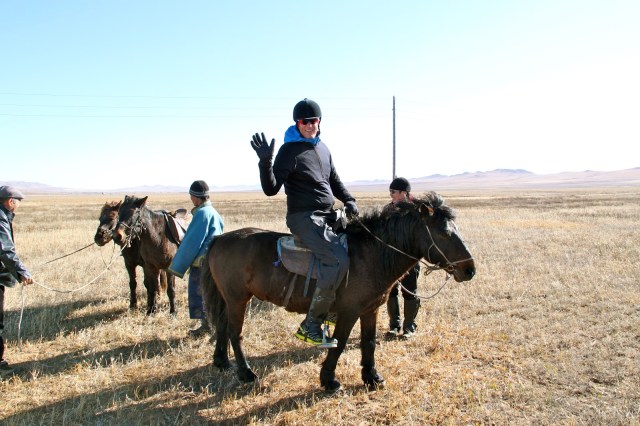
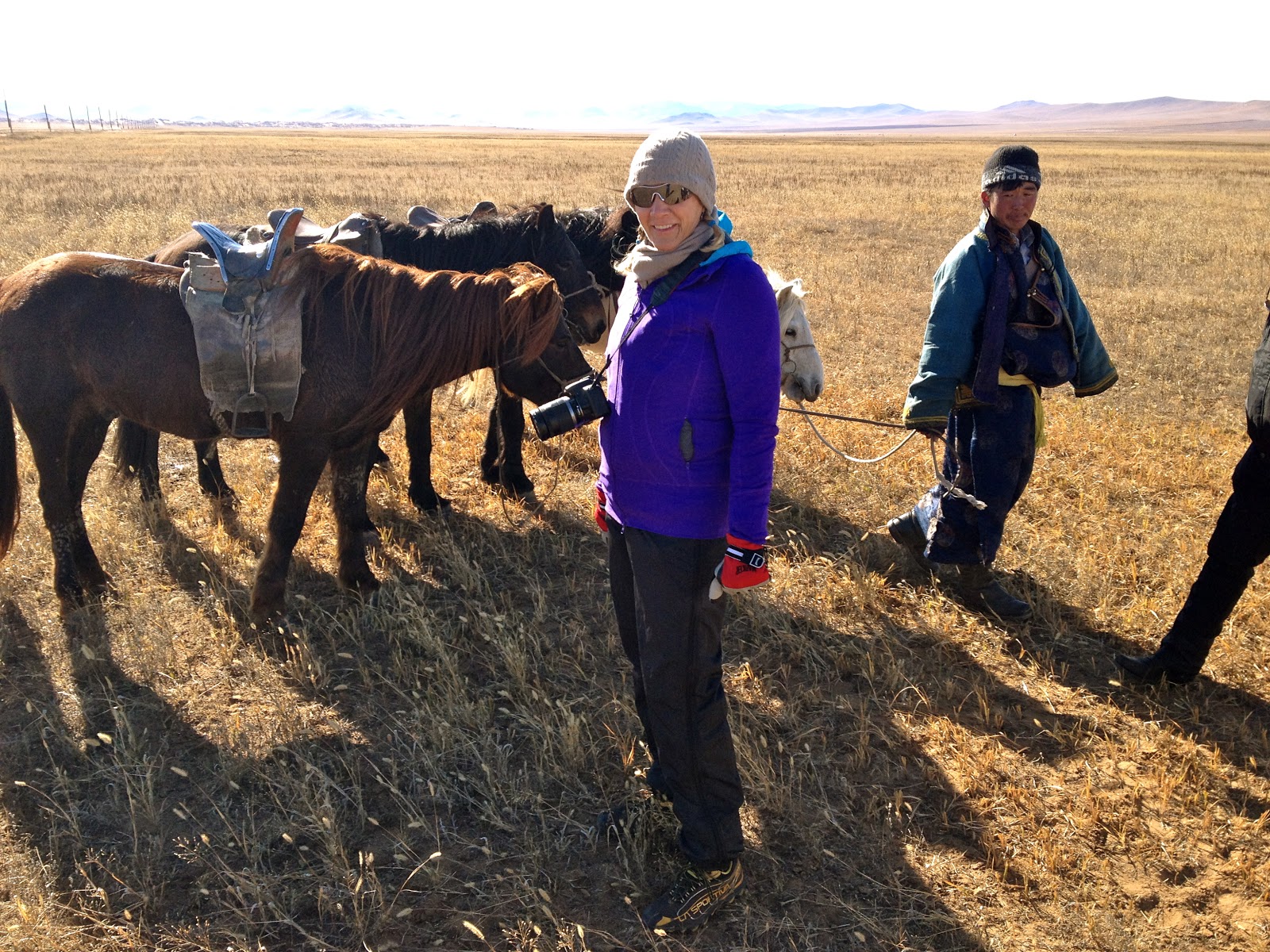
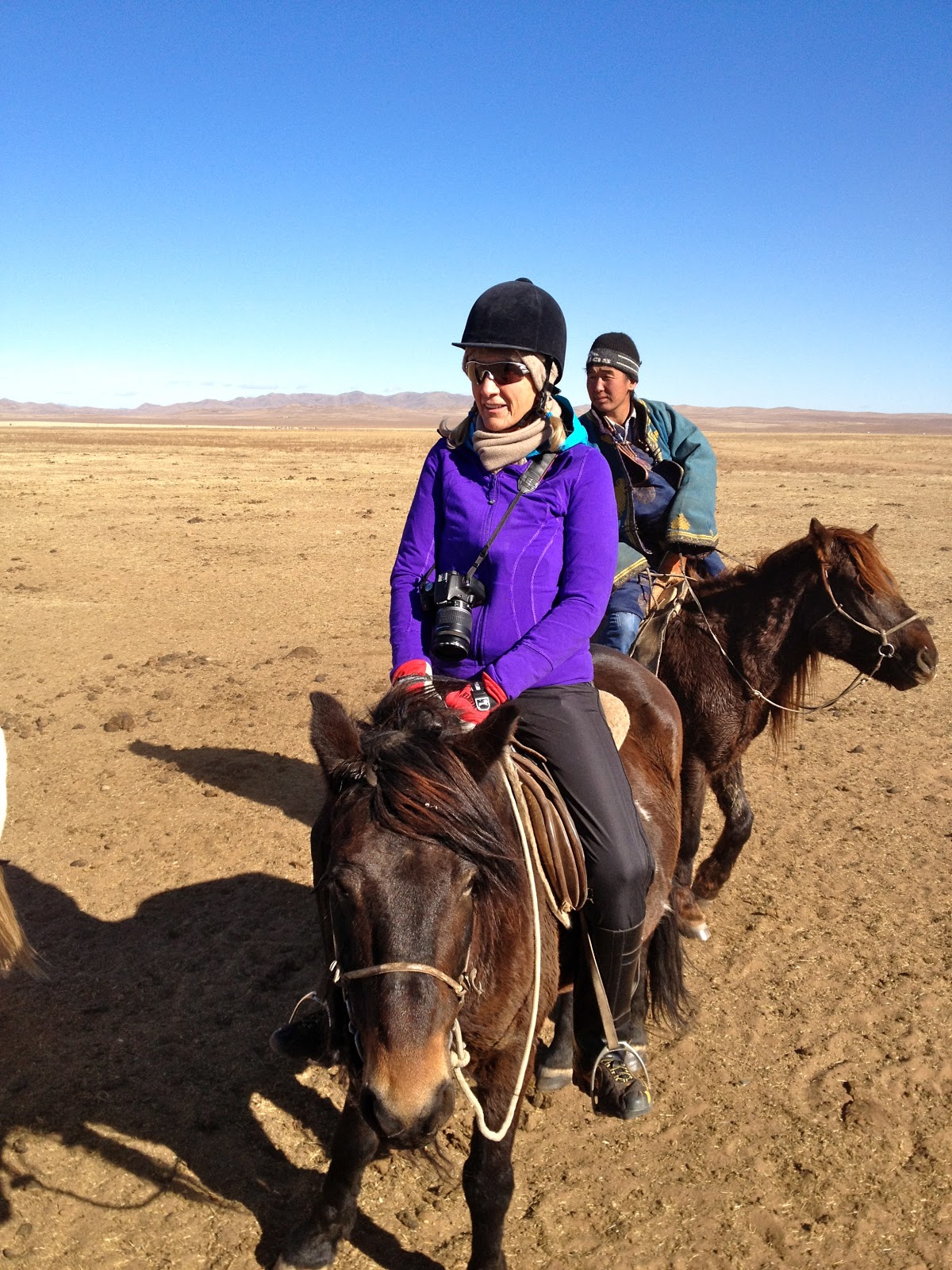
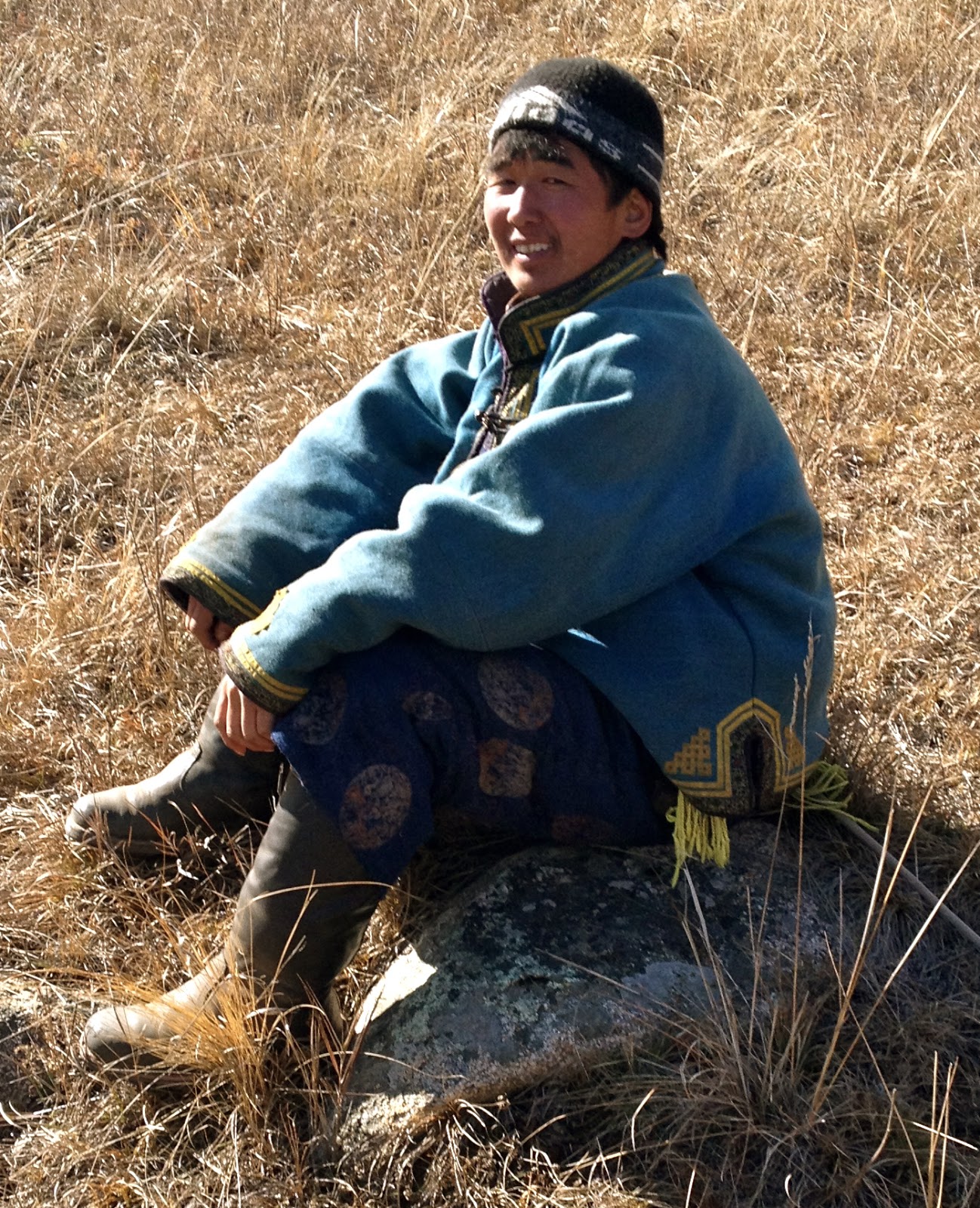
Barb meets our horses and our horse guide.  He rode the typical Mongolian saddle and wore typical Mongolian clothing.

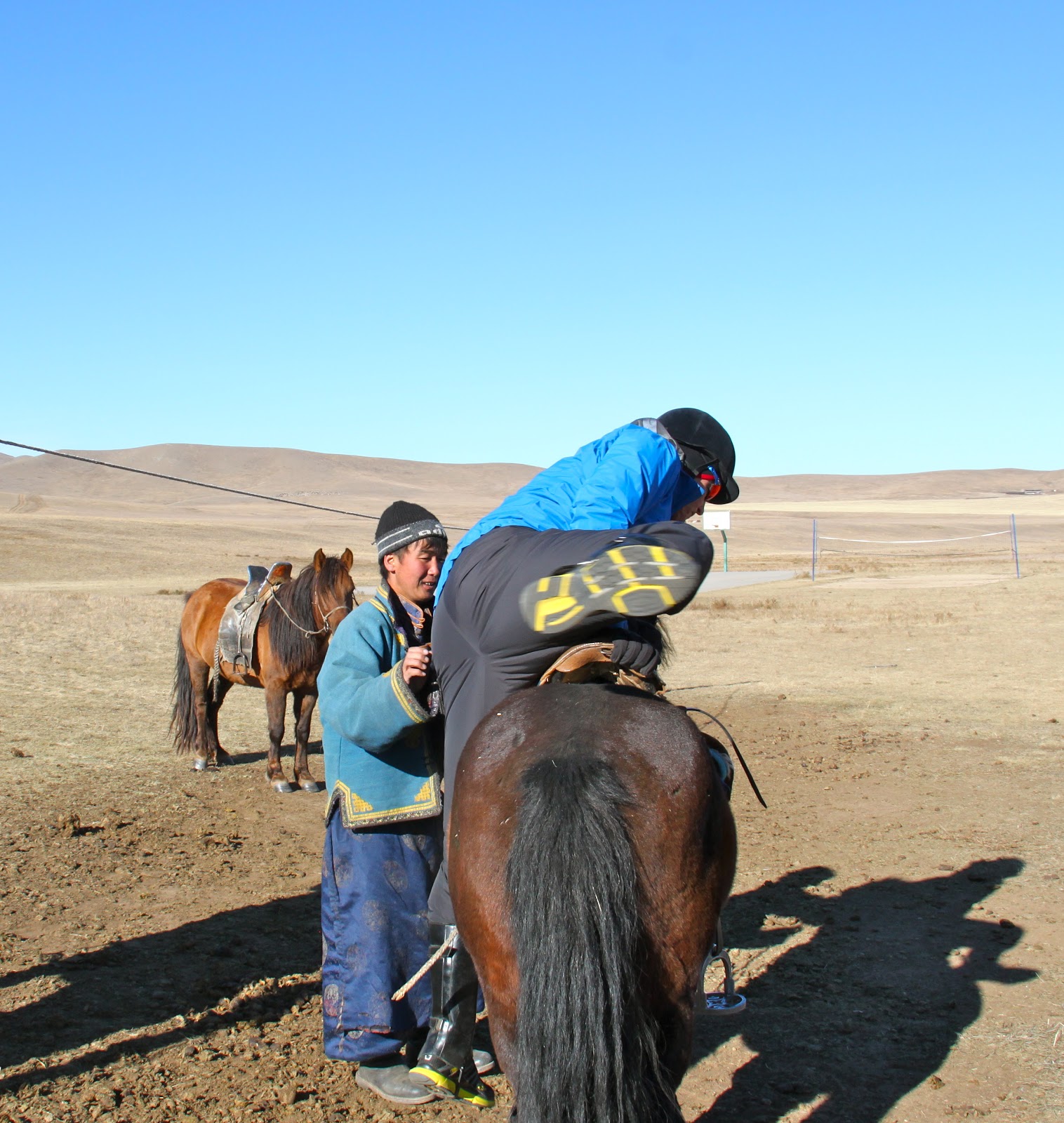
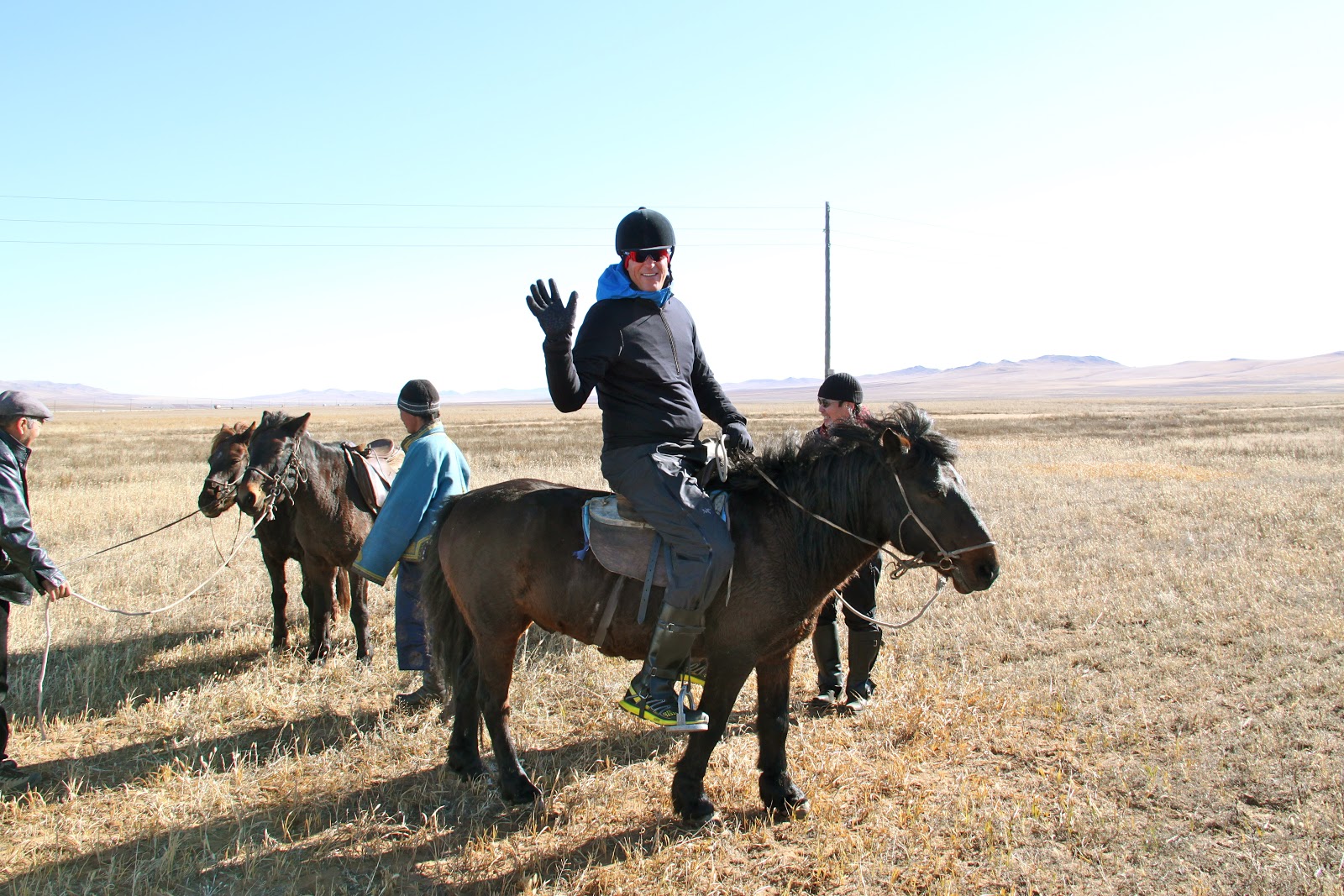
Scott surprised the guide and the Mongolian horseman who brought the horses by jumping up on the back of his horse without using a stirrup.  The horseman laughed out loud and told our guide that he had never seen anyone do that before.
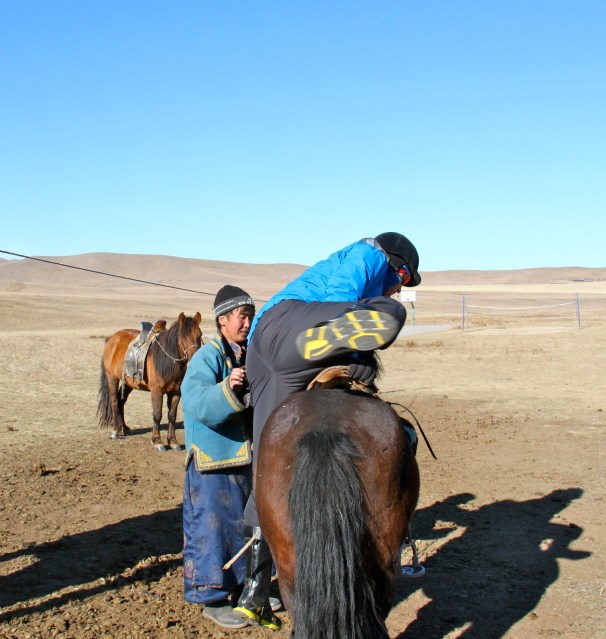
Scott didn’t need stirrups to climb aboard.
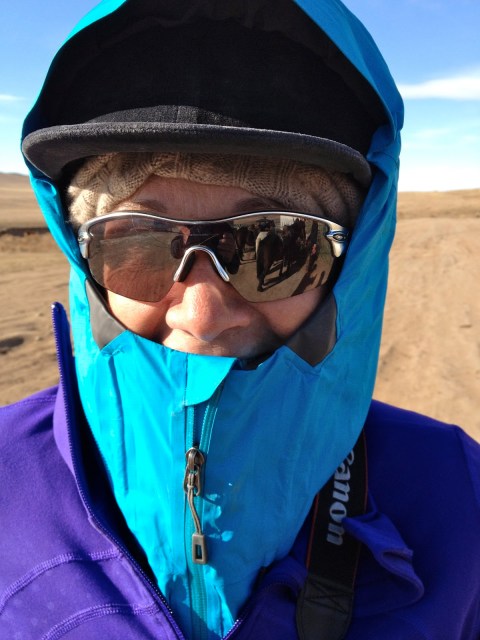
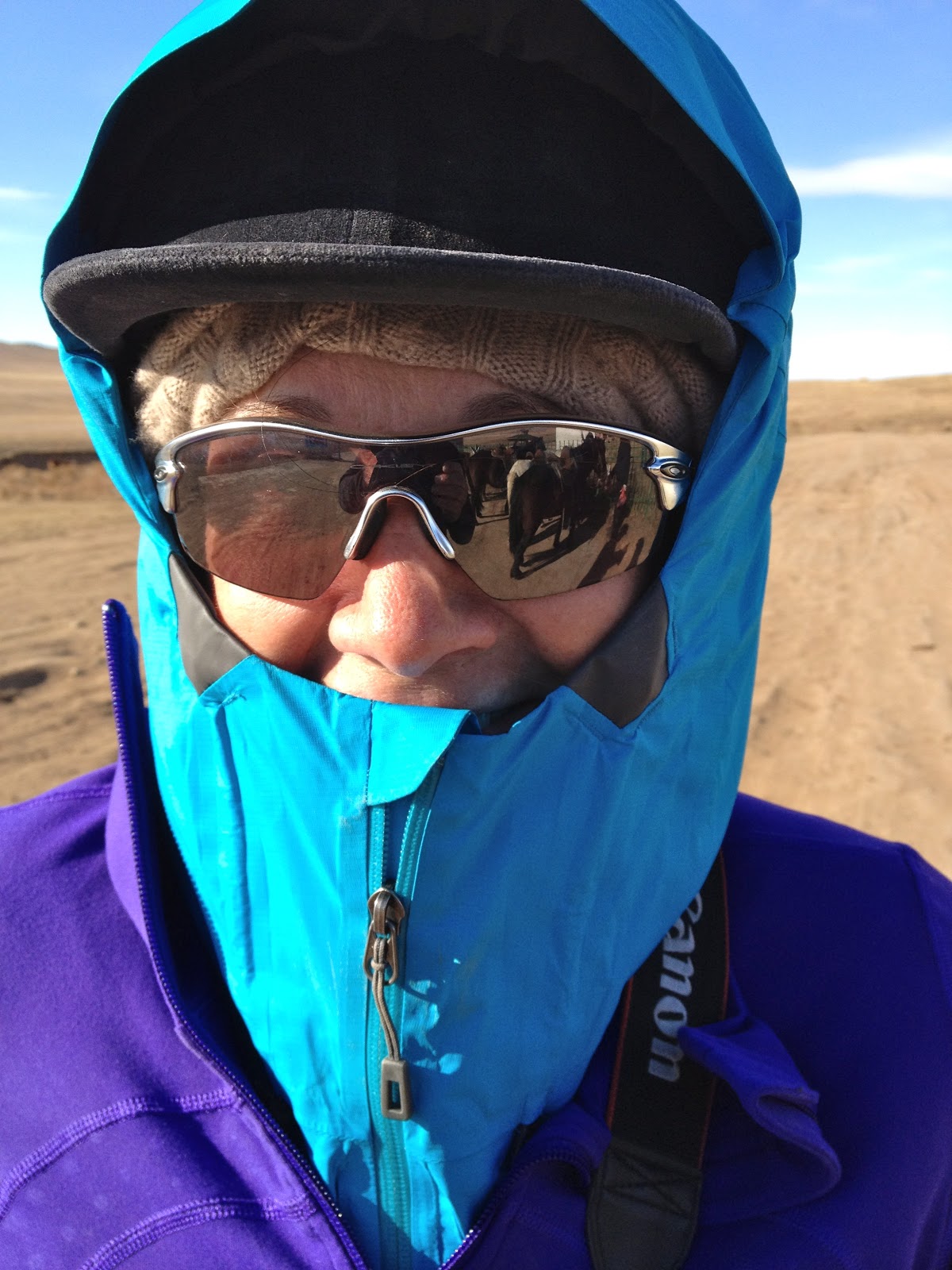
Our guide told us to put on all the clothes and coats that we had but when Barb pulled out her Gore-Tex shell jacket he told her she could not wear it on top because Mongolian horses are “very active” and will be afraid of the noise made by the fabric of the shell.  So, we put our turtlenecks on over our shells.
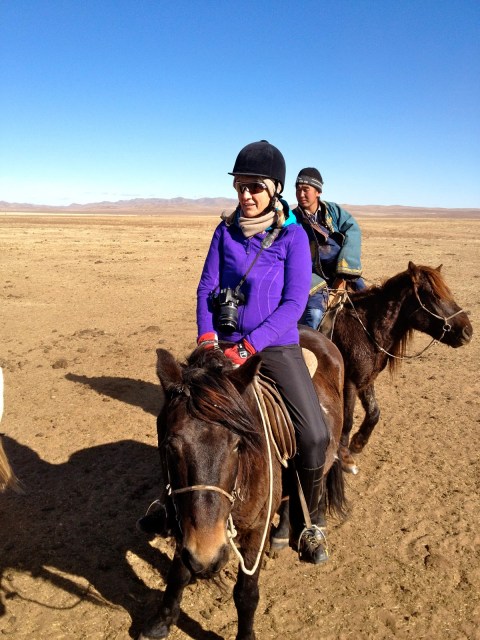
Barb is wearing her cashmere sweater and scarf under 4 other layers.
Scott has his cashmere pajama bottoms underneath his ski pants.
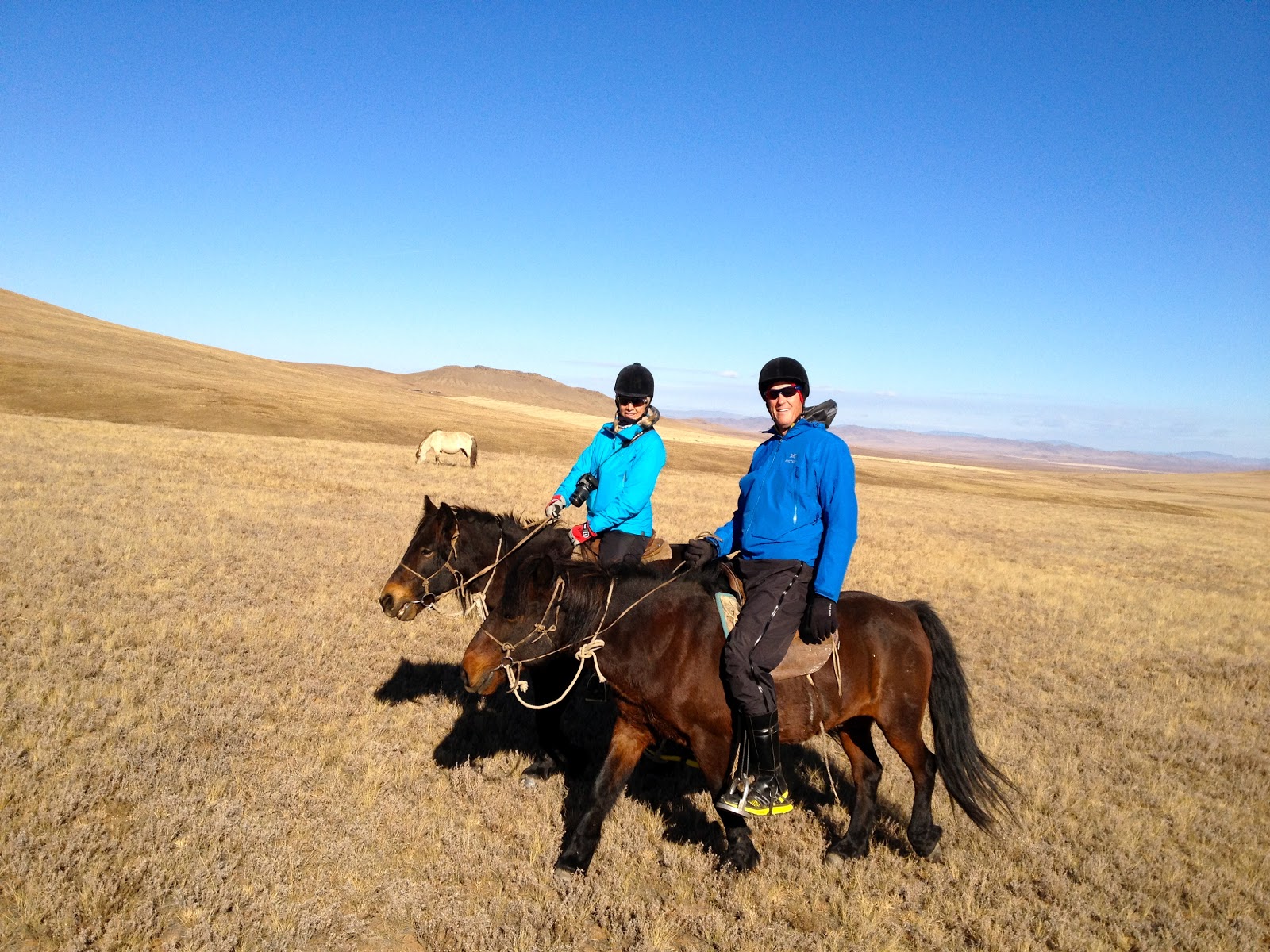
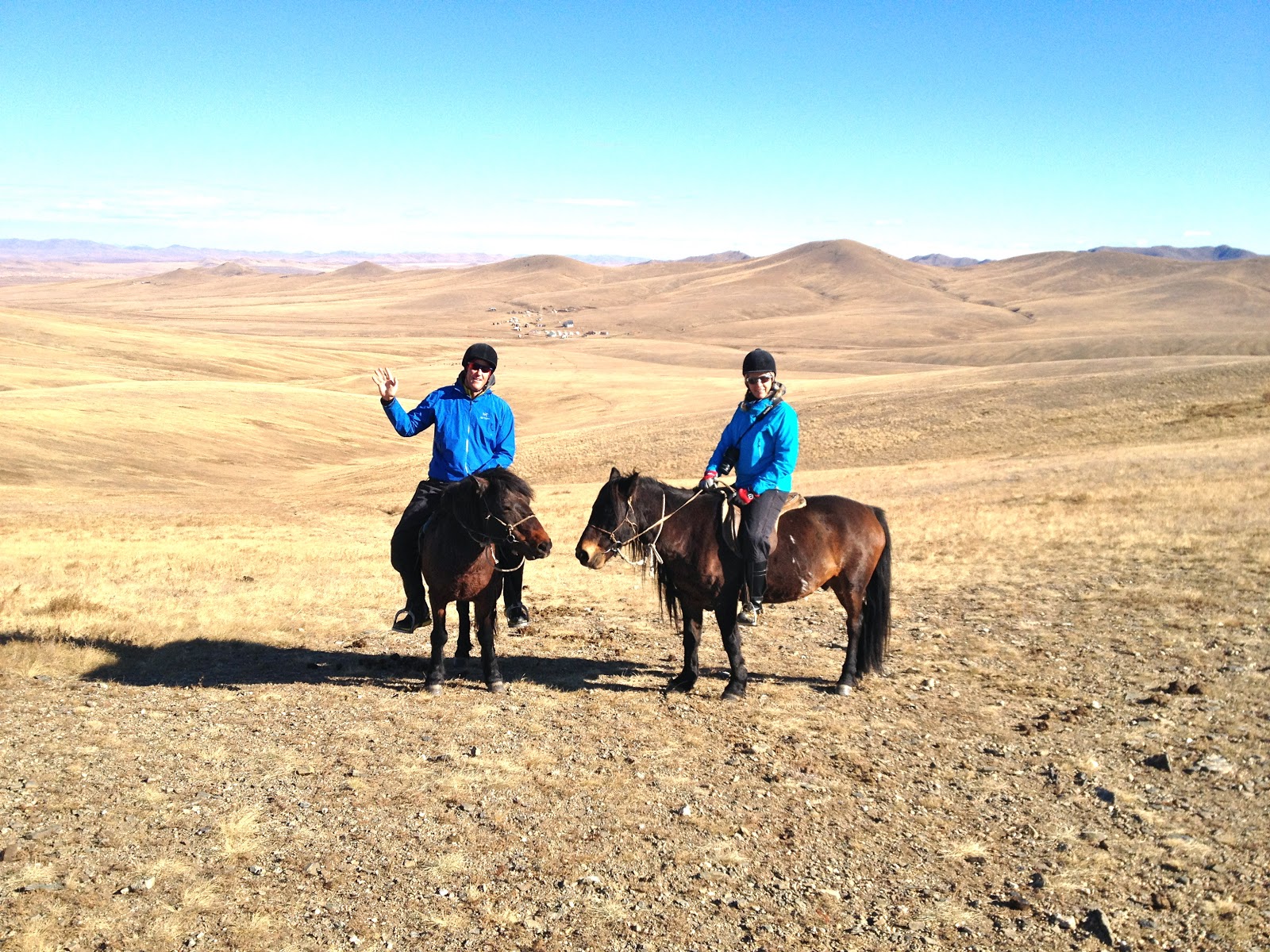
It was cold, probably -1 degree Celsius, but it was sunny and beautiful.  Scott was glad to have his new cashmere pajamas on underneath his pants and his cashmere socks and sweater.  We each had three layers of clothing on the bottom and 4 or 5 layers on top.  We had our lightweight storm gear but we would have been more comfortable with heavier gear.  We put our hands on our horses’ necks to keep our hands warm while we were riding.
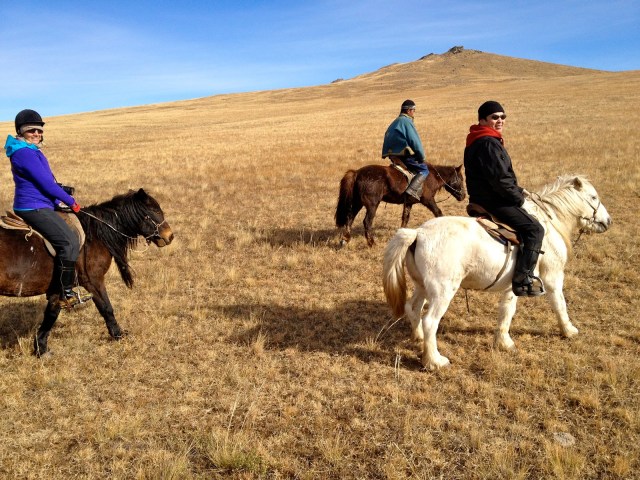
Our guide is on the white horse.  His nickname is Baggy.
Brisk but beautiful.
Getting on and off is not too far for Scott.

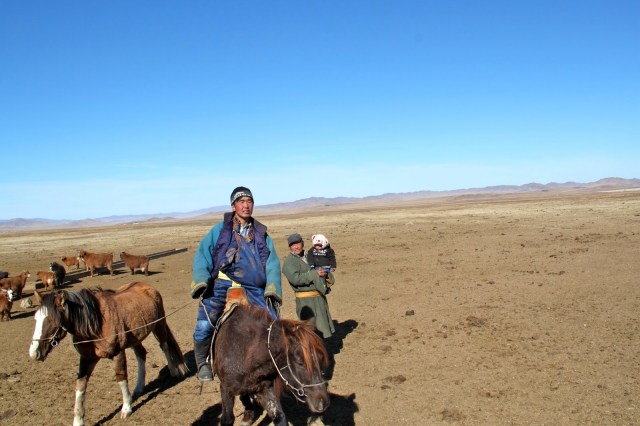
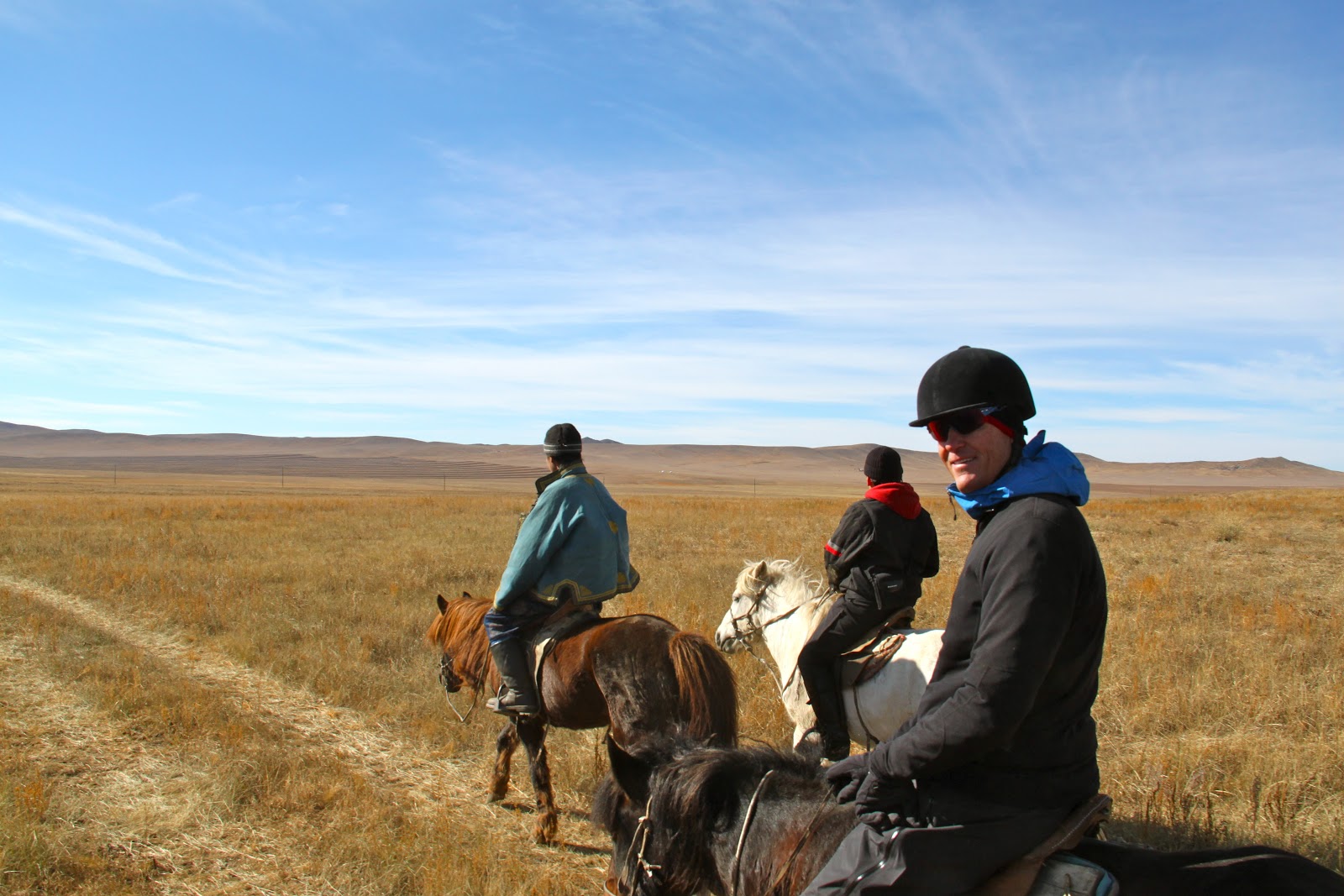
We are riding our horses to the Hustai National Park 13 kilometers to the East.  We see herdsman with their goats and sheep along the way.

Our horse guide.
Barb was freezing.
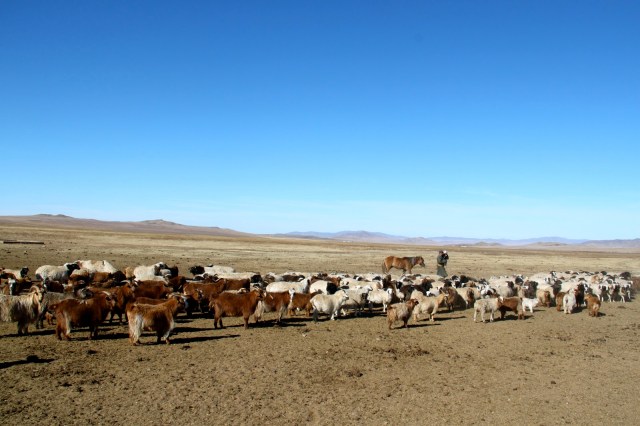
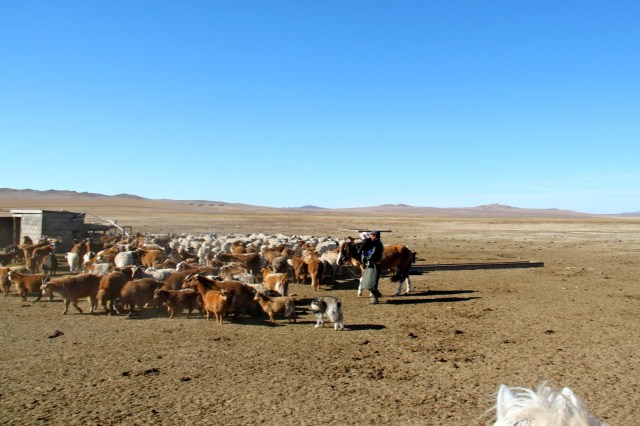
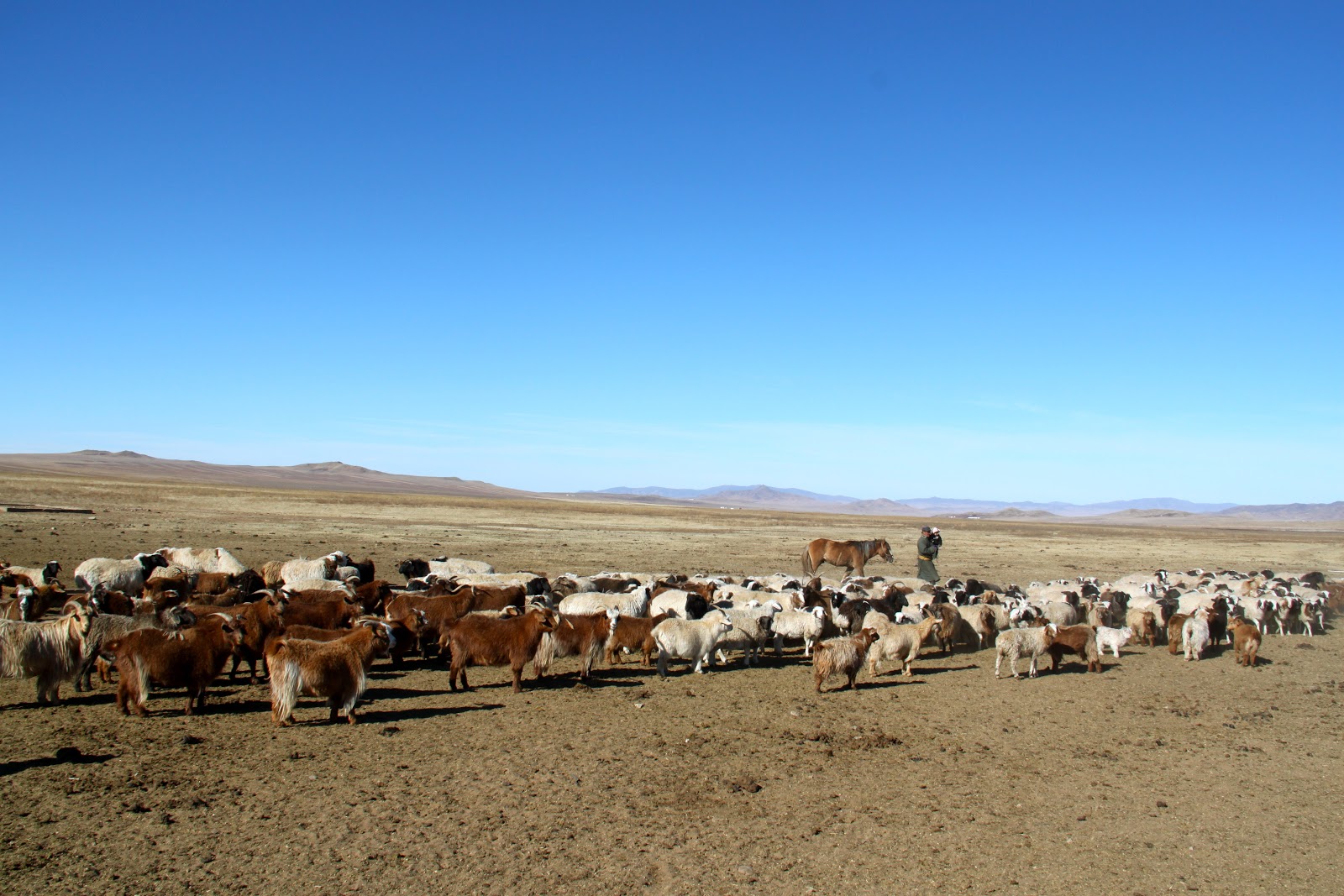
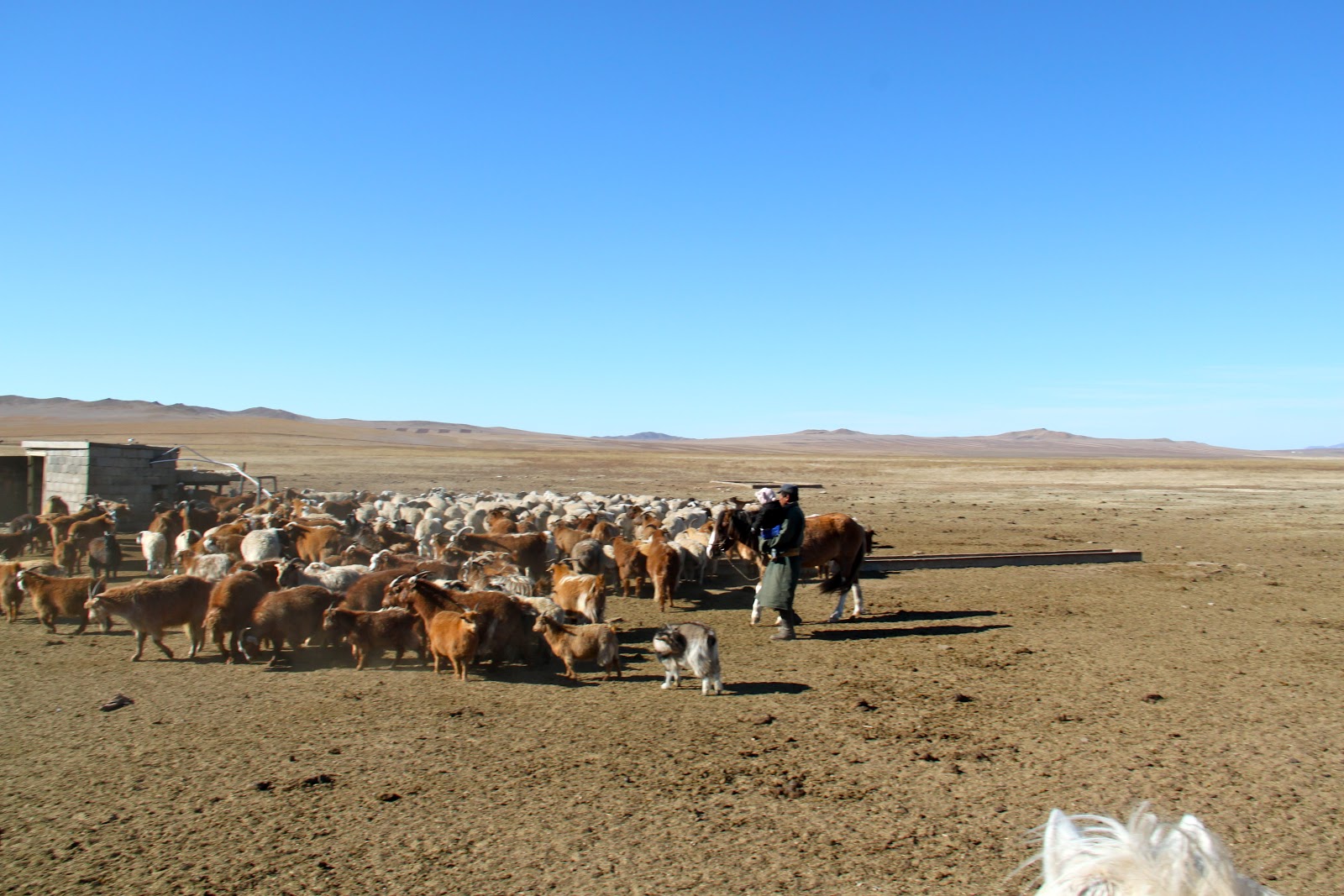
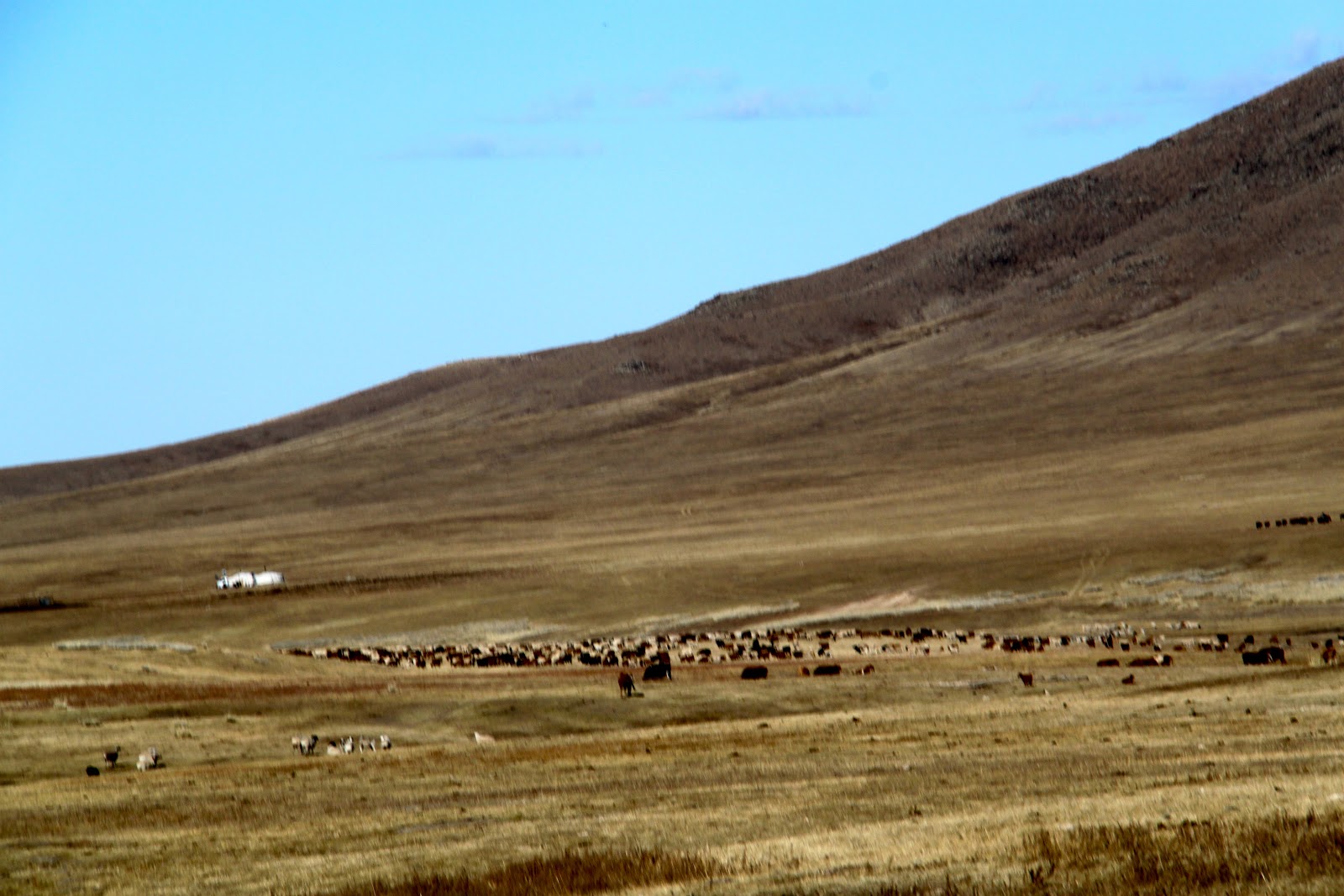
Herds of sheep and goats all along the way.  Also lots of herds of horses.

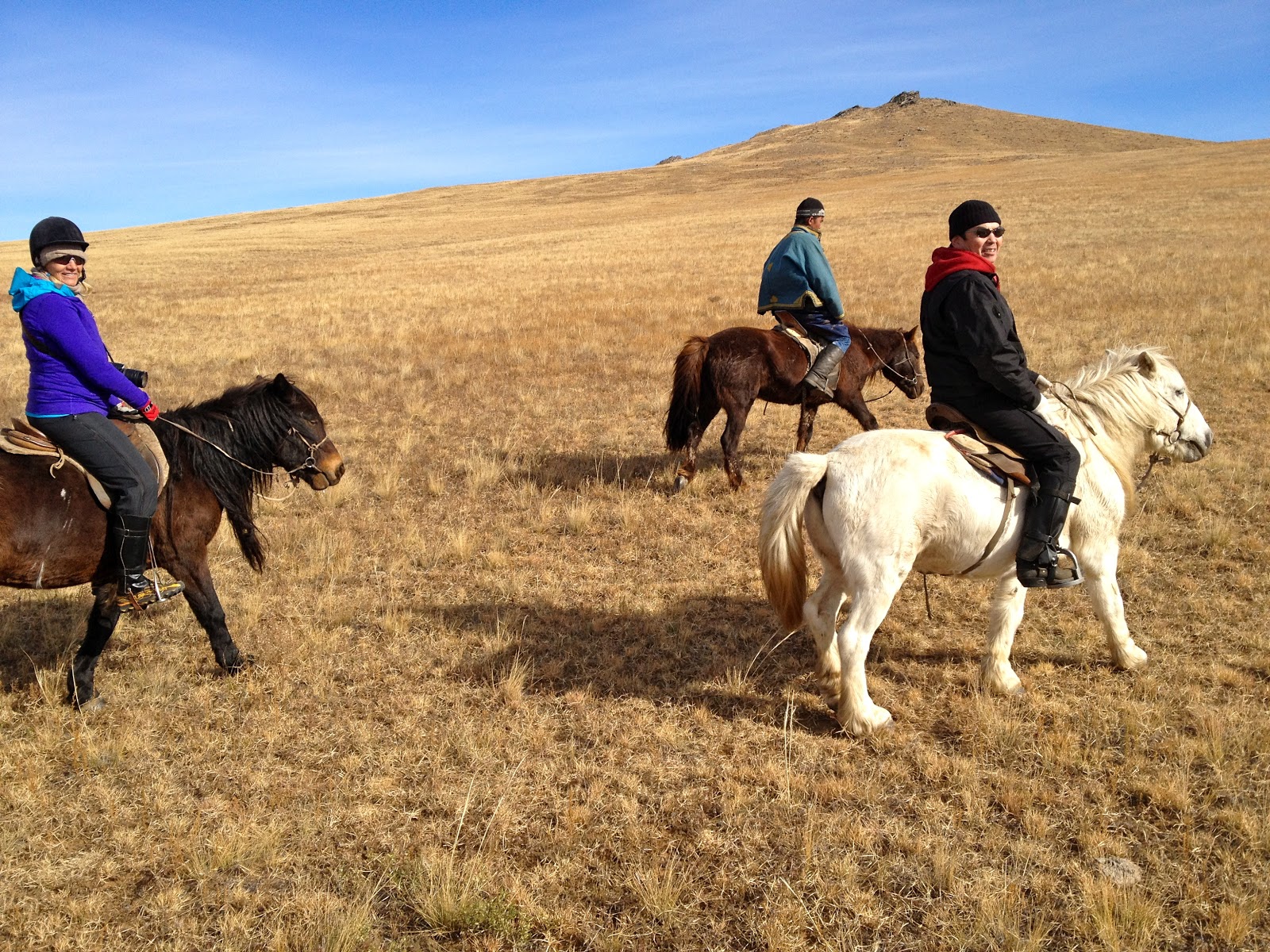
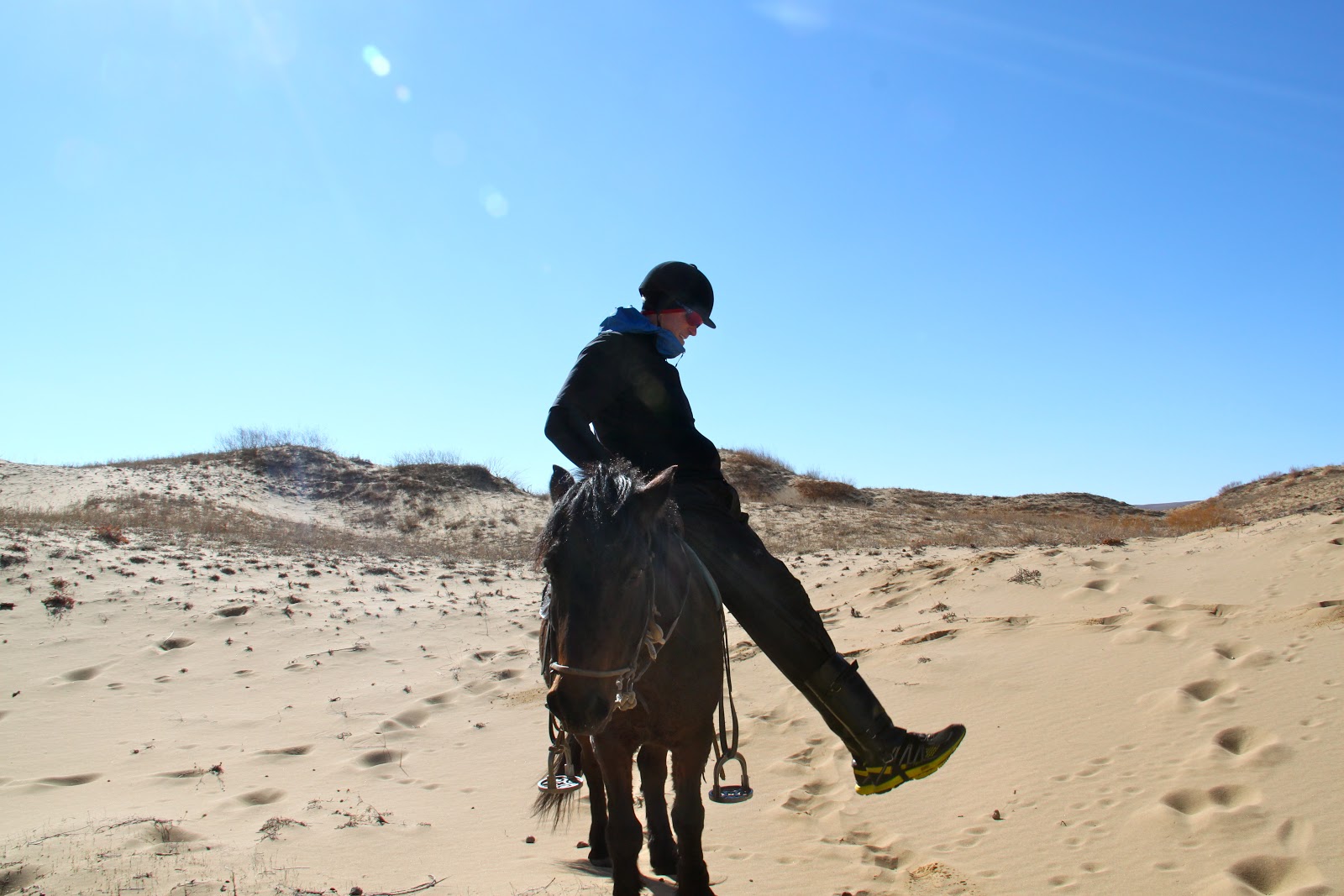
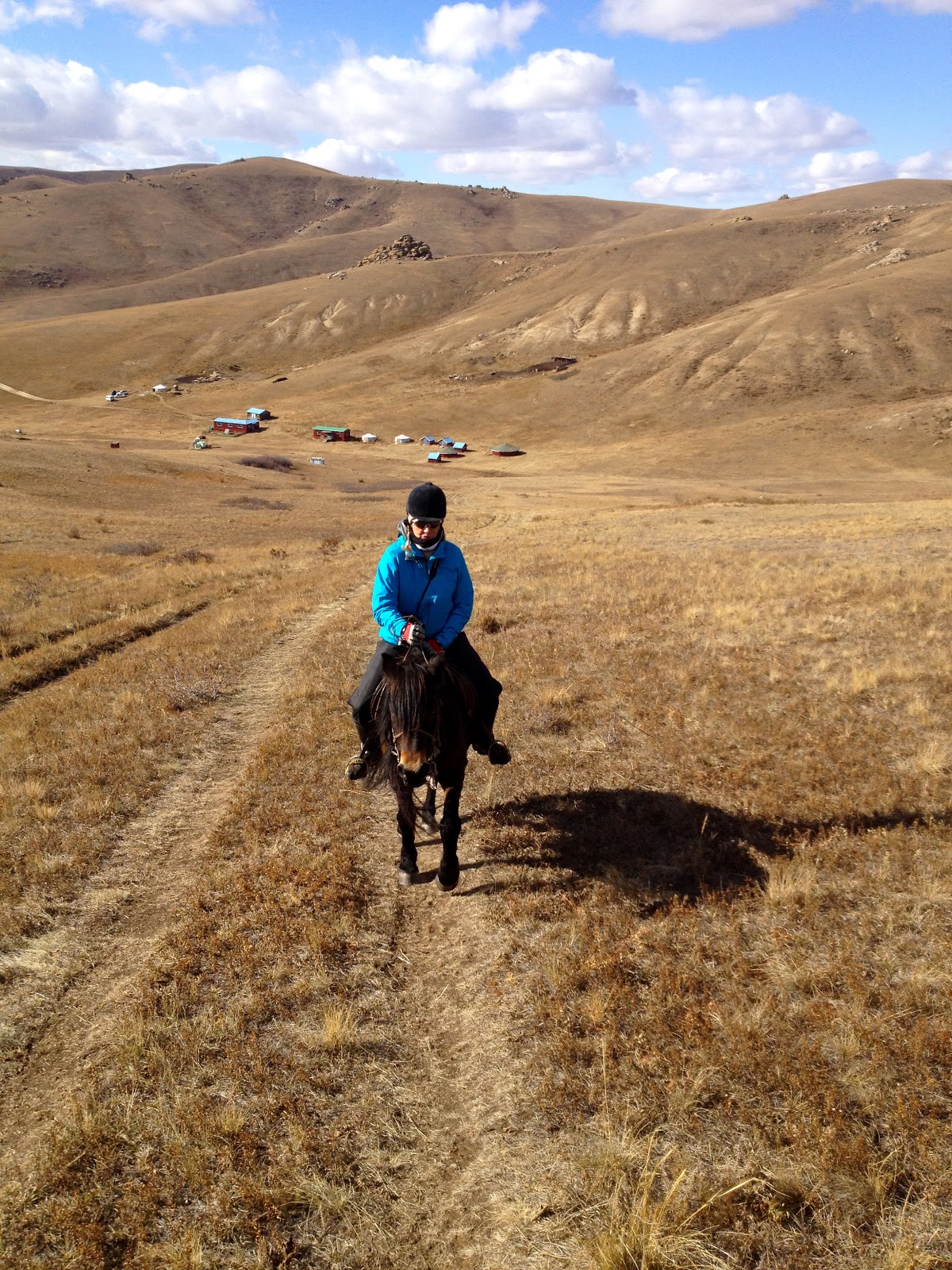
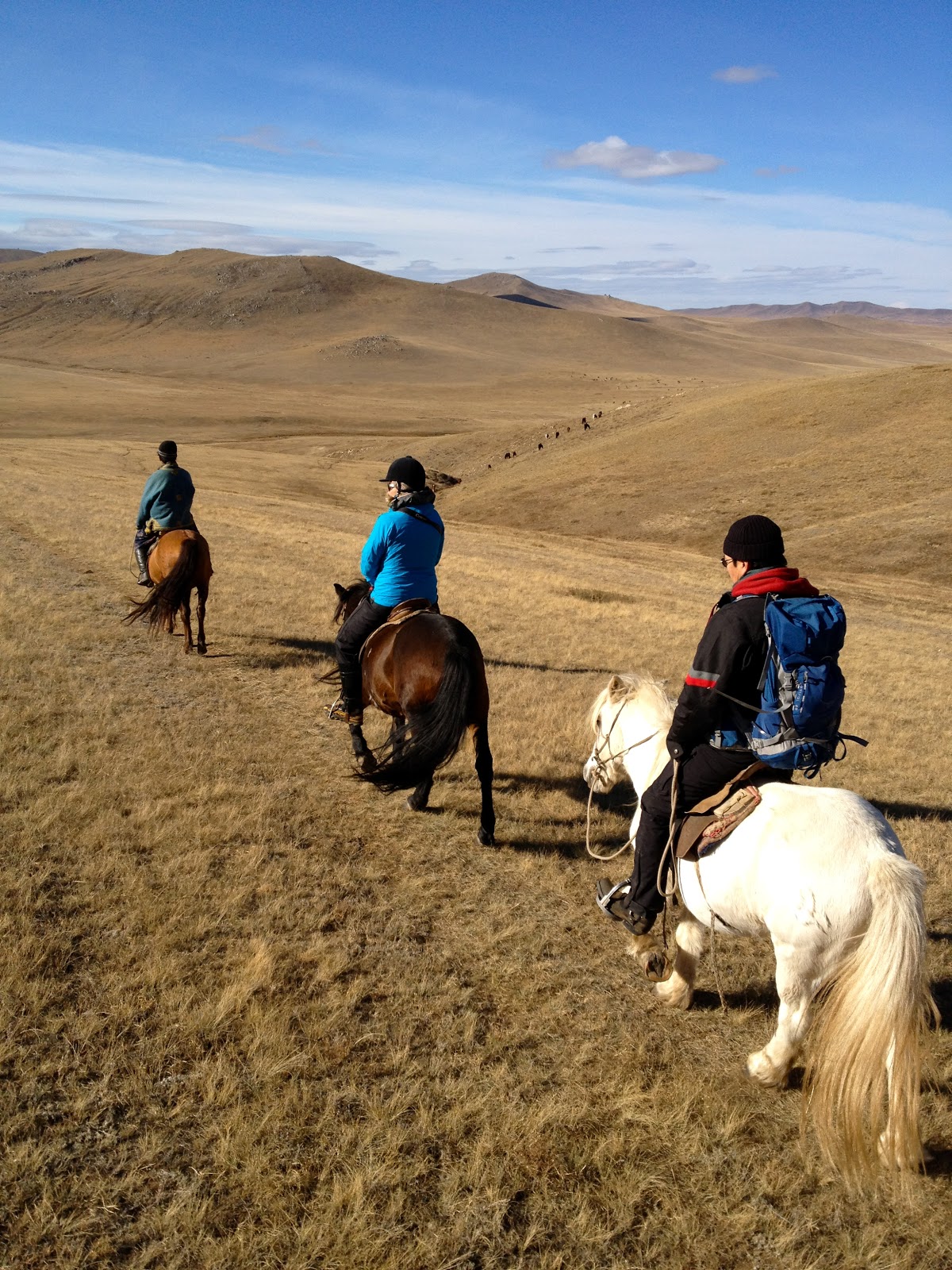
Our horses are reasonably calm with a smooth and swift gait.  Scott’s horse will neck rein or two-hand rein and is very responsive.  If he slows, just show him my heel and he picks up the pace.  If I want him to trot I just nudge him in the ribs and he breaks into a smooth trot.  Down the steppe (the Mongolian plateau) a couple of hours later Barb was in the lead with her horse and surprised the guide and horseman by kicking her horse into a lope.  Our horses followed her lead and the guide and horseman were laughing about how brave Barb is with her horse.  Barb said she just wanted to see her horse lope.

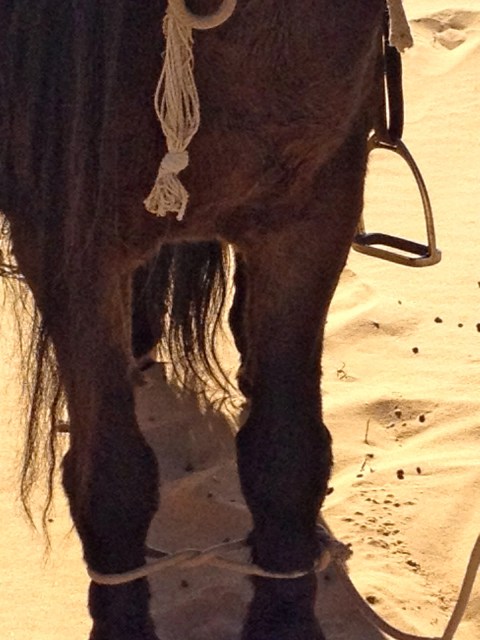
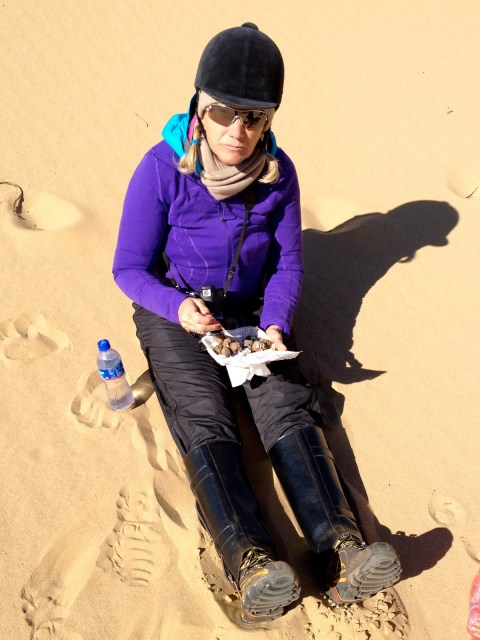
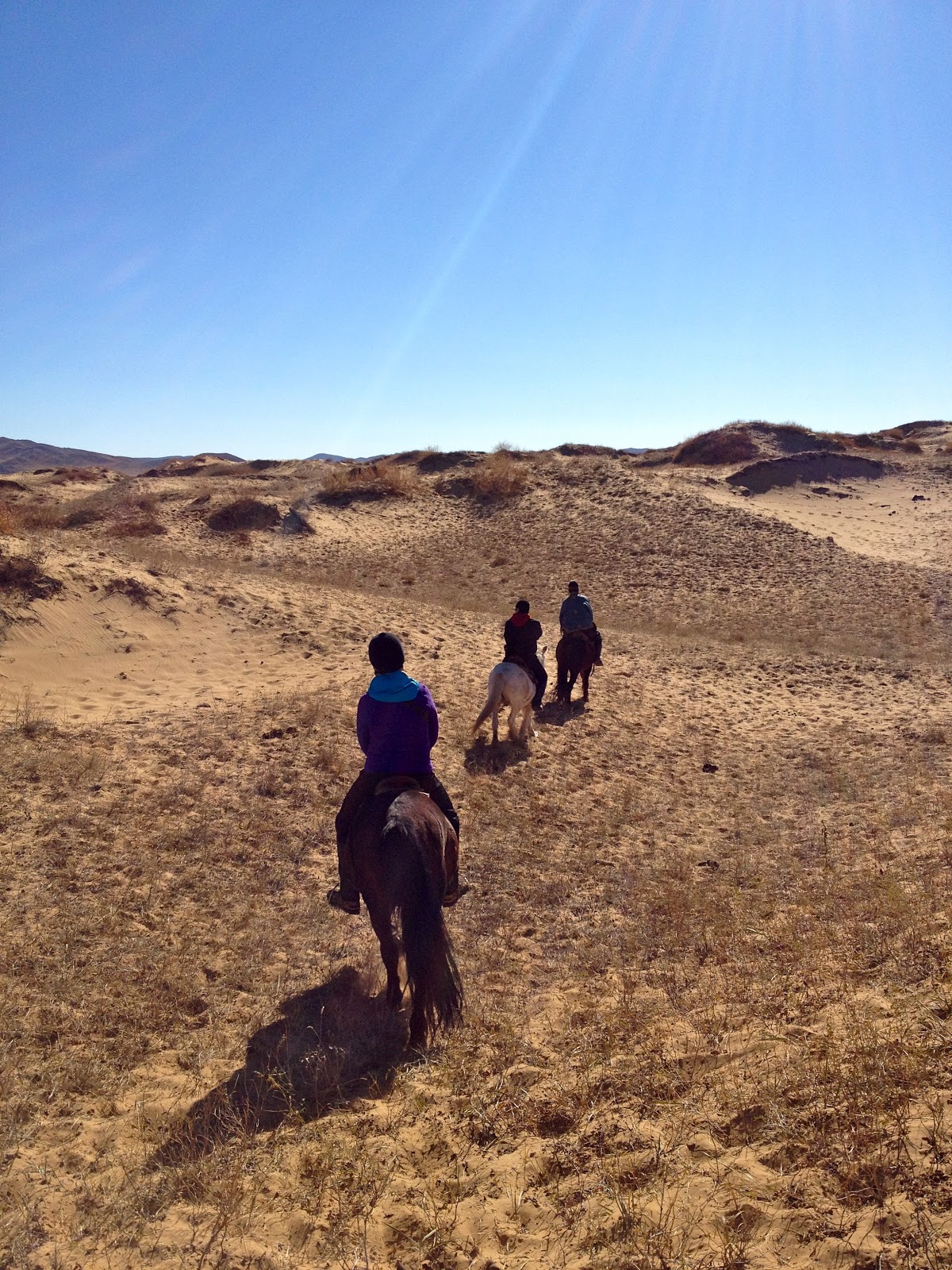
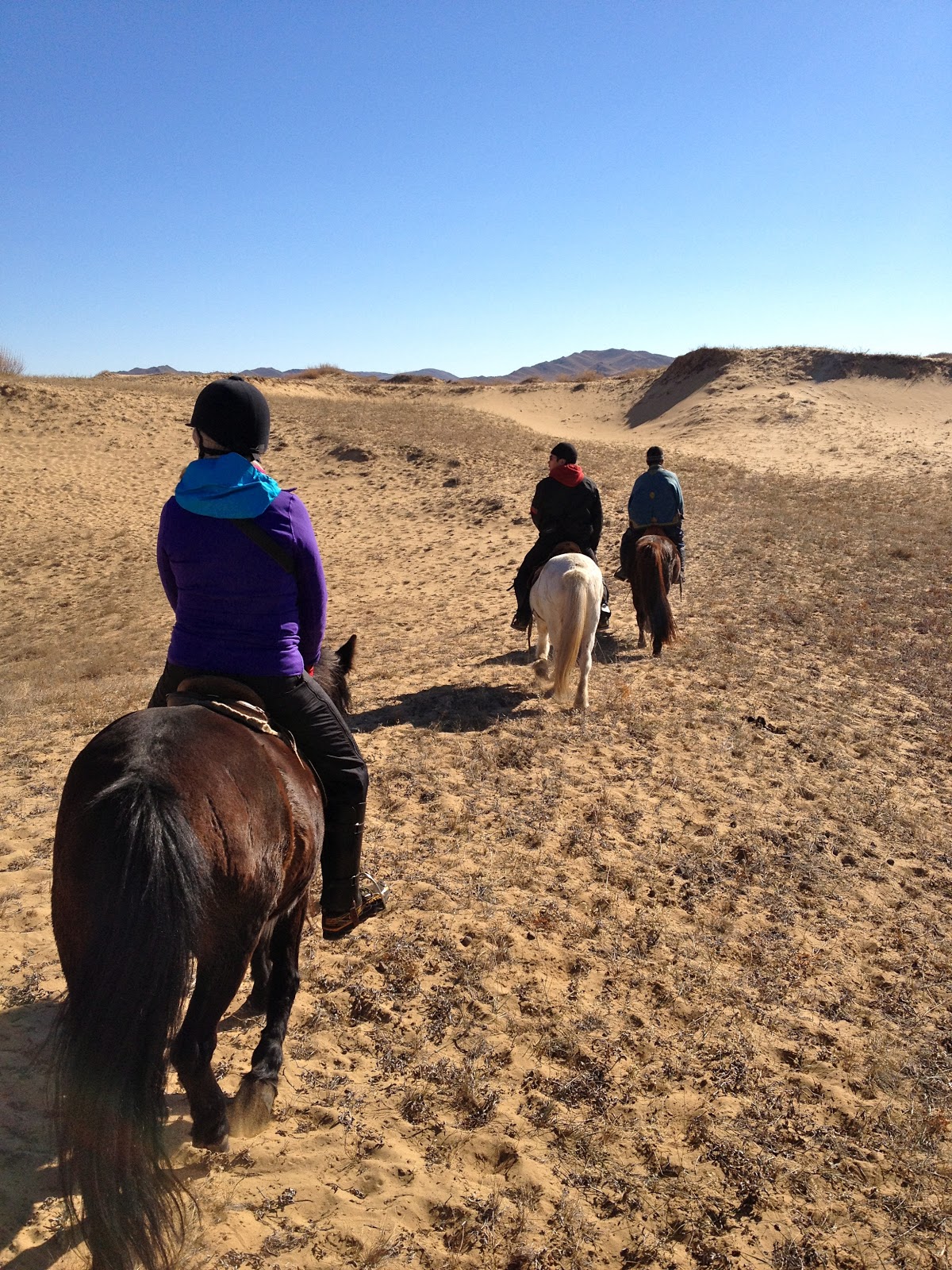
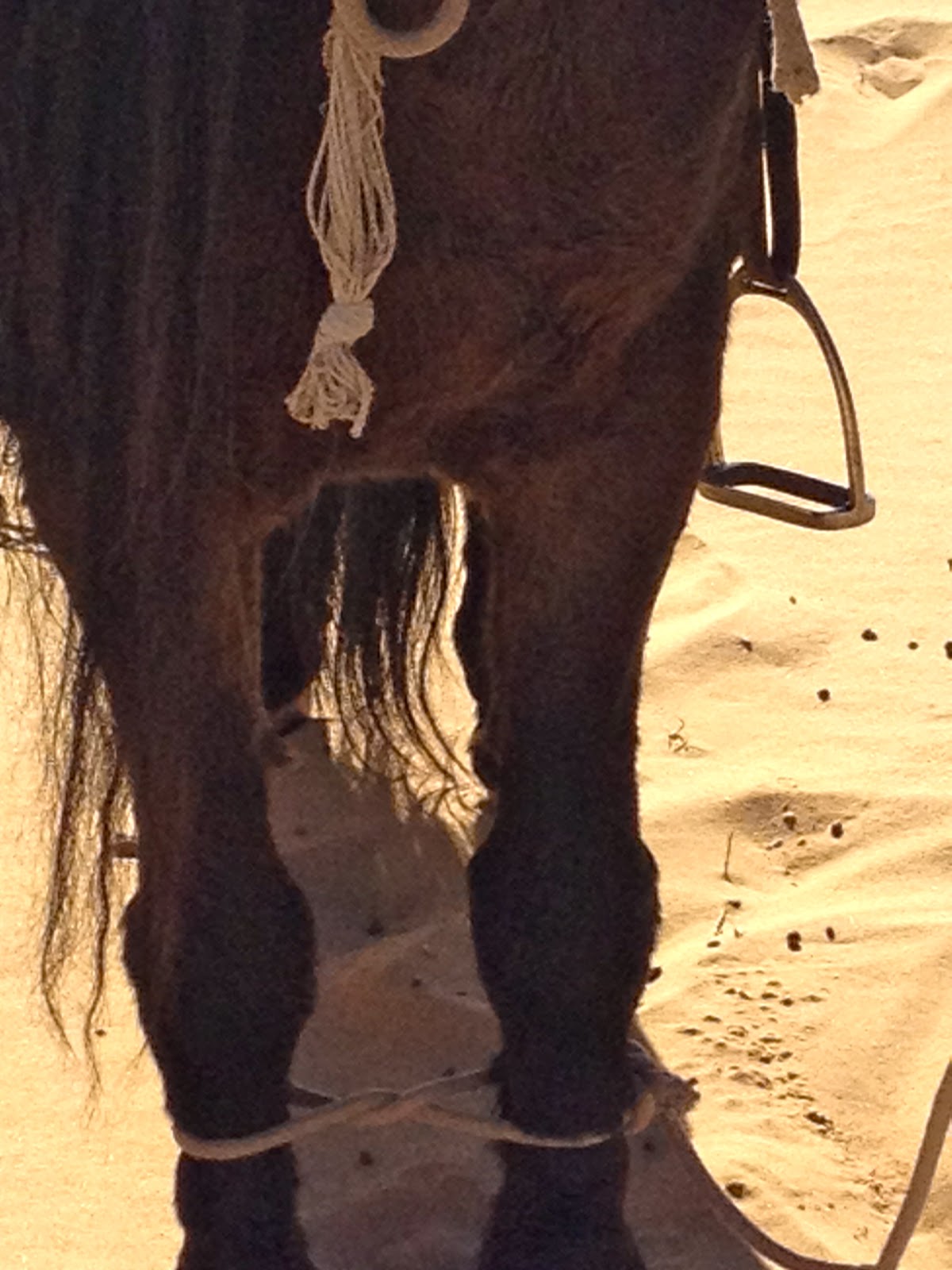
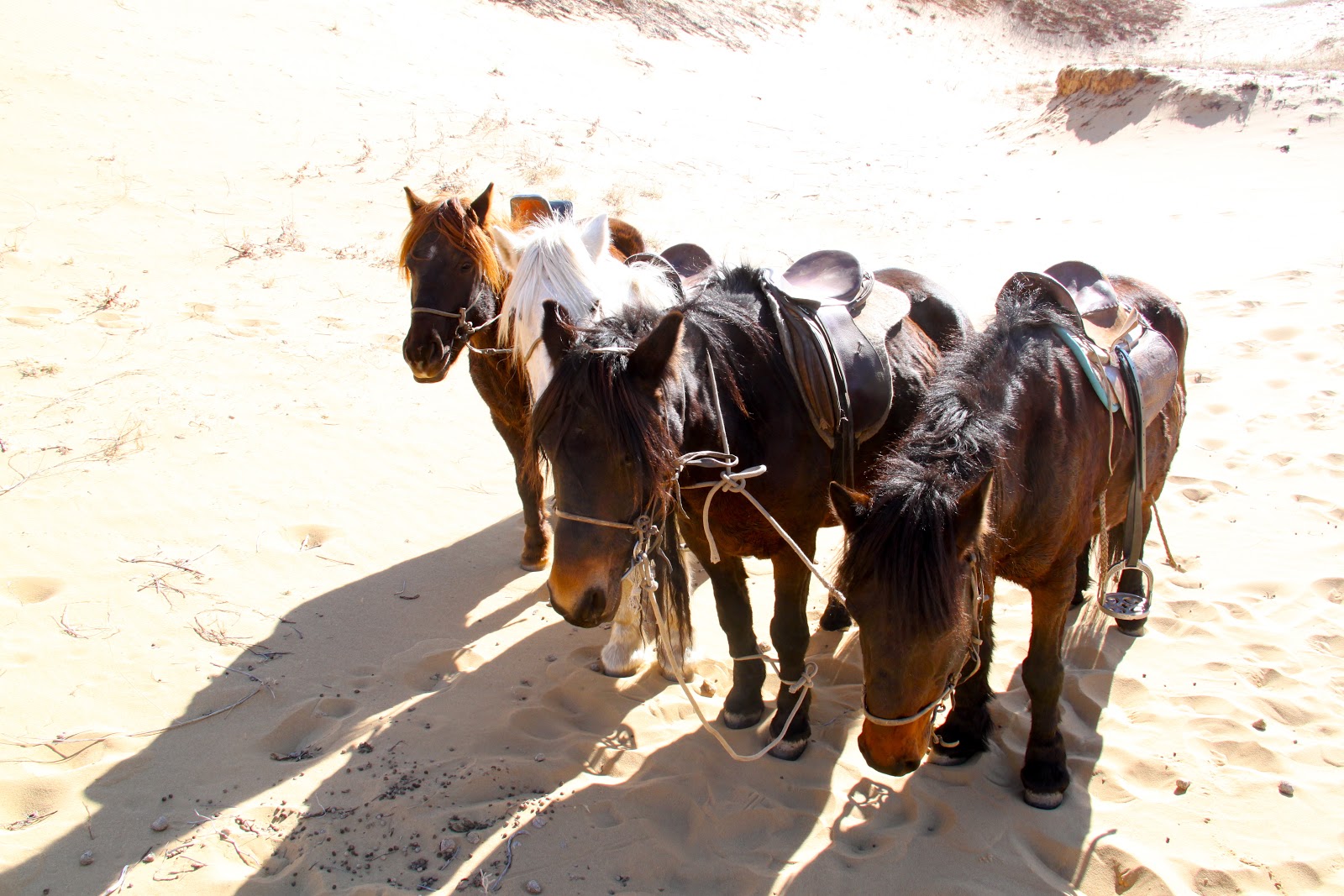
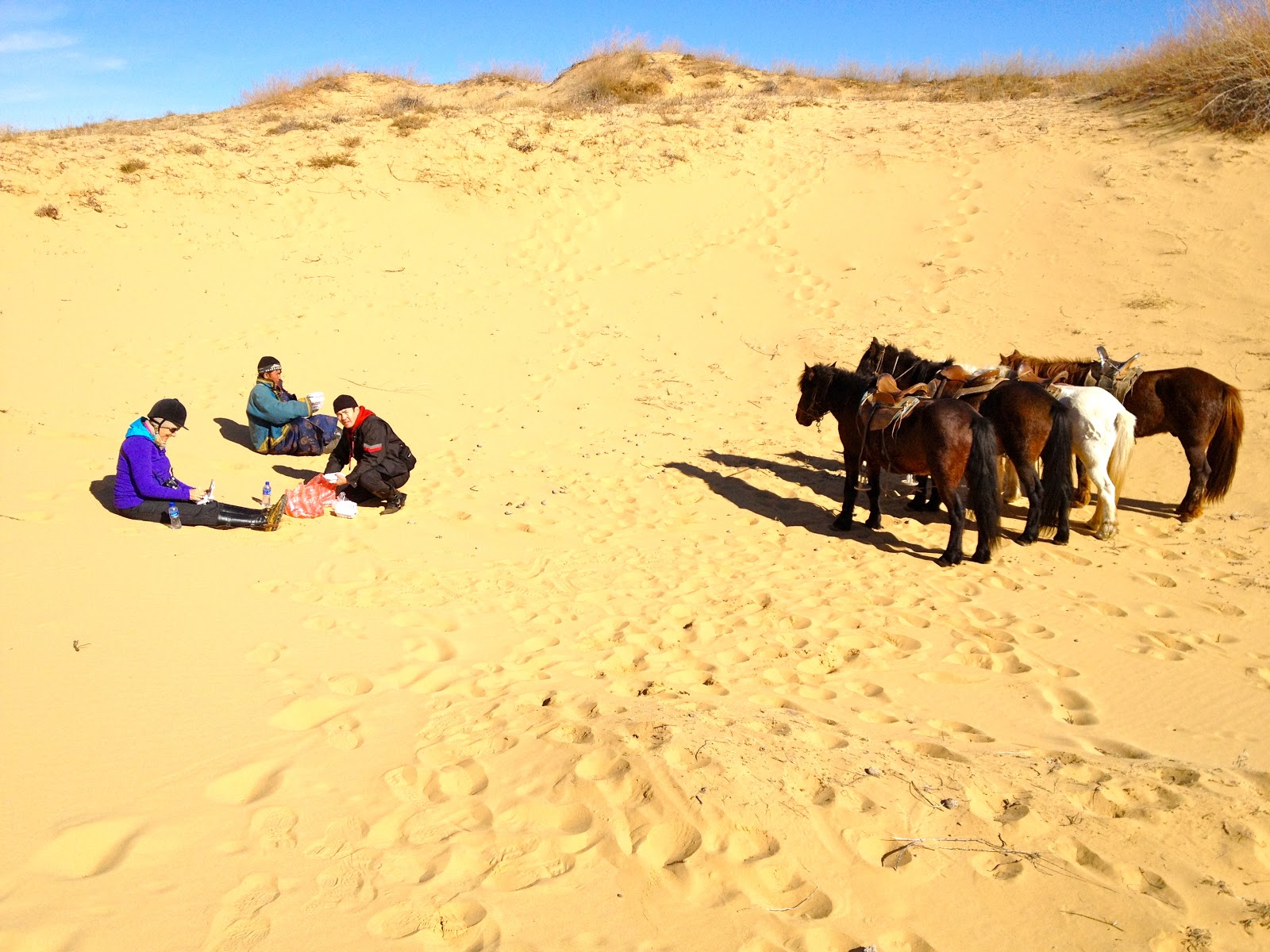
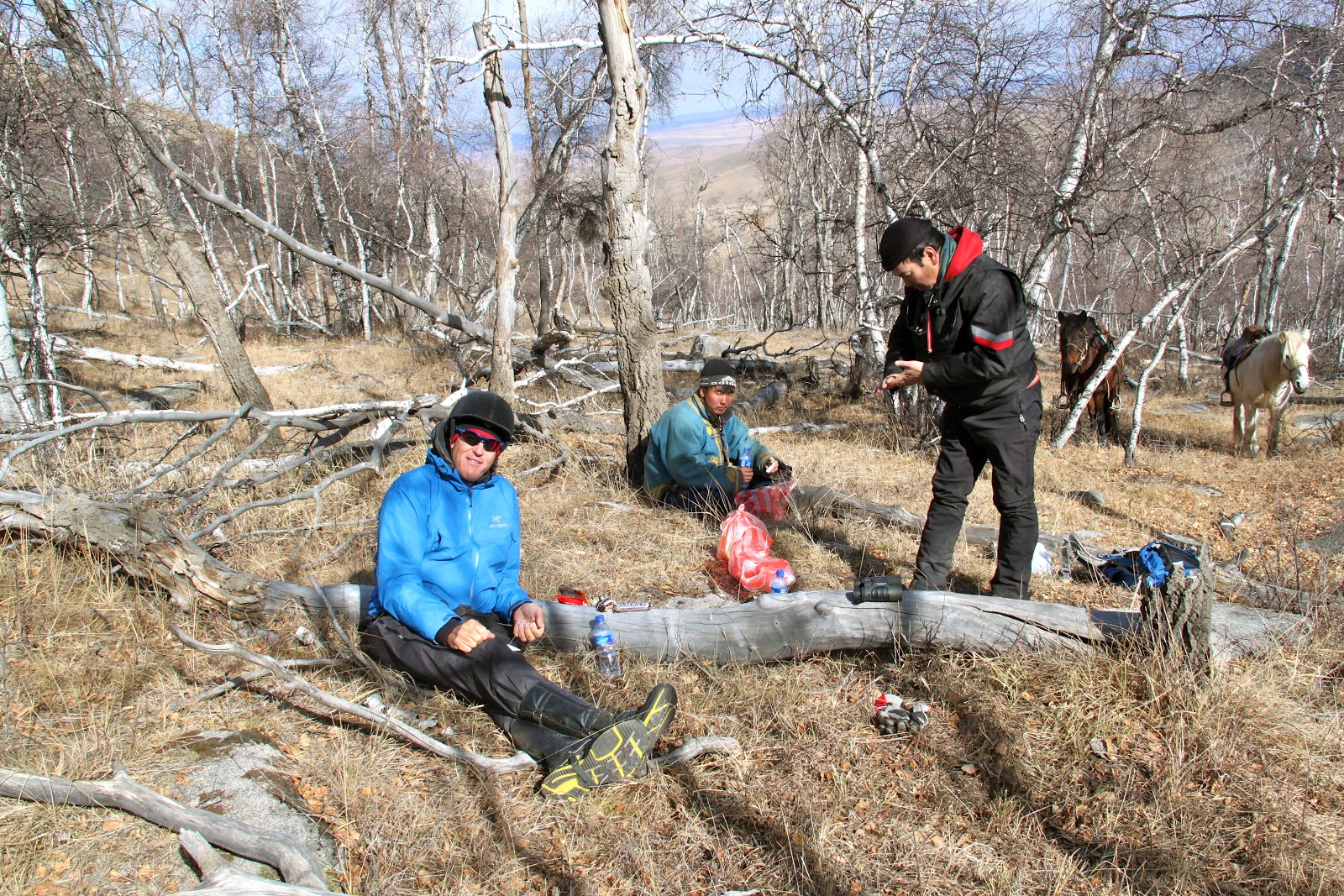
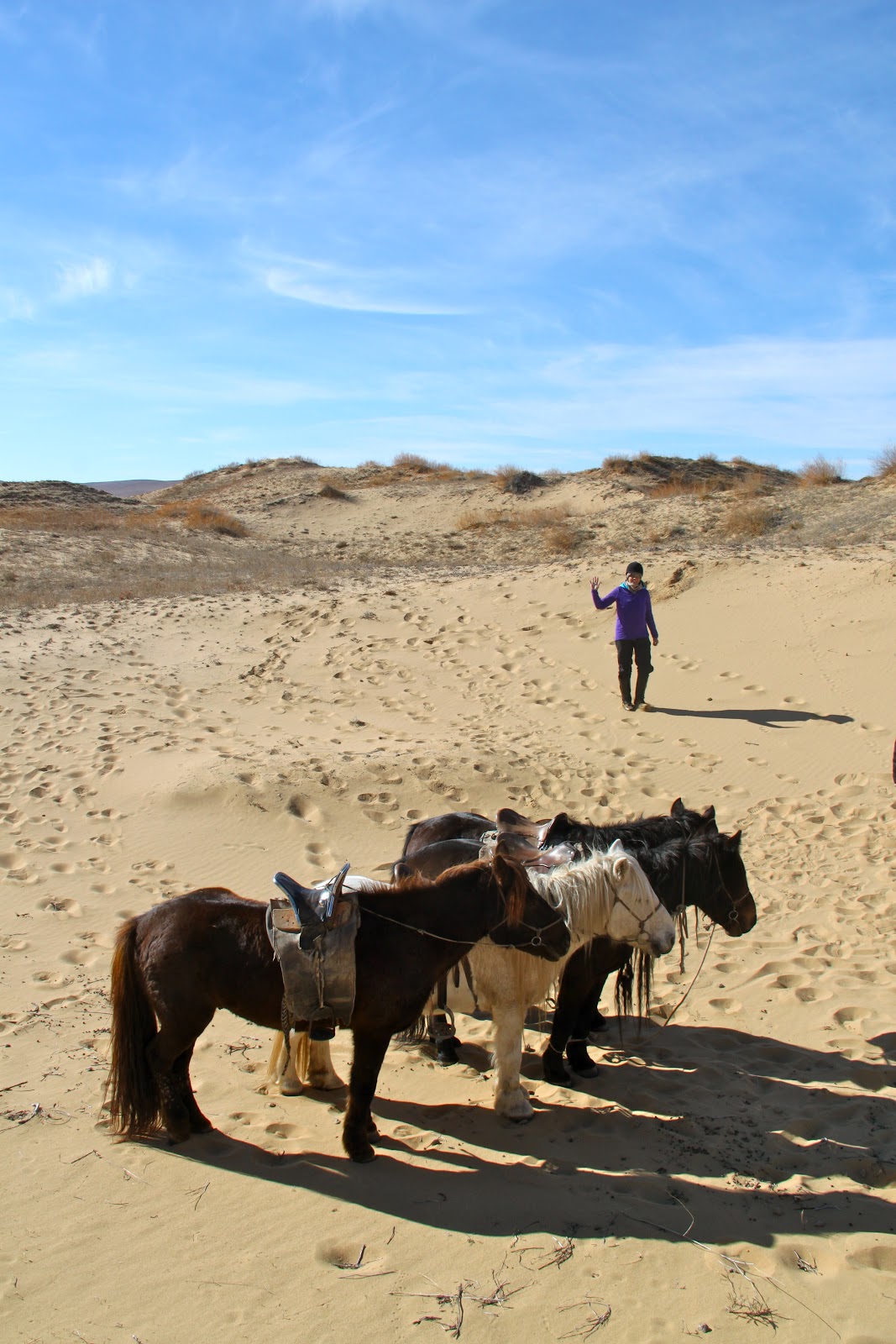
After awhile we came to some sand dunes and we road our horses through and up and down the dune ridges.  We decided to have lunch so the horseman tied the horses together and hobbled Barb’s horse and we ate our lunch sitting in the sand next to our horses.
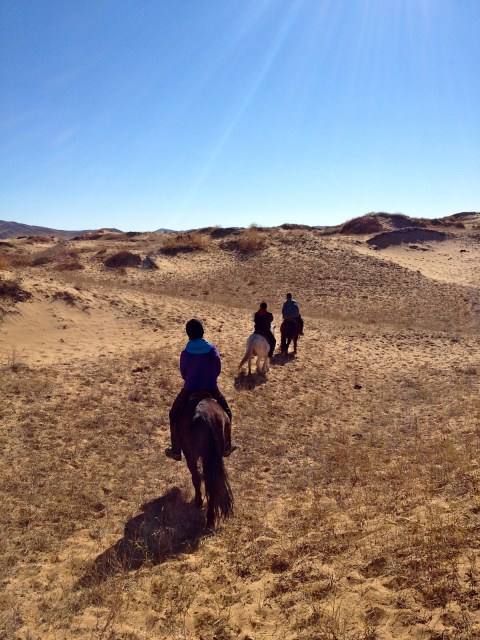
The horses are sure footed going up and down the dunes.
This is how he hobbled Barb’s horse.

Horses tied up while we ate lunch.

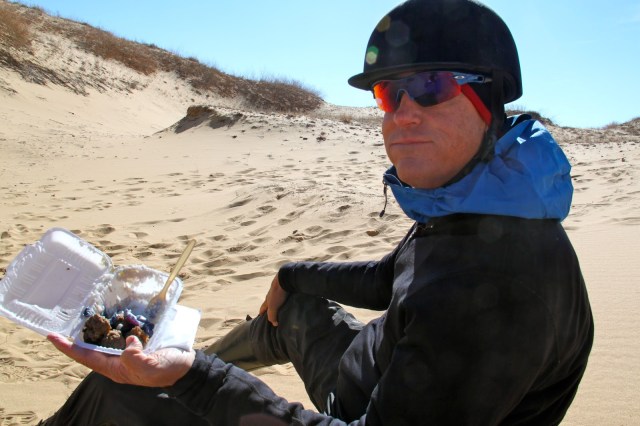
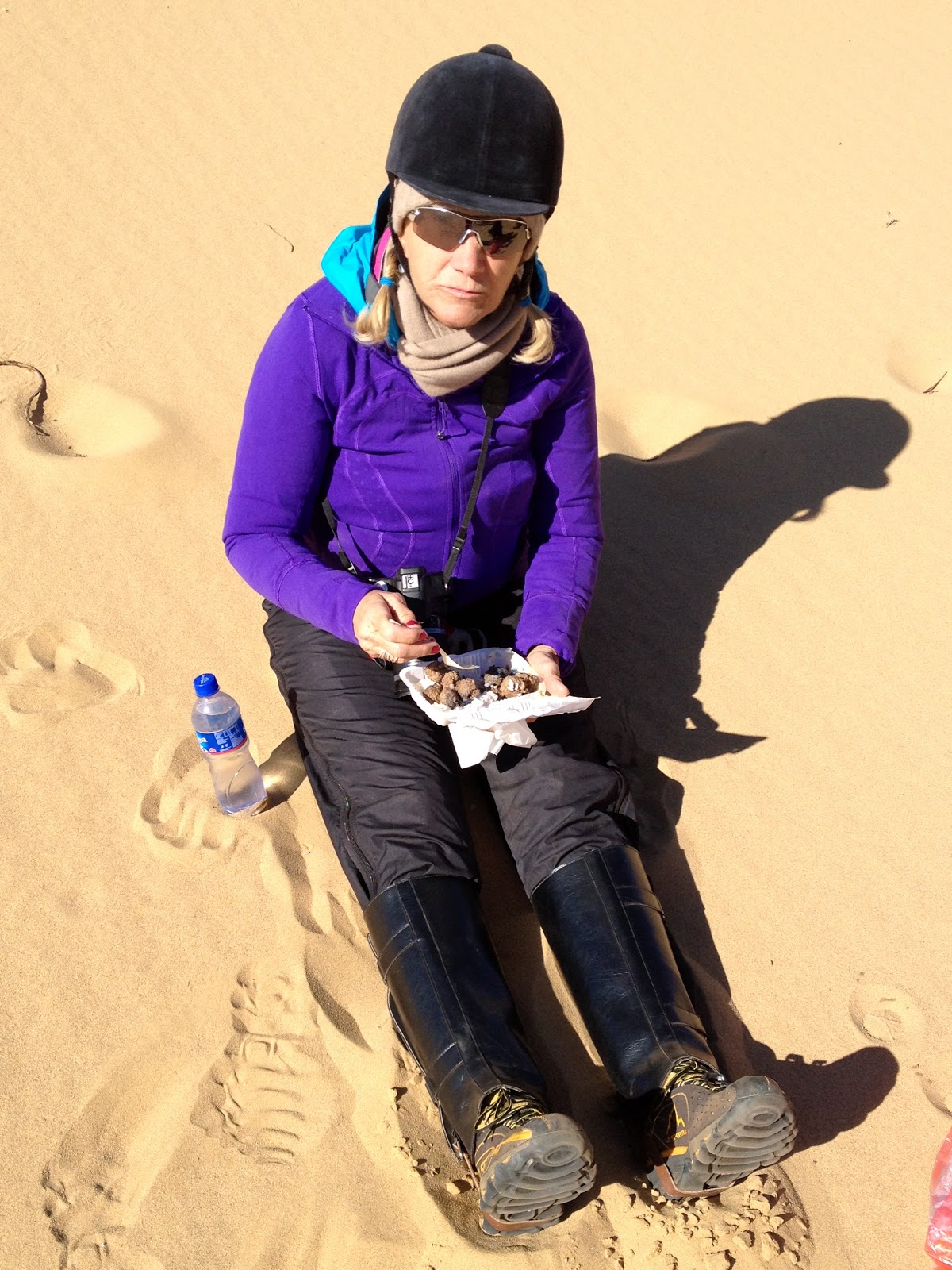
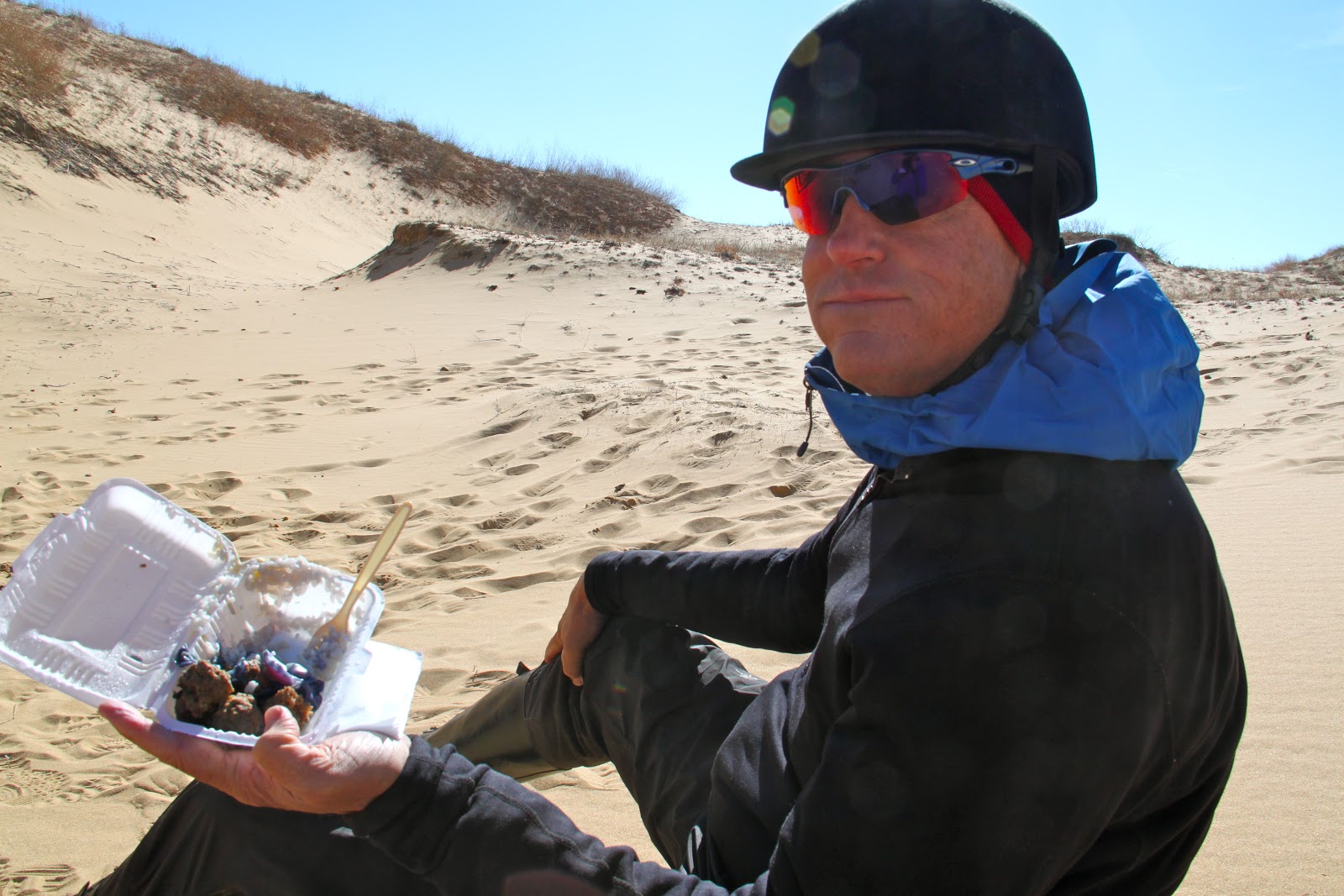
Our lunch consisted of chewy beef meatballs and rice with blue cabbage.  Blue cabbage?  Our guide said it was a natural cabbage color.

Lunch on the dunes.
Yummy!
Really?  Blue Cabbage?

We flushed out a red fox similar in appearance to the red fox we have in our backyard.  We didn’t get a picture so we took a picture of this red fox on the wildlife board at the Hutsai National Park entrance.
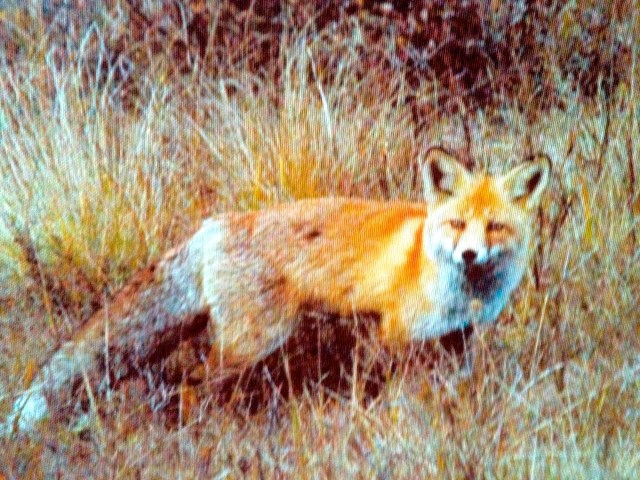
Red fox.

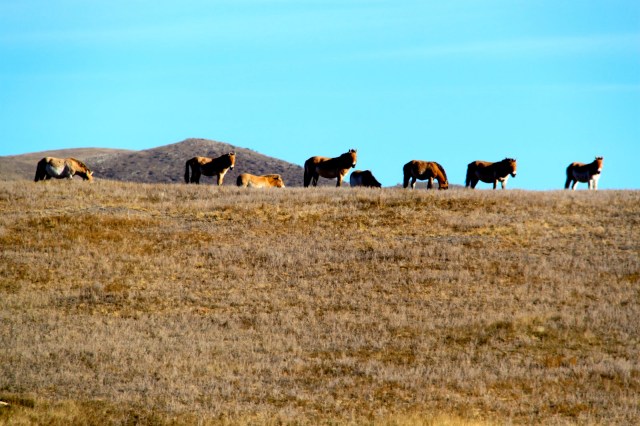
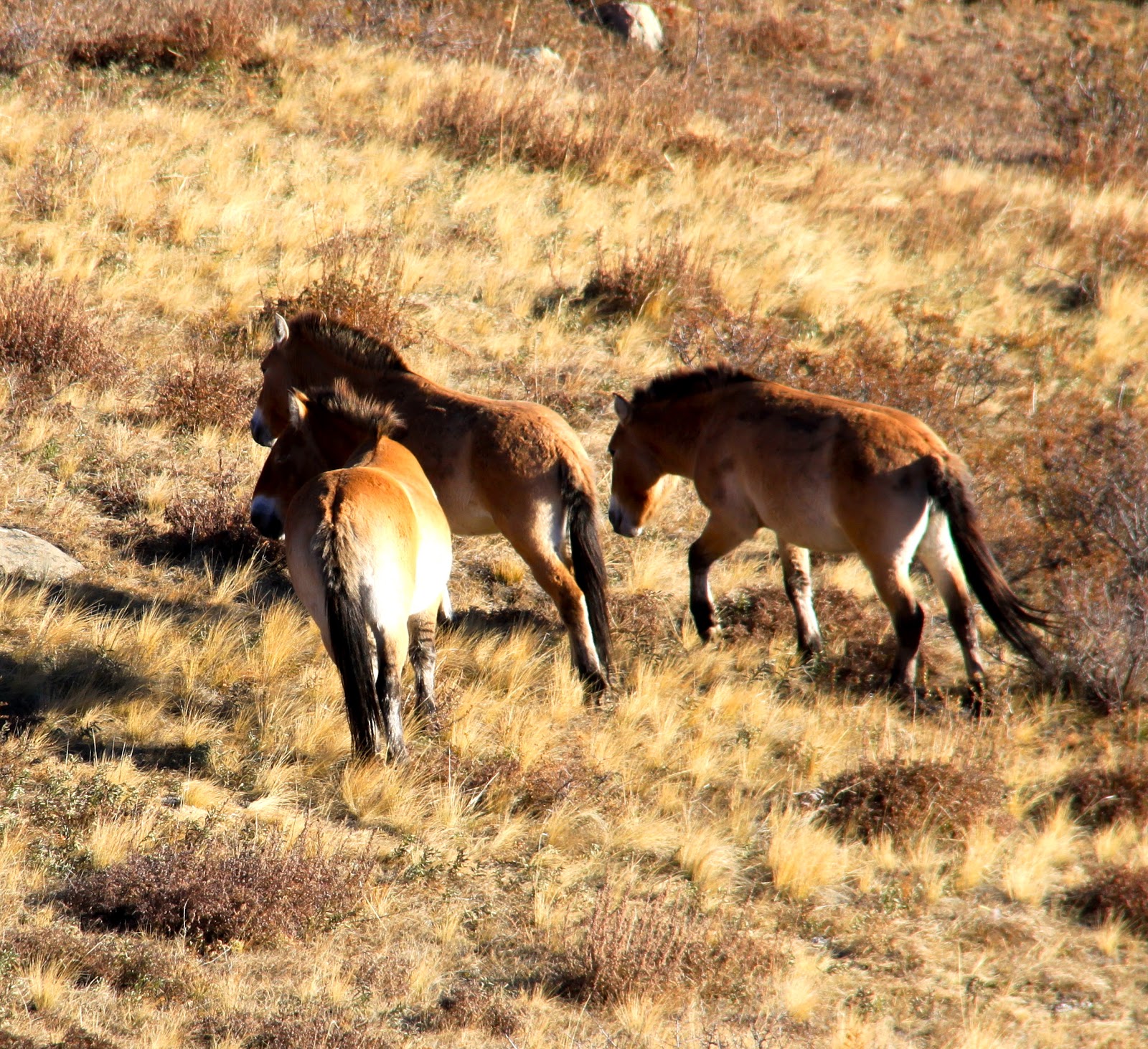
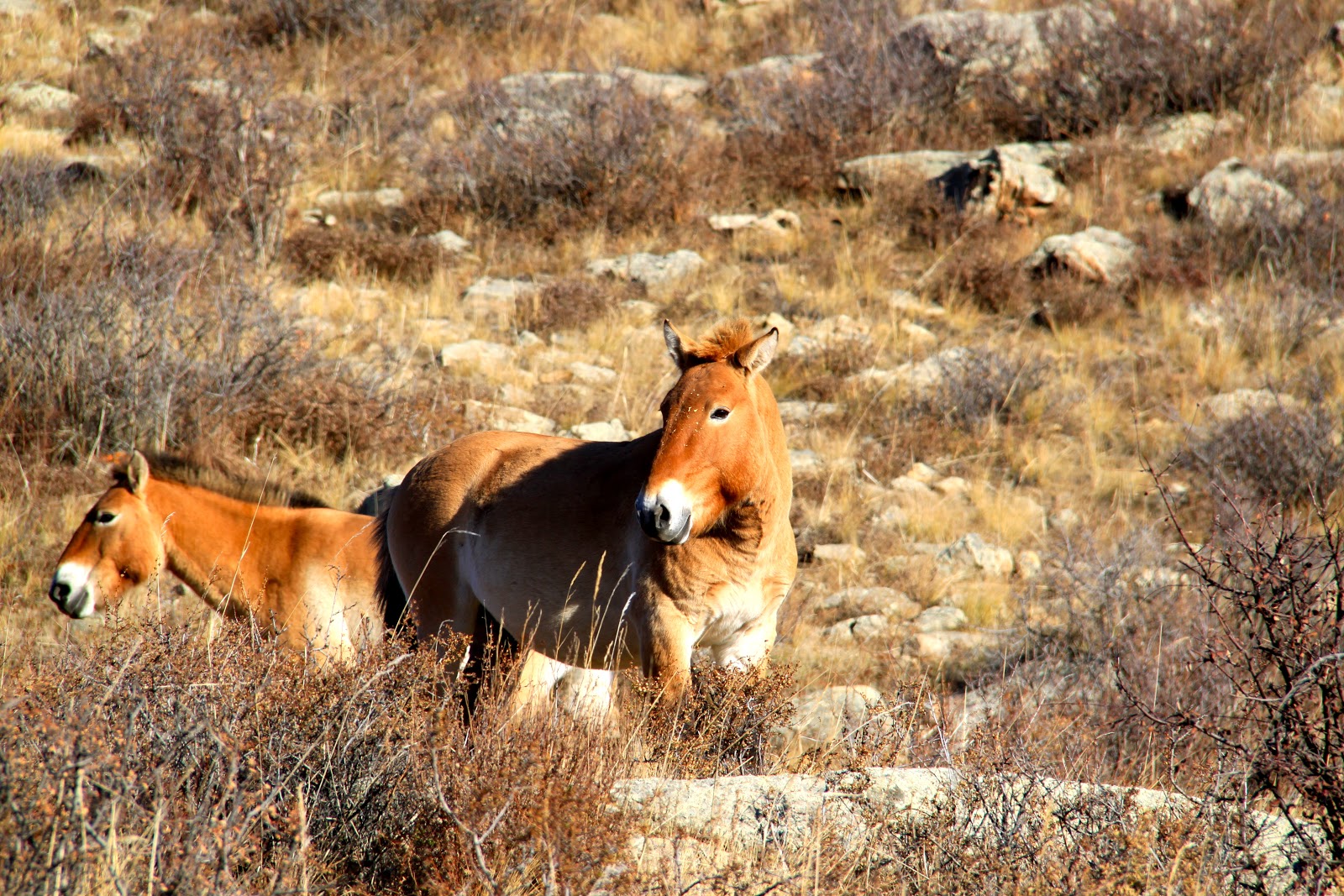
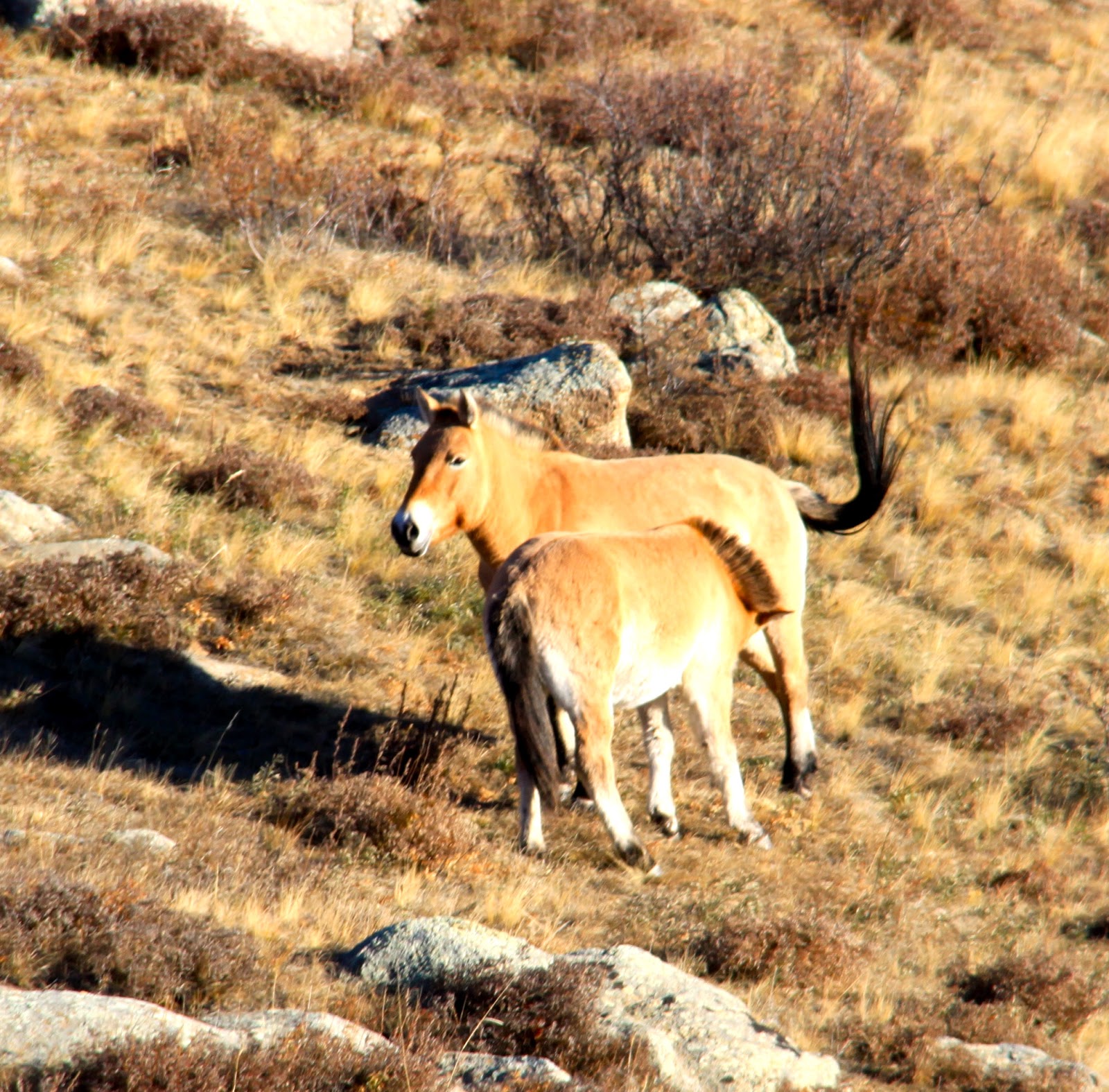
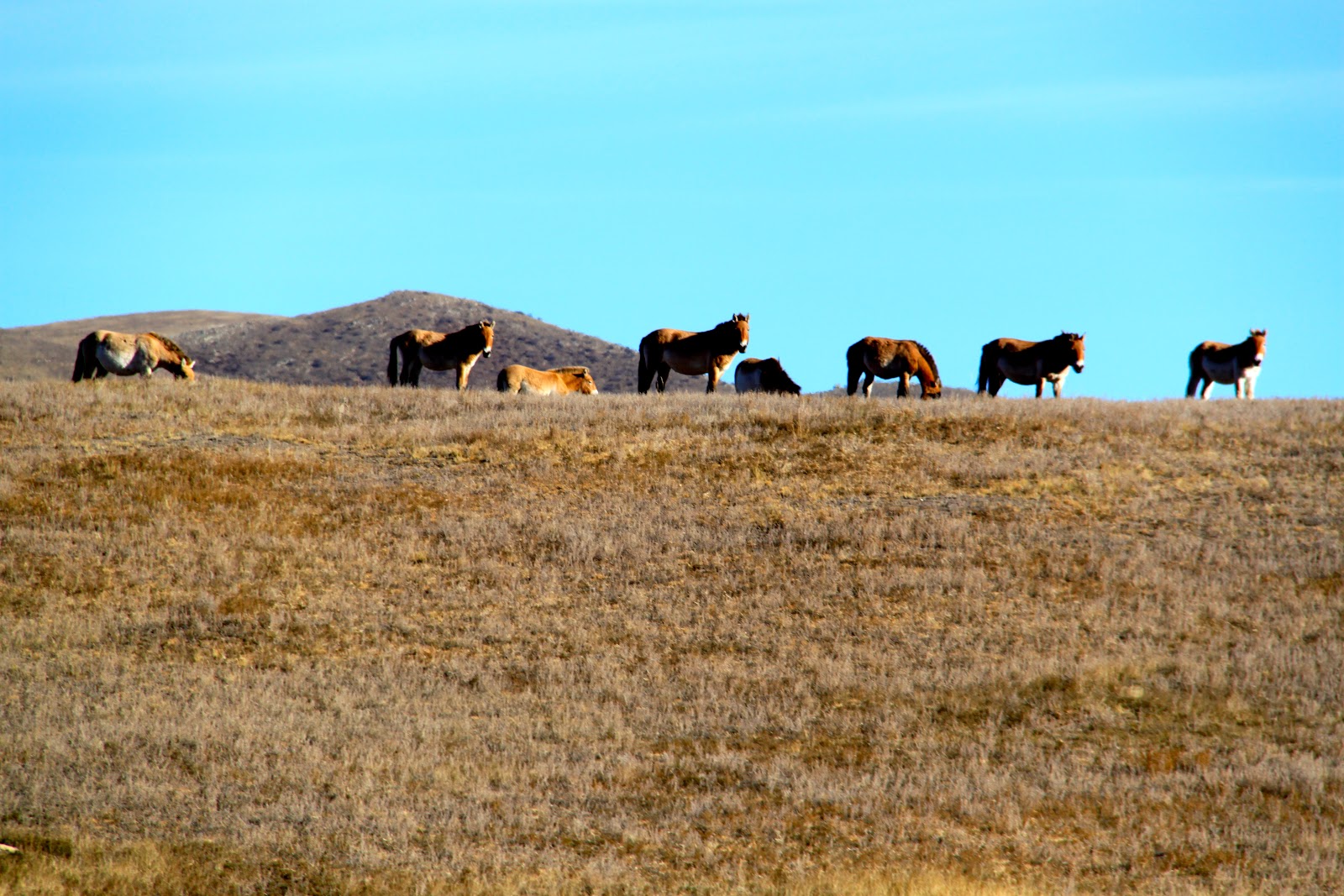
Hutsai National Park is famous for its wild horses.  We hope we are lucky enough to see these wild horses.  They are a beautiful buckskin color with tan bodies and black mane and tail and black socks.  Some of them have zebra markings on their hind legs.
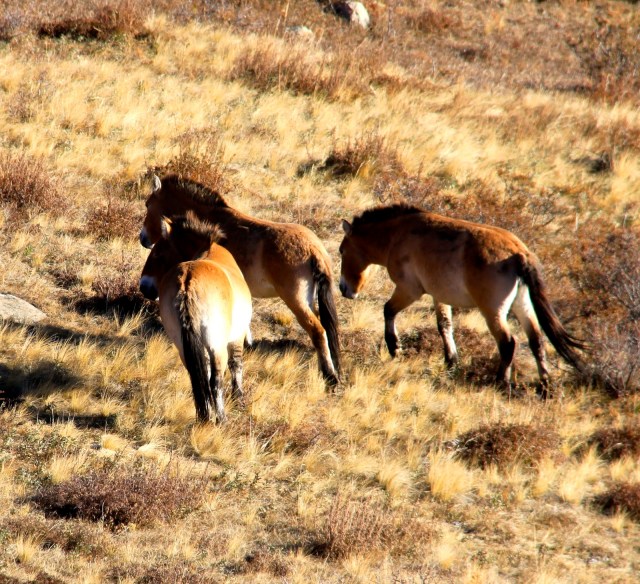
These are the Wild horses (Takhi) that we found.  Notice the zebra stipes on the legs.
These wild horses are not like the horses that we call wild that run free in the four corners area of the United States.  The Mongolian wild horses have never been domesticated.  They molt their mane and tail once a year.

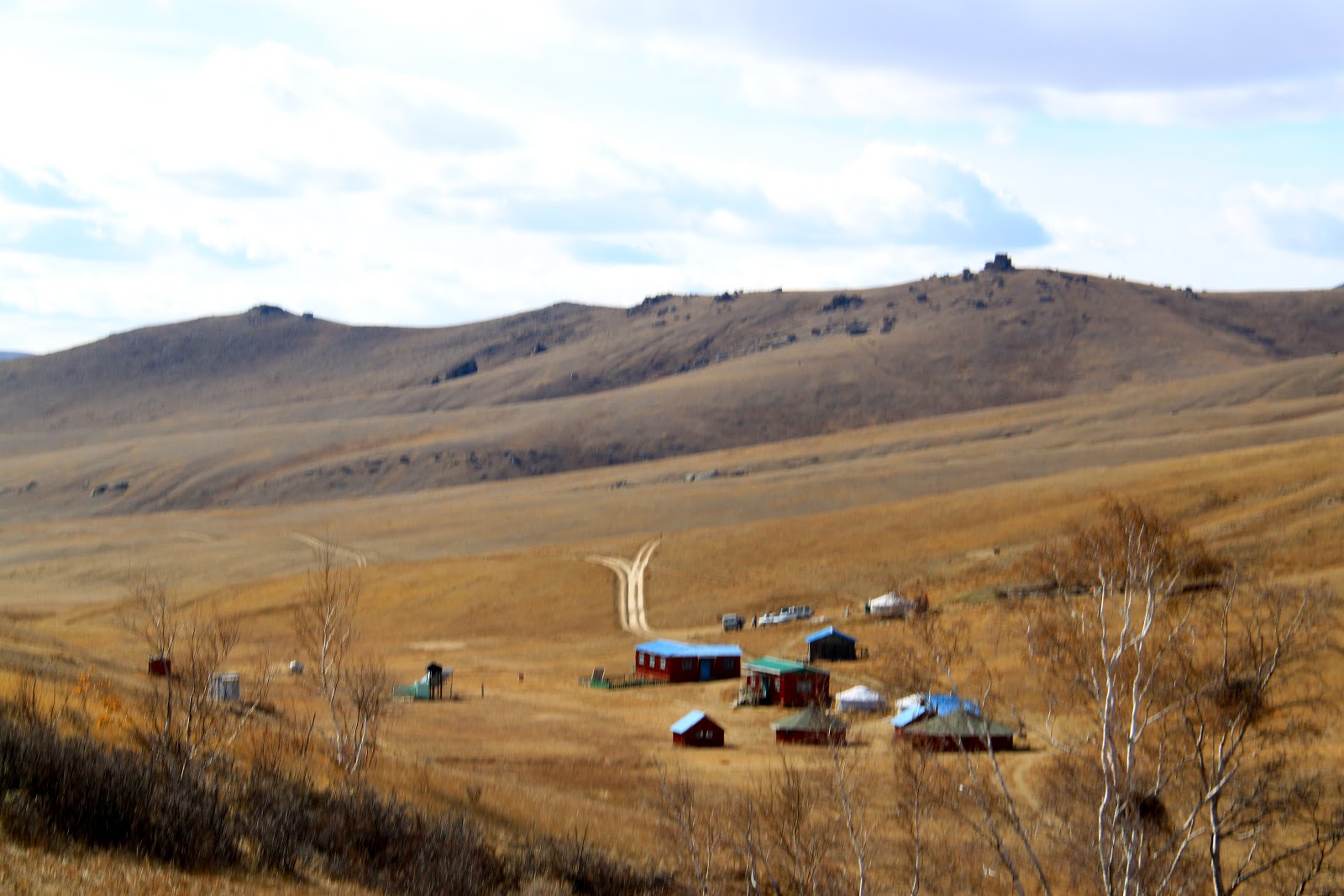
A couple hours of riding after lunch we came upon a Ger.  I guess the custom in Mongolia is that anyone can stop and come in for tea at anytime.  Our guide explains that it is a Mongolian custom to stop and visit and take tea and food or repairs or lodging and these things are never refused.  It is like a network of motels across the country and is a necessity since the country is 3 times larger than France and there are no services for thousands of kilometers.  There was no one home at this Ger so we continued on our way.

No one was home at the Ger.

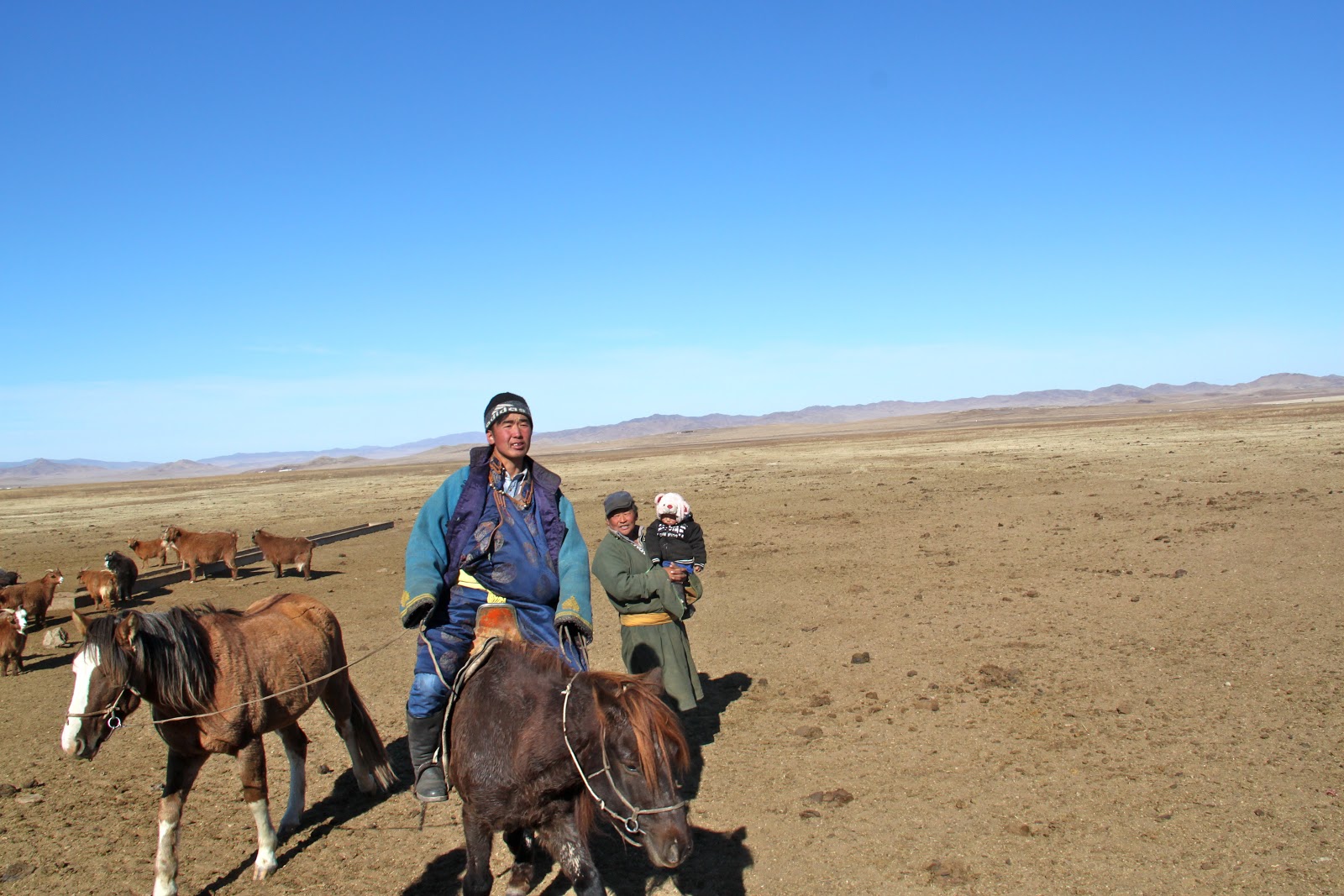
We passed someone with their herds and he asked our guide to take one of his horses to the next Ger.  It’s just a neighborly thing to do.
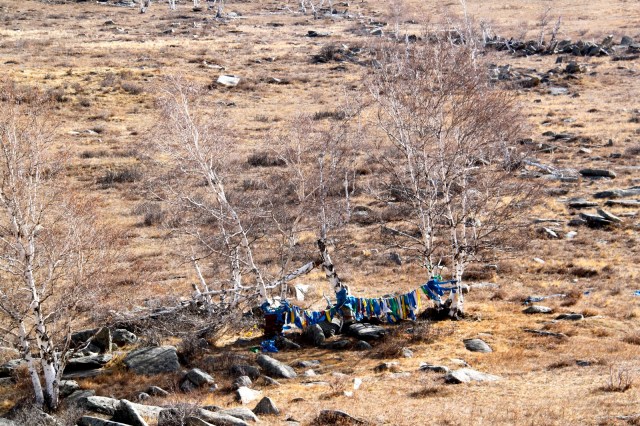
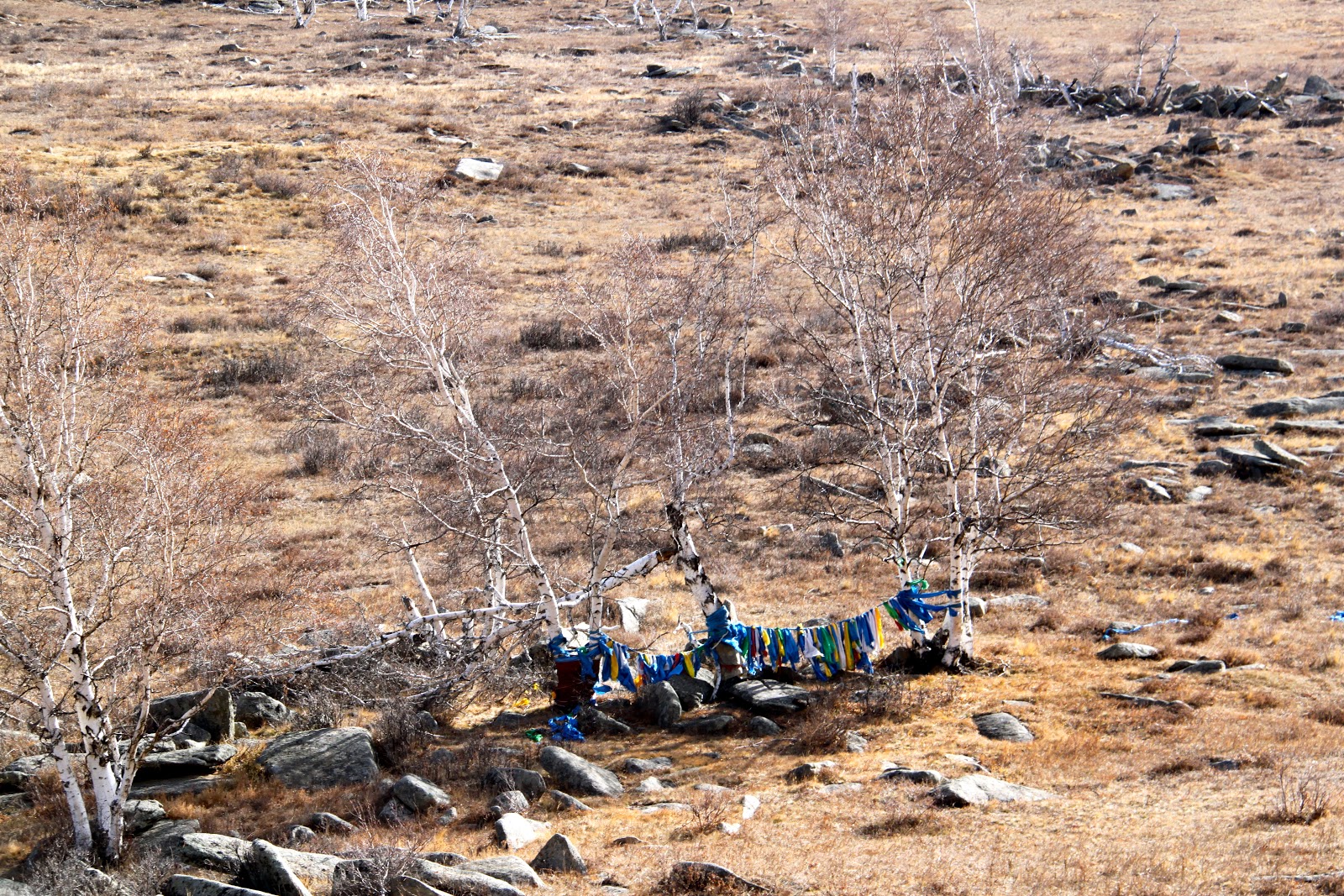
We passed a spot where a Shaman has strung prayer flags.
Herds.

When you arrive to the Ger you apparently don’t knock but you yell out “Nokhoi khor” which means literally “HOLD THE DOG!”  Mongolians don’t have the same concept of privacy that we have.  Our guide warned us that when we are in our Ger not to be surprised if someone just opens the door and looks inside. 
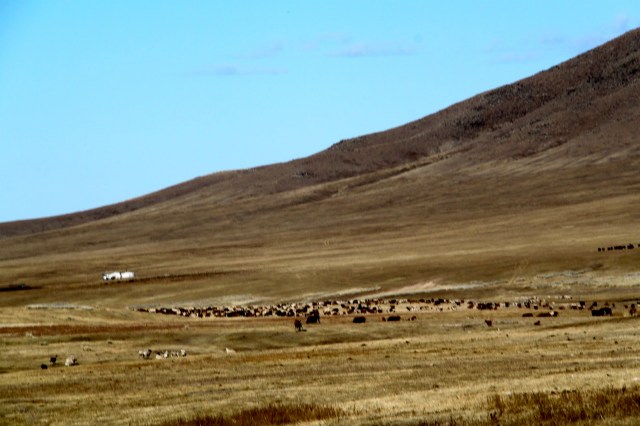
We passed water holes where herds of animals come daily to drink.

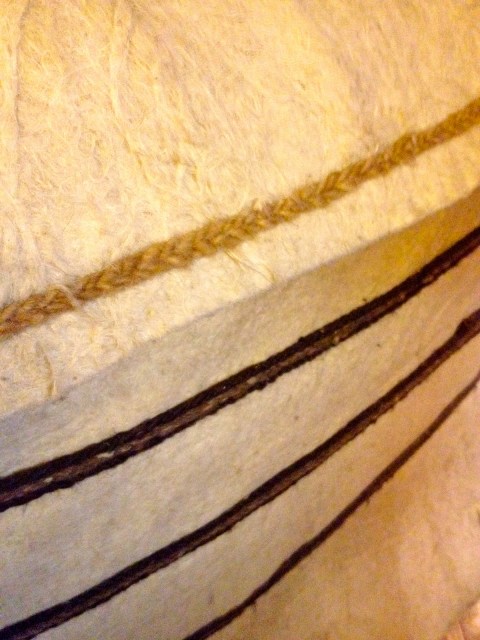
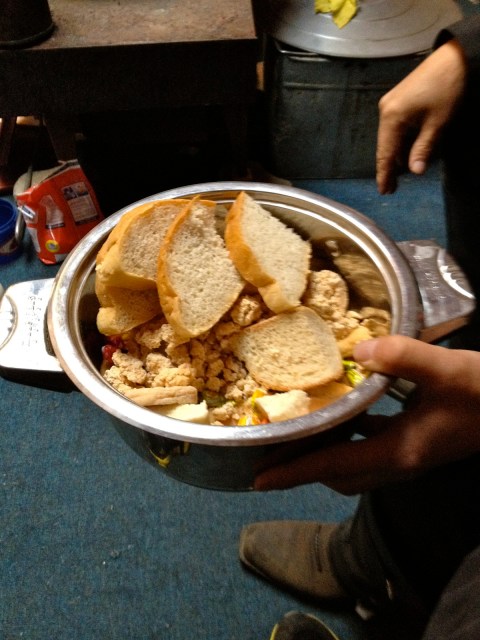
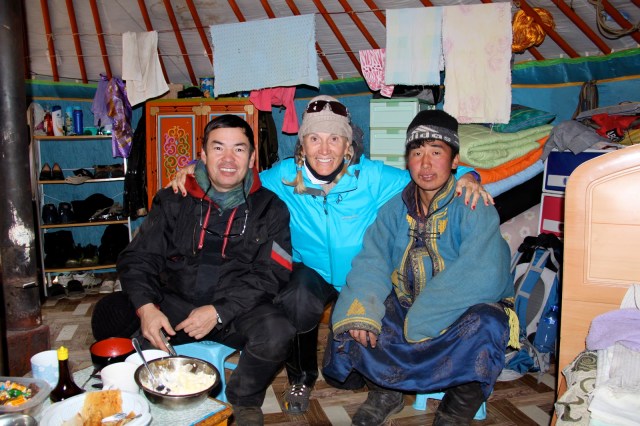
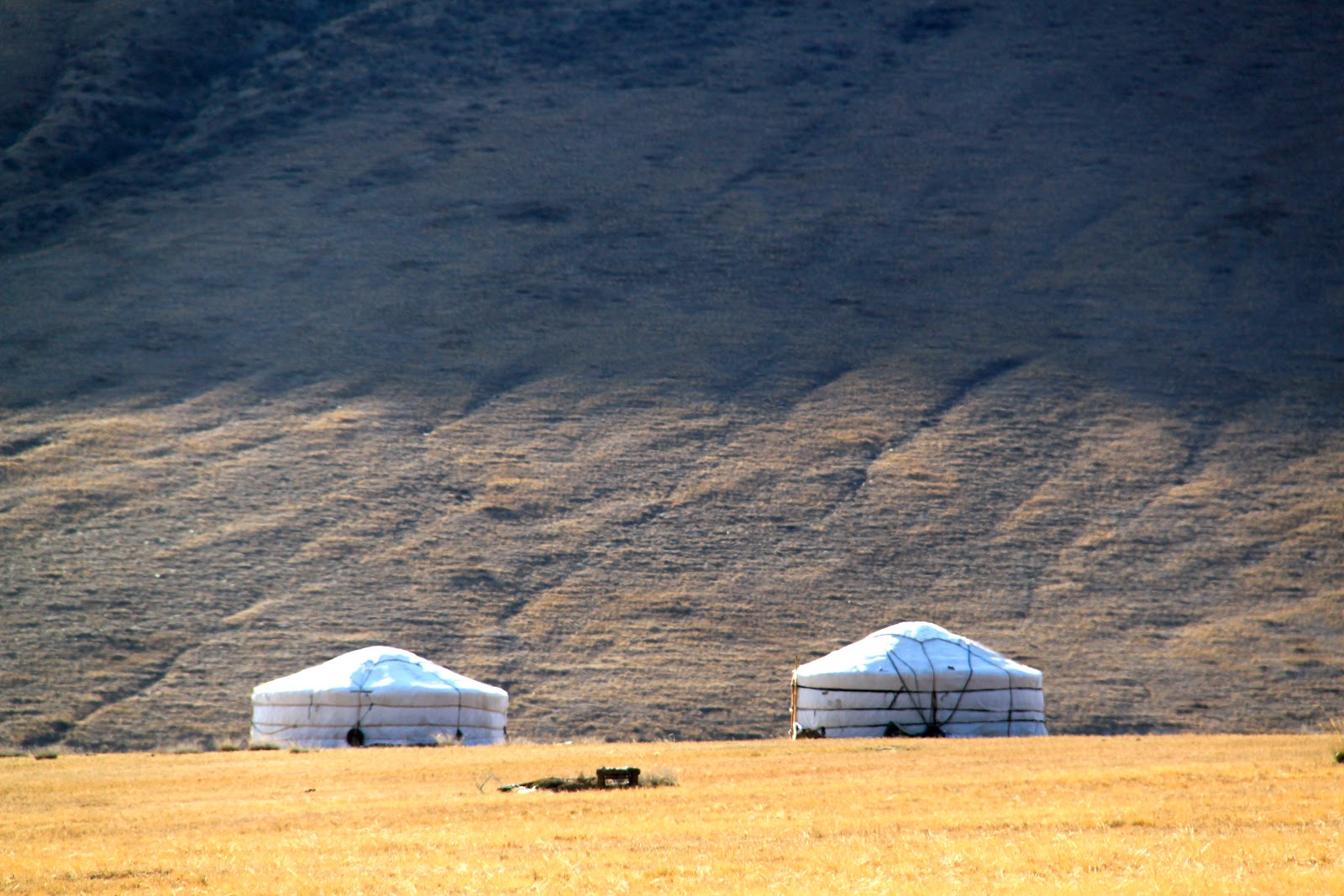
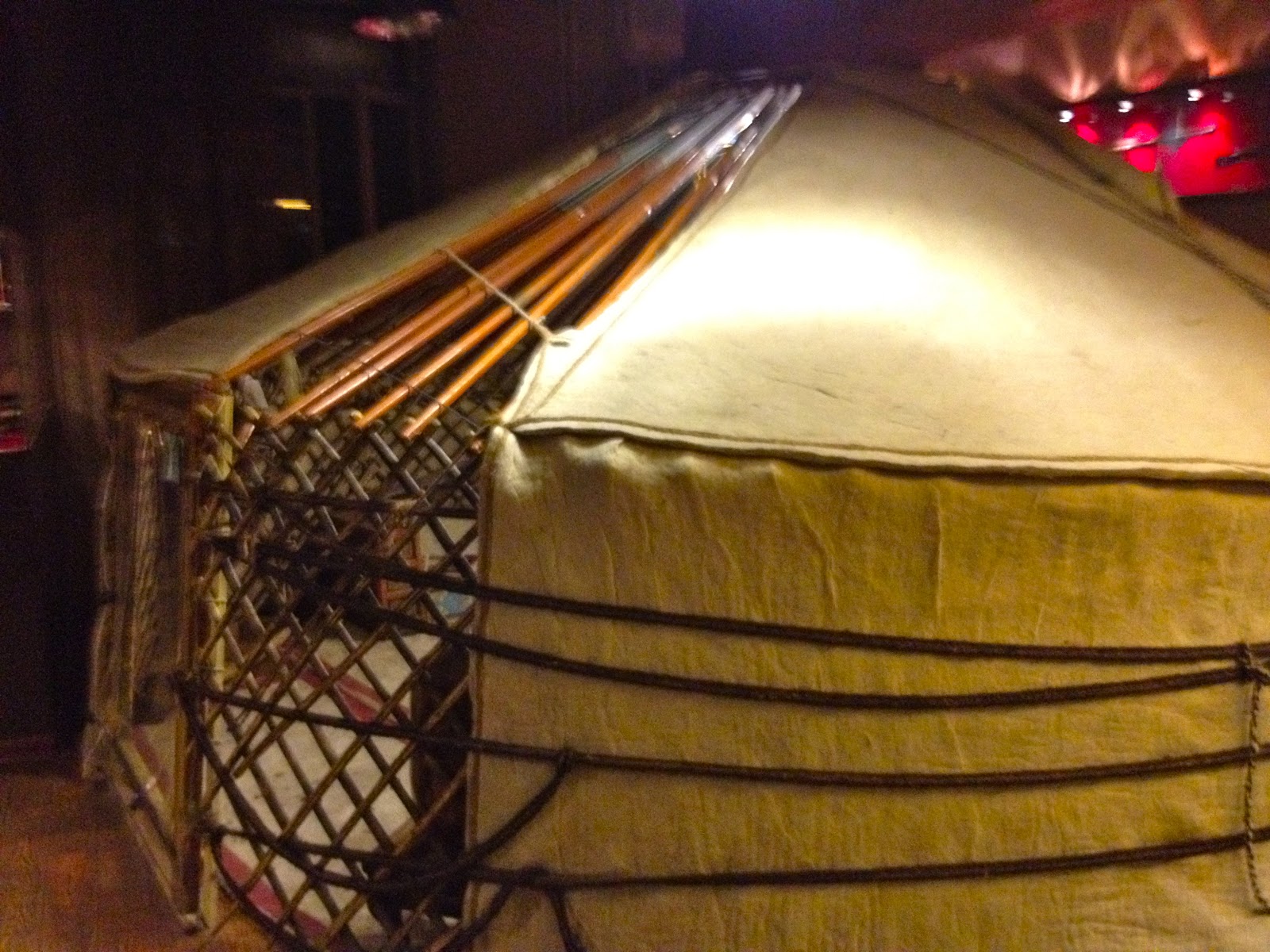
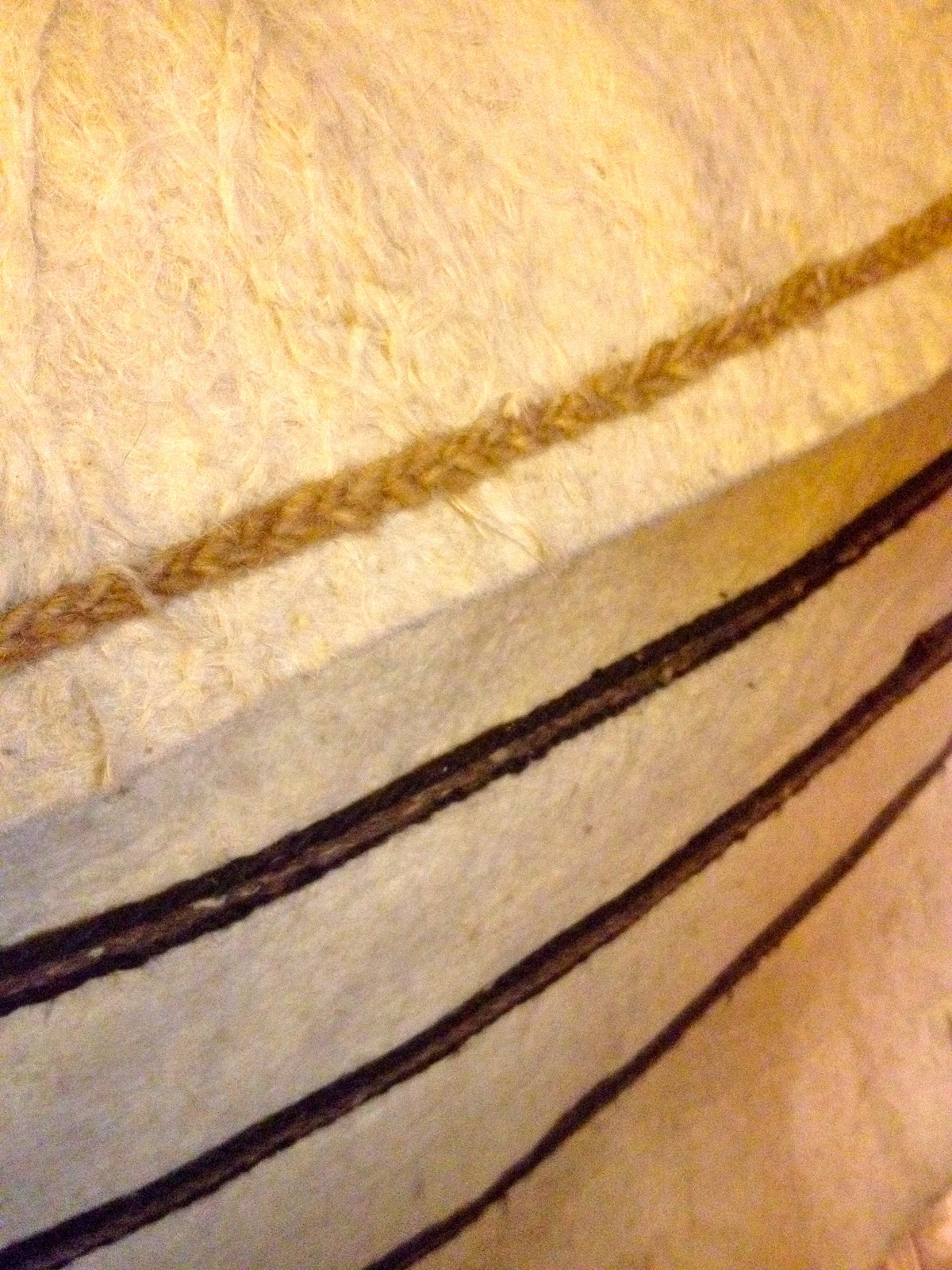
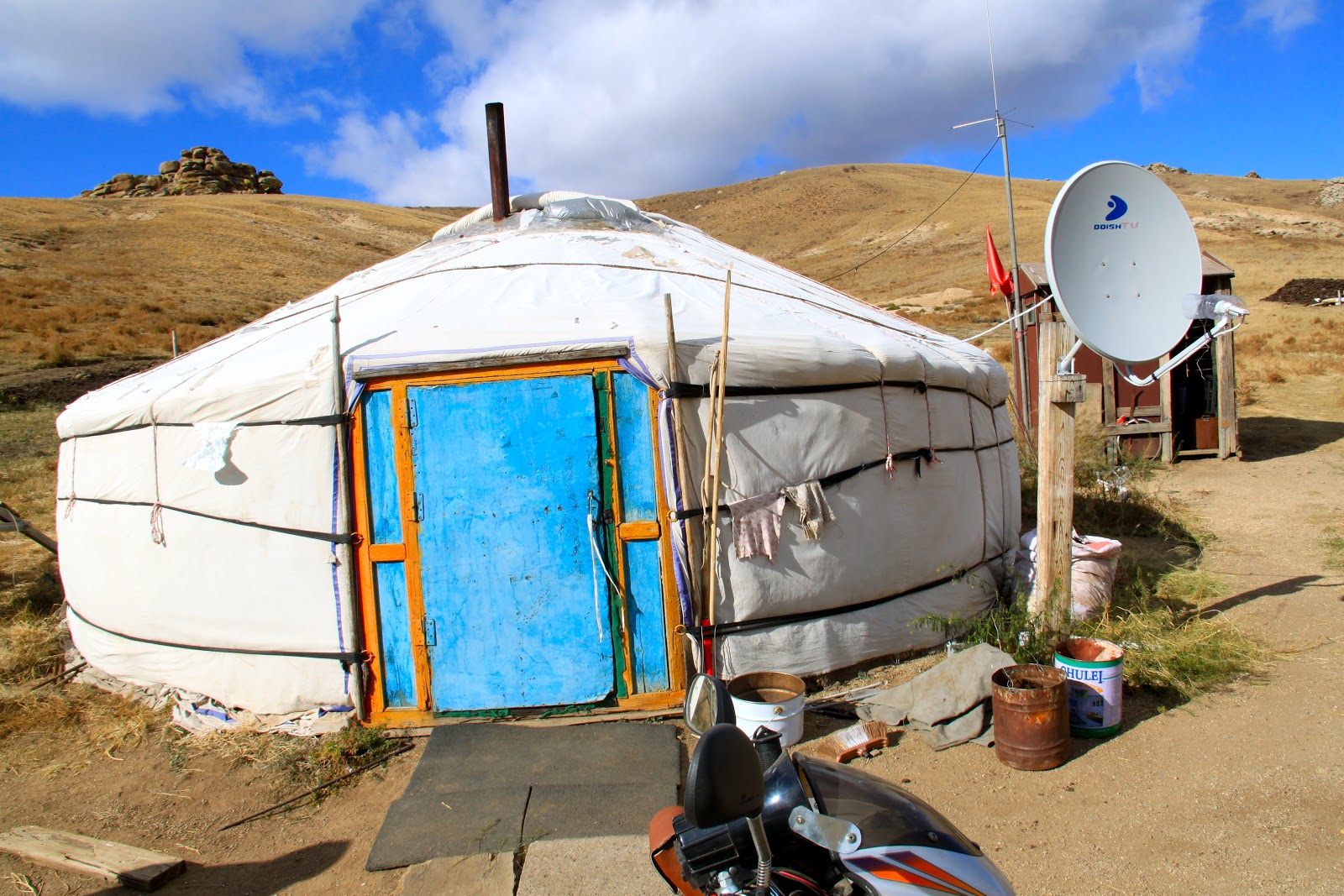
After travelling further through the open steppe we came upon another Ger.  Our horseman approached the Ger and said Nokhoi khor and went inside.  We followed our horseman inside.  There were three women and a couple of men.  They seemed camera shy so we did not take pictures except that we took some pictures of the food they were cooking.  They were very nice and shared tea with us.  Mongolian tea is milky and salty and thick and has pieces of meat and fat floating in it.  It is hard to drink but Baggy told us that all we need to do is try everything that they offer and we don’t have to finish anything.  They also offered a dried curd that we nibbled.  The inside walls of the Ger were covered with wall rugs.  The Ger superstructure is made with sticks and covered with sheep hair mixed with grass and dirt from the steppe.  Our guide said it is “sheep felt”.  It is about ¾ inch thick.  The sheep felt is tied onto the sticks with horsehair rope.
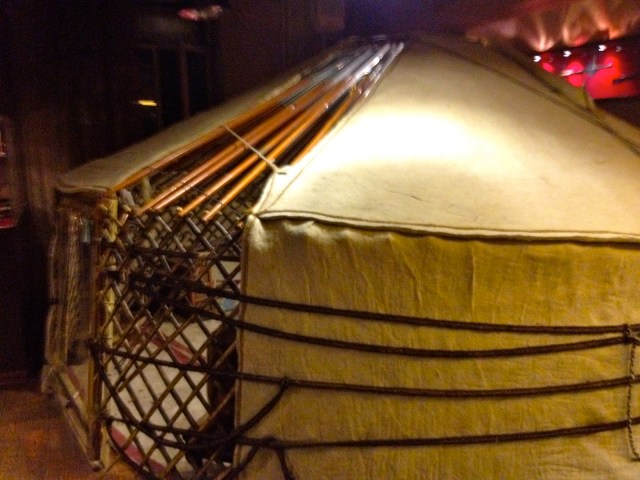
This is how a Ger is constructed.
It is made with sheep wool that is made into a felt.

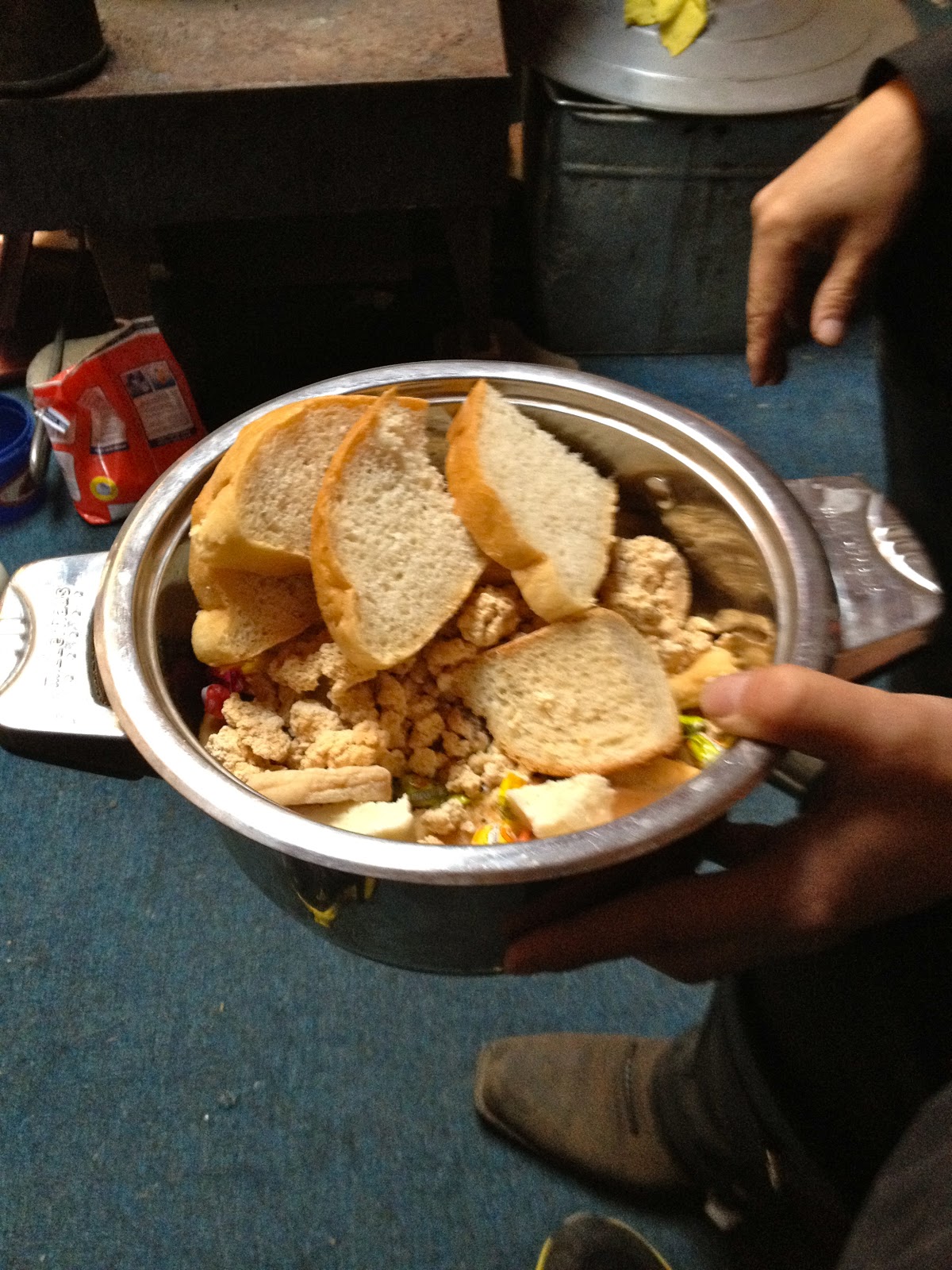
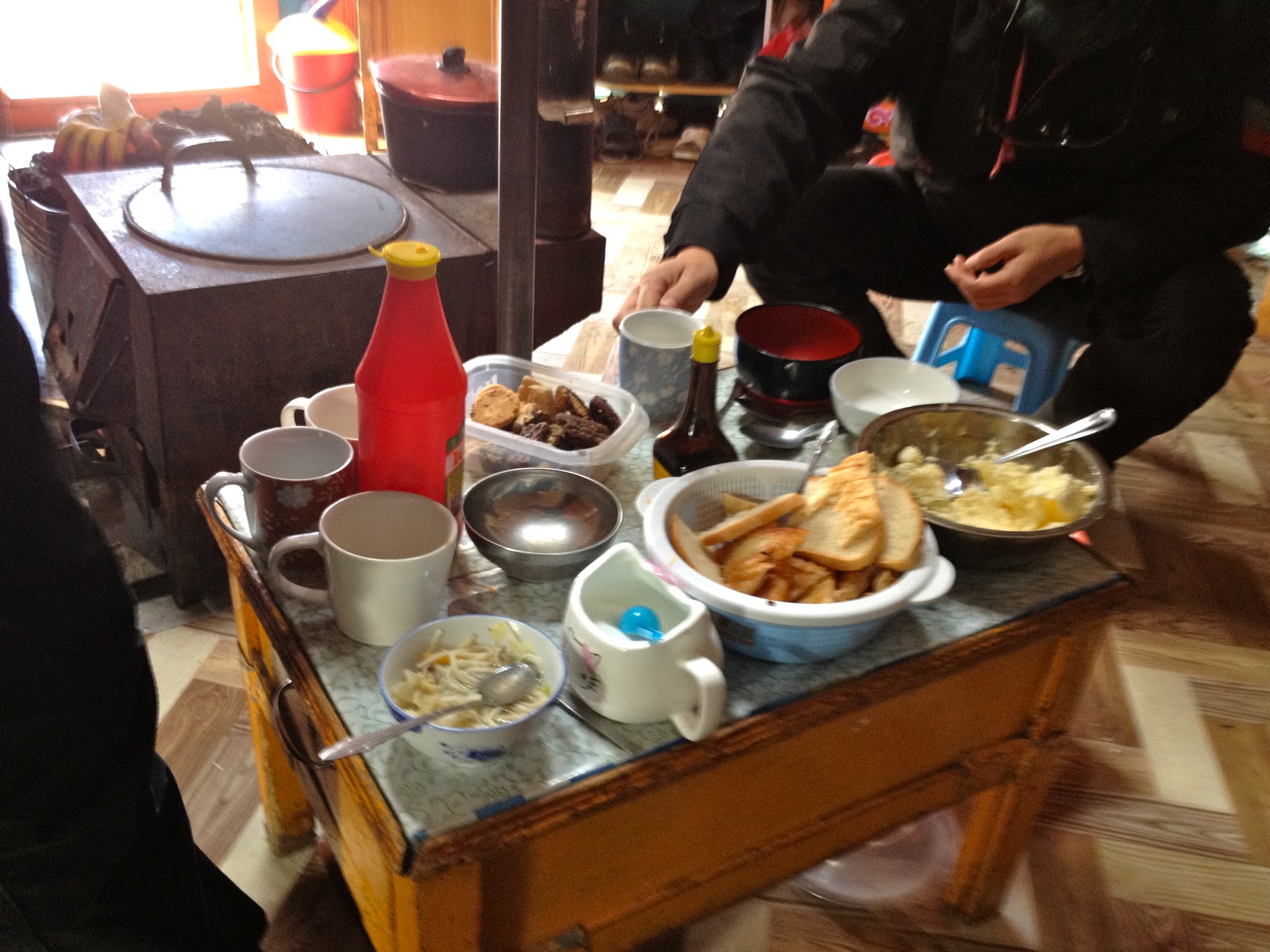
This is the pot that was offered to us.  Dried curd, pieces of bread, and a few stale cookies thrown in.
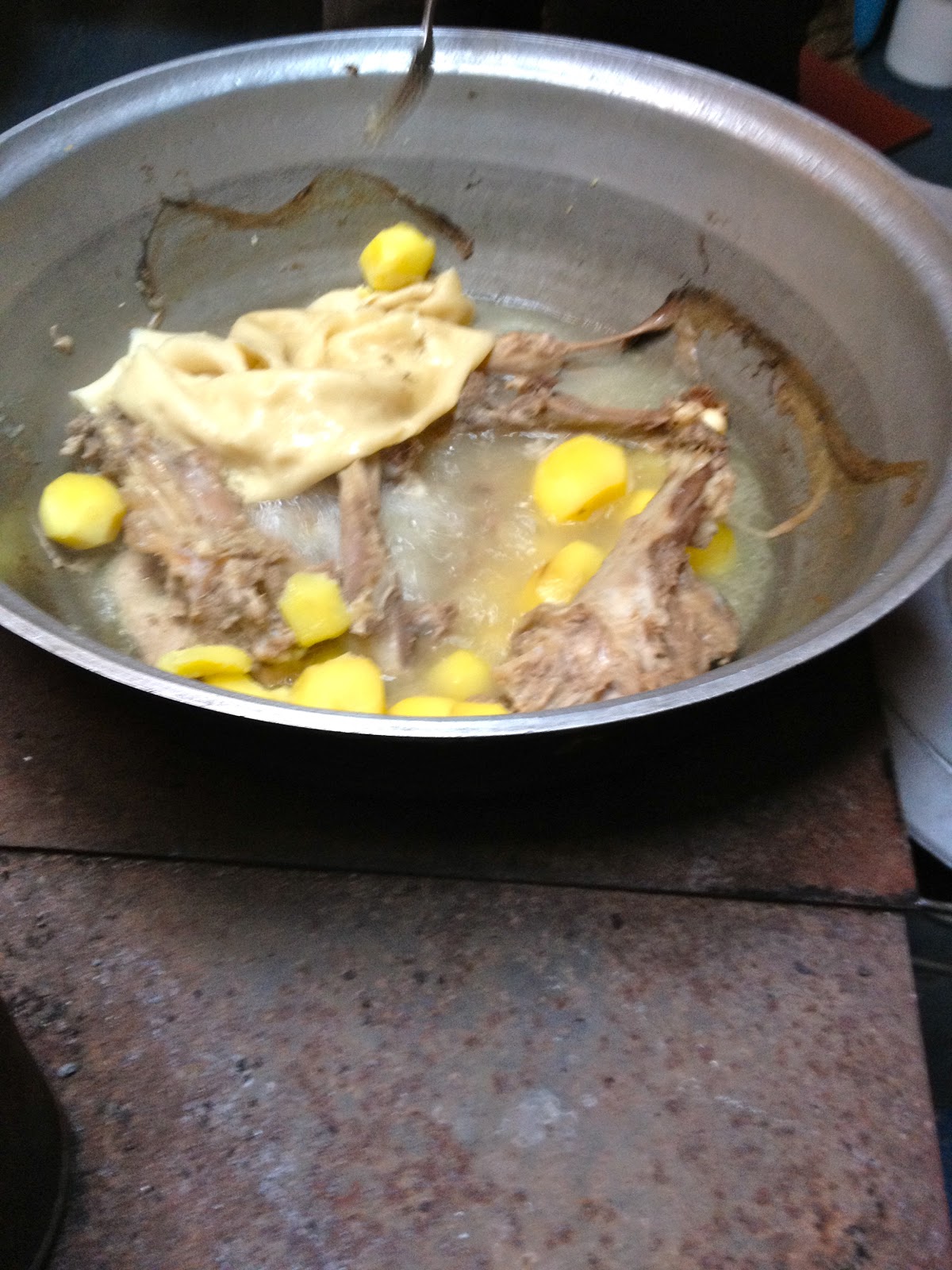
When it was time to eat we noticed that the cooking lady took some of the food from the approximate 24-inch pot on the stove and put it in a 12-inch pot on the table.  Then the oldest man sat down and ate first using a sharp knife and then ate the food directly out of the pot off the knife by pushing it off the knife with his thumb and into his mouth.  There was very little lamb meat on the bone.  There was a homemade noodle that was rolled out like a pizza and cooked whole.  There were also potatoes.  When the oldest man had eaten then the next oldest male sat down at the same pot and ate in the same way.  Then the last male ate.  When he had finished the oldest female ate and then the other two females also ate.  They all ate in the same way by just using the sharp knife and their thumb.  Some of them would pick up a bone and strip all remaining meat off the bone with their teeth.
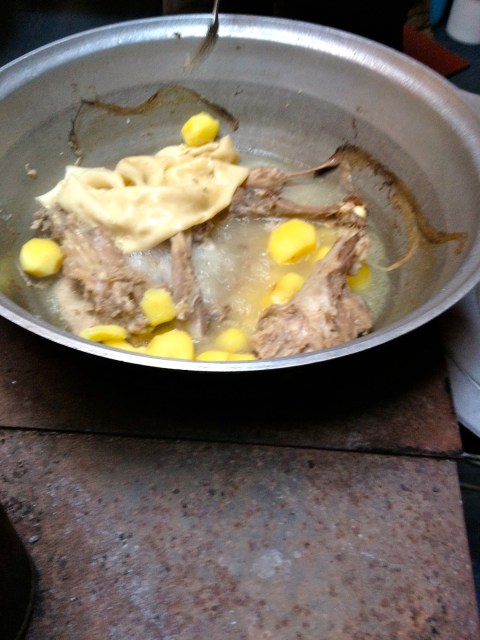
It doesn’t look like there is much meat on those bones, but they stripped them clean.  The noodle was rolled out like a pizza and put in the pot.
We asked our guide if there were any children.  He said the children of the nomadic people go to the nearest town and go to school and live in dorms in the winter.  They only return for holidays and summer vacation.  We asked how many people live and sleep in one Ger.  He said that four, five or six would sleep in one Ger.  The children all sleep in a separate Ger and the adults all sleep together.  We asked if they were related and he said that they were and that they stay either with the wife’s family or the husband’s family and there are no rules or customs about that.
We were excited to have the opportunity to peek inside the life of a nomadic family.  Our guide said that this family group was not very wealthy and only had a medium sized herd of goats and sheep of about 300.  They move to different locations at different seasons of the year.  Our guide said that this is their winter Ger.
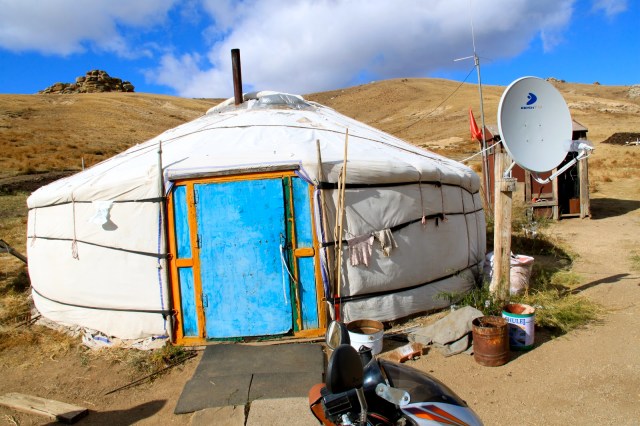
Notice the satellite.
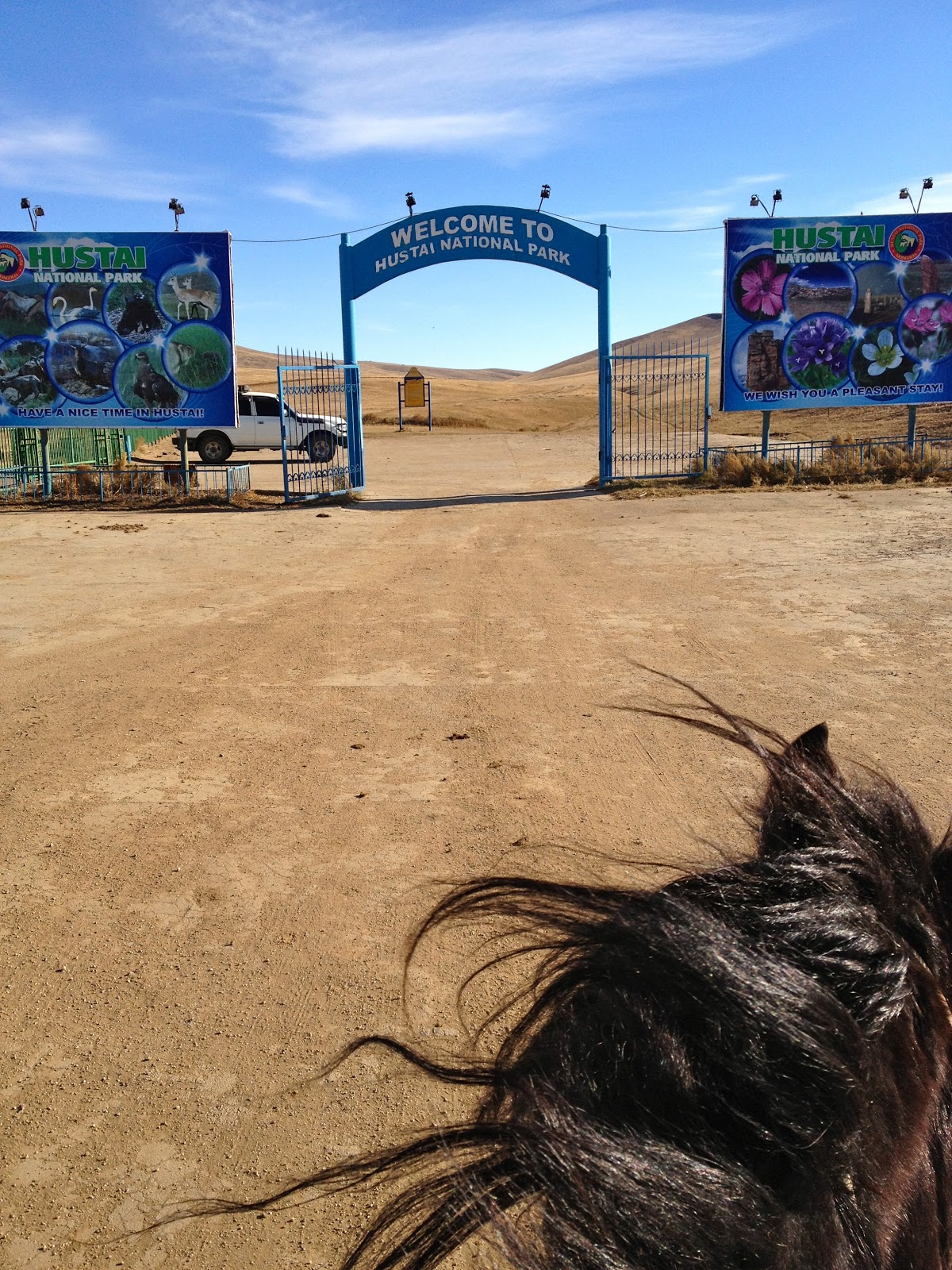
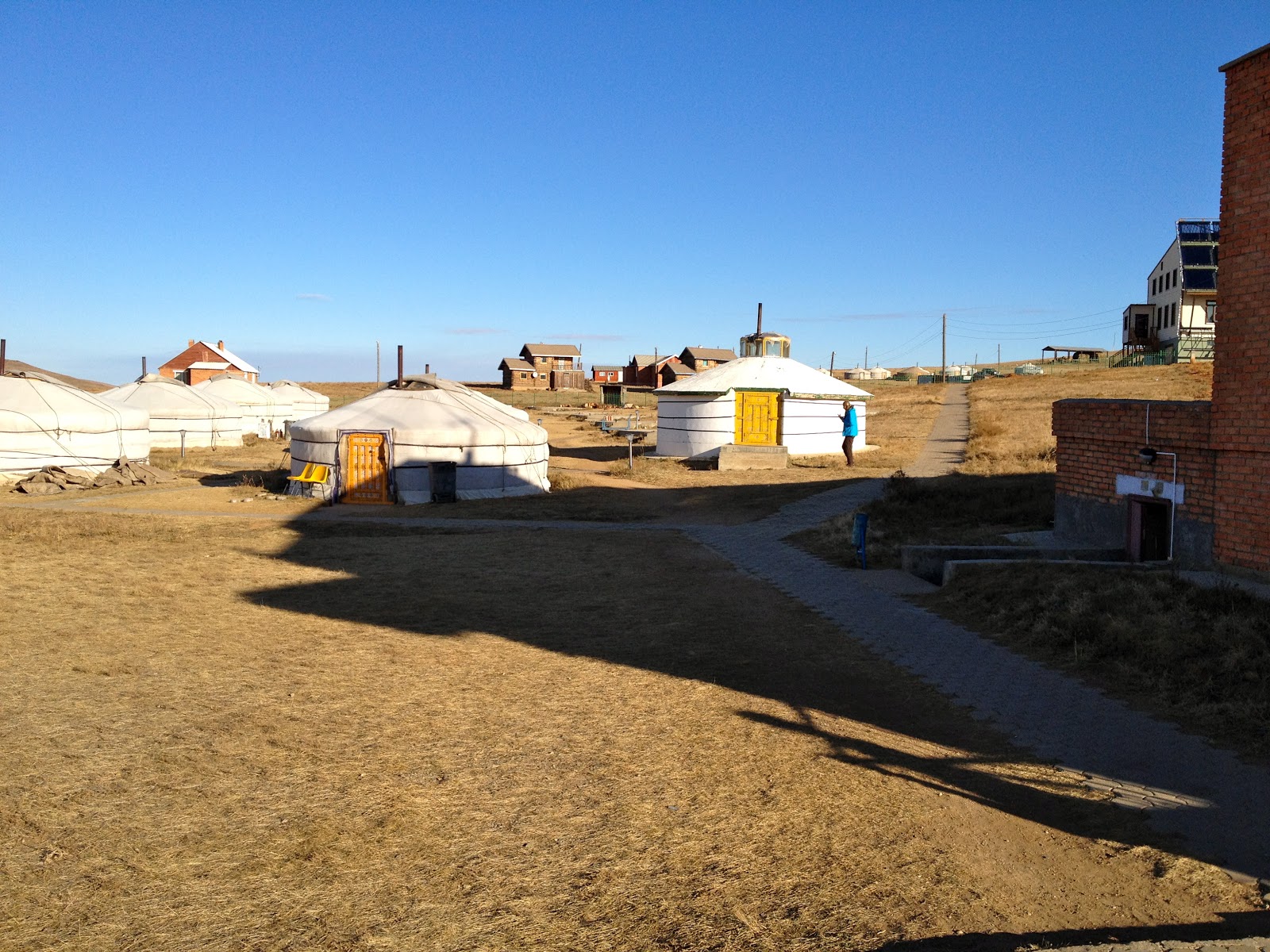
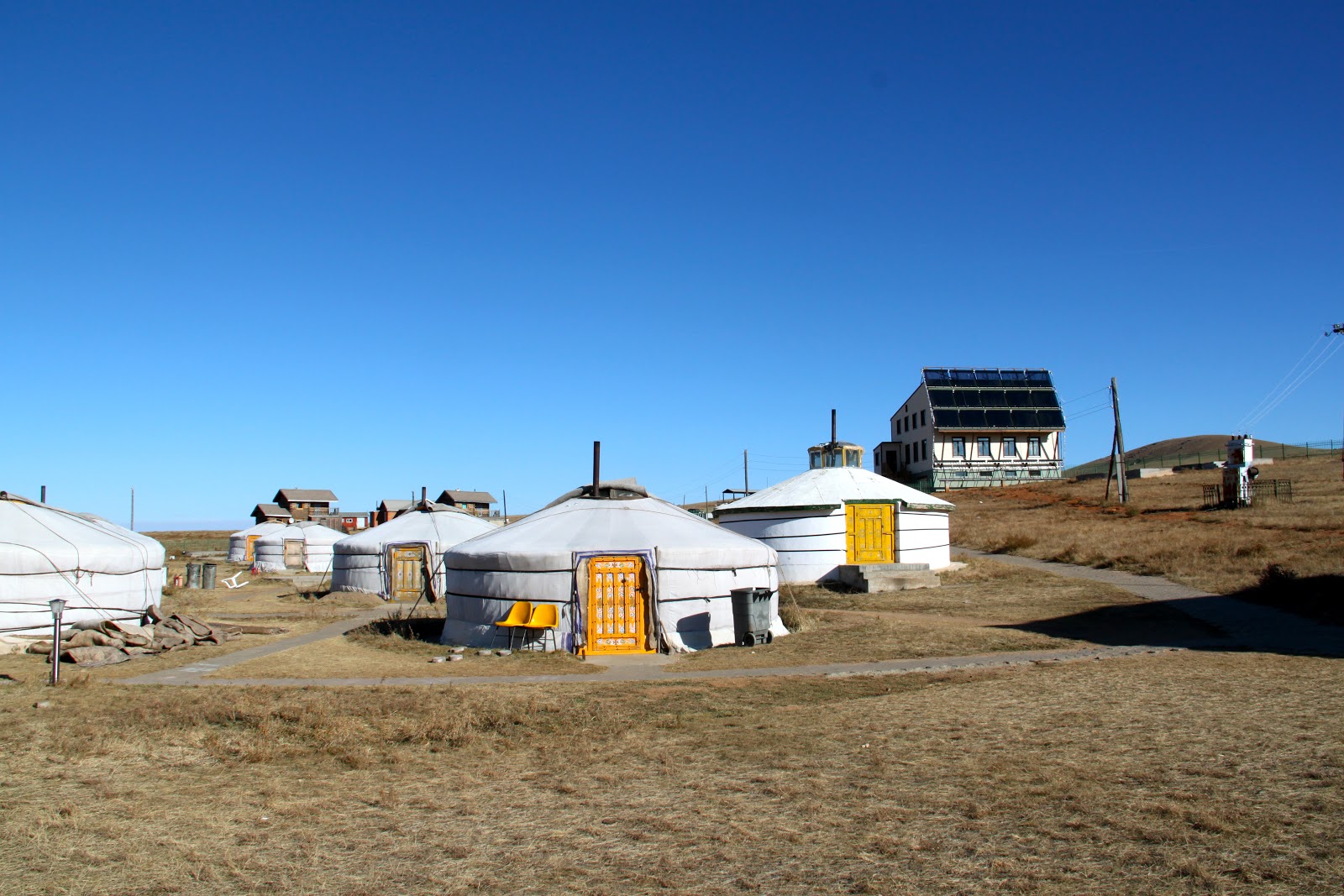
After the Ger visit we rode another hour or so to our Ger for the night just inside the entrance to the Hutsai National Park.  There are about 10 Gers set up for visitors. 
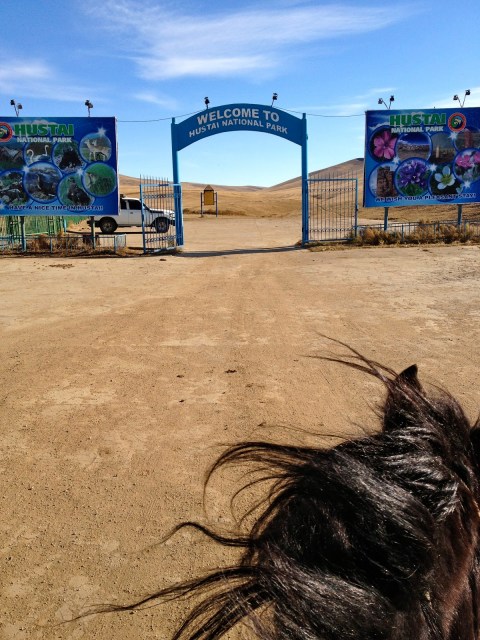

Entrance to the Hustai National Park.

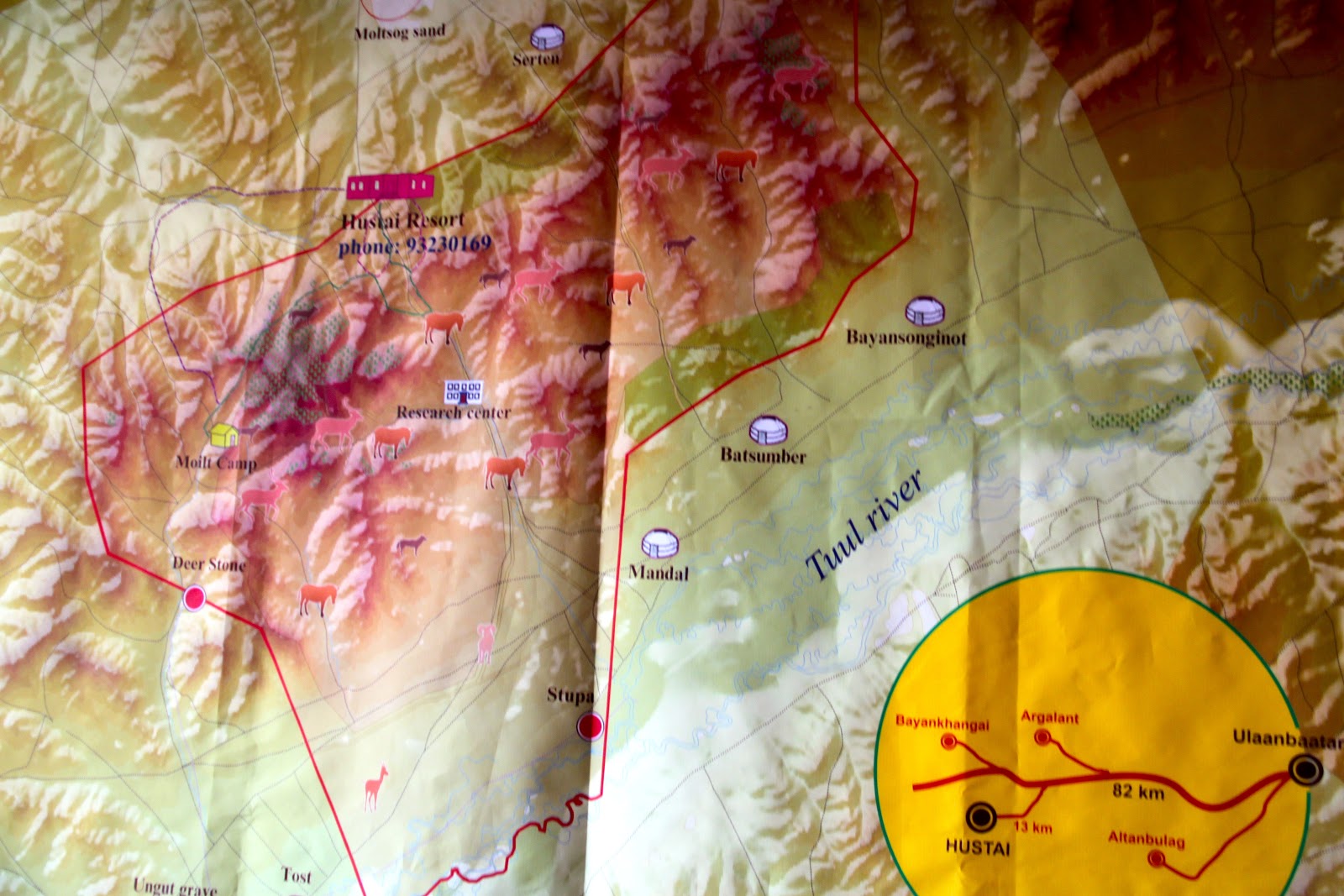
This is a map of the Hustai National Park and the area where we are riding horses to and staying in Ger’s.
Our Ger is on the right.
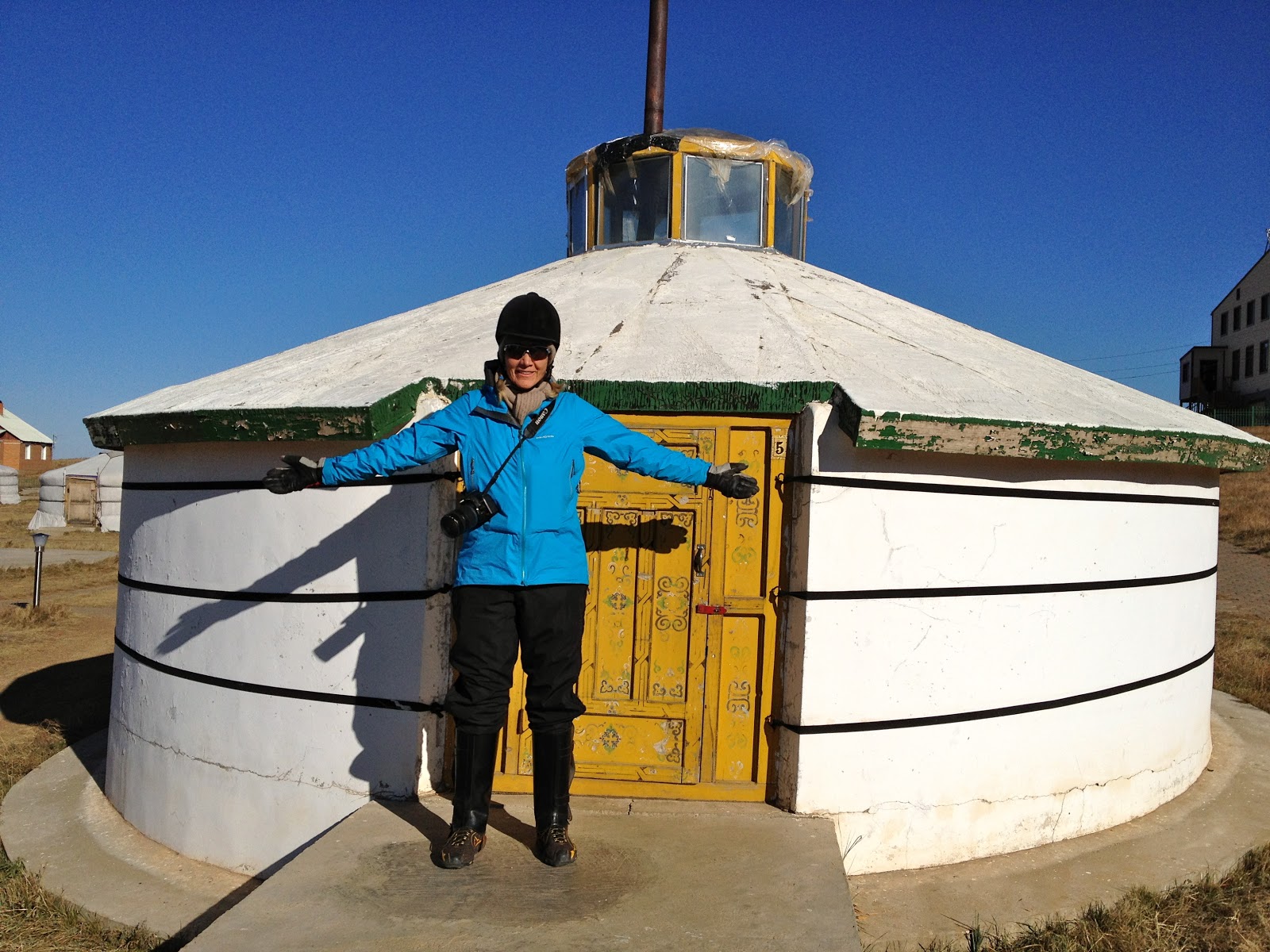
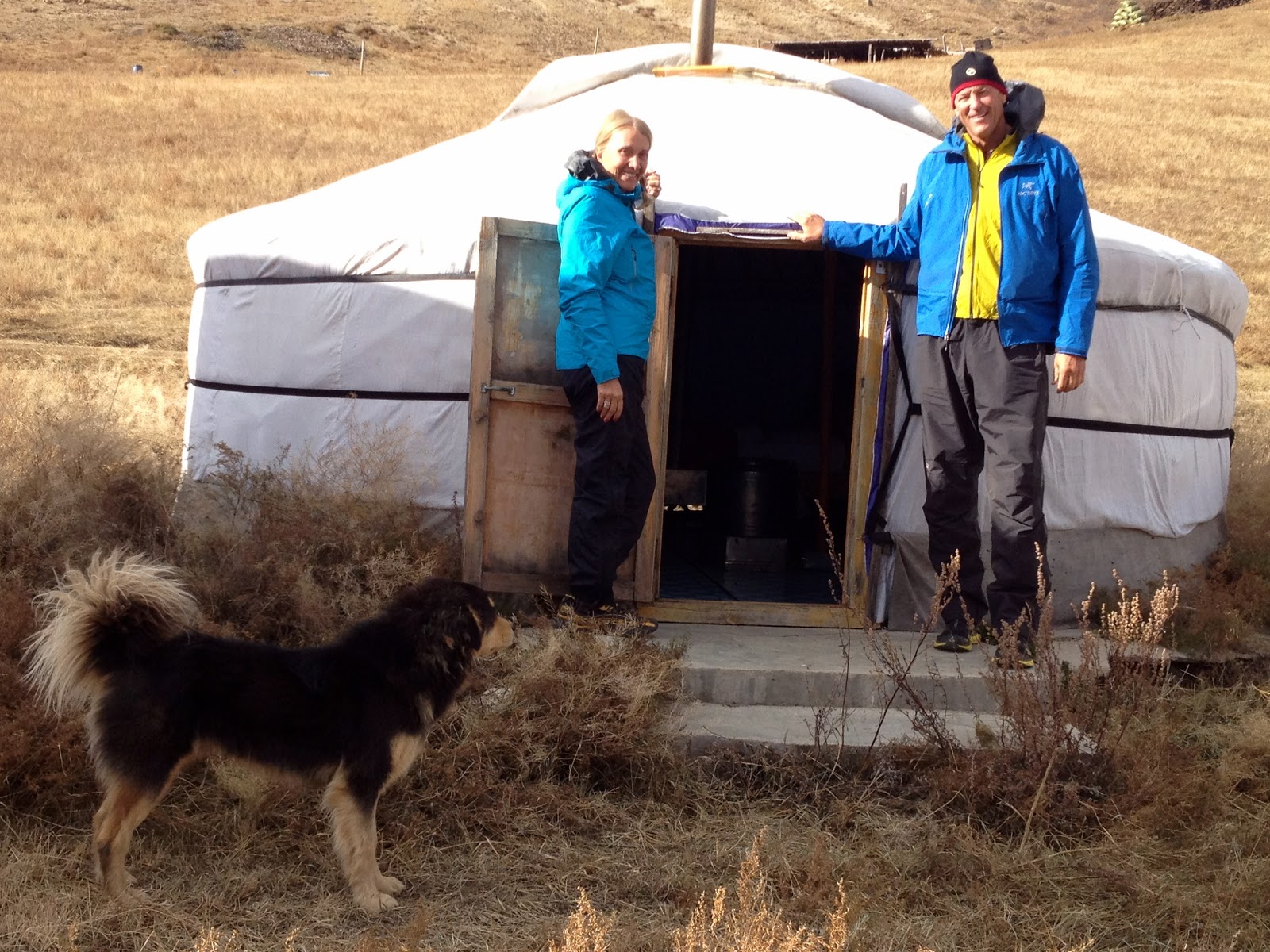
Scott only has to fold himself in half to get through the door.
It’s a regular hotel chain.
Night time at our Hotel.

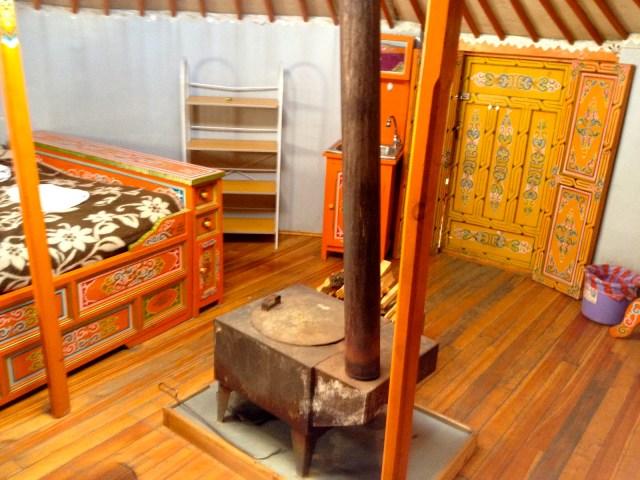
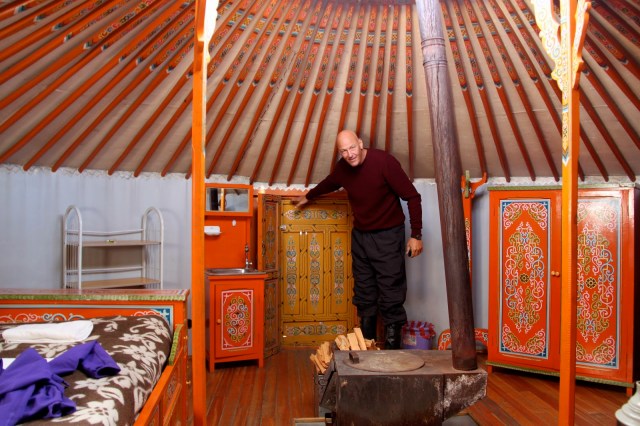
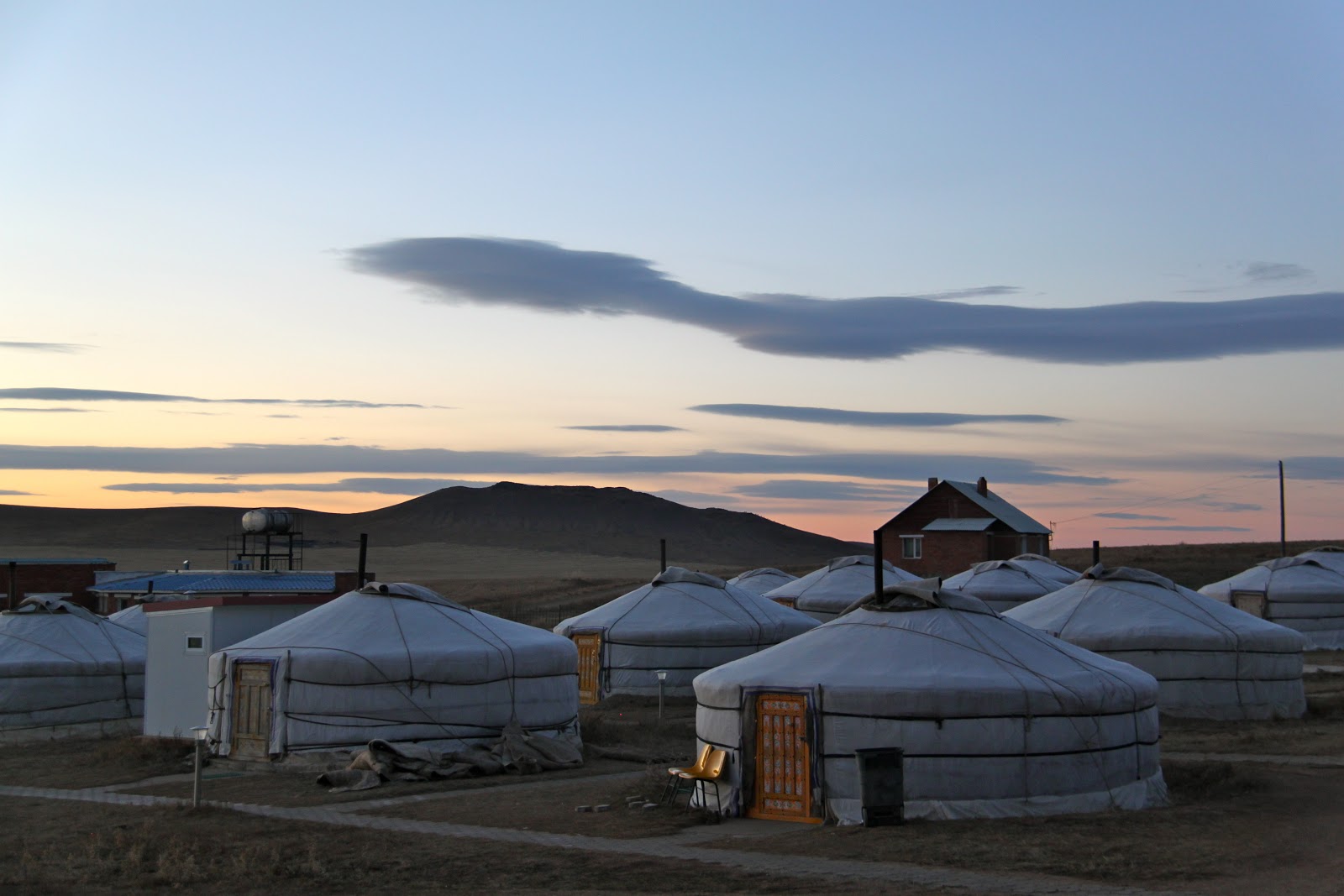
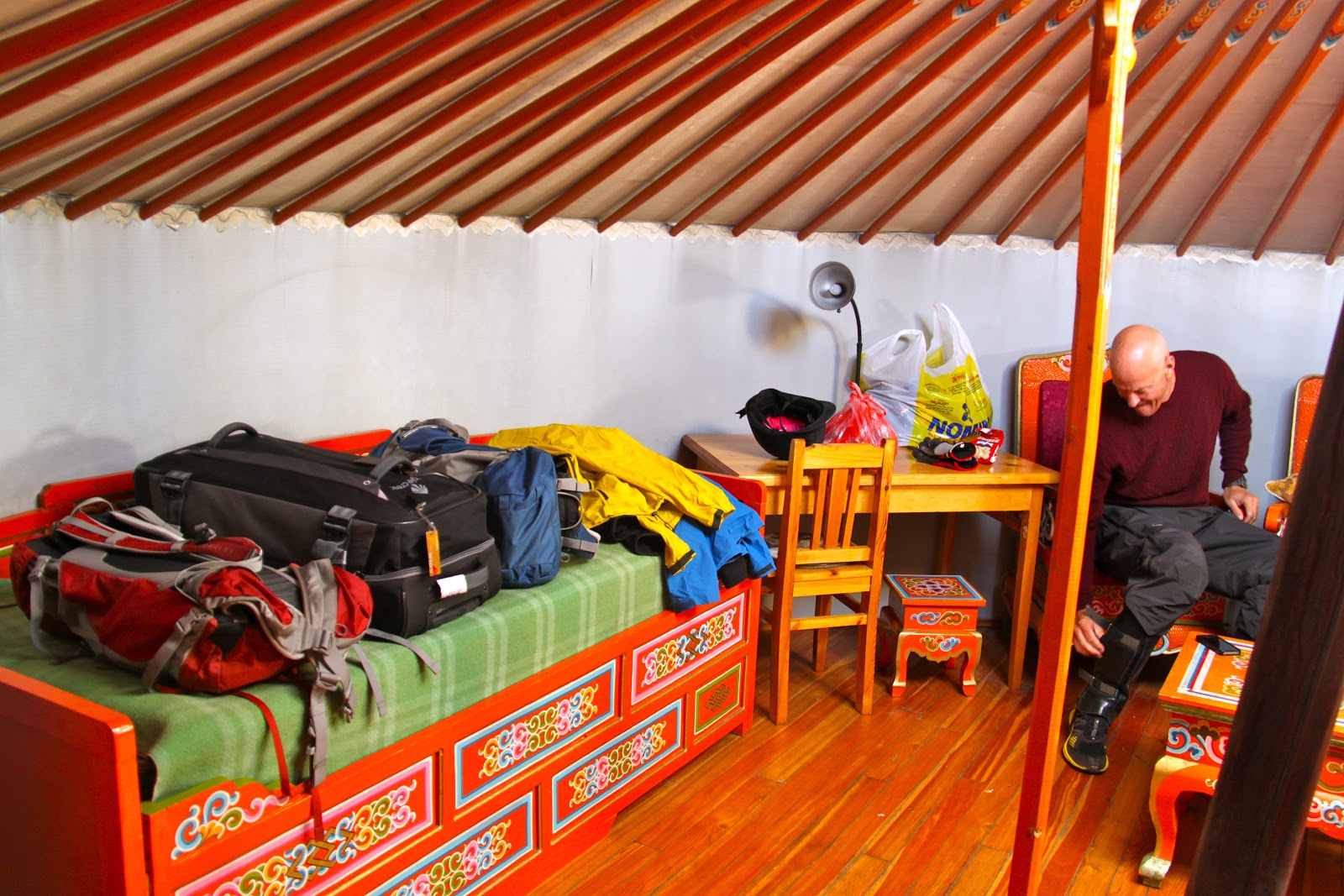
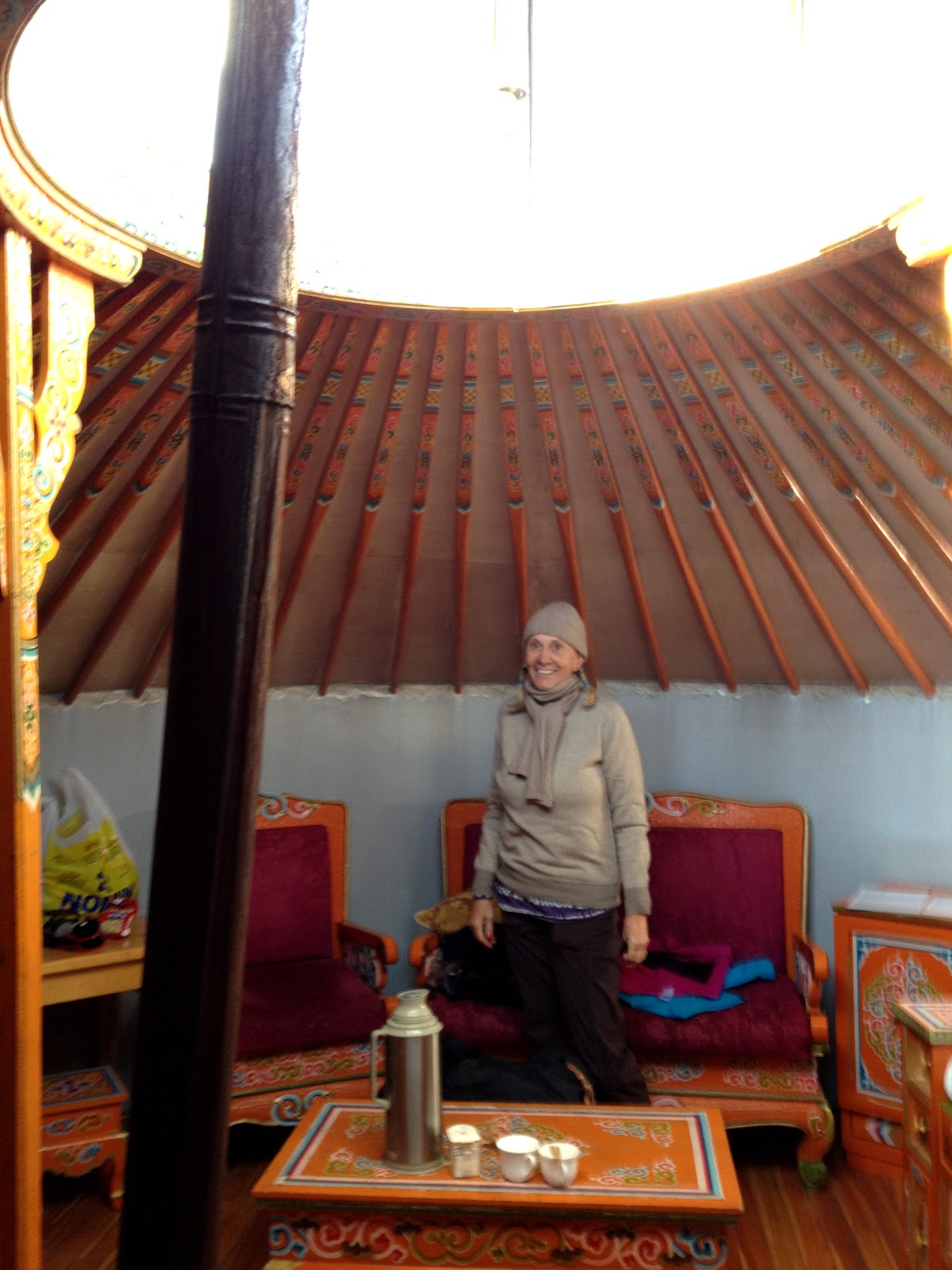
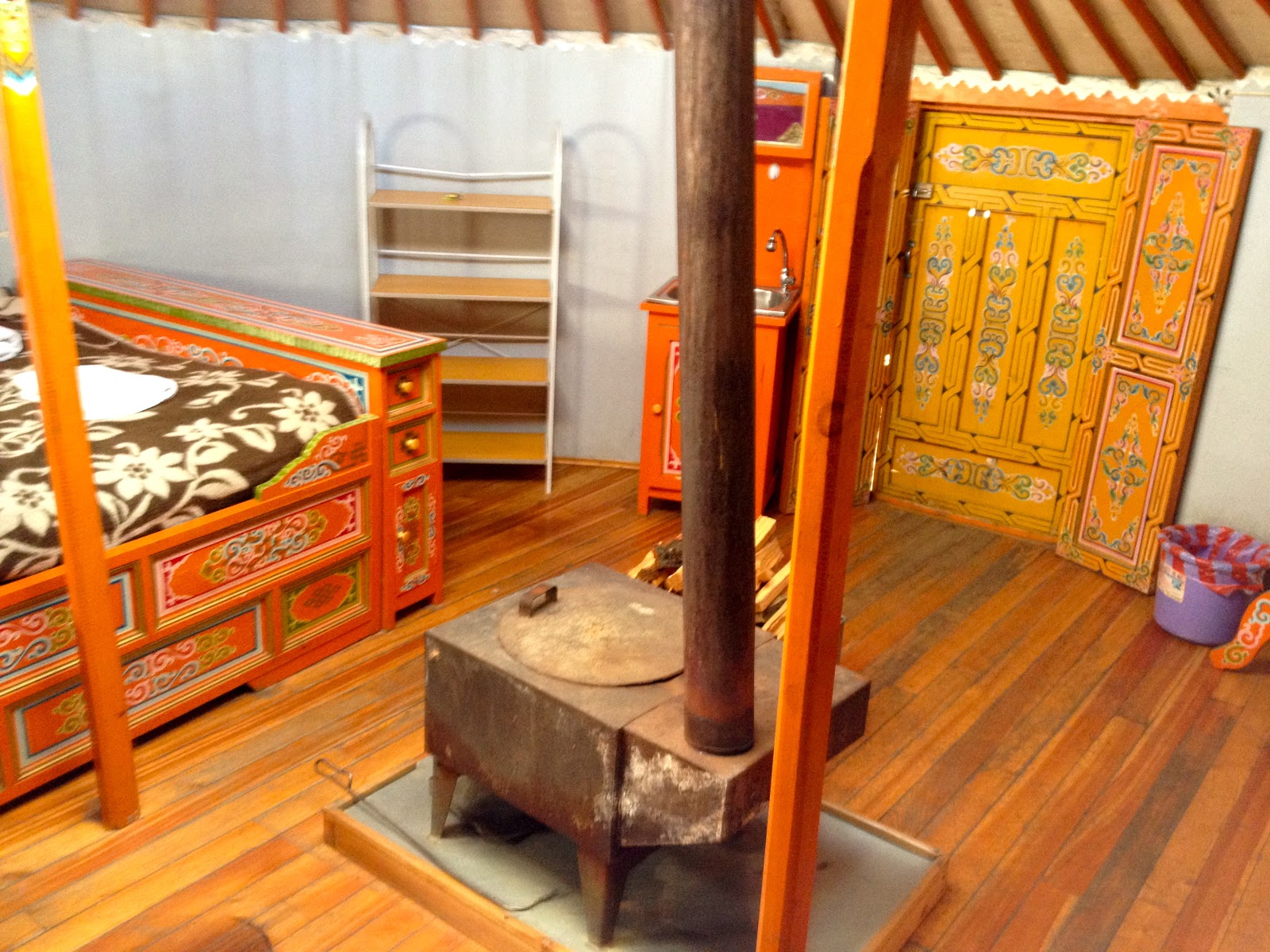
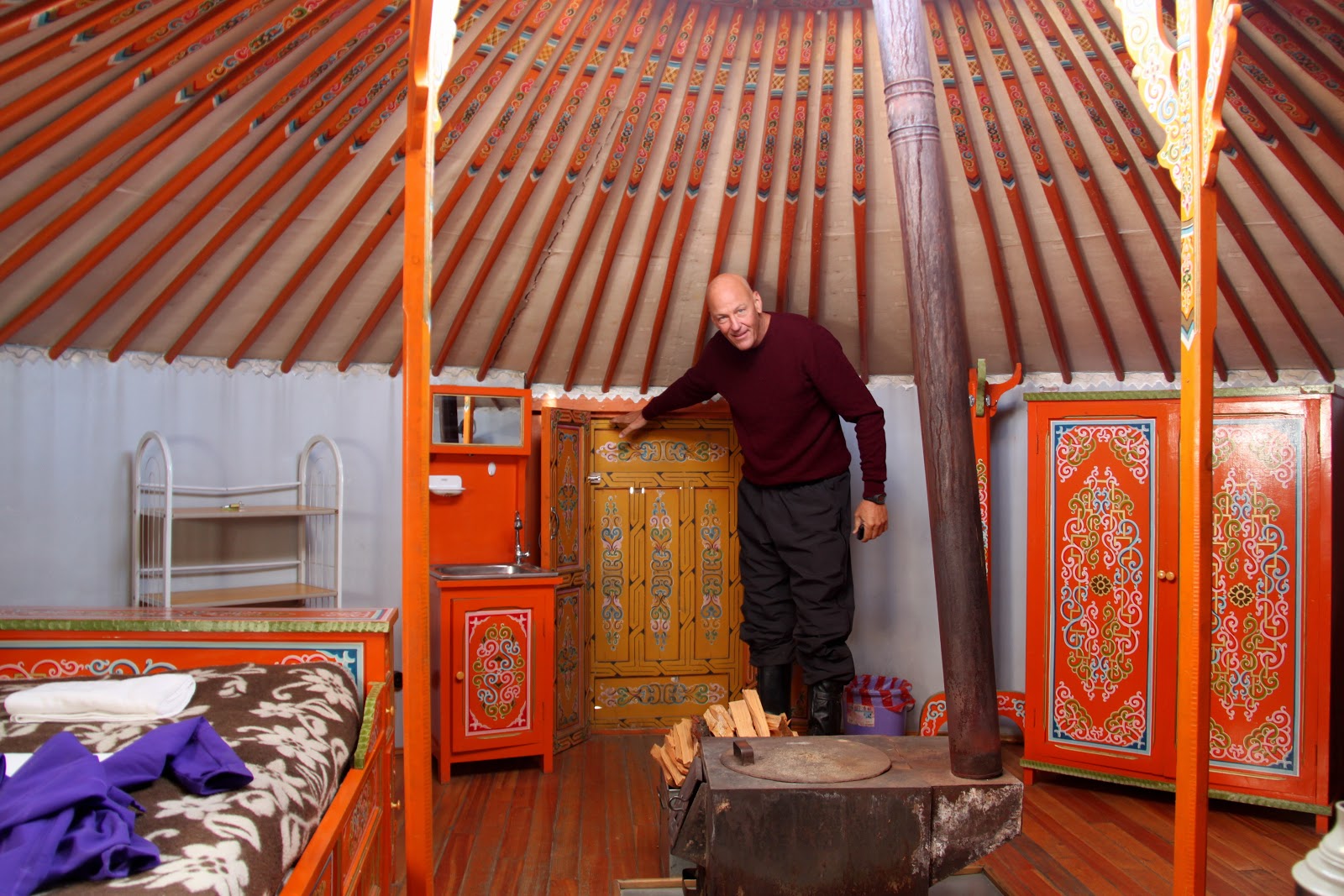
Our Ger is set up in the same way as the Ger we visited.  We learned that all Gers are set up the same except that our Ger at this camp is made of concrete.  Our guide said it is the nicest and most comfortable Ger in the camp.  We wanted to try the traditional Ger but he said our Ger tomorrow is a traditional Ger and will not be as comfortable and that we would be happy to have the comfort and warmth of the concrete Ger tonight.  All doors face to the east.  Your bed always faces so your feet are facing the door.  When men enter they always go to the right.  Women go to the left when they enter.  The west wall is always the place of honor for the older members of the household.  Children never pass further west into the Ger further than the center posts. 

Colorful.

Barb getting comfortable in our new home.

The stove needs to keep going all night to stay warm.

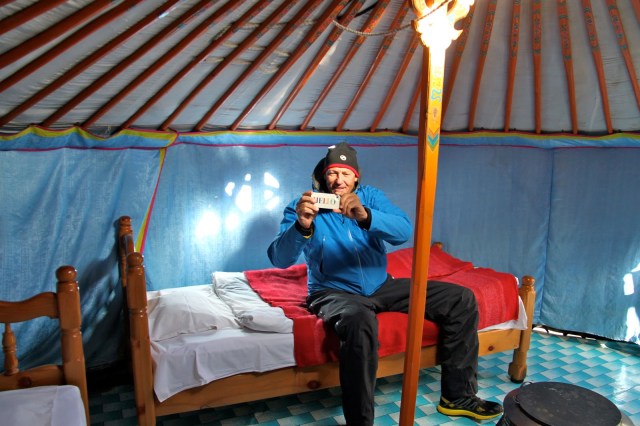
Scott in our Ger.

We had a Mongolian dinner consisting of carrot salad and noodles with beef and carrots.  It was a very simple dinner. 

Our driver came to our Ger and made sure our stove was lit and burning.  After it was burning with wood he took the top off the stove and dropped in a big baggie full of clumps of coal.  Then he lay on our bed and was enthralled watching Ice Age on Barb’s IPhone.  Mongolians are very social.  Our guide and driver walk in and out of our Ger whenever they want.  I guess we should wear pajamas tonight.

Baggy explains to us that at 5 am in the morning the owner of the Ger camp is going to come into our Ger and put more coal into the stove.  We are supposed to leave our Ger doors unlatched when we go to sleep.  Dorothy, you are definitely not in Kansas anymore!

Wow, what a night.  We were cold so I had to keep throwing wood into the fire in our stove in the middle of our Ger.  The bathroom was out the door and out in the cold night air about 50 yards away.
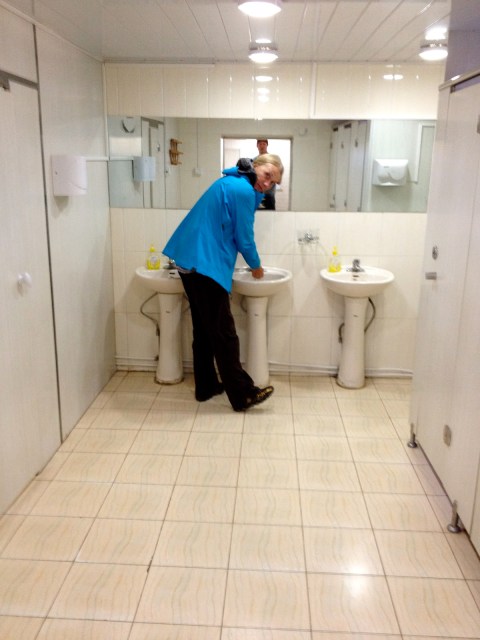
At least it’s an actual bathroom!
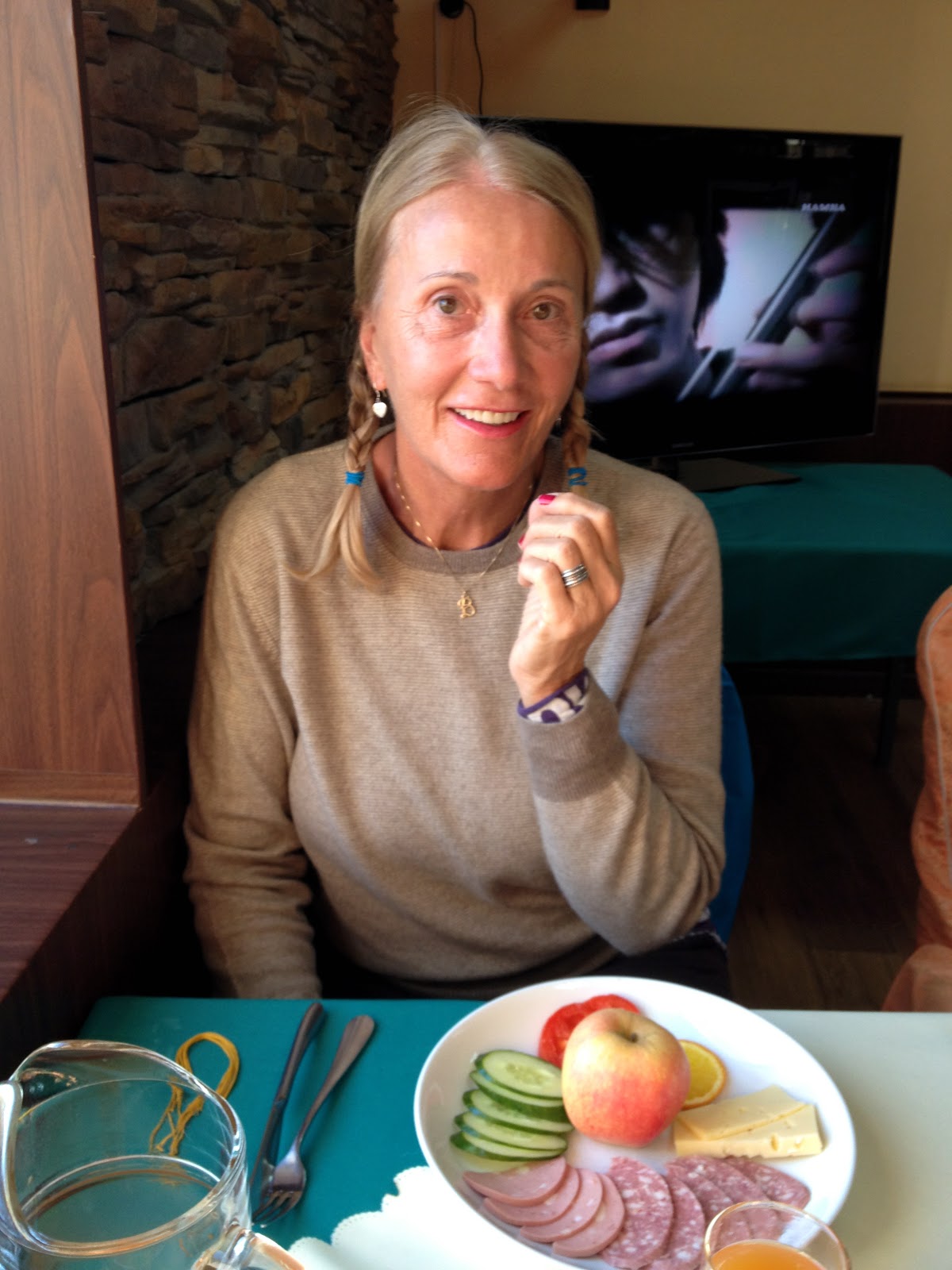
The next morning we had a simple breakfast of cheese, bread, tomatoes, cucumbers and tea.  Thank goodness it was normal tea.
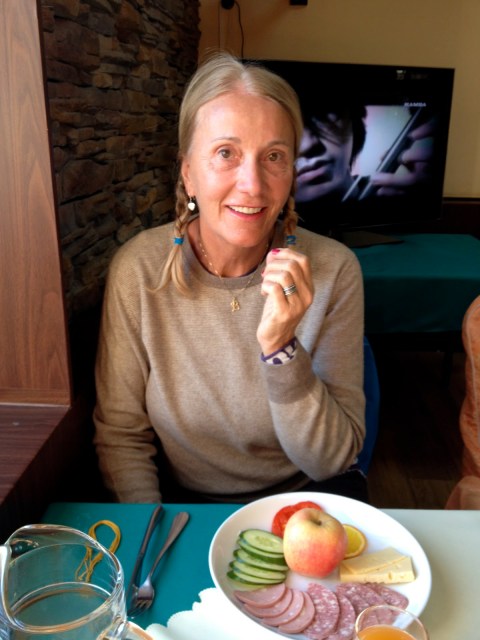
Interesting breakfast.
The horseman had let our horses wander free during the night and it took him until 9:30 am to round them up.  By 10 am we were back on our horses and on our days journey to our next Ger camp.  Our guide kept warning us that the next camp was more remote and not as nice.
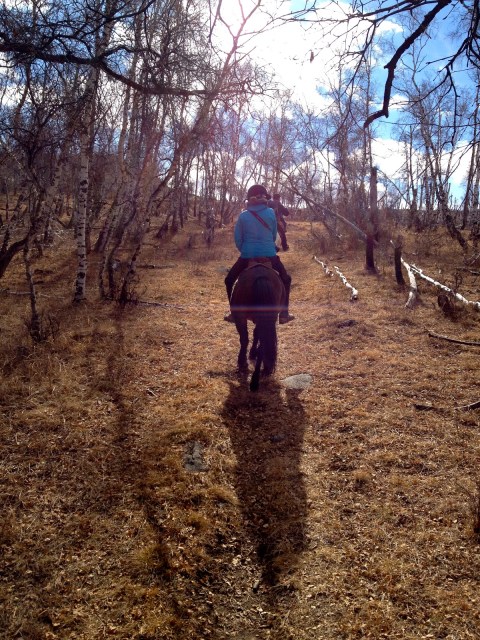
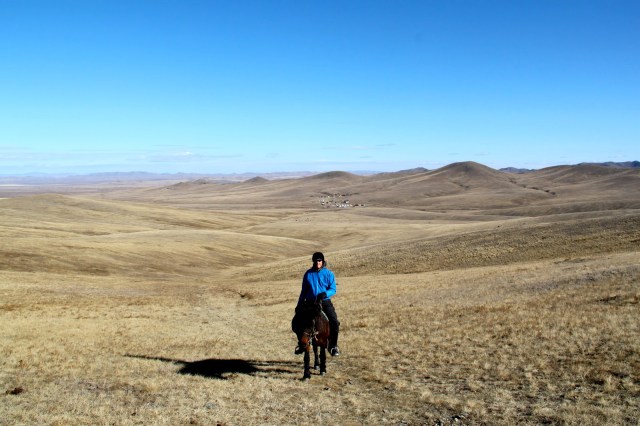
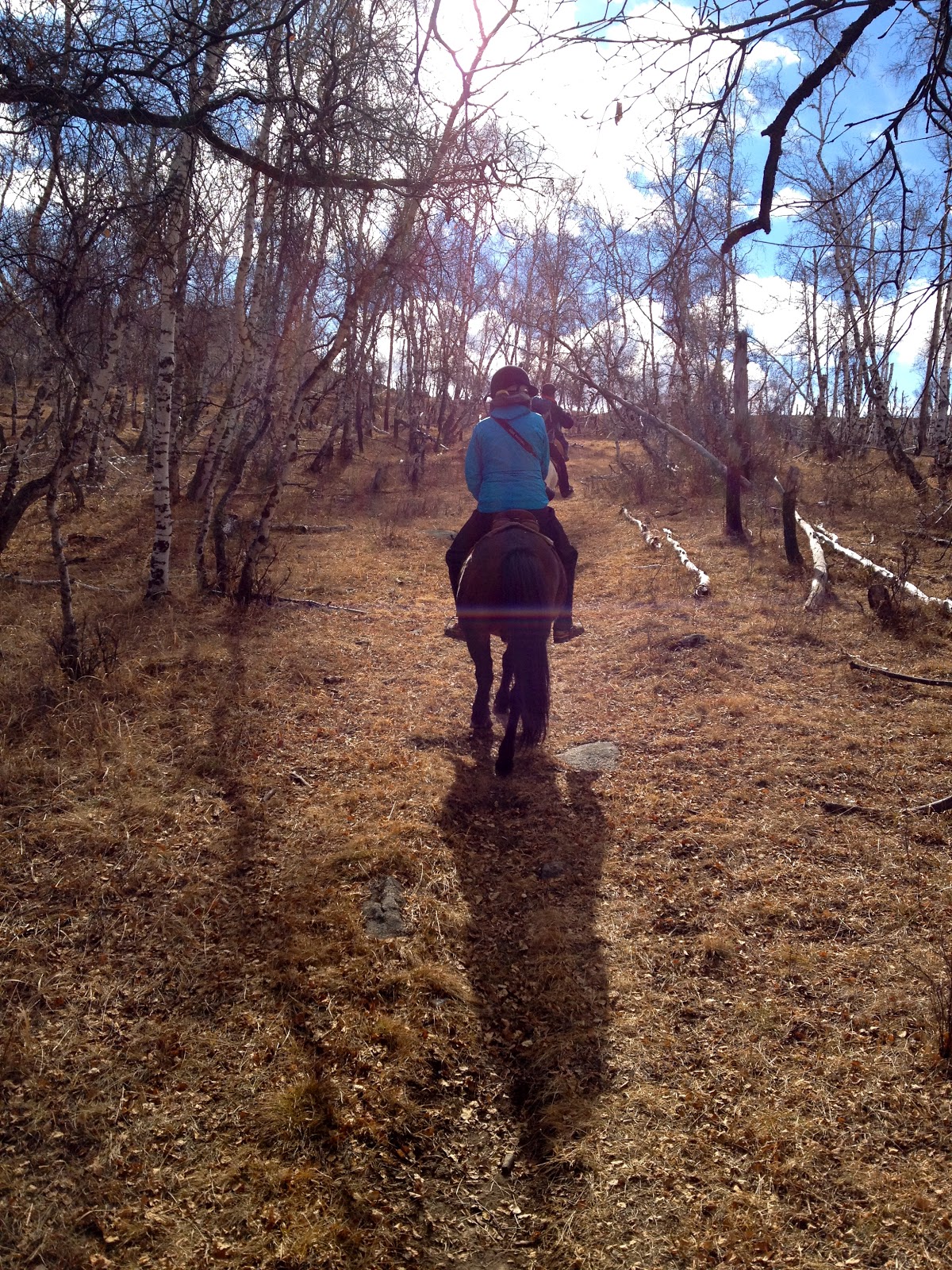
The Mongolian countryside is beautiful!  The scenery is changing and we ride over hills and up draws and begin an ascent up to a mountain pass.

It’s a beautiful cold ride.
We could hear deer (what we would call Elk) bugle up the hill.
Vast Countryside.

The horses are working harder but have no problem walking up the slopes.  Their gait hardly slows as the terrain gets steep.  It is said that these horses are one of the important reasons that Genghis Khan was able to travel and conquer so widely.

Taking a break.
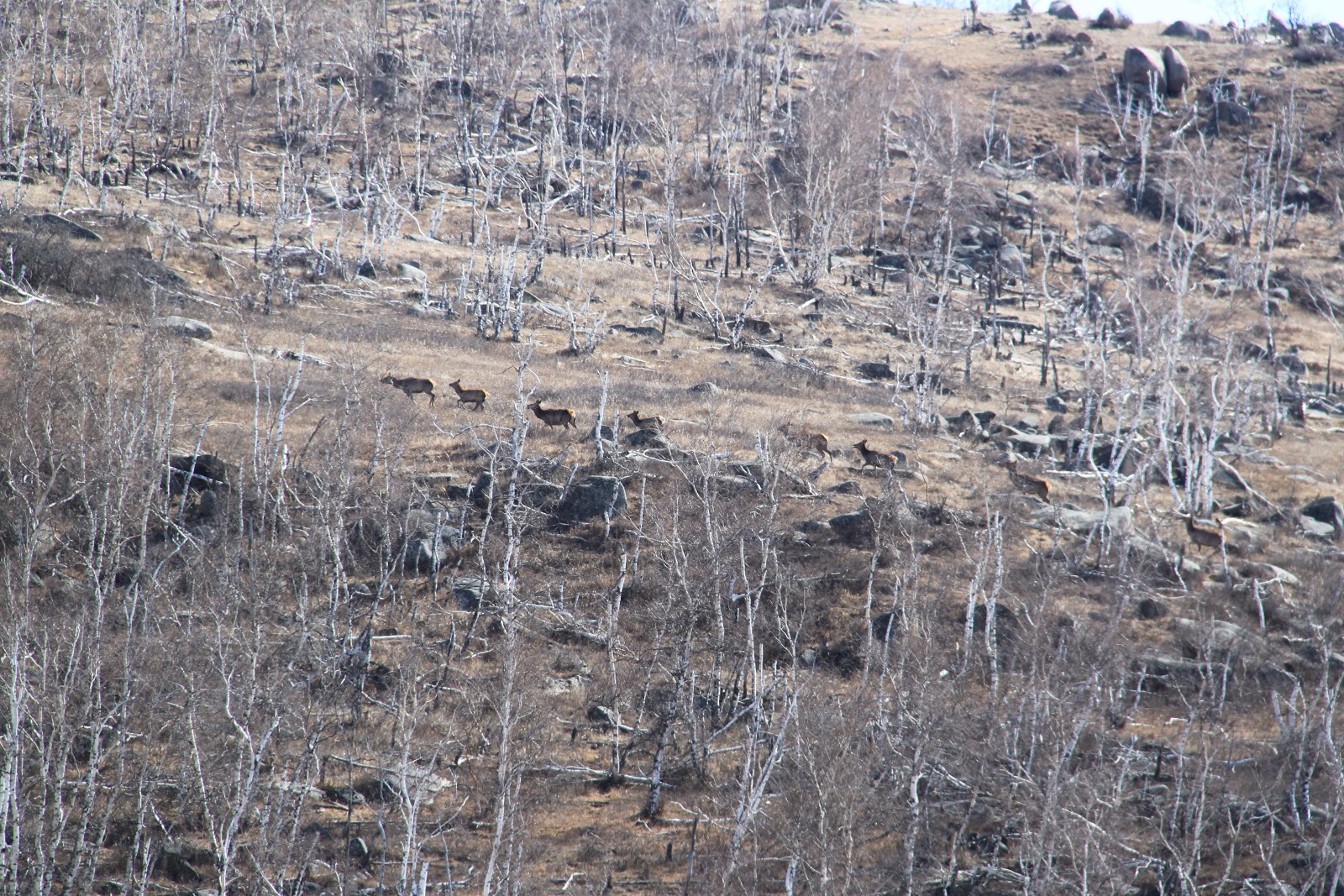
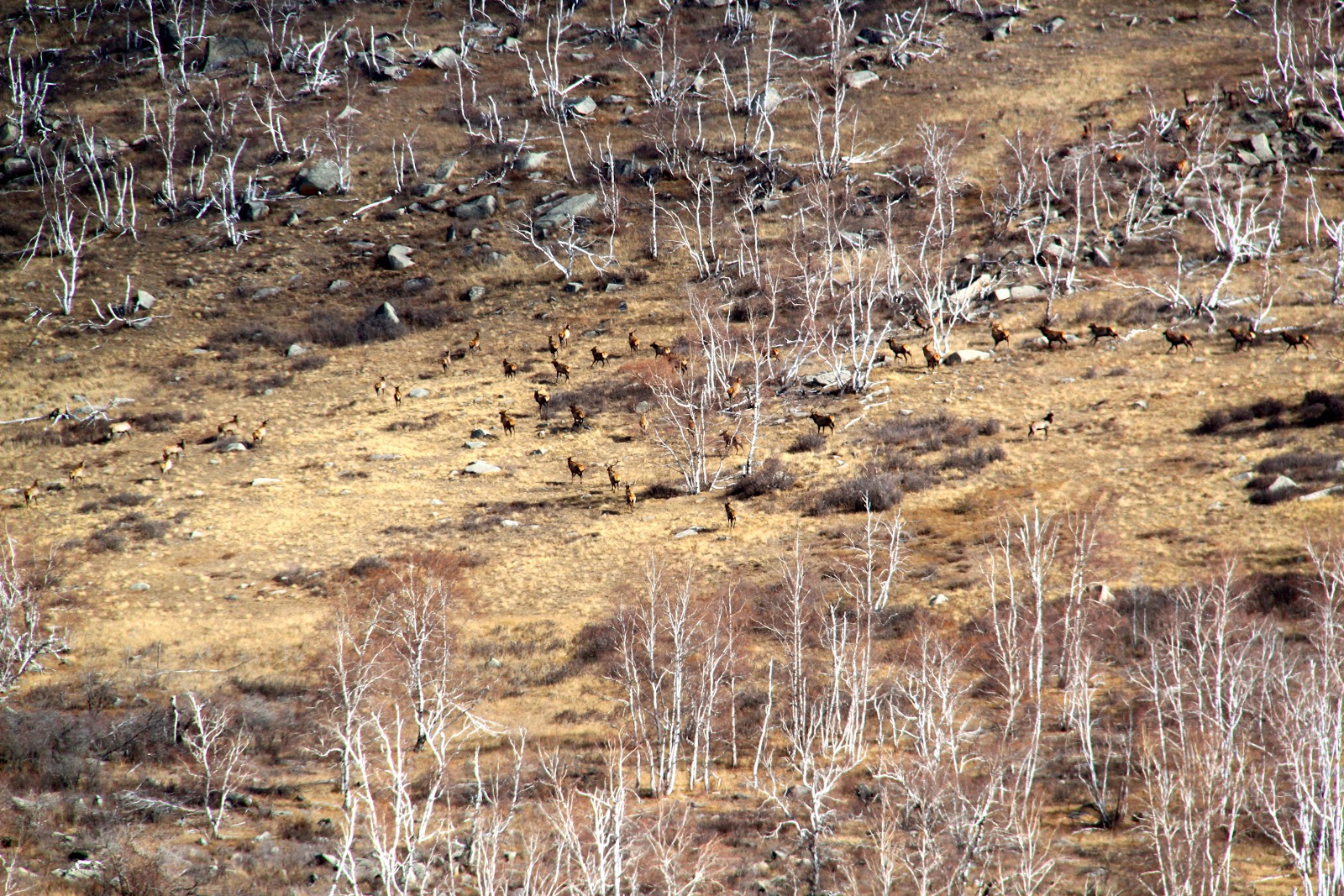
As we are traveling through the mountains we hear what sounds like the bugle of a bull elk.  Soon we spot a huge herd of what we would call elk.  There must be 100 or more cow elk.
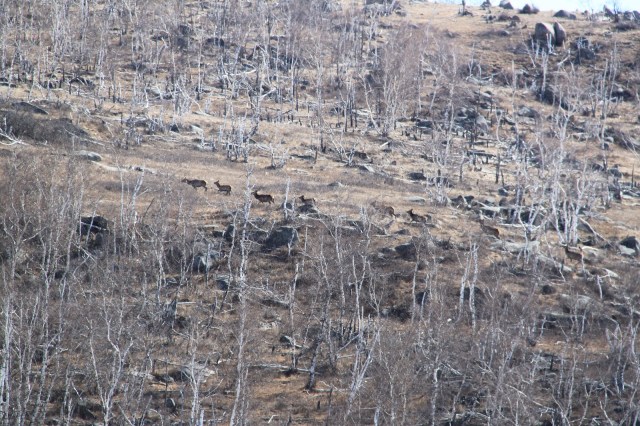
Elk herds everywhere.
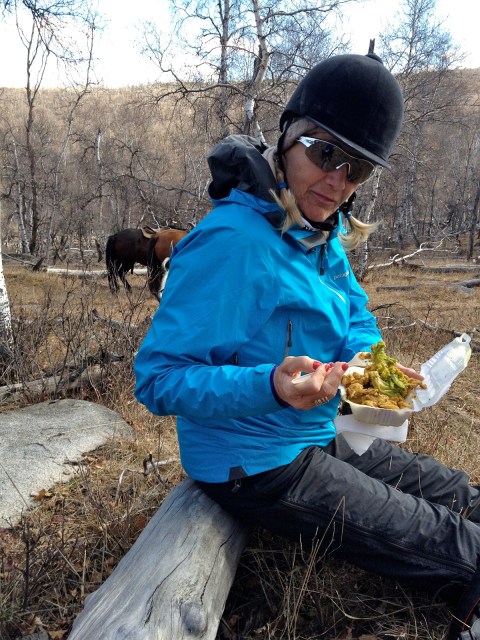
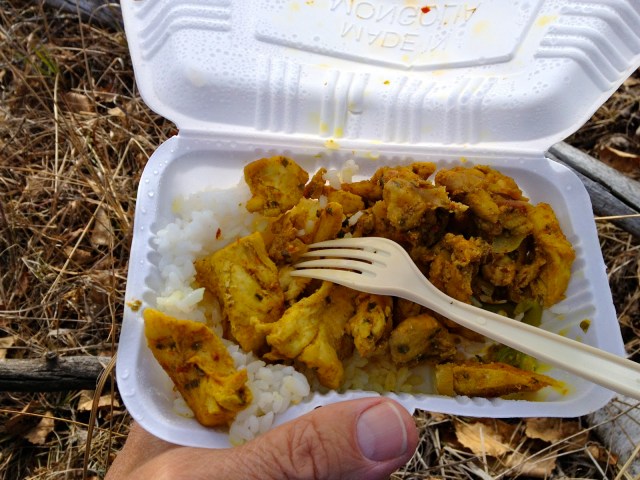
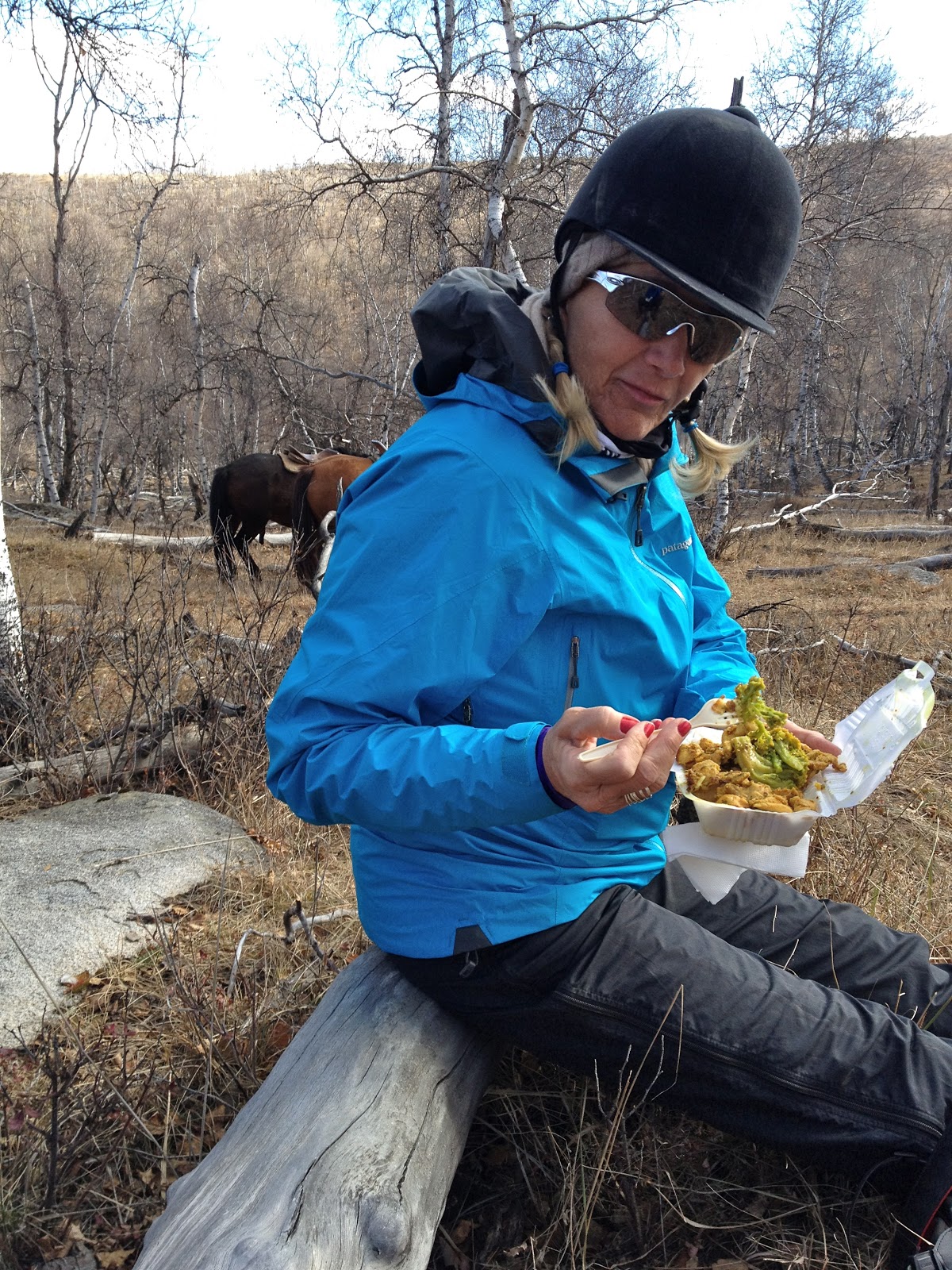
After sitting and taking photographs of elk we have our lunch.  It looks like yesterday’s lunch except it is curry chicken and rice instead of beef balls and rice.  We do our best to eat lunch but we our loving the scenery and the horse riding.
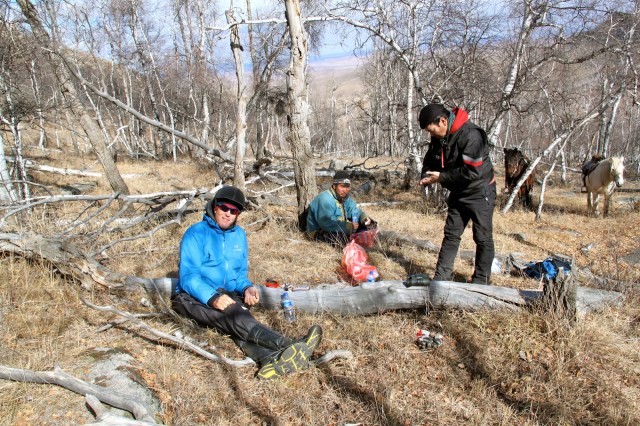
Our lunch spot.
Curry Chicken, rice, broccoli.  An interesting combination.
Looks good.
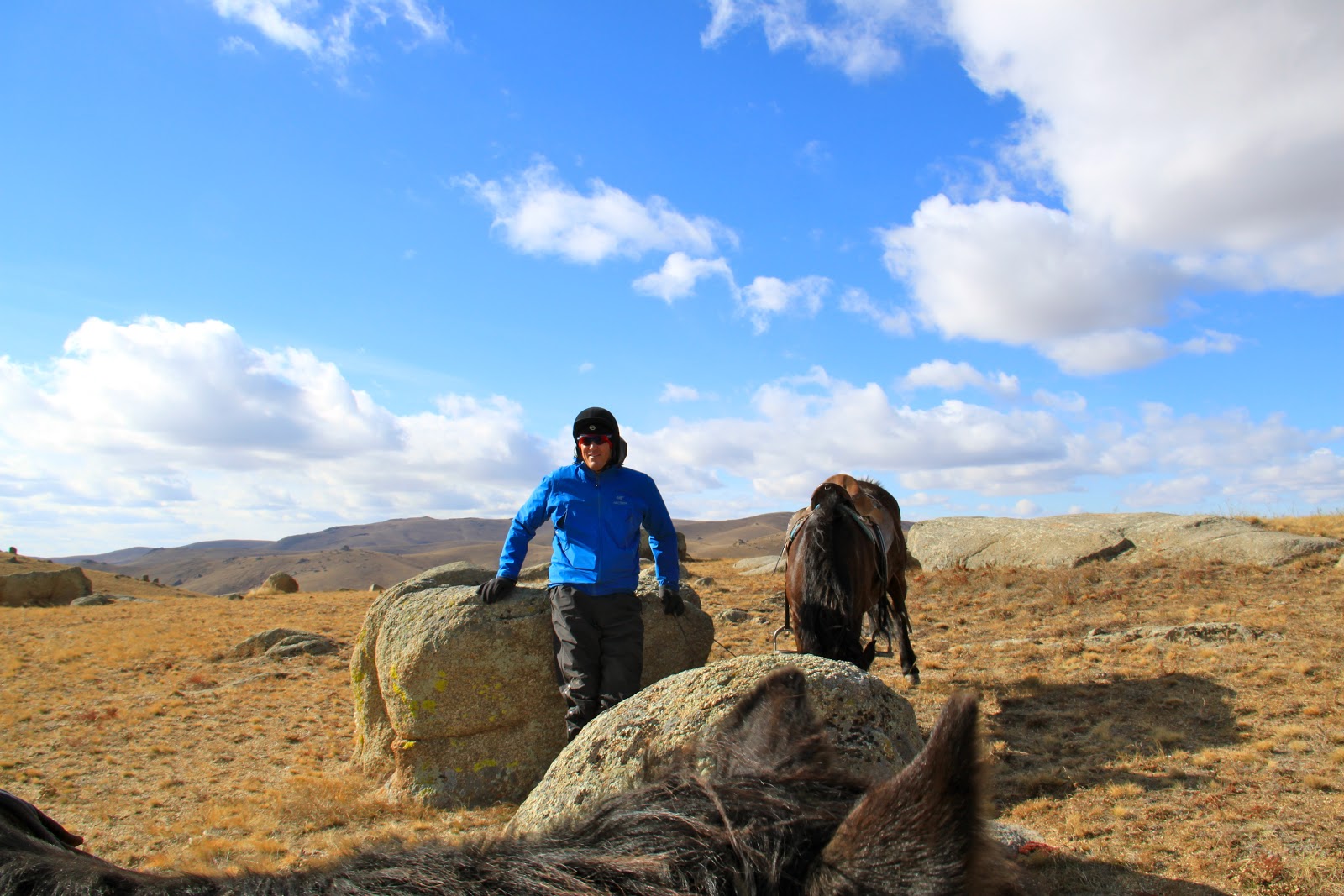
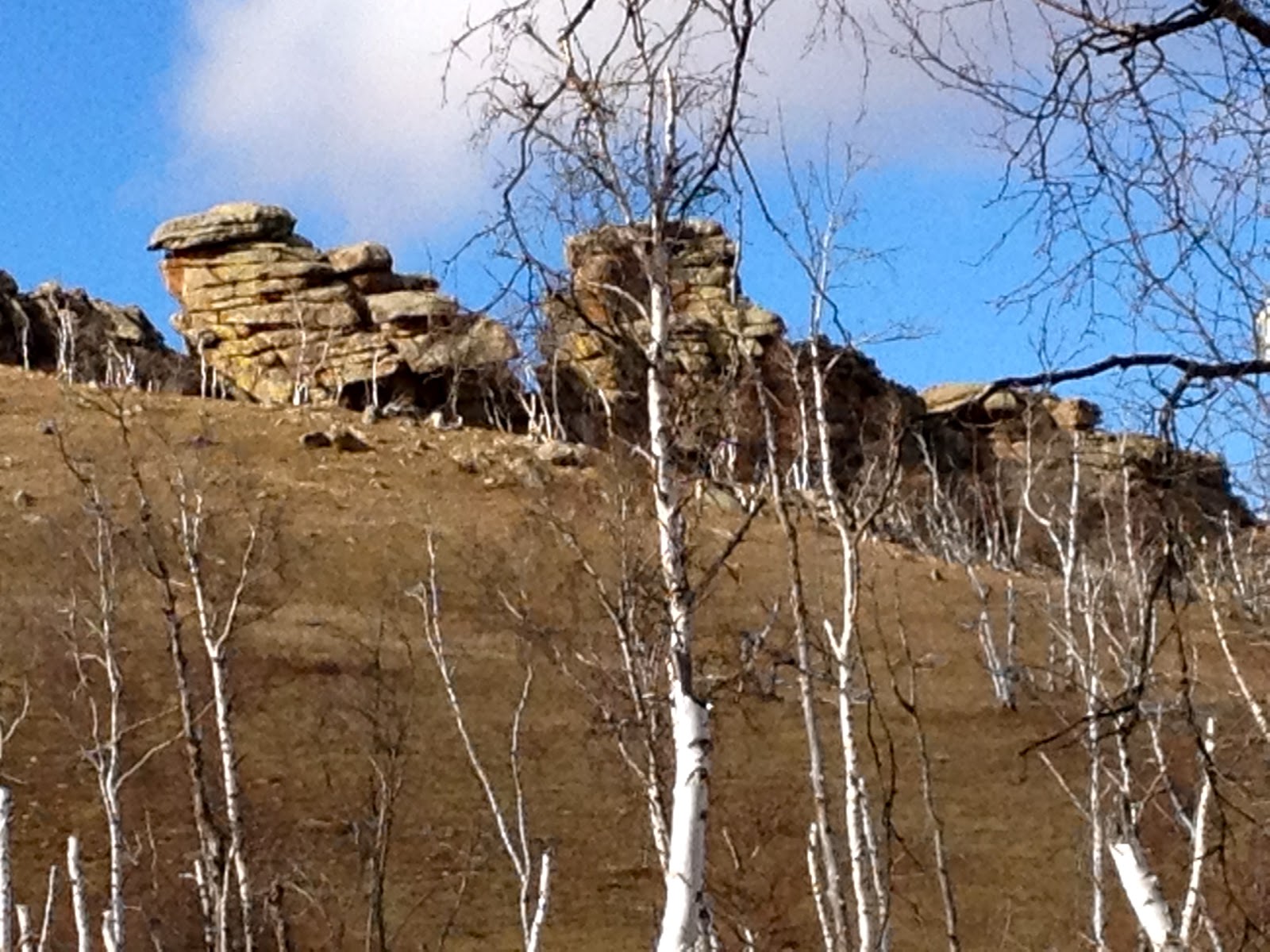
There are strange rock formations on the ridges.  And the rocks have brightly colored lichen on them.
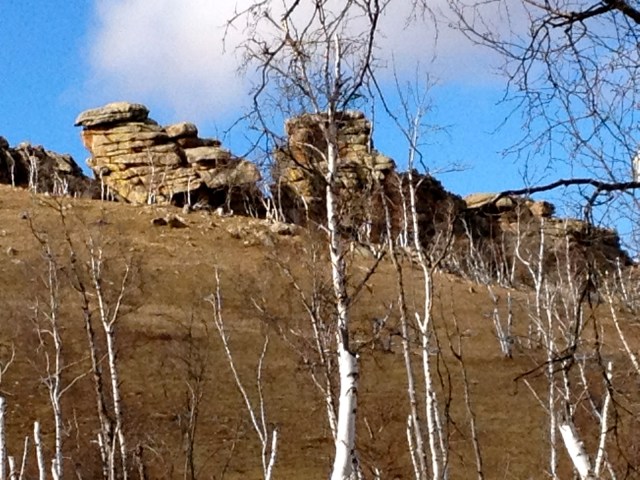
Beautiful rock formations.
At the top of the ridges we go down steep grades.  My saddle is not the most comfortable going uphill so that you can imagine how uncomfortable it is on the downhill.  To relieve the pressure I put weight on my stirrups and sit up on the back edge of my saddle.  Sometimes I shift side to side just for occasional relief.  Even though we ride horses daily back home these four and five hour rides in strange saddles are a little tough.
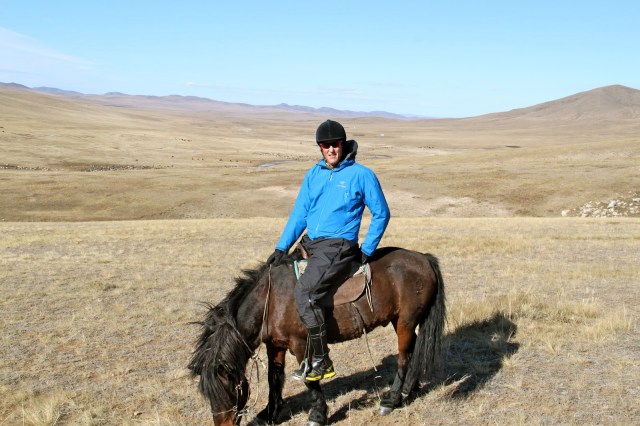
Scott was getting a little saddle sore.
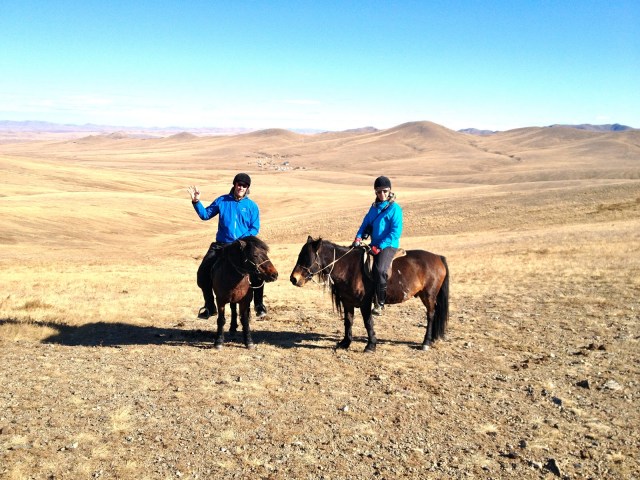
Barb and Scott
Just over the top of one of the ridges we come across a herd of bull elk.  There are a lot of elk and we hear a lot of bugling.  It is beautiful to be in remote nature in Mongolia and enjoy the beauty of this land.
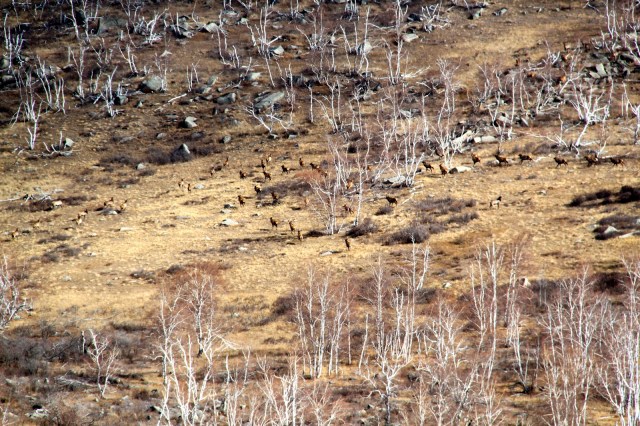
Lots of herds of Elk
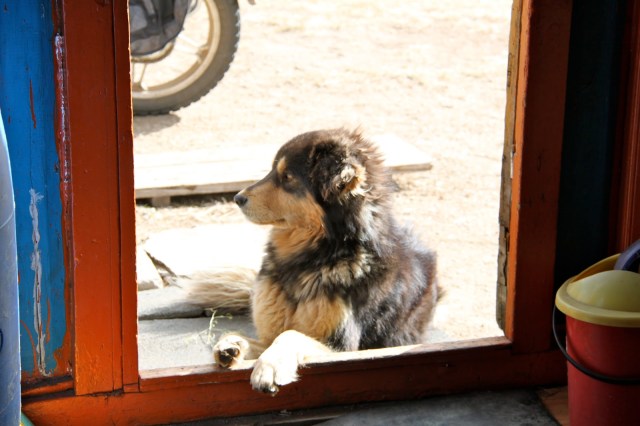
When we come close to our Ger camp we hear a dog barking.  We notice that there are a few dogs and one is staked up on the side of a hill and is barking incessantly.
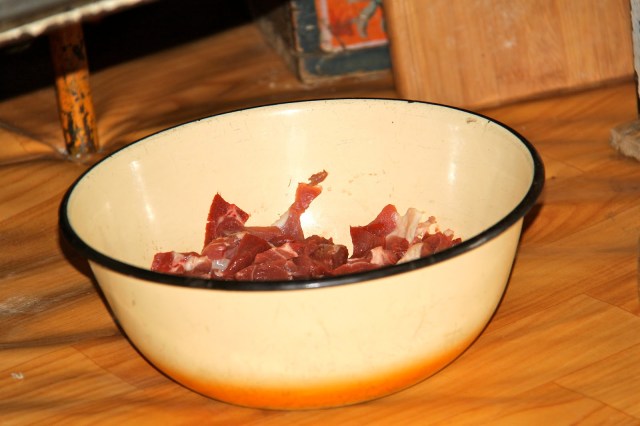
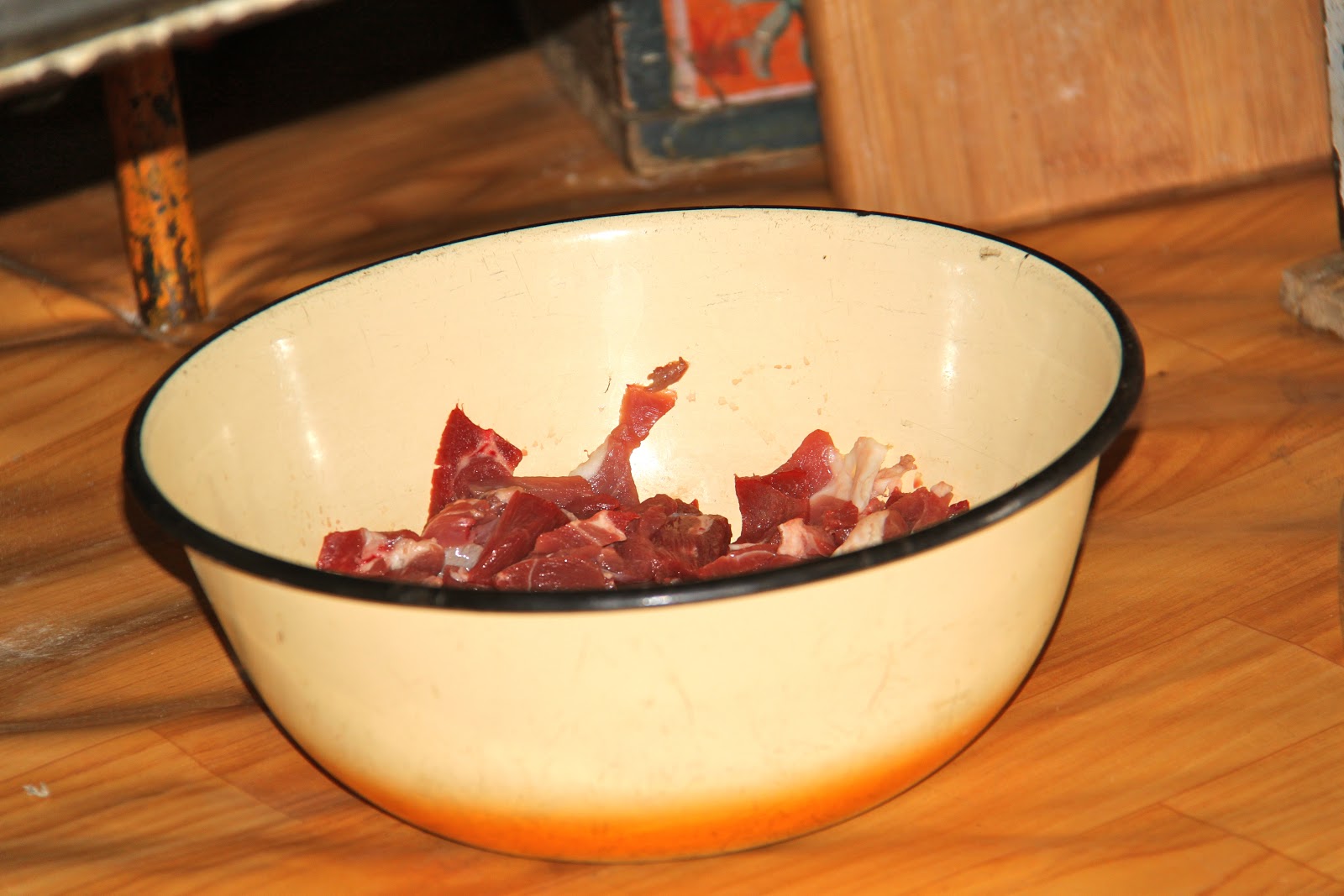
We are invited into the Ger camp owner’s Ger and we have some normal tea.  They also offer bread with clotted cream.  We notice a bowl of raw cut meat under a table and wonder if that will be part of our dinner.
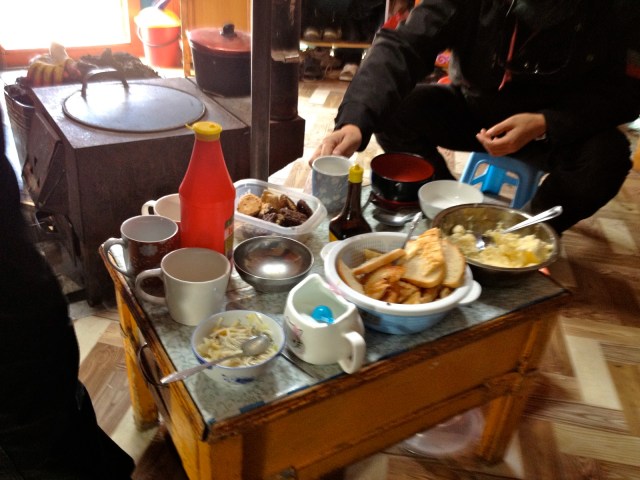
Barb ate a piece of bread with some clotted cream.  She couldn’t bring herself to indulge in anything else.

Bowl on the floor under a small table.  Sanitary?
Scott with our driver

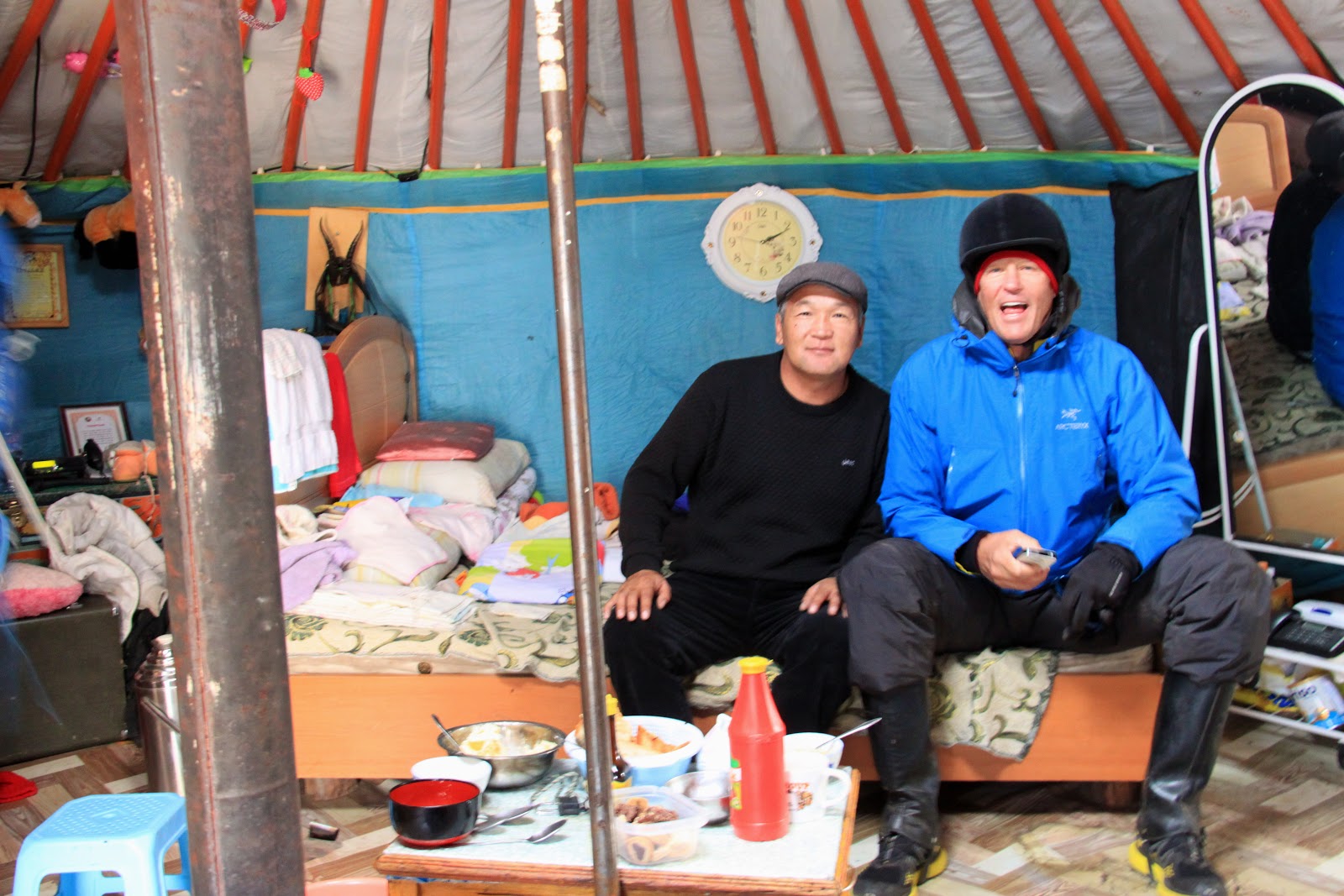
Barb with our horseman and guide, inside a family Ger.

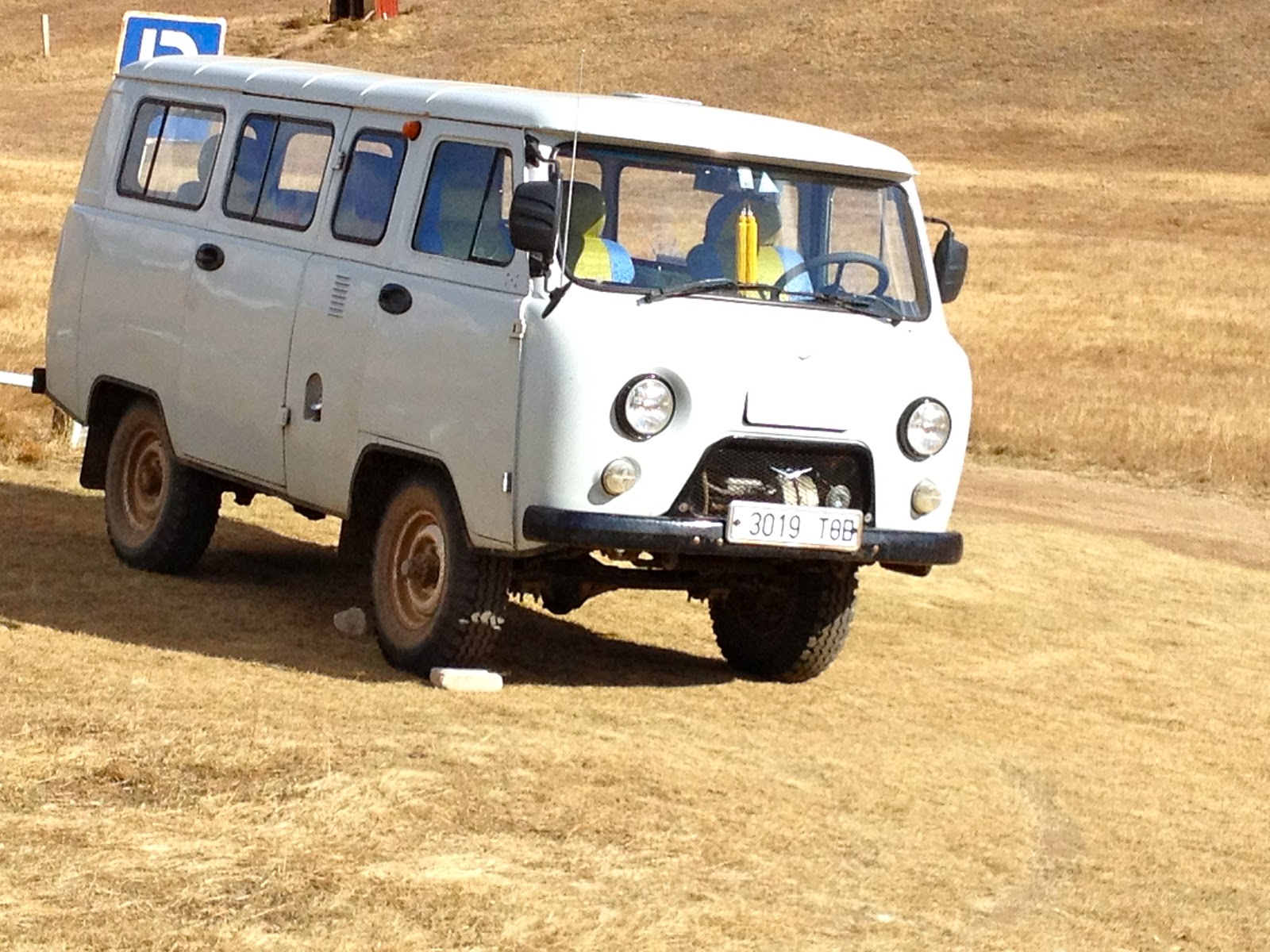
Here is a photo of a Russian minivan outside the Ger owner’s tent.  Baggy said that they are great on the bad roads but that they overheat, breakdown and get poor gas mileage.  So I guess when they are actually running then they might be OK.

Russian Minivan.
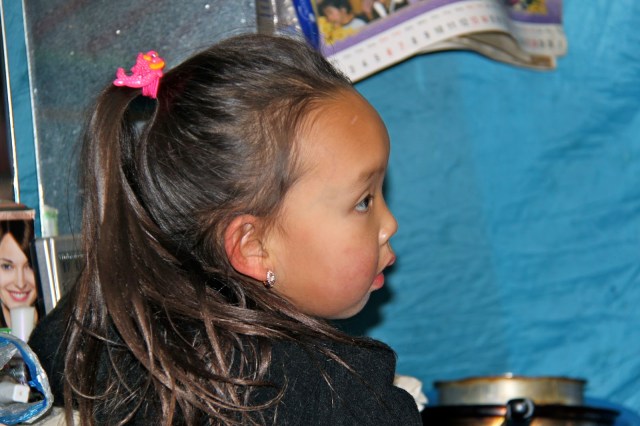
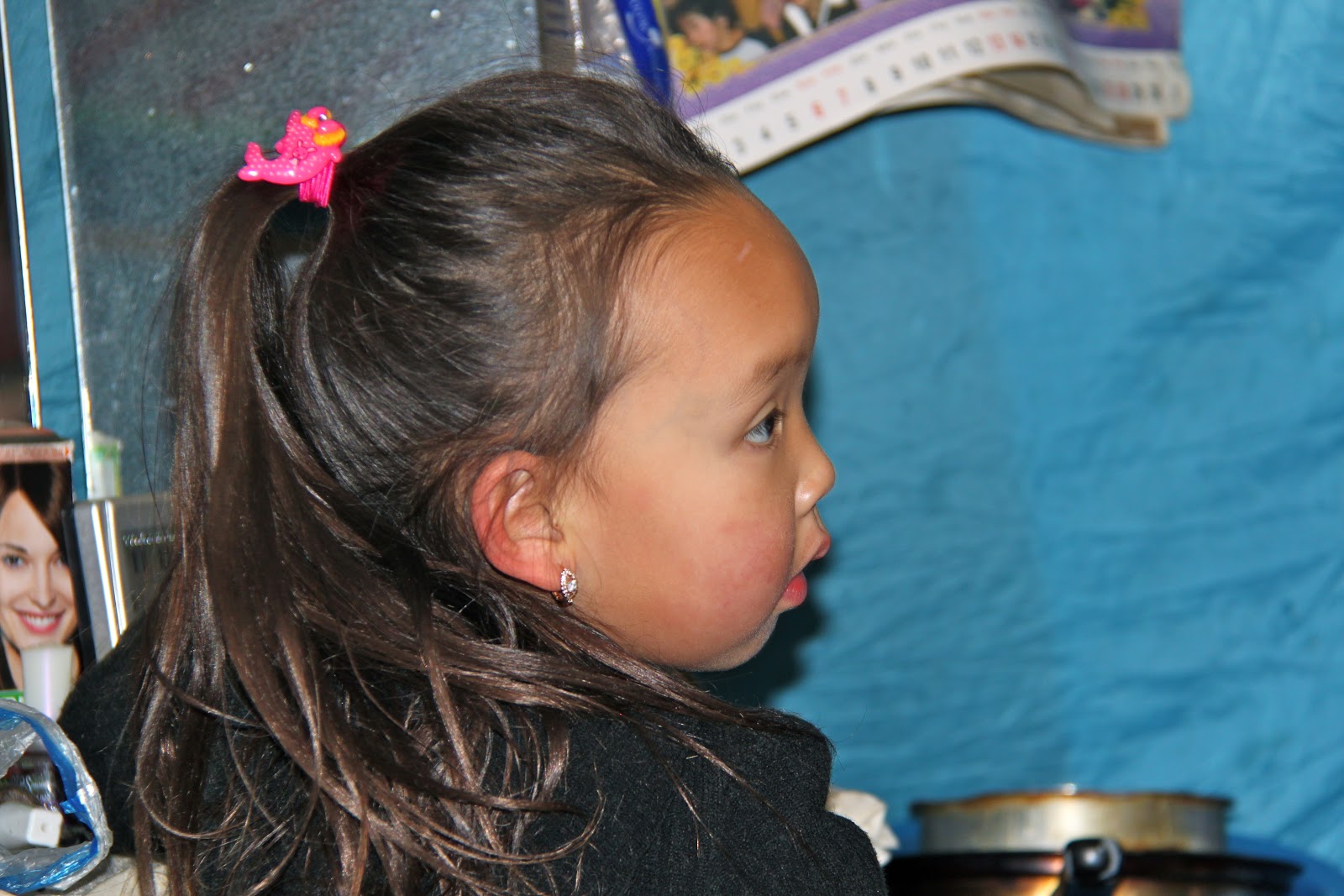
The little girl at this Ger.  Helping to find keys.
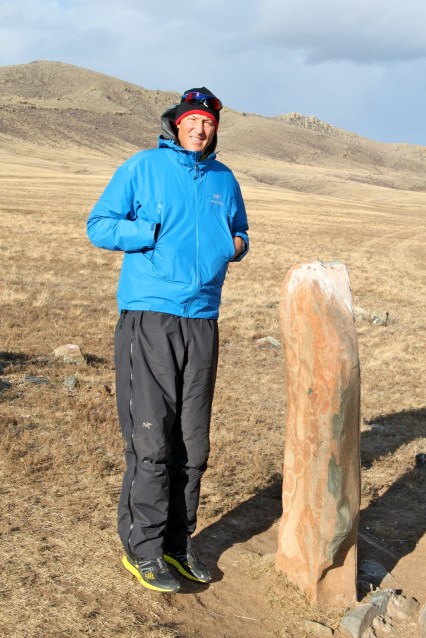
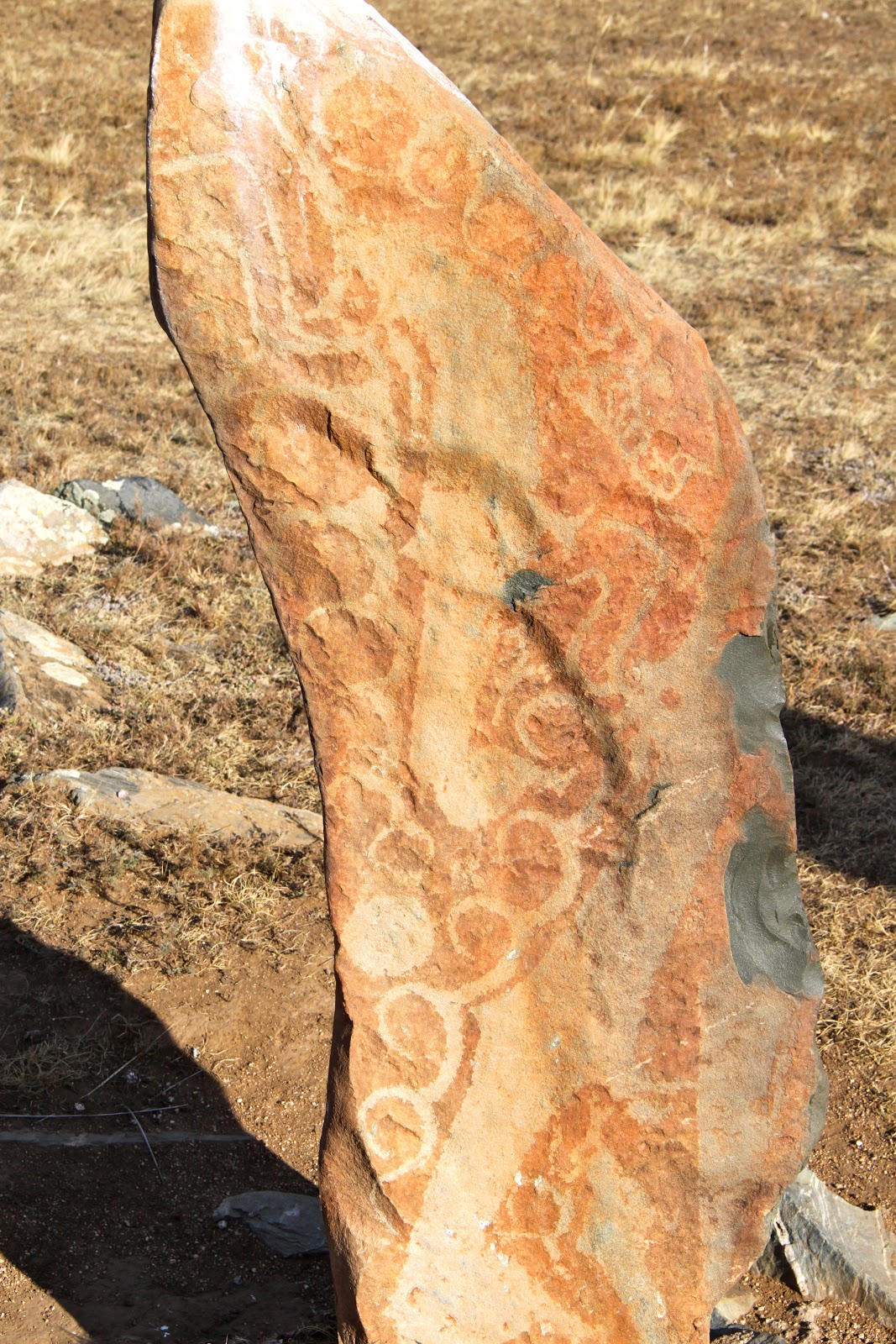
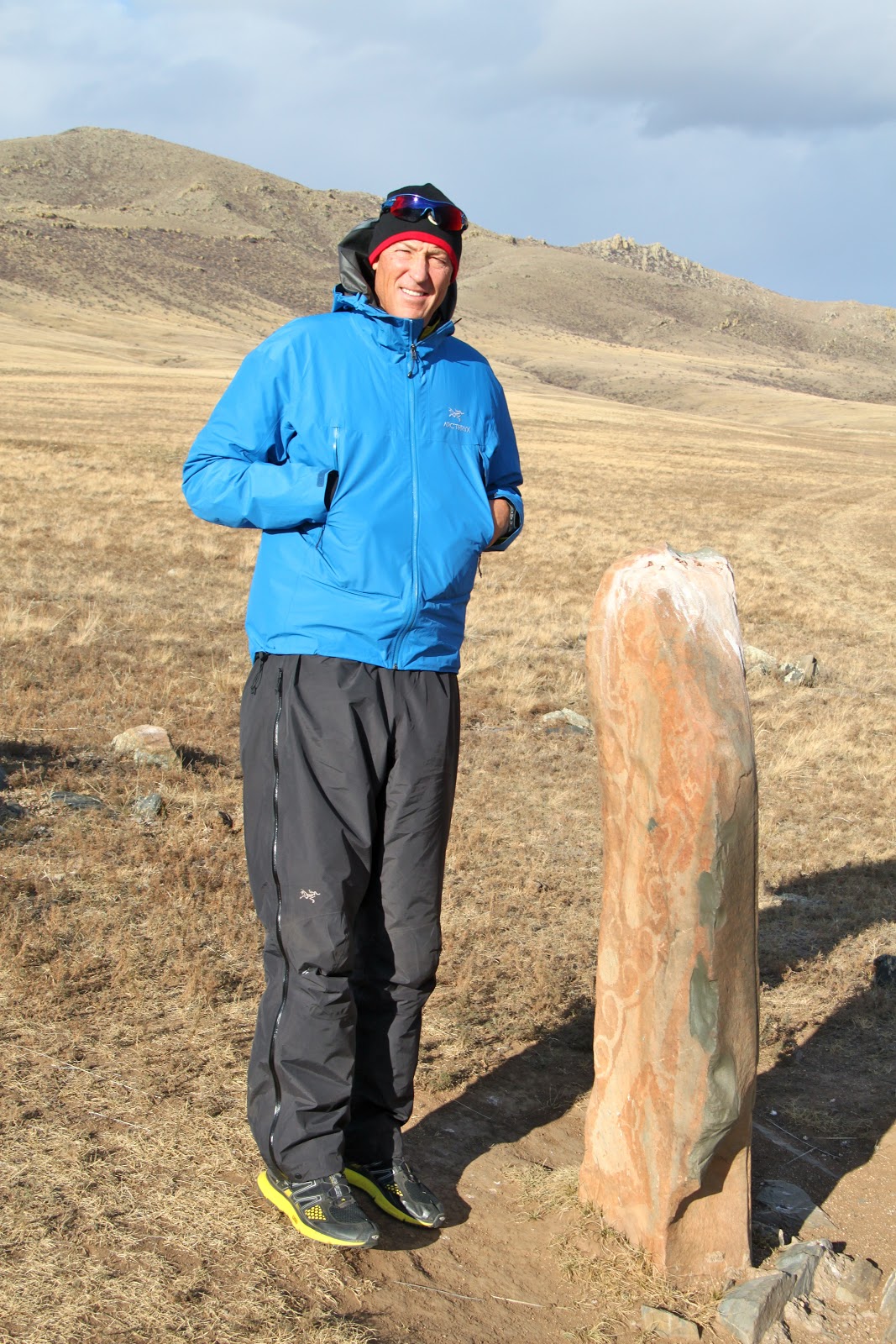
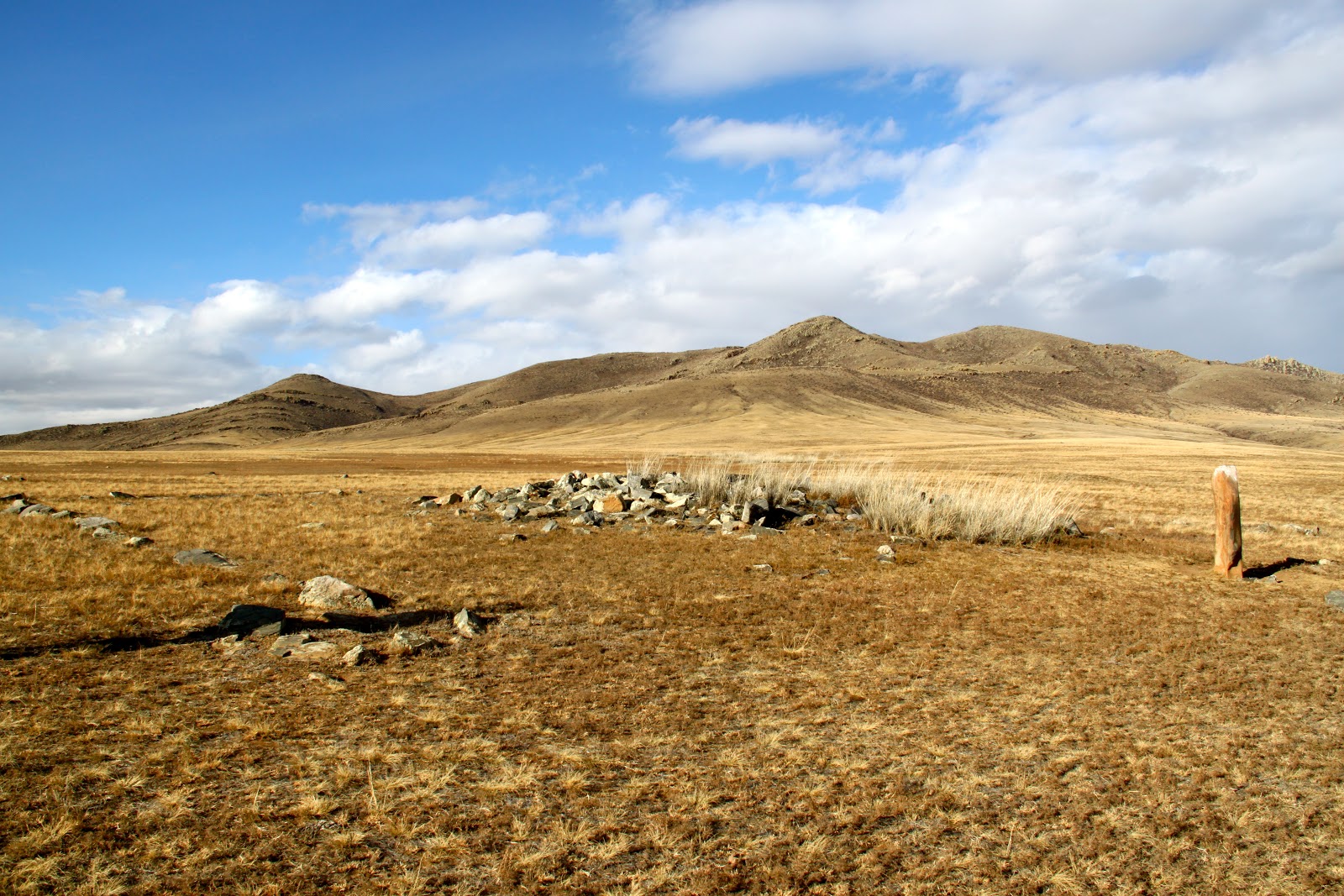
We went to the Deer Stone burial area to look at the rock art.  There are 700 known Deer Stones and 500 are in Mongolia.
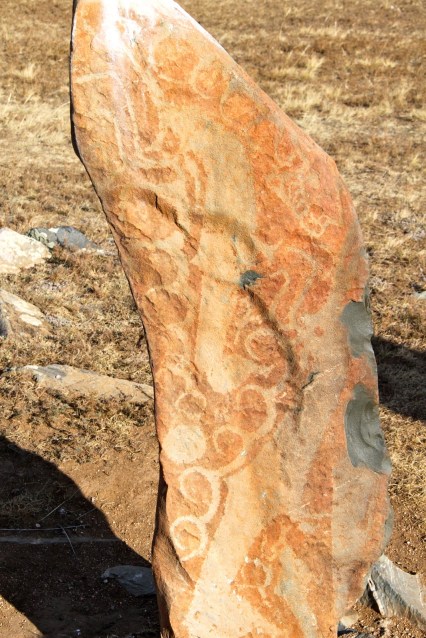
Deer Stone at a burial ground.
Scott next to the deer stone.
Burial site.

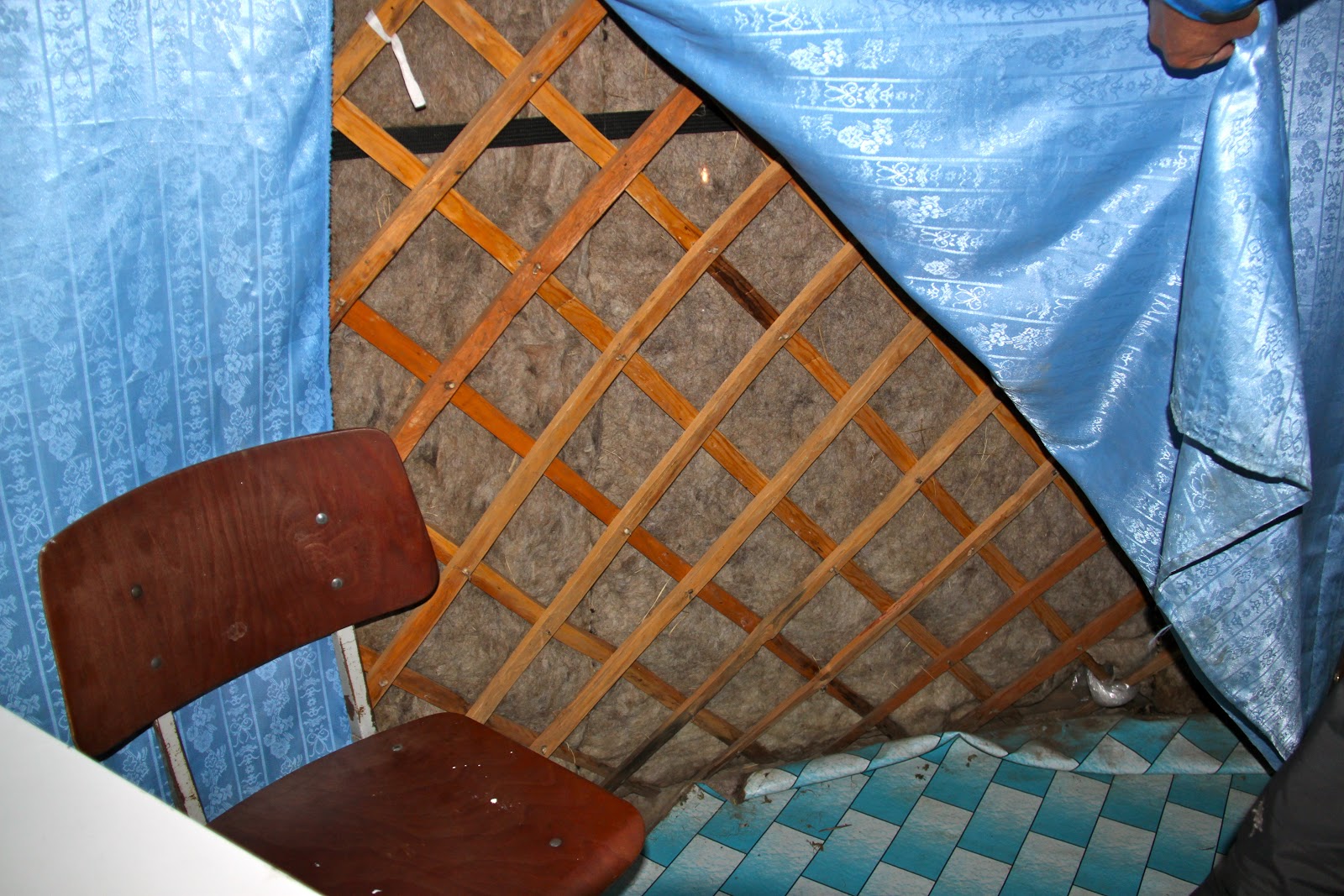
Our Ger is pretty rough looking.  We notice that the sheep felt does not quite reach the ground, which means that wind and animals can get into our Ger.

This is our home for the night.  We are the only people there except for the people who live here.

Home sweet home, complete with a dog.
Pull back the cover and there isn’t much to hold out animals or the cold.

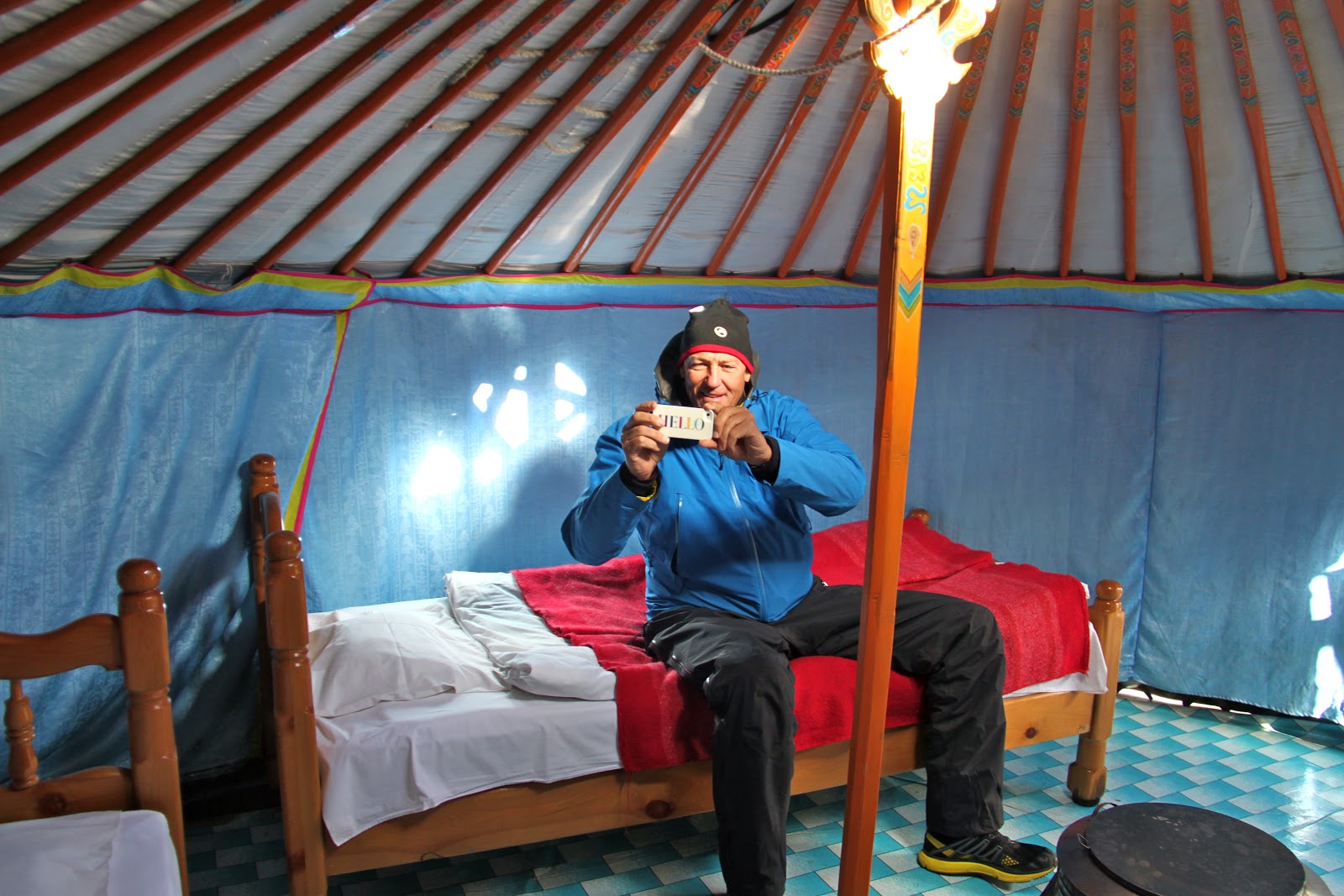
The look on Barb’s face says, “Ok, I can do this, how bad could it be?

Good luck trying to stay warm.  Love the blue linoleum!
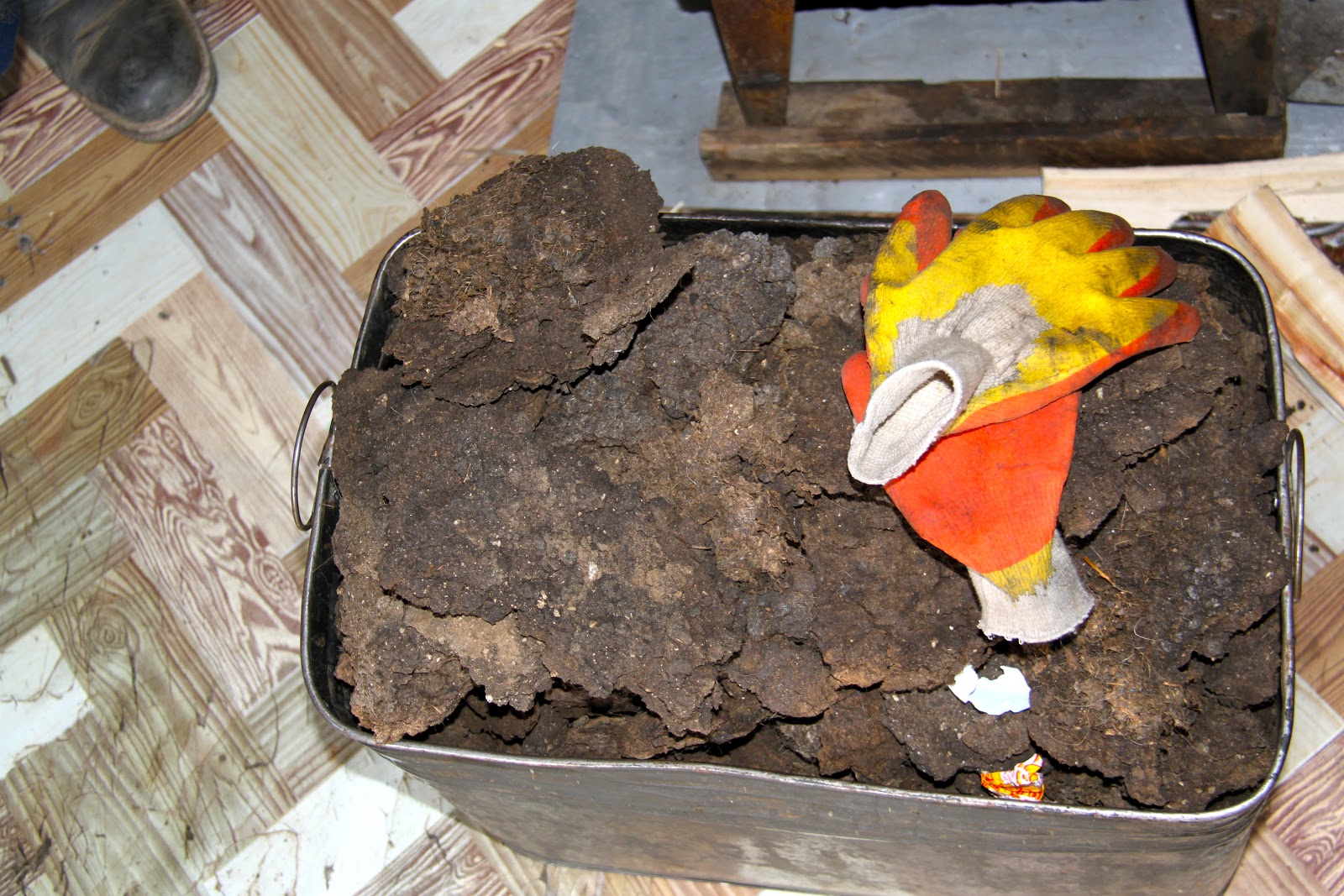
As it starts to get colder our driver fires up our Ger stove.  We have to heat this Ger stove by burning dried cow dung.  I wonder what fumes and smoke from dried cow shit will do to our lungs.  There are also a few dried tree limbs and a bag of coal. 

Dried cow dung.
We better document this event!

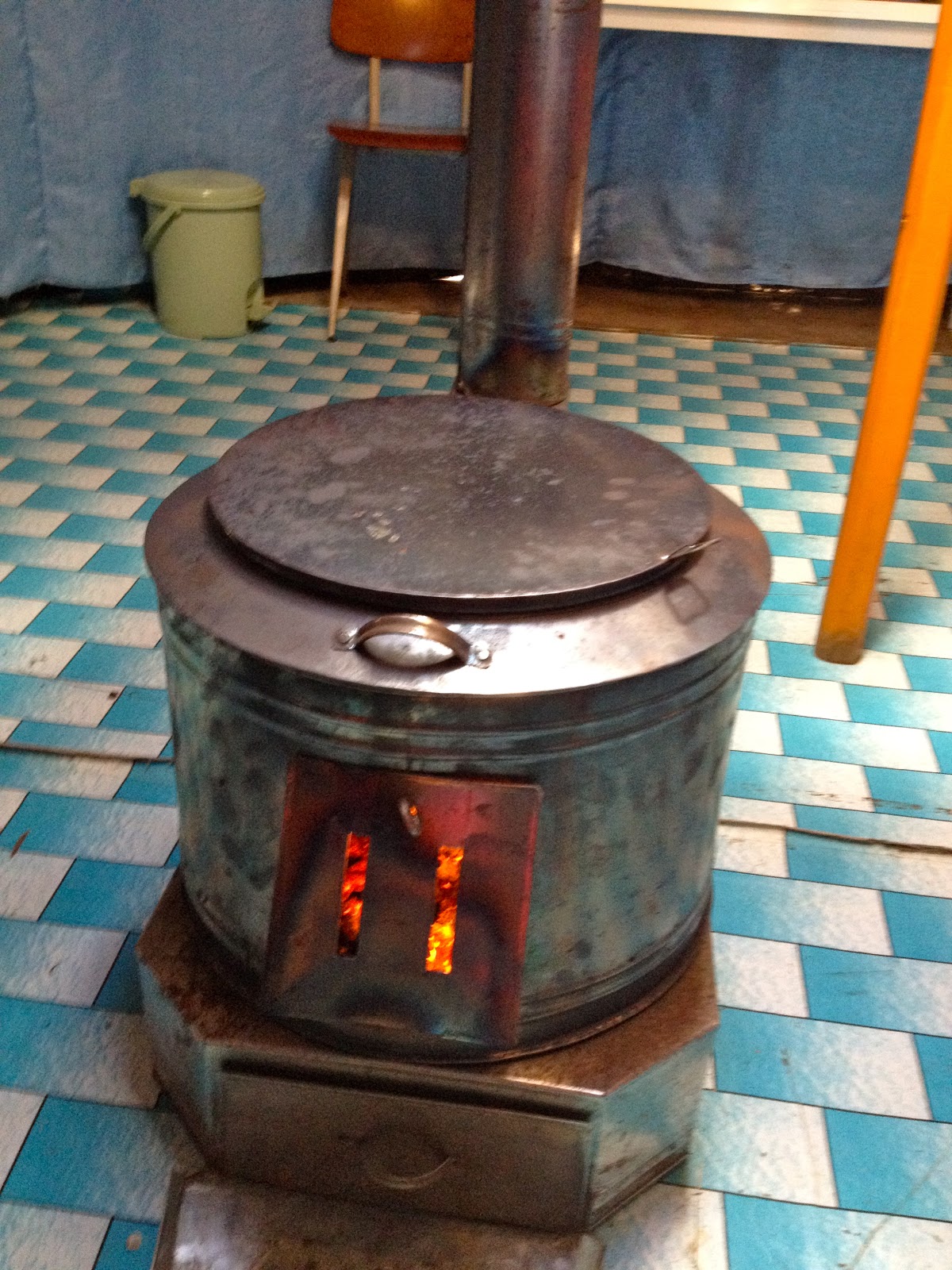
There is a problem with this stove.  It is made of thin metal and the metal does not do a very good job of absorbing and storing the heat.  So when the fire is blazing we are sweating and when the fire dims we are freezing.  We are not excited for this night.
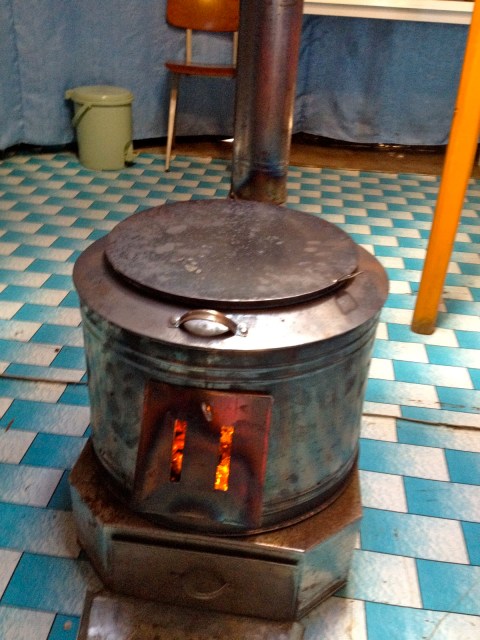
This stove does not seem to heat our Ger properly.
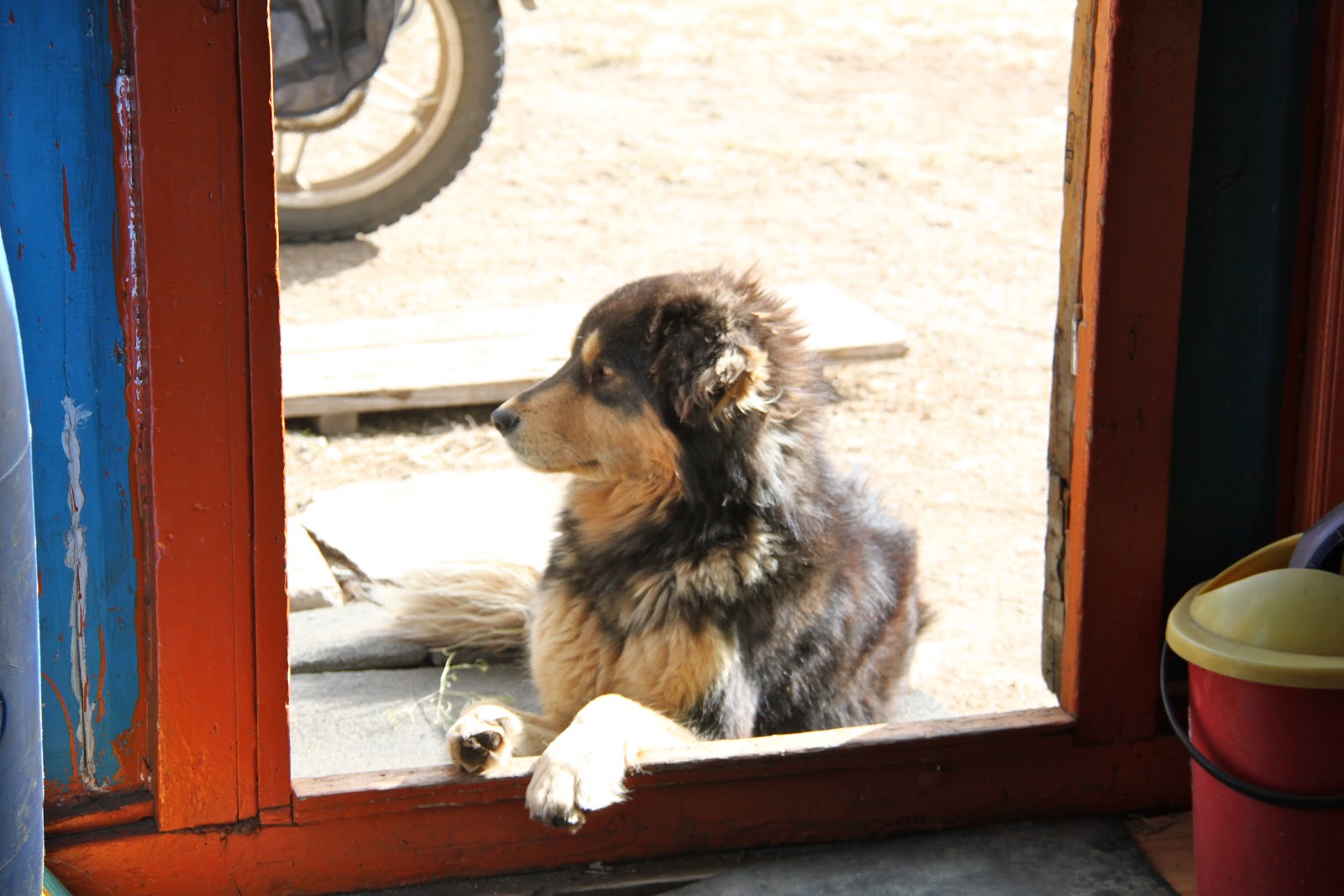
Our Ger came with our own personal dog.
Dinner was a Mongolian empanada with the chunks of meat that we saw in the bowl in the owner’s Ger.  It was served with chili sauce and pickles.  Oh well.  Pizza is starting to sound really good!!!!  Chengdu Pizza Hut anyone????
Our night in this Ger was a survival experience.  It was so cold that we wore our cashmere pajamas and sweaters to bed and a ski hat.  I woke up about every hour to put more cow dung into the stove.  Then it would overheat and I would throw off my covers.  After about an hour it was too cold and I would have to get up again and put more dried cow shit on the fire.  I went through two tubs of cow dung trying to keep our Ger warm enough so we could sleep.  
The outhouse was about 100 yards away from our Ger.  The most fun I had that night was walking back and forth to the outhouse.  It was crystal clear and the stars were amazing.  We could also hear the bull elk bugling throughout the night.  When I would get back to the Ger I would practically lay down on the stove trying to get warm again.

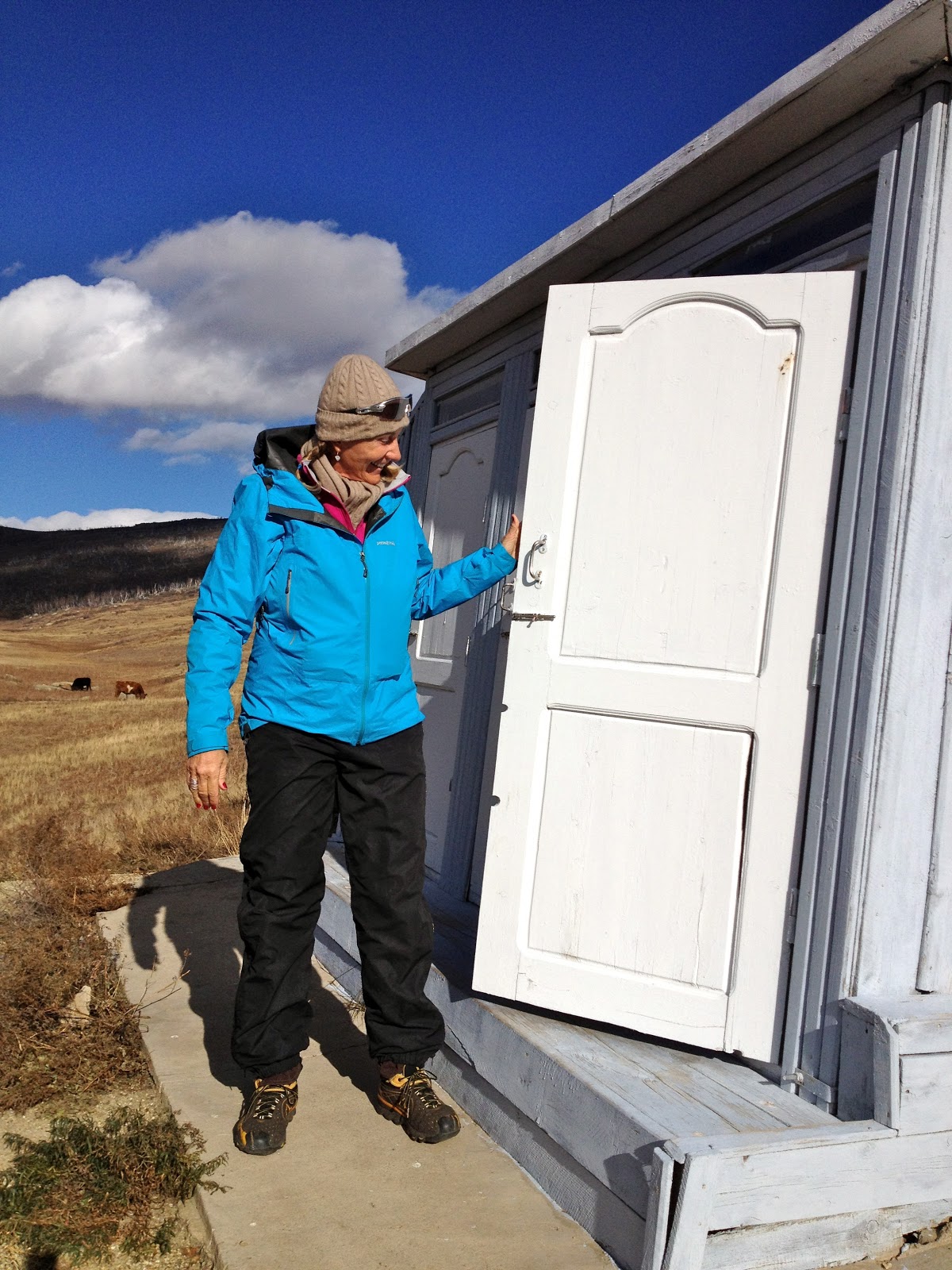
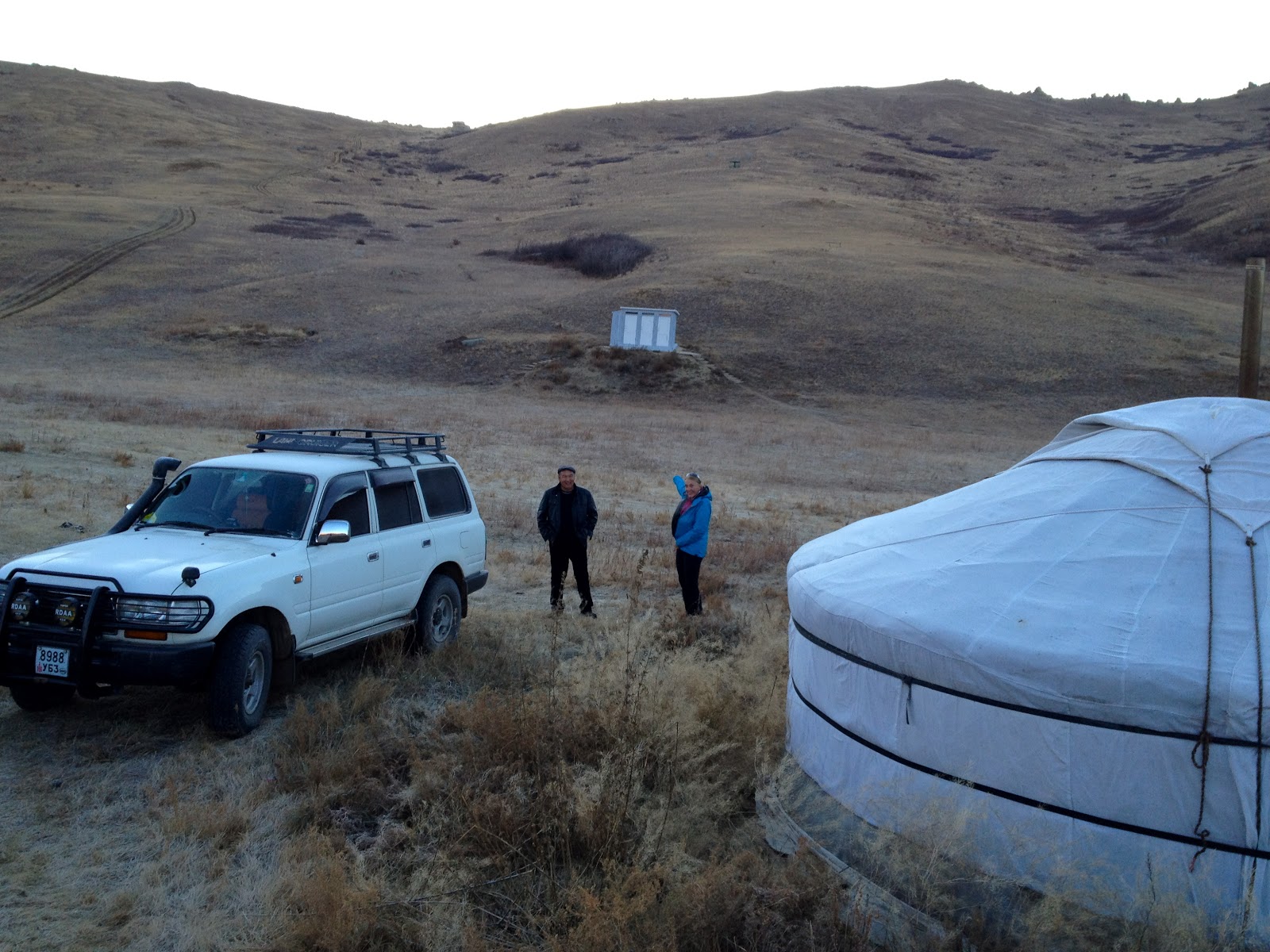
Outhouse on the hill.
Inside the outhouse.
This is our Ger, and you can see the outhouse over on the hill.

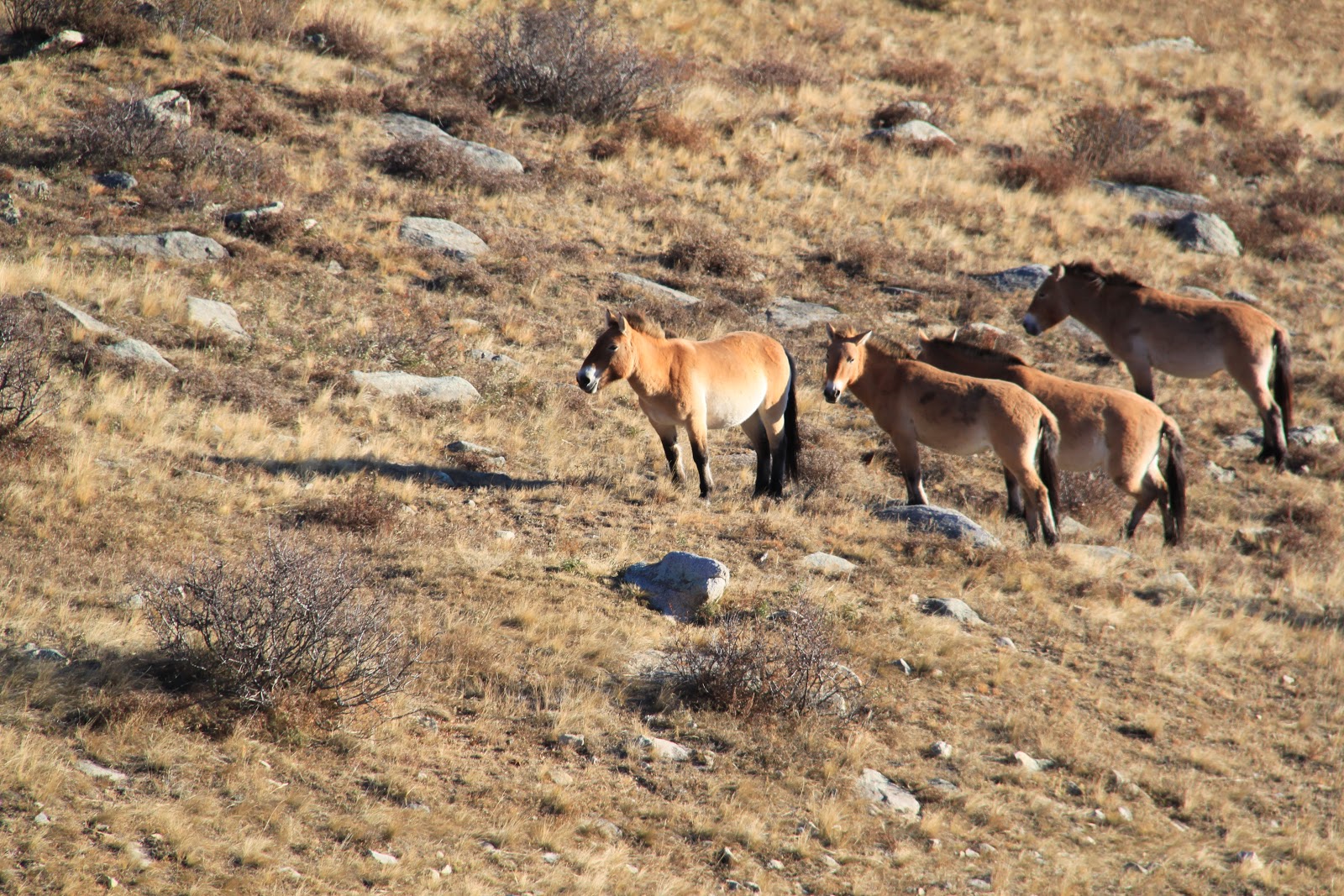
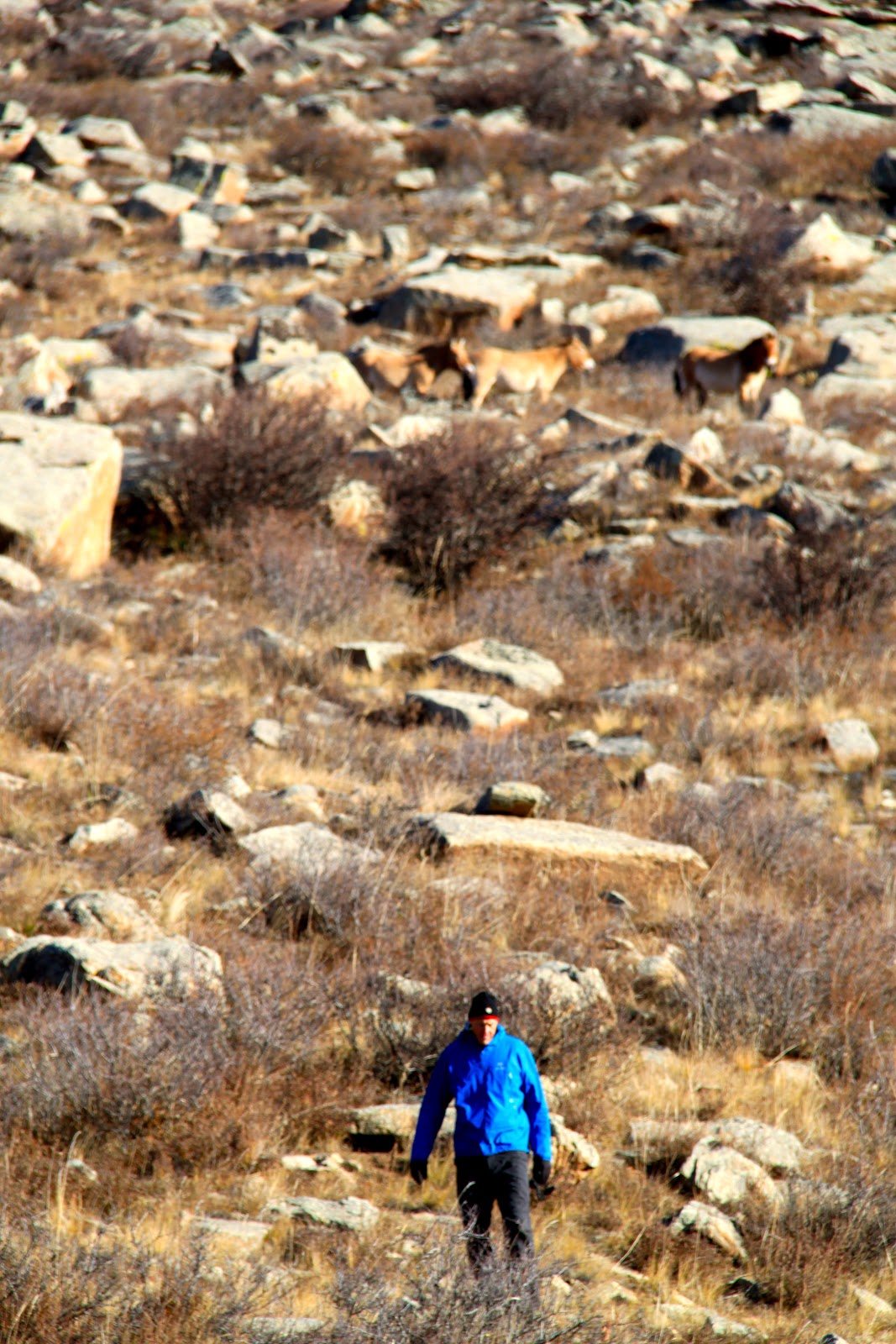
Baggy talked to the owners of the Ger and found out that the Takhi (wild horses) were spotted recently a few canyon systems away.  We loaded up and drove over and searched for an hour or so.  At the top of a ridge we got out with our binoculars and telephoto lenses and walked up the ridge.  Just below us we saw 6 Takhi.

Wild horses called Takhi.
The six Takhi are on the hill behind Scott
Pretty color.

A Baby.
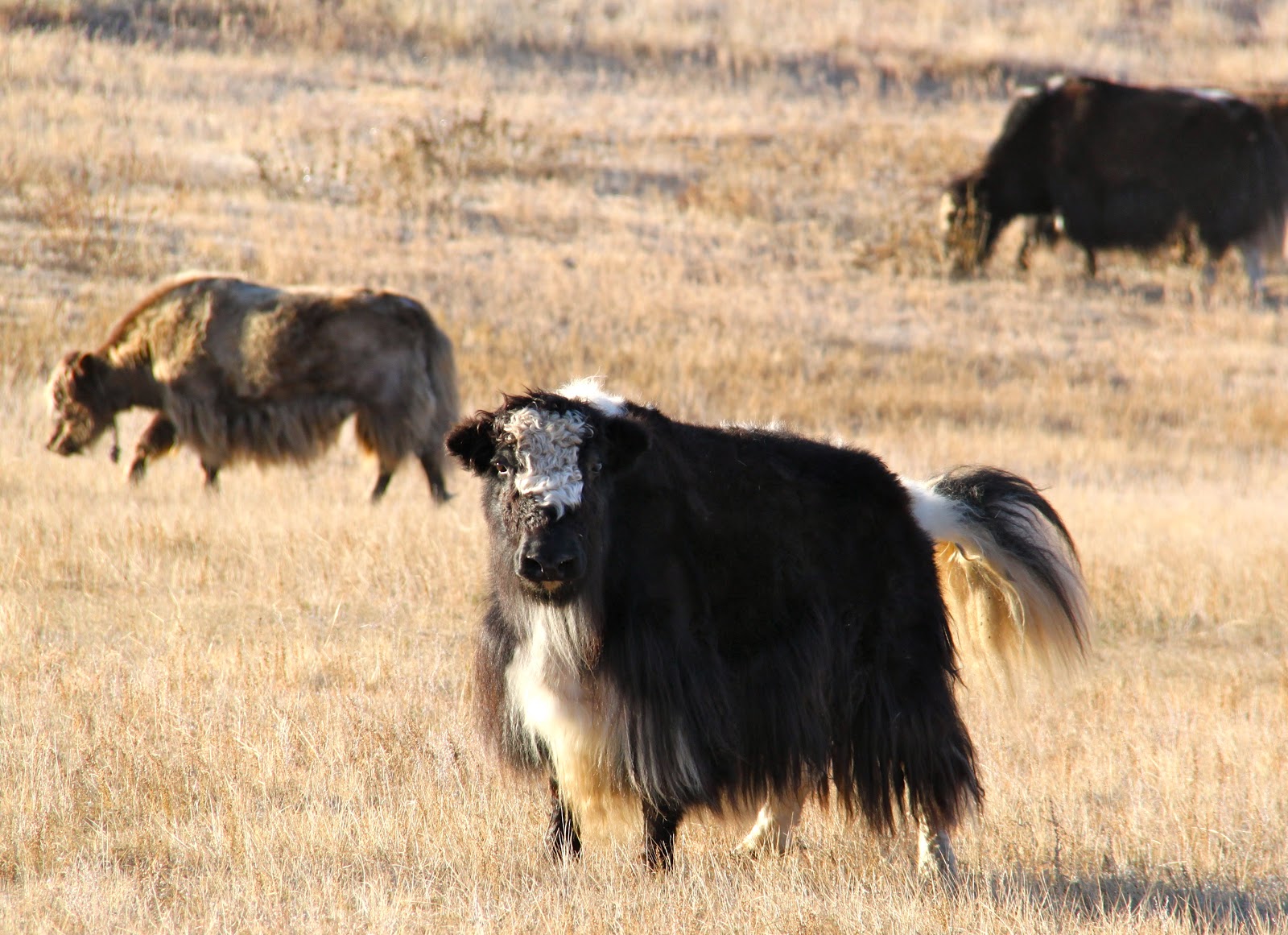
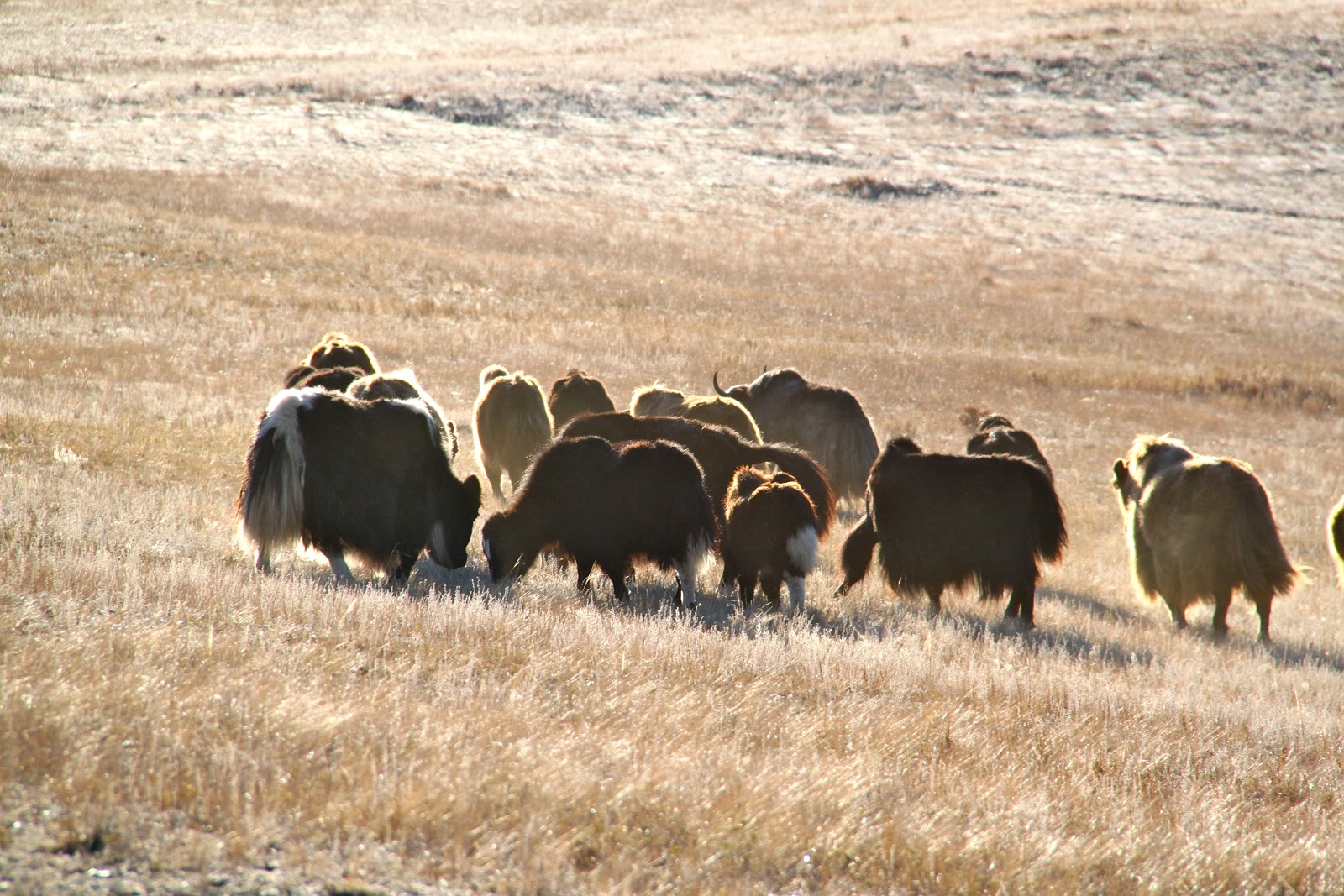
We also came upon herds of goats and yaks.
Goats and Yaks

Later on we saw another large herd of the Takhi.  Takhi and regular horses do not mix.  Our guide said that there was an occasion when a regular horse began to run with the wild horses and the authorities separated them so that bloodlines would not be mixed.  The wild horses have short manes and tails.  They have a distinctive color and some have zebra stripes on their hind legs.

A second herd of Takhi.
More Photos.

Barb having fun.
Barb after going to “see a man about a horse”.

Barb rode an English saddle.
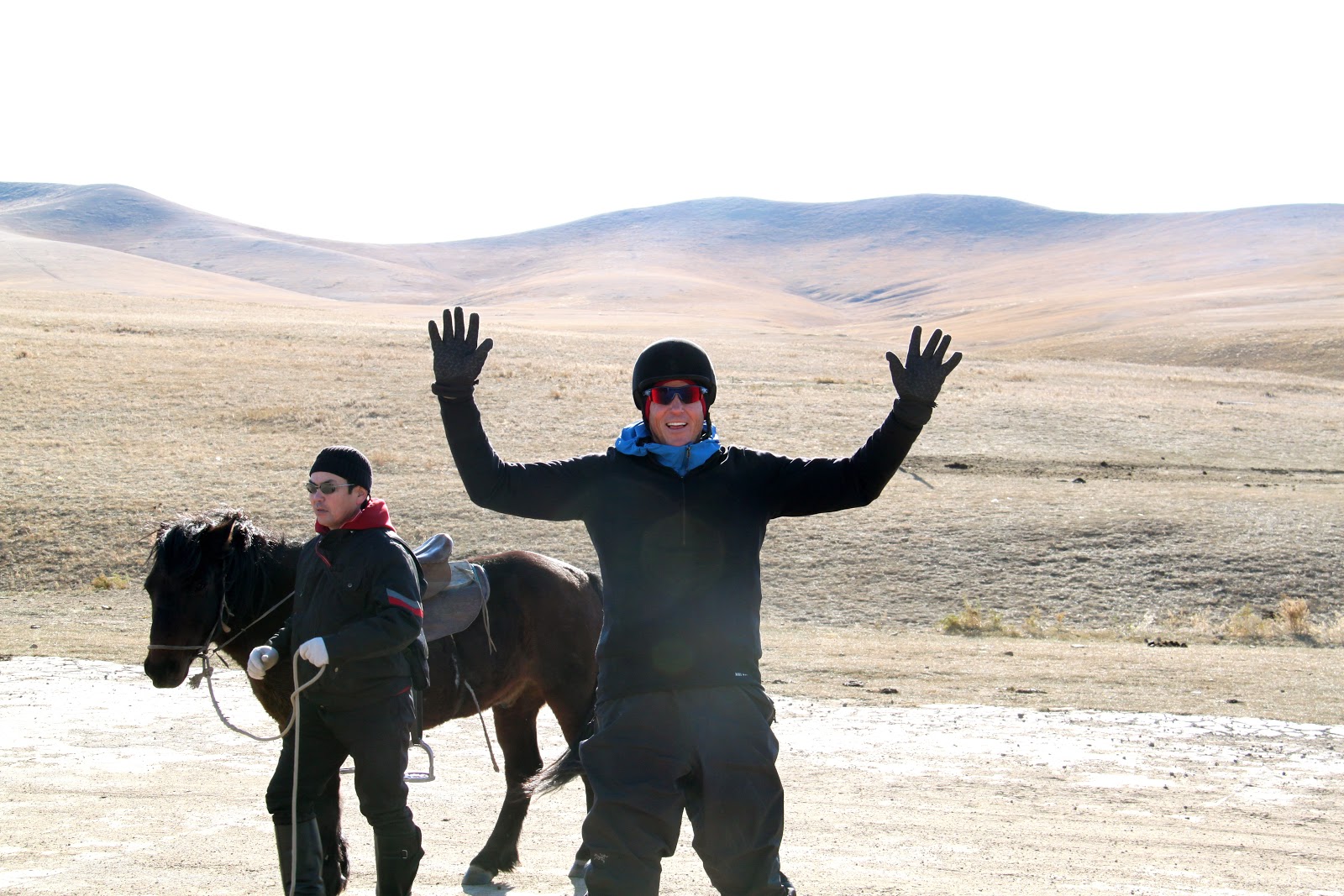
Look Mom, no Hands.
Can you have a bad day on a horse?

Back in Ulaanbaatar we shopped for some more cashmere.  Scott also bought an antique conch shell embroidered with silver used for religious purposes.  We saw these shell used to open and close religious ceremonies in Varanasi, India.

After shopping we went to the history museum in UB.  They had a full model of a Mongolian warrior on horseback dating from the 1200 AD era.  He was fierce looking and was protected with light ox leather armor.  In his boots he had metal protection between layers of leather.  He looked ready to conquer the world.

Mongolia was an interesting place and to see it on horseback made it amazing.
Siem Reap, Cambodia Oct. 11-12, 2012

Siem Reap, Cambodia
On a slow turbo prop aircraft it was a two-hour flight from Luang Prabang, Loas to Siem Reap, Cambodia.  Looking out of the window on arrival it looked like the entire country was underwater.  We thought it looked like the Okavango Delta in Botswana but it was just the standing water left over from the rainy season in Cambodia. 

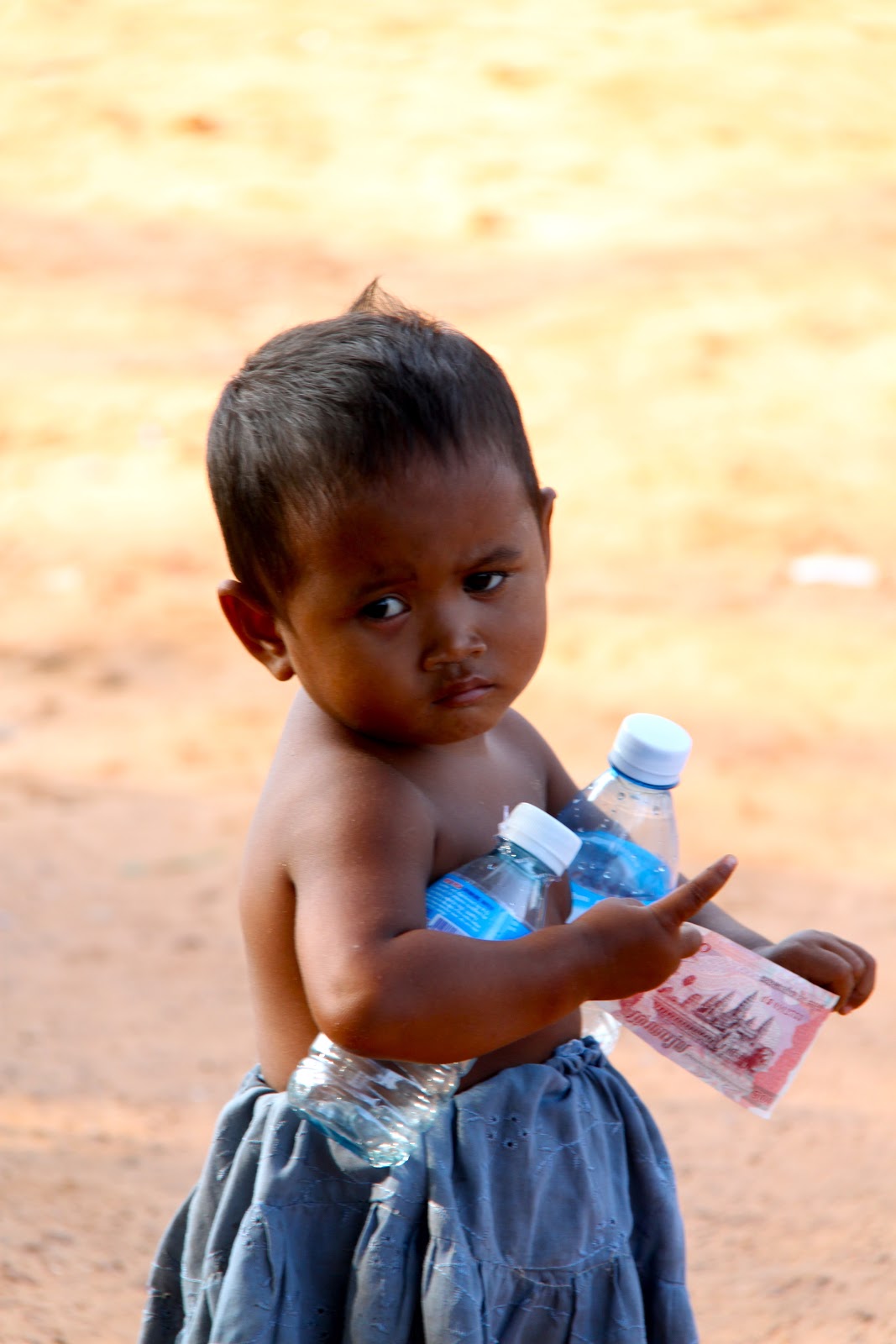
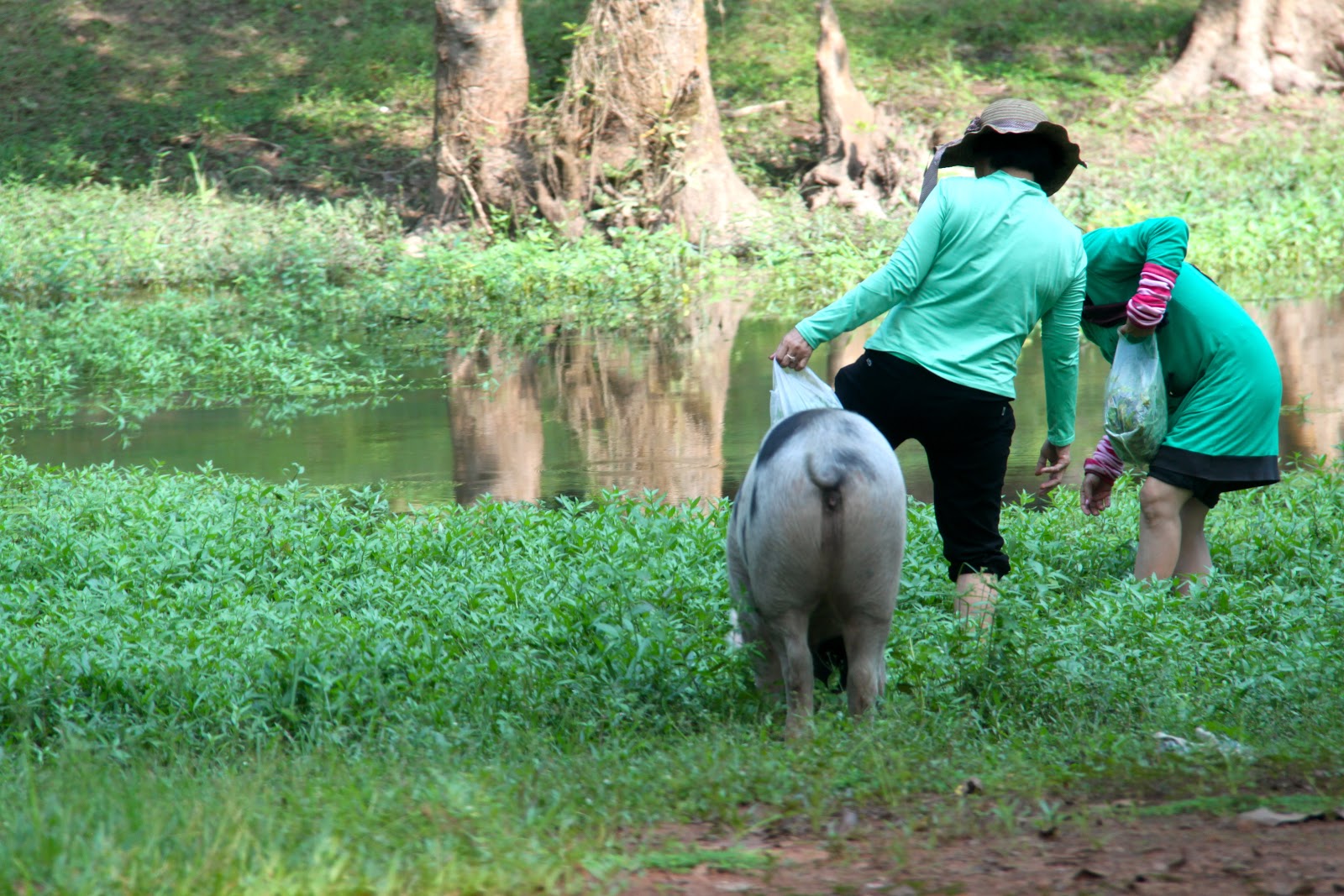
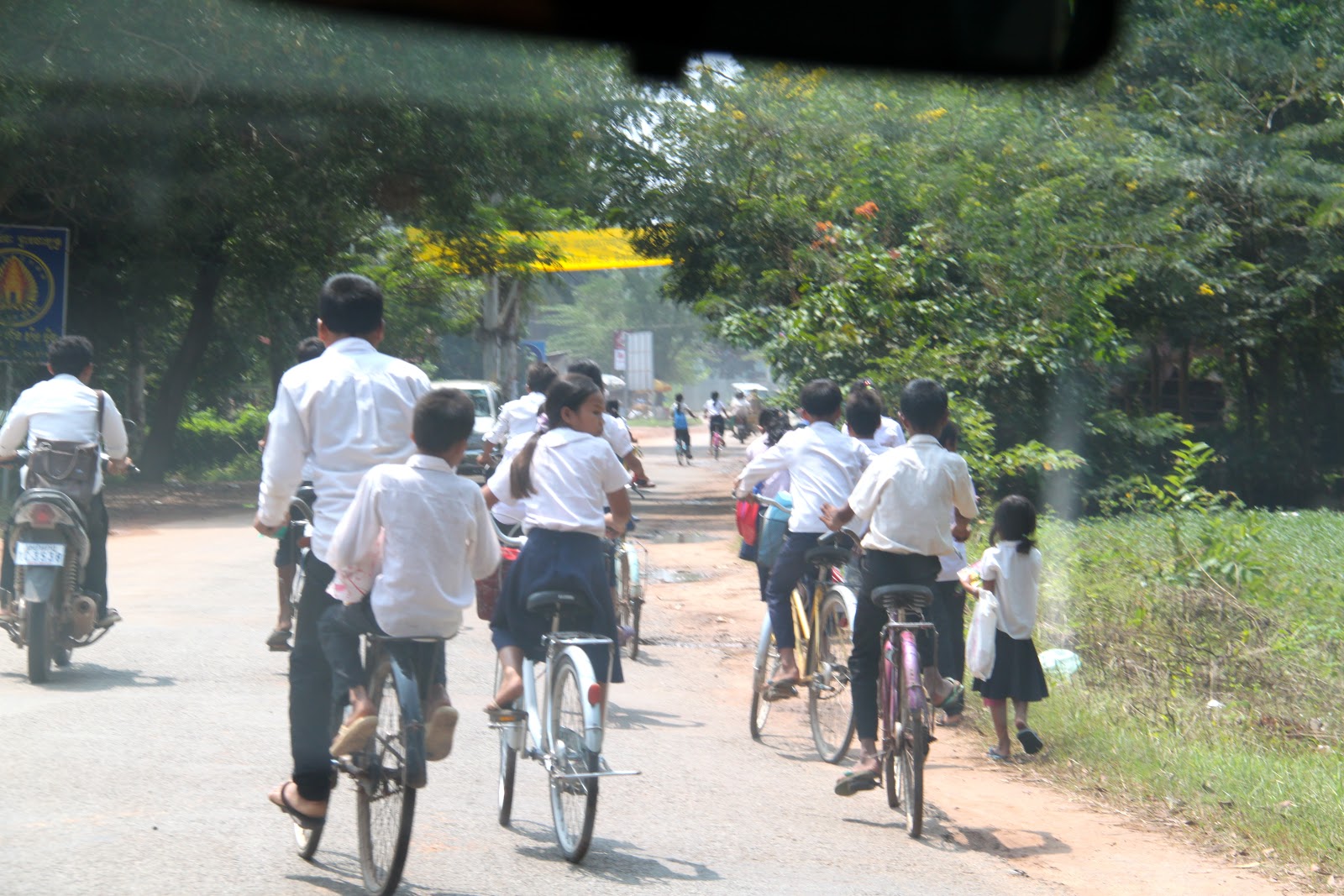
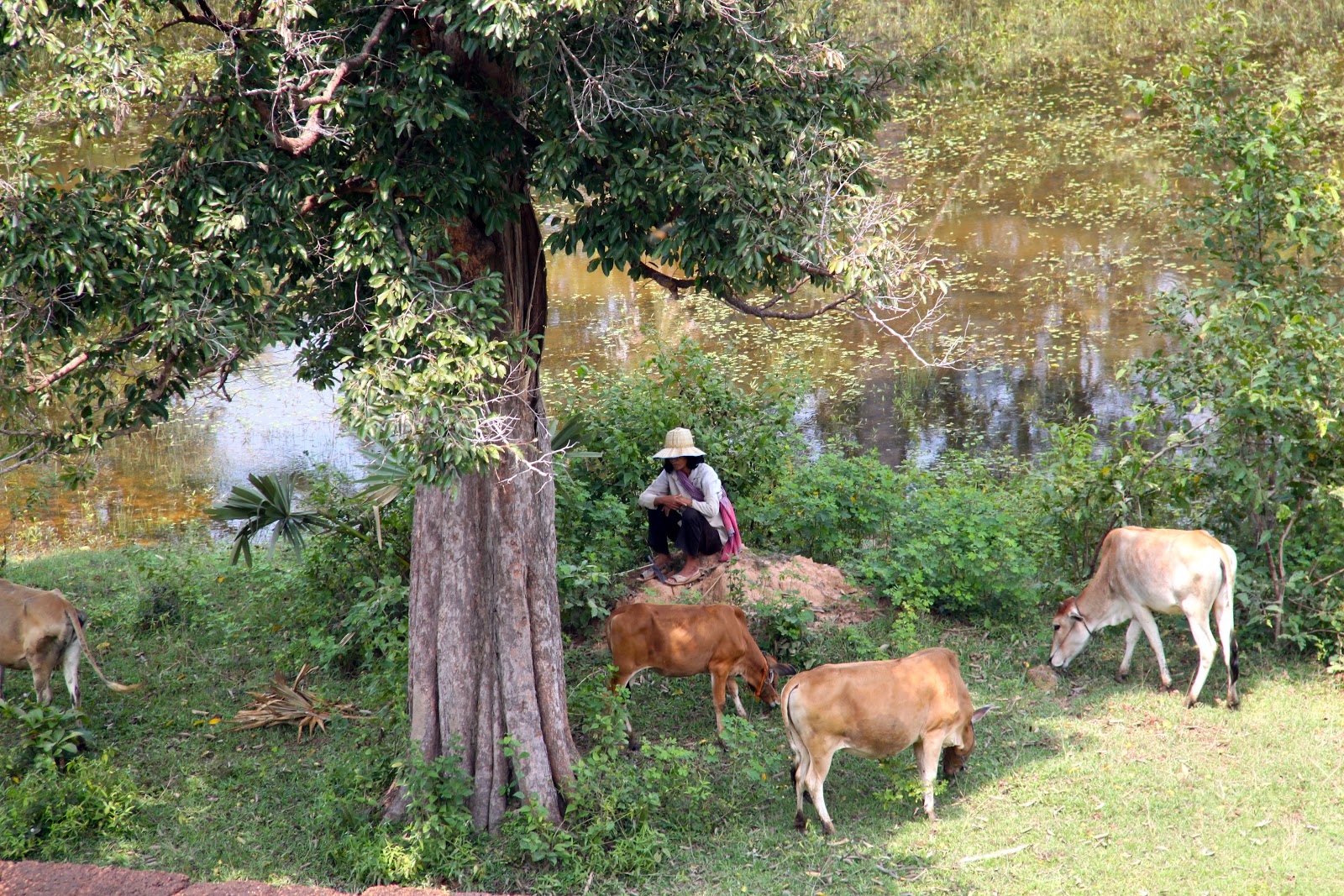
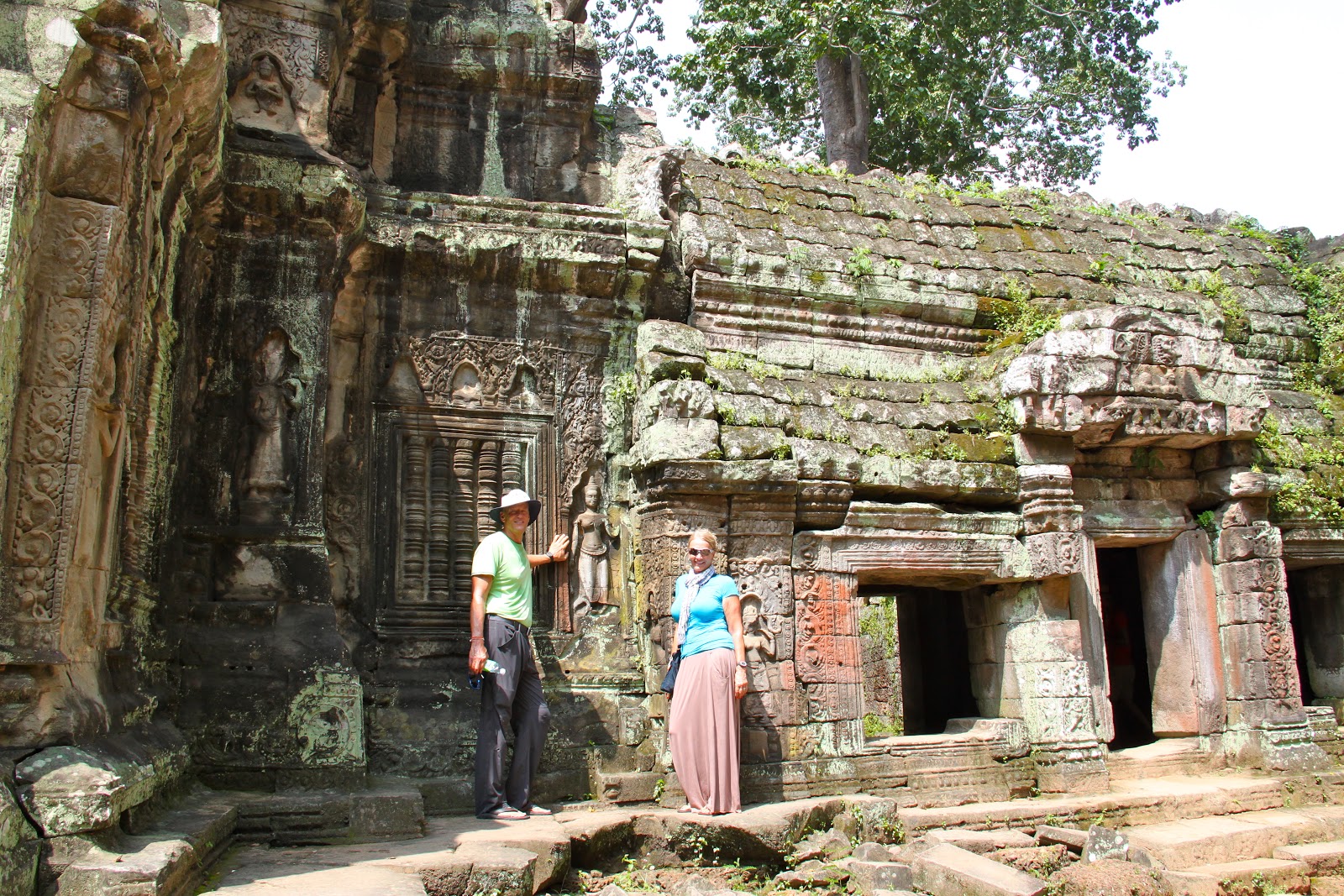
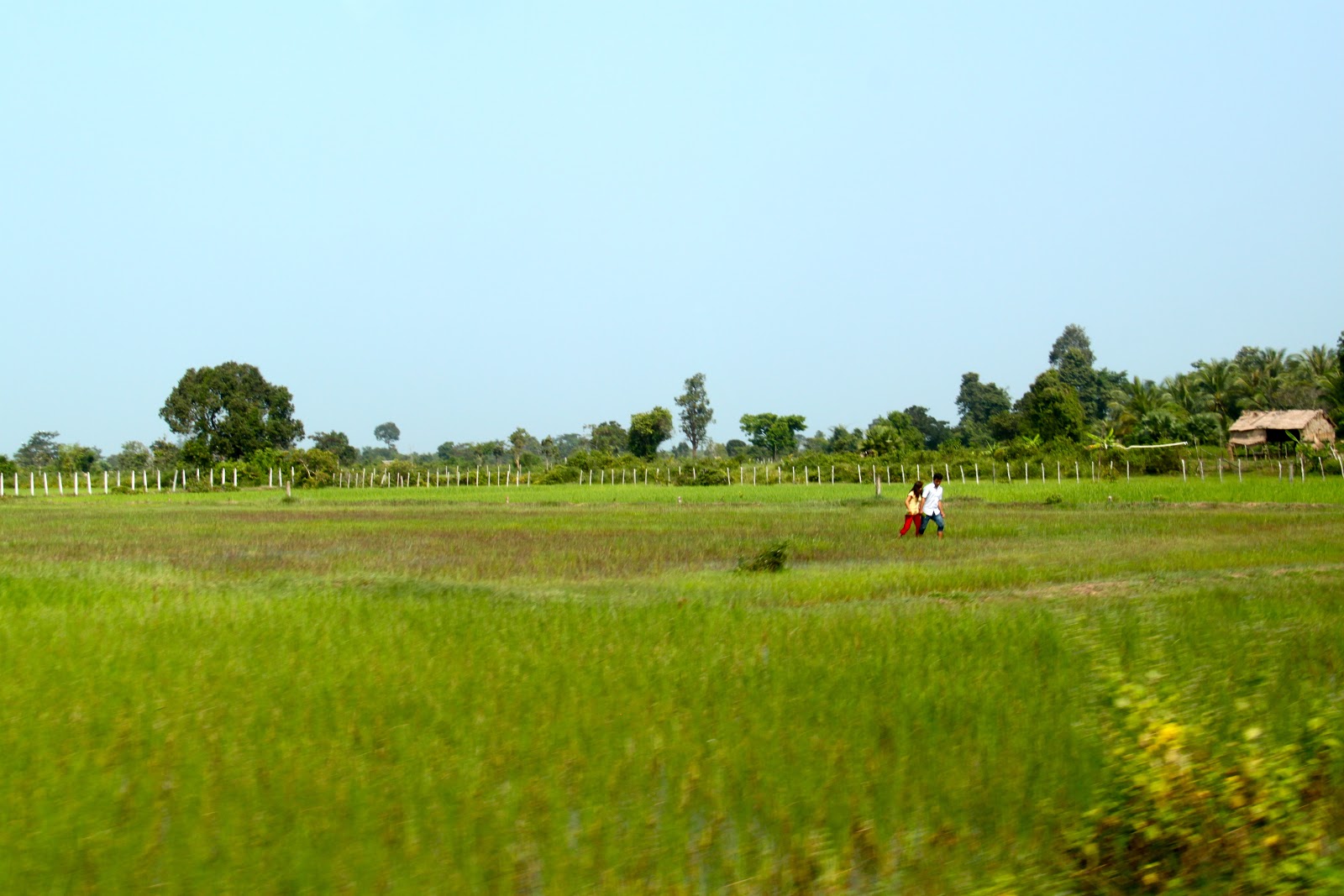
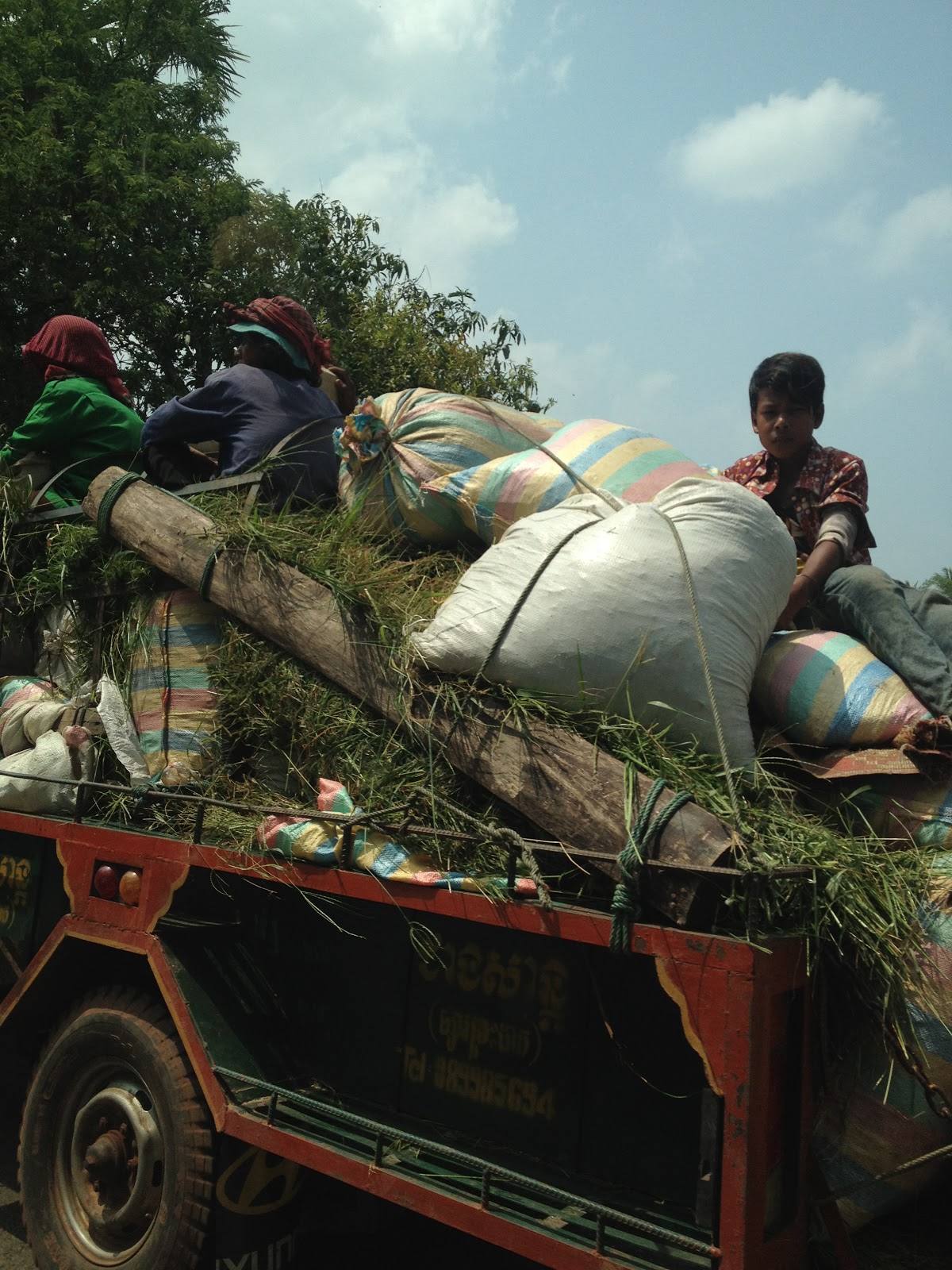
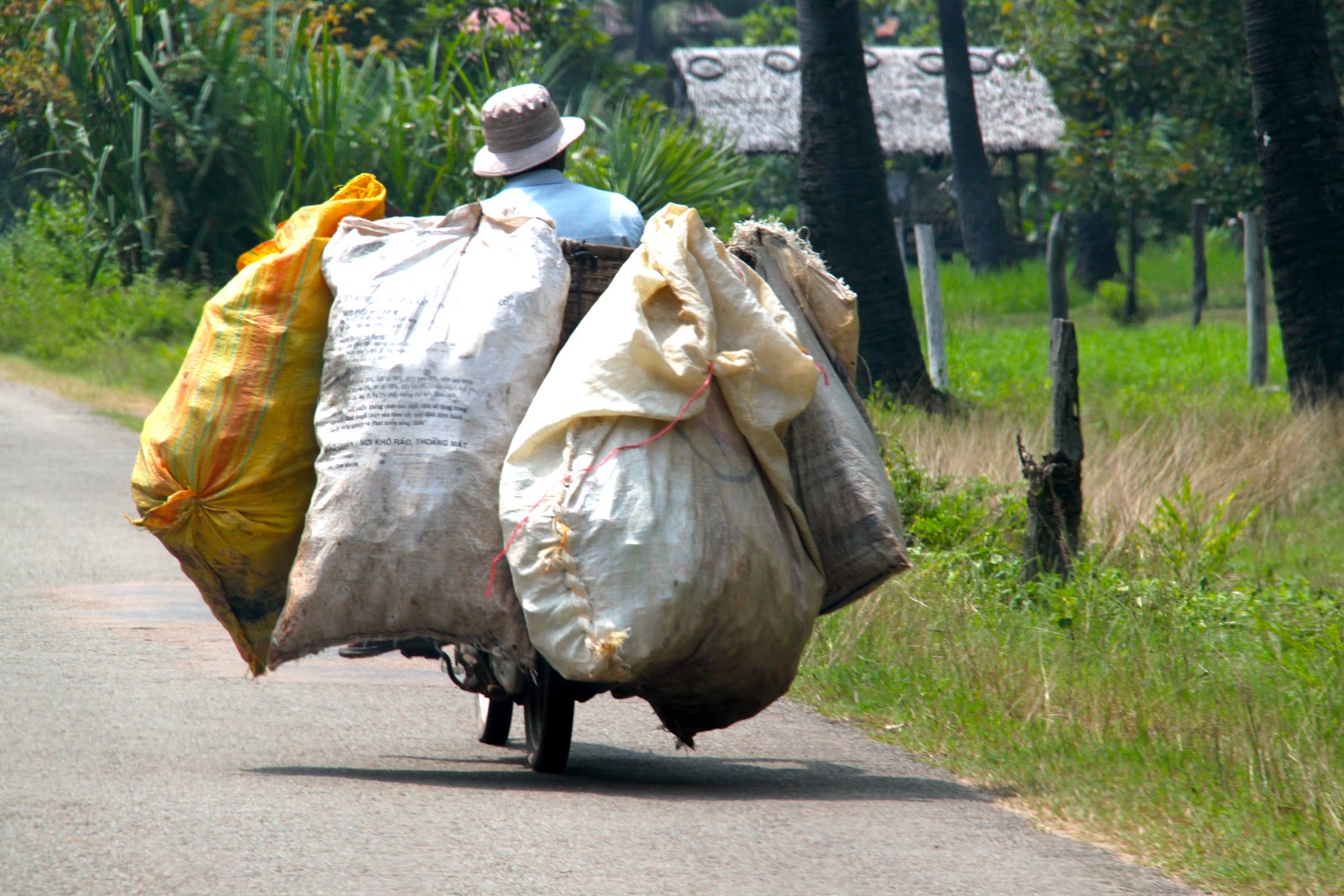
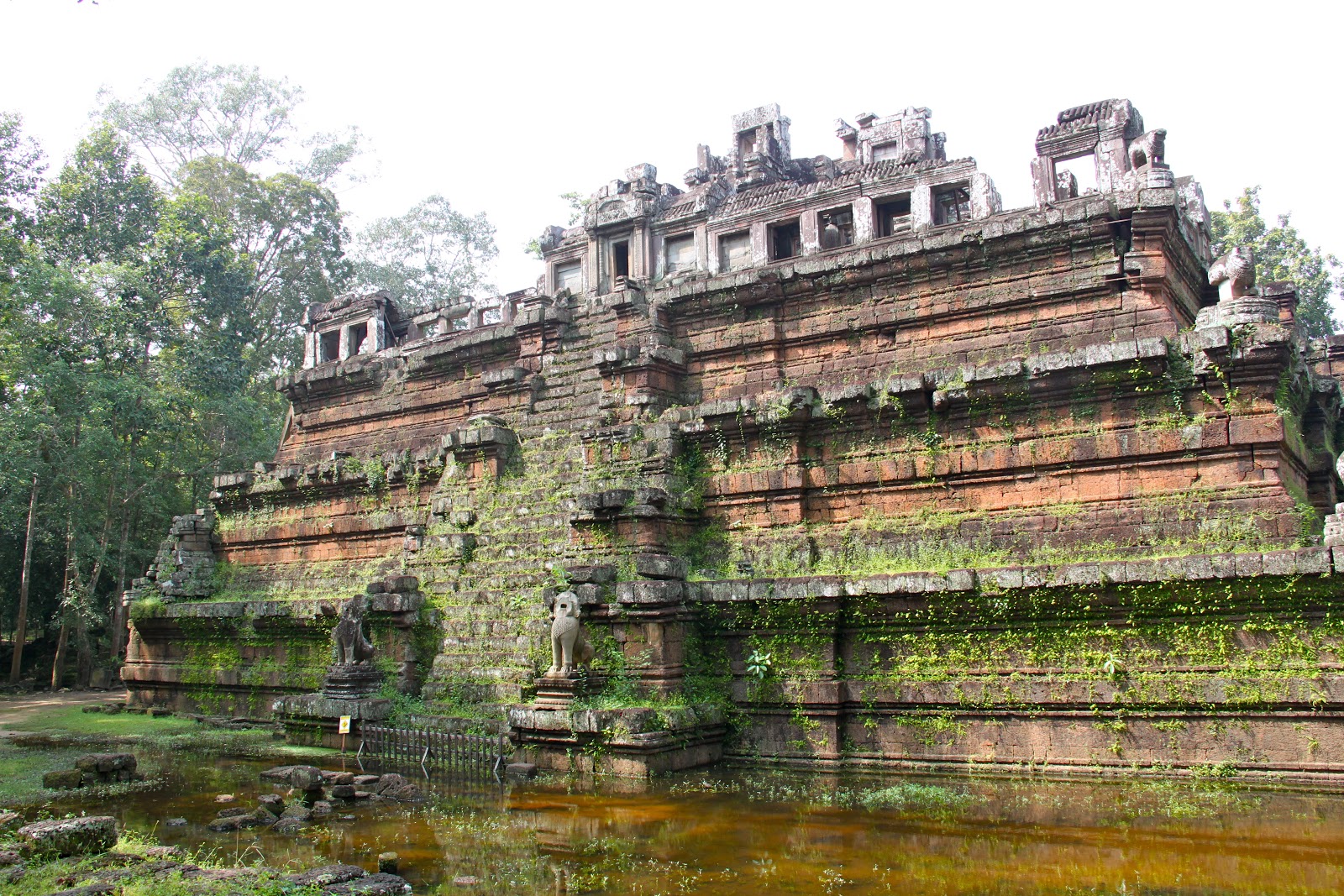
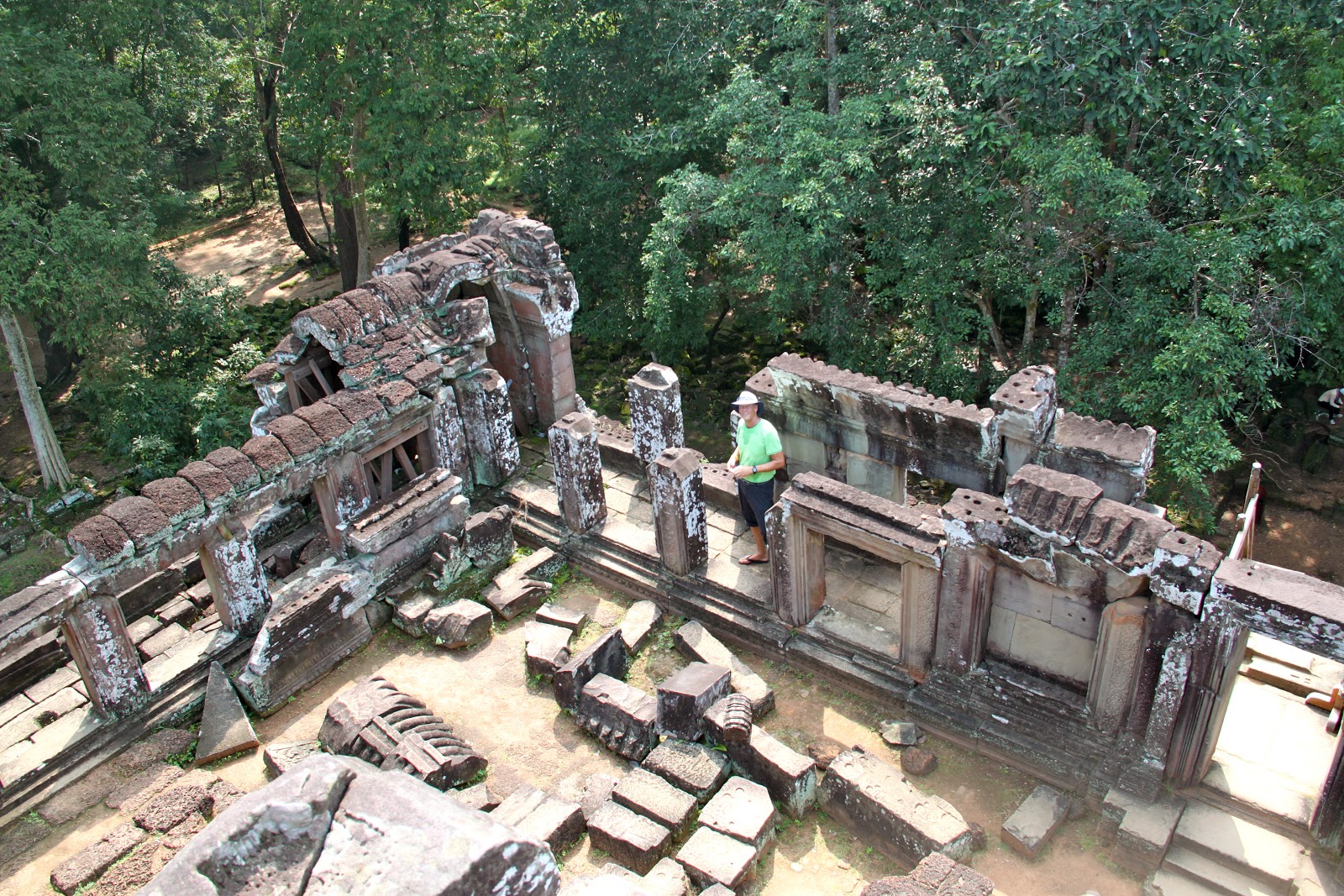
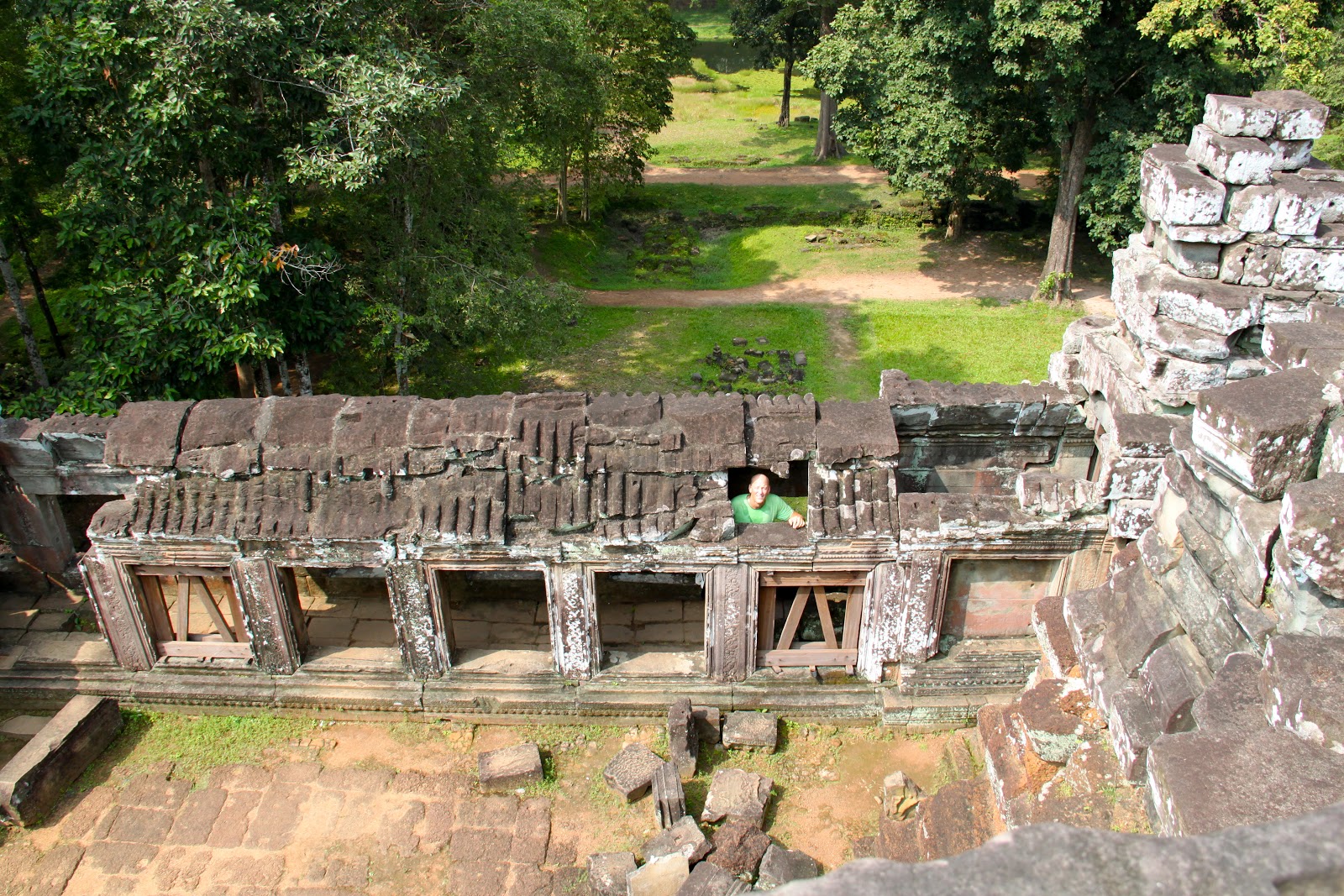
We are here to see the amazing temples.  Barb expected to see Angkor Wat, which by itself would be amazing and worth coming to Siem Reap for, but we were  pleasantly surprised to find so many different temples everywhere you look.  We drove or walked from temple to temple.  Here are some photos of life along the way.

Add caption

Harvesting something along with a pig

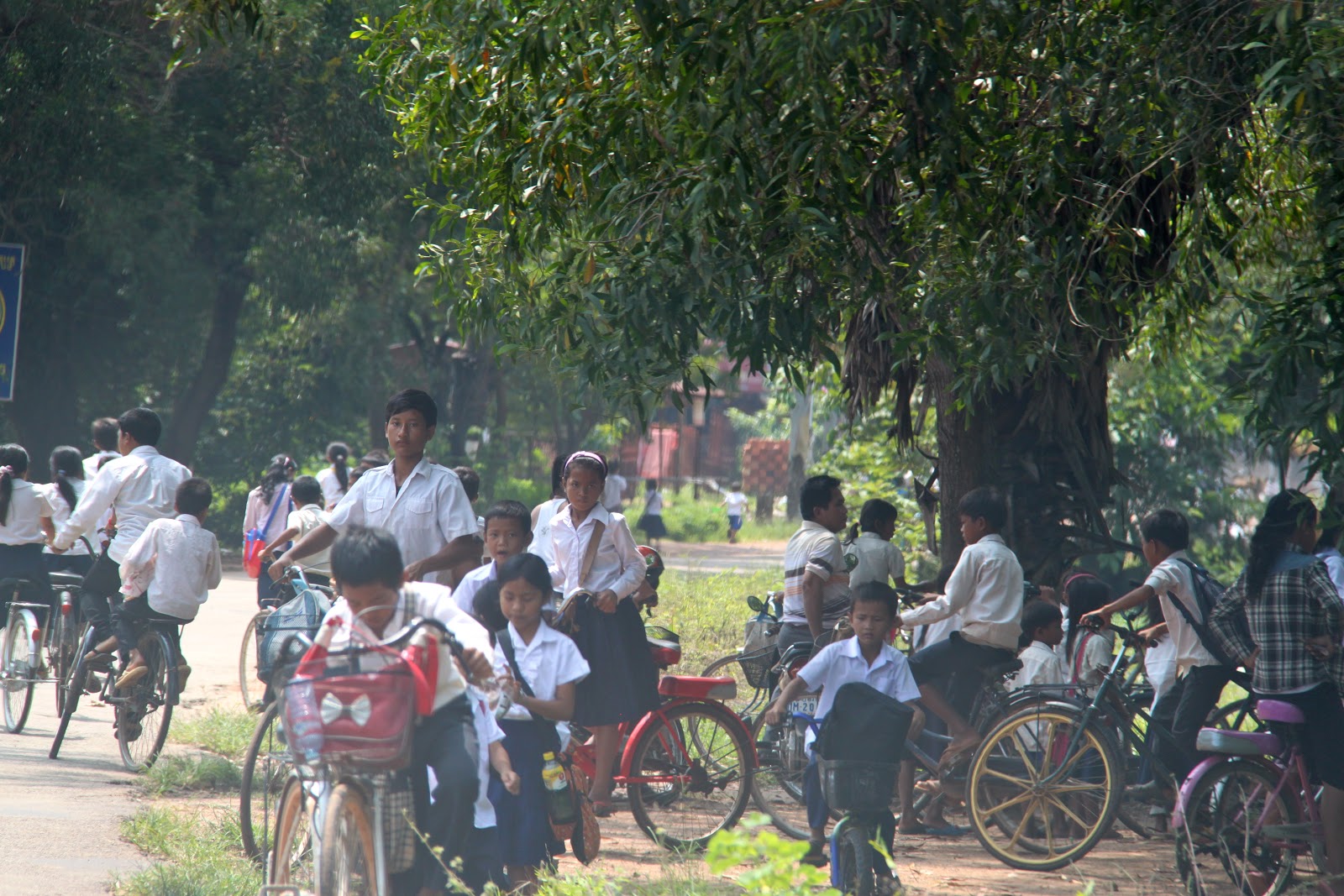
Bikes are the mode of transportation for the school kids.  Motorbikes for the adults.

Tending cows

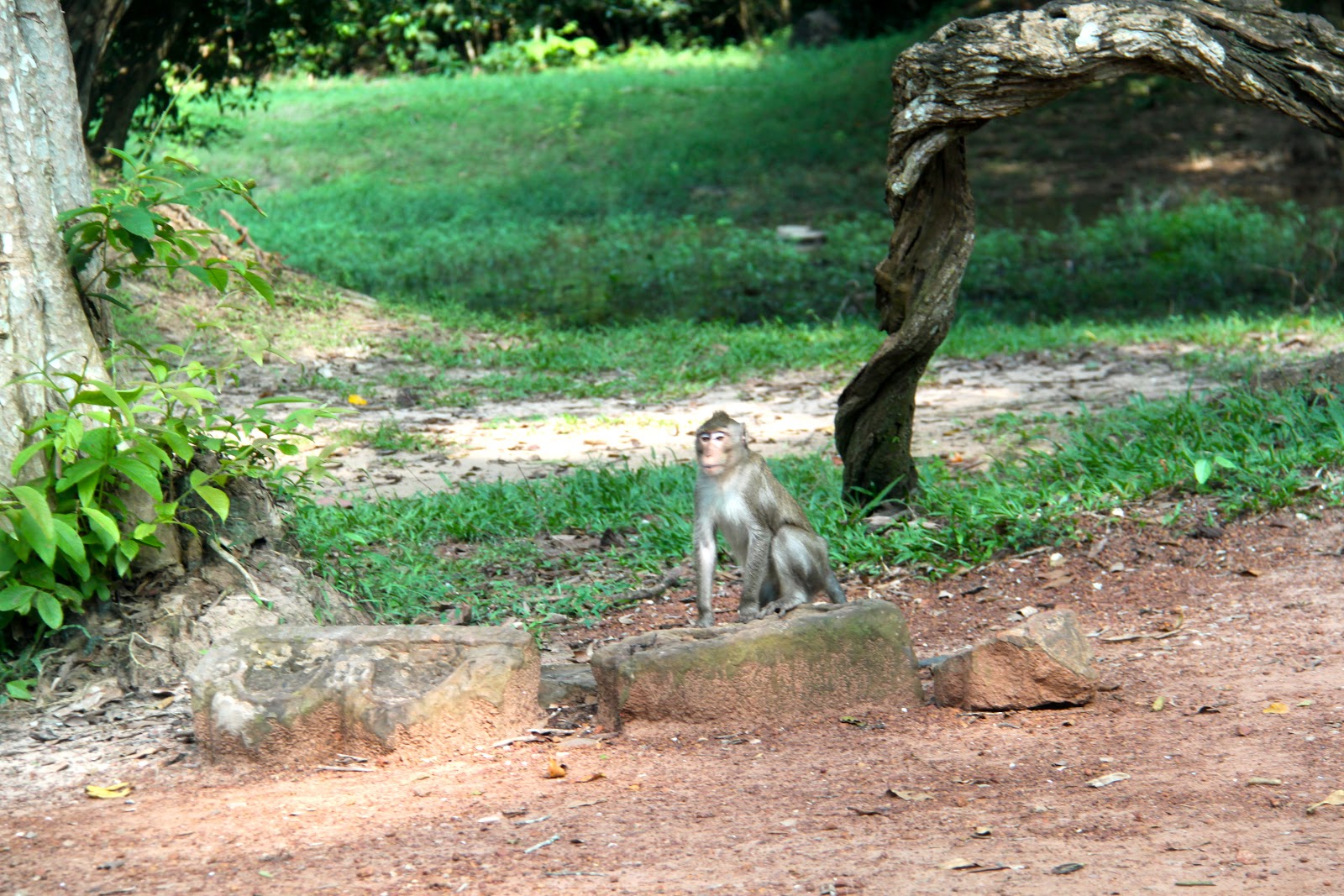
Monkey on the side of the road.

School’s out.

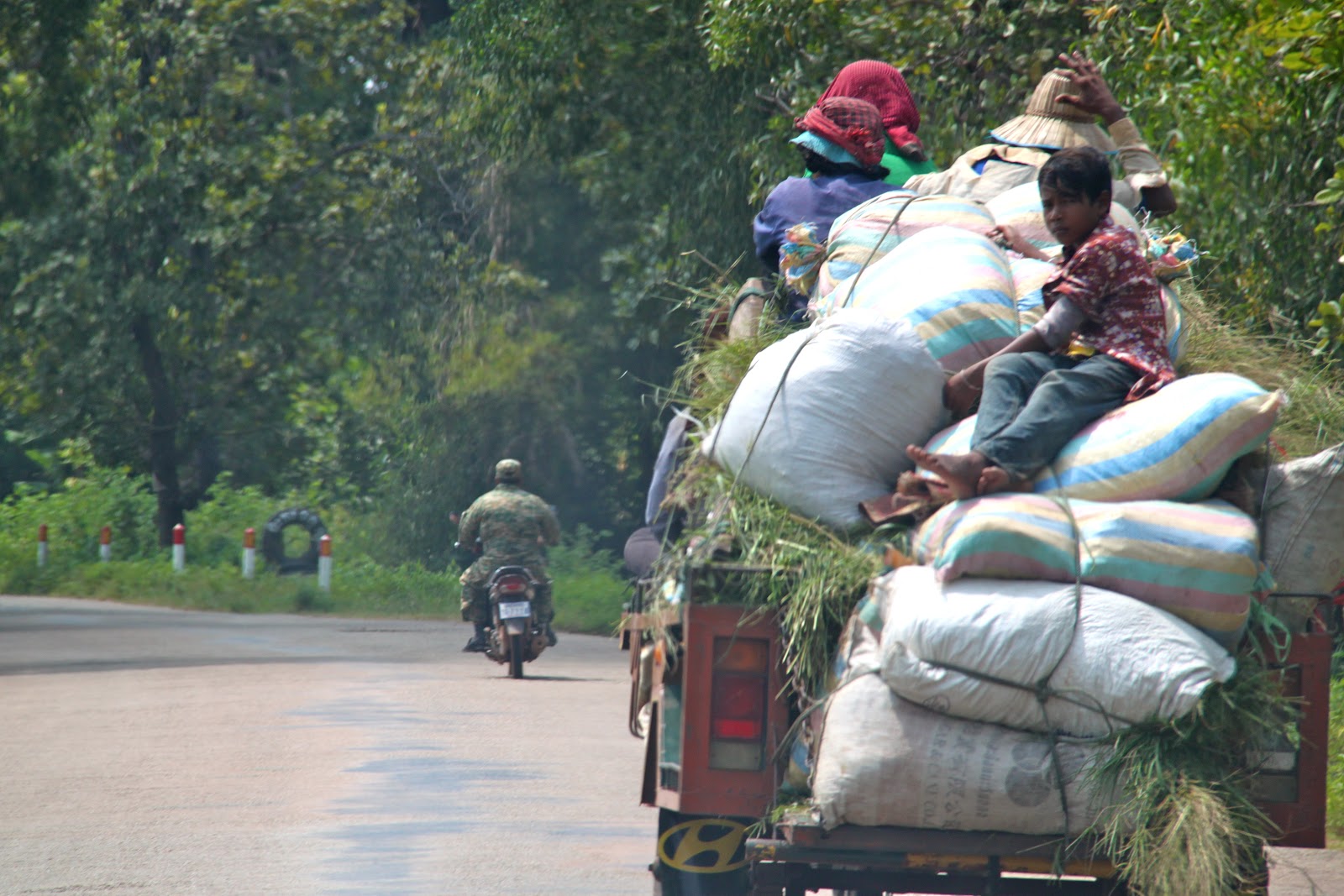
Motorbike pulling a trailer with a freeloader.

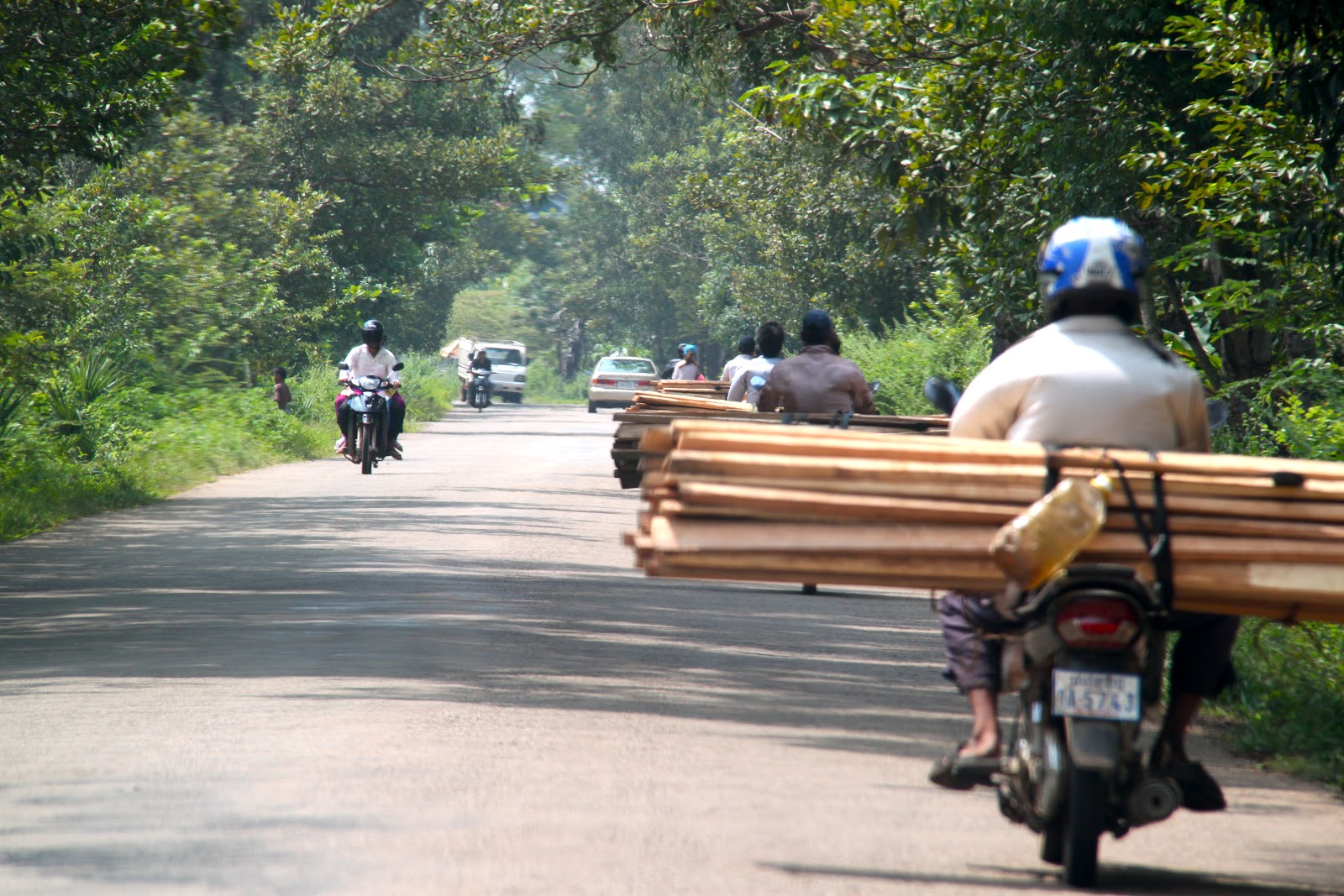
Motorbike freight.

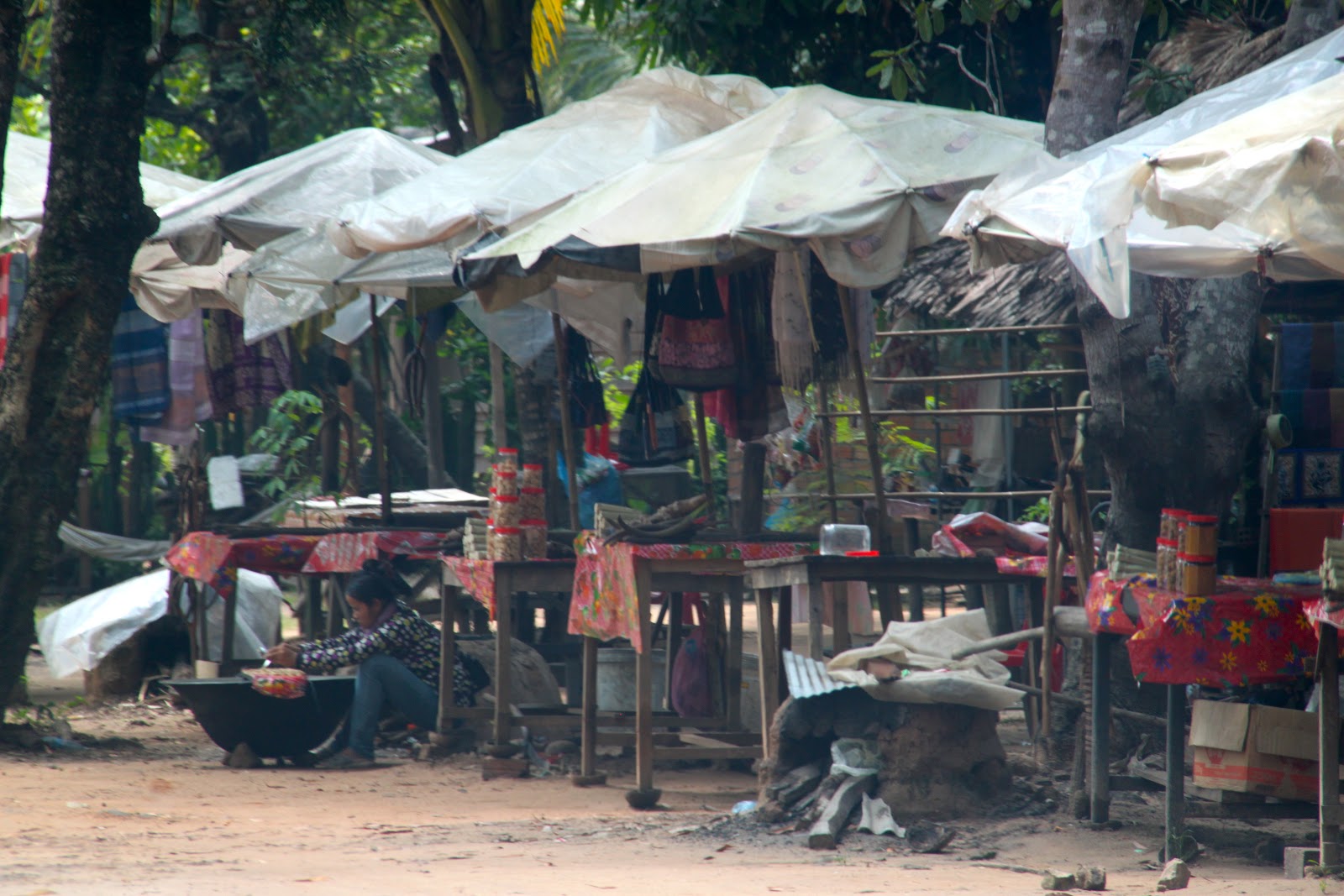
Their version of an outdoor mall.  Let’s go shopping.
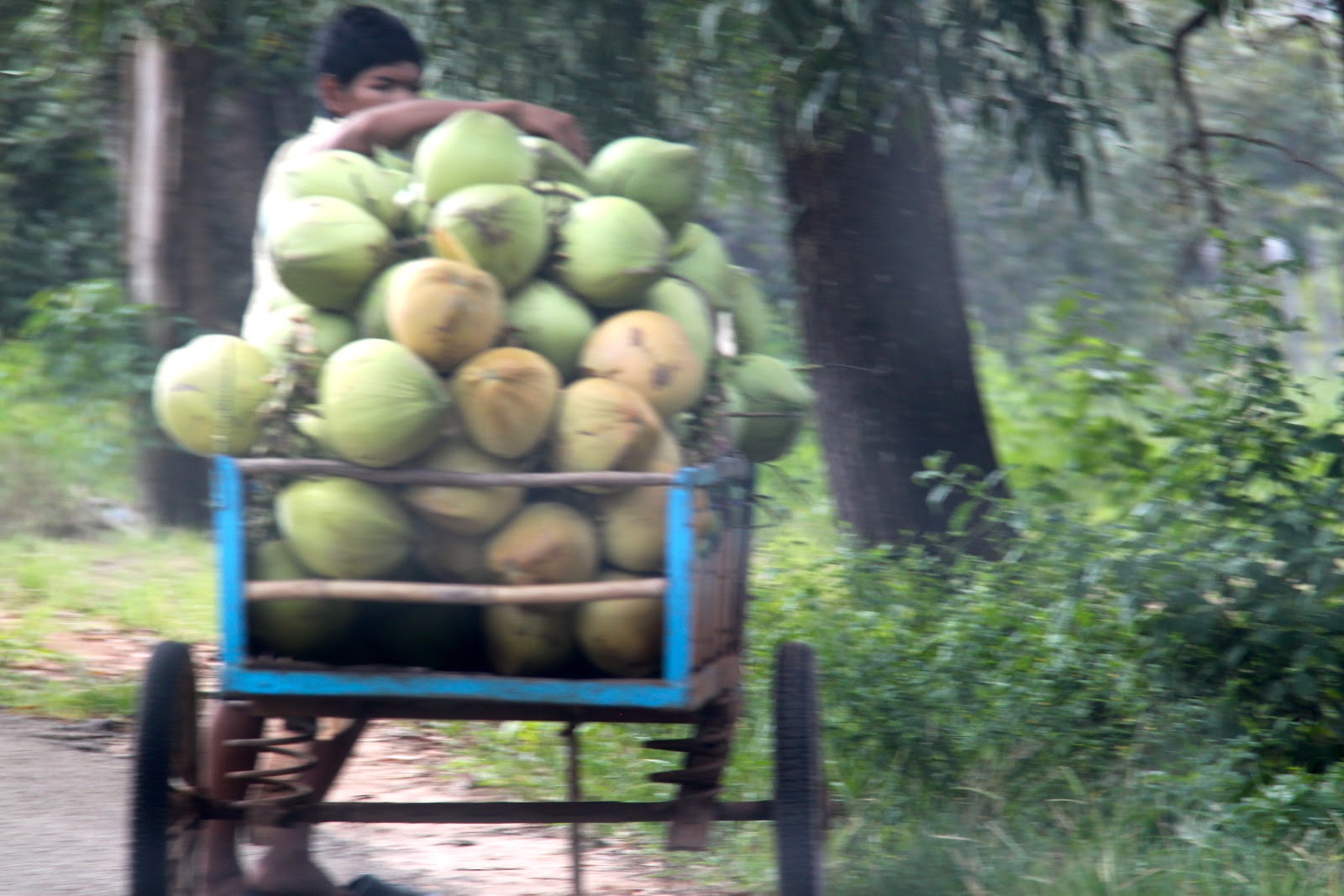
Motorbike coconut delivery.

Motorbike construction vehicle.  There are no red flags, so you better watch how close you drive to them.

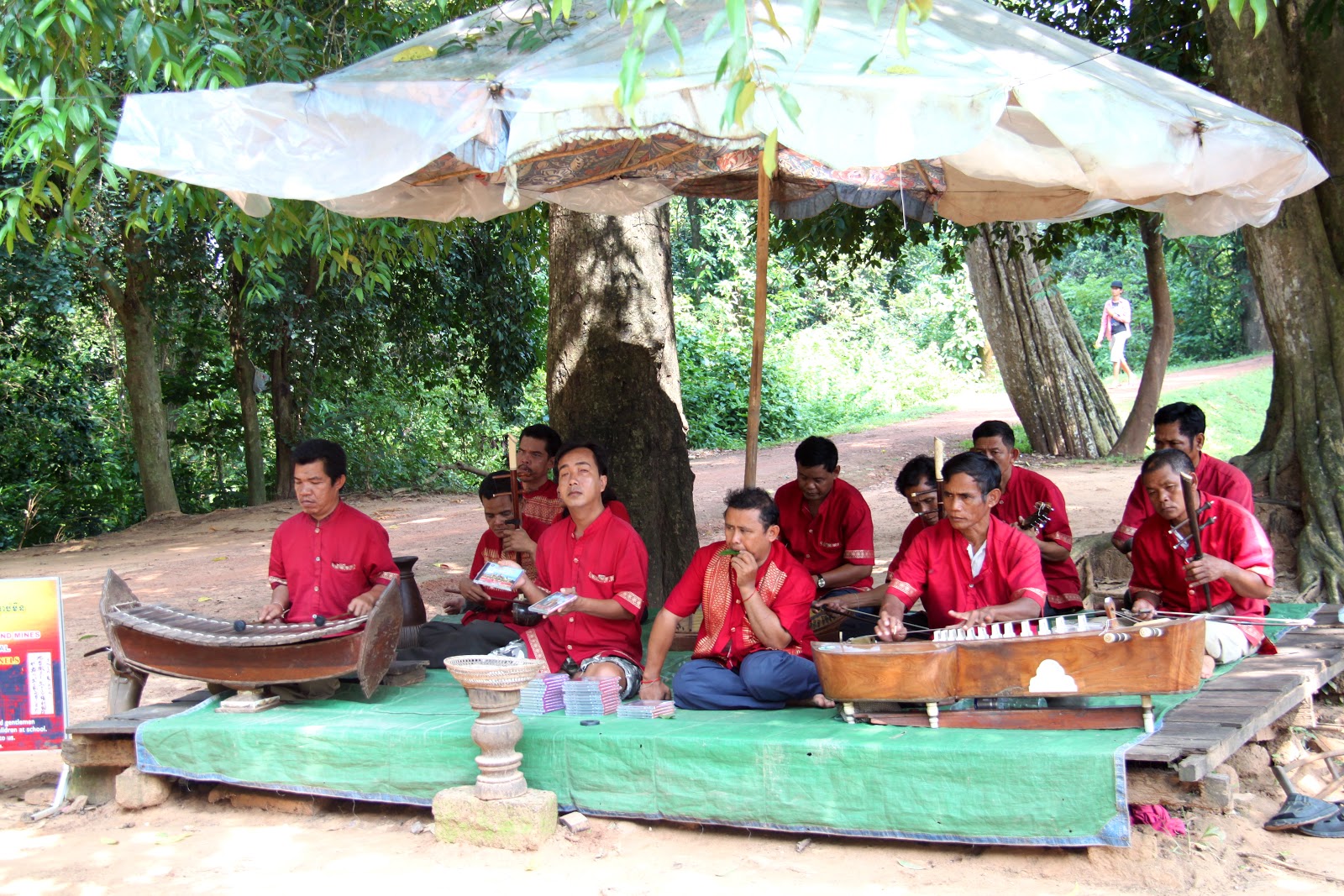
A concert outside the temple.

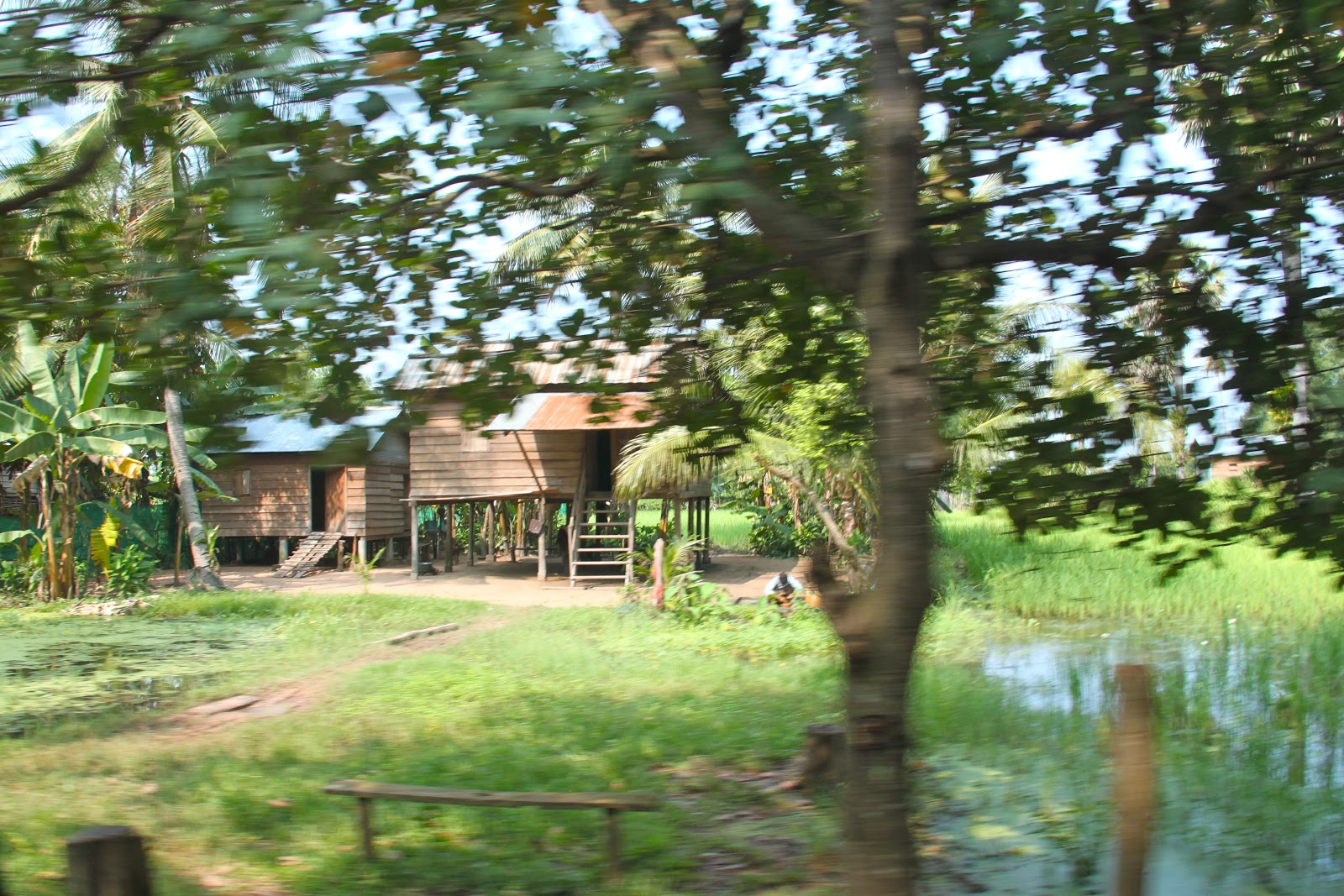
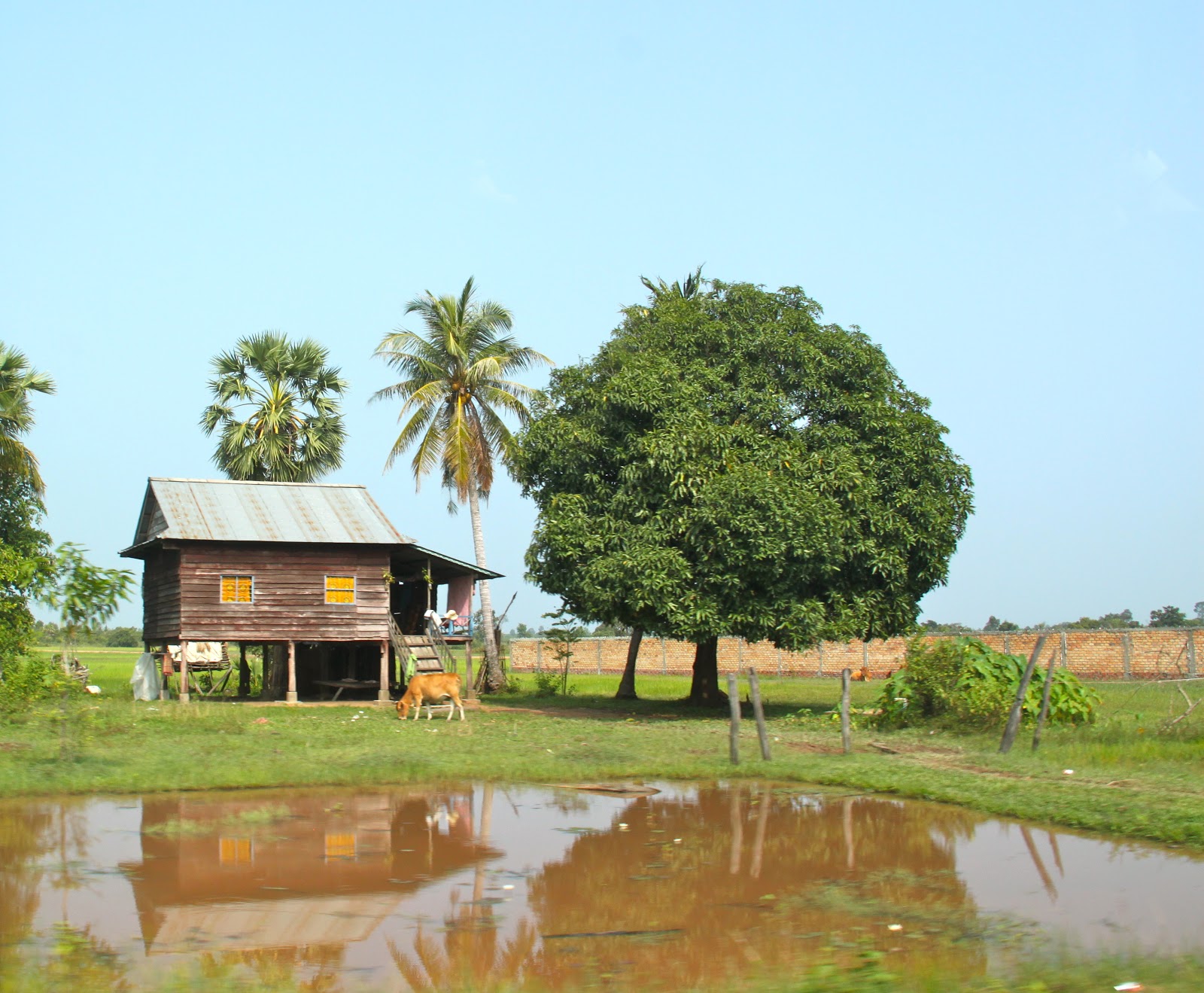
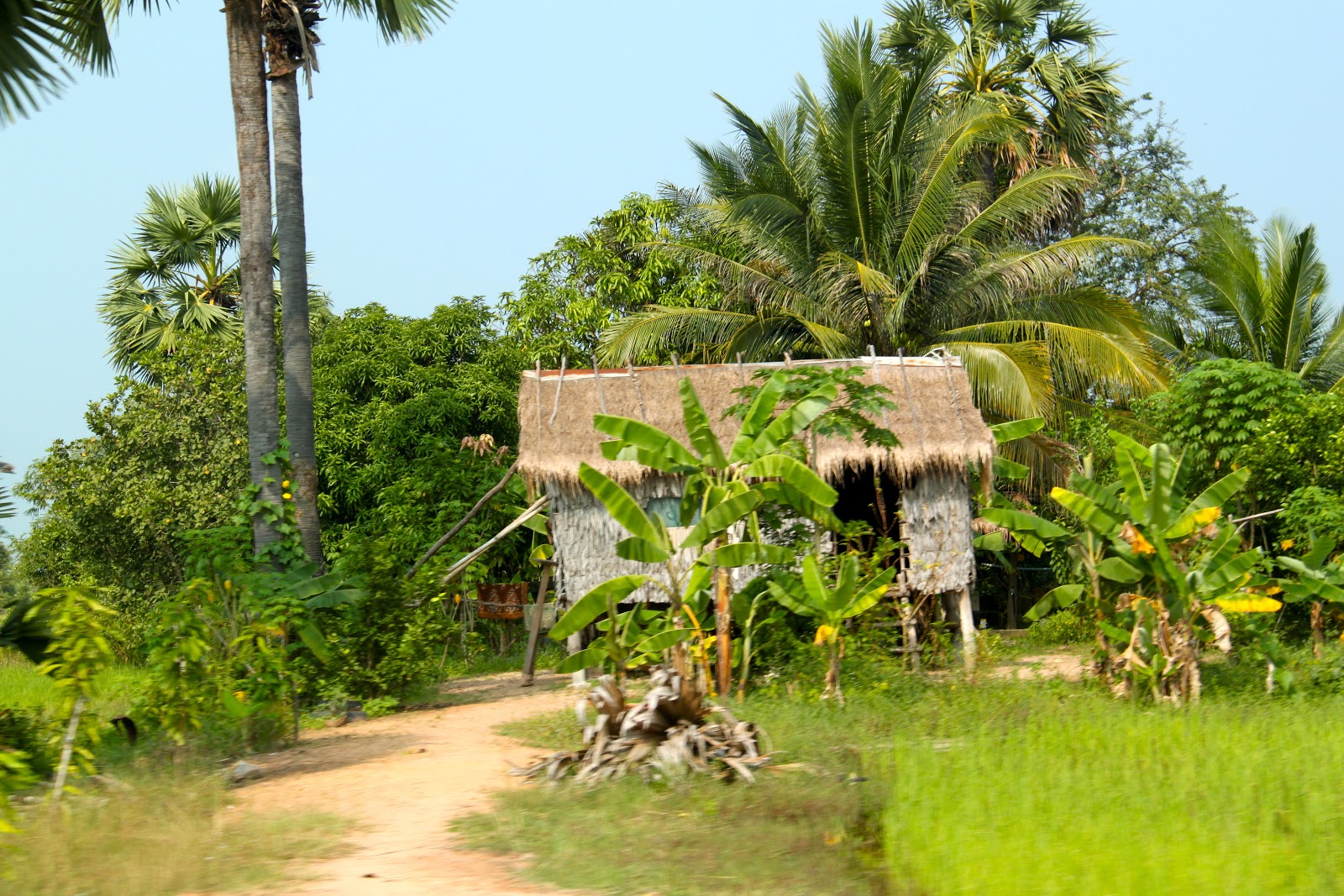
Homes along the way.  Most are built on stilts to keep animals and water out.

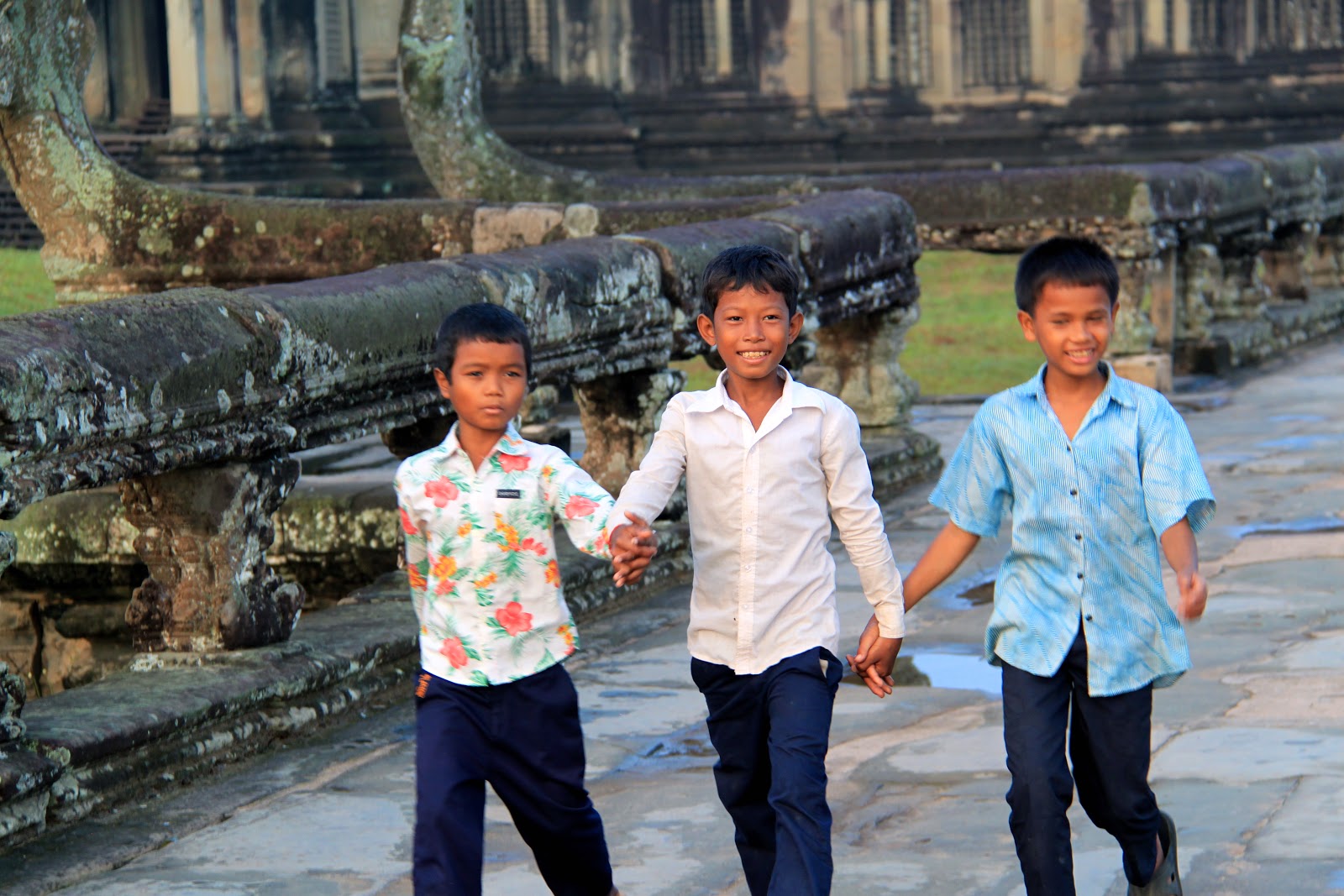
Young boys.
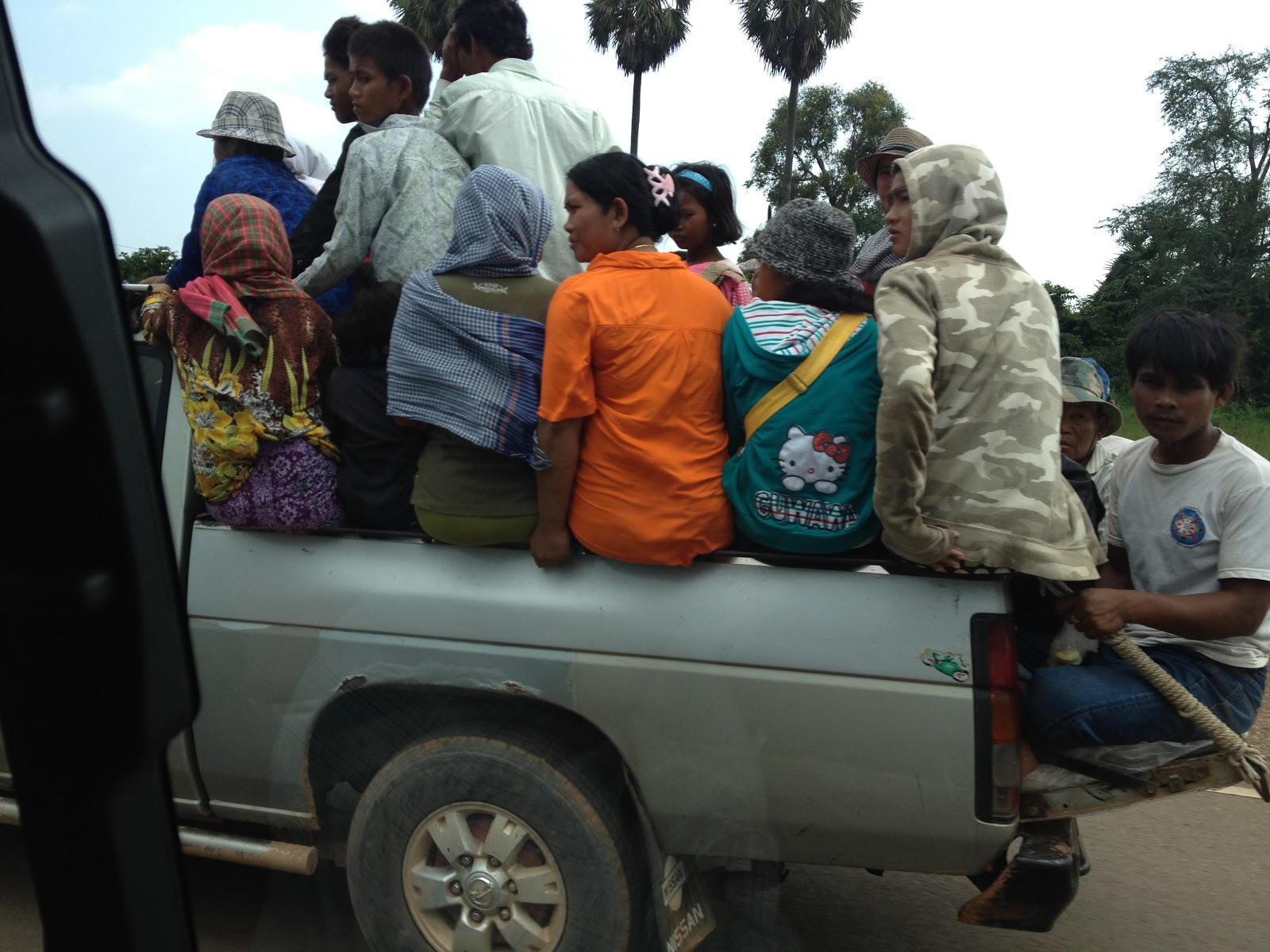
Full so called taxi

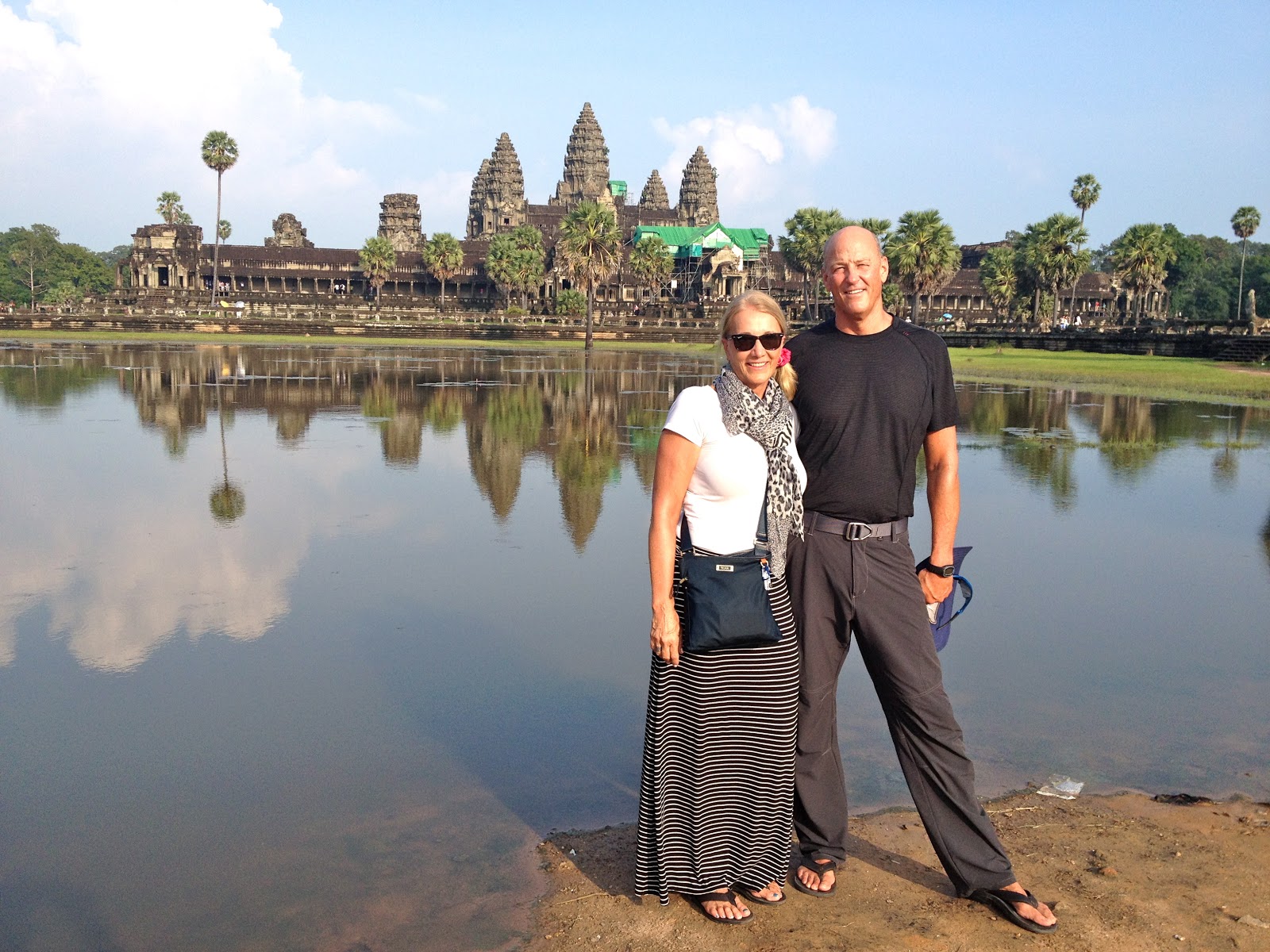
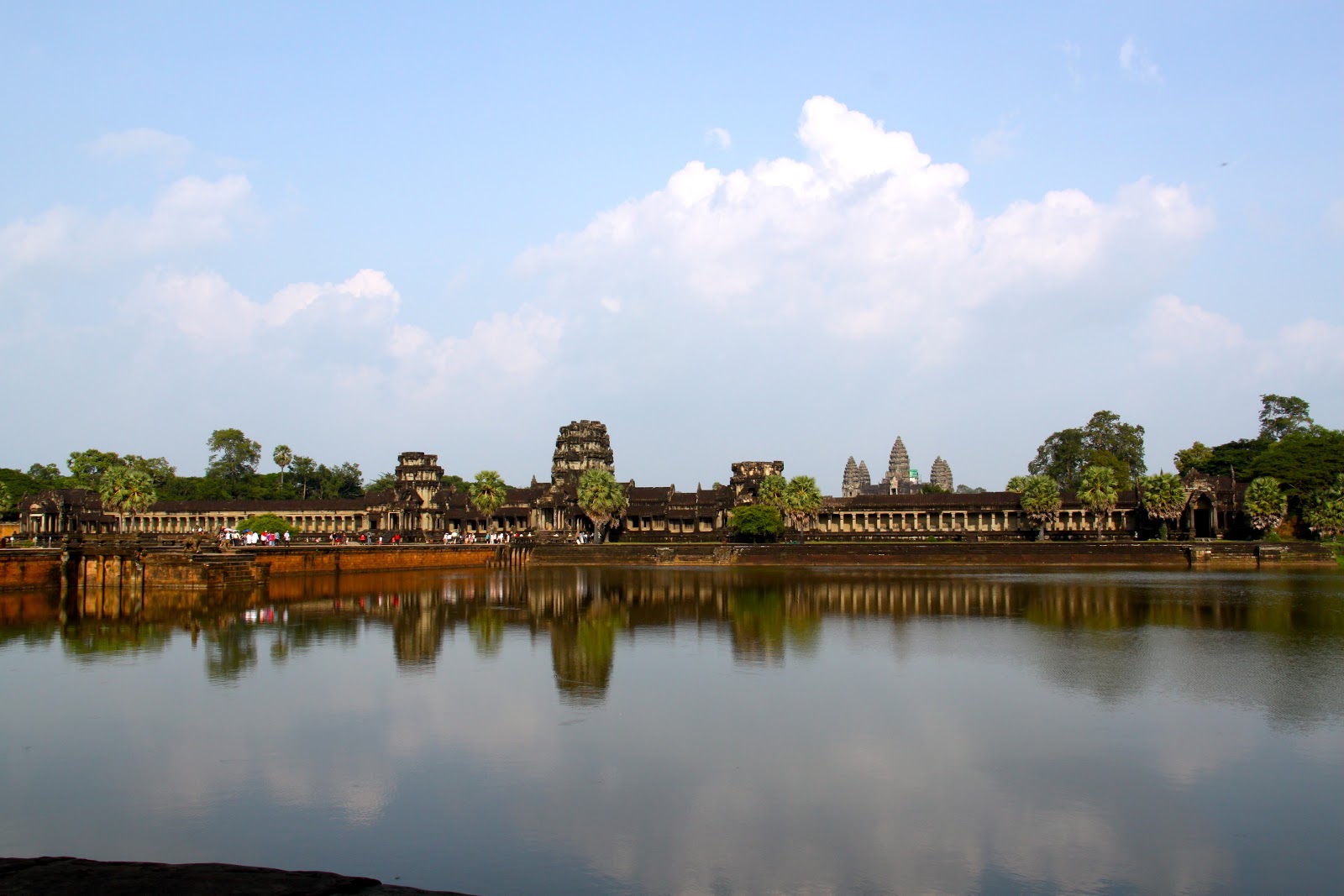
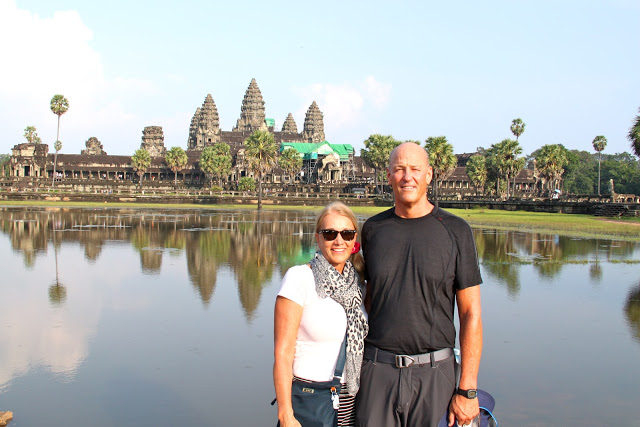
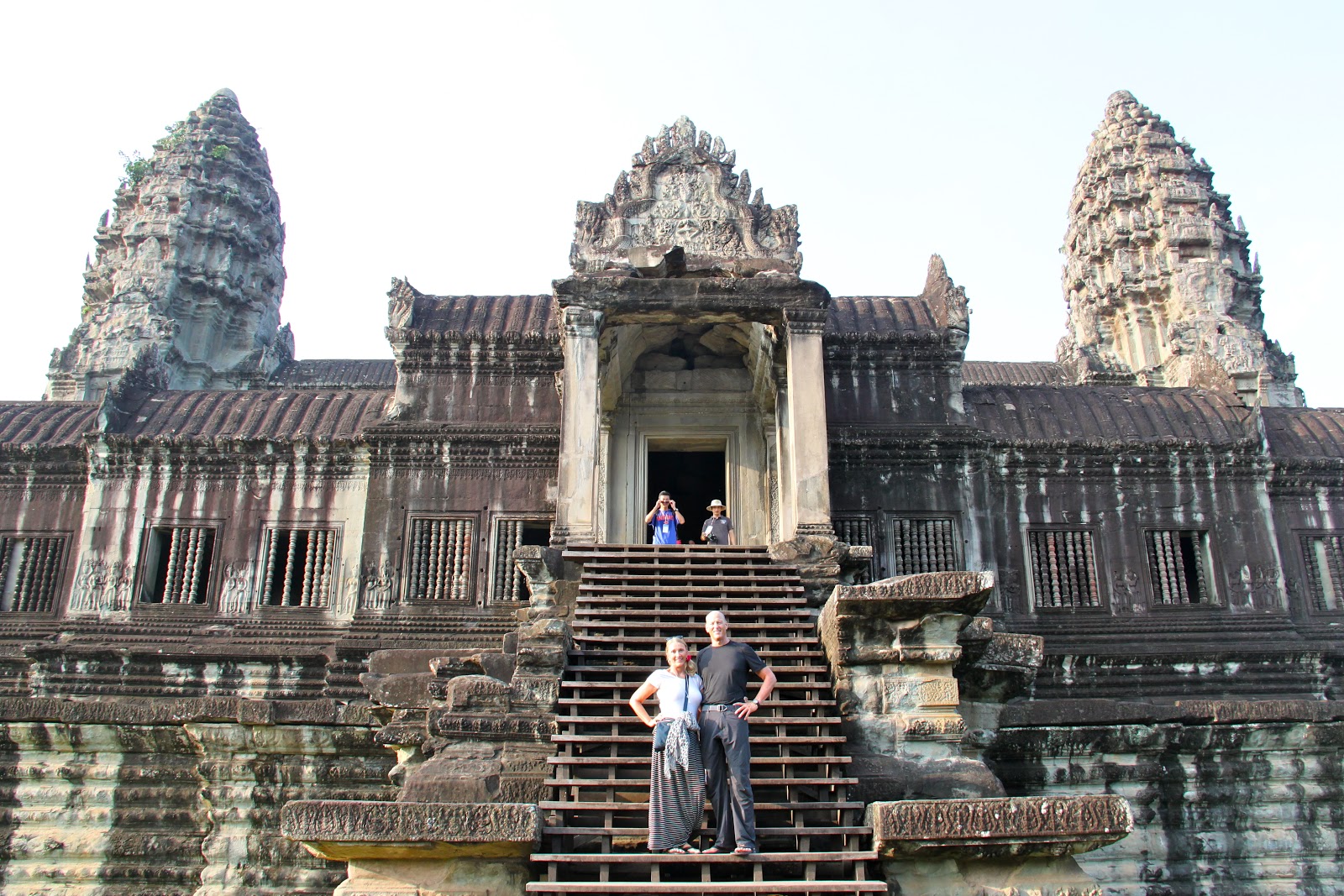
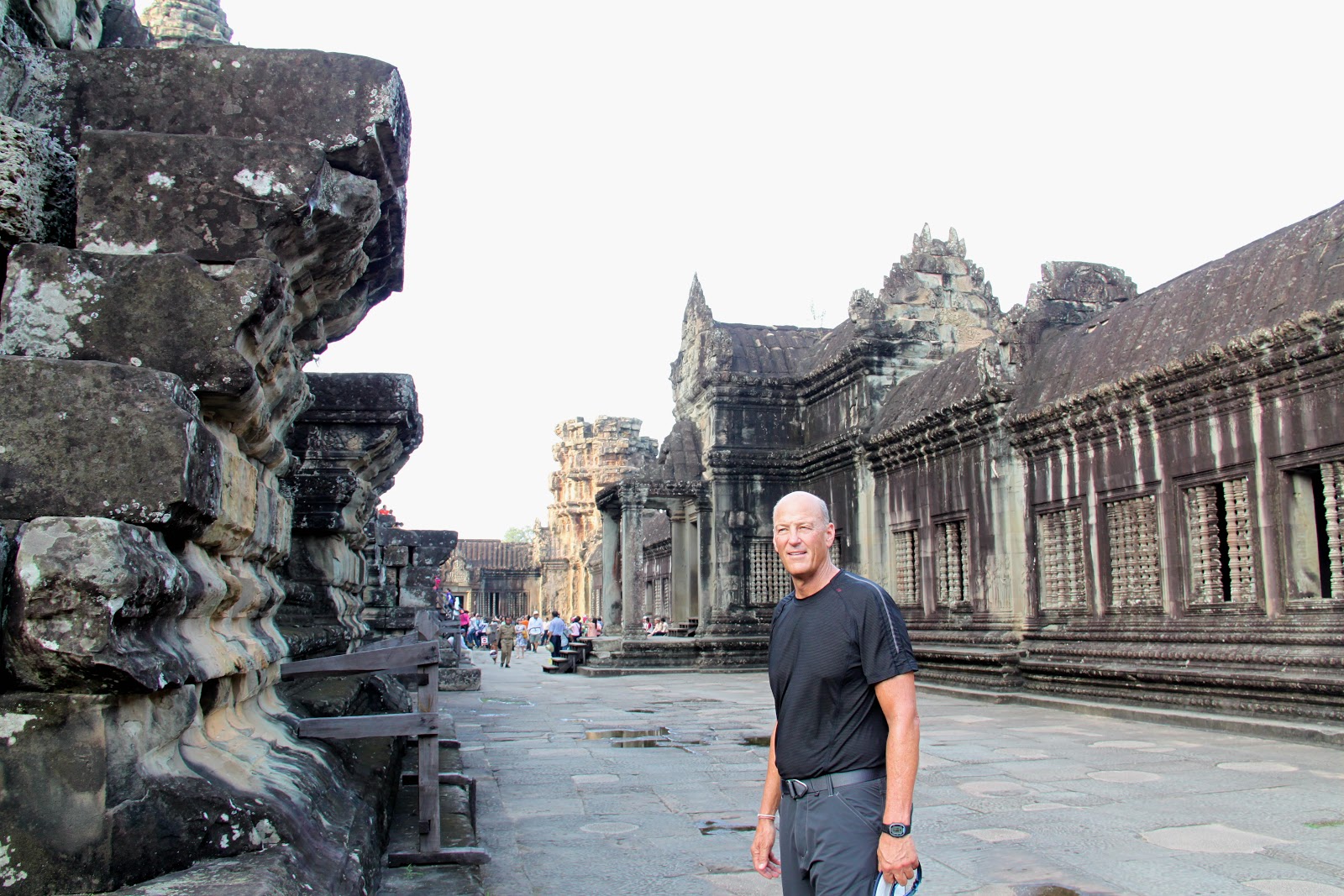
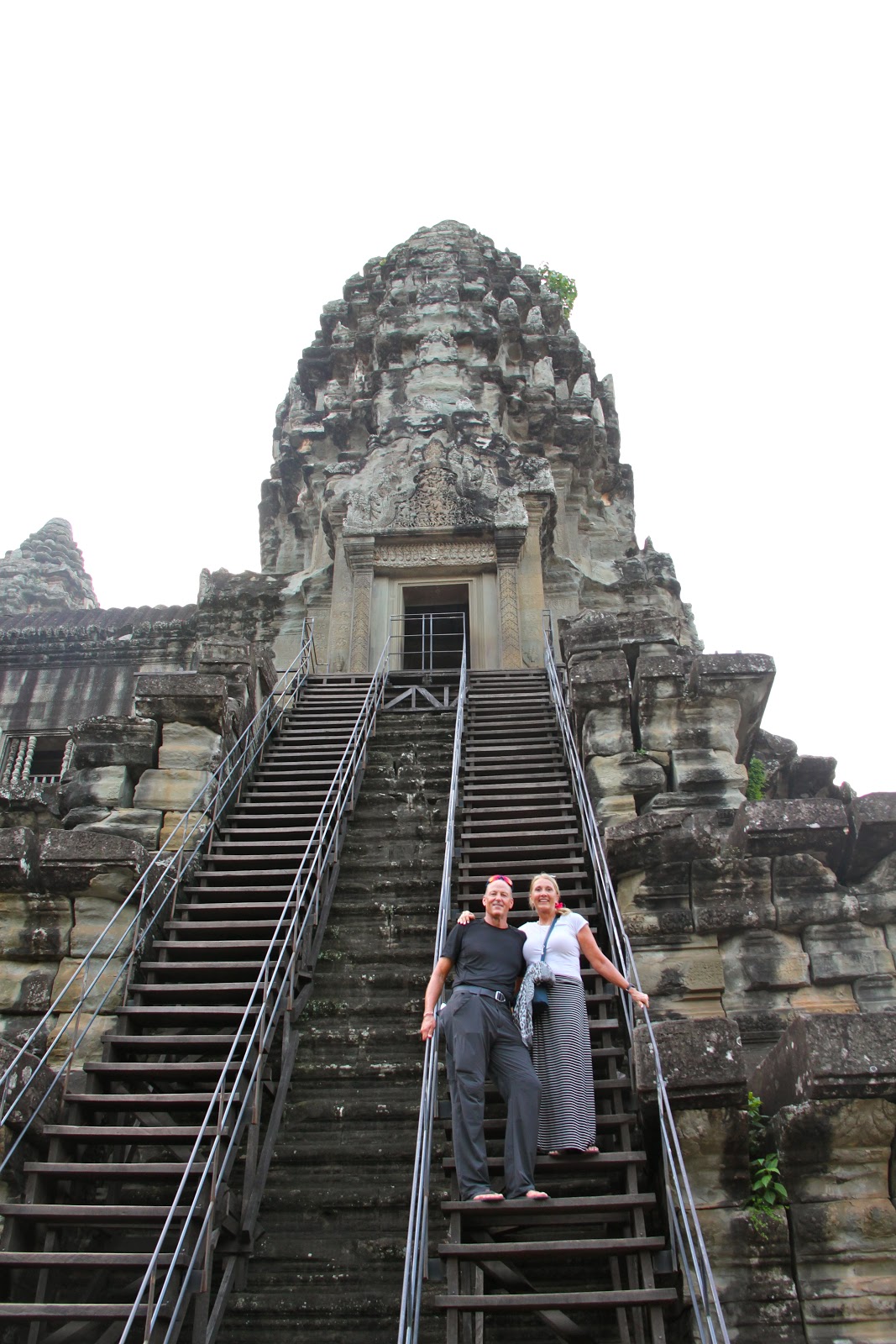
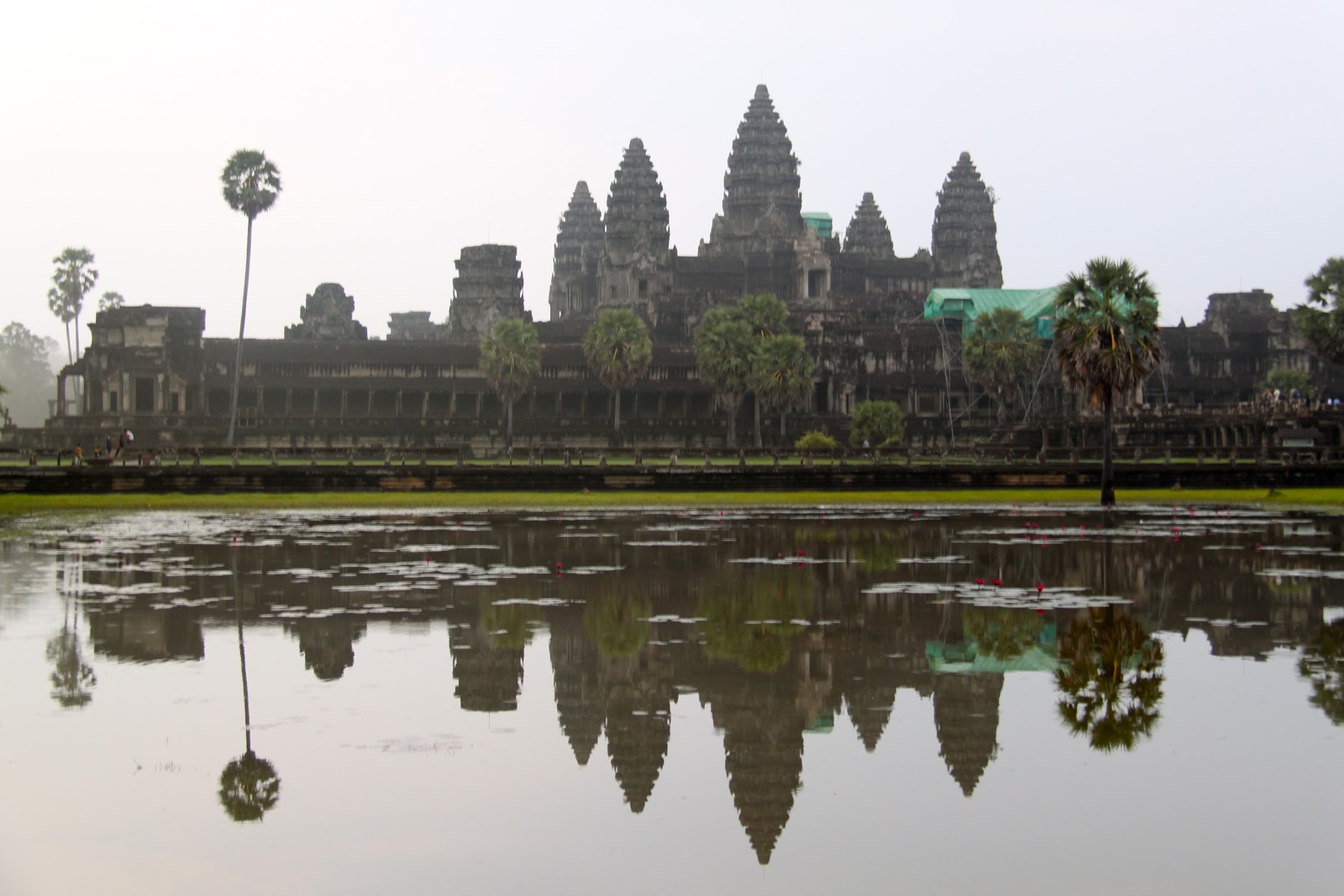
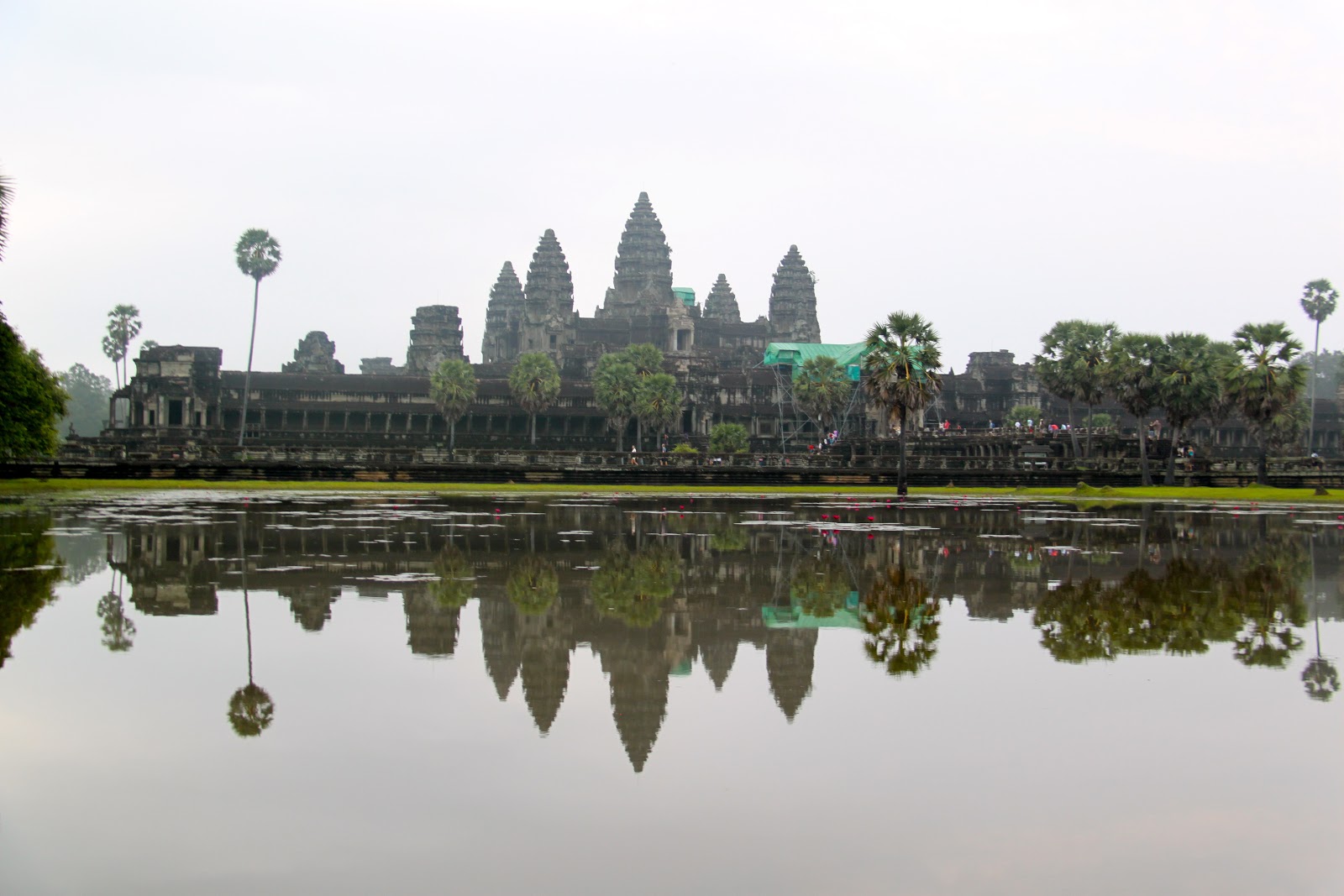
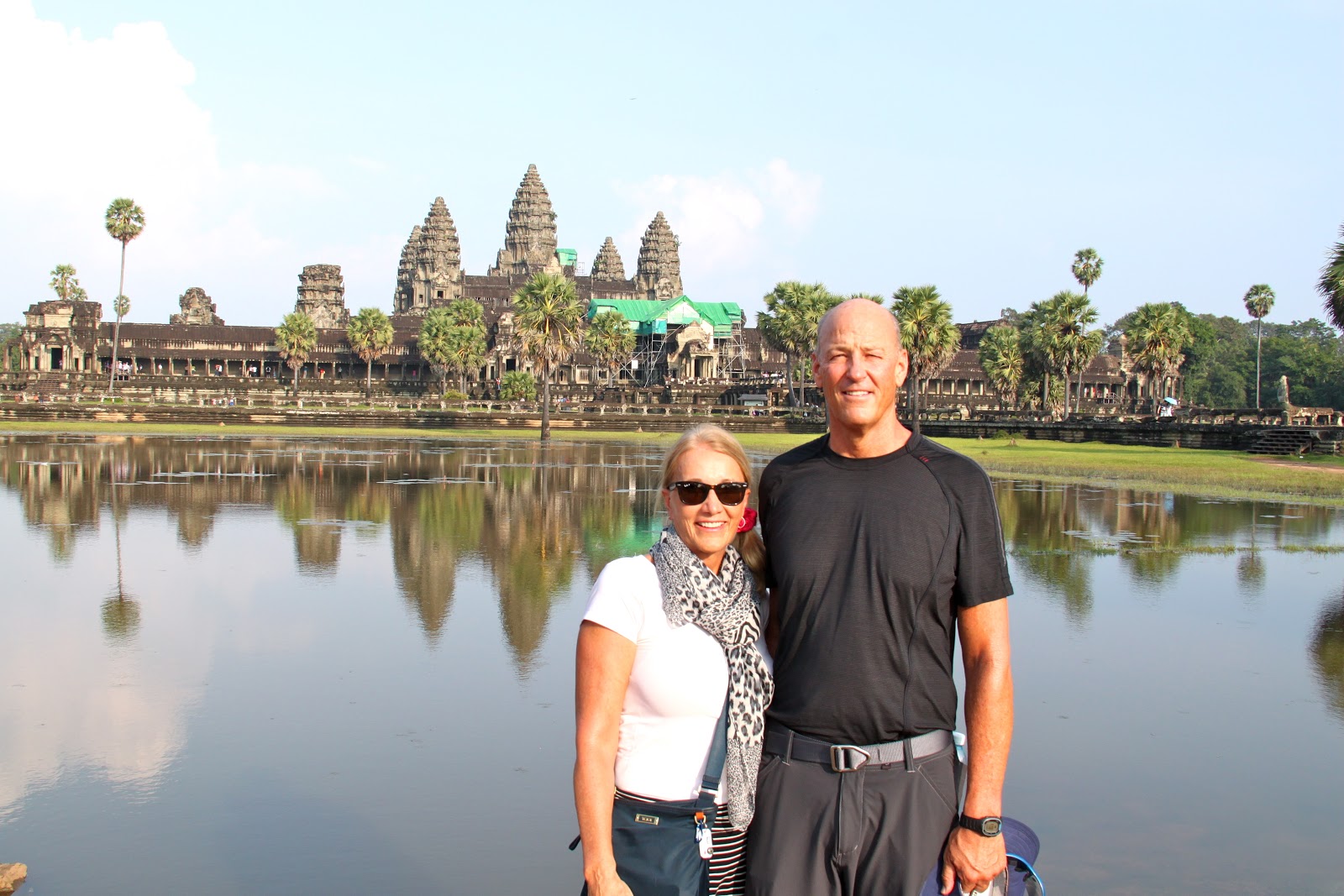
We landed at 2 pm and by 3:30 we were looking across the moat at the fairy tale looking towers of Angkor Wat.
ANGKOR WAT TEMPLE COMPLEX.
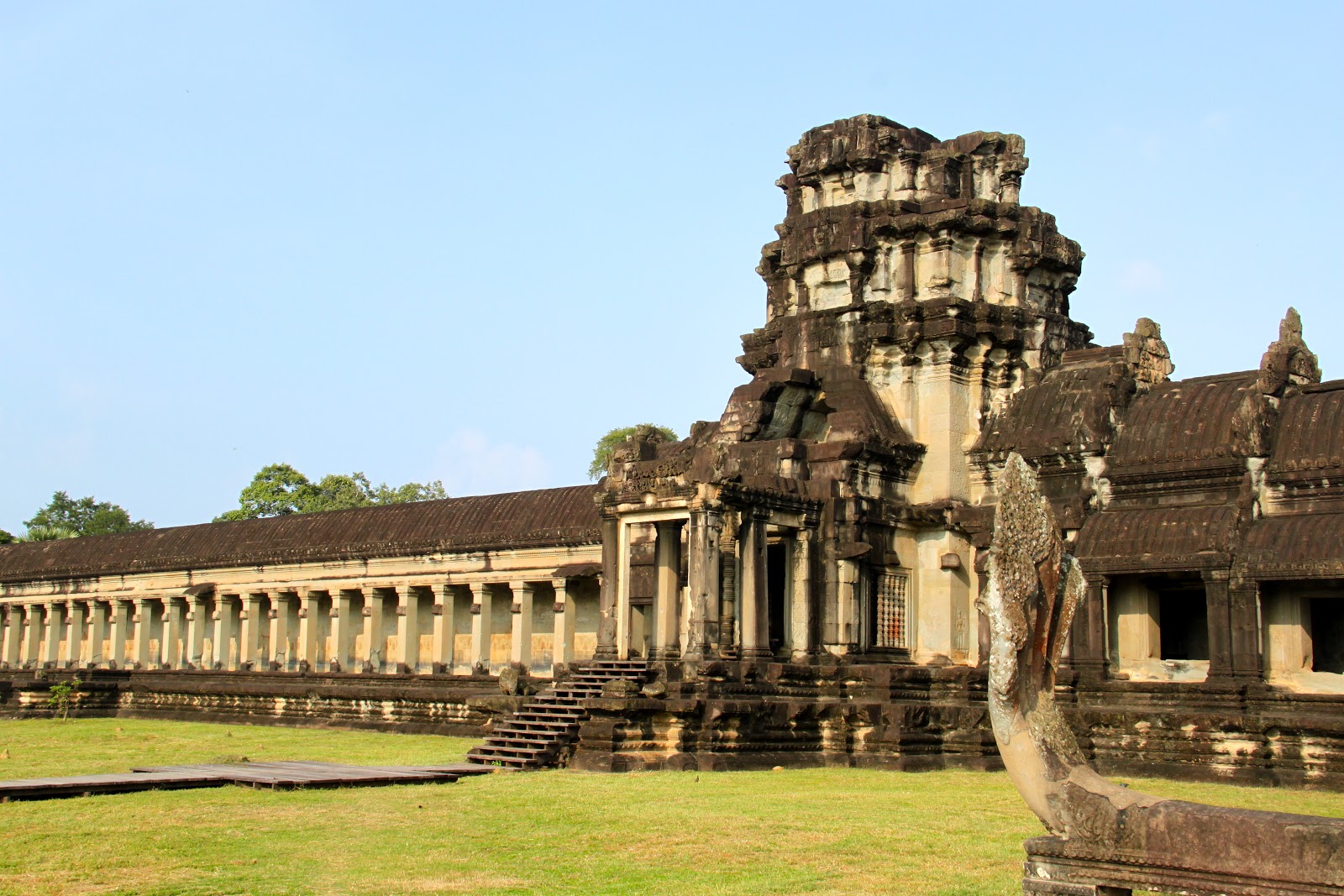
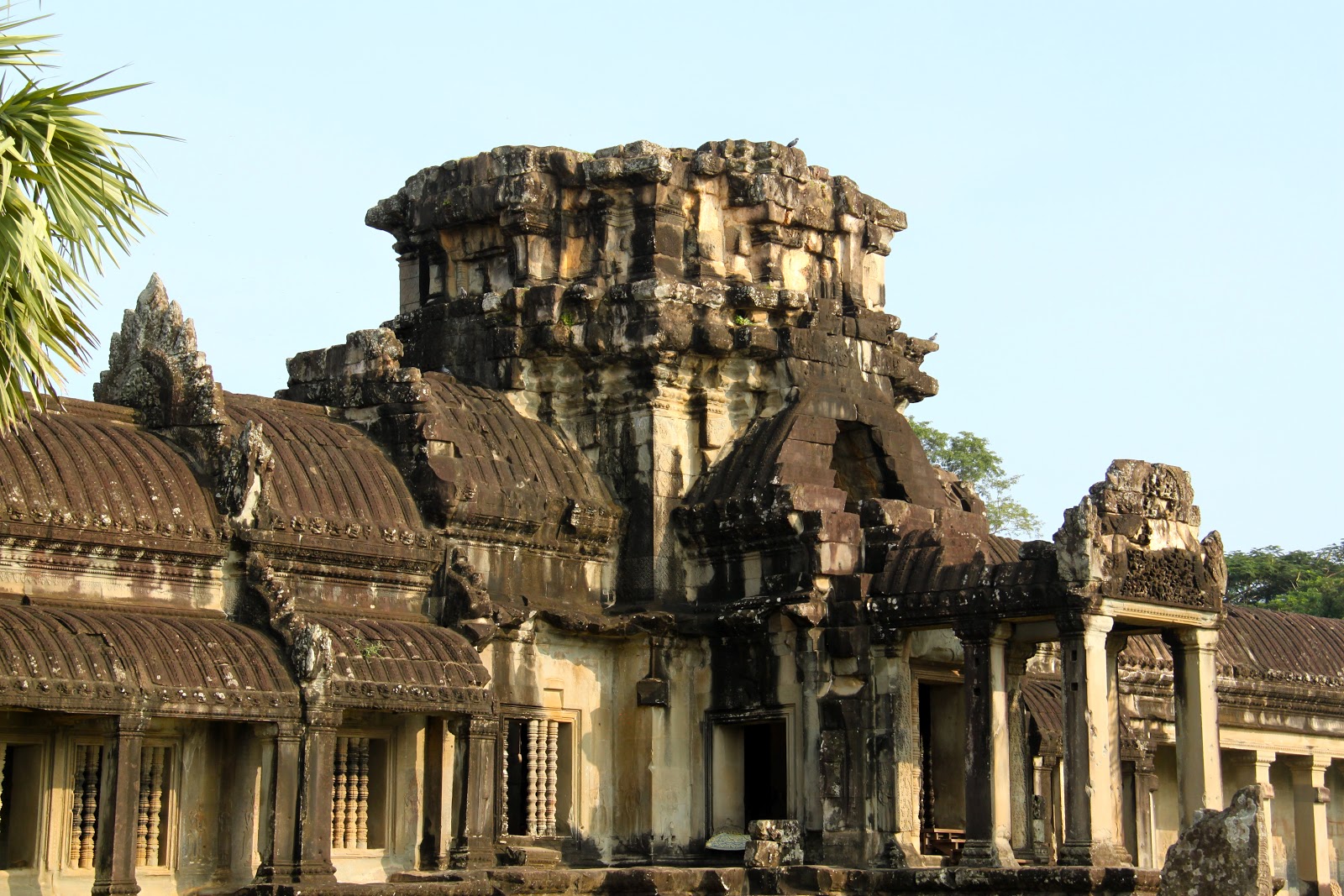
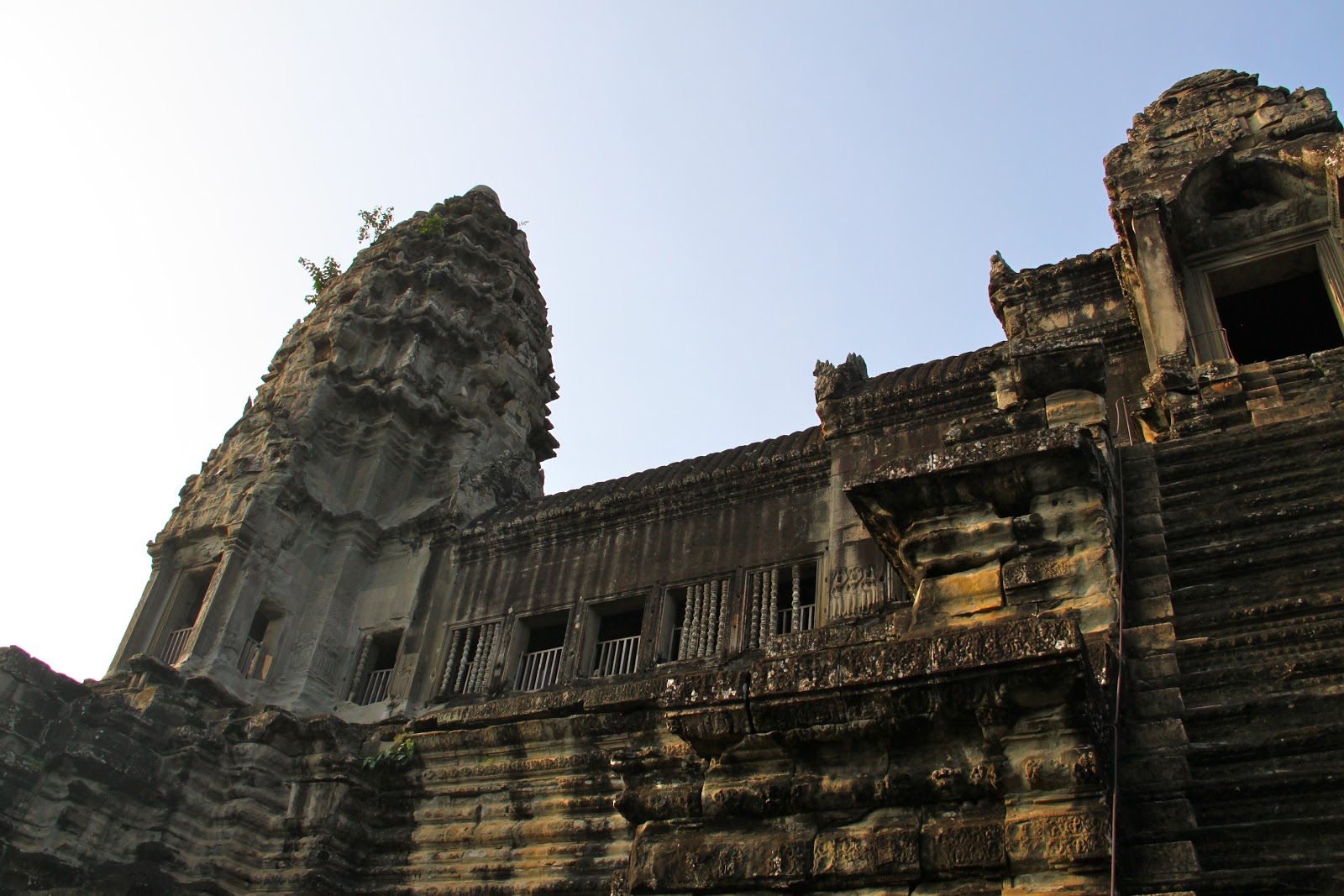
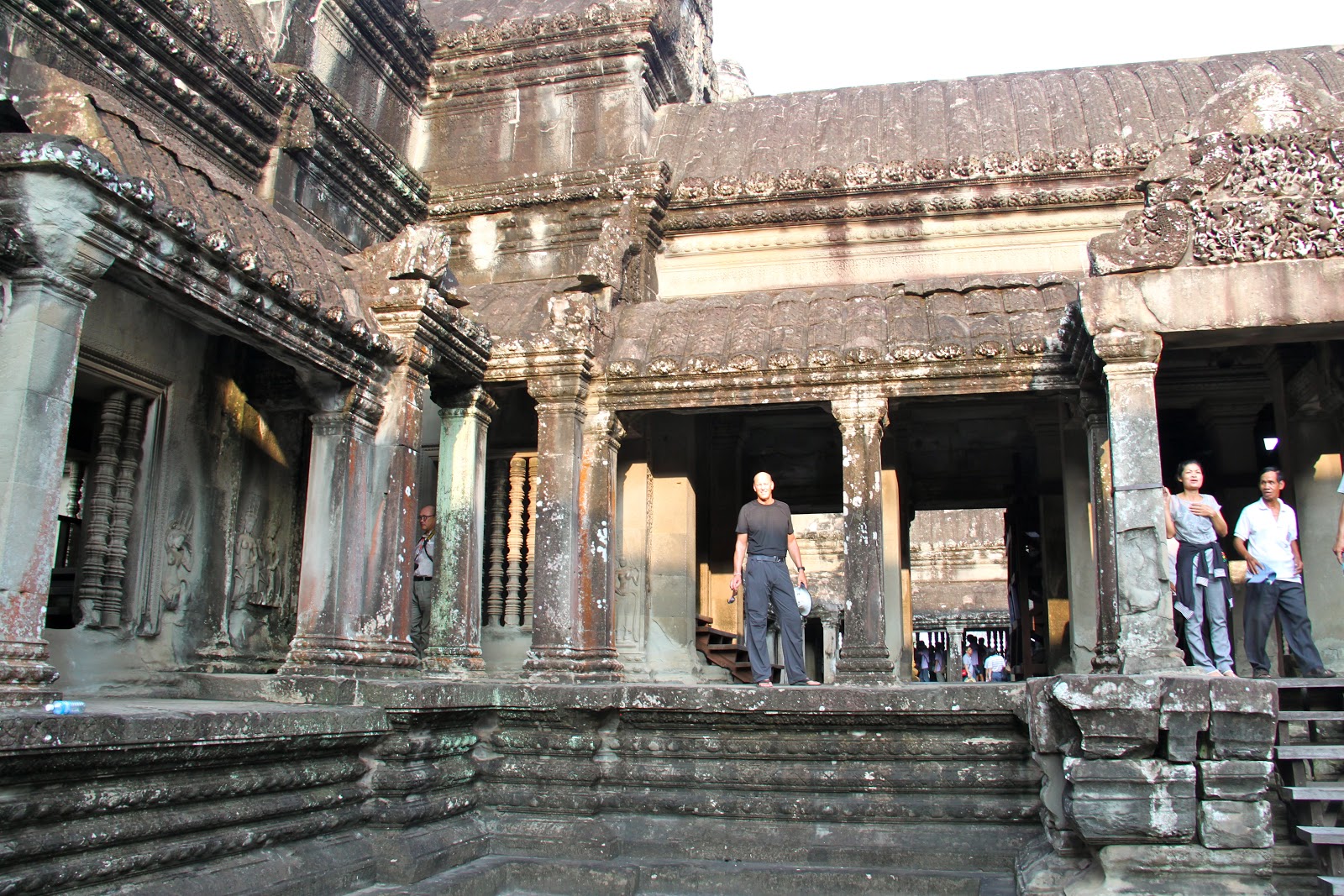
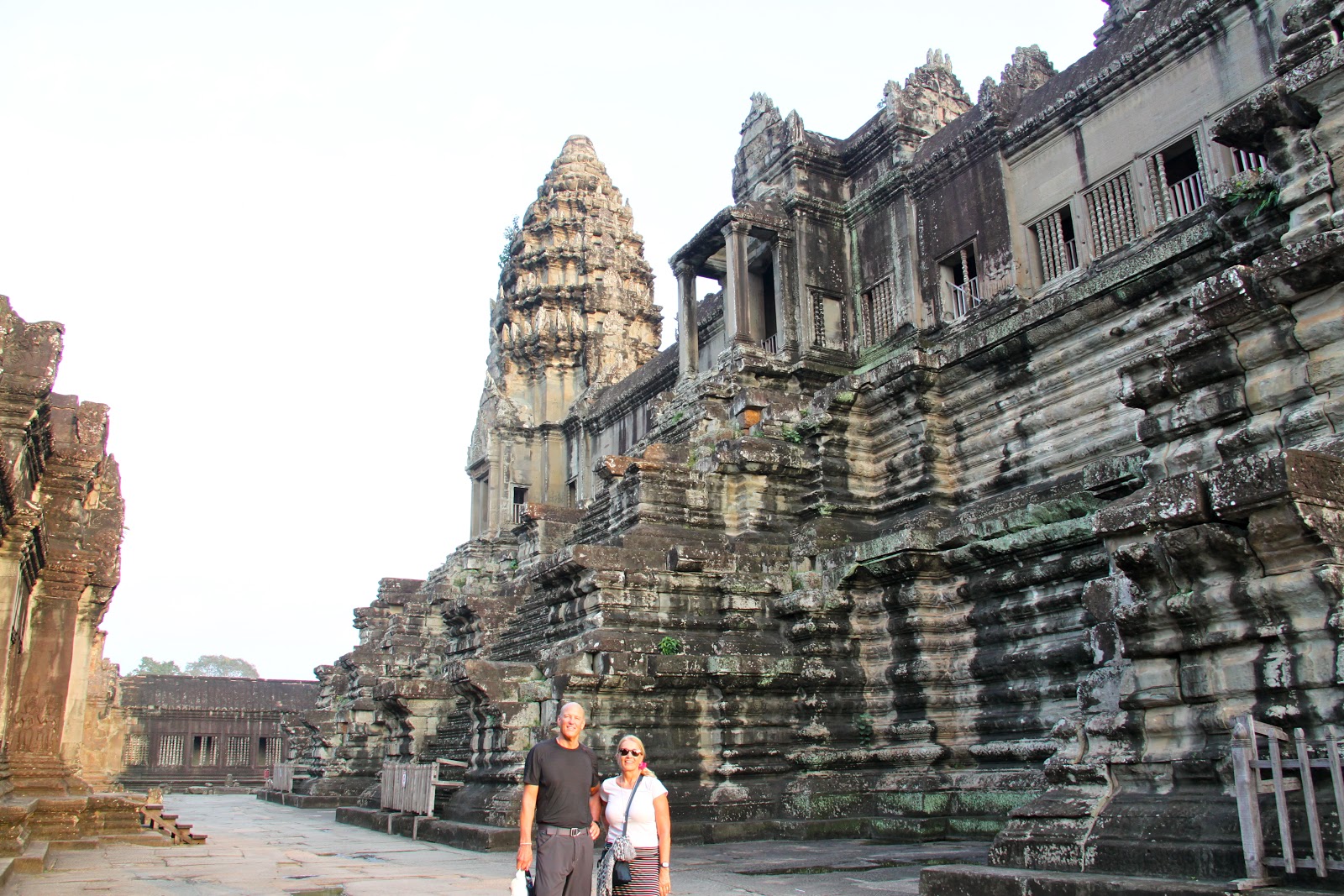
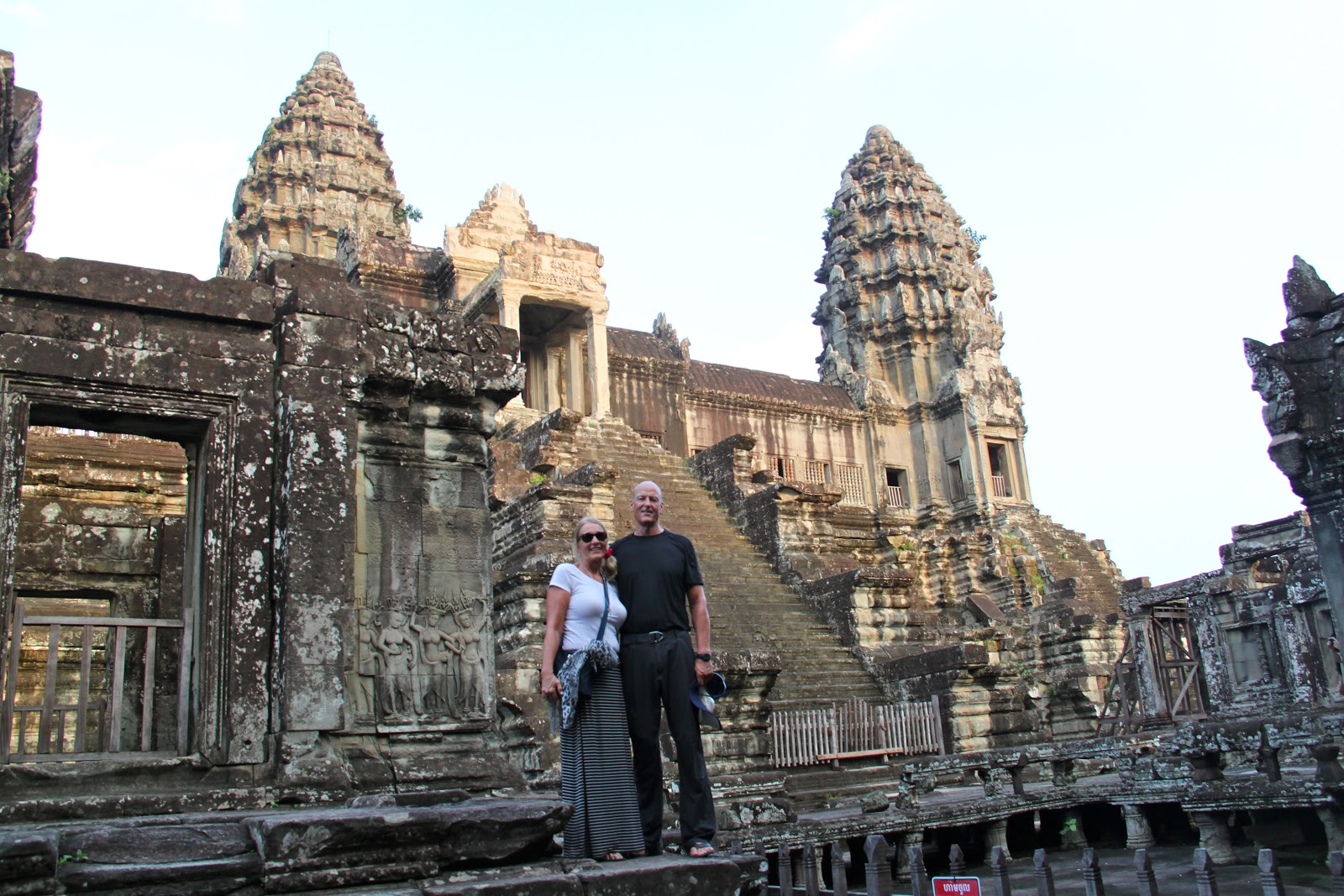
Angkor Wat was built in 37 years in the 12thcentury.  It is made out of sandstone and has intricate carvings everywhere.  It took 70,000 workers and 40,000 elephants to build Angkor Wat.

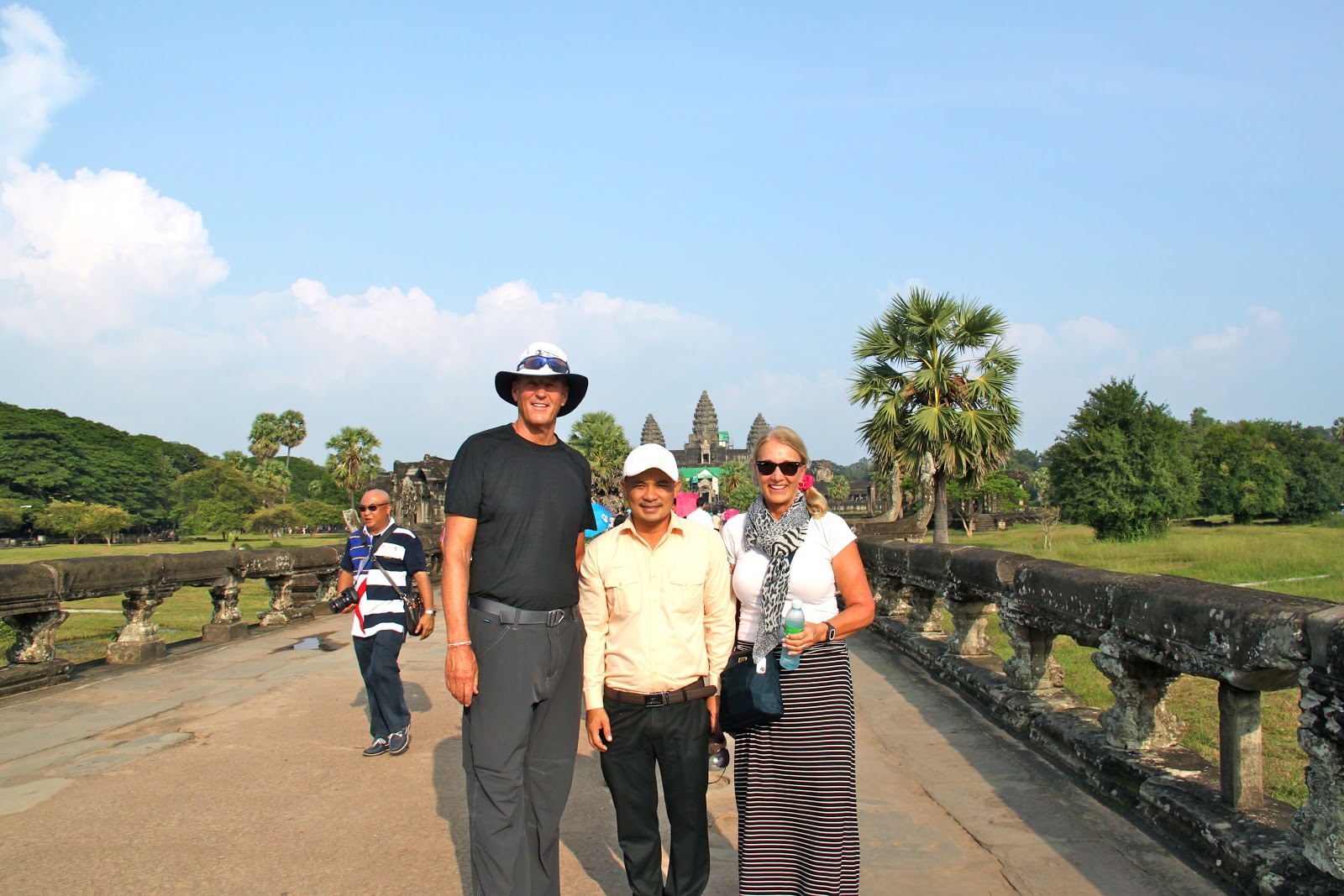
The entrance into Angkor Wat

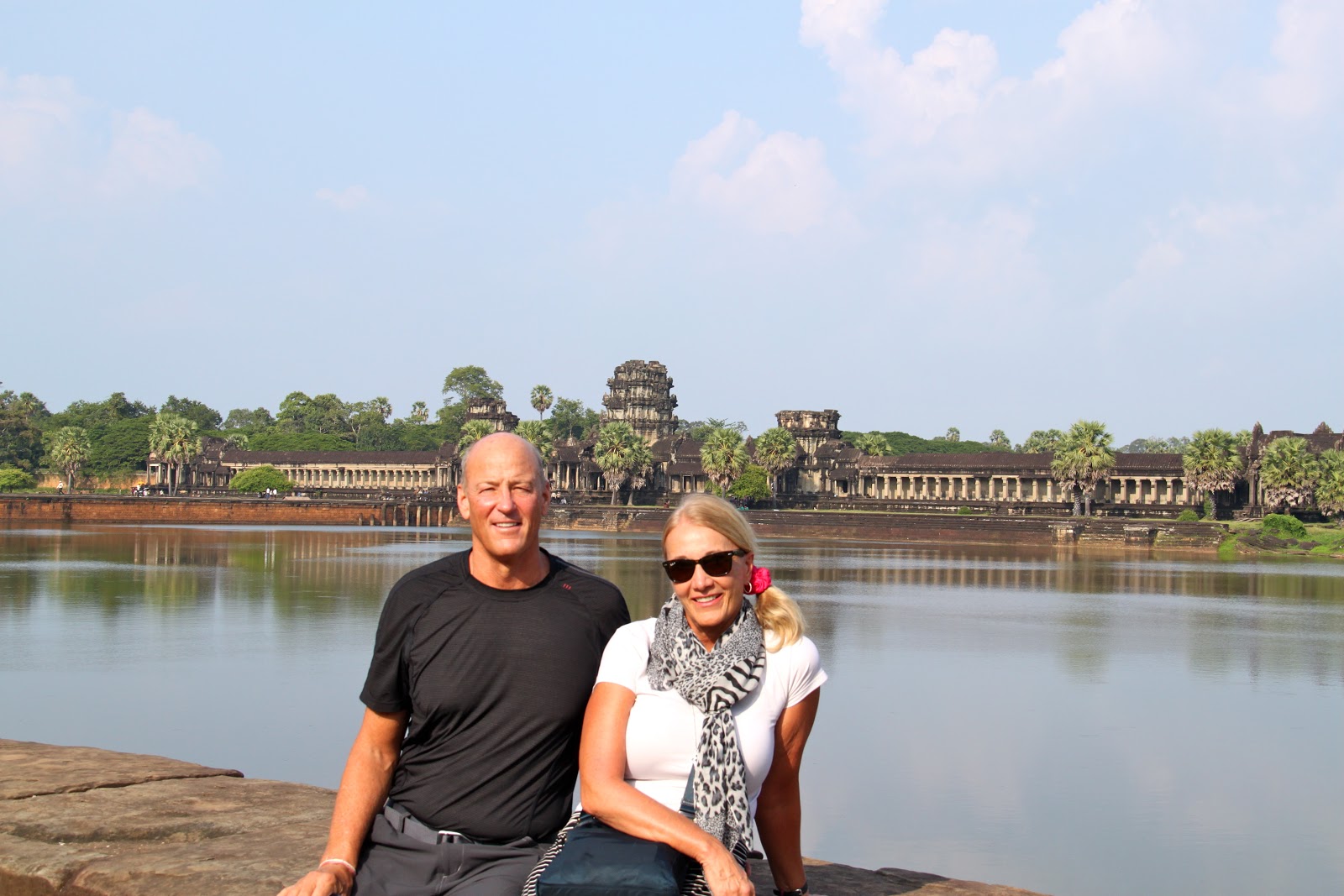
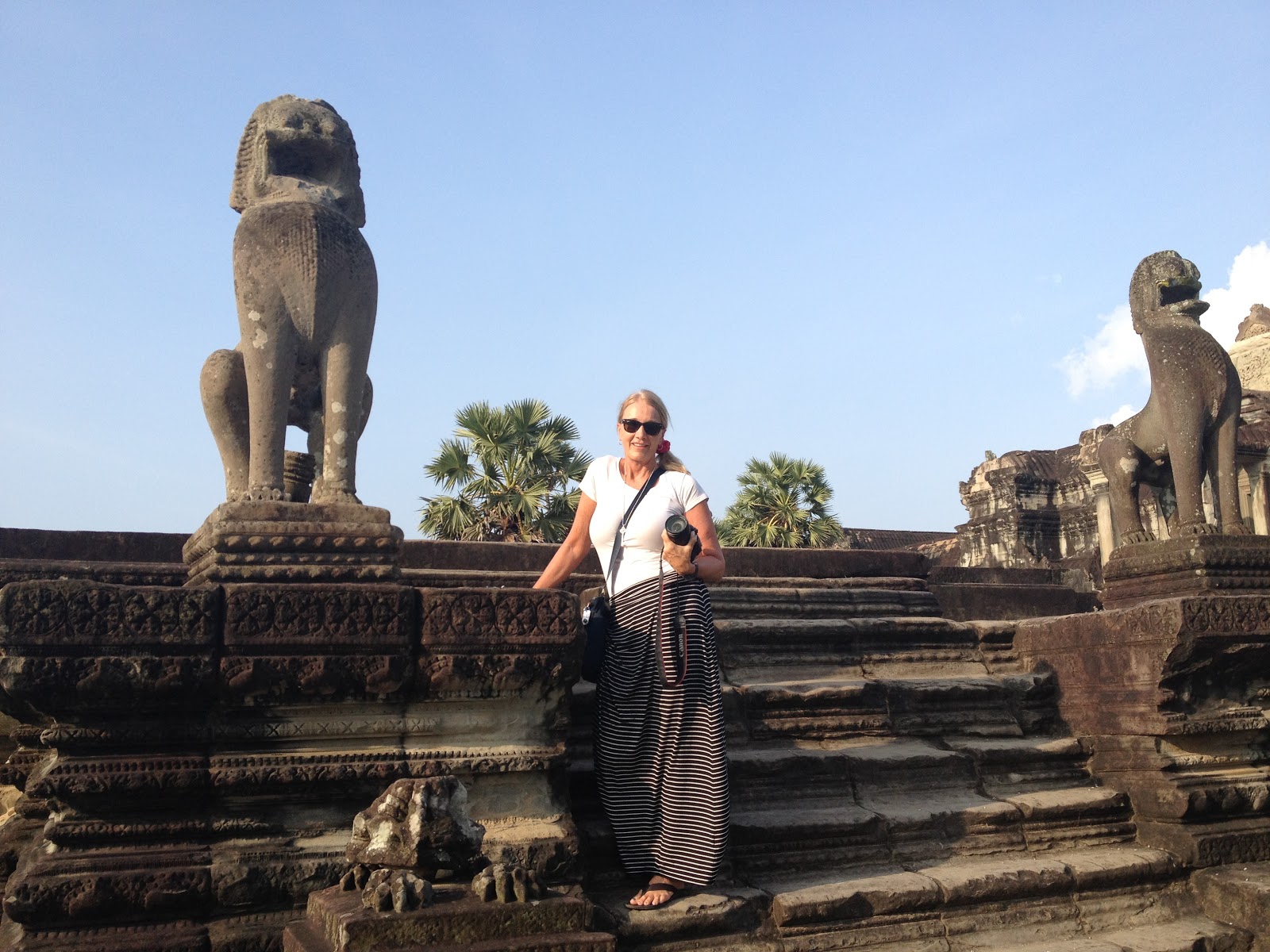
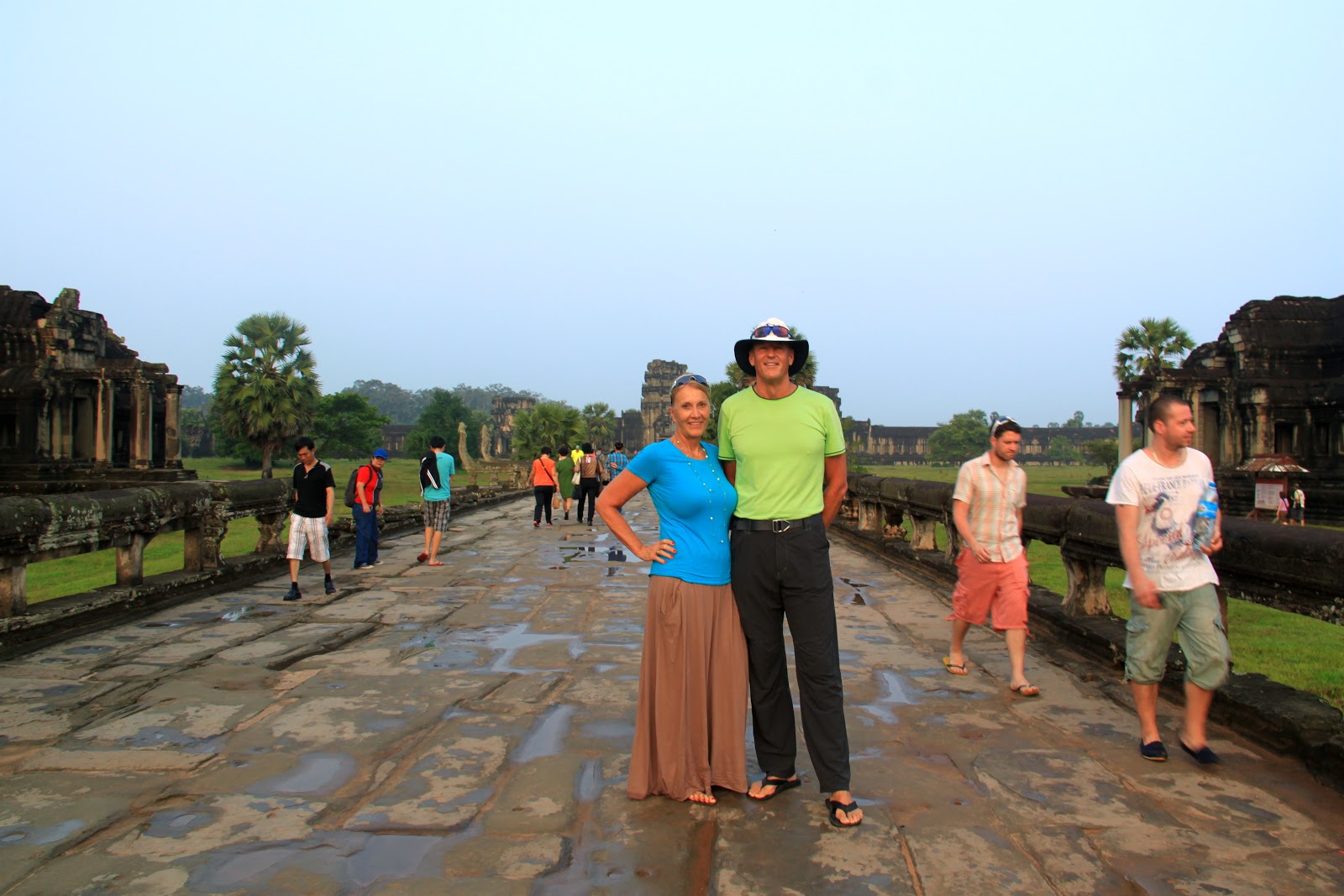
Barb and Scott with our guide.

Angkor Wat
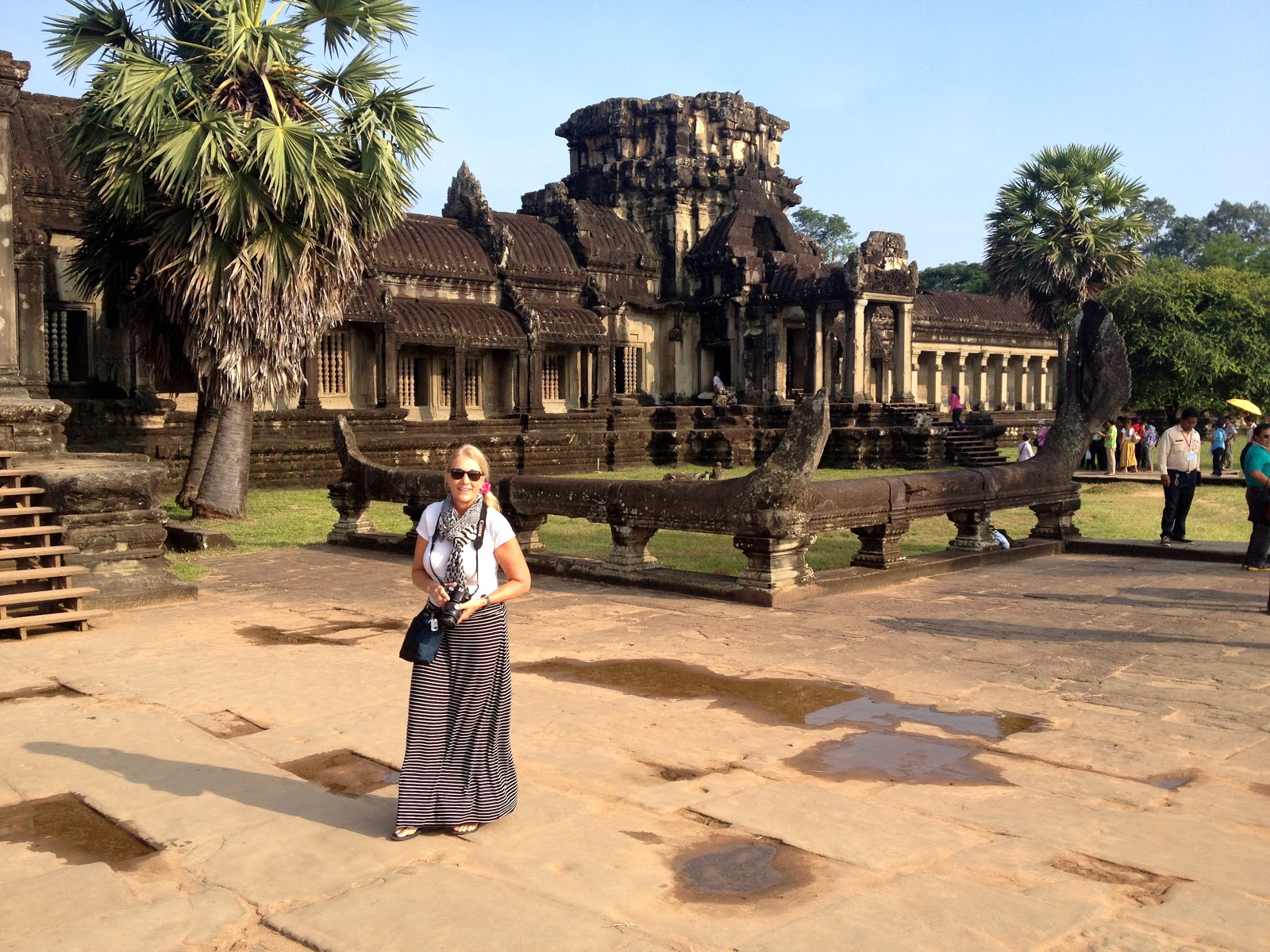
Barb near entrance

In front of moat around complex

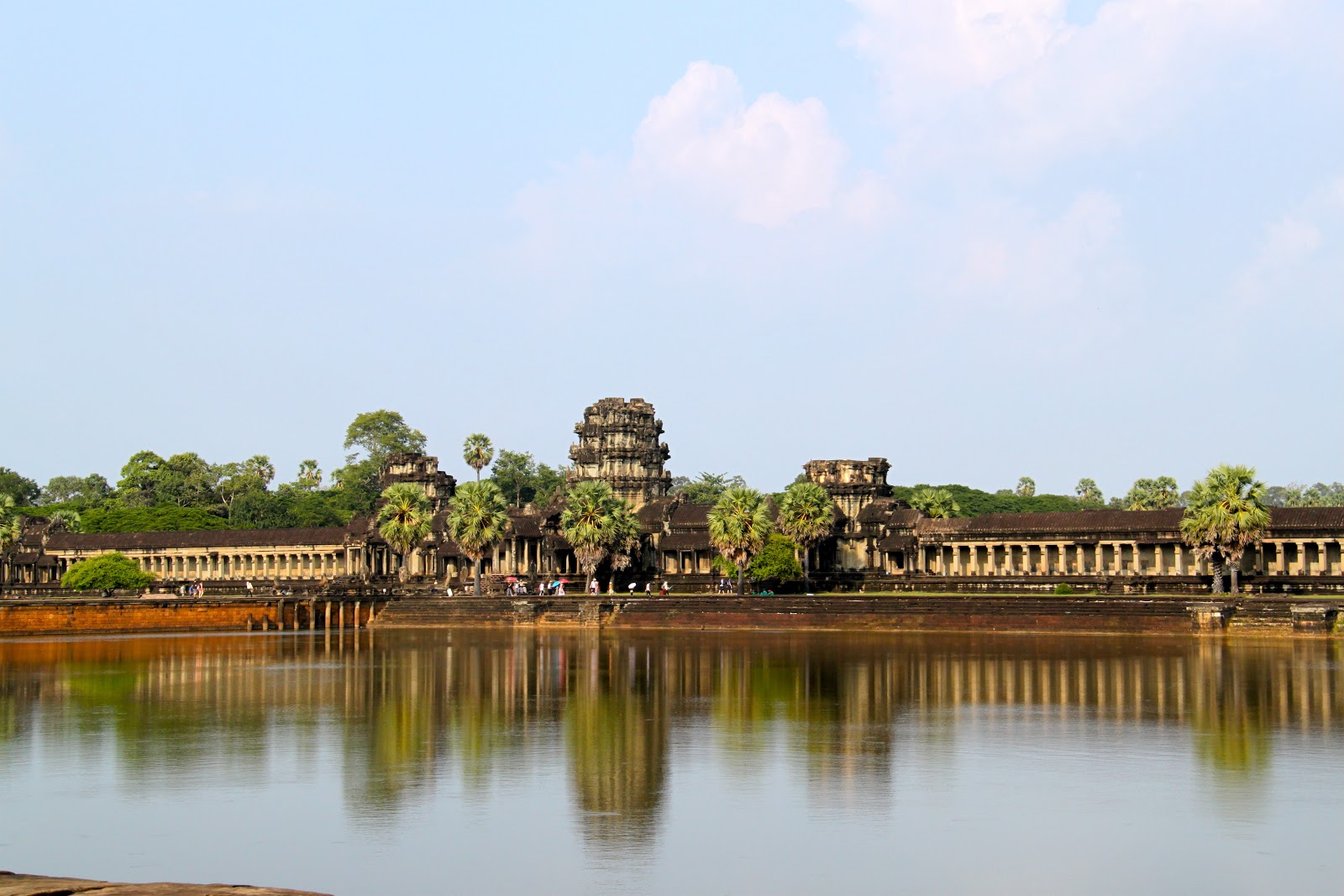
There is a moat around the temples.  The temple complex is contained in about 1 square kilometer.

The moat surrounding Agkor Wat is four kilometers long.
Amazing site.
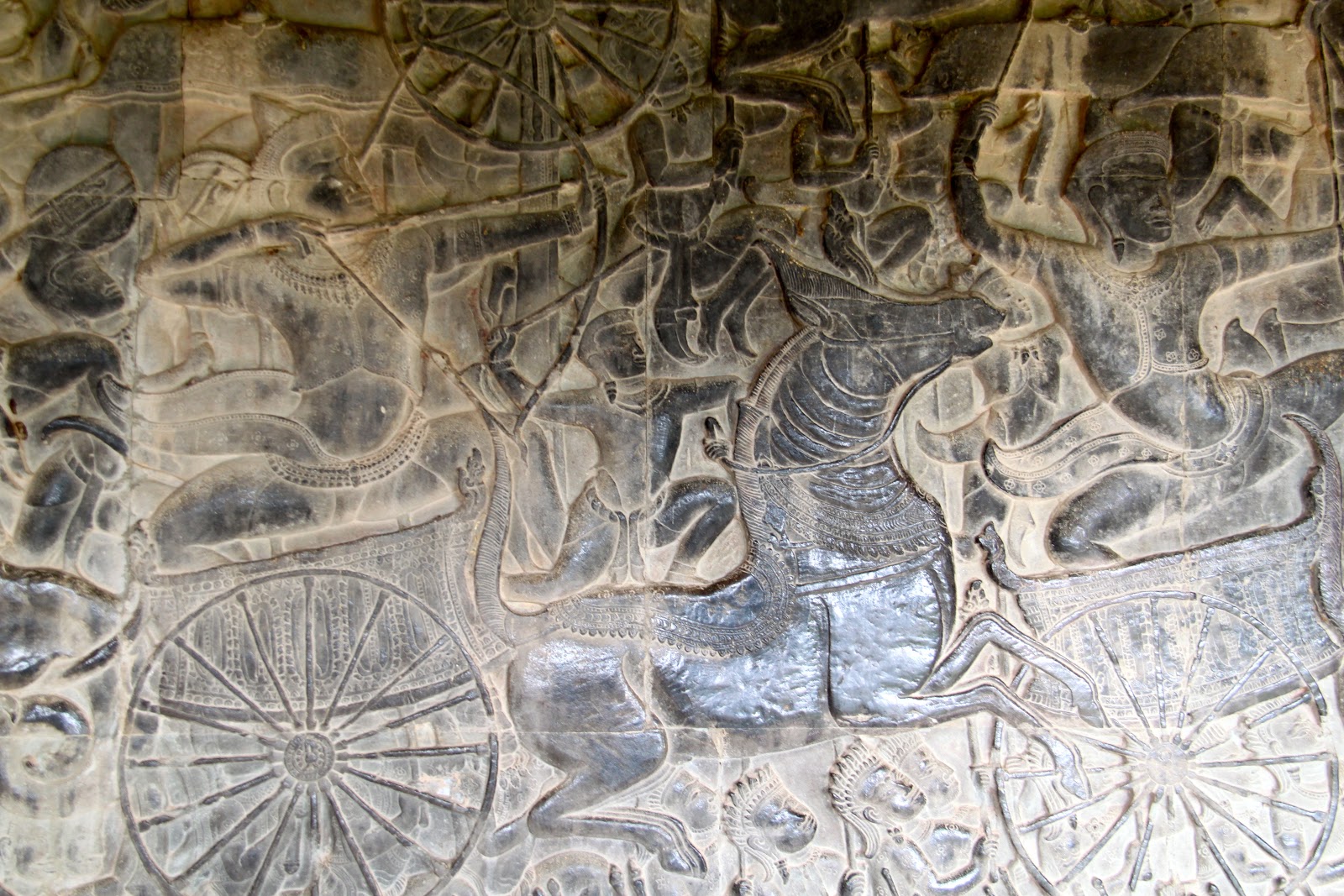
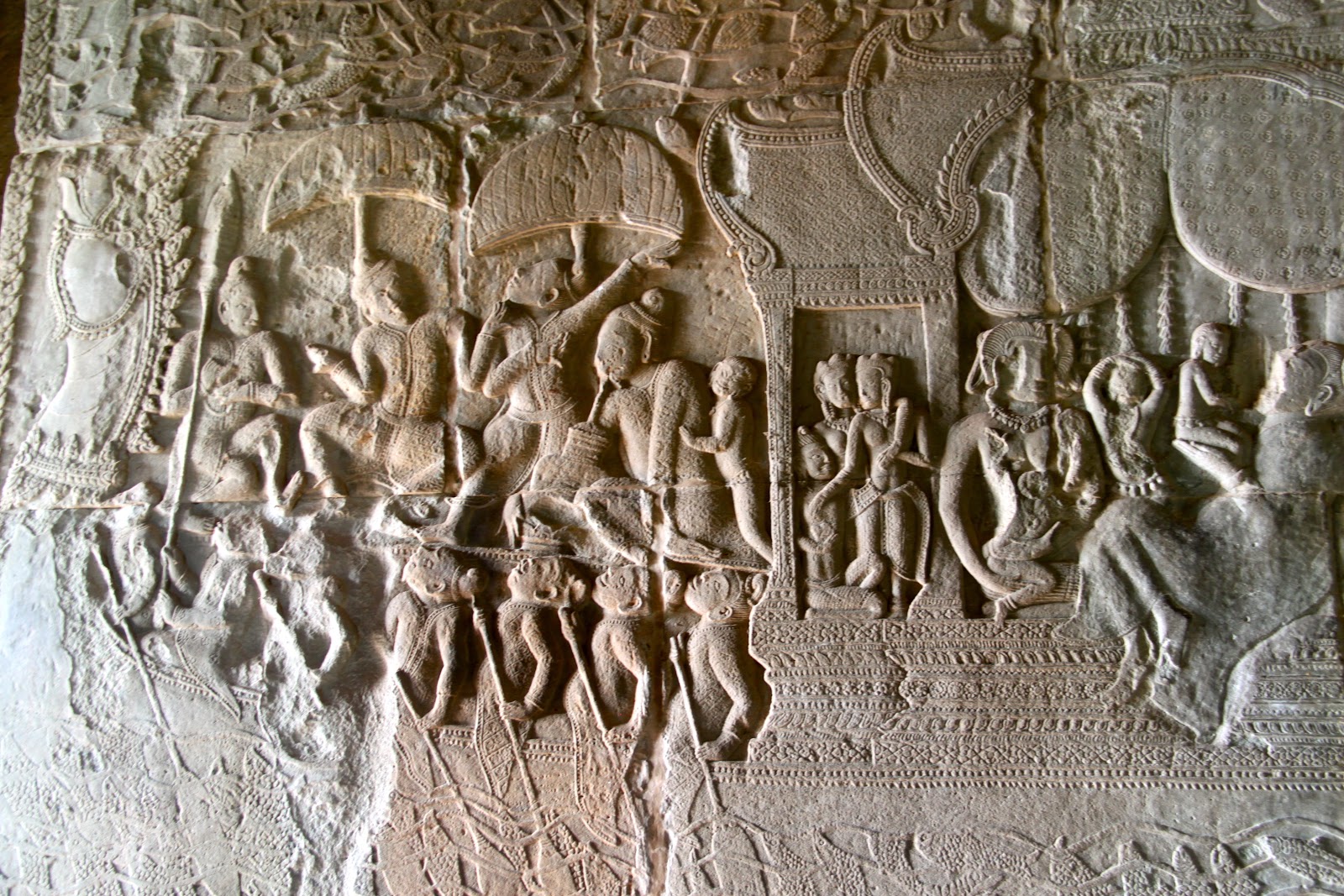
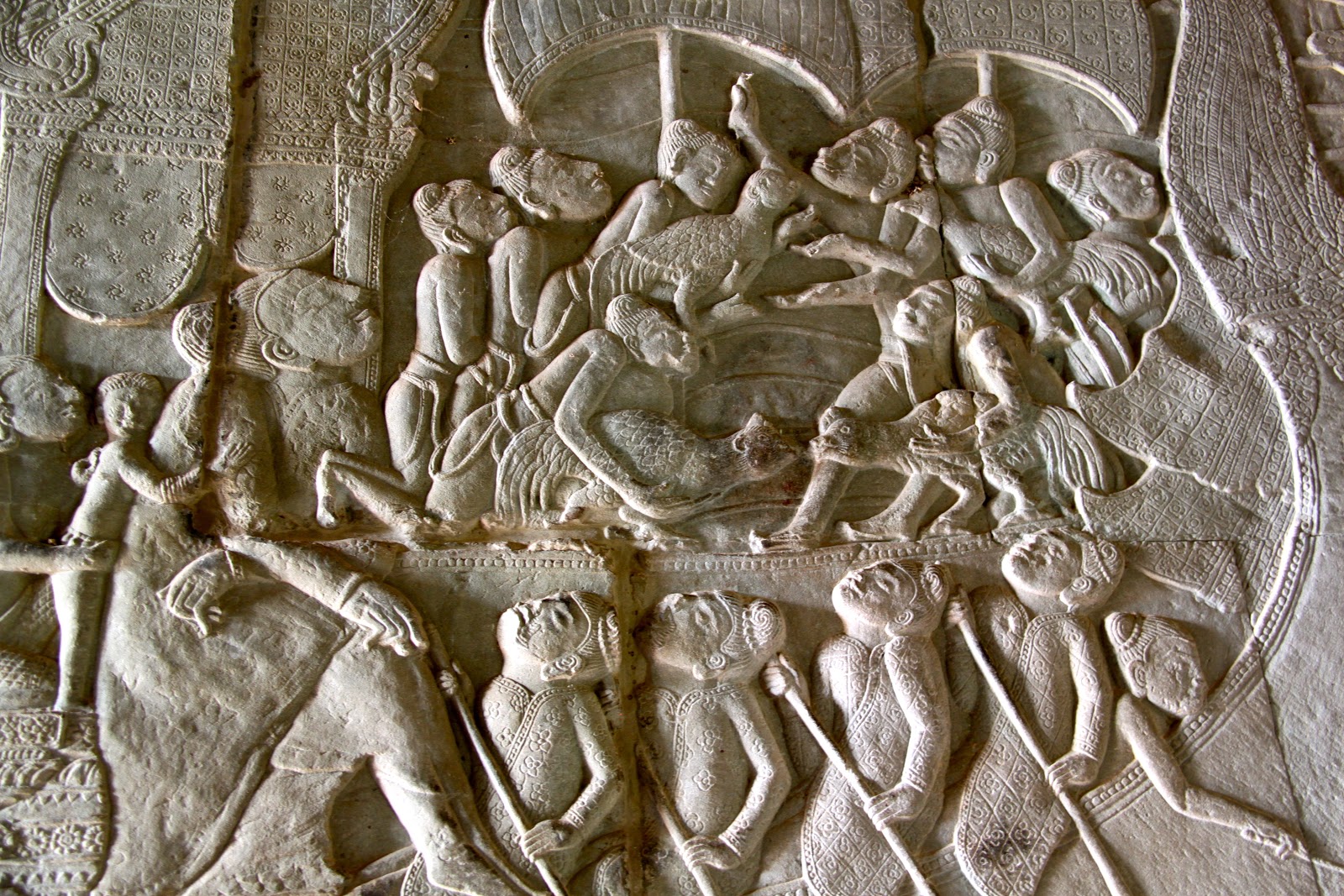
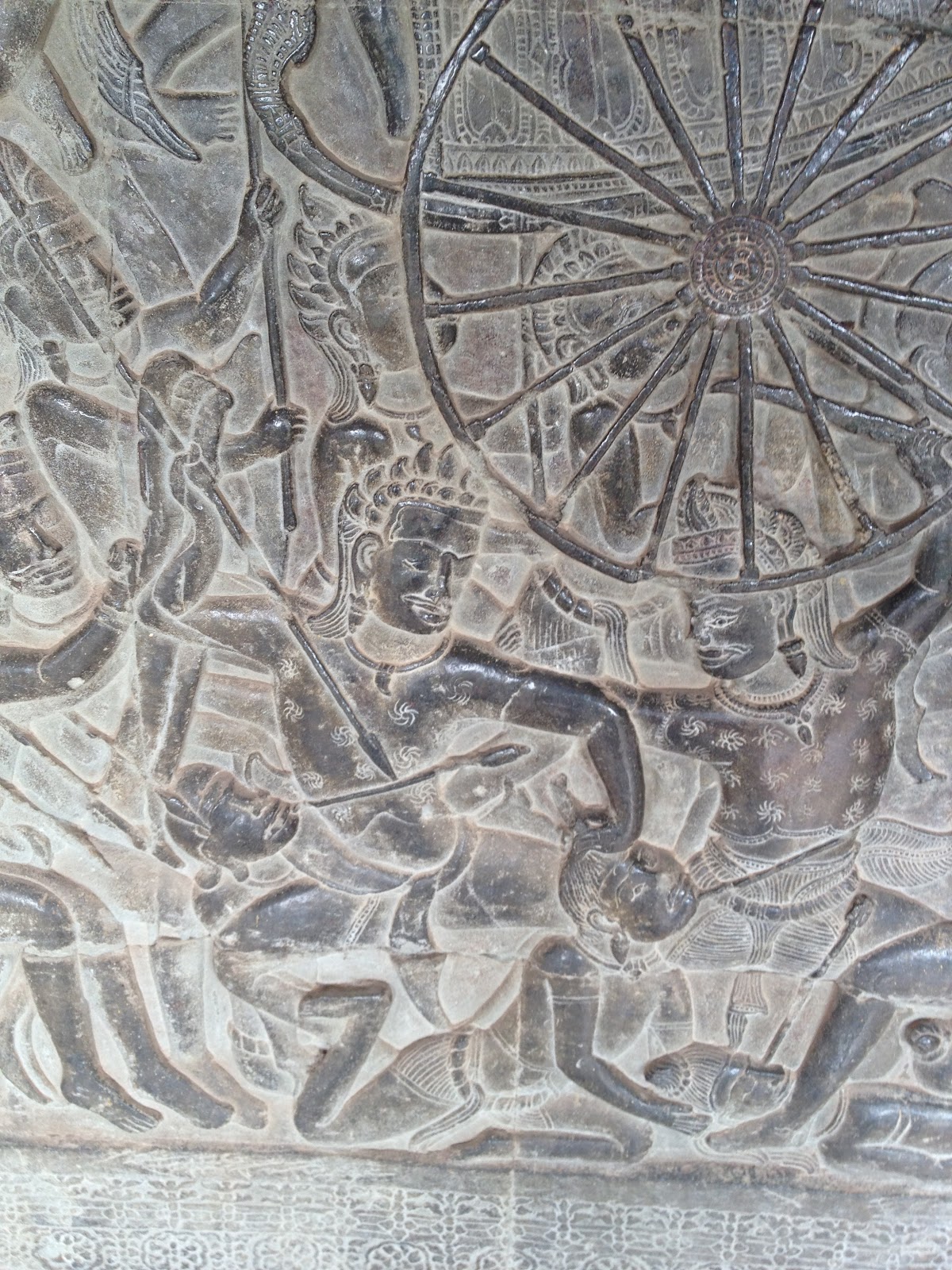
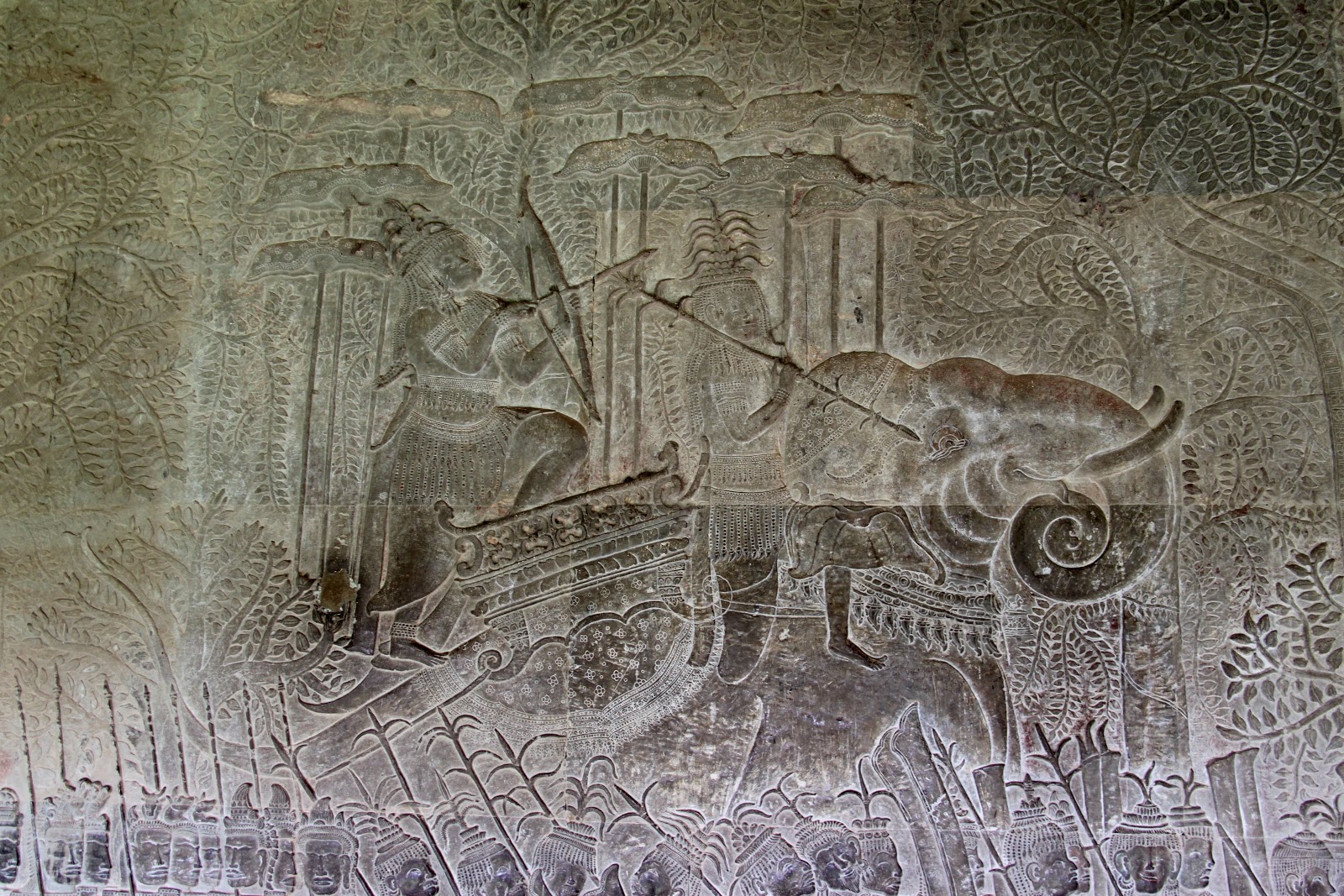
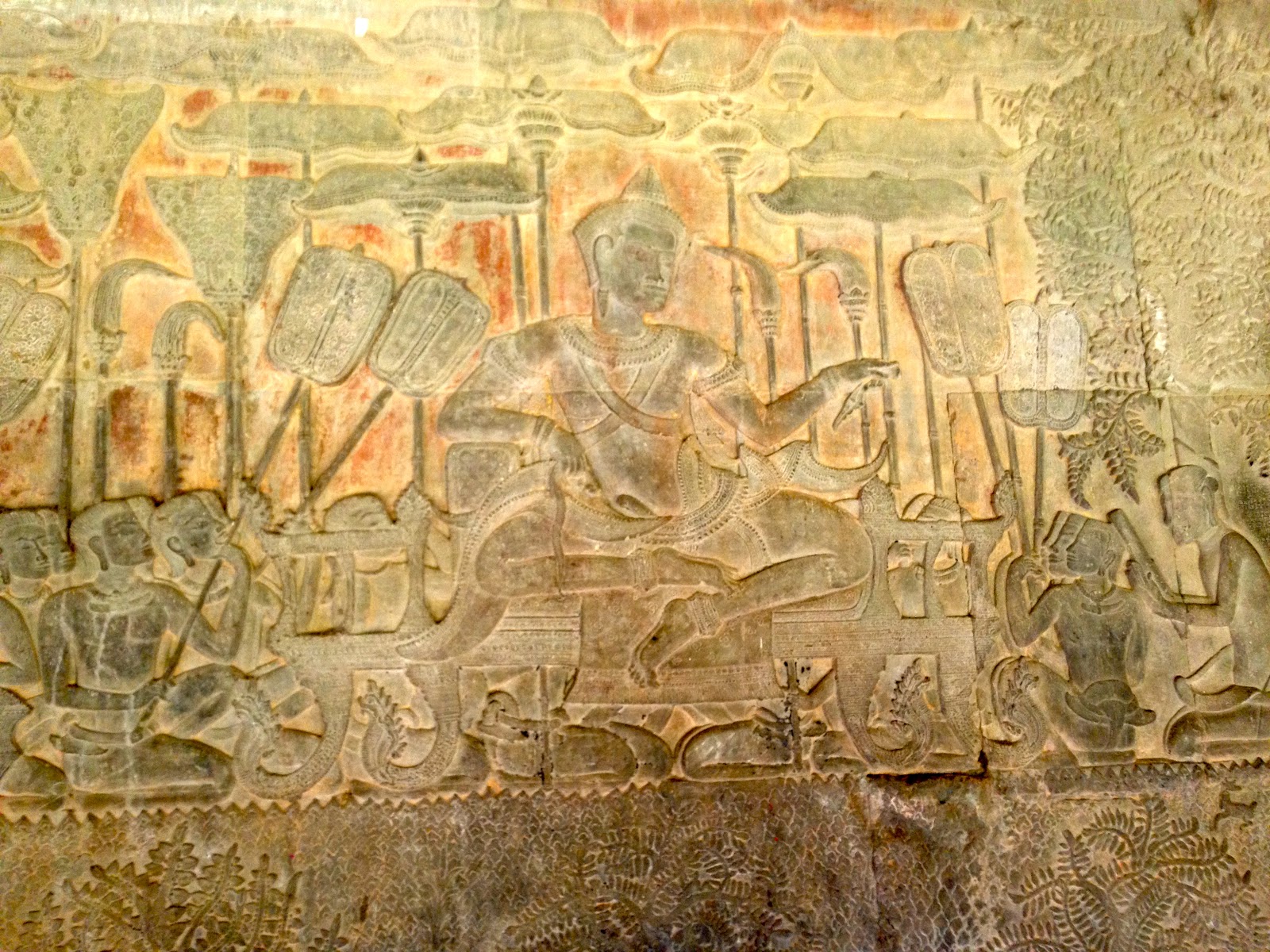
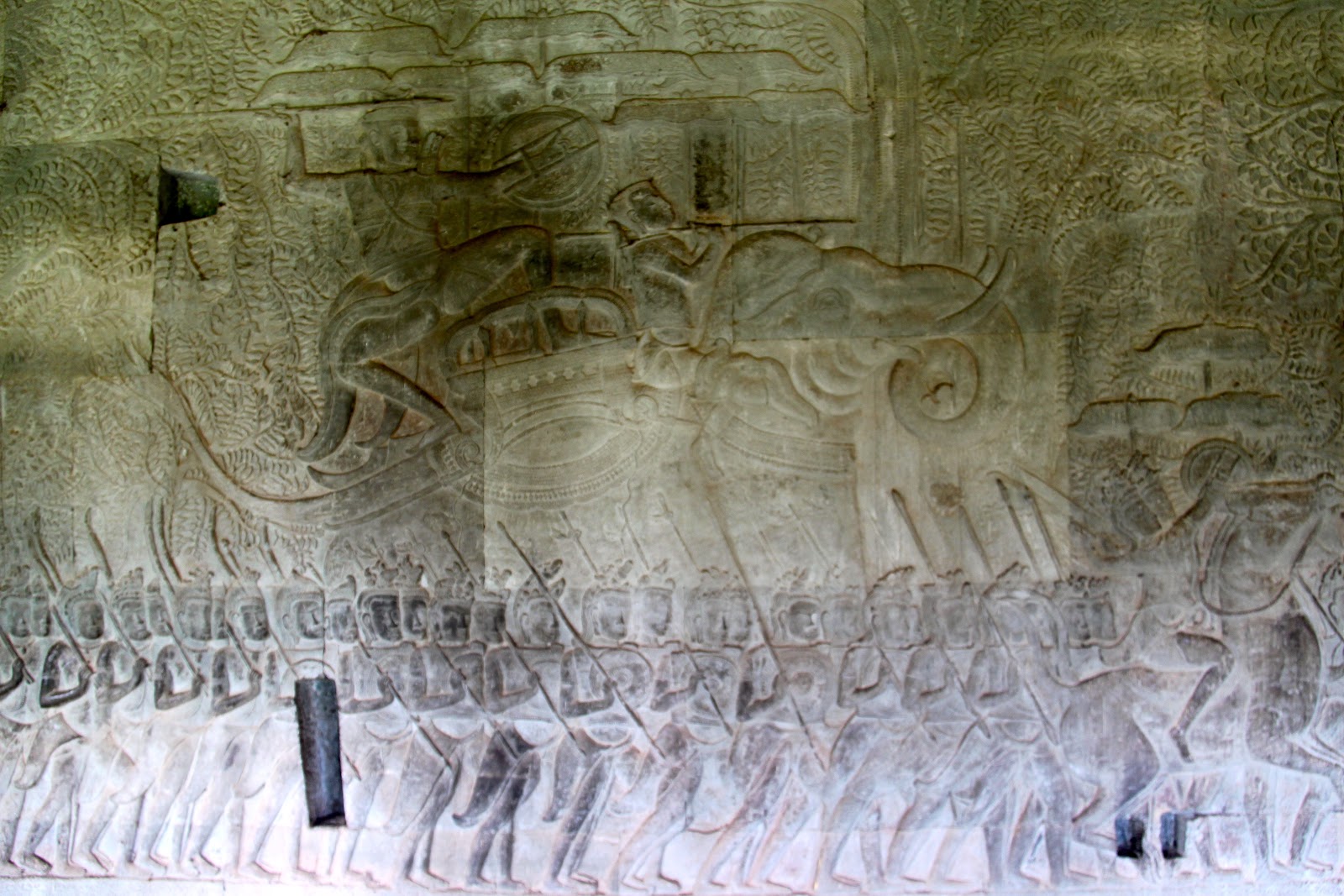
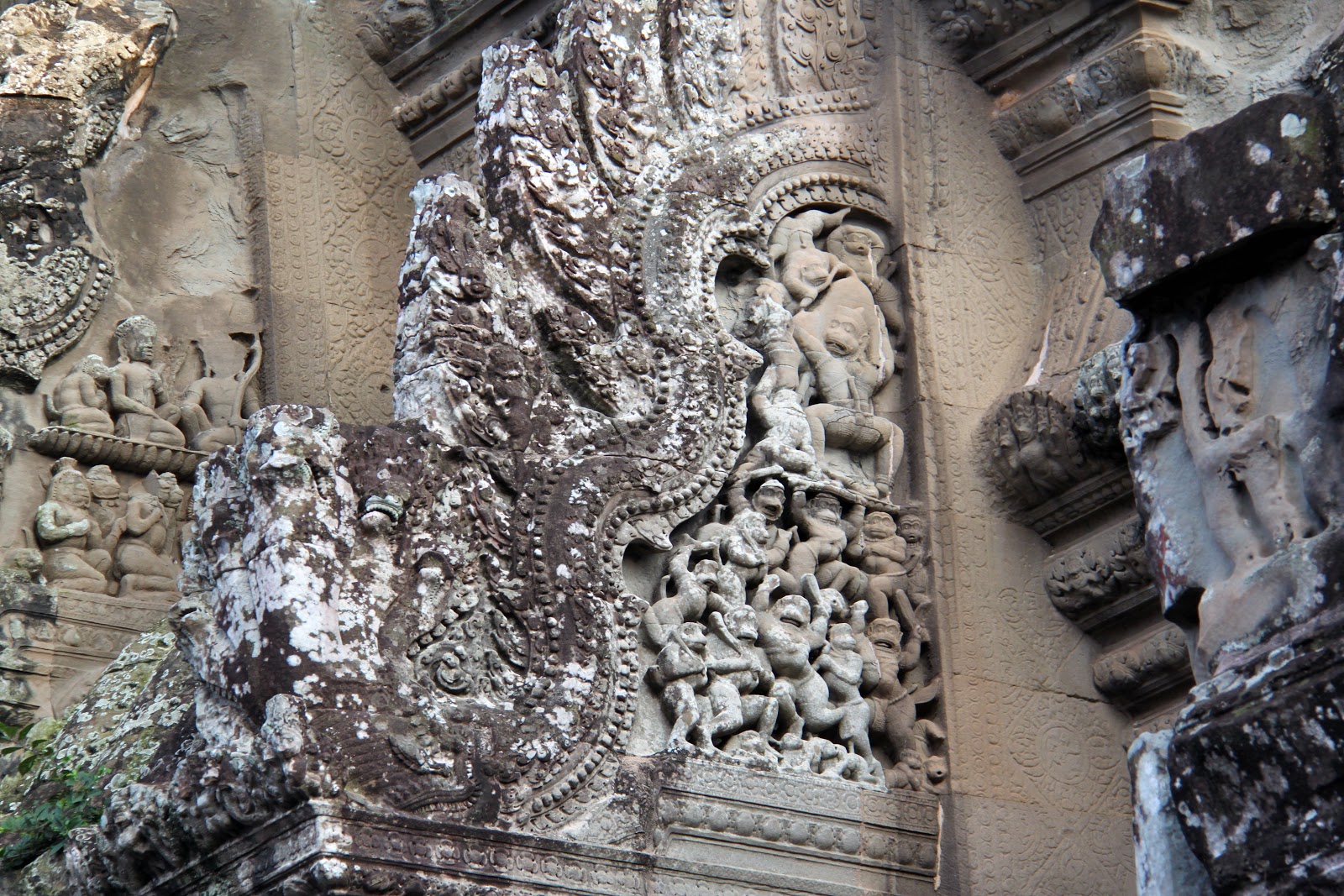
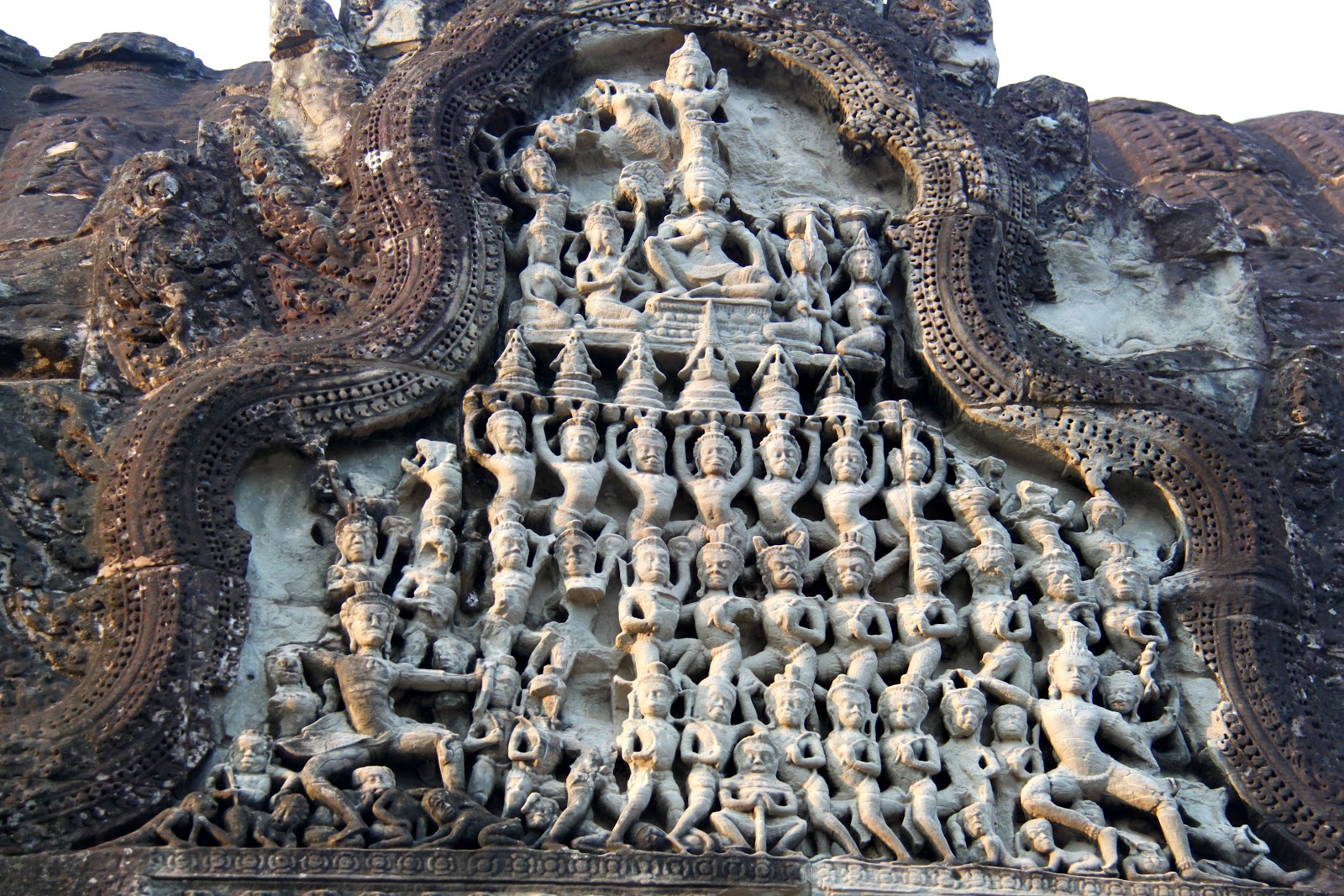
Some wall carvings tell stories of great battles.  The Generals ride elephants into battle.  The officers ride horses and the soldiers are on foot.

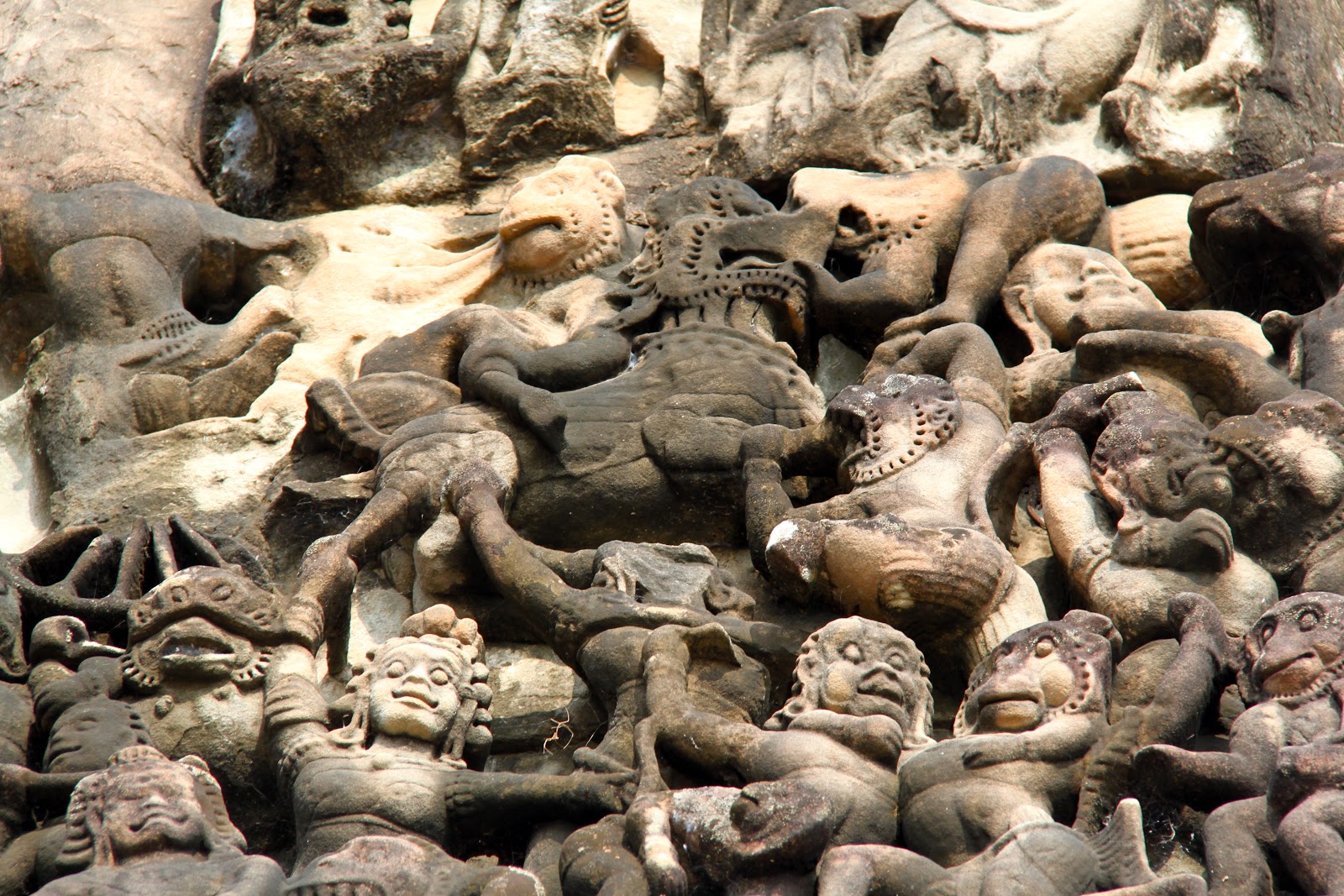
Battles being fought

Battles on boats

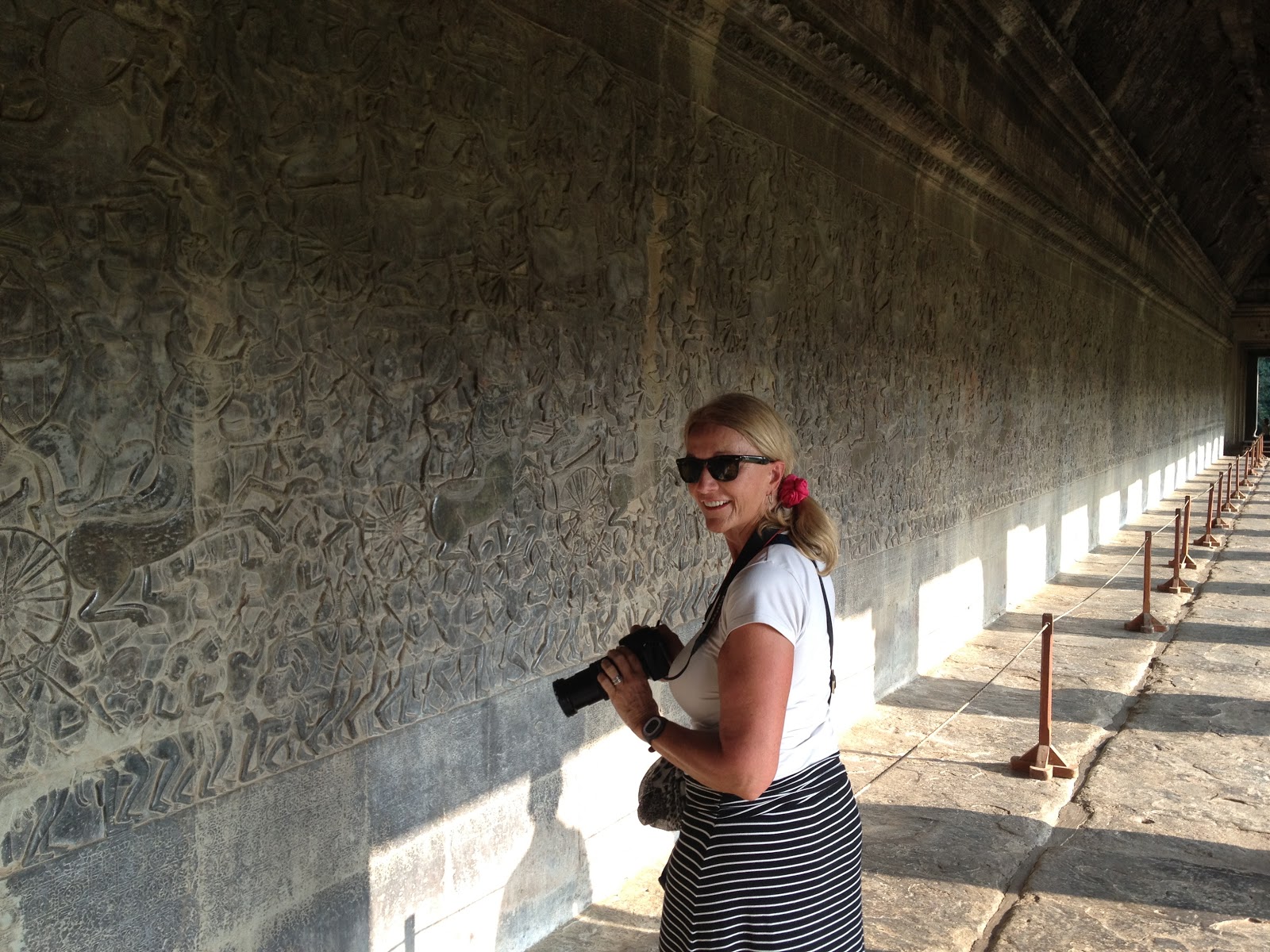
Carvings all the way down a long corridor
Amazing craftsmanship.
Everything tells a story

Elephant chariot.
3D

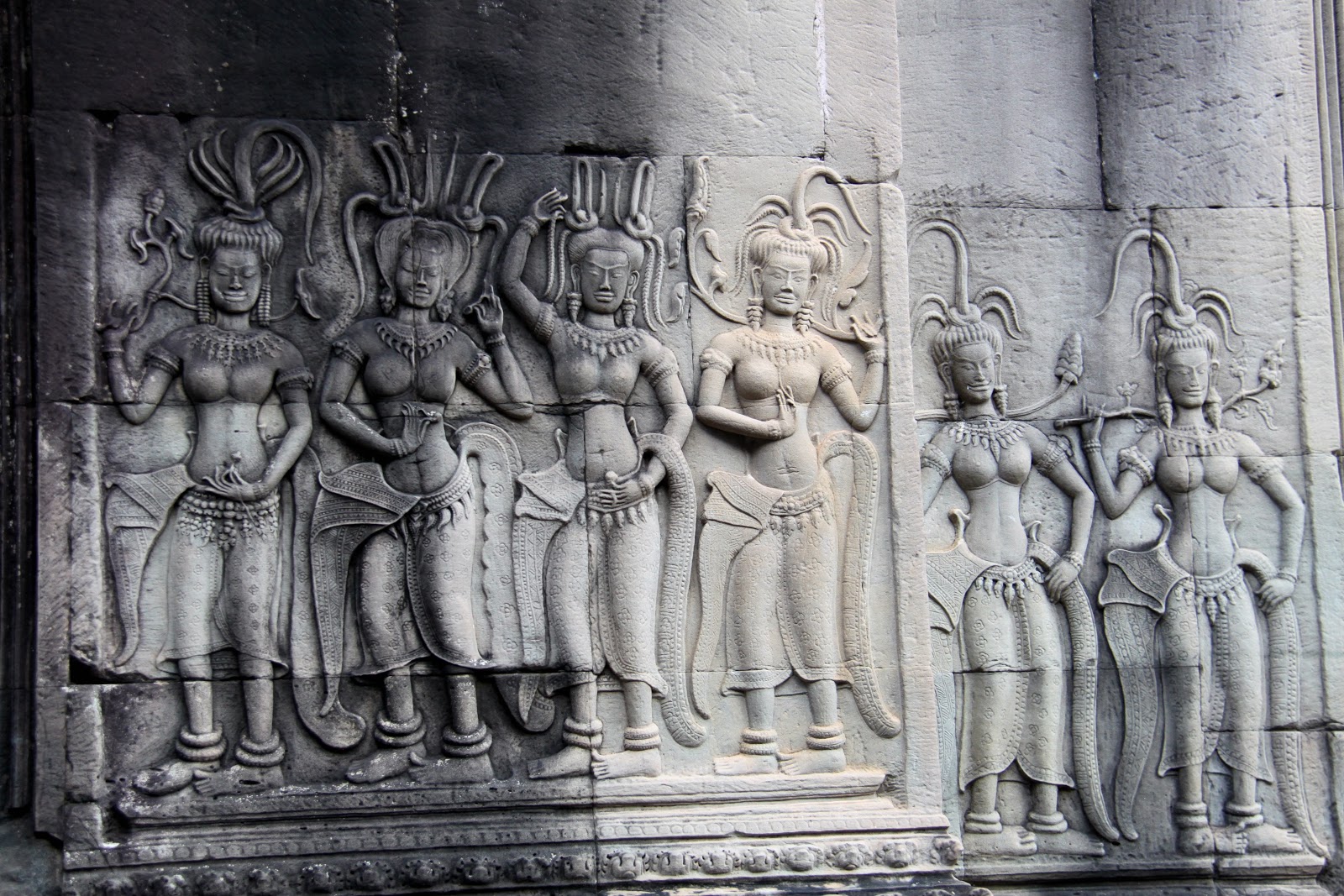
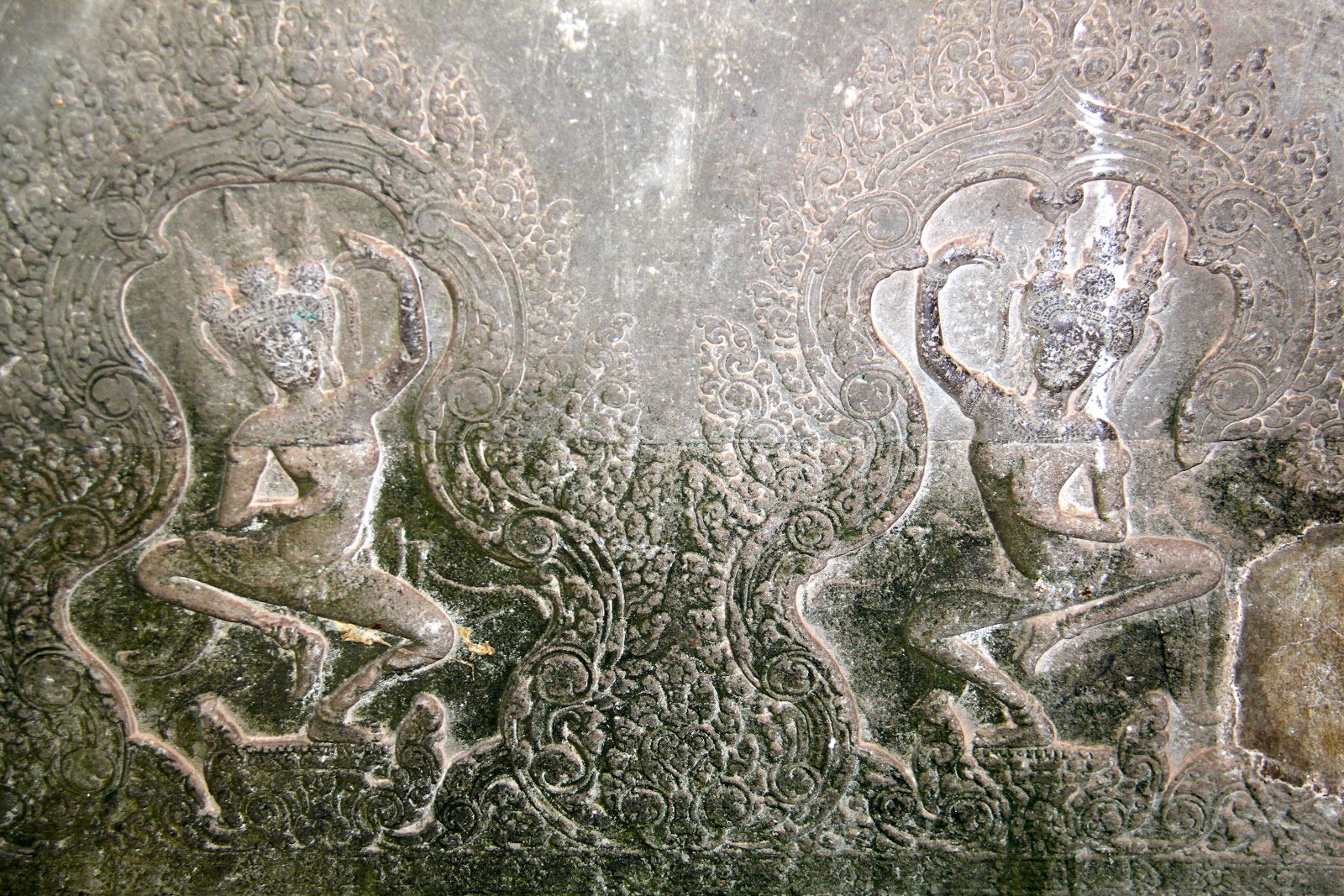
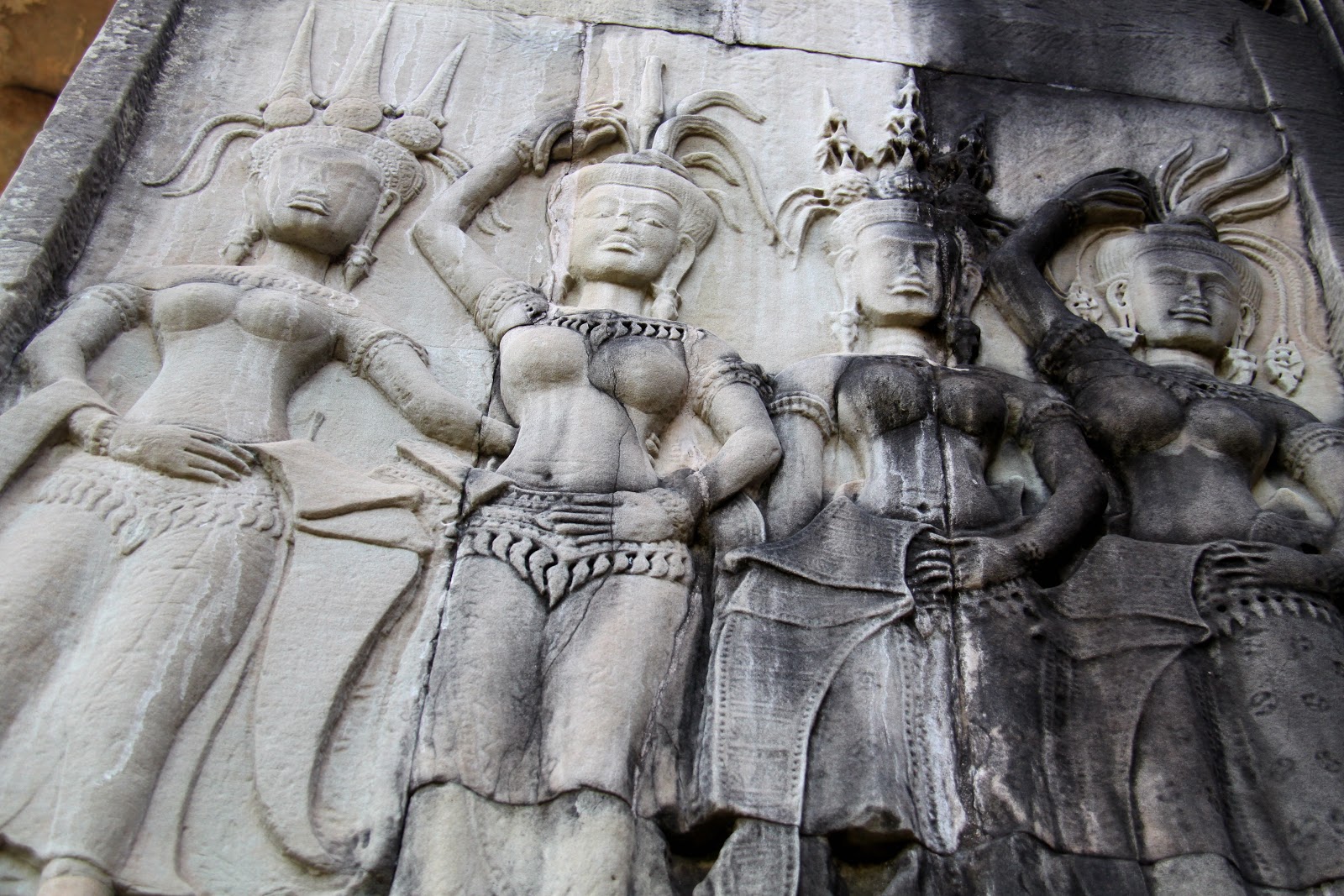
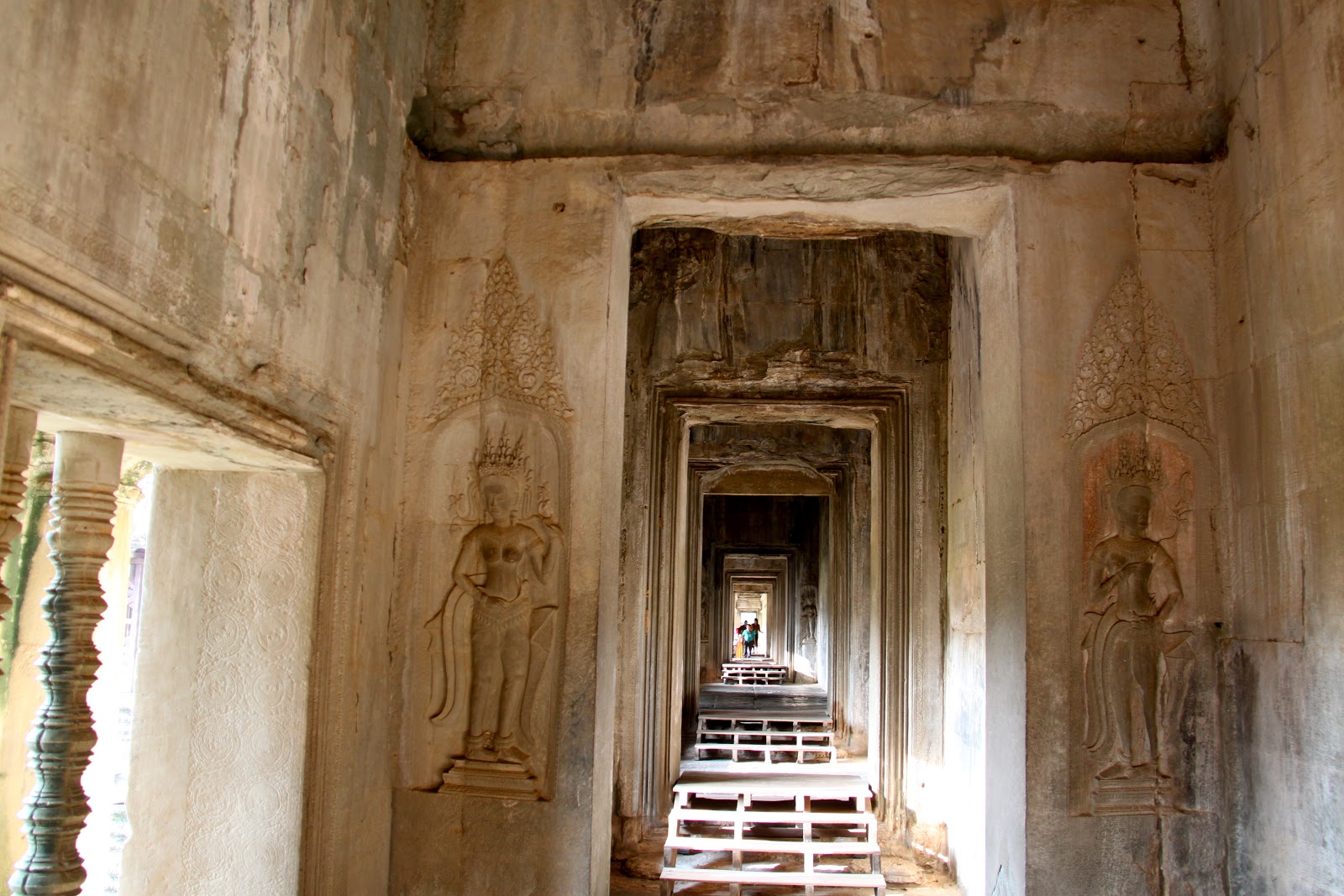
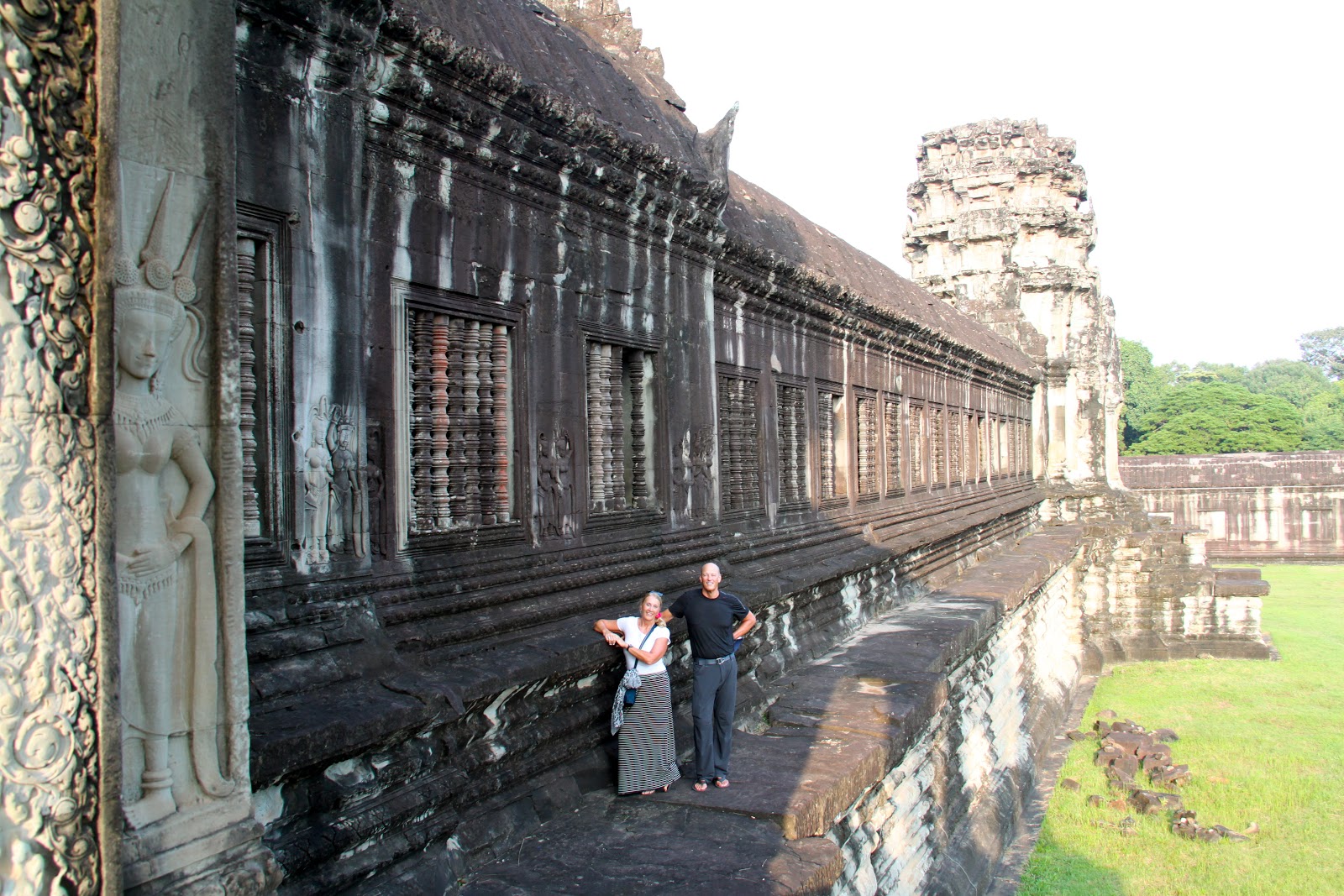
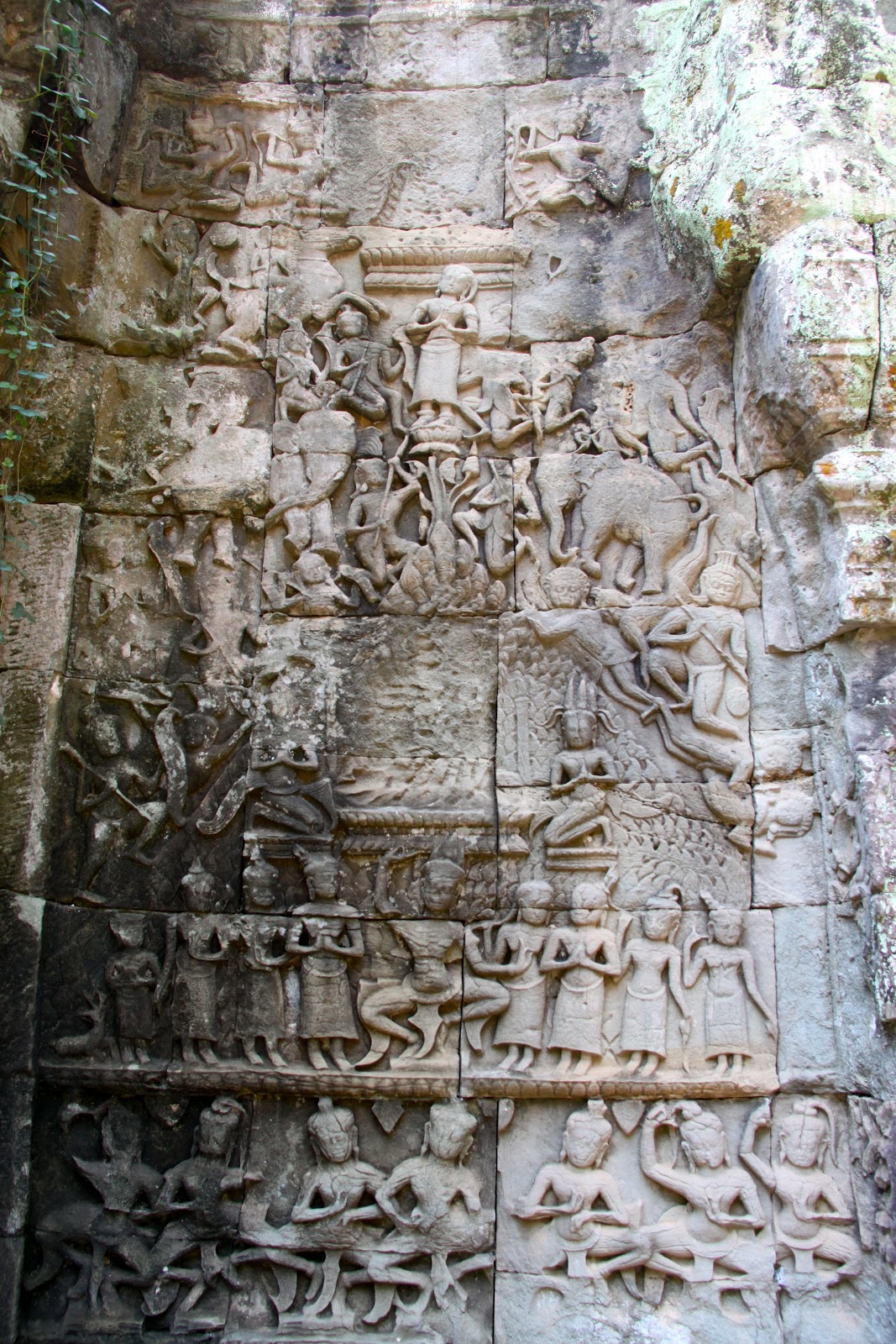
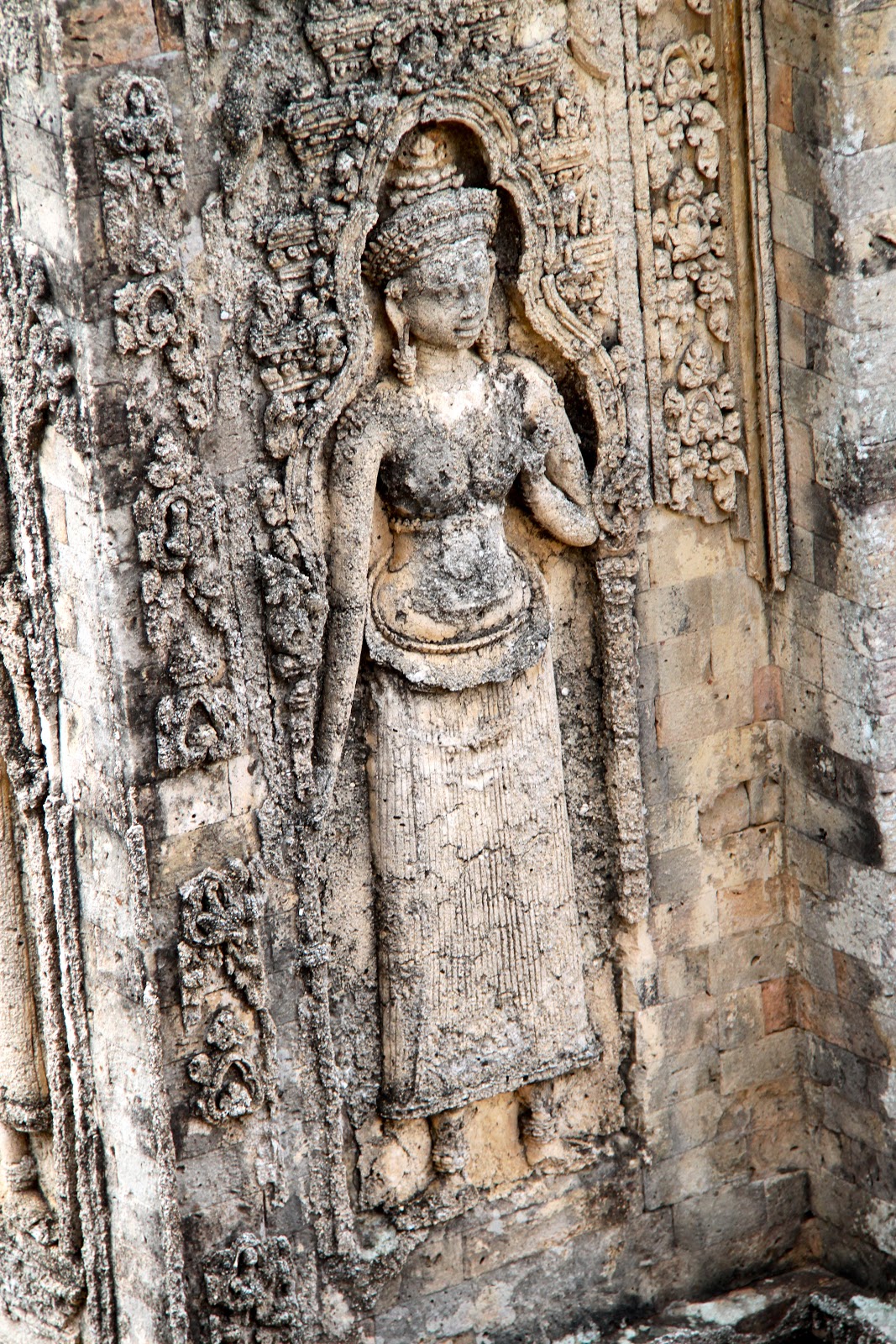
Beautiful “celestial nymphs” are carved into the stone everywhere.  Angkor Wat was built to honor the Hindu God Brahman, the Creator.  The beauty shown in the carving of women reminds us of the carvings in the temples in India.

Celestial Nymphs
Dancing nymphs.

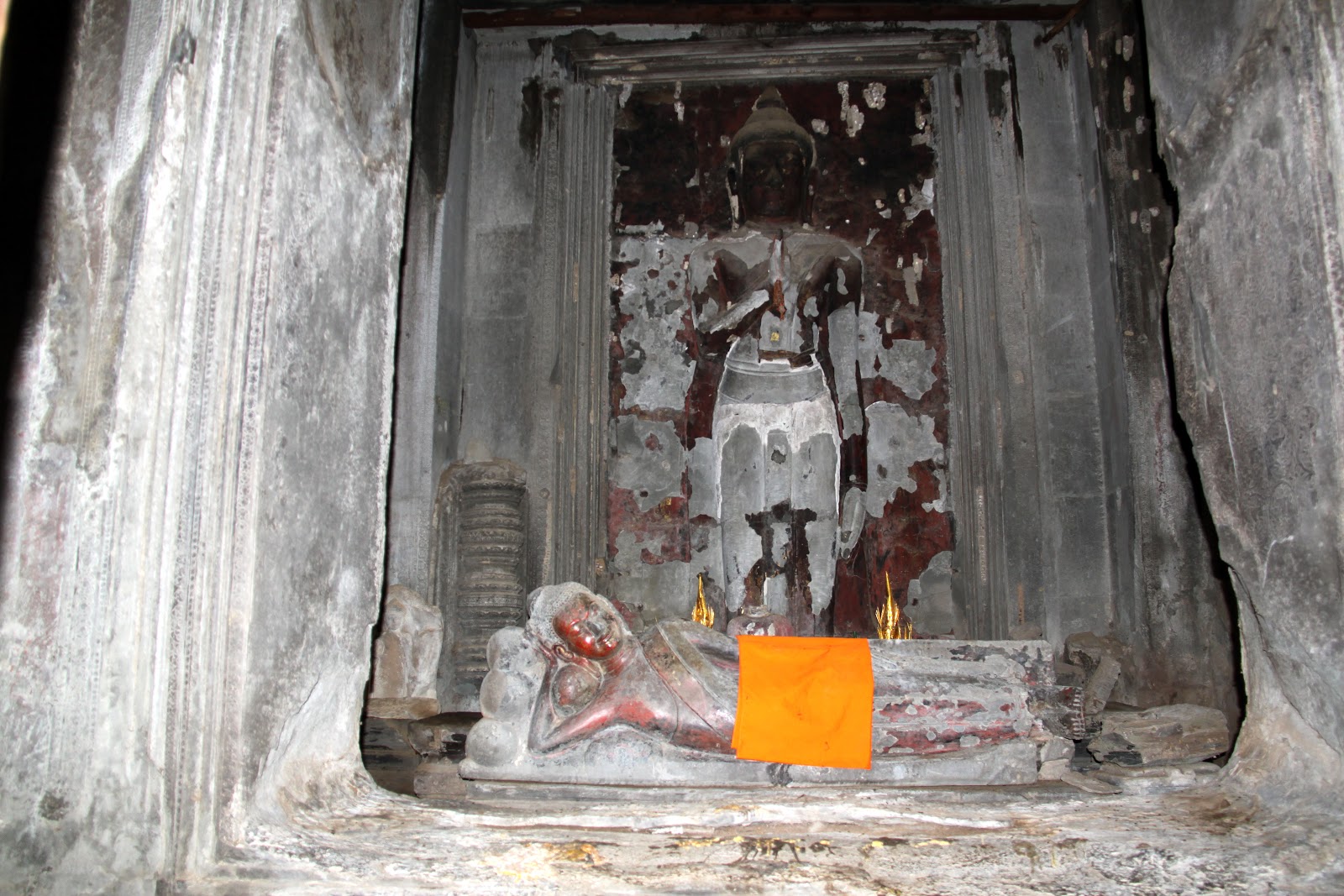
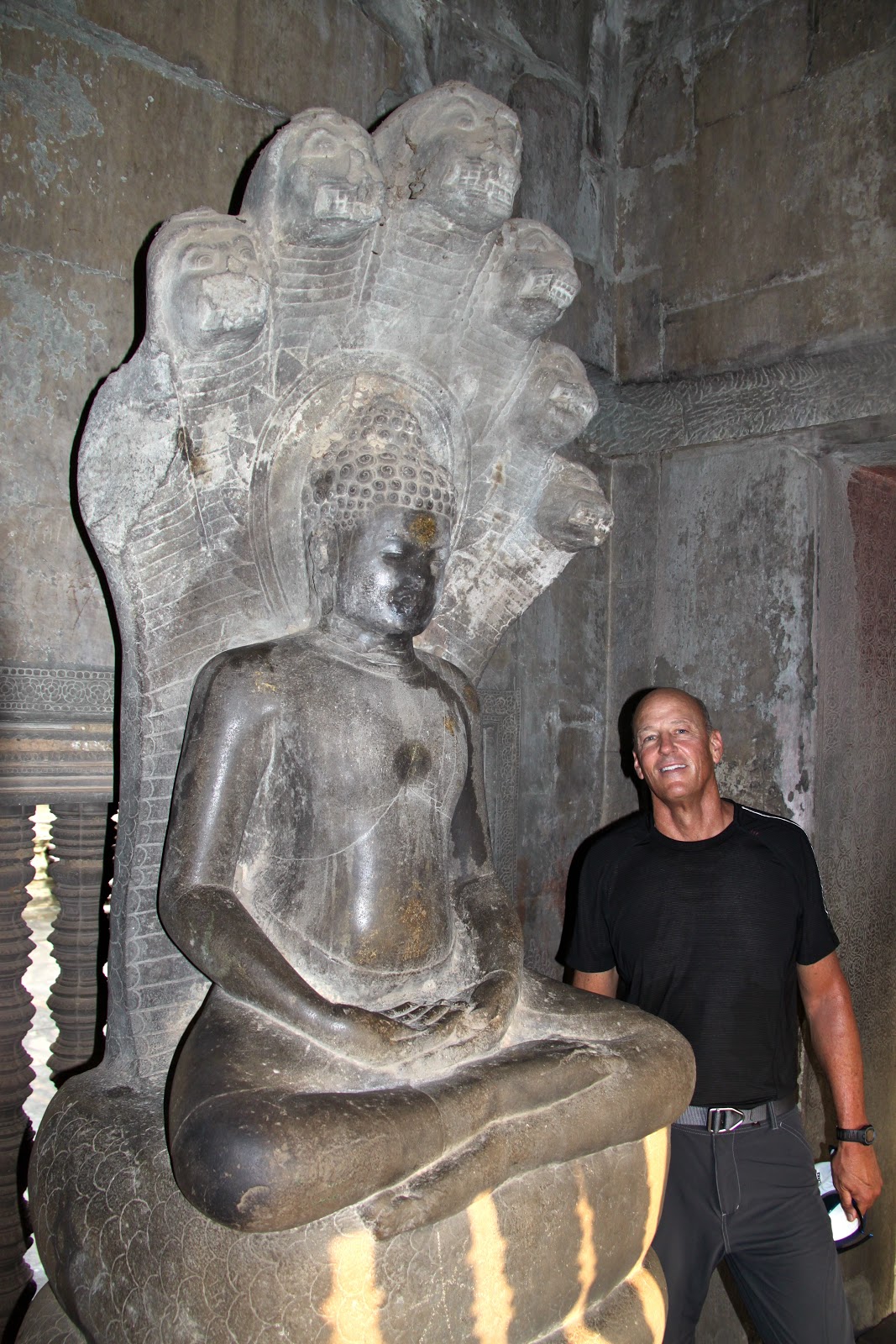
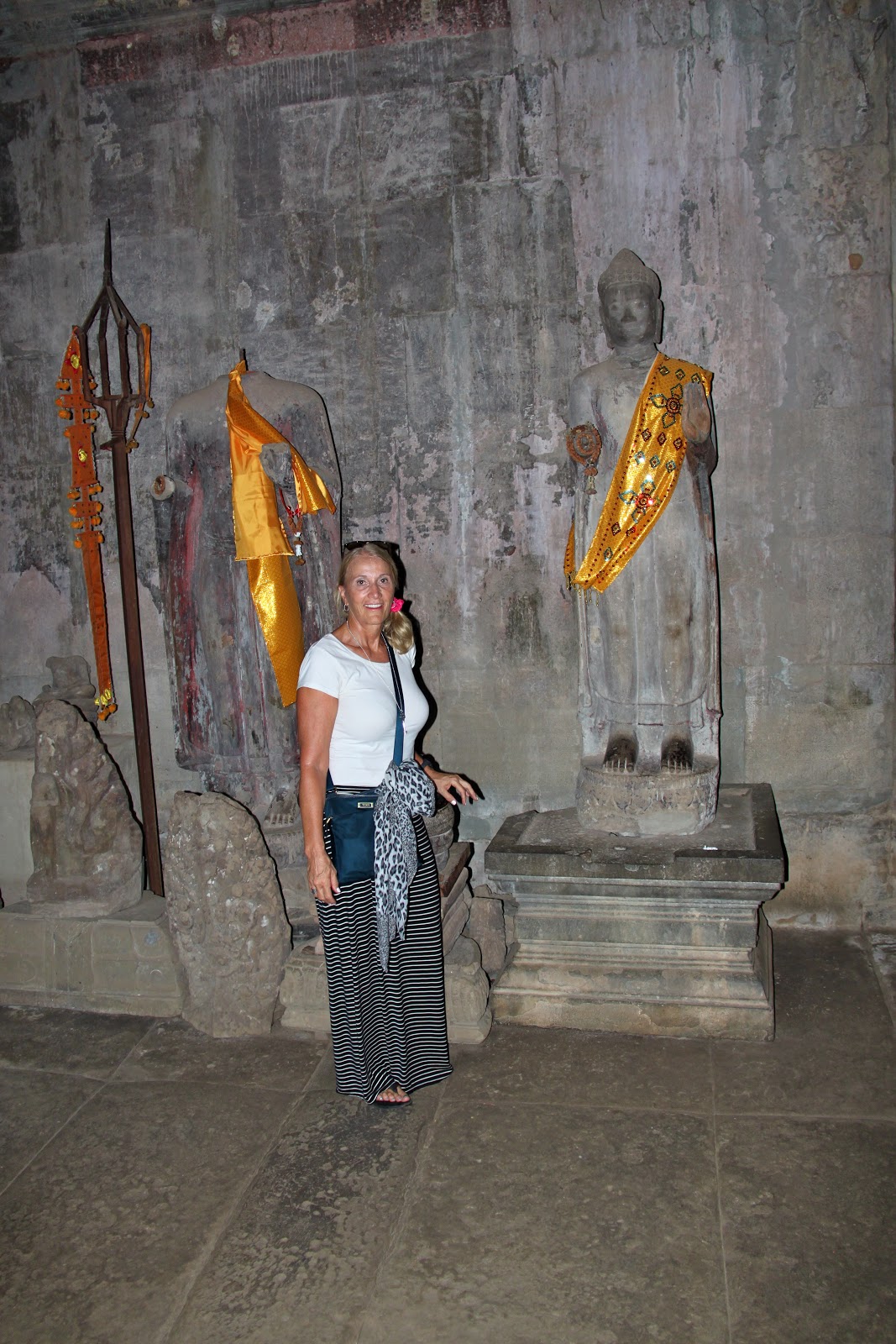
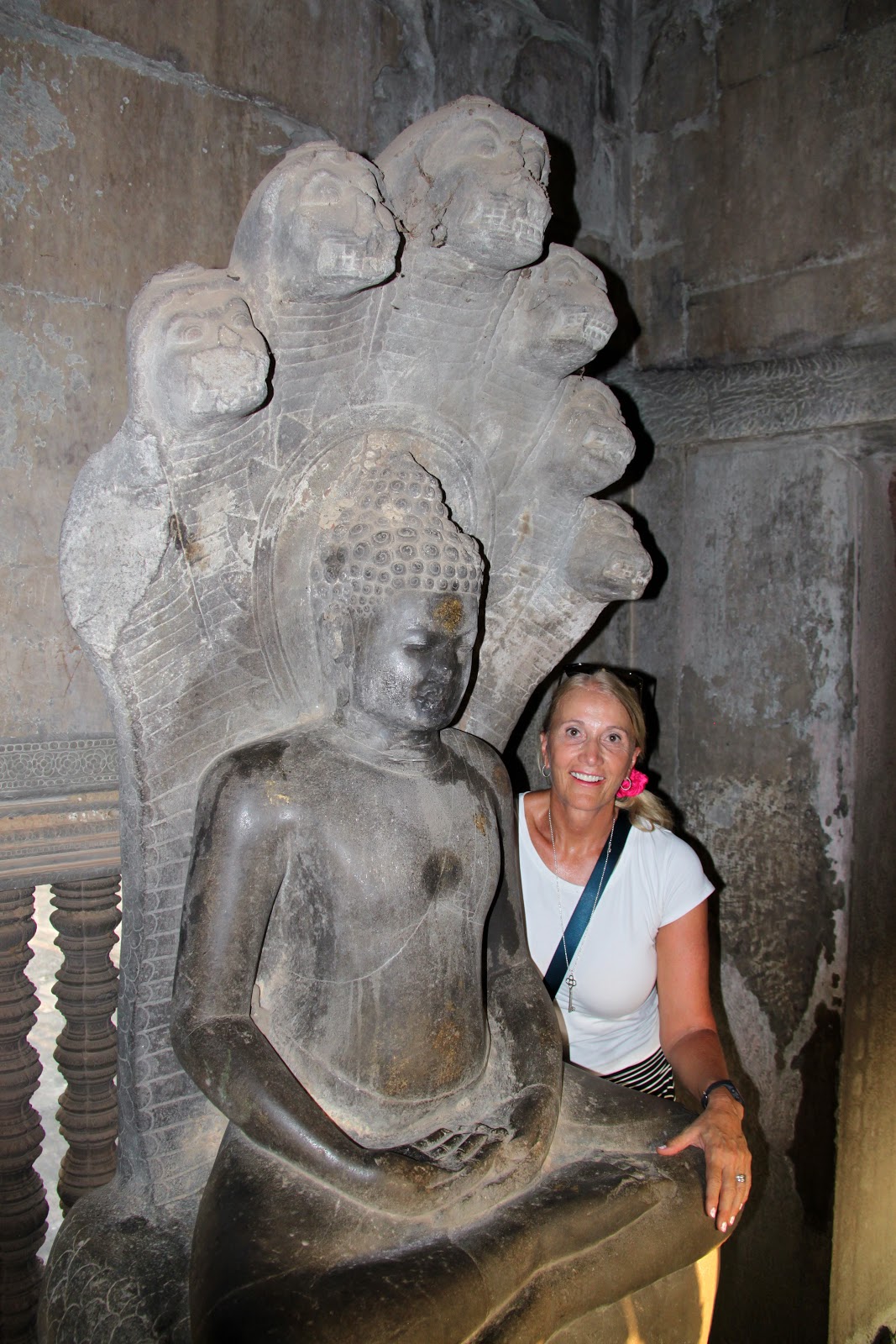
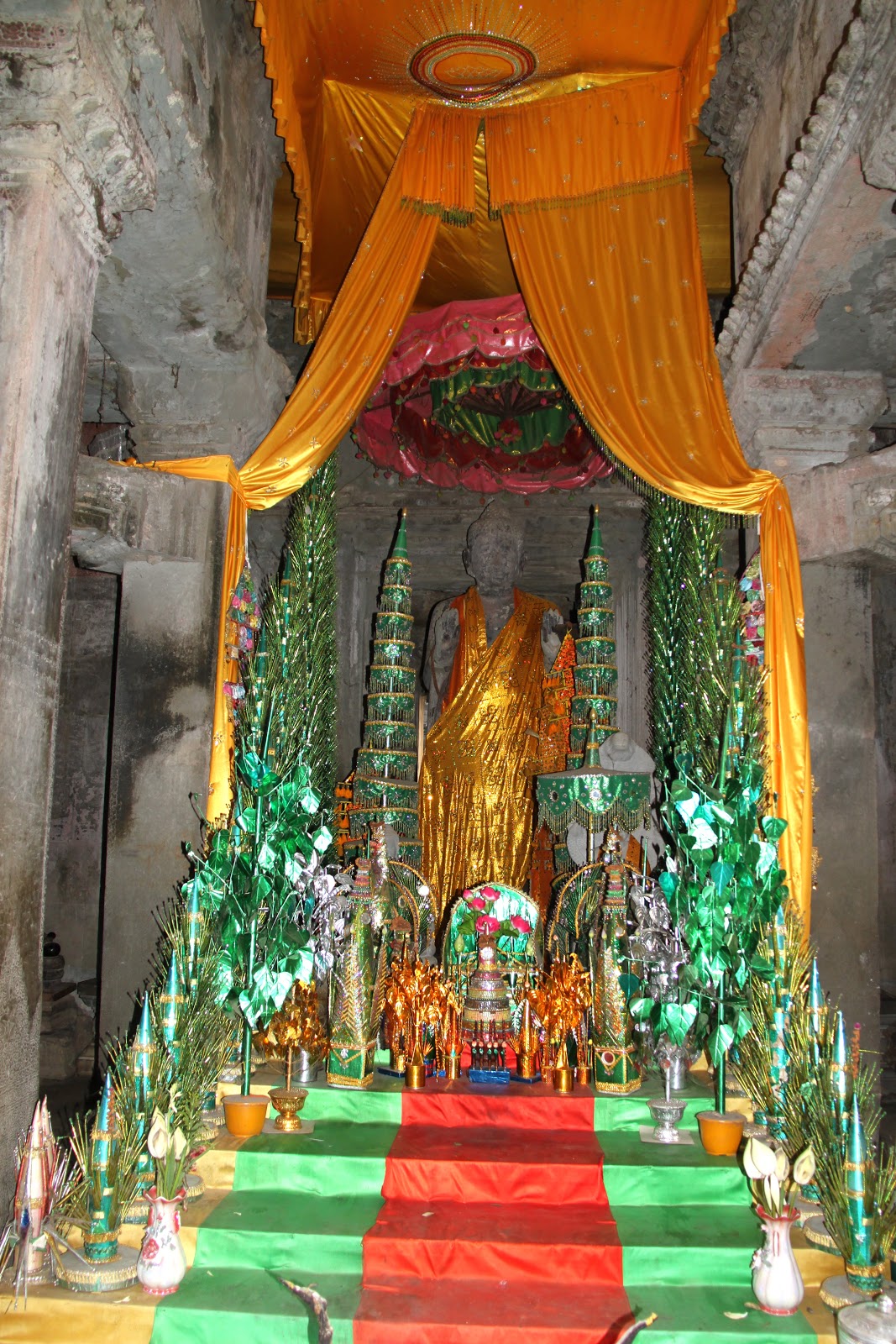
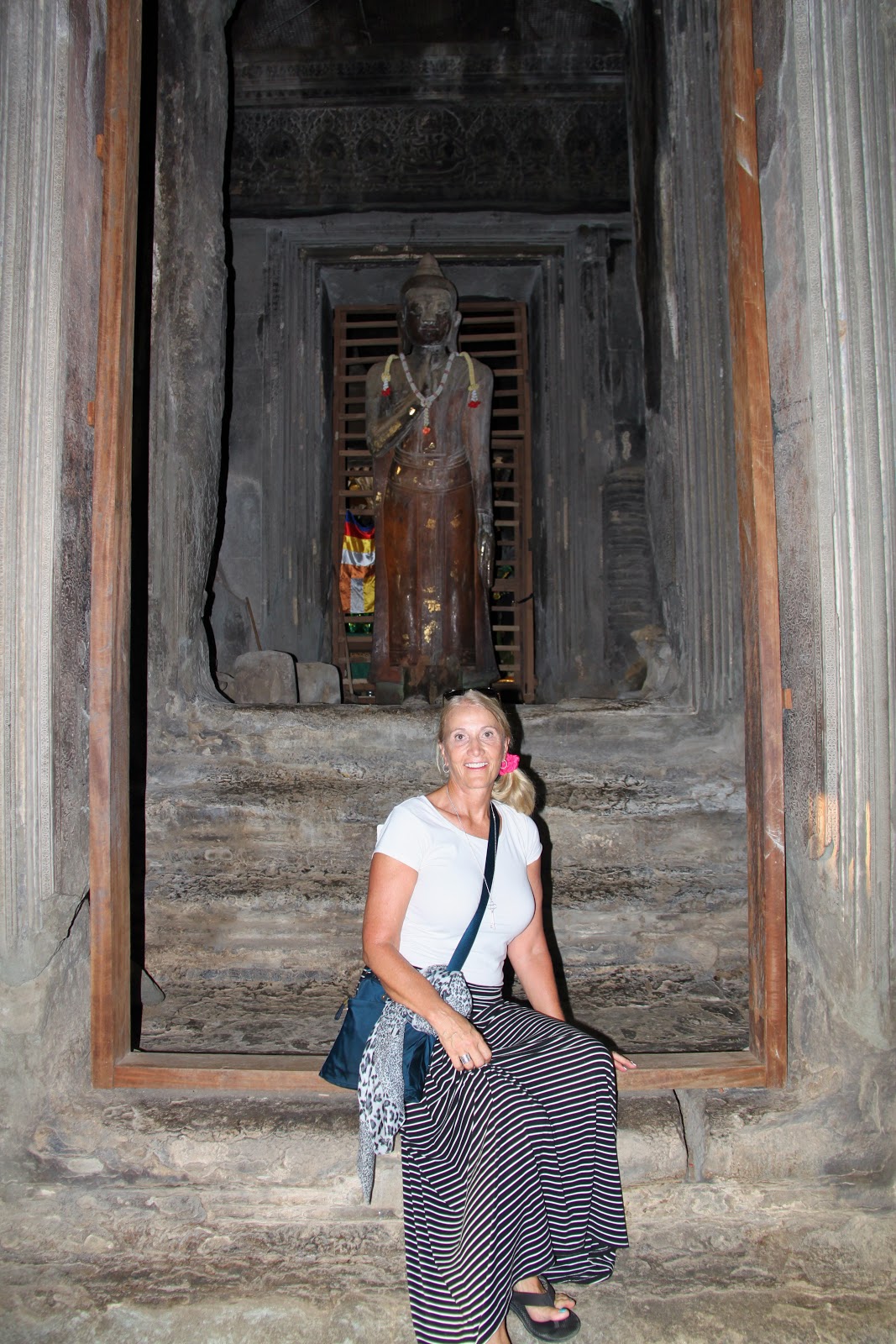
There is a room where 1000 Buddhas were once stored.  As a result of the fog of war beginning with the Vietnam War and ending when the North Vietnamese armies helped rid Cambodia of the Khmer Rouge killers that had plagued the country with 25 years of civil war, many of the priceless statutes of Buddha and other valuable sculptures were hacked out of the temple and stolen to neighboring countries or sold on the black market around the world.  Our guide told us that Cambodia is attempting to track down some of these relics and is asking for their return.  Many of the statutes and carvings have been defaced.  The heads of many statutes are missing.
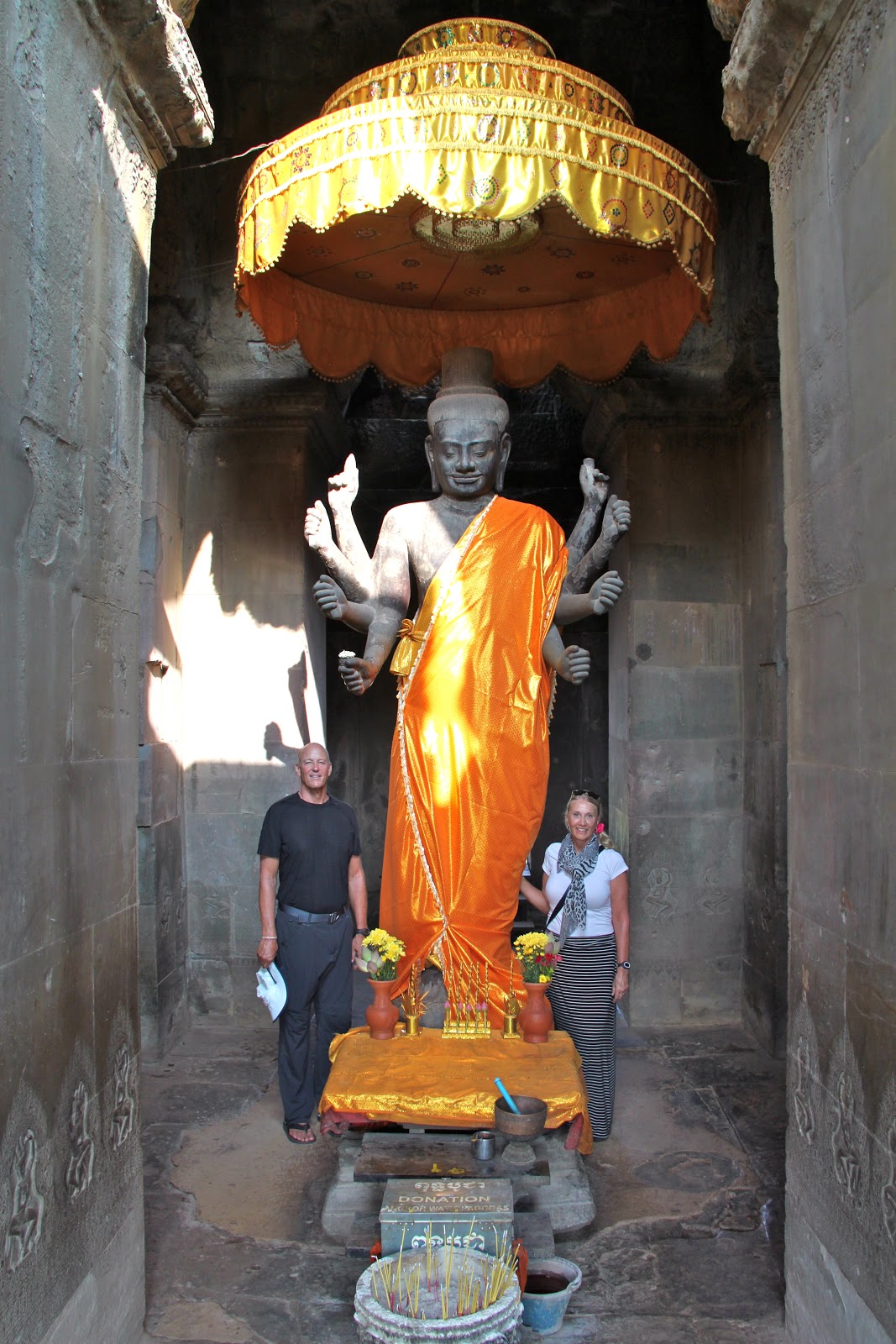
Taller than Scott Buddha.
Reclining Buddha
Meditating Buddha

In the Palace of 1000 Buddhas

Adorned Buddha temple

Catching the reflection

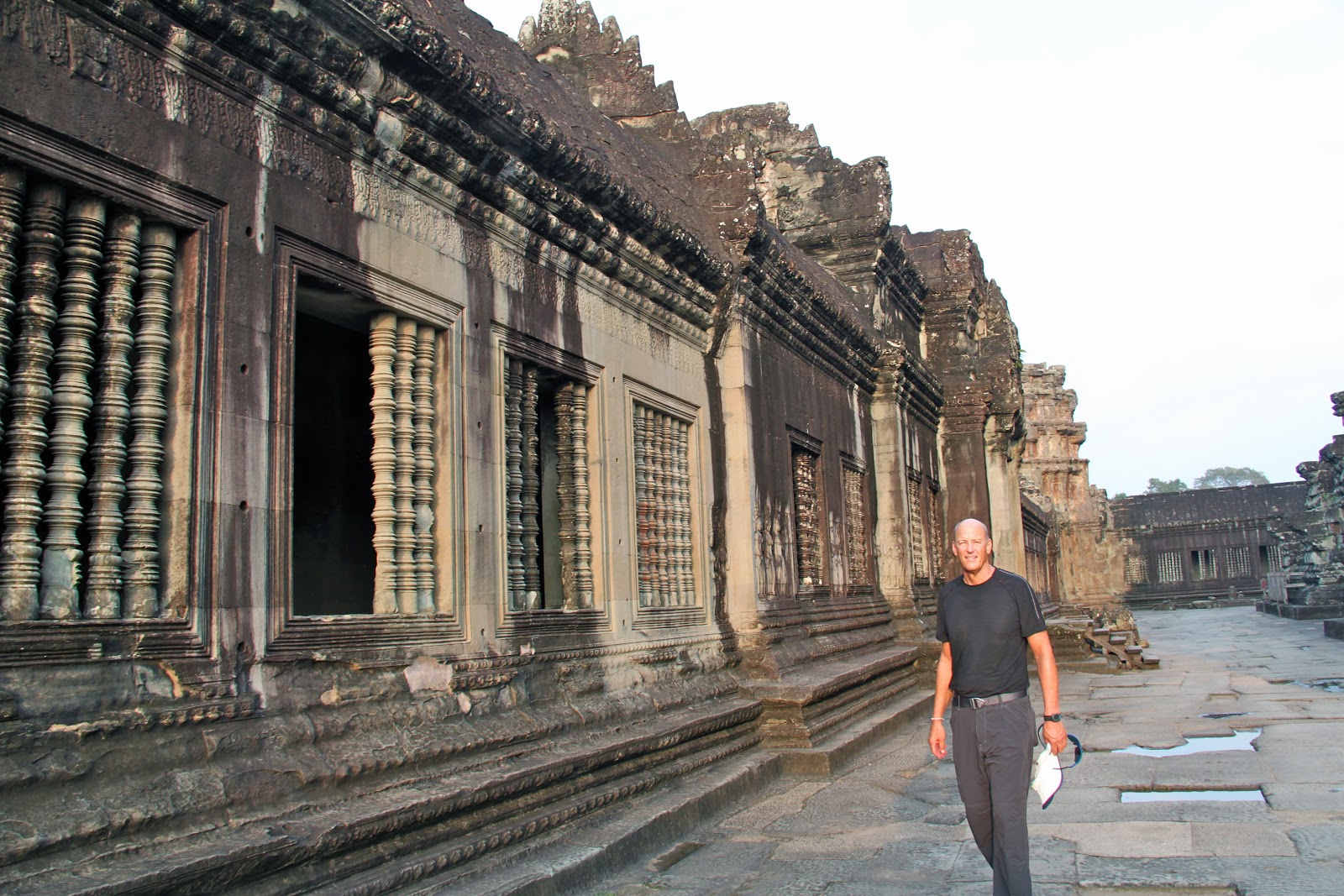
Stone carved hallways
Soldiers
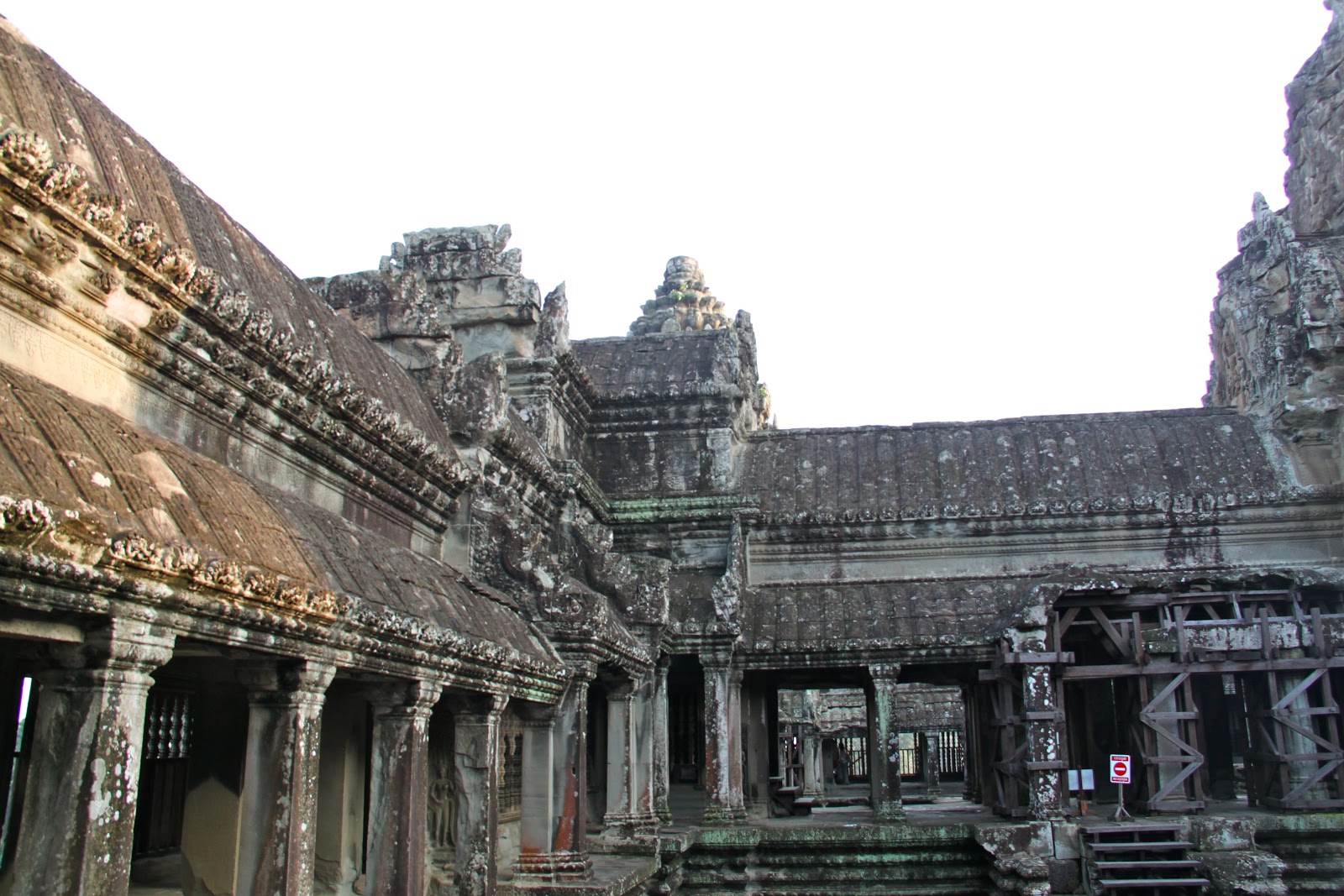
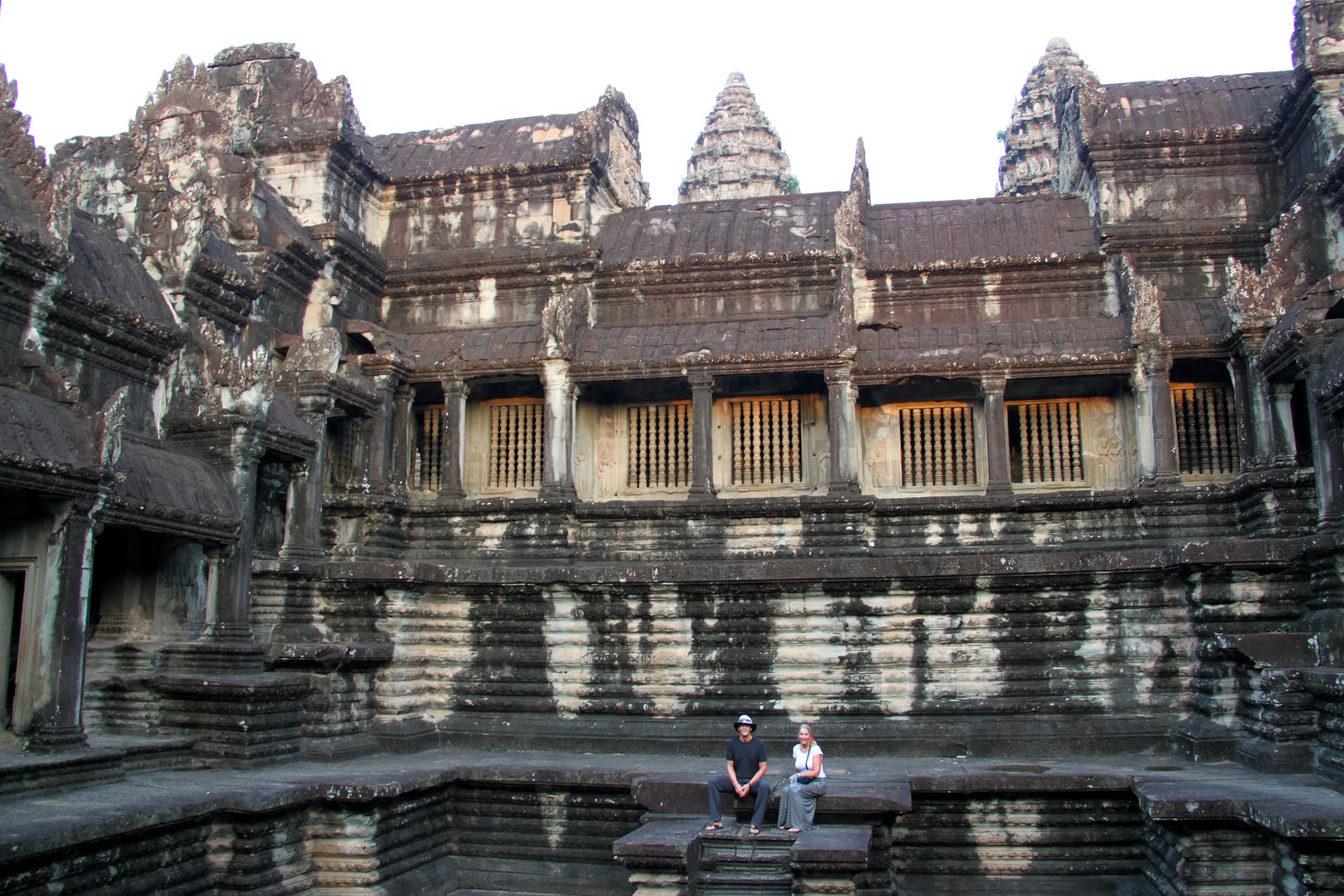
The scale is incredible

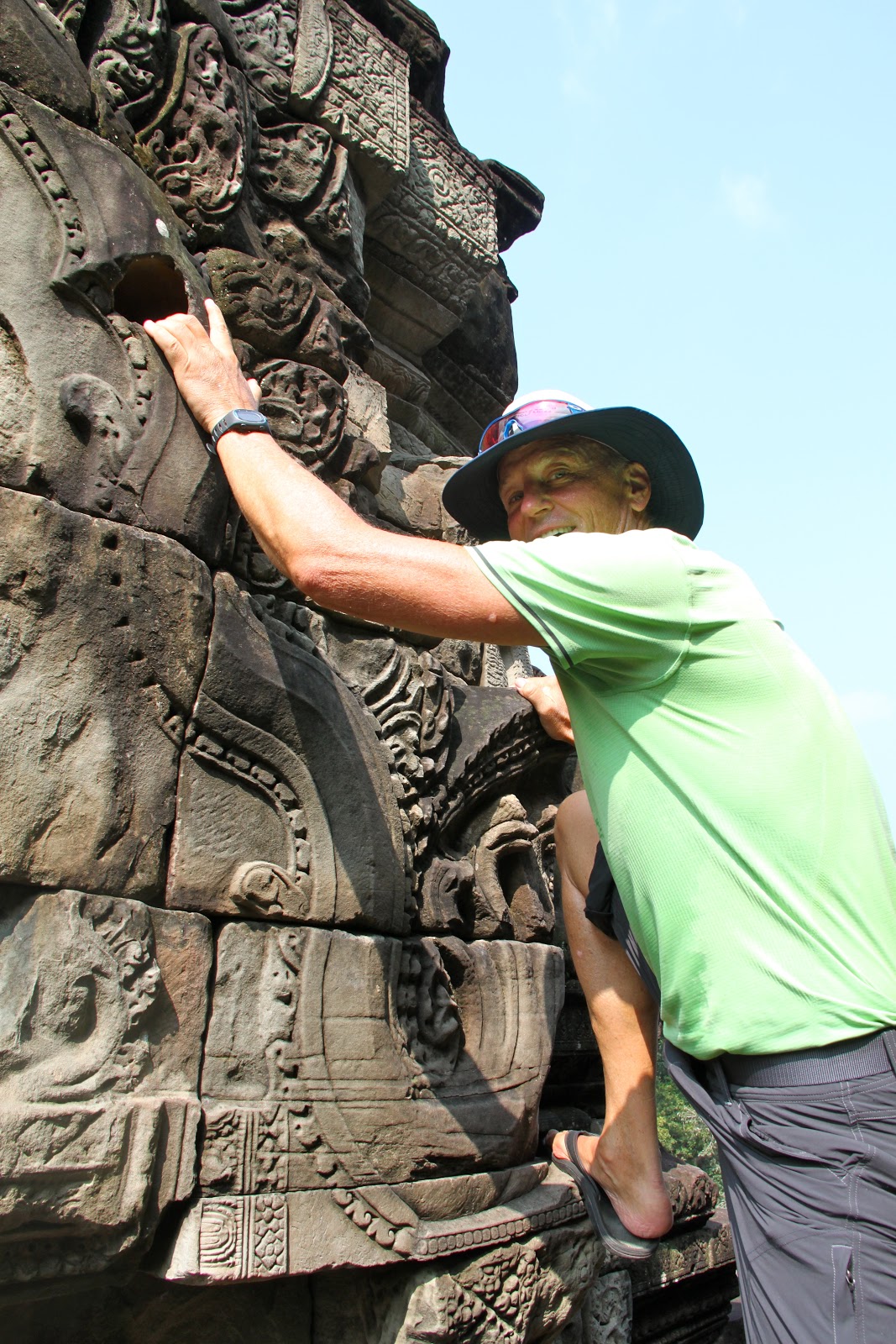
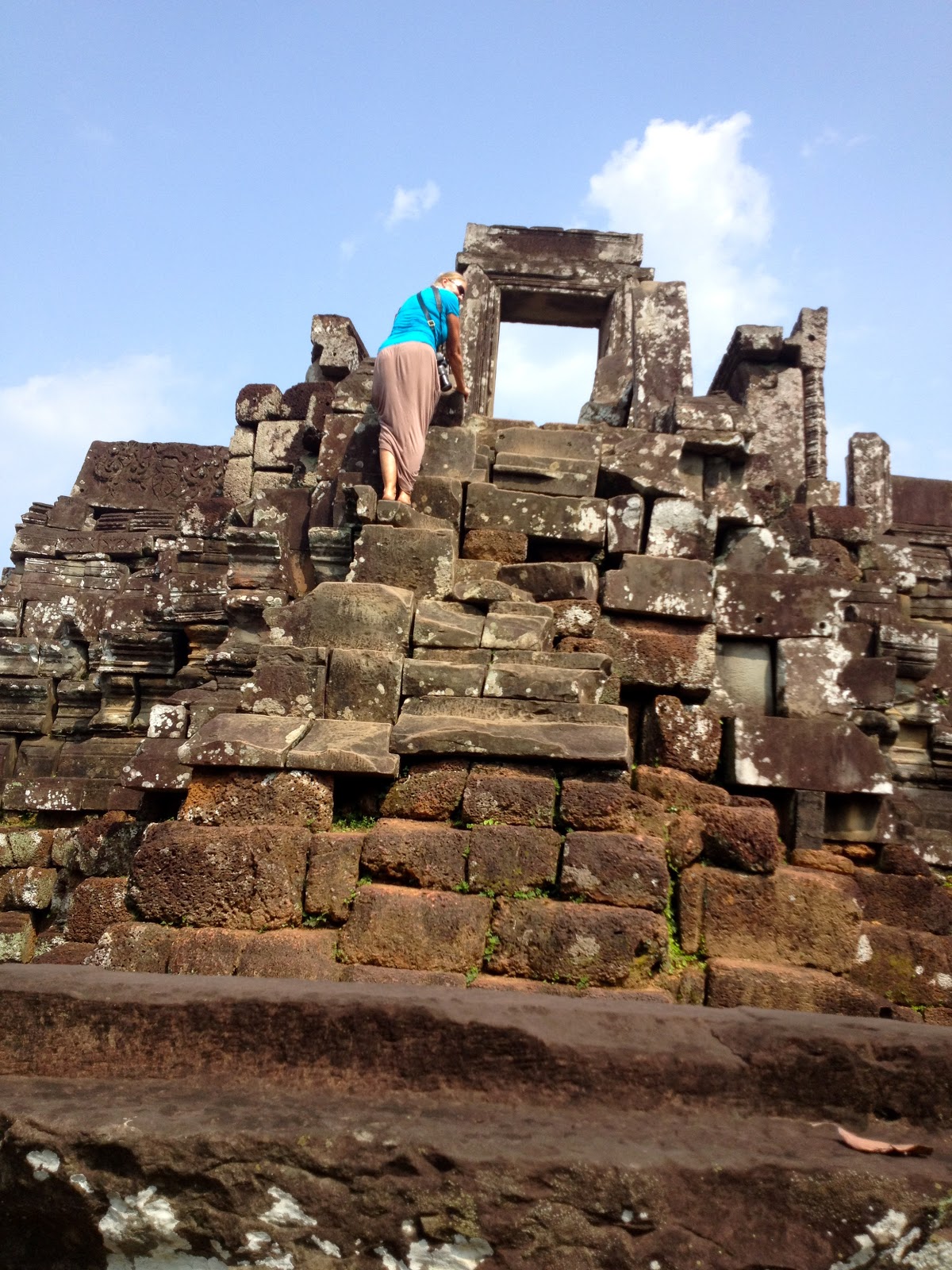
You can climb on most of these Temples

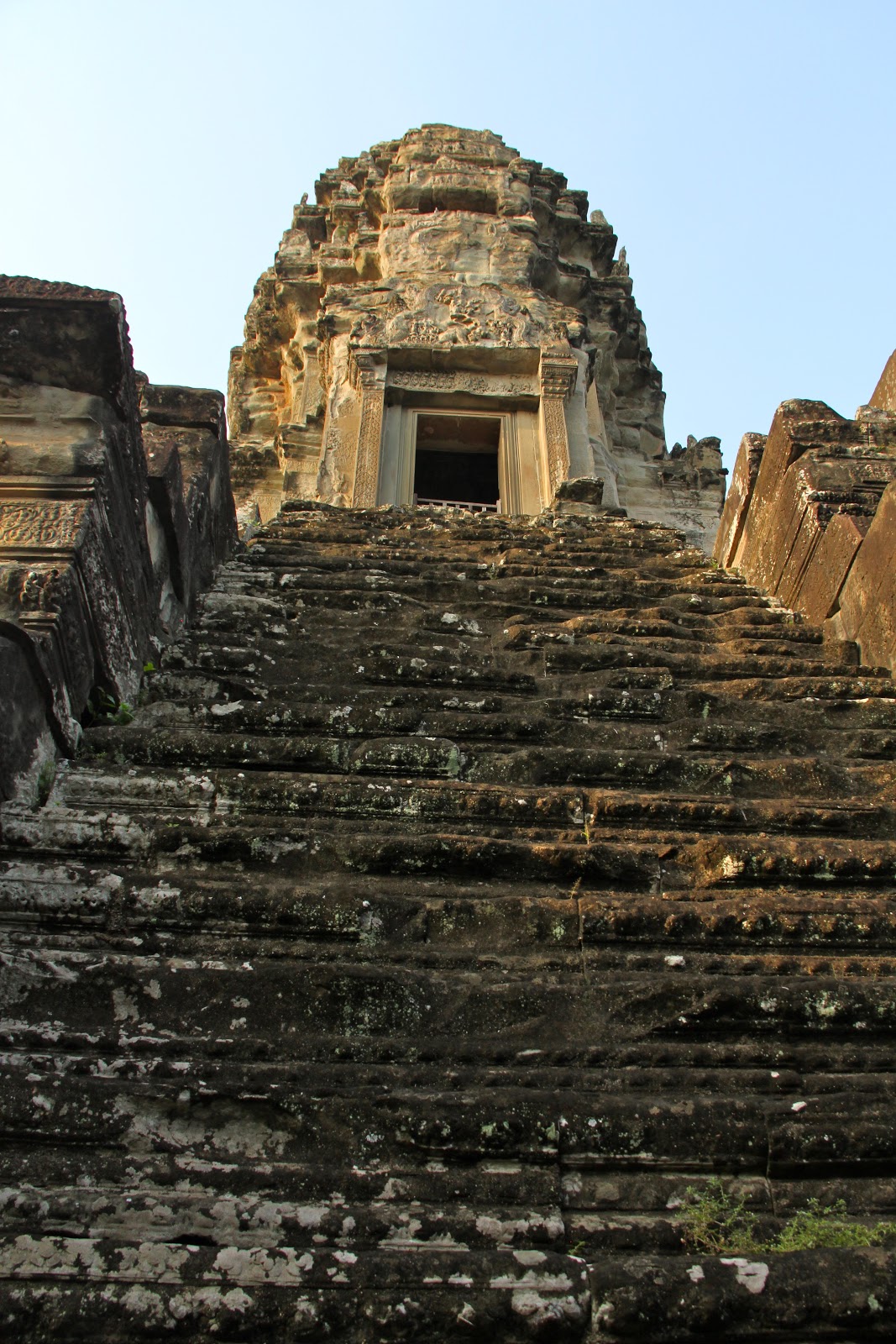
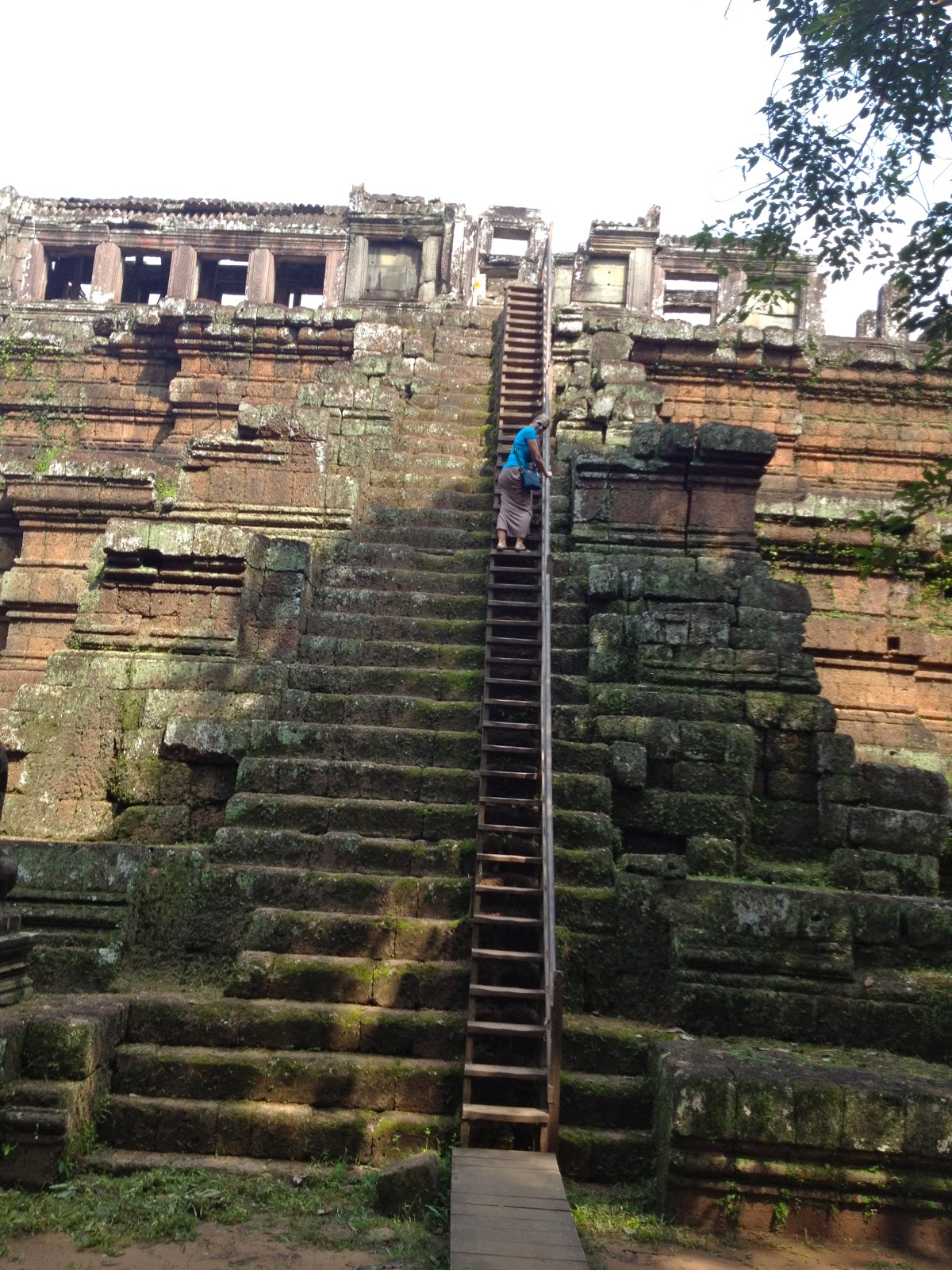
These stairs are steep

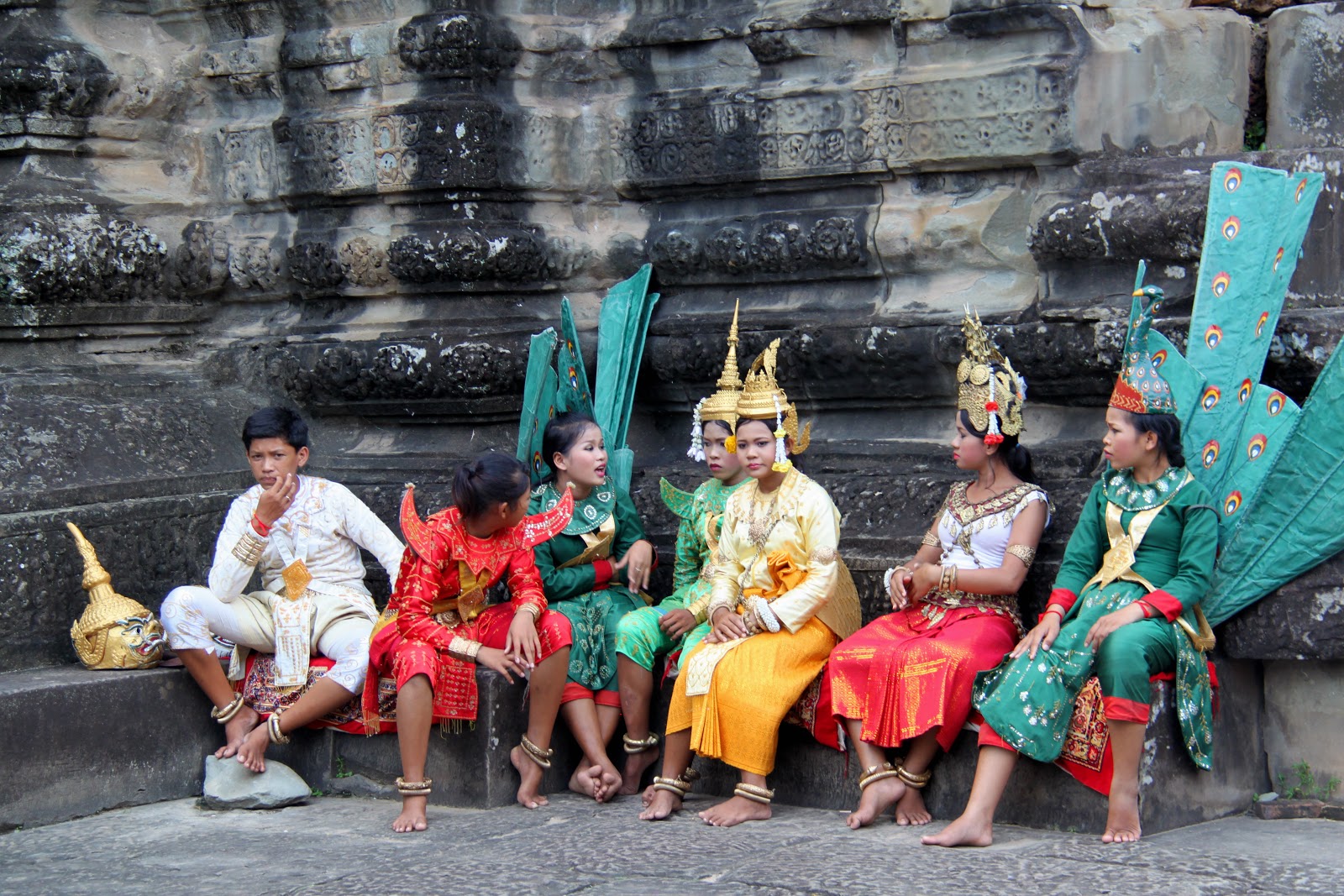
Performers in their native costume

Carving everywhere.

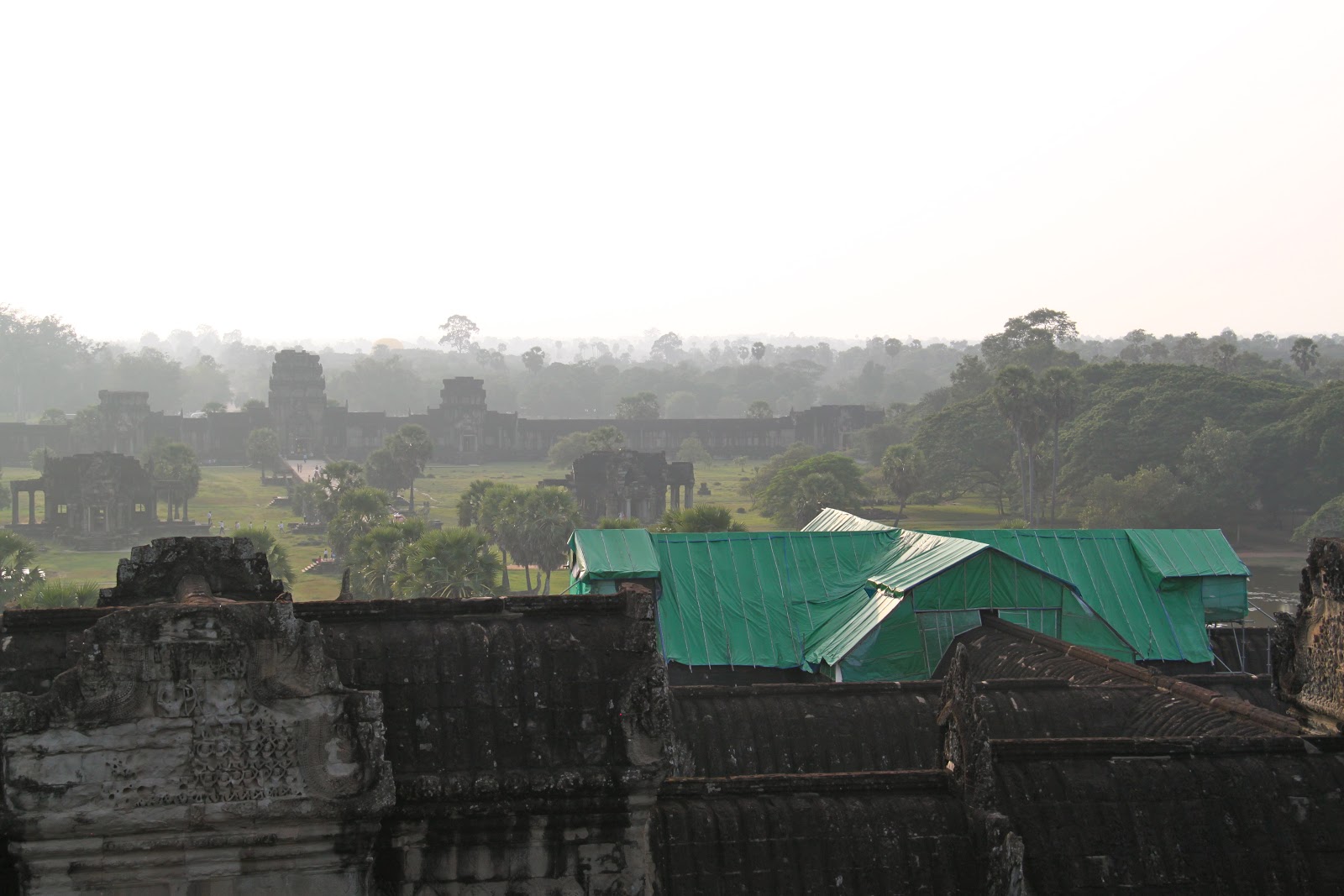
View from on top.

Every alcove has a little temple.

Walking to the top.  Heaven is always on the third level.

Over a doorway.  Is this a high school cheerleader pyramid?

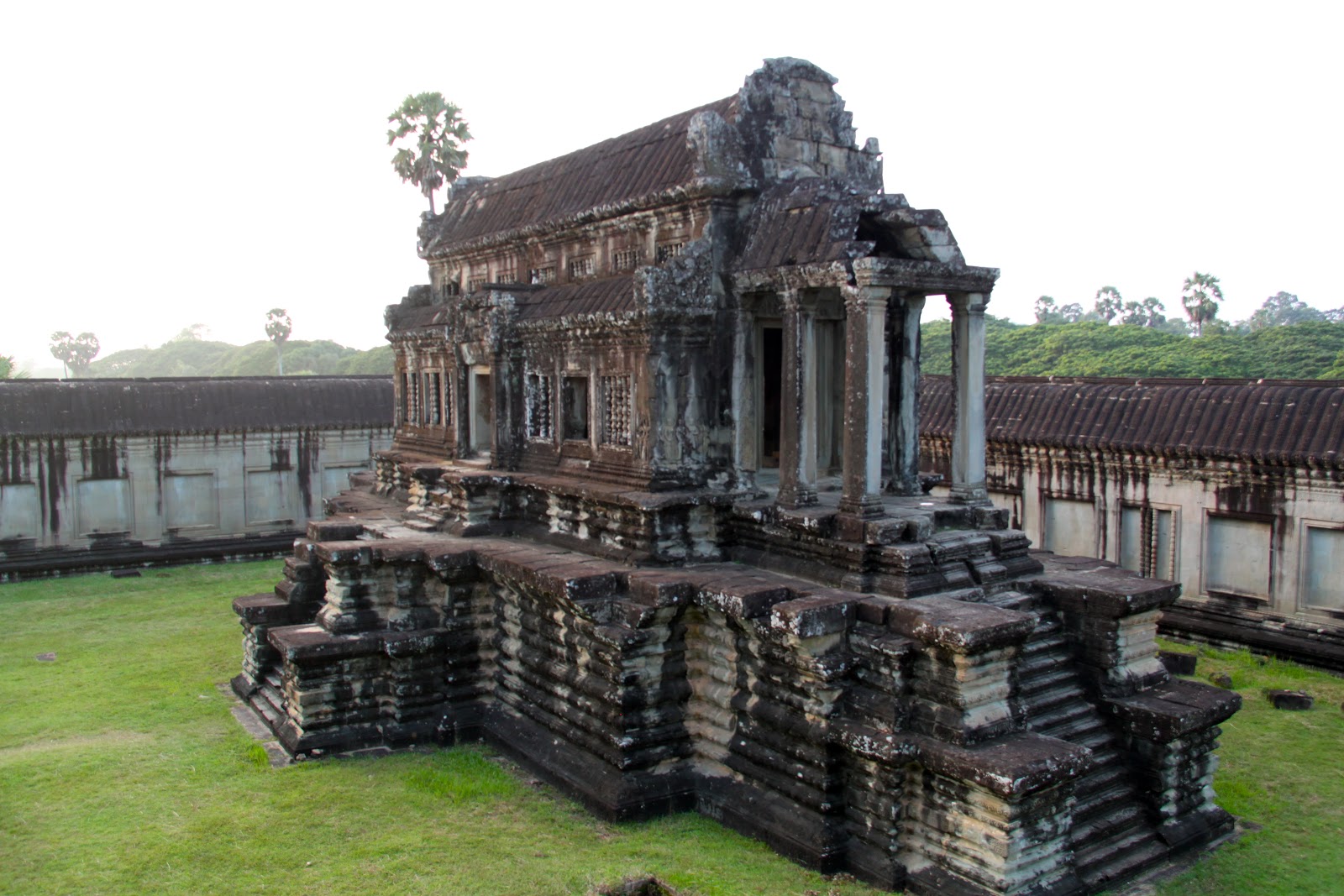
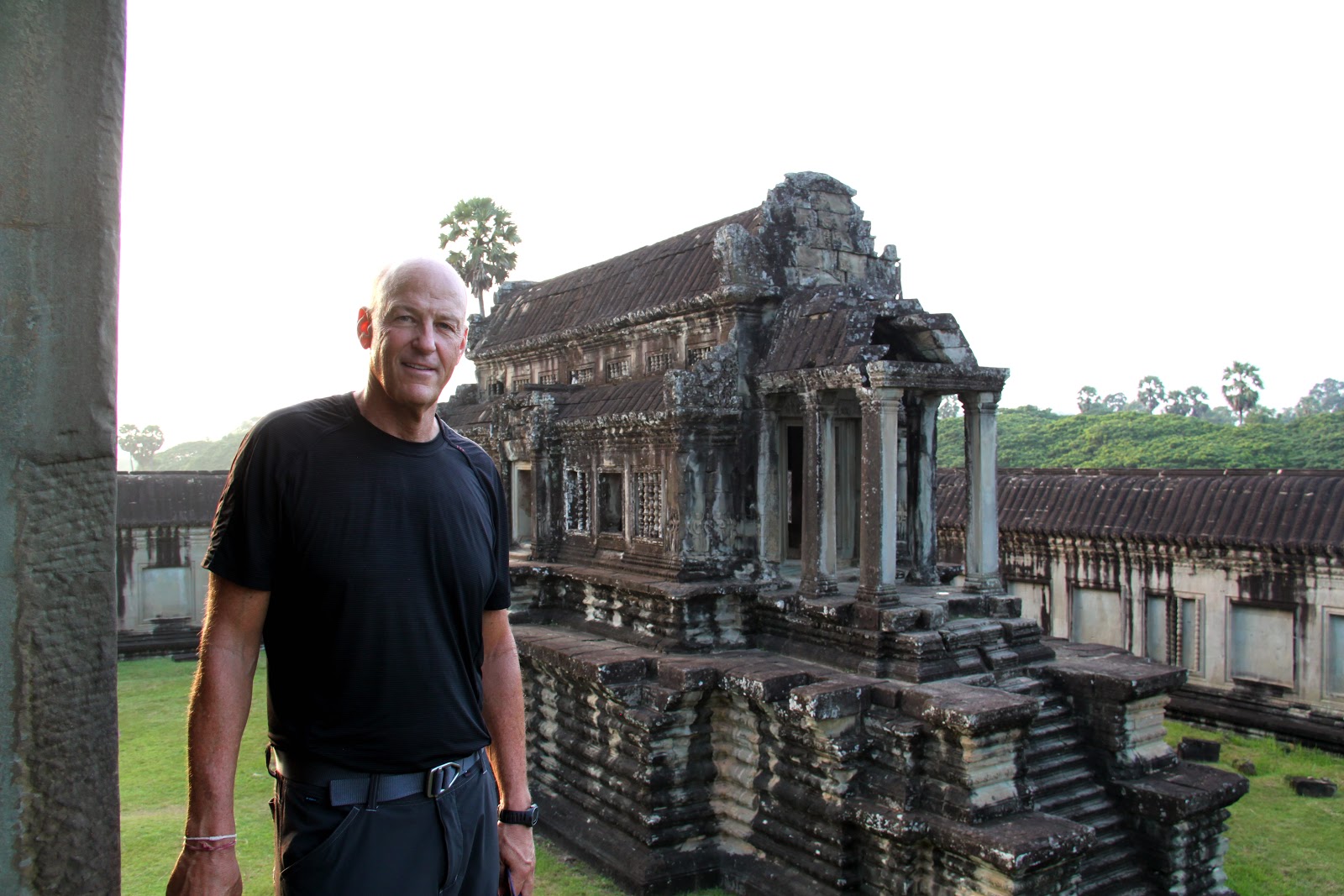
The library

The bath area

Sunset

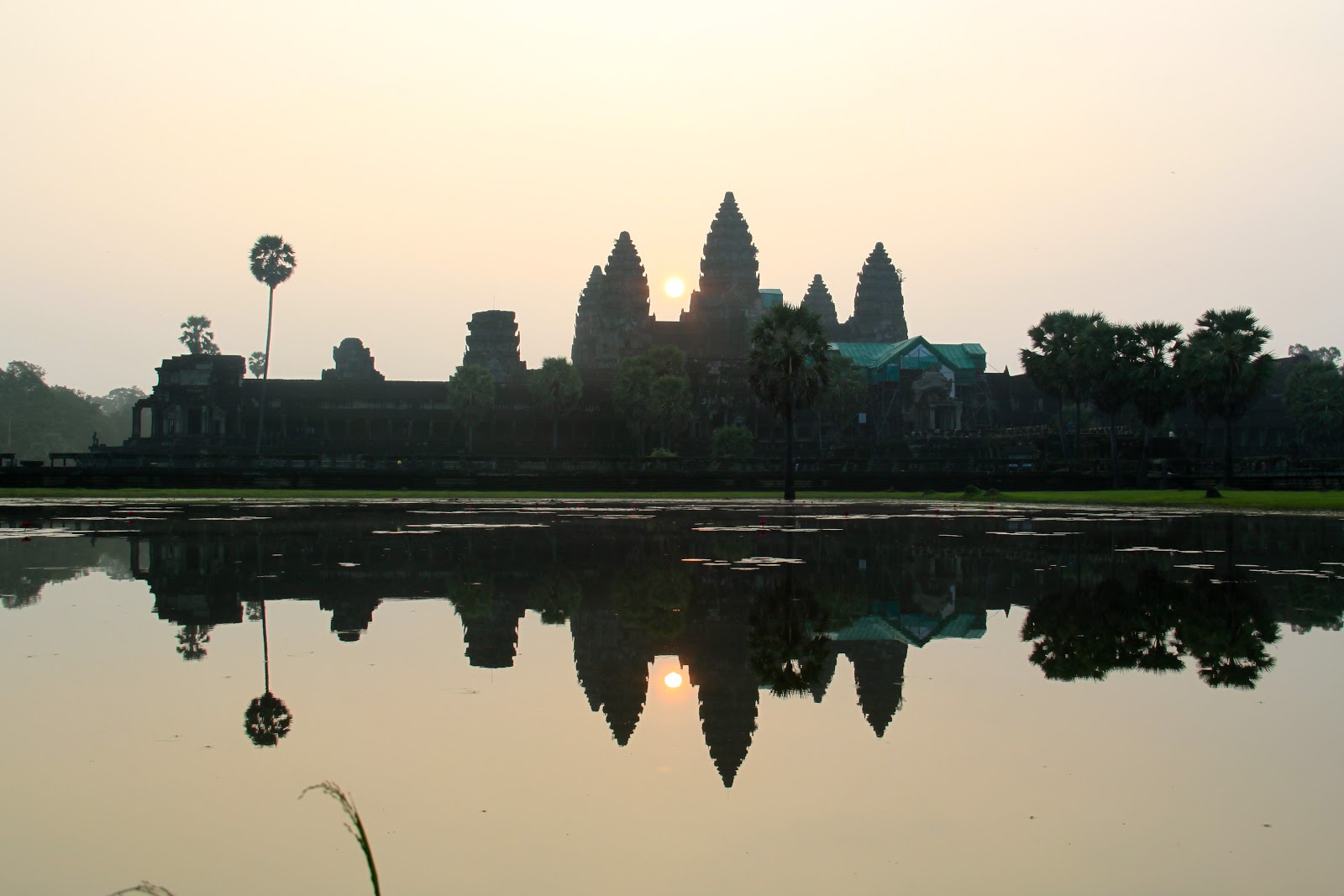
The next morning we arose at 4:50 am and were inside the gates of Angkor Wat at 5:30 am to witness the beauty of the sunrise behind the temples.

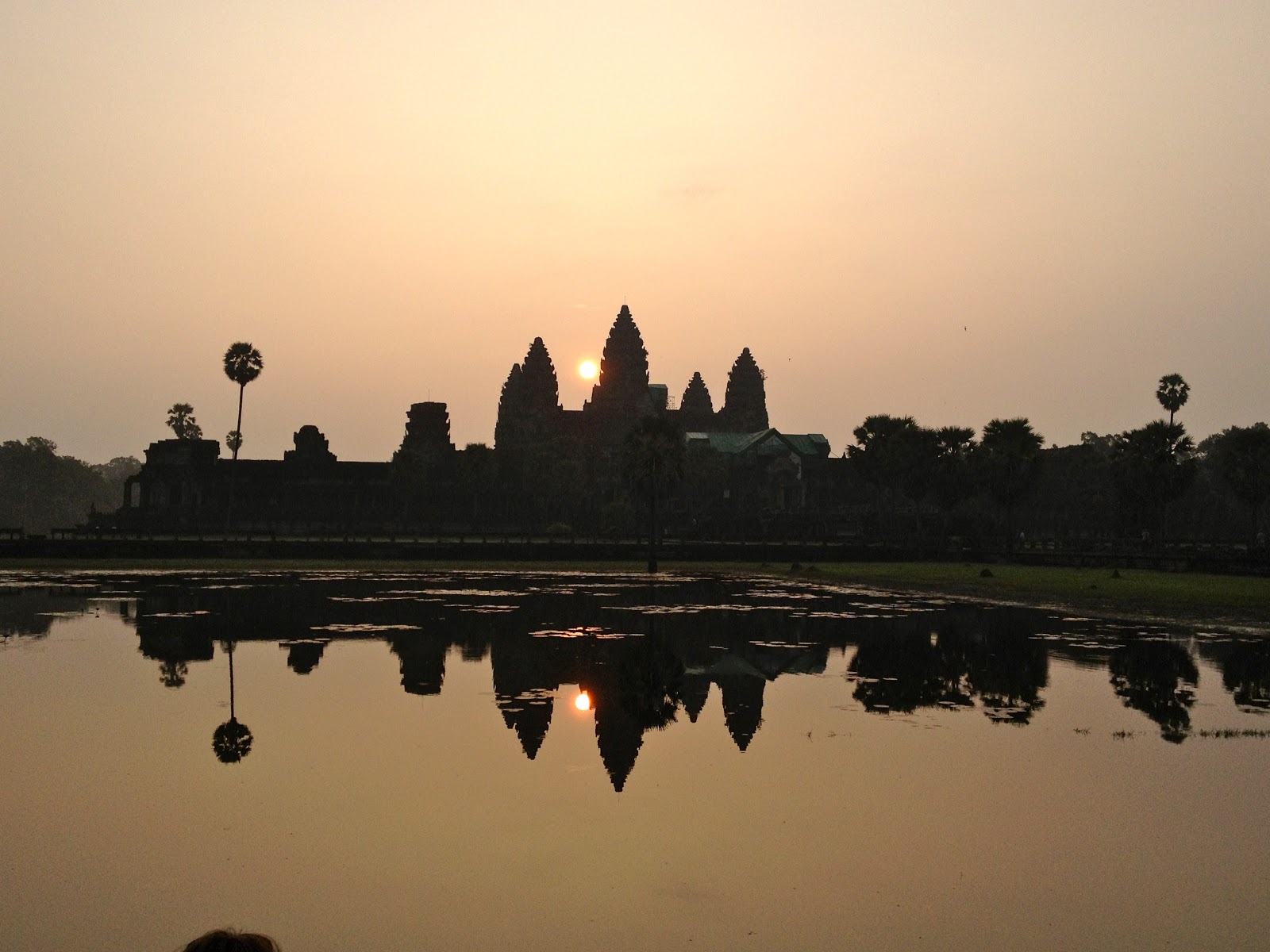
It was a little cloudy, but the reflection was great.

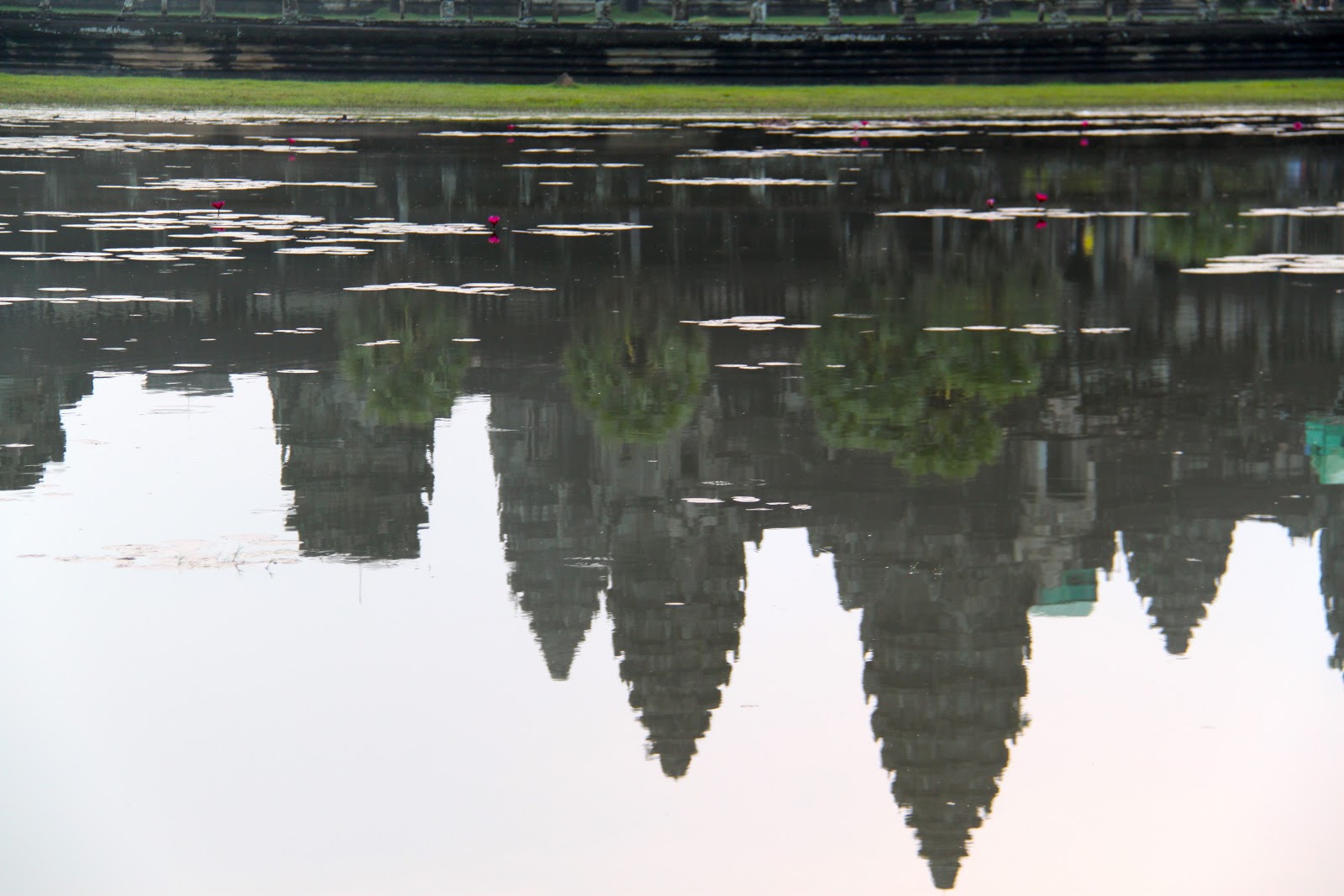
The reflection looks better than the actual buildings.

Barb getting a little crazy and just taking a photo of the reflection.

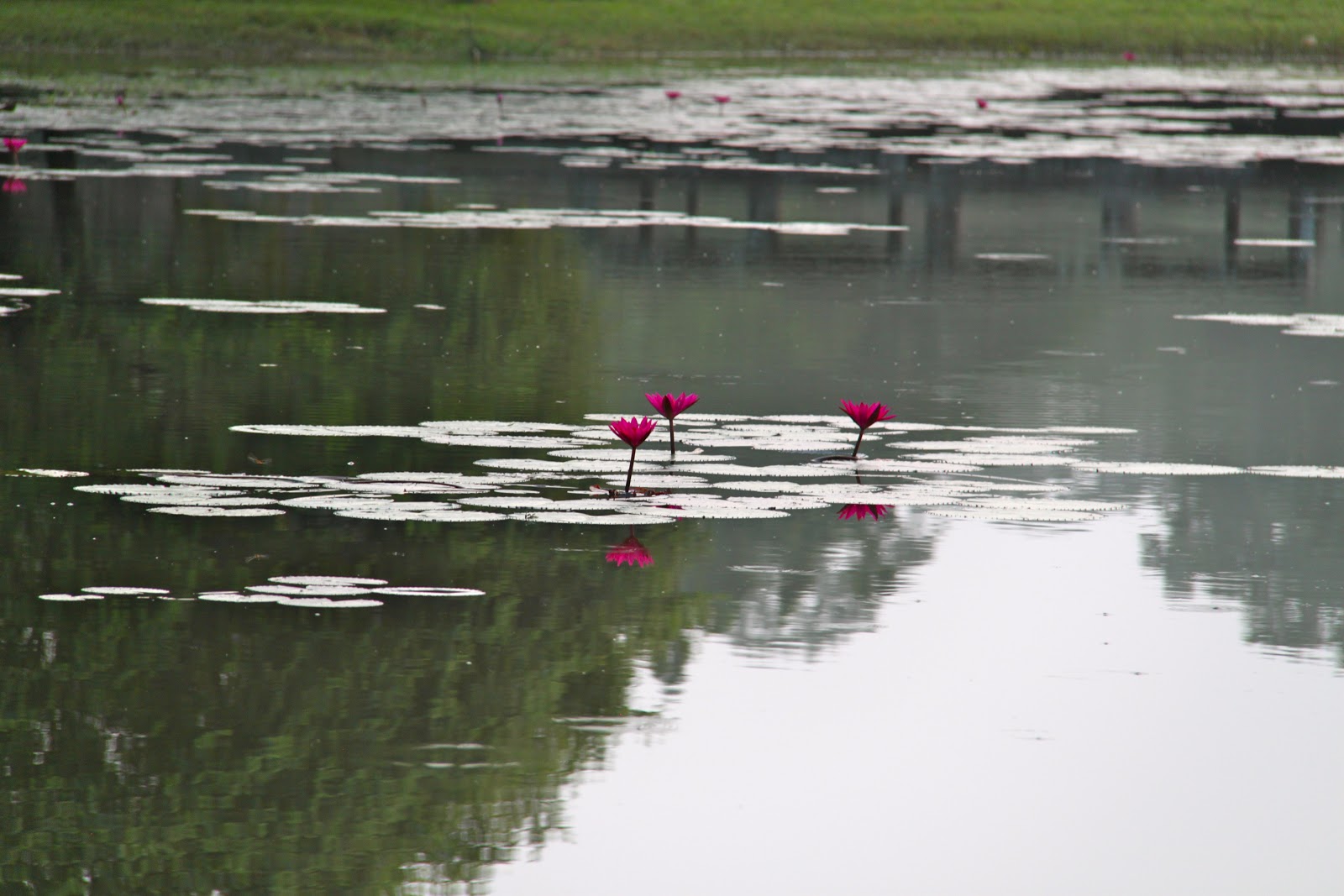
Water lilies only open between 6 and 10 am.  Then it is too hot for them.

The sun finally peeked through.
Different cameras give different lighting
Morning excursion.

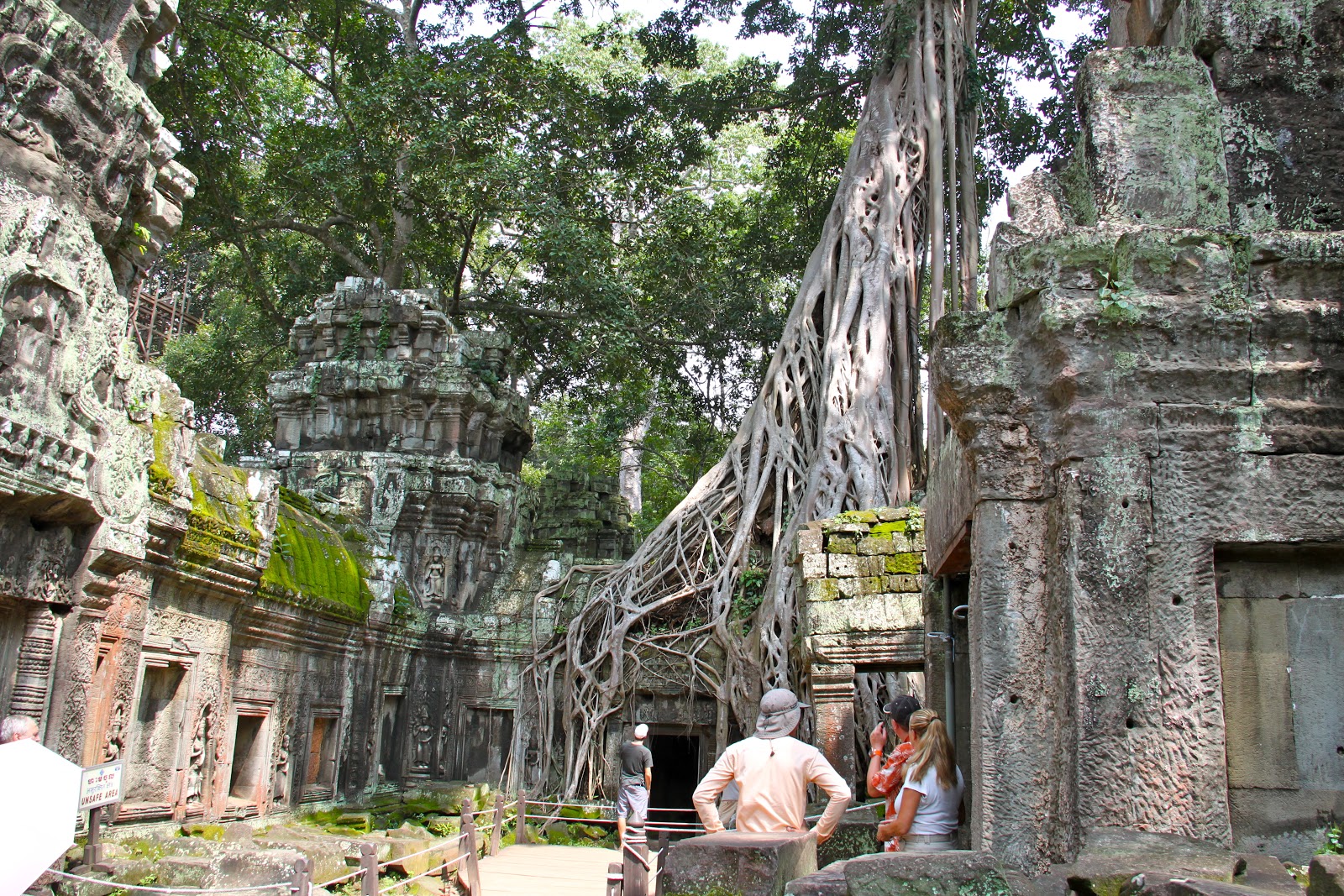
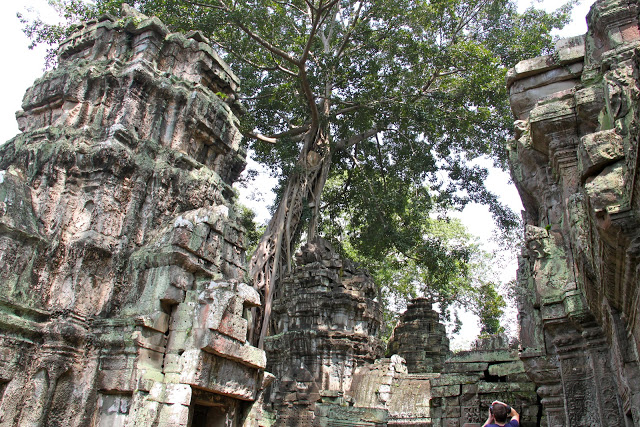
TA PROHM

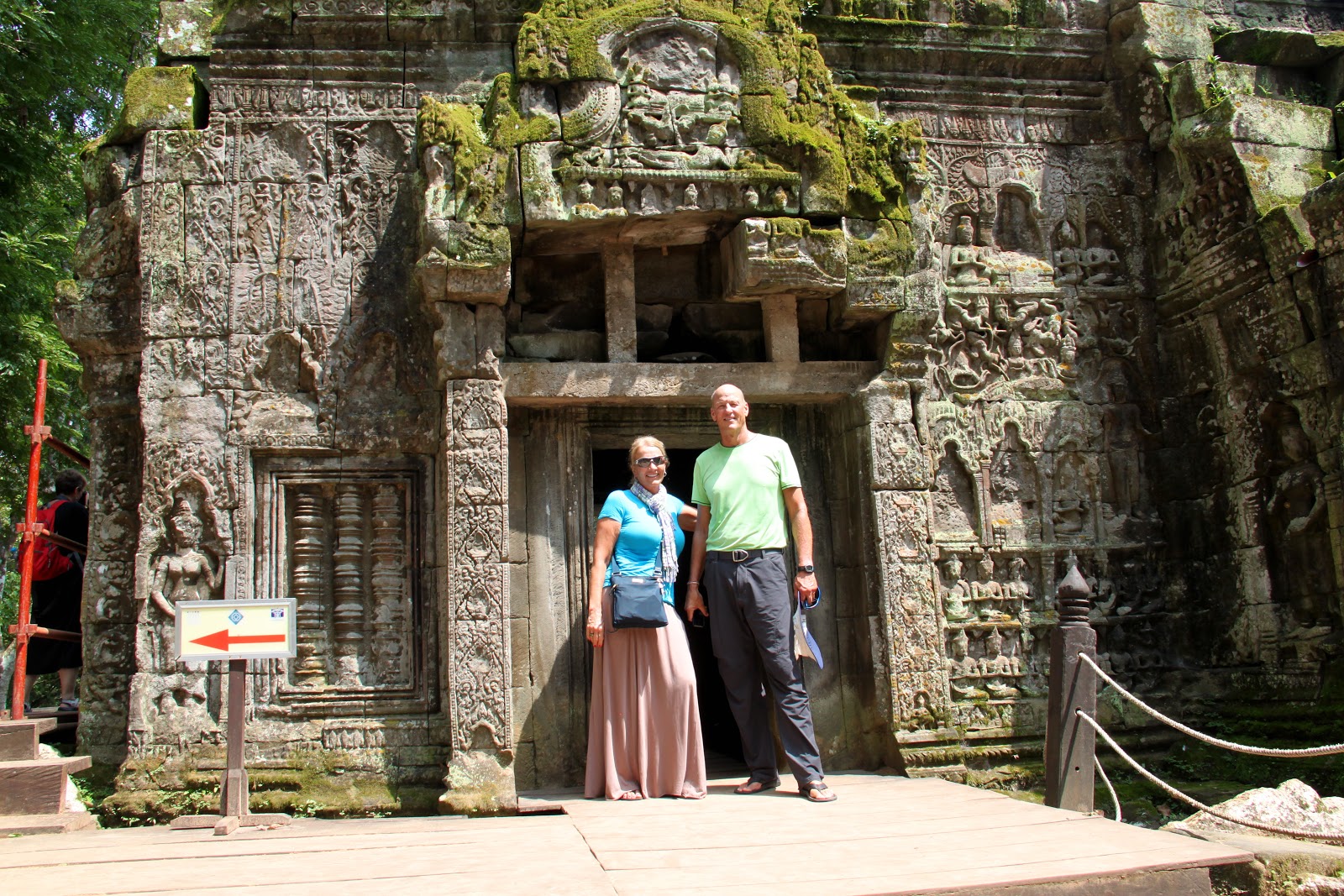
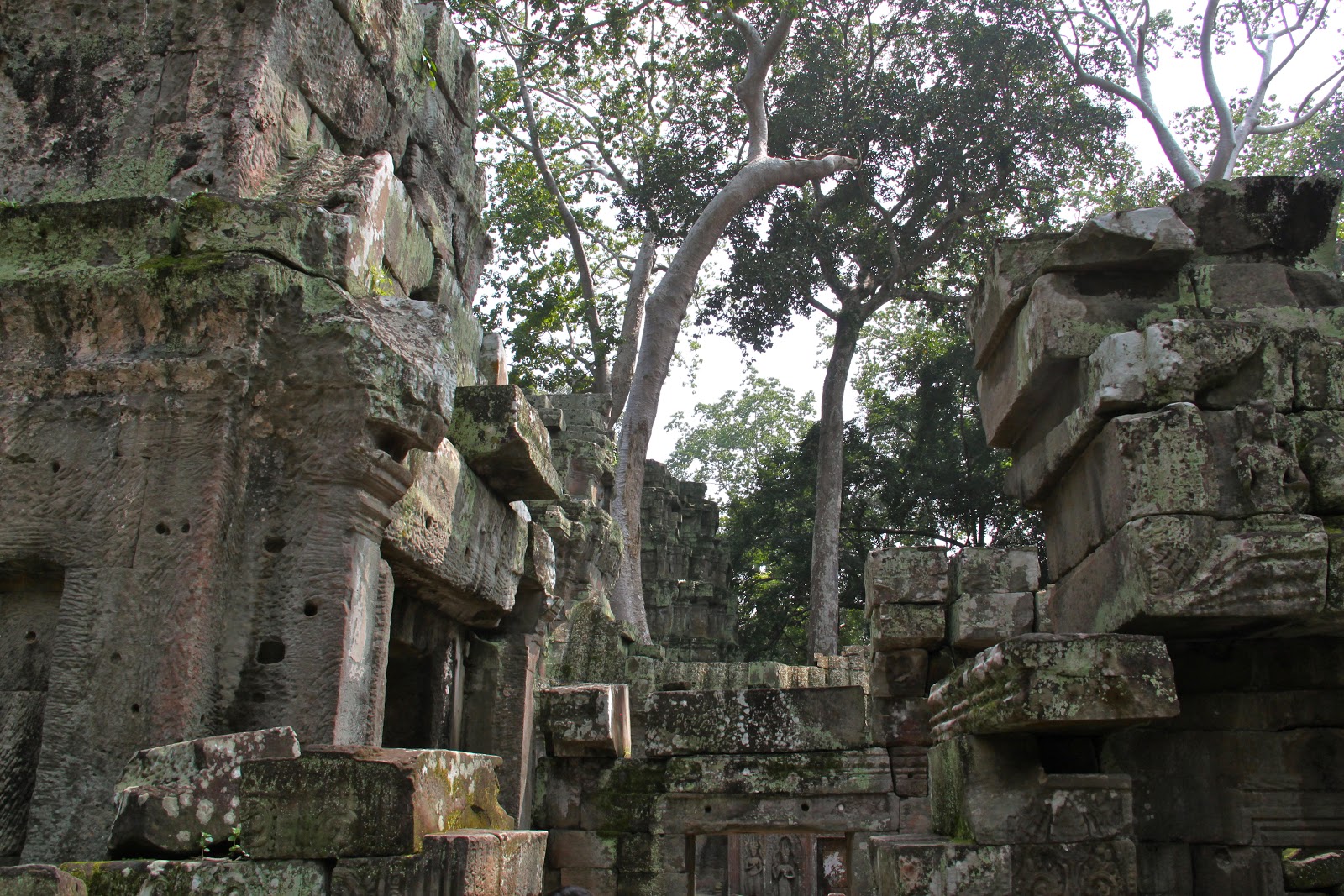
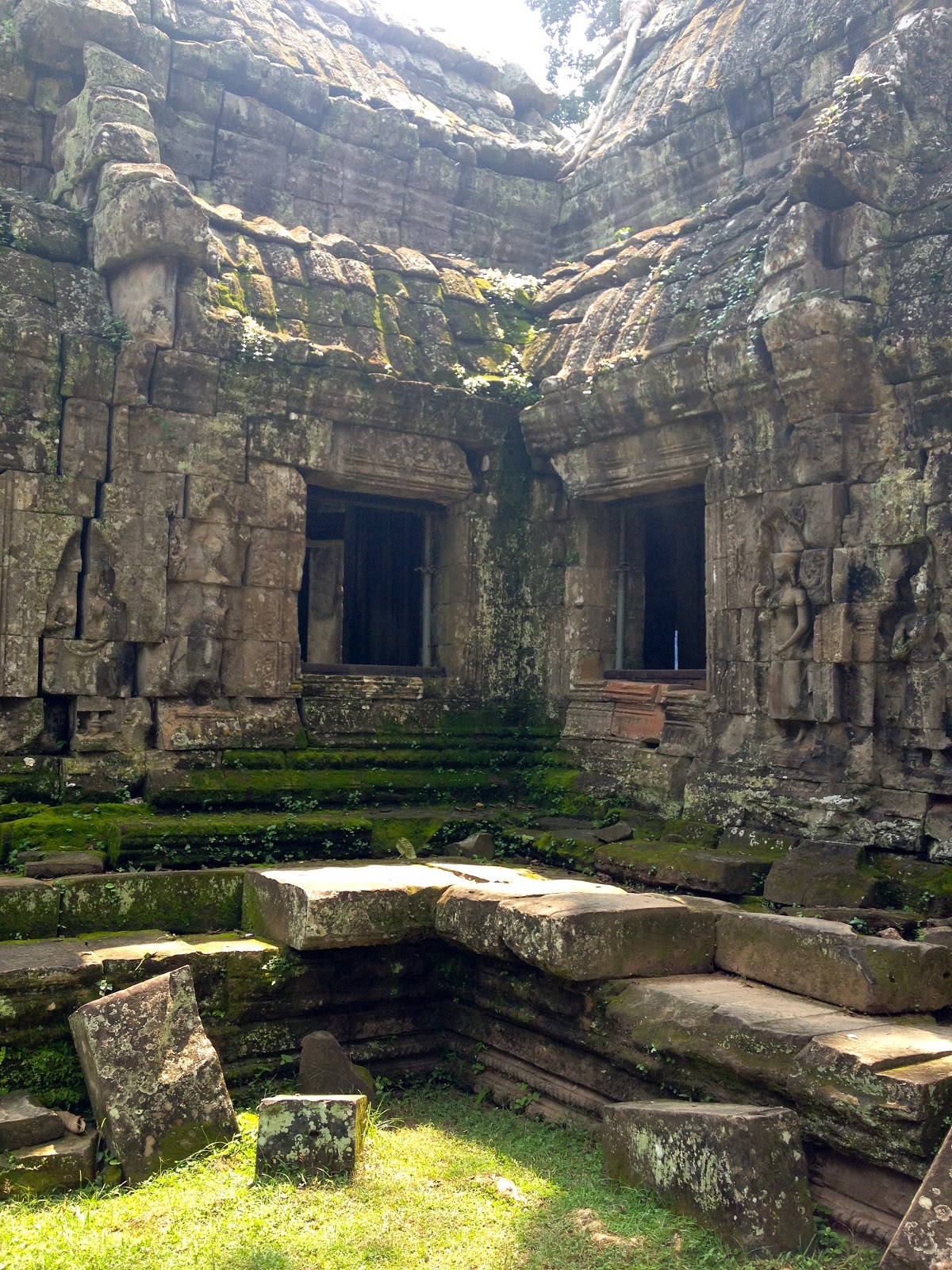
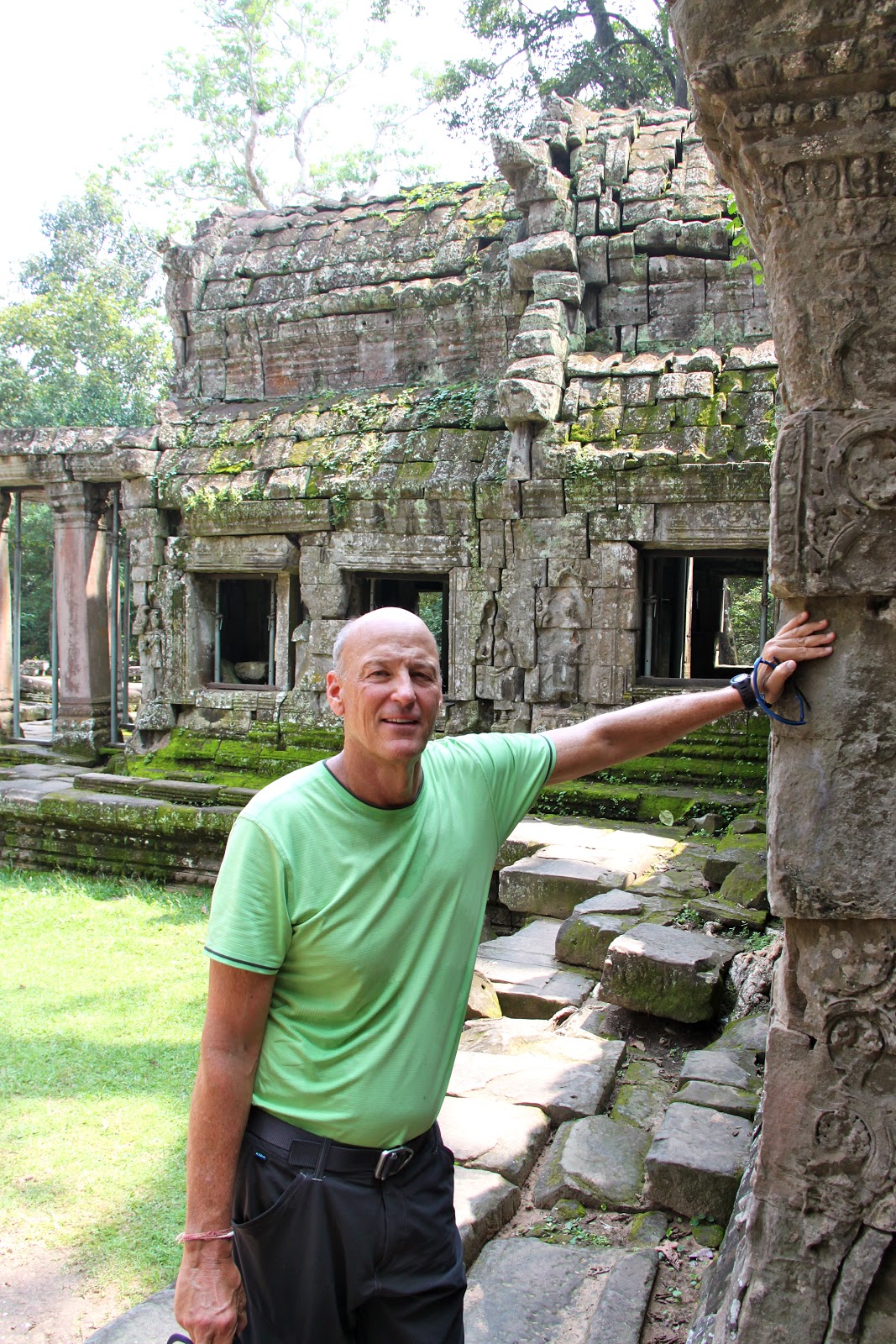
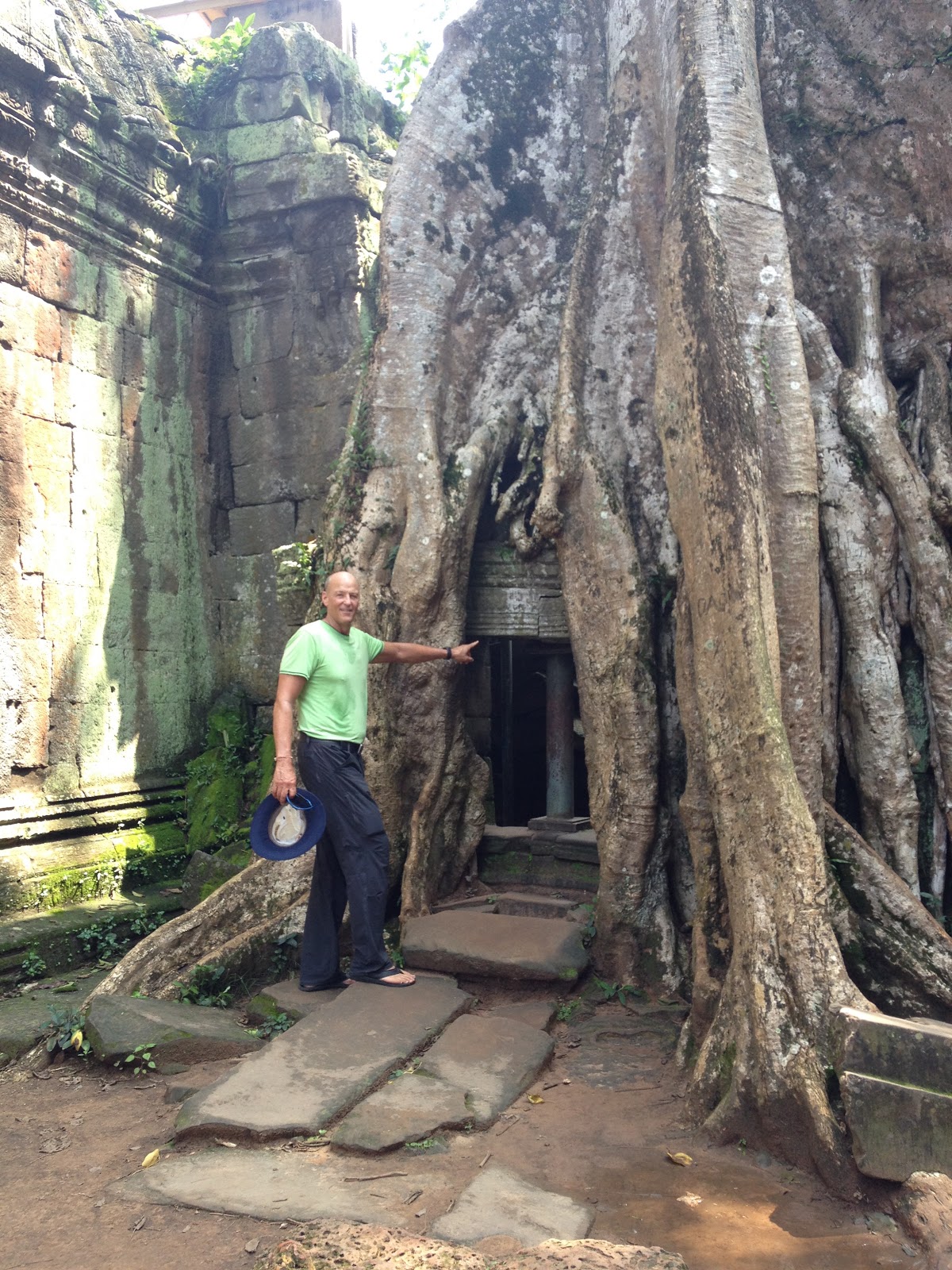
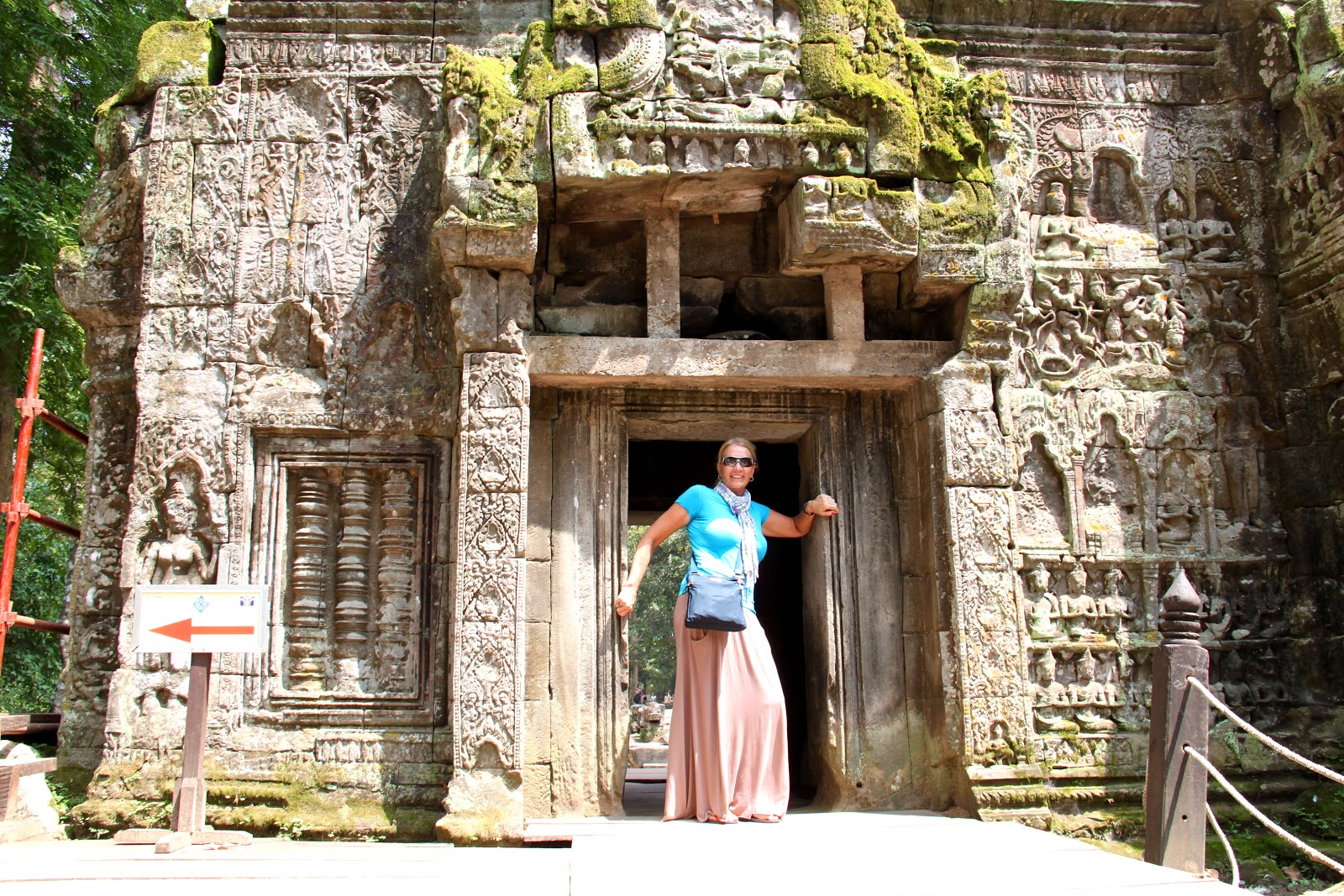
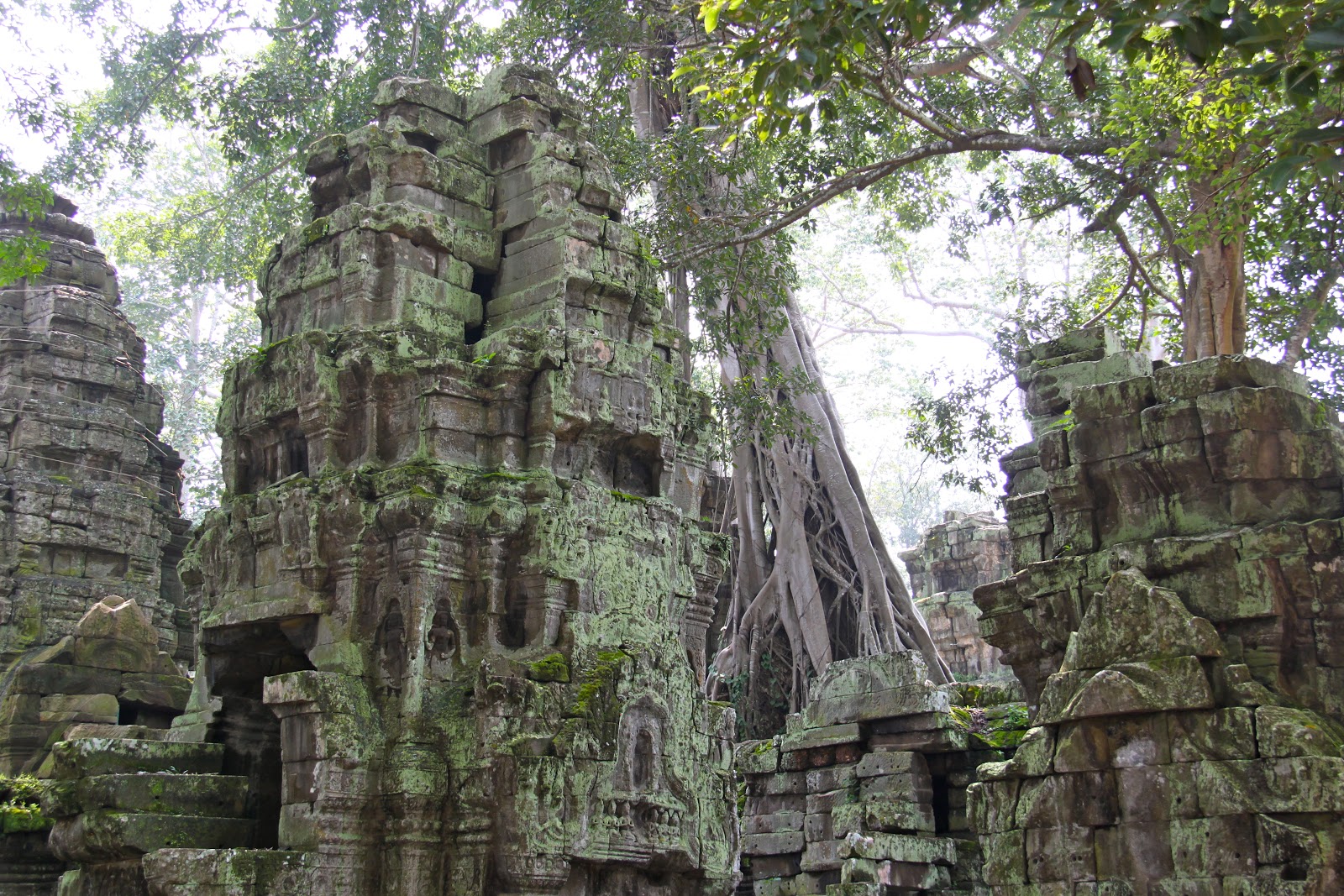
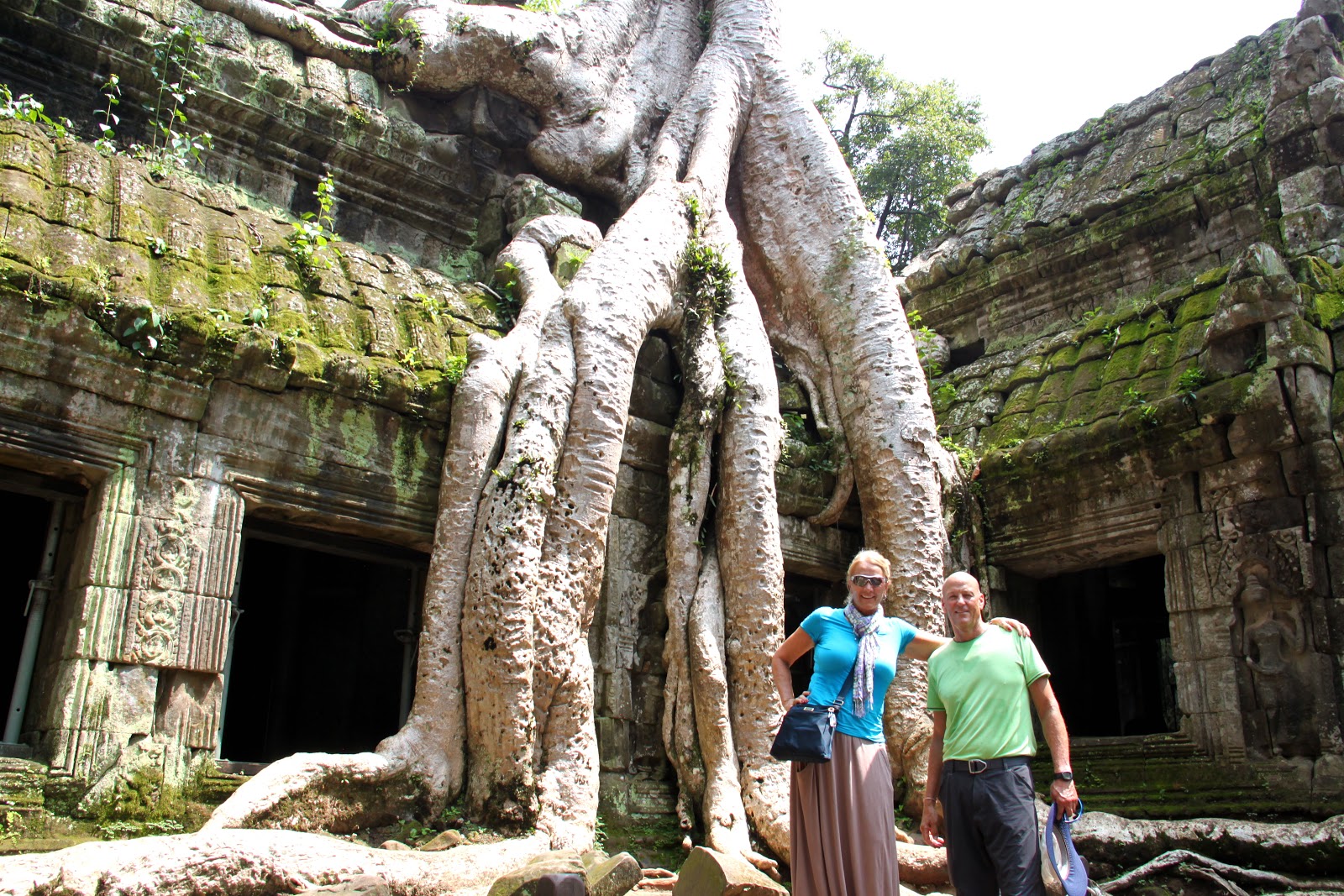
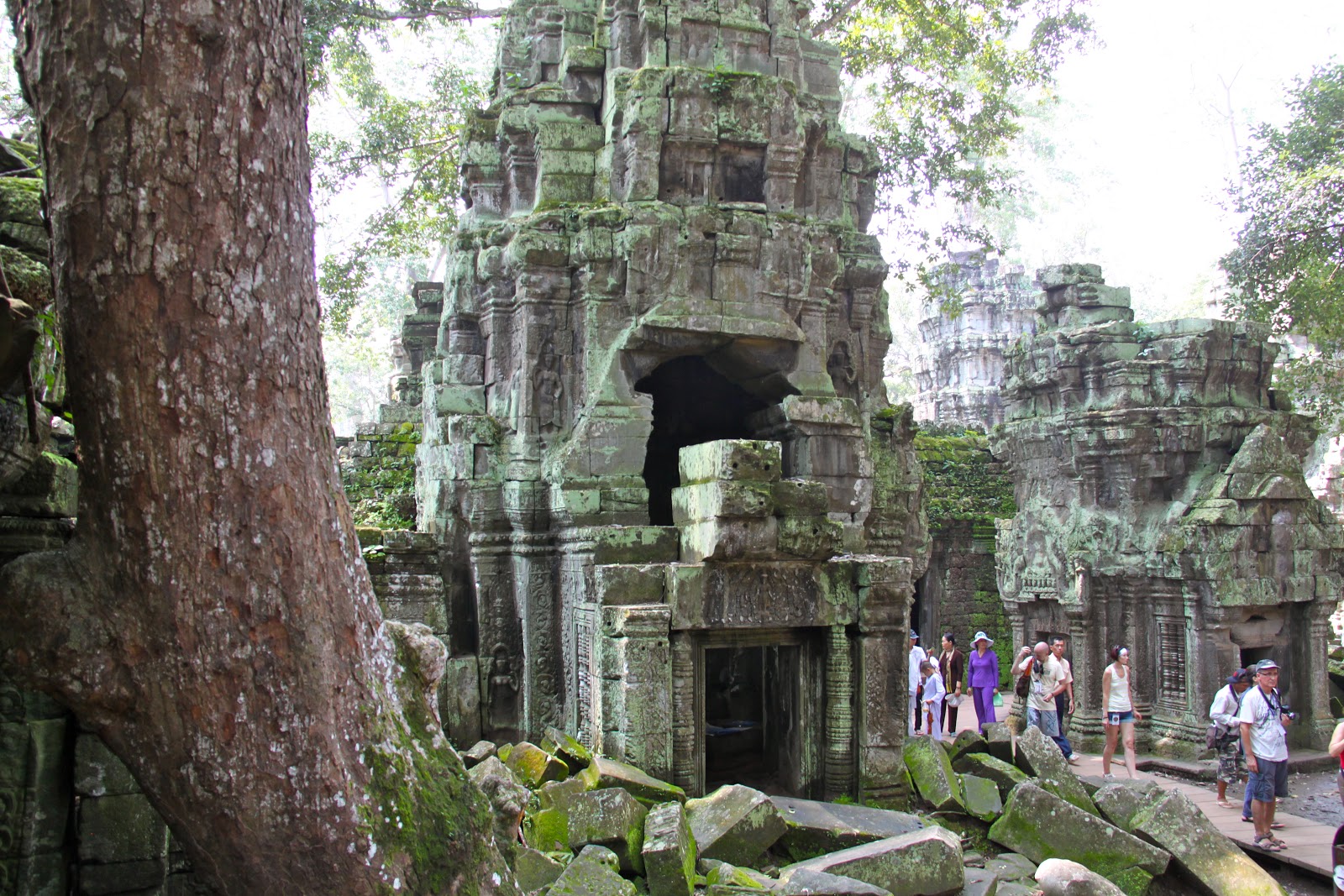
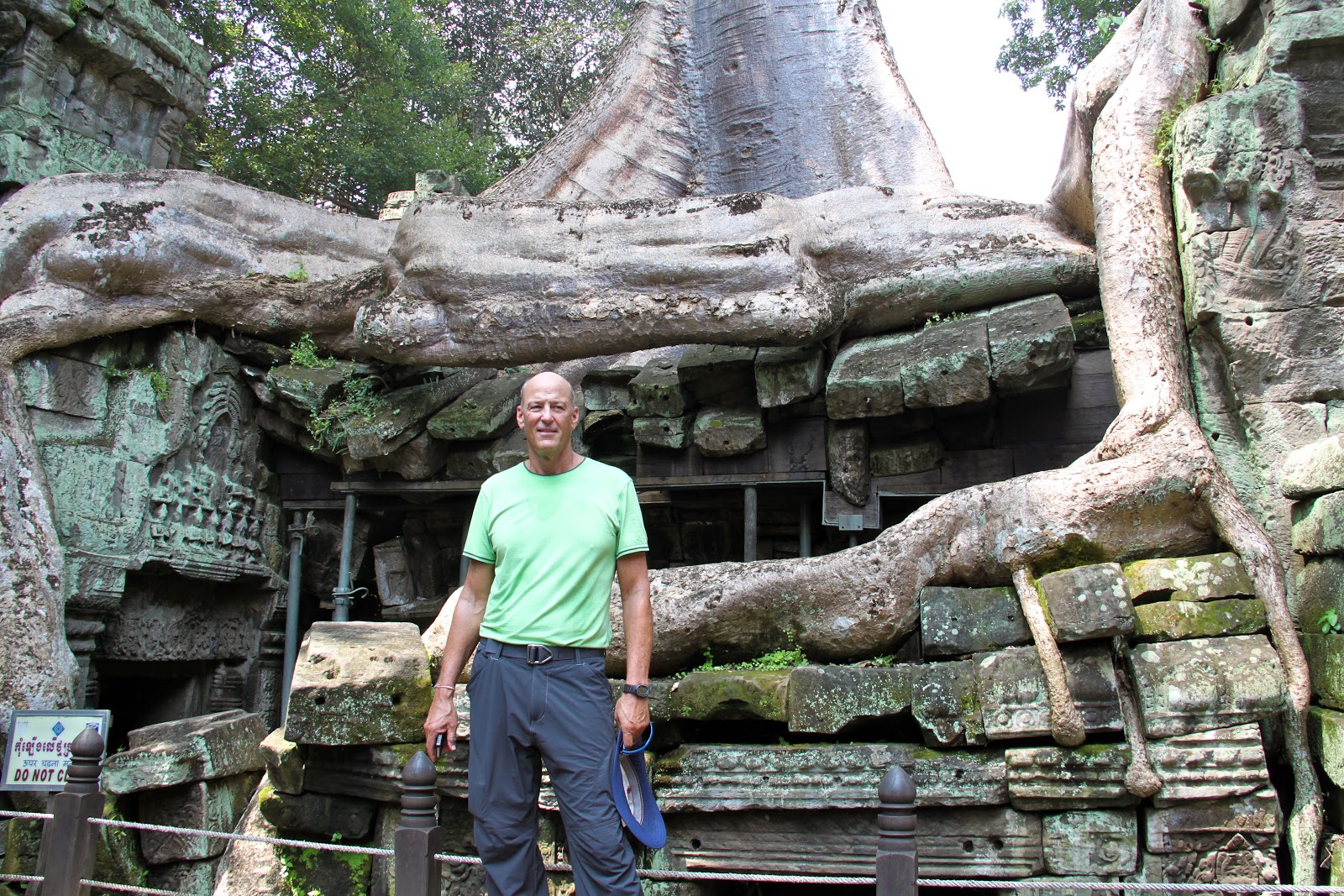
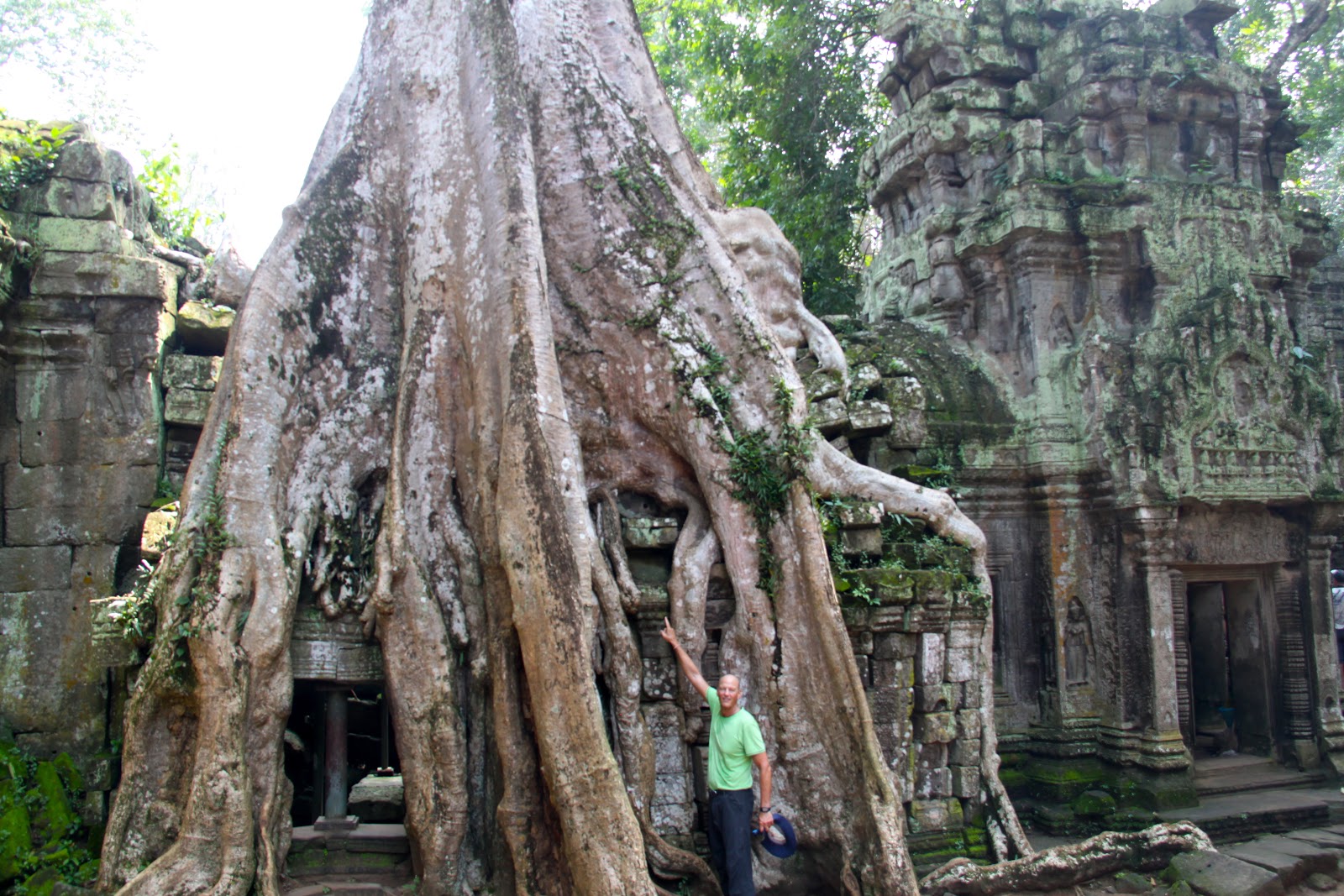
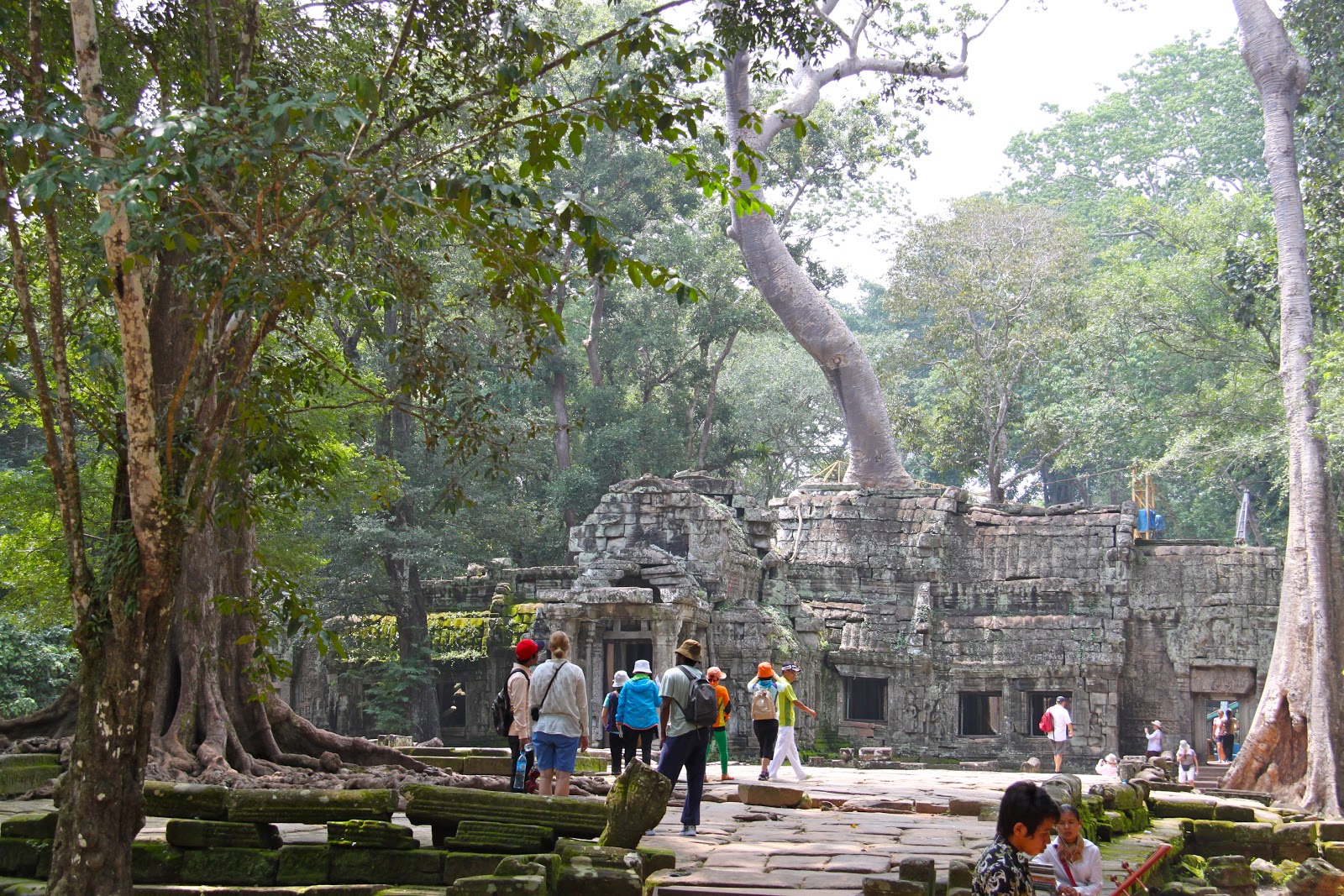
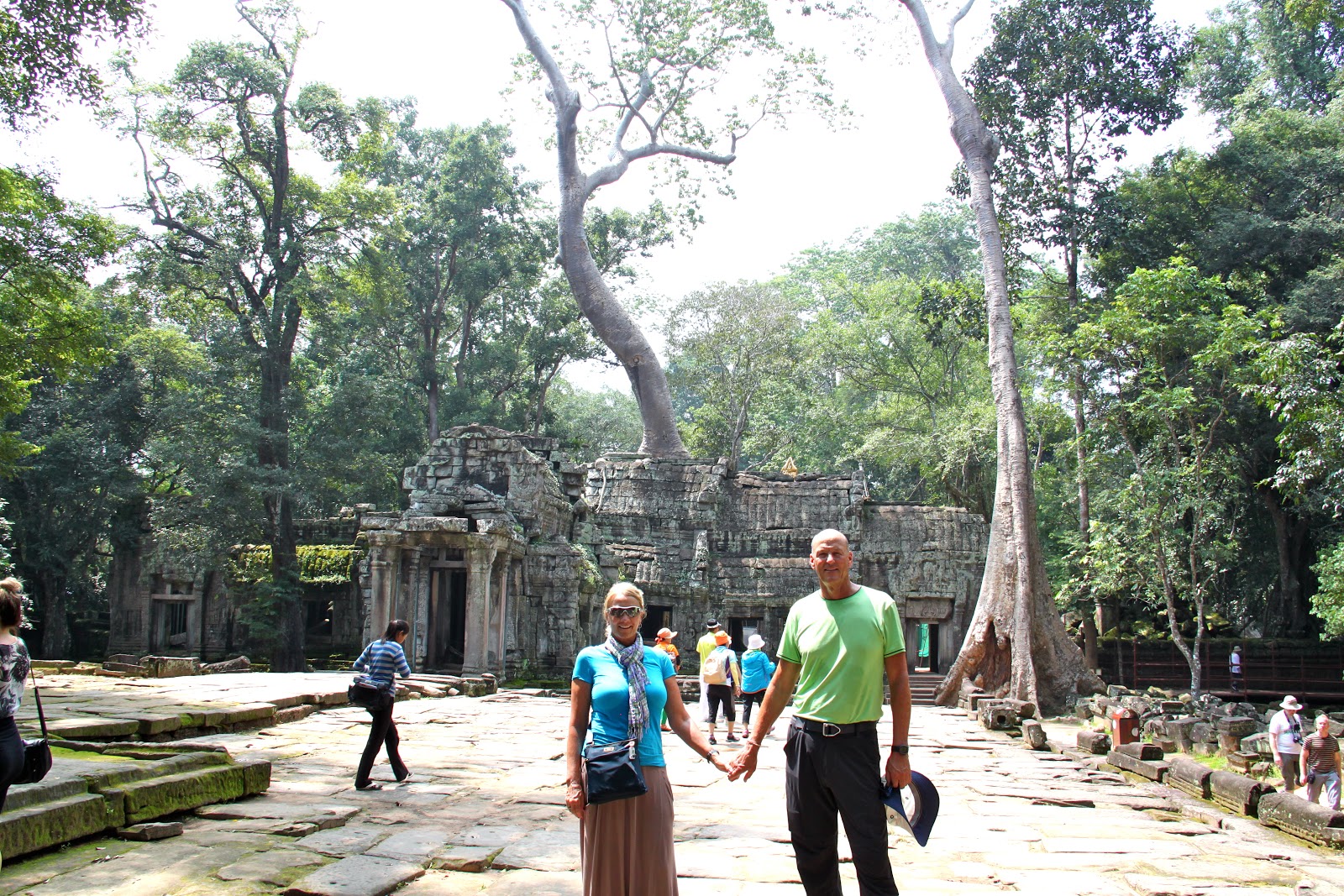
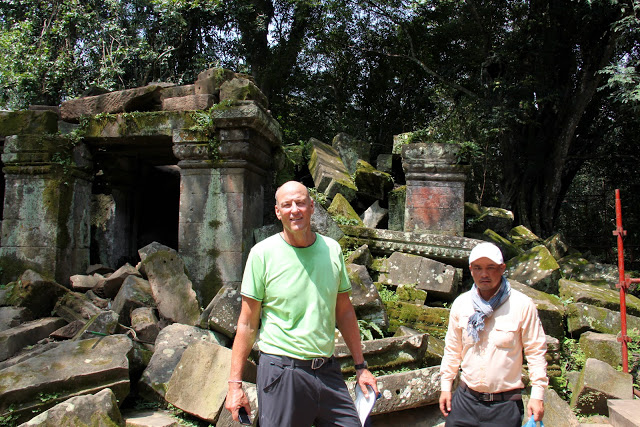
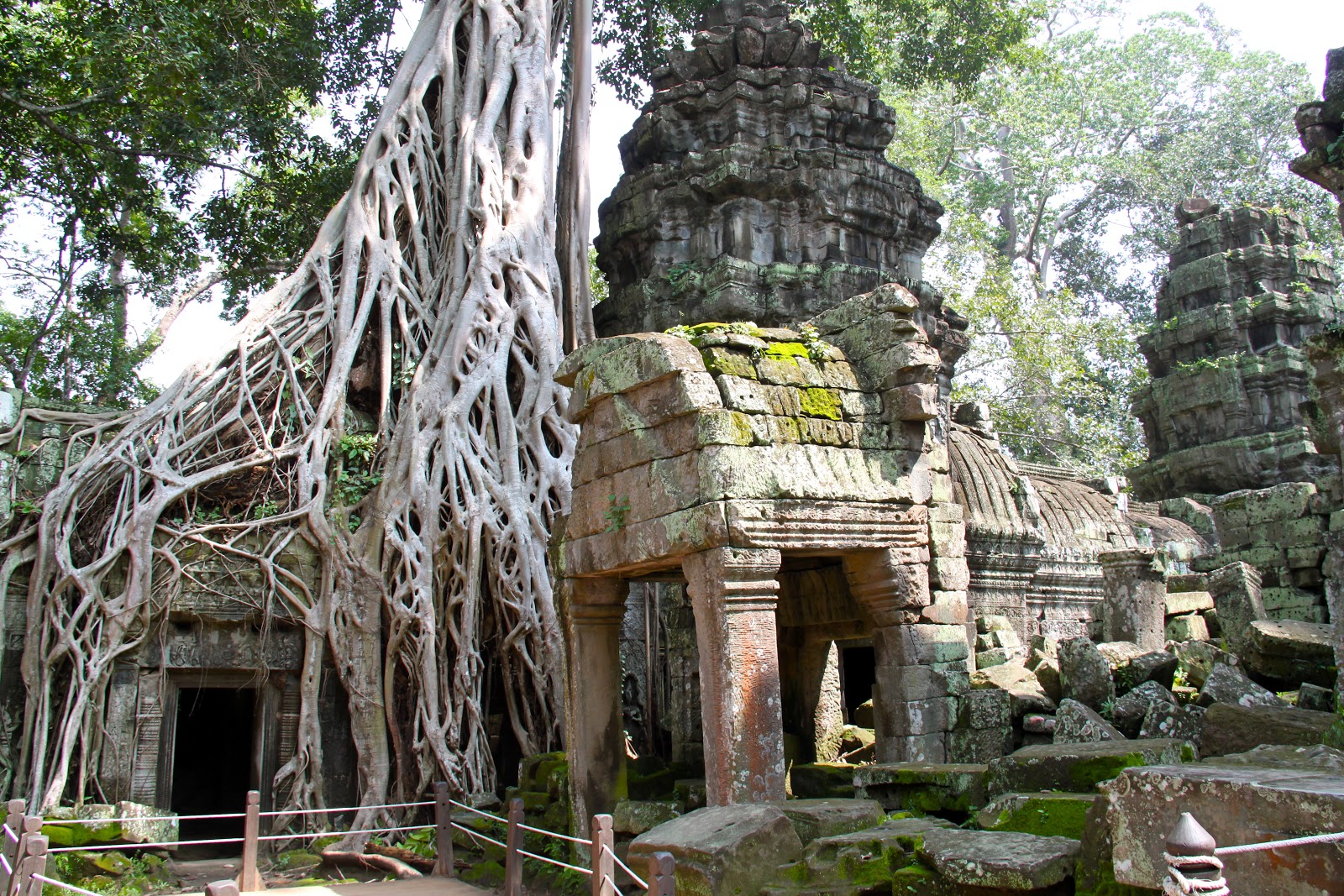
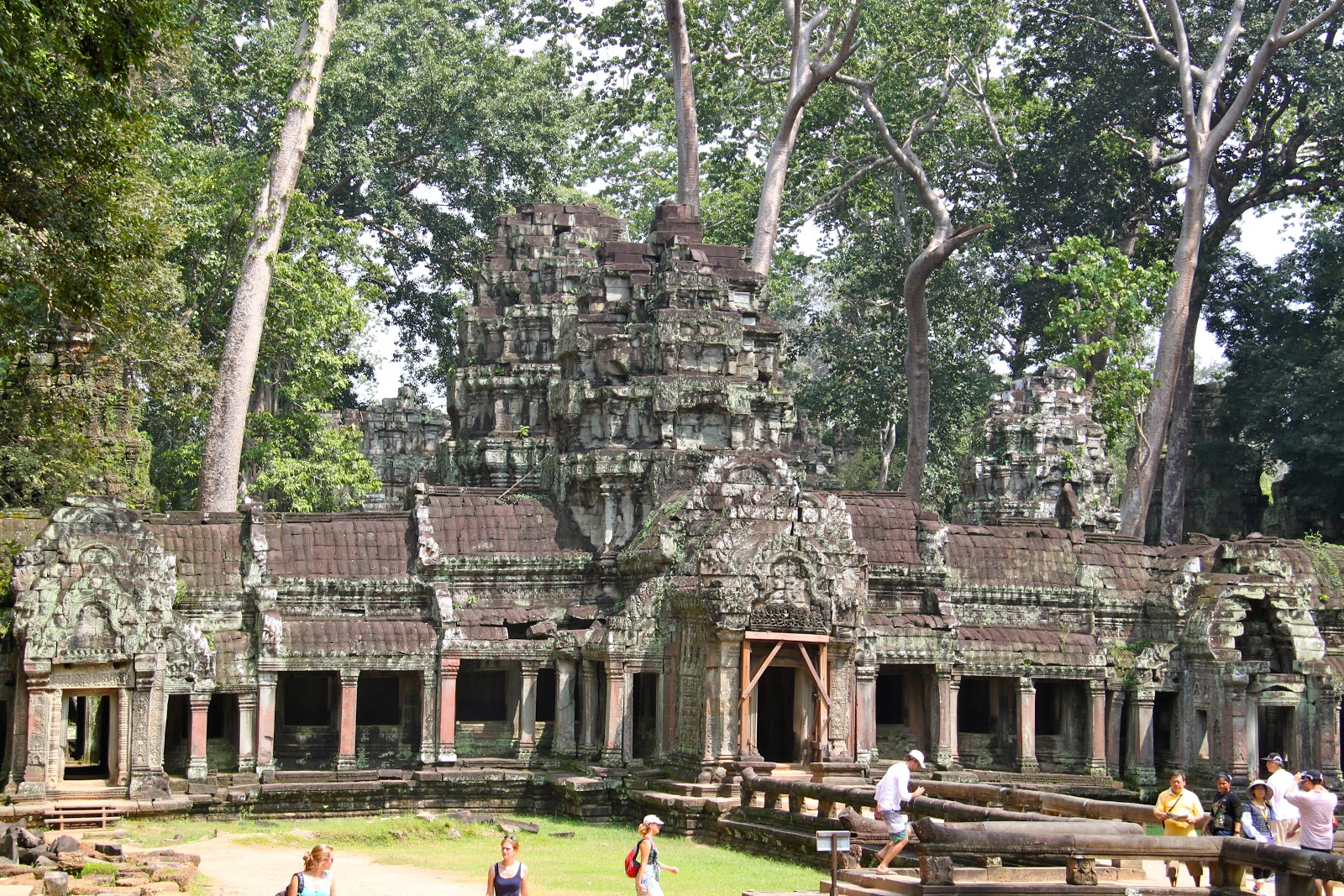
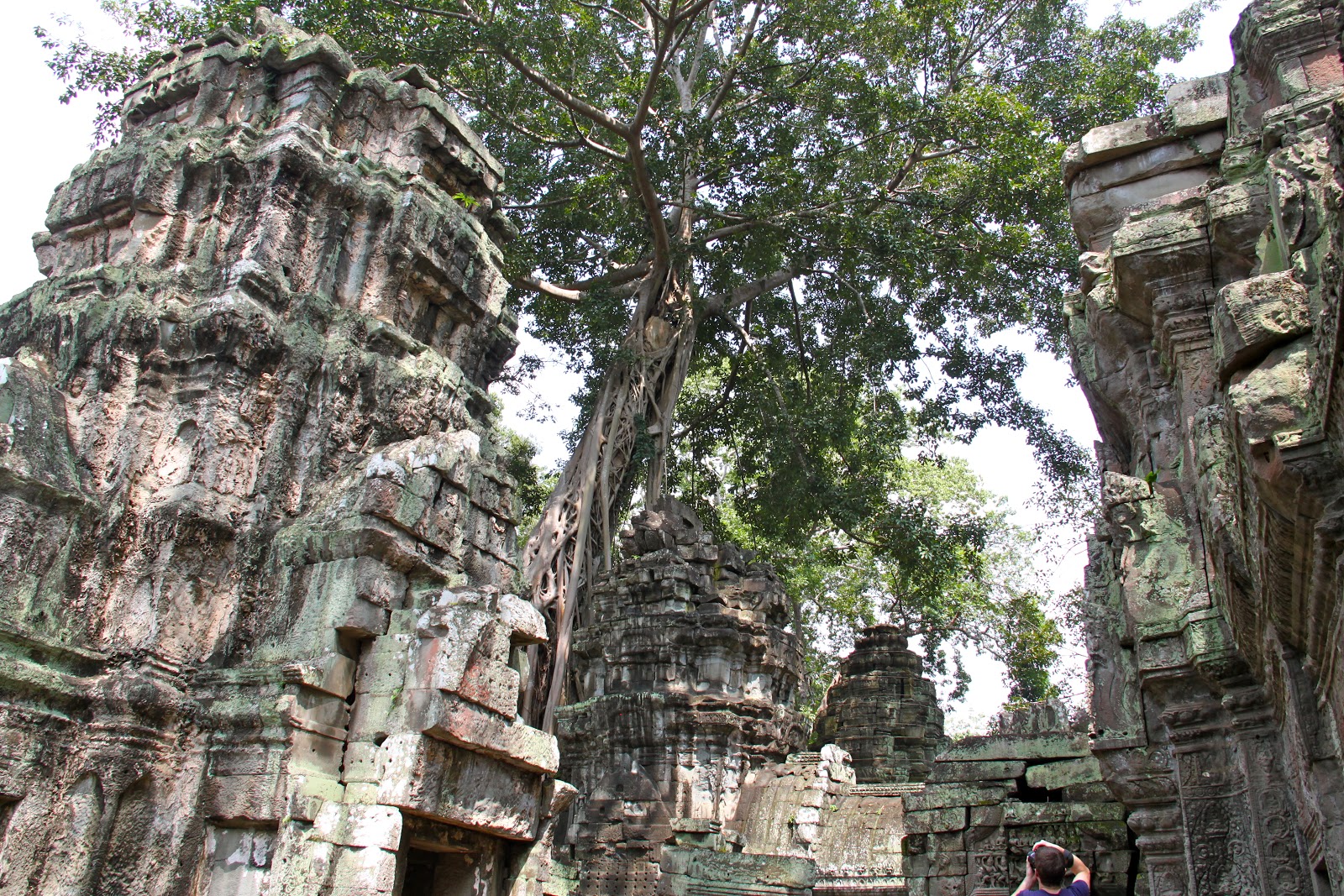
Ta Prohm was our favorite temple site.  It is still overgrown with trees and appears as it might have when Europeans first stumbled onto the temples.  There seems to be secret passageways and interesting architectural elements everywhere you look.  You could get lost in this temple.  It would be a fun place to play hide and seek with Alysa, Roni, Cade, Claire, and Aislyn.

It looks like a halloween movie set, but this is the real thing!
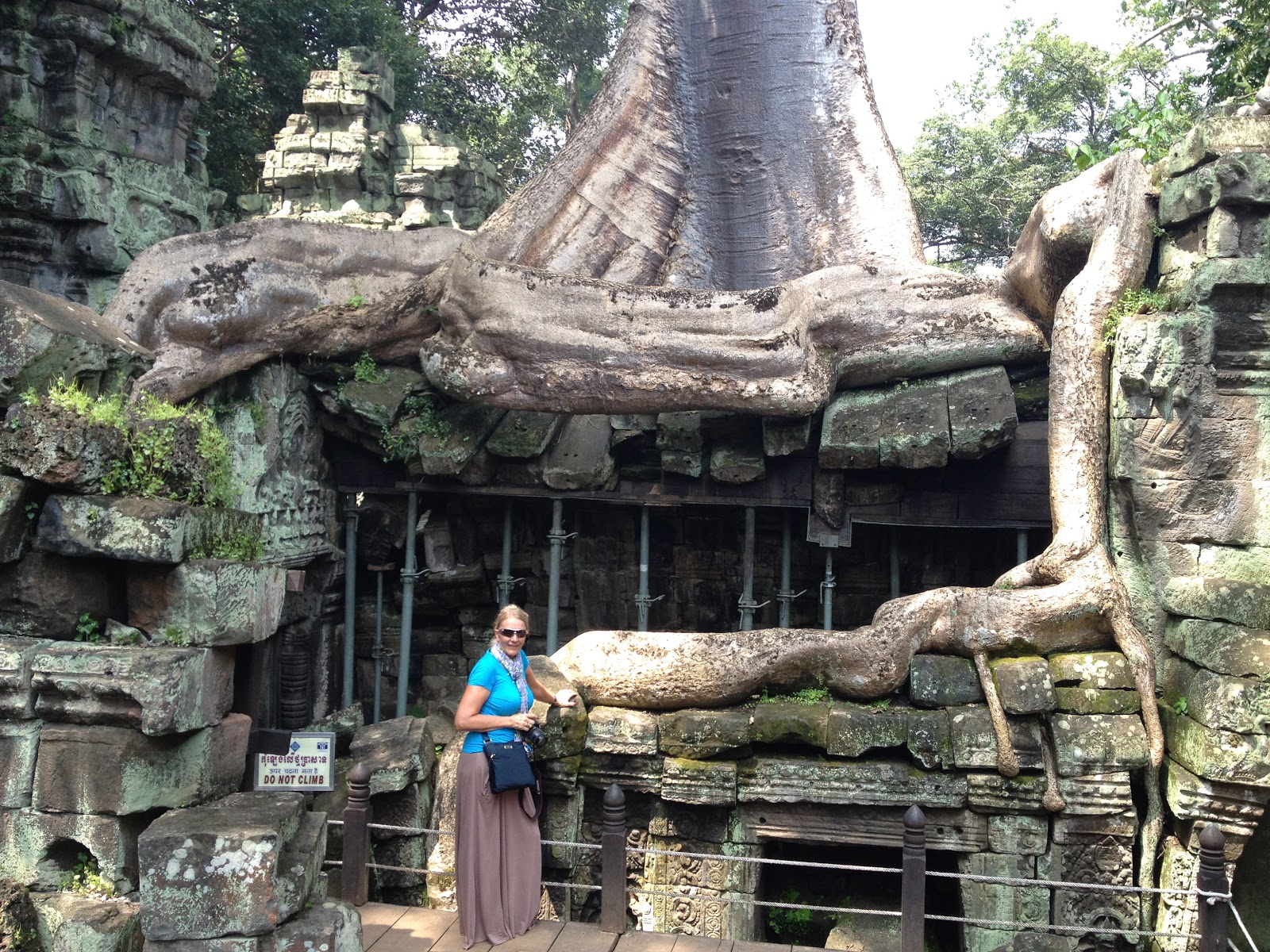
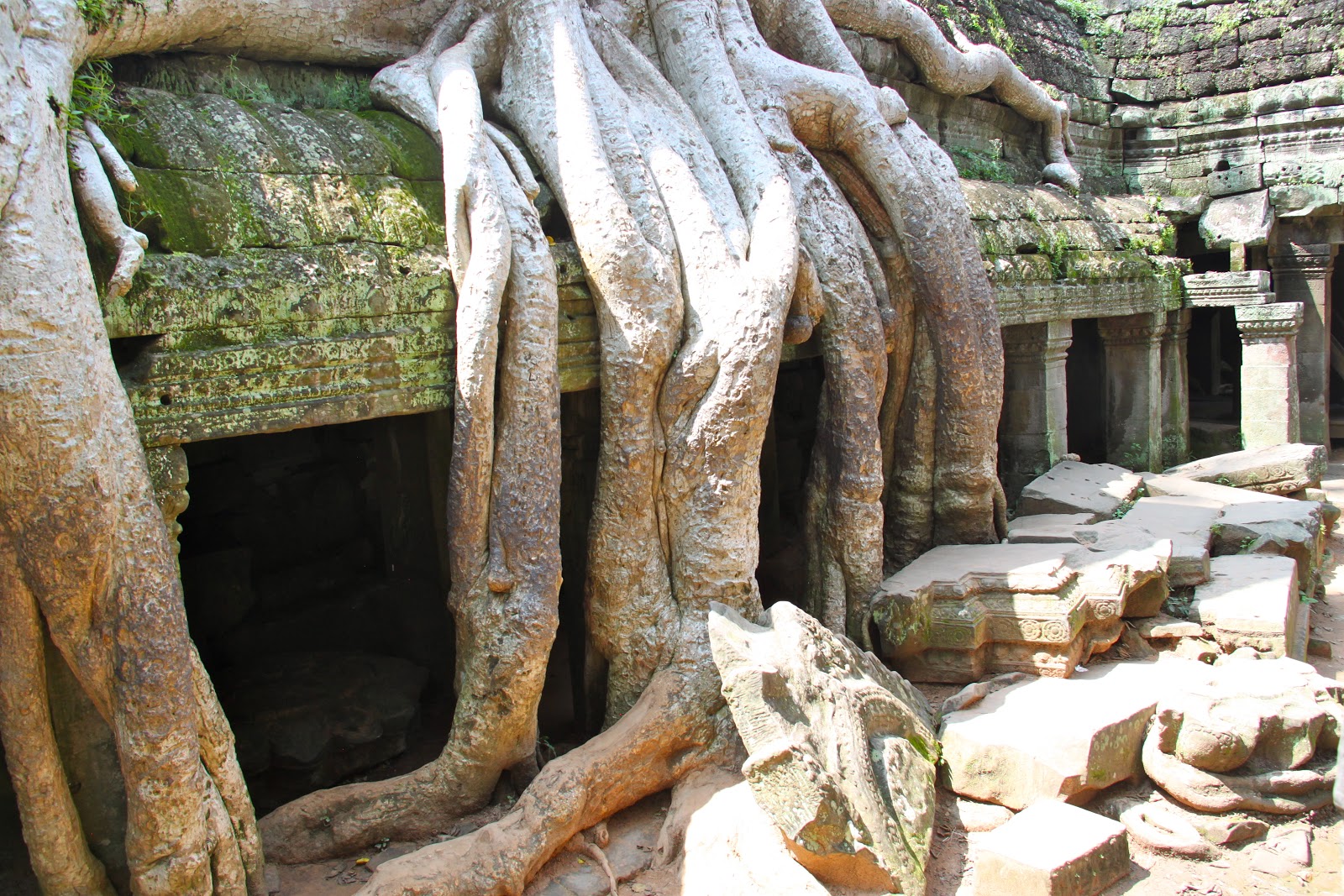
Moss growing and tree roots coming through roofs.

Inscriptions around  Ta Prohm indicate to archeologists that this temple was used as a Monastery for the King.  It was built beginning in 1186. 
Great for Hide and Seek.


Beautiful carvings.

Looks like the tree in Princess Bride where Miracle Max lives

Amazing roots!

Ta Prohm was used in the movie TOMB RAIDER.  Angelina Jolie picked a Jasmine flower at this temple and fell through the earth.

Barb at the entrance
Spooky.

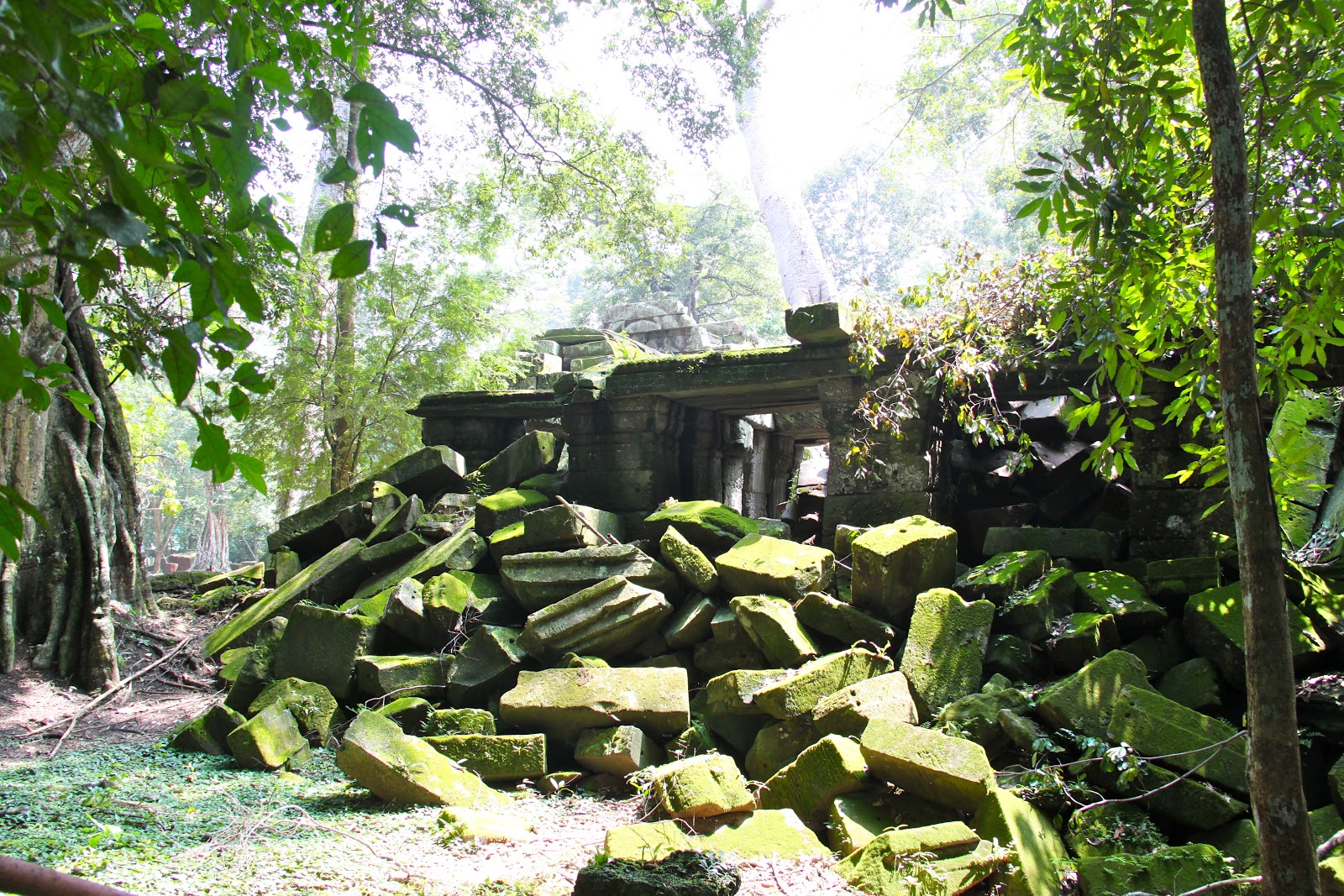
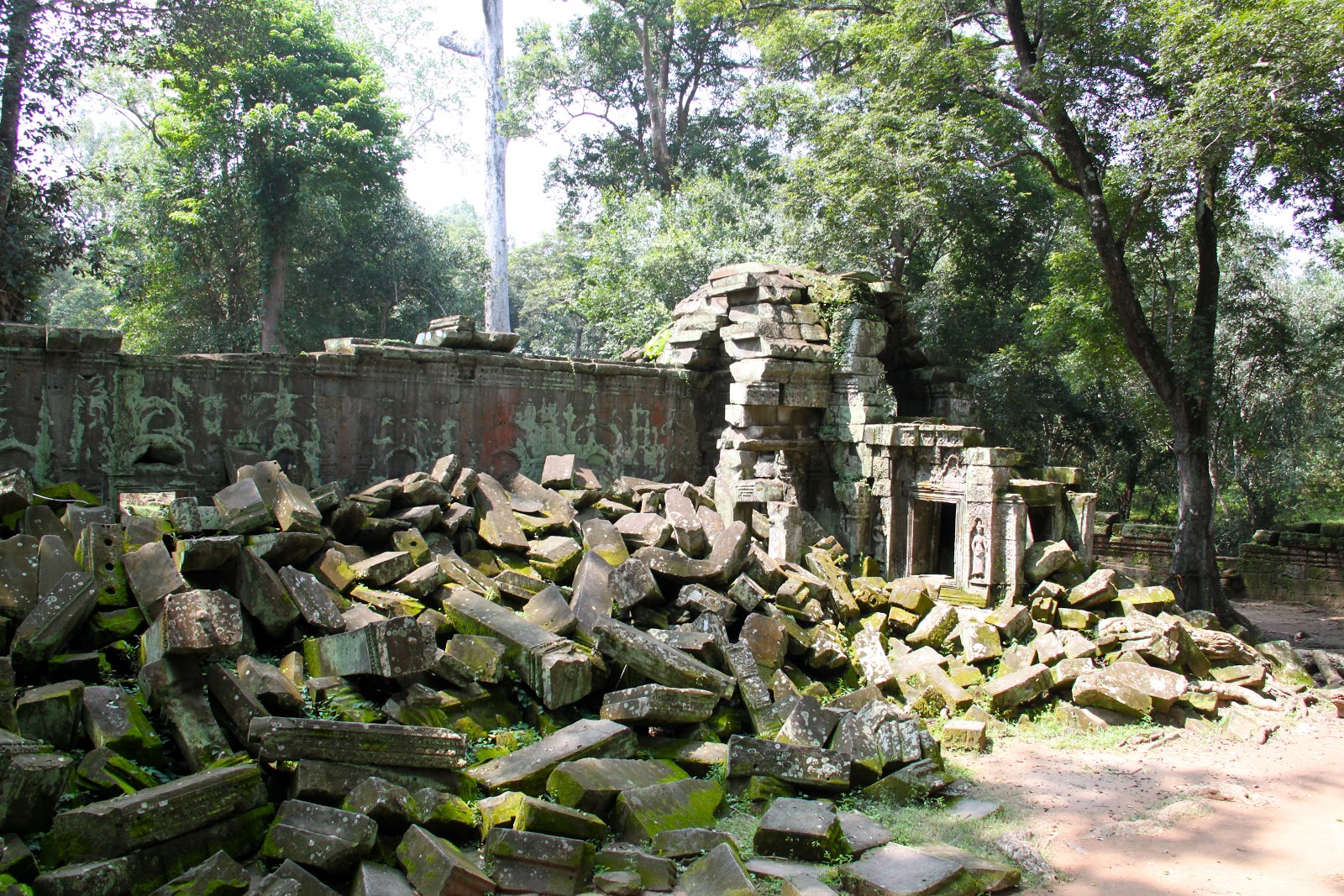
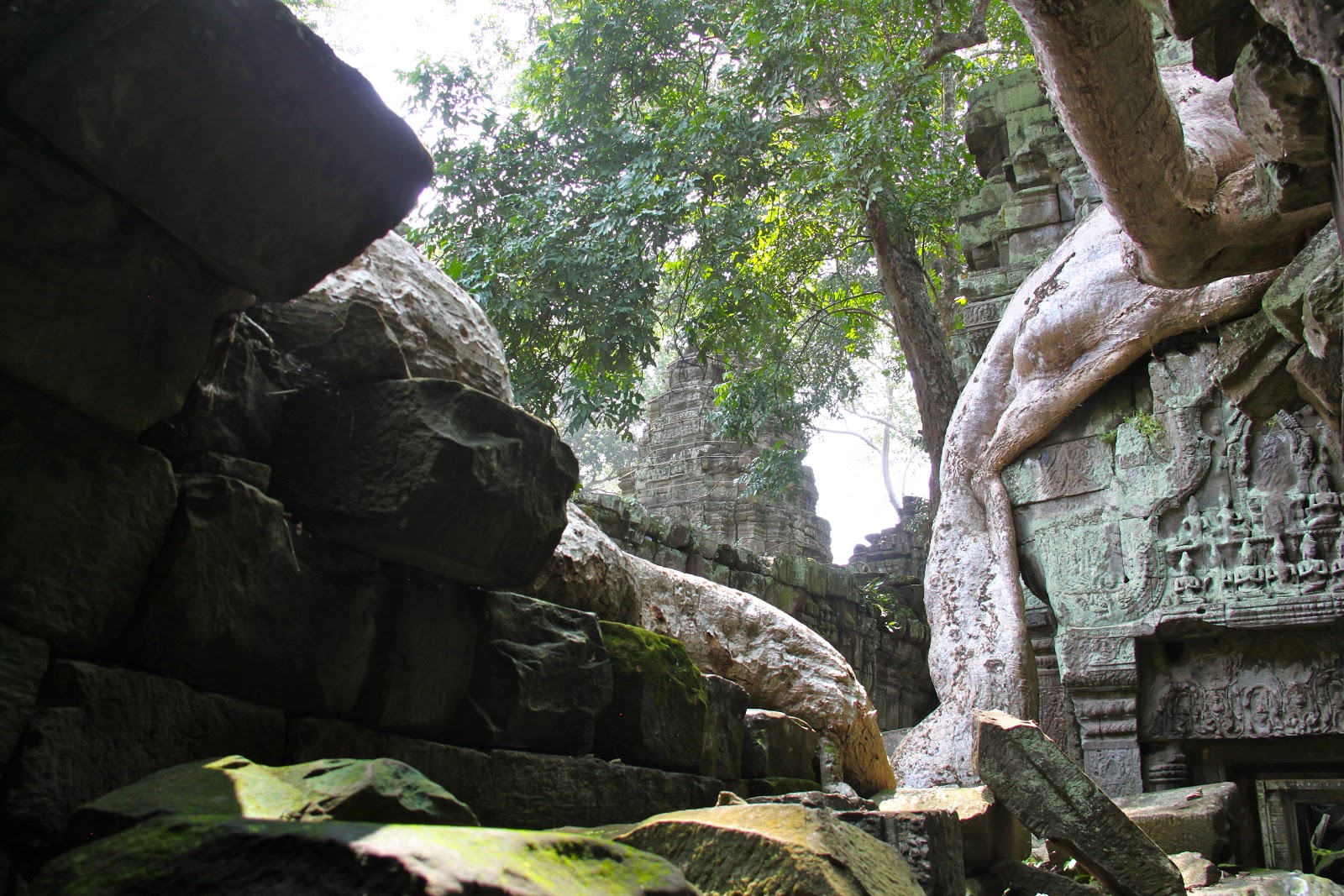
Many of the hallways are blocked by stones that have been knocked down by giant tree roots. 

The tree roots are cool.


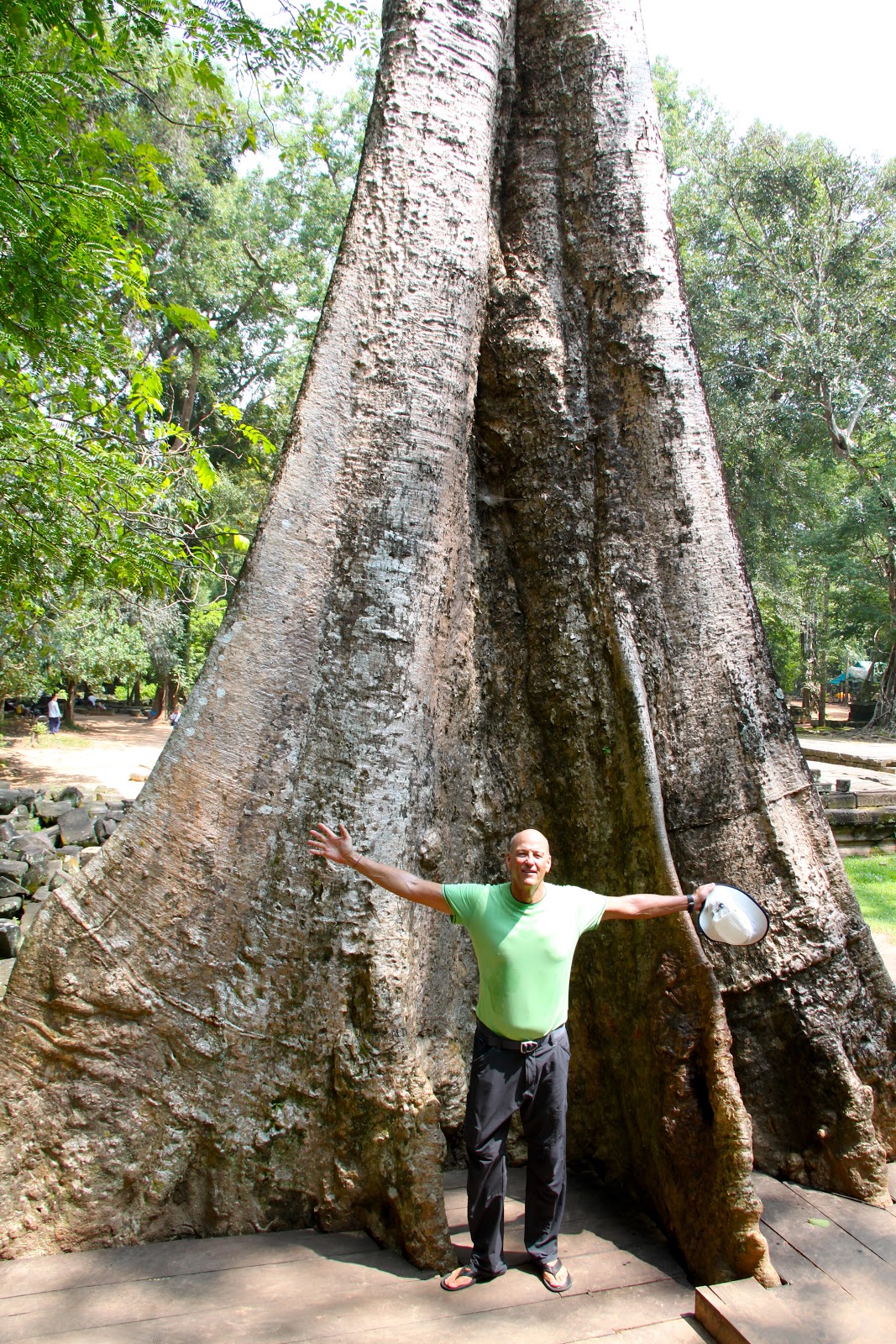
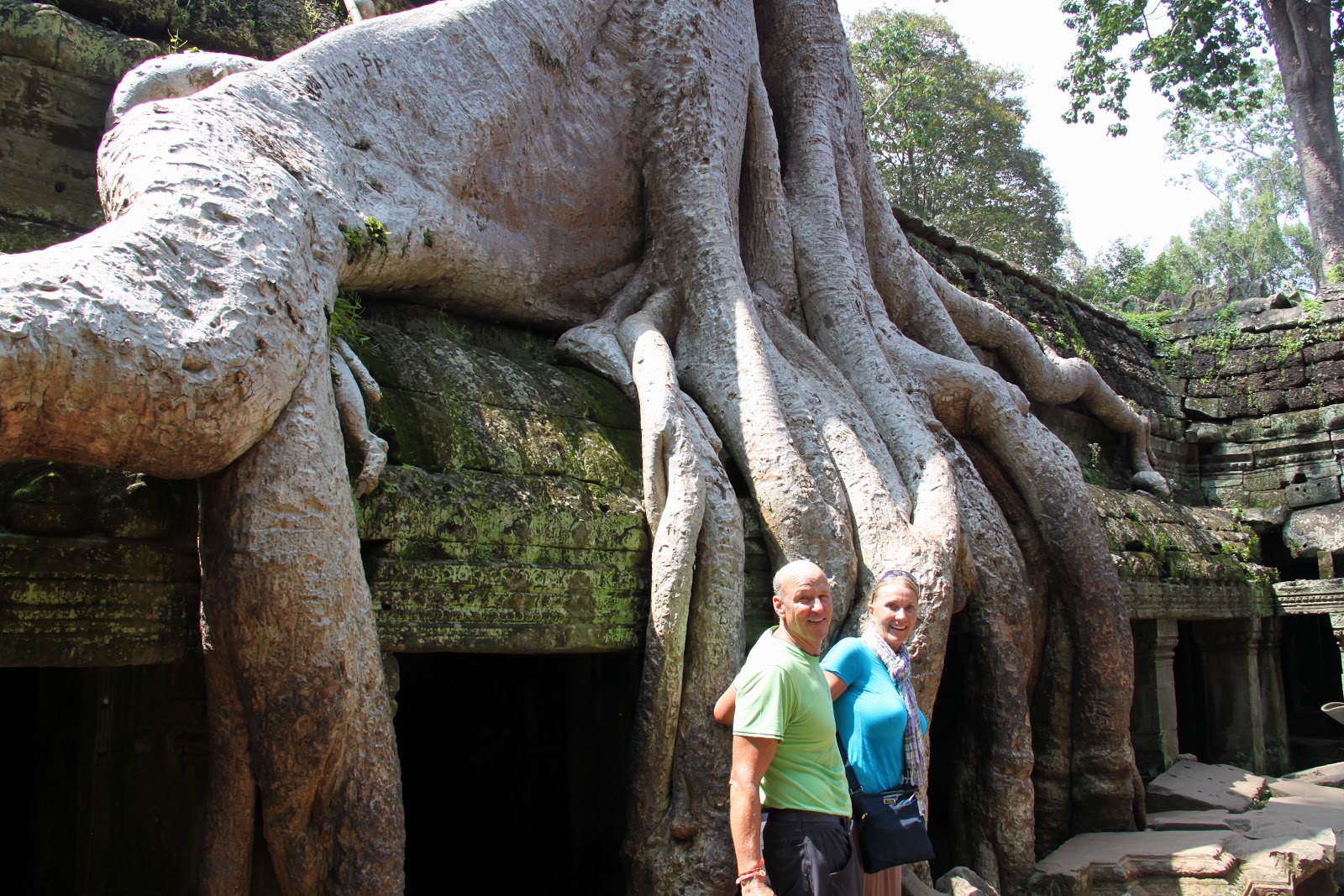
Bigger than my two meter man.


Is this a giant snake or a tree root?  It is very much alive.

This tree root is unbelievable!!!

There are thousands of blocks strewn about covered with lichen and moss.  Some have numbers.  The sunlight filtering through the trees and illuminating the temple gives an “other worldly” character to this temple site.

It’s a giant building block puzzle.

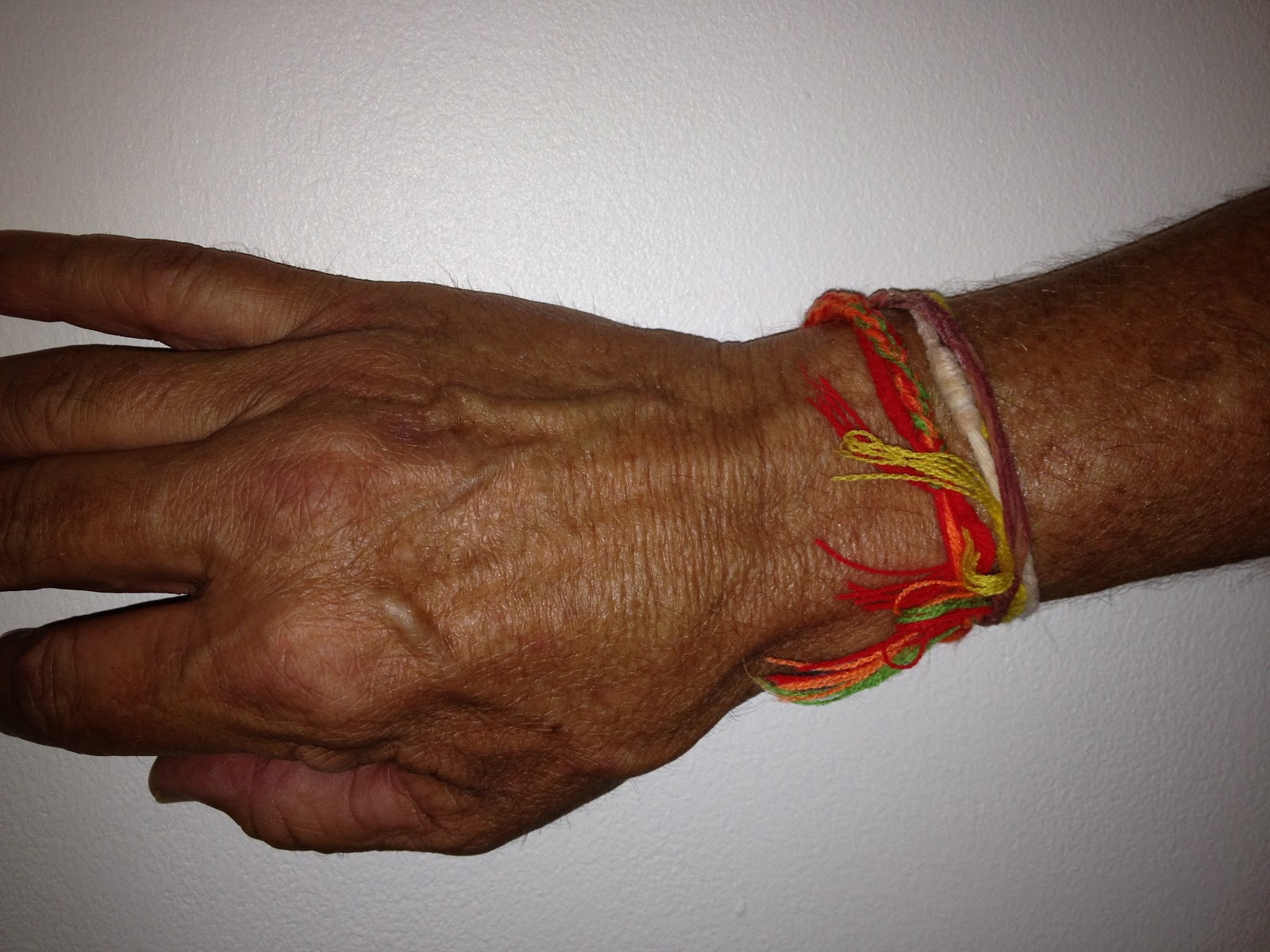
There was a temple alter where Barb made a donation and received a blessing for health, happiness and success.  It’s good karma to get the blessings.  After each blessing a holy string gets tied around our wrists.  My wrist is starting to look like the frayed end of an old carpet but I like it.  It makes me feel good.

Scott keeps adding to his blessings
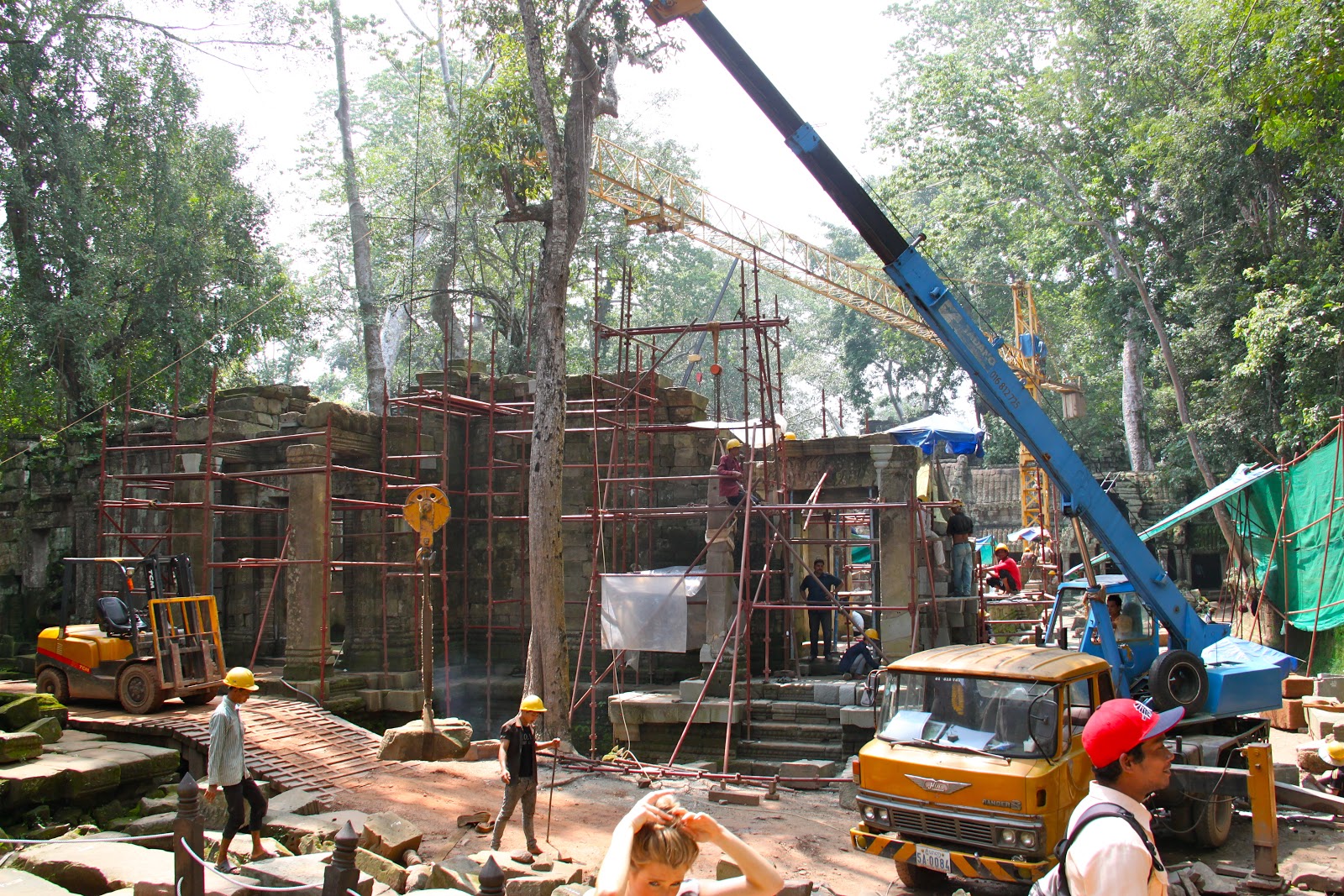
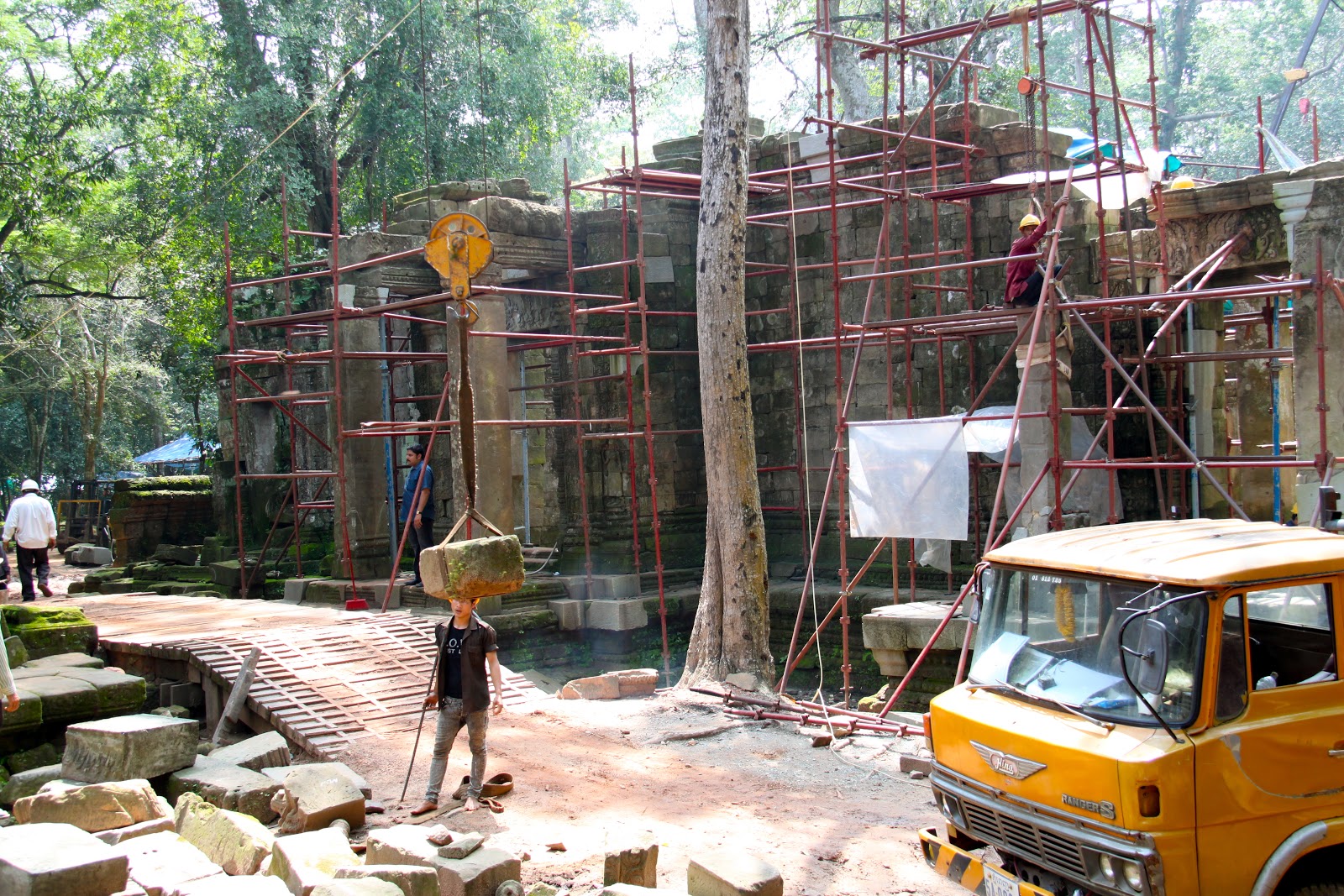
There is a crew attempting to reassemble the temple.  If you come in a few years this temple might look quite different.  Hopefully it will be magnificently restored to its original glory.

We’ve never seen  a crew like this.

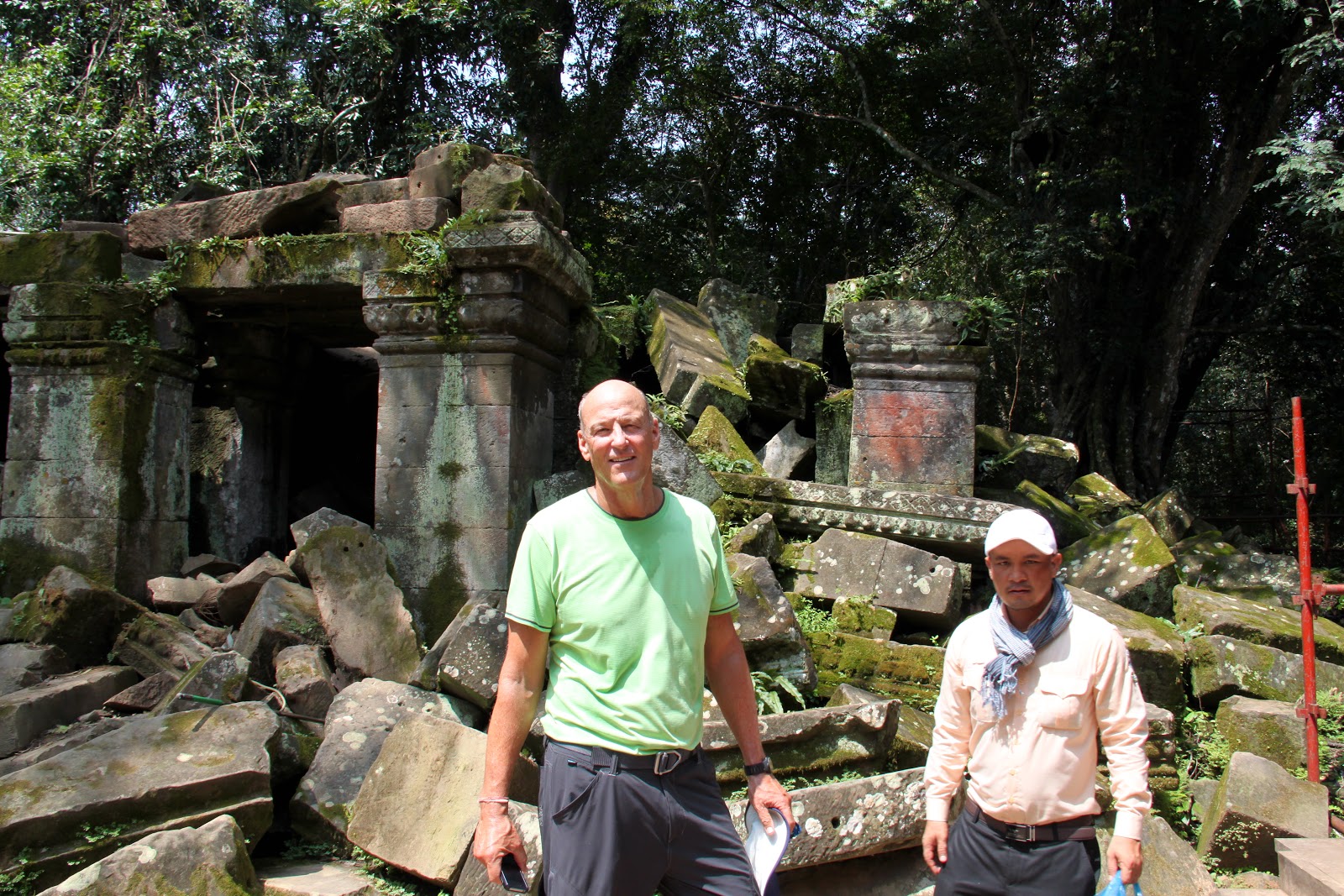
Scott with our guide

Amazing shapes and colors are mixed with antiquity
This corner of the temple makes you wonder if you are in a sci-fi movie.

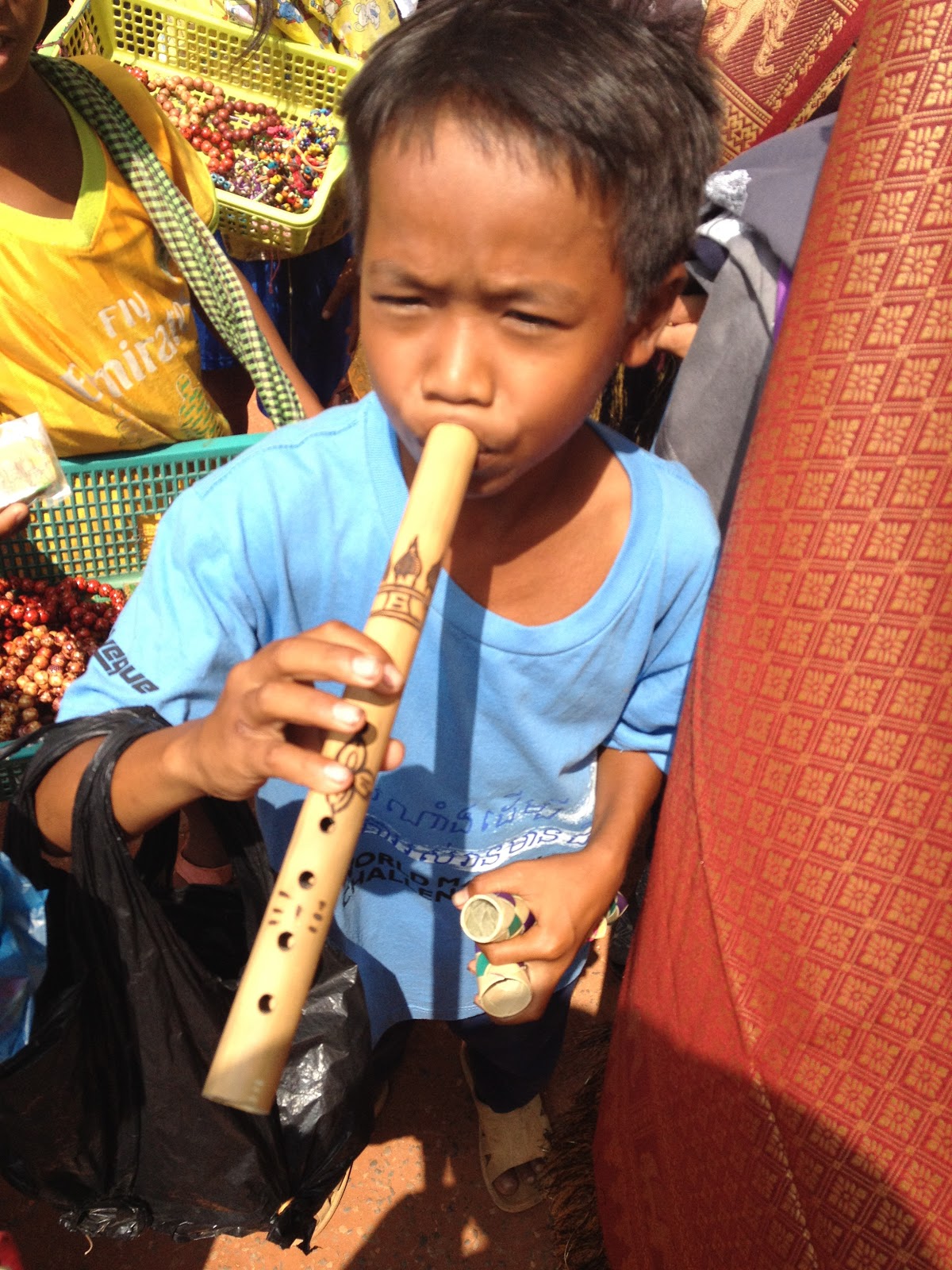
Buying flutes from local kids
BANTEAY SREI
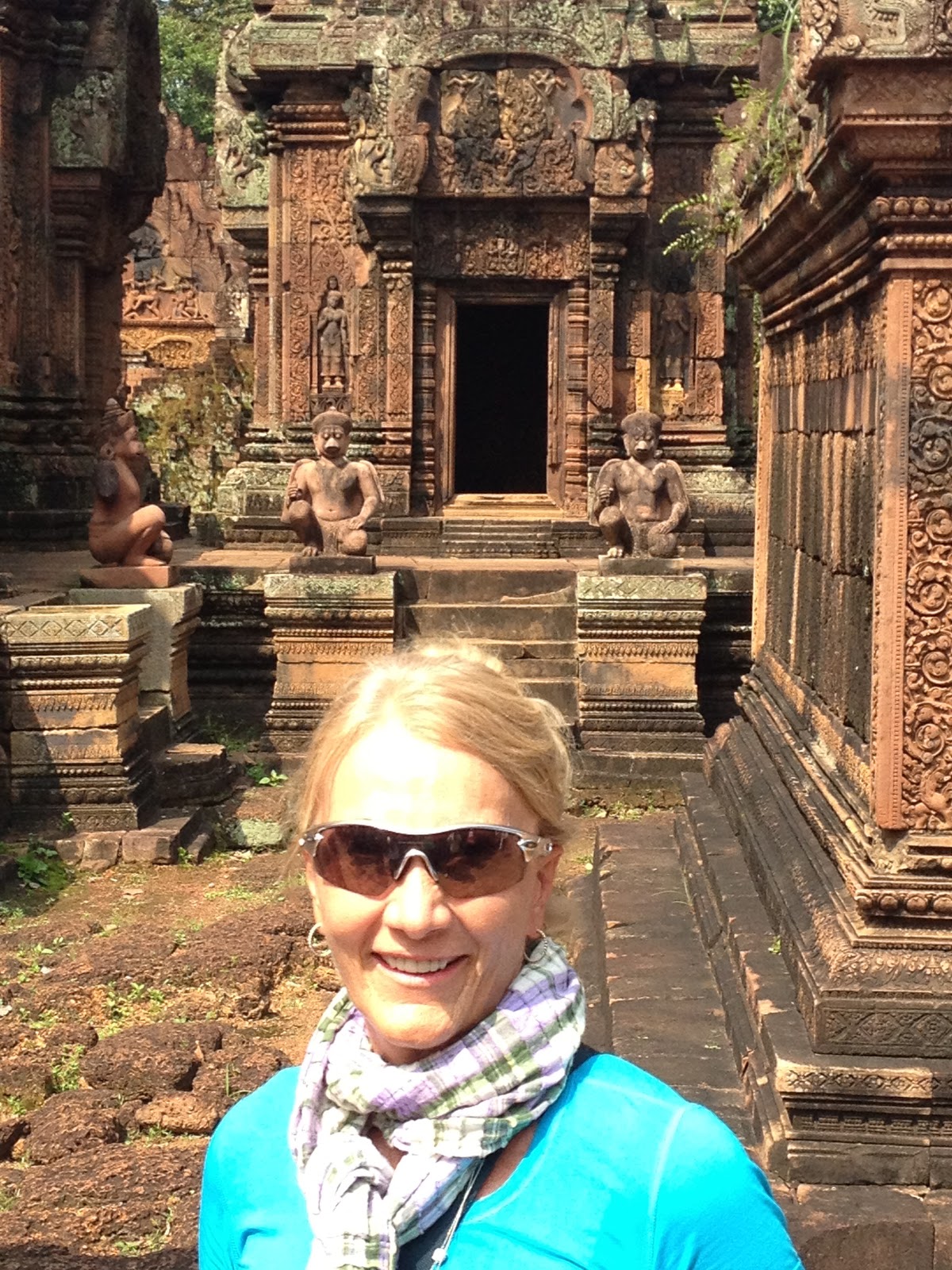
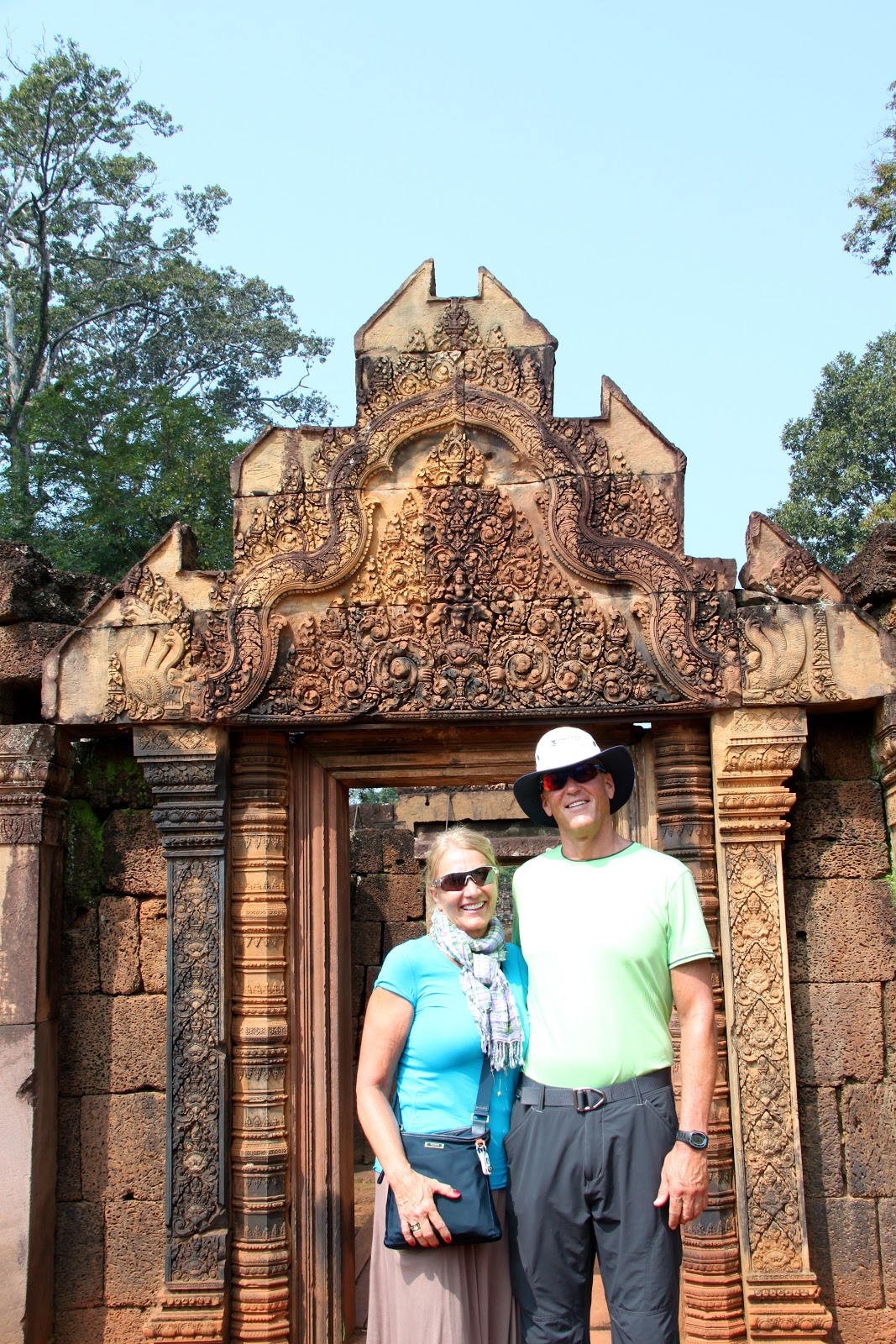
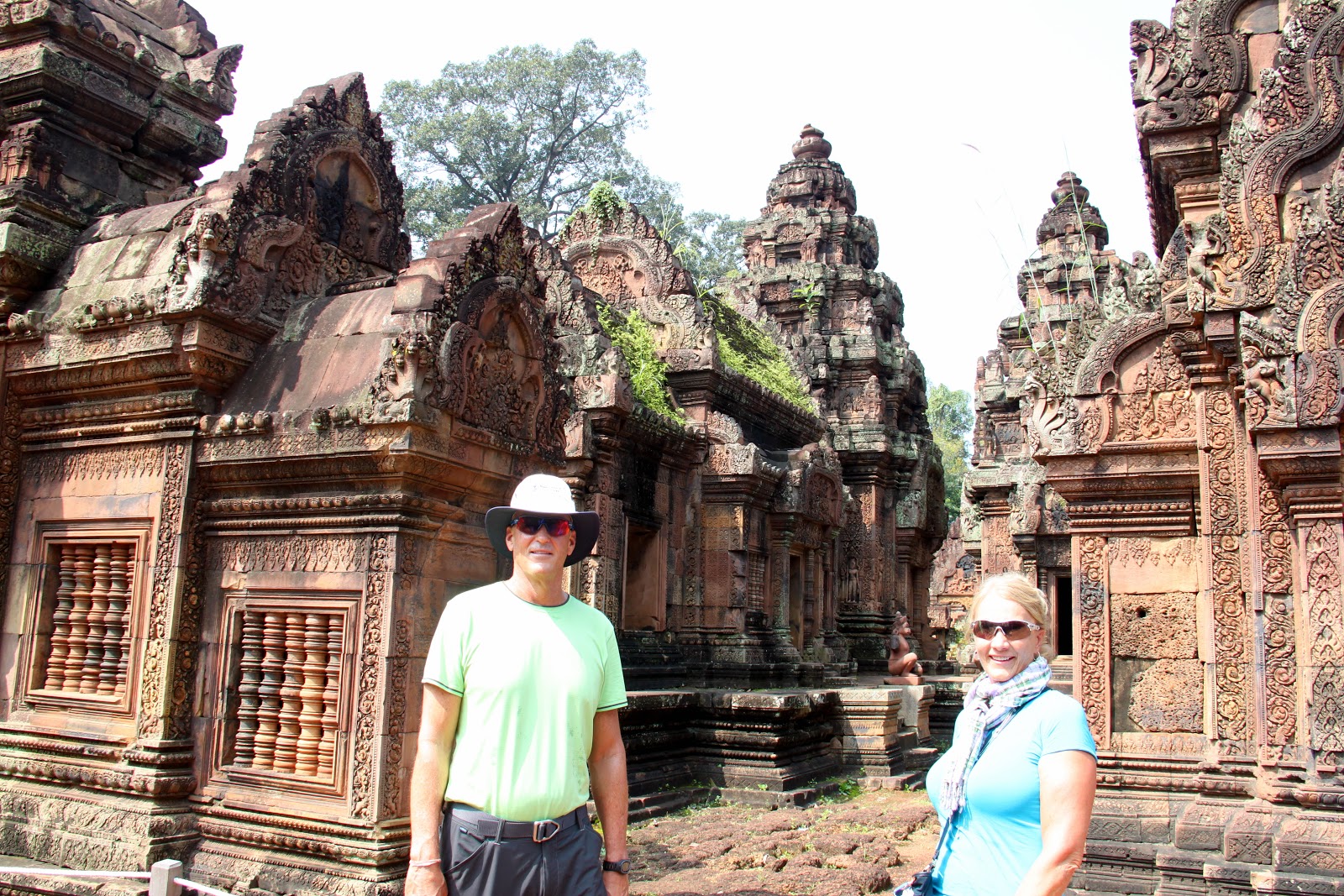
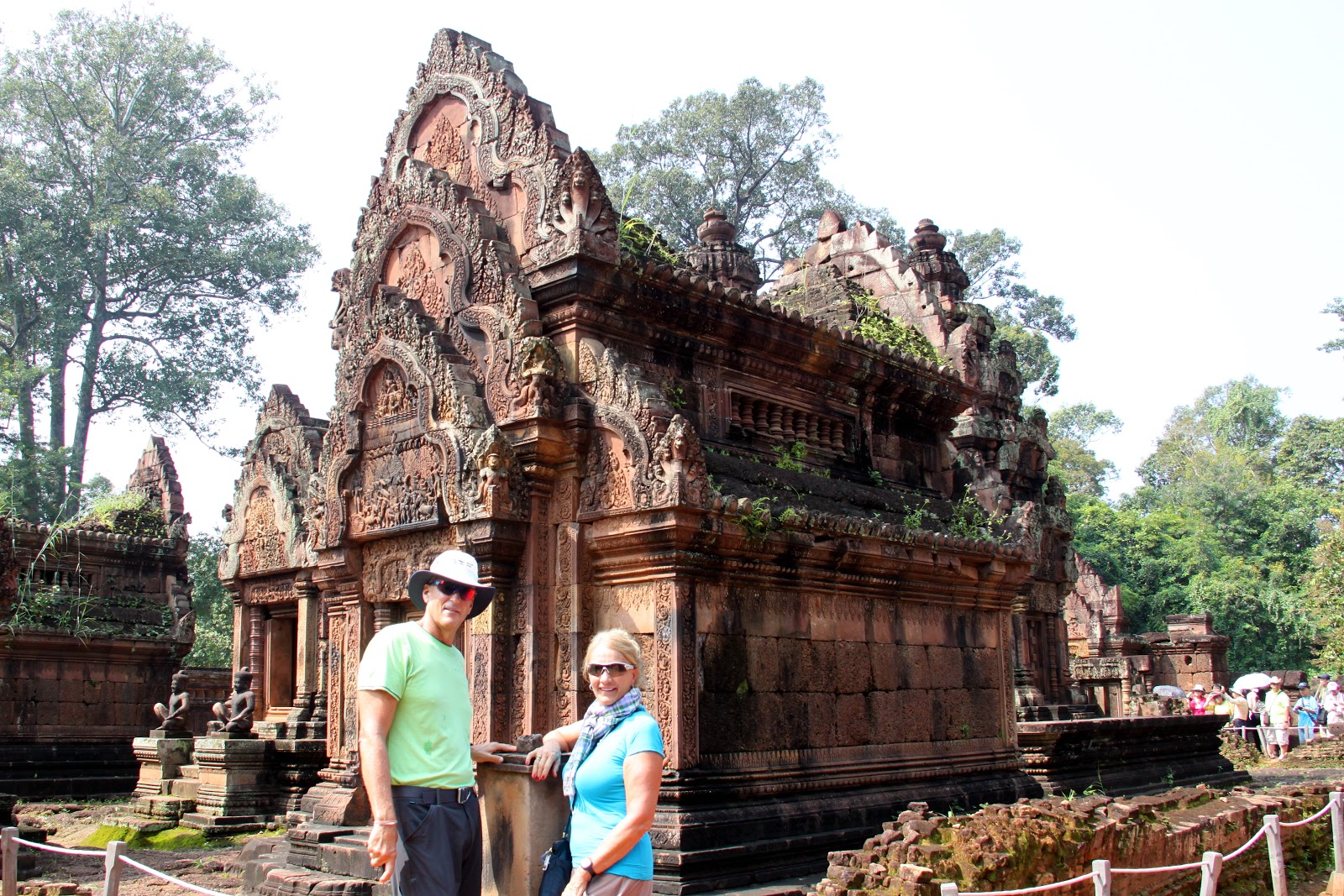
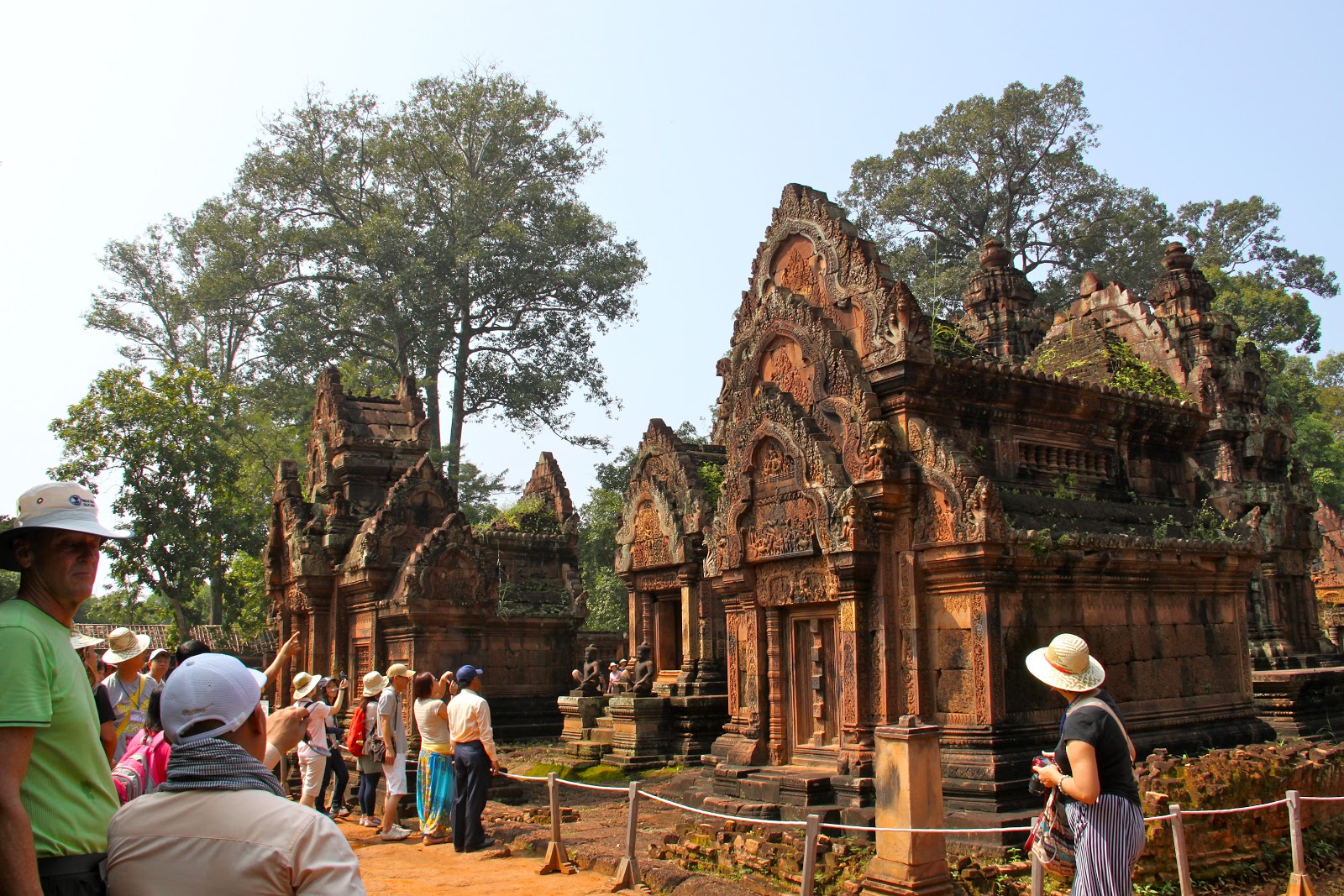
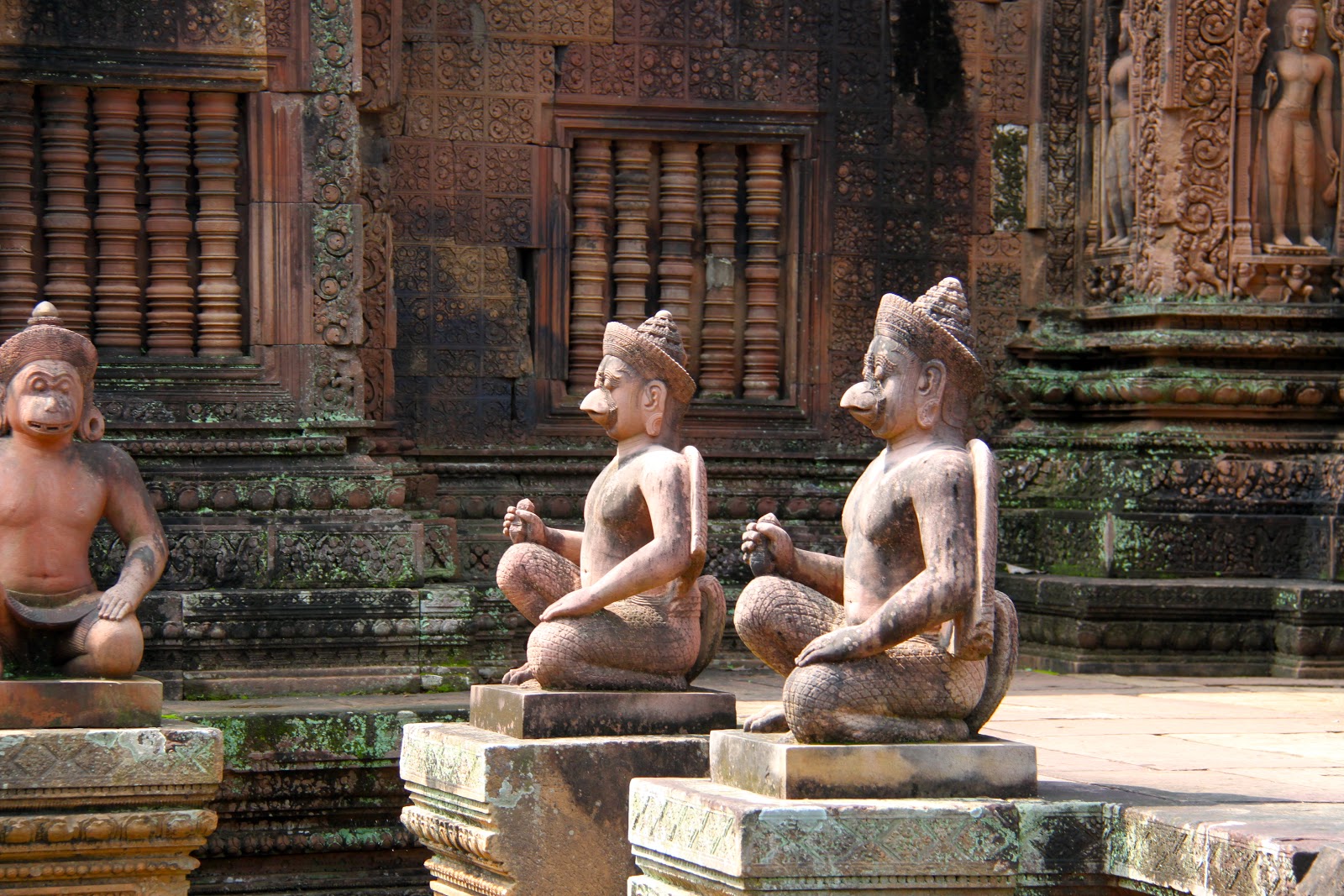
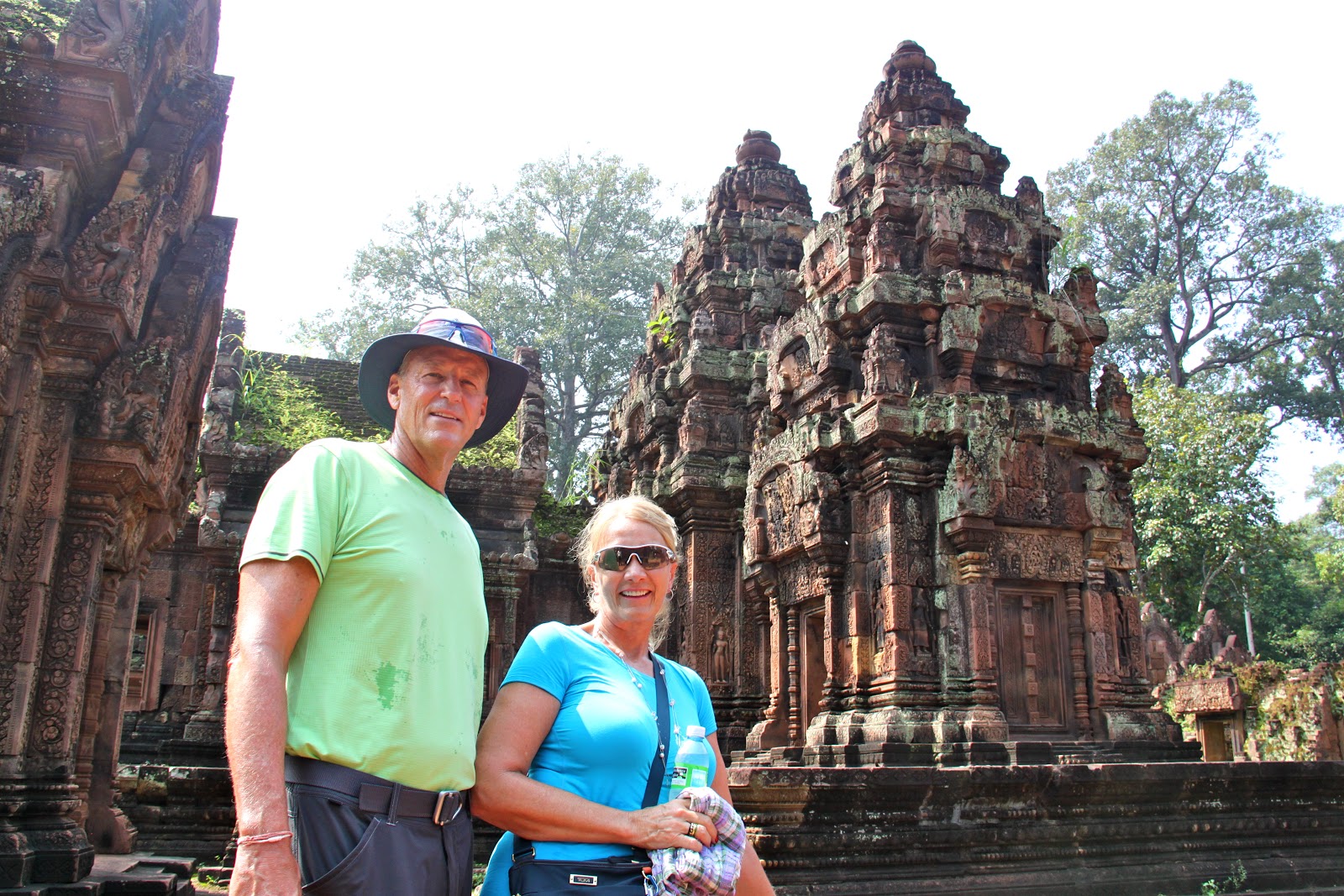
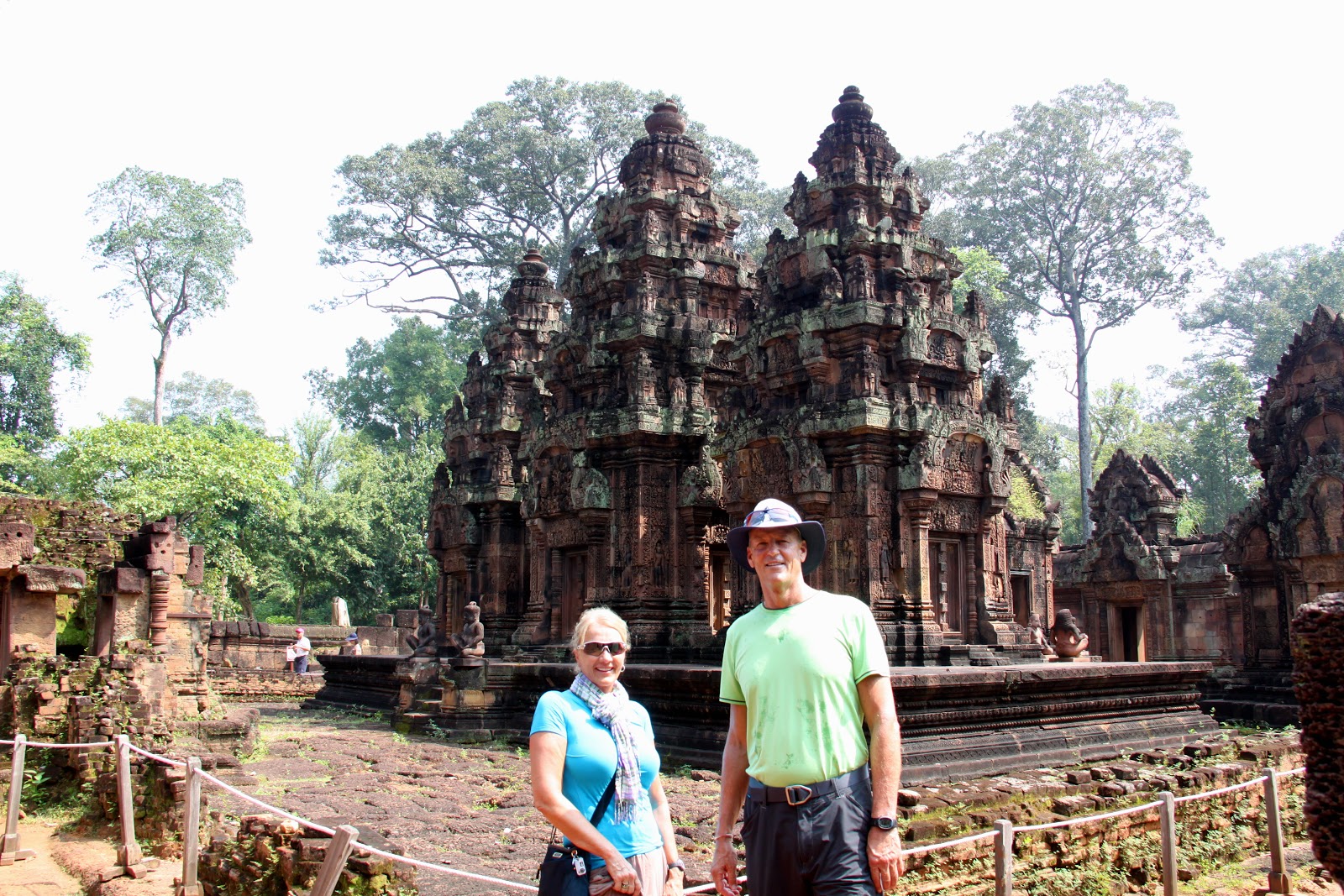
This is a temple dedicated to Shiva, the Destroyer or Warrior God.  The carving around this temple is delicate and our guide said that some think it must have been carved by women with small fingers.  Banteay Srei means “Citadel of the Women” and is said to date to about 970 A.D.
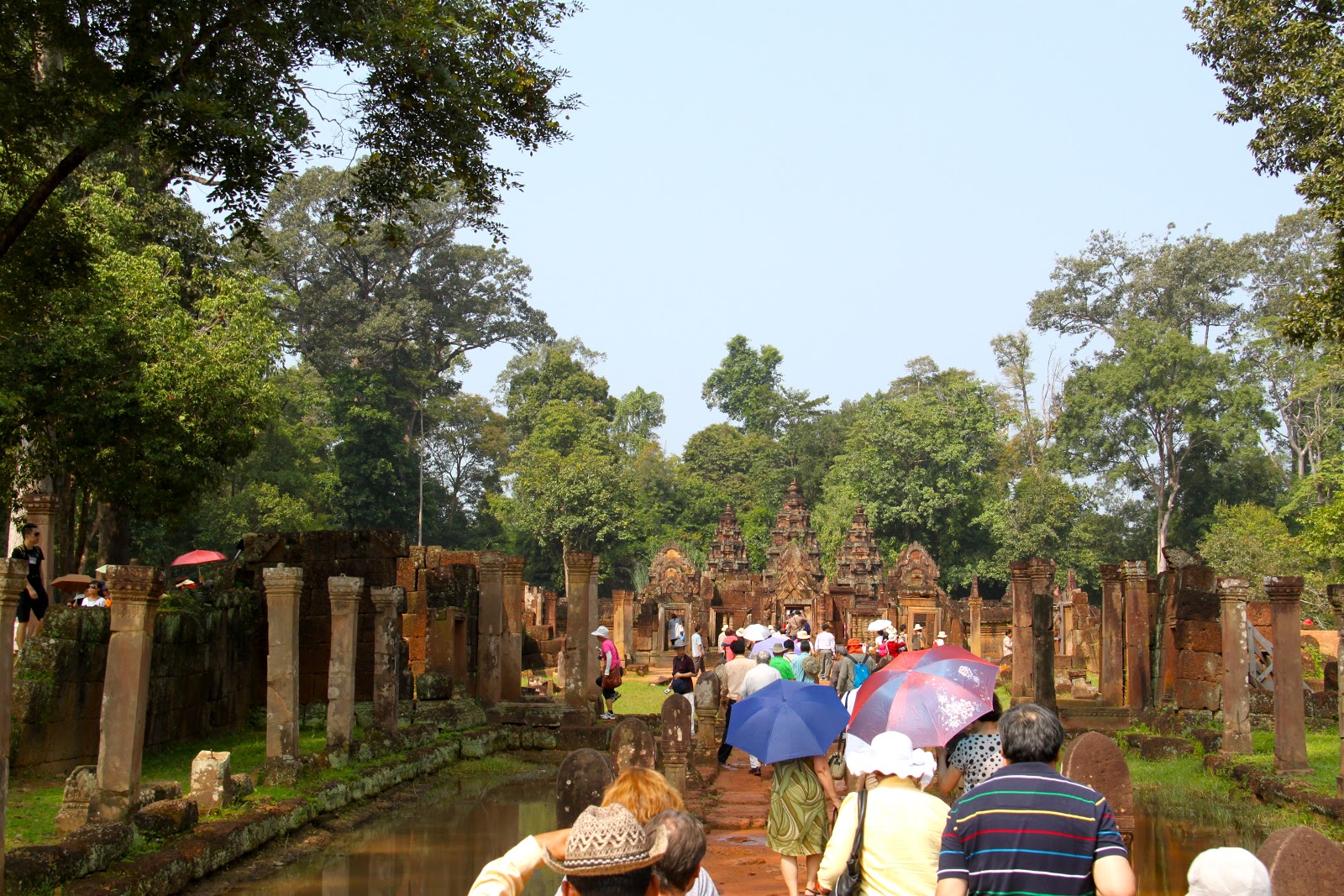
This temple was 35 kilometers away from Siem Reap and it was fun to see the farmers and people working in the countryside. 

Along the countryside.
Walking through the crops.

Motorbike transport.

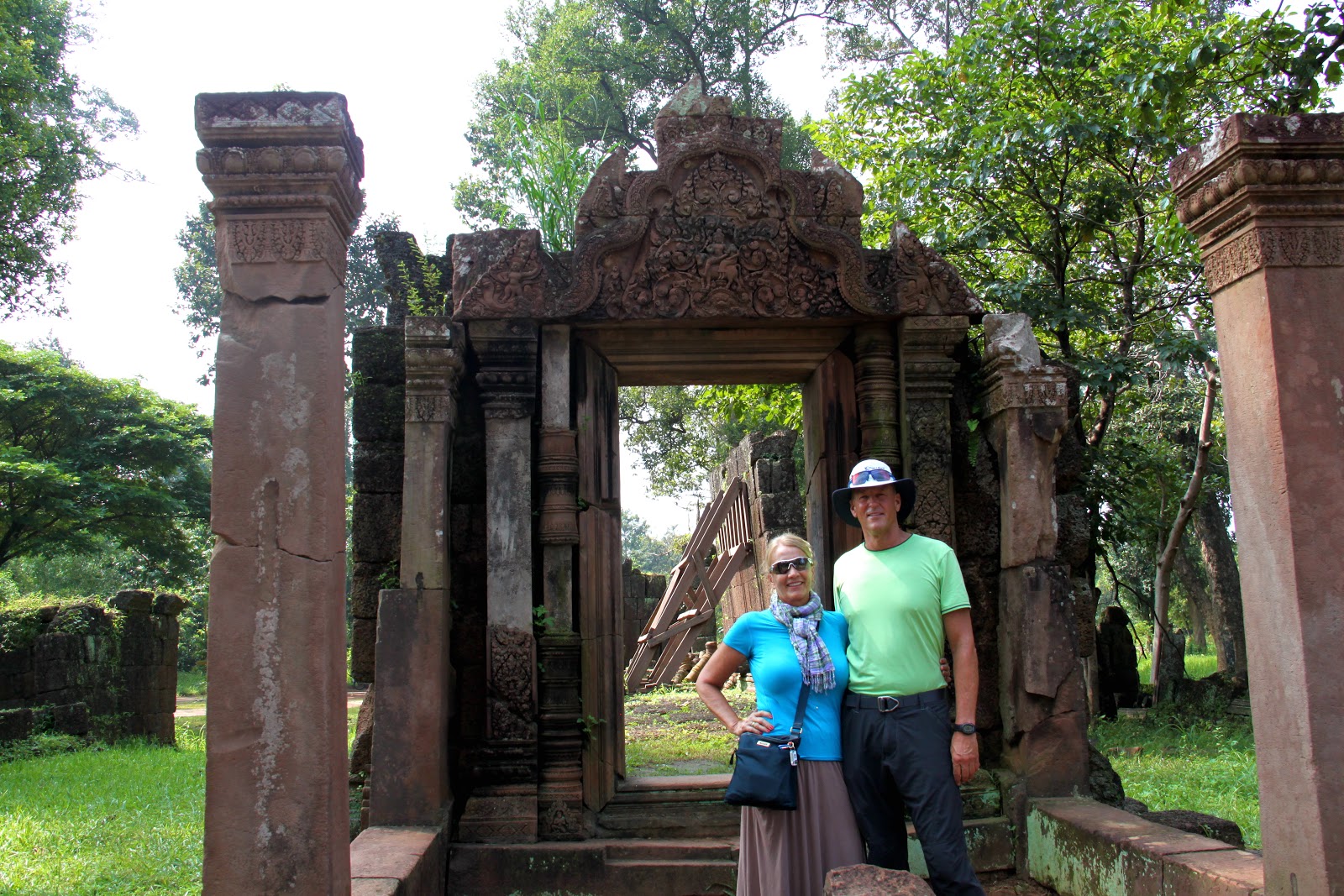
The entrance

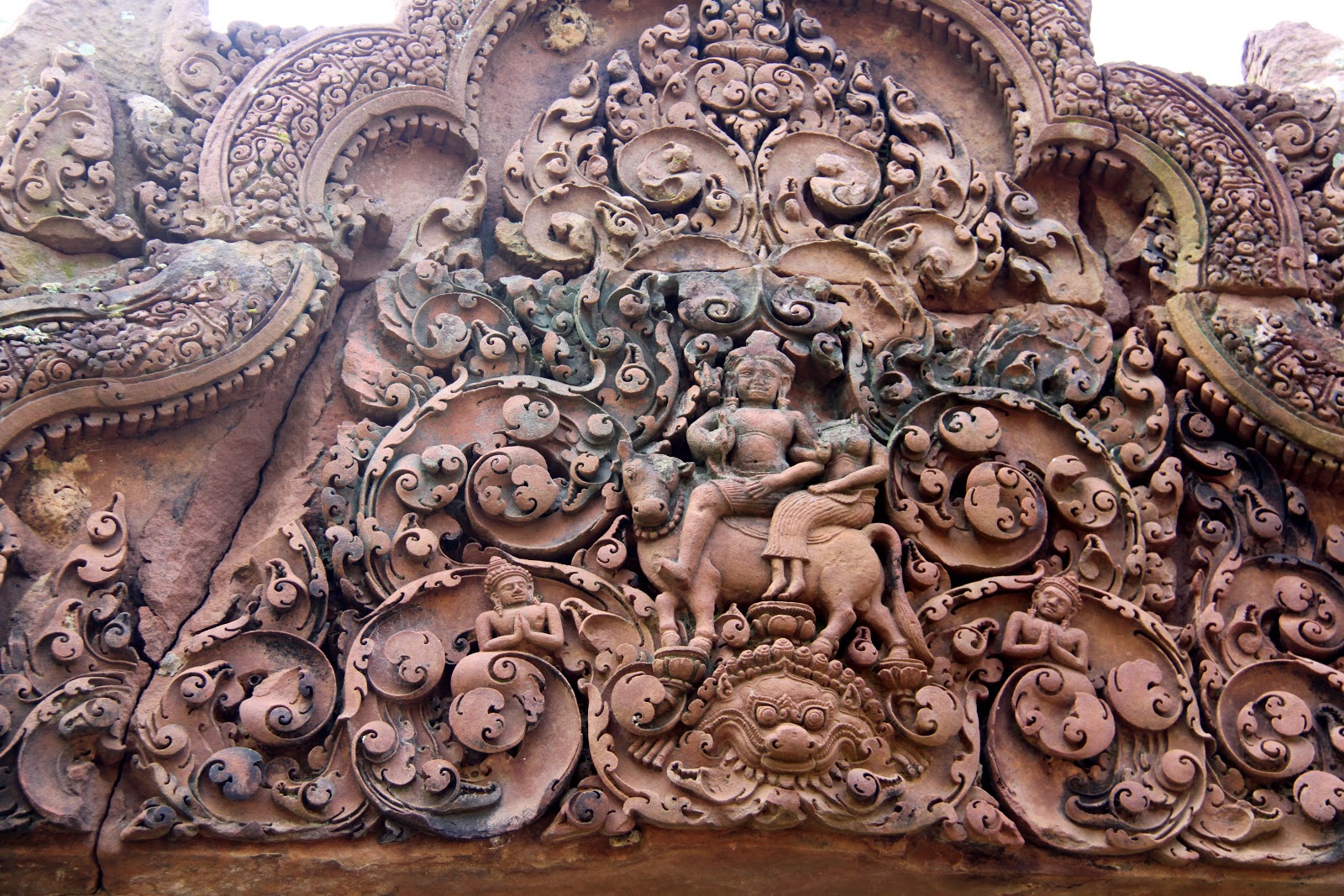
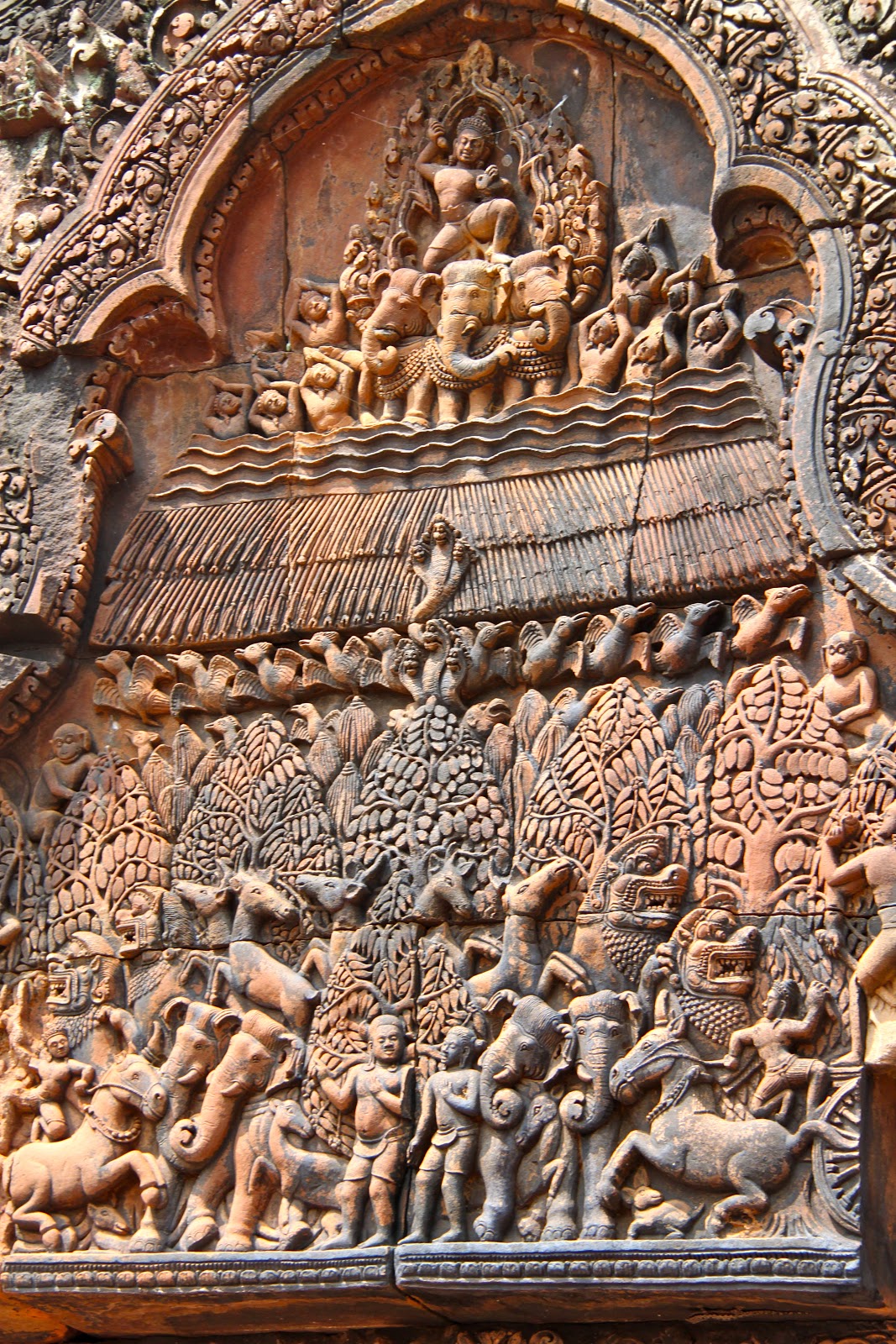
The carving above the door is very intricate

This is Shiva and his mate on his bull.

The ancient people were a lot smaller than we are.

Watch your head!


Stairs, stairs and more stairs
PRE RUP
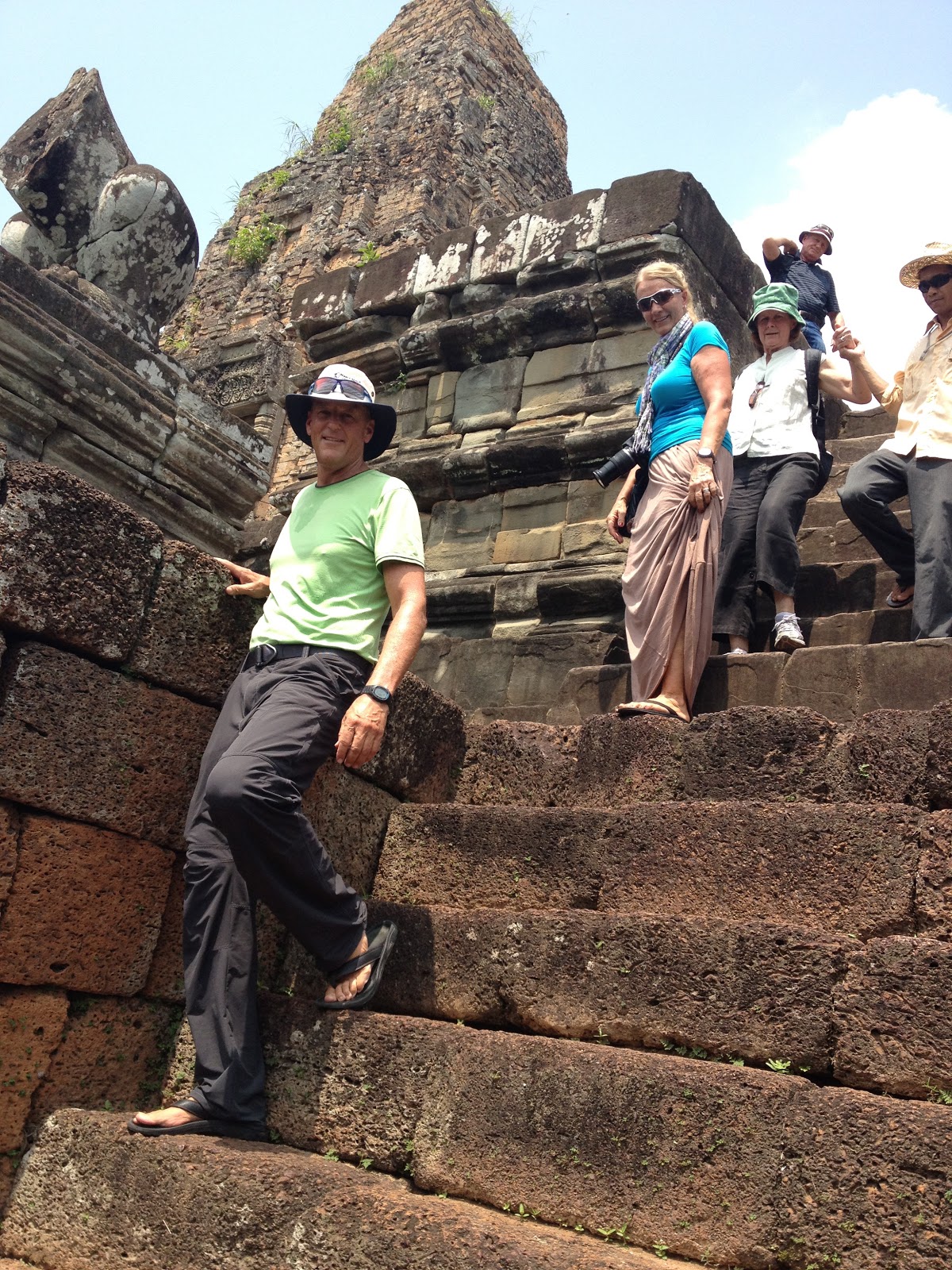
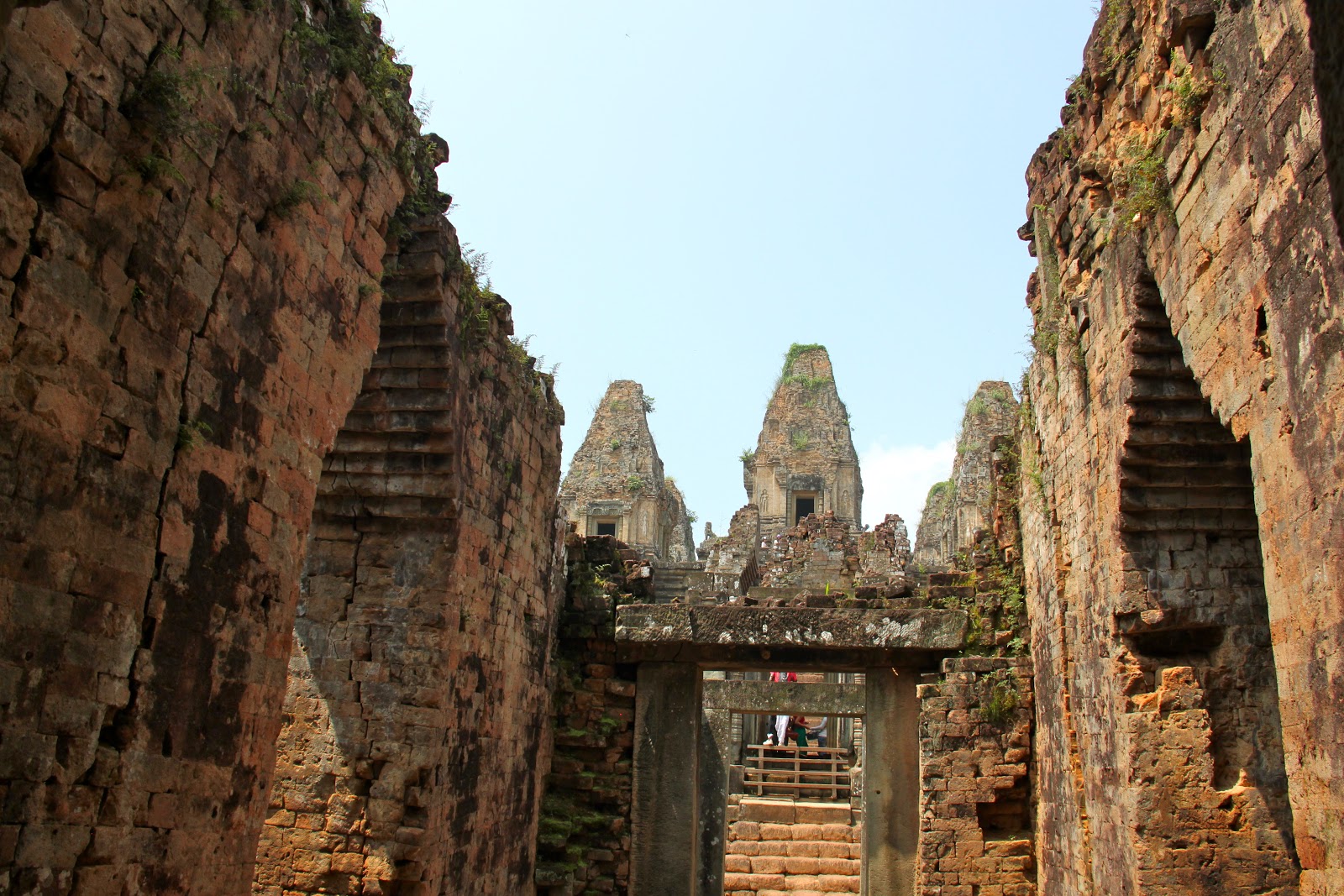
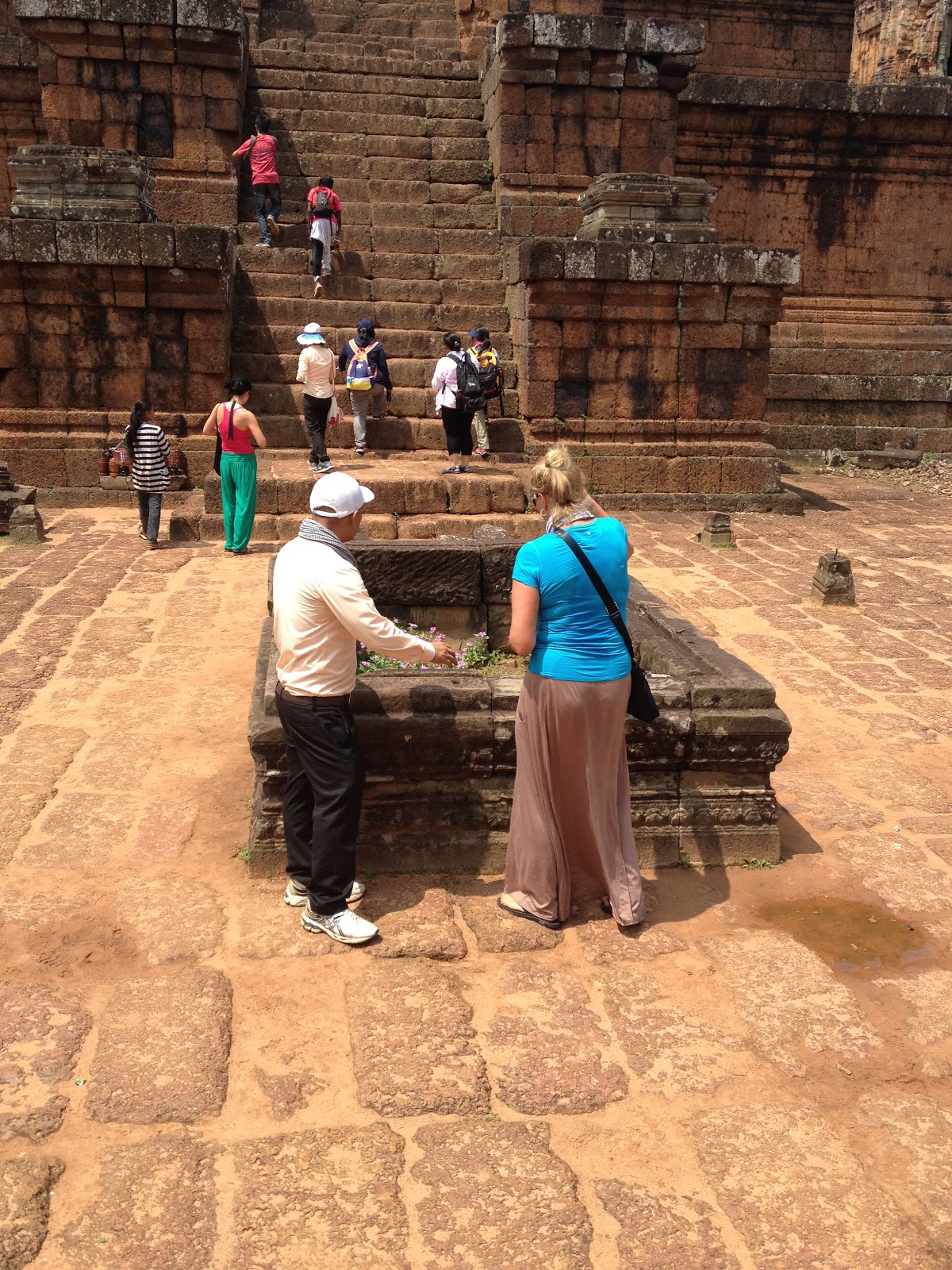
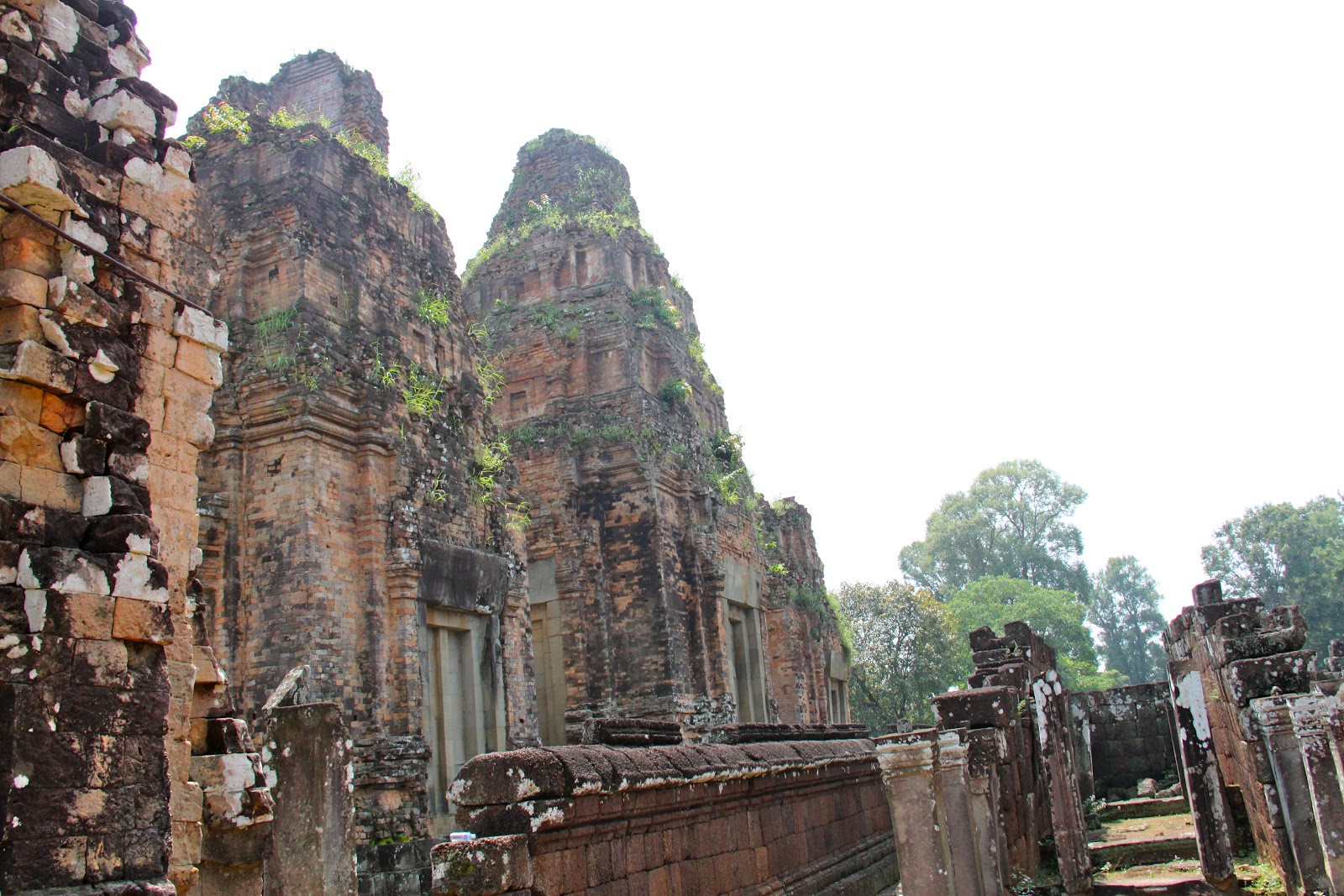
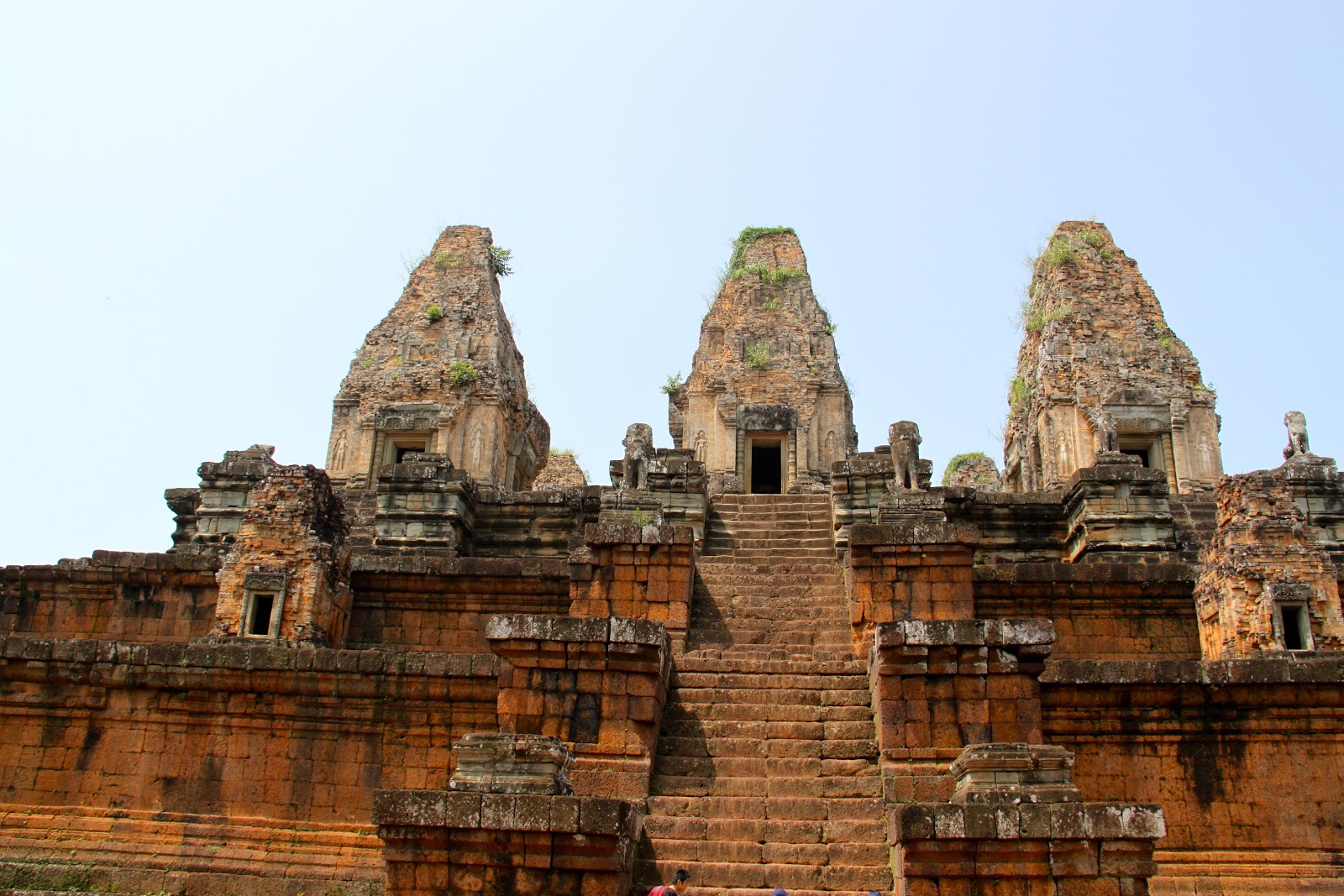
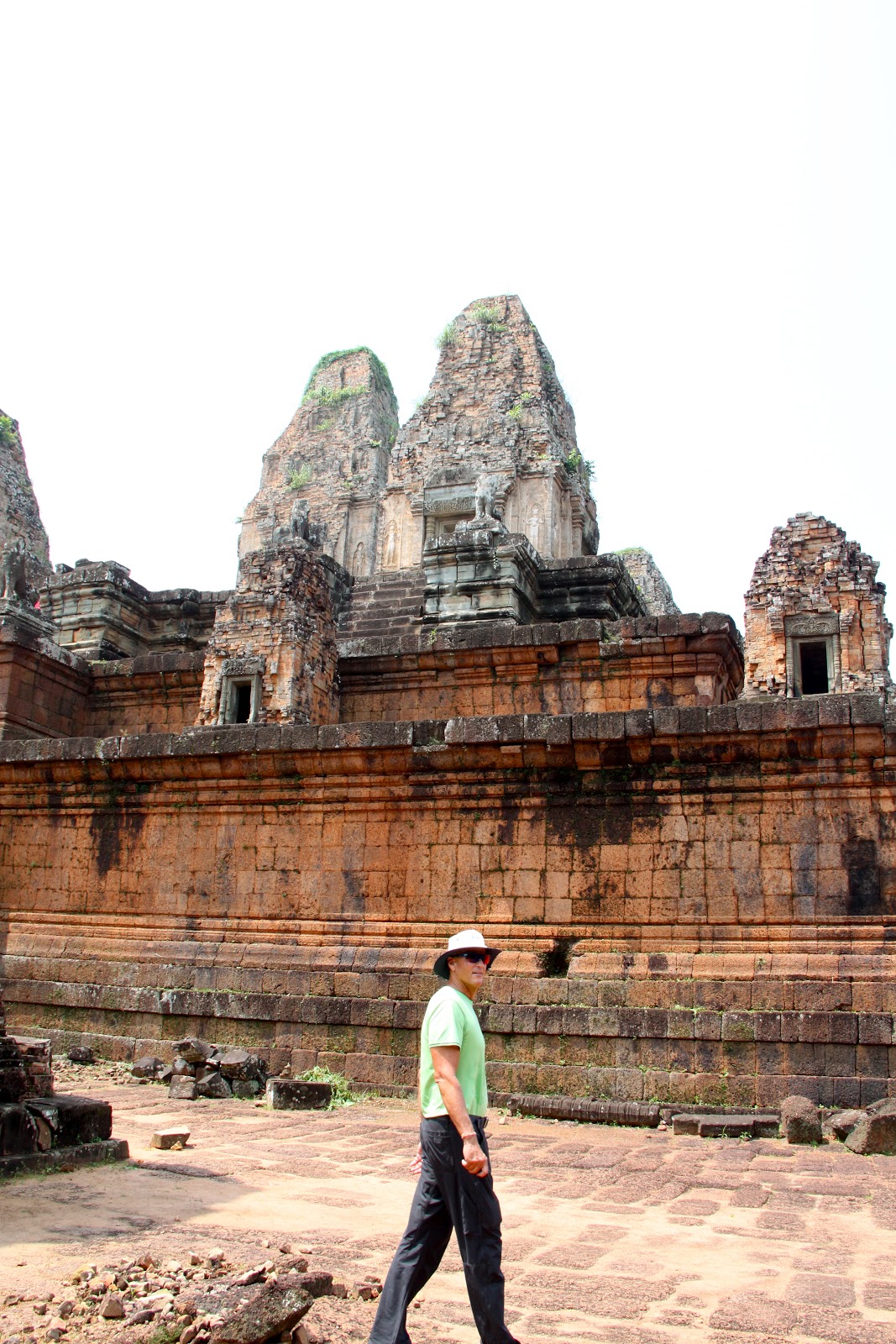
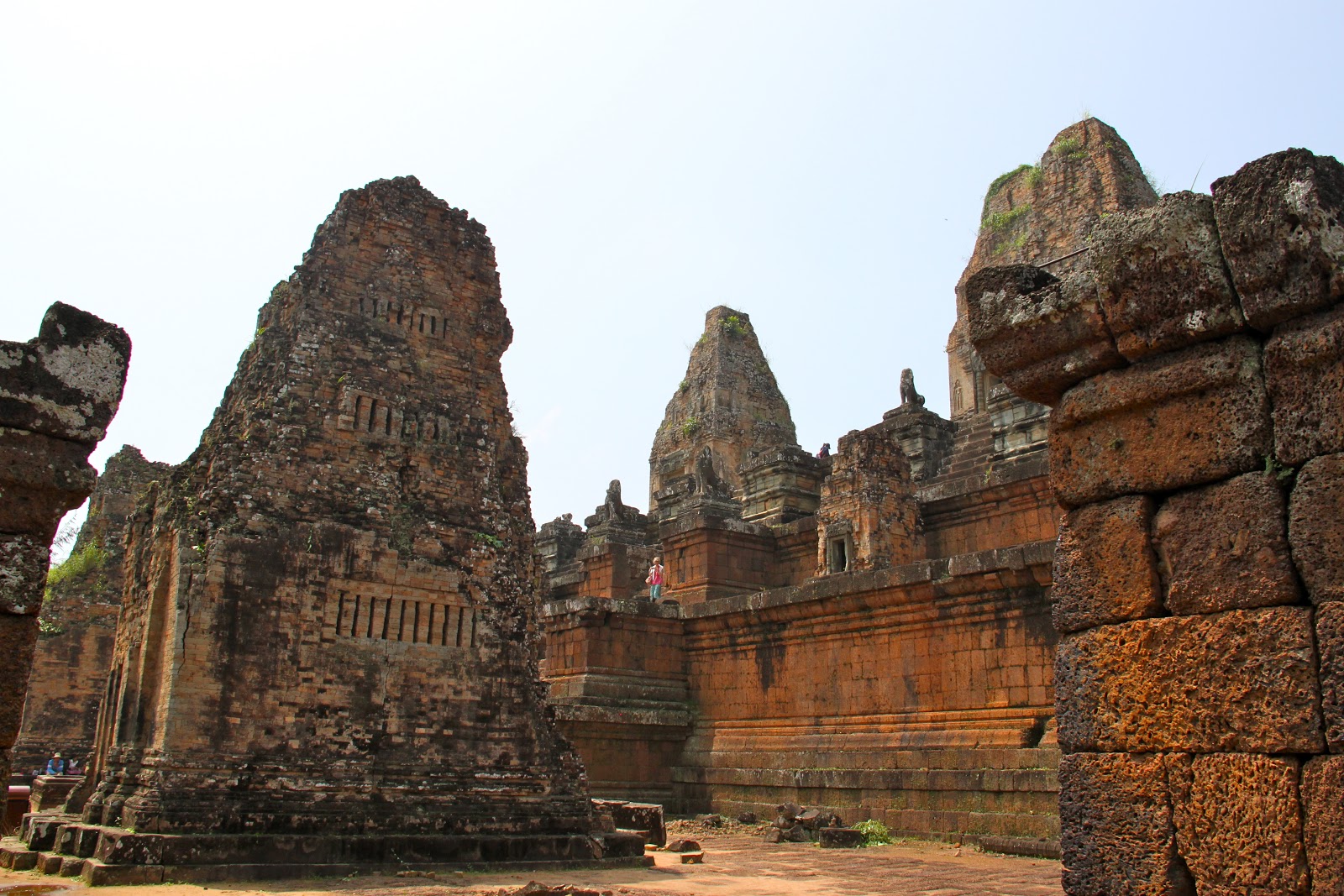
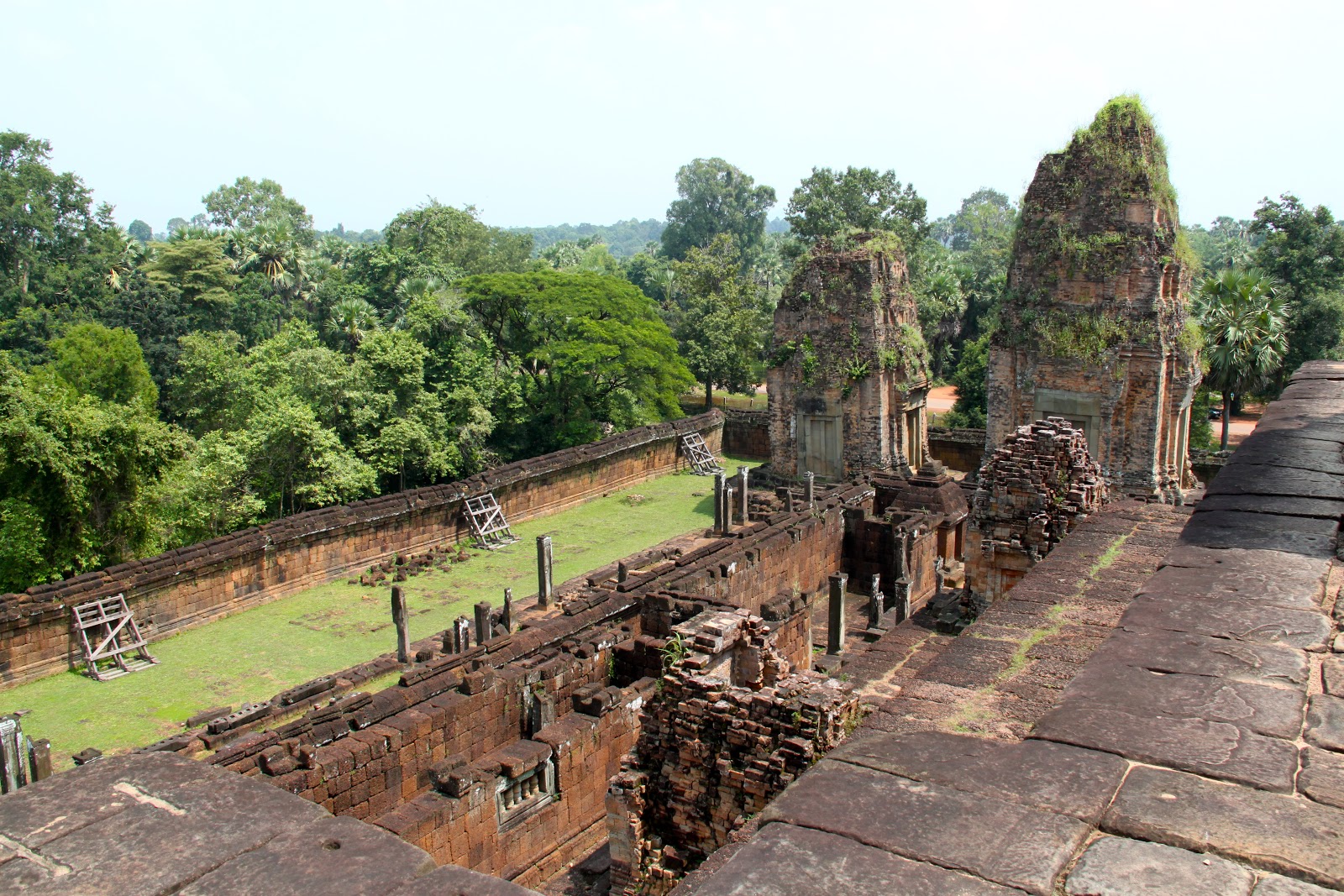
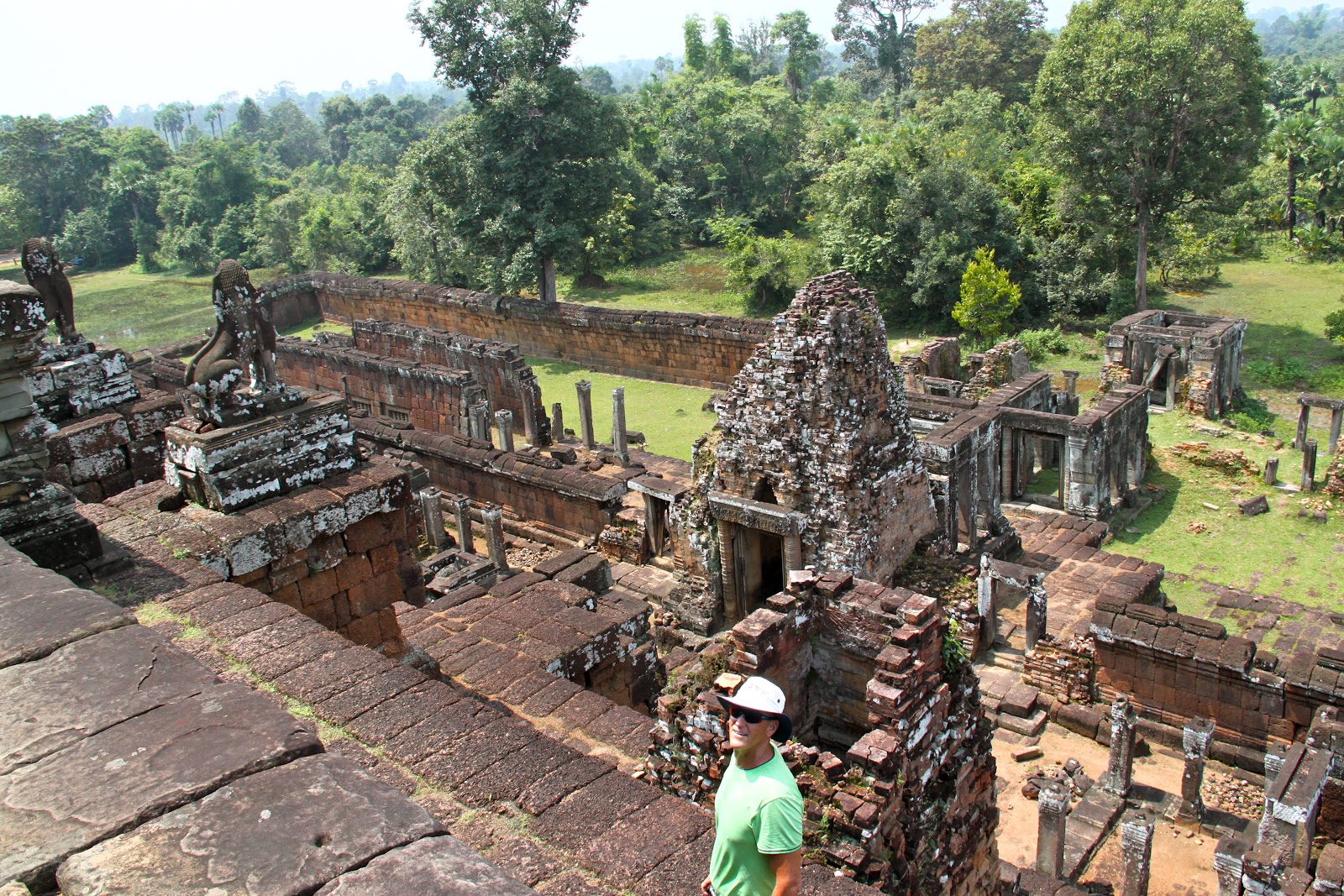
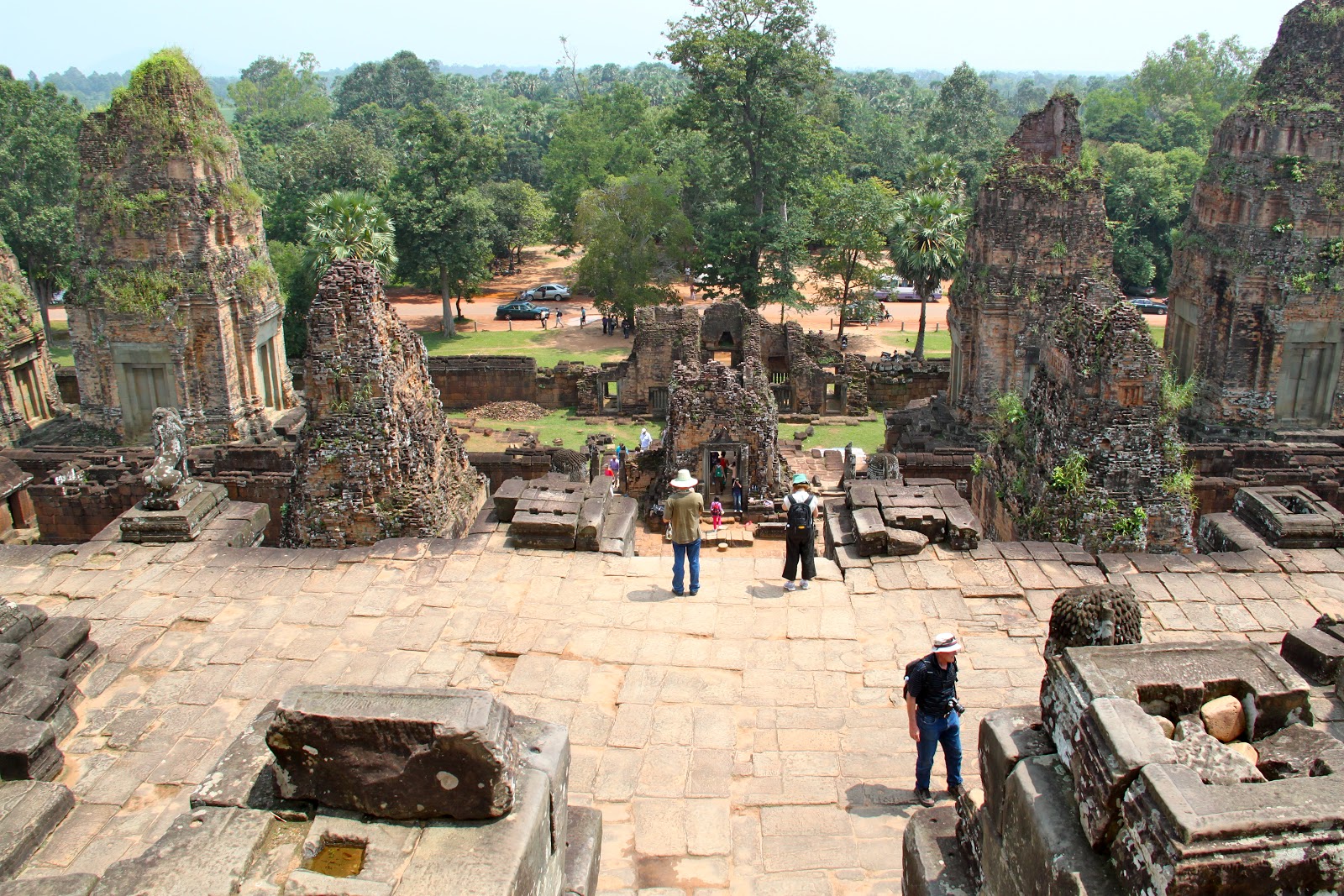
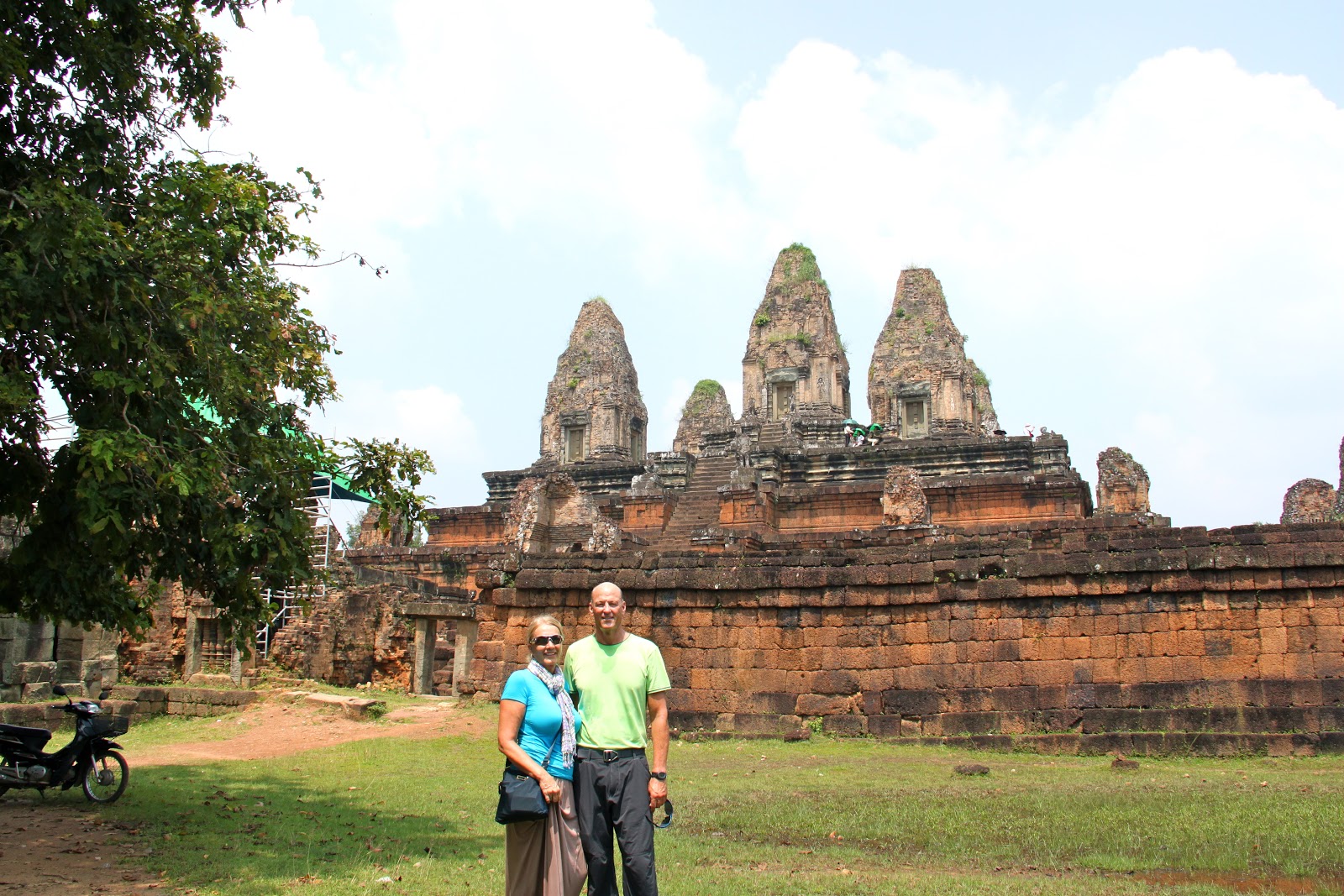
Pre Rup means, “turning the body” and this temple may be the spot where Kings and royalty were cremated. 

This is where they lay the body and leave it for a few days, then turn the body

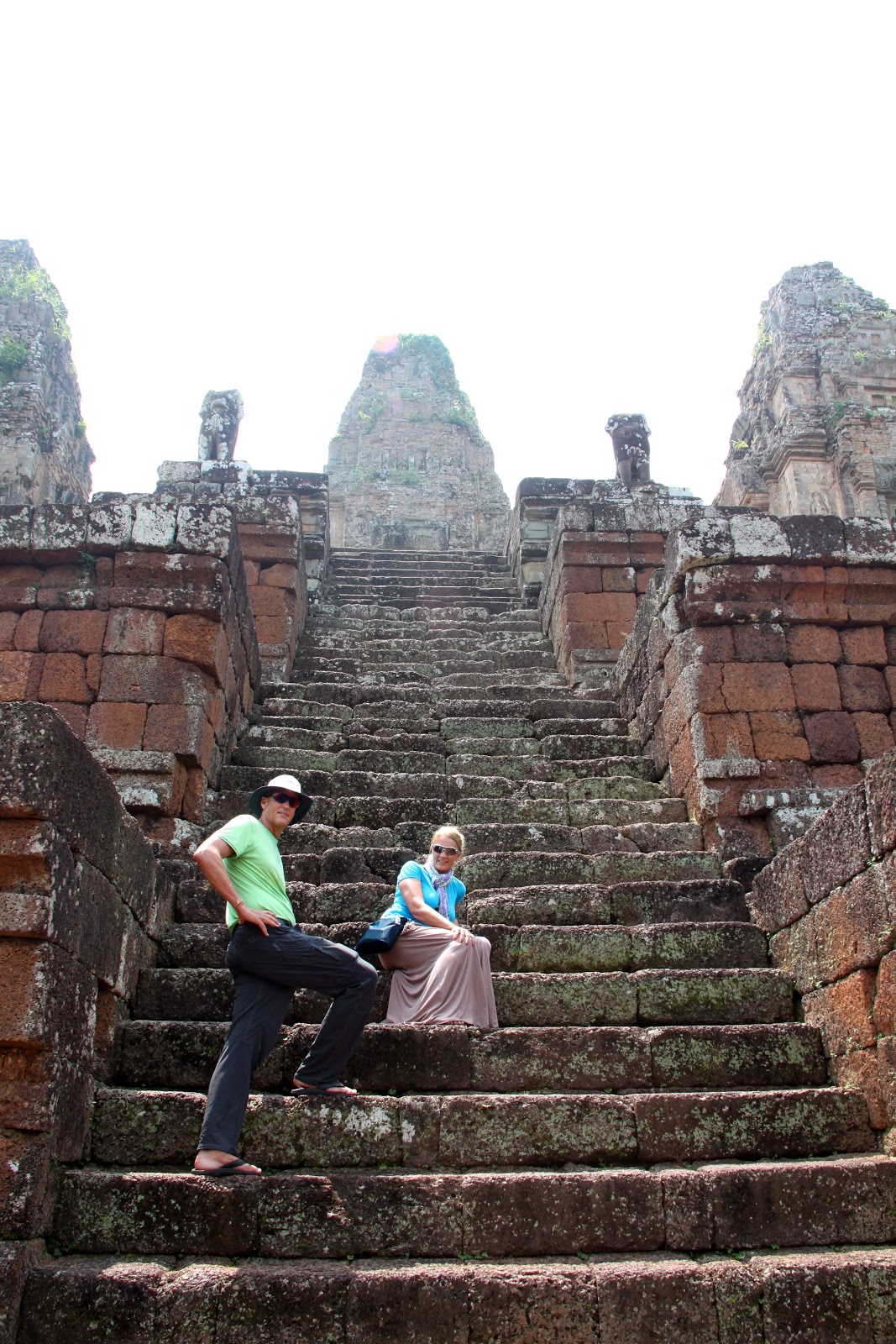
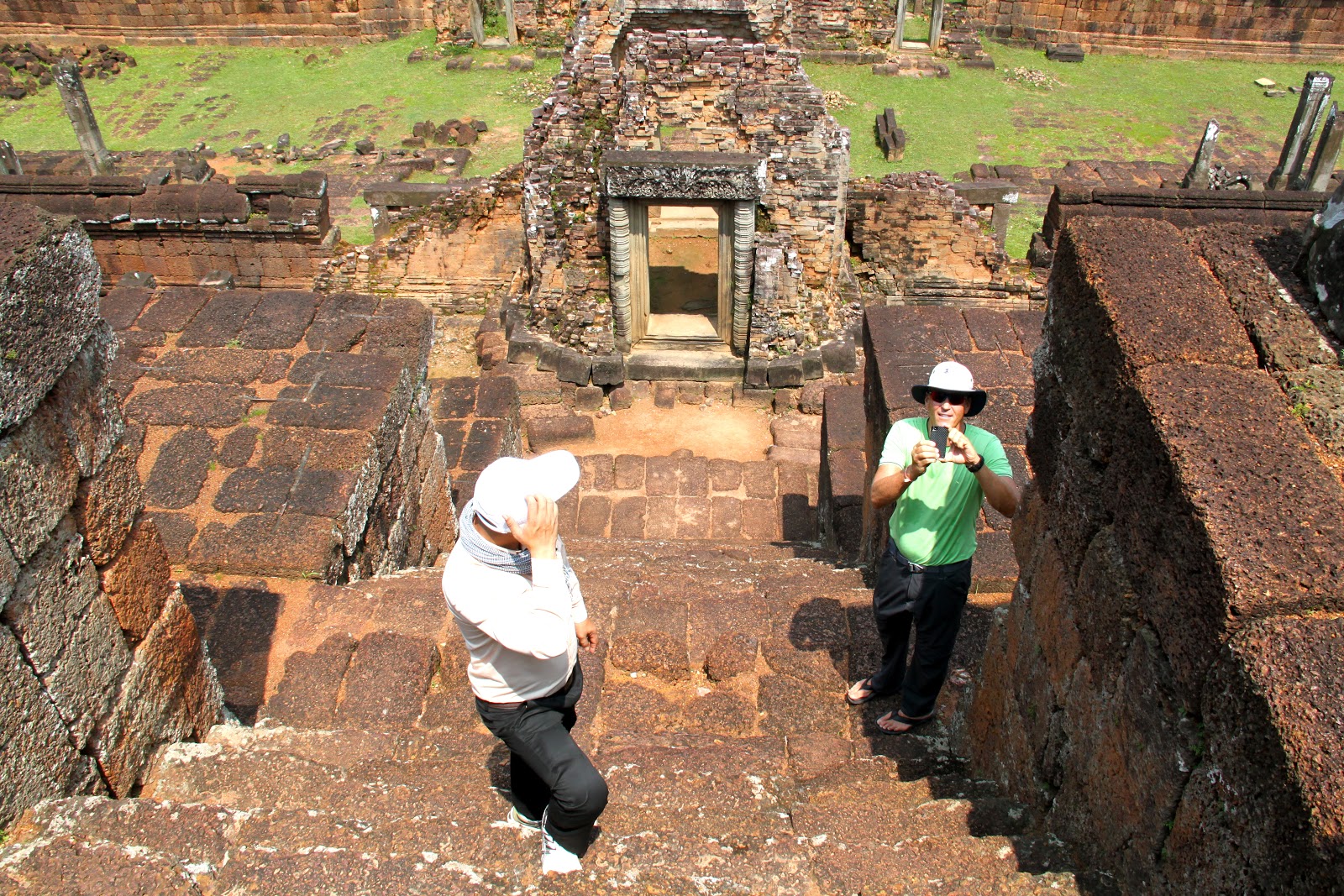
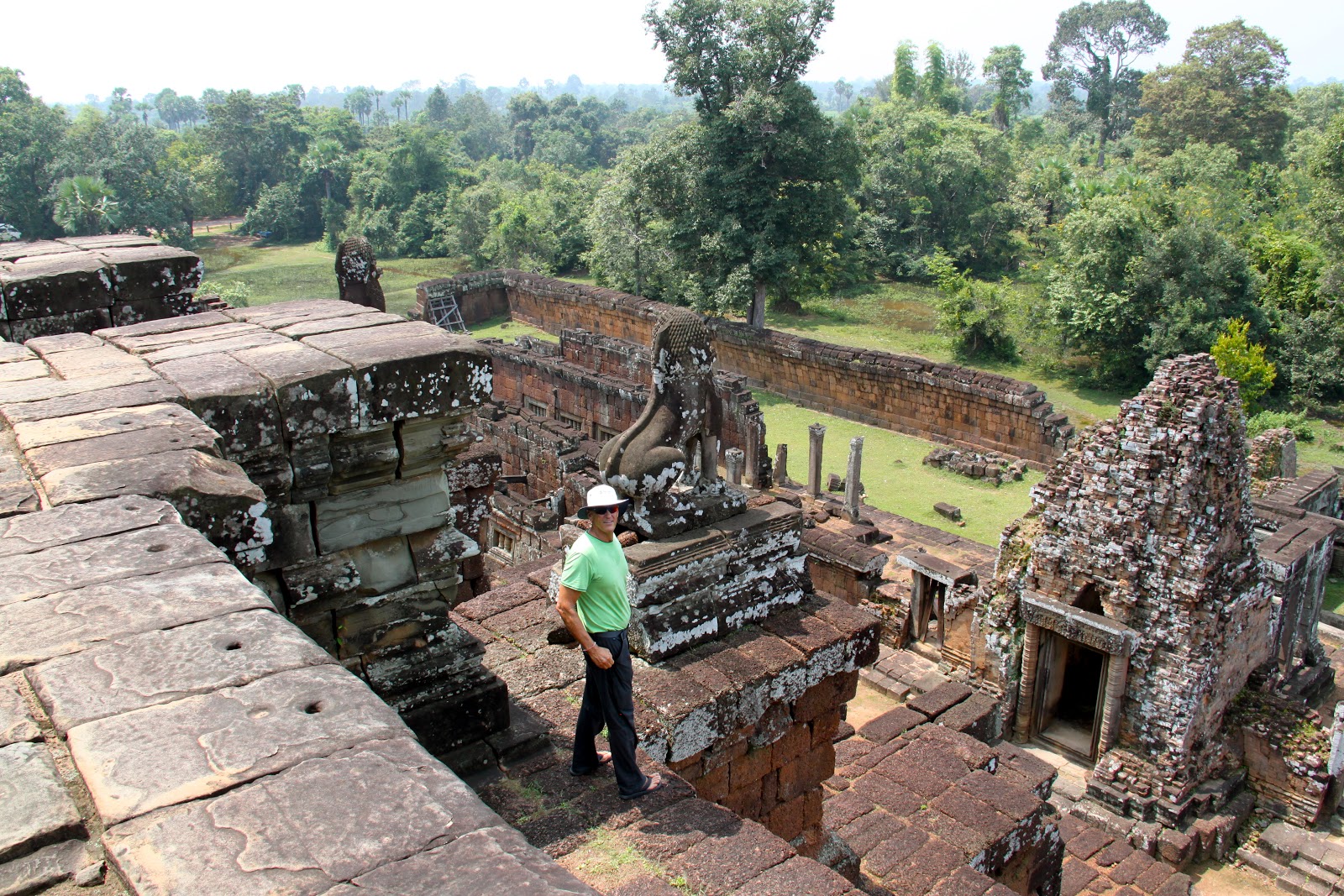
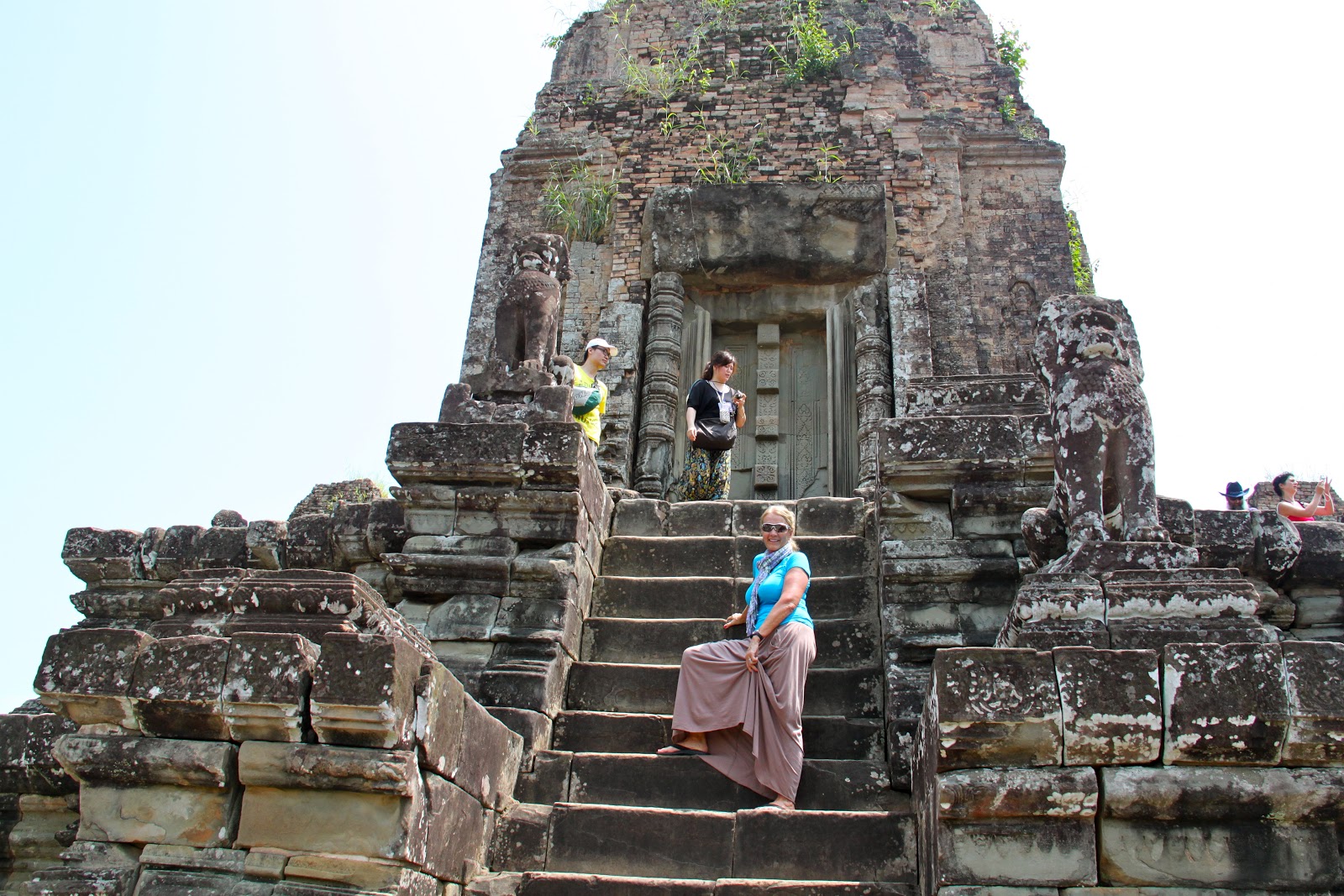
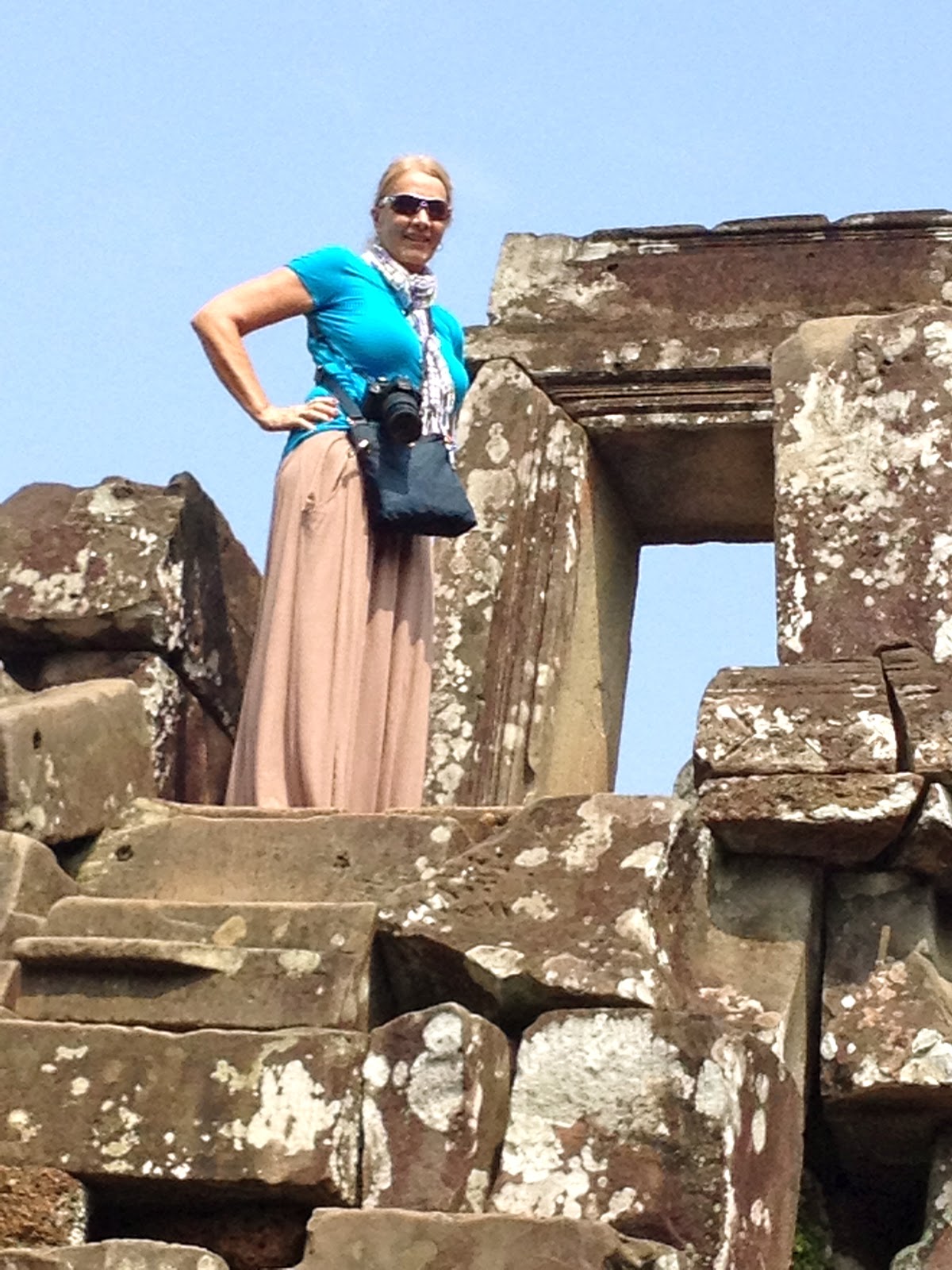
Yes, we climbed to the top.
More Blessings

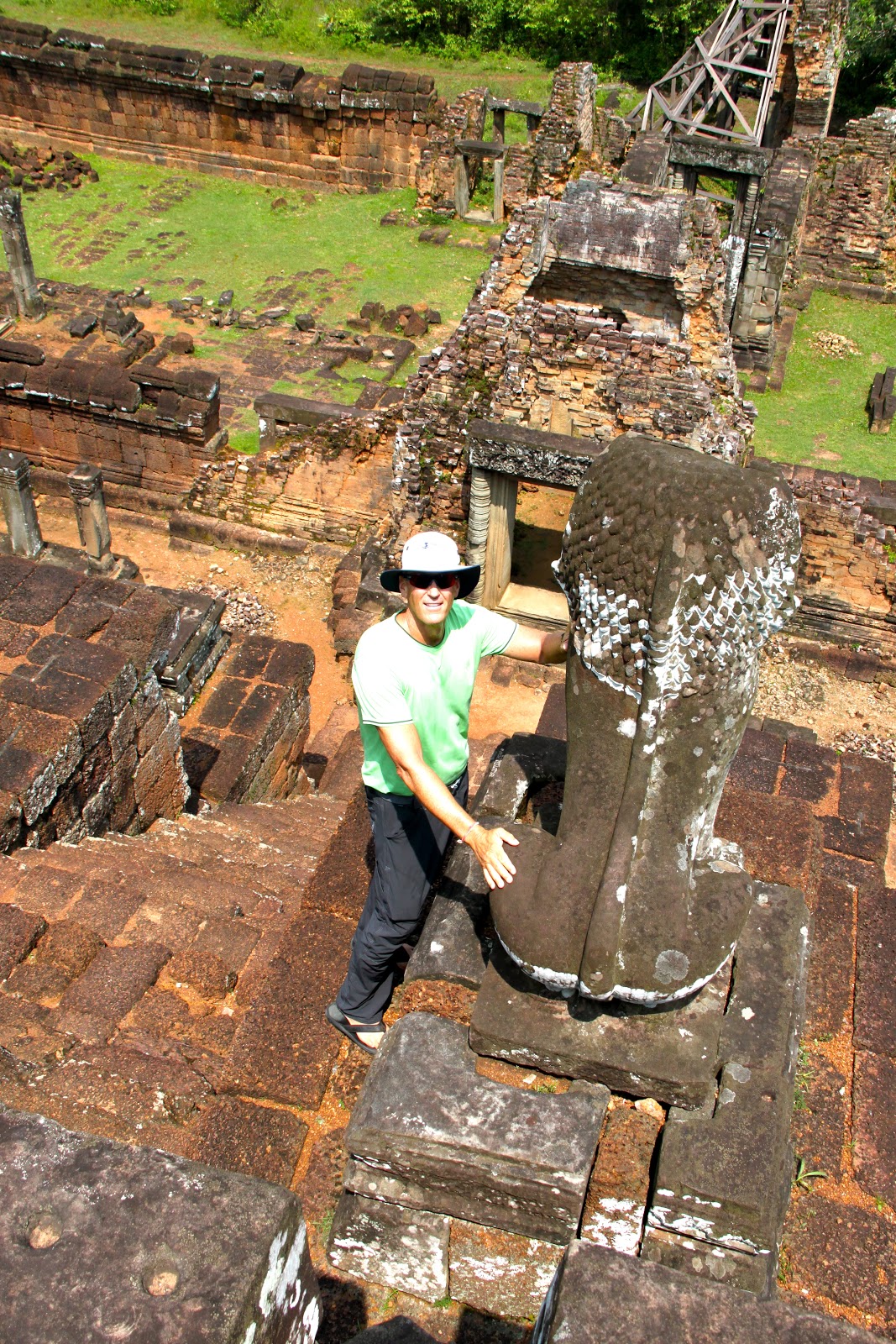
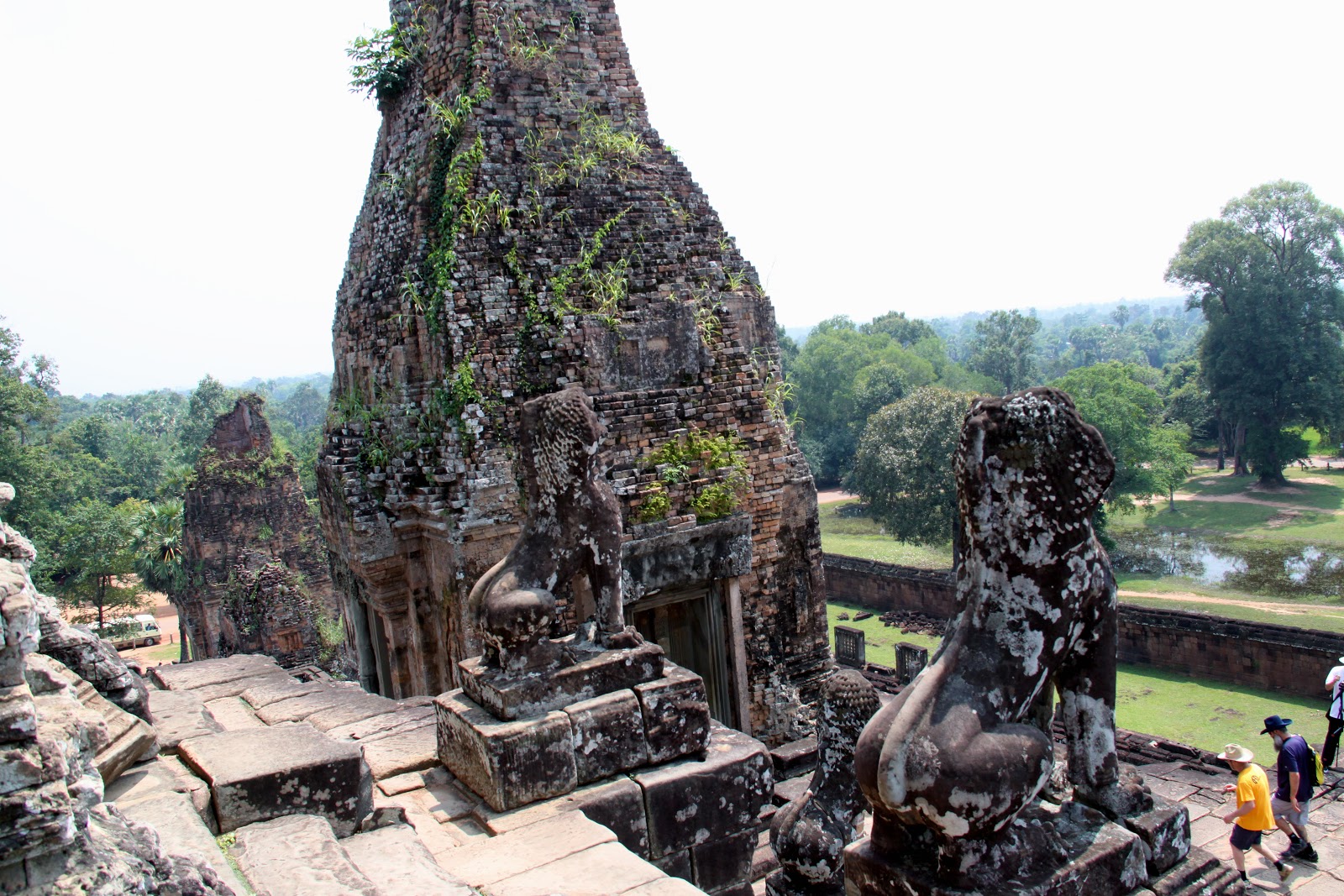
This is the back of a lion carved in sandstone.

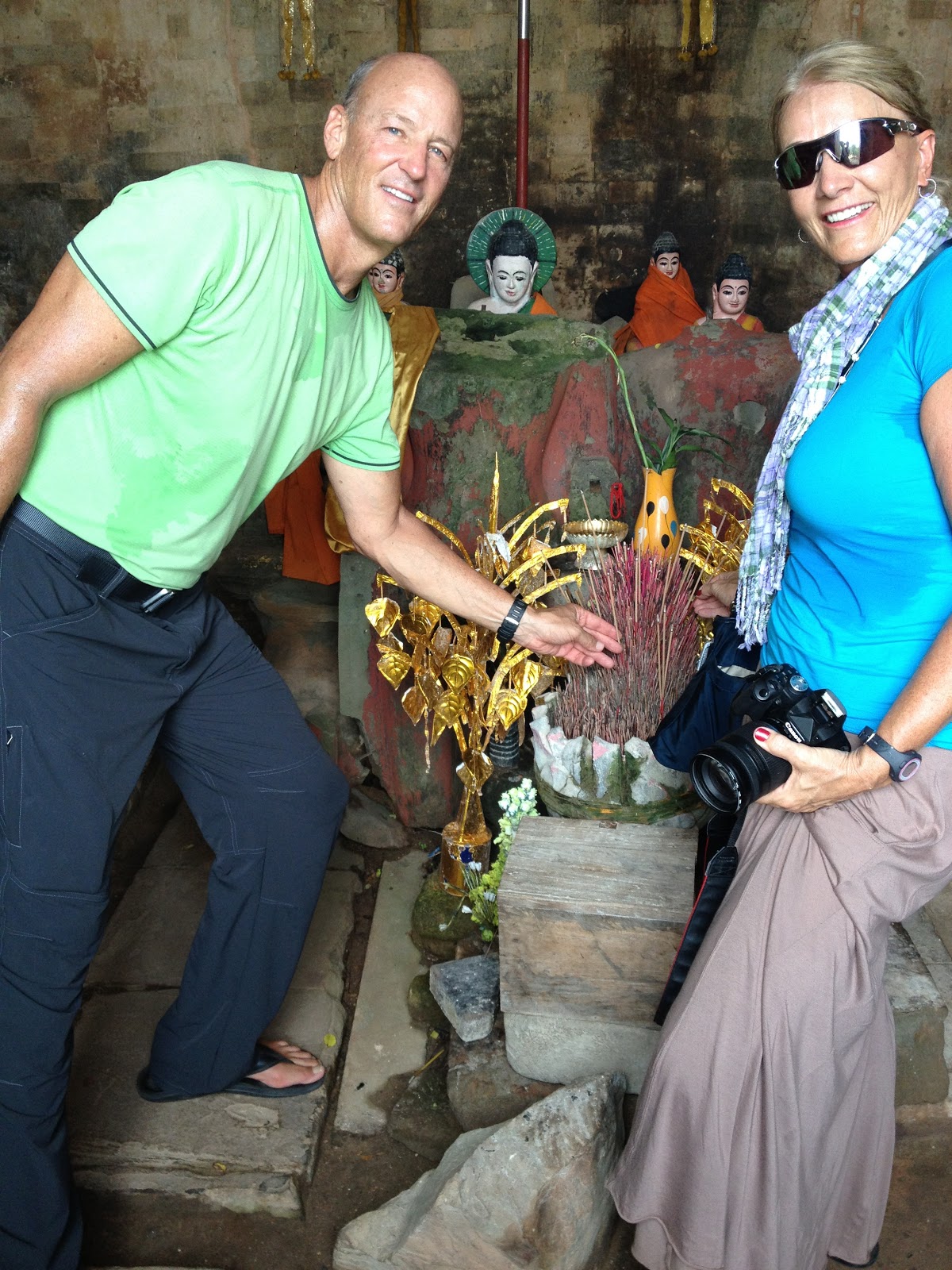
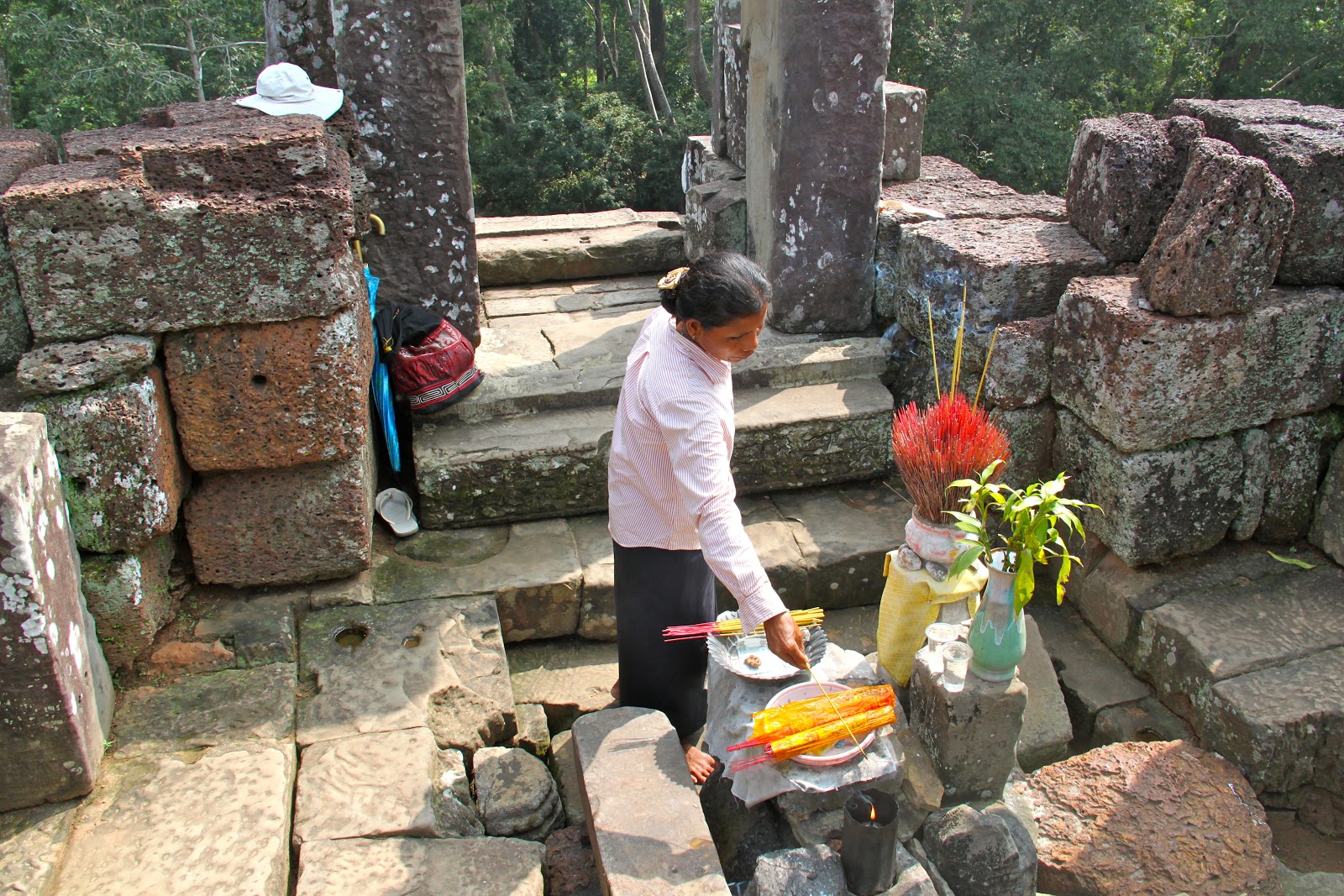
There is incense burning in this temple sending prayers in the smoke.

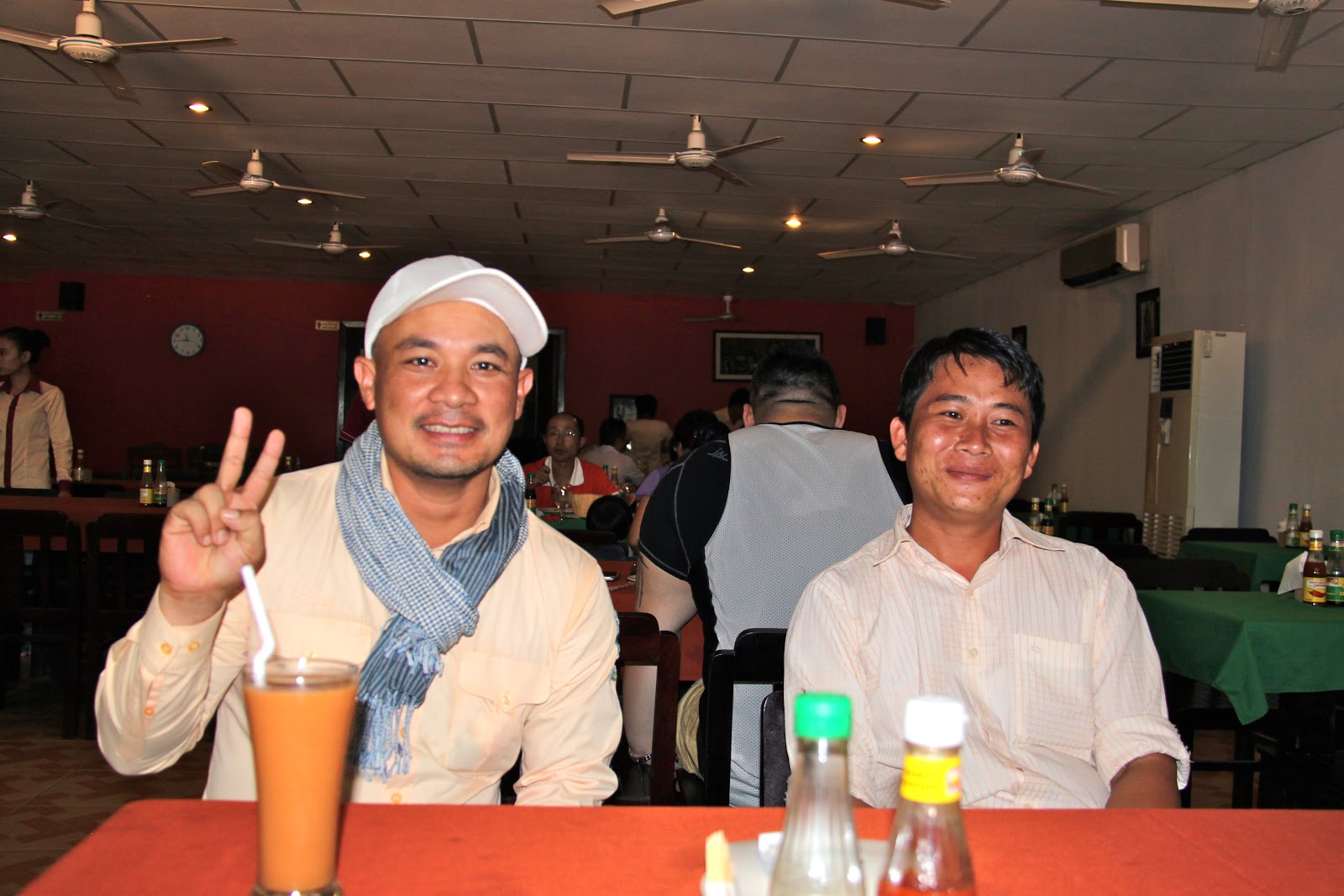
Lunch at a local Cambodian diner.  It was good. We invited our guide and driver to join us.

Our guide and driver

ANGKOR THOM
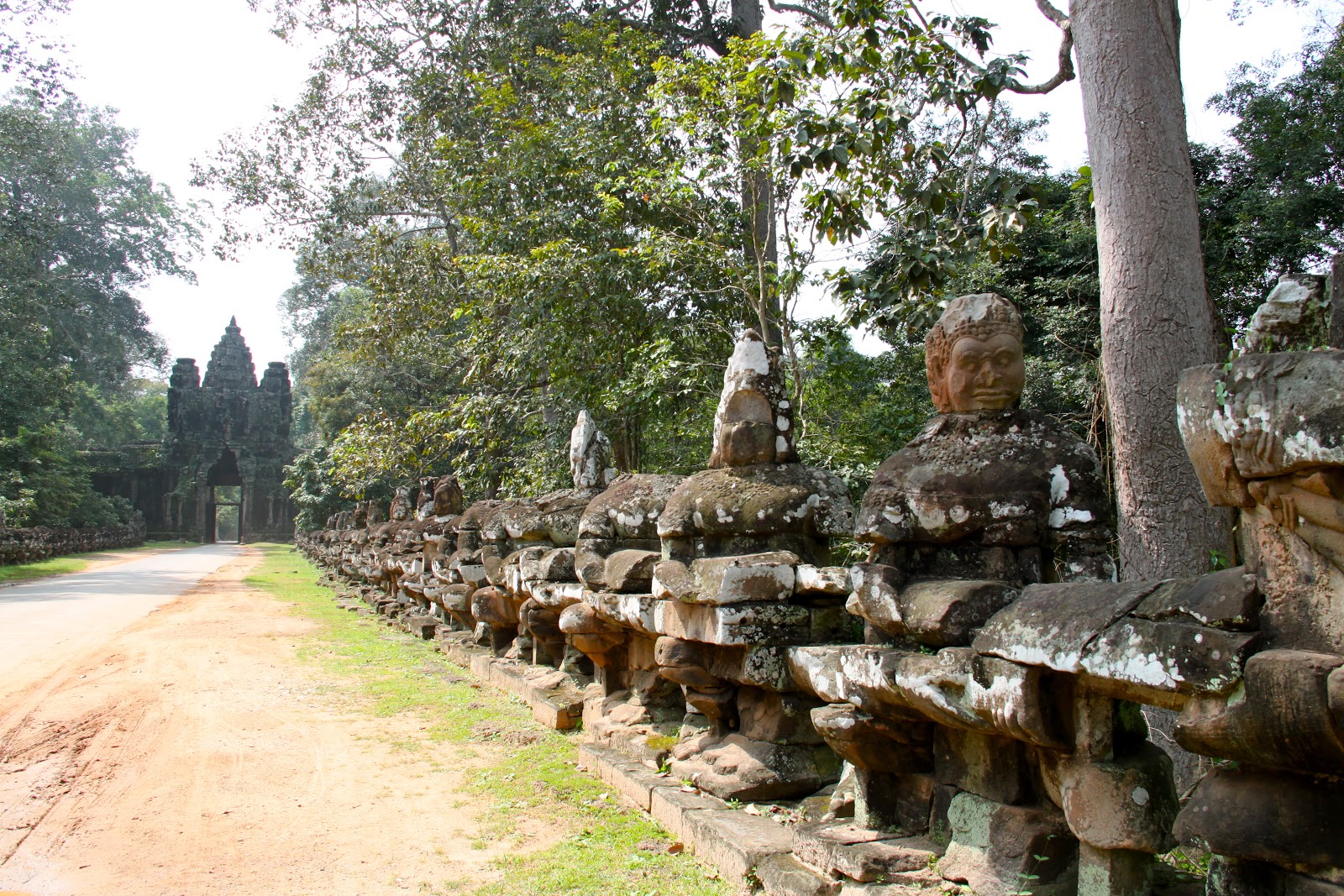
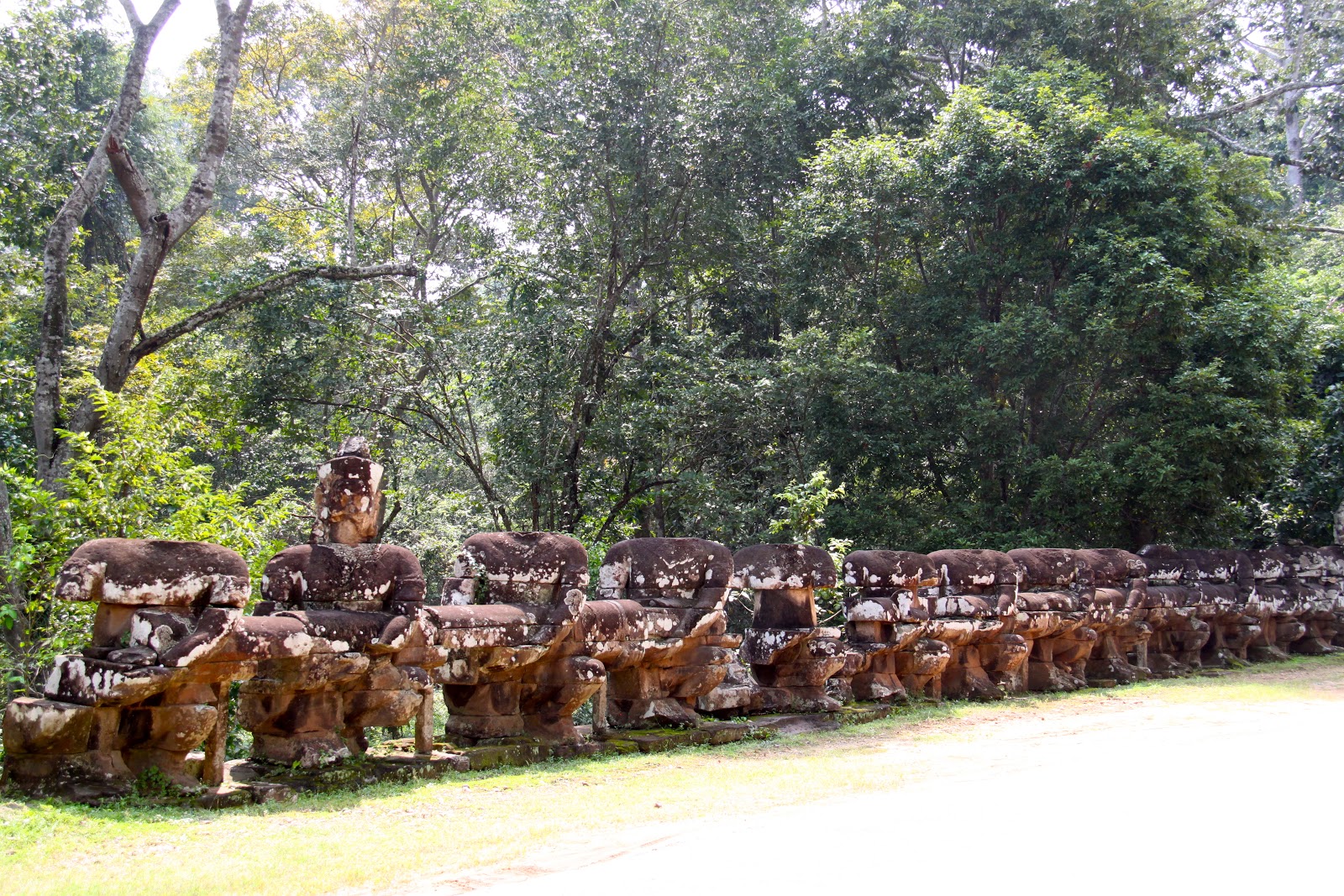
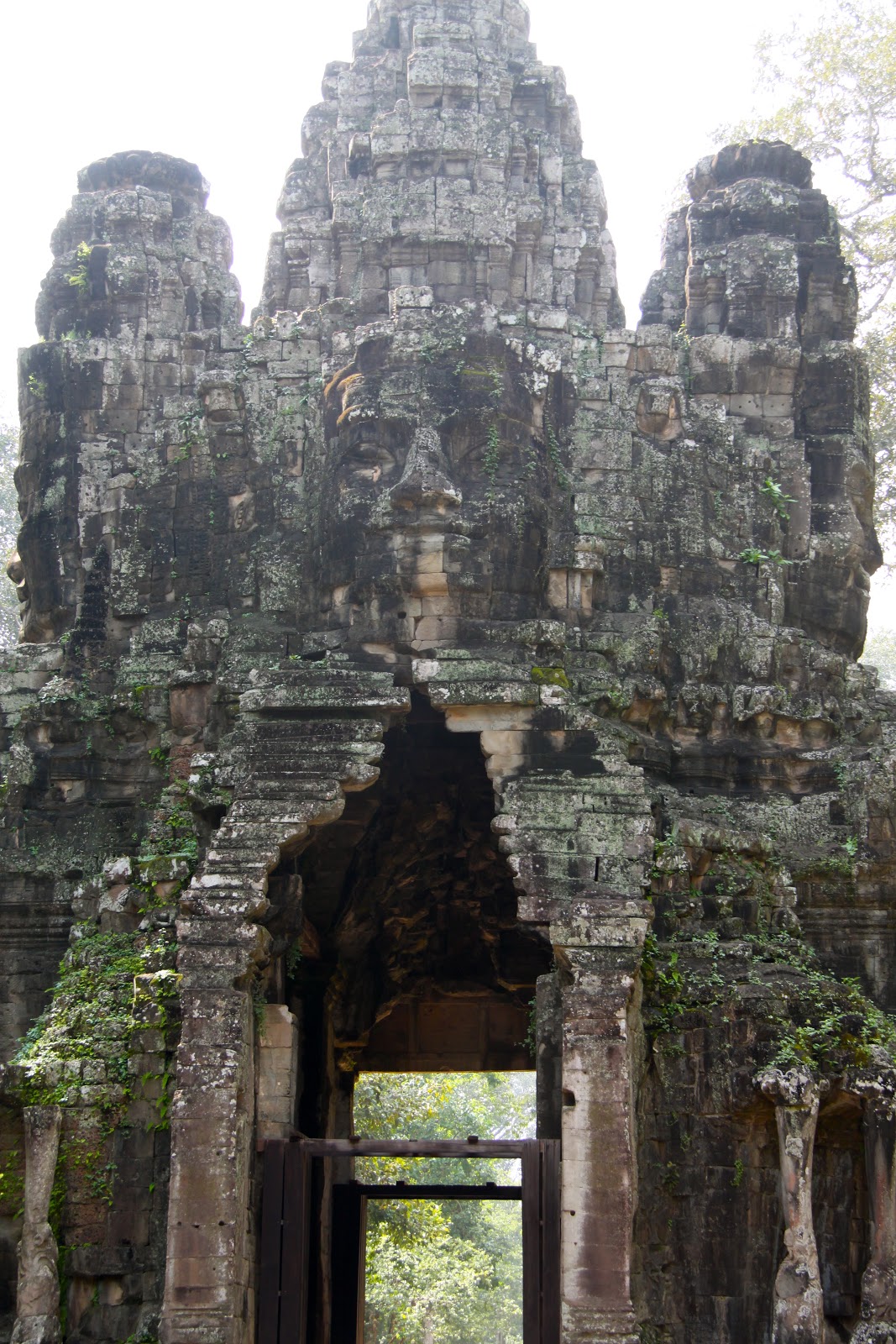
We walked past the stone soldiers guarding the Victory Gate into Angkor Thom.  Angkor Thom is 3 square kilometers.

Stone soldiers guarding the gate

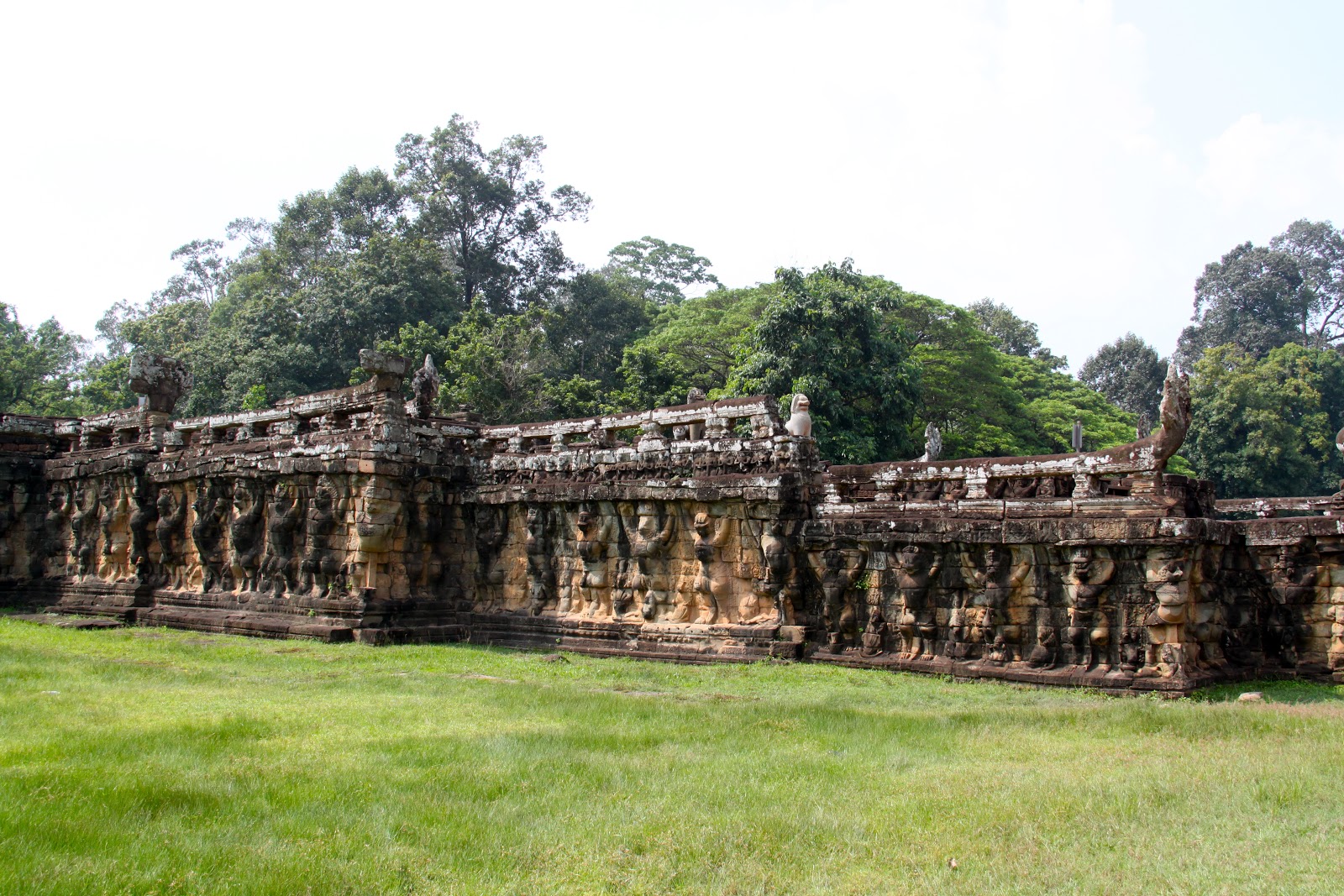
ELEPHANT TERRACE

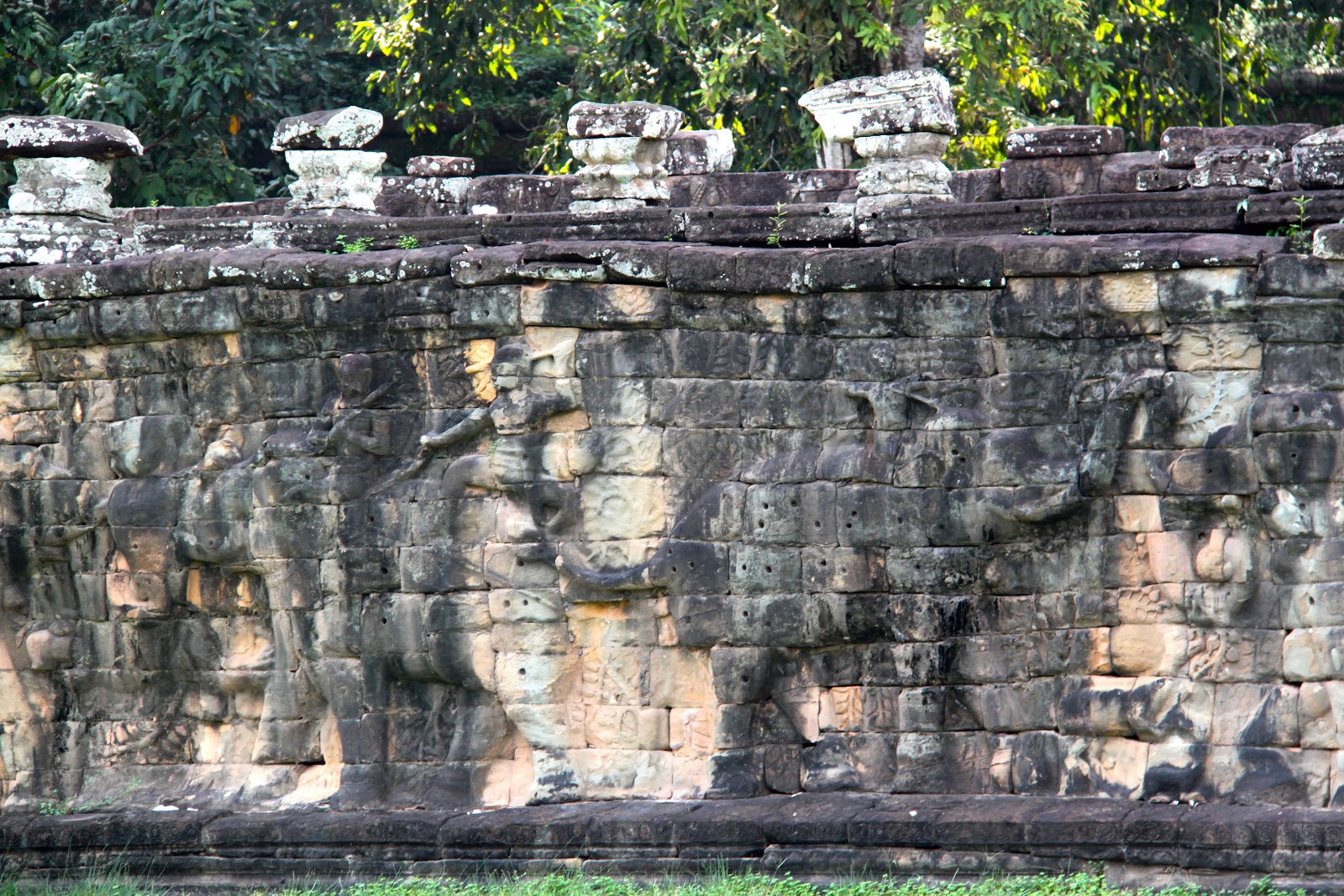
We saw the Elephant Terrace where the King and royalty would review the return of the victorious armies.

PIMEANA KAS SKY PALACE TEMPLE
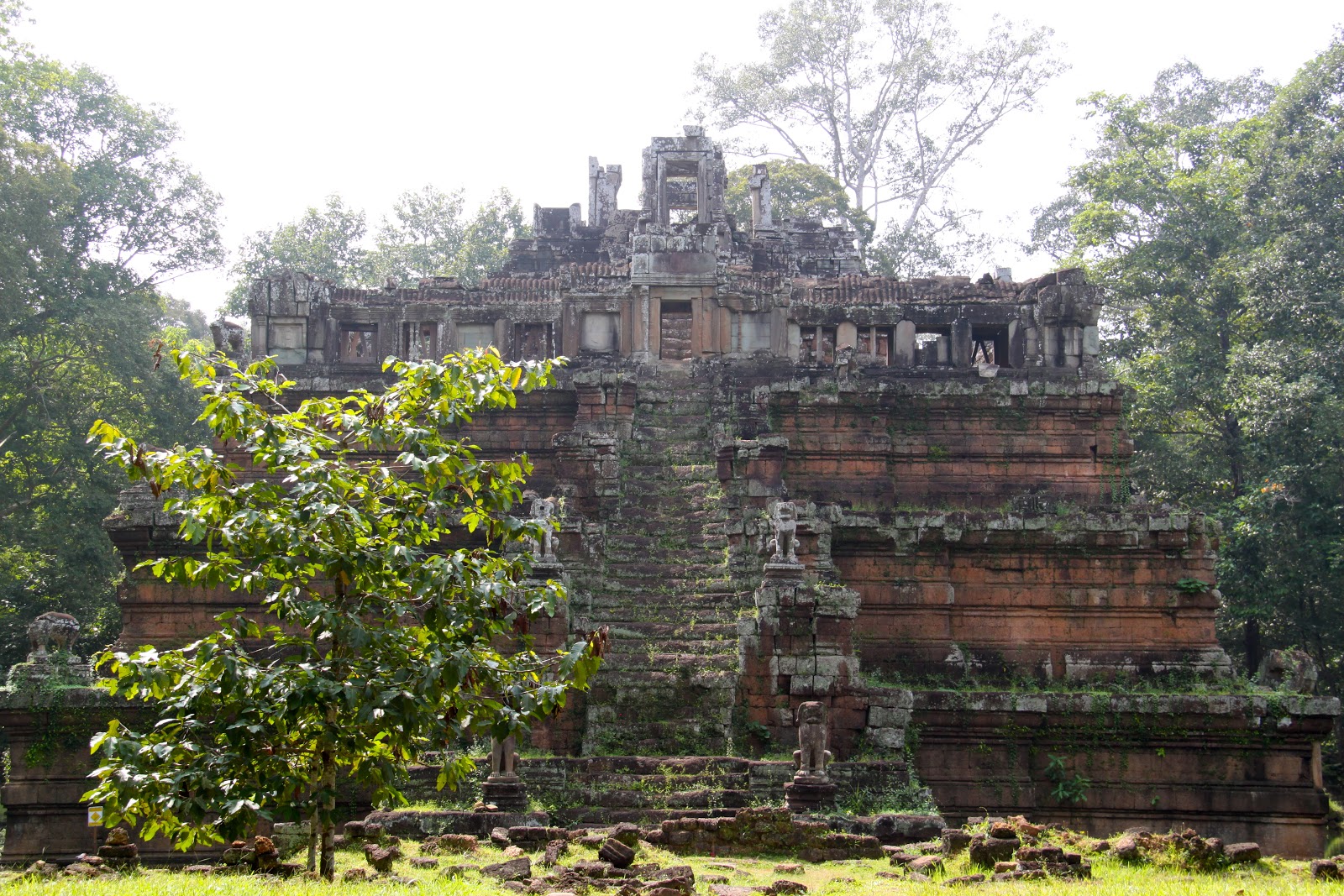
This temple was the abode of the Serpent Lady that required that the King sleep with her every night or else harm would come to his kingdom.  I followed Barb up three steep stories of stones to the top of the temple but I did not get to sleep with her there.

Another temple on top

Looking back out to the elephant terrace.

BYPOUN TEMPLE
To see this temple we again had to climb to the top.  I stopped counting after 200 steep stairs.  I think I was starting to hallucinate from the moist heat.  My clothes were completely soaked with jungle perspiration by this time.

These stairs could be dangerous!

Sorry.  No Climbing.
Be careful

Barb once again is crazy!

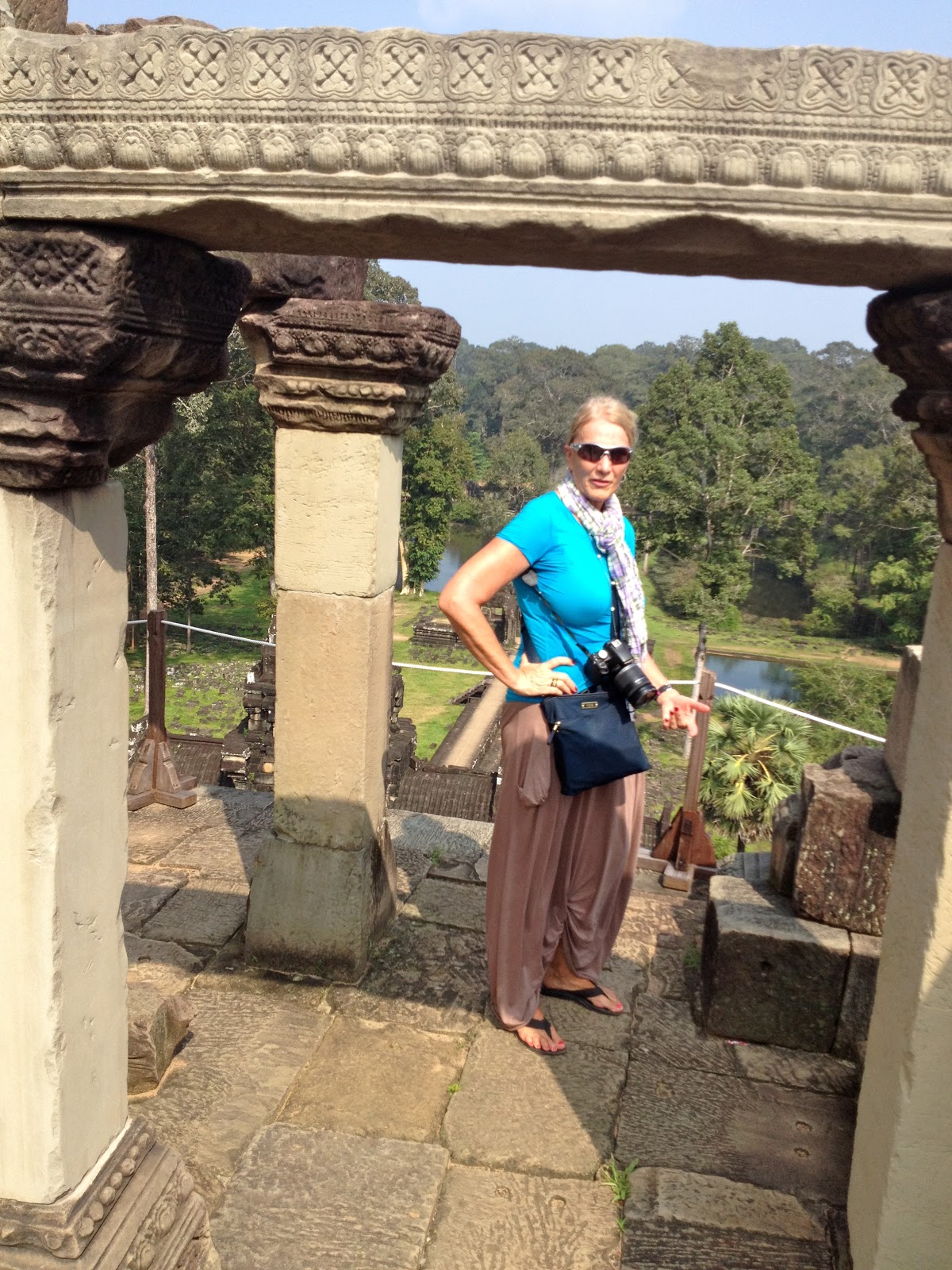
Queen of the temple.

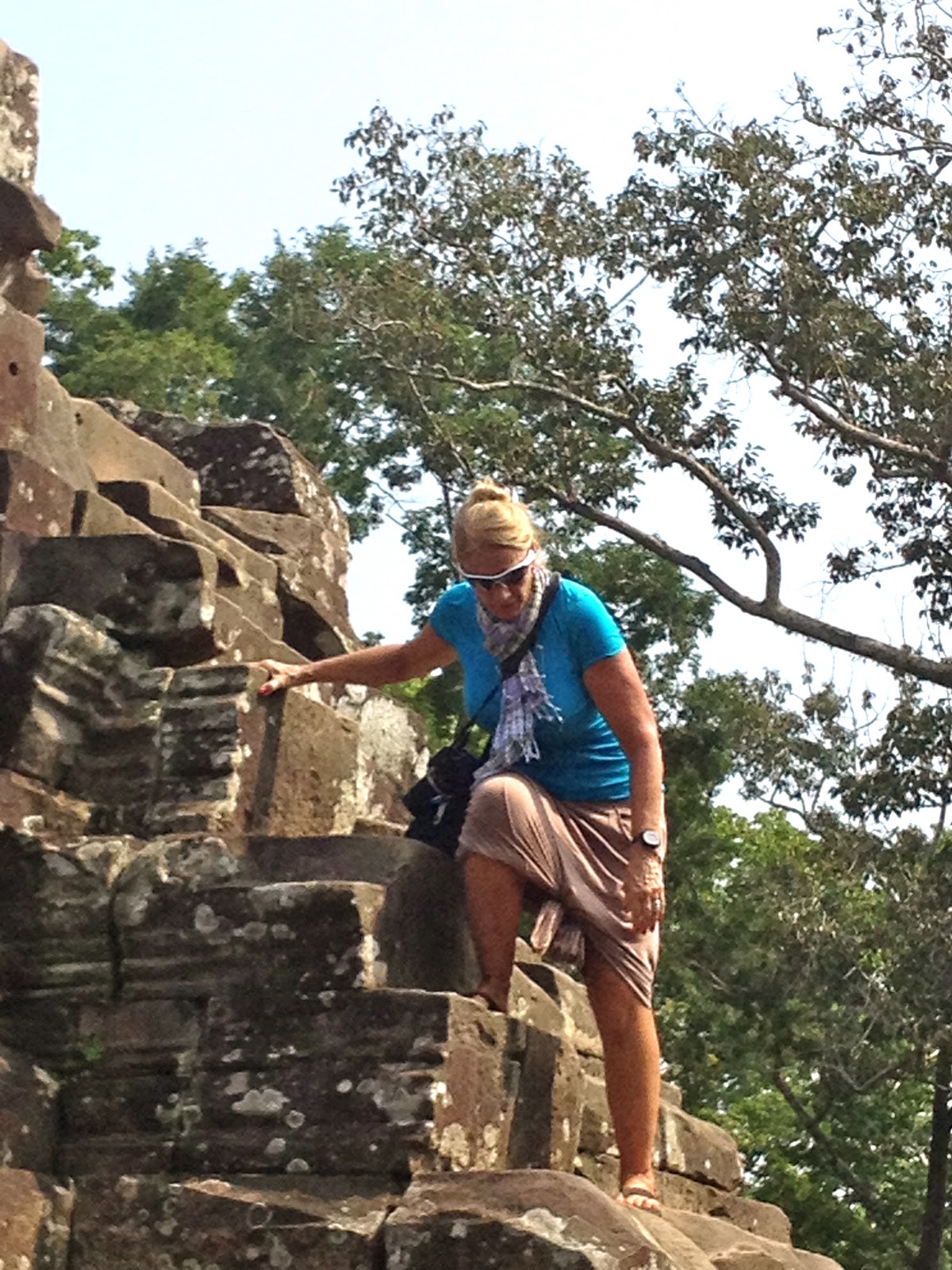
Don’t trip on your skirt!

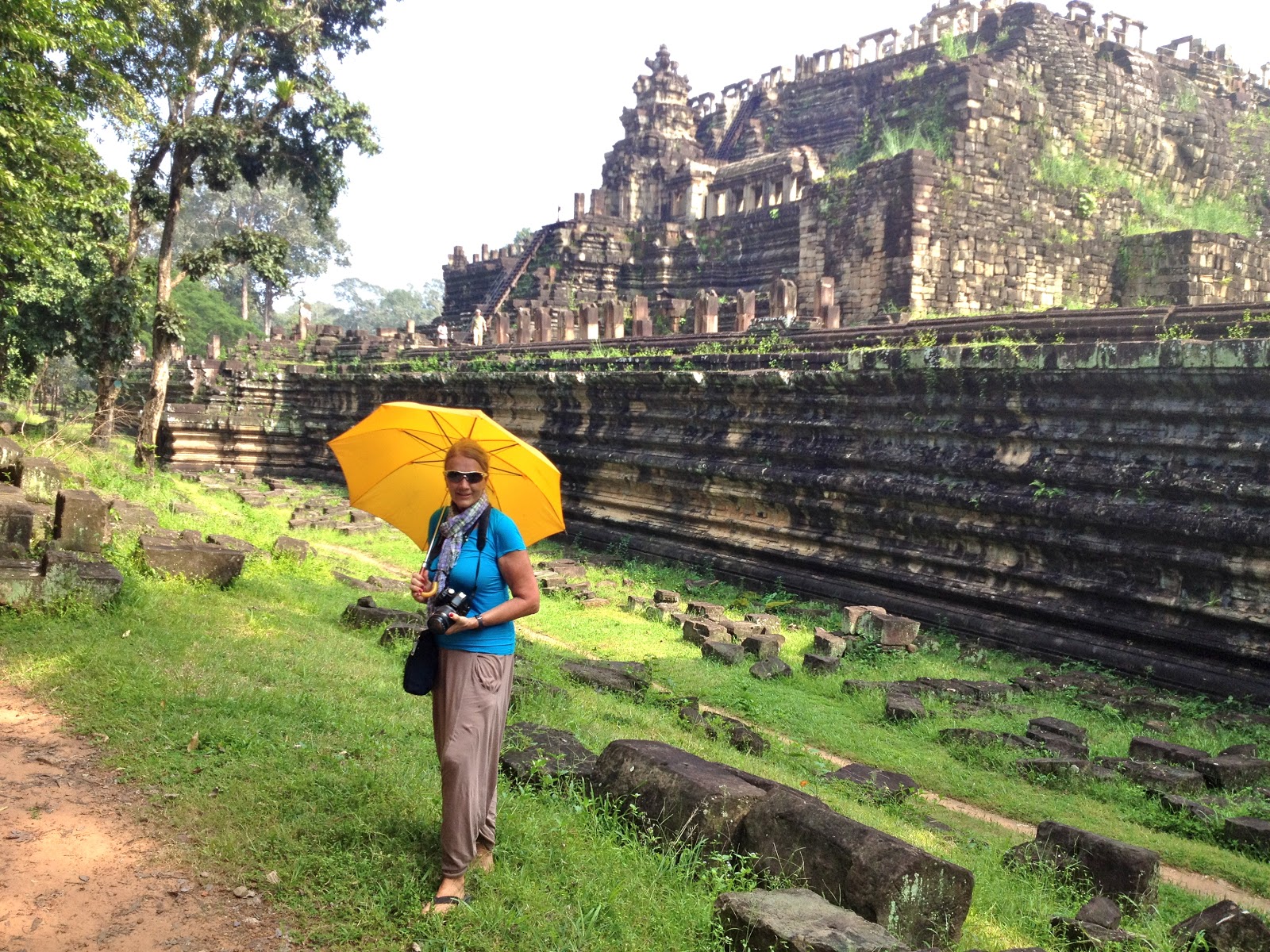
Safely down.  The umbrella is to provide shade.  It feels like it is 40 degrees C (104 F) in the shade.

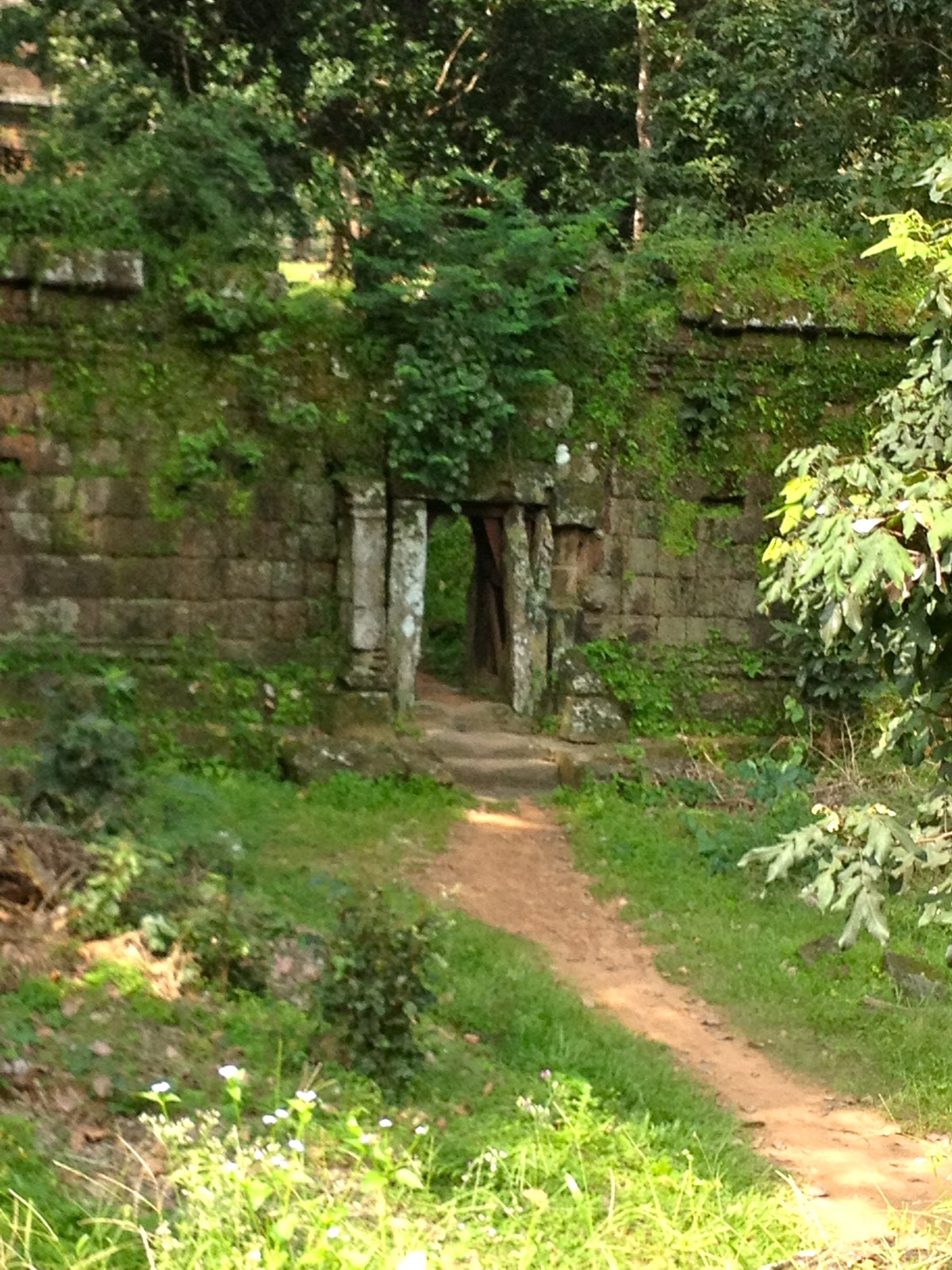
It all looks like the secret garden!

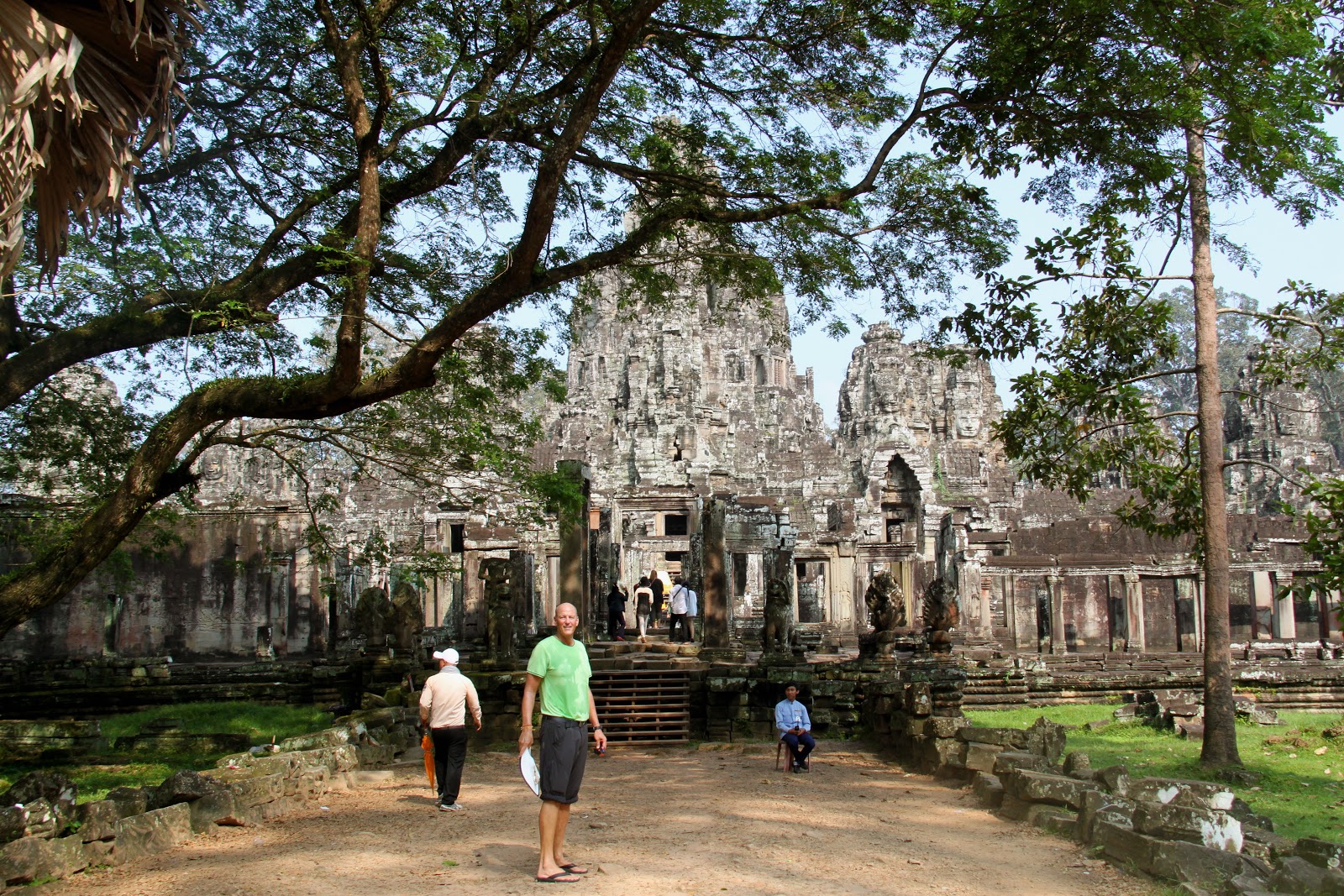
BAYON TEMPLE
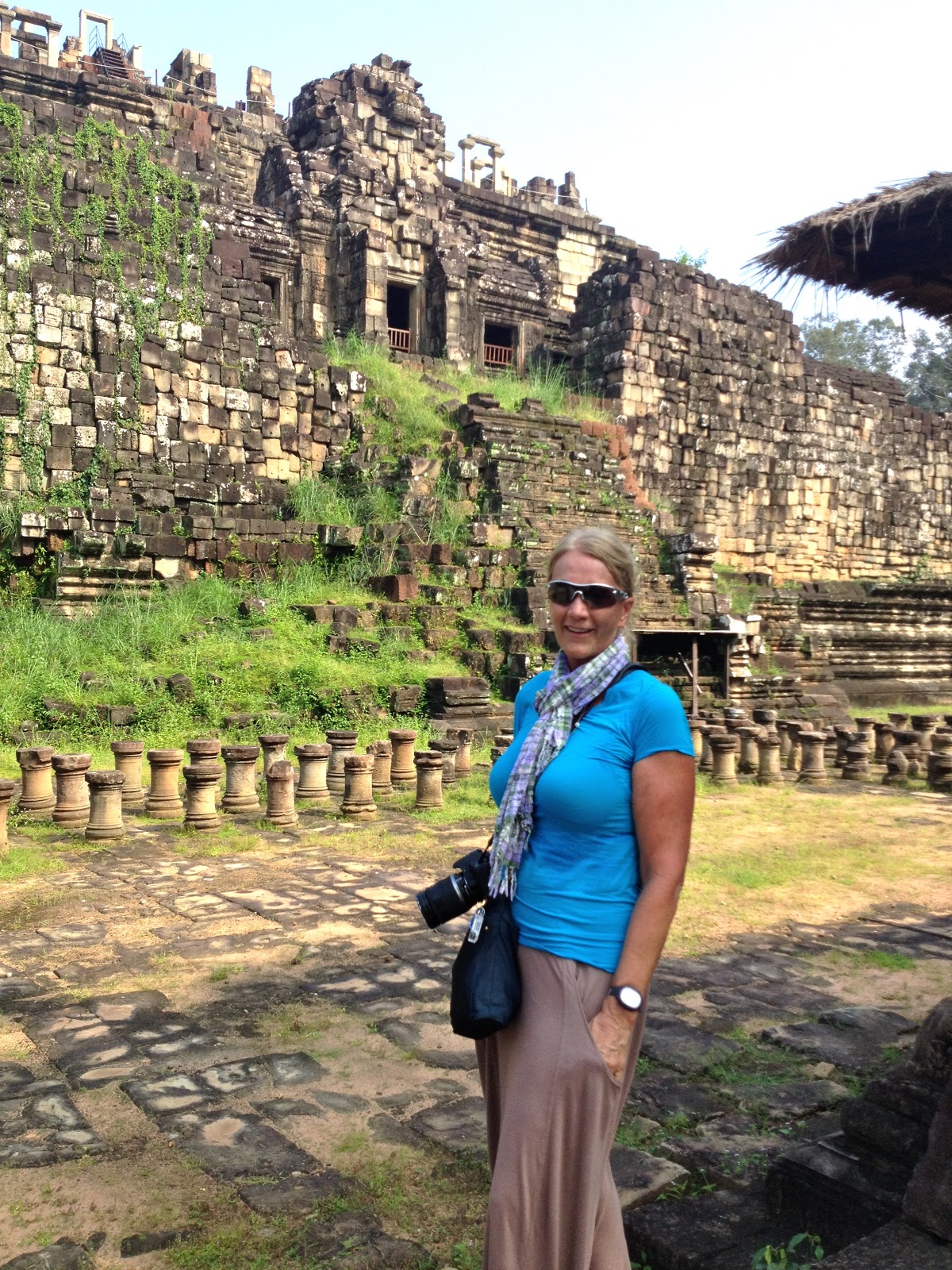
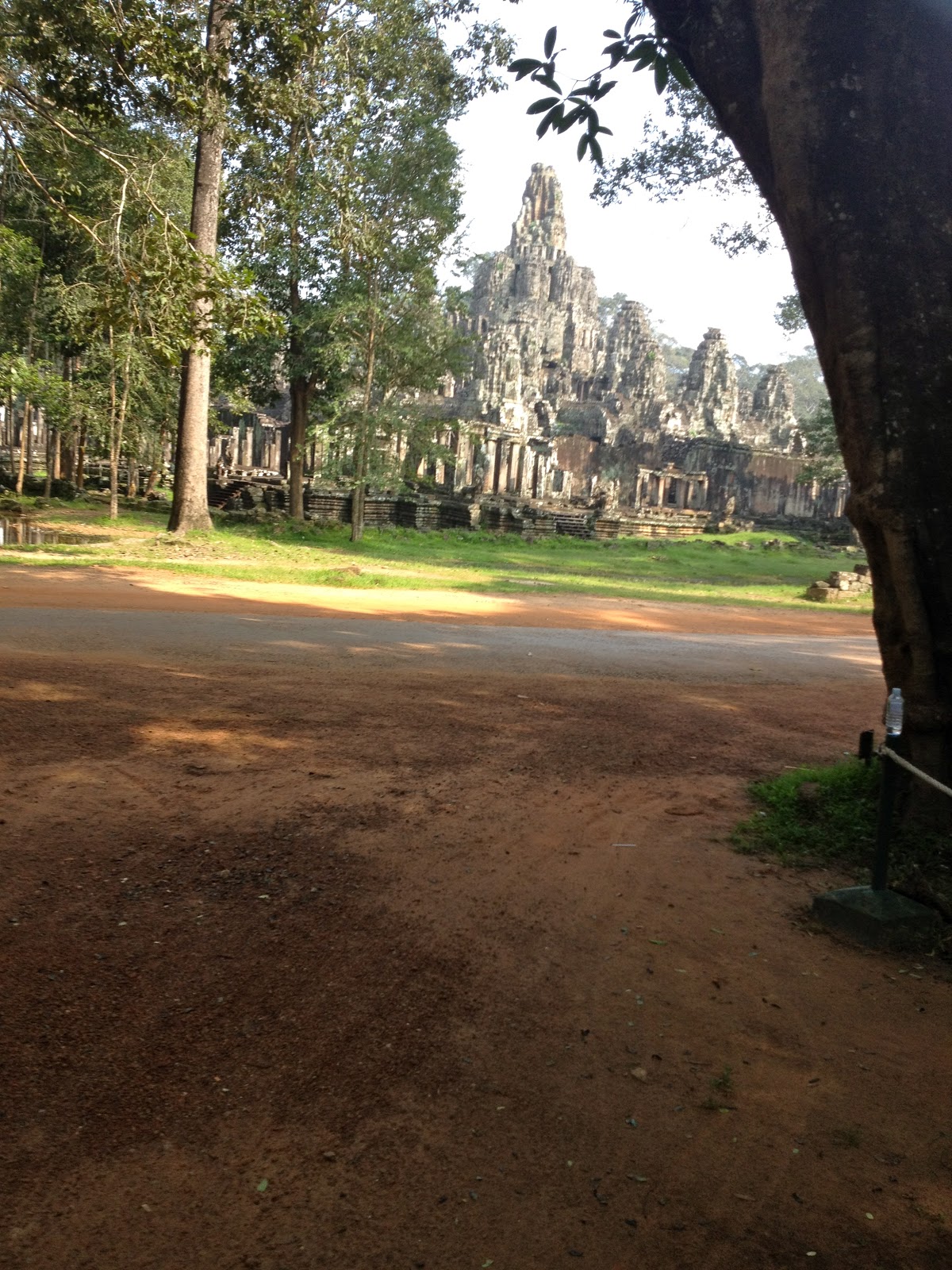
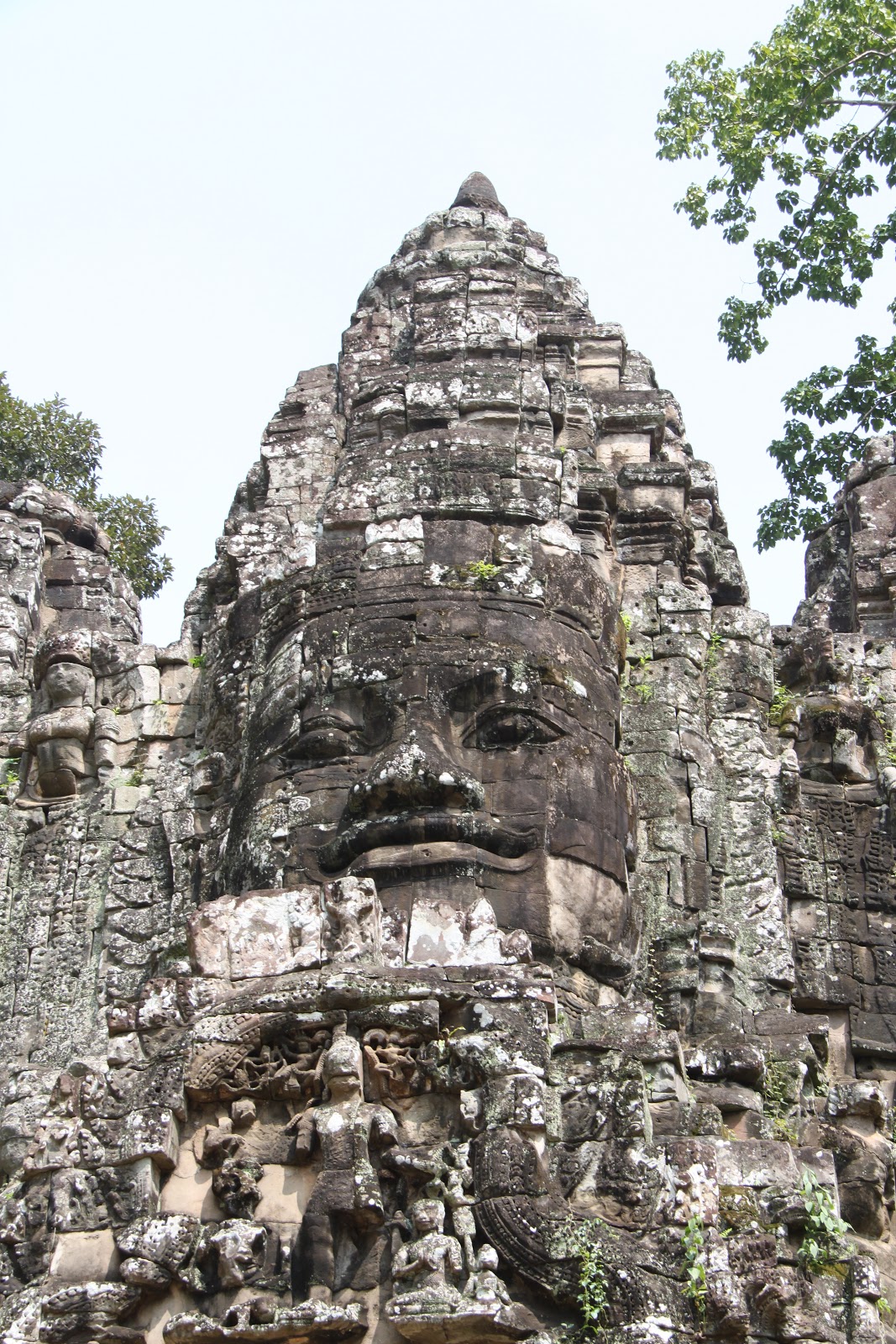
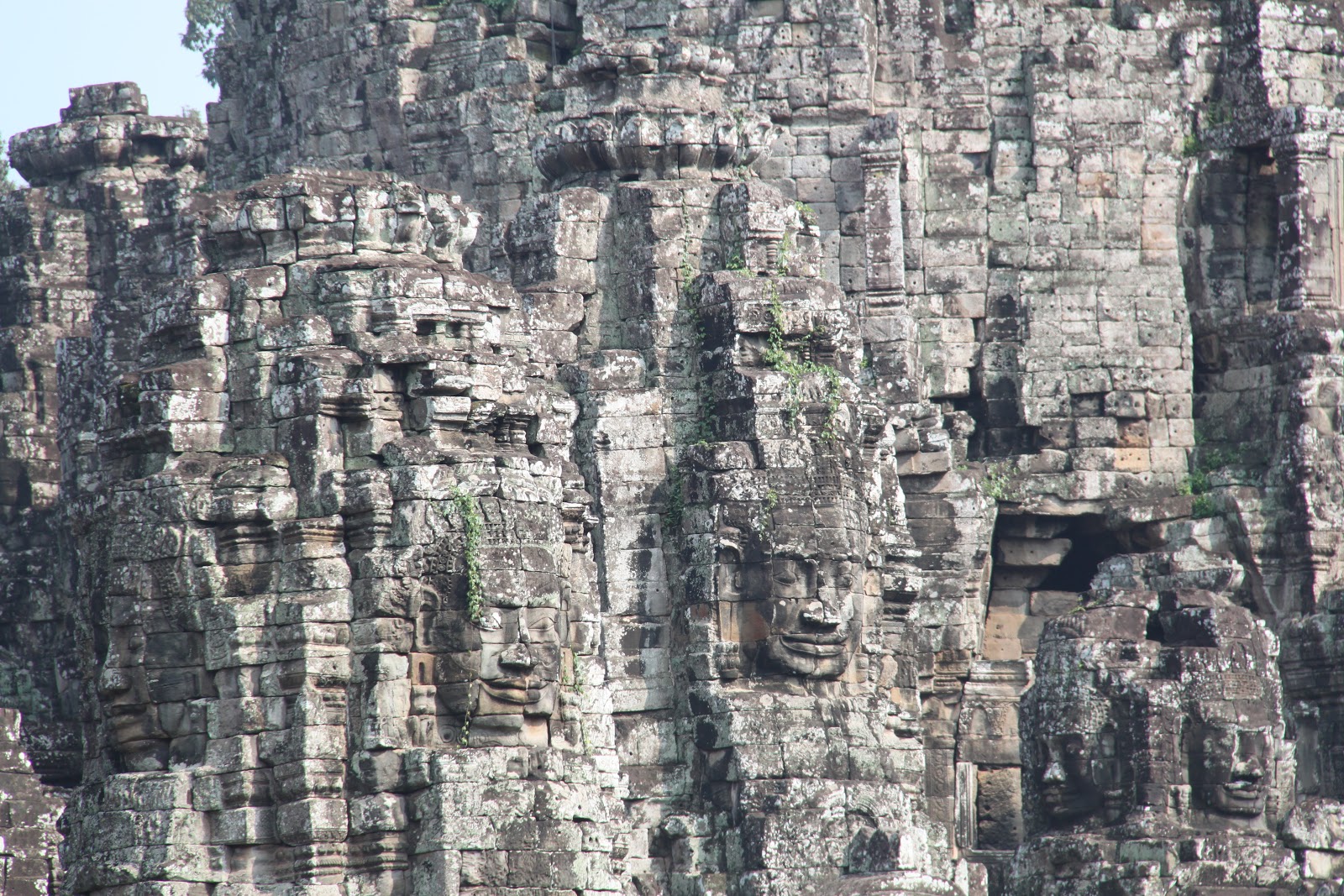
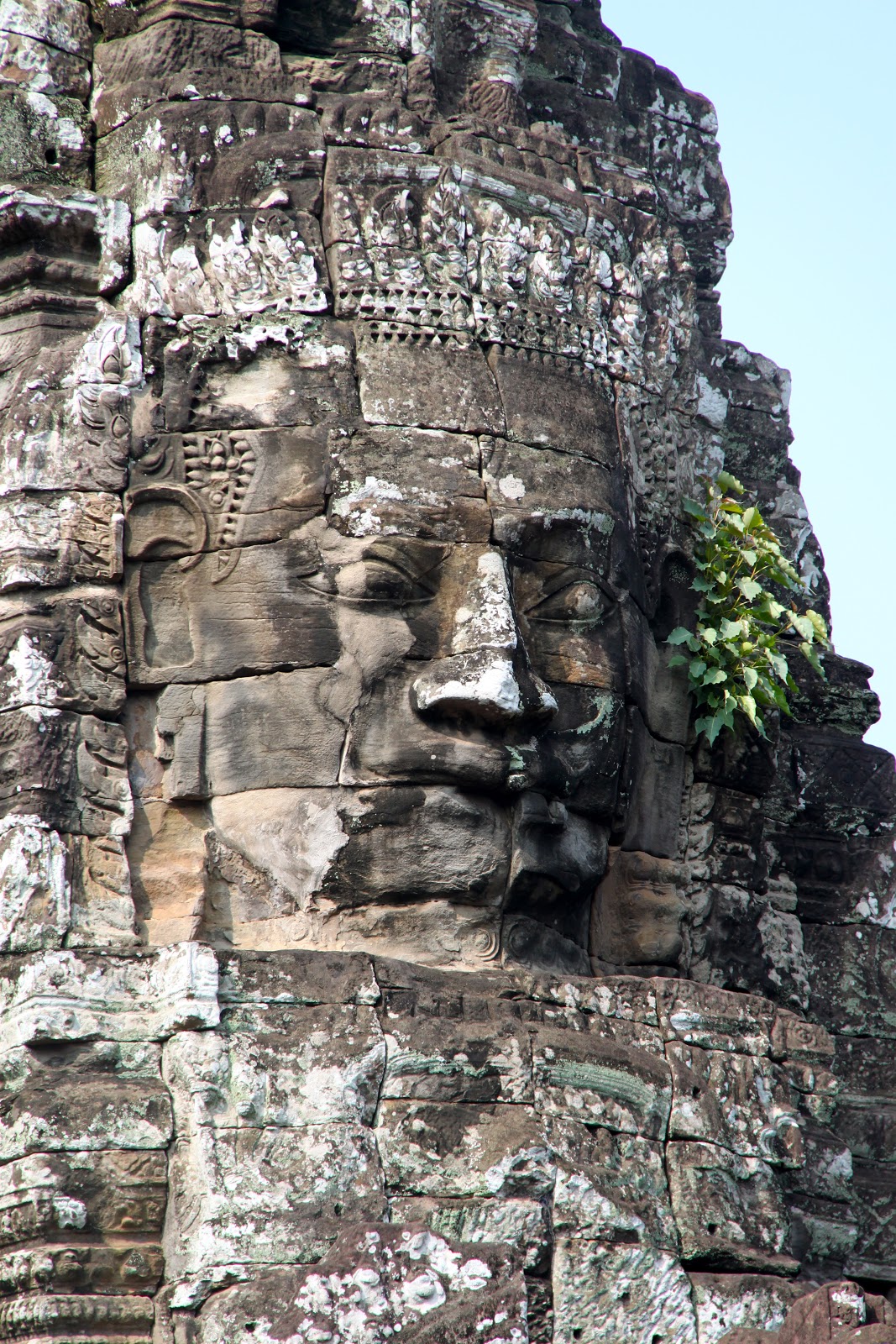
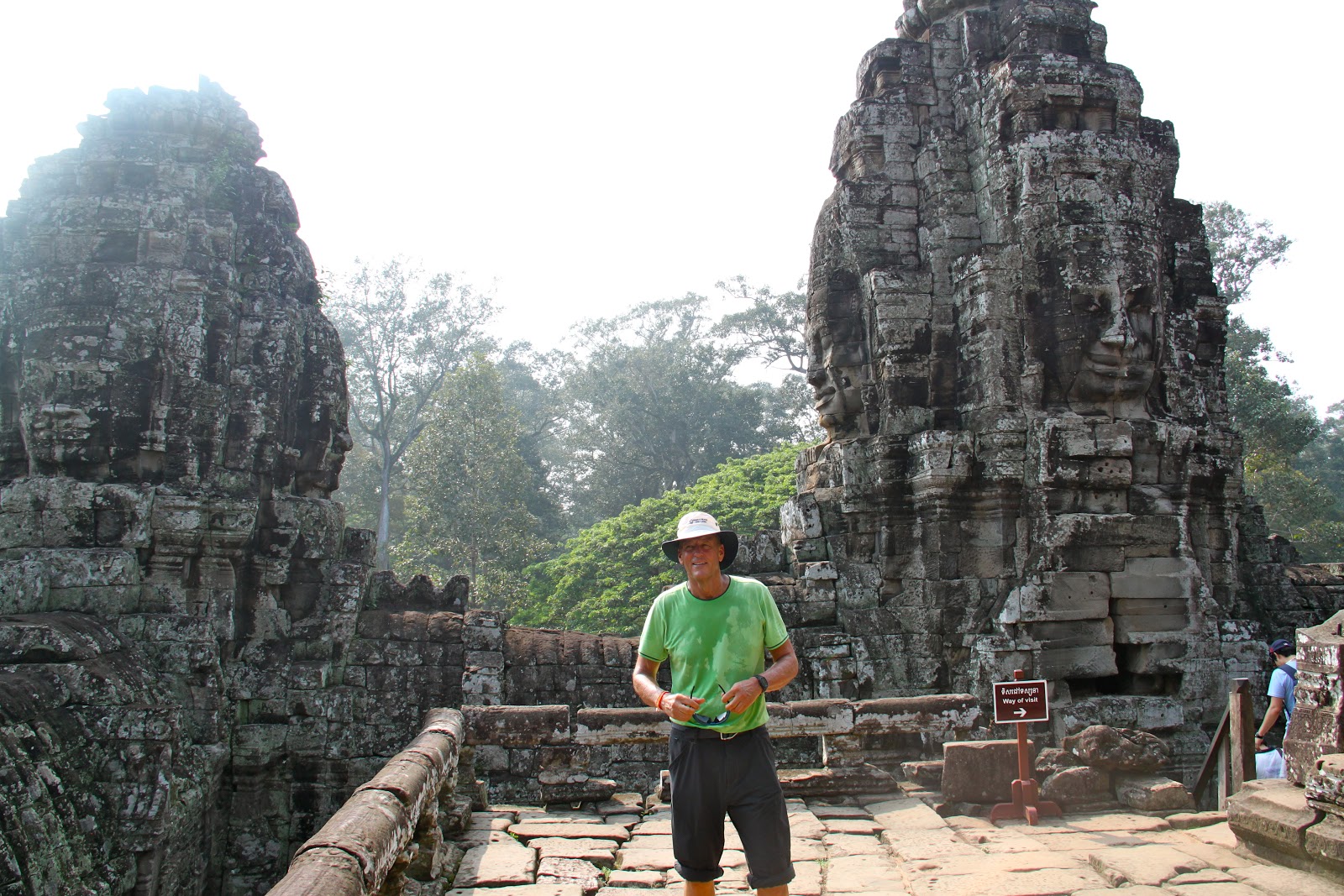
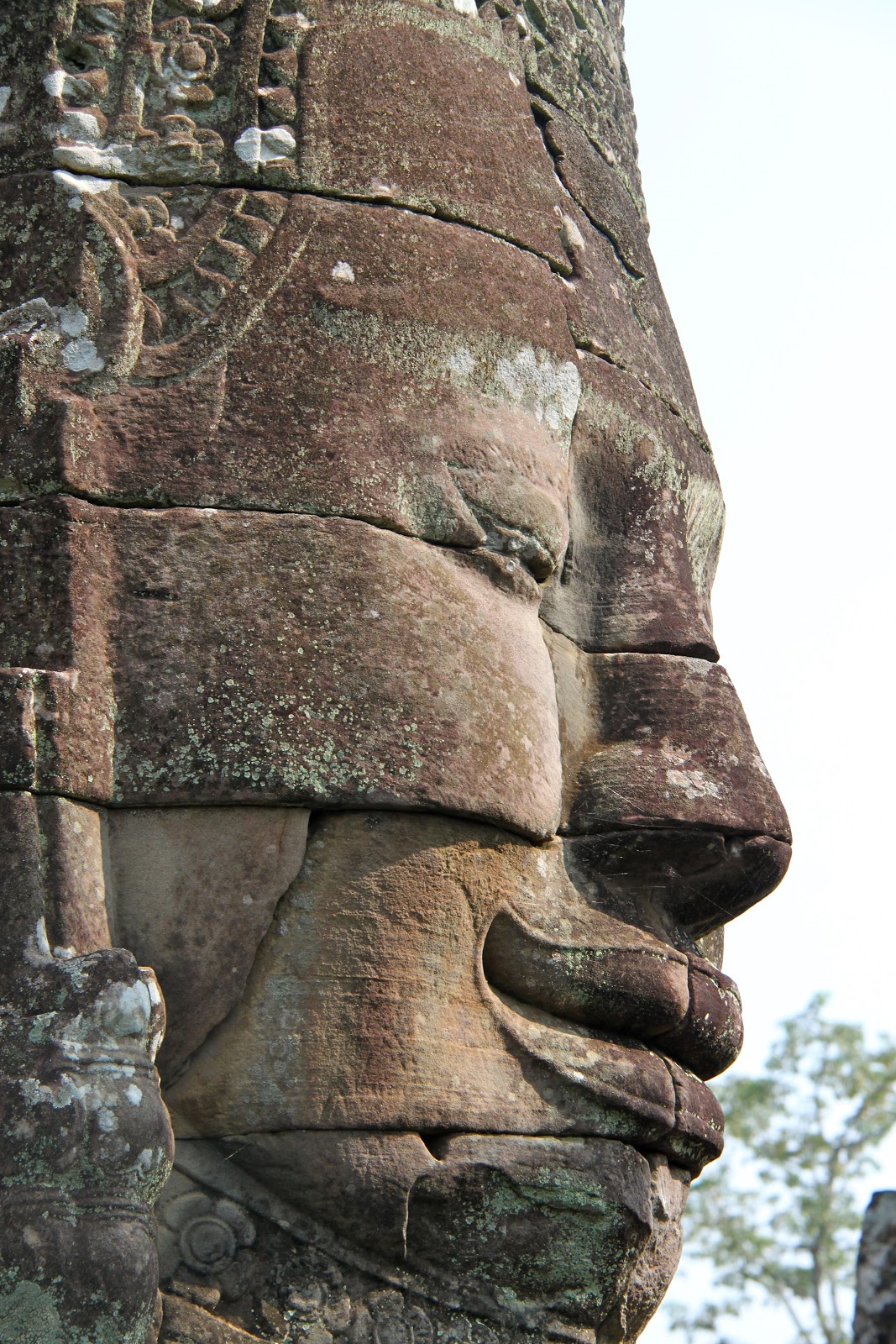
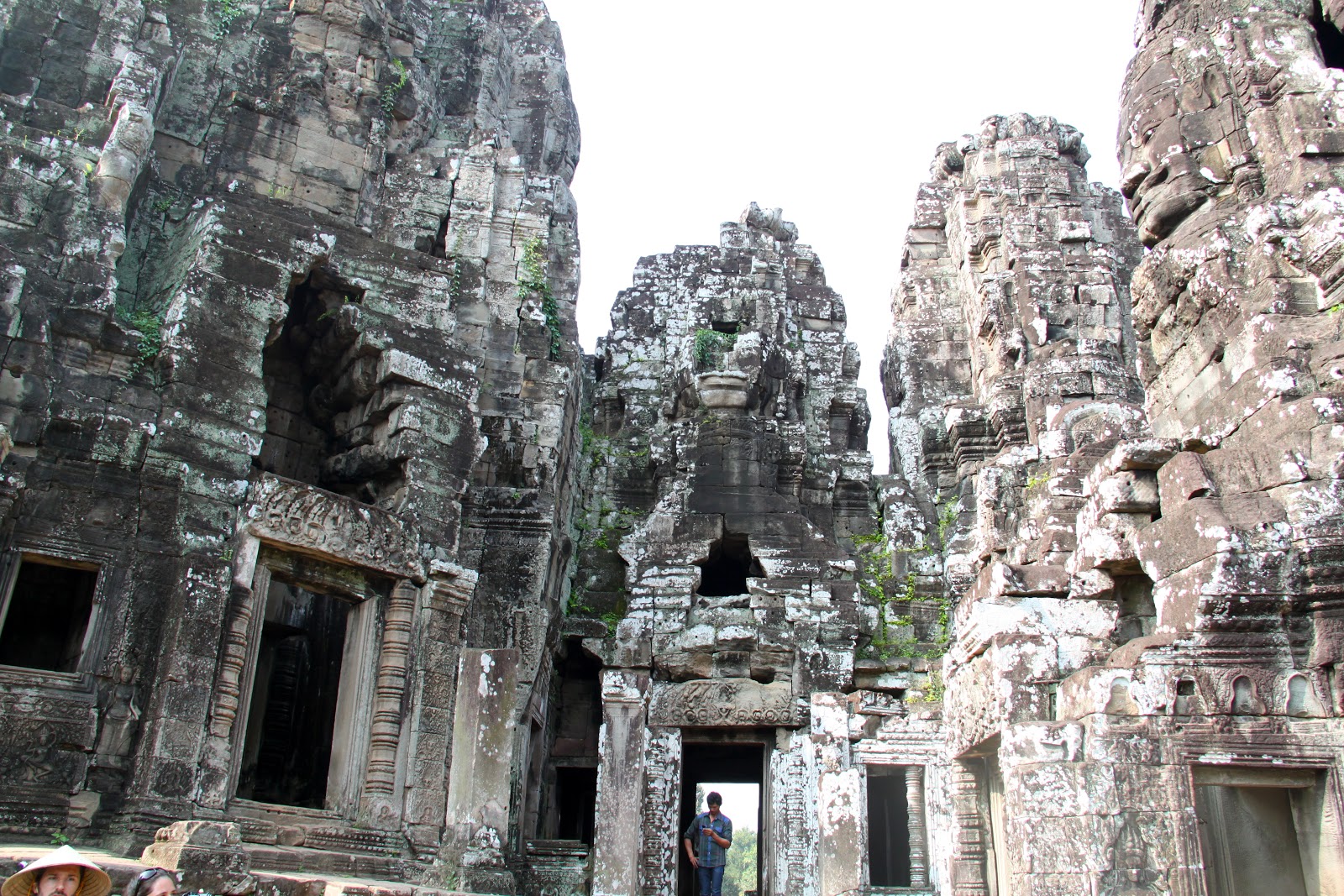
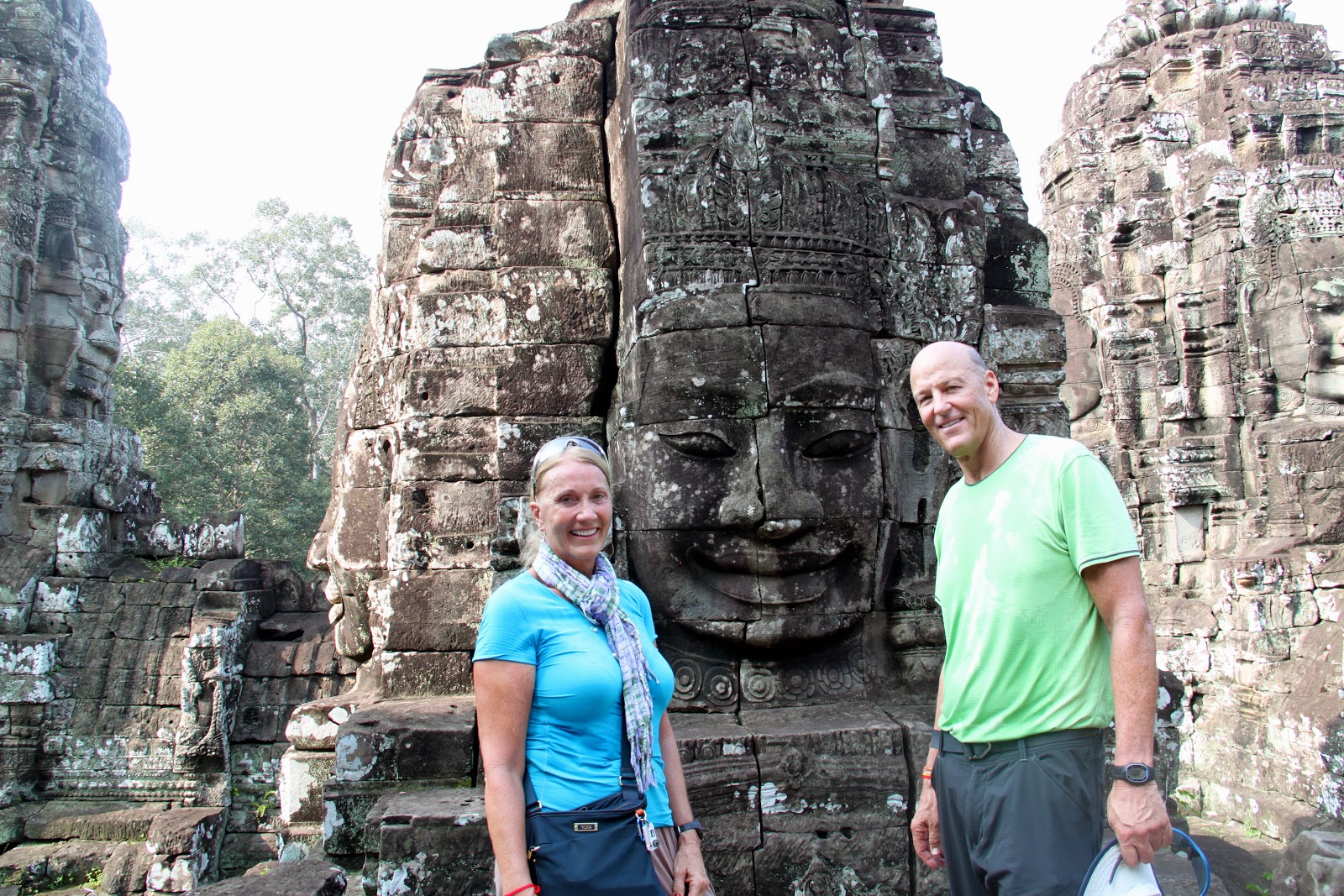
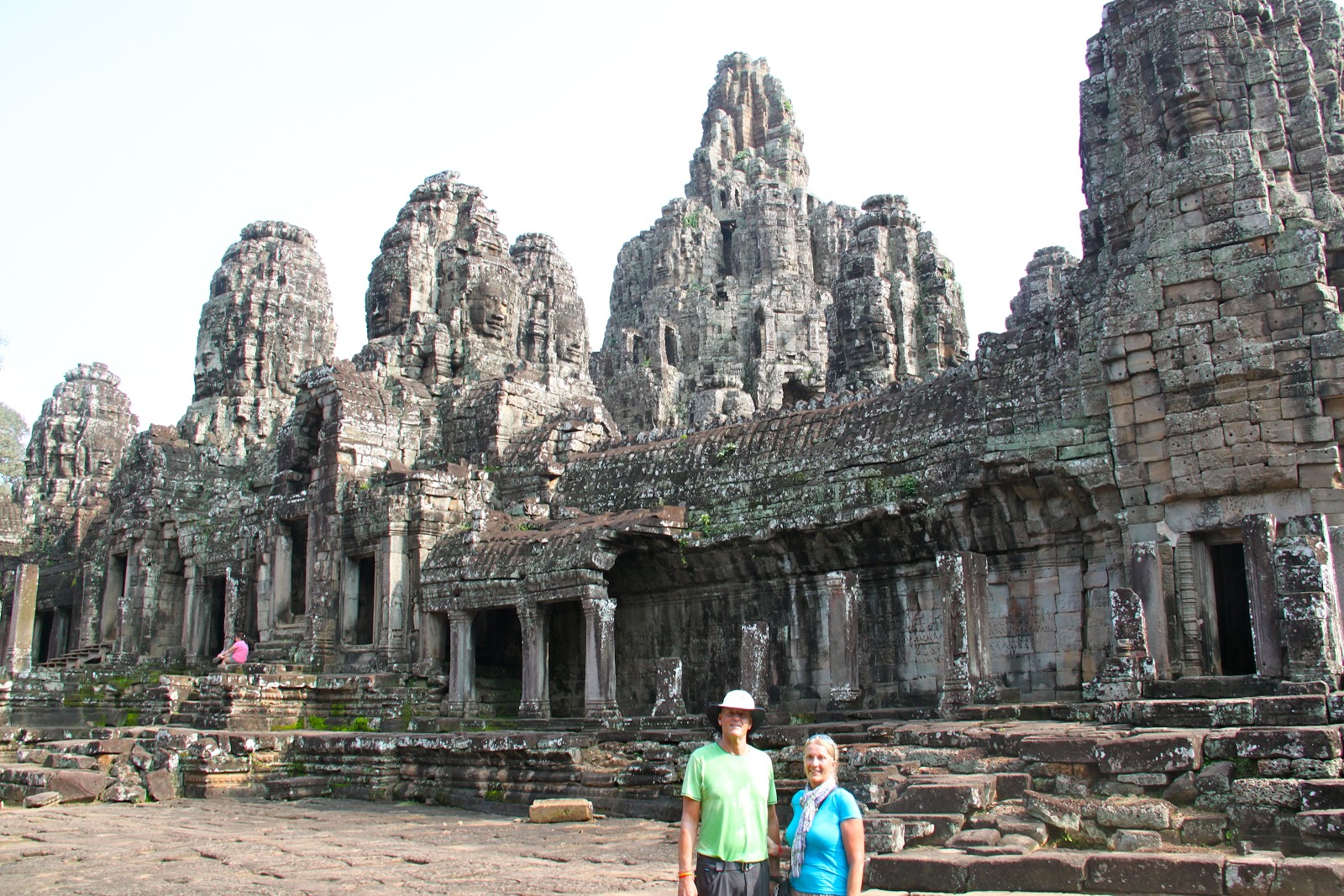
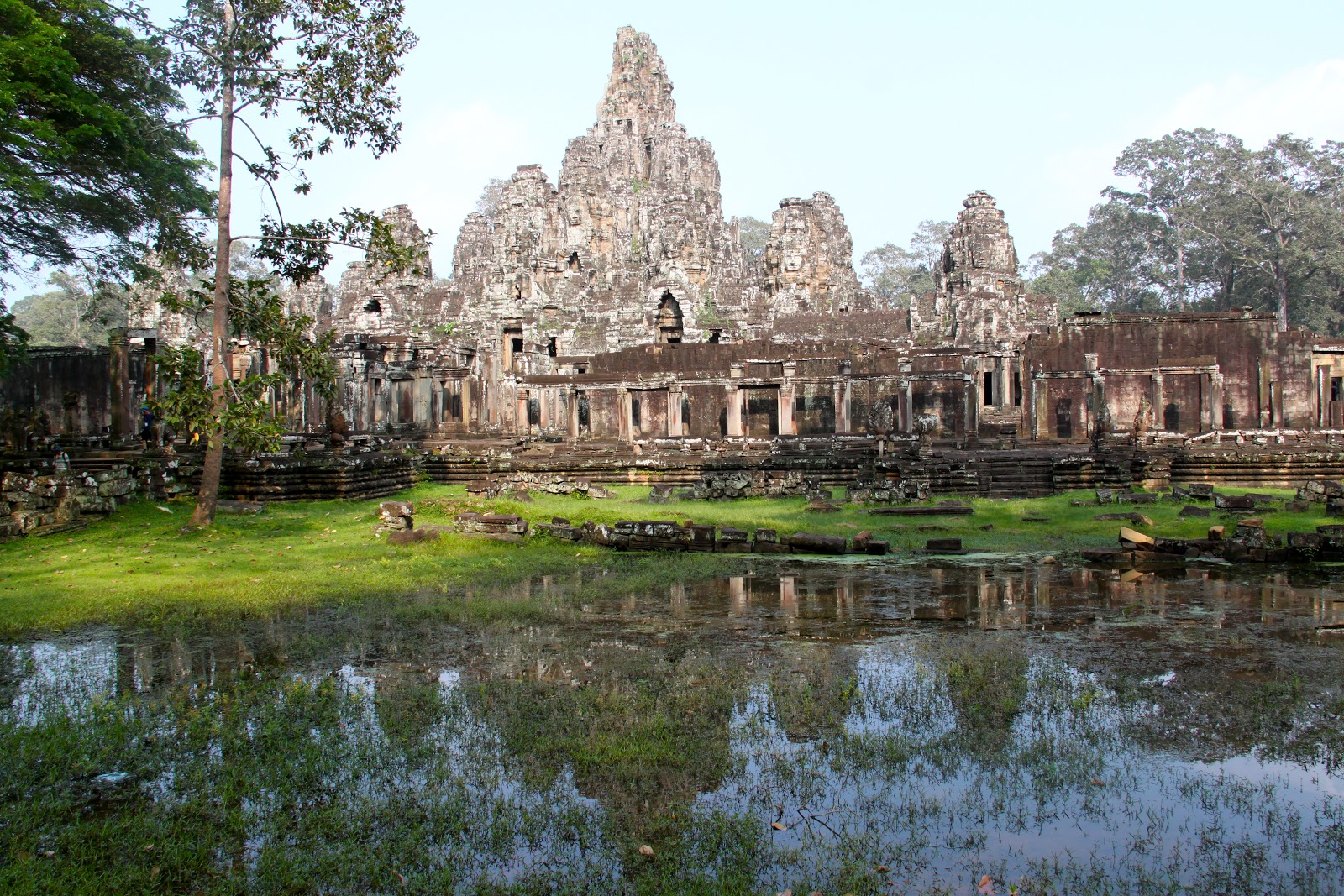
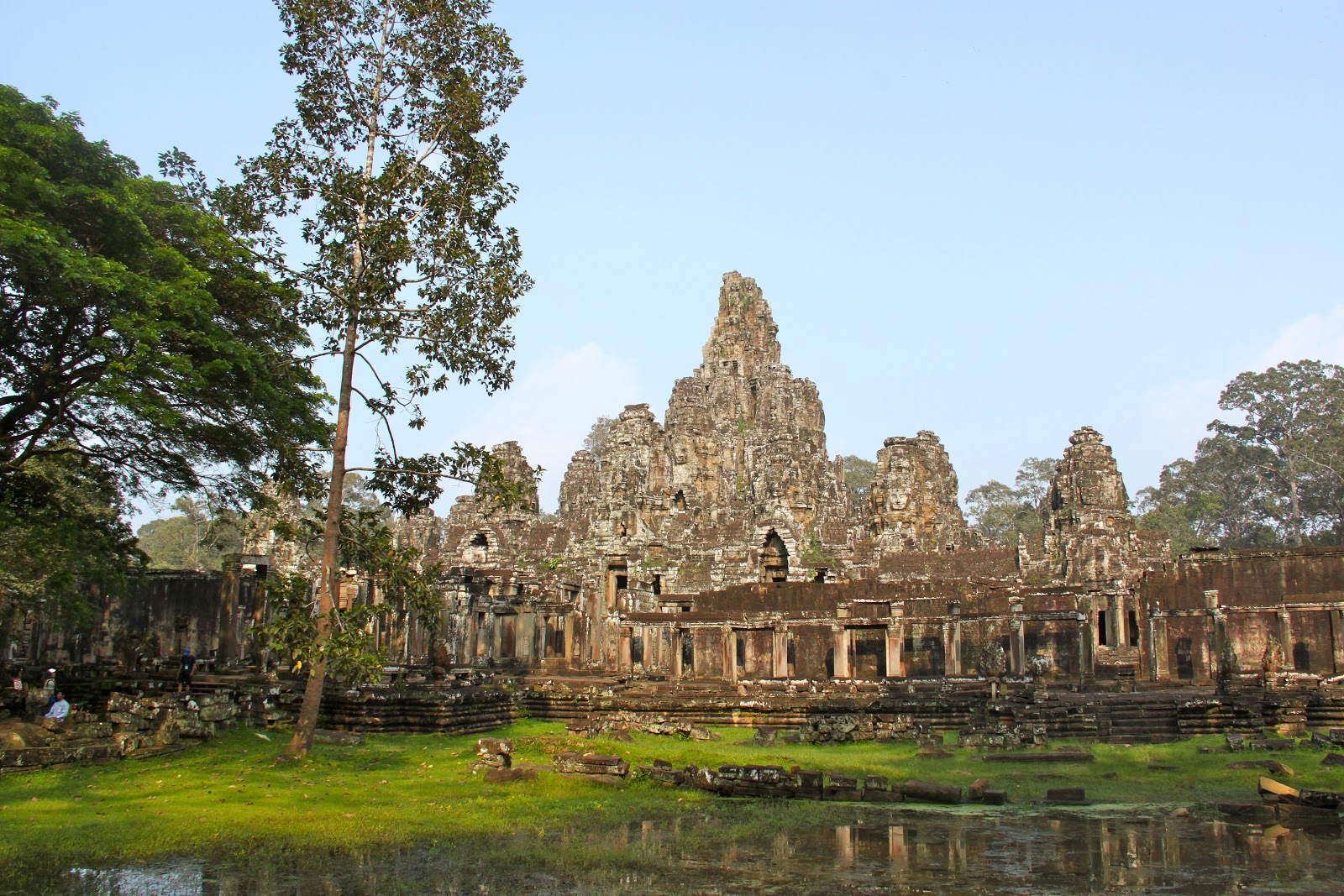
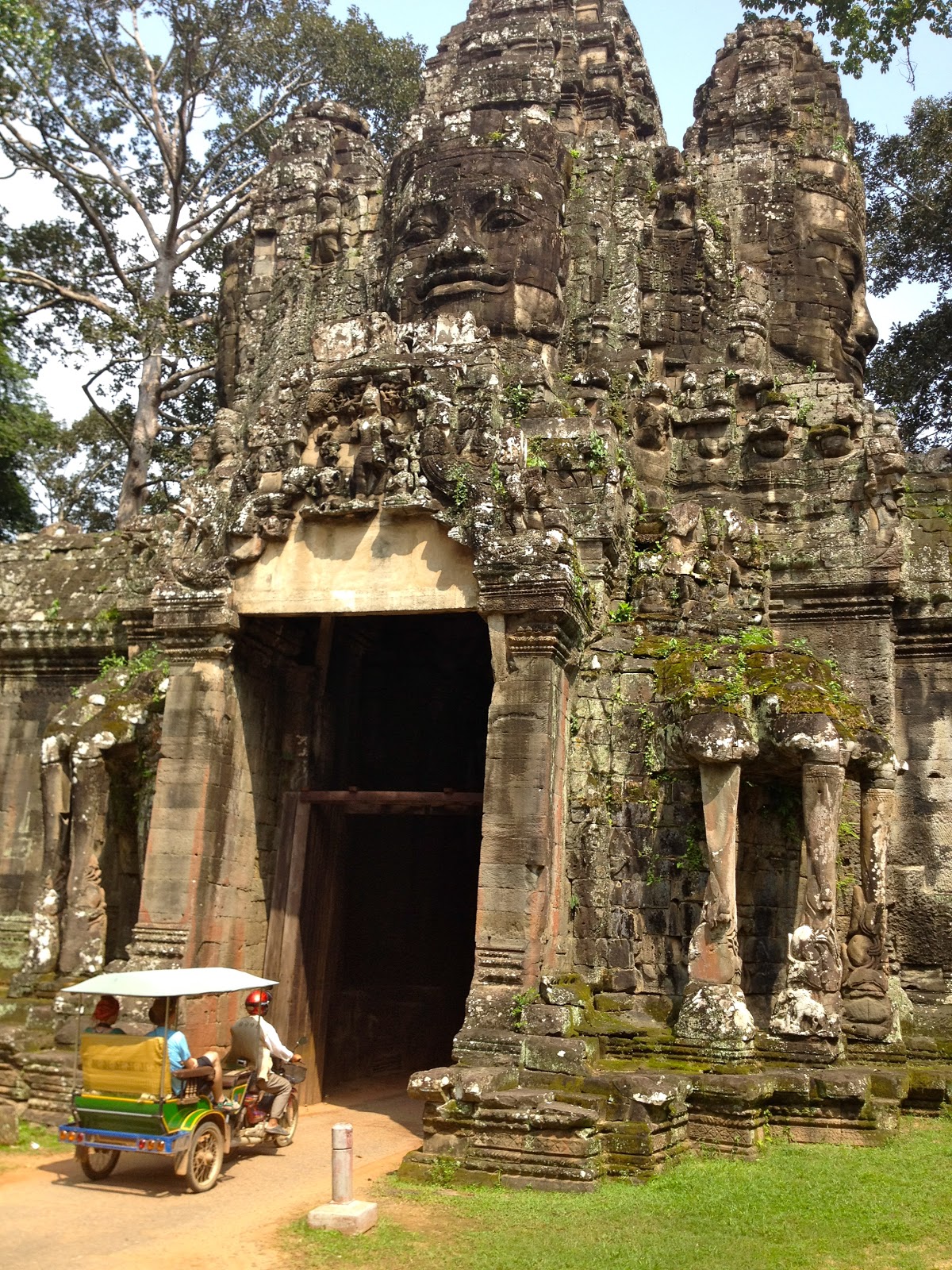
Bayon temple has 54 towers and 216 faces that are thought to be a resemblance to the King of Cambodia that built the temple.  Our guide thought they were faces of Buddha but these temples were built when the Hindu religion was in full sway.  It seems more likely that the King at that time had his own face memorialized.  His face is now on the paper money of Cambodia.  It is a smiling happy face and his temple is at the geographic center of Angkor Thom.

Entrance

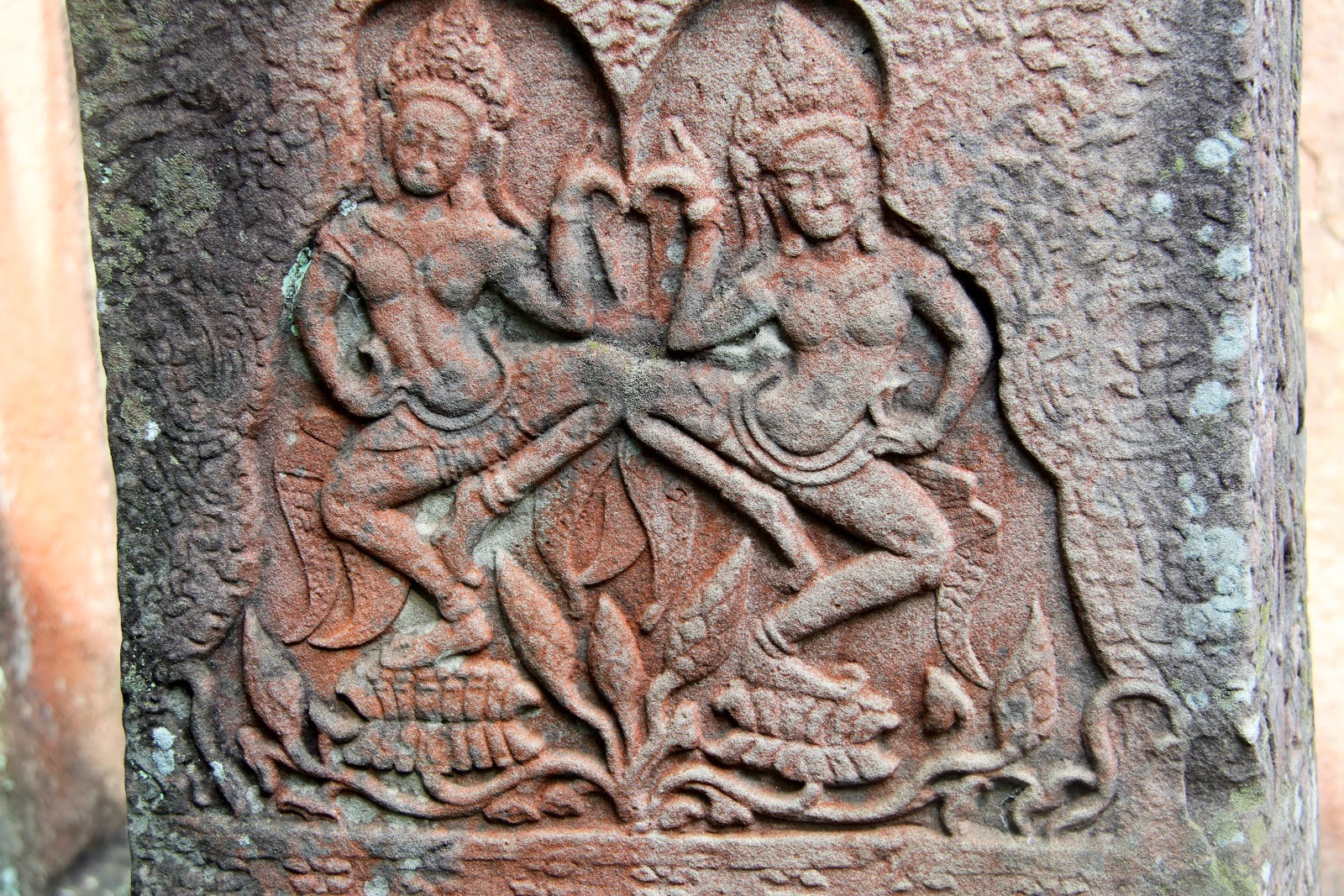
More dancing nymphs

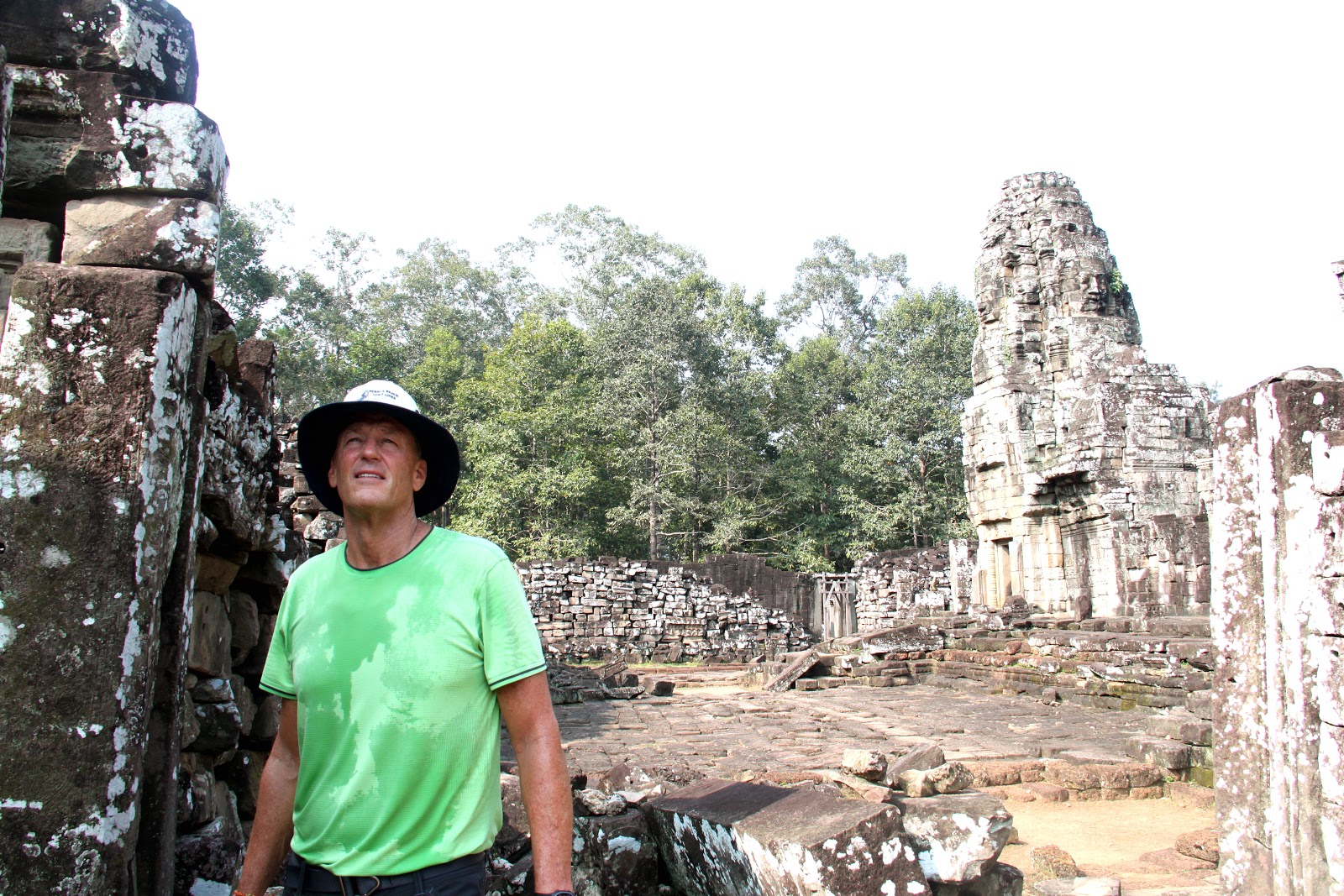
Scott is soaking wet.

The face behind us is the model for the face on Cambodian paper money.

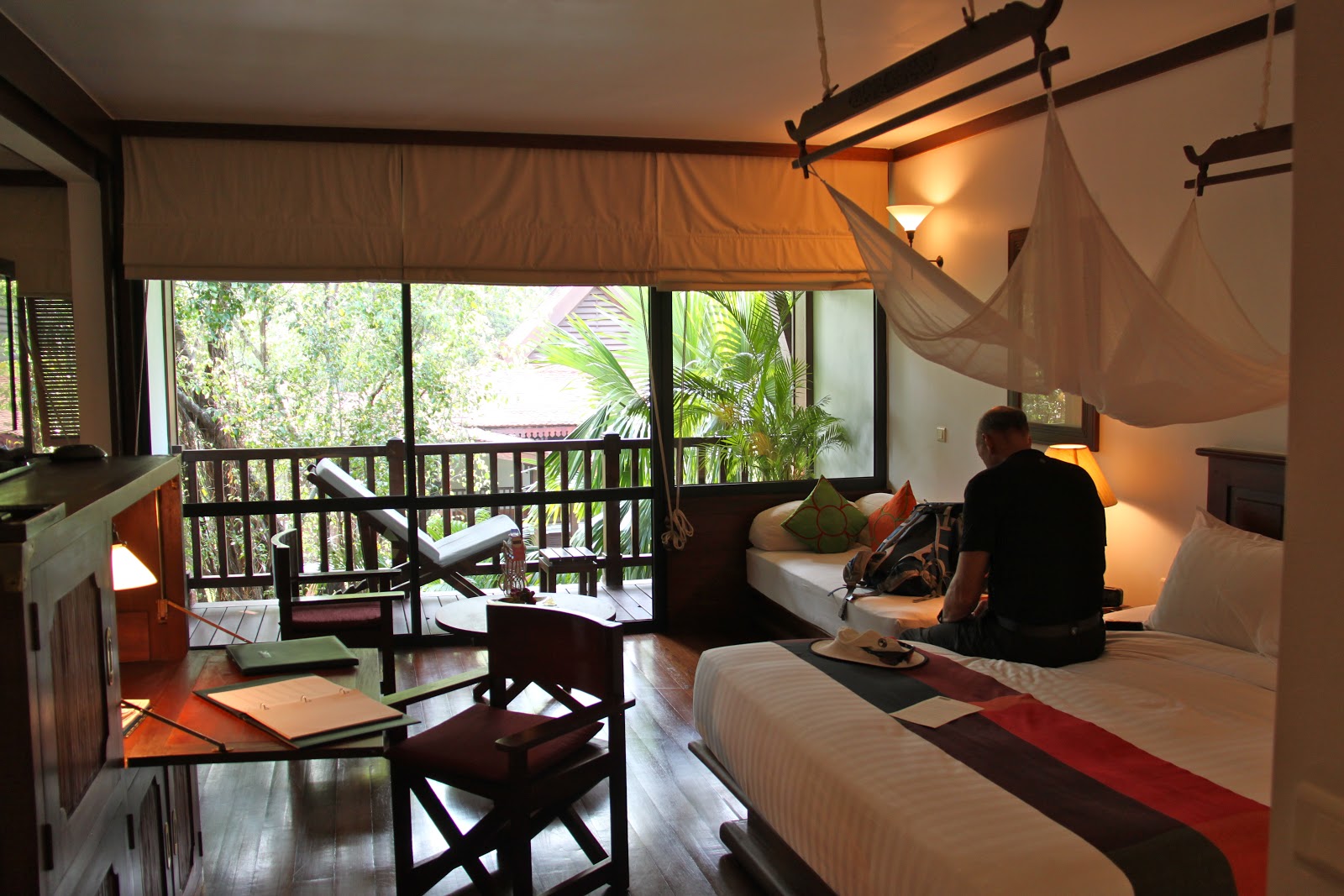
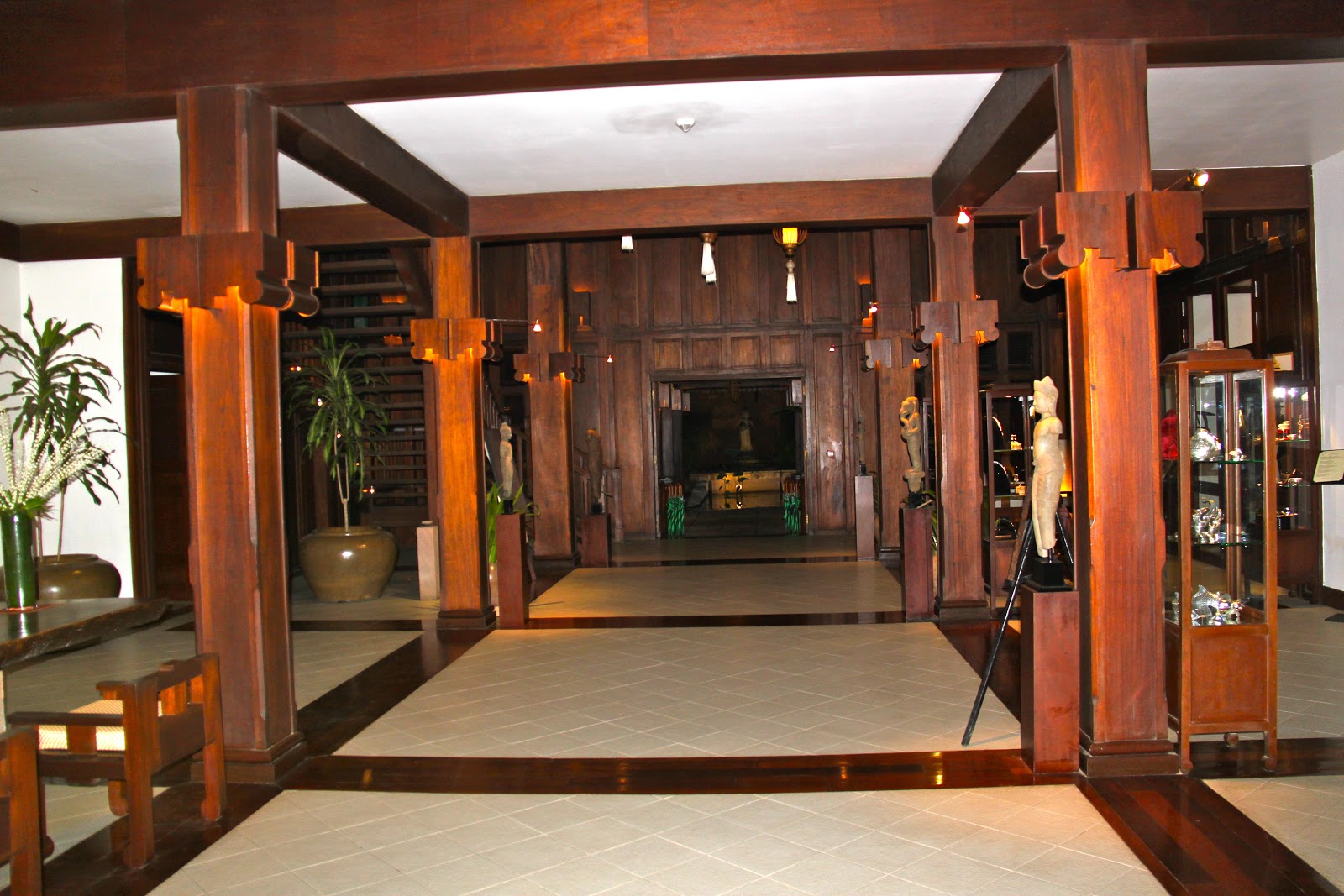
The Angkor Residences owned by Orient Express was our resting spot.  We got a couple of massages after temple walking and sweating our clothes to the point of wringing wet.  It was hot with about 99% humidity.

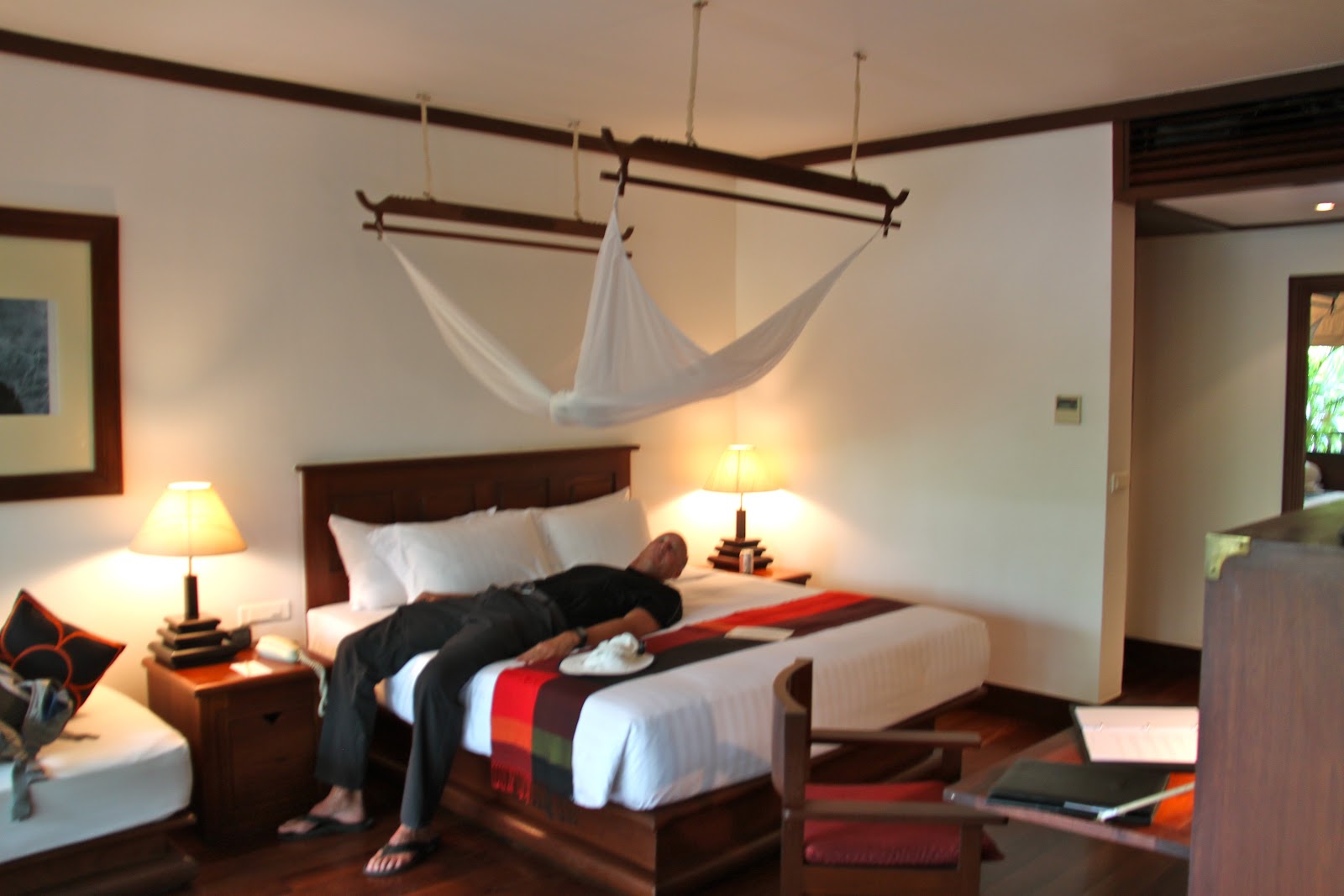
Bedroom with the mosquito netting above the bed.

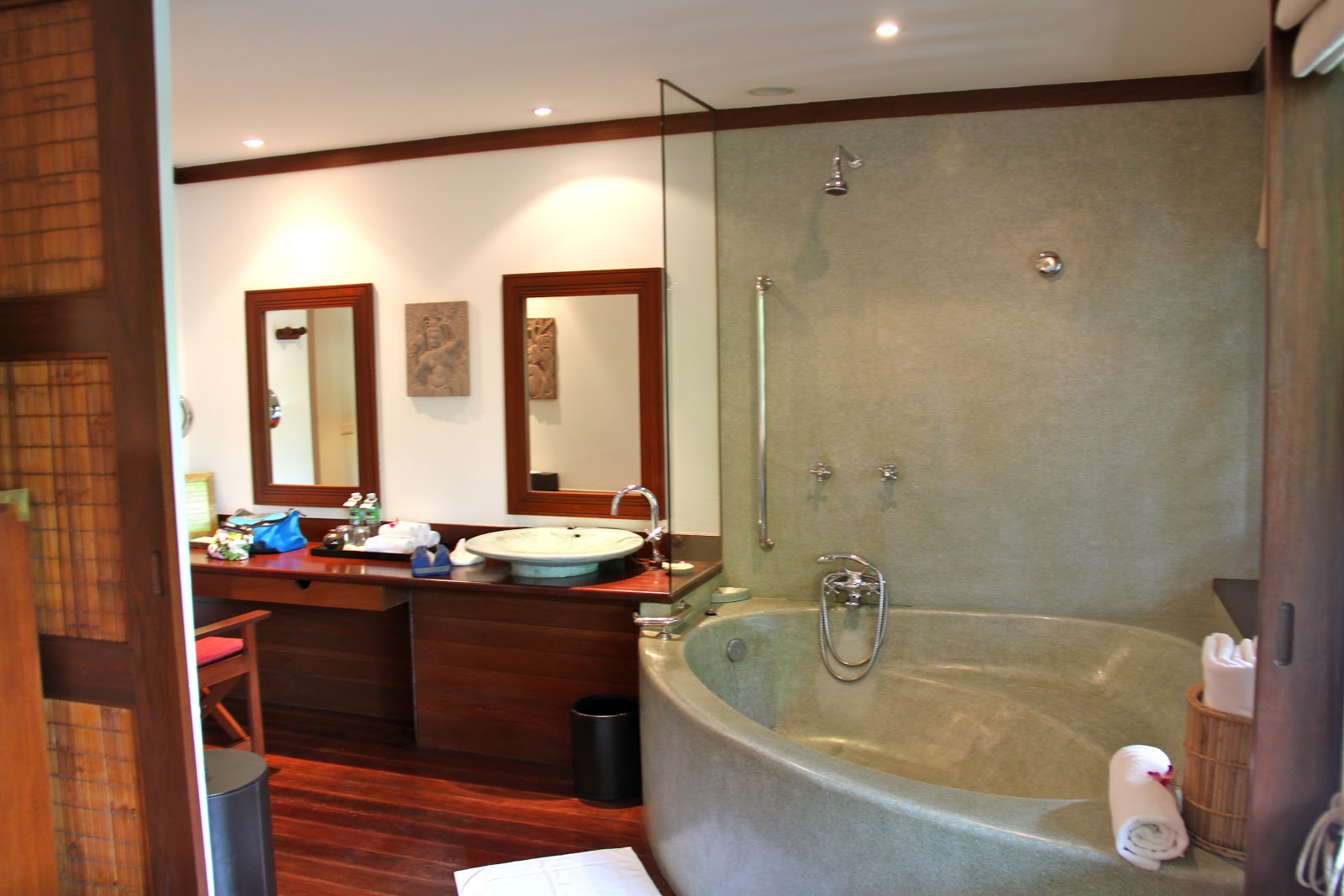
Bathroom

Lobby

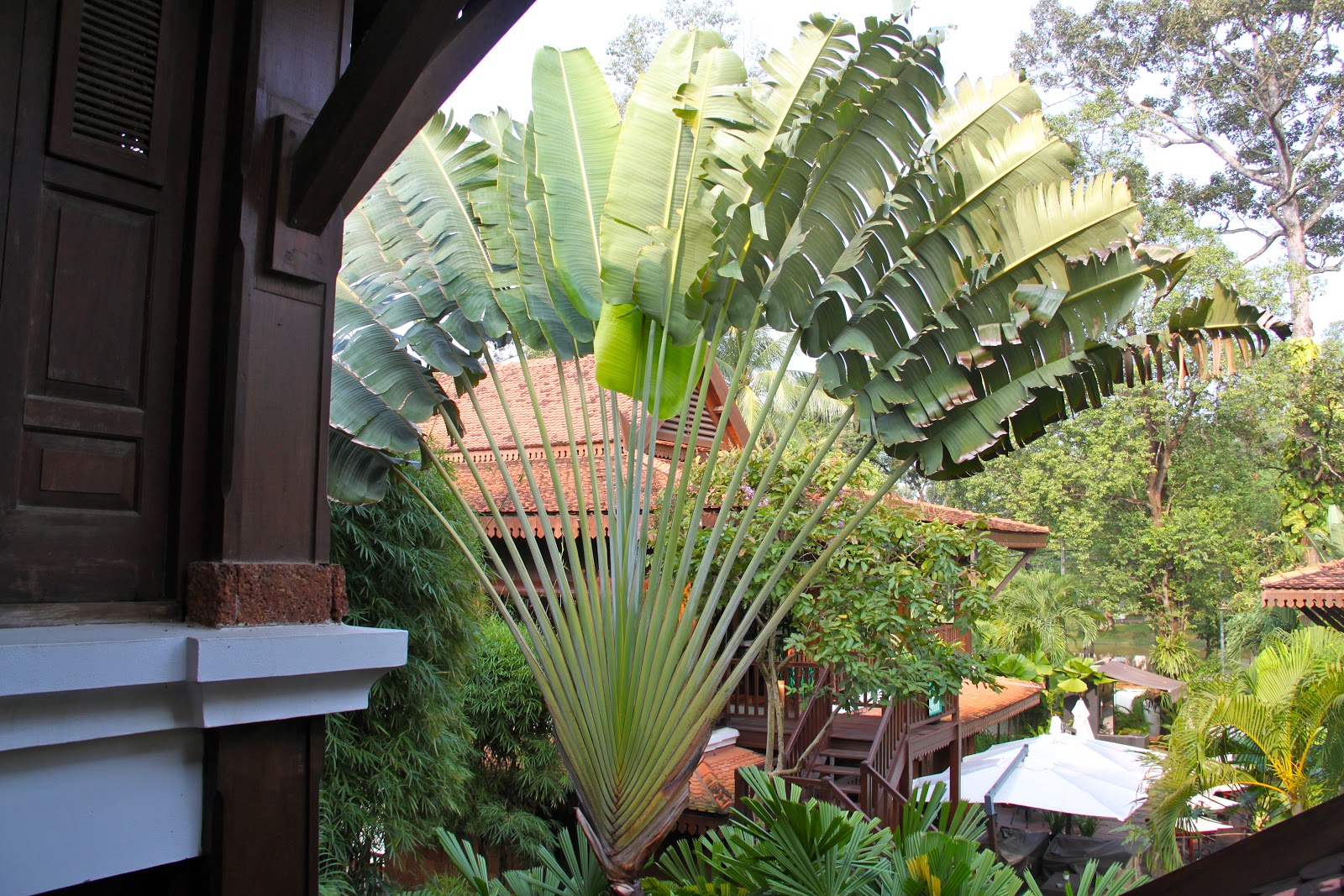
Interesting palm tree

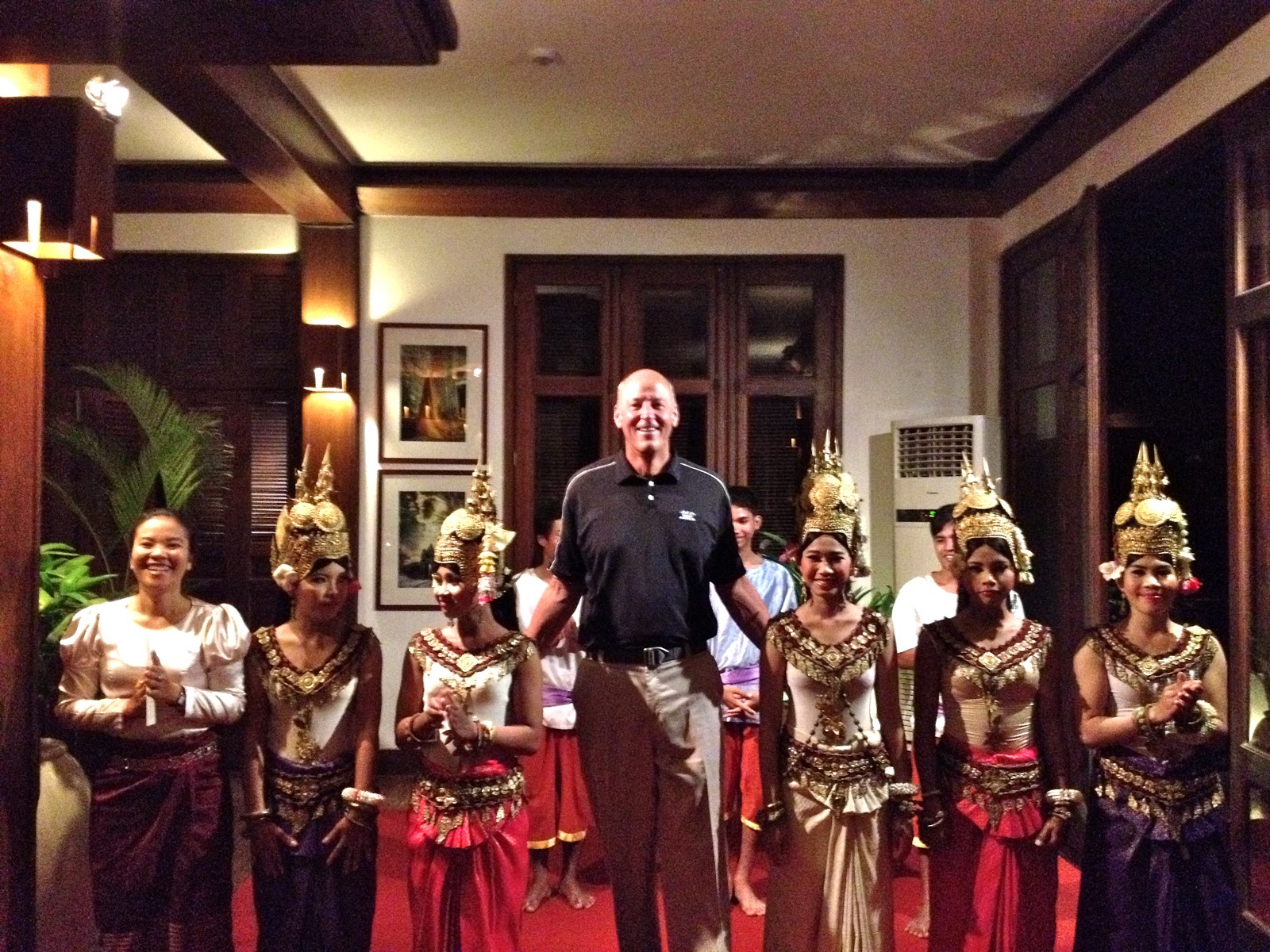
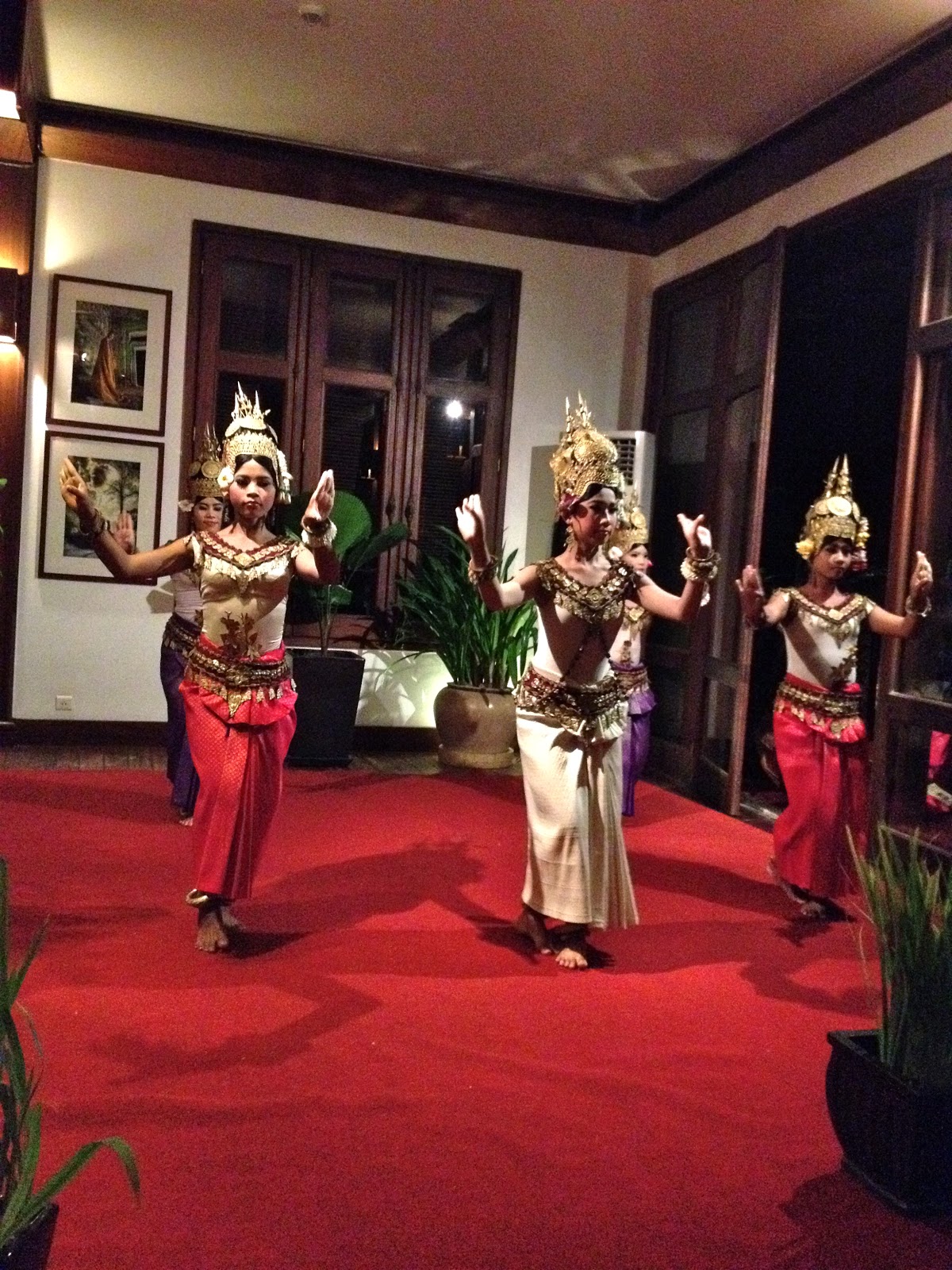
They had a floor show at dinner.  The girls are only half the size of Scott.

Dinner Show.


Luang Prabang, Laos

LAOS
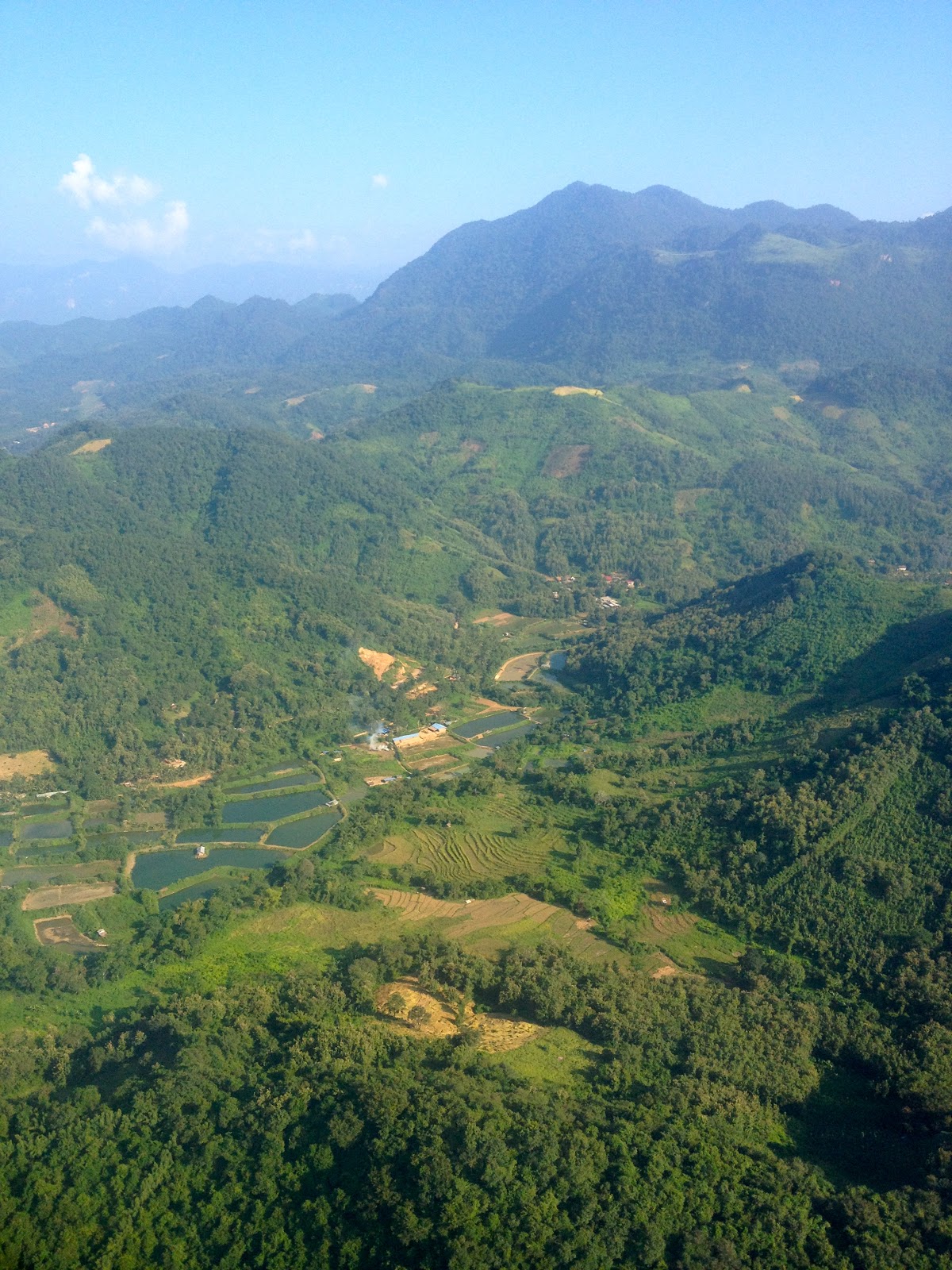
We flew into Luang Prabang on a Lao Airline turbo prop from Chiang Mai, Thailand.  It was a one-hour flight at 15,000 feet that revealed the mountains, jungle and the Mekong River below. 

Luang Prabang from the air

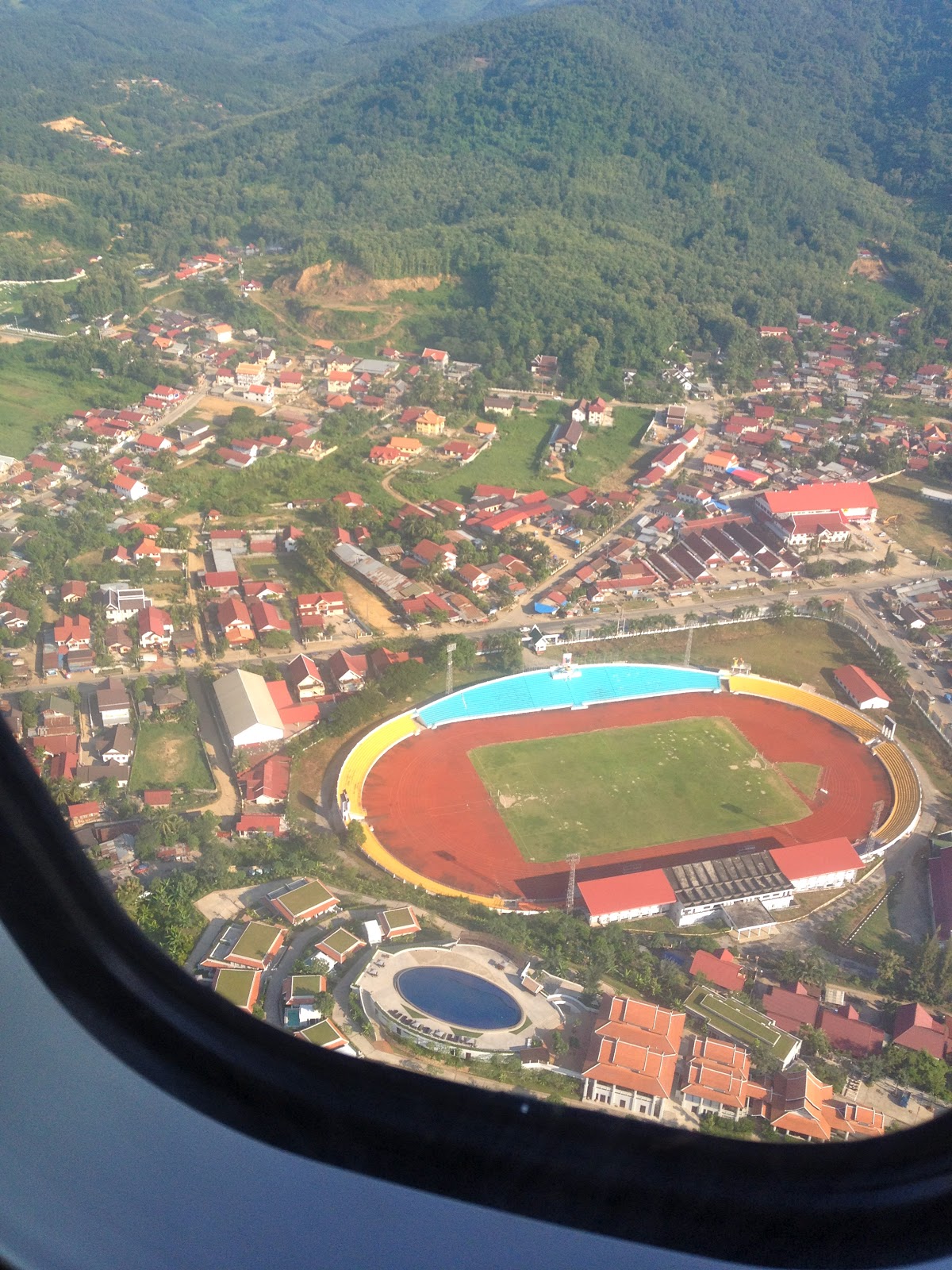
We saw a soccer field

Barb gets off the plane

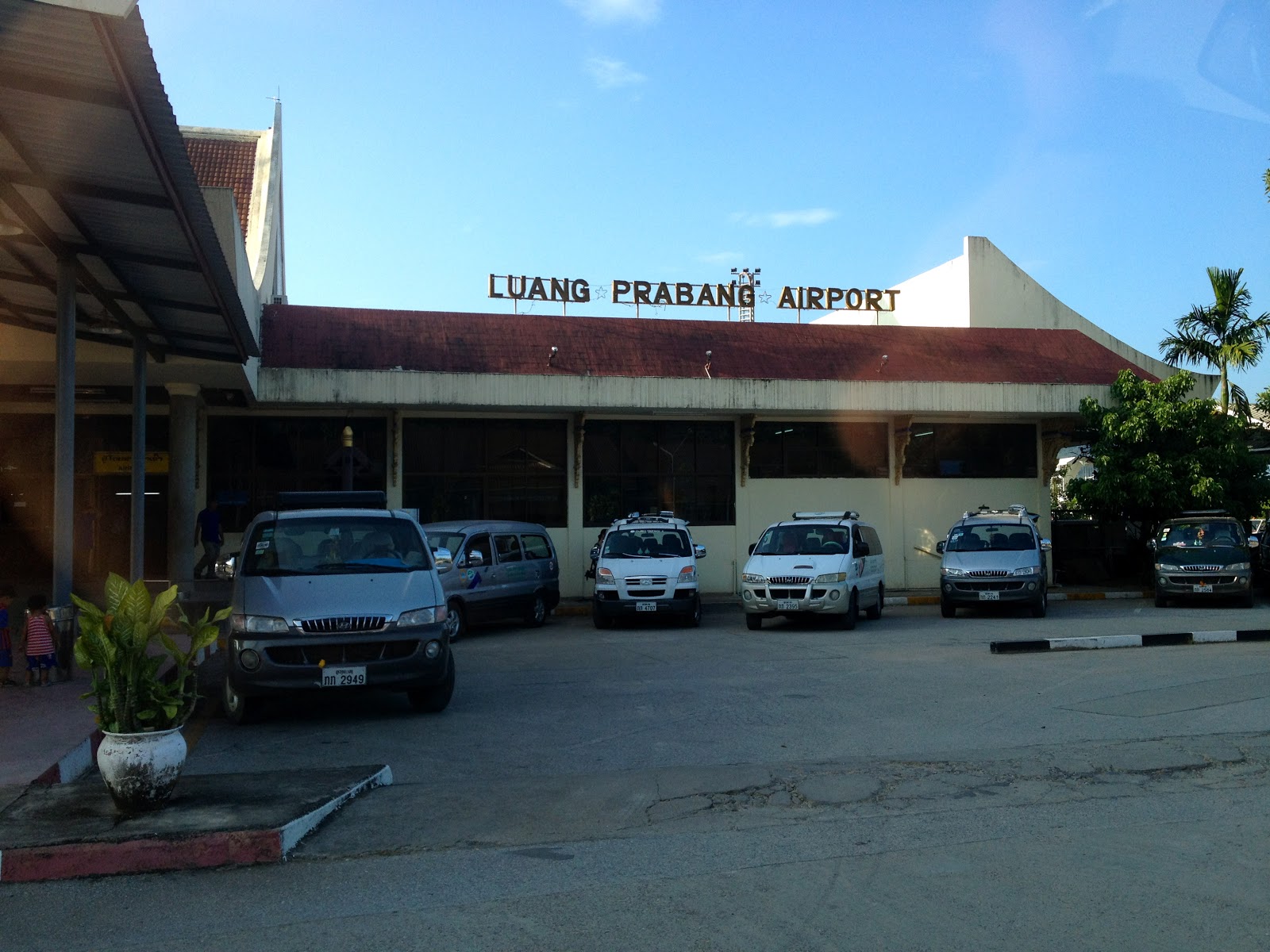
Small airport


“Ben pen nyang” means “no problems” in Lao and sums up the easygoing attitudes of everyone we came across.  It’s extraordinary that people who have suffered through decades of conflict could be so happy.
The French Navy blockaded an important port in the late 19thcentury and demanded that the King of Siam turn over parts of Cambodia and Laos.  The French won the day and had a presence in Southeast Asia for over 50 years.
We wonder how we, as Americans, might be received since the US armed forces dropped 2.000,000 tons of bombs on “neutral” Laos from 1964 to 1973 in an effort to cut off supply lines to the Viet Cong.  This bombing and the use of chemical defoliants, such as Agent Orange, killed 50,000 people and were kept secret from the American public until October of 1969 according to a tourist information book on the coffee table of our hotel room.  But people are happy and quick to smile.  When I asked about the Lao government people are pleased with the progress and the quality of their life even though the standard of living is probably one of the poorest of all Asian countries. 
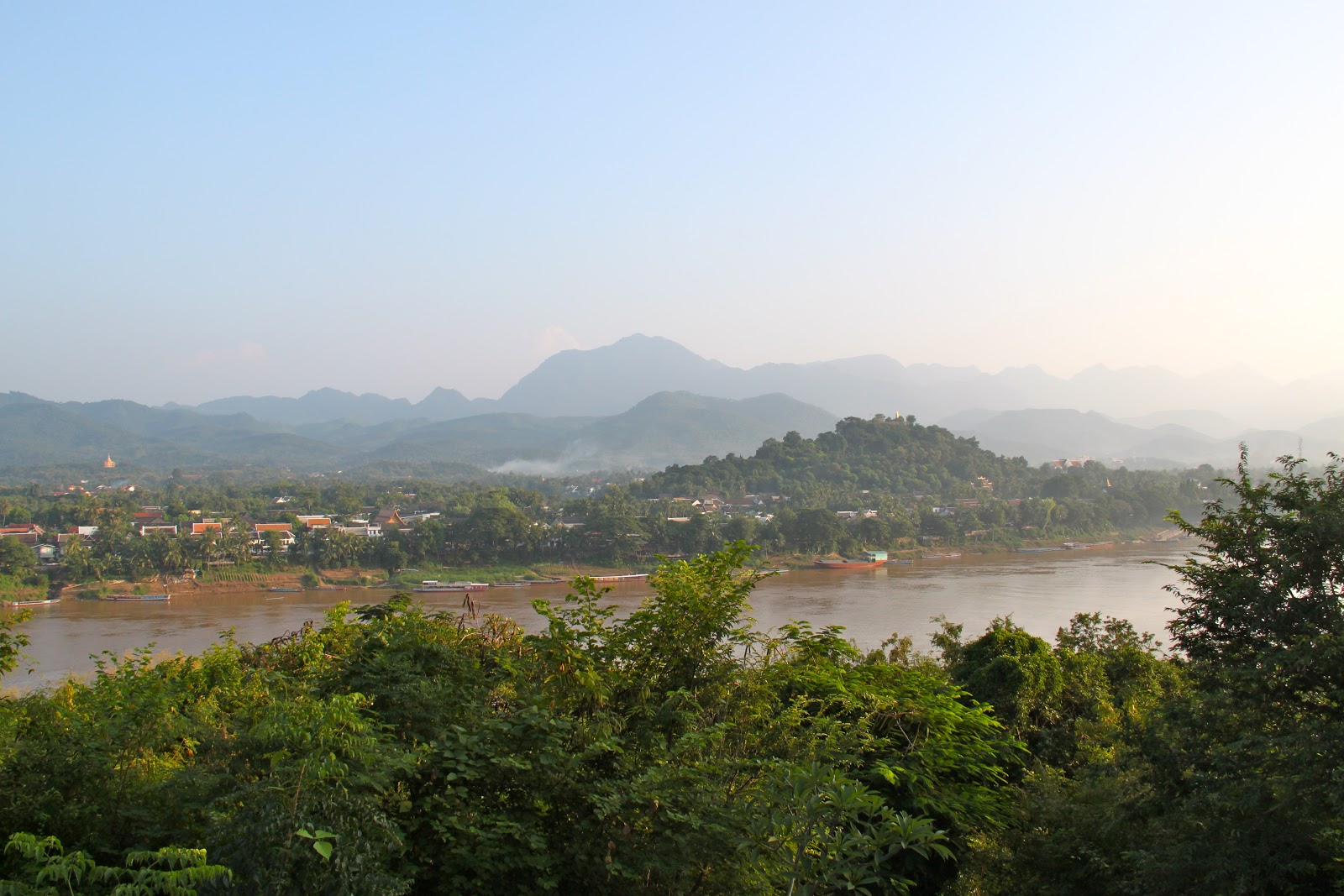
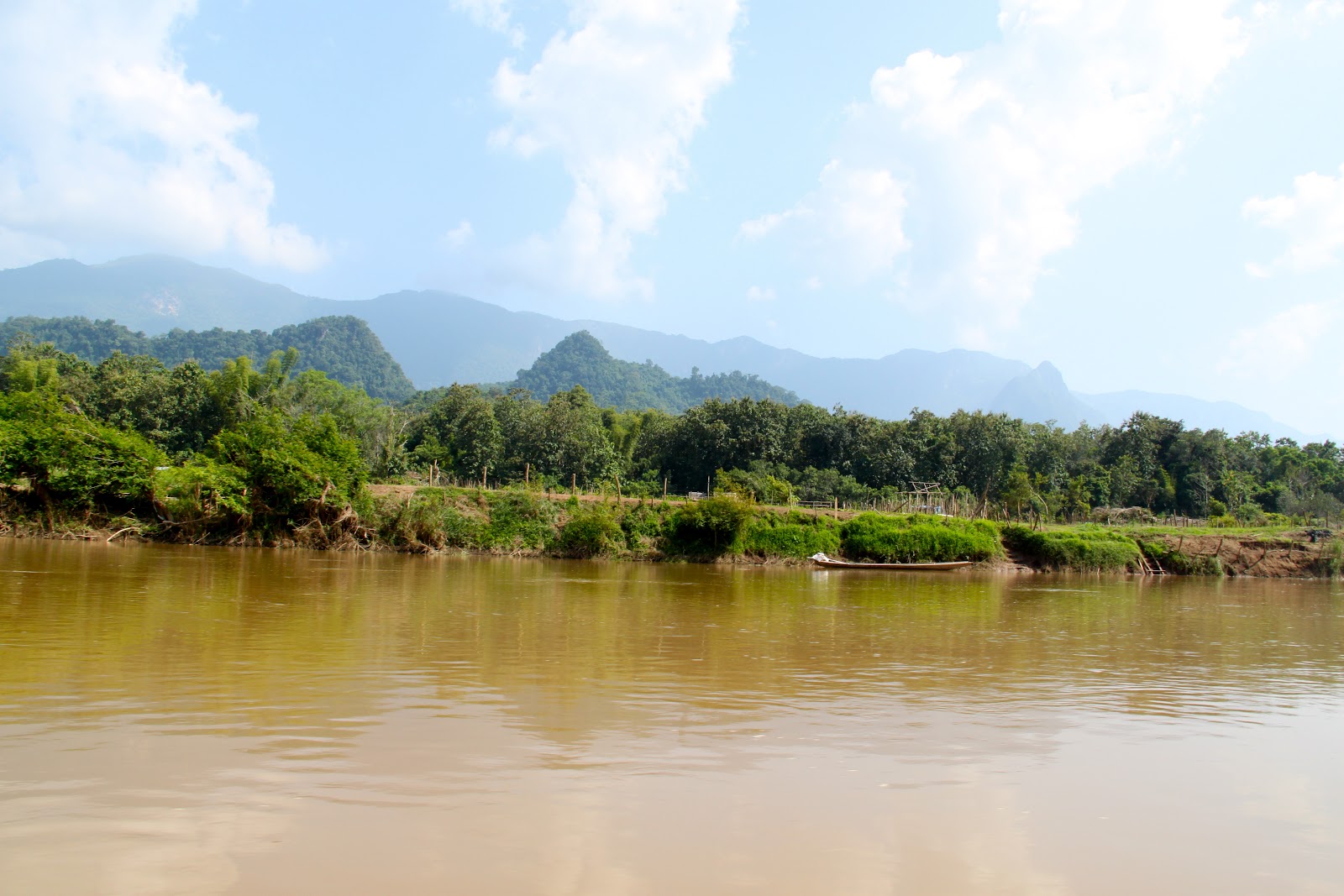
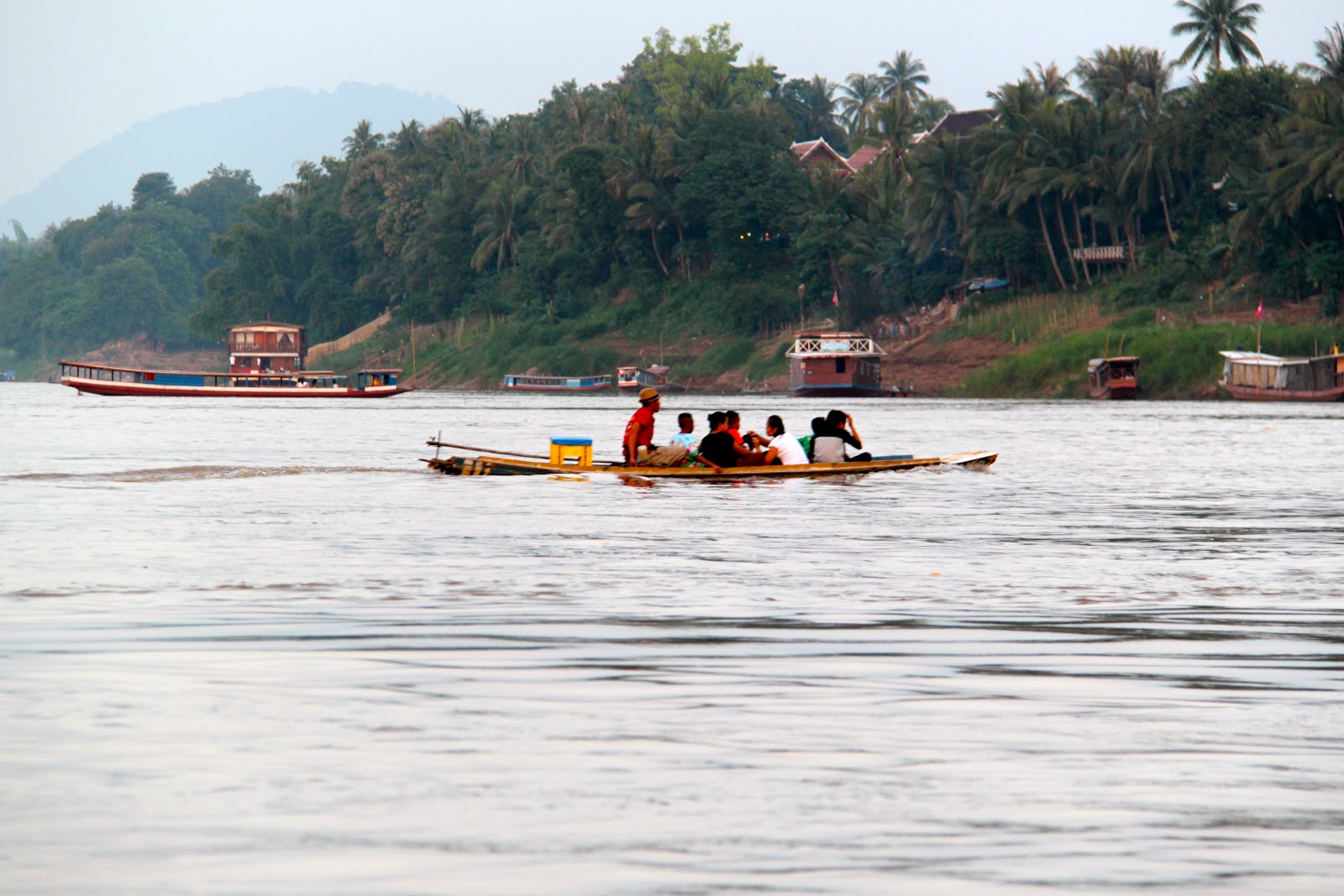
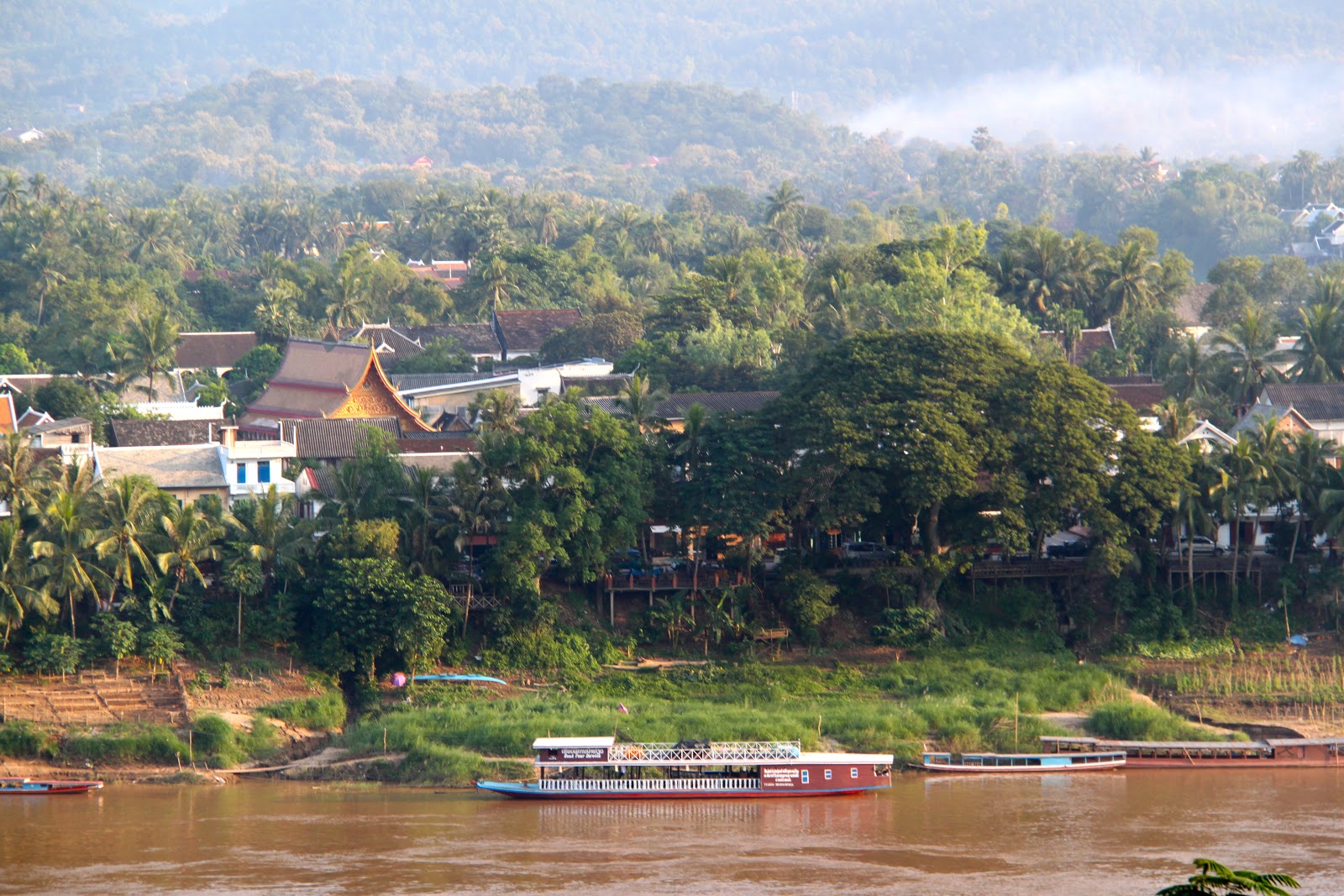
Life centers on the mighty Mekong River in Luang Prabang.  The river winds through mountains.  The river and the mountains are part of the cityscape of Luang Prabang.

The river and mountains

Pretty scenery.  The water is very muddy and opaque though.  If you drop anything that doesn’t float, you will never find it.

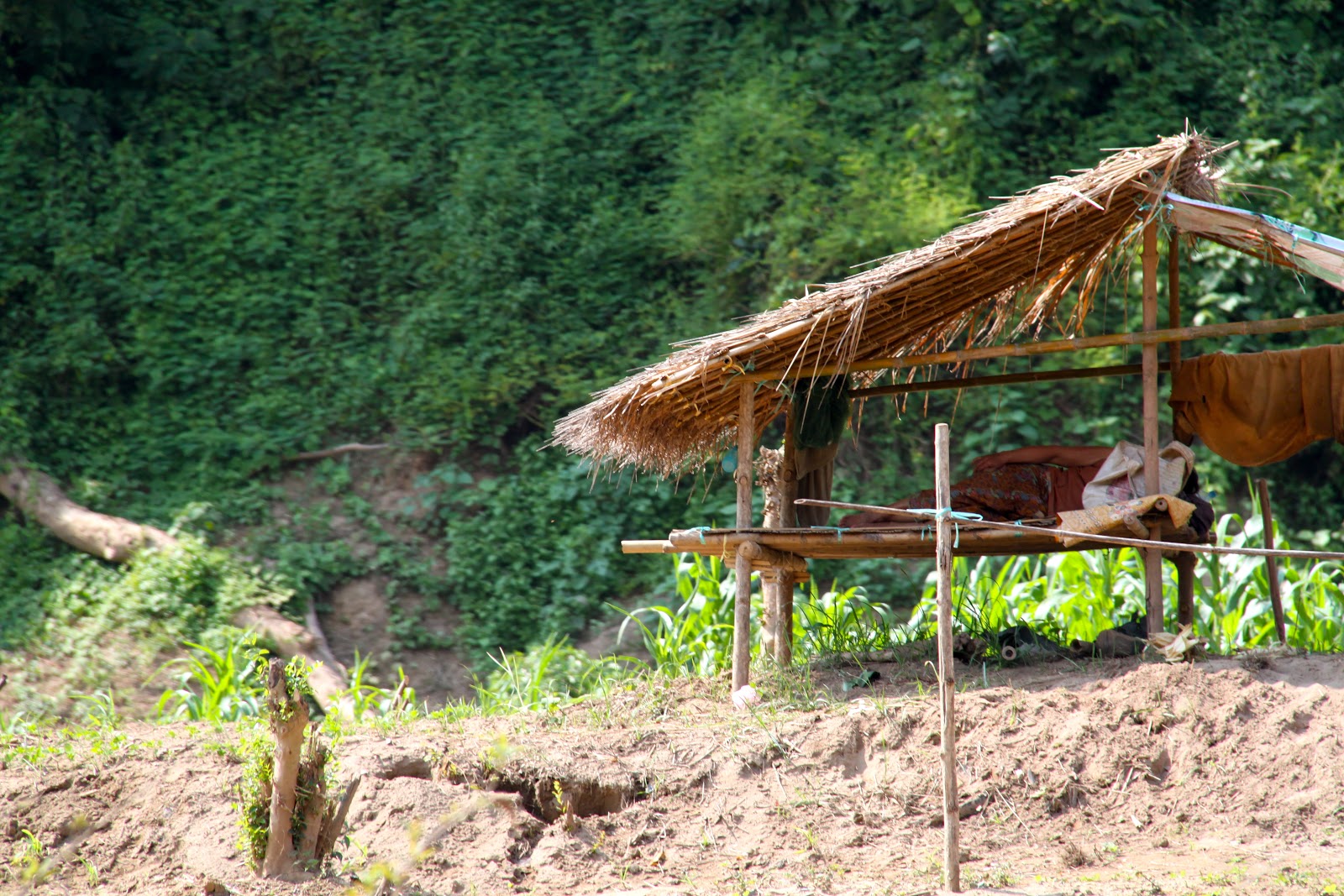
Someone’s hut on the bank of the river.

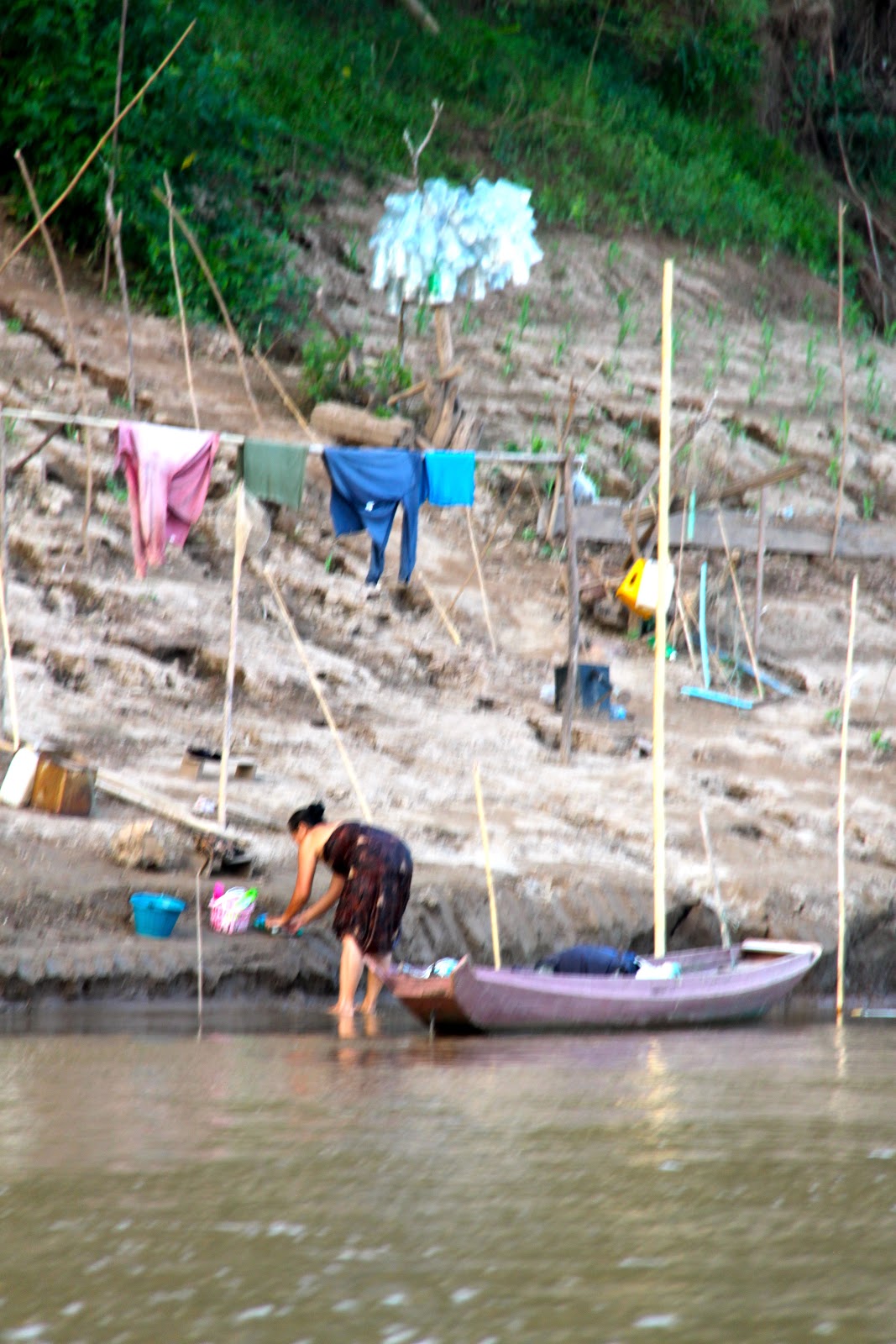
Woman doing her laundry

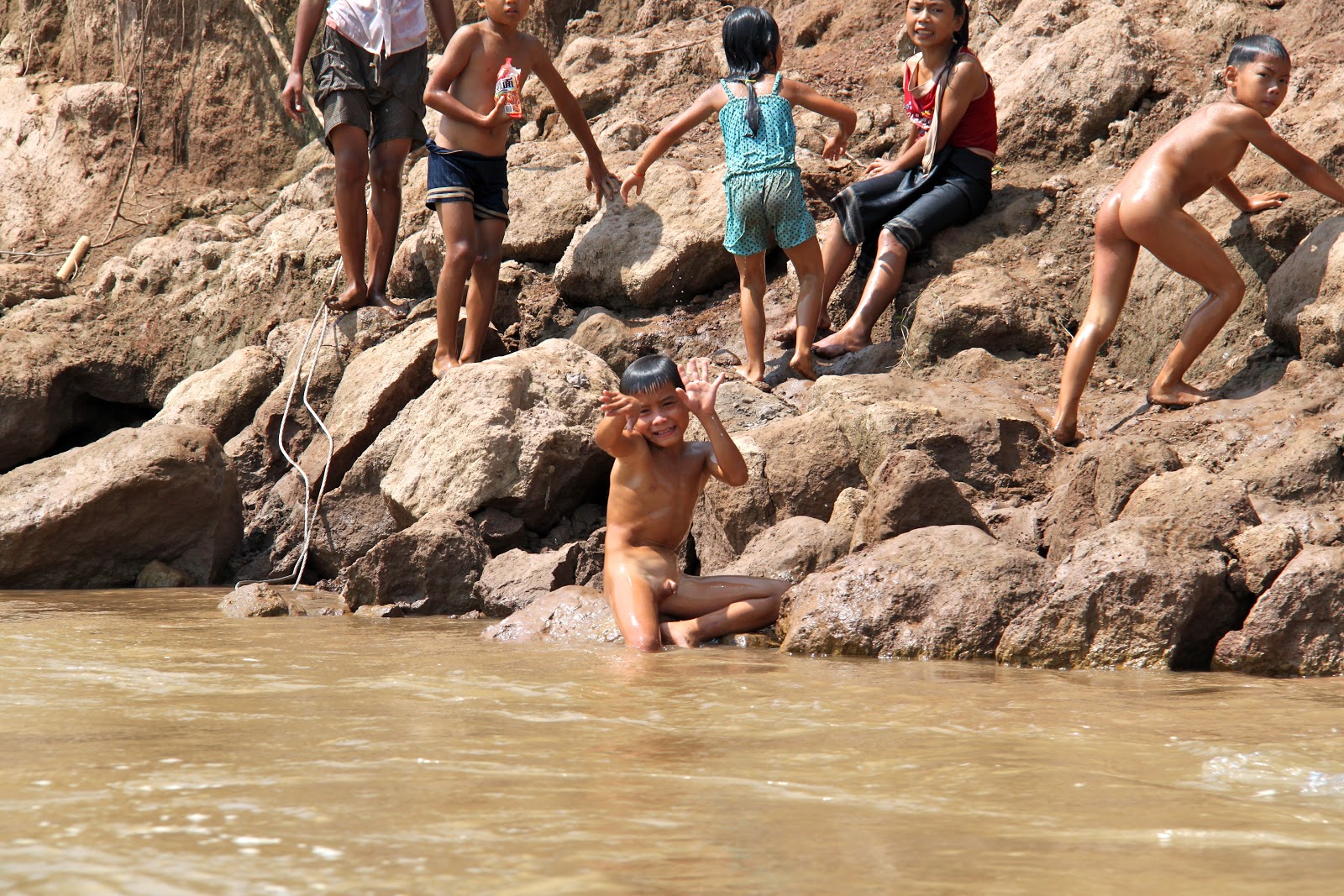
Young kids swimming.
It looks as though that boat could take on water at any time.
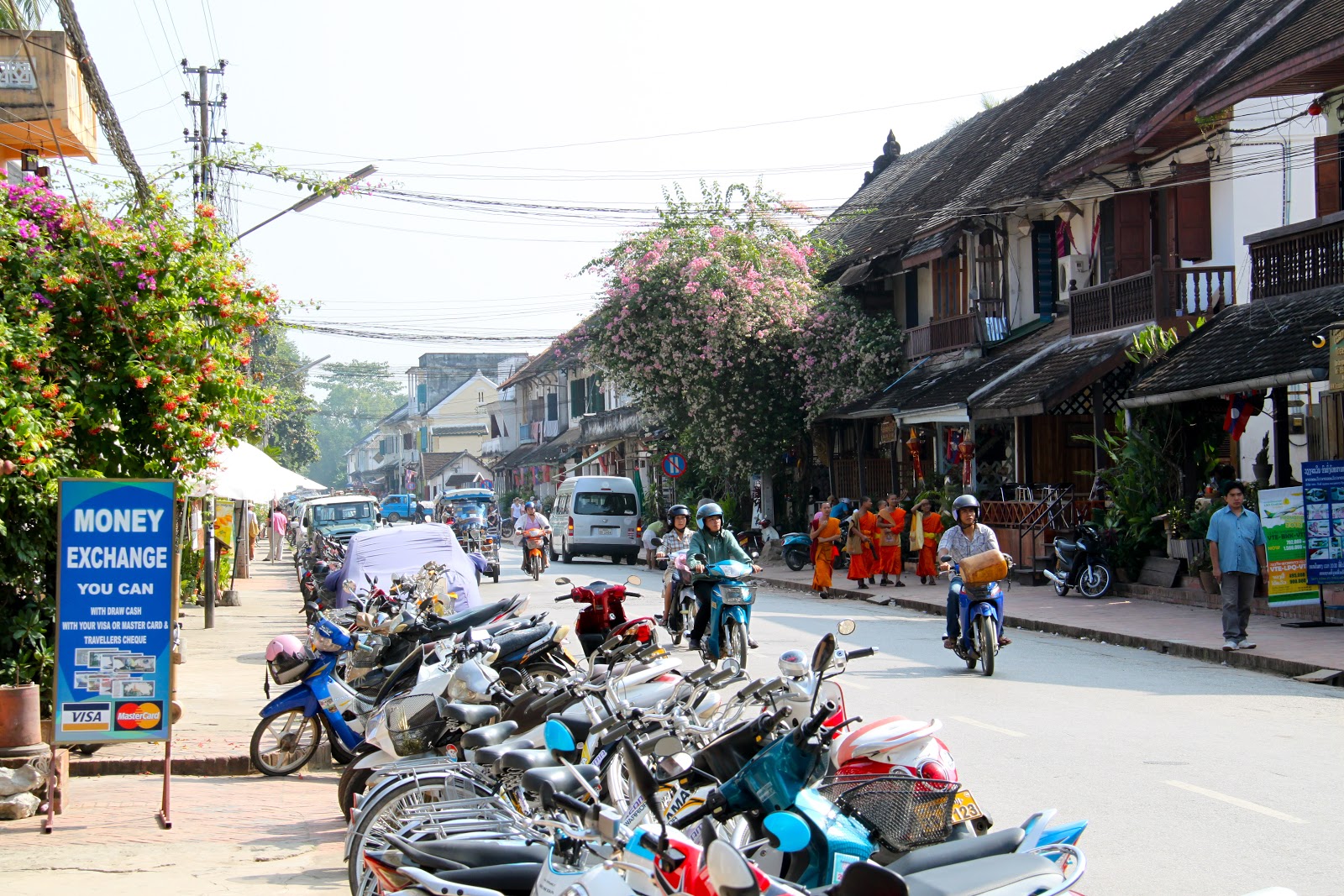
City life
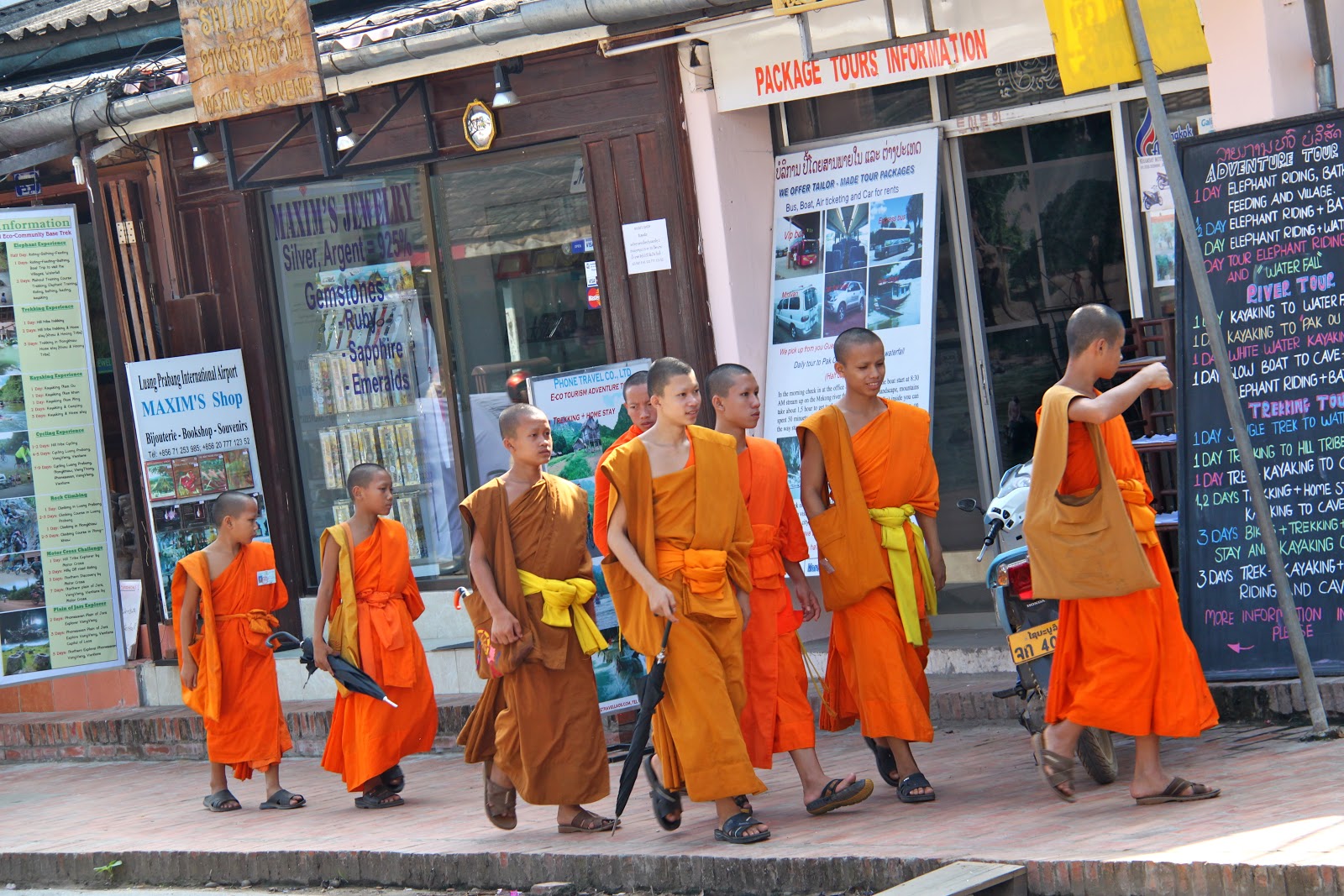
Novice Monks
Long boats shuttle people back and forth across the river for their jobs and for shopping.

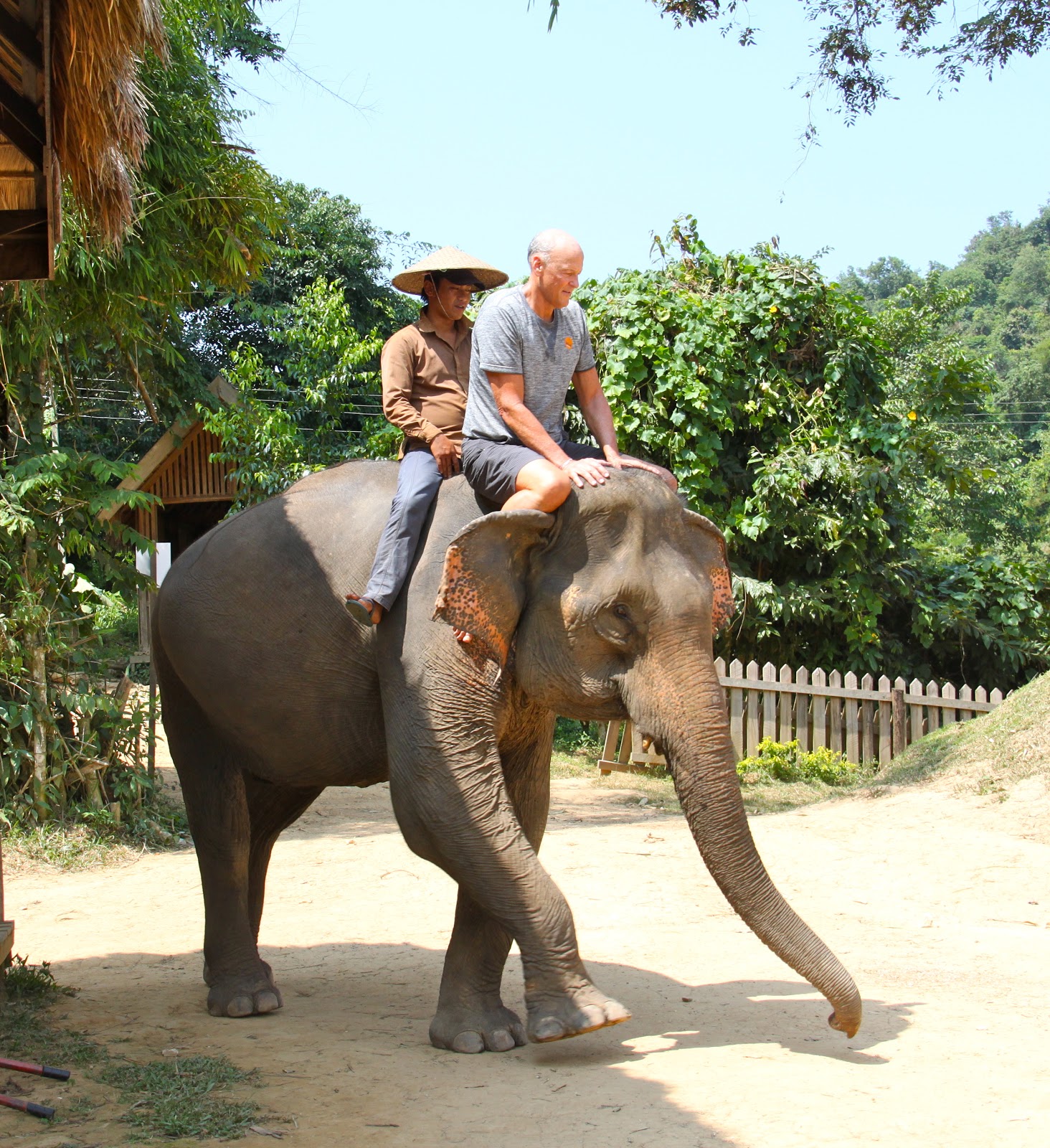
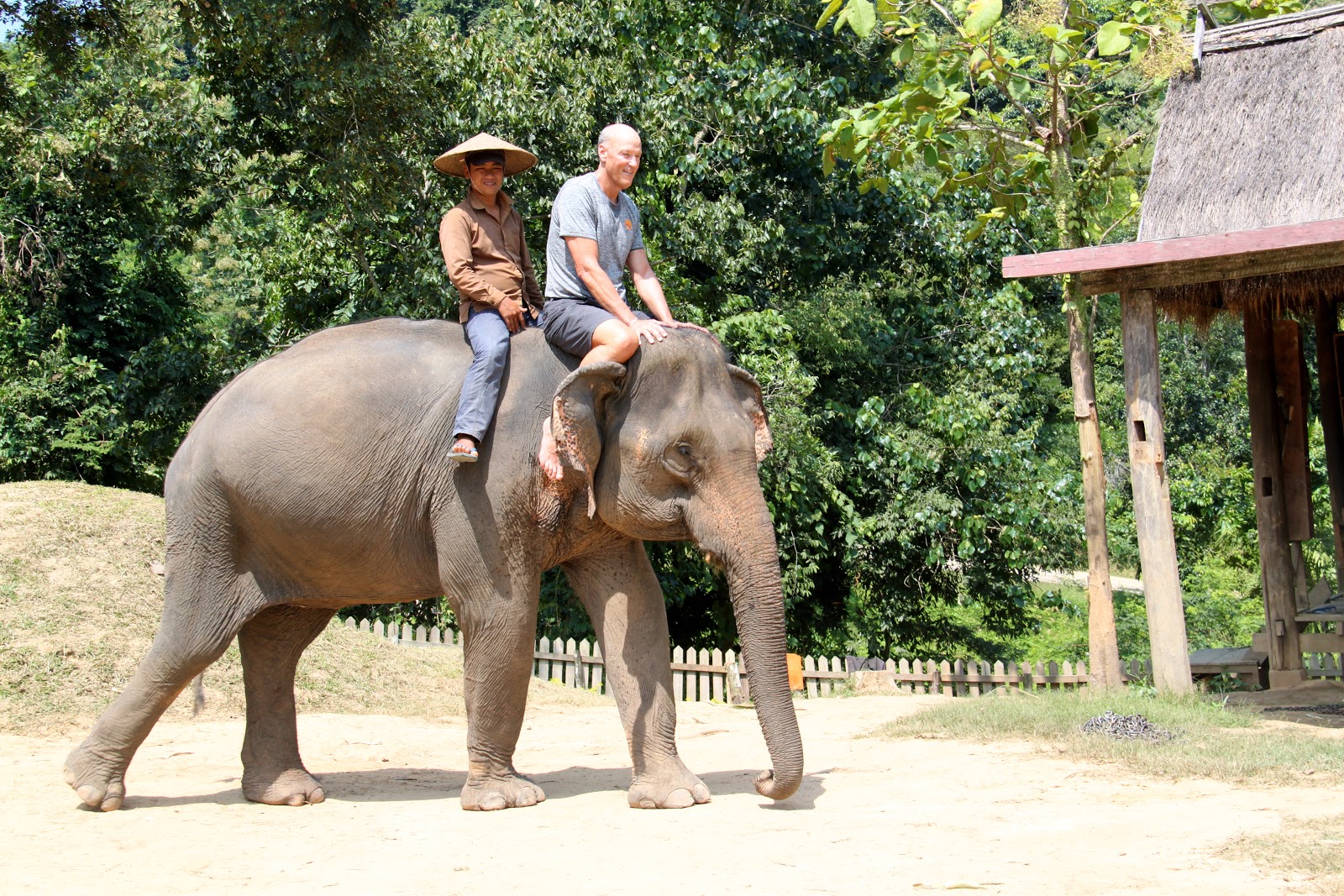
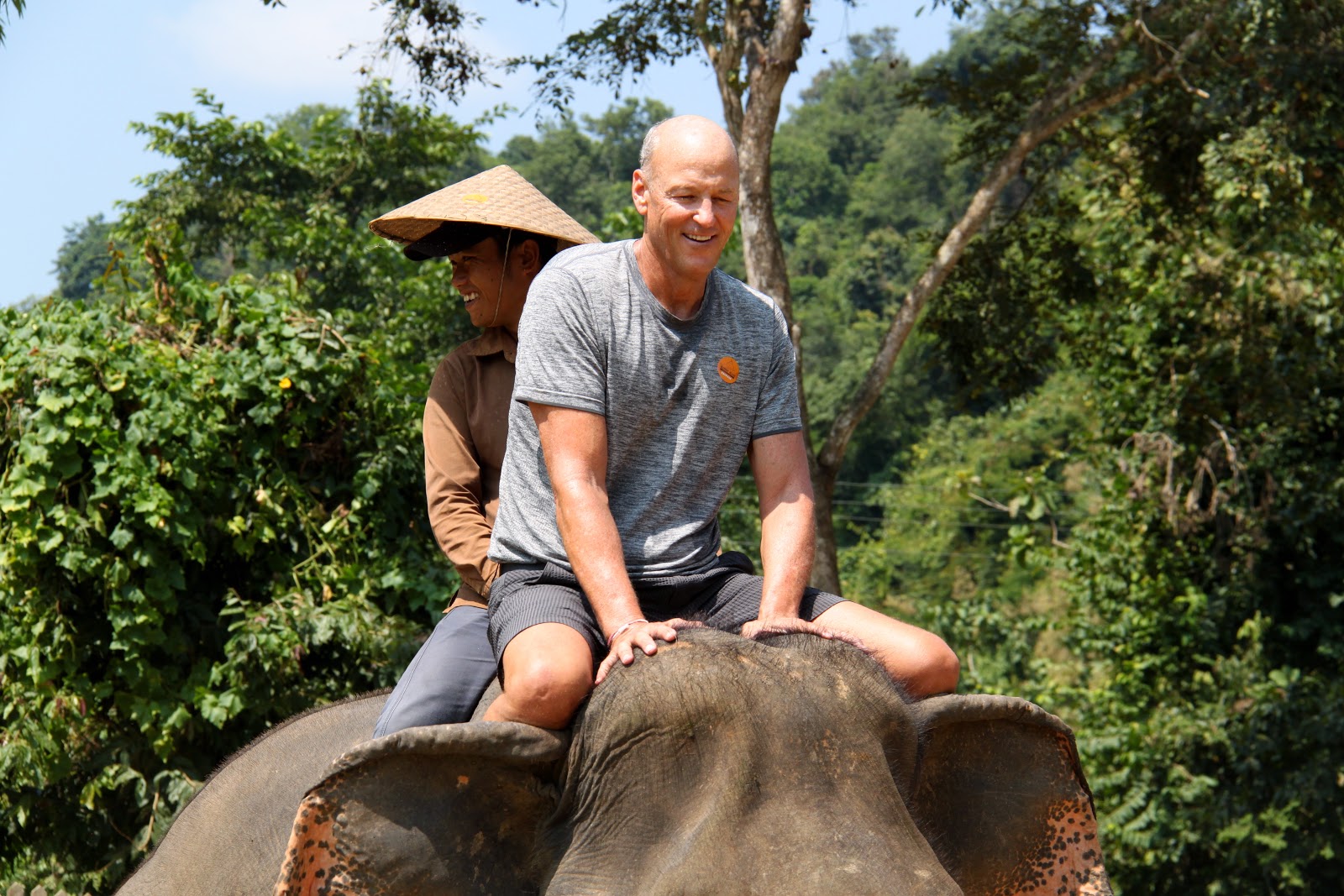
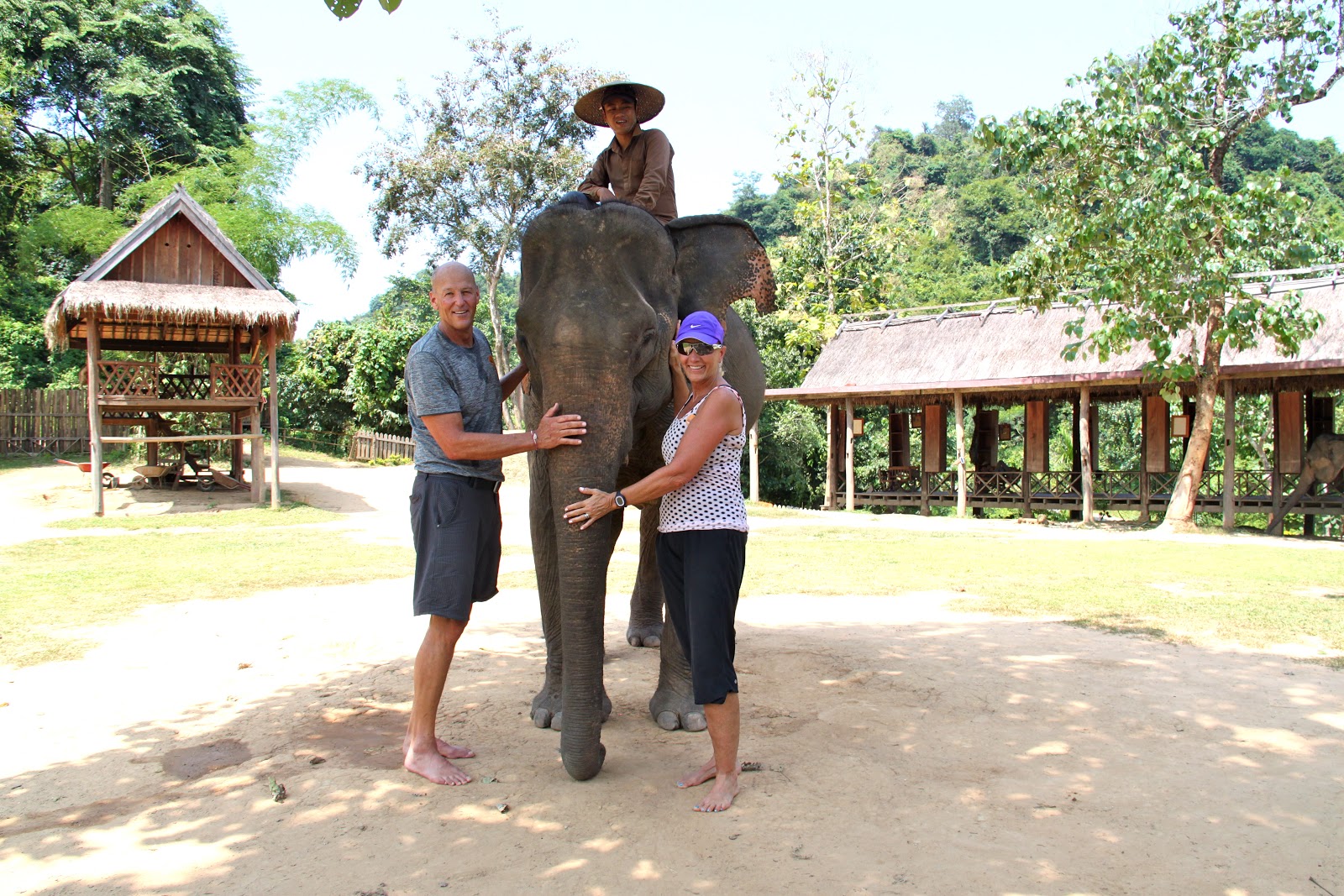
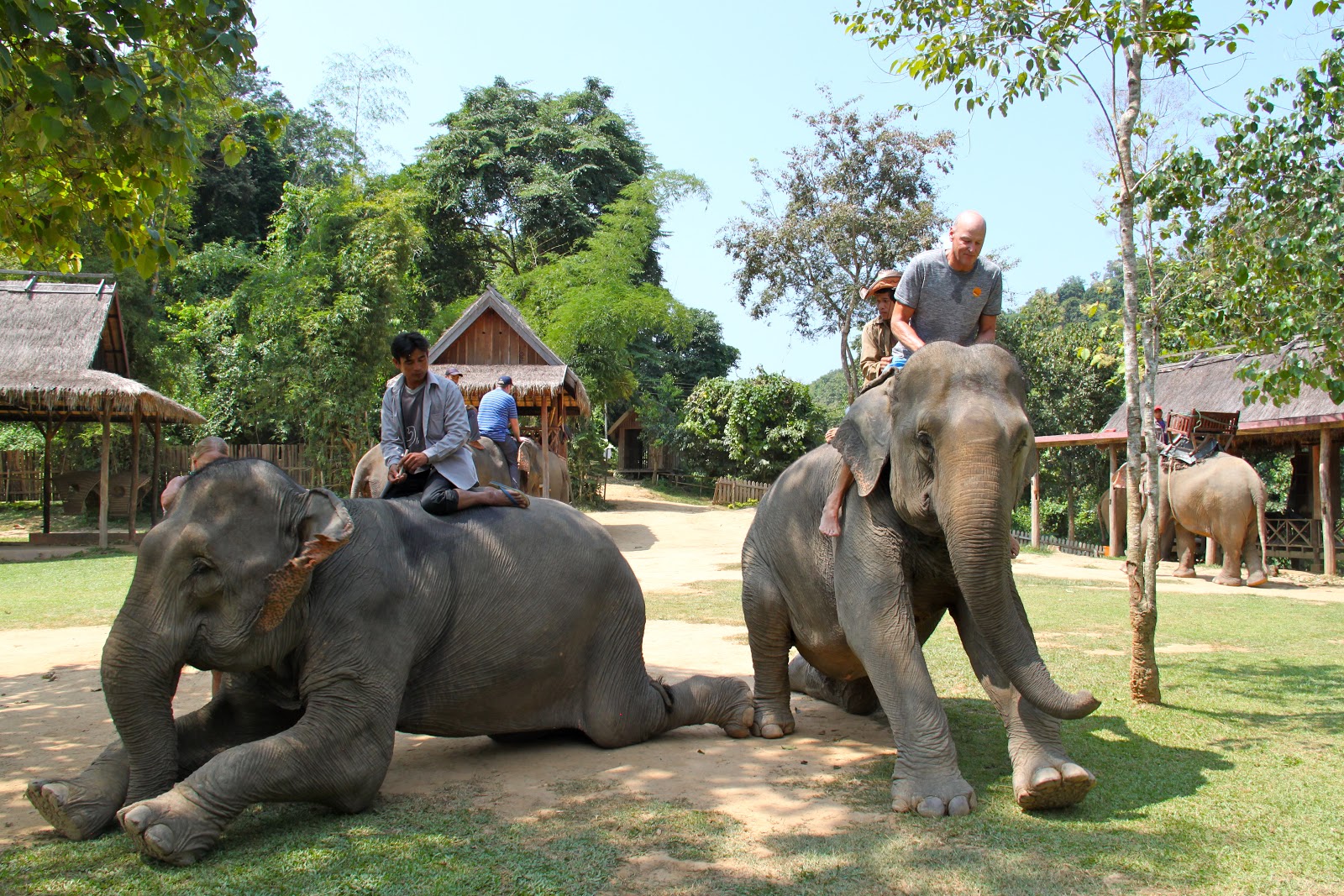
Ever since we rode elephants in India we have wanted to have a “Mahout” elephant trainer experience.  We want to learn how to ride on the neck of an elephant and give commands to control these animals.  In Laos we got our chance.  We learned from the hotel manager at our Orient Express hotel that there is an elephant sanctuary and camp about 40 minutes away reachable on a dirt road next to the Nam Khan River.  The manager called the camp for us and they agreed to take us for one day and allow us to learn how to feed, bathe and control the elephants by riding on their necks and giving them verbal and foot pressure commands.

Elephant camp
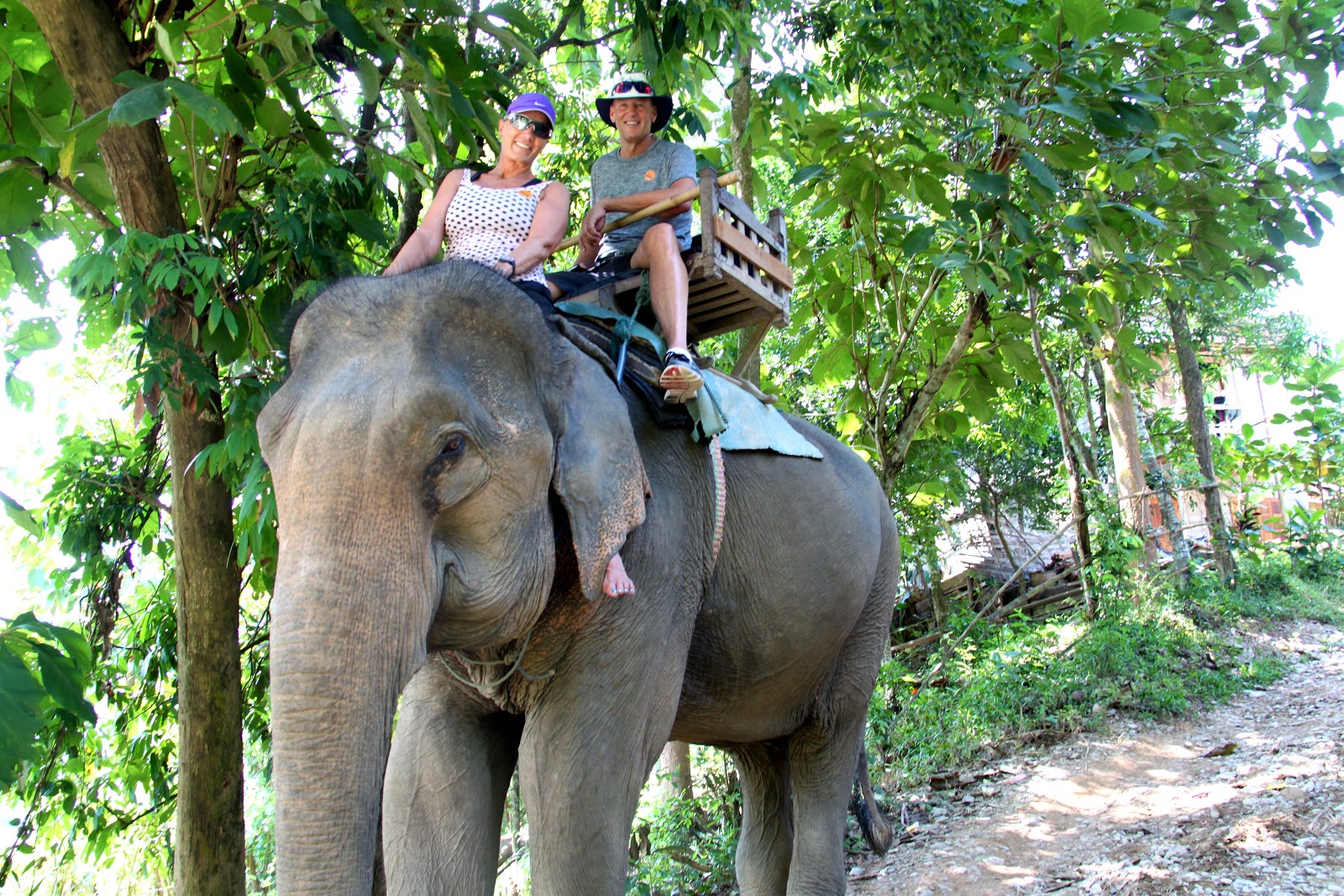
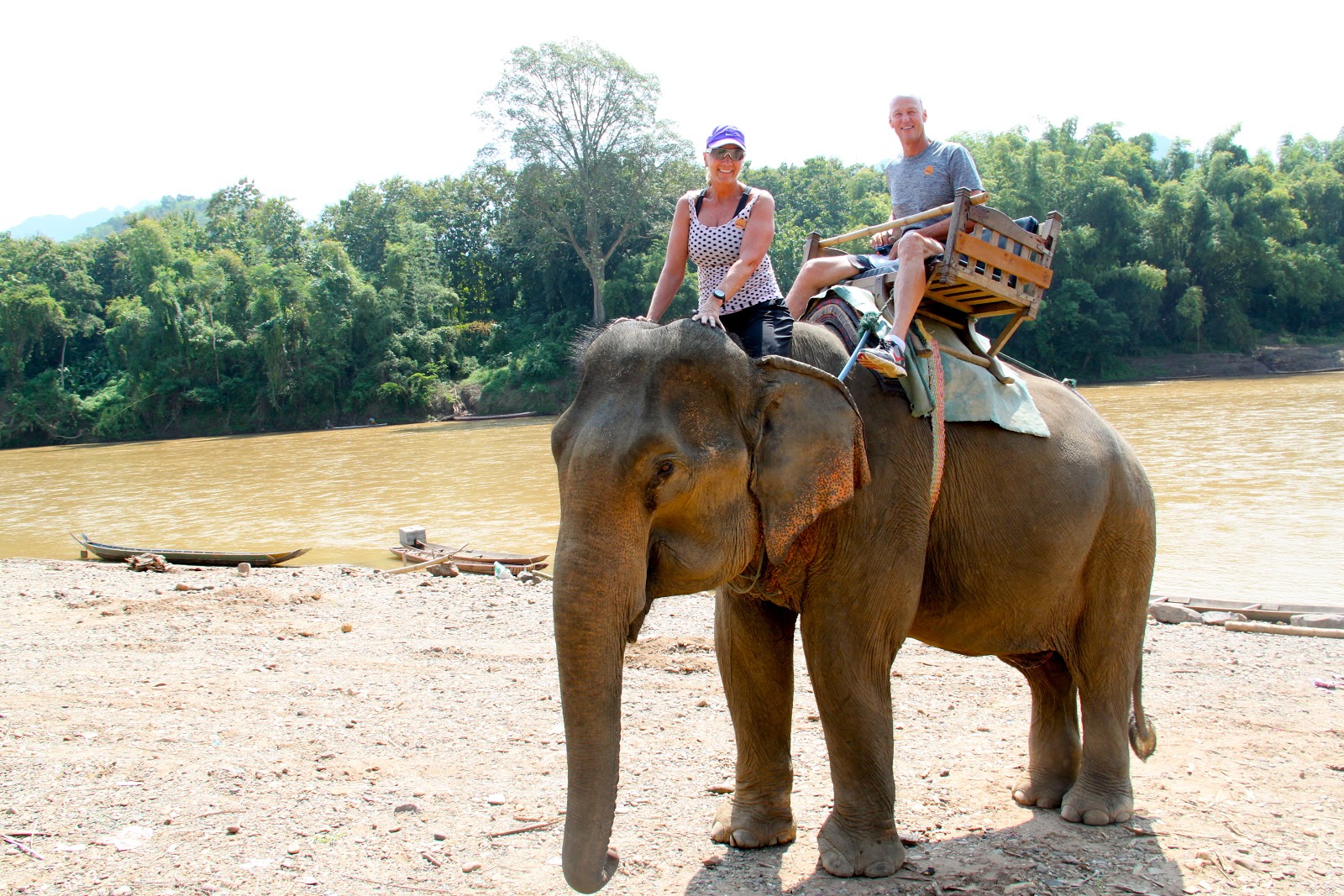
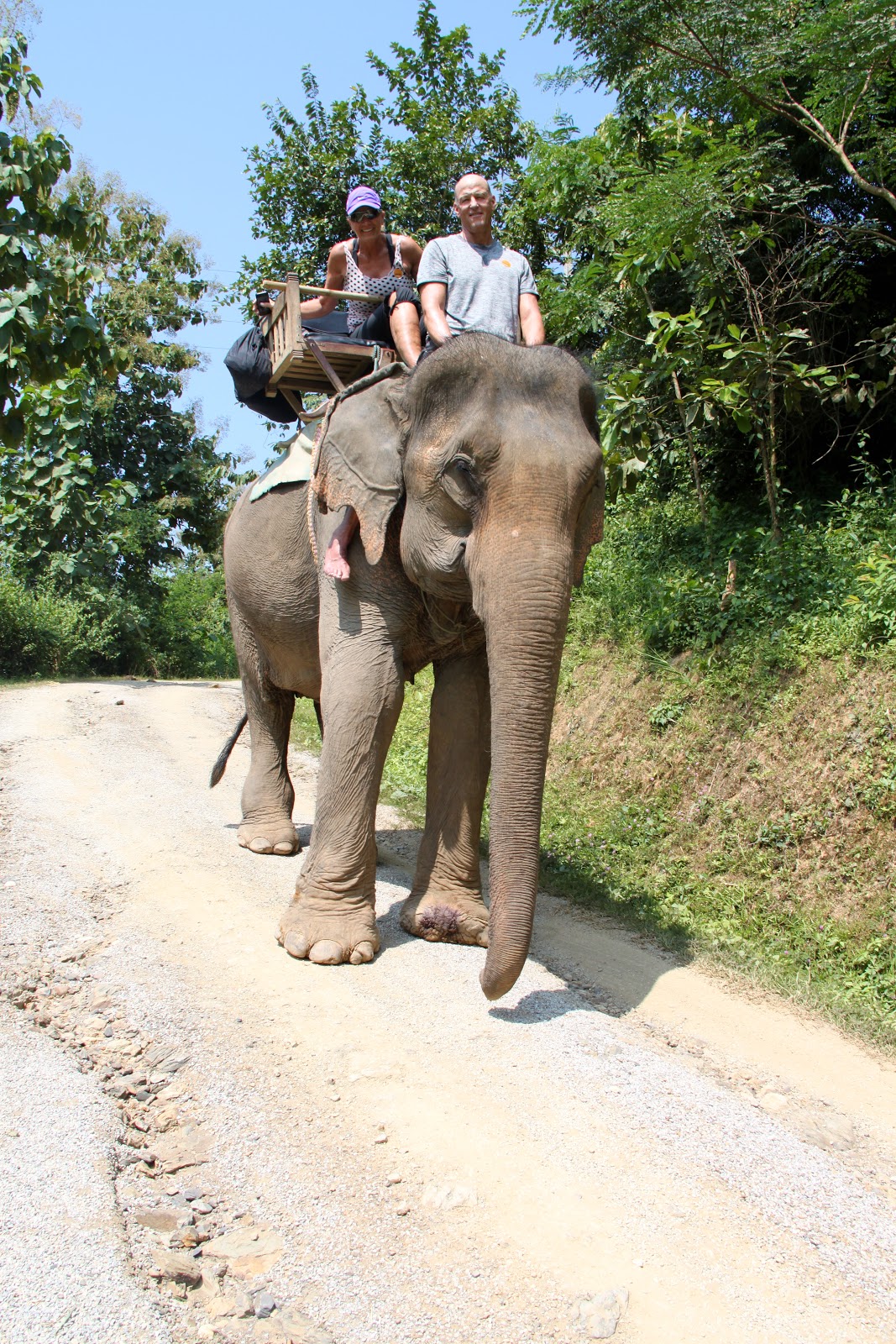
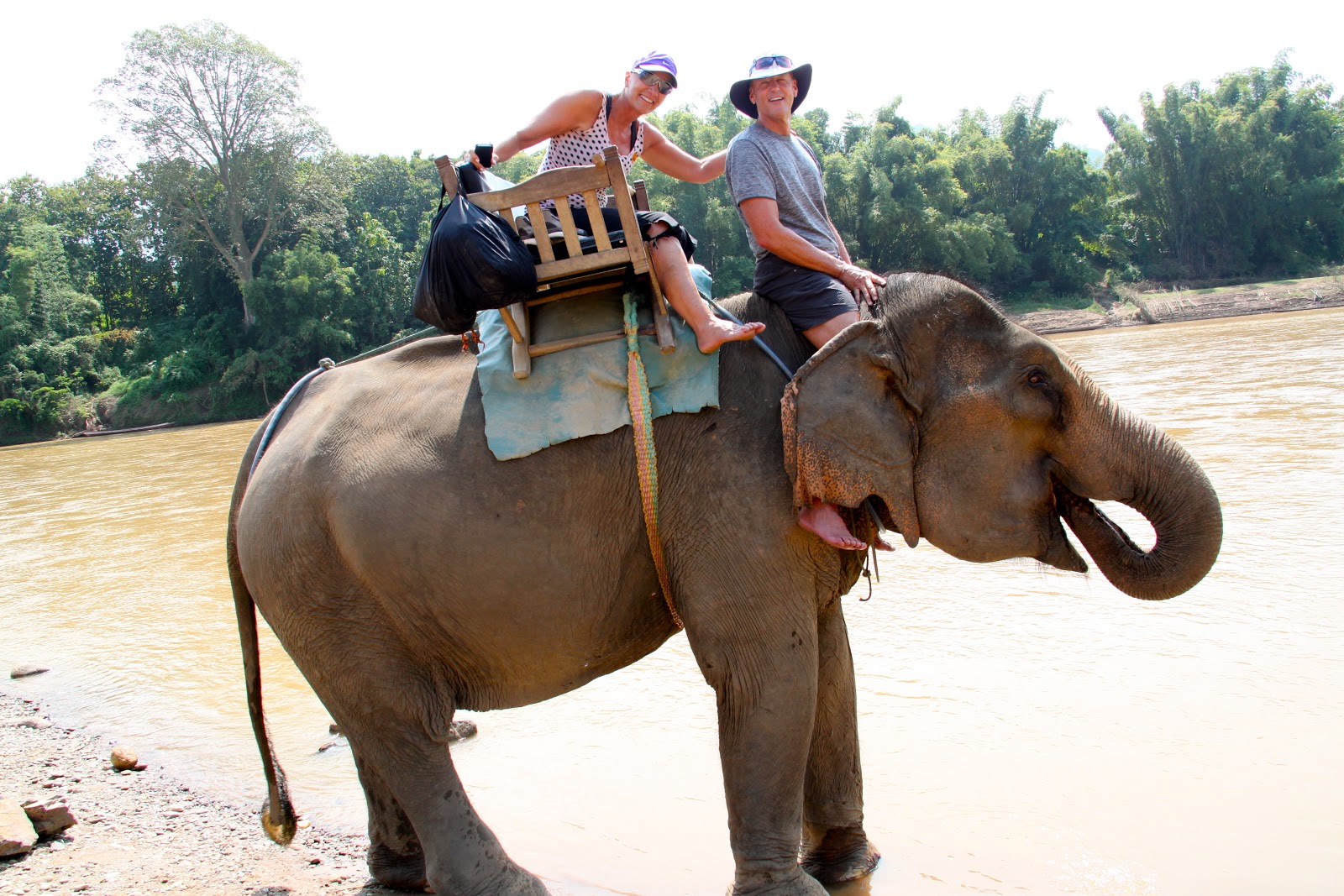
When we arrived at the camp we had the general tour and orientation and visit to the elephant veterinary station.  Soon thereafter we were up on top of an elephant in a chair. 

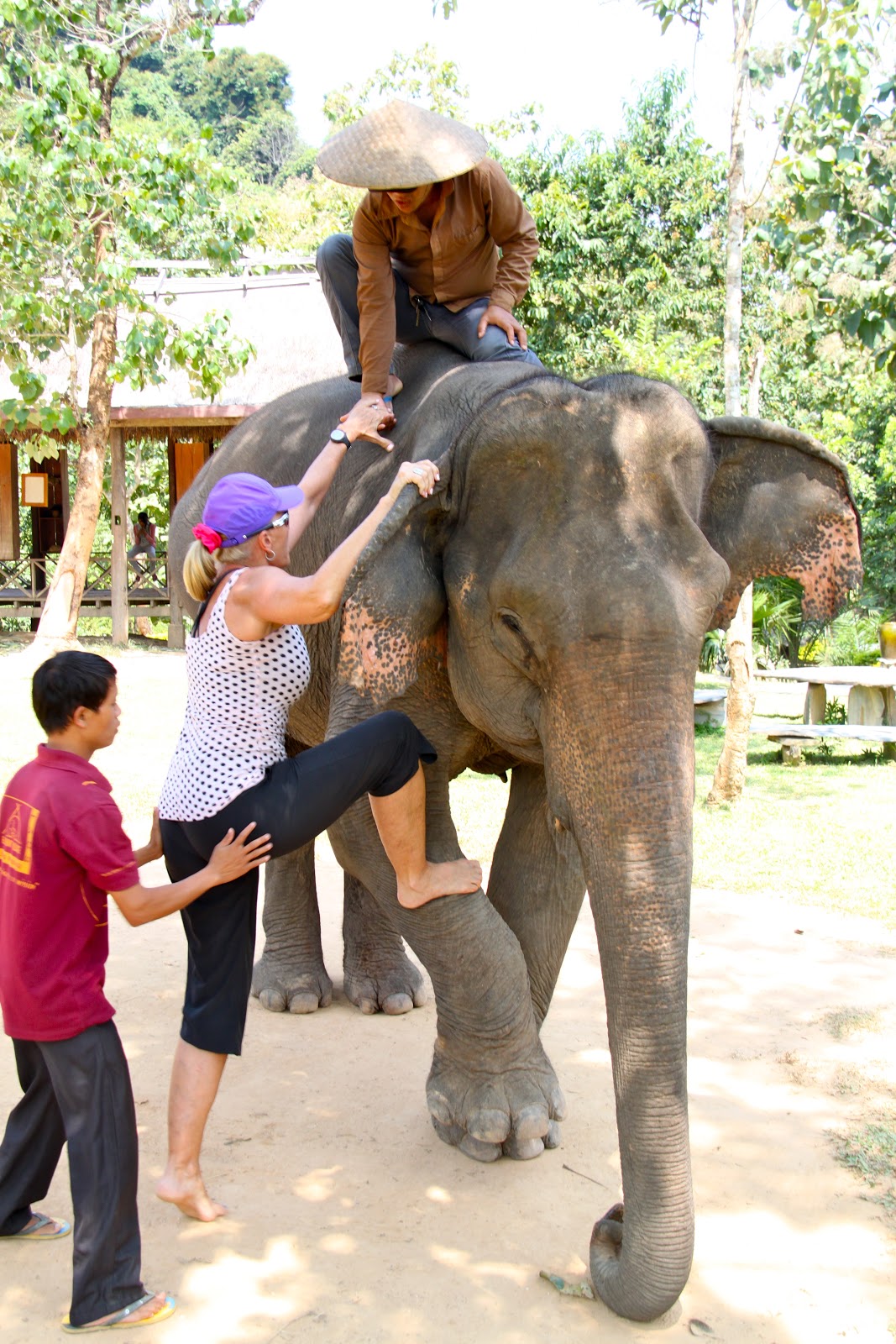
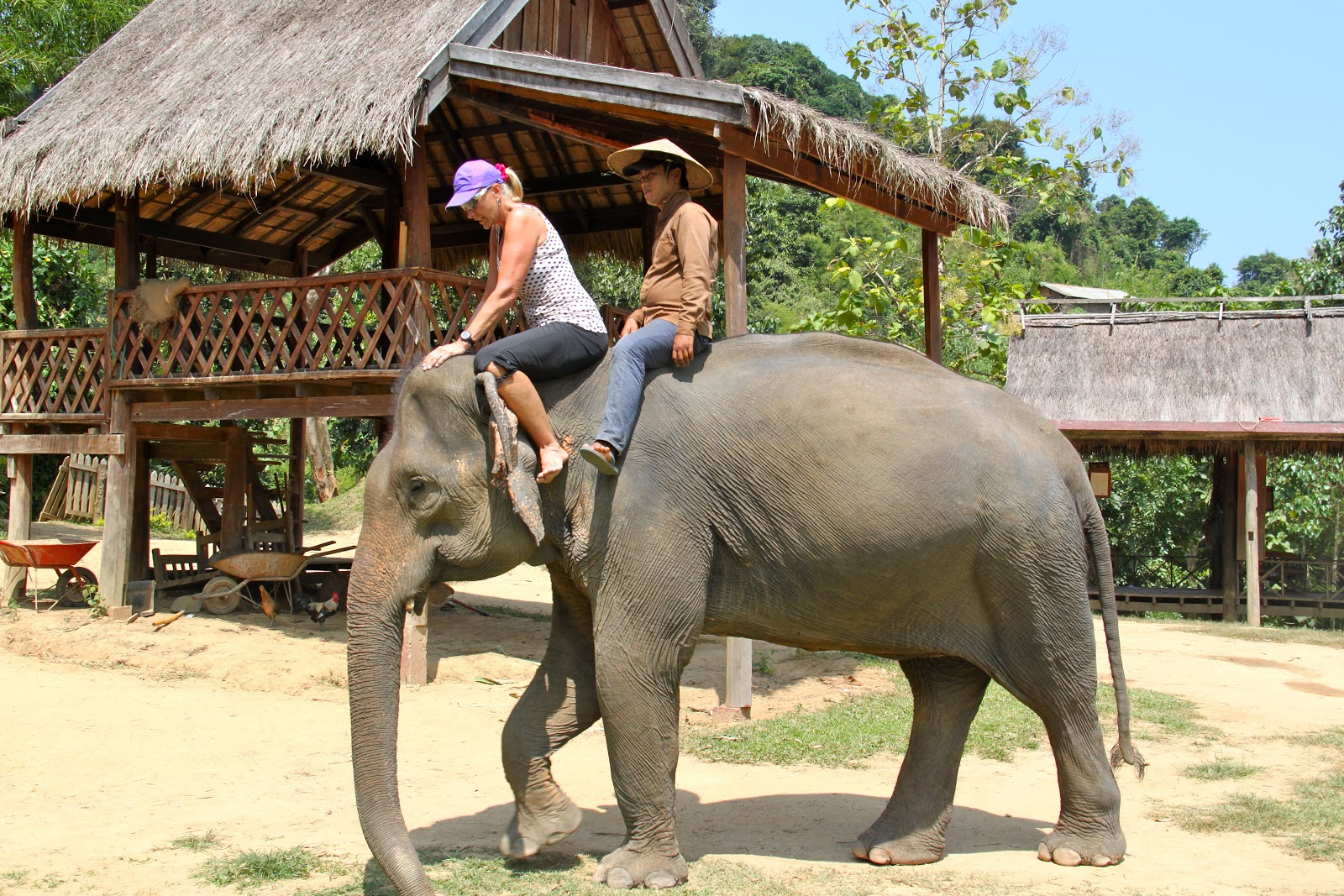
Five minutes into the ride the Mahout abandoned us and jumped down off the elephant and told Barb to jump onto the elephant’s neck and start driving. 

Voice commands and leg pressures make the elephant respond

There are no reins or saddle to hold on.

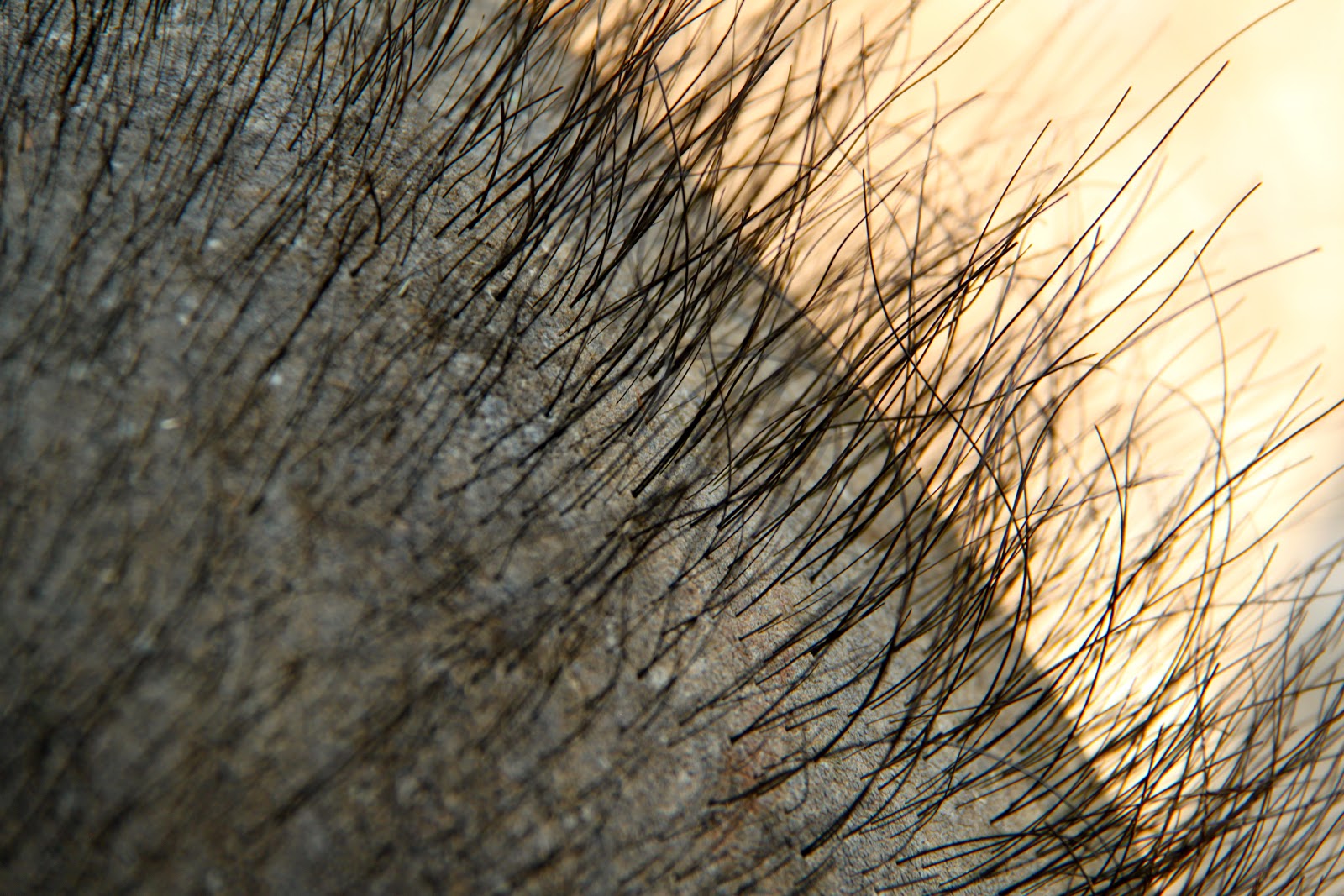
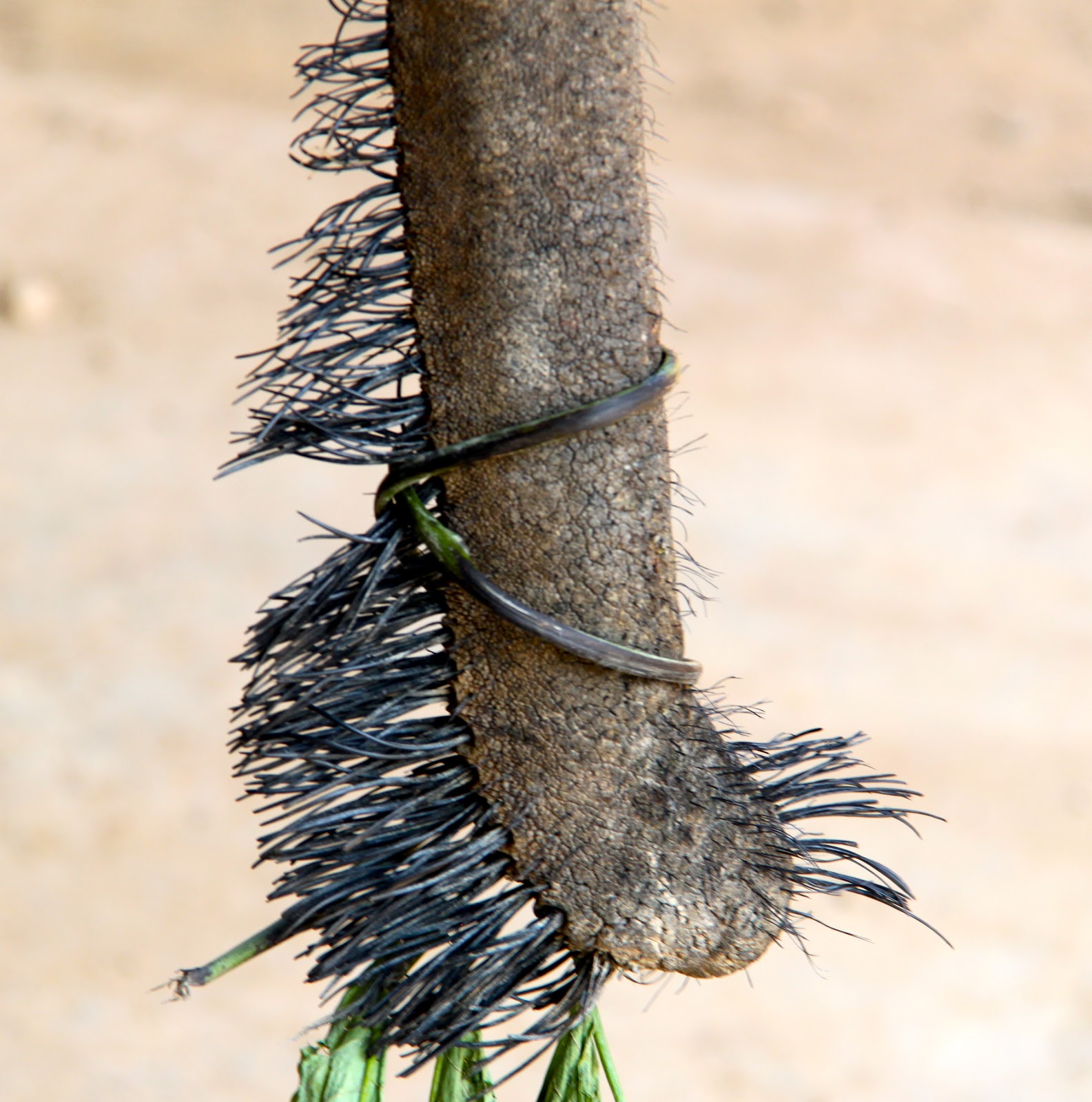
The elephant has hair on the top of his head and on the end of the tail.  It is very course.  Jewelry is made from elephant hair.
Hair on the elephant’s head

Hair on the tail.

Twenty minutes later it was my turn.  It is not easy to keep your balance on the neck of an elephant.  There was multiple times I thought I was going to hit the deck when the elephant turned her head one way or the other. 

It’s a long way down to the ground from here.

Barb’s Chauffeur
Steps down or up also proved to be difficult for me to keep my weight centered over the elephant and I often felt like I was going to tumble off the elephant to the ground.
To instruct the elephant to move forward you yell “PIE”.
To make the elephant stop you yell “HOW”.
To make the elephant go left you yell “SIA” (say it like “sigh”) and you kick the elephant with your right foot.  The elephant is trained to move away from pressure the same way that horses are trained.
To make the elephant go right you yell “KWA” and kick with your left leg.
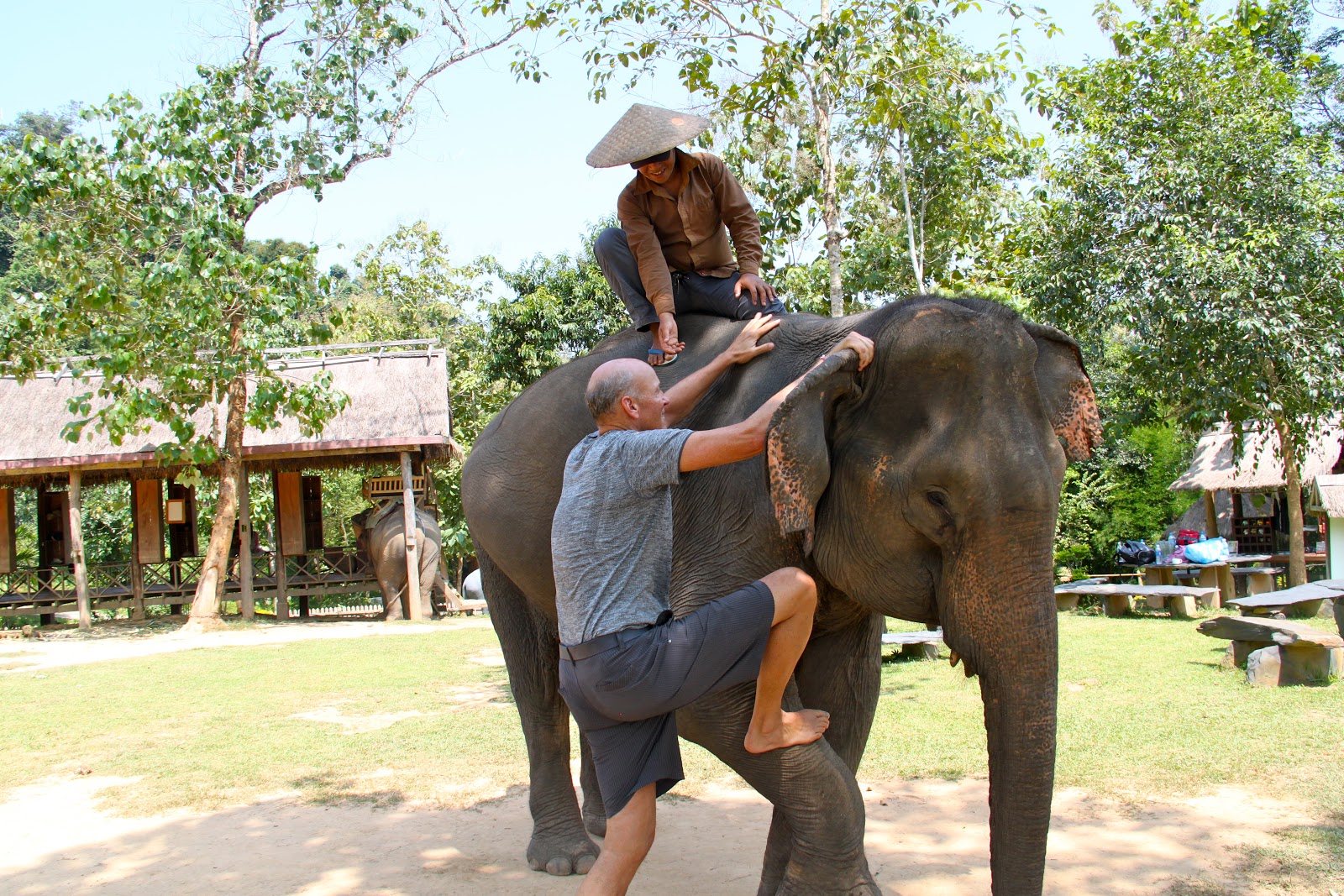
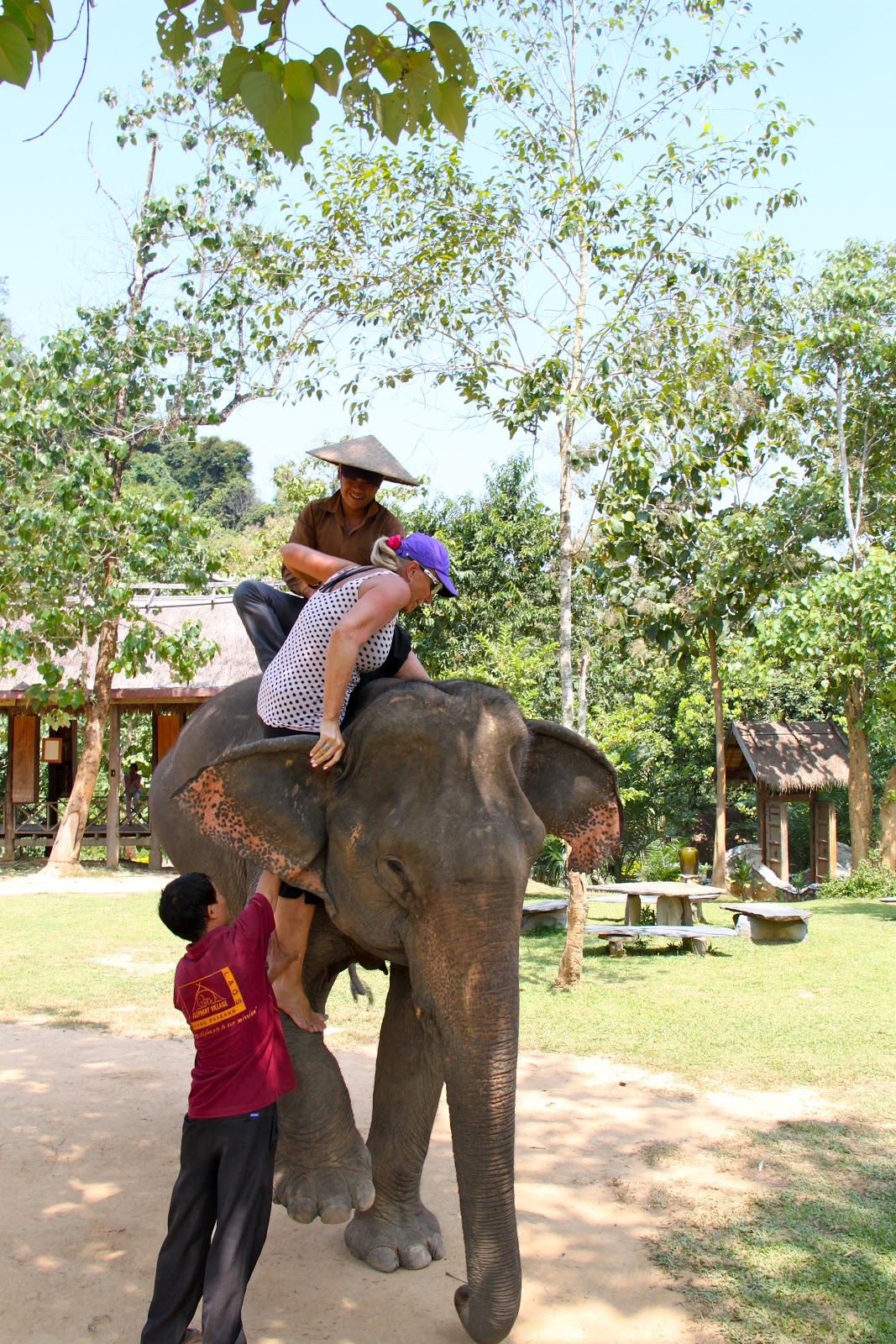
To make an elephant get down on her knees so that you can step up on her leg and jump up on her neck you yell: “MAP”.

                                                         
                                                              Elephant training video

These animals are smart.  When you put your foot on her leg and apply pressure to push yourself up on her neck she will actually lift up her leg to give you an elevator ride up to her neck.

Scott climbing up for his training
Pie Pie

Trying to get a comfortable seat.

Along our rides the elephants ate pieces of the trunk of banana trees. 

Banana tree stalk
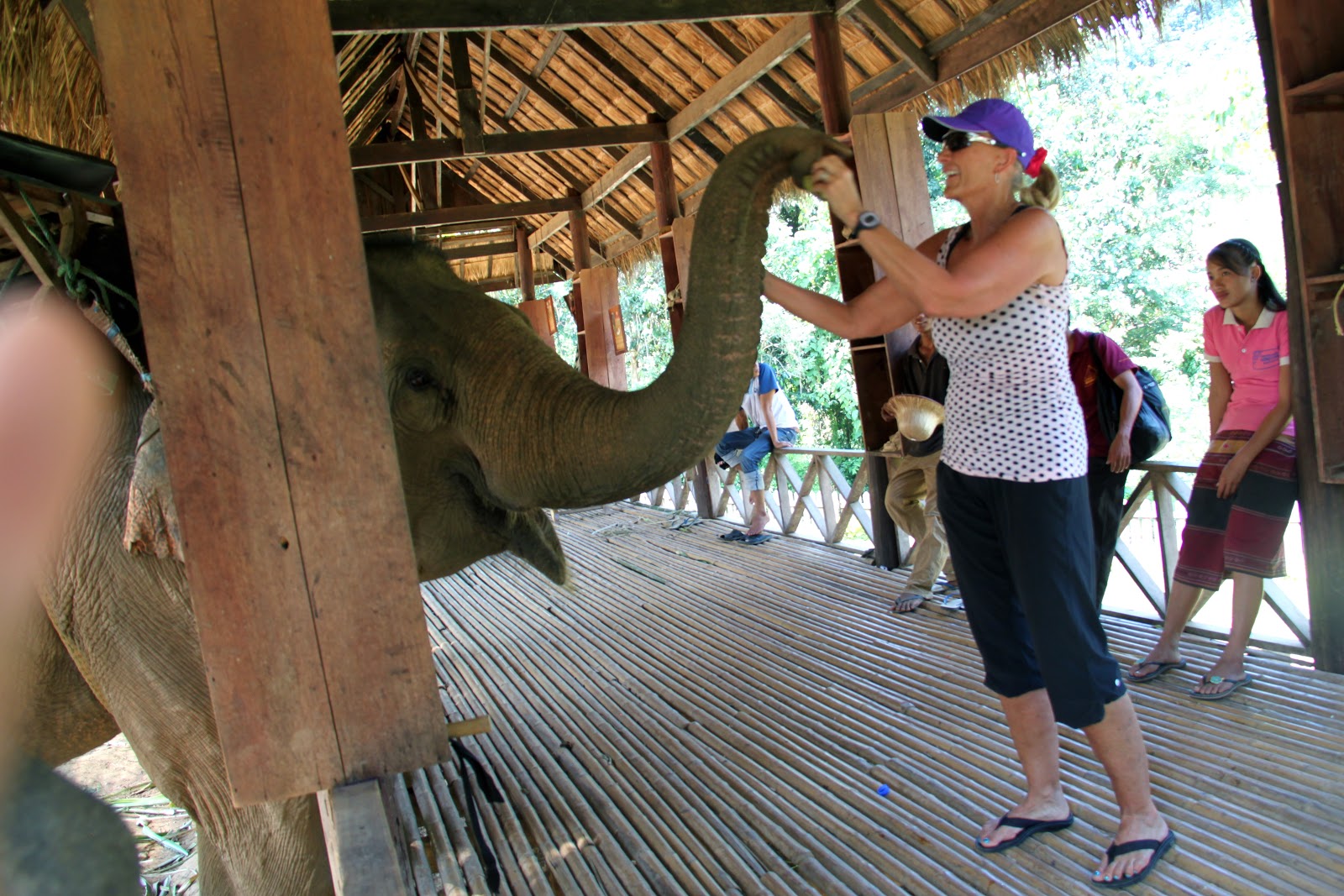
Elephants love bananas and bamboo and sugar cane. 

Barb feeding her elephant bananas after her ride.


Barb climbing up with the help of the elephant’s “knee up”

It’s a long way up.  I better practice more yoga moves!

Practicing leg pressures

It’s not quite like driving a BMW
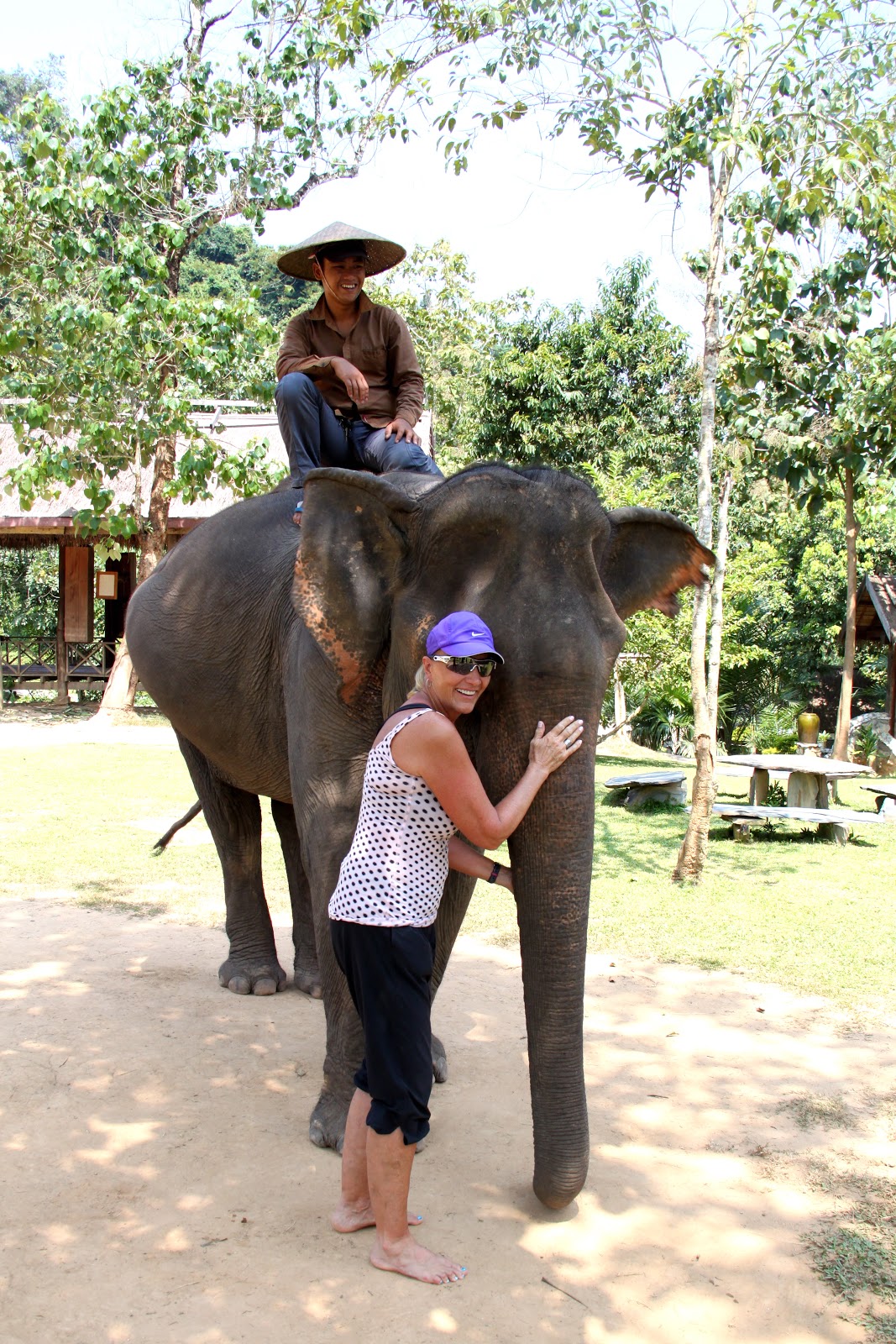
A hug and a thank you.
This is fun.

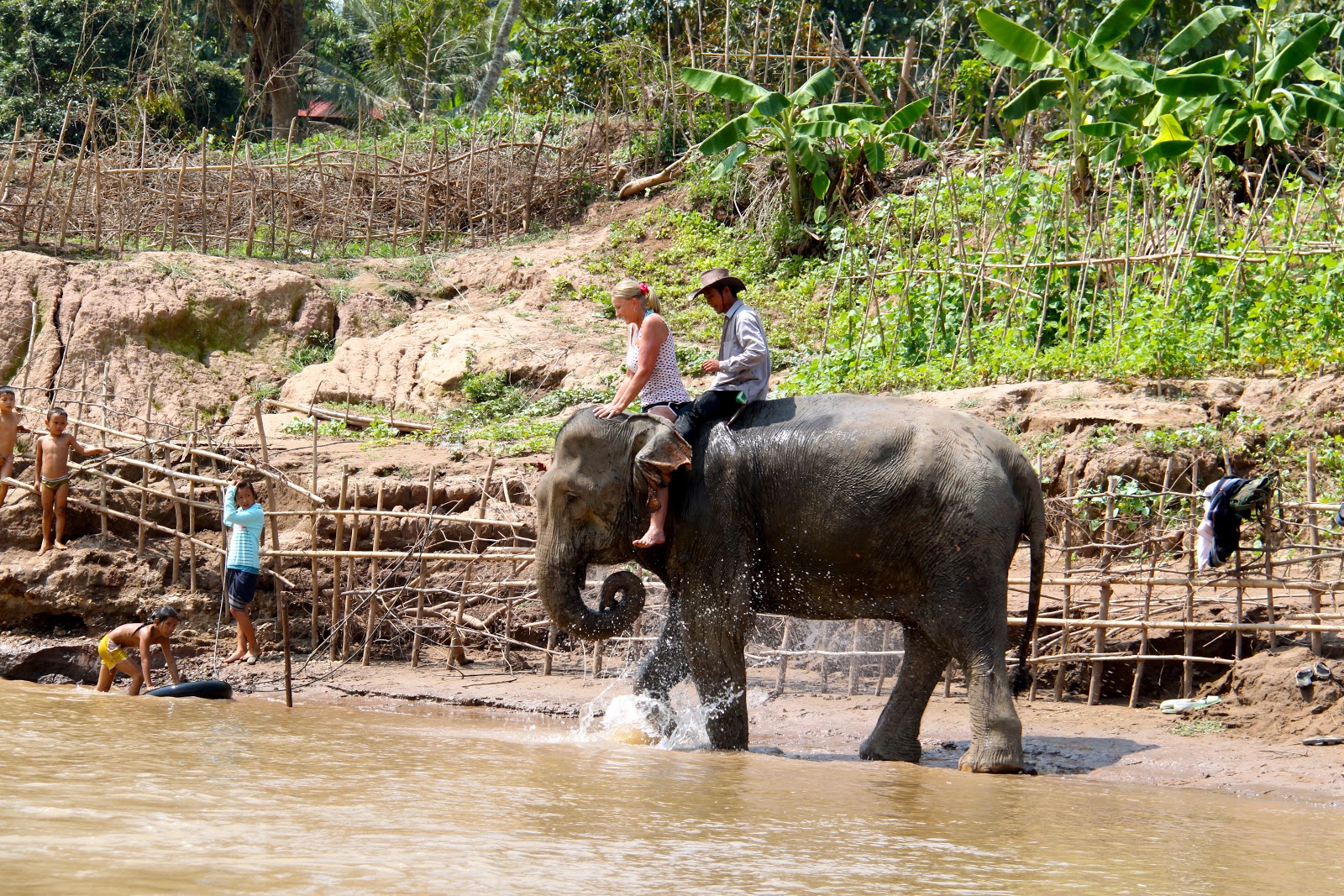
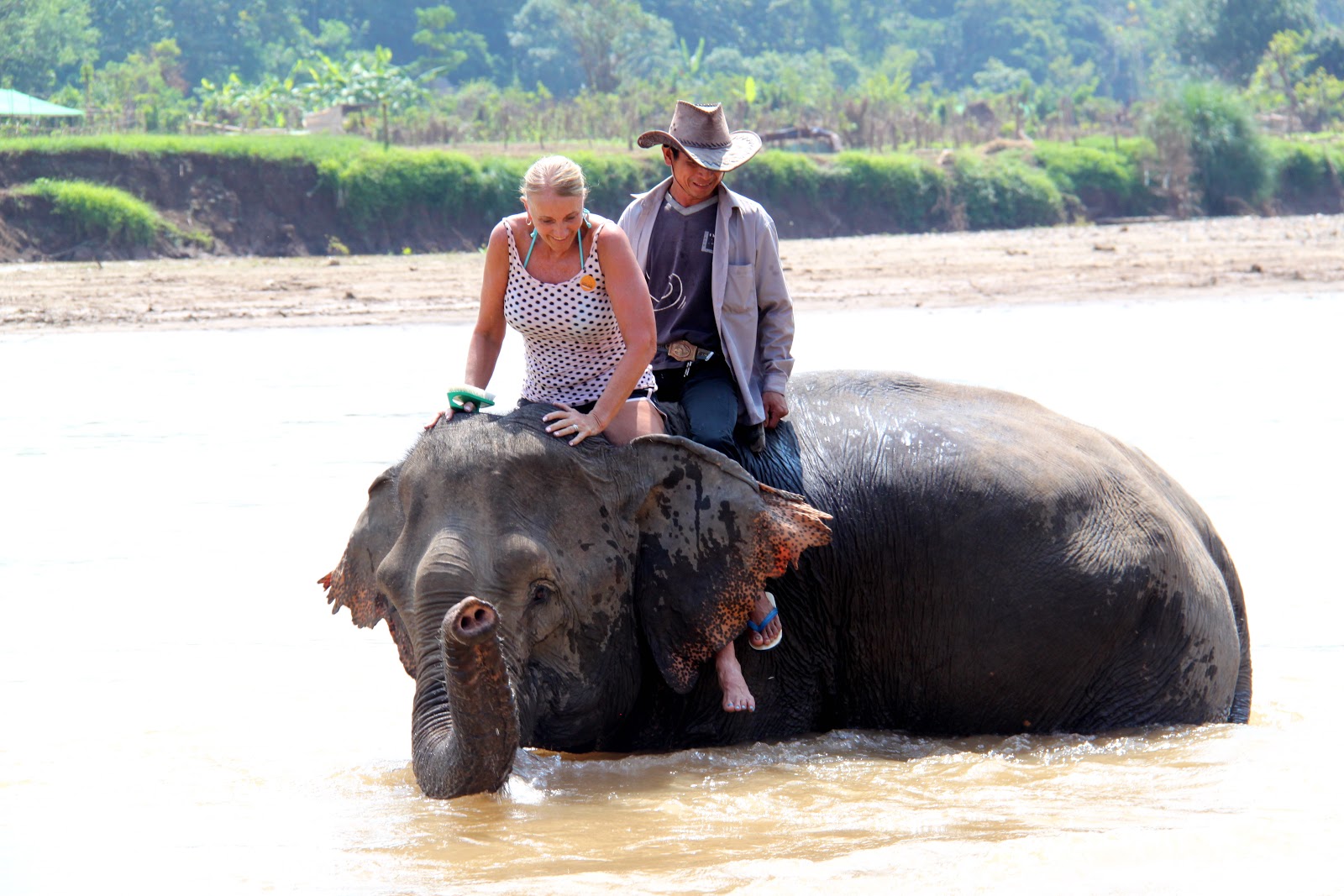
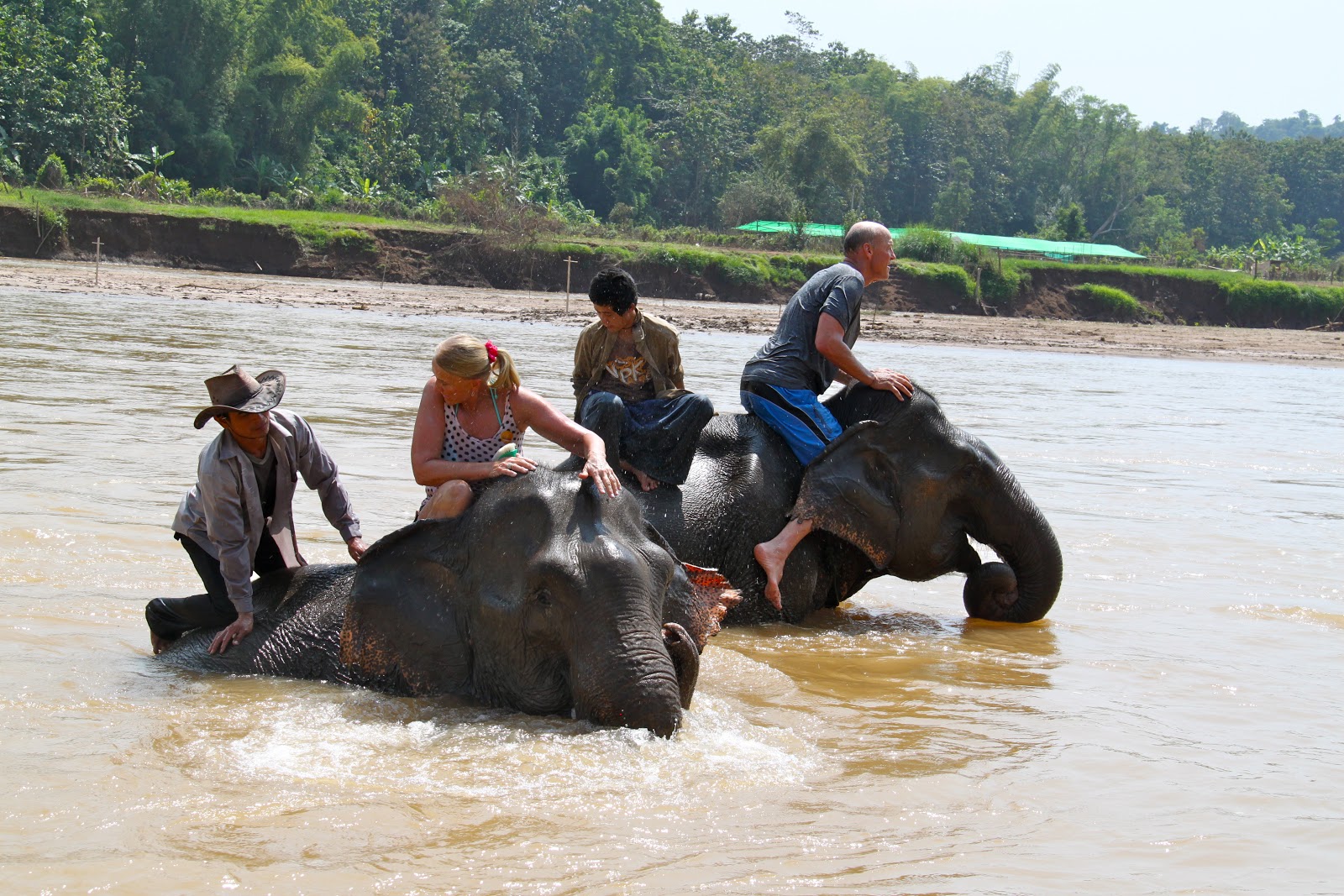
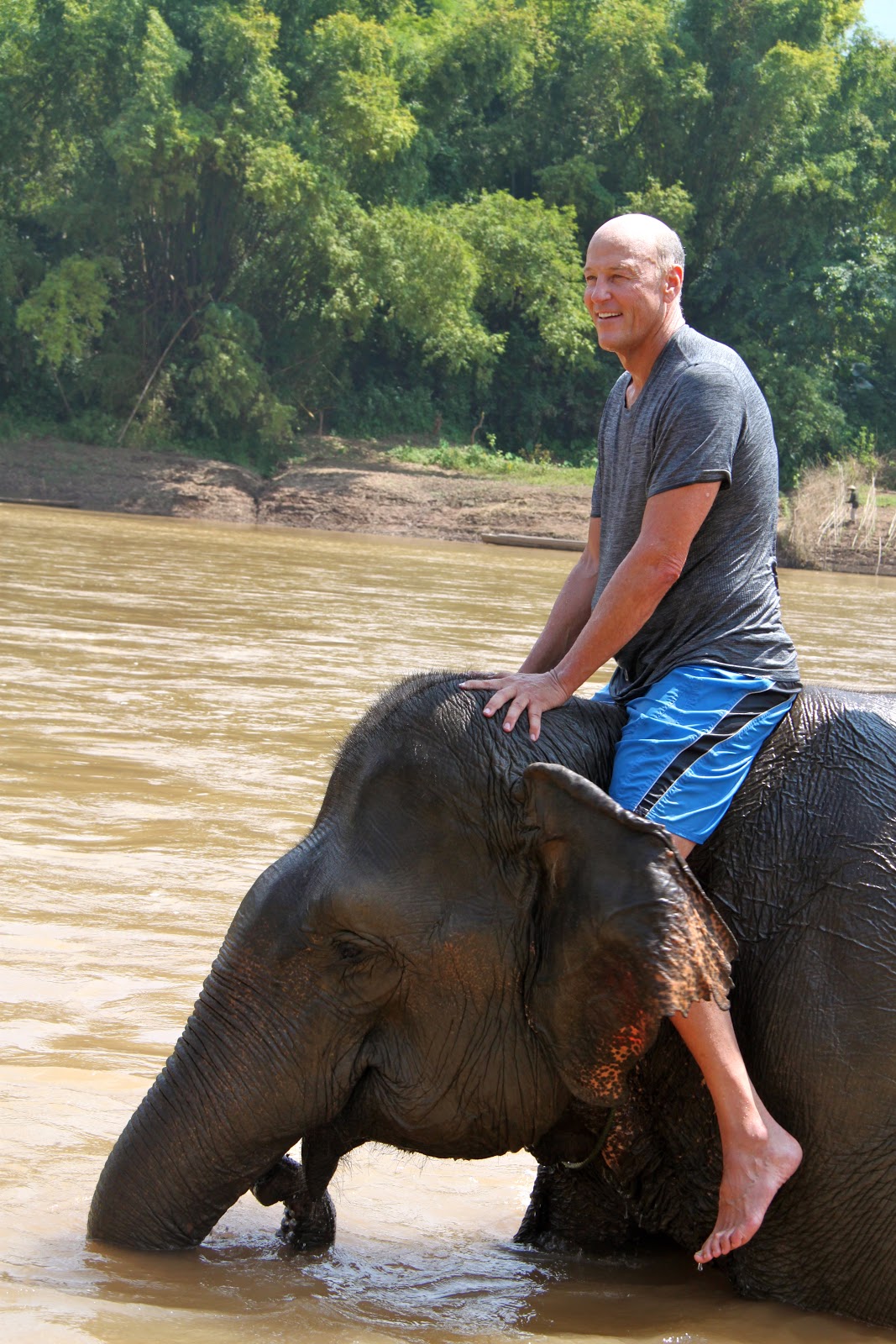
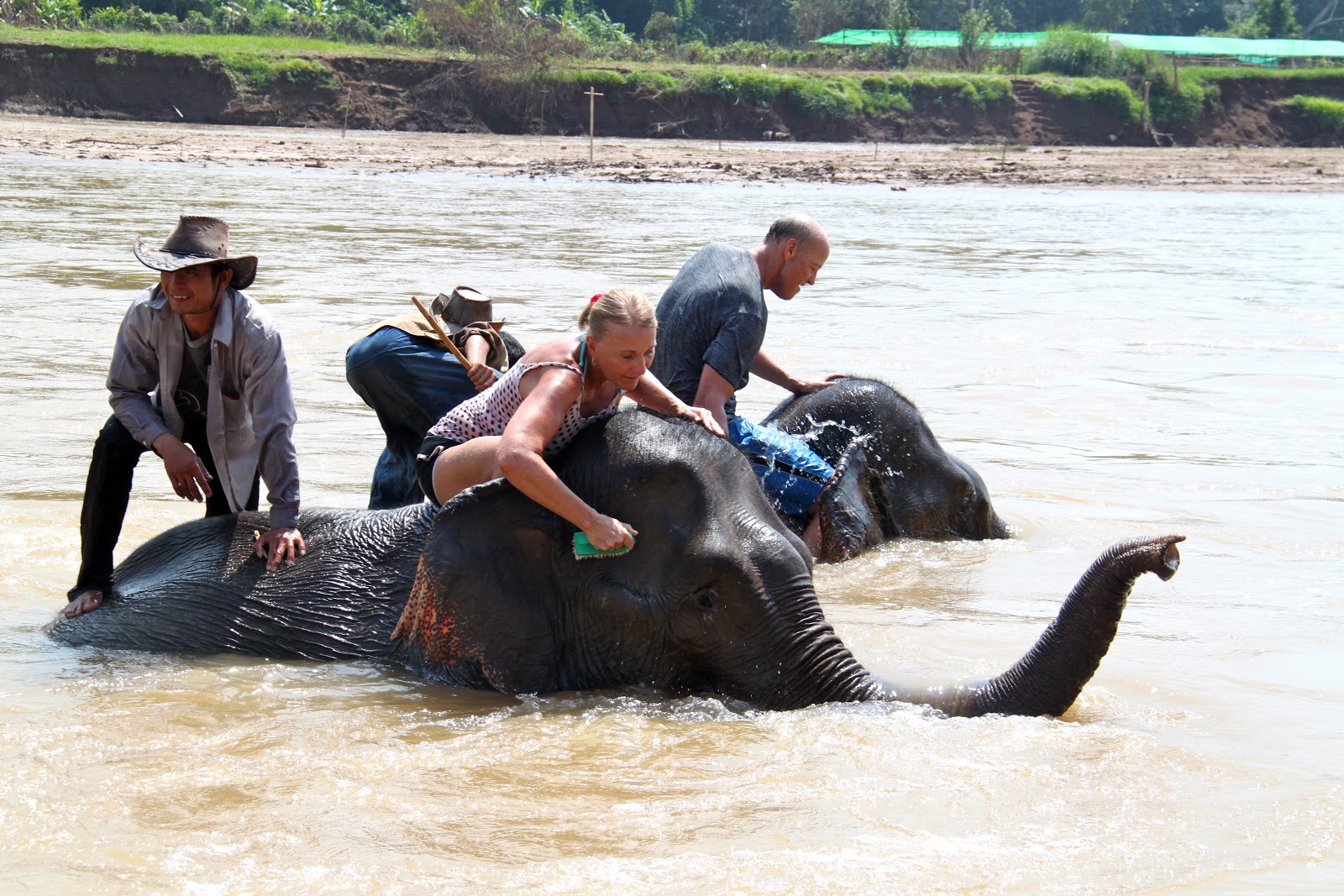
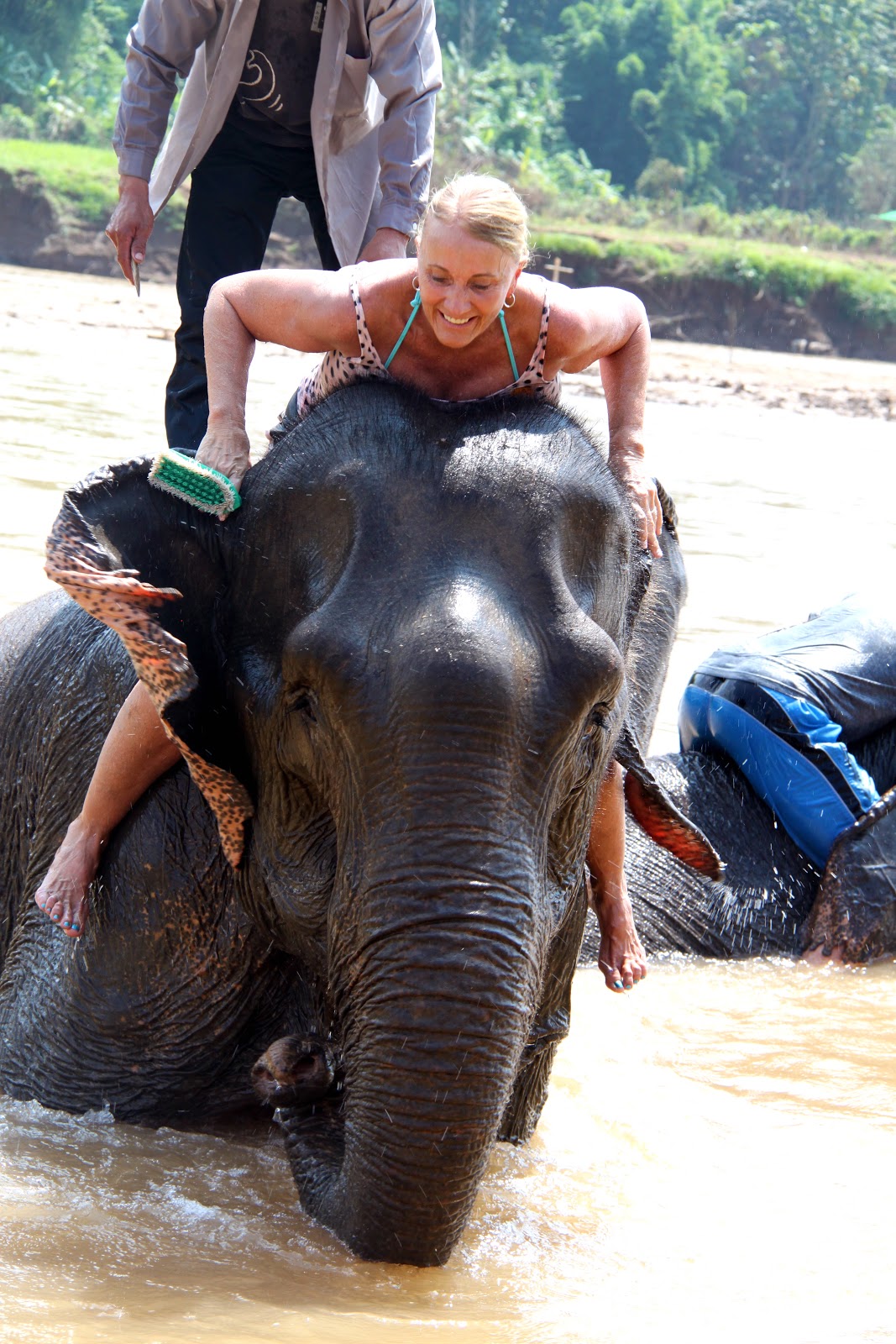
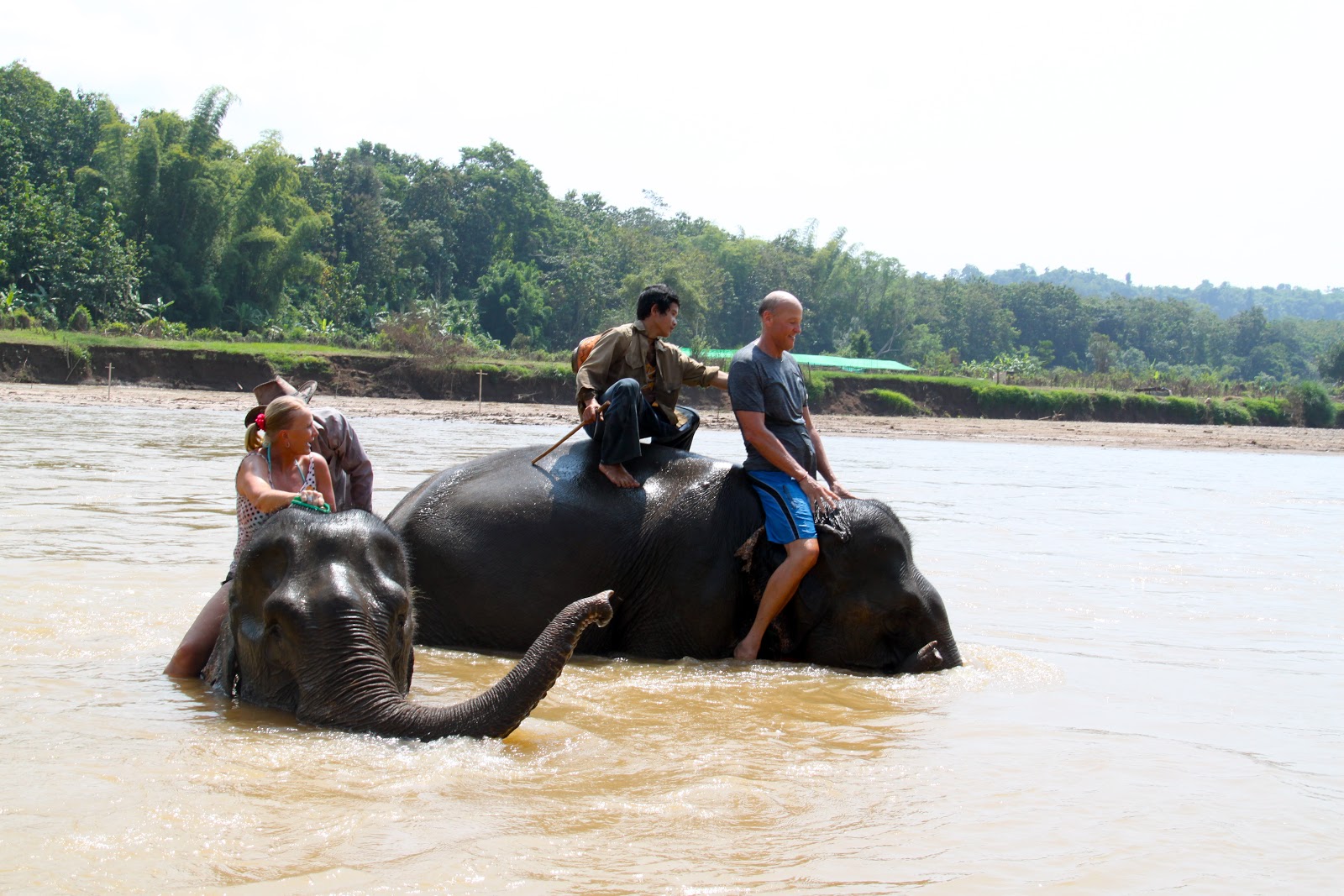
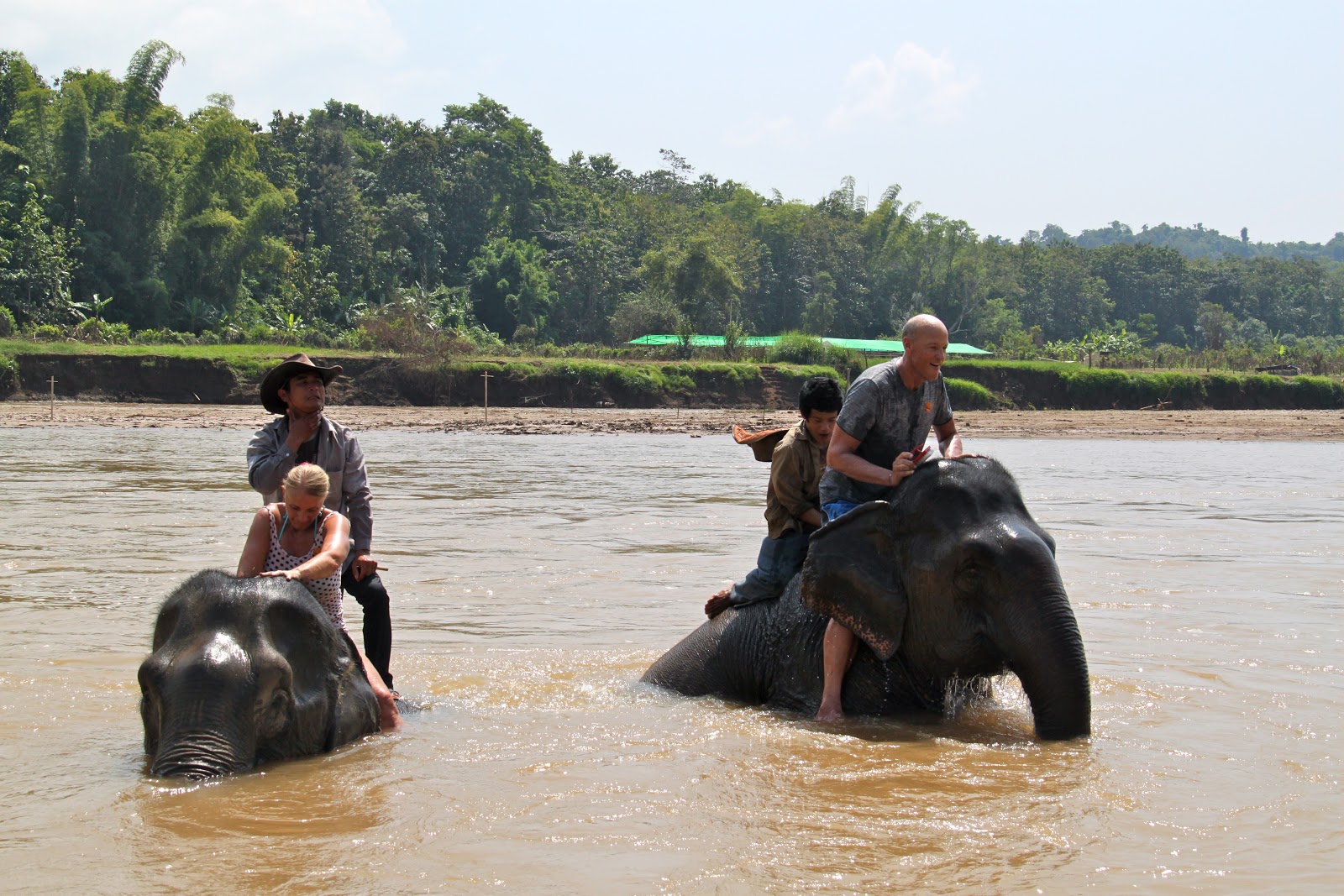
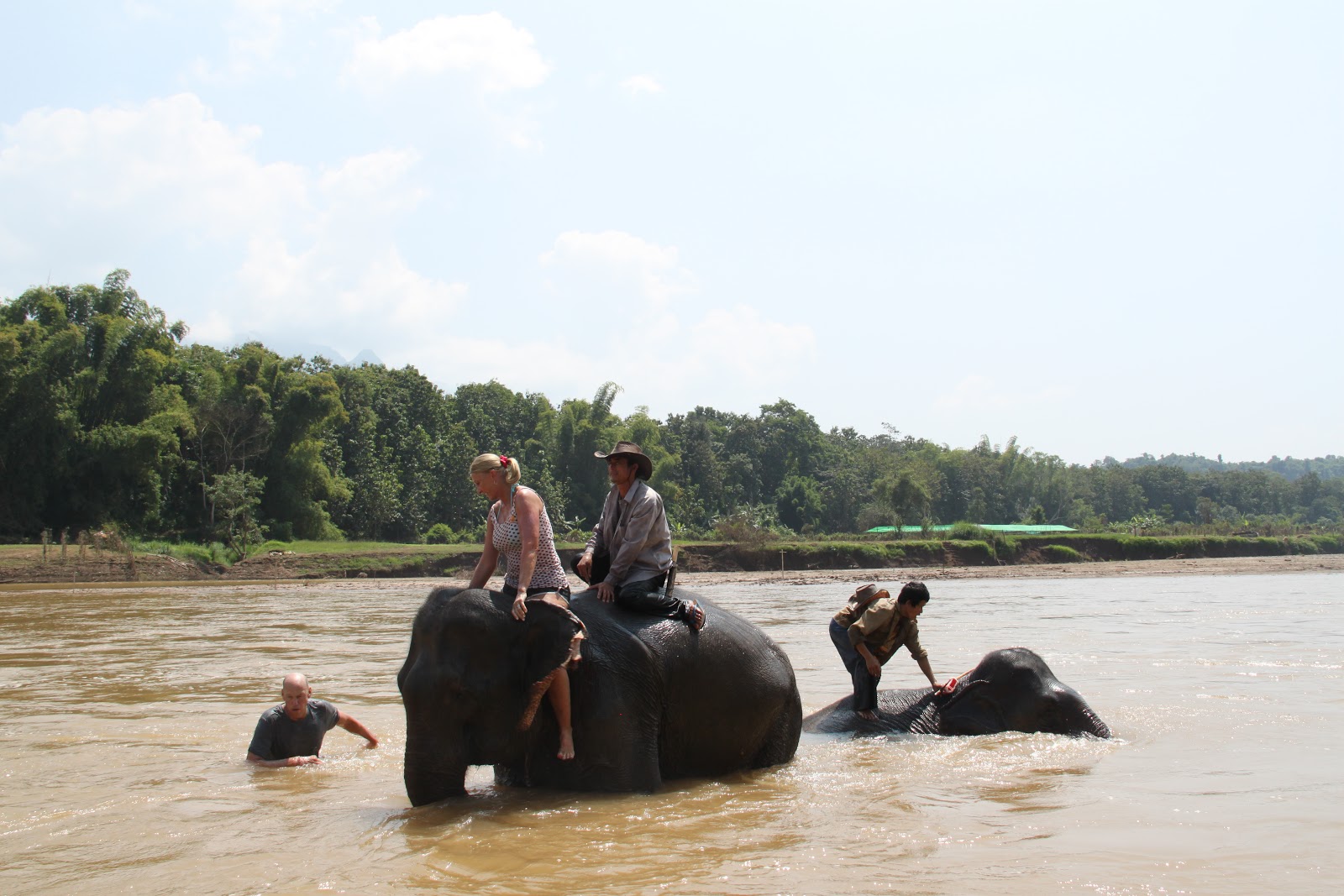
Then we each got on an elephant and took them down to the Nam Khan River to take a bath.  This was a blast!!

MAP.  The elephant gets down for us to climb up.
Whoa.  Hold on!

We drove our elephants down to the river.

Our elephants lay down in the river.  “MAP, MAP”.

They love their baths.
Scott’s elephant is being prompted to be a little naughty.

They like being scrubbed.

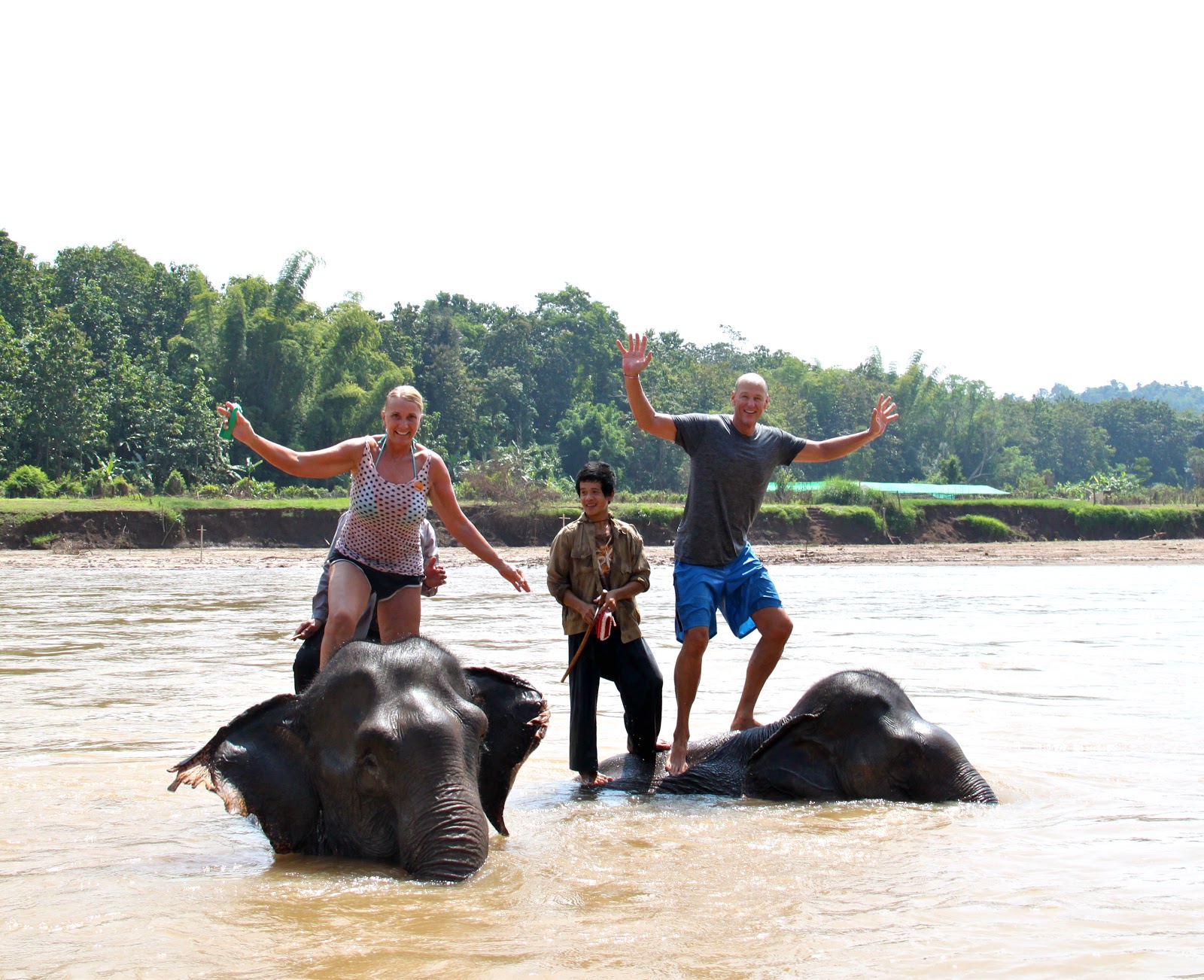
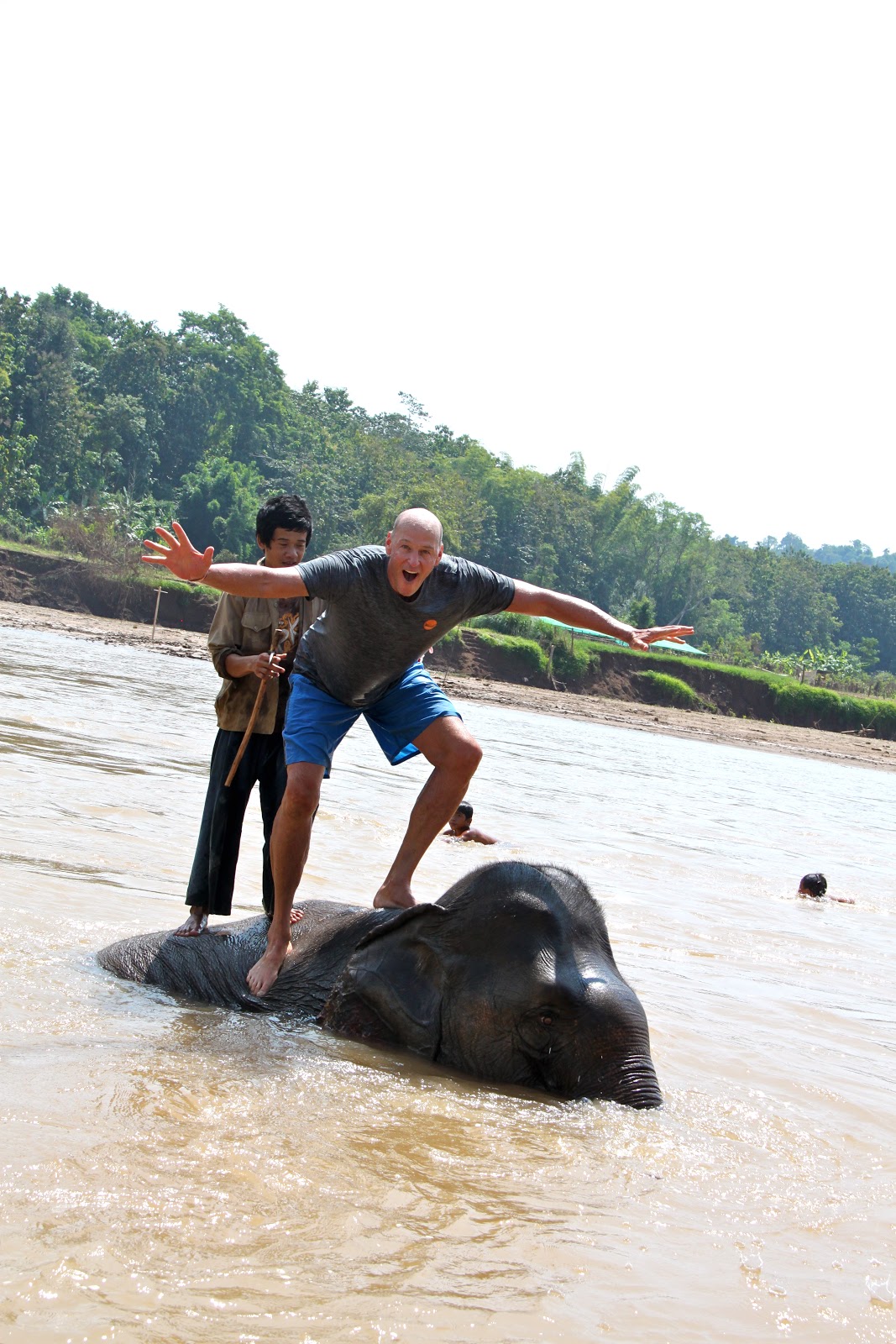
We stood on top of our elephants.

We scrubbed the ears and heads of the elephants.

Barb’s elephant loved to have her face scrubbed.

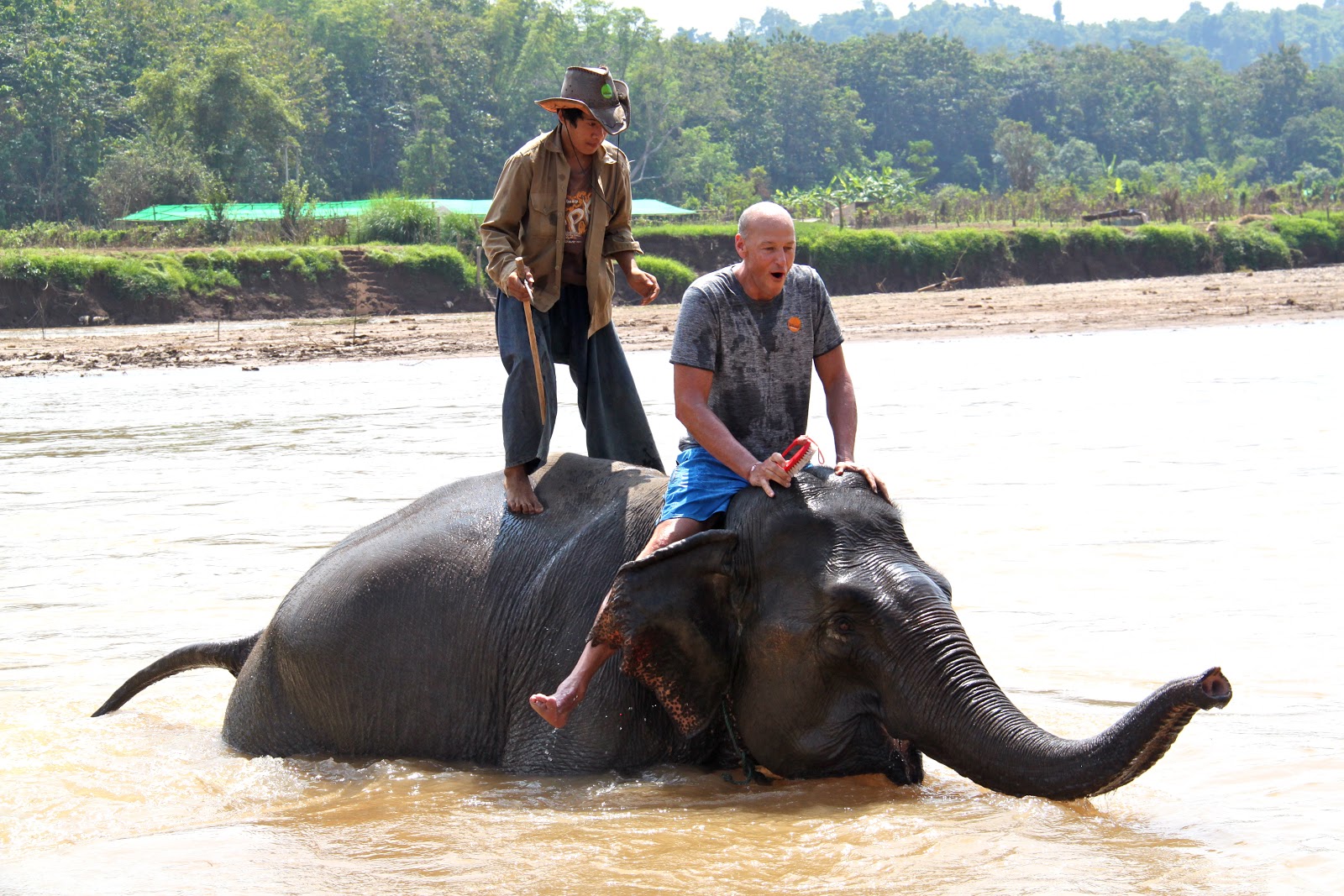
My elephant was a naughty girl and tossed me into the river three times.  I think my Mahout knew a special word to instruct my elephant how to toss her trunk up and down and splash and shake her head wildly.  My elephant would stand up and thrash her trunk in the water and then she would sit down in the water again.  This makes it very difficult to stay on top of the elephant and three times I was launched from the back of my elephant and into the river.  I am glad there are no crocodiles in this river.

Getting thrown into the river

The current was quite swift.

This is got to be the most fun you could ever have with an elephant!

How often do you get a chance to take a bath with an elephant?
After our elephant bath we said “KOP CHAI LIE LIE” to thank our elephants and waved goodbye.
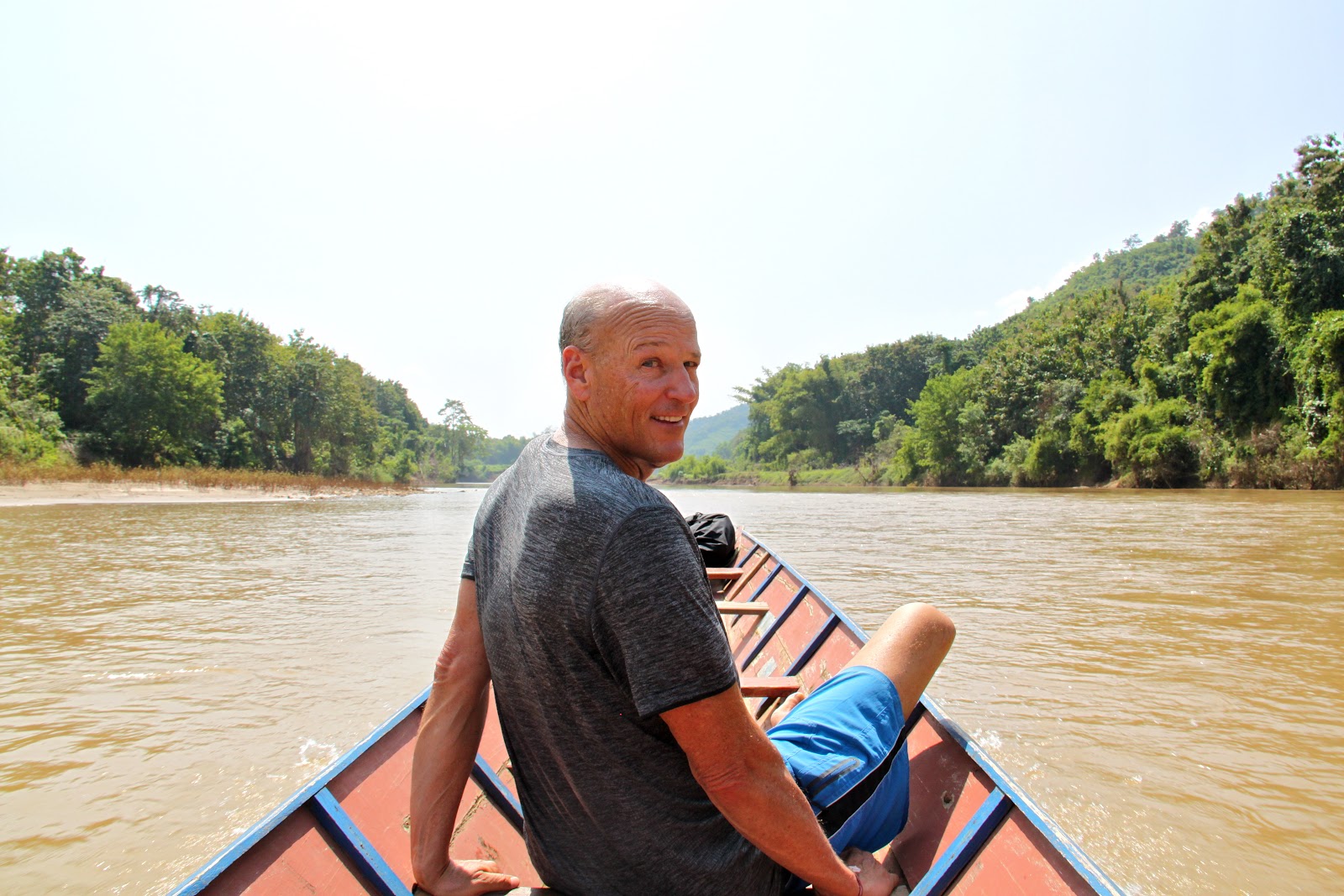
We then jumped in a long boat with a long motor and our guide drove us up river to the site of some river falls that were fantastic.  The Lao people farm and fish along the rivers.  They net and set traps for the fish.

Taking a long boat upriver to the waterfalls
Where the falls run into the river

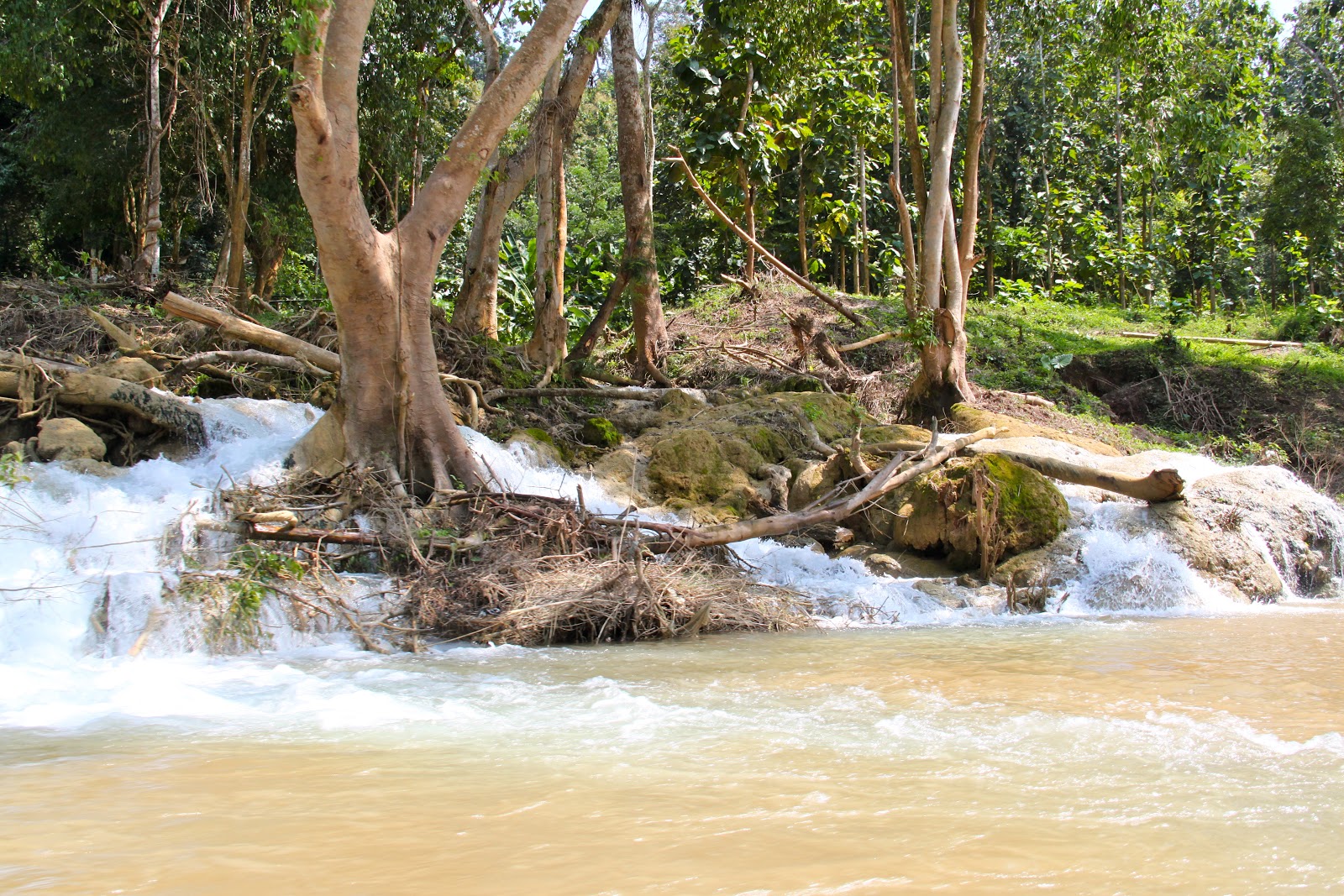
The river falls were beautiful.  They were a series of cascades stretching for a few hundred yards.  We began to climb up the falls.
Let’s go.
In some places the water was so swift we thought it would knock our feet out from under us.
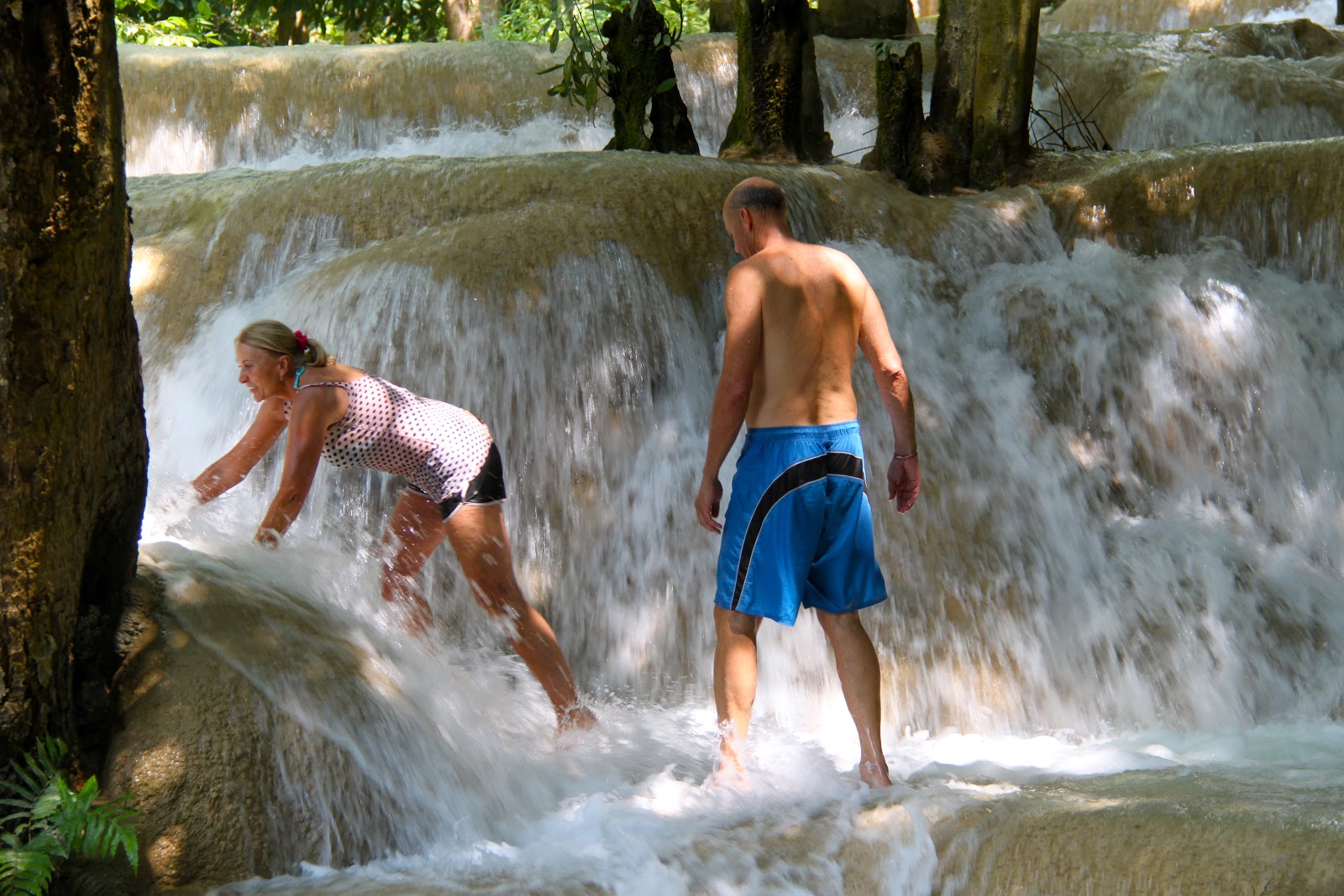
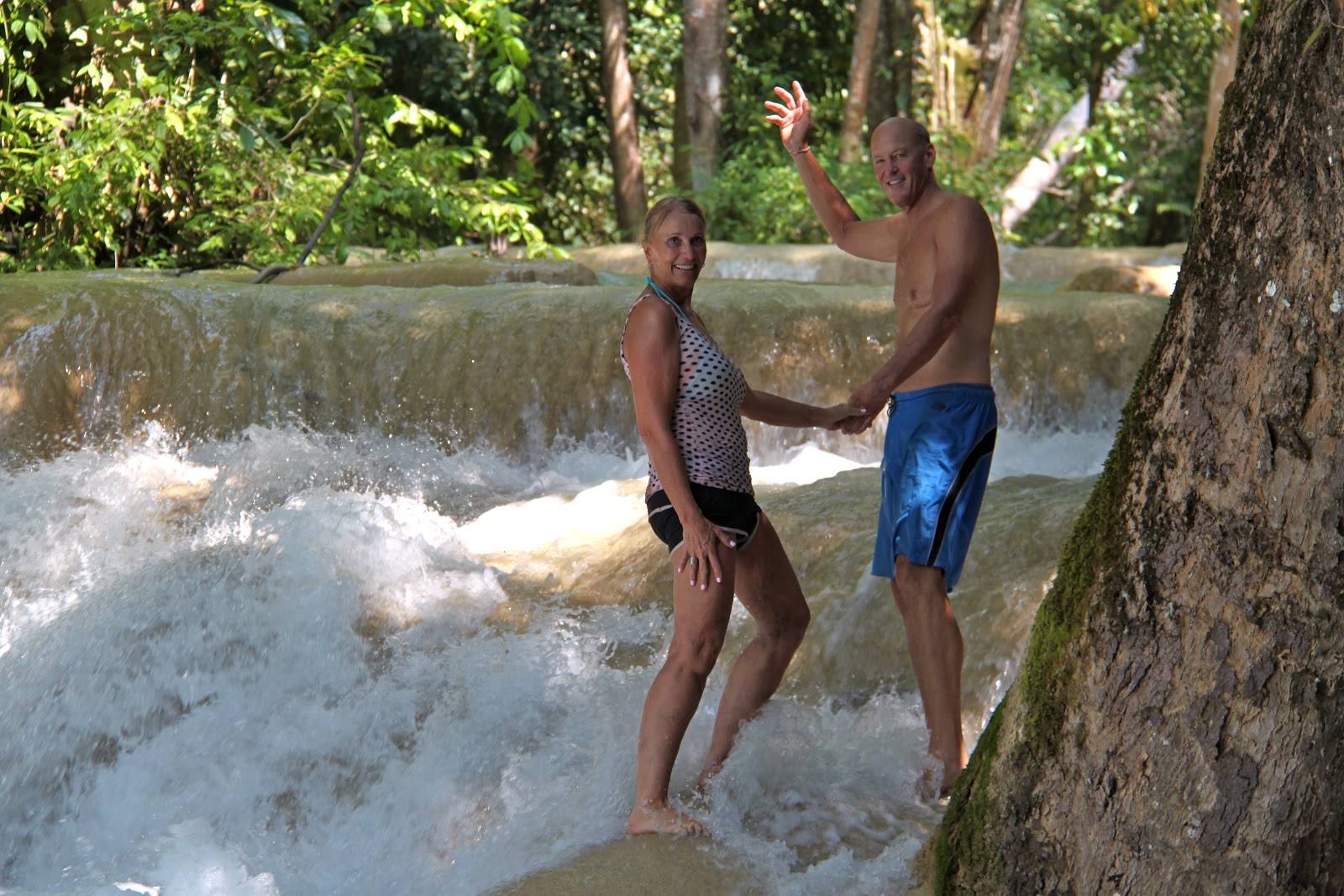
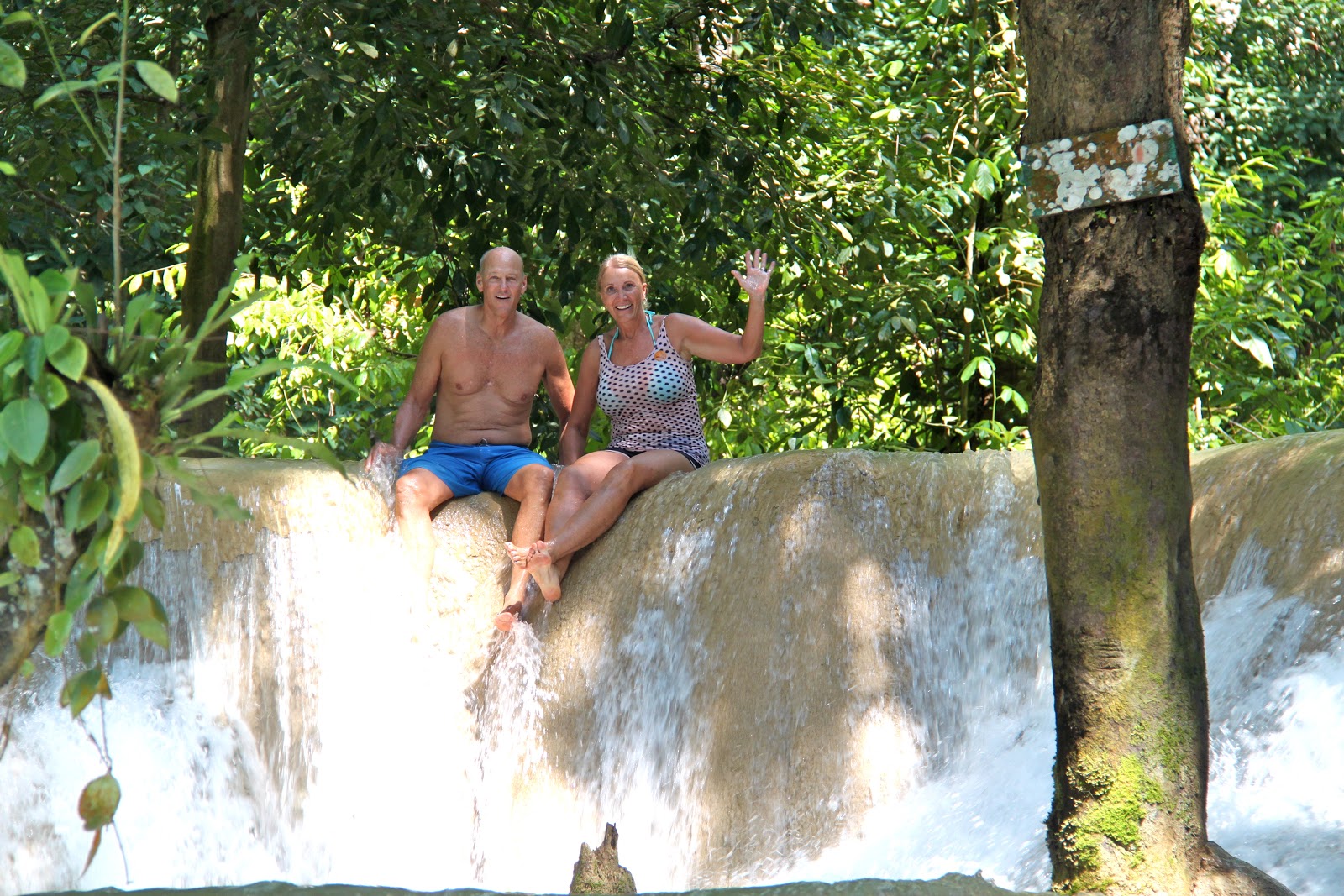
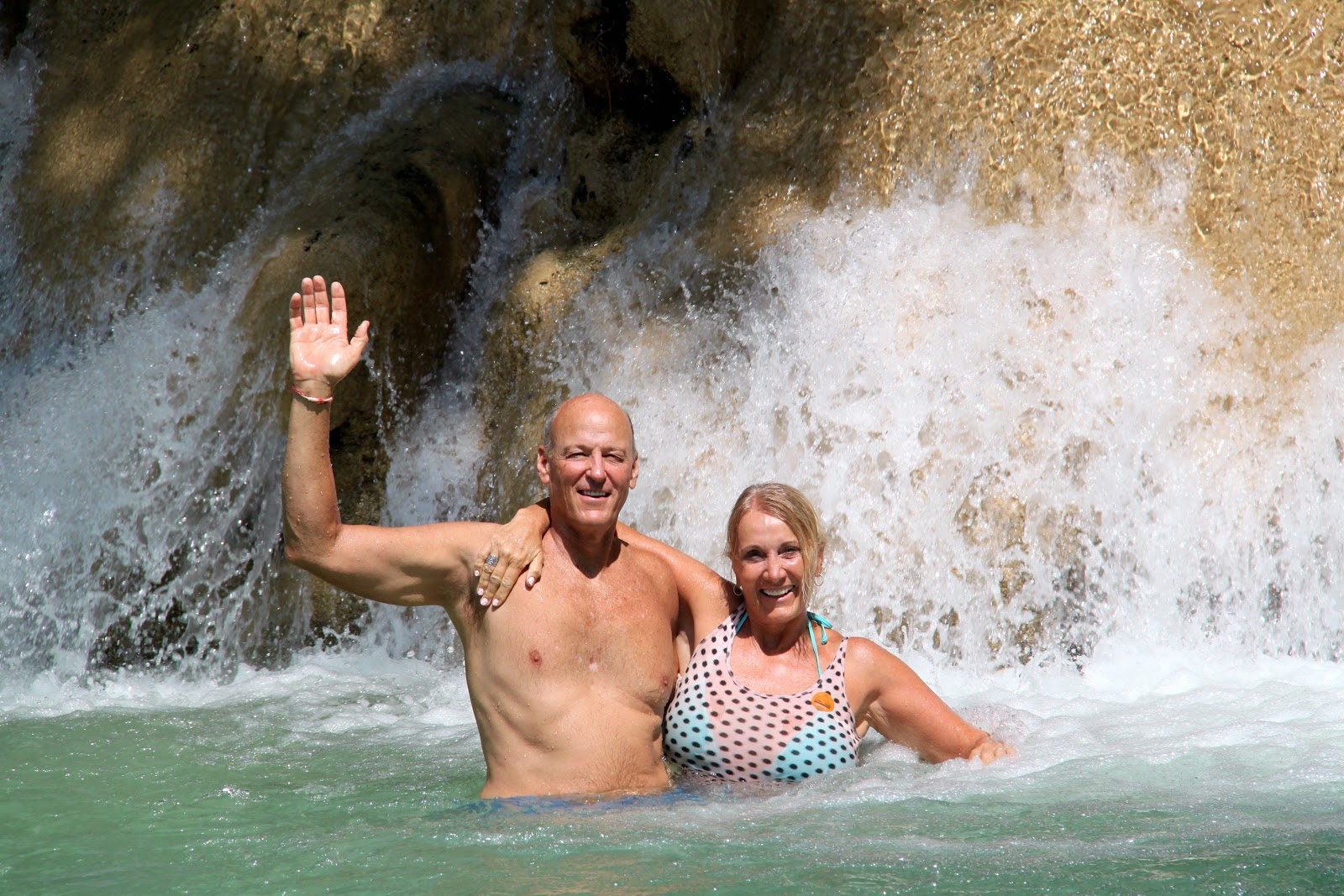
We sat down along the way to enjoy the views and the sensation of water rushing around us.
There were pools that looked like they were formed in the shape of hot tubs but this water was cold, but tolerable.
I didn’t think Barb would keep climbing up the waterfall but she kept going so I followed. 
Barb was the first to jump off the rope swing.  Barb is CRAZY!!!
I was not going to do it but I had to do it after Barb did it.
Weee Weee Weee Weeeeeeeeee

Heading back to the boat

Back down the river

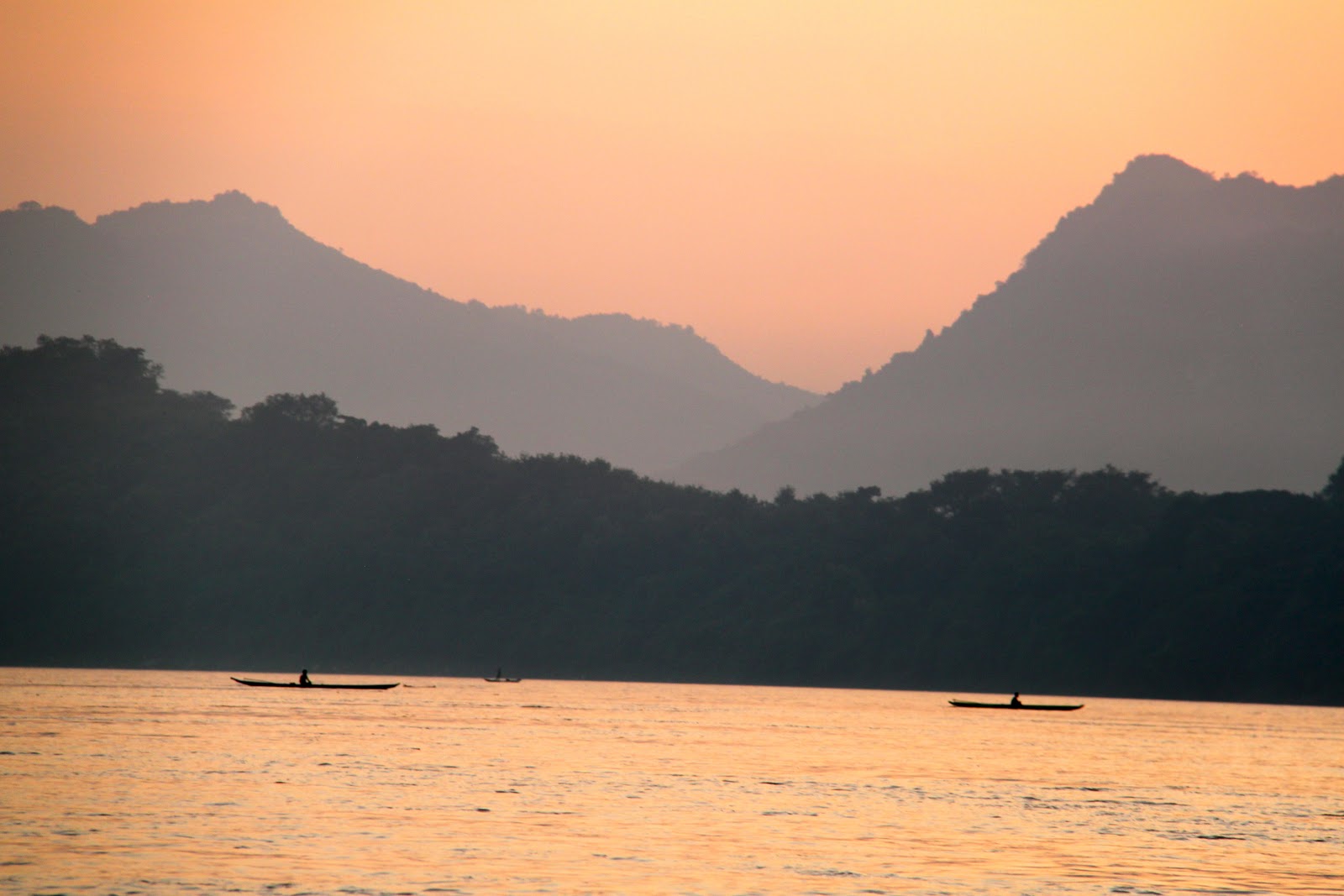
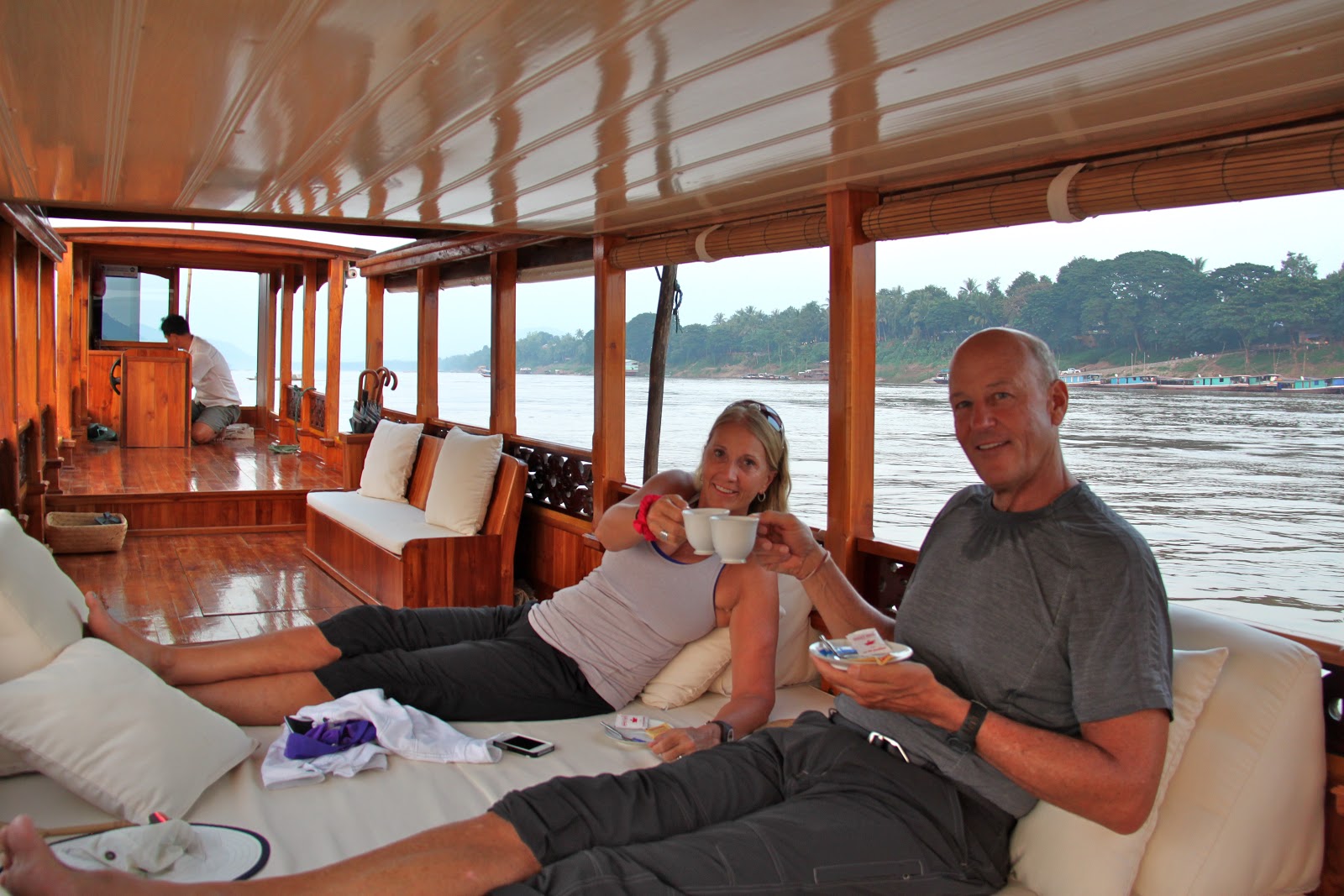
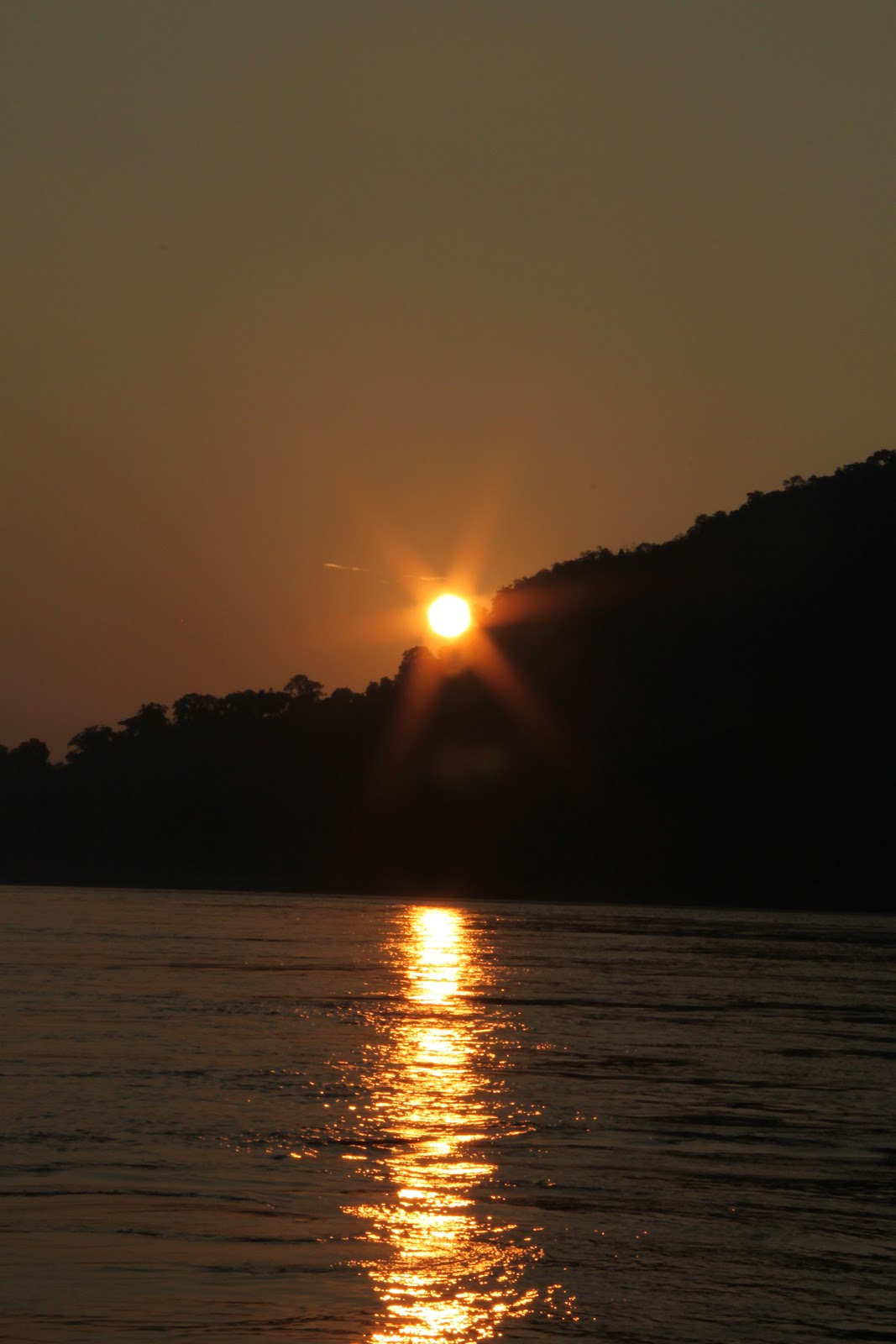
Later that night we hired a captain and took a guide from the hotel for a sunset boat ride on the MEKONG RIVER.  (You can never do too many things in one day)

Our private boat
Another romantic date.

We climbed a couple of hundred vertical steps to a Buddhist Temple.

No need to go to the gym and use a stair climber.
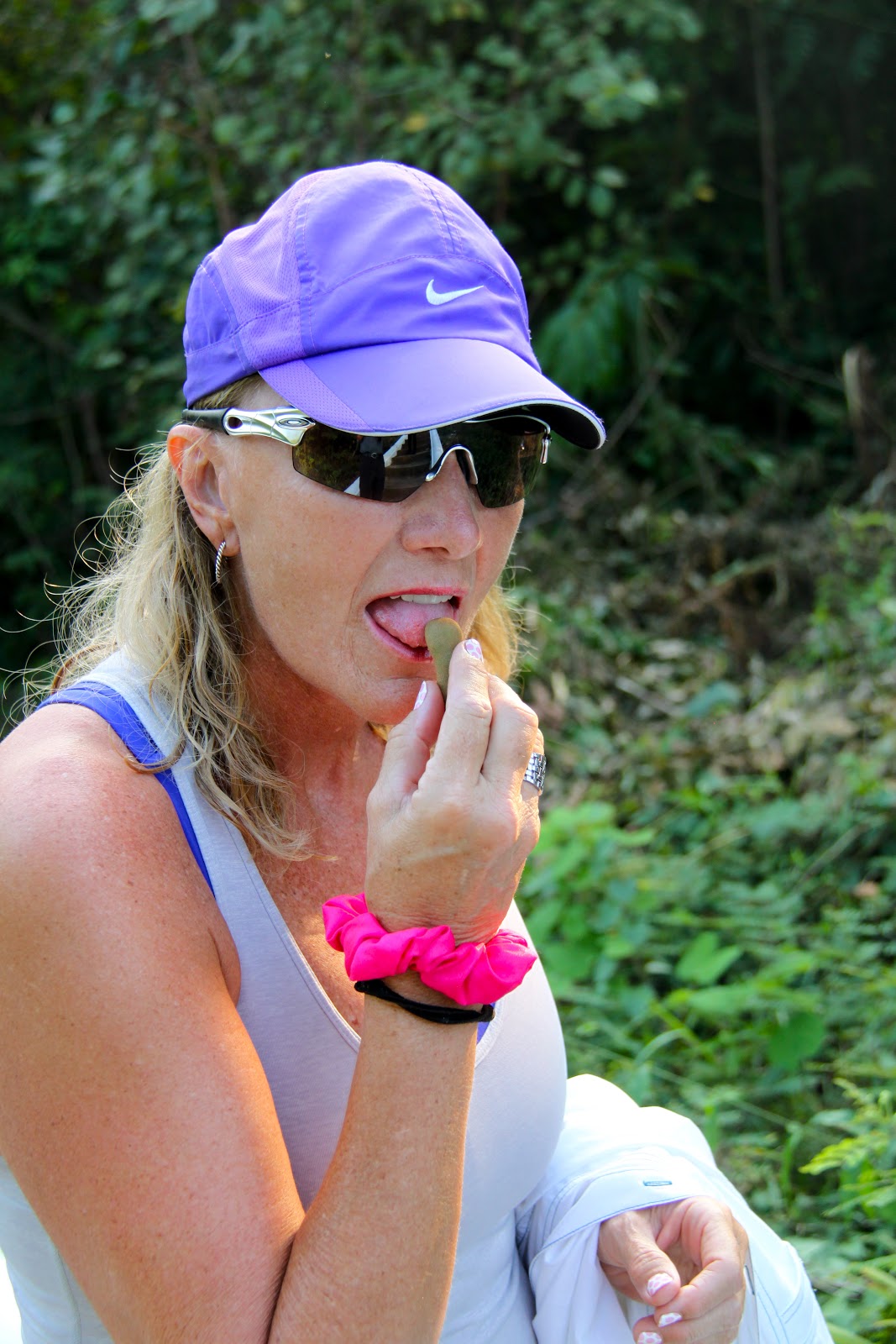
Barb testing a piece of fruit from a tree.
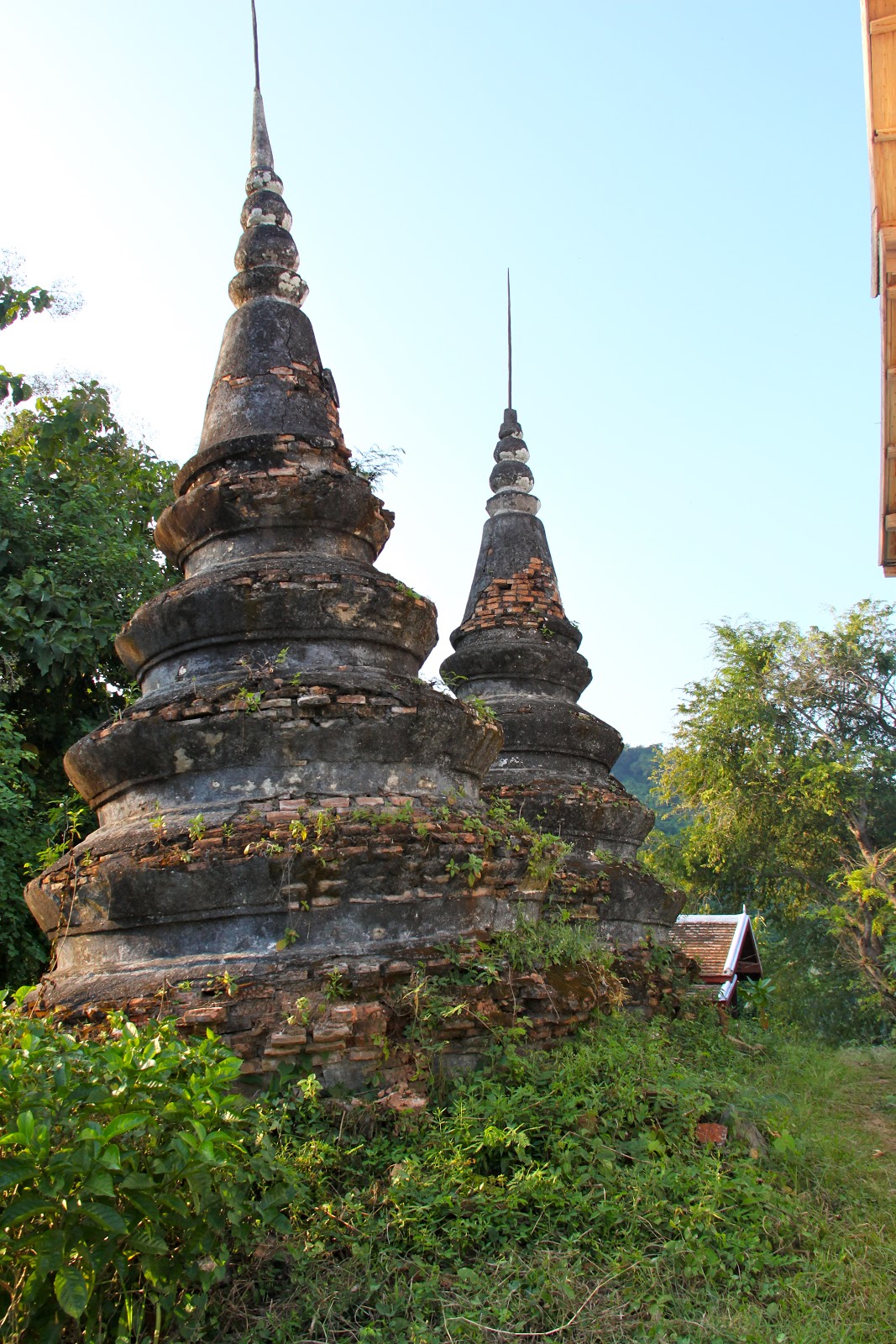
Stupas at the Buddhist Temple
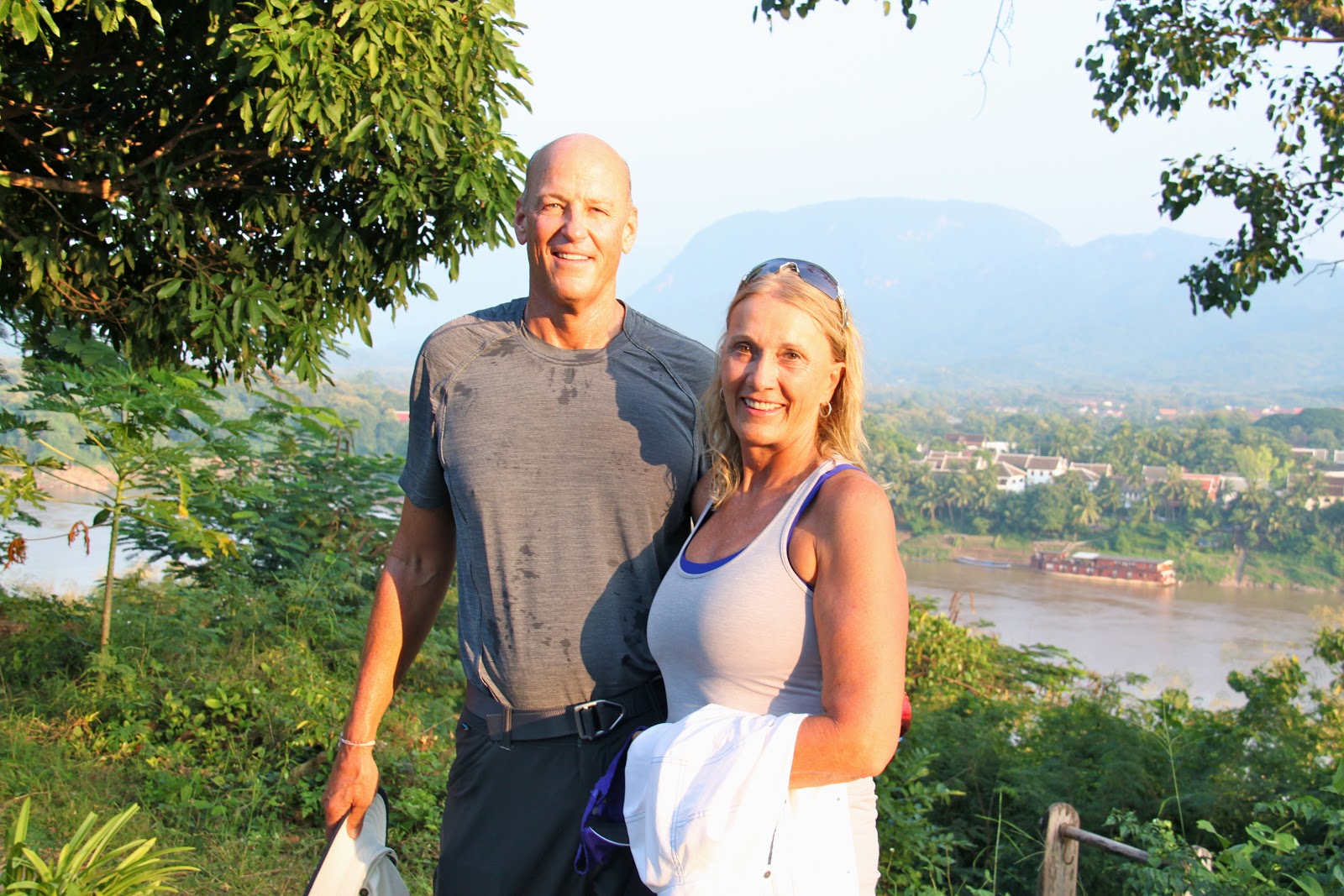
View from the top of the temple

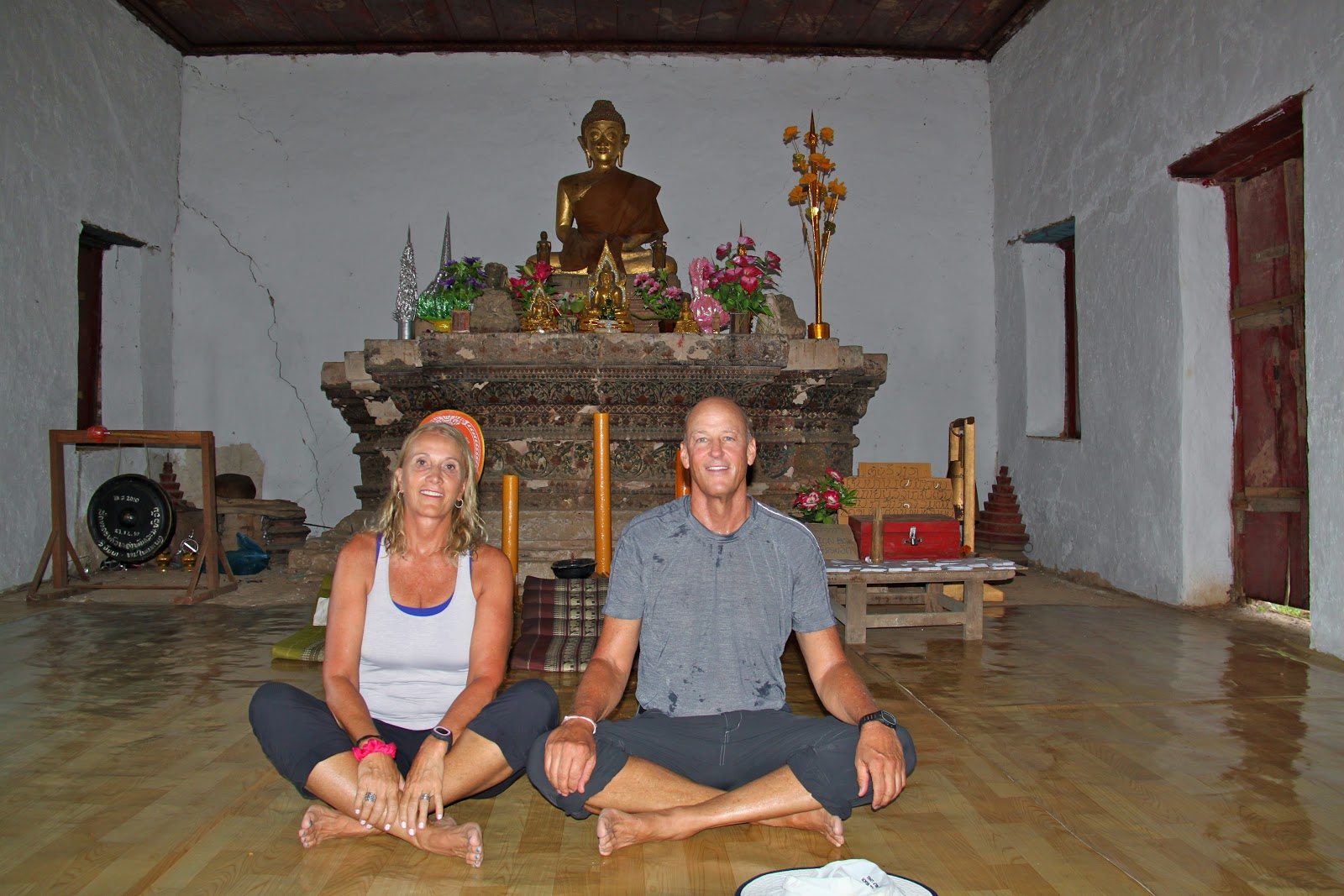
We went inside to make and offering and donation to the Monks.

This was a very small temple

Our guide was a “novice” Monk until he was 17. His mother became deathly ill and his father wanted him to quit being a Monk and come home.  He went home and his mother died within the week.  His father wanted him to stay home.  Now he has a girl friend that is 18 (he is 28) and he wants to get married soon.

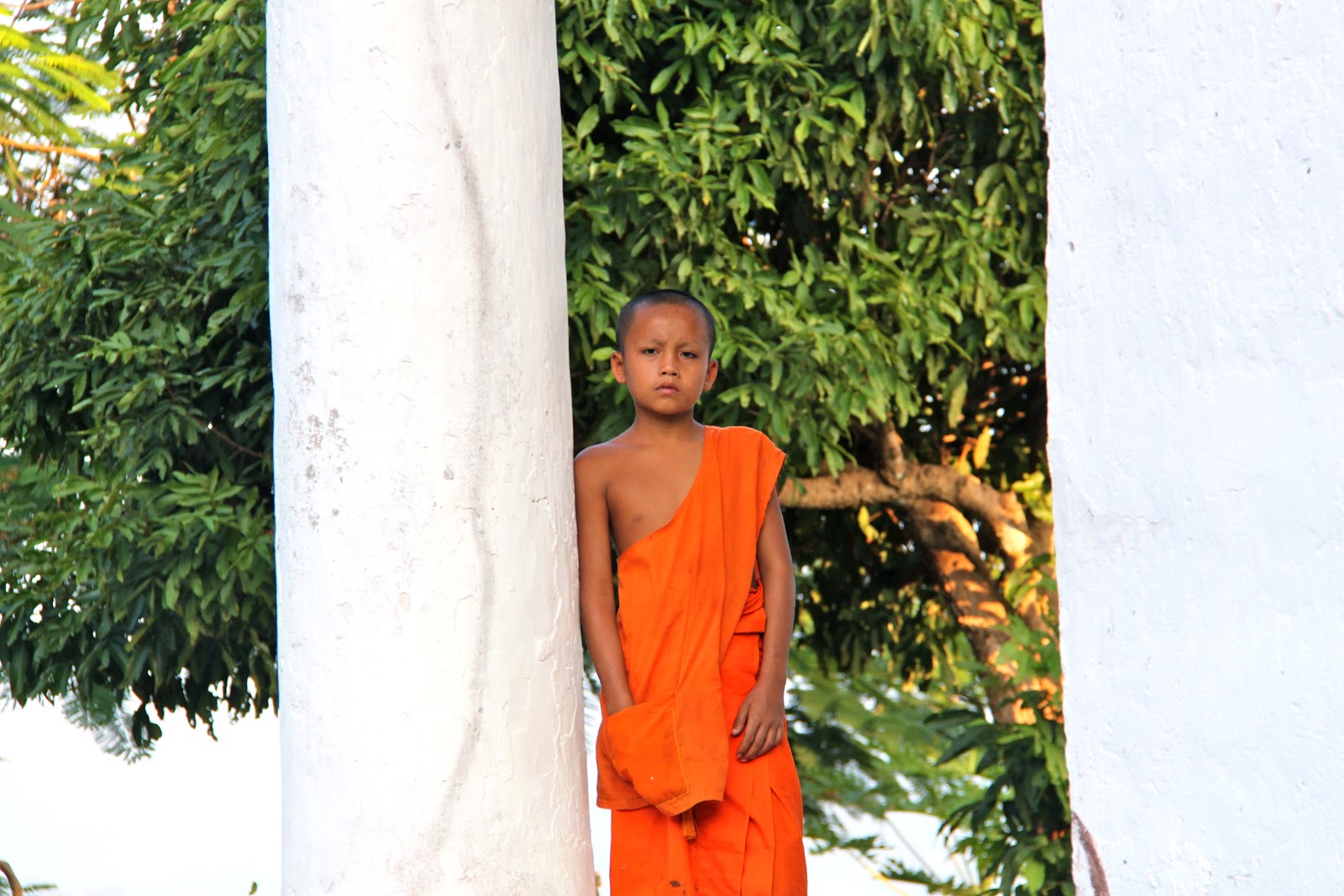
All Monks are “Novice Monks” until they reach the age of 20.  Then, if they commit to keep all 227 rules they are accepted and ordained to be a full Monk.  At that time they cover both shoulders with their robes.  Novice monks only cover one shoulder with their robes.  Novice monks only have 10 rules to follow.  Don’t kill, don’t steal, don’t lie, don’t have sex or girl friends and don’t lust, don’t drink or take intoxicants, don’t dance or sing or party, don’t eat after 12:30 in the afternoon, don’t wear lotions, perfume or wear decorative accessories, don’t earn money, and refrain from sitting on luxurious furnishings or soft beds and don’t sit higher than the high monk.

This young novice monk was at the temple
A beautiful evening view from the boat 

A sunset toast.
Beautiful romantic sunset cruise.

Laos is so undeveloped and so pristine.  We wonder what this might look like in 10 years after tourists discover the beauty of Laos and its people.  We are grateful to have the chance to travel together and discover wonderful places like Luang Prabang, LAOS.

While we are thinking about the wonders of Laos we went to the spa and have a Lao massage.  It was something like a Thai massage only more gentle and not as forceful.  They give you clothing that makes you feel like you are suiting up for your first lesson of Kung Fu.  But then they lay you down on a large mat and start pressure point work followed by yanking on and massaging different parts of your body.  At one point I was going to yell “uncle” since I thought she was trying to pin me to the mat but I bit my lip instead. 

Our hotel was the Residence d Phou Vao owned by Orient Express.

Our Bedroom

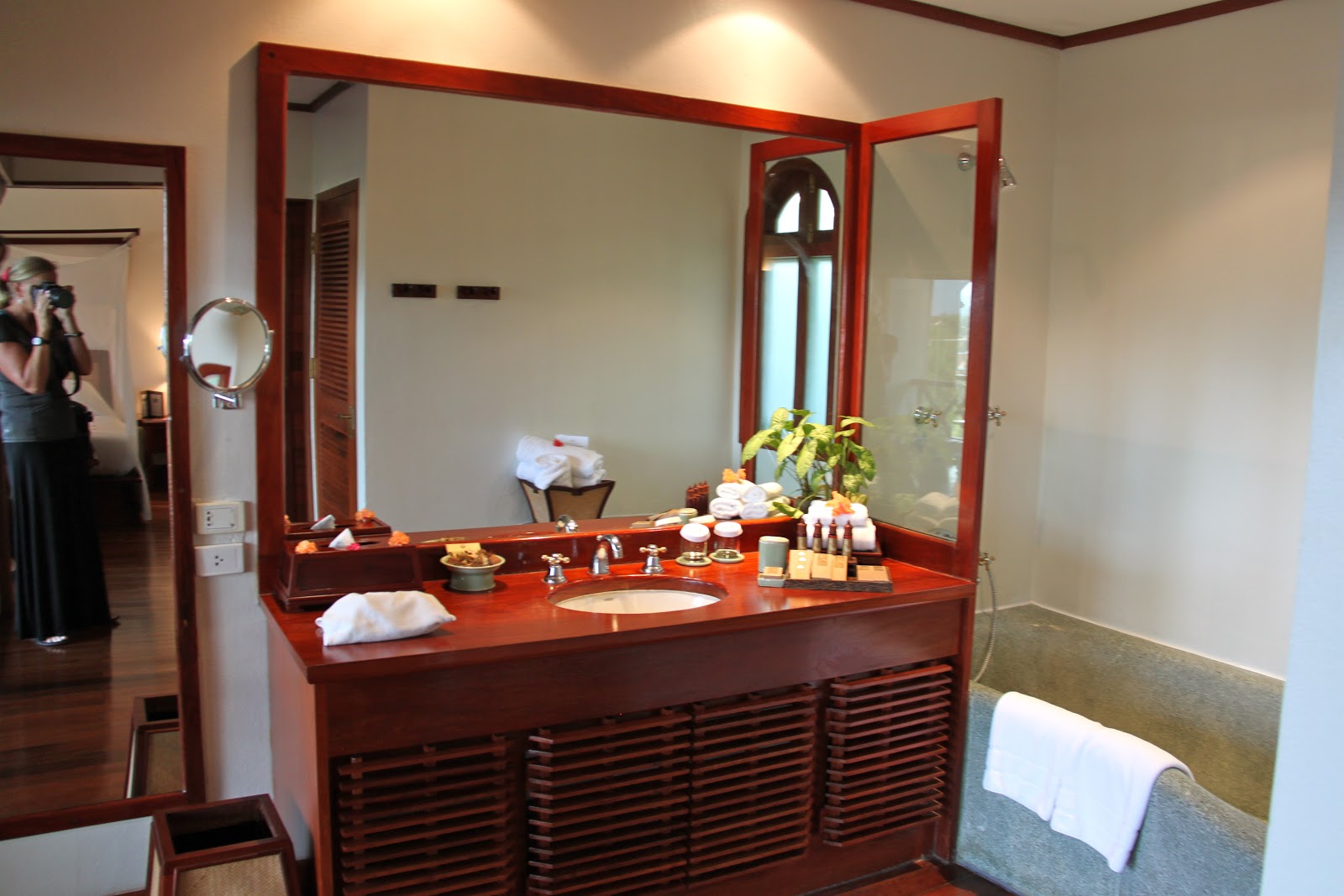
Bathroom

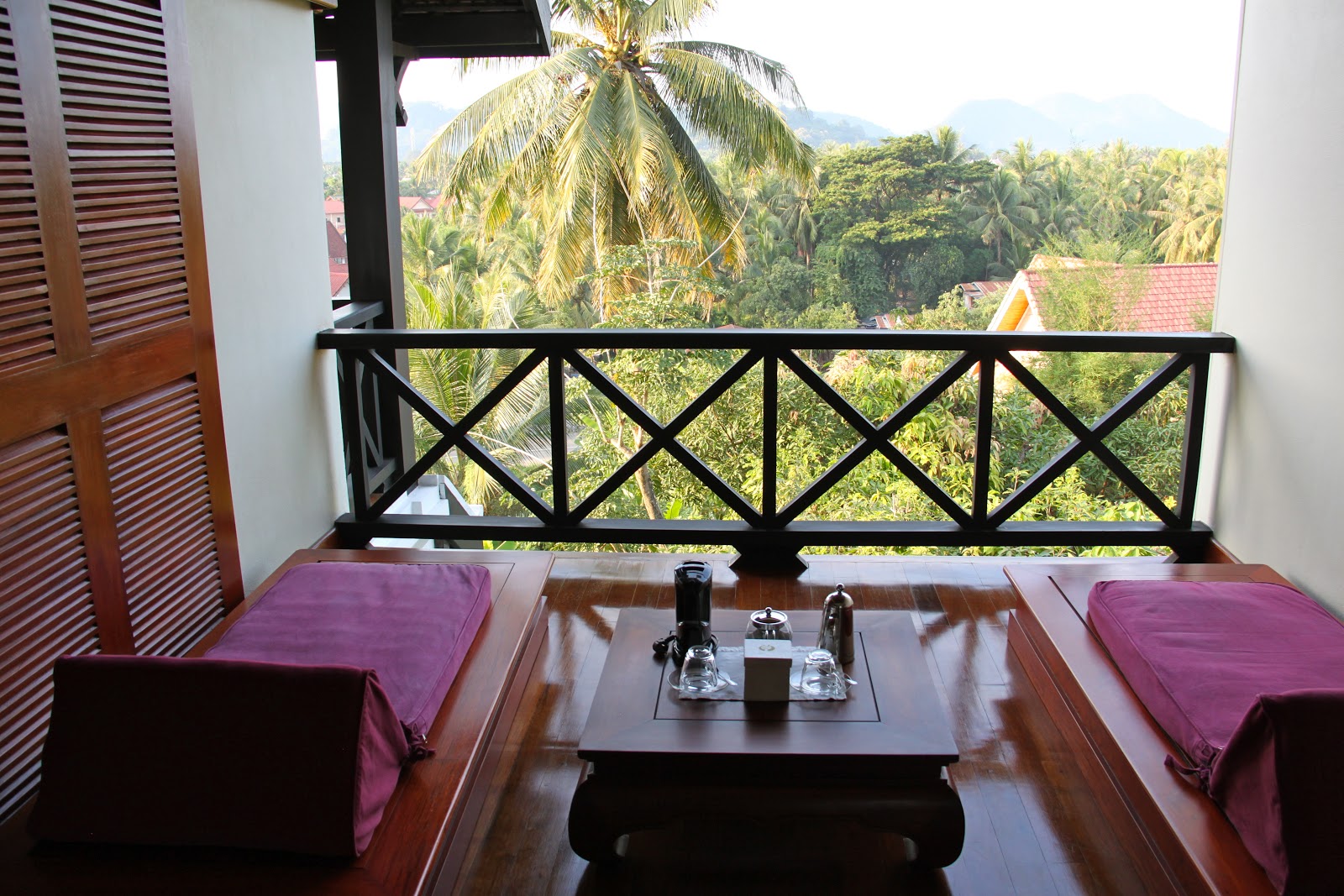
Patio

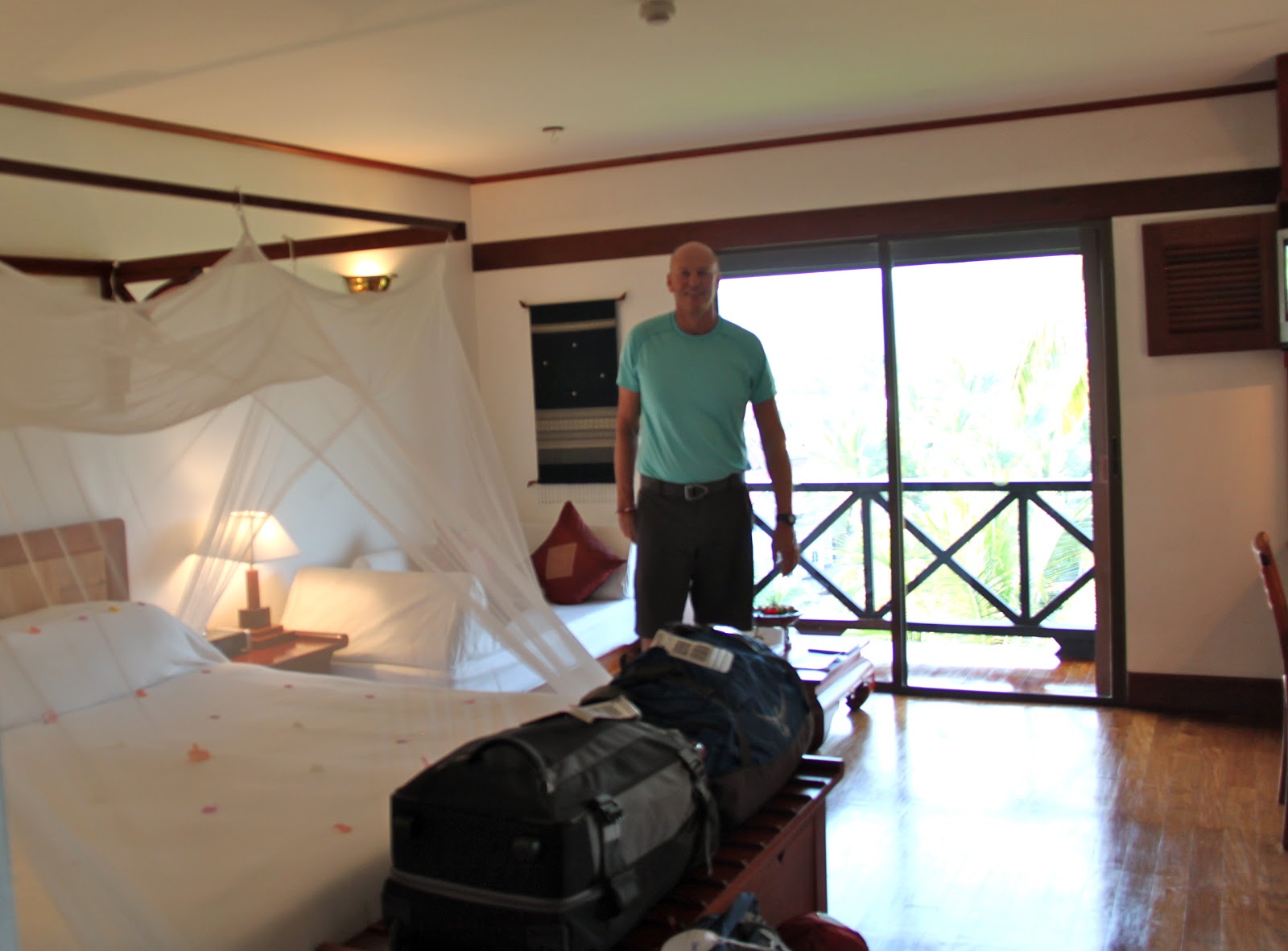
View out of our window

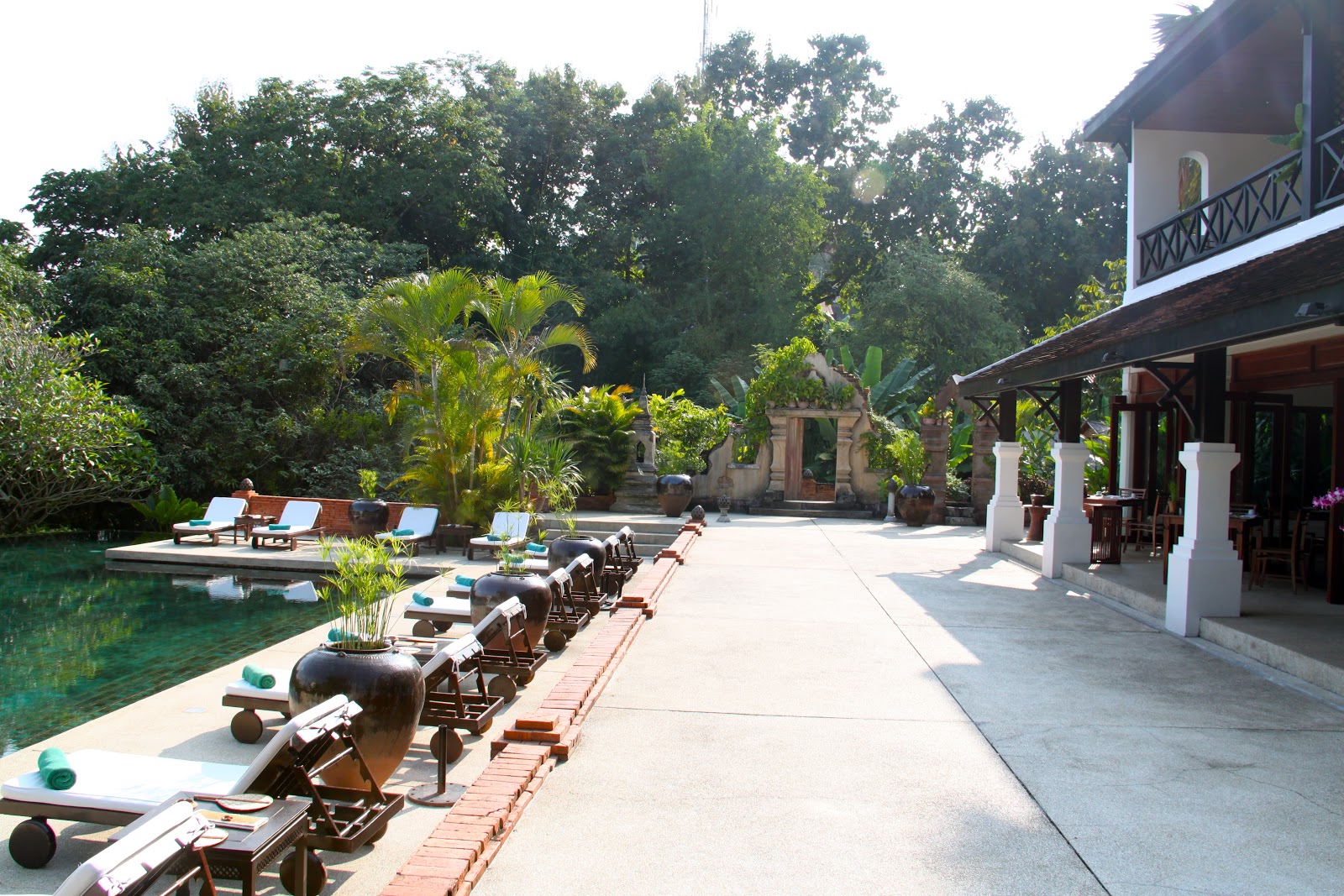
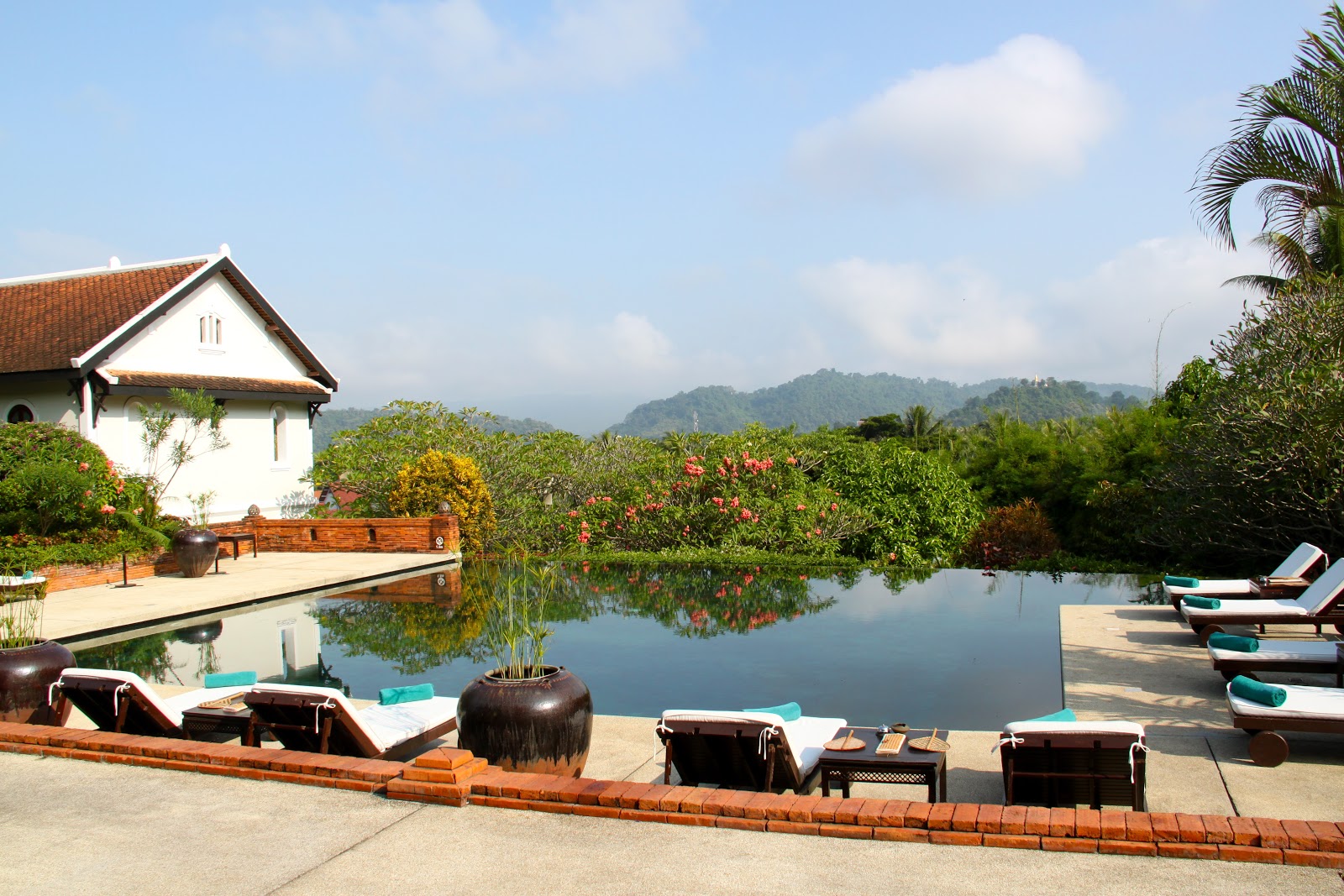
Pool

Dining

Pool

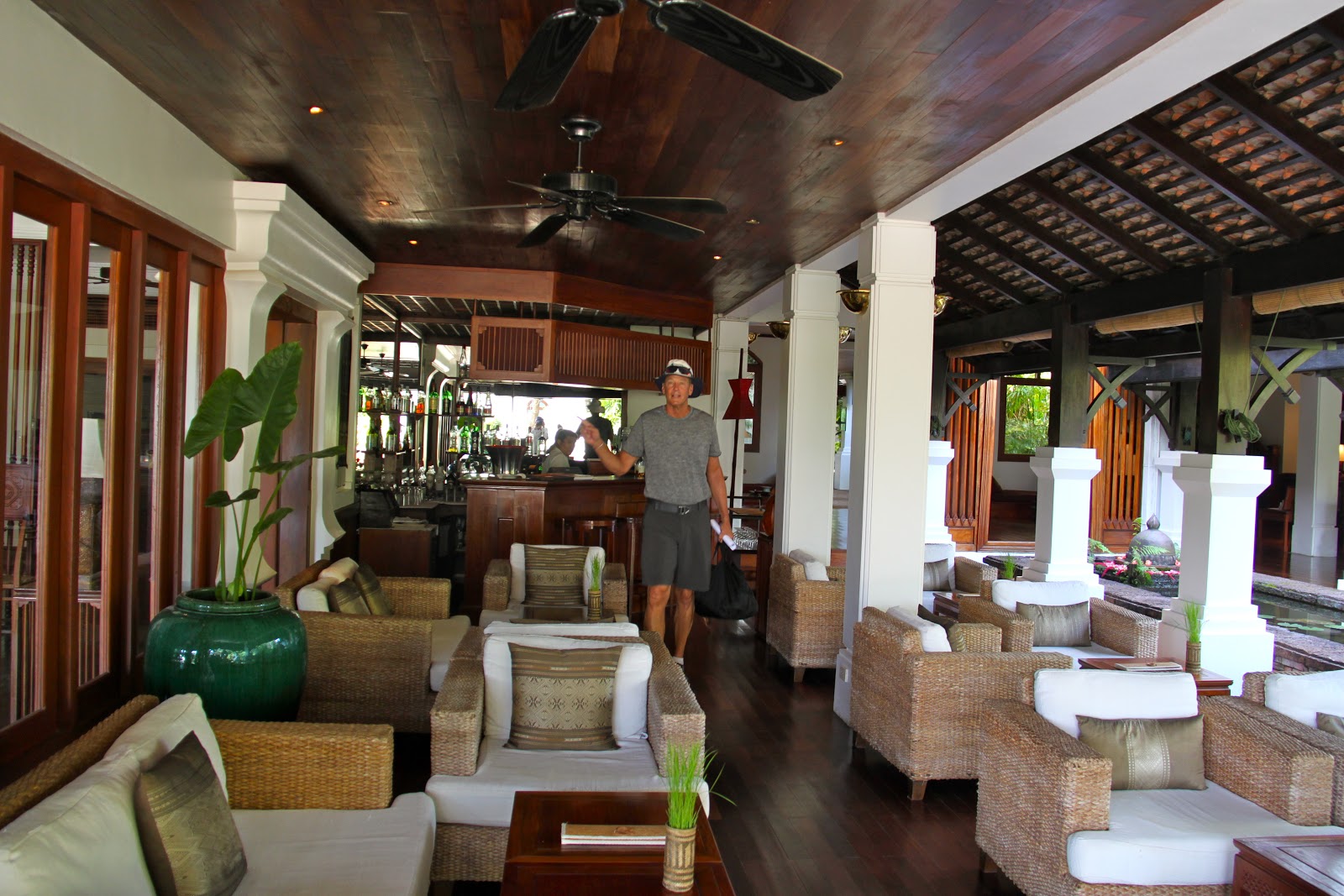
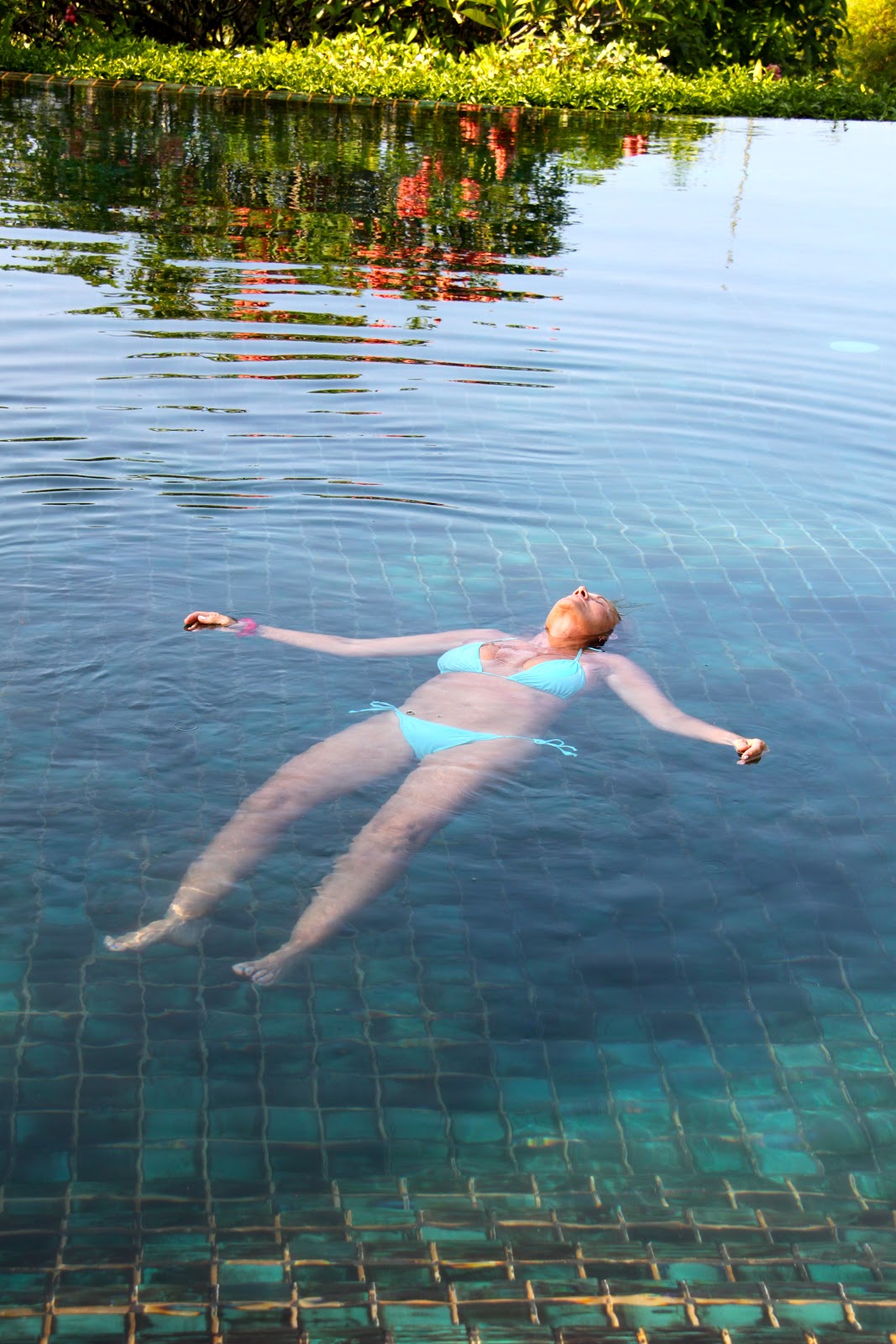
Barb floats to relax

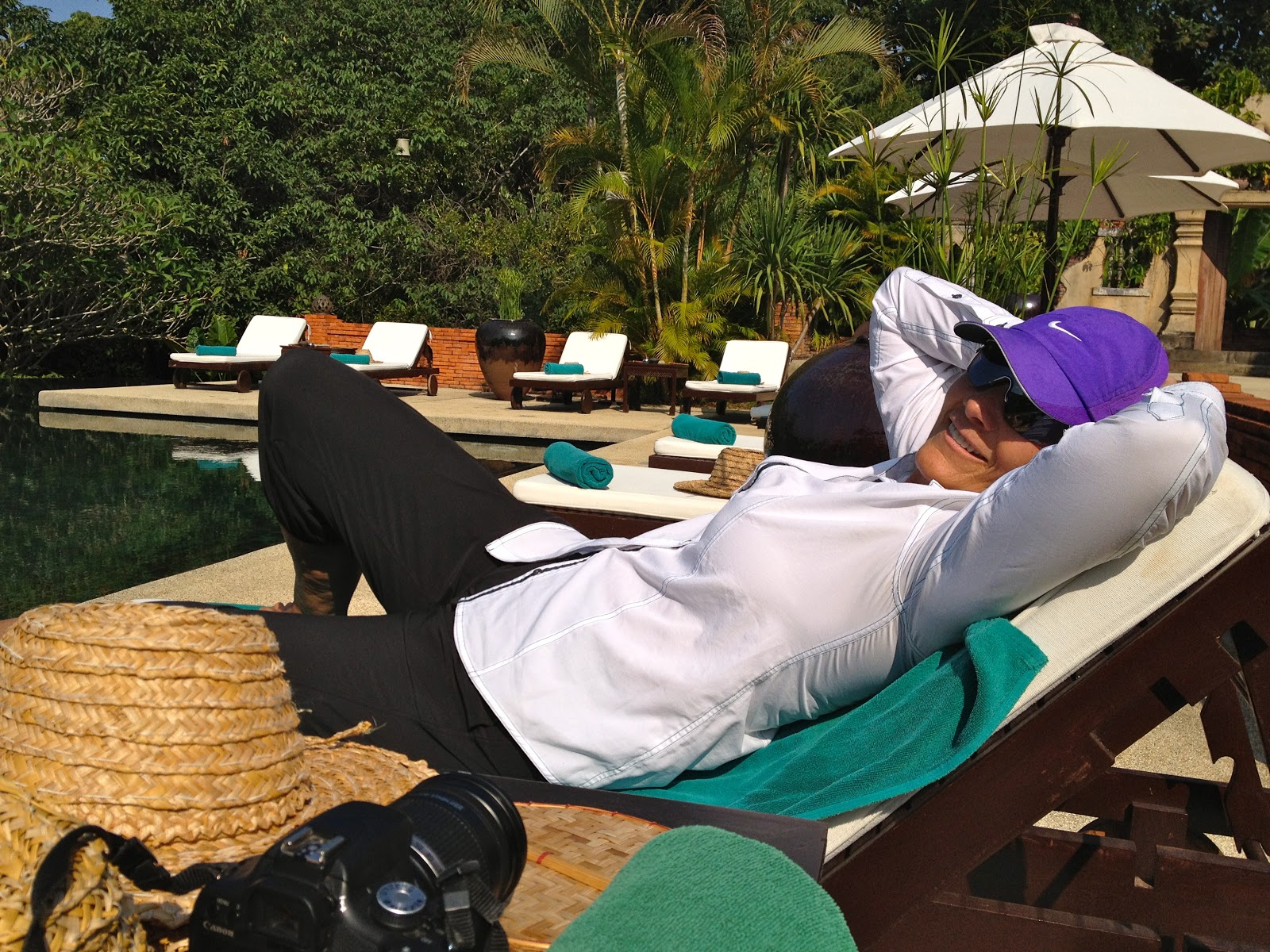
Hanging out at pool

Amazing flowers

Chiang Mai, Thailand Oct. 7-9, 2012

Chiang Mai, Thailand
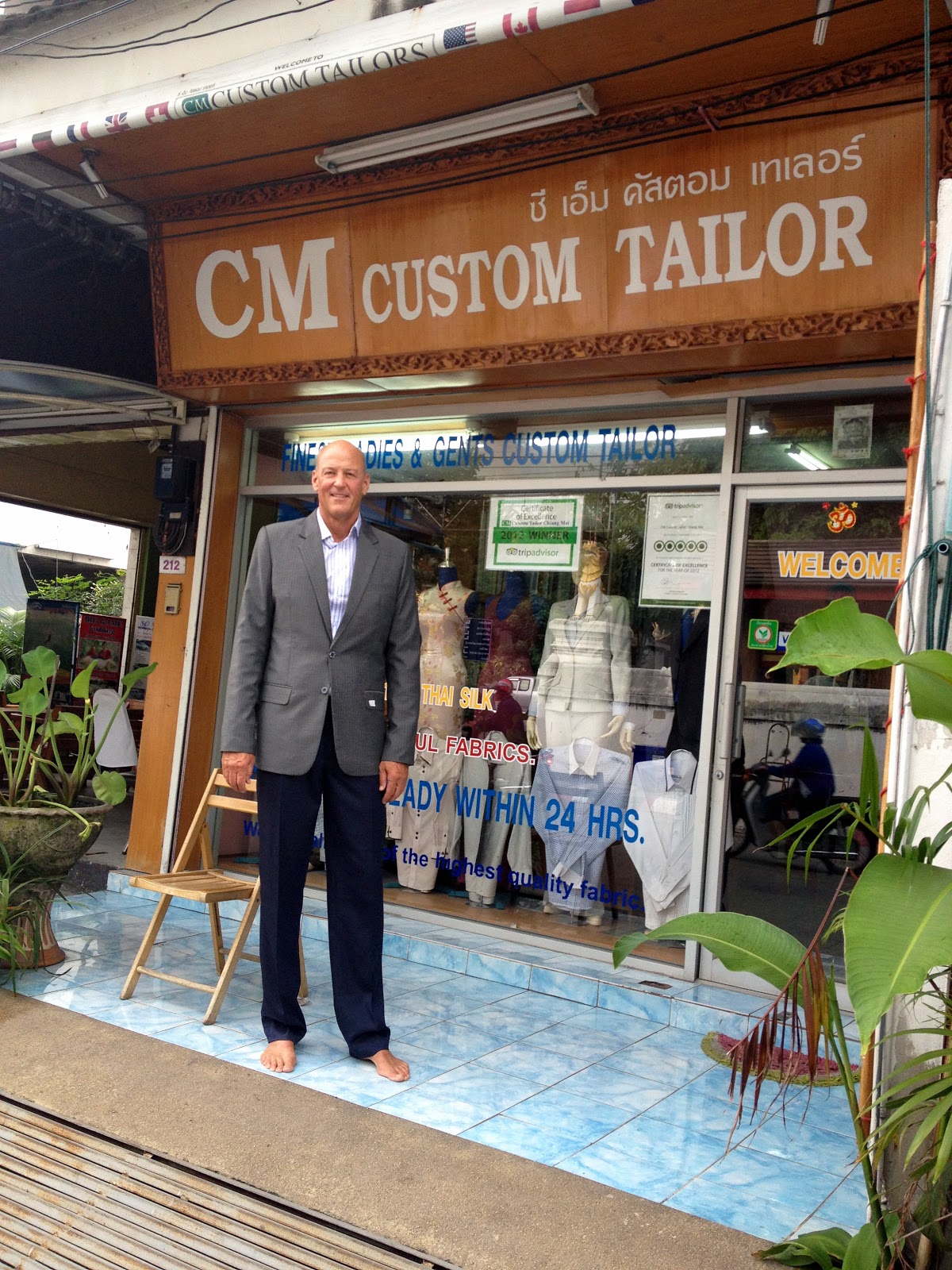
Chiang Mai is in the north of Thailand and is known for remote hill tribes and elephants.  We also ran into some tigers at Tiger Kingdom near our hotel.  But our intent is to visit a custom tailor with a good reputation for fine workmanship.
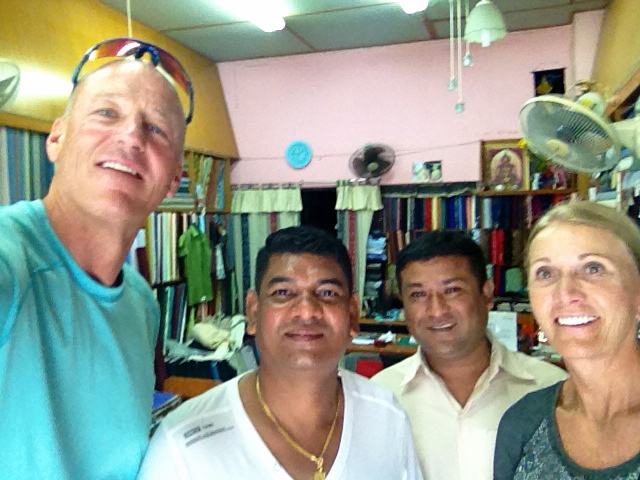
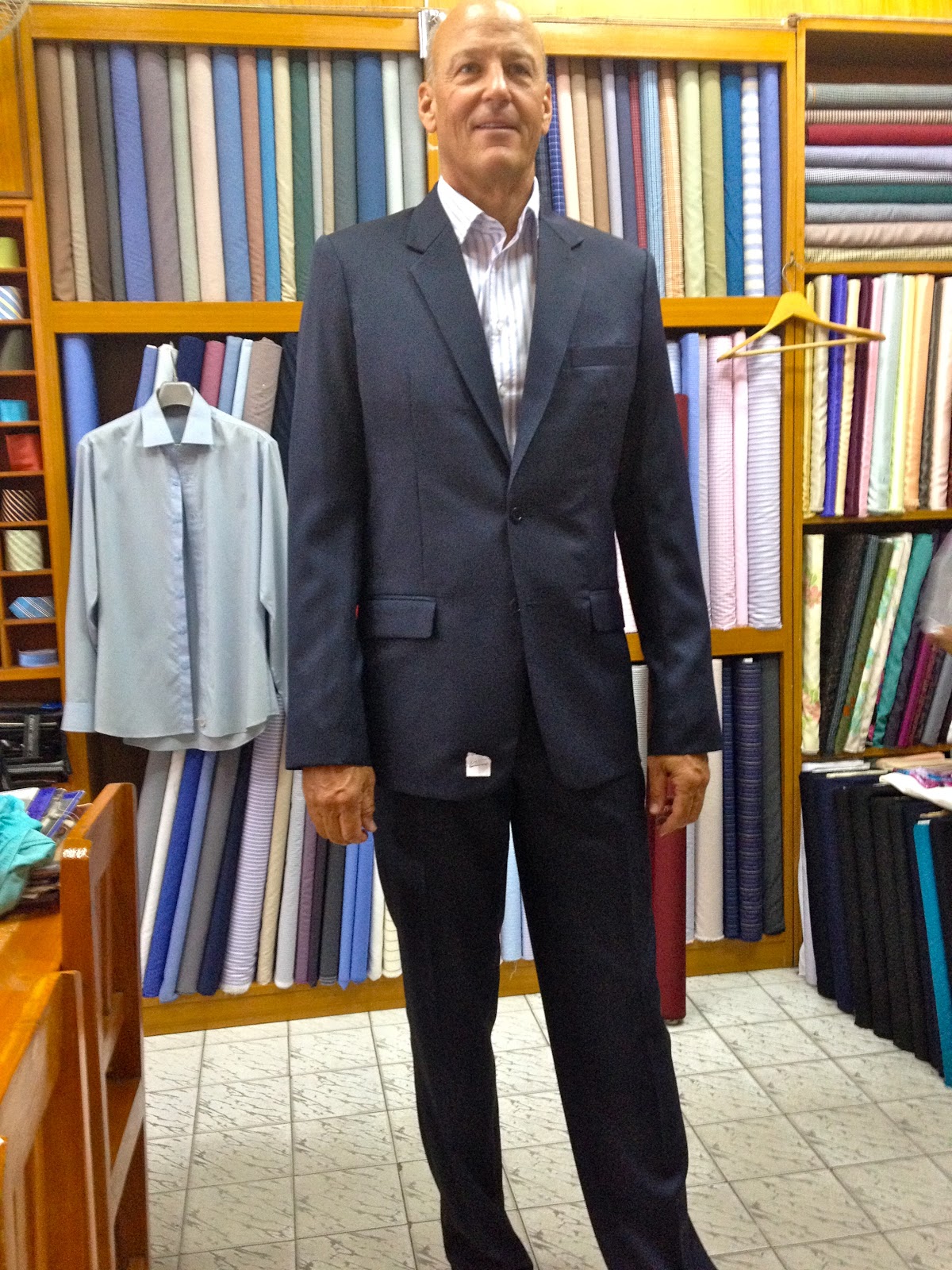
David (the owner) and Gio Gio from CM Custom Tailors made 3 suits and 6 shirts for me and some blouses, a suit and winter coat for Barb and will ship them to us in the US.

Scott, David, Gio Gio, and Barb at their shop

We read reviews for different tailors and chose CM.  

The blue suit 

We had fun goofing around in Chiang Mai:

There is a Sunday night market where Barb’s magnetic field for shopping became quite strong.  While she shopped up and down the streets, I sat down and had a 30 minute foot massage for about $2.00. (150 baht for 1 hour and 100 baht for 30 minutes.) There are foot massage places everywhere.

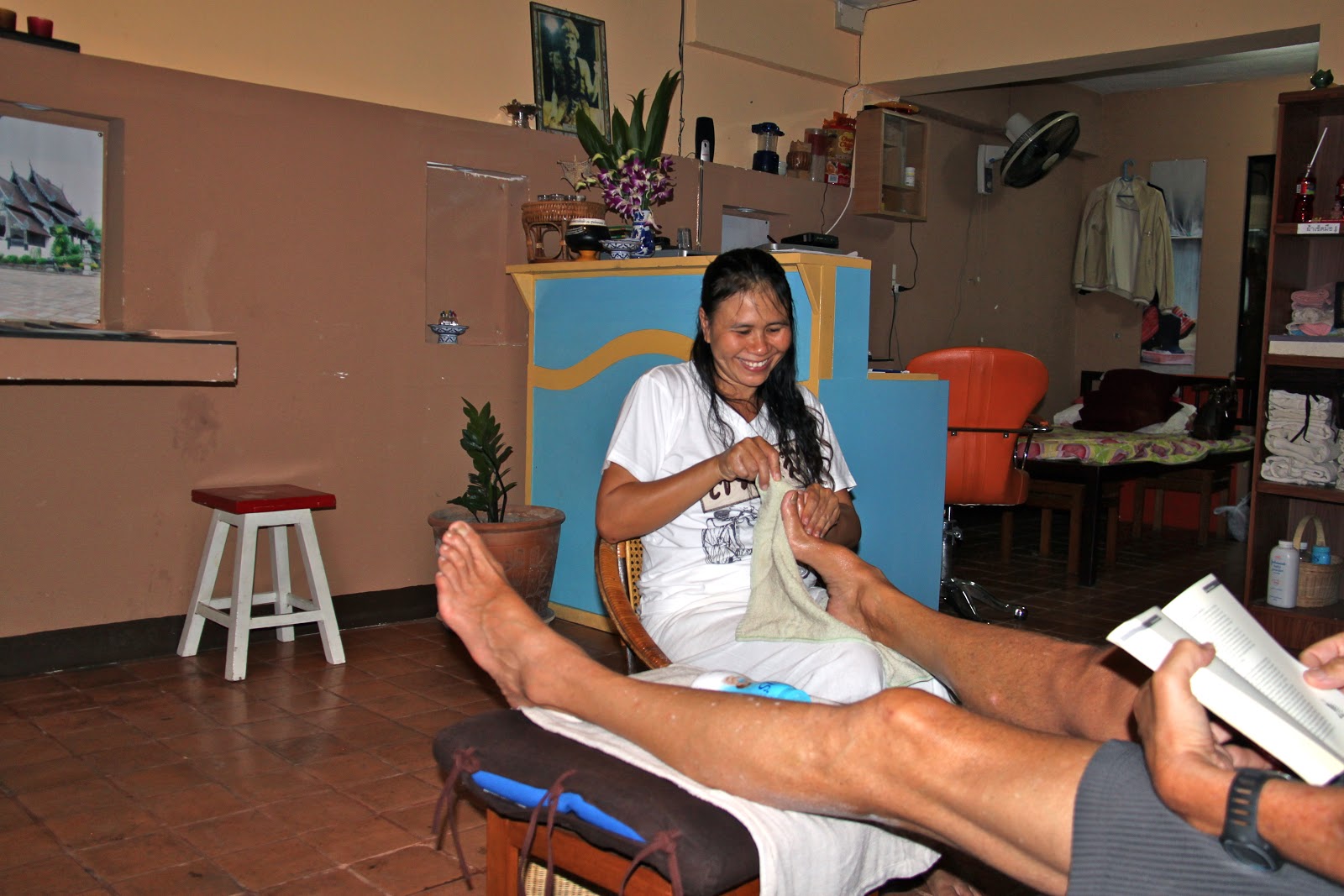
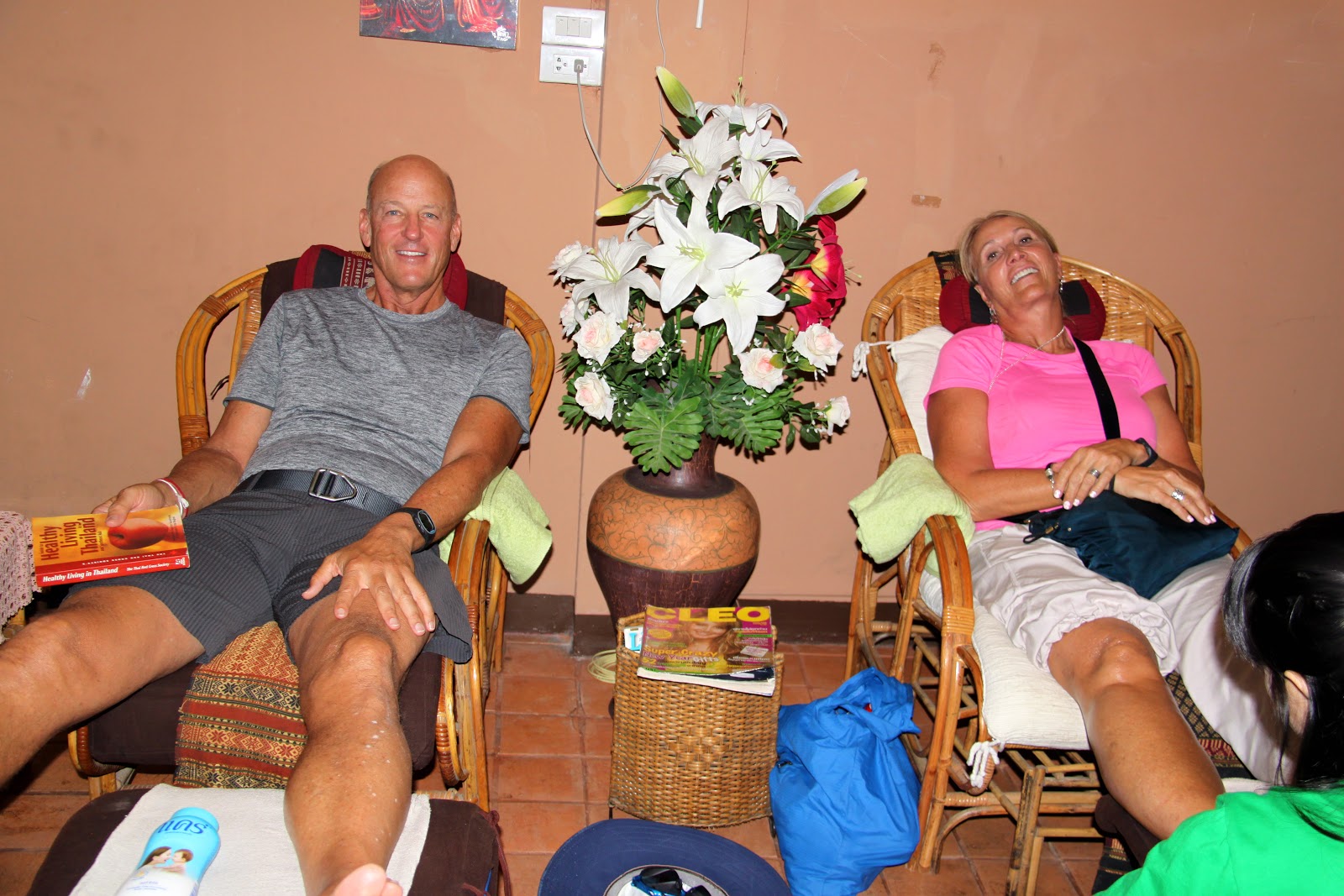
While we were waiting for the tailor the next day, we walked 3 doors down and we both had foot massages for an hour for $2.60.  They feel soooo good!

Scott getting a foot massage and reflexology
Heavenly
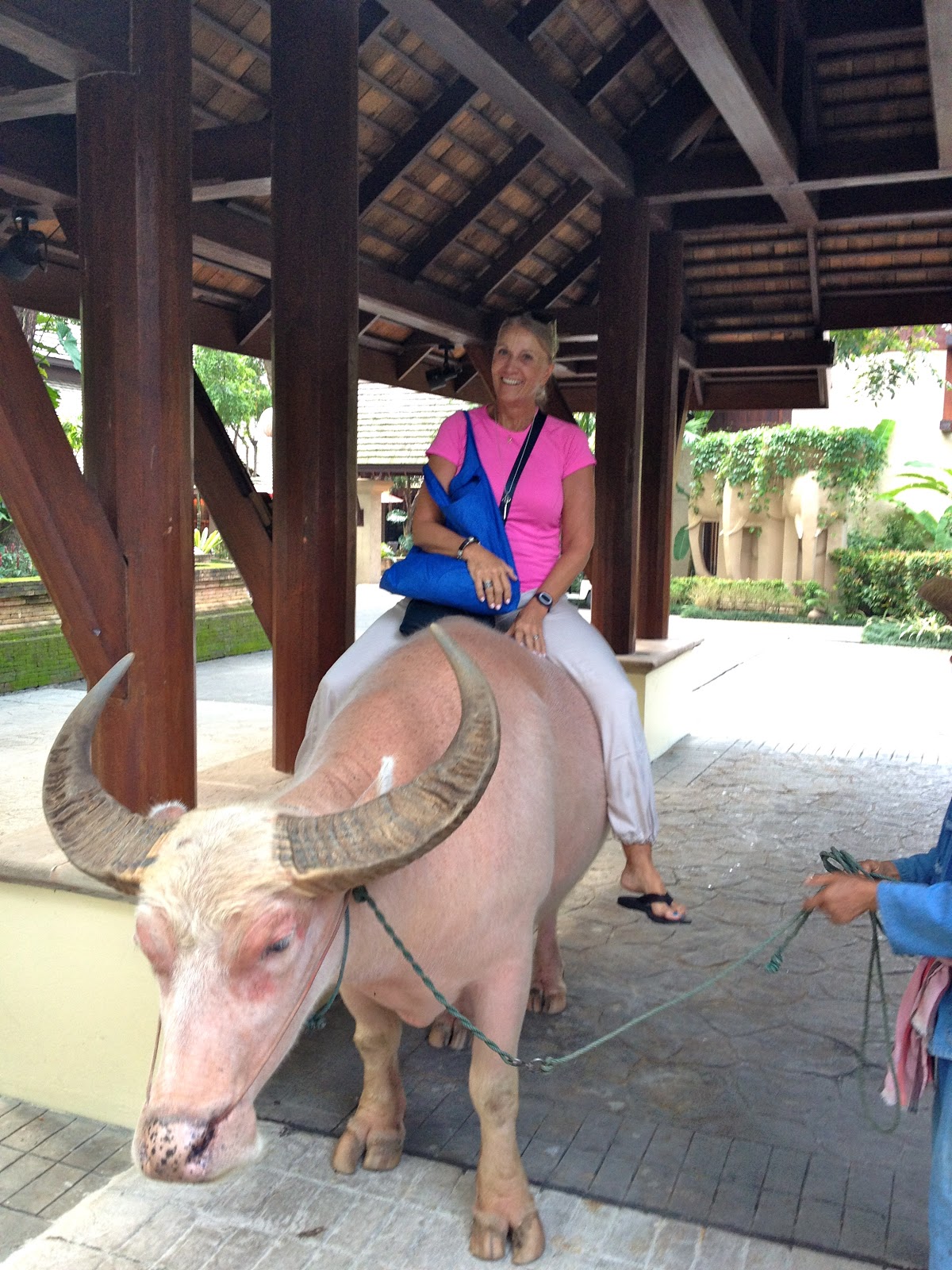
Barb rode a water buffalo.

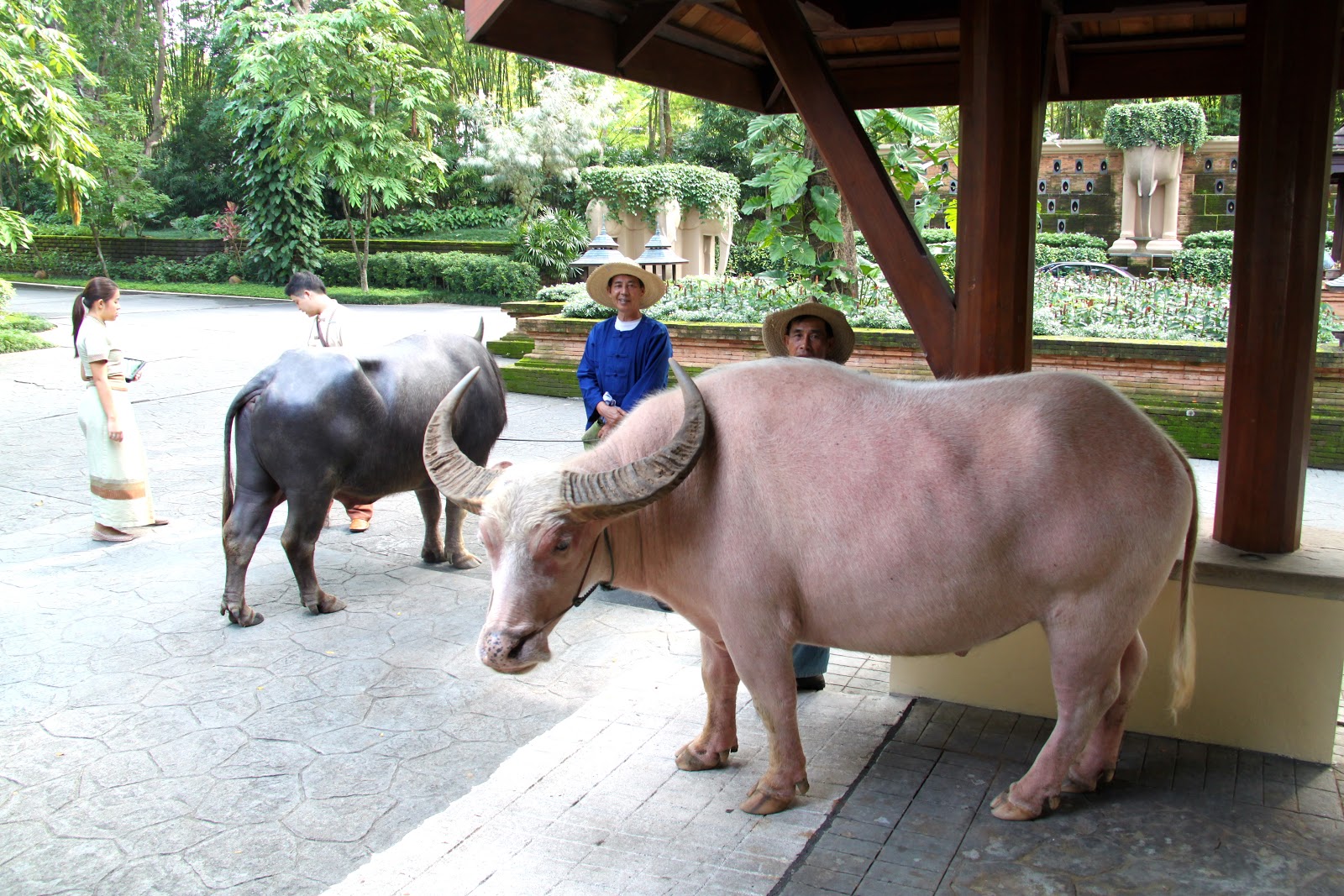
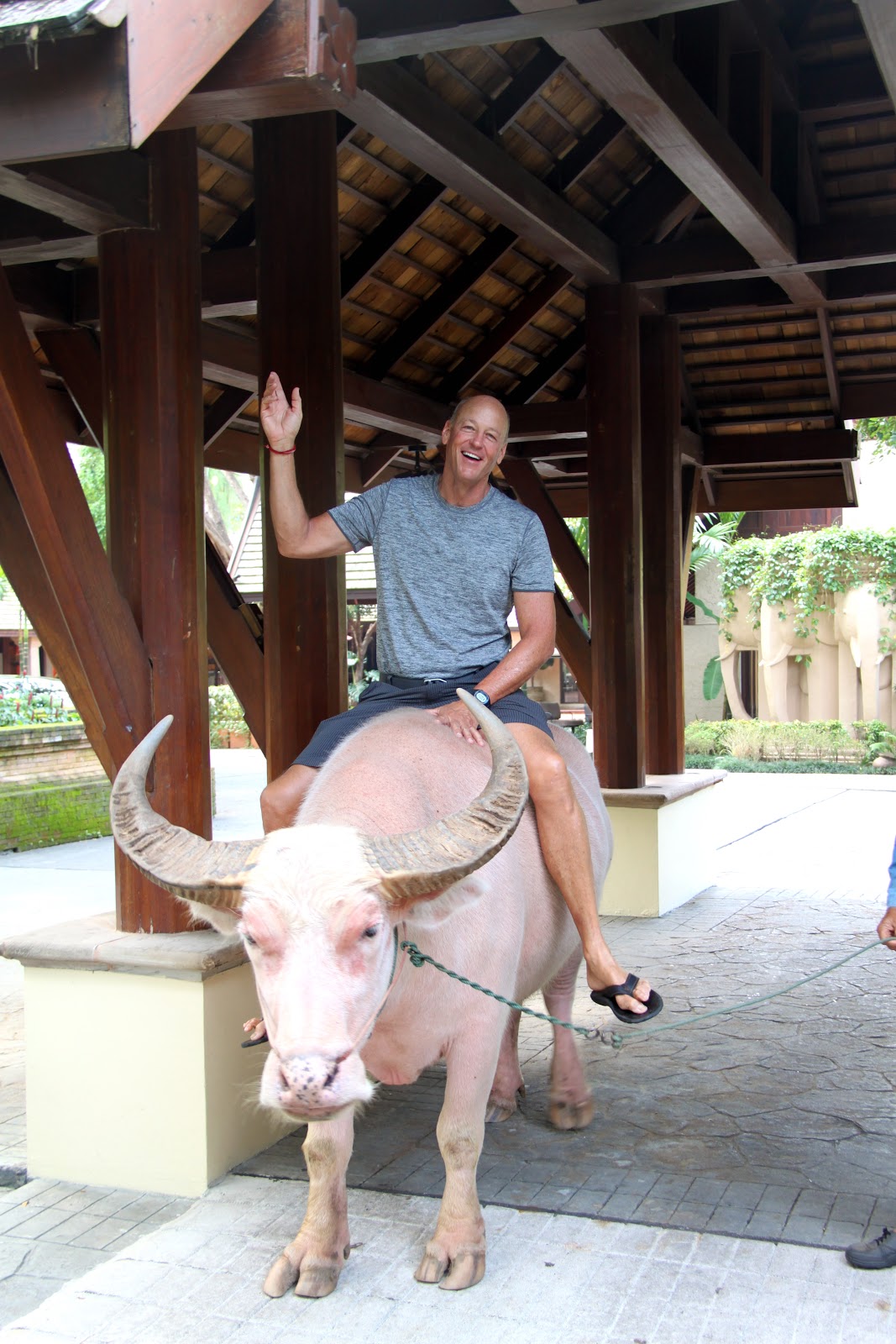
This is an albino water buffalo that they keep at our hotel.  They use them for tourists, but they also work in the fields that are part of the hotel grounds.

He is a big guy!

Ride em cowboy!

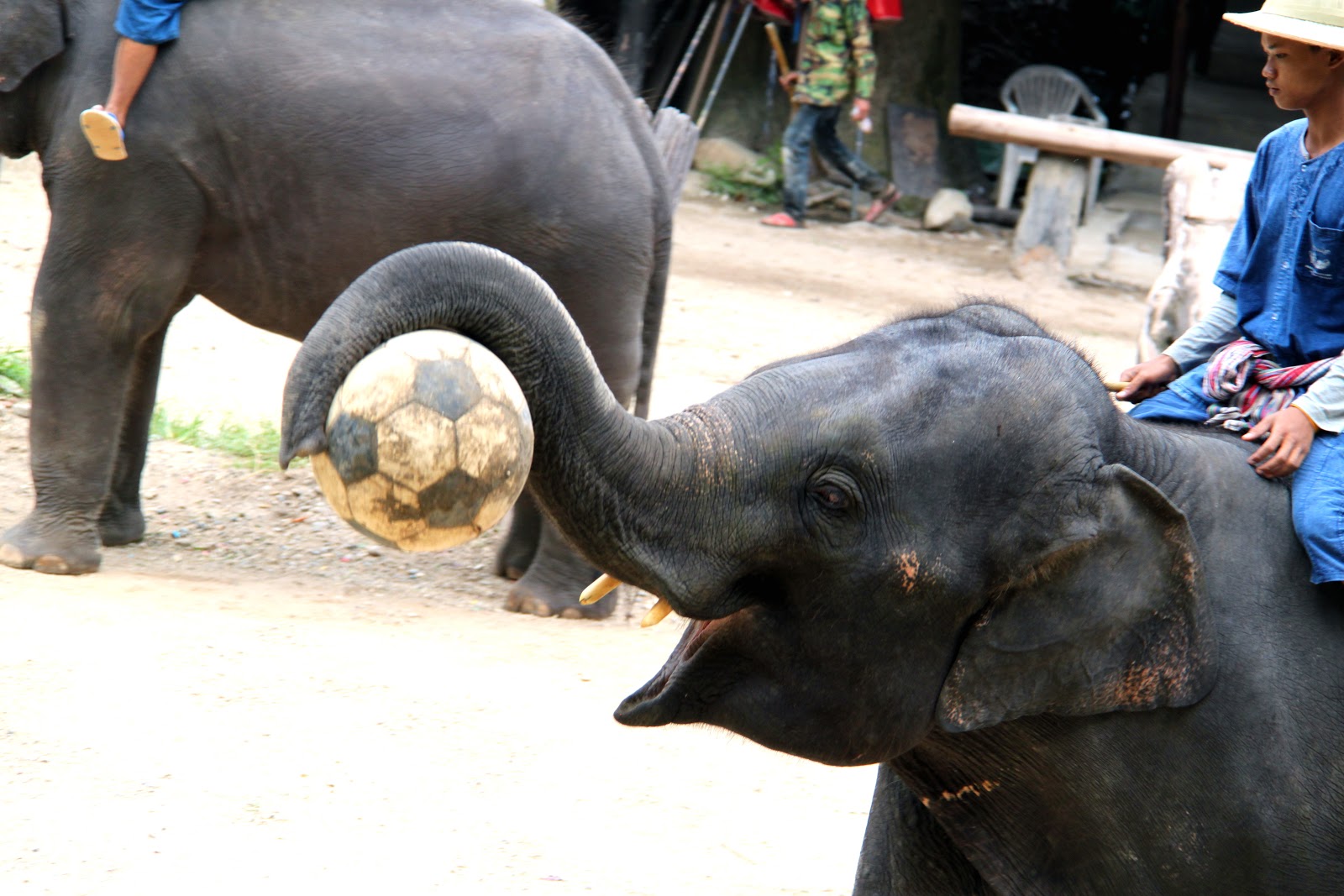
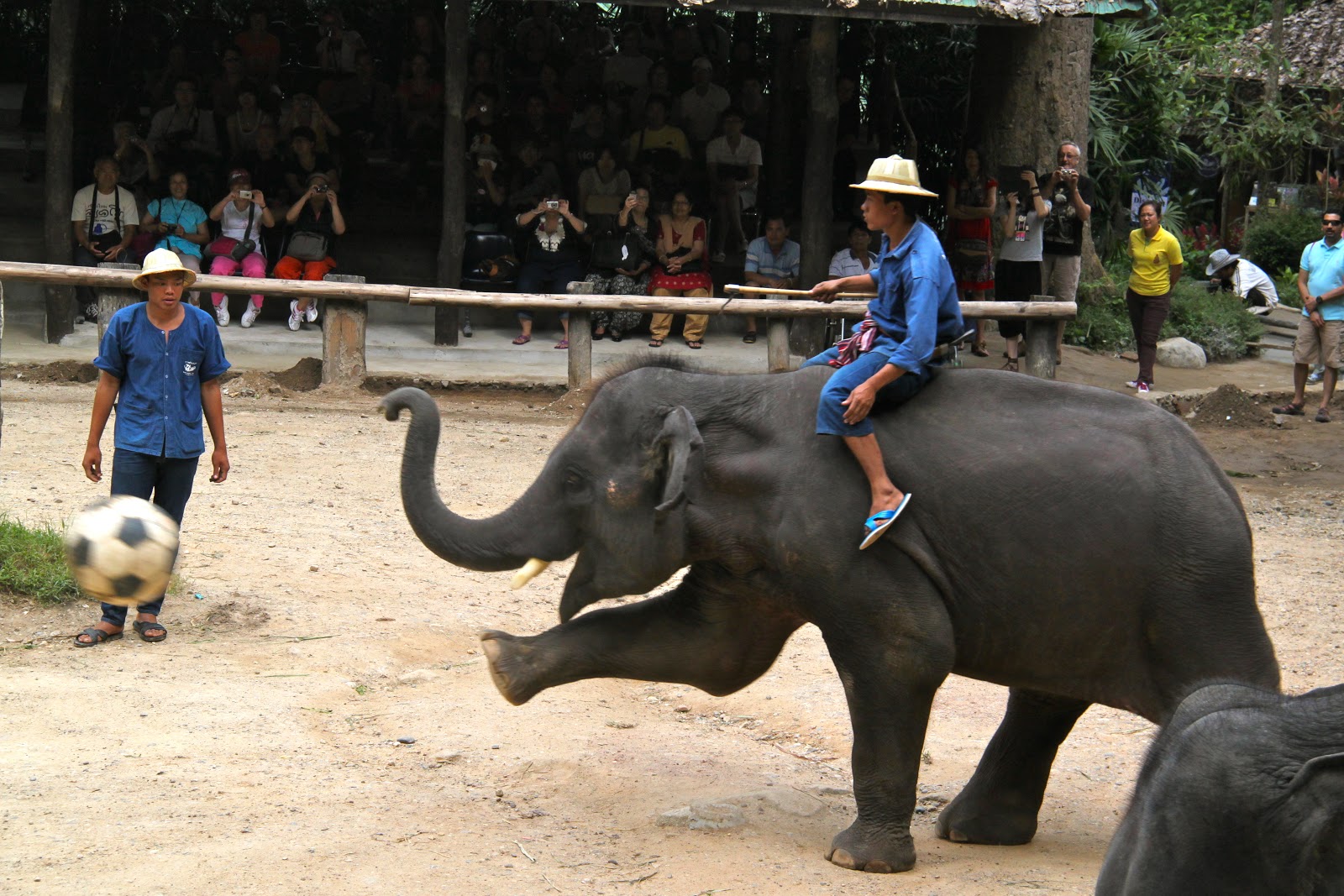
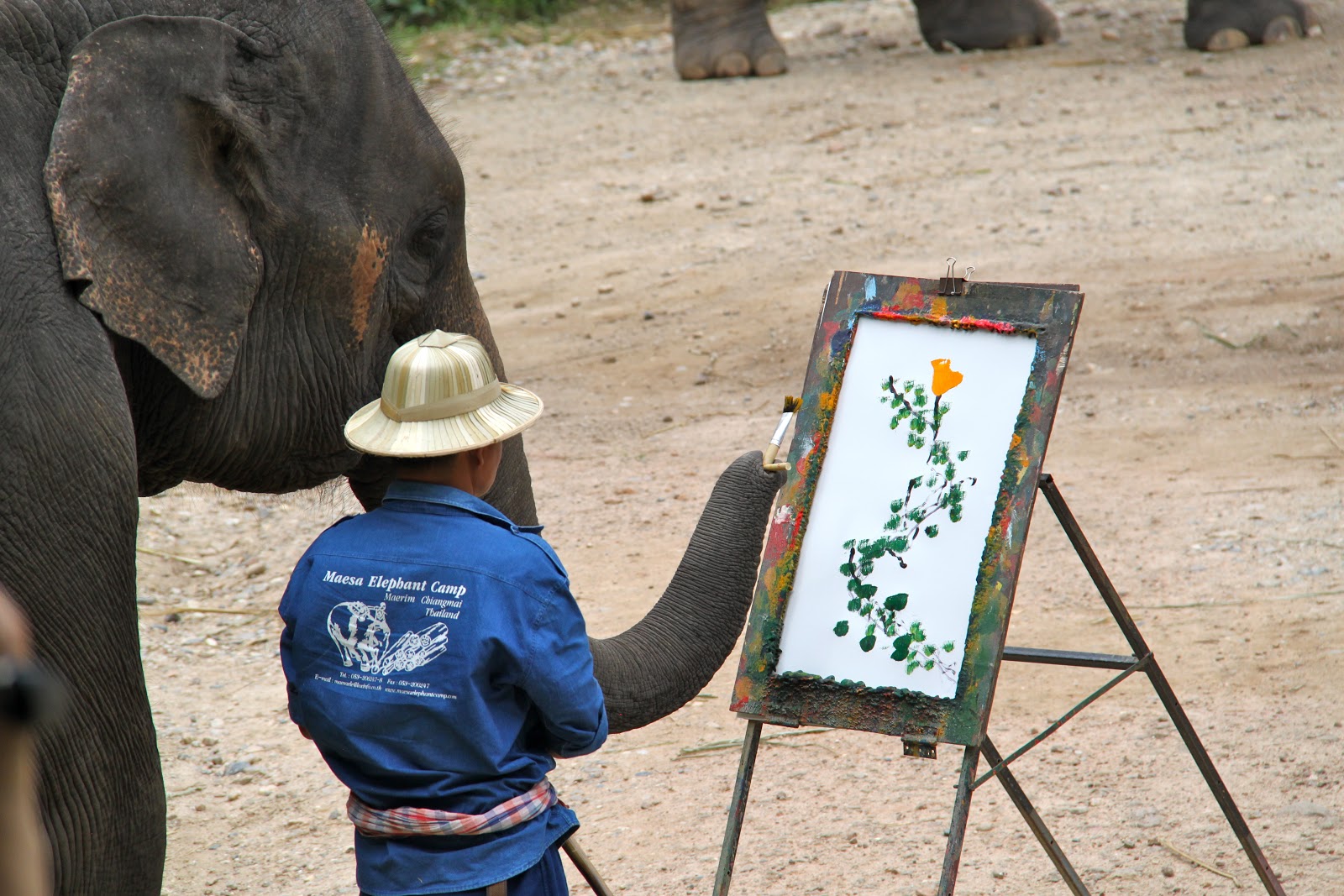
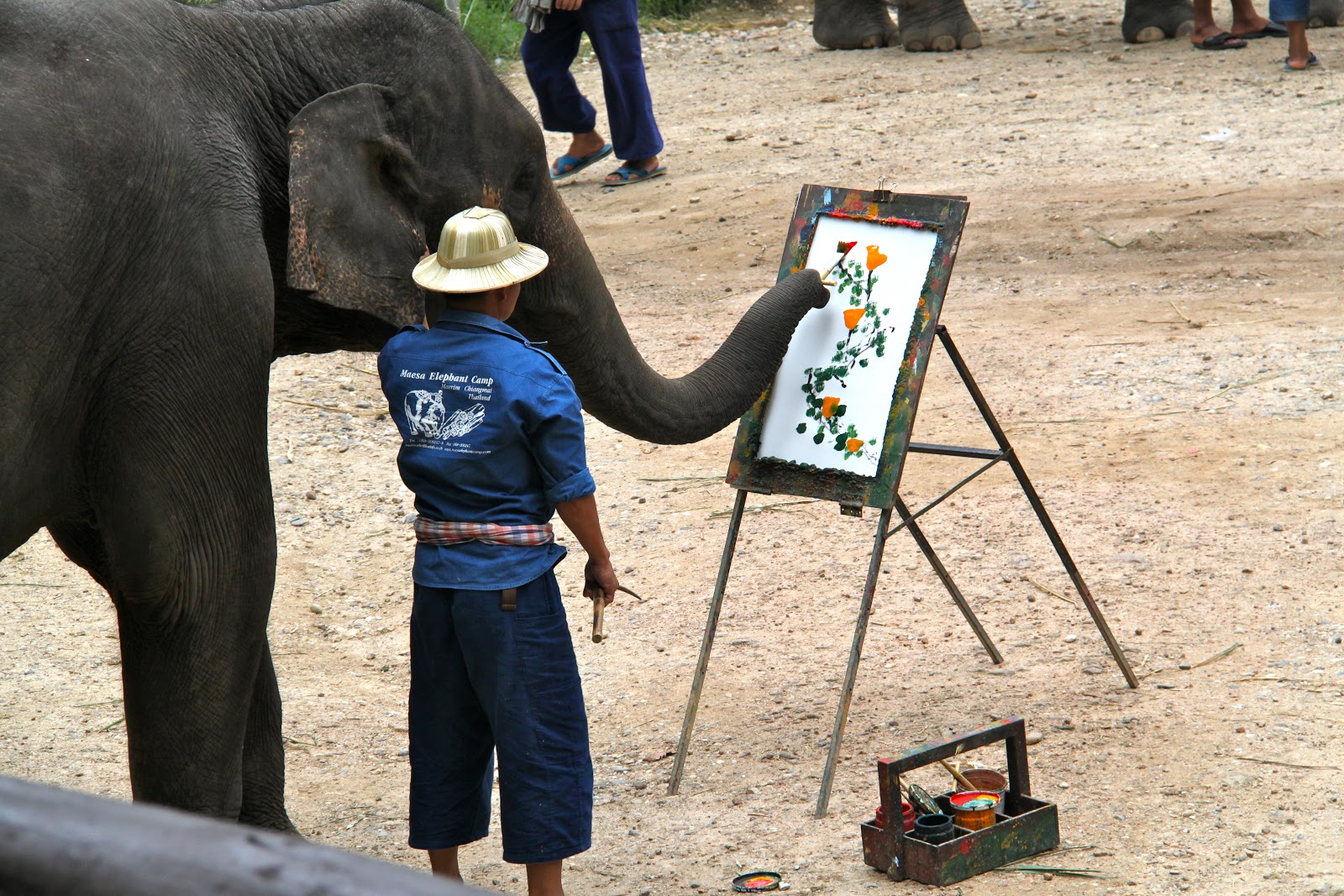
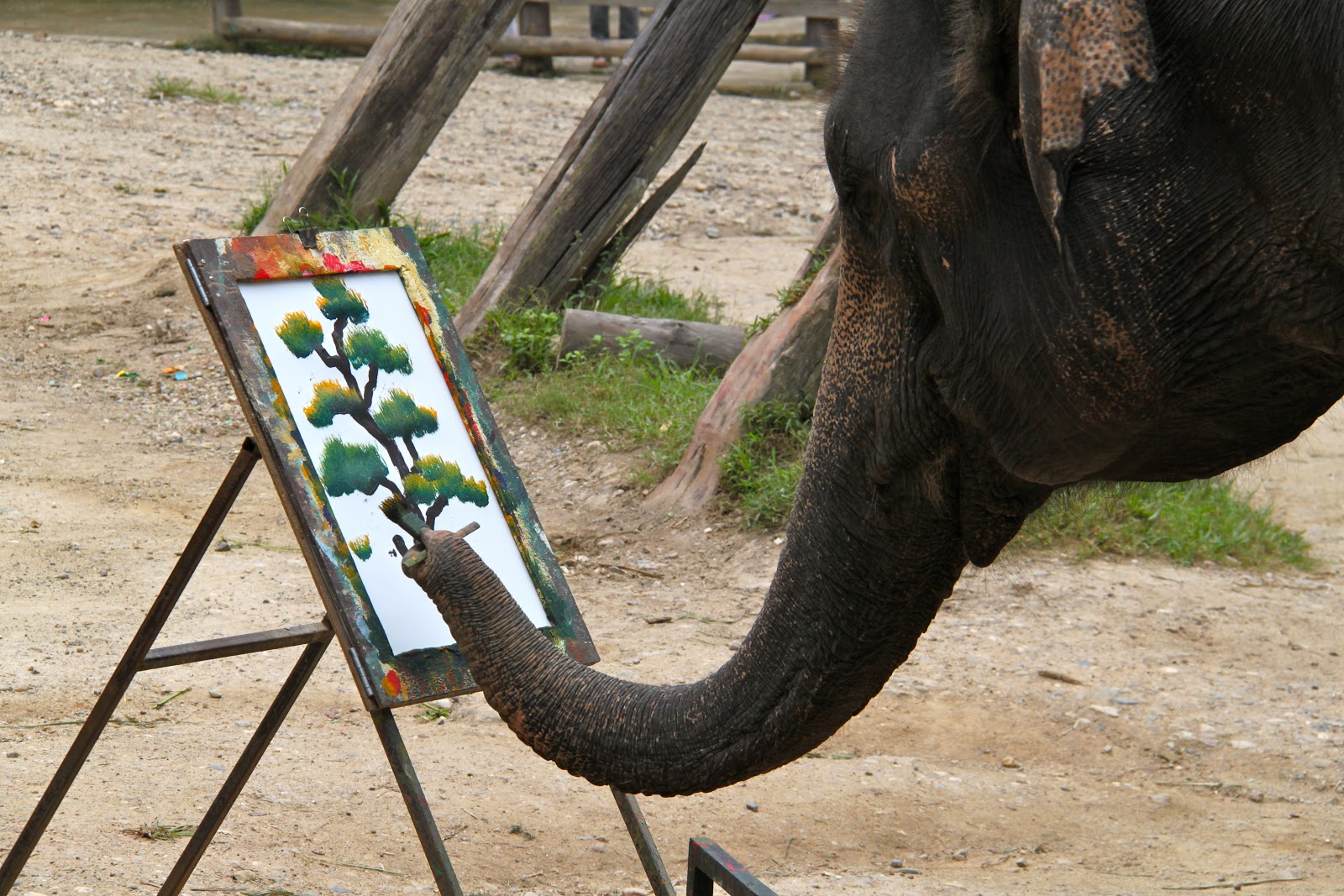
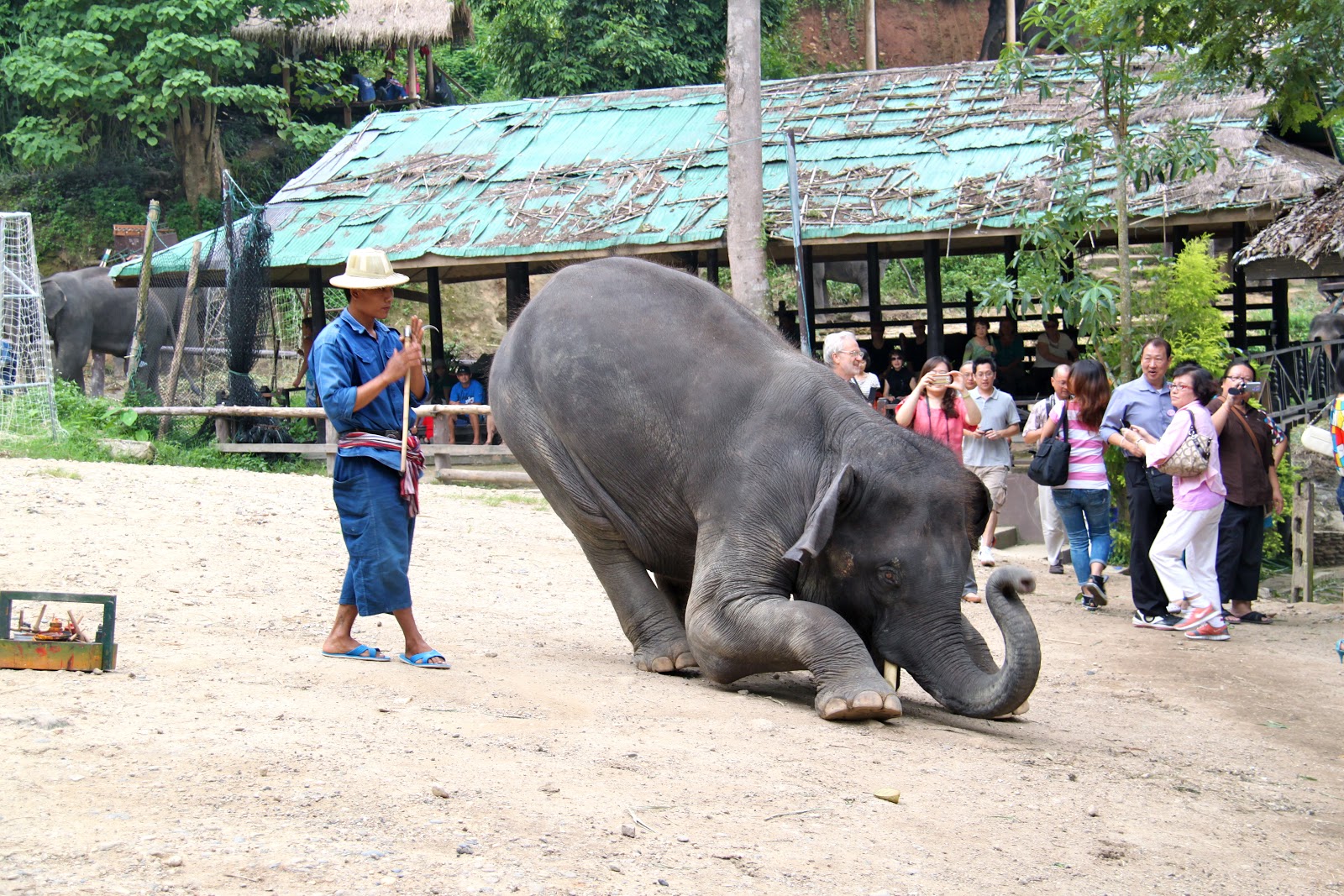
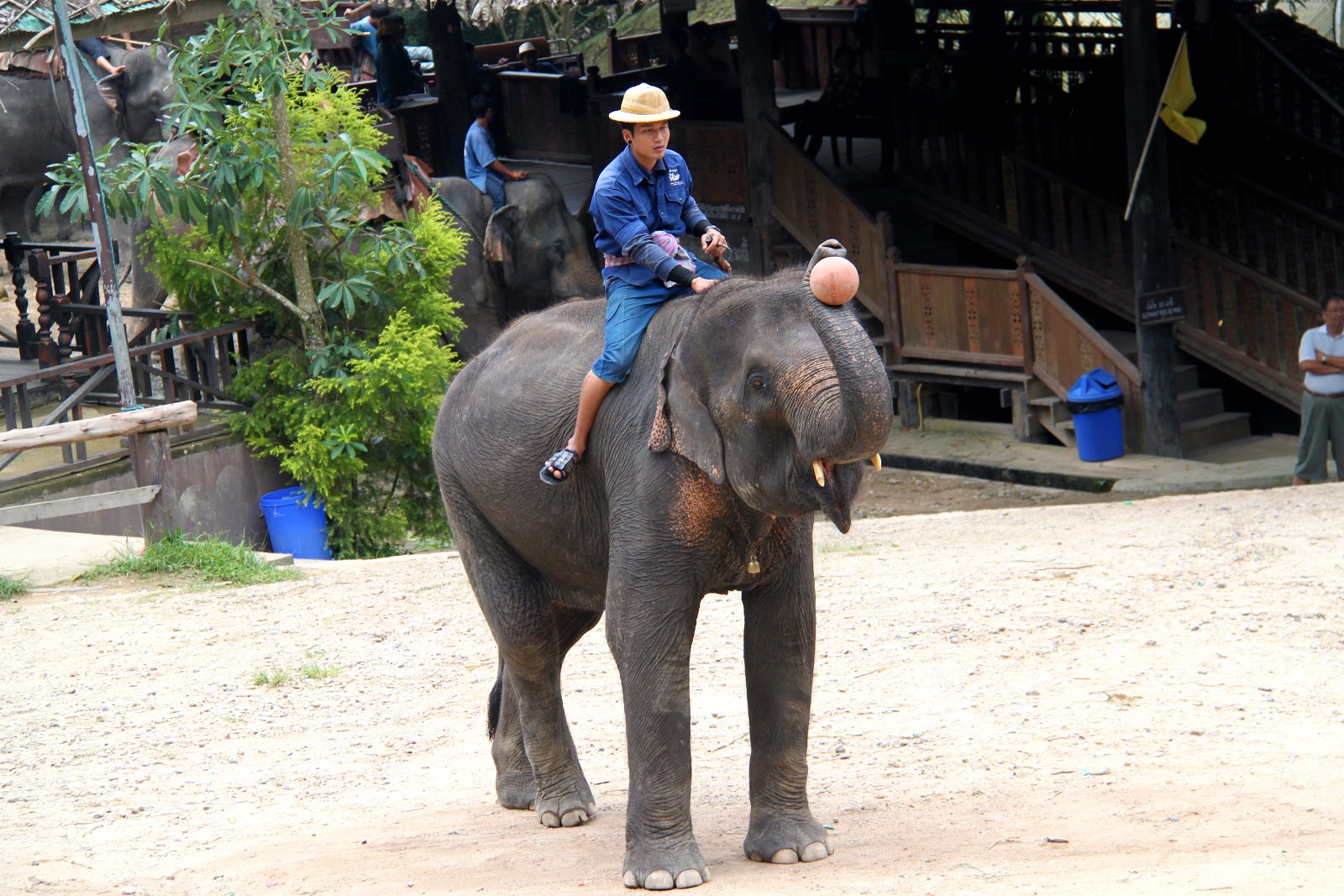
We watched elephants play soccer, and  basketball, and then they painted beautiful pictures with their trunks.

These elephants were amazing!  They can not only pick up the ball but they can kick it (into the goal) with either their front or their back leg.

Kicking the soccer ball

Five different elephants painted 5 different pictures.  The Mahut (trainer) dips the brush in a color and hands the brush to the elephant in his trunk.

Pretty good artwork!

This one used a wider brush.

The elephant takes a bow.

Playing basketball

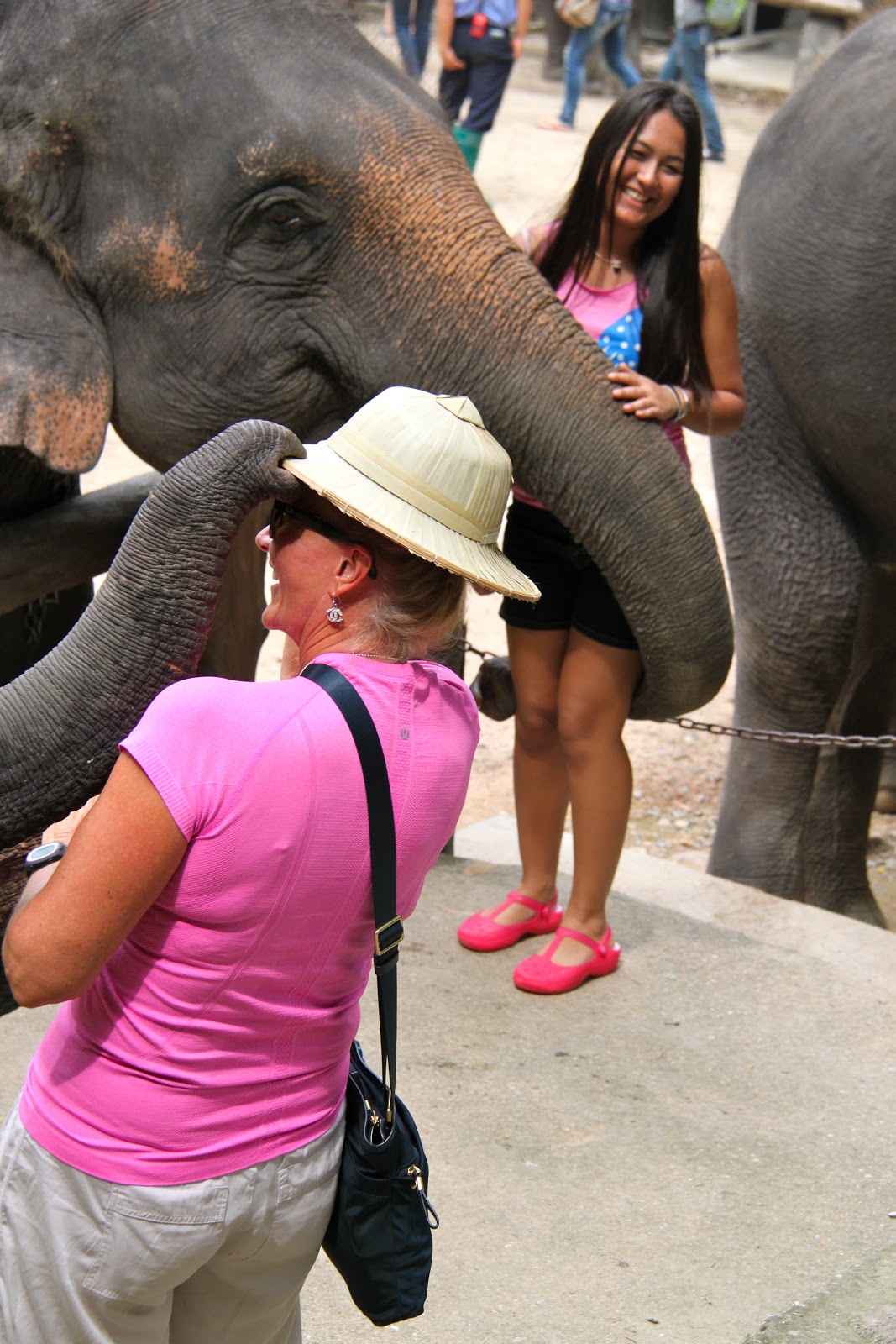
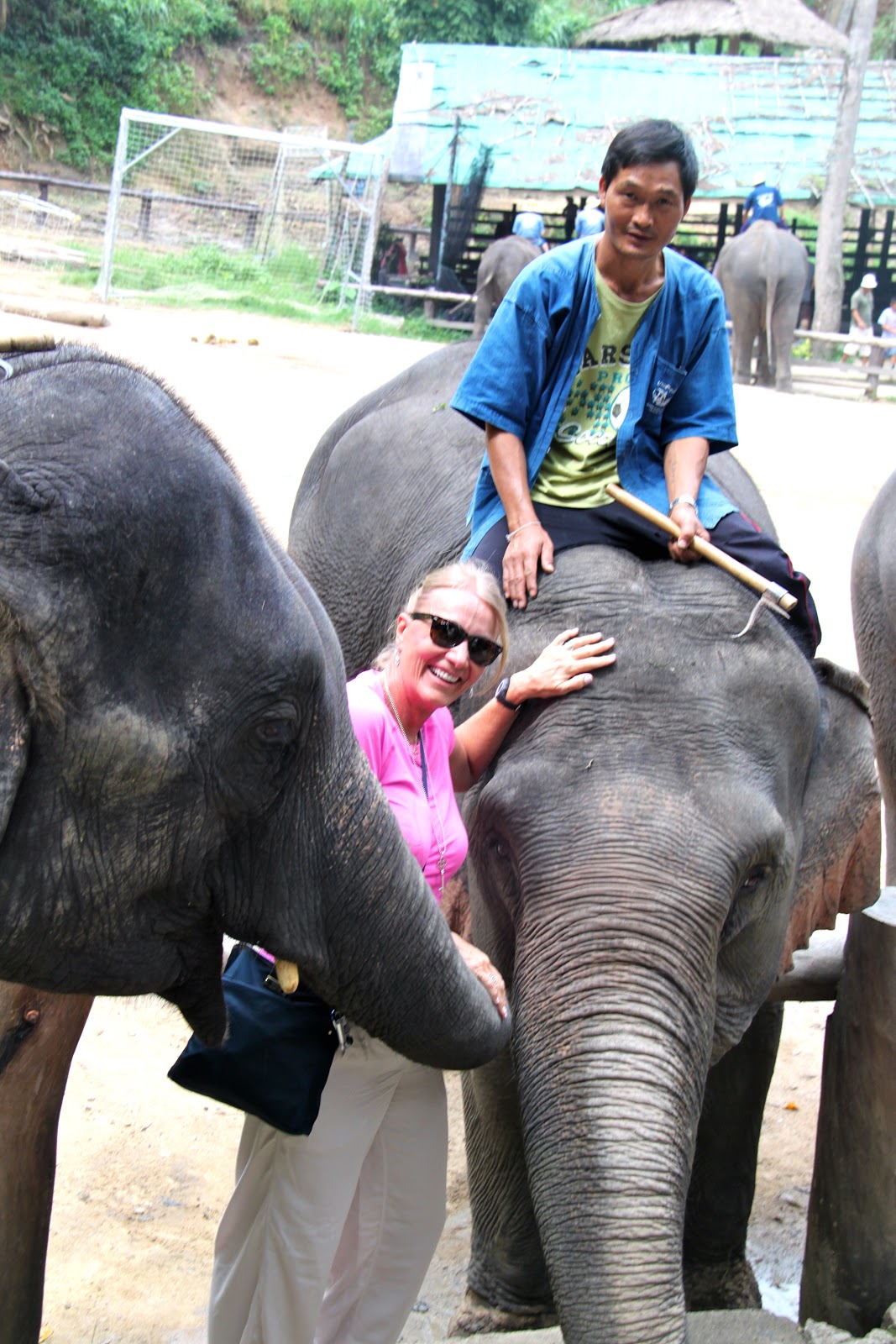
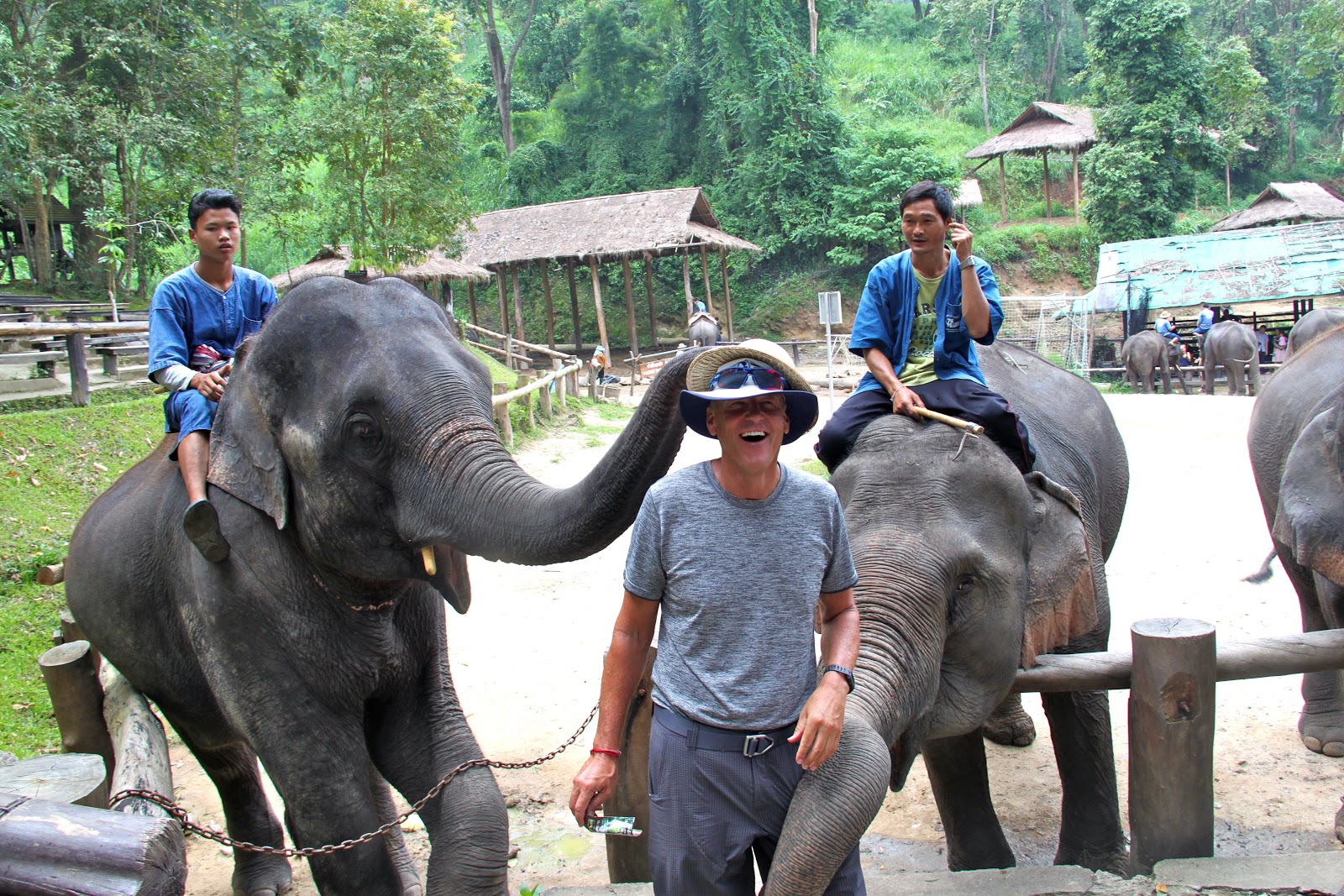
This elephant wanted to put a hat on Barb

Then he gave her a hug with his trunk.  He can squeeze!

I guess he didn’t know Scott was already wearing a hat.

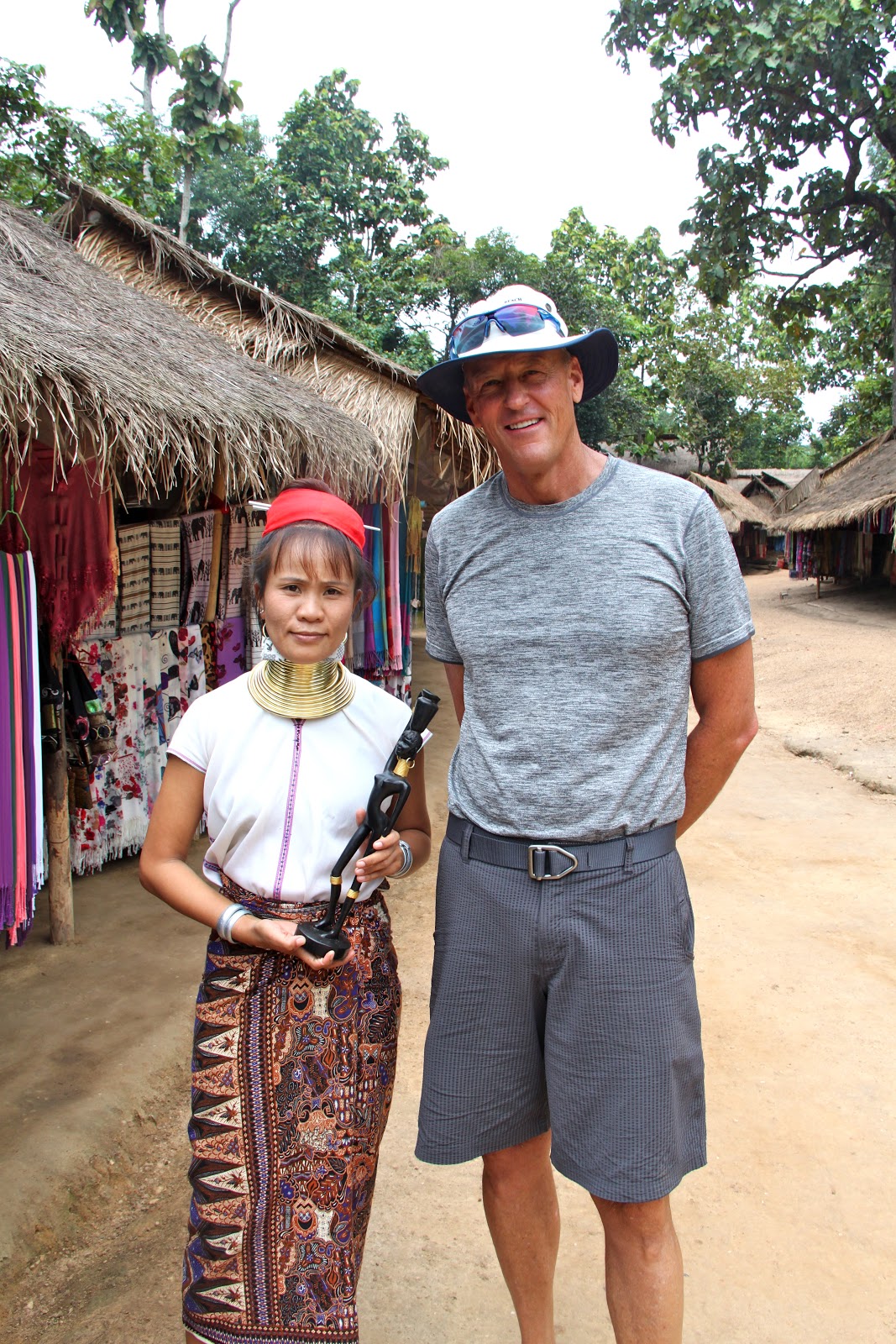
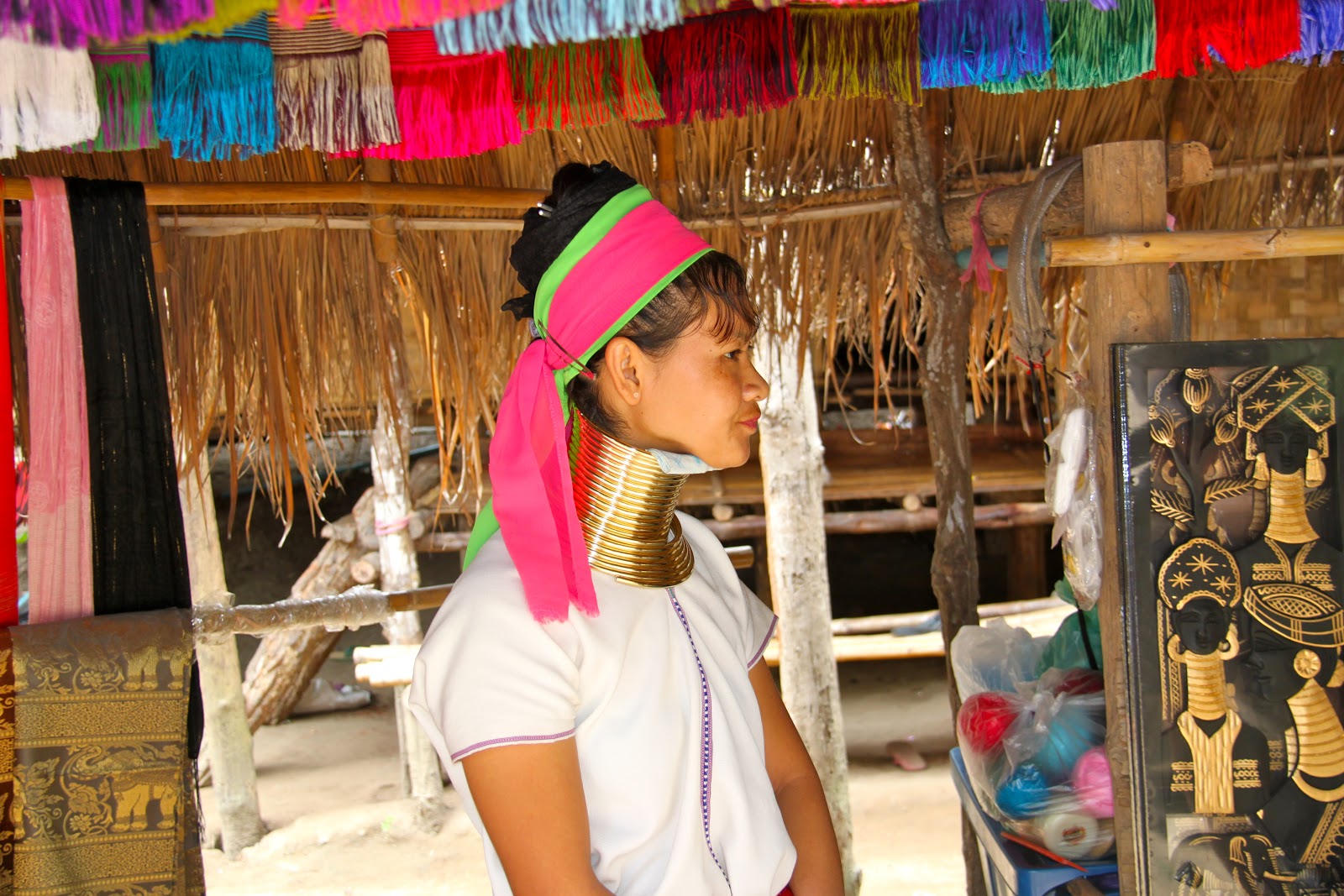
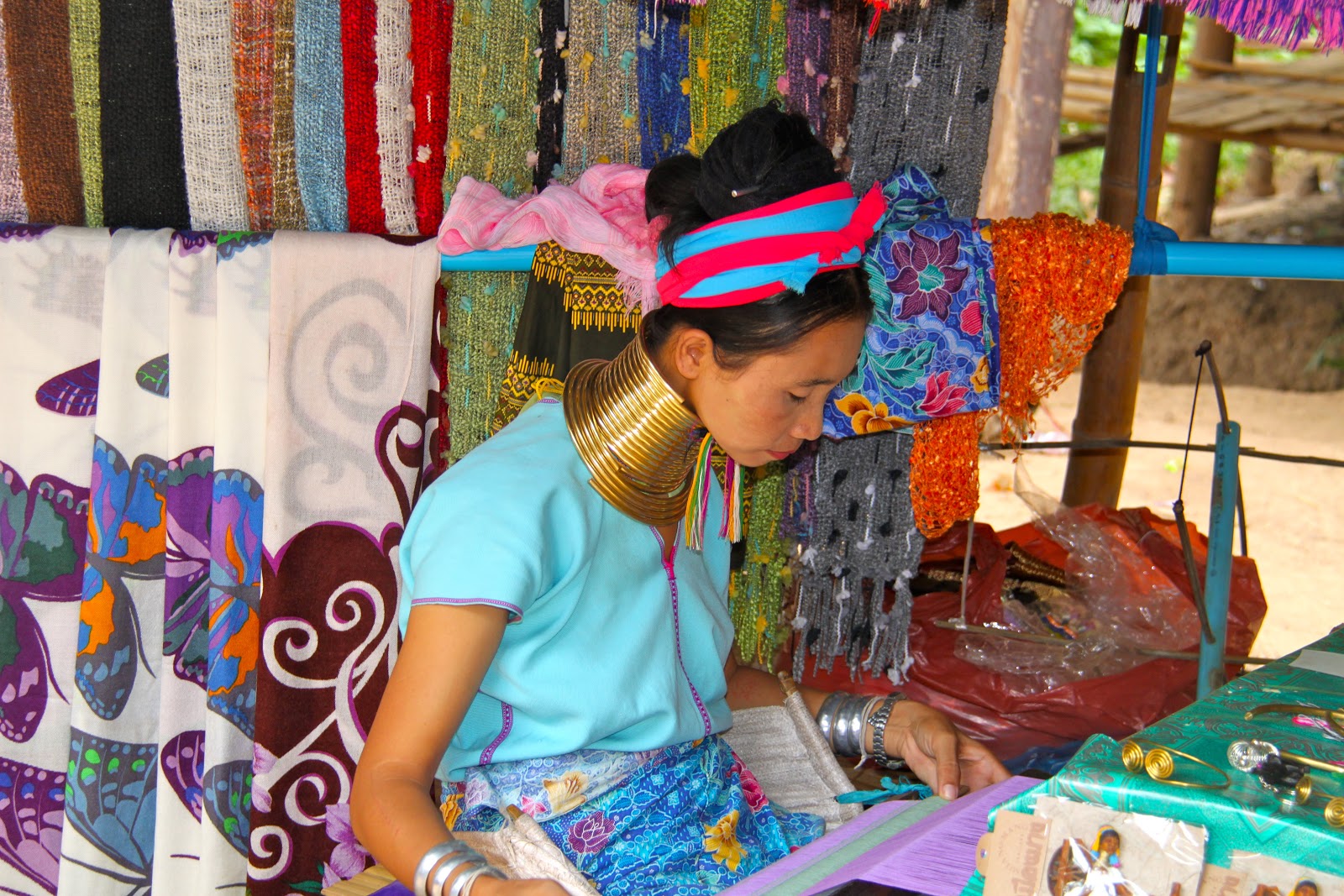
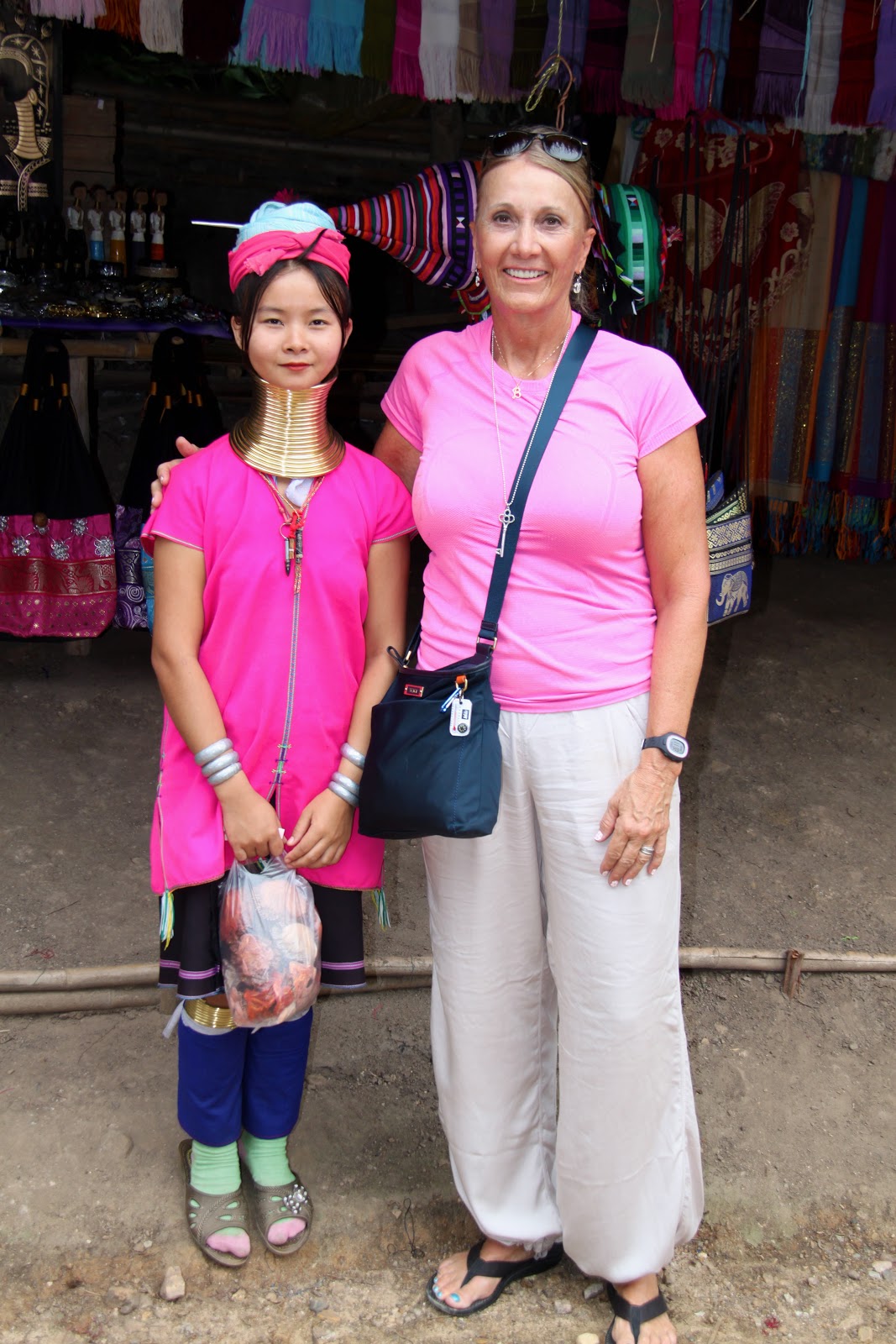
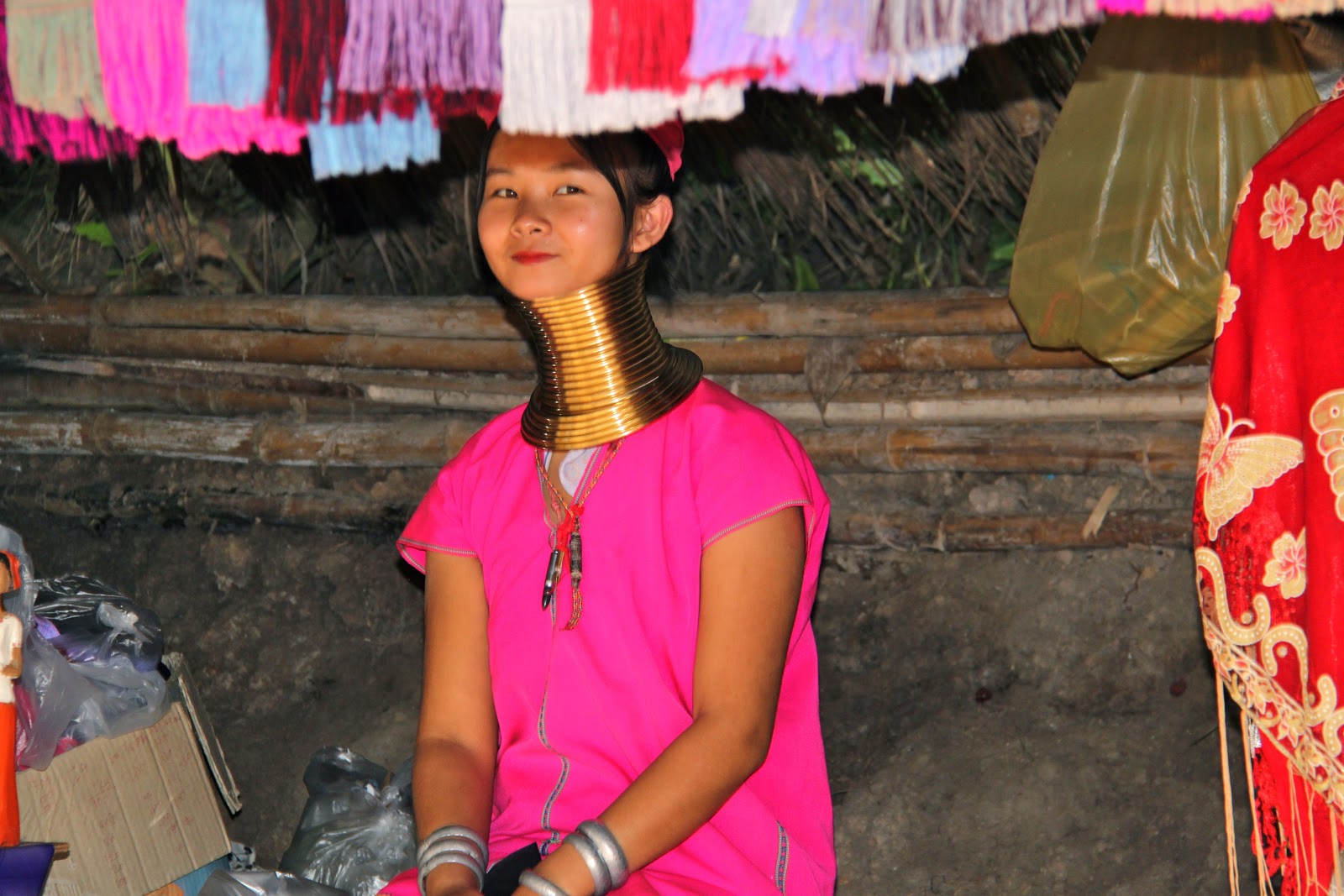
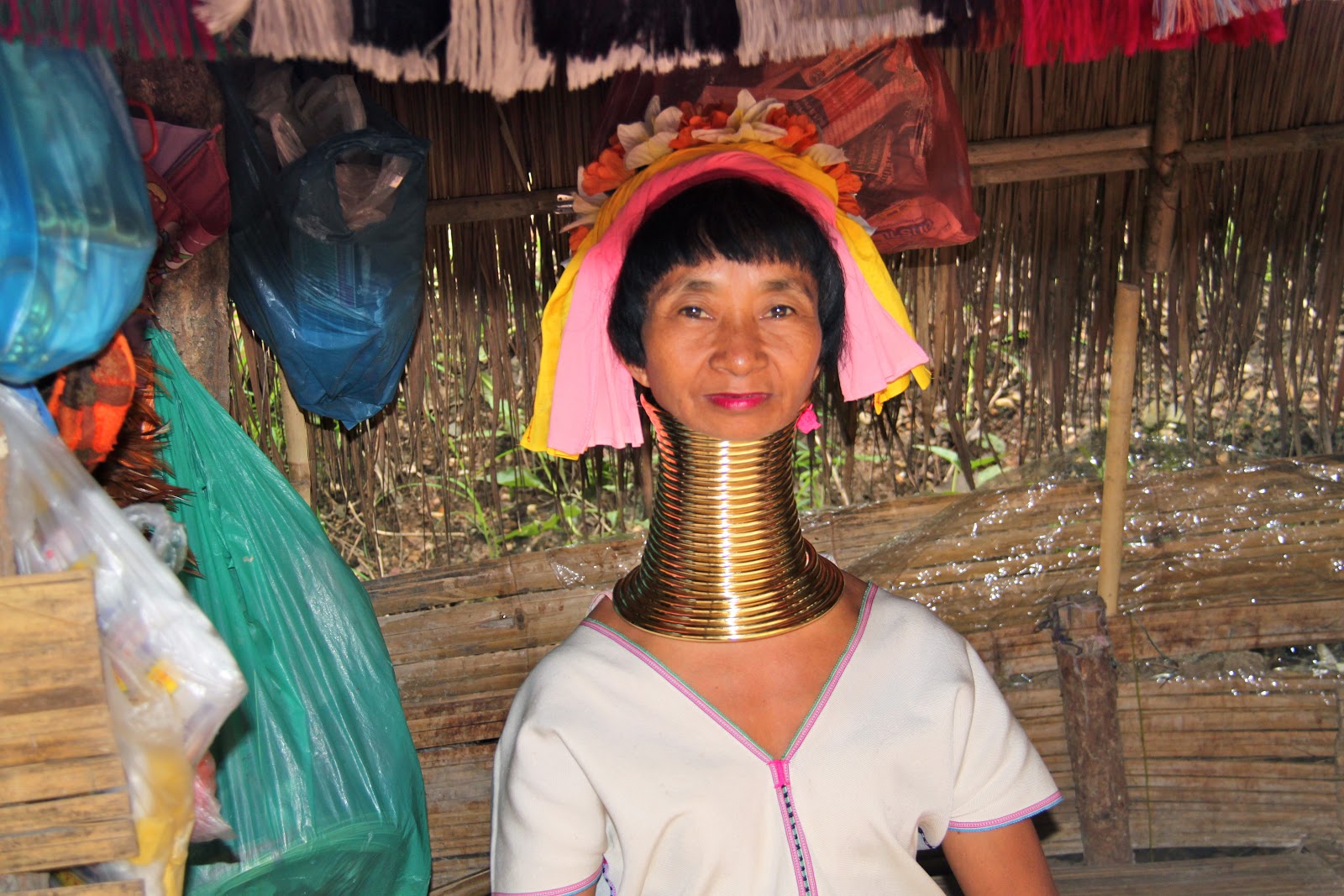
There are hilltribes that live on the mountain peaks or plateaus above 3000 feet.  We visited the white Meo Hilltribe and bought crafts from them.  (They are the Long Necks)

We read that the metal rings don’t stretch their necks, but instead it pushes their shoulders down.  Is that medically possible?

Scott buying a little statue

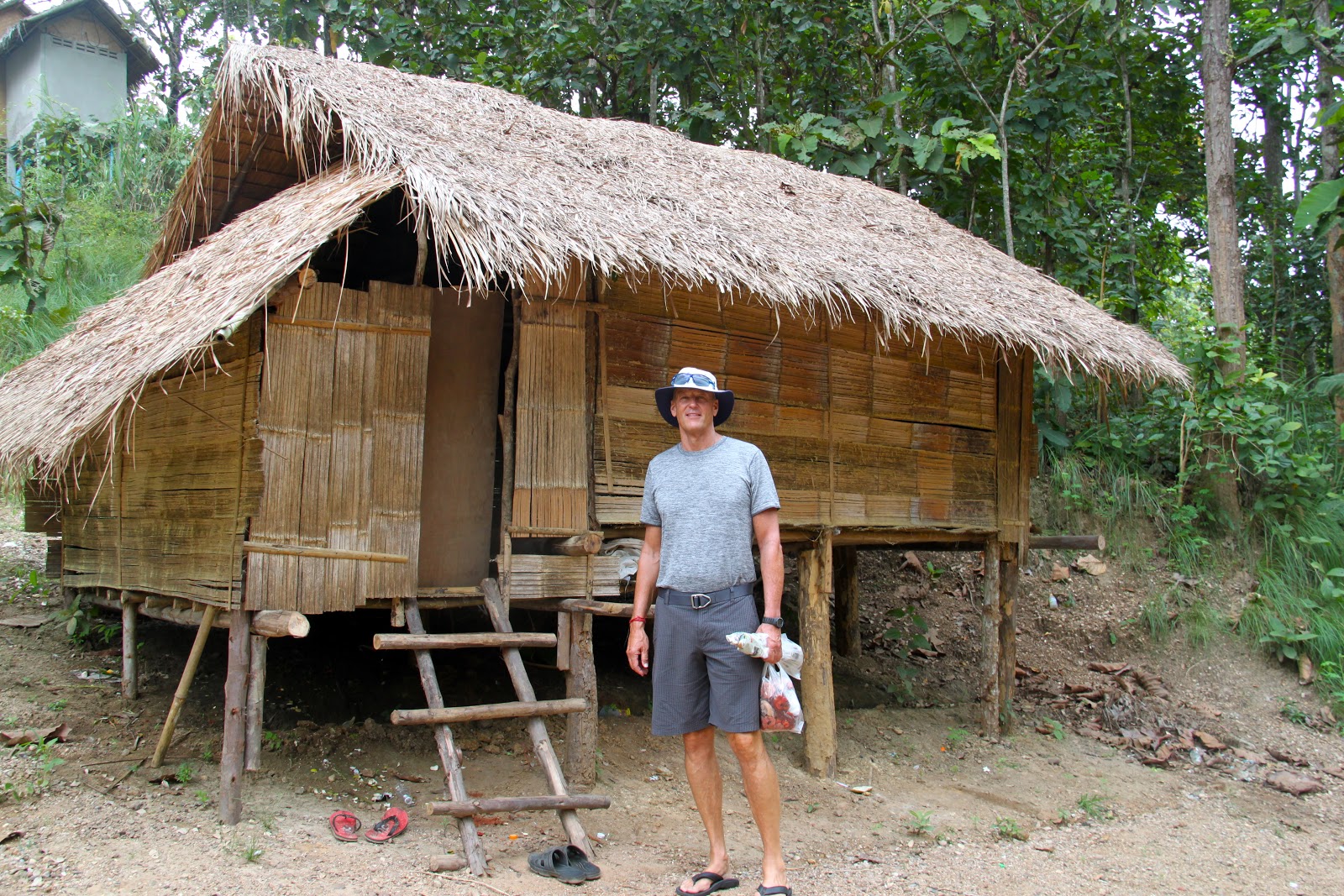
They all live in this small village and each has a little shop
Most of them were working on weaving

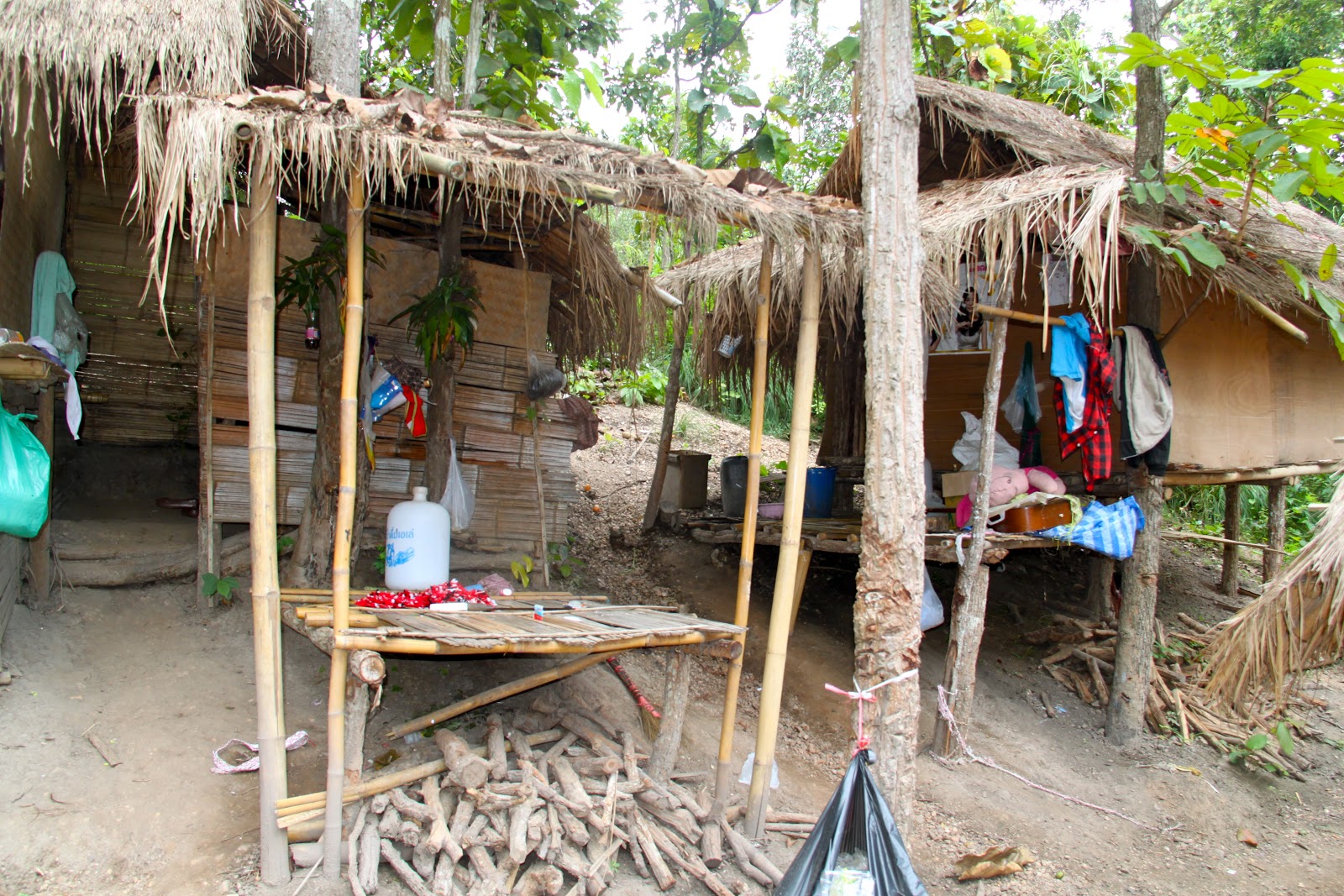
Their homes

Barb shopping again!

One of their homes

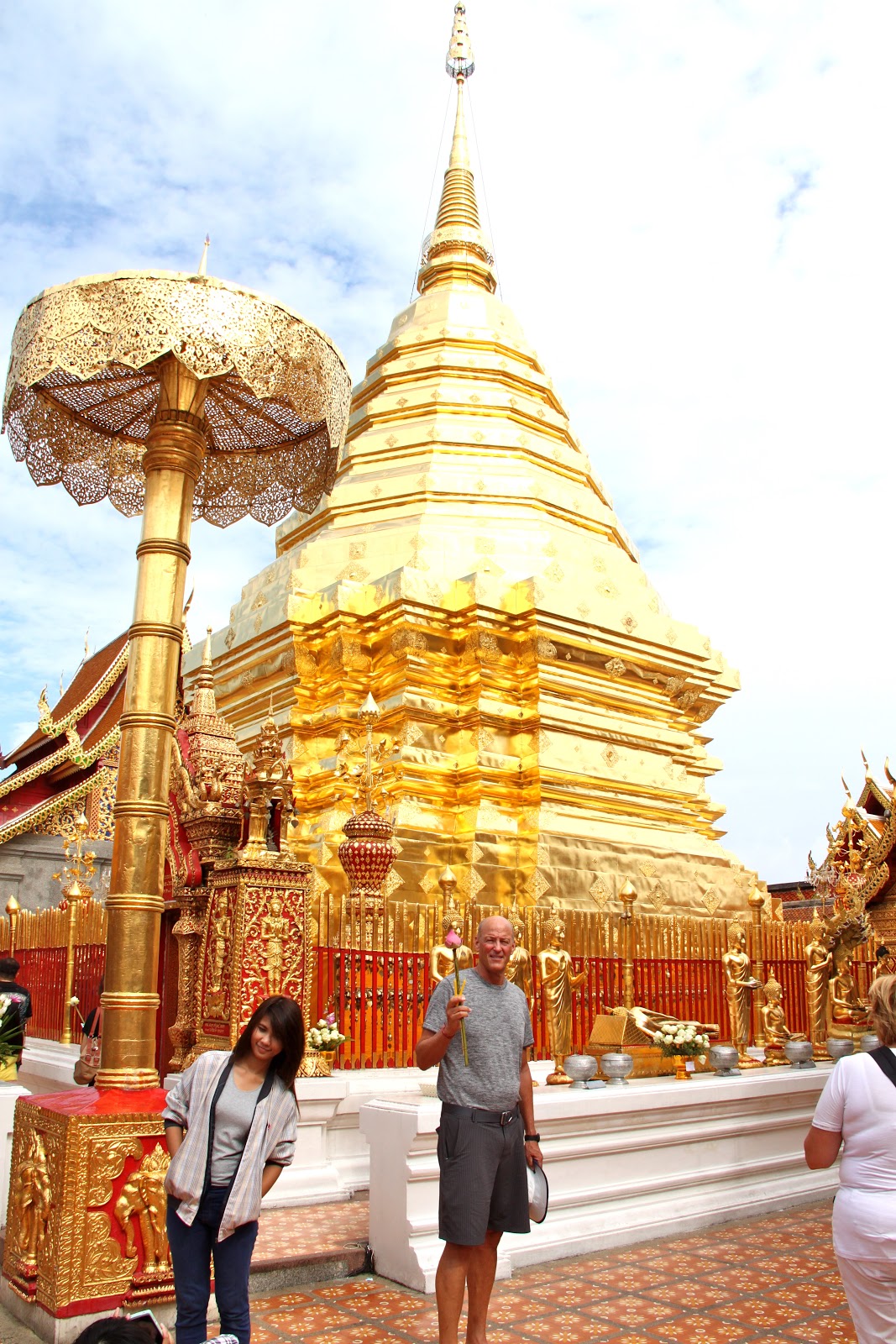
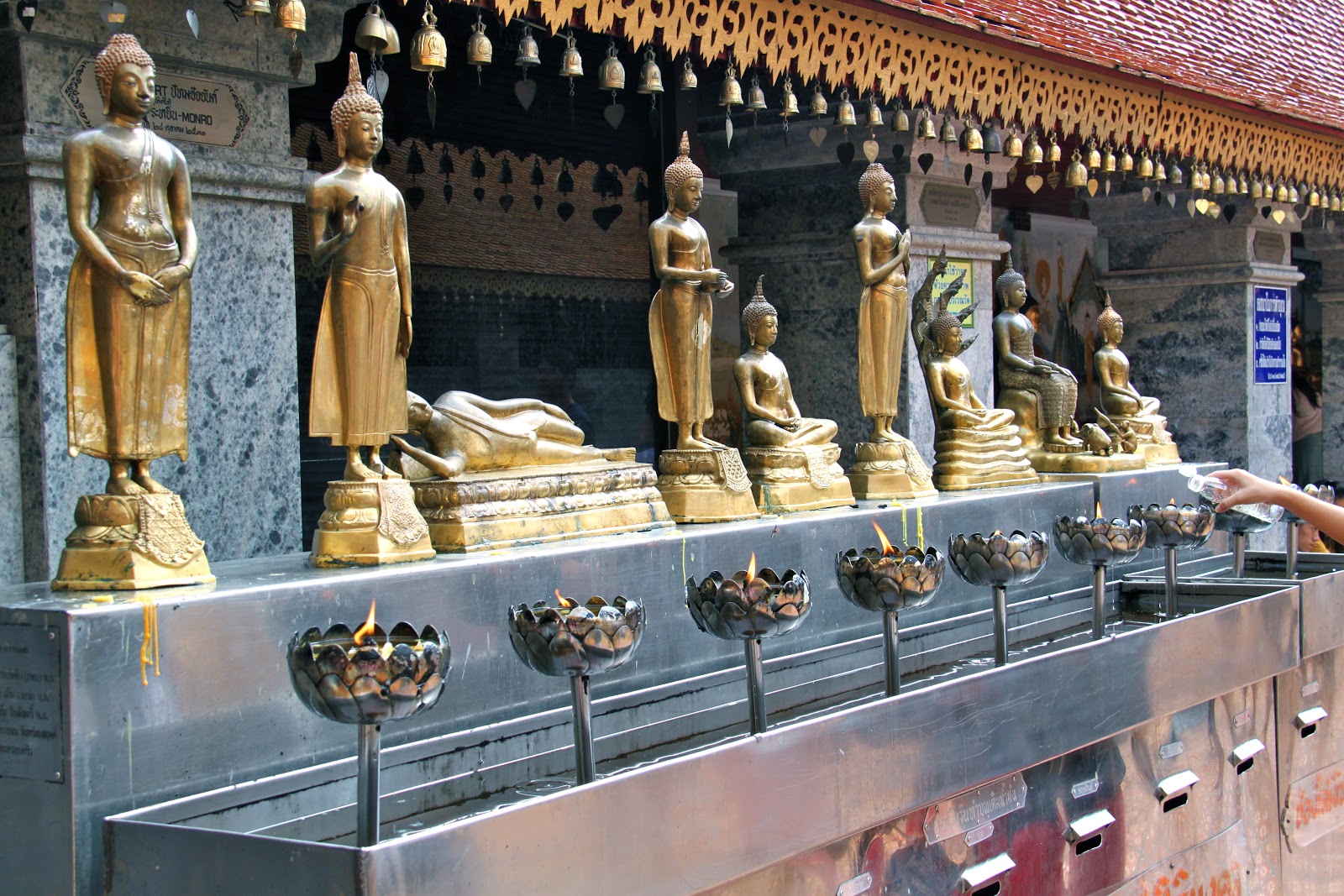
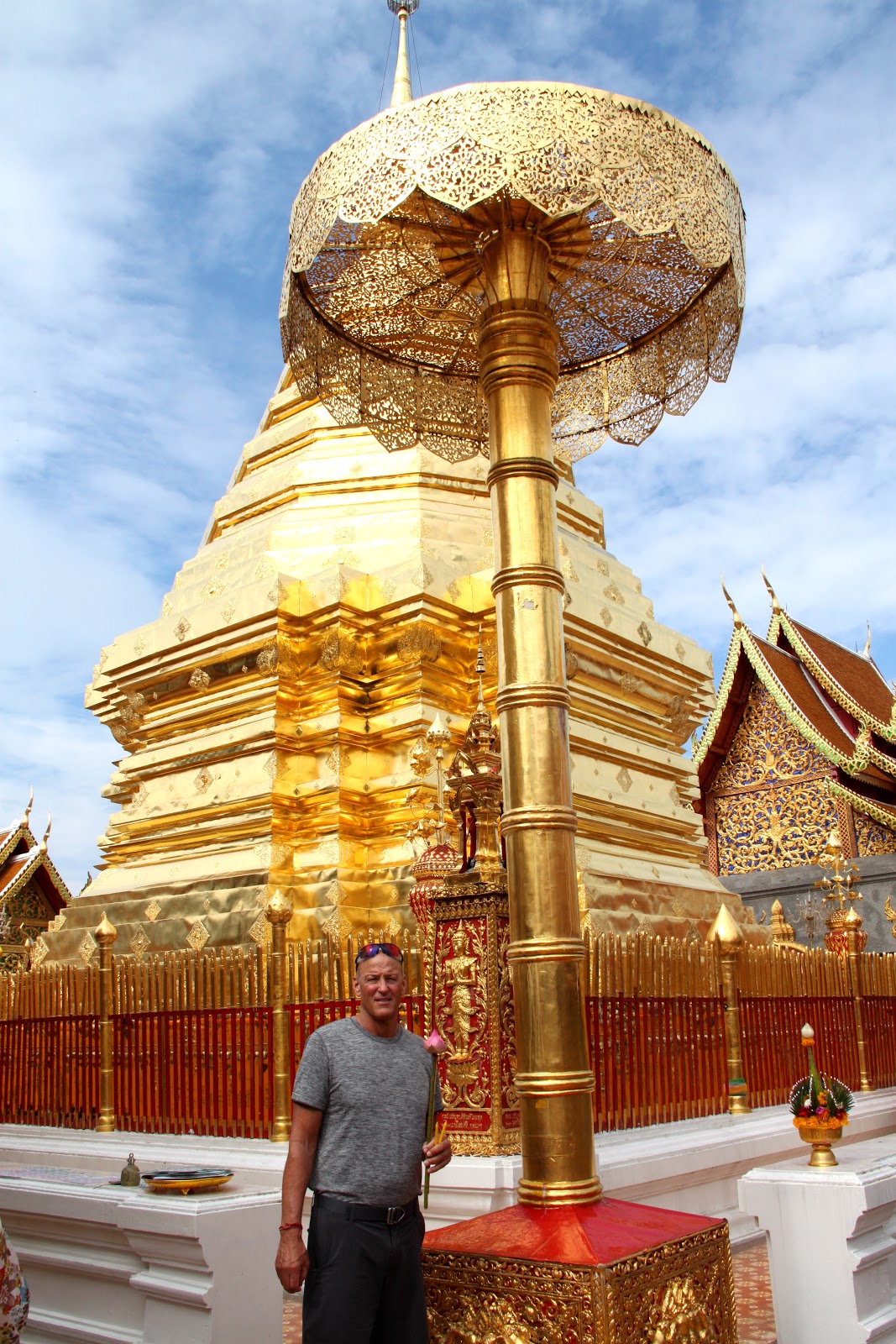
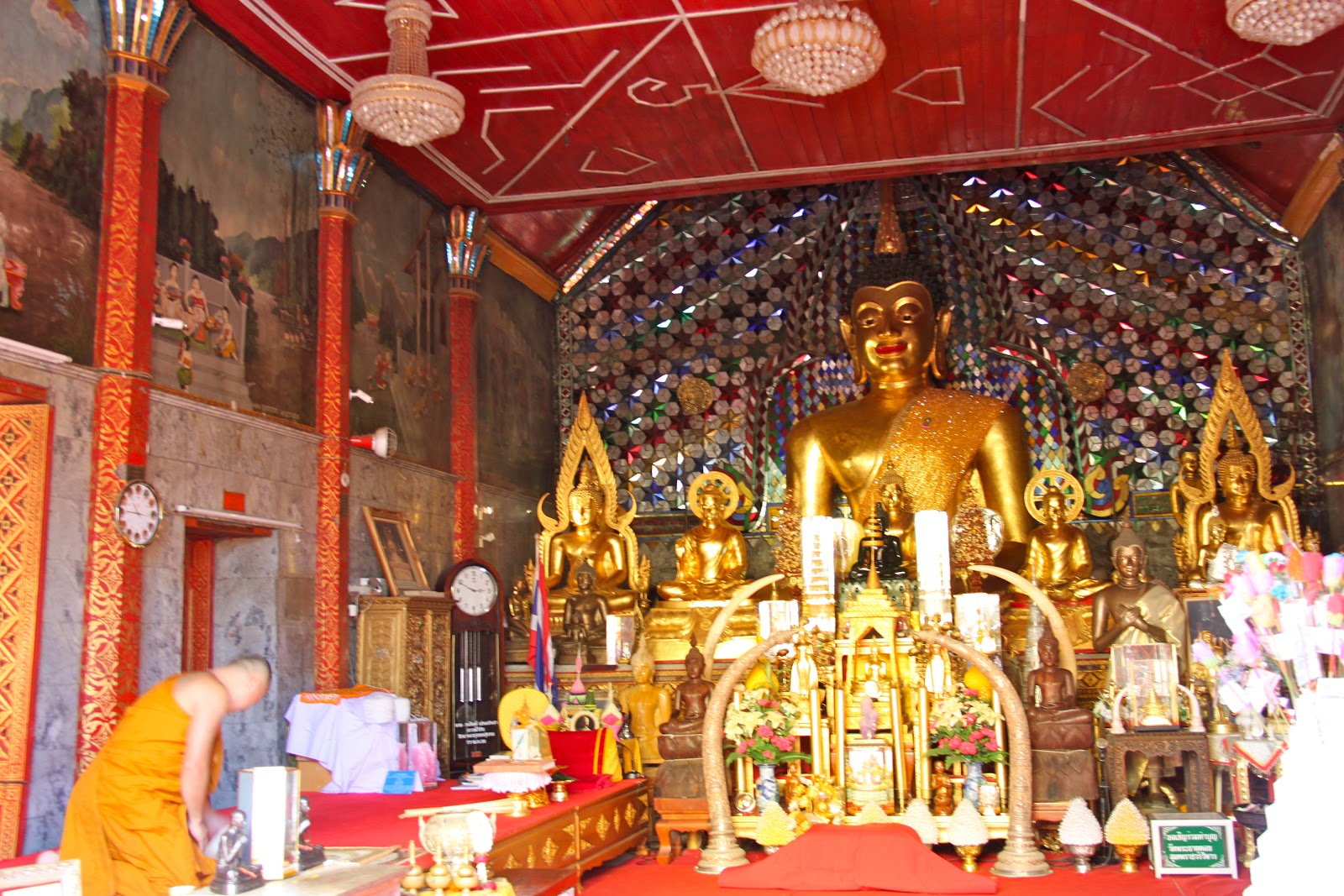
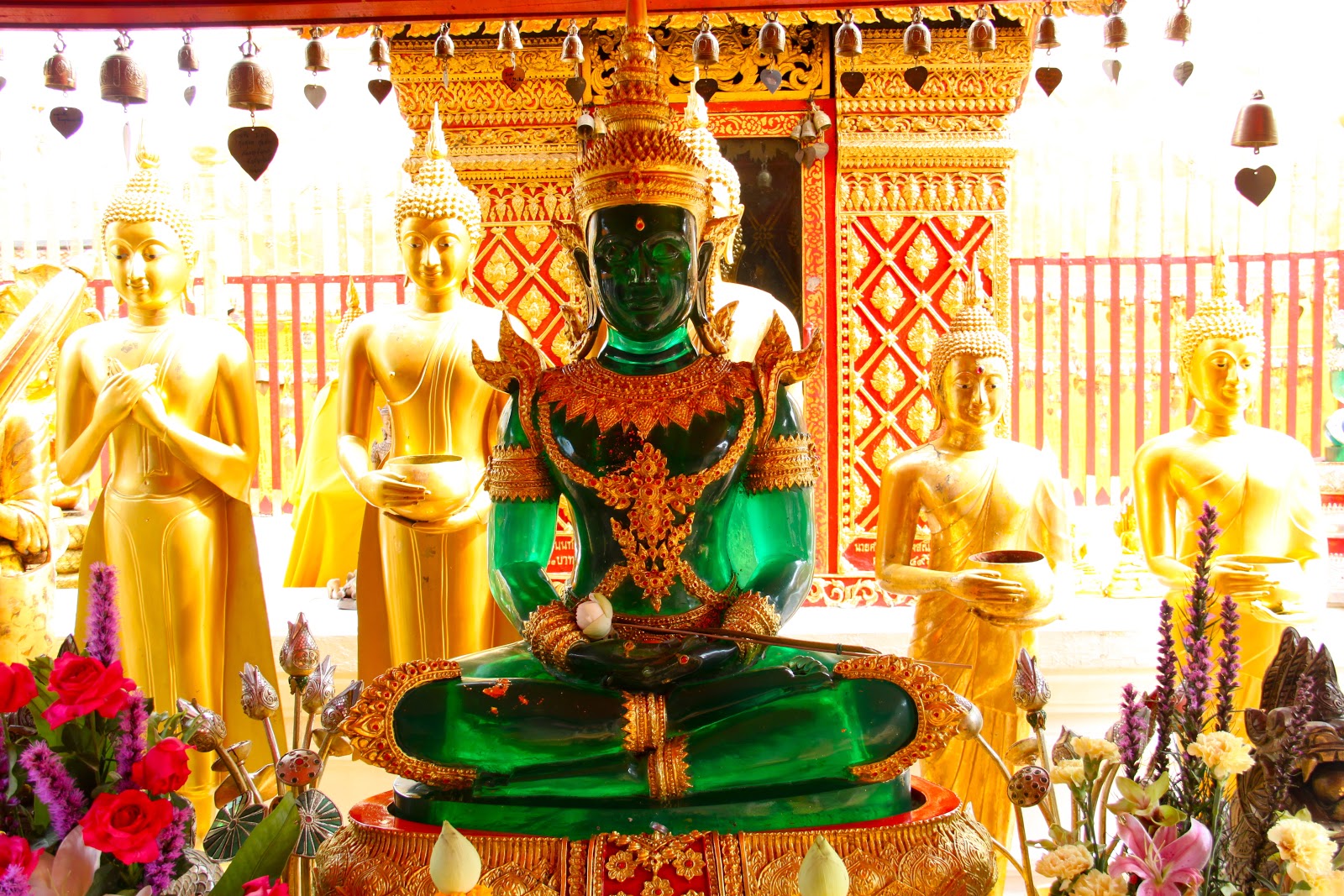
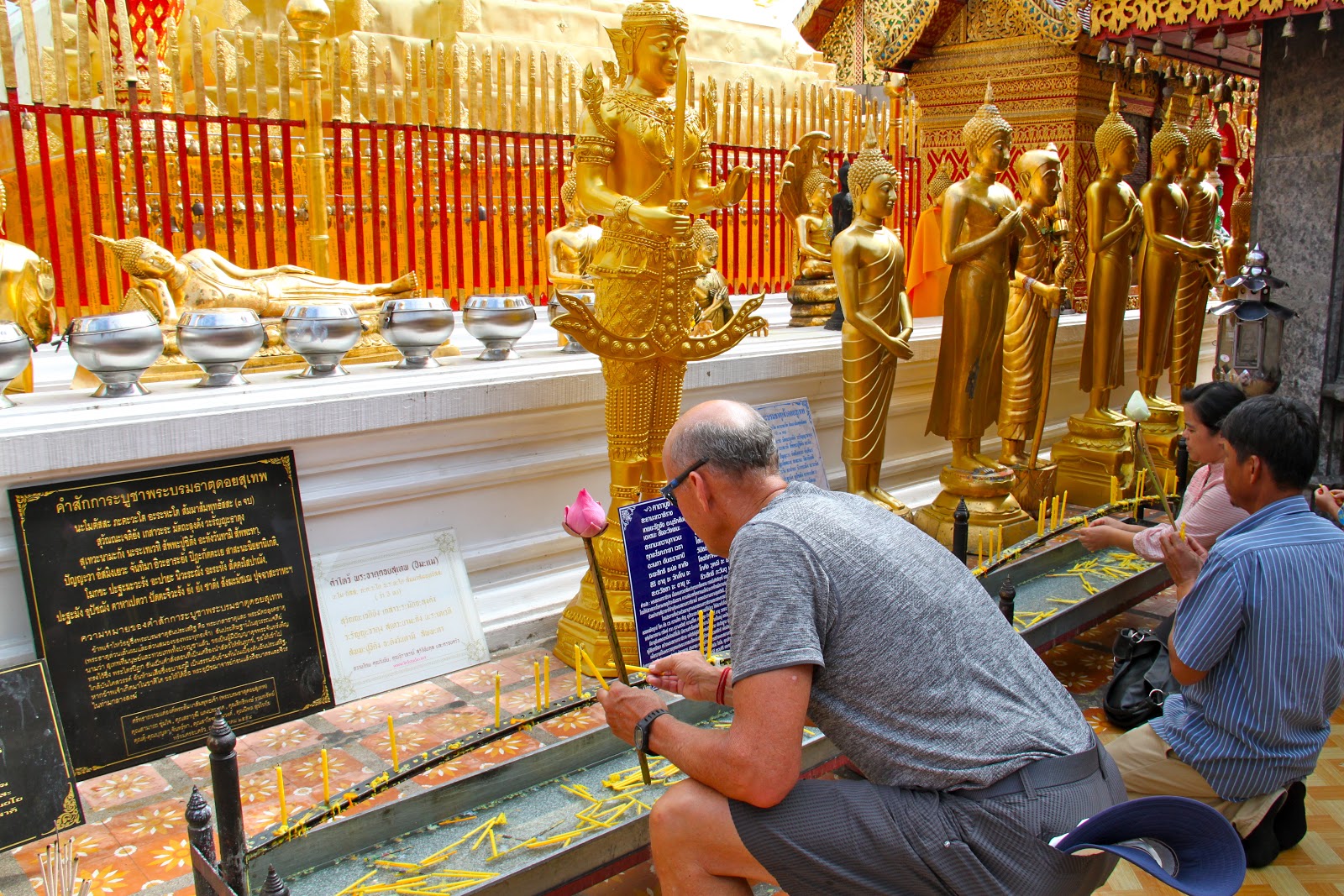
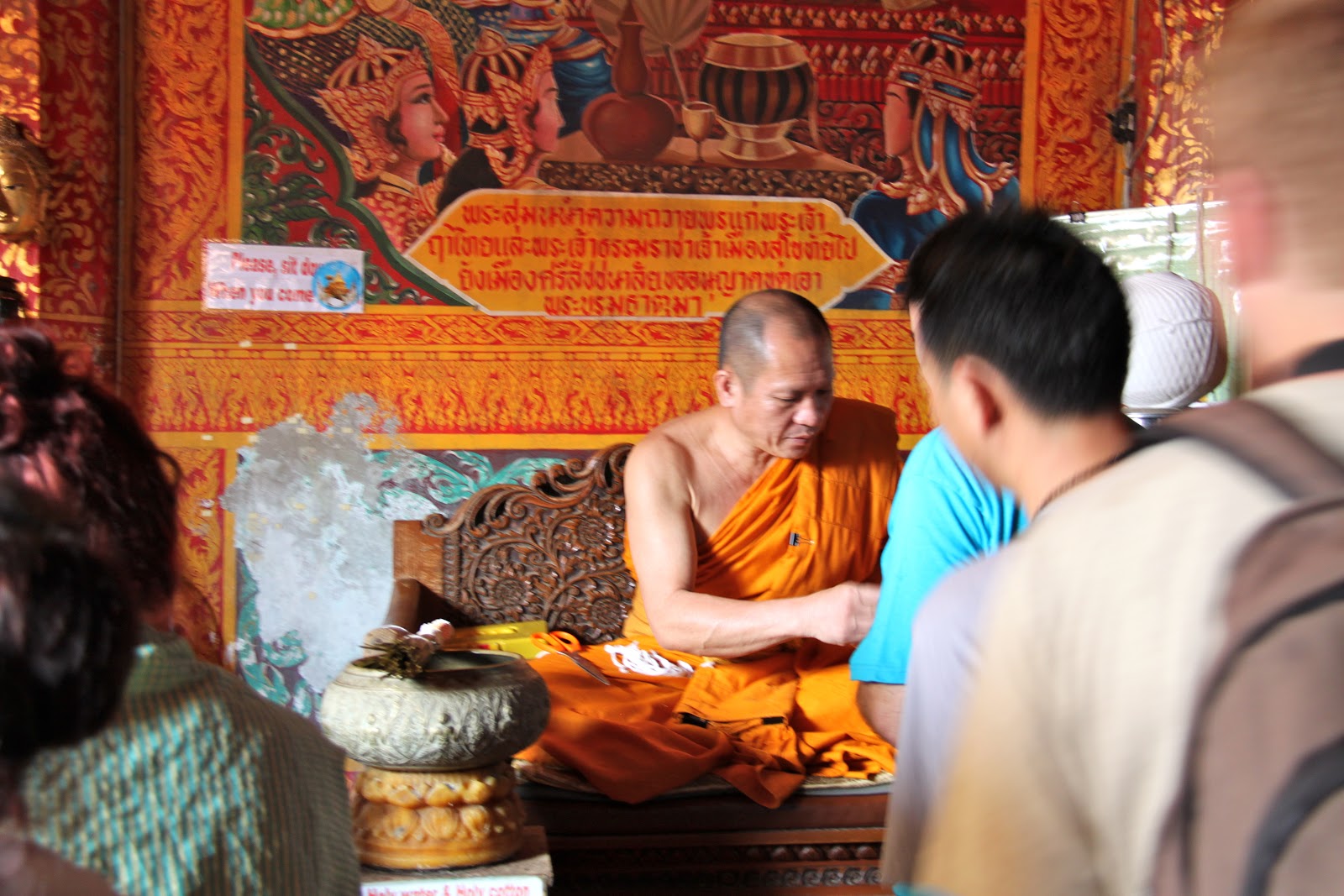
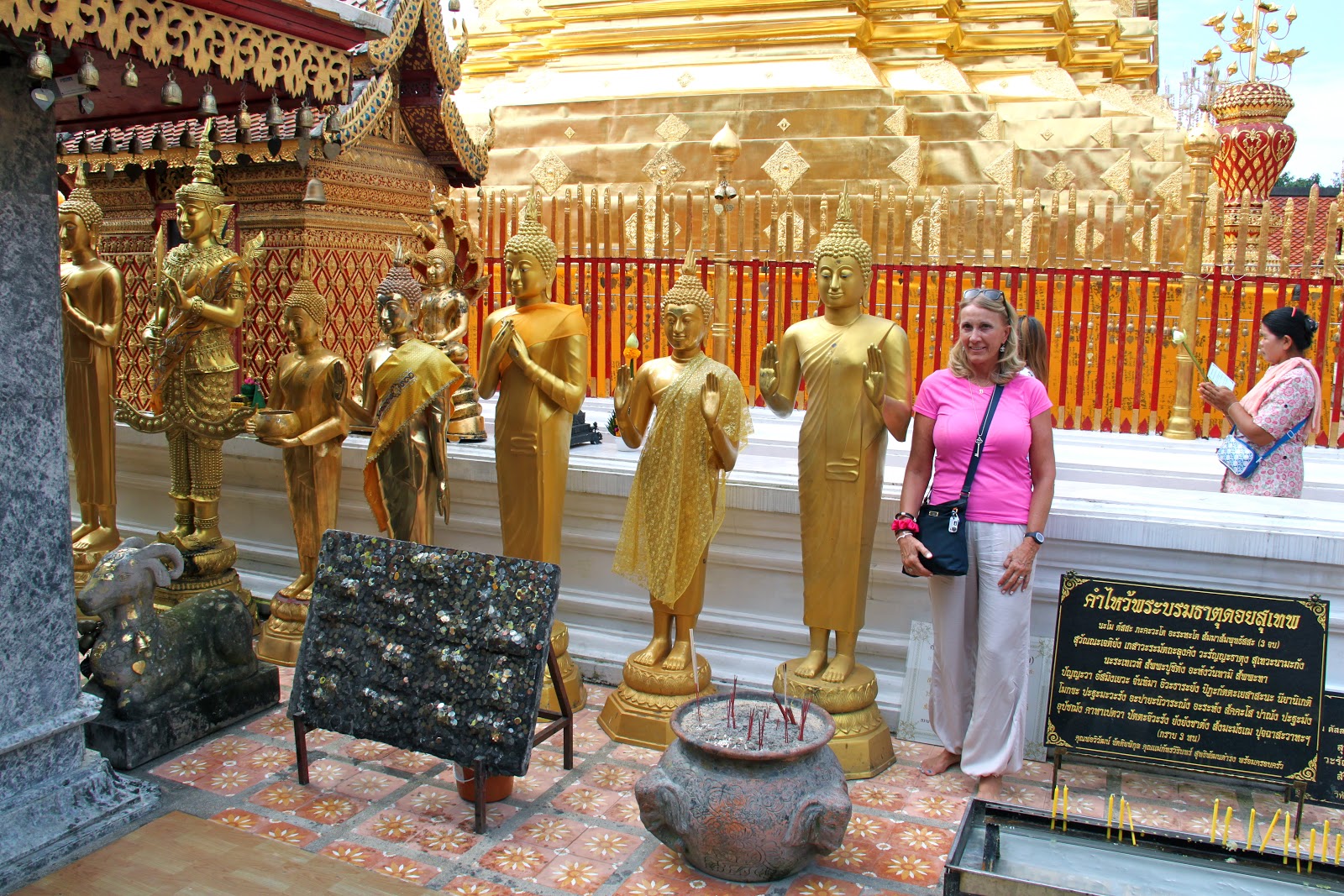
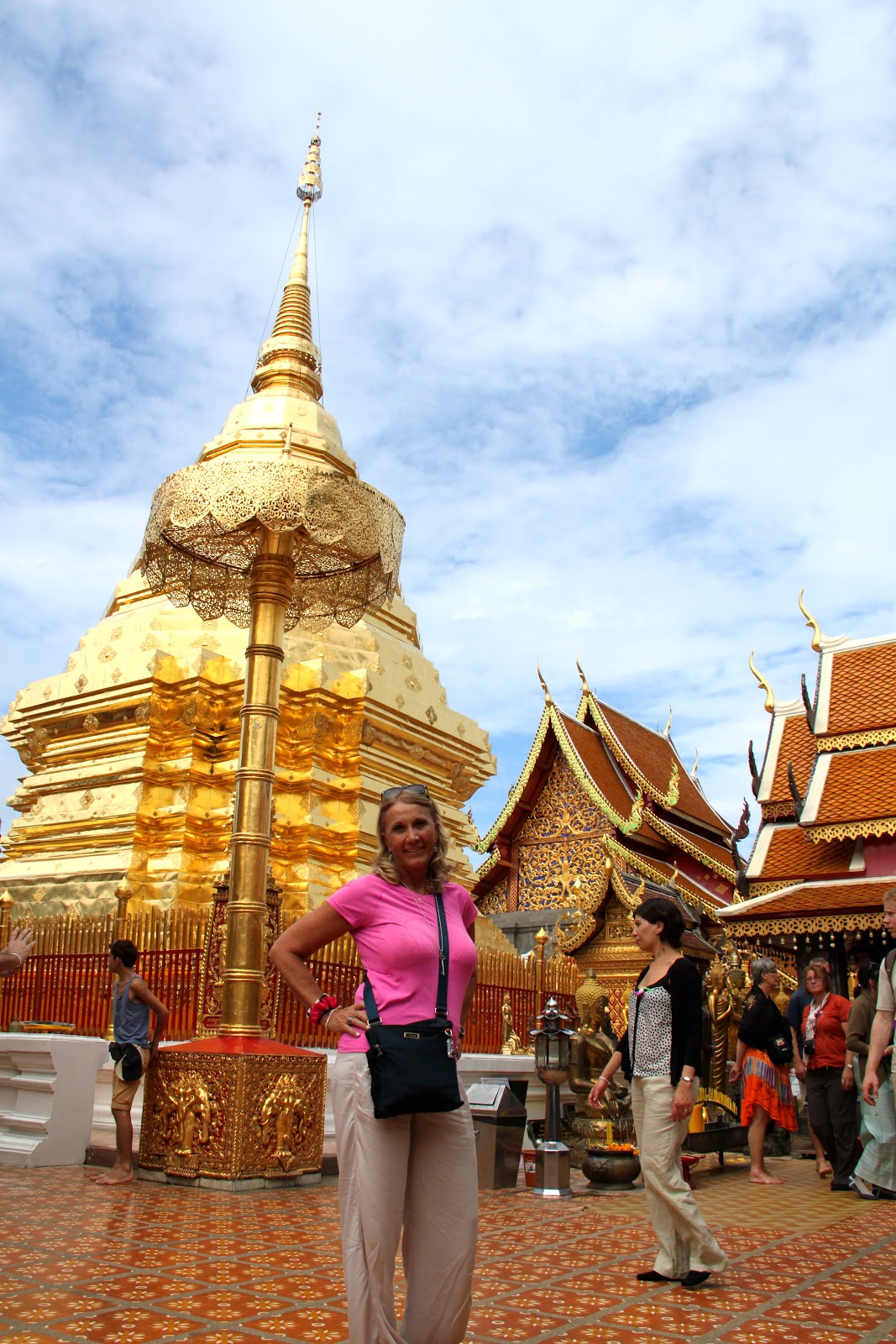
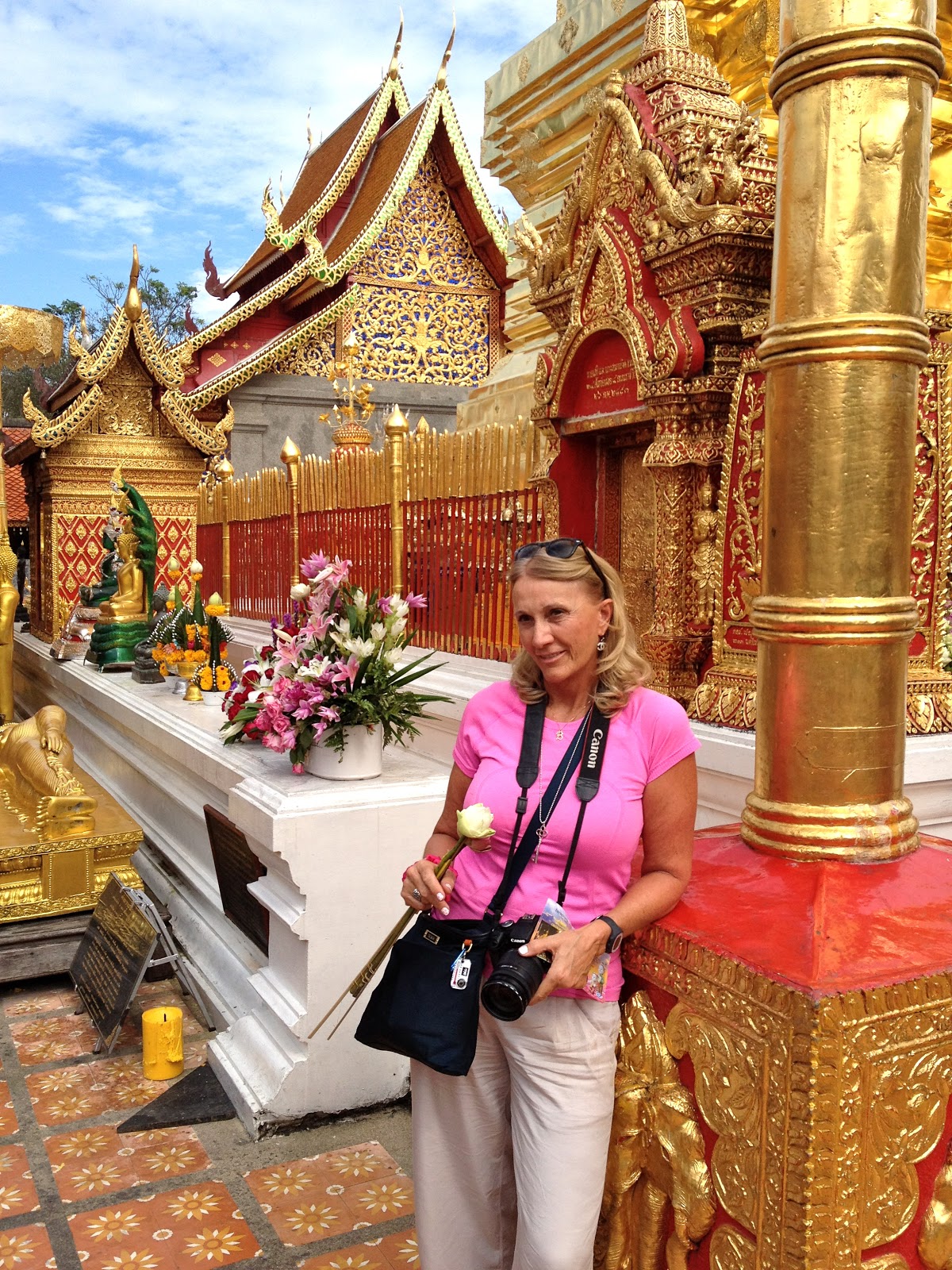
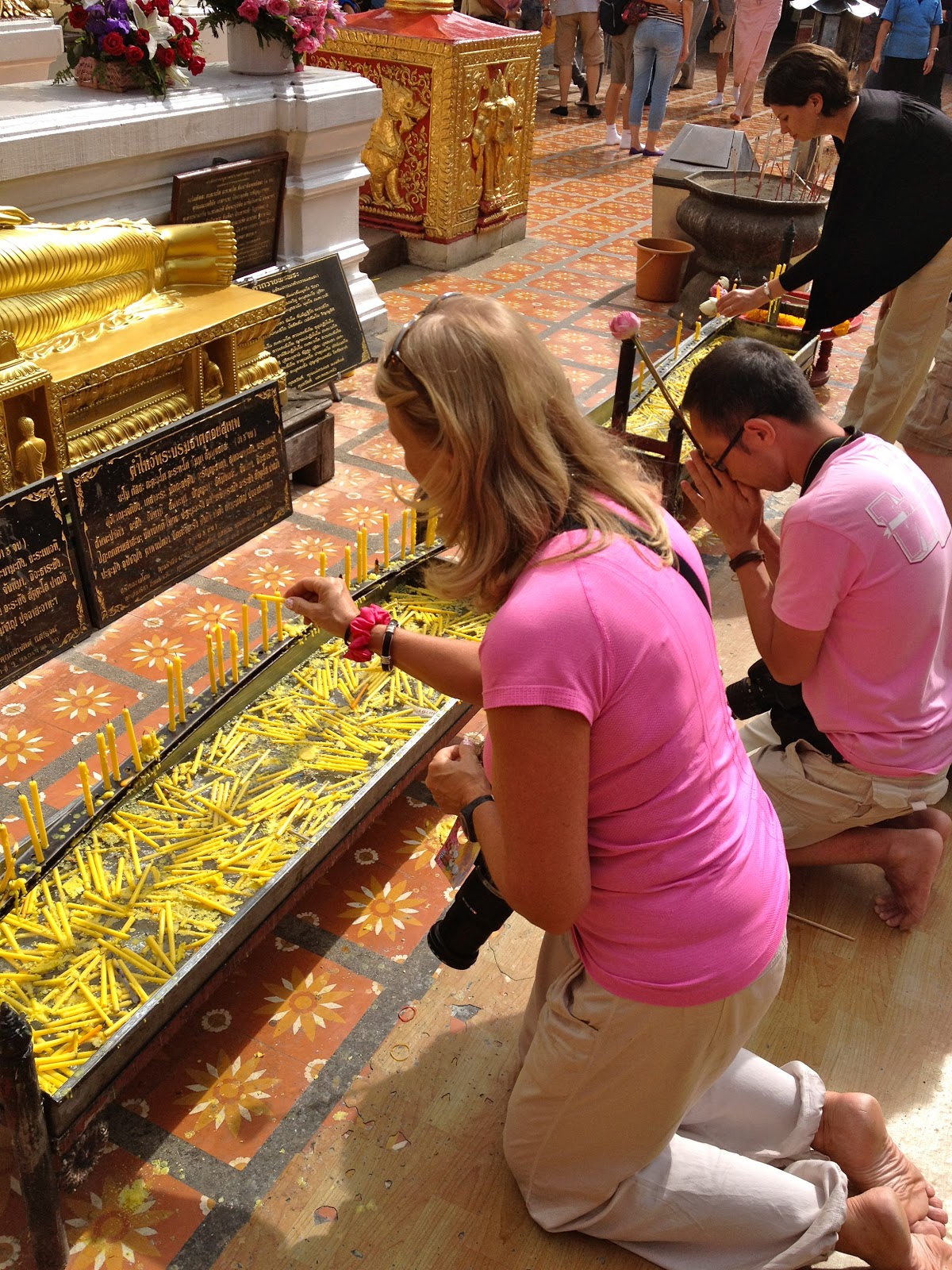
We drove up to the Doi Suthep Temple.  We offered flowers and candles and received a holy white cotton string around the wrist from the Monk as a blessing for happiness and success.  The Monks are very happy and clearly enjoy giving these blessings.  He was interested to know where in the world I came from and gave me a broad smile of approval when I told him I was from the USA.

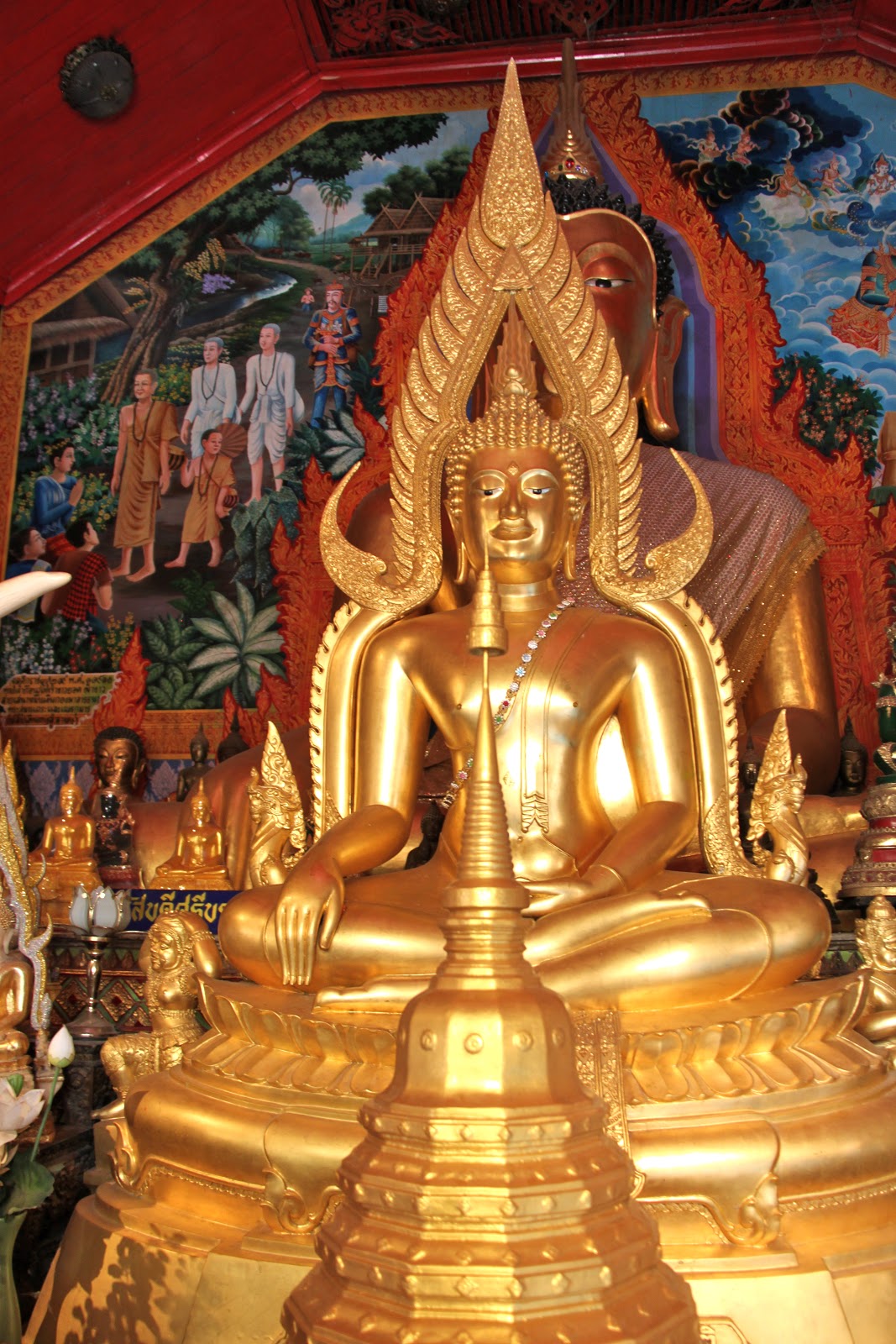
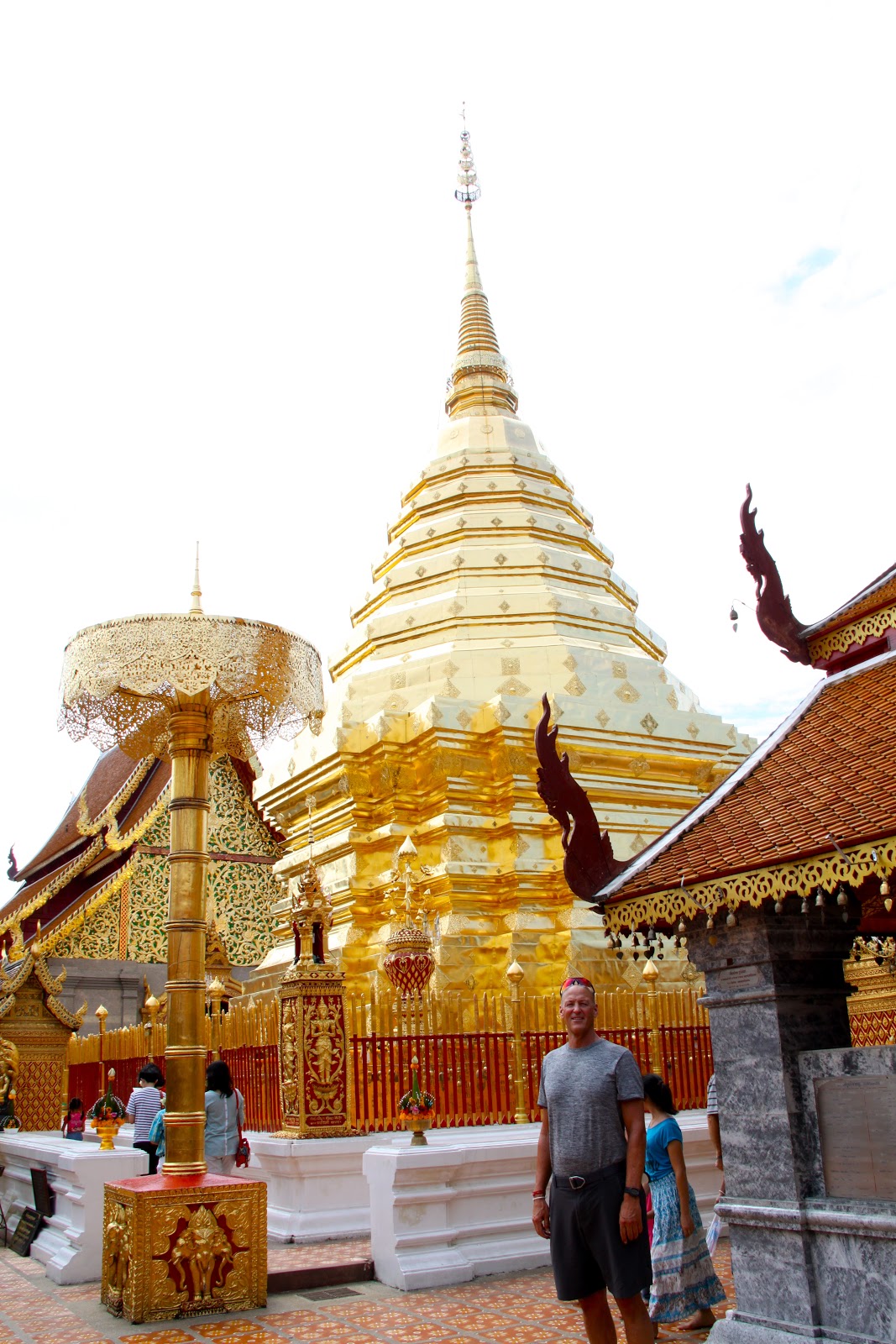
Doi Suthep Temple-so much gold!

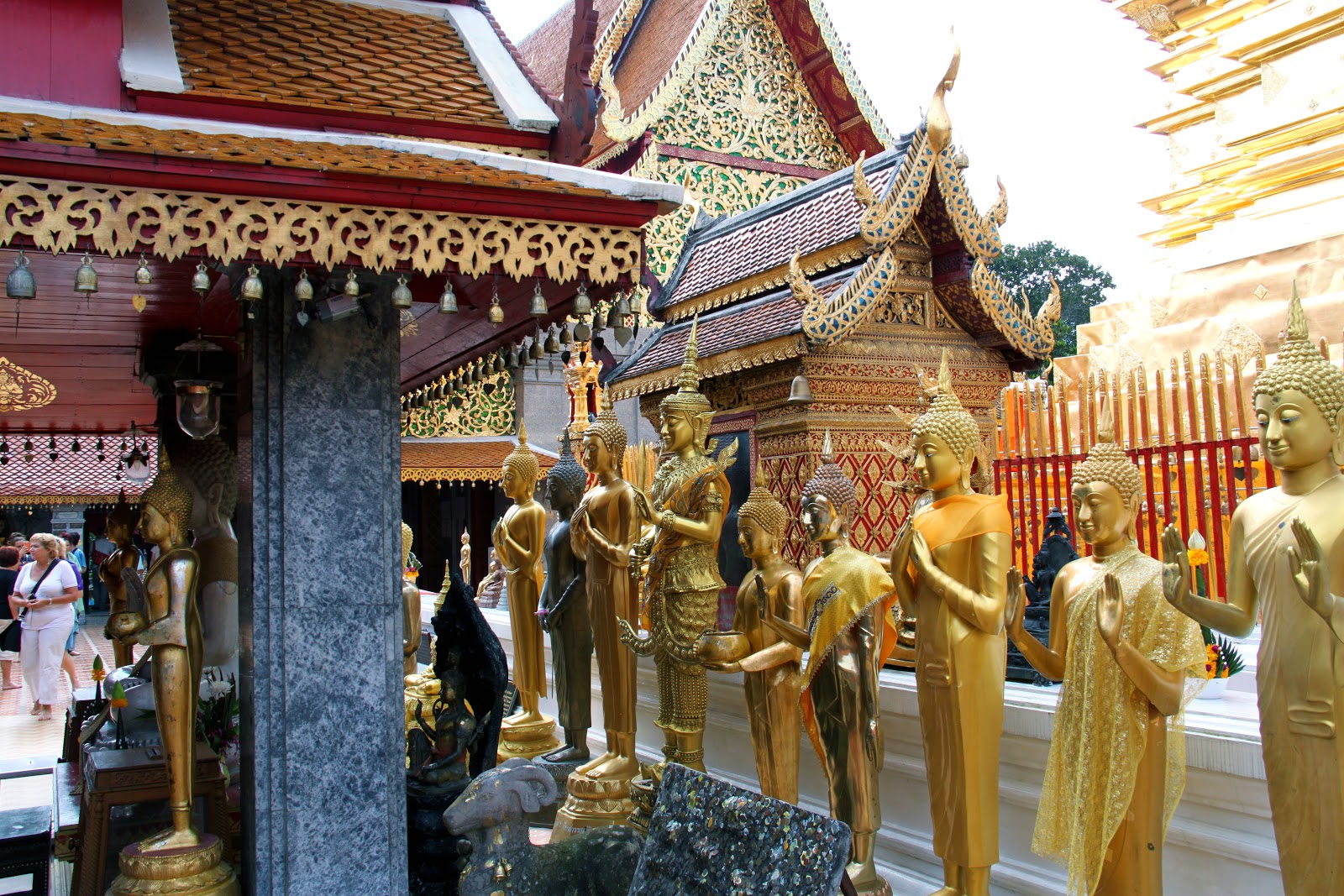
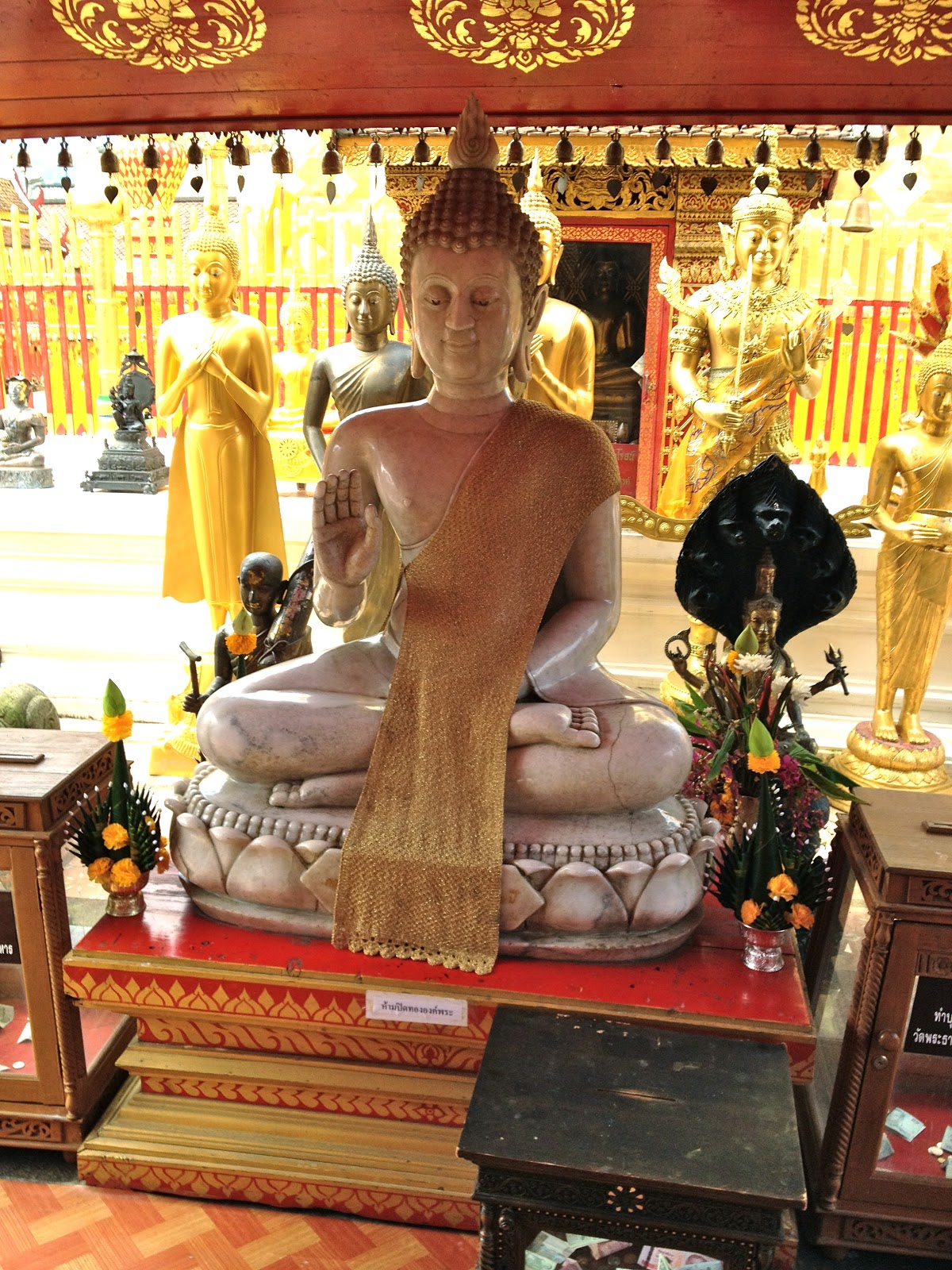
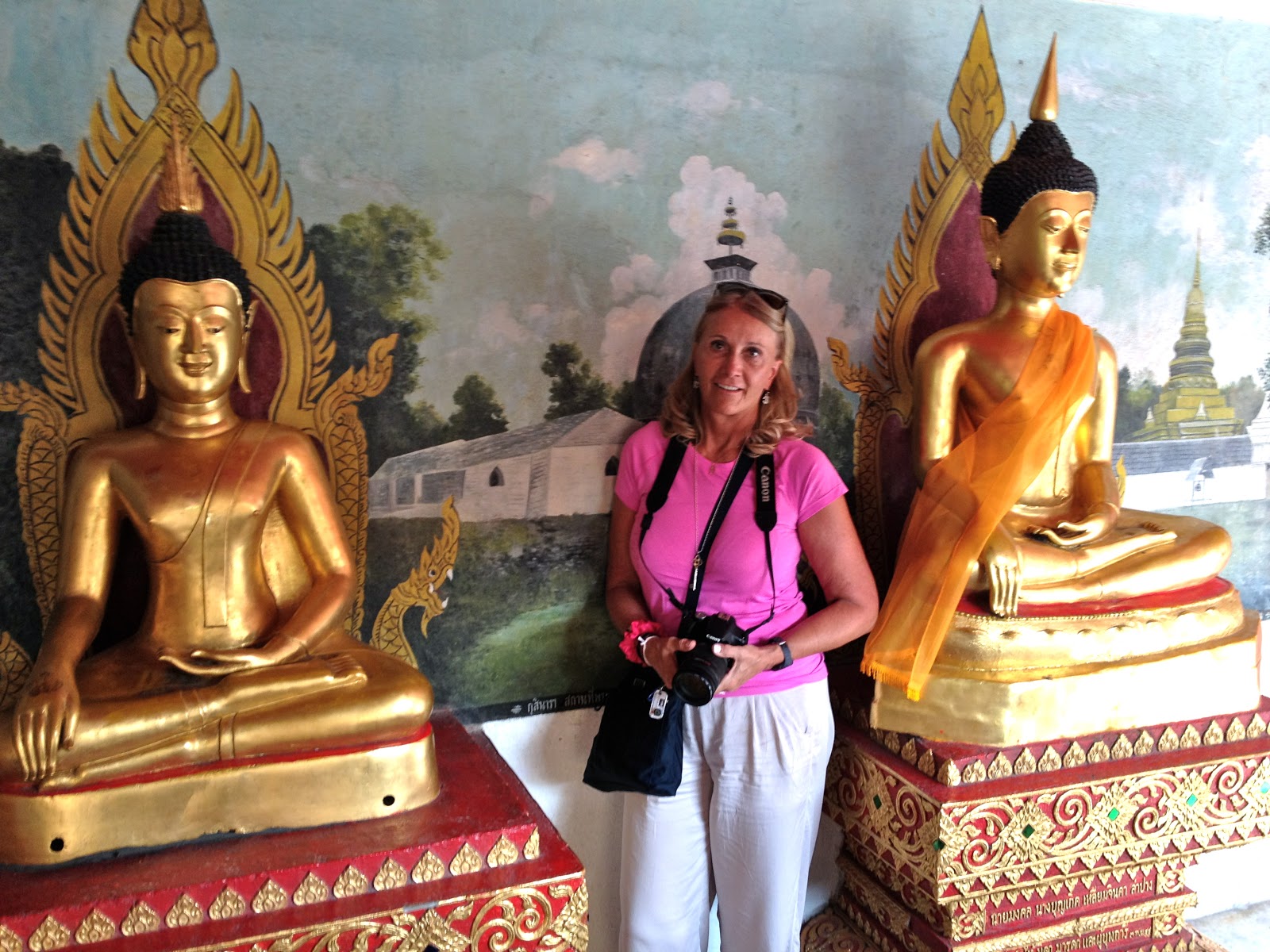
Line of Buddhas

Lighting candles

Scott

Inside one of the temples where the Priest gave us a blessing and tied a string around our wrist

Jade Buddha

Scott donated to buy a candle to light

Scott getting his blessing and a string around his wrist

Barb doesn’t look like Buddha!

Always remove your shoes to go into a temple

Ornate

Barb lighting her candle

TIGERS!

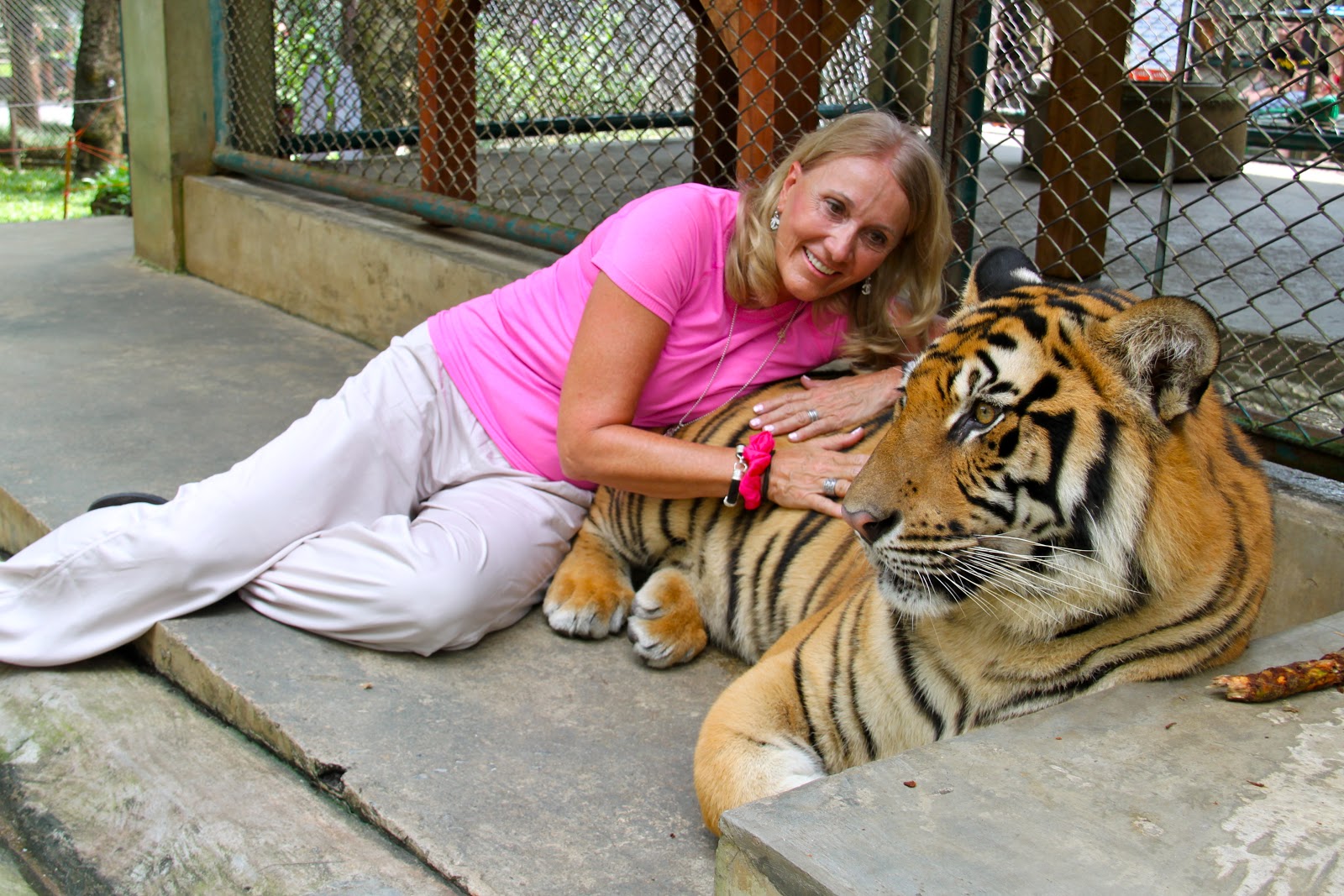
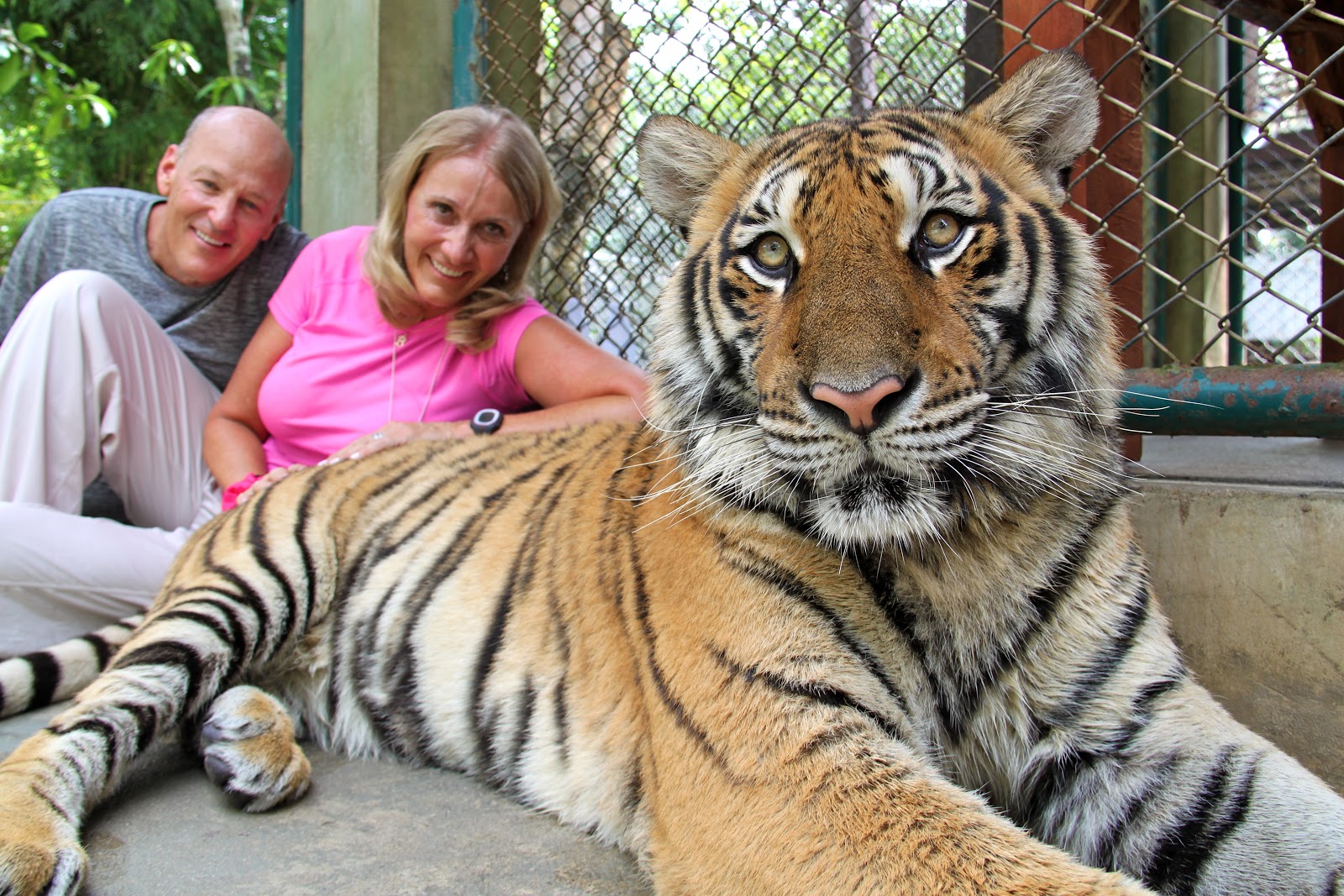
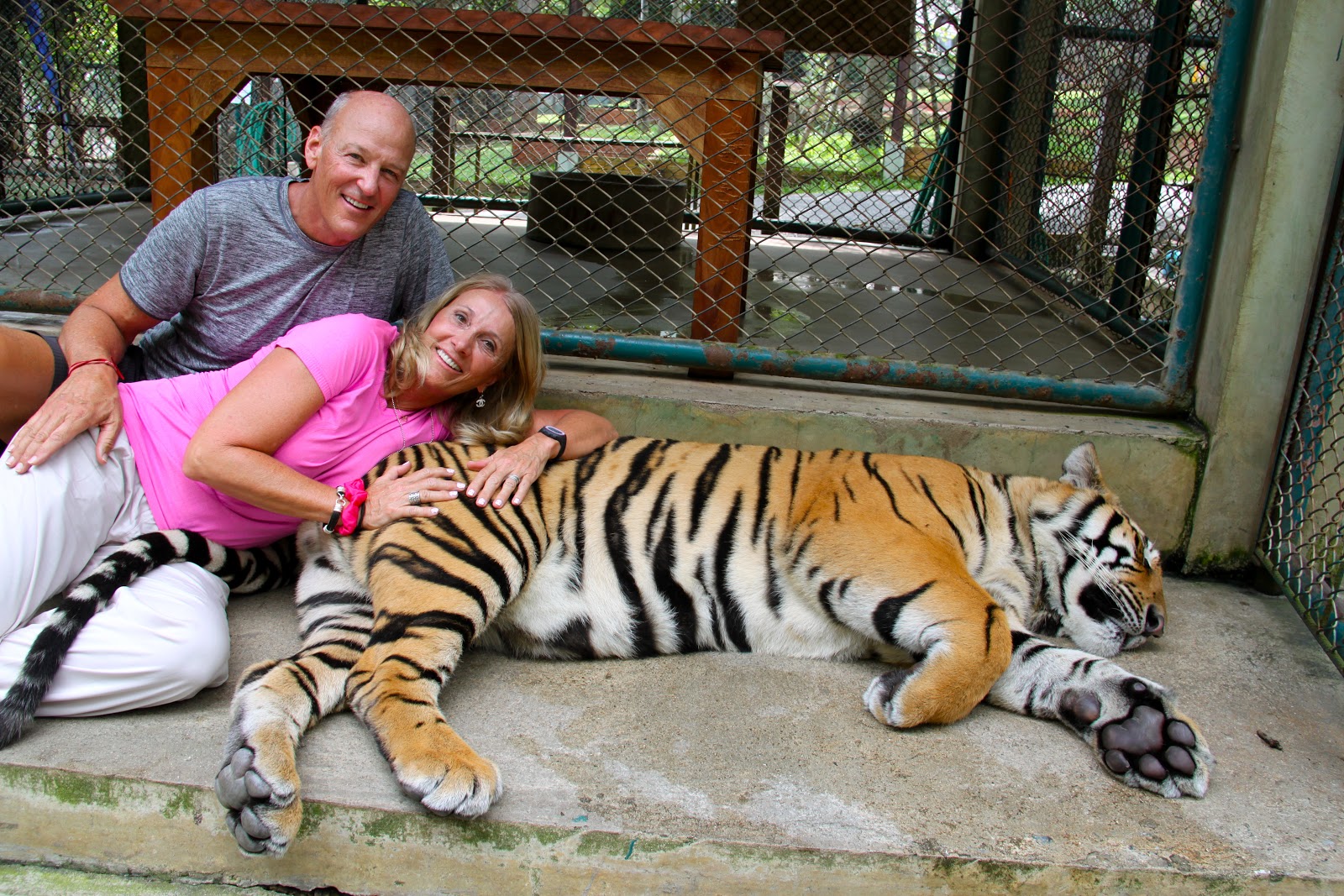
OK. We know this is crazy dangerous for us and not good for the Tigers but it was fun. We got into the Tiger enclosure north of Chiang Mai after watching others survive the experience. We were instructed to approach them from behind. If you approach them from the front they think that you want to play and they play rough.
These Tigers were all born in captivity and are well fed.
The Tiger is Jason’s favorite animal so we ate pizza to celebrate our survival.

Yes, Barb is petting a real tiger!

Barb is not the only crazy person in this family!

When you enter the enclosure, you are supposed to come behind them, don’t touch their faces, and don’t act like you want to play with them.  We assume they play pretty rough.

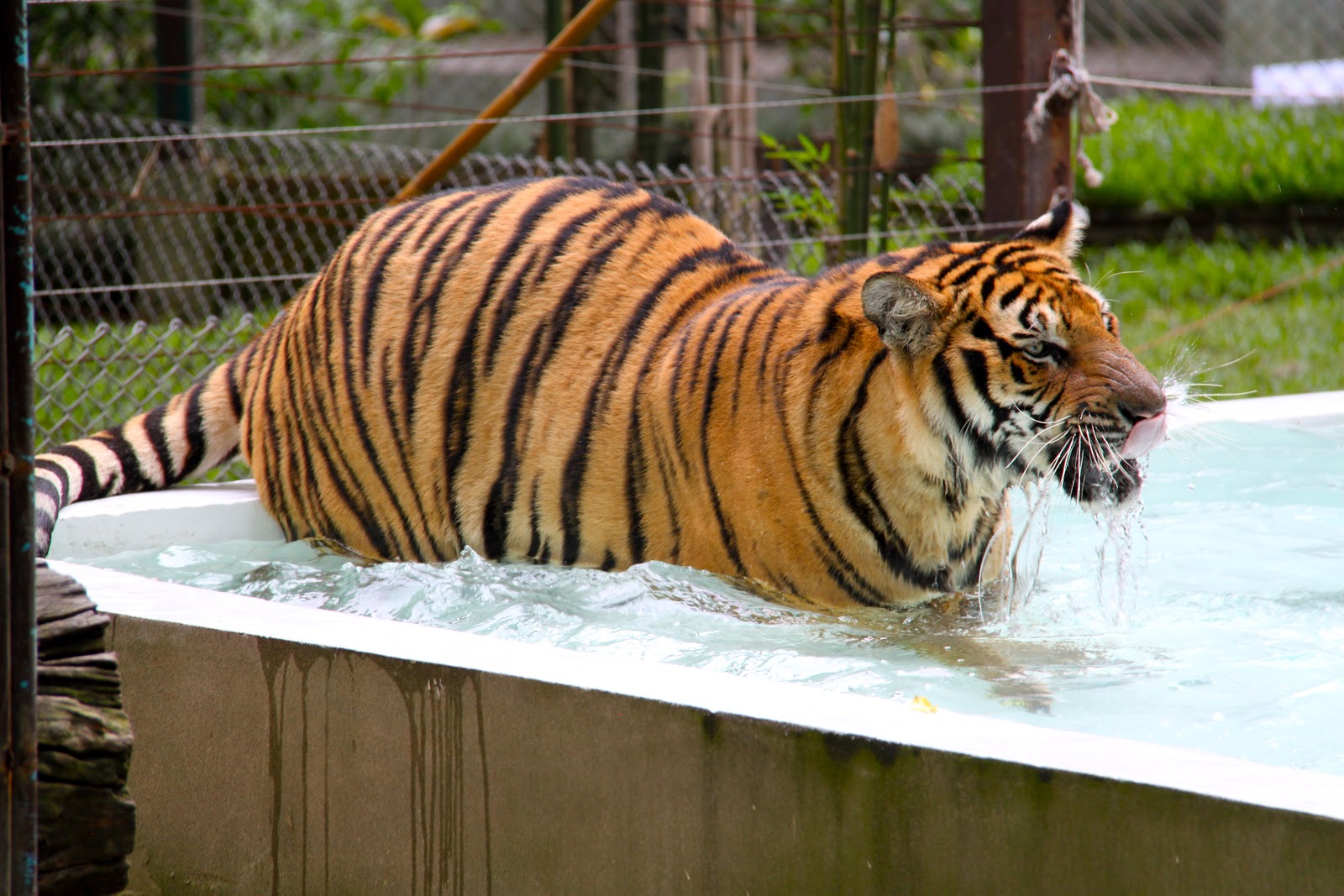
He decided to take a bath
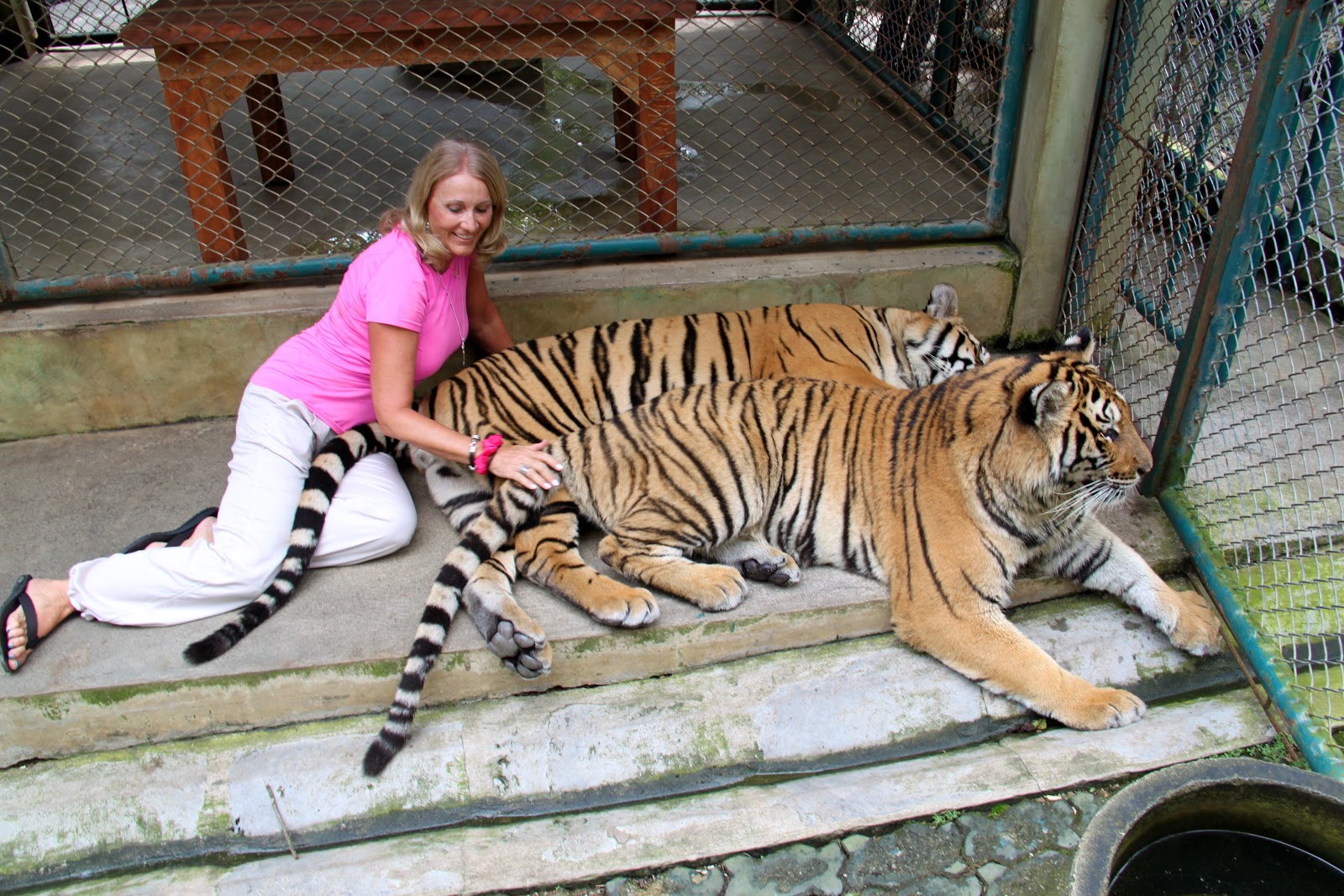
Two for the price of one.  You can pick up and play with their tails.

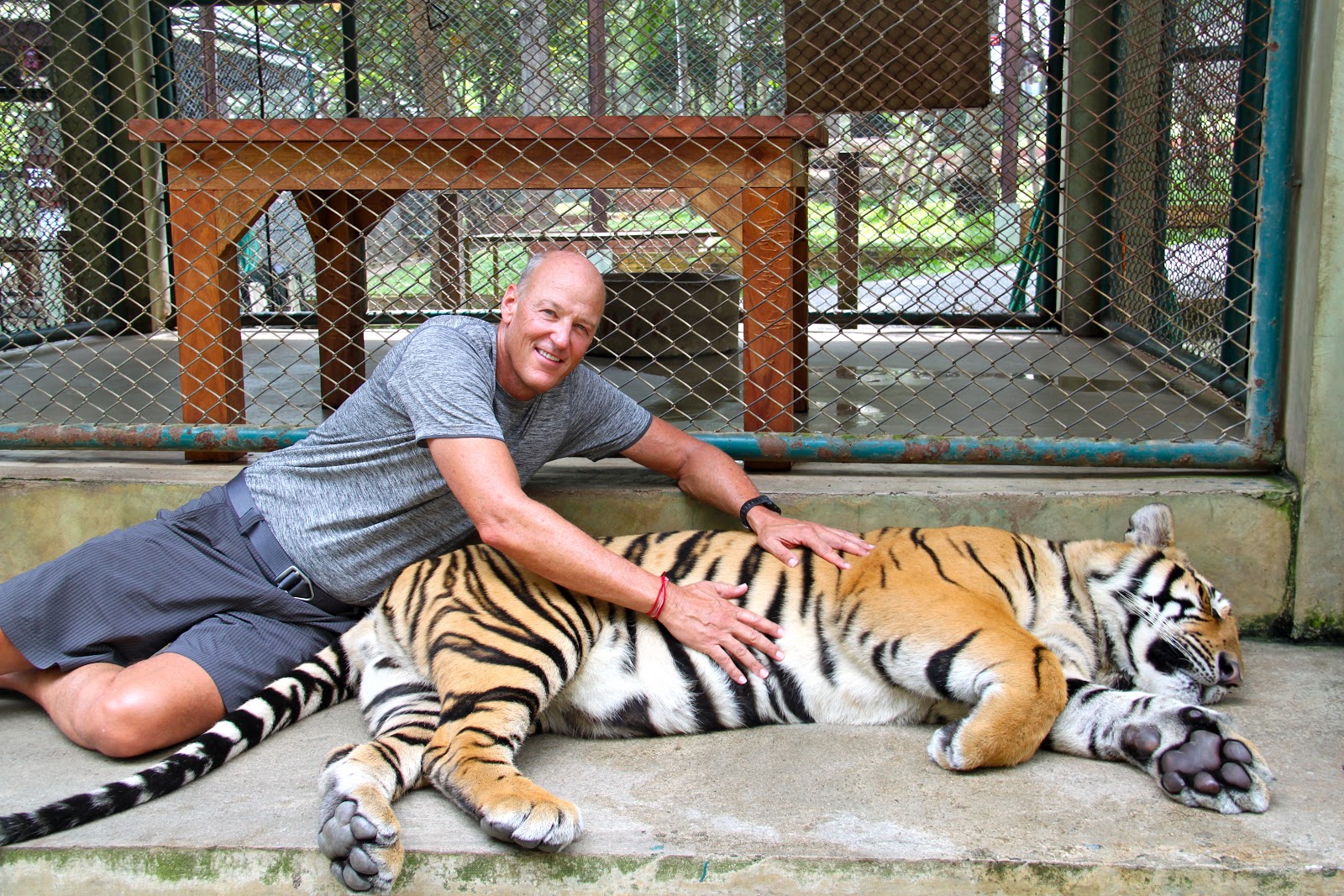
Rub my Belly.

Two crazy people

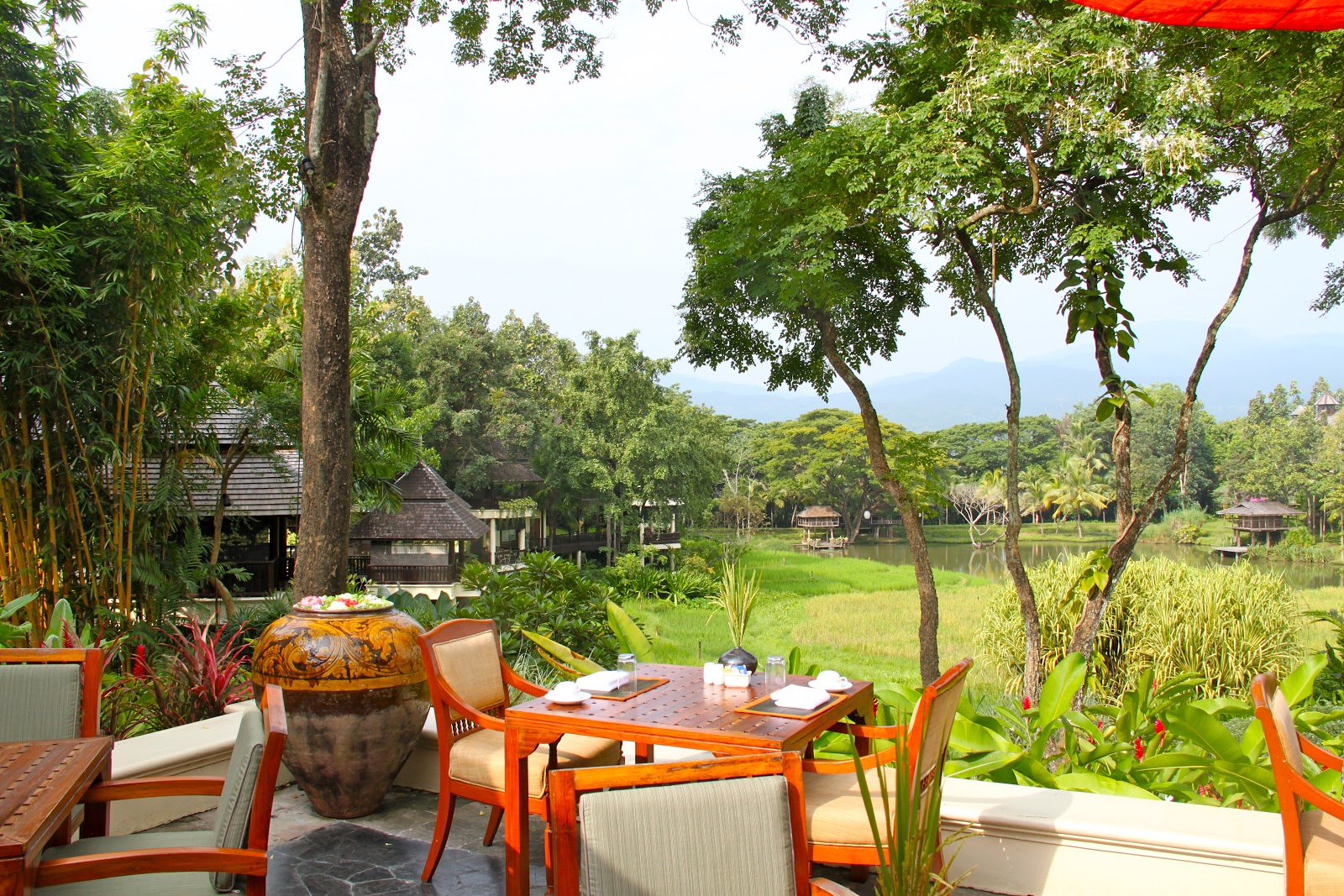
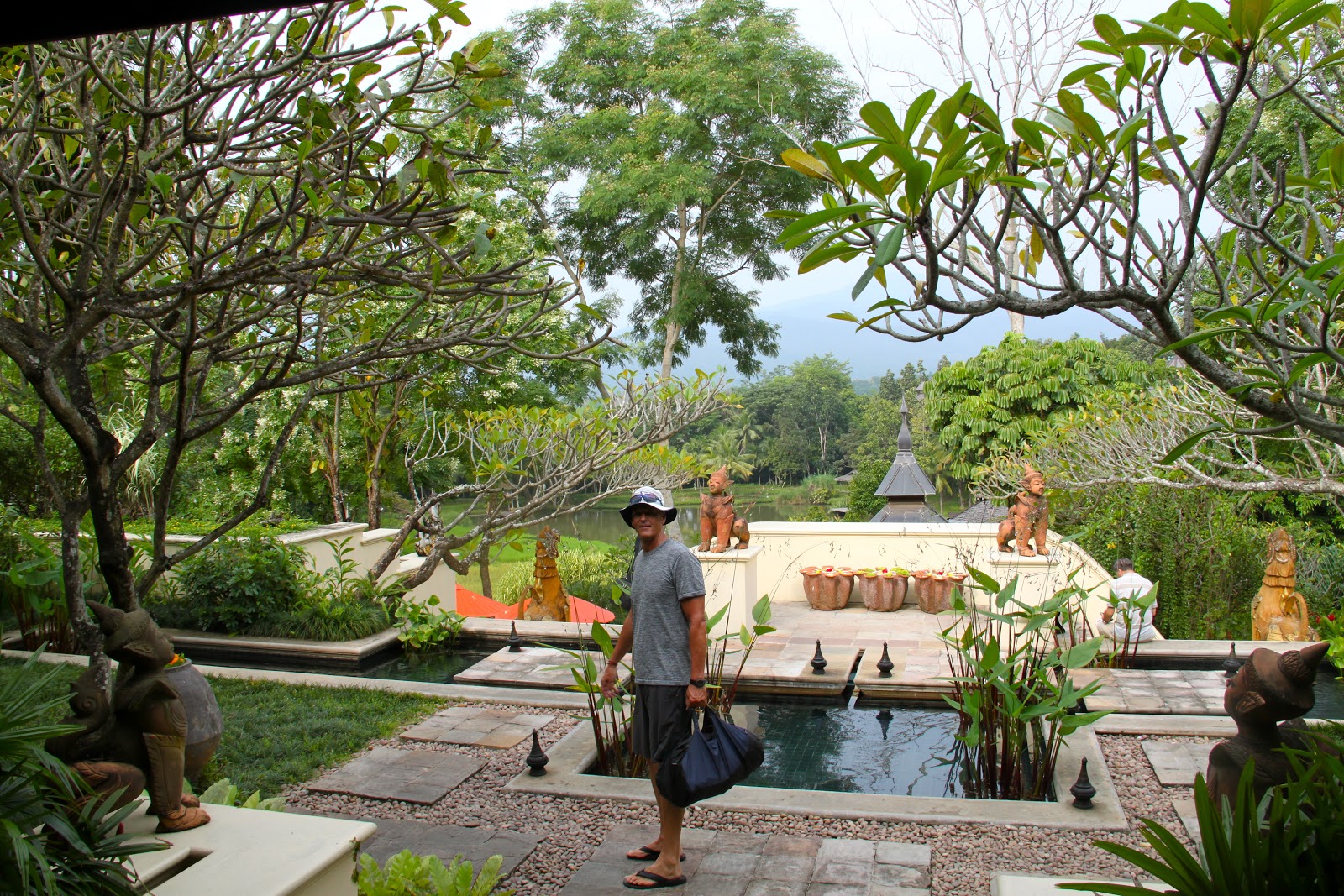
We stayed at a beautiful Hotel in Chiang Mai.  It was the Four Seasons north of town out in the rice paddies.

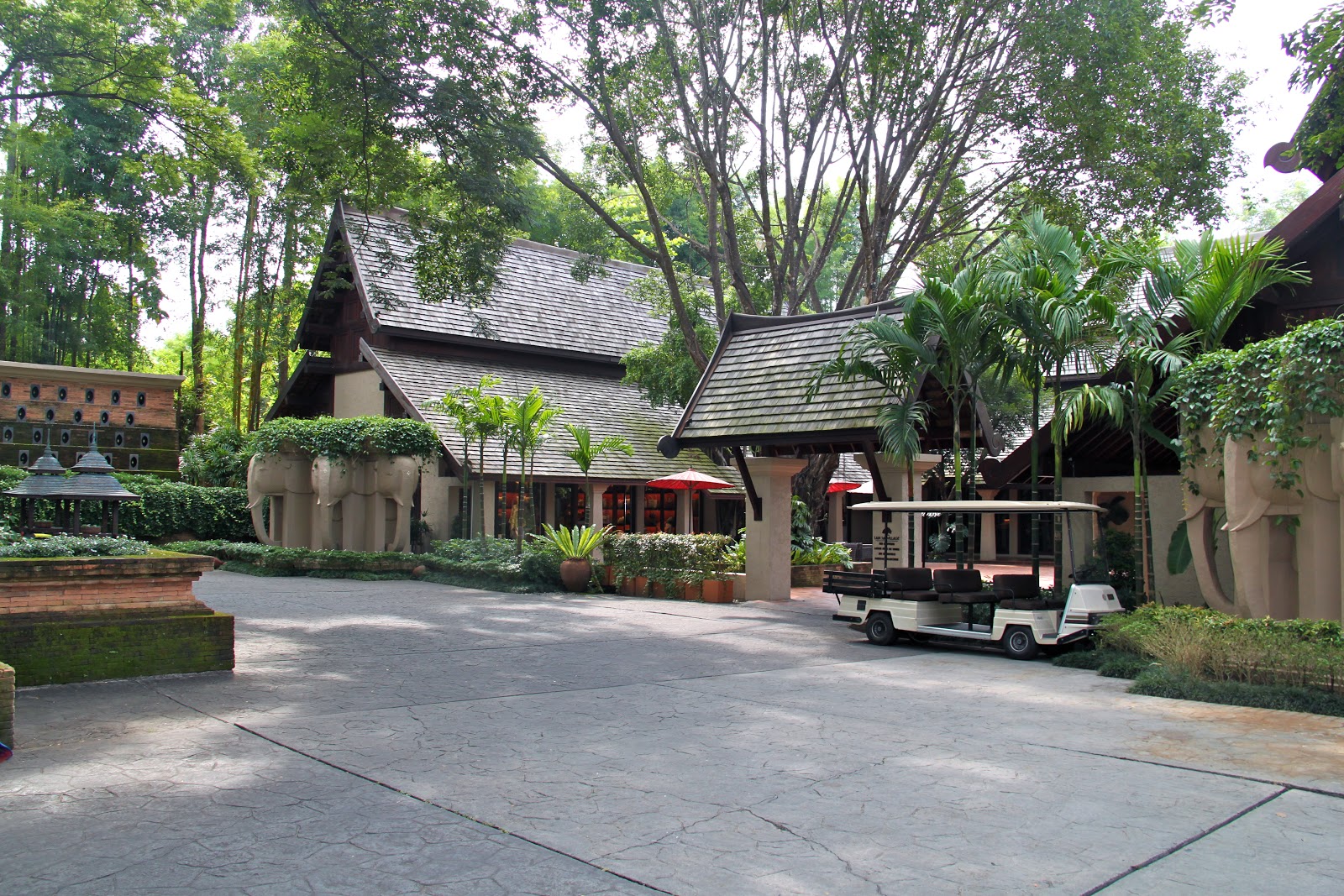
Front of the Hotel

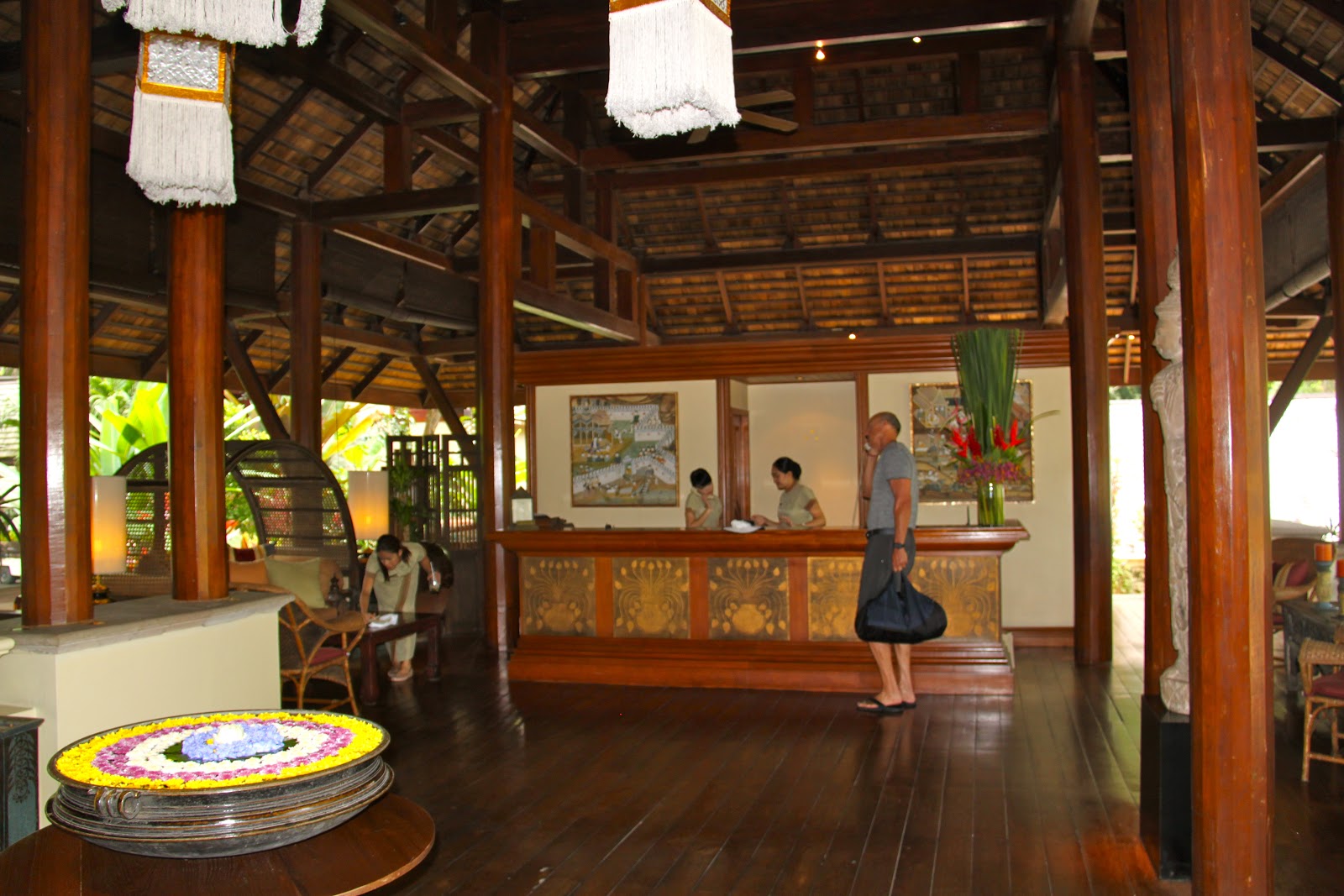
Checking in at the Lobby

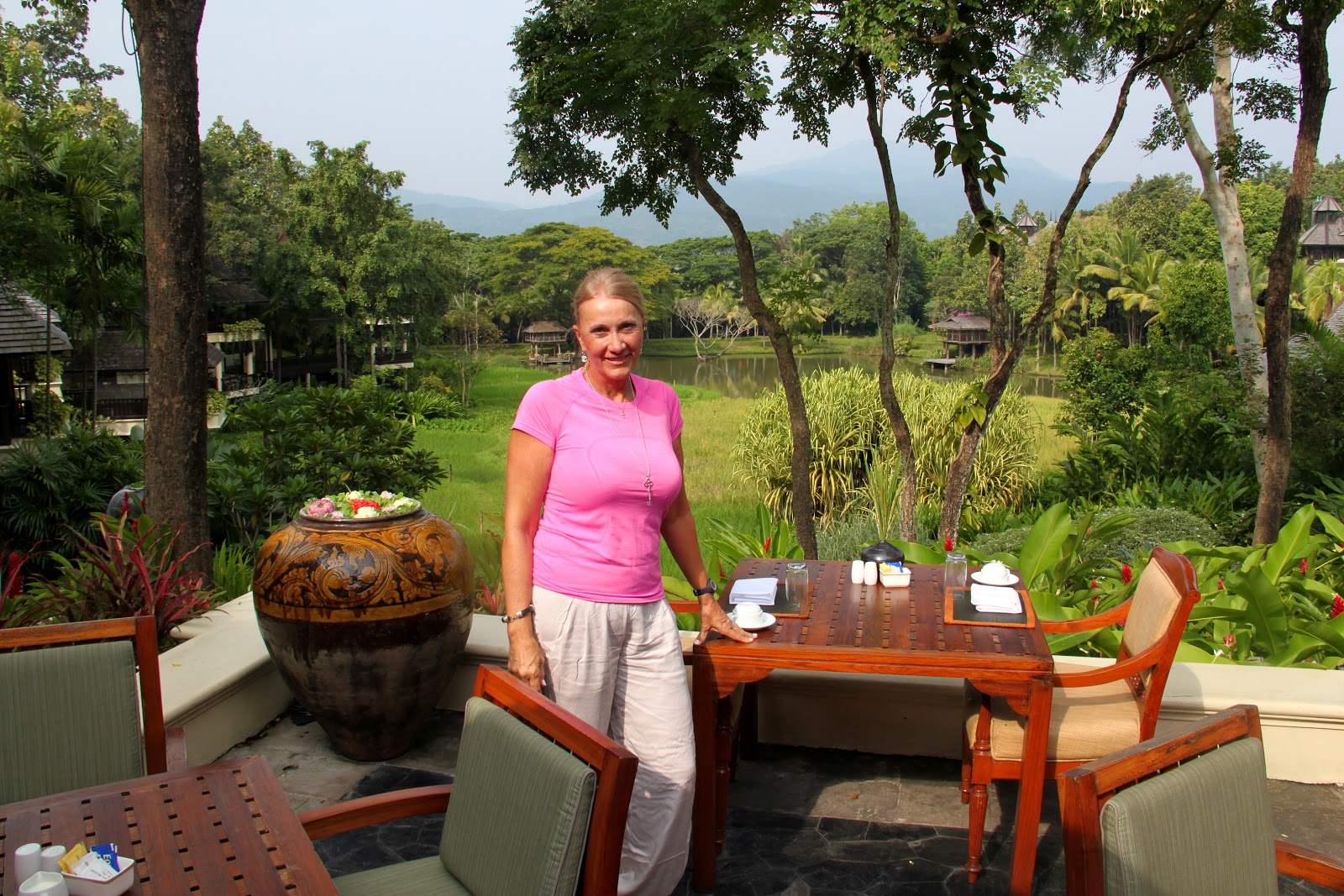
Breakfast overlooking the rice paddies

Heading to the Gym

Our room had both an indoor and an outdoor shower

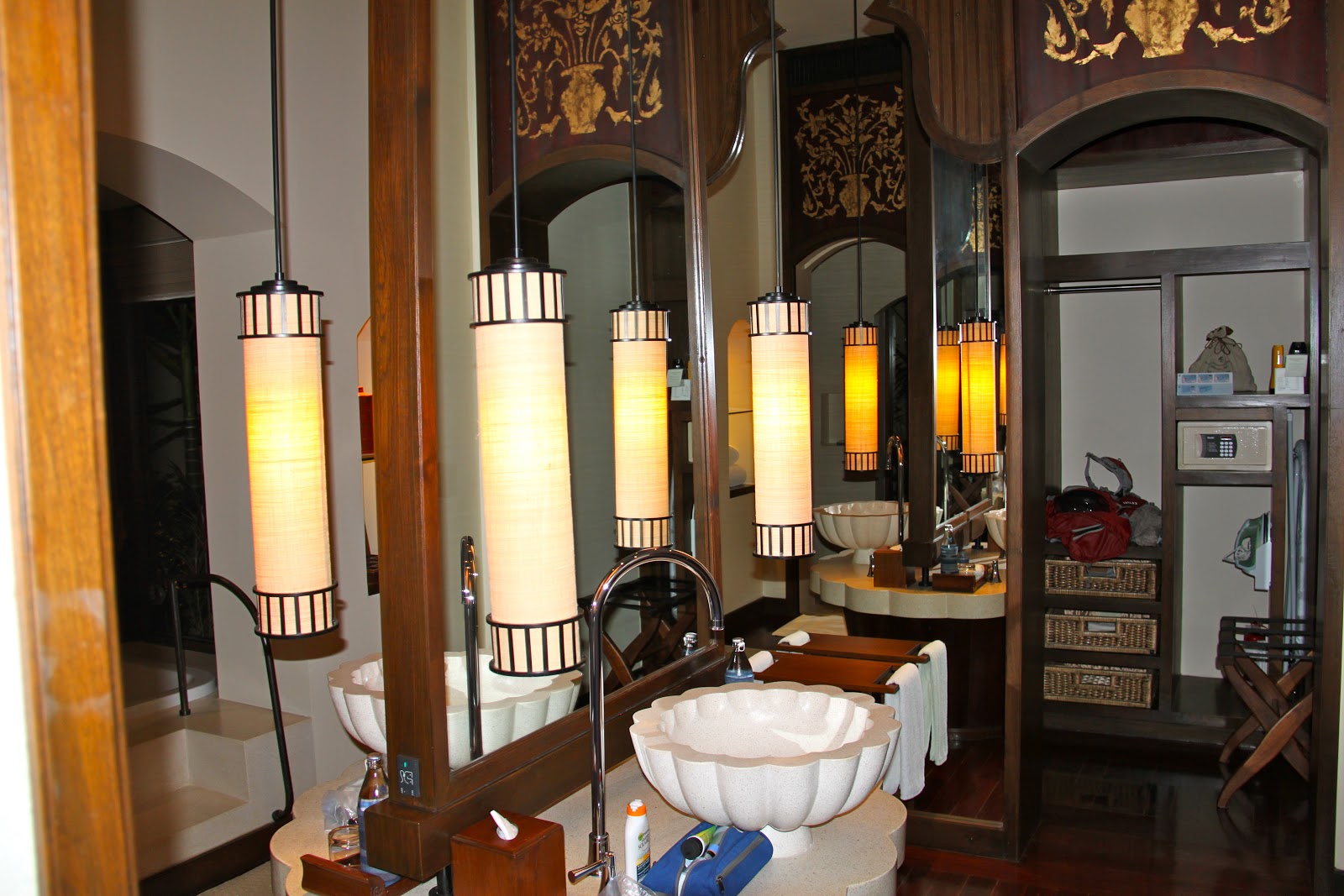
Our in-suite bathroom

Our bedroom

Koh Samui, Thailand October 3-7, 2012

Koh Samui, Thailand
After spending 8 days in Bhutan at about 8500 feet or above, we knew we would be eager for some rest and relaxation at sea level.  We flew on Druk Air from Paro, Bhutan to Bangkok, Thailand and onto an island in the Gulf of Siam called Koh Samui.  We are staying at the Four Seasons Resort on the Beach.

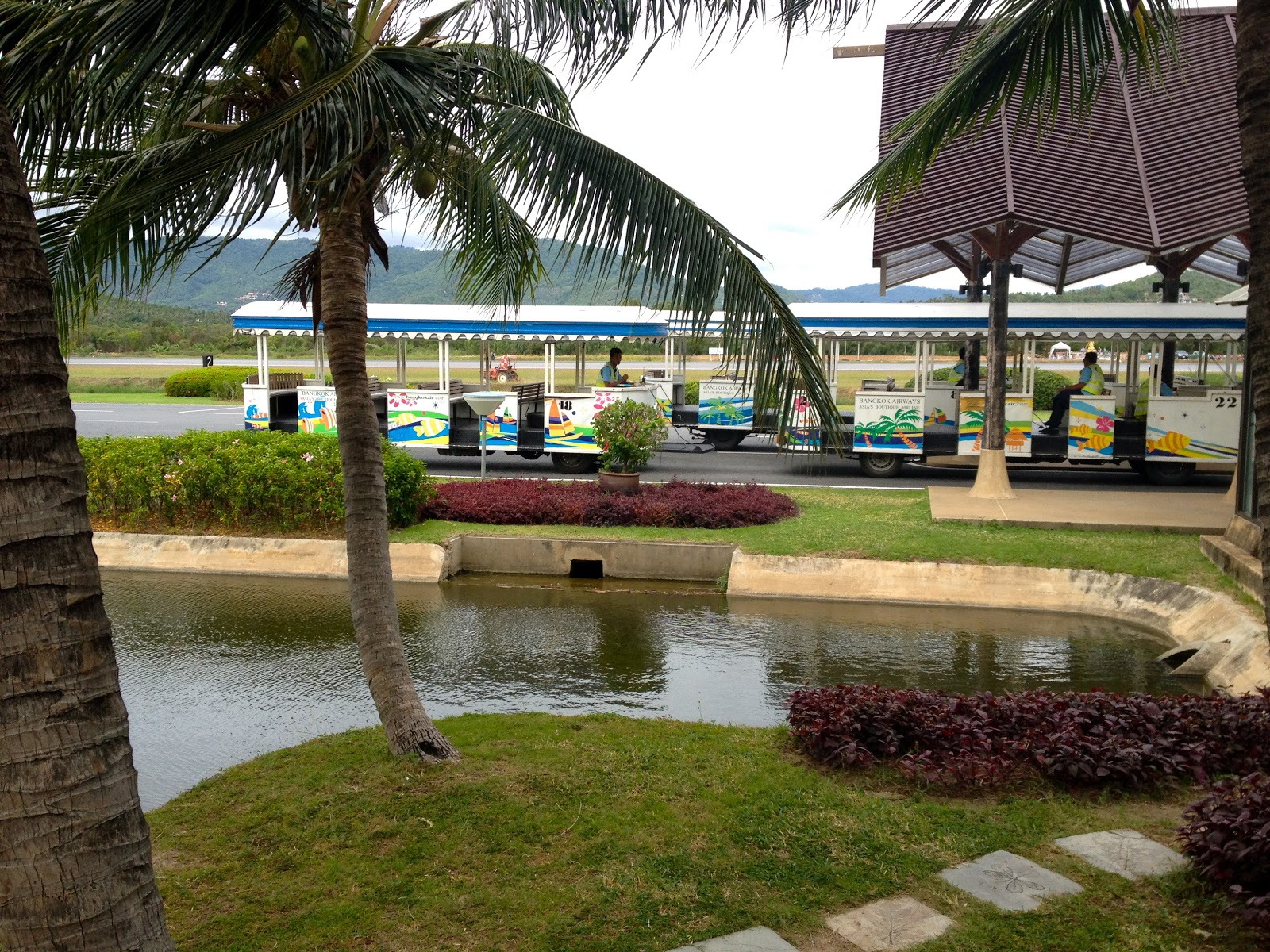
NO, this is not the resort, but the airport!  The little trains that take you out to the planes are open air and you think you are at Disneyland!
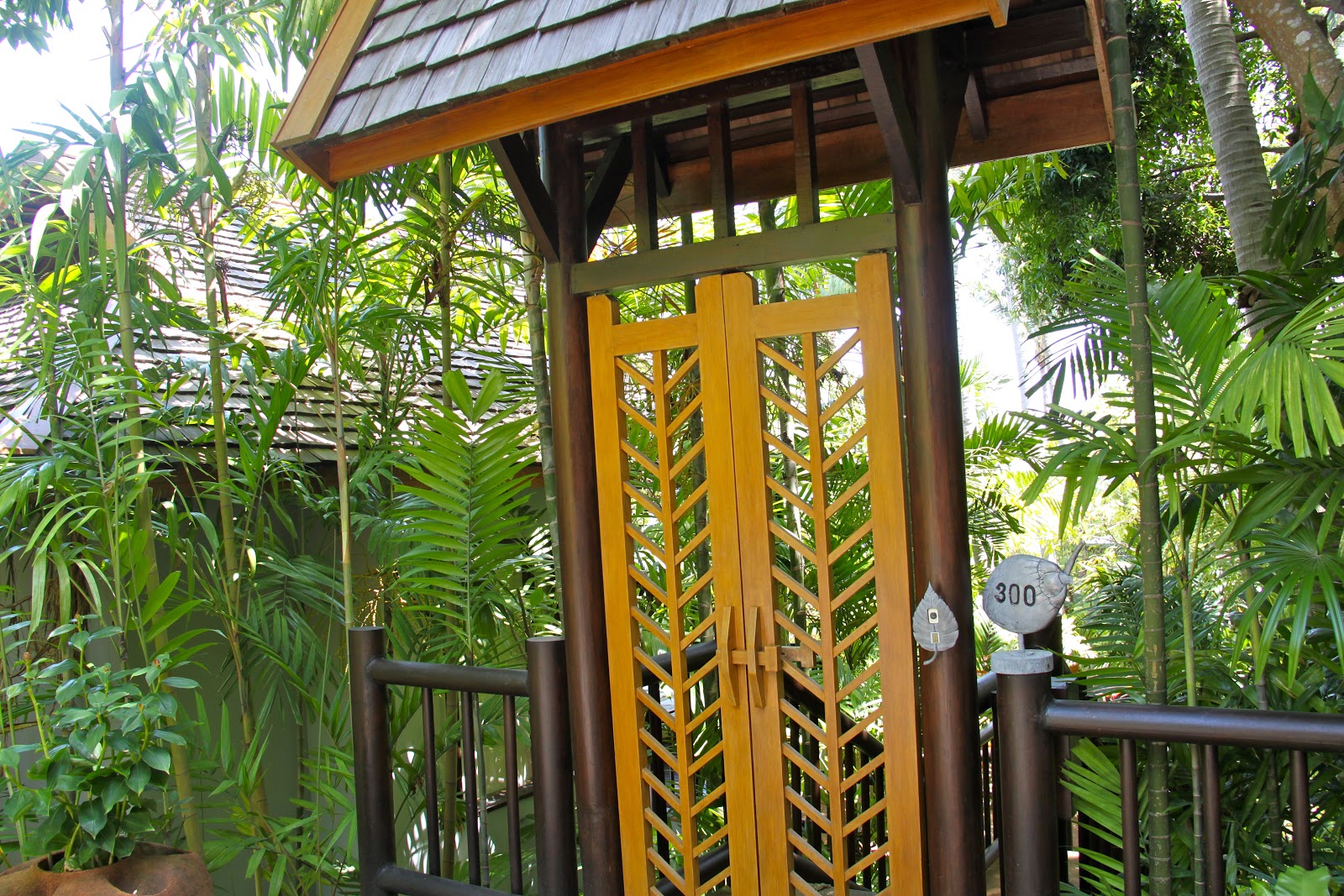
This is the gate to our hillside villa
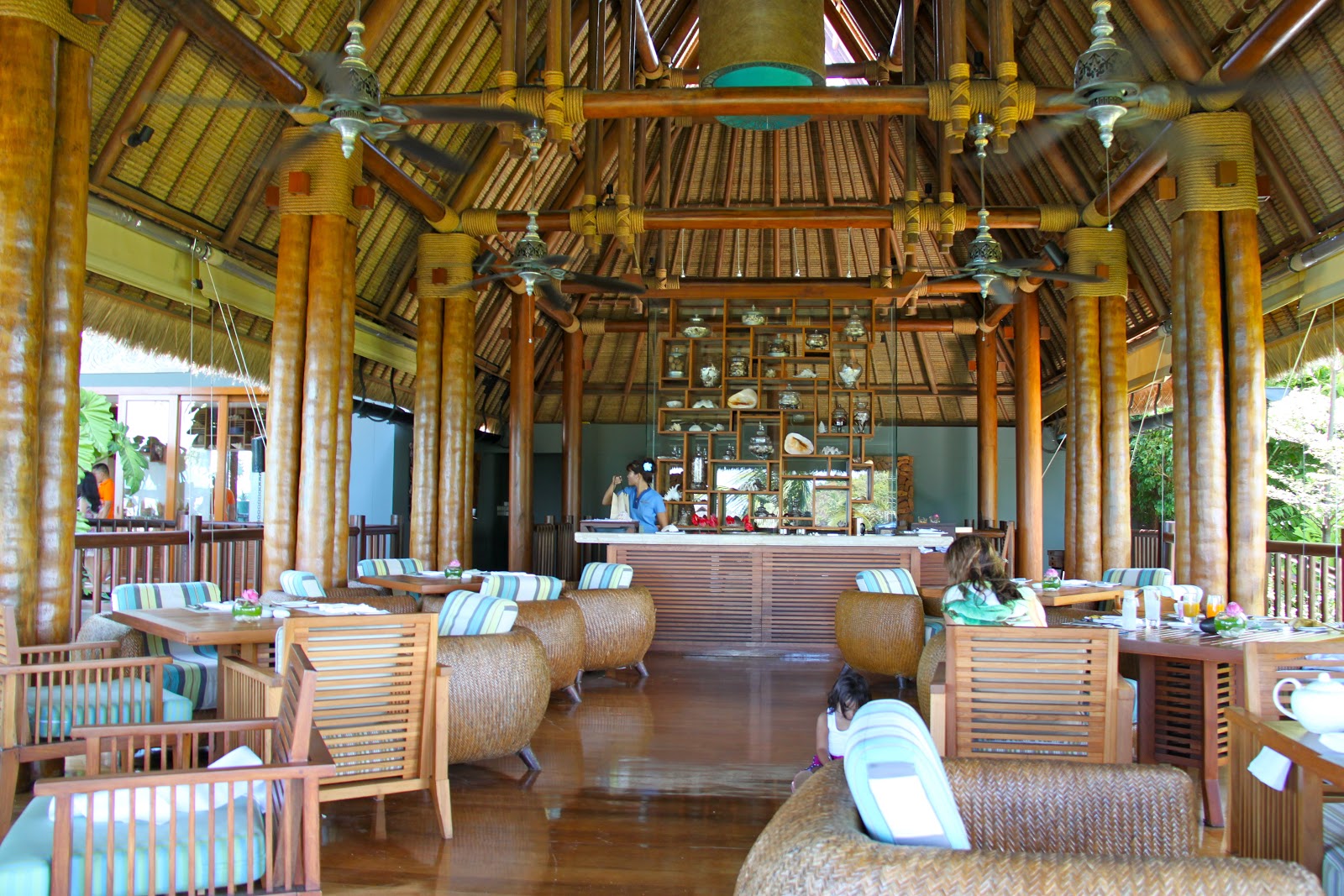
Dining area
Walking to breakfast.  Most will call for a cart to pick you up.  Everything is spread out and very steep.

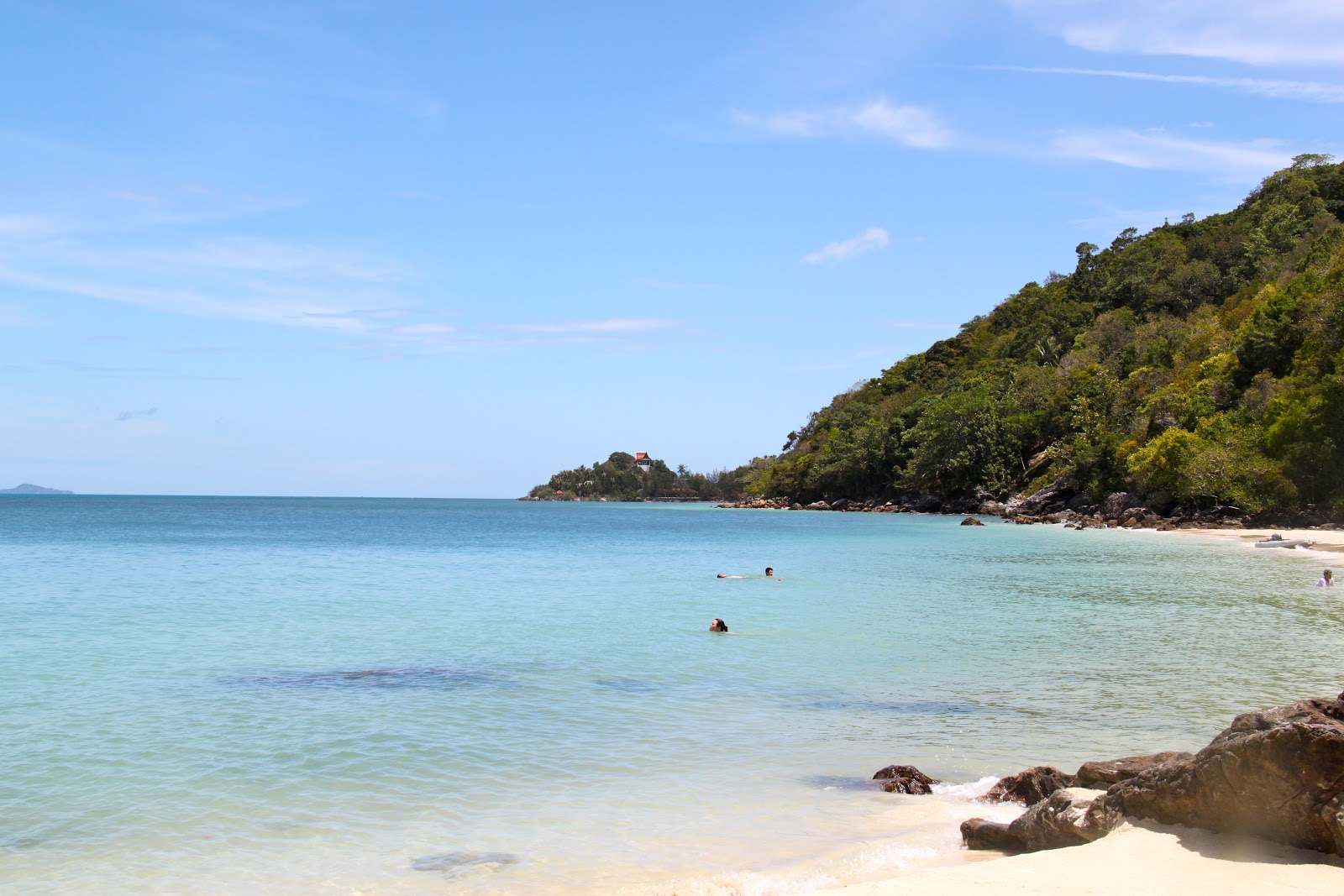
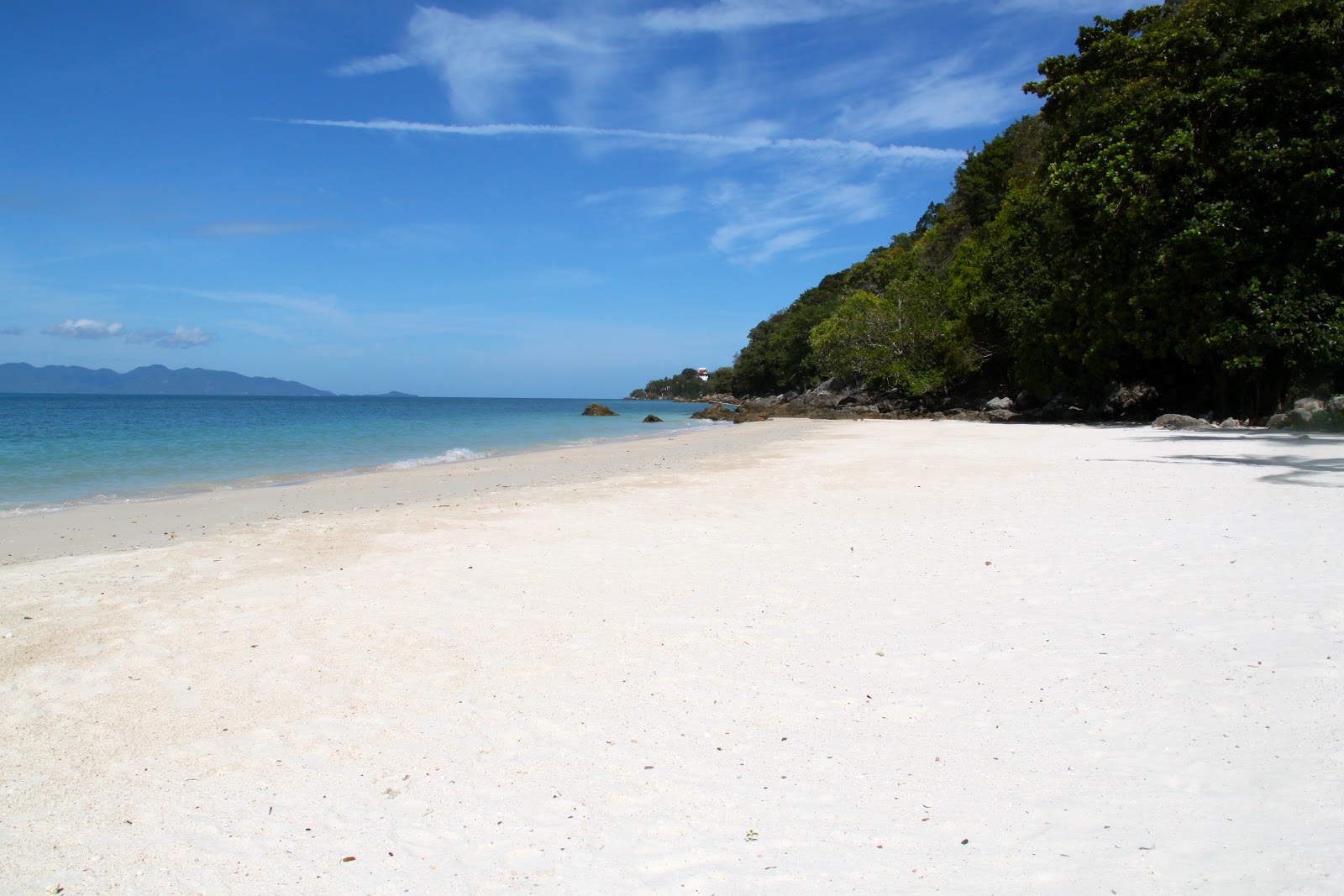
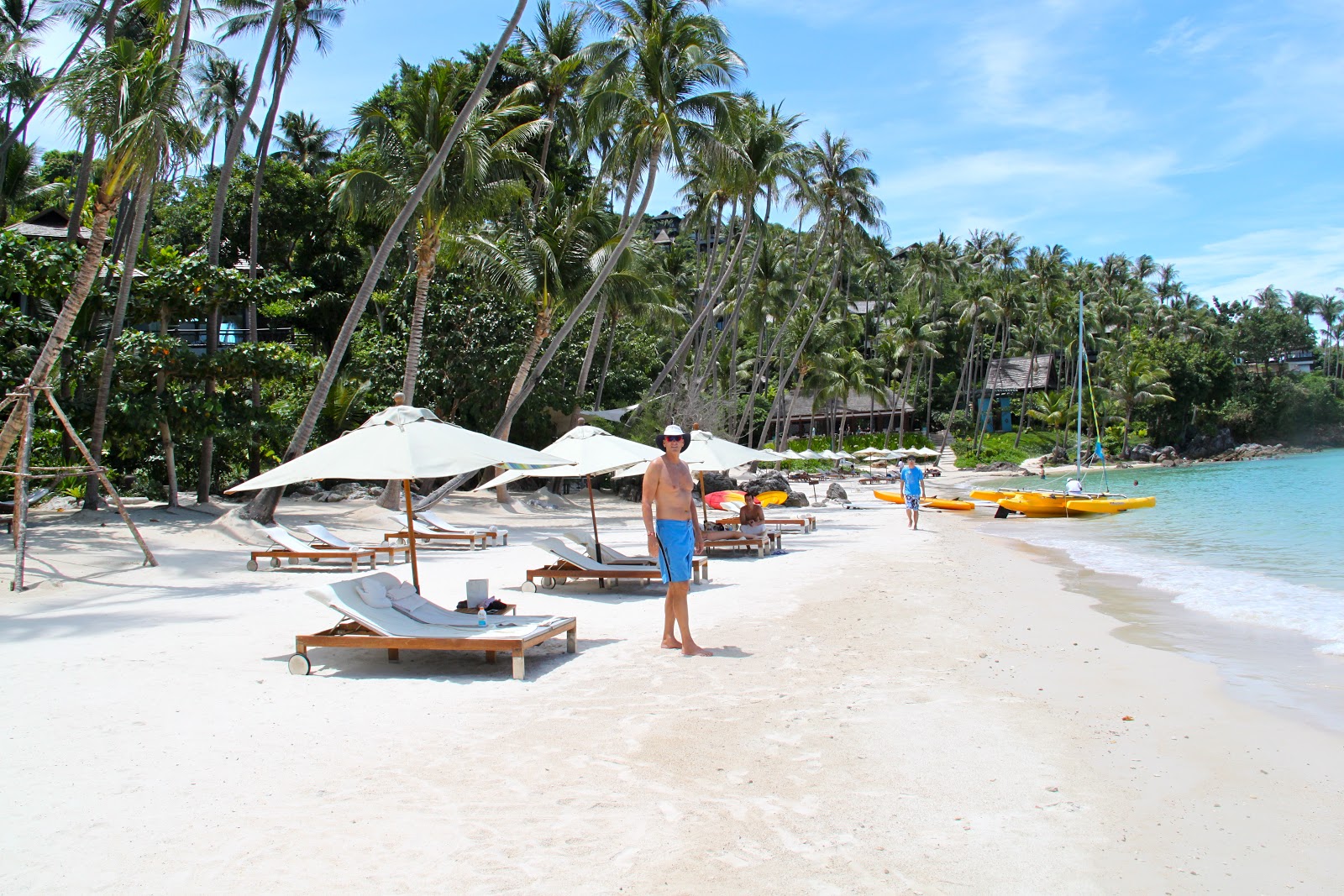
The Beach

Beautiful
At the reception area

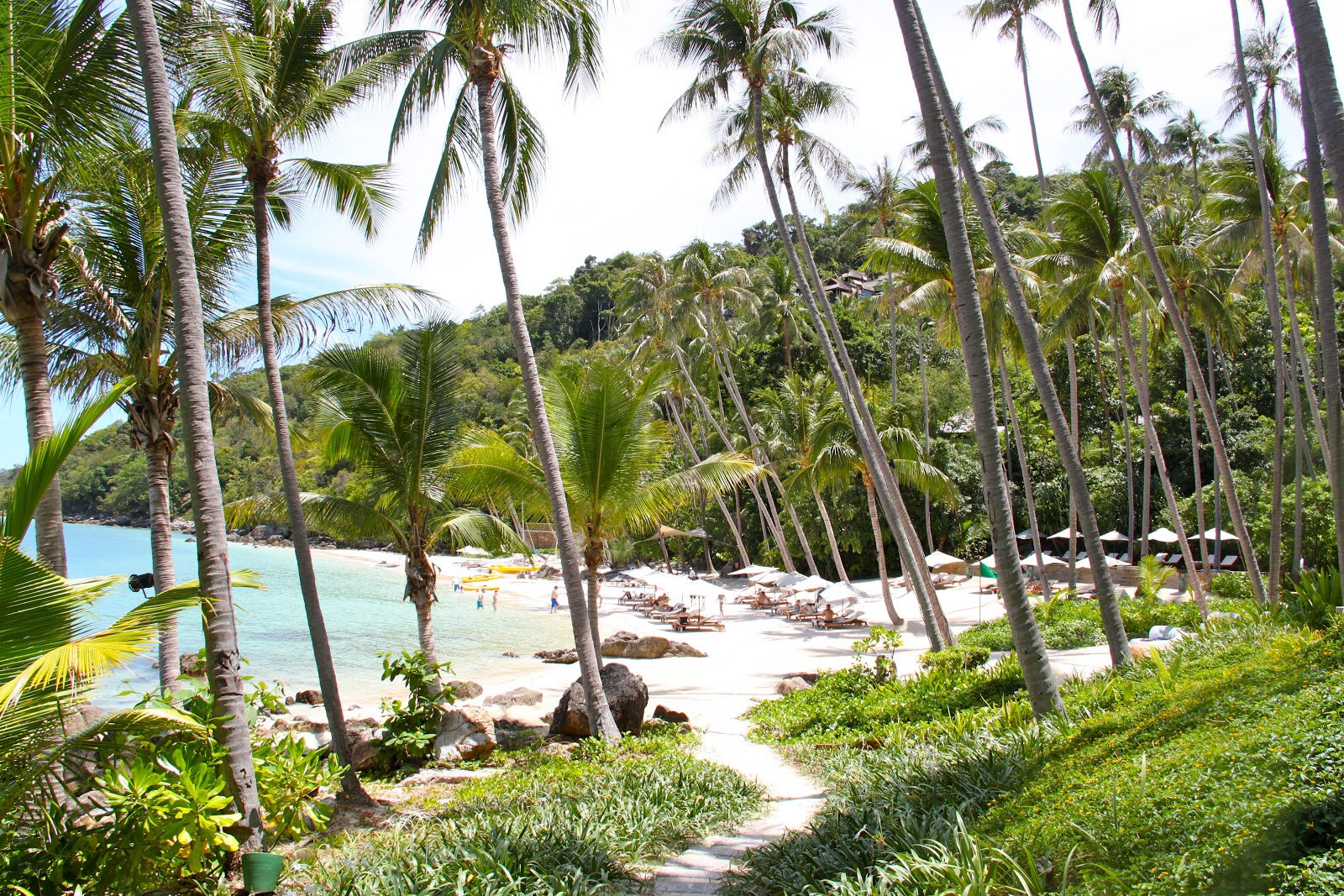
This is a beautiful resort.  All residences are free standing with panoramic views of the water and the neighboring islands.

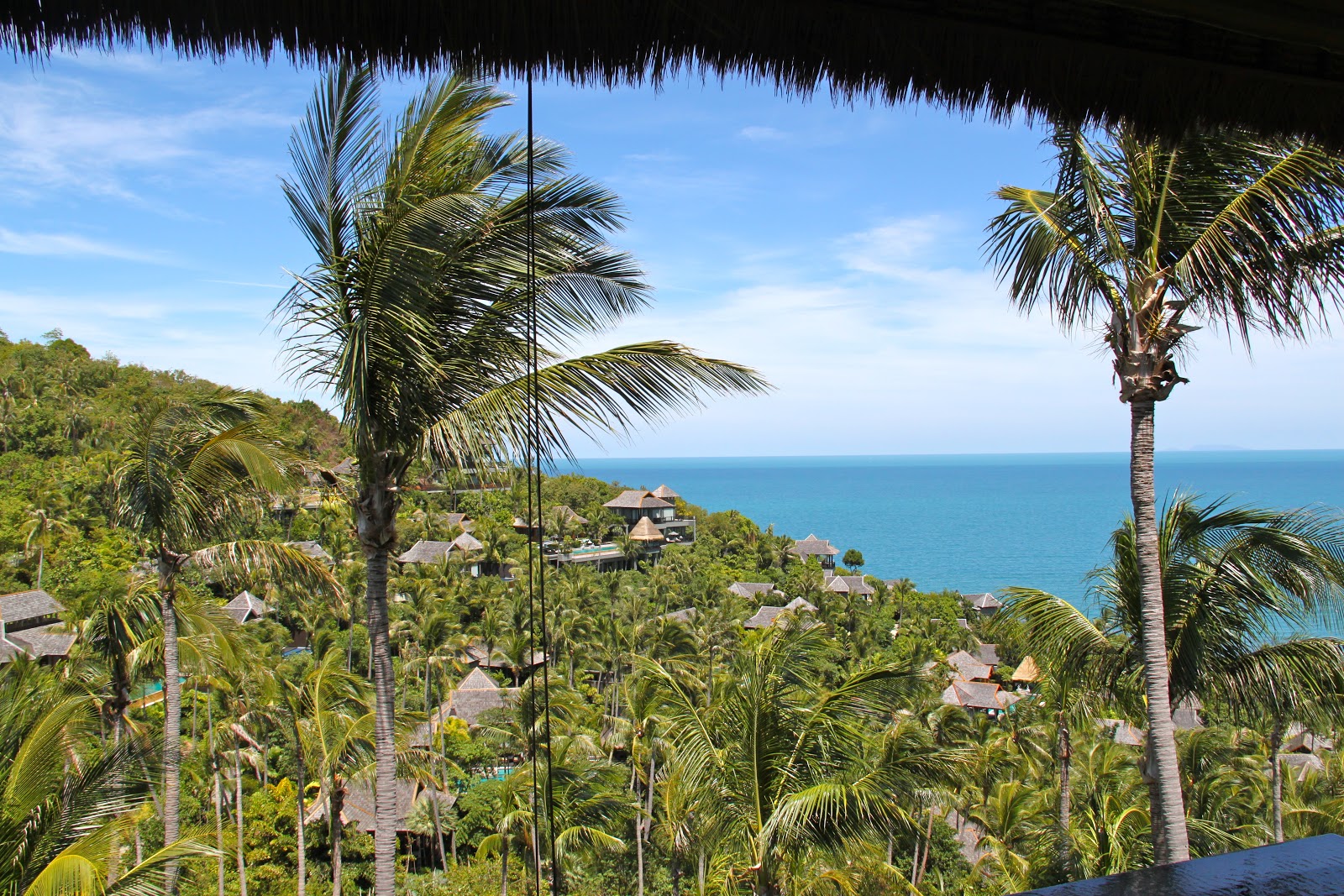
This is all the Four Seasons Resort.  Lots of individual villas on a hillside with a beach below.

View from above
The Beach

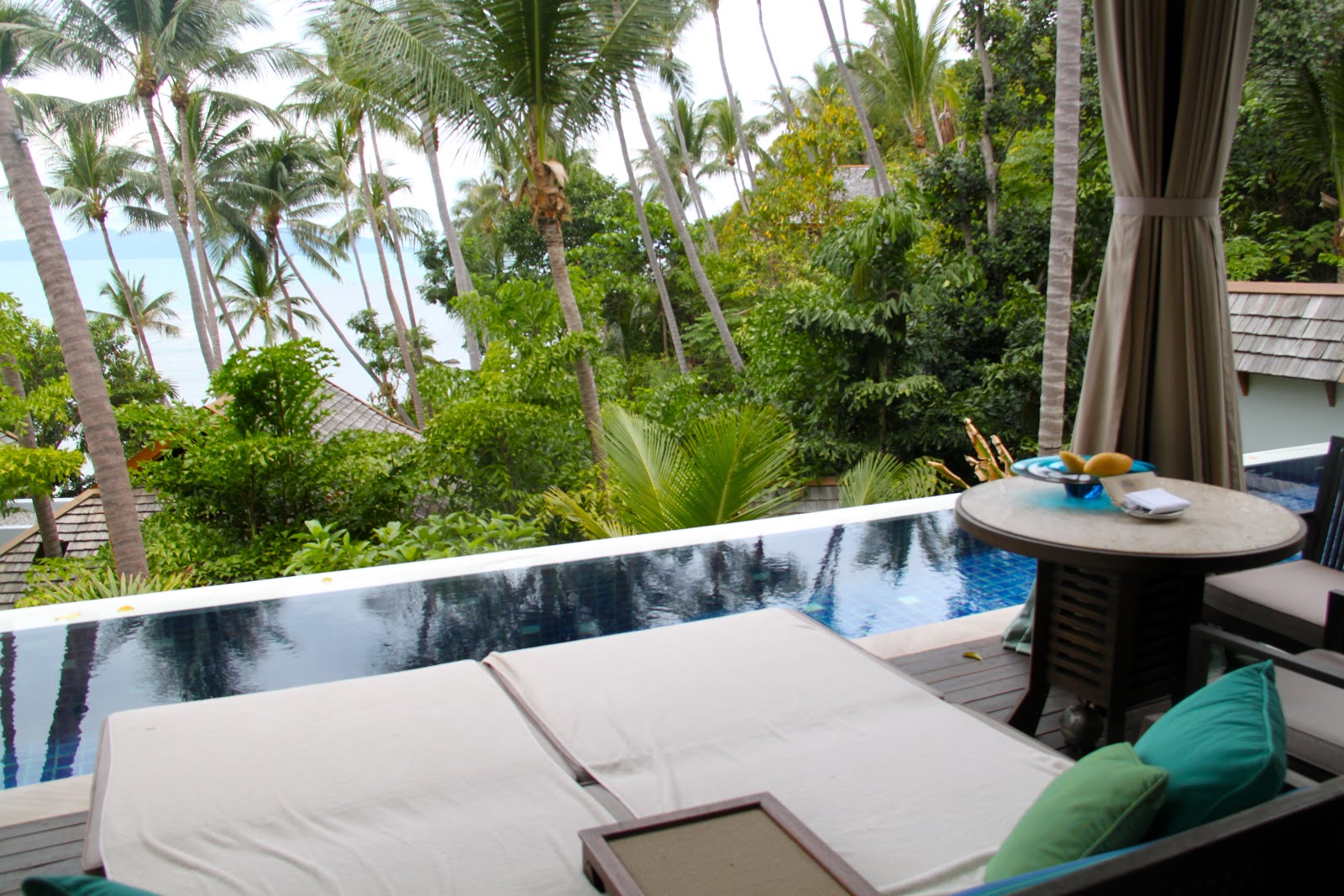
Our villa view with our own private pool
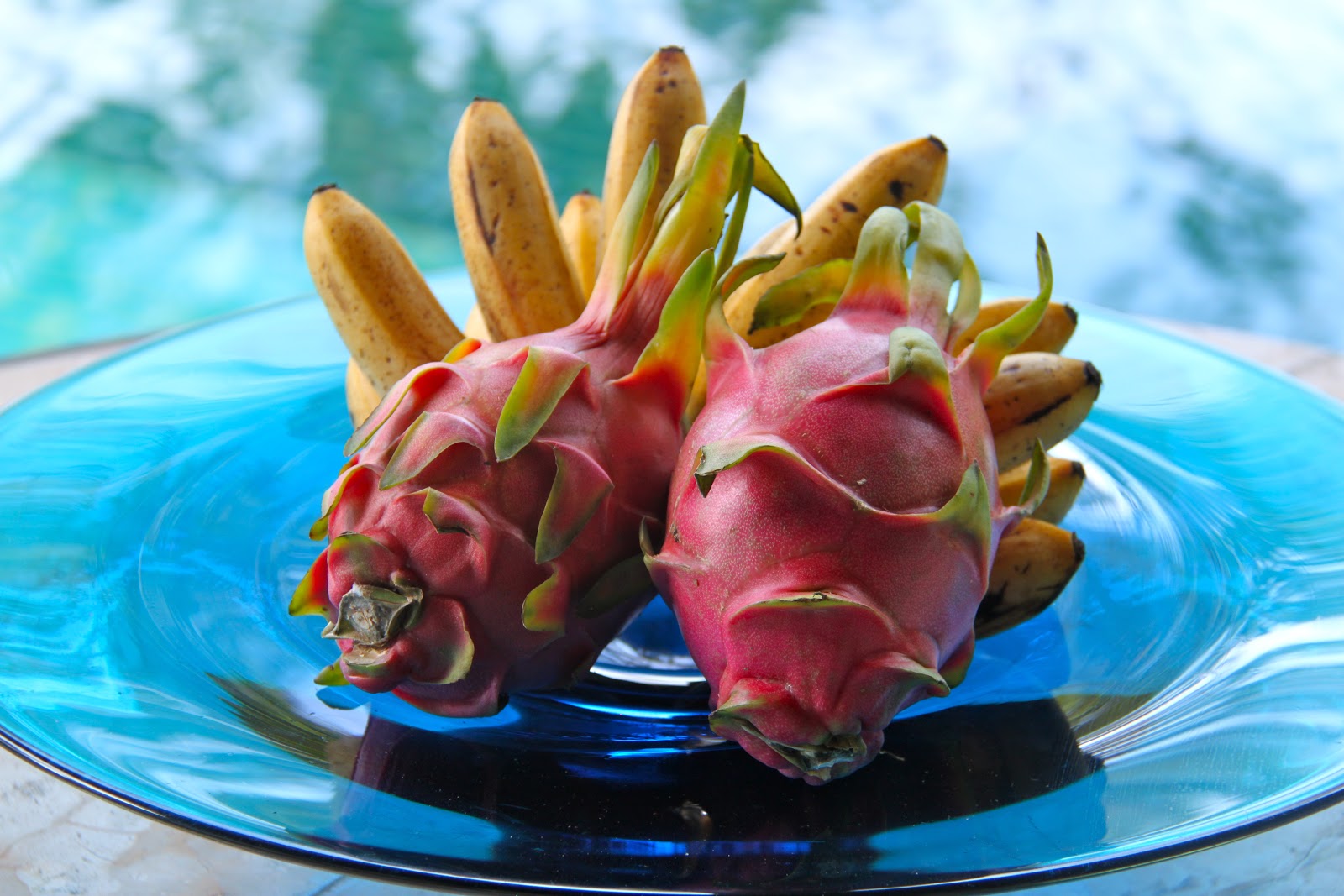
A different kind of fresh fruit was left on our table every day.  This is dragon fruit.  The mangos are incredible!
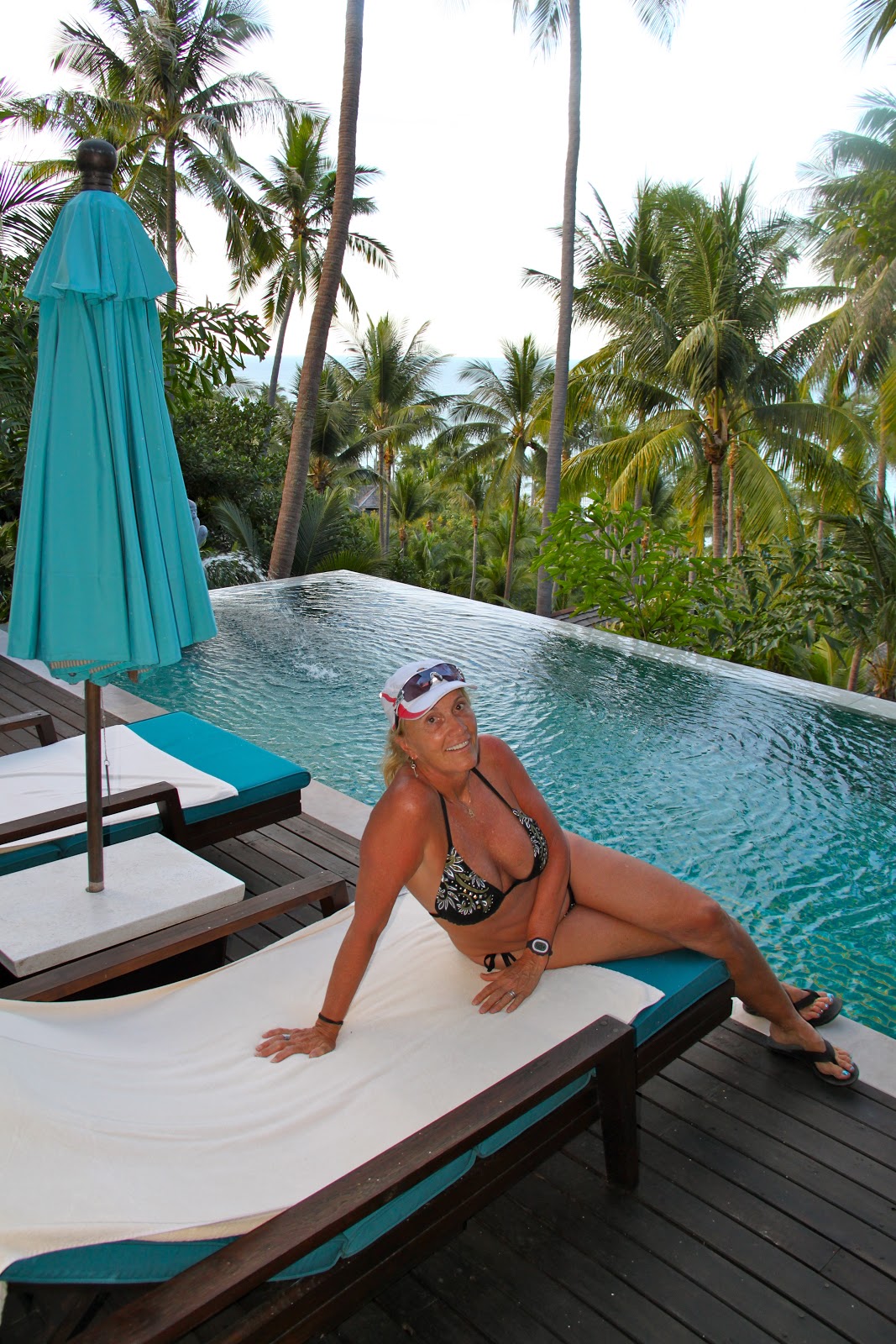
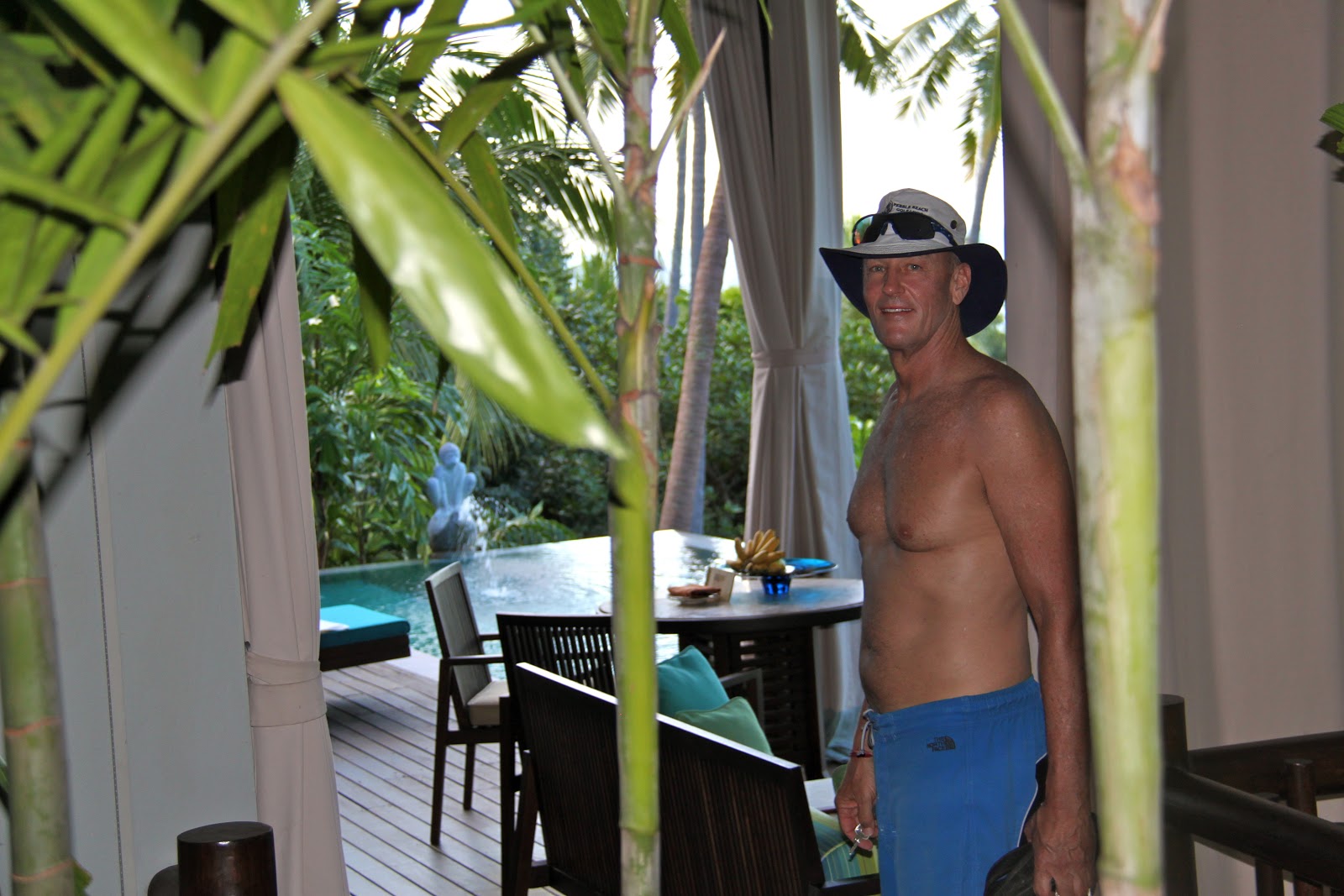
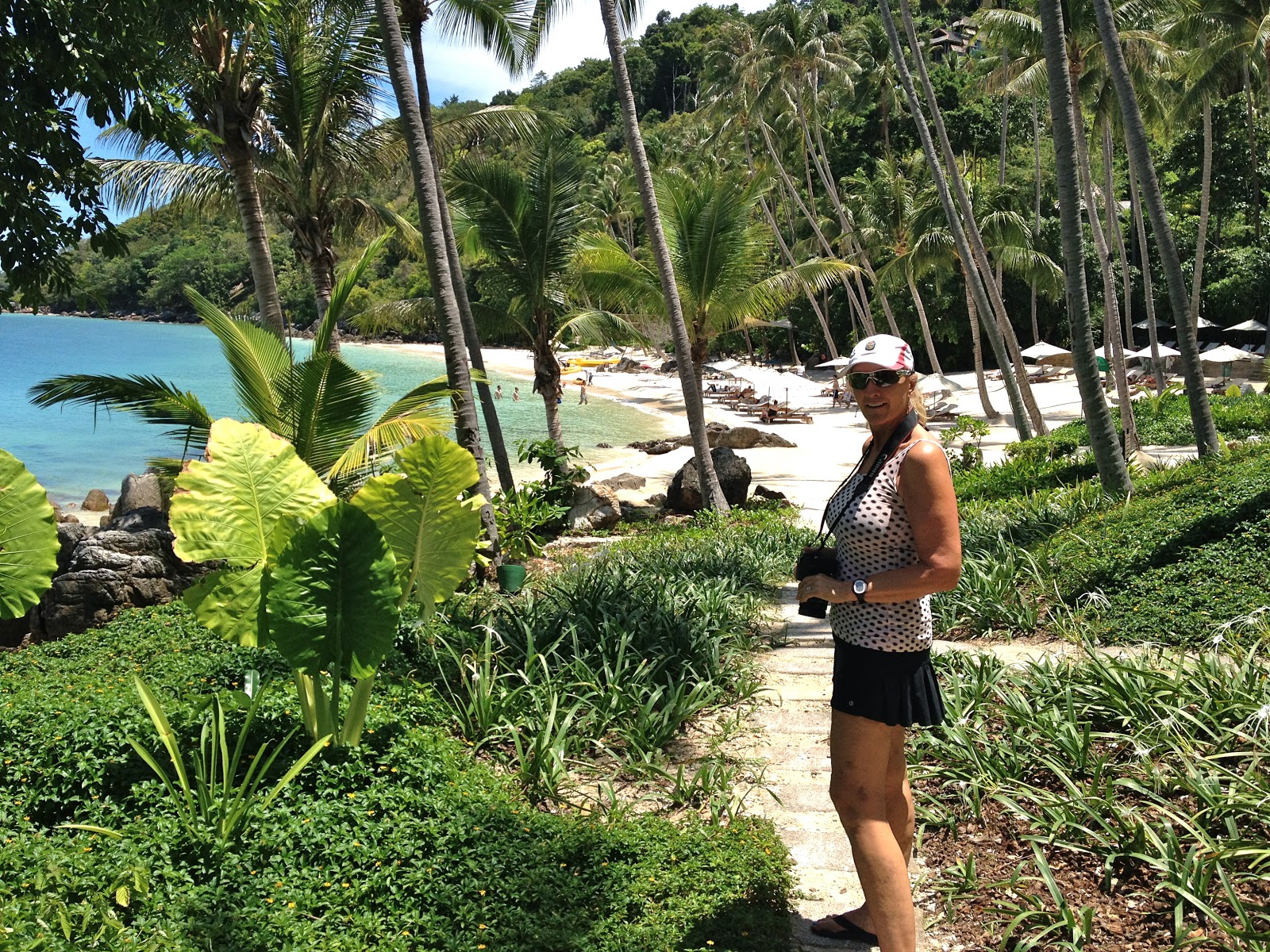
Barb enjoying life
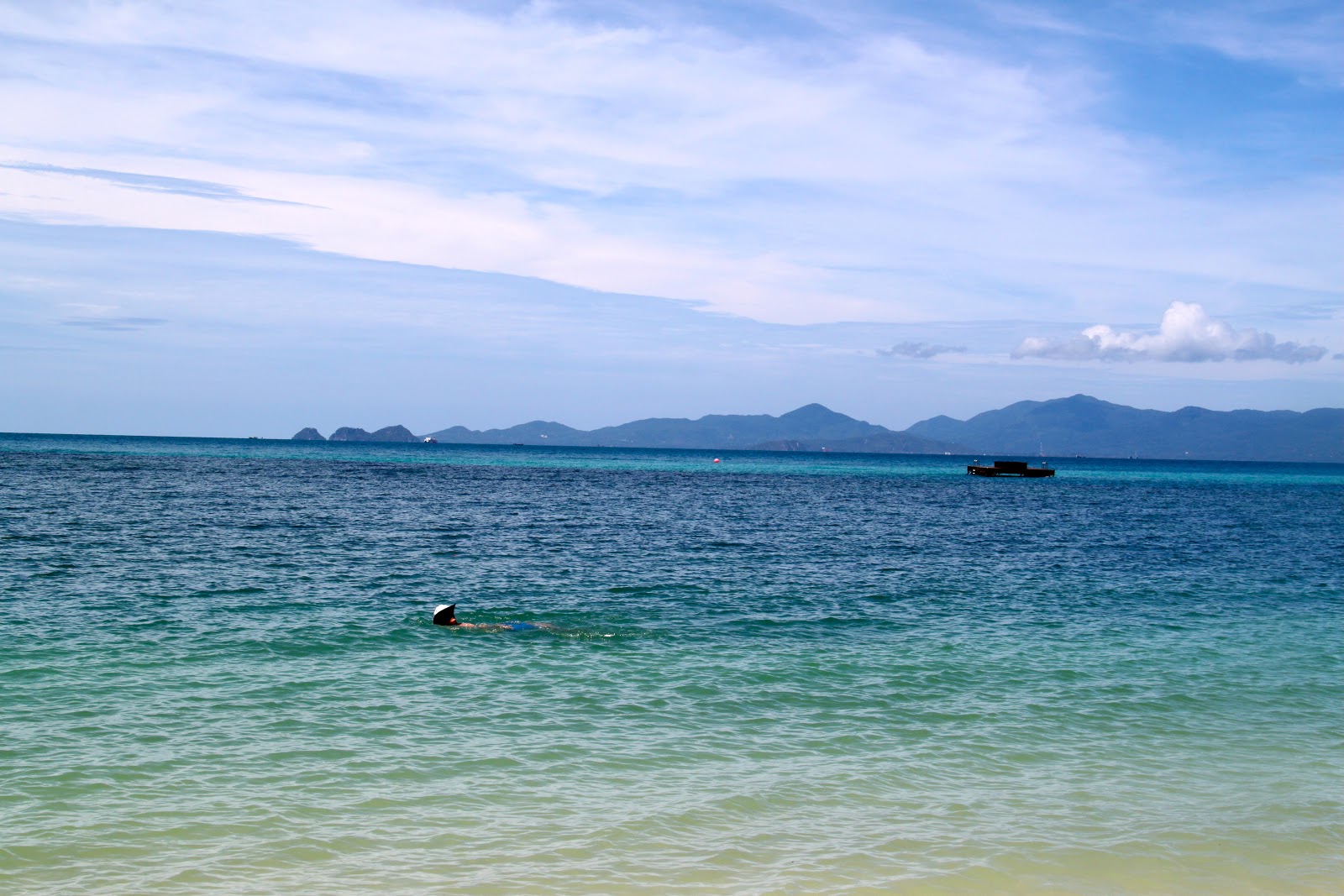
Scott taking a swim

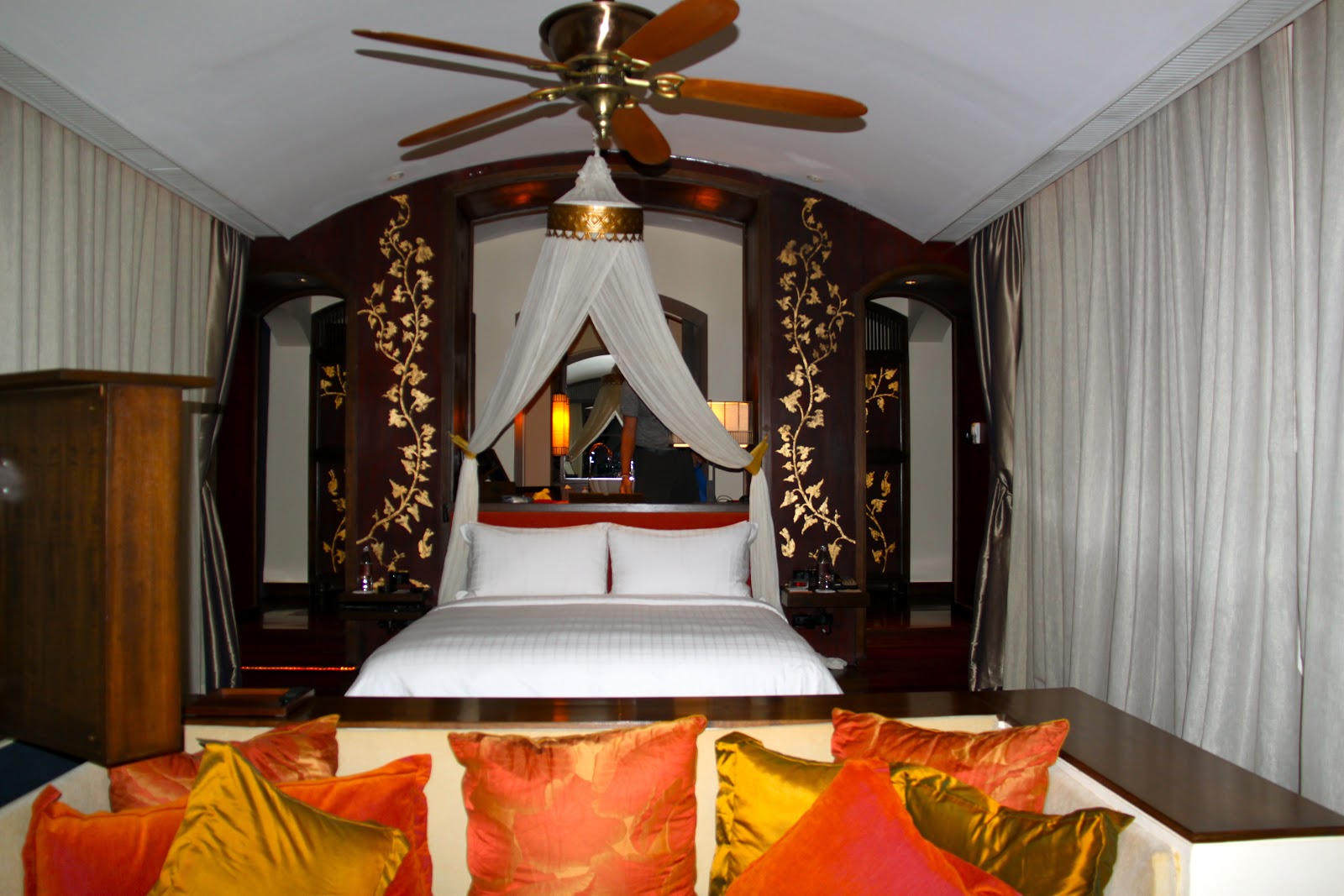
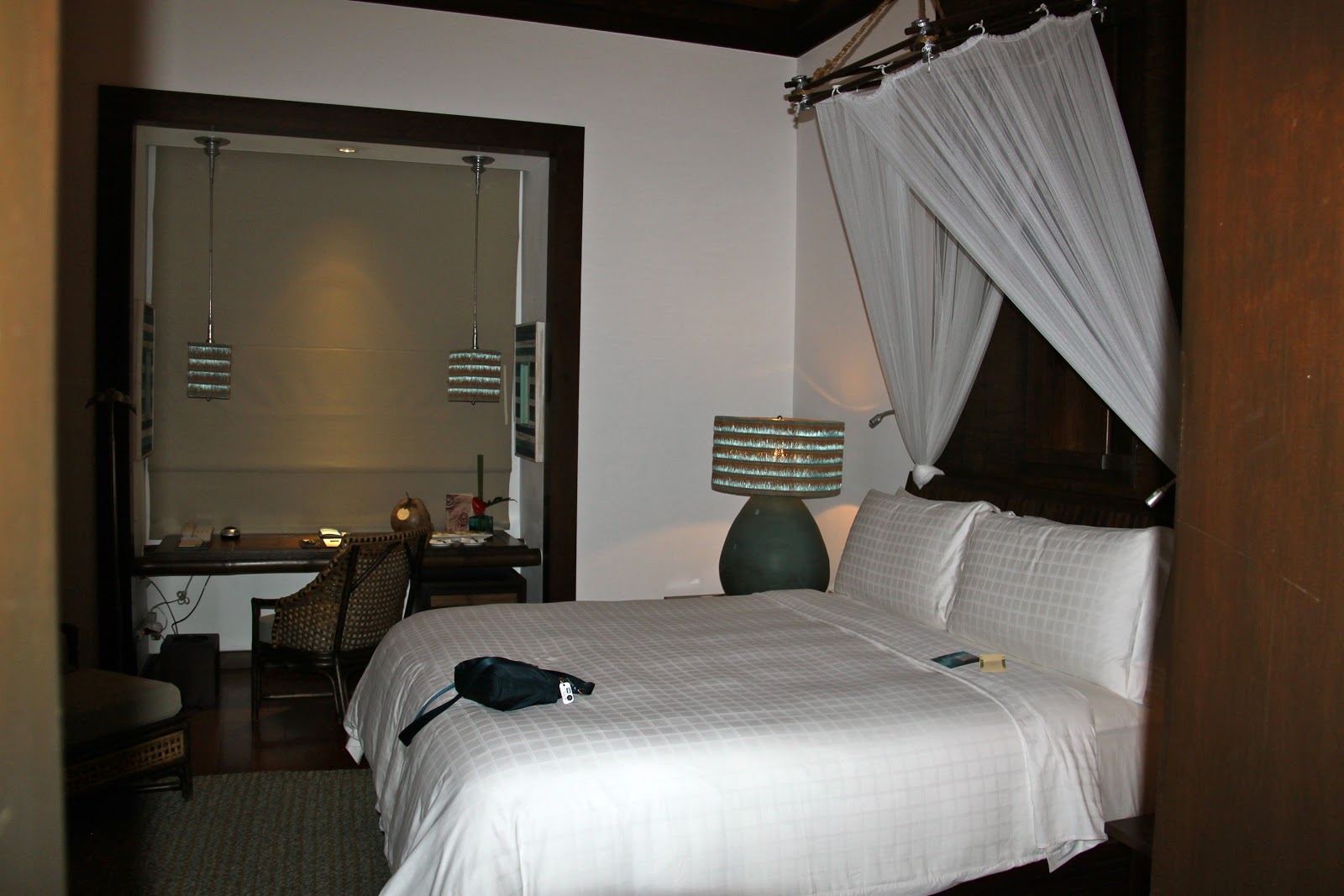
Our Bedroom

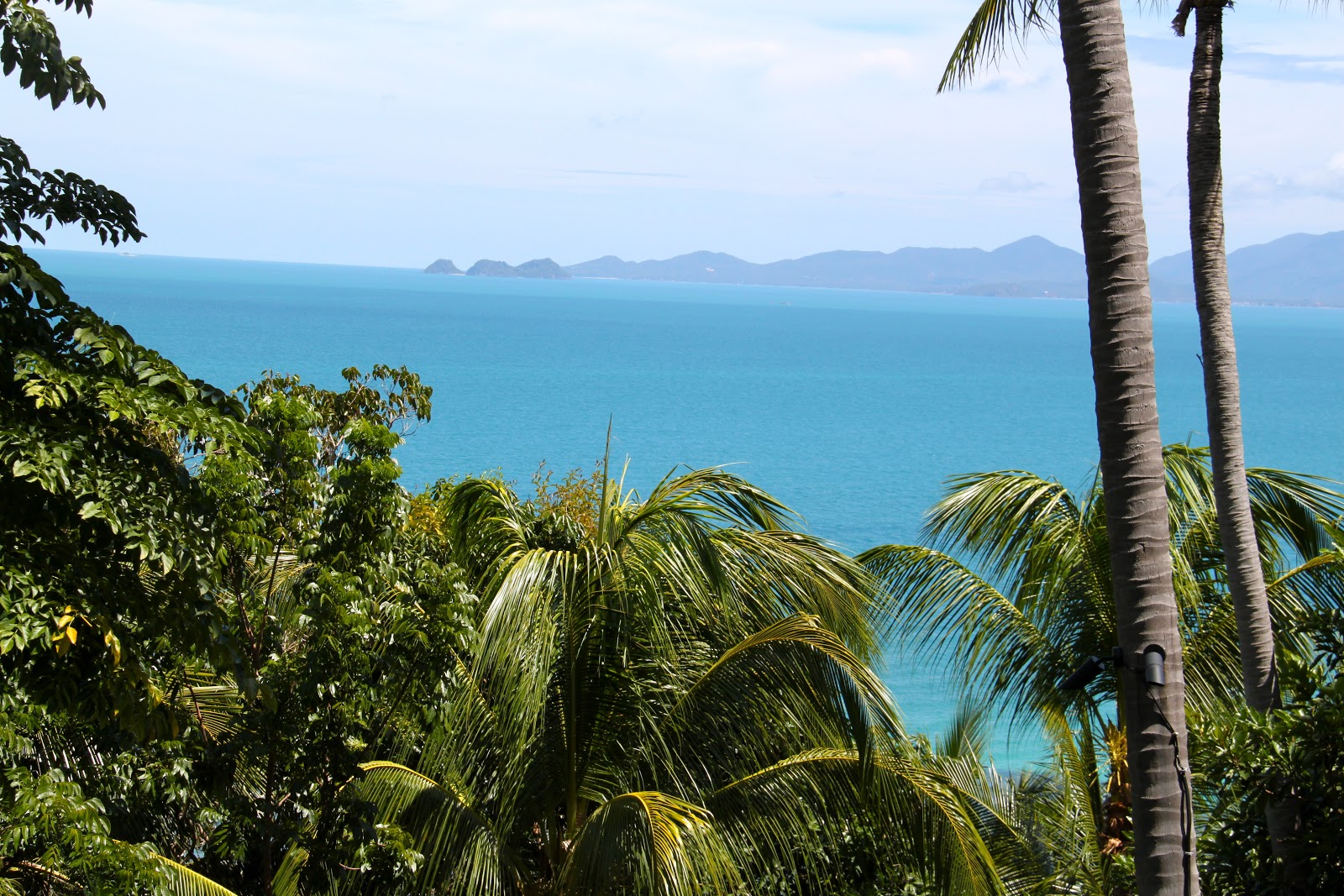
The large island in the distance is Koh Phangan where the infamous “Full Moon Parties” occur.  These “Full Moon Parties” are apparently an excuse for partygoers to go a little crazy and howl at the moon.  People come from all over the world to experience these parties. 

Koh Phangan island in the distance

Barb and I are more interested in having our own four-day beach party.

Walking to the beach
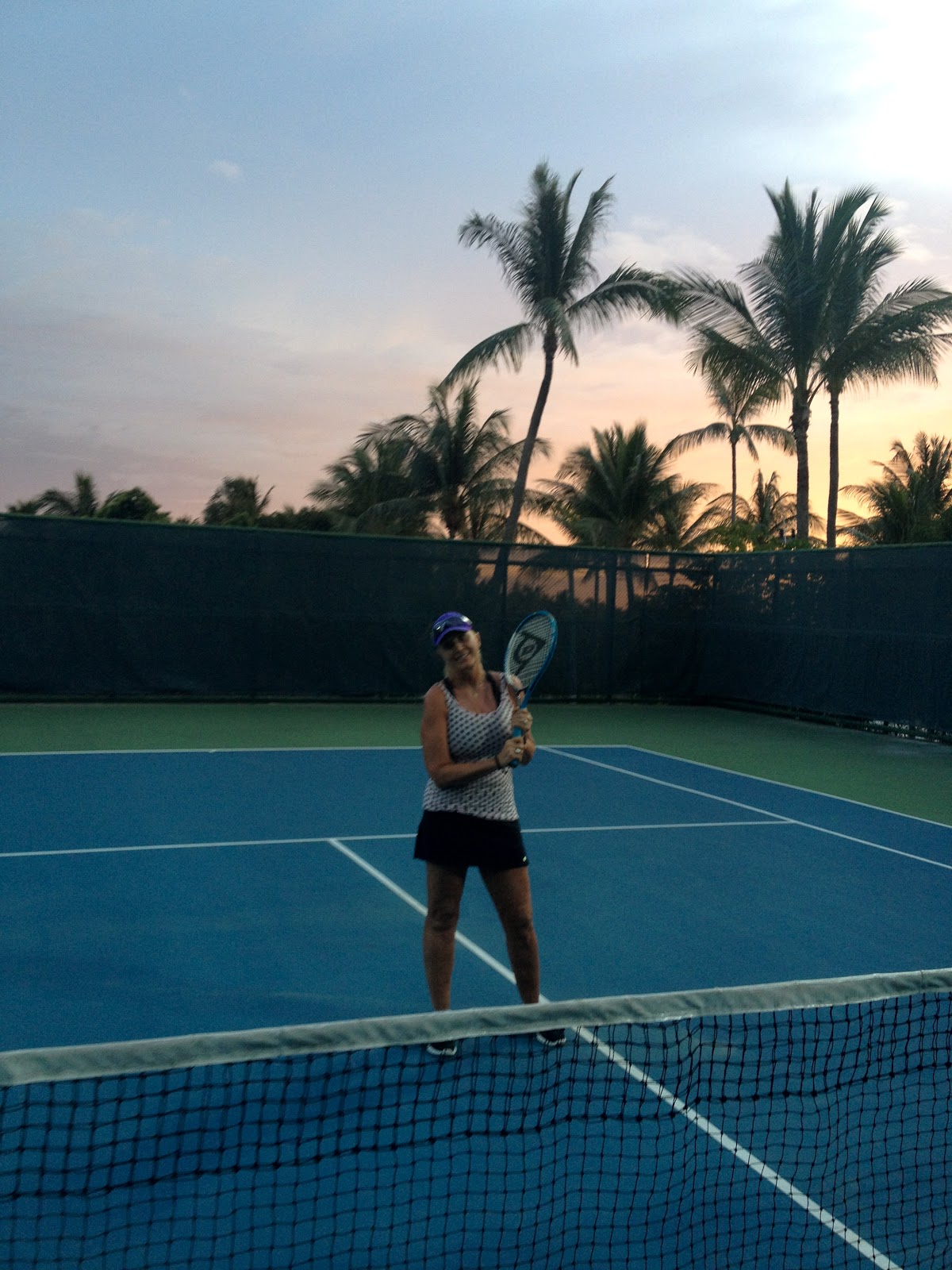
Playing tennis.  The ball is a lot slower at sea level.  It was fun.
Going to the Gym for a little workout

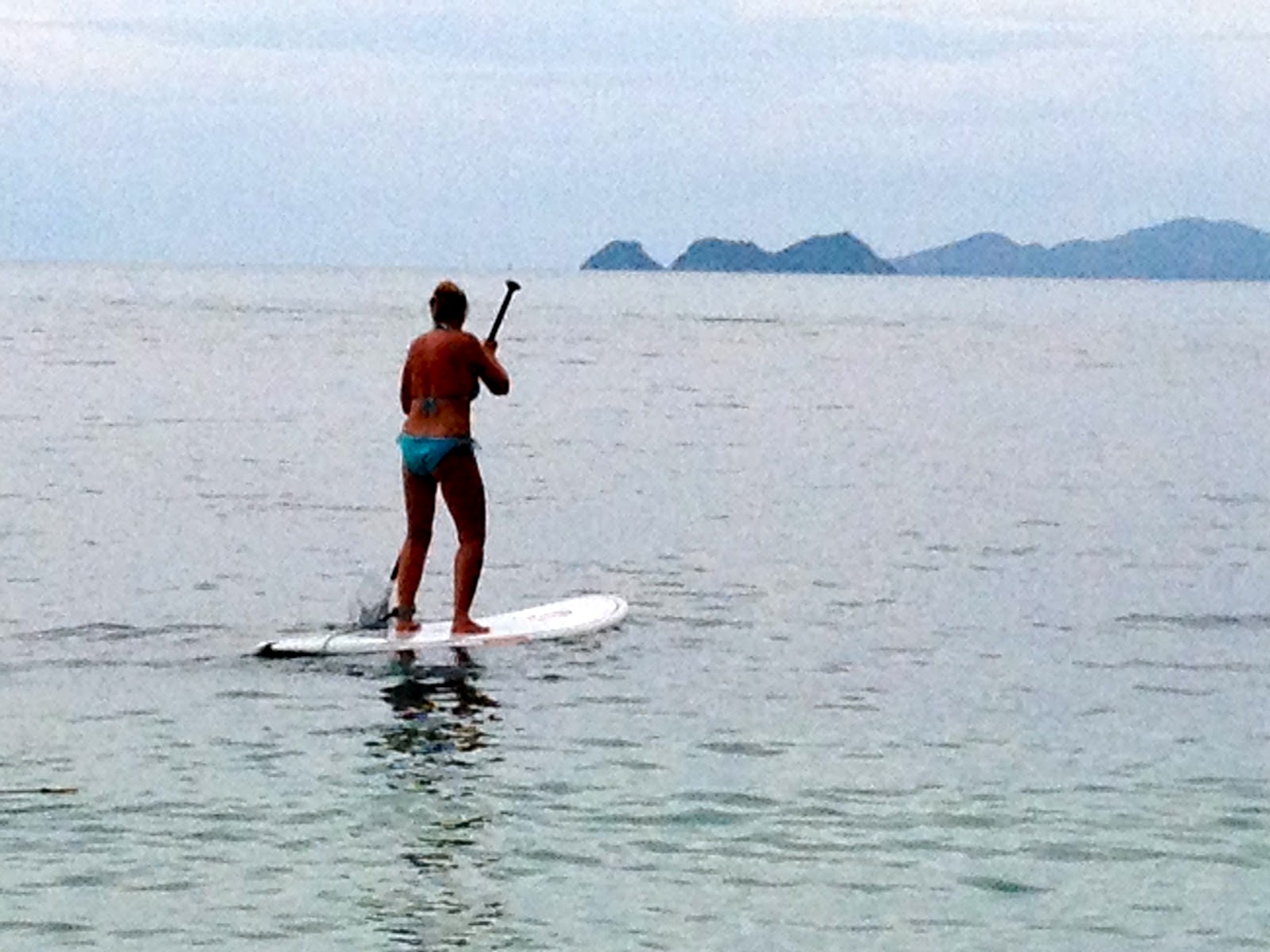
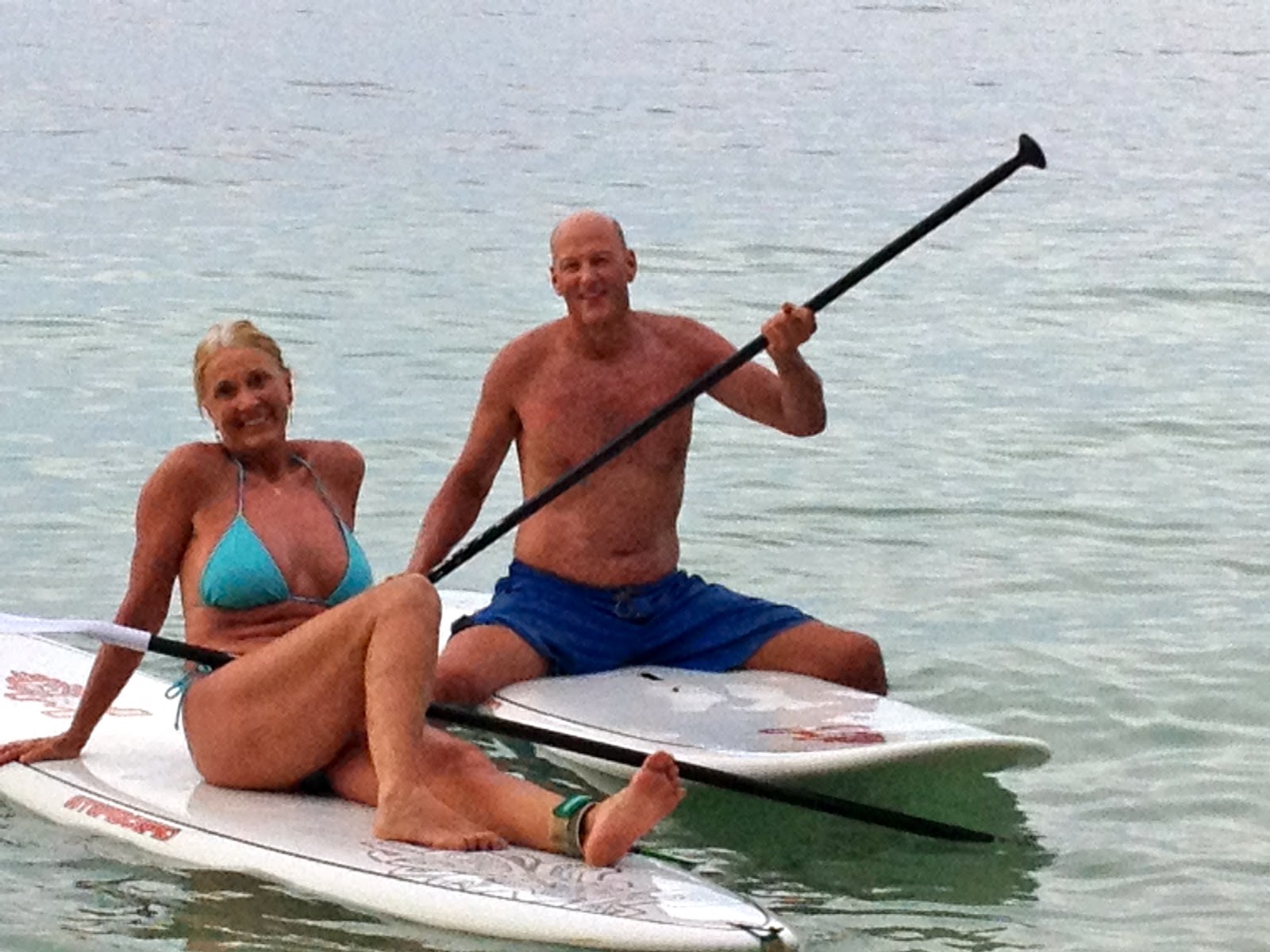
We met some new friends, Dave and Alexis (who were on their honeymoon), and enjoyed sailing, kayaking, paddle boarding, and hanging out with our new friends.

Scott at the beach
Dave and Alexis with us on the beach
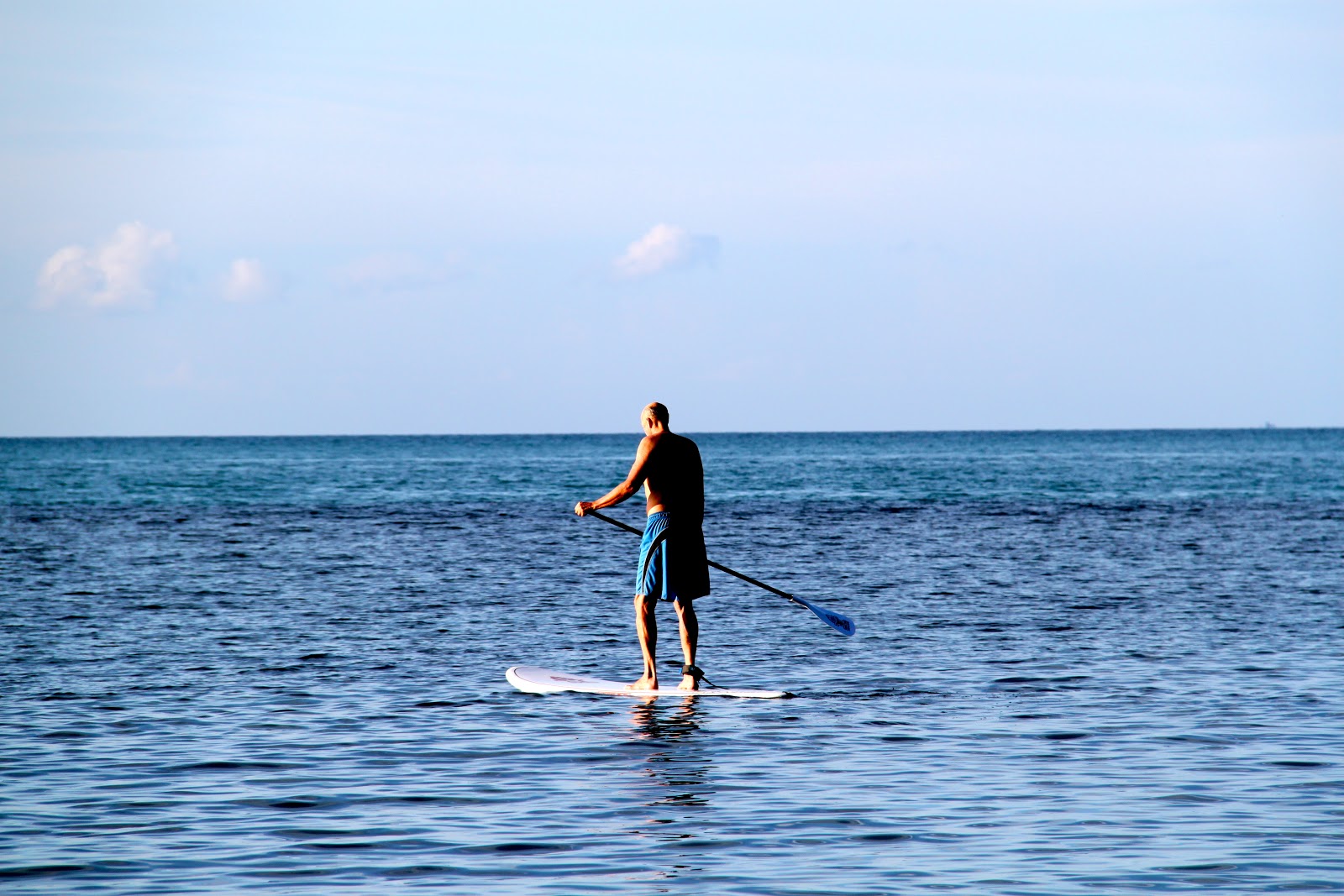
Paddle Boarding.  The boards were a little short, so not quite as stable as a longer one.  Not bad for our first time though.
Scott
Barb
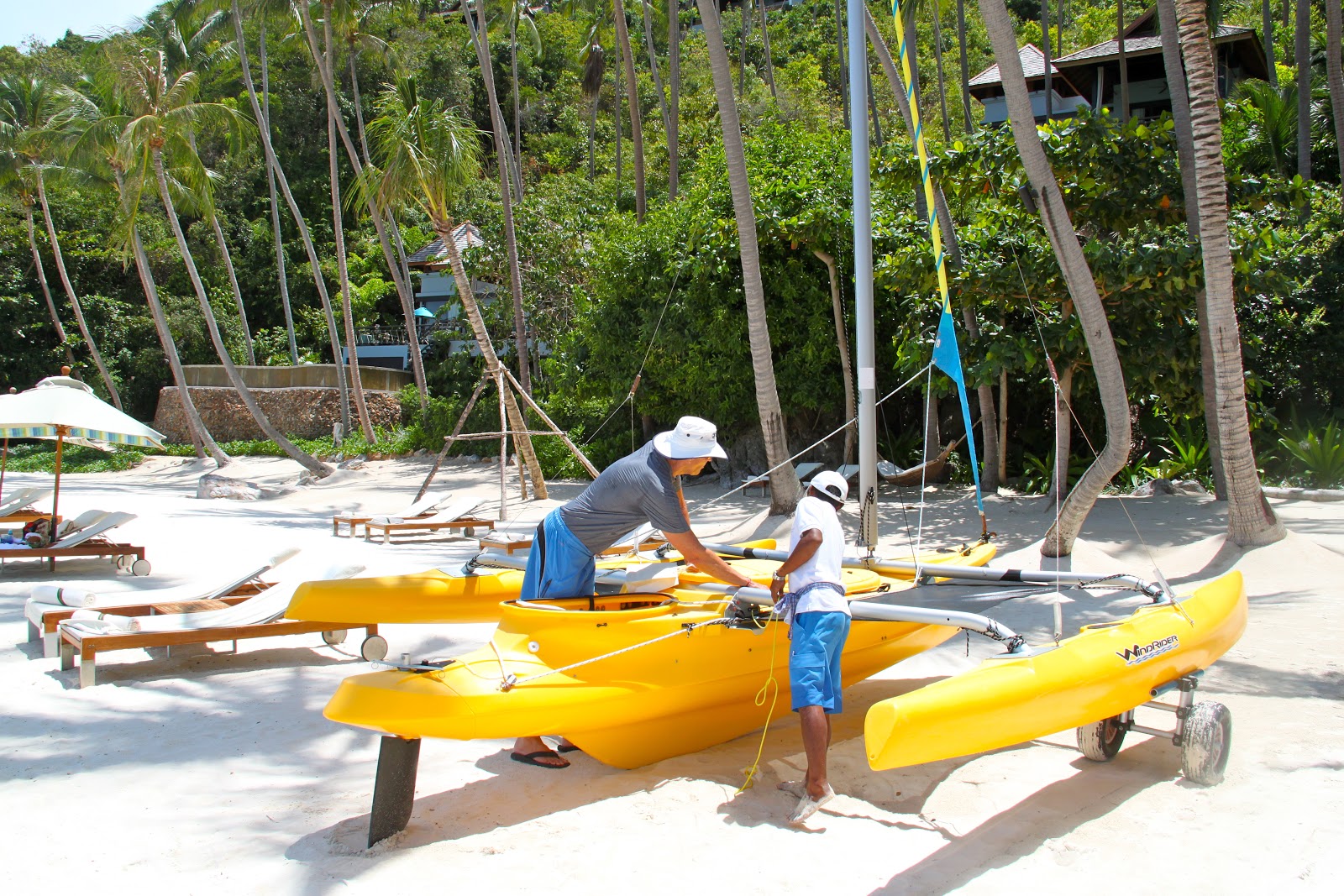
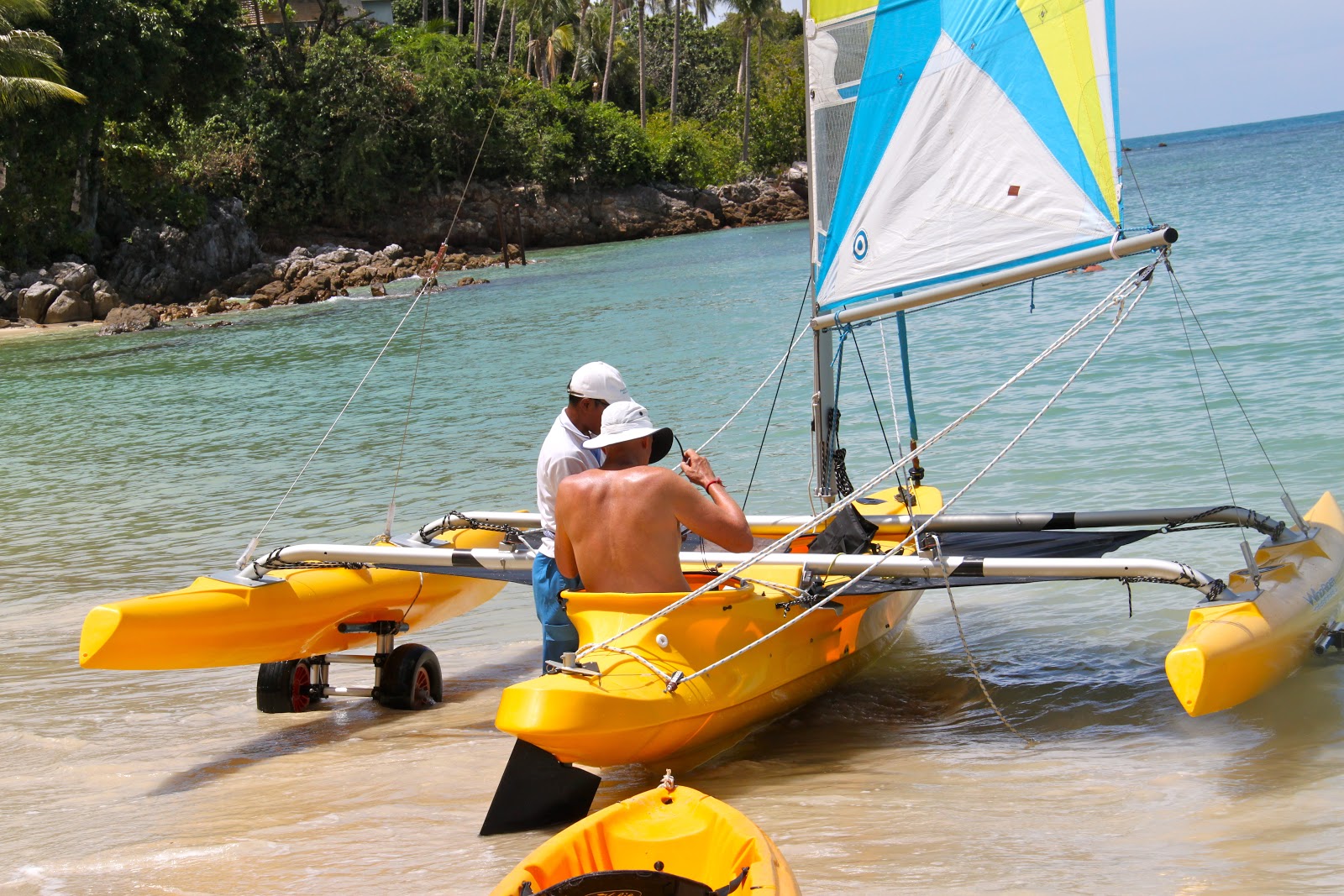
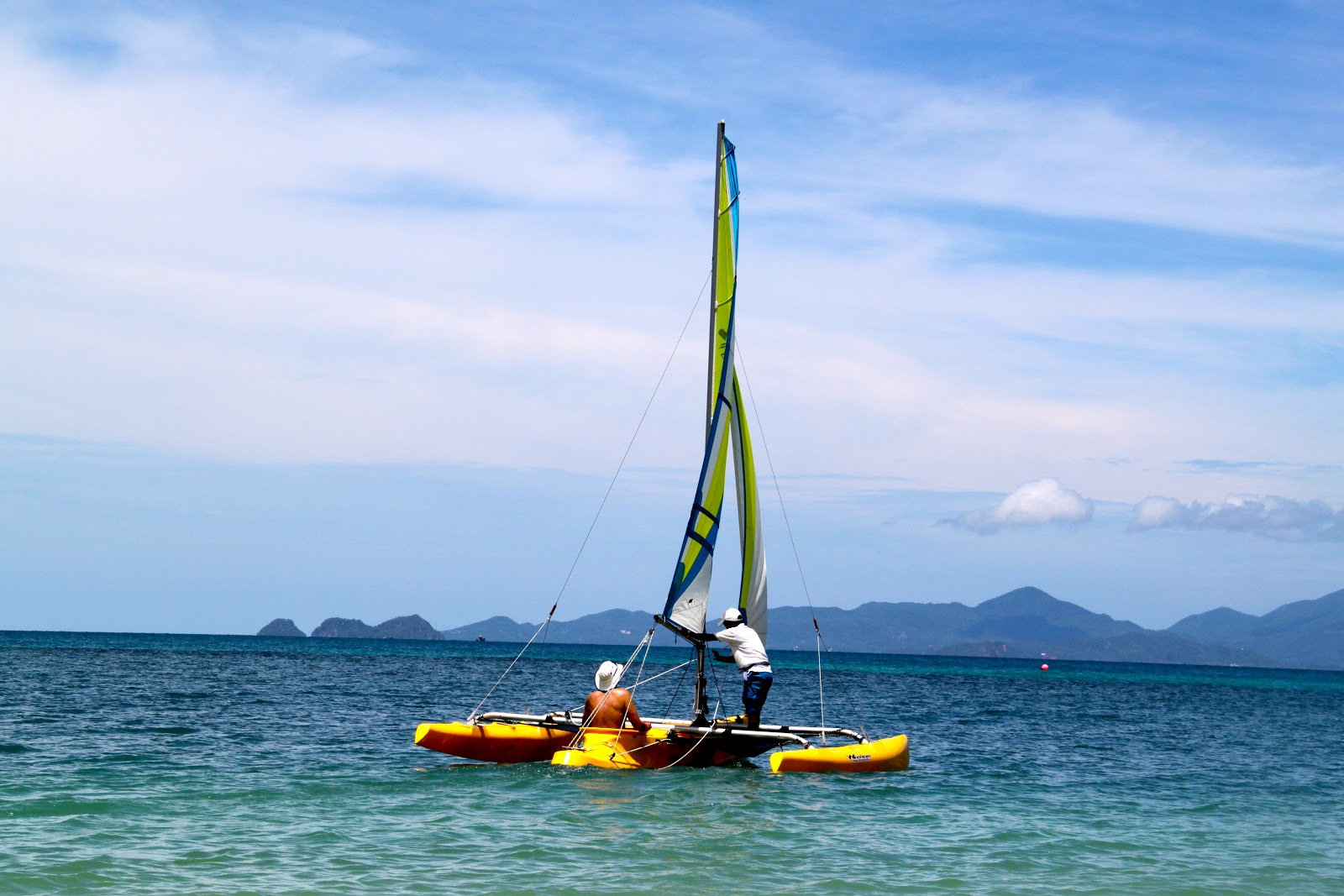
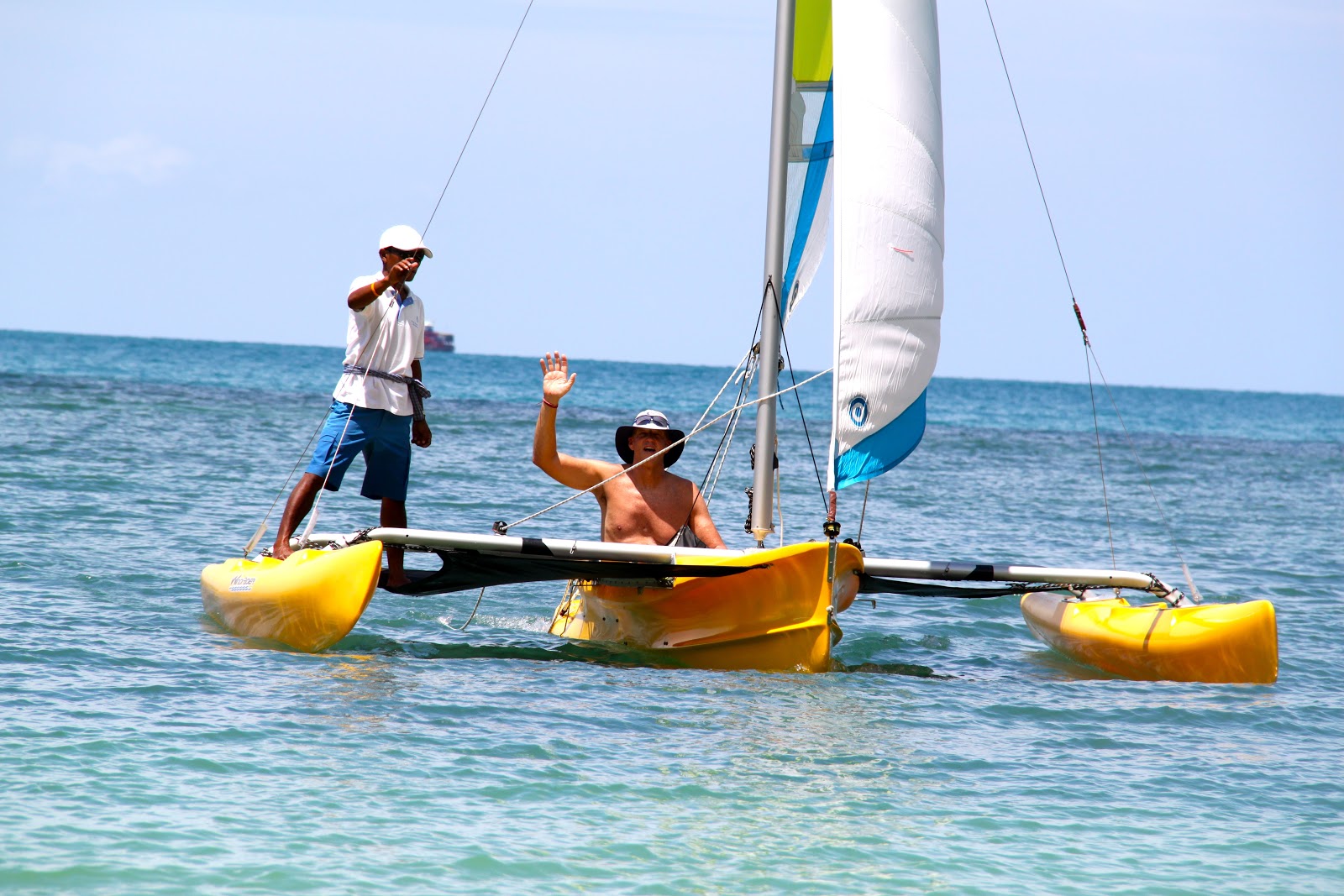
Scott checking out the sailboat.  It is what we would call a tri-maran instead of a catamaran.  It is very stable and to control the rudder there are foot pedals instead of controlling it with your hand.  It was pretty fun.
Getting instruction, but Scott knew more about sailing than the beach boy attendant.
After Scott had it down, we all joined him for a sail.  It was great.

Coming back to shore

Hanging out at the beach
Barb

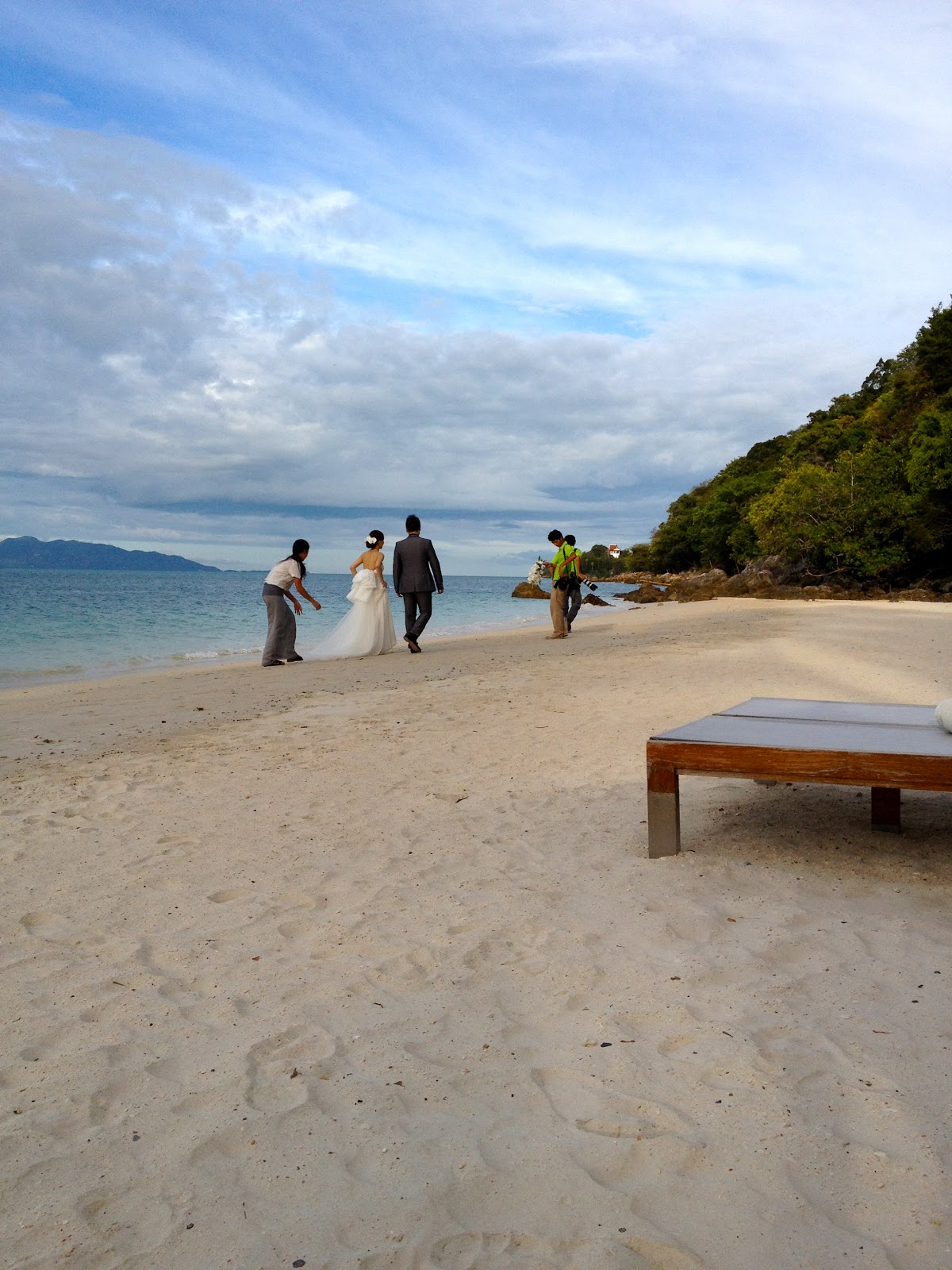
There was a wedding on the beach.

They had a beautiful floral path to the palm leaf alter

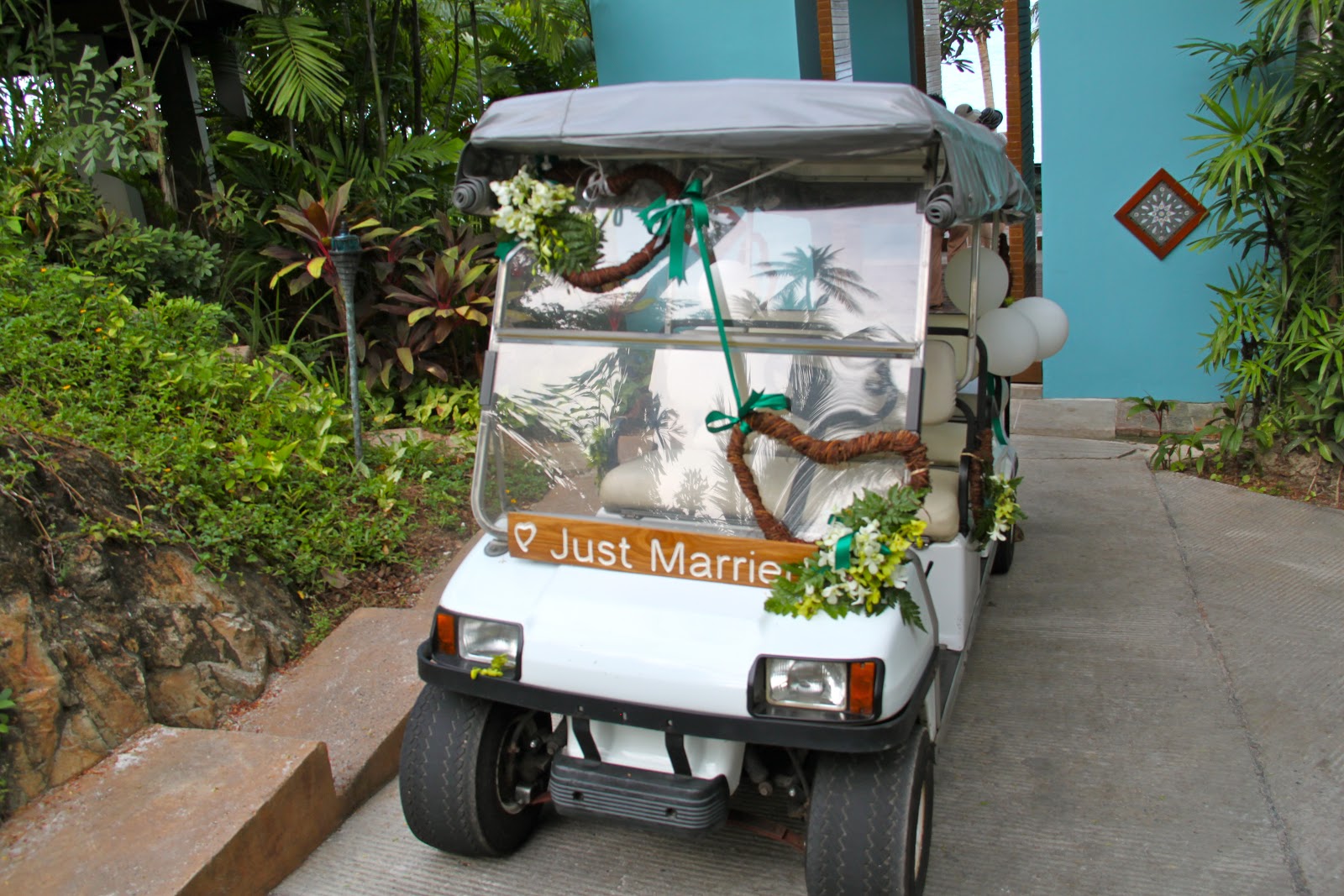
Their honeymoon car

We were sorry to see our time on Koh Samui come to an end.

Paro, Bhutan, October 1-3, 2012

PARO

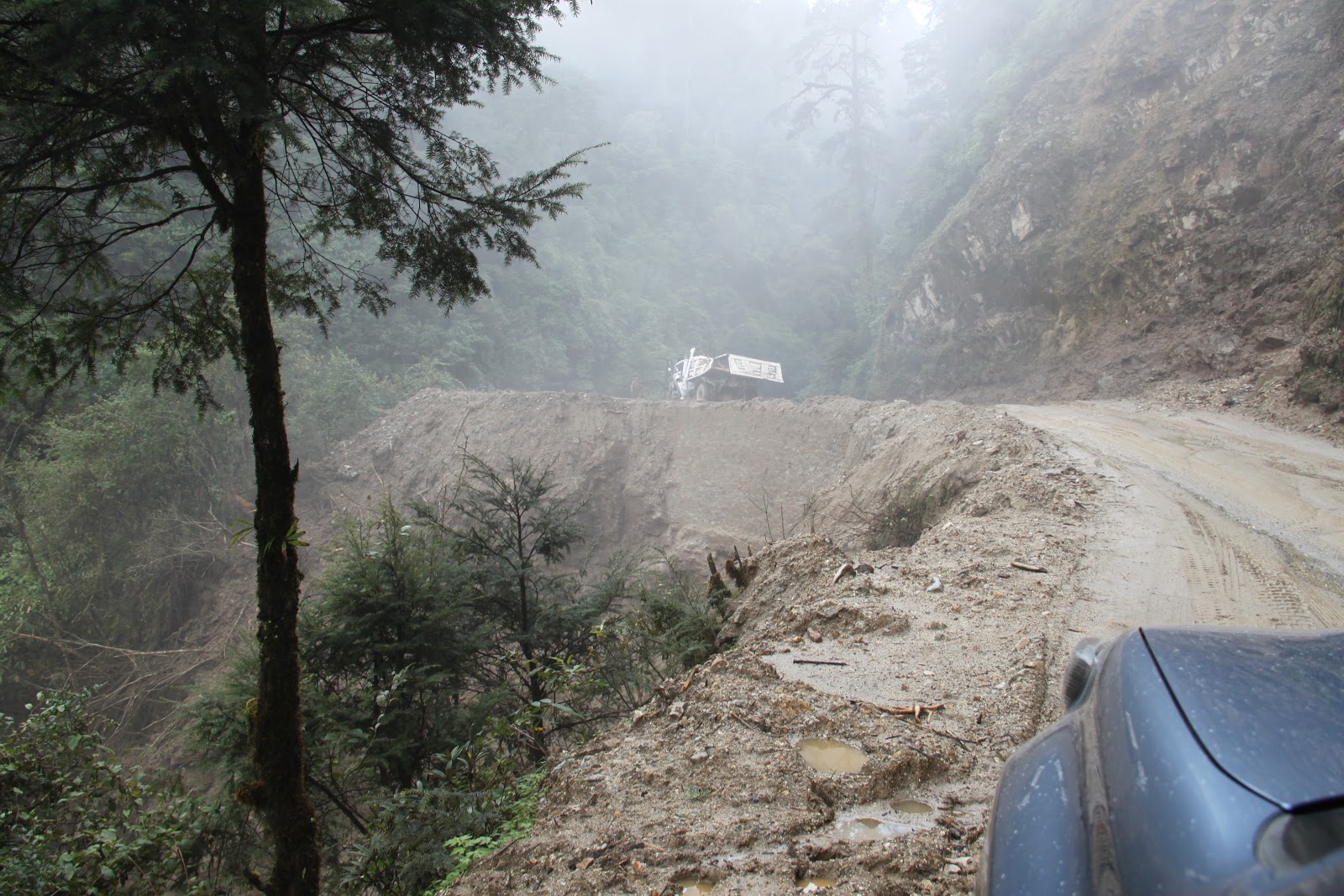
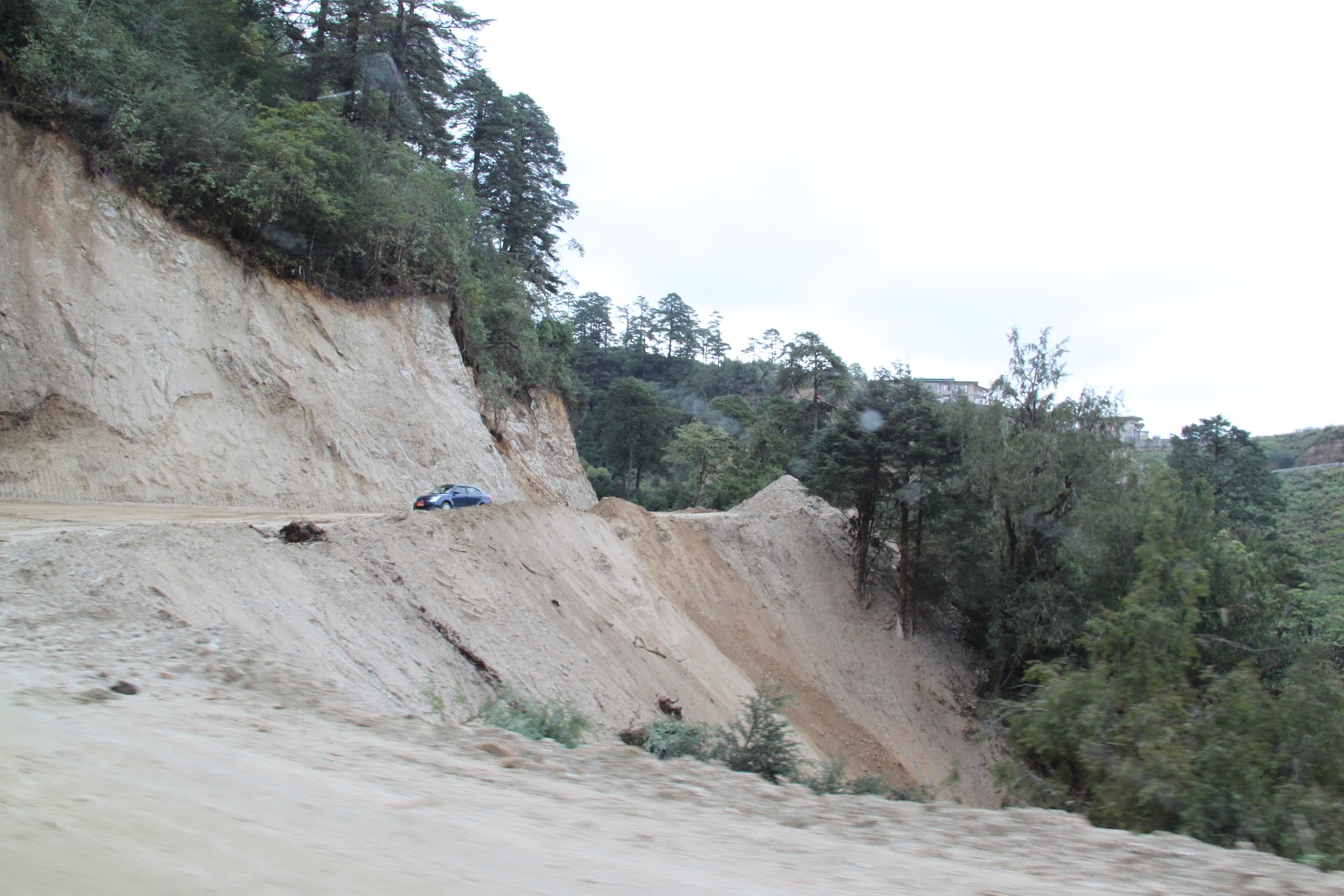
Once again, the roads leave something to be desired.

Everything is cut into the side of a mountain that could wash out at any time

With rain, mud and other cars or trucks-well, good luck
We make it to Paro late at night.  Well, you know, when you have to fit as many activities as you can into one day,  and then stop in Thimphu to play golf until you can’t see the ball any more, and finally continue the drive to Paro, it tends to get dark.  Oh well, life is short, fill it to the brim!

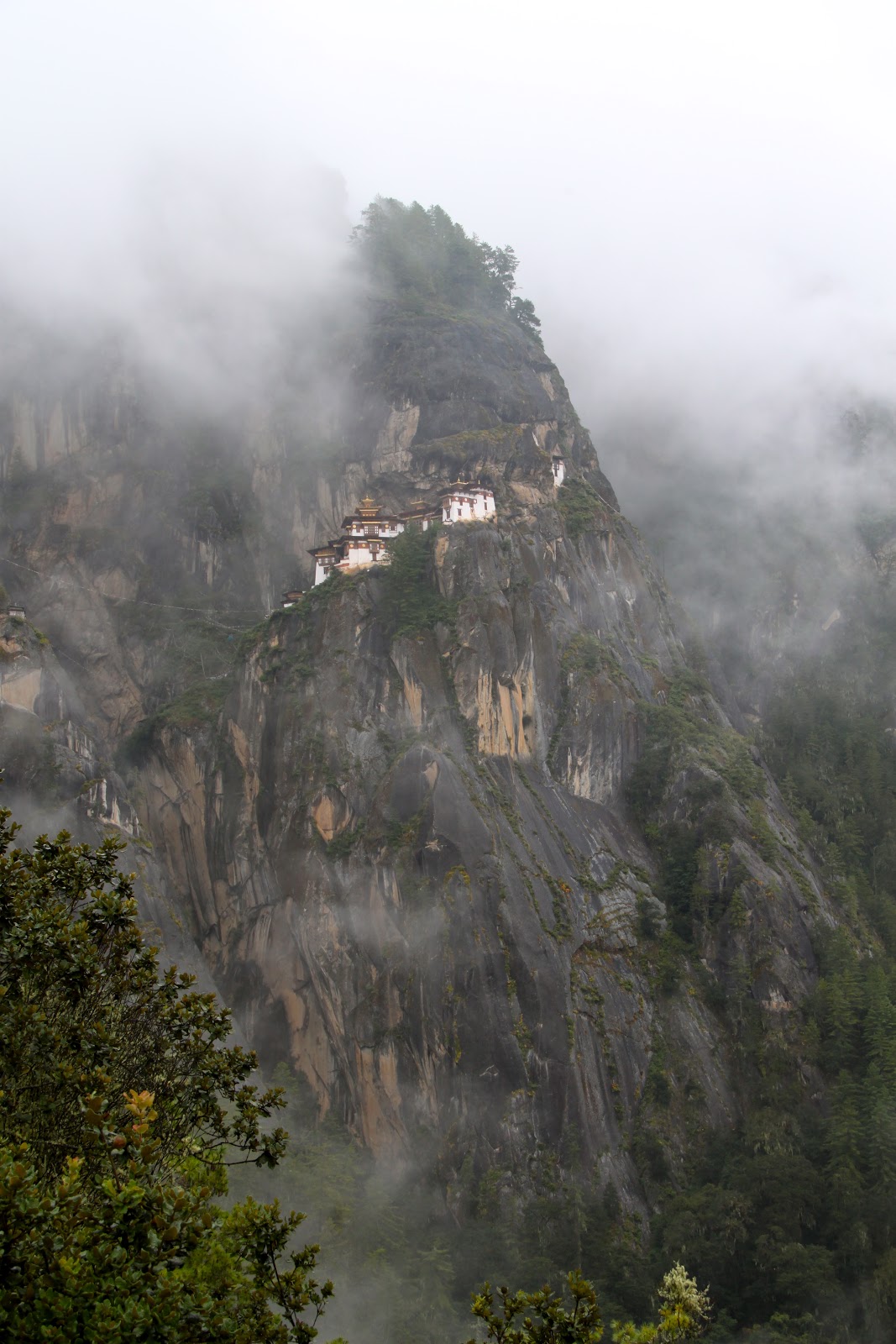
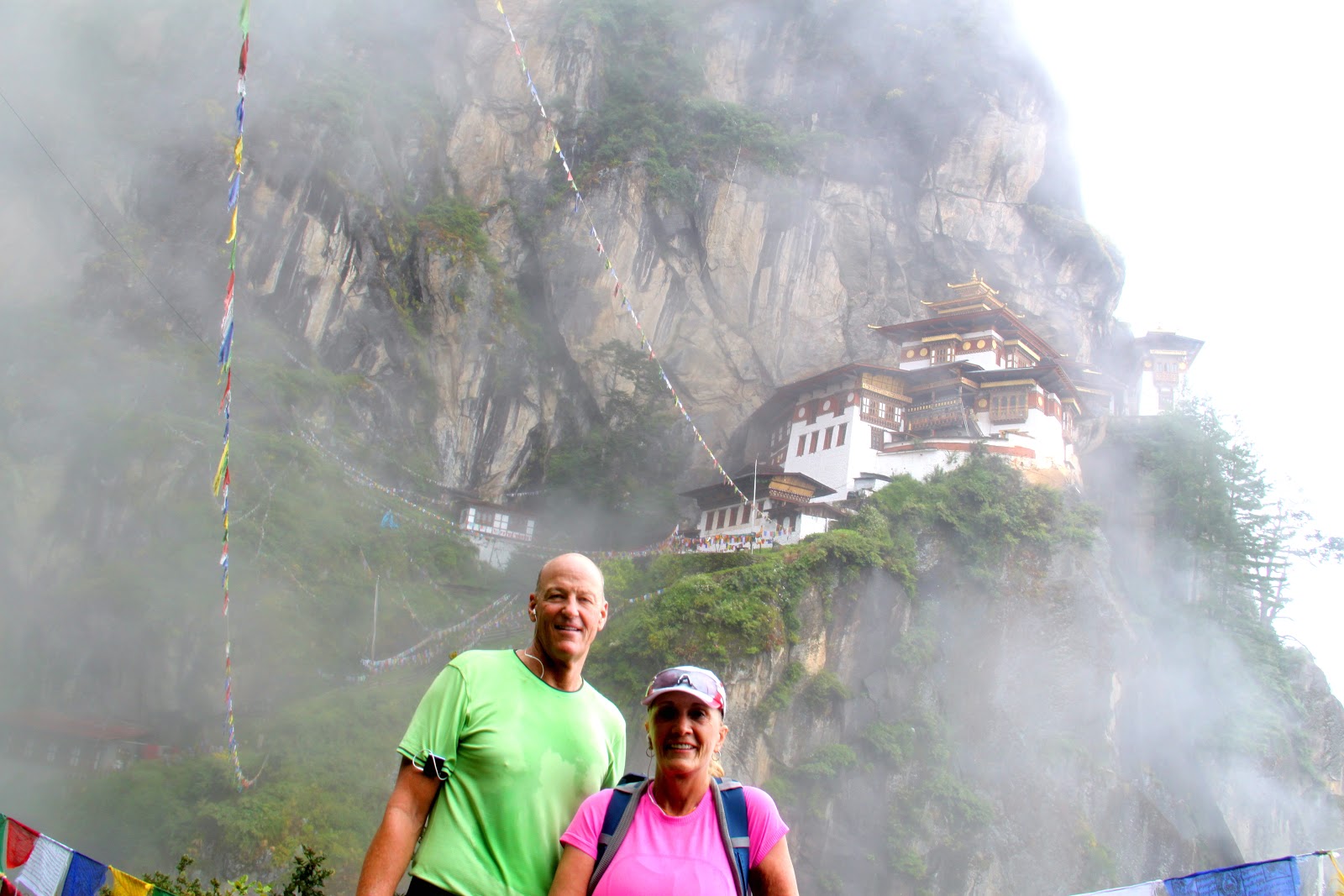
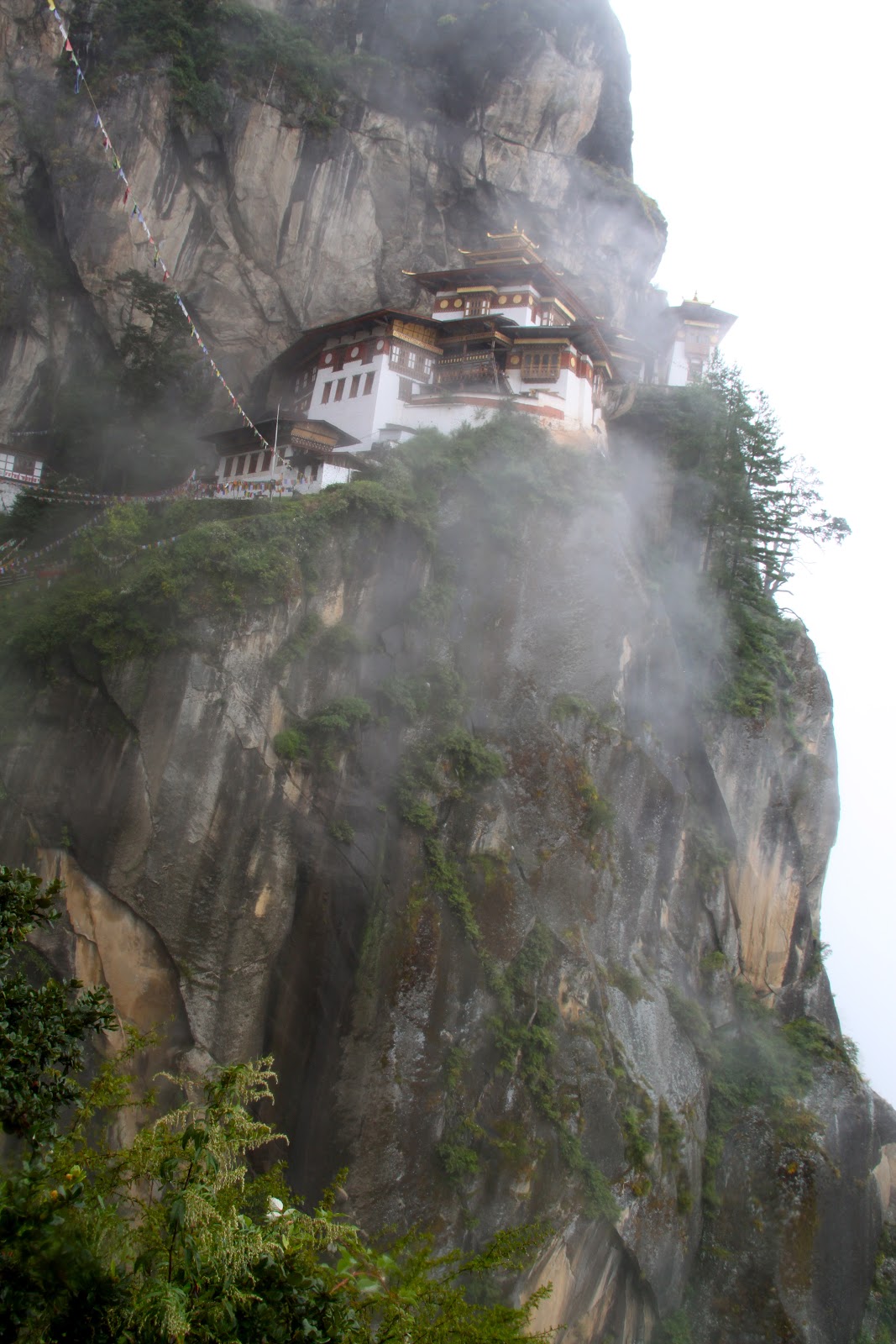
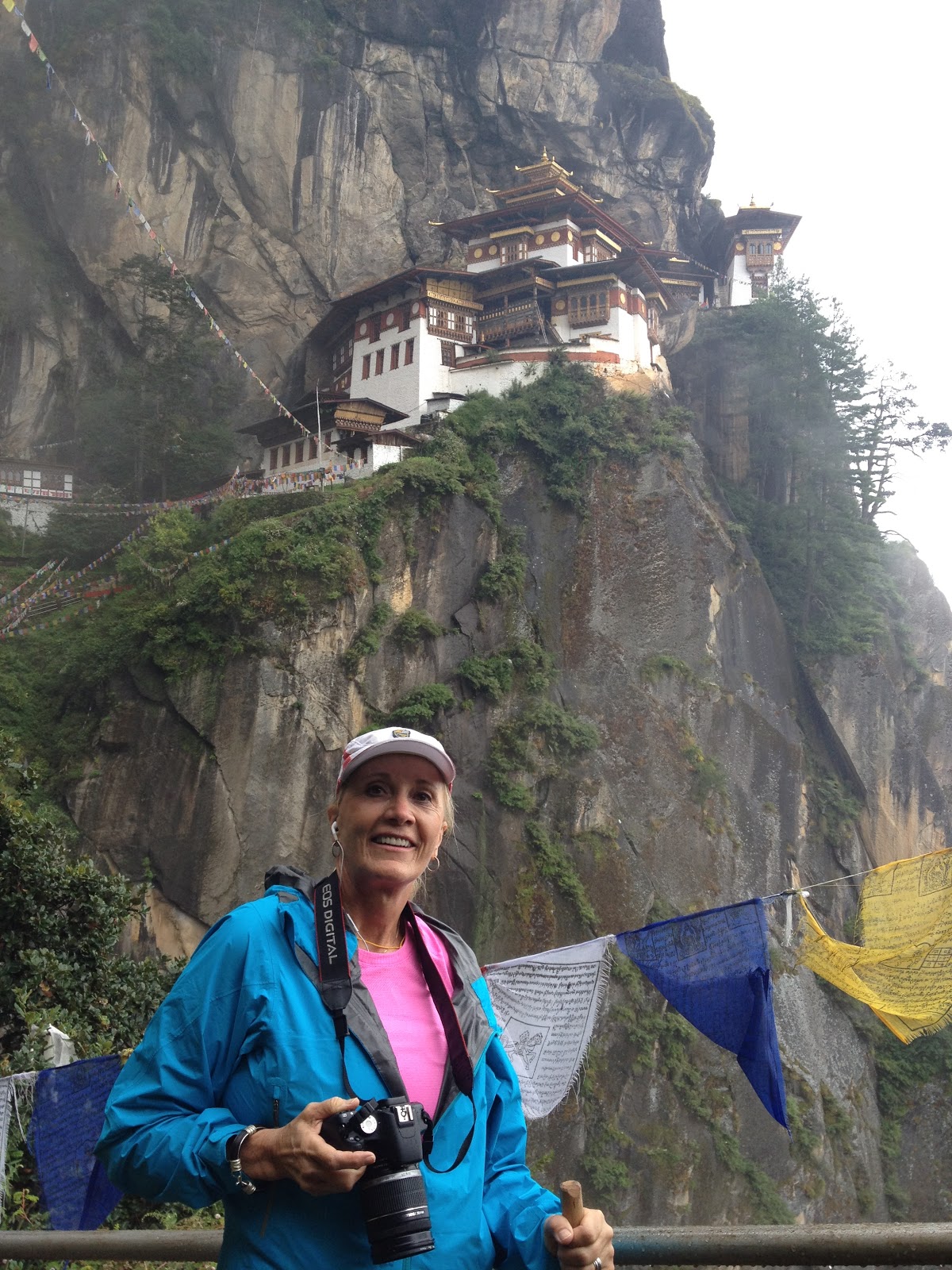
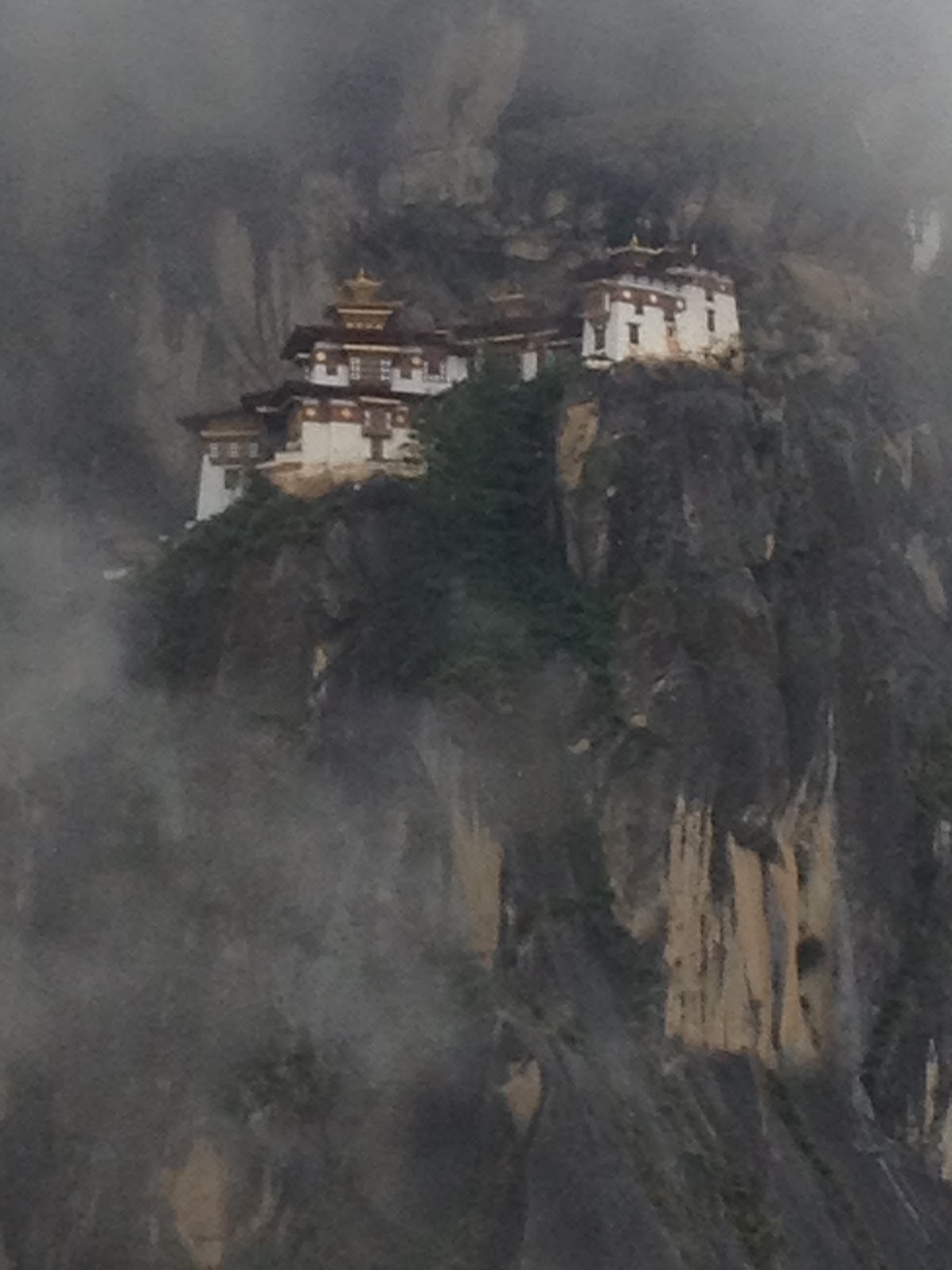
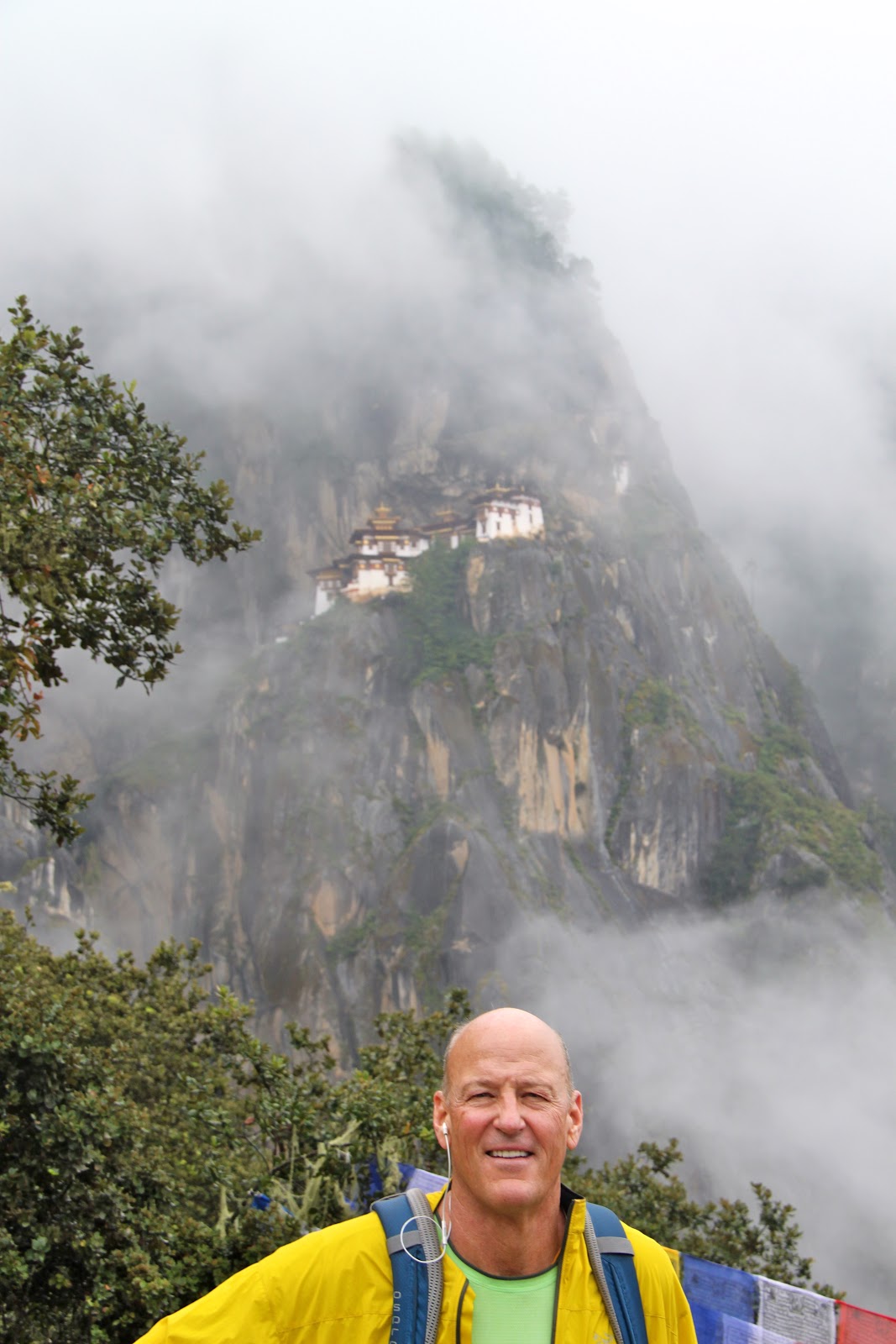
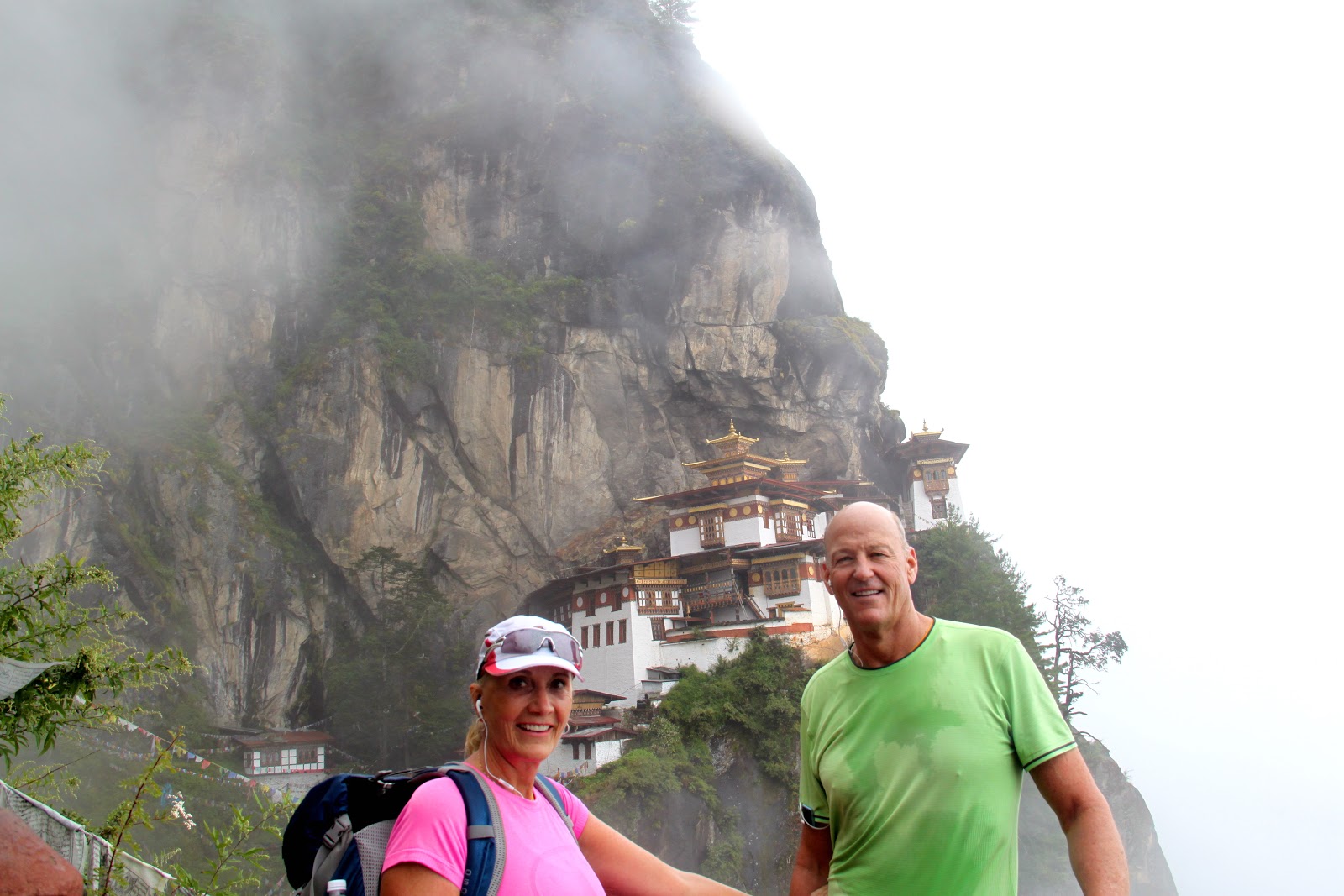
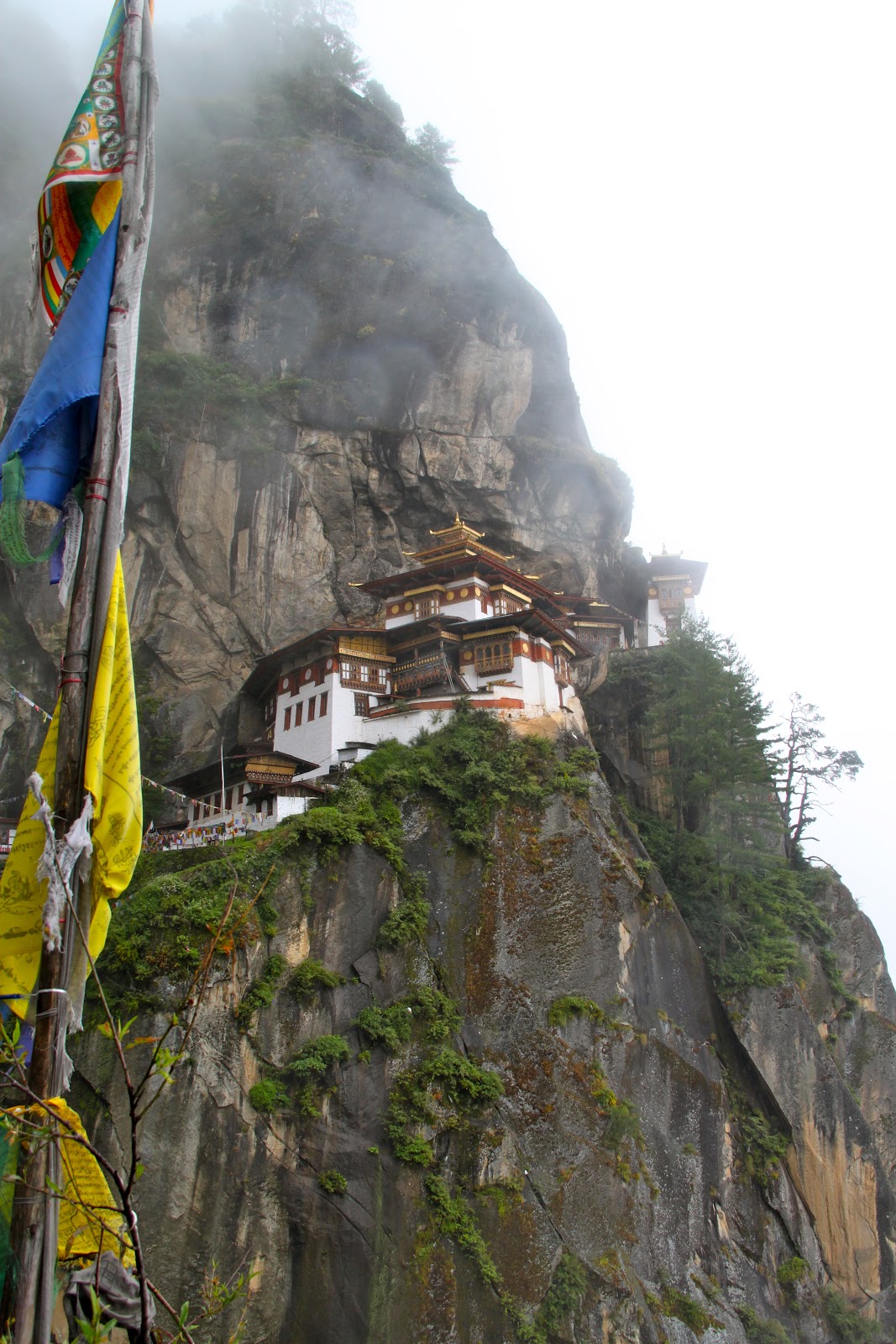
Paro is the site of the Tiger’s Nest Temple.  It is said that the Guru Rinpoche rode on the back of a flying Tiger to this spot and meditated for 3 years.  Thereafter this temple was built. 


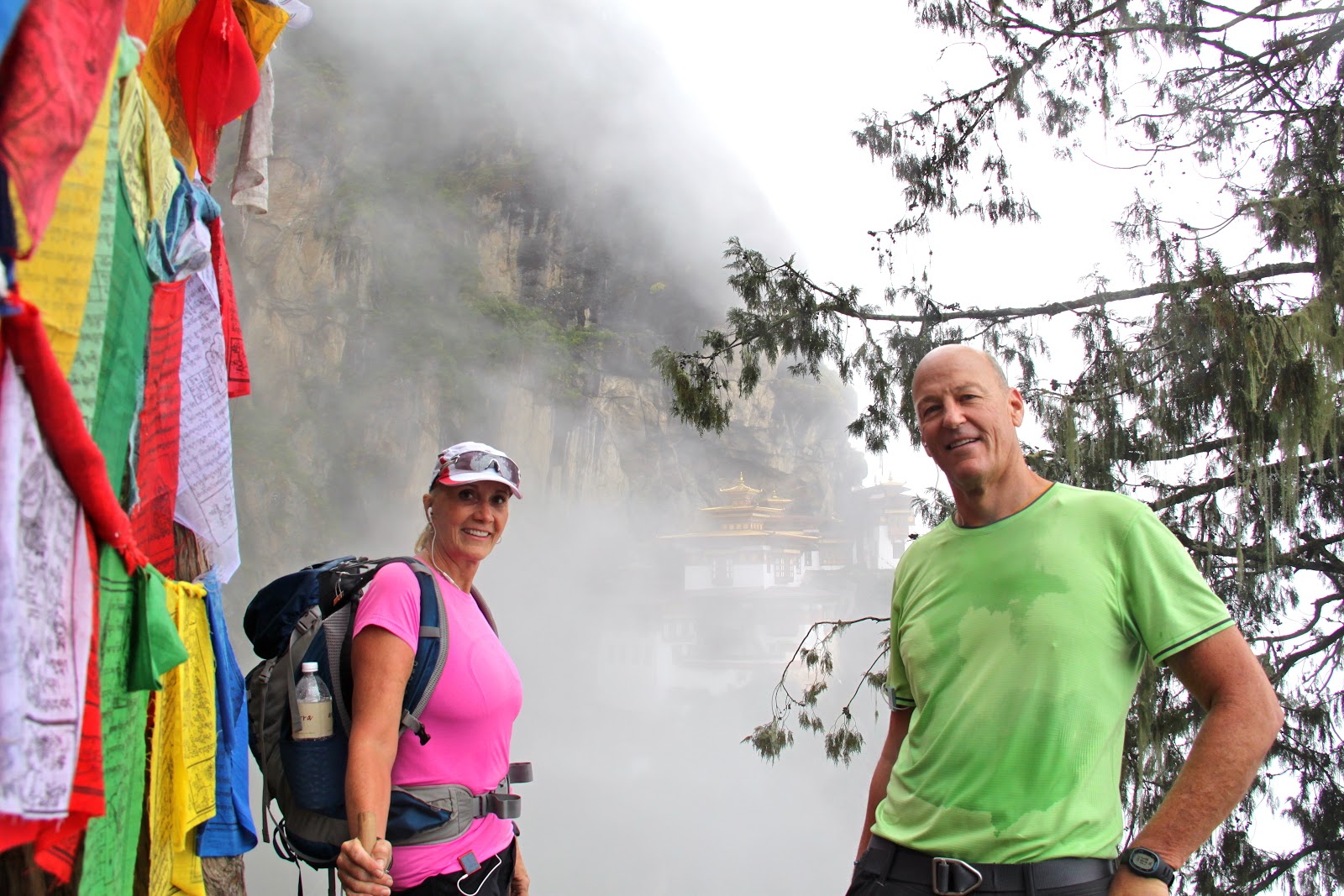
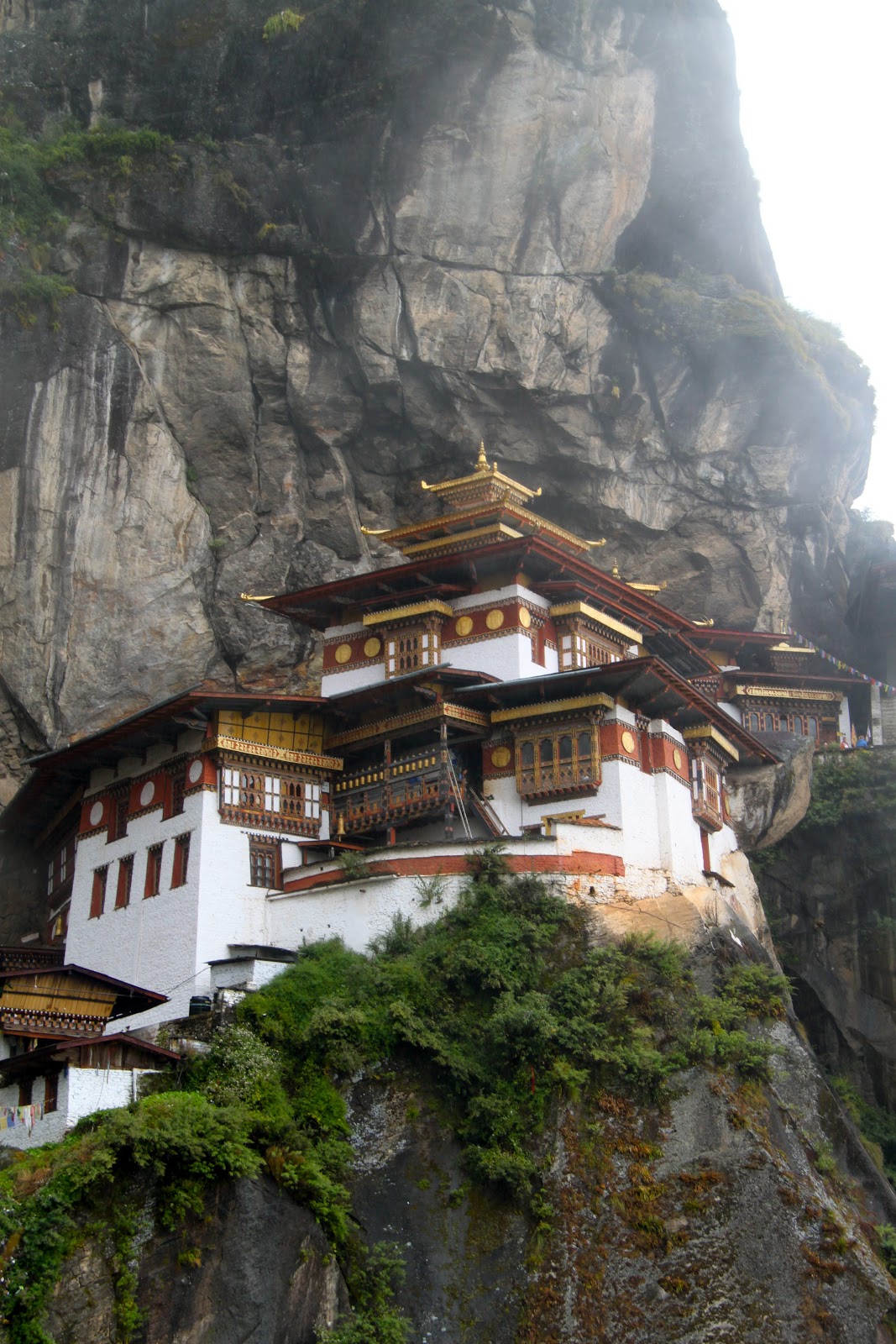
Incredible-there are 12 temples on the mountain winding around.  This one is called the Tigers Nest.

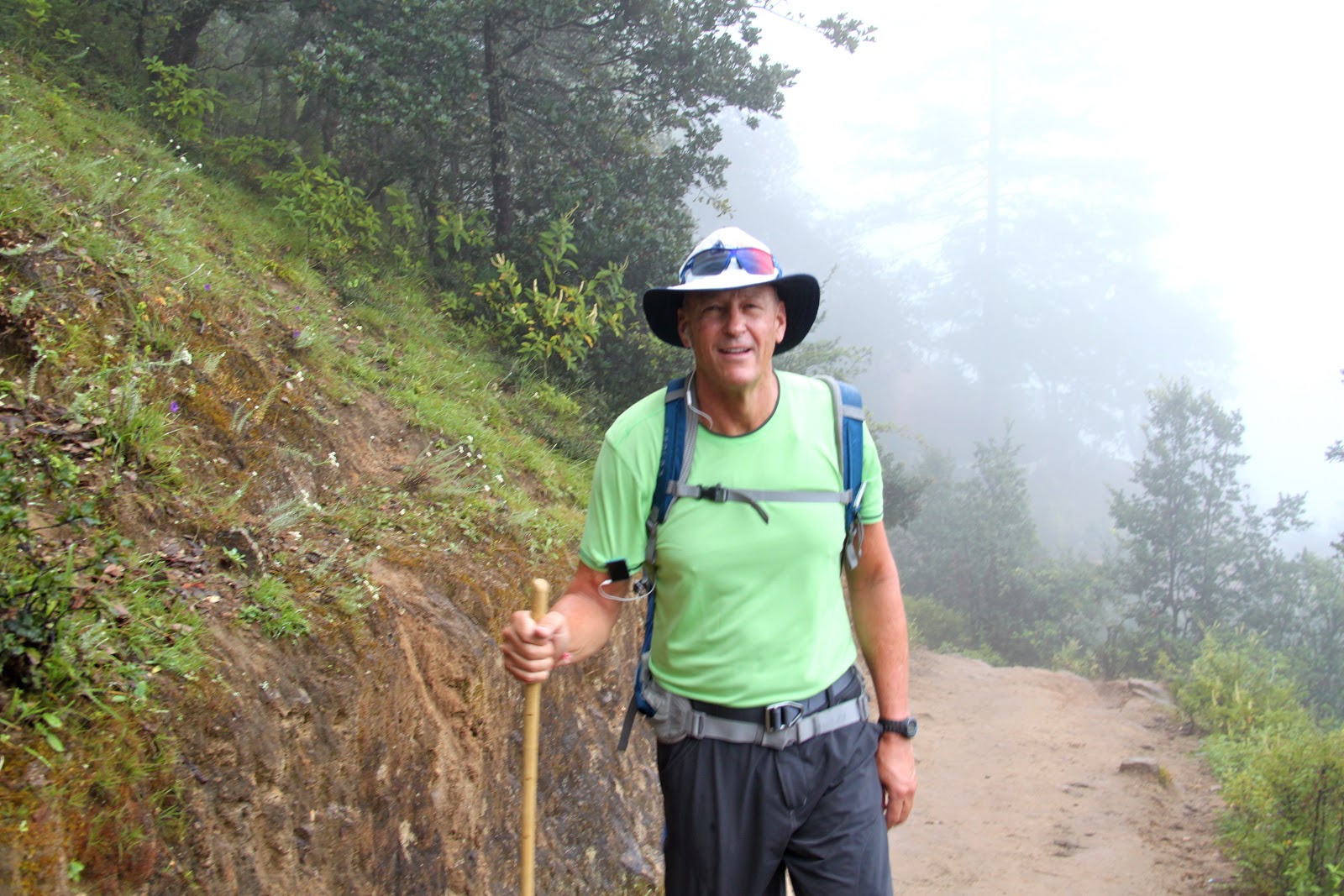
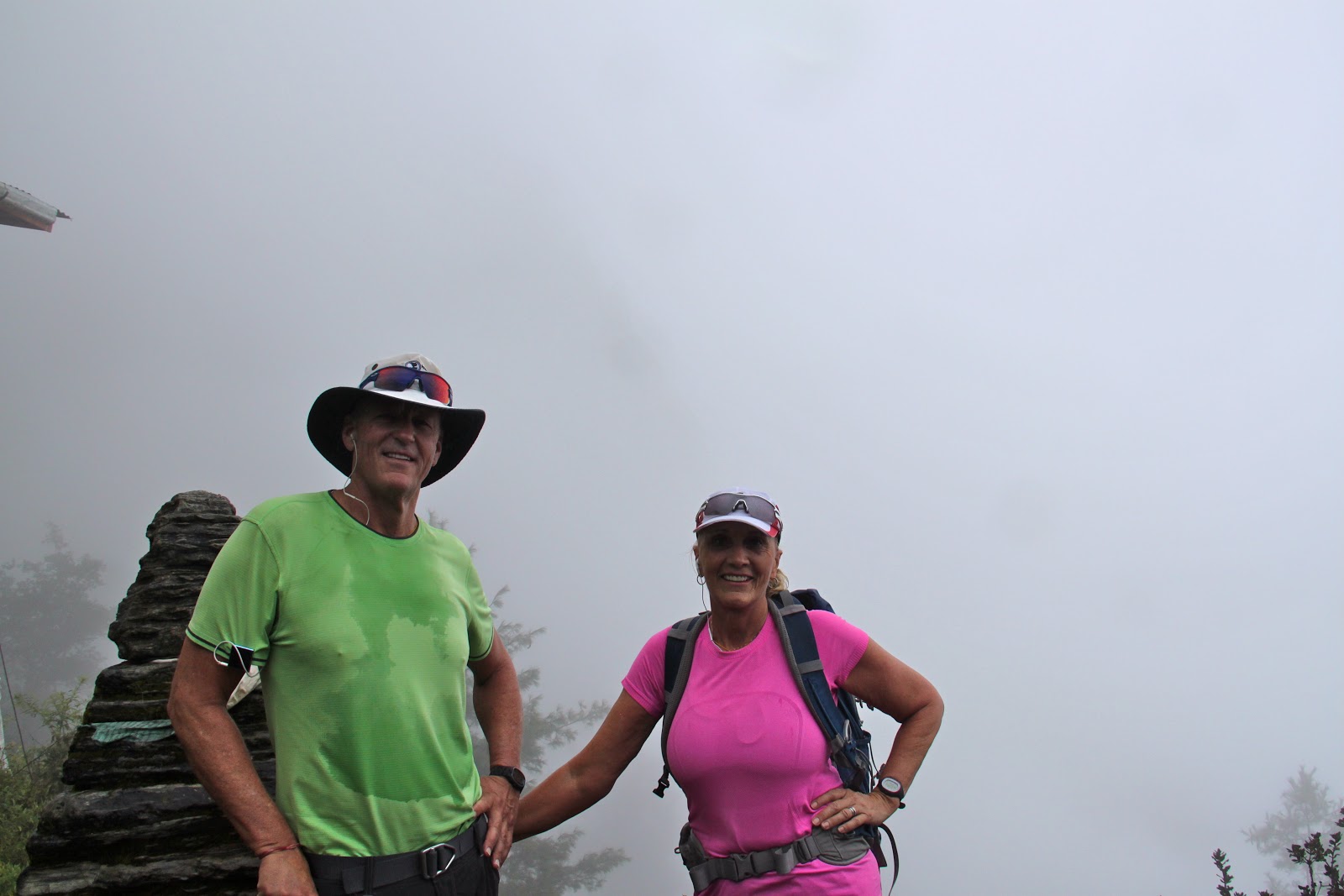
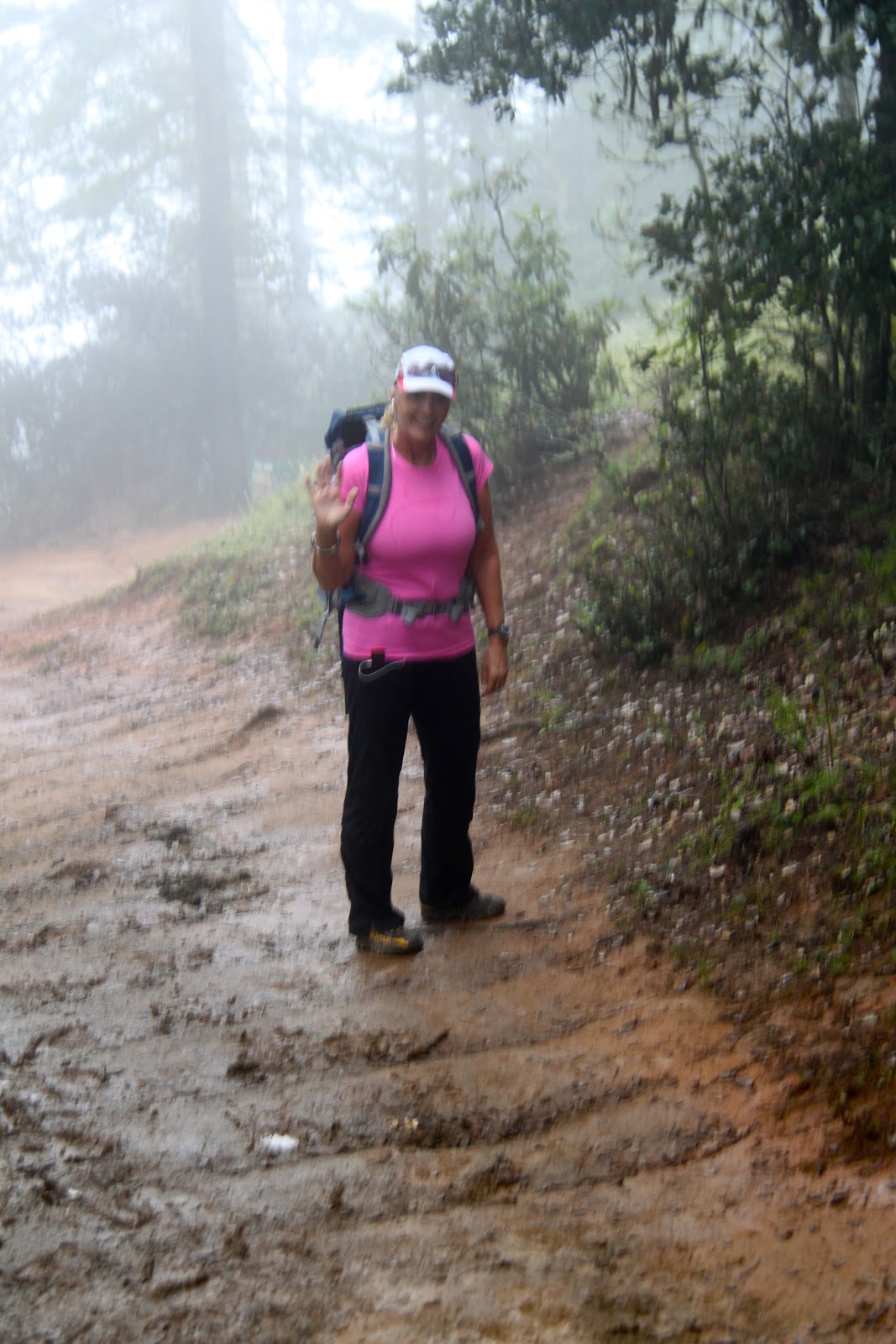
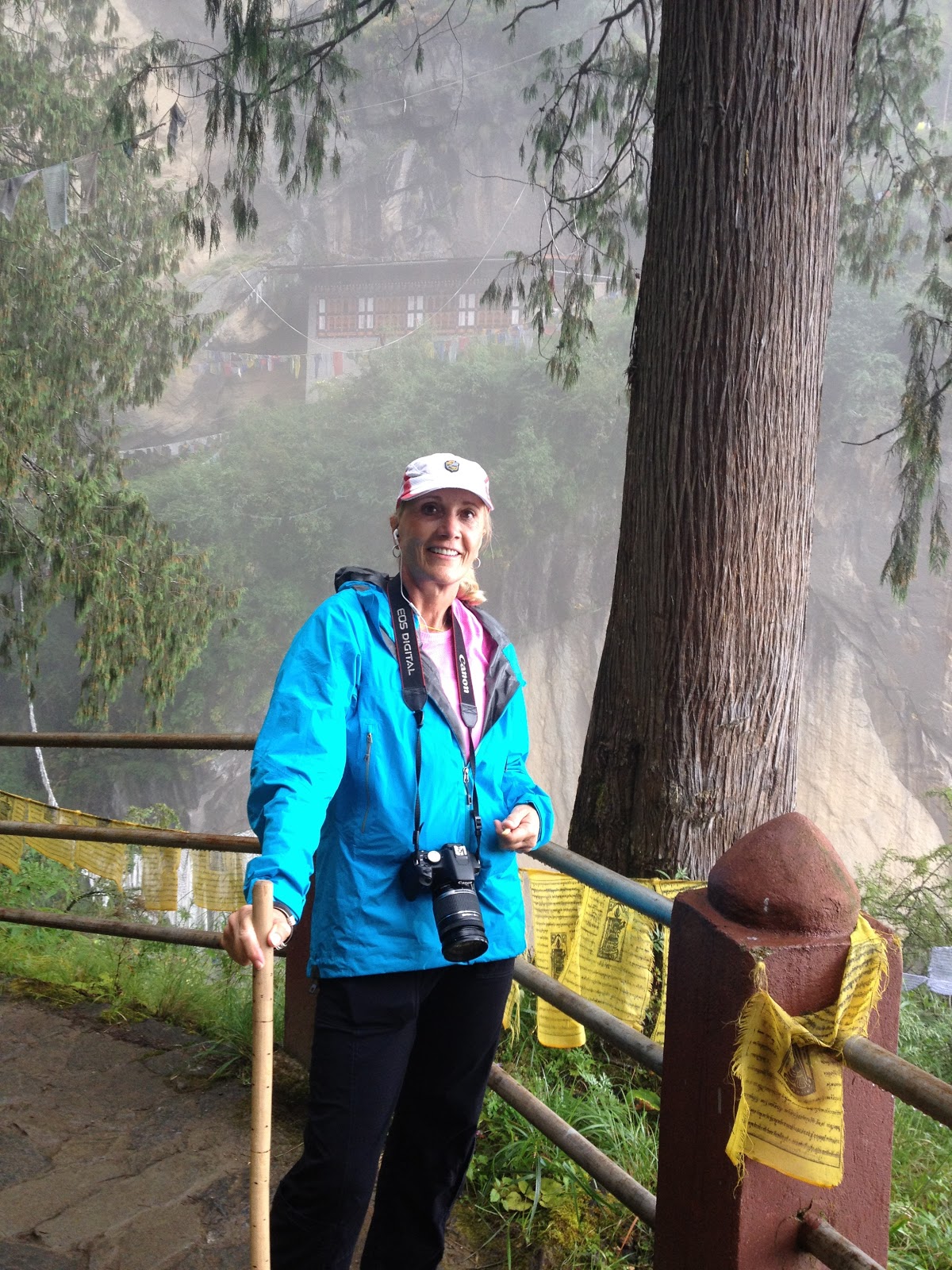
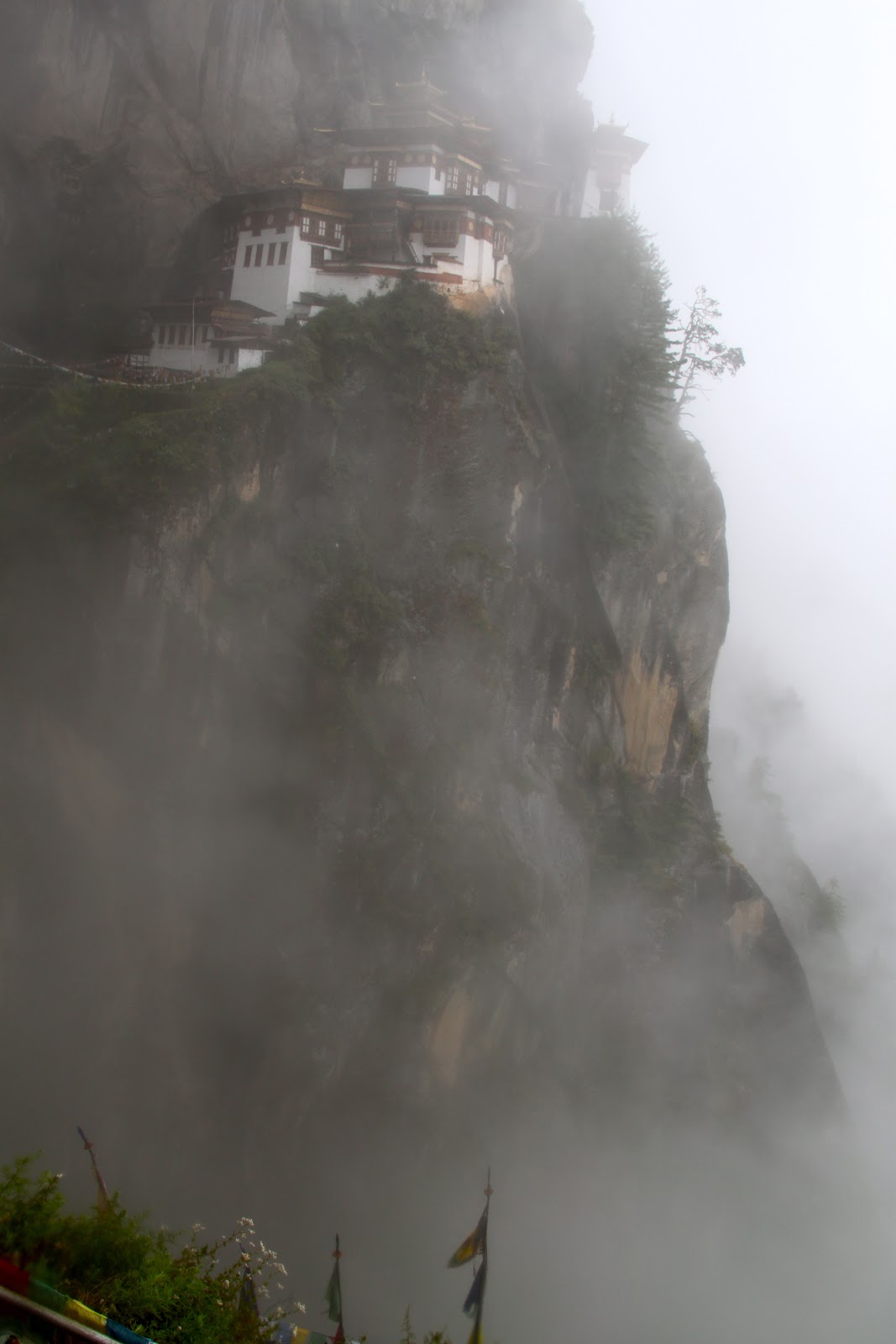
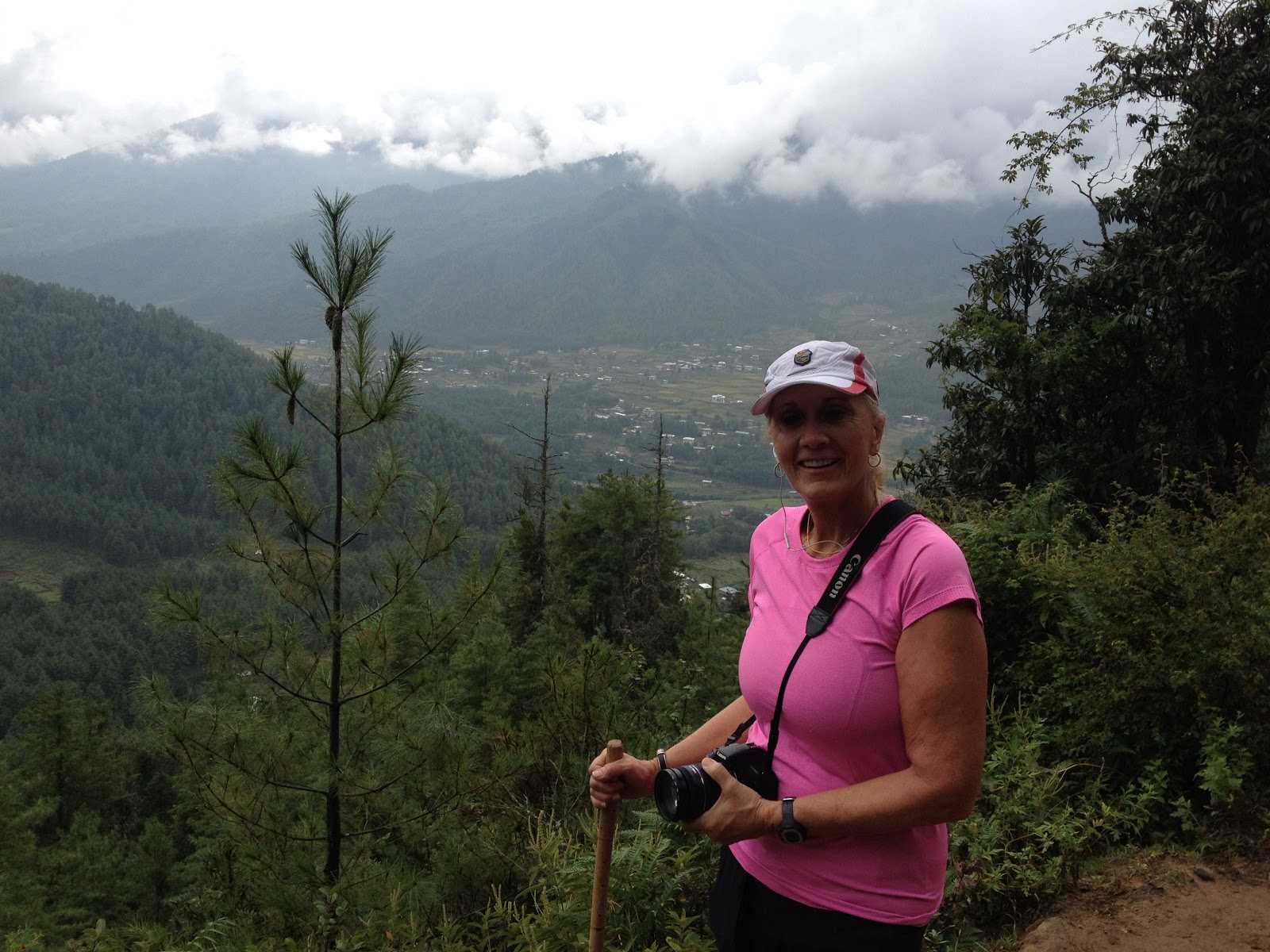
This temple is magical in its appearance built on the side of a cliff high over the Paro Valley.  We leave our lodge at 7 am in order to beat crowds to take the 2 hour hike up to the temple.  It is about 50 degrees and raining when we start.  As near as we can tell there is only one group ahead of us on the trail and we catch them soon. 

Starting to heat up

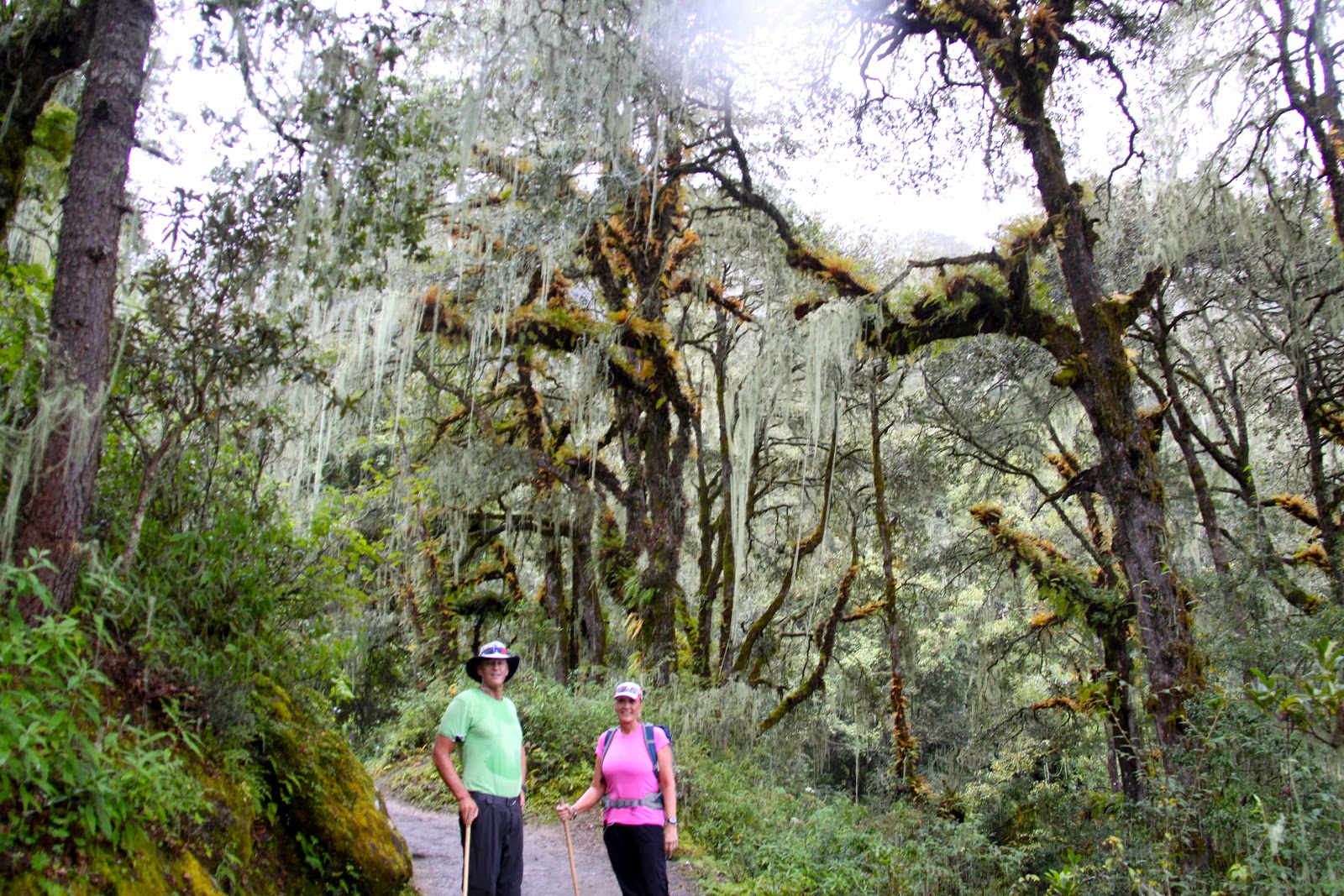
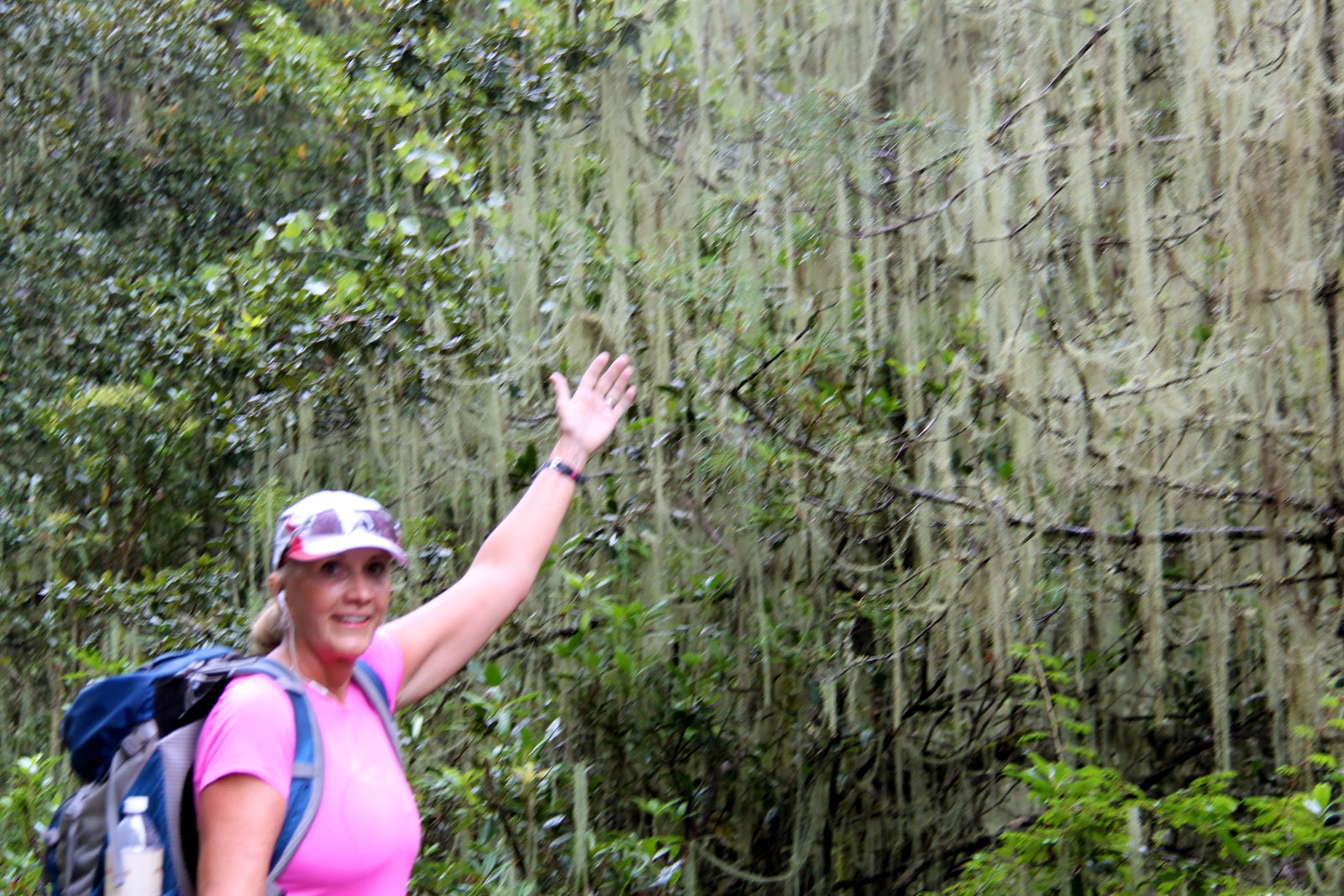
Spanish moss hangs from the trees

Spanish moss

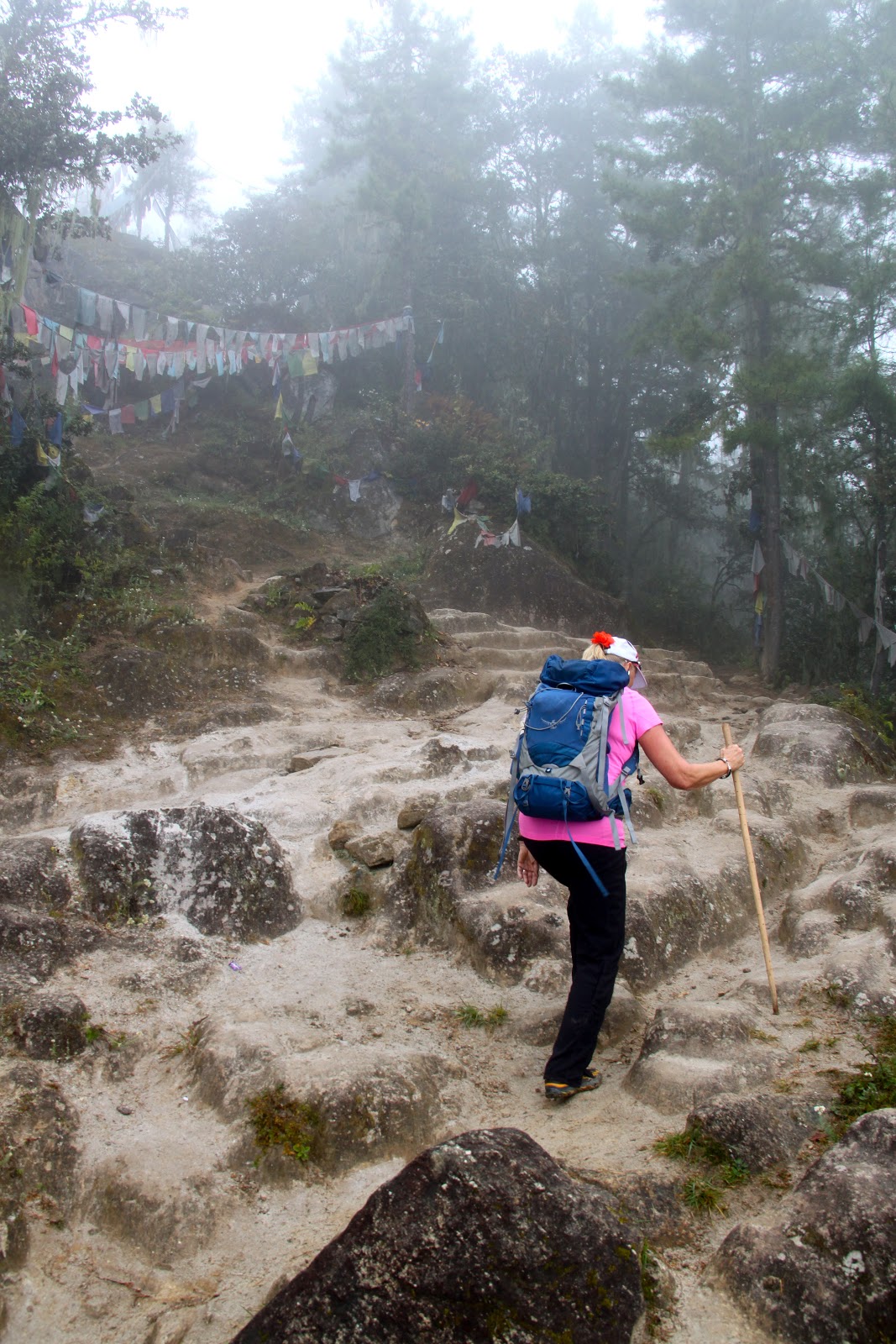
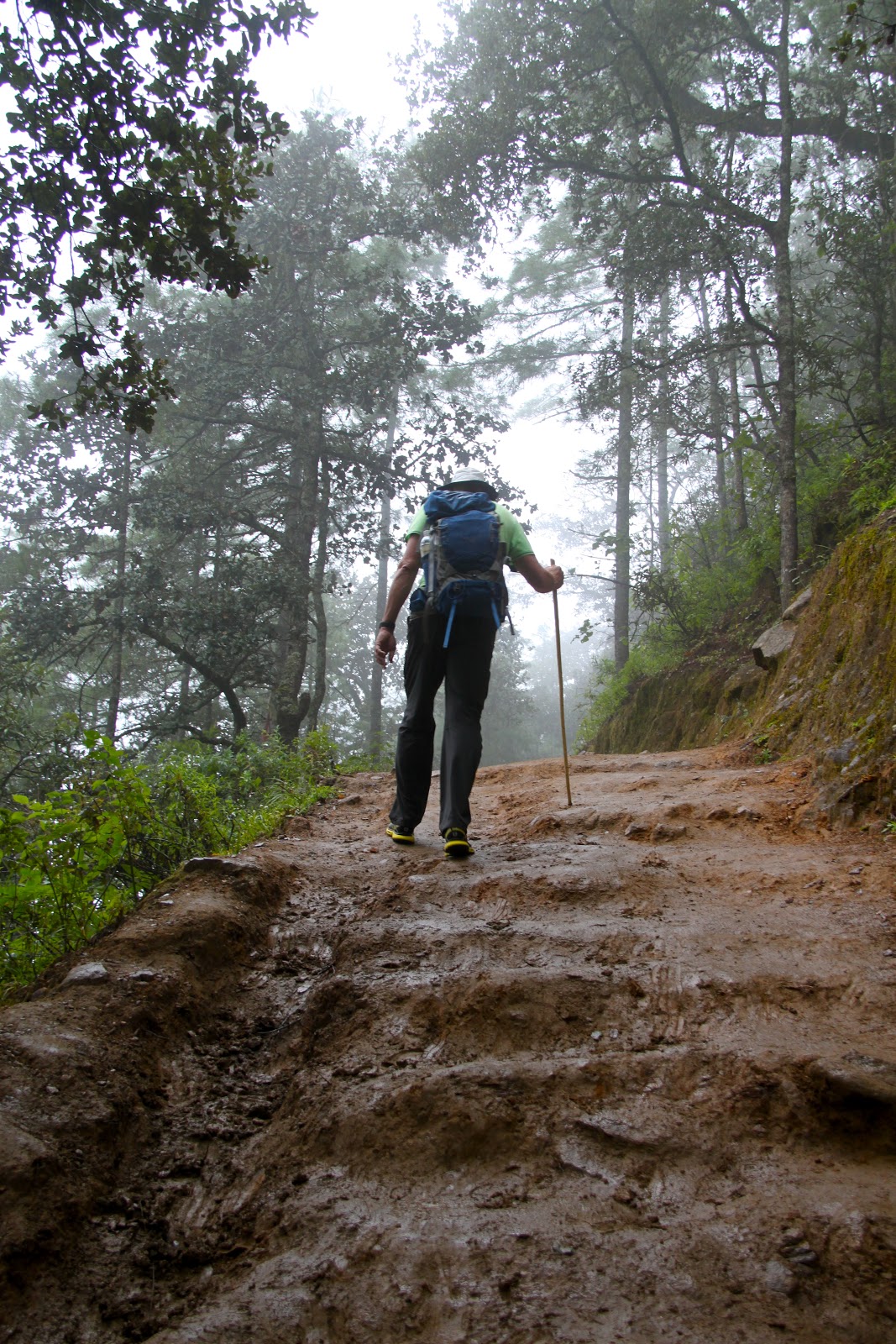
It was foggy and wet but since we were first on the trail, it wasn’t too slippery—yet.


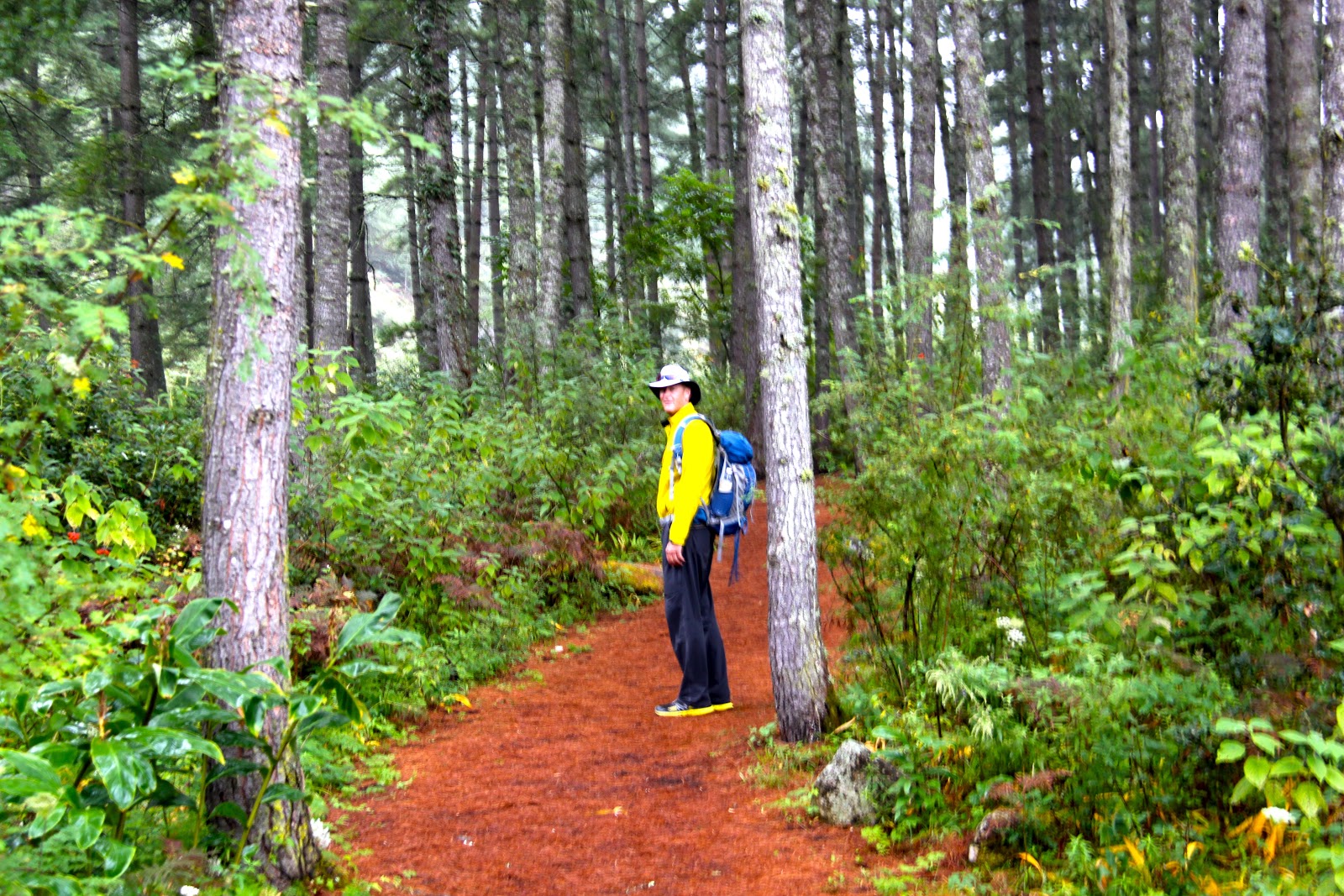
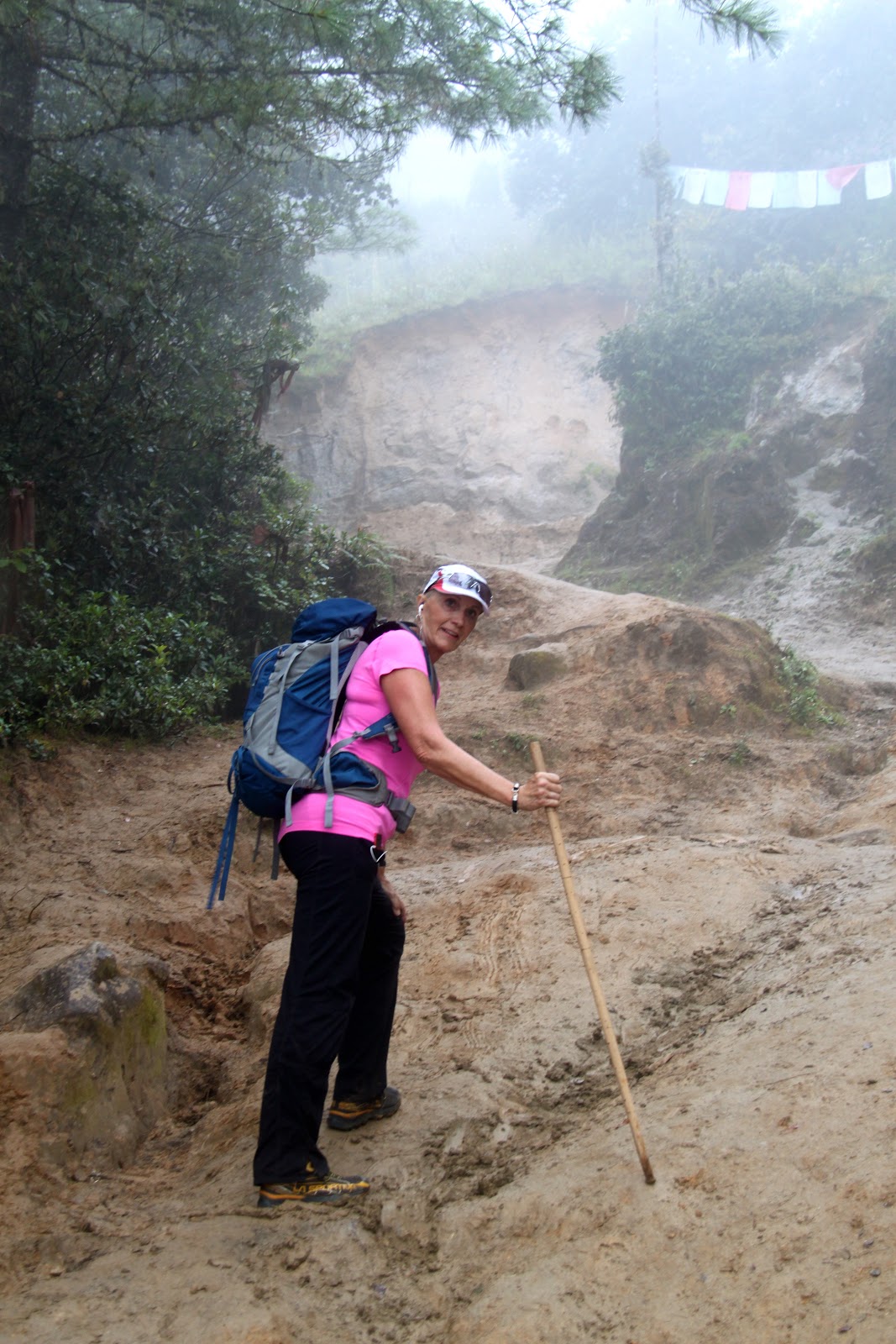
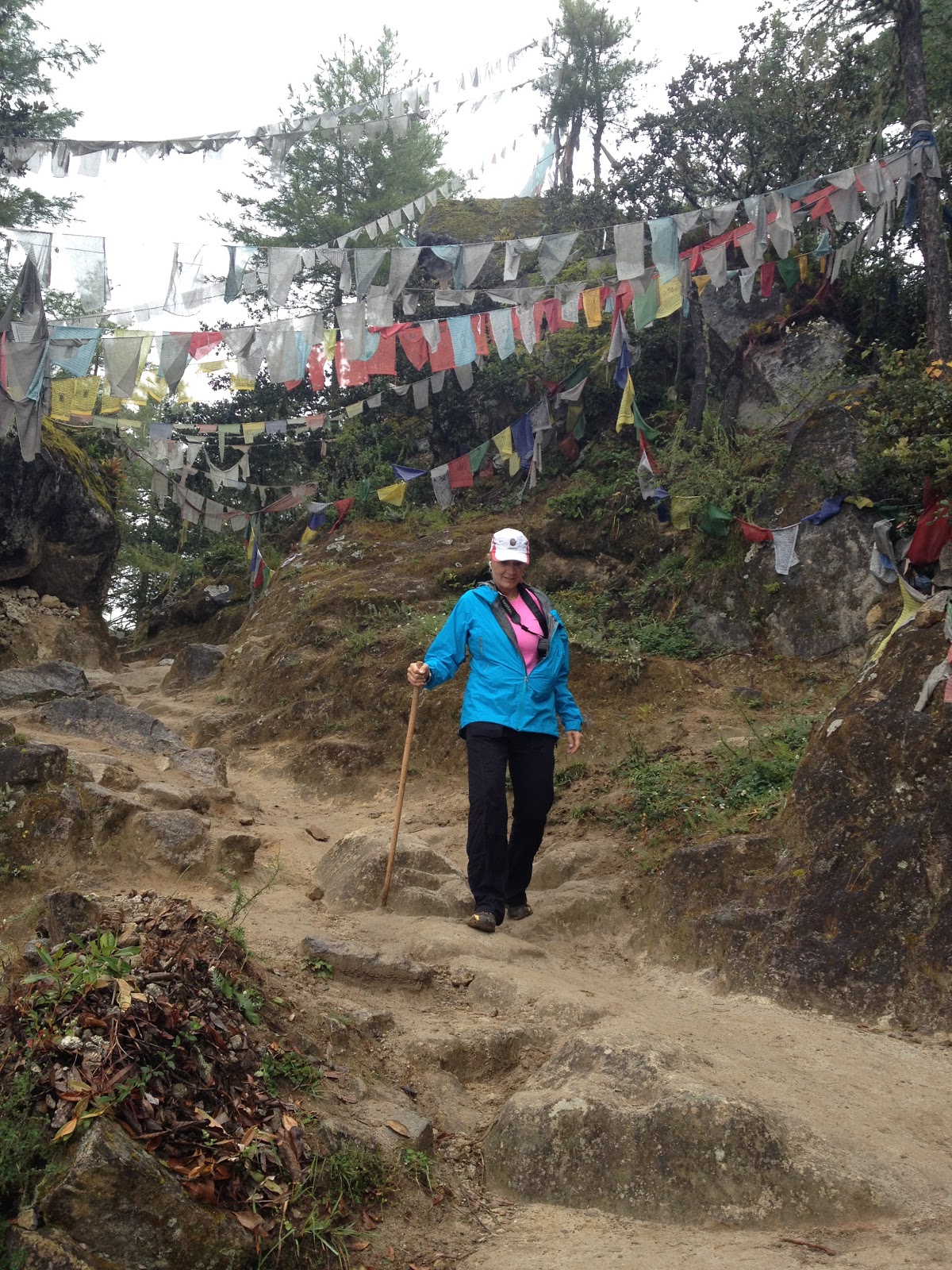
At times, you might think we were hiking in Oregon!  The prayer flags brought us back to reality.
Slow and steady wins the race

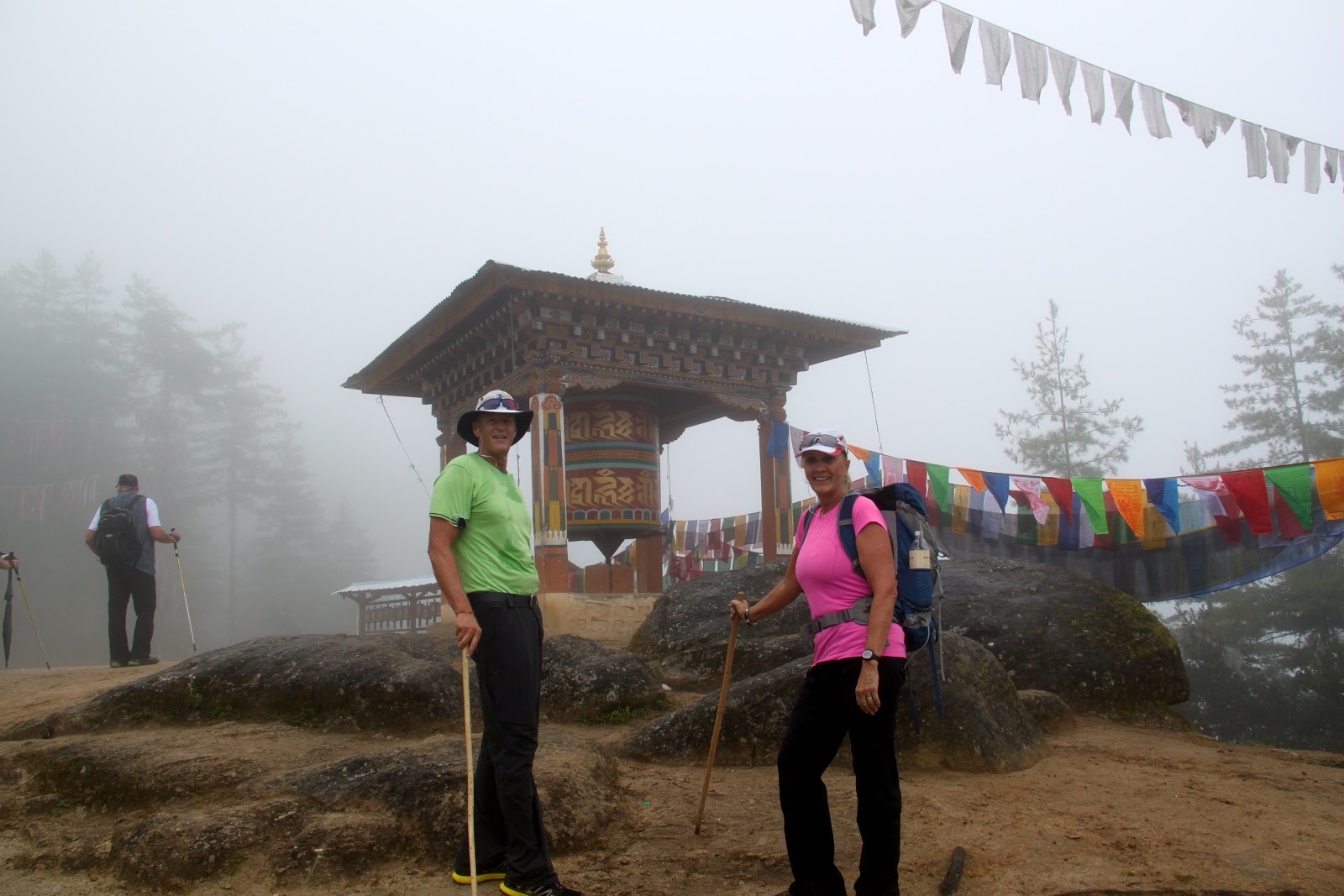
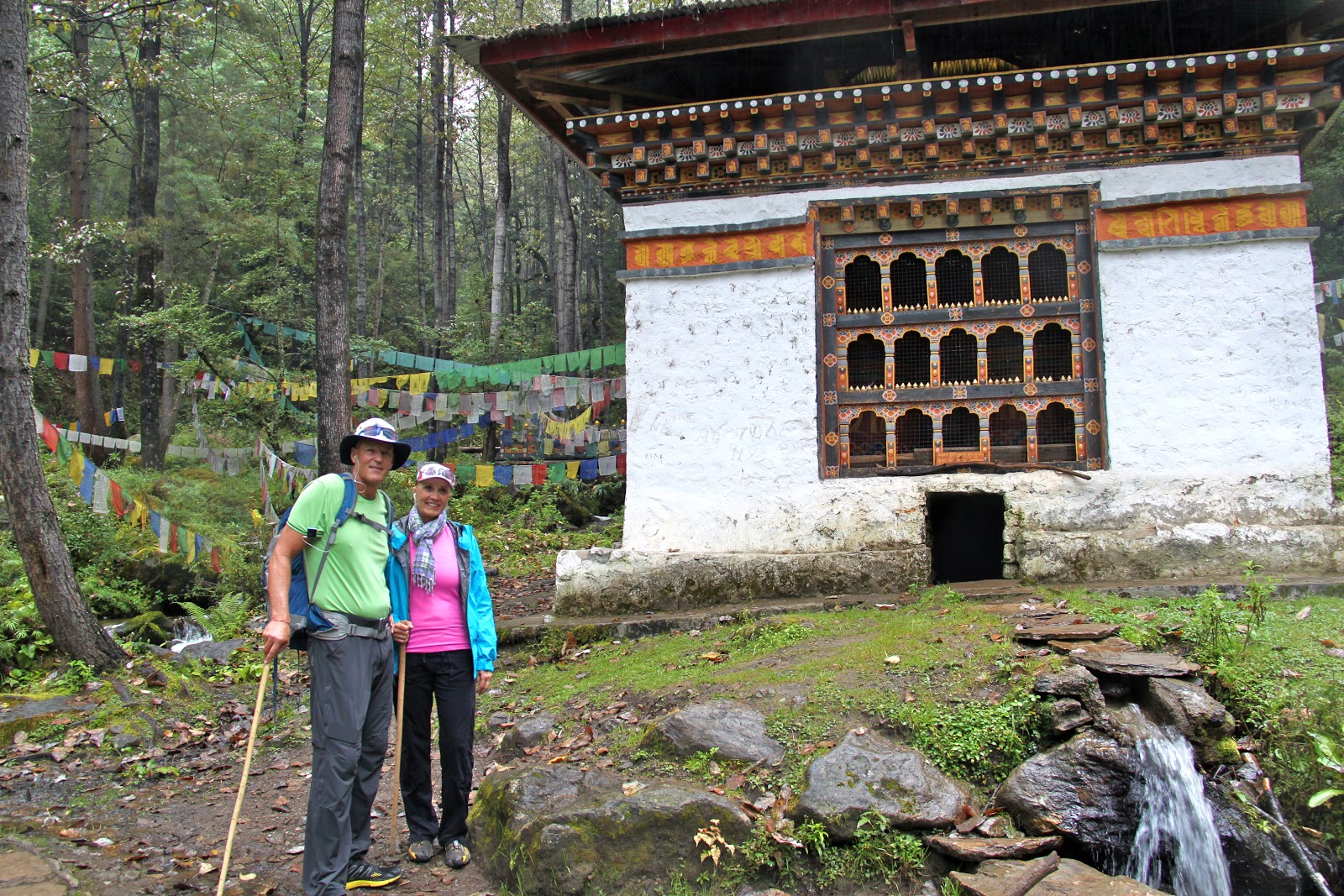
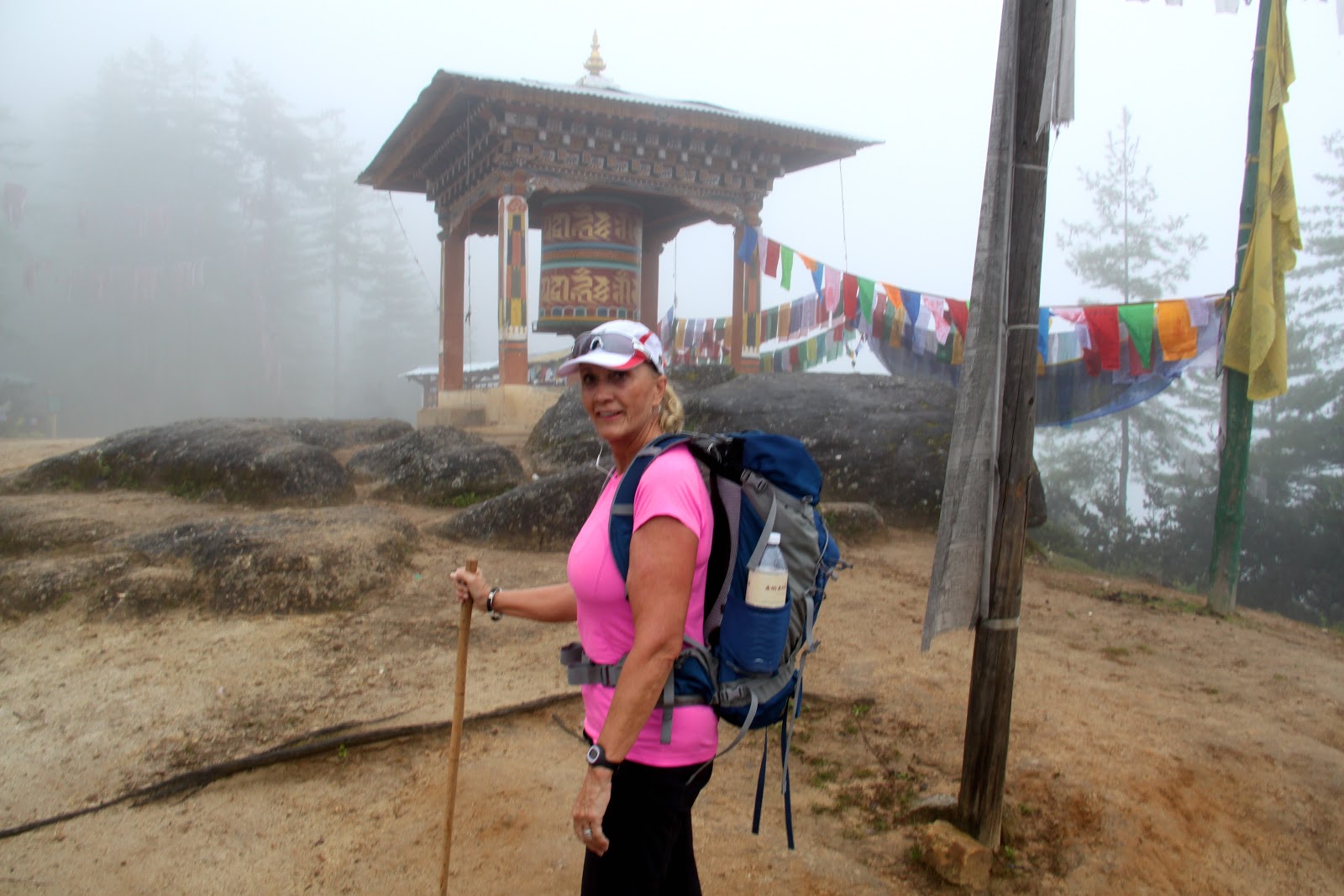
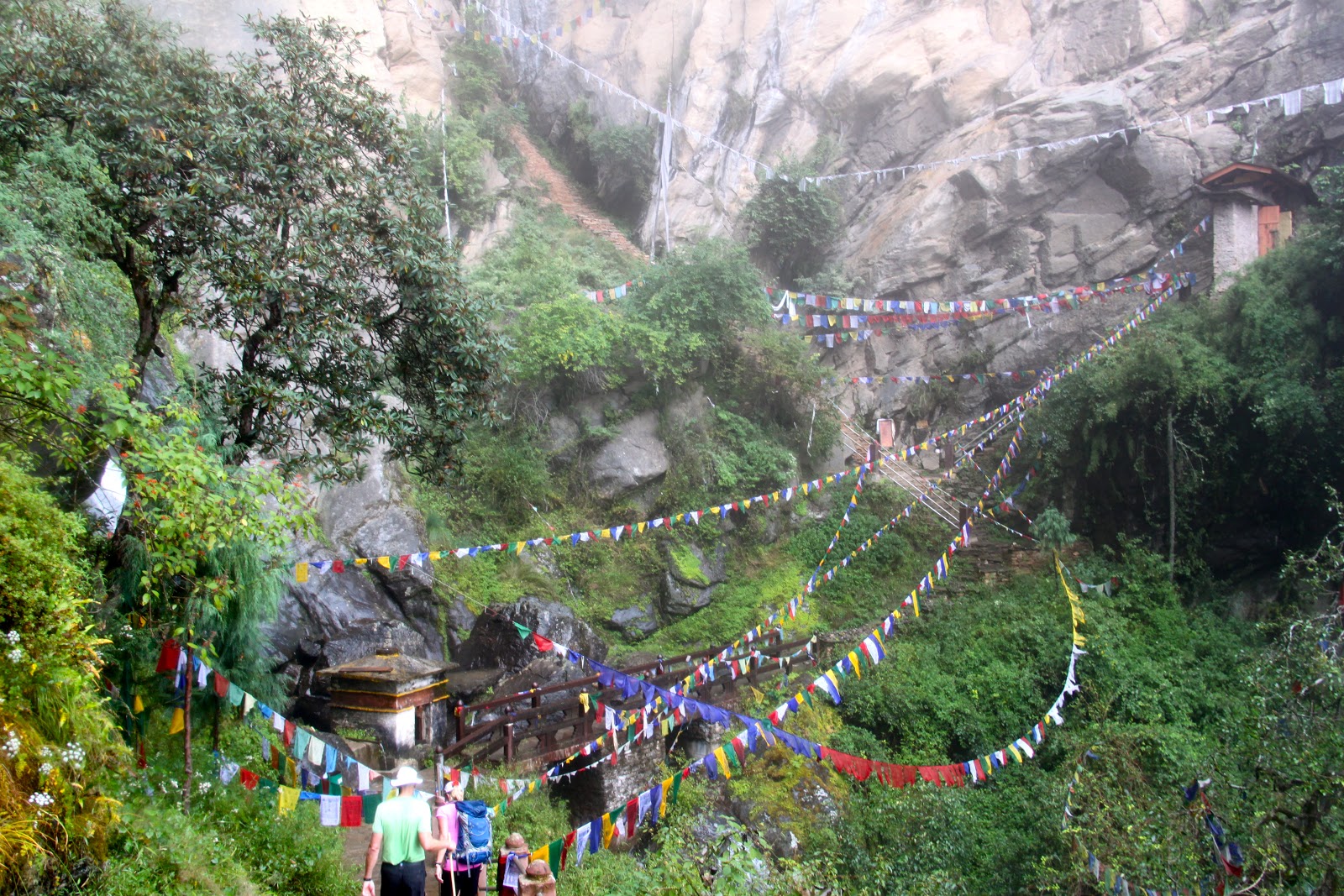
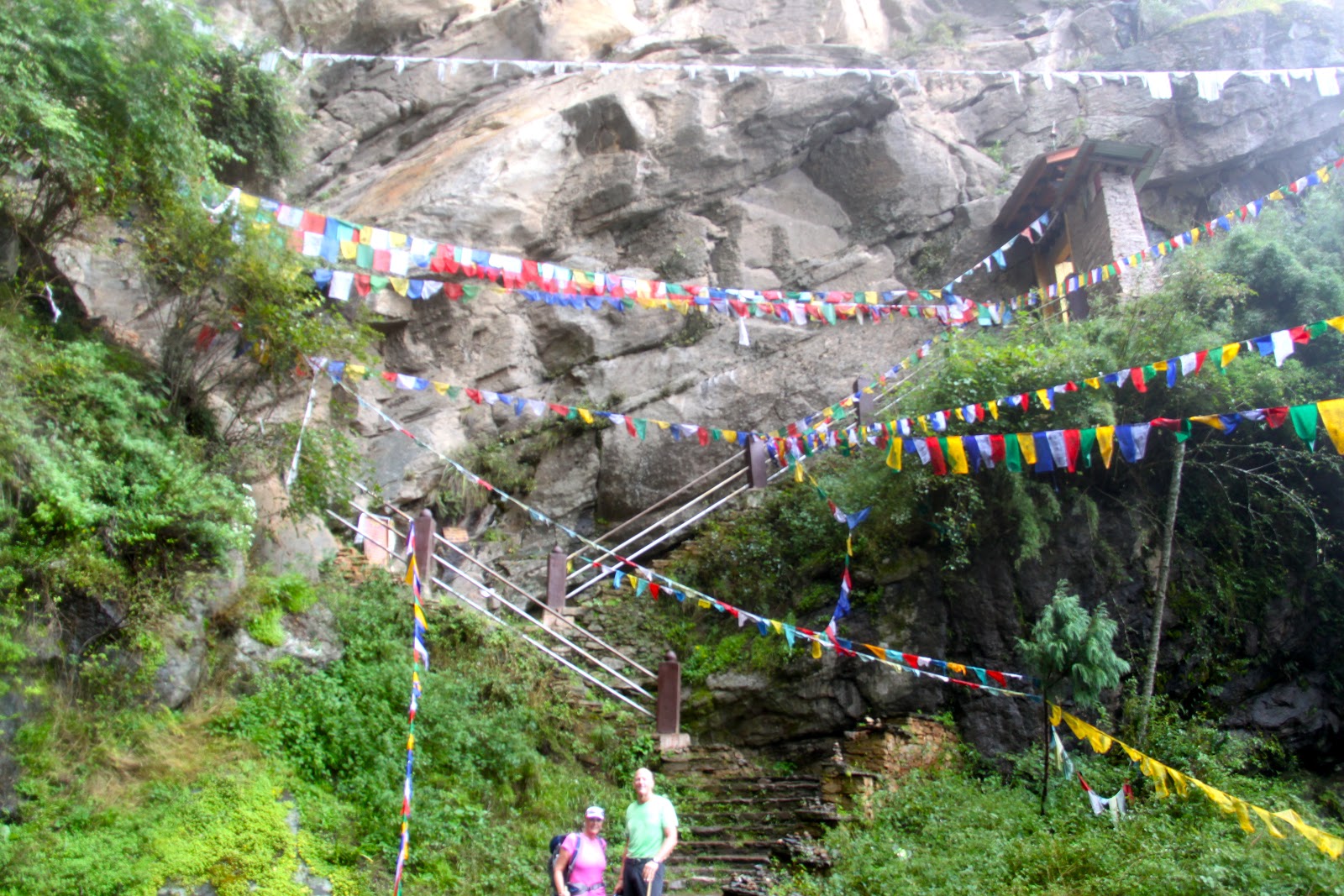
We pass prayer flags and small temples along the way.

Always say your prayers
Take turns carrying the pack

One of the 12 temples

It was nice to be there early before the crowds.  The horses and the people made the mud a lot more difficult and slippery we found out on the way down.

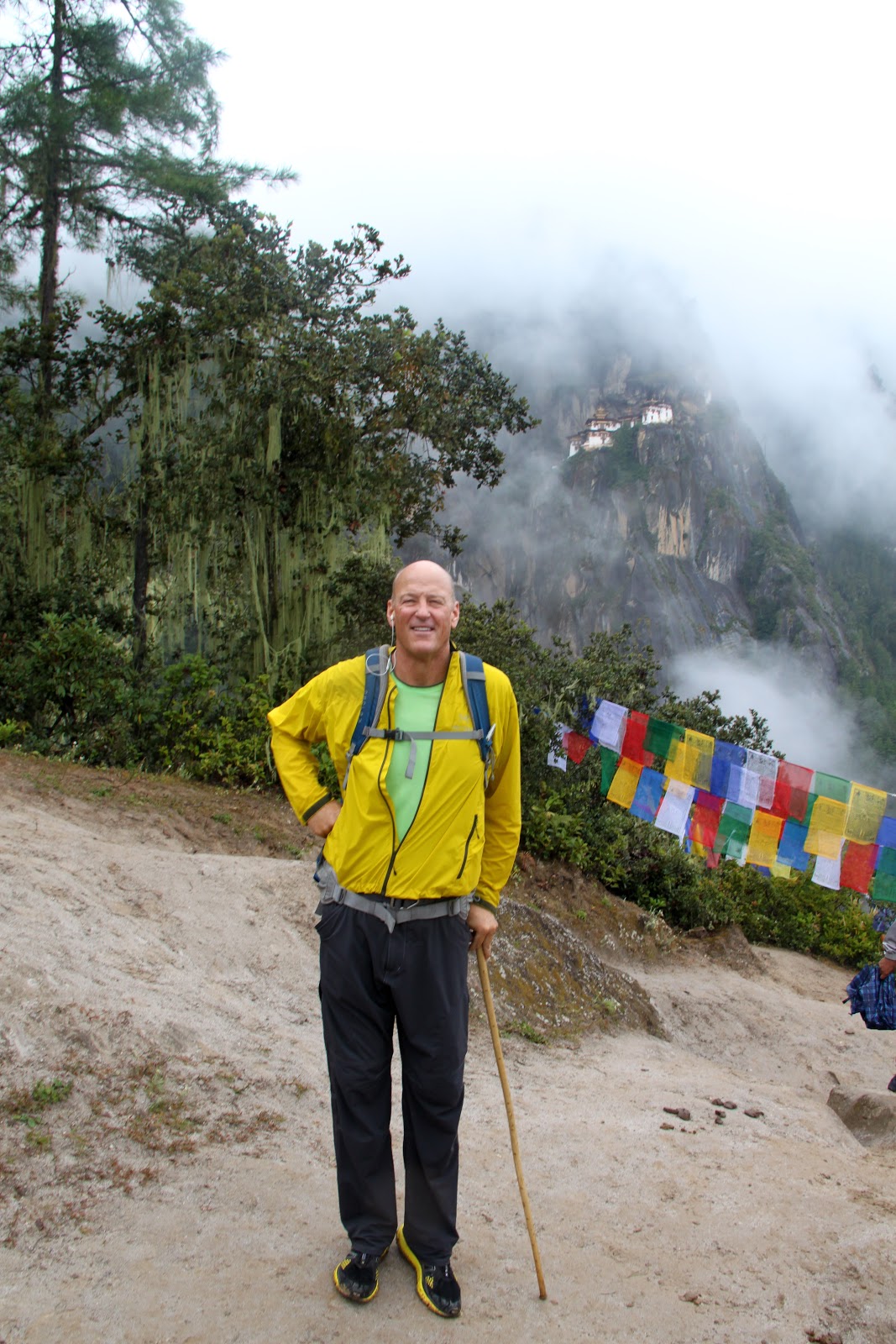
We are hiking above 10,000 feet and we are feeling good except Scott has a bad cold.  We reach the steps to the temple in good time and we have the views and photos to ourselves.  The temple passes in and out of clouds and we snap pictures and have our guide snap pictures of us as we walk and wonder how this temple could ever be built on the side of a cliff.

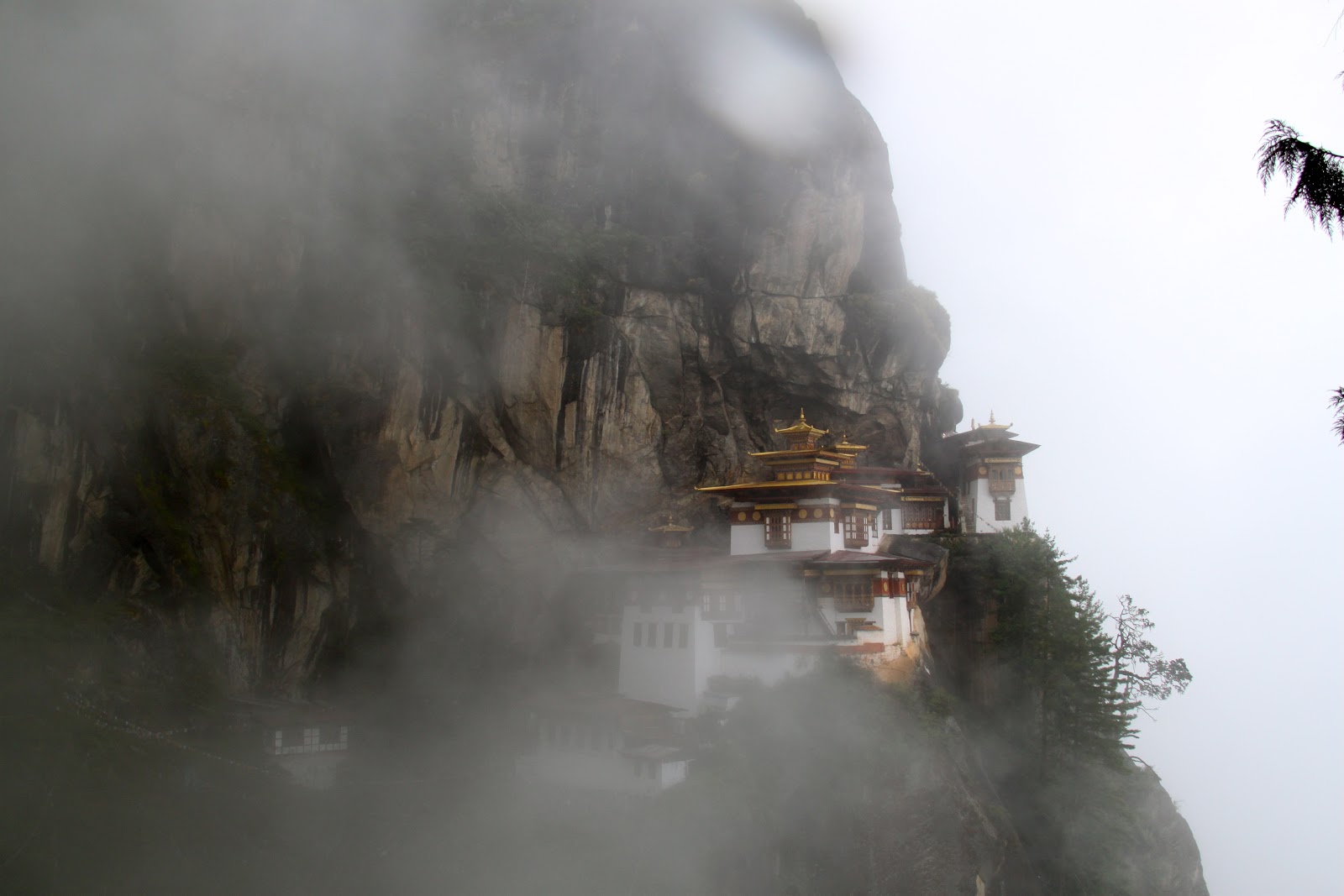
Every 2 minutes the clouds will clear and then fog back up

We visit the various temples inside the temple and offer prayers and donations and receive blessings of merit from the monks.  There are offerings of incense and food and candy and flowers near the statutes.  Monks are chanting softly as they walk and incense is burning and butter lamps are lit.

Each small building is a temple
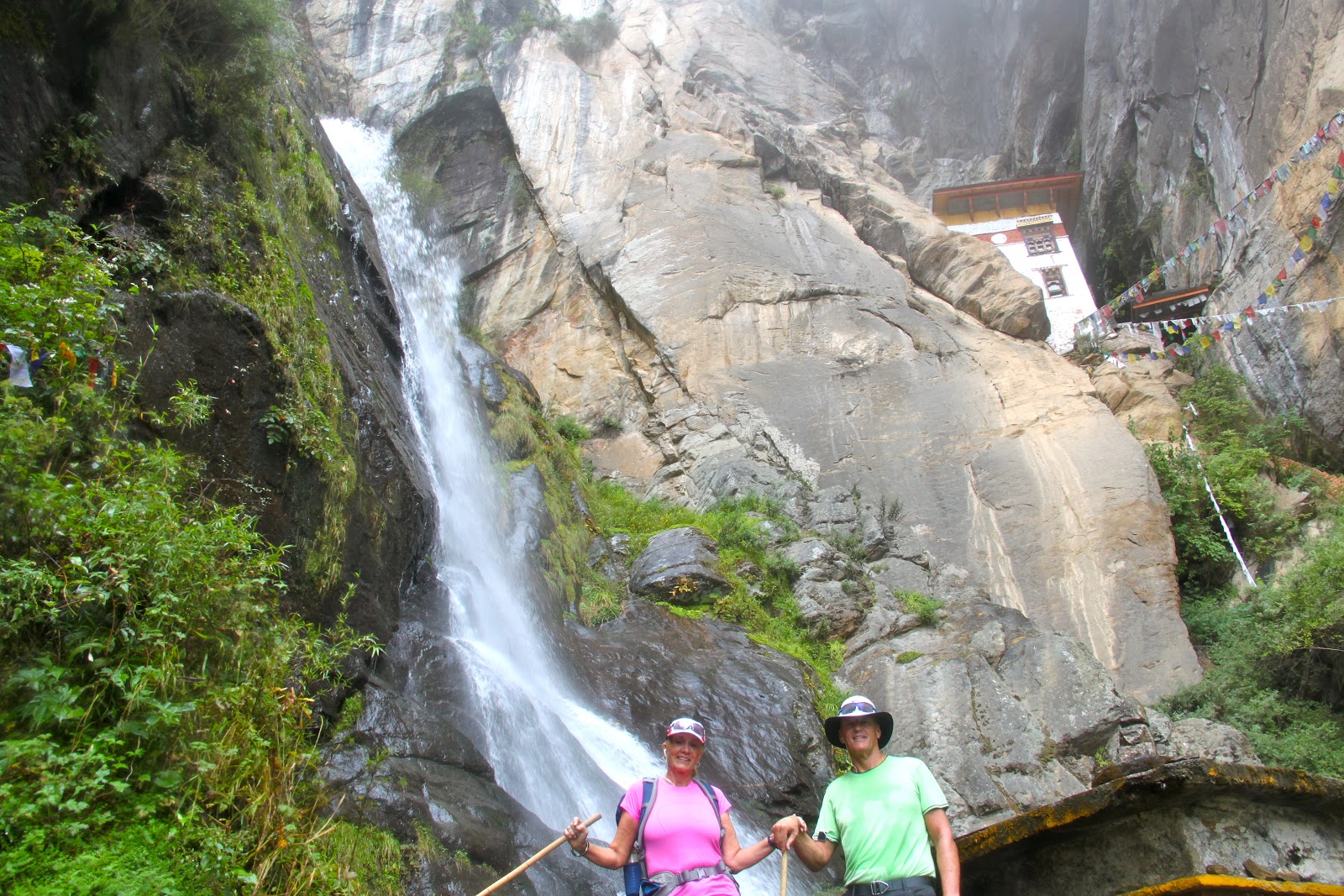
Beautiful waterfalls with a temple in the steep side canyon
What a reward for your hike!

Caution:  Slippery when wet!
Scott

The Tiger’s Nest is a magical place.

Tigers nest is in the middle.  There are temples on each side of it.

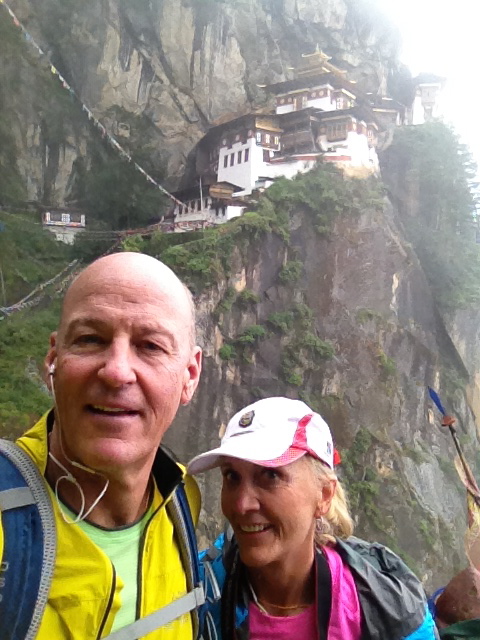
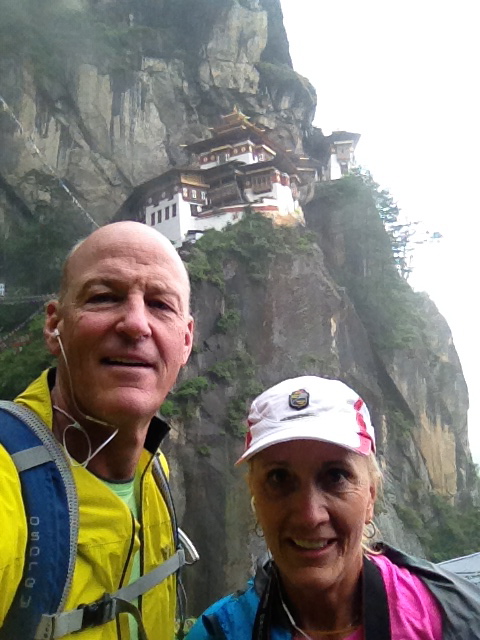
Iphone self portrait

Incredible
I’m sure some of you are dying to get your harness, rope, and chalk and start climbing……but there is no climbing in Bhutan.  They revere their mountains and the rock is sacred and off limits to climbing.

It seemed magical with the fog rolling in and out

Tigers Nest

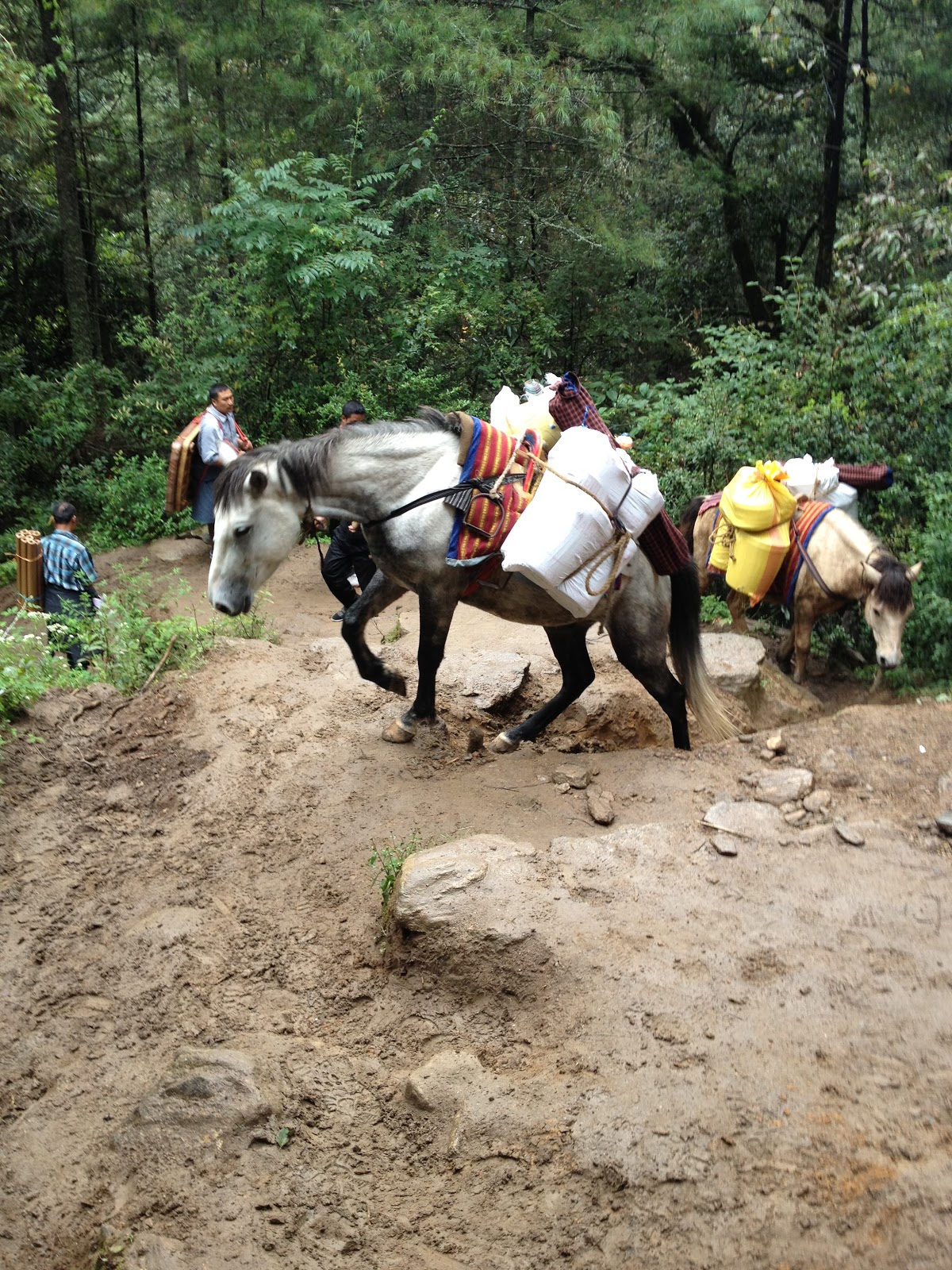
On the way back down we encounter many locals, and Indian army men and tourists coming up.  The tourists from Japan seem to favor hiring small horses to carry them up part of the trail system.  It’s a dangerous proposition as the horses are slipping in the mud and falling to their knees and overweight passengers are being tossed to and fro.  We can hardly look.  It looks cruel for the horse and the rider. 

Walking down was a lot more dangerous

Walking down

The horses were slipping to their knees.  It seemed dangerous and cruel.
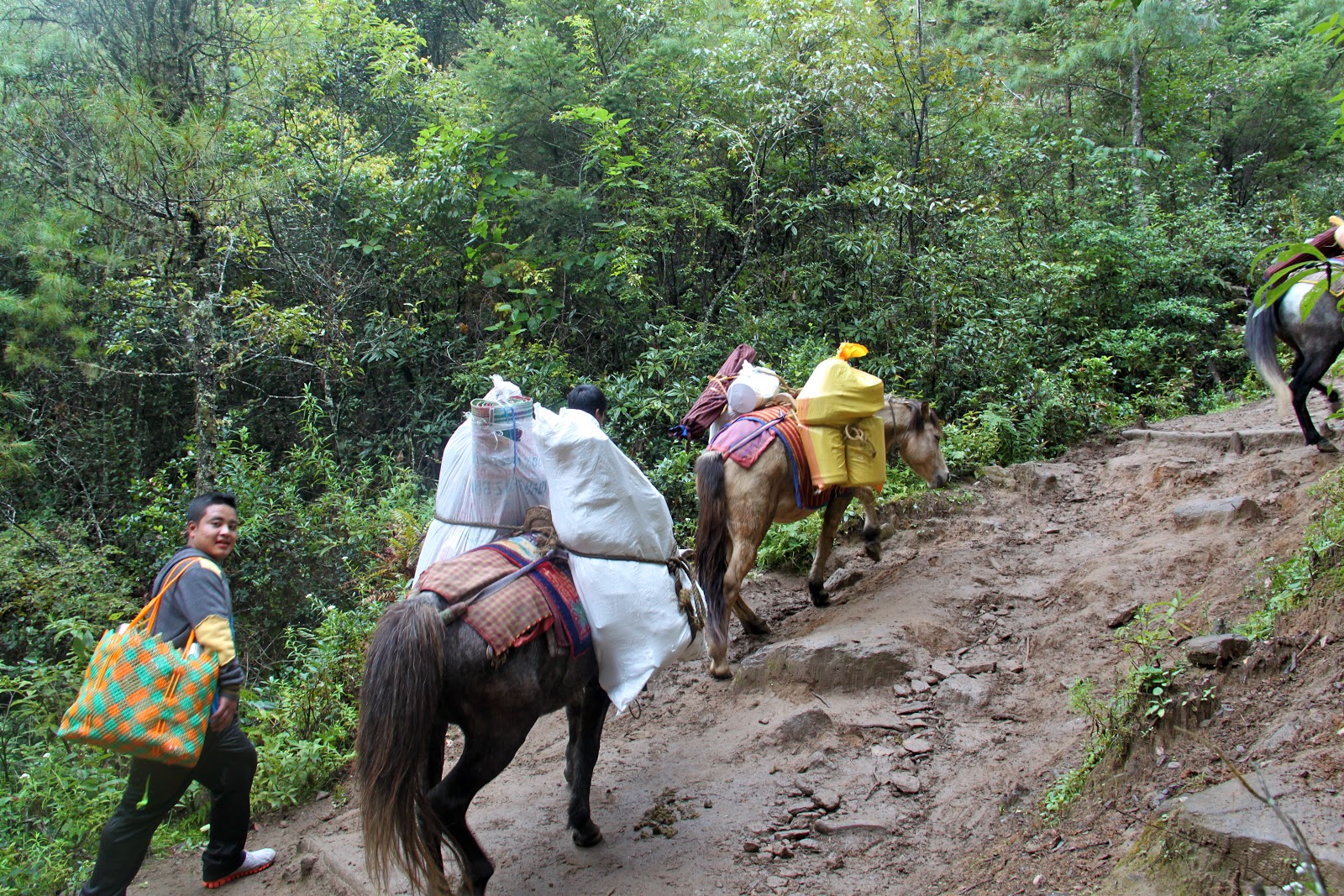
The horses are also used to pack supplies up to a cafeteria part way up the trail.  This seems to be the sensible use for the horse.

The horses carry loads as well as people
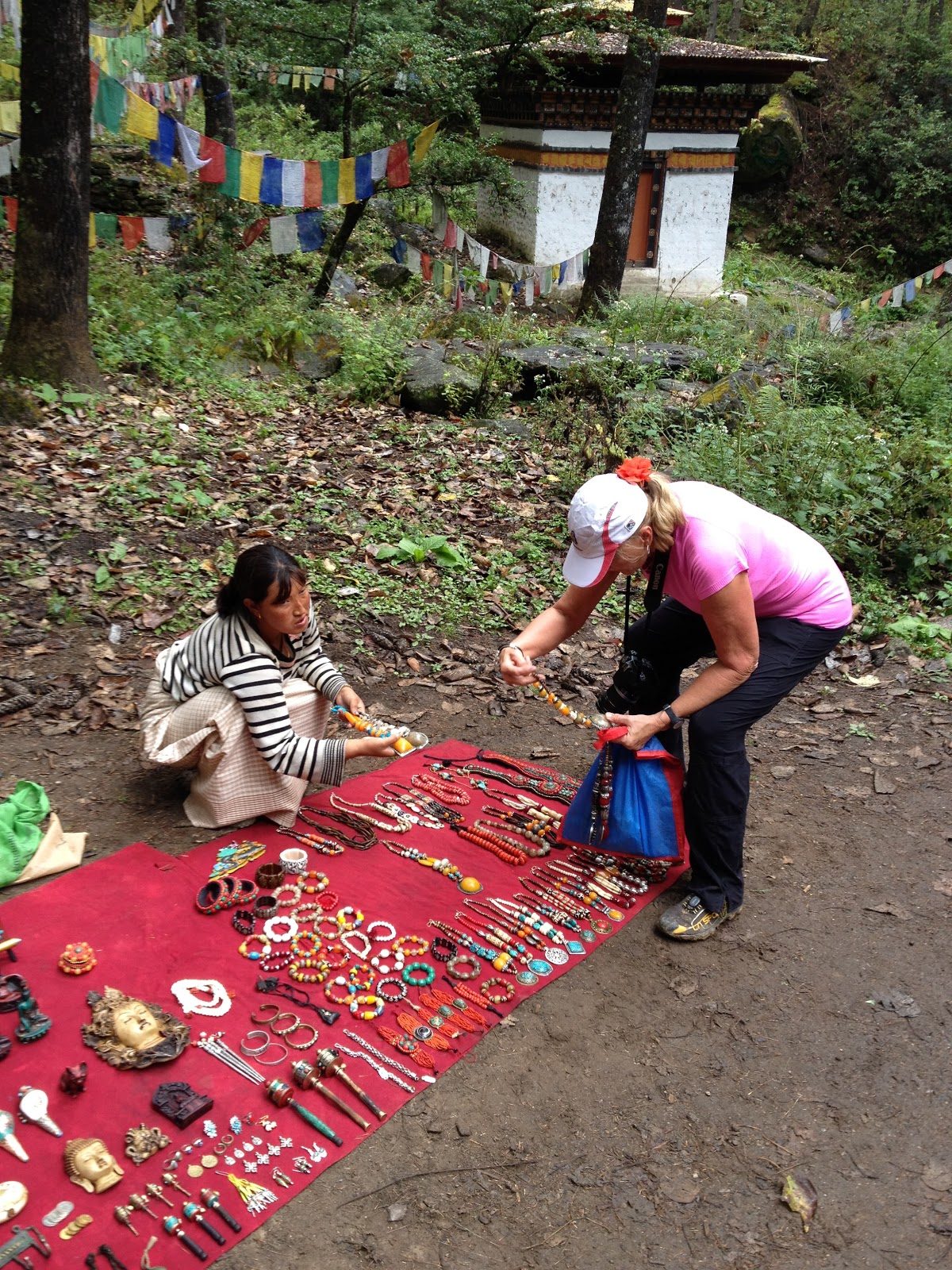
Barb finds shopping the reward at the end of the trail.  She has a magnet for that sort of thing!

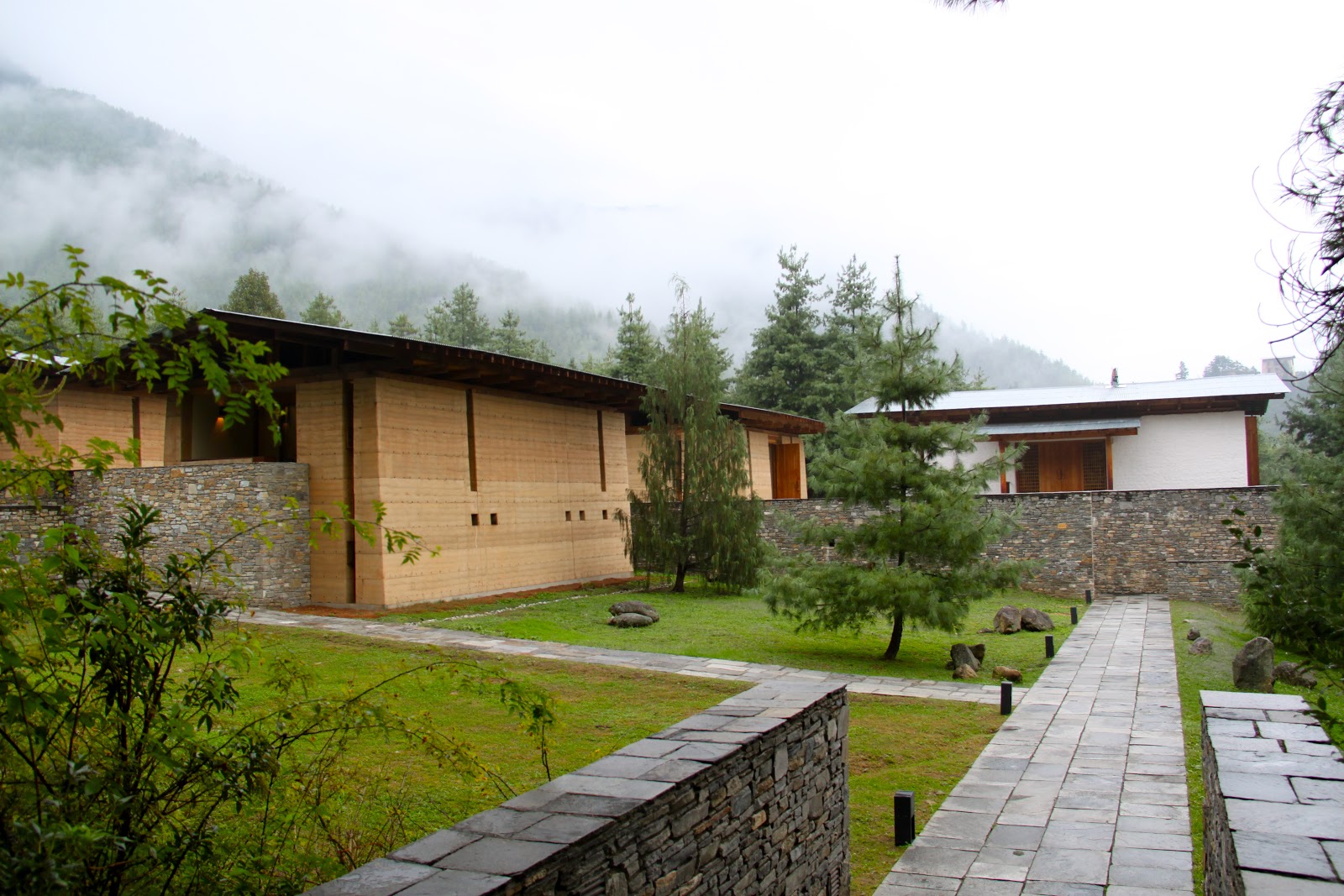
Back to the lodge where we relax for a while.  This Aman lodge is the largest we have stayed in Bhutan.  They are all very similar.

The Amankora Lodge at Paro

We leave Bhutan tomorrow for Koh Samui, Thailand.  We are ready for some R and R.