Paro, Bhutan, October 1-3, 2012

PARO

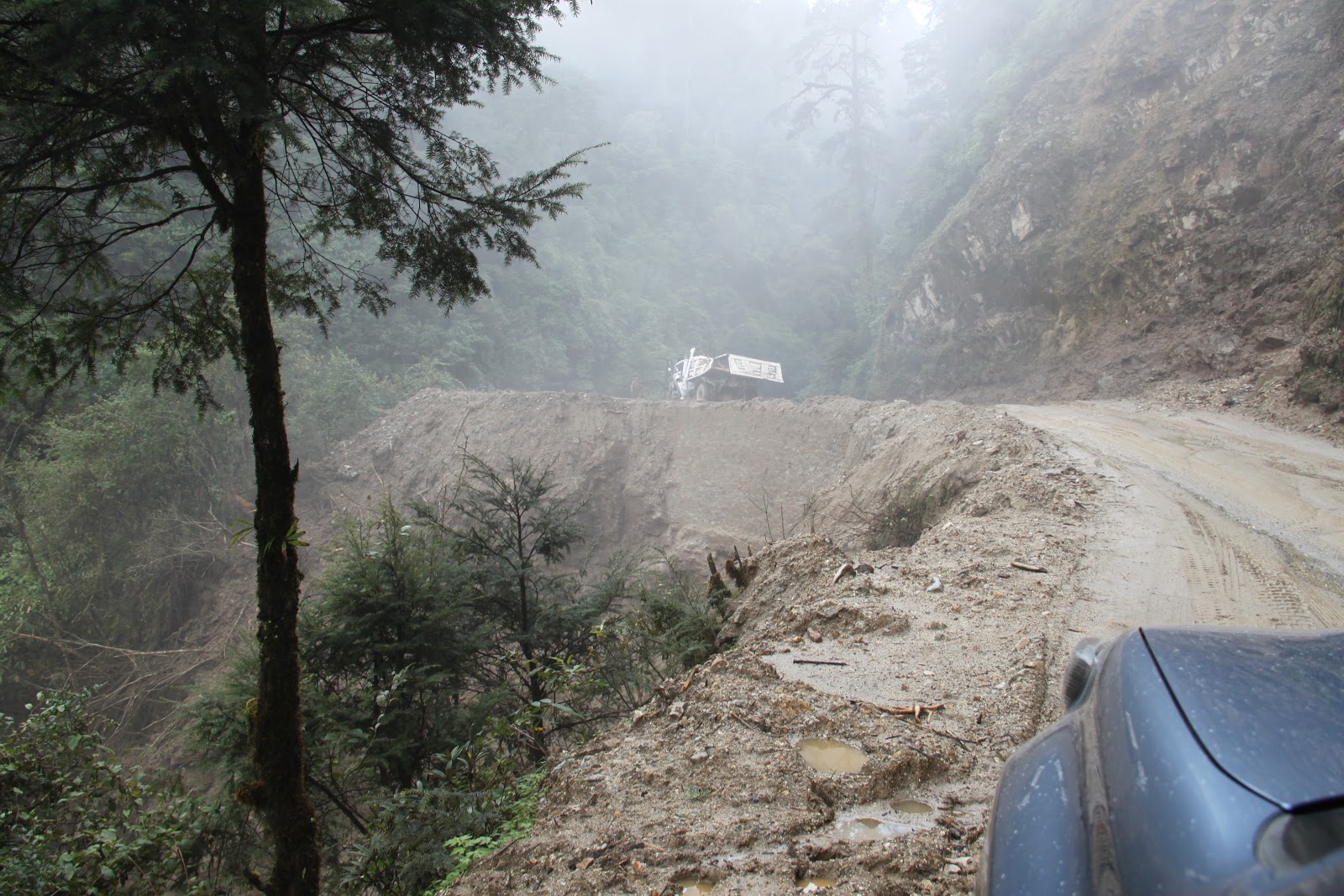
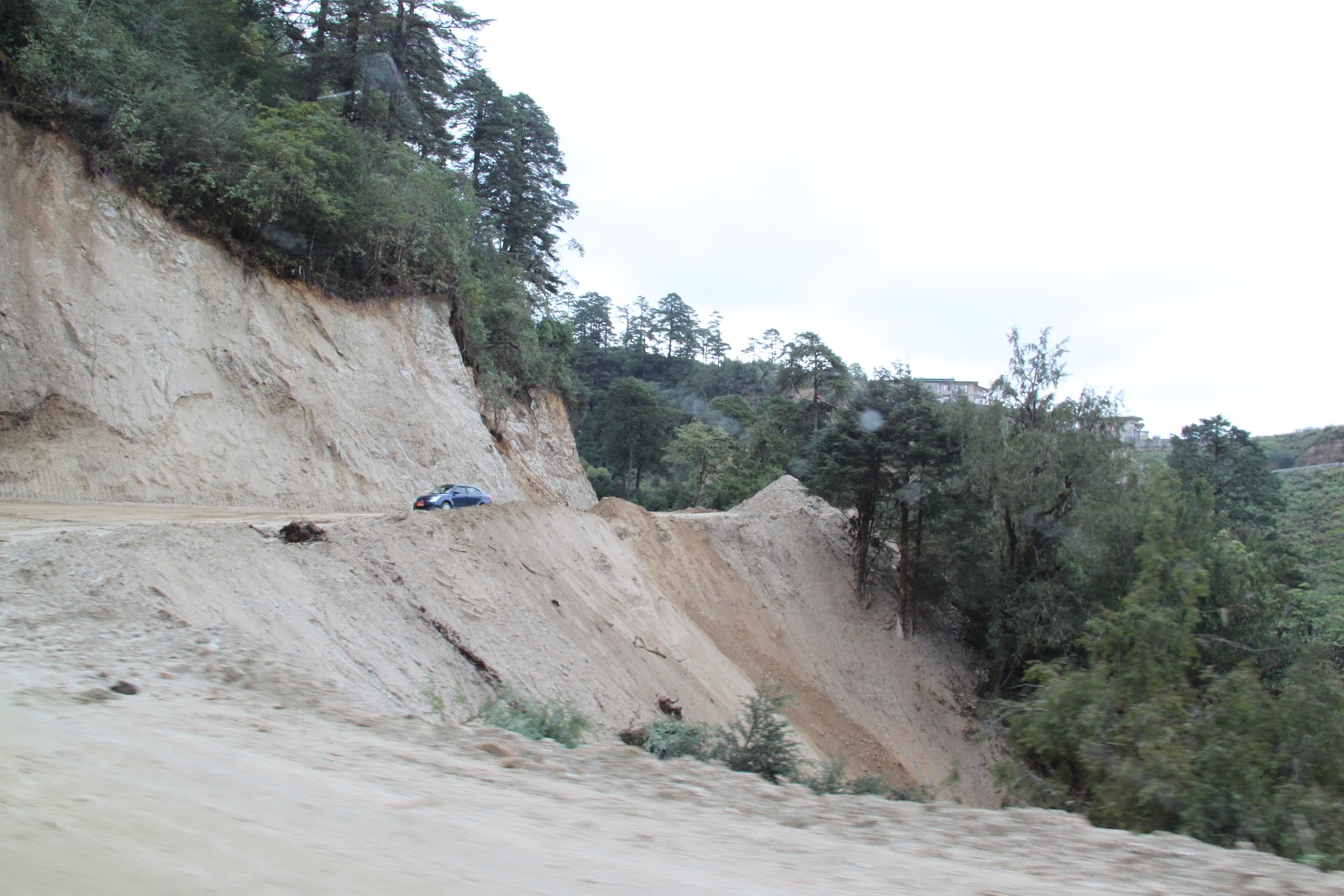
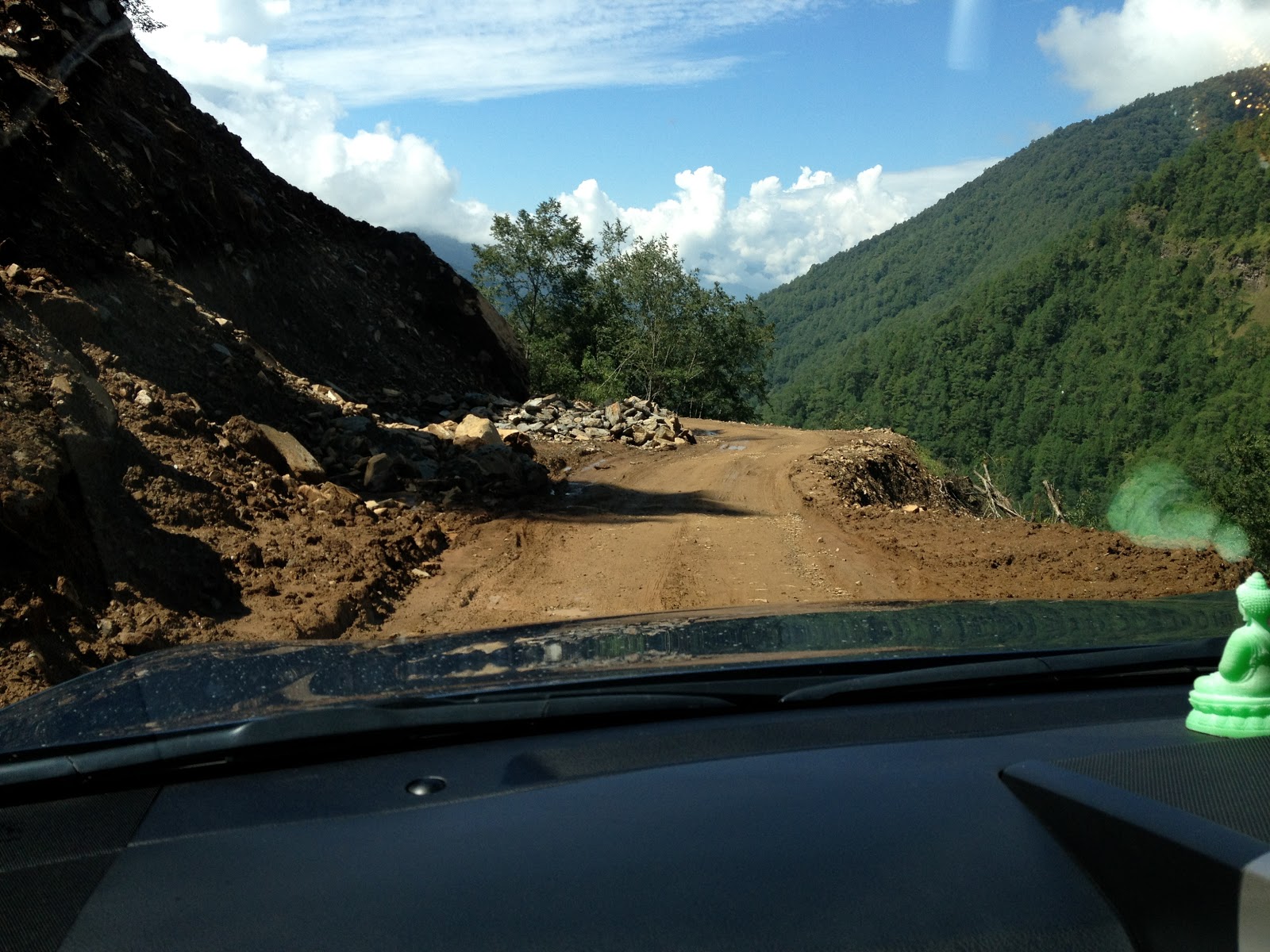
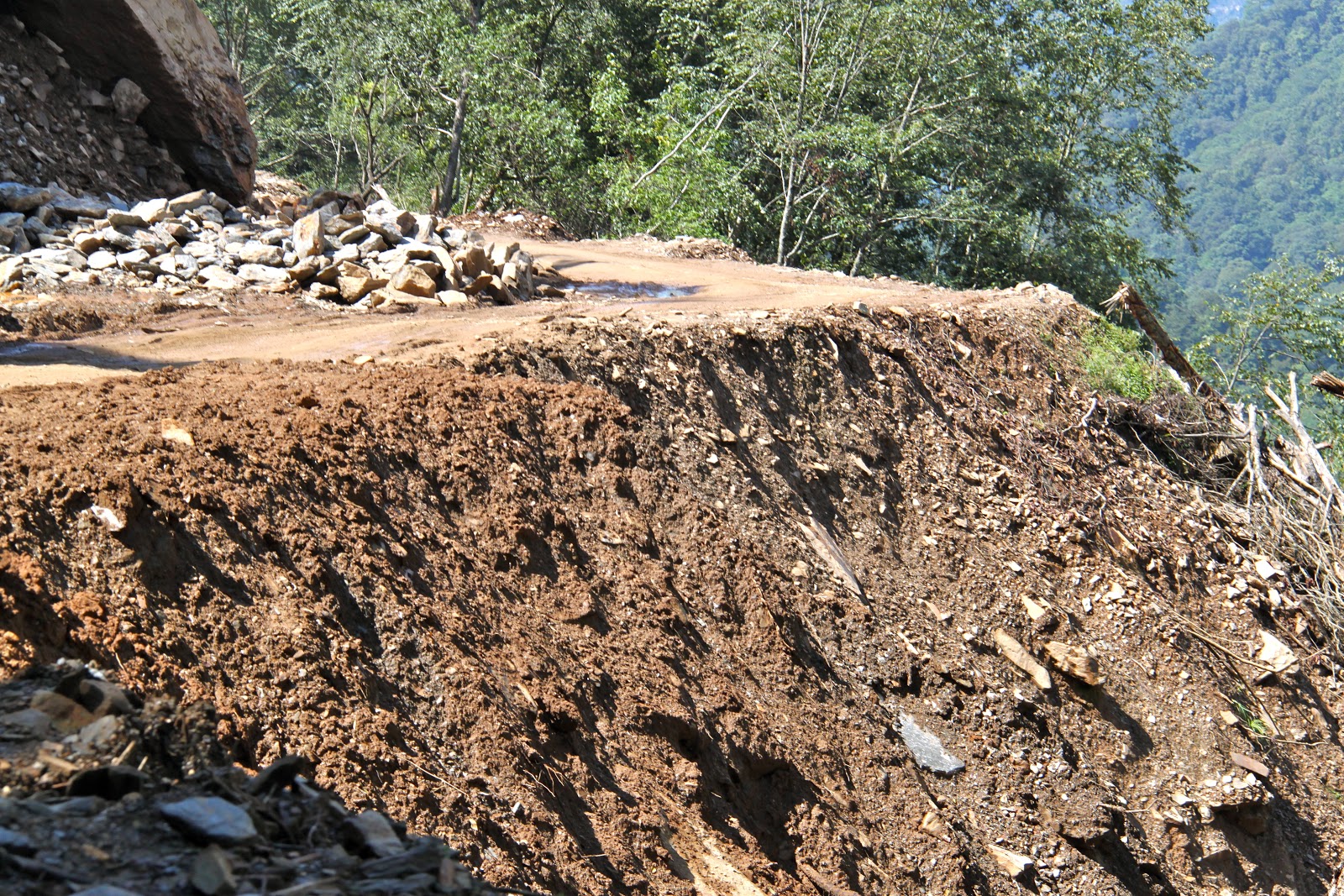
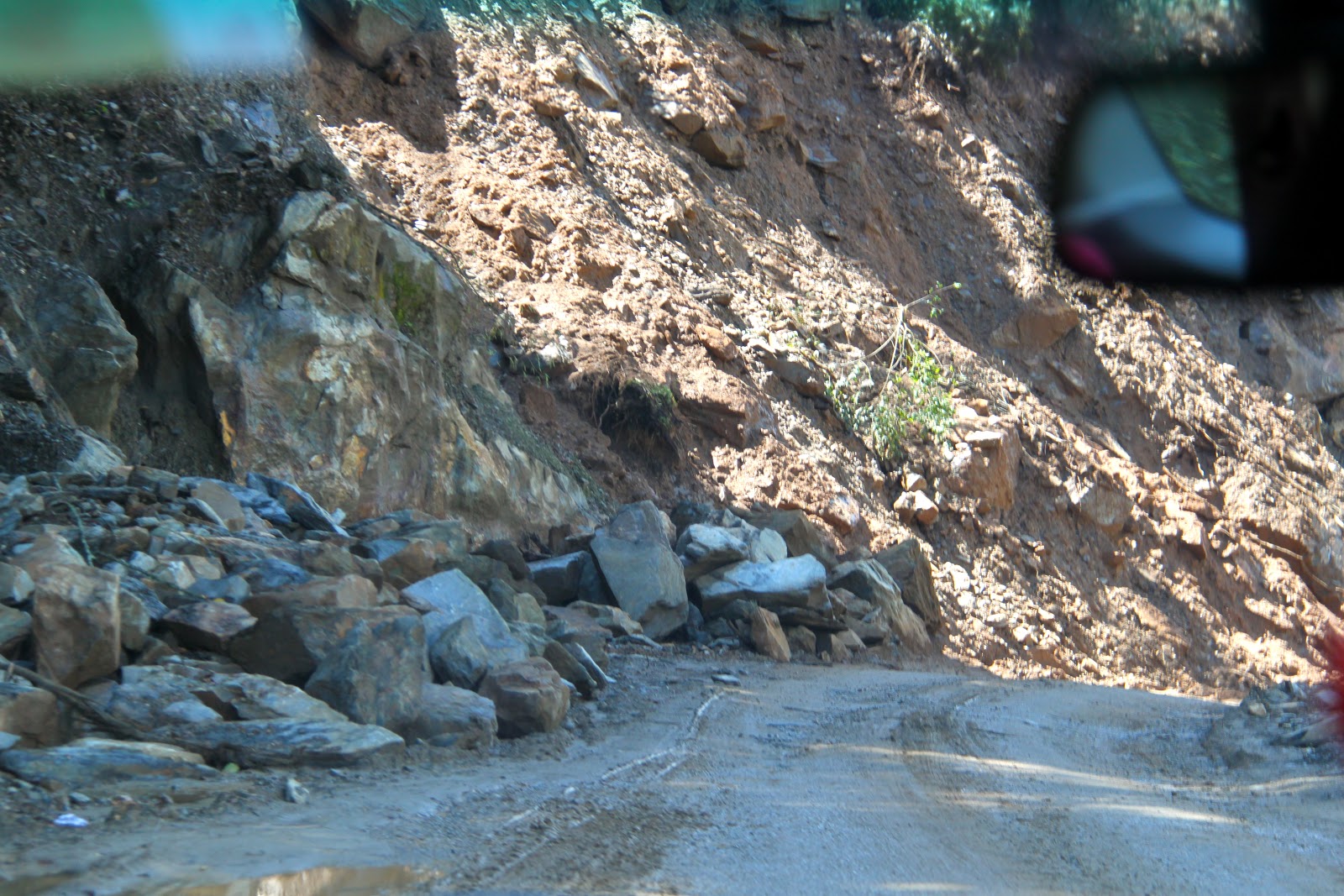
Once again, the roads leave something to be desired.

Everything is cut into the side of a mountain that could wash out at any time

With rain, mud and other cars or trucks-well, good luck
We make it to Paro late at night.  Well, you know, when you have to fit as many activities as you can into one day,  and then stop in Thimphu to play golf until you can’t see the ball any more, and finally continue the drive to Paro, it tends to get dark.  Oh well, life is short, fill it to the brim!

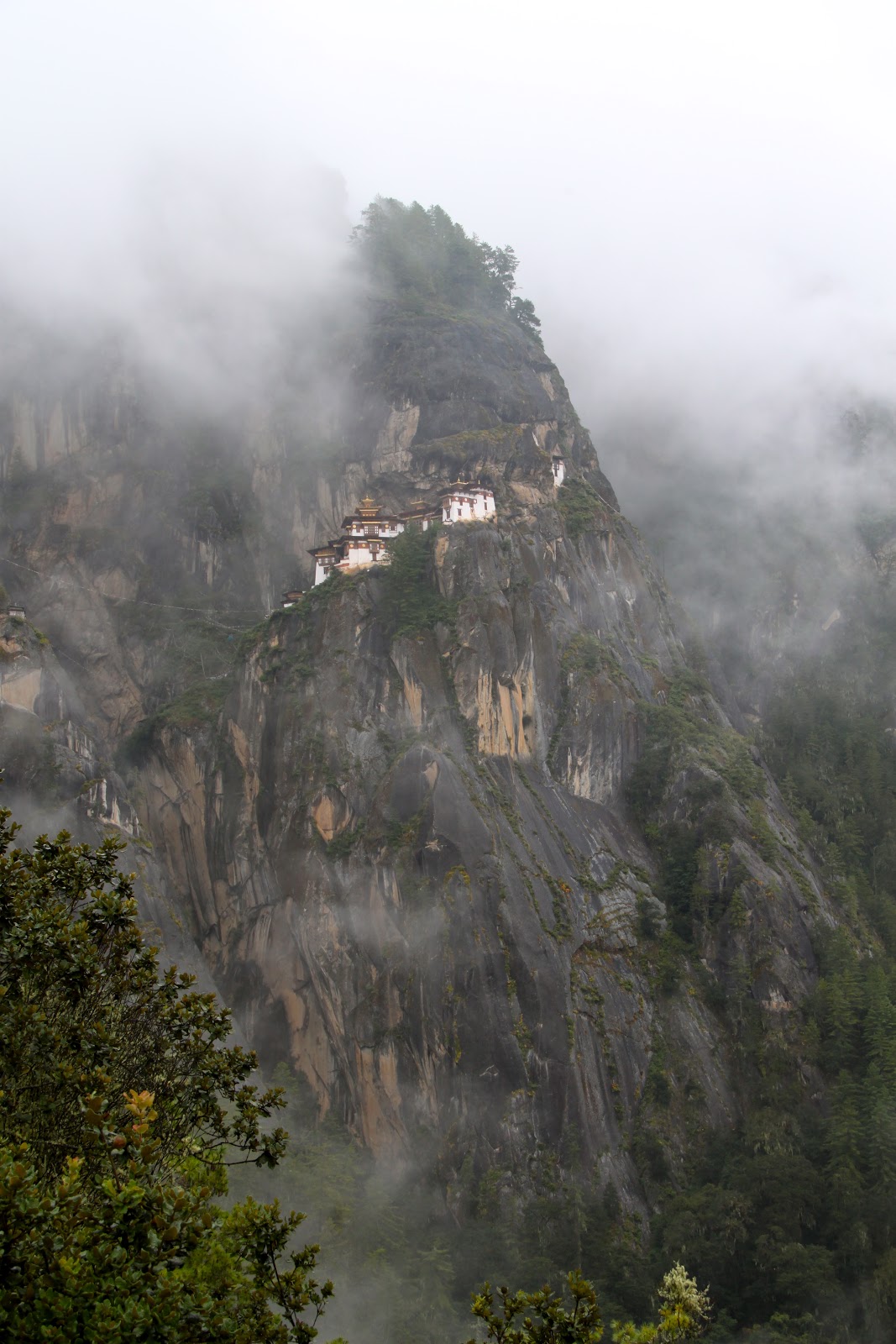
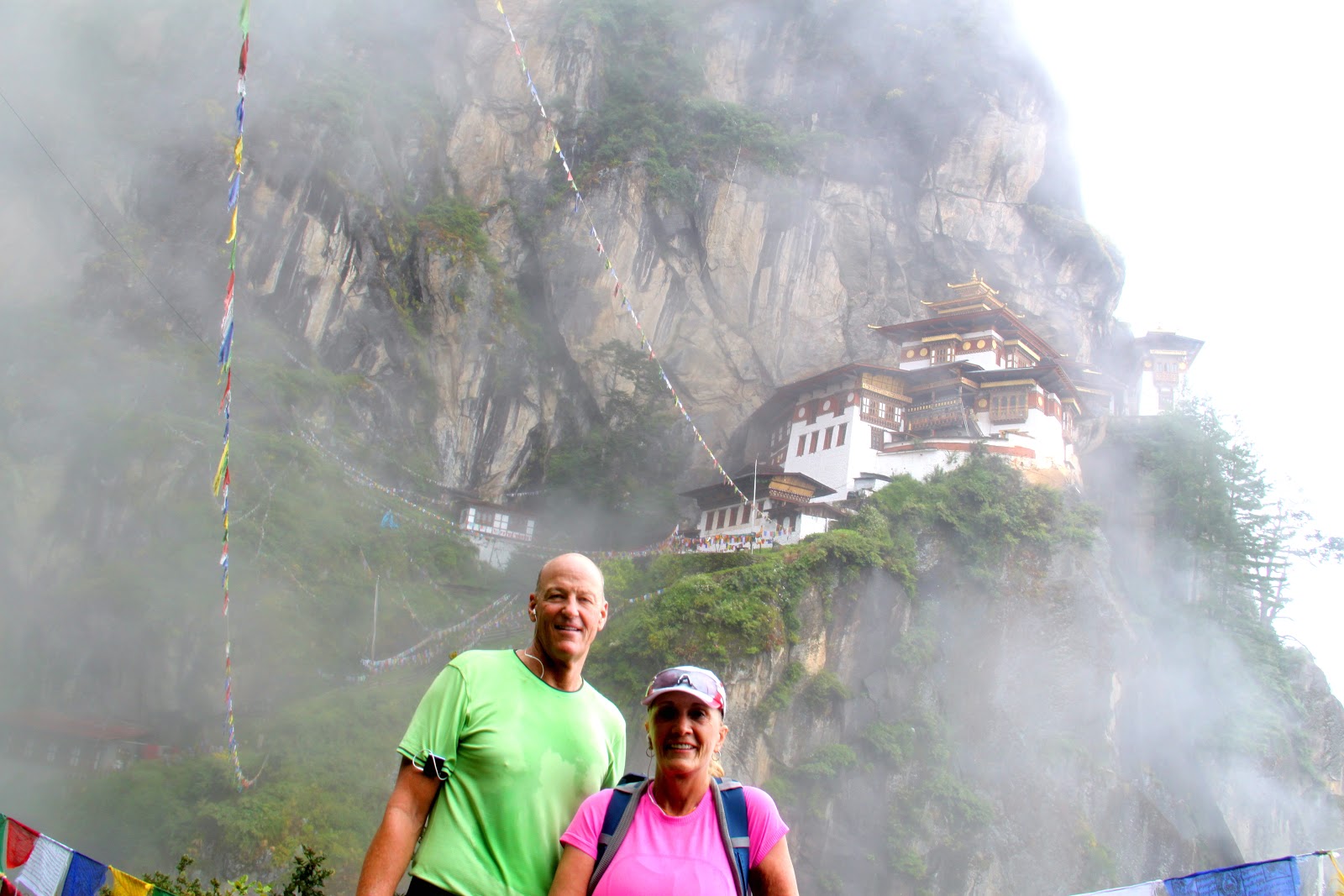
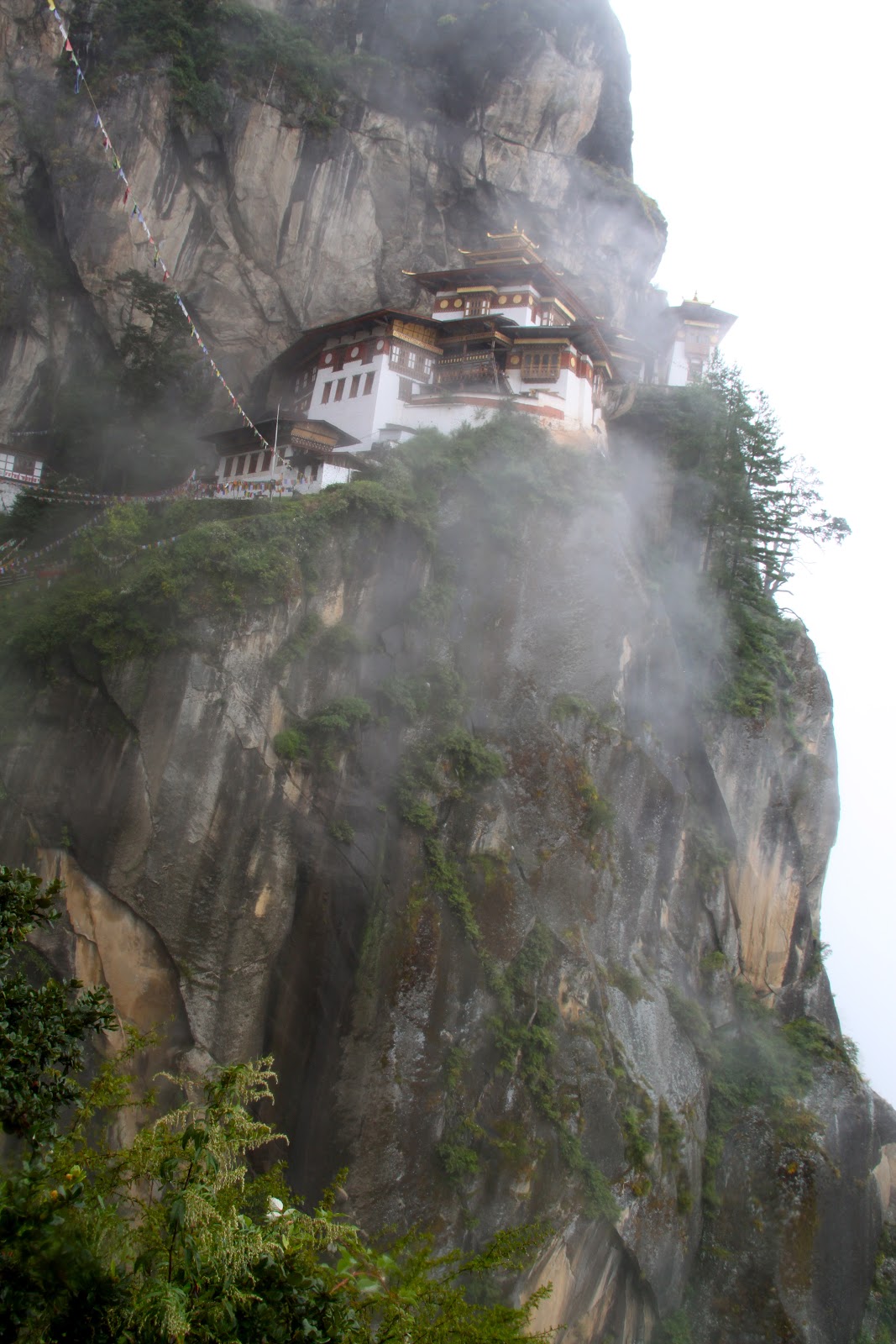
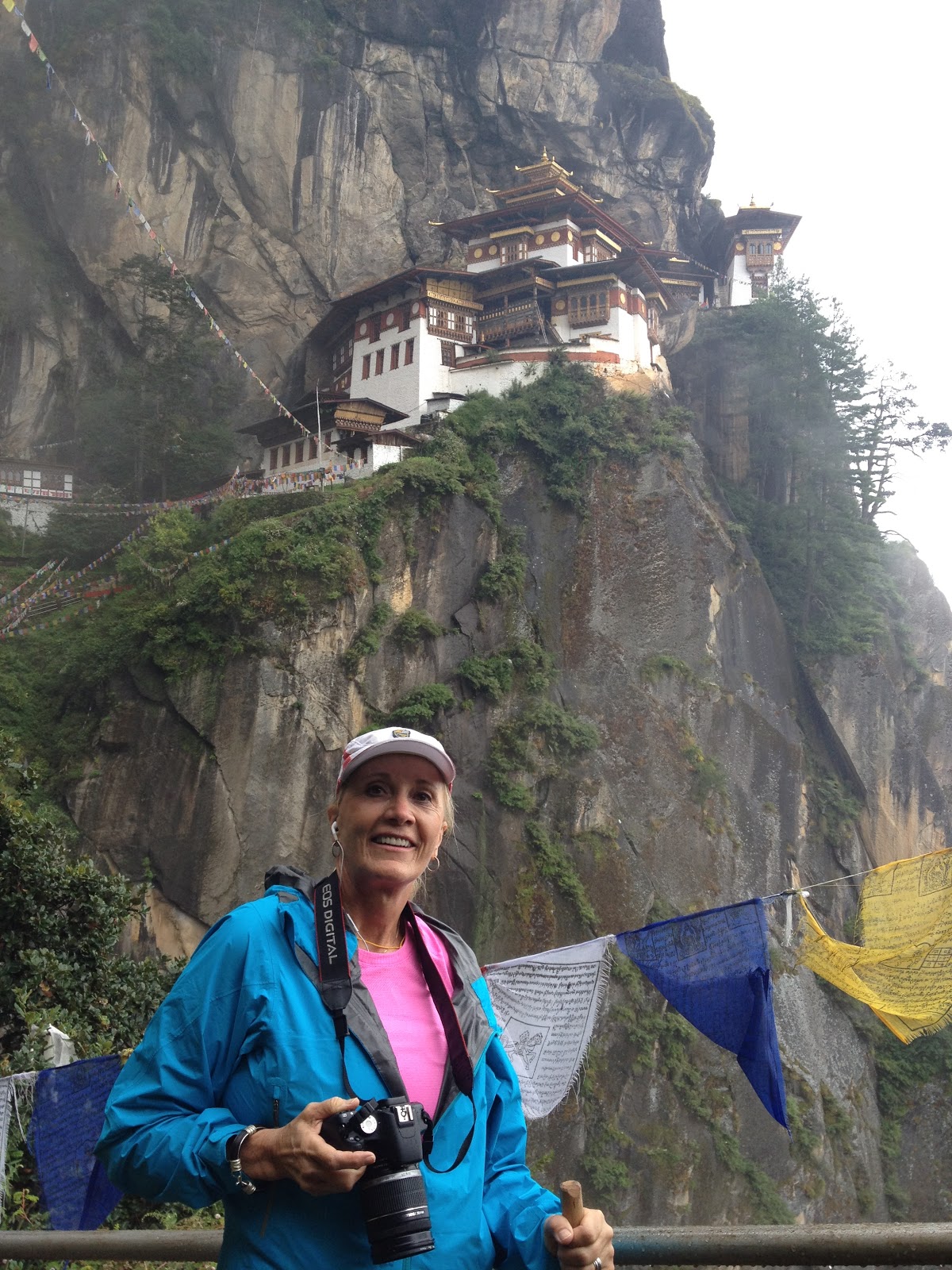
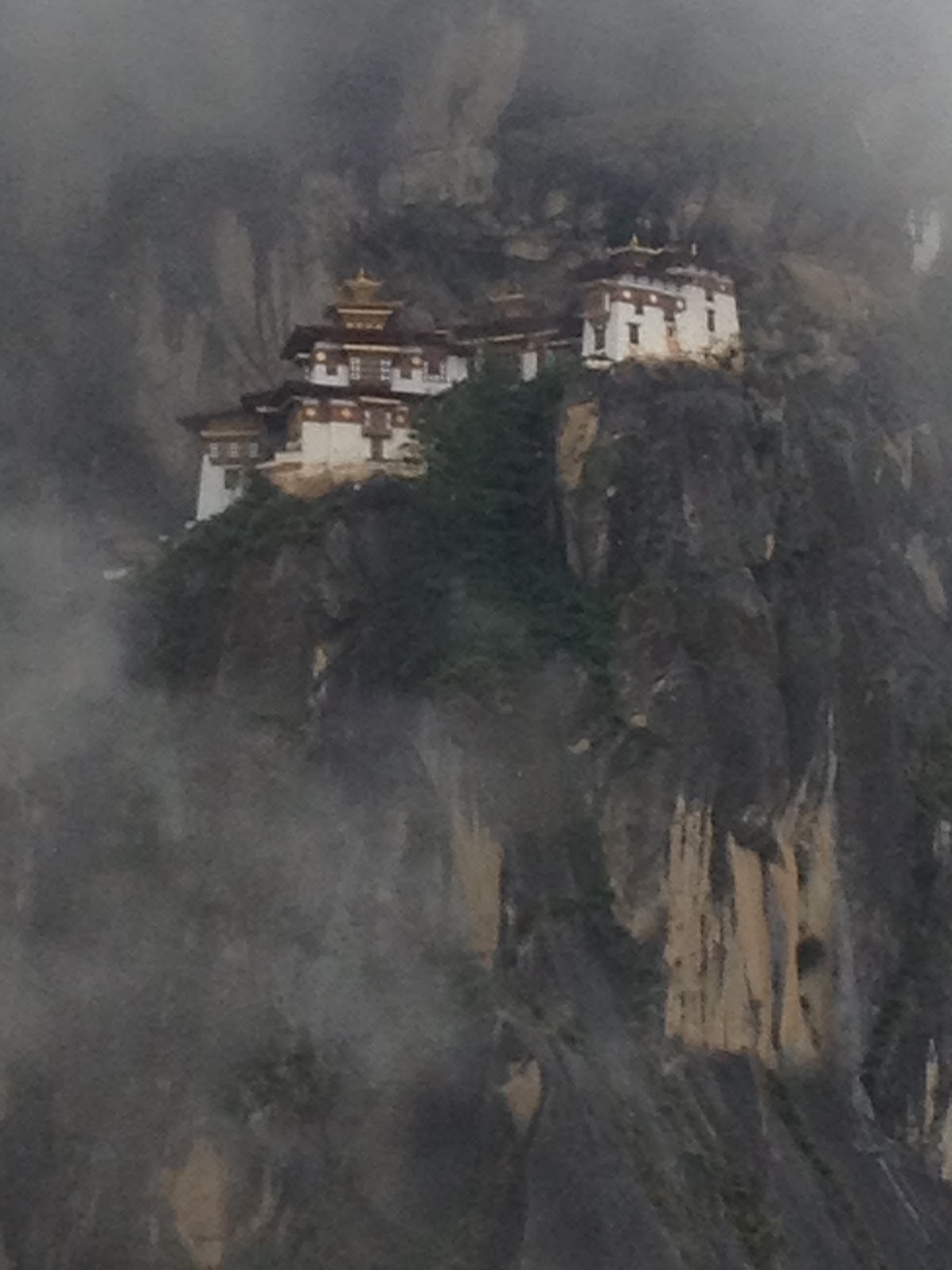
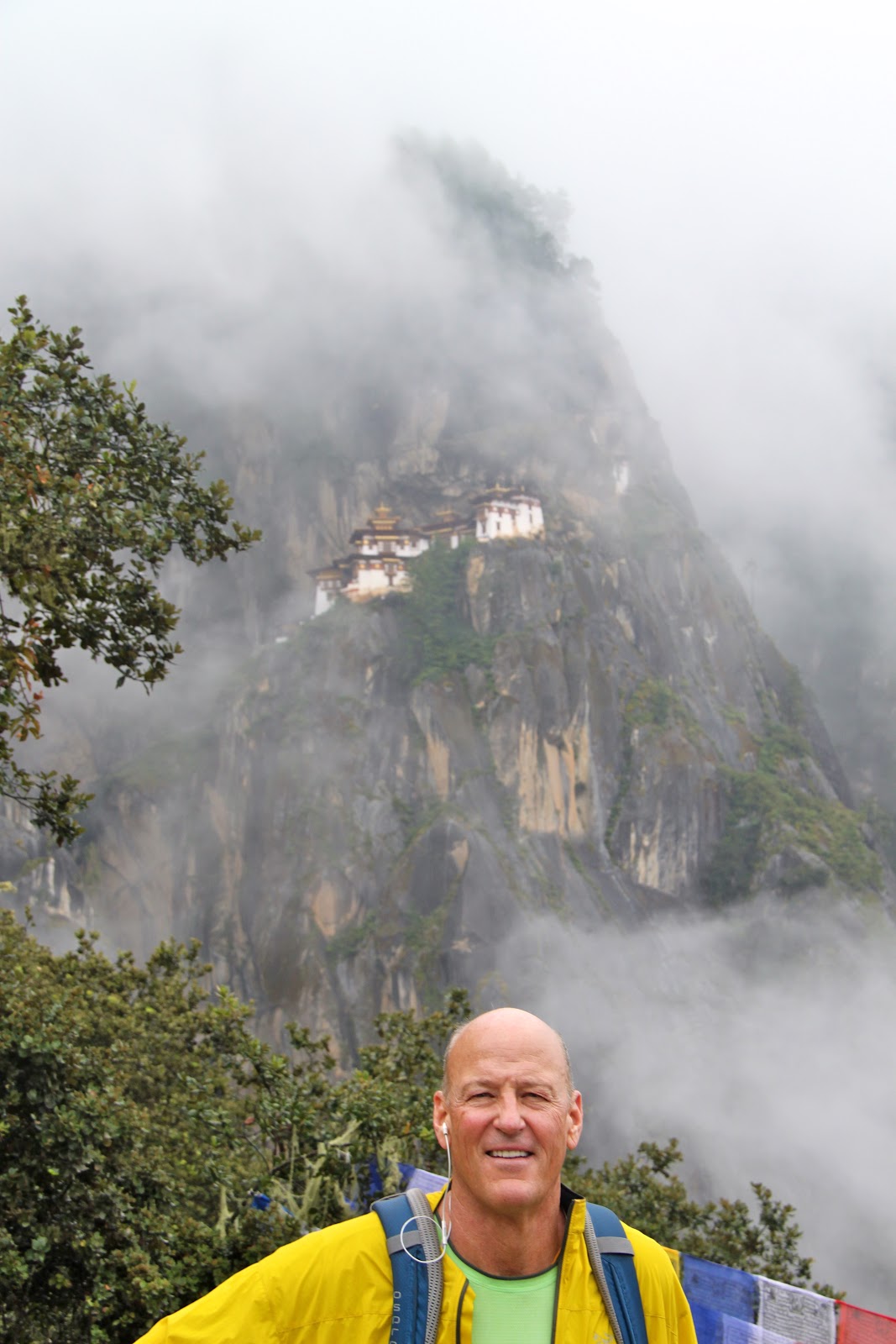
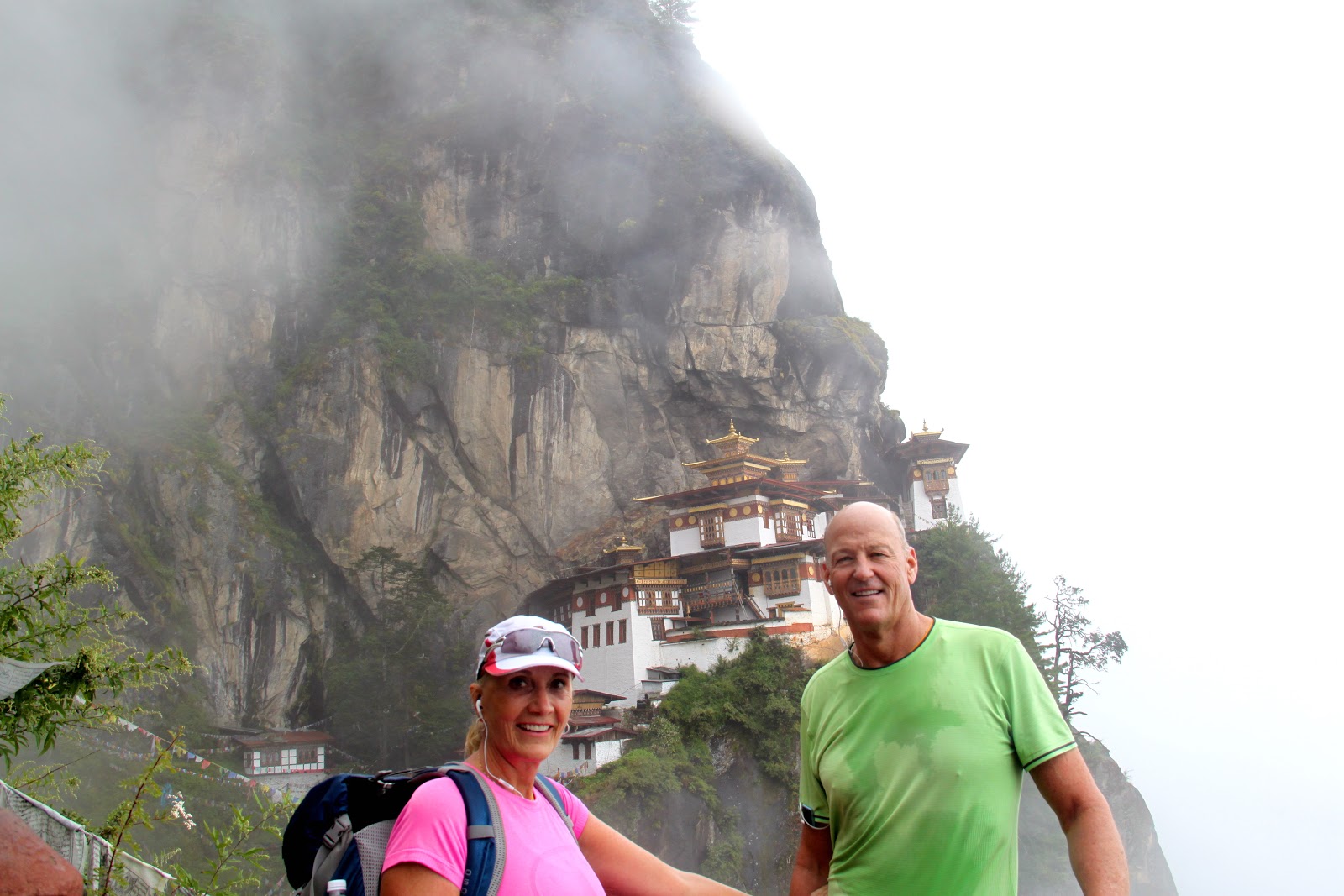
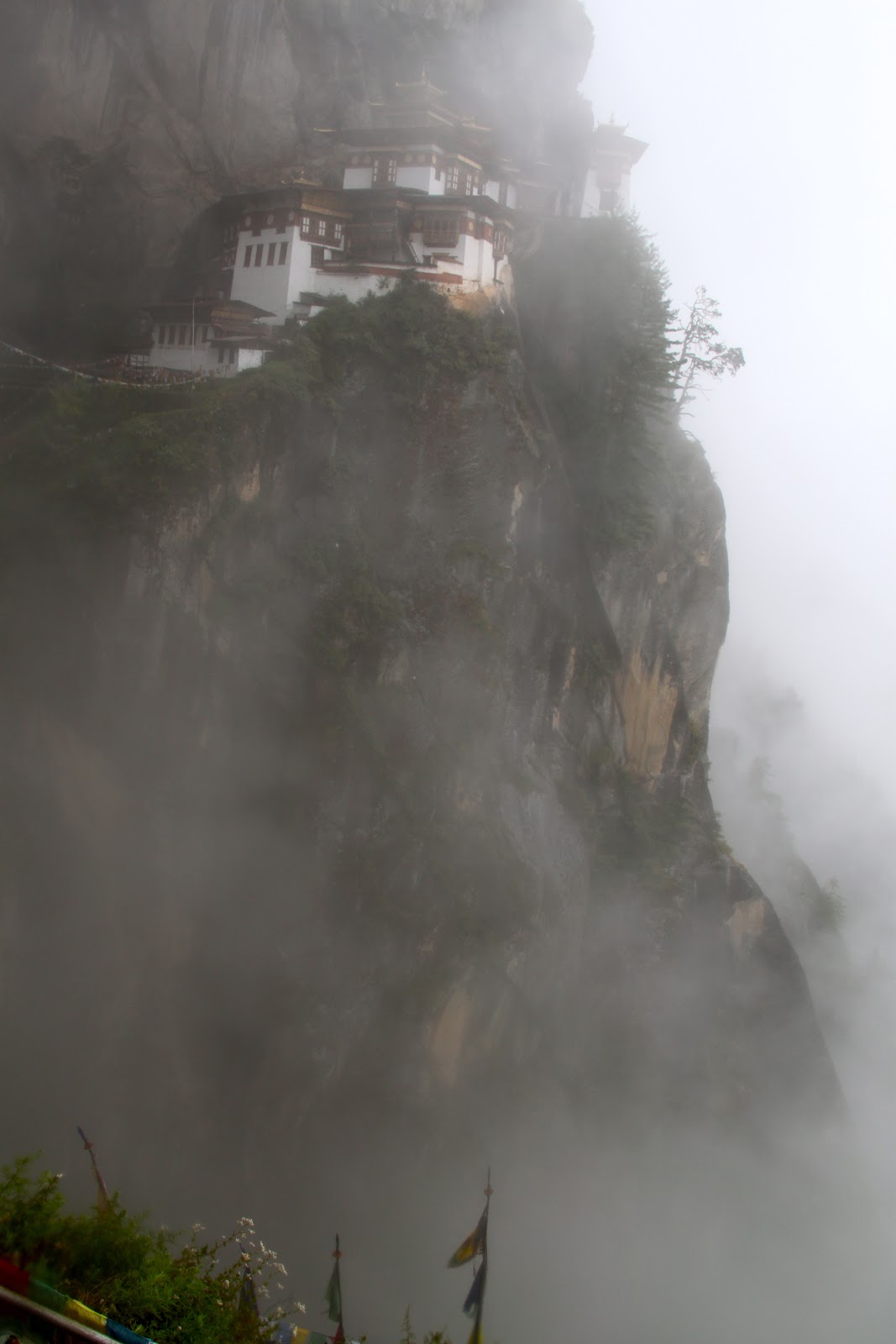
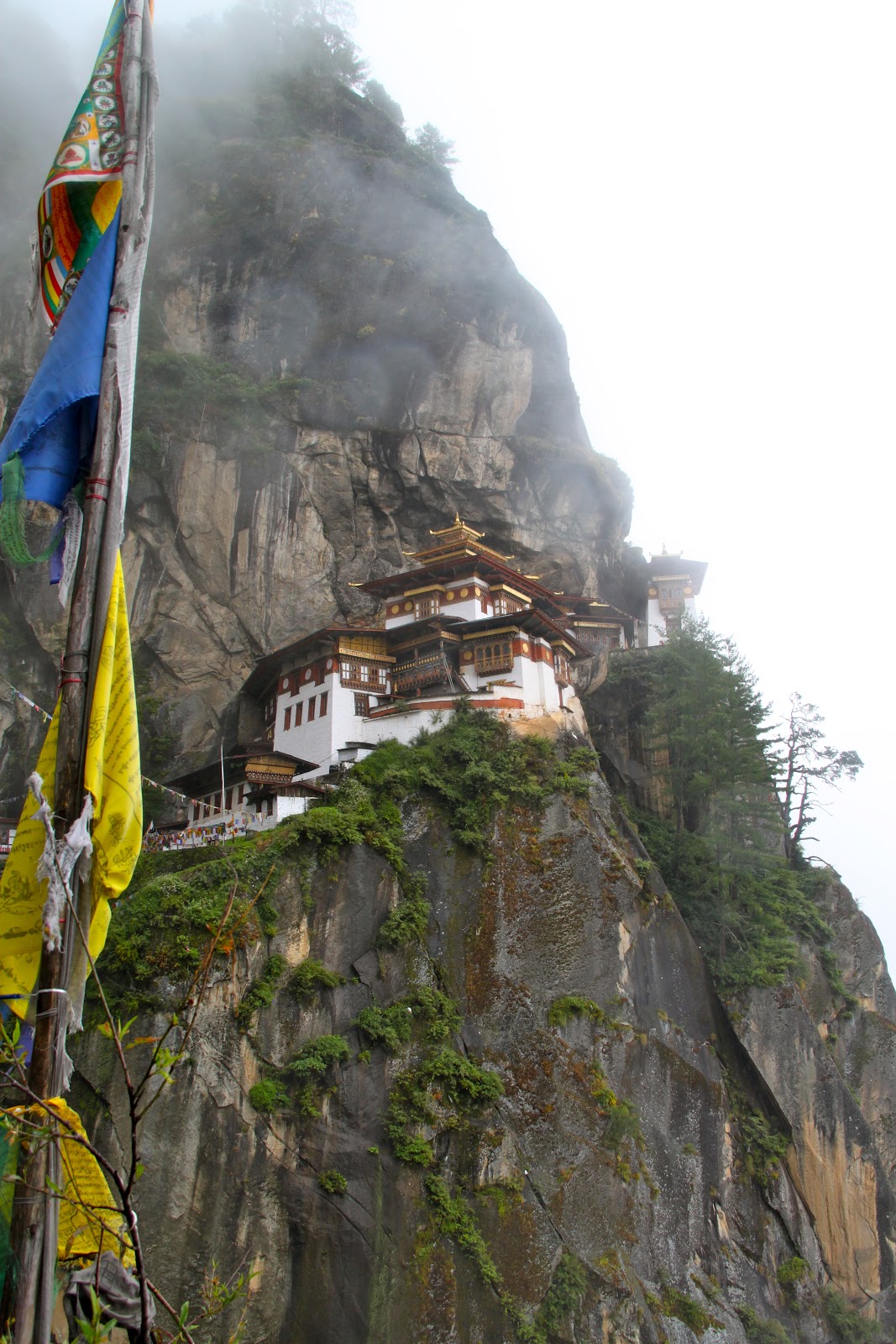
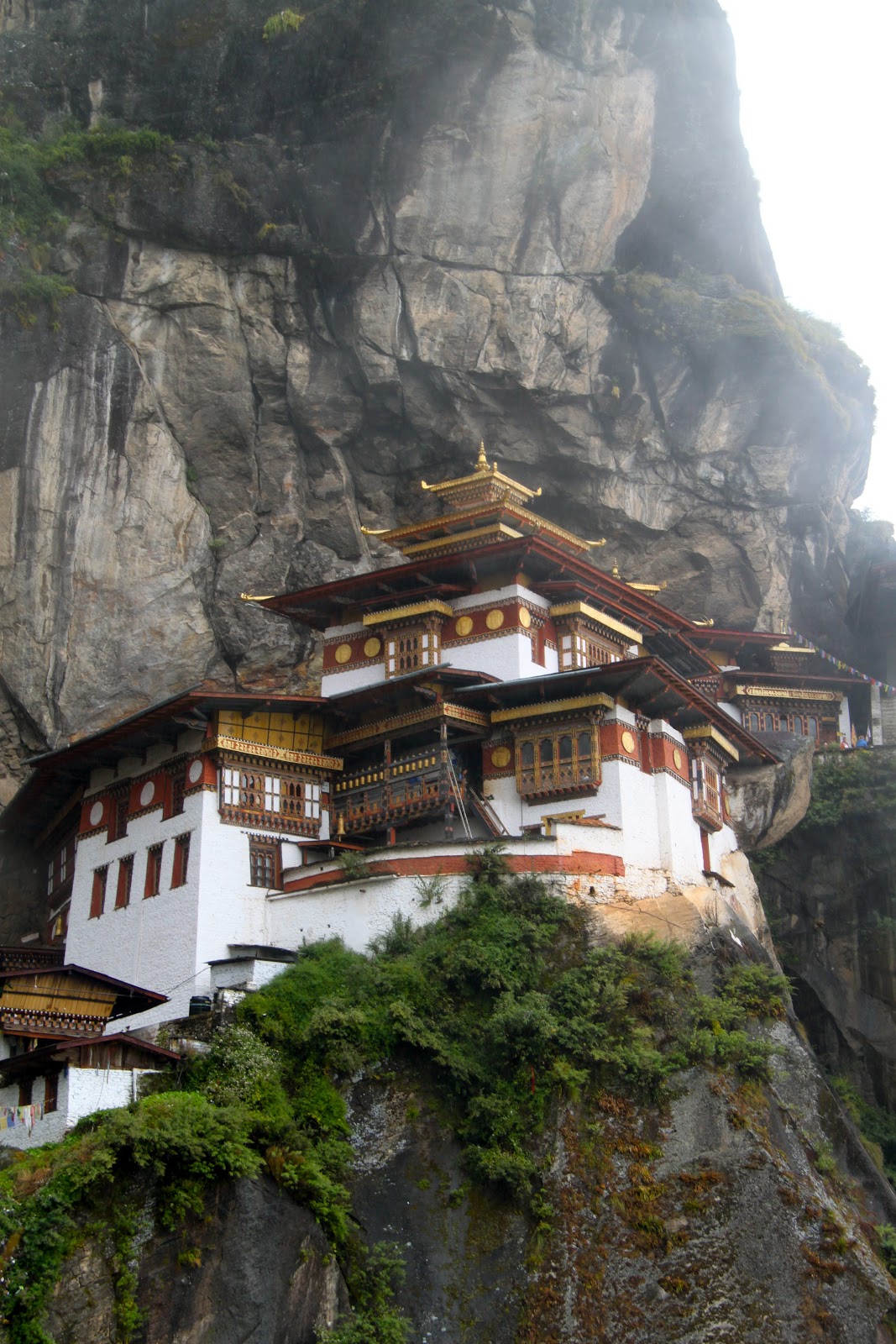
Paro is the site of the Tiger’s Nest Temple.  It is said that the Guru Rinpoche rode on the back of a flying Tiger to this spot and meditated for 3 years.  Thereafter this temple was built. 


Incredible-there are 12 temples on the mountain winding around.  This one is called the Tigers Nest.

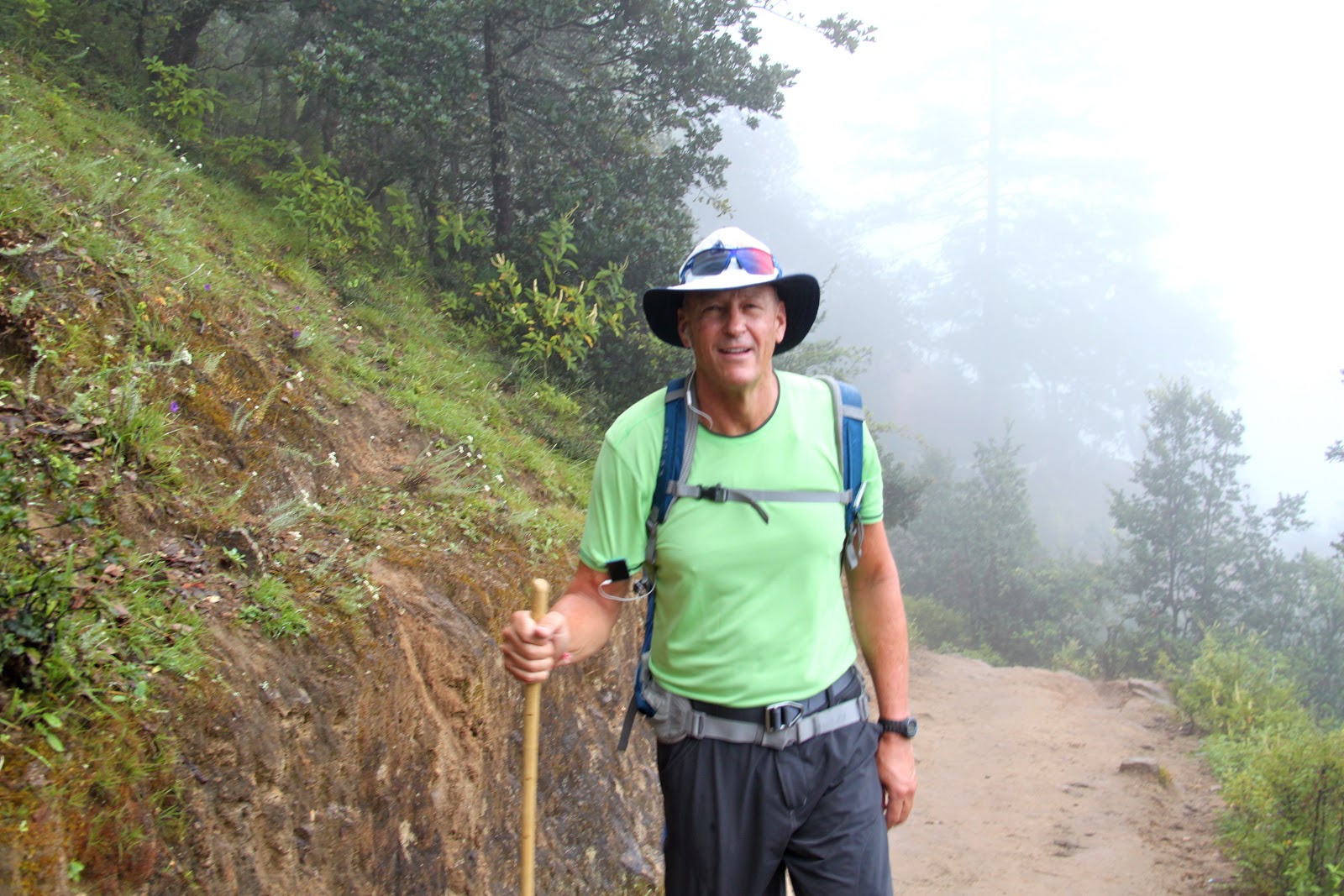
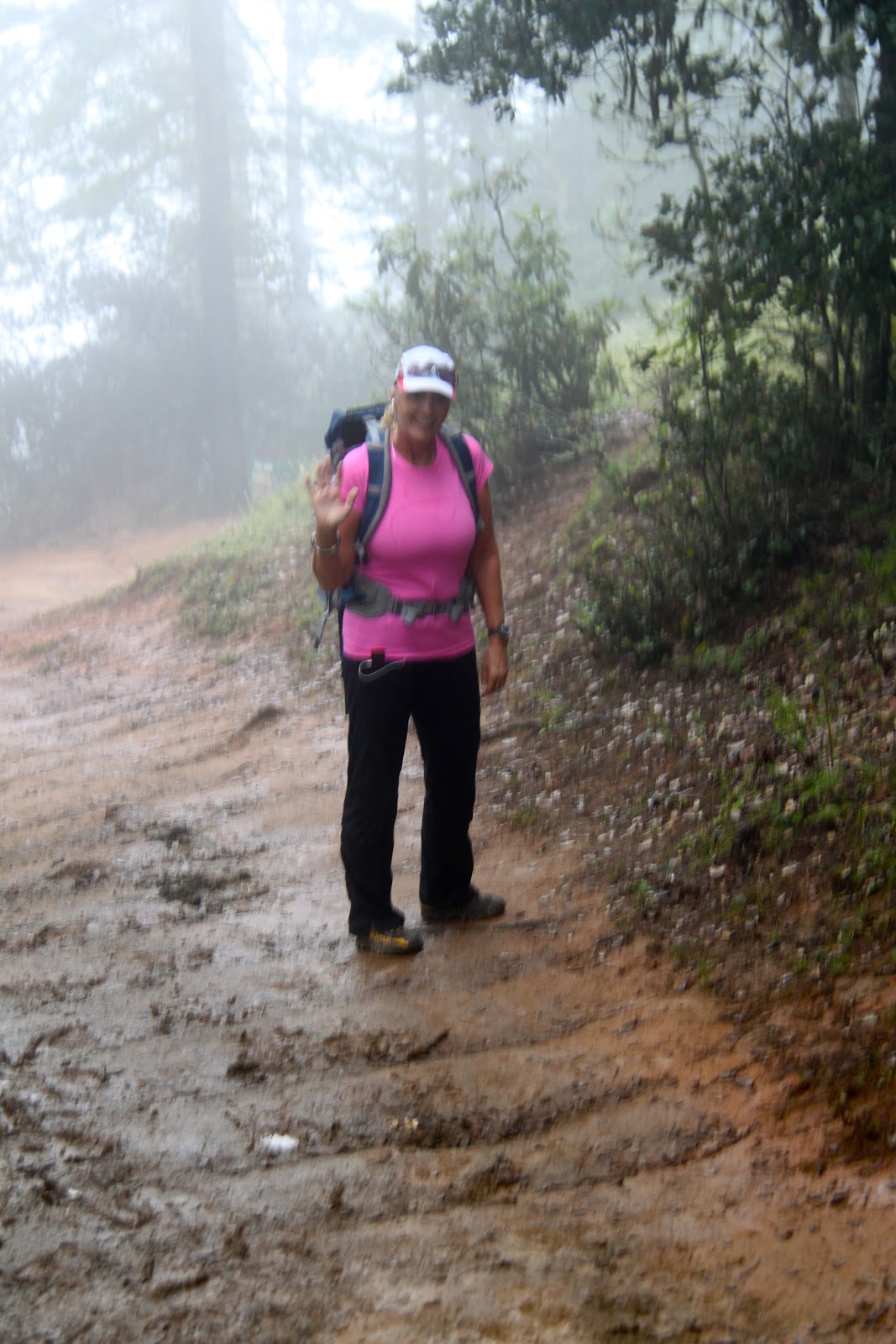
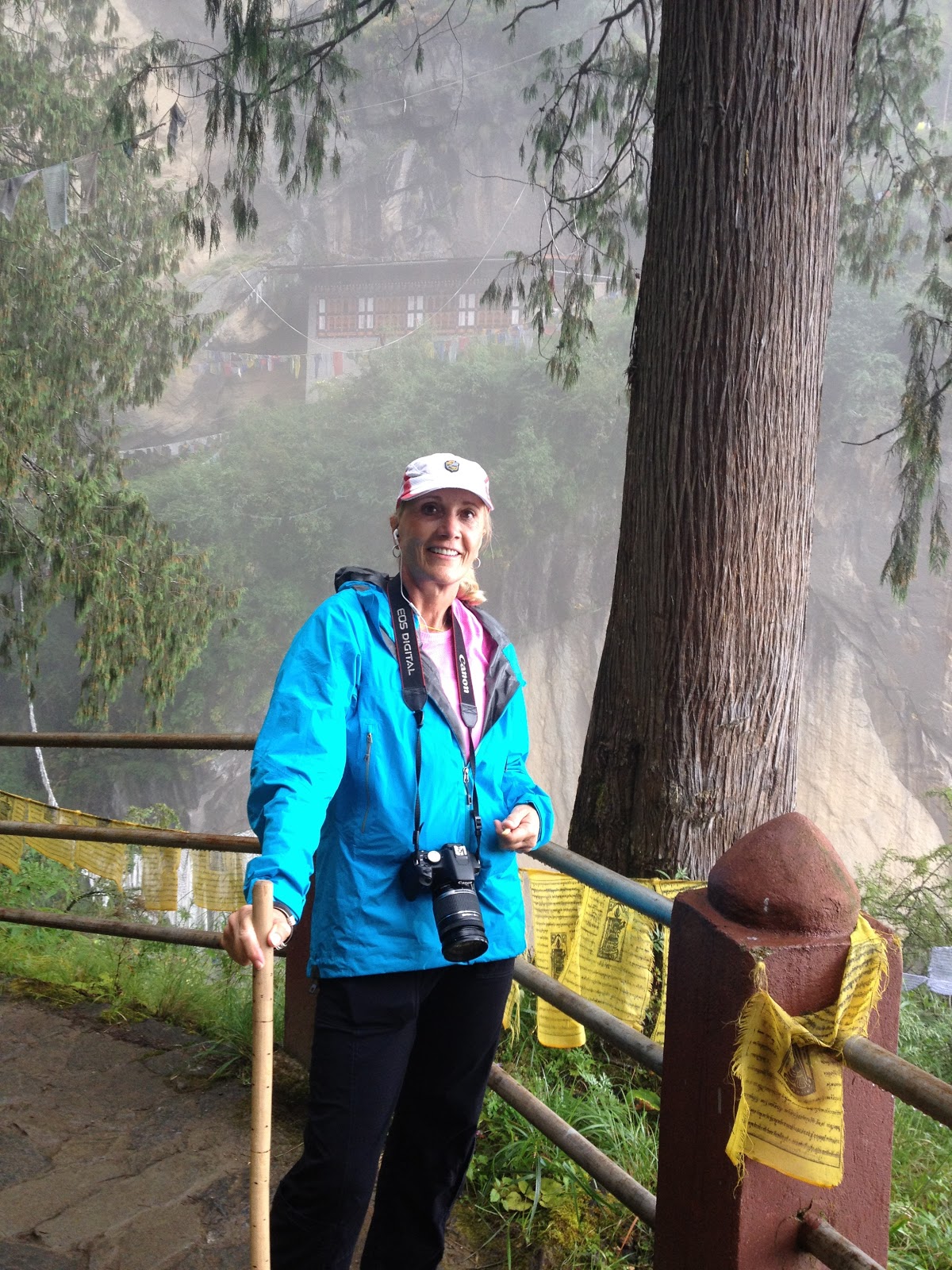
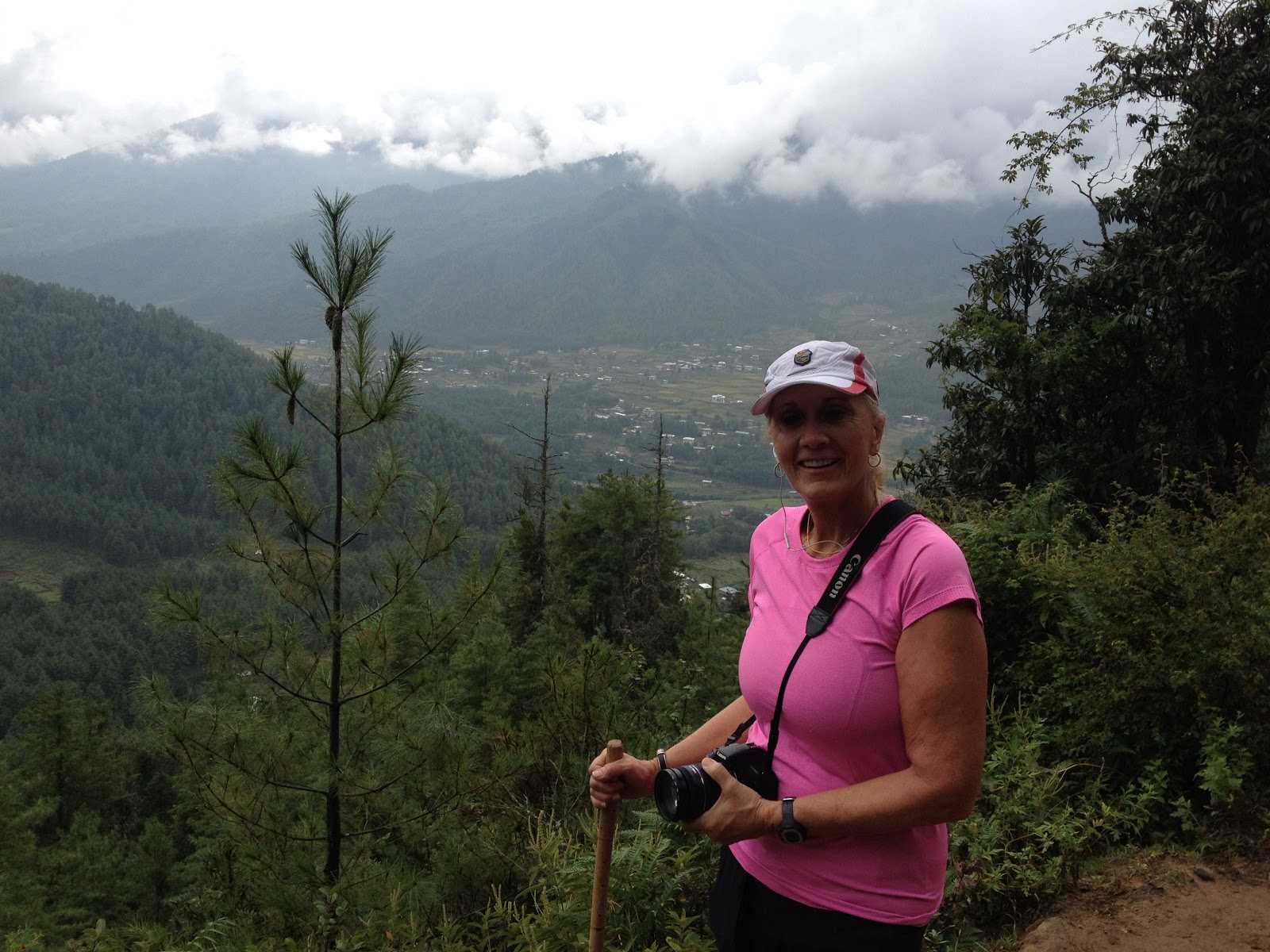
This temple is magical in its appearance built on the side of a cliff high over the Paro Valley.  We leave our lodge at 7 am in order to beat crowds to take the 2 hour hike up to the temple.  It is about 50 degrees and raining when we start.  As near as we can tell there is only one group ahead of us on the trail and we catch them soon. 

Starting to heat up

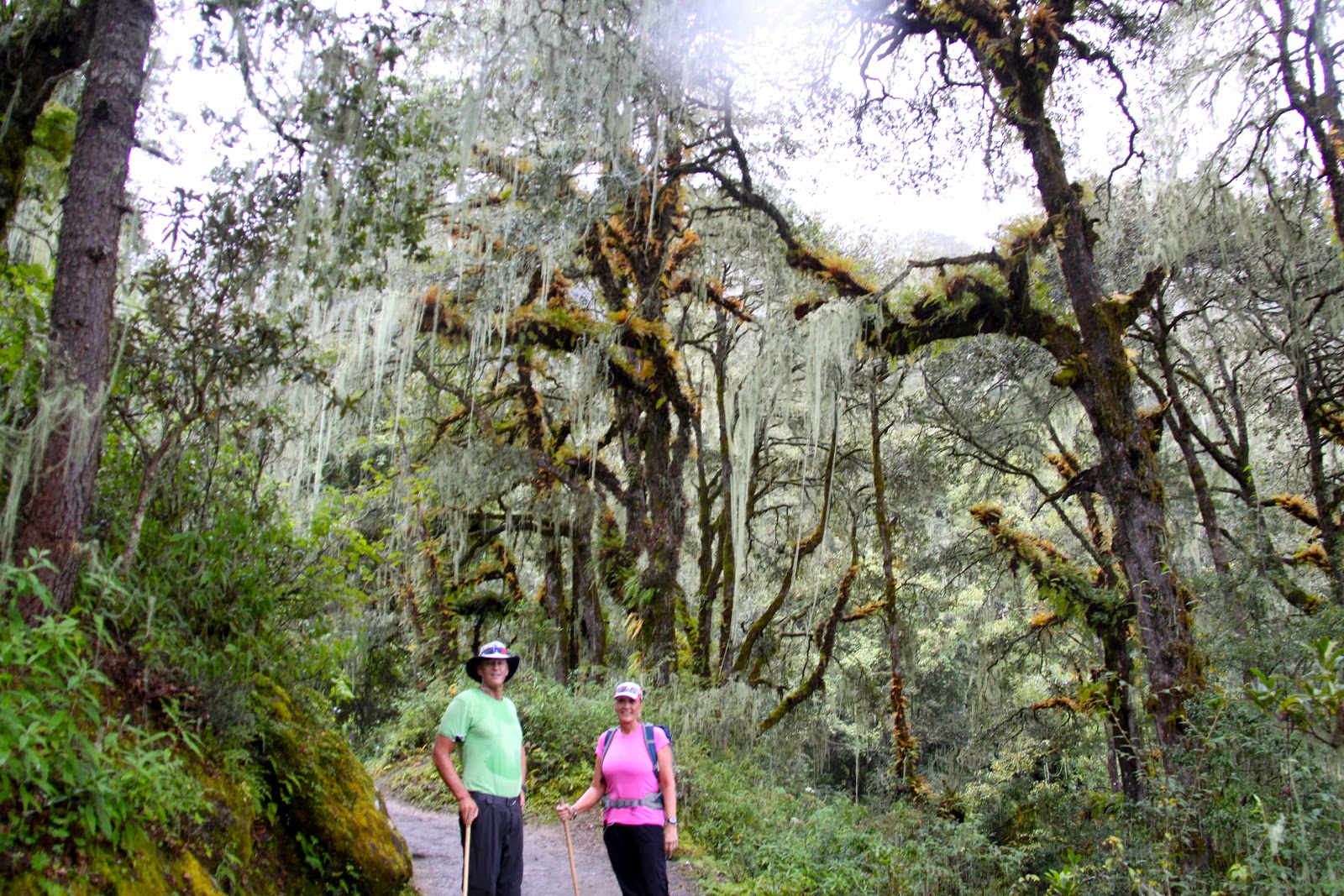
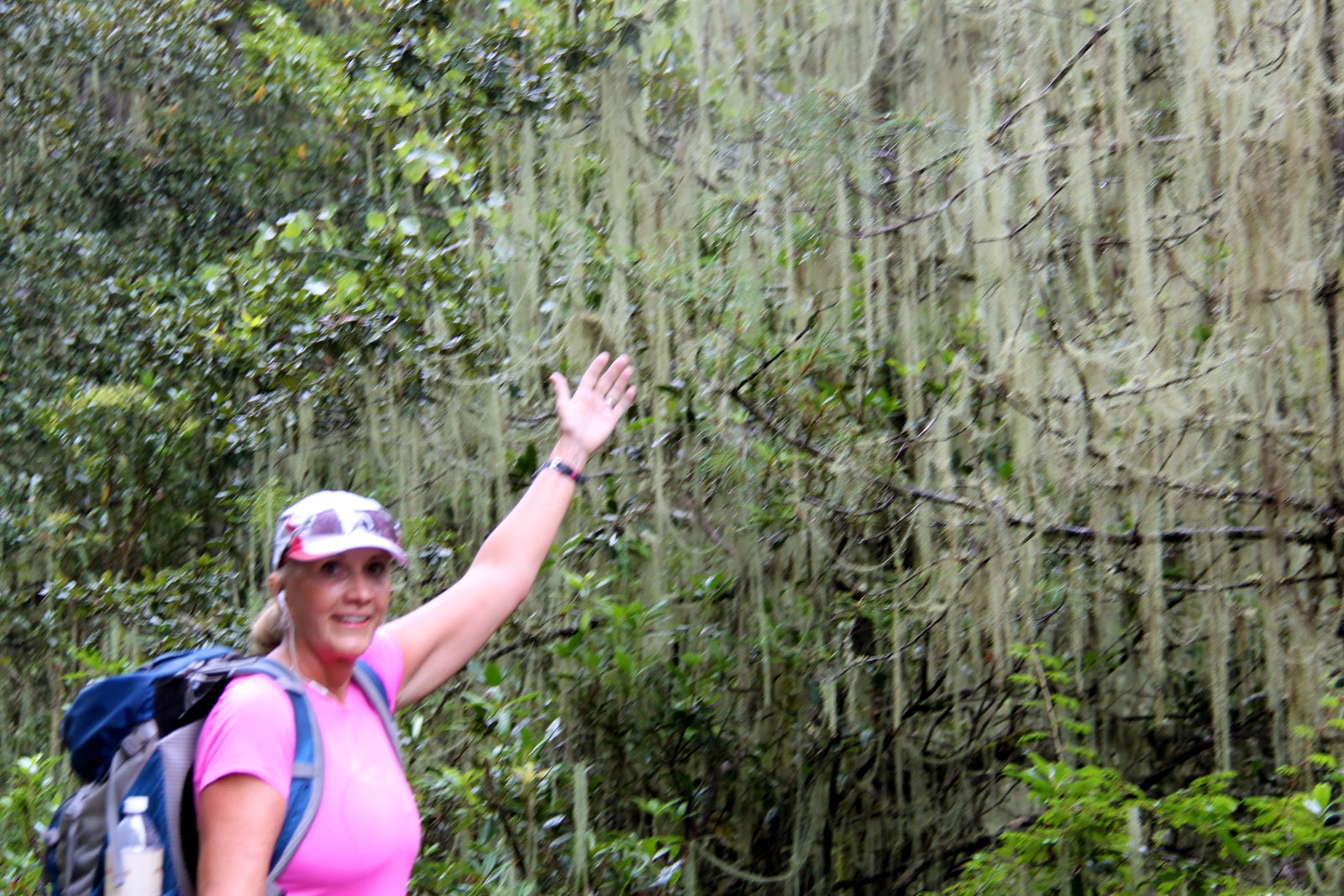
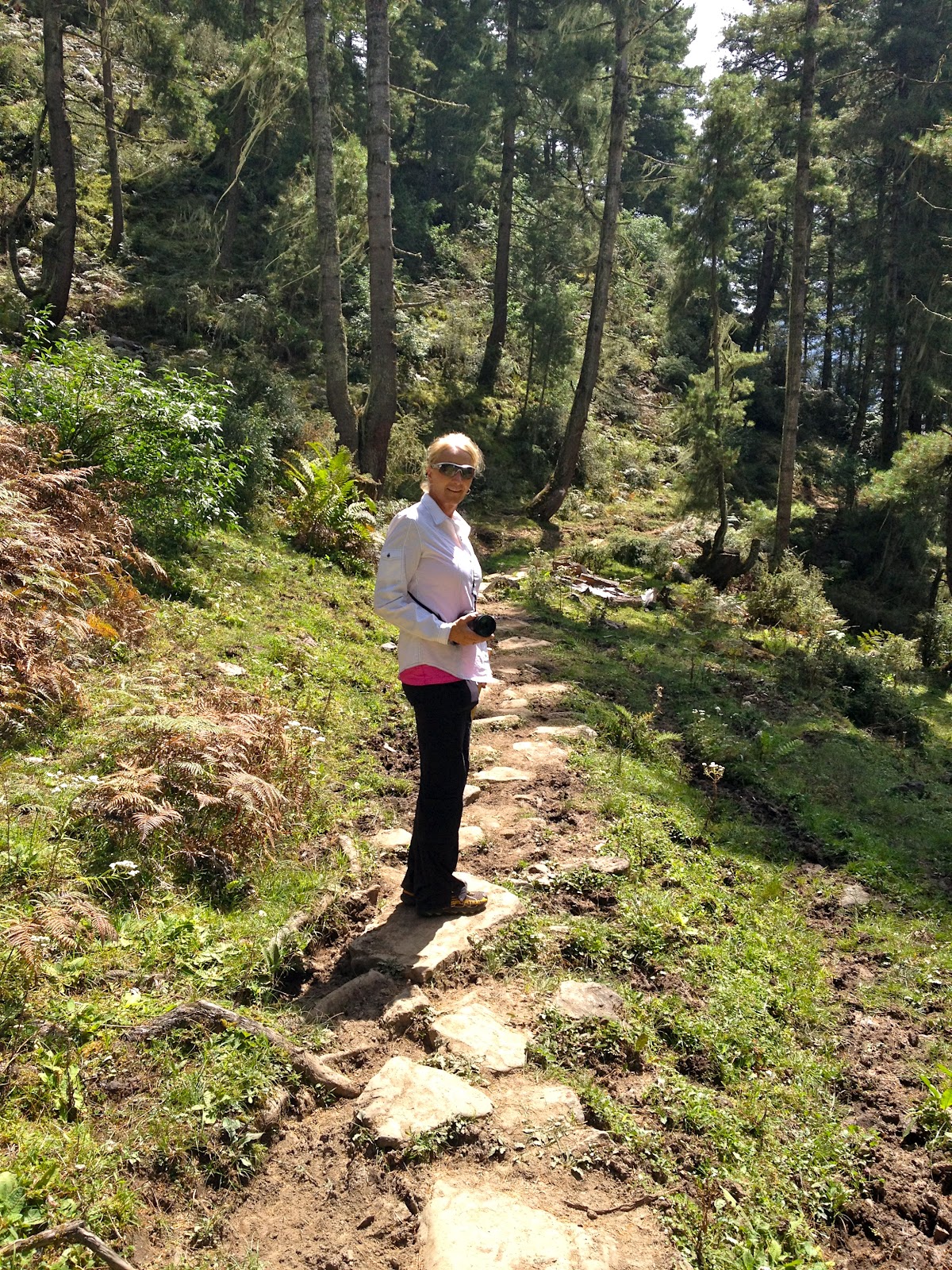
Spanish moss hangs from the trees

Spanish moss

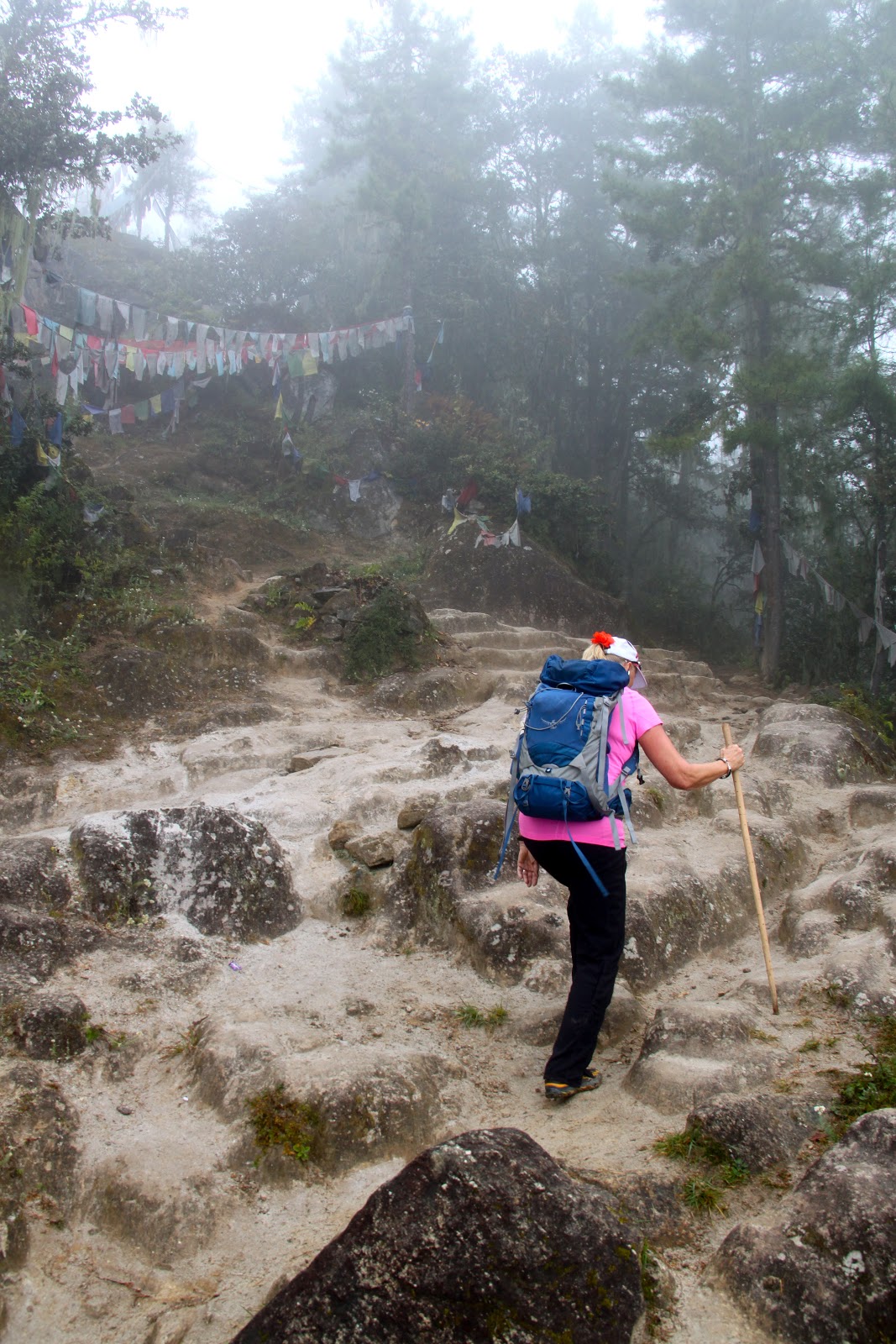
It was foggy and wet but since we were first on the trail, it wasn’t too slippery—yet.


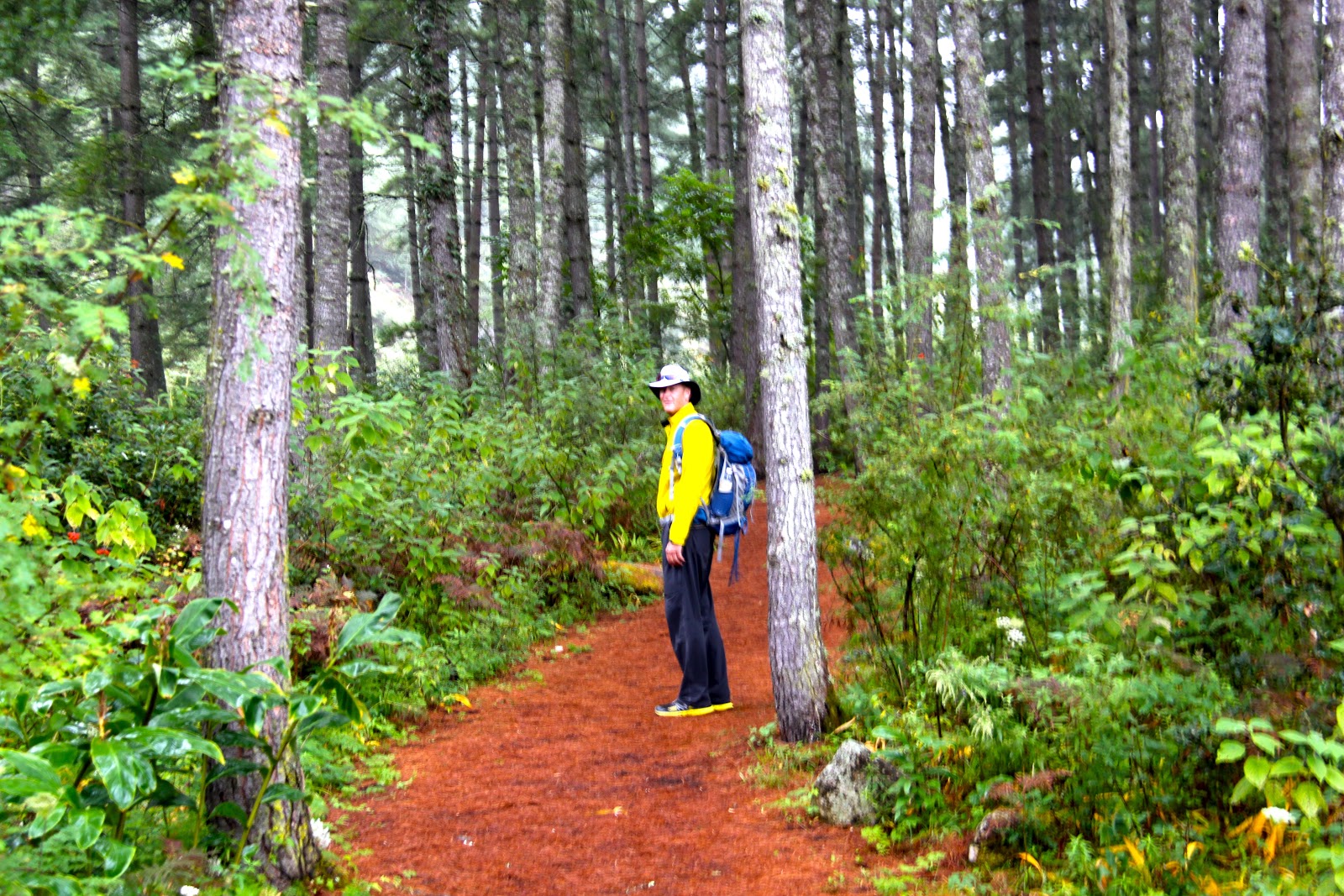
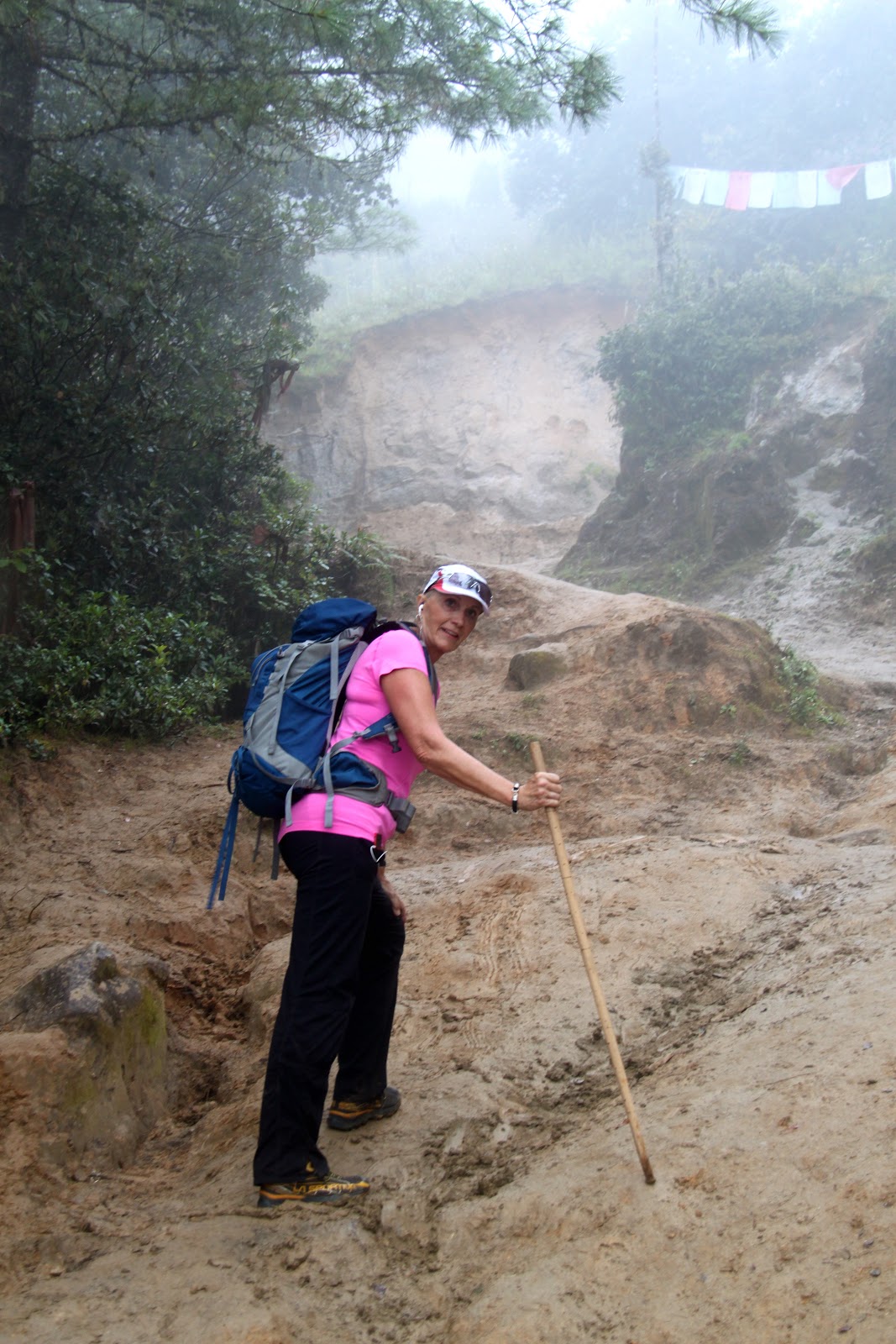
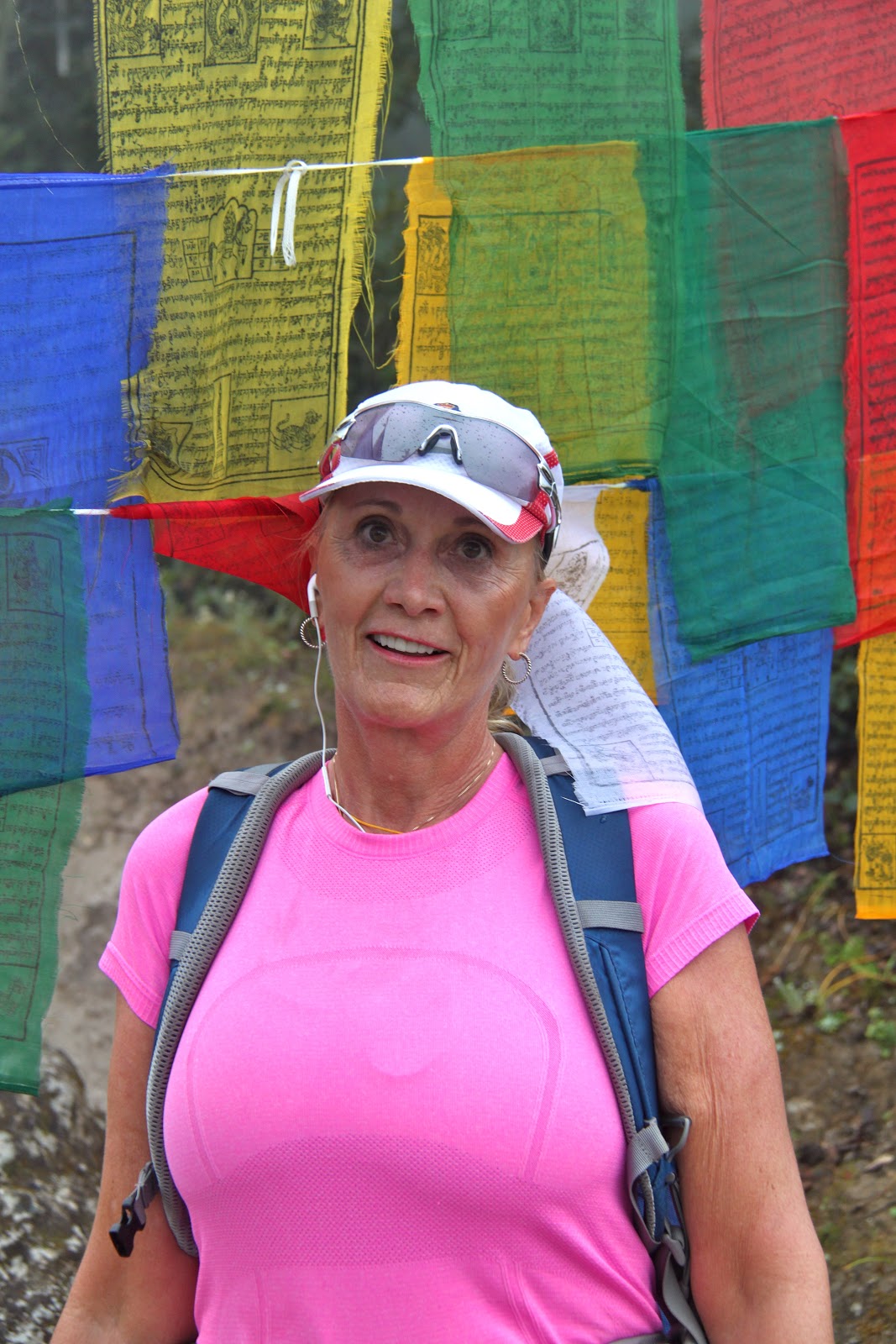
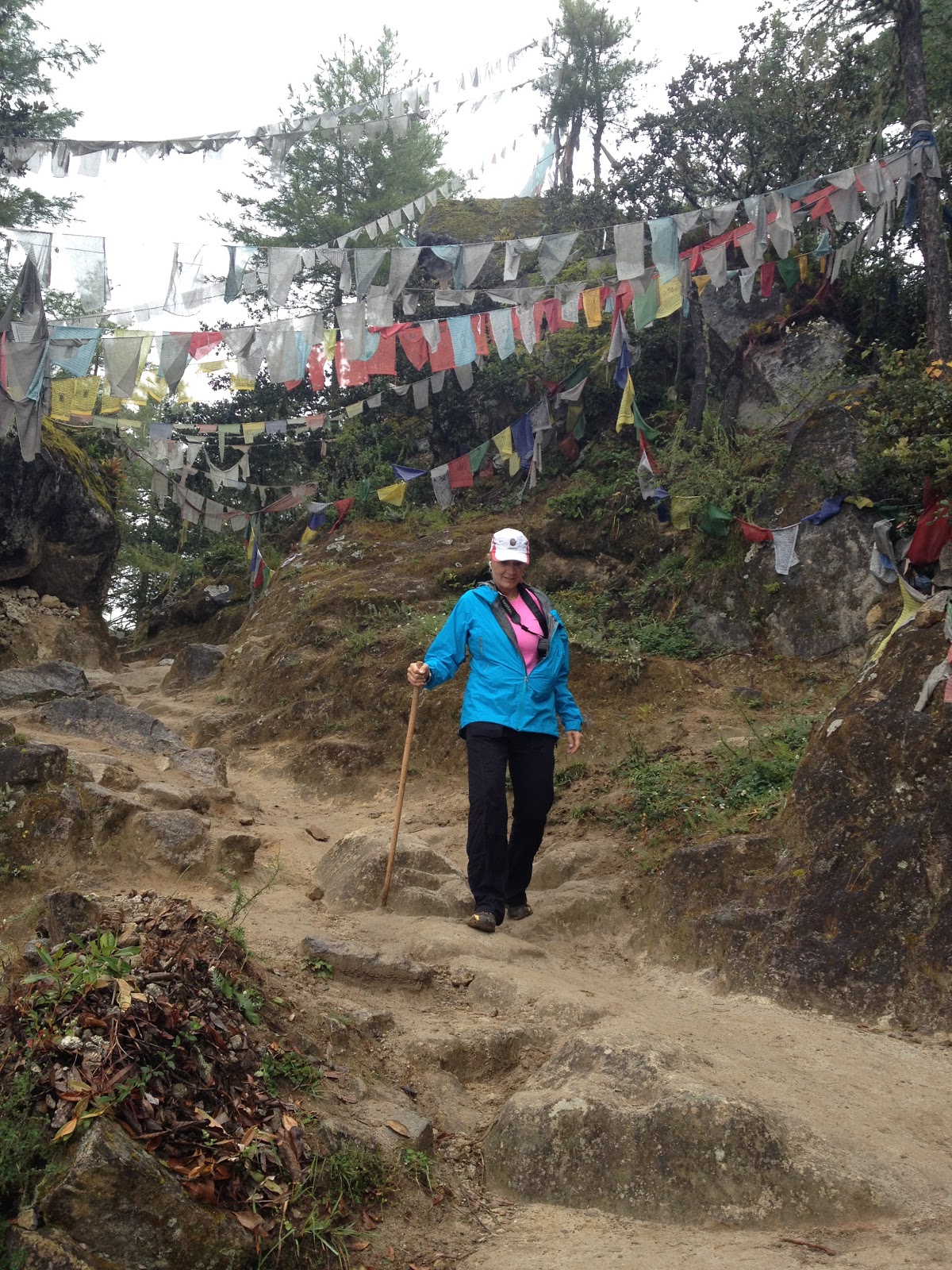
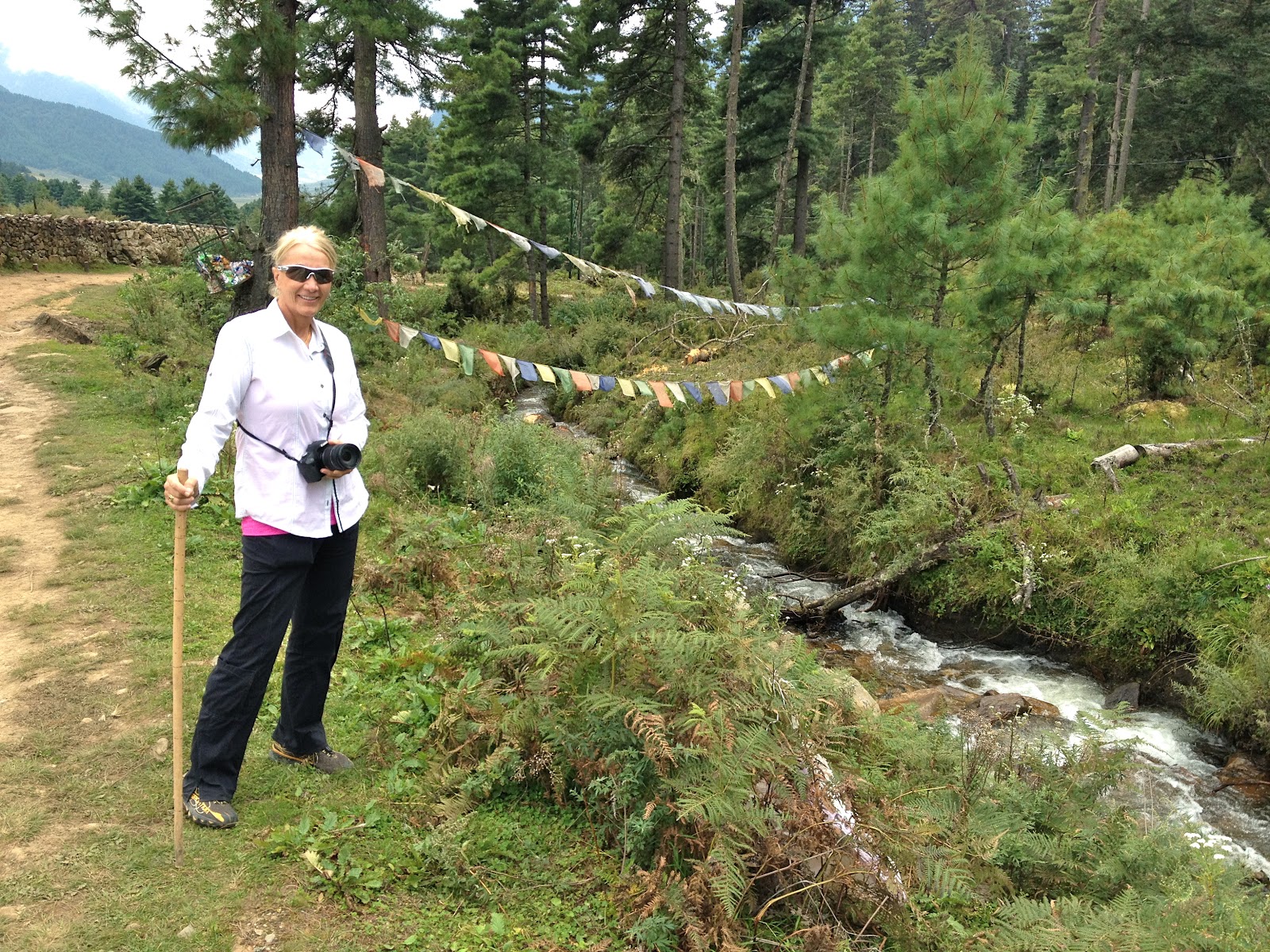
At times, you might think we were hiking in Oregon!  The prayer flags brought us back to reality.
Slow and steady wins the race

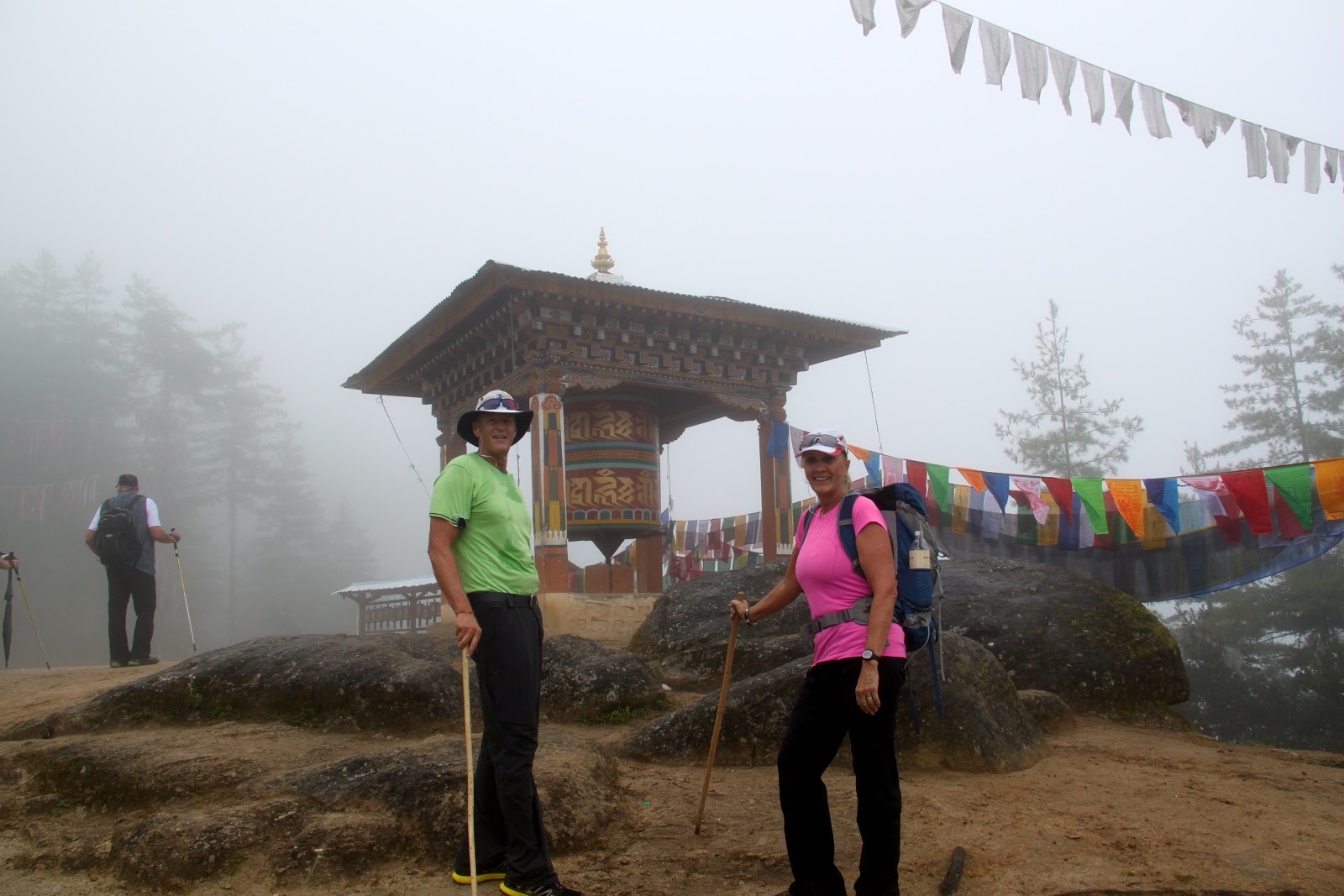
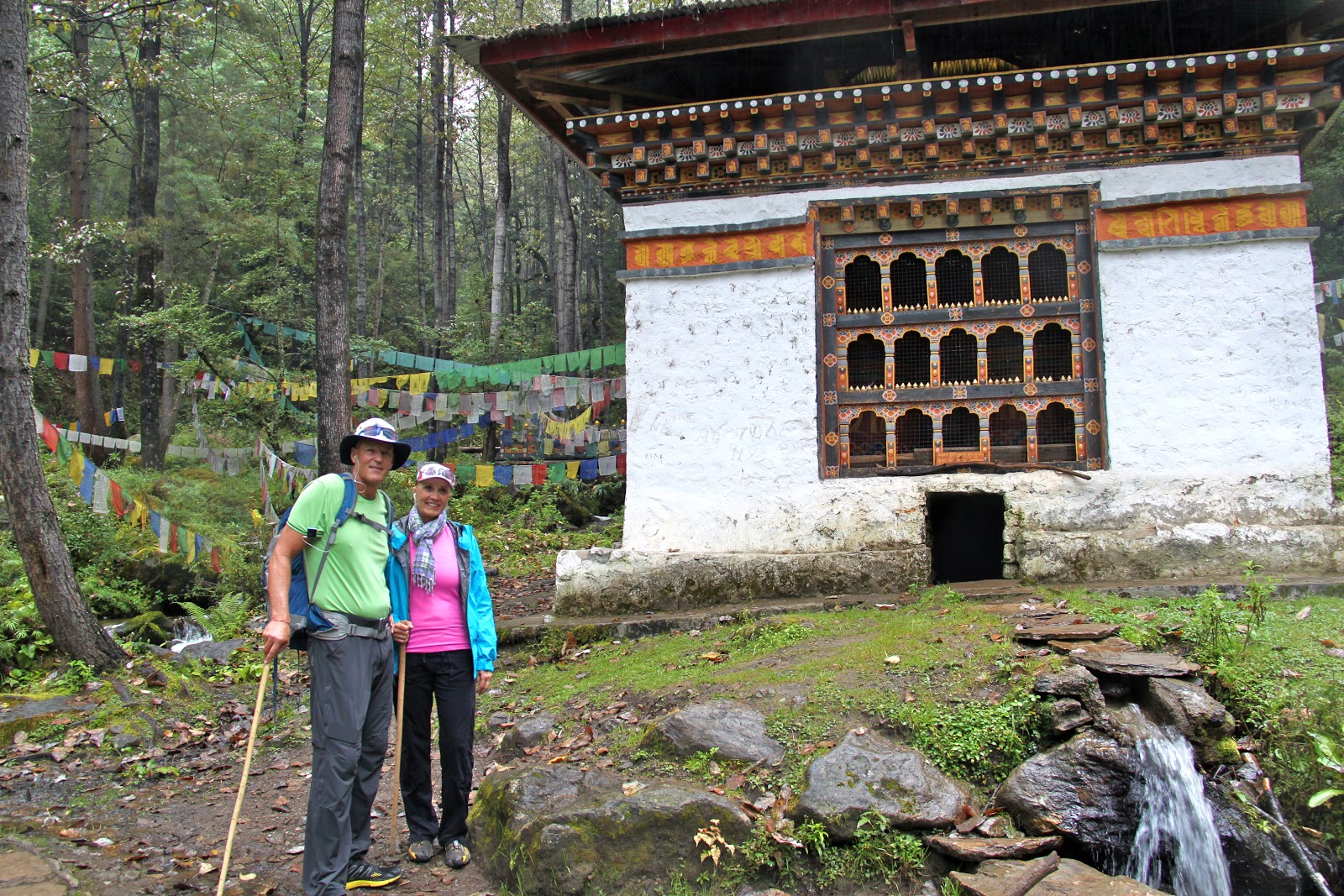
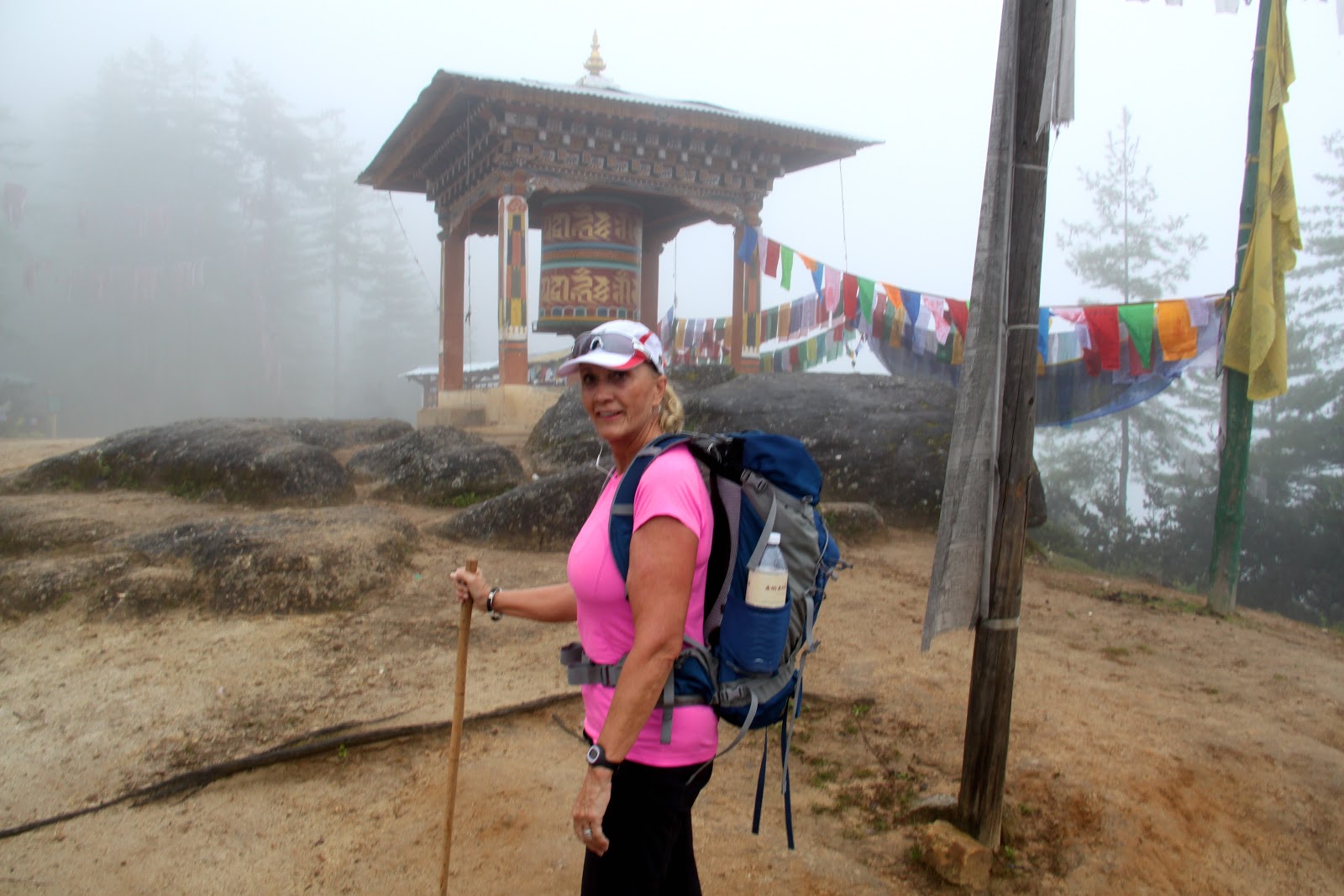
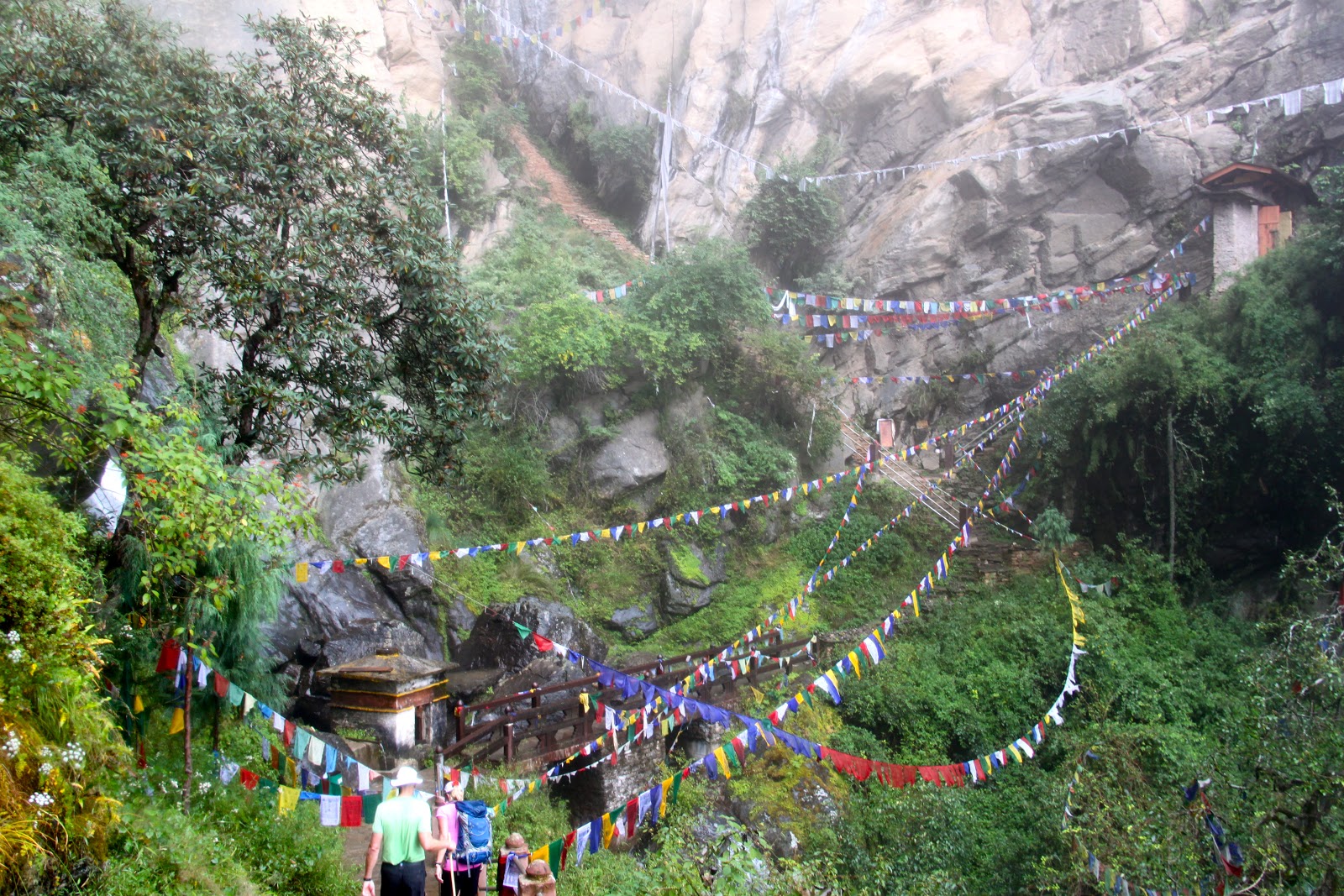
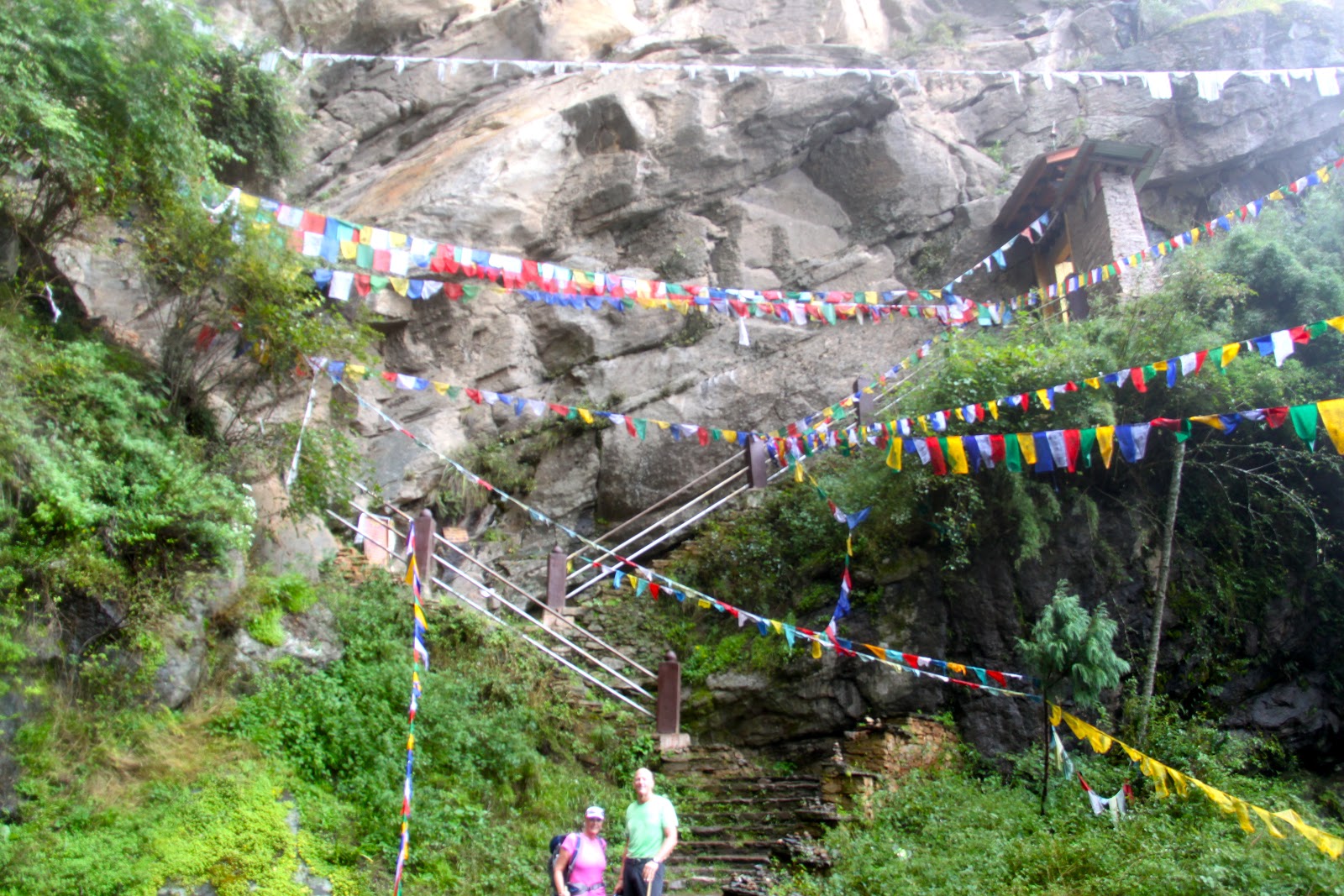
We pass prayer flags and small temples along the way.

Always say your prayers
Take turns carrying the pack

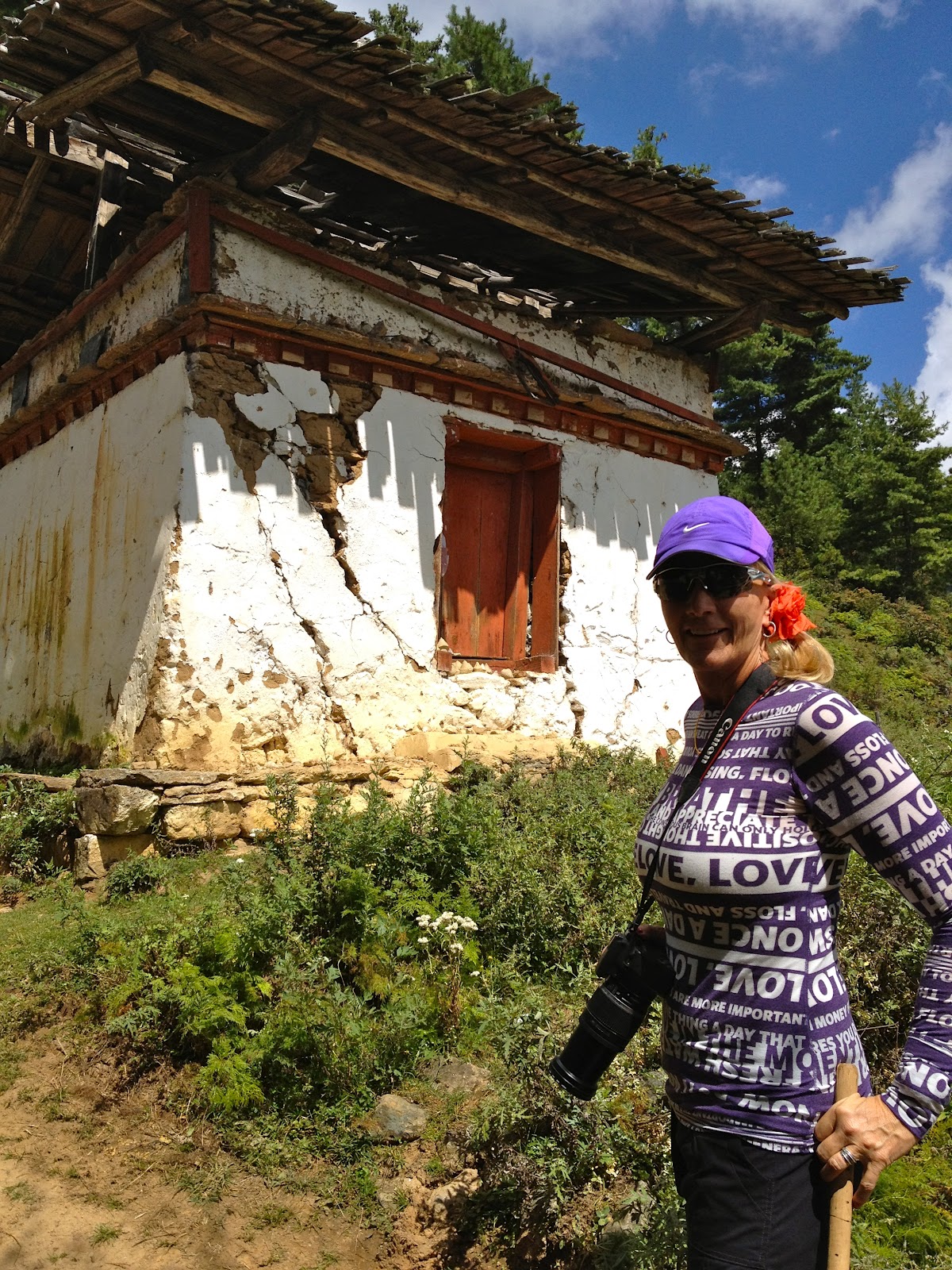
One of the 12 temples

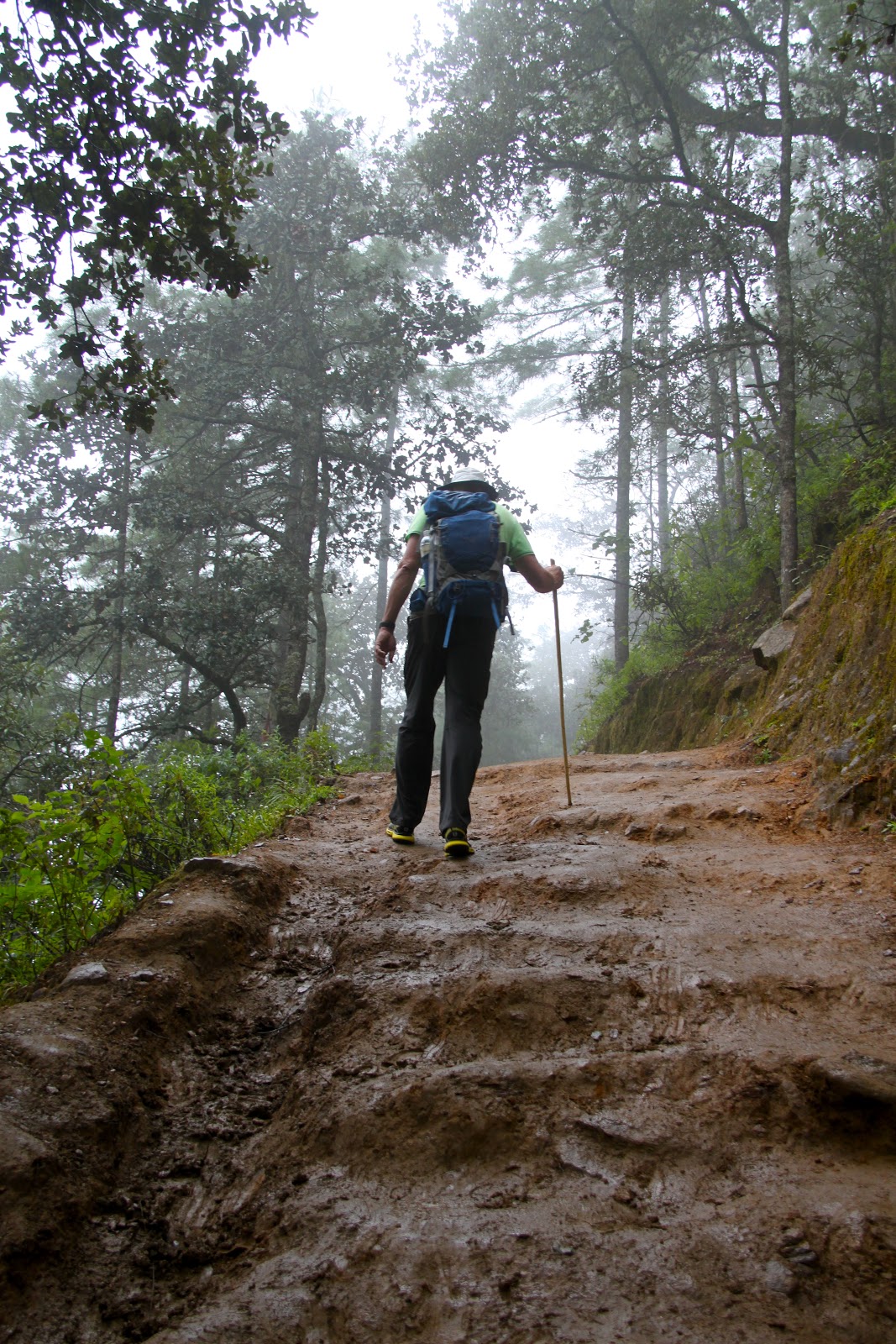
It was nice to be there early before the crowds.  The horses and the people made the mud a lot more difficult and slippery we found out on the way down.

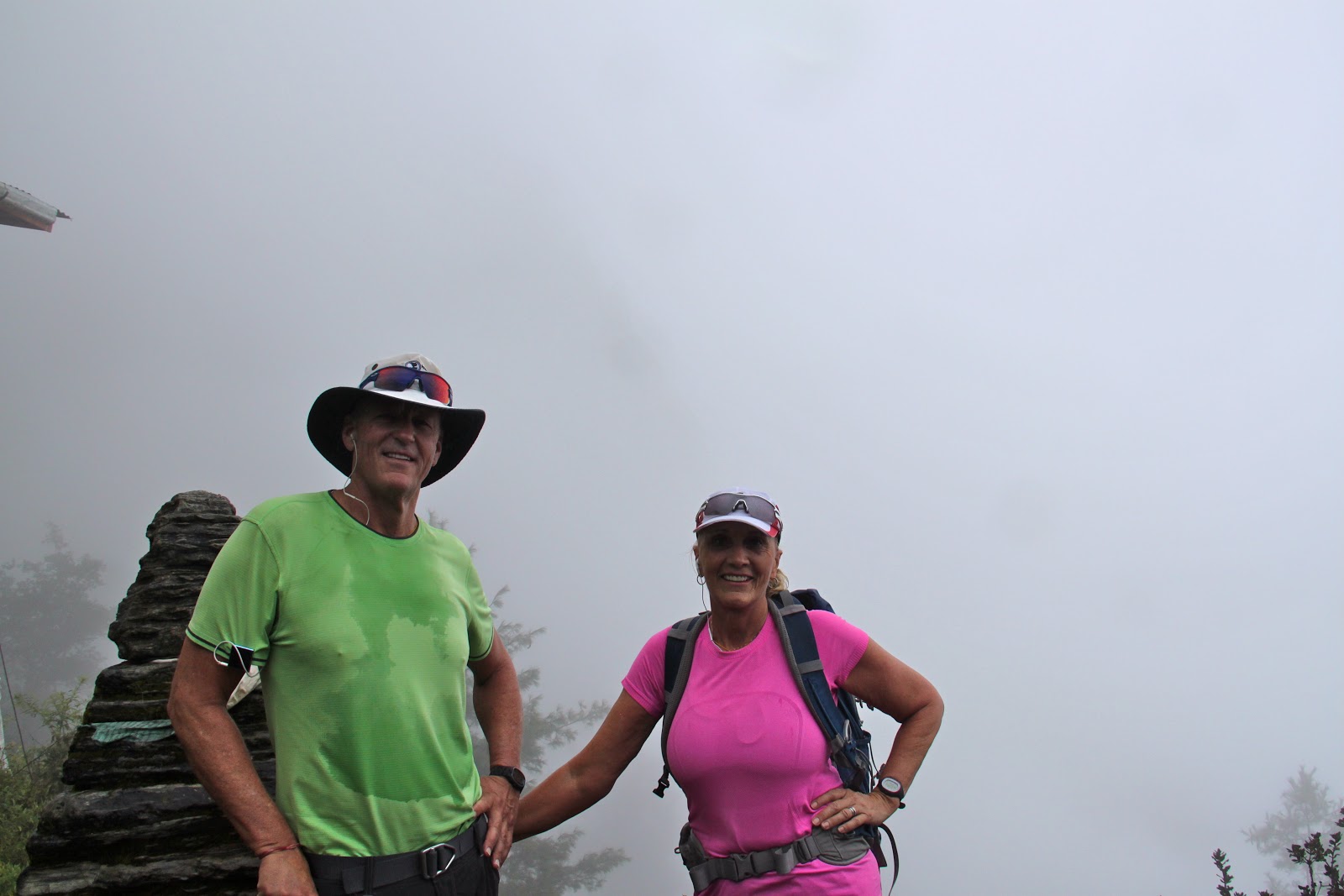
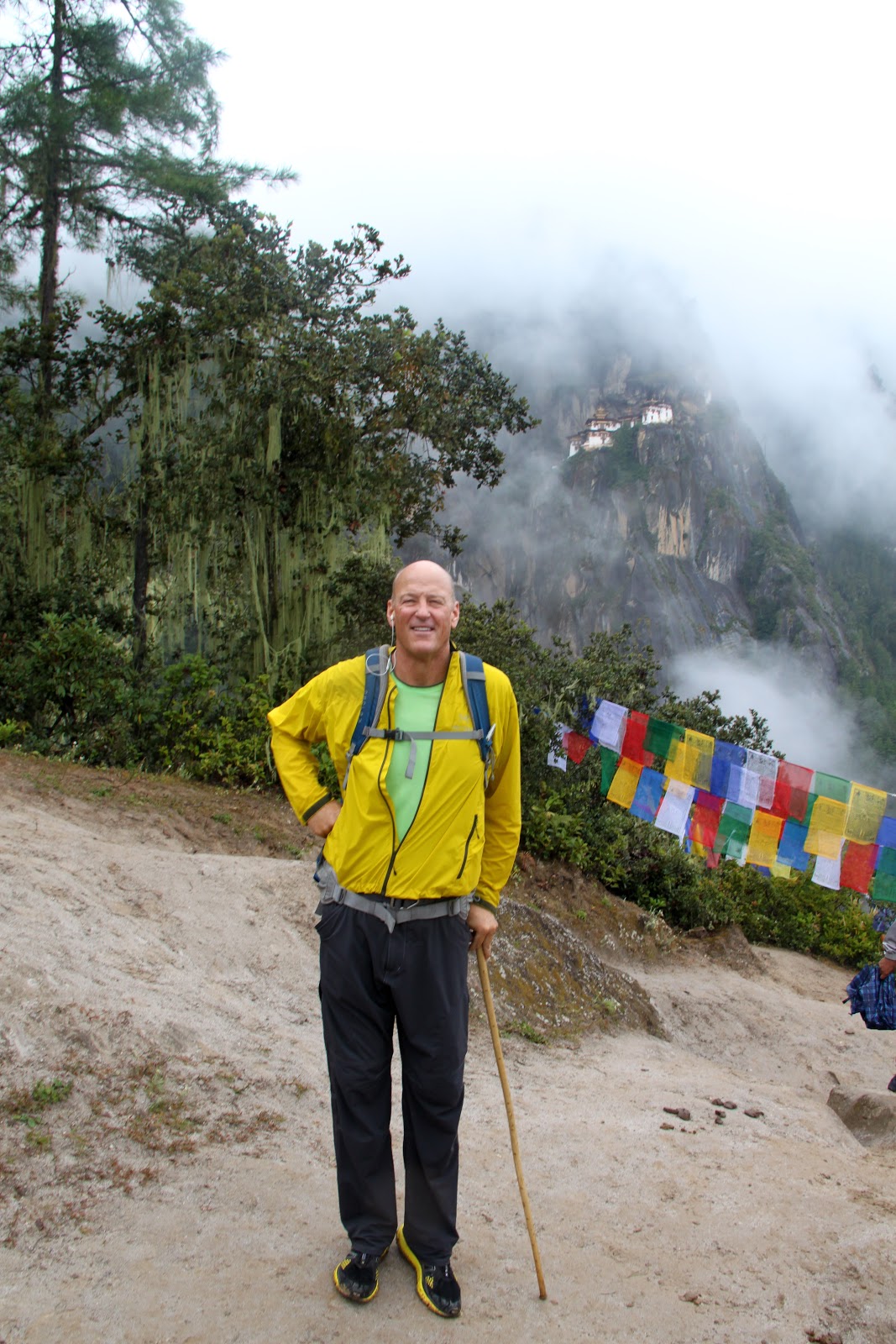
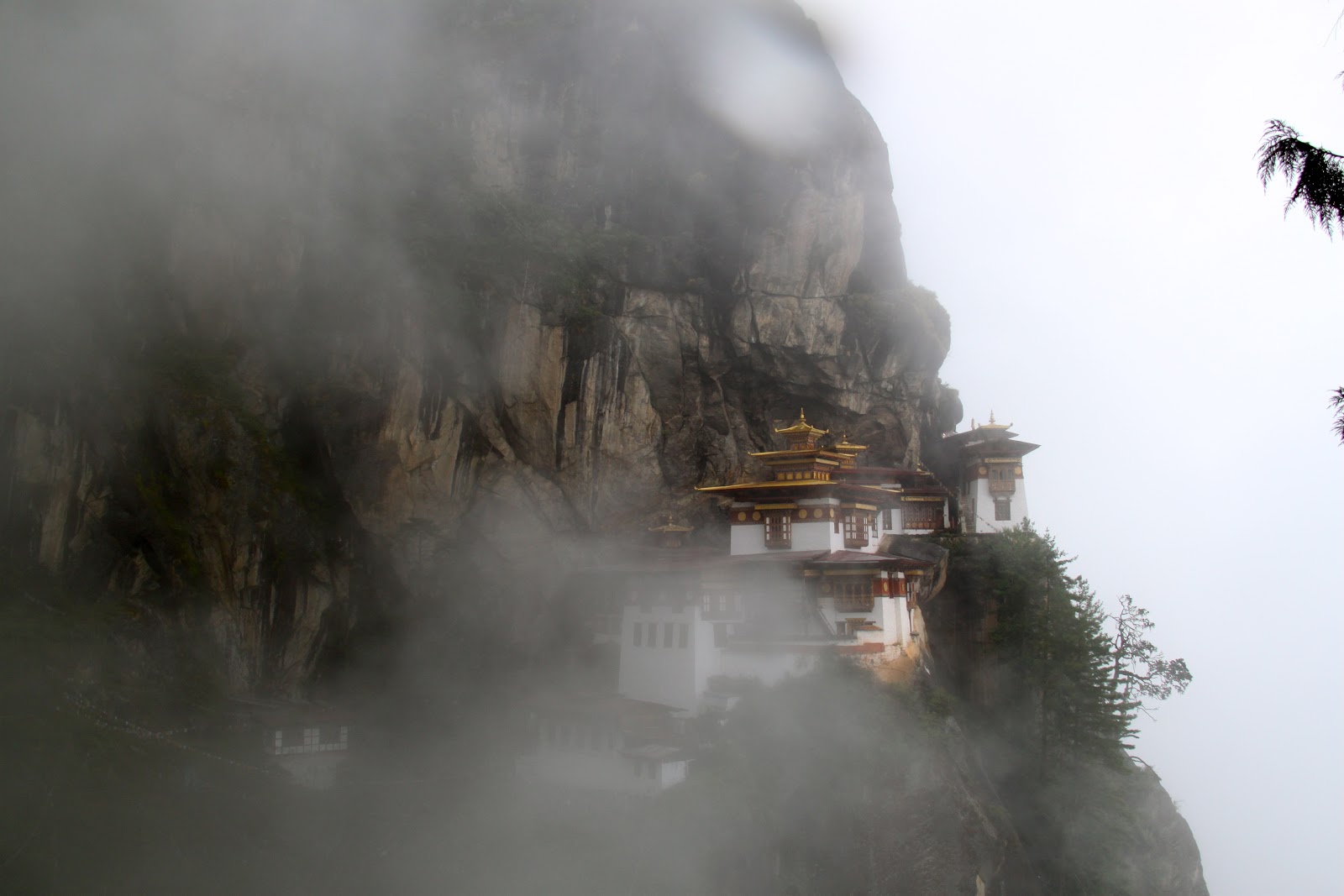
We are hiking above 10,000 feet and we are feeling good except Scott has a bad cold.  We reach the steps to the temple in good time and we have the views and photos to ourselves.  The temple passes in and out of clouds and we snap pictures and have our guide snap pictures of us as we walk and wonder how this temple could ever be built on the side of a cliff.

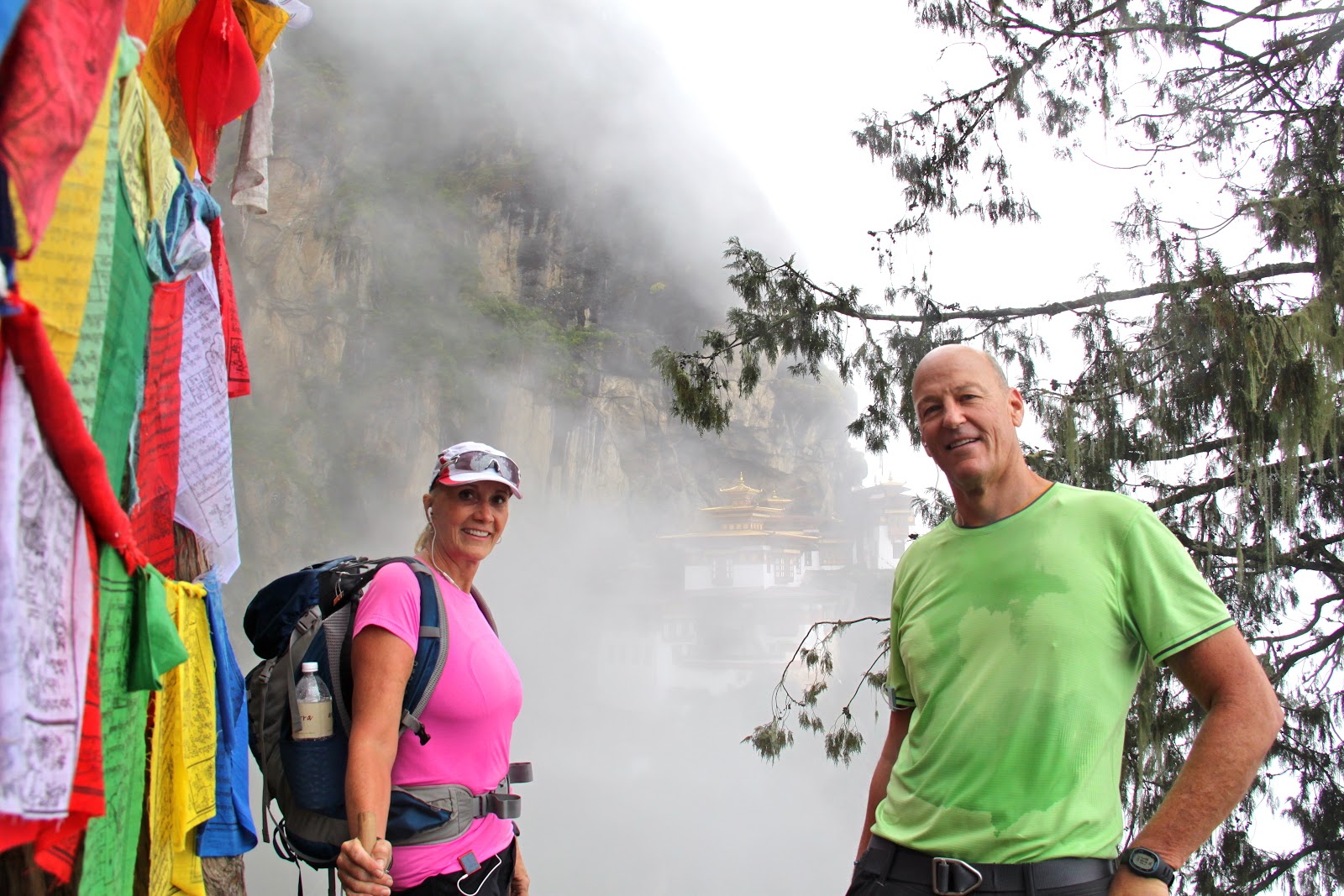
Every 2 minutes the clouds will clear and then fog back up

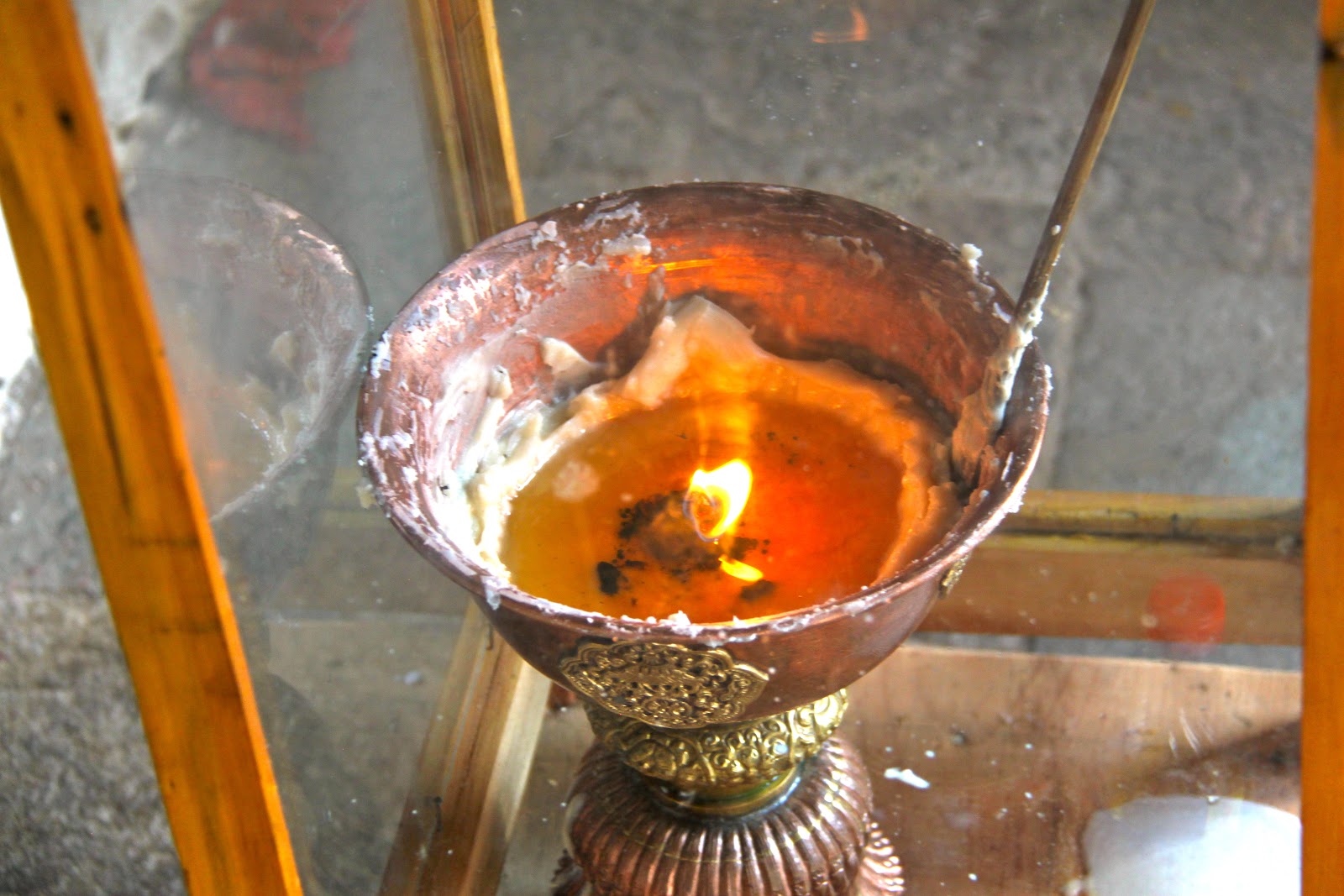
We visit the various temples inside the temple and offer prayers and donations and receive blessings of merit from the monks.  There are offerings of incense and food and candy and flowers near the statutes.  Monks are chanting softly as they walk and incense is burning and butter lamps are lit.

Each small building is a temple
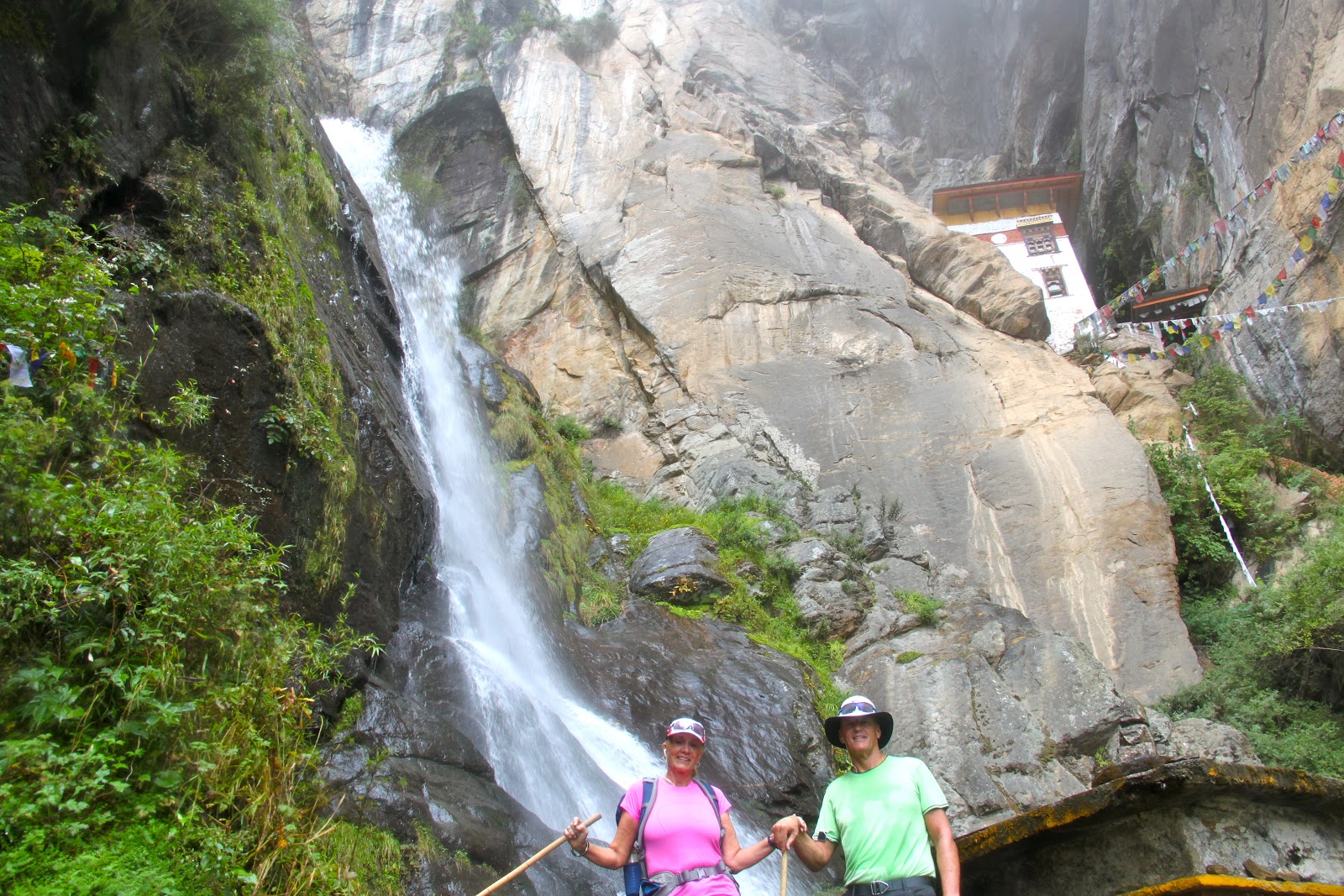
Beautiful waterfalls with a temple in the steep side canyon
What a reward for your hike!

Caution:  Slippery when wet!
Scott

The Tiger’s Nest is a magical place.

Tigers nest is in the middle.  There are temples on each side of it.

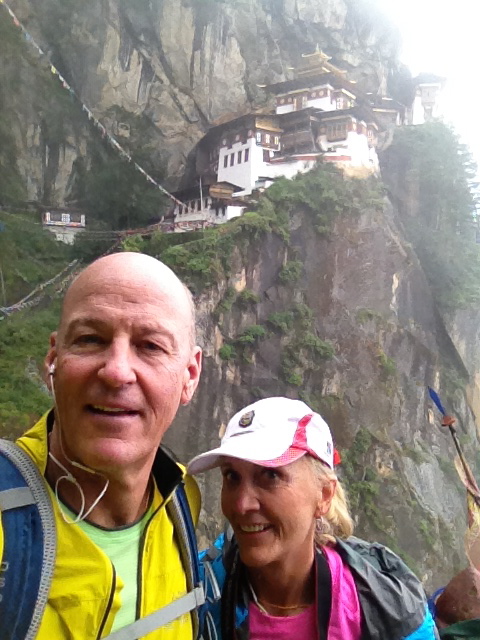
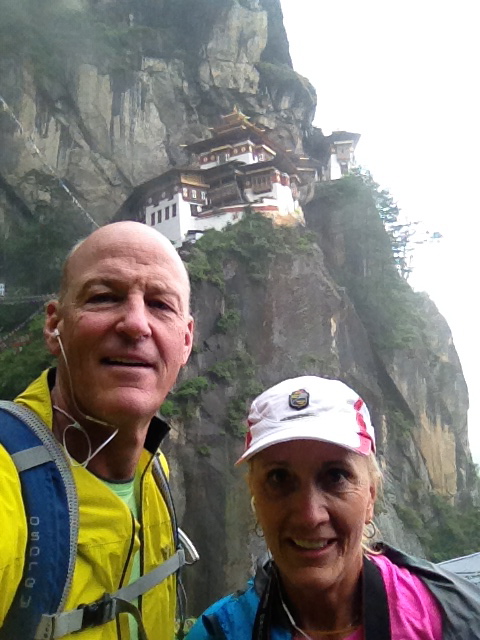
Iphone self portrait

Incredible
I’m sure some of you are dying to get your harness, rope, and chalk and start climbing……but there is no climbing in Bhutan.  They revere their mountains and the rock is sacred and off limits to climbing.

It seemed magical with the fog rolling in and out

Tigers Nest

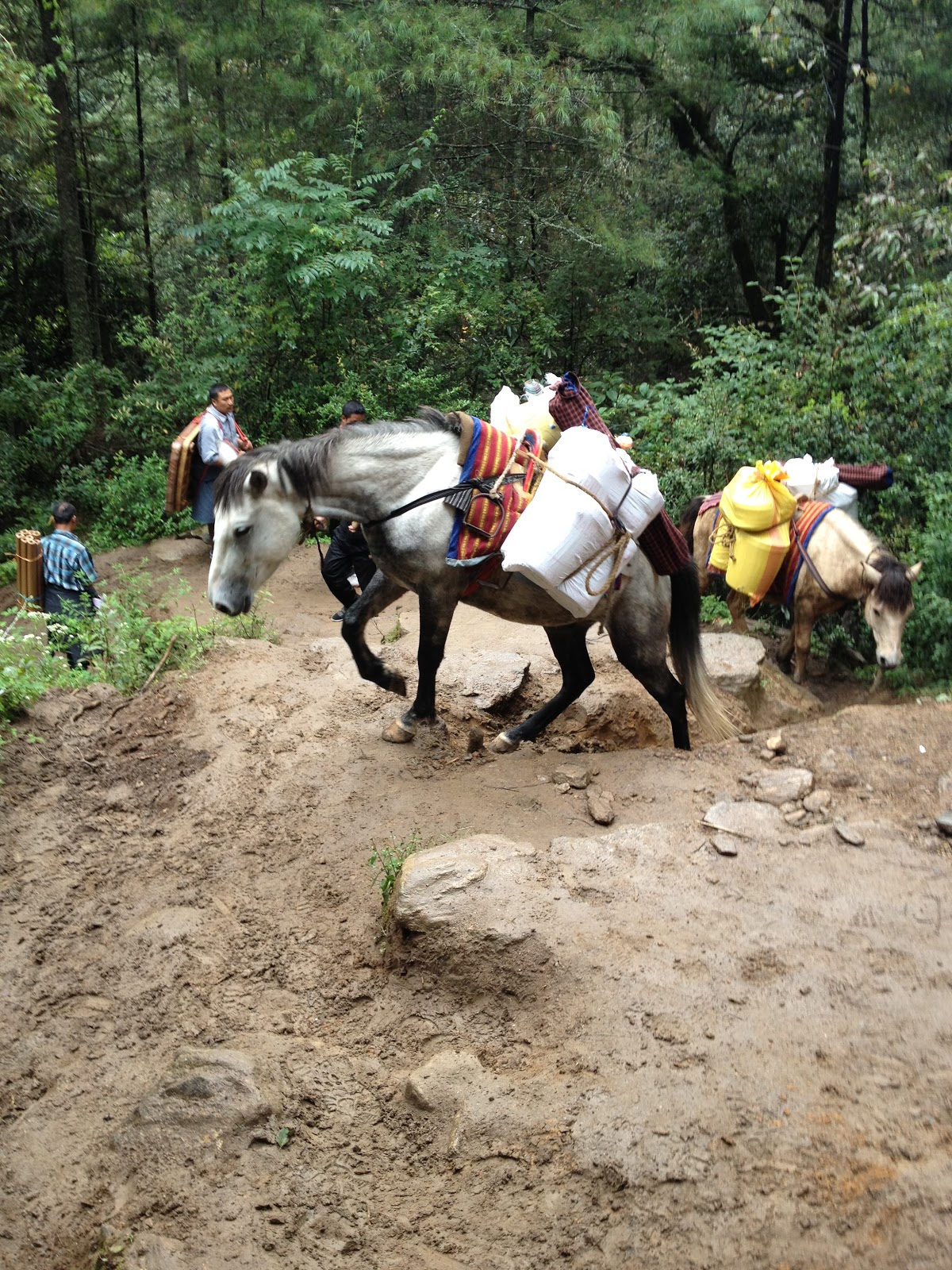
On the way back down we encounter many locals, and Indian army men and tourists coming up.  The tourists from Japan seem to favor hiring small horses to carry them up part of the trail system.  It’s a dangerous proposition as the horses are slipping in the mud and falling to their knees and overweight passengers are being tossed to and fro.  We can hardly look.  It looks cruel for the horse and the rider. 

Walking down was a lot more dangerous

Walking down

The horses were slipping to their knees.  It seemed dangerous and cruel.
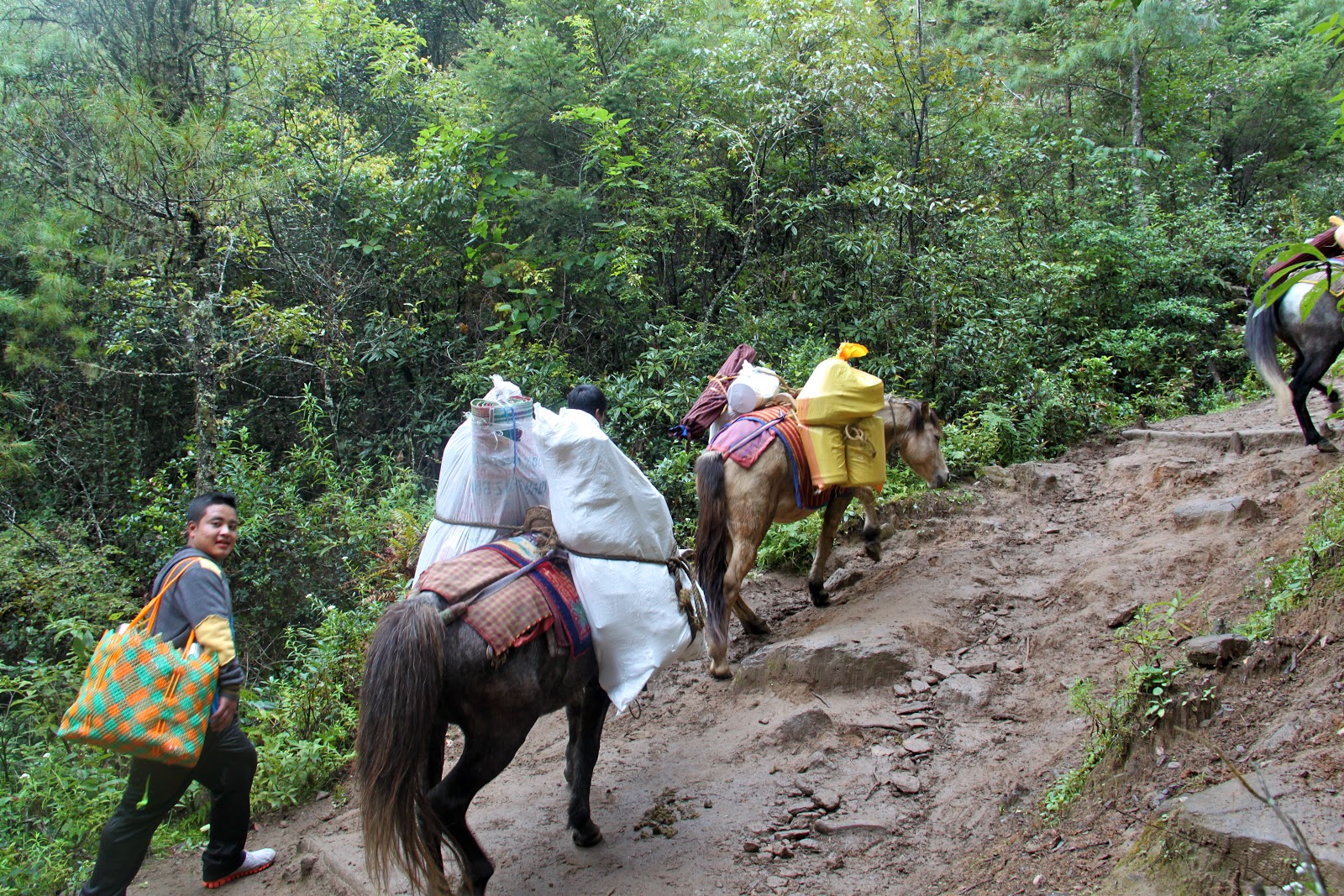
The horses are also used to pack supplies up to a cafeteria part way up the trail.  This seems to be the sensible use for the horse.

The horses carry loads as well as people
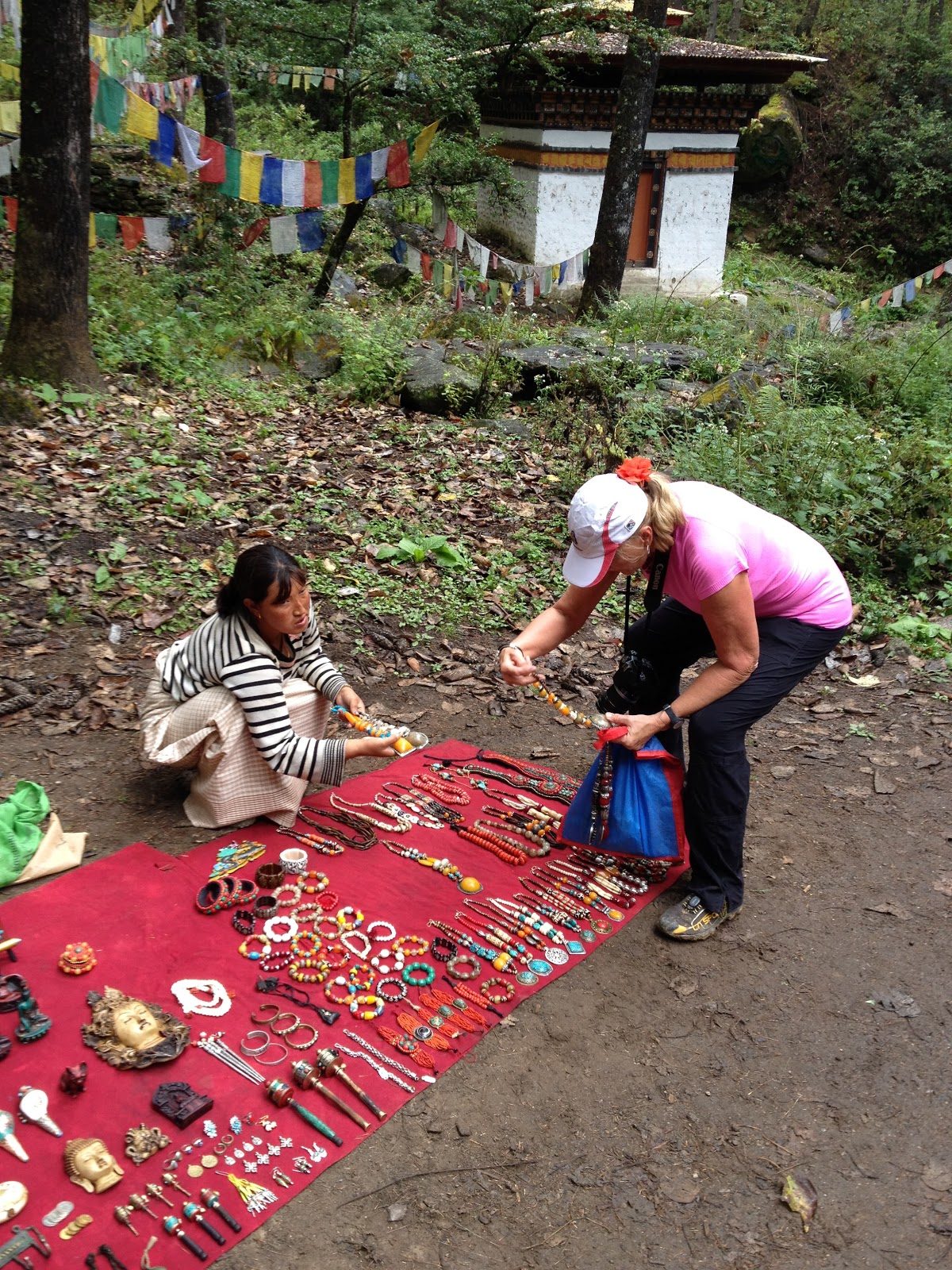
Barb finds shopping the reward at the end of the trail.  She has a magnet for that sort of thing!

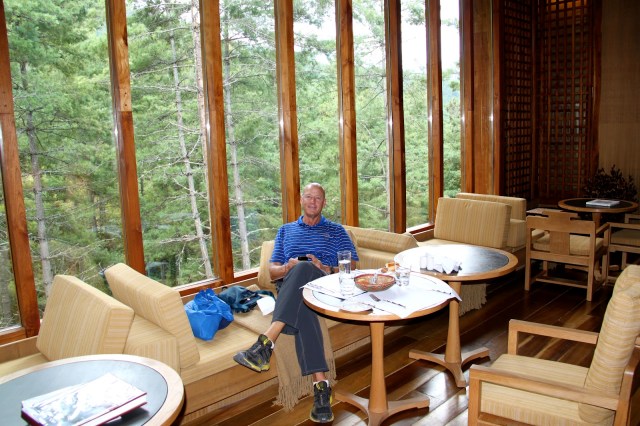
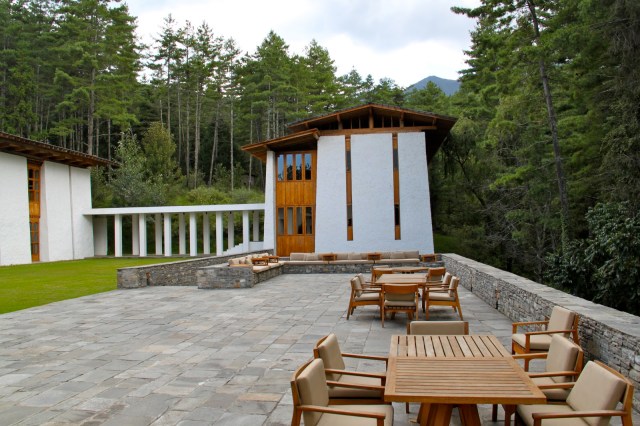
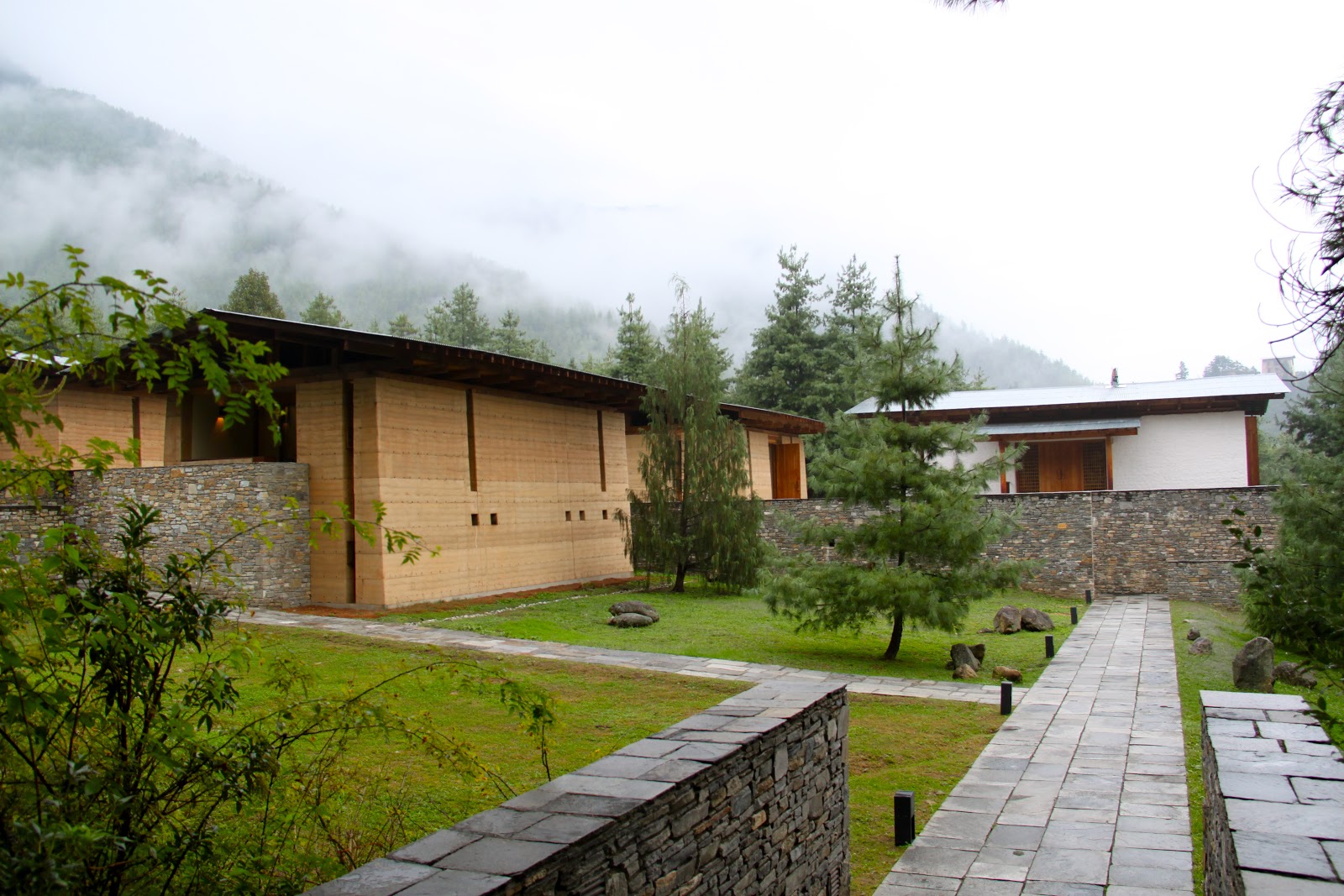
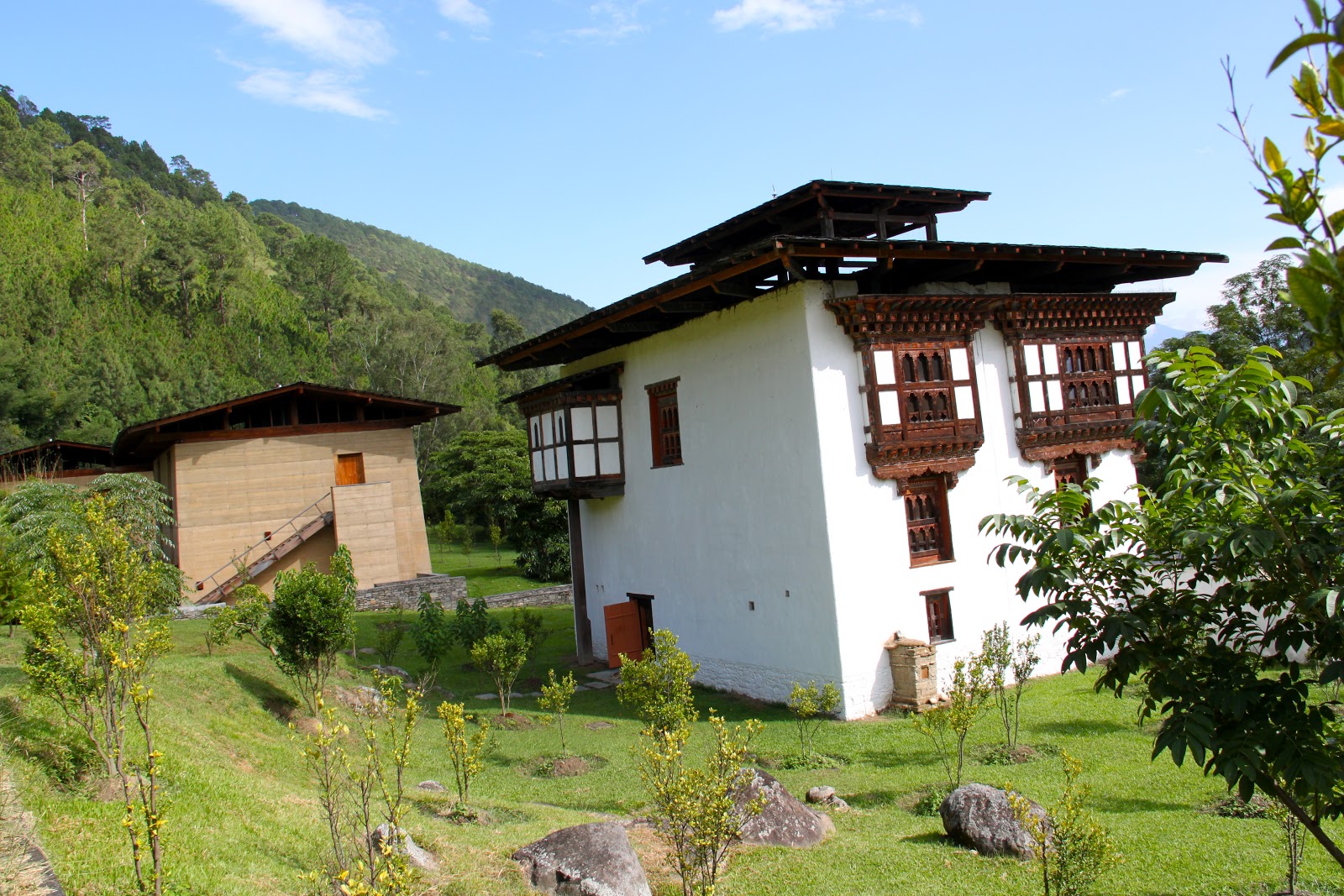
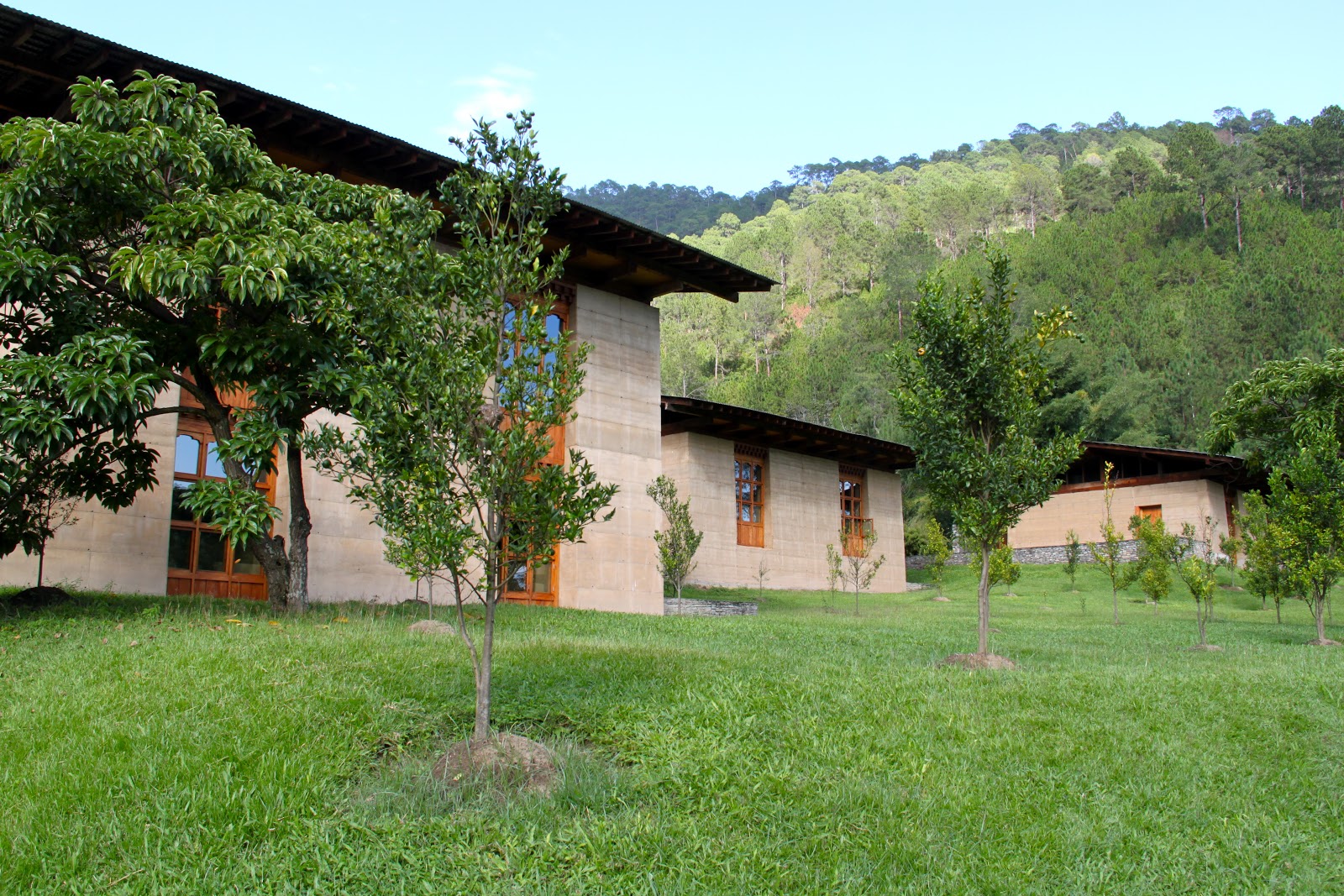
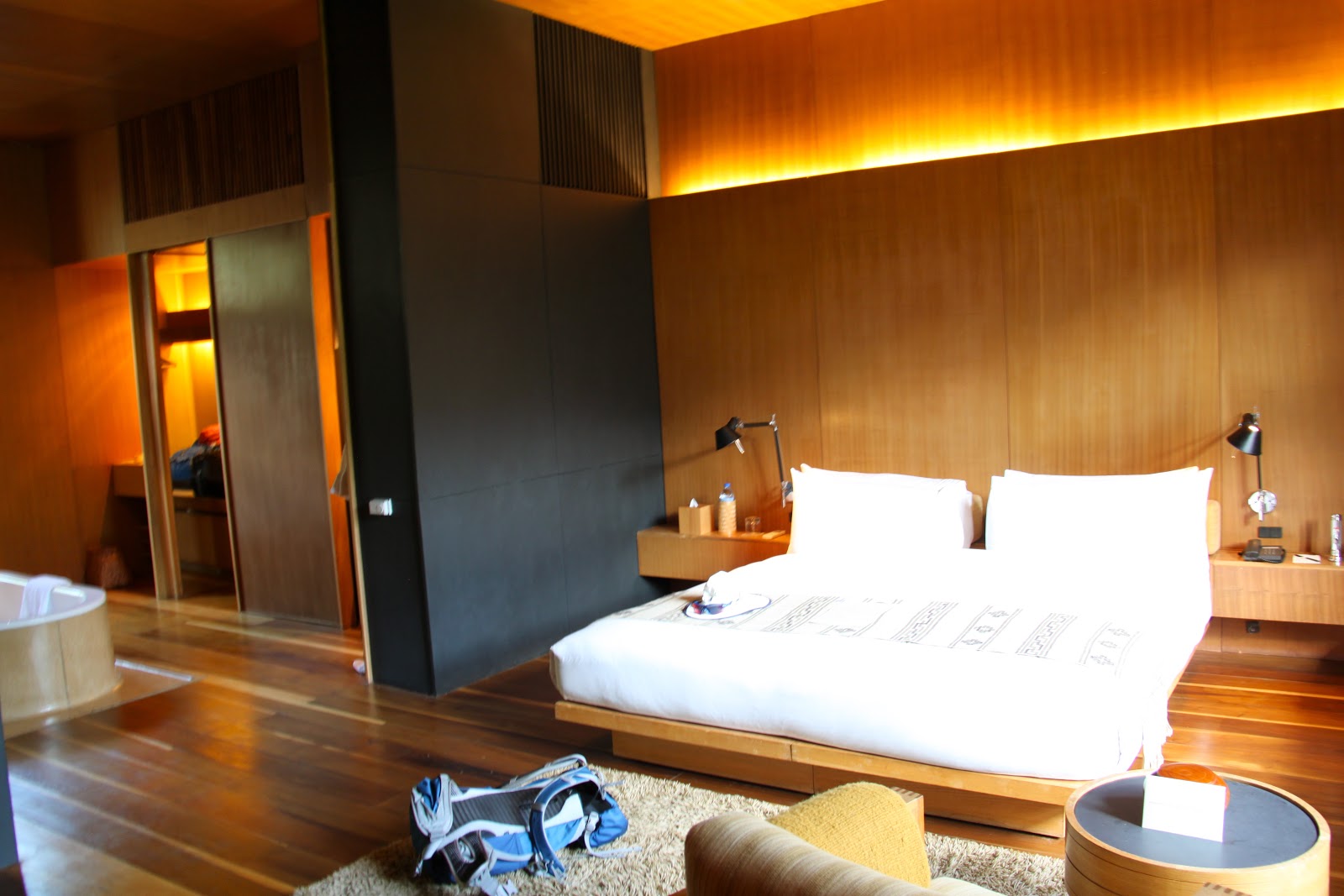
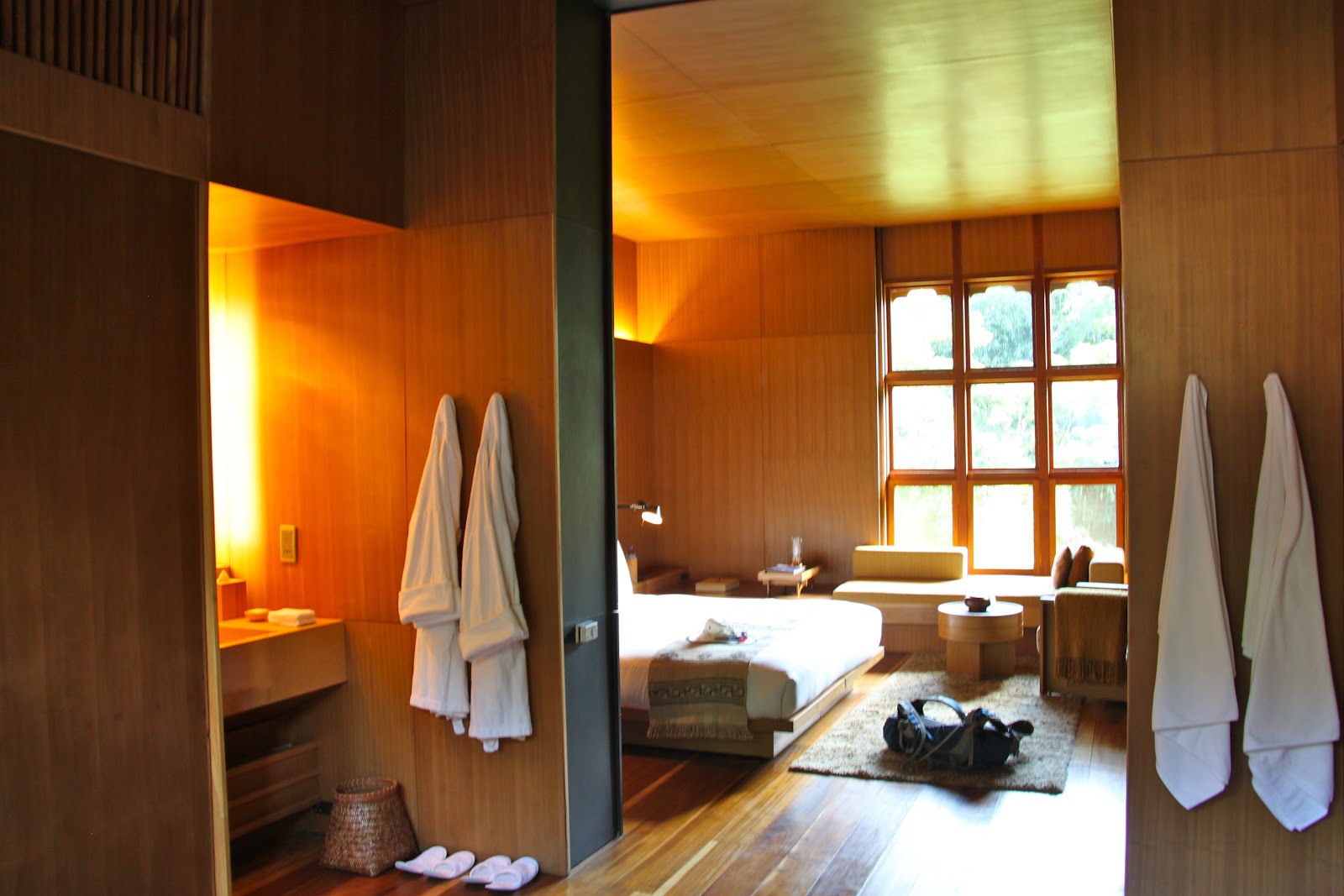
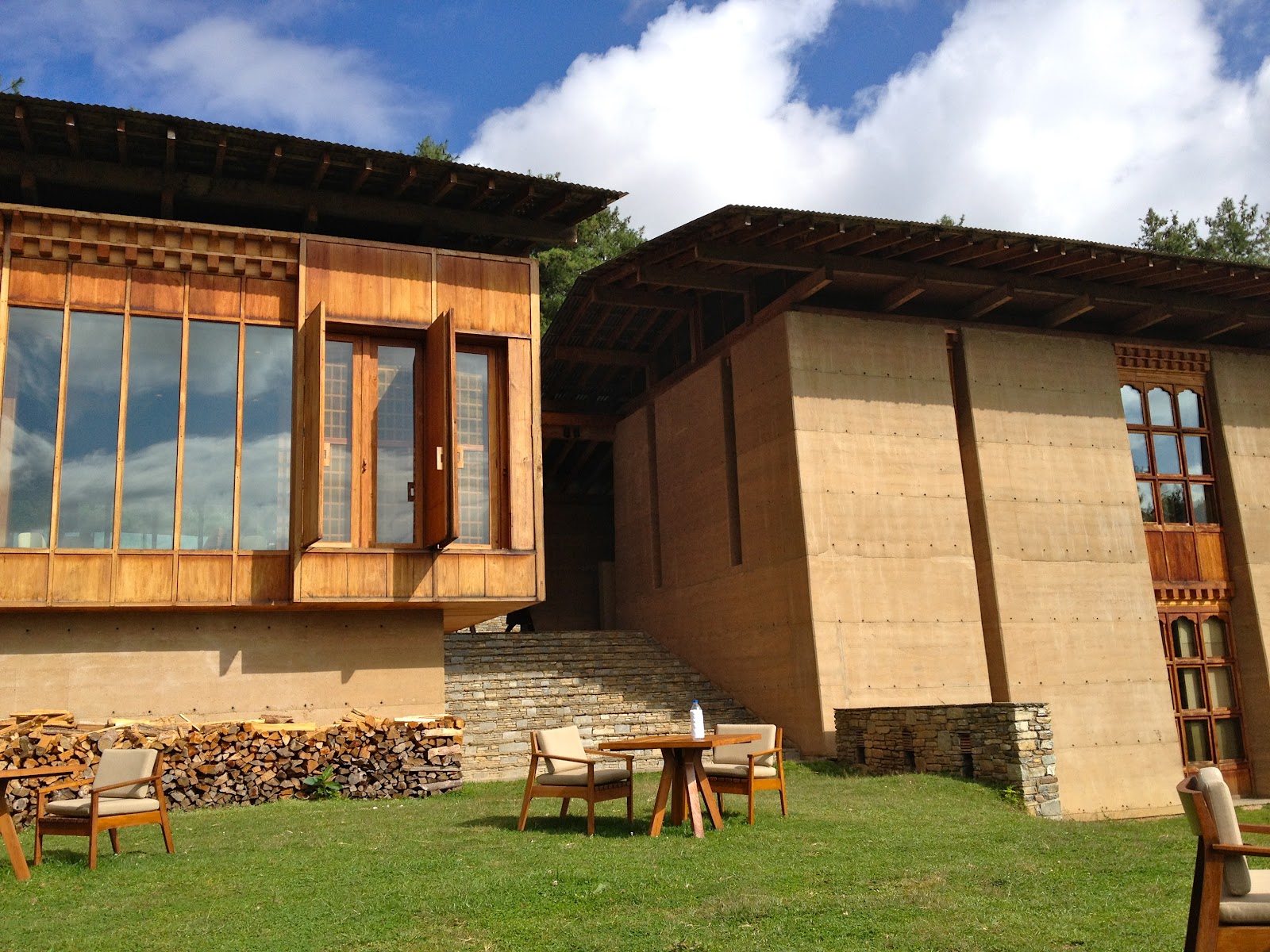
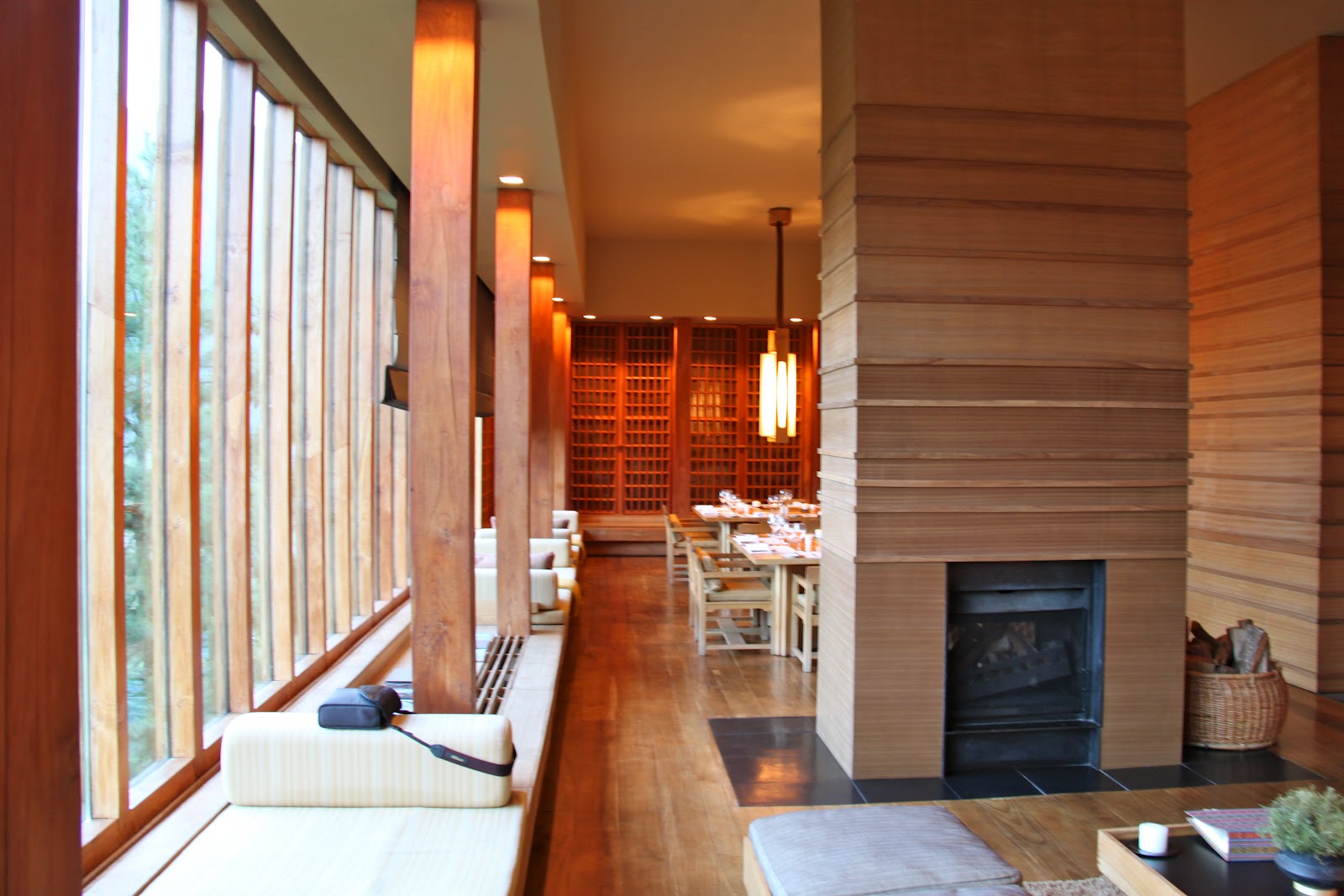
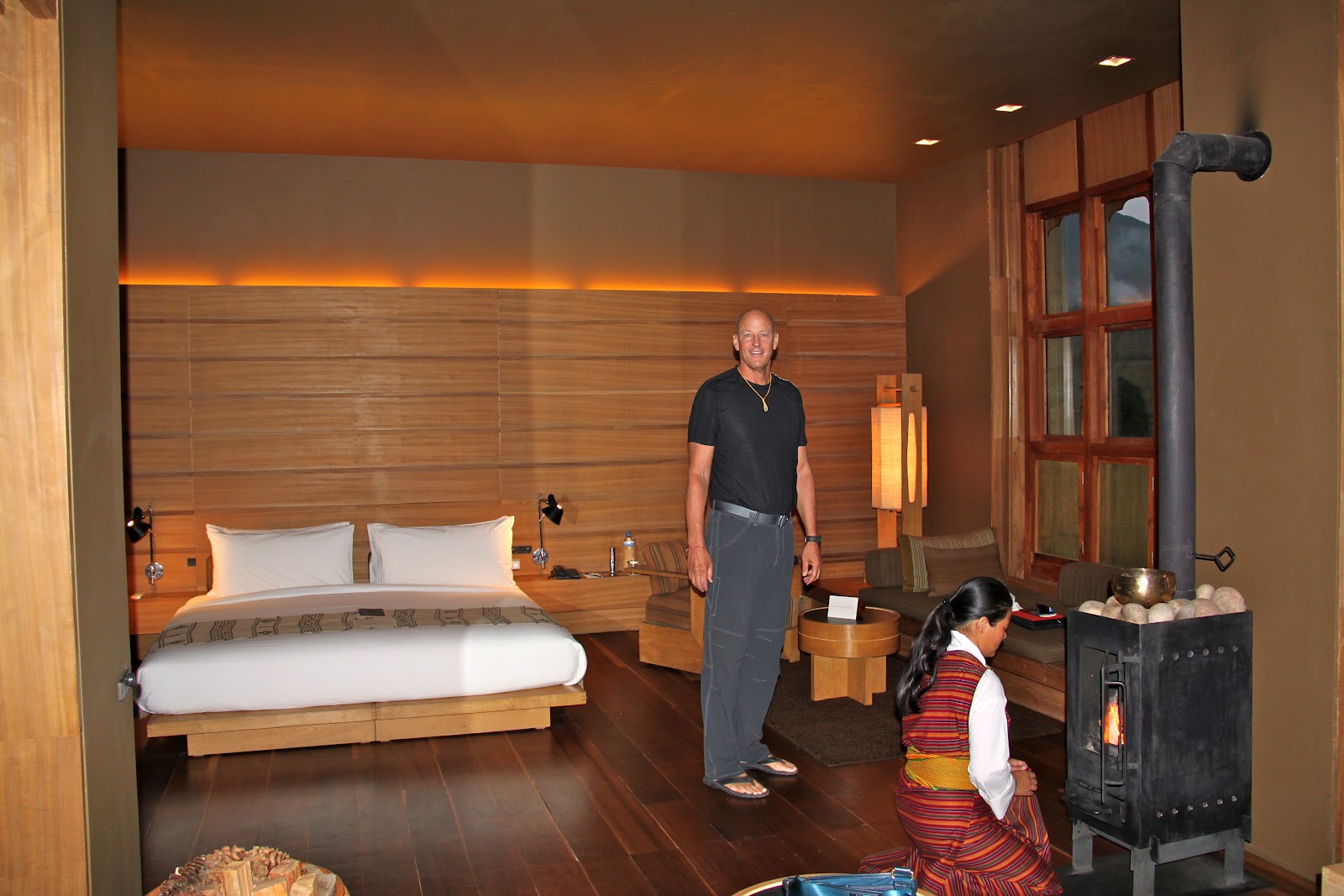
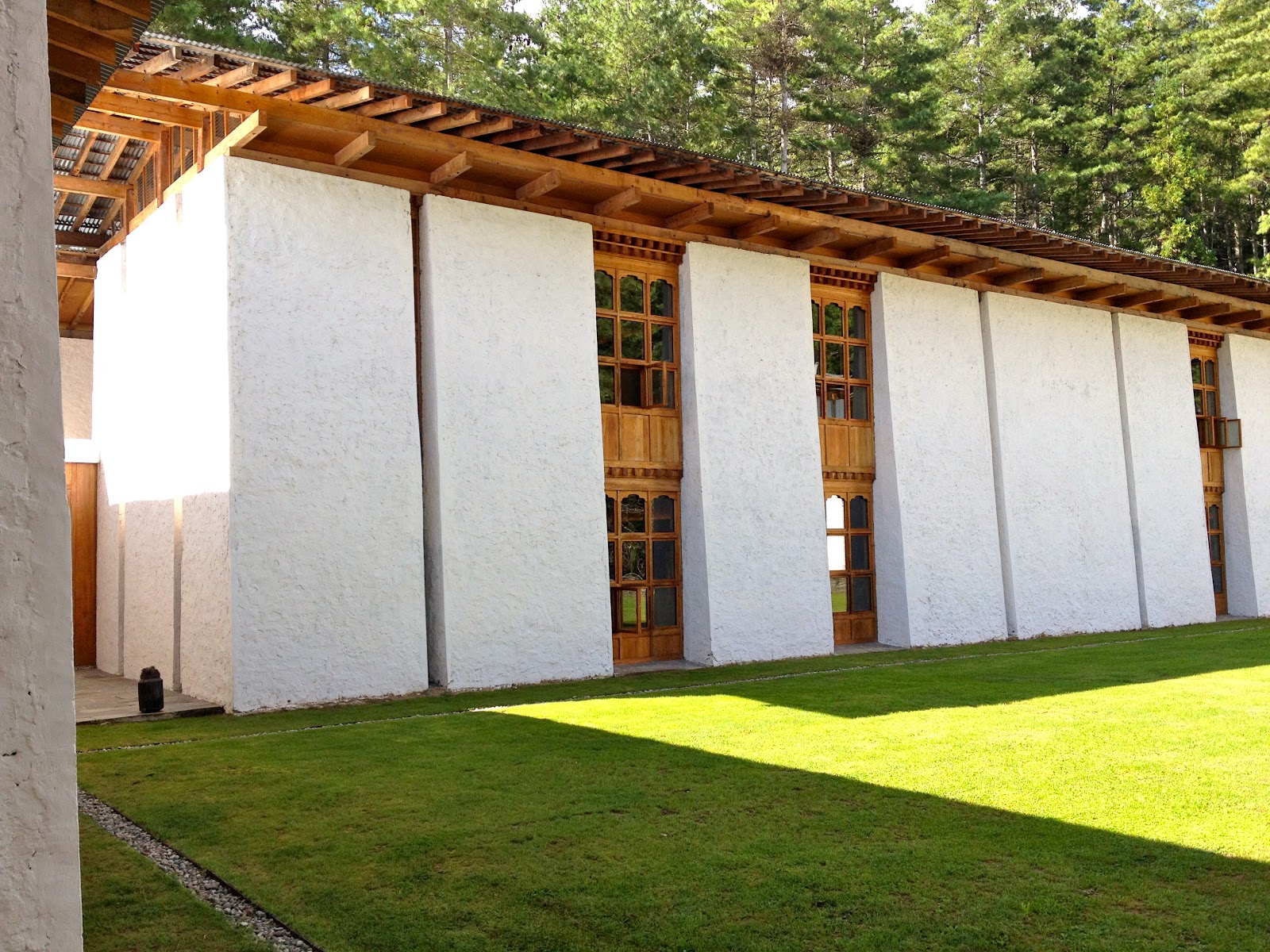
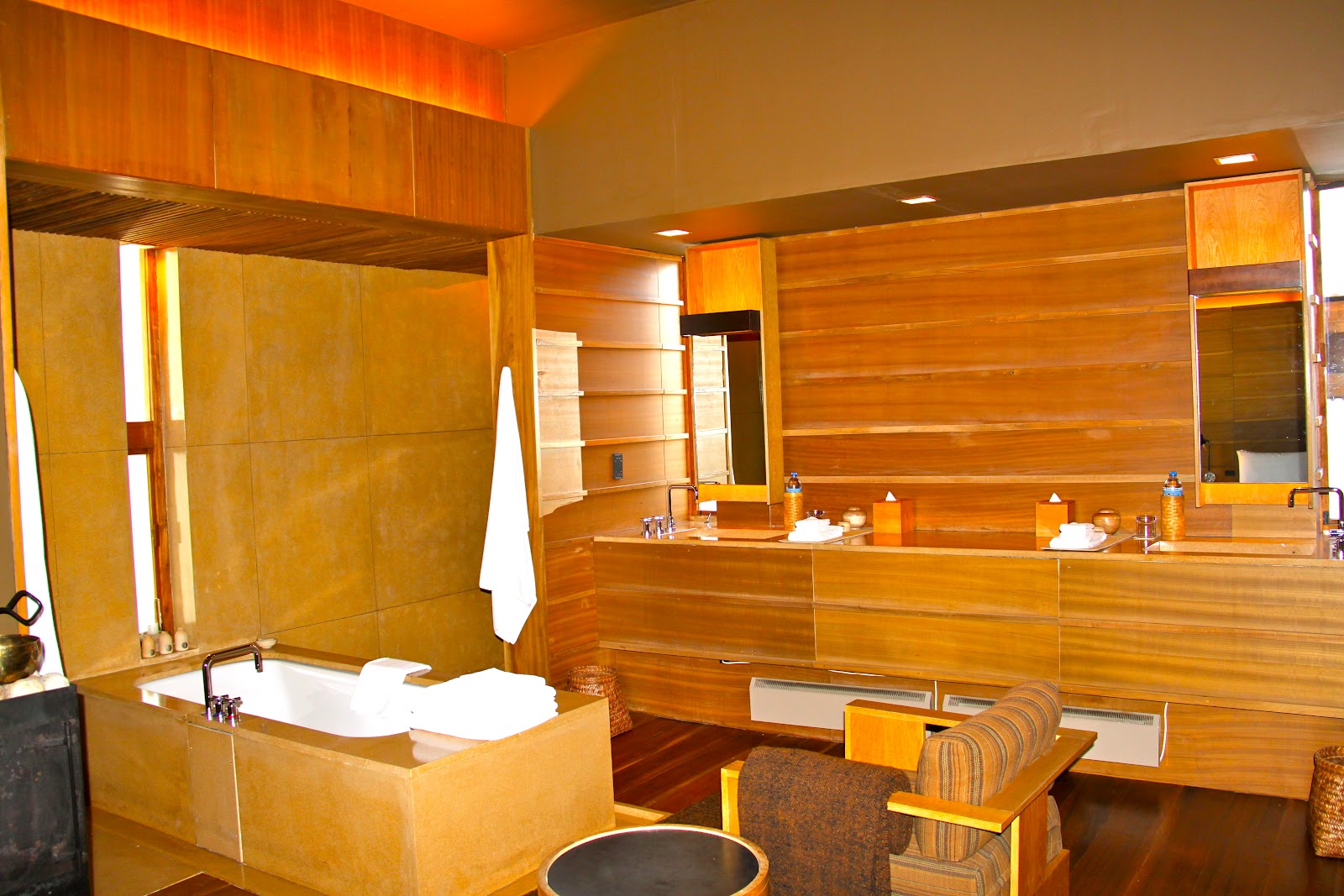
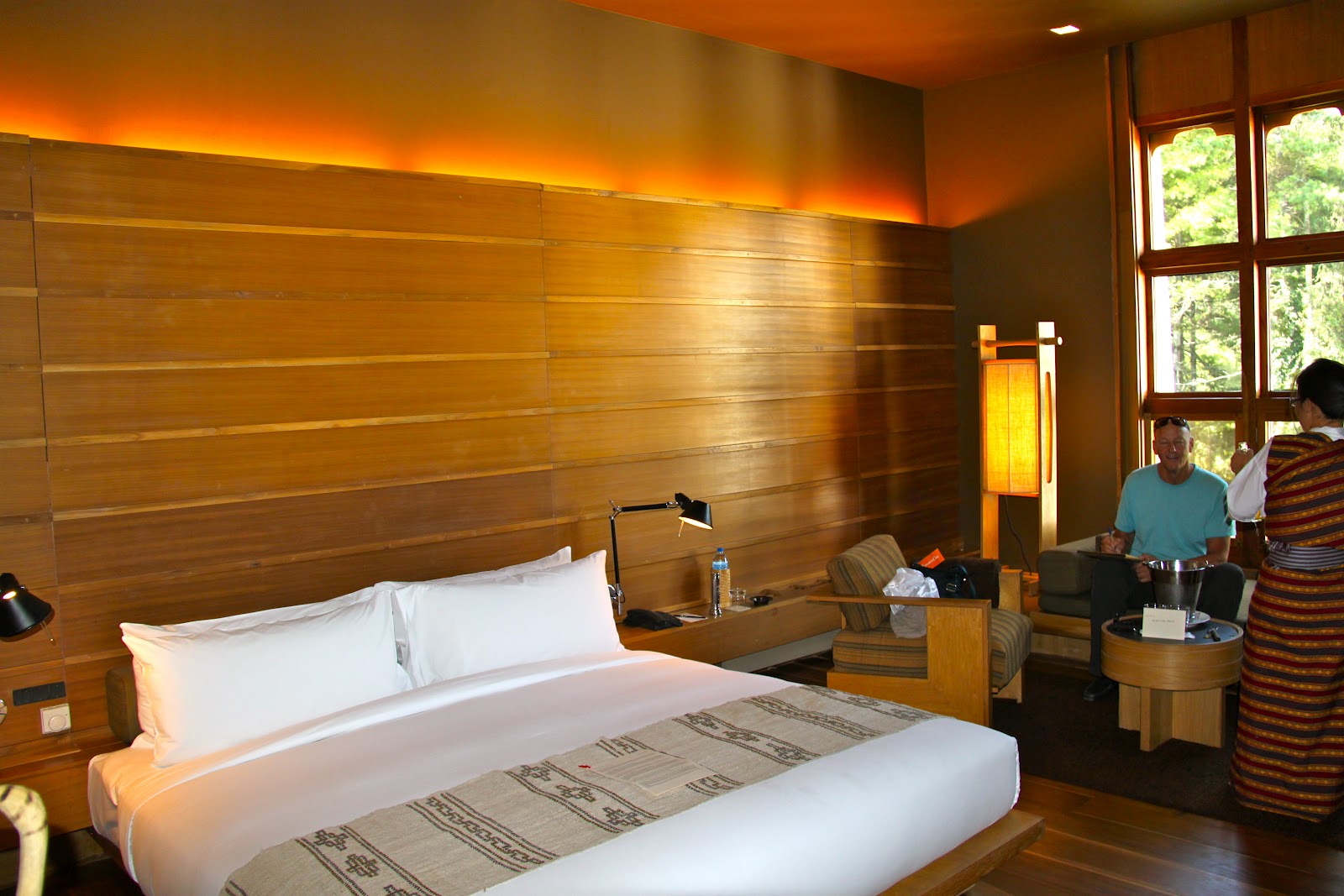
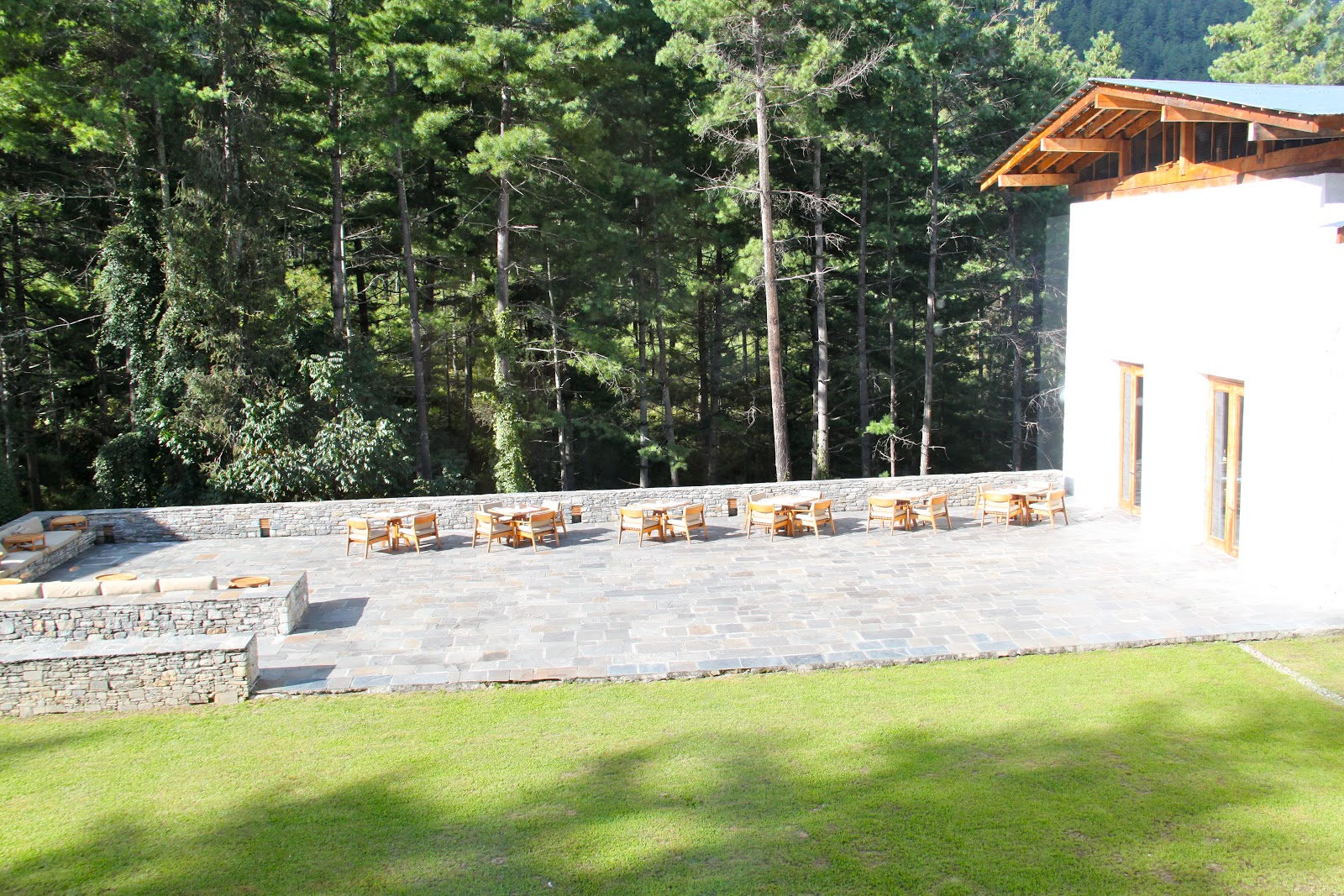
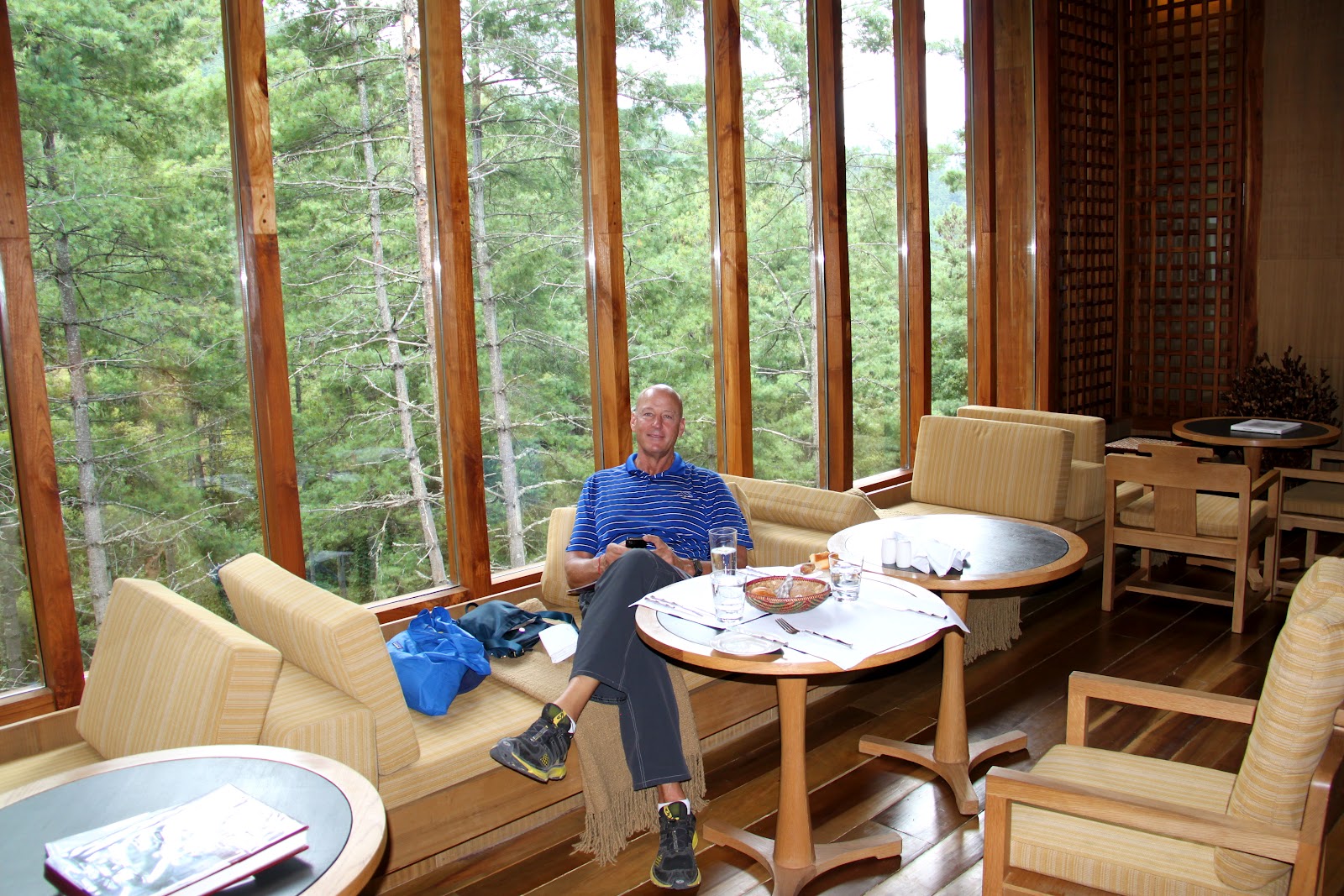
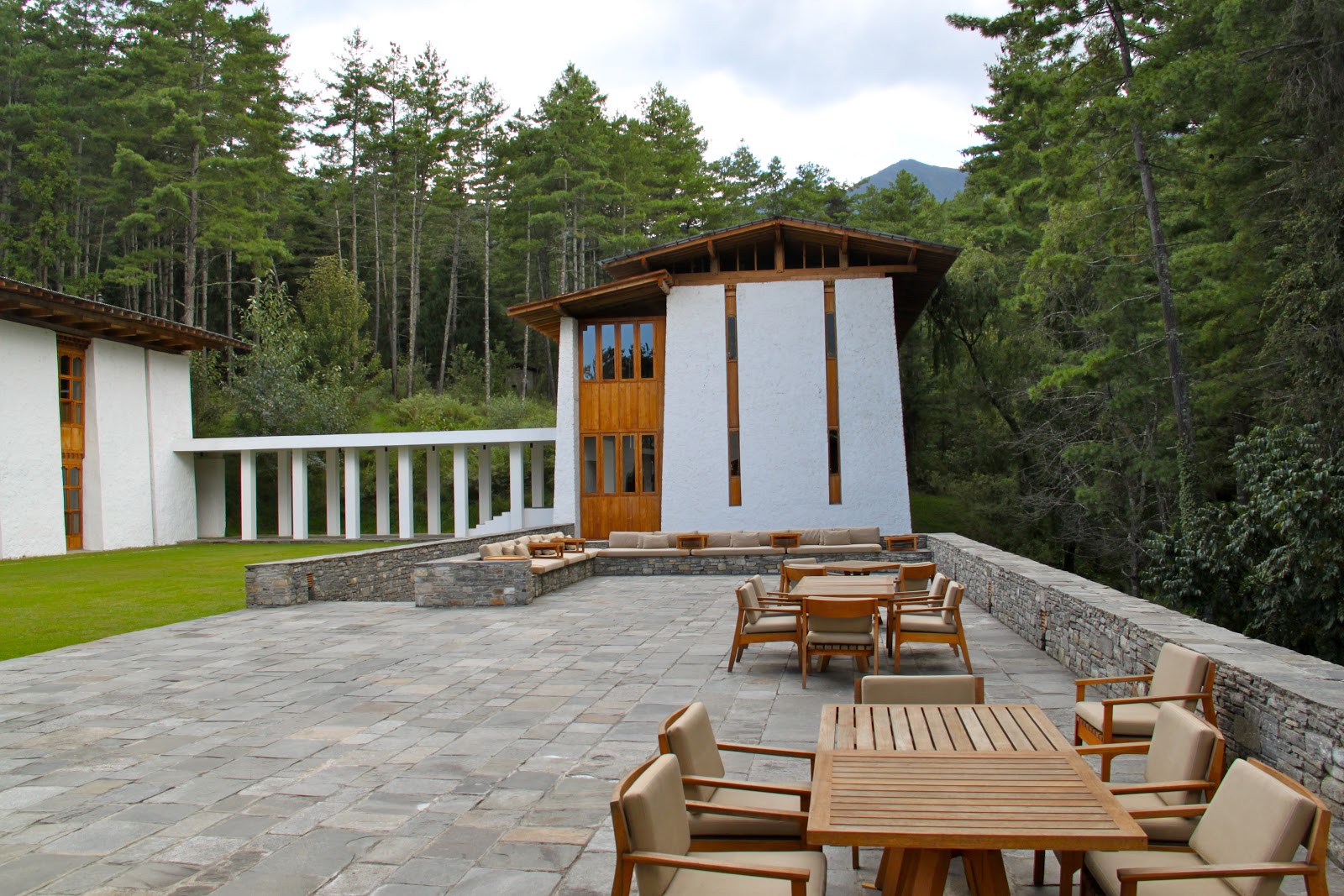
Back to the lodge where we relax for a while.  This Aman lodge is the largest we have stayed in Bhutan.  They are all very similar.

The Amankora Lodge at Paro

We leave Bhutan tomorrow for Koh Samui, Thailand.  We are ready for some R and R.

Punakha, Bhutan Sept. 30-Oct. 1, 2012

PUNAKHA,  BHUTAN
In the morning we endure another brutal 3-hour drive to Punakha.  We are beginning to question whether the rewards at the end of the drive are worth the dangerous, bumpy rides.  The roads are cut out of cliffs and there are few large vistas.  We are in cloud forests.

View from inside the car
Cliffs of both sides

Lots of washed out roads and ruts
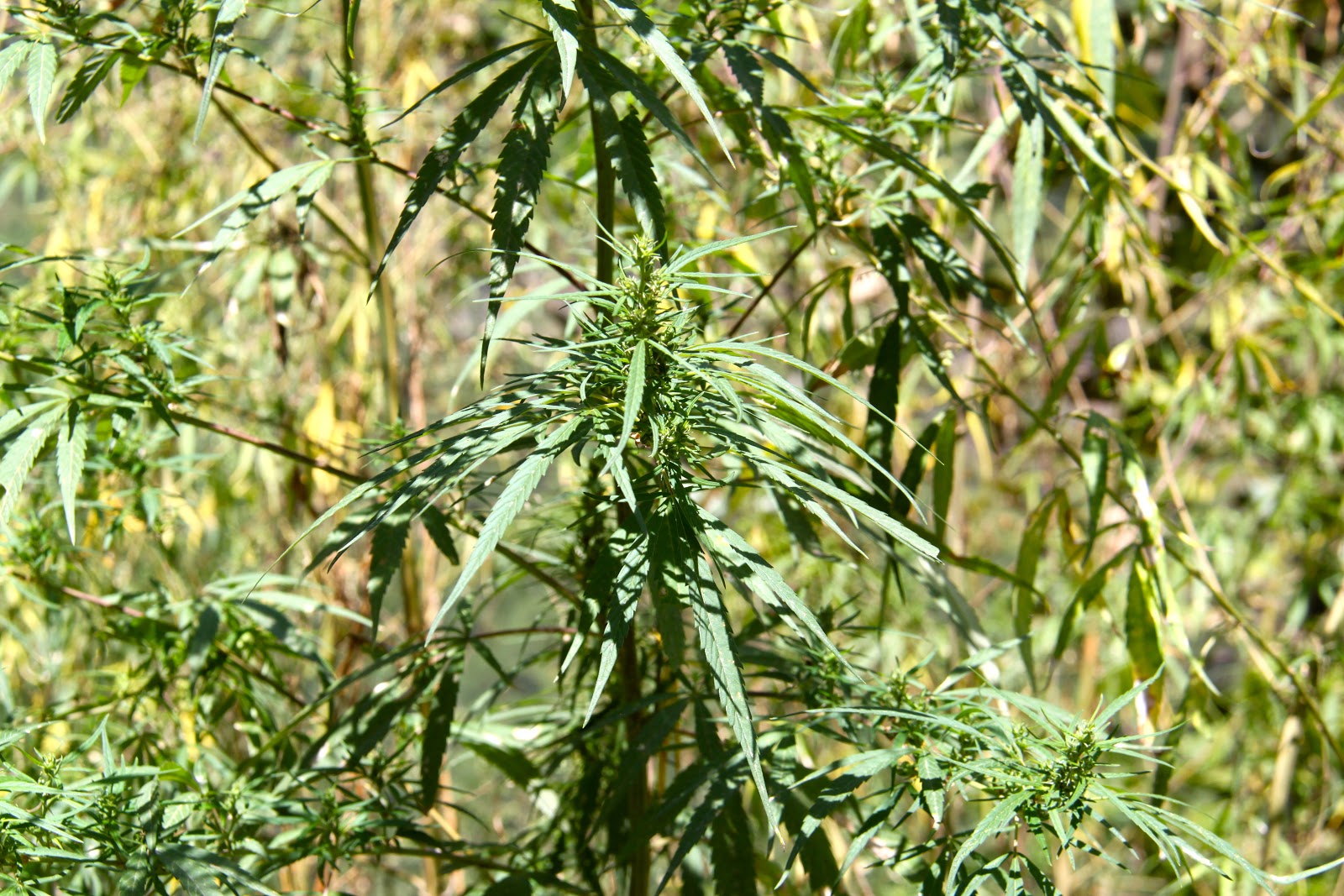
Marijuana grows abundantly along the roads

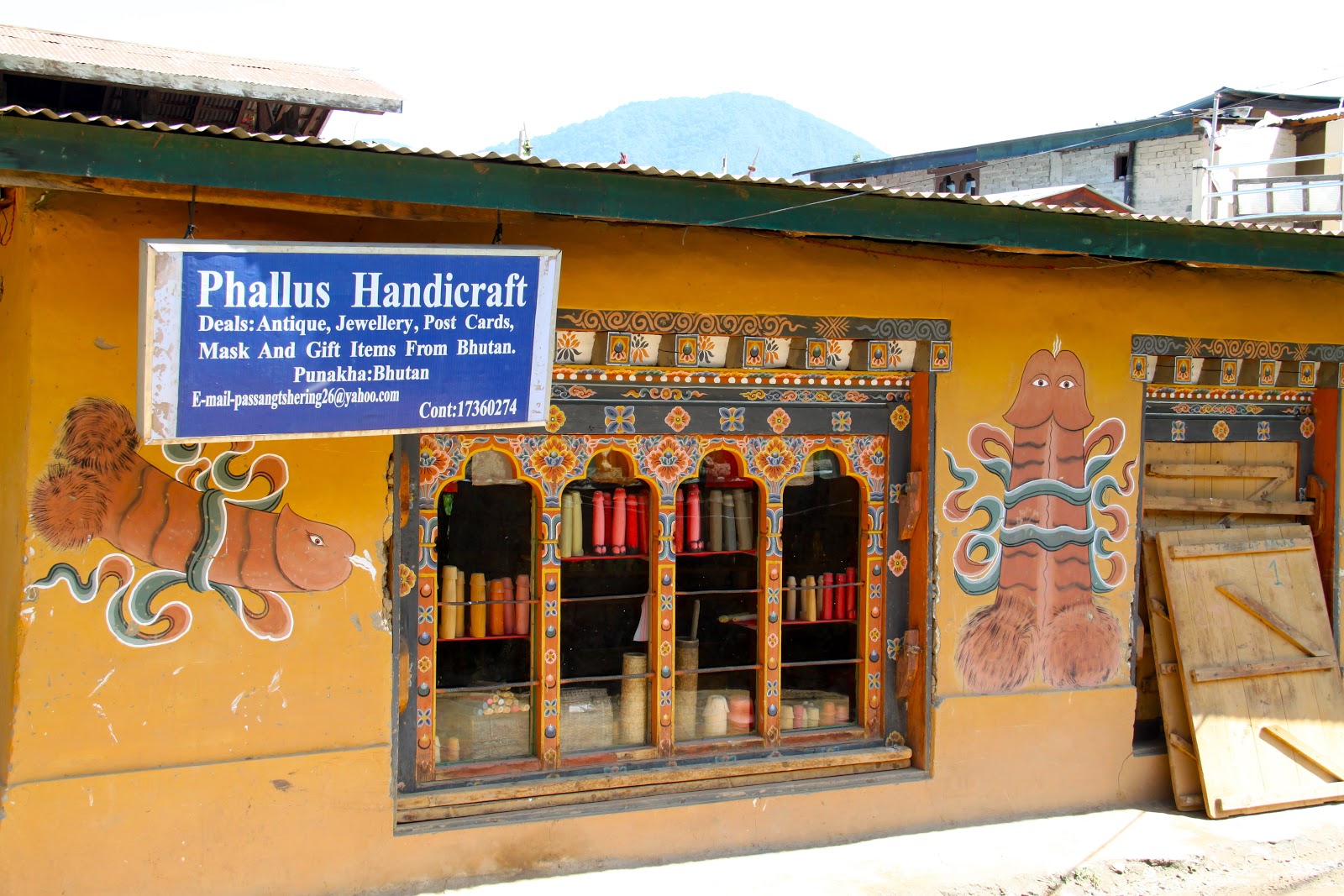
Along the way we stop and take a hike to the Fertility Temple.  The phallus is prominent here.  Inside the temple Barb gets a blessing from the Monk who not only gives her water in her palms but also touches her head with two phallus objects.  One is made of bamboo and the other is made with ivory and both are giant human size. 

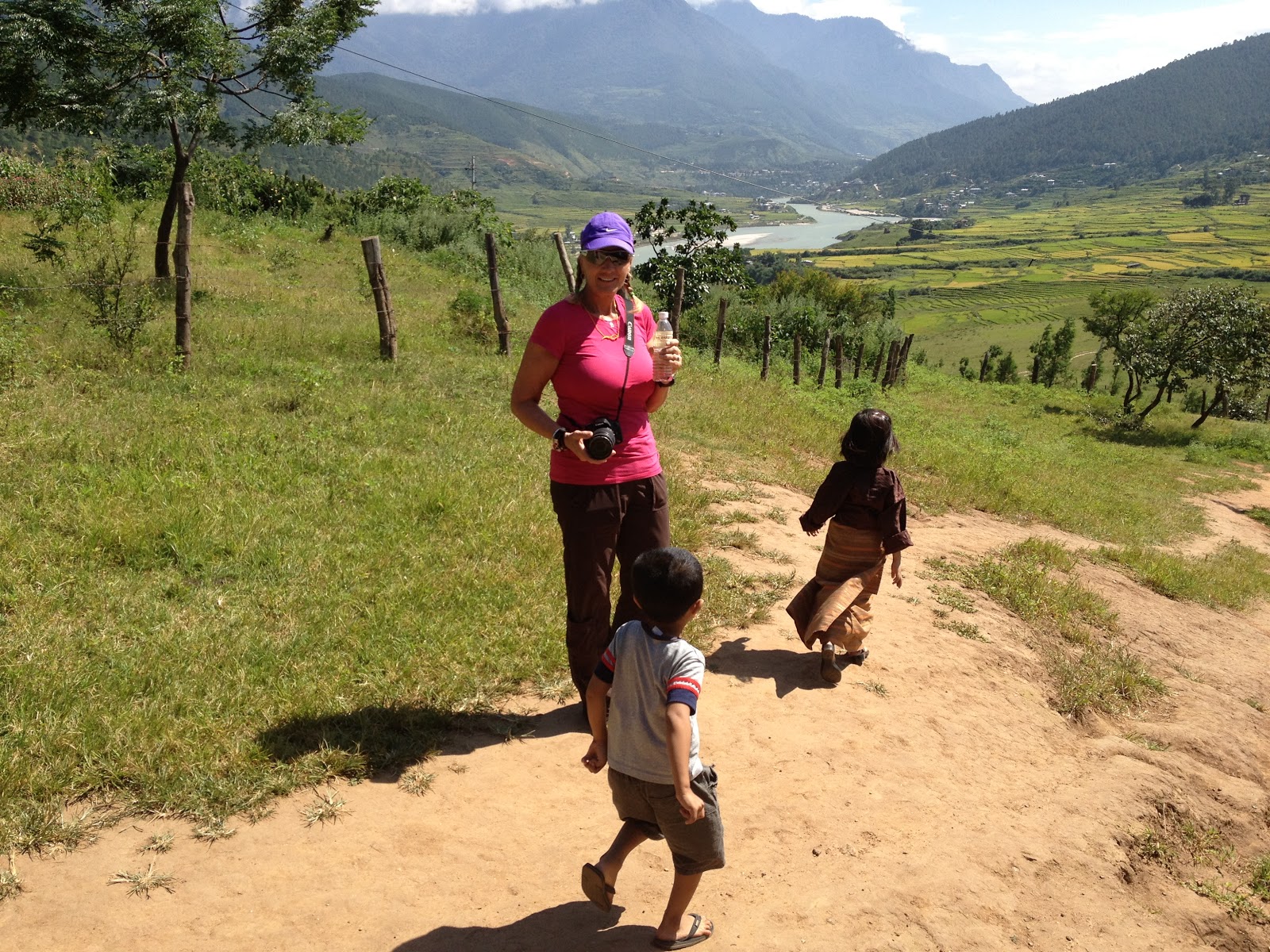
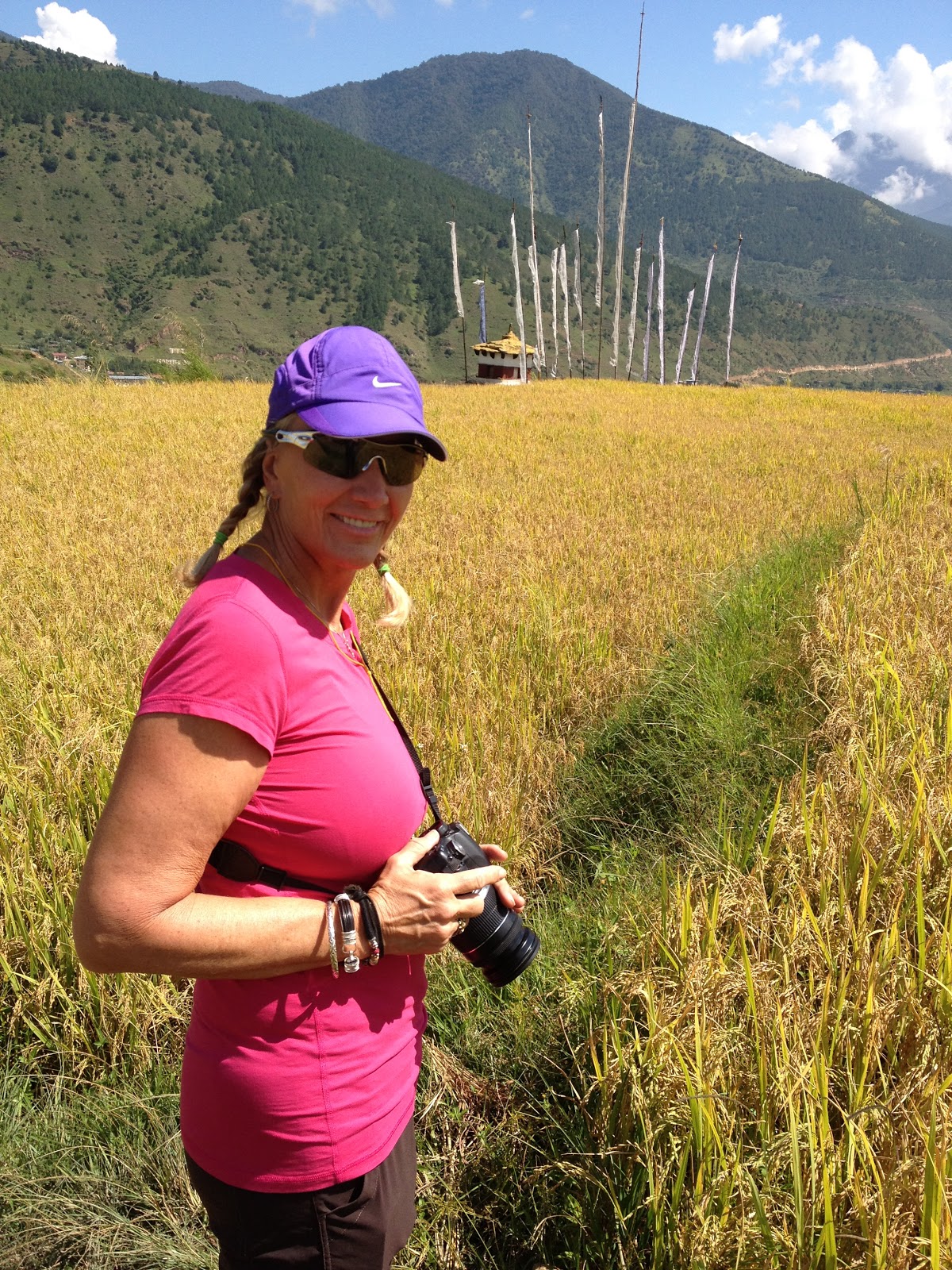
Walking through the rice fields to the Fertility Temple

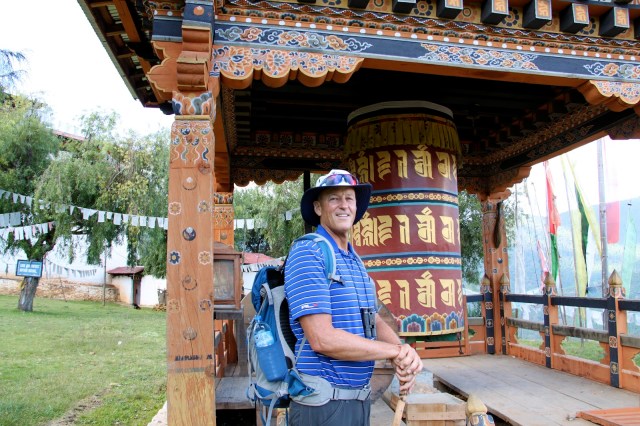
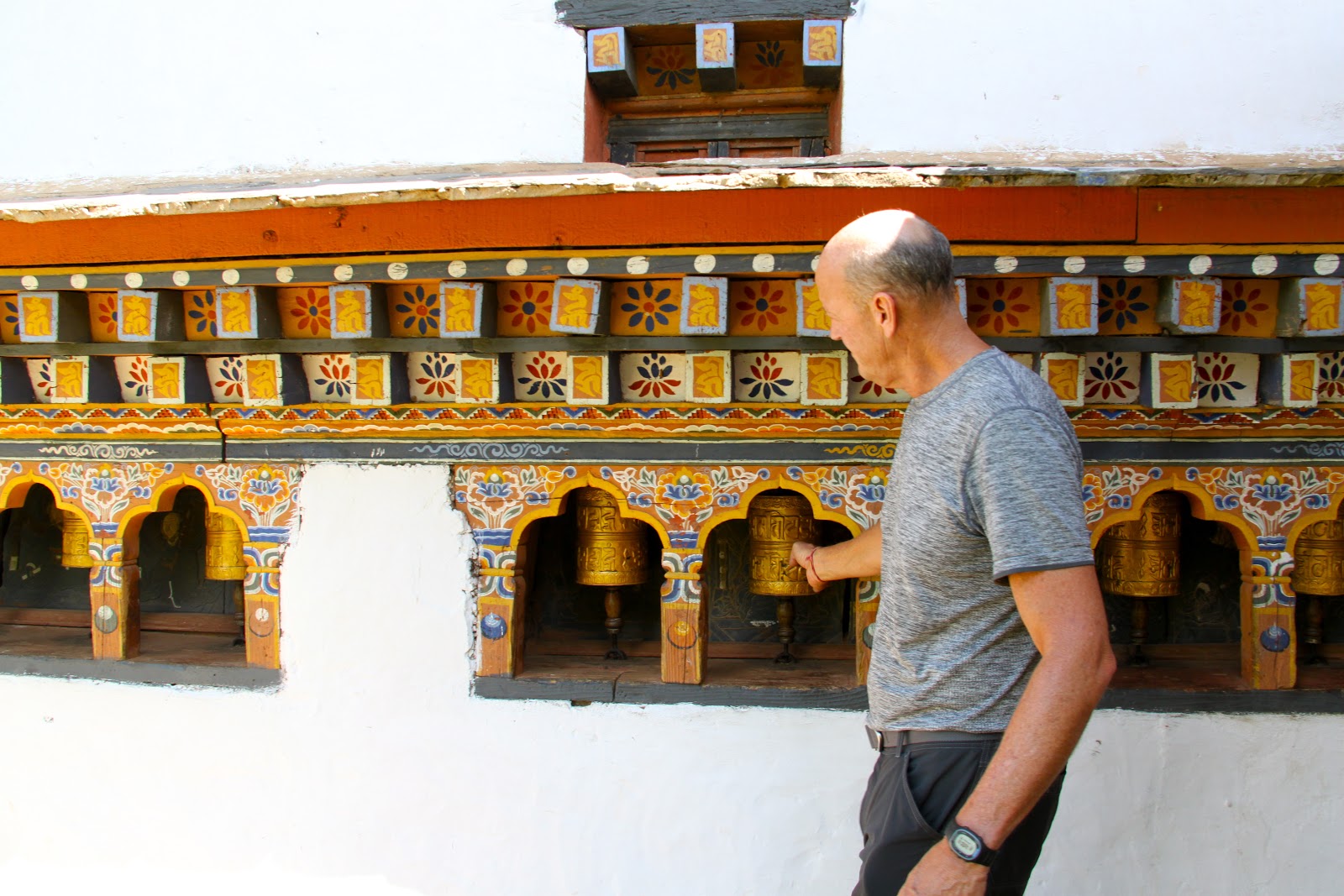
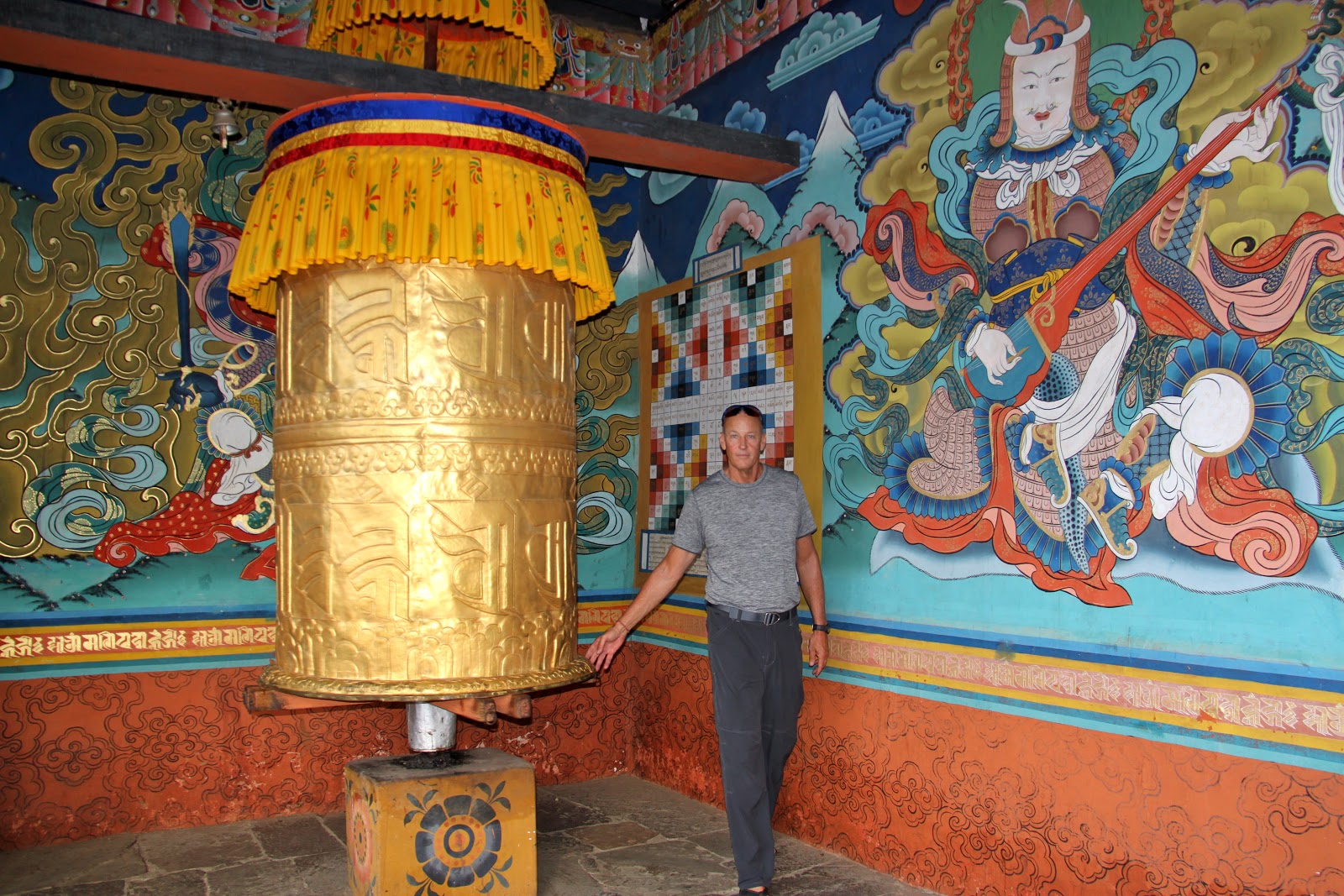
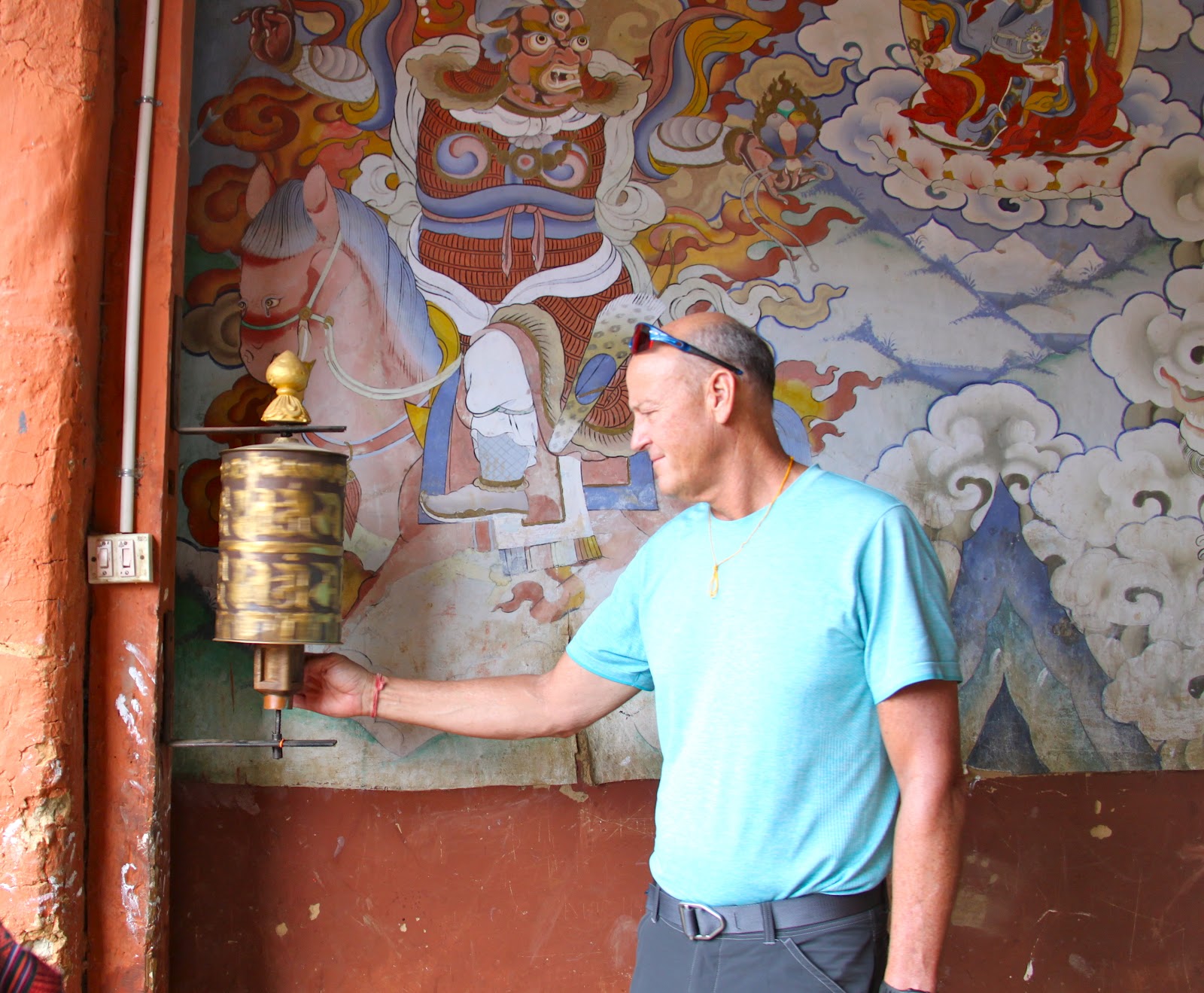
Scott spins the prayer wheels again

Walking into the temple

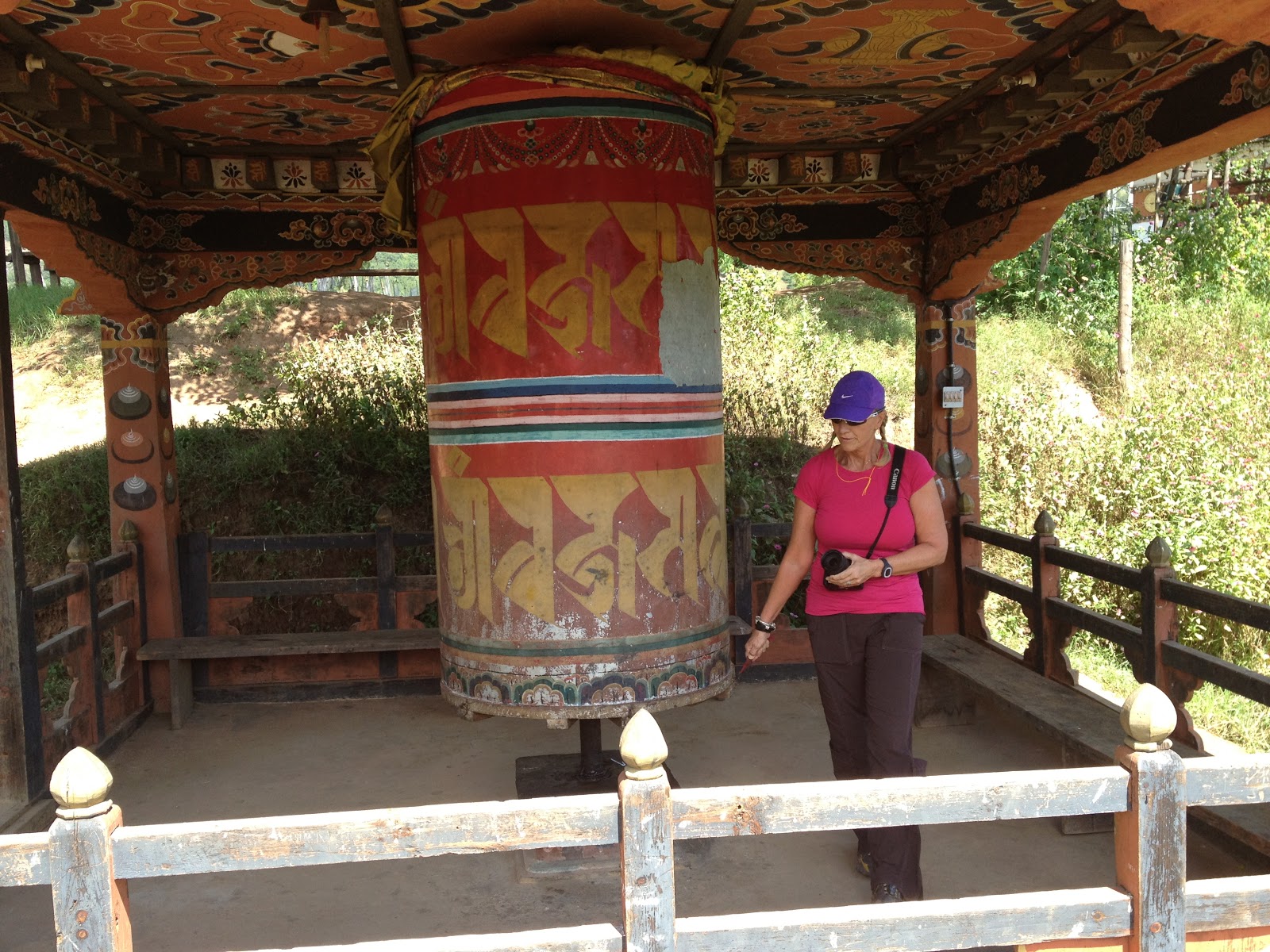
Barb spins the big wheel of Fortune!

A bit unusual for US standards, but very typical around here!  You can buy key chains, candles, carvings to put over your front door.

We make offerings and offer the usual gestures and prayers and reflected on the blessings of our 4 loving children, their wonderful spouses, and our adorable grandchildren.  We are truly blessed.

Scott donates for blessings

Walking through the rice fields
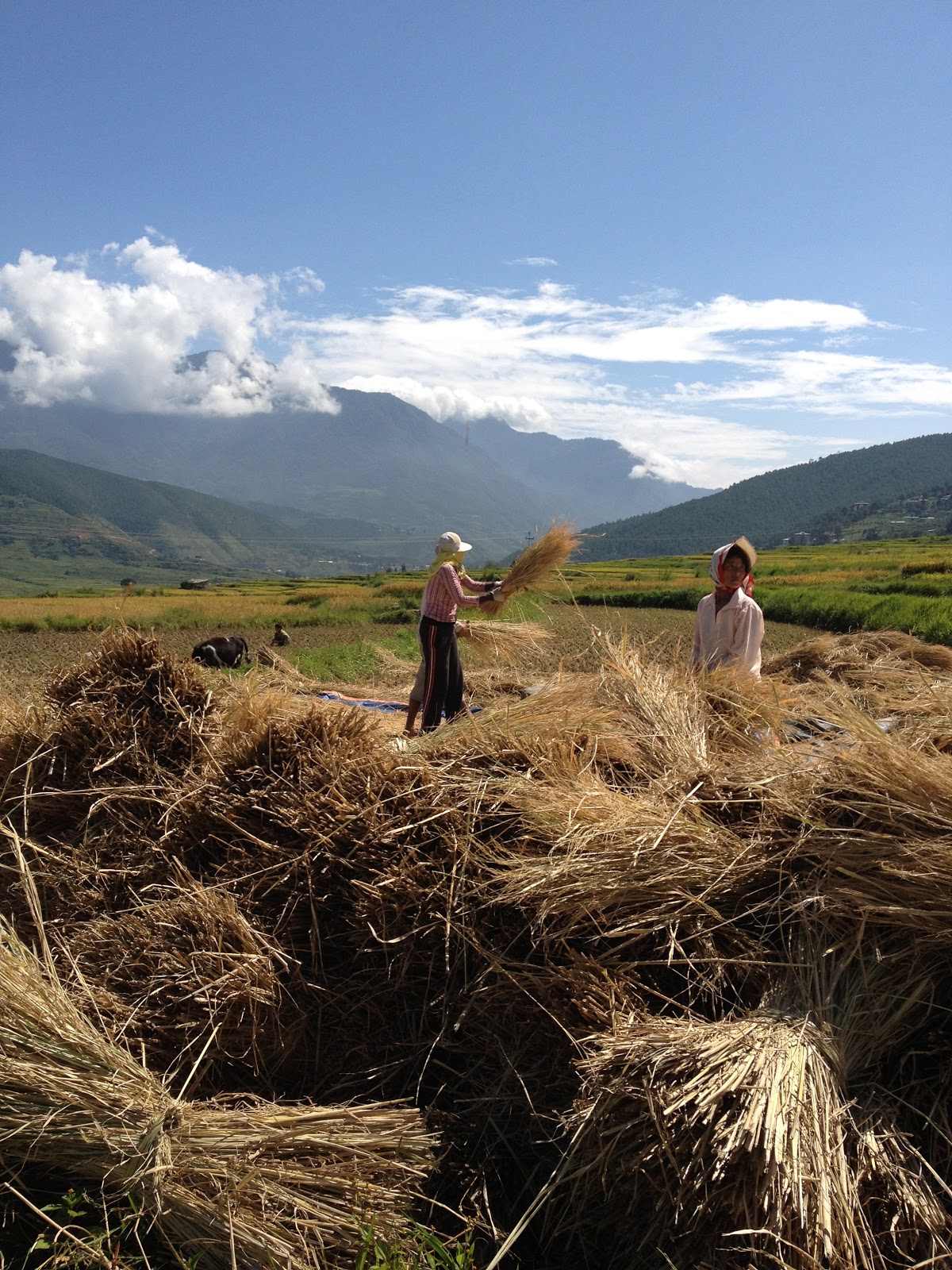
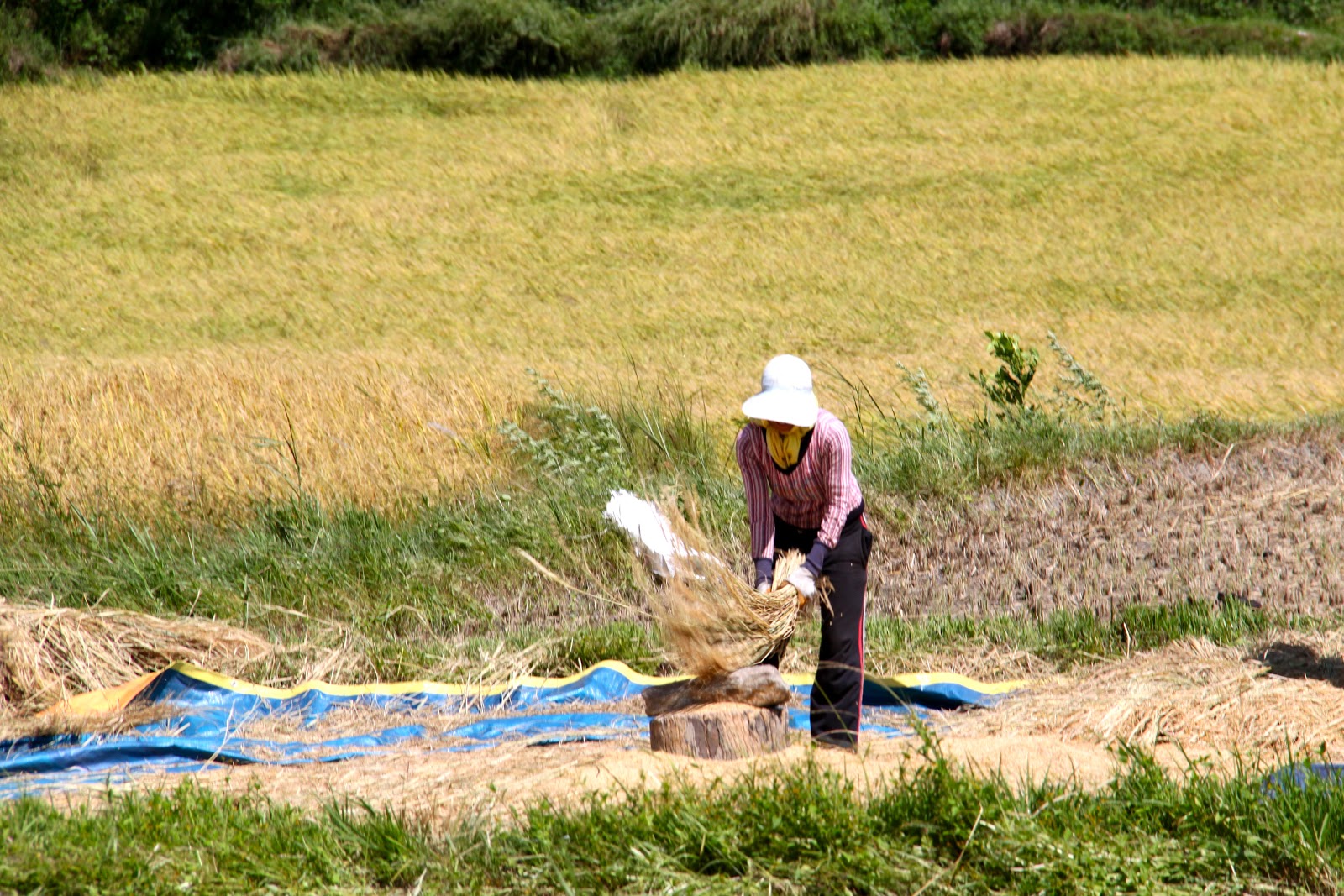
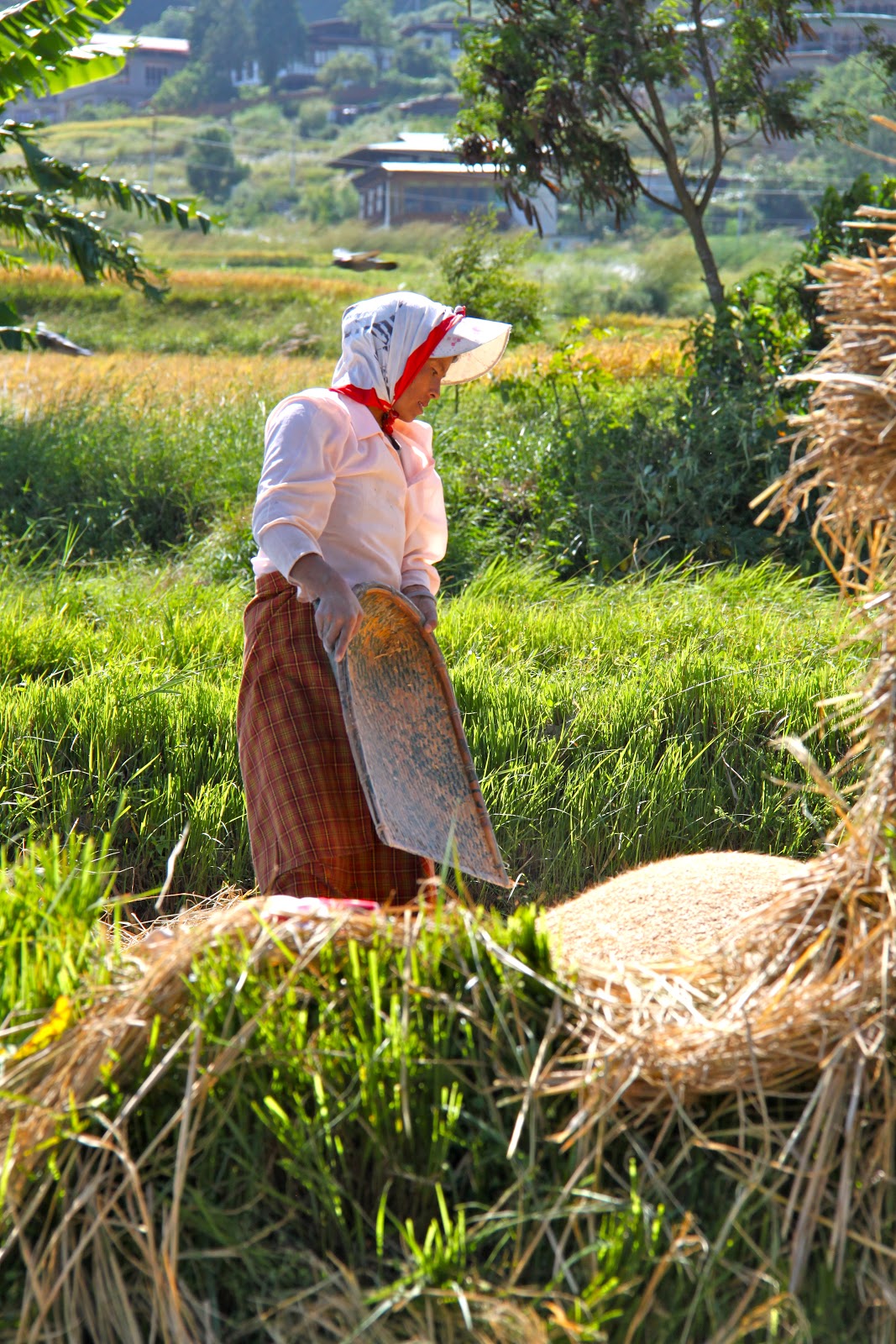
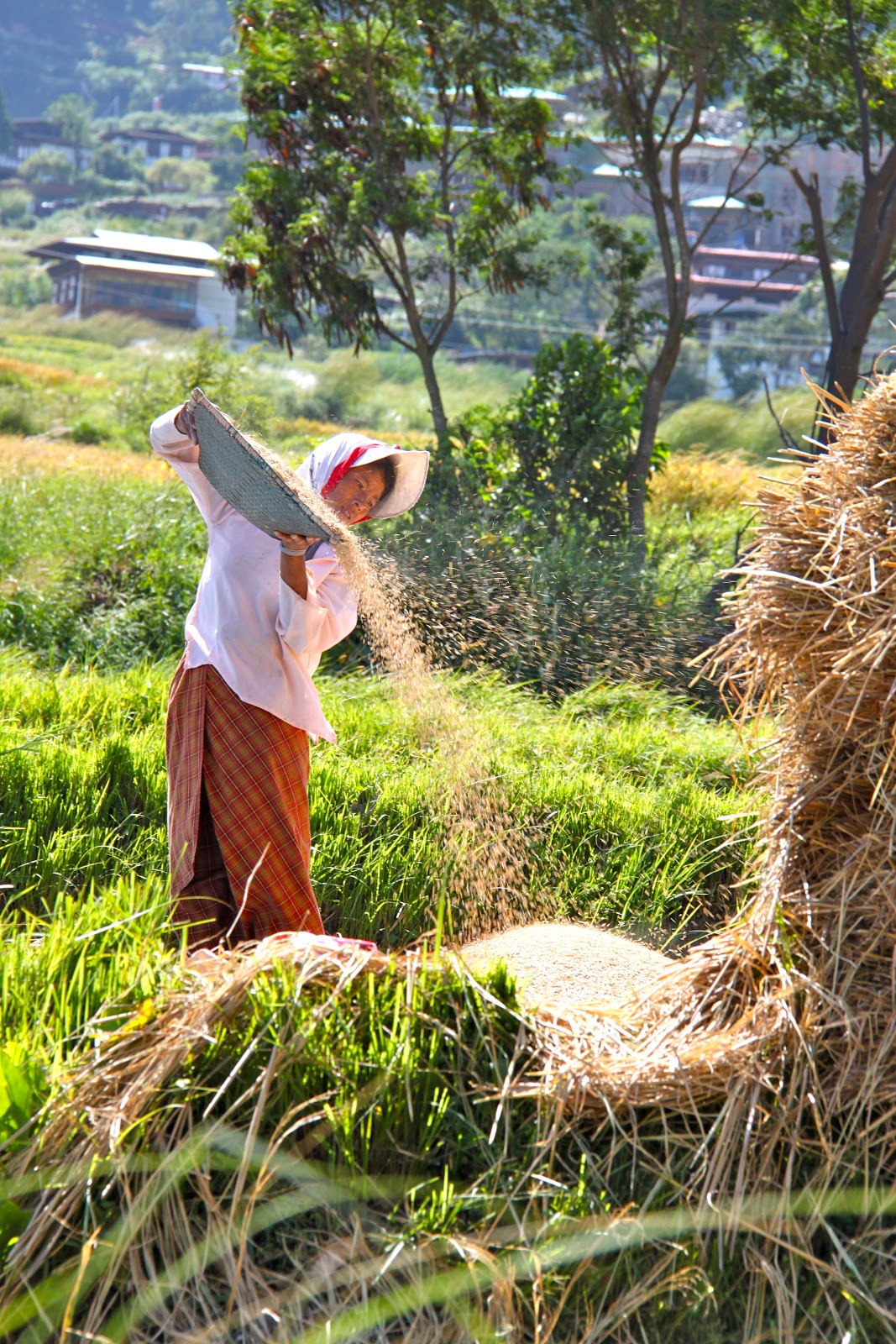
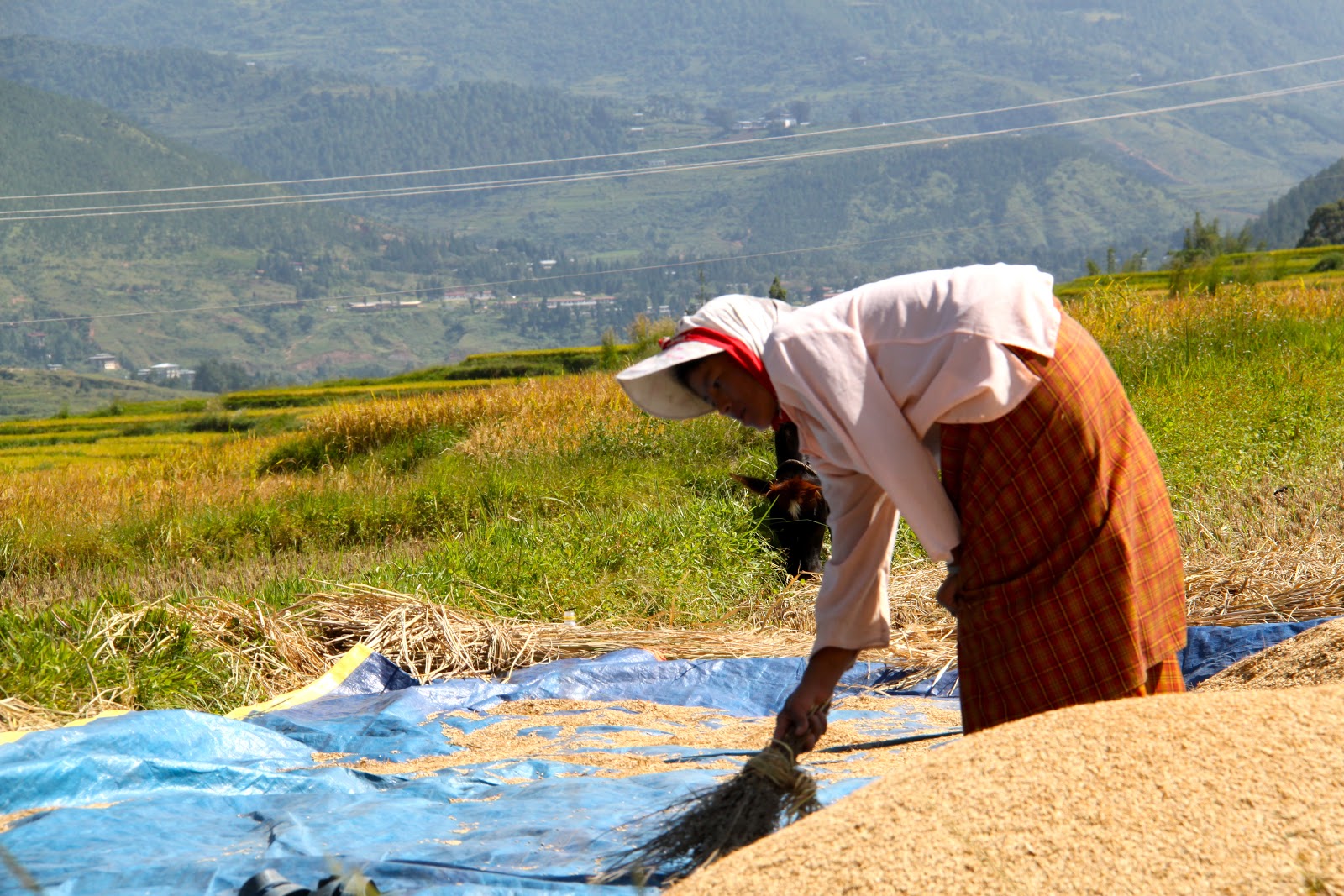
The old fashioned way to harvest rice
She beats it against a piece of wood

Sifting

Sweeping into piles

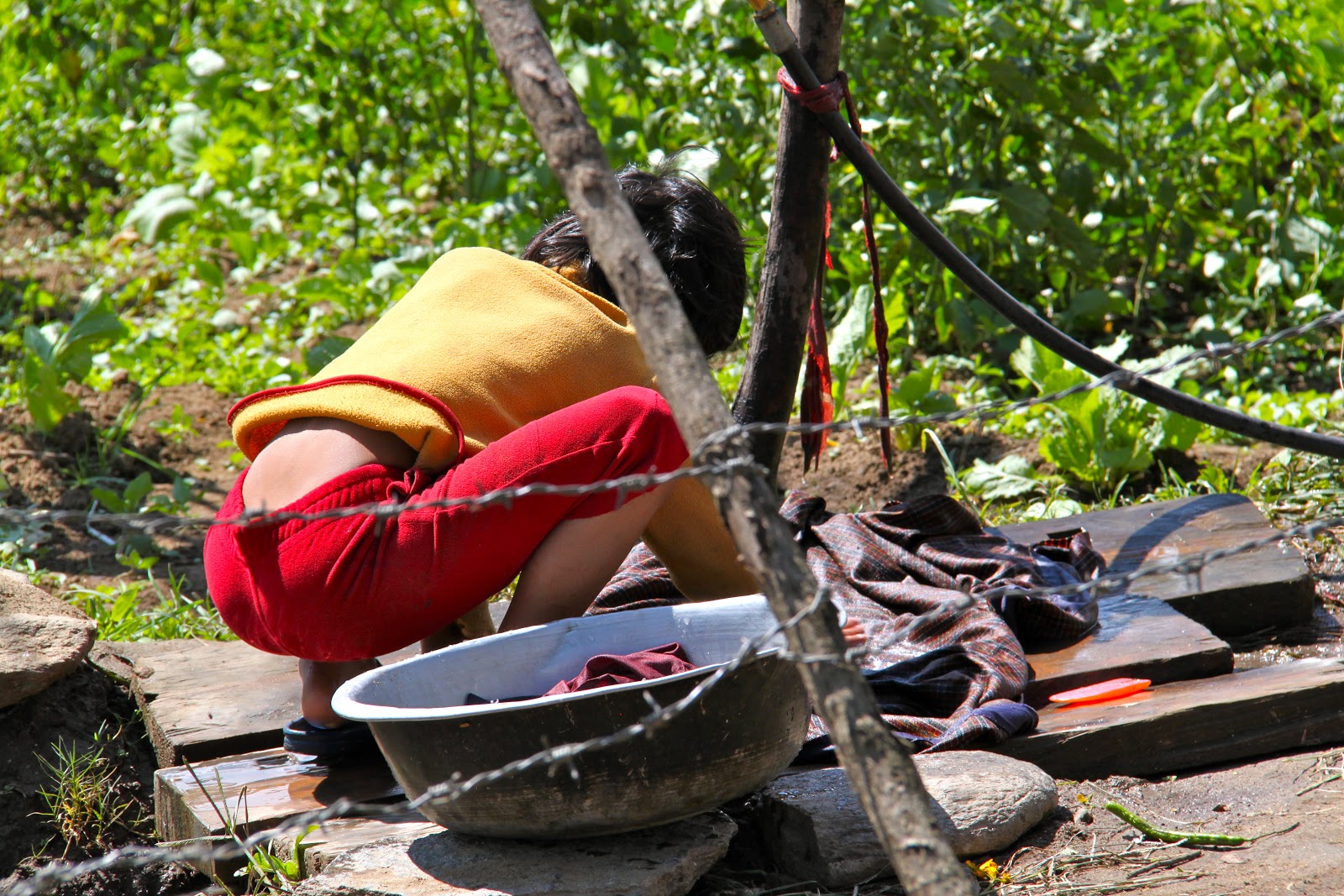
We also passed a girl doing the laundry

The Punakha Amankora lodge was once a palace for the royalty of Bhutan and was built in about the 16th century. 

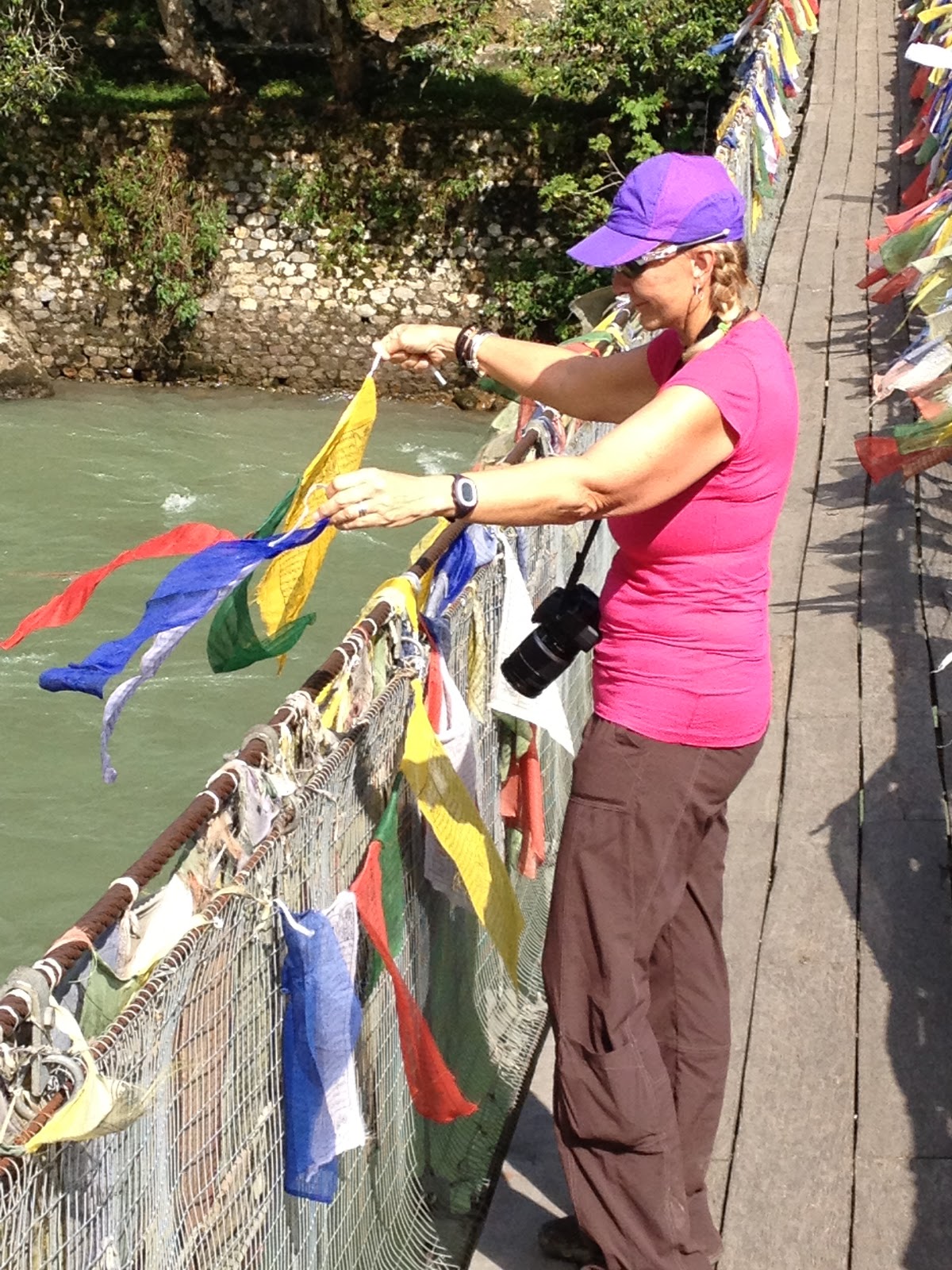
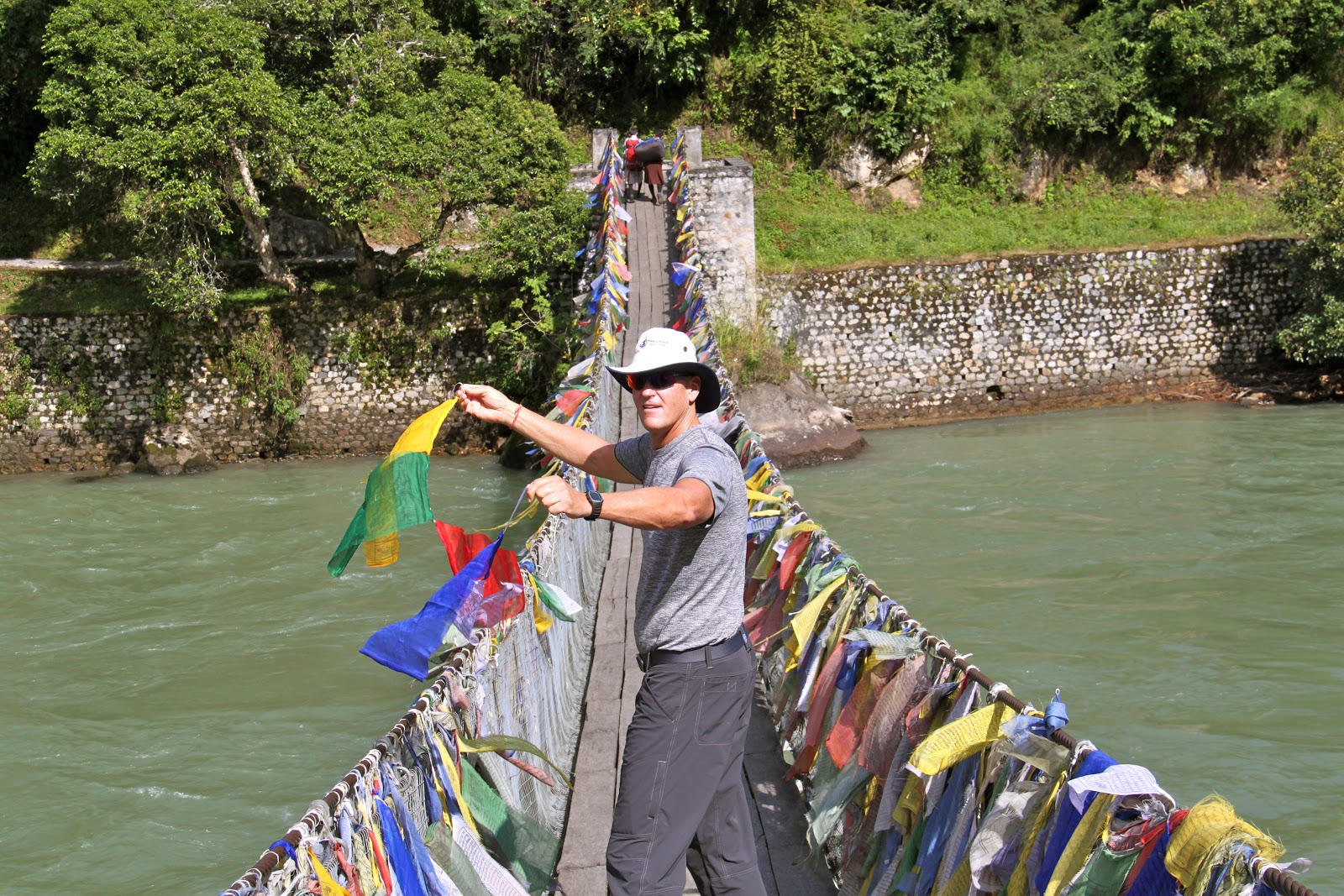
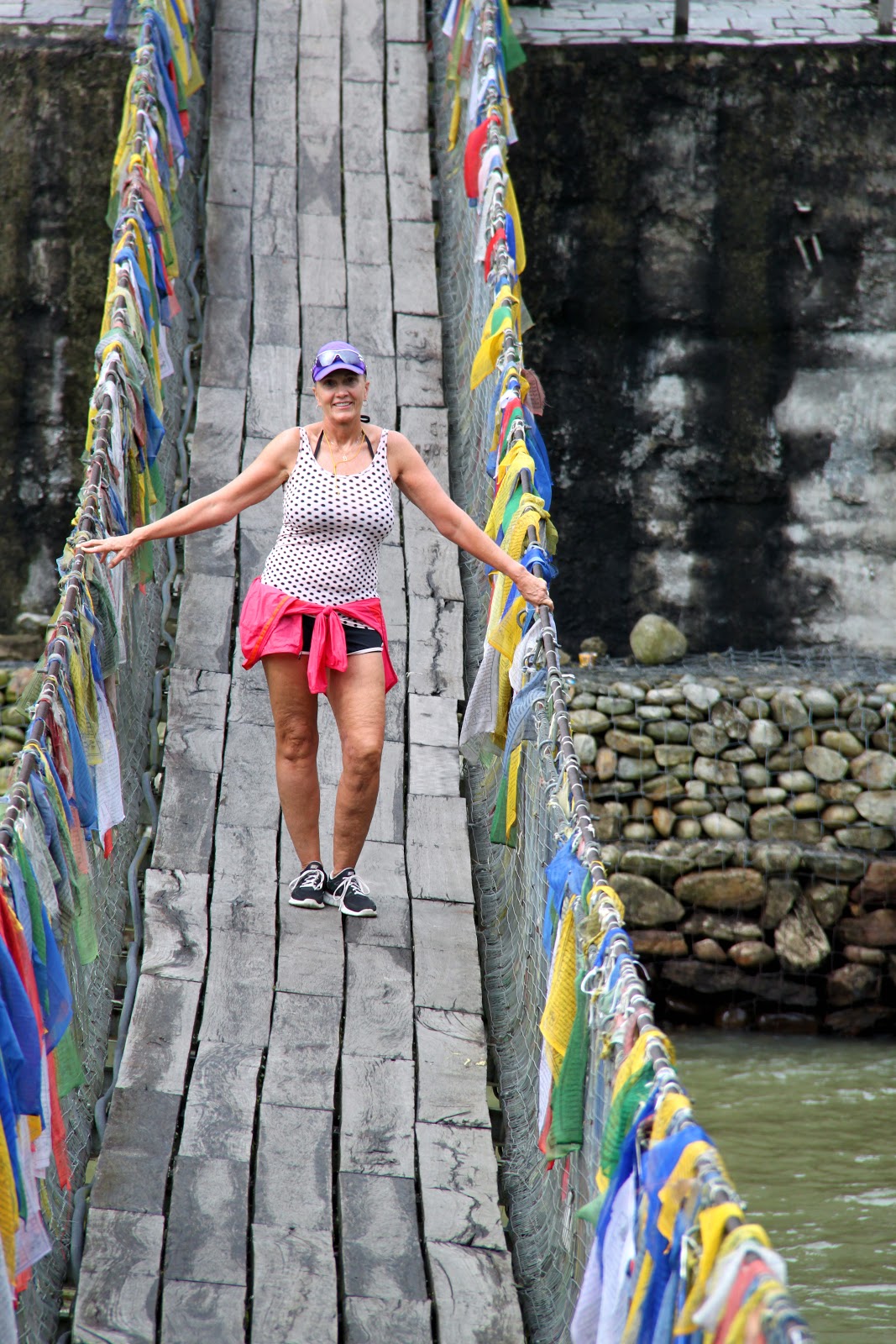
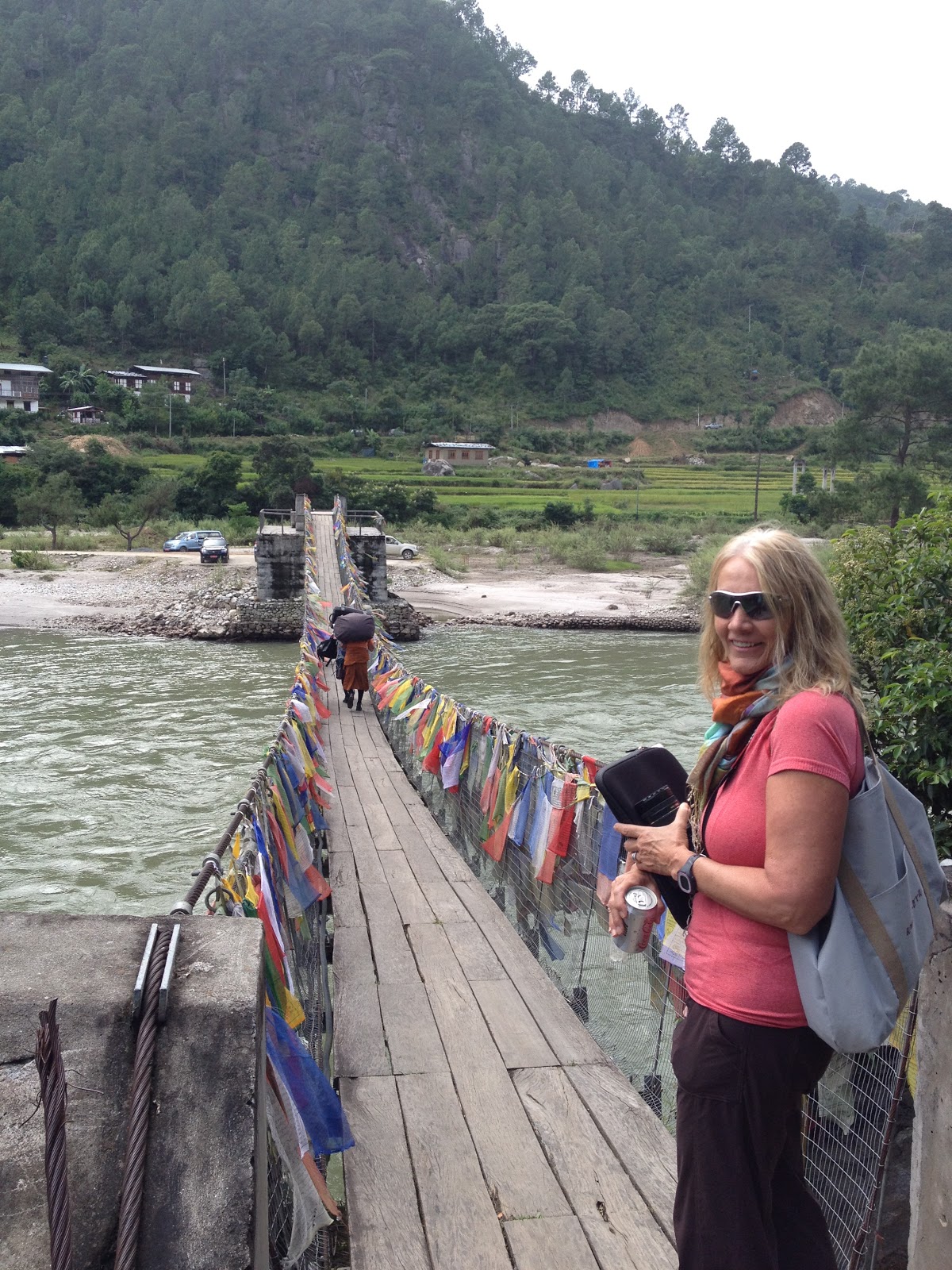
As we arrive at the parking area, a gift of prayer flags is given to us by the lodge.  You have to cross the suspension bridge to get to the lodge


Scott sending prayers with his prayer flags

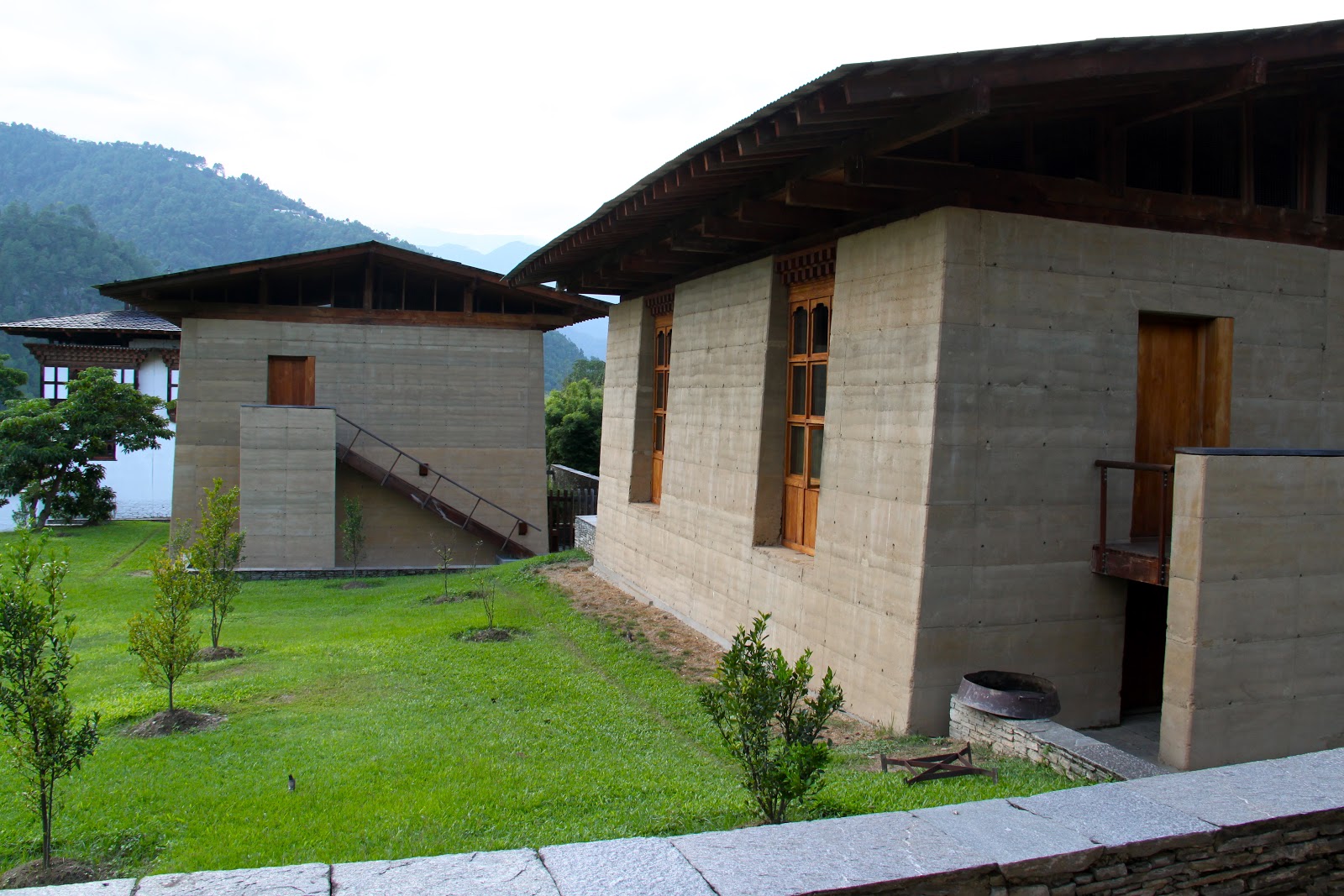
The white building is the old palace, and the other buildings are the rooms built by Amankora

Nice setting and grounds

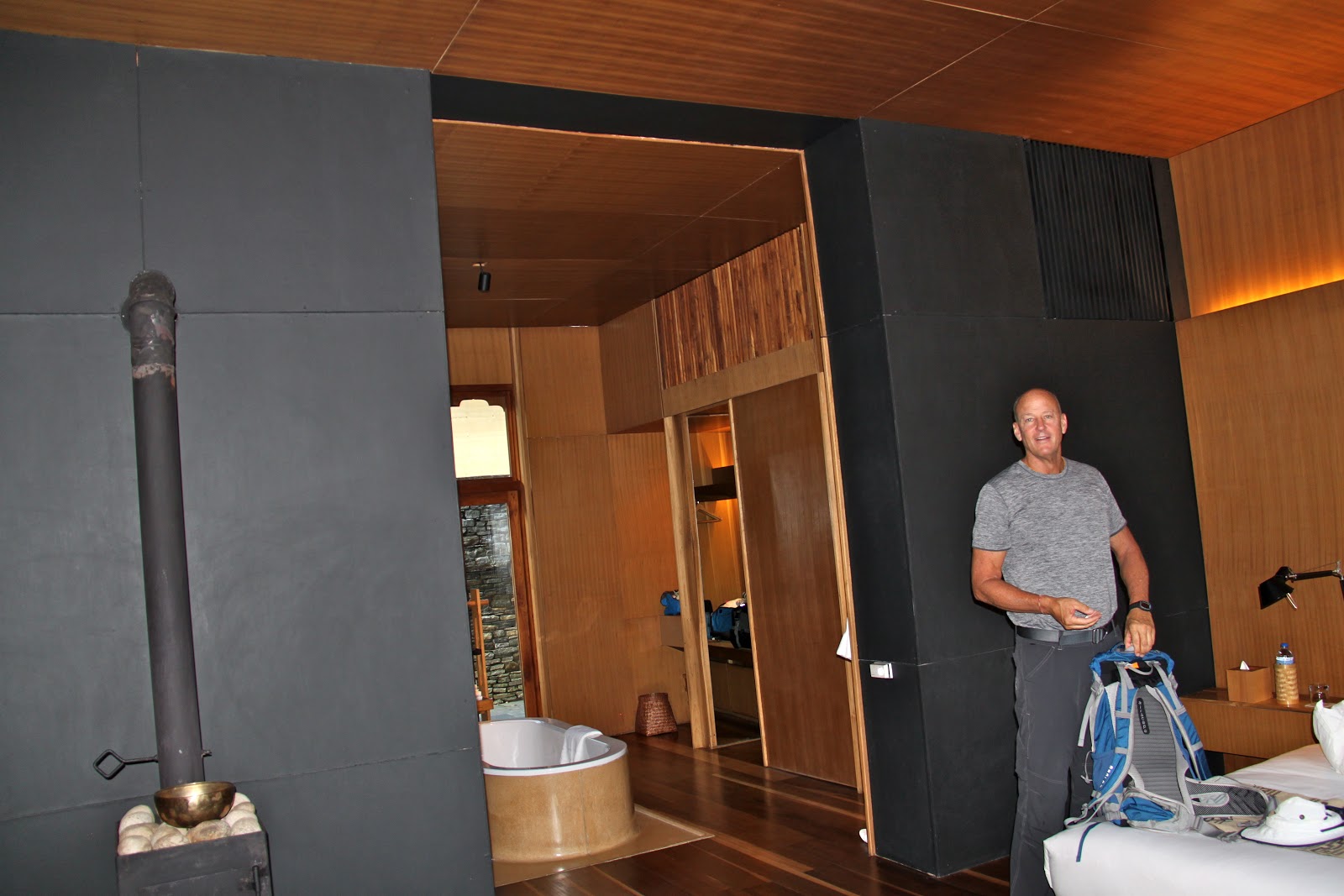
Our Bedroom

Bathroom

Getting settled

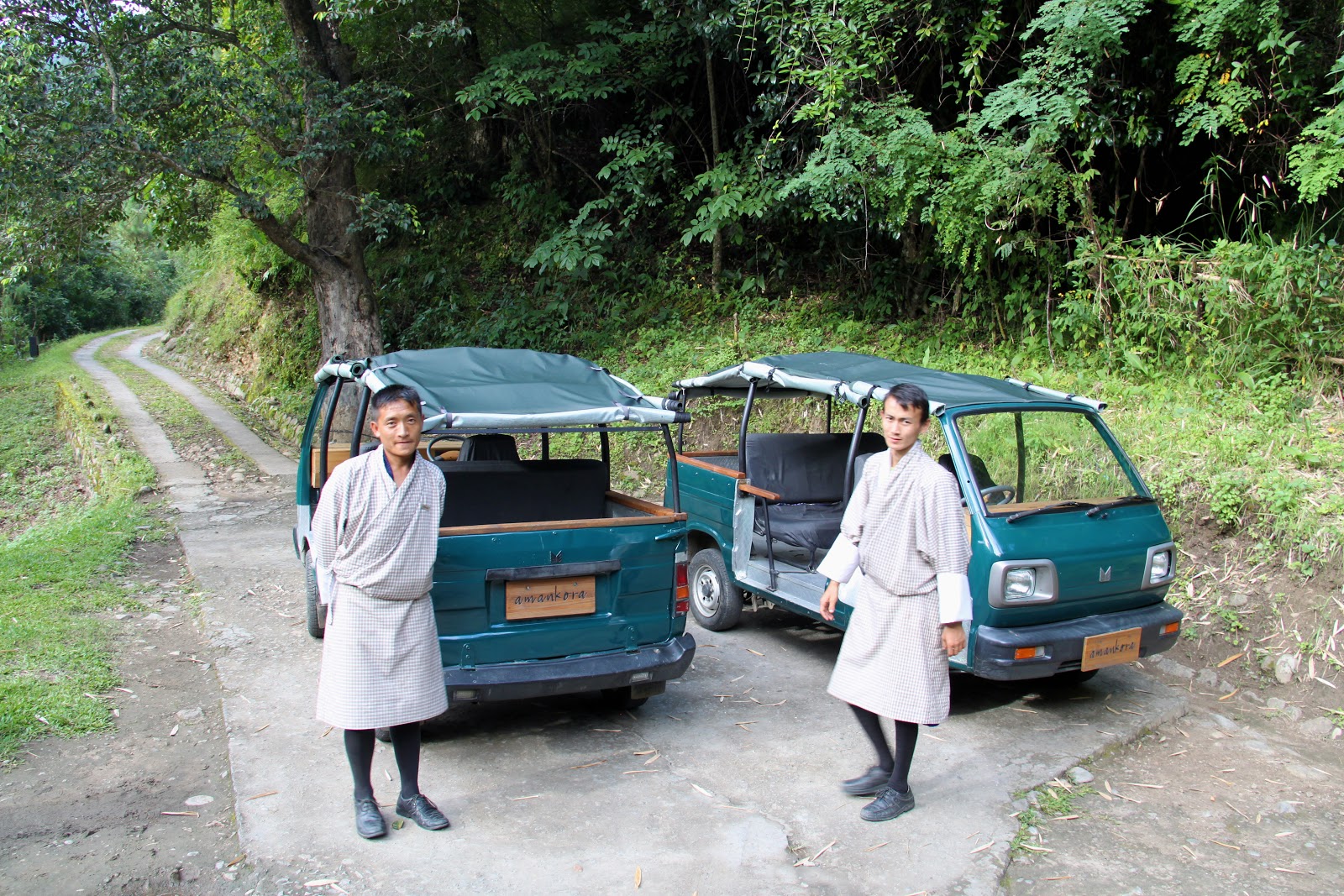
After walking across the bridge you are picked up in these carts to take you up the hill to the lodge

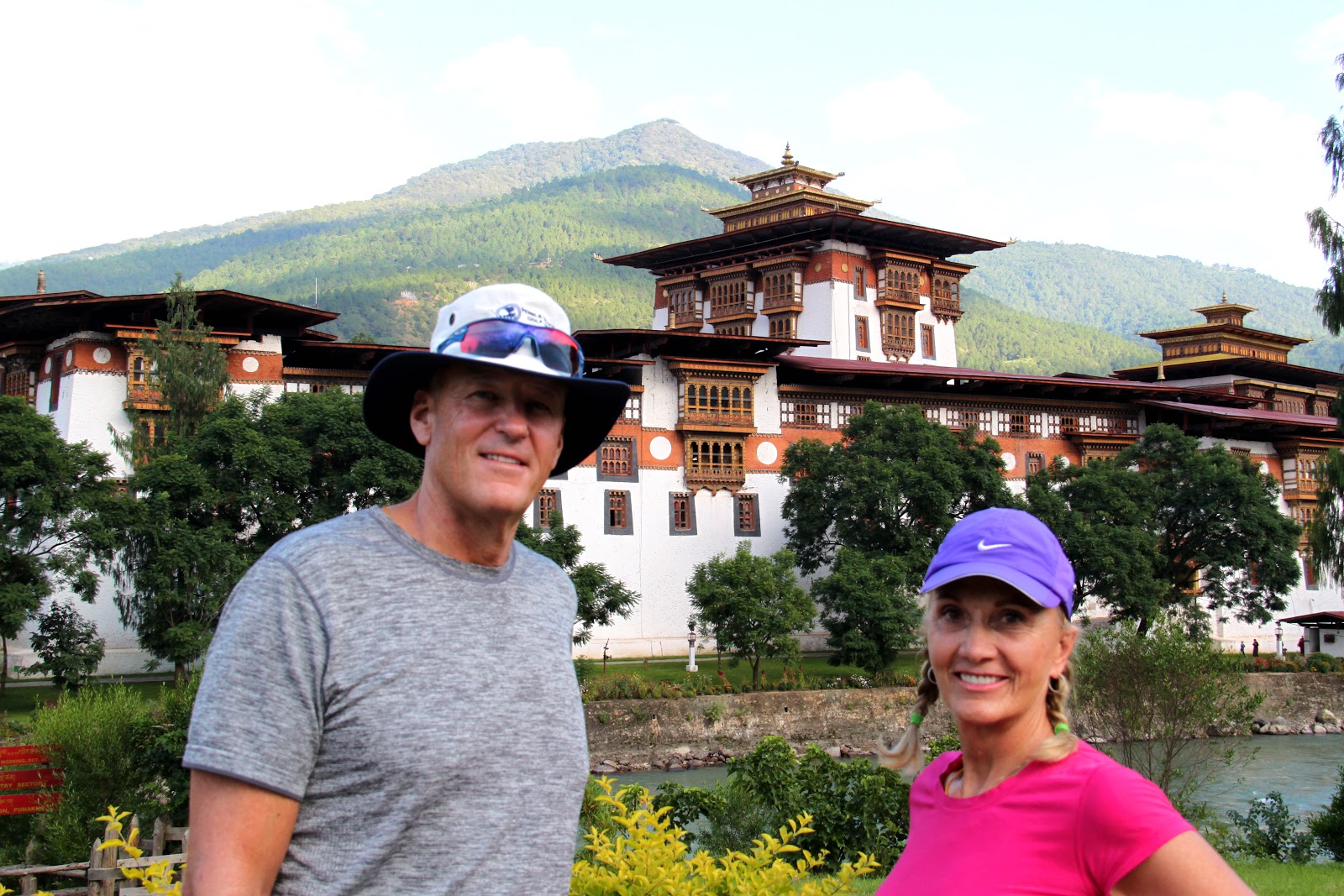
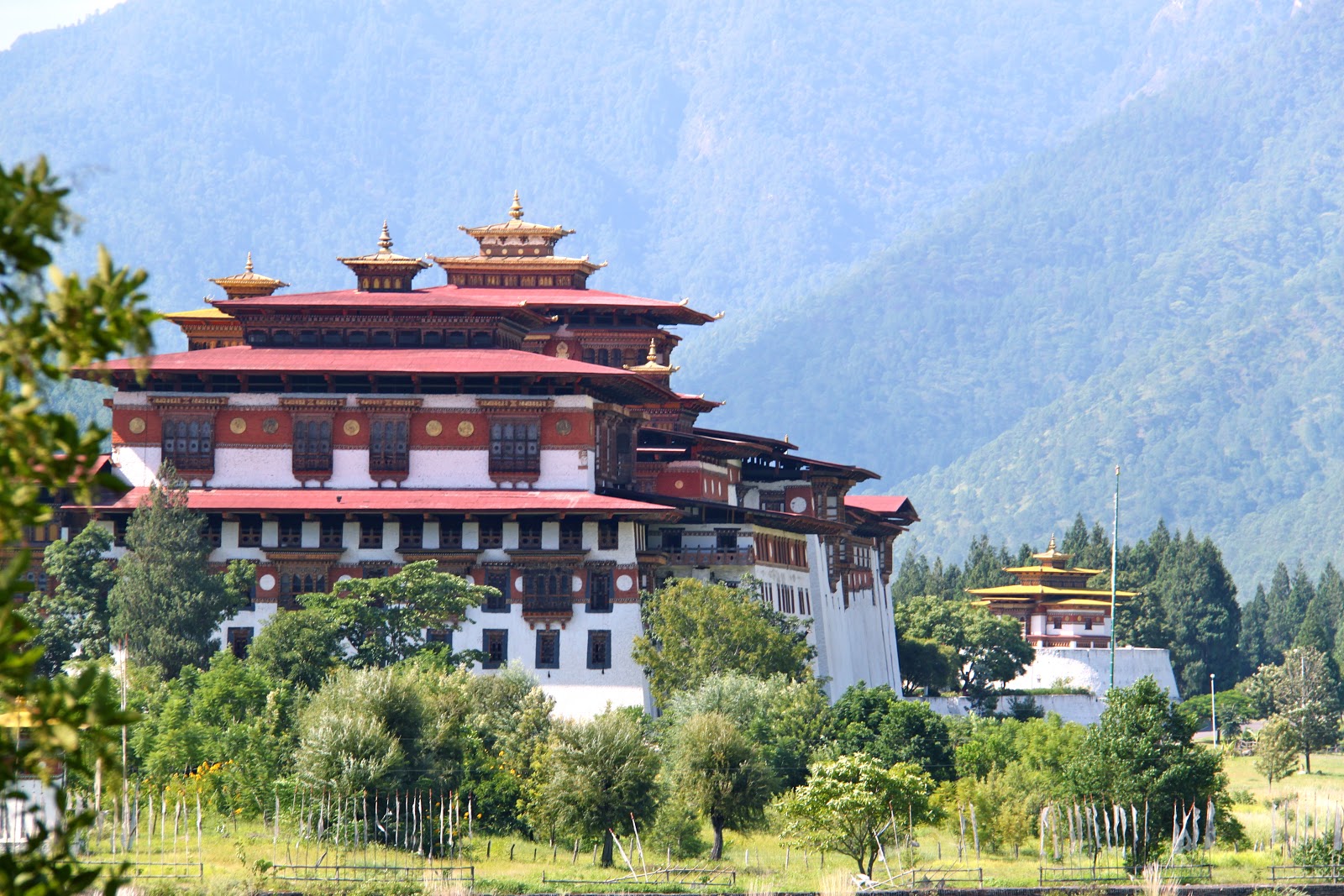
Punakha is famous for its Dzong (fortress).  It is massive and was finished in about 1637.  It was the headquarters for the royalty and the Buddhist authority until roads were built that connected Bhutan to India intersecting in Timphu in the 1960s.  

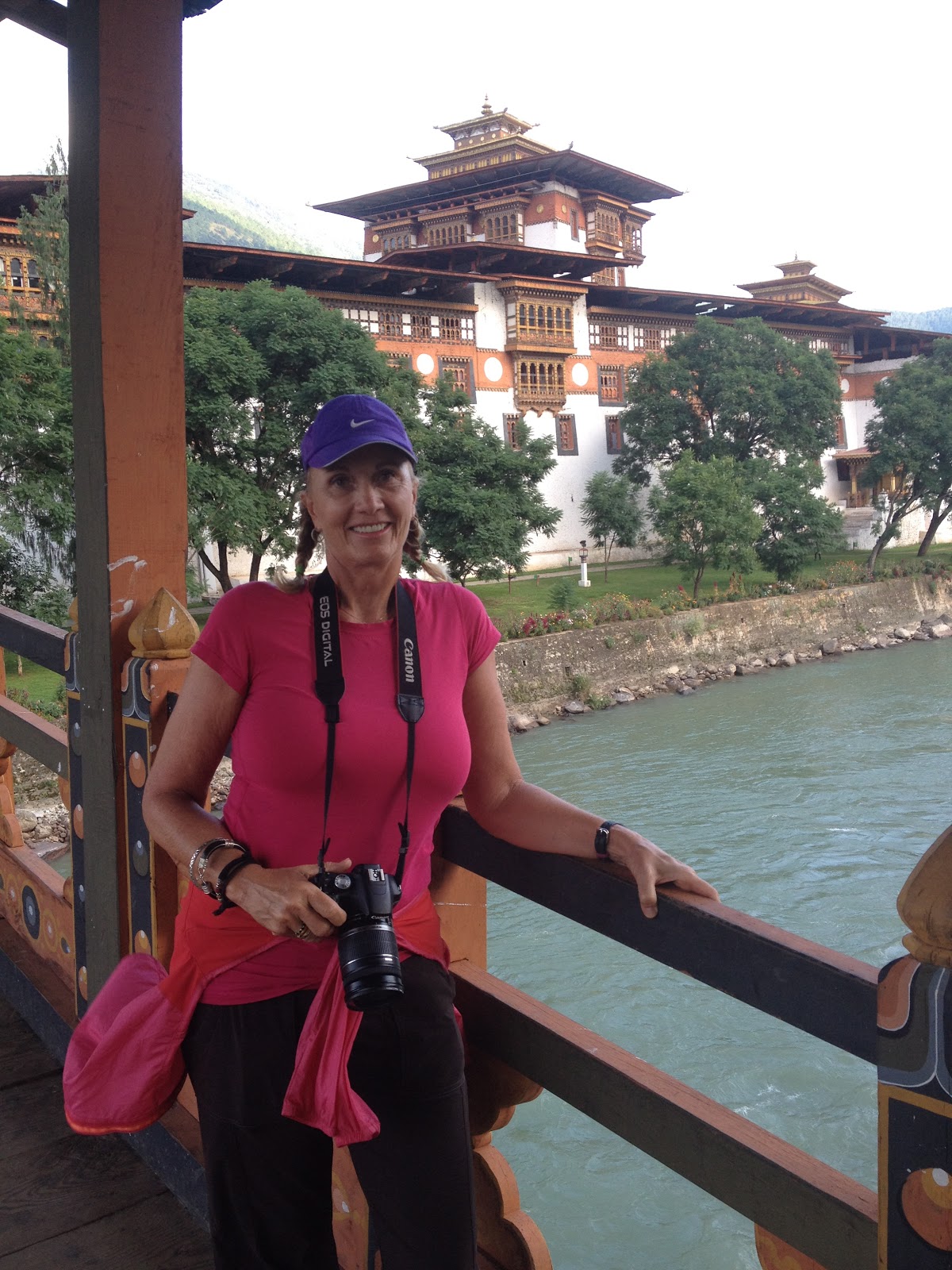
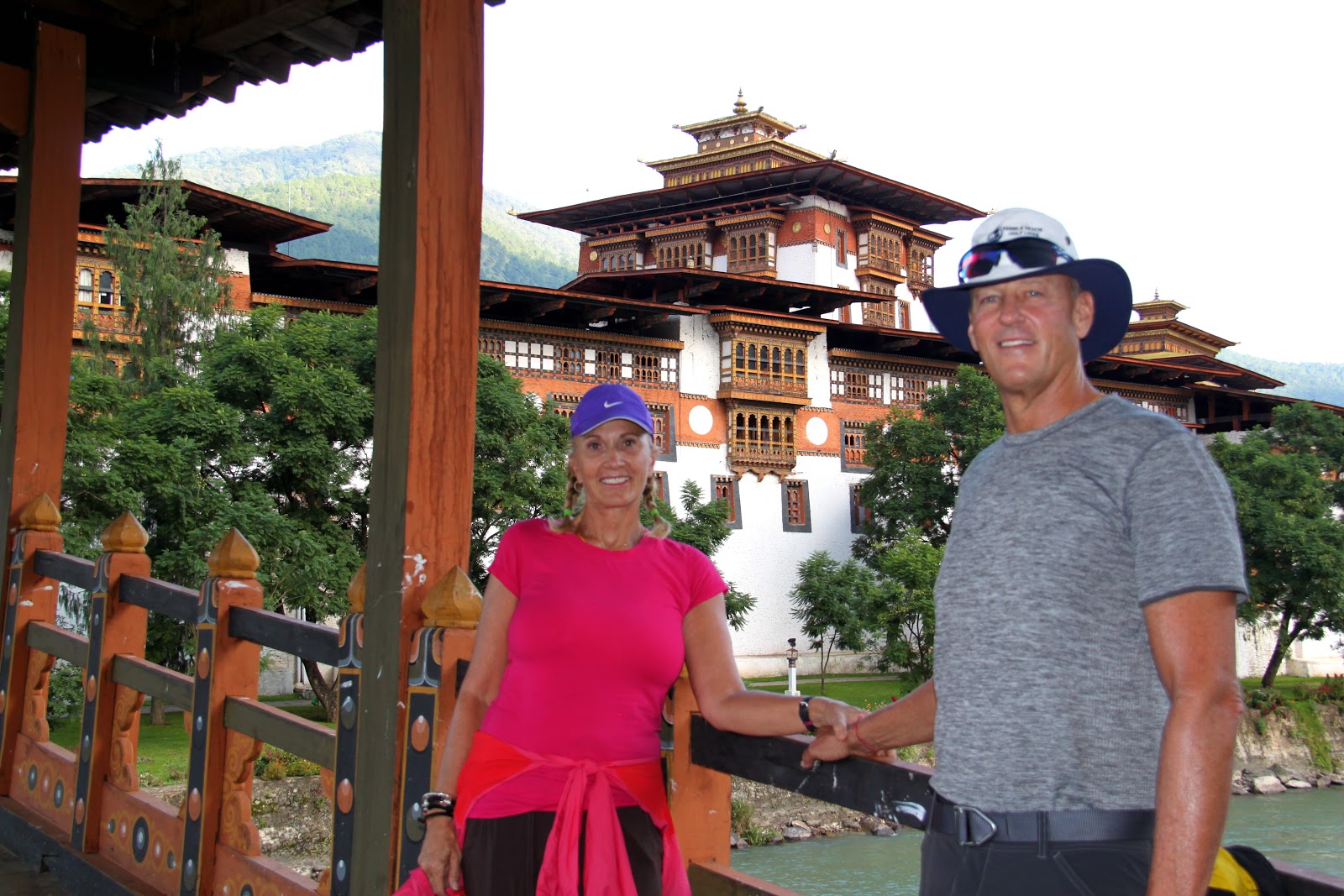
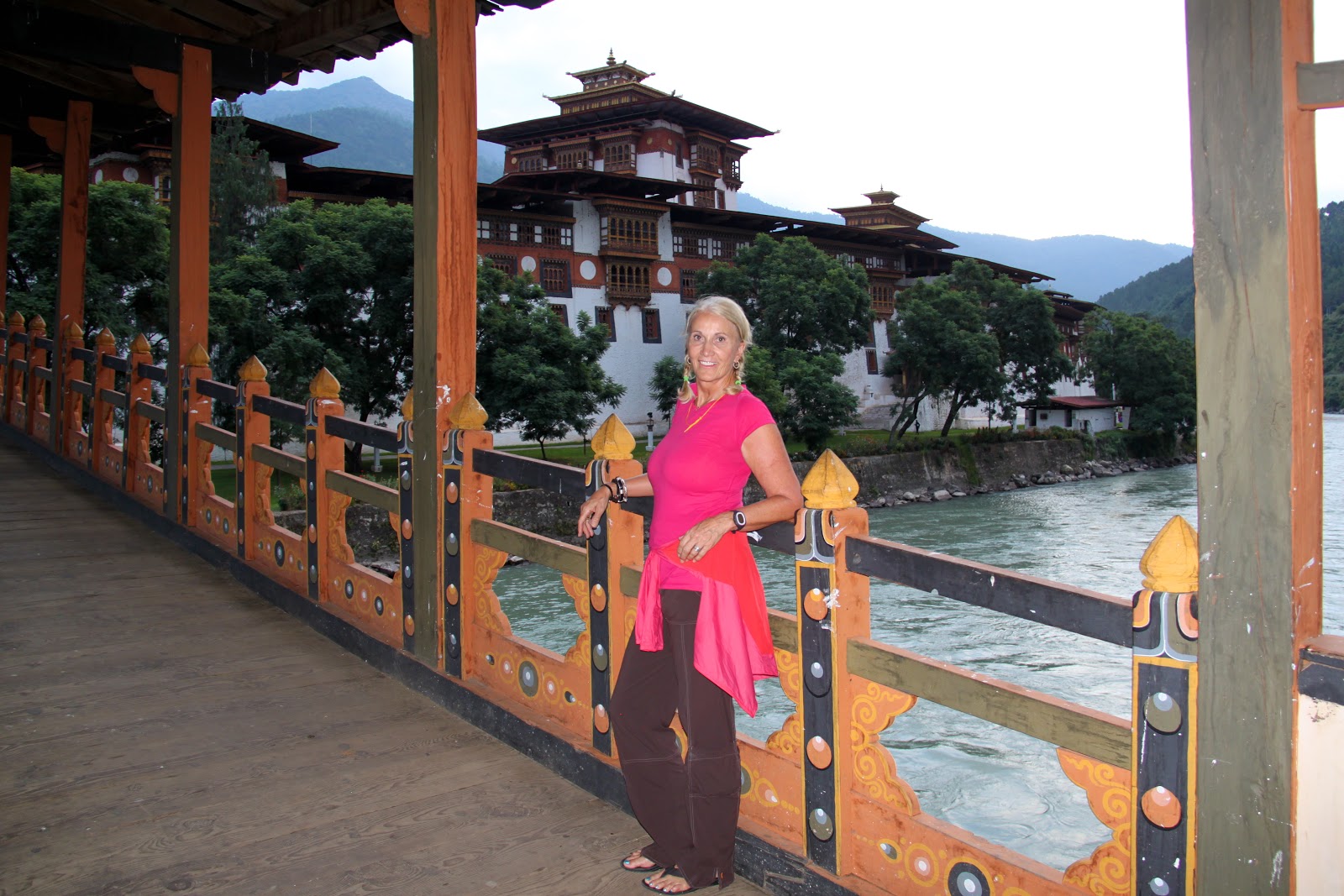
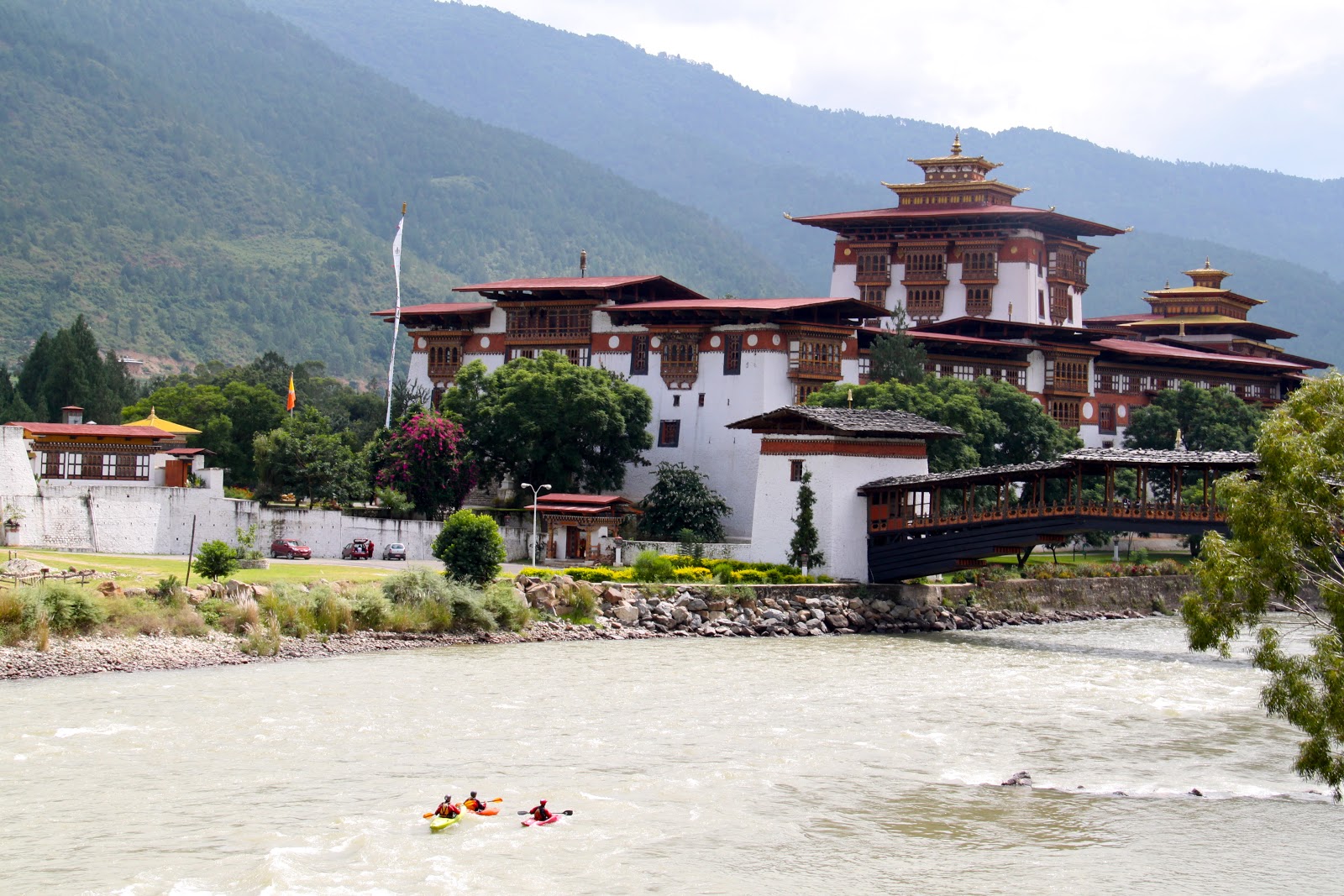
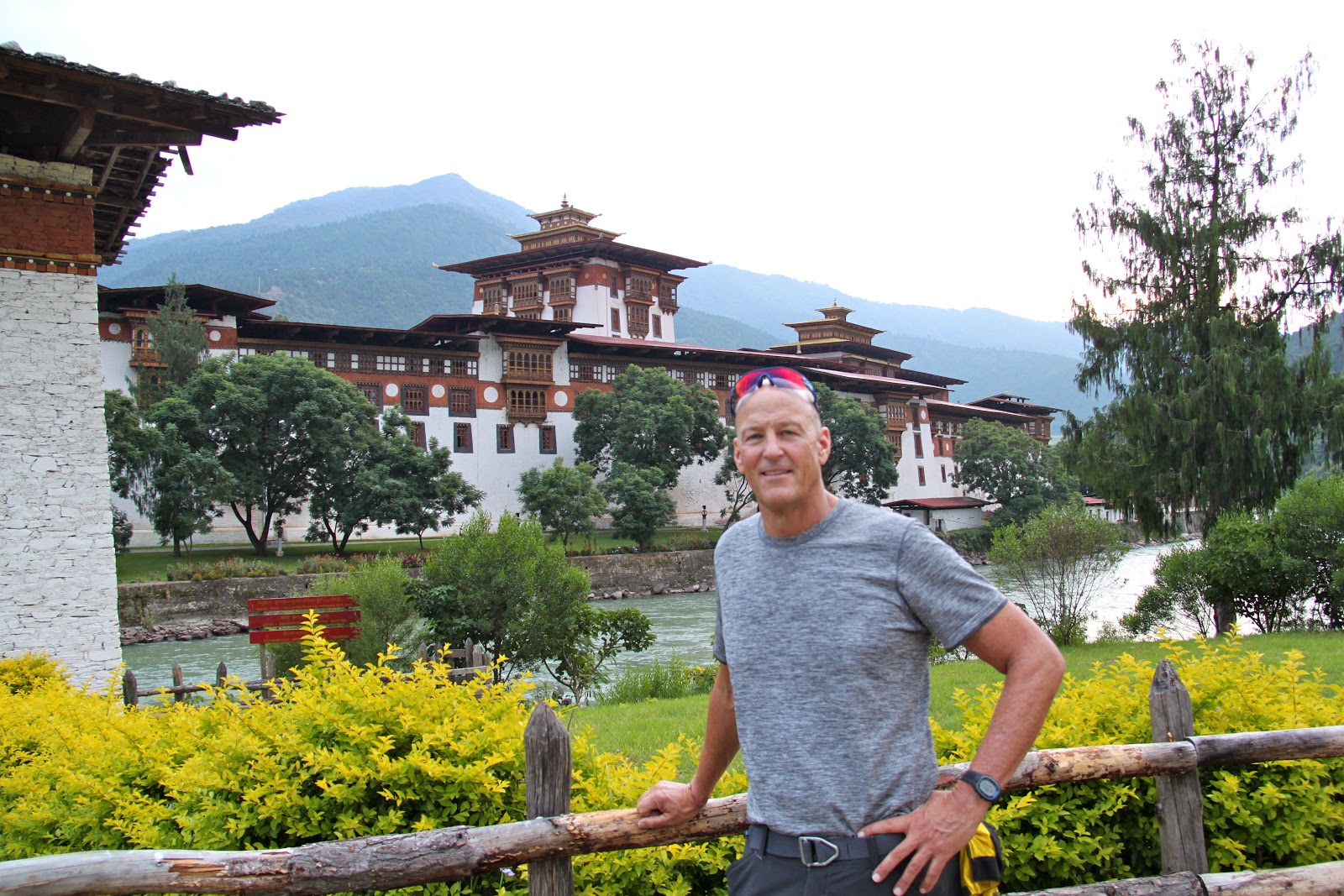
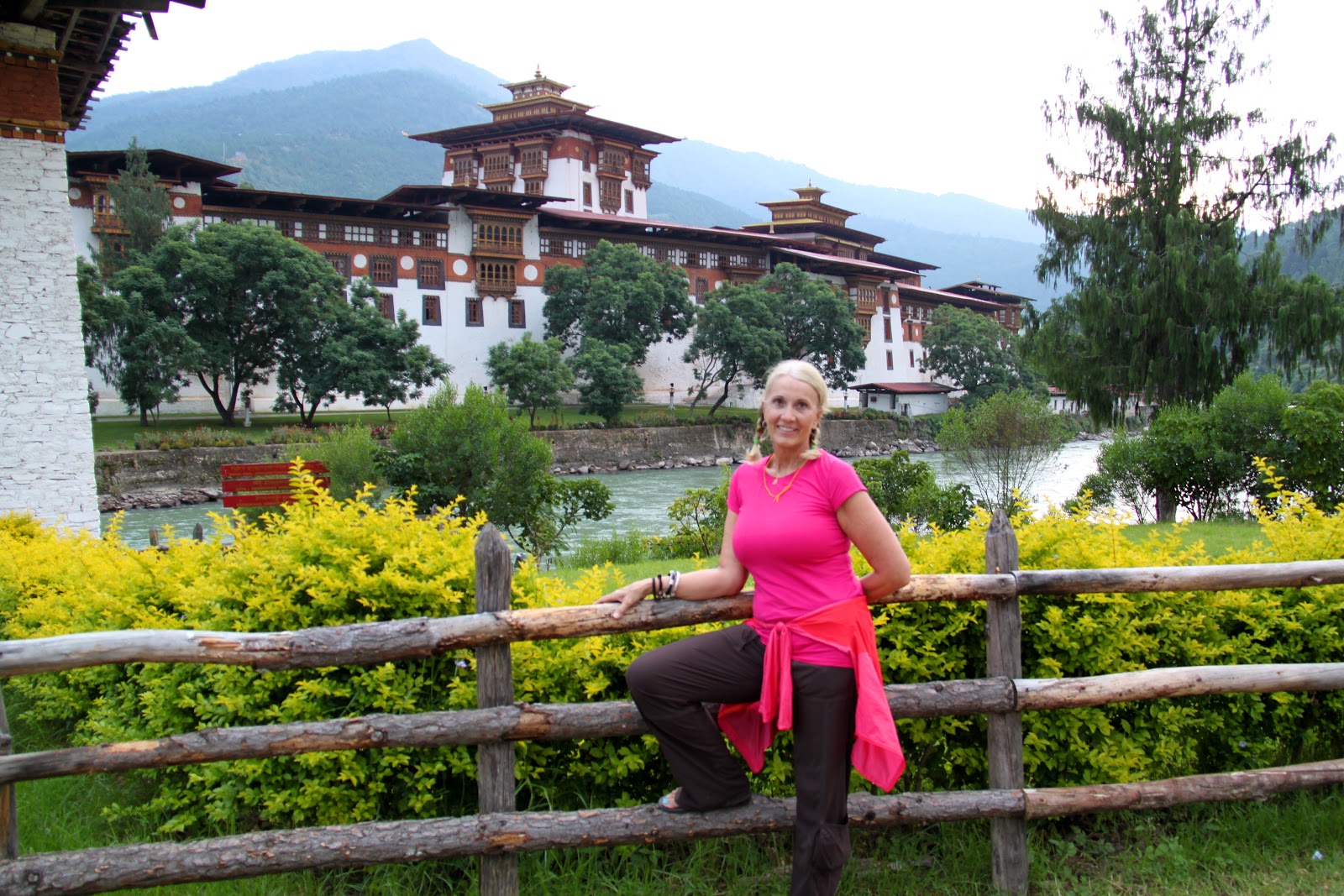
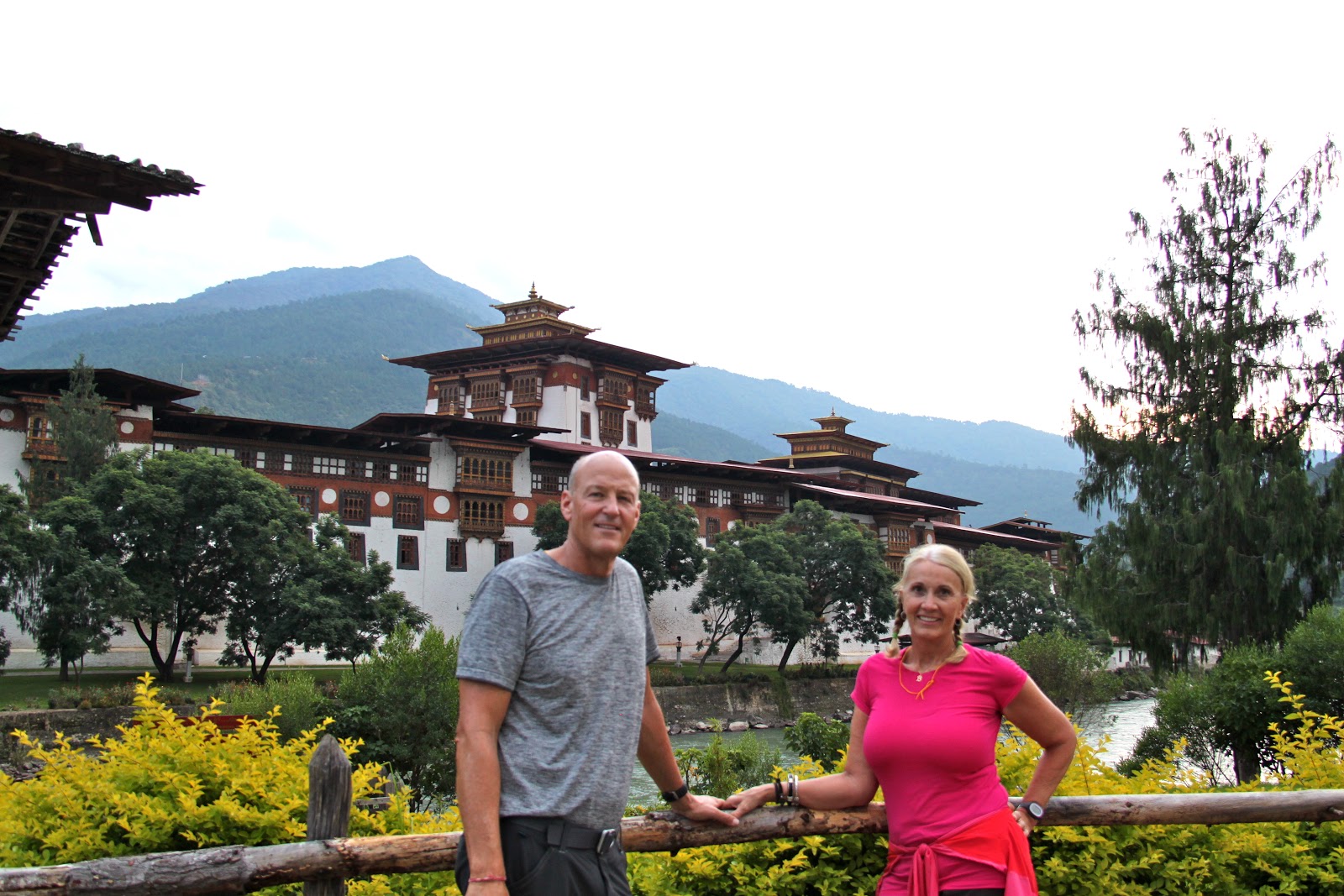
The Punakha Dzong is very impressive next to the river

Barb

Barb and Scott

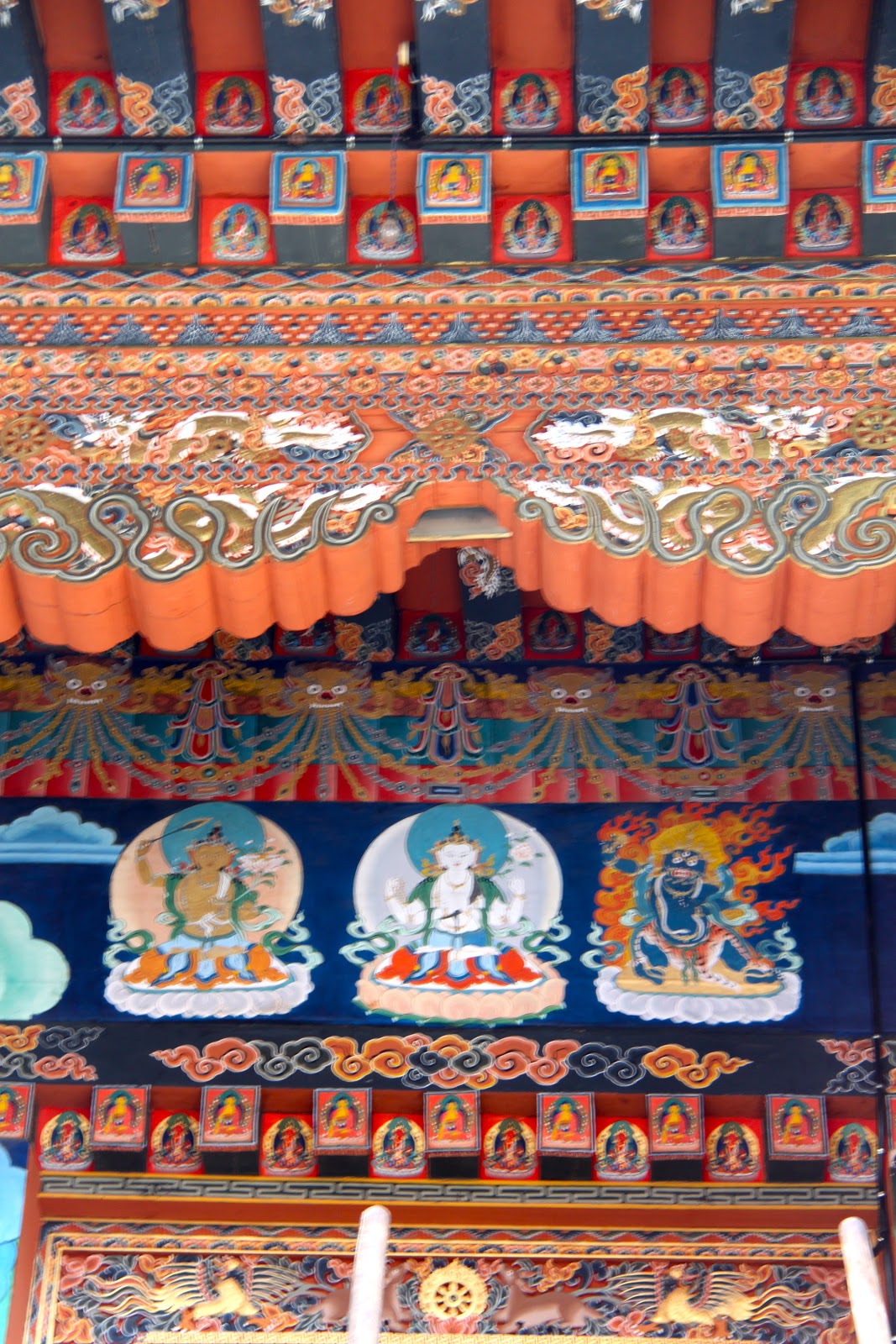
Beautiful paintings just outside the entrance

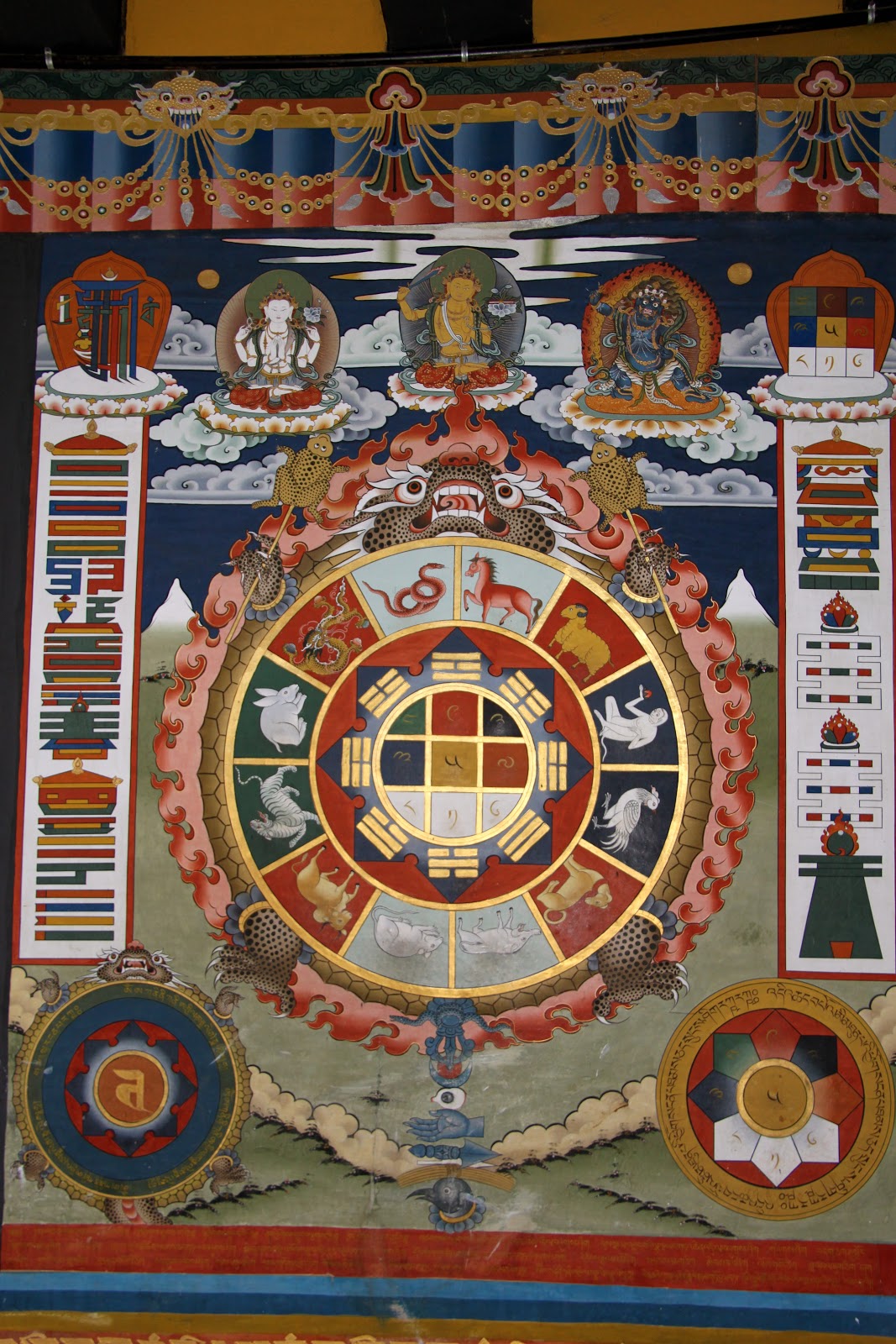
The wheel of life

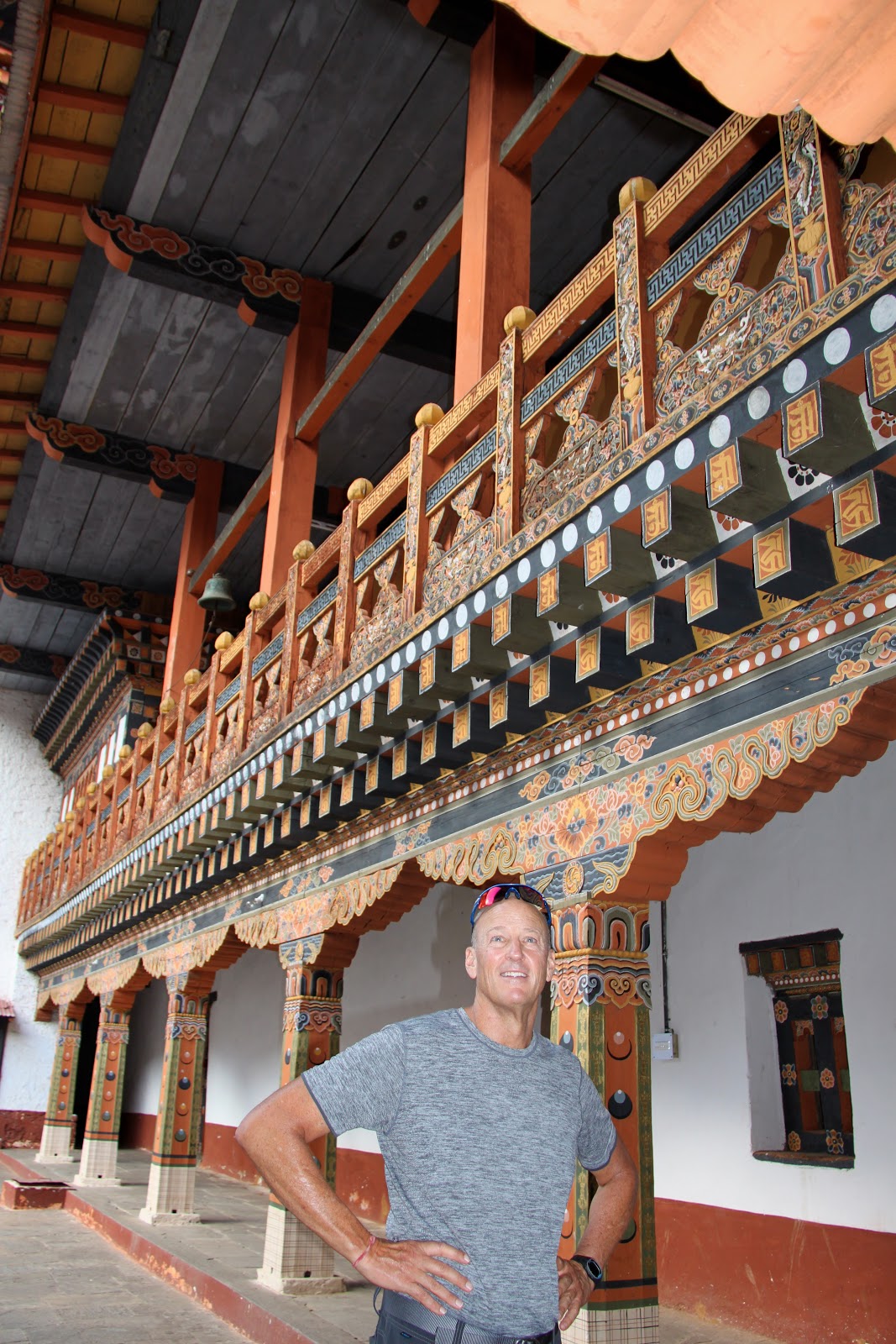
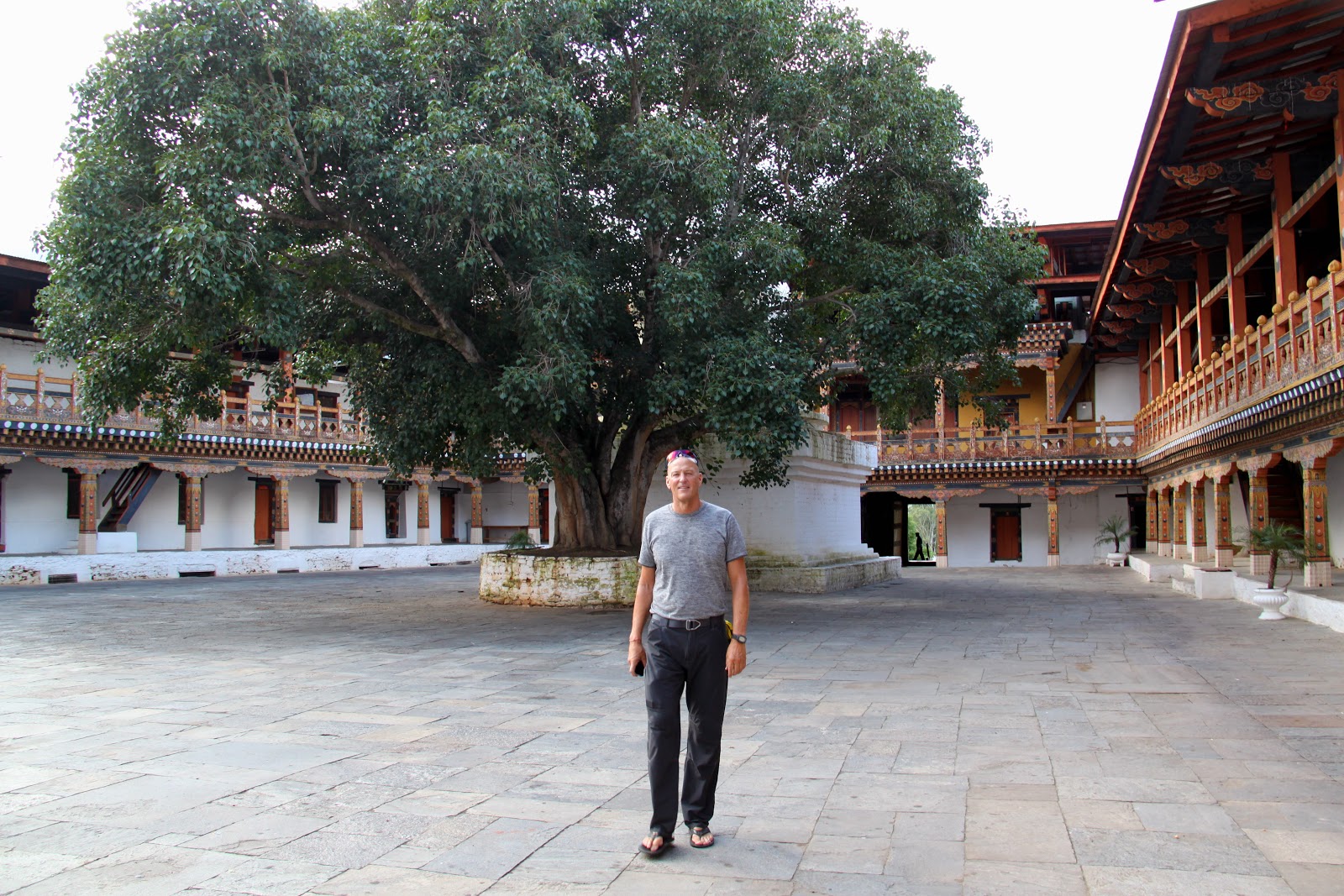
Inside the courtyard area

The courtyard

Candles burn for offerings

Scott

The Monastery
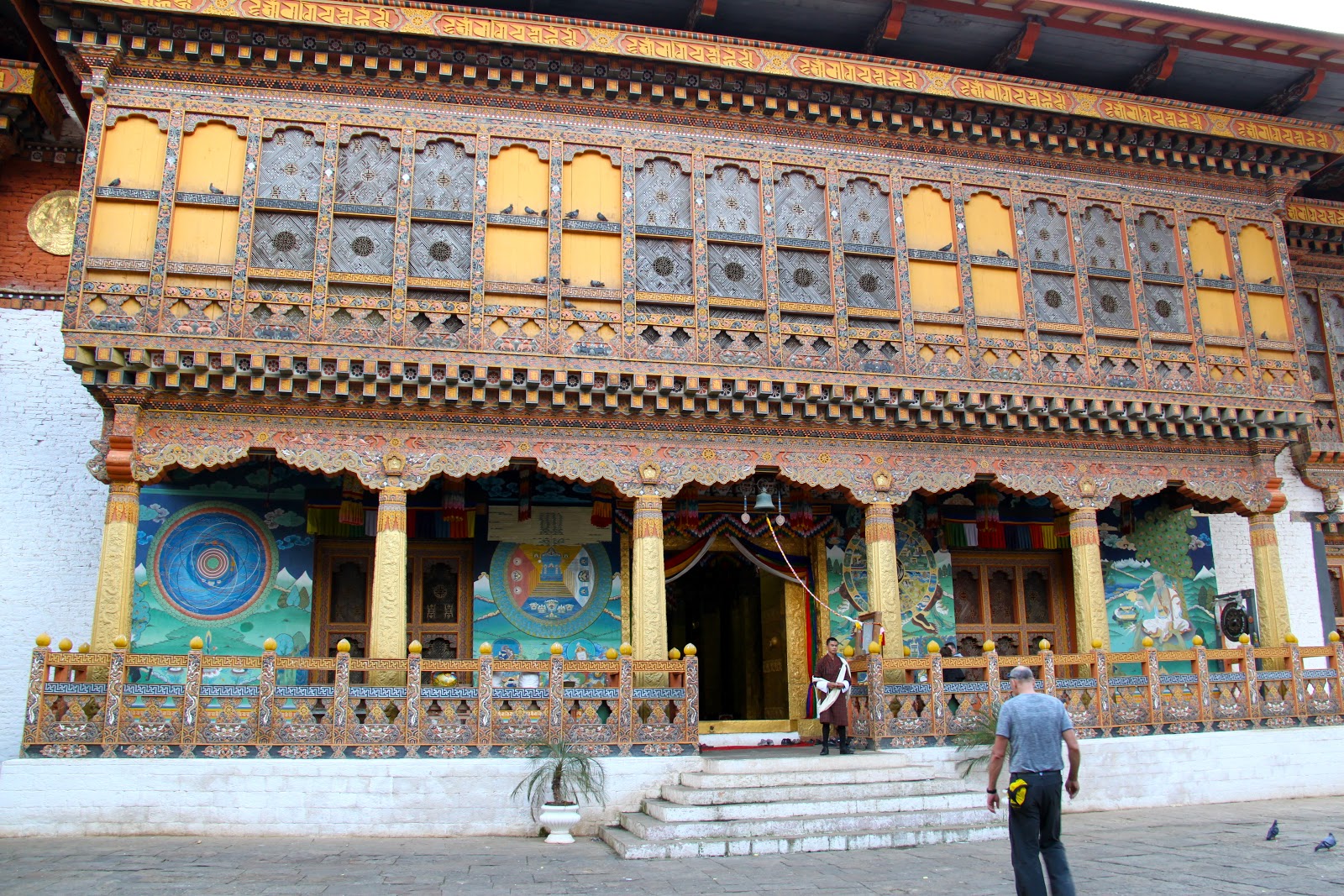
Entrance
These steps were not OSHA approved

A beautiful spot

Inside the temple there are 3 golden statutes that must be 40 feet tall all covered in gold.  There are monks chanting and giving blessings and there are policeman at the doors.  There are very few visitors.  There is an impressive painted story of the Buddha recounting his journey from prince in Nepal to enlightenment to his teaching at the deer park in Varanasi, India with all details in between.  It takes our guide 15 minutes to point out the painted characters and tell the story of the enlightenment.  (unfortunately no cameras are allowed inside the temple)

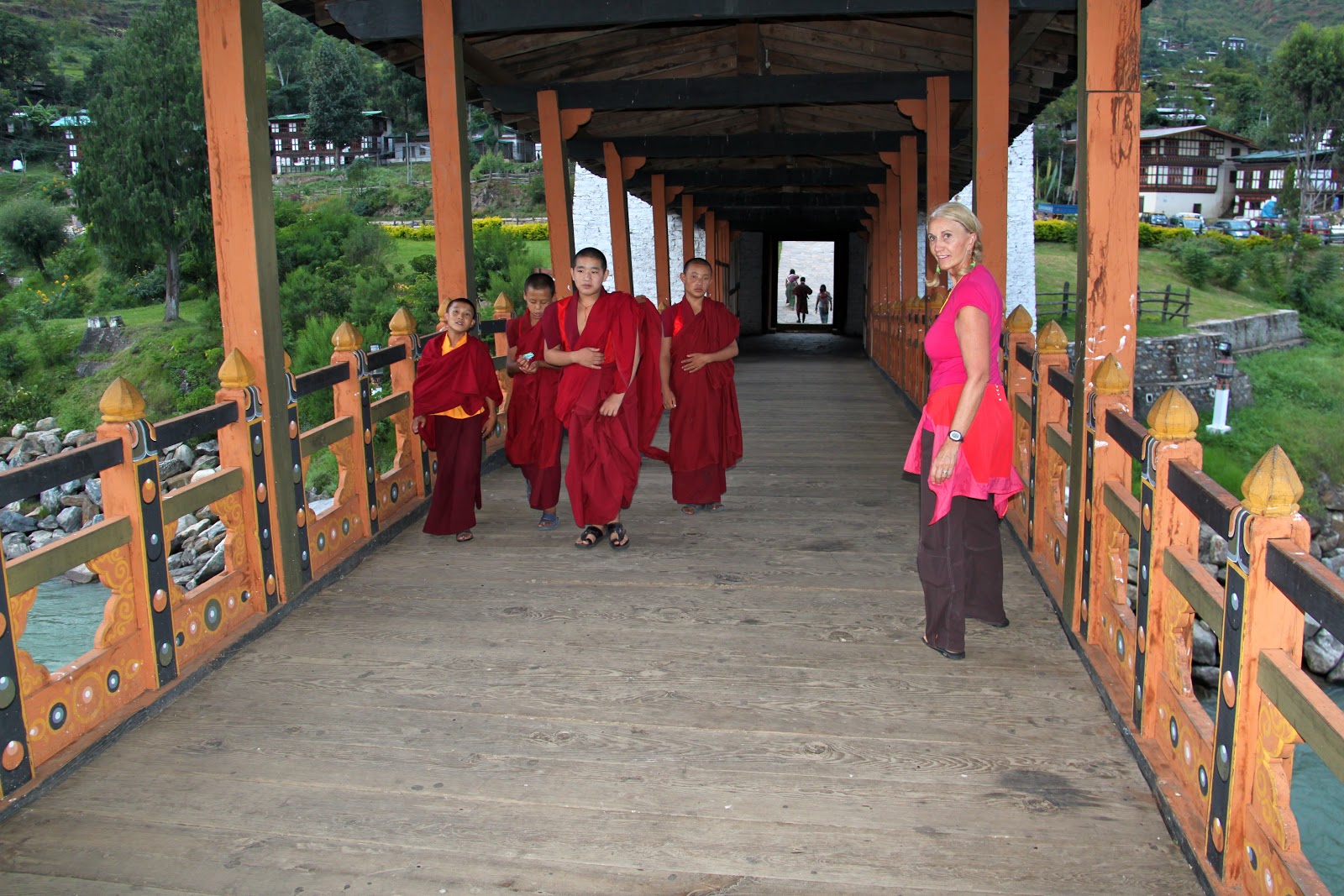
Monks coming across the bridge

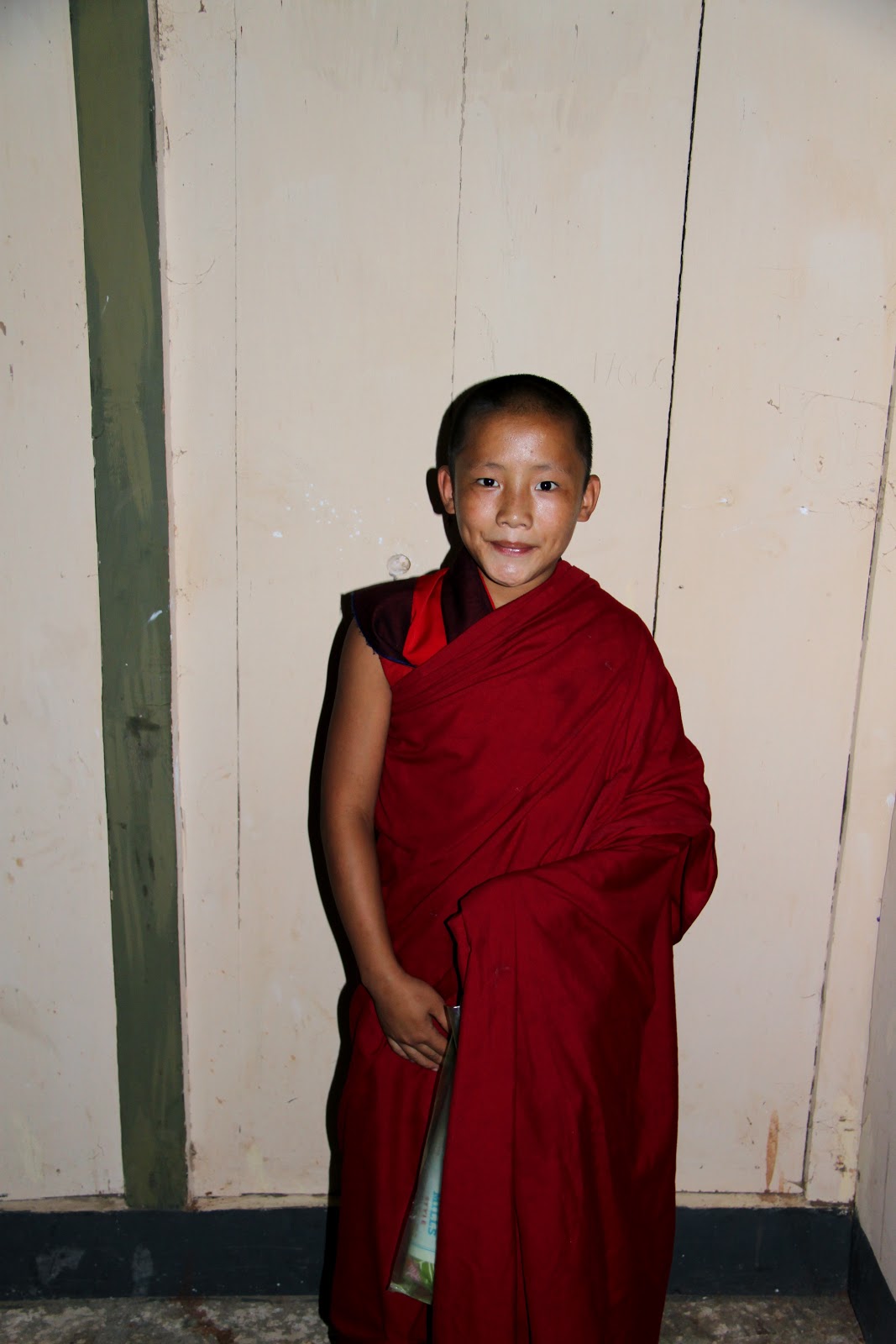
A novice monk

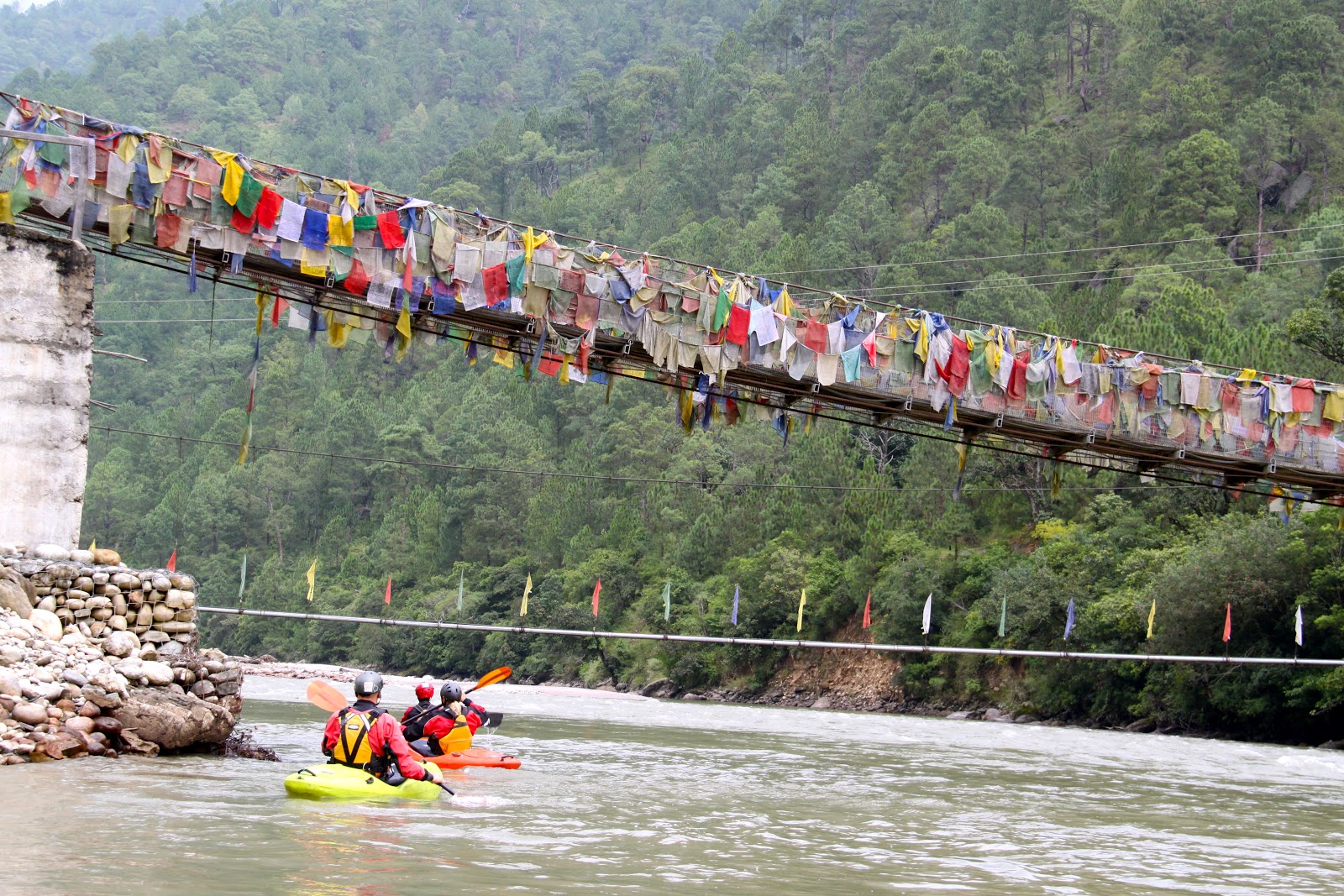
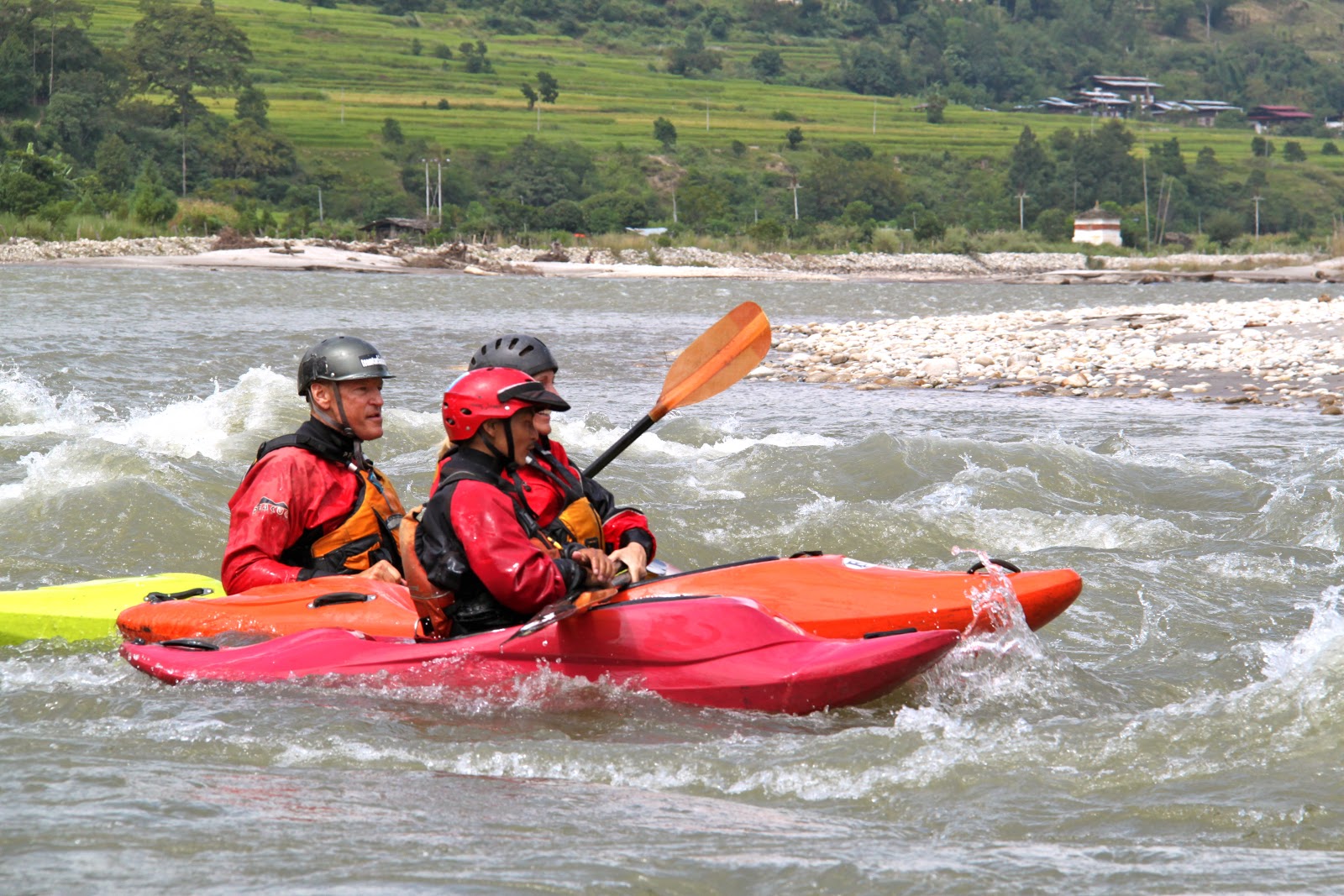
The next morning Barb and I hire a guide and go river kayaking.  We made clear to the guide that we have never been in river kayaks but that we have sea kayaked in Alaska and own sea kayaks in Mexico.  He said there would be no problem but that we will most likely capsize a few times in the rapids.  We are just crazy enough to say, “Let’s do it!”

Barb ready to give river kayaking a try
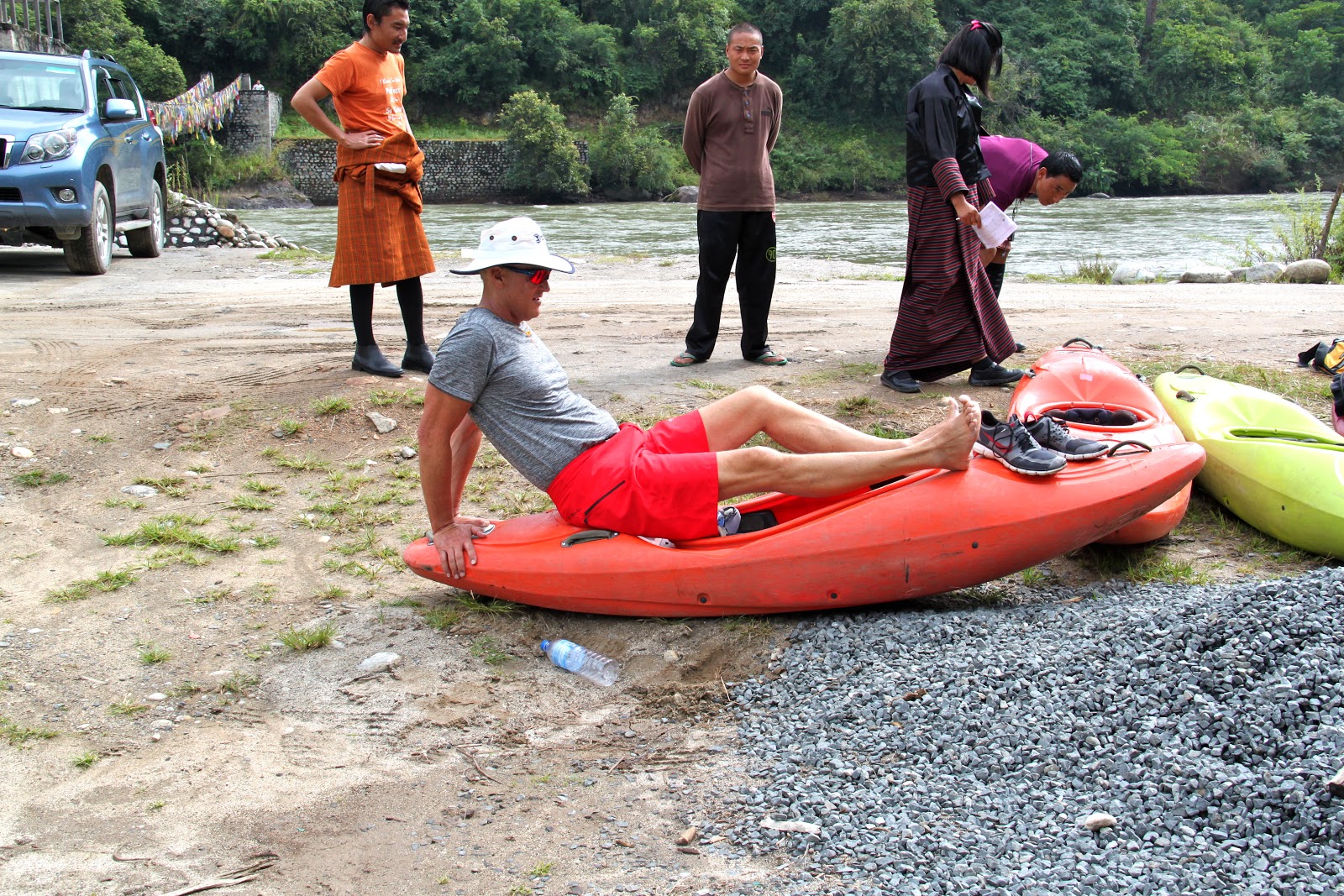
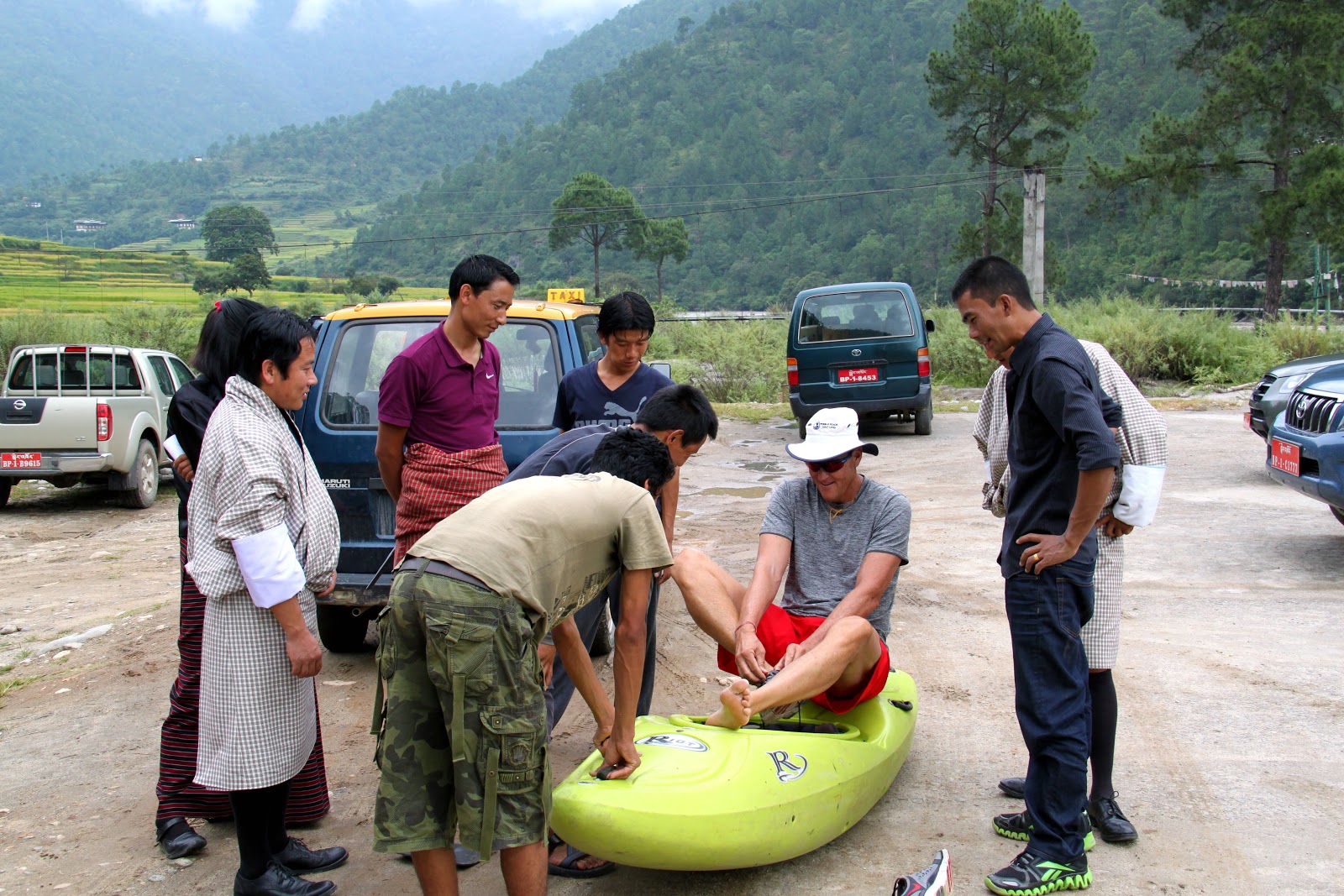
The first kayak they bring for me is marked 72. After 10 minutes of taking out seats and moving pads they decide that I cannot fit into a 72.  The guide makes a call and a new kayak arrives in 10 minutes.  This one is marked 80.

Scott’s legs won’t go any further
You can see there is no way this will work
OK, maybe if I fold myself in half, this will work

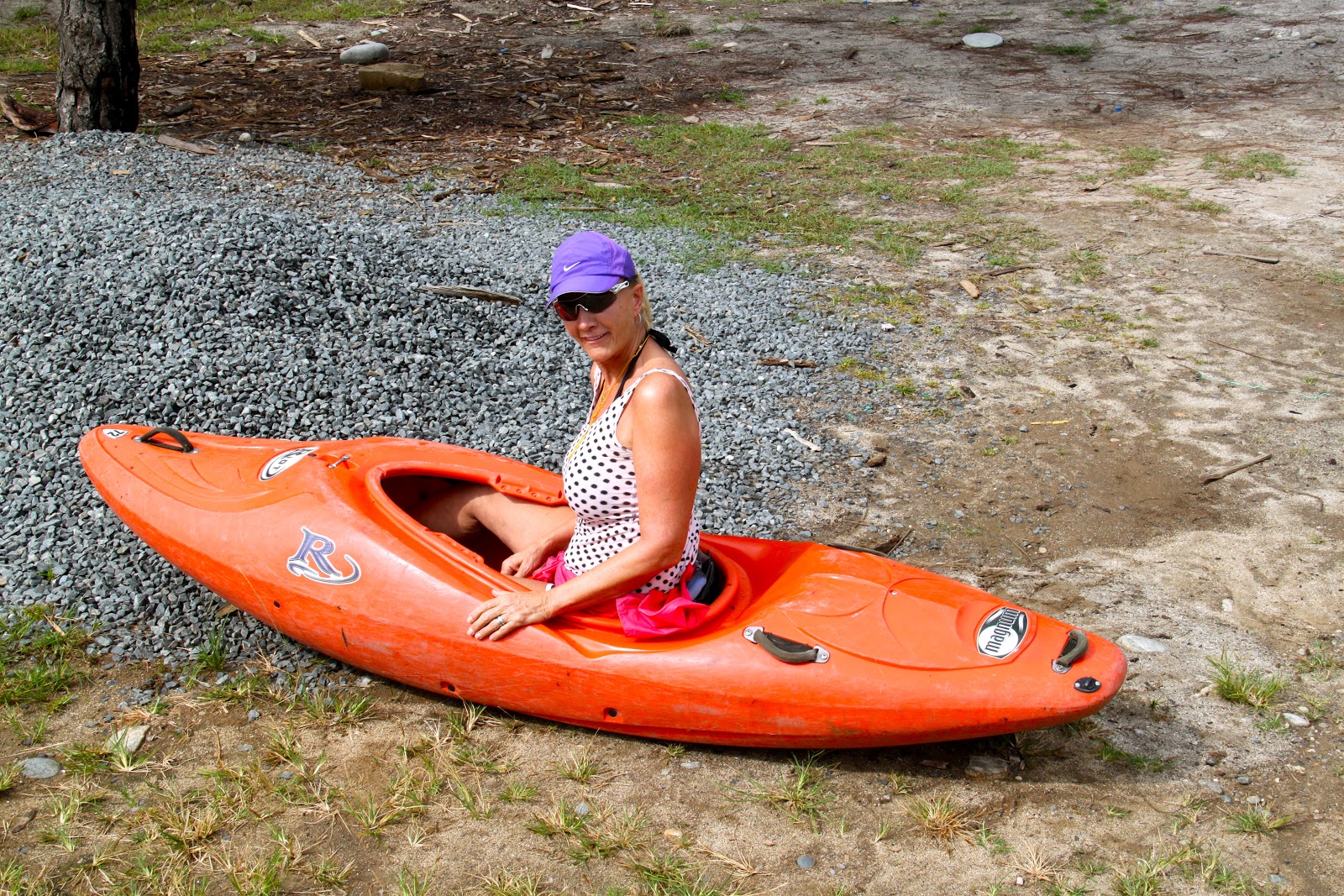
After removing the knee pads and extending the seating I fit into the kayak with no room to spare on any side, front or back.  I give them the thumbs up and then they fit Barb into her kayak.

Barb fits!

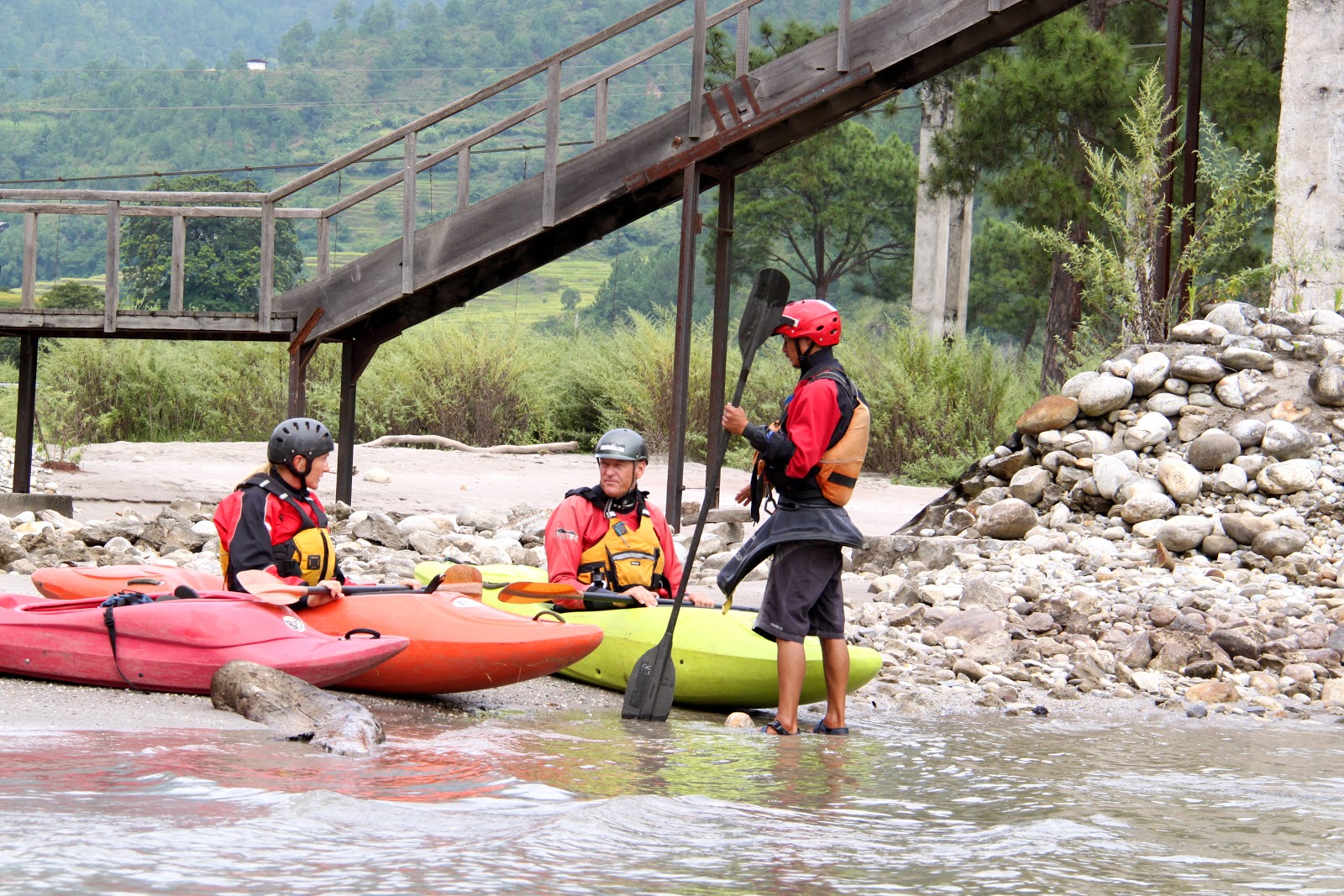
 After some instruction we test our skills paddling up river, stopping, turning and returning to shore.  

The guide is explaining and Scott and I are looking at each other thinking, “what the heck?”
A little test drive up river
OK, I’ve got this

We are good to go.

We are off
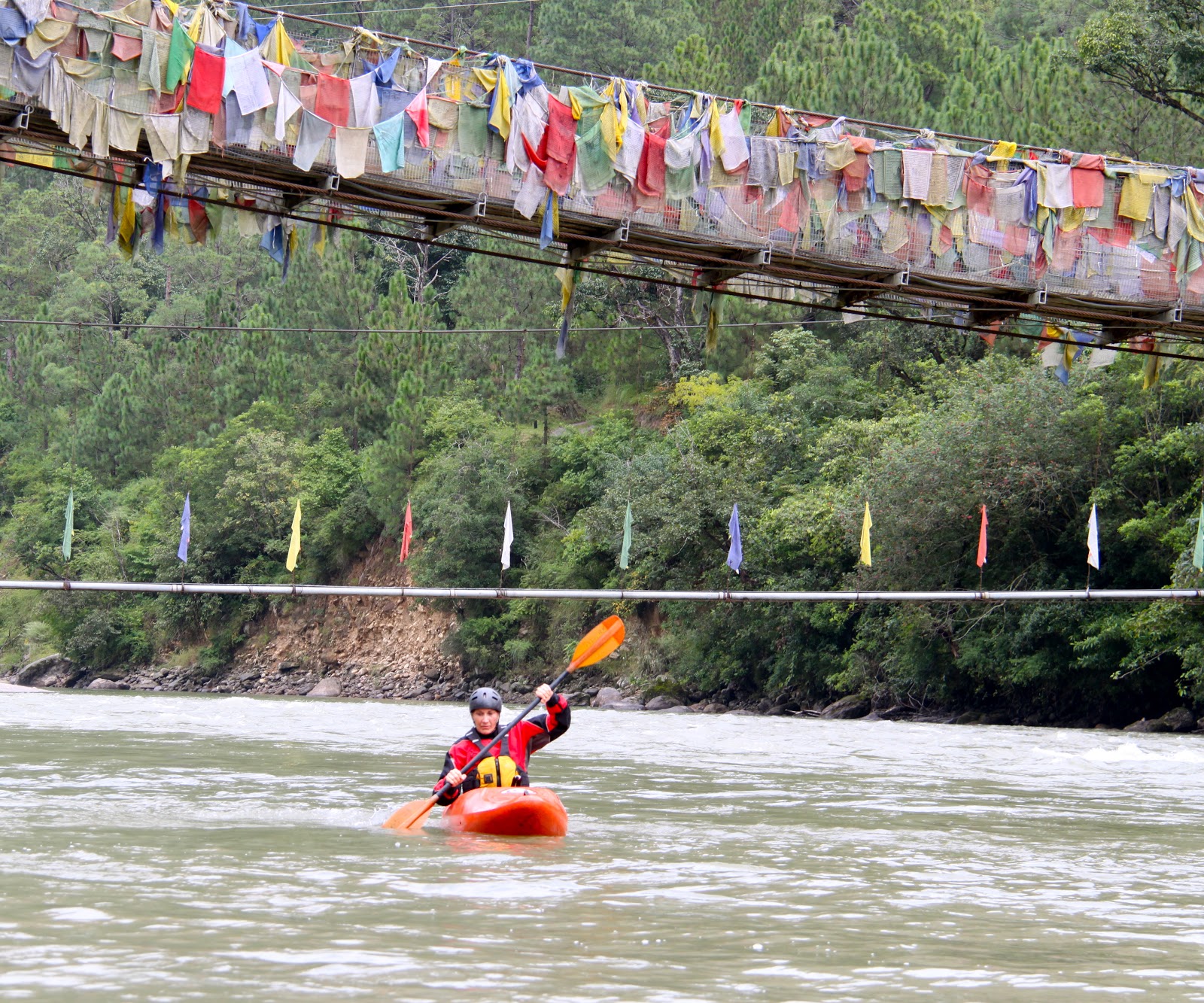
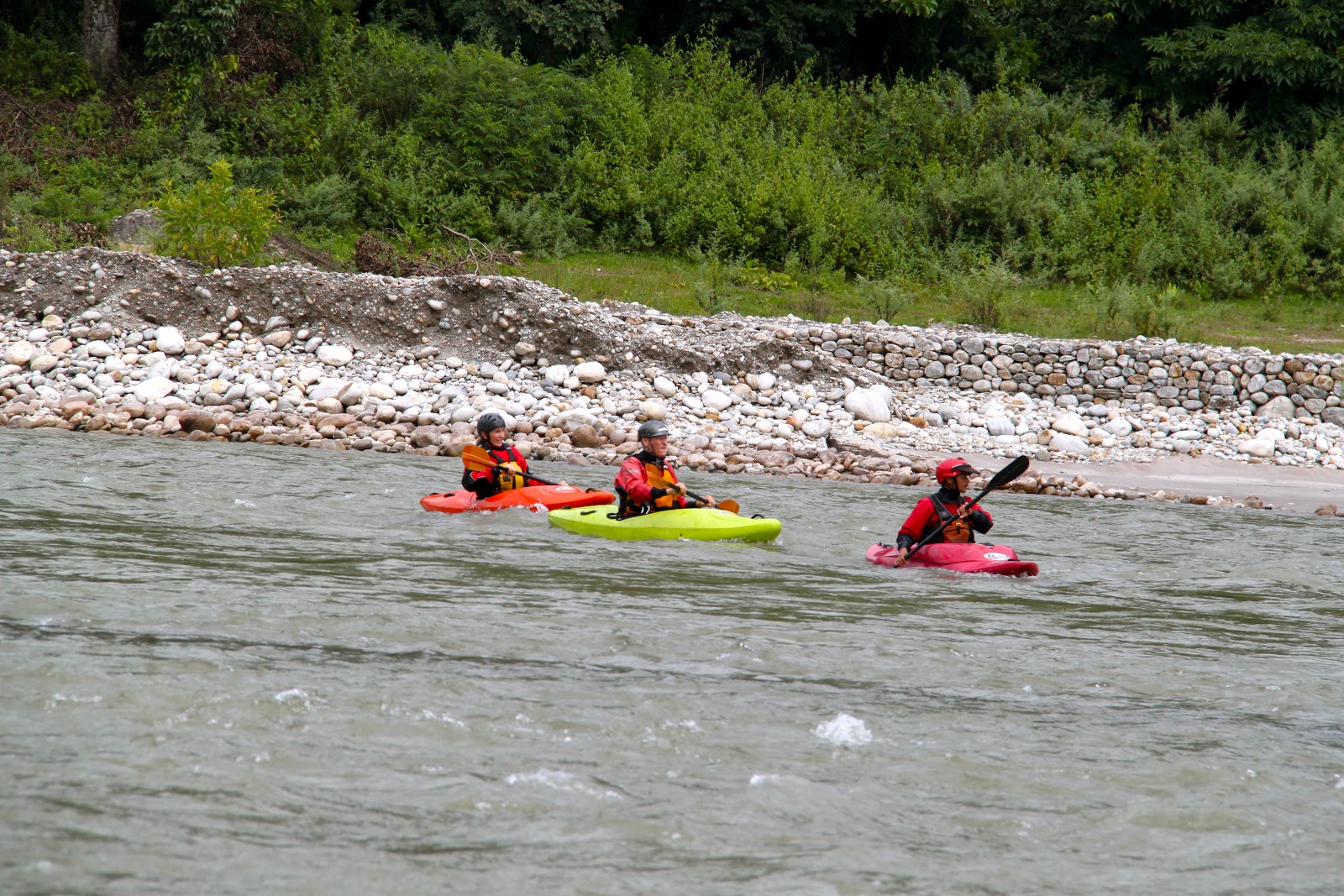
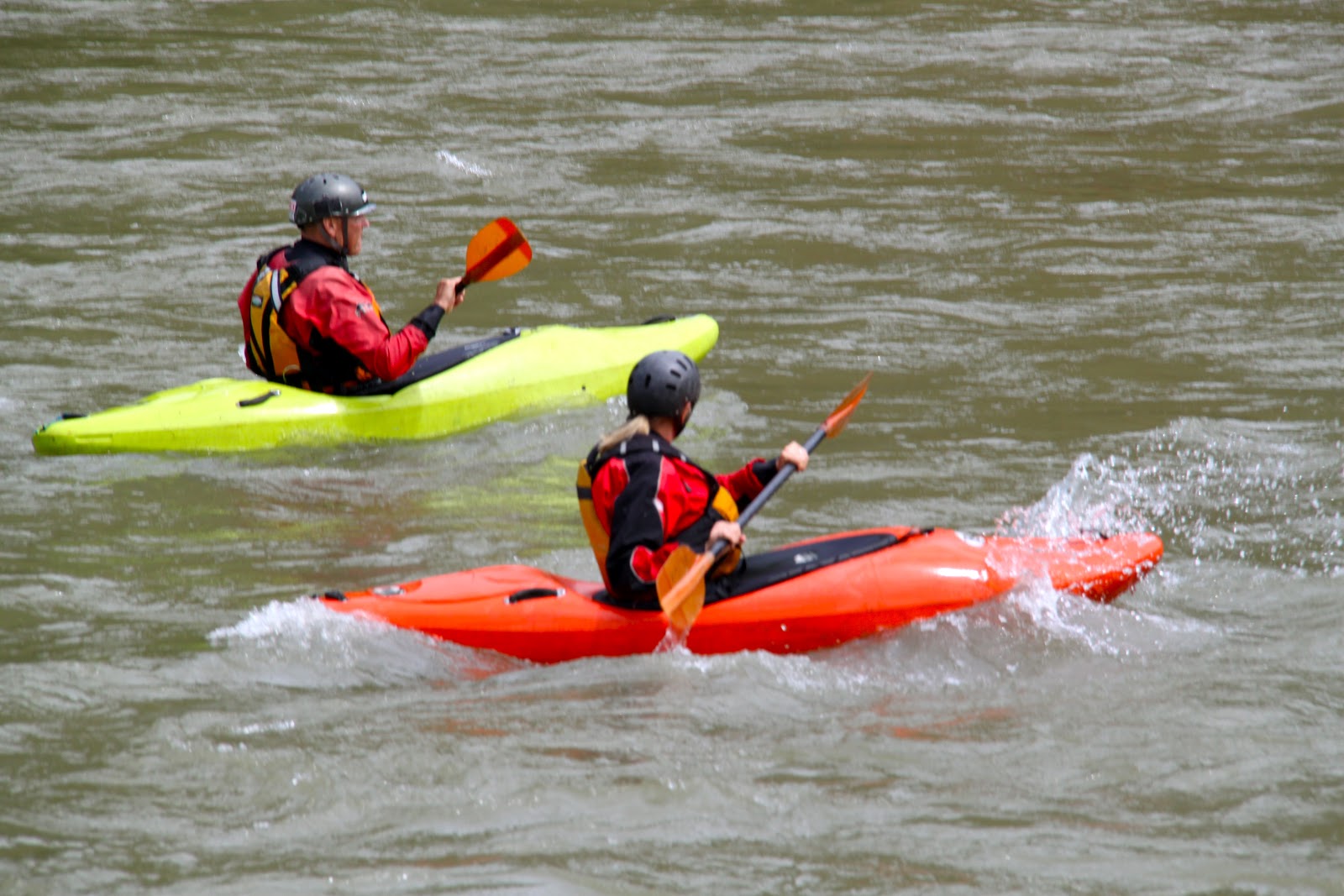
We paddle up river and into the current and survive the first rapids.  River kayaks are more maneuverable than sea kayaks.  By leaning forward and into the rapids we learned how to keep our kayaks pointed in the right direction.  We learn that it is similar to skiing in that to be safe in tense situations you have to throw your weight down the fall line, which might be scary, but helps to stabilize and control your motion.

Pro’s by now

The rapids seem to be similar or just a little more difficult than the Snake River rapids near Jackson, Wyoming. 

These rapids aren’t too bad


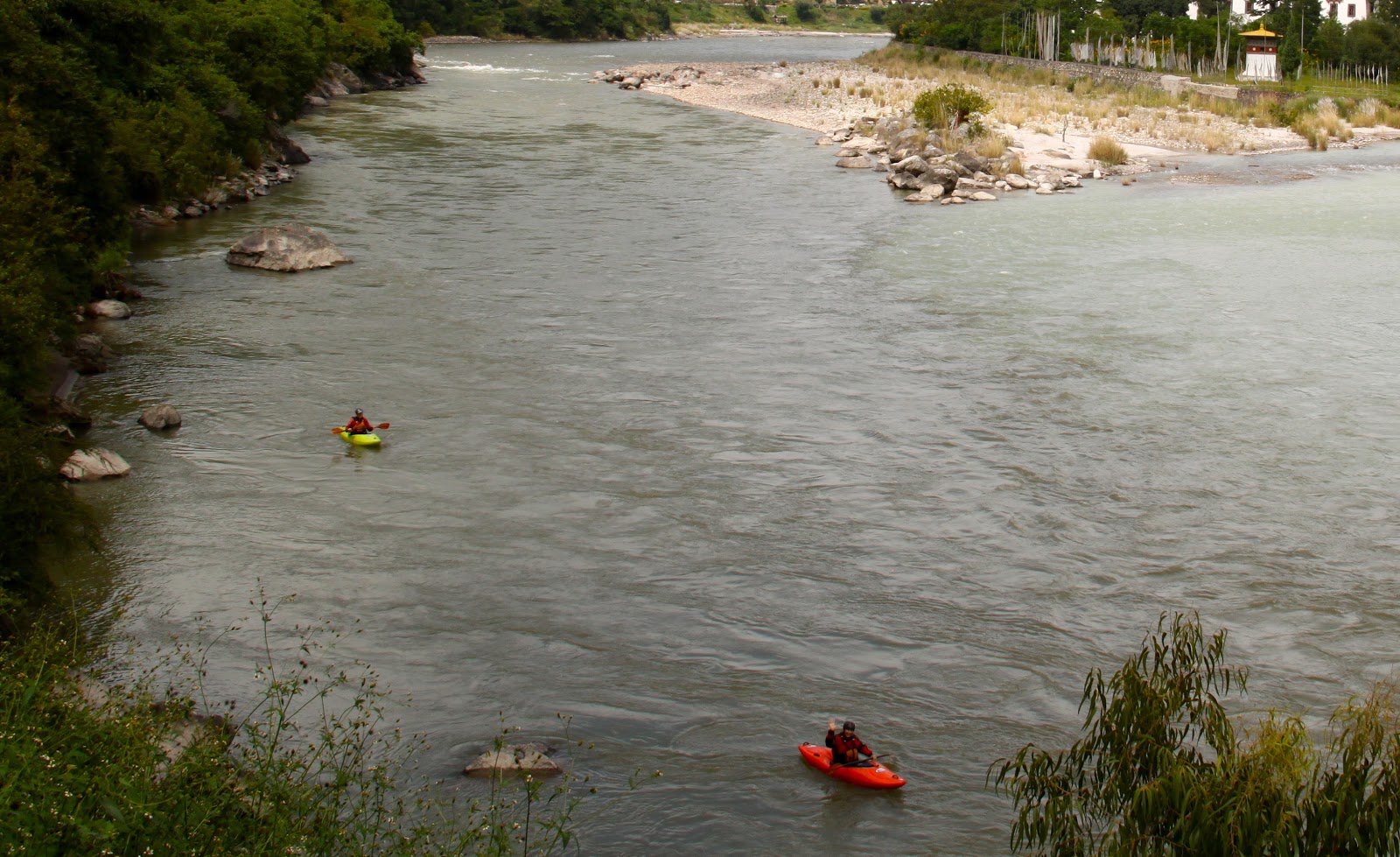
Our guide tells us that there is one rapid that we will port around since there is a nasty whirlpool that can take you to the bottom of the river.  We told him we were all in favor of taking our kayaks out of the water and porting around the danger.  But by the time we approached the danger he was confident in our ability to position our kayaks to enter the rapid in order to miss the whirlpool so we ran the rapid and were fine. 

No problem

The guide knew where to enter each rapid to avoid trauma.  It was our job to position our kayaks so follow his lead.  Without this local knowledge and a competent guide we would have never considered kayaking down a strange river in Bhutan.
The rapids are all that we can handle and it is fun to learn a new sport.

We kayaked right passed the Dzong.  Beautiful scenery.

I guess at the end, Barb got a little too confident, as that is her flipped upside down.  That happened in the flat water at the end of the ride!  Oh well, now she at least knows that she can pull the spray skirt and get out of the kayak.  It was cold enough water to take your breath away though.
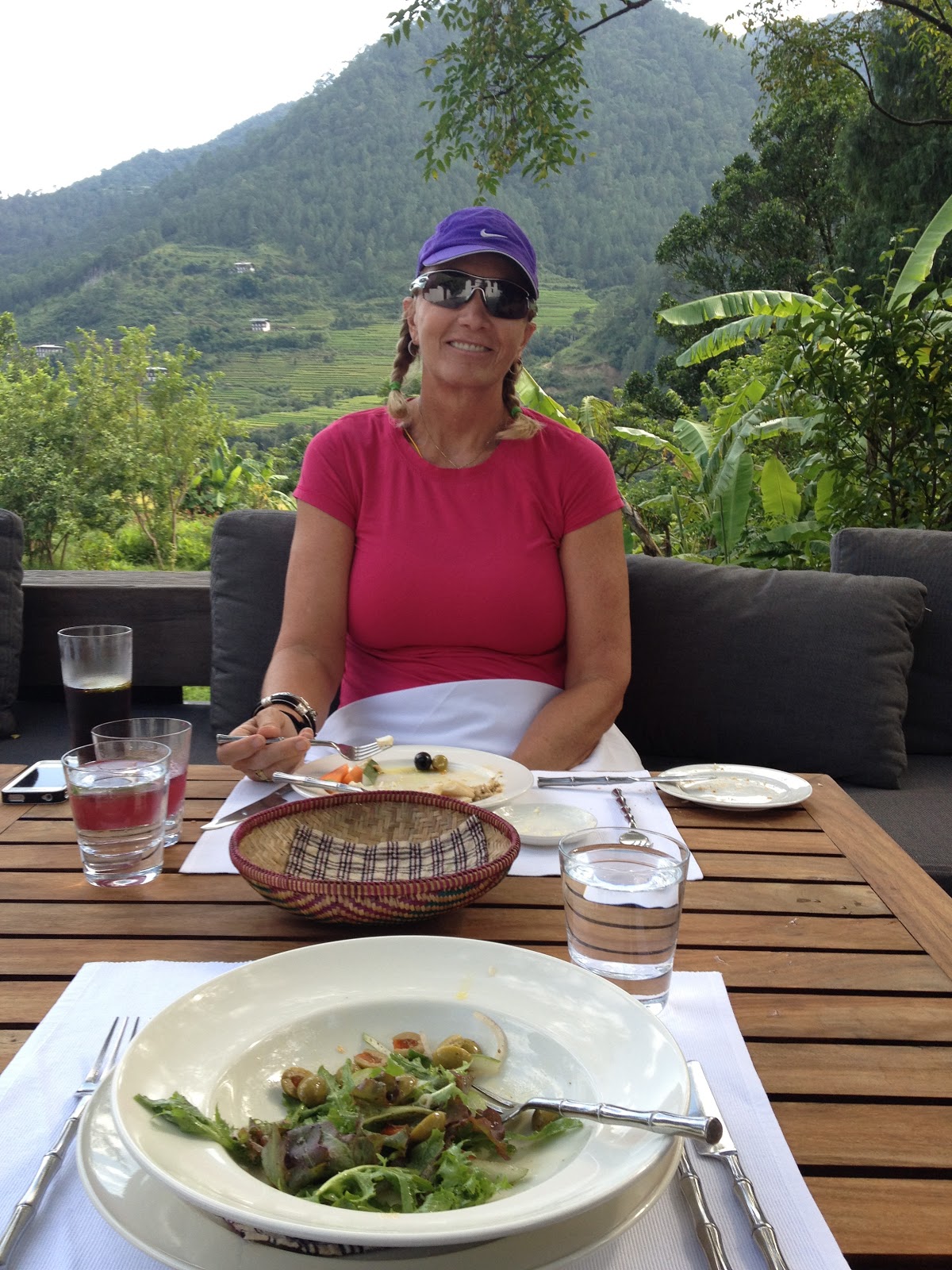
Following lunch at the Aman lodge we begin our 4 hour brutal drive back to Paro.  Now we are really questioning the sanity of  travel in Bhutan.  We pass the time and calm our nerves by listening first to the entire collection of Bhutan music owned by our guide and driver and then Barb makes a hit by playing some of her 8000 songs stored on her computer through the auxiliary port in the car.  It turns out our driver plays guitar and loves hard rock.  Barb makes a copy of some of the music she has stored on her computer by downloading the discs that she has bought.  Our driver is very happy for the gift.

Lunch
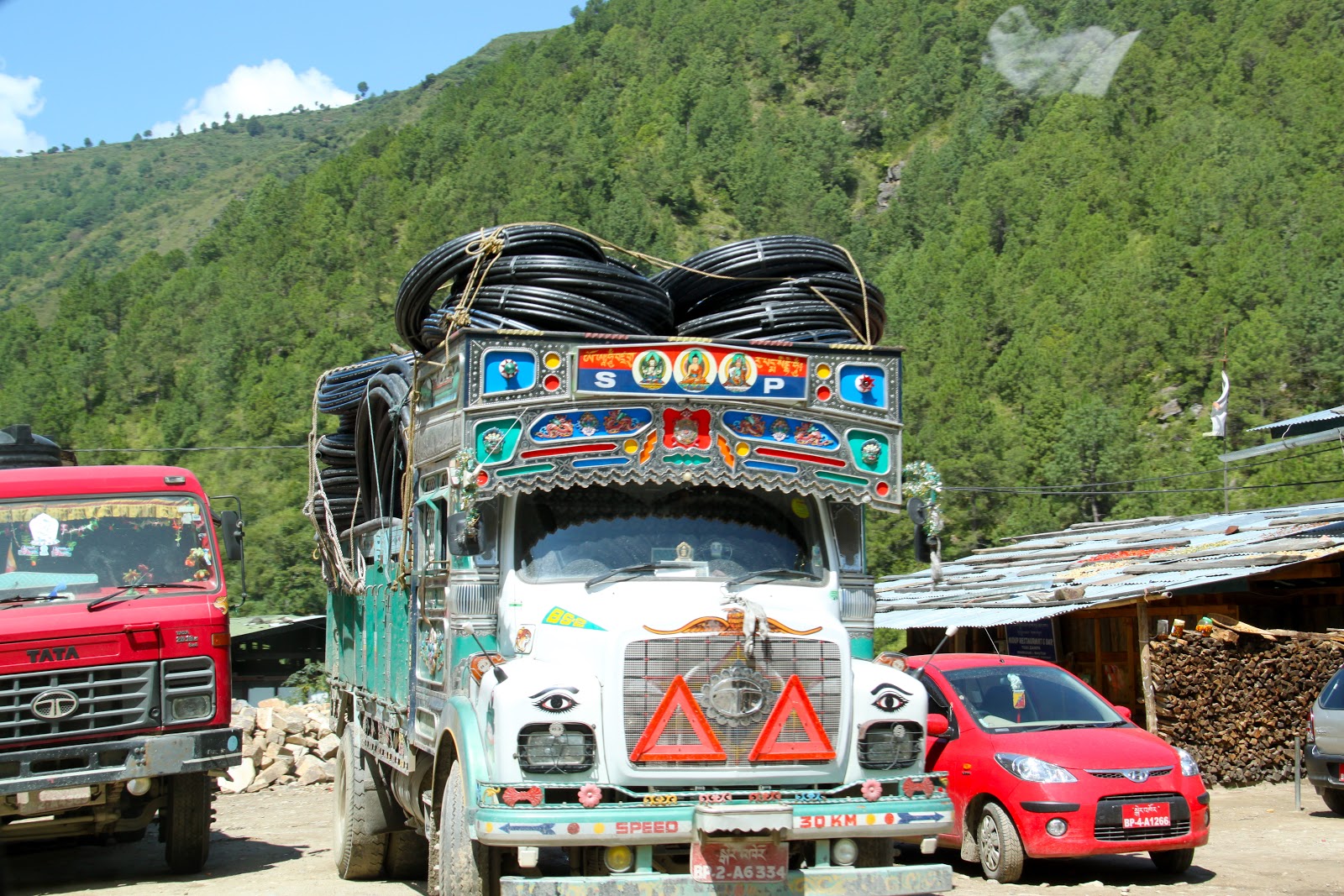
You have to pass these trucks on those narrow roads

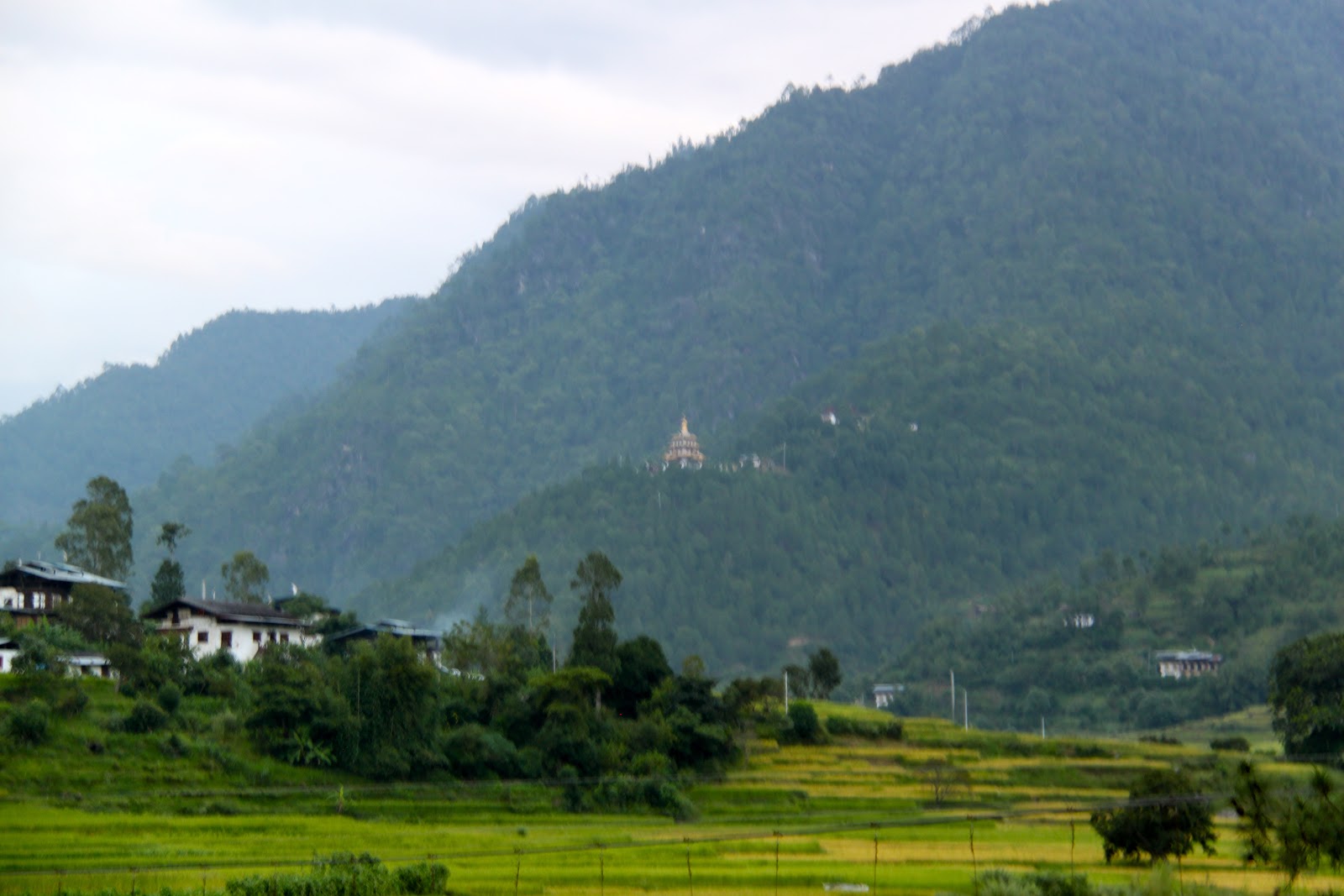
Temple on the hillside

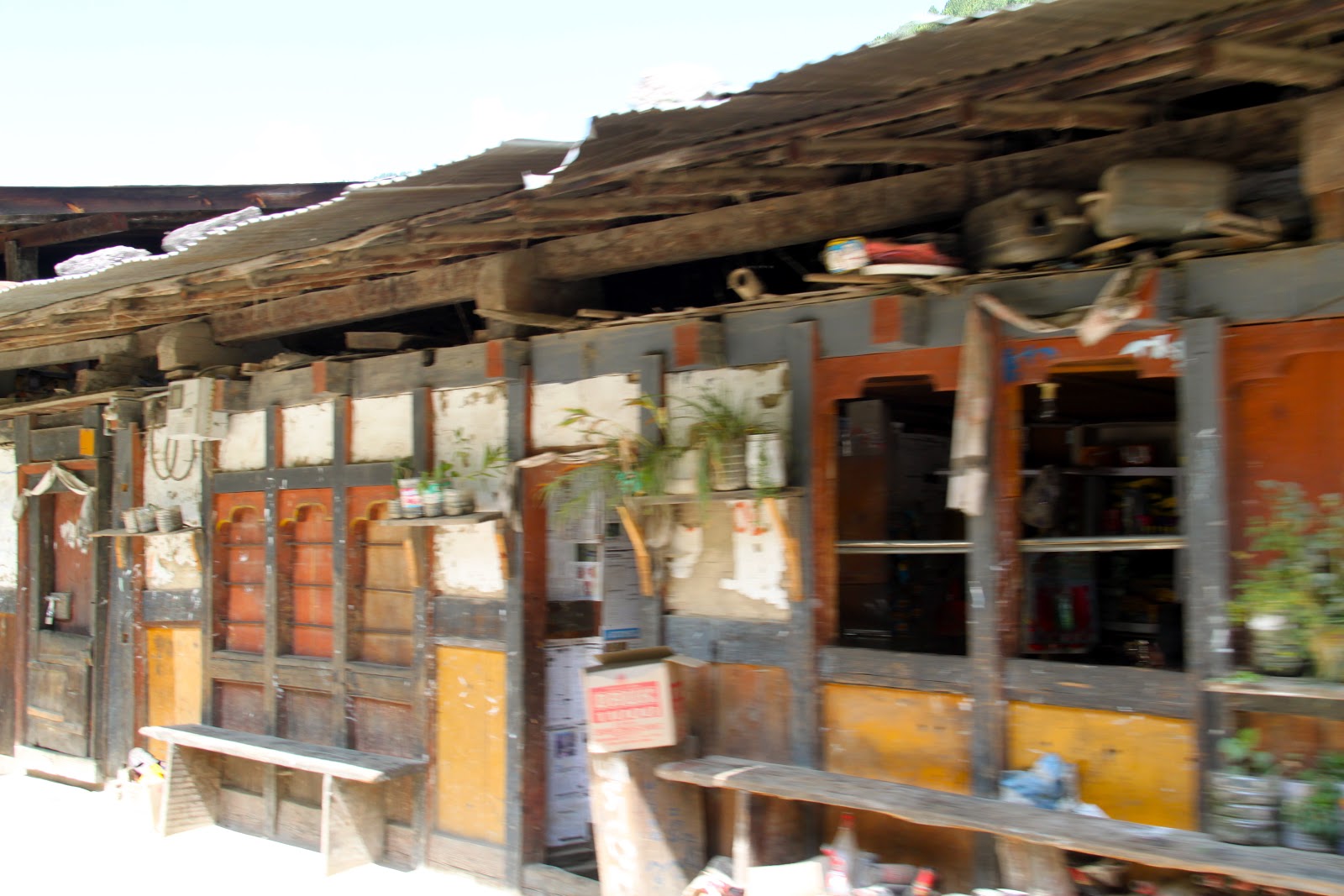
Roadside convenience store
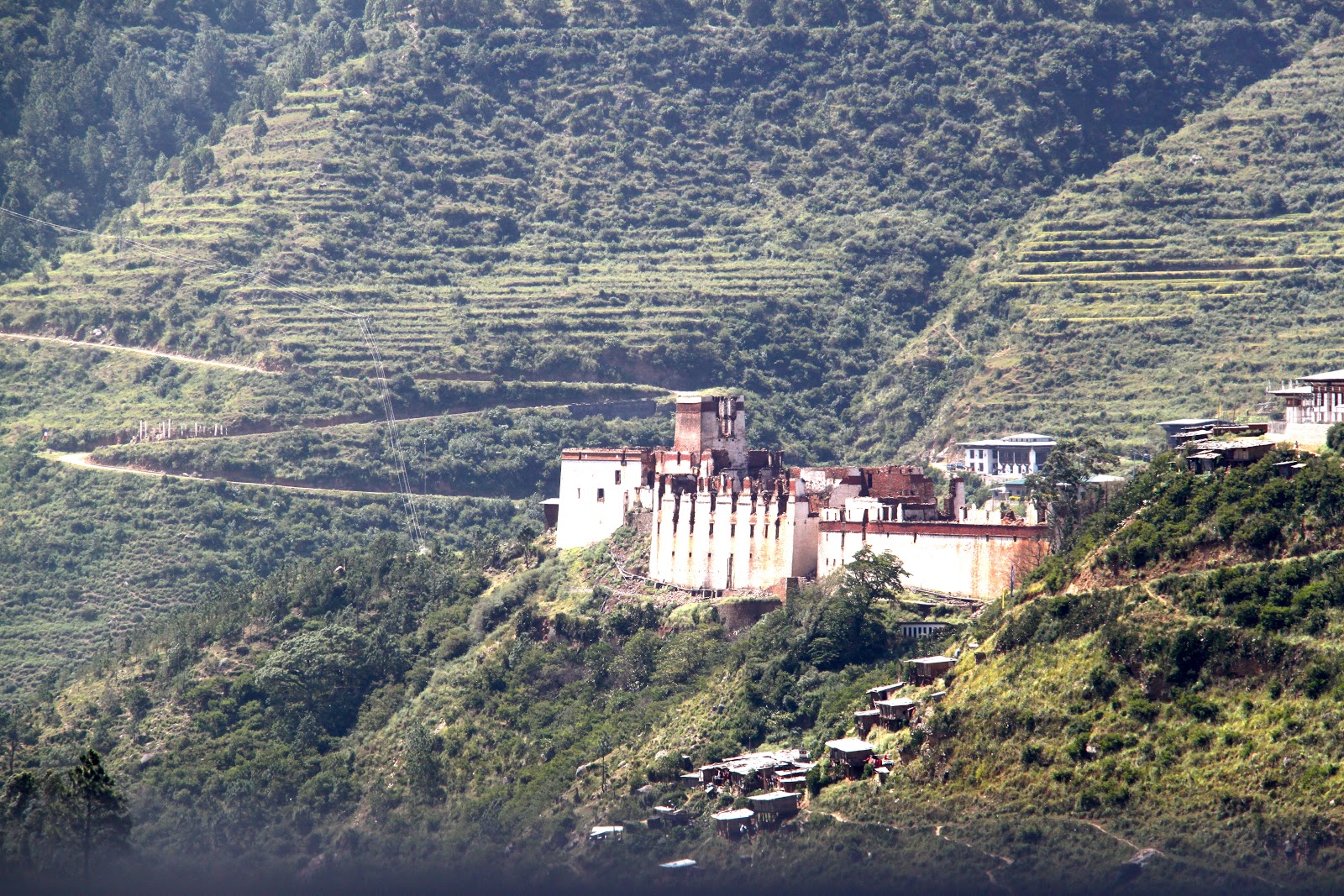
An old fortress that was burned and no longer in use
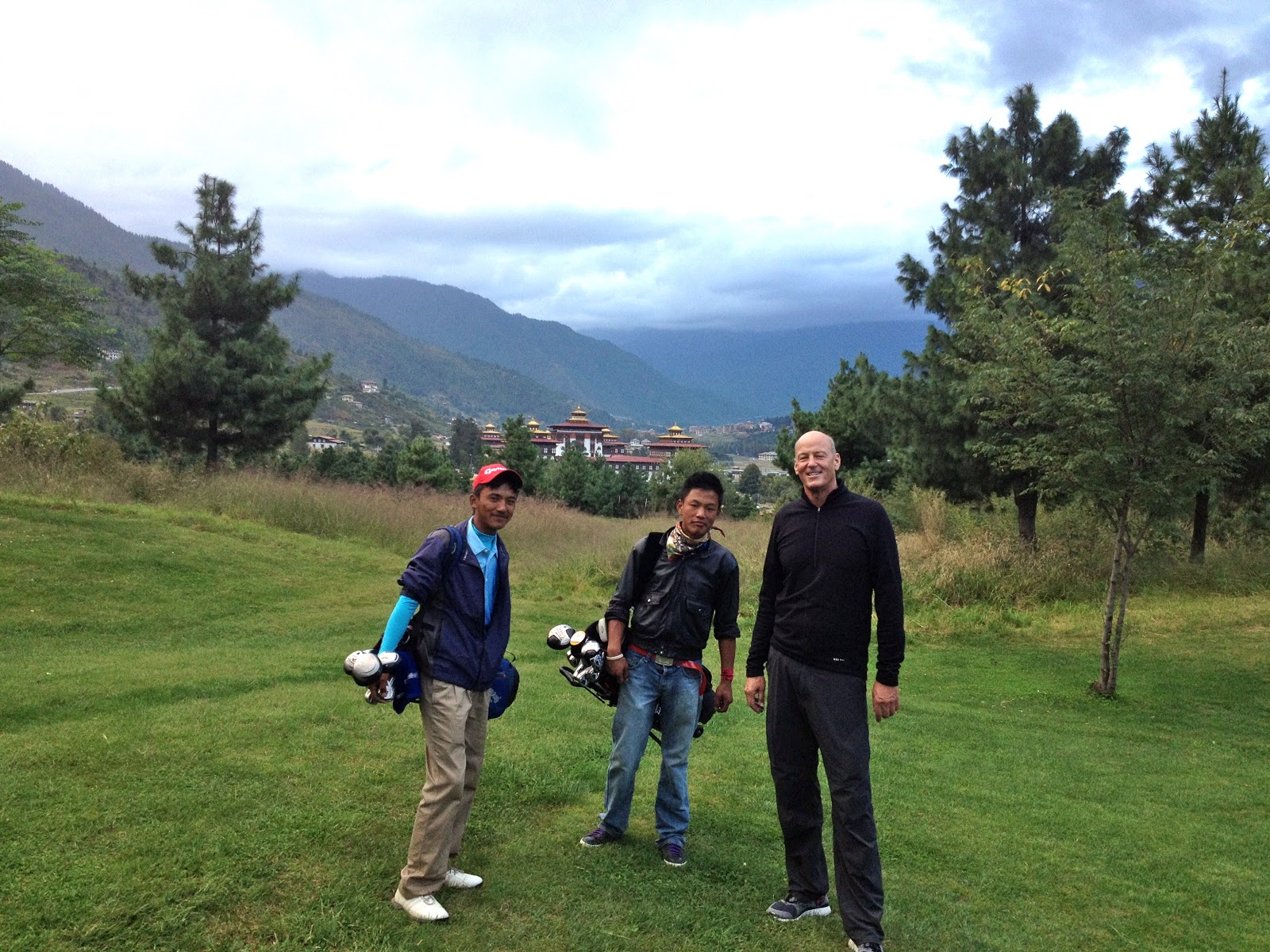
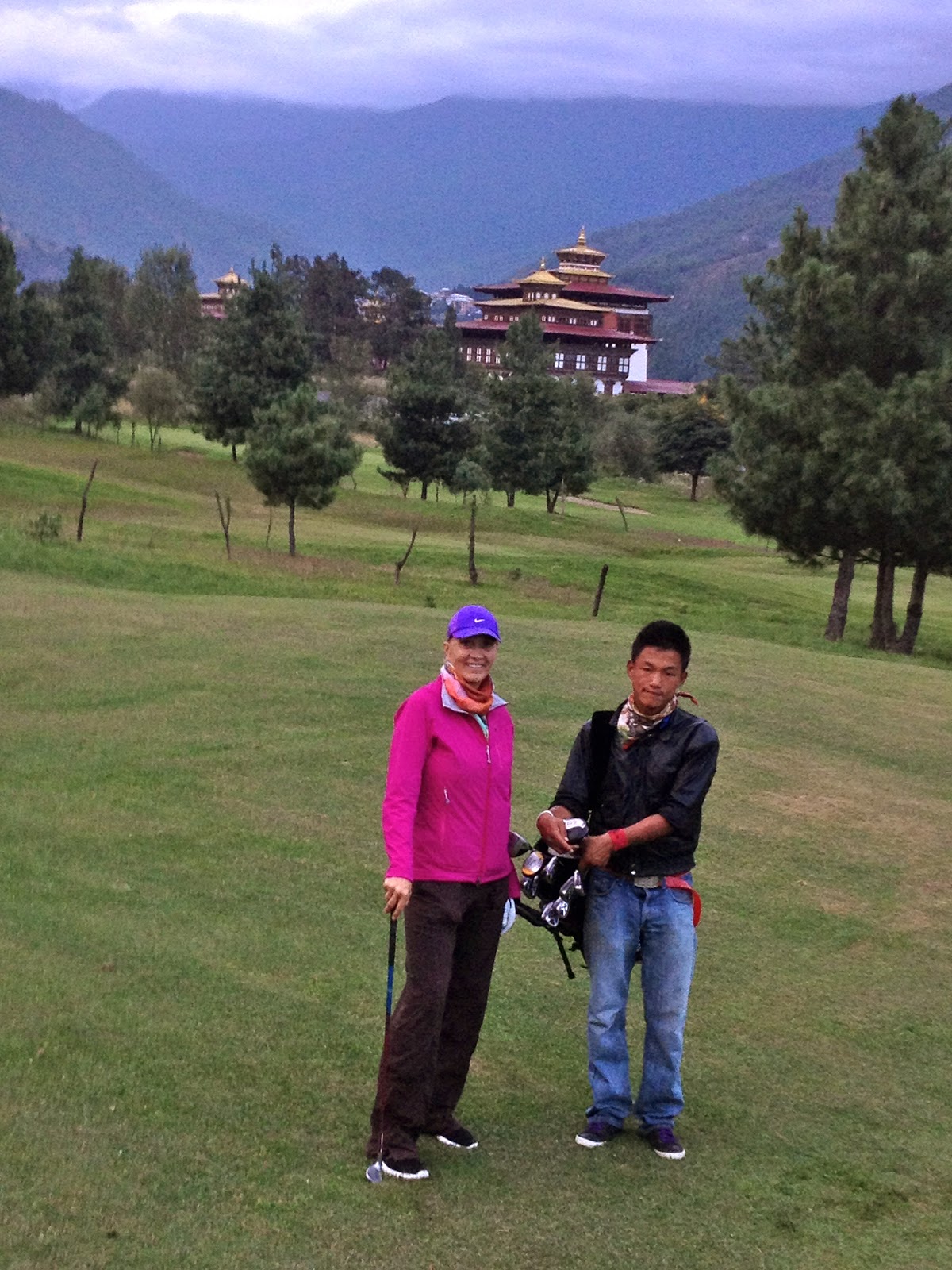
On the way to Paro we stop and play golf at the only golf course in Bhutan.  We wanted holes in one but did not get them.  We had local caddies and played 5 holes until it got too dark.  Their course only has 9 holes.  It was fun to stop and stretch our legs.

Because you can never fit too many things into one day, we make our driver stop in Thimphu to play golf.
The golf course had a nice view of the Timphu Dzong and Parliament Building.

Barb and her caddy

Punakha Dzong


Gangtey, Bhutan September 28-30, 2012

GANGTEY
The drive from Timphu to Gangtey is brutal.  The roads are sometimes dirt and sometime paved.  These roads are made by hand and cut out of steep mountainsides by laborers from India.  If you can tear your eyes away from the bad roads, there is some pretty scenery and waterfalls.

Typical hillside with plantings of rice

Steep Slopes

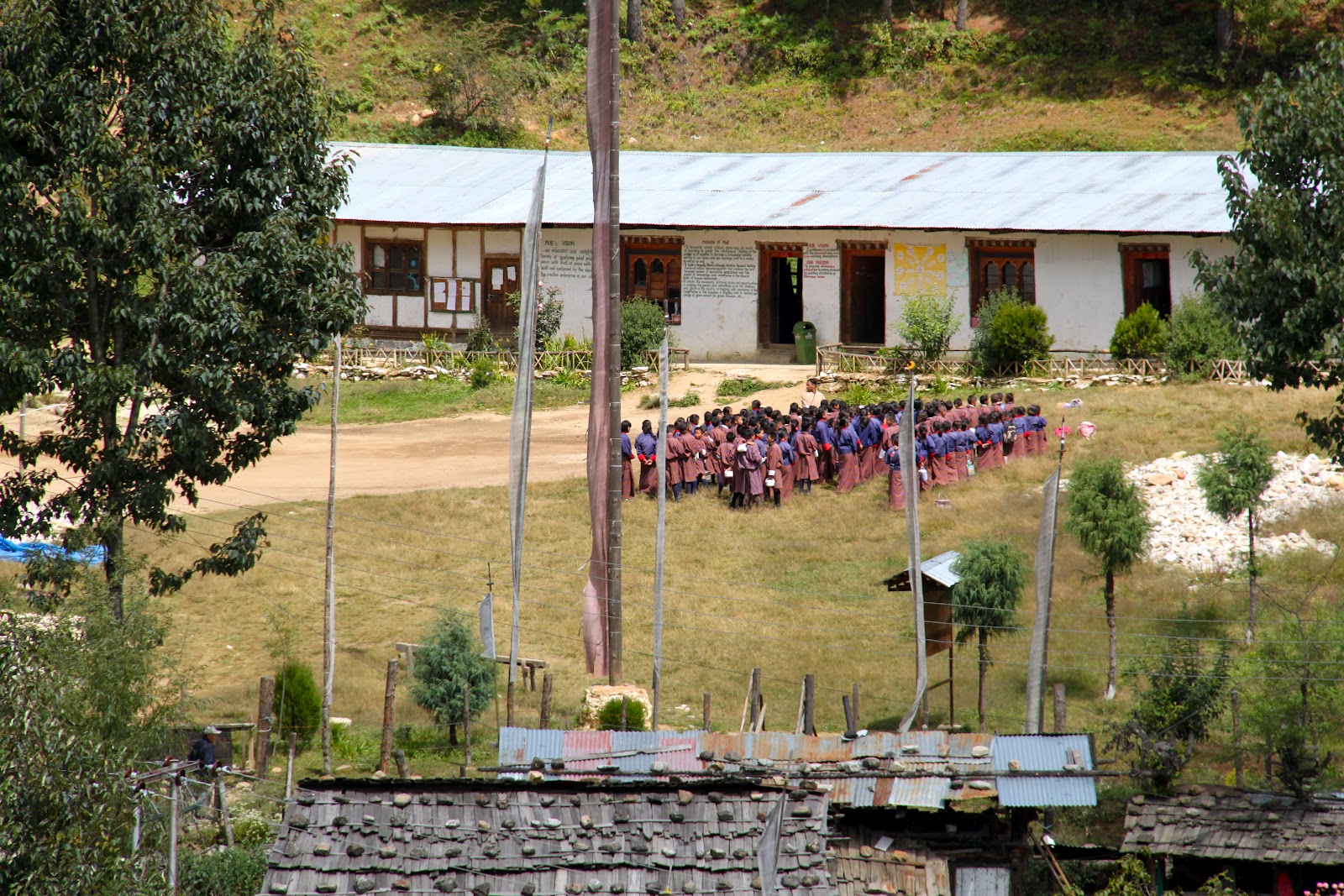
Kids at school in traditional uniforms

Washed out roads, waterfalls along the roads

 We were able to break up our drive with another hike to a mountainside temple.

We hiked through farms that grow potatoes

We passed school girls along the way

We were always rewarded with a temple at the end of our hikes

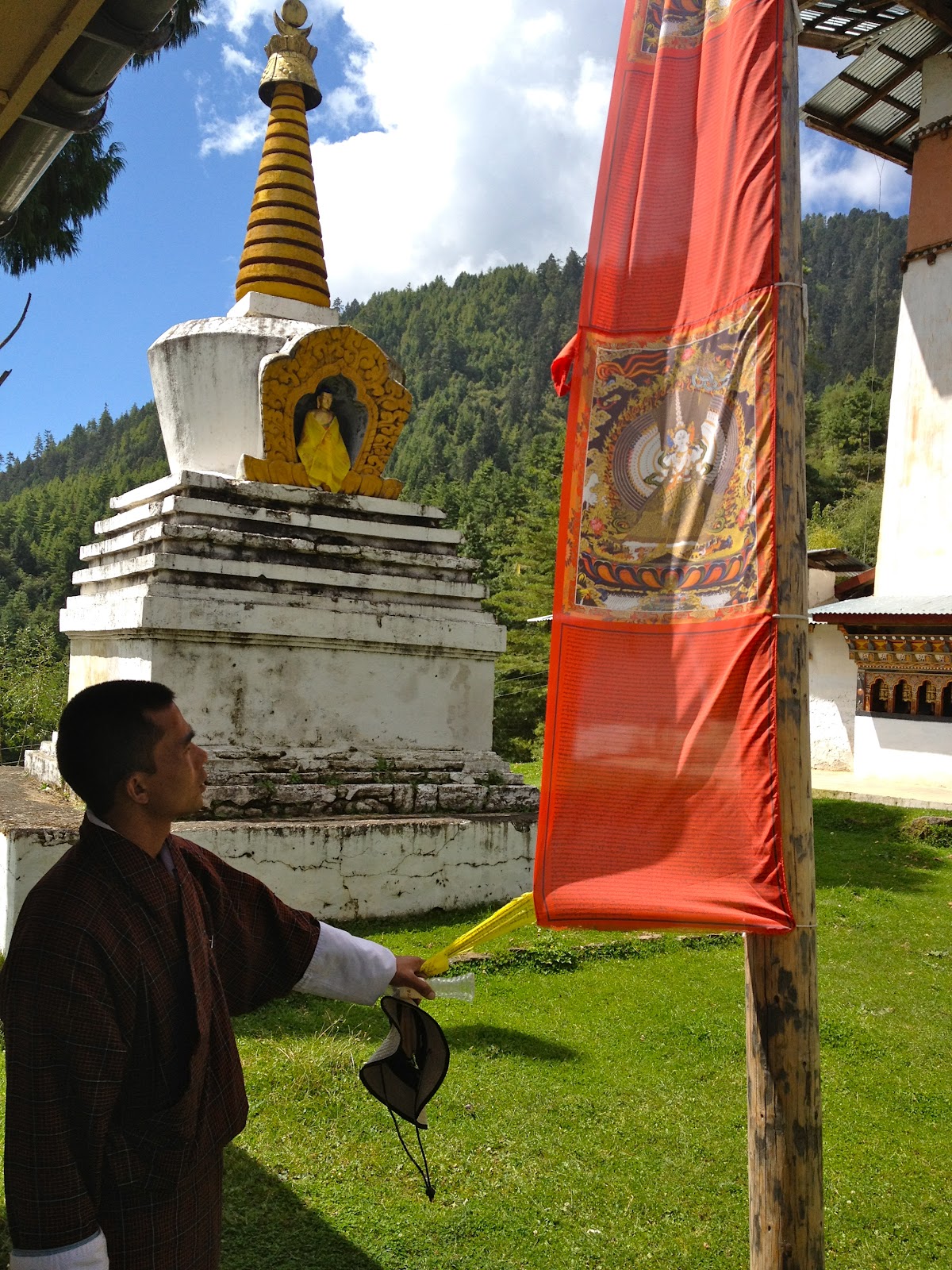
Stupa next to the temple

At the entrance  Tashi with the Lama.  There is always a caretaker and usually a few monks at each temple.  The monks will usually stay at each monastery a couple of years

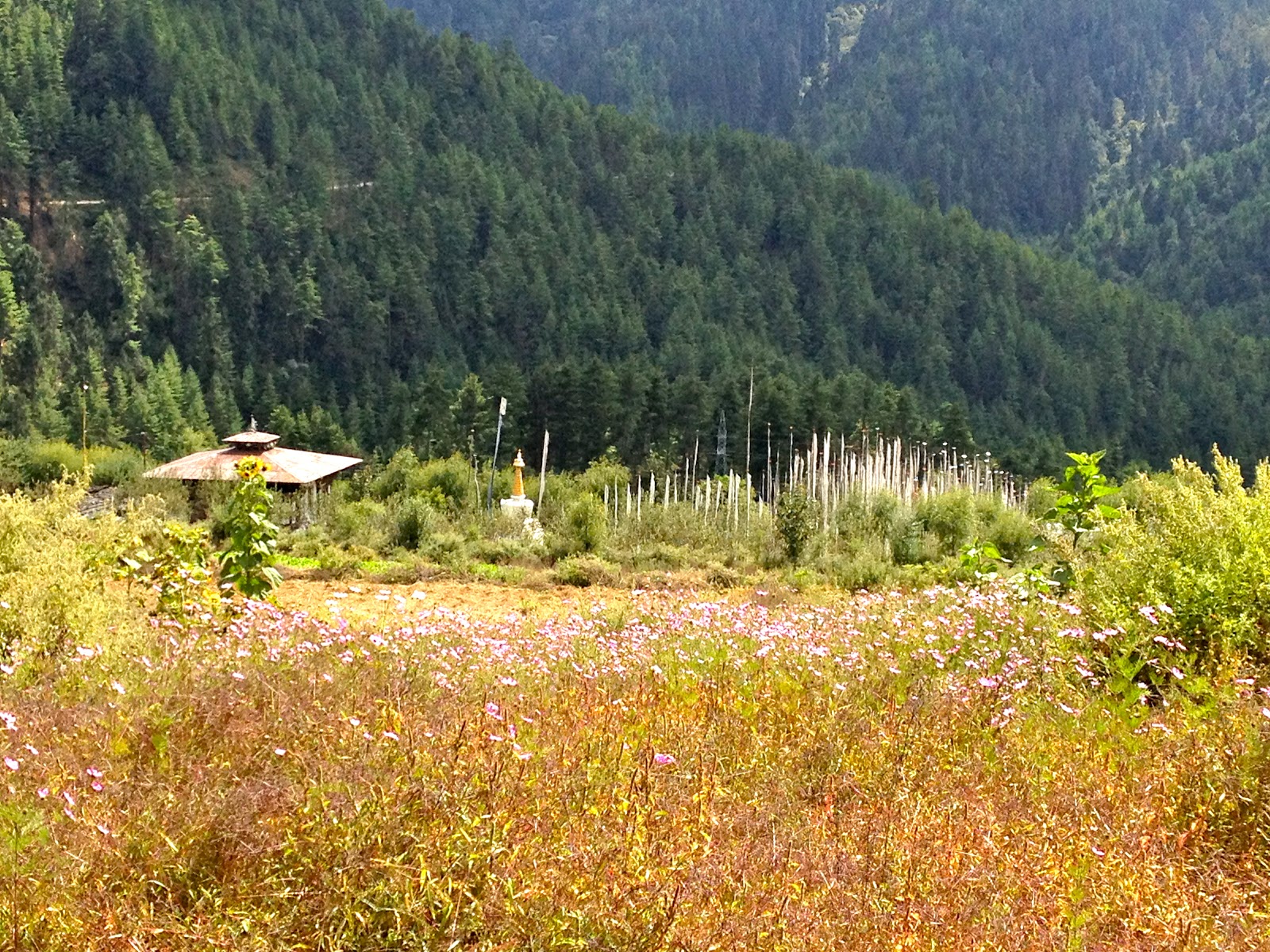
Prayer flags like this in all white indicate a death they are honoring

An old stupa on the trail with a prayer wheel

The temple

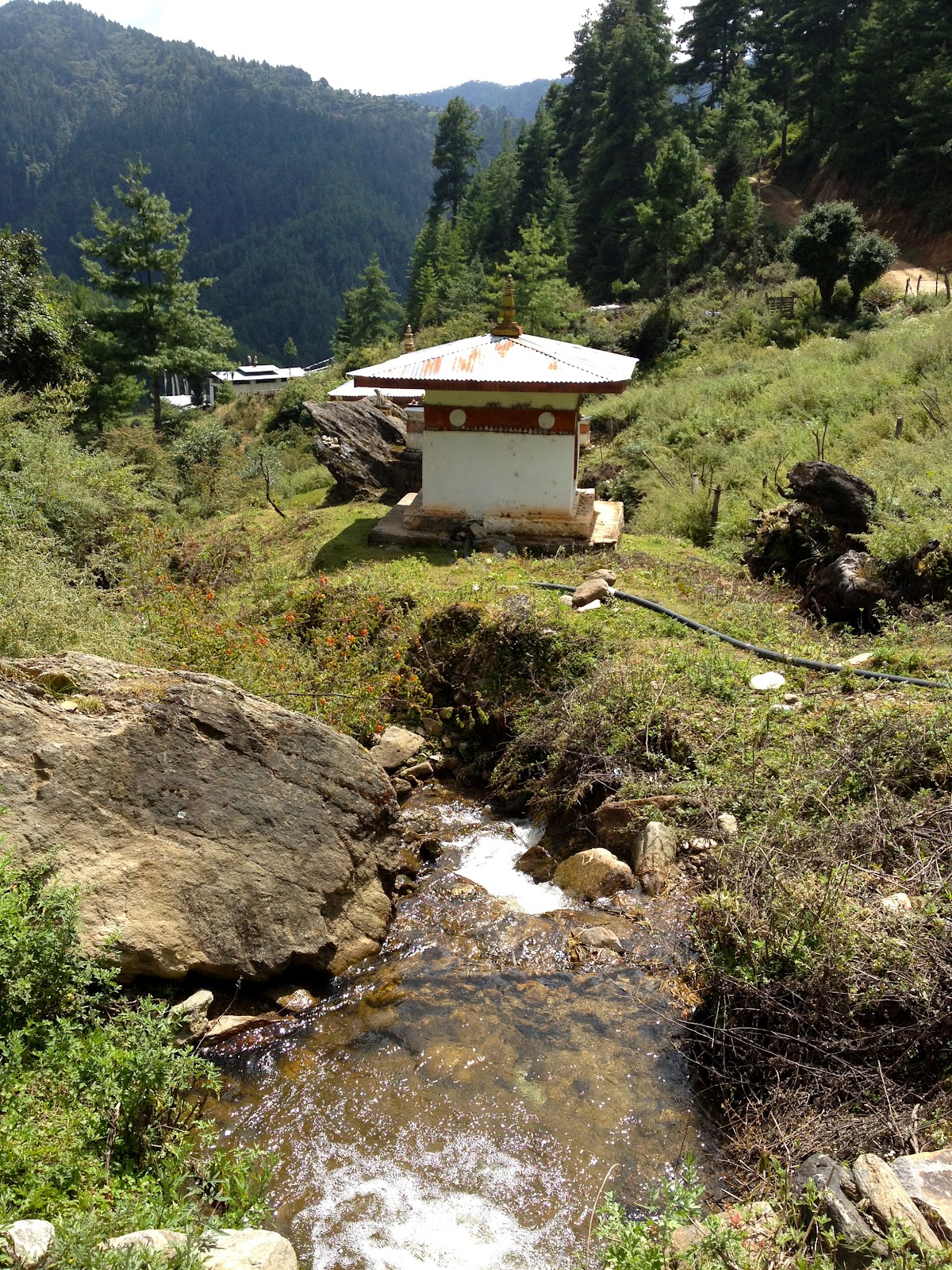
This is a prayer wheel stupa that turns with hydro power.  The water wheel runs through it to turn the wheel and send continuous prayers

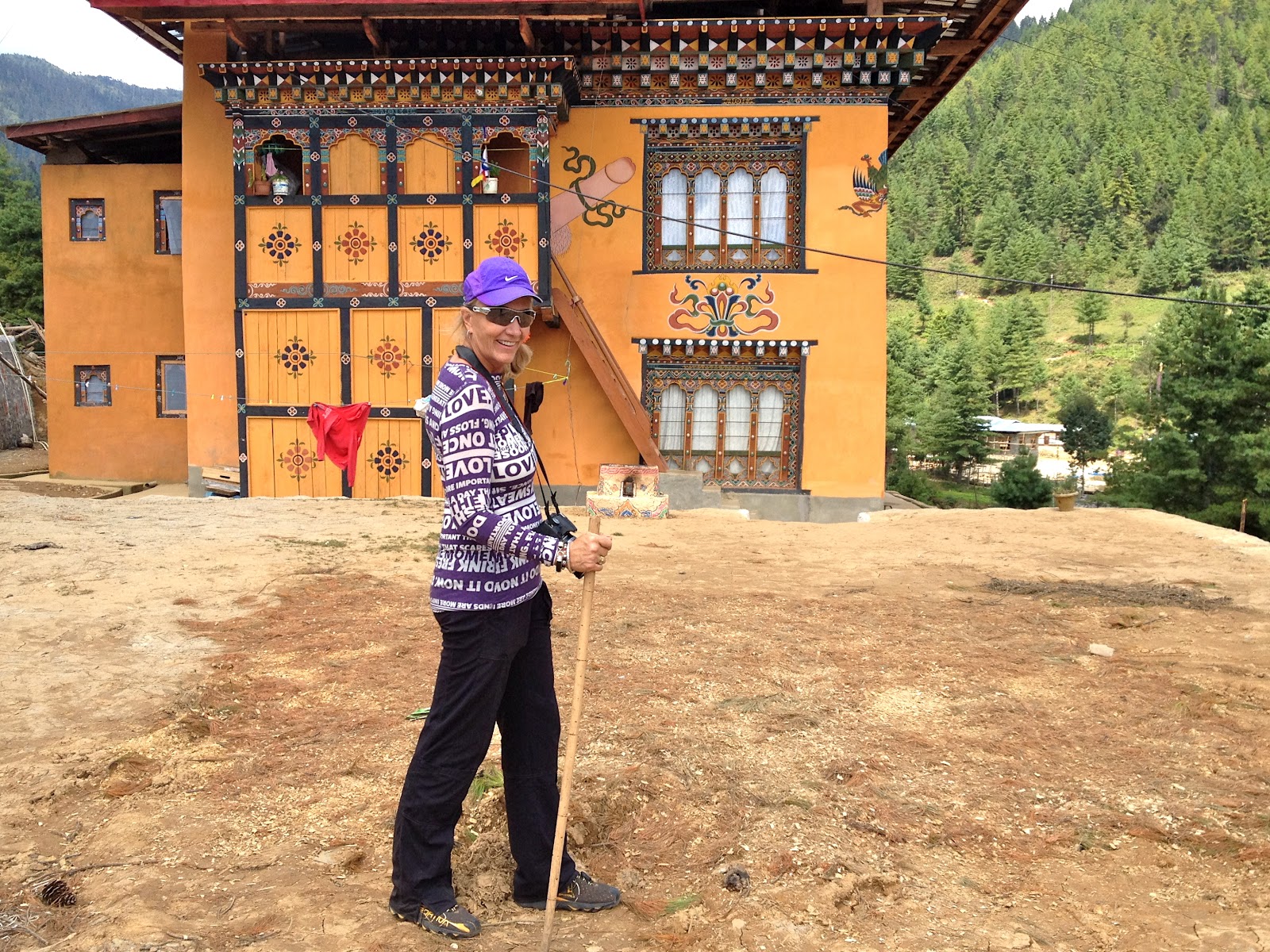
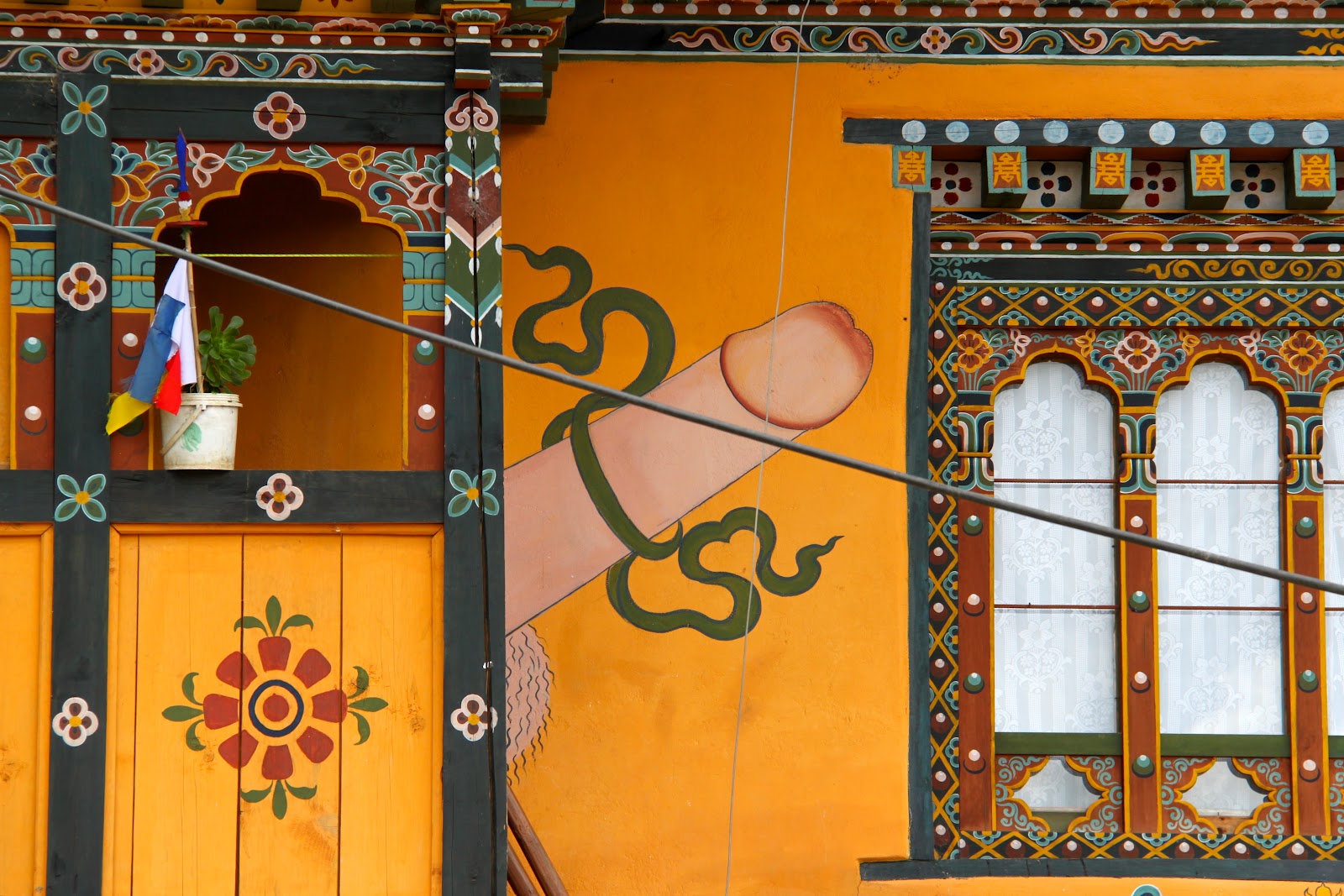
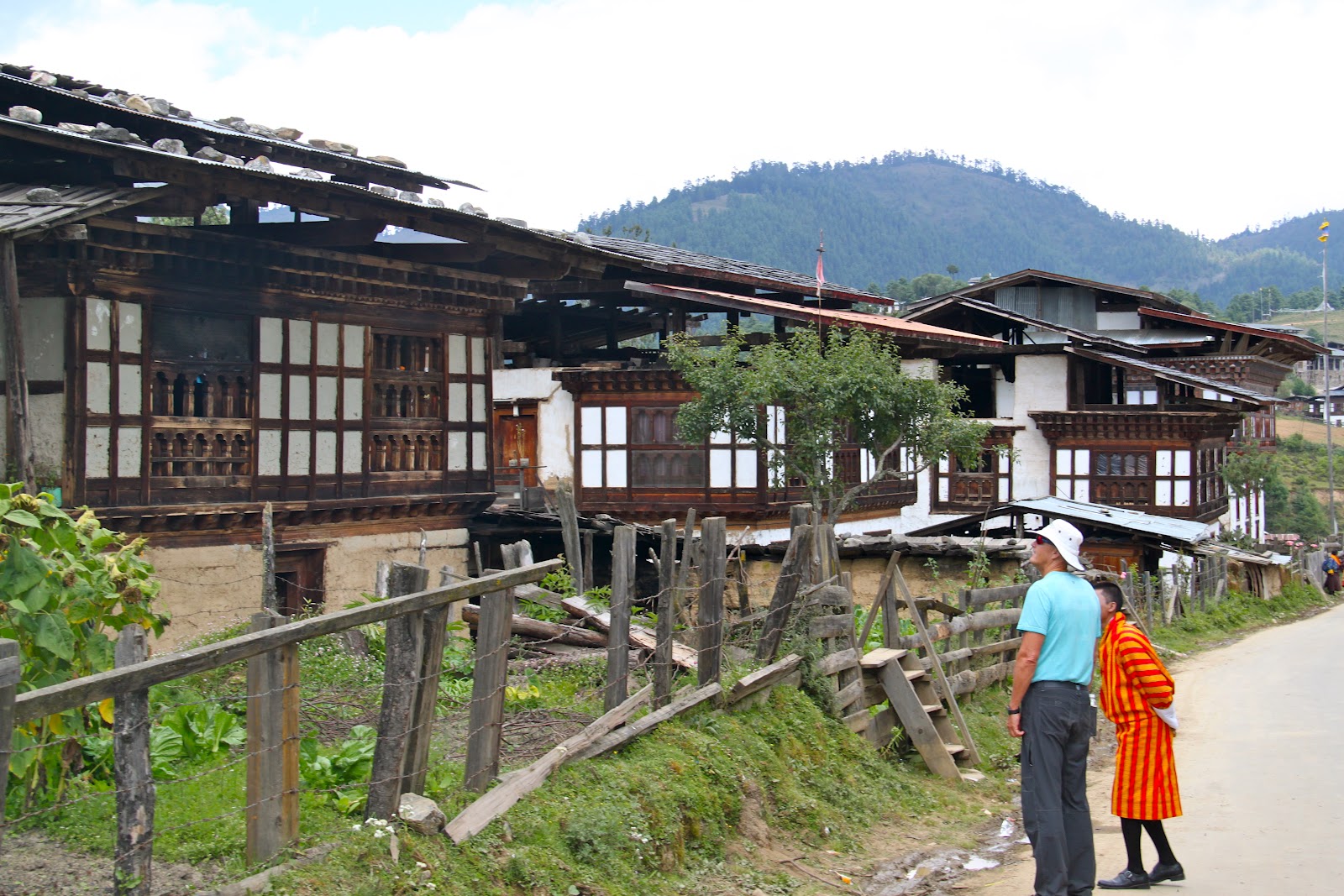
This is a new farm house that was just built.  Notice the picture of the penis.  They believe that if you have a penis hung over your door, it will bring much luck

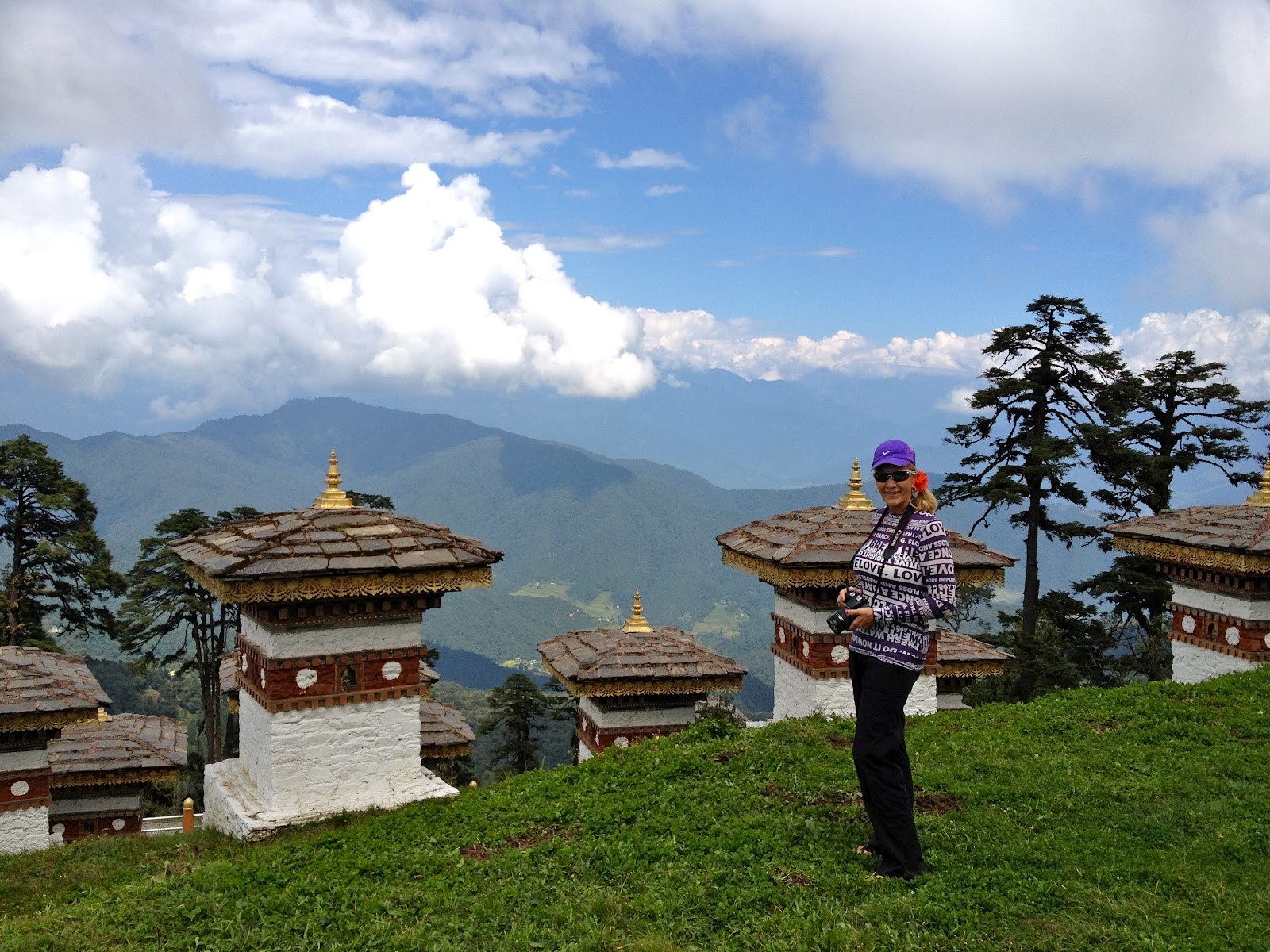
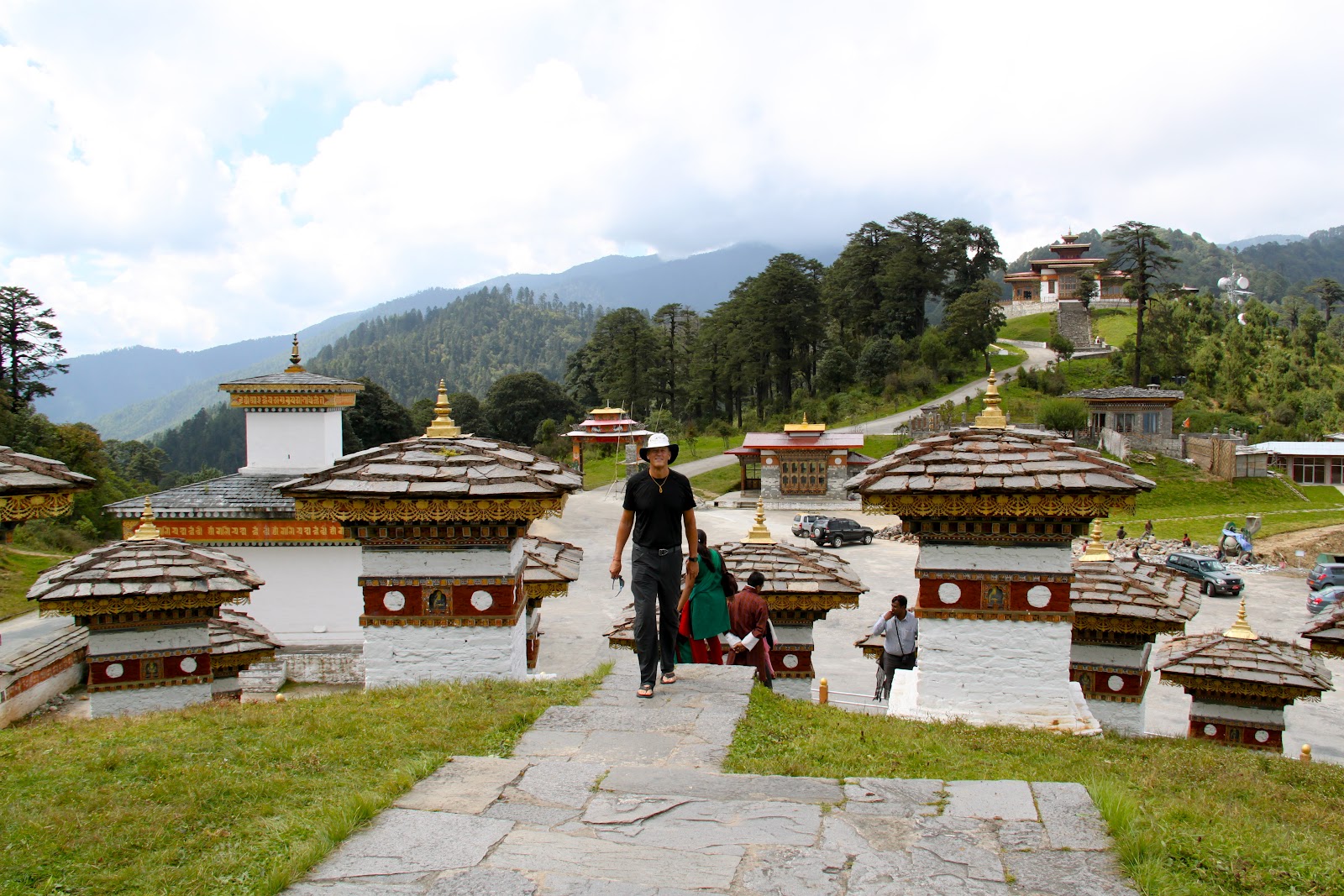
The first pass we cross is Dochlu pass at 10,500.  It is the site of 108 stupas donated by the Queen Mother of Bhutan.  Our guide told us they represent the 108 bones or joints in the body but we are not clear on this.

Pass with 108 Stupas

Barb with the Himalayas in the far distance

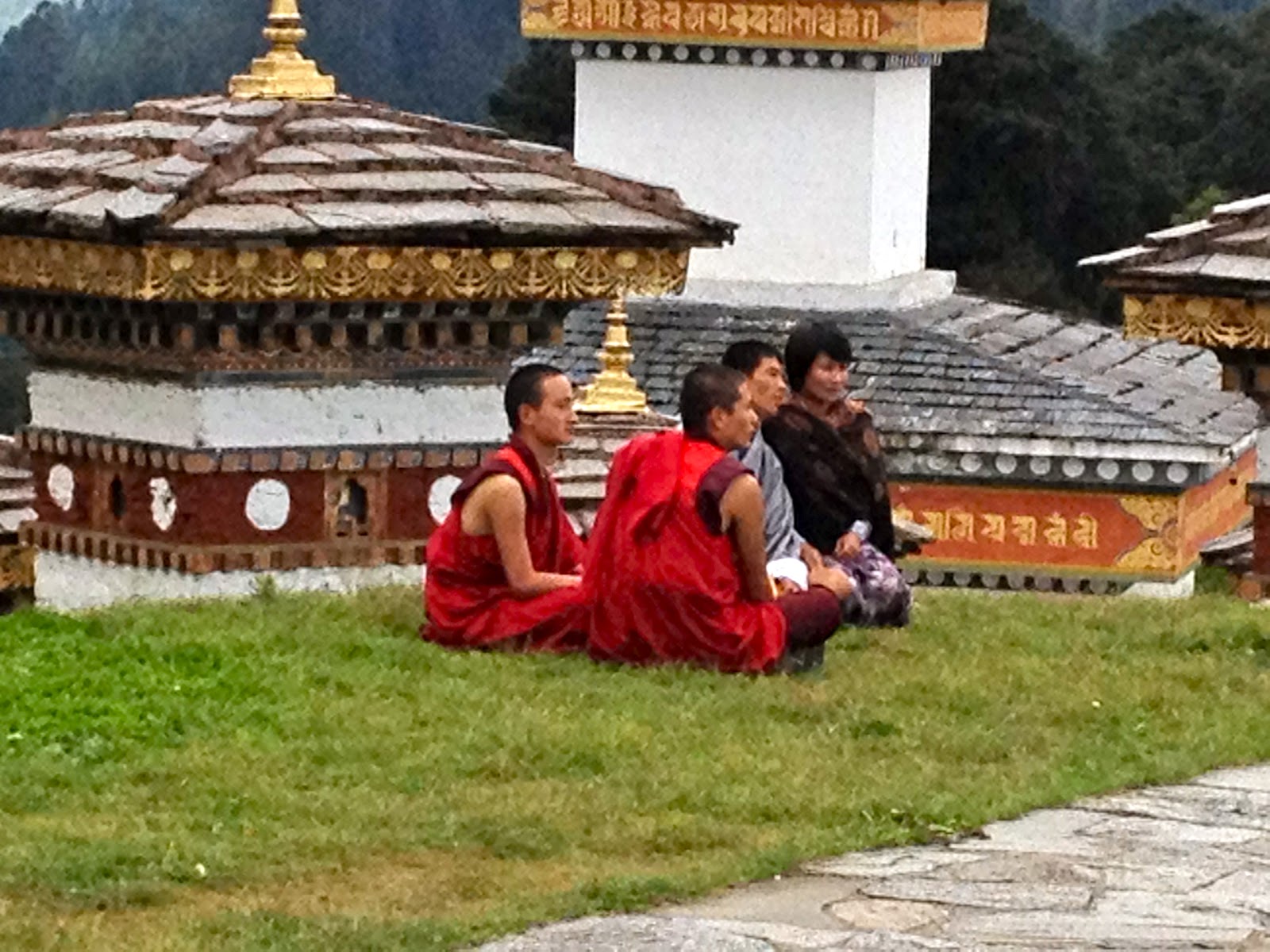
Monks enjoying lunch

Scott on the top of the first pass at 10,500 feet

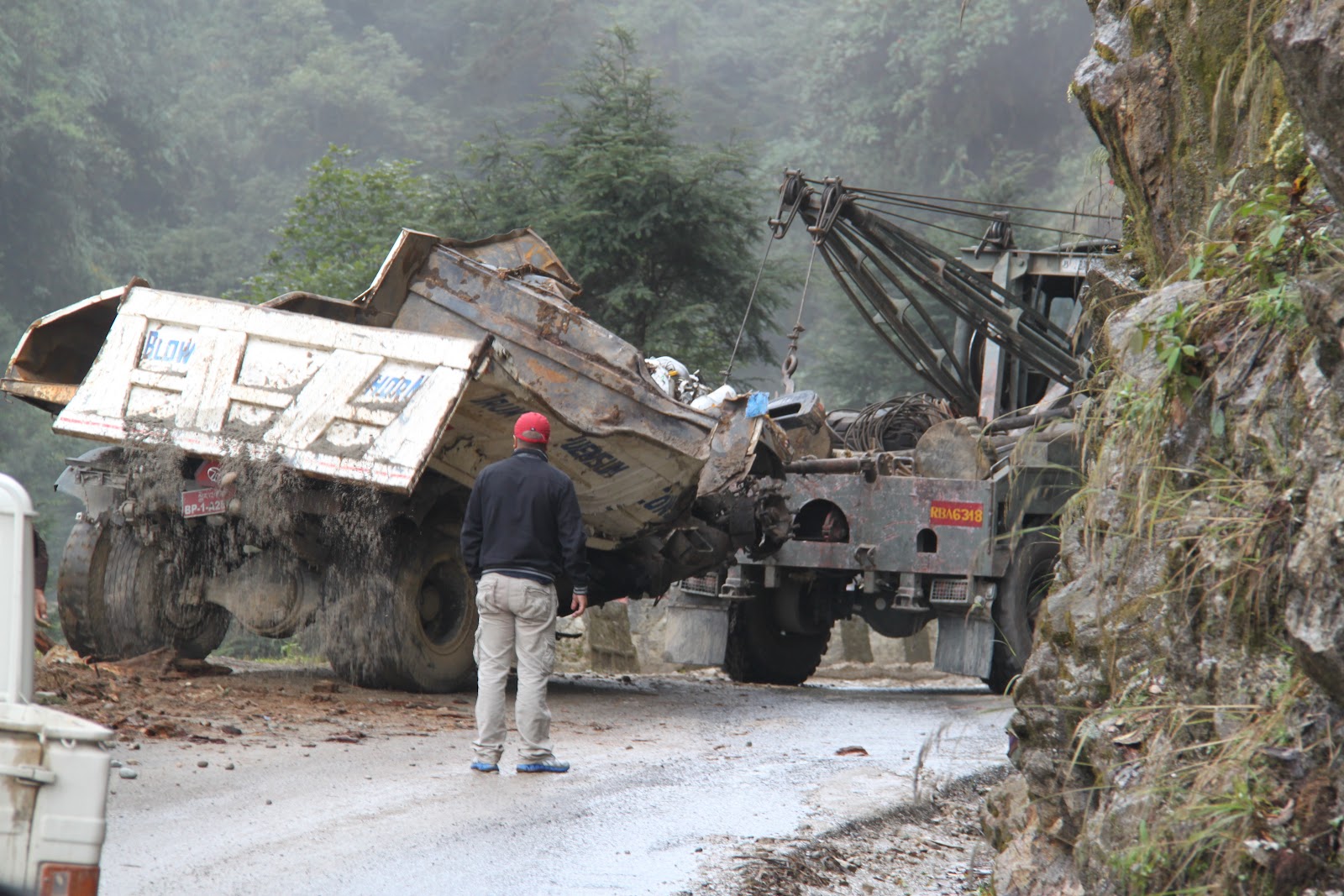
The next pass we cross is 11,200 feet.  Driving on these roads is scary but we have confidence in our driver named Namgay.  Along the way we see many landslides that have taken out part of the road.  One landslide crushed a dump truck.  The driver survived but the dump truck is a mess and is on the side of the road as a grim reminder of the dangers of driving on these roads.

The accident happened 3 weeks prior, but it took them a while to clean up and remove the truck

Gangtey is a small agricultural area nestled in a beautiful valley and is famous for the migration of the black neck cranes that occurs from November to January.  The crane have their babies in Tibet and then fly to Gangtey to roost.  The Bhutanese believe these cranes to be sacred and will not allow hiking around the area or roosting when the cranes are there.   We spent 2 nights in Gangtey.

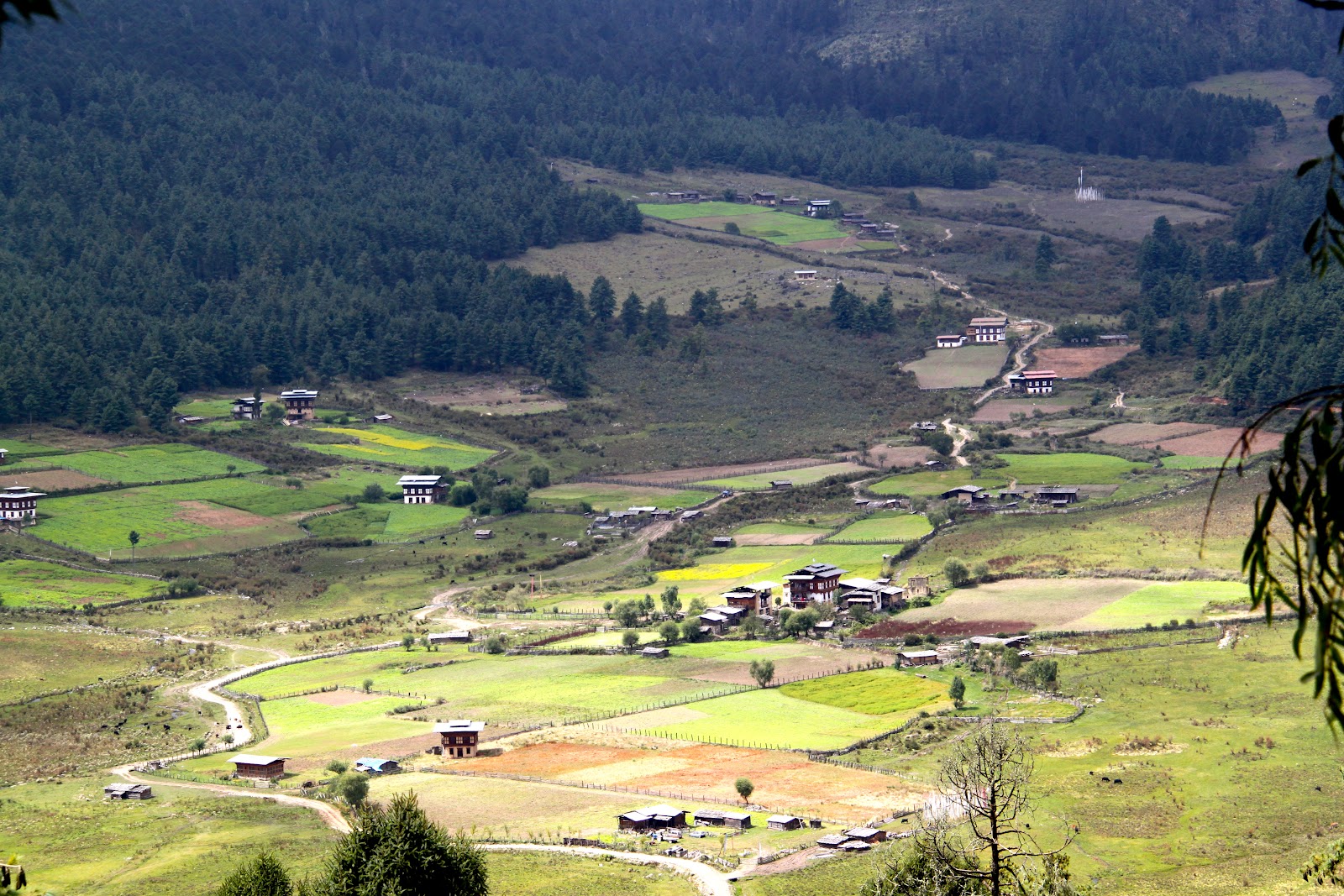
The beautiful valley of Gangtey
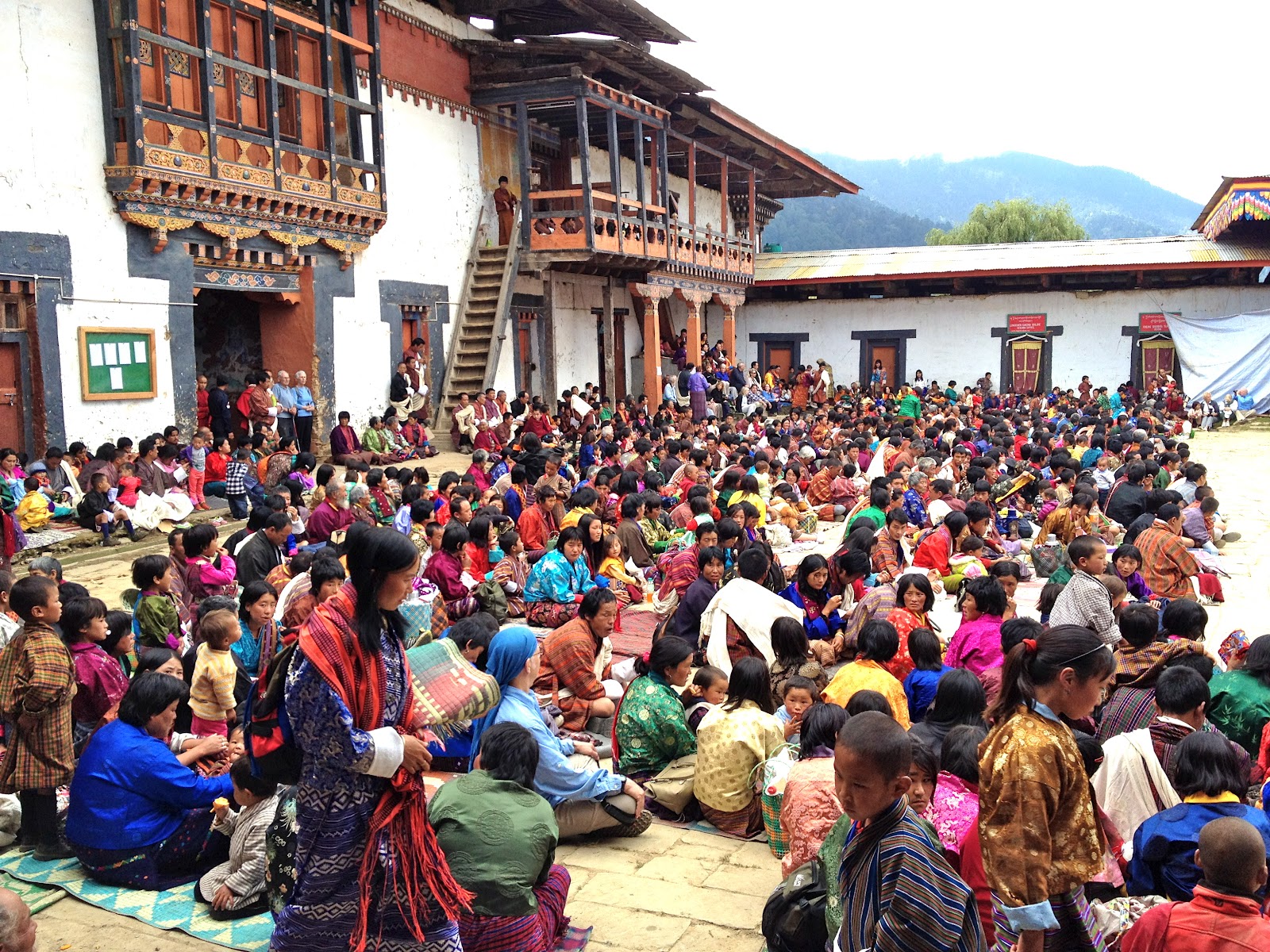
In the morning we go to the festival at the Gangtey Monastery.  It is a small festival and you can mingle with the festival characters.  People watching is almost as colorful as the festival.

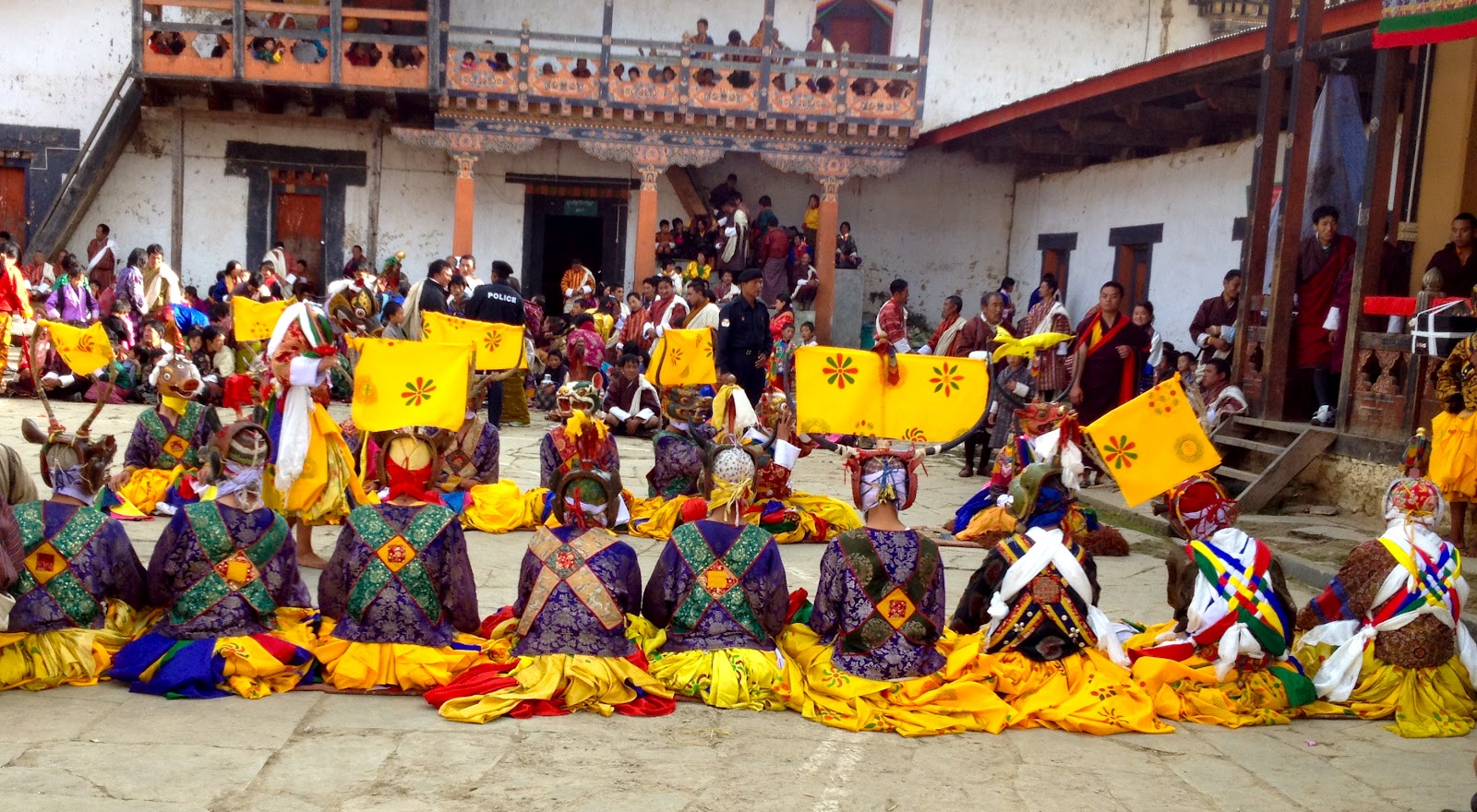
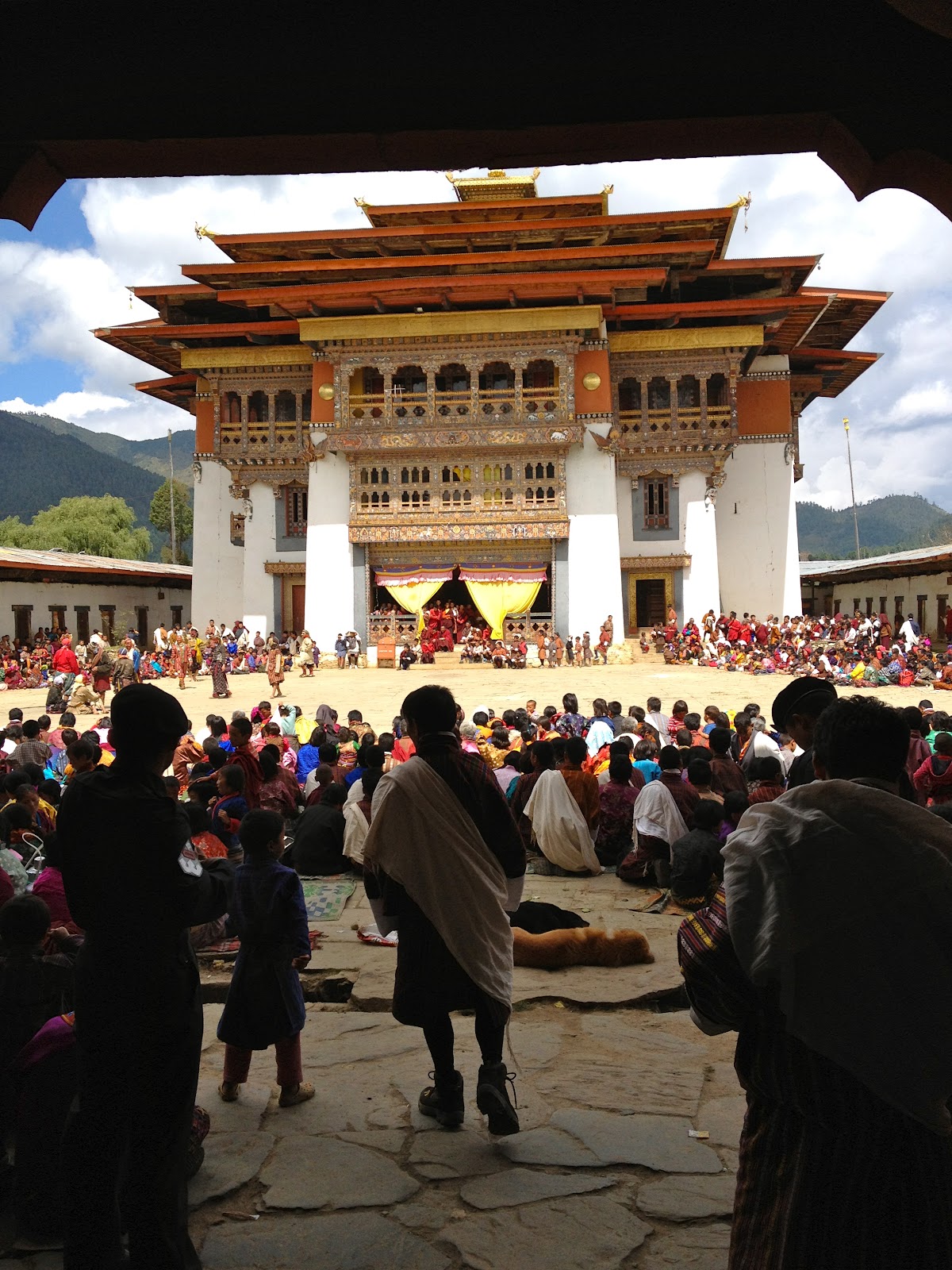
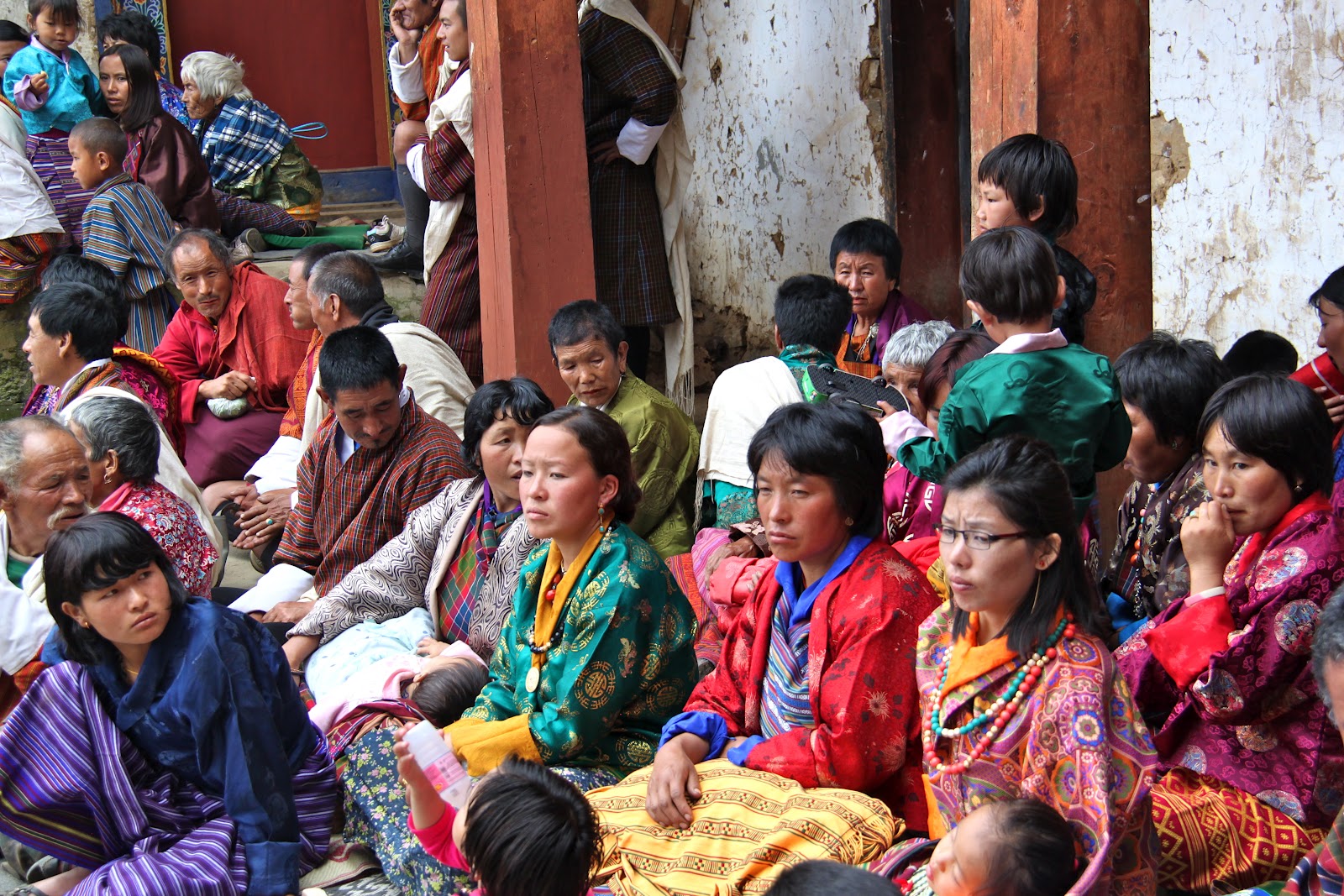
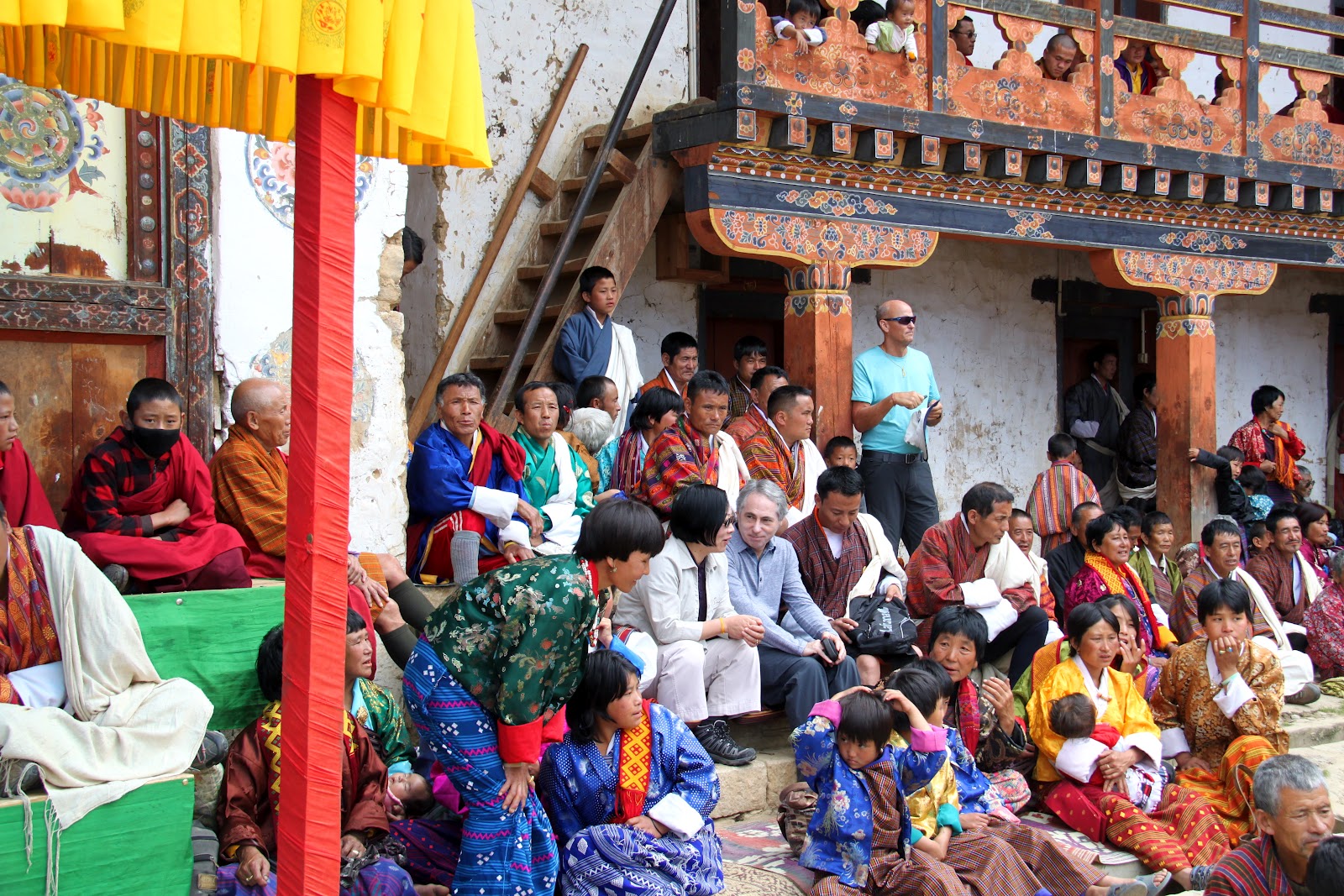
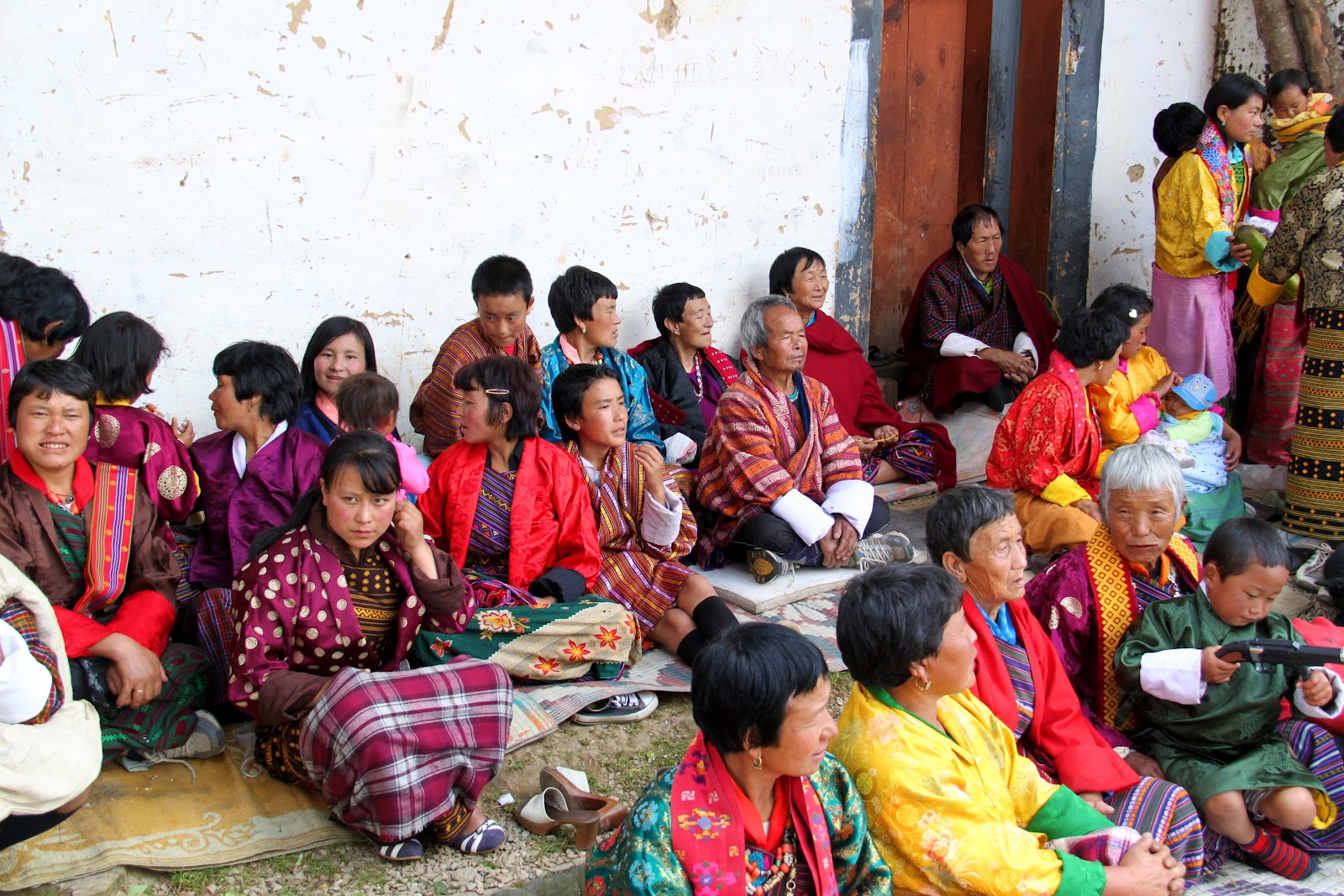
This festival is smaller than the one in Thimphu.  People mostly sit on the ground in the monastery courtyard

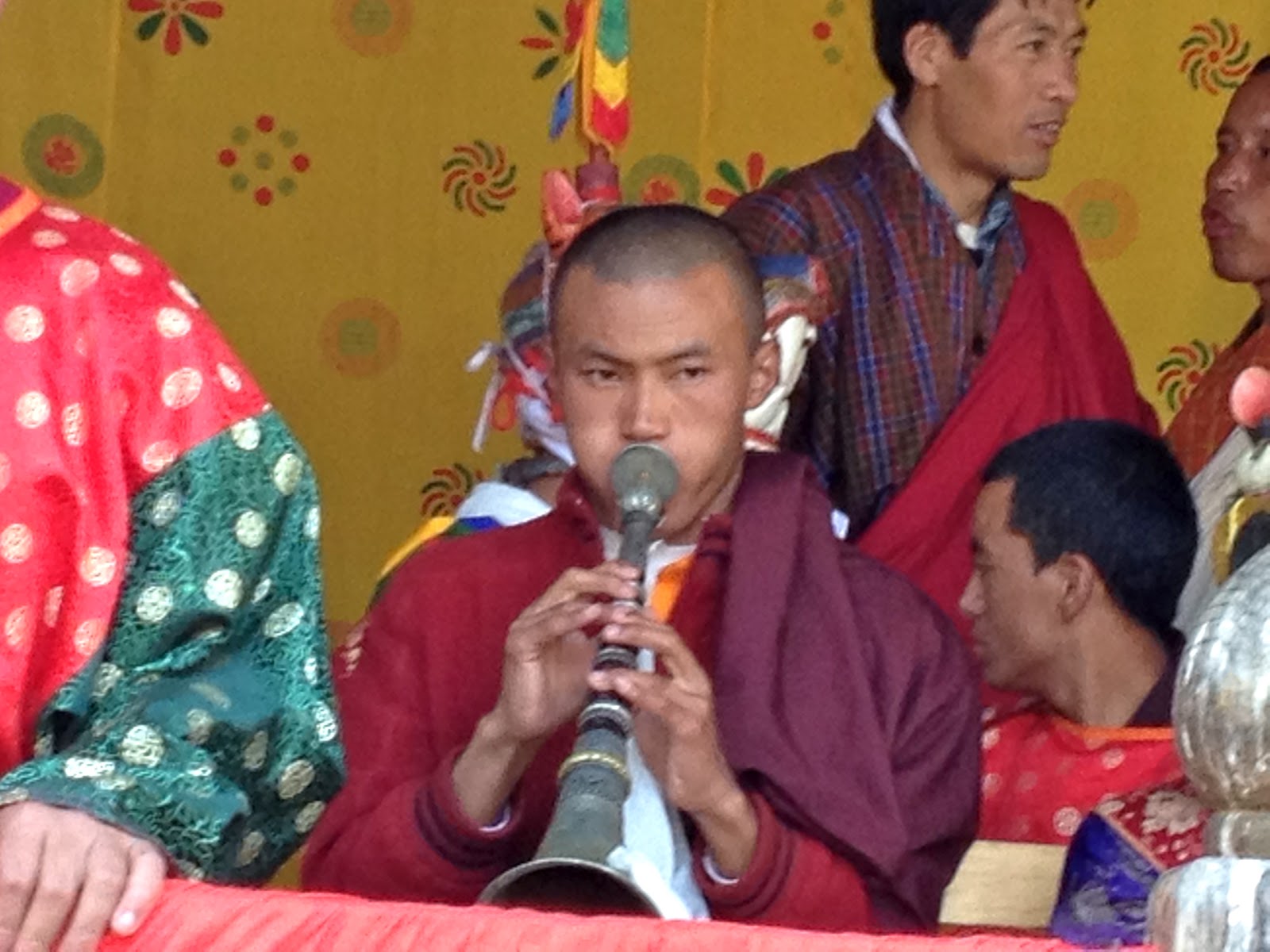
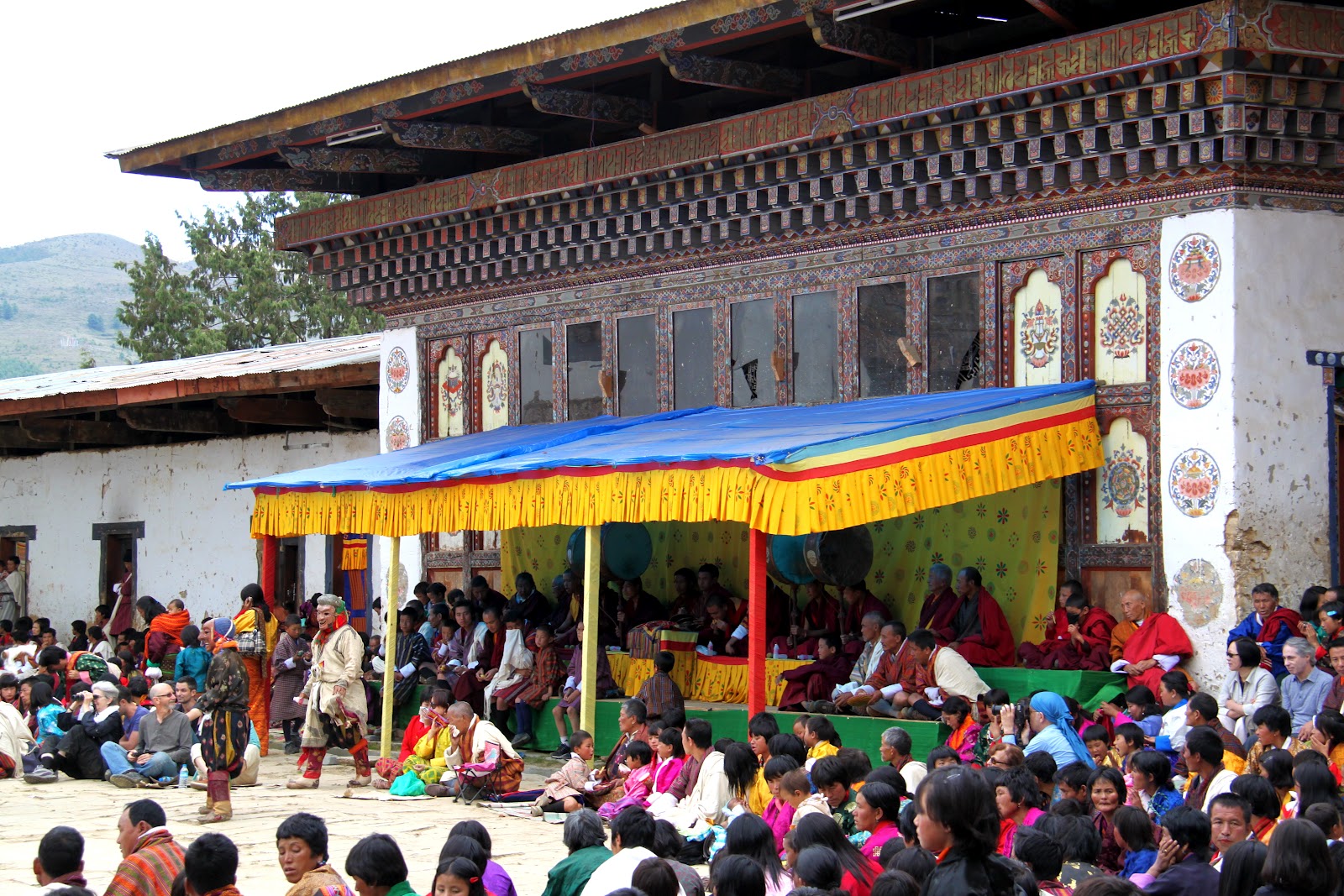
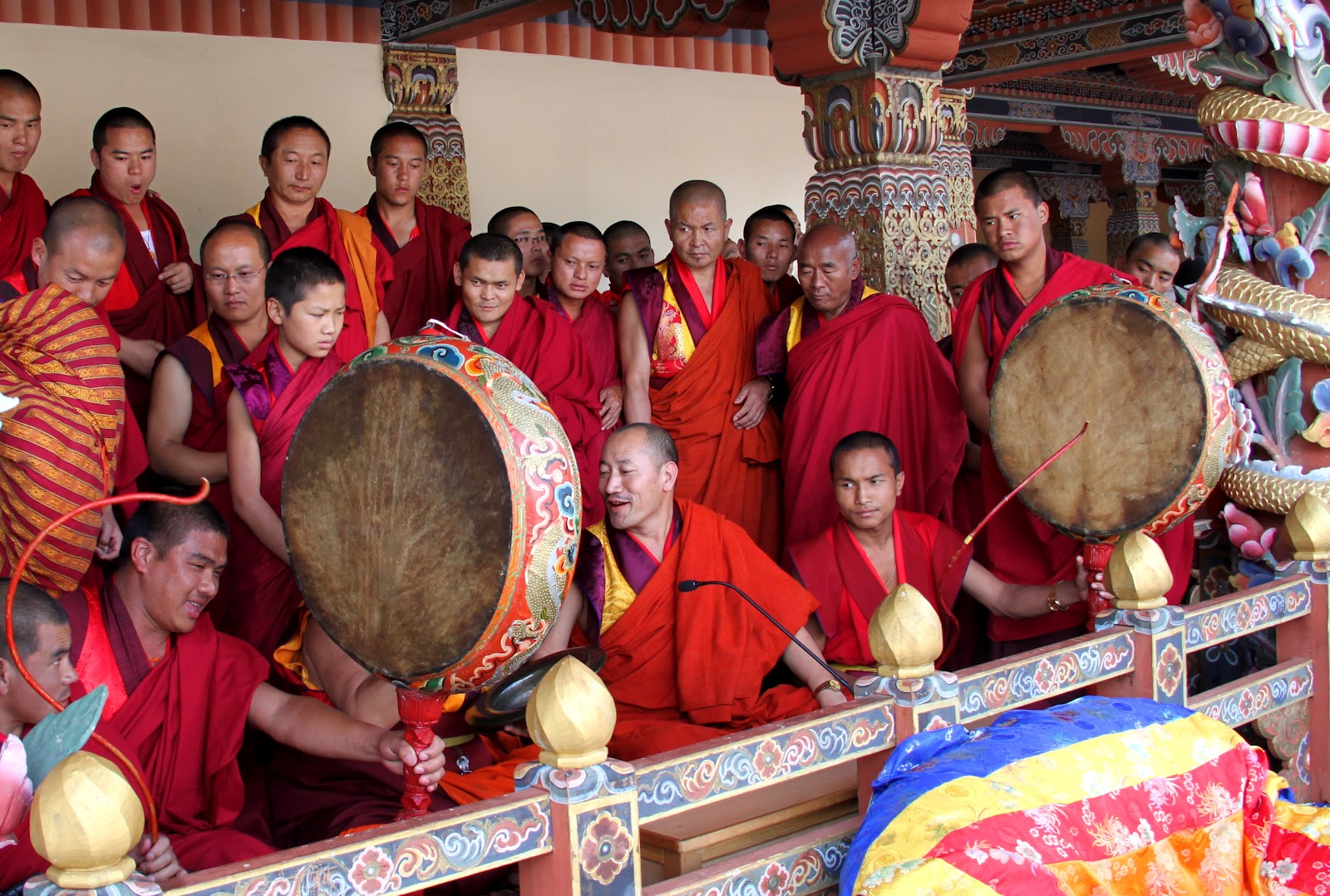
Horns played by monks, along with drums for the dances

Dancers each perform individually for the high monk at the end

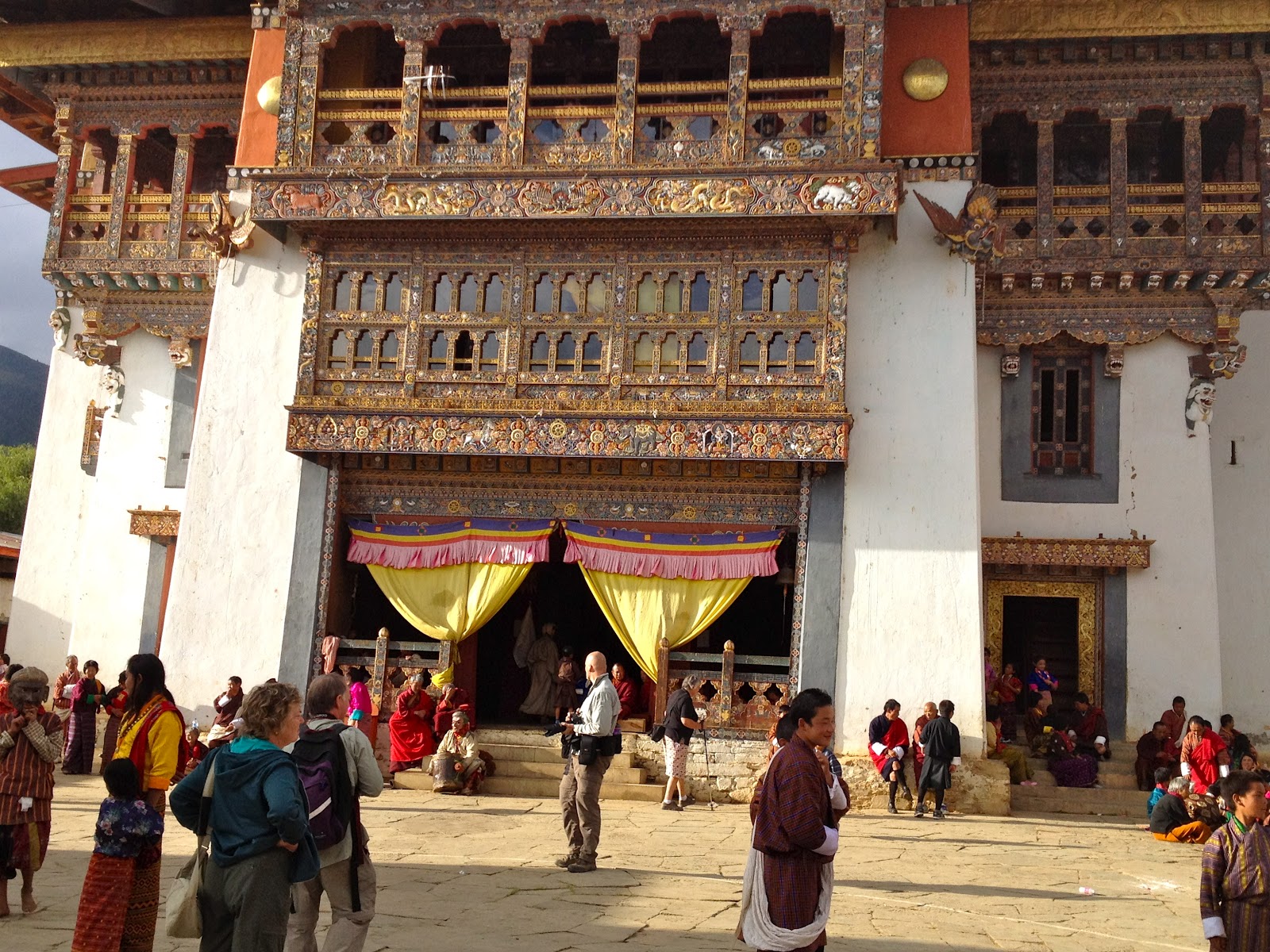
The Gangtey monastery.  It is up on the hill and this is where the festival takes place

Crowds and families gather to watch with their lunches

Most of the dances are performed by monks

Looking through the entrance at the monastery

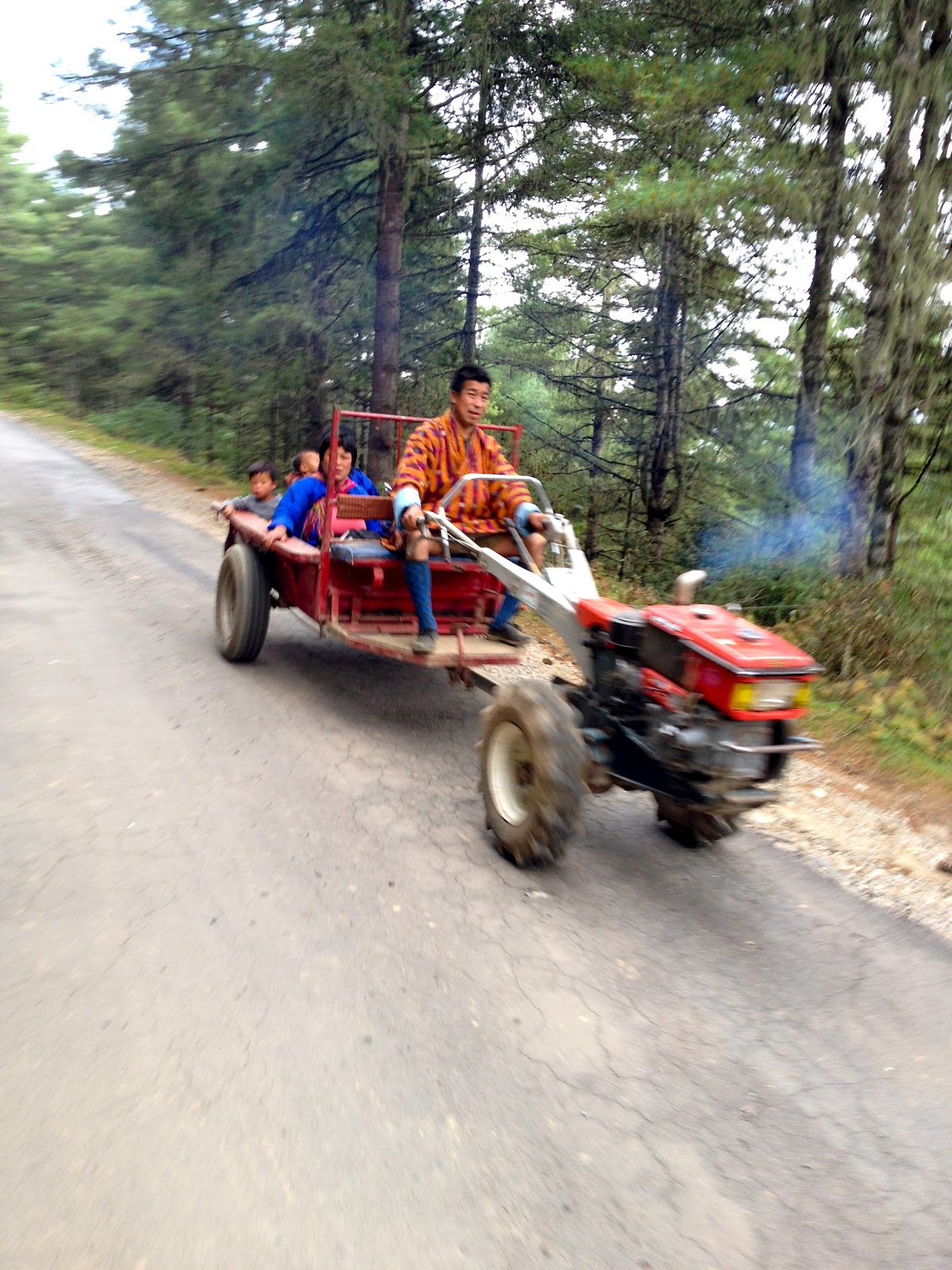
Gangtey is a farming community.  Most only own a tractor.  For the festival they use their tractors to carry their families to the festival

Enjoying the festival

The dancers have to be pretty athletic

Cute girl

Watching from the balcony

Scott watching the festival

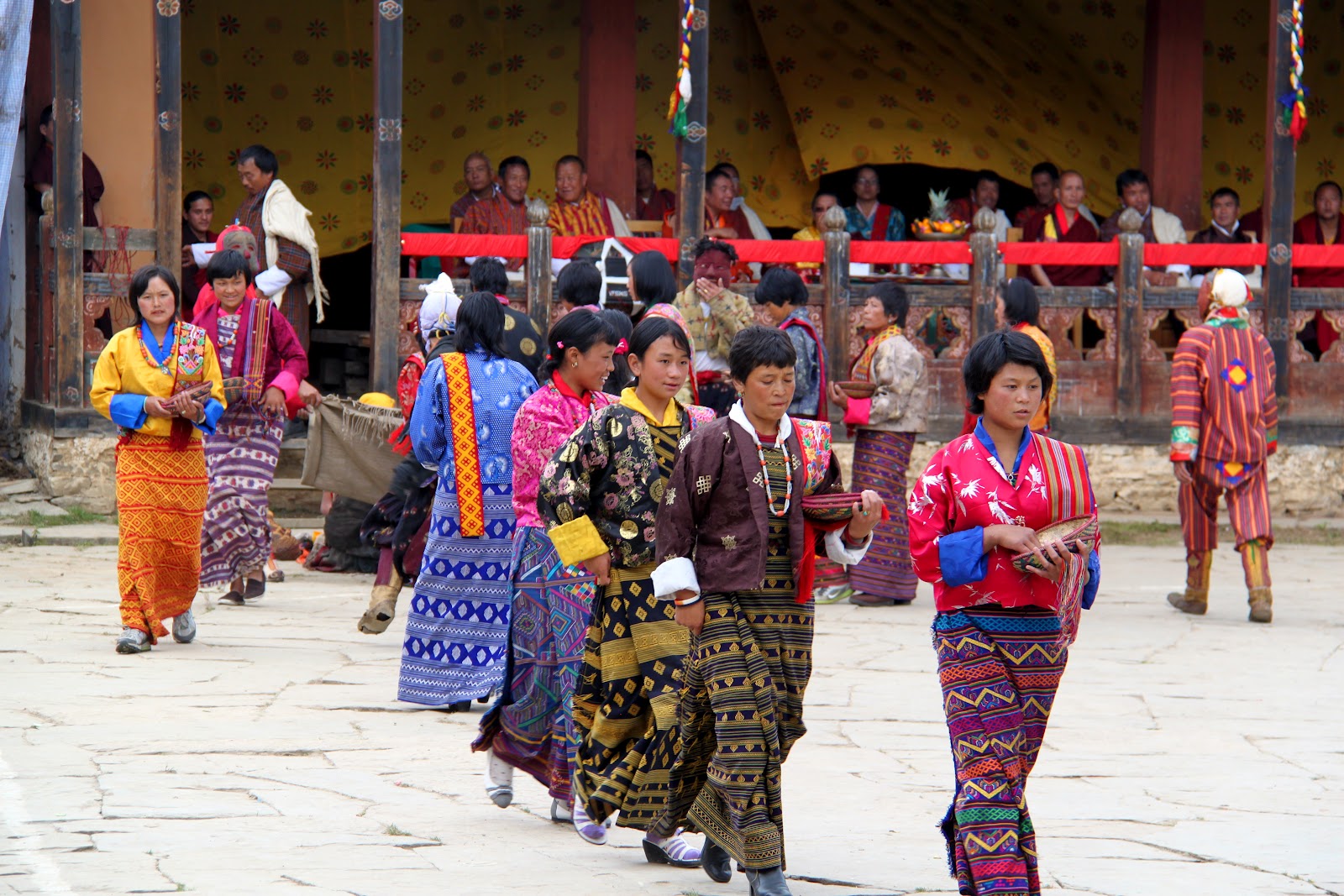
These girls just presented an offering

Intent faces

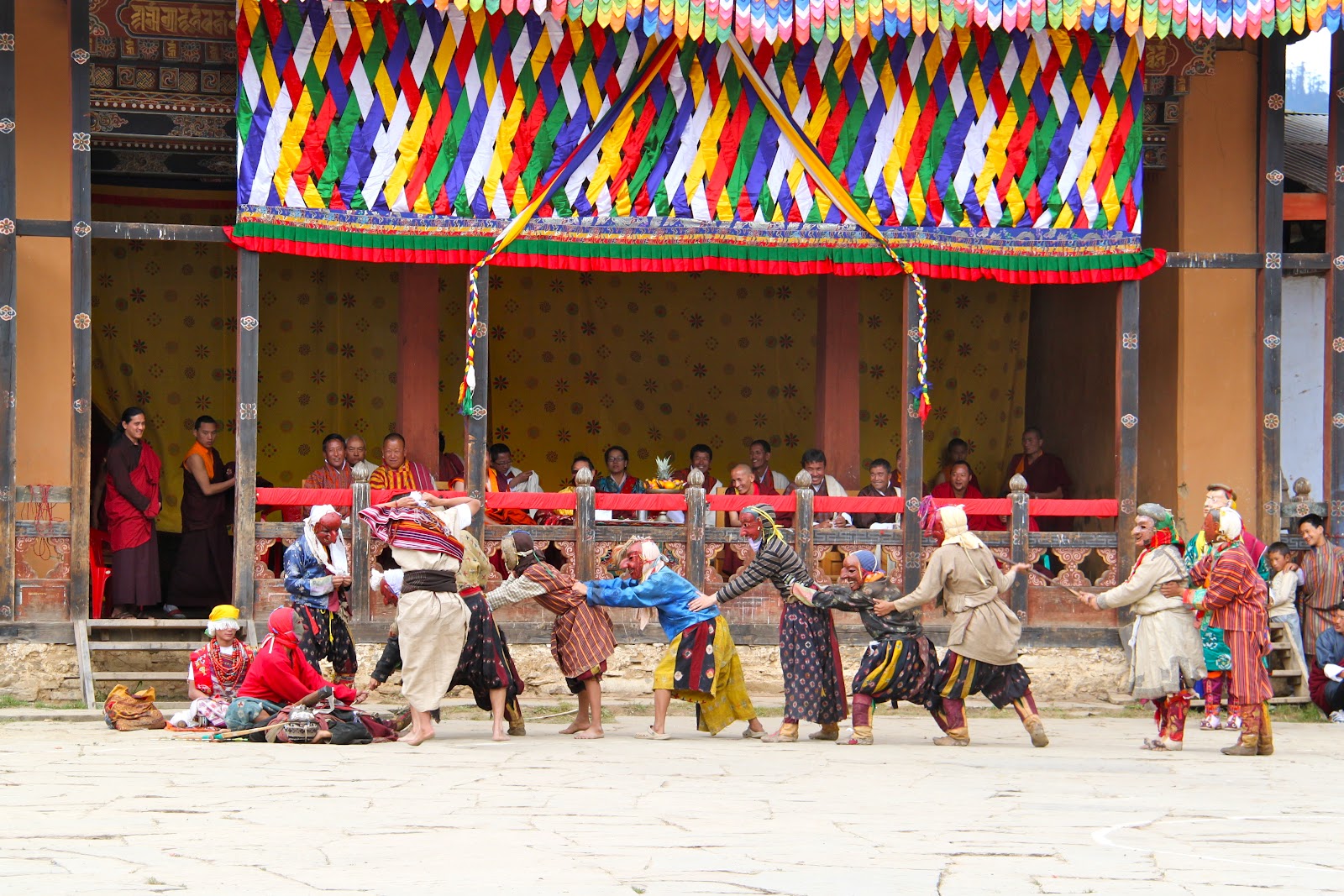
There is a dance that has these performers that are what we would call clowns

The clown performance

Monks on the drums

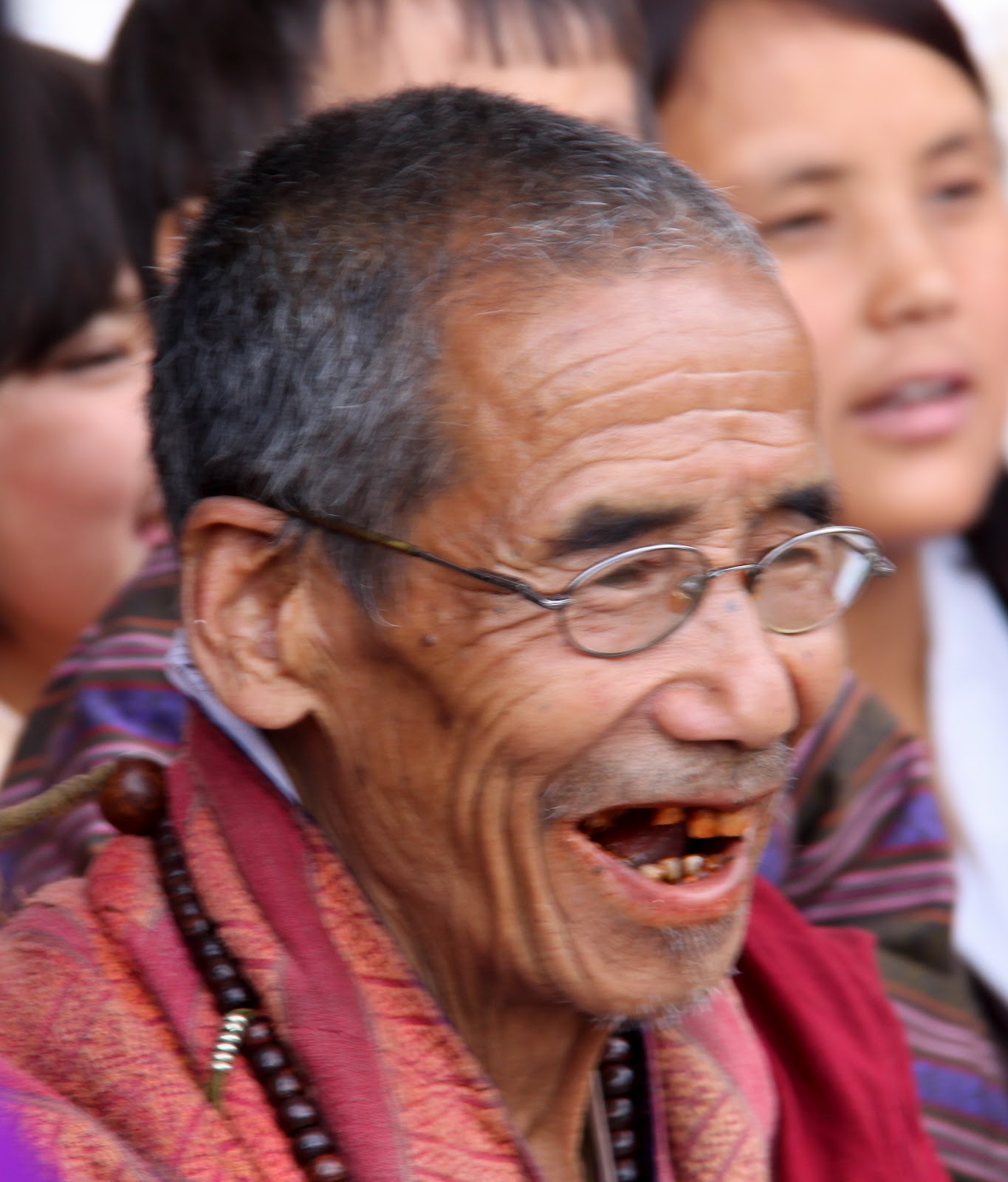
They eat a nut that is red.  I think it is like a tobacco (although smoking is not allowed in all of Bhutan).  It rots their teeth.

The entrance to the monastery

All ages enjoy the festival
This is the high monk that is the reincarnation of Guru Rinpoche.  He comes at the end of the day and people line up to get a blessing and get a string for your wrist or neck.

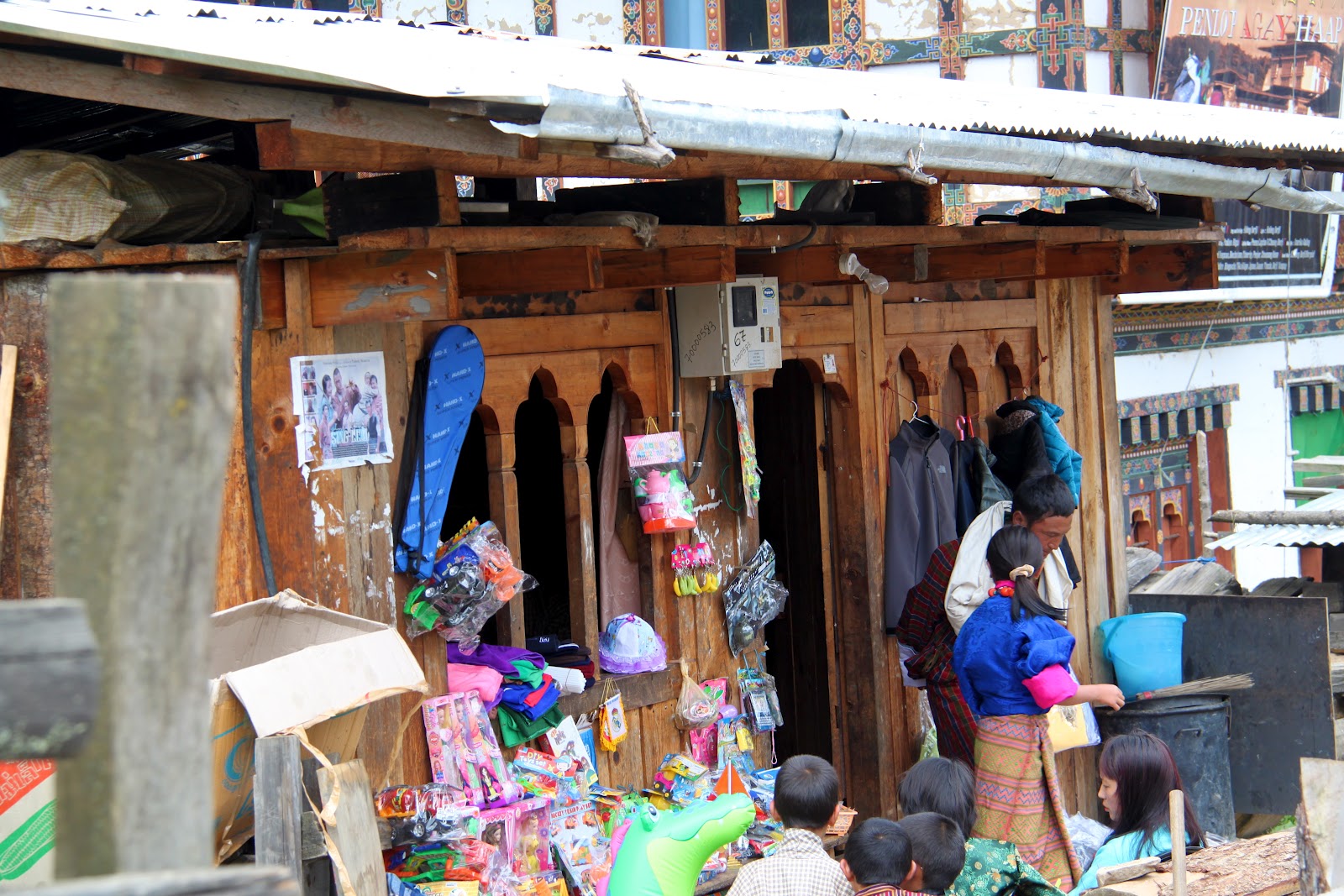
Just outside the monastery is the old village of Gangtey.  They were selling trinkets for the festival.

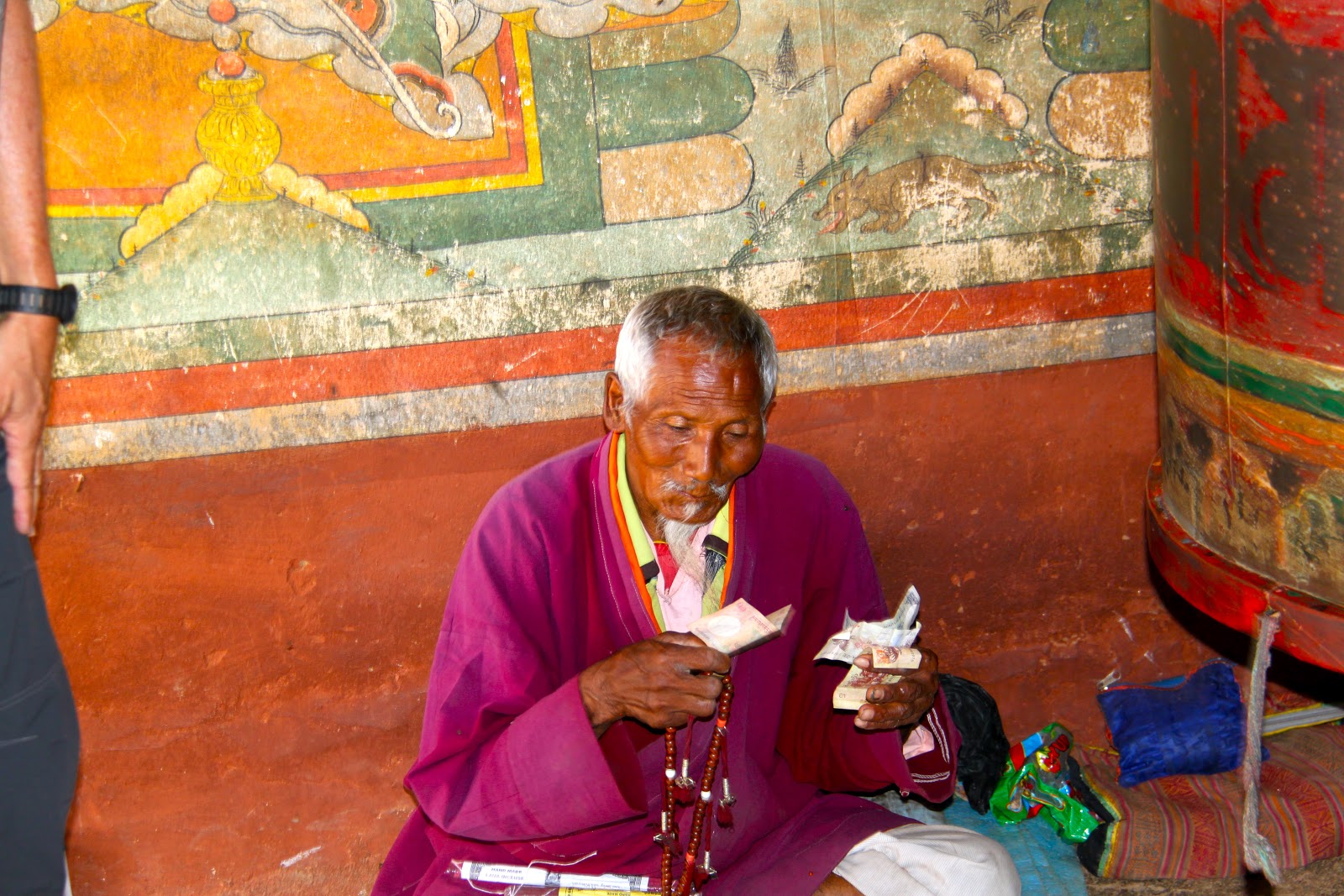
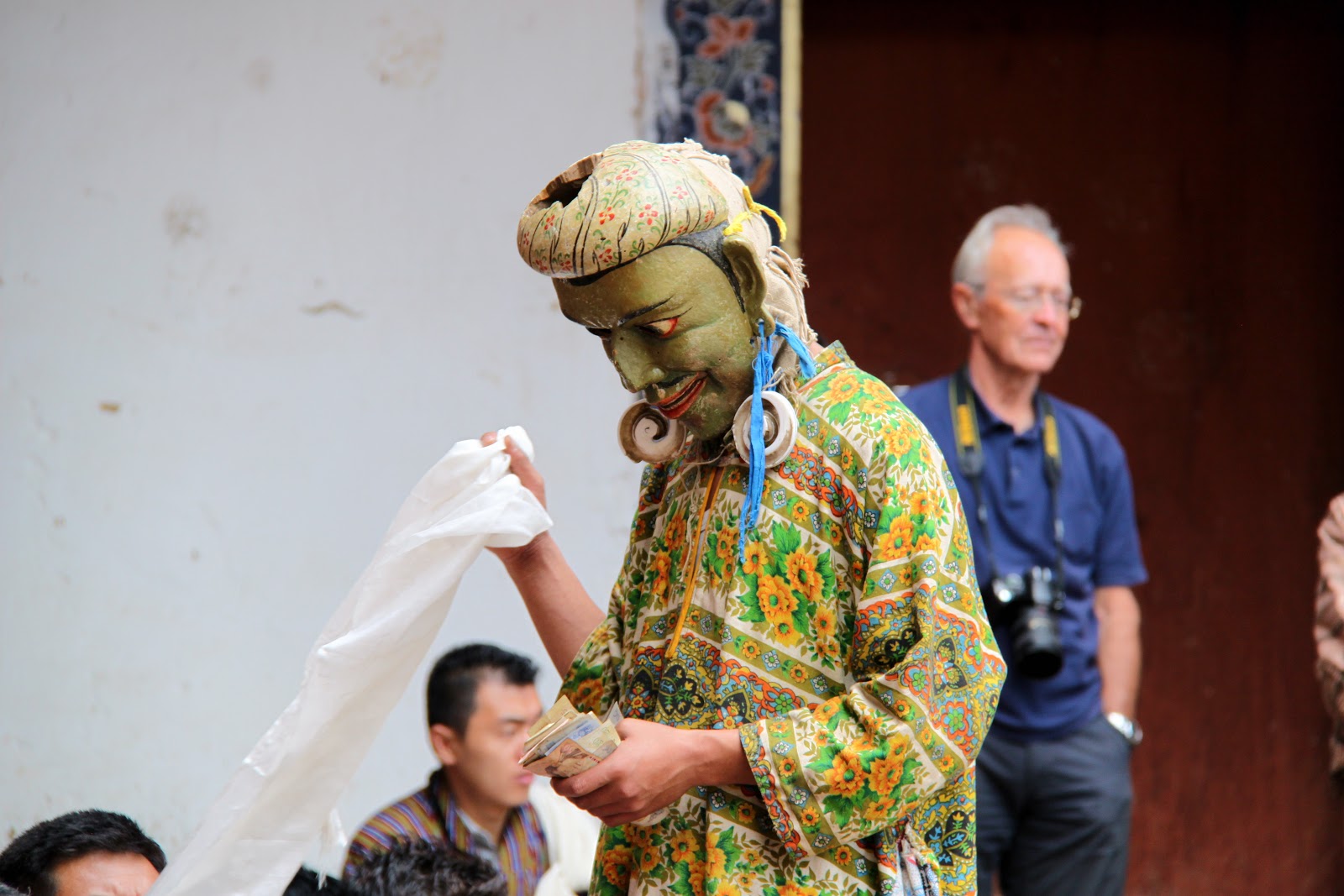
One character comes by and waves a scarf over you and gets donations.  Everyone makes a donation.  The festival character is carrying a big wad of cash.  Some of those who make donations ask for change.  The Buddhists believe that any donation is fine, even water.  All donations gain merit for the giver.

Giving blessing with a wave of a scarf and getting monetary donations

After the festival we went on a beautiful hike along the foothills and past where the cranes roost during the winter.

The old town of Gangtey near the monastery
The Gantey nature hike
Beautiful through a spanish moss hanging from the trees forest

Scott pointing to prayer flags
Barb and Tashi

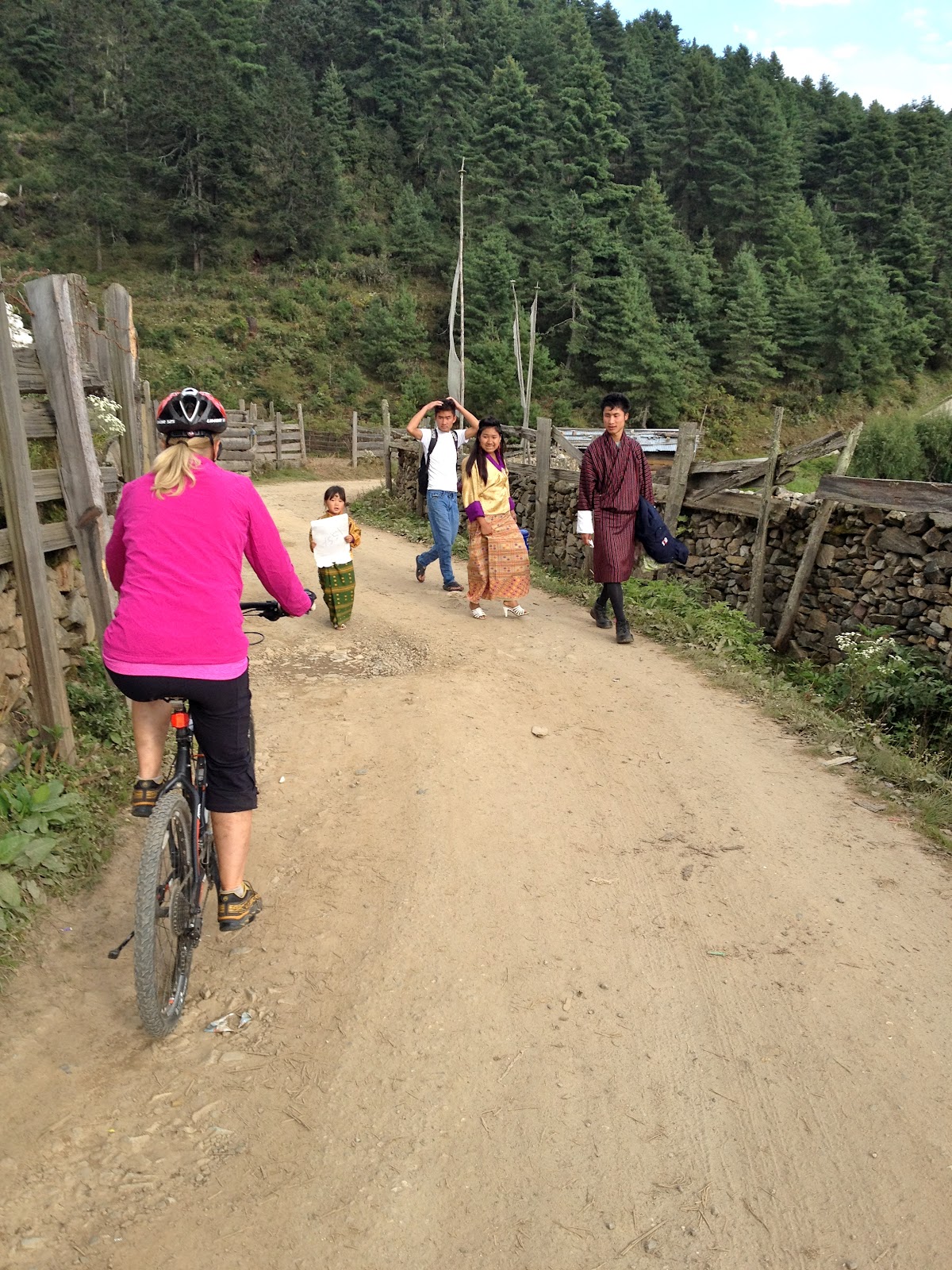
After our hike we took the mountain bikes from the lodge and rode back up to the festival.  We left the bikes outside and had fun inside.  Barb made a donation and got a blessing from the presiding holy man.  When we came back to our bikes some boys were looking at them so we let them ride the mountain bikes.

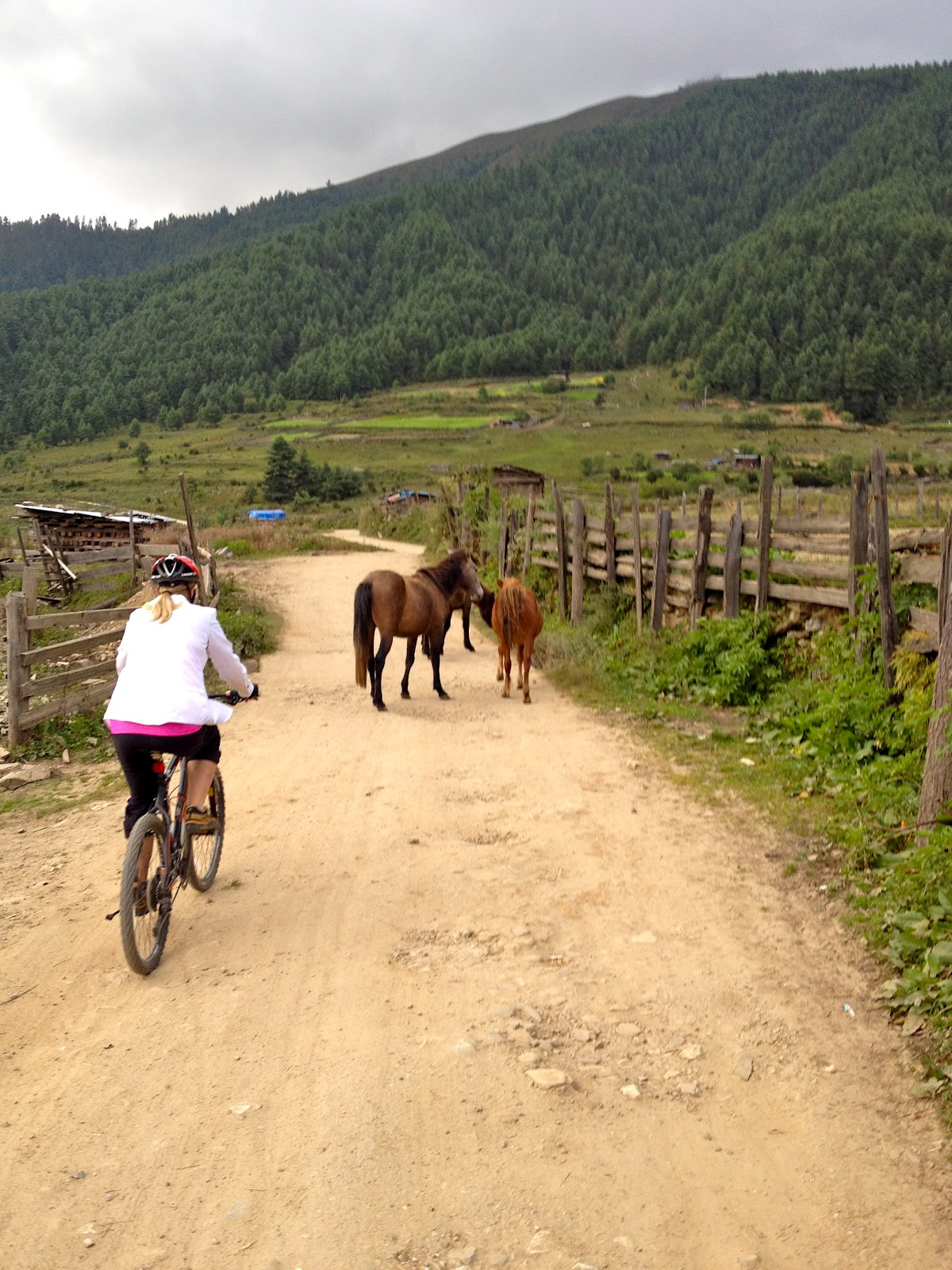
Riding past horses and people walking to the festival

Riding up the hill to the monastery

We looked a little unusual.  I don’t think too many people own bikes.
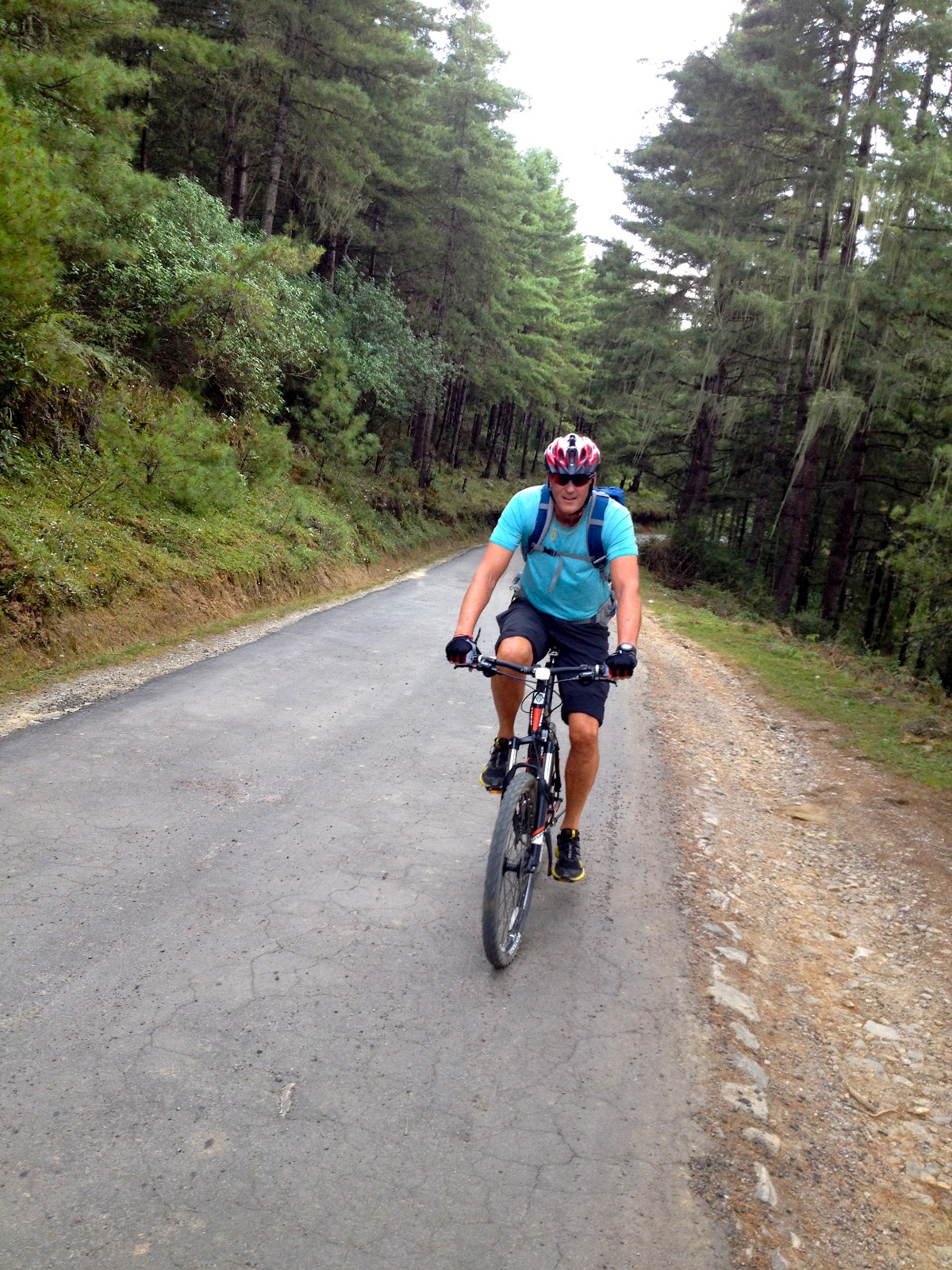
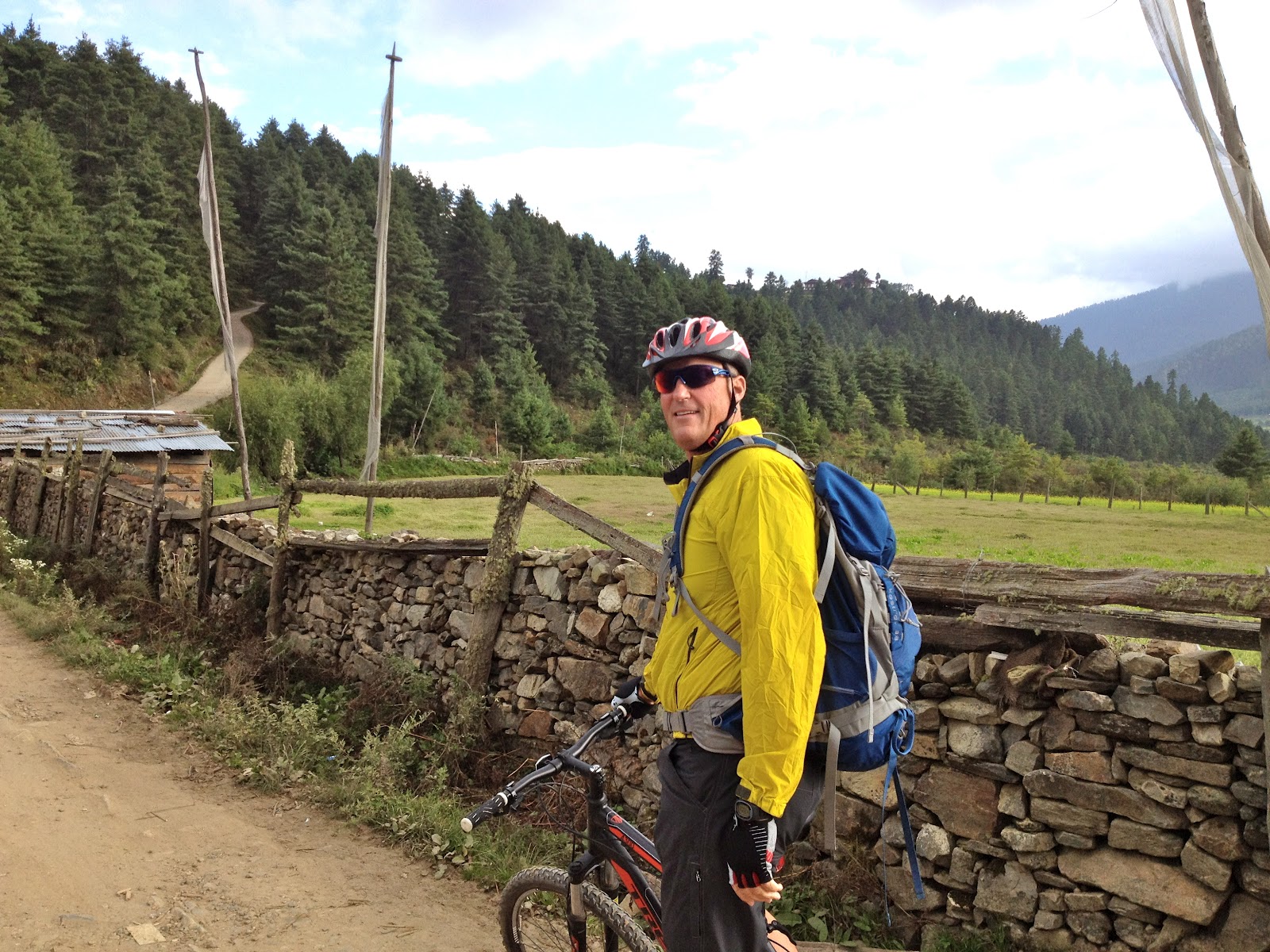
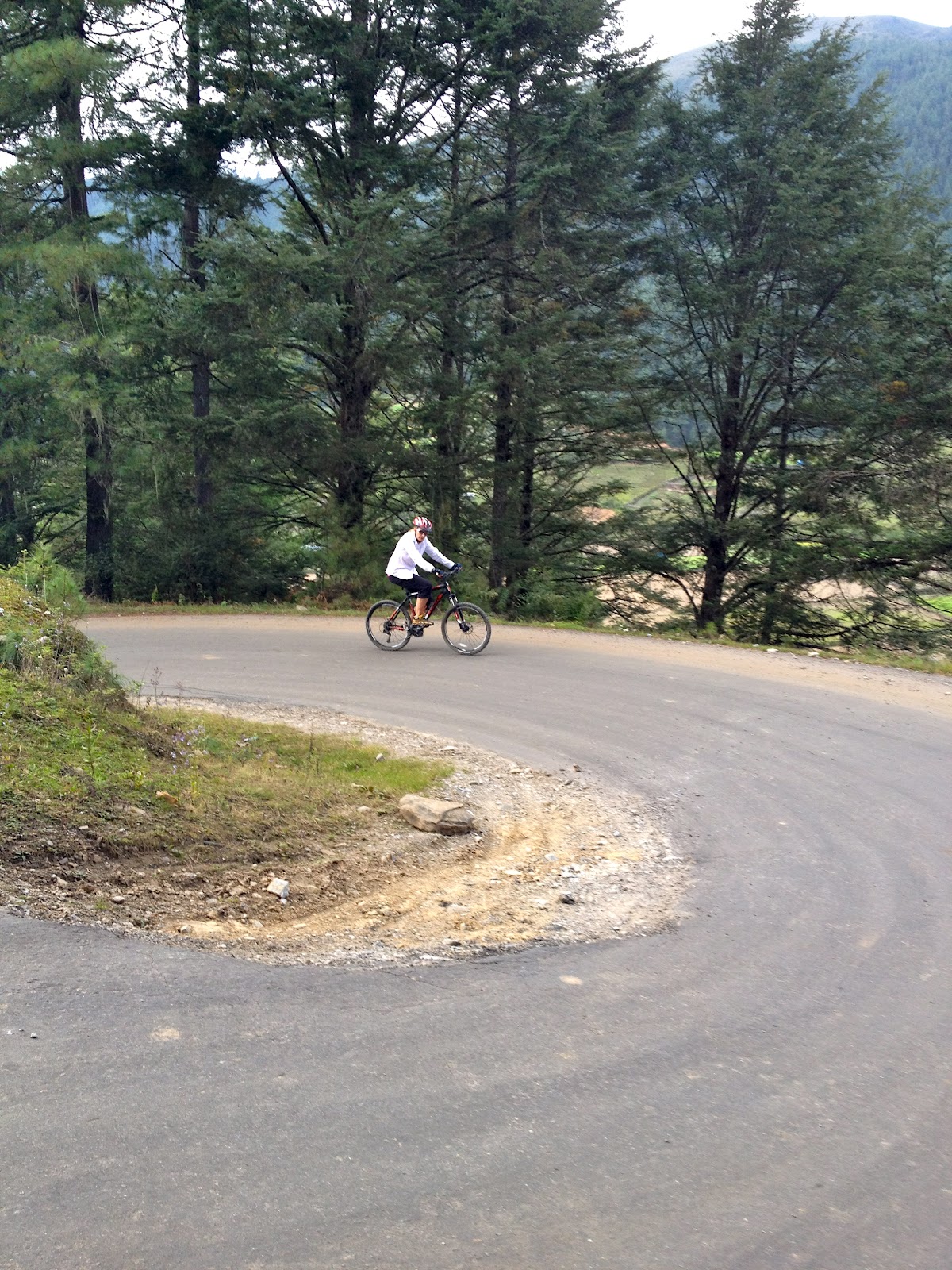
There was a steep hill.  I could tell we are finally acclimating because I rode it without stopping.

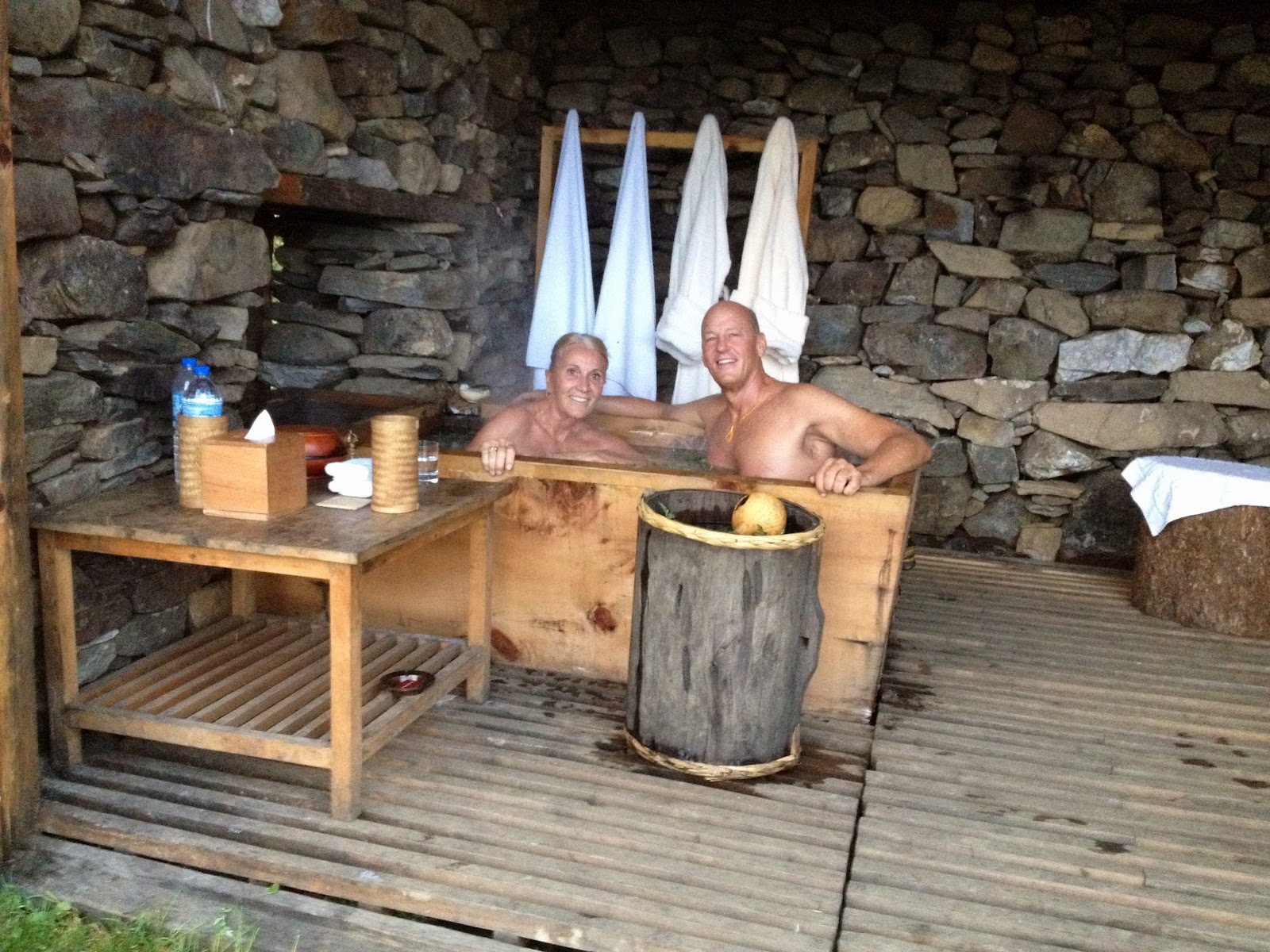
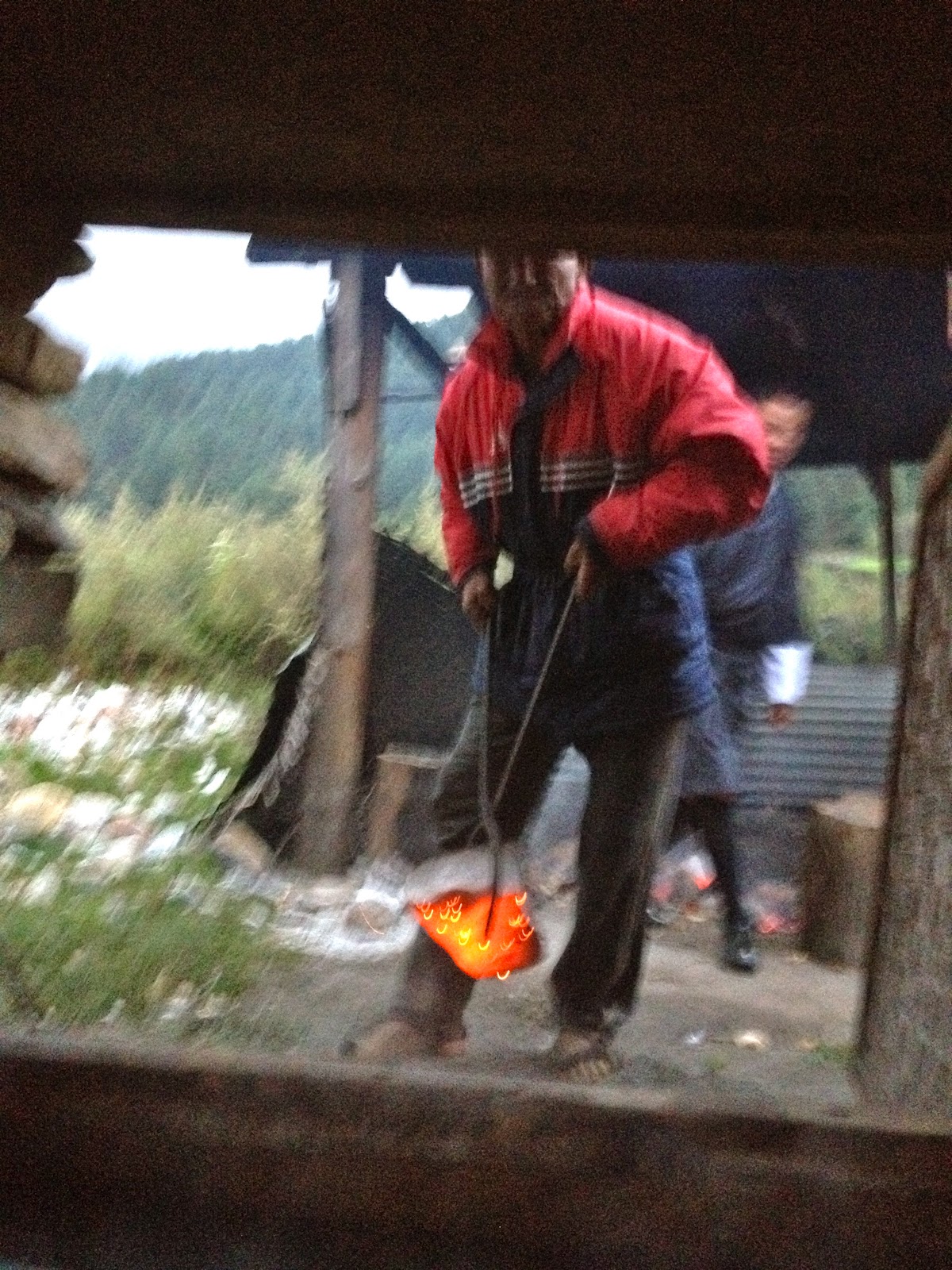
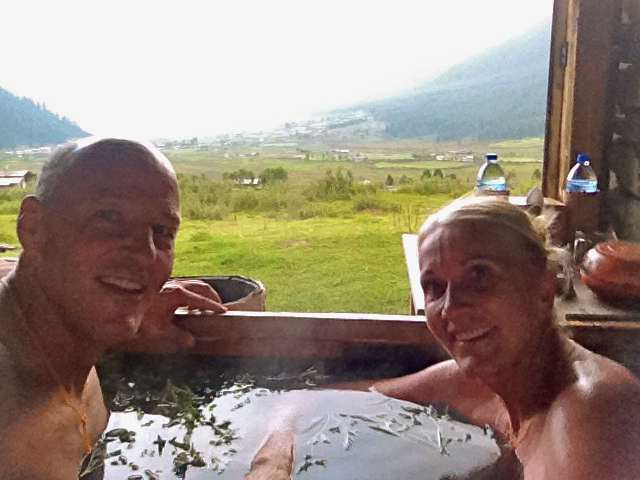
That night we opted for a hot stone bath in a tub for 2 people set up on the hillside in a bamboo hut with divided wooden tub.  The divider is to keep the hot rocks away from us.  The water must be about 106 degrees because we can hardly get in.  Soon we are enjoying our bath in nature.  We ring the bell and our attendants bring drinks and put more hot rocks into the water.  The rocks are taken directly from the fire and put into the water and they are glowing red.

First they give us tea.  Our bath is behind those doors

Once inside the tub, they open the doors so we are having our bath in nature
They heat the rocks for 3 or 4 hours.  There is a side window with a separate area in the tub to place the hot rocks.  It  heats up the water pretty fast.  They put many different herbs in the water and the minerals from the rocks are supposed to help any ailments you might have.  Lighted candles surround the interior for ambience.
Our herbal hot stone bath in nature

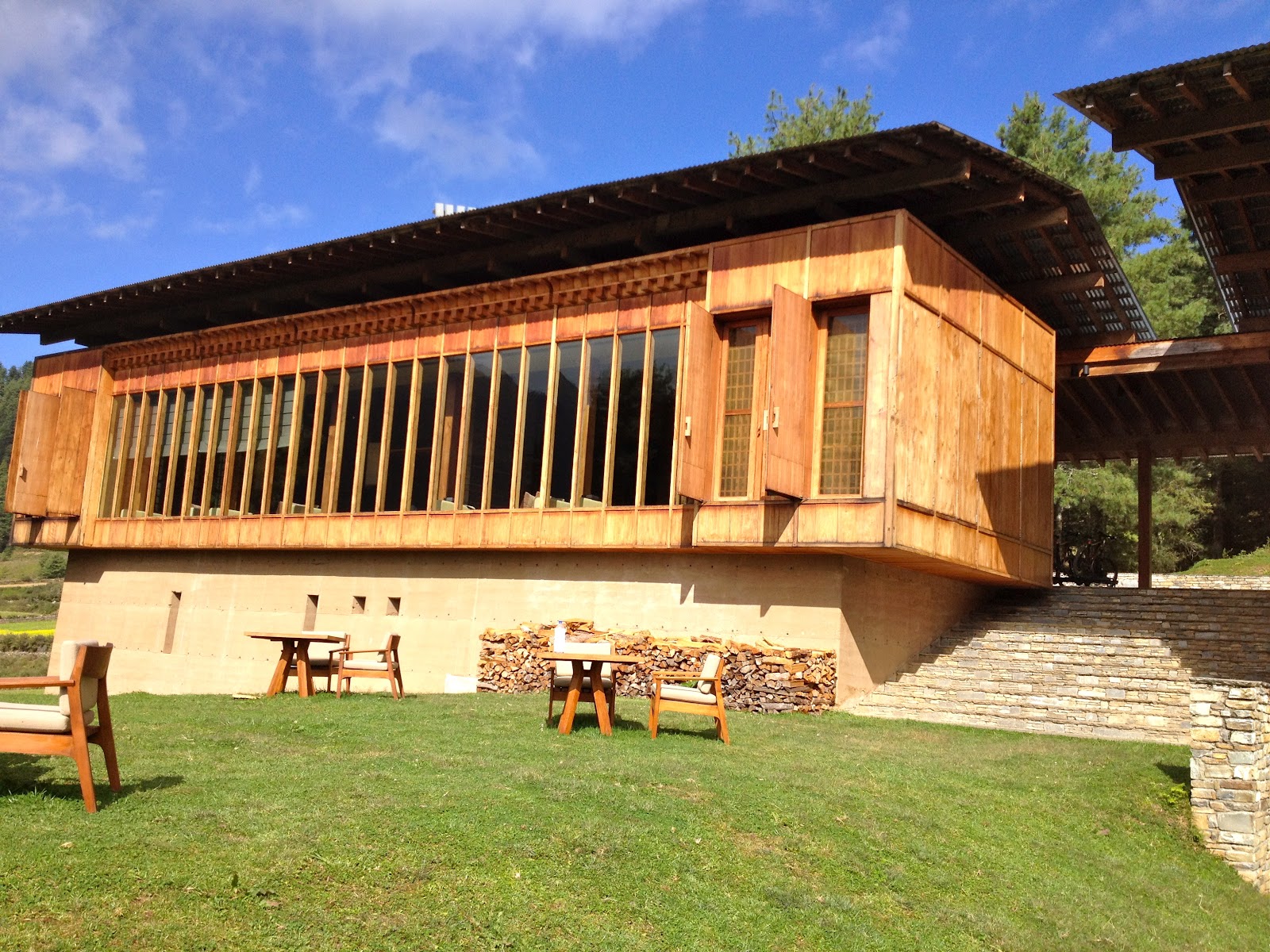
 Throughout Bhutan we are staying at the Aman Resorts.  Here are photos of the Gangtey property.

The rooms

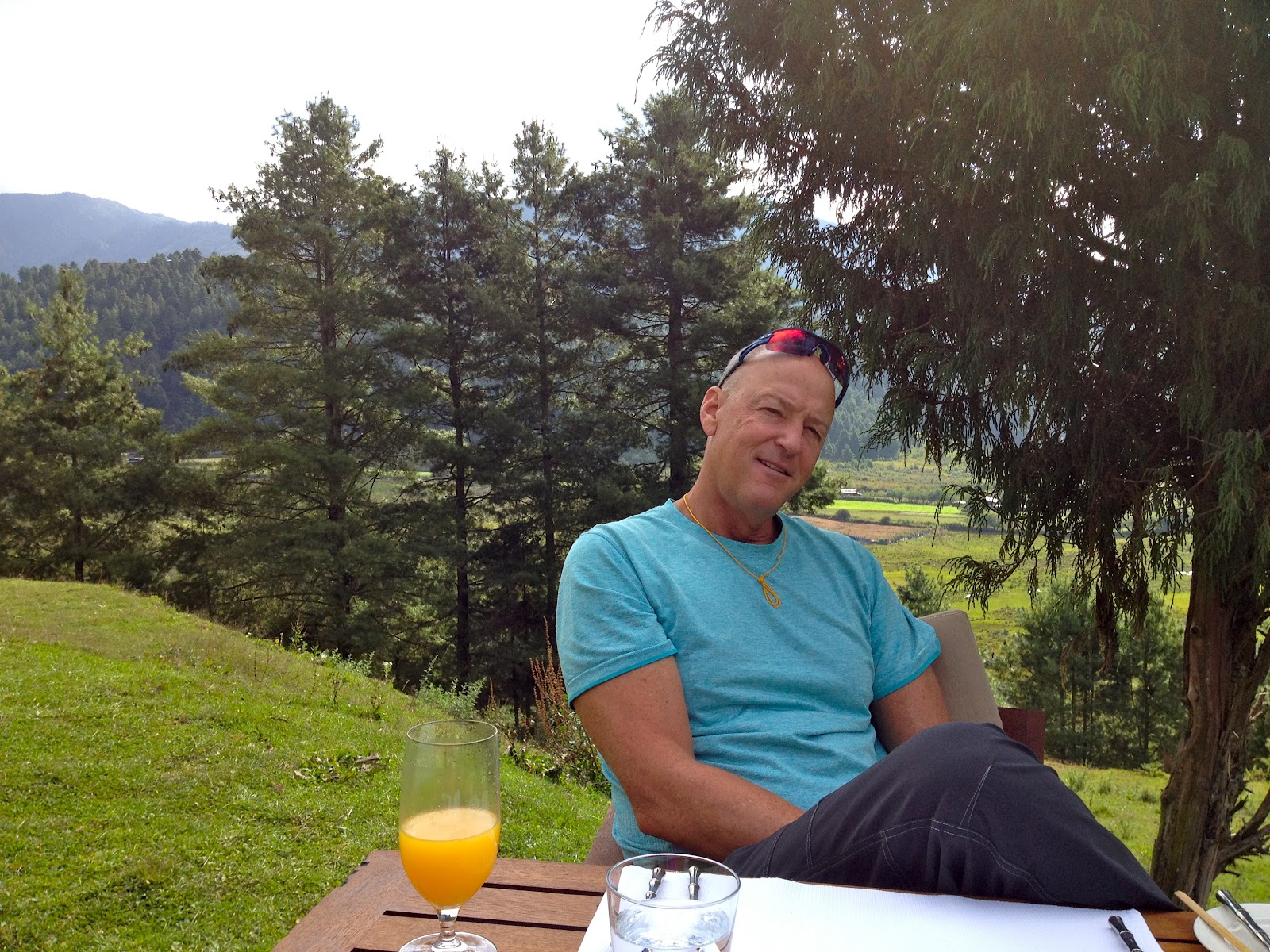
Enjoying breakfast outside
Dining area
Sitting area

Bedroom

Thimphu, Bhutan September 26-28, 2012

Thimphu, Bhutan
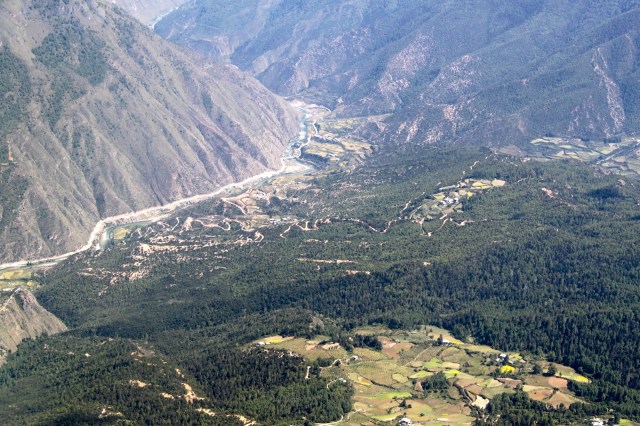
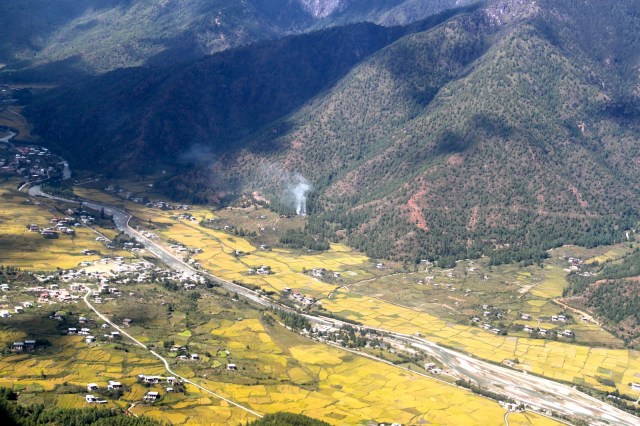
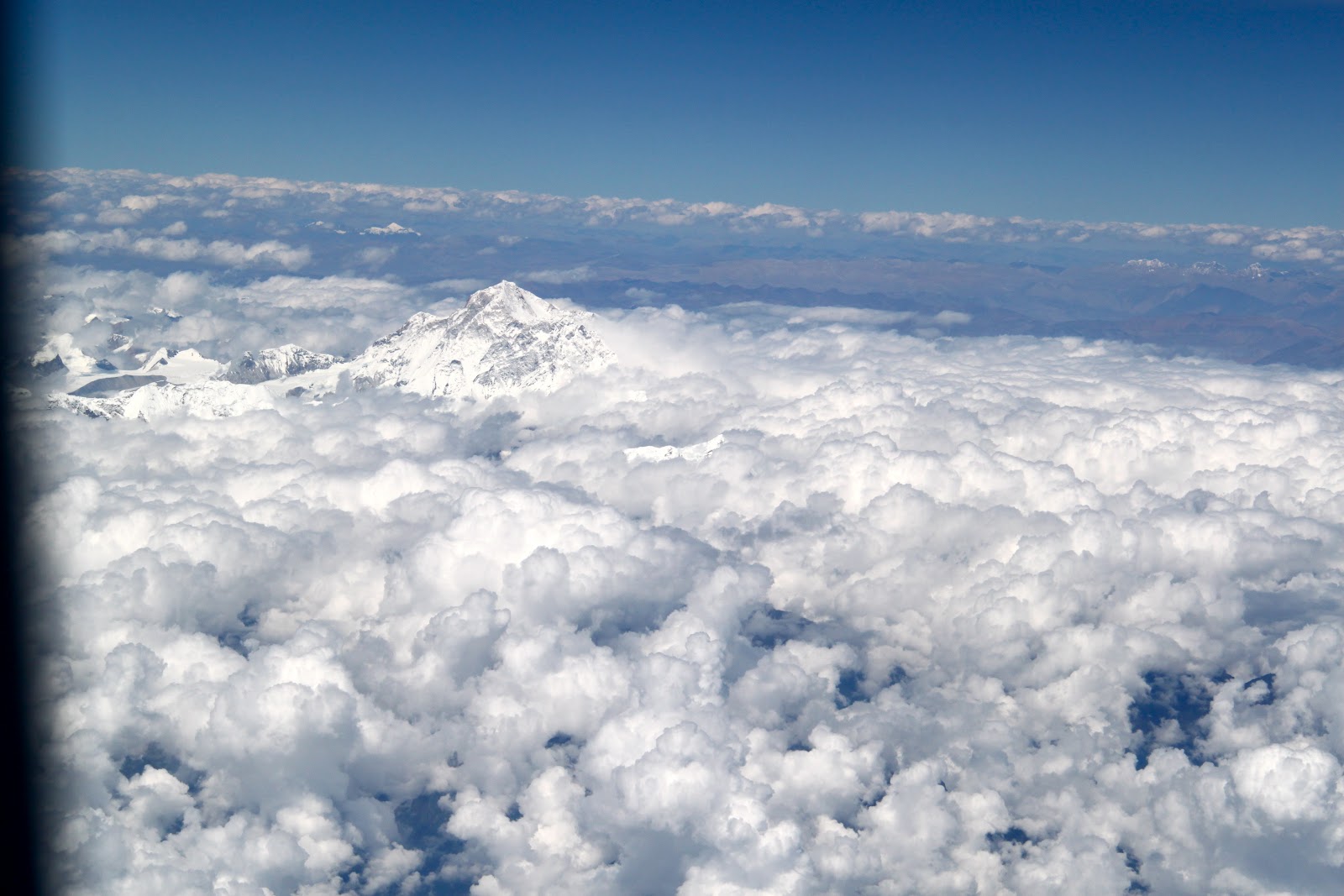
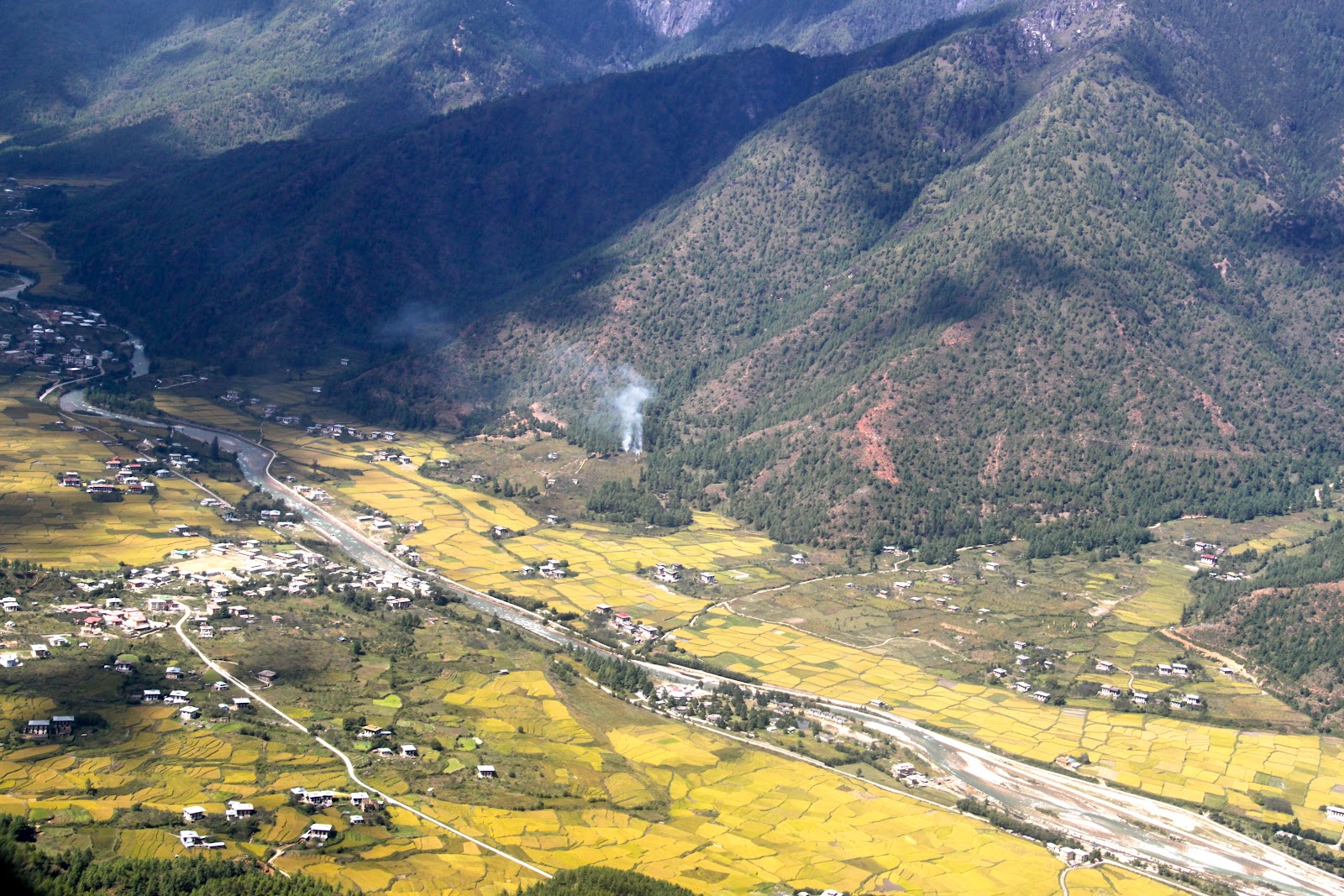
The flight from Delhi to Paro, Bhutan was about 2 hours.  On the way we saw Mt Everest from the window.  The landing strip in Paro was tucked between 2 mountains and the pilot had to aggressively fly in order to position the plane for landing.  The scenery below could be mistaken for Switzerland.
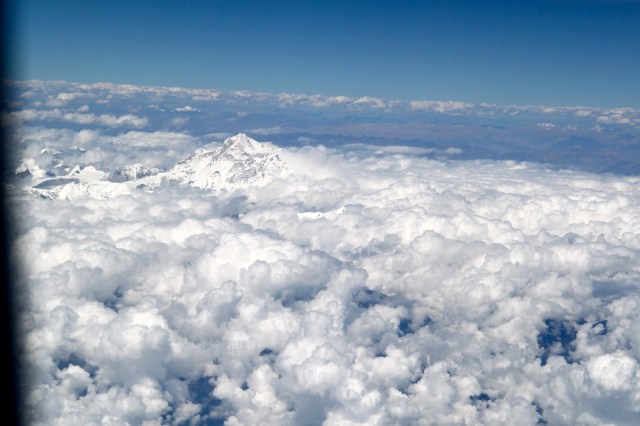
From the plane

Valley’s between mountains

It looks a lot like Switzerland, with farms going up the hillsides

Bhutan is a Himalayan country squeezed between China (Tibet) and India.  Bhutan has great relations with India and there is an Indian army presence here.  Bhutan is worried about incursions by the Chinese into their mountain lands.  There are officially 700,000 people in Tibet but this does not count Indian laborers and the Nepalese who have lived in certain of the southern areas for decades but are not recognized by the Bhutanese government.  We learn later that Bhutan will not recognize these people or issue them passports unless they can prove Bhutanese ancestors according to official records.

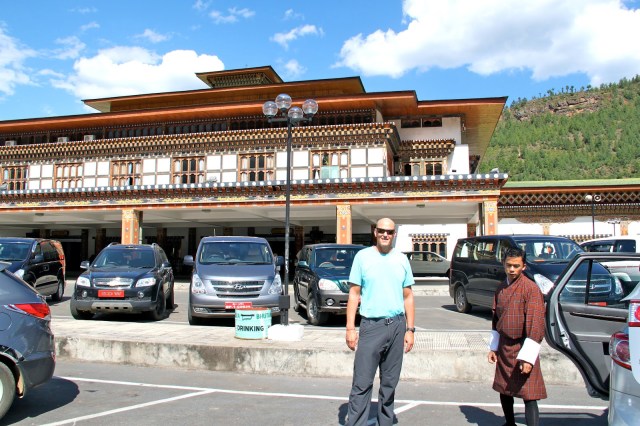
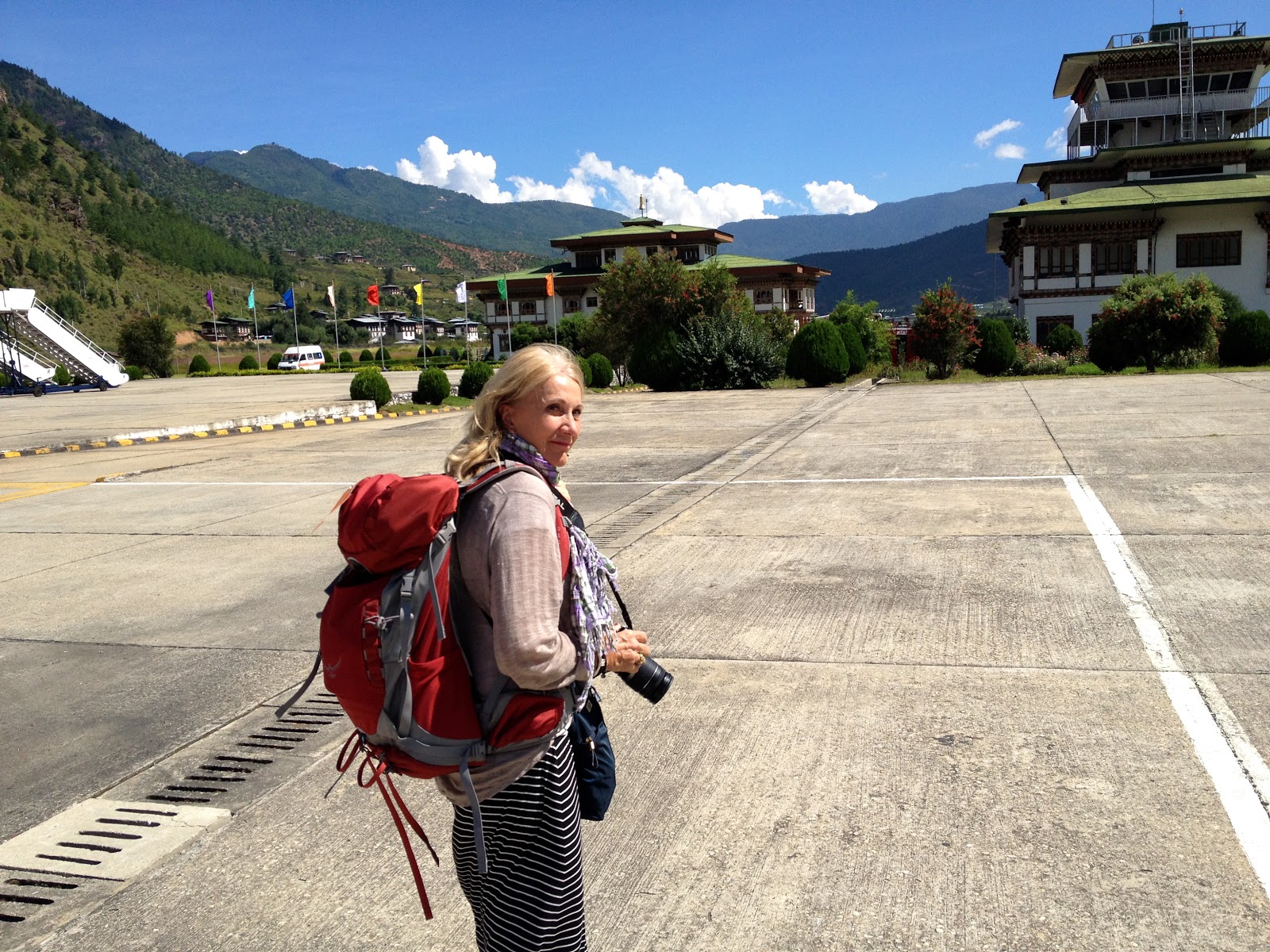
We are met by our guide and driver from the Amankora Lodge.  We will be staying and Aman lodges throughout Bhutan.  You must have a guide with you at all times in Bhutan.  The government also requires you to spend at least US$250 per person per day.  Bhutan has decided to cater to more affluent travelers much as Botswana has done. 
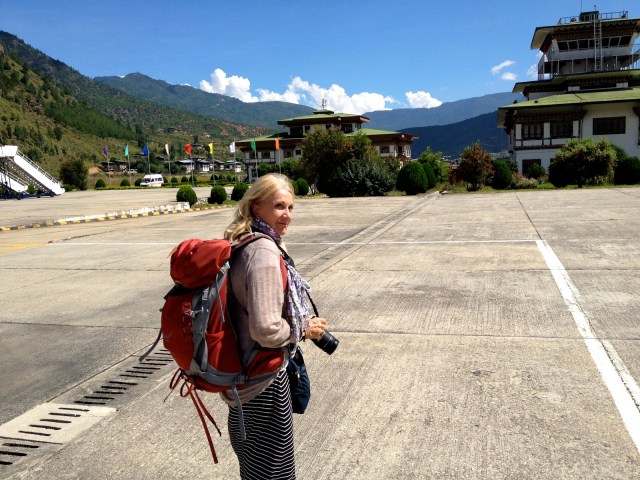
Barb arrives at airport

Scott meets our guide.  His name is Tashi, and they all must wear their native costume

We drove an hour to Thimphu, which is the largest city in Bhutan.  To our delight we learn from our guide that the biggest religious festival of the year is going on today and tomorrow.  It happens once per year for 3 days beginning the 10th day of the 8 lunar month of the Bhutanese calendar. 

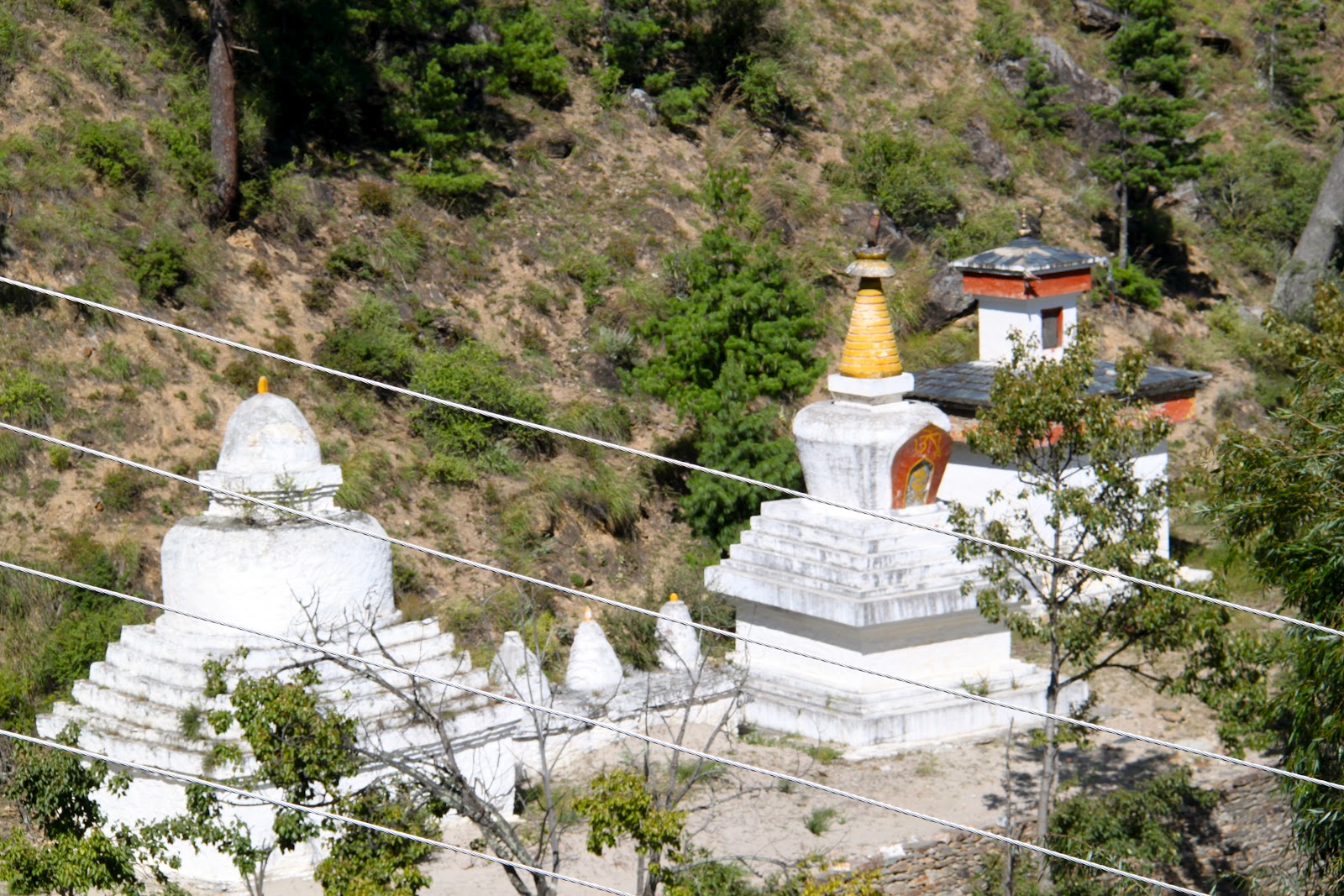
By the river there are 2 Stupa temples built.  The temple on the left is in the Nepalese style.  The middle is in the Tibetan style and the far right temple is in the Bhutanese style.
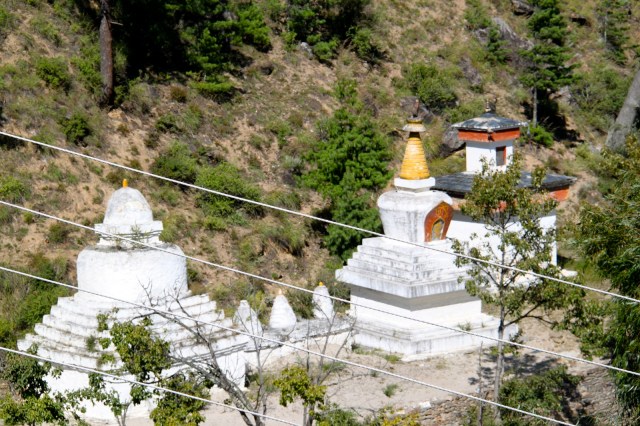
Nepalese, Tibeten, and Bhutanese Stupas

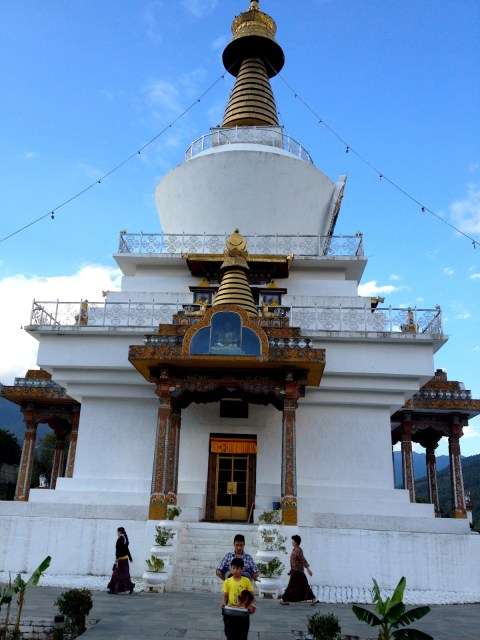
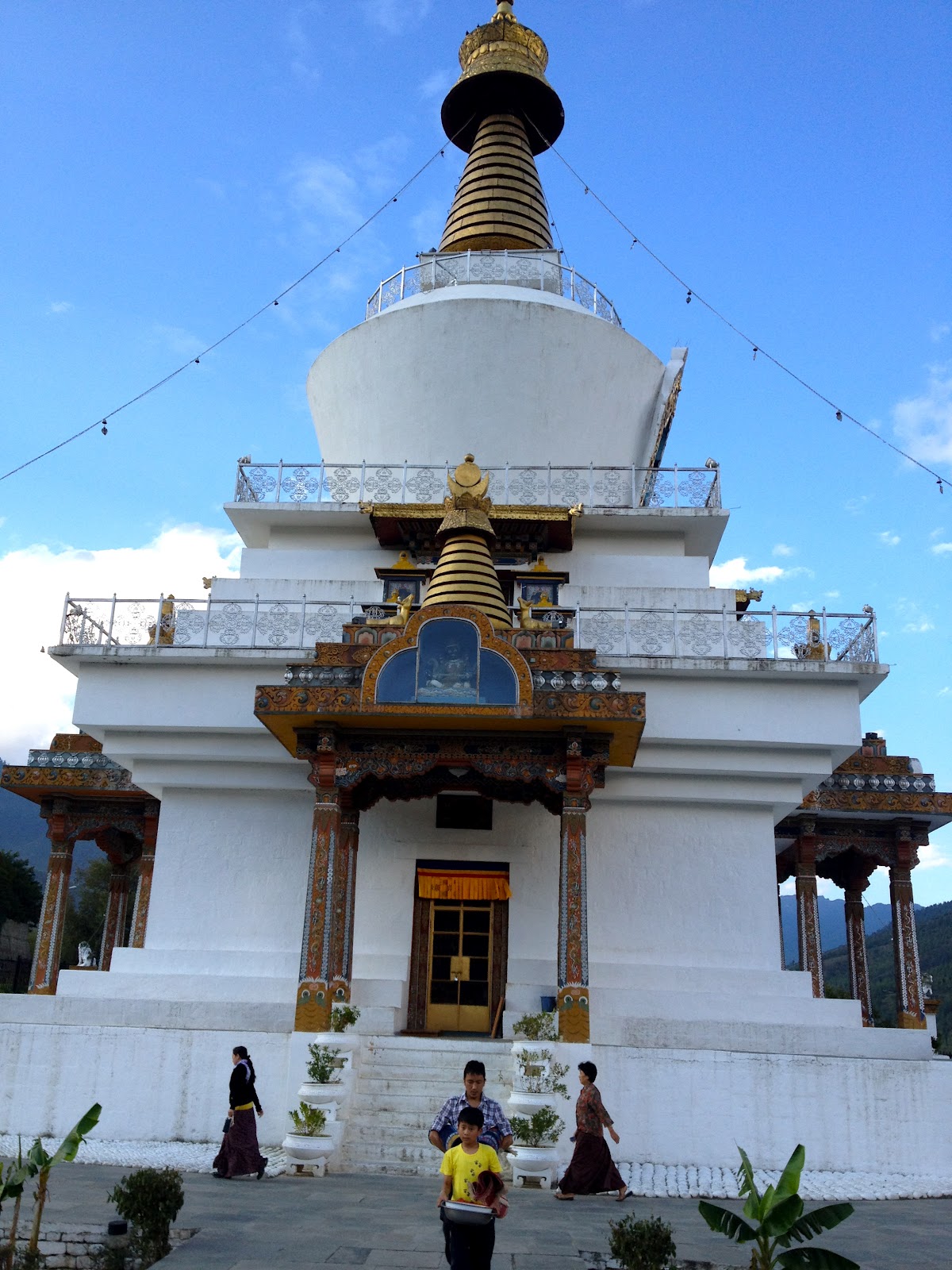
On the way to the lodge we visit a Stupa temple that is built in the Tibetan style.  Our guide tells us that many of the temples are built in the Tibetan style as a result of the visit by a great Tibetan monk in the 16th century.

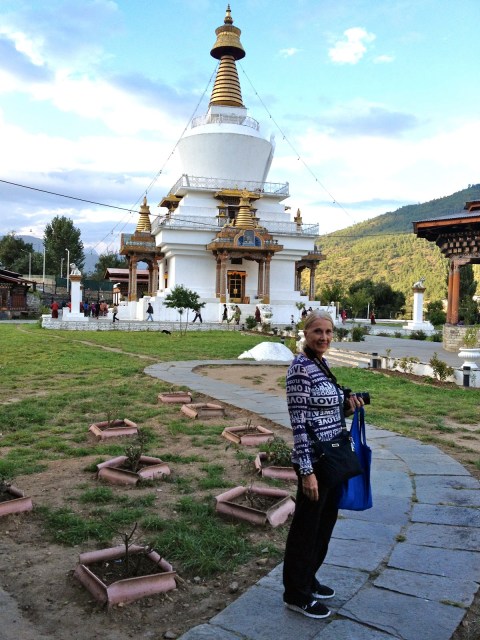
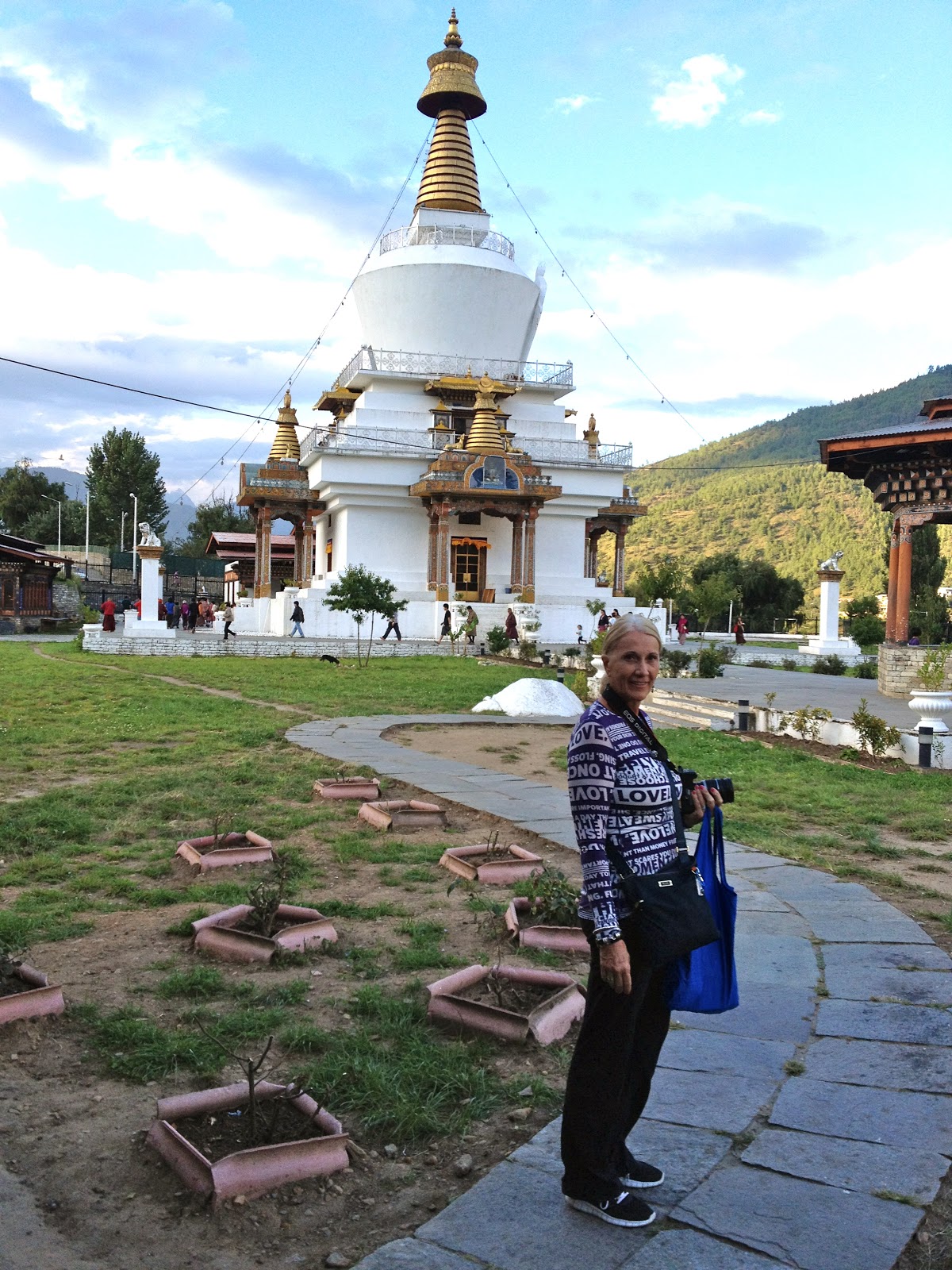
Memory Stupa
Barb at Memory Stupa

We walk clockwise around the Stupa and give thanks for our blessings and hope for good karma.
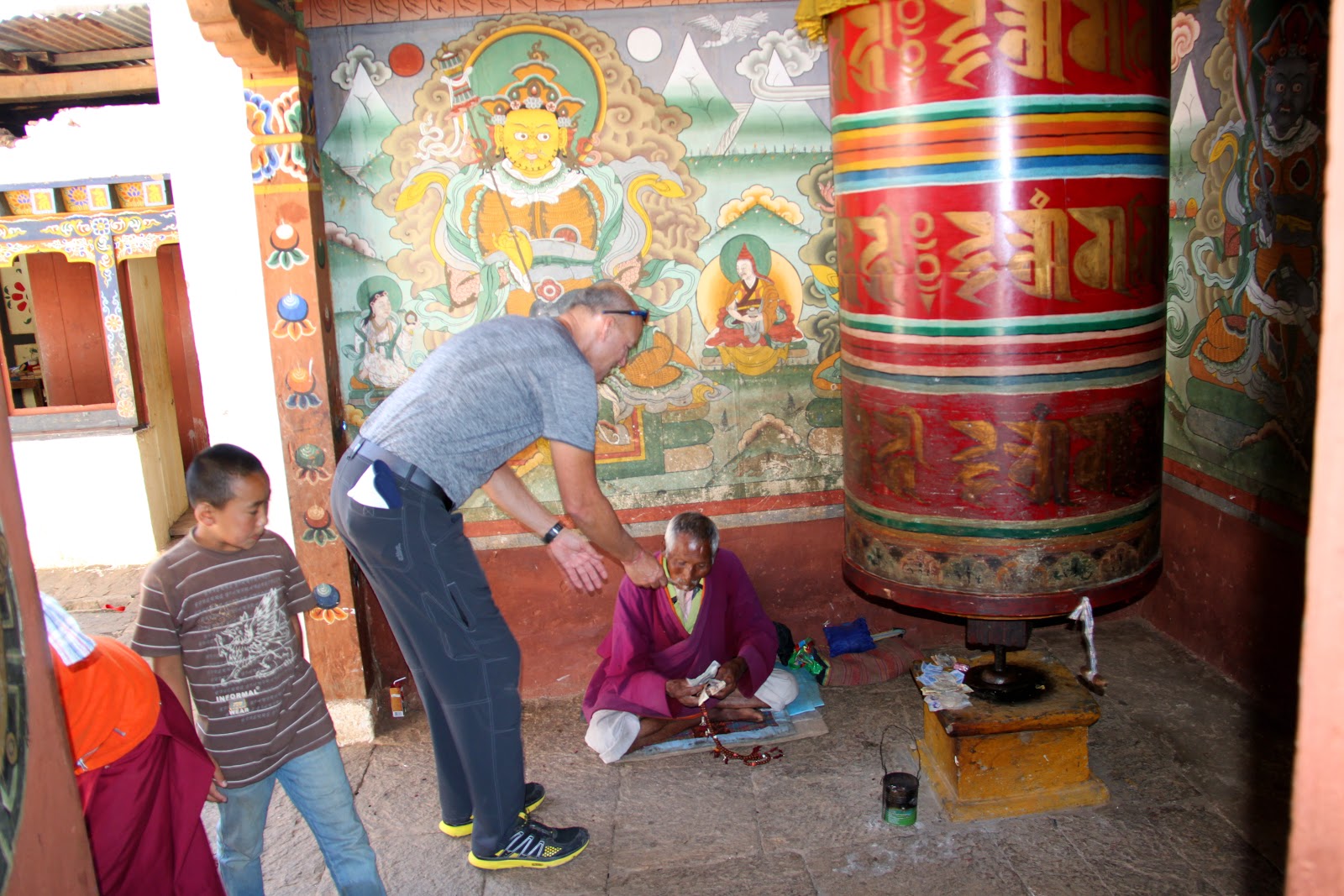
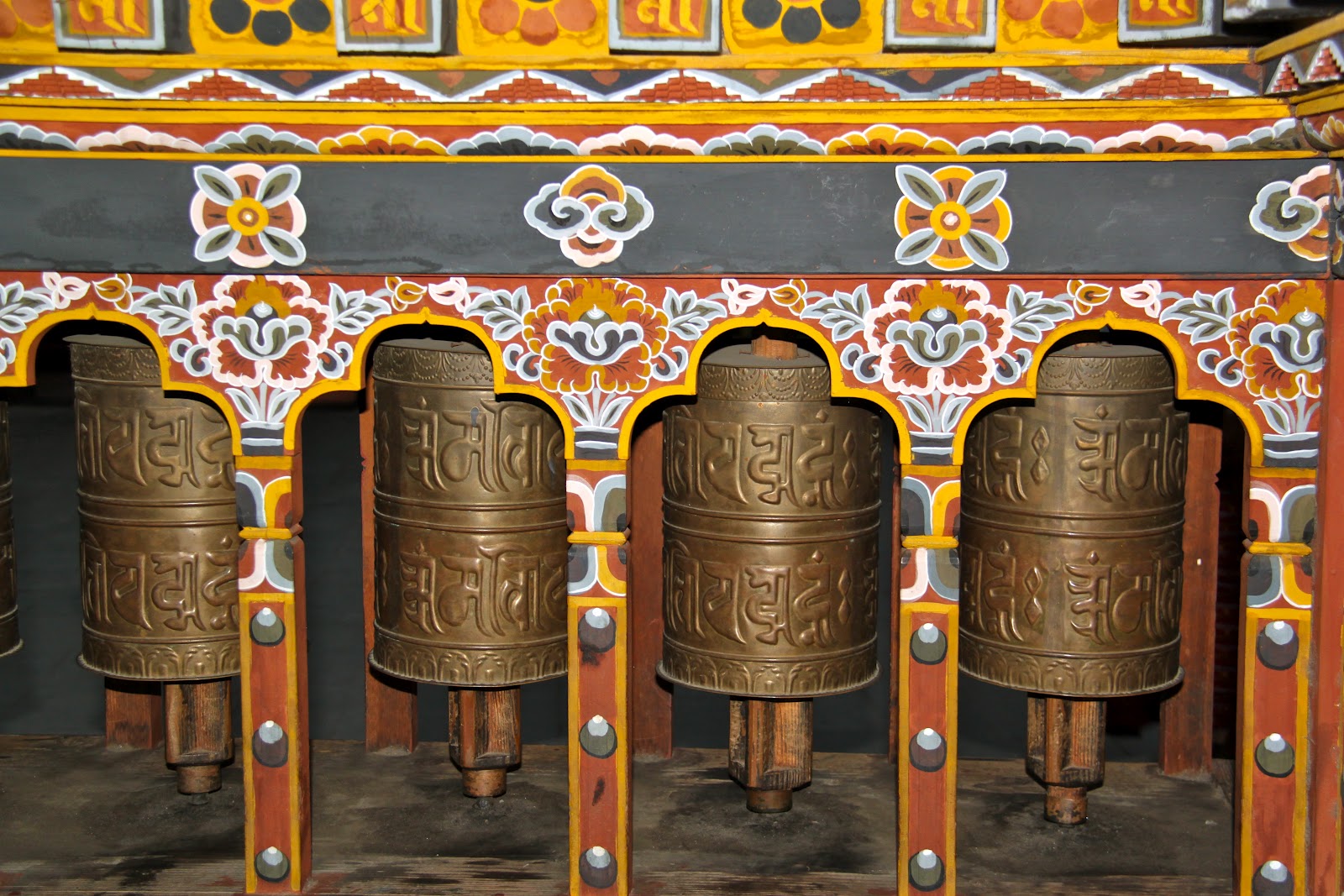
We spin the prayer wheels in a clockwise motion in order to send prayers to heaven.
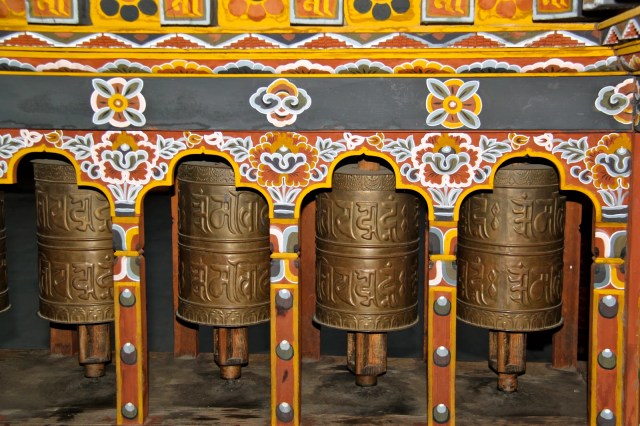
Prayer Wheels:  Always remember to spin them in a clockwise direction

Our lodge is at 8560 feet and we are feeling the altitude when we walk up stairs.  Sleeping that night was also a little rough.  We have become accustomed to living the last 6 weeks at or near sea level and we just jumped up about 7000 feet.
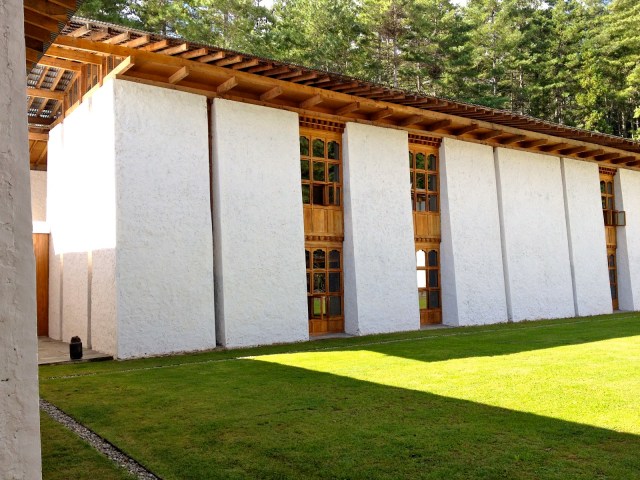
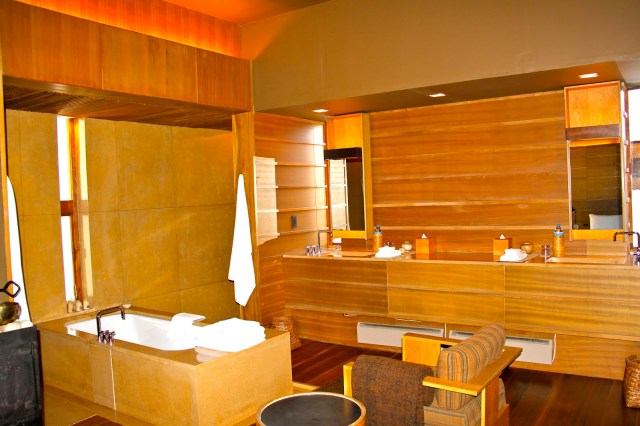
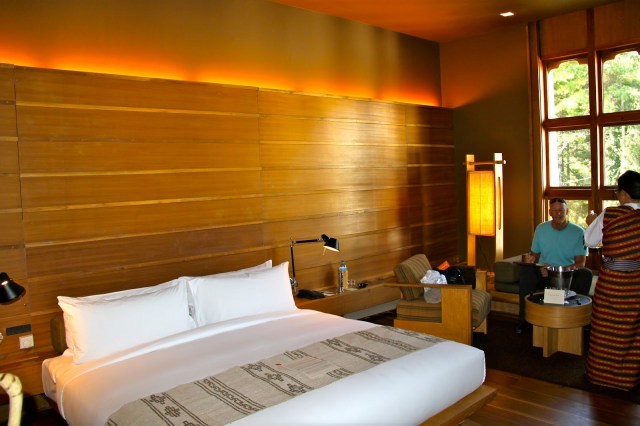
Amankora rooms

Our Bathroom

Our Bedroom
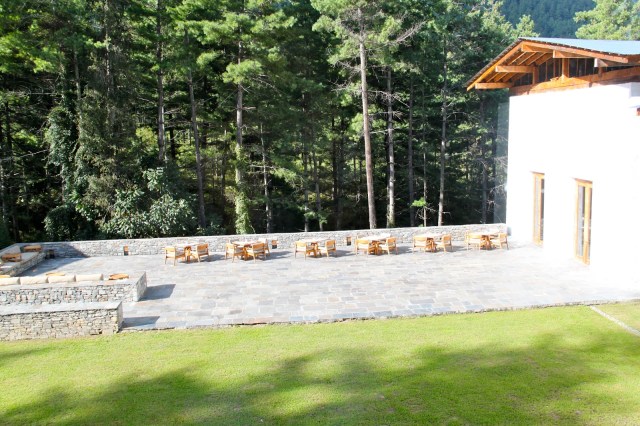
Lodge grounds

Sitting area
Nestled high on the mountain through the woods

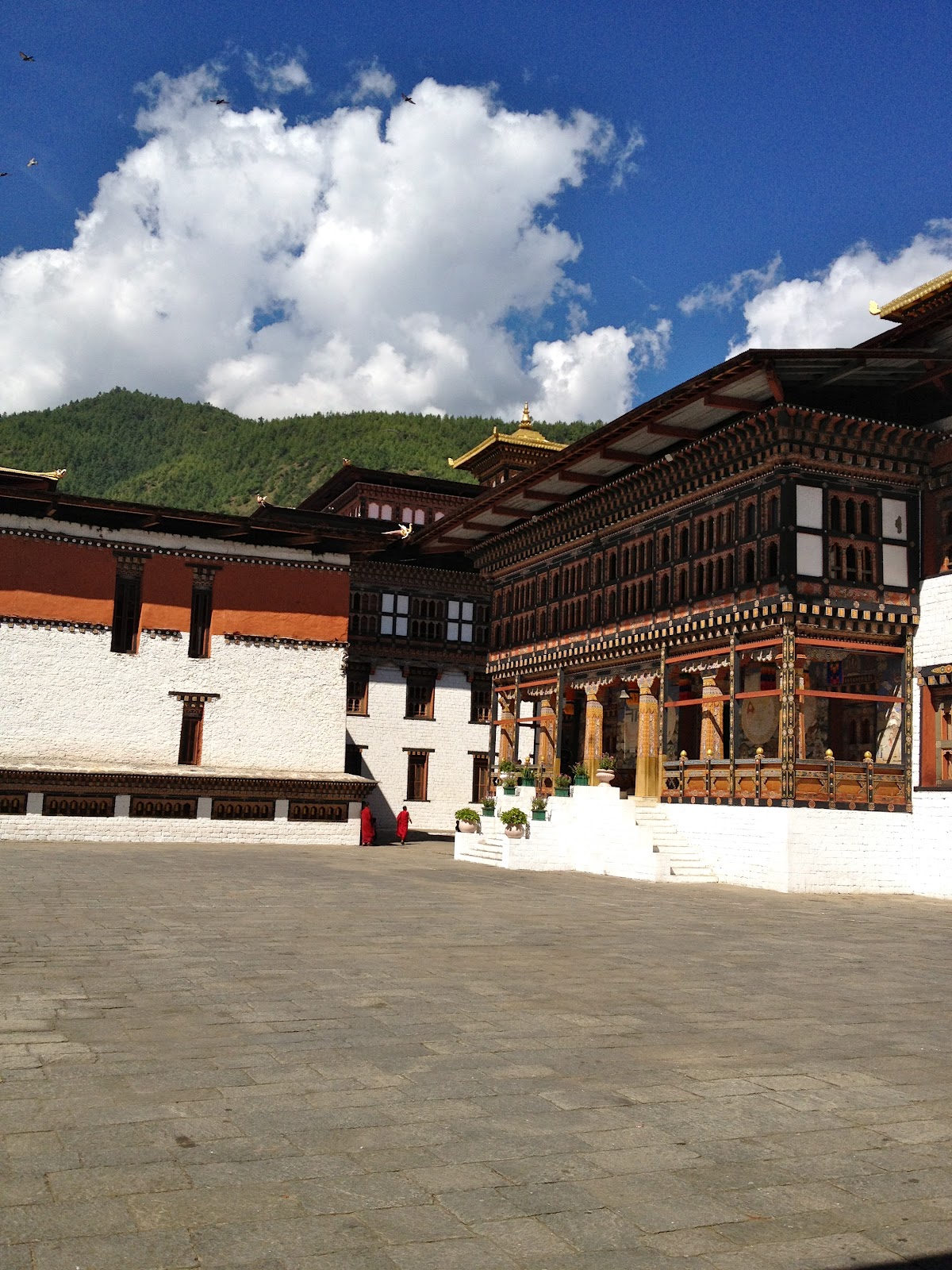
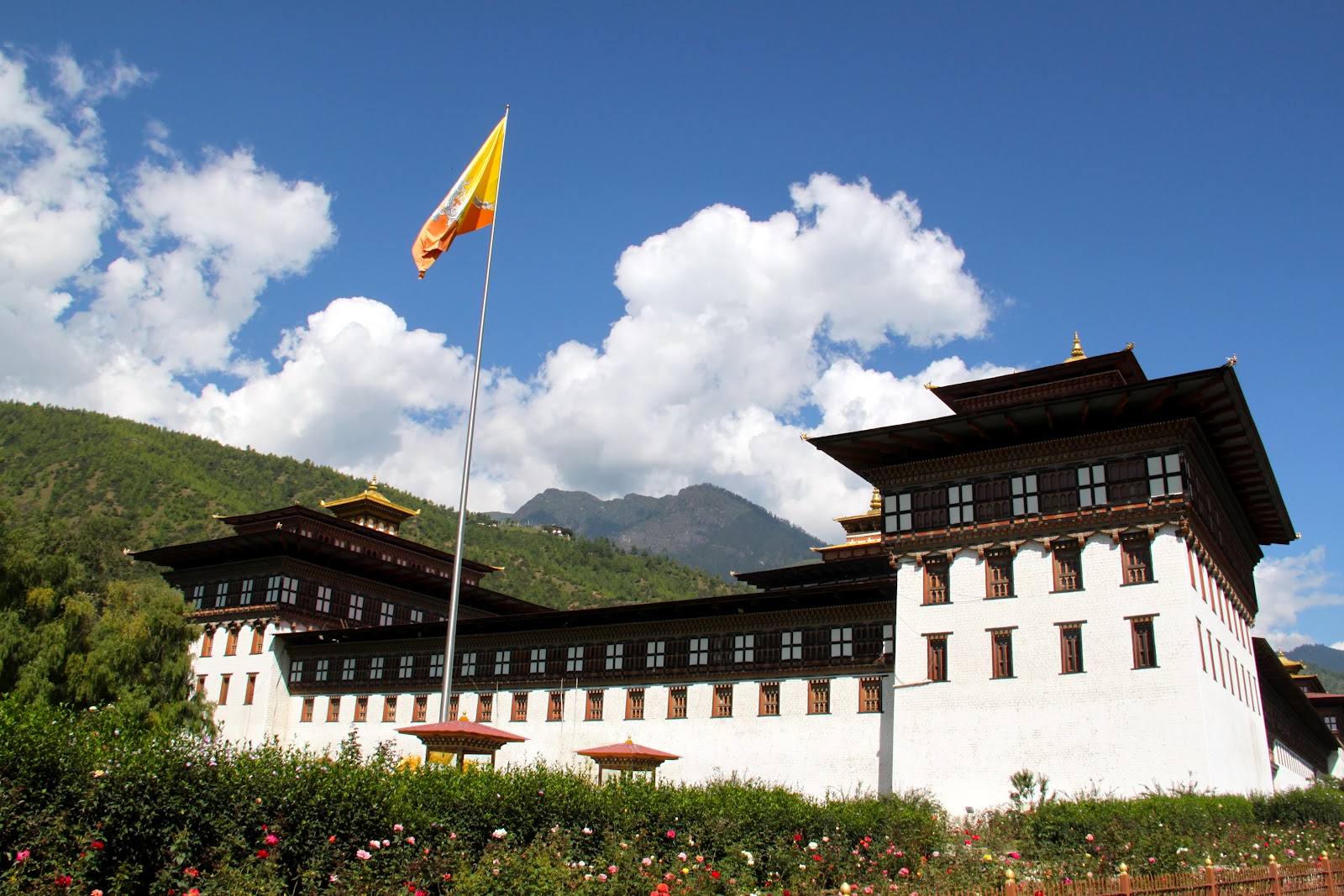
After breakfast we go to the Tshechu Festival which is held at the Tashichho Dzong.  Dzong means fortress. 
The fortress is divided into buildings meant for the King and the buildings meant for the monks and for religious purposes.  The home for the monks is the divider between the buildings for the two purposes.
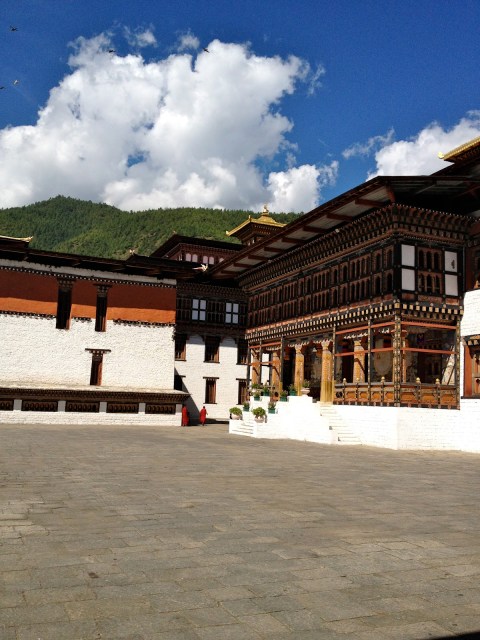
Building on right is used by the Monks


Inside the fortress where Monks live
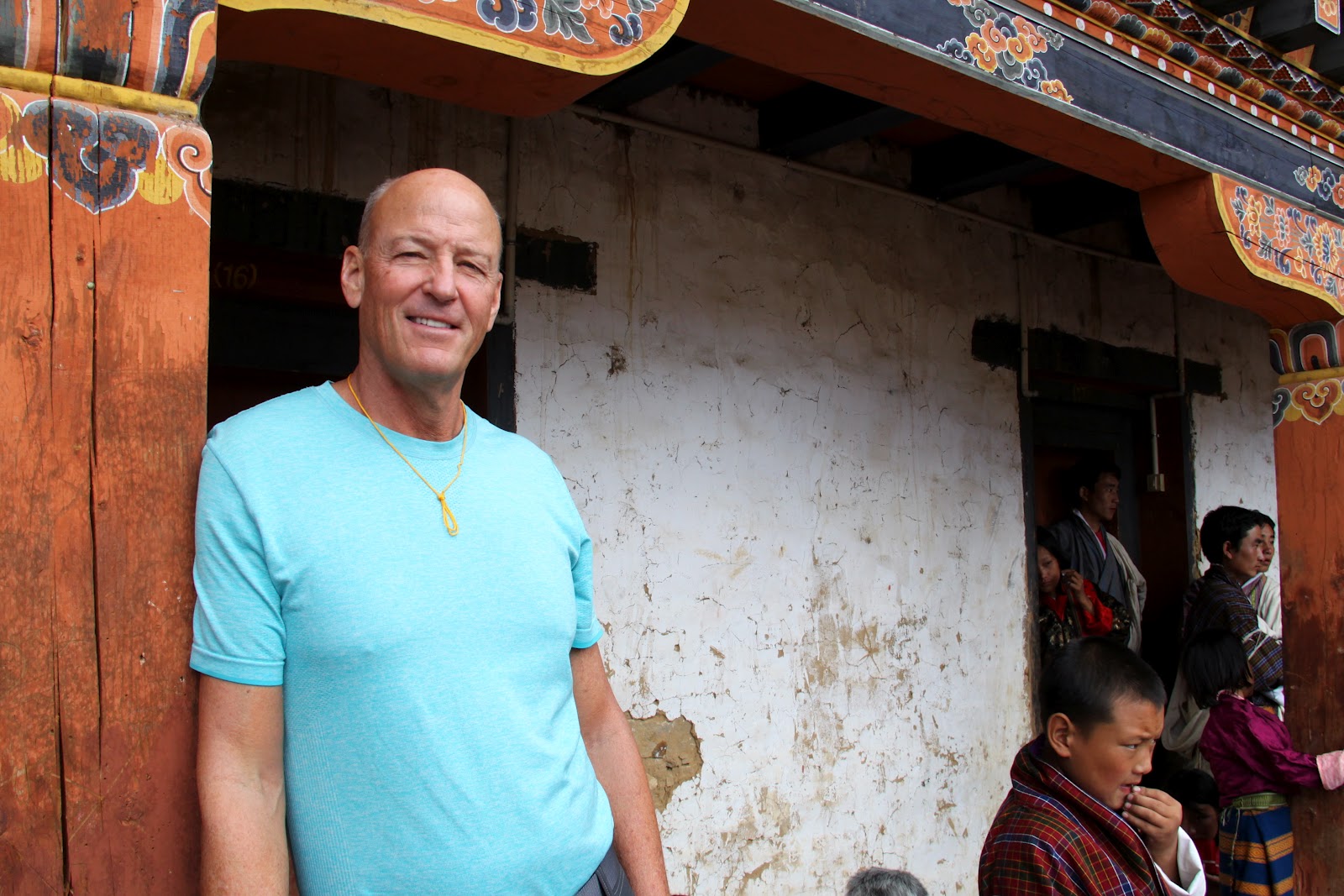
Scott at entrance

The Parliament building is nearby.  There are 47 members of Parliament.  The King is 38.  His father, the prior King, passed on the duties just recently when he was 58.  He was King from age 16 until 58.  The King has influence but no real power similar to the arrangement in England for the royal family.
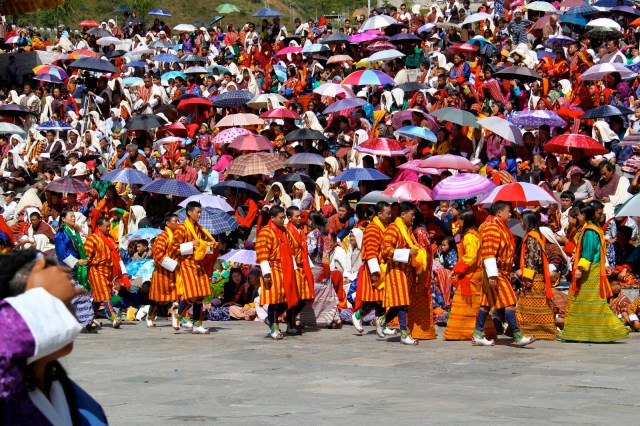
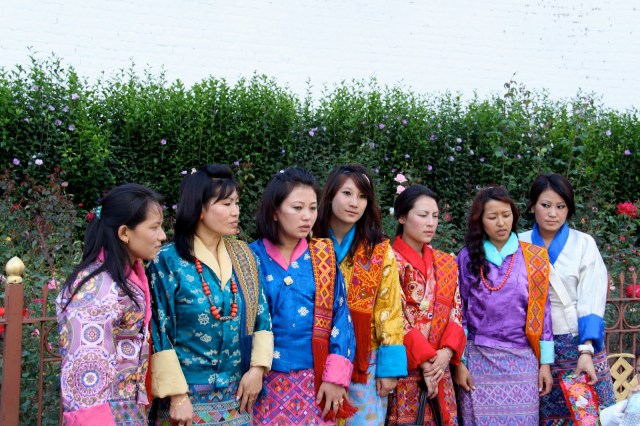
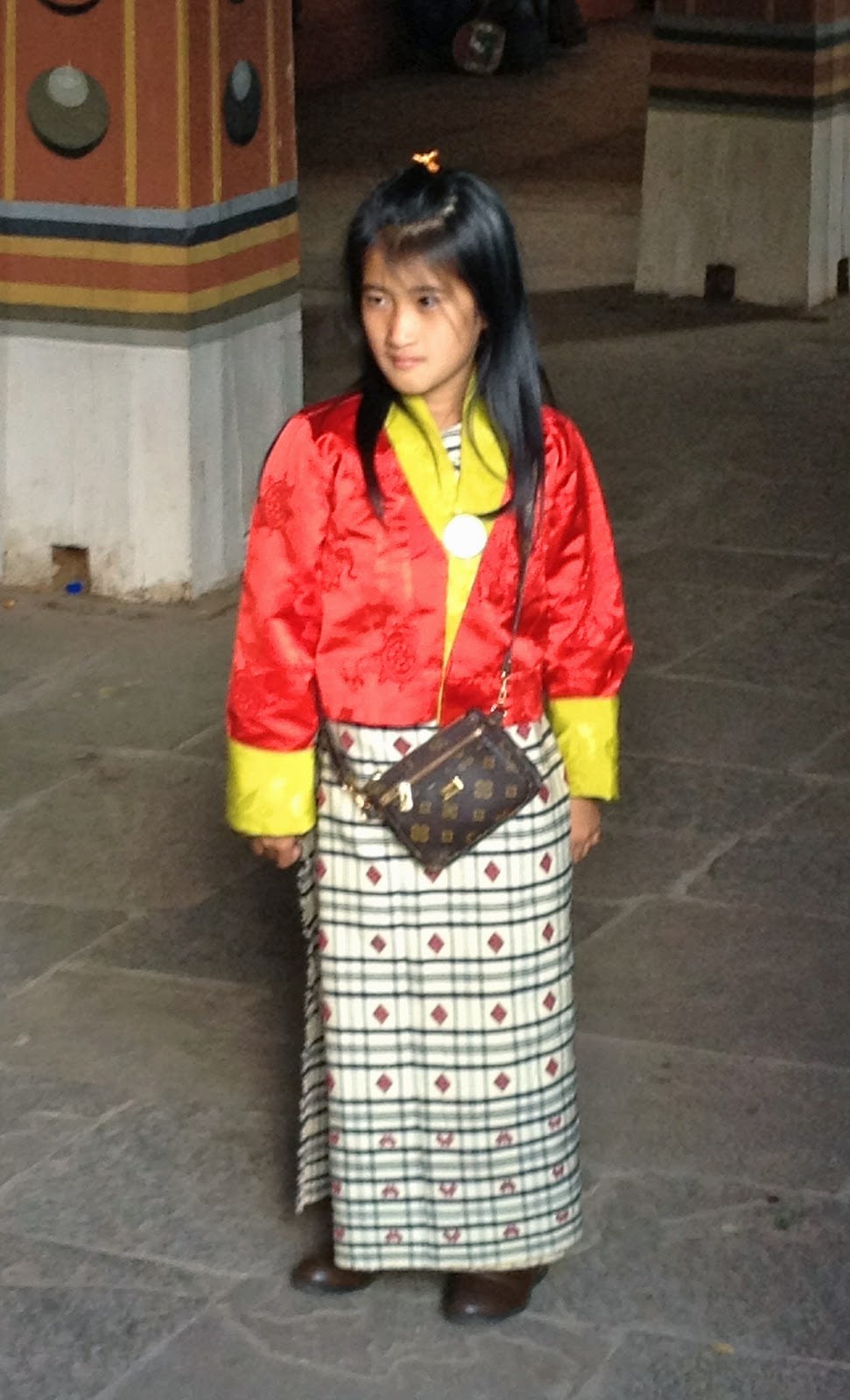
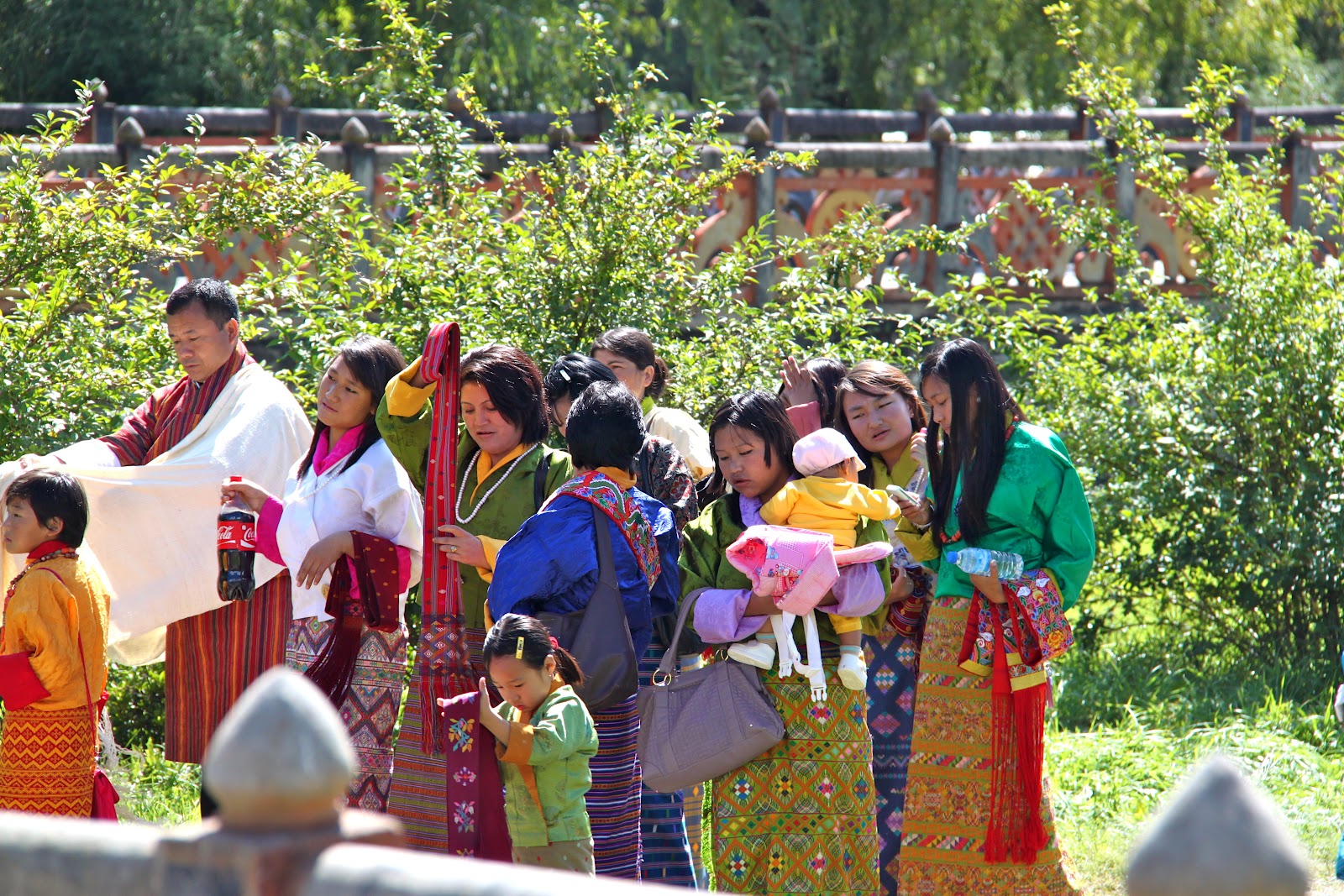
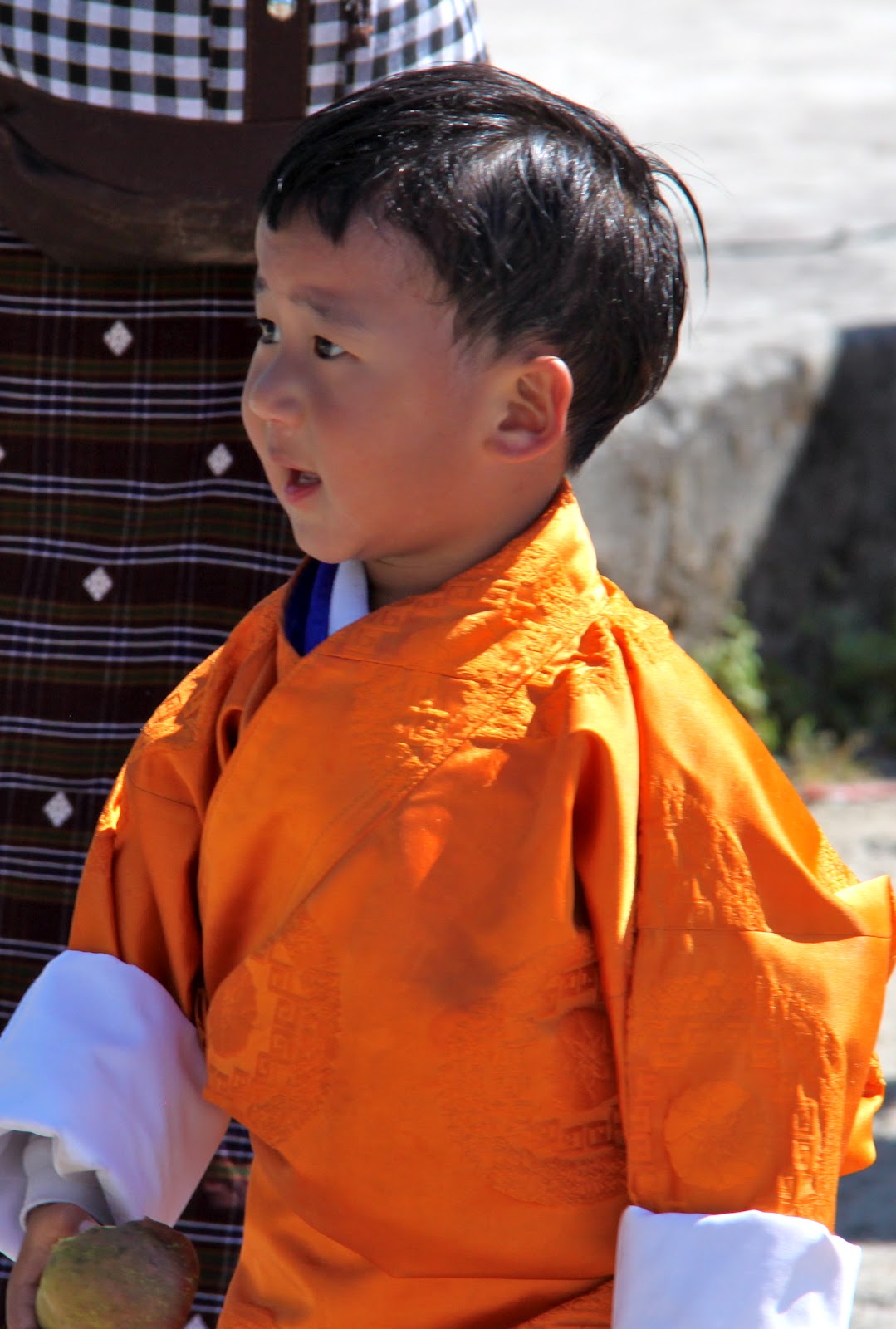
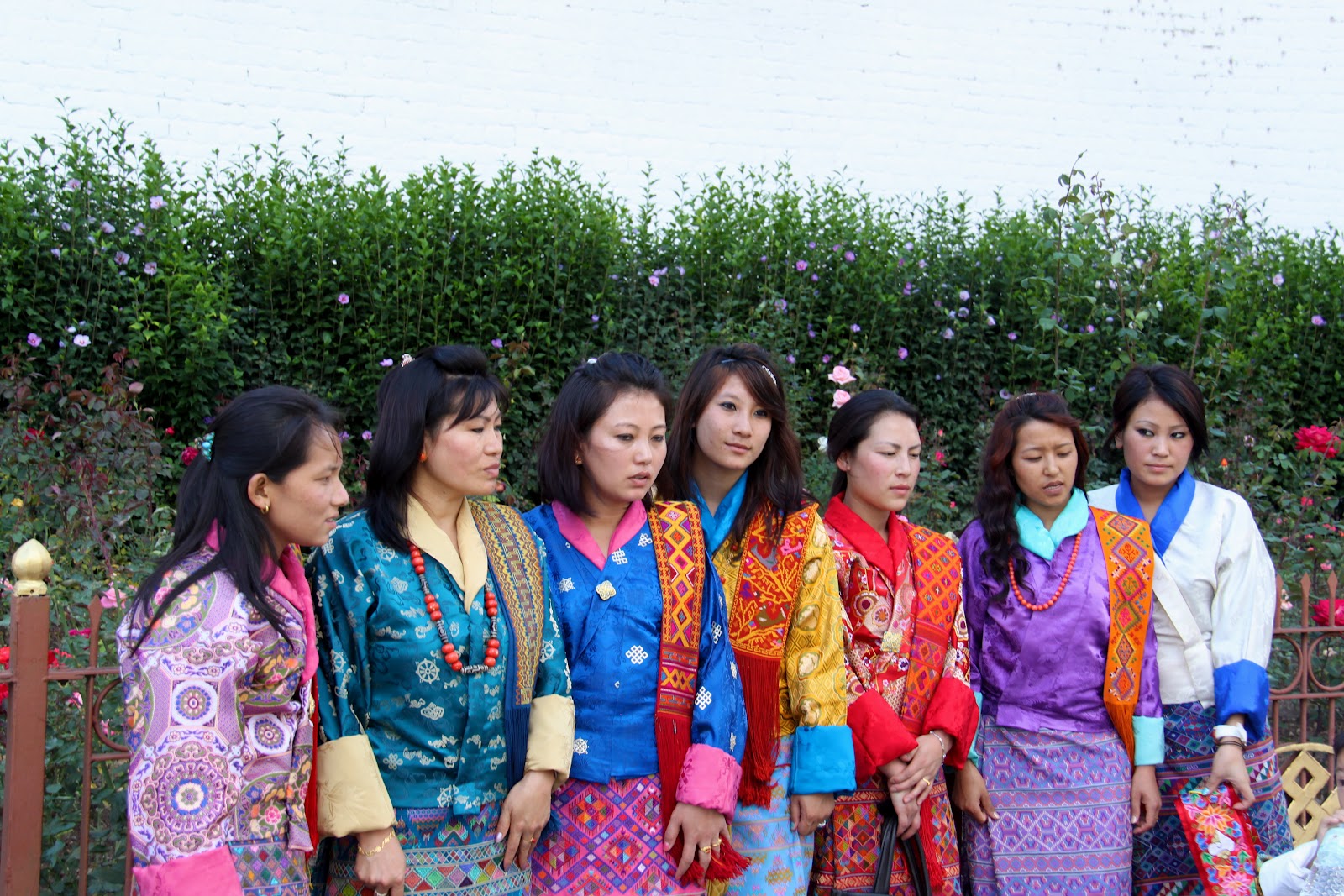
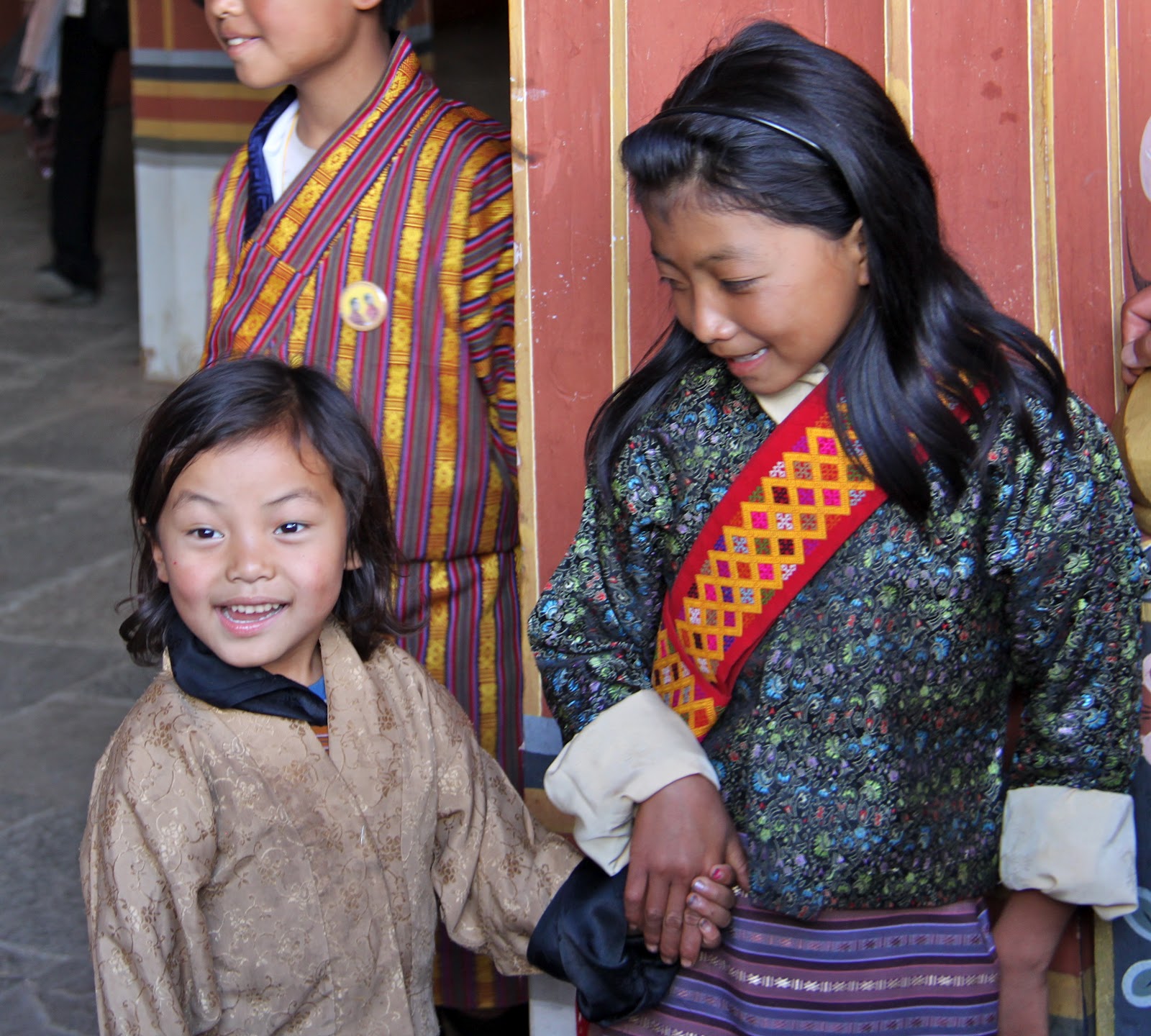
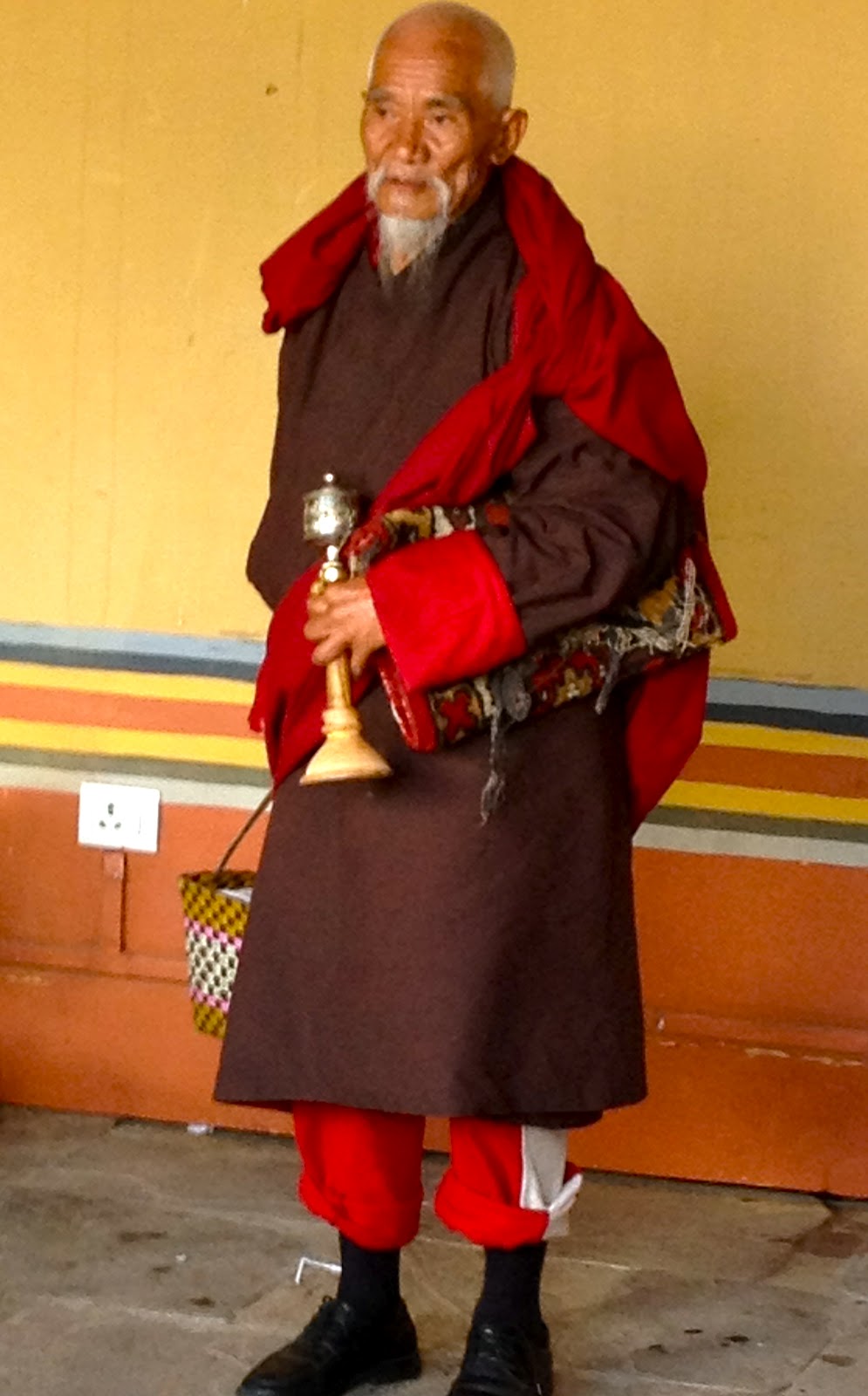
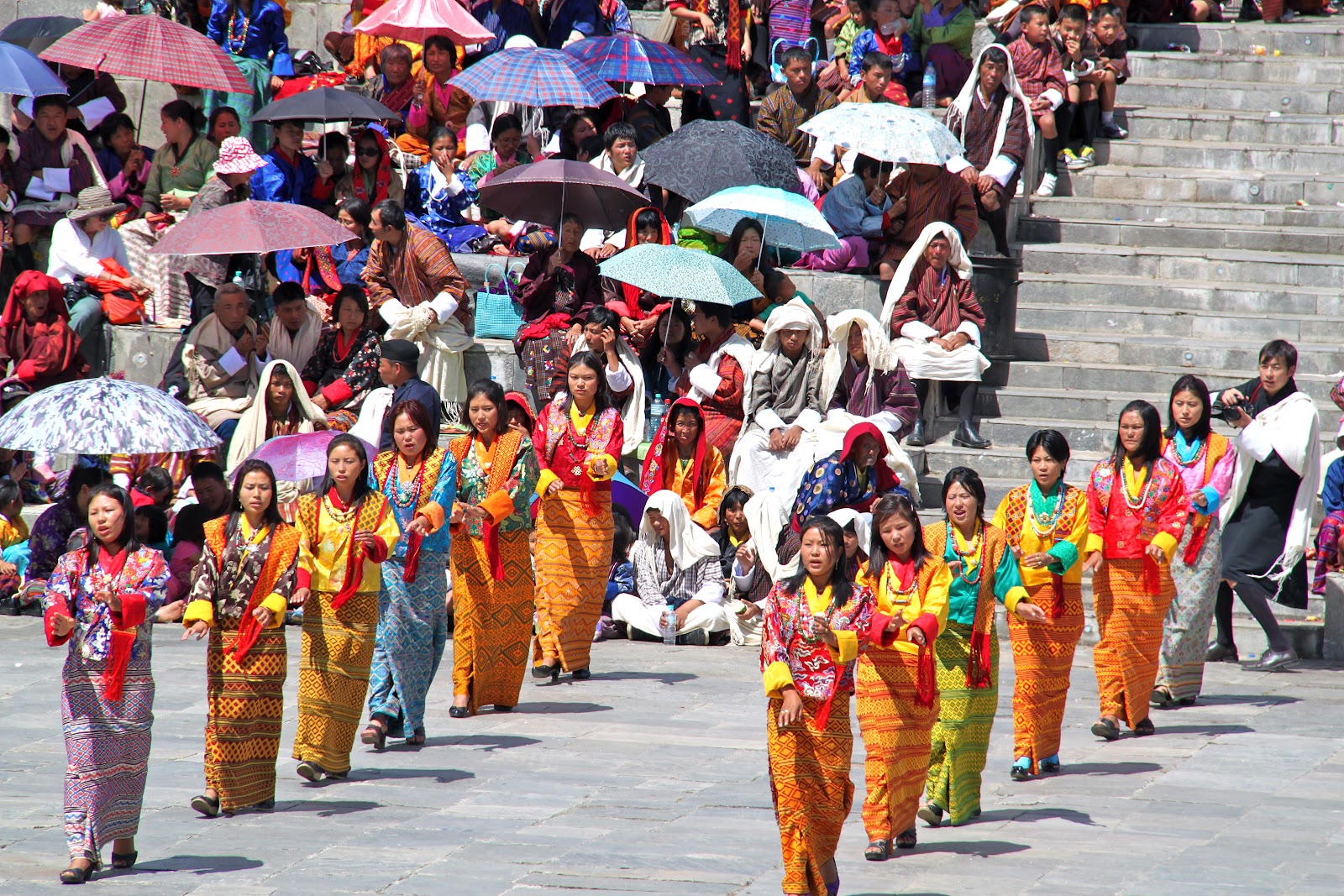
Bhutan separates religious matters and matters of state but the state dictates that the people must wear the traditional dress of ancient Bhutan everyday except for Sunday.  The men wear a Gho dress and the women wear a Kira dress.  I don’t sense that anyone has a problem wearing the traditional dress.  All the people are friendly and children are curious and will speak a few English words.  English is required study in school.  School is compulsory.
At festival time the families come and spend all day wearing their finest Gho and Kira.  Some of these dresses can cost US$1000.  Average wage for teachers is US$450 per month.  Policeman make US$200 per month but have housing benefit.  Health care is provided but our guide makes clear that there are no specialists for cancer or other special health problems and those that can afford go to India for health care from private hospitals there. 
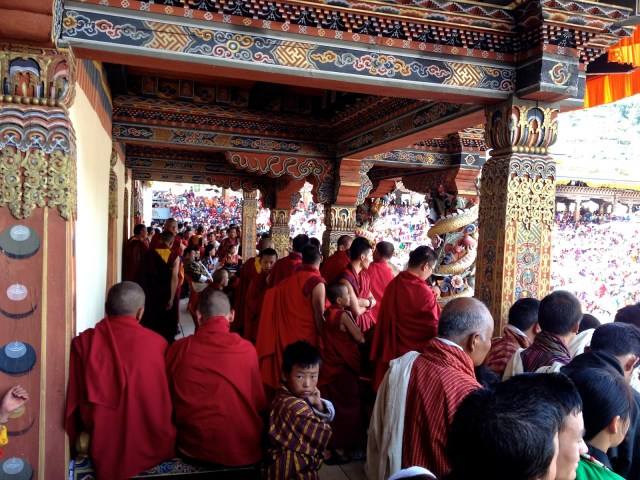
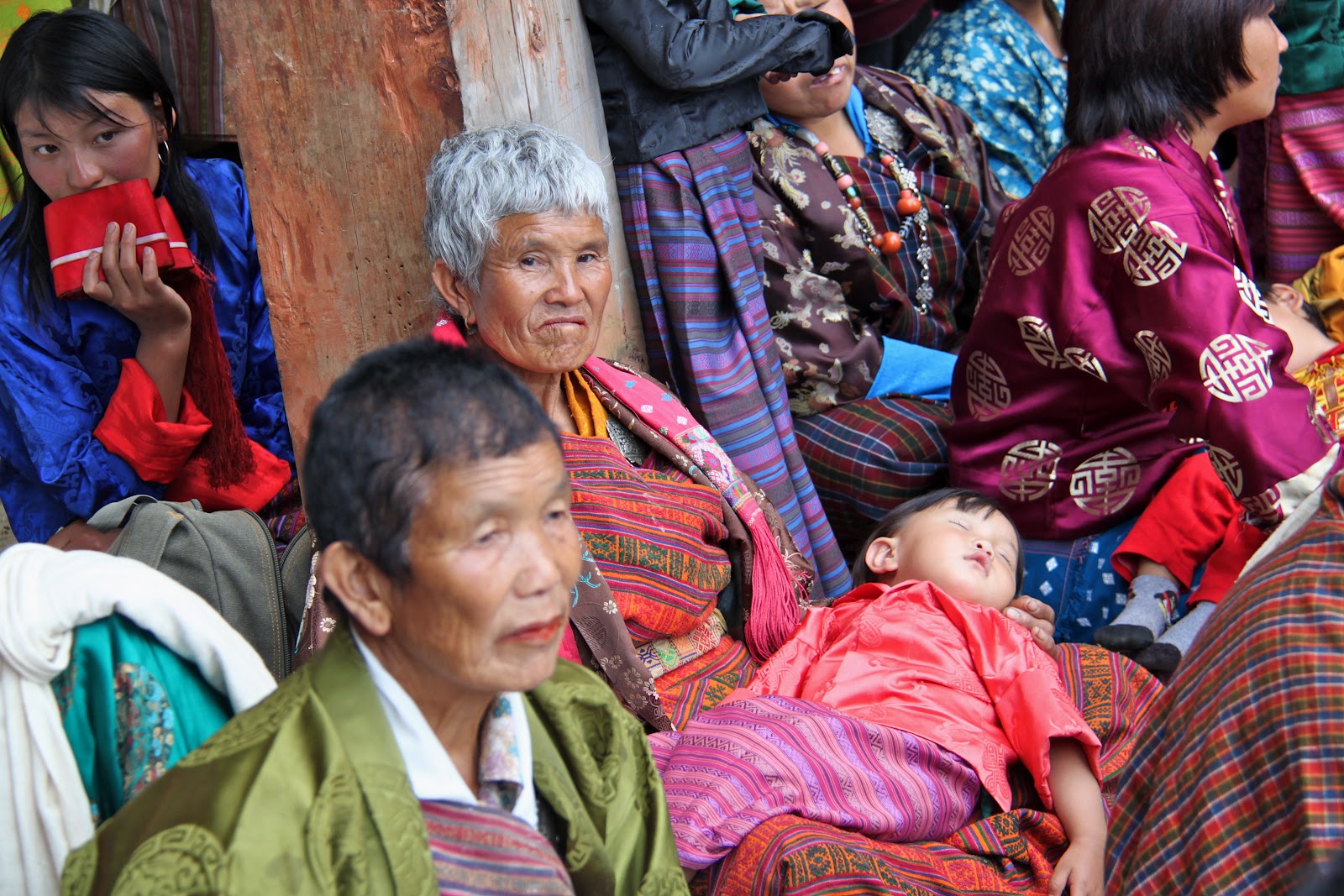
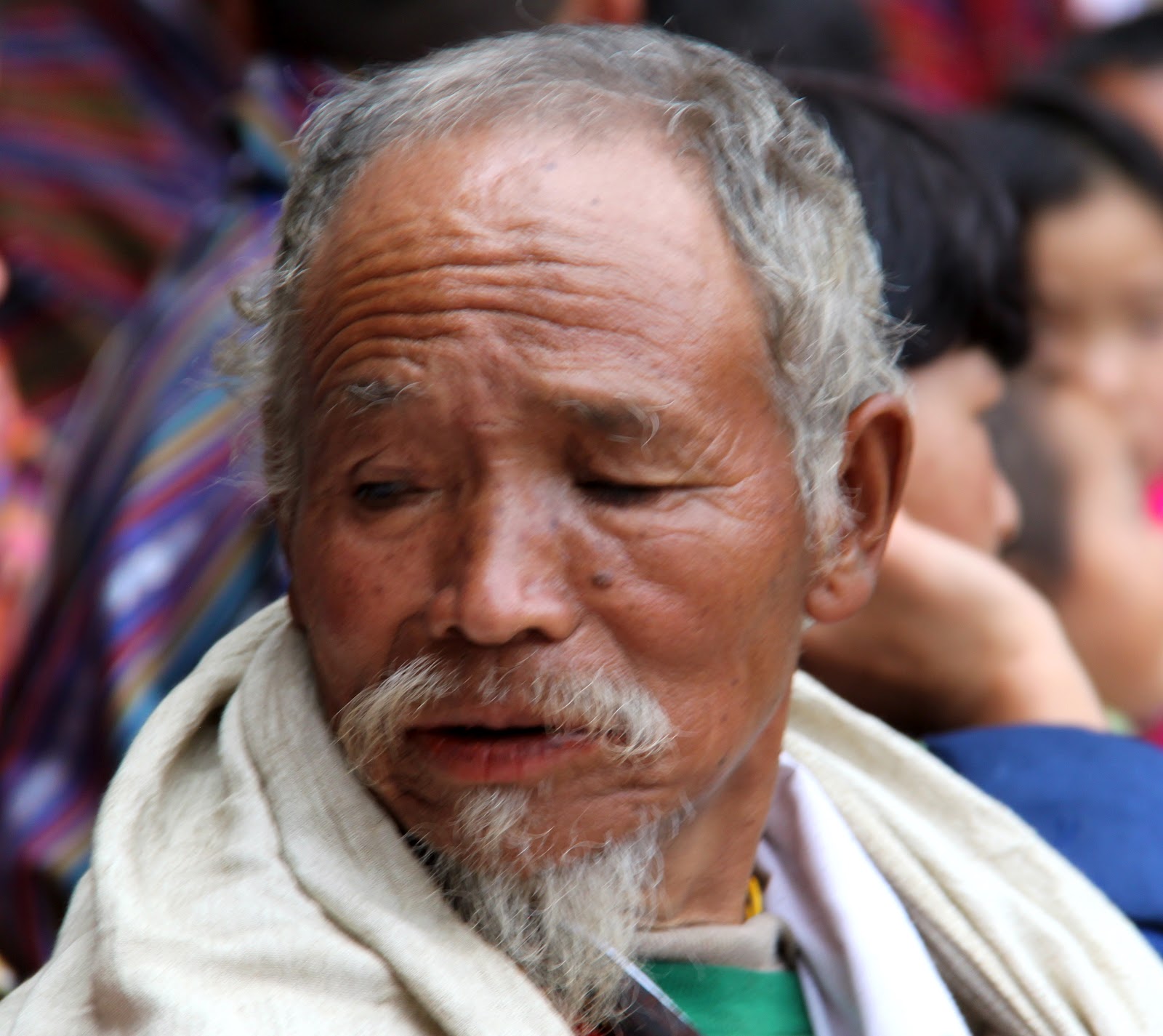
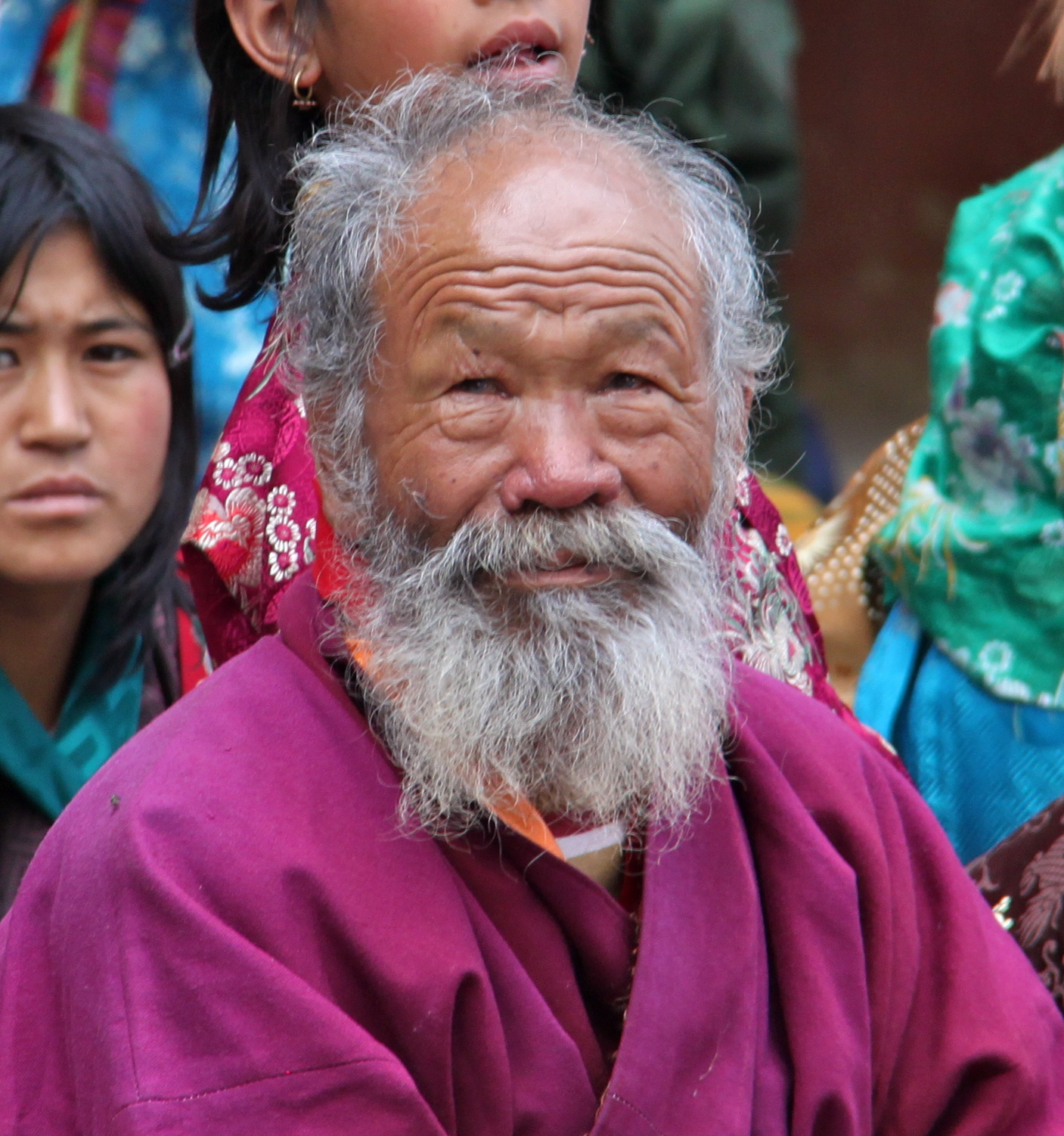
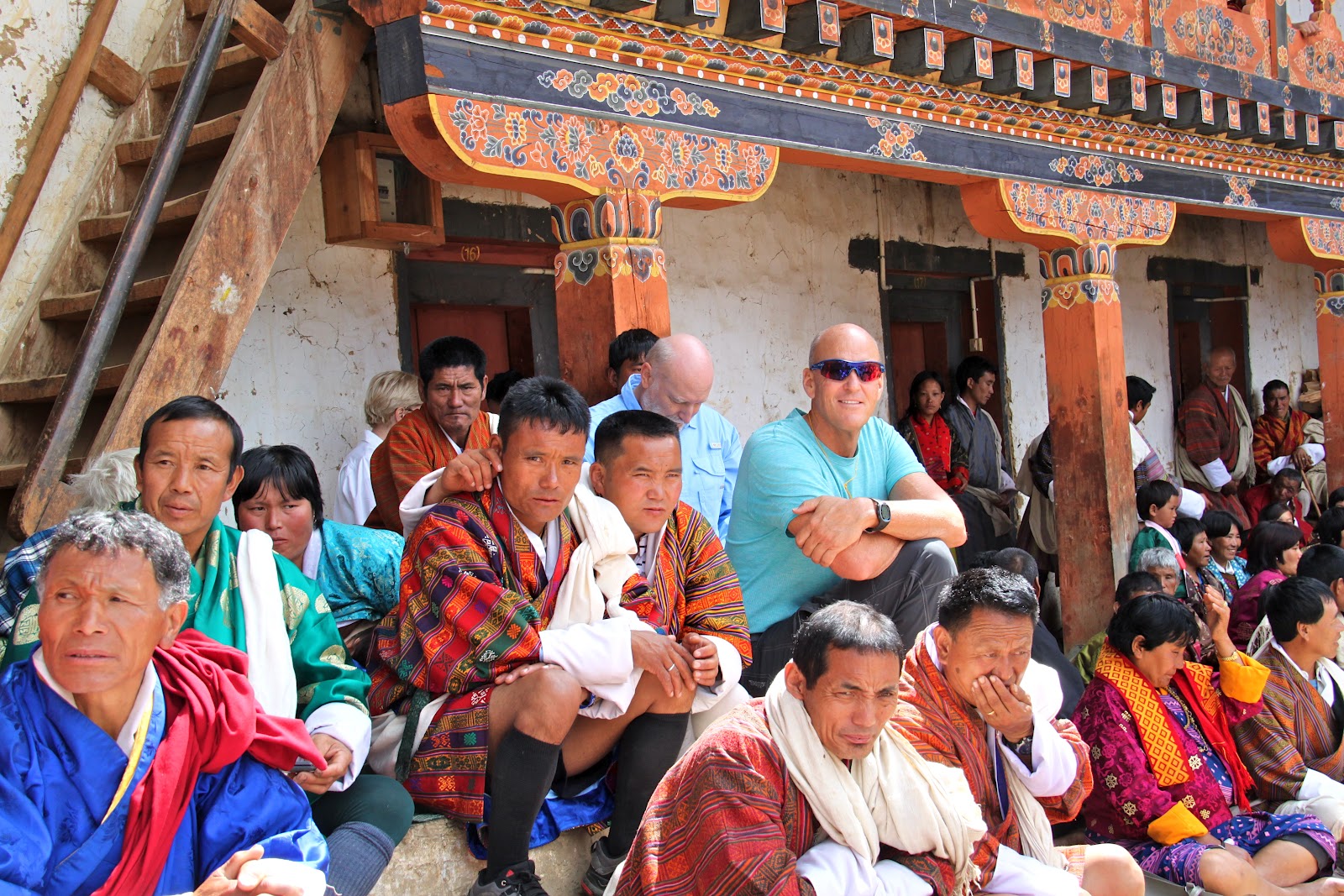
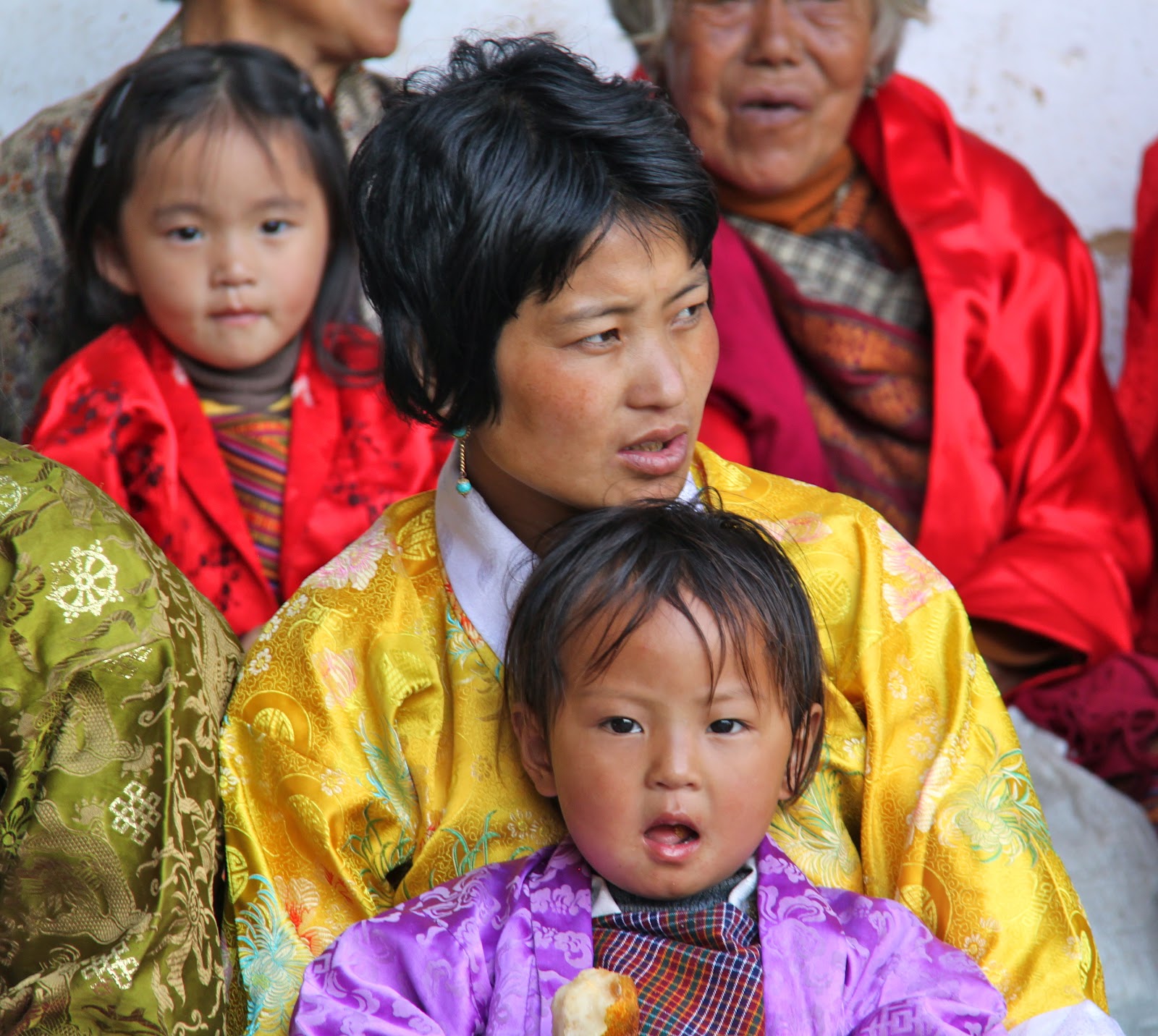
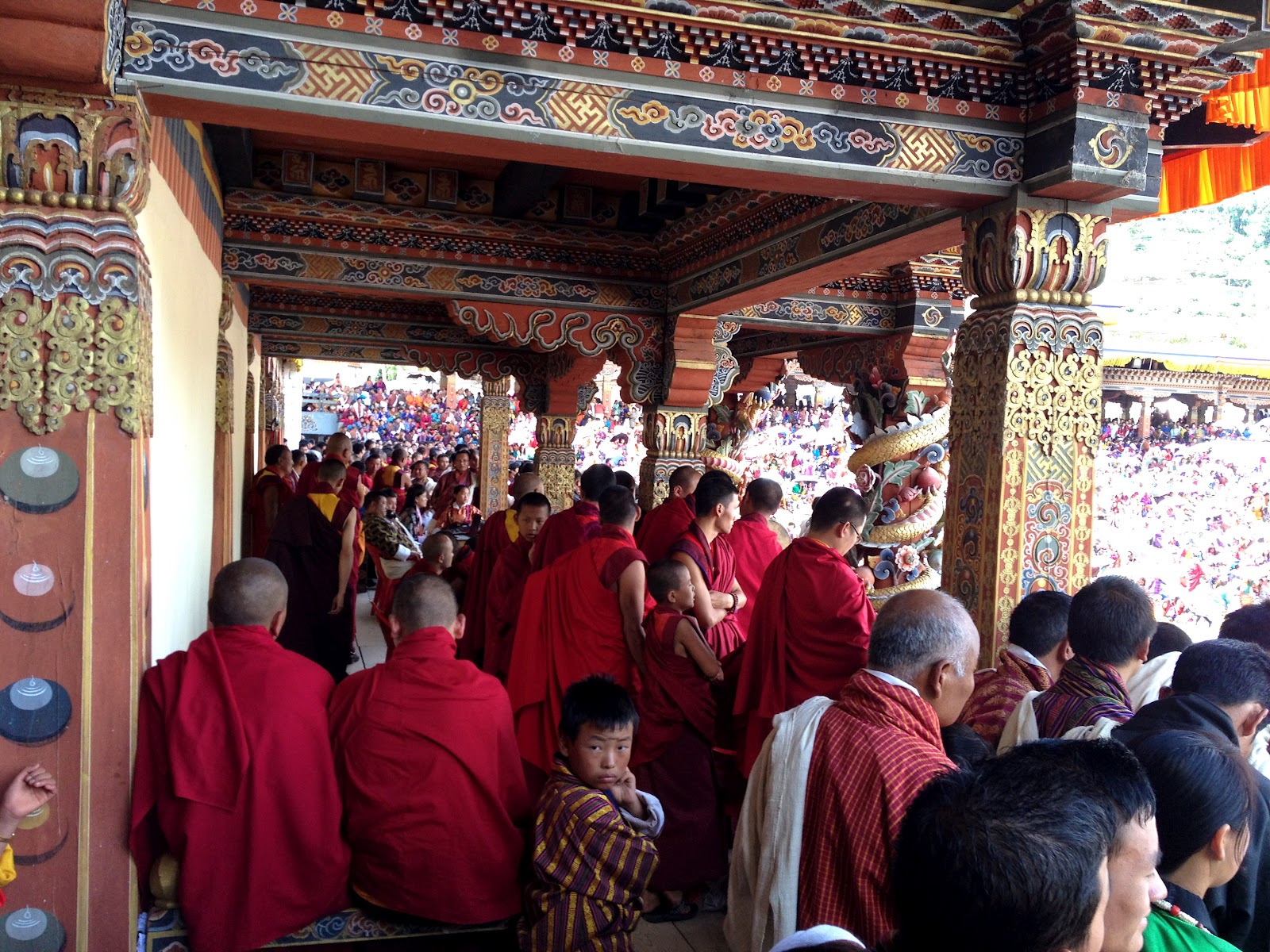
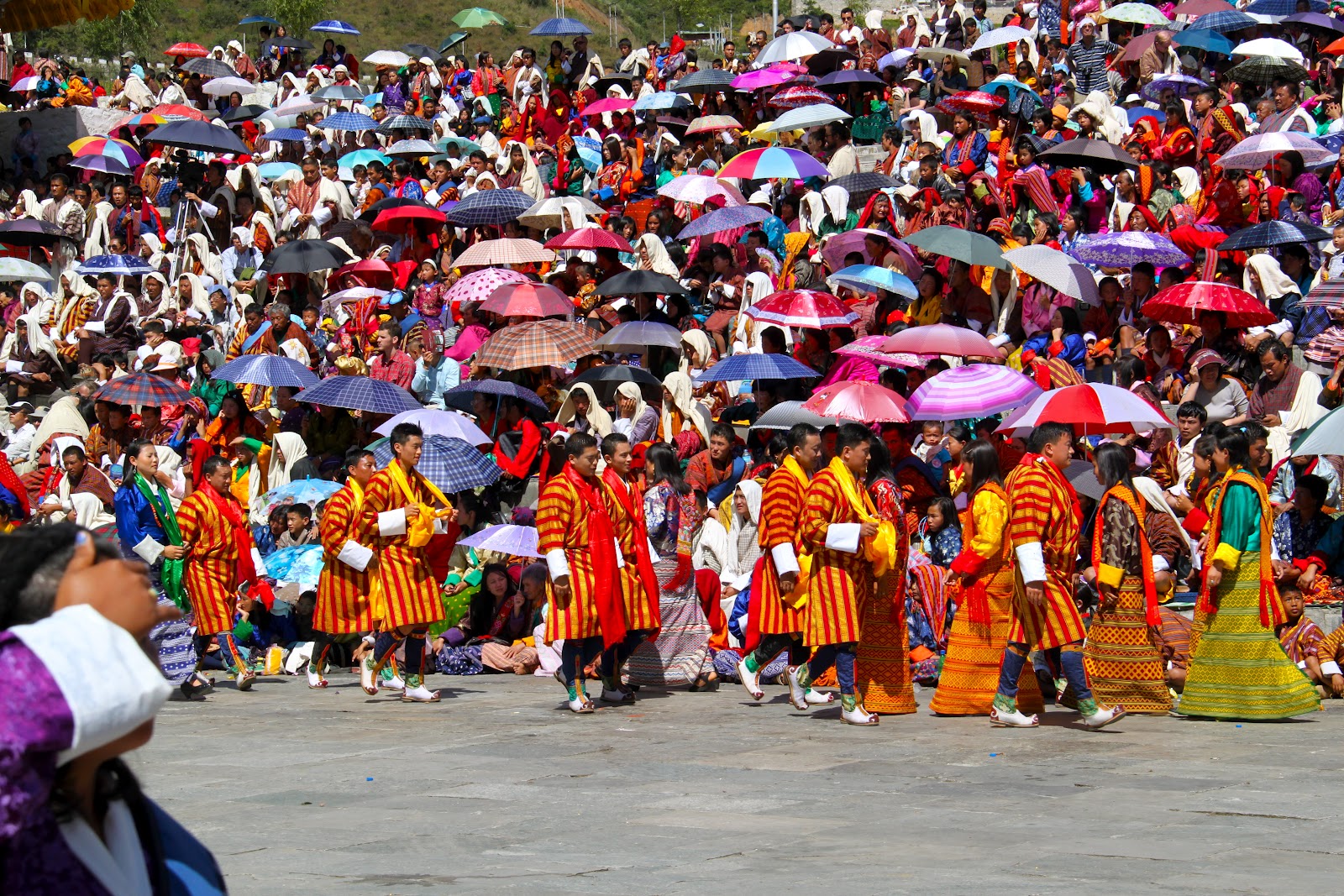
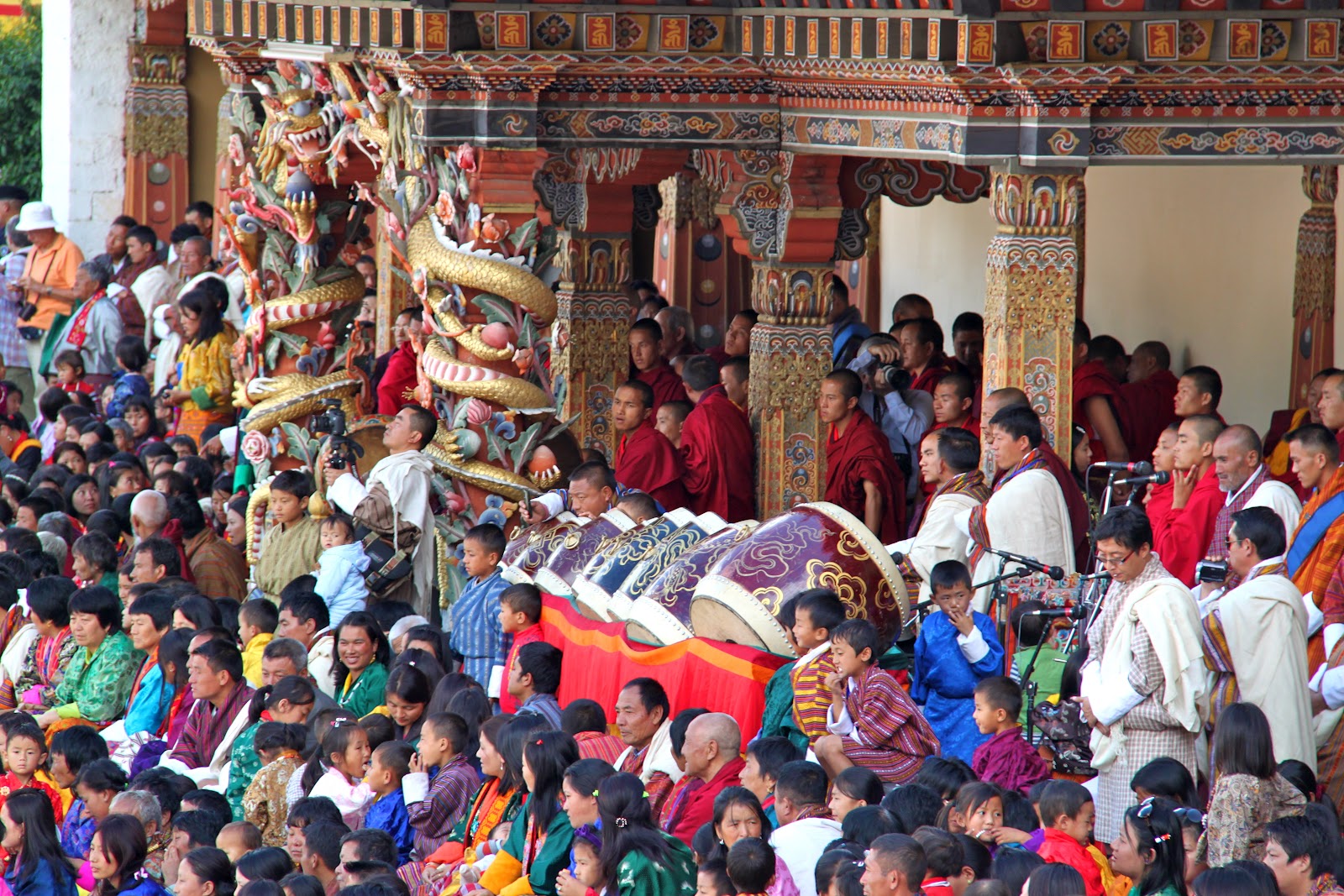
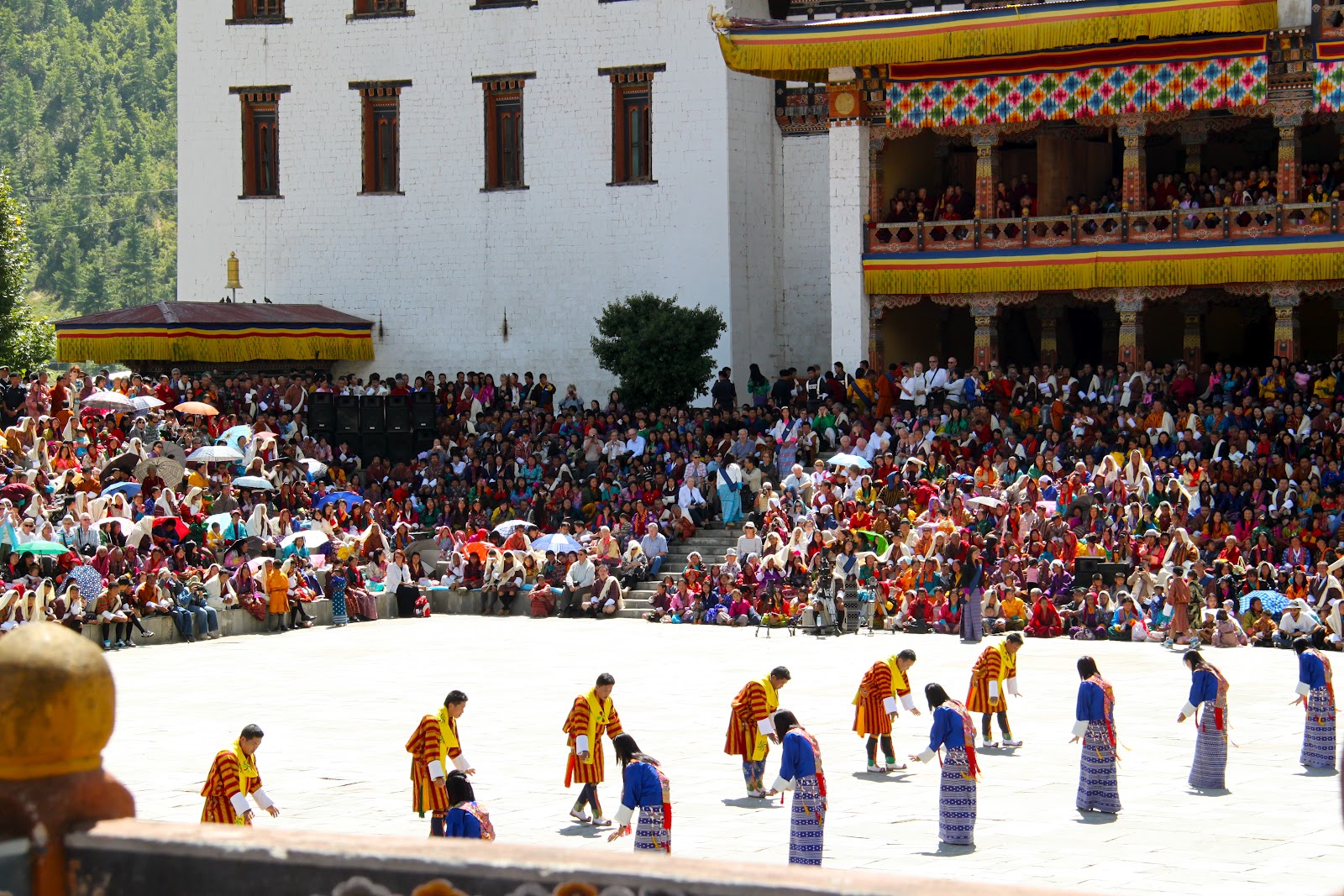
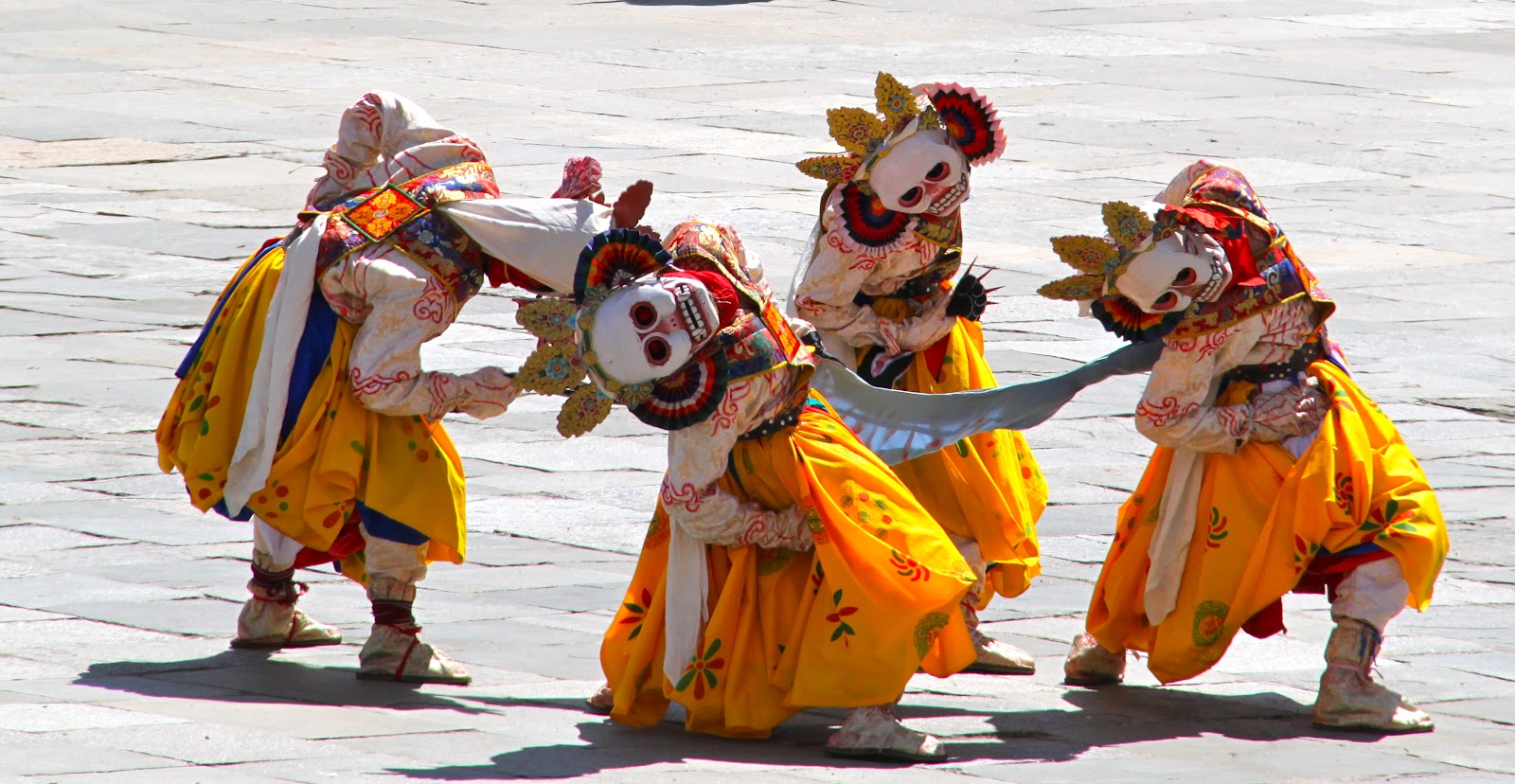
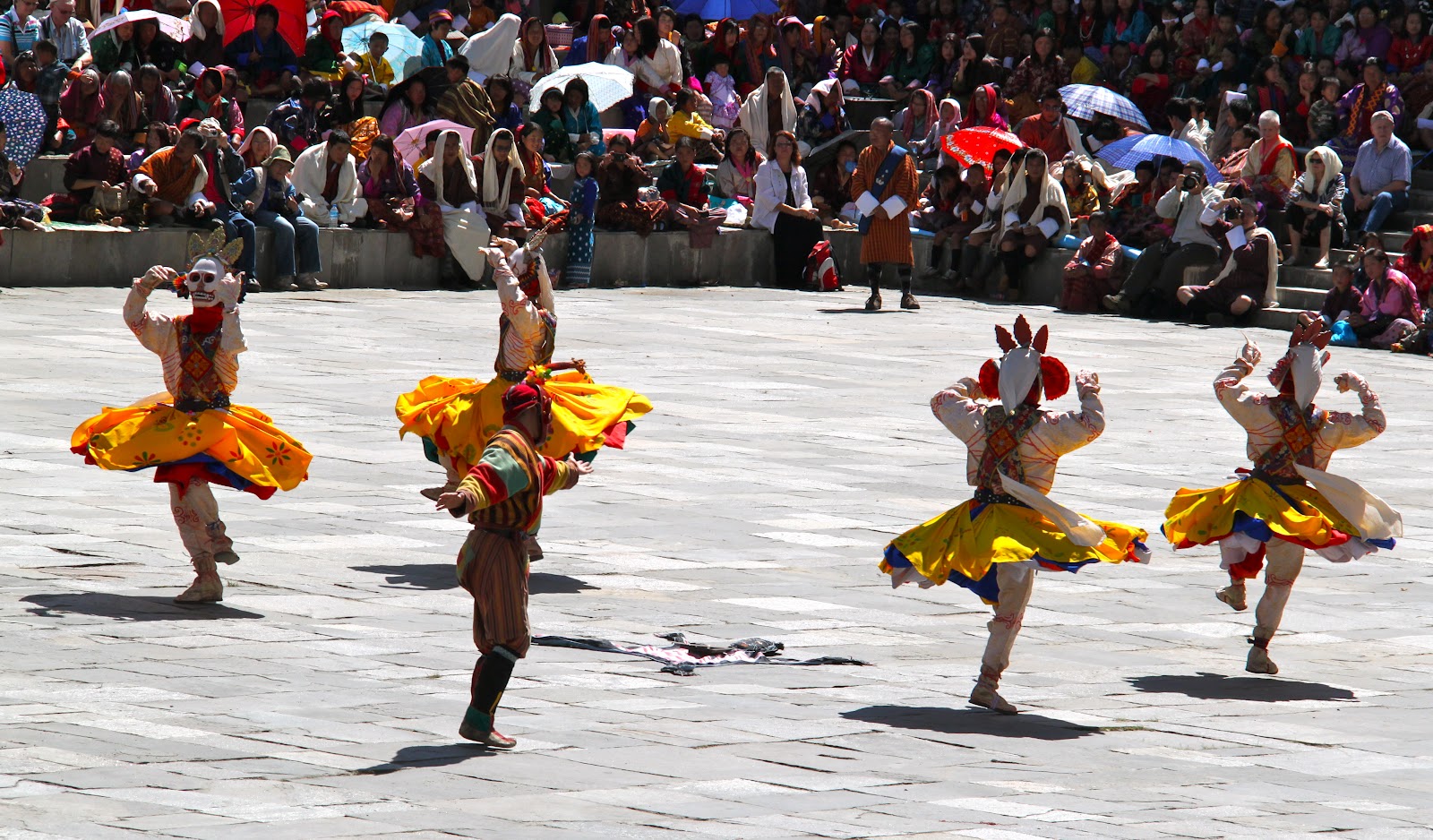
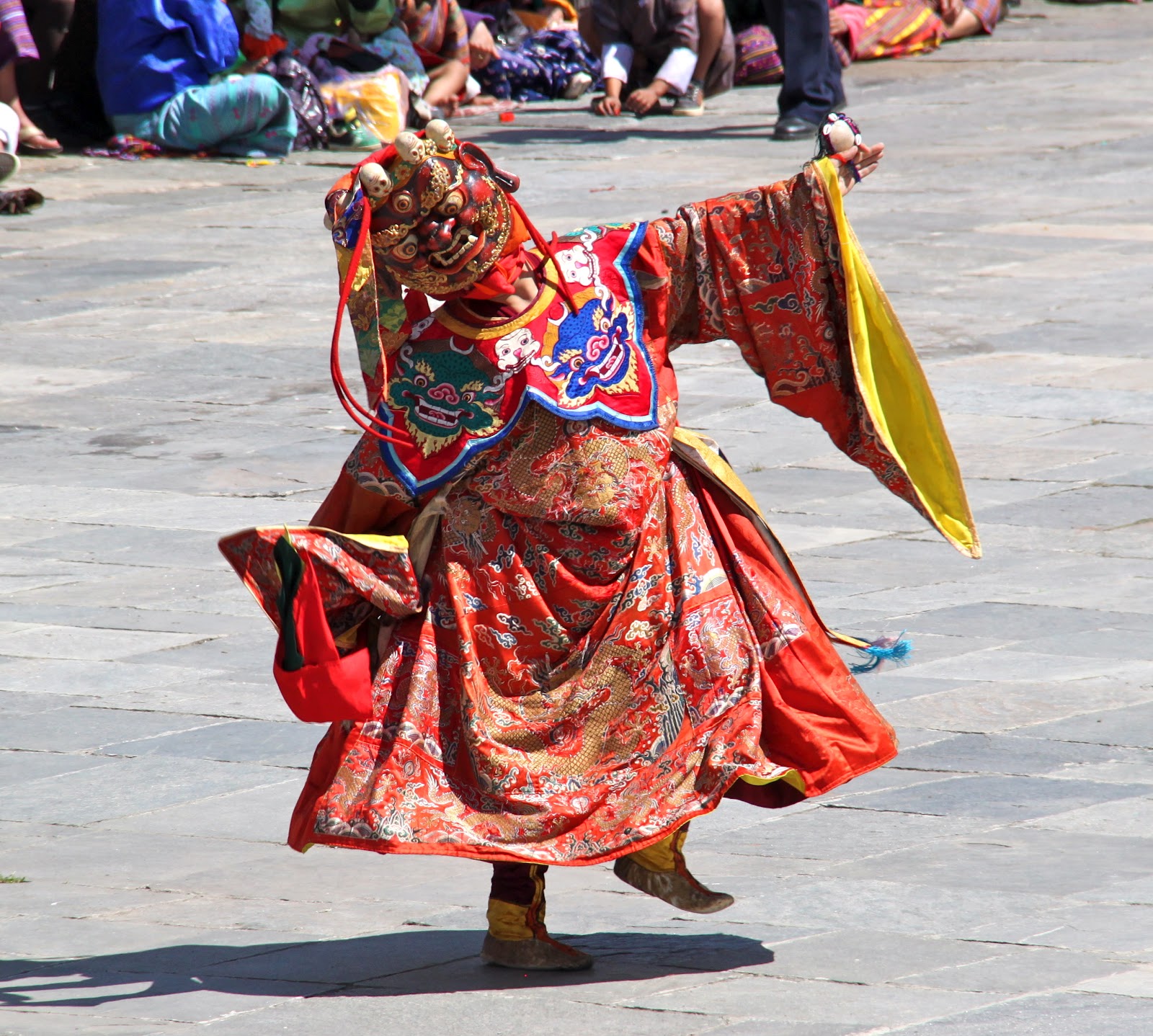
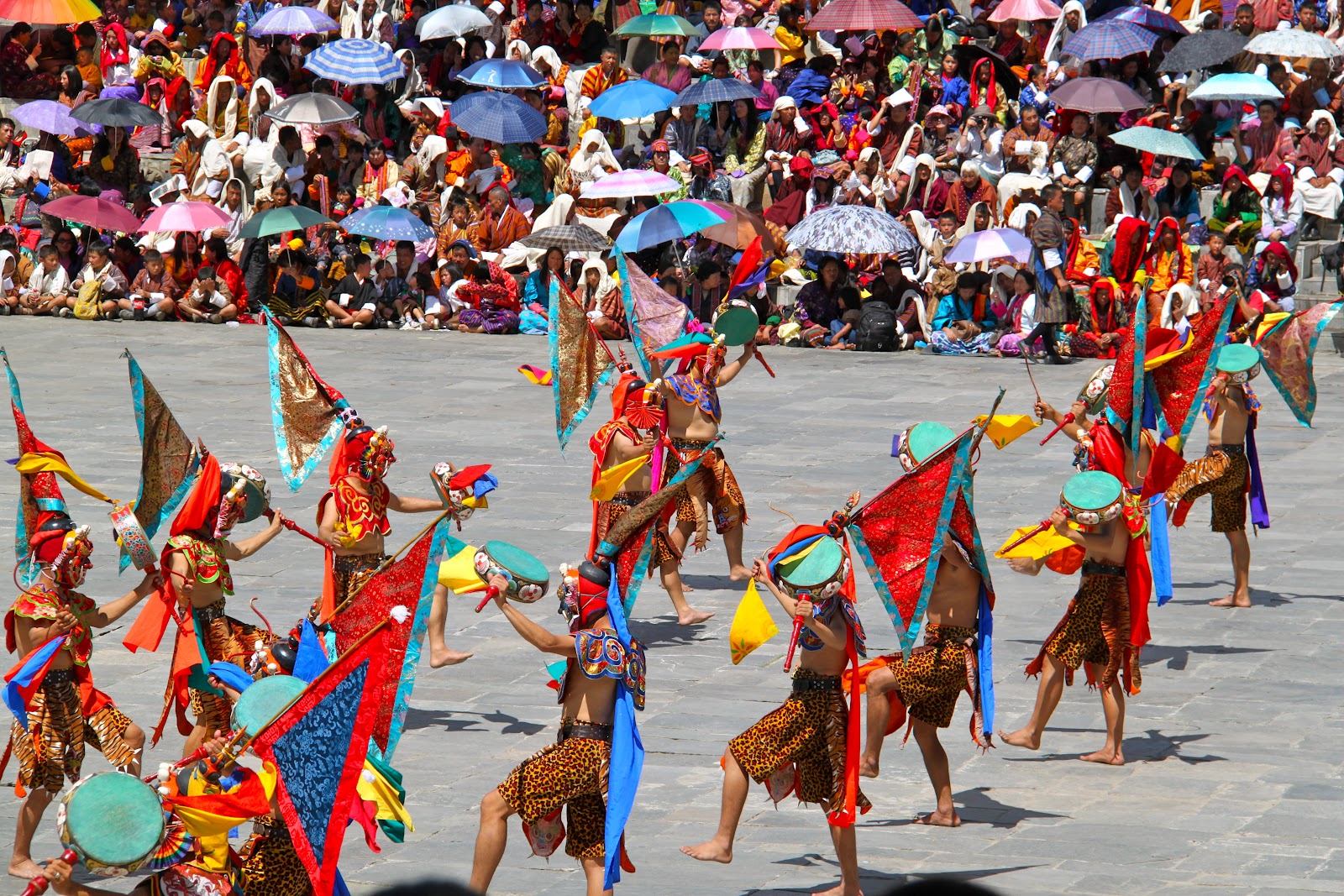
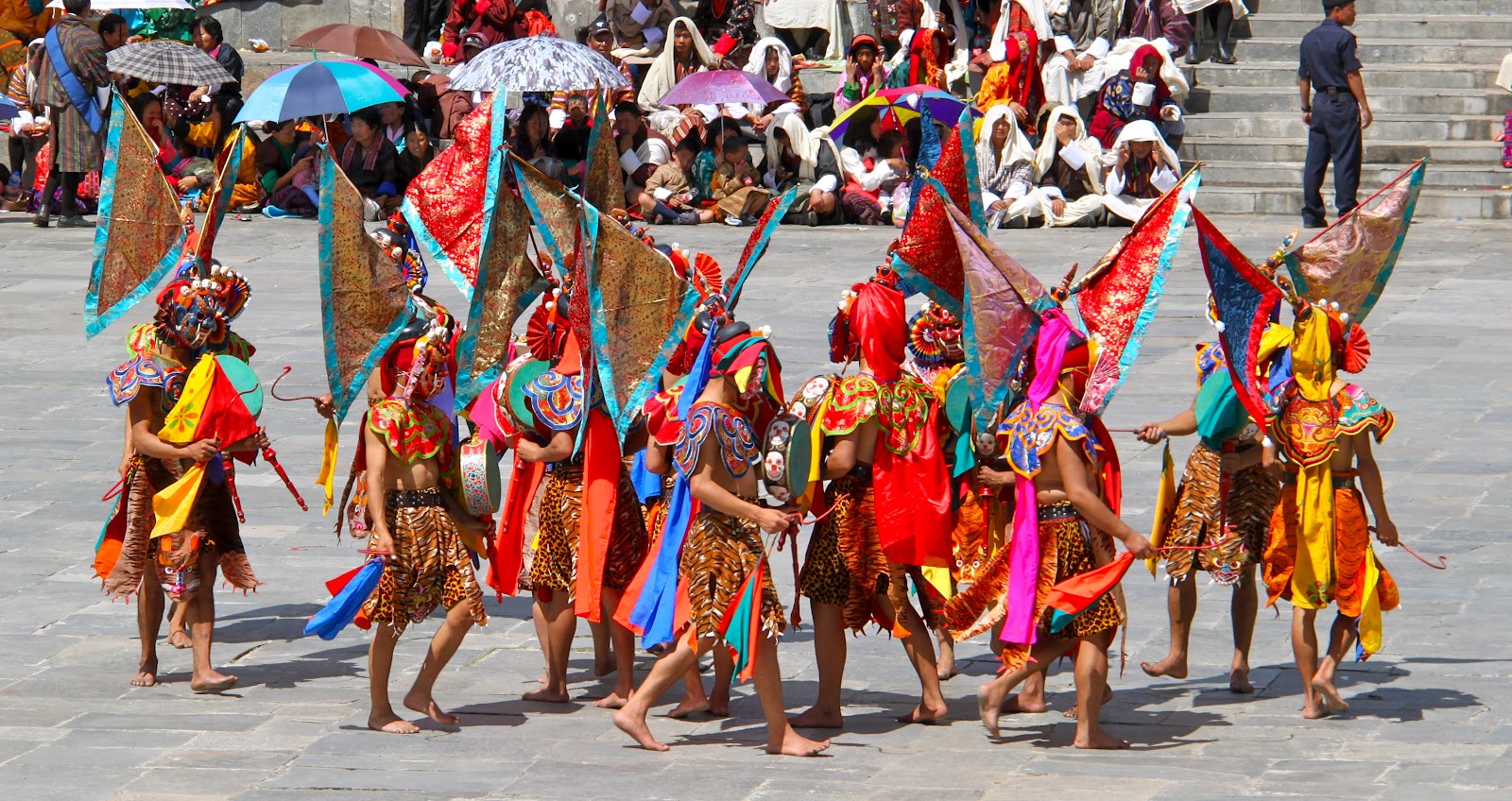
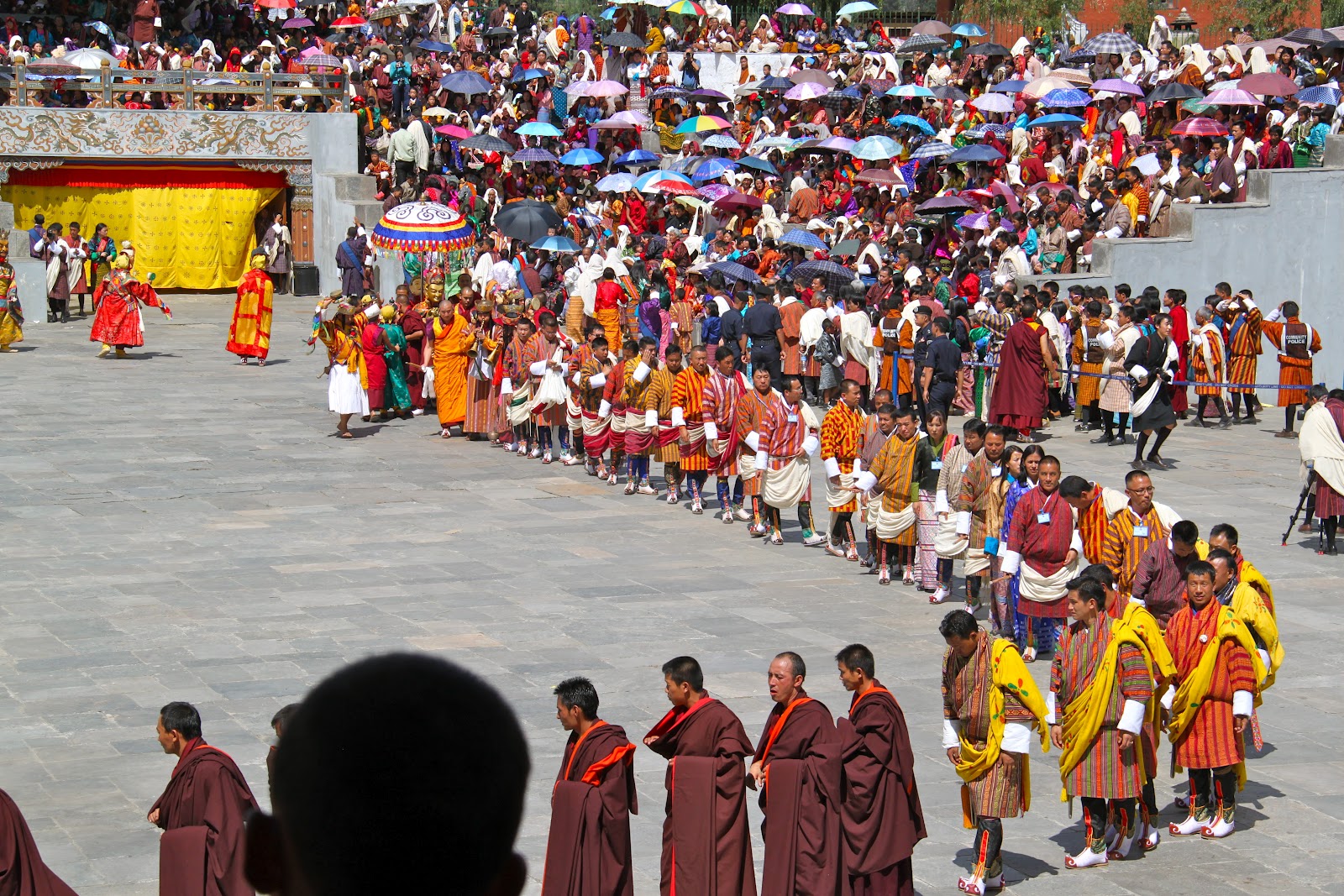
The festival is bright and colorful.  Even watching the locals watch the festival is very interesting. 
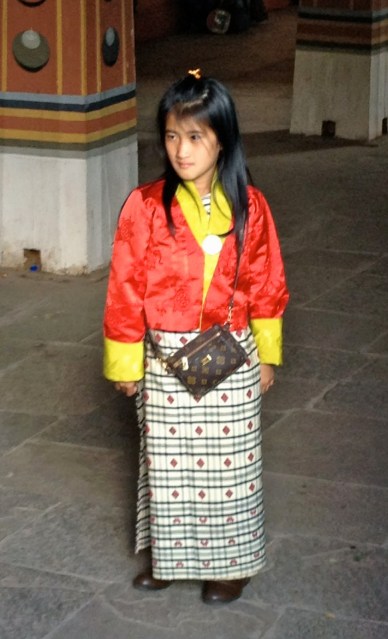
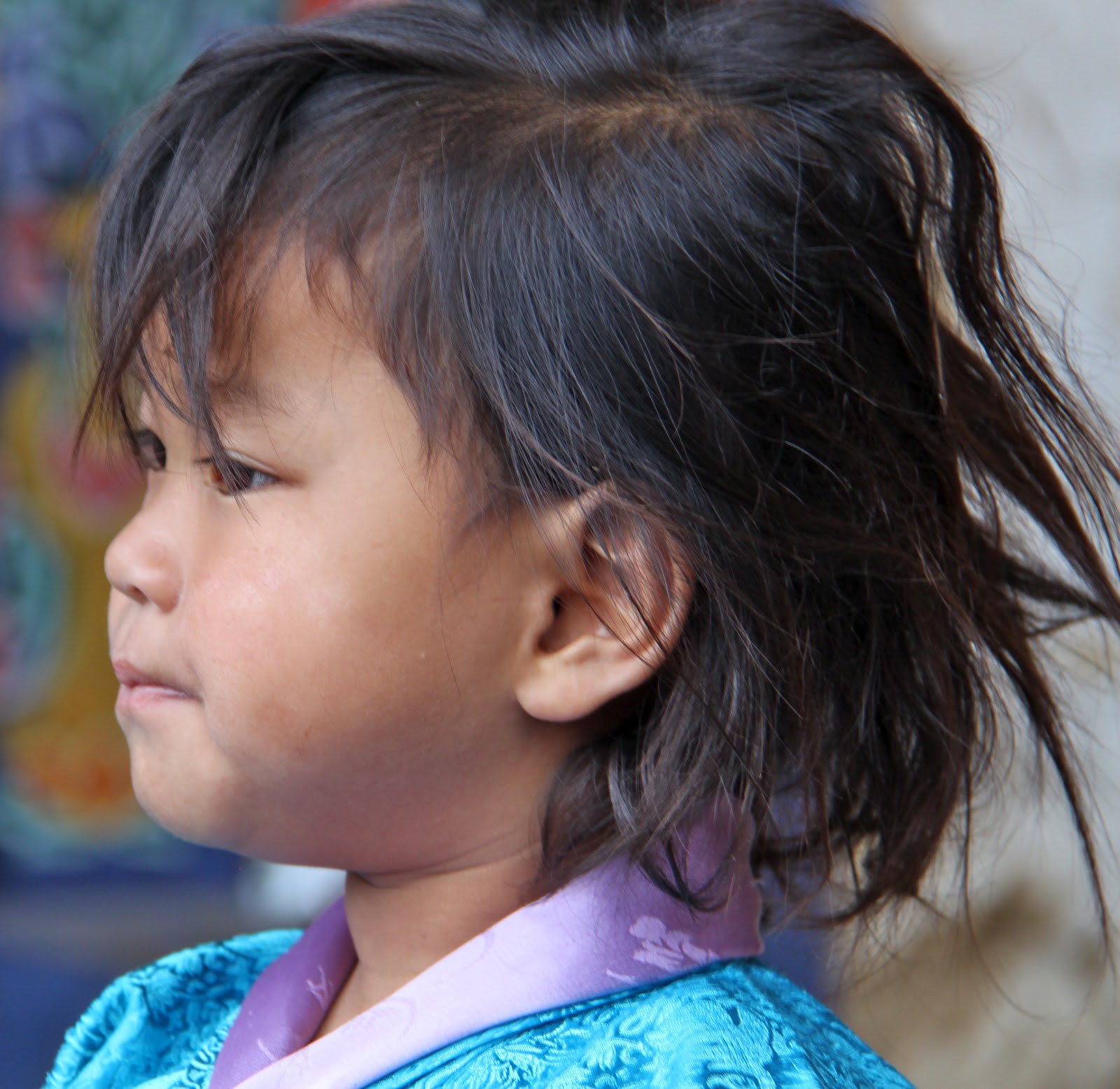
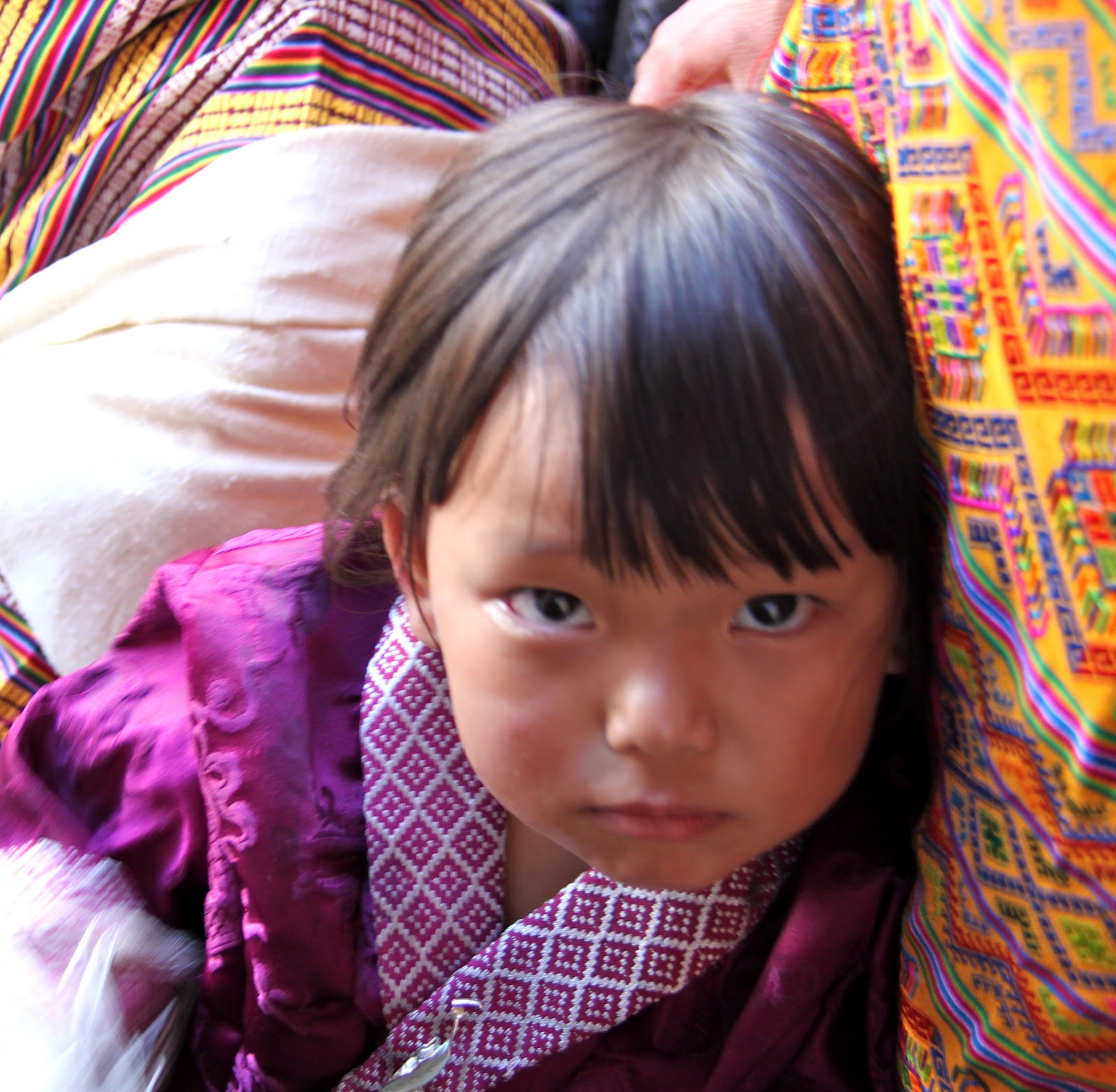
Cute girl-Love the purse!

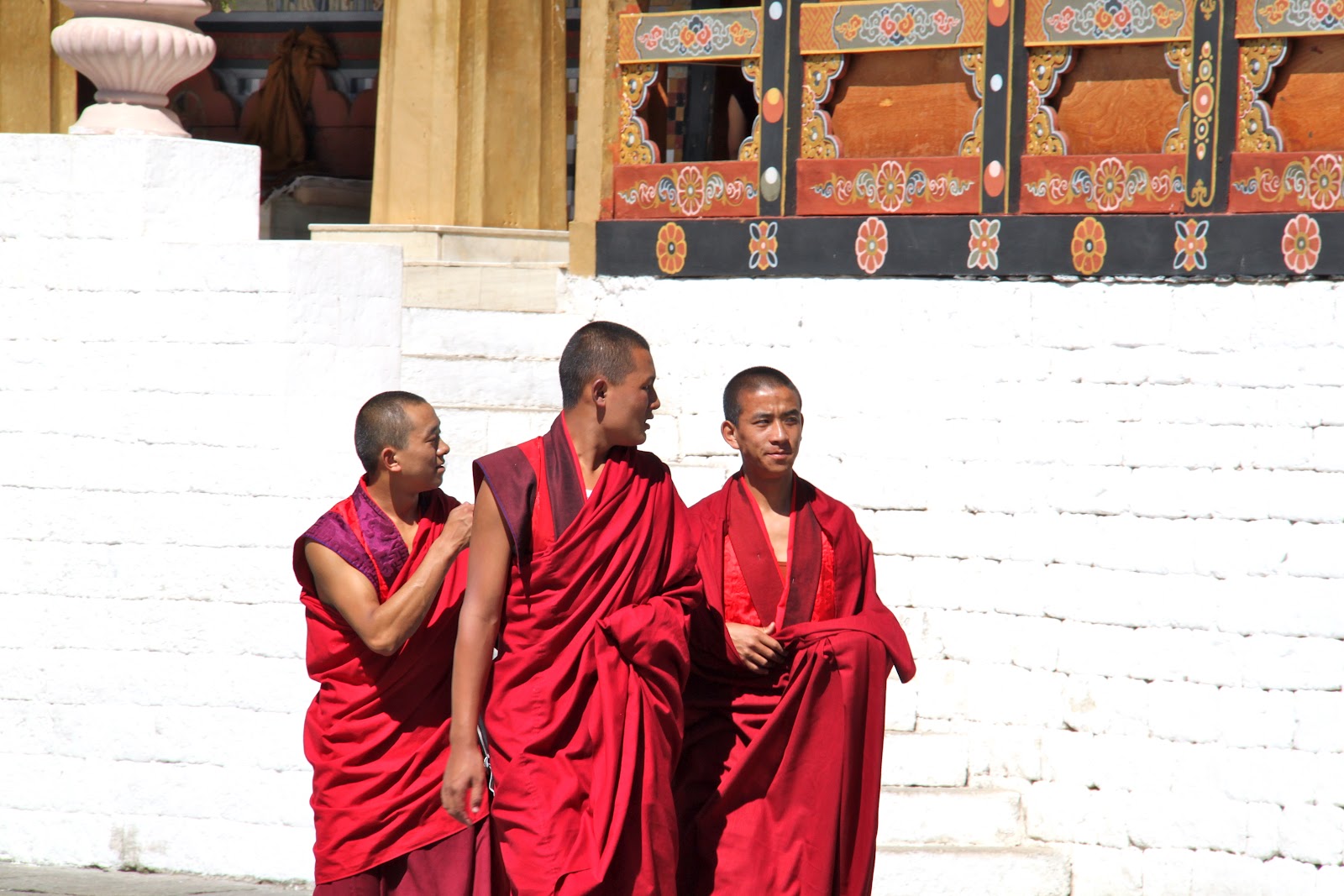
All of the monks come to watch and perform

Lots of families

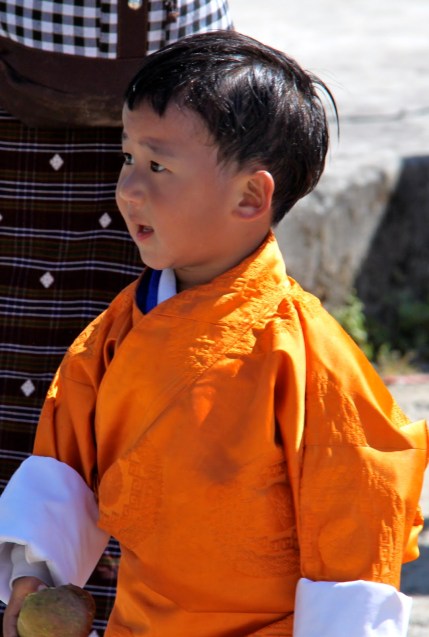
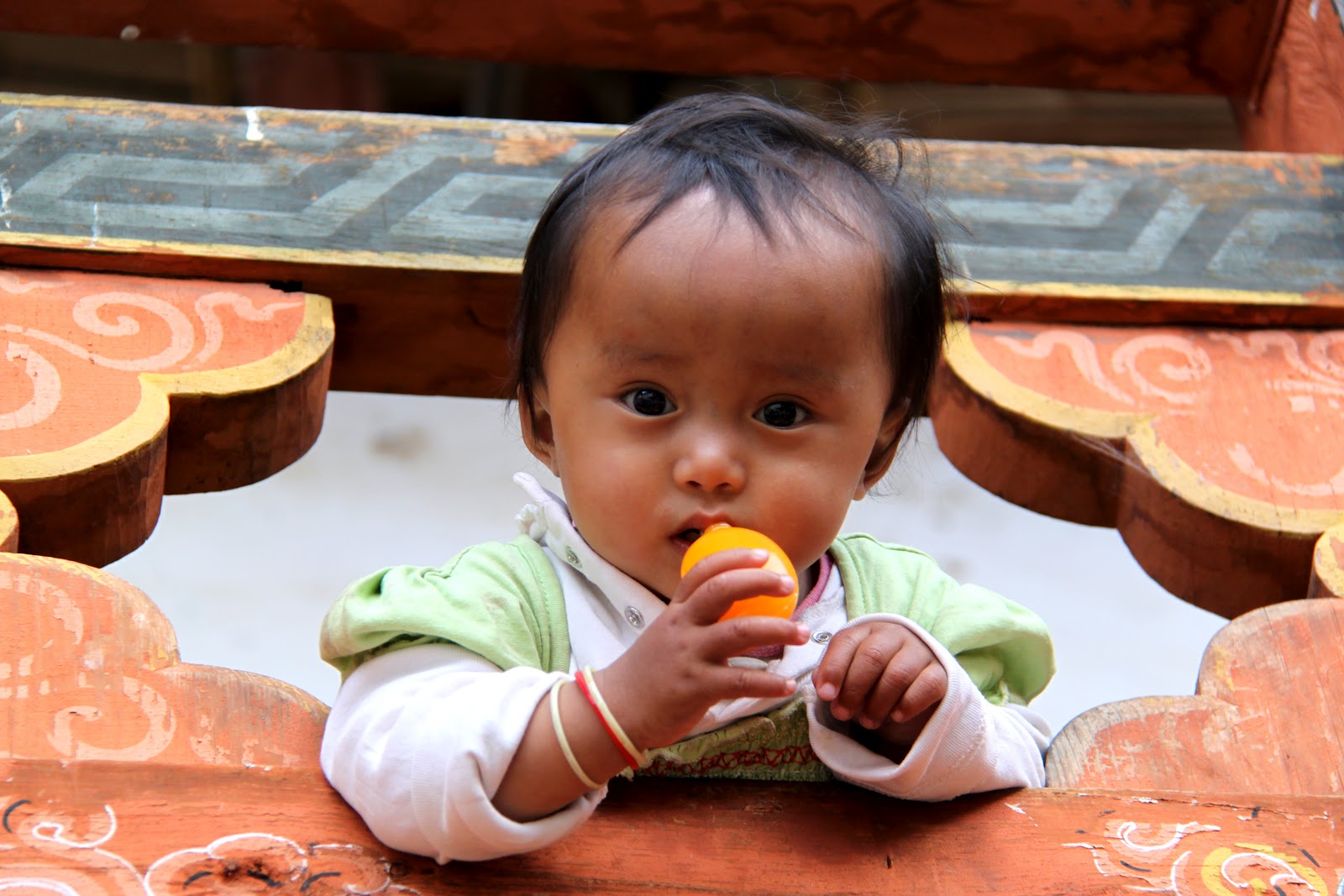
Cute kid in traditional Gho

Very Colorful
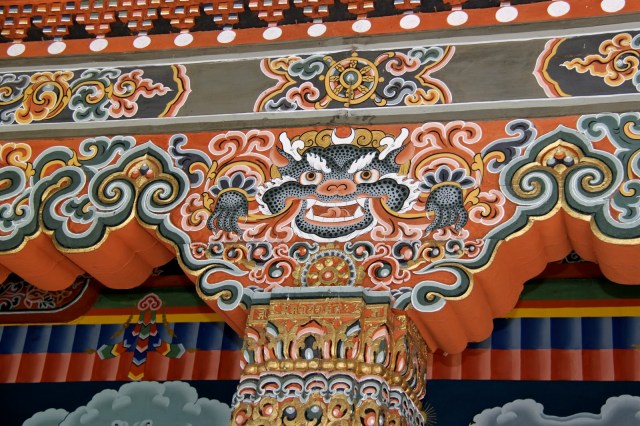
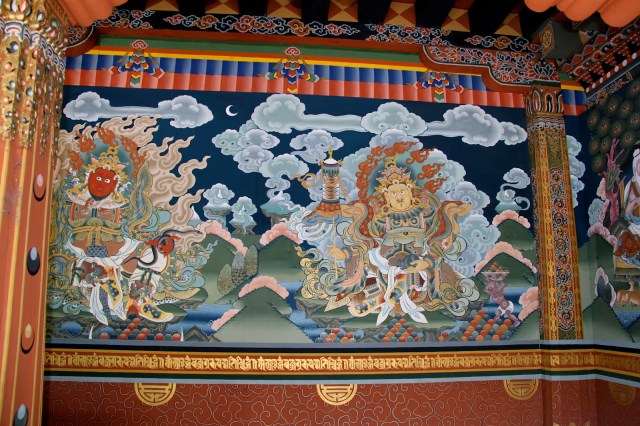
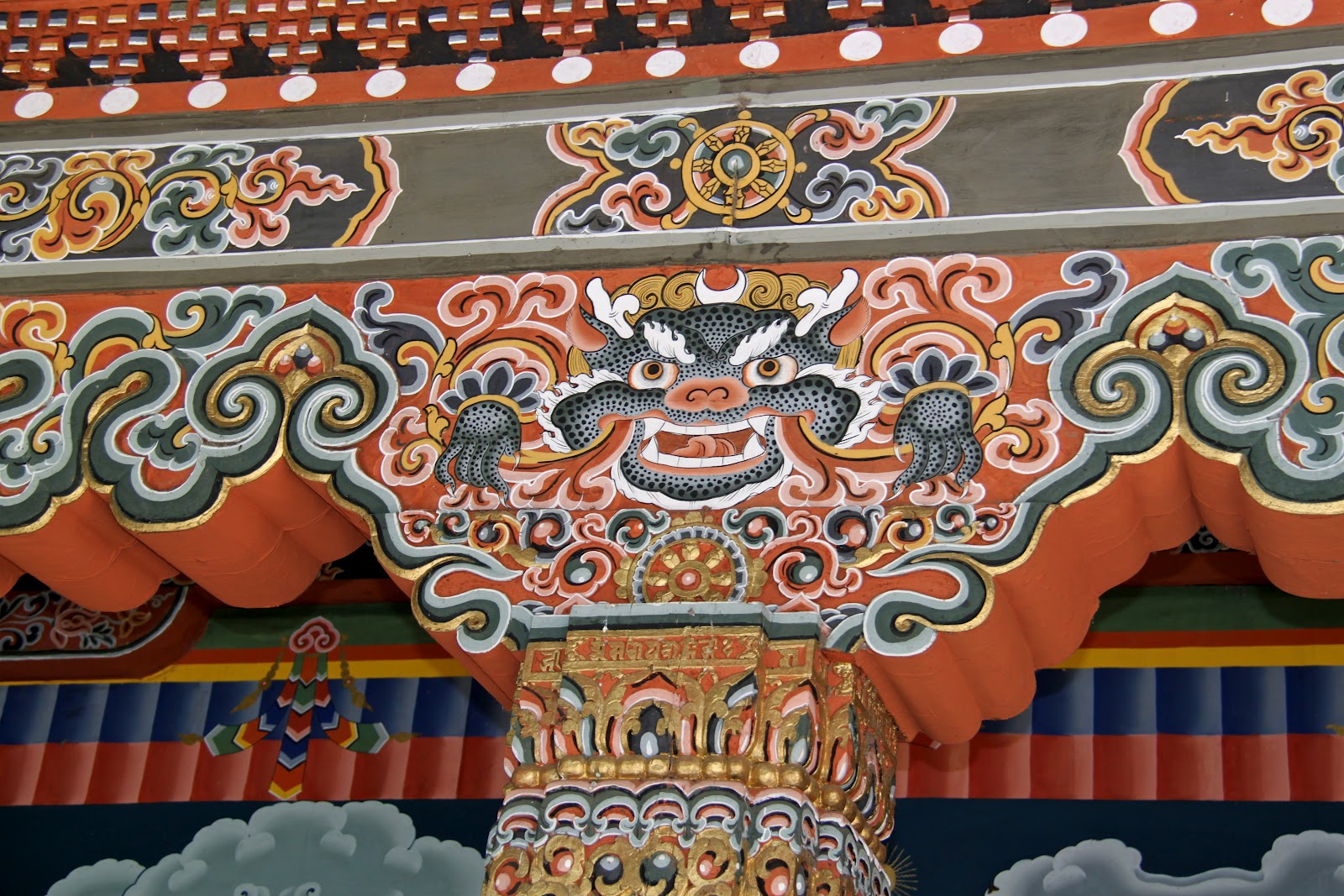
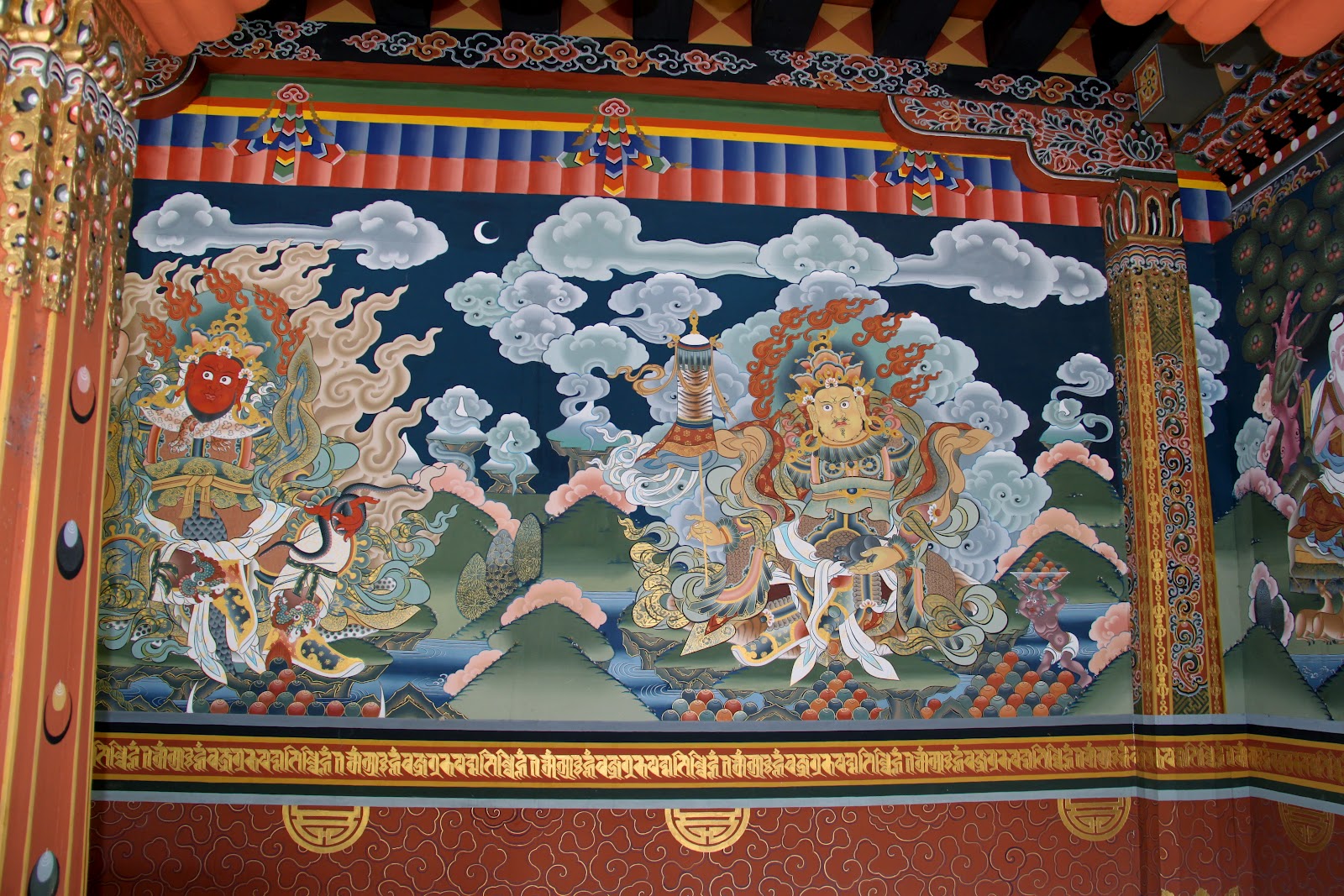
Painting on the Dzong

Frescos going into the Monastery

Love the bright colors


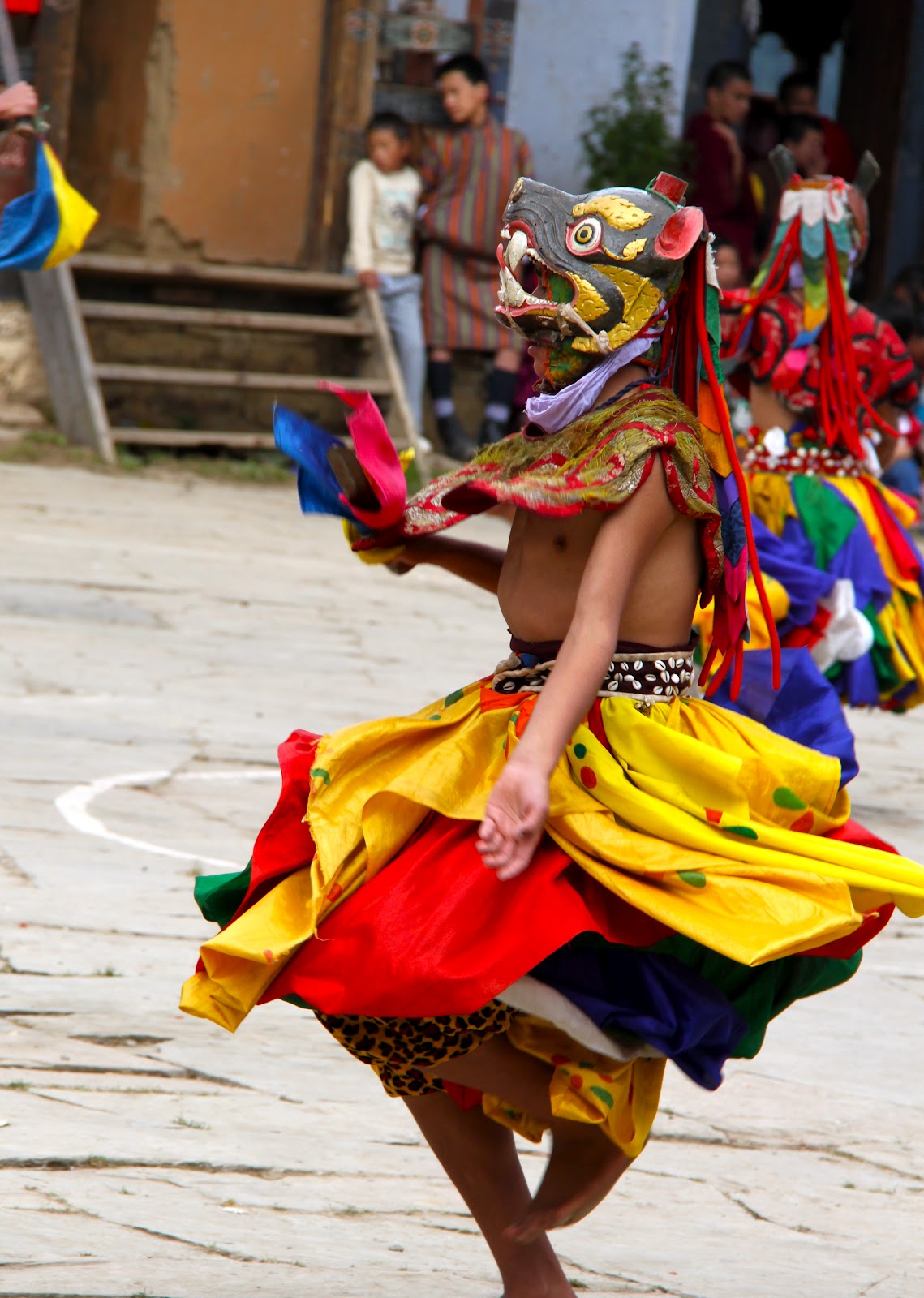
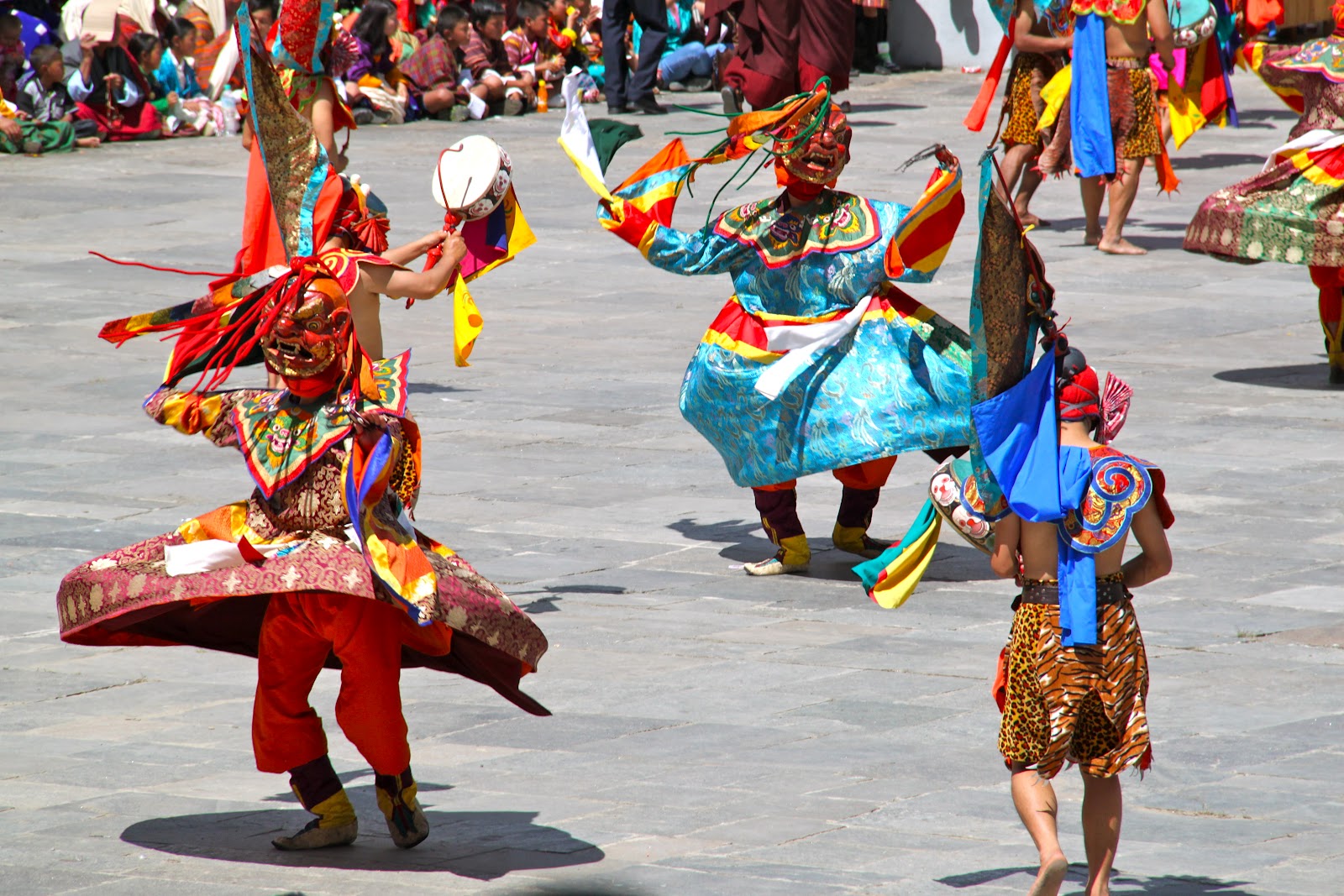
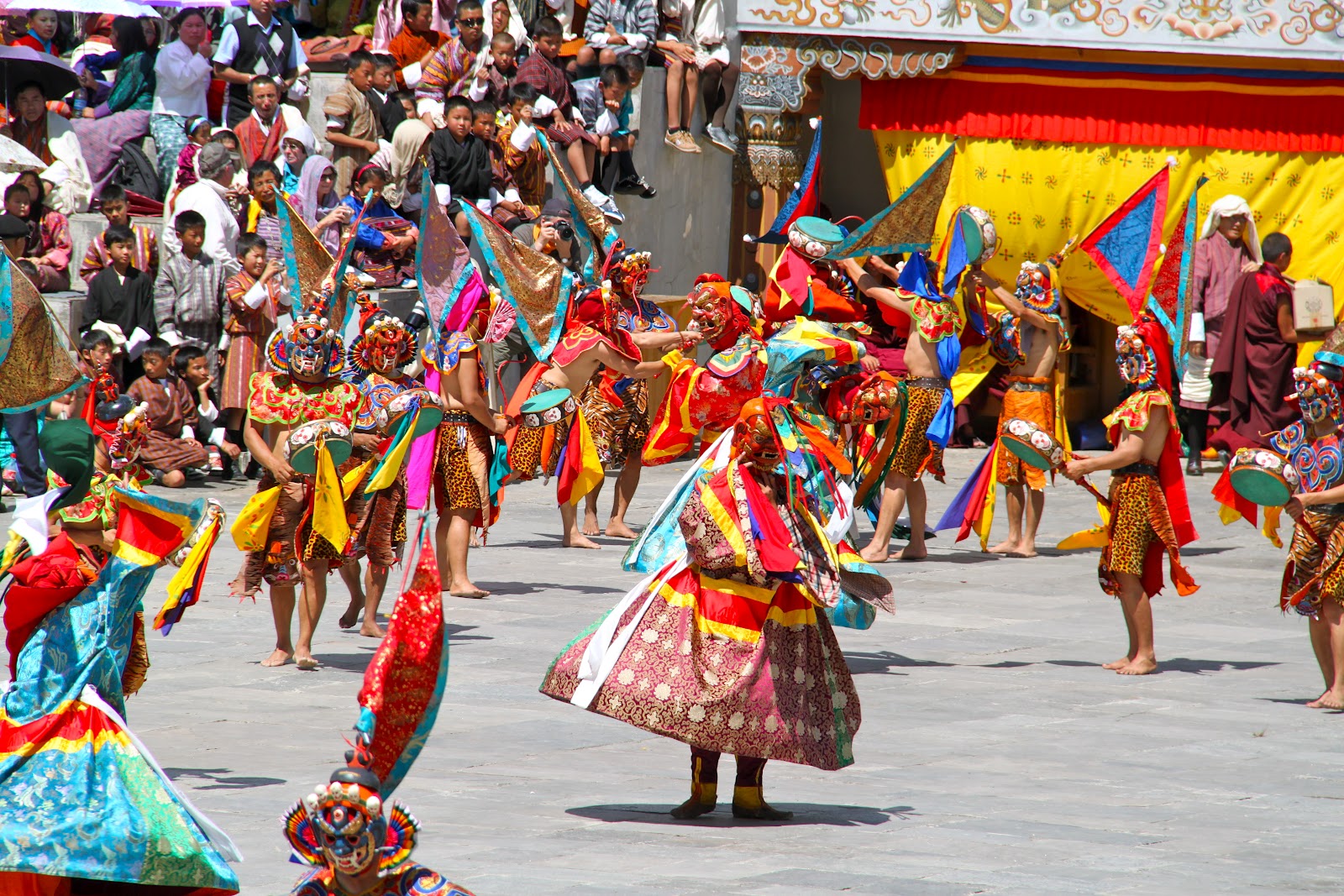
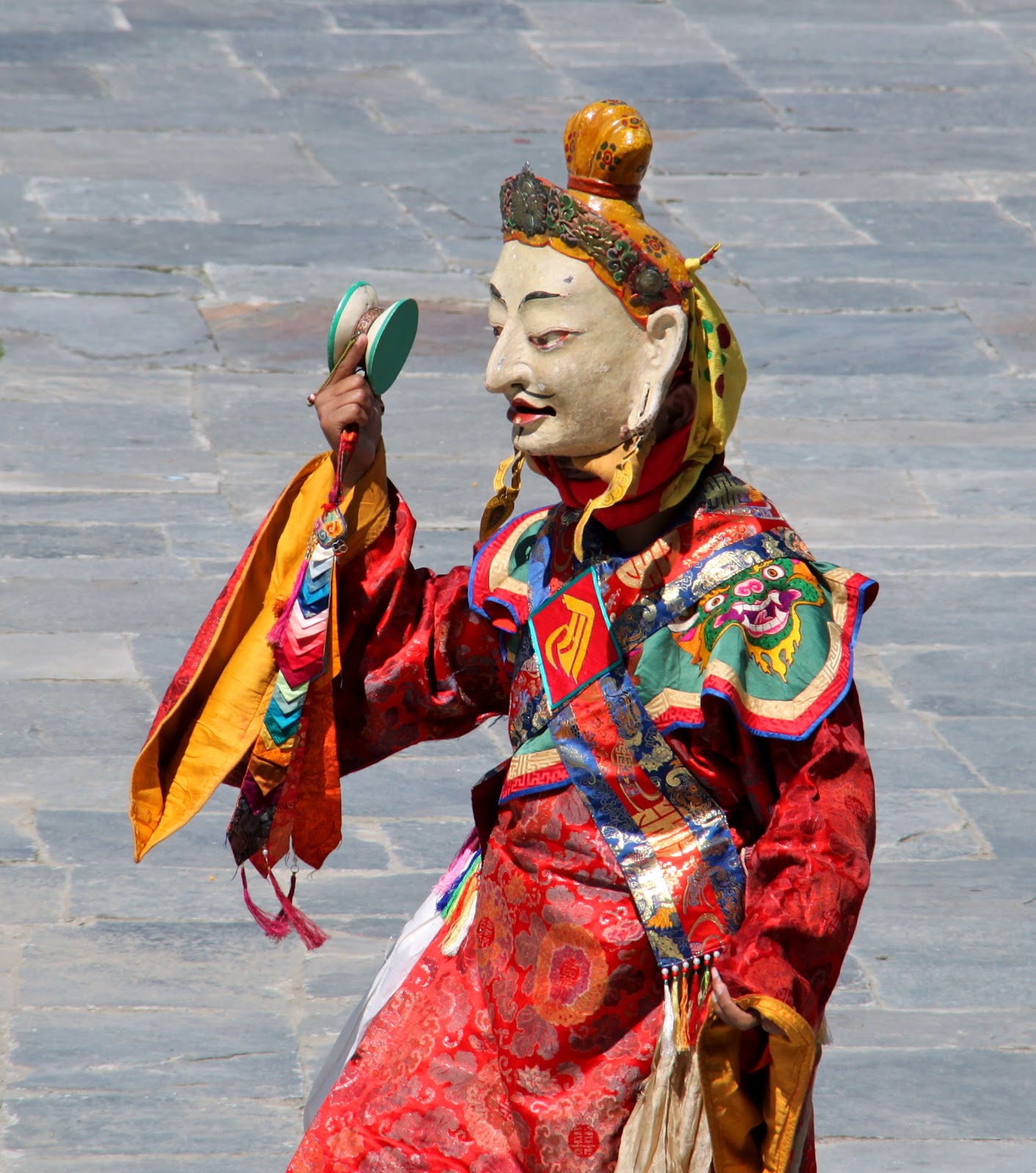
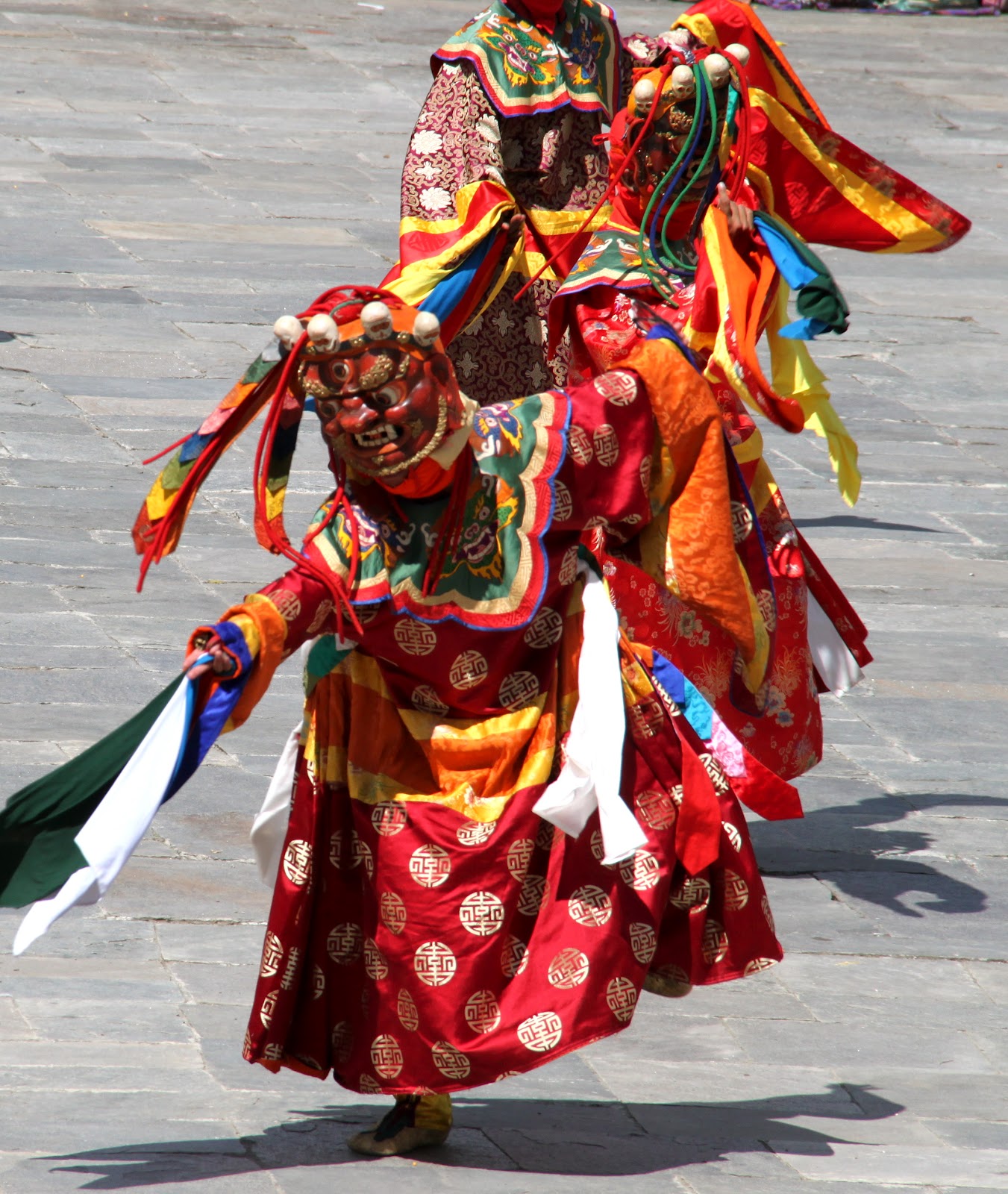
Dancers perform and musicians play drums and cymbals. 


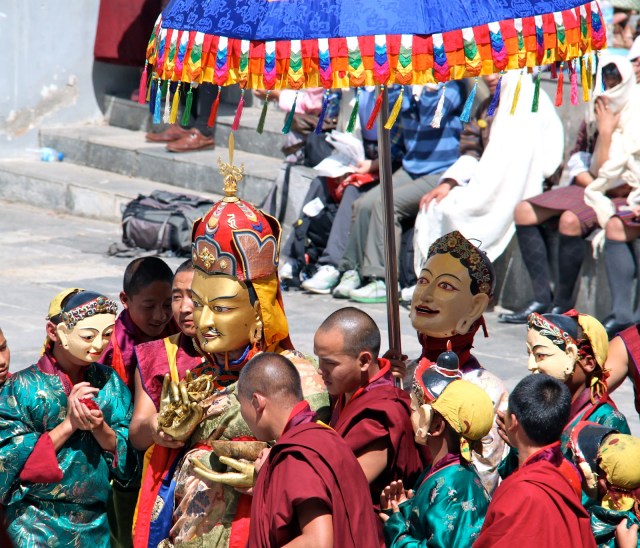
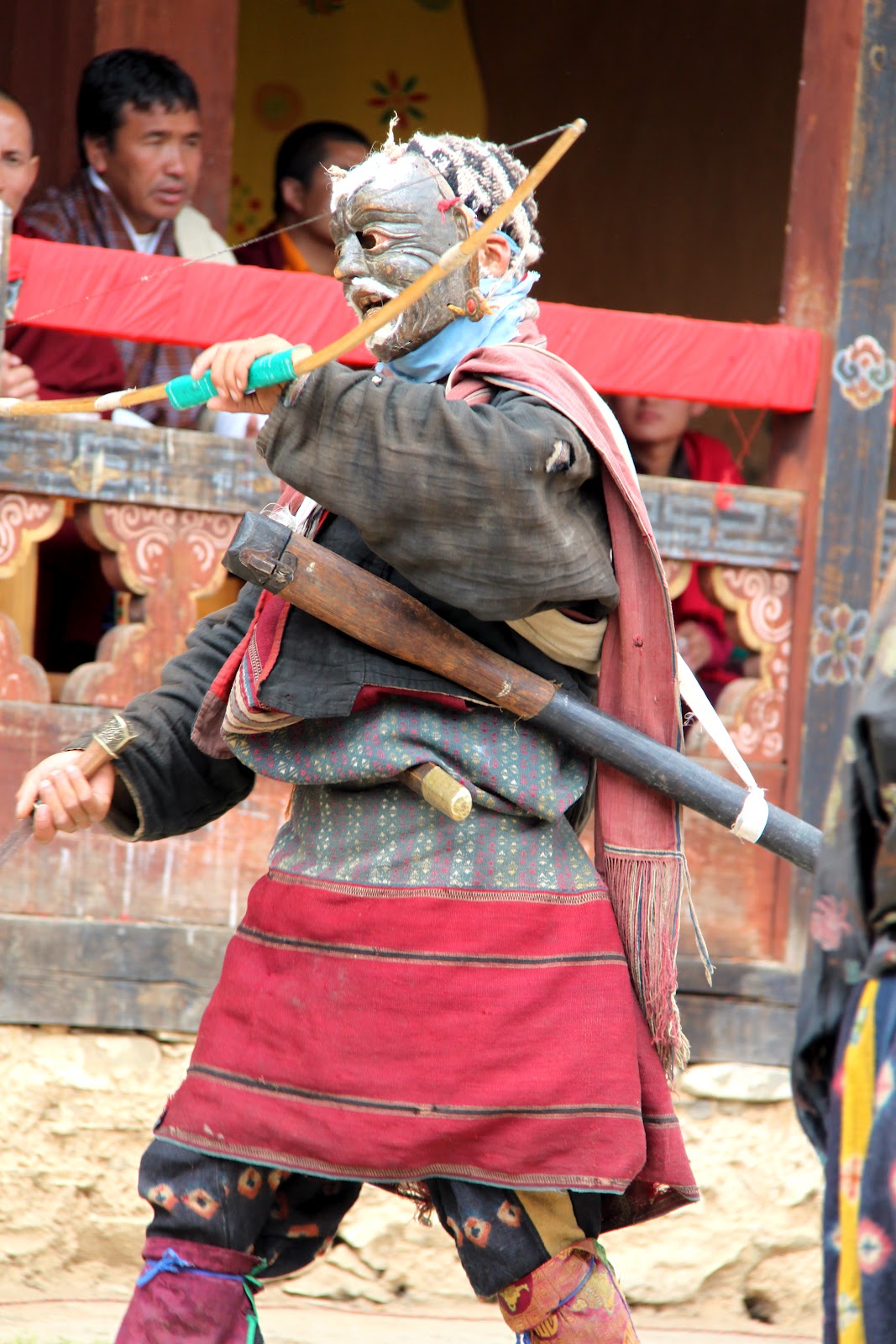
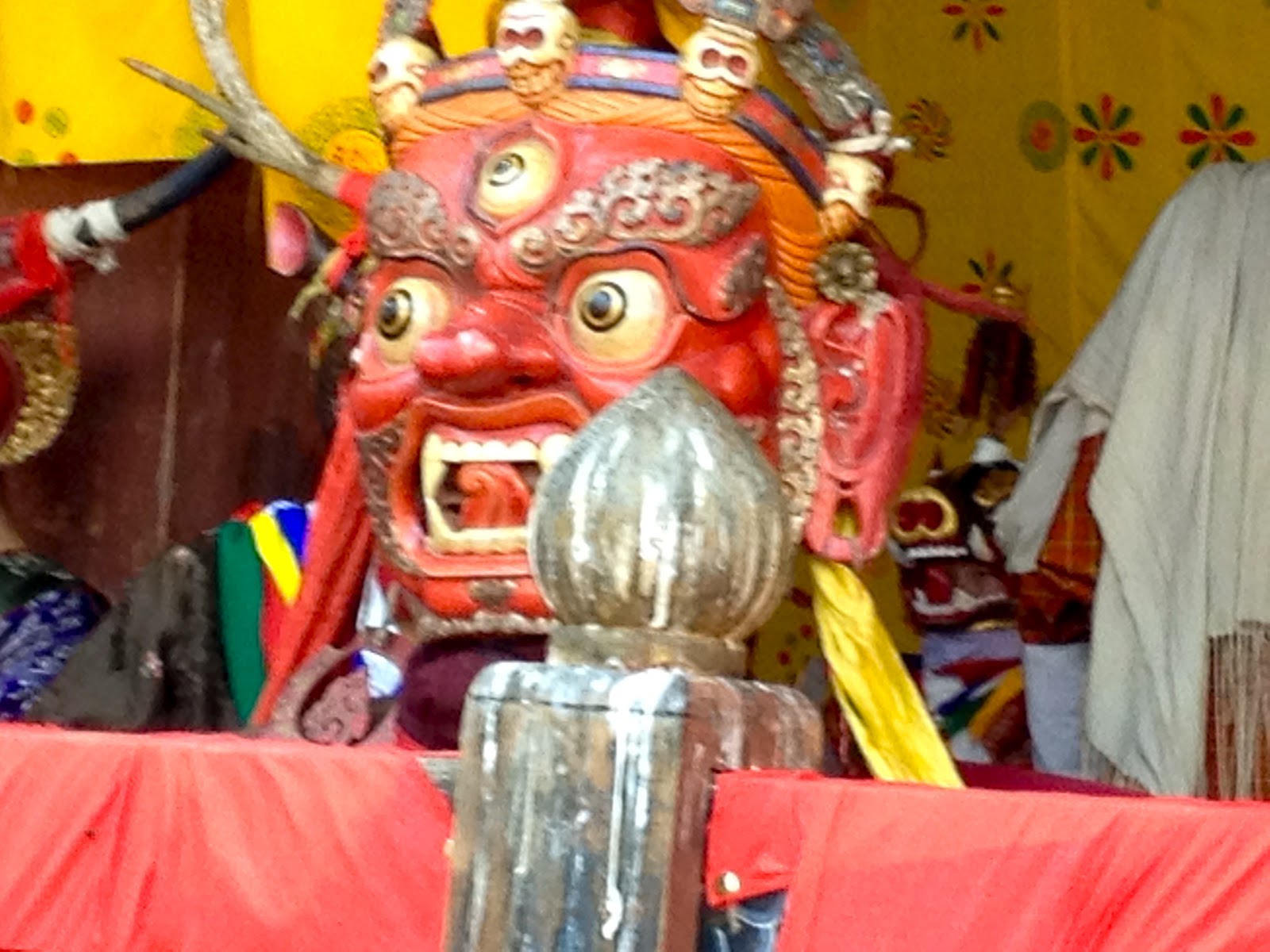
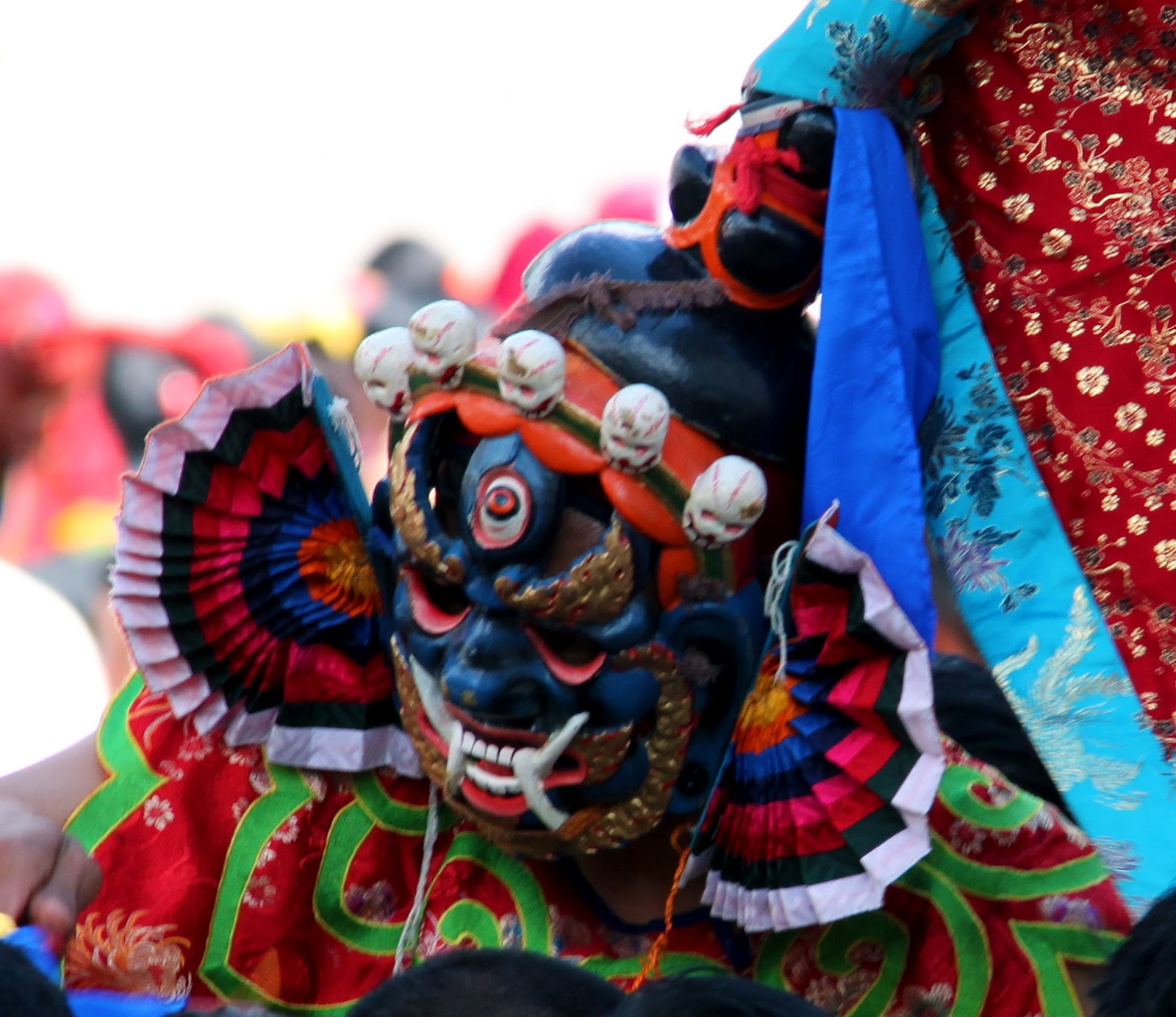
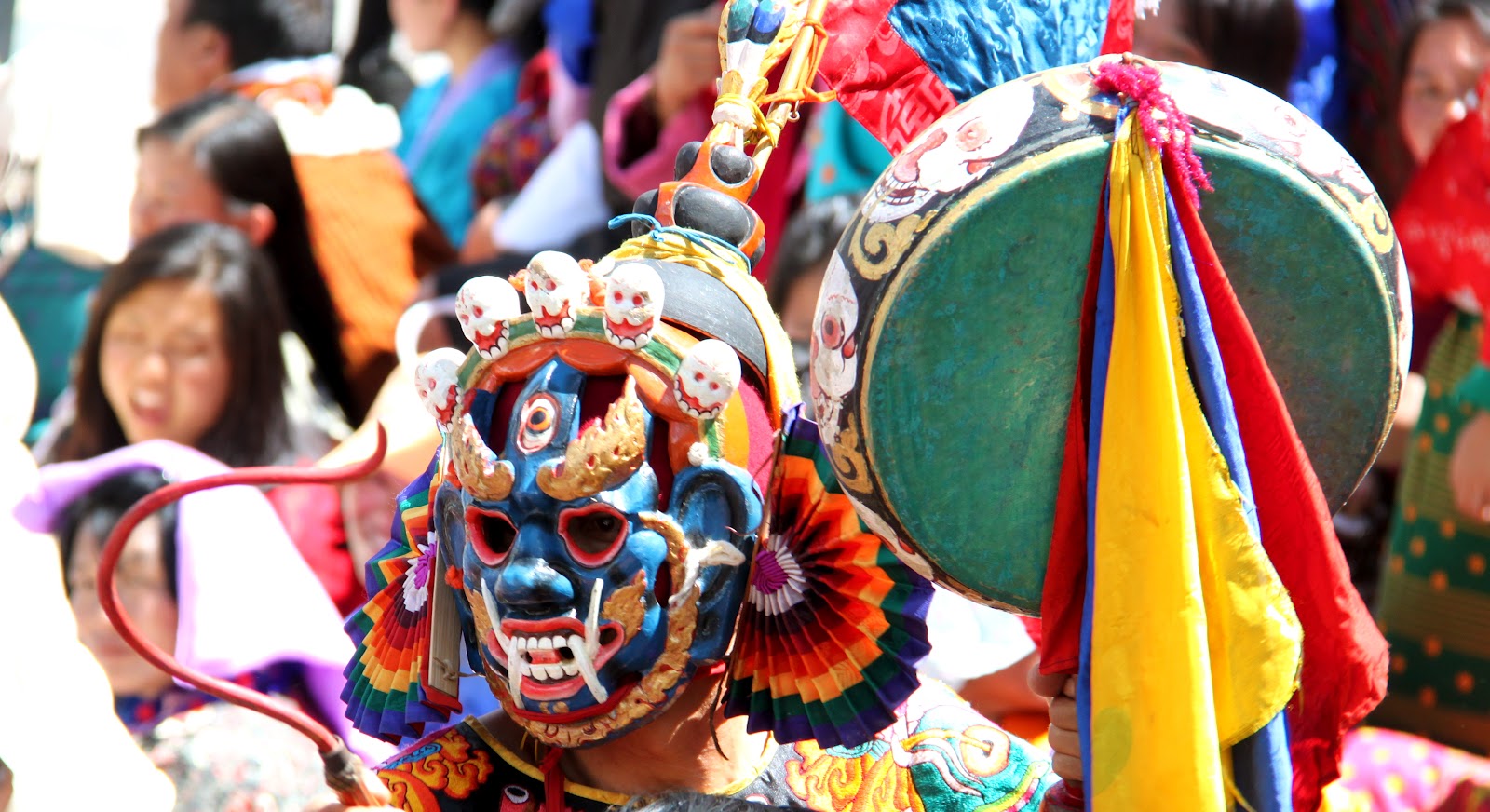
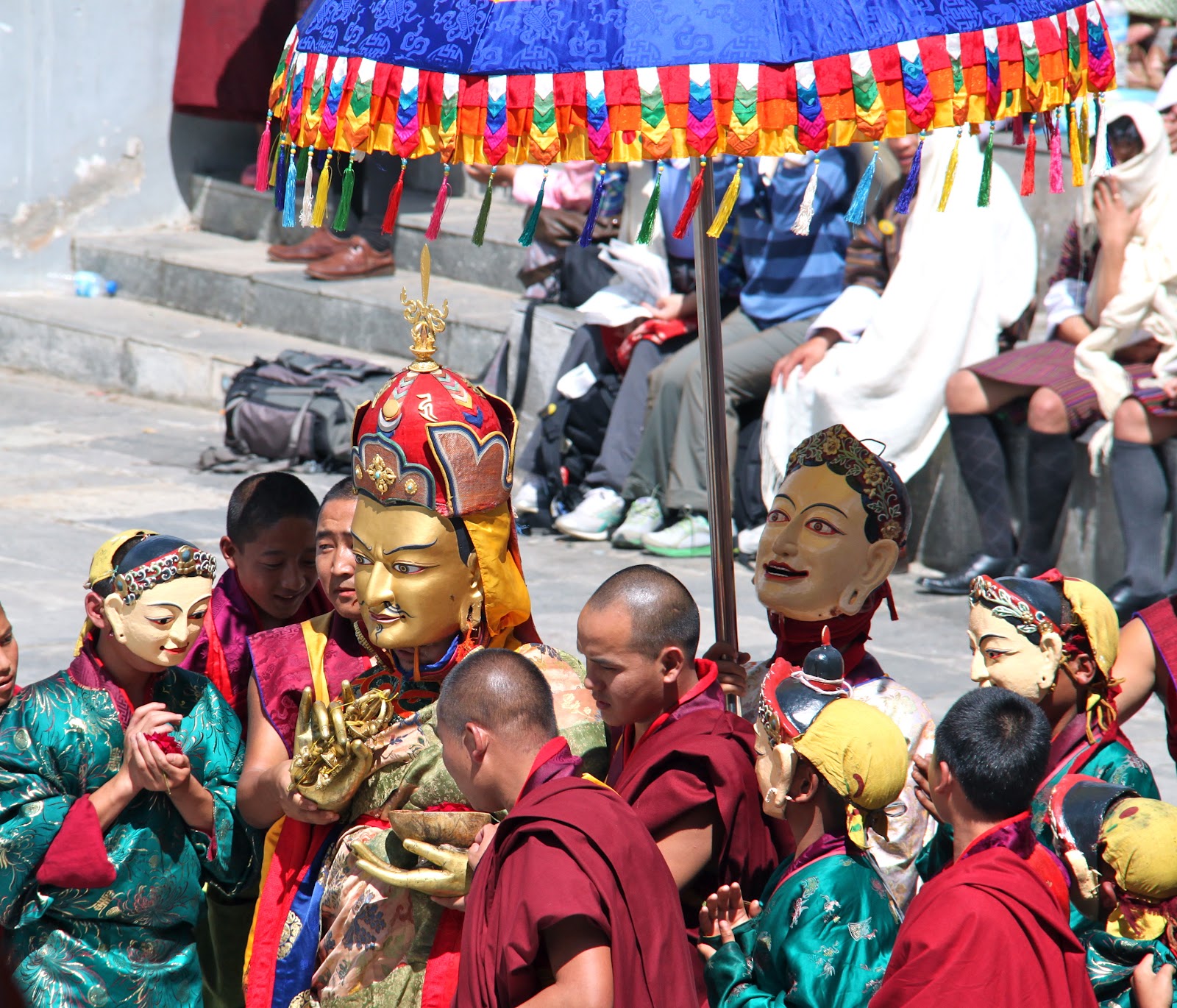
Scary masks are worn but represent friendly Gods that protect the people from evil spirits.  There is a tiger dance and a stag dance and a black hat dance and a 2 hour dance.  There is a dance where wild drummers use their drum sticks to touch the heads of the audience to bring them good karma.  The families bring their lunch and stay all day.

                                                                 Video at the festival

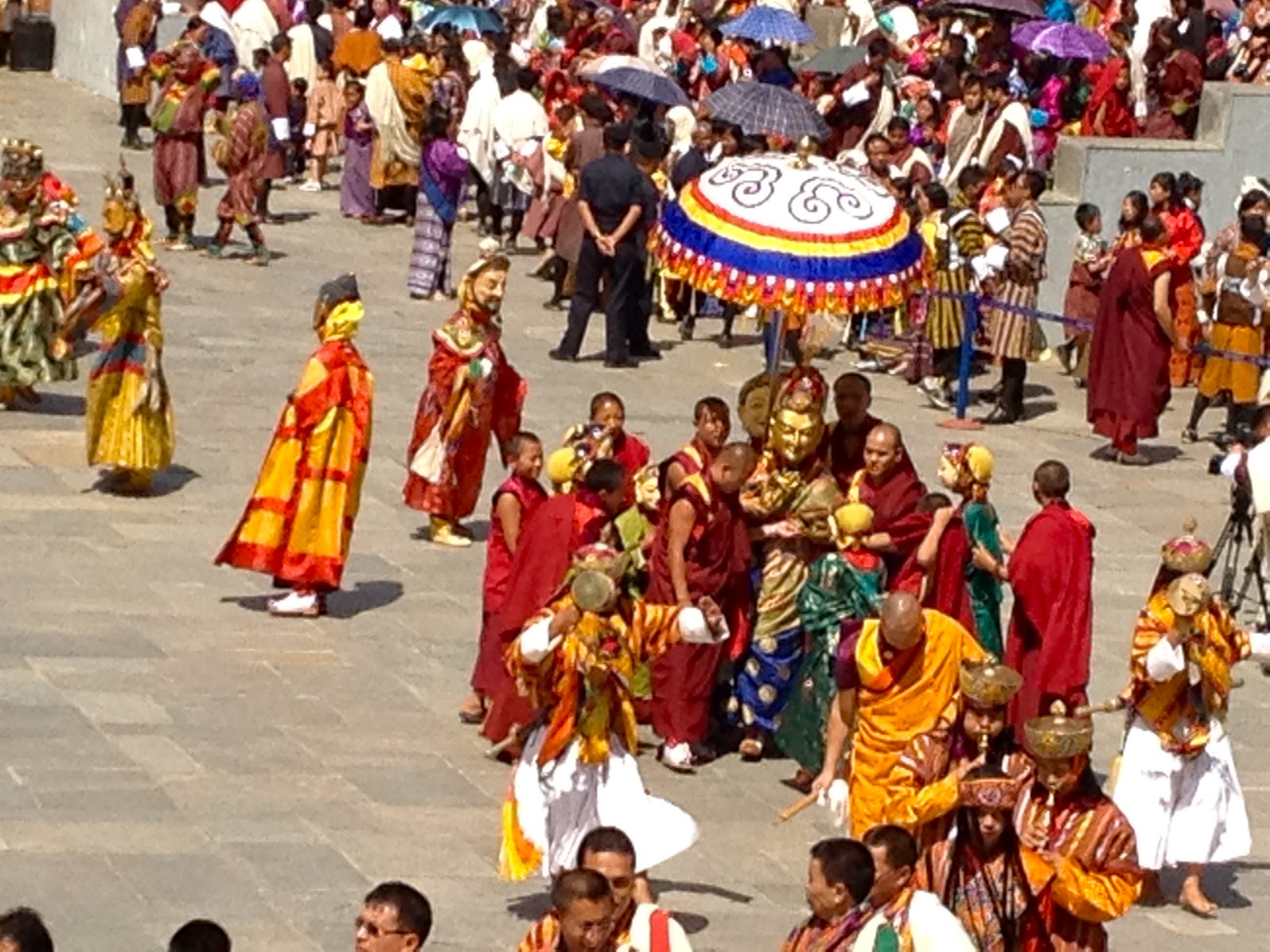
One dance and procession leads the 5threincarnation of the Guru Rimpoche into the square and up the stairs next to us in front of the tent with all of the monks.  He is placed in a chair and the people begin lining up to be blessed by him.  They give him offerings of flowers and money and he blesses them with a blue string that they wear around their necks and he gives them some nuts or seeds to eat.
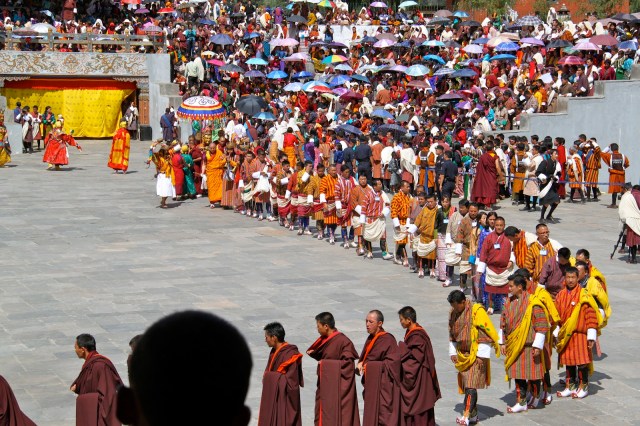
Procession

5th Reincarnation of Guru Rinpoche

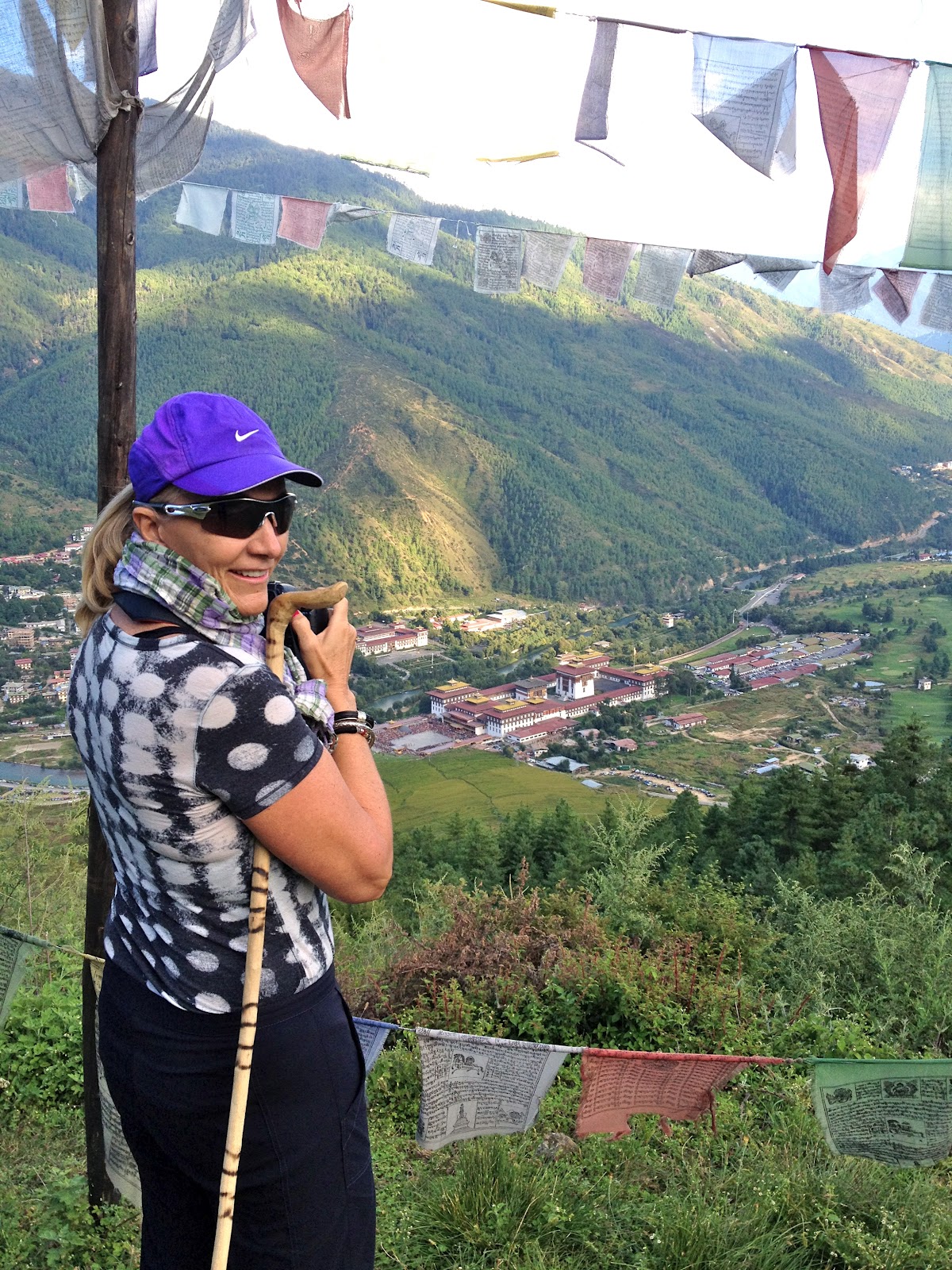
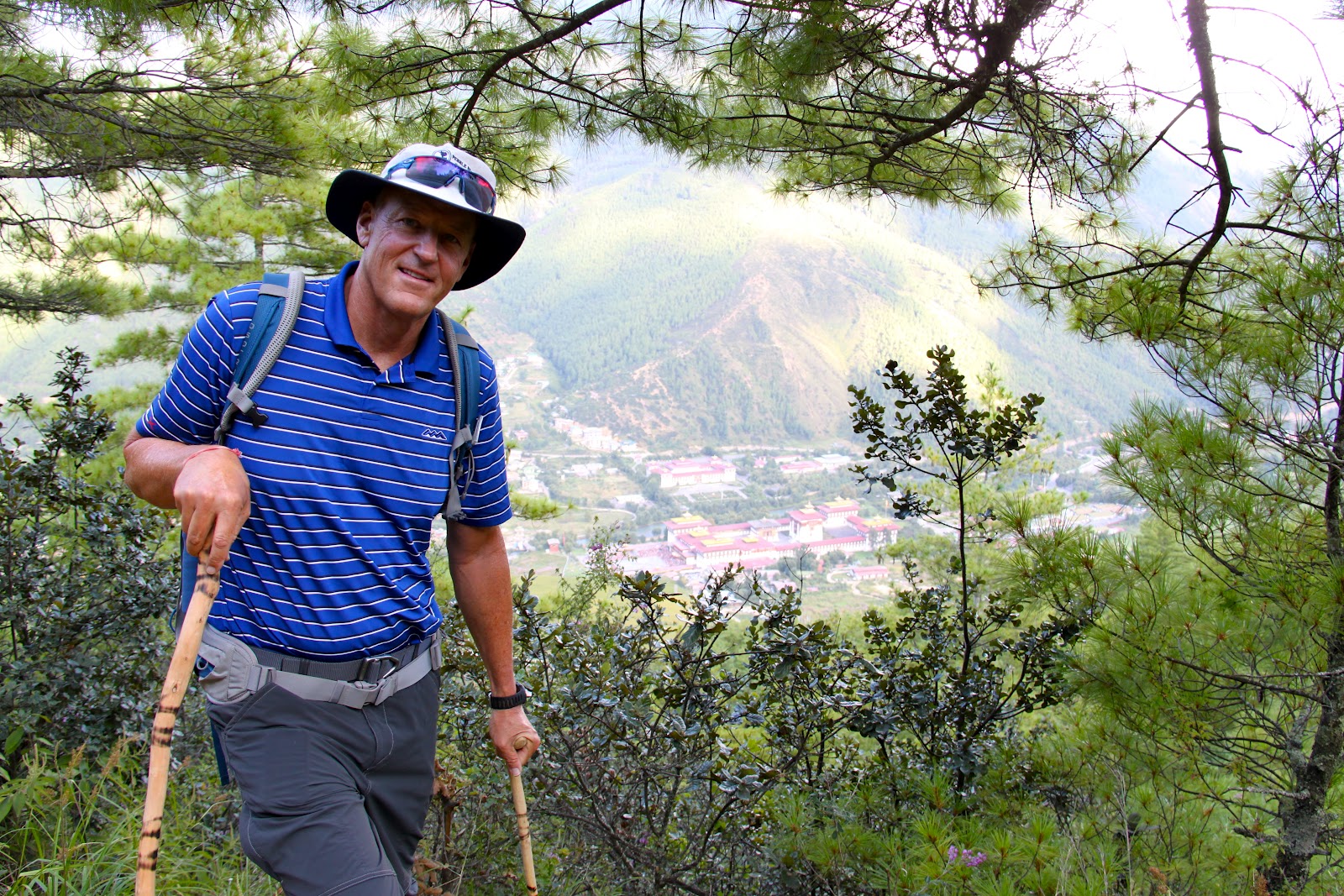
In the afternoon we went for a hike to a 17thcentury temple high on the mountainside above Timphu.  We drive up to the beginning of the hike and it is a fairly flat walk of about 3 kilometers but we are sucking air at 9000 feet and the uphill portions of the hike practically bring us to our knees.  Hopefully we will acclimate soon. 
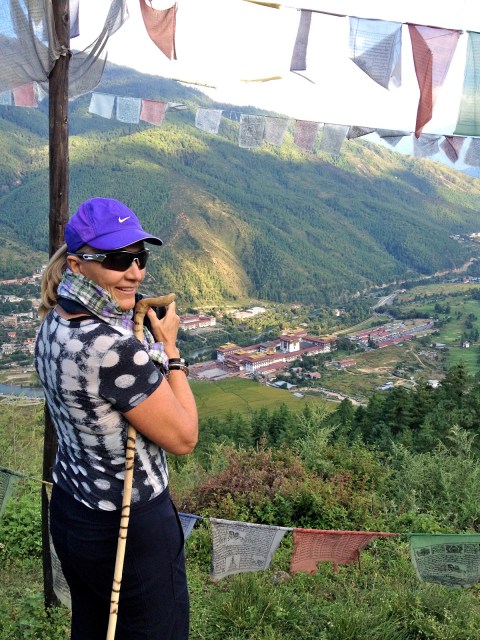
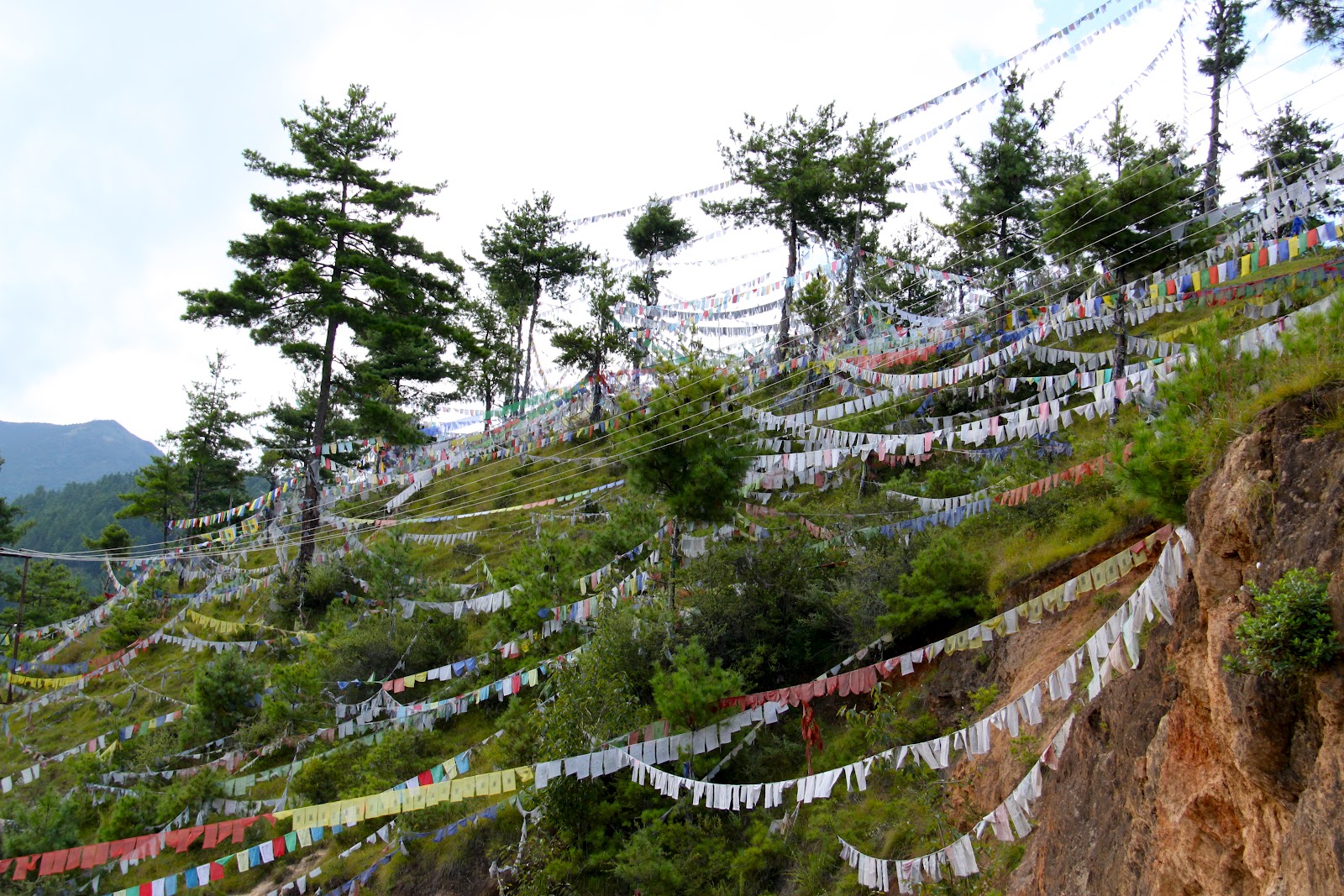
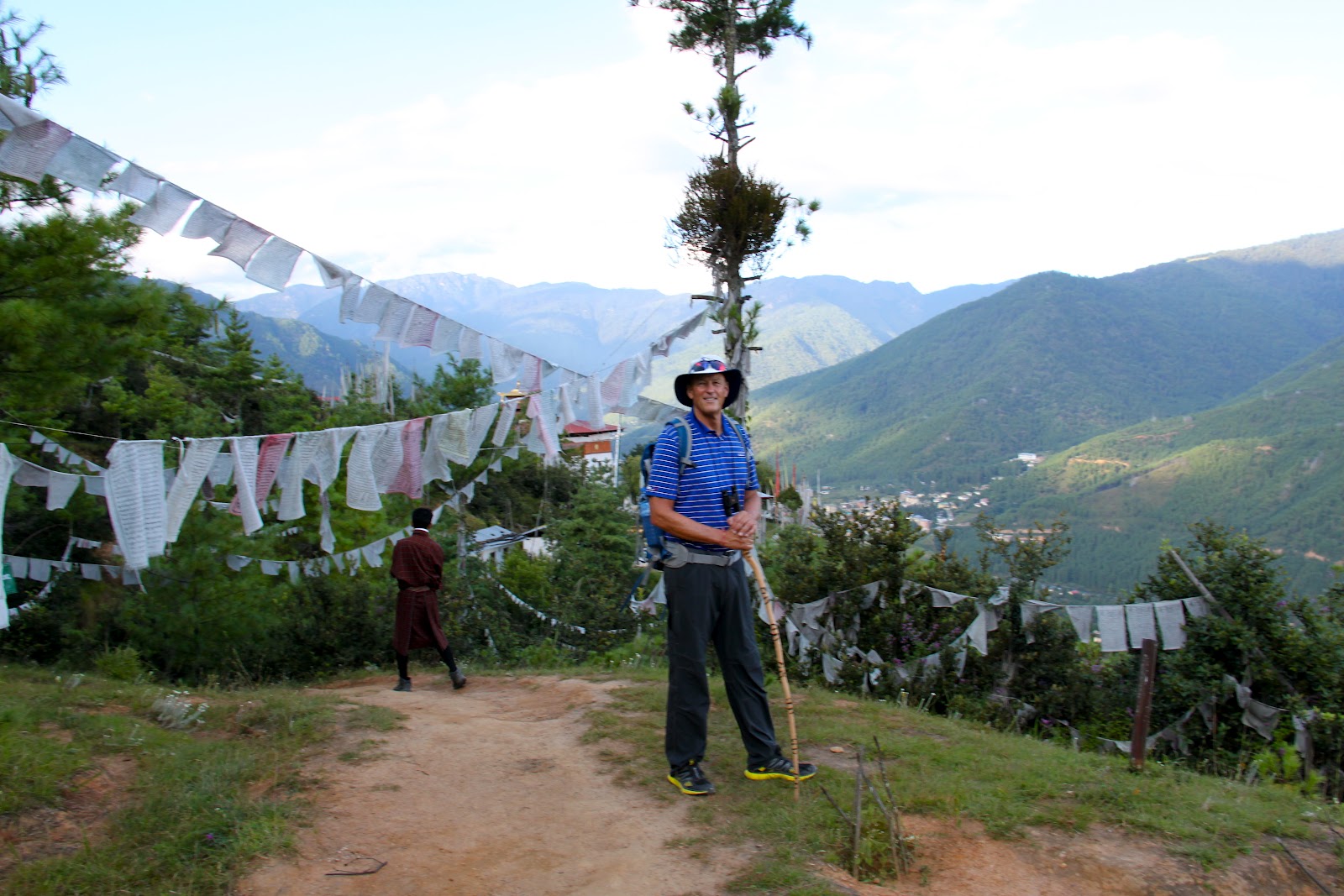
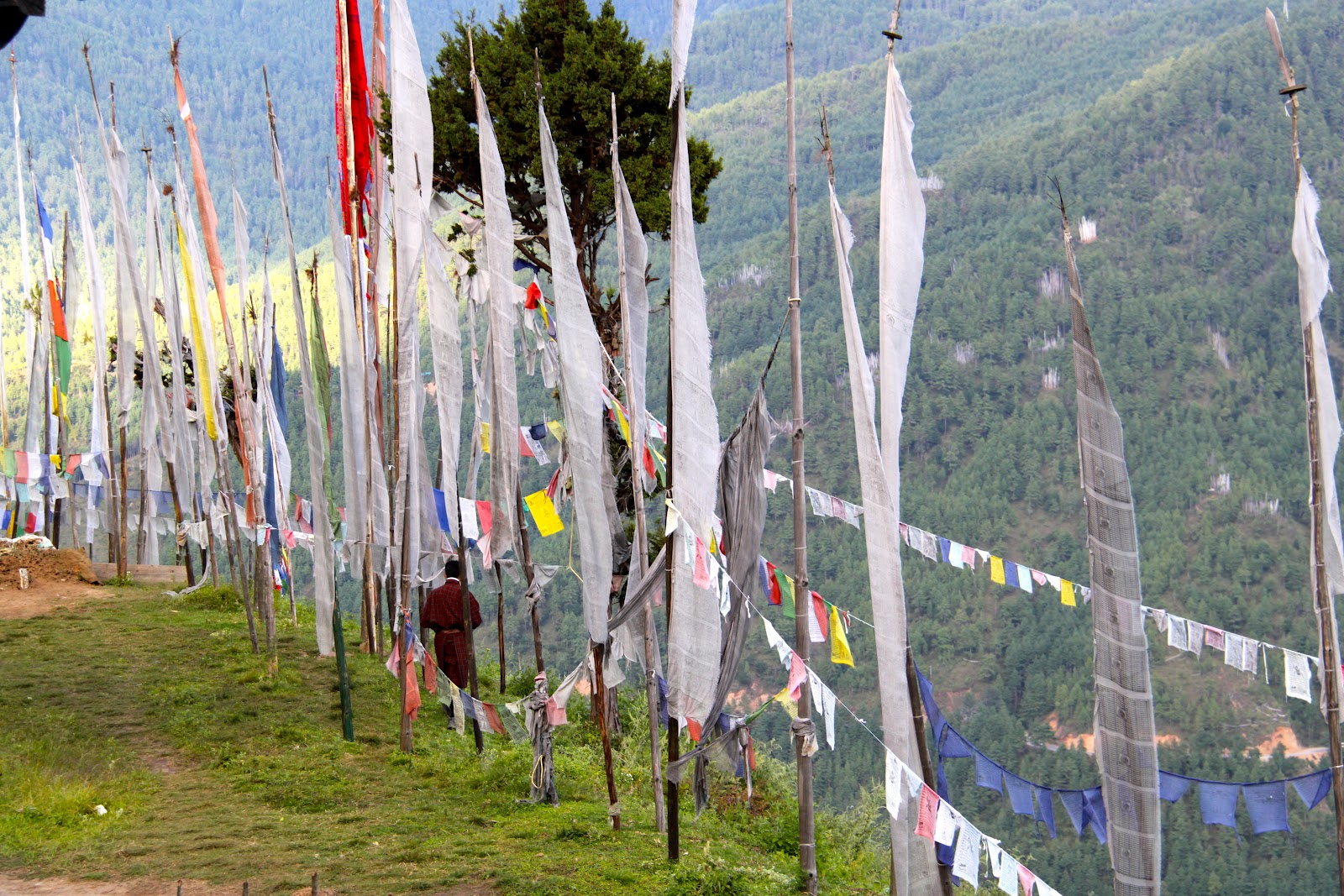
Prayer flags everywhere and when wind blows the prayer is sent

Every hike you go on in the mountains leads you to a temple or monastery

Monastery with prayer wheel at the end of our hike

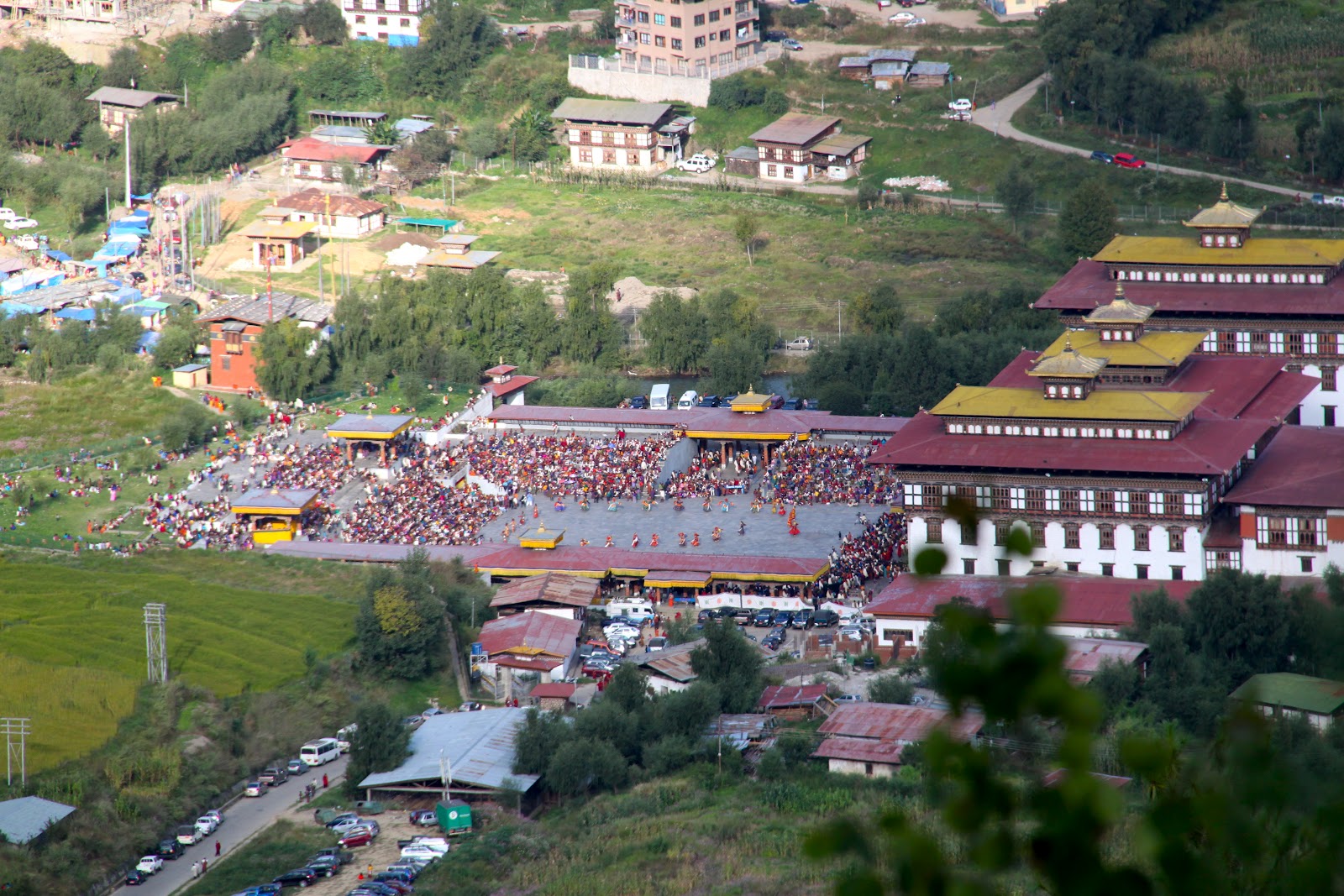
Far below we can see the Tashichhodzong  courtyard where the festival is still going on.  The festival lasts from about 9 am to 5 pm.  We can hear some of the sounds of the drumbeats and cymbals.
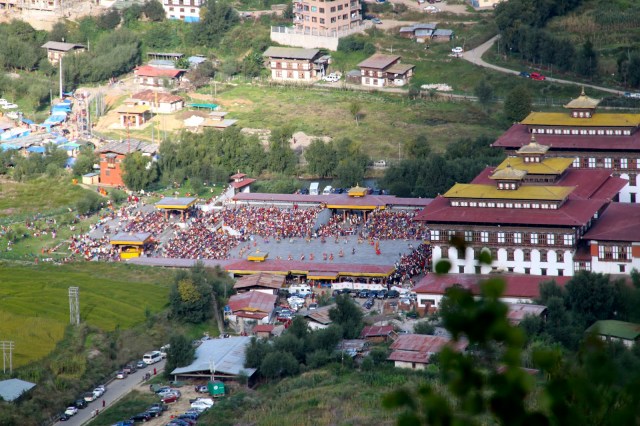
The festival still going on
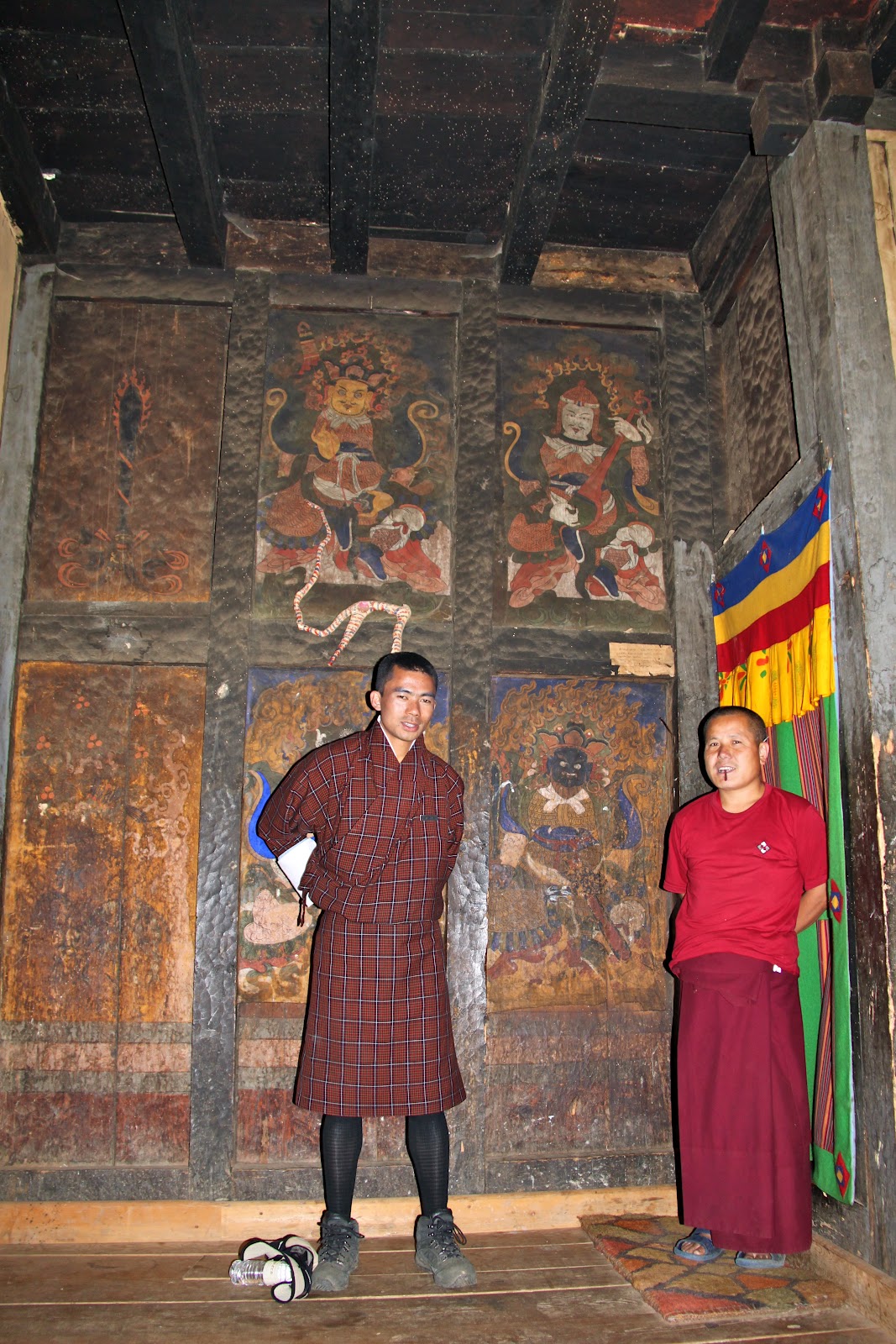
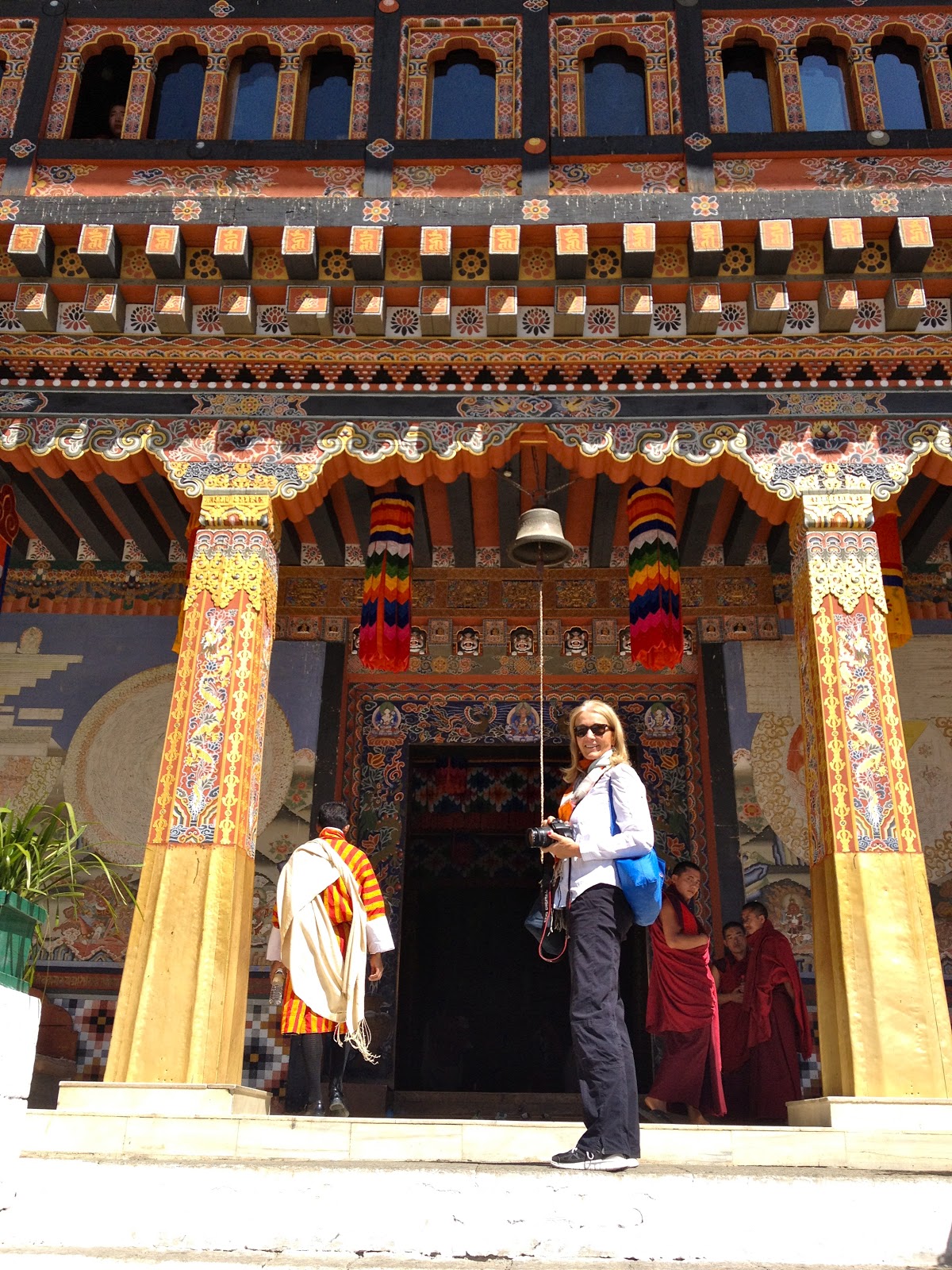
 You must cover your shoulders and legs and must remove your shoes before entering a temple.  No shorts are allowed and you might need a collared shirt to get into some of the temples.  You are not allowed to take photos inside of temples.  We follow Tashi and spin the prayer wheels as we enter the temple.  Once inside we try to follow Tashi’s lead and we show respect by using hands clasped in front in prayer position and follow Tashi as he touches his hands multiple points on chest and head and then kneels and touches his forehead to the ground.  The statue of the Buddha in front of us must be 15 feet tall and covered in gold.  We follow Tashi’s lead and make small cash offer and the monk pours holy water into our hands.  Tashi sips the holy water from his hands (we don’t) and sprinkles the rest over his head.
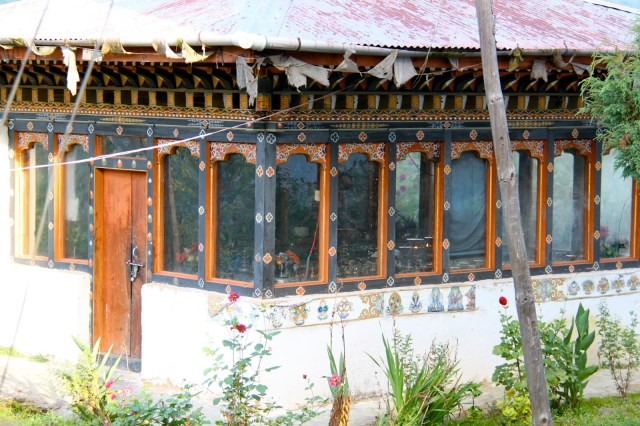
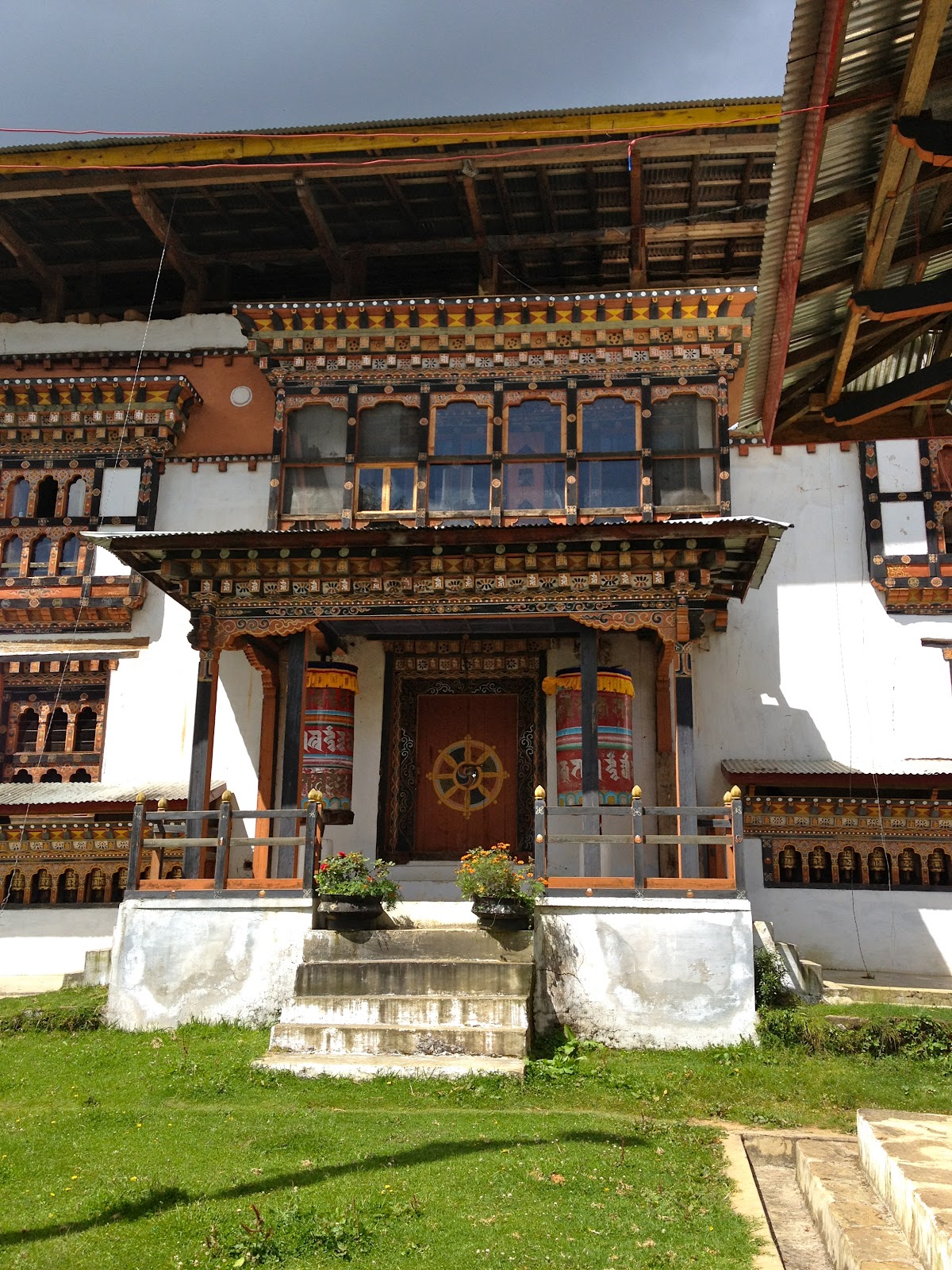
The temple at the end of our hike

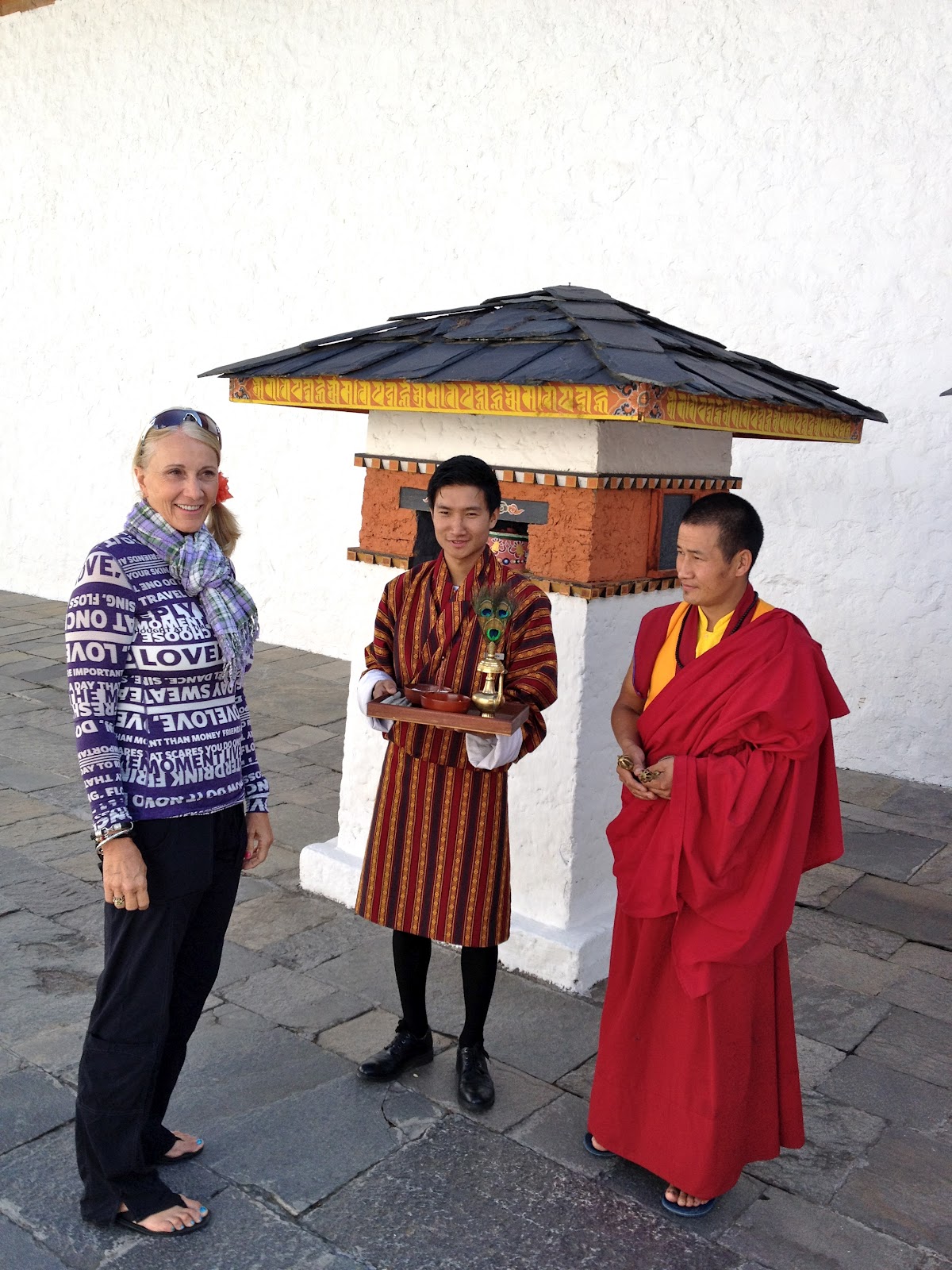
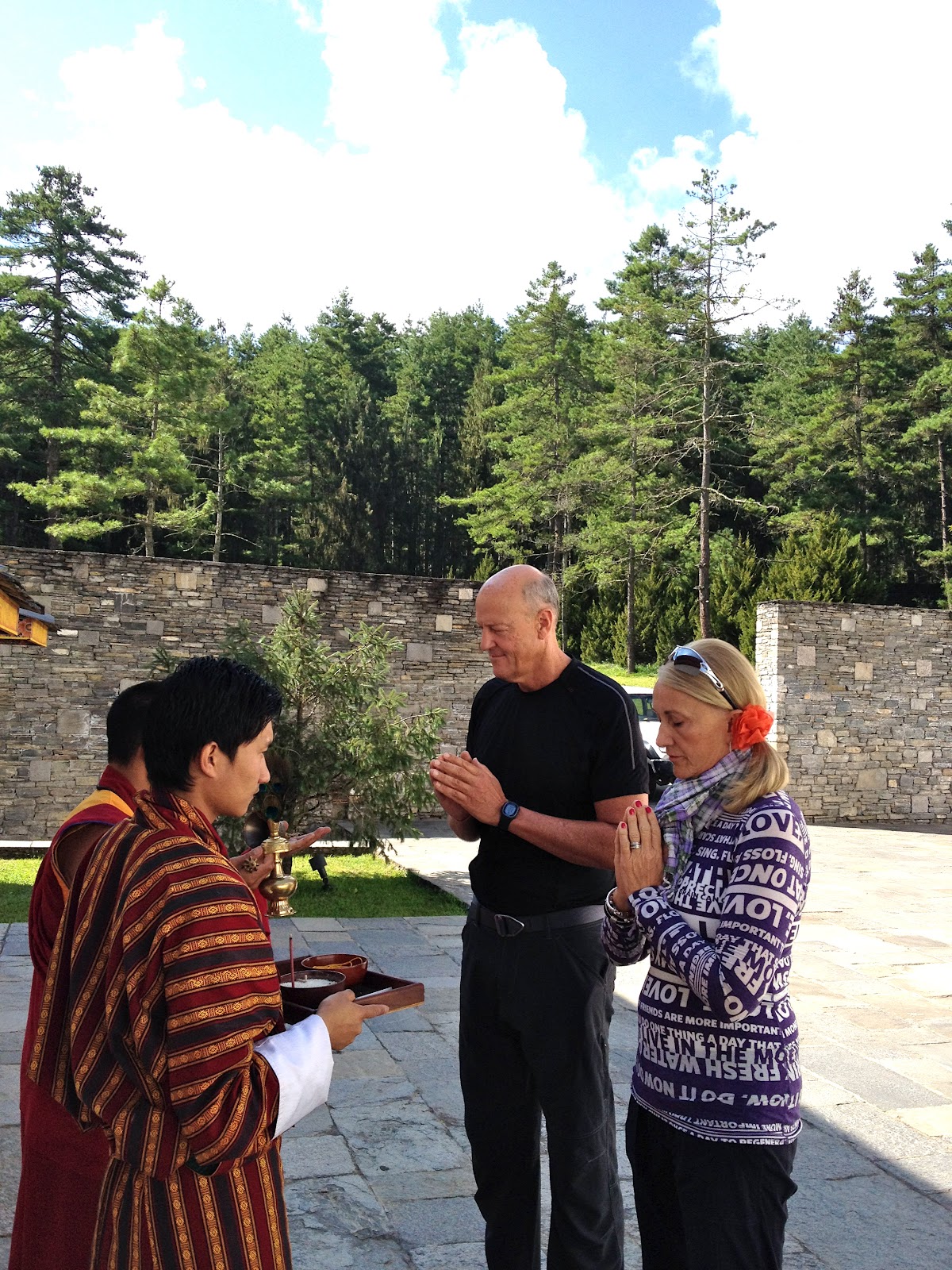
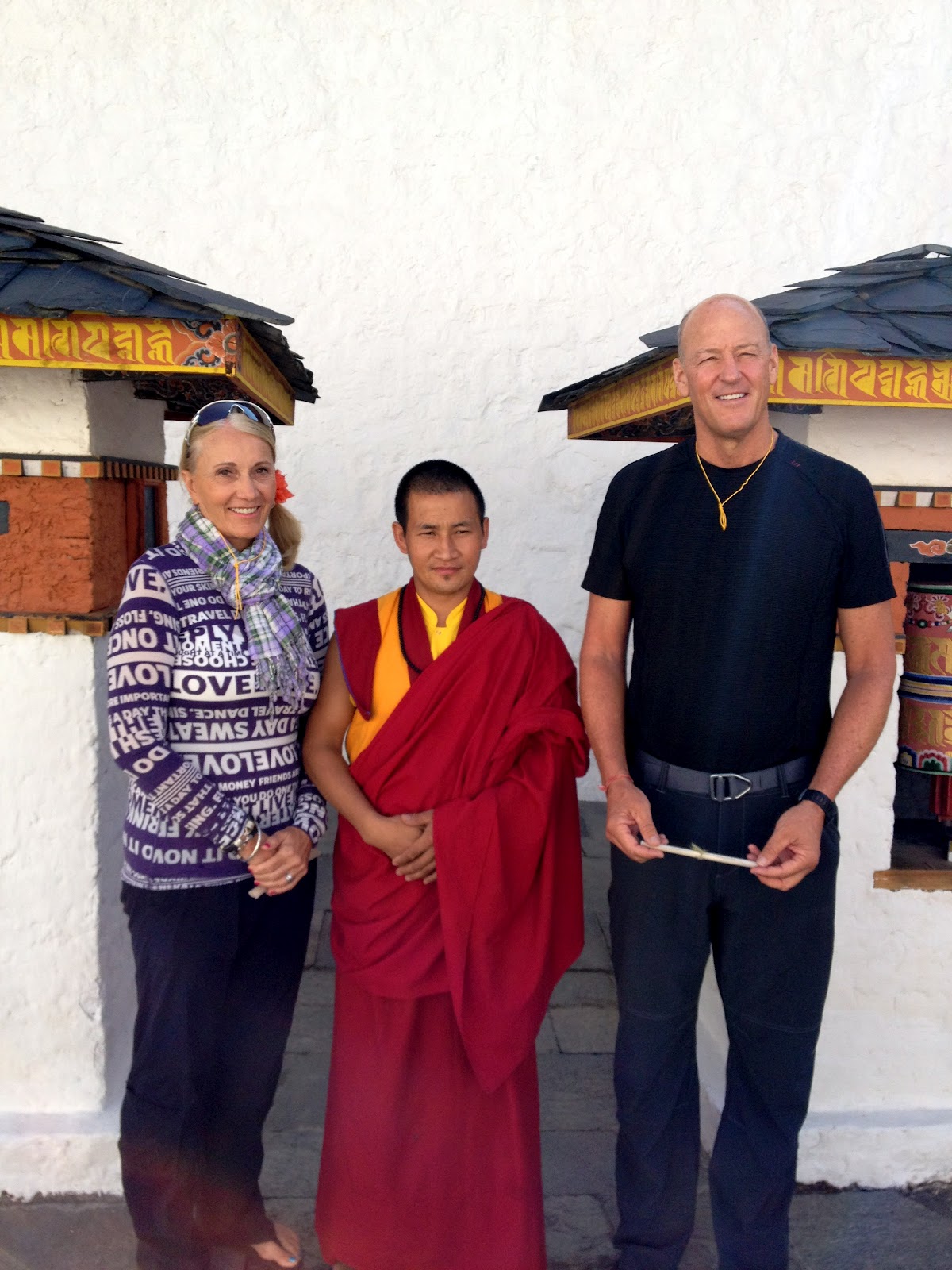
A blessing was given to us by the lama as we departed the Amankora Lodge at Thimphu to drive to our next lodge at Gangtey.
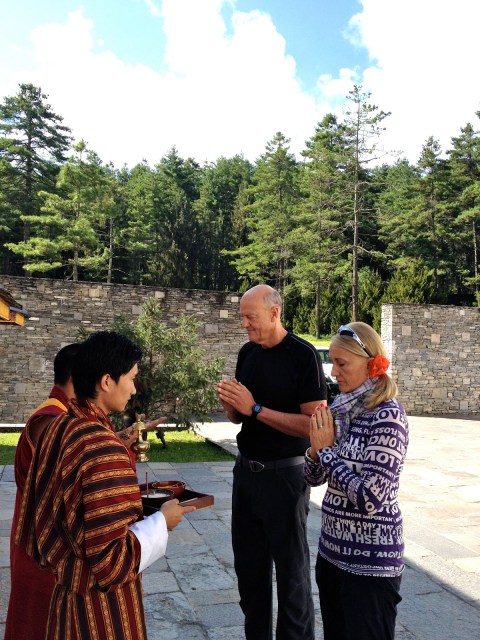
A prayer was said by the Lama, then he blessed us with holy water, and then put a yellow string around our neck.
The roads in Bhutan or so narrow and dangerous that we needed the blessing!