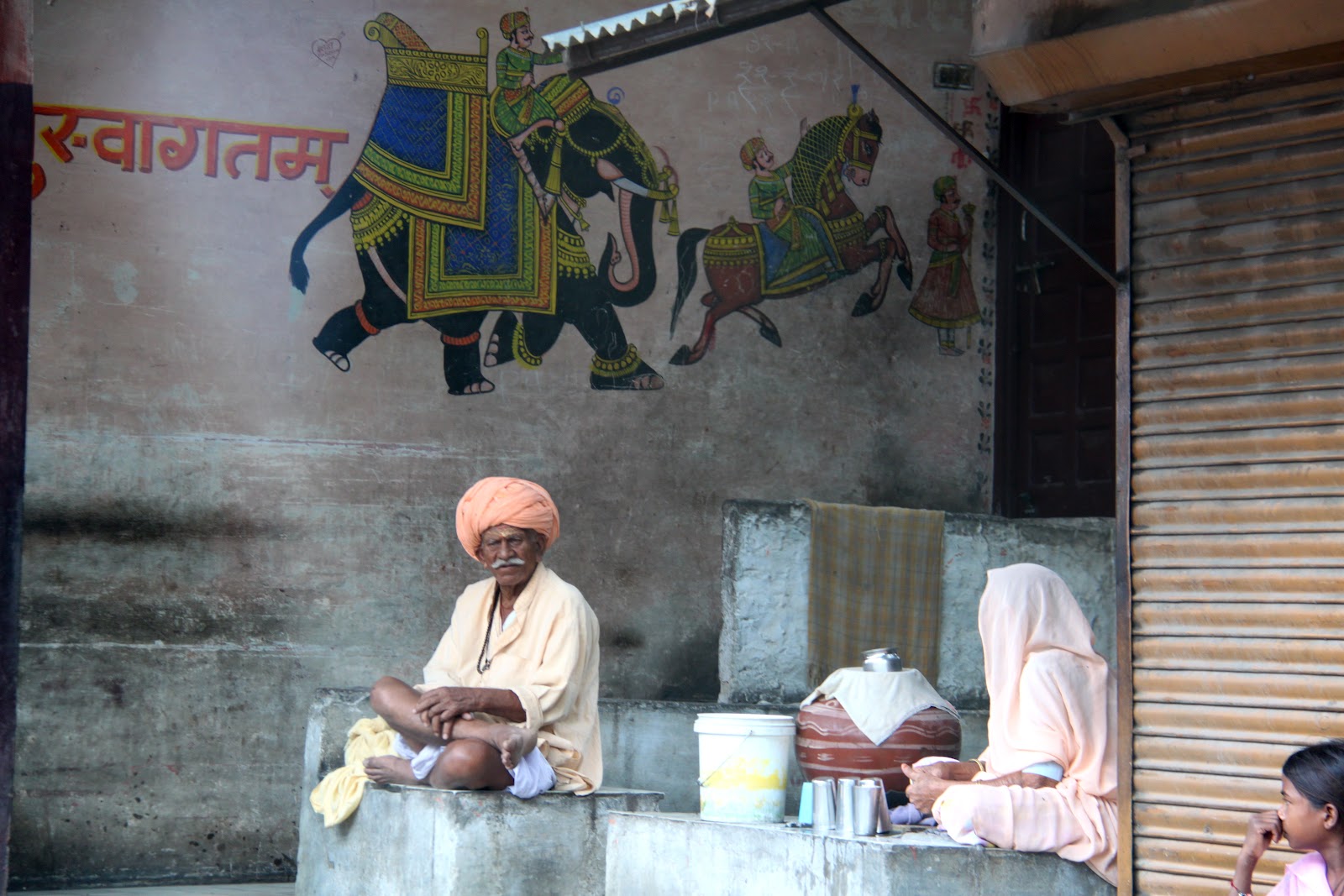
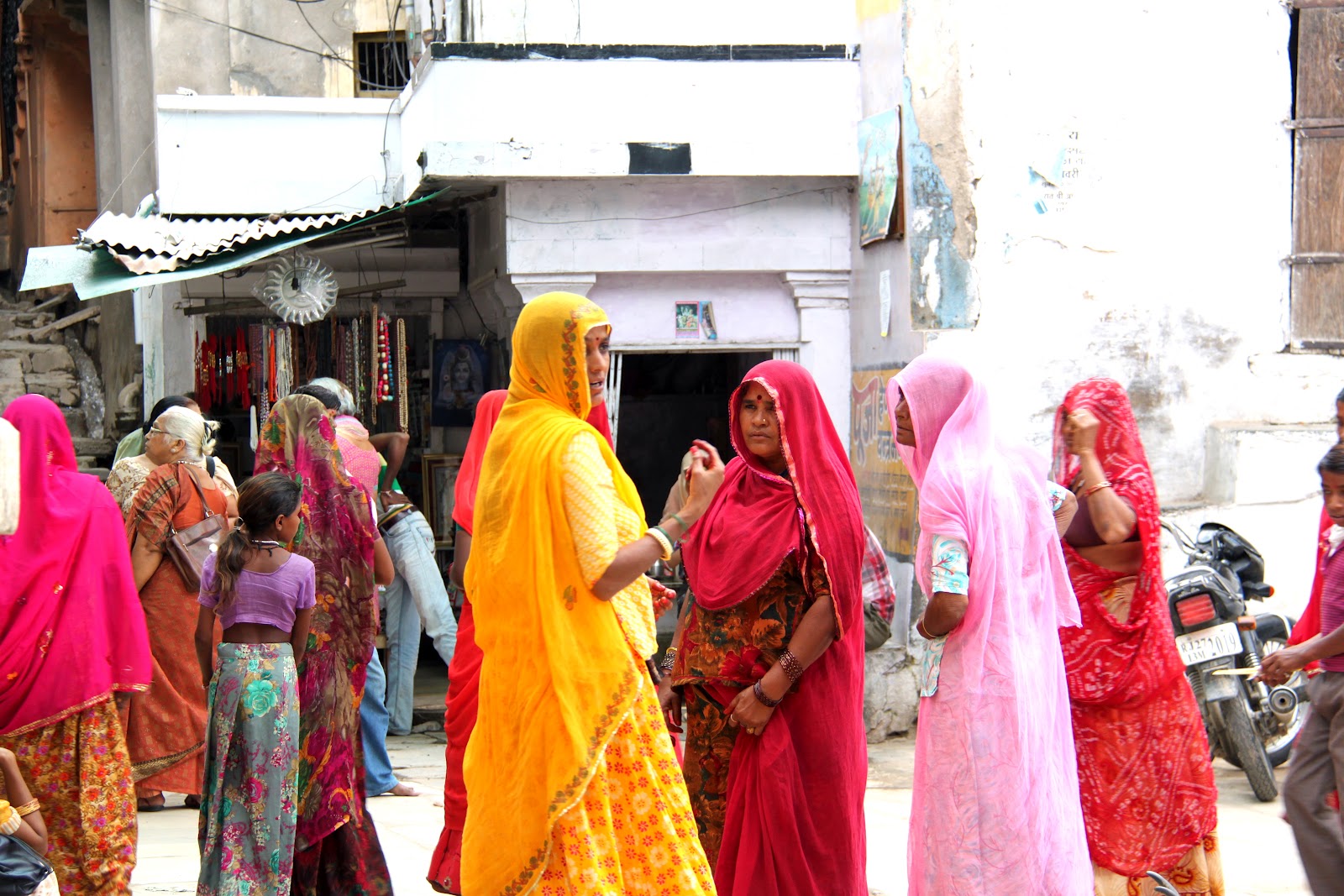
Varanasi, India September 23-35, 2012

Varanasi is the spiritual center of India.  It is known for its Shiva Temples.  (There are over 100,000 Shiva Temples in Varanasi.)  It is the place that all Hindus want to die and be creamated.  Hindus believe that half of their sins will be forgiven if they just walk in Varanasi.  All of their sins will be forgiven if they bathe in the Ganges River.   If they are cremated at the banks of the Ganges then Hindus believe that the cycle of death and rebirth will be broken and they will be at peace.  This is called Moksha.   Varanasi is important to Buddhists since it is the place of the first sermon of the Bhudda.  Varanasi is also a heritage area for the Muslims since the area was conquered by Muslims in earlier times. 
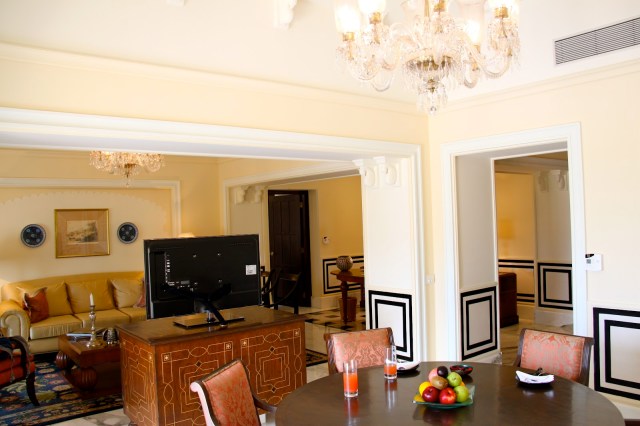
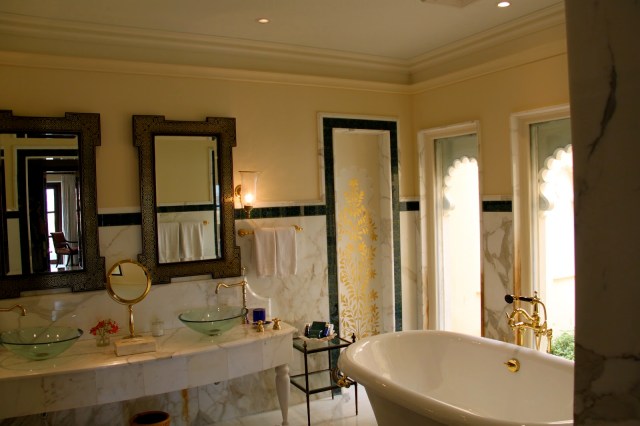
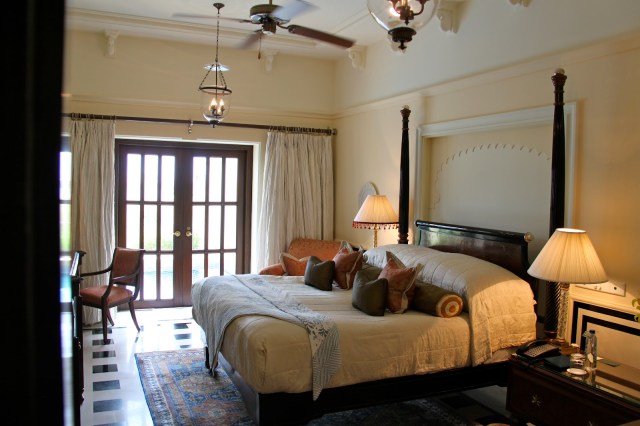
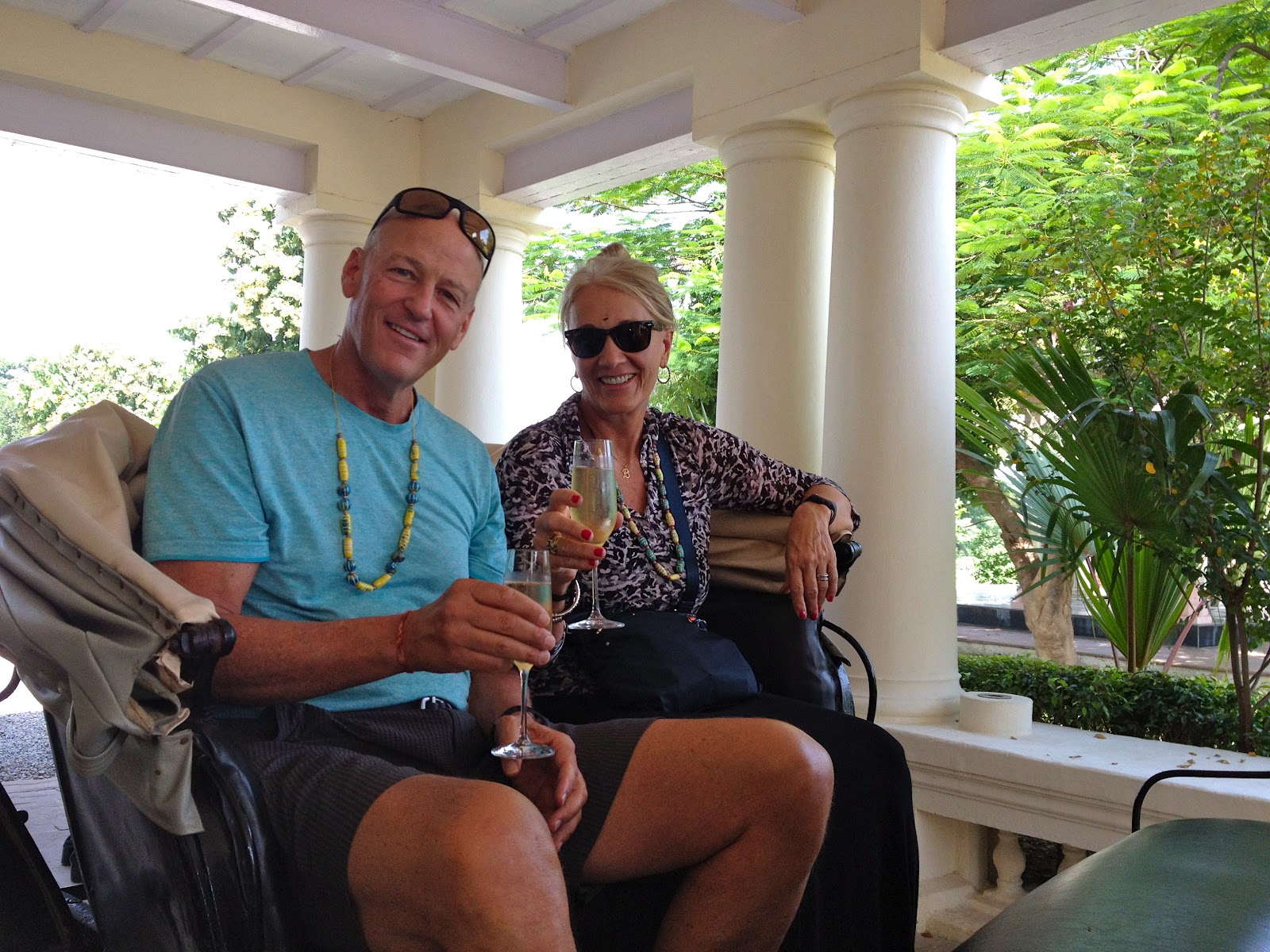
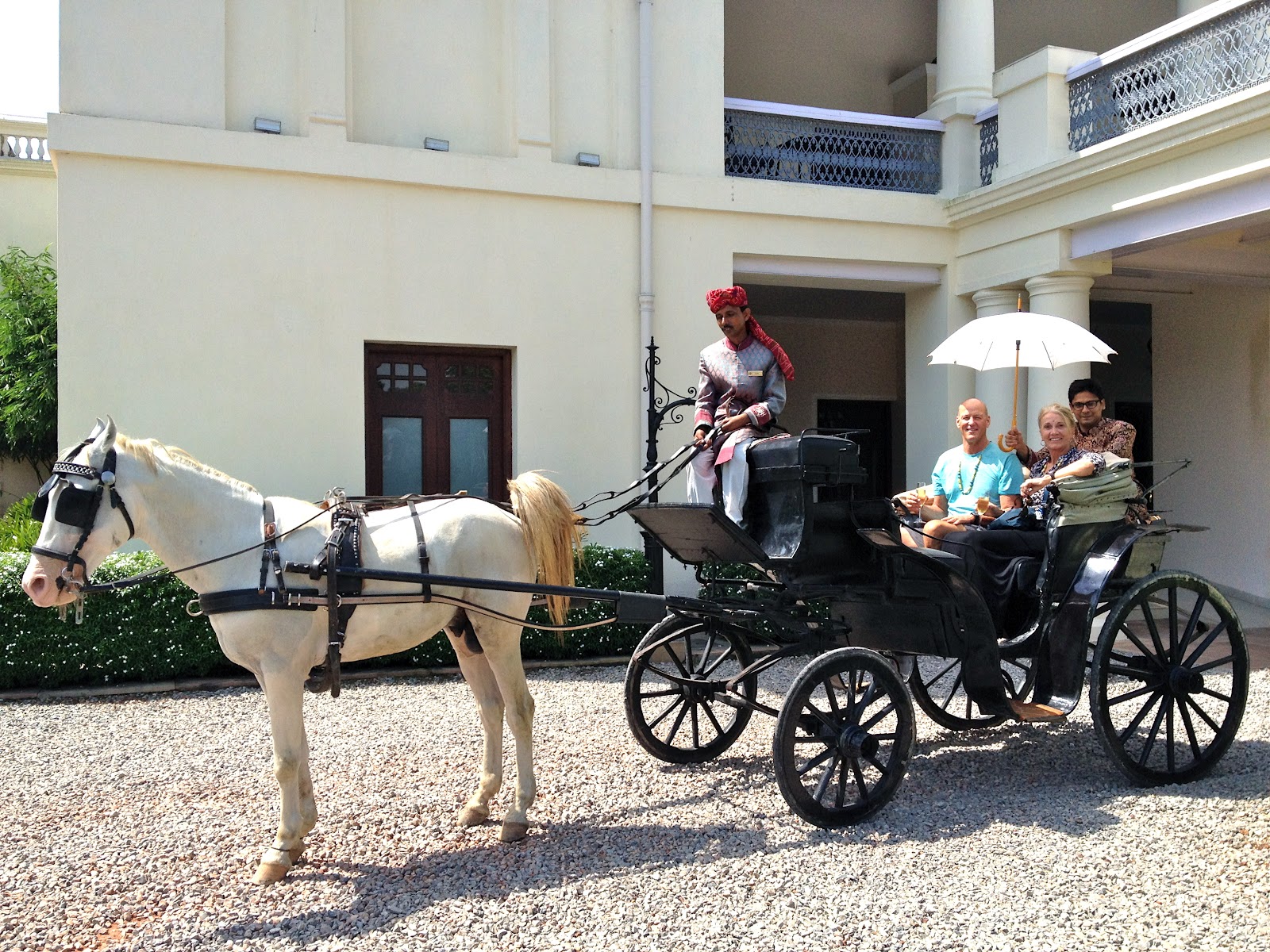
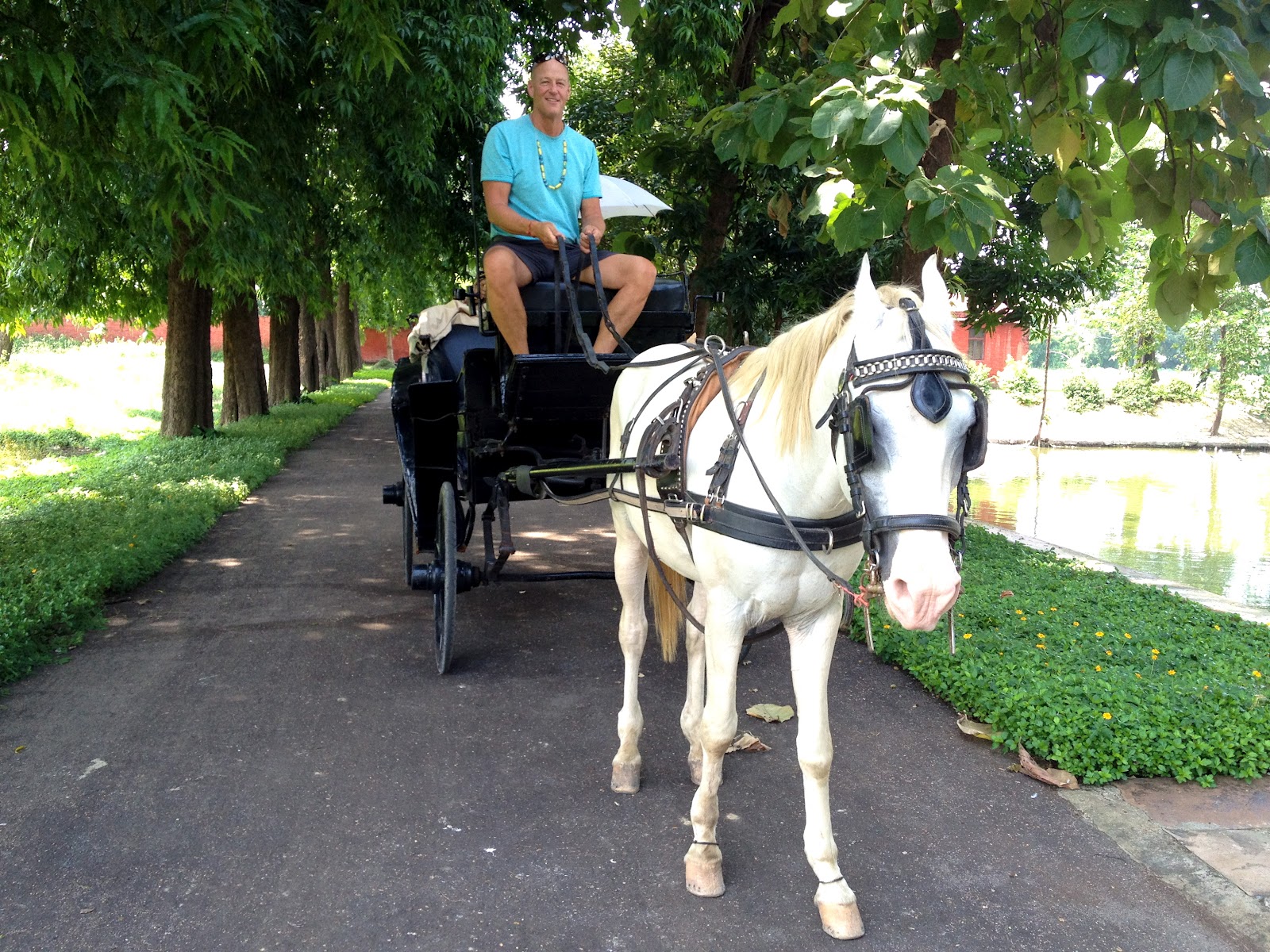
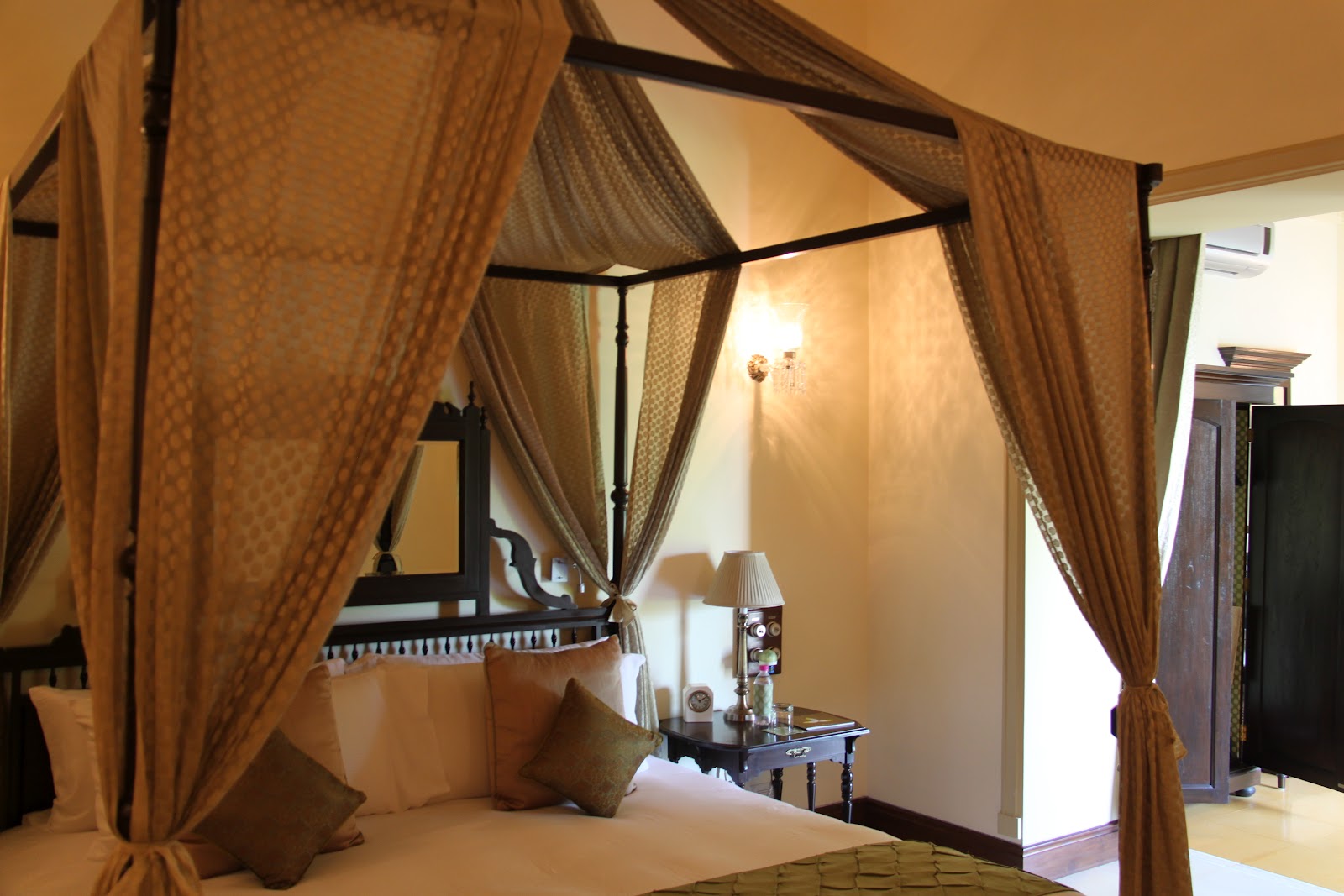
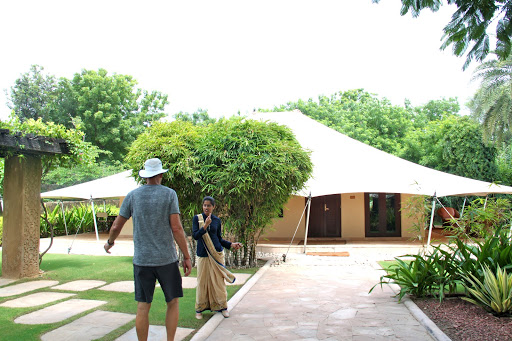
We are staying at the Nadesar Palace Taj Hotel that has 6 rooms.  When we arrive we are treated to a one horse carriage ride (the carriage is from England from the 1800’s) around the 40 acre Palace grounds.  Scott gets to drive the carriage.  The rooms are suites named for the guests that have stayed in each particular room.  We are shown to the Queen Elizabeth Room.

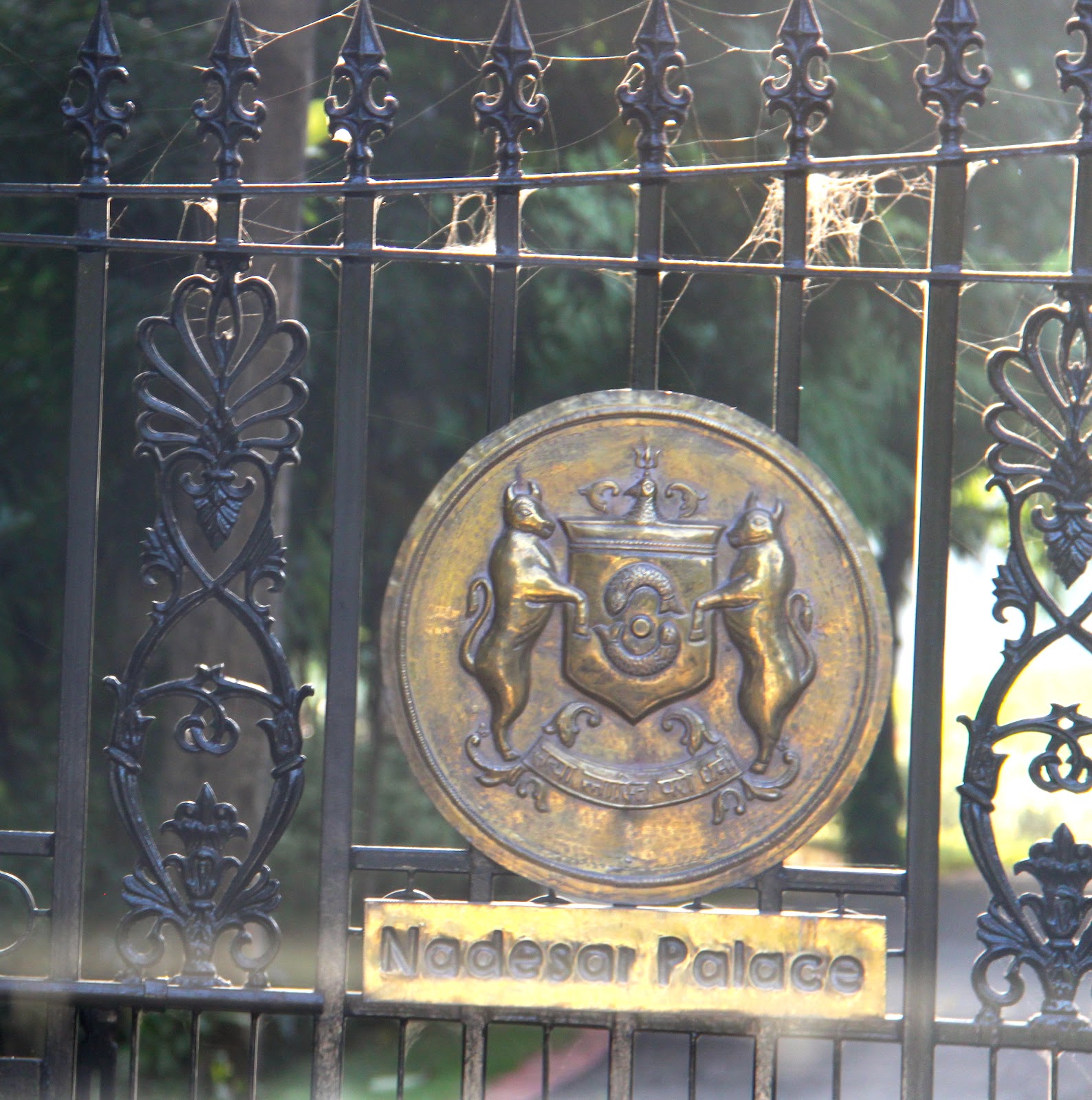
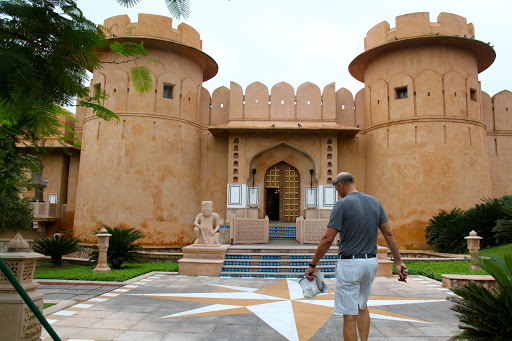
Gate into Nadesar palace


The carriage is from the 1800’s from England

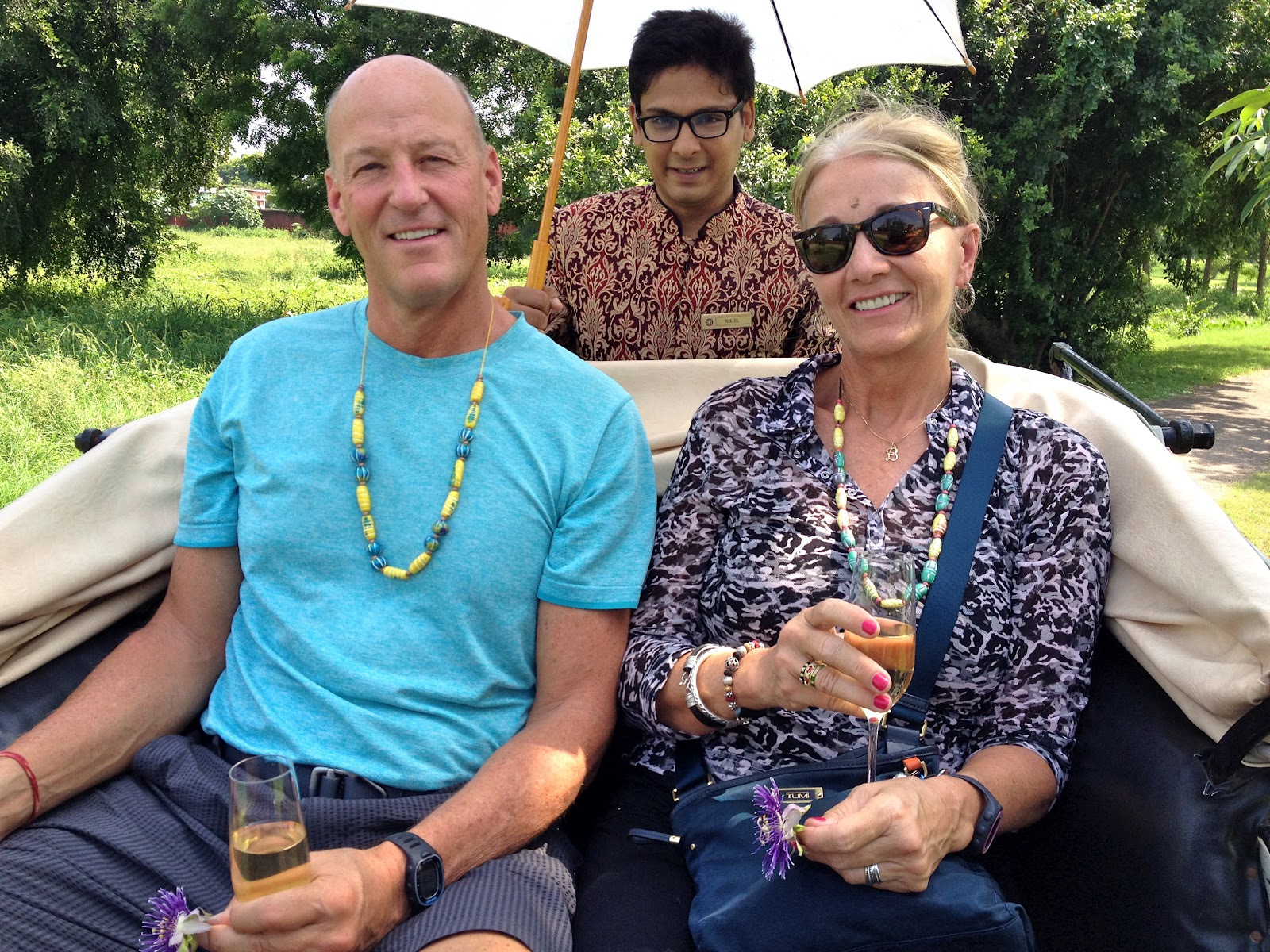
Complete with umbrella for shade

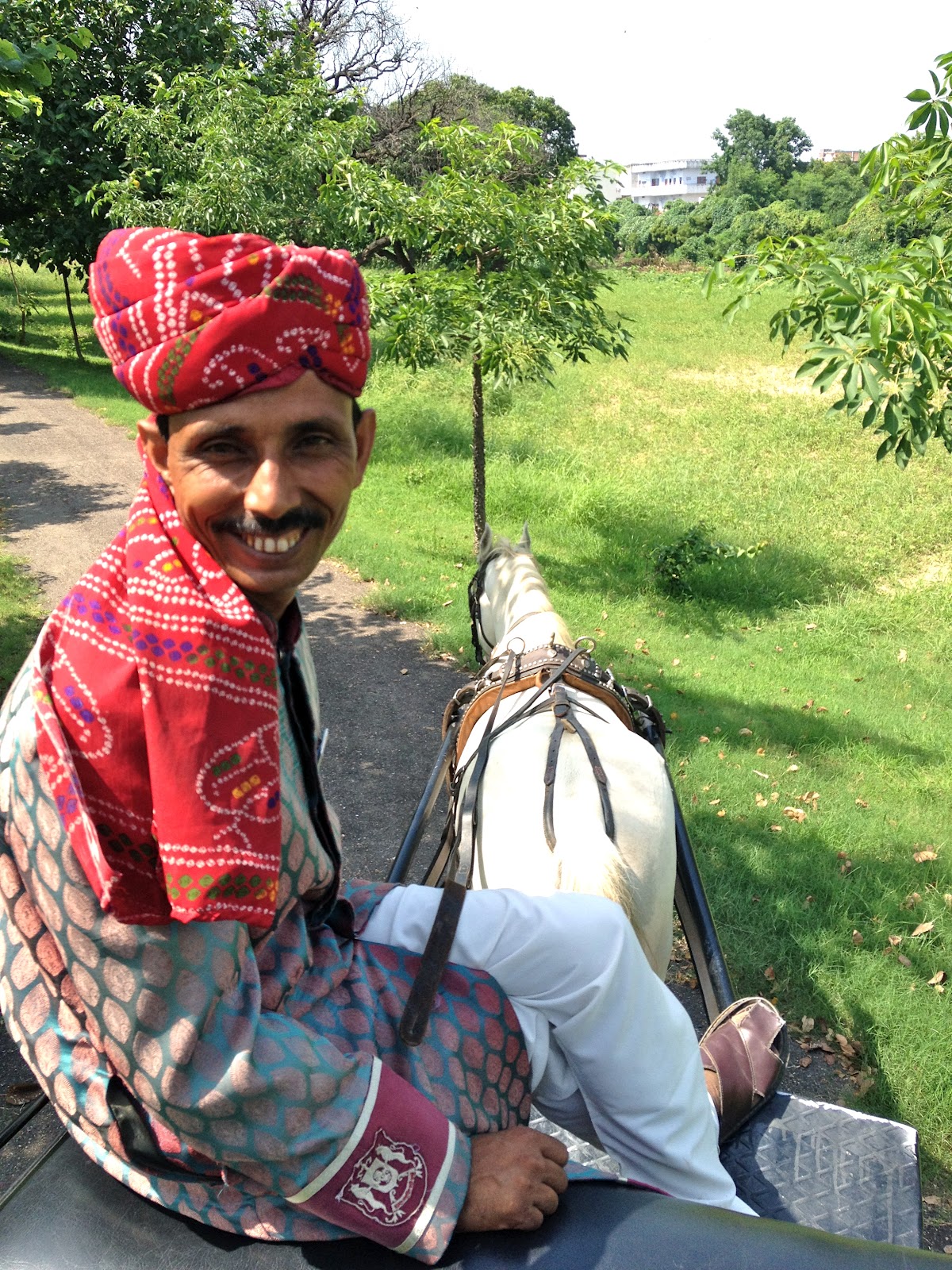
Our Driver

Scott drove the carriage.  They told us that they feed the horse onions every morning to calm him and he also gives him an hour massage.
Bedroom
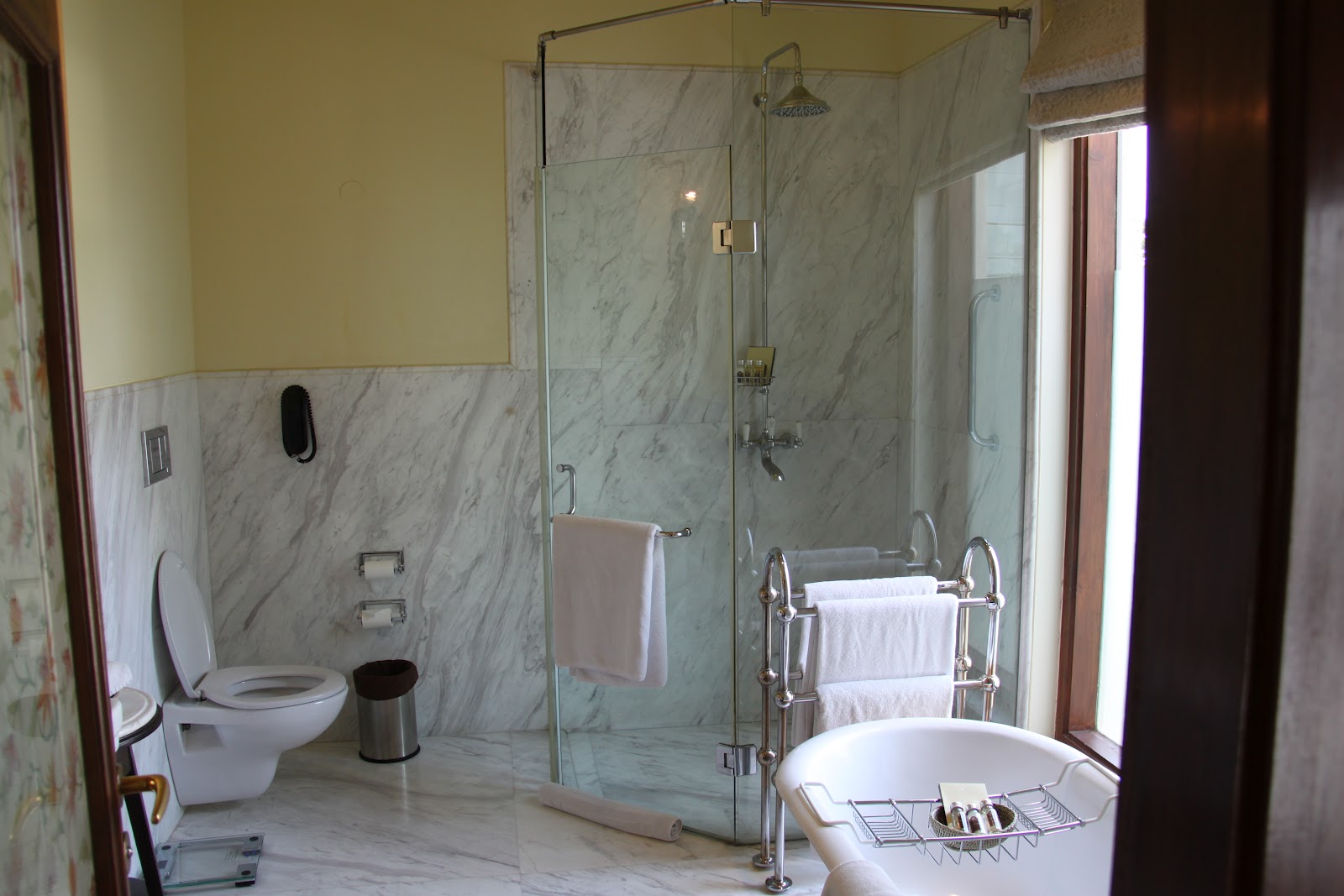
Bathroom

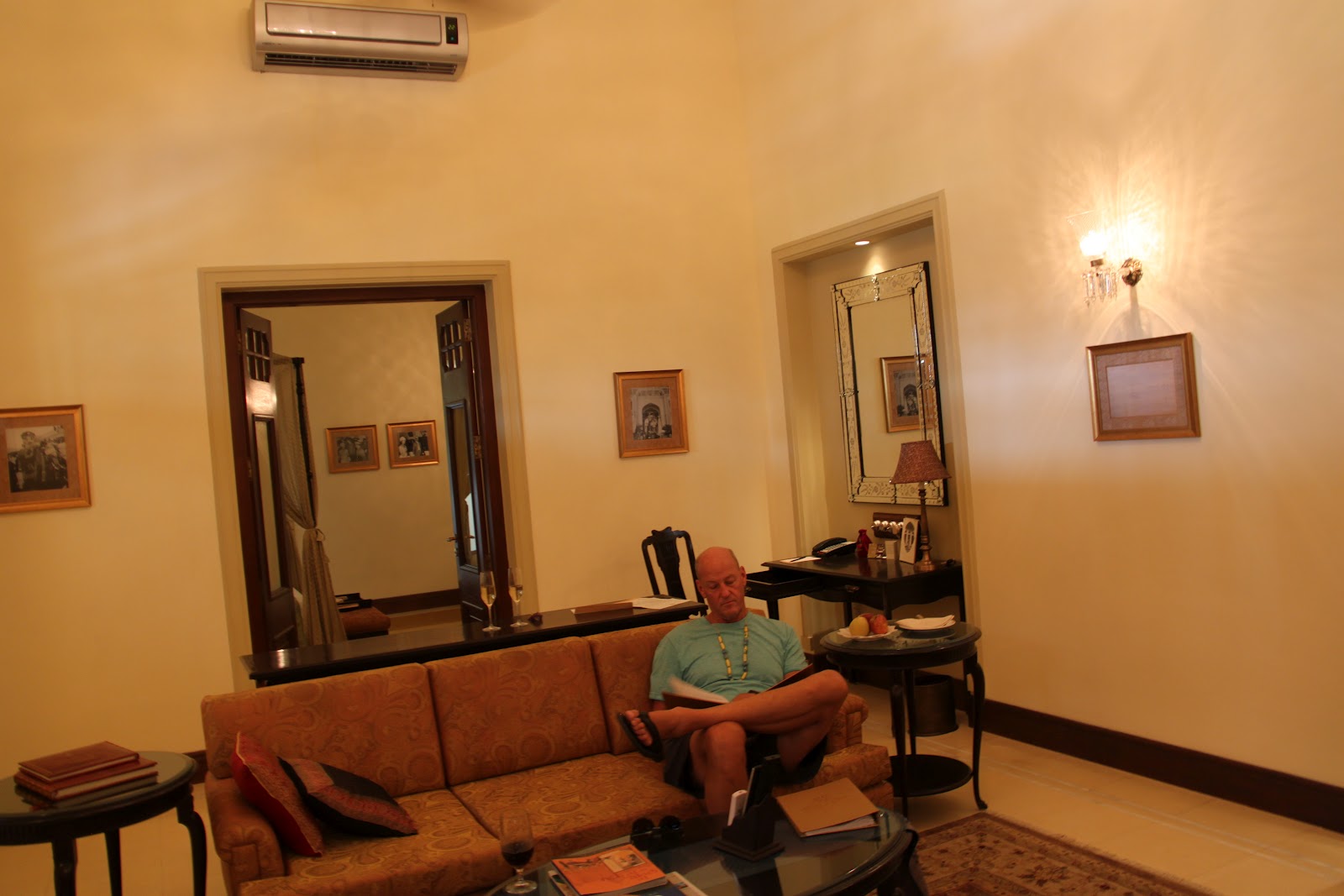
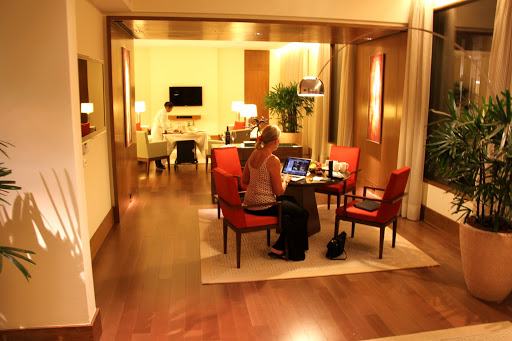
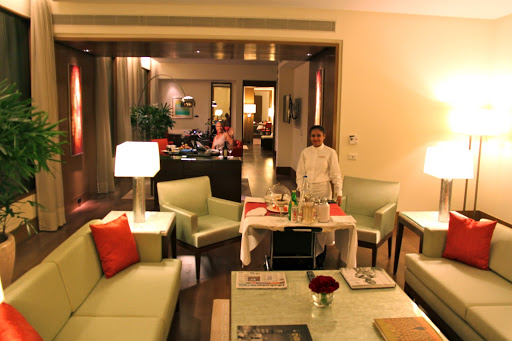
Living area

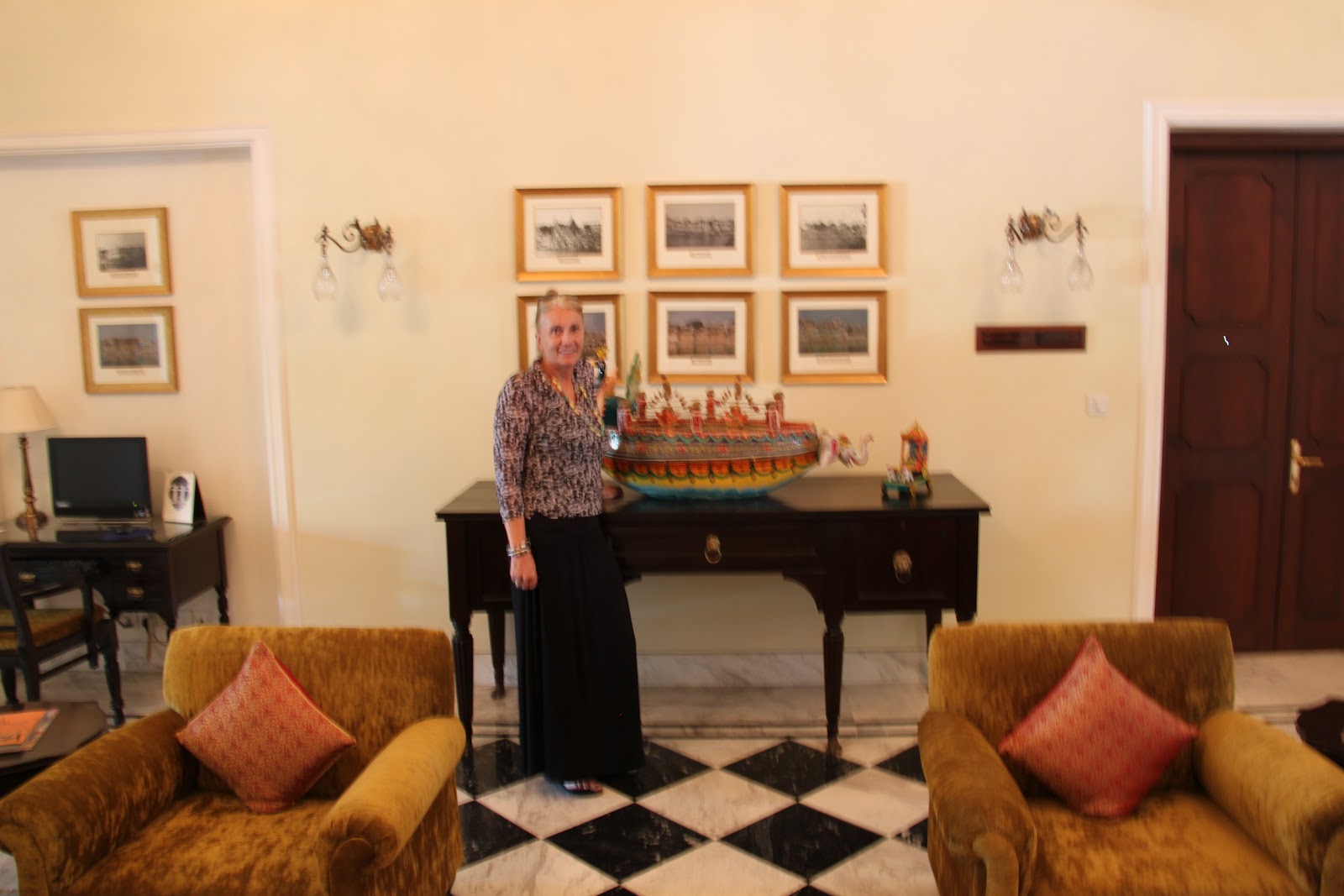
A sitting room

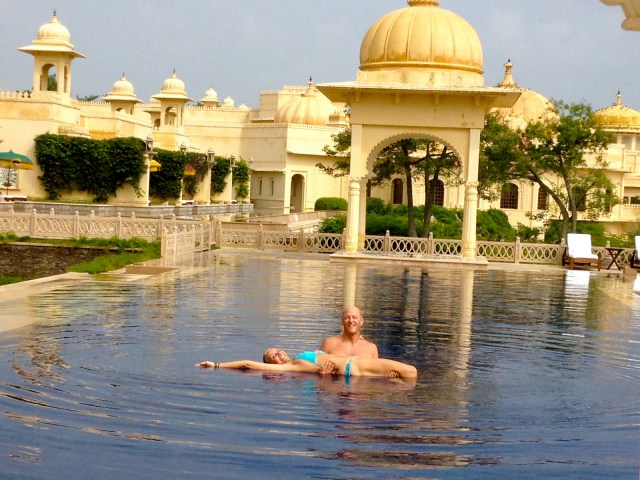
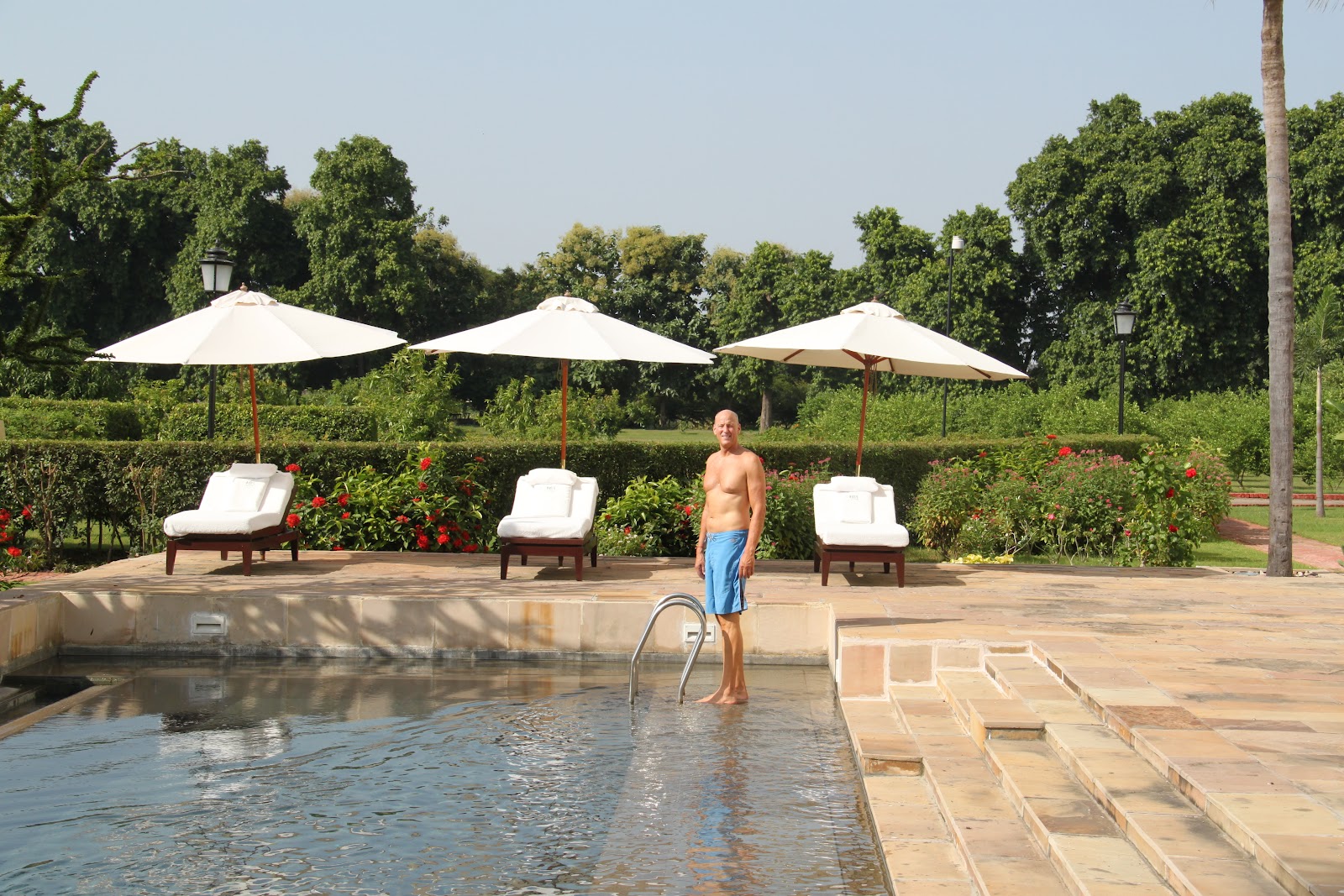
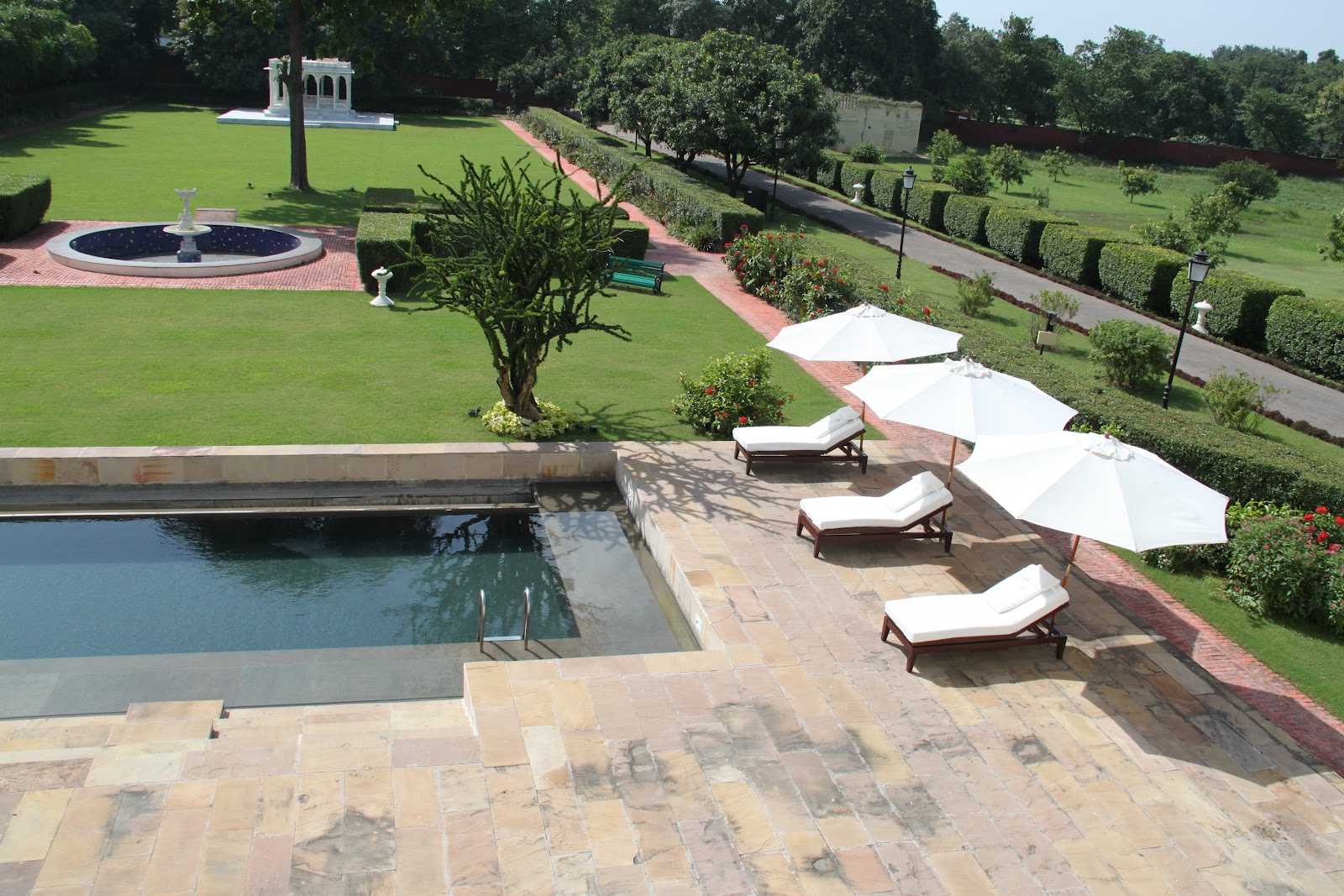
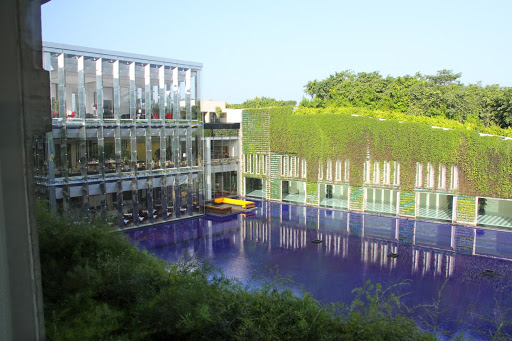
Pool

Pool and Grounds

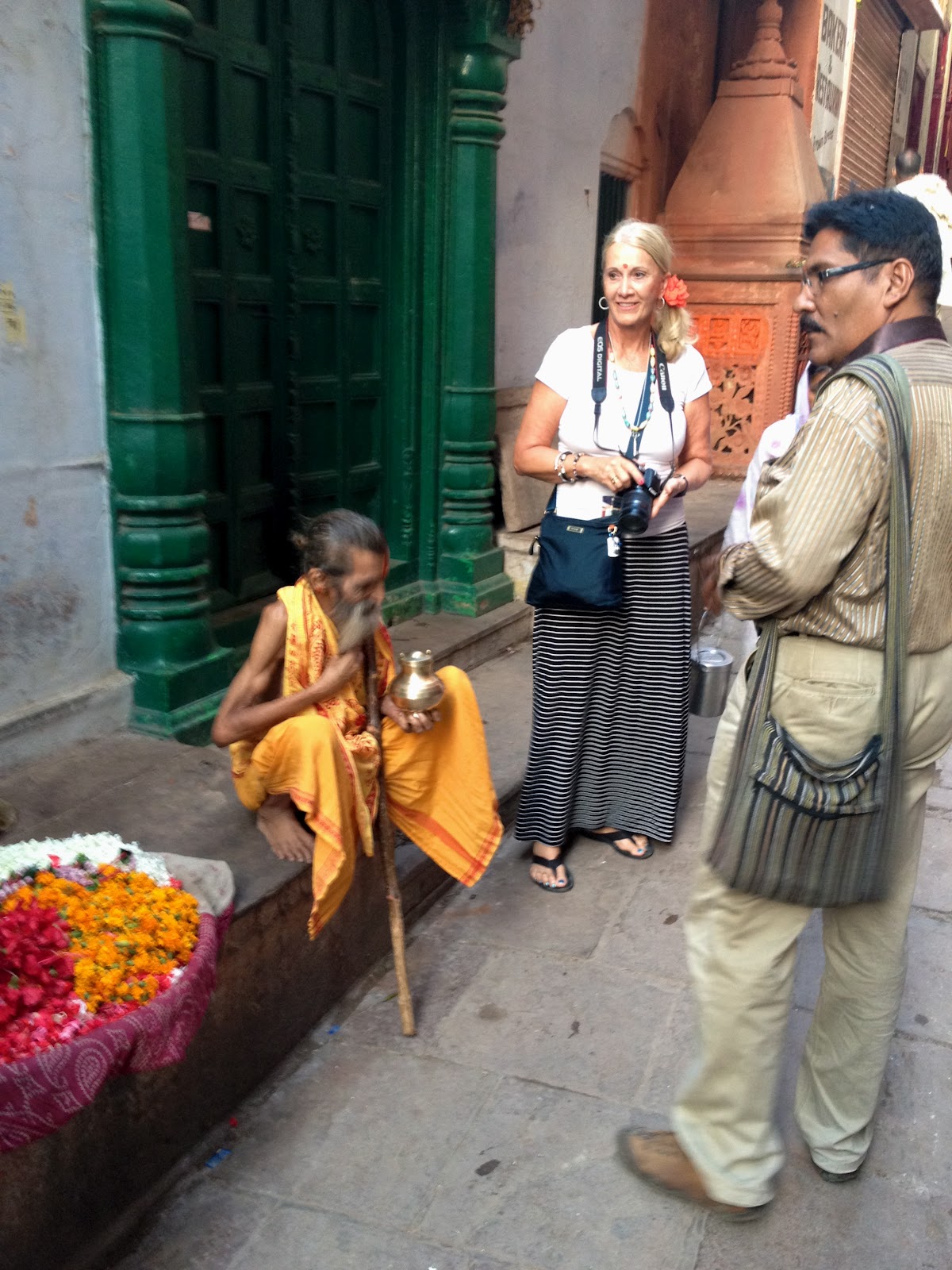
 What we know of Varanasi we have learned from our guide, Dr. Salesh Tripathi, who has also guided President Clinton and various others.  We don’t know how we were lucky enough to get him as our guide for our few days in Varanasi but he is very good.  He is from the Brahman class and studied to be a Priest.  He changed careers and received his doctorate in archeology.  He is also a counselor and astrologer which allows him to facilitate arranged marriages since those matches are very often dependant upon astrology compatibility. (He also was the priest that married Heidi Klum and Seal).   Dr. Tripathi tells us that what we know of India to this point we have understood with our eyes.  In Varanasi he promises that we will know more by using our eyes and our heart.

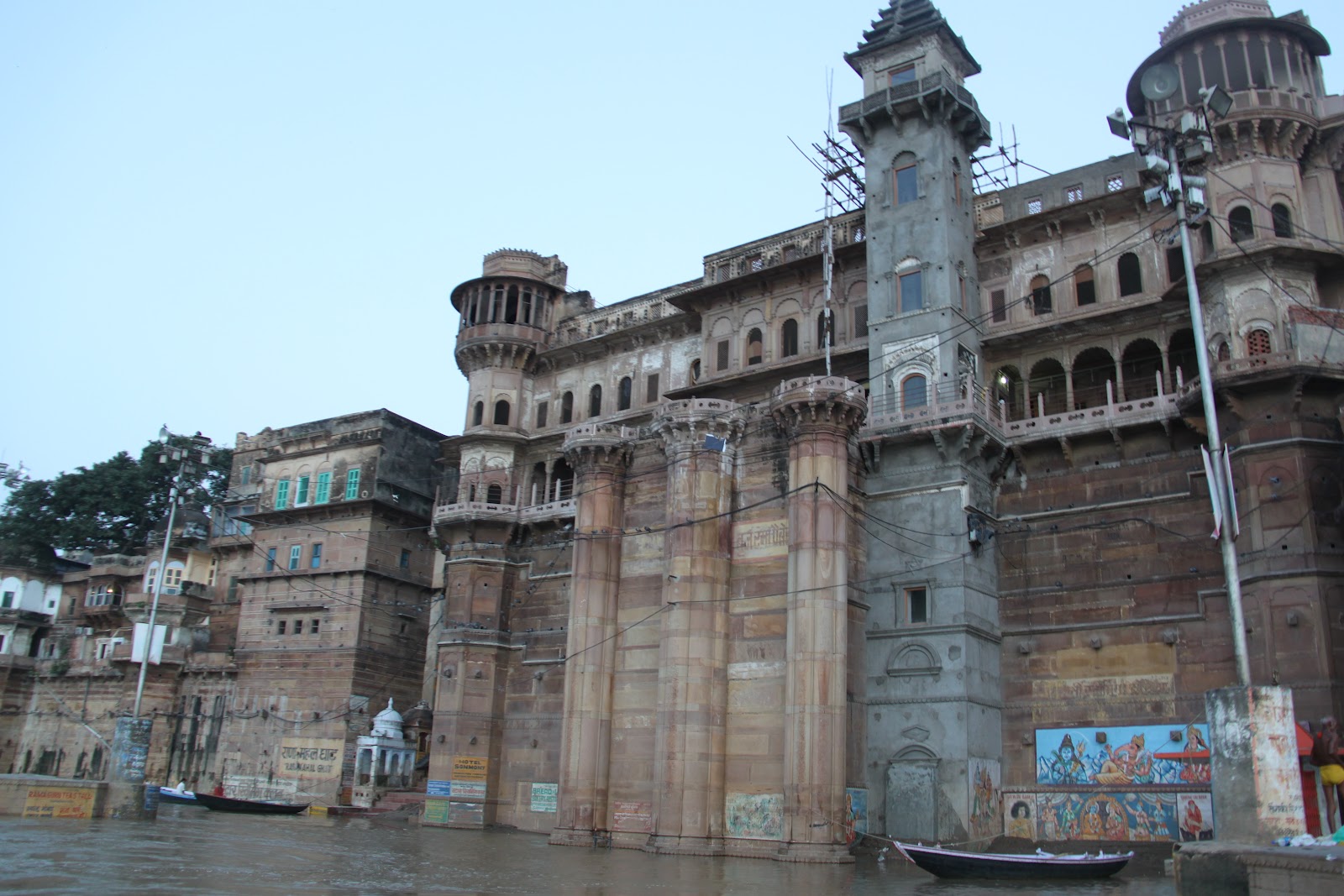
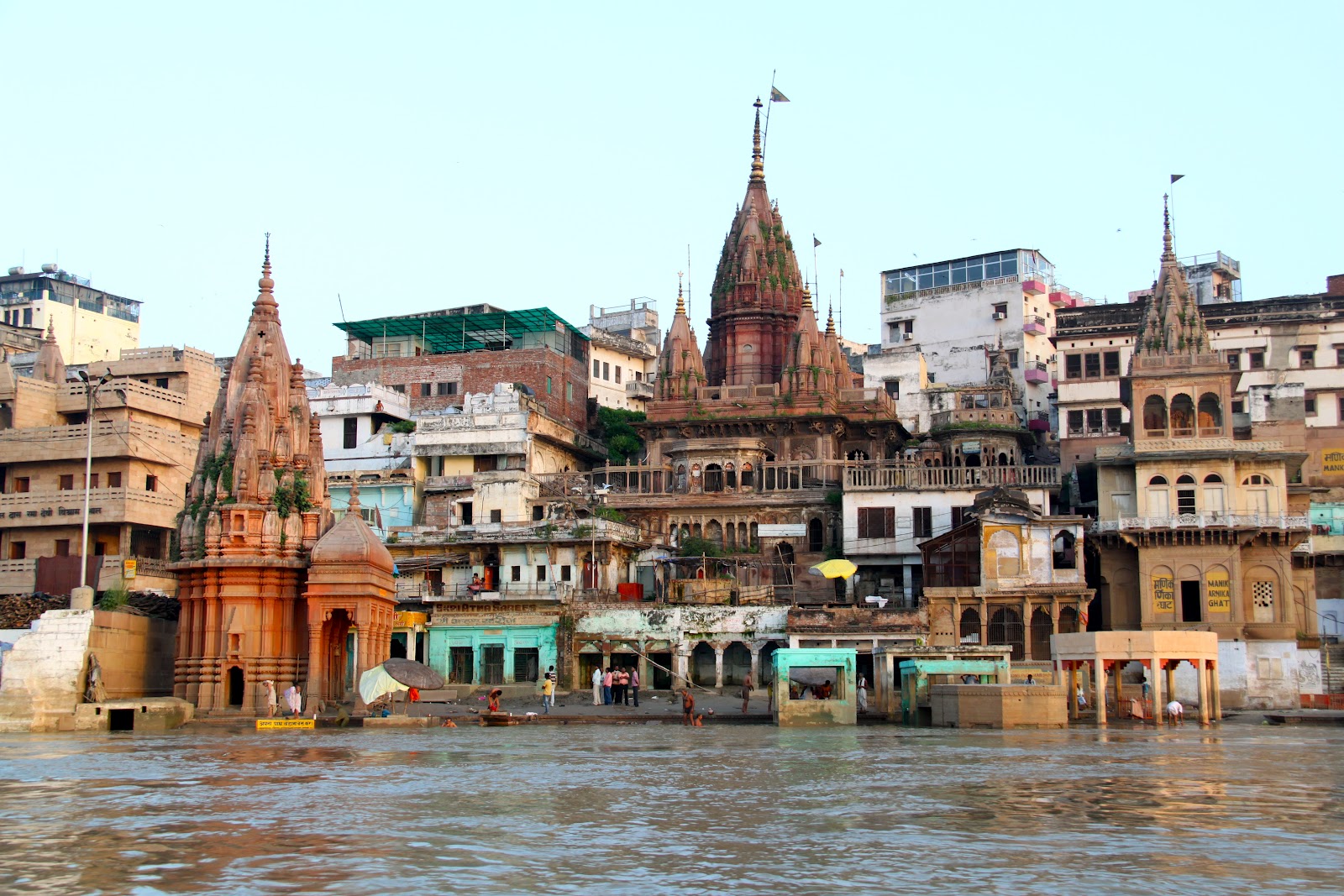
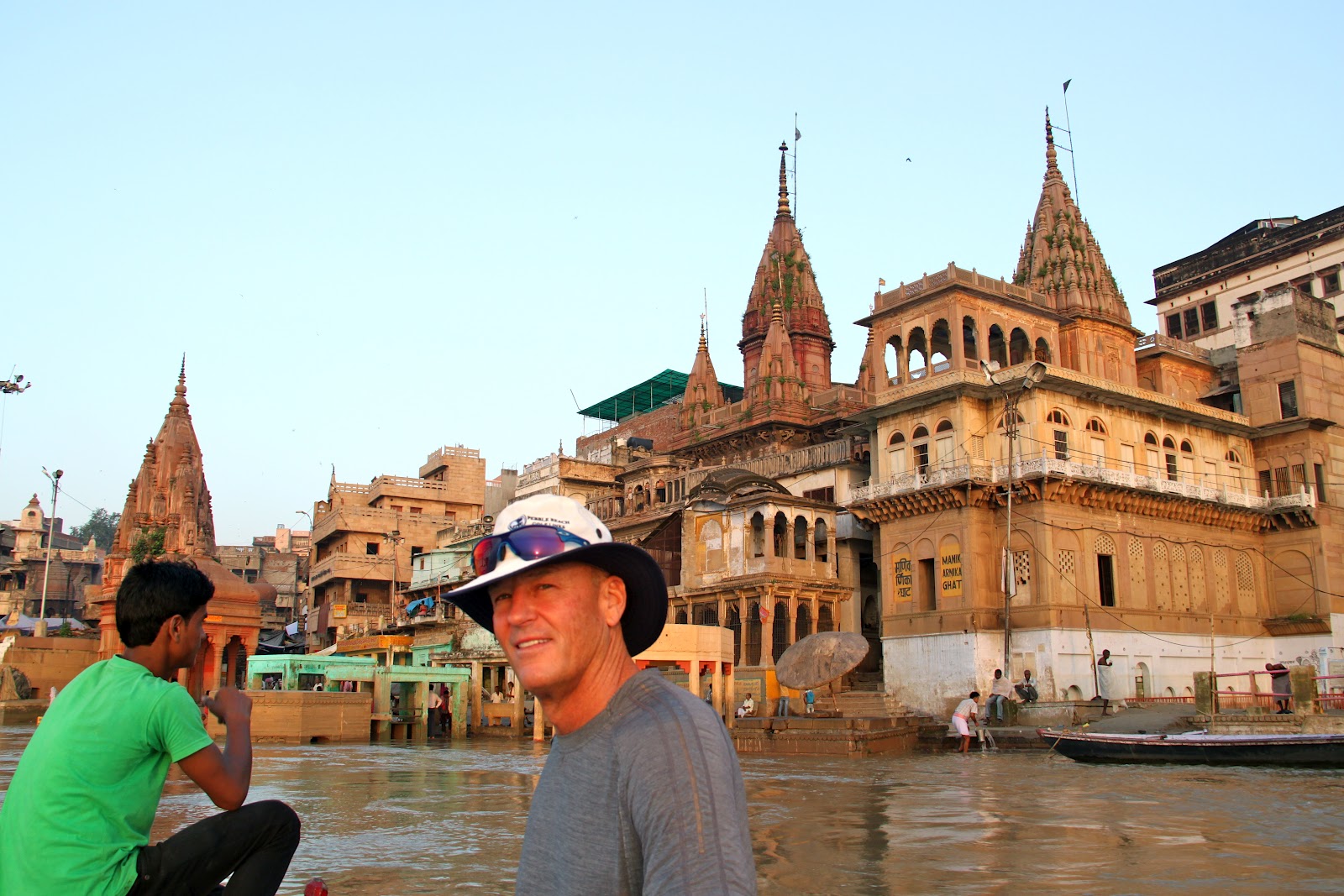
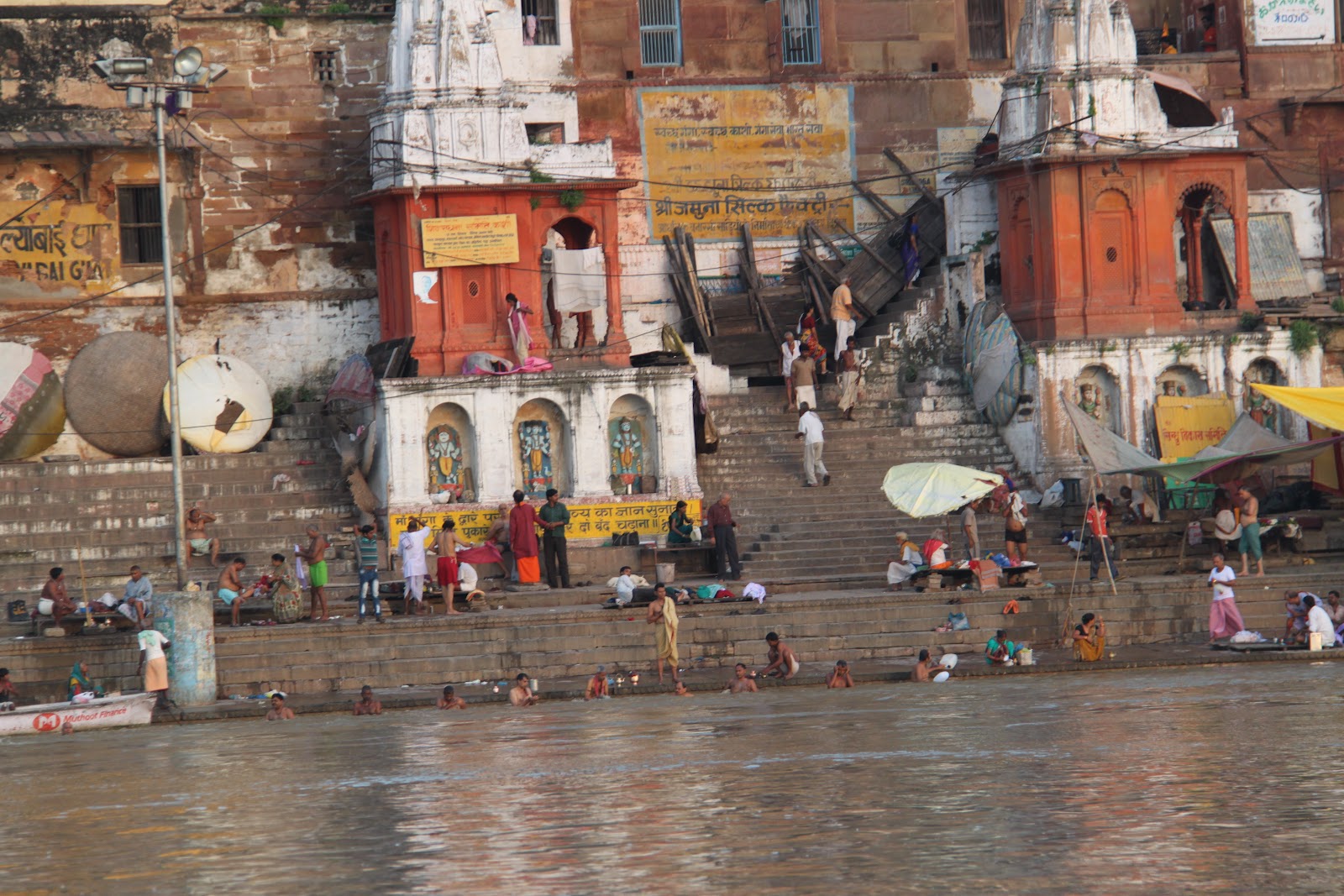
Temples along the Ganges

Life is centered around the Ganges

Temples

Scott on the Ganges River


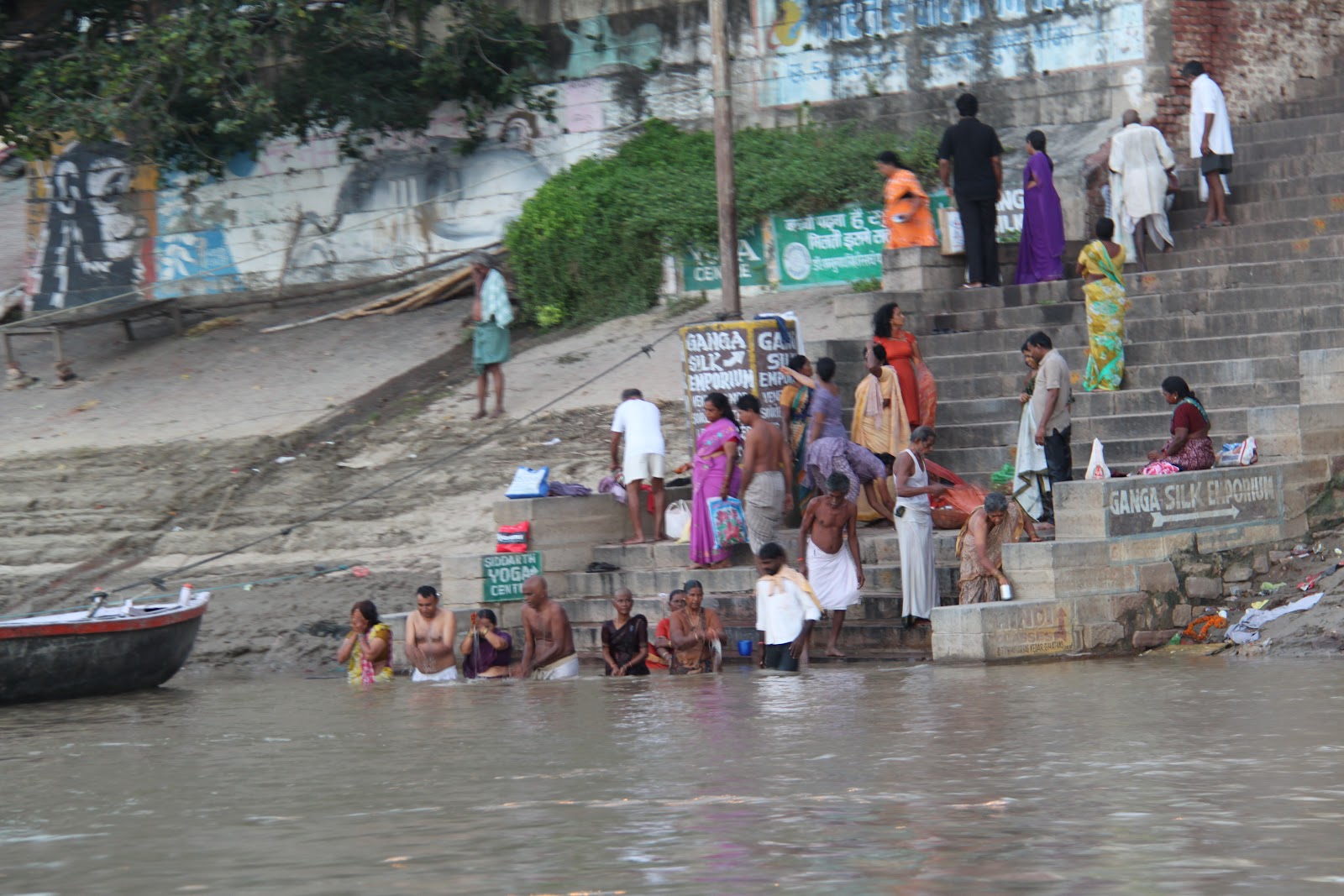
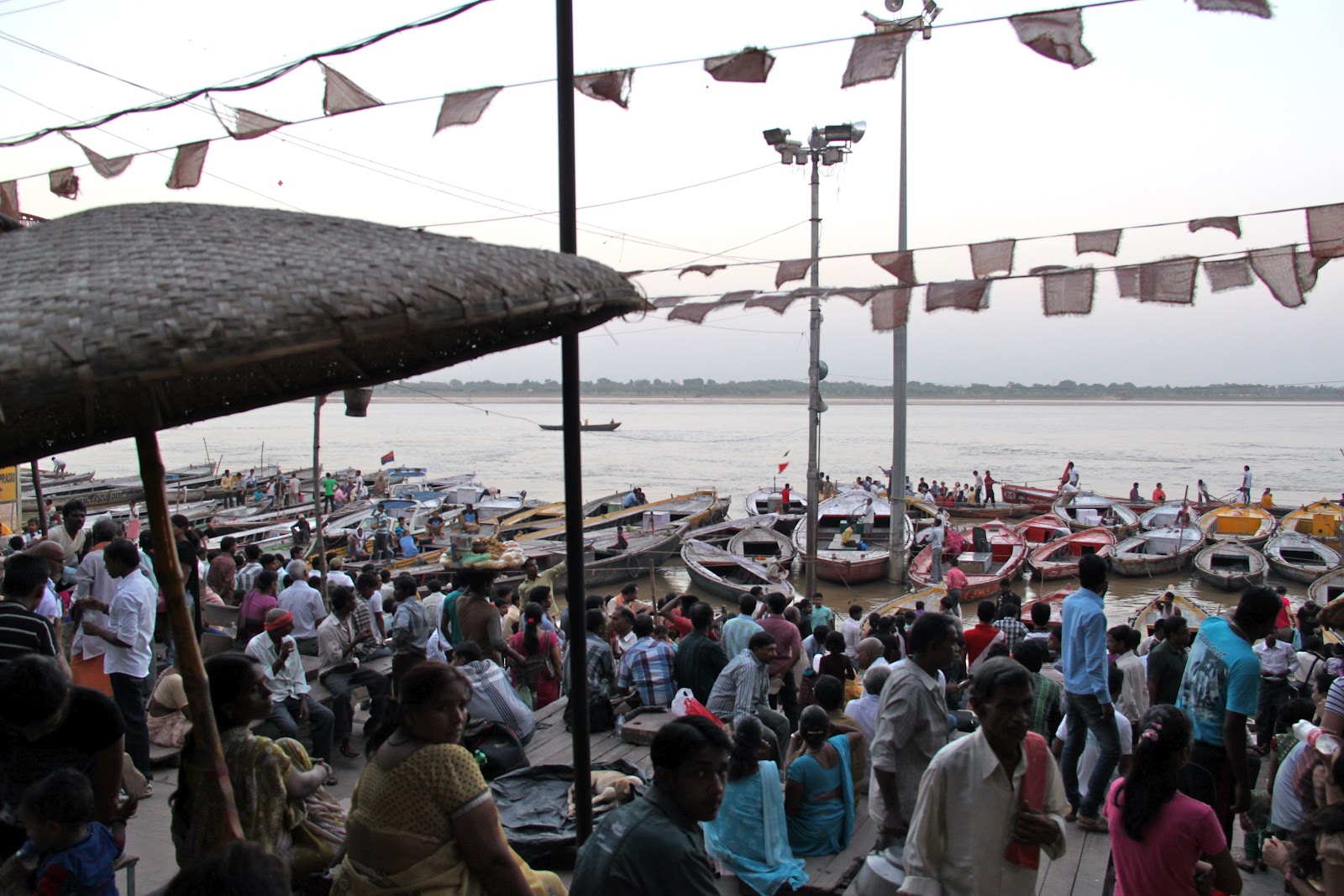
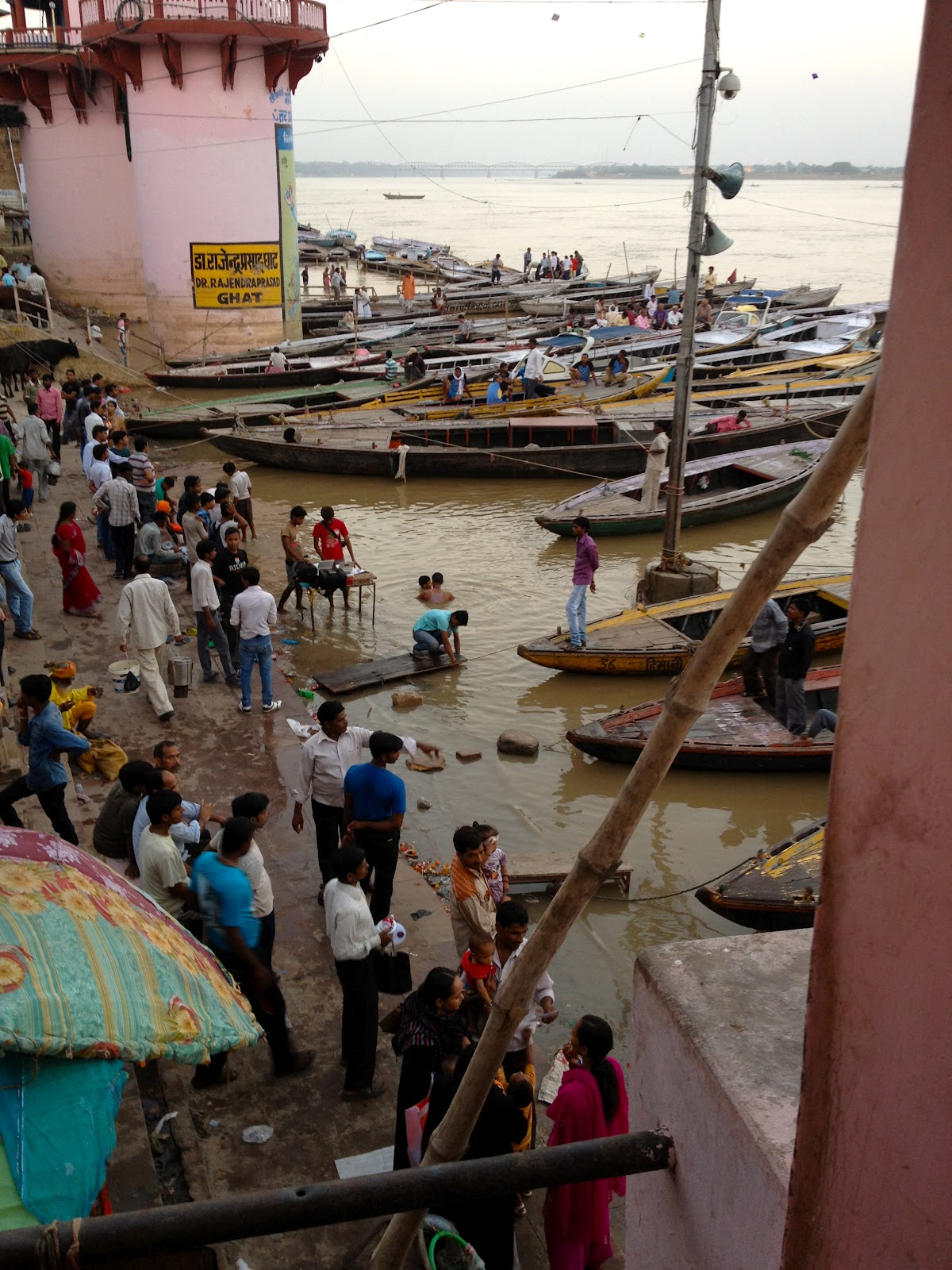
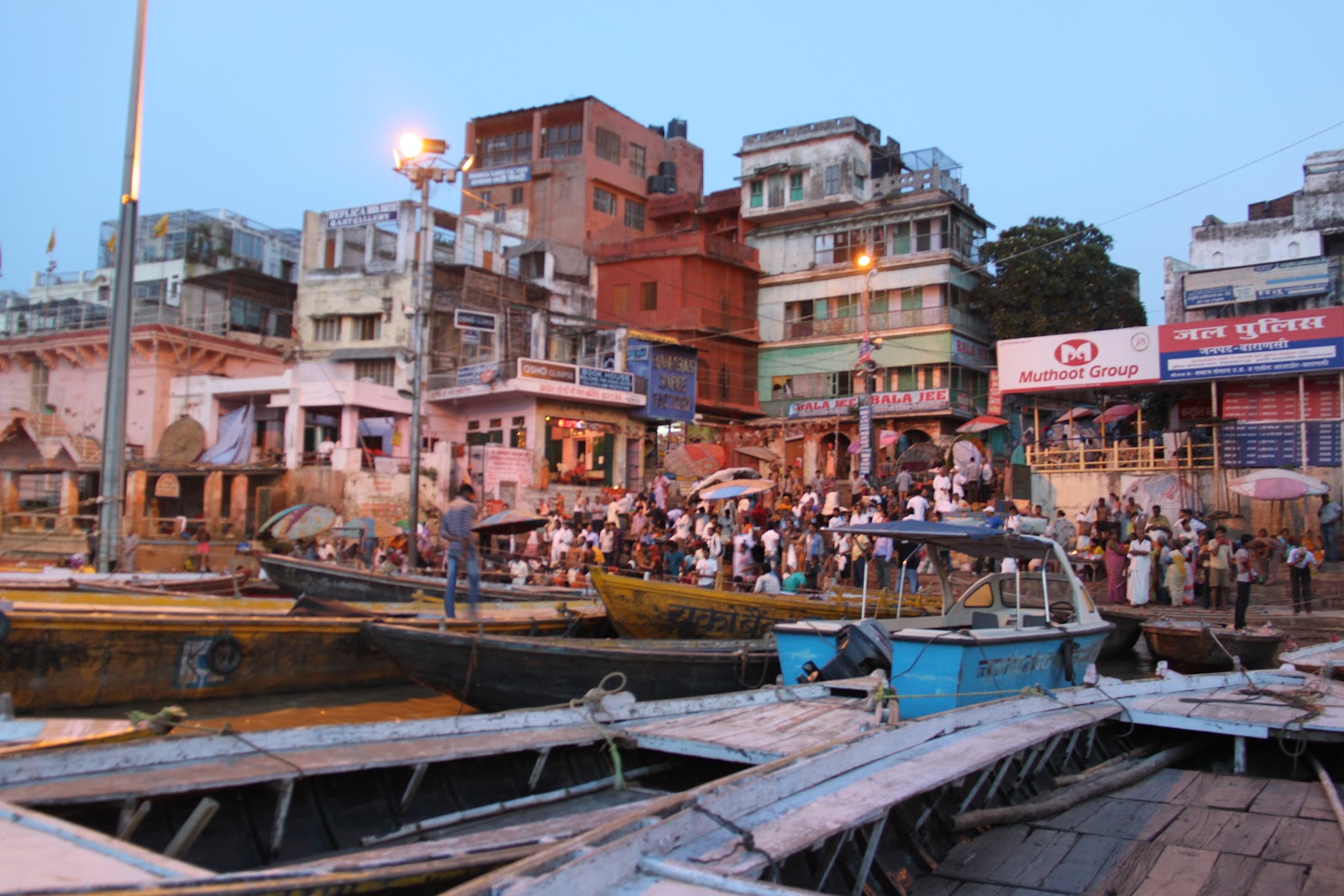
On our first night Dr Tripathi takes us down to the Ganges to observe the religious bathing and praying and washing and activities of the people.  

In the evening at one of the ghats


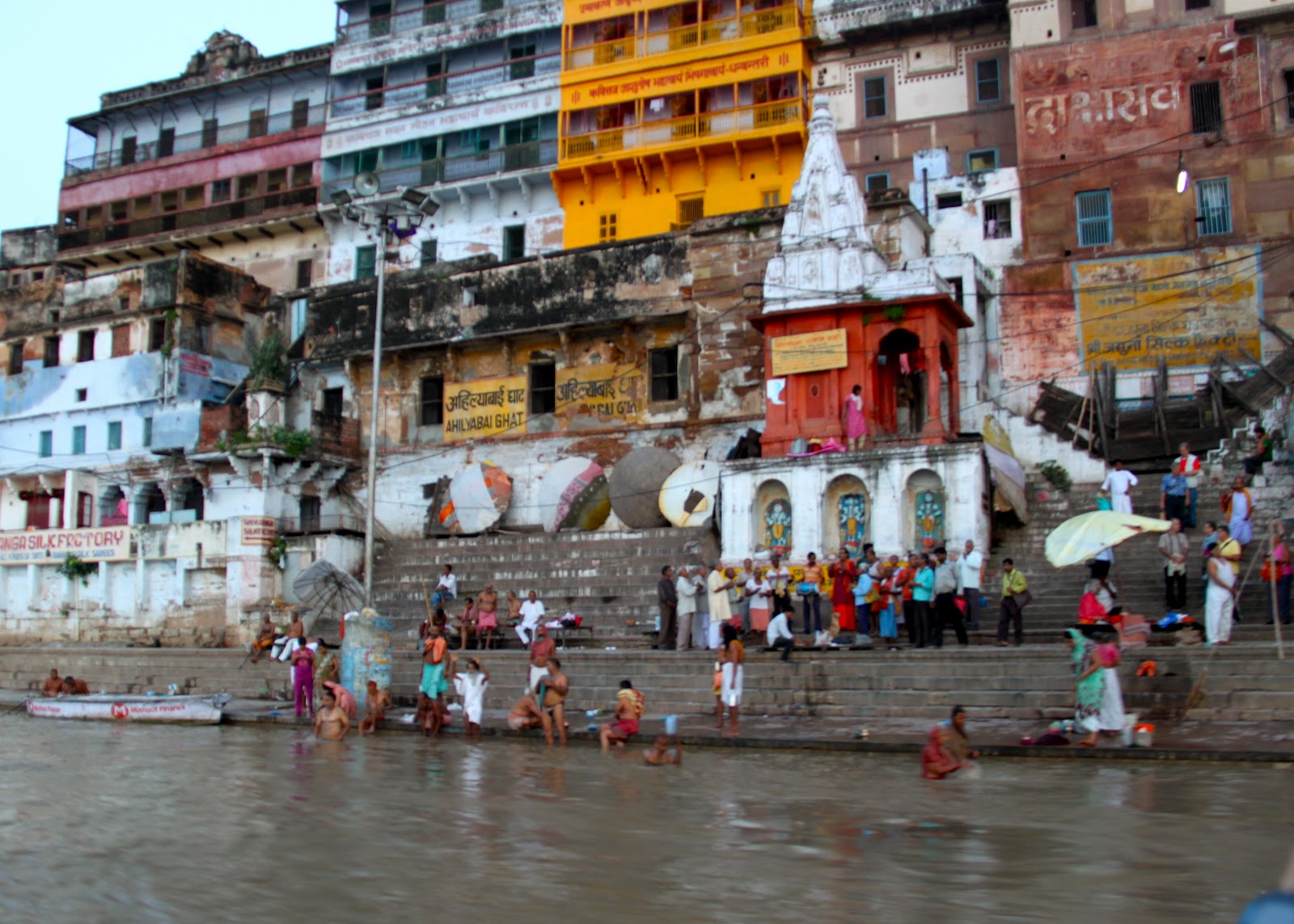
People in the Ganges


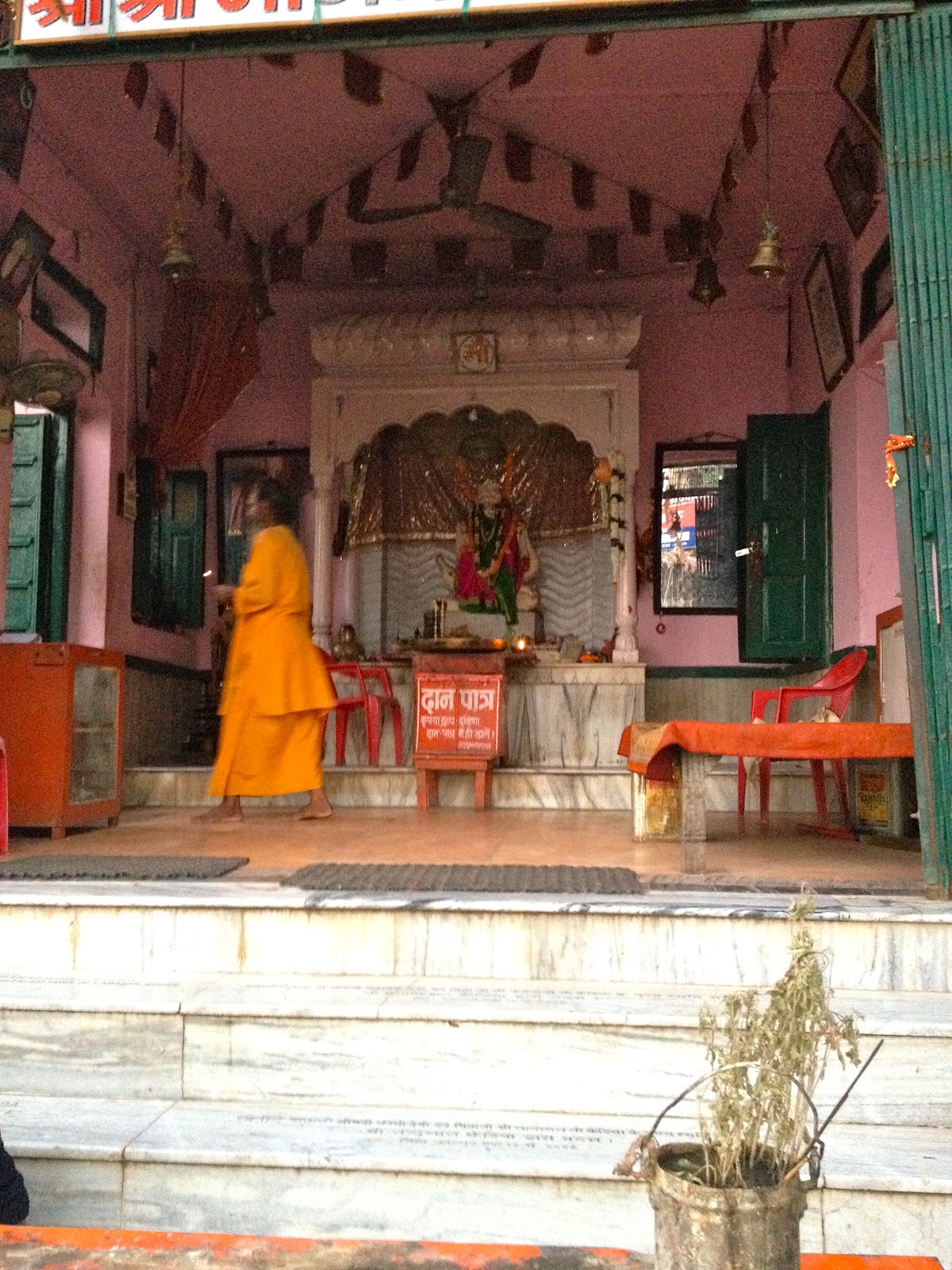
Temples are everywhere


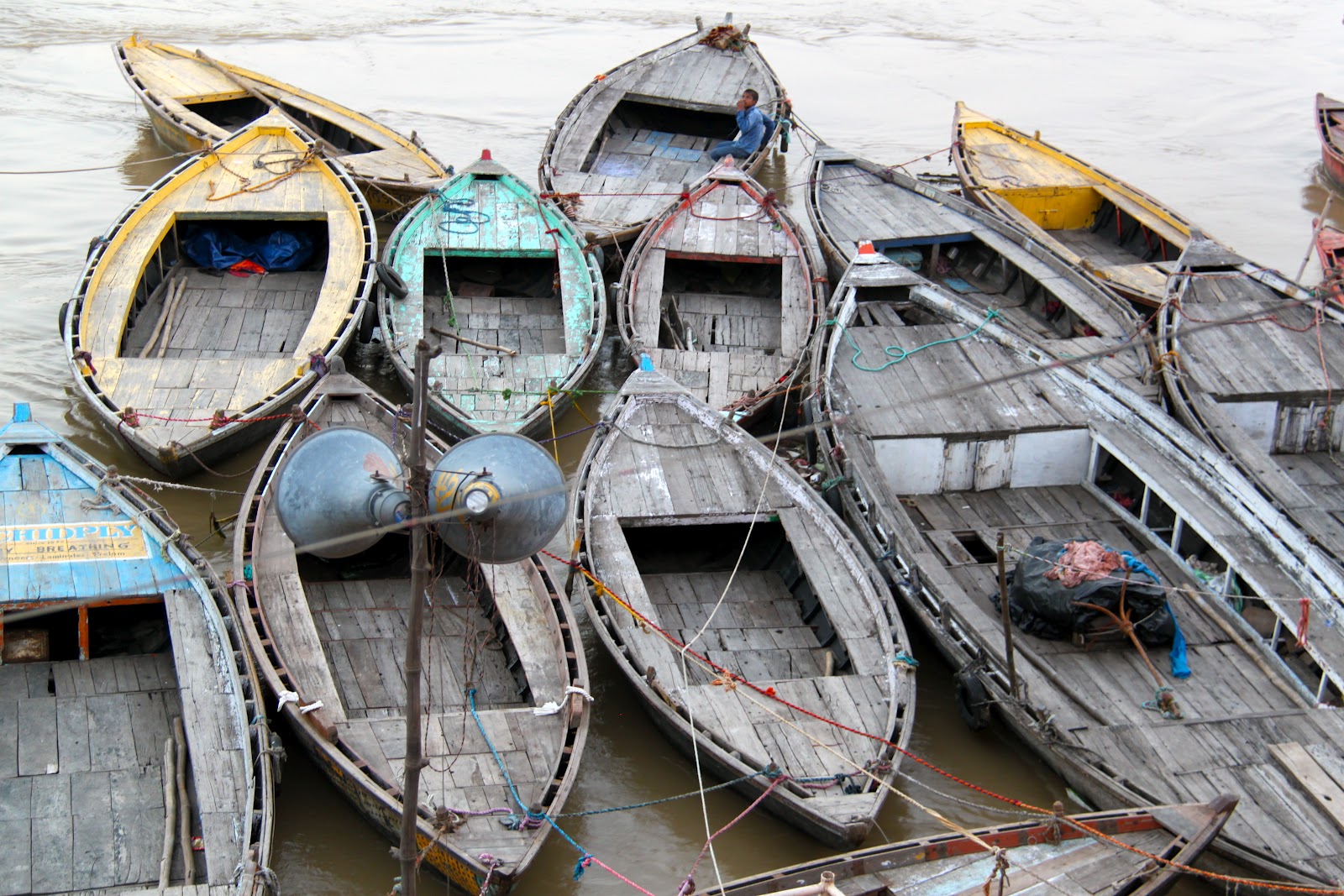
Boats to ride down the Ganges


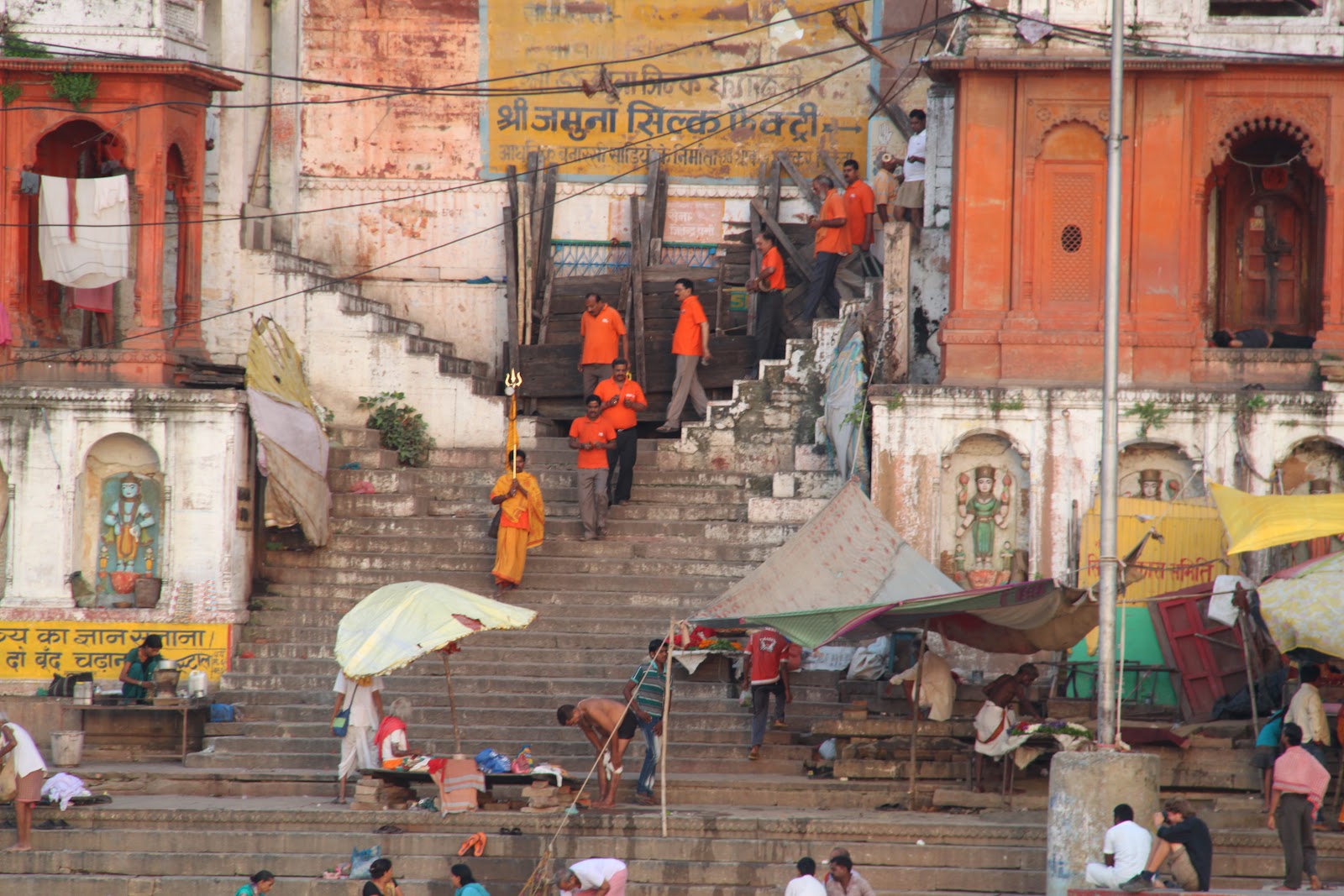
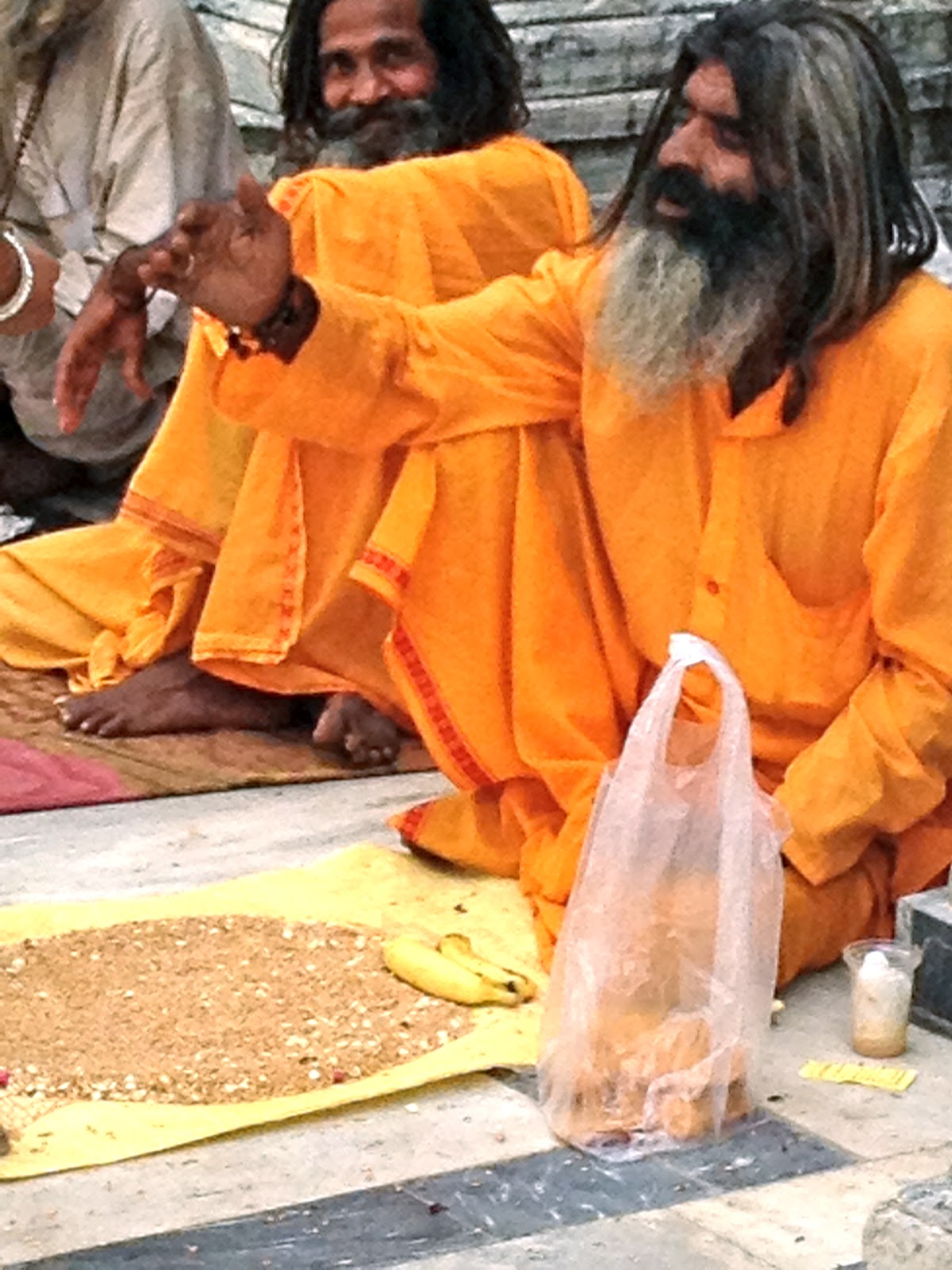
The men in orange have come to pray and bathe in the Ganges


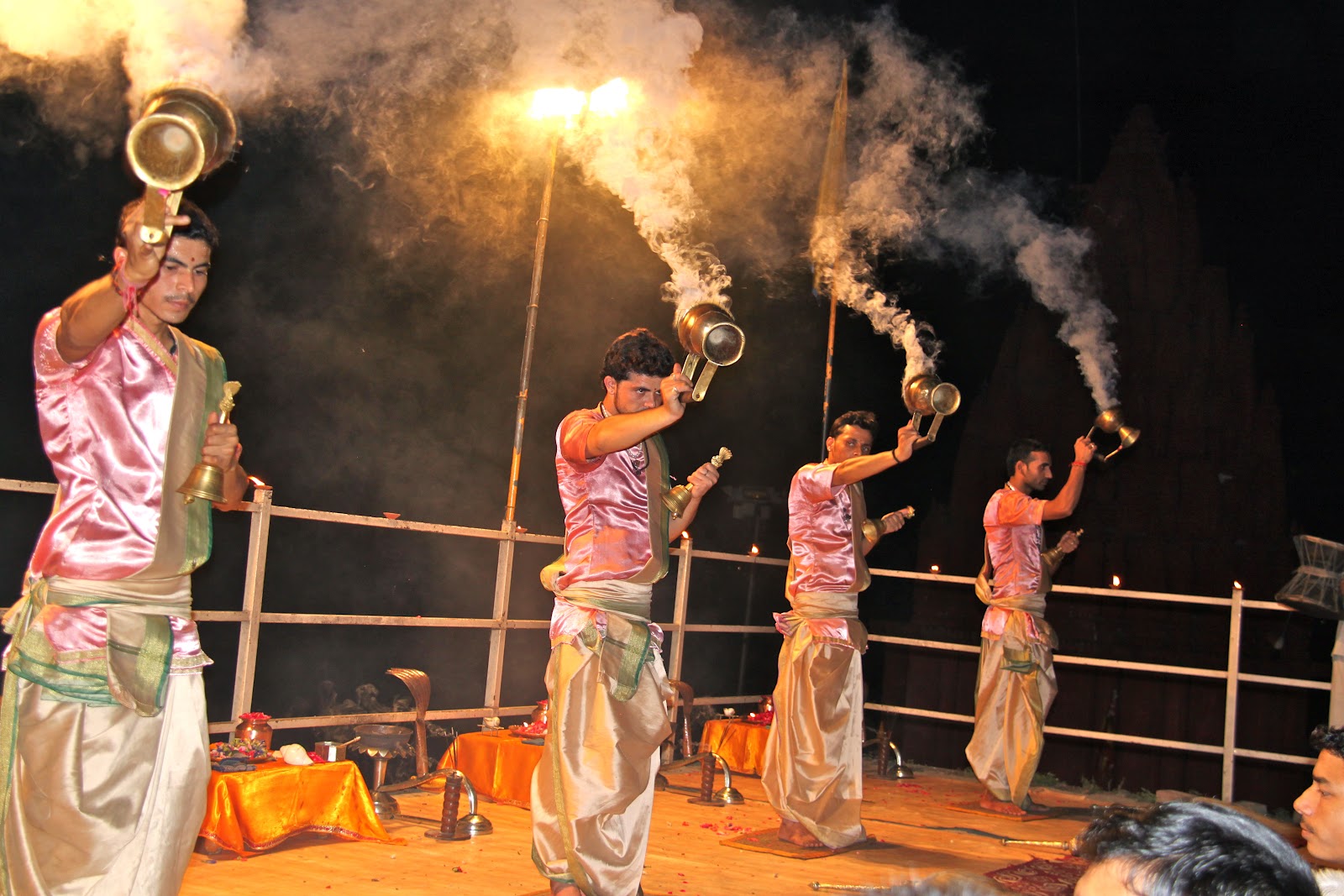
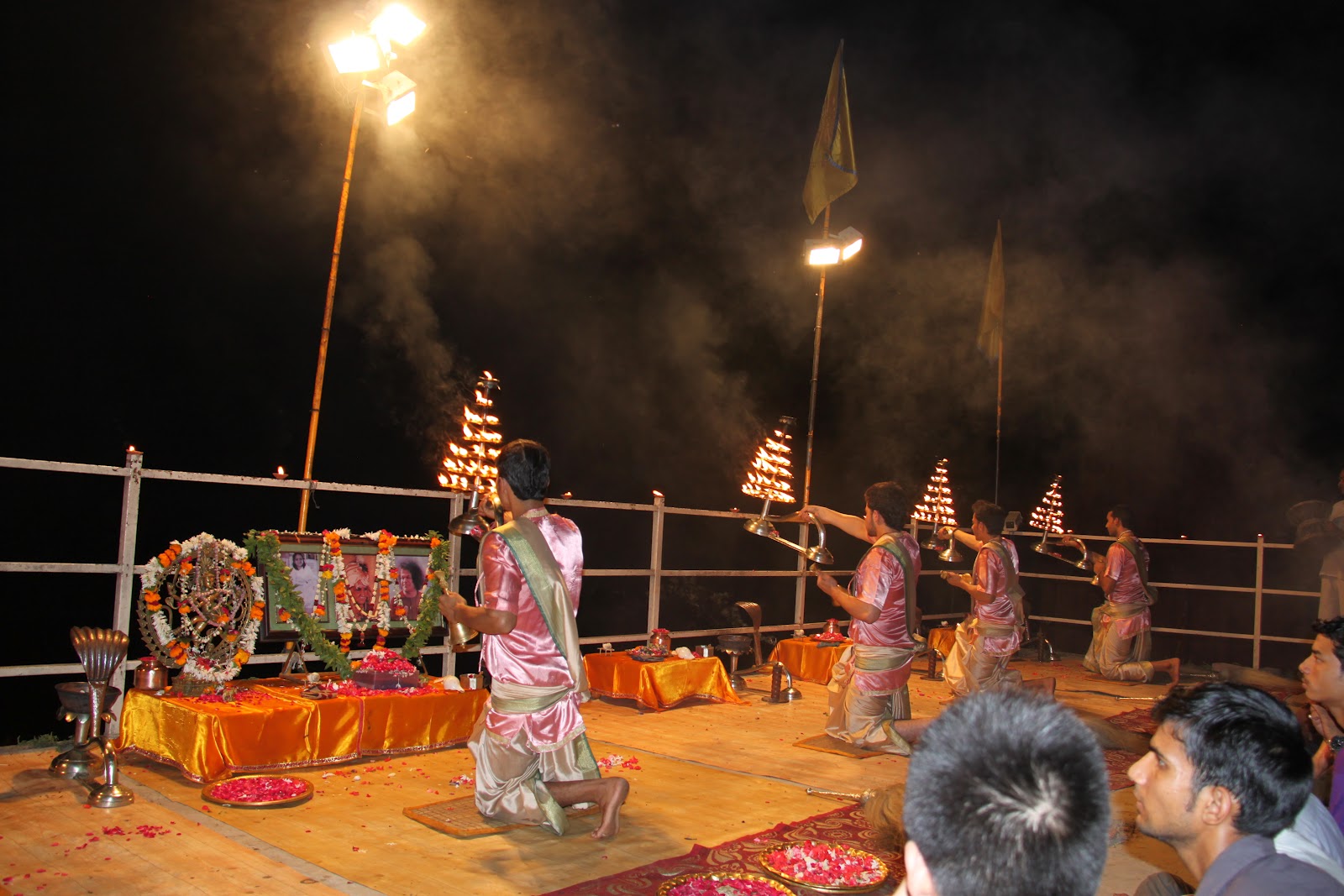
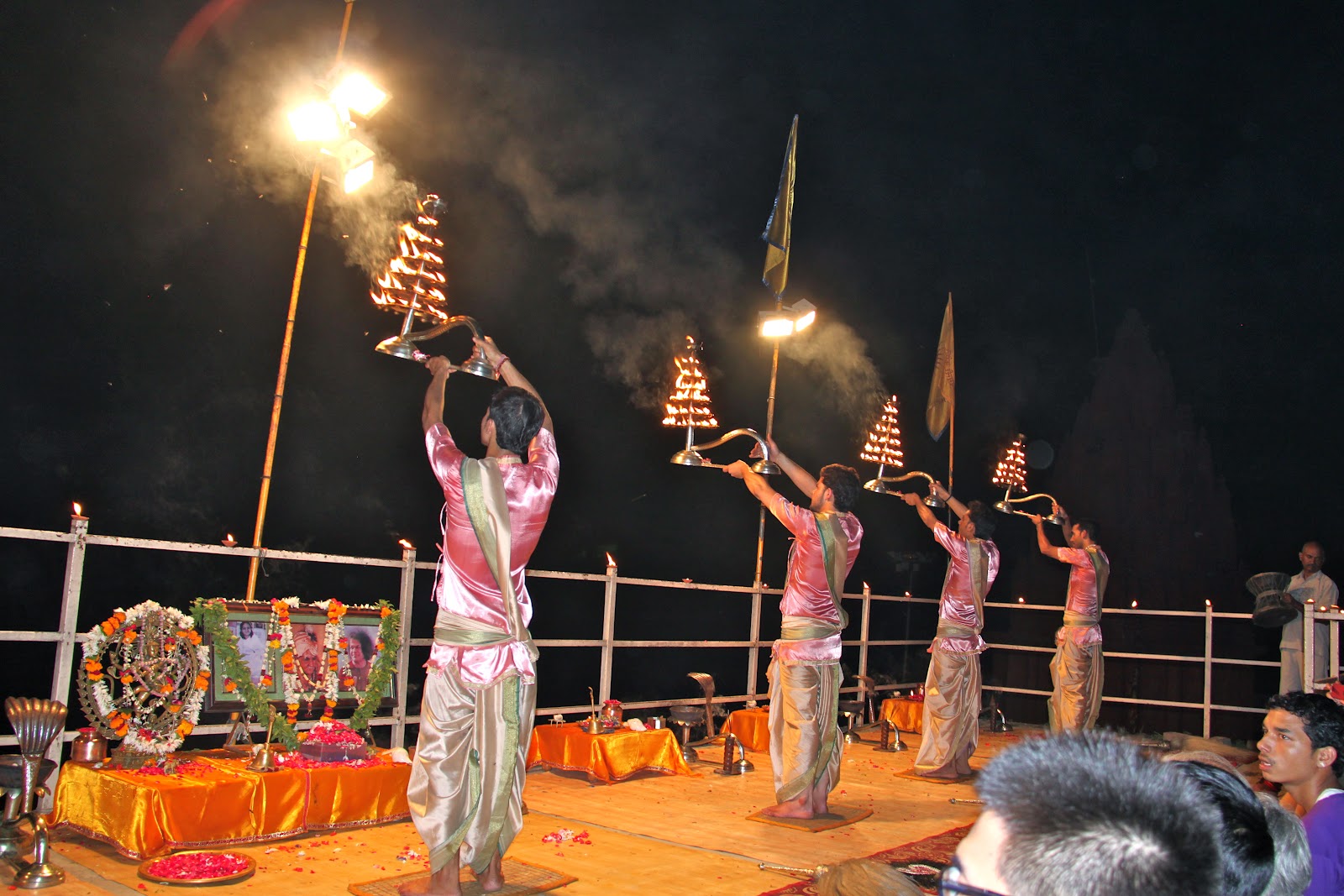
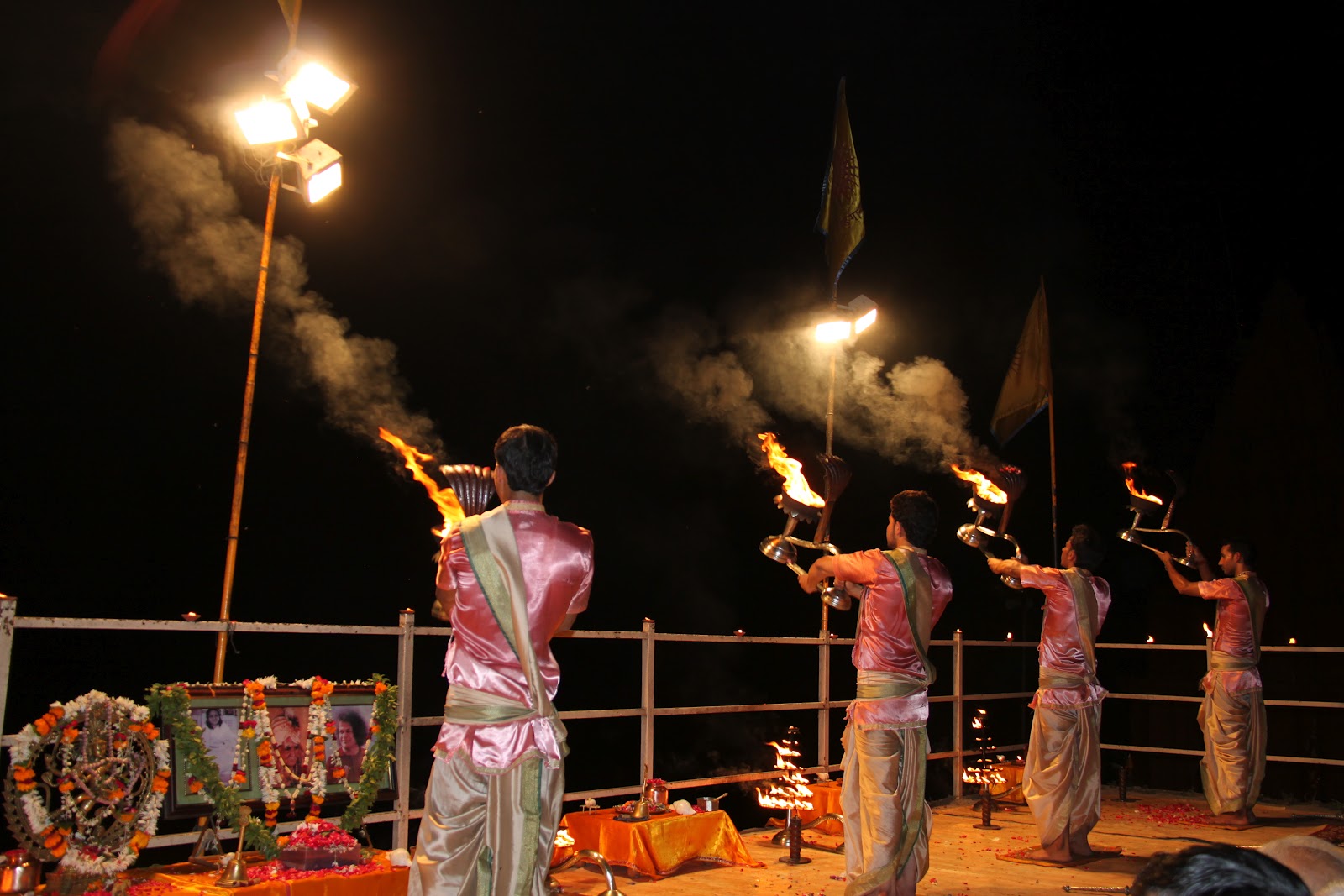
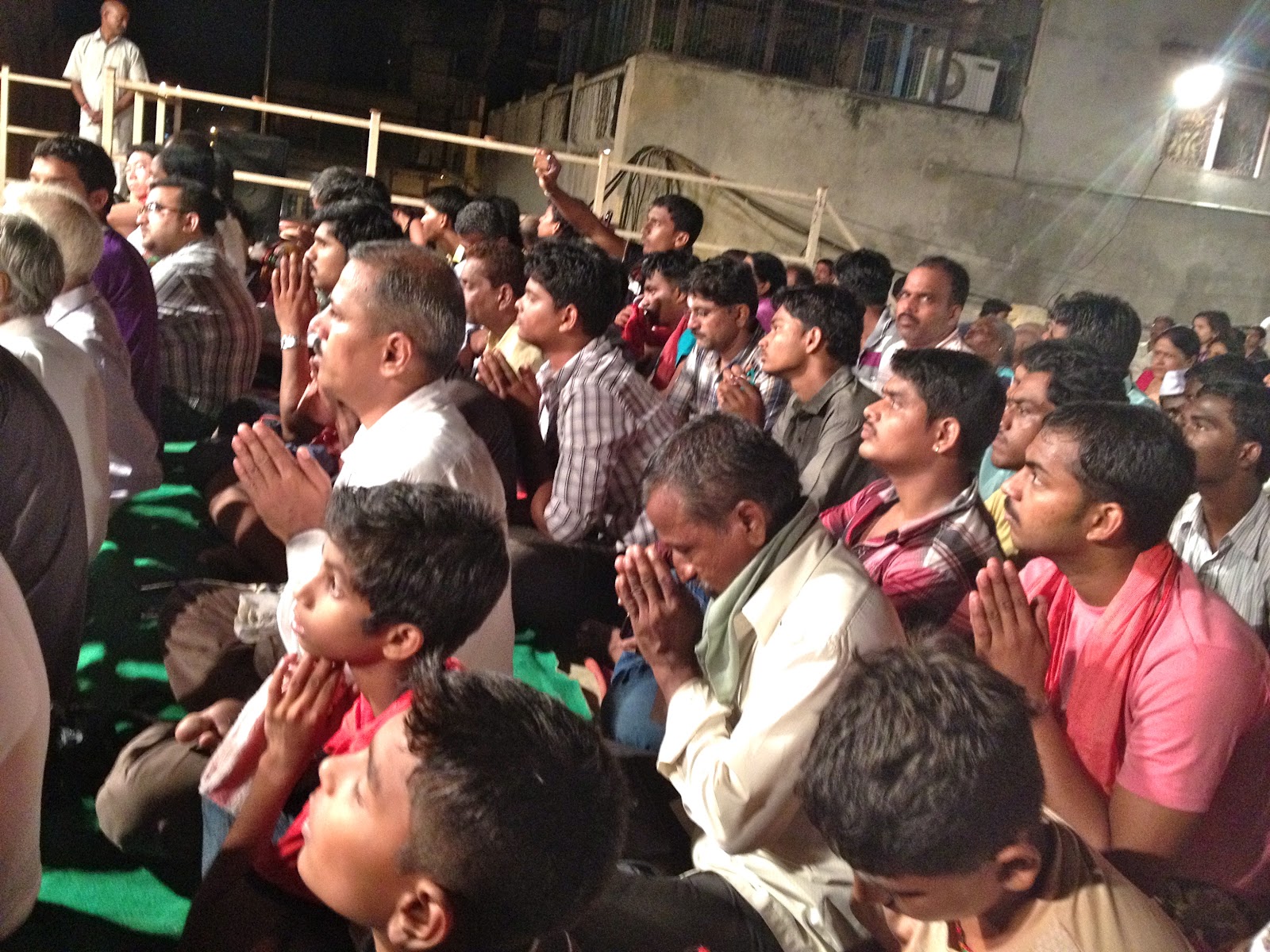
Each night Priests give thanks for the day and the blessings of life.  It was a colorful display of incense, flowers, conch shell blowing, fire and water.  There are 7 priests performing the same rituals at the same time.  The music and singing is engaging.  95 percent of those around us know the words and are chanting and singing and clapping with the Priests.  Dr. Tripathi later told us that most of those attending are Hindu pilgrims from India.  Their faces are glowing with the excitement of the rituals.  The mood is ceremonial and upbeat.  There is no sorrow or regret.  It is more like a devotional carnival.  The rituals last 45 minutes and begin and end with the conch shell blowing. 


Nightly performance by 7 Priests

The crowd watching the performance

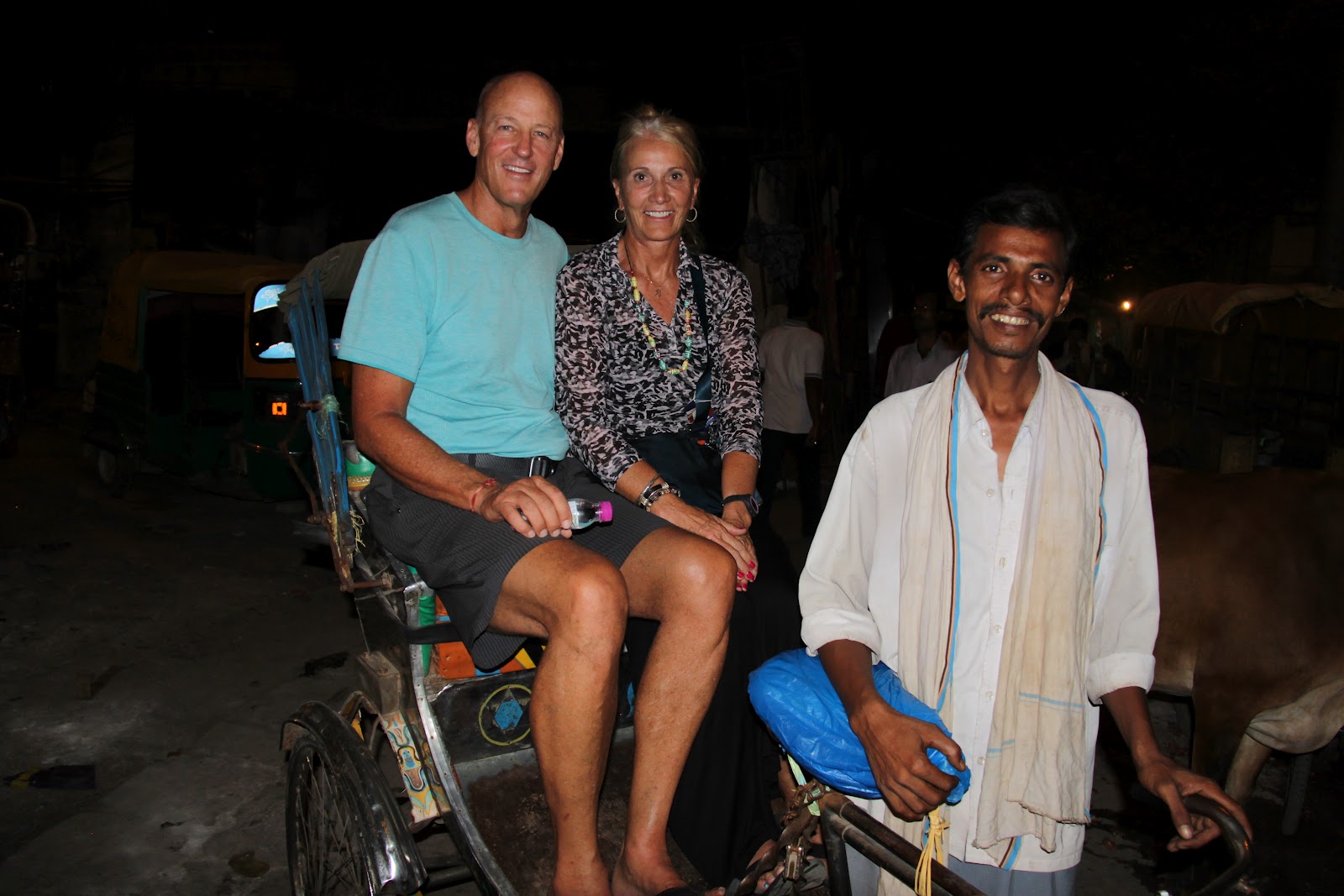
Following the ceremony we take a Rickshaw ride back to our car since cars are not allowed in the narrow alleys and streets that lead to the Ghats (stairs) down to the Ganges River. 
Rickshaw Ride

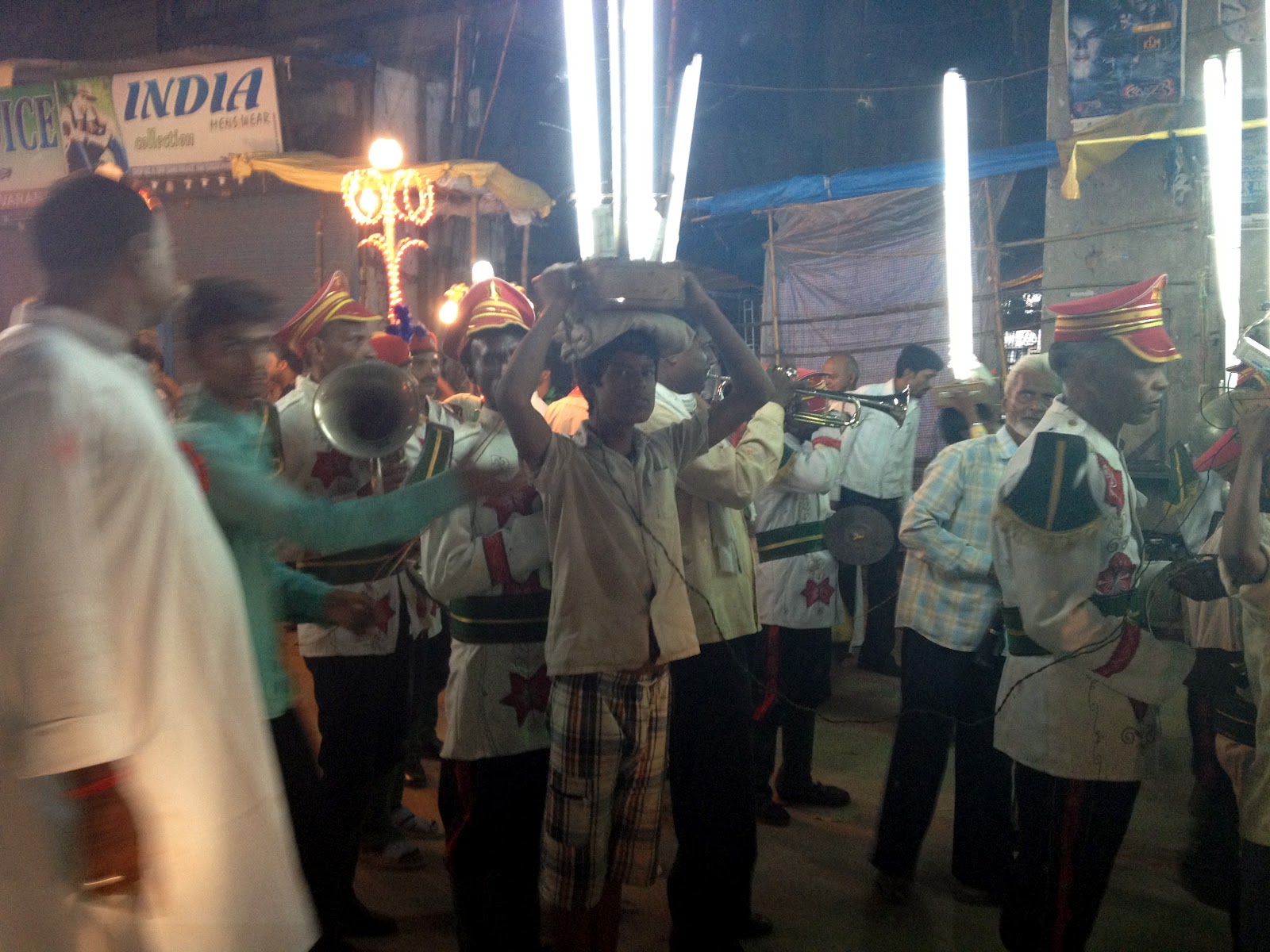
Street life is at the same time overwhelming and spectacular.  On the way we see a wedding processional with revelry, celebration, crazy dancing by the men, and costumed horses and riders.

A wedding procession


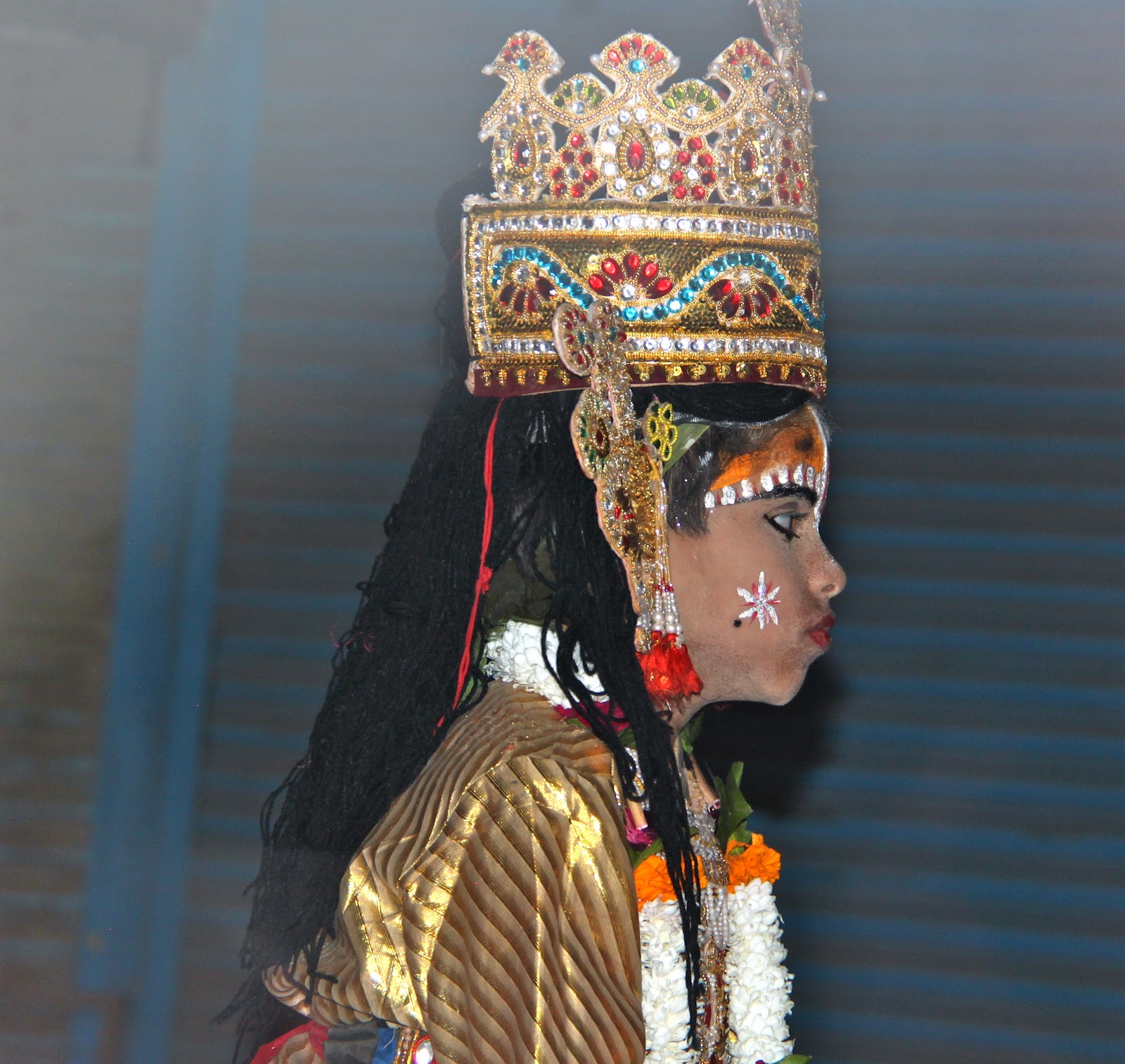
Young girl riding a horse in the wedding procession
People everywhere

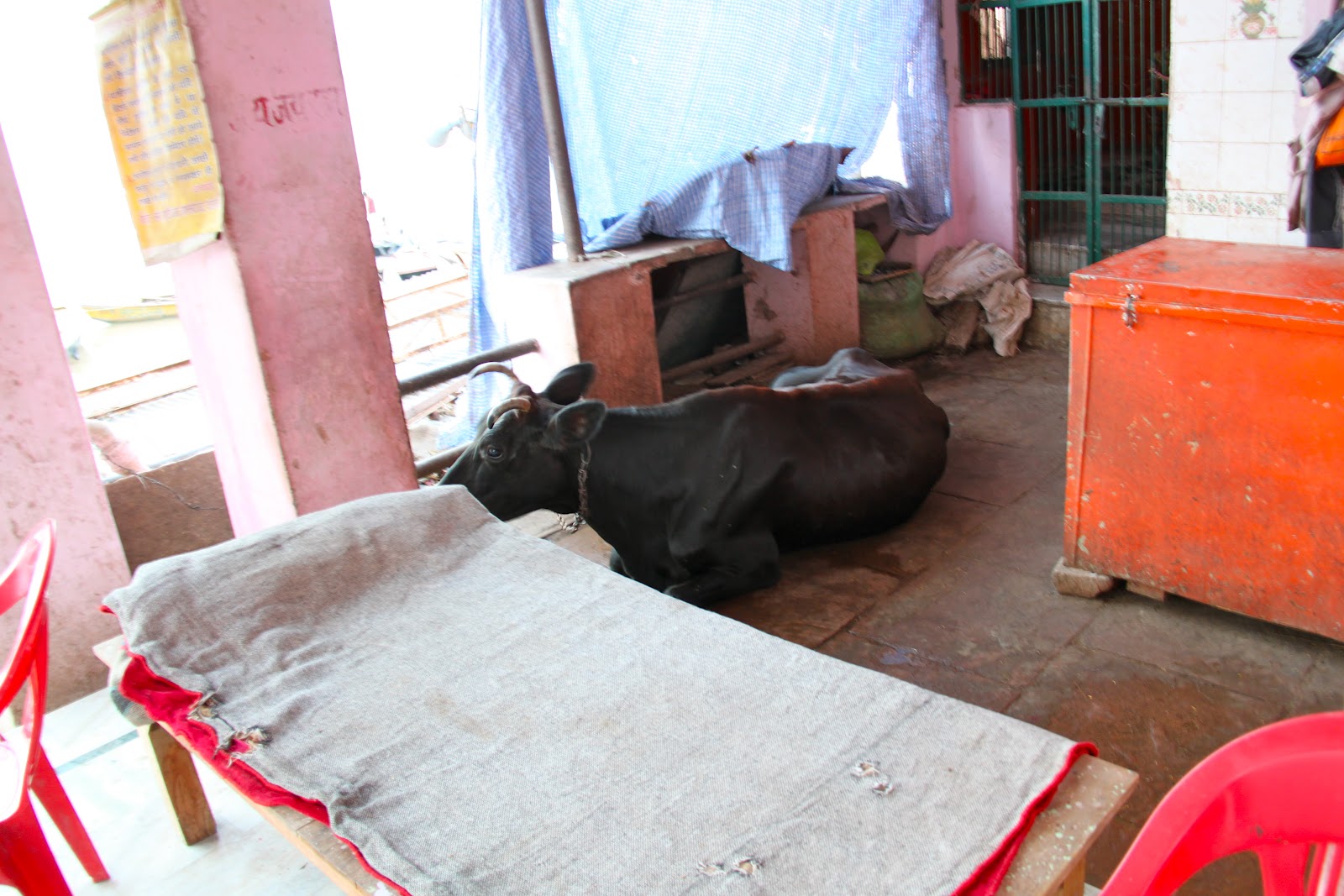
Walking along, I look inside this home, there is a cow resting!

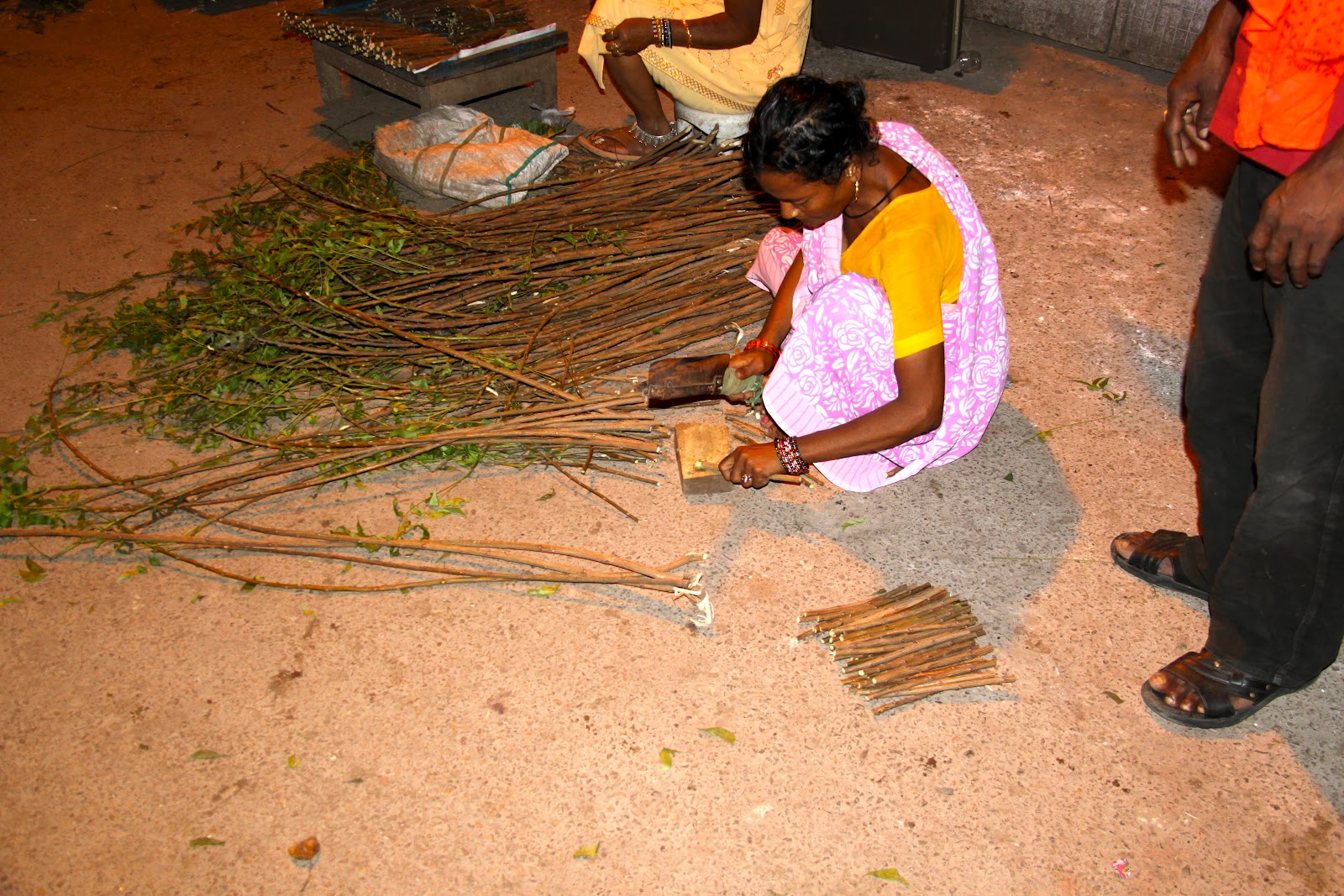
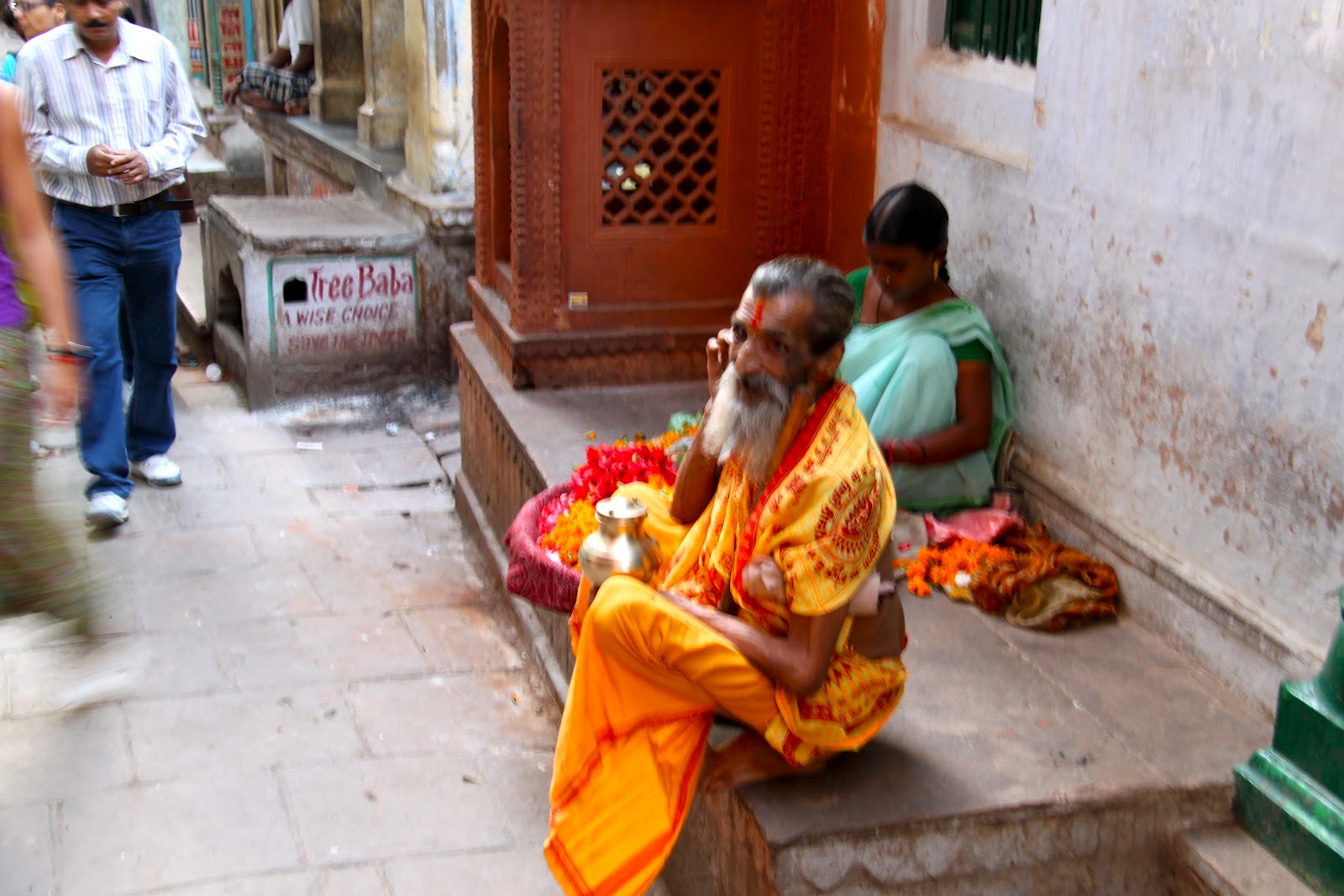
This lady is selling a stick that people use as a toothbrush

People at a ghat

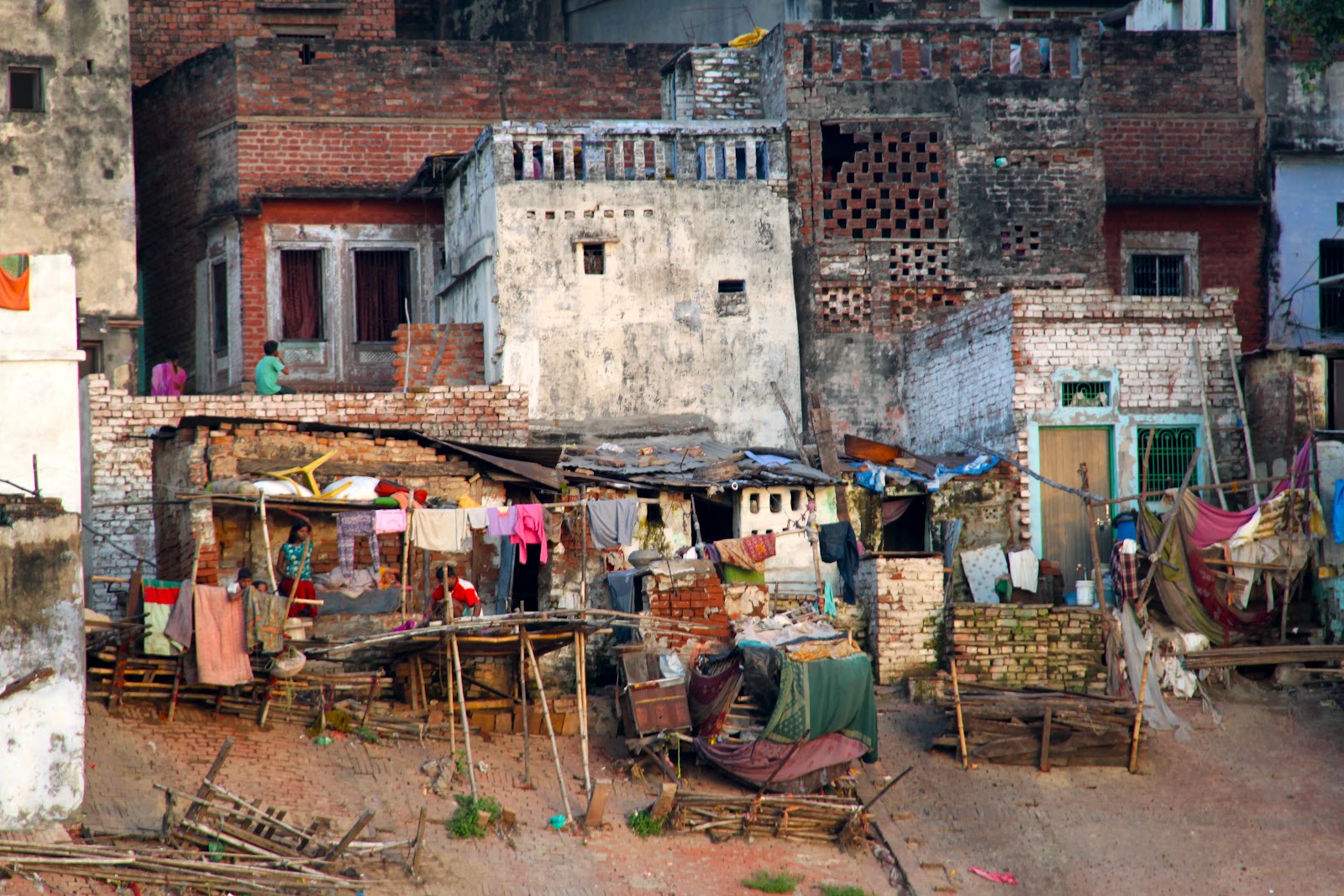
Homes

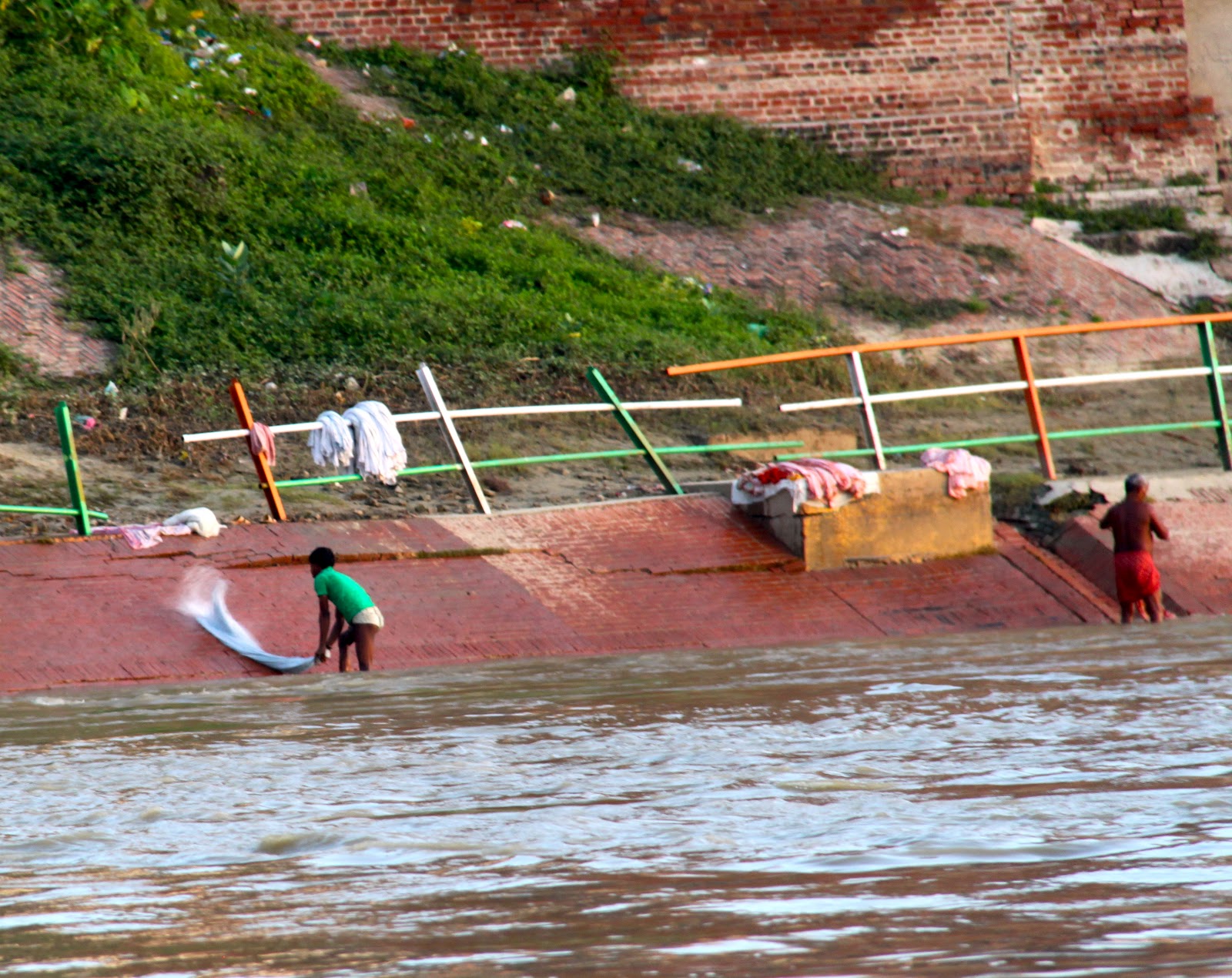
Doing wash in the Ganges

People on the street

Cows can sleep on your porch

Streets of Varanasi


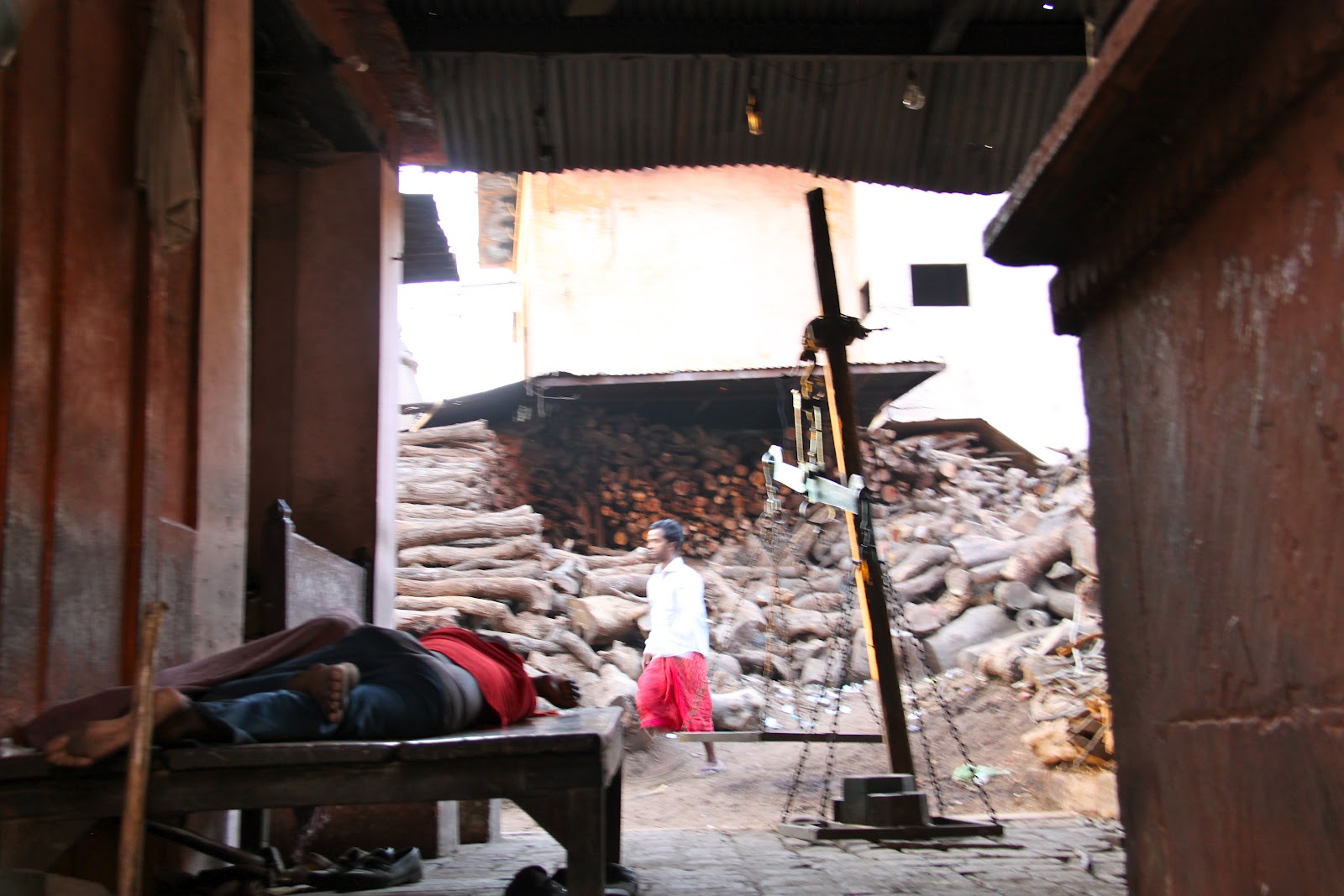
We make arrangements to meet Dr. Tripathi at 5:15 am the next morning so we can make our way to the Ghats and hire a boat to observe the sunrise and ceremonies from the Ganges River.   There are 2 ghats that have cremations of bodies.  It is an important ritual for the Hindu people.  There are about 150 done each day.

Near the ghat of burning bodies

Wood stockpile for burning bodies

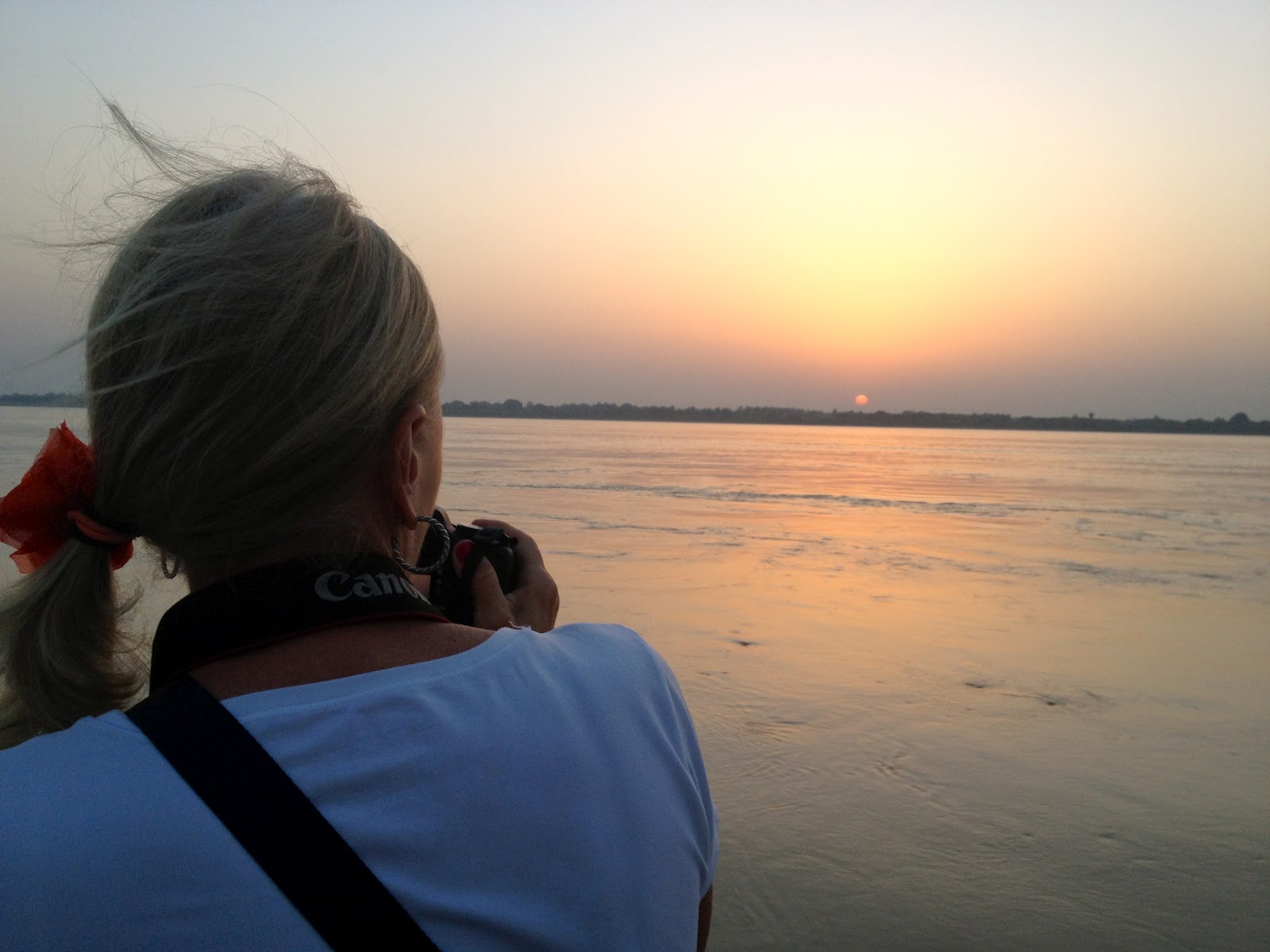
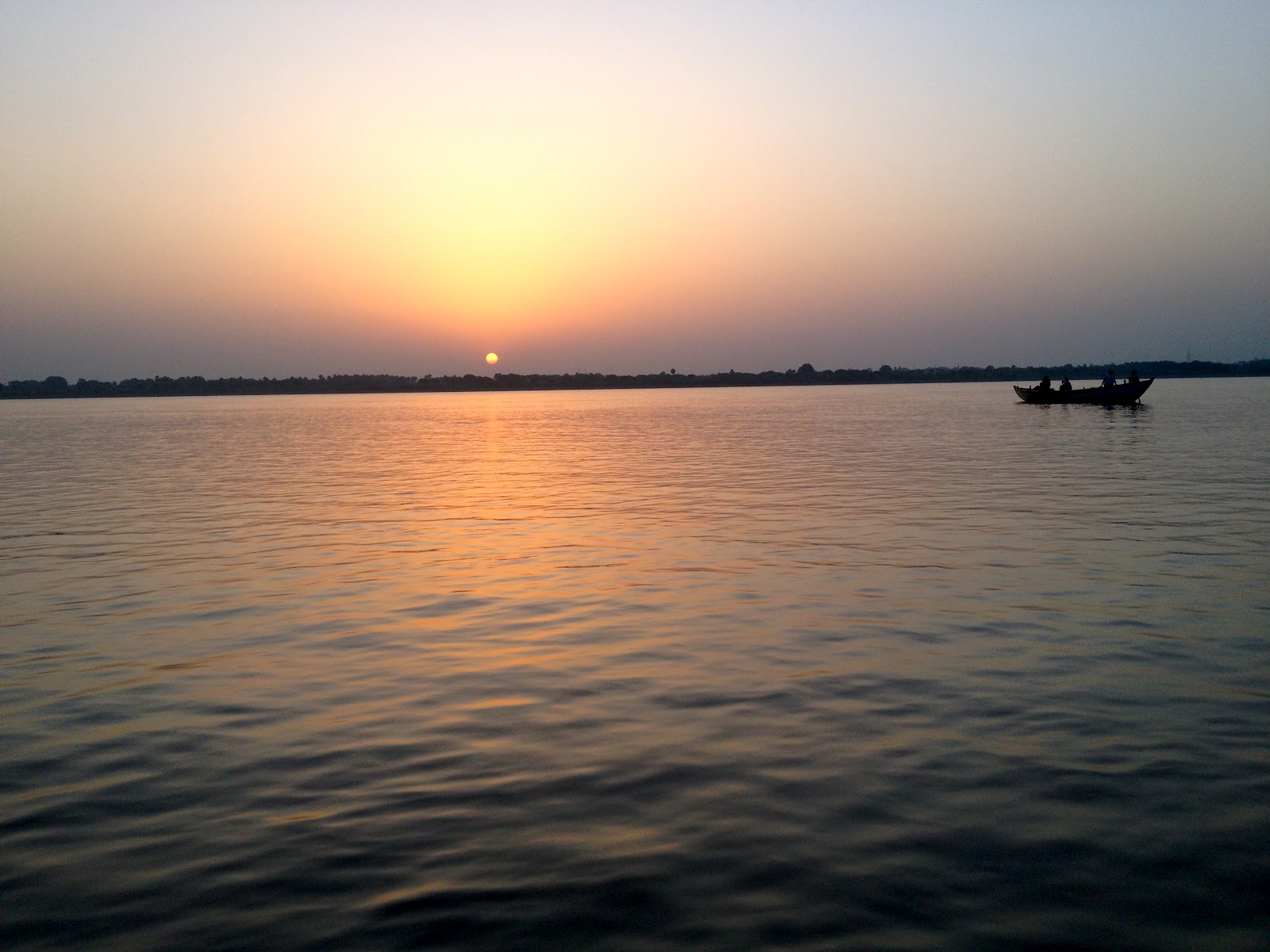
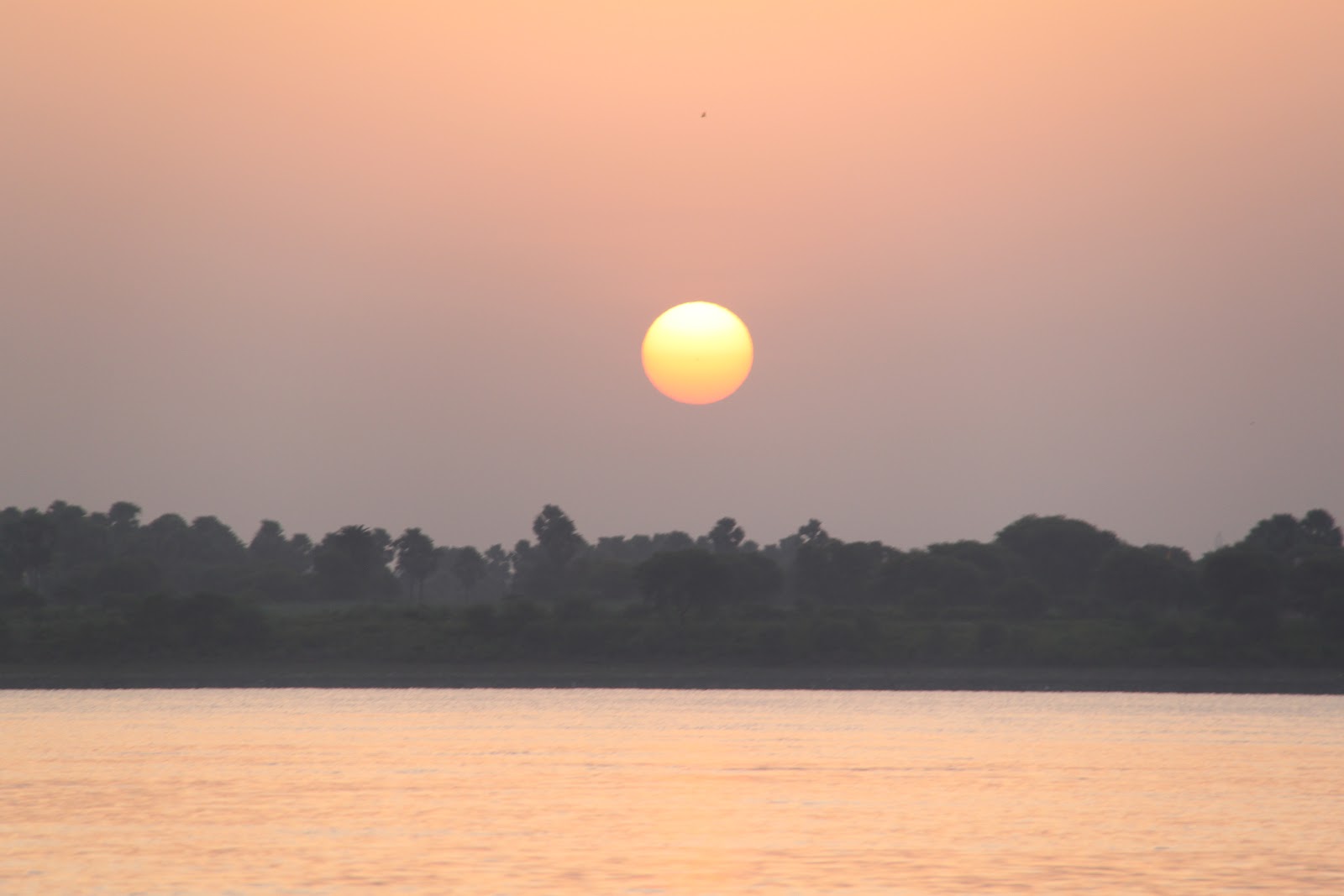
The sunrise is spectacular. 

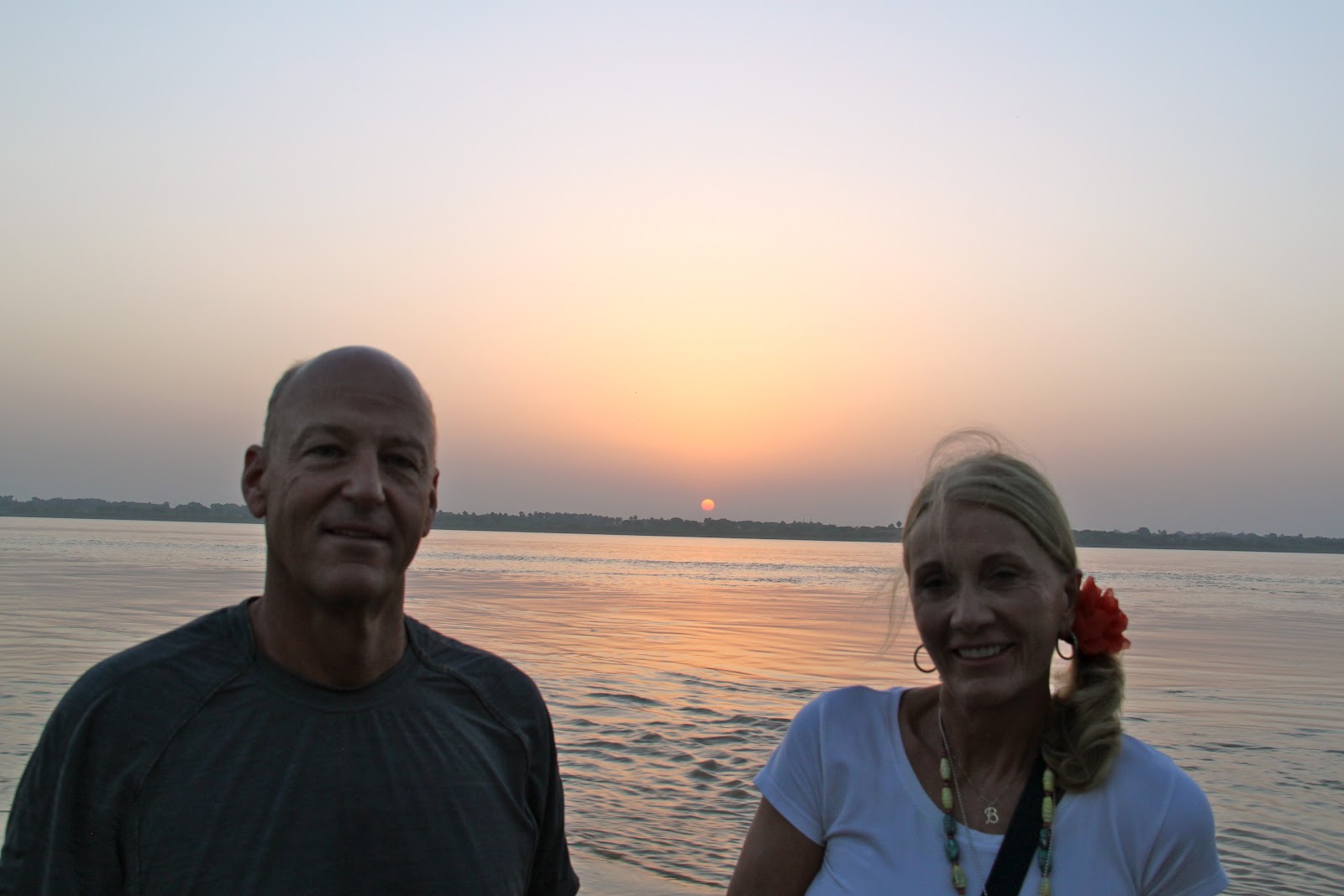
Barb going out on the boat for a sunrise cruise

Barb taking photos


Amazing sunrise

This holy city belongs to the world.  Tibetan monks and royalties from all countries and many religions come here to worship.  Shiva temples in Varanasi number 100,000.  
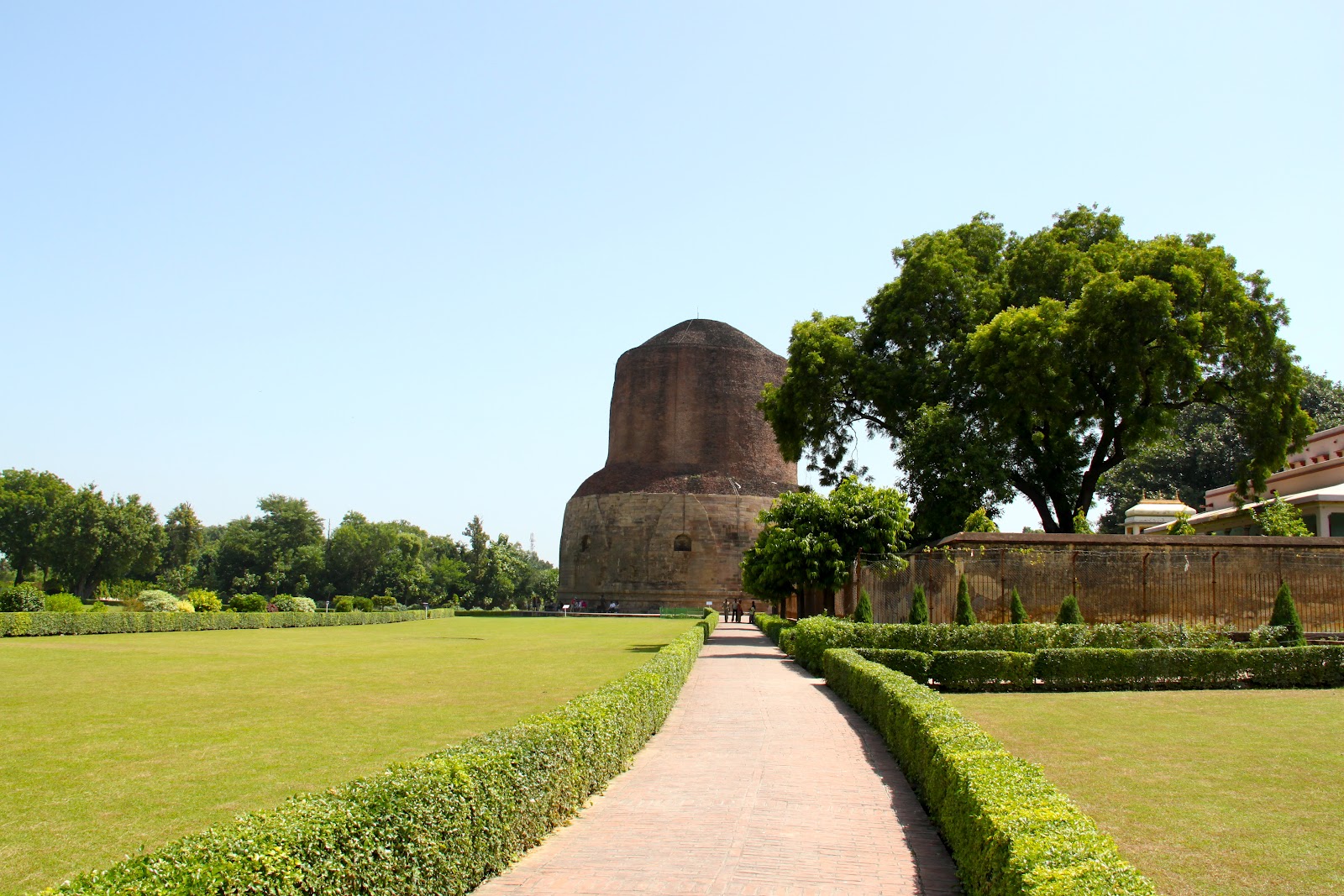
Varanasi is sacred to the Buddhists since Sidartha gave his first sermon or lessons nearby at Sarnath, just 10 kilometers away in about 500 BC.  Prince Sidartha was born the son of a King in present day Nepal.  He had no interest in normal childhood things and the King was worried.  The King consulted with his advisors and they told him to choose a wife for the Prince.  So, the Prince got married at the age of 15 and lived in luxury with his wife for 15 years.  He did not leave his palace during that time and he knew only luxury.  He was not content and asked his servant to show him the outside world.  His servant took him outside and they came upon an old man.  Sidartha was distraught and asked why this man is old and frail.  The servant replied that it is the same for all and someday we must all grow old.  Sidartha was so upset that he asked to be taken back to the palace.  The next day he asked his servant to take him out again.  They came upon a sick man.  Sidartha was distraught.  Why is this man sick?  Why is this bad thing allowed to happen?  Sidartha did not understand.  He was so unhappy that he went back to the Palace.  He returned the next day and saw the untouchable poor people and disadvantaged.  He was so distraught that he began to pull out his hair.  He fasted for many days drinking only water.  He  left his palace and wife and son, went into the mountains, and traveled as a priest.  One day it was given to him the wisdom that the Middle Way is the correct way and that we should avoid the extremes of pleasure and pain.

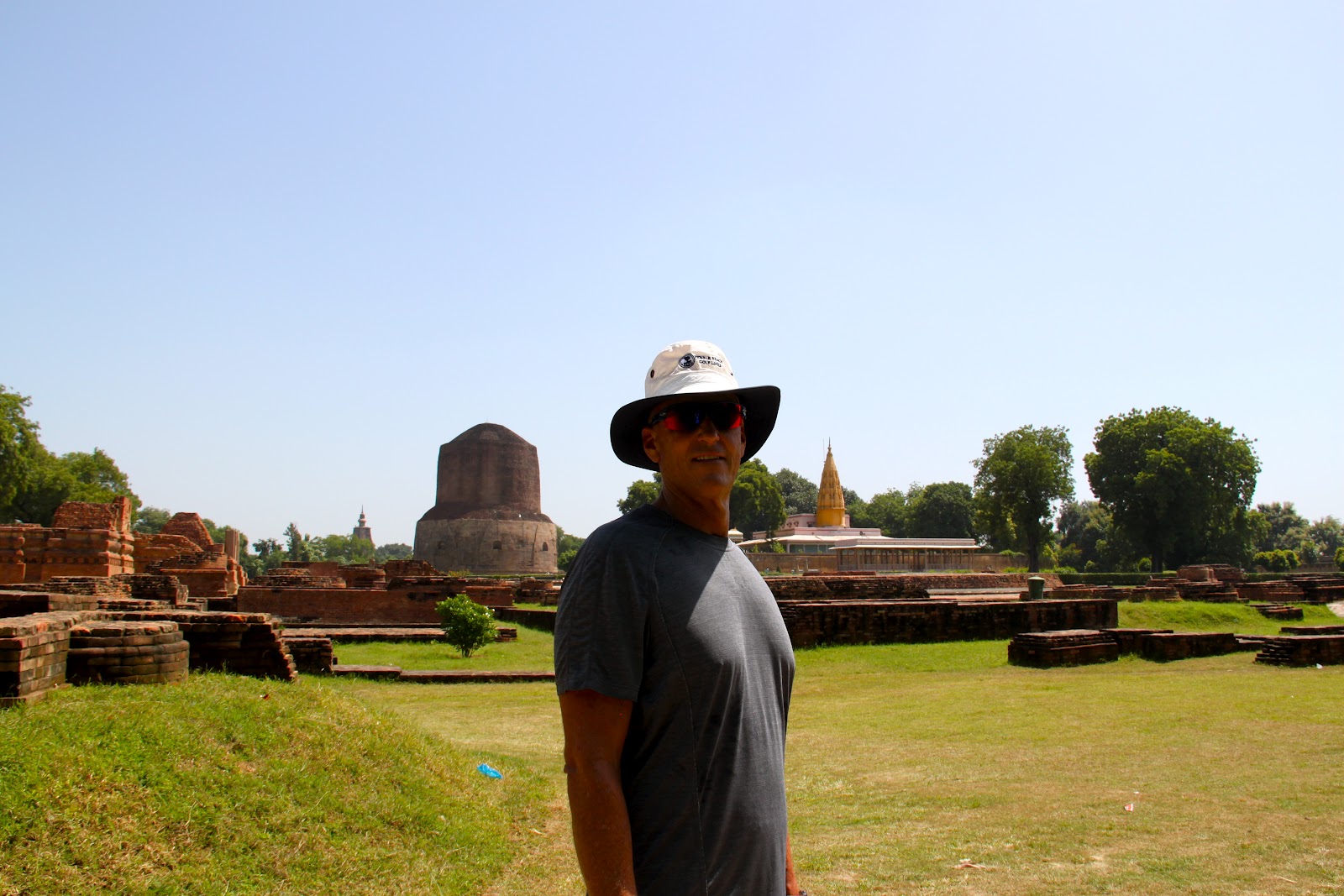
Stupa at Sarnath

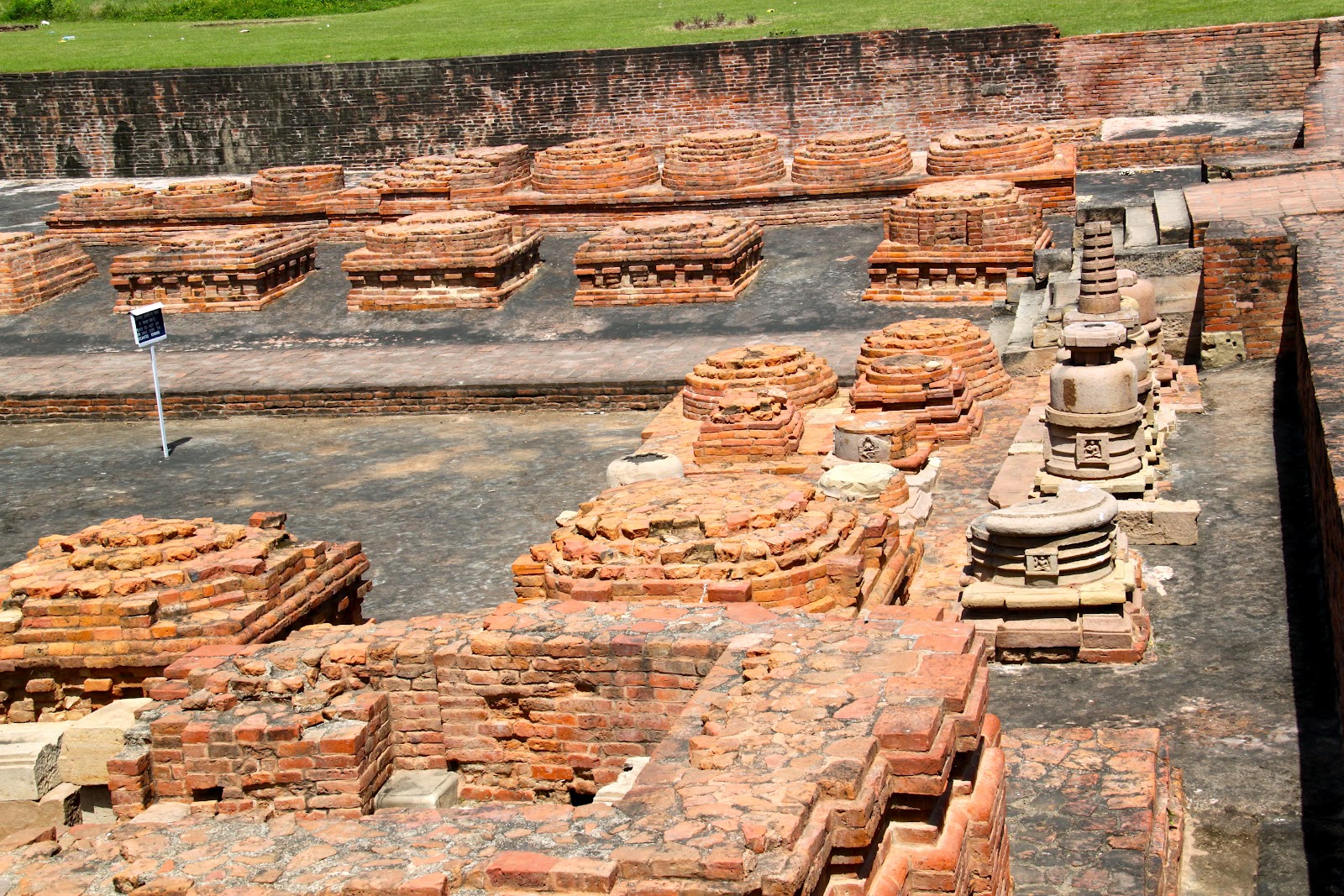
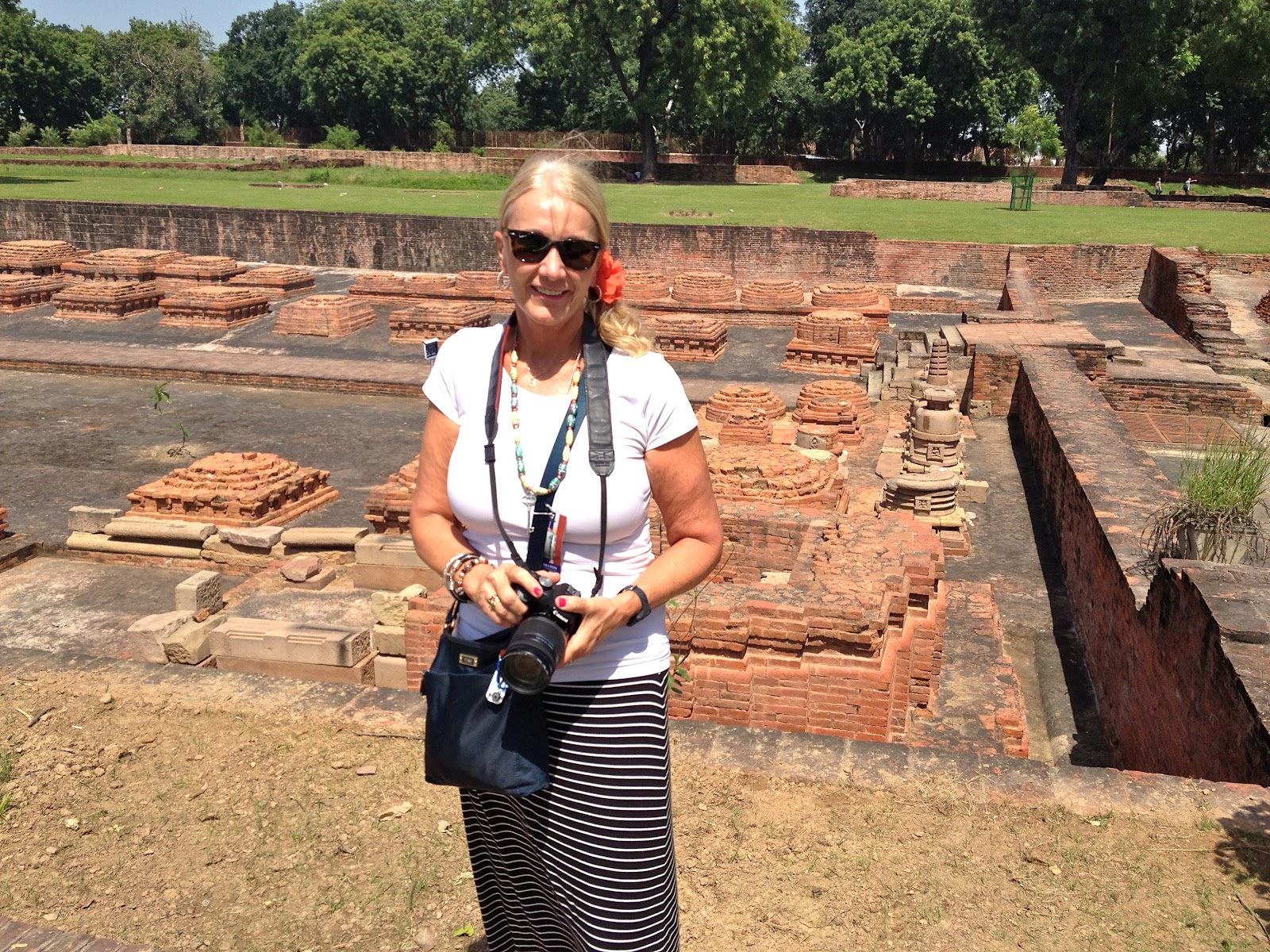
Large group of Stupas uncovered

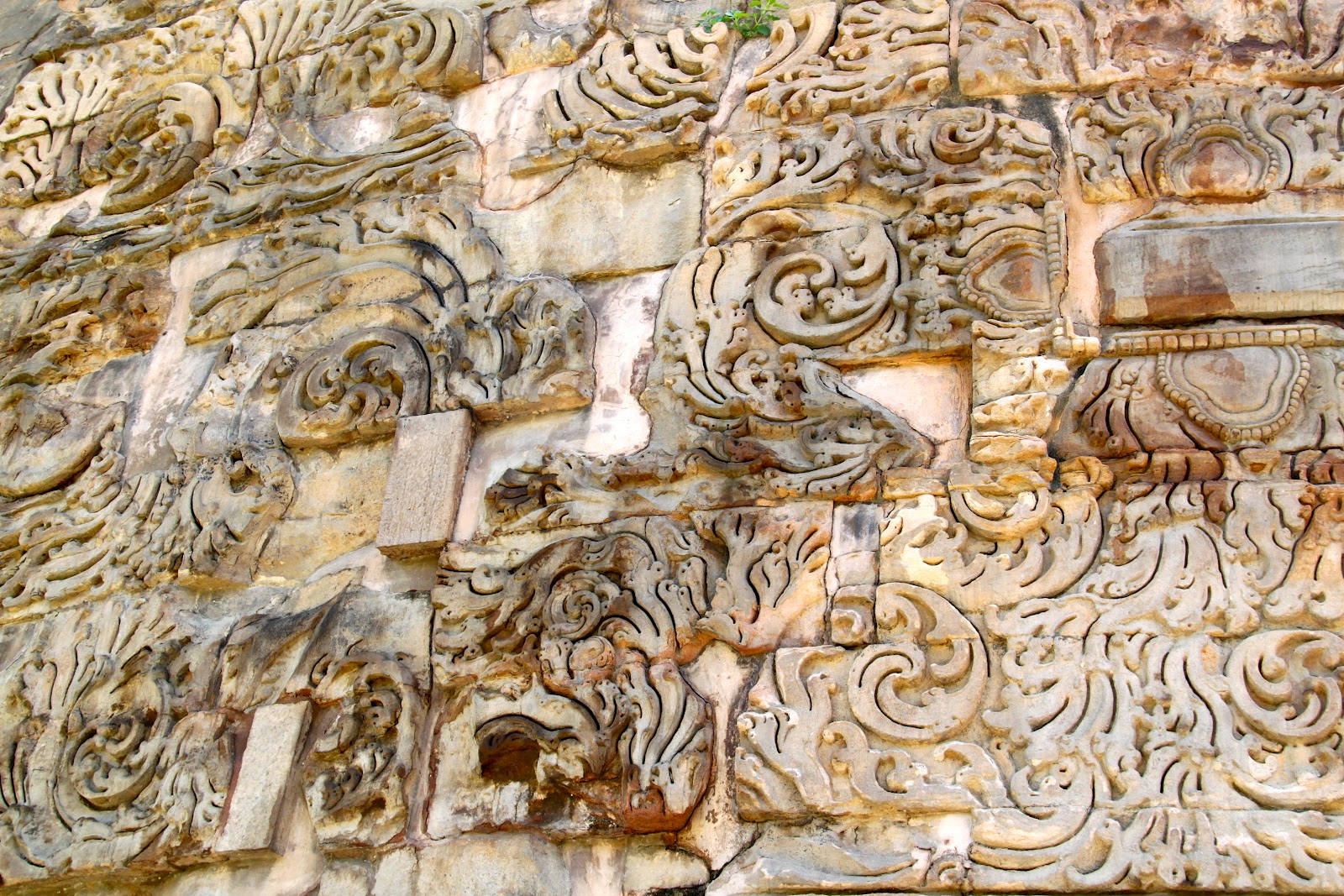
Carving on the large stupa where Buddha gave his first sermon

Uncovering stupas

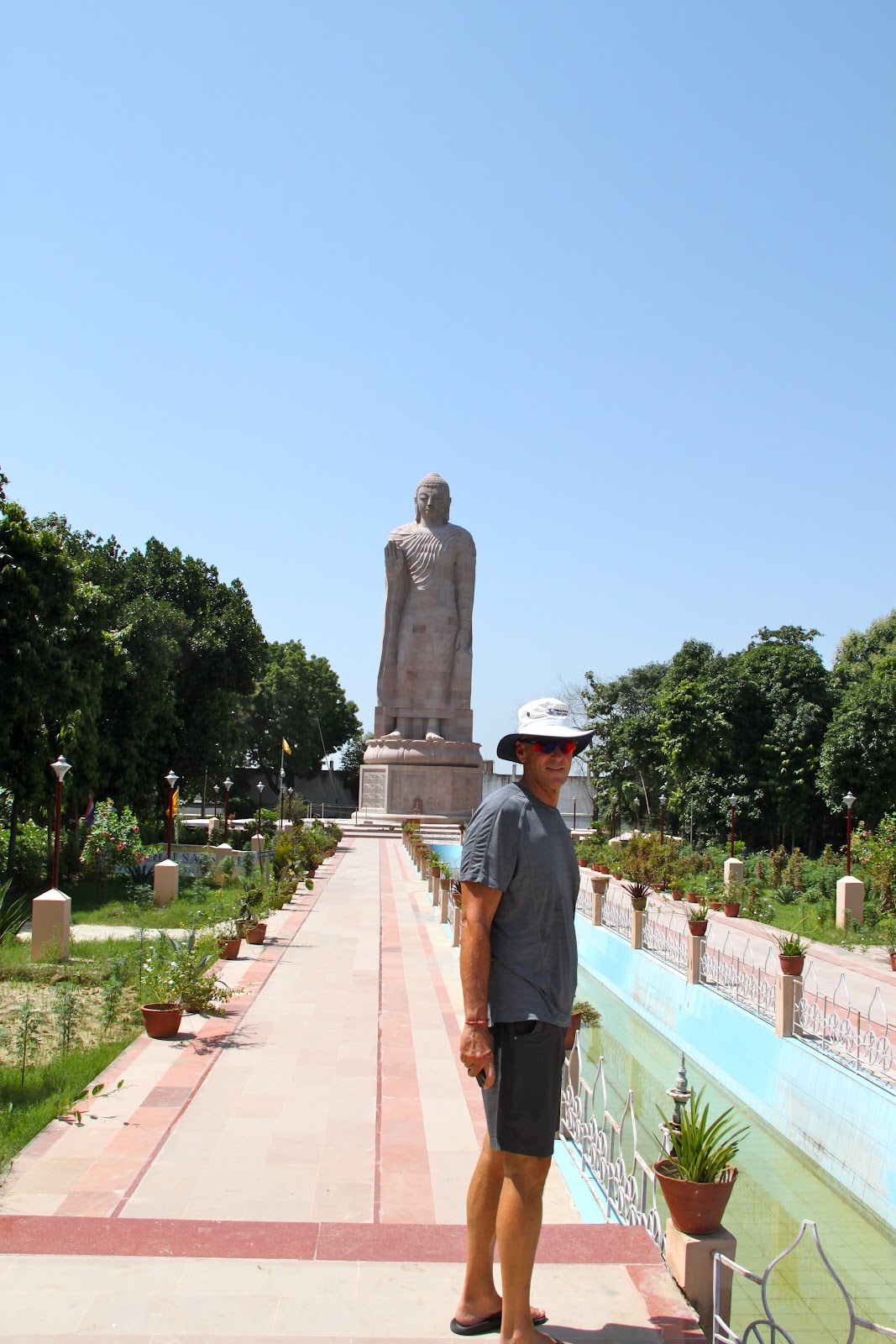
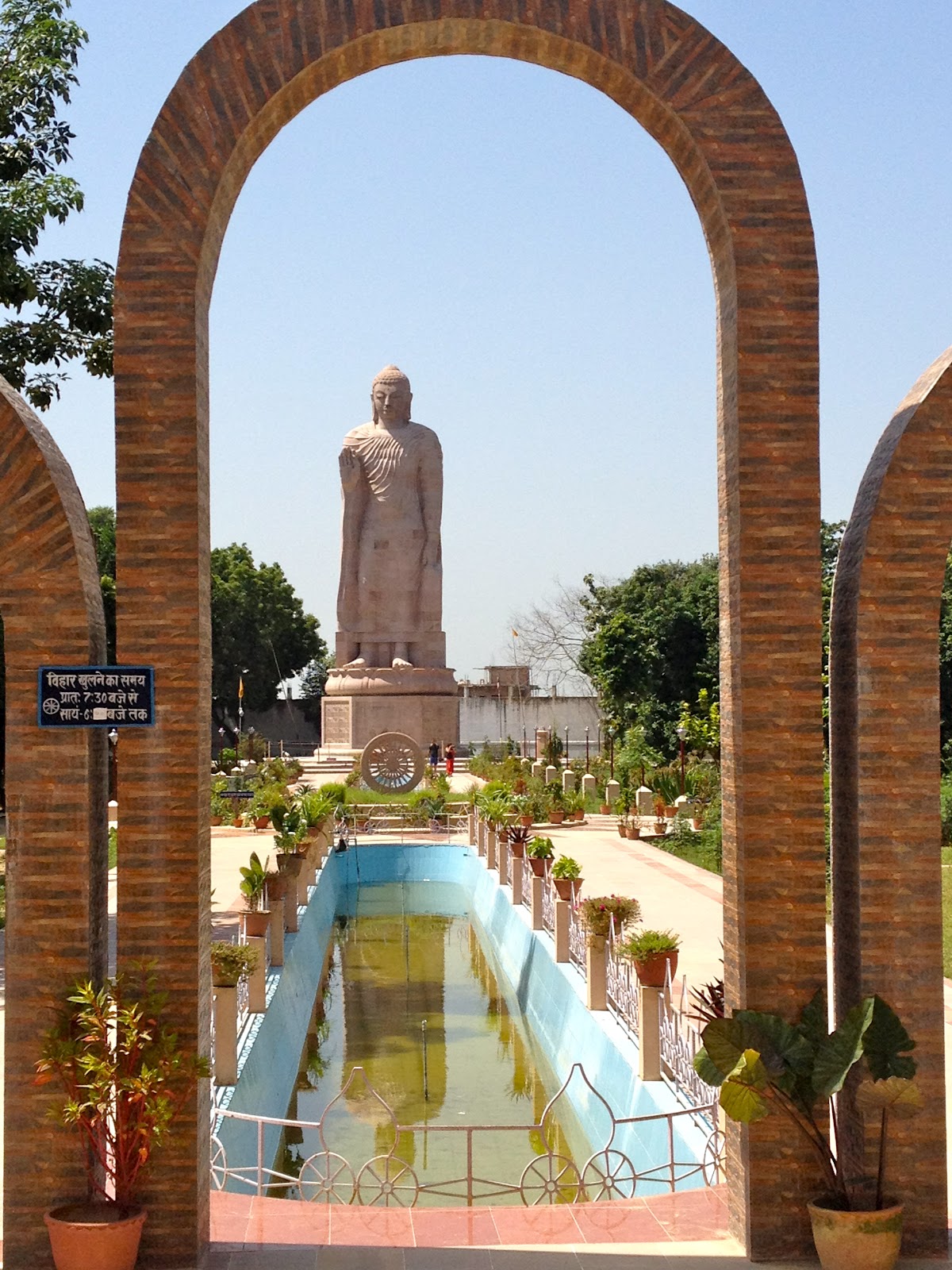
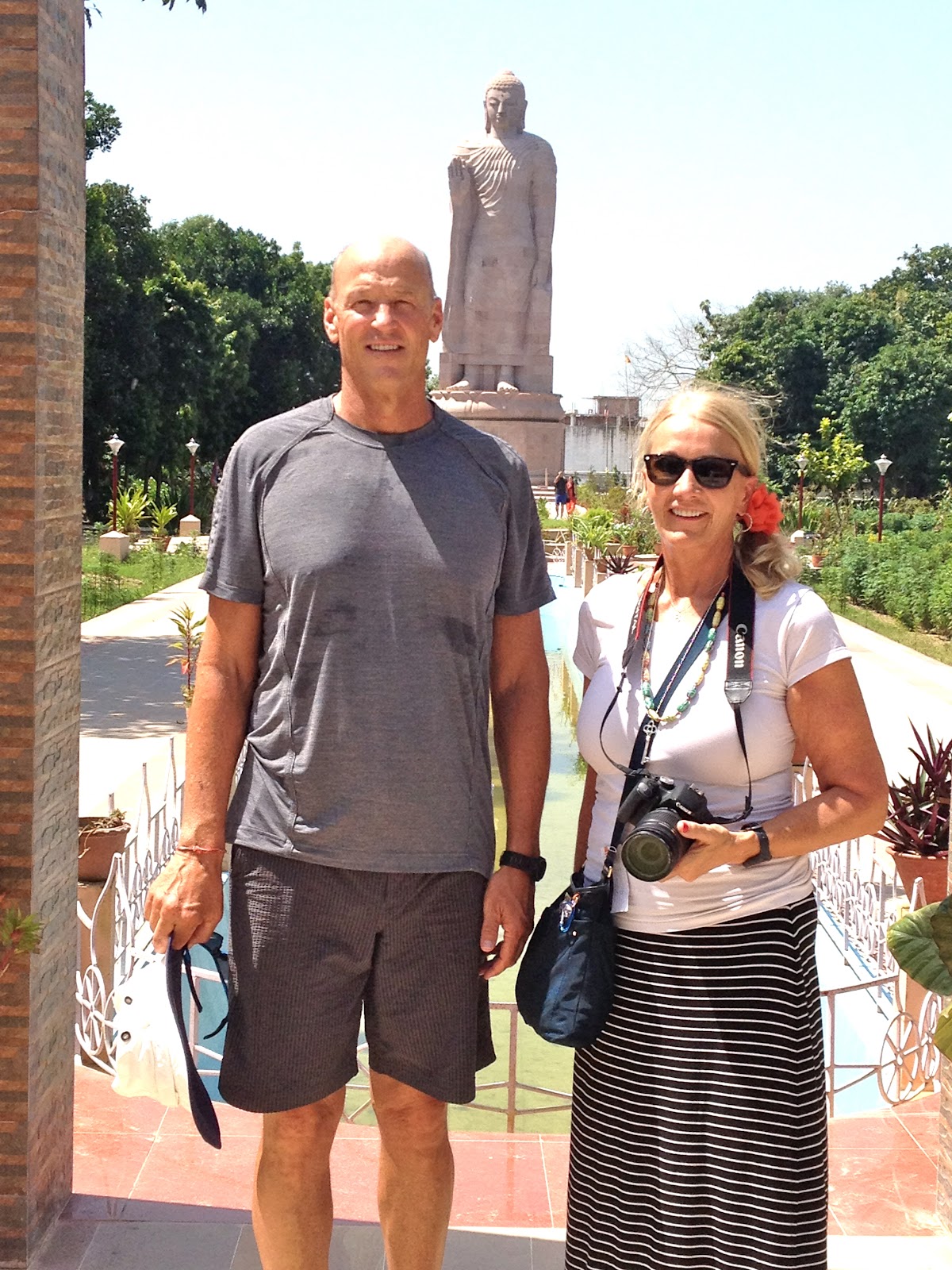
New statue of Buddha that is the tallest in India


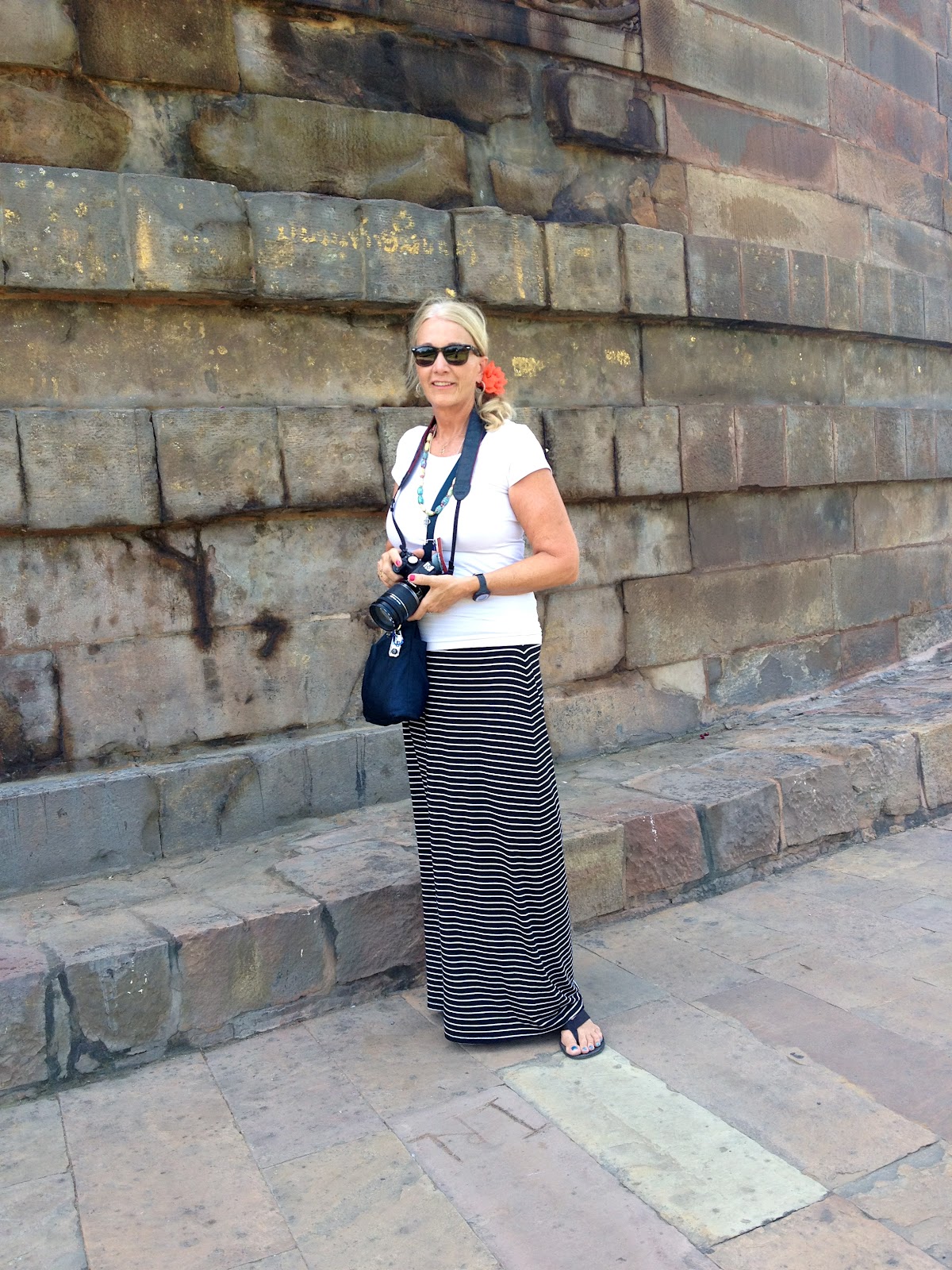
Barb at the large stupa


There is an archeological museum at Sarnath.  There are amazing artifacts, but no cameras are allowed.

Dr. Tripathi tells us that Buddhism is an off shoot of Hinduism.  It is a simplification of Hinduism.  Hindus have no problem accepting the teachings of the great Buddha.  Buddhists and Hindus live side by side in harmony.
There is some sub-surface conflict with the Muslims since centuries ago the Muslims conquered this area and tore down Hindu temples and replaced them with Mosques.  Some Hindus want to tear down Mosques and rebuild the sacred Hindu temples.  There is a heavy military presence at one or two of the temples that are at the center of the dispute.  But as far as we can see and sense there is no open conflict or disdain between religions.  All people seem to mix without problem.  Generally the Hindu religion is very liberal and accepting of all other religions and beliefs.

When we returned to the hotel we relaxed by having massages.  We also went to a yoga class to learn from a yogi.   We worked on stretching, breathing and meditation.  Our teacher made fun of modern techniques such as “hot yoga” taught in the USA. 

Agra and Delhi, India September 21-23, 2012

Agra.
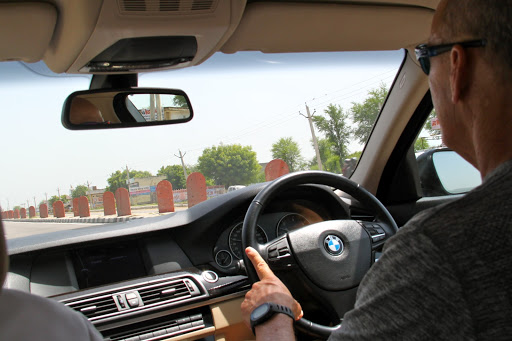
From Jaipur it took another 5 hours to drive to Agra.  I drove for about an hour and Barb was a little nervous as people walking and animals crossing and cars coming the wrong way were all potential disasters.  The secret to driving in India is using your horn early and often to warn those around you of where you are.  No one is offended when you use the horn.  All people have the same expression and no one displays any anger, surprise or indignation.  Road rage seems to not be in their nature.
Scott driving in India!  It was out on a highway and not in town, thank goodness!
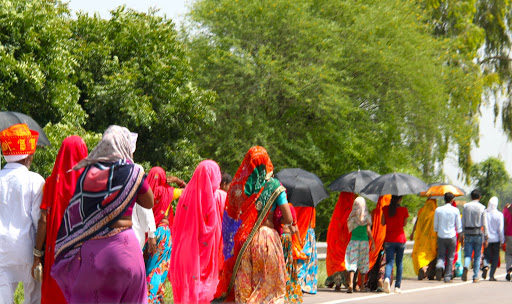
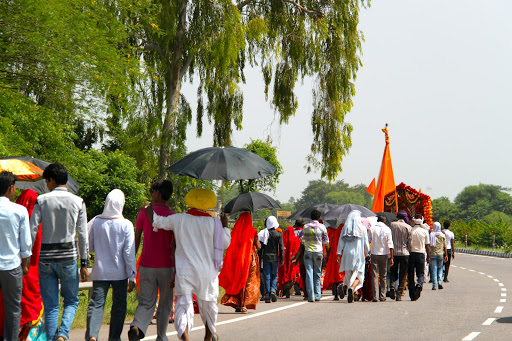
Pilgrimage of people walking down the highway to a temple
This car is not very full
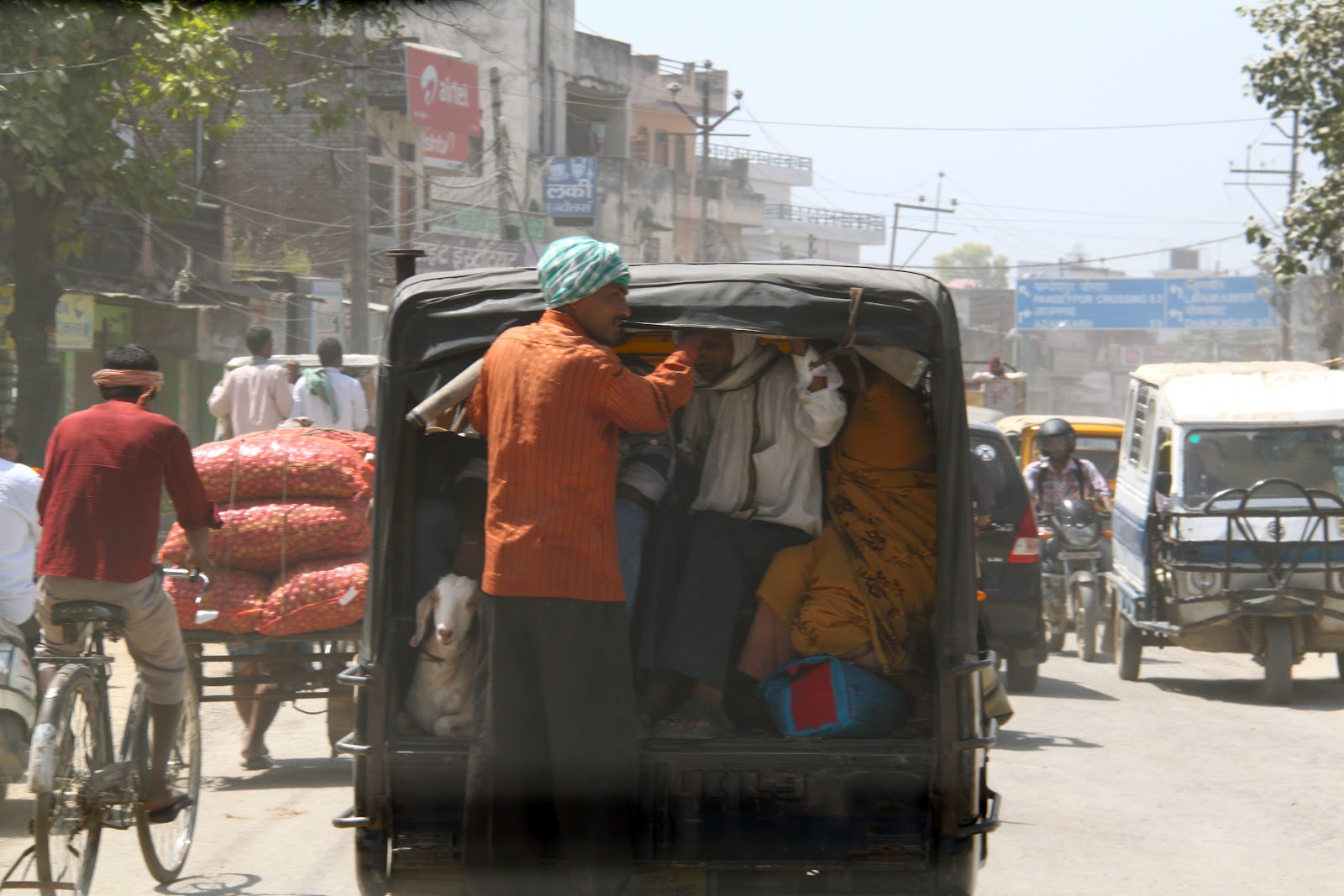
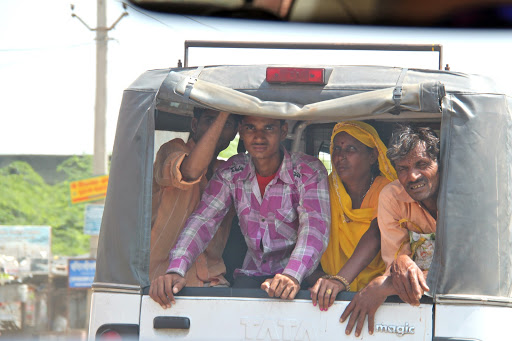
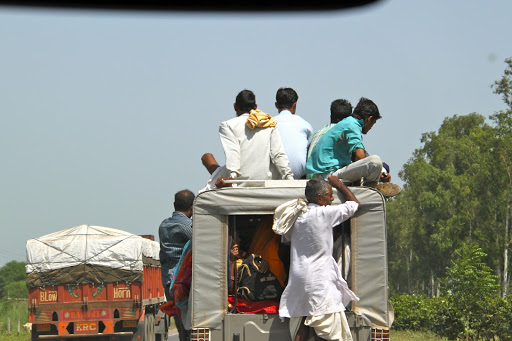
Trucks, cars, camels, elephants-wherever you can catch a ride and they are going 60 MPH with people on the roof!
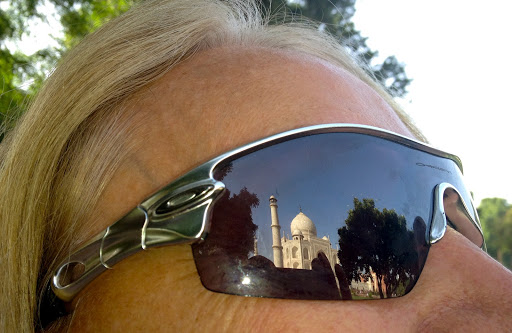
You go to Agra to see the Taj Mahal.  Our Oberoi hotel has an expansive view of the Taj from every room.  That night we have Chakra massages where they use singing bowls to harmonize the 7 Chakra points in your body.  

Singing Chakra bowls used in massage


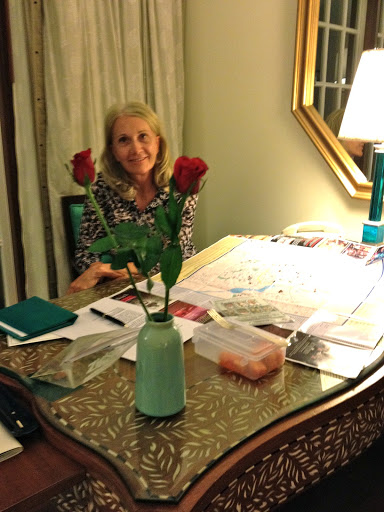
In our Hotel room

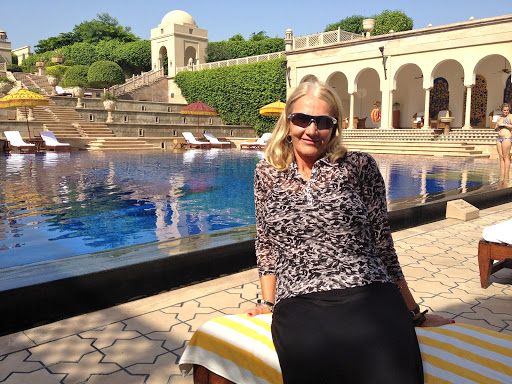
At the hotel pool
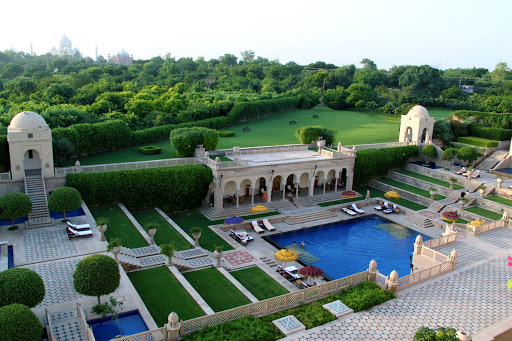
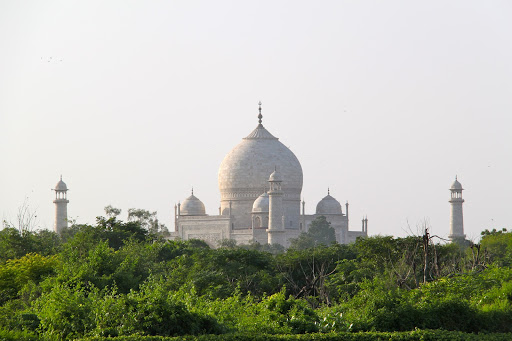
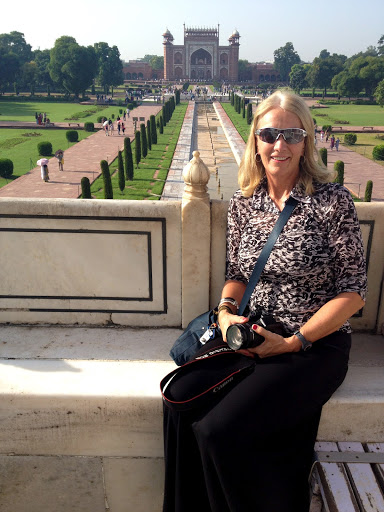
From our balcony (See the Taj Mahal in the background)
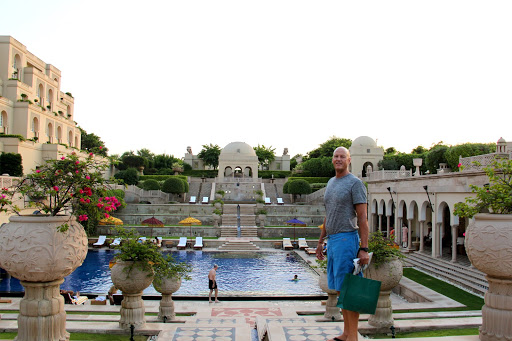
Scott at the pool
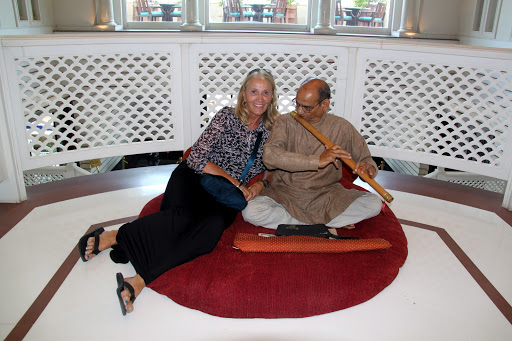
Barb makes friends with the bamboo flute player at the hotel
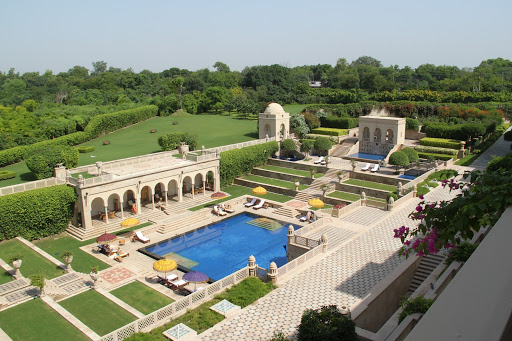
Beautiful grounds
From our balcony
We arrange for a guide at 5:15 am so that we can see the sunrise light up the beautiful white building if we are lucky enough to have a clear day.  The day was clear and we took a golf cart to the entrance where men and women have to enter separately in order to be searched.  There were about 30 people in line ahead of us and we wait about 20 minutes before they open the gates.  The buildings just inside the gates are made of sandstone with white marble inlaid designs.  By comparison to the Taj they are ignored but they are beautiful.
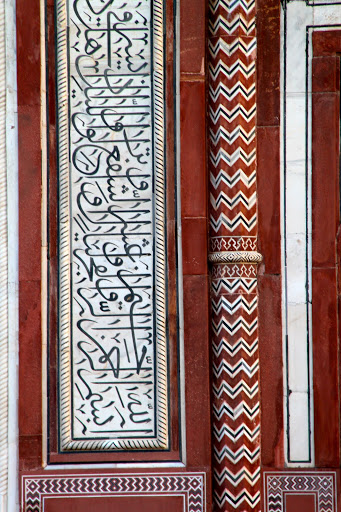
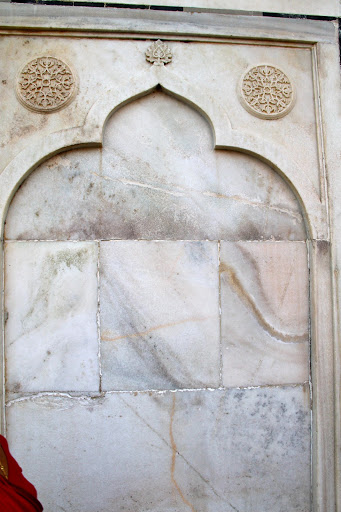
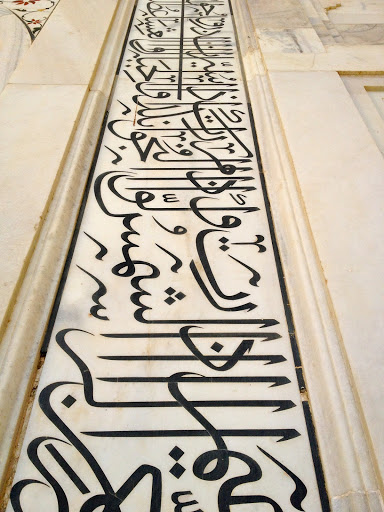
Beautiful inlaid marble in sandstone with Arabic writings

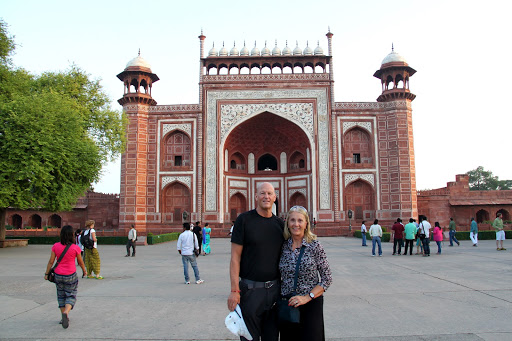
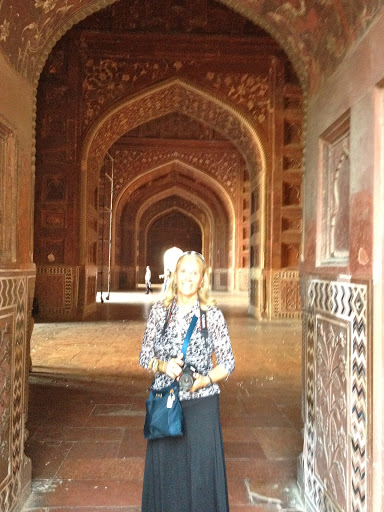
Building leading into the Taj Mahal

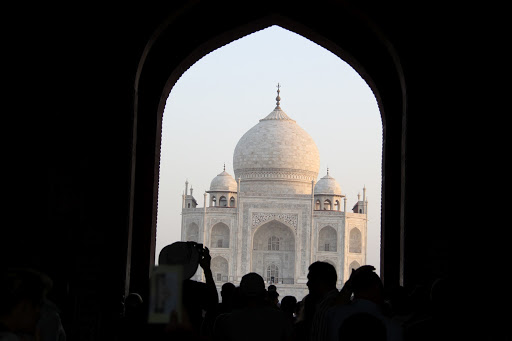
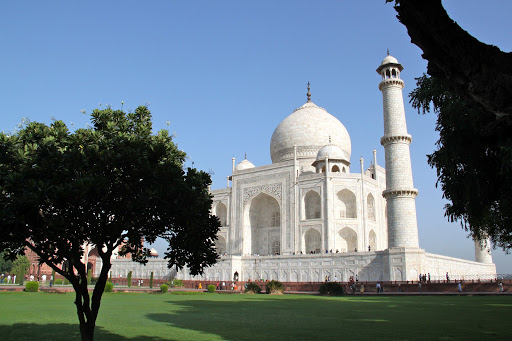
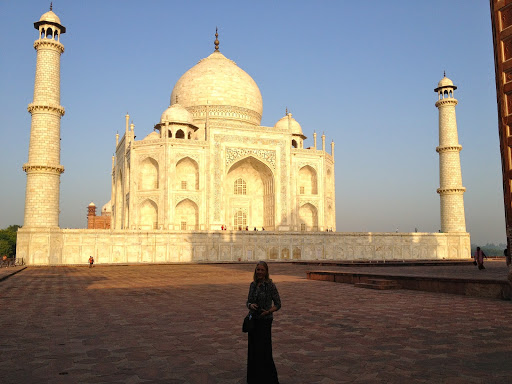
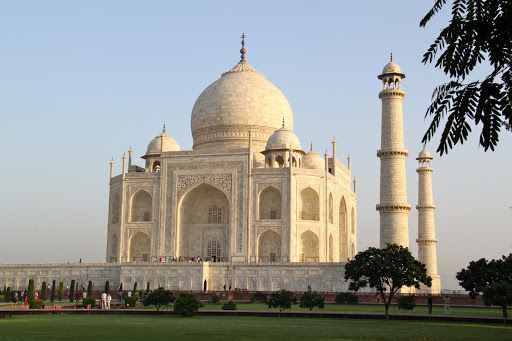
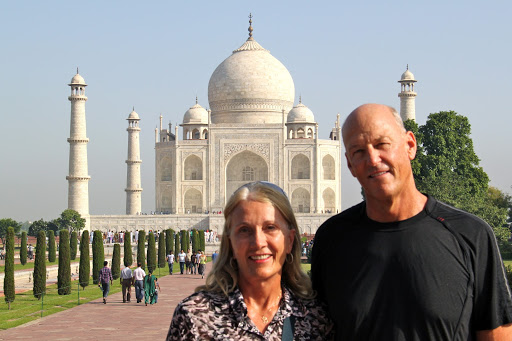
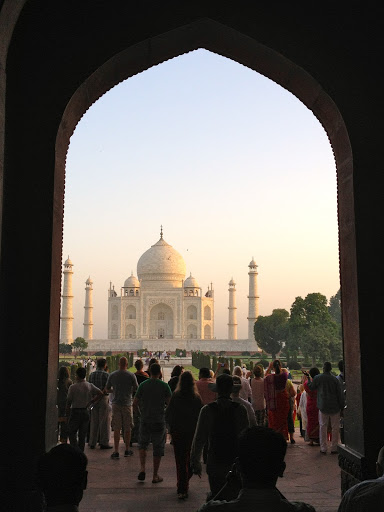
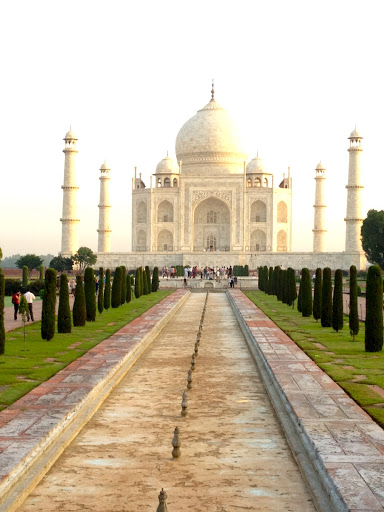
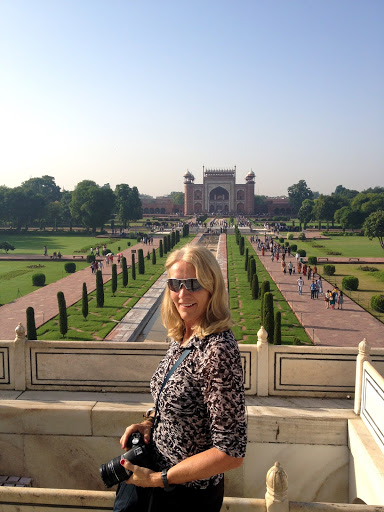
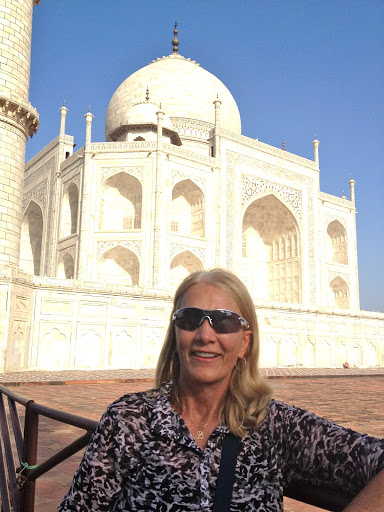
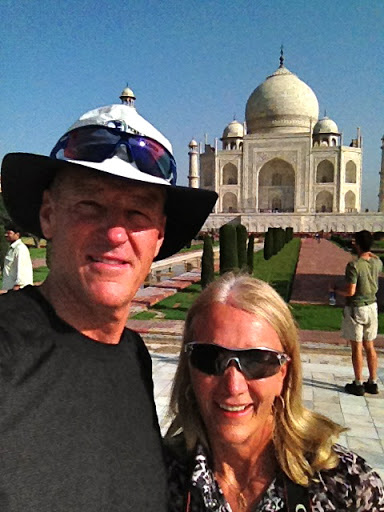
First view of the Taj Mahal
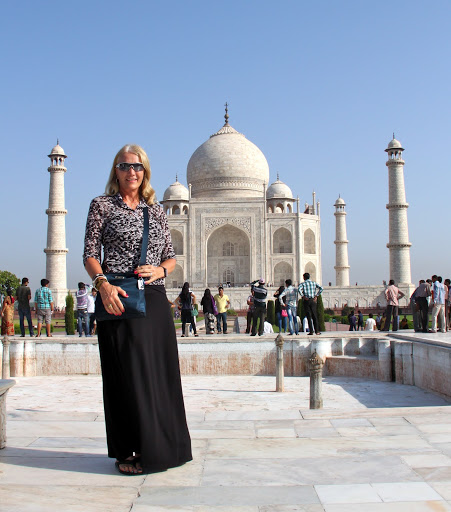
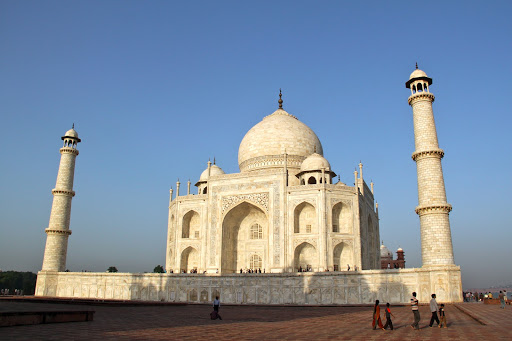
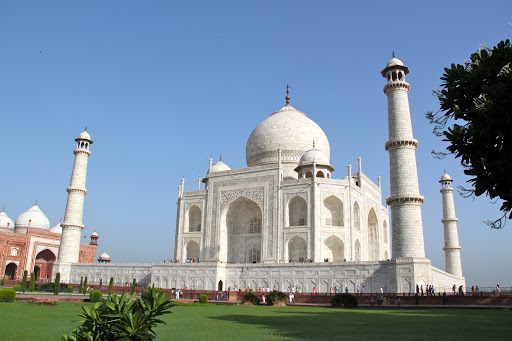
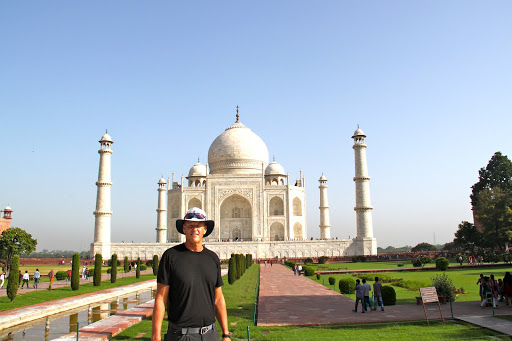
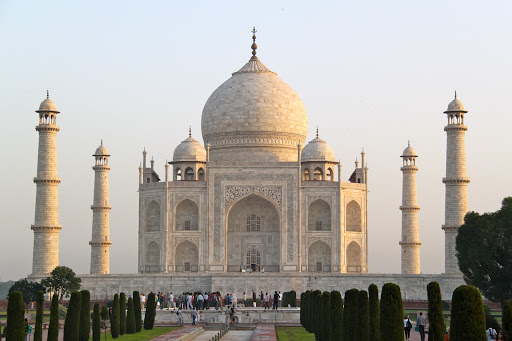
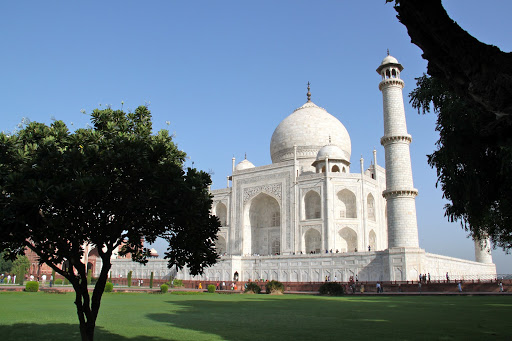
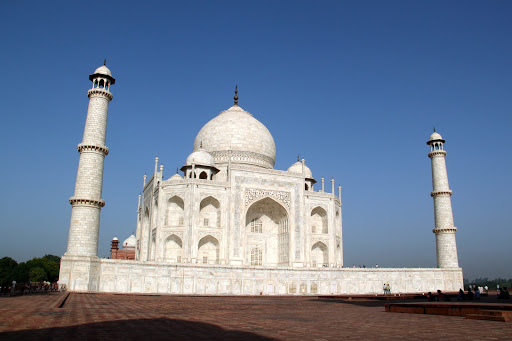
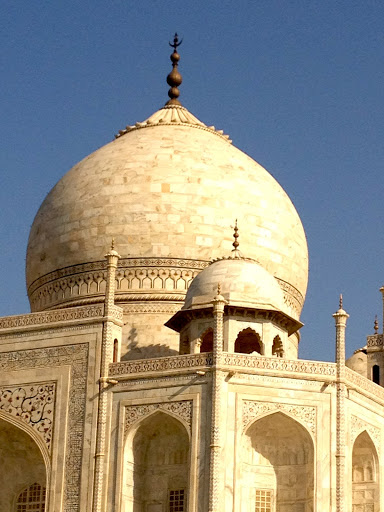
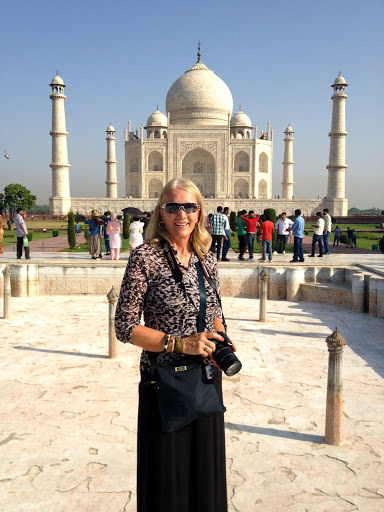
You walk through a second gate and the Taj comes into full view.  It is a perfectly balanced and pleasing design.  It is said that the four minarets on the outside are leaning slightly out in order to cause them to fall away from the main Taj in the event of an earthquake.
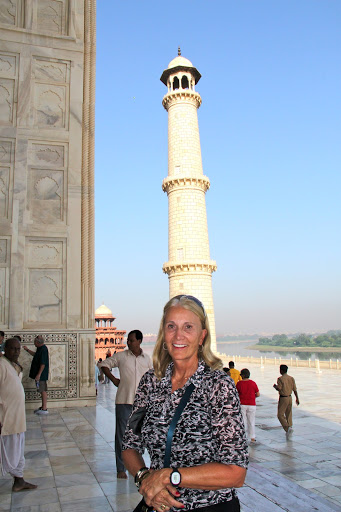
Minarets on all four sides
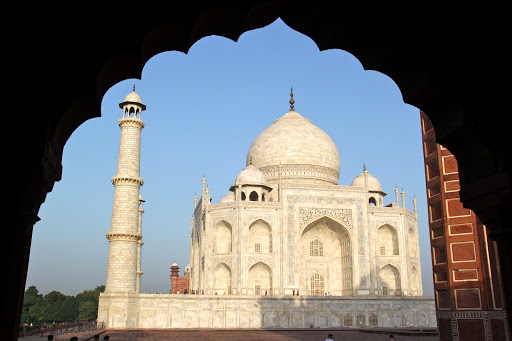
Our guide takes us to some beautiful viewpoints.

The marble on the outside is from 6 to 18 inches thick and covers the exterior made of brick.  The building was built in 22 years and was patterned after a similar building in Delhi.  The Moghul Shah Jahan who built the Taj was the great grandson of the Moghul who built the similar building in Delhi 80 years before.  The architects of the two buildings were also related.

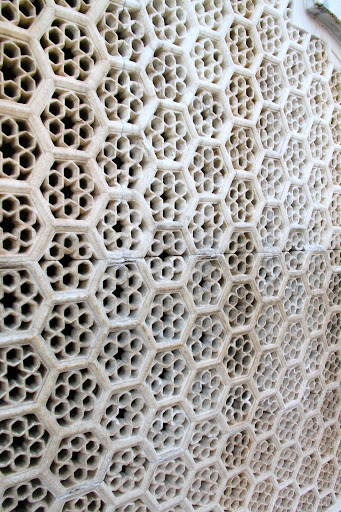
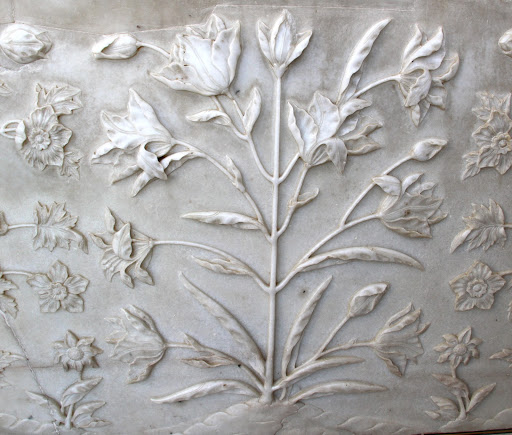
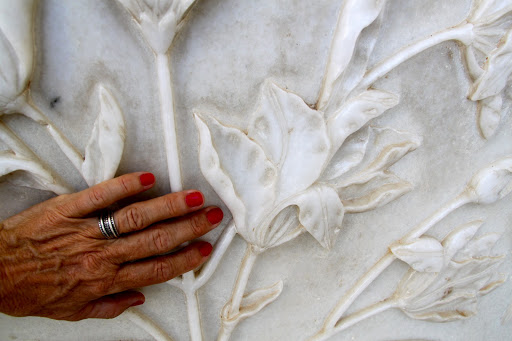
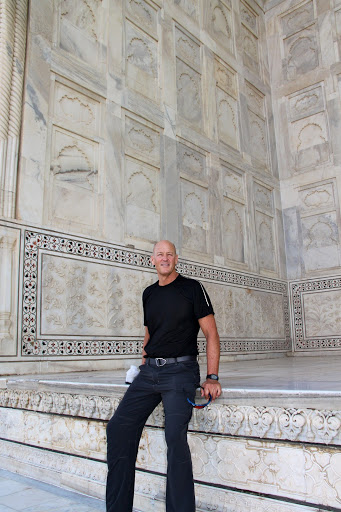
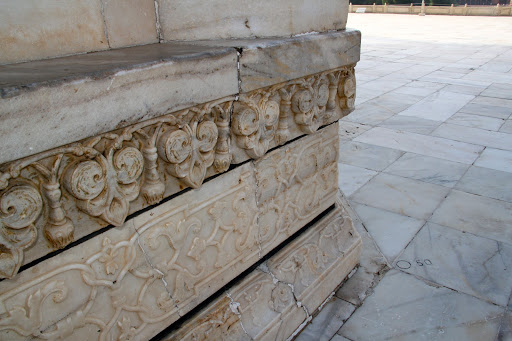
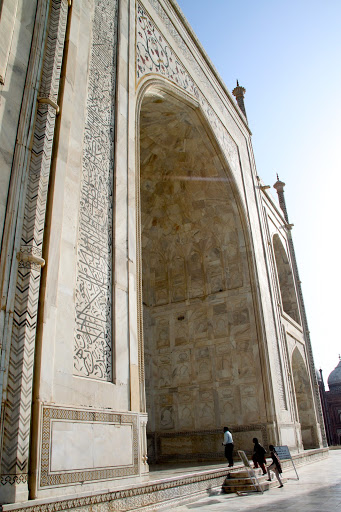
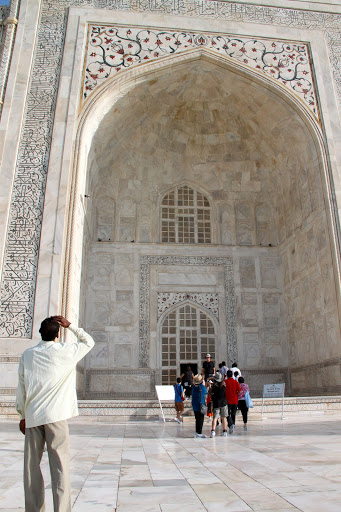
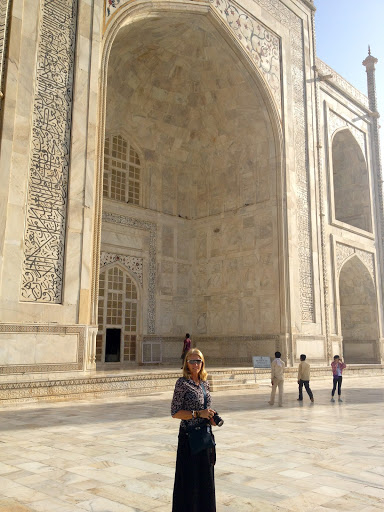
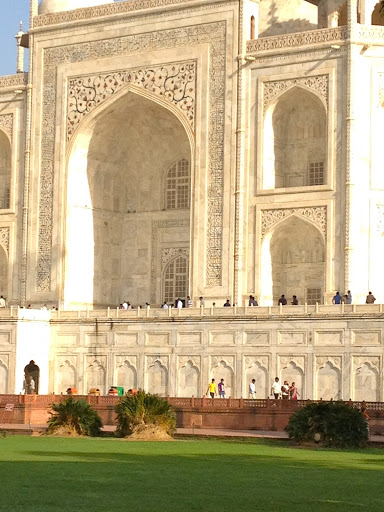
The carving on the marble is very delicate and beautiful.  The building has no rival in the world for its beauty.  The proportions and shapes are beautiful.  The craftsmanship leaves you wondering how such beauty could be created in the 1600s.  The craftsman used sand to smooth the outside of the building.
Carved Marble

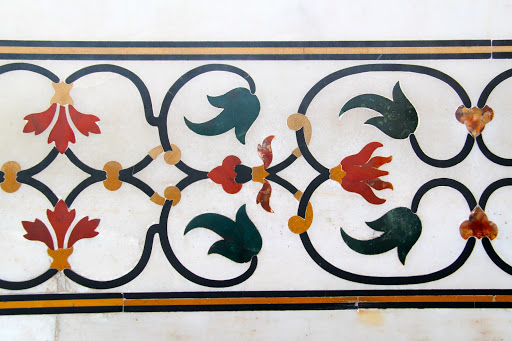
Inlaid semi-precious stones

3D or 4D

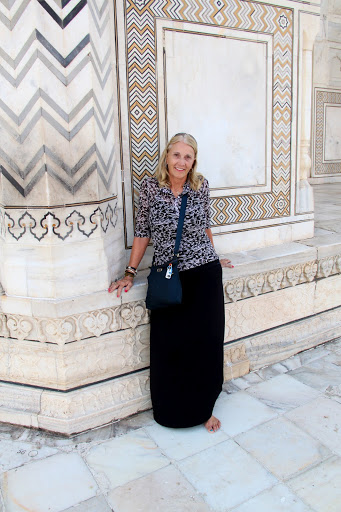
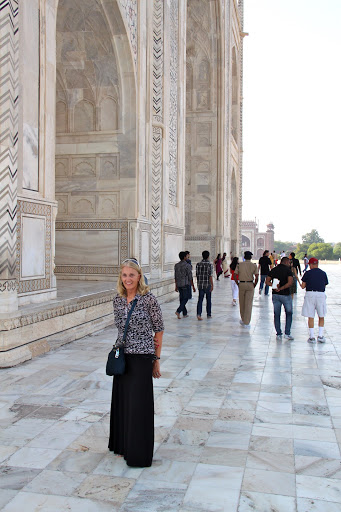
I wanted to walk without shoes across the smooth marble

The Shah built the Taj for his second wife, Mumtaz Mahal, who died giving birth to their 14th child.  It was built to display his love and devotion to his favorite wife.  After she died it is said he went completely grey very quickly.
The Shah named his oldest son as the next ruler and his 3 brothers began to fight and plot to kill the oldest son.  So, the oldest son seized power and killed his brothers and imprisoned his father in the Red Fort where he lived out the remaining 8 years of his life with the view of the beautiful Taj out of his cell window.
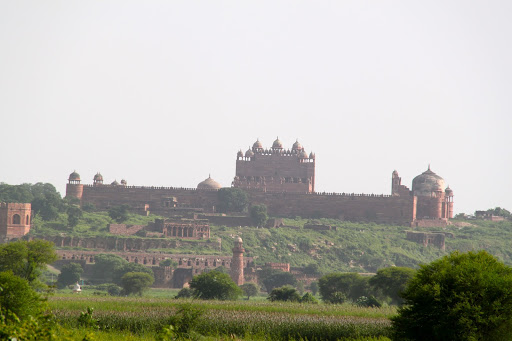
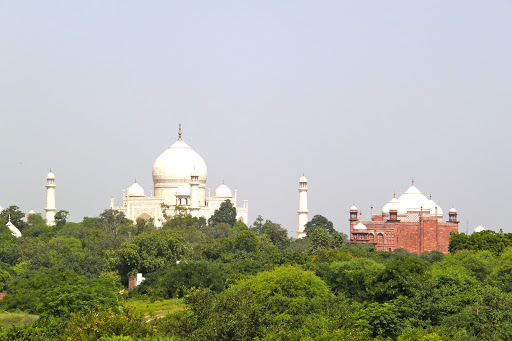
The red fort, where the Shah was imprisoned by his son
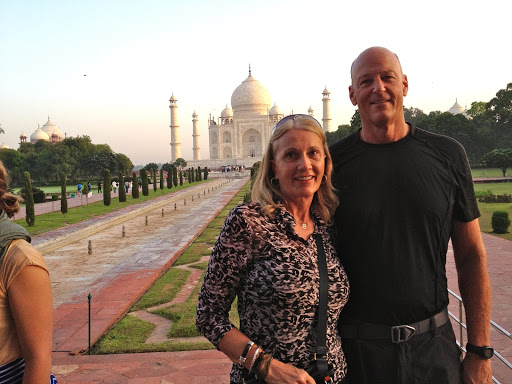
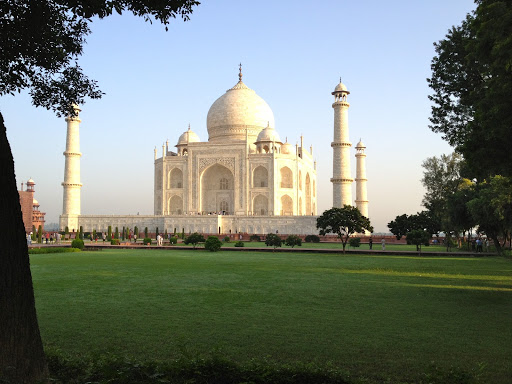
 The Taj glistens in the morning sunshine.
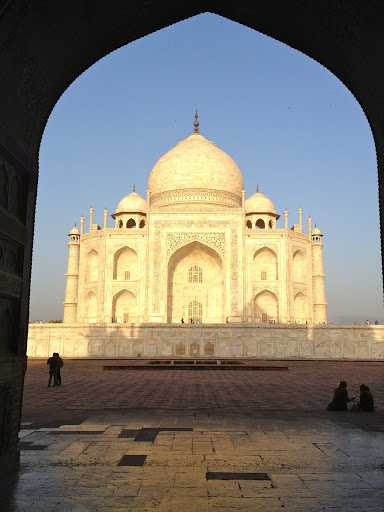
The backdrop to the Taj is the blue sky, which enhances the outline of its beauty.

This shows the scale

Seen from our Hotel

 Delhi

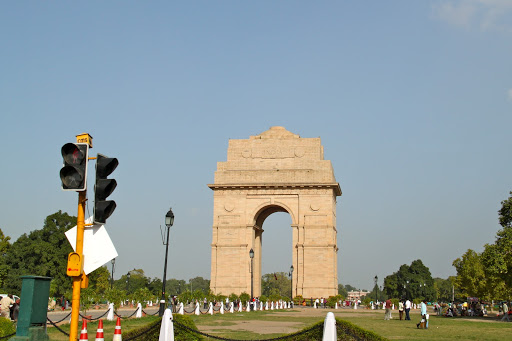
Delhi was more or less a stopping point for us to get to Varanasi and then to Bhutan.  Not much time was spent, but we did see the India Gate, from WWI and drove through town.  The government buildings are in a nice open park like area.

India Gate

Government building

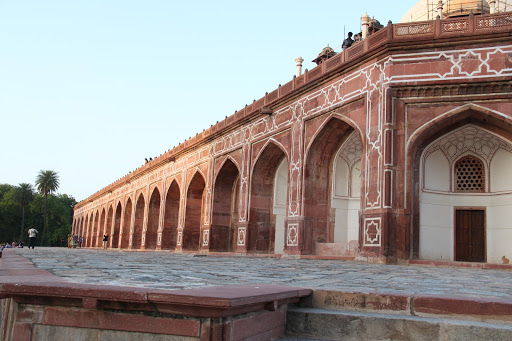
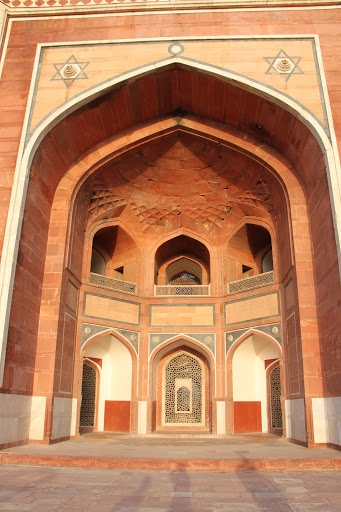
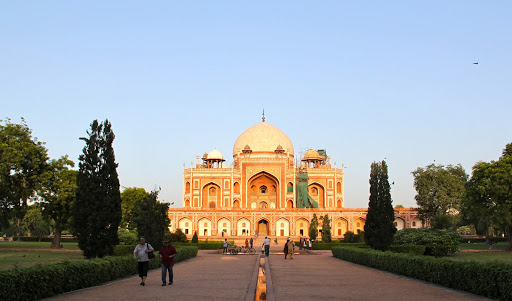
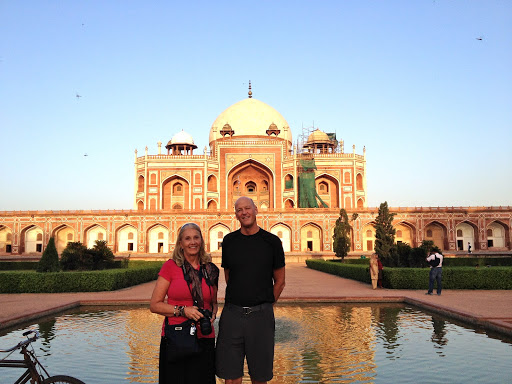
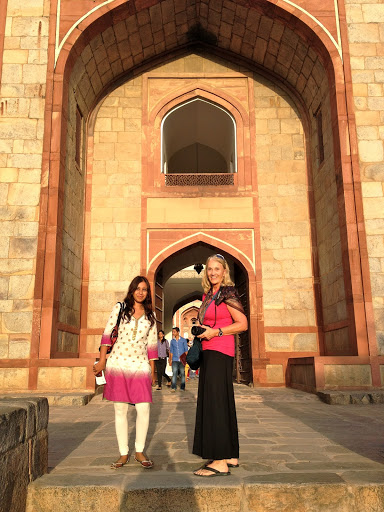
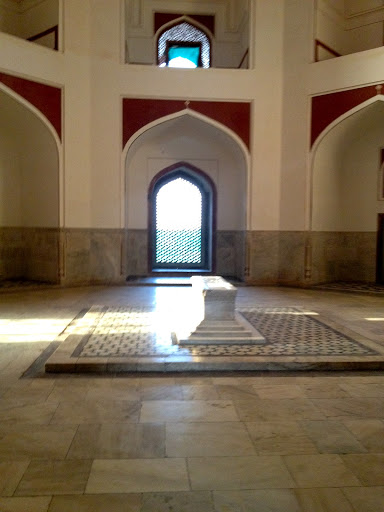
Humayun’s  Tomb is the tomb of Mughal Emperor Humayun.  Commissioned by his wife in 1562 AD, it is made out of red sandstone.  He was the great grandfather of the Shah Jahan and the tomb seems to be the inspiration for the Taj Mahal, and was built just 80 years prior to the Taj.

Red Sandstone inlaid with marble

Alcoves like the Taj Mahal

The architect of this was also the relative of the architect of the Taj Mahal

Inside

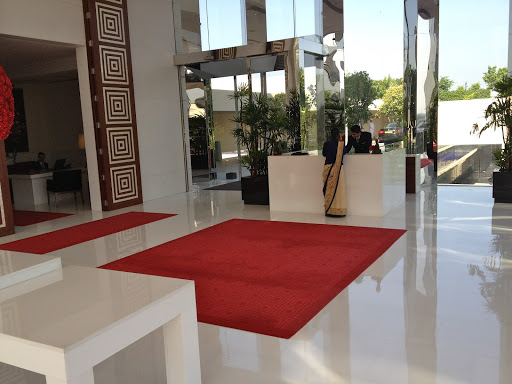
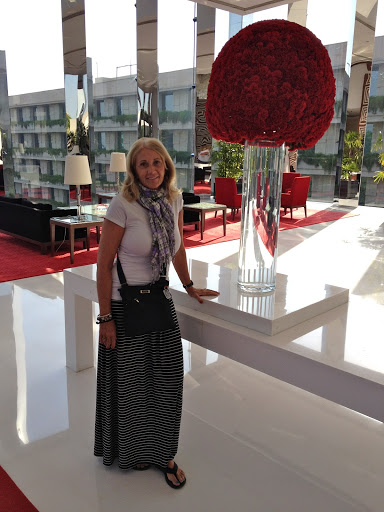
Our Oberoi Gurgaon hotel was a very nice modern hotel.

Lobby

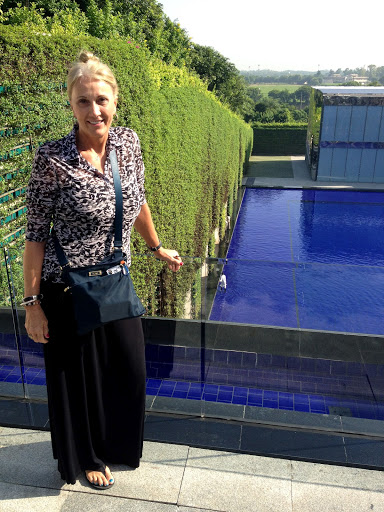
Pool

Our room

Having dinner served in our room

Jaipur, India September

Jaipur.
We are in a car that will easily speed at 250 kilometers an hour and it took us 6 hours to travel 250 kilometers from Udaipur to Jaipur.  The roads are supposed to be good highways but when you put people and animals and cars and motorbikes and everything else you can think of on a highway that has so many potholes that you can’t go faster than 90 kilometers per hour without risking the demolition of your car, then you understand why it takes so long to get anywhere in India.

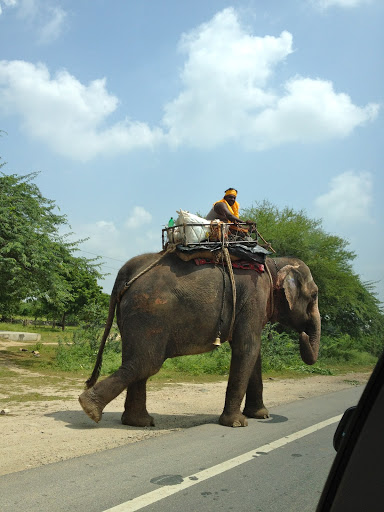
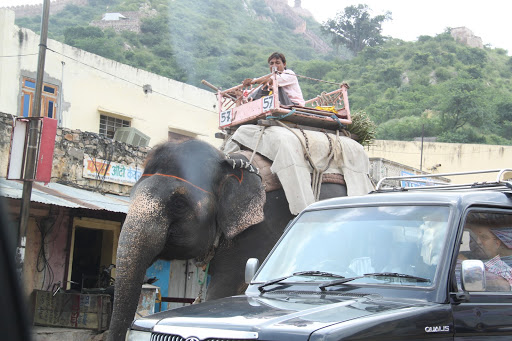
Elephant crossing the Highway

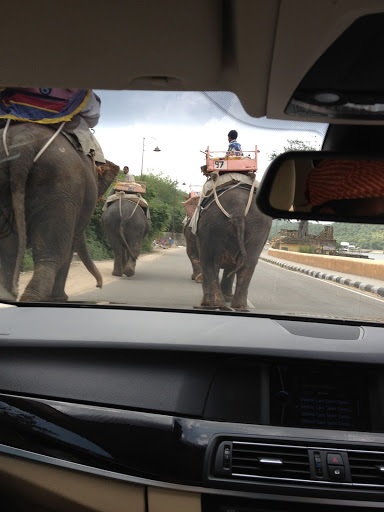
Elephants in the front of the car

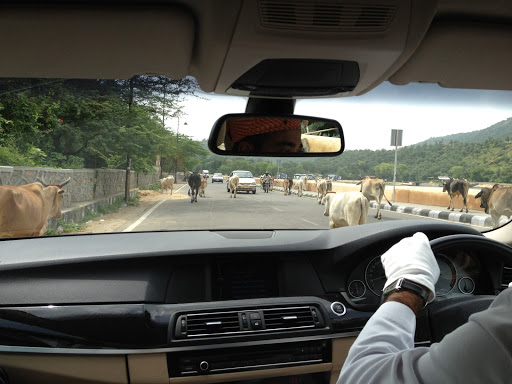
Drive around cows, and notice the motorbike going the wrong way on the highway.  It happens all the time.

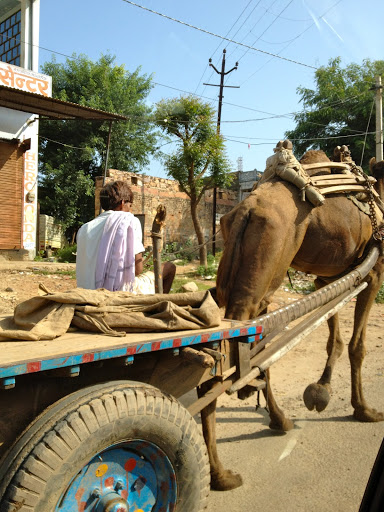
Camel cart

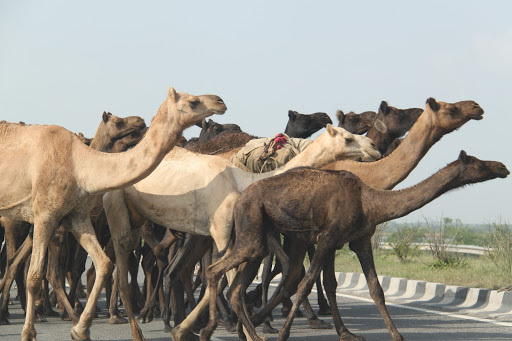
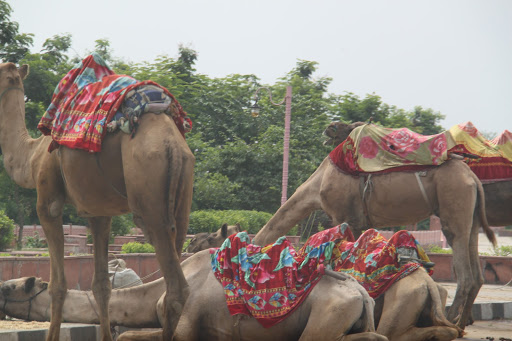
Yes, these are camels crossing the highway now

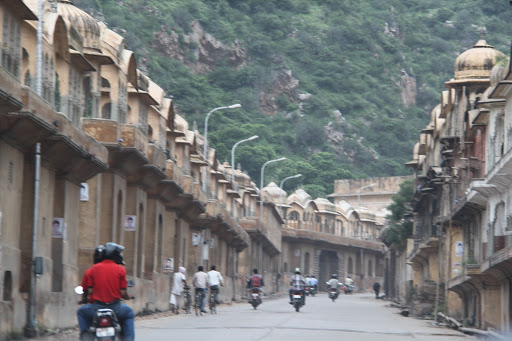
Old road into Jaipur.  Royalty used to watch from the balconies above each home

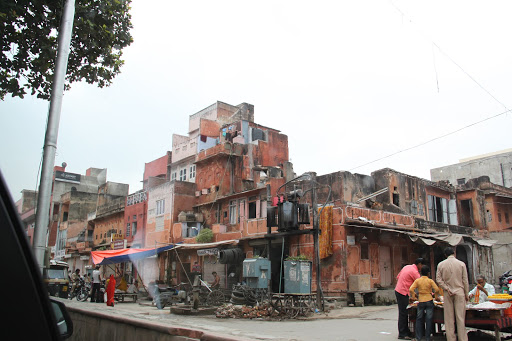
Street Corner

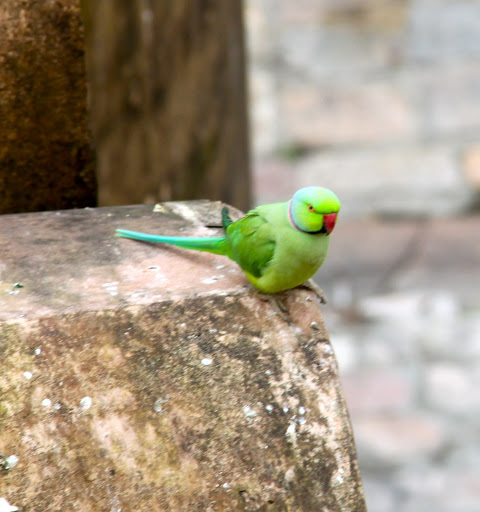
Parakeet 

Normal traffic

More Camels

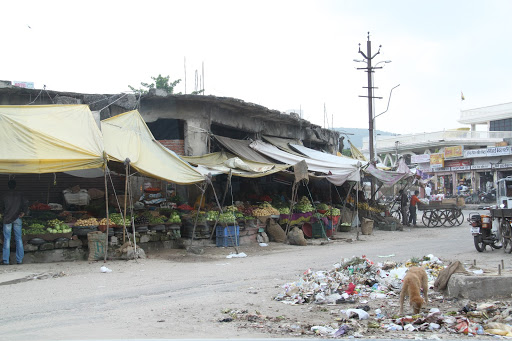
Vegetable and Fruit market

Street

Not far from the vegetable and fruit market

Homes

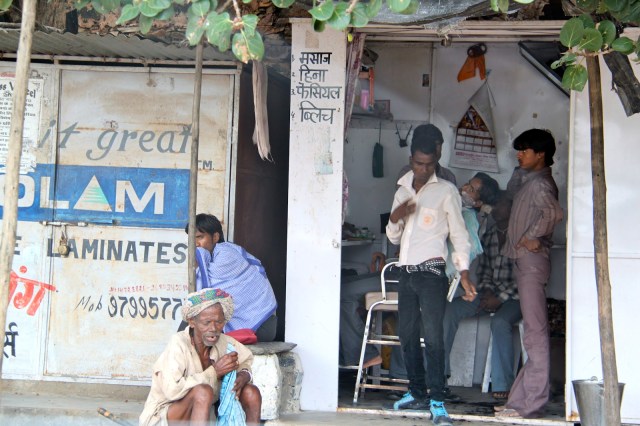
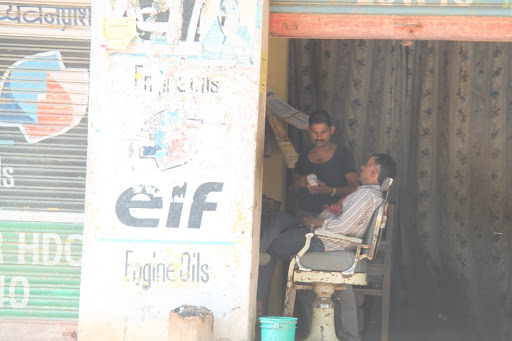
Barber Shop

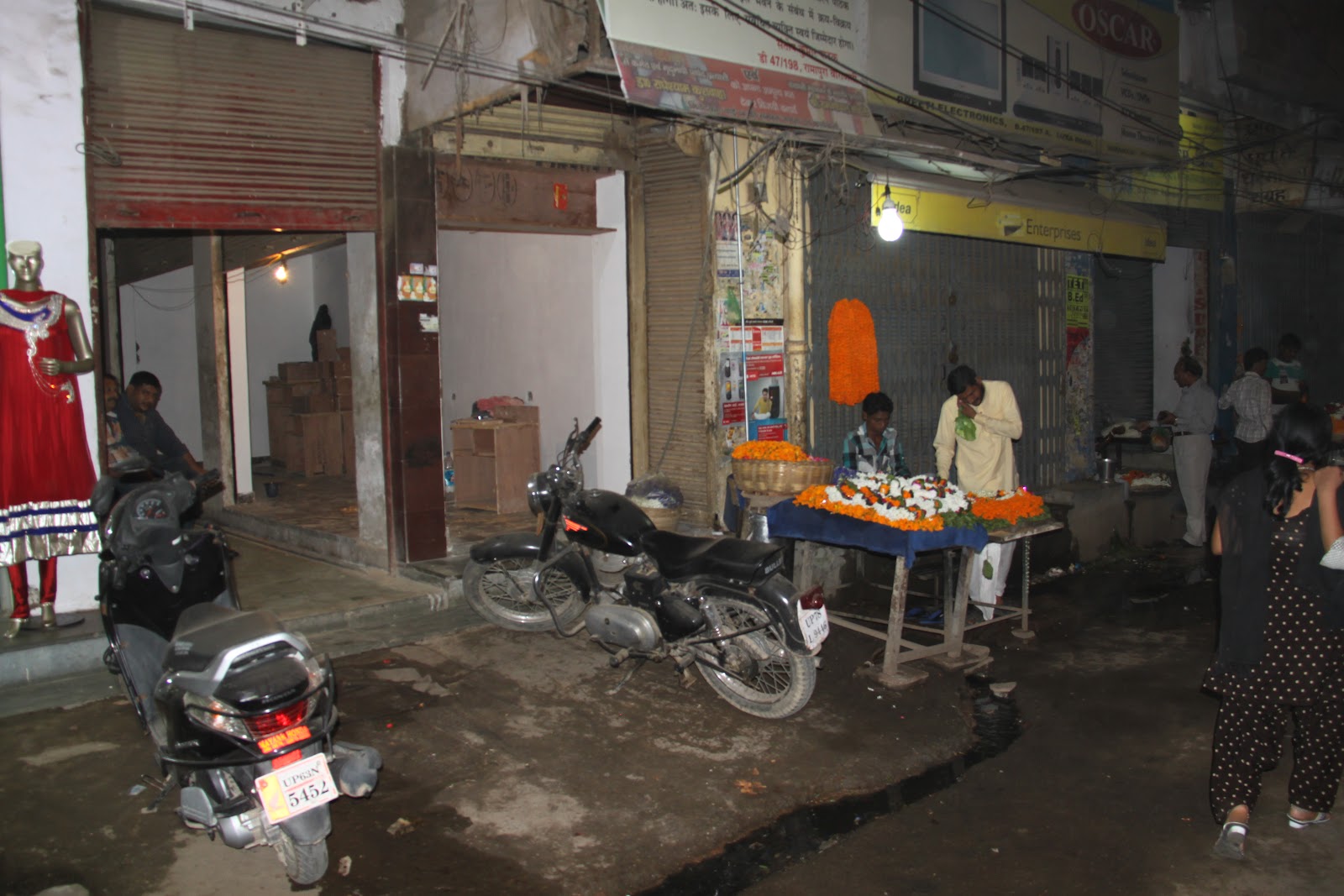
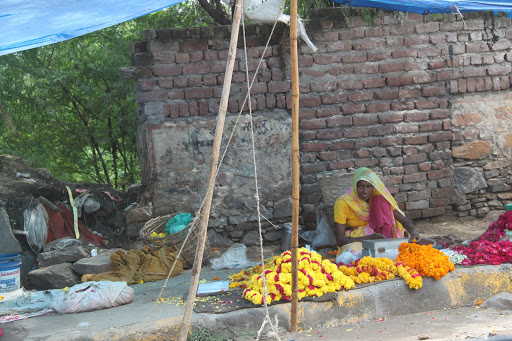
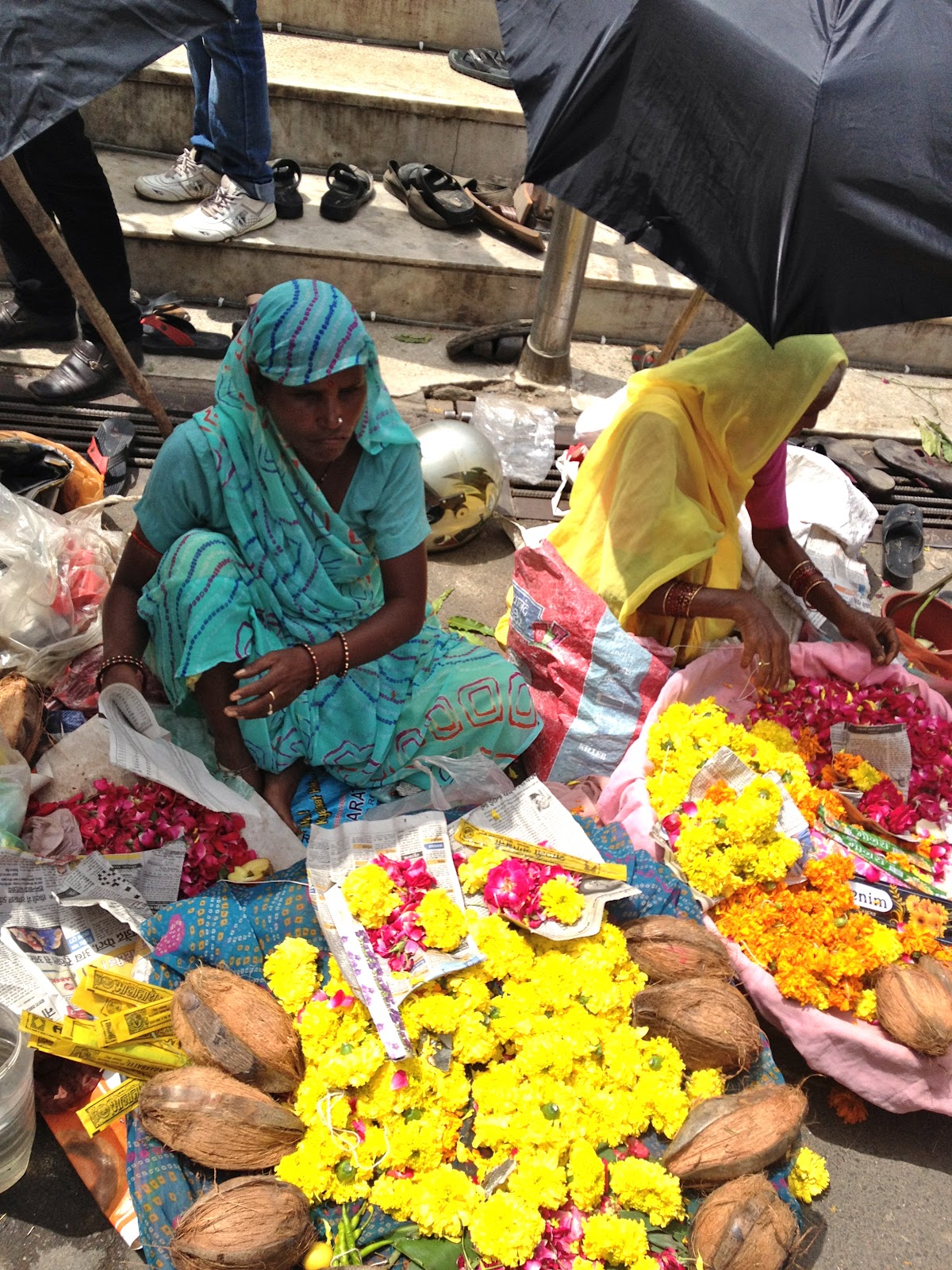
Selling flowers for offerings at temples

Once we arrive at Jaipur there is gridlock in the city.  There is an international cricket championship this week and India has a good team and chance to win it all.  They beat England in an early round of play.  When we arrive at the Oberoi Palace Hotel there is thorough security.  They use some device to scan under the car.  They attempt to open the hood but give up.  They look in the trunk and then waive us through with smart salutes and then hands clasped in prayer (Namaste) position.
The hotel and our luxury tented suite is a sharp contrast to everything just outside the gates.  The luxury and service is welcome.

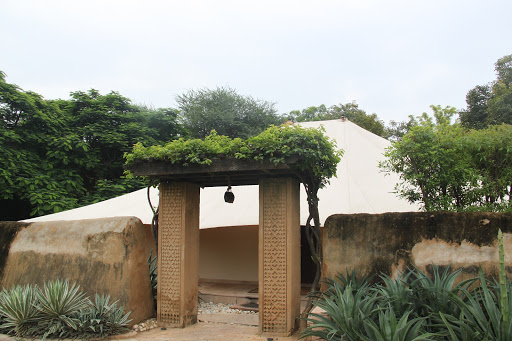
Hotel Entrance
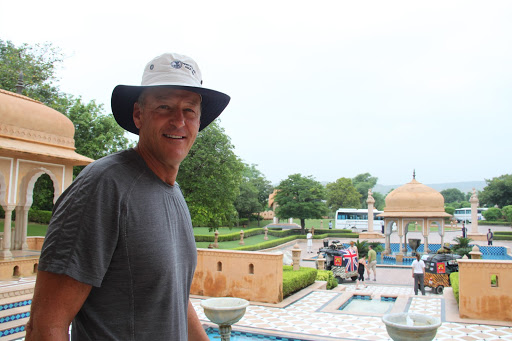
Scott at Hotel

Being shown to our accommodations

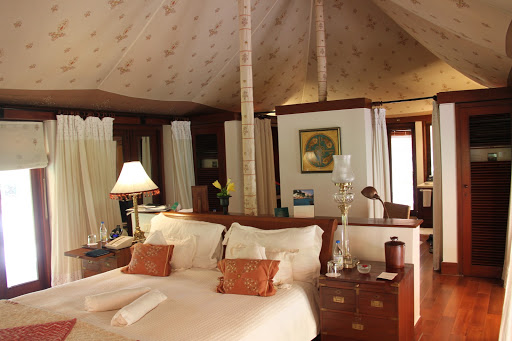
Inside our Tented Suite

Our Tented Suite
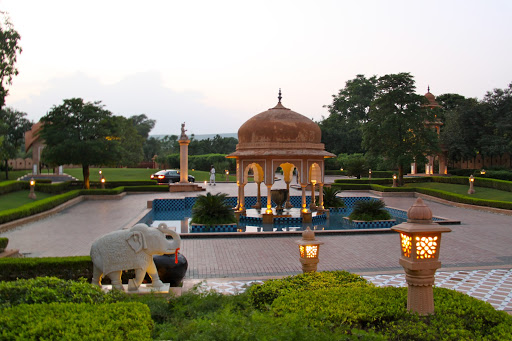
Hotel Grounds
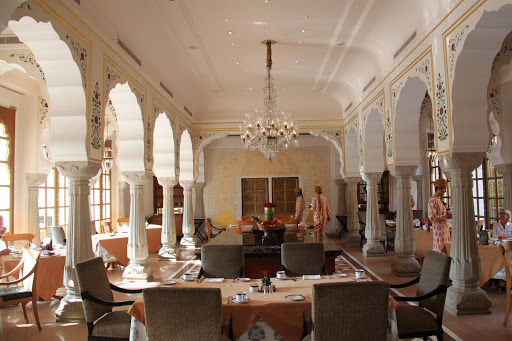
Dining Area

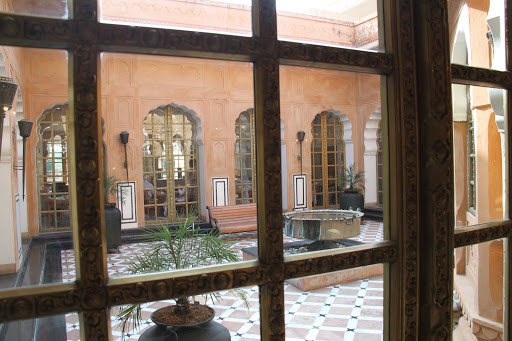
Courtyard

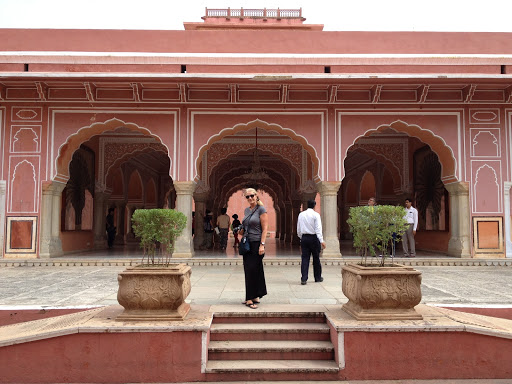
The next morning we drive through the old town.  The streets were laid out centuries ago on a square grid with wide streets.  That was enlightened city planning.  They call it the Pink City because the Maharaja ordered all buildings to be colored pink to welcome visiting royalty.

Gate to the old city of Jaipur

Facade in the old city.  The women would hide behind this facade and watch without being seen.

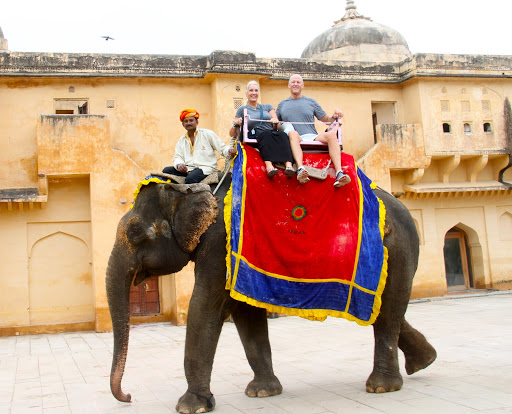
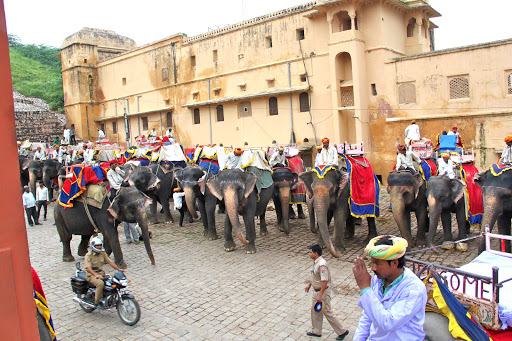
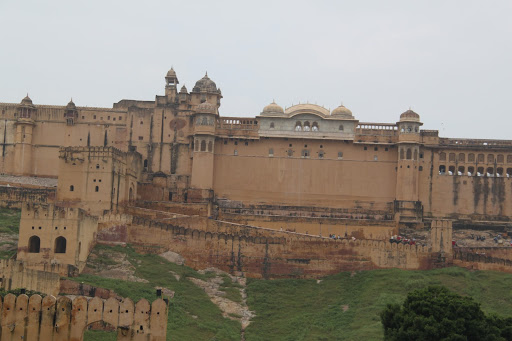
We rode a jerky, hesitant elephant to the Amber Fort.  They have rules that each elephant can only make 5 trips per day so you can only ride elephants until about 11 am and then the elephants go home to rest.

Riding an elephant to the fort at Jaipur
Many elephants at work

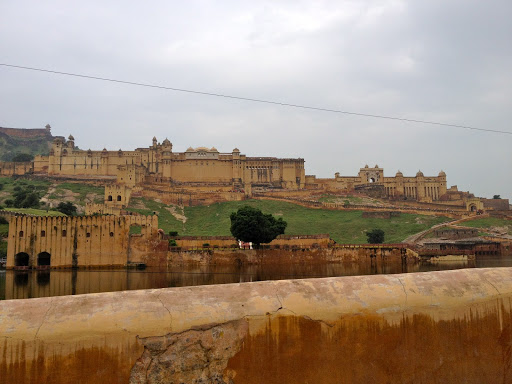
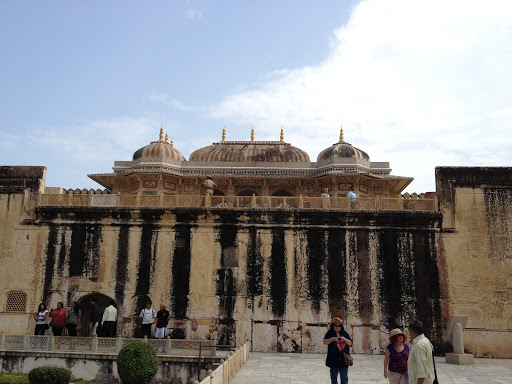
The fort

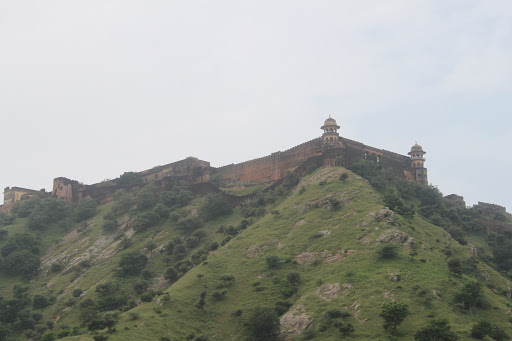
Walls around the fort

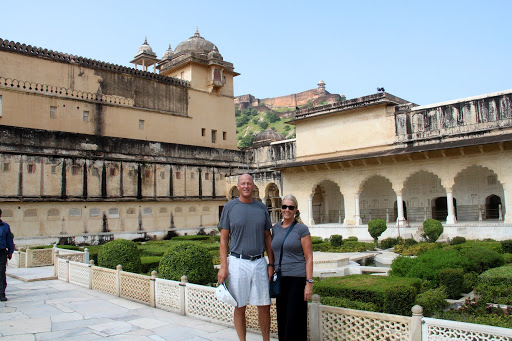
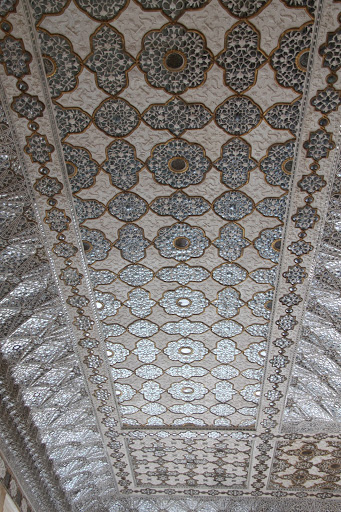
The Maharaja built a beautiful mirrored palace on the top floor.  In one wing he had built apartments for his multiple wives.  There was space for 4 wives in each corner of an expansive courtyard with multiple rooms and plenty of space in the courtyard for mingling and other activities.  The wives were watched and guarded by eunuchs.

Amber Fort

Barb

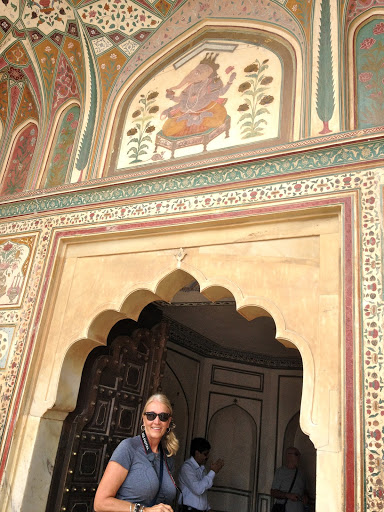
Inside the fort
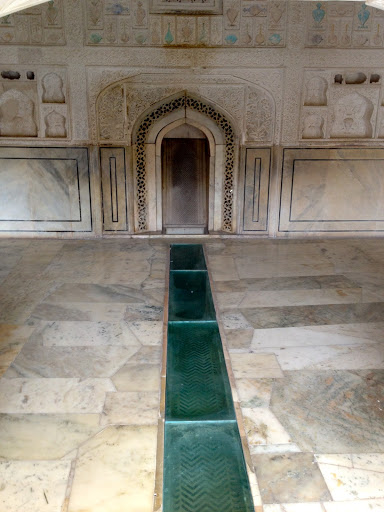
Amazing marble

Marble corridor

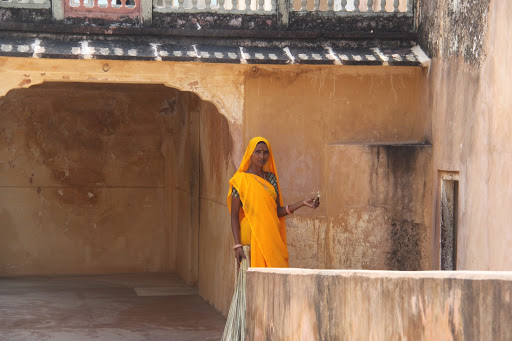
Indian woman cleaning the fort.  The women all wear colorful sarees.

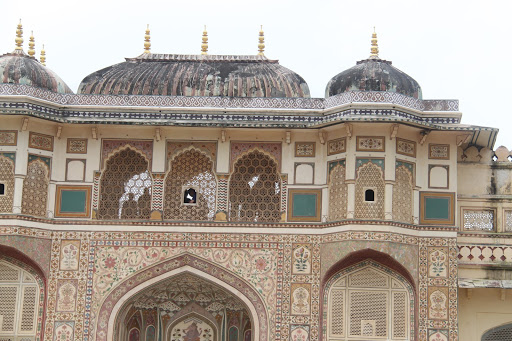
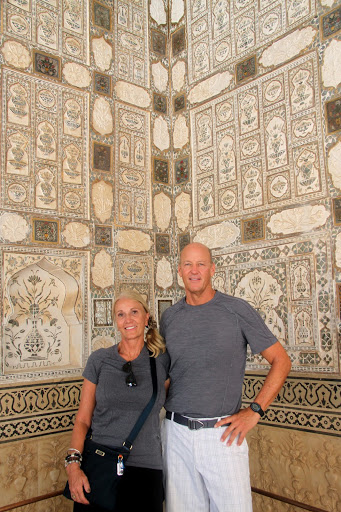
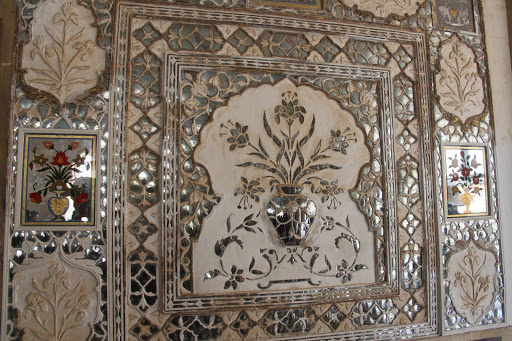
The mirrored palace

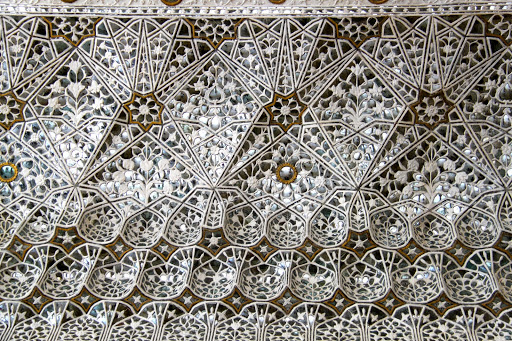
Mirrored Ceiling

Beautiful craftsmanship

Inside

That afternoon we visited the City Palace Museum which had an extensive dress and clothing collection.  It also had an extensive weapons museum from the 17thand 18th centuries.  No cameras were allowed though.

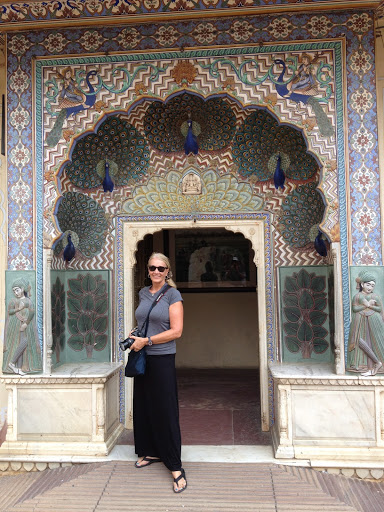
Gate at the City Palace

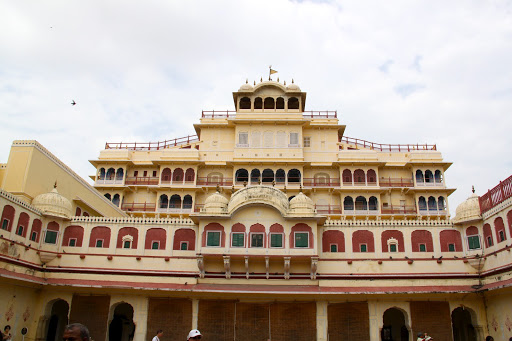
City Palace

City Palace

Driving through town

Rickshaws for hire

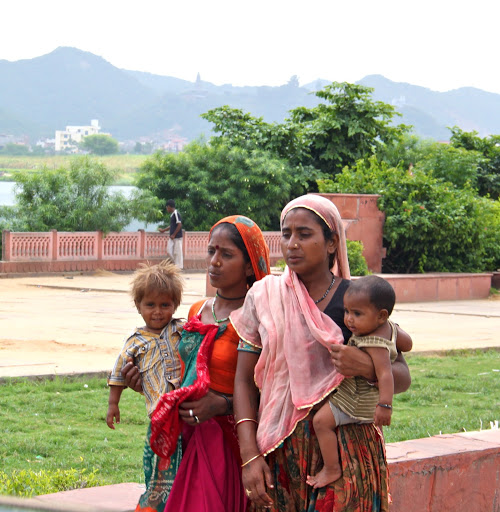
People

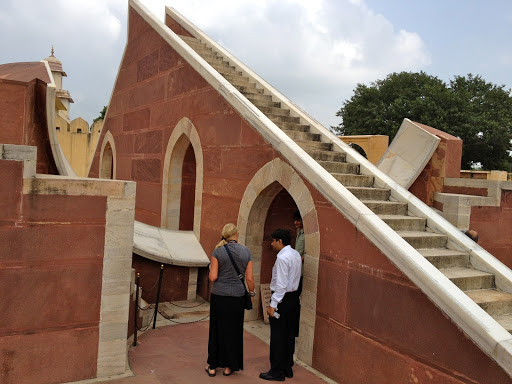
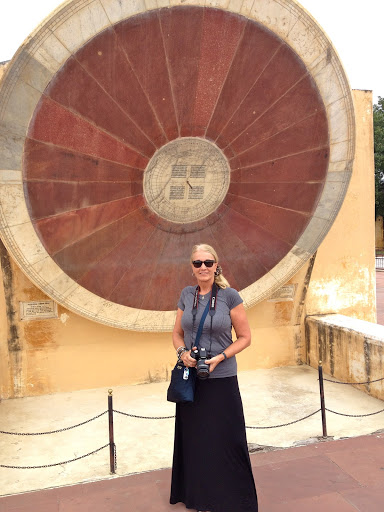
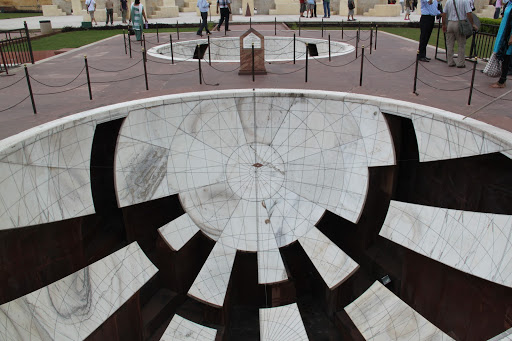
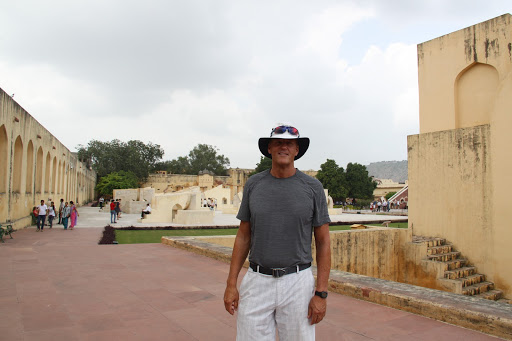
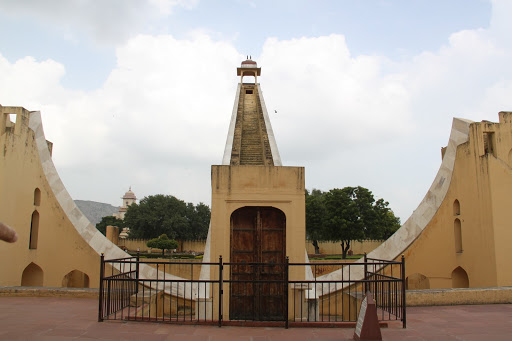
There was also an astronomy park where instruments had been created on a very large scale to accurately measure time and the position of the sun in the sky.

Measuring the time of day

Back at the hotel we spent time by the pool and in the spa and work out areas.  It is hard to get exercise while on vacation.  We are happy to have a gym available.  There is a small Shiva Temple on the Hotel grounds with a Priest.  We went to visit and he gave us a blessing of the dot on the forehead and a string tied around the wrist.

Pool
Barb with her blessings

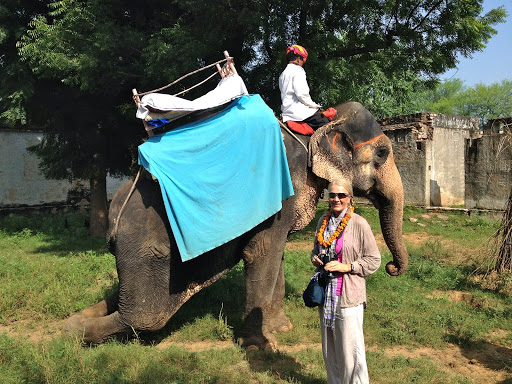
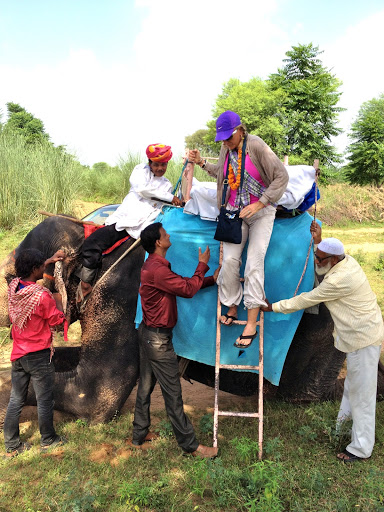
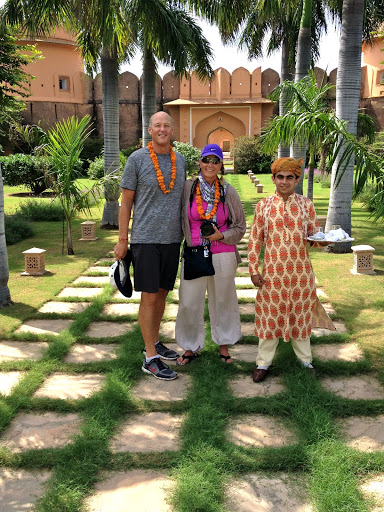
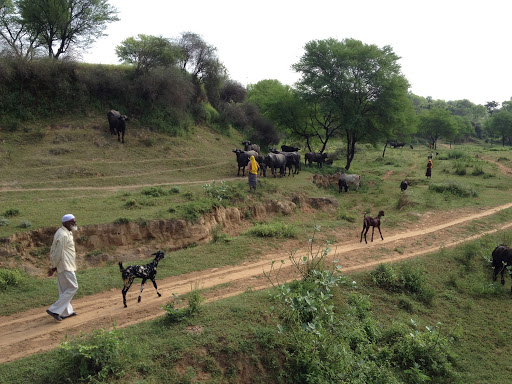
The next morning we took a guide to the Nyla Fort.  We drove through beautiful countryside and farmland.  The farmers seem wealthy and have beautiful homes.  Of all places I have seen in India to this point this is where we would choose to live.  Nyla village is more calm than others we have seen.  We continue to a remote spot where we are greeted with flowers strung around our necks and transferred via ladder to the top of the biggest elephant I have ever seen.  She is a 35 year old female and we are going to ride her for and hour through the countryside to the base of the Nyla Fort. 

The elephant kneels down and they still have to put up a ladder for us to get on
Our elephant driver
Once again, the elephant kneels down and I can climb down.  That
 is pretty good control of an elephant!

Scott and Barb

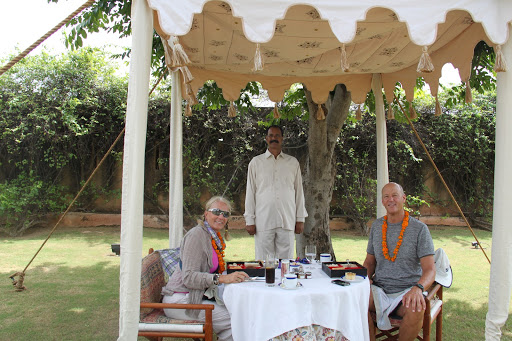
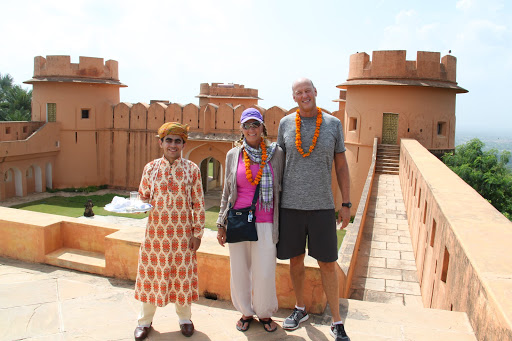
We are met at the top by our butler, who will serve us lunch and show us around the fort.
Original paintings

Well preserved painting


Kids run along side and wave to us. 

The farm children are interested in us, or maybe the elephant

Curious farmers and women goat herders all stop and watch us go by.

Beautiful countryside
The Nyla Fort is owned by Mr. Oberoi.  We later learn that he visits only a couple of times per but has a staff of 25.  His manager for the Fort is a retired military officer and he gives us a military tour of the old Fort.  He told us that President Clinton visited and had cocktails while he was President. 

The manager of the fort waits on us

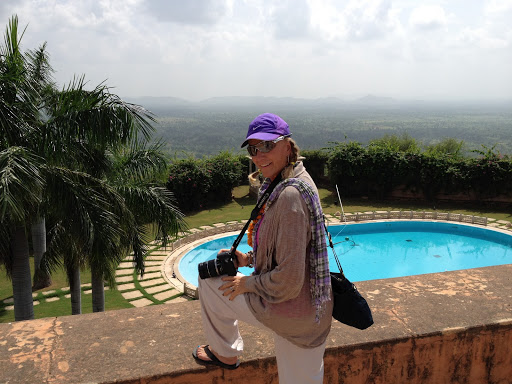
Mr. Oberoi has added a swimming pool
We are the only ones at the Fort.  The elephant excursion is an exclusive event but is not expensive ($150 US) and was so much fun.  We have lunch in the courtyard.  The Manager and our Butler from the Oberoi serve us lunch and try to anticipate everything that we will ask for before we ask for it.

Scott sitting down for lunch
Top of the Fort

Udaipur, India September

If you close your eyes and dream about going to India from Africa……it might become a nightmare!
It begins at 8:30 am leaving our hotel in Johannesburg (which happens to be next to the airport), to catch our 11:00 am flight to Nairobi.  Finding it cancelled – although they tell you it’s just delayed, we would miss our connecting flight from Nairobi to Mumbai, India.  We finally got a flight leaving at 1:00 pm-but it was delayed until 2:00 pm.  The flight took 4- 1/2 hours to Nairobi, then we waited 5 hours for the next flight to Mumbai (which was delayed another hour), flew 6 hours to Mumbai, waited in the airport for 3 hours for our flight to Udaipur, India.  (We were supposed to spend the night in Mumbai, but with delays we missed a full night).  It was a 1- 1/2 hours to Udaipur, then picked up at the airport and driven 40 minutes to where we caught a short boat ride to our amazingly beautiful Oberoi Hotel set on Lake Pichola.  It is a palace and a welcome site.  That was a 24 hour ordeal.  India has it’s own time change across the whole country and we are 12 1/2 hours ahead of USA mountain time.

We have come to India the last two weeks of the projected monsoon season so it is not quite tourist time yet (which helps on the cost of our hotels).  The hills are green and beautiful in the countryside and the people have a pleasant aura about them.

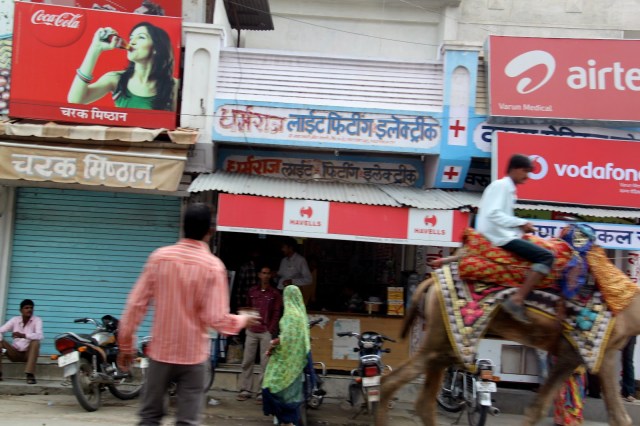
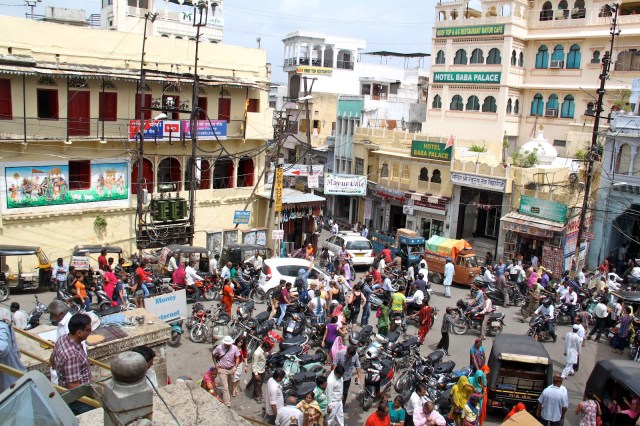
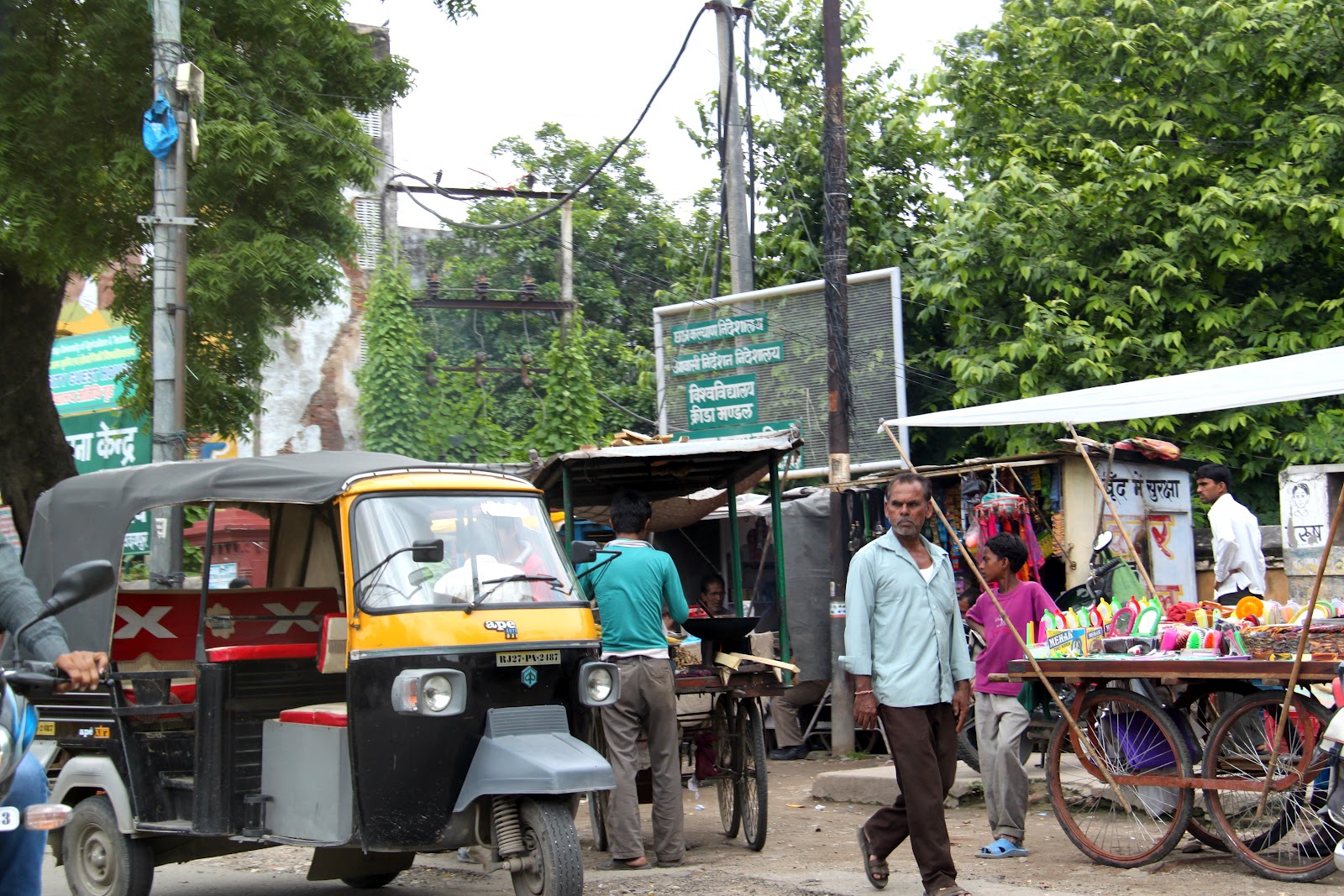
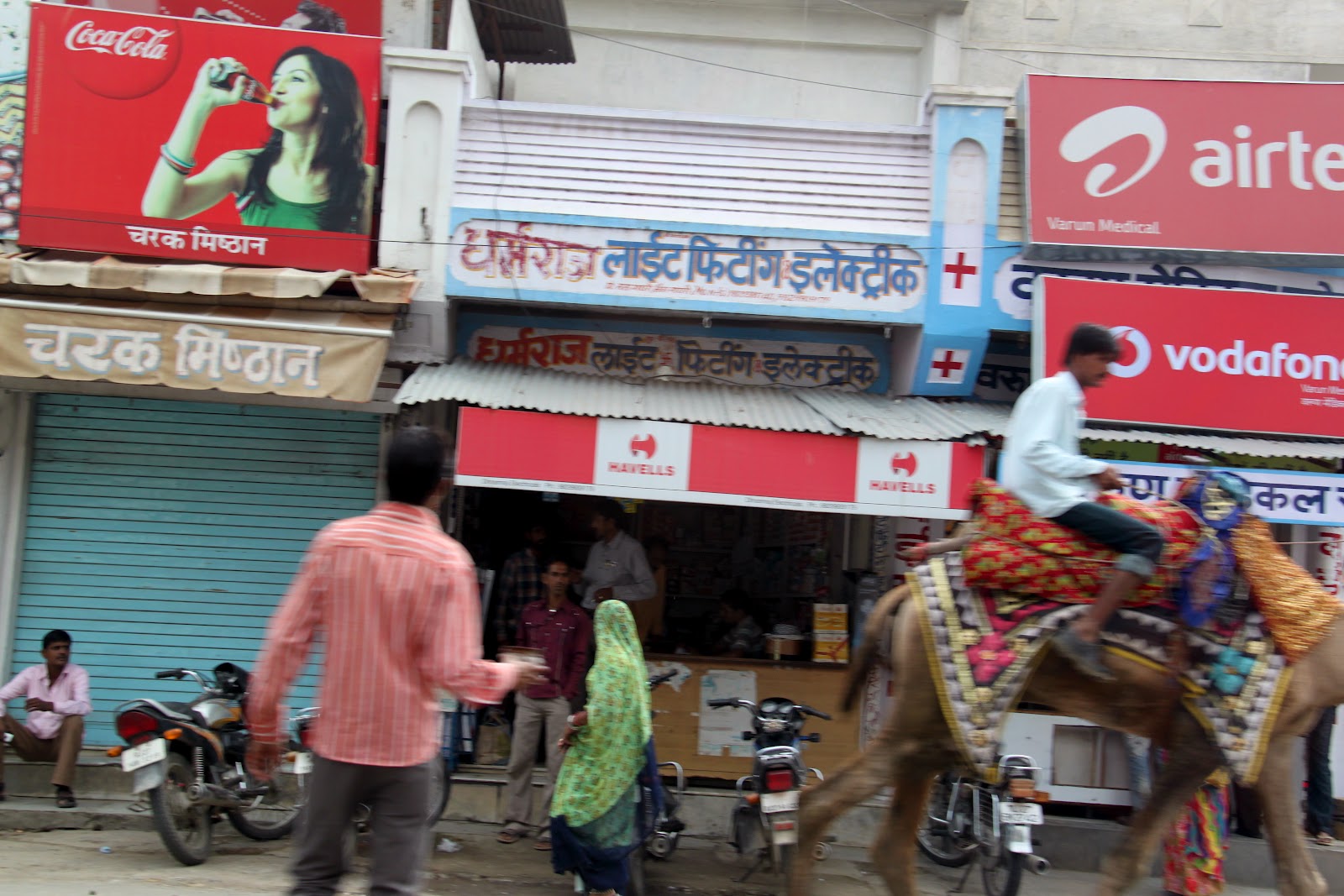
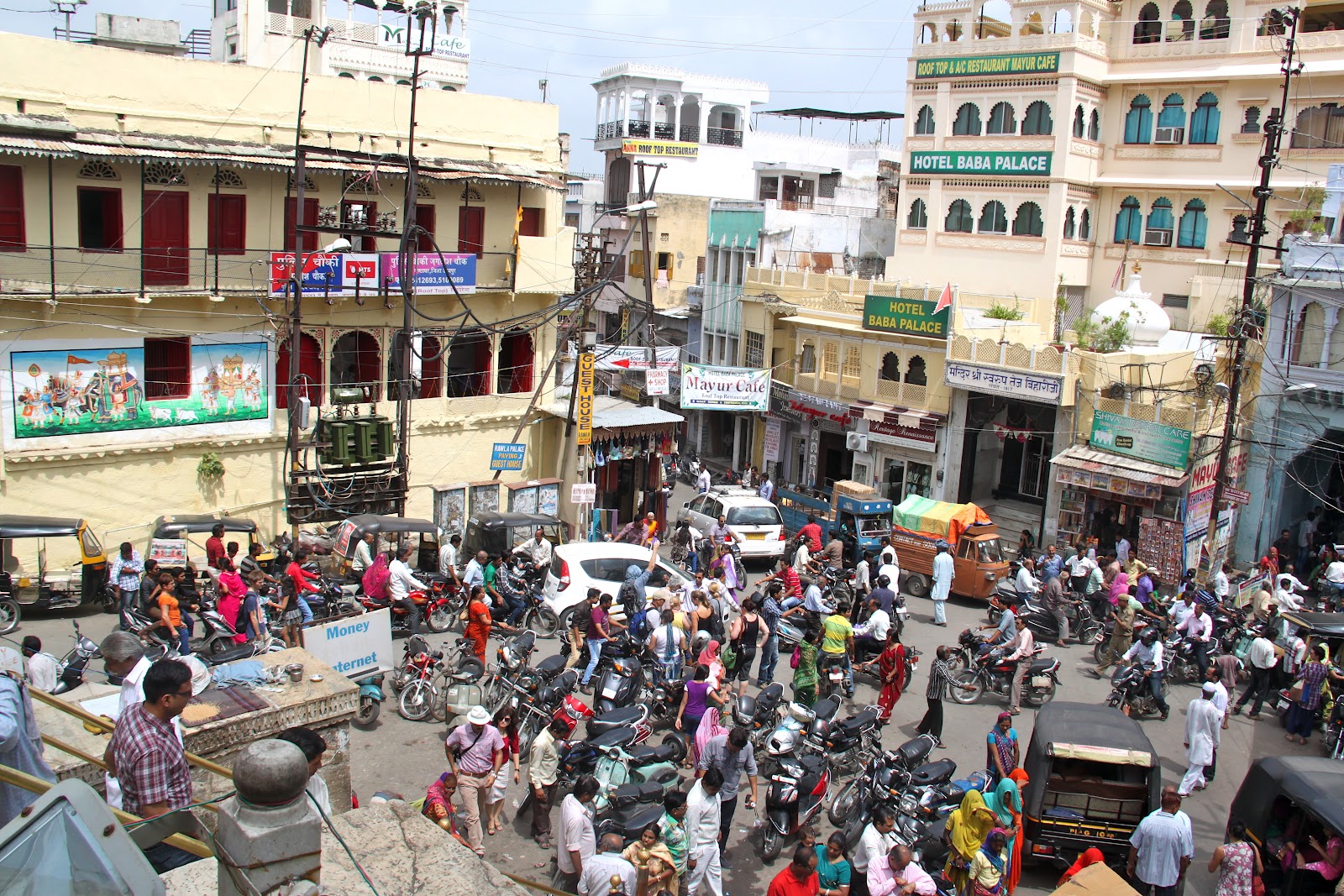
Around the towns and temple areas there are masses of people but it seems to be a harmonic chaos.  There are cars, tuk tuk’s, camel carts, donkey’s, cows, dogs, kids, and even some elephants all using the roads.  If you are walking-don’t stop, as the traffic around you predicts where you are going and flows around you.  Horns honk at each and every passing (on the right, left, or middle, it doesn’t matter) as a courtesy- “I’m here” and not “Get out of my way”.  It is like a pebble flowing down a river-taking the path of least resistance.
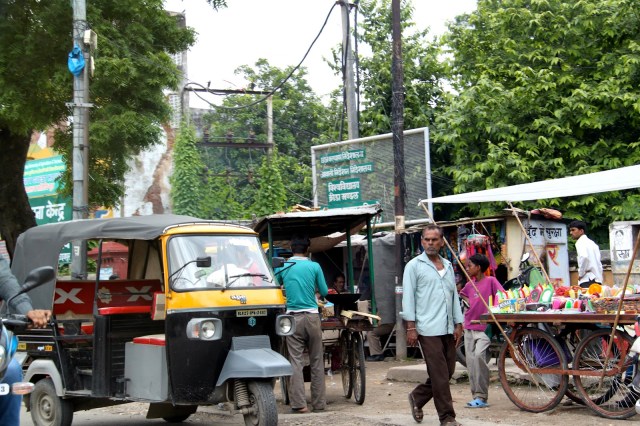
Tuk tuk’s are the local taxi’s

Camel in the road

Masses of people

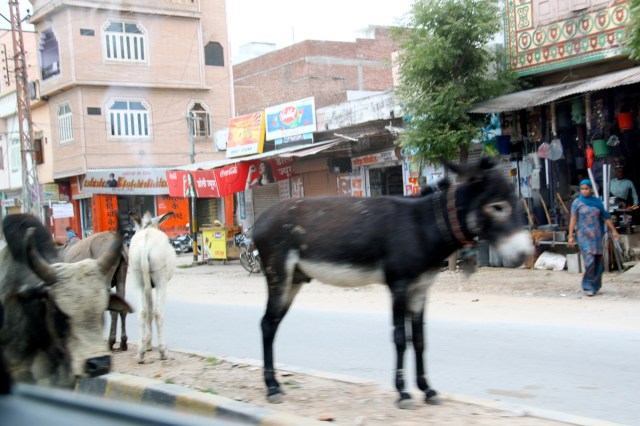
Donkey in the road

We have hired a car and driver to take us around the cities and drive us between cities.  (Since it is not high season the flights are not running this time of year).  Our driver’s name is Anis (say Ah nees).  He is 30 years old, married, and has 2 children.  He will drive us from Udaipur to Jaipur (5 hours), to Agra (6 hours), to Delhi (4 hours), as well as on our touring.

Barb with Anis

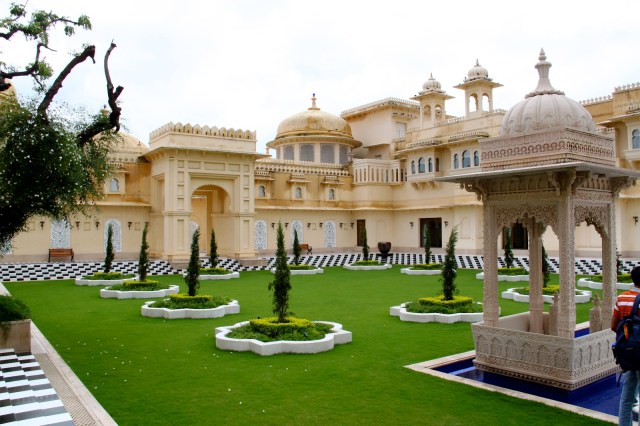
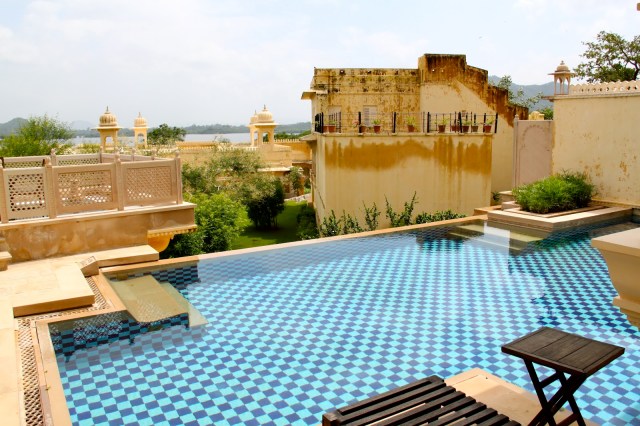
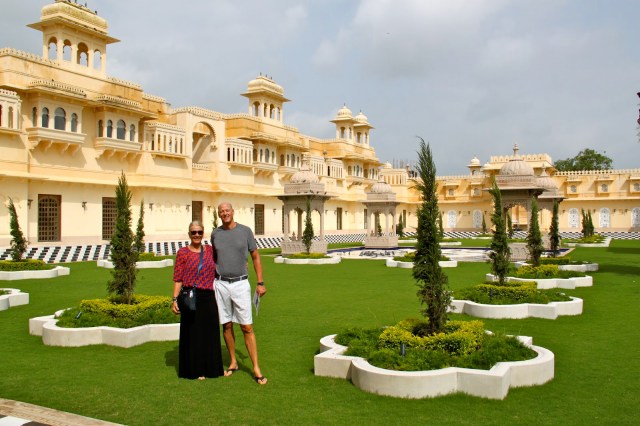
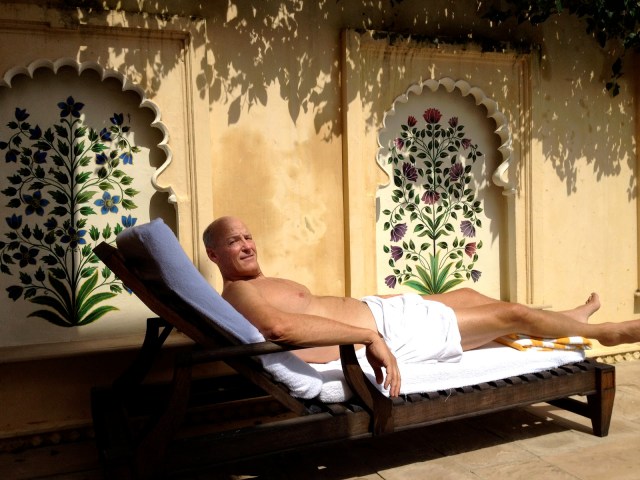
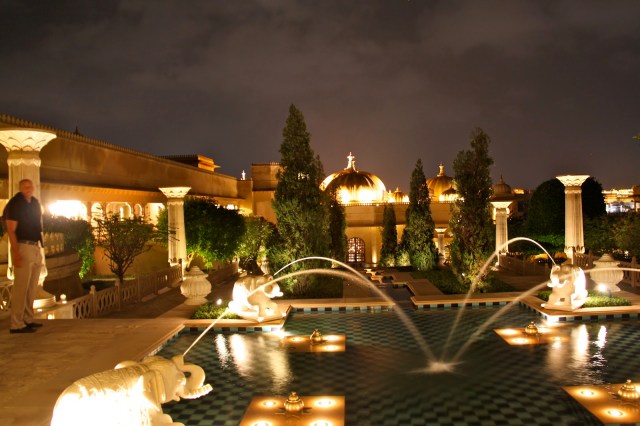
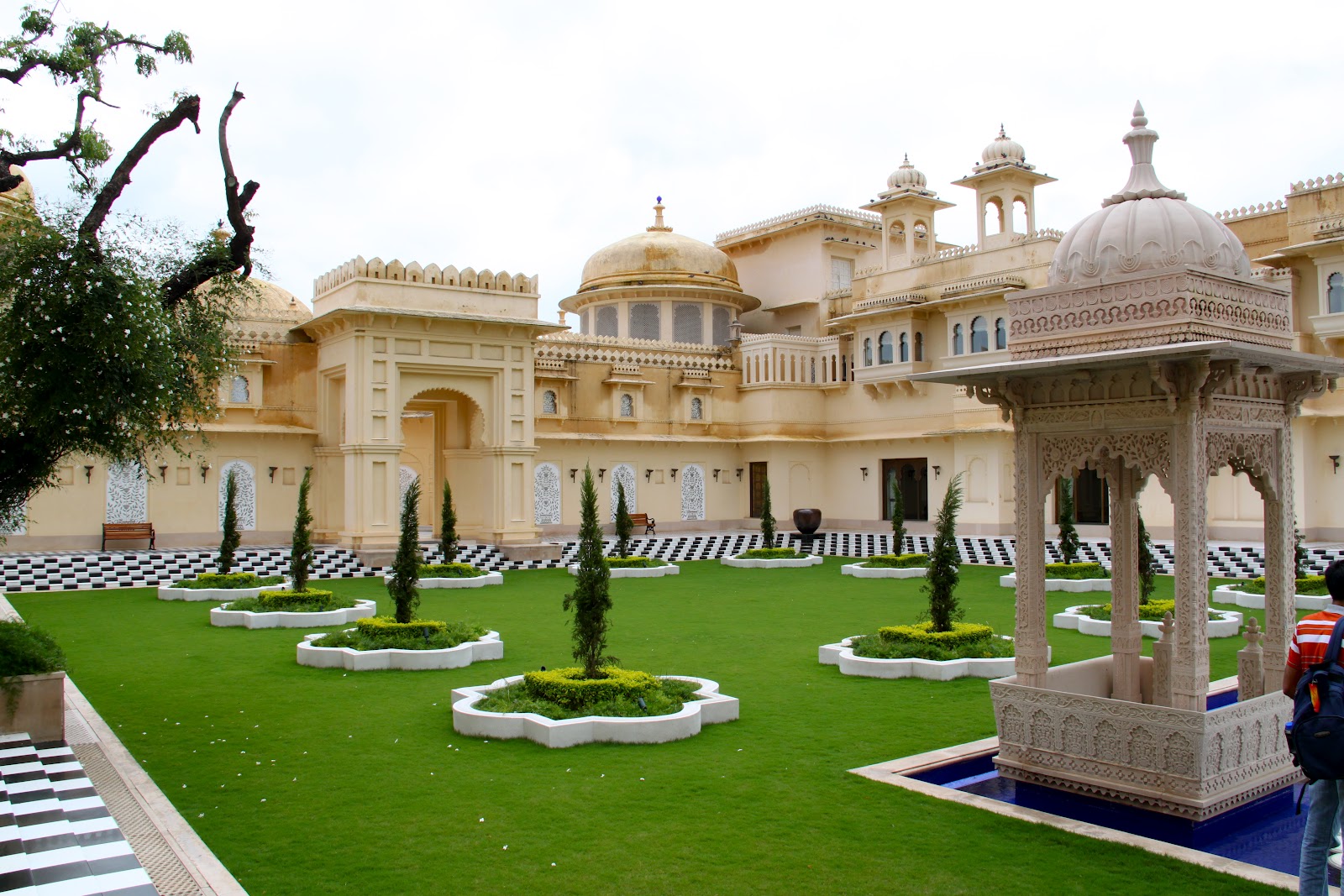
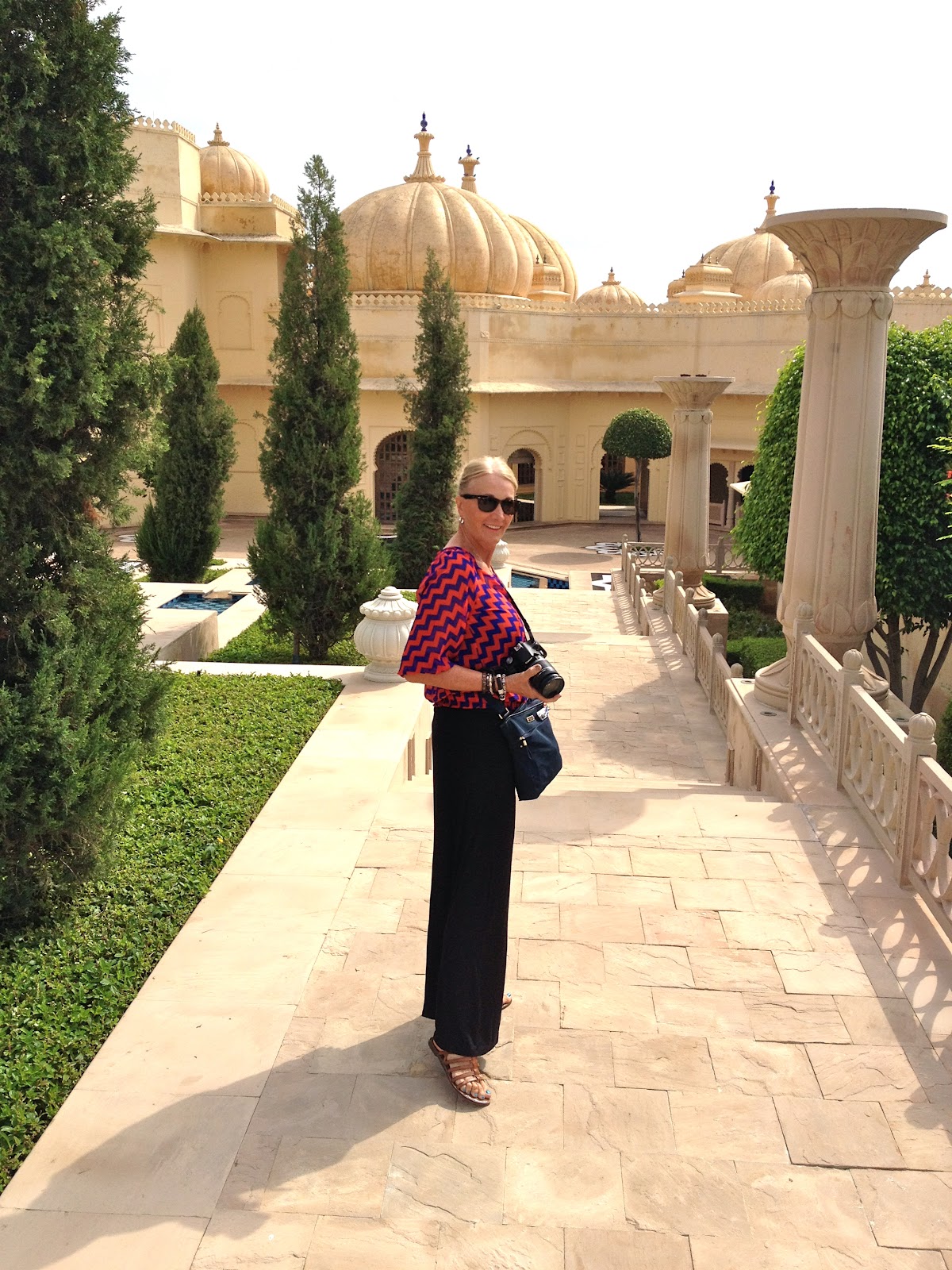
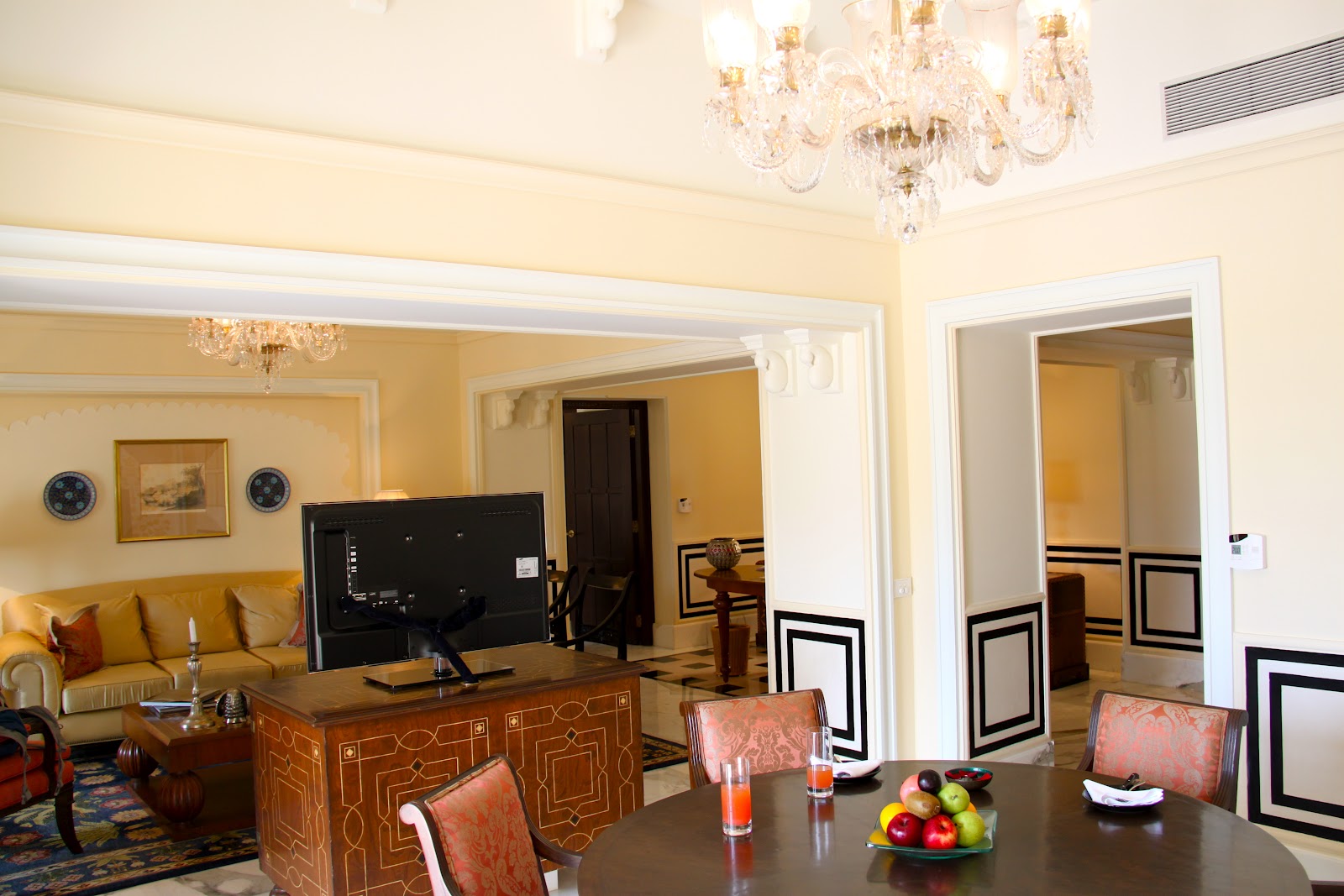
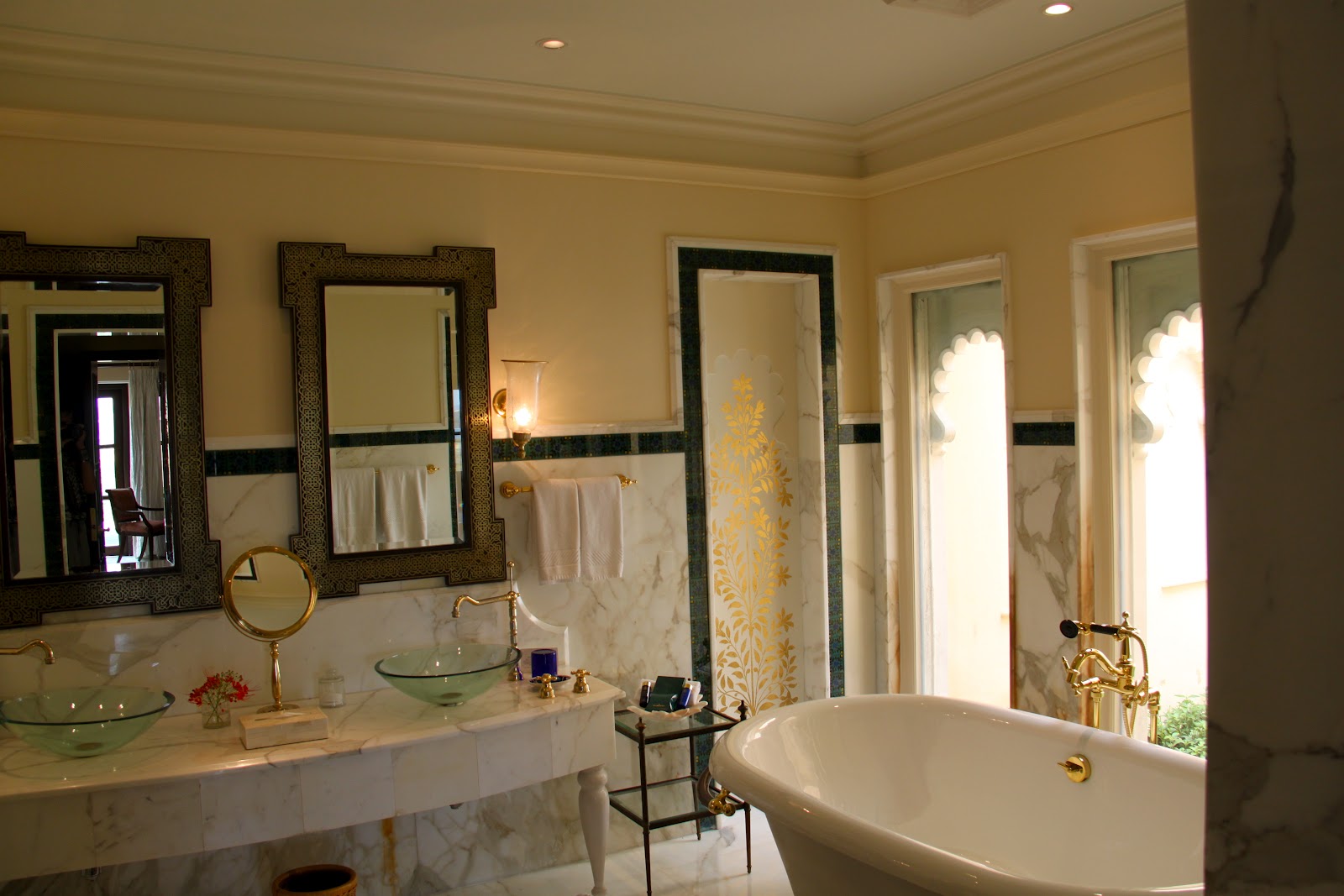
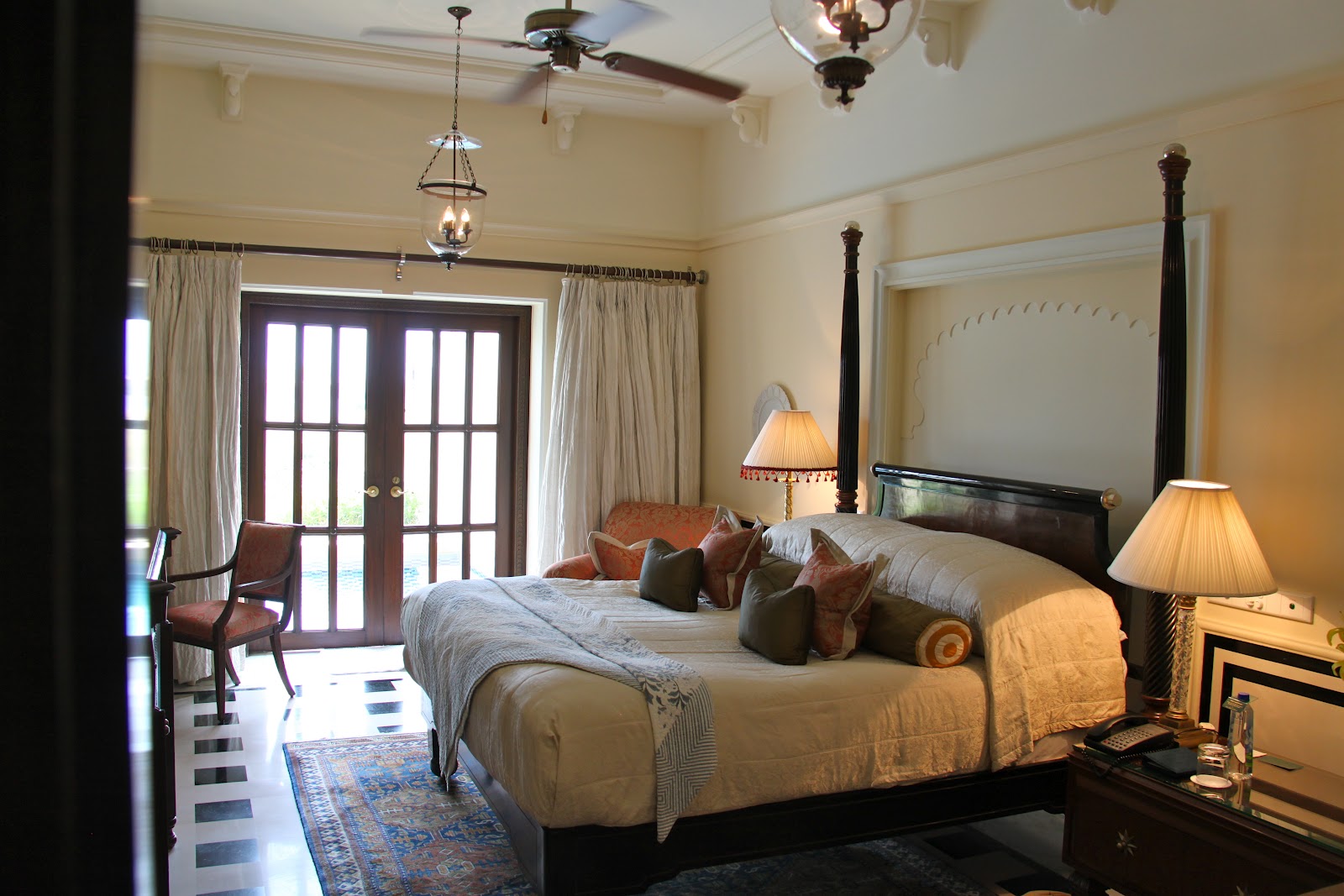
Udaipur has been called the other Venice.  There are many man made lakes dating back to the 16th century, with palaces and lush gardens and towns built around them.  The Oberoi Hotel is on Lake Pichola and is a copy of the palace.  We are in an amazing suite with its own swimming pool and butler.
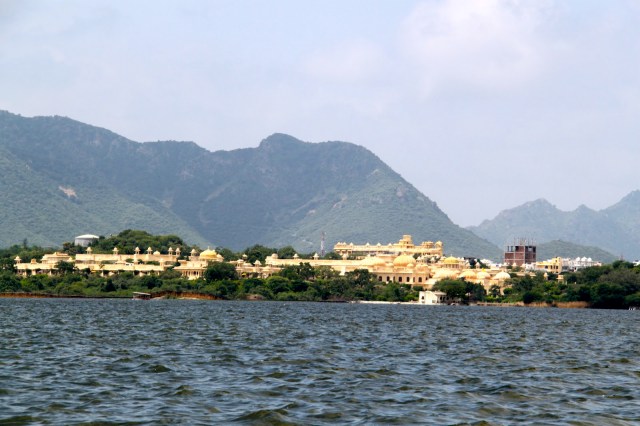
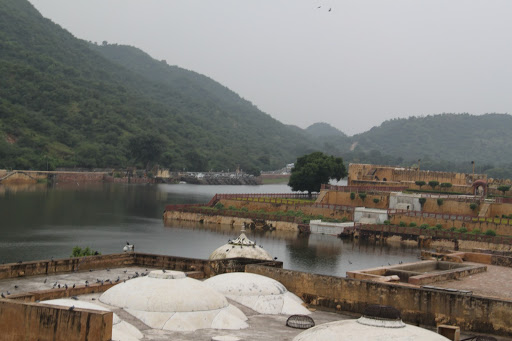
Our first view of the Oberoi Hotel coming in on a boat

From the garden

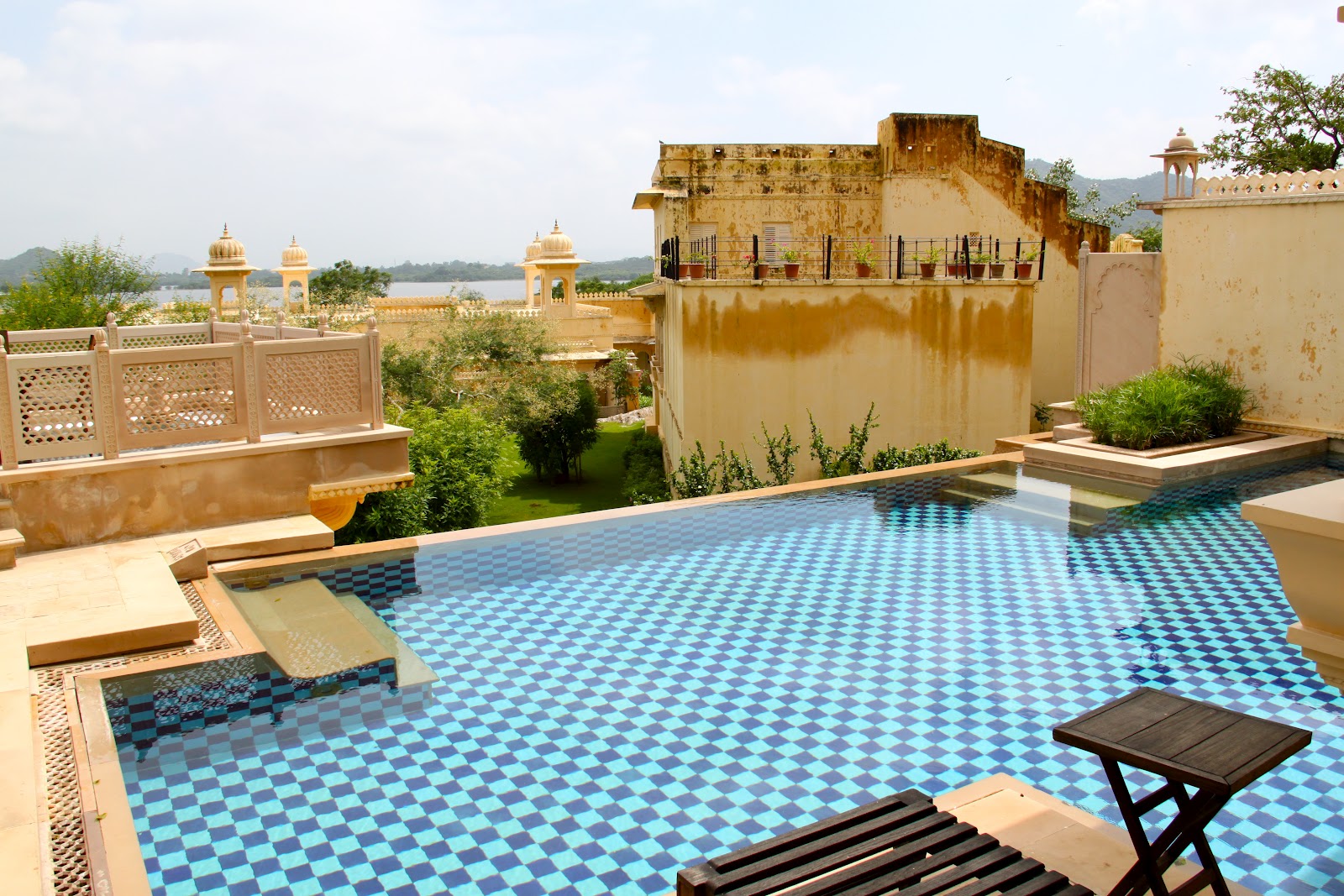
The private pool for our Suite

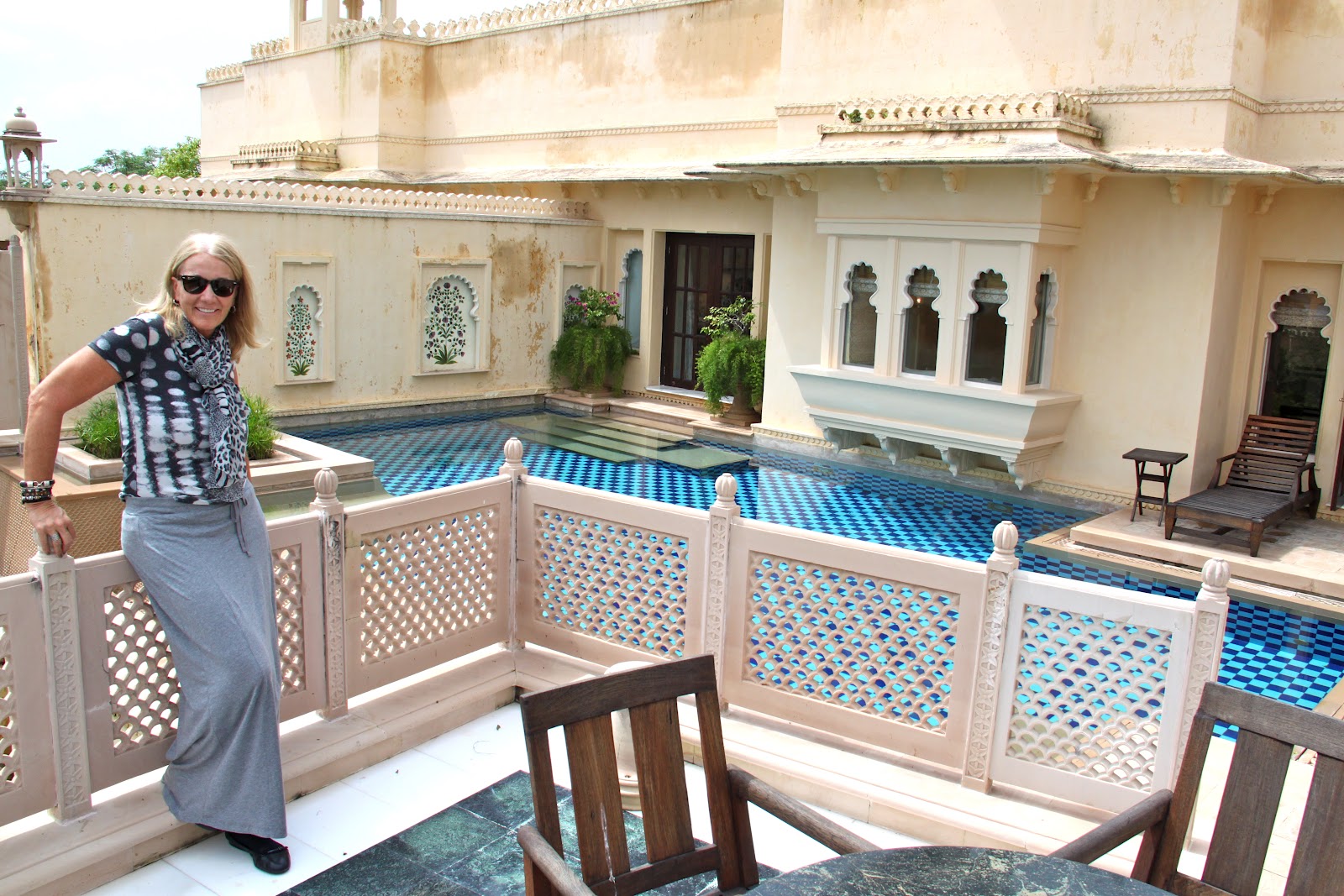
Barb at our suite

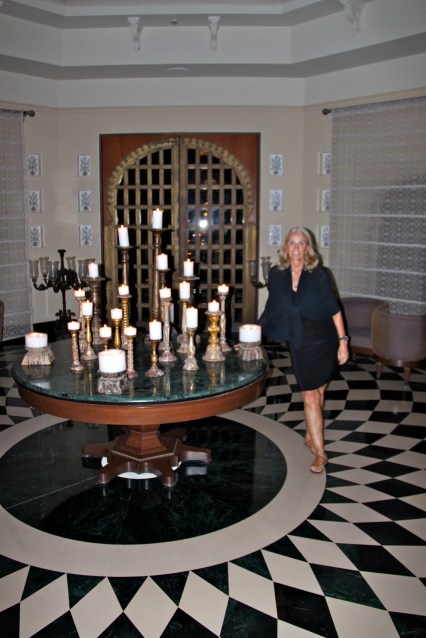
The candle room at the hotel

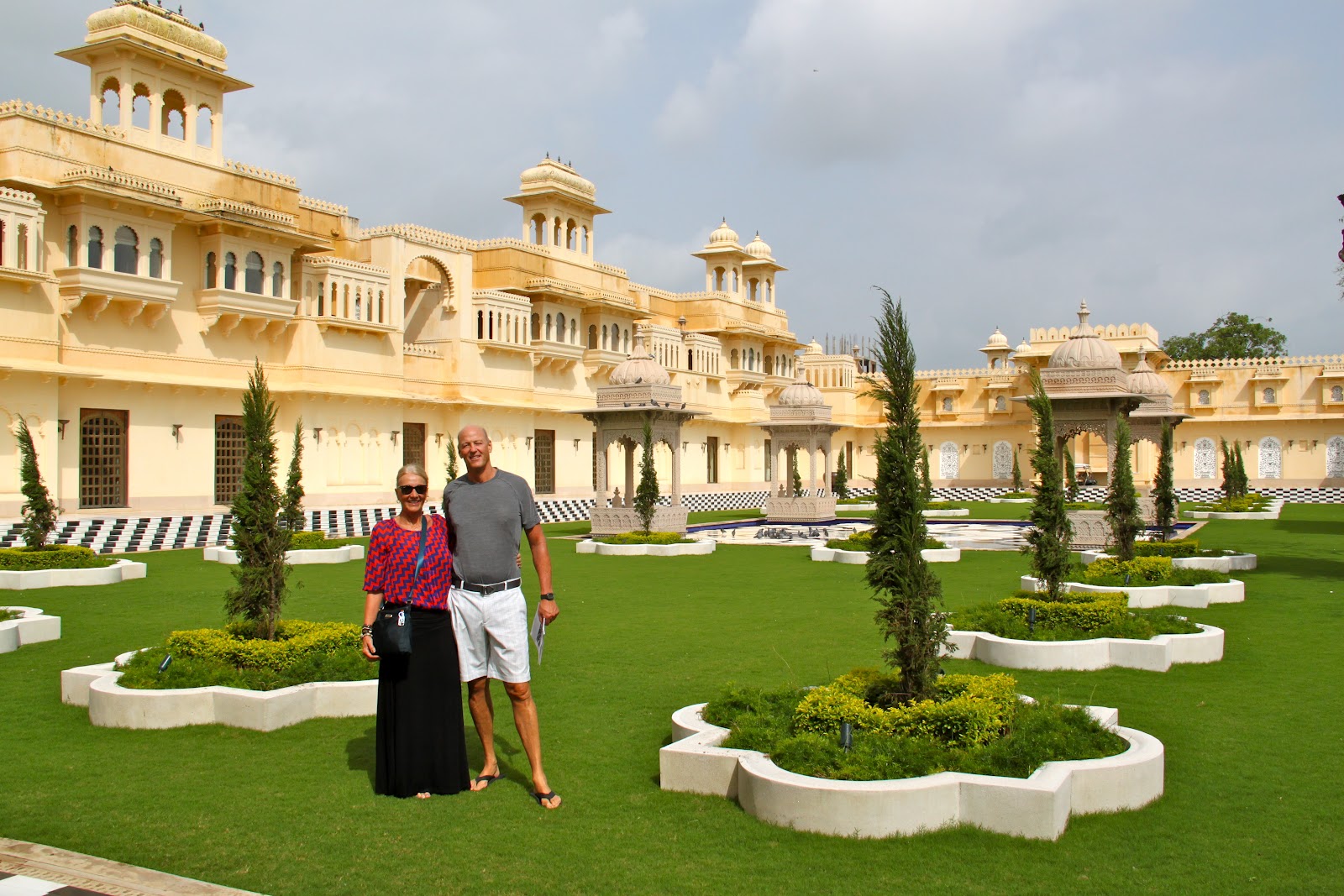
Barb and Scott
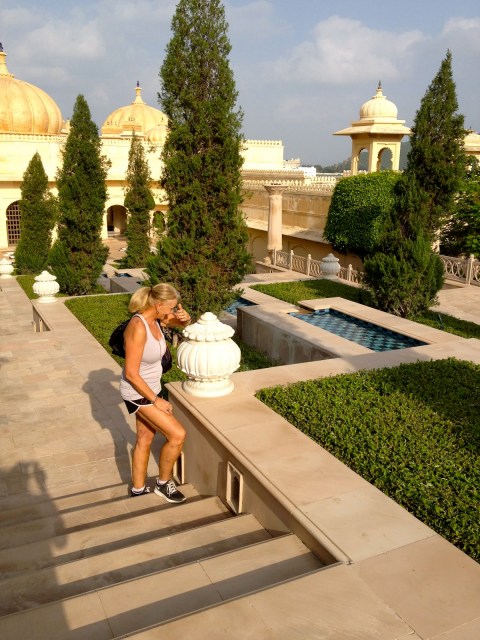
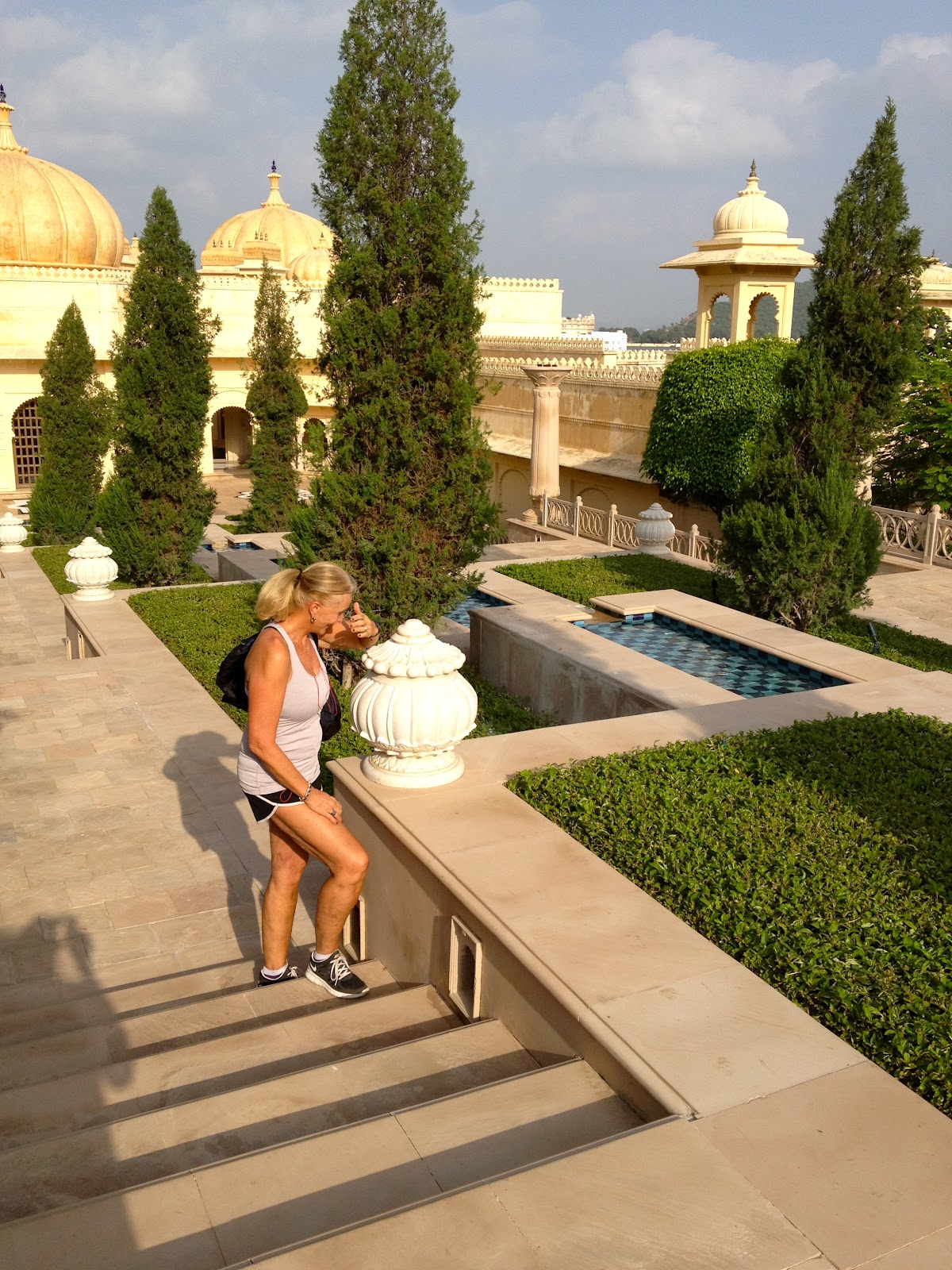
Barb coming from workout

Our Suite

Our bathroom in the suite

Bedroom

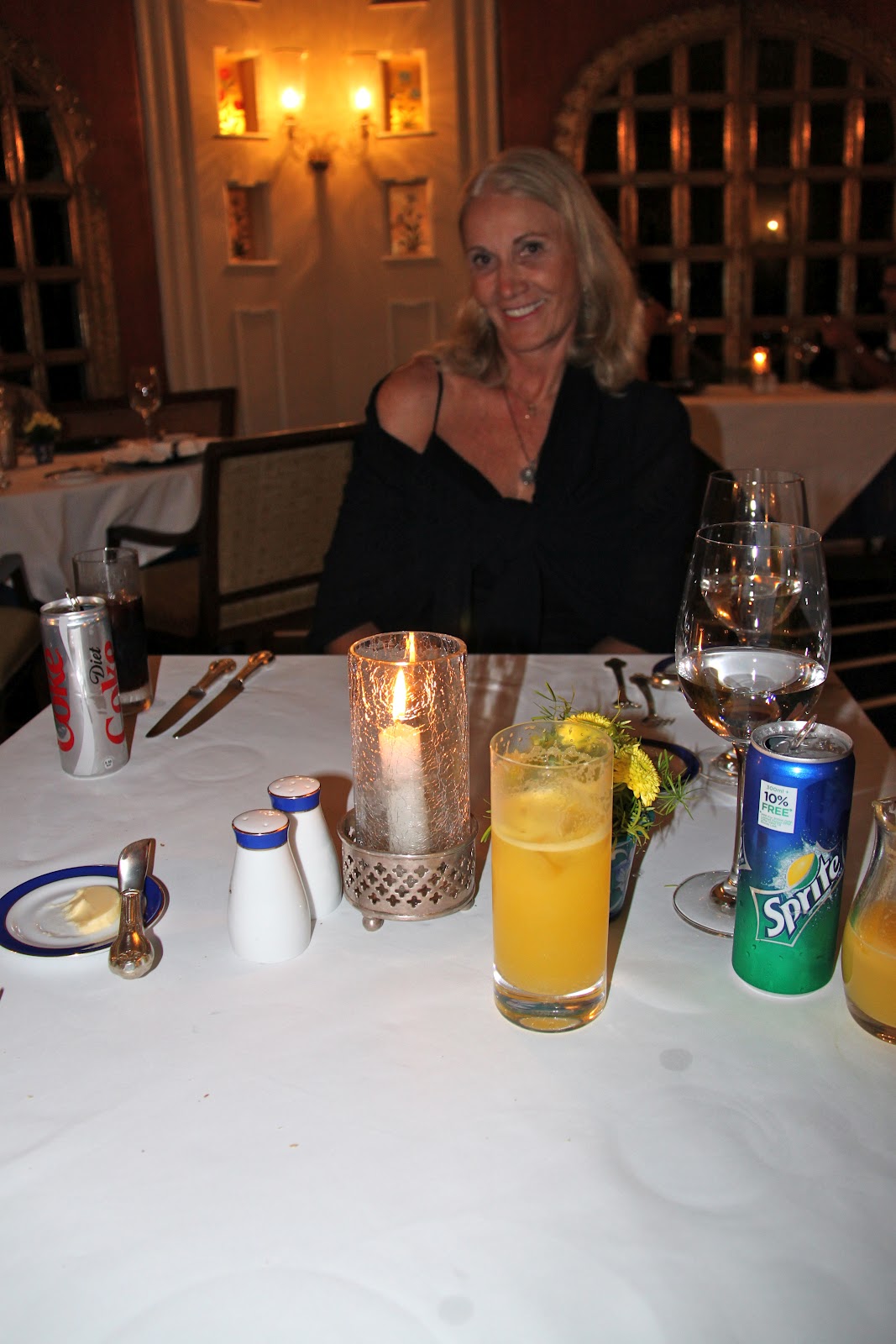
Dinner in the restaurant

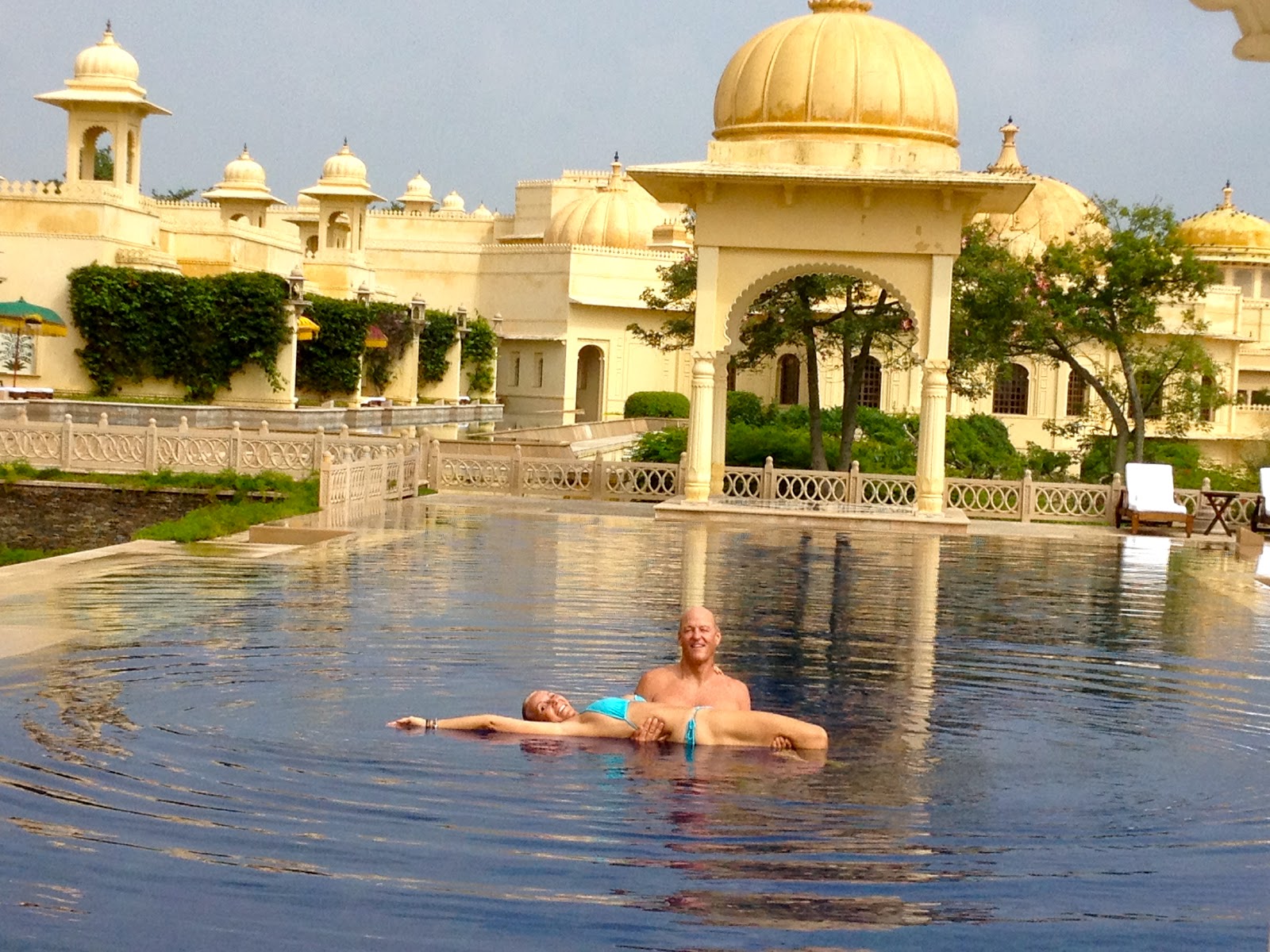
Swimming in the hotel pool

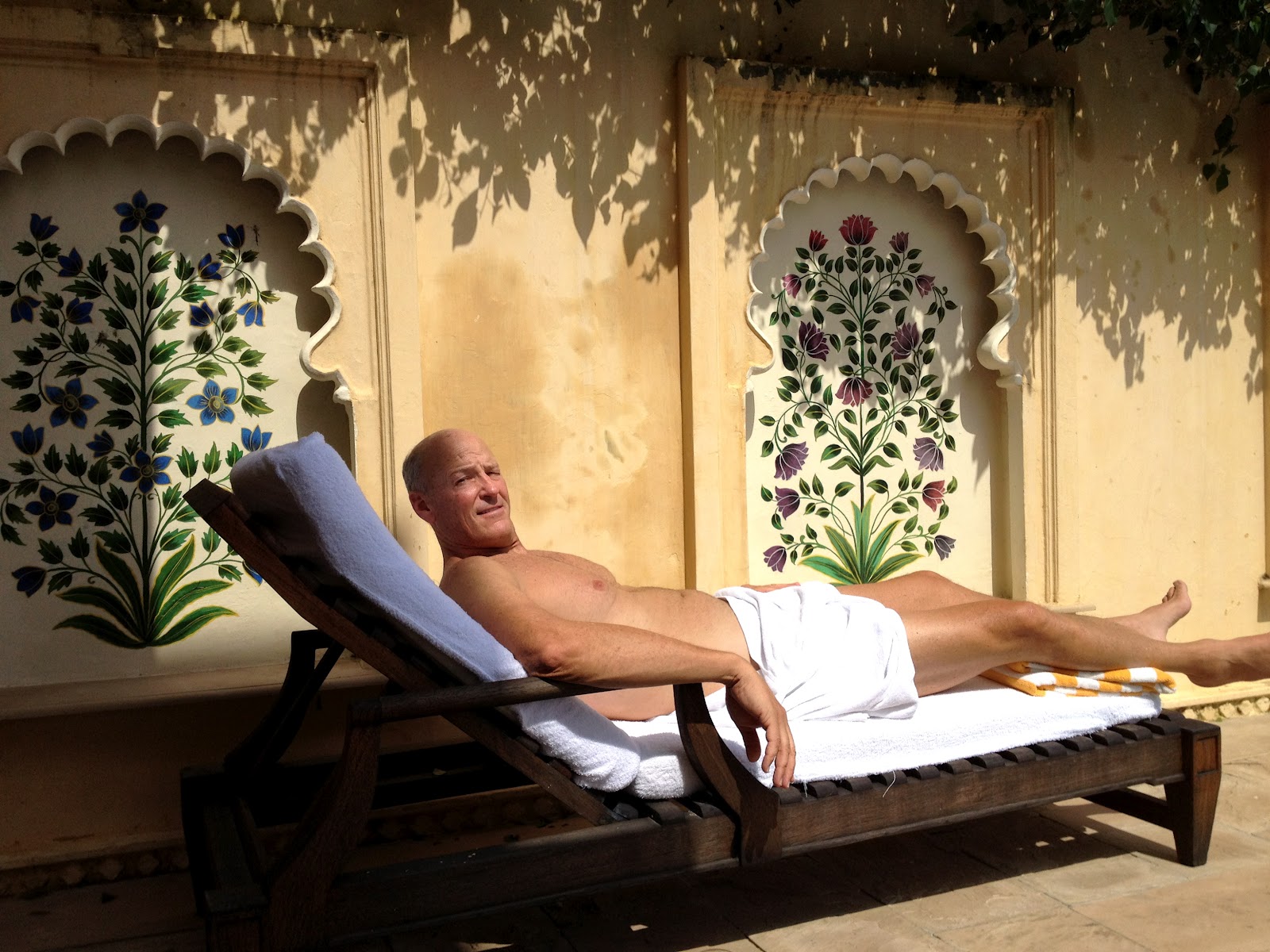
Scott at our private pool

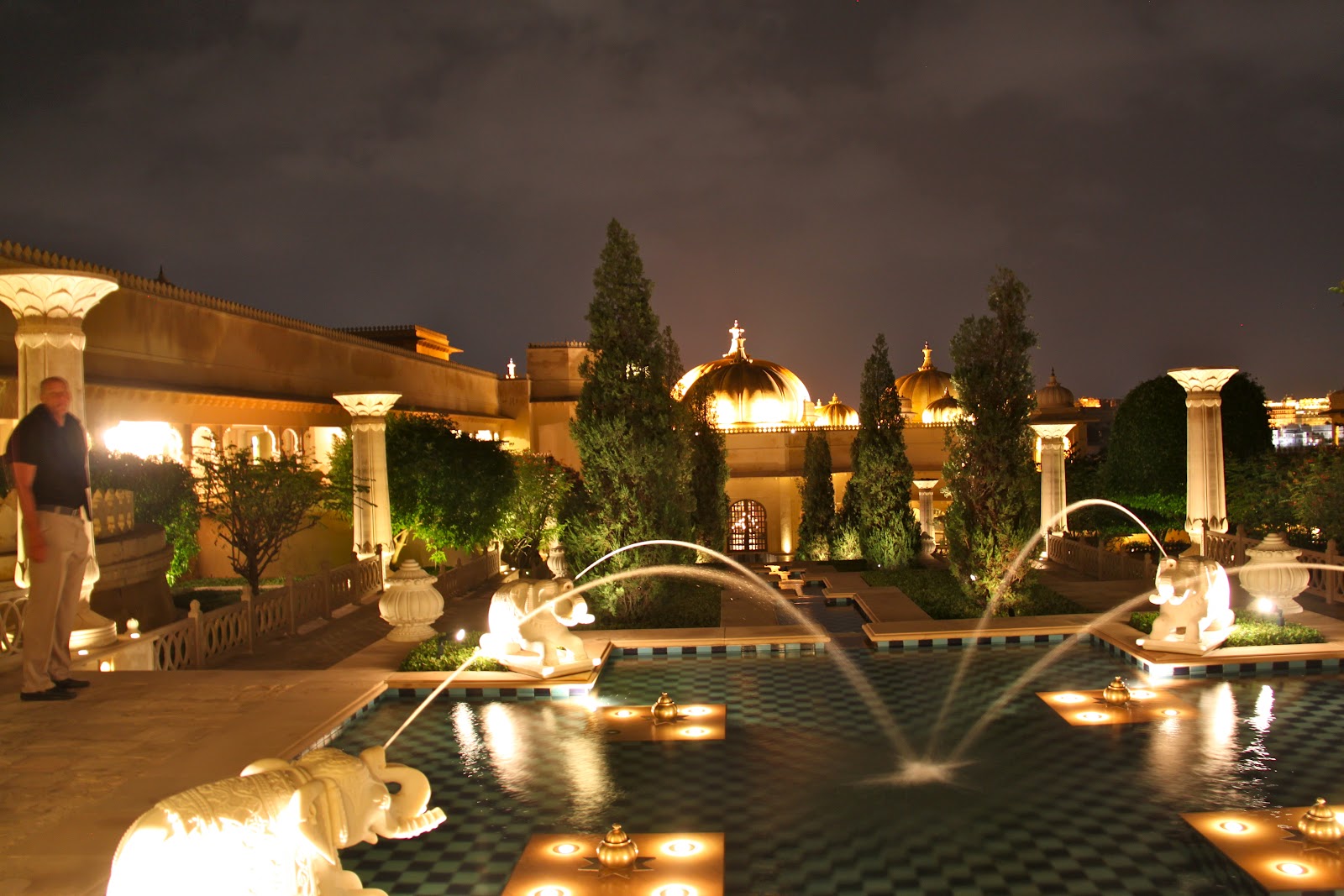
Night view

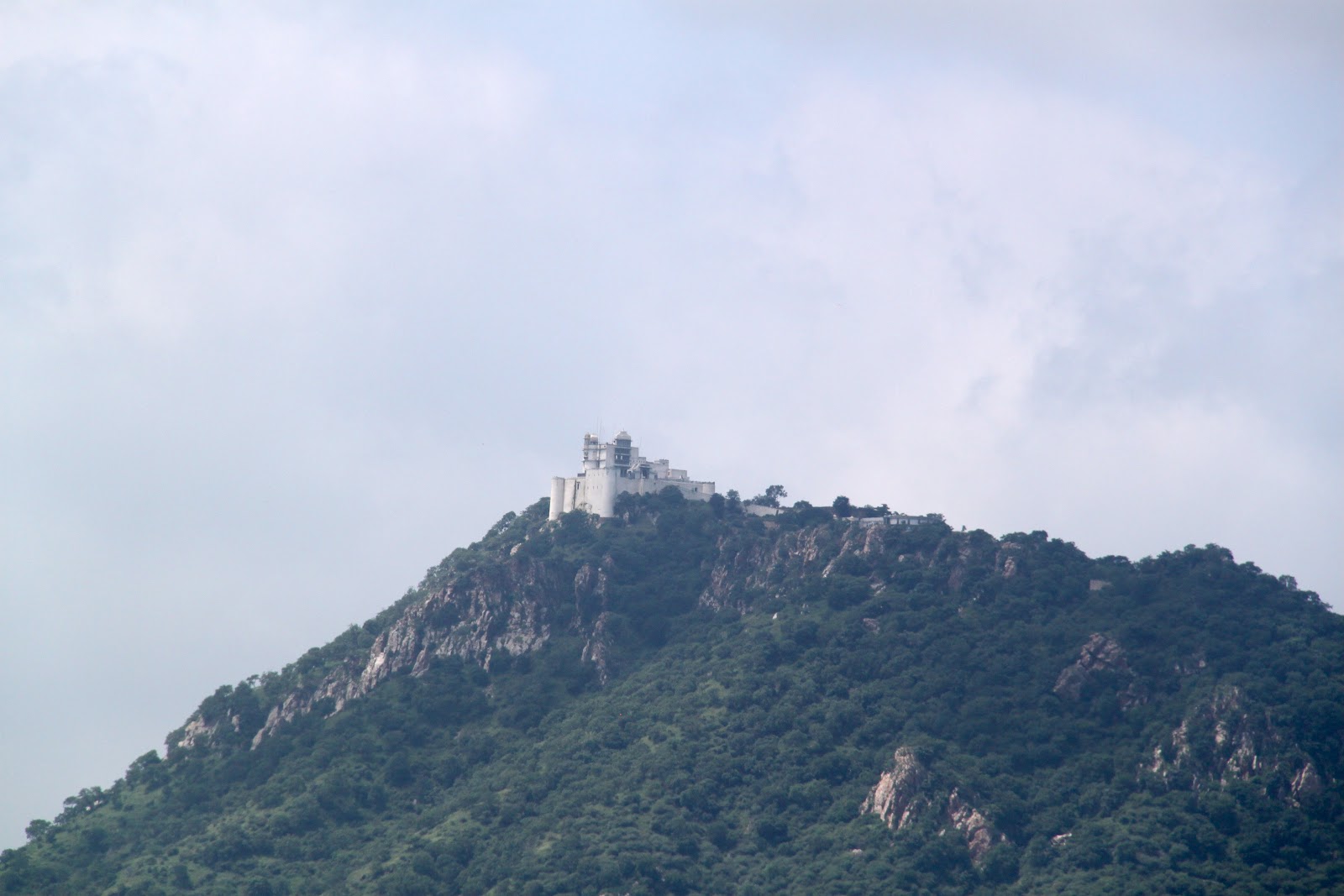
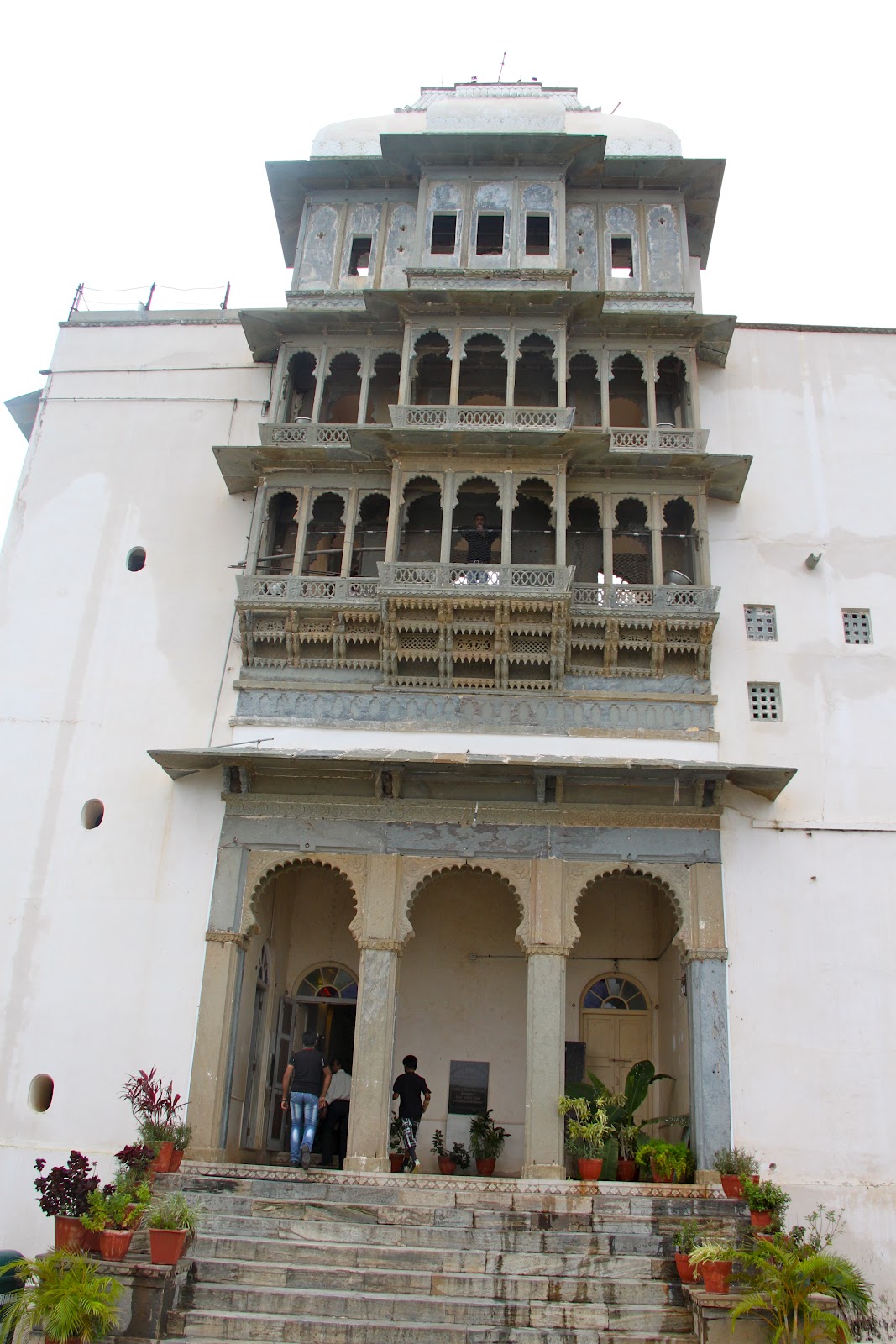
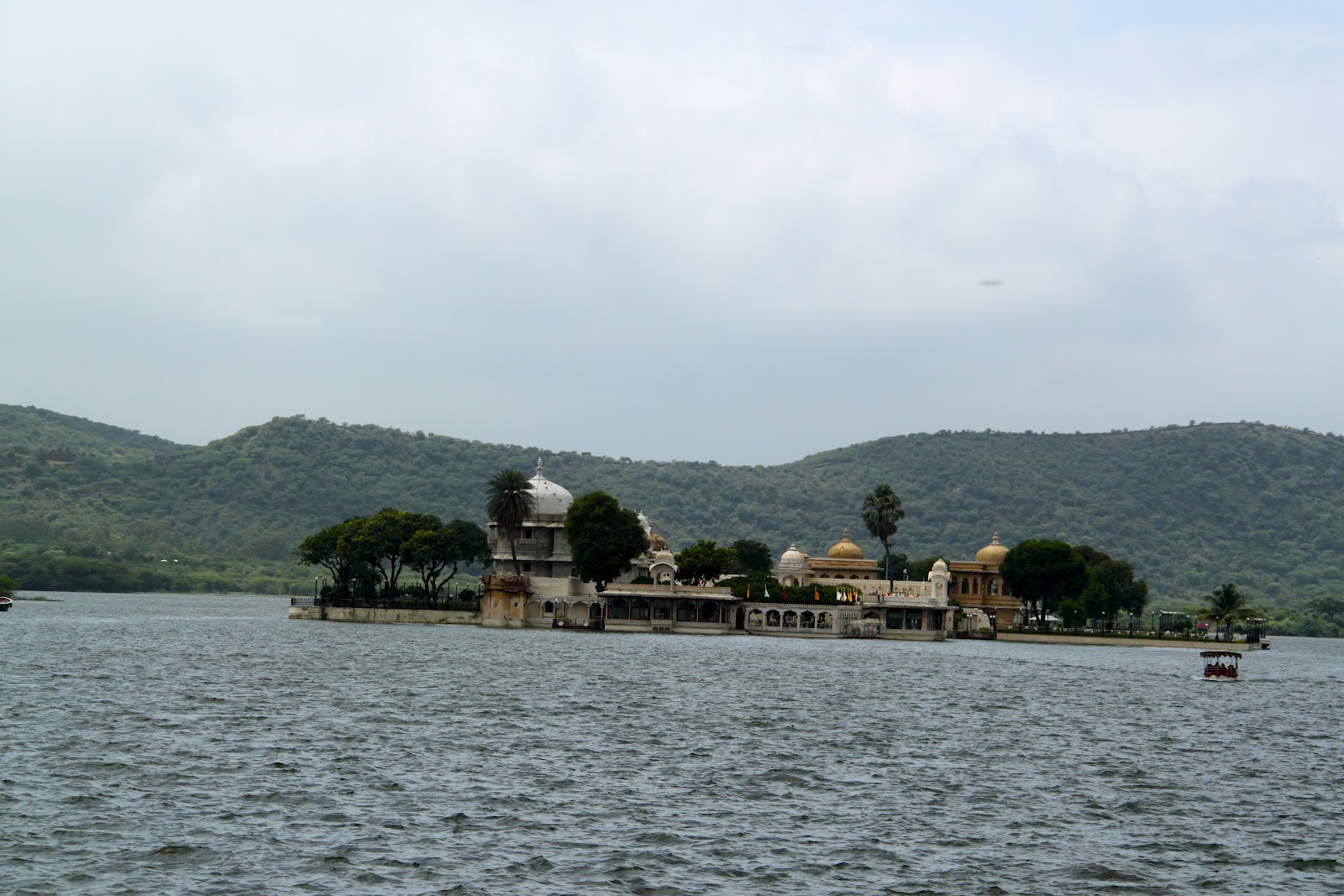
There are three palaces owned by the royal family, the City Palace, the Monsoon Palace and the Summer Palace.  The Winter Palace or City Palace is in the main town, the Monsoon Palace is high on the hillside and is used during the rainy season, as it is above the clouds, and the Summer Palace (also known as the Pleasure Palace) is out in the middle of the lake.  The royalty of Udaipur, the Mewar, have been in control for many centuries.  They were never conquered but had to make a couple of treaties in order to survive.  The royal family is figure head only but has much respect and honor.  The Maharaja recently won first prize in the Concourse d Elegance in California for one of his Rolls Royce.  The James Bond movie Octopussy was filmed in Udaipur and used cars from the the Maharaja’s family collection.
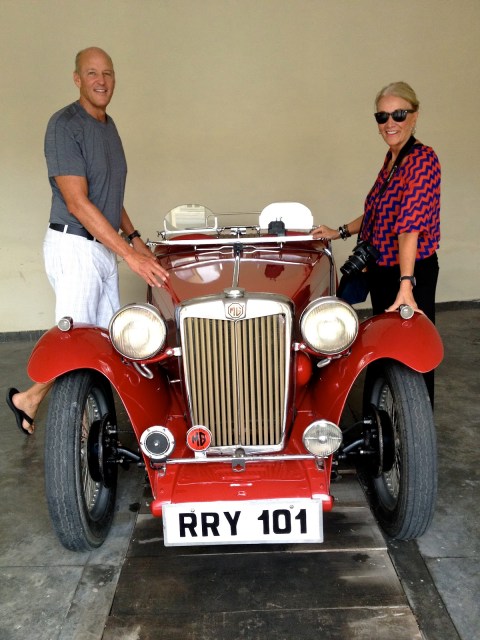
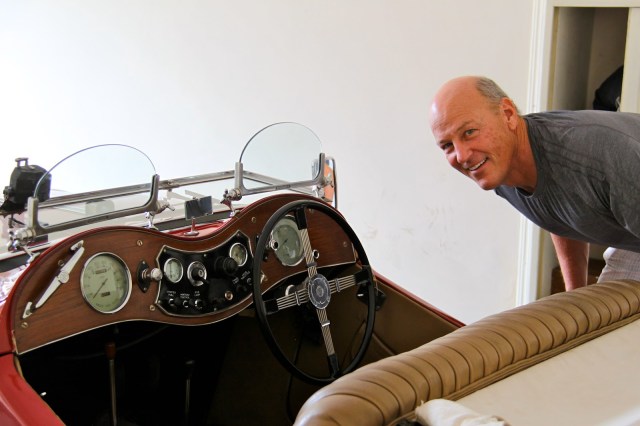
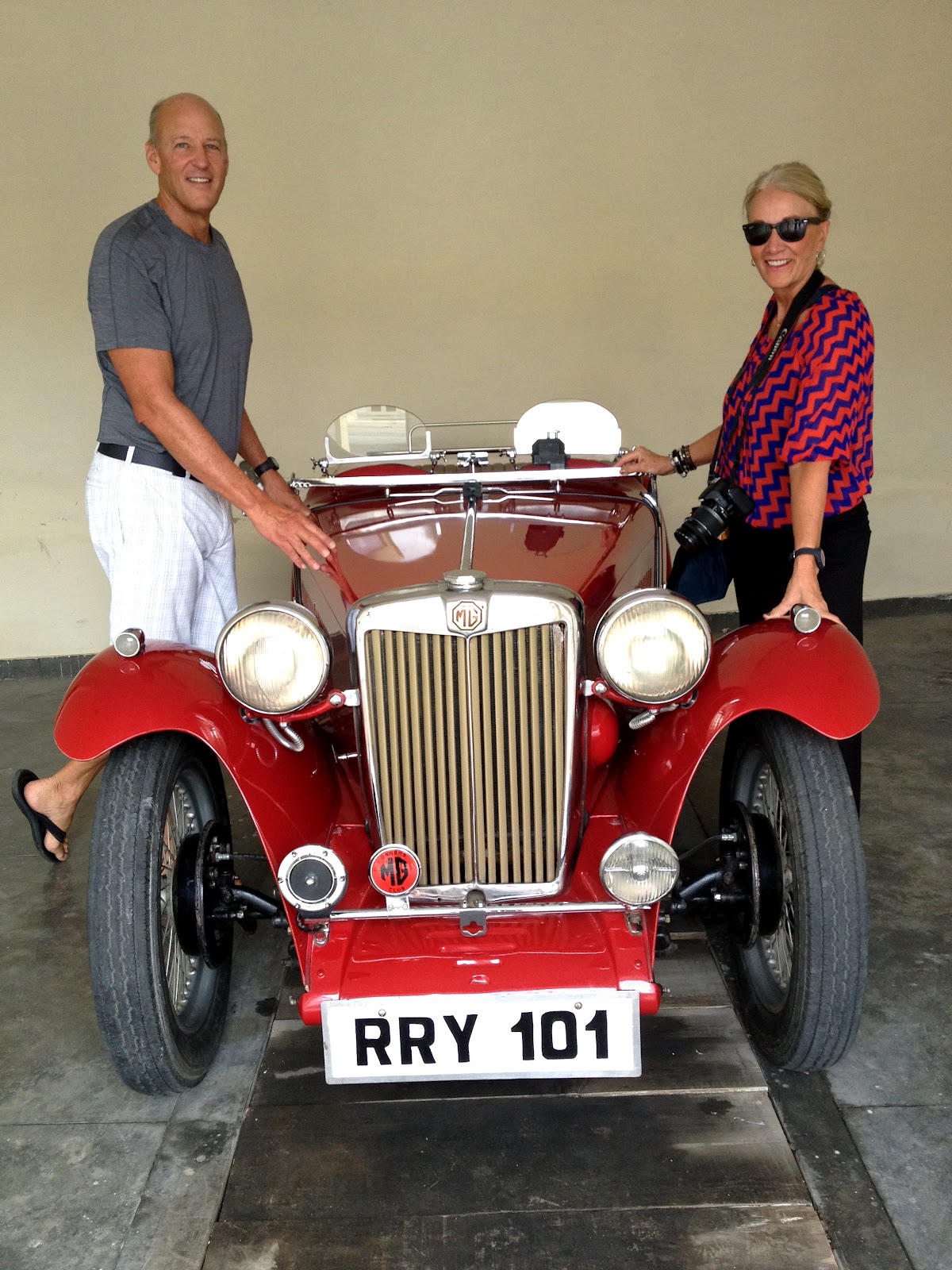
With the MG 

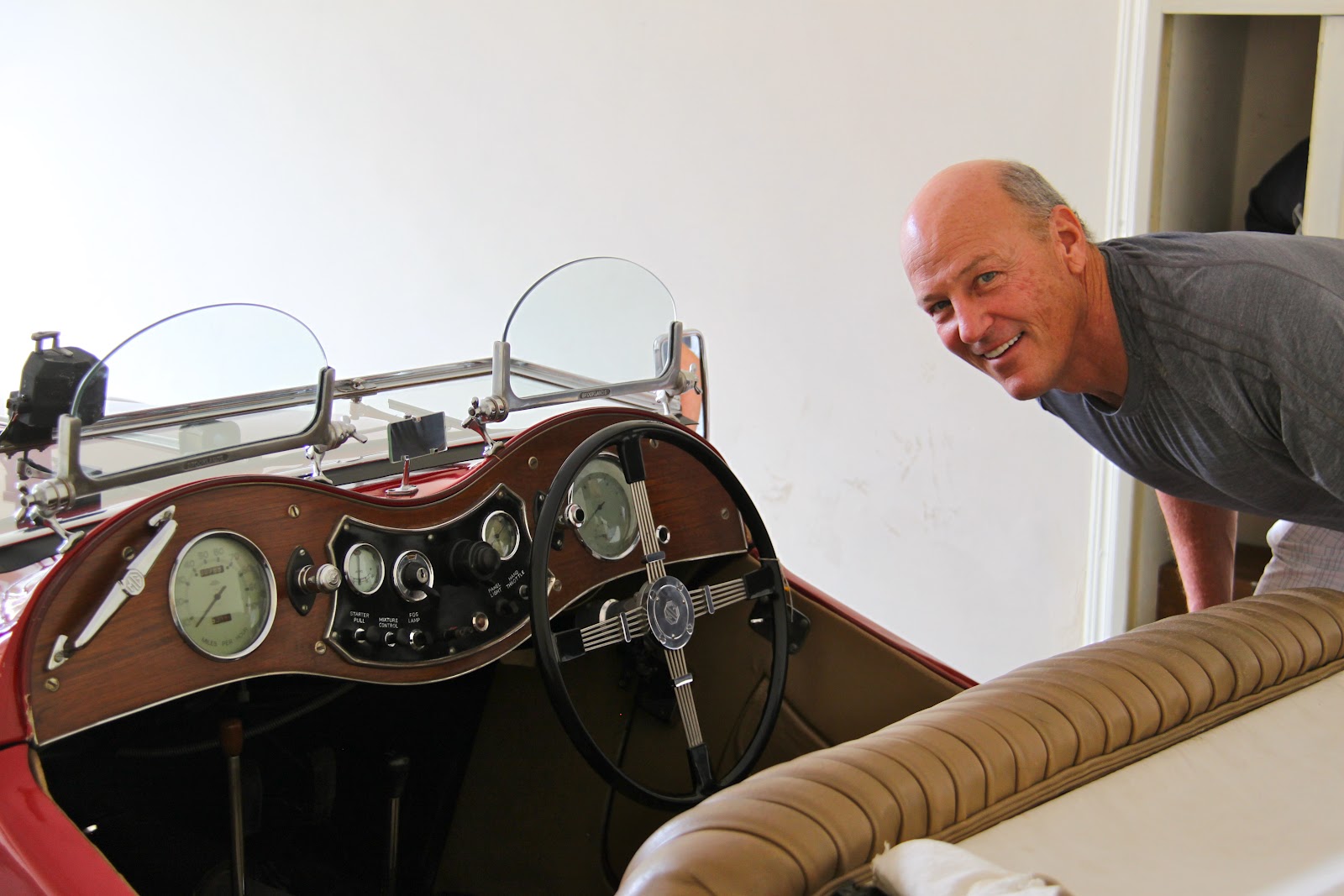
Scott had a 1957 MG in high school.  The interior of this ’47 MG is the same as Scott’s ’57.

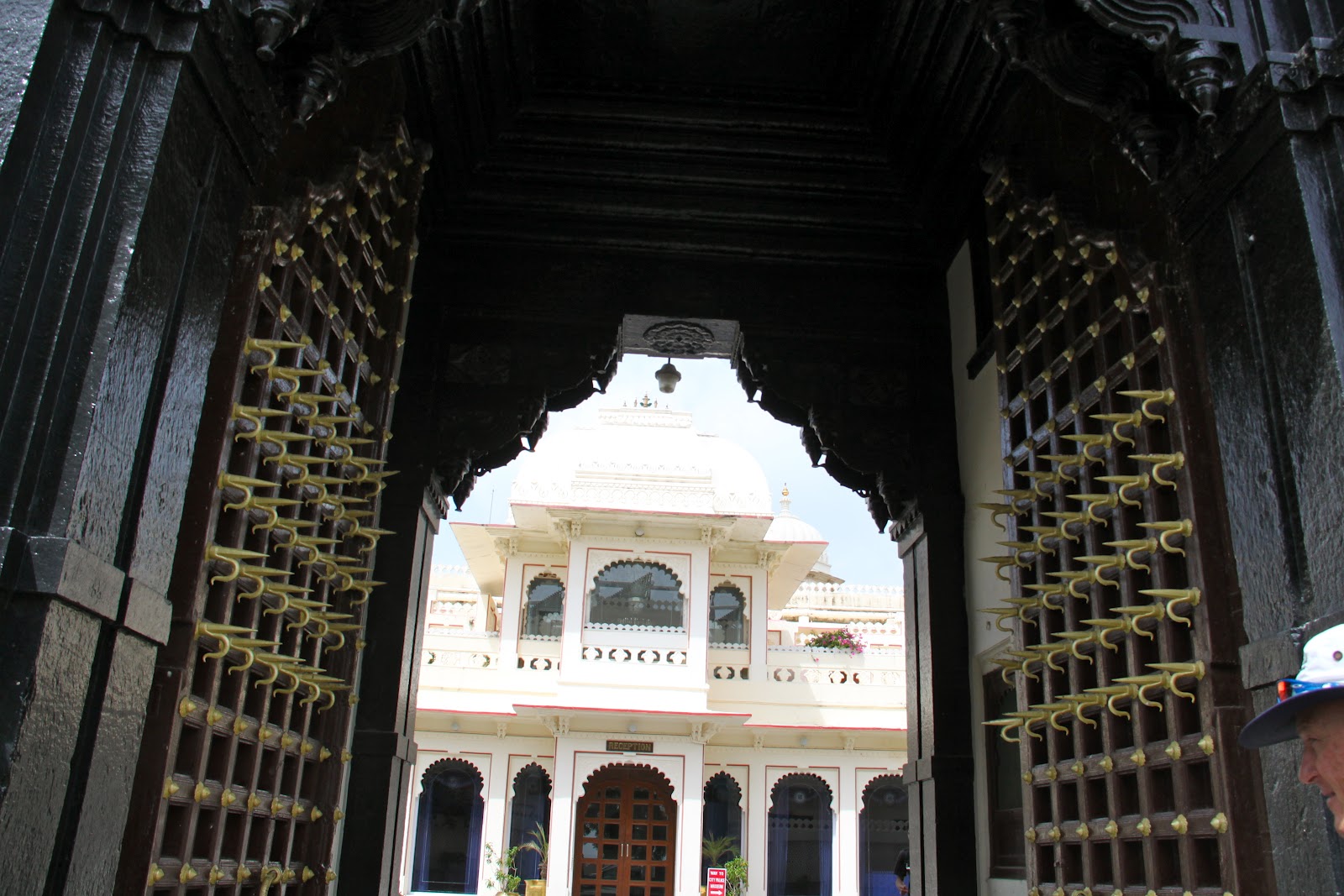
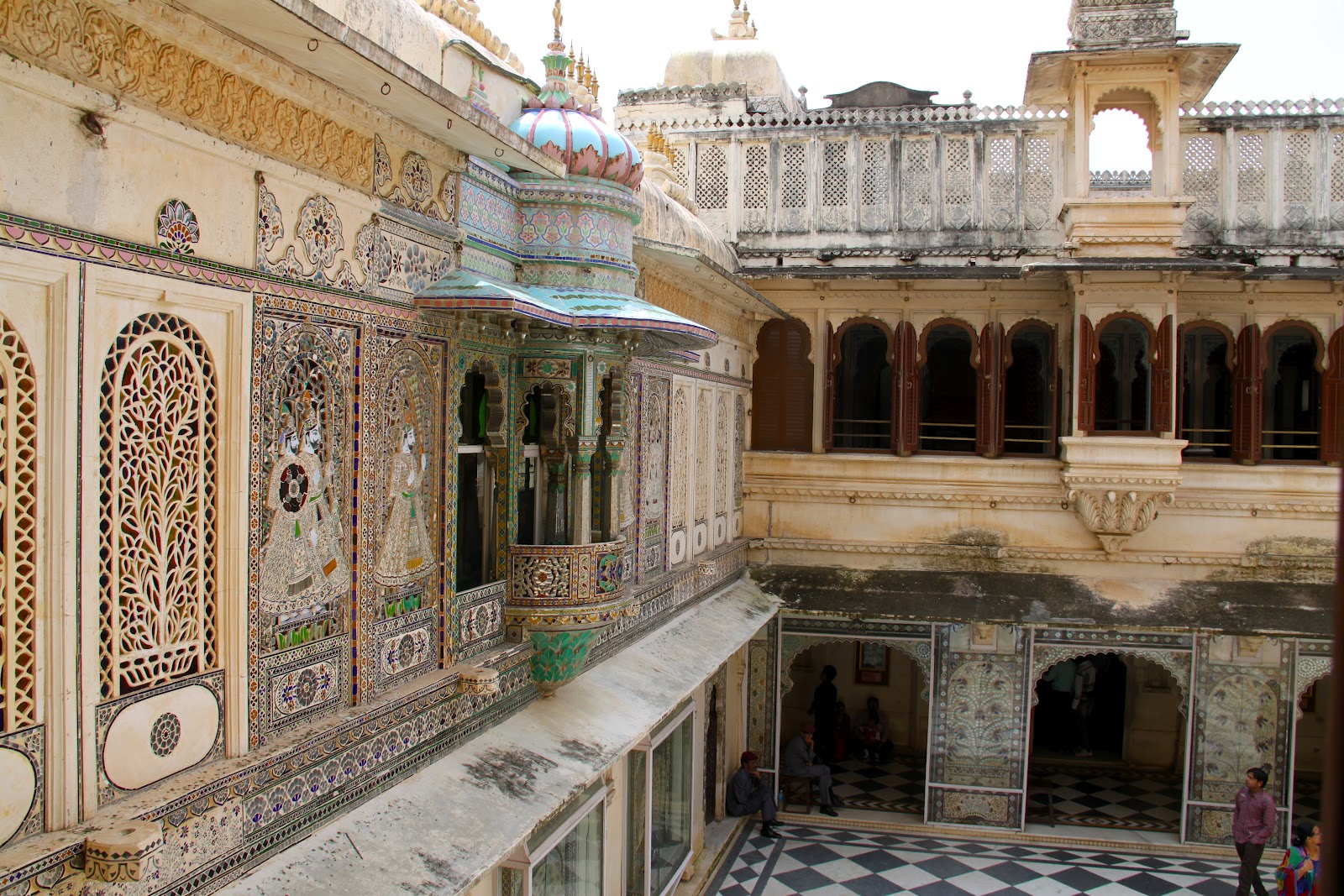
Morning yoga at the hotel begins the day, and then we are off to explore.  The City Palace has part of it in use as the Palace, part of it is a hotel, and the other part is a museum.  The doors into the courtyard have large spikes part way up.  They were to deter ramming elephants from getting inside.
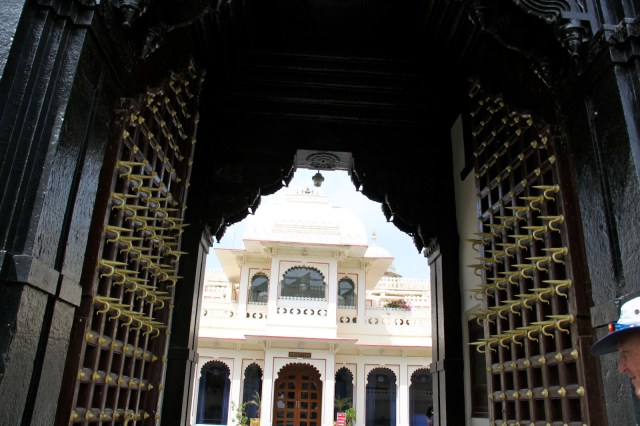
The spikes on the upper part of the gates of the city palace were there to deter elephants from ramming the gate

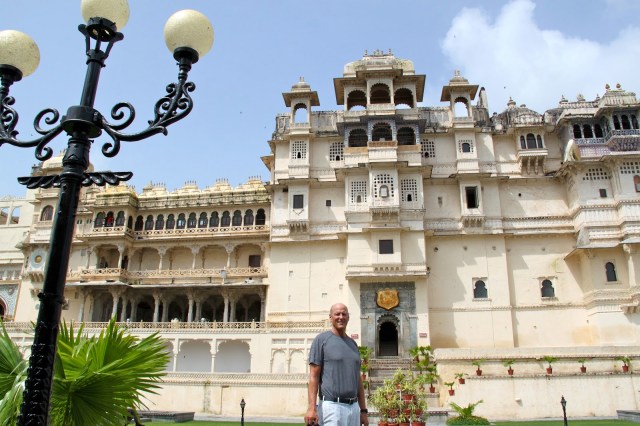
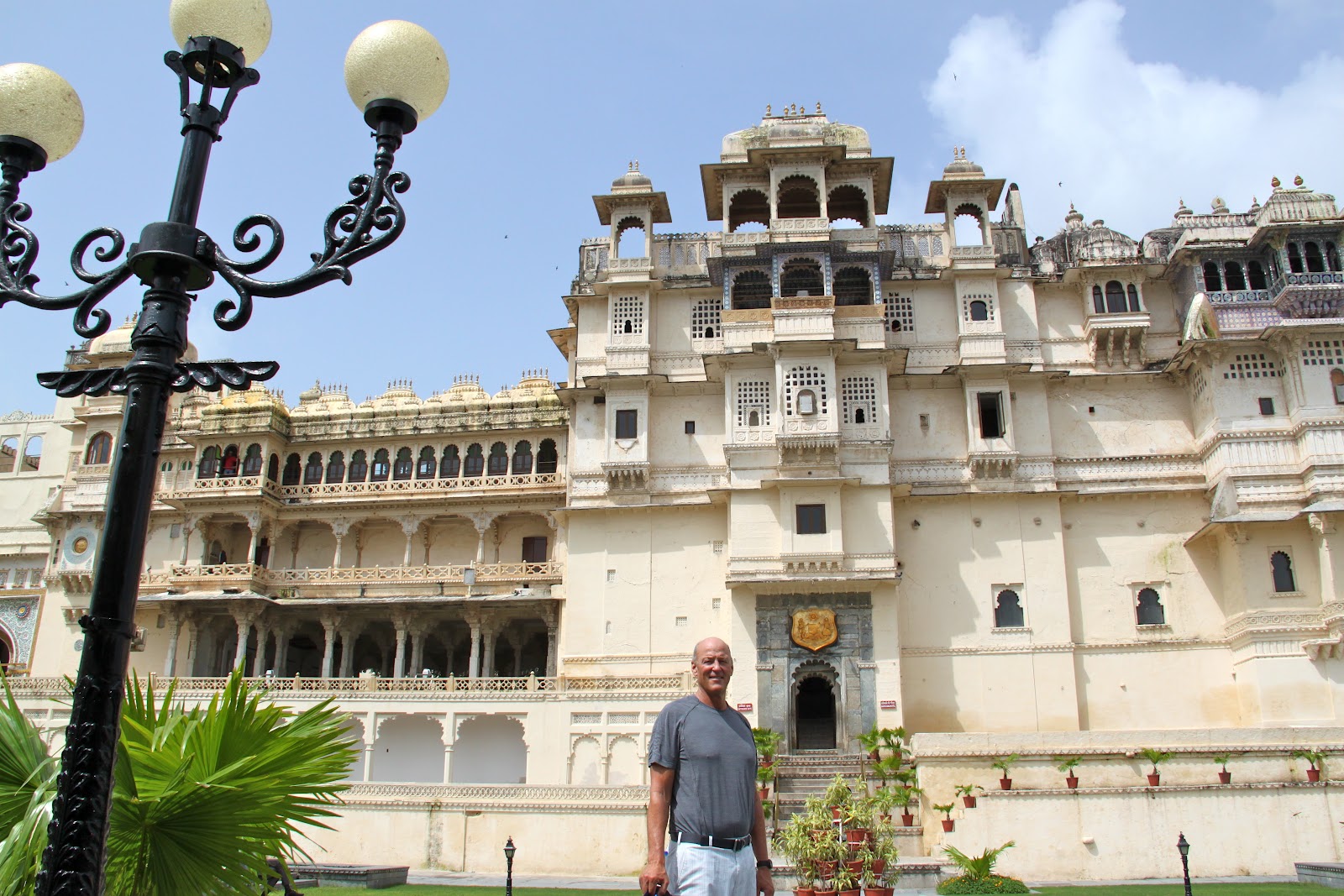
Scott at the winter palace or city palace

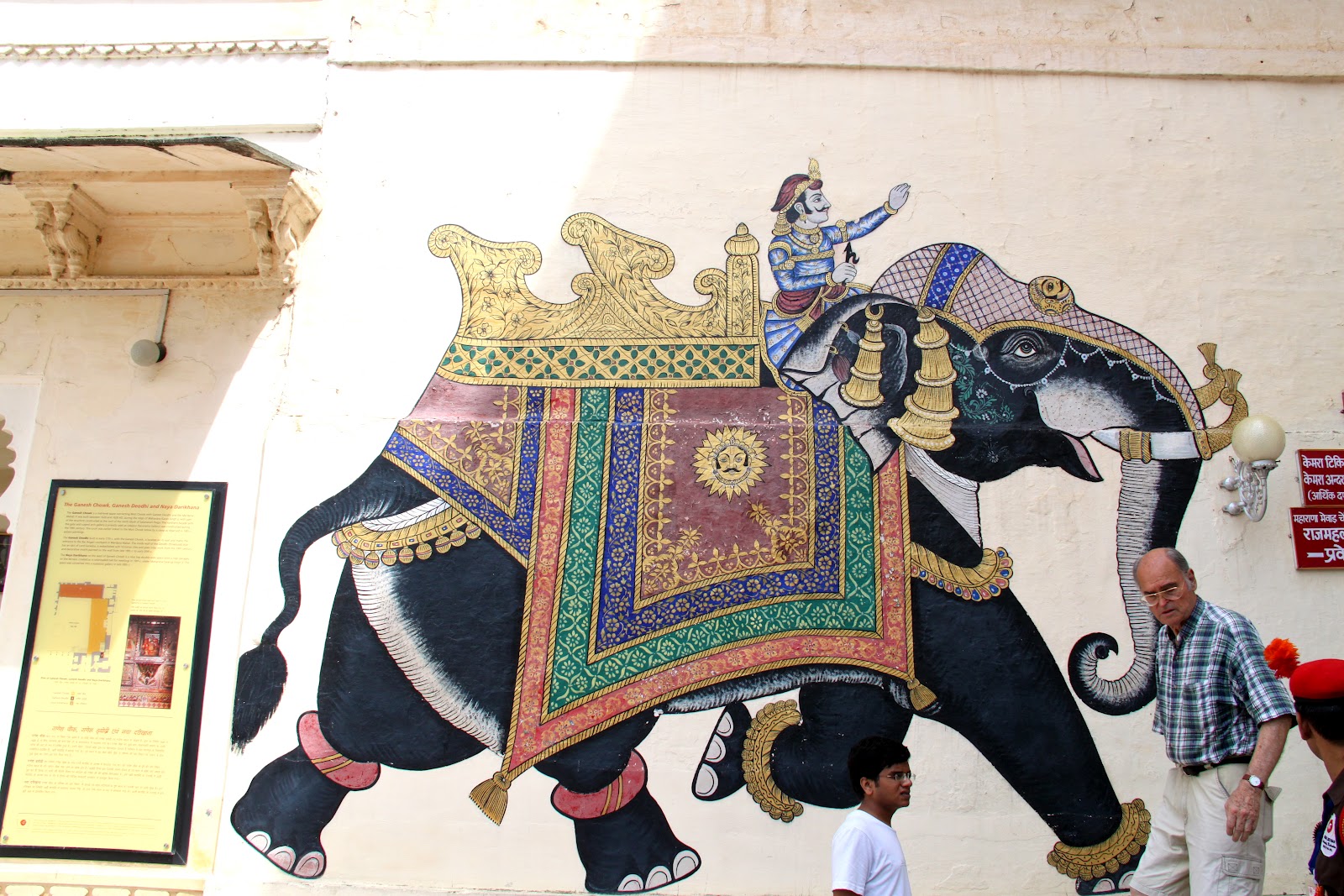
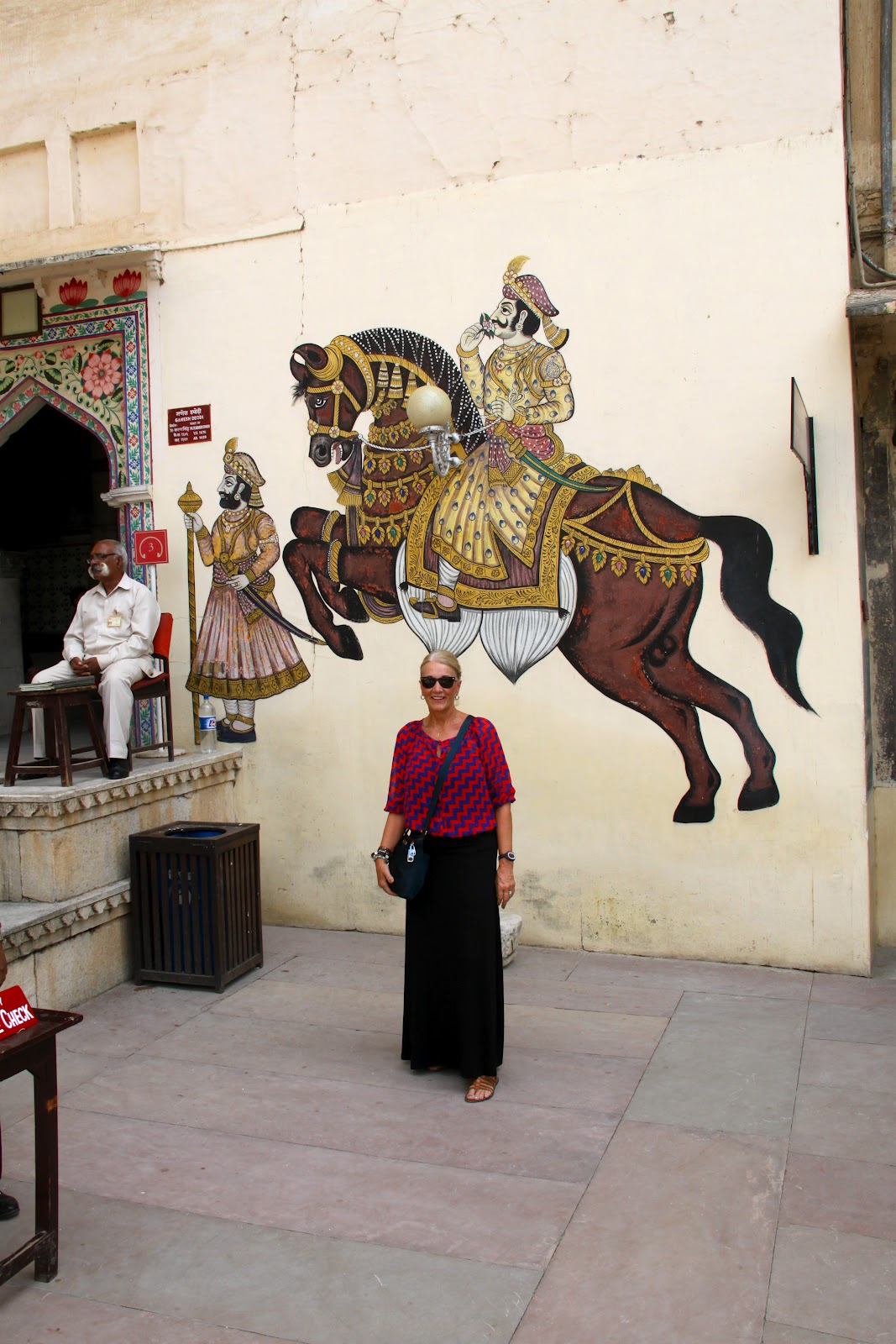
There are lots of paintings on the walls

Inside the city palace
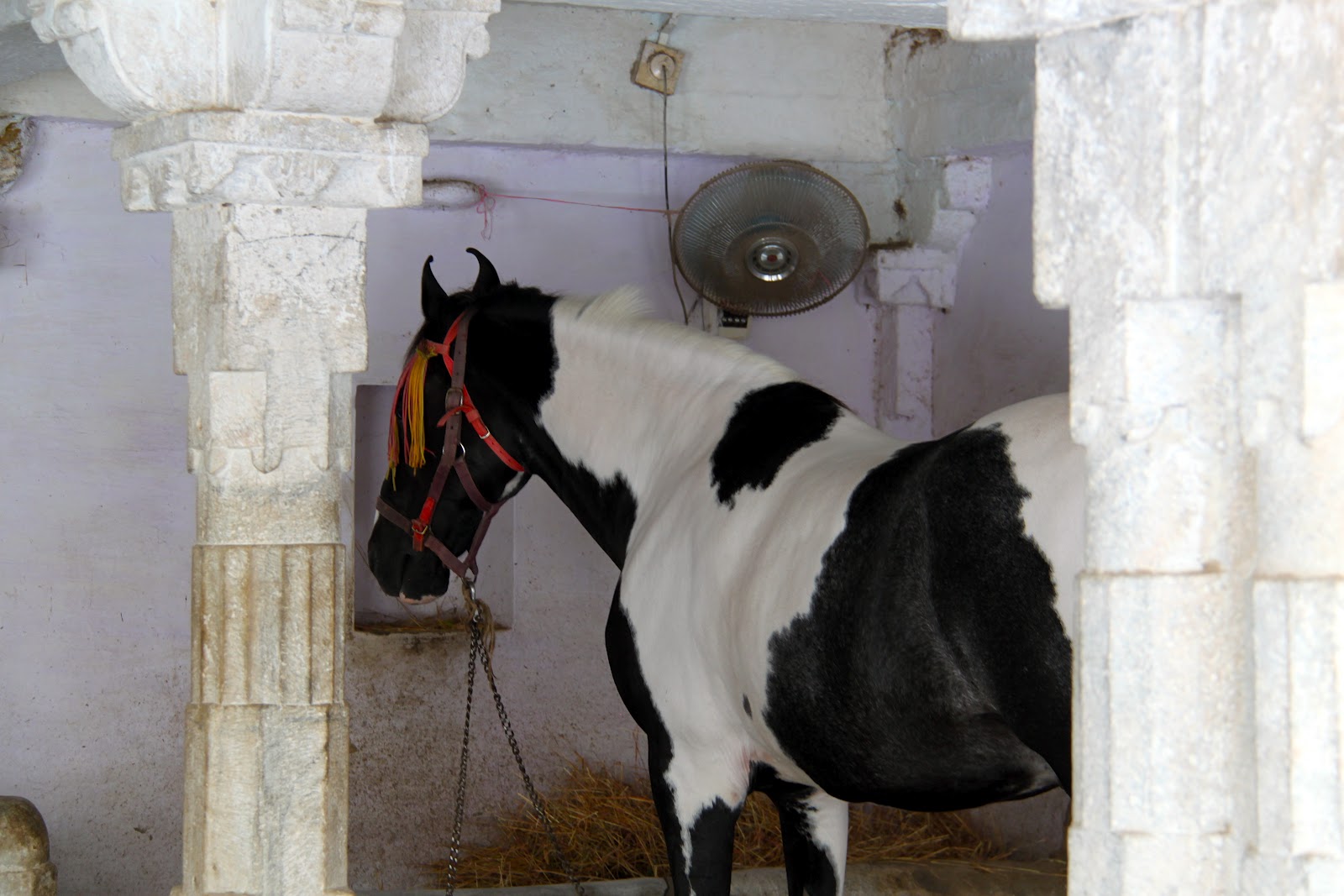
There are horse stalls at the city palace (made out of marble), and in the center of the courtyard there are actually places made for the elephants to rest with raised edges so it is easier for them to get up.  Big metal rings with chains are in the marble floor.
Their horses are a different breed with funny hooked ears.

Marble horse stalls

The Monsoon palace:

View of the Monsoon palace

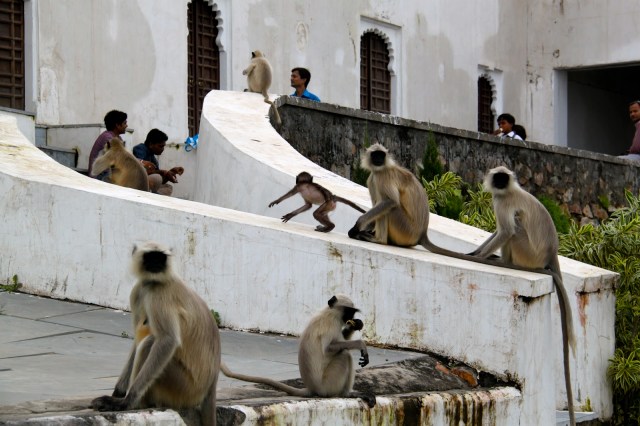
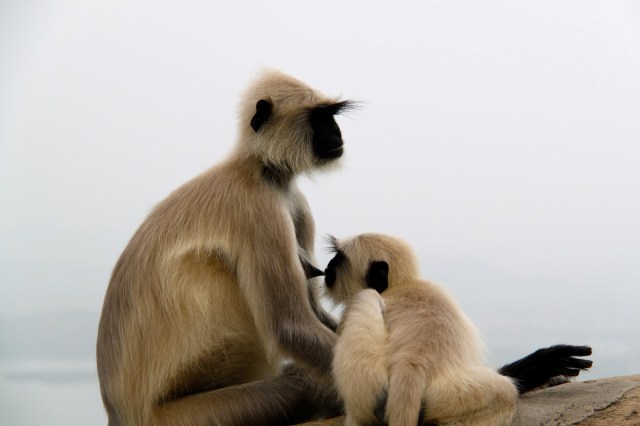
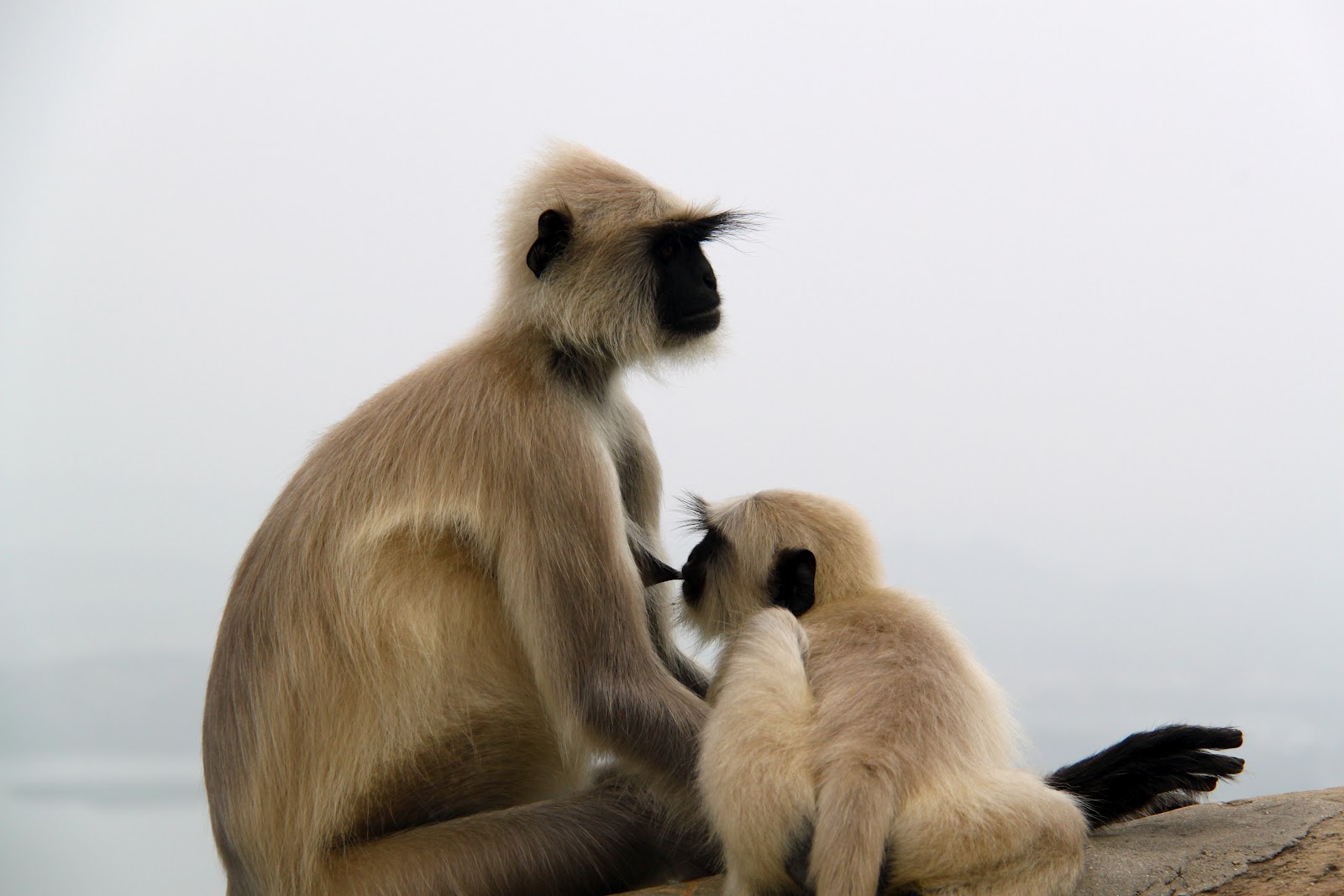
Monkeys at the top of the Monsoon Palace

The monsoon palace

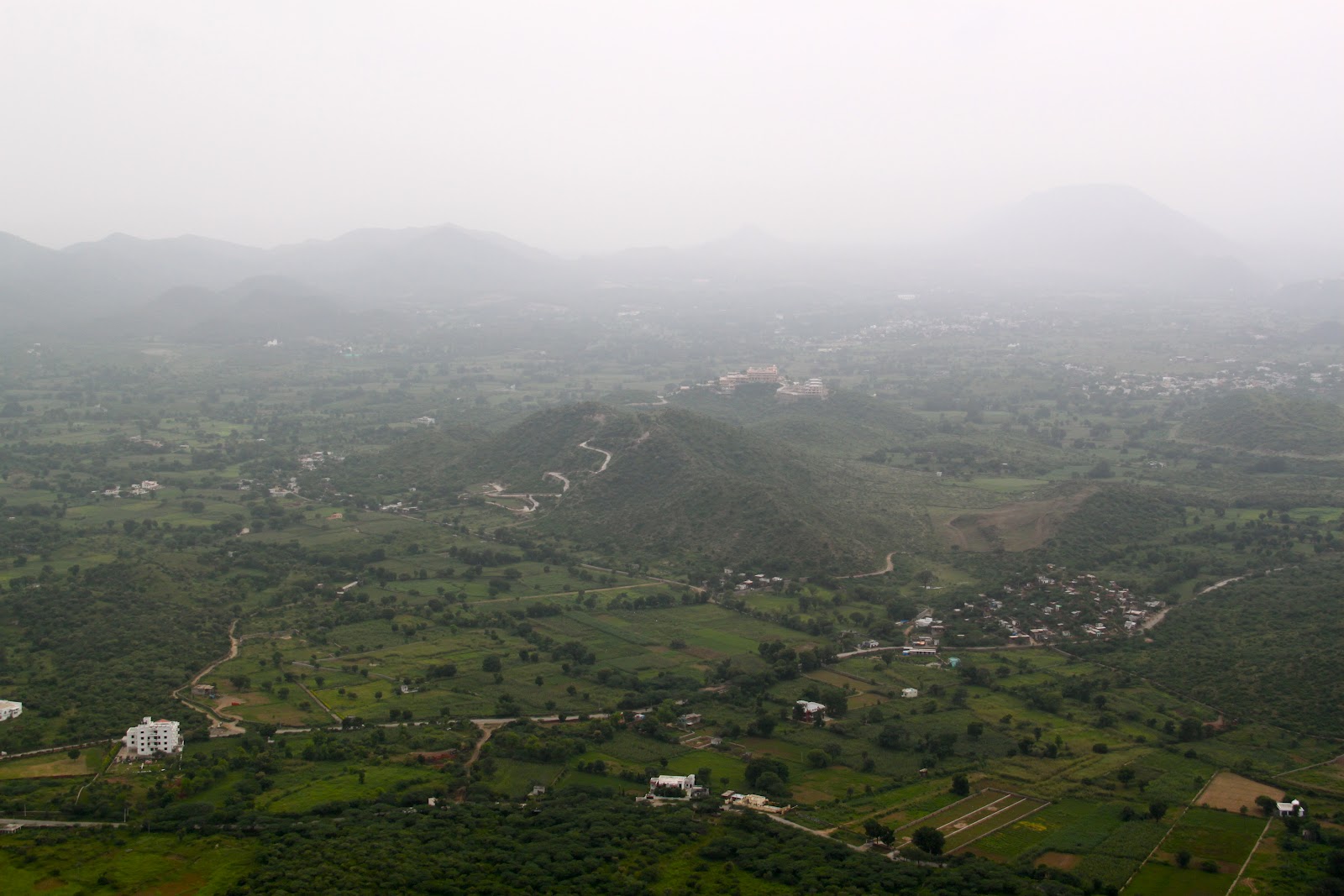
View from the top

Nursing monkey-that looks like it might hurt!

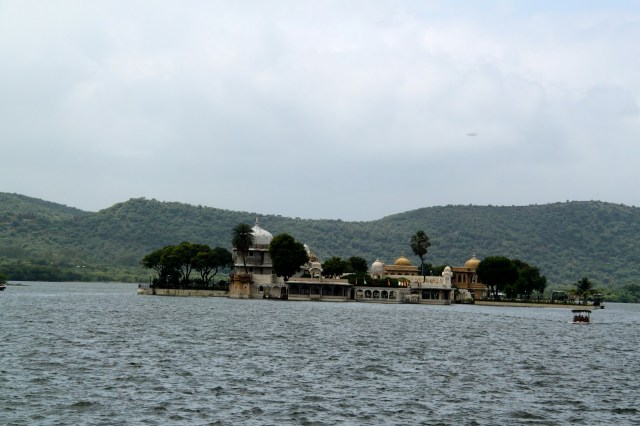
The Pleasure Palace or Summer Palace:

The Pleasure palace-out on an island in the middle of the lake

There are 33,000 Hindu Gods.  The main Hindu Gods are Braham the creator, Vishnu the preserver, and Shiva the destroyer. Shiva is a good God.  He destroys evil.

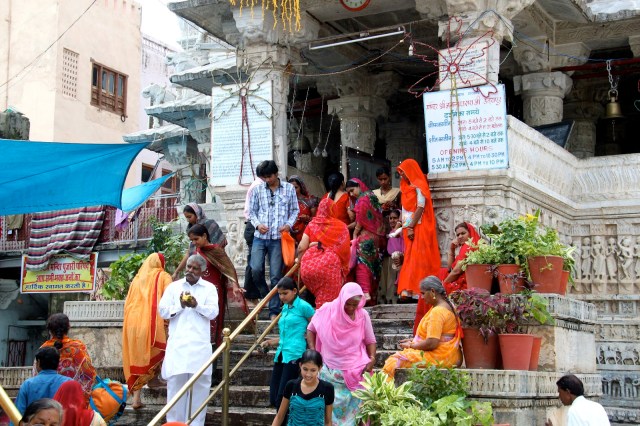
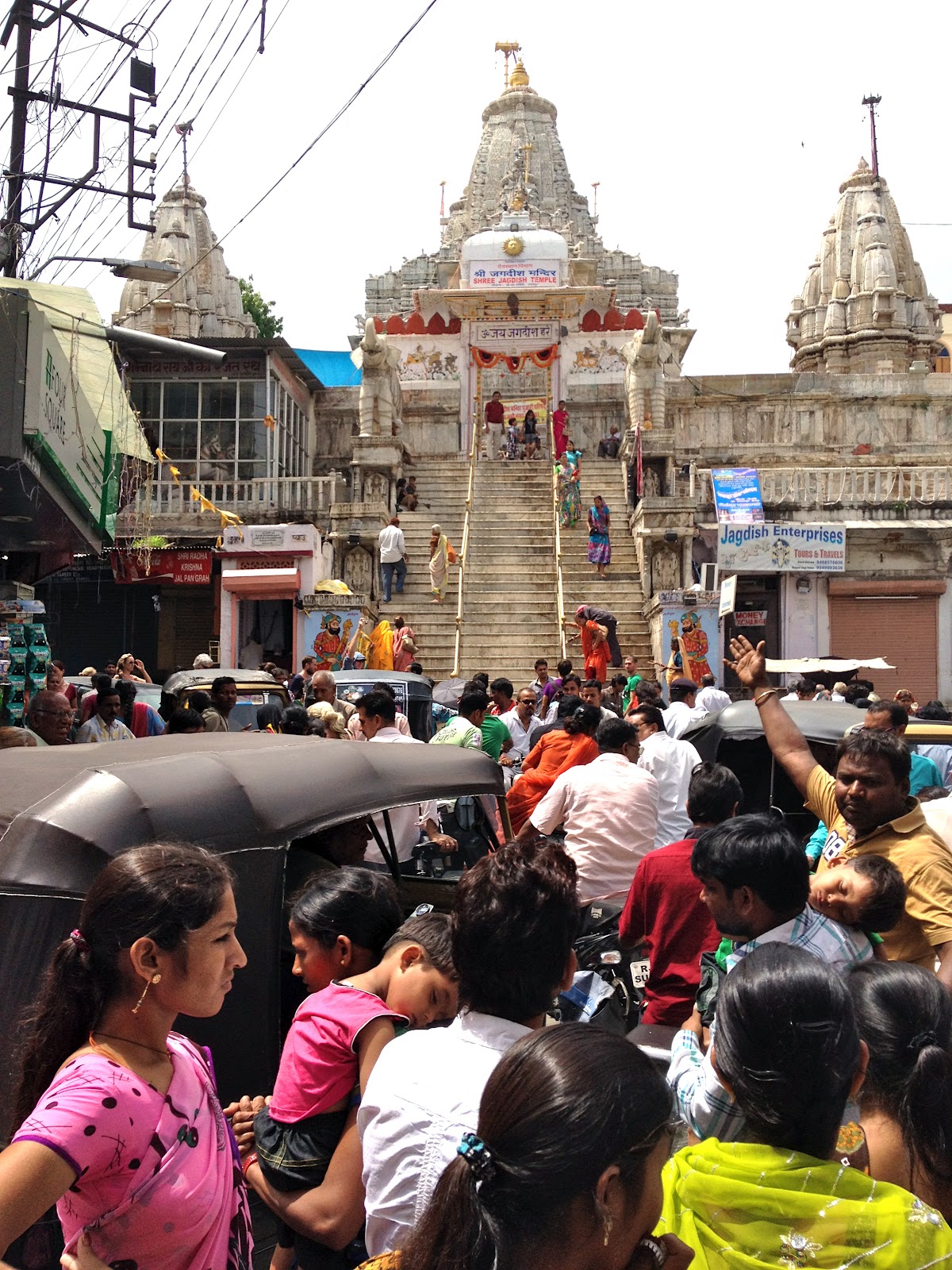
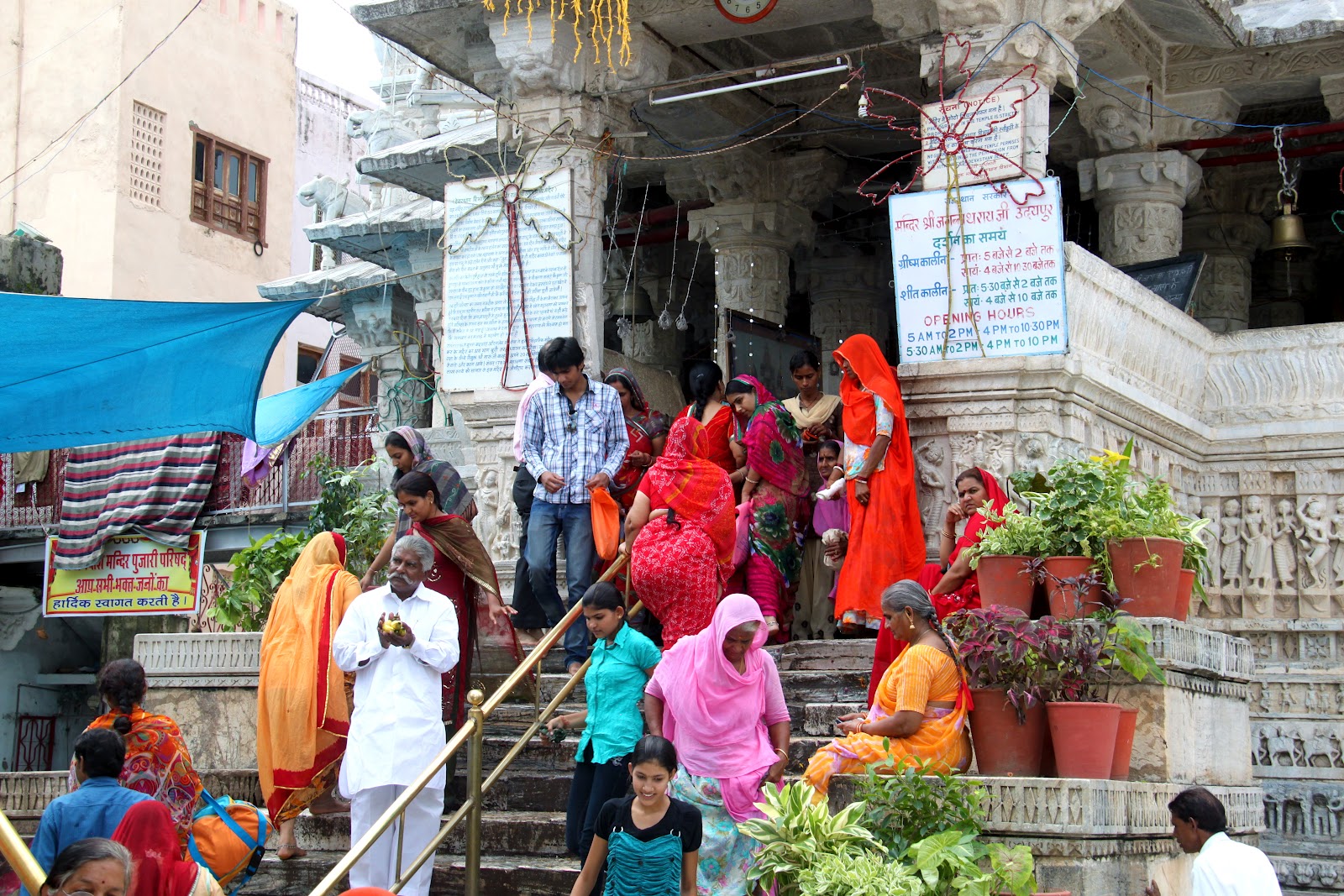
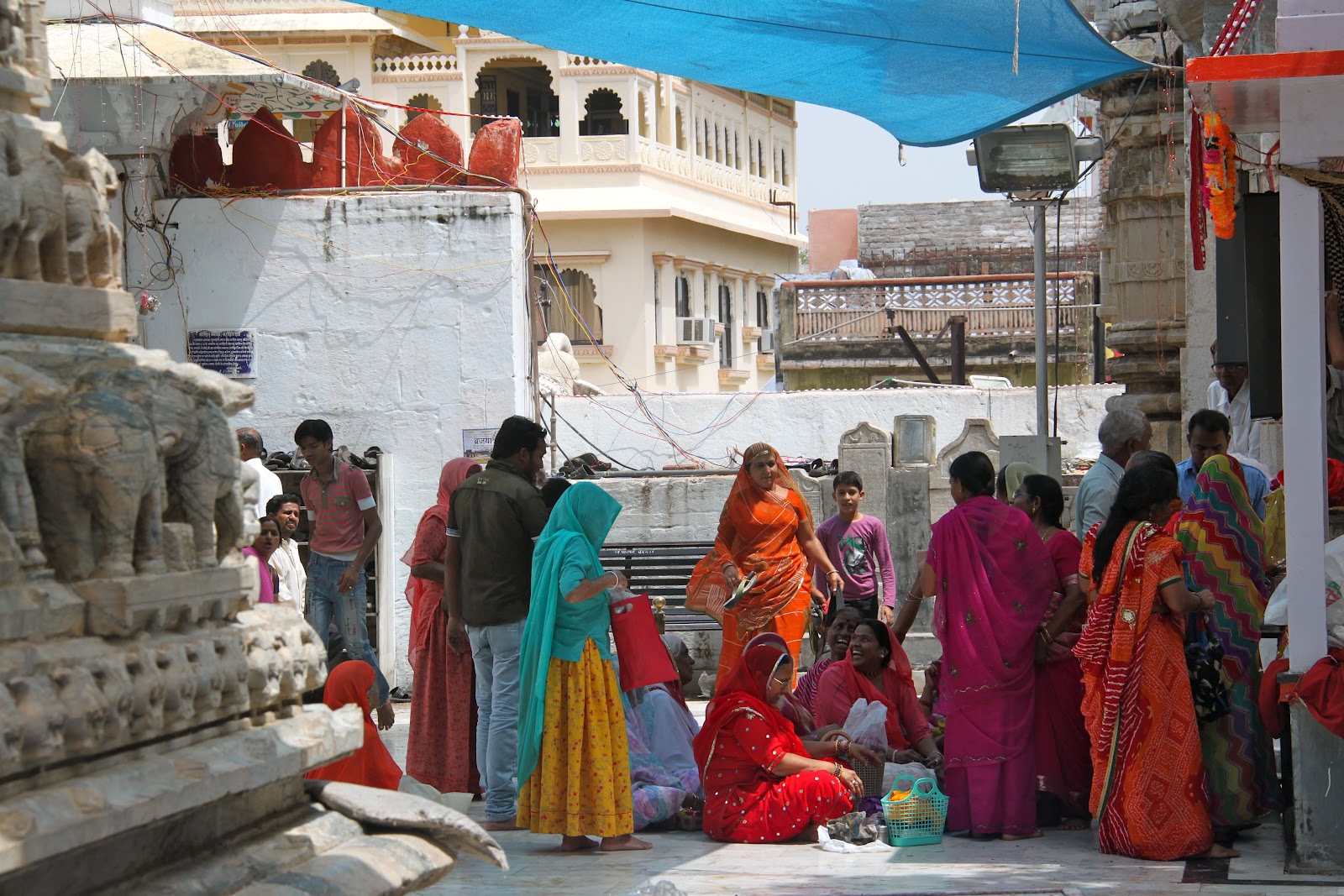
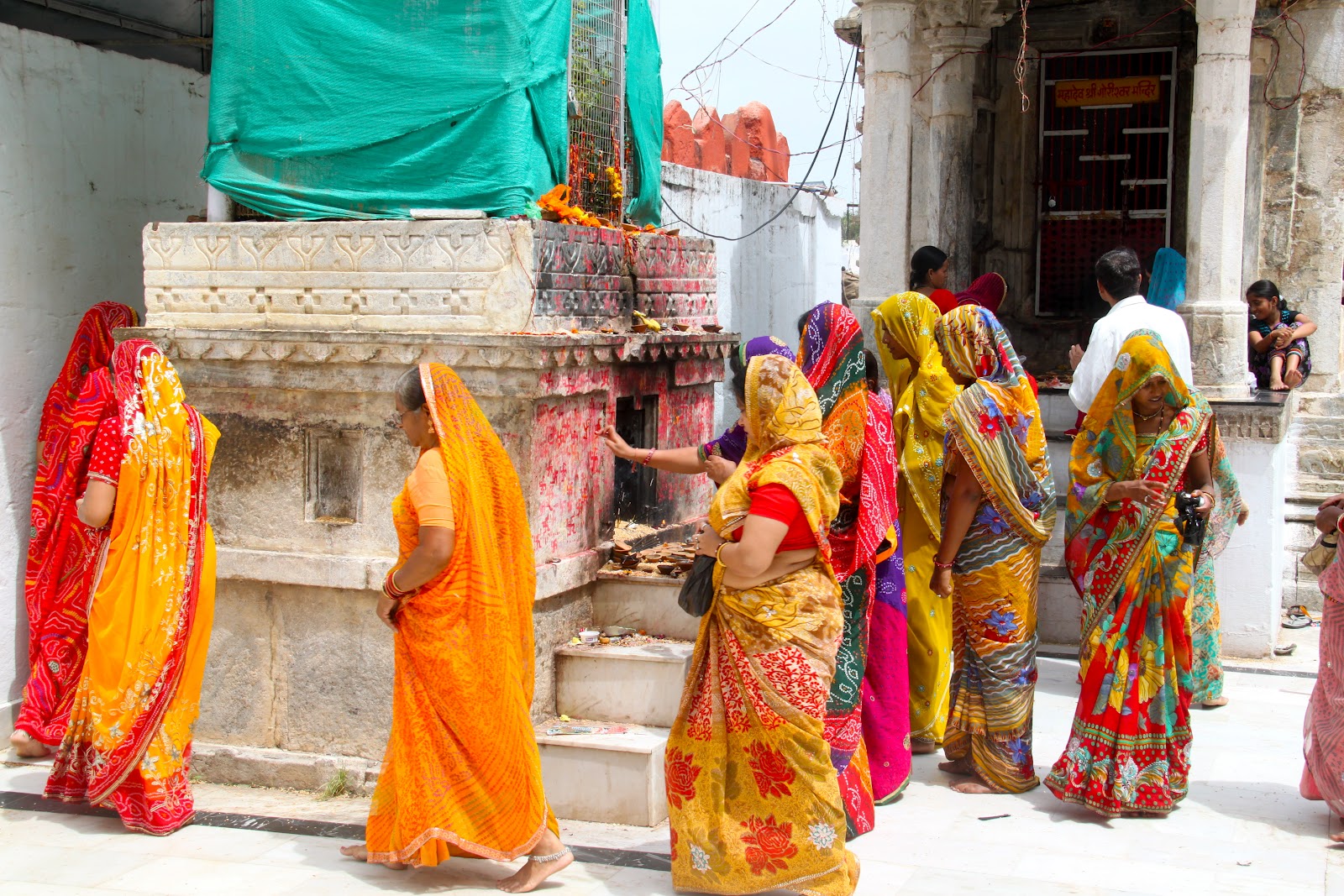
The Shiva Temple was alive with sounds and bright colored sarees as they all came to give offerings.  We removed our shoes and walked through the Temple.
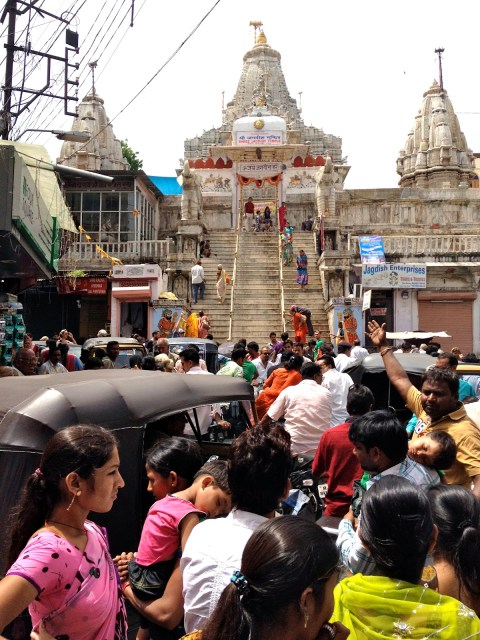
Large crowds going to the temple

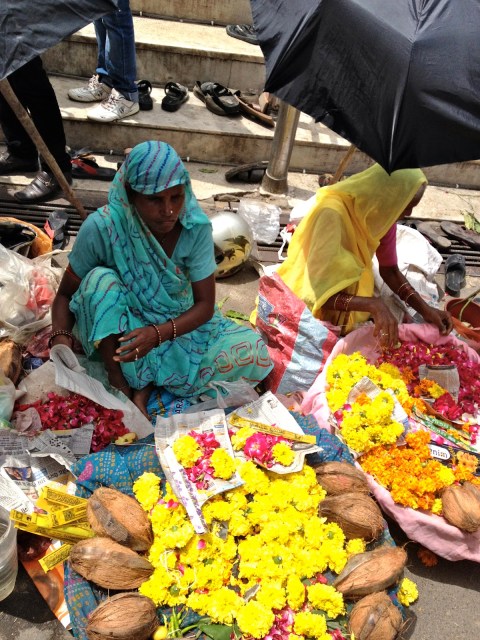
Wormen sell flowers for offerings

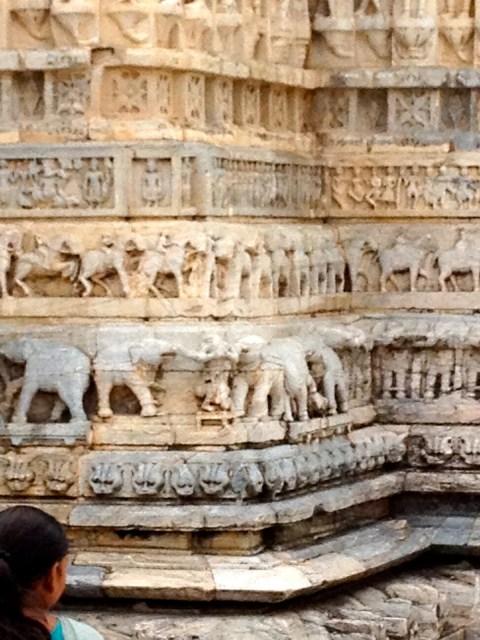
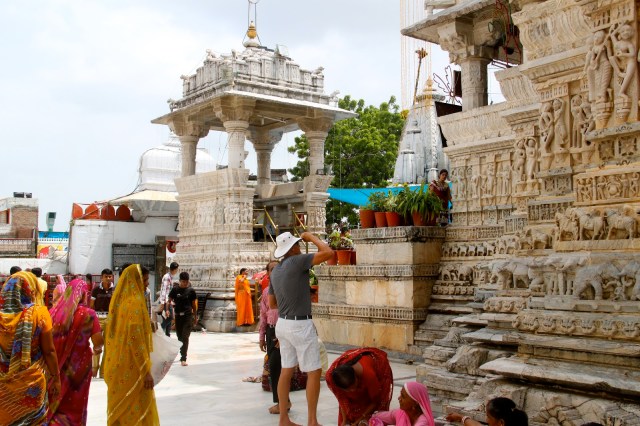
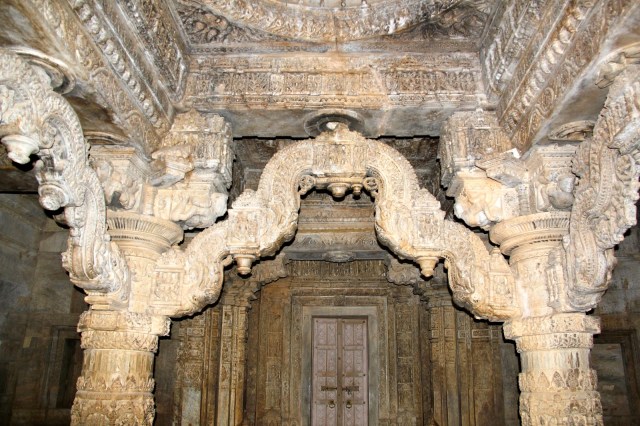
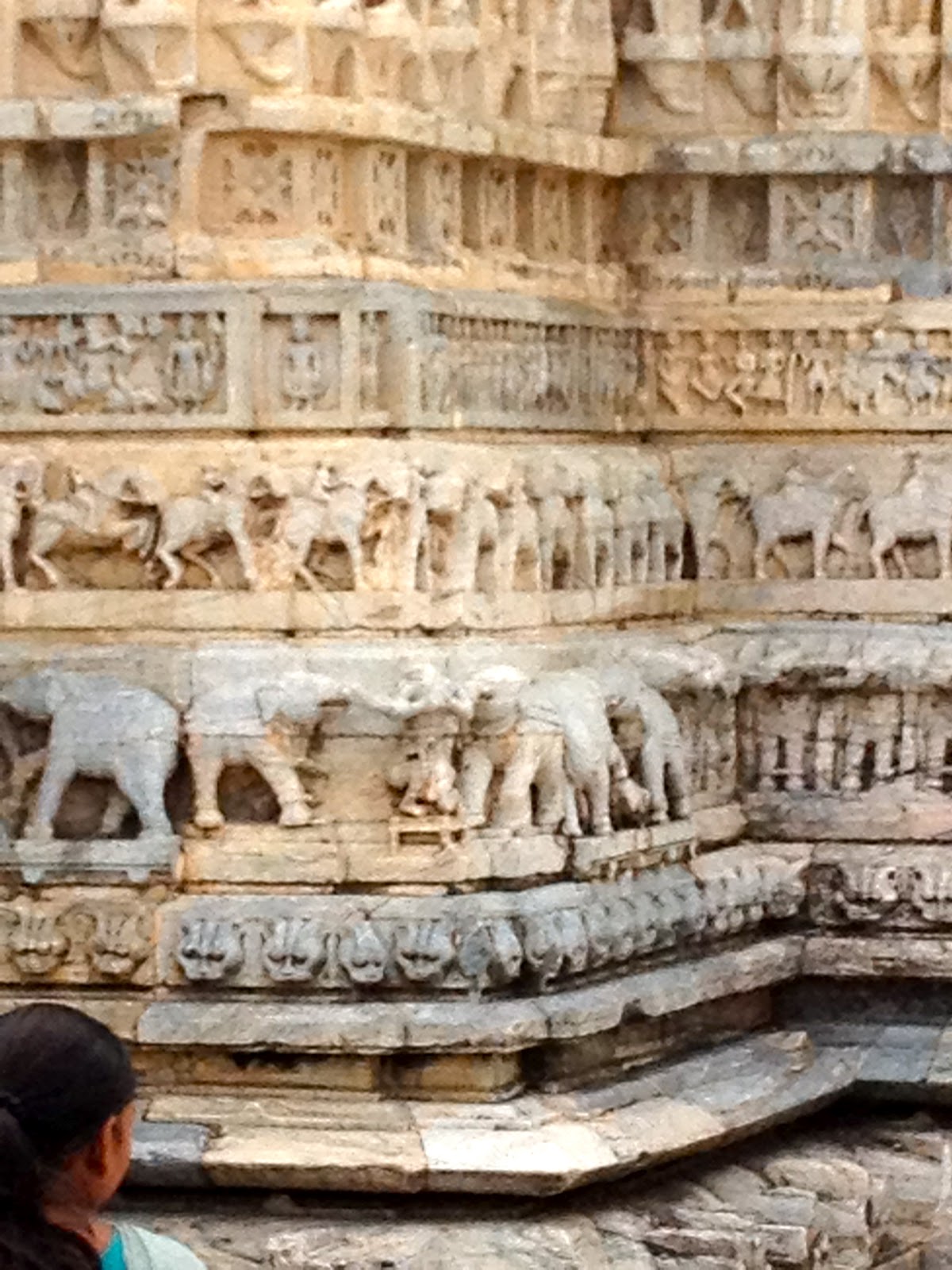
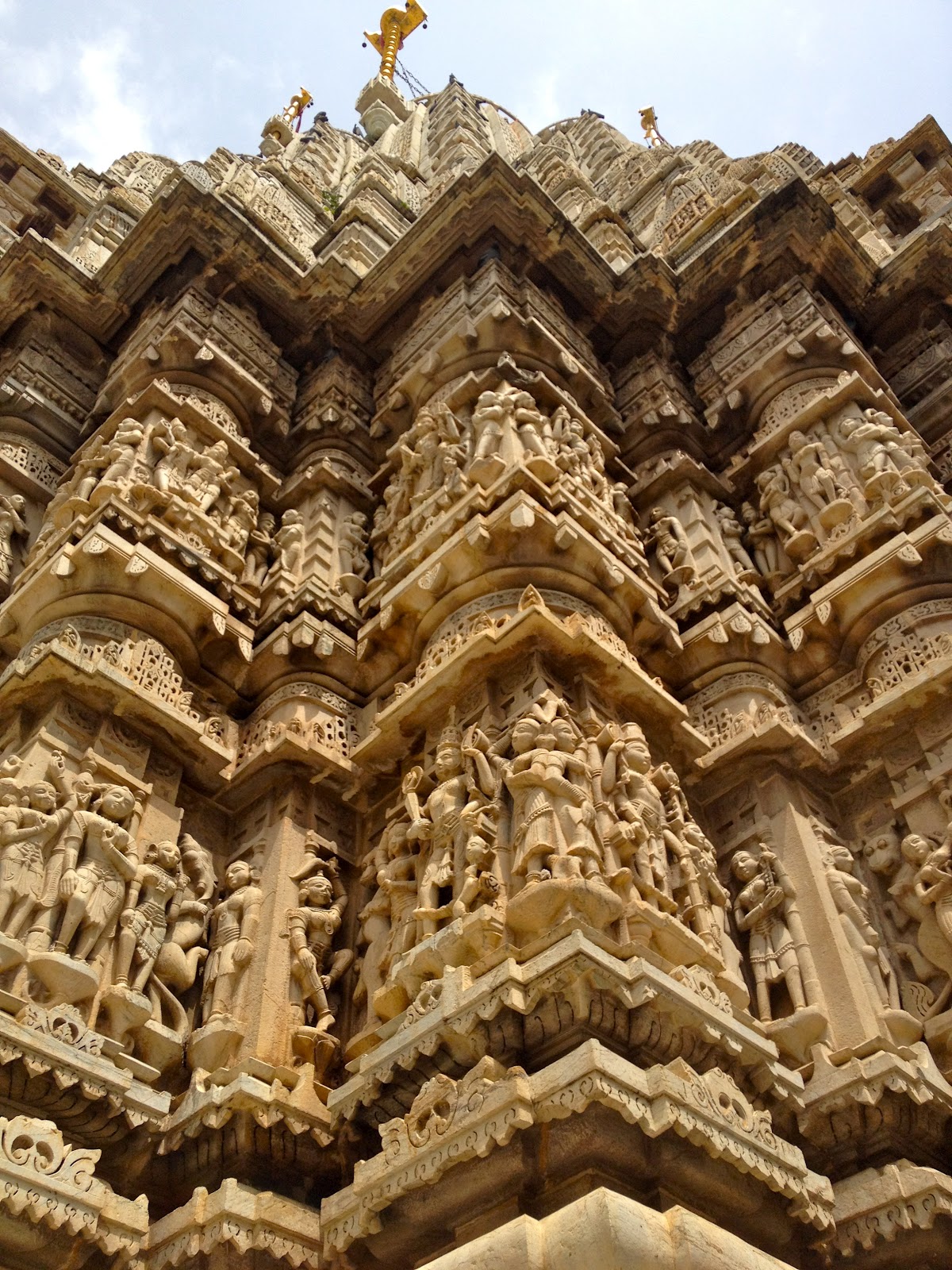
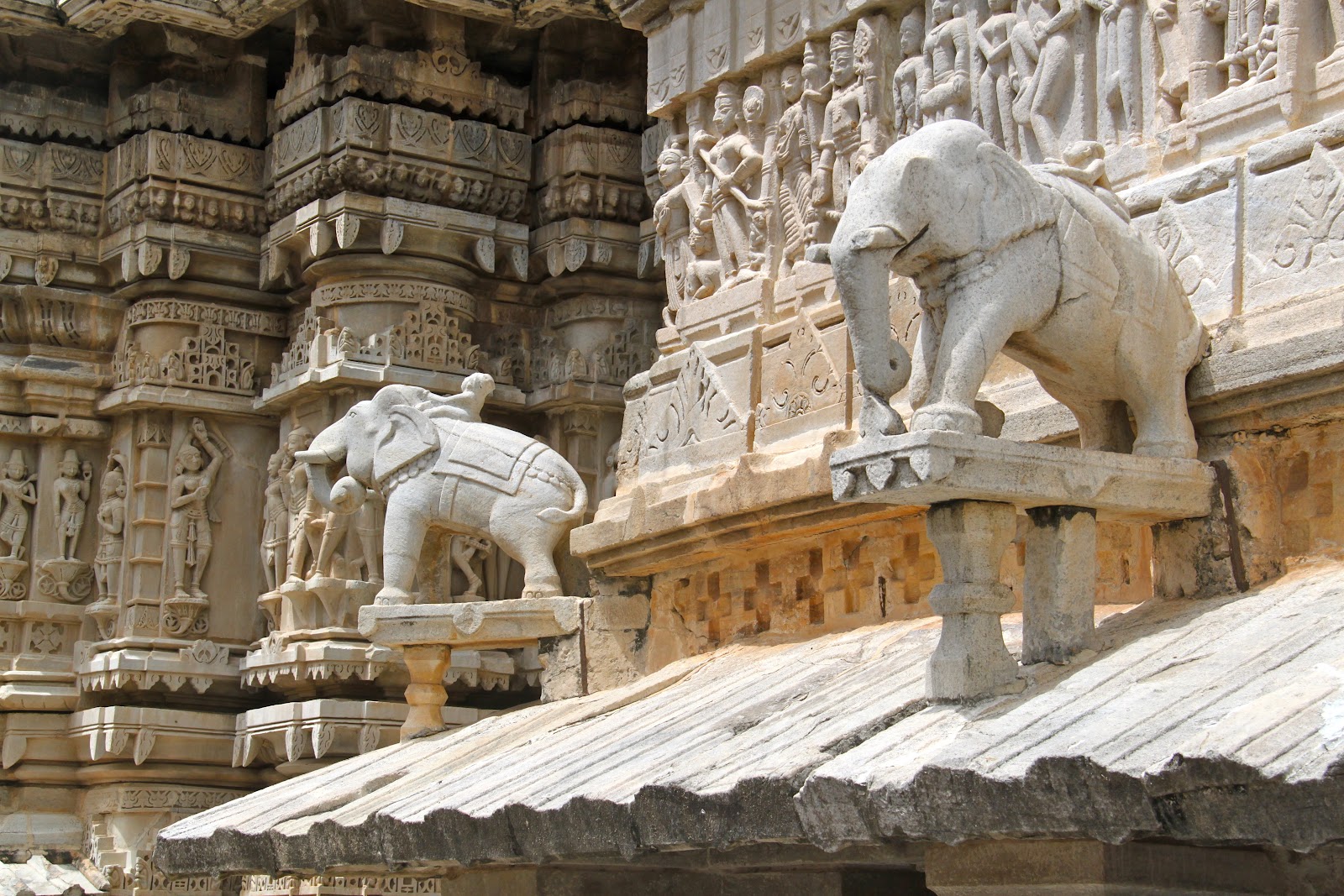
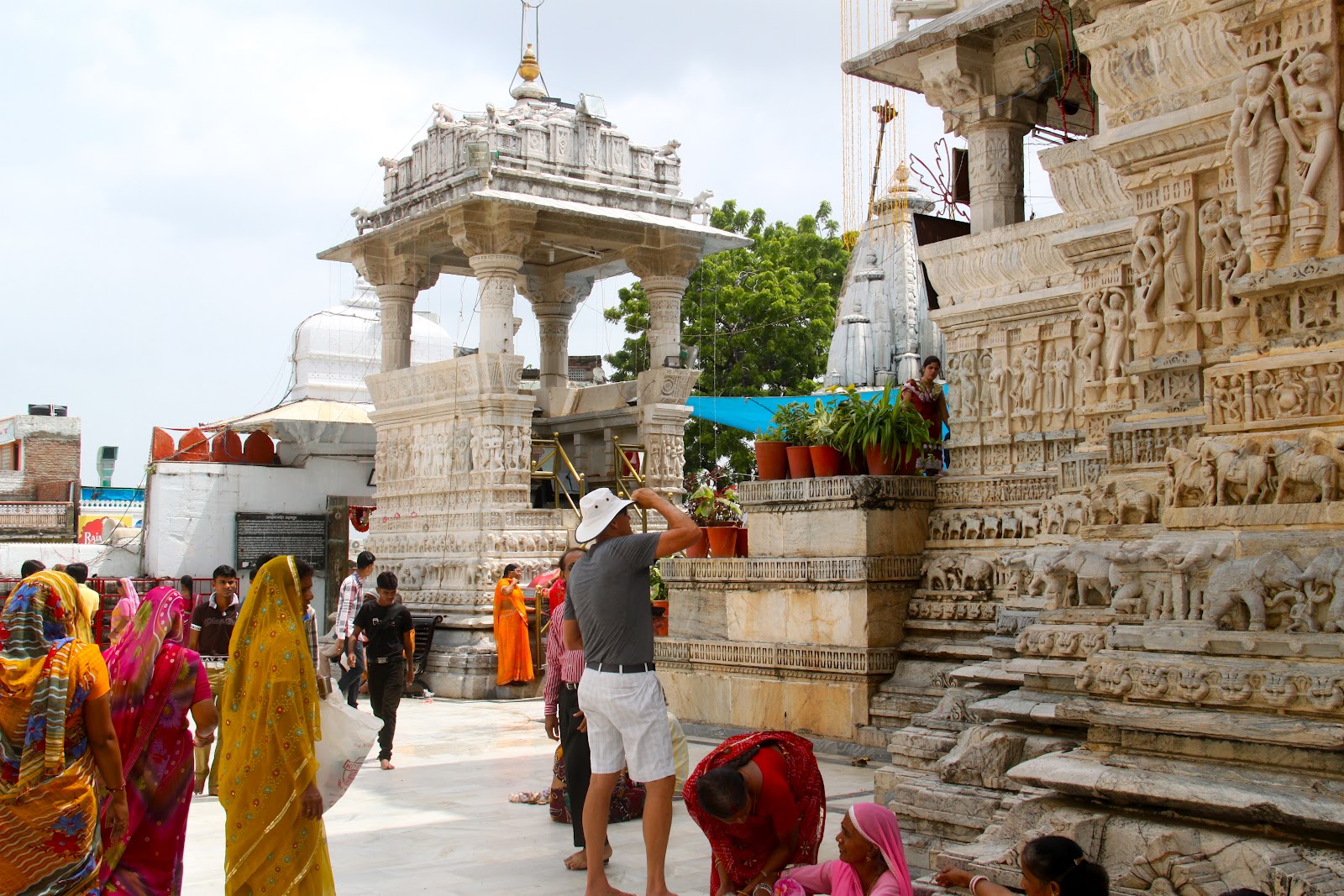
Beautiful carvings

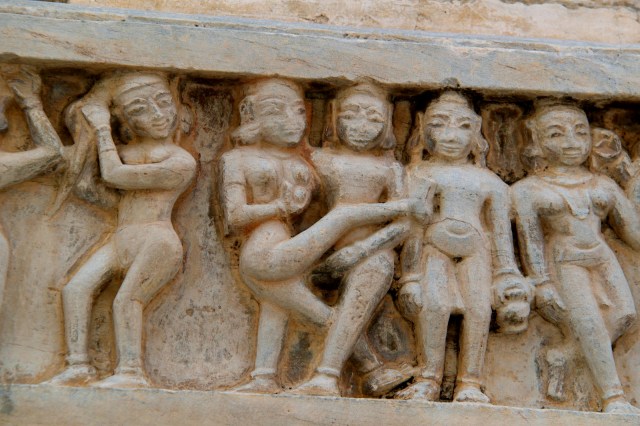
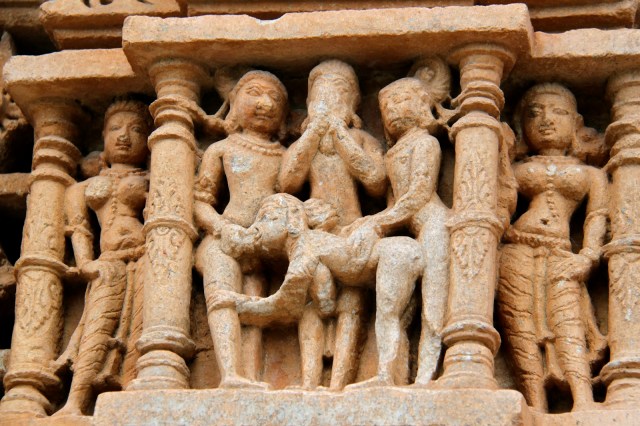
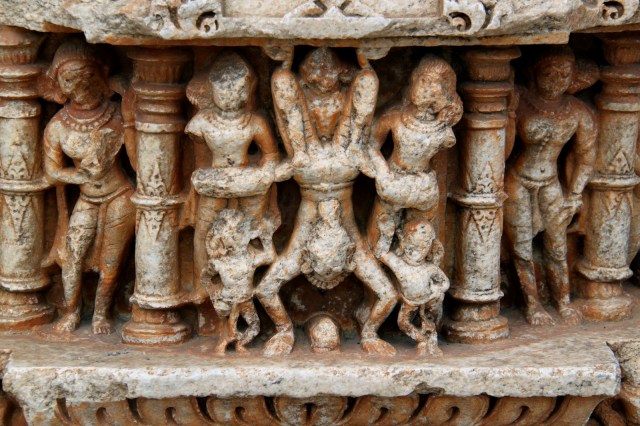
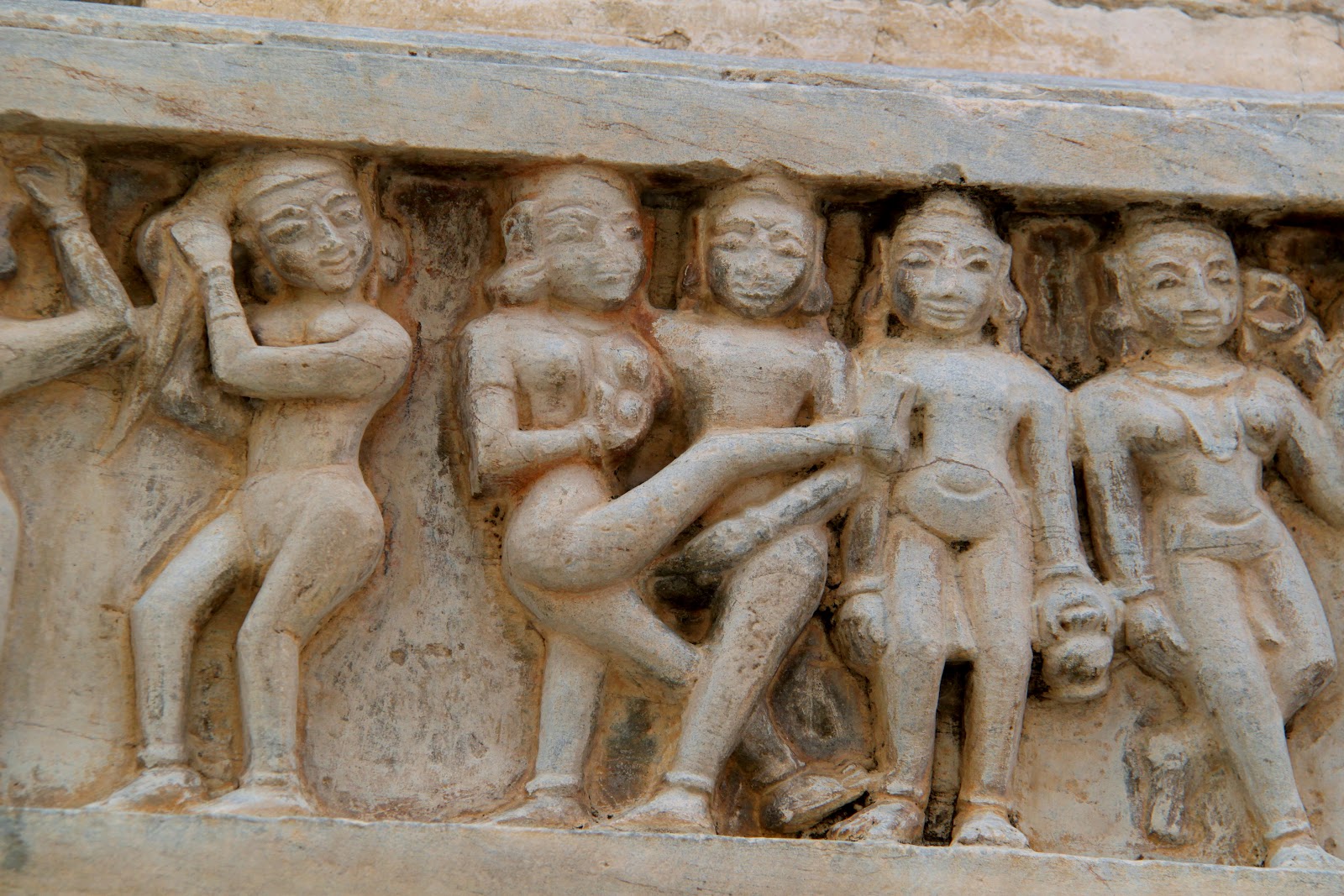
Erotic carvings seem to be on all temples

Very colorful

Scott

Women walk around temples clockwise

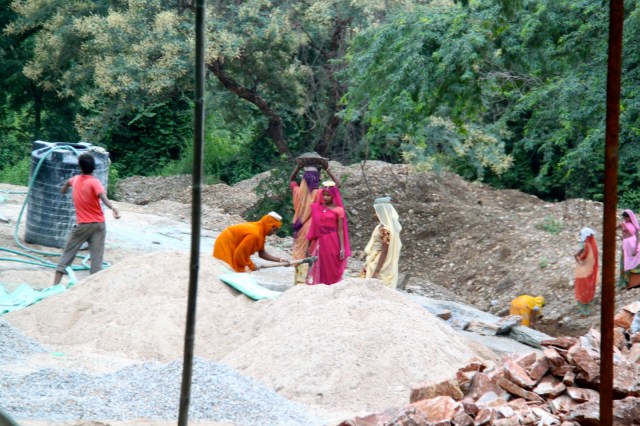
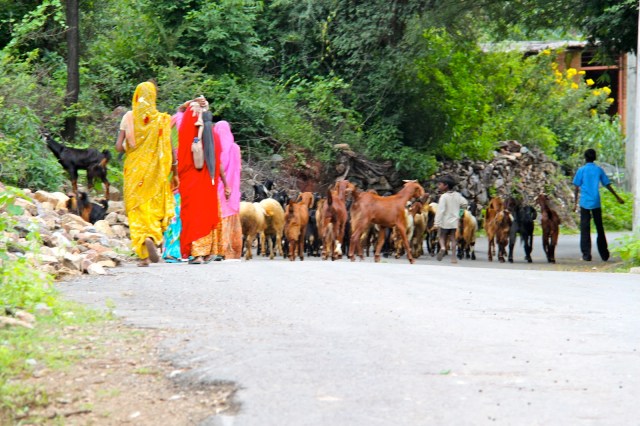
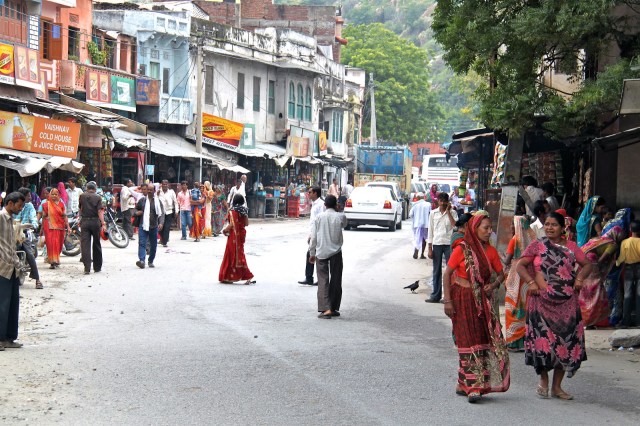
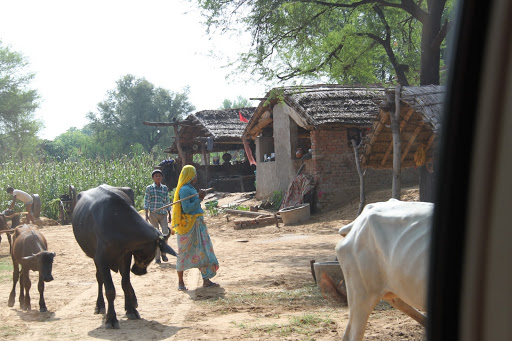
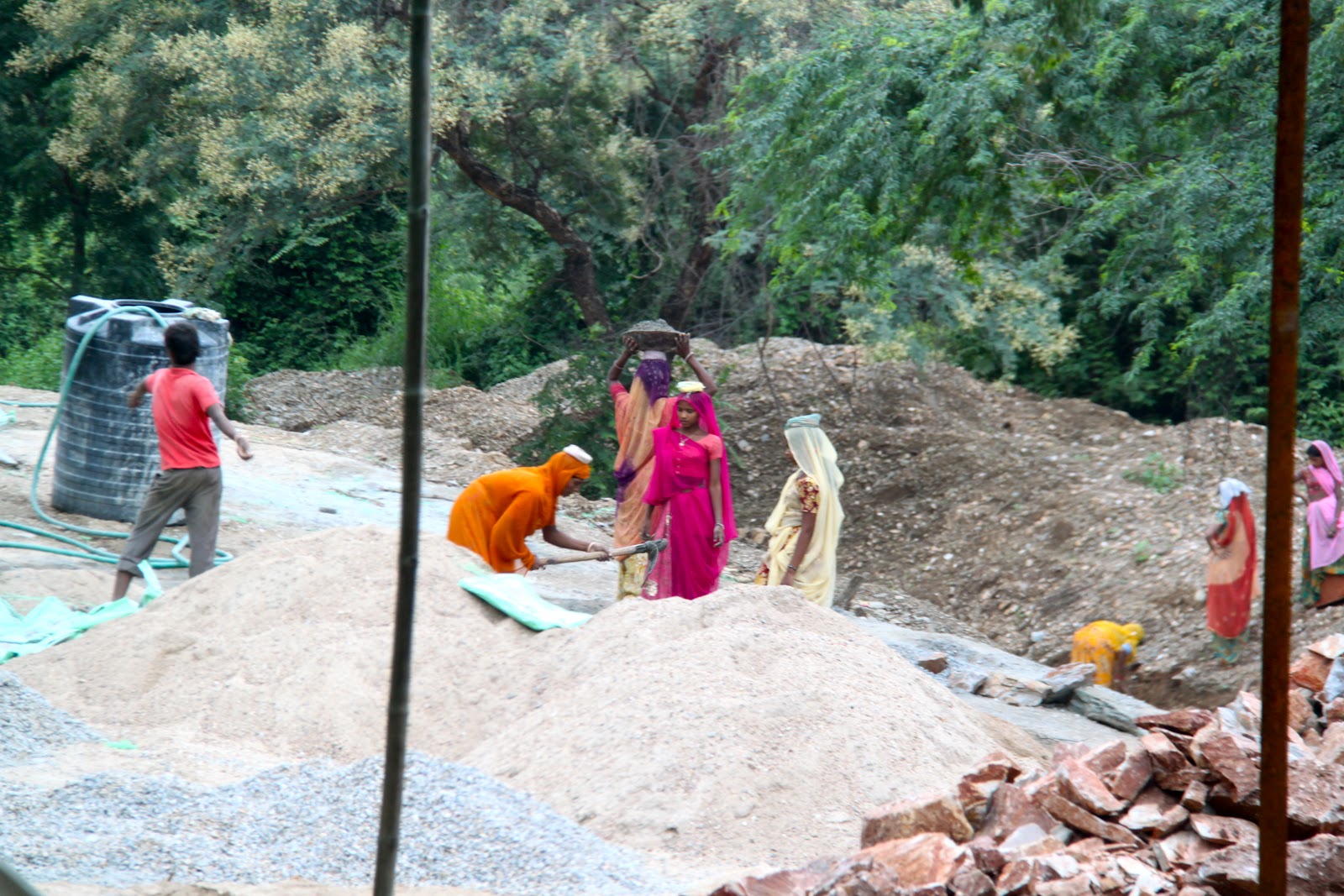
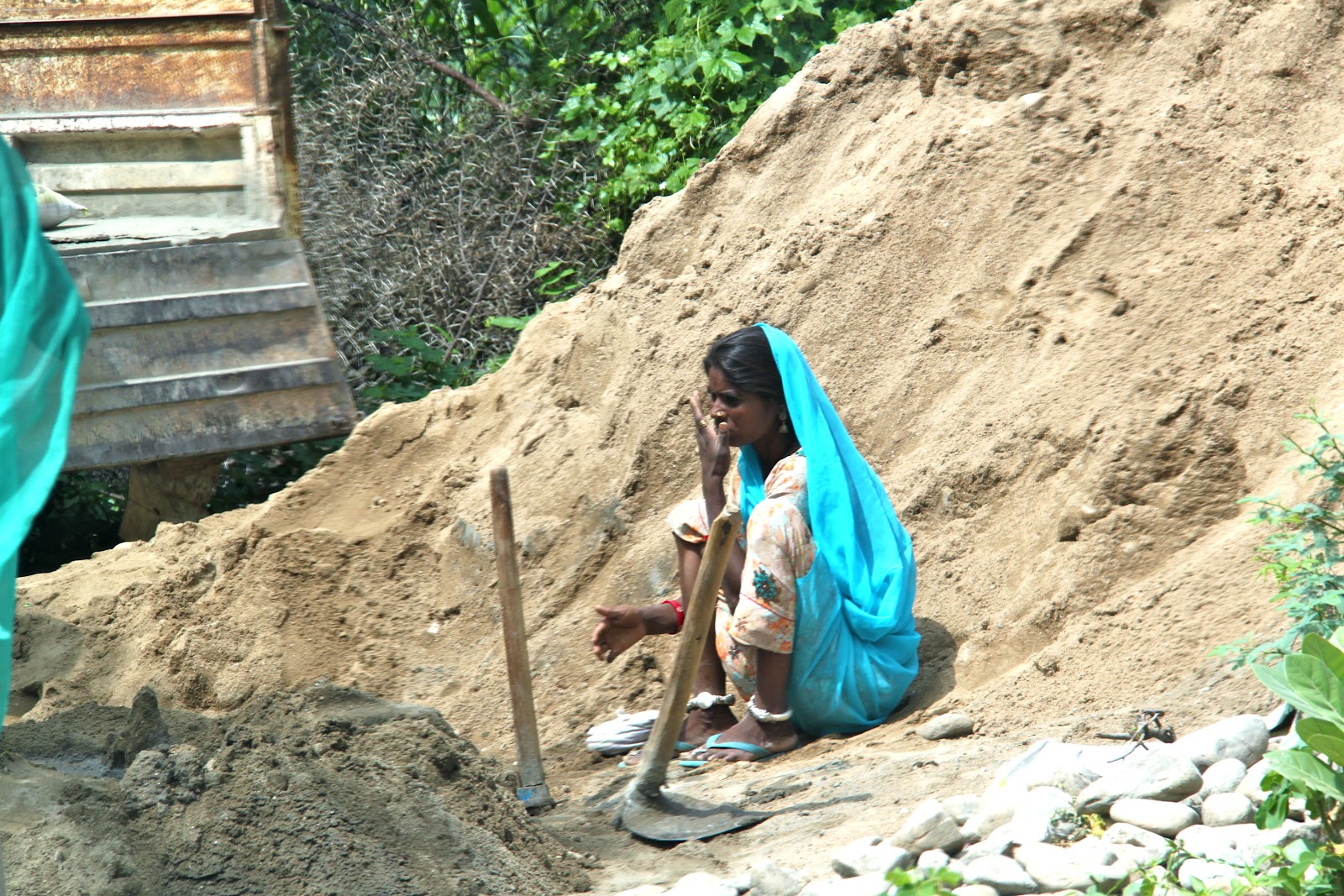
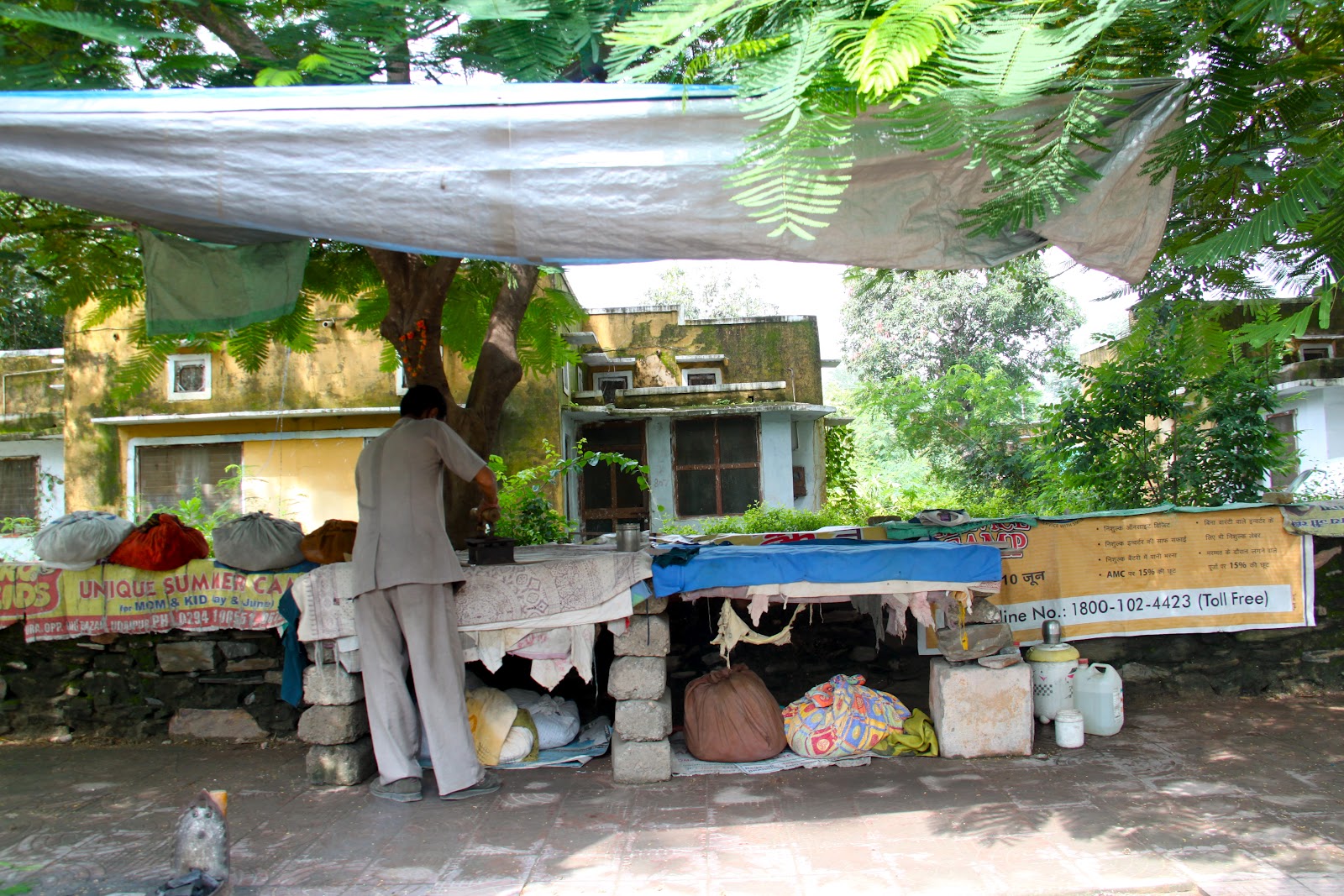
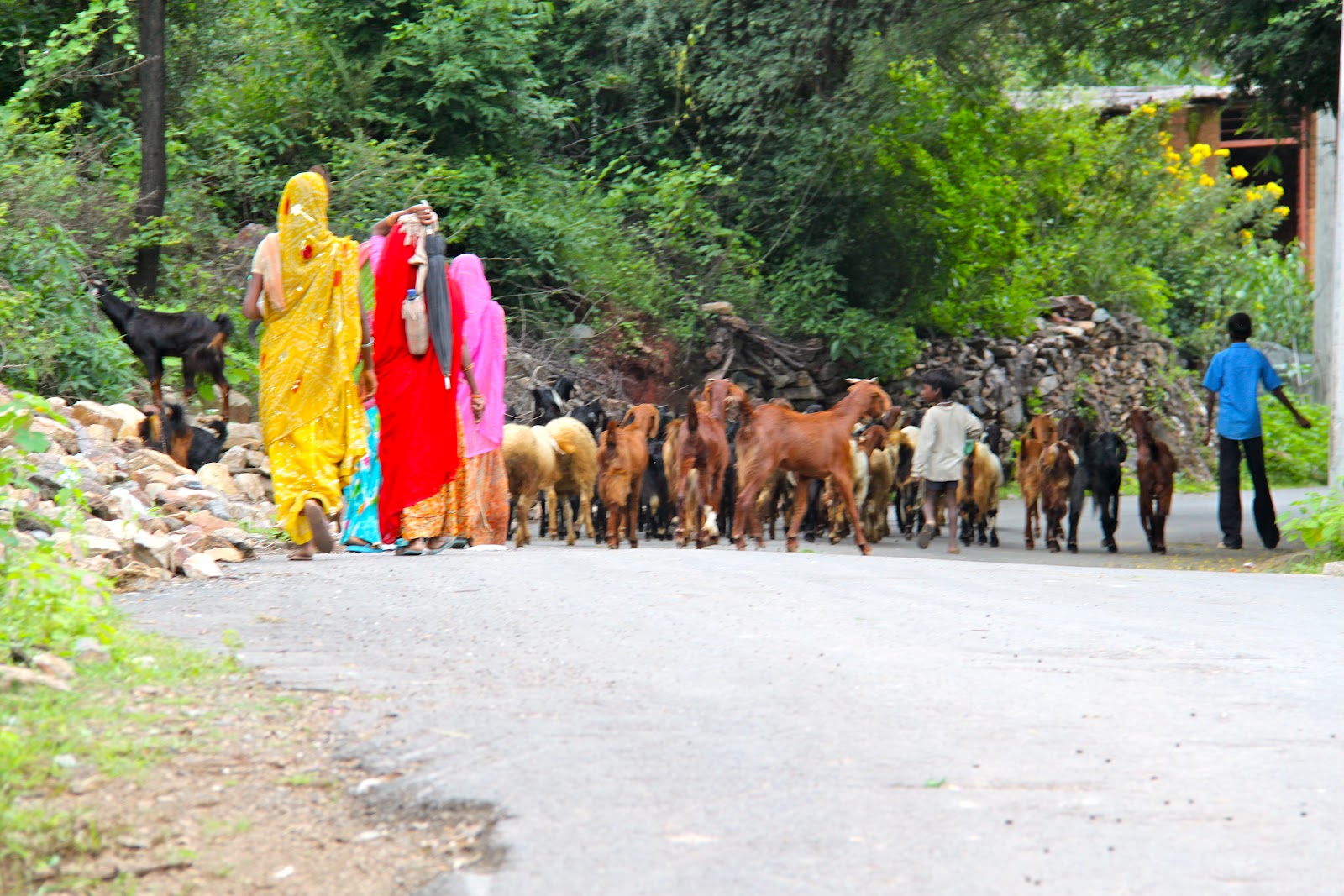
A drive to the countryside to see the real life of the Indian people is an eye catching experience.  The confusion seems overwhelming but everyone makes their way without accident.  The things you can see along 100 feet of roadway are: barbers cutting hair; people pressing clothes with heavy old fashioned irons, tailors sewing;  fruits and vegetable vendors; and of course, wall to wall people, cows, camels, donkeys, cars, bicycles, and motorbikes.  These sights and sounds leave a colorful mosaic etched in your mind.  Women doing hard construction labor in their sarees while most of the men are relaxing and chatting in small circles.  Women seem to be in charge of goat tending, hauling water and other freight on top of their heads.
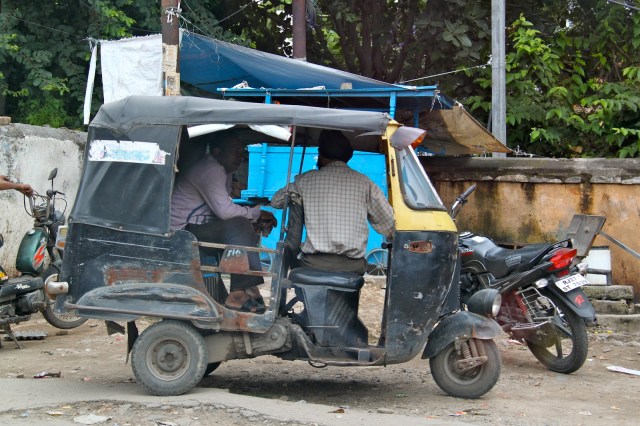
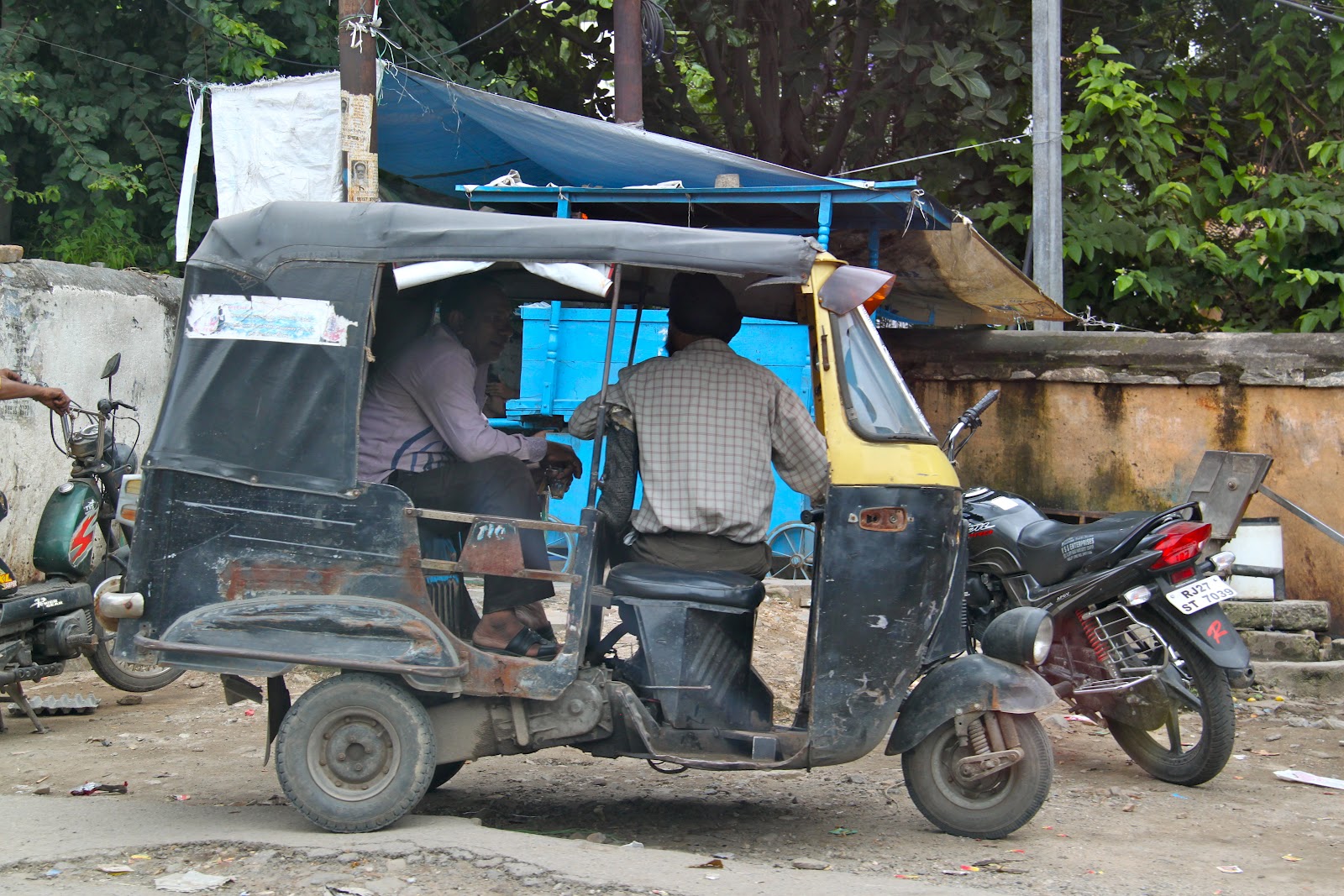
Typical Tuk tuk (taxi)

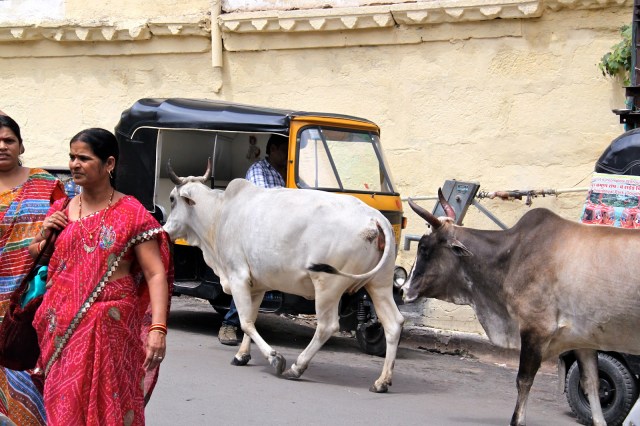
Cows everywhere

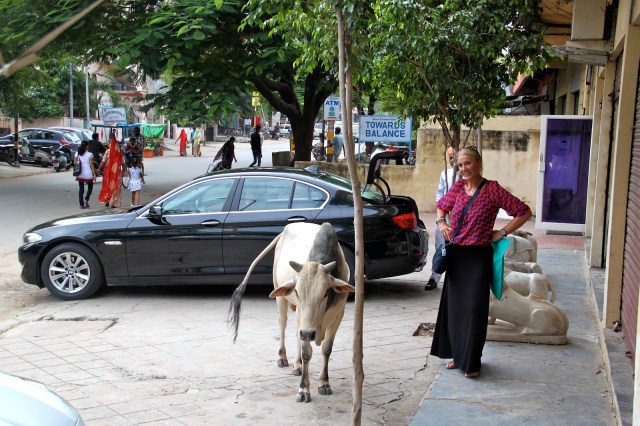
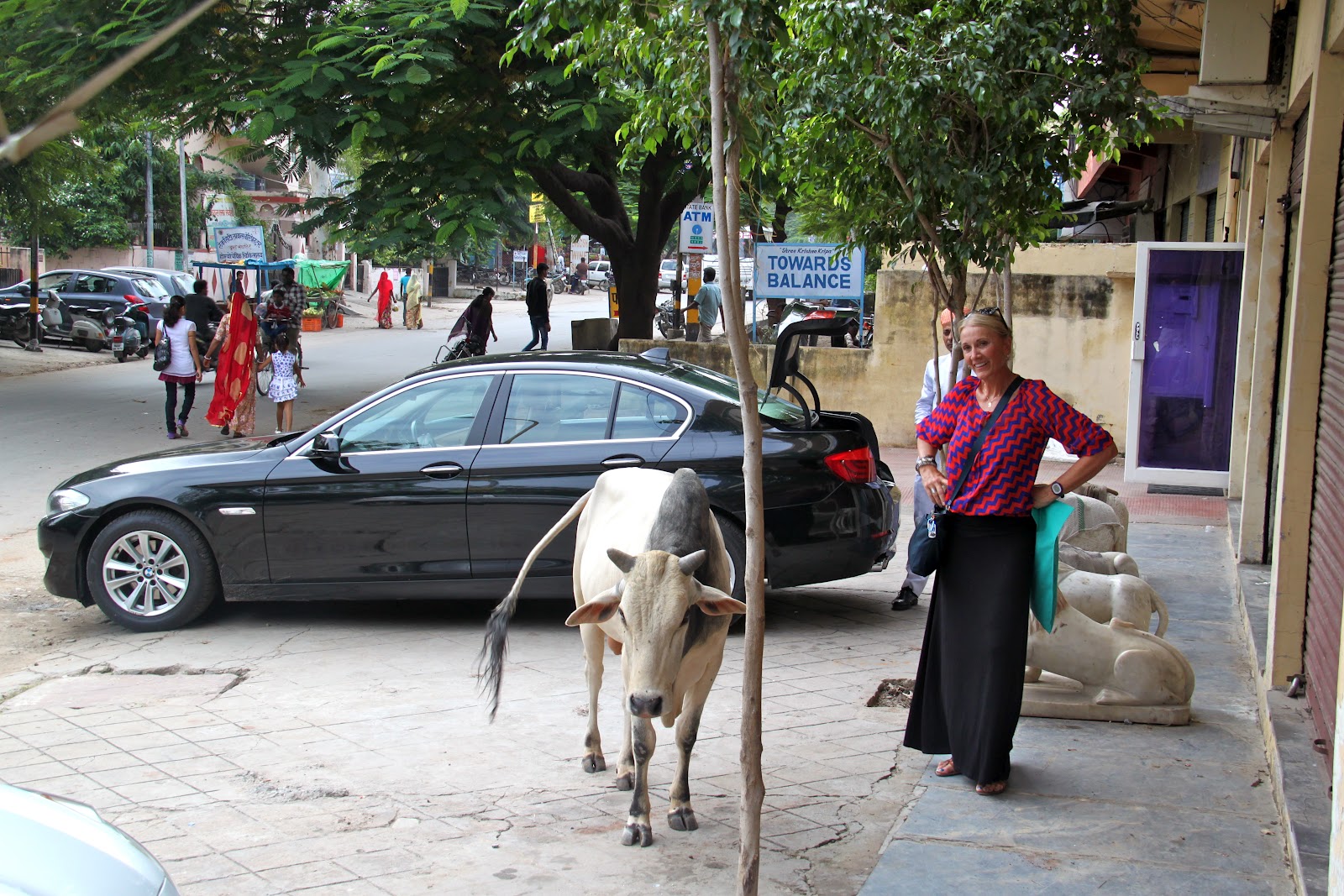
Barb with the BMW and the cow

The wormen are hard workers

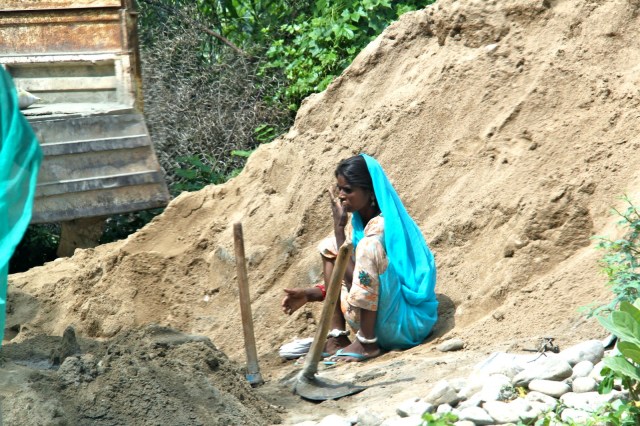
Hard worker

Pressing clothes with an old heavy iron

Yes, this is a barber shop

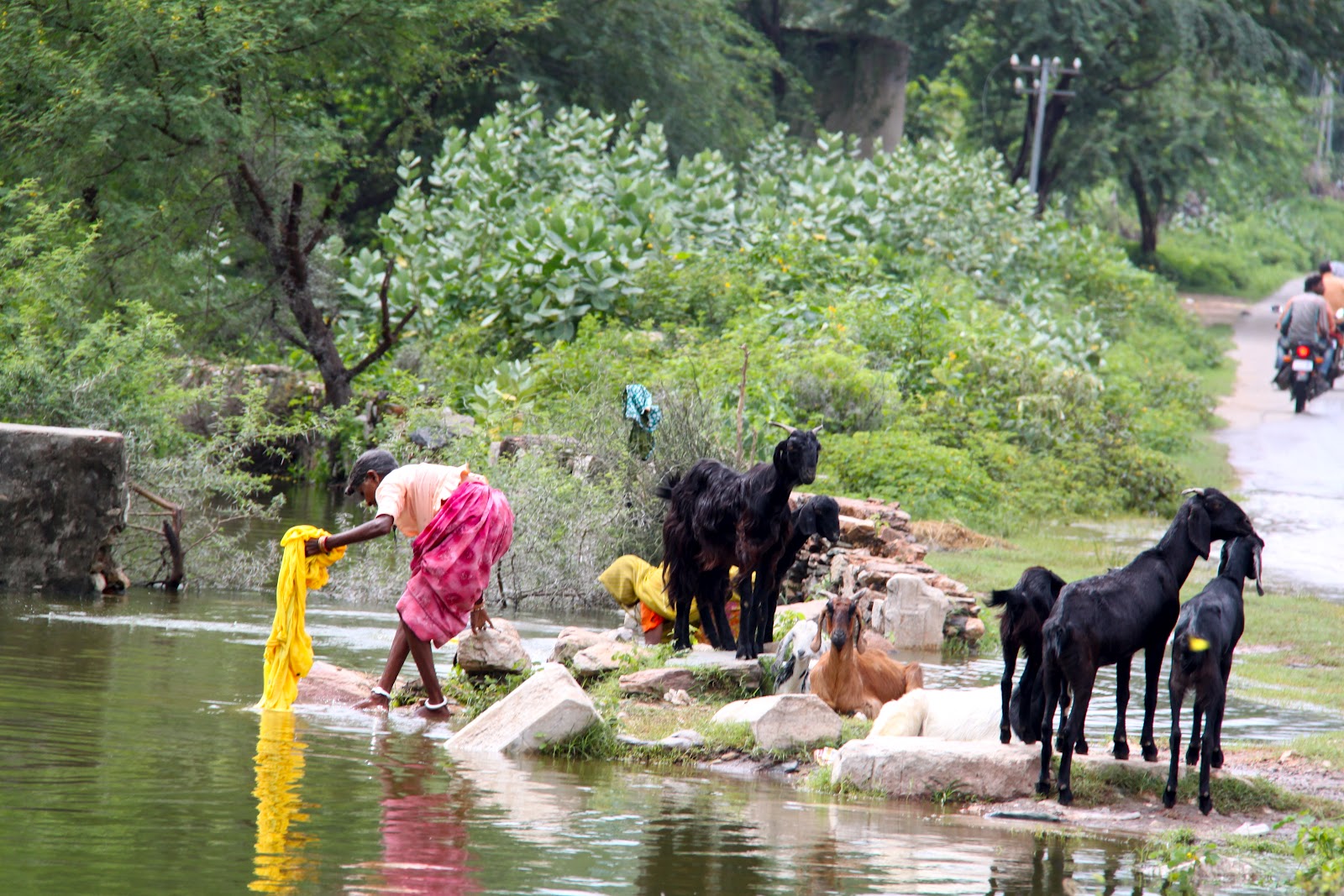
Women tending the goats
Women doing the work

Women doing the washing
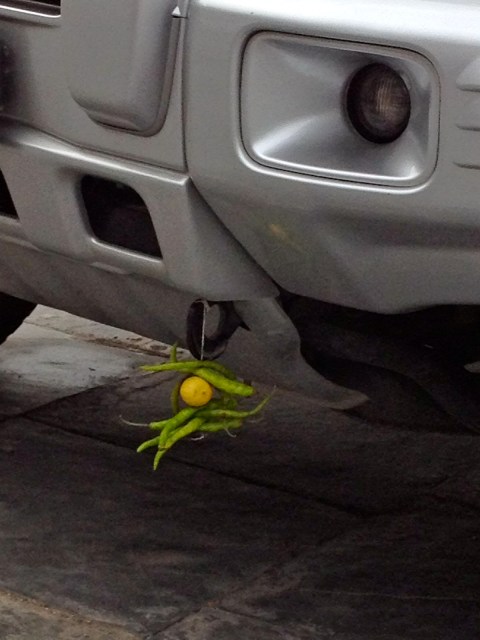
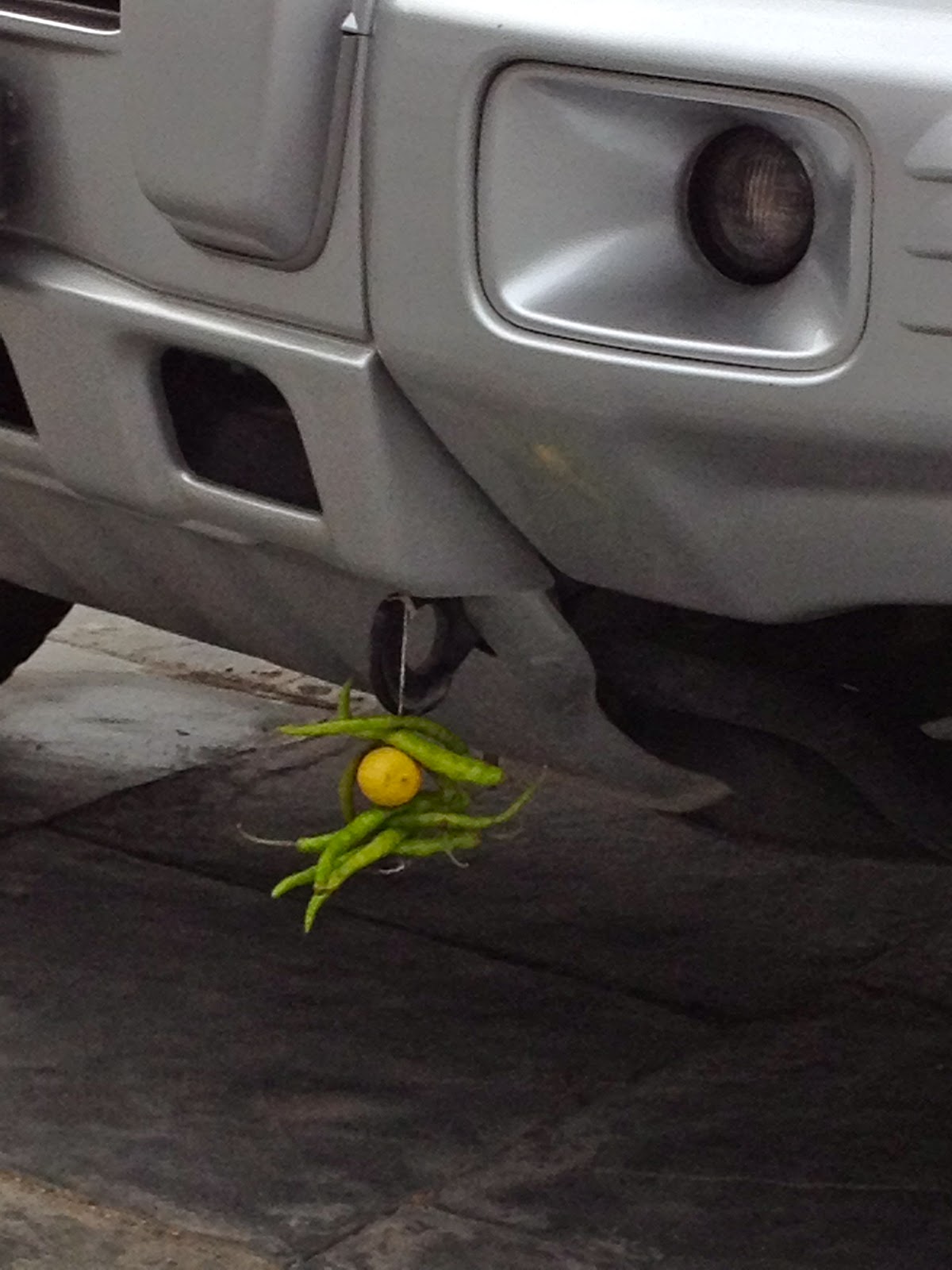
A lemon with peppers on a tail pipe brings good luck

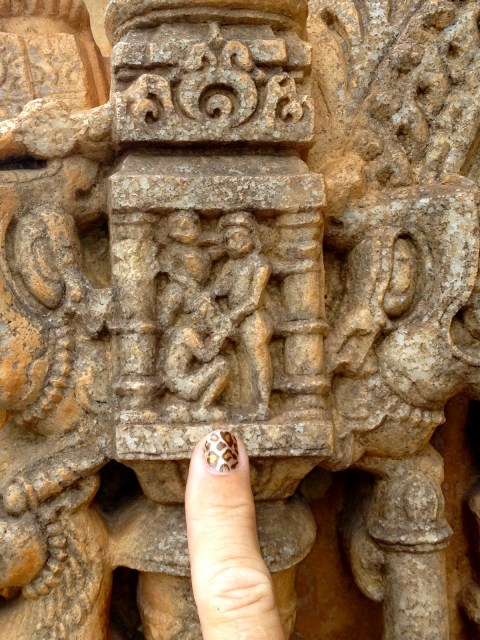
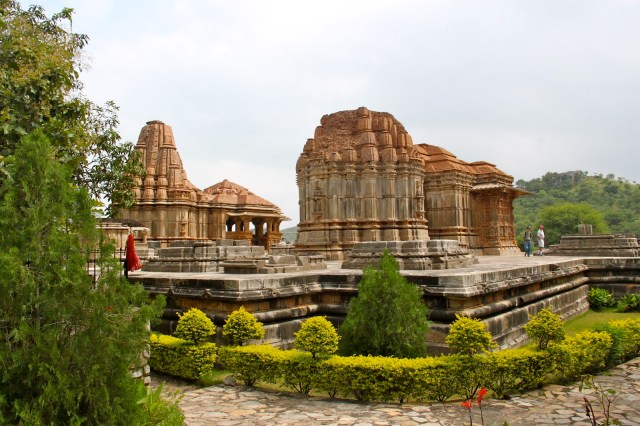
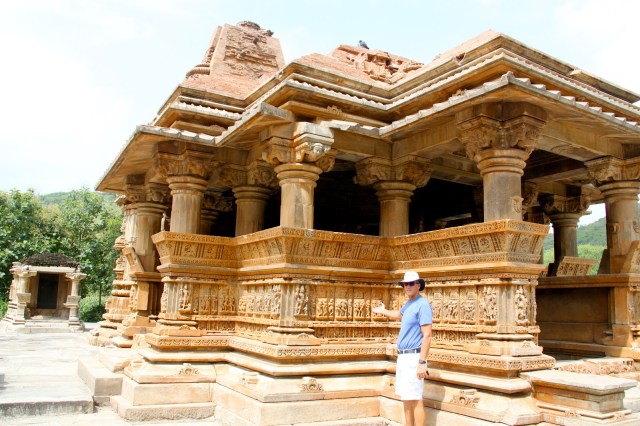
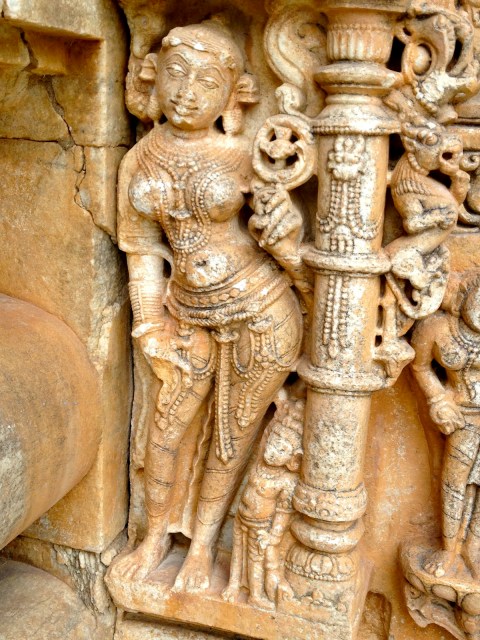
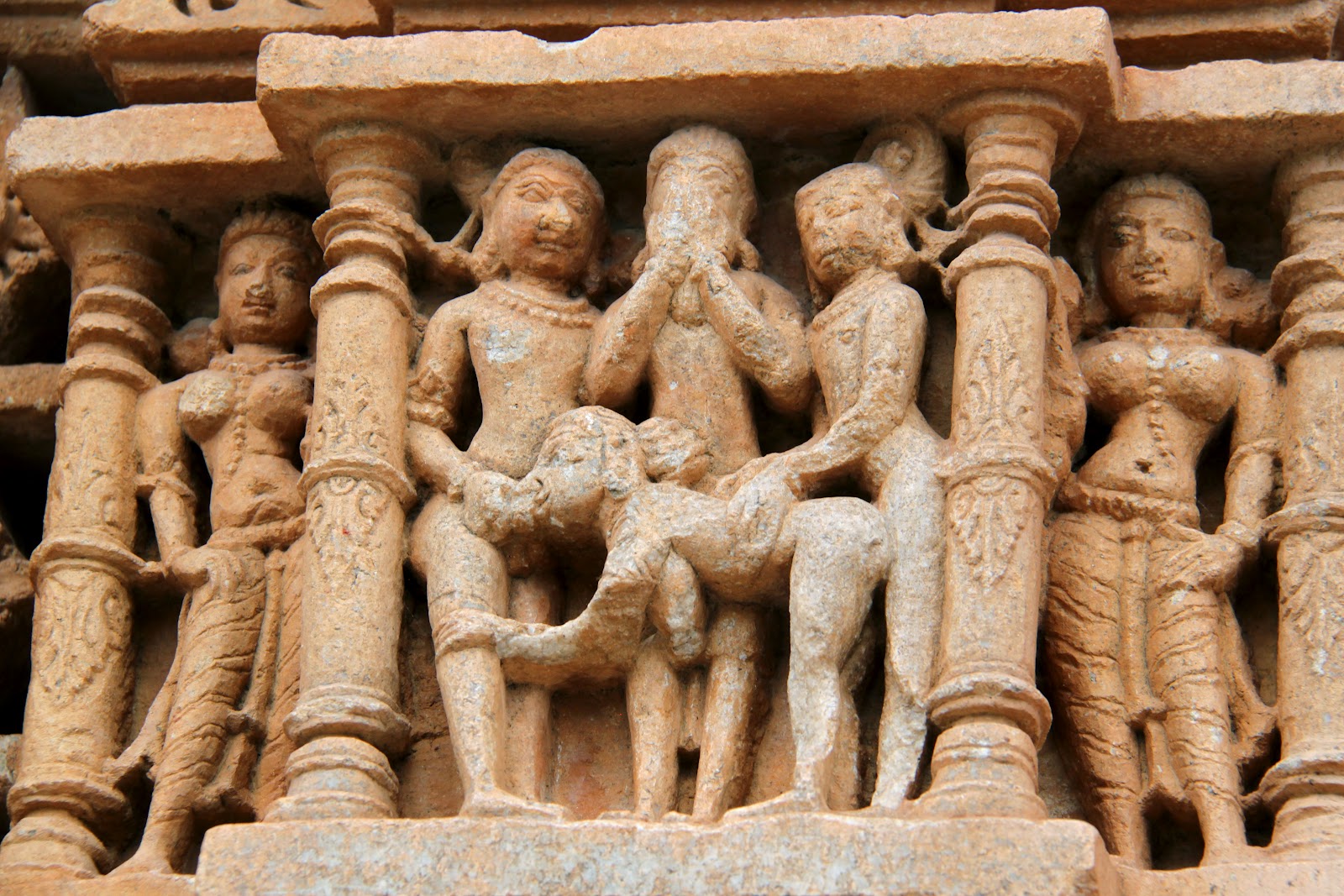
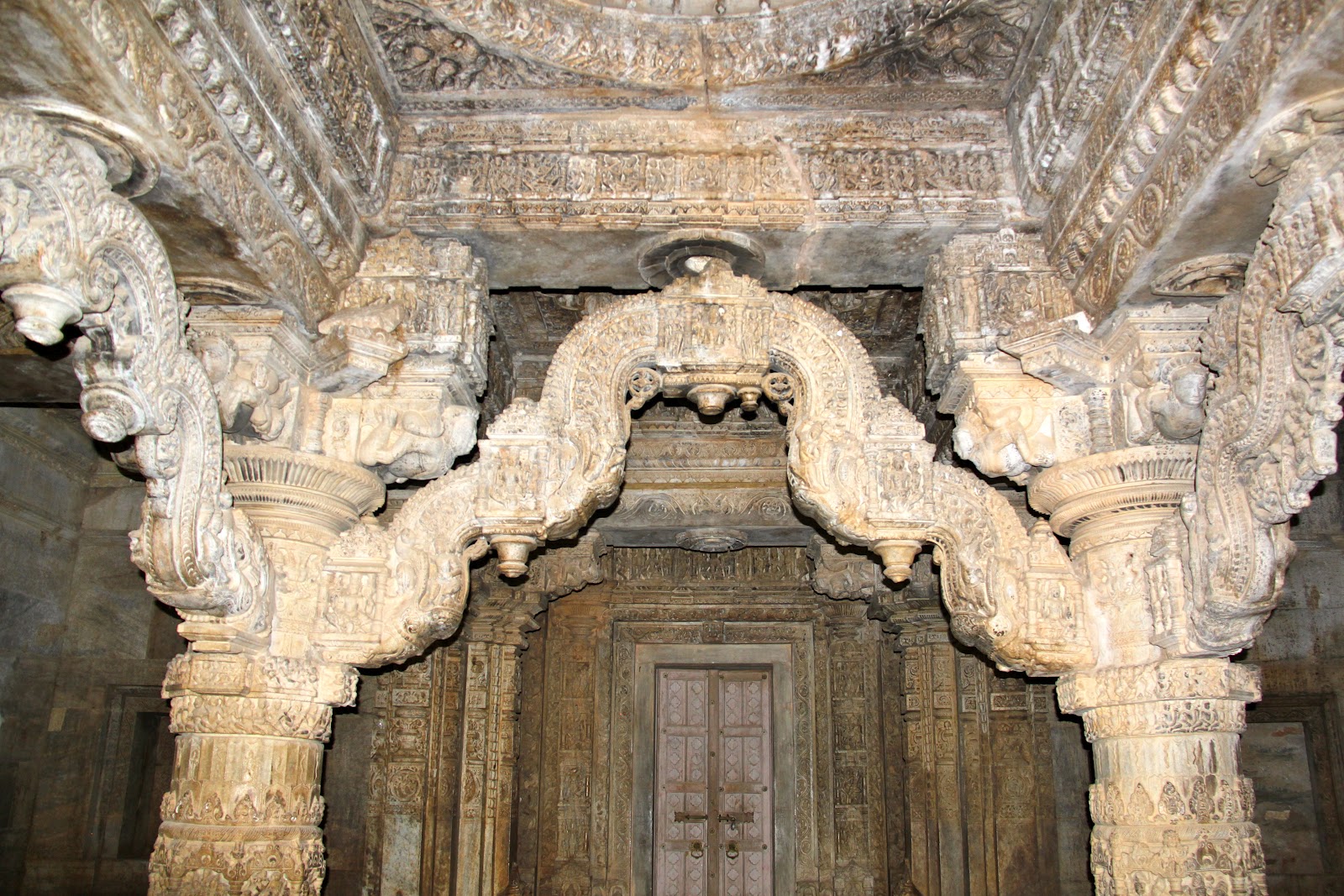
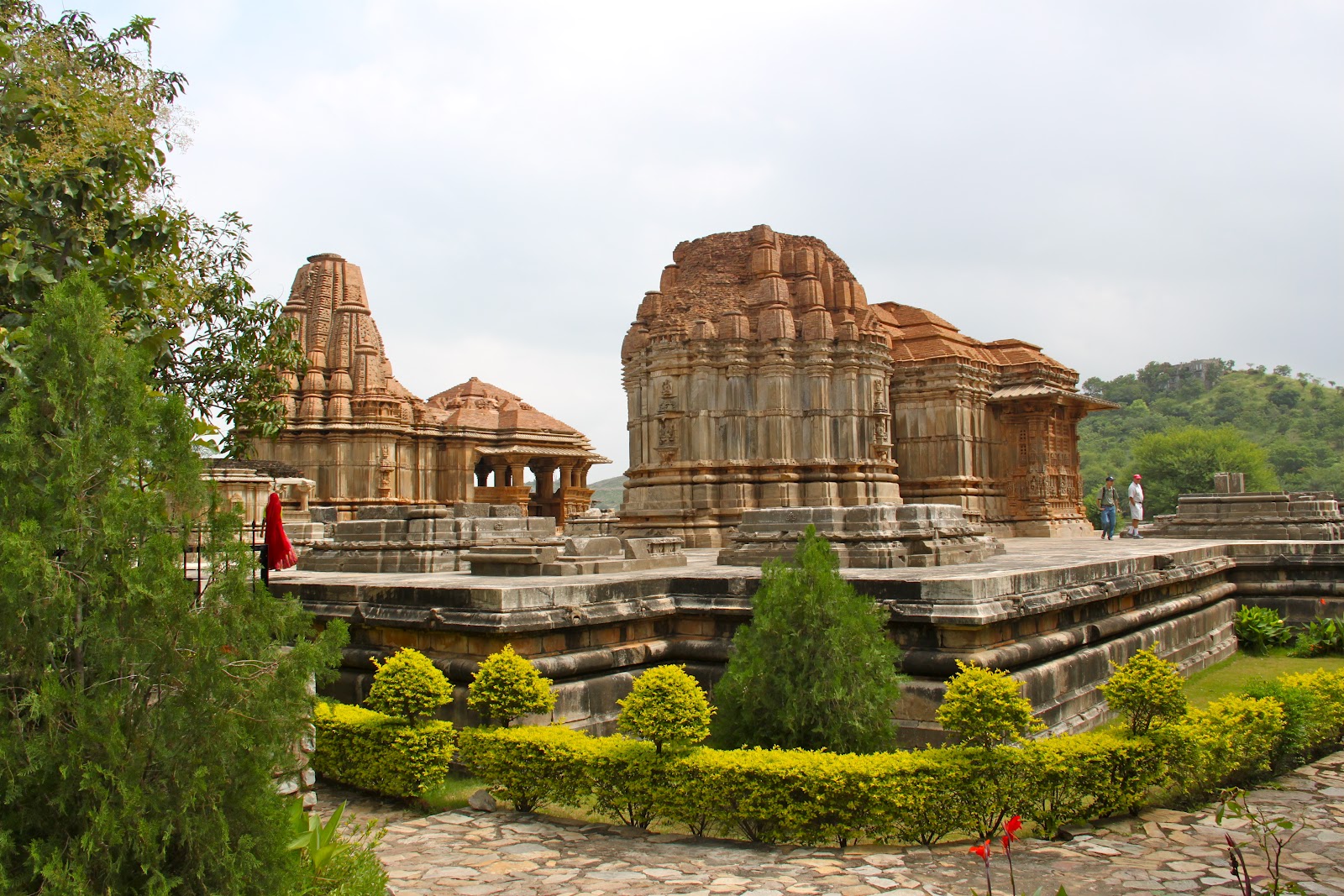
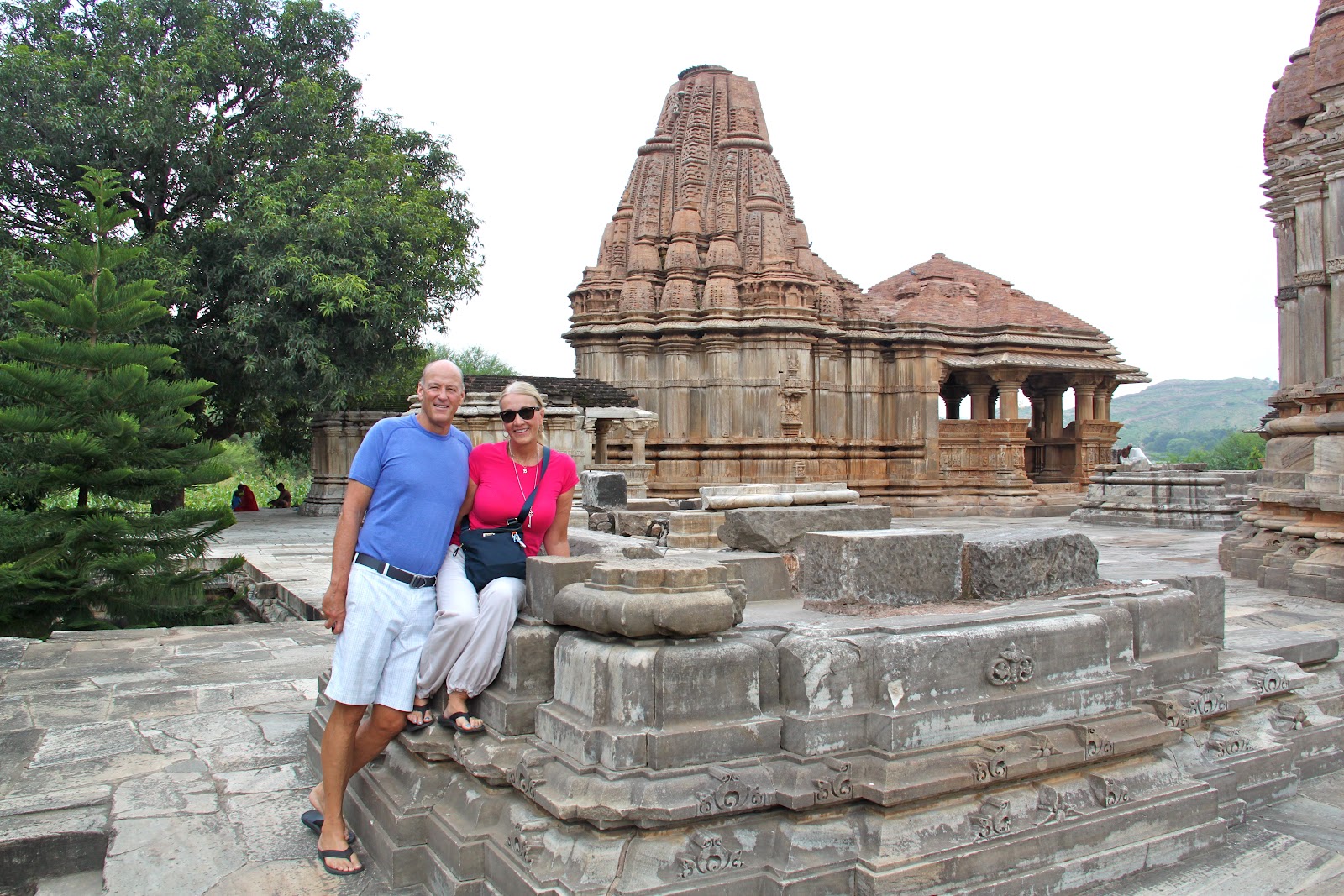
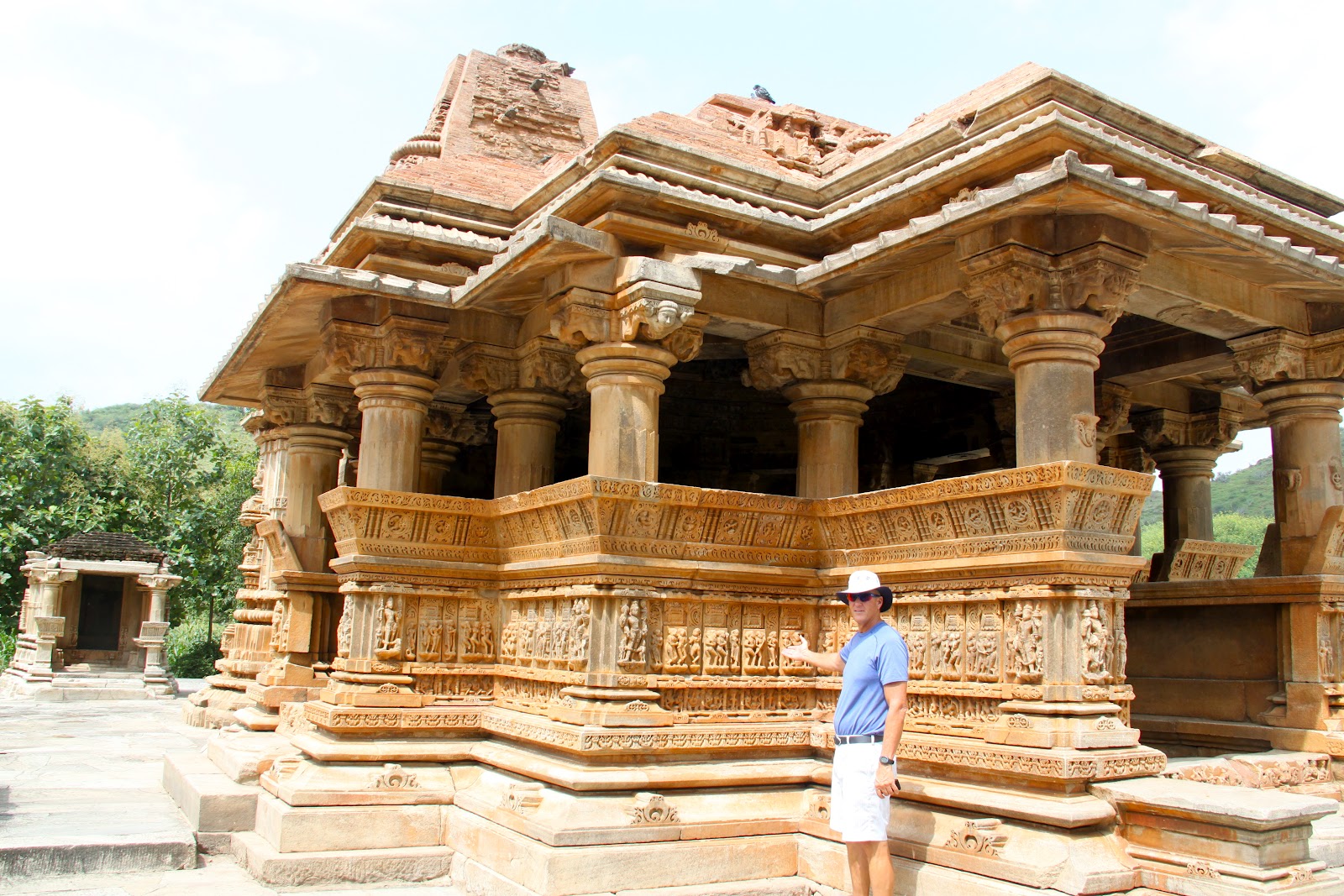
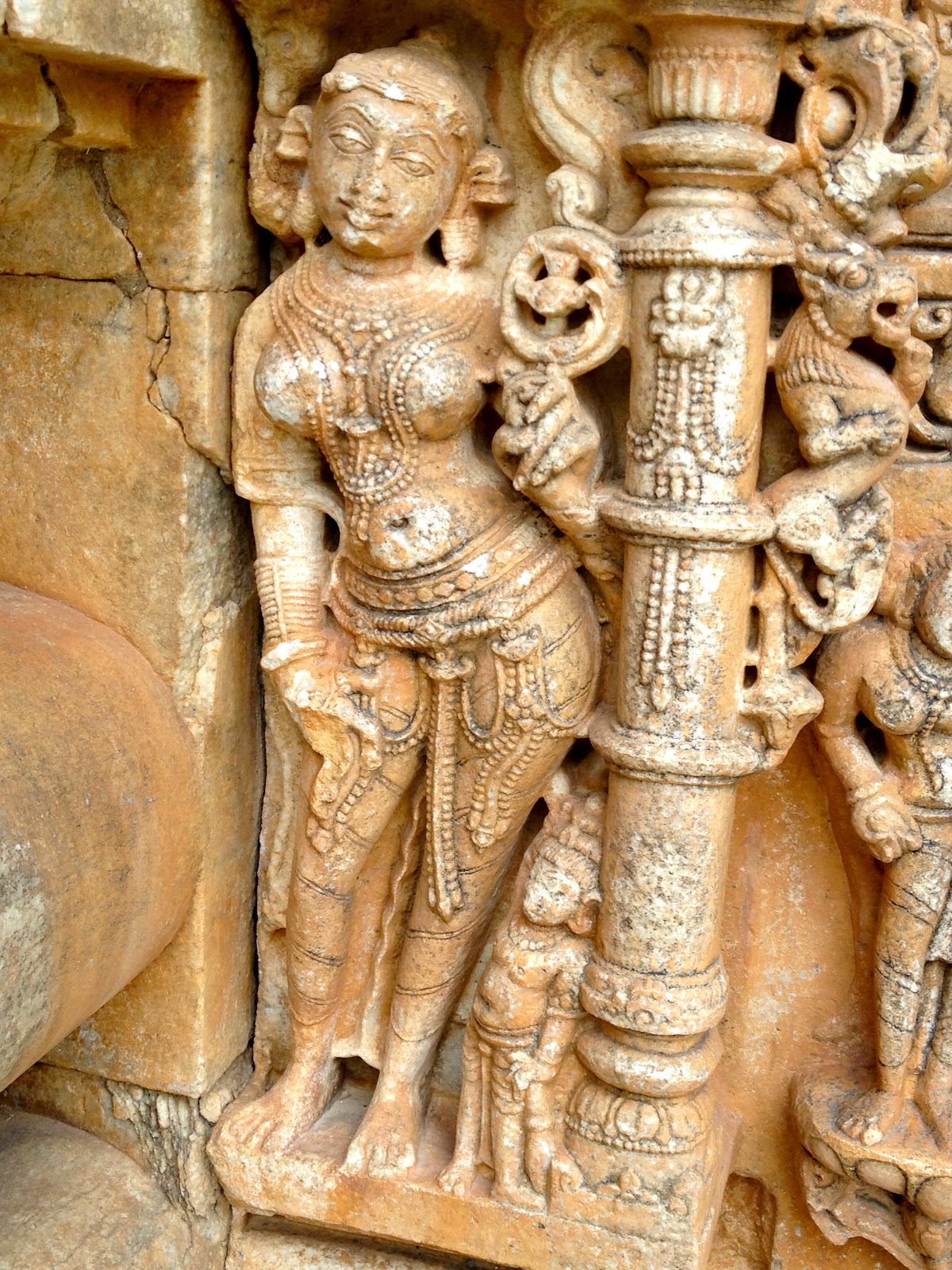
The Temple located in Nagda was built in the 10th and 11th cenuries and is 25 kilometers outside of Udaipur.  There are 108 temples.  We went to the Sas-Bahu temple totally carved out of marble.  It was dedicated to the God Vishnu, the preserver.  The carvings both inside and outside are incredible, and they only had a chisel available to them at that time.  There are lots of erotic carvings here.
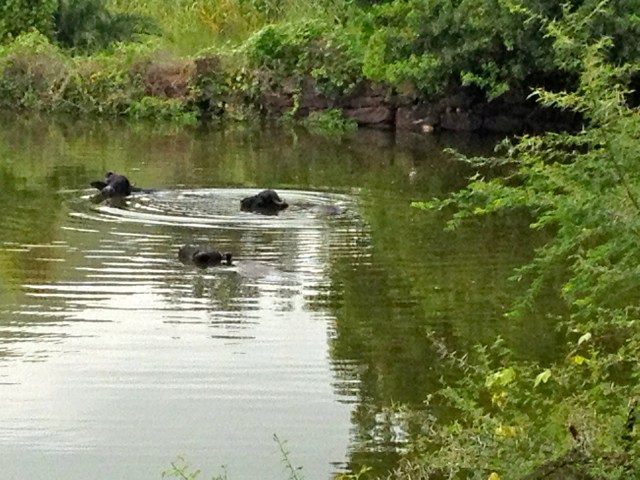
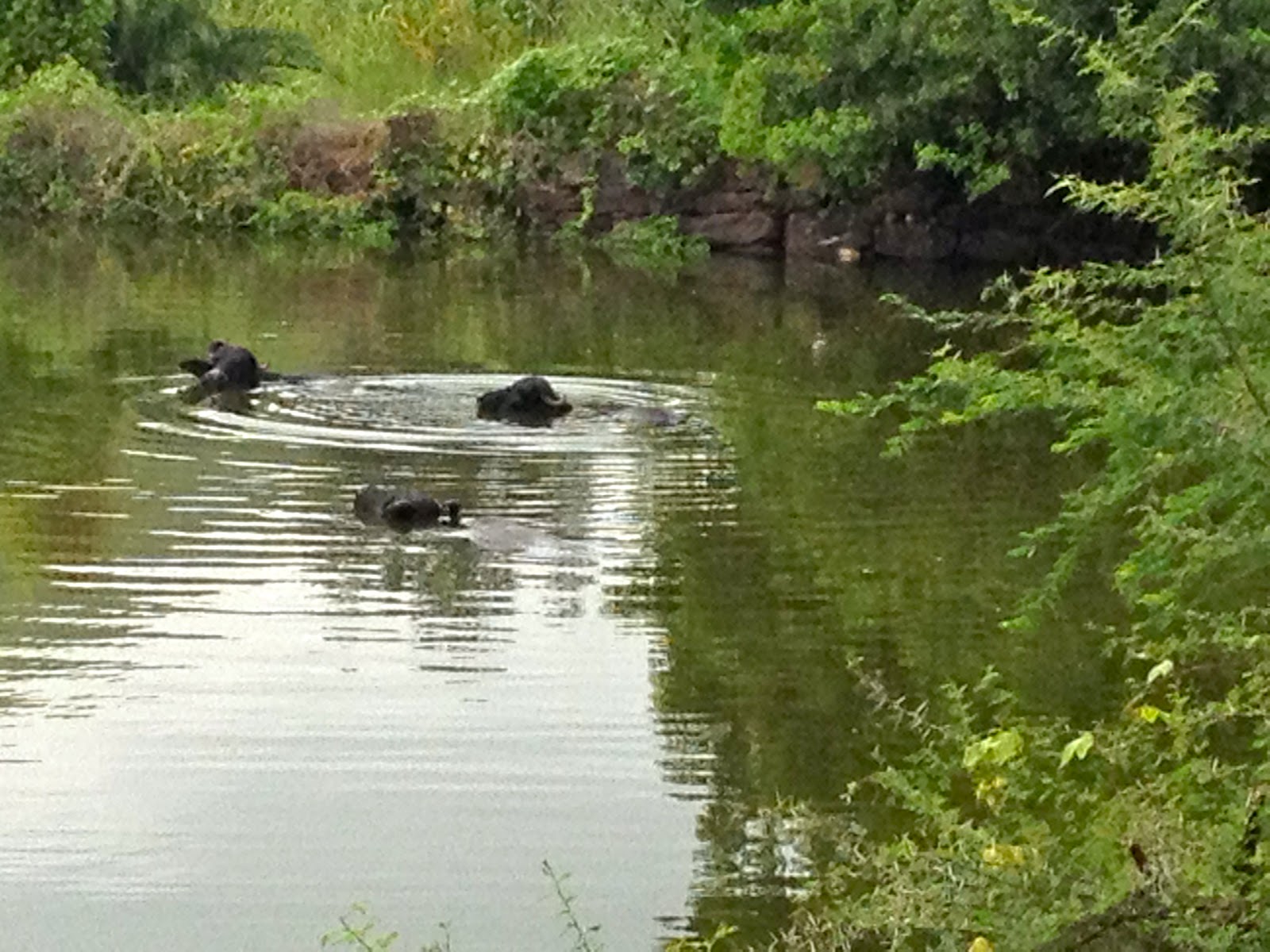
We passed water buffalo along the way

Small erotic carving
Erotic Carving

Interior carving

More carvings

Completely carved from marble

Scott

Ancient carvers appreciated the beauty of the female form

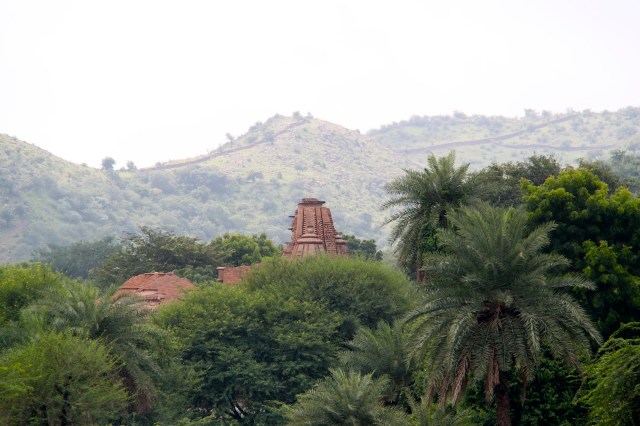
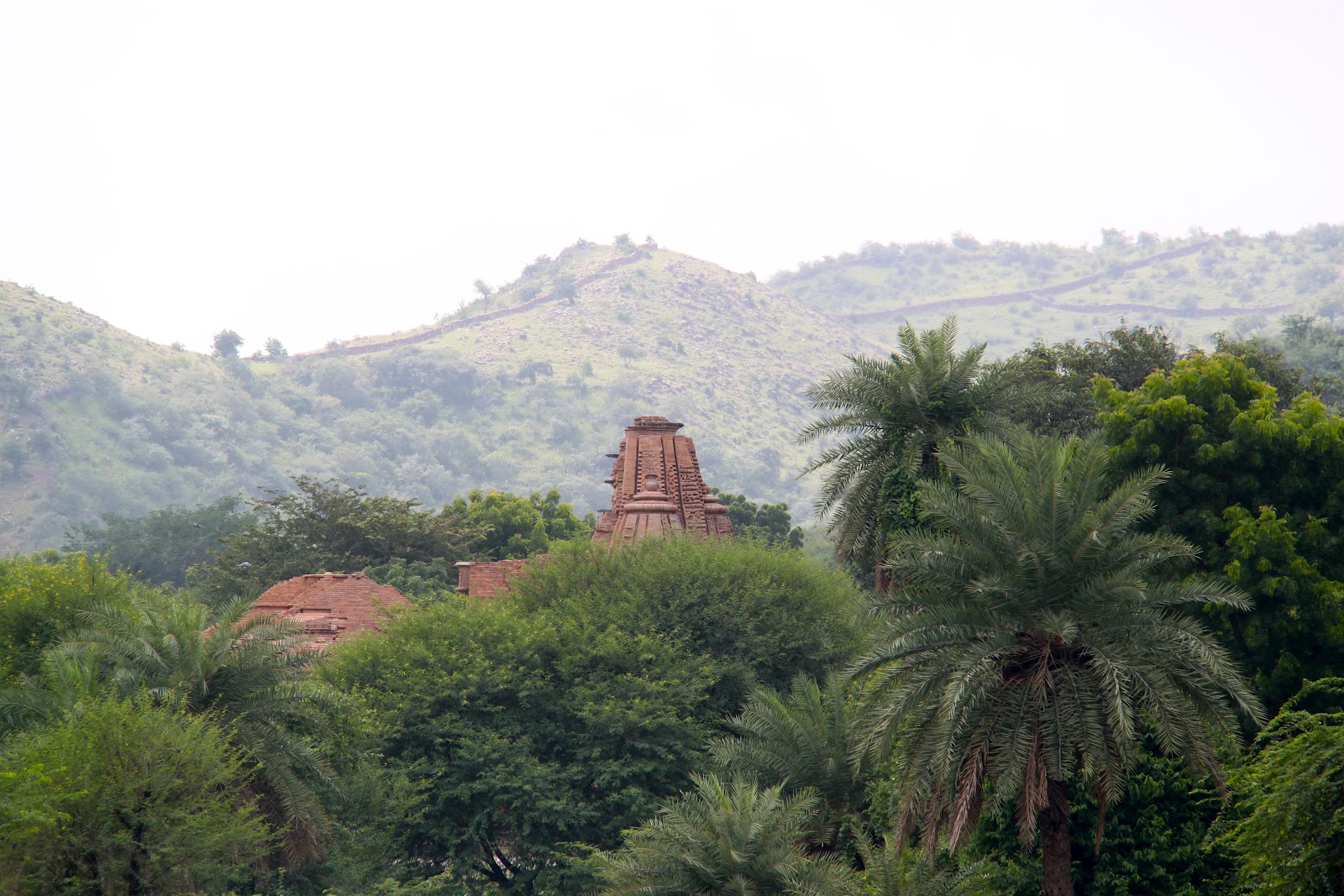
View of temple

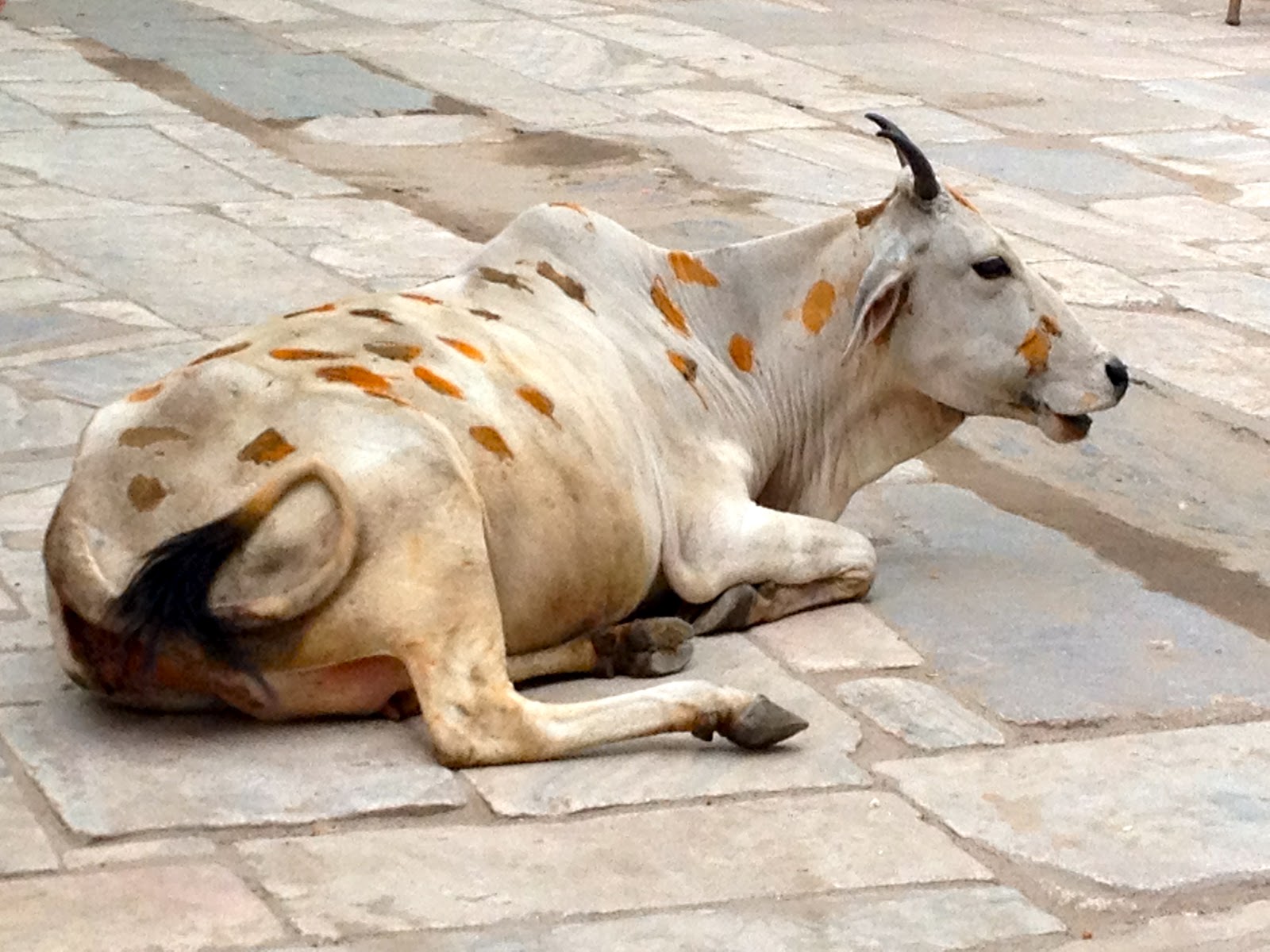
The small village of Kailashpuri dates back to the 8th century and we bought offerings of flowers to give to the priest at the Eklingji Temple.  Alive with color and sounds, we watched offerings and people rubbing henna on a sacred cow, all for the Shiva God.  As a sign of respect the people will often bow down and touch the ground as a sign of respect for the Gods and their Elders before they enter the Temples.

Going into the temple in the village

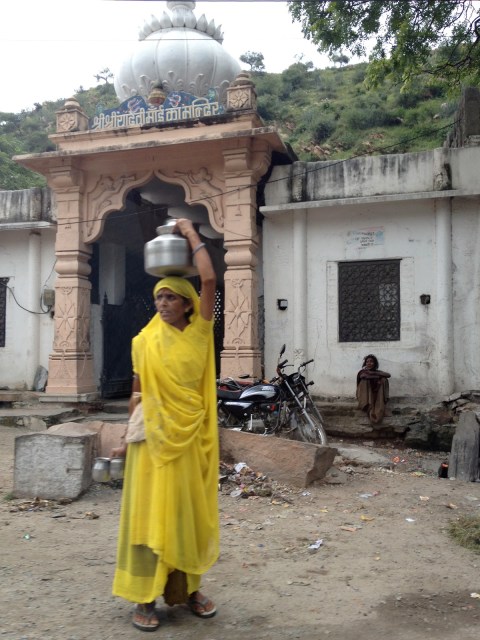
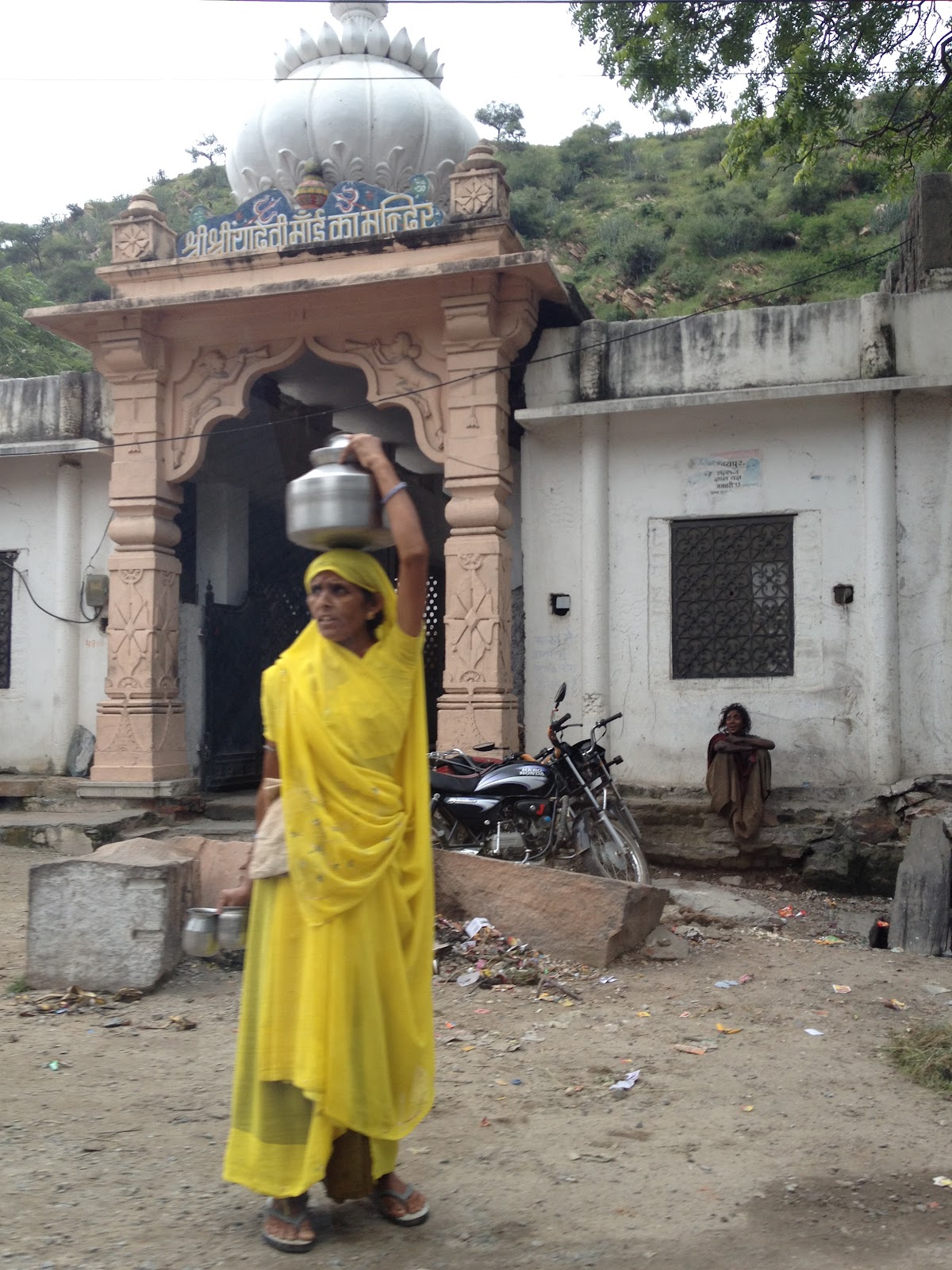
Women carry everything on their head

In the village

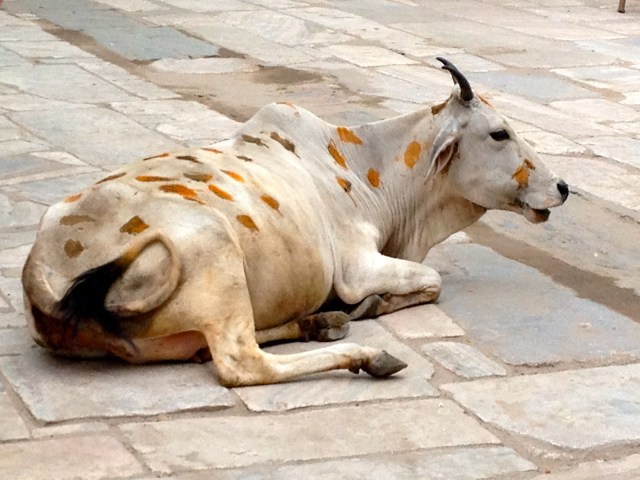
They rub the sacred cow with henna

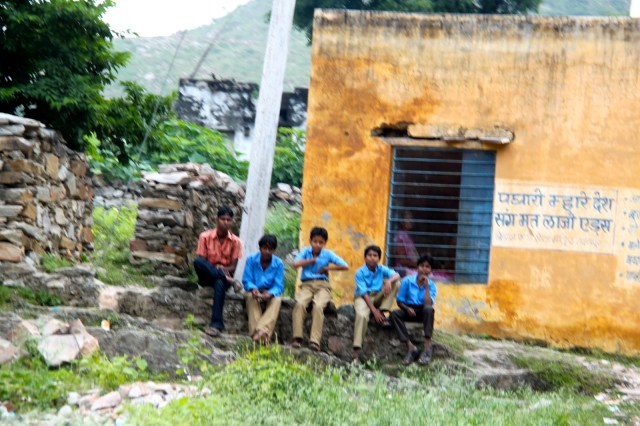
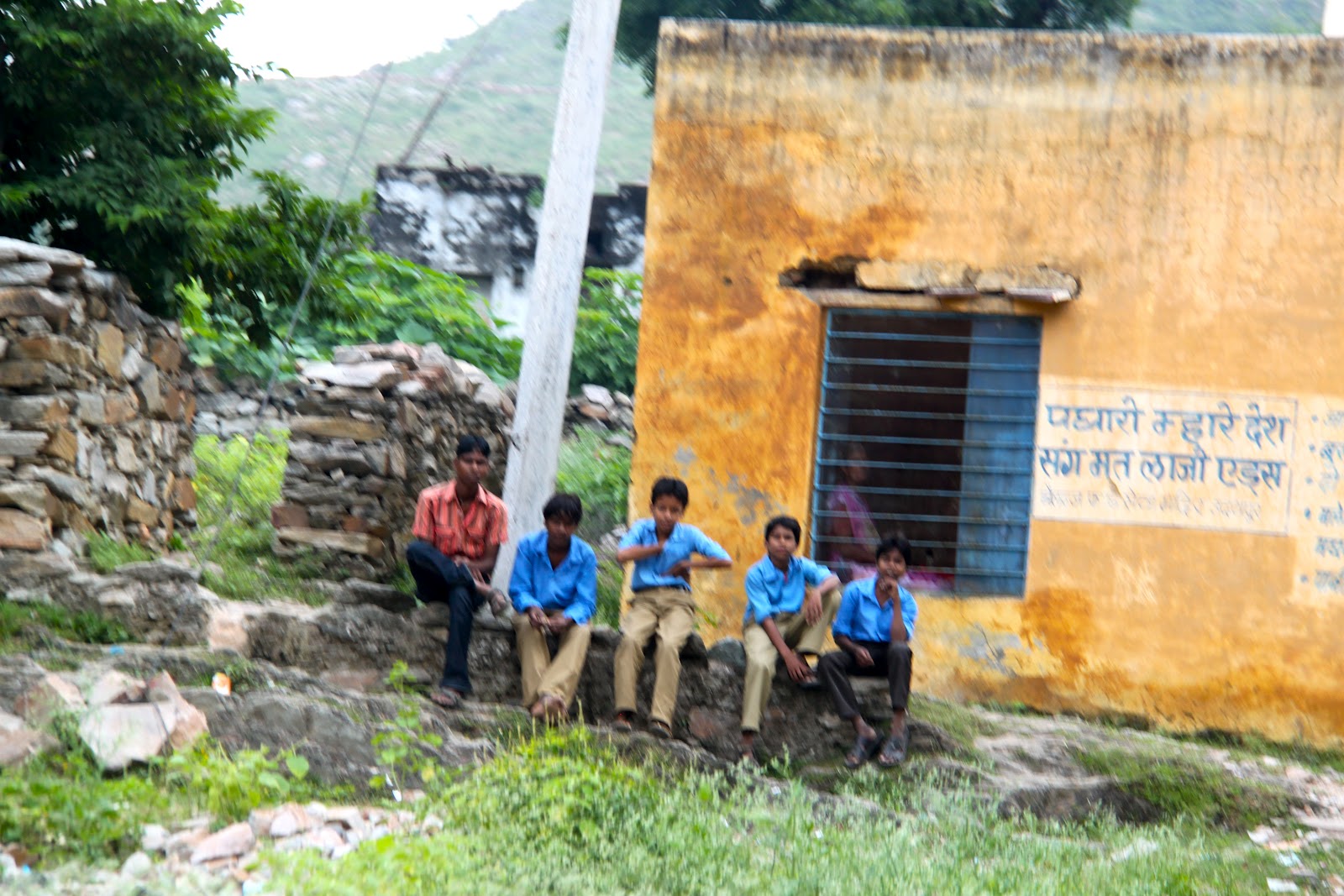
School boys in the village

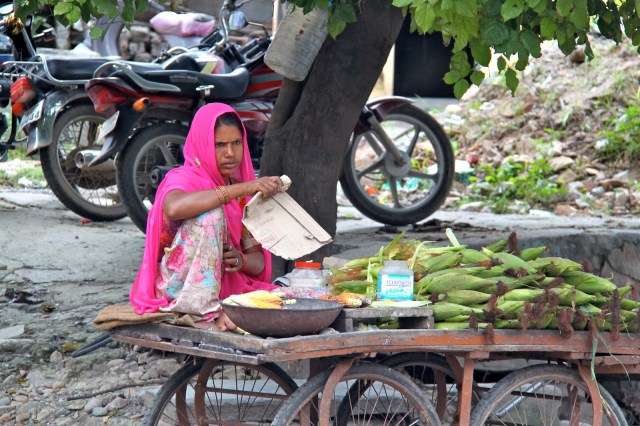
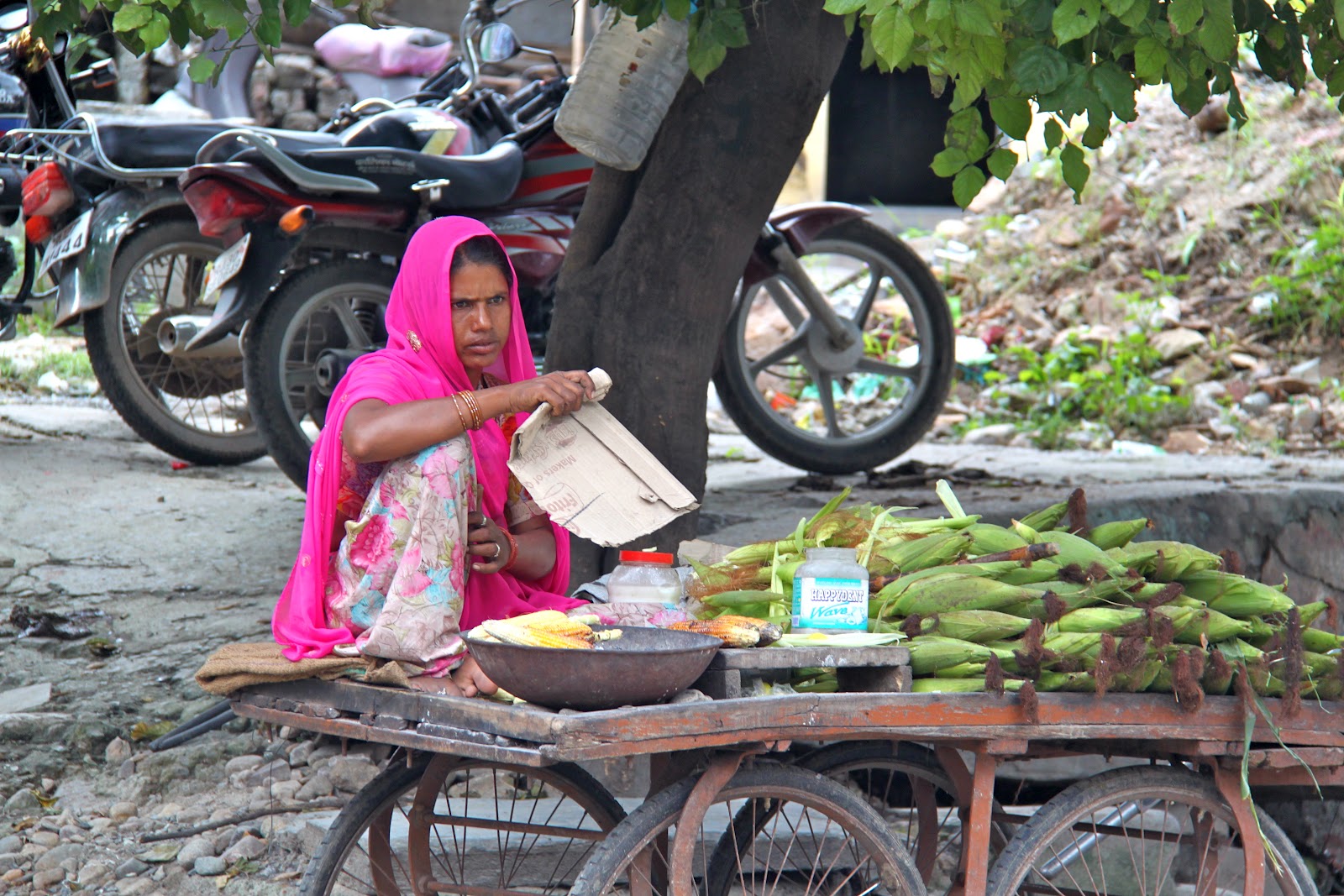
Selling corn in the village – notice she is sitting on the table – I wish I could do that!

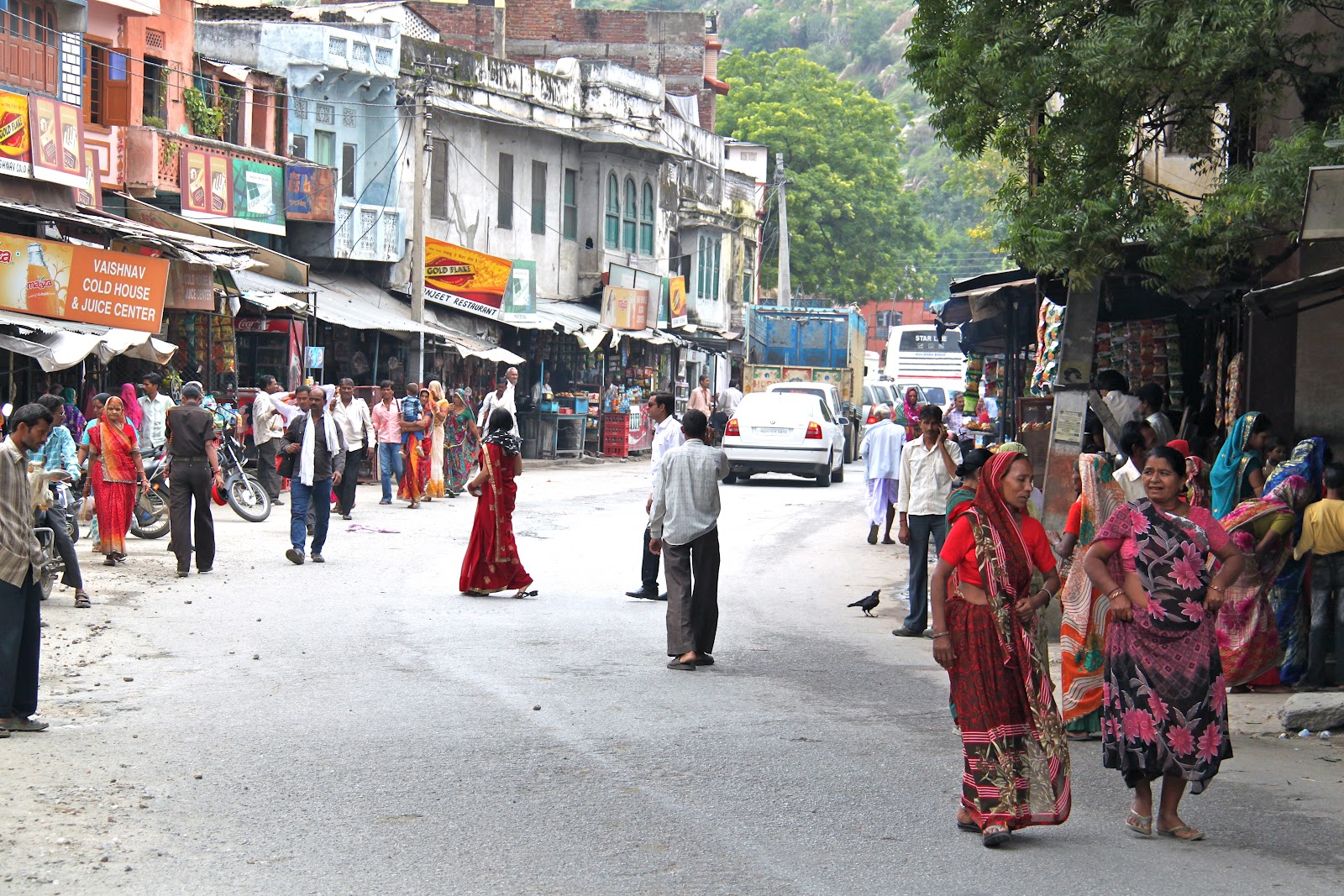
Village life

Enjoy some water or lunch

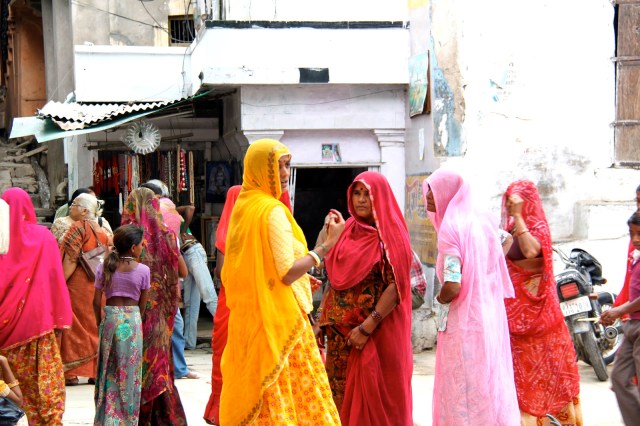
Women in their sarees going to the temple

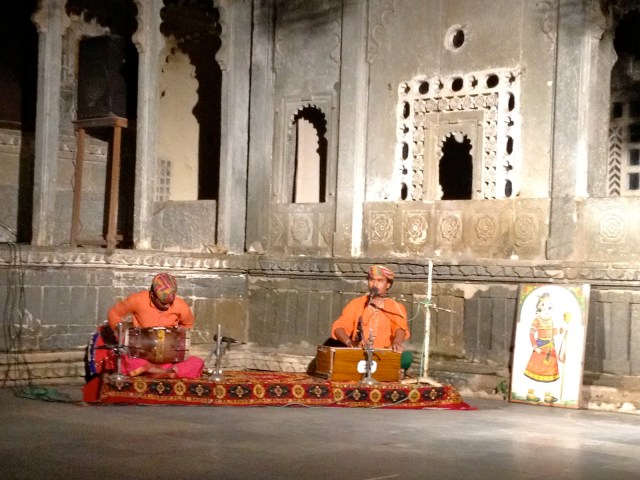
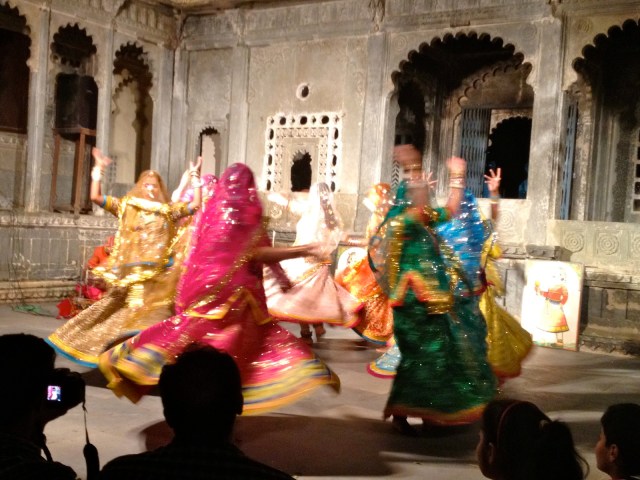
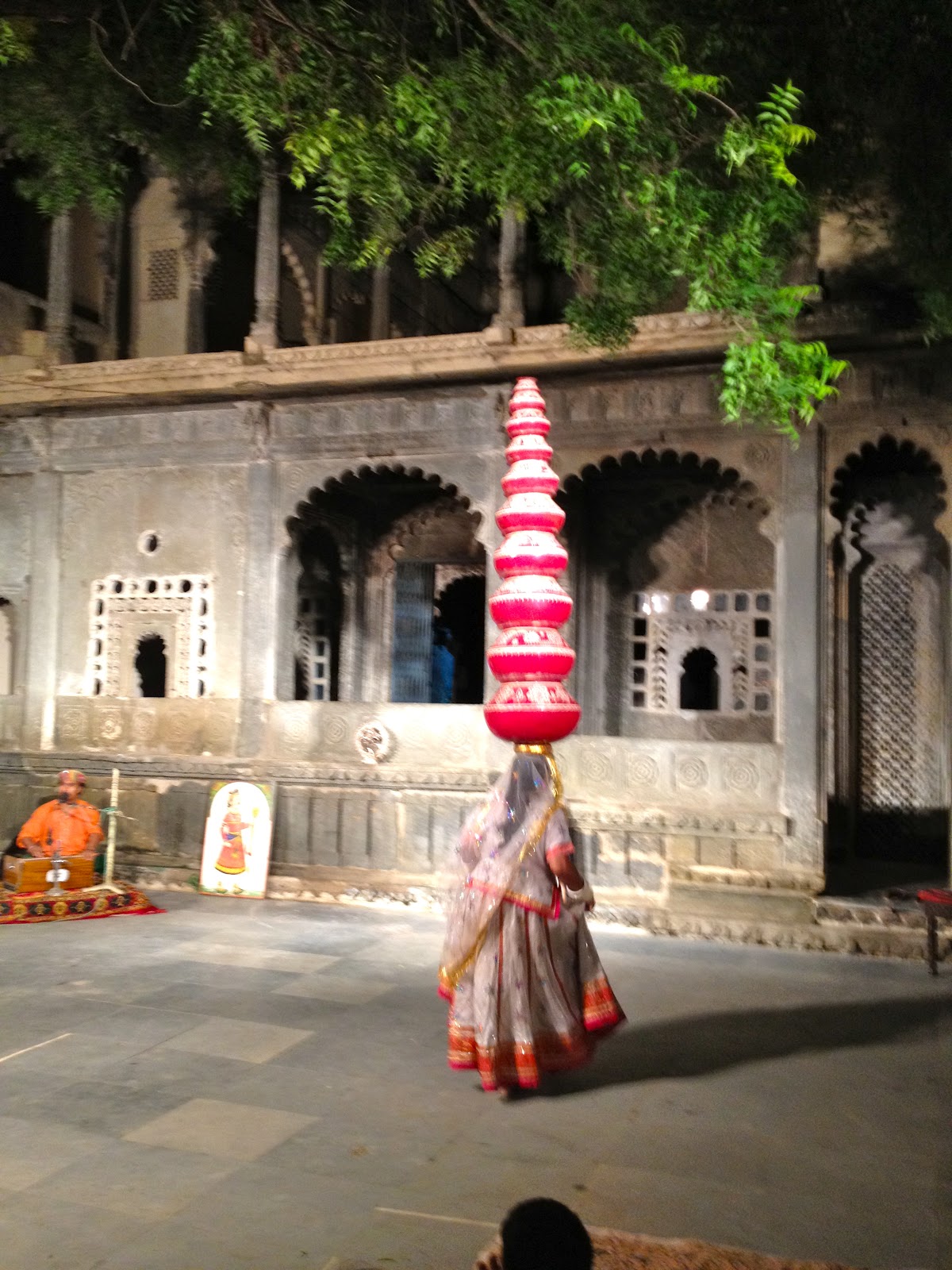
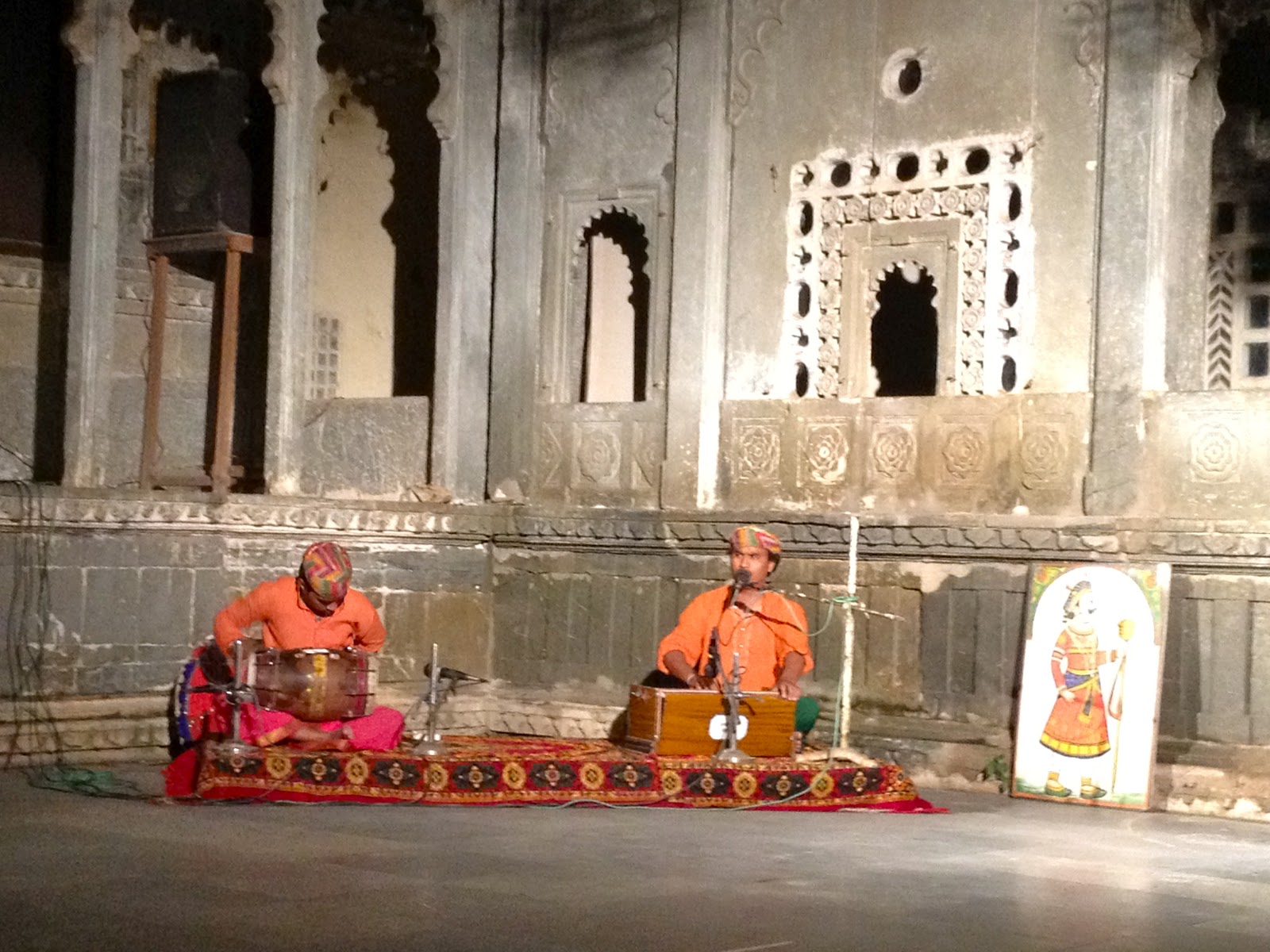
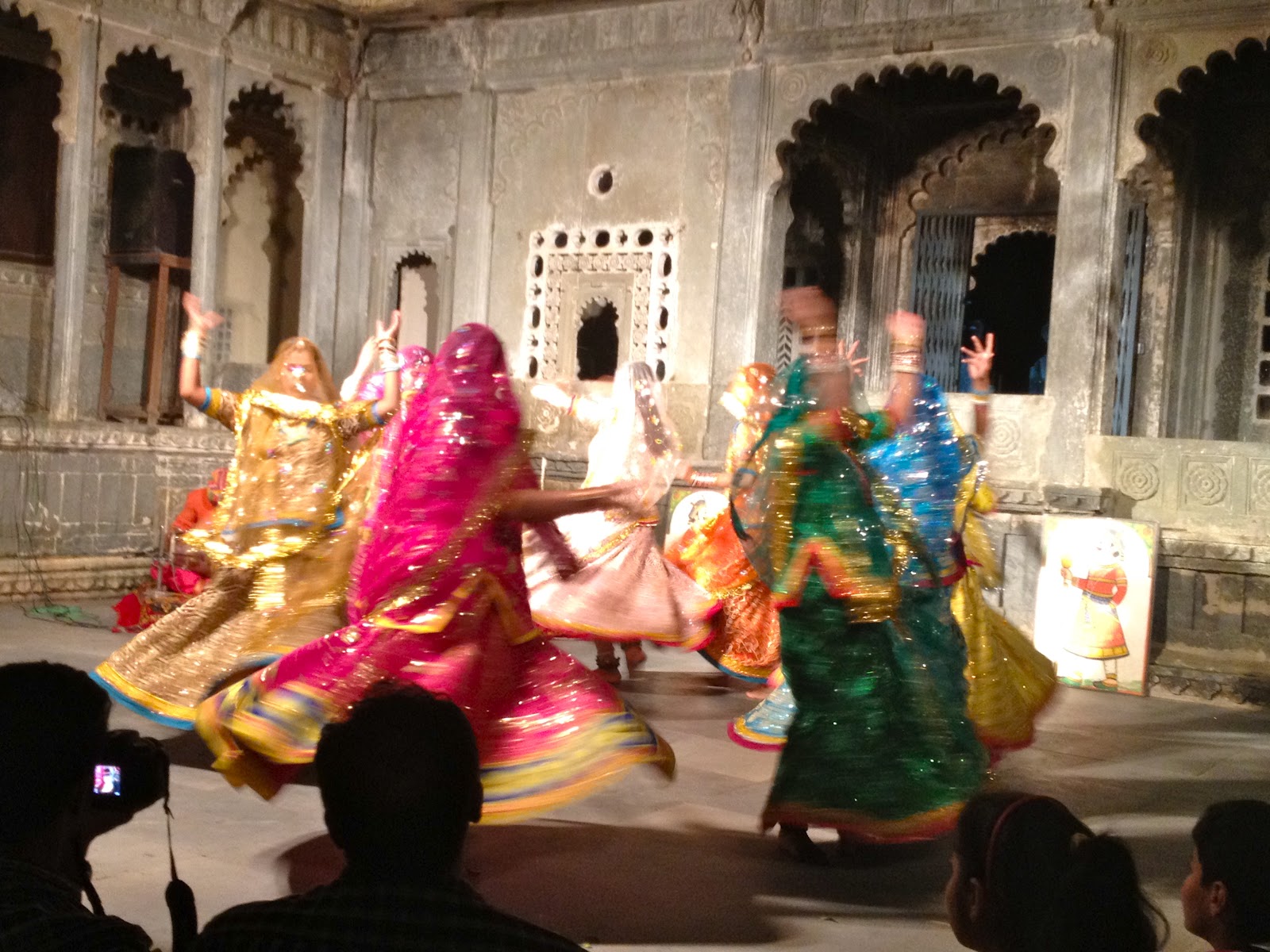
A folklore performance was performed in a courtyard near the river in the evening.   They had music, dancing and a puppet show.
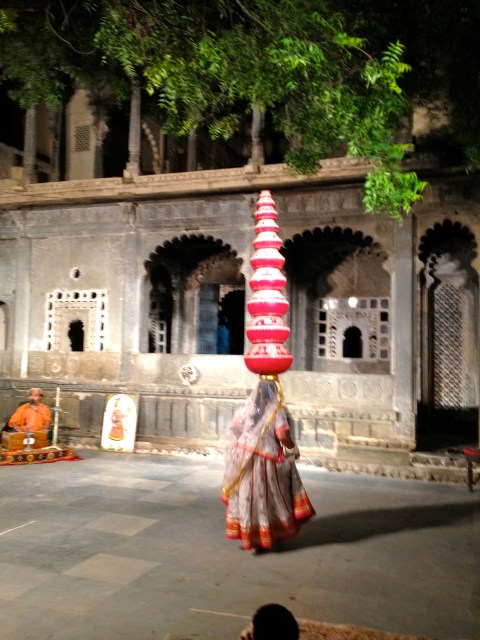
Dancing with 12 clay pots on her head

The music for the performance

Folklore dancing

Now we are off to Jaipur.